
A bridal hijab does more work than any other piece of the outfit. It sits closest to your face in every photo, it carries the weight of your veil or dupatta, and it has to stay put through hours of hugging relatives. When I style a hijabi bride, I look at the dress neckline and fabric before I look at a single scarf, because those two things decide how much volume and embellishment the face can take. A heavily beaded bodice usually needs a clean, plain wrap. A simple crepe dress can carry pearls, lace edging or a veil. The 25 looks below run from white gowns and lehengas to Nikah outfits, reception changes and modern minimal dresses, each styled as a complete outfit.
What Holds a Bridal Hijab in Place From Morning to Night
Most hijab problems I fix at weddings aren’t styling problems. They’re anchoring problems. A wrap that looks perfect at ten in the morning can be sliding by the second hour if it’s pinned only to itself. This is the order I build it in, and it applies to every look below.
- Undercap first. A tie-back or bonnet-style cap in cotton or jersey grips the hair and gives every pin something to hold. Satin caps feel lovely on the hair, but they slip under chiffon.
- Pin through to the cap, not just the scarf. I place one pin at each temple and one at the crown before any jewelry or veil goes on.
- Save magnetic pins for spots where nothing pulls, such as a shoulder drape. Under a veil or crown, a proper straight pin or a small safety pin holds better, because a heavy accessory can drag a magnet loose.
- Add weight last. Veils, crowns, tikkas and dupattas go on once the wrap is stable, and each one is pinned to the cap on its own.
If your hair is long and thick, a low, flat bun at the nape gives the cap a base and keeps the back of the head from looking lumpy. A high bun changes how a veil falls, so settle that question at your trial with the actual veil on, not with a borrowed one.
1. Bride Hijab With White Lace Gown
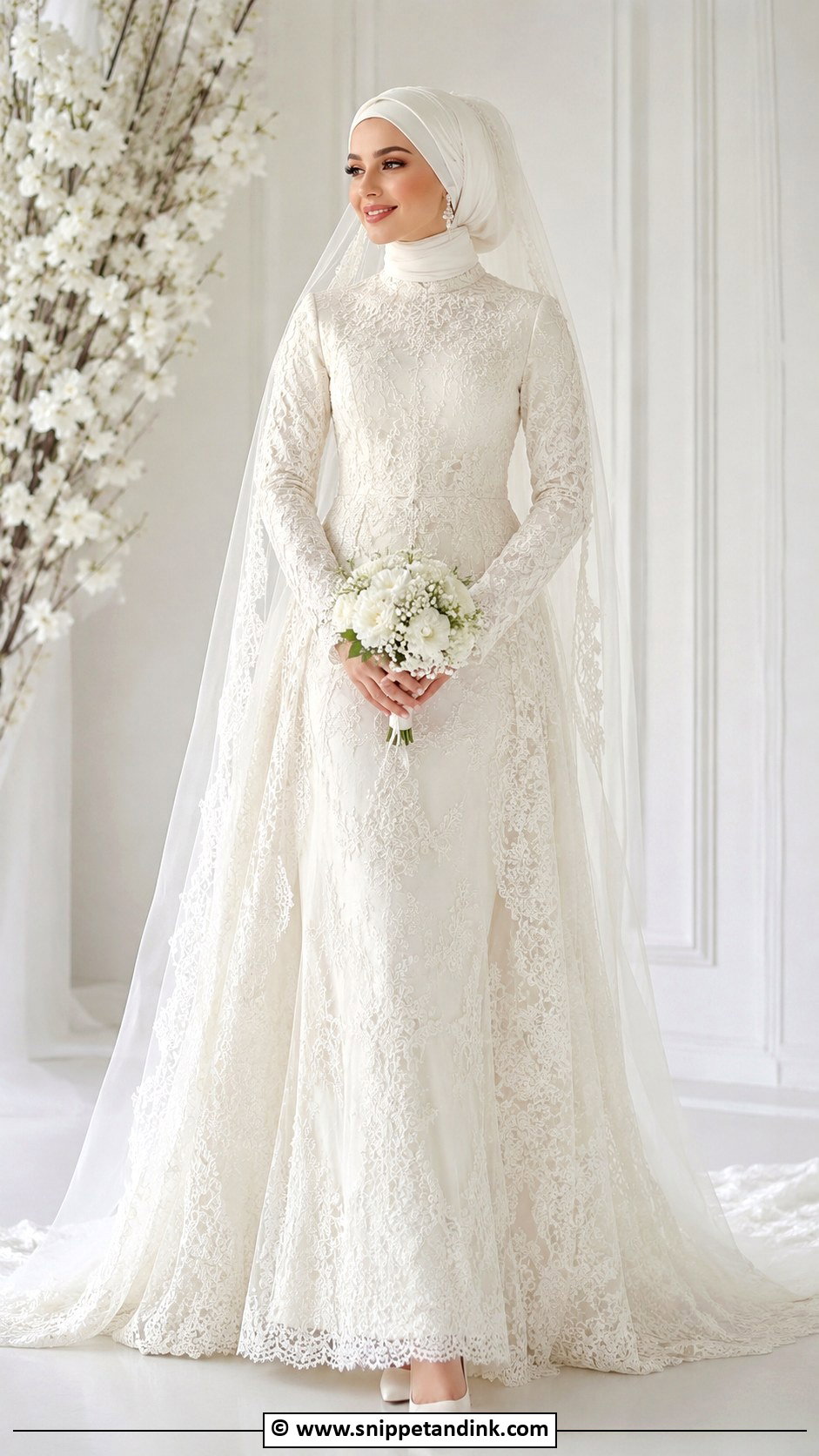
Lace already has pattern, so I keep the chiffon wrap around it completely plain. Match the hijab to the gown’s undertone in daylight, not under shop lighting: a stark white scarf next to ivory lace makes the dress look yellowed in photos. A fitted undercap does the real holding, and the chiffon only needs a few pins on top. With a high neckline, skip extra layers at the chest, since they bunch over lace and hide the scalloped edge. Satin closed-toe heels, pearl studs and a thin bracelet are enough, and a sheer veil softens the outline from behind.
2. Bride Hijab With Satin Ball Gown
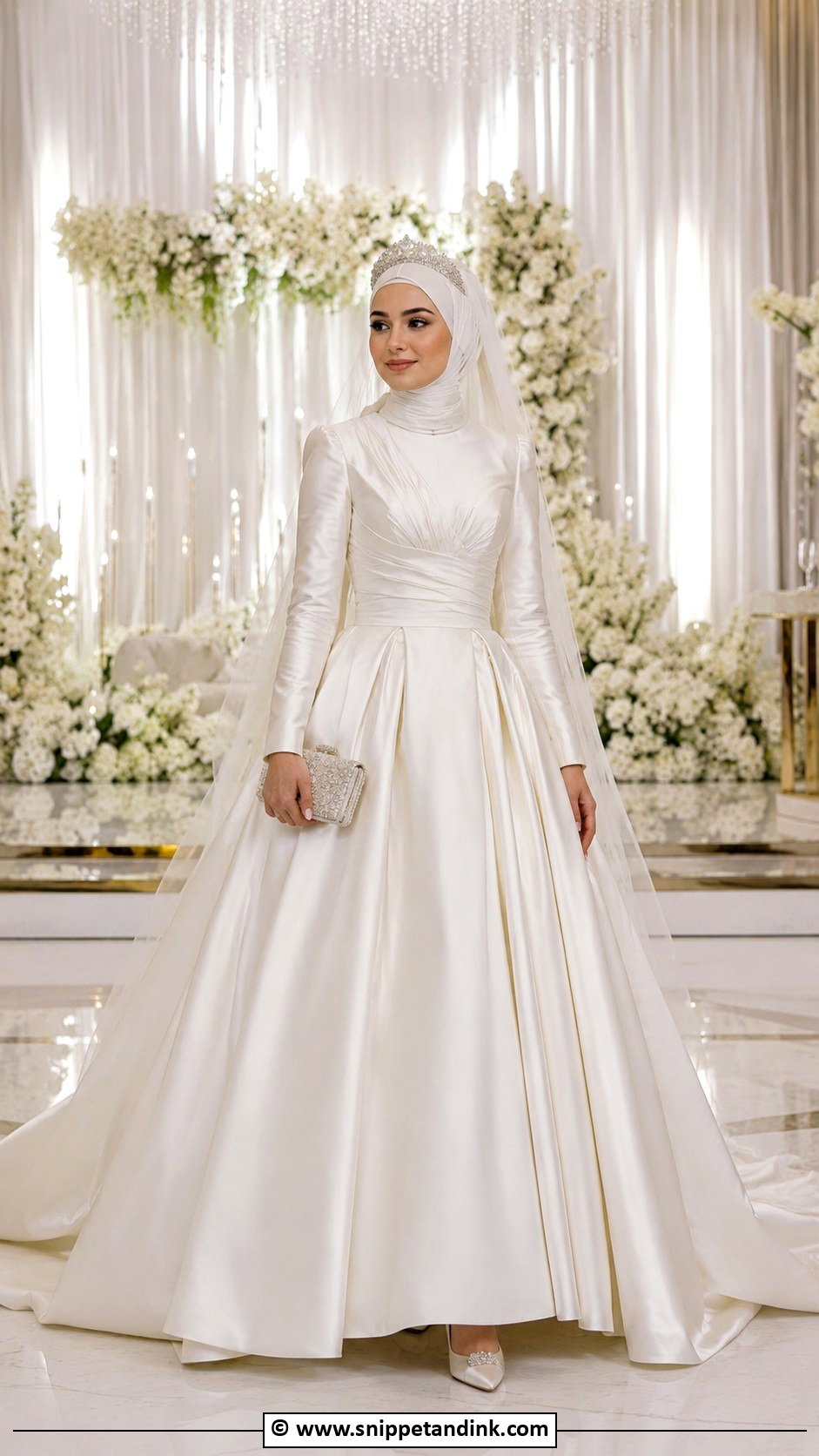
Satin reflects light, so a glossy scarf on a glossy gown turns into one shiny block in flash photos. That’s why I pair a satin ball gown with a matte chiffon or silk hijab: the contrast in texture makes both fabrics look richer. The skirt already has width, so the wrap should sit close at the jaw and shoulders. If you want a tiara, set it over the hijab and pin it through to the undercap at both temples, not just at the front. Pointed heels and a small crystal clutch finish it. Clean seams and a defined waist matter more here than any accessory.
3. Bride Hijab With Pearl Veil
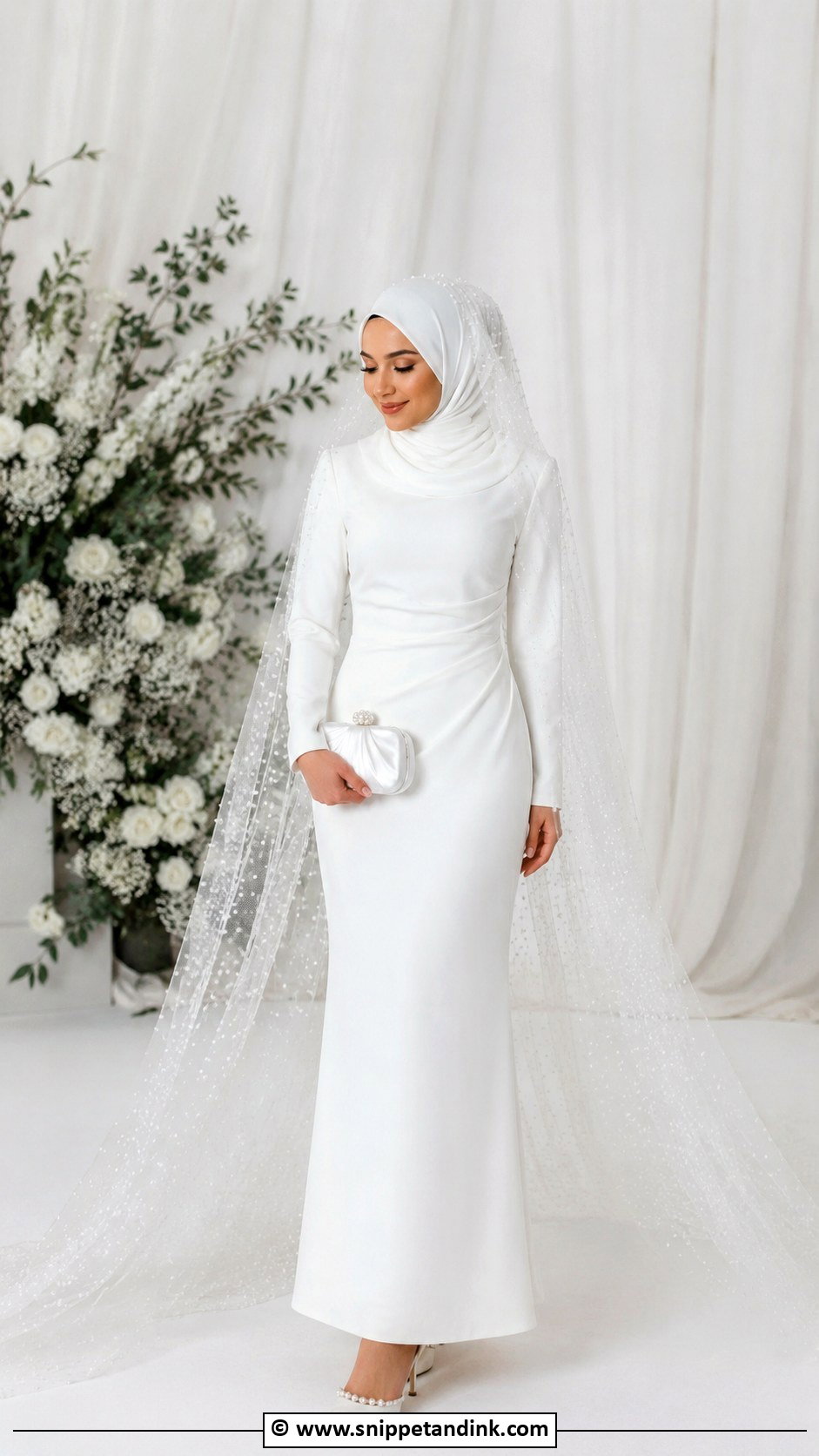
Pearl veils are heavier than they look. Every pearl adds weight at the edge, and on a slippery chiffon base the veil slowly drags the whole wrap backward over an hour or two. I fix this with a jersey or cotton undercap and a comb sewn into the veil that grips the cap, not the scarf. Keep the base hijab smooth and close-fitting so the veil drops cleanly from the crown. Repeat the pearls once more at most, on the shoes or the clutch. Small pearl studs work if you wear earrings outside the scarf; otherwise let the veil carry the detail.
4. Bride Hijab With Crystal Crown
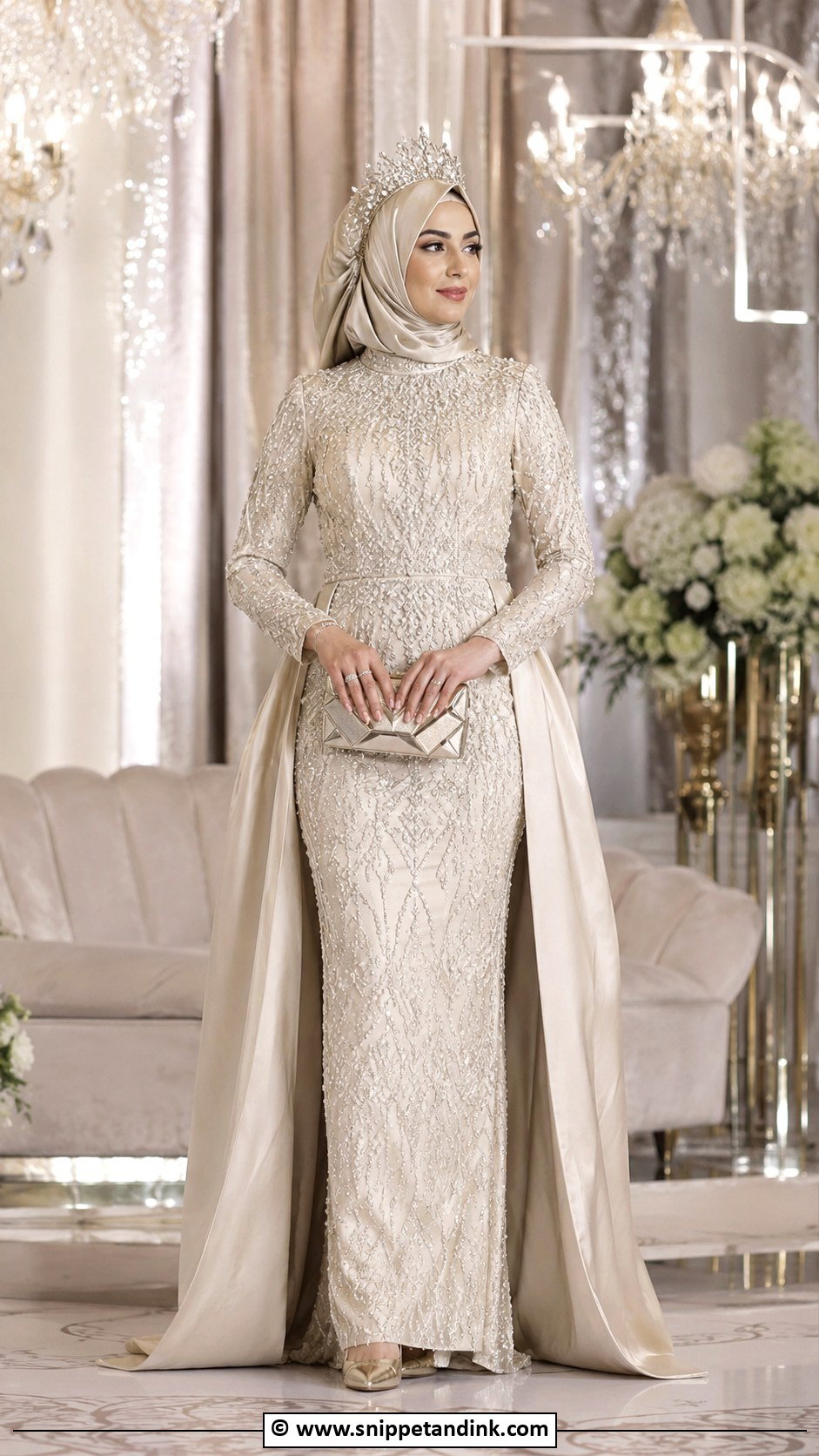
A crown is the accessory most likely to slide on a hijab, because the band has nothing to grip. I pin it at four points through to the undercap and set it slightly back from the hairline, so the weight rests on top of the head instead of pressing on the forehead. It looks most connected when the gown or abaya repeats crystal on the bodice, sleeves or hem. Keep everything else restrained: metallic heels, a structured clutch, one good ring. Wear it for a full hour at your trial. A crown that pinches at minute five will be a headache by the reception.
5. Bride Hijab With Long Tulle Veil
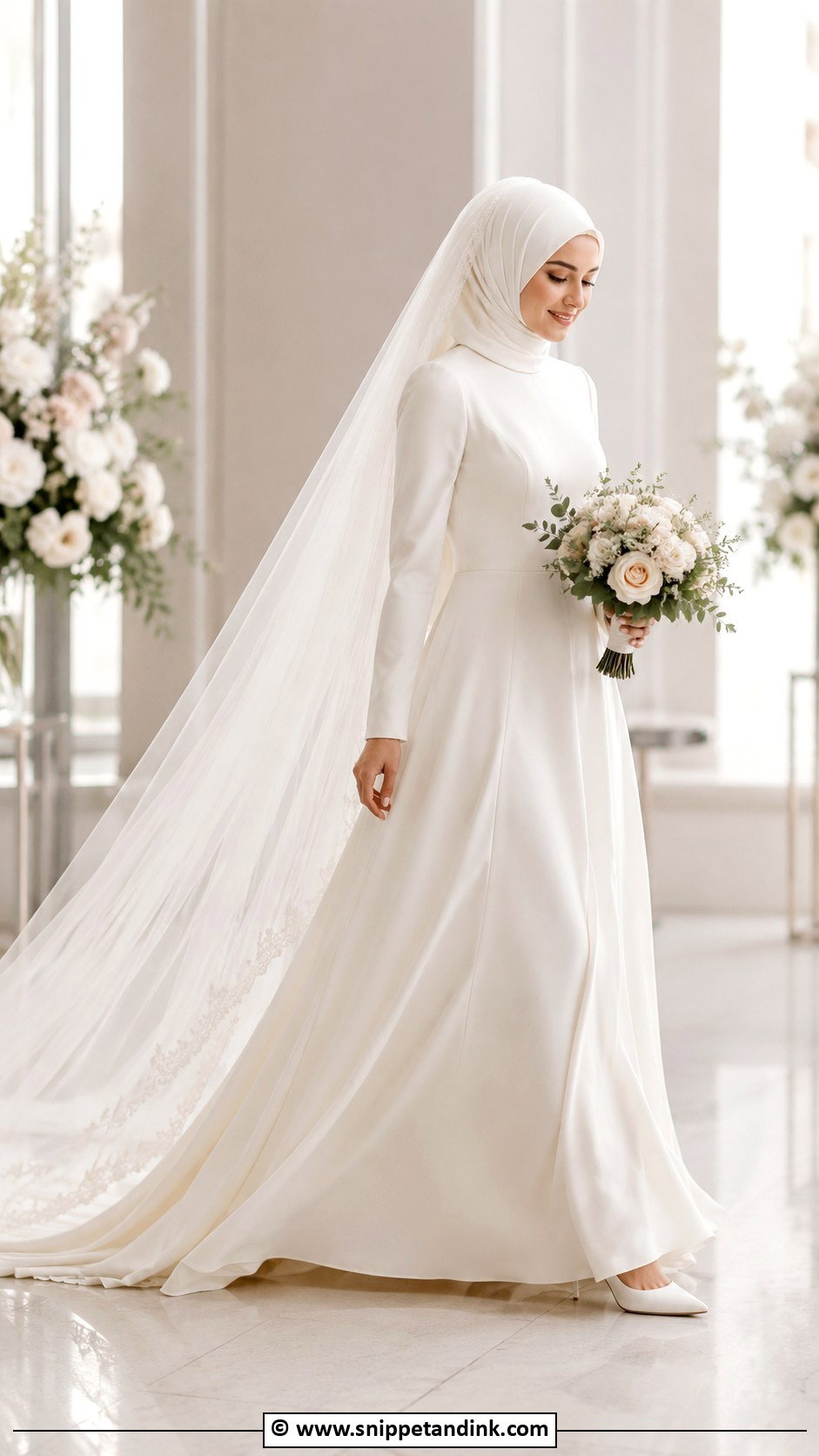
A long tulle veil is forgiving over a hijab, but only if the base underneath is matte. Shiny chiffon under sheer tulle shows every pin and fold through the net, and flash photography exaggerates it. Matte chiffon or jersey disappears beneath it. Keep the front of the wrap smooth and let all the movement come from the back. A-line, fitted crepe and modest mermaid shapes all suit it. Outdoors, have someone ready to gather the veil when the wind picks up, because tulle catches air like a sail and pulls on every pin.
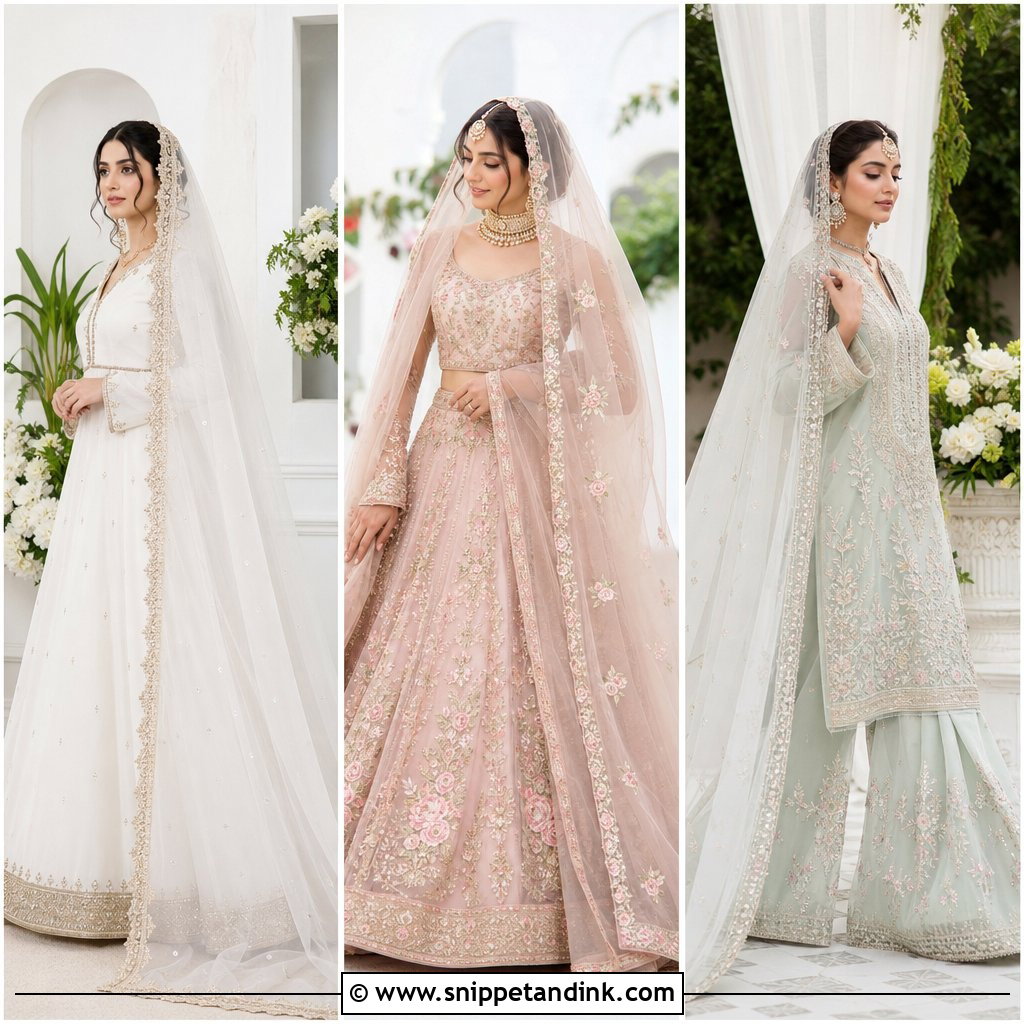
6. Bride Hijab With Embroidered Dupatta
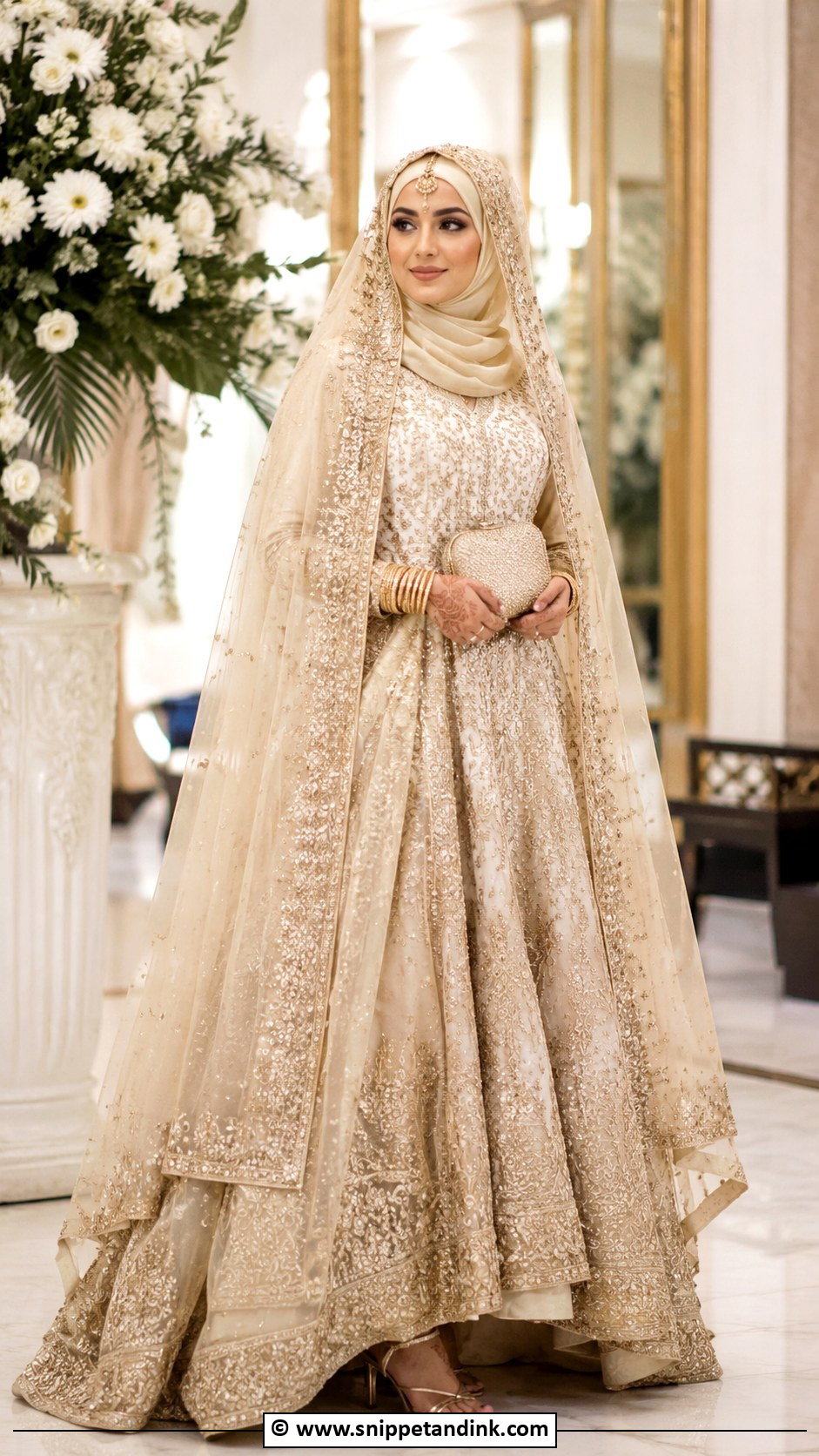
This is the layering I use most for South Asian outfits: a plain base hijab first, then an embroidered dupatta draped over the head so the border frames the face. The base has to be lightweight. Dupattas with zari or stonework can weigh far more than you’d guess, and they pull everything backward. I pin the dupatta through to the undercap at the crown and once at each shoulder. Match your shoes to the embroidery thread rather than the fabric. A tikka or jhoomar is worth adding only if your tradition calls for it.
7. Bride Hijab With Red Lehenga
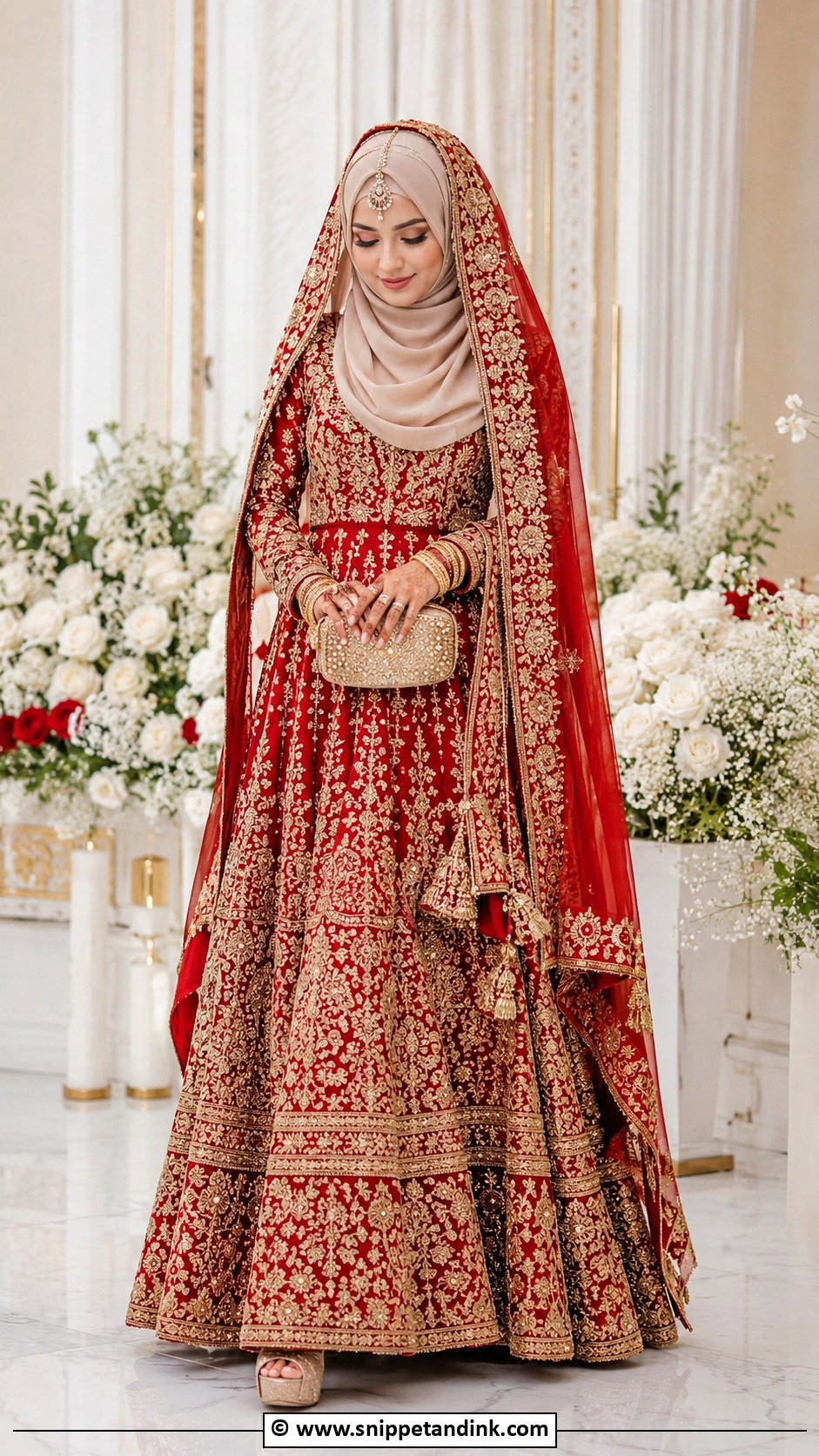
With a red lehenga, the hijab color decides how the photos read. Nude or ivory gives the face breathing room and lets the lehenga do the talking; a matching red wrap turns the whole outfit into one rich block of color. Red dyes vary enormously between fabrics, so I always hold scarf and lehenga side by side in daylight before committing. Drape the dupatta so the border sits along the crown or over one shoulder. When the lehenga is heavily worked, use a plain hijab fabric, never a crinkled or textured one. Gold heels, stacked bangles and a beaded clutch complete it.
8. Bride Hijab With Blush Pink Dress
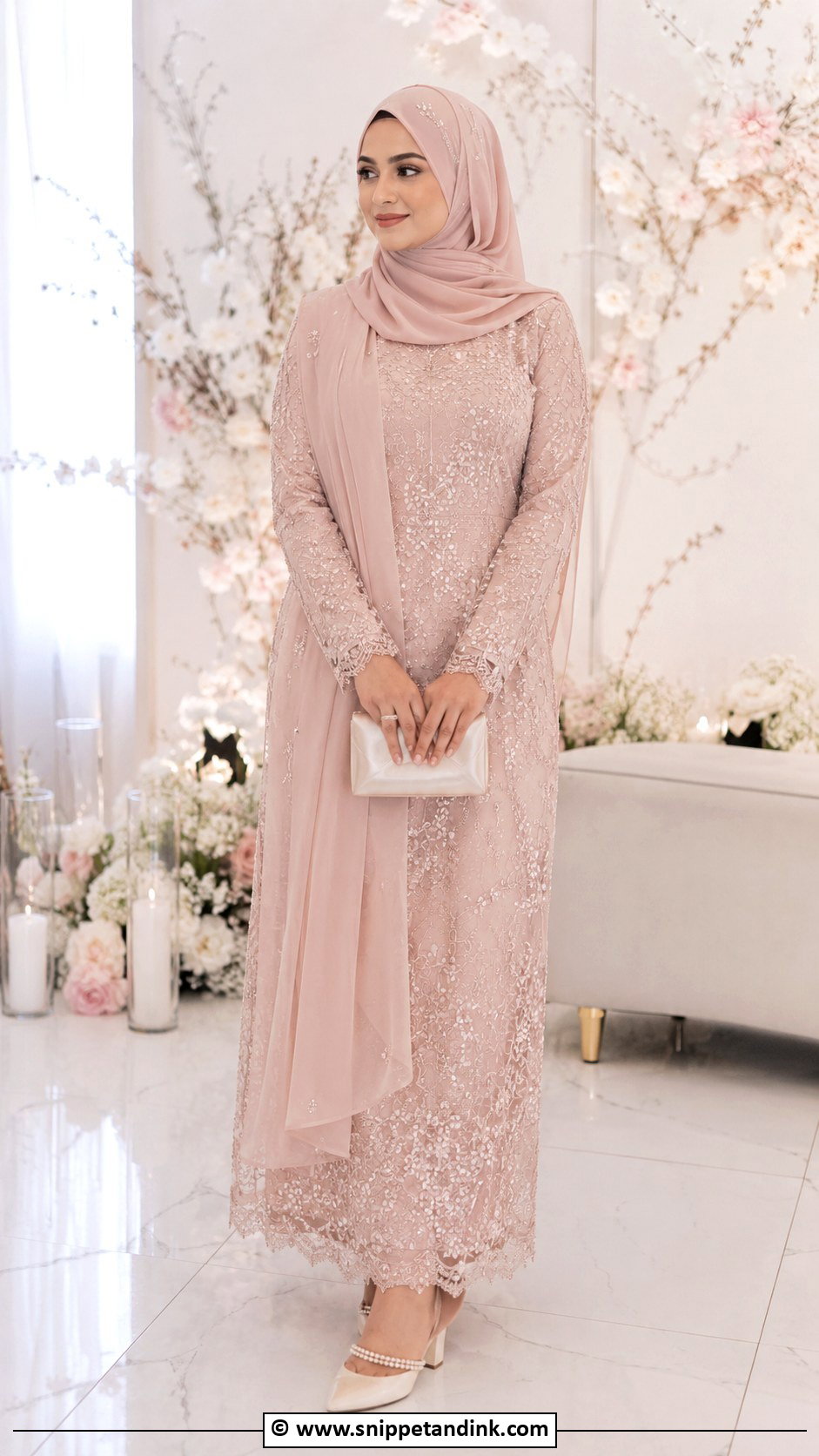
Blush is hard to match because pinks shift between fabrics; the same dye looks deeper in satin than in chiffon. If an exact match isn’t possible, go a touch lighter, toward rose ivory or dusty pink, rather than settling for a near miss that reads as a mistake. Soft drapes suit this color better than sharp, structured wraps. In daylight it looks fresh, but warm reception bulbs can push blush toward peach, so check your venue lighting before you commit.
9. Bride Hijab With Champagne Gown
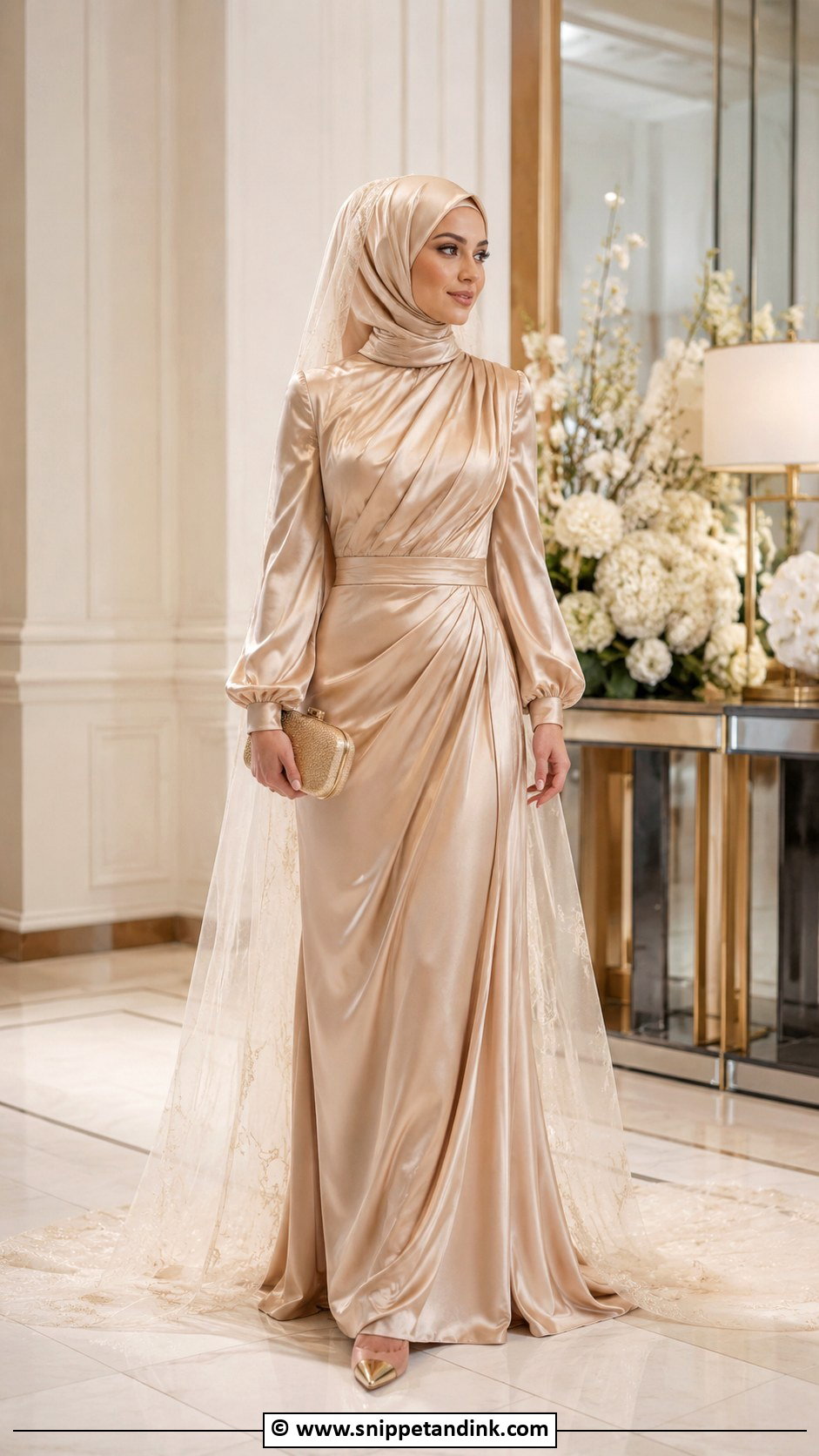
Champagne sits between warm and cool, which is why it flatters so many skin tones. The beading tells you which metal to use: gold thread calls for gold accessories, silver or crystal work needs cool ones. I’d match the hijab exactly in silk, or go a shade lighter in beige chiffon so the face looks lit rather than washed out. A soft ivory veil flowing from the back adds bridal weight. It’s the look I suggest to brides who want warmth instead of white but still want everyone to know who the bride is.
10. Bride Hijab With Ivory Abaya Dress
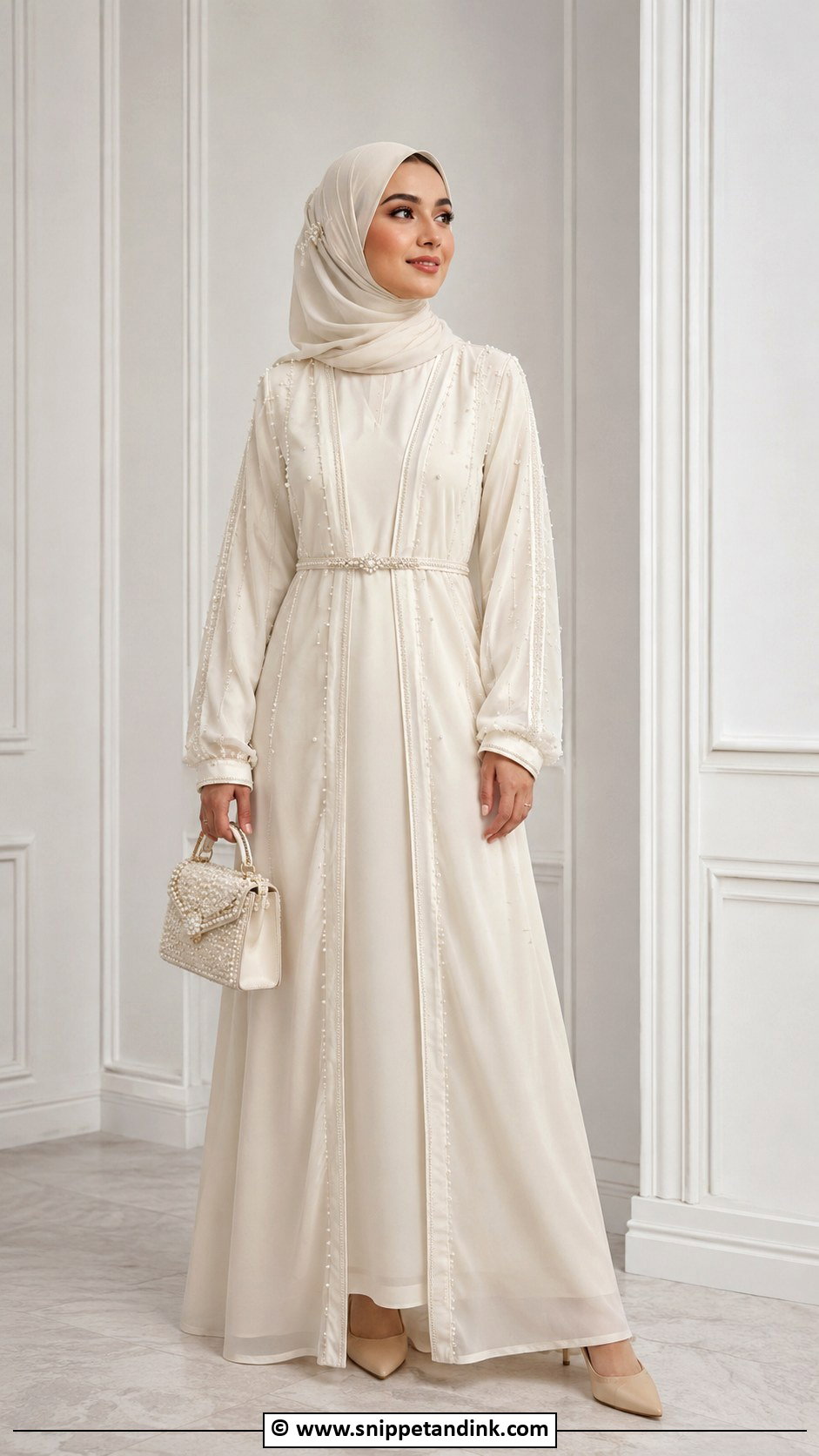
An ivory abaya dress becomes bridal through its details: lace panels, pearl buttons, embroidery or soft beadwork. Many abayas are cut loose, so I often add a thin belt to show the waist. Without it, the silhouette can look flat in full-length photos. Match the hijab in the same fabric family, chiffon with chiffon or silk with silk, so the two pieces read as a set. Have the hem taken up with your wedding shoes on, because abayas tend to puddle at the floor and catch on stairs.
11. Bride Hijab With Mermaid Dress
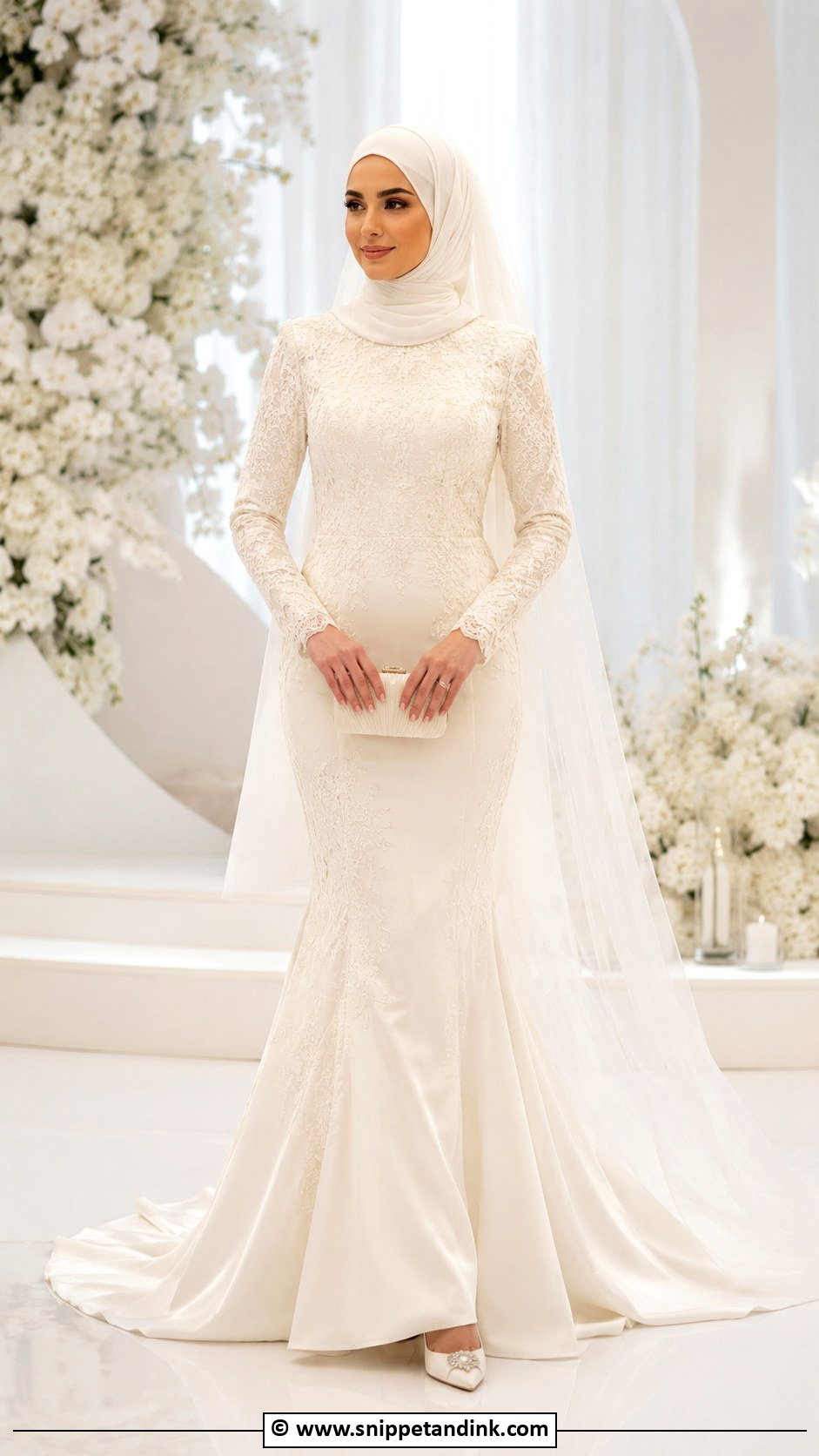
A mermaid dress puts all the drama below the waist, so any bulk at the shoulders makes a bride look top-heavy. I wrap the hijab close and tuck the ends in rather than letting them fall across the chest. A long veil balances the fitted lower half from behind. Lace sleeves or beading call for a plain scarf, while a simple crepe mermaid can take a pearl pin or a crystal comb at the side. Practice sitting and climbing stairs in it. A narrow knee cuts your stride more than most brides expect.
12. Bride Hijab With A Line Dress
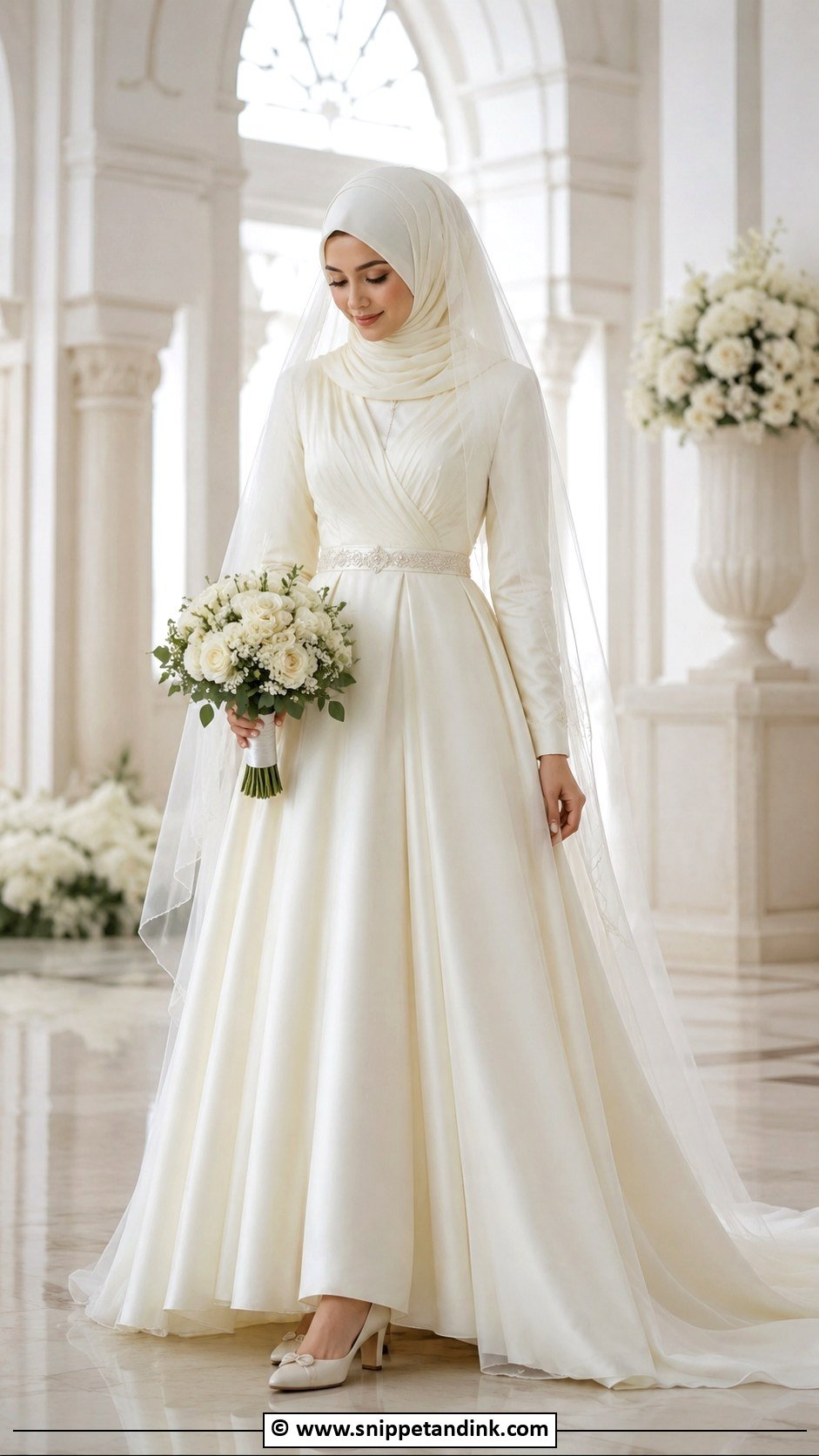
The A-line is the easiest silhouette I dress with a hijab. It defines the waist, skims the hips and suits most body shapes. A chiffon hijab in the dress’s exact shade keeps the outline clean, and with a plain bodice I let the scarf drape slightly over one shoulder for a little asymmetry. Mid-height heels make sense here, since there’s no huge skirt to balance.
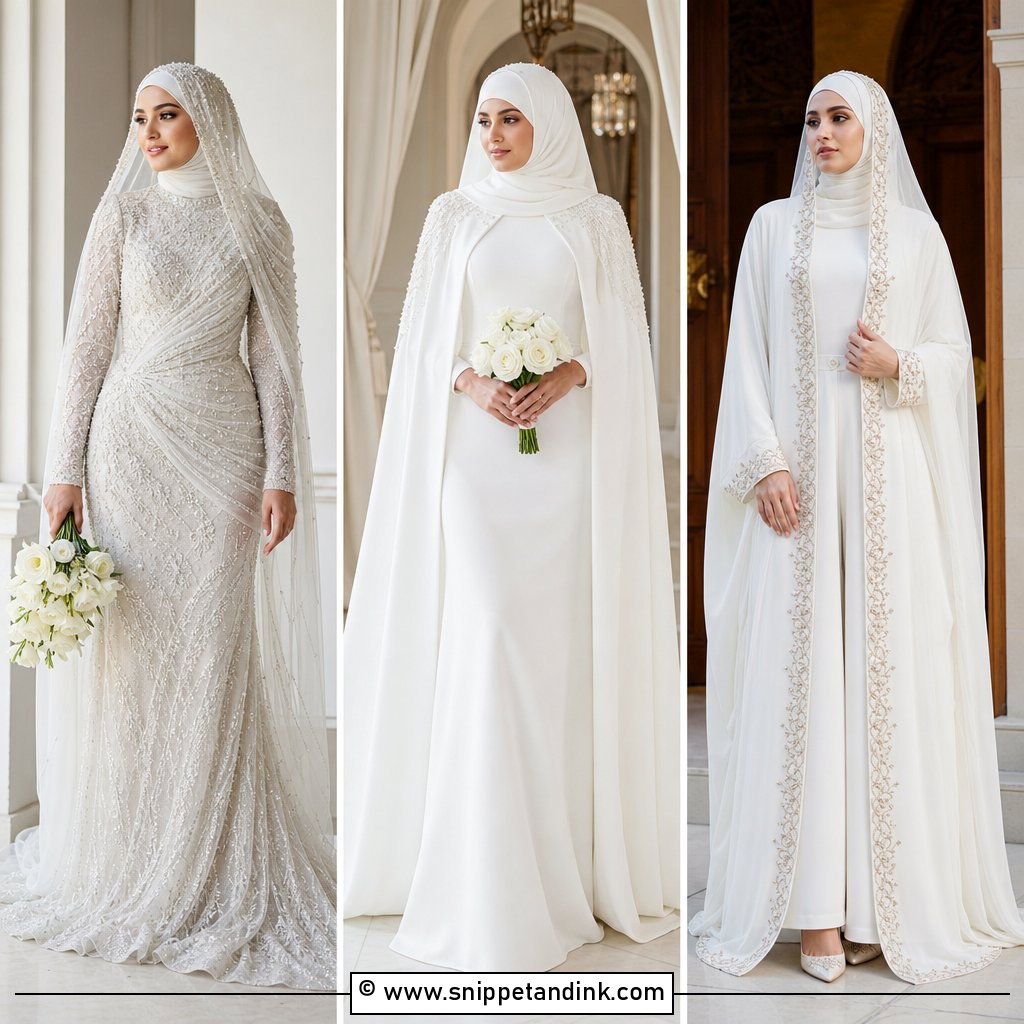
13. Bride Hijab With Cape Dress
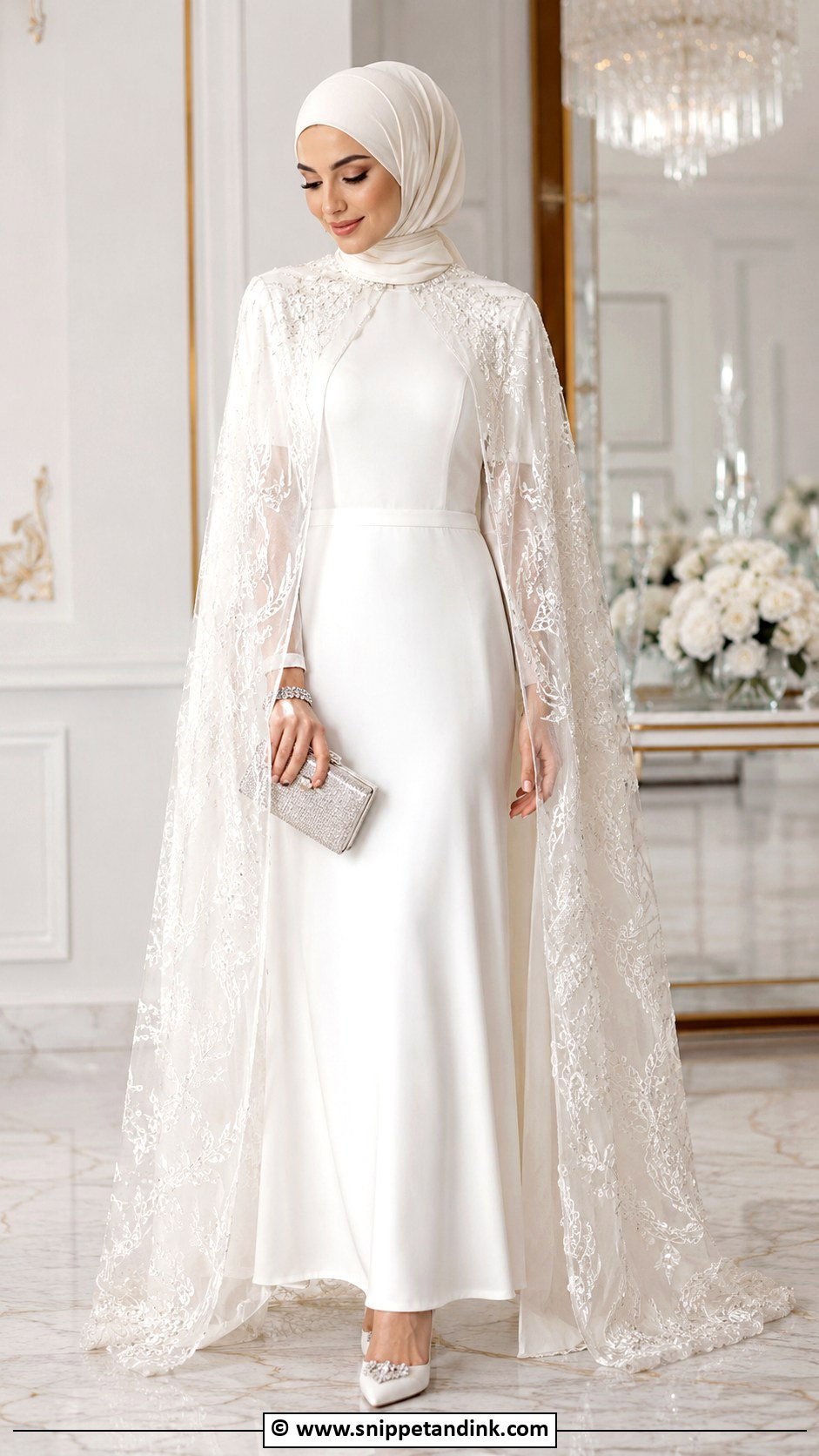
A cape changes the job of the hijab. It already covers the arms and shoulders, so the scarf only needs to frame the face and lie flat at the neck where the cape attaches. A crepe or satin gown with a sheer embroidered cape reads polished at a formal reception. Skip necklaces entirely; they vanish under the cape and snag the embroidery. Check where the cape fastens, too. A clasp at the back of the neck sits on top of the hijab, and unless the wrap is flat there, the cape lifts and gapes.
14. Bride Hijab With Beaded Gown
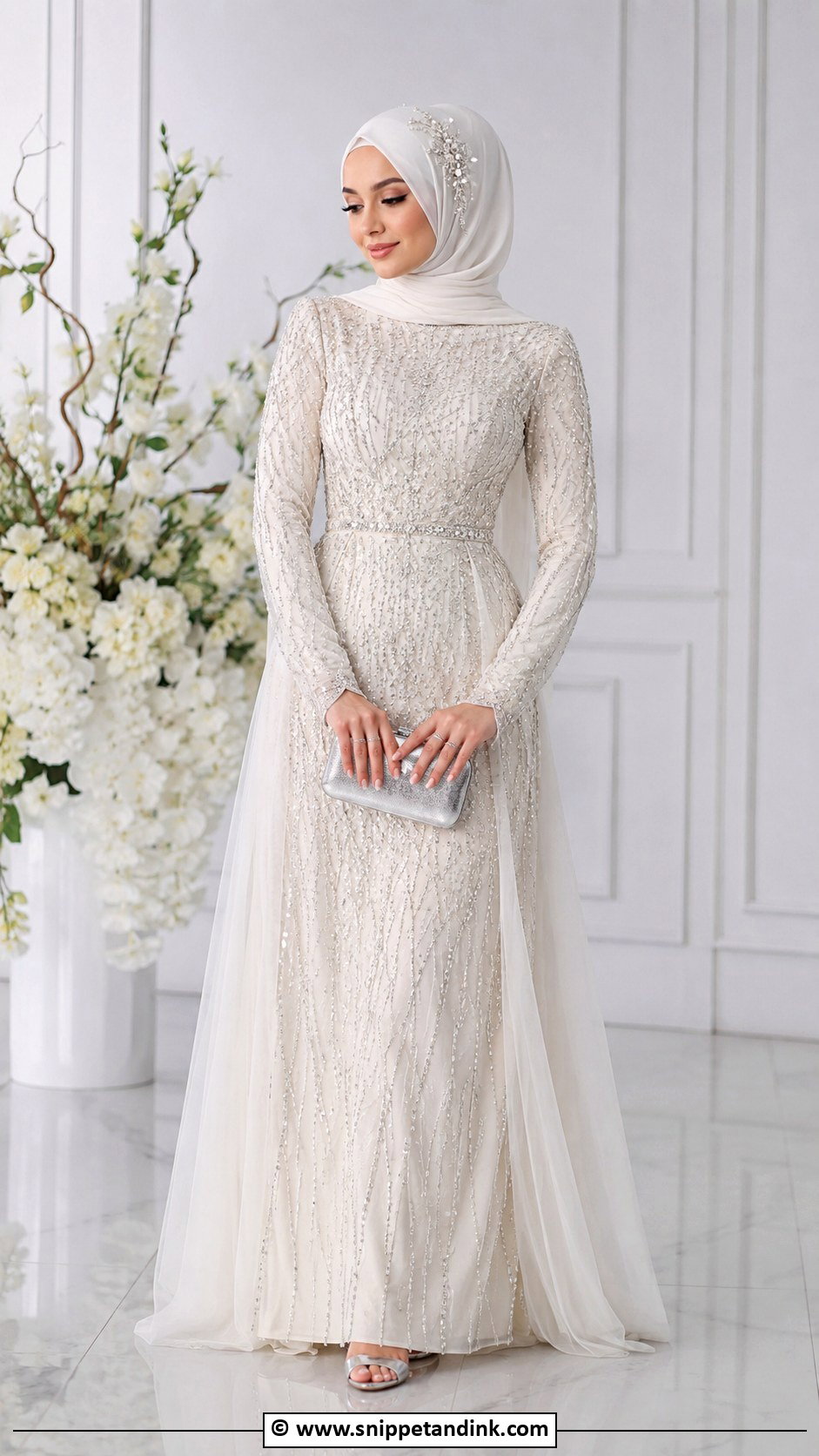
Beaded gowns are heavy, and under hot reception lights comfort becomes the real issue by evening. So I always reach for the lightest hijab fabric that still looks finished, usually a fine chiffon or silk. Follow the bead tone: silver beading with cool ivory or white, gold beading with champagne or warm ivory. One decorative pin or one small headpiece is plenty next to that much sparkle. And wear shoes you’ve already broken in.
15. Bride Hijab With Floral Embroidery Dress
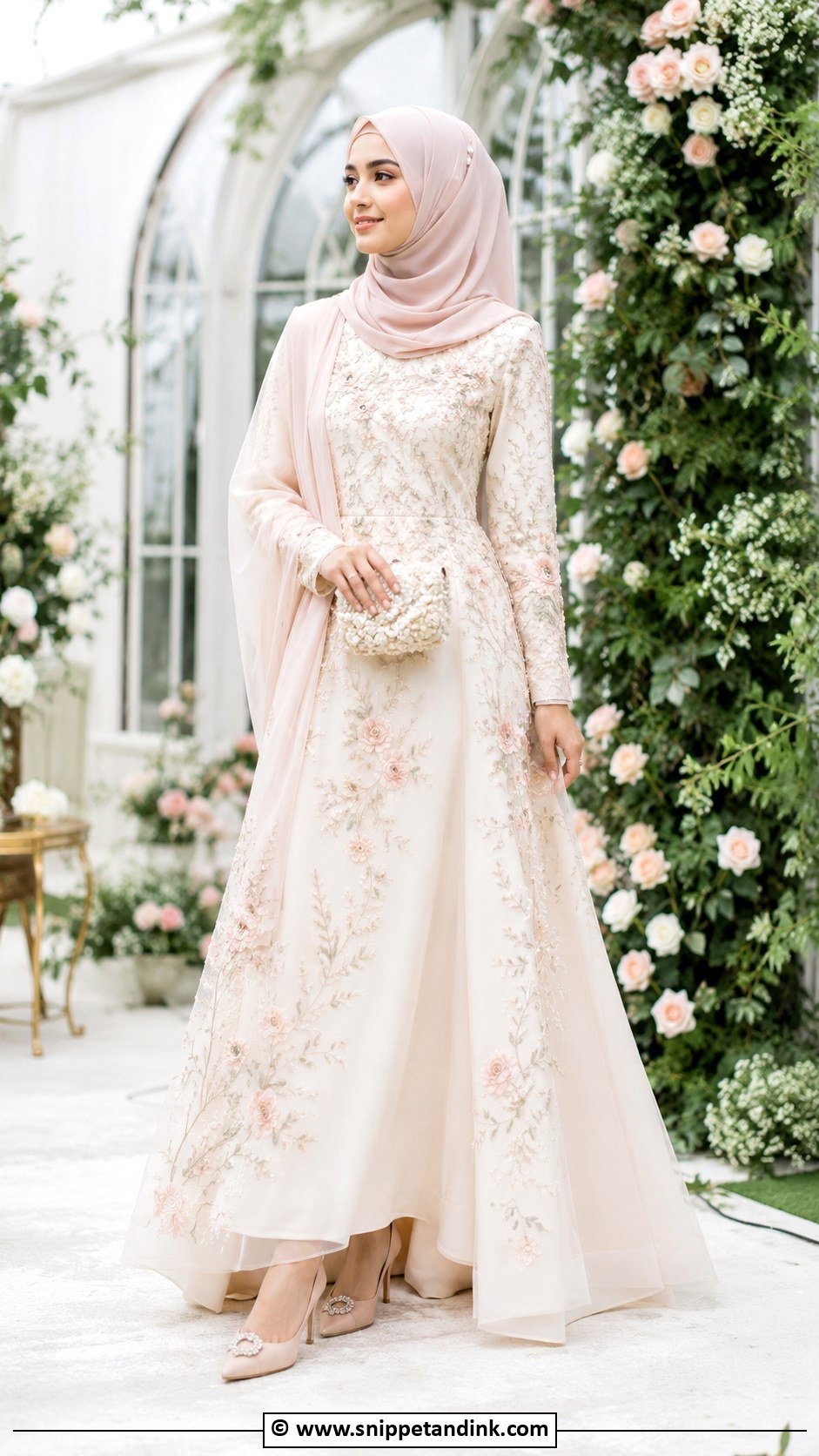
Embroidered florals hand me an easy color source. I pull one shade out of the thread, often sage, blush or a pale champagne, and use it for a plain hijab, which ties the outfit together without matching it literally. It suits garden ceremonies and daytime Nikahs especially. The one thing I’d stop is adding fresh flowers or floral clips near the face. With blooms already stitched on the dress, it starts to look like a costume. Keep pins small, in pearl or crystal.
16. Bride Hijab With Gold Jewelry
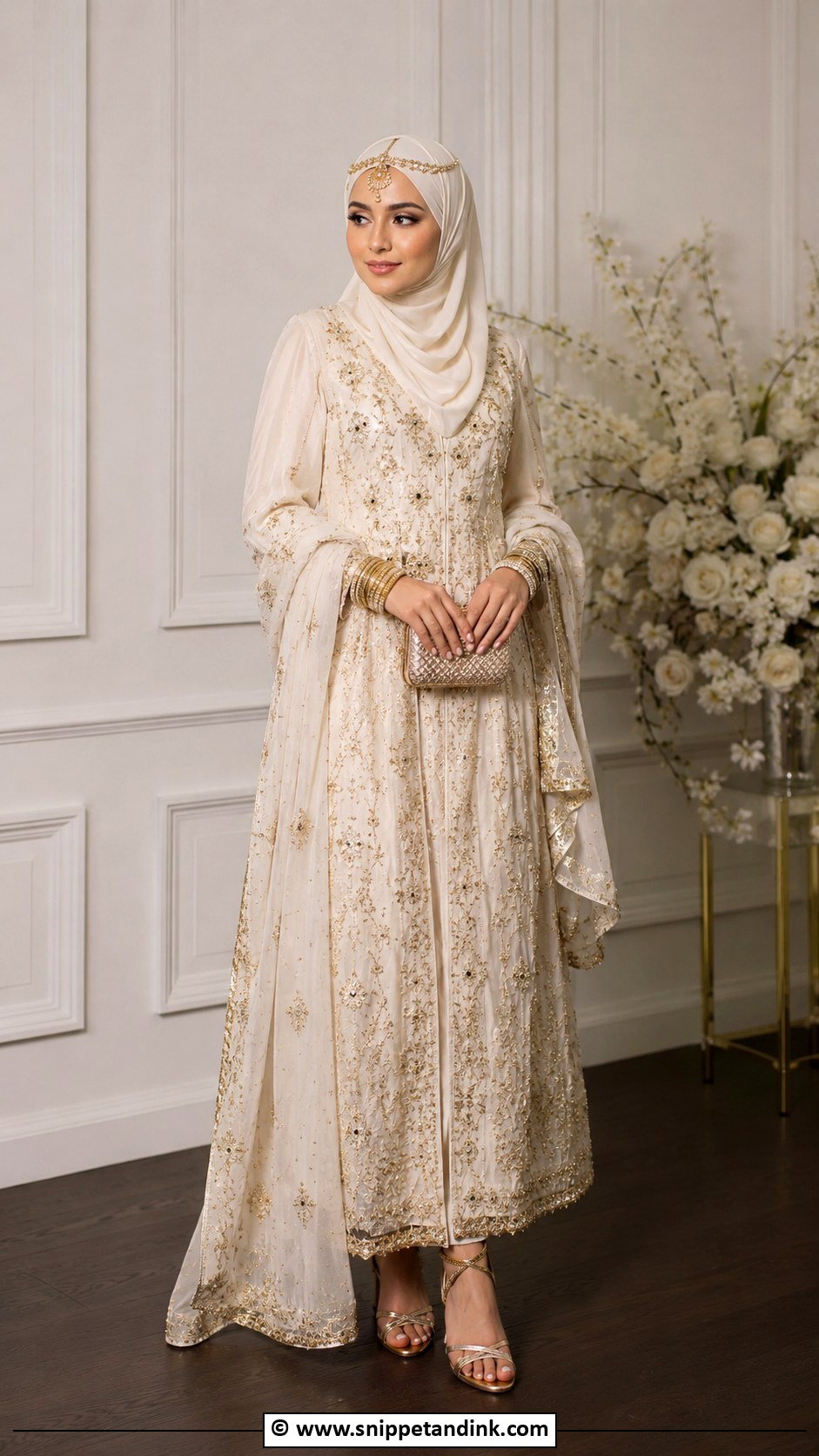
Gold jewelry over a hijab depends on the wrap more than on the jewelry. Tikkas, jhoomars and statement earrings worn outside the scarf need a smooth, firm base at the forehead and sides, with no folds for chains to sink into. At a trial I place the jewelry first and then adjust the wrap around it, not the other way round. It sits well with cream, ivory, red, emerald and champagne outfits. If the dress is heavily embellished, choose one focal piece near the face and keep the rest small: gold heels, bangles, a clutch with a little metallic trim.
17. Bride Hijab With Silver Jewelry
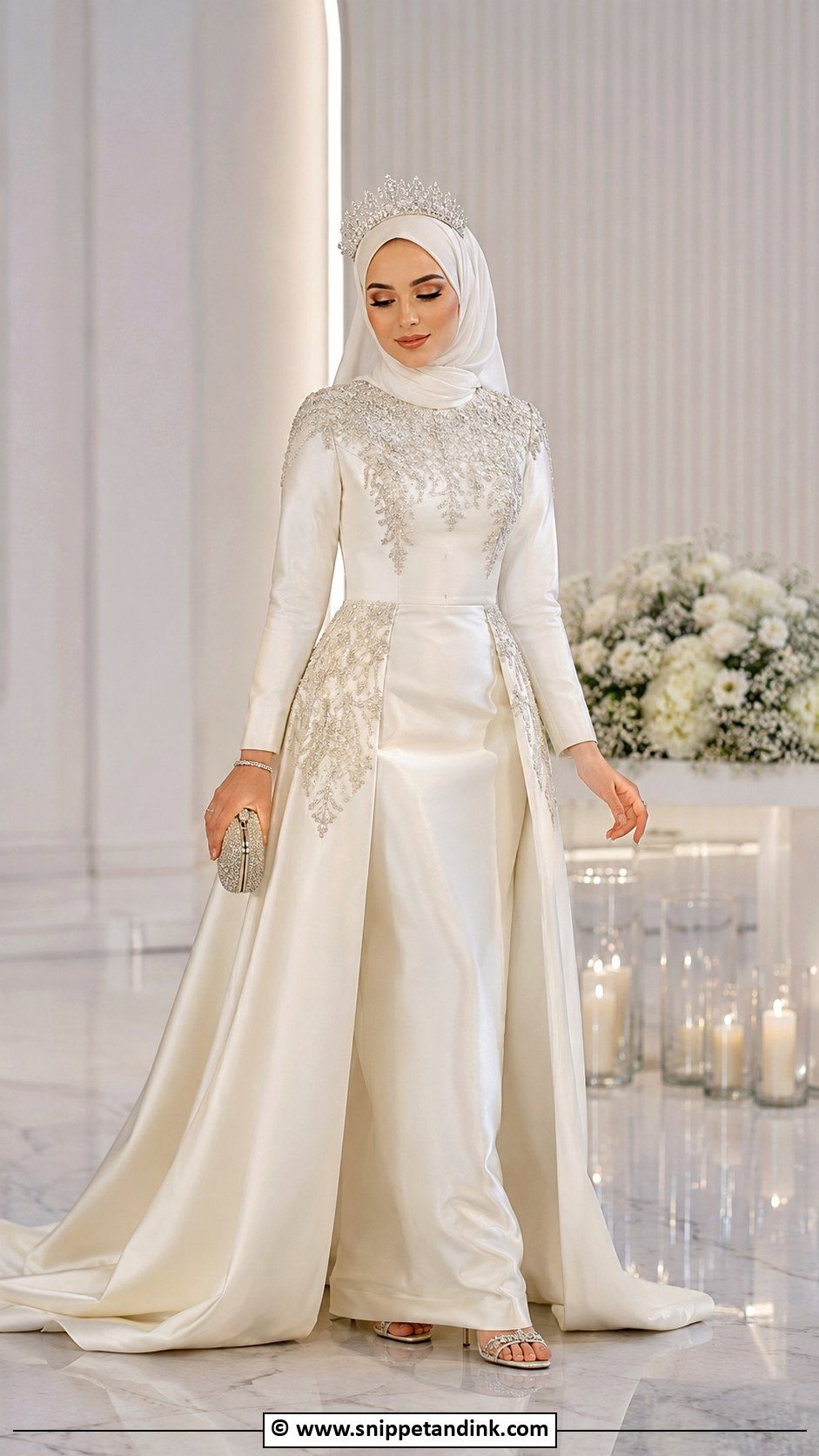
Silver belongs with cool palettes: white, icy blue, lavender, soft gray and cool ivory. A silver headpiece catches light beautifully at evening receptions and in winter, when there’s little warm daylight to compete with it. The practical concern is weight. Metal headpieces creep forward on chiffon unless they’re anchored through to the undercap, so I pin them at the sides before any veil goes on. Silver heels and a crystal clutch finish it.
18. Bride Hijab With Maang Tikka
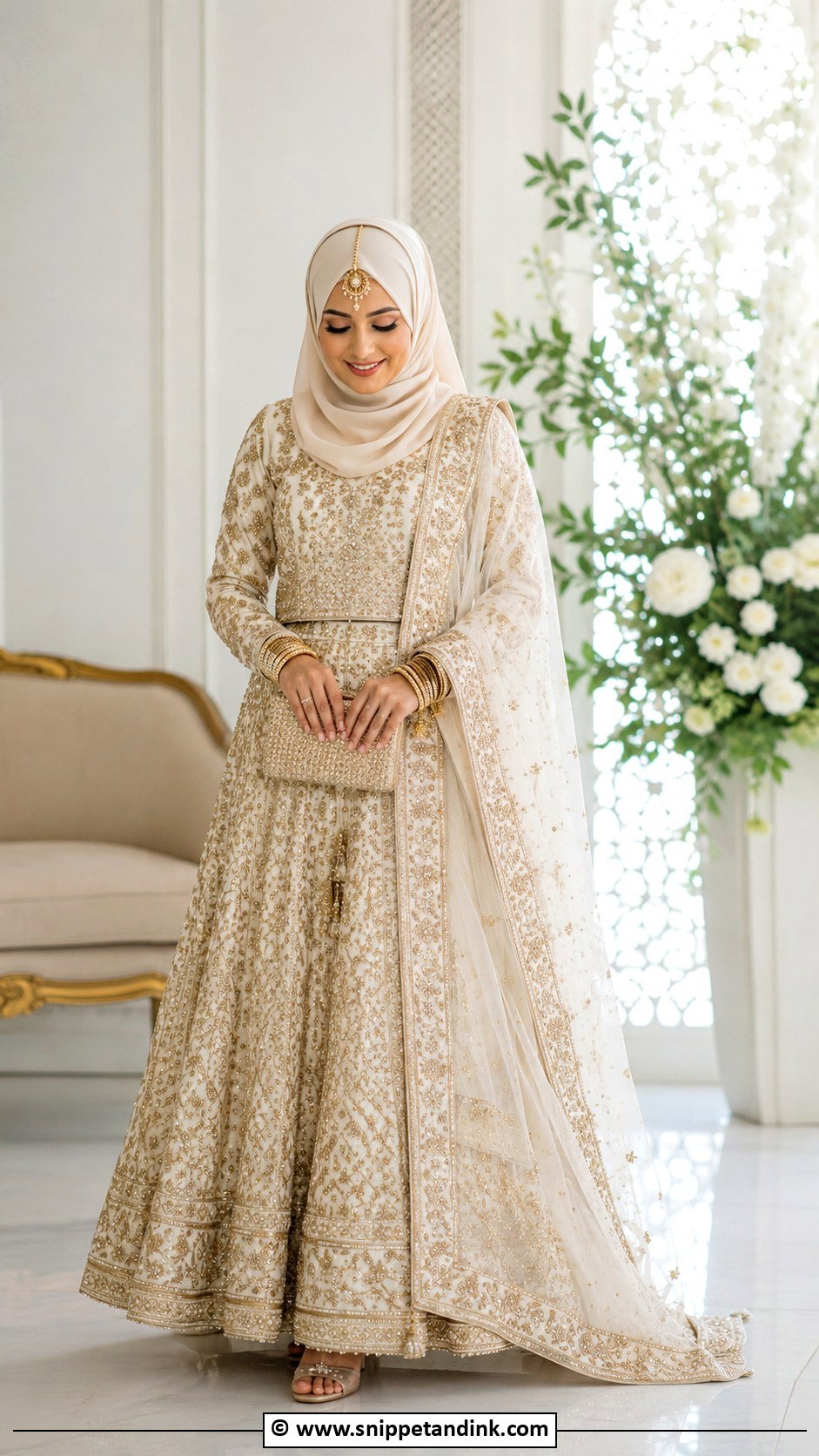
Placing a maang tikka over a hijab is fiddly, and I always do it before the dupatta goes on. The wrap has to be very smooth across the forehead so the chain lies flat down the center; one ripple and the pendant tilts. I hook the chain to the undercap with a small pin at the crown, hidden under the drape. It goes with lehengas, shararas, anarkali gowns and embroidered maxi dresses. Match the tikka to the embroidery metal, and keep side pins out of sight for clean close-ups.
19. Bride Hijab With Jhoomar
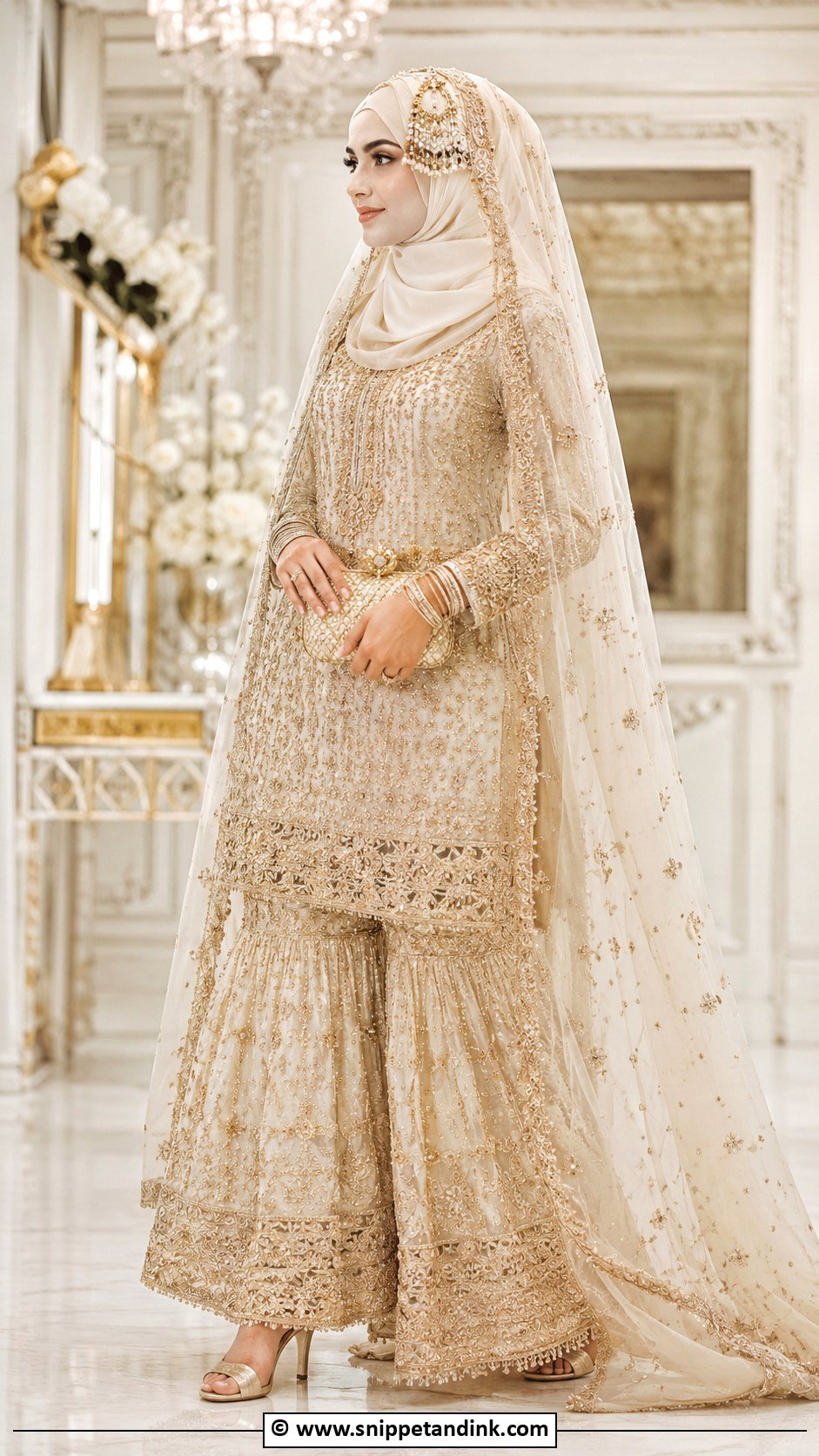
A jhoomar hangs from one side, so it pulls unevenly on the wrap. I secure it over an undercap with two pins, one at the hook and one lower along the chain, which stops it swinging forward when you lean in for a hug. It suits the heavily embroidered frocks, lehengas and ghararas common in Pakistani and South Asian bridal dressing. Drape the dupatta lightly over the crown so it doesn’t bury the jhoomar, and once it’s in, leave every other head accessory off.
20. Bride Hijab With Turkish Gown
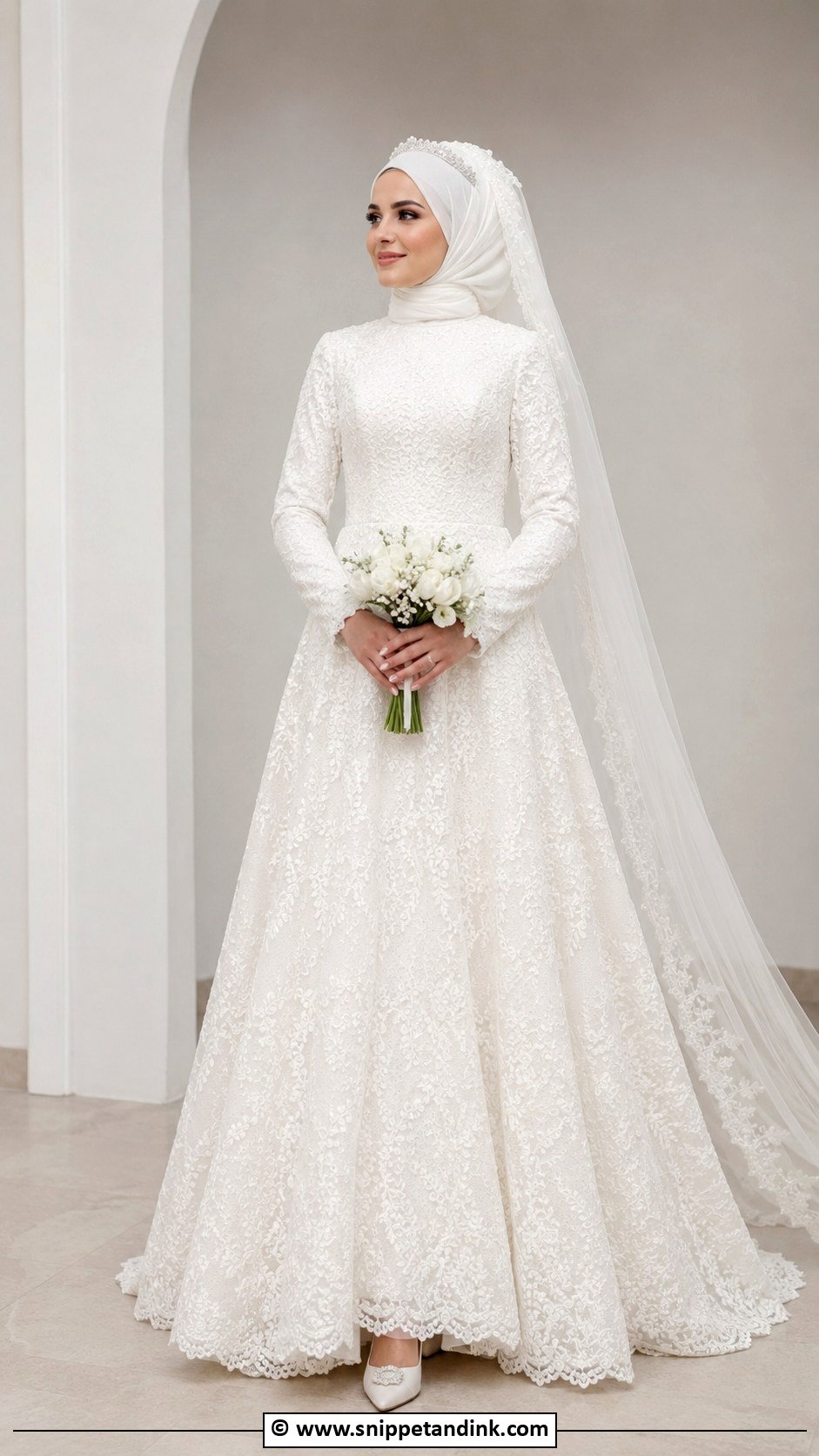
Turkish-style bridal gowns lean toward long sleeves, high necks and restrained lace or satin. They’re designed with a hijab in mind, so the styling comes down to precision: a neat white, ivory or cream wrap and a long veil pinned behind the crown for height. I inspect fabric quality closely on these. In a minimal cut, a puckered seam or the plasticky shine of cheap satin shows immediately. Closed-toe heels, a simple bouquet and pearl or crystal pieces are all it needs.
21. Bride Hijab With Modern Minimal Dress
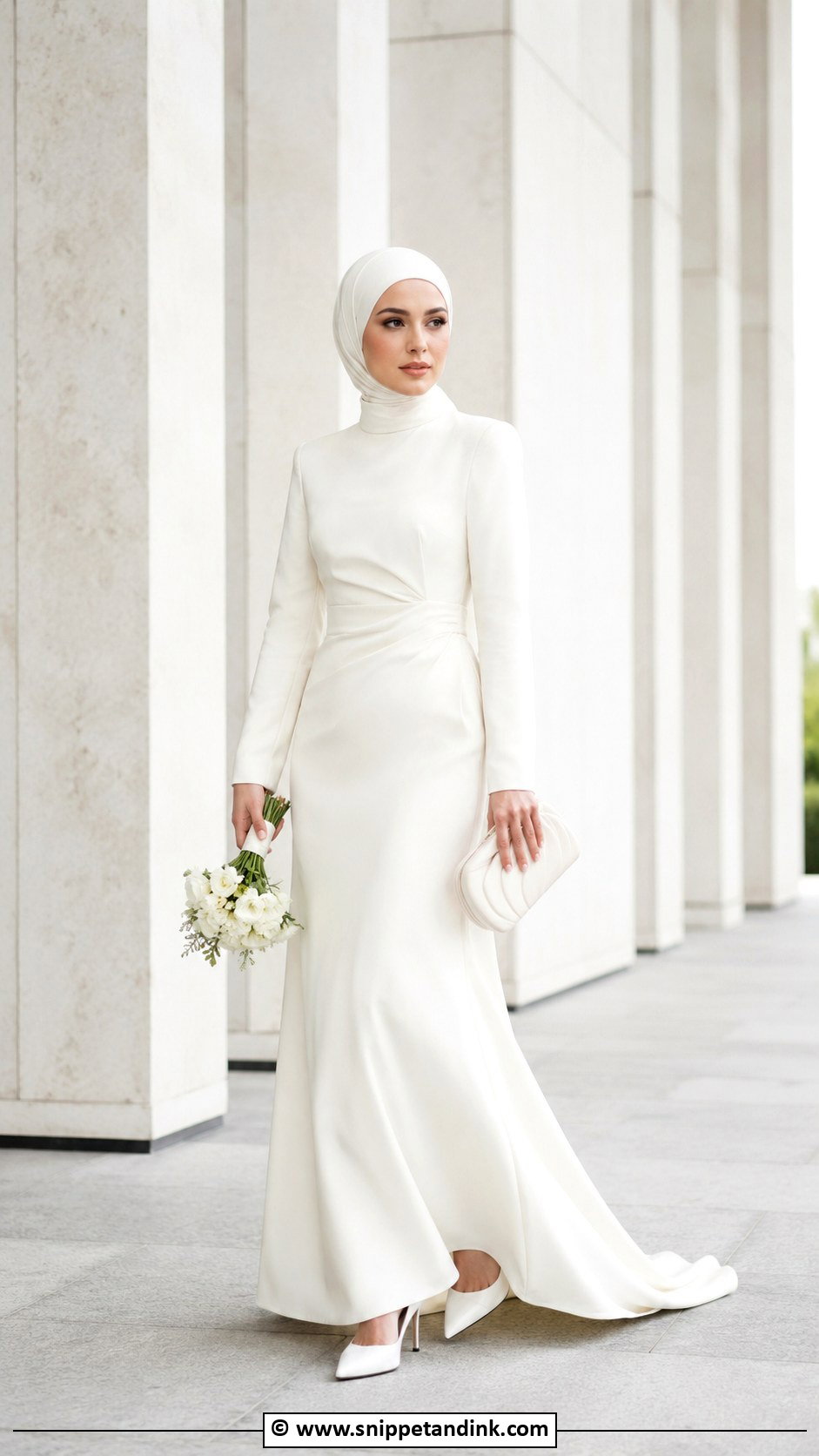
Minimal dresses are the least forgiving outfits I style. Clean crepe, a high neck, long sleeves and an unembellished skirt leave nothing to distract from the fit, so I’d spend on alterations before accessories. Wrap a matching hijab close to the face. Sculptural earrings worn outside the scarf can be the single statement, if you’re comfortable showing them. Plain pumps, a sleek clutch and a tight bouquet keep the lines clean. If you love sparkle, this one isn’t for you.
22. Bride Hijab With Layered Chiffon Dress
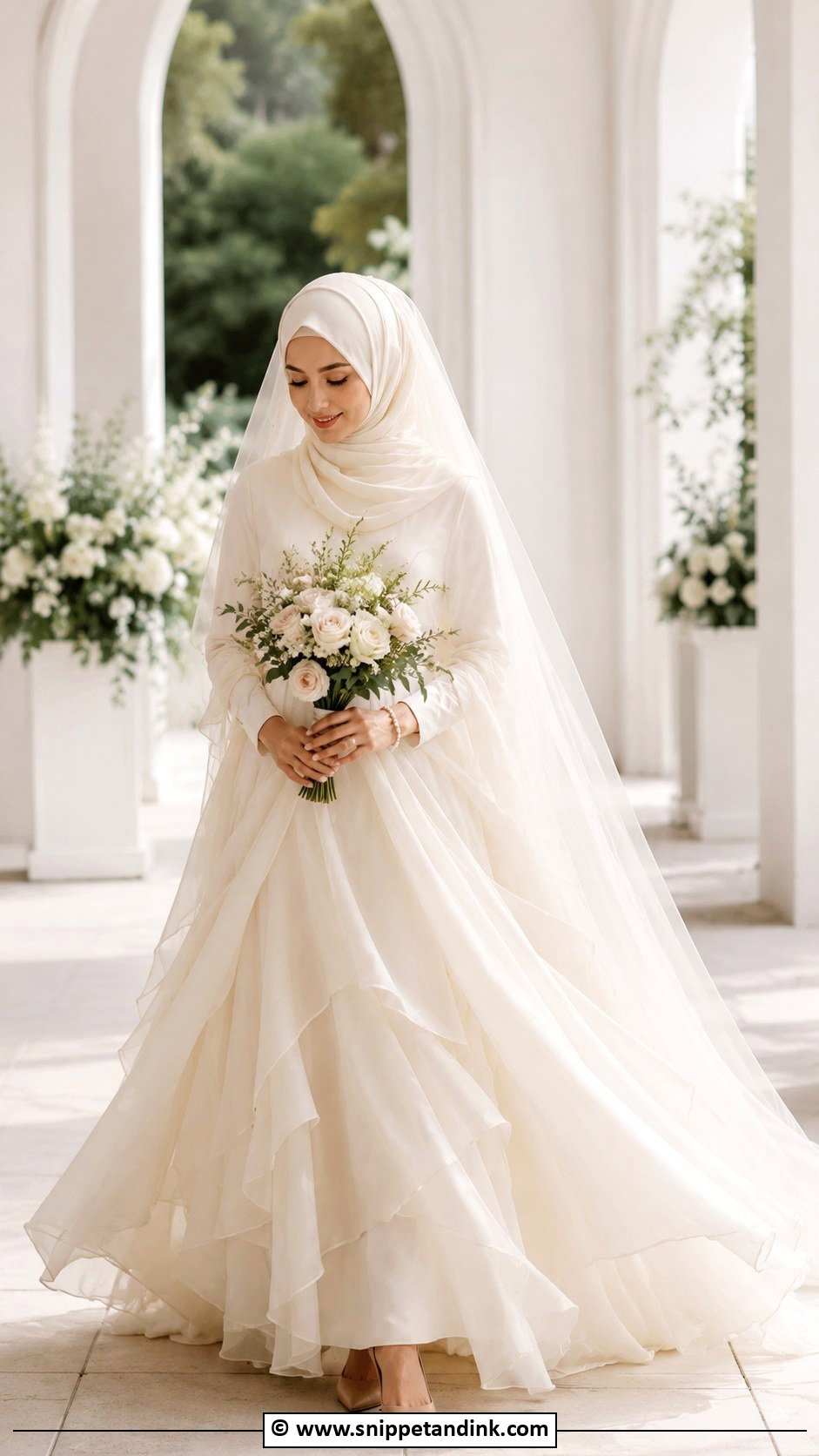
Chiffon layers move with you, which is why they suit warm-weather weddings. The trade-off is slipperiness. Chiffon on chiffon slides, so the scarf needs a grippy undercap and a few well-placed pins rather than a cluster of heavy ones. A same-shade hijab and gown keep the outline fluid from head to hem. Nude or ivory heels, a delicate veil and small pearl pieces suit it, while bulky headpieces crush the drape.
23. Bride Hijab With High Neck Dress
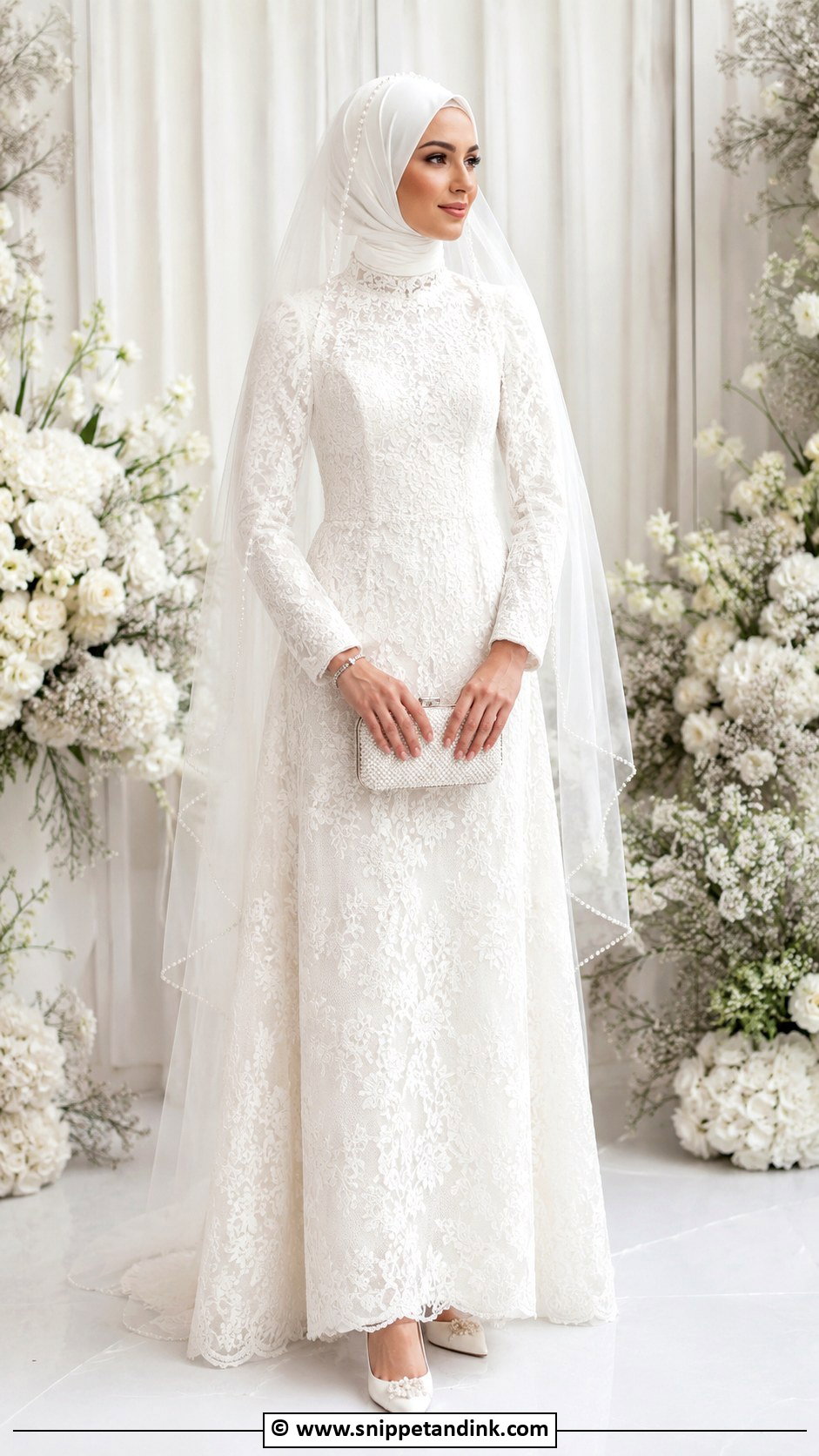
A high neck solves coverage before you start, so the wrap can be lighter. Depending on the collar, I either take the hijab over it or tuck it just around it. A stiff collar creates a ridge when you wrap over it, so try both ways in the mirror. A lace or beaded bodice wants a plain scarf; a plain bodice can carry a pearl-trimmed veil or a crystal pin. Of all 25 outfits, this is one of the most secure, which counts when you’ll be greeting guests for hours.
24. Bride Hijab With Modest Jumpsuit
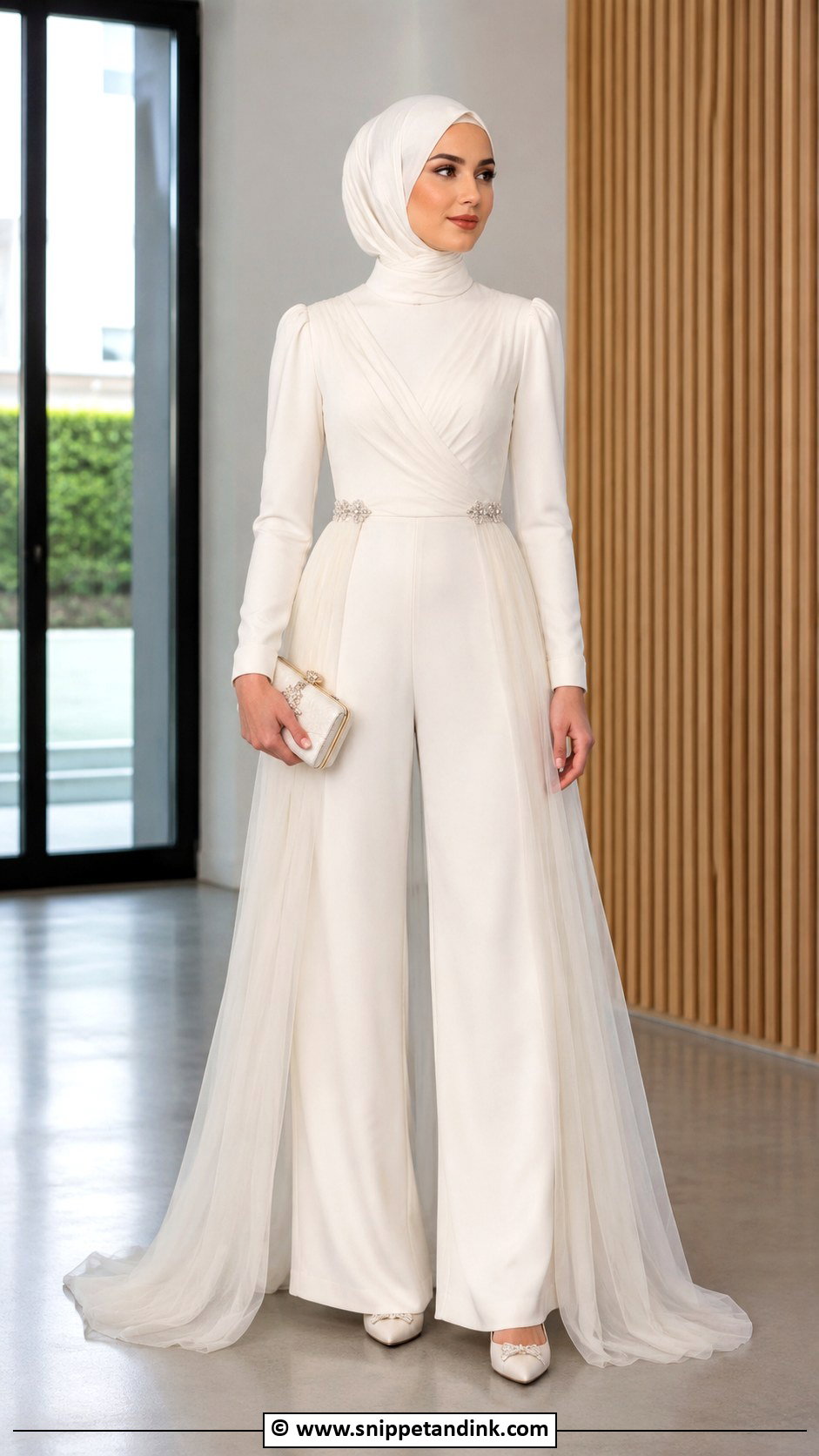
A bridal jumpsuit suits civil ceremonies, receptions or a second outfit change. Look for wide legs, long sleeves and a tailored waist in white, ivory or champagne. Wide-leg trousers need their hem set with your exact shoes, or they drag on the floor and fray. A detachable overskirt, cape or long veil adds a sense of ceremony over a soft hijab. You’ll walk, sit and dance more easily in this than in any gown on the list.
25. Bride Hijab With Reception Dress
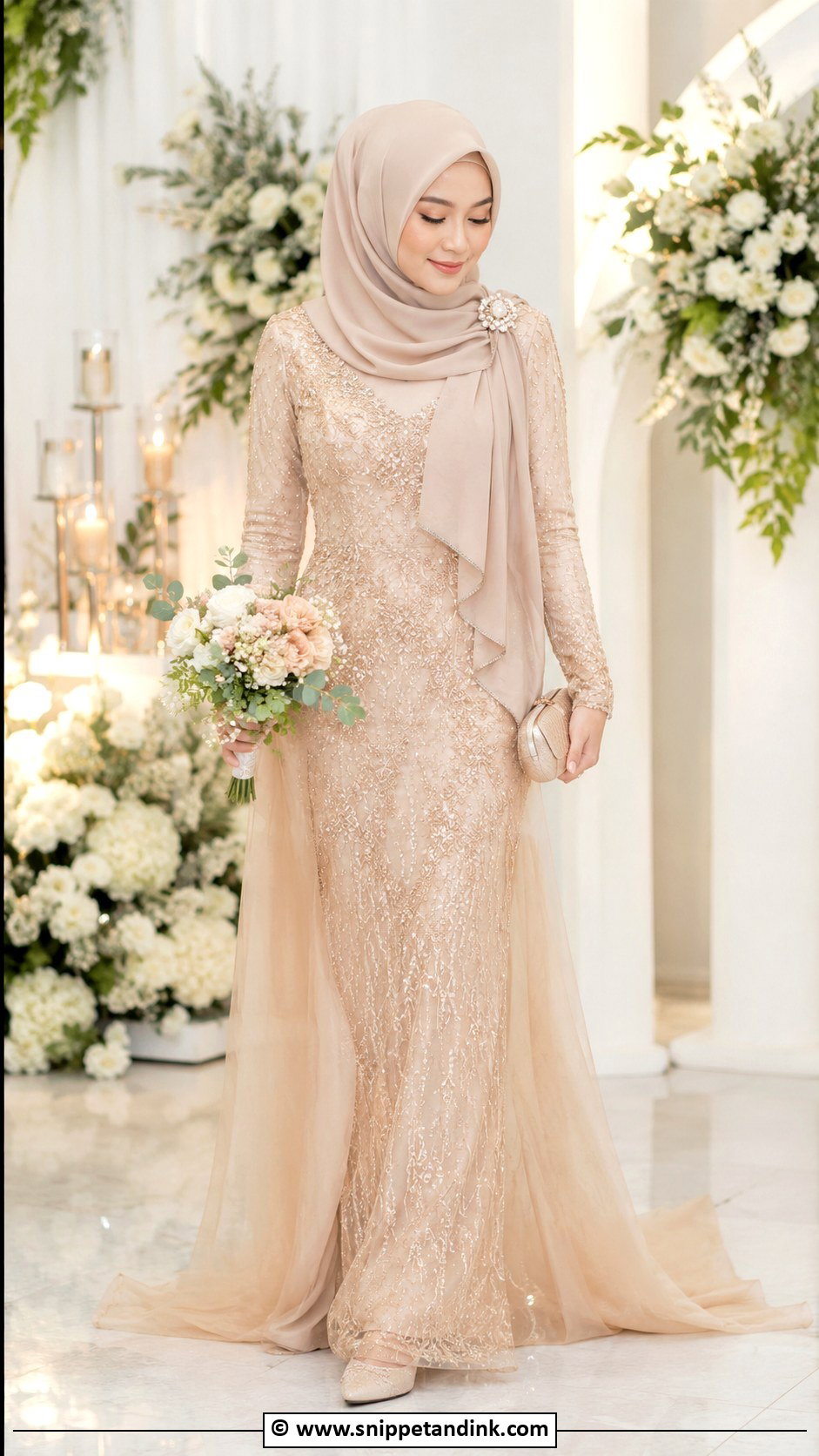
The reception outfit is where I encourage brides to loosen up. Champagne, blush, silver, sage and powder blue all work, in lighter fabrics than the ceremony gown. Switch to a lighter hijab as well. By evening your head has been under pins and a cap for hours, and a fresh, softer wrap feels like relief. A side drape or one pearl pin is enough decoration. Pick shoes you can stand in, because this is the outfit you’ll greet guests in.
How Chiffon, Jersey, Silk and Satin Behave Over a Long Day
The scarf fabric matters as much as the dress. Each one has a habit I plan around.
- Chiffon is light, breathable and the easiest to drape. It slides on itself, though, and turns semi-sheer when you stand against a bright window or a sunset. Layer two pieces or wear an opaque cap in a matching shade.
- Jersey is the most secure fabric I use. It clings, needs fewer pins and barely creases, but next to a heavily worked gown it can look a little casual.
- Silk drapes richly and has a soft glow on camera. Pin holes can show and it marks with water, so after your trial, pin through the same holes on the day.
- Satin holds a crisp shape but bounces flash back, so it often looks shinier in photos than in person. I mostly keep it for matte gowns.
Whatever you choose, steam it the day before and leave it hanging. Creases set in by packing show up clearly in close-ups.
If the Wrap Starts Slipping at the Reception
Give a sister or close friend a small pouch: a spare undercap, a dozen straight pins, two safety pins, a few magnetic pins and a compact mirror. A slipping wrap rarely needs a full redo. Usually one pin at the temple has worked loose under the pull of the veil, and re-anchoring it through to the cap takes two minutes in a quiet room. If the veil itself is the trouble, take it off for the reception. By that point most brides are glad to.
Wear the Whole Outfit for an Hour Before the Nikah
Every look on this list comes back to one test: does it stay secure and comfortable through a long day of photos, prayers and hugs? Plan the dress fabric, jewelry and venue together, then wear the complete outfit once before the wedding, with shoes, veil, pins and accessories, for a full hour. That hour shows you which pin presses, which layer slips and which piece feels heavy. The right bridal hijab is the one you can forget about once it’s pinned.
You'll Like These Ideas:


Leave a Reply