
Most brides who come to me wanting a covered gown expect to compromise on style. They rarely have to. A conservative dress is built from a handful of decisions: how high the neckline sits, whether the lace is lined, how the sleeve is cut at the armhole and what the back is made of. Get those right and the gown looks deliberate rather than cautious. Below are thirty covered and modest designs I’d happily put on a bride, with notes on how each one fits, moves and wears over a long day.
Adding Coverage to a Gown That Was Designed Without It
Plenty of brides fall in love with a sample that’s strapless or sheer-backed. Before you walk away, know what a good seamstress can and can’t change. Some fixes are routine; others mean rebuilding the dress, and the cost and time rise quickly.
- Lining sheer lace: adding a nude or ivory layer behind illusion mesh is usually simple. Ask for it to match your skin tone or the gown, not plain white.
- Sleeves on a strapless bodice: possible, but the sleeves need to attach to a new shoulder and armhole, so ask whether the bodice will be reshaped. A separate jacket or bolero is often cleaner.
- Raising a neckline: easiest when there is lace or a modesty panel to extend. A deep V in plain satin is hard to close without a visible seam.
- Closing an open back: a lace or tulle panel can fill it. Make sure the panel’s lace matches the gown, since mismatched motifs stand out in photos.
I’d raise any coverage change when you order, not at the first fitting. Some designers can make the dress with sleeves or extra lining from the start, which is usually tidier than altering it later.
1. Long Sleeve Lace Wedding Dress
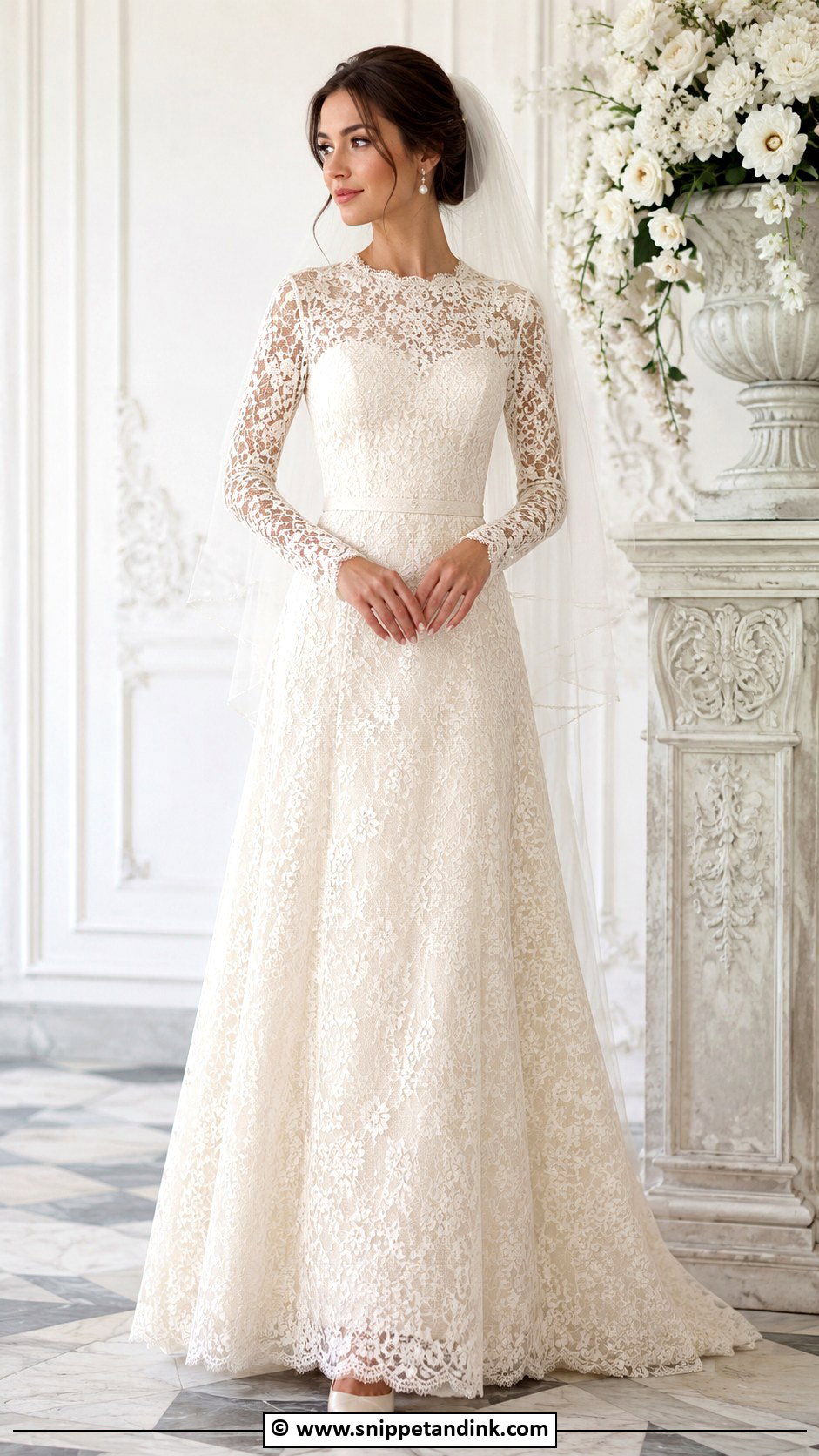
Lace sleeves are the first thing most modest brides try, and the fit at the armhole decides whether they love it. A low, roomy armhole looks fine standing still but drags the whole bodice up when you hug someone, so I always have a bride lift her arms at the first fitting. Fully lined lace gives real coverage; unlined corded lace shows skin between the motifs. Pair it with a gentle A-line skirt, pearl studs, a low bun and a fingertip veil, and wear ivory block heels if you’ll be on grass. Delicate floral lace reads softer, while heavier corded lace looks more traditional.
2. High Neck Wedding Dress
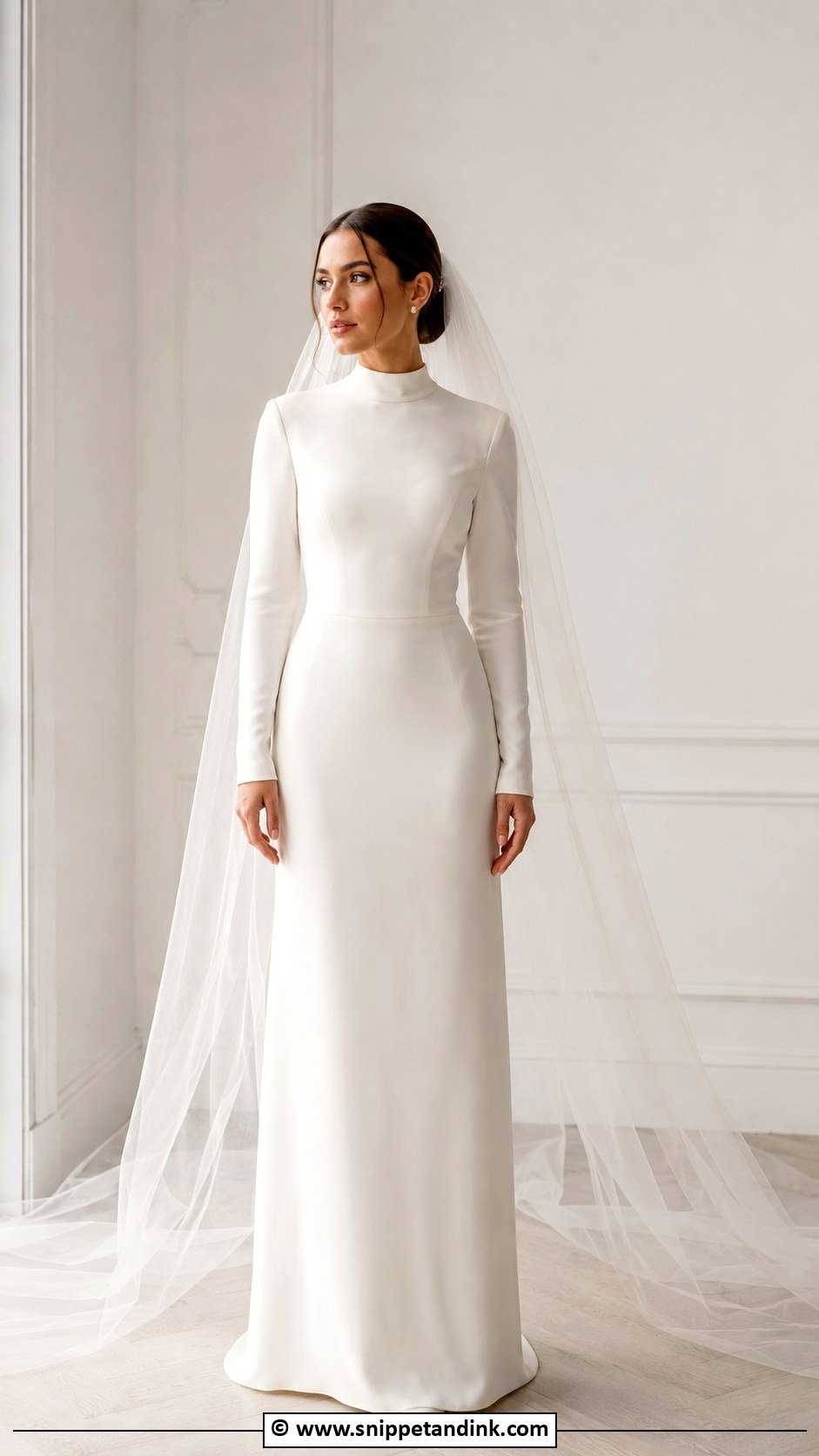
A high neckline frames the face and draws the eye up, so you need very little jewelry. The catch is fit at the throat. If the collar stands even a few millimeters away from your neck, it gapes every time you turn your head, and a seamstress can only take in so much without reshaping the shoulder. In crepe or satin it reads modern, especially as a column with long sleeves; with lace appliqué on an A-line skirt it softens. Small pearl studs, a sleek updo and a long veil are all it needs.
3. Modest Satin Ball Gown Wedding Dress
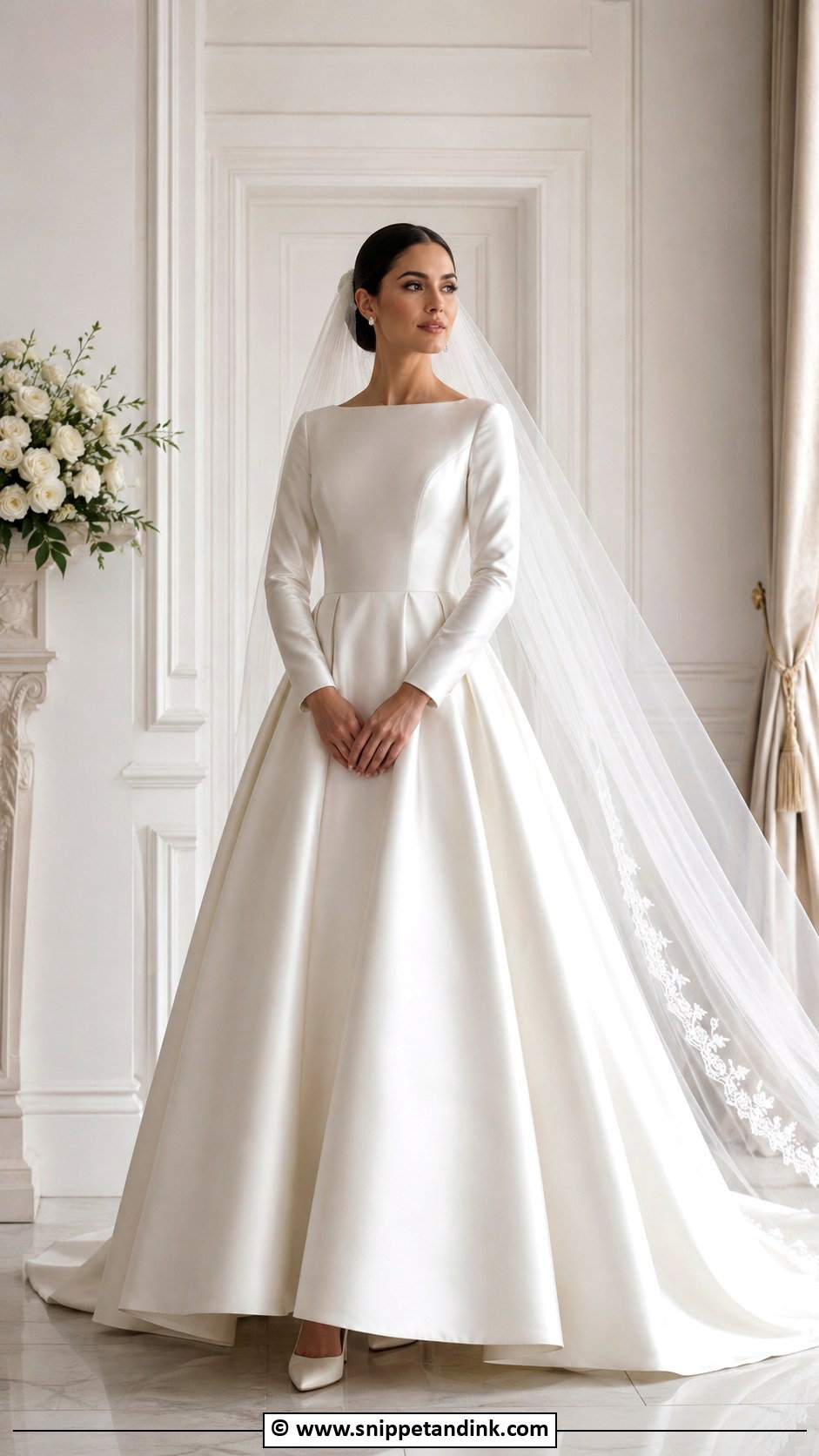
Satin ball gowns carry real weight, and that is both the appeal and the warning. A structured, boned bodice holds the skirt up so the waist doesn’t sag by the evening, which is exactly what you want under that much fabric. For coverage, choose a bateau, scoop or high neck with satin or lined lace sleeves. Satin reflects light smoothly but also shows every crease from sitting, so I tell brides to stand for portraits taken after the ceremony. Add a cathedral veil, simple drops and closed-toe heels, and let the silhouette do the work instead of heavy beading.
4. Bateau Neck Wedding Dress
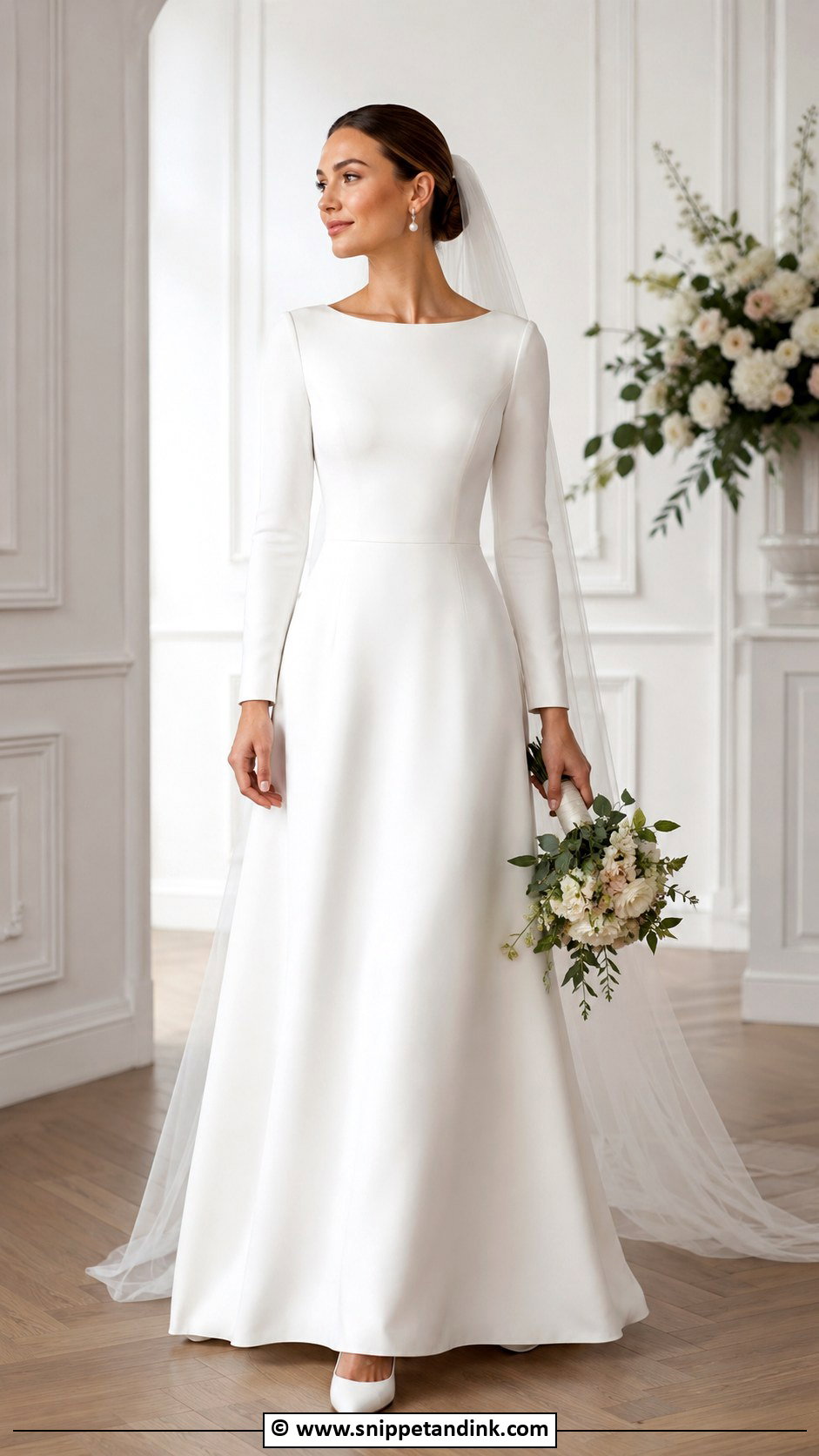
A bateau neck wedding dress runs straight across the collarbones to the shoulder points, covering the chest while still showing the line of the neck. The cut needs a fairly square shoulder to sit flat; on sloped shoulders the edges can slide, and I’ll often ask the seamstress to add a small grip stay inside. Crepe makes it clean and minimal; lace pushes it toward vintage. Long sleeves add coverage, though three-quarter sleeves look refined too. A smooth chignon and pearl earrings are enough. Skip necklaces entirely, since the neckline already fills that space.
5. Long Sleeve Crepe Wedding Dress
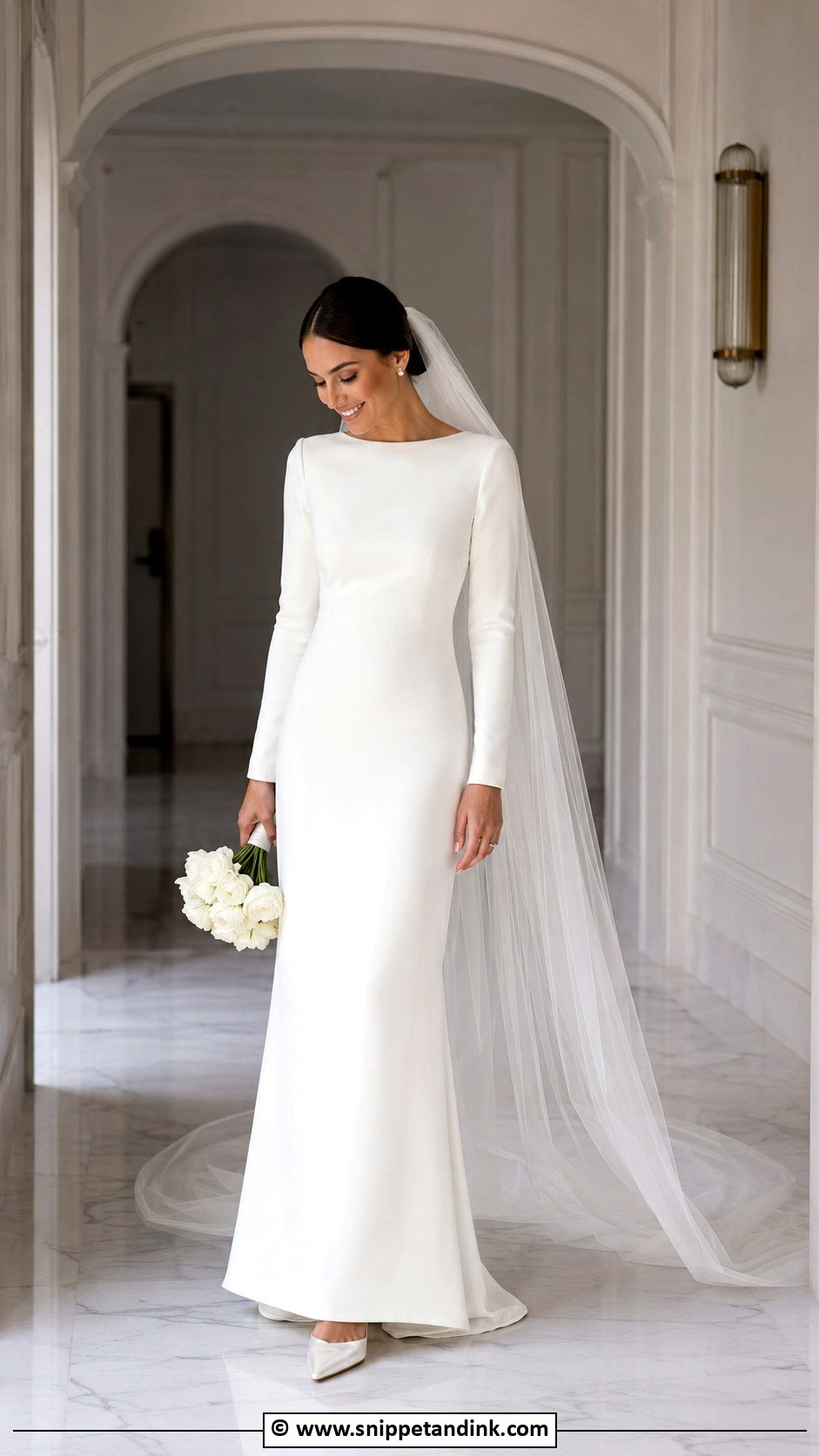
Crepe is my favorite fabric for a bride who wants a covered gown with no fuss. It has a matte face, so it doesn’t bounce flash back at the camera, and its weight lets it hang in a clean line over a sheath, column or soft A-line. It is honest, though: crepe shows every seam and every bump in shapewear, so the fit has to be precise. A long sleeve crepe wedding dress works with a high, bateau or modest square neckline and a covered back. Add a long veil for drama or a small headband for a minimal finish, then ivory pumps and pearl studs.
6. Modest A Line Wedding Dress
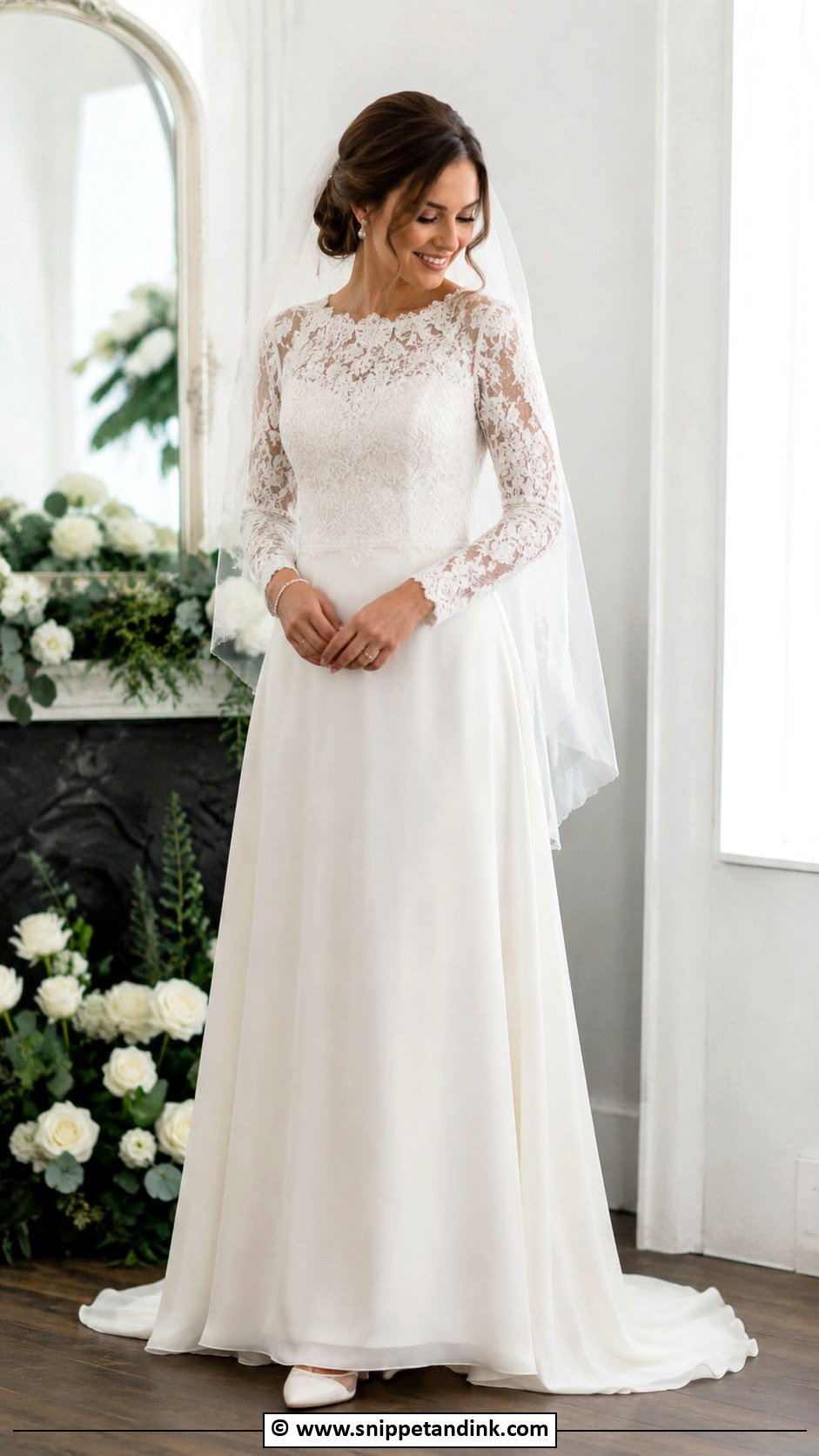
An A-line skirt is the shape I reach for when a bride isn’t sure what suits her, because it skims the waist and falls away from the hips without the bulk of a ball gown. For a conservative version, ask for a lined bodice, long sleeves and a higher neckline. The skirt fabric changes the mood completely: chiffon floats and moves, while satin or mikado holds a crisp triangle. It’s easy to sit, walk and dance in, which matters more by hour eight than anything else. Finish with a chapel veil, a slim bracelet and closed-toe heels.
7. Simple Long Sleeve Wedding Dress
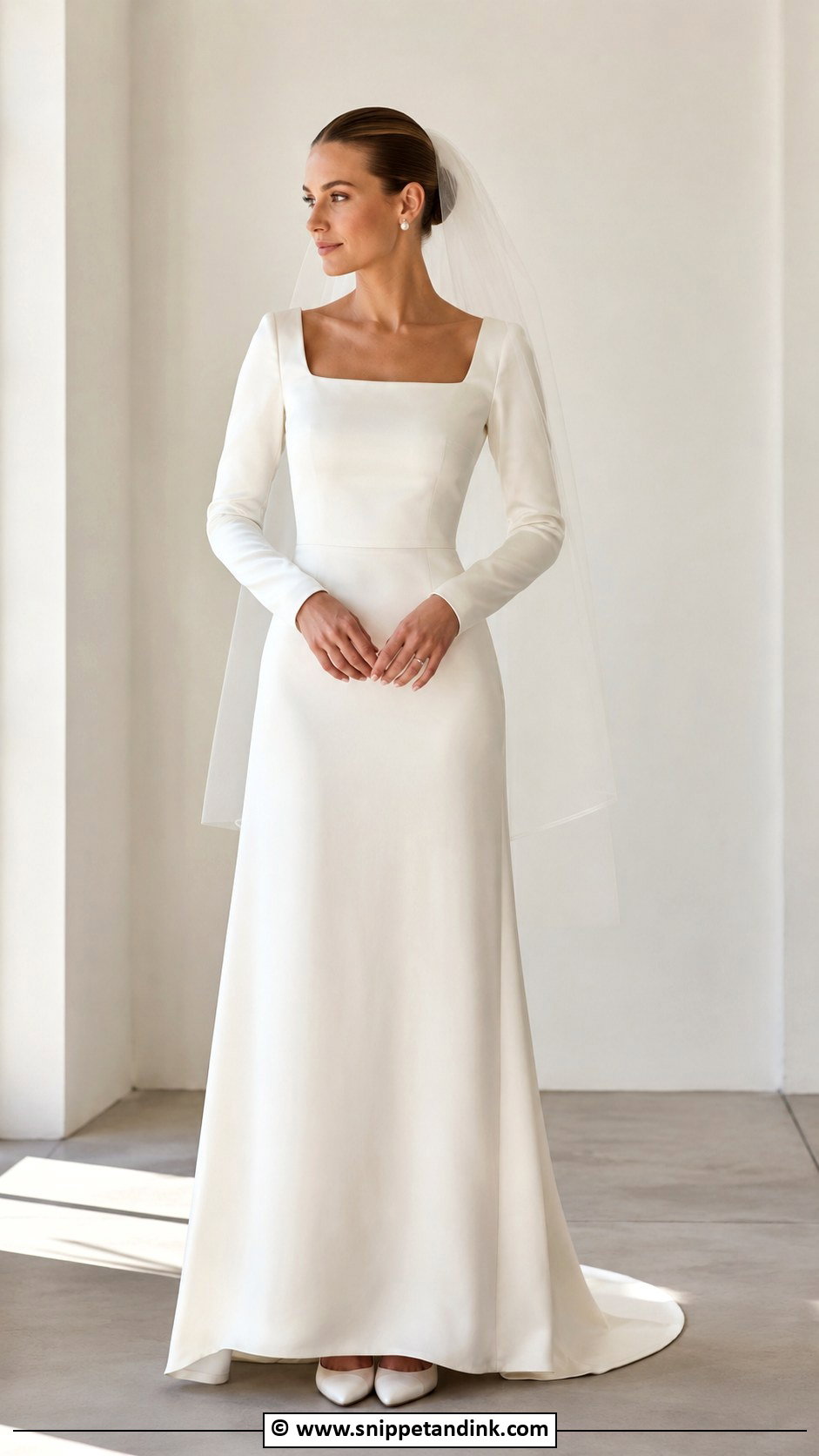
With no lace or beading to hide behind, a plain long sleeve gown lives or dies on tailoring. I look closely at where the sleeve meets the wrist; it should just touch the hand bone, because too long looks borrowed and too short looks outgrown. Crepe, satin or matte mikado all give a refined surface. Pick a high or square neckline and keep the styling equally clean: pearl earrings, a low veil and classic heels, with your hair in a sleek bun or loose waves. It suits a bride who finds embellishment fussy, and it ages well in photographs.
8. Modest Square Neck Wedding Dress
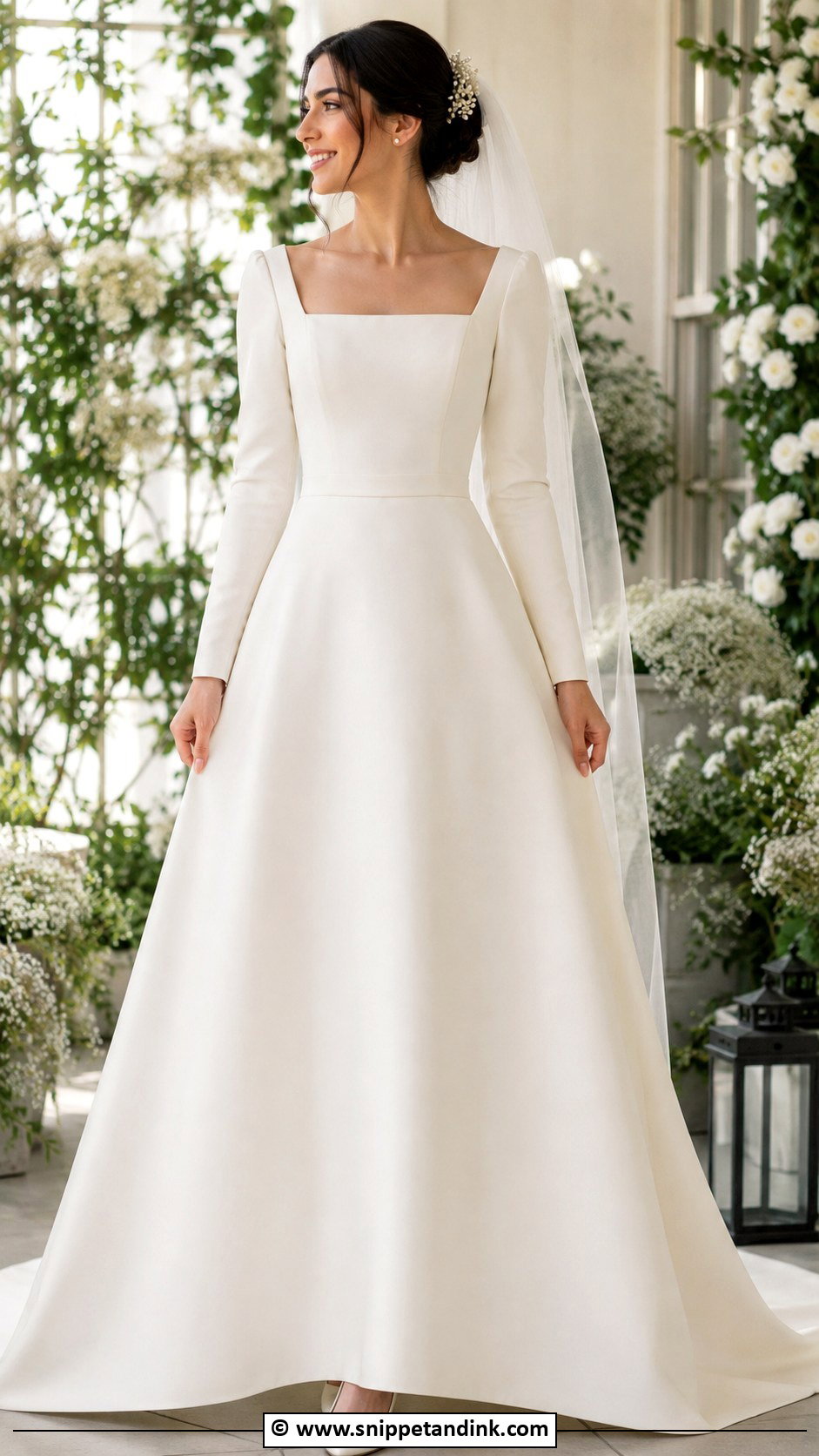
A square neckline gives the bodice a defined shape without dipping low, which is why it suits brides who find a high neck too closed. For more coverage, ask for the square to be cut higher and fully lined at the front. It pairs well with long, puff or three-quarter sleeves. The one thing I watch at fittings is the corners: if the bodice is even slightly loose, they gape forward when you lean in, so they need to be fitted snugly. An A-line skirt keeps it romantic, a fitted crepe skirt makes it modern, and a pearl comb with satin pumps finishes it.
9. Long Sleeve Tulle Wedding Dress
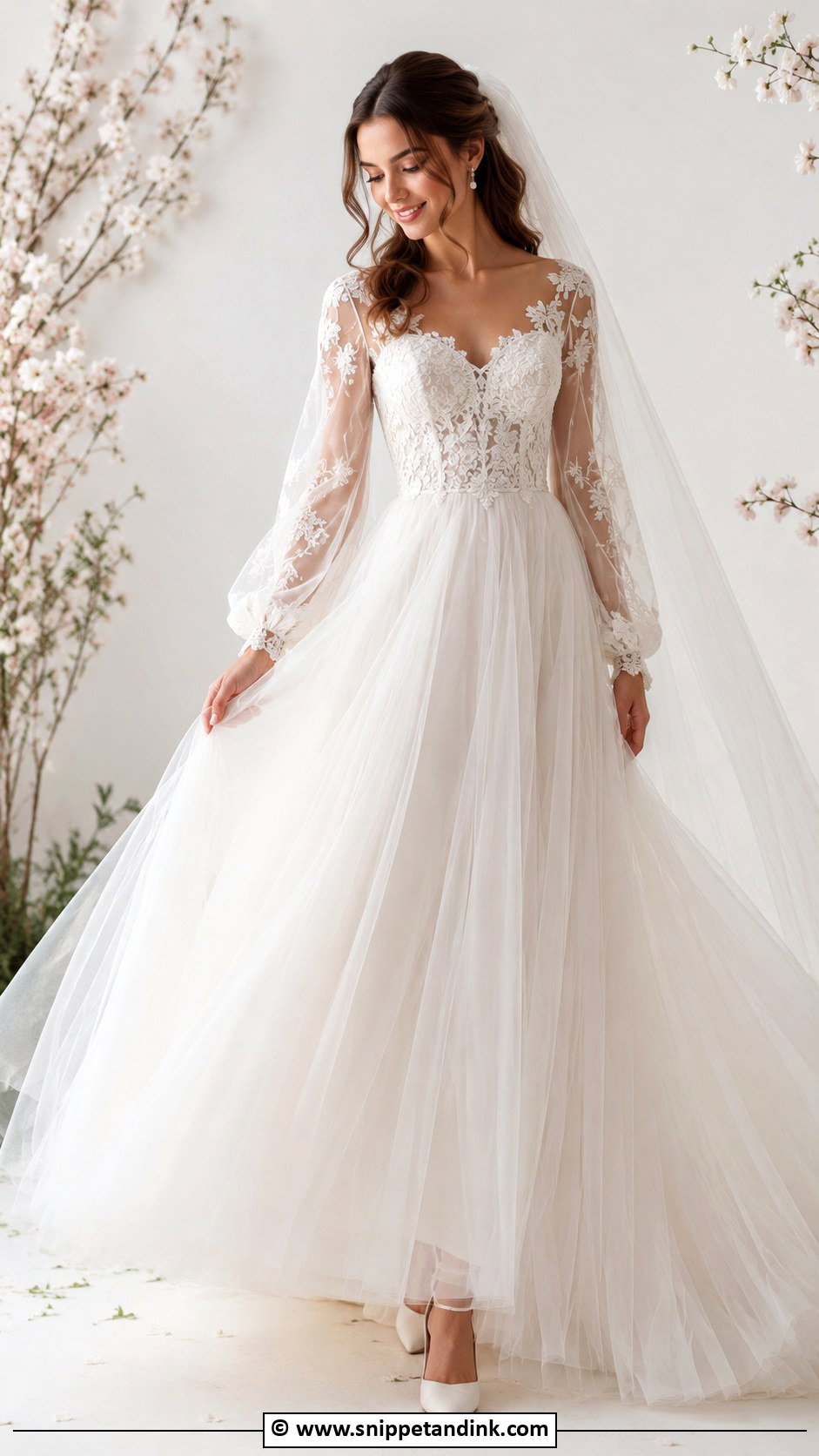
Tulle gives volume without weight, and with a lined bodice it covers well. The sleeves are where you decide your comfort level: sheer tulle sleeves show the arm through a haze, while lined ones read as fully covered, so try both in daylight, not just under fitting-room lights. Layered tulle skirts move with every step and pick up natural light. Be aware tulle snags on rough stone, bark and bracelet clasps, which matters for a garden ceremony. Pair it with soft curls, pearl earrings and a veil edged to match the skirt.
10. Modest Princess Wedding Dress
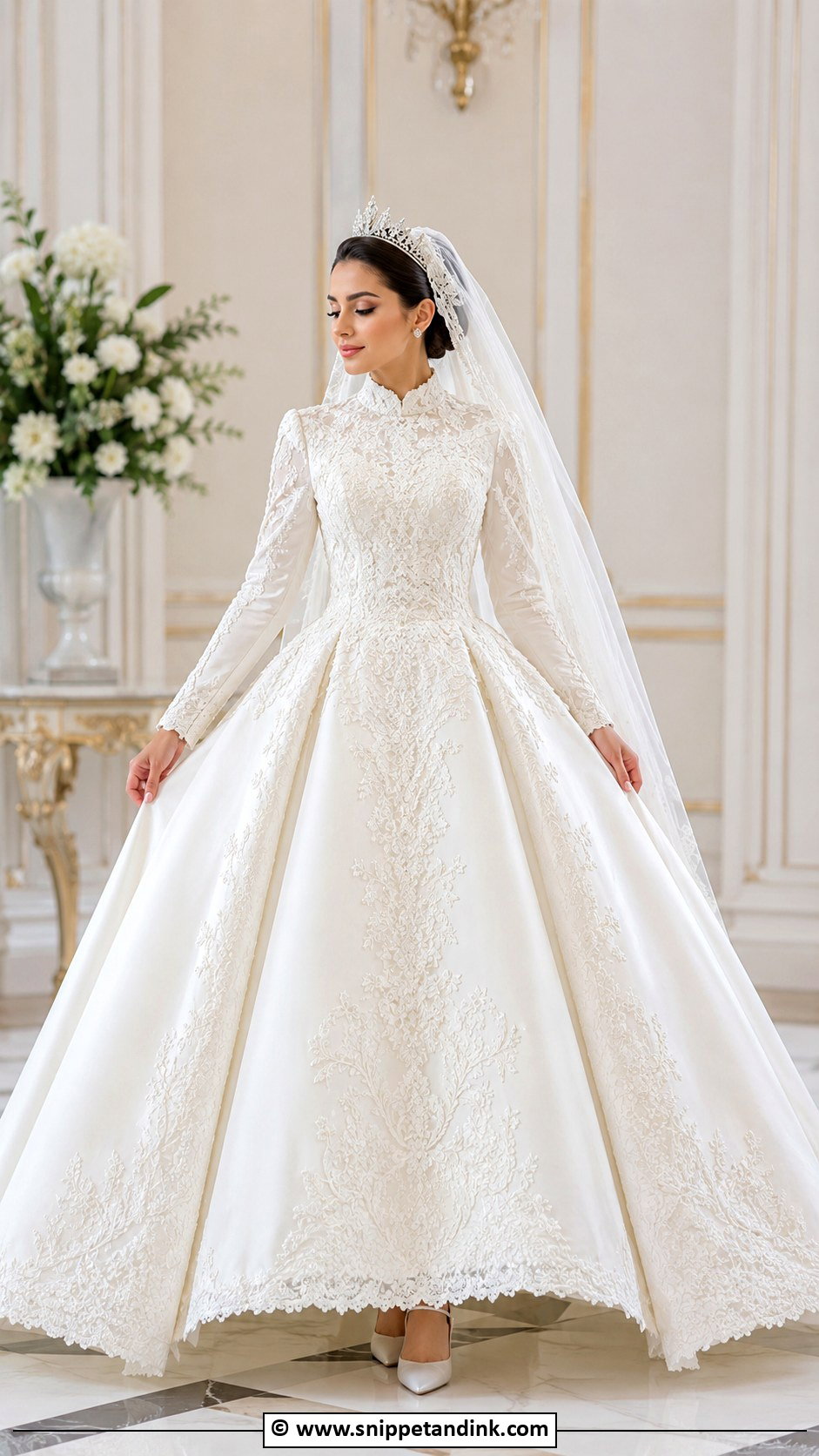
The princess shape is a fitted bodice over a full skirt, and fabrics with body, like satin, mikado or organza, keep that skirt from collapsing by the reception. A high neck or bateau neckline with long sleeves keeps it conservative, and lace appliqué adds softness if you want it. Because the skirt is wide, I warn brides about doorways, car seats and bathroom stalls; plan for a helper and a bustle. Style it with a tiara-style headband, a long veil and plain heels, and keep the jewelry light.
11. Long Sleeve Mermaid Wedding Dress
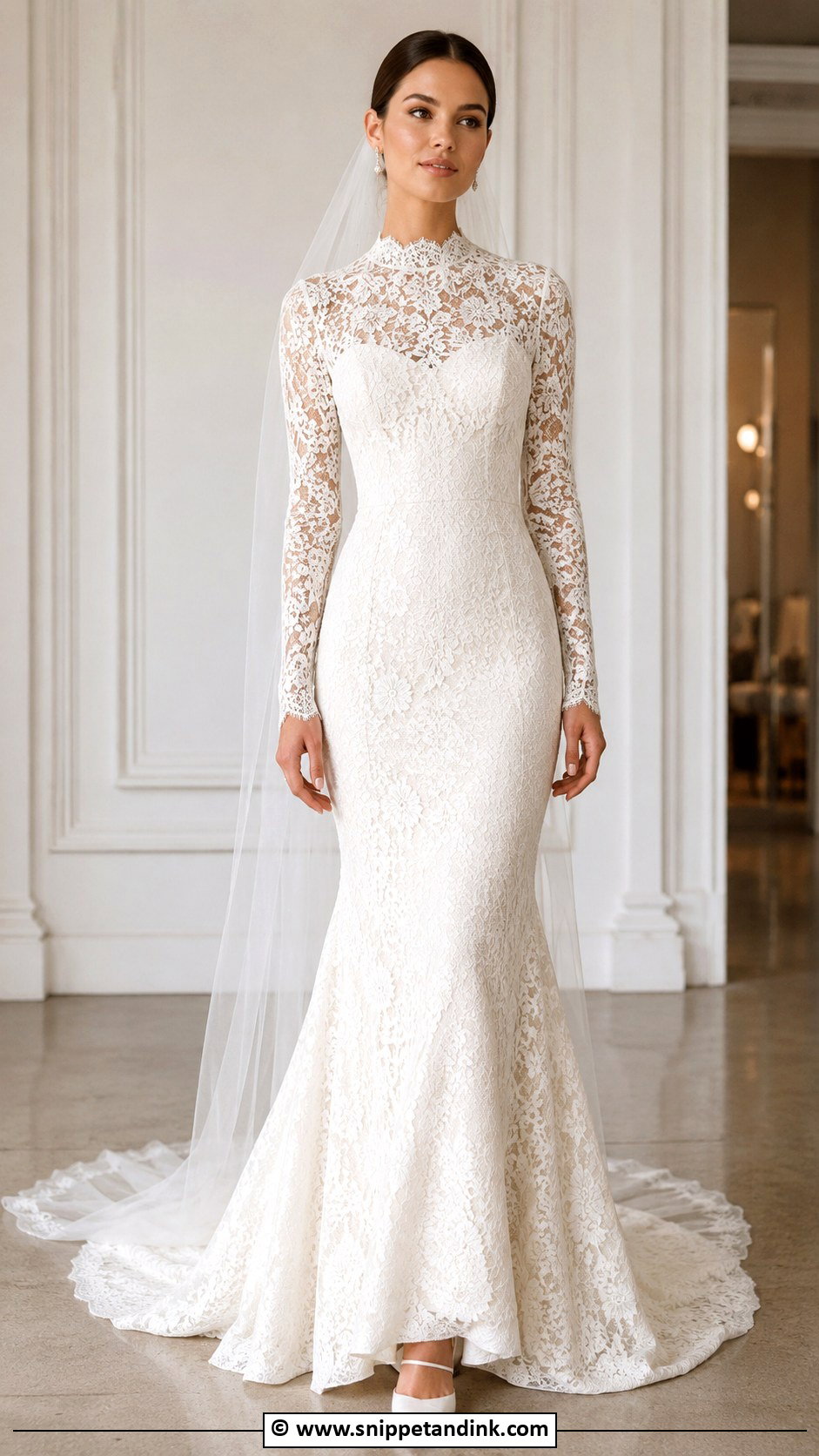
Mermaid and modest can coexist, but it takes care. The fit hugs through the hip and knee, so I steer conservative brides toward a soft fit-and-flare instead of a dramatic mermaid, where the flare starts lower and the cling is more obvious. A higher neckline, lined bodice and covered back all help, and long sleeves balance the fitted skirt. Practice sitting in it at the fitting: a tight mermaid can make chairs and stairs awkward. Finish with a sleek veil, pointed-toe heels and simple earrings.
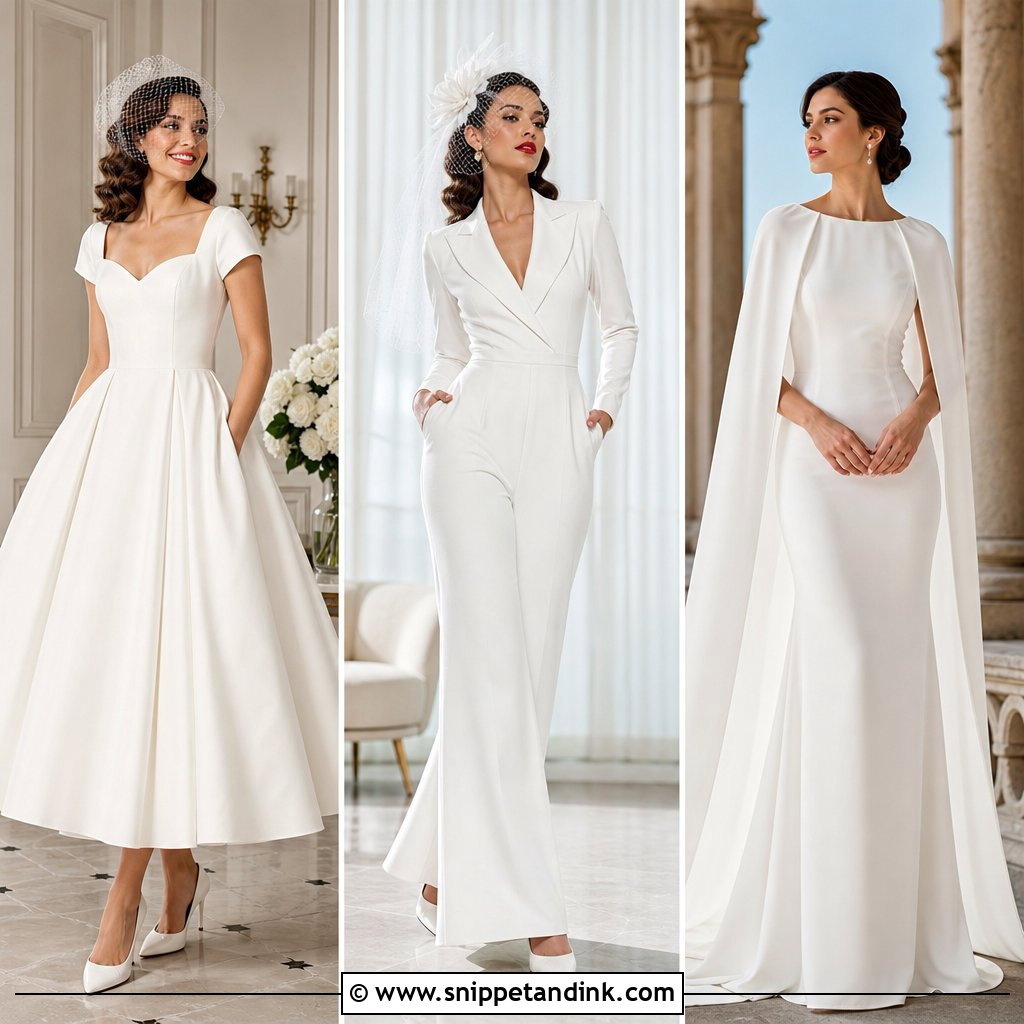
12. Modest Tea Length Wedding Dress
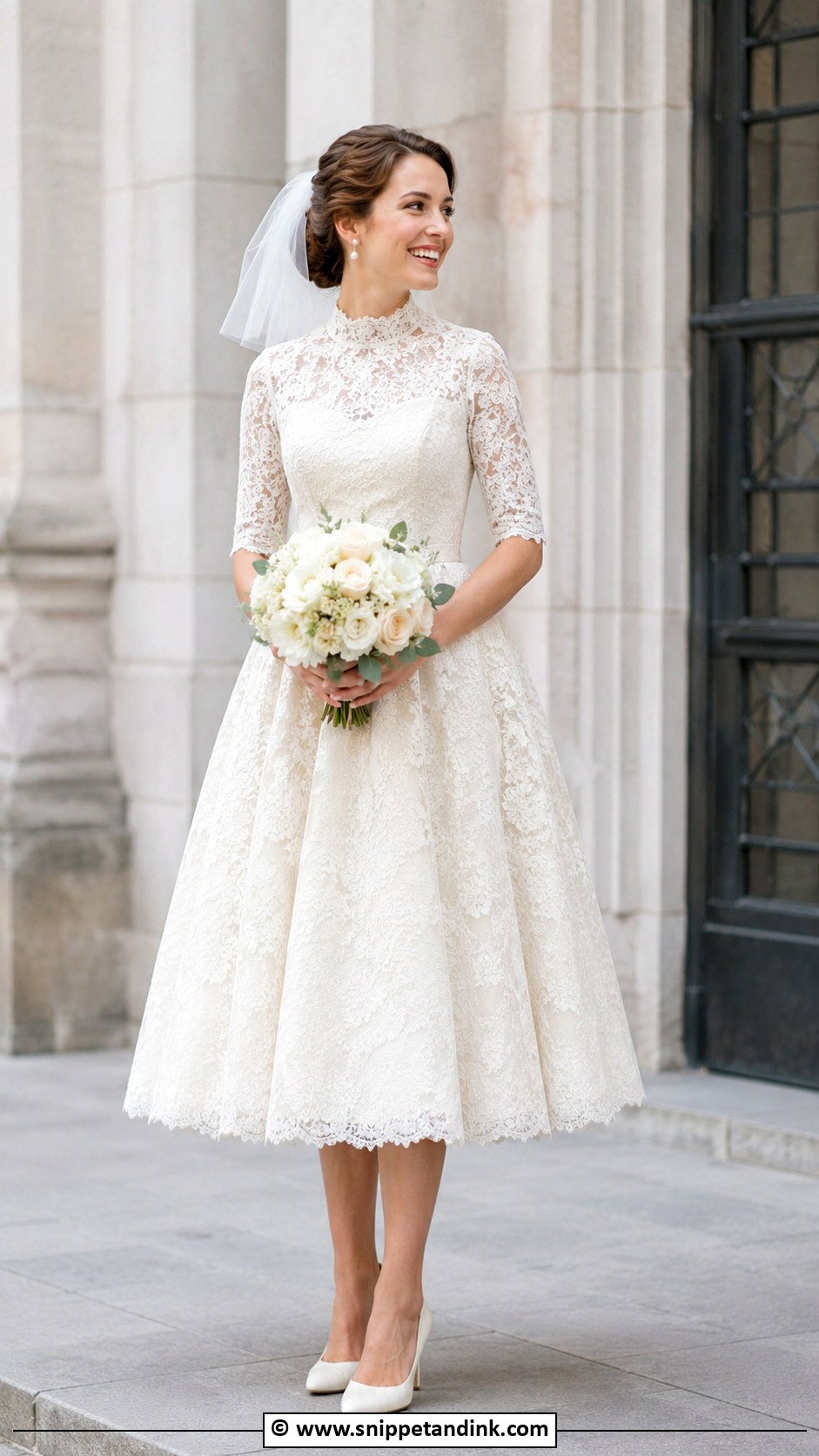
A tea length hem falls between the knee and the ankle, so your shoes are part of the outfit and need the same attention as the dress. I like it for daytime, city and small ceremonies, because you can walk, climb steps and stand on cobbles without lifting a skirt. Pick a high neckline with elbow or three-quarter sleeves for coverage. Structured satin or lace holds the vintage skirt shape best; very soft fabrics just look like a long day dress. Ivory pumps, pearl earrings and a short veil or bow complete it.
13. High Neck Lace Wedding Dress
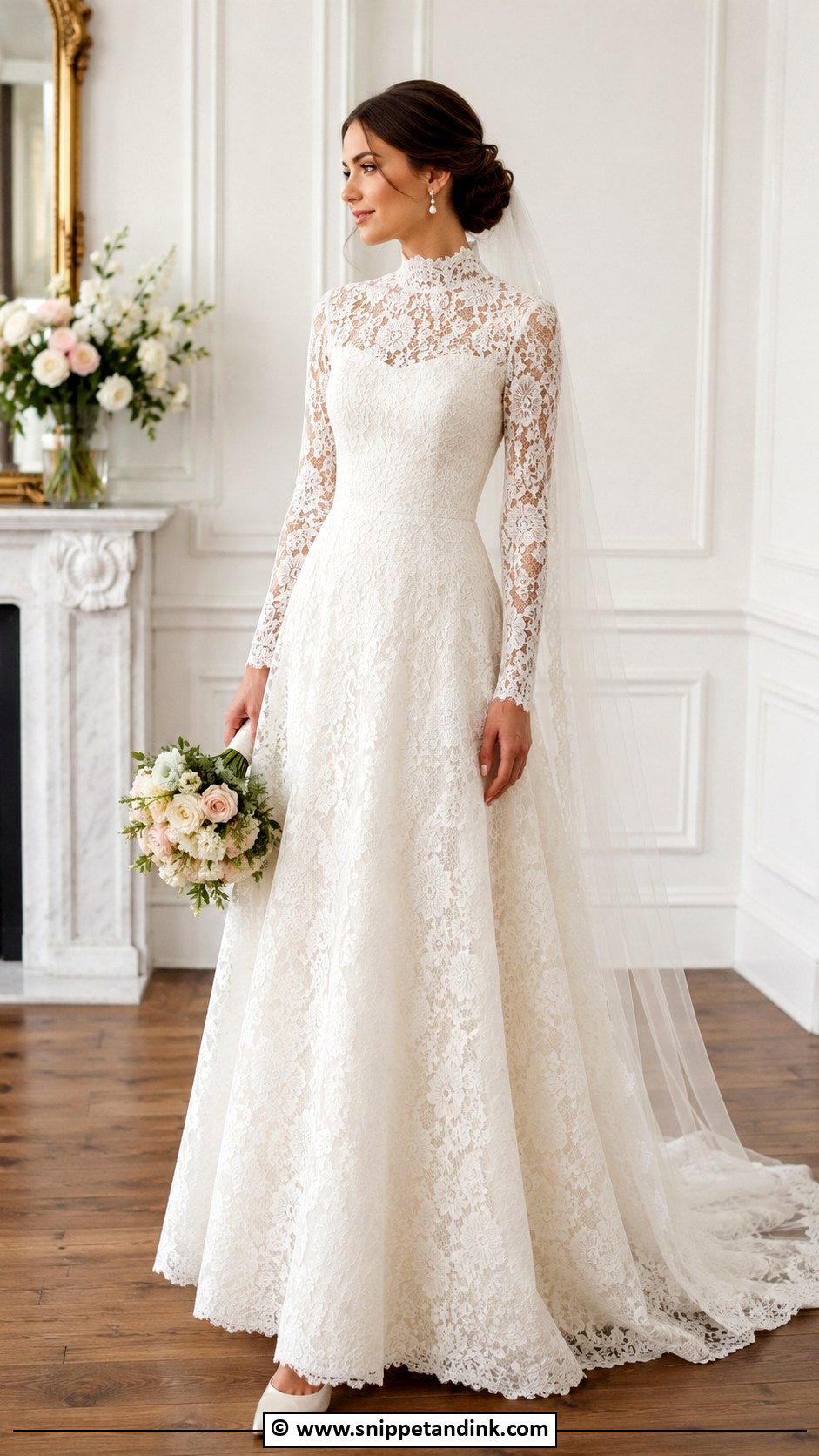
High neck lace is romantic and covered, but check the lining before anything else. Some dresses use illusion mesh at the neck and sleeves, which looks like skin from a few feet away, so if real coverage matters to you, ask for lined sleeves and a lined bodice. A-line and sheath shapes both pair well with the neckline. I keep the rest quiet: a low bun, pearl drops and a plain veil. Lace also forgives a lot, so it looks fresh through spring and winter alike.
14. Modest Chiffon Wedding Dress
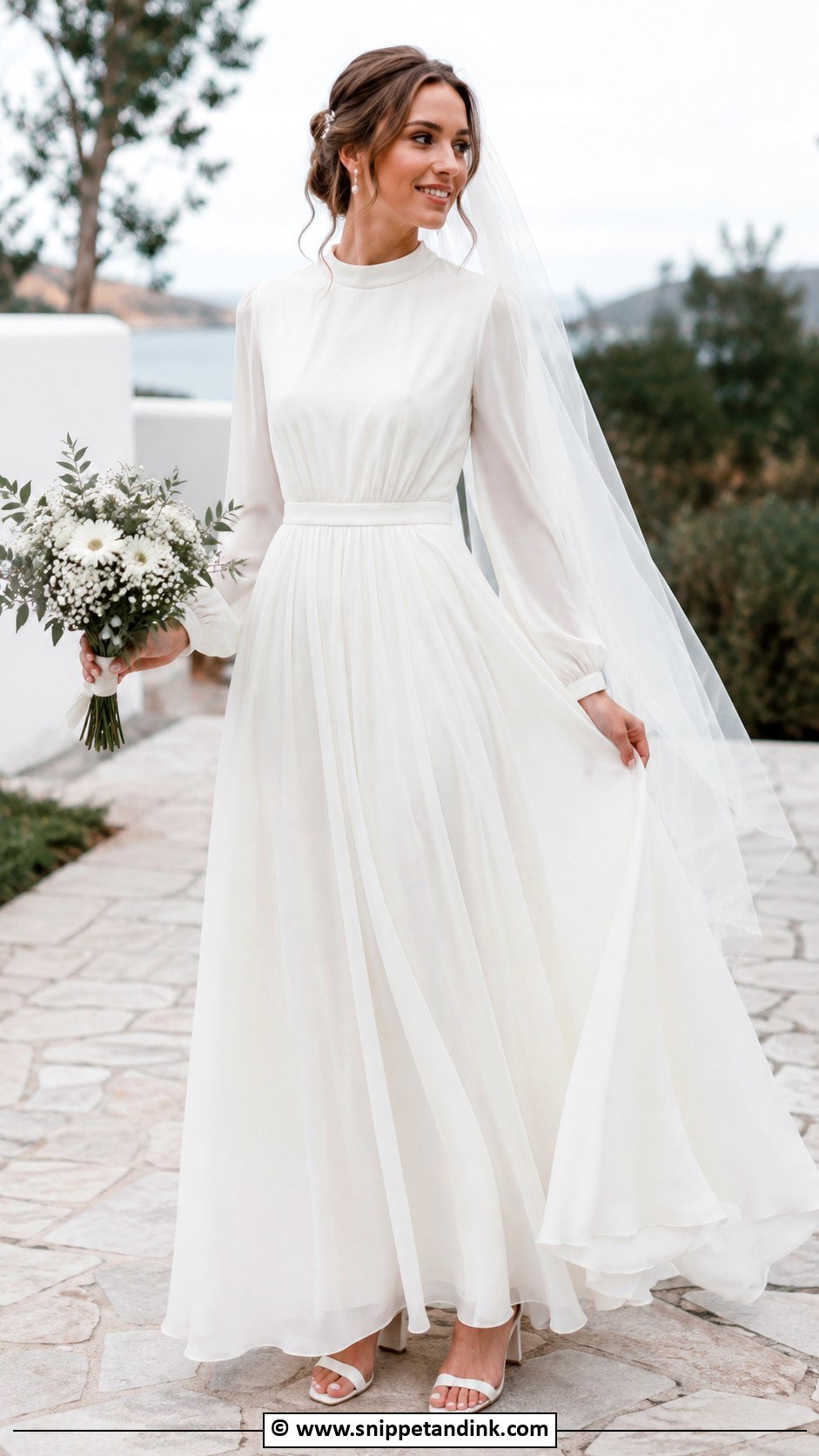
Chiffon is the softest fabric on this list and the most forgiving in heat. A modest chiffon wedding dress drapes into A-line, empire waist and flowing sheath shapes, and it breathes far better than satin. It also wrinkles and frays easily, so ask how the hem is finished. For coverage, pair long or flutter sleeves with a high or modest V neckline over a lined bodice. Soft waves, pearl pins and low block heels suit it, especially outdoors or in the daytime.
15. Modest Mikado Wedding Dress
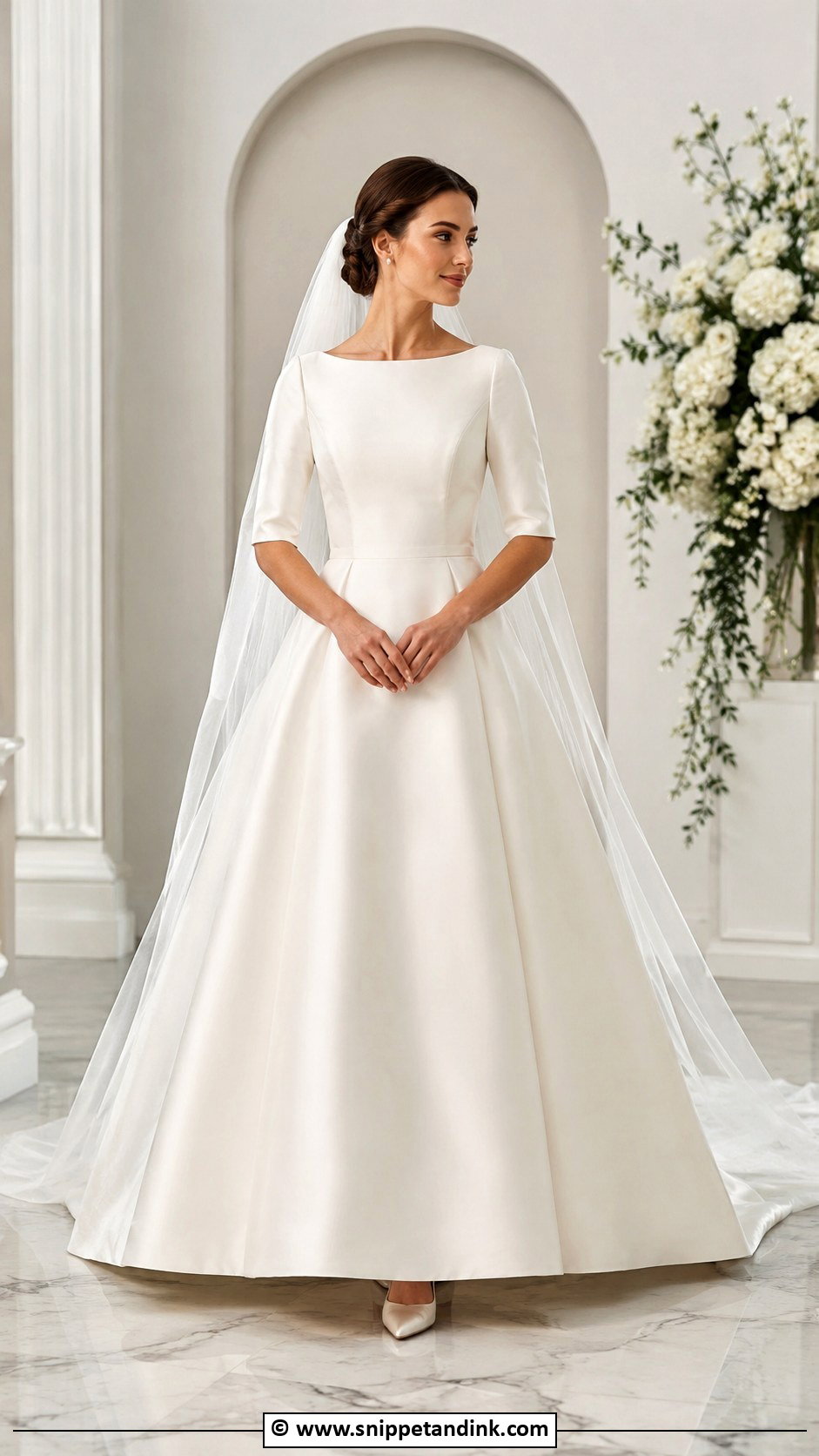
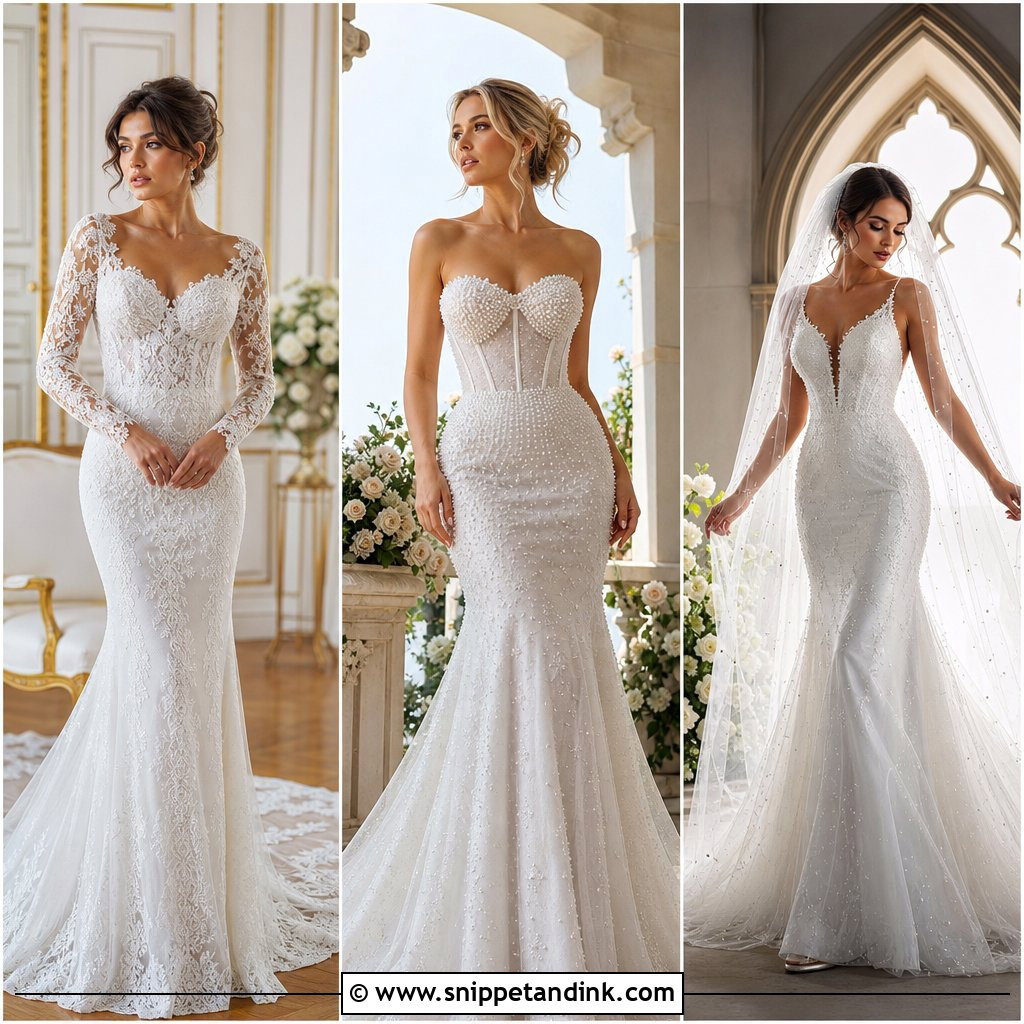
Mikado is a heavy silk blend with a slight grain, and it’s what I recommend when a bride wants structure without boning everywhere. It holds a ball gown, A-line or column shape crisply and resists the creasing that plain satin shows. Because the fabric looks formal on its own, it needs almost no embellishment. Choose a bateau, high or square neckline with long or elbow sleeves. Pearl studs, a sleek veil and satin heels finish it. Mikado can feel warm, so I’d think twice before booking it for a hot outdoor afternoon.
16. Long Sleeve Beaded Wedding Dress
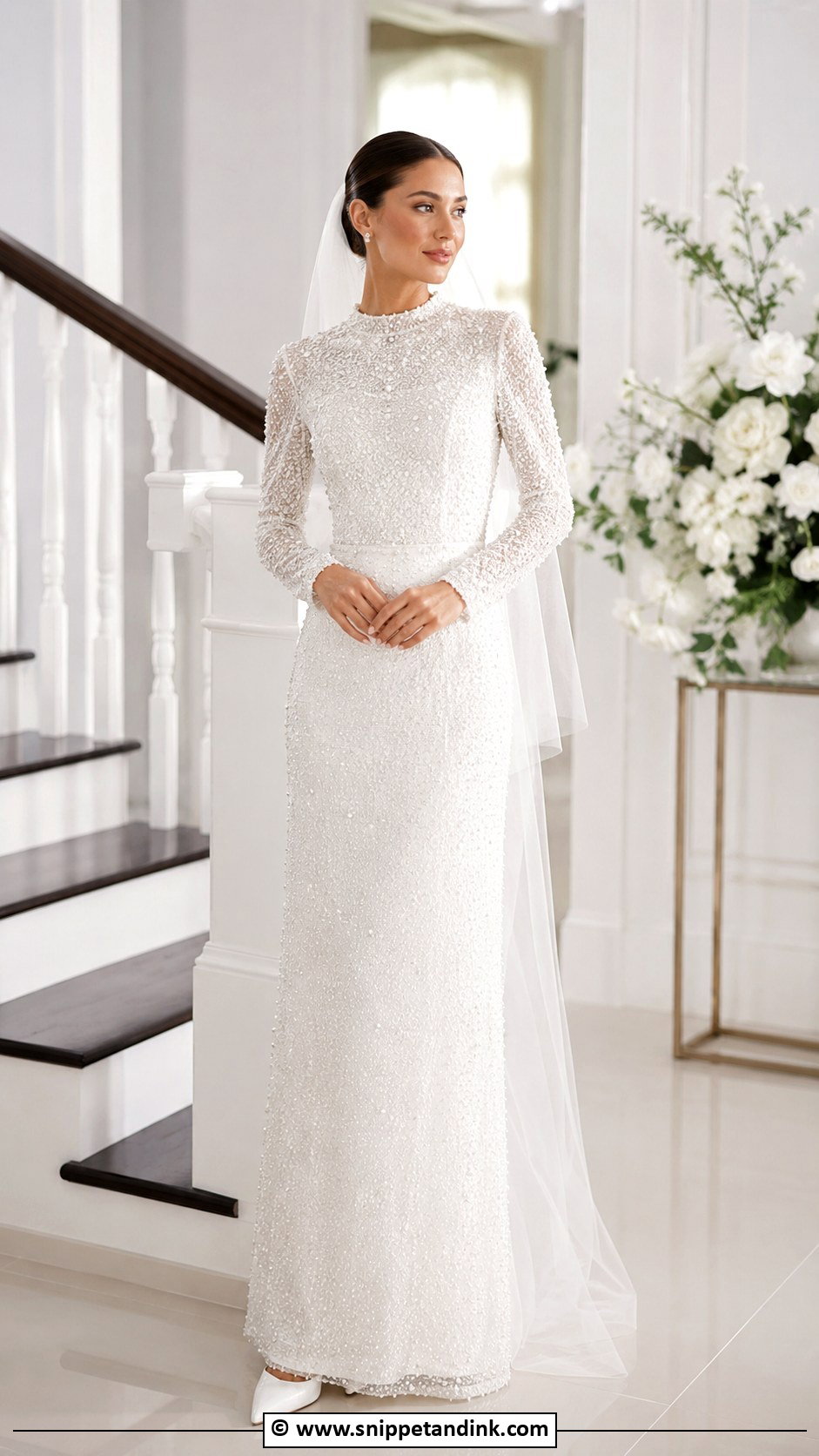
Beading adds sparkle to a covered gown, but it also adds weight to the sleeves, and heavy beaded sleeves pull on the shoulder seams by evening. I prefer fine pearl work, tiny crystals or embroidery concentrated on the bodice and cuffs. With a higher neckline and lined back, it stays modest. If the bodice is heavily beaded, keep the skirt plain so the eye has somewhere to rest. Small studs, a thin bracelet, closed-toe heels and a plain veil are plenty. Check the inside of the sleeves too, since rough bead backs can scratch.
17. Modest Empire Waist Wedding Dress
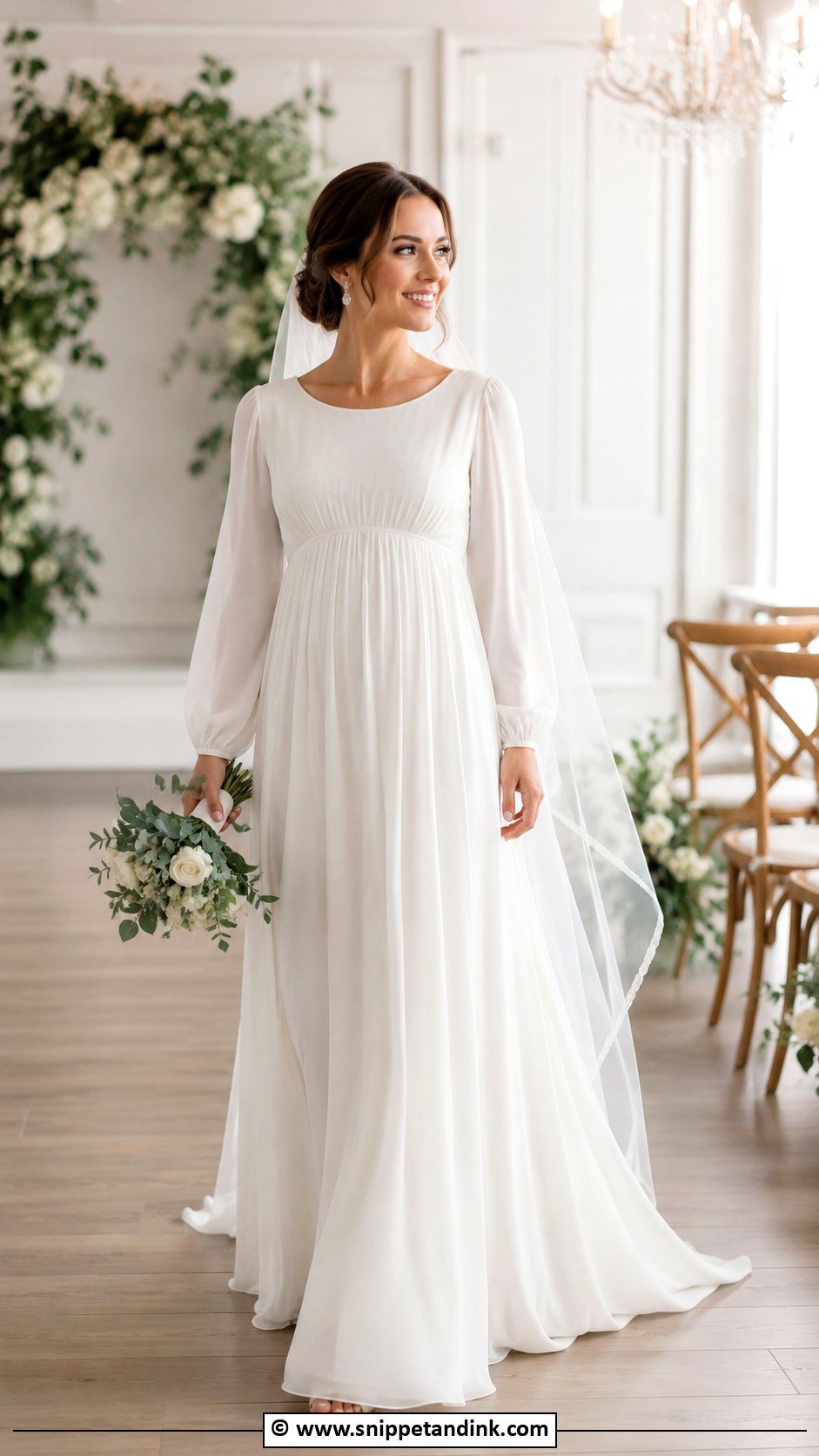
The empire waist sits just under the bust and lets the skirt fall from there, so nothing grips the midsection. That makes it comfortable for long days and a good option for brides who are pregnant or simply hate a tight waistband. It needs a drapey fabric, like chiffon, crepe or soft satin, or the skirt flares out stiffly. Long sleeves with a high or modest scoop neckline keep it covered. Delicate earrings, a soft veil and low heels suit its gentle look, especially for daytime and outdoor weddings.
18. Modest Wedding Dress With Cape
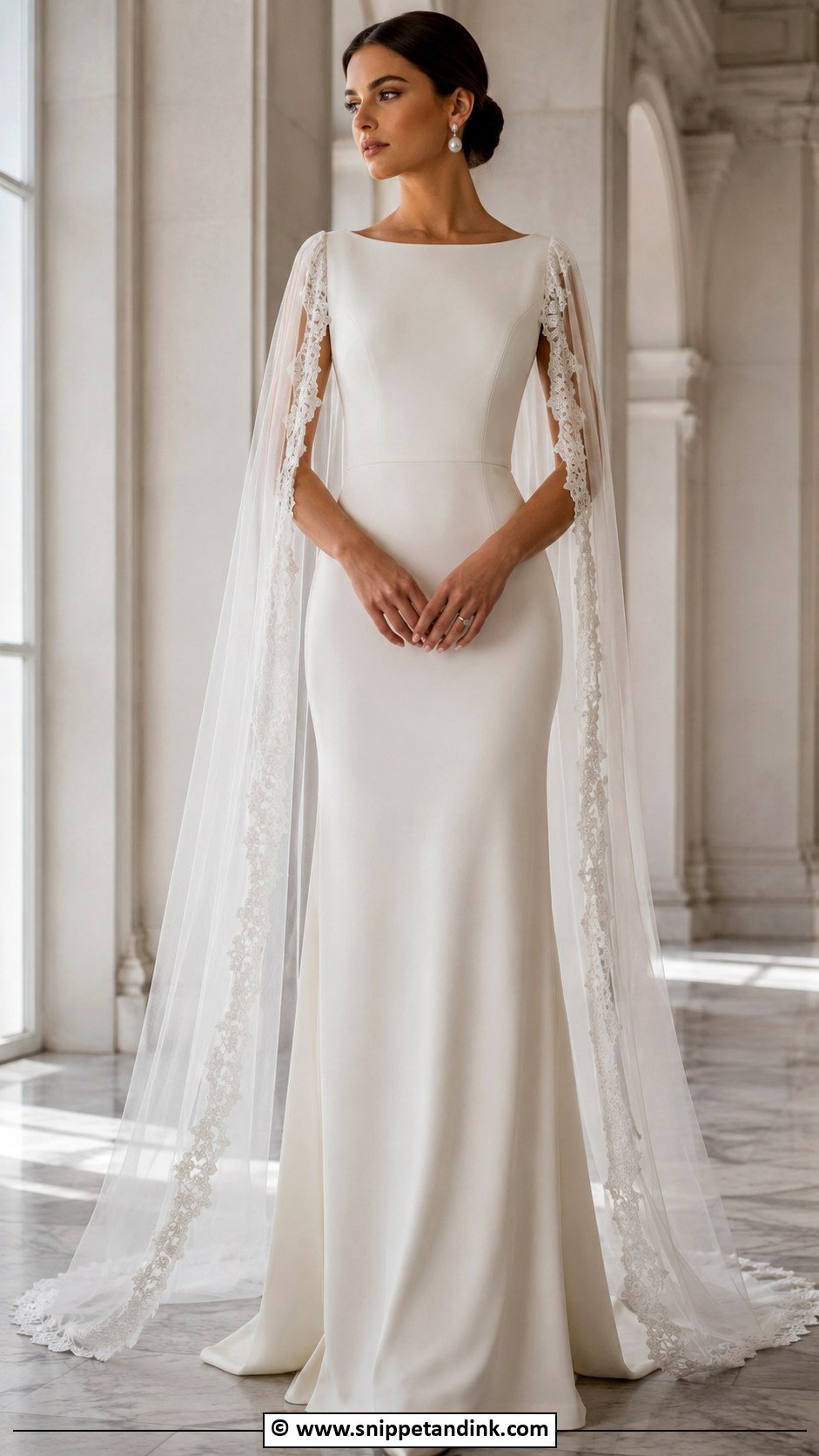
A cape covers the shoulders, upper arms and back in one piece, and it can turn a simple sheath into something memorable. The base dress should be plain, ideally crepe or satin, so the cape isn’t competing with lace underneath. A high neck or bateau neckline pairs best. I always check how the cape attaches: if it buttons at the back of the neck, it can tug forward when you bow your head, so a hook at each shoulder is more secure. A tulle cape with lace edging feels soft, a plain one feels sleek. Wear your hair in a low bun so it doesn’t catch.
19. Modest Wedding Dress With Jacket
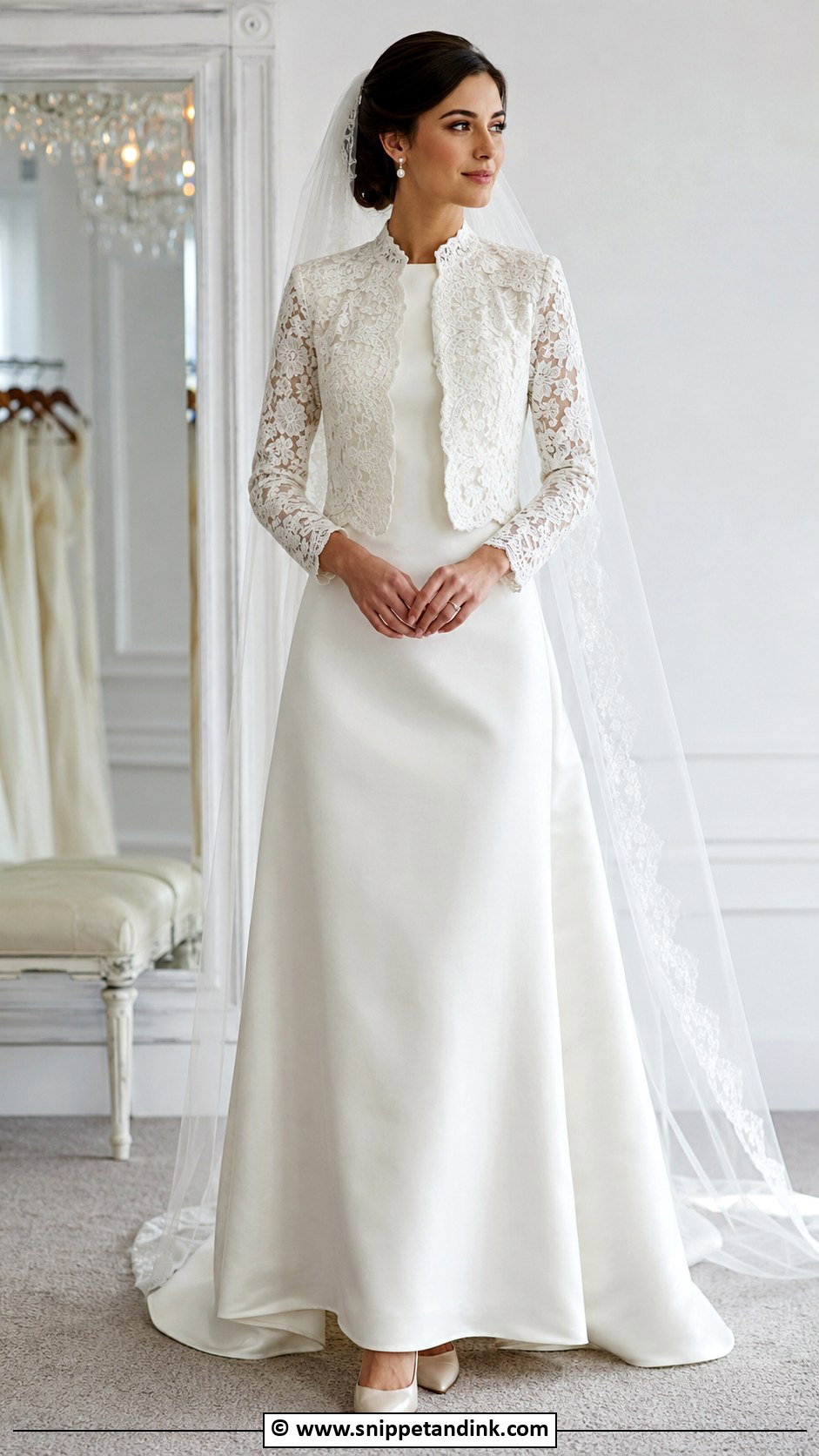
A bridal jacket is my quiet solution when a bride falls for a strapless or sleeveless gown and then needs coverage for a religious ceremony. Lace jackets feel romantic, satin feels classic and crepe feels modern. Match the jacket’s color and fabric weight to the gown, since an ivory jacket over a white dress looks like a mistake in photos. Have it fitted at the same time as the dress so the waist and shoulders line up. You can wear it all day or take it off for the reception. A neat updo, pearl earrings and classic heels keep it polished.
20. Modest Wedding Dress With Detachable Sleeves
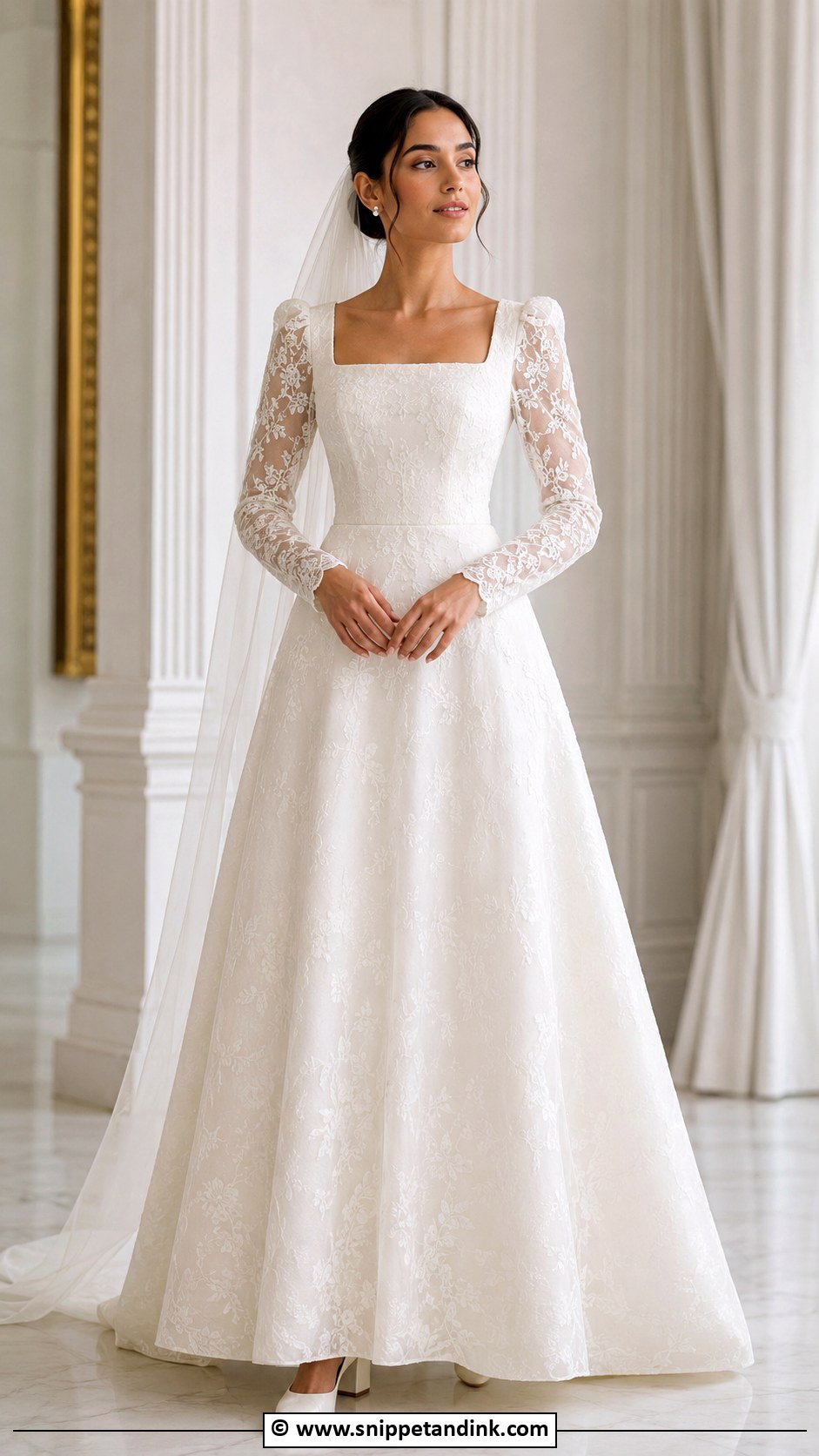
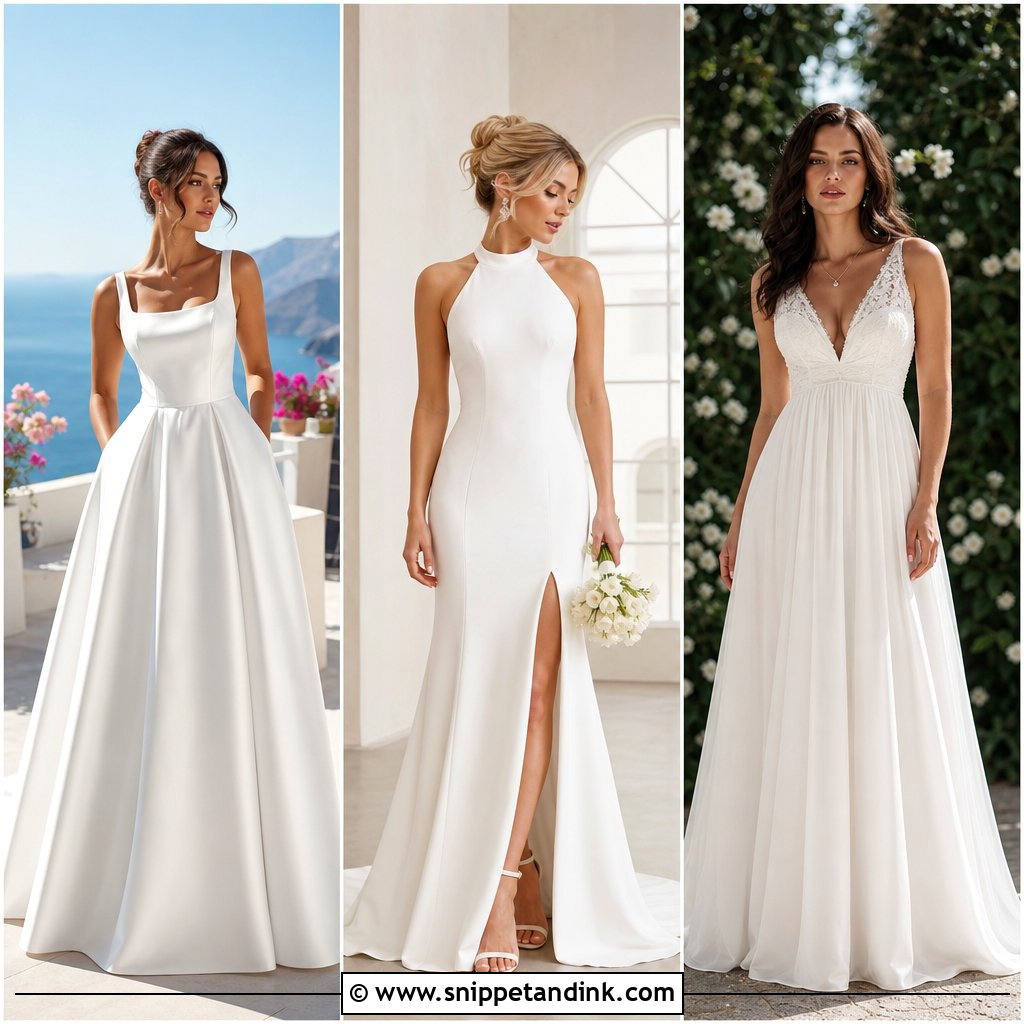
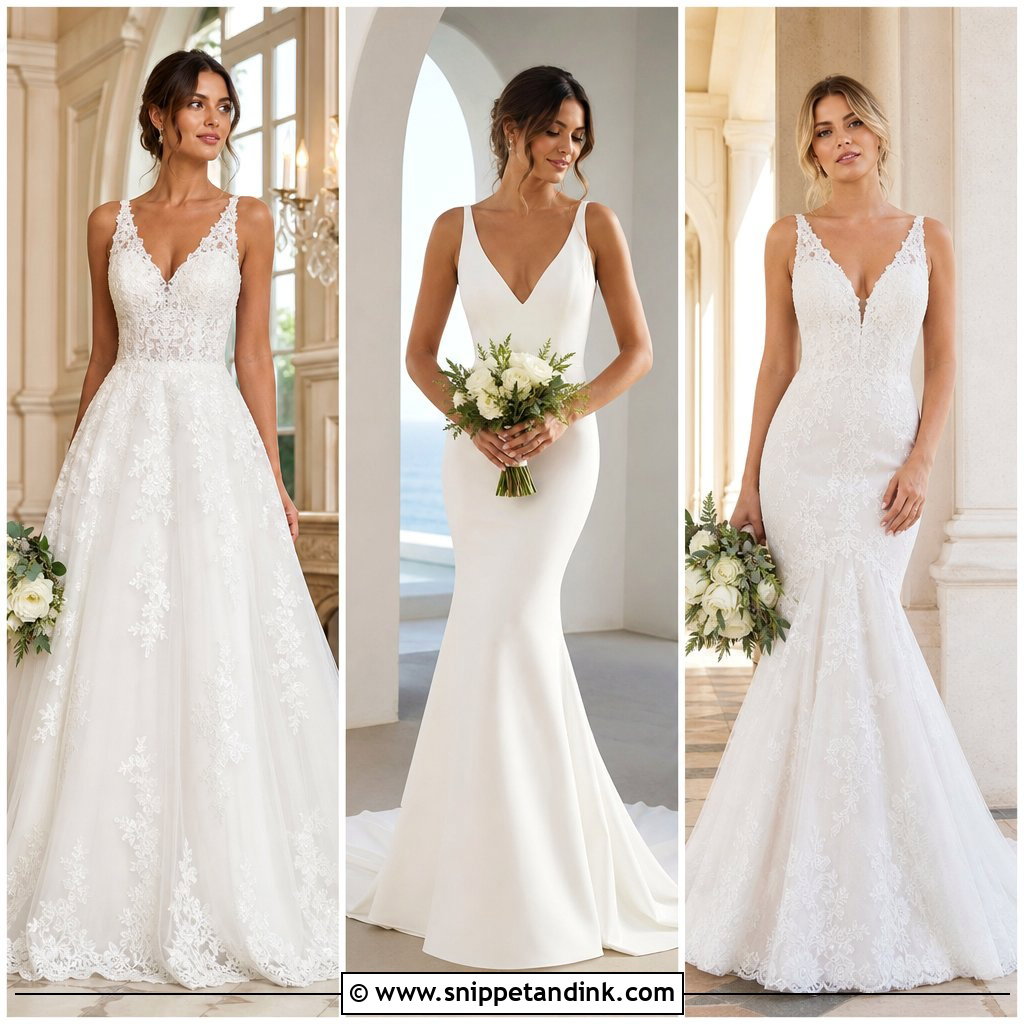
Detachable sleeves give you coverage for the ceremony and freedom for the dance floor. They usually attach with hidden snaps or small hooks under the armhole or along the bodice edge, and I test that attachment by having the bride wave and hug before we sign off. Match the sleeve fabric to the bodice in lace, tulle, satin or crepe. A square, bateau or high neckline keeps the full look refined. Choose a veil that doesn’t snag on sleeve lace, and pack the sleeves in a labeled bag so they’re not lost when changed in a rush.
21. Modest Wedding Dress With Covered Back
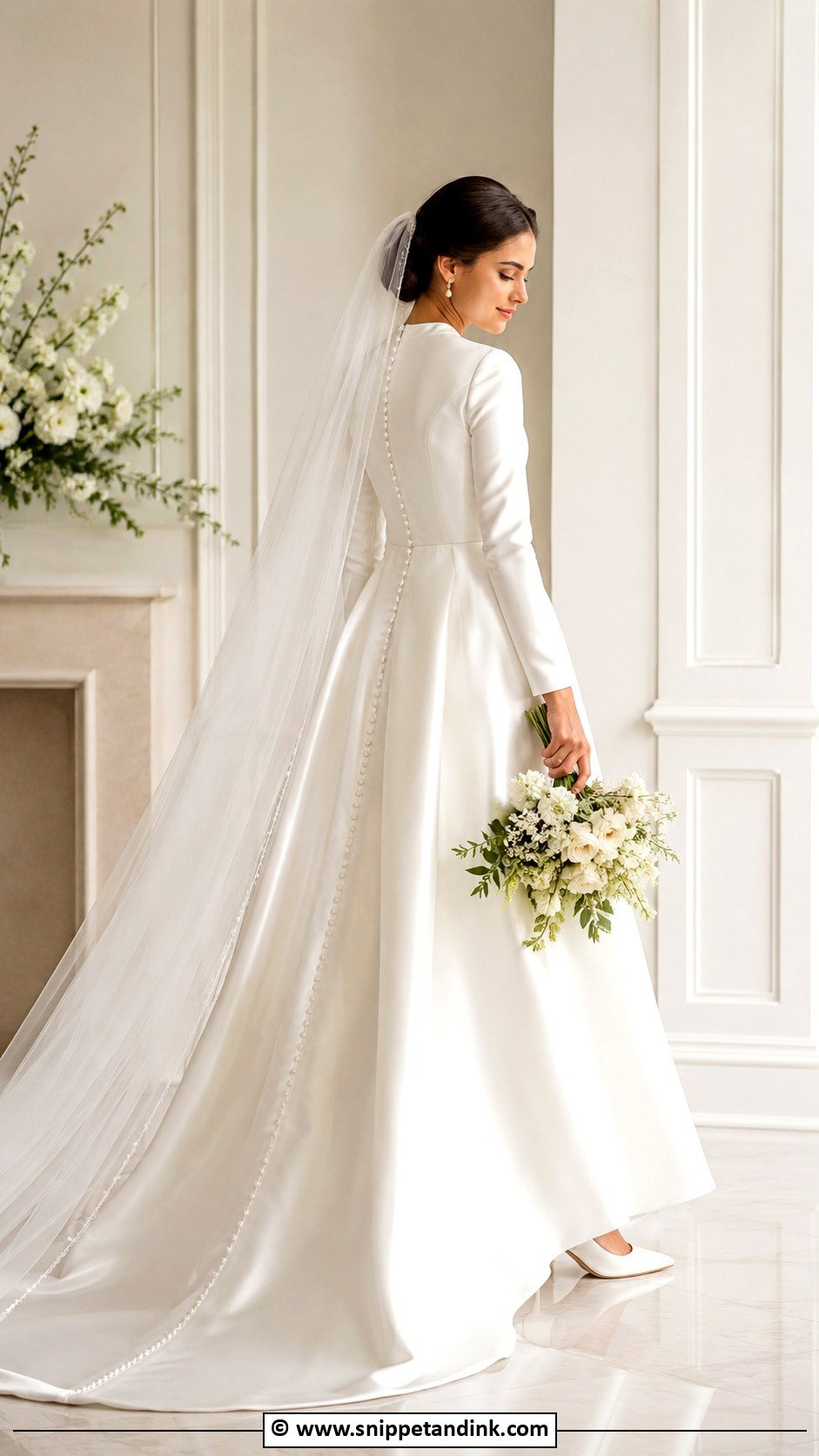
So many gowns are designed around an open back that a covered one becomes a feature in itself. Lace buttons, satin buttons, pearl details or embroidery can run down the spine, and guests see the back of you for most of the ceremony. Long sleeves and a high neckline complete full coverage. A-line and sheath shapes keep the back clean. Wear an updo so the details show, and allow time to fasten the buttons: a row of satin loops can take several minutes, so ask the seamstress to add a hidden zip beneath them.
22. Modest V Neck Wedding Dress
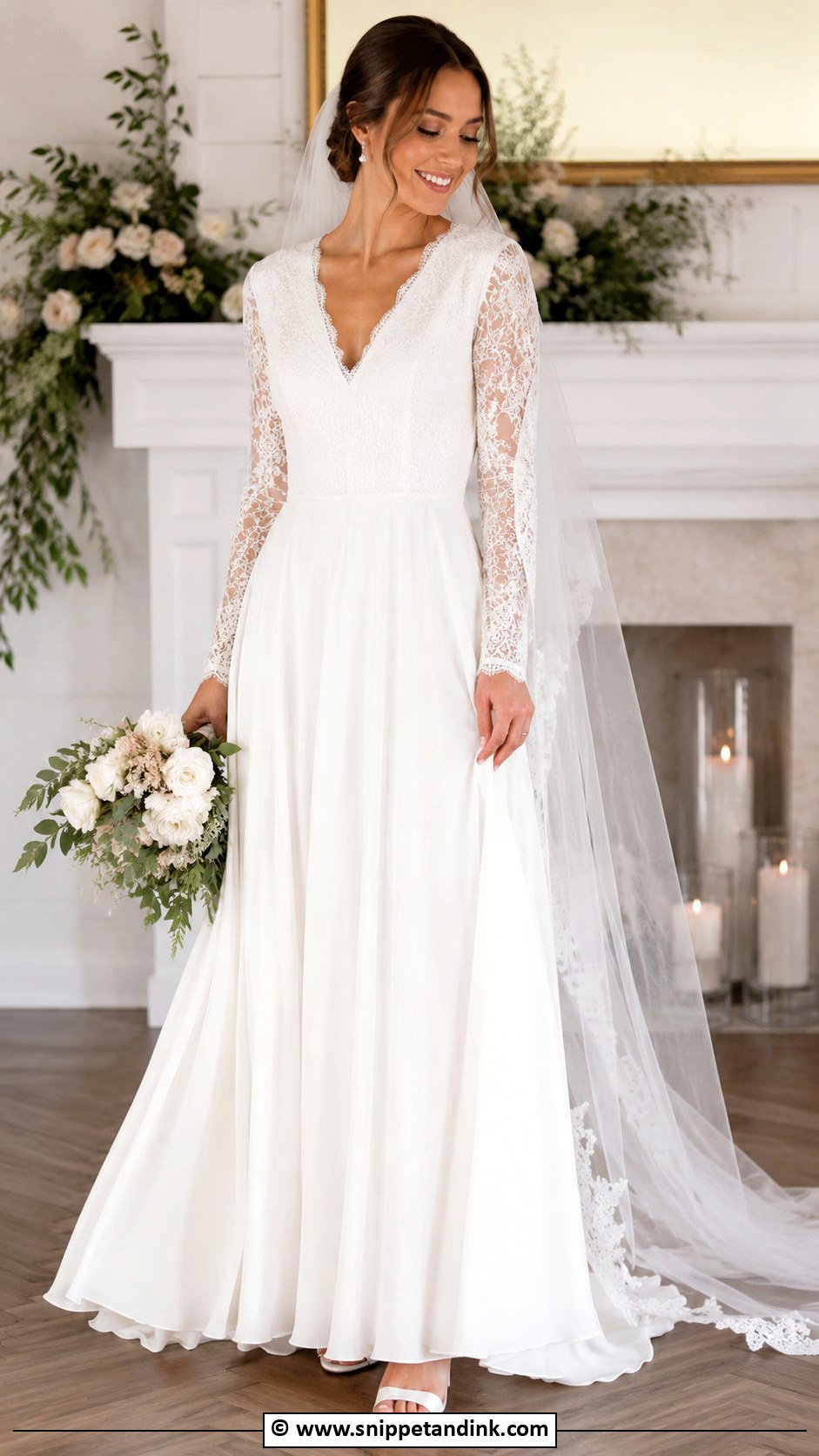
A V neckline can stay modest if it’s shallow. I’d measure from the base of the throat: anything ending above the bust line reads covered and still gives shape to the upper body, which helps brides who feel boxed in by a high neck. A lined bodice, long sleeves and a covered back balance it. Chiffon, lace, crepe and satin all suit the cut. If the neckline is plain, a fine pendant can sit in the V; if it’s detailed, earrings are enough. A chapel veil and classic heels finish it.
23. Modest Off White Wedding Dress
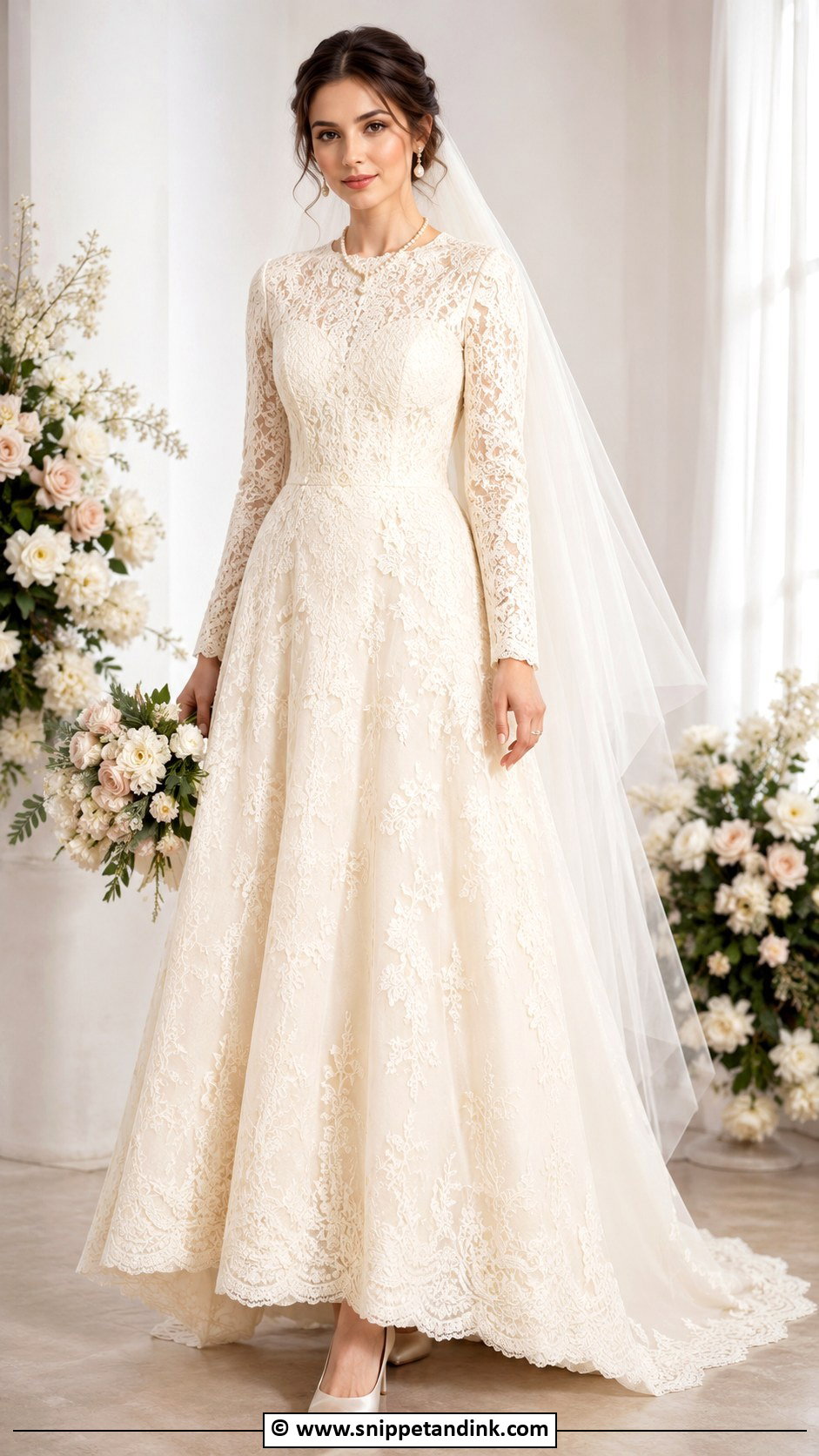
Bright white flatters fewer skin tones than people think, and off-white is often the kinder choice. Ivory, cream and natural white look warmer next to skin and pair easily with conservative cuts. Look at fabric swatches near your face in daylight, because the same ivory can look yellow in satin and pale in crepe. A long sleeve lace gown, a satin A-line or a crepe column all work in these shades. Pearl jewelry suits ivory especially well, and ivory satin pumps or low block heels keep everything in the same family.
24. Modest Plus Size Wedding Dress
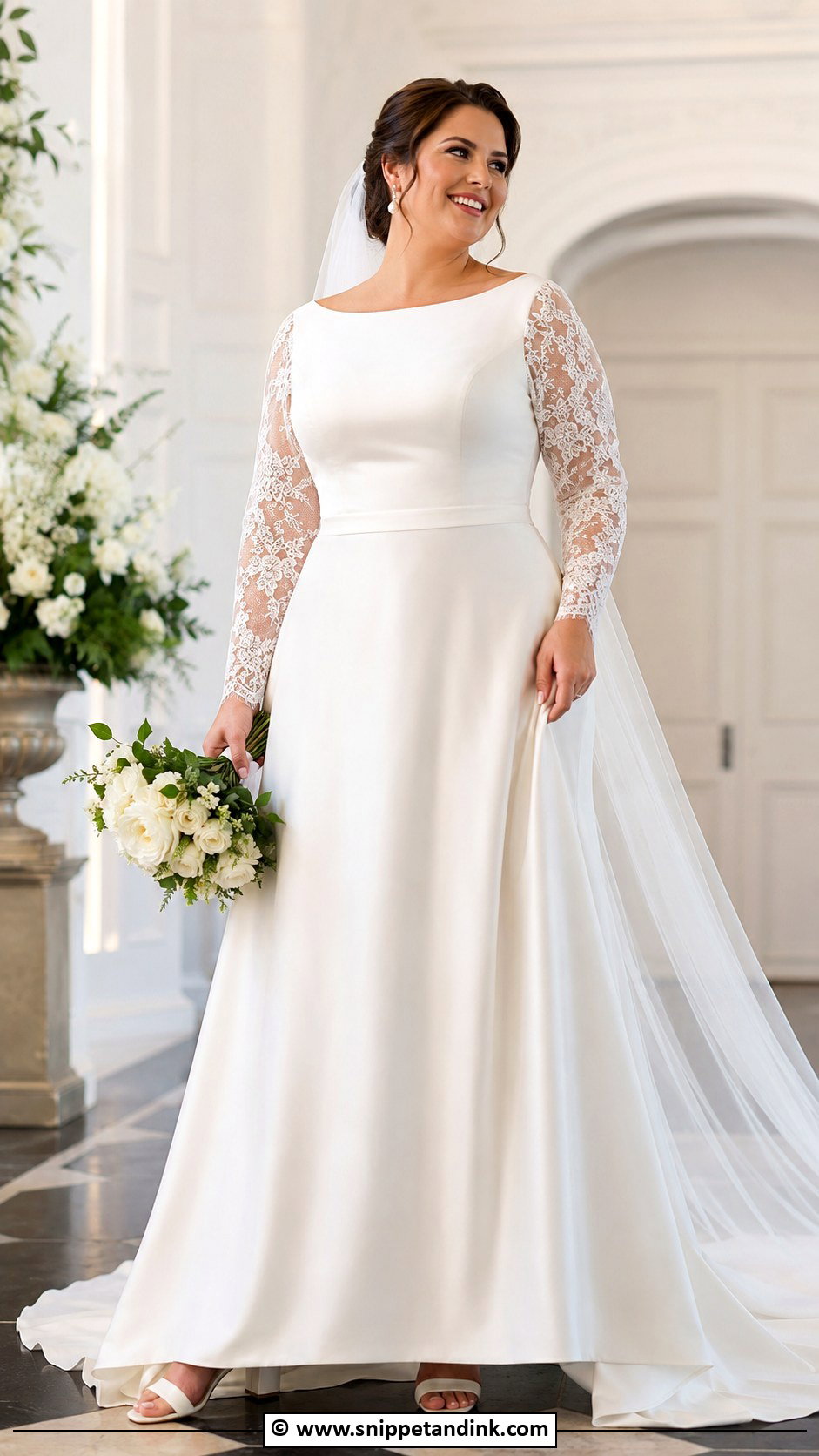
A modest plus size wedding dress should be built for support first. I look for a strong inner lining, a properly constructed bodice and sleeves cut with enough room at the bicep and armhole that they don’t pull when you lift your arms. A-line gowns, structured ball gowns and soft fit-and-flare shapes all work. A V, bateau or square neckline gives shape while staying conservative. Stretch lace, soft crepe and well-tailored satin move with the body. Wear heels you can stand in for hours, a veil that matches the formality and jewelry in proportion to the gown.
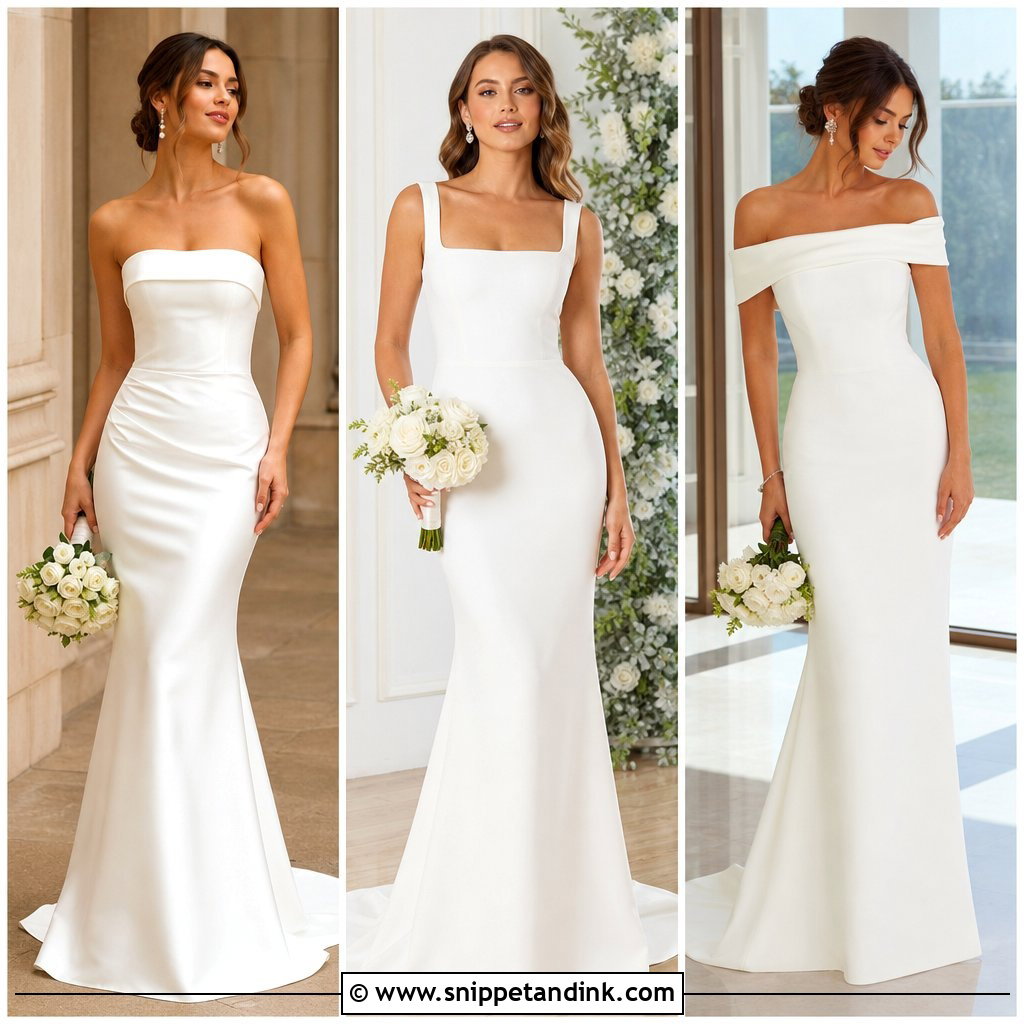
25. Modest Petite Wedding Dress
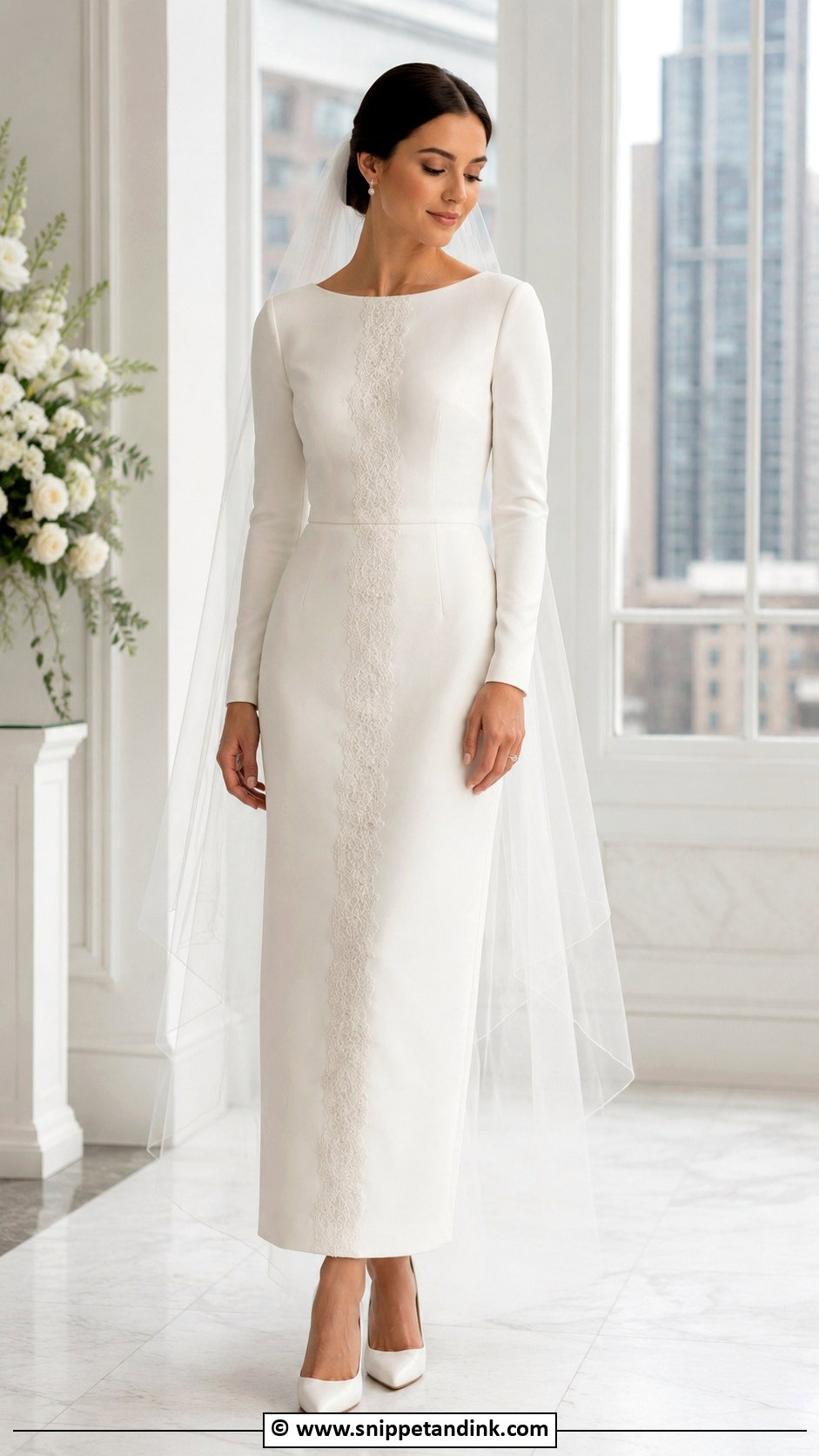
On a petite frame the goal is length, and a heavy skirt fights against it. A simple A-line, column or sheath gown with vertical lace patterns and clean seams looks right. I check where the waistline sits, since petite brides often need it raised slightly. Sleeves need the most attention: too loose or too long and they swamp the arm, so expect to shorten them. A high neckline works if the bodice is tailored; a modest V or bateau opens the upper body. Pointed-toe heels, a soft veil and small earrings keep everything in scale.
26. Modest Winter Wedding Dress
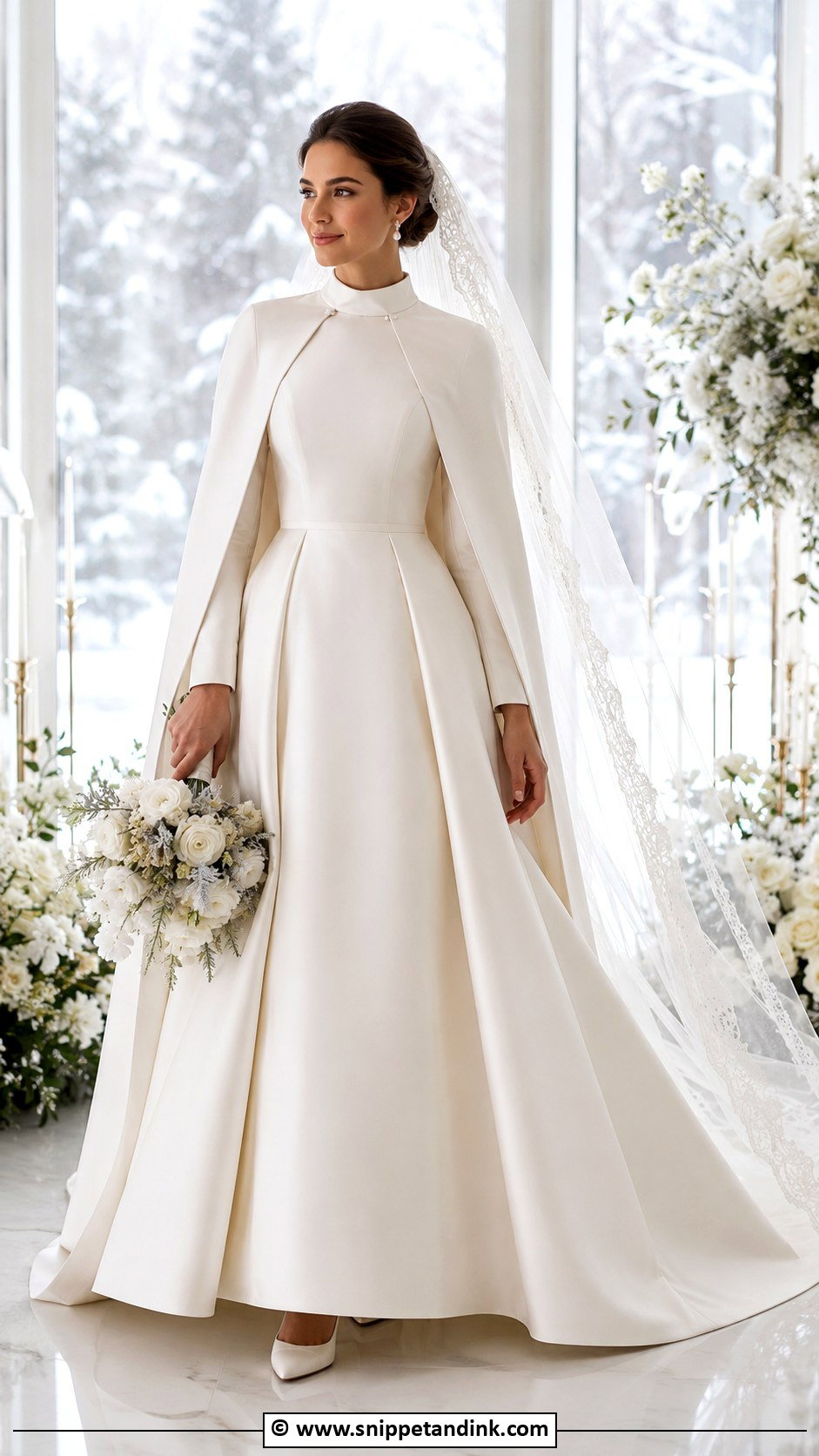
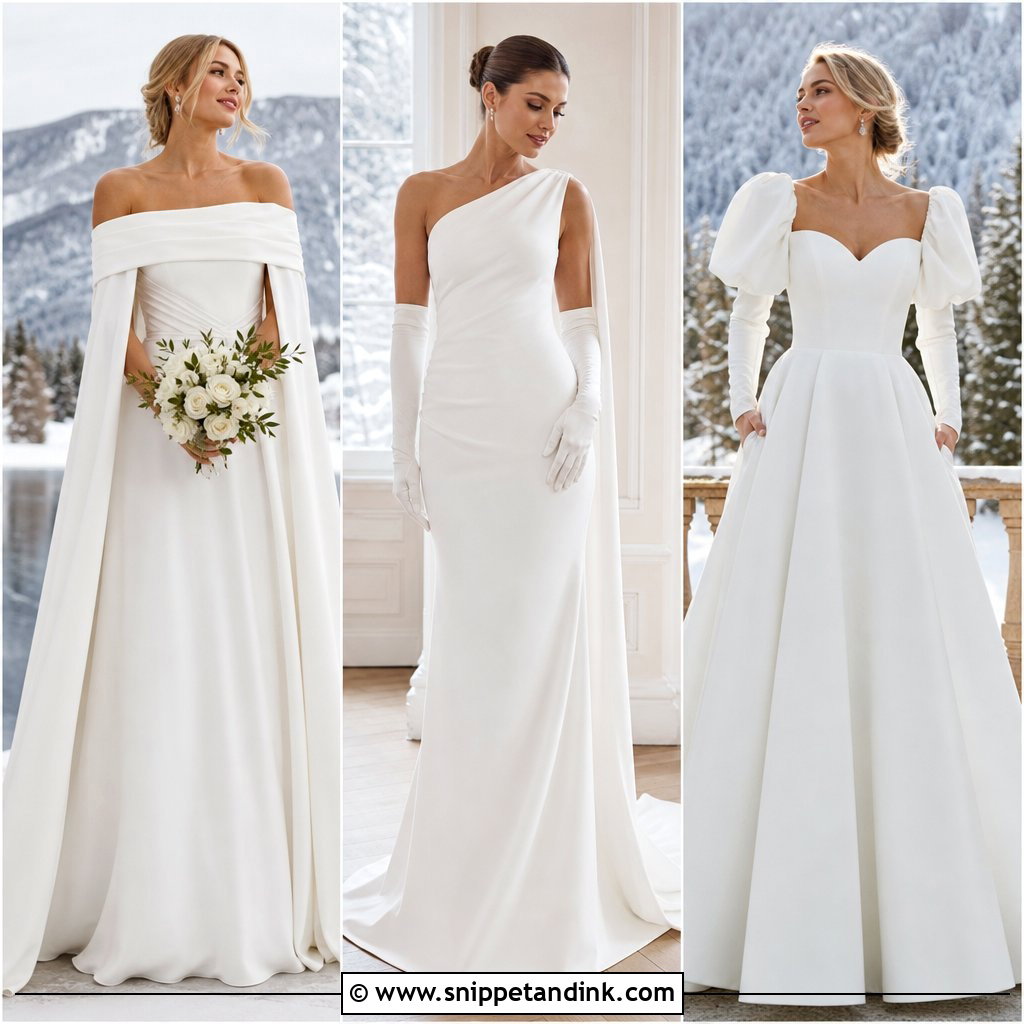
Winter is the easiest season to dress conservatively, because heavier fabrics and long sleeves feel right. A modest winter wedding dress in satin, mikado or crepe, perhaps with velvet trim, keeps you warm and looks seasonal. Pair it with a high or bateau neckline. For outdoor portraits, add a bridal coat, cape or faux-fur wrap, and do a fitting with it on so the shoulders don’t crush the sleeves. Closed-toe heels, pearl earrings and a long veil complete it. Lined lace or thick fabric suits candlelit venues best.
27. Modest Summer Wedding Dress
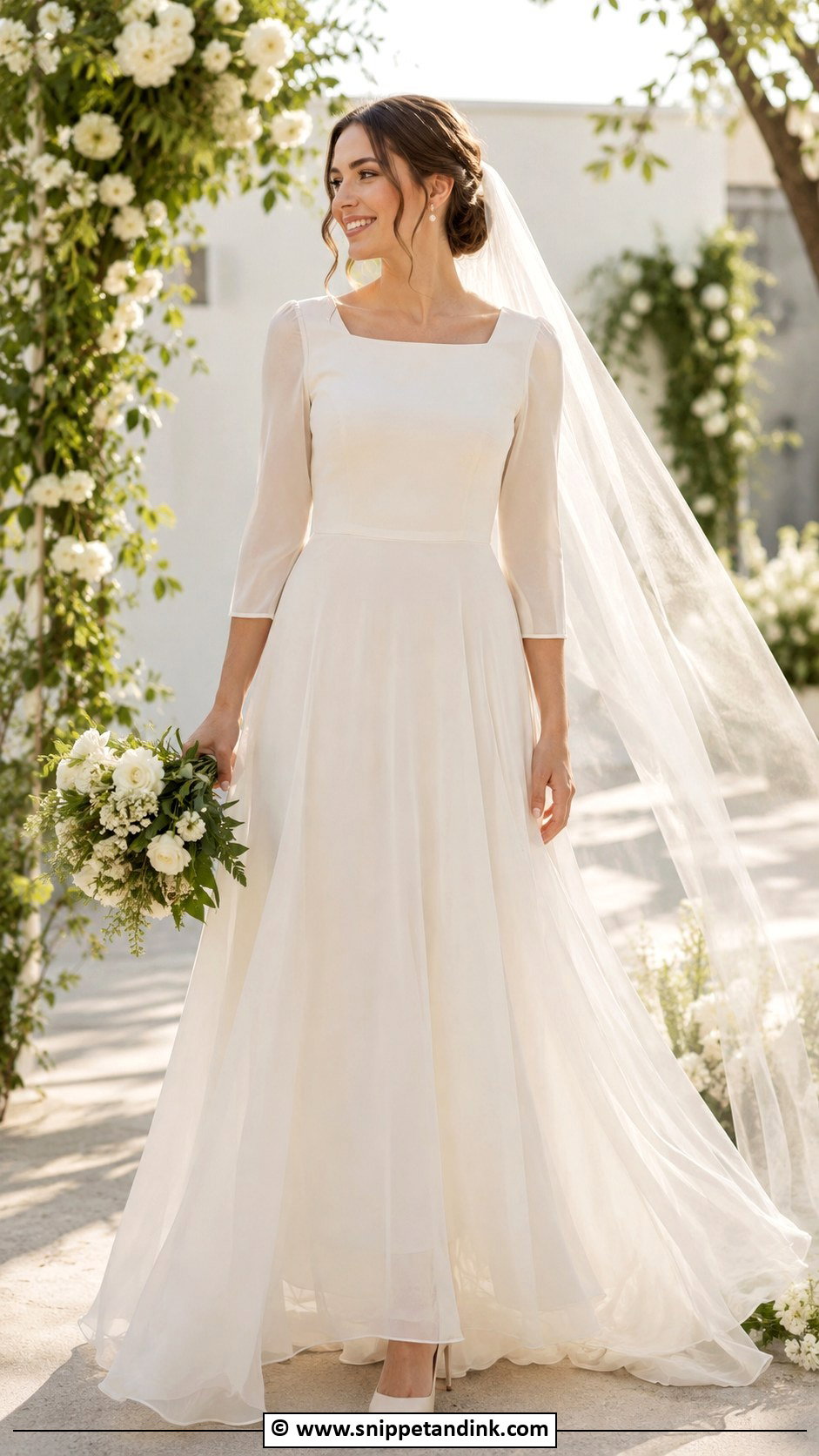
Coverage in summer is a fabric problem first. Chiffon, lightweight crepe, organza and soft tulle breathe; satin and heavy lace trap heat. If you want long sleeves, ask for an unlined or single-layer sleeve; otherwise elbow or three-quarter sleeves are more comfortable. A high, square or soft bateau neckline keeps it covered, and a flowing A-line lets air circulate as you walk. Skip heavy beading, which absorbs warmth. Low block heels, pearl studs and a lightweight veil work for outdoor ceremonies and bright receptions alike.
28. Modest Civil Wedding Dress
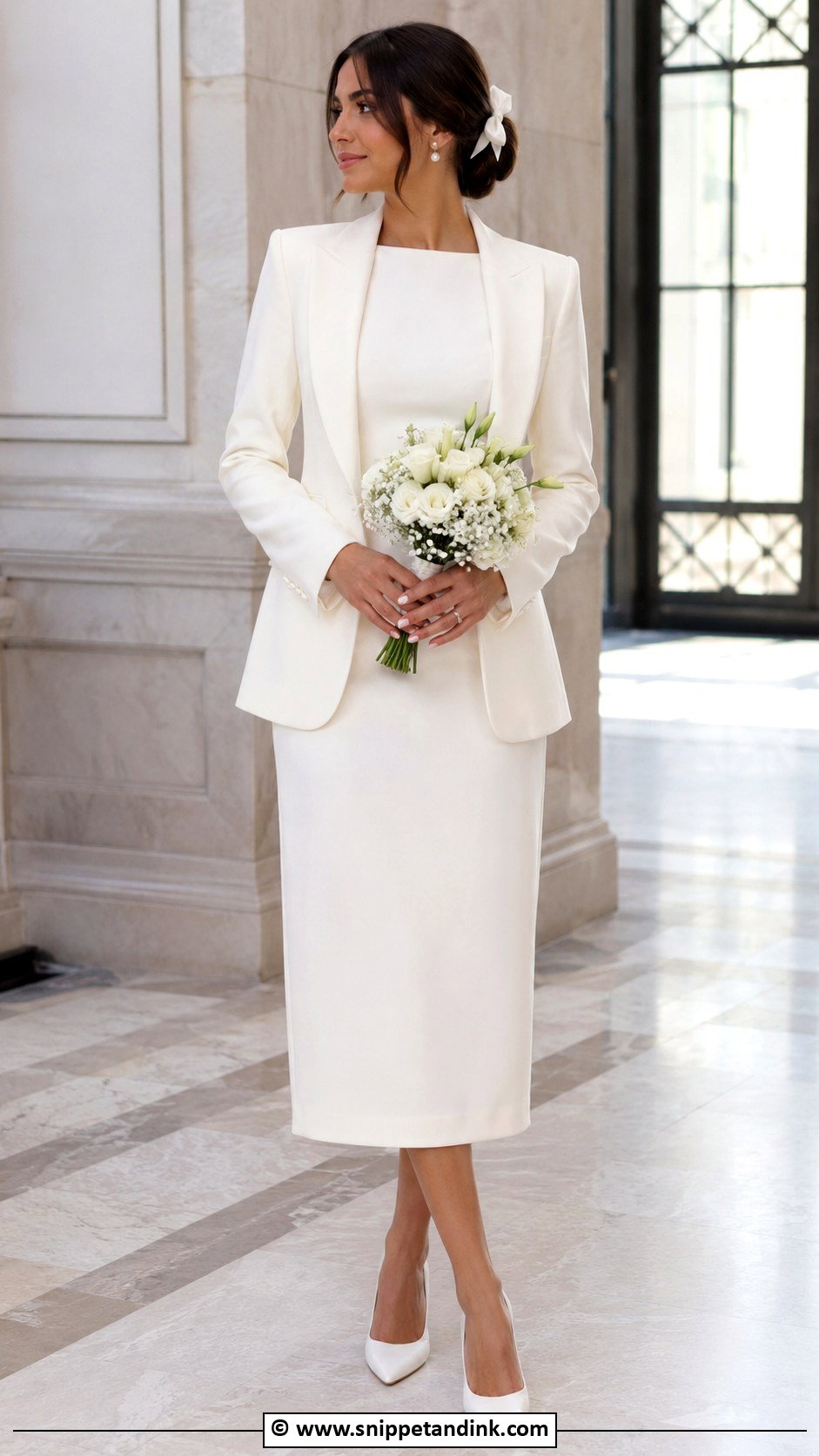
A courthouse or city hall ceremony doesn’t need a big gown, and a fitted outfit is often more comfortable in a small room. A modest civil wedding dress might be a tailored midi, a long sleeve crepe dress, a tea length lace dress or a sleek column. Keep the neckline covered with a bateau, high or modest square shape. Classic pumps, pearl earrings and a small veil or bow make it bridal, and a structured blazer adds polish. Fit matters more than detail here: hems and sleeves should be exact.
29. Modest Minimalist Wedding Dress
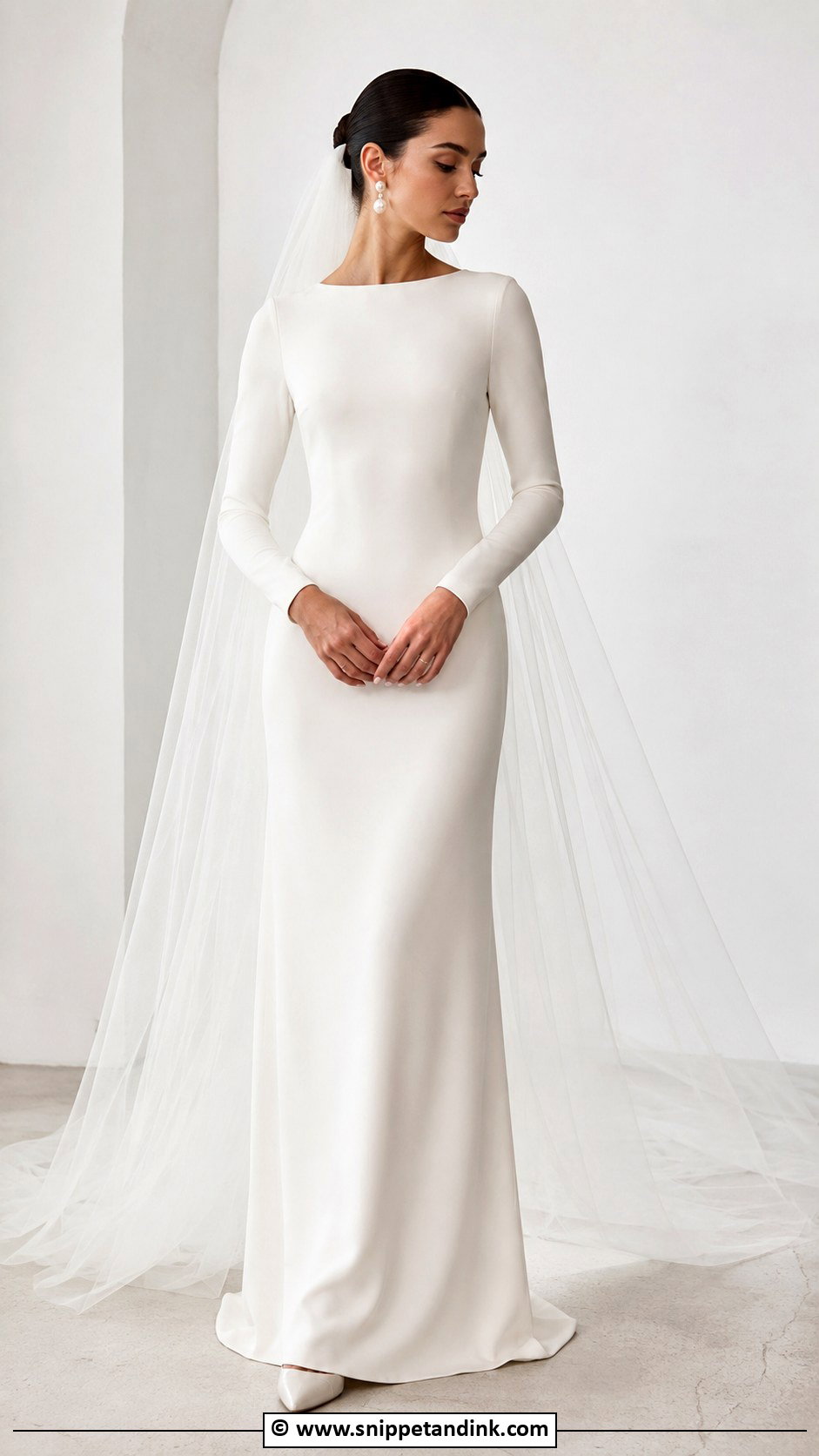
A minimalist gown has almost no lace, beading or embroidery, so every seam is on display. That’s why I spend more fitting time on these dresses than on lace ones: the shoulders, waist and sleeves have to sit smoothly, with no pulling across the back. Choose a long sleeve crepe gown, satin column or mikado A-line with a high or bateau neckline. Sculptural pearl earrings, a sleek bun and a plain long veil complete it. It’s a good fit for a bride who wants clean photos that won’t date.
30. Modest Vintage Wedding Dress
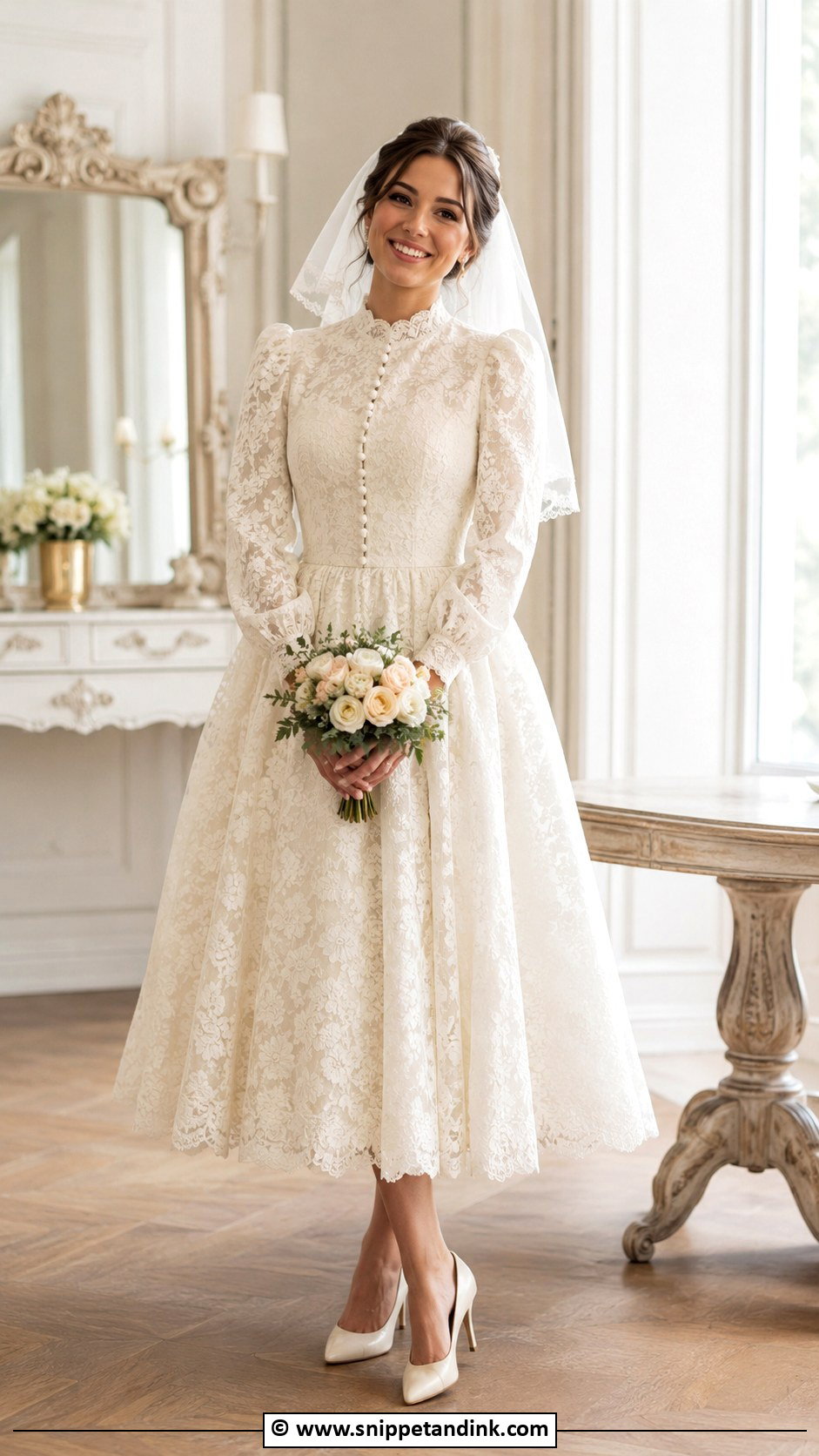
Vintage details make coverage feel natural: lace sleeves, high necklines, tea length skirts, covered buttons, satin collars and soft puff sleeves all belong to eras when brides dressed modestly. The risk is costume, so I’d keep it to two or three period details on a modern fit, like a fitted bodice over an A-line skirt. Pearl earrings, a short veil and ivory heels suit it. If you have an heirloom brooch or a lace-trimmed family veil, this is the dress to wear it with.
The Arm Lift, Kneel and Hug Test at Every Fitting
Standing still in front of a mirror shows you how a gown looks. It tells you nothing about how it behaves. Covered dresses have more fabric at the arms and neck, so they show their problems the moment you move. At each fitting, I ask the bride to do the following and watch what the dress does.
- Raise both arms as if to hug someone taller. If the whole bodice lifts or the sleeves cut into your armpits, the armhole is too low or too tight.
- Sit on a chair for a full minute. Check the neckline for gaping and the back for strain at the zipper.
- If your ceremony includes kneeling, bowing or sitting on the floor, rehearse it in the dress with your shoes on. Long skirts and trains need to be gathered, and someone should know how.
- Turn your head side to side. High necklines that stand away from the throat move with you.
- Walk across the room and back. A long, fitted sleeve that twists at the wrist usually needs re-setting at the shoulder.
How Far Ahead Covered Gowns Need Ordering
Most made-to-order gowns take several months to arrive, and any custom sleeves, extra lining or added panels can lengthen that, depending on the designer. I’d start shopping eight to twelve months out if you can. Plan for two or three fittings, beginning around two months before the date, because sleeves, necklines and covered backs need more adjustment than a strapless bodice. Bring the shoes, shapewear and any layer you’ll wear underneath to every appointment so the measurements are honest.
Coverage That Still Lets You Move
A covered gown should still feel like yours. Long sleeve lace, clean crepe, structured satin, a civil wedding dress or a cape can all be modest; what makes them work is attention to neckline, sleeve length, back coverage, fabric and movement. A well-fitted dress always looks more refined than one picked out of habit. Settle those details first, add accessories and tailoring that suit them, and you’ll walk down the aisle covered, comfortable and entirely at ease.
You'll Like These Ideas:










Leave a Reply