
Lace overlay is one of the fabrics I handle most in fittings, and it behaves differently from almost anything else in a bridal salon. The same Chantilly that looks airy on an A-line can look busy on a mermaid, and the lining underneath quietly changes the colour of the whole dress. Below are twenty complete looks, from soft A-lines and corset bodices to sleek sheaths and gowns with a removable lace layer, each with my notes on veils, shoes, hair and flowers. As you scroll, keep an eye on three things: how large the lace motifs are, what colour sits beneath them, and whether you could sit down to dinner in the gown.
Chantilly, Alençon or Guipure: How Each Lace Sits on the Body
An overlay is simply lace laid over a solid lining, but the type of lace decides how the dress hangs, how much it weighs and how well it survives the day. In the salon I rub a corner between my fingers and hold it against the lining before I look at the silhouette at all.
- Chantilly is fine and flat on a netted ground, with soft drape. It suits A-lines and sleeves, but it snags easily on ring prongs and bouquet wire.
- Alençon has its motifs outlined in a raised cord, so it looks more dimensional and holds its shape better on structured bodices. It is heavier than Chantilly.
- Guipure has no net behind it; the motifs are joined by small bars. It is firm and graphic, good on modern sheaths and corset tops, with very little drape.
- Beaded or re-embroidered lace has extra thread or beads worked over the top. It catches light, but adds weight and usually price.
The lining is the other half of the look. A nude or champagne lining behind ivory lace throws the pattern forward, while a matching ivory lining reads softer and, from across a room, almost solid. If the salon has lining swatches, ask to hold a few behind the lace; it changes the photographs more than most brides expect.
1. A-Line Chantilly Lace Overlay Wedding Dress
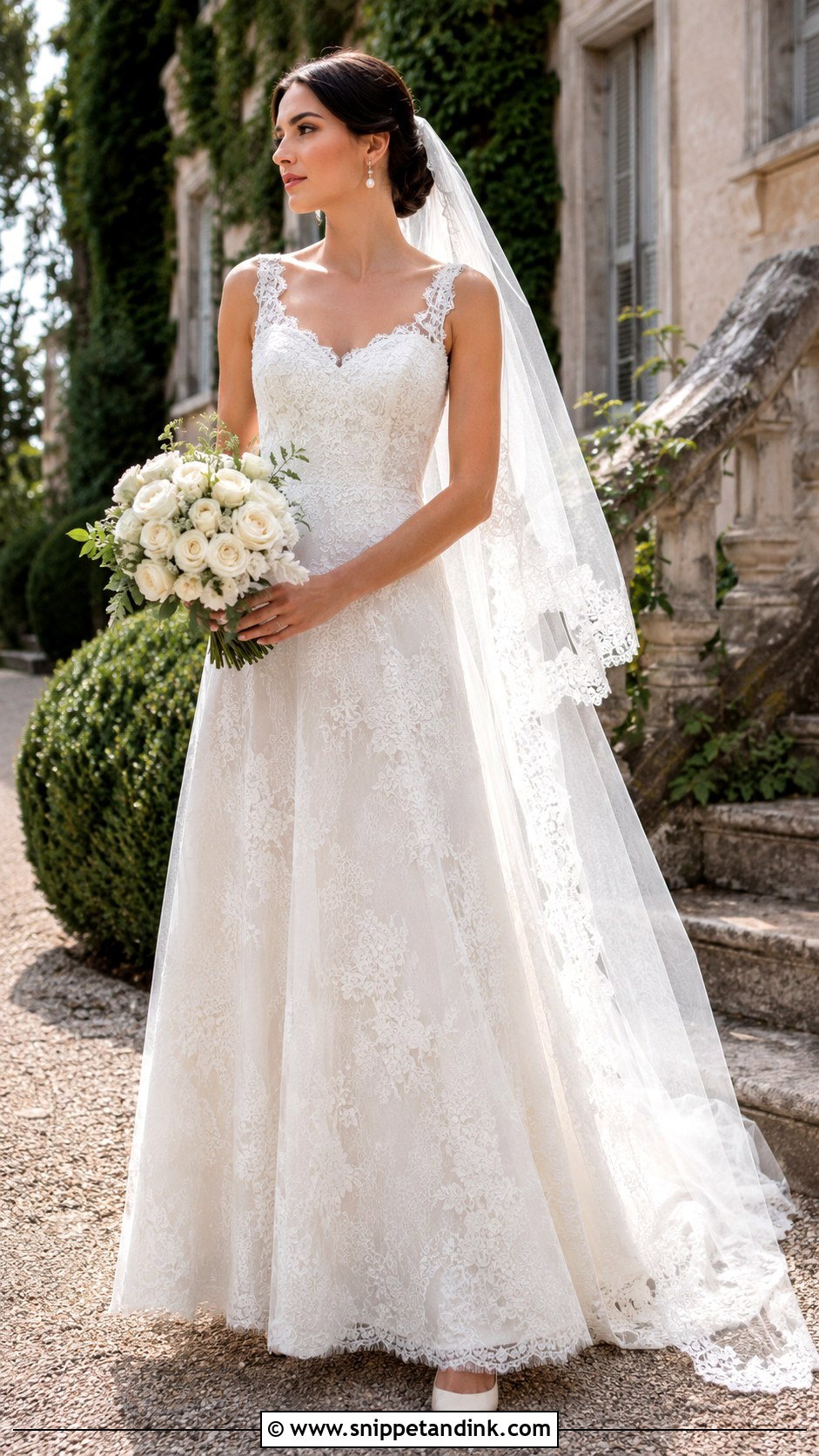
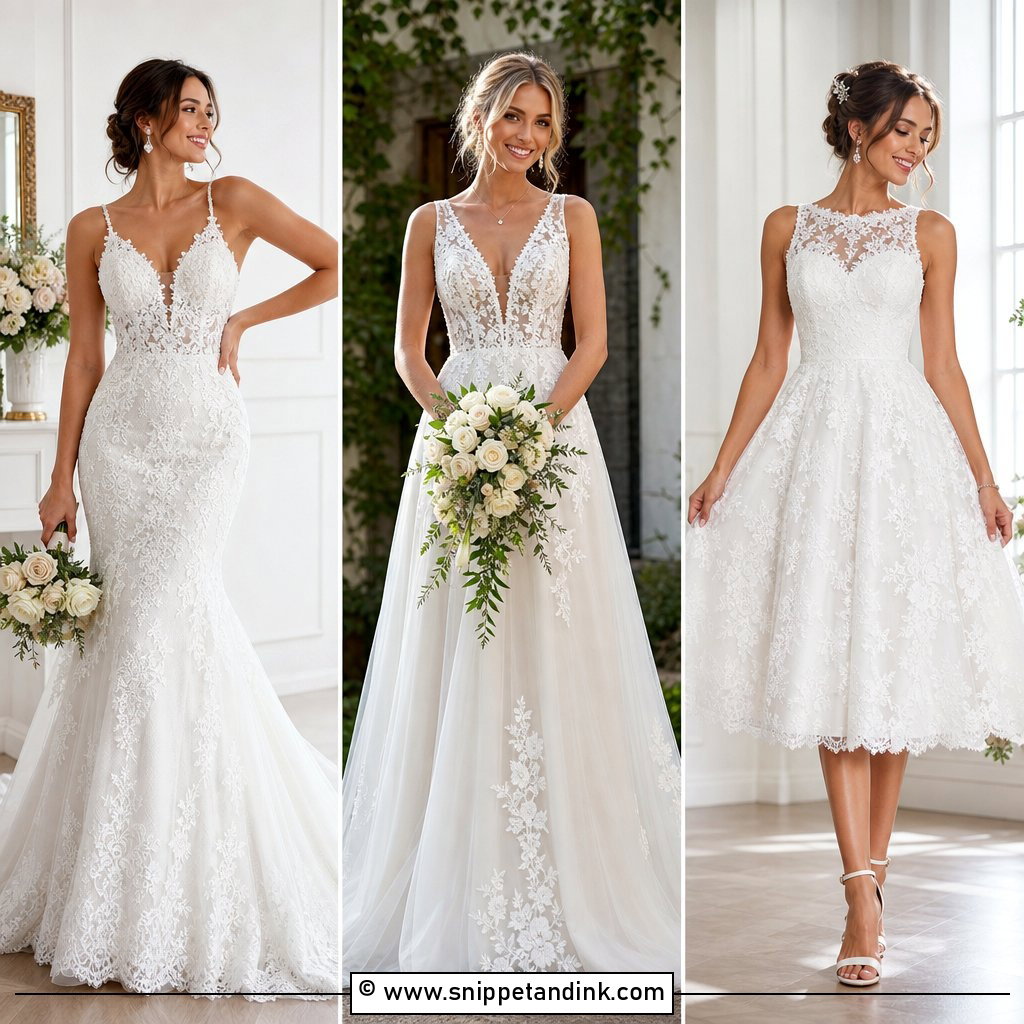
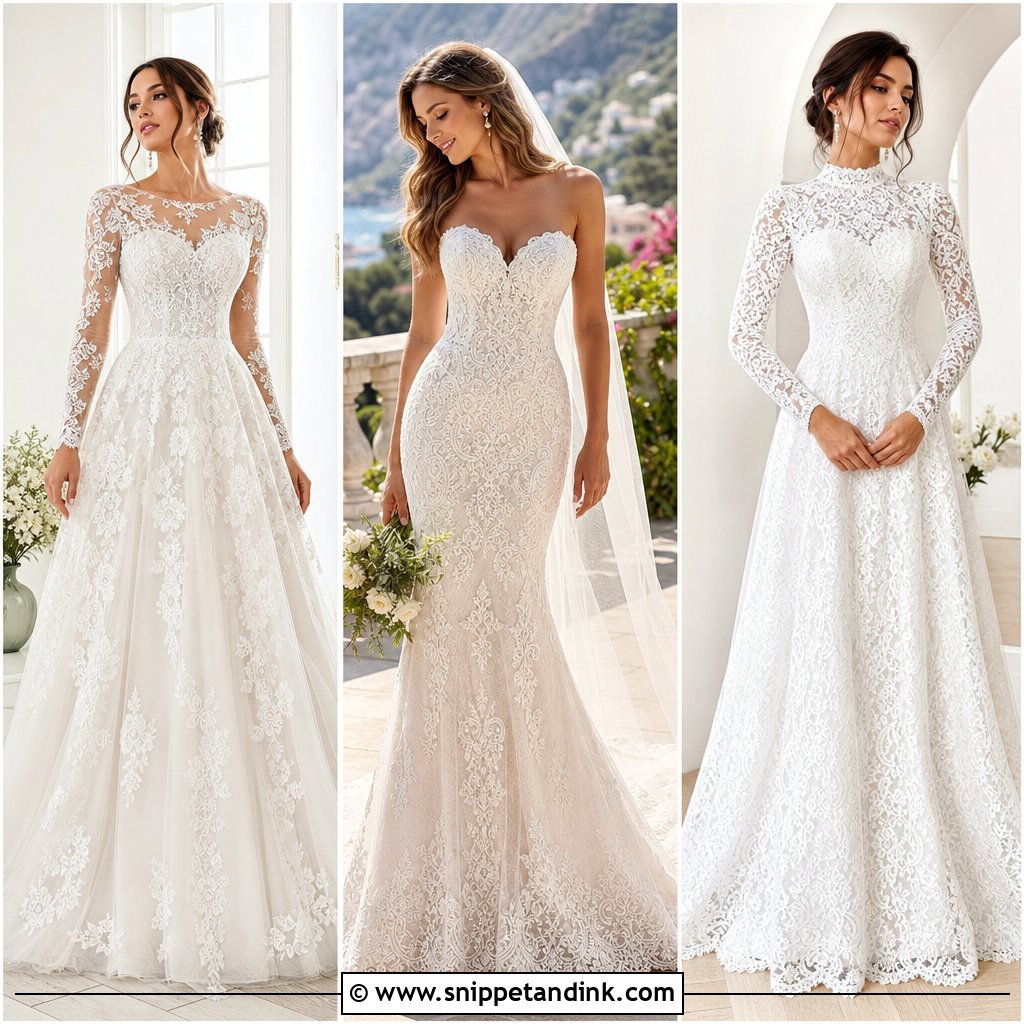
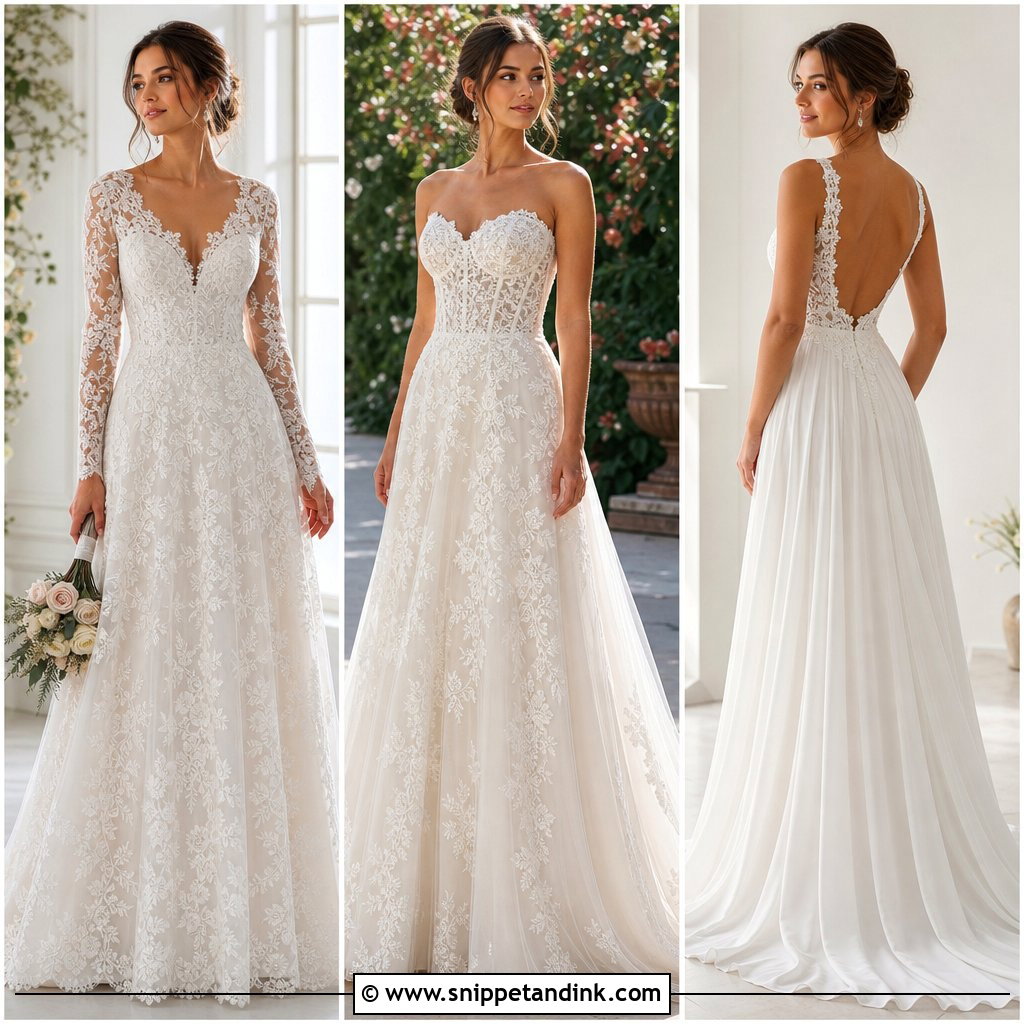
An A-line covered in delicate Chantilly lace is the shape I reach for first when a bride isn’t sure what she wants, because the skirt skims rather than clings. Chantilly is a fine, flat lace on a netted ground, so its pattern shows best over a nude or champagne lining; over bright white it almost disappears. Keep the bodice fitted to a natural waist and leave room in the skirt for a real stride. A fingertip veil with a narrow lace edge, pearl drops, pointed ivory pumps and a loose low bun keep the shoulders clear, and garden roses with a little greenery finish it. It flatters most figures and sits as easily in a hotel ballroom as on a lawn.
2. Long Sleeve Lace Overlay Wedding Dress
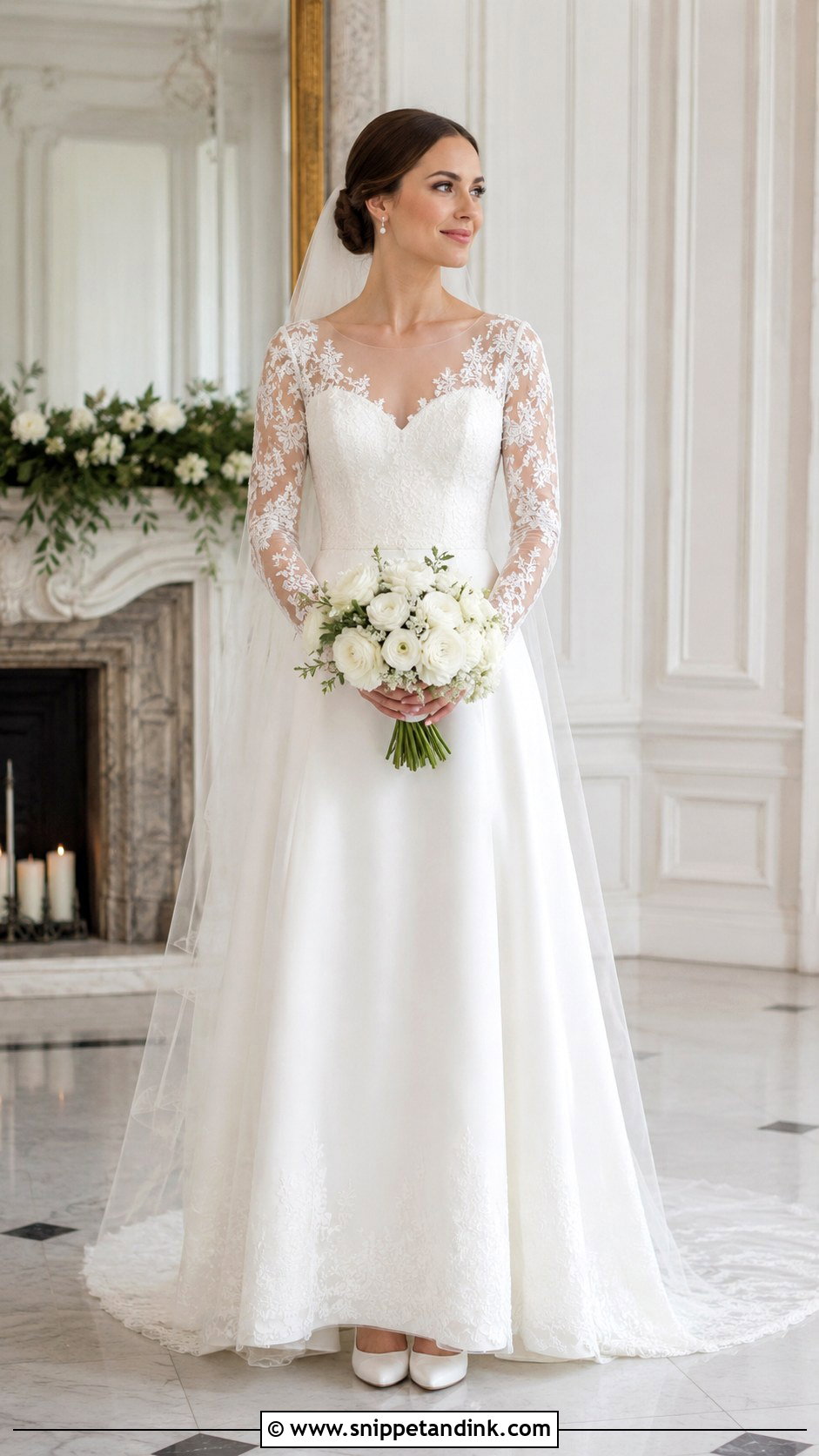
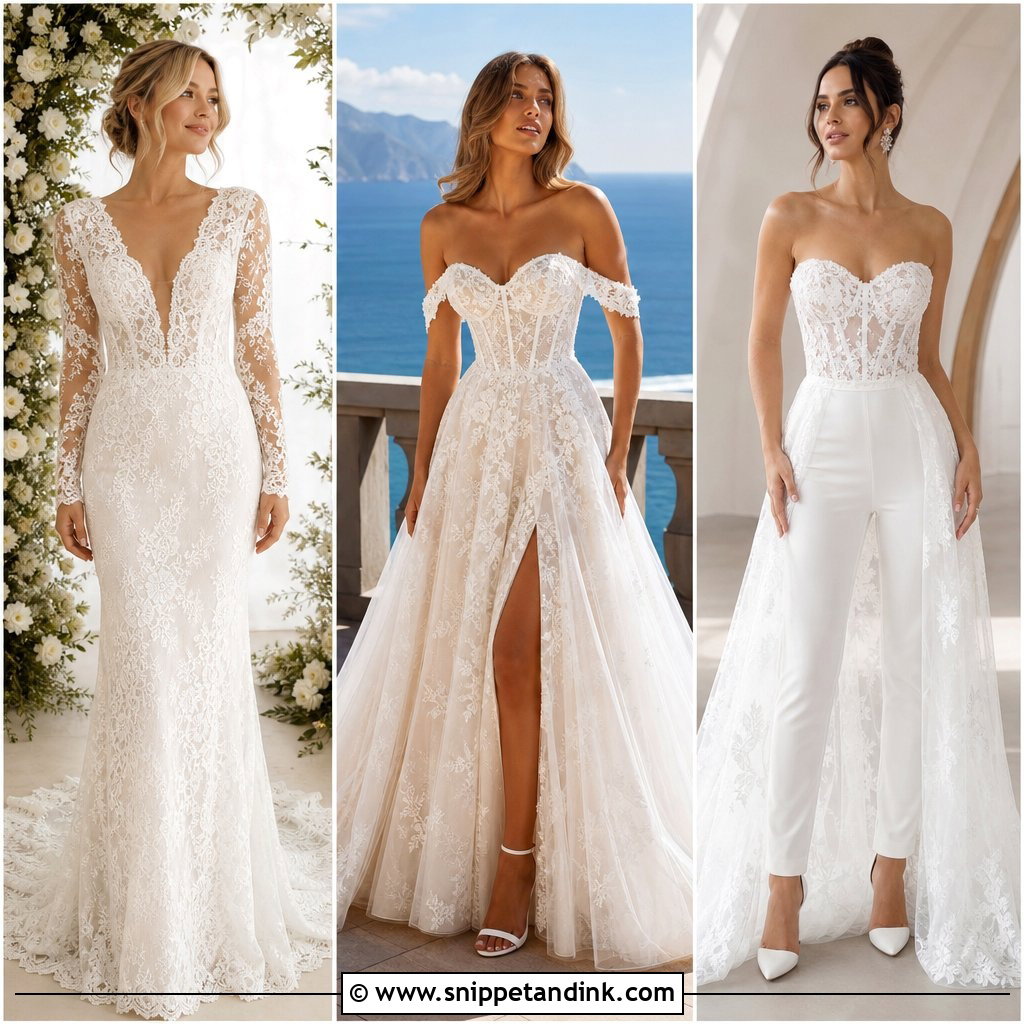
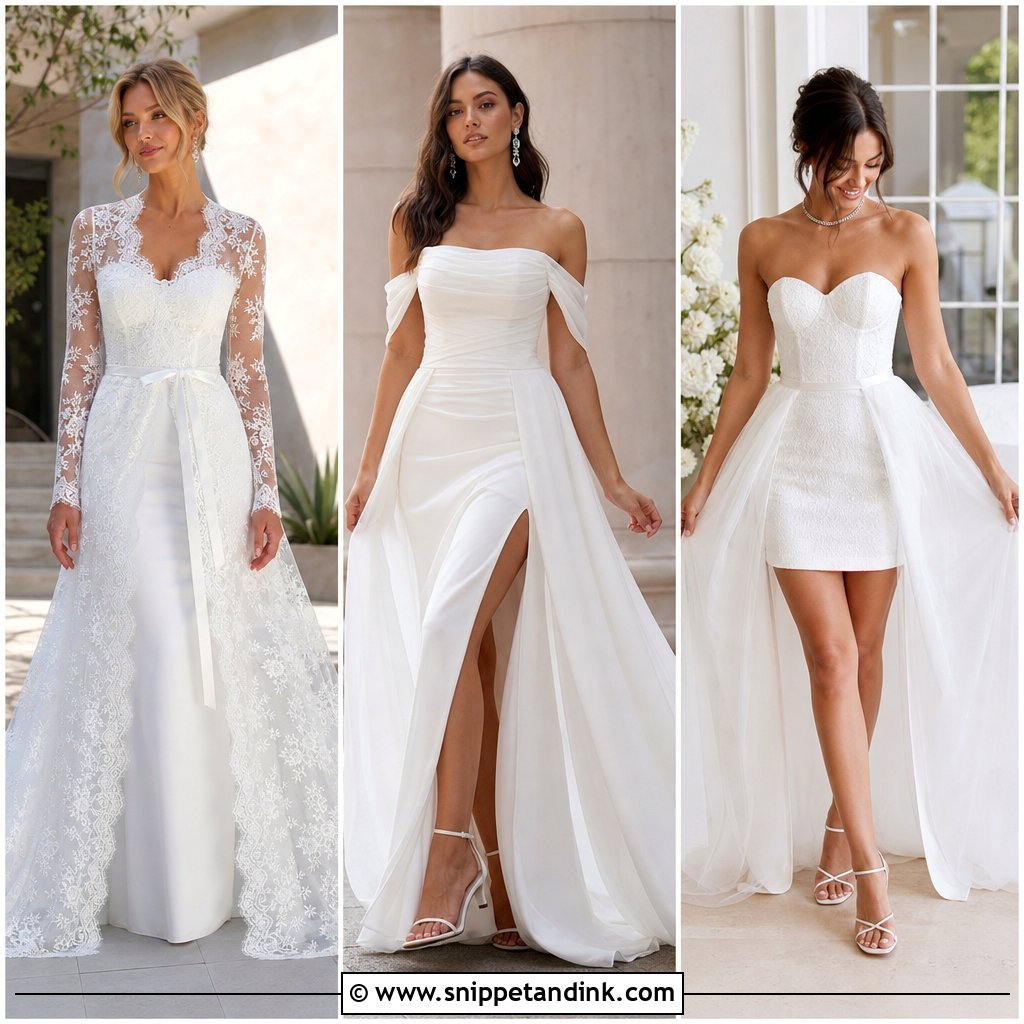
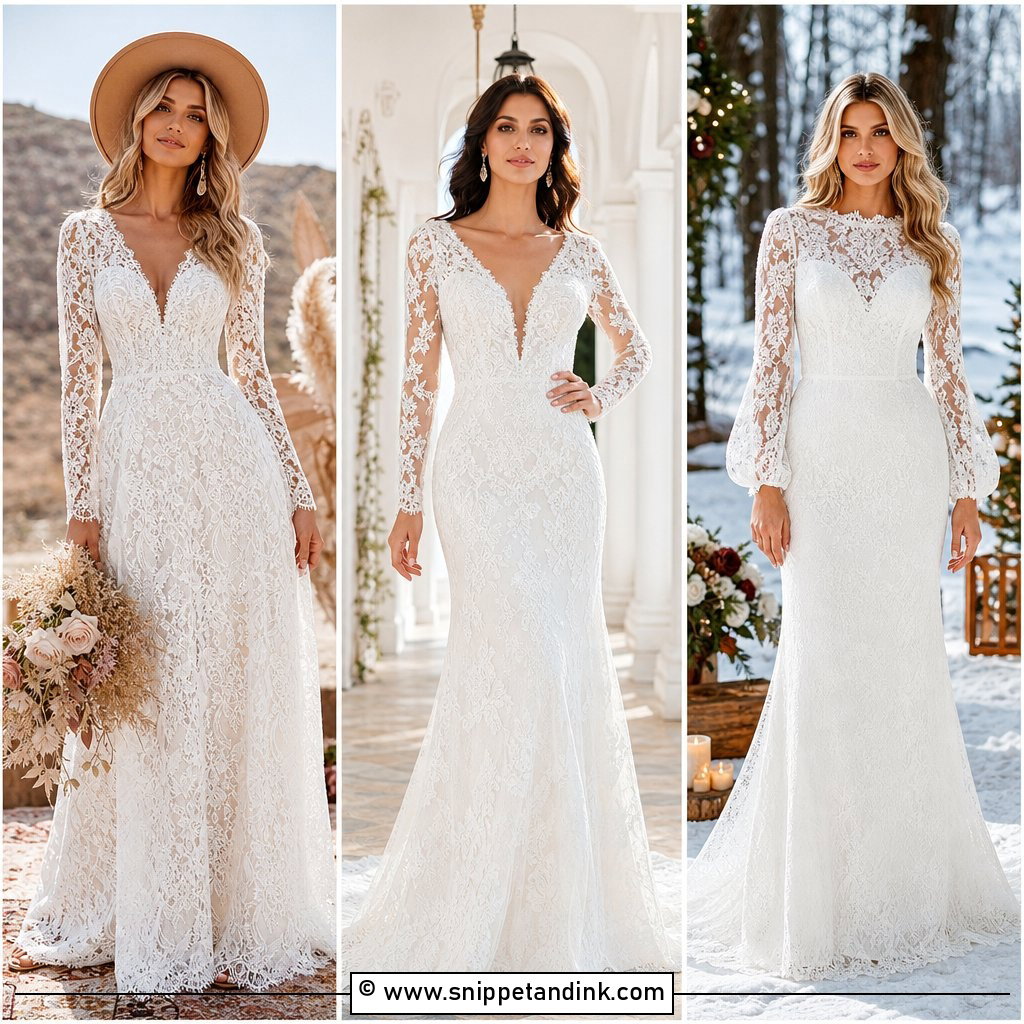
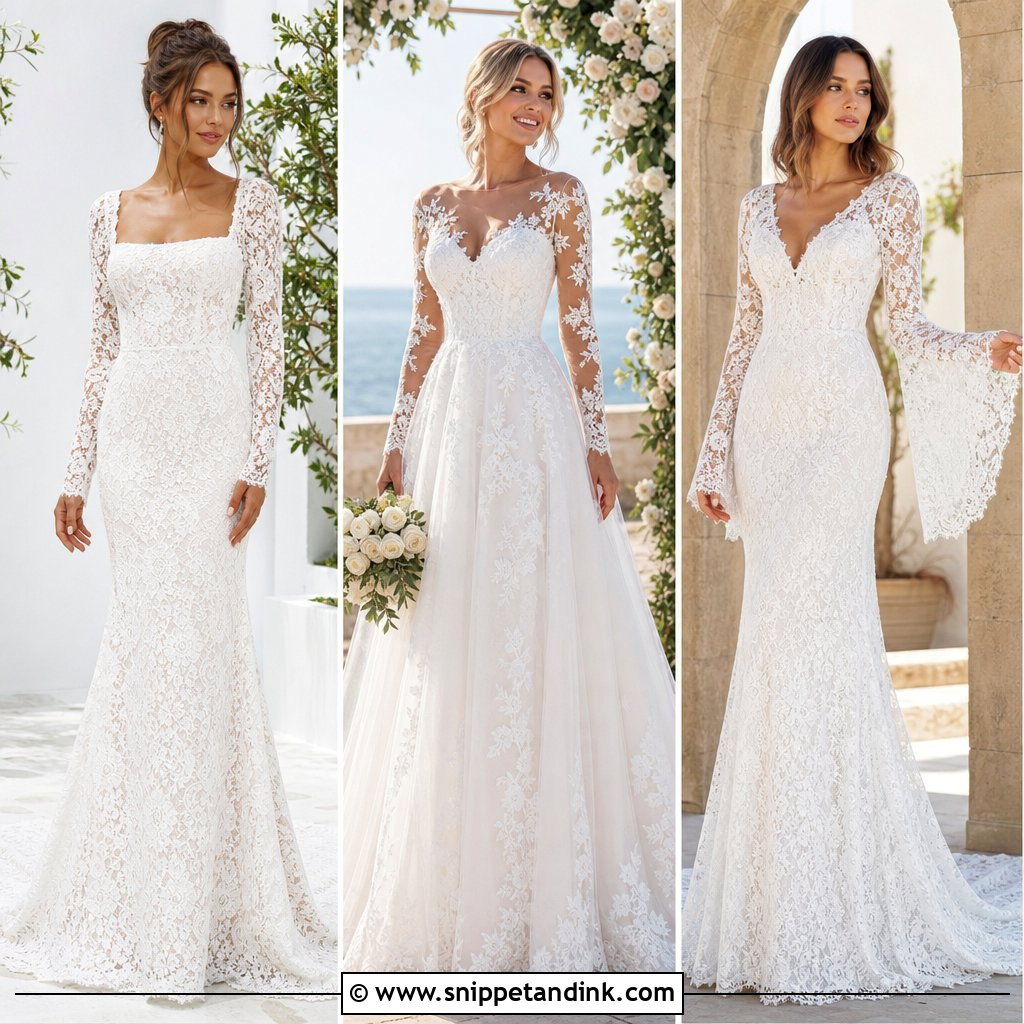
Long lace sleeves are where I see the most fitting trouble. Most bridal lace has very little stretch, so a sleeve cut tight in the mirror can stop you lifting your arms to hug anyone. Look for fitted illusion sleeves where the motifs run on from the bodice instead of starting abruptly at the shoulder seam. A lined sweetheart or scoop underneath gives coverage while the lace does the talking. I’d pair it with closed-toe satin heels, a chapel veil anchored below a smooth low bun, and small pearl or crystal studs. White roses, ranunculus and muted leaves suit autumn and winter. At every fitting, cross your arms and reach forward before you sign off on the sleeve.
3. Strapless Sweetheart Lace Overlay Wedding Dress
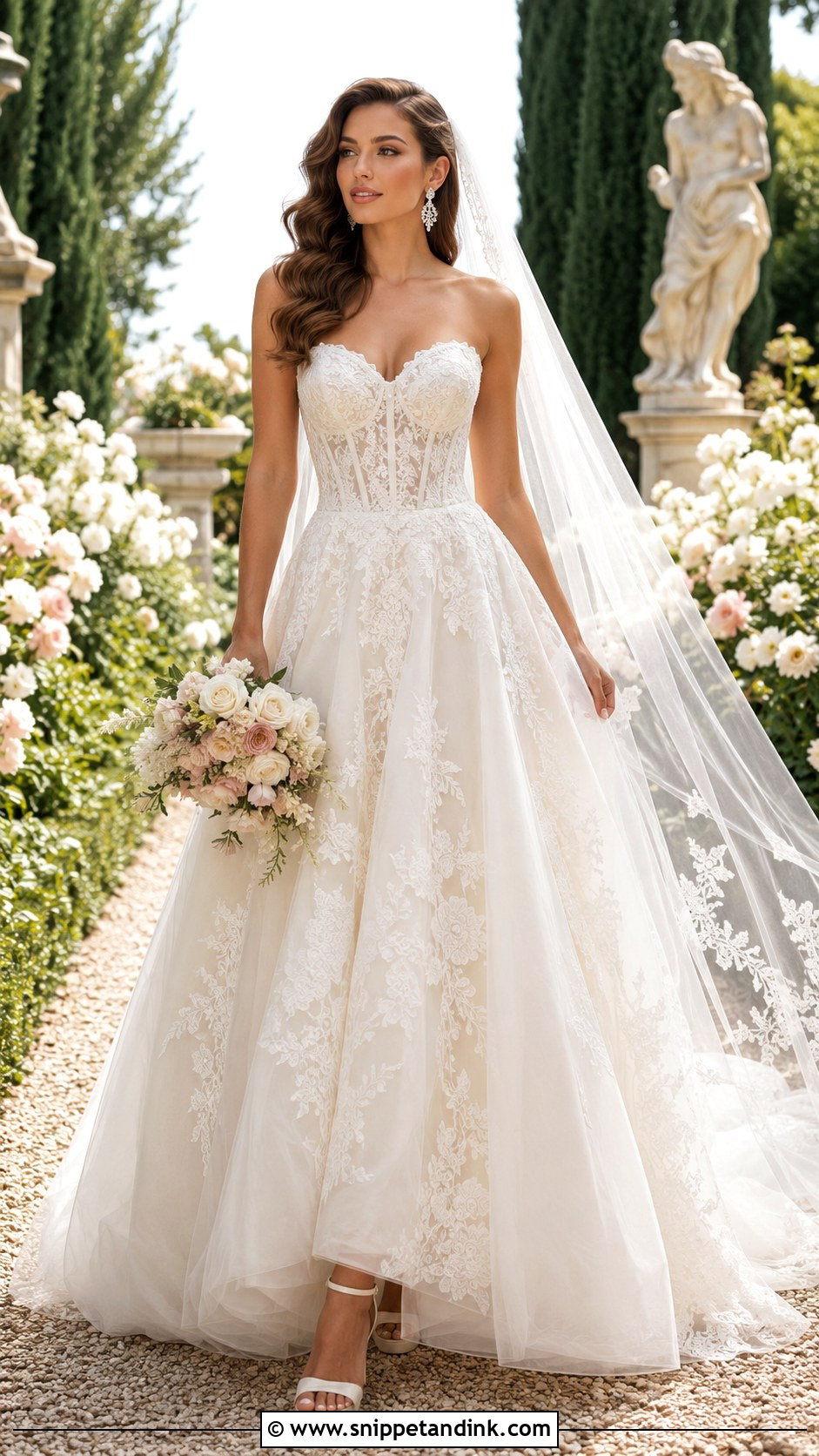
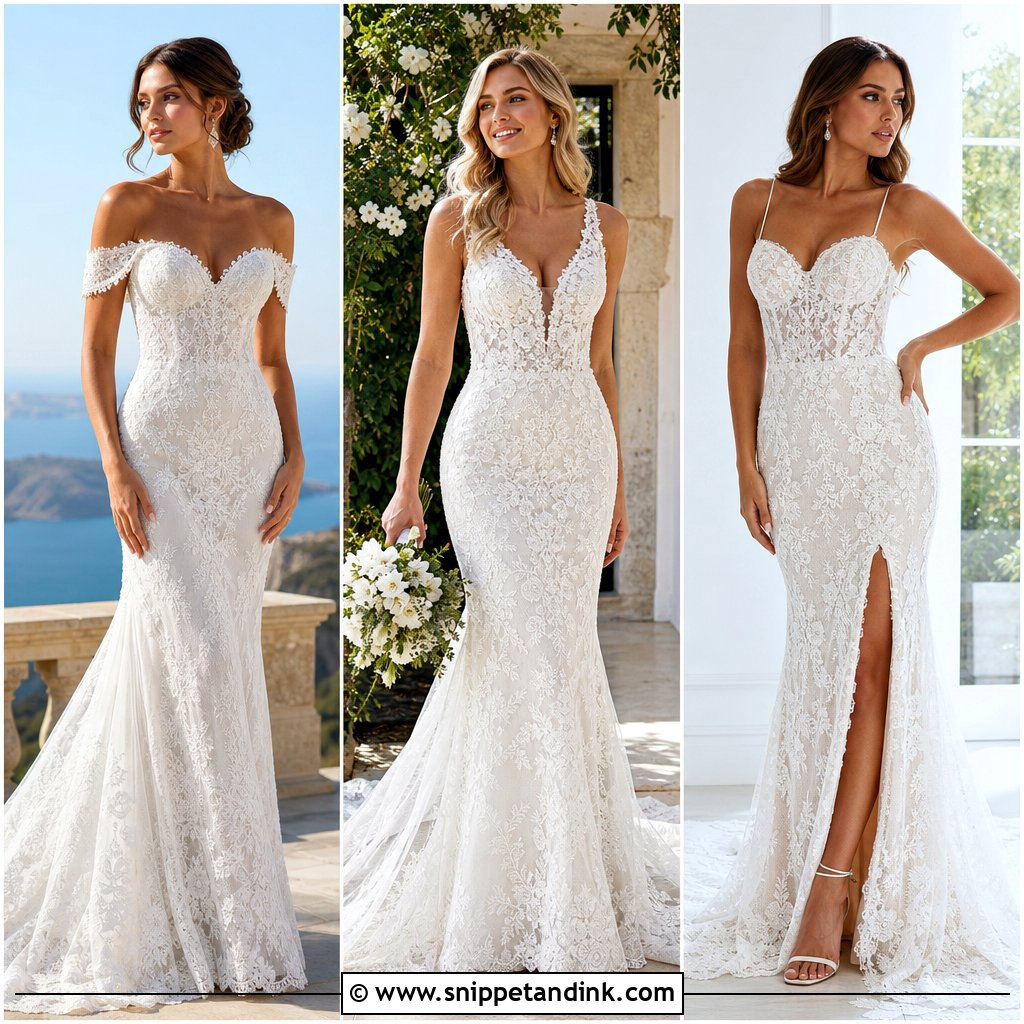
Strapless sweetheart lace only works if the bodice does the holding, not you. When I check one, I look for boning, built-in cups and a waist stay, the inner grosgrain band that anchors the dress at your waist so it doesn’t slide down over the evening. Scalloped lace along the neckline gives a clean edge. A sheer cathedral veil, a fine pendant and small diamond or crystal earrings stay quiet against the texture, and ivory block-heel sandals keep you steady. I like soft waves swept over one shoulder here because they break up the symmetry of the bodice. A round bouquet in cream, blush and pale peach suits a ballroom, a vineyard or a formal garden.
4. Mermaid Lace Overlay Wedding Dress
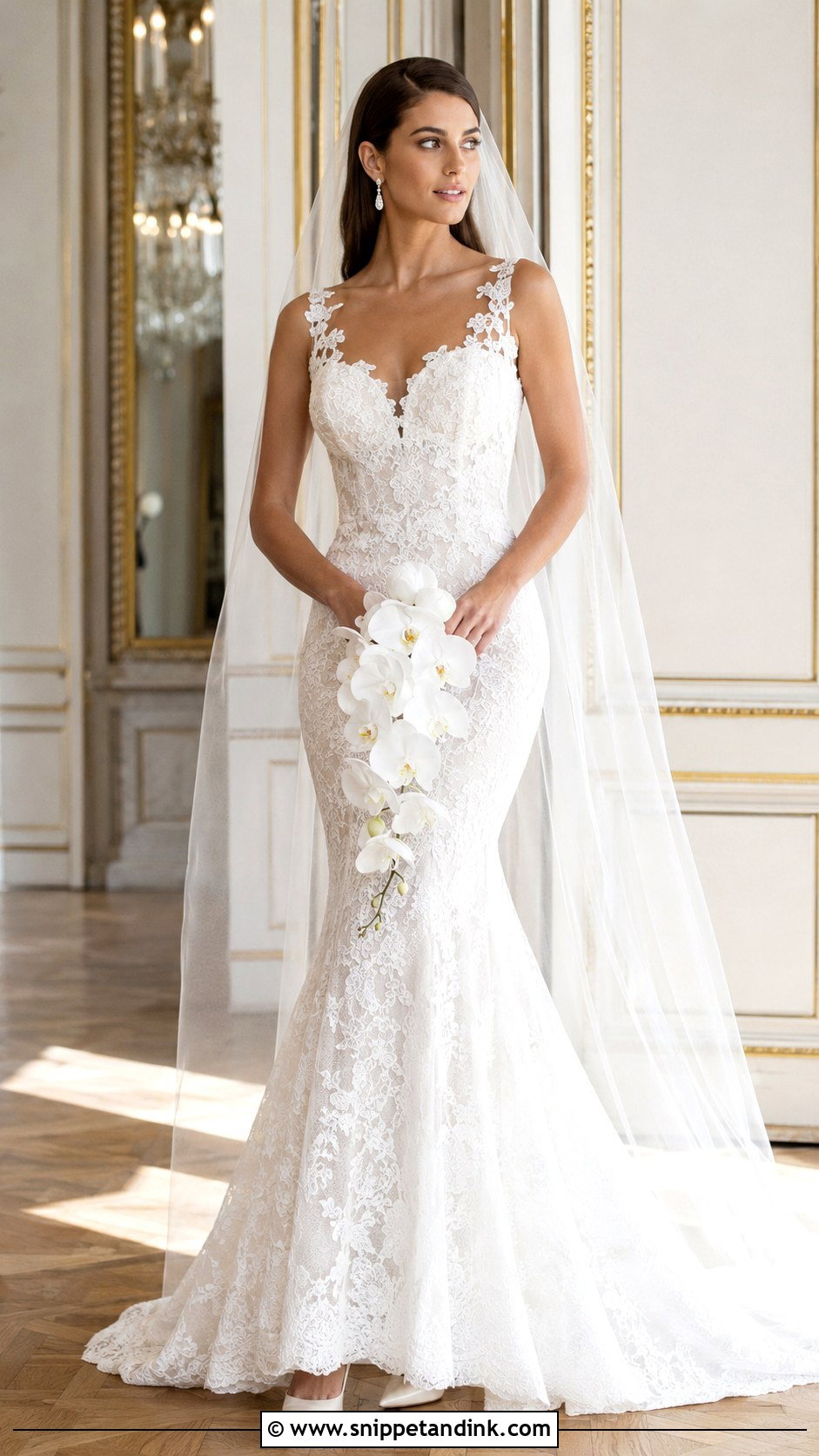
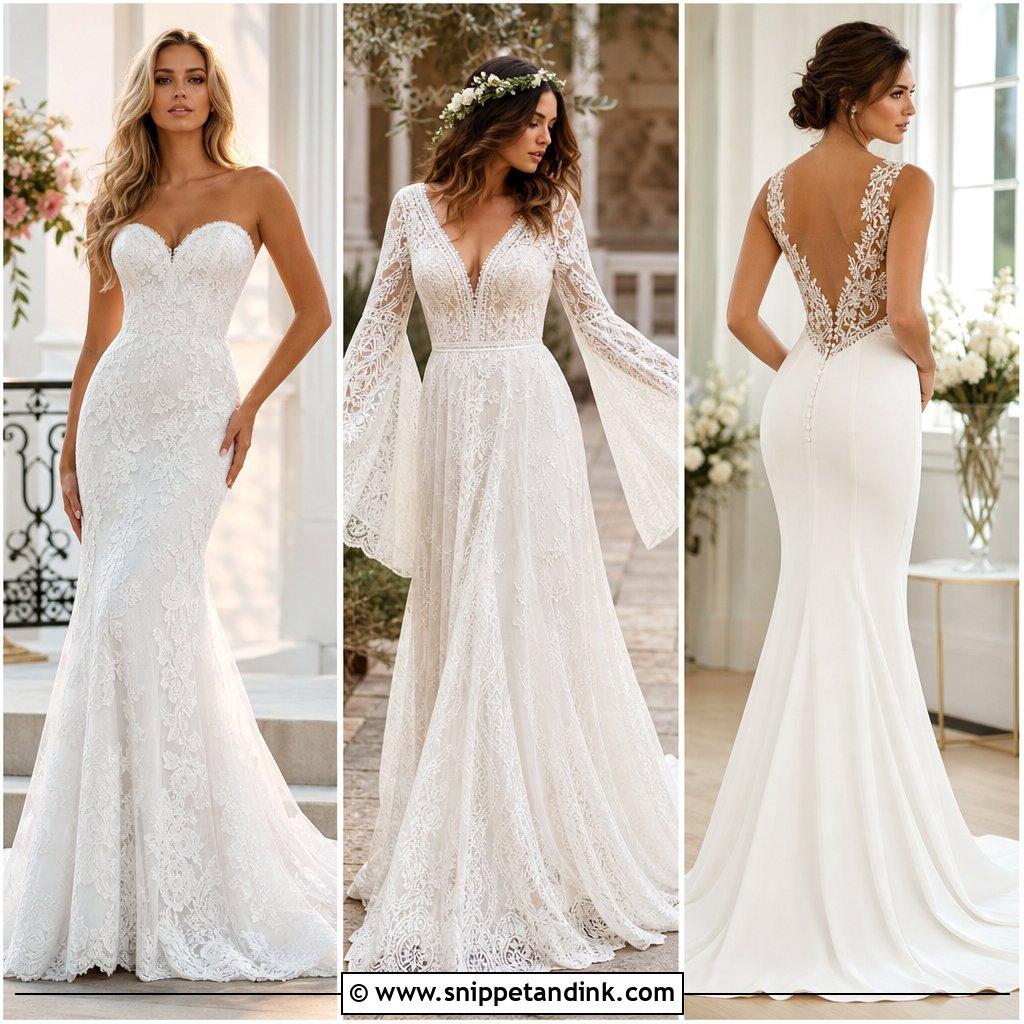
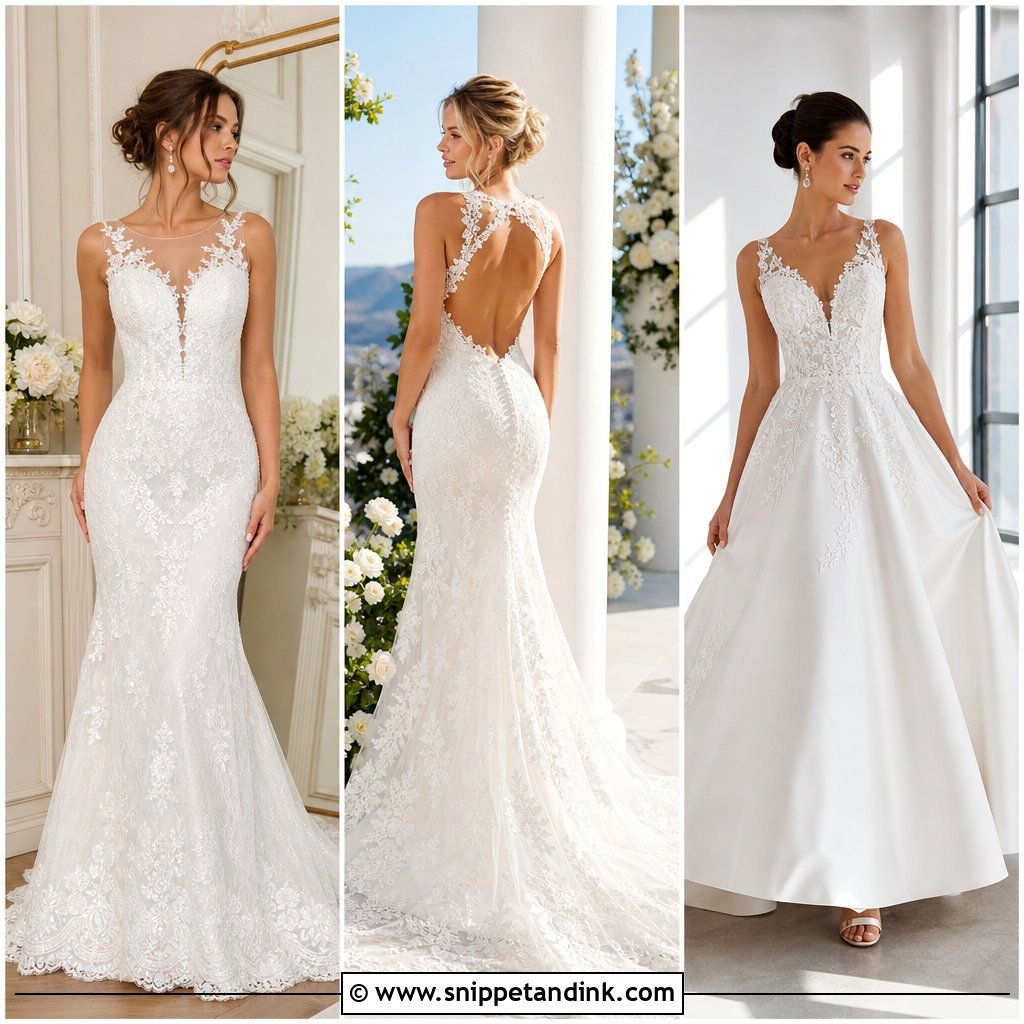
A mermaid gown in lace from neckline to hem is unforgiving to fit and very flattering when it’s right. The dress should follow the torso and hips smoothly, then open near the knee. Medium-scale floral lace holds up best: tiny motifs blur on a fitted shape, and very large ones get stretched out of proportion over curves. Keep the veil plain tulle, wear drop earrings with a sleek side part and pointed pumps, and carry a slim bouquet of orchids or callas rather than a large dome. At fittings I ask brides to sit, walk and climb a step. If any of those is a struggle, raising the flare point a few inches usually fixes it without losing the mermaid line.
5. Ball Gown Lace Overlay Wedding Dress
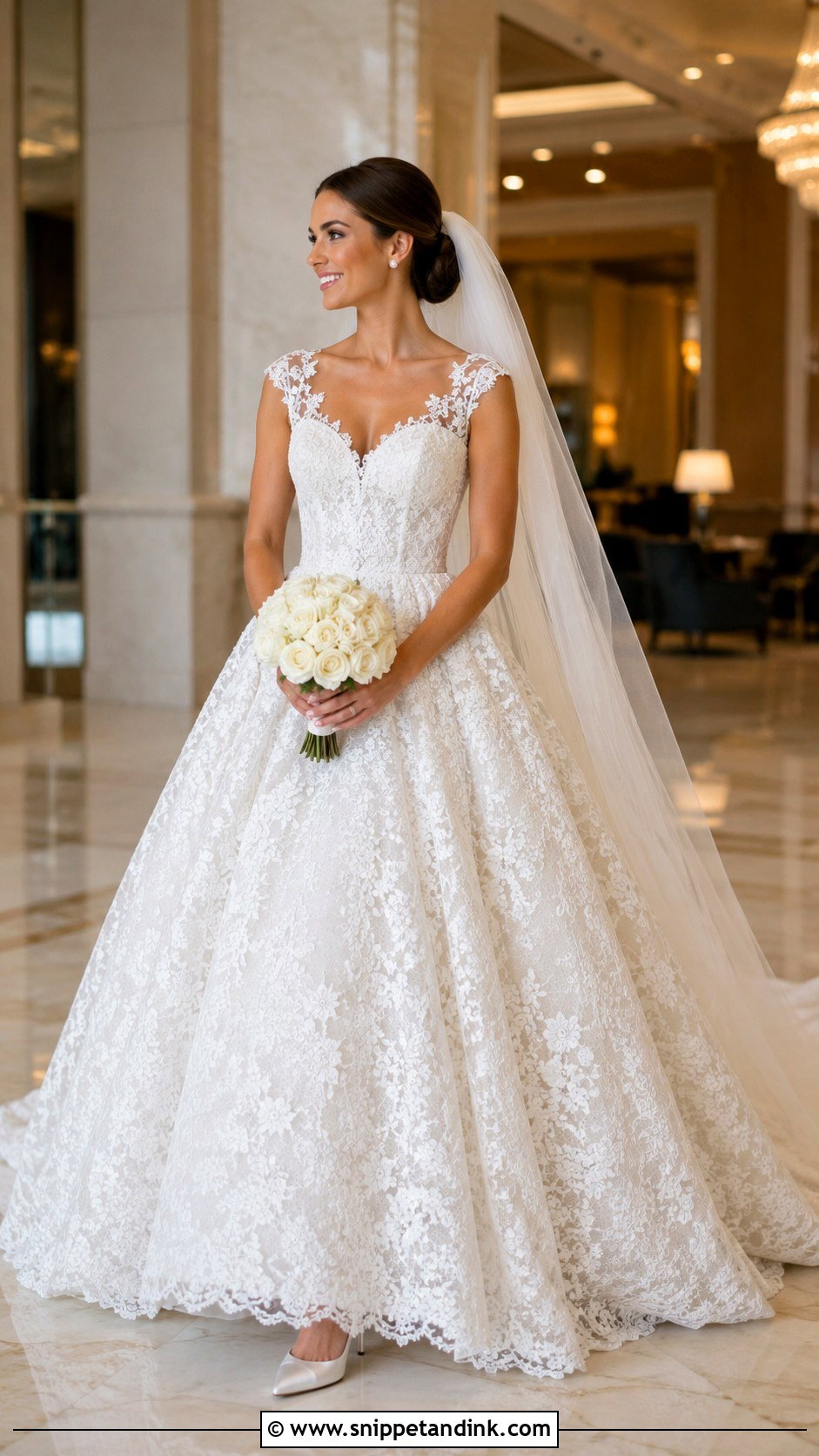
Big lace motifs that would overwhelm a sheath finally have room to breathe on a ball gown skirt. Choose a supportive bodice and a full skirt that starts at the natural waist. Keep the accessories restrained: pearl studs, a fine bracelet, satin pumps and a long plain veil that moves without adding another pattern. A polished bun or twisted updo shows off the bodice, and a compact bouquet of ivory roses balances the volume better than a huge cascade. What nobody warns you about is weight. Lace over several layers of tulle gets heavy by the reception, so I always ask the salon whether a lighter petticoat can give the same shape.
6. High Neck Lace Overlay Wedding Dress
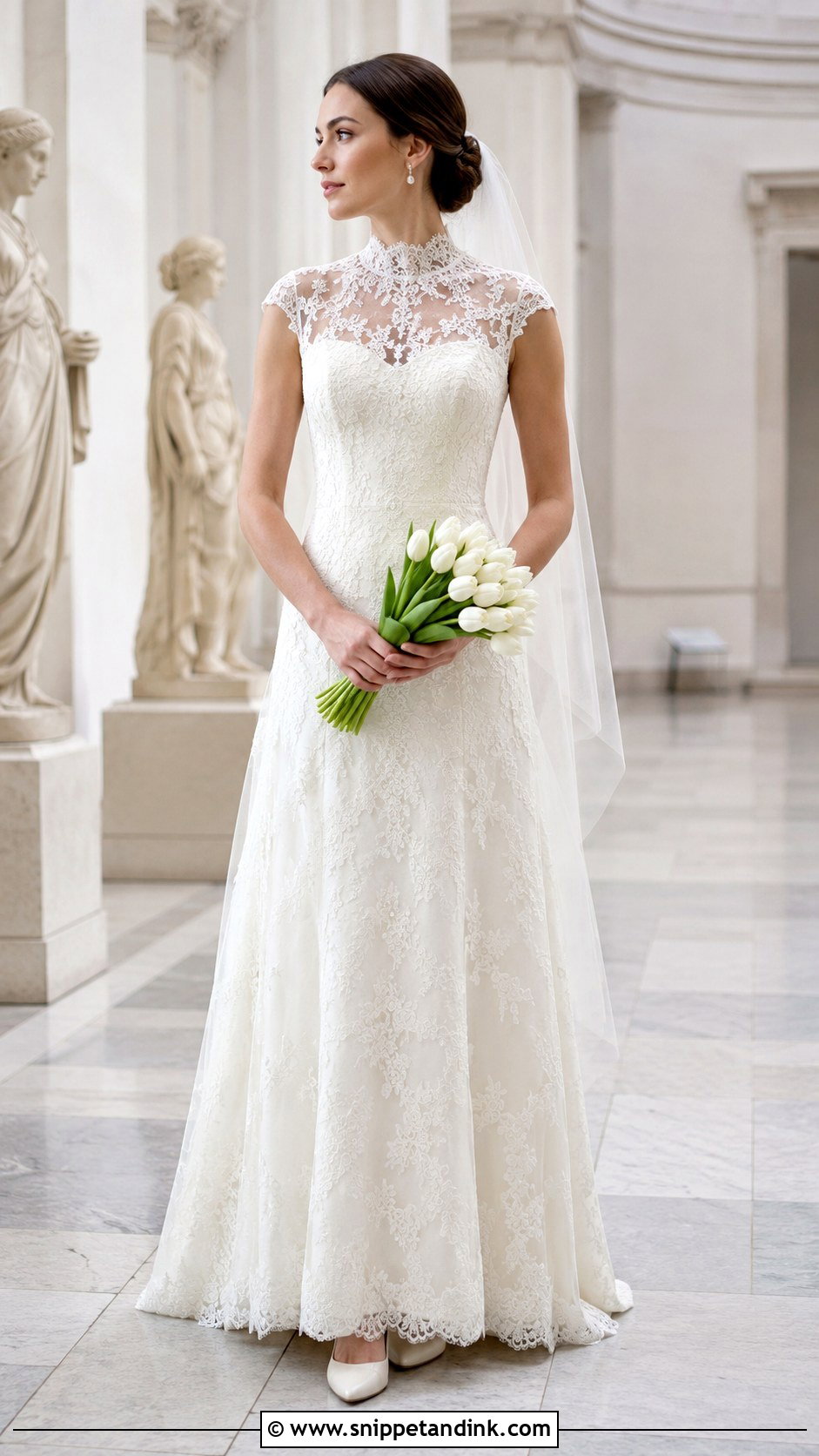
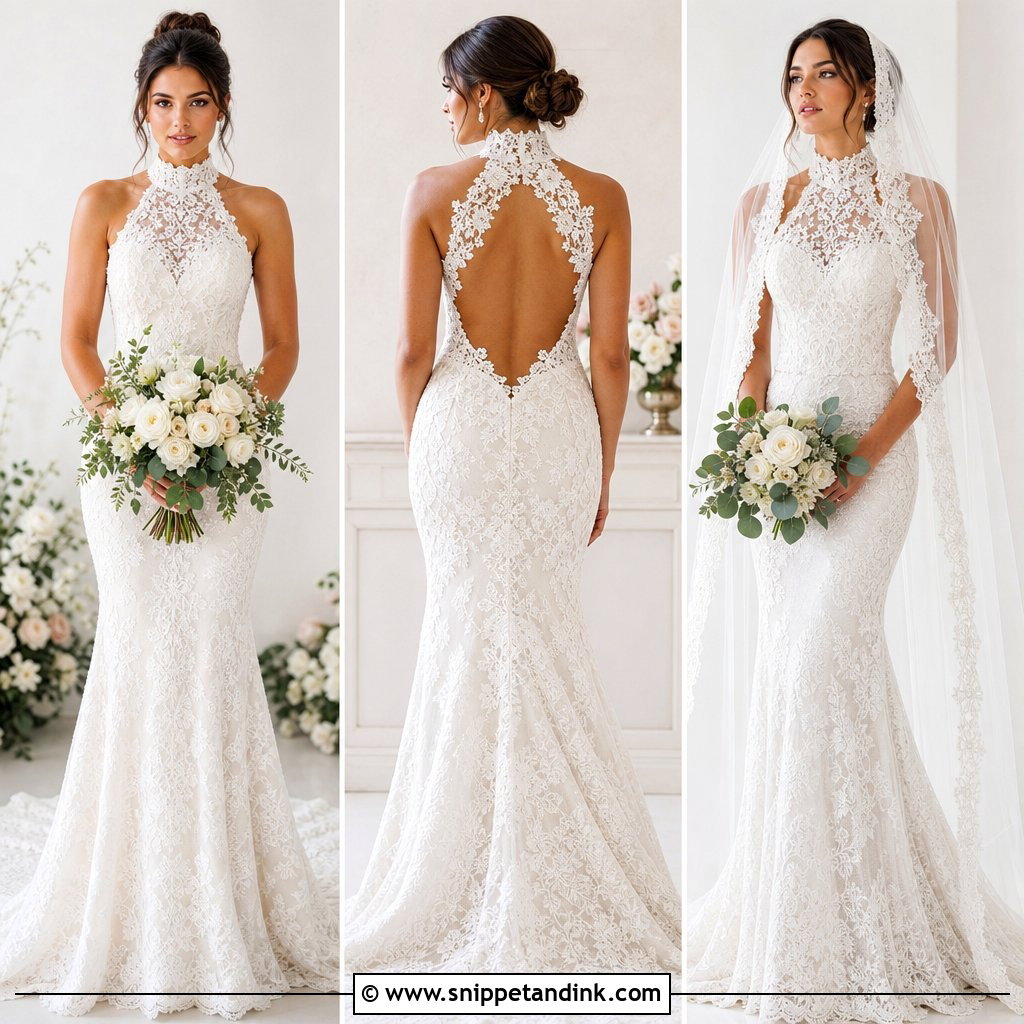
A high-neck lace overlay gown pulls every eye up to the face. Illusion tulle under the lace keeps it light, while a fully lined neckline reads more modest. I’d keep the skirt simple, a column or soft A-line, so the detailed top stays the focus. Skip the necklace; pearl or crystal earrings are enough. A low chignon with a plain comb and a sheer veil set beneath the bun keeps the collar clear. Closed-toe ivory heels and white tulips or roses suit cooler months and formal rooms. One practical check: turn your head fully both ways in the mirror, because a lace collar with a stiff edge can rub the jaw by evening.
7. Off The Shoulder Lace Overlay Wedding Dress
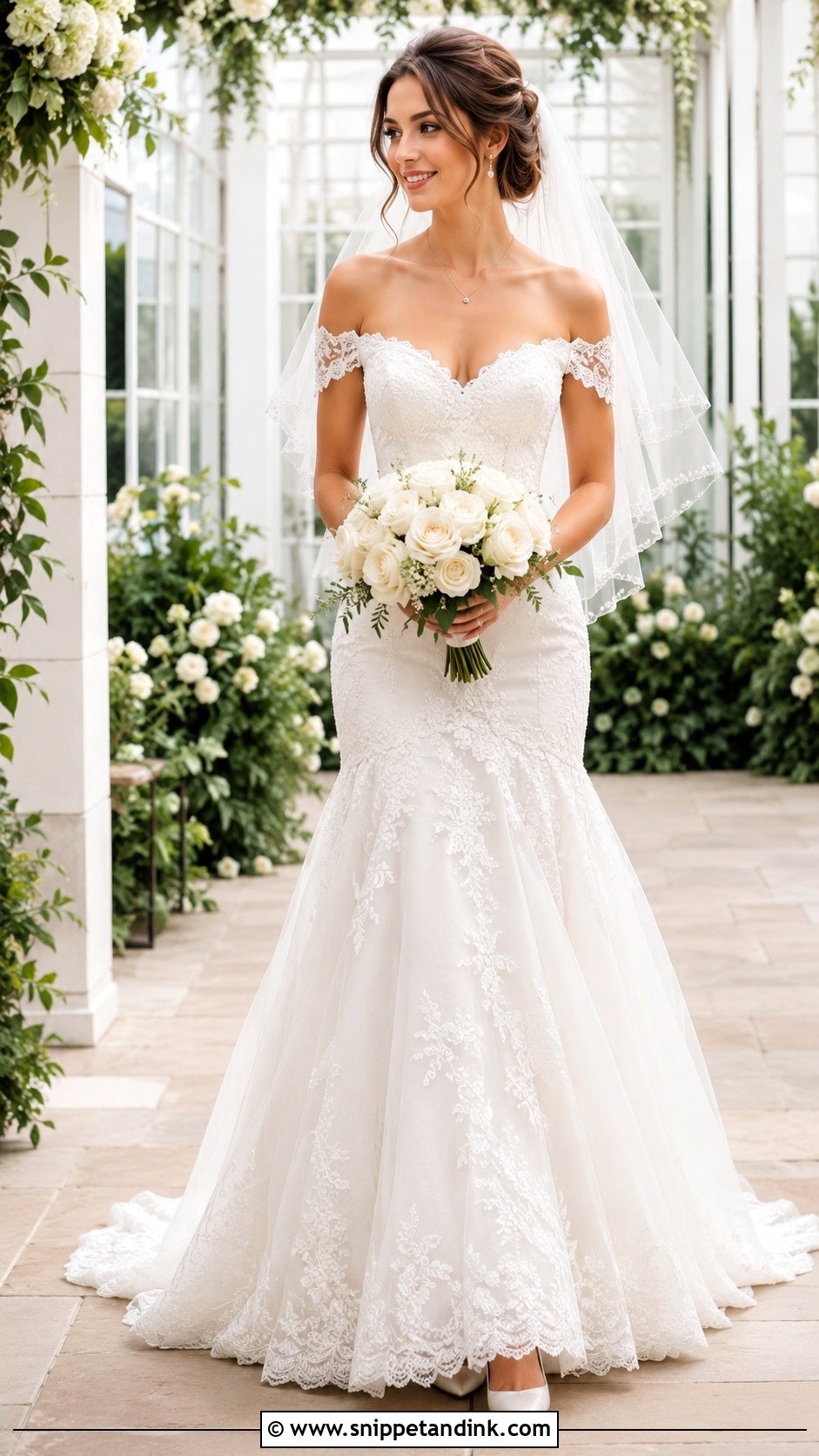
Most off-the-shoulder lace dresses that disappoint fail the same way: the lace sleeve band is doing the holding, and it creeps up the arm all day. The bodice should be supported internally so the sleeves are only decorative. A fitted A-line or gentle fit-and-flare suits this neckline. Add a fine necklace, small drops, an elbow-length veil and a loose updo with a few face-framing pieces so the collarbone stays visible. Ivory slingbacks and a bouquet of cream roses, sweet peas and pale greenery finish it. During alterations, raise both arms above your head. If the band rides up and stays there, ask for it to be set lower or given a little elastic.
8. Square Neck Lace Overlay Wedding Dress
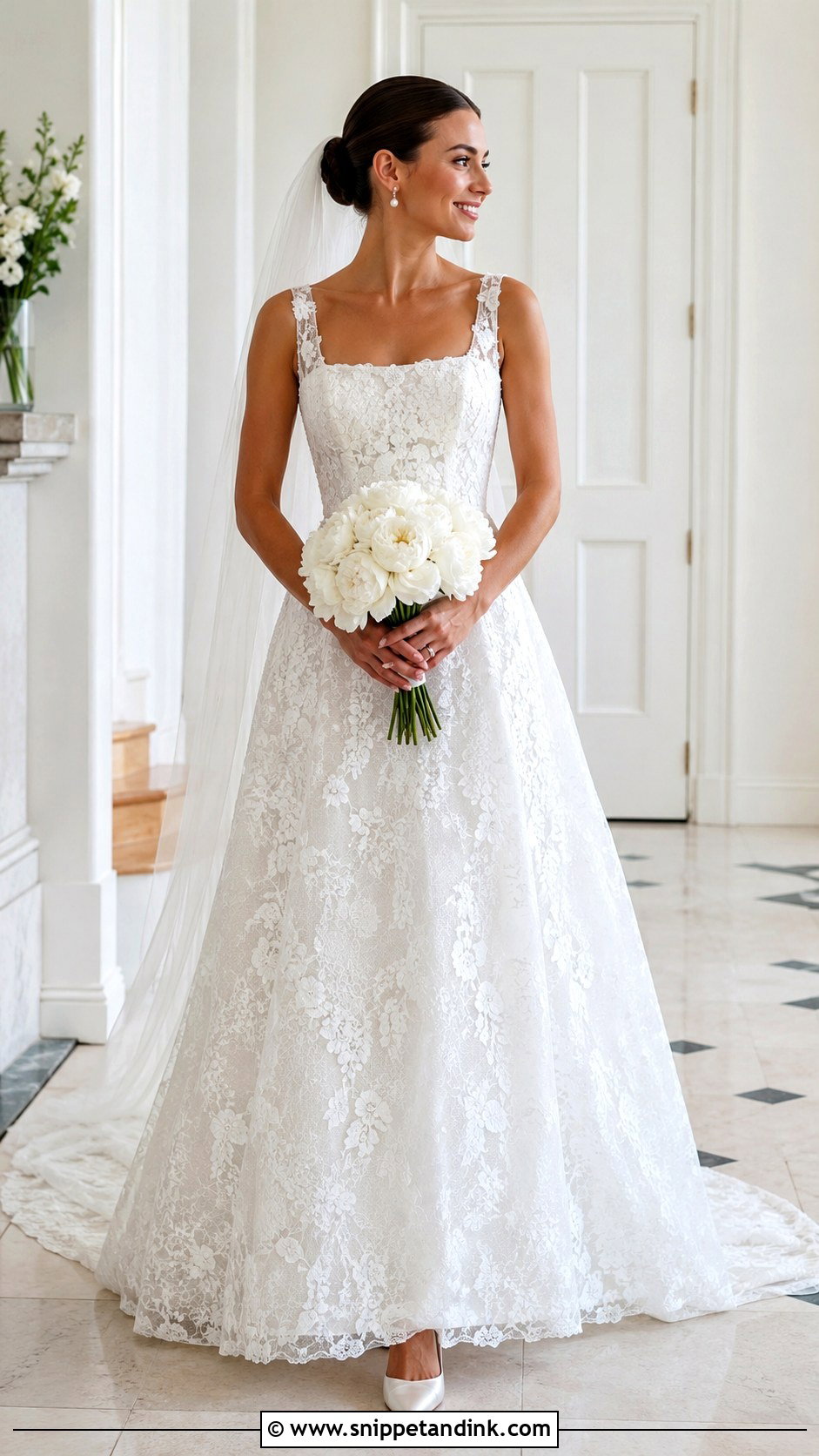
Square necklines give lace a straight, architectural top edge. I find they look most settled with wide straps, a fitted bodice and an A-line or column skirt. Fine floral lace over ivory keeps it classic, and a slightly contrasting lining makes the pattern stand out more. Style it with a smooth bun, pearl button earrings, a single-layer veil and pointed satin shoes that echo the angles. White peonies or garden roses with very little greenery keep it neat. The weak spot is the corners, which tend to gape when you sit, so have your seamstress check them while you’re seated, not standing.
9. V-Neck Lace Overlay Wedding Dress
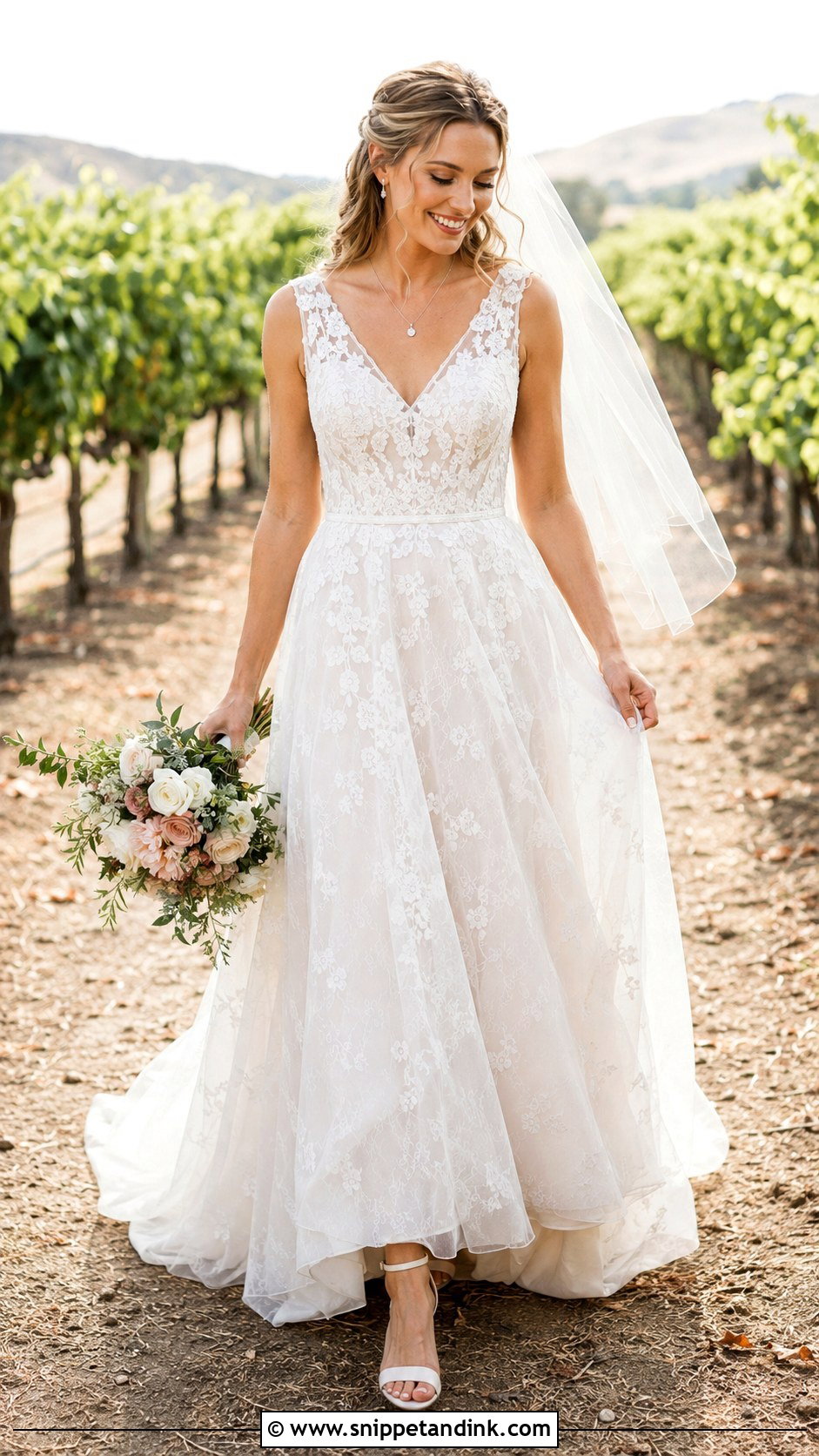
The depth of the V is the decision I’d take most slowly here. Pick the depth you’d wear in daily life rather than a plunge that looks good on a hanger, because you’ll spend the night bending to hug relatives. Illusion mesh adds security and all but vanishes on camera. A V-neck works on anything from a flowing A-line to a fitted sheath. Add a fine pendant, small earrings, a chapel veil without lace trim, softly pinned waves and ivory ankle-strap heels. A loose bouquet of white and pale blush flowers suits the open line. If the back is also a V, check from every side that your bra and any built-in support stay hidden.
10. Cap Sleeve Lace Overlay Wedding Dress
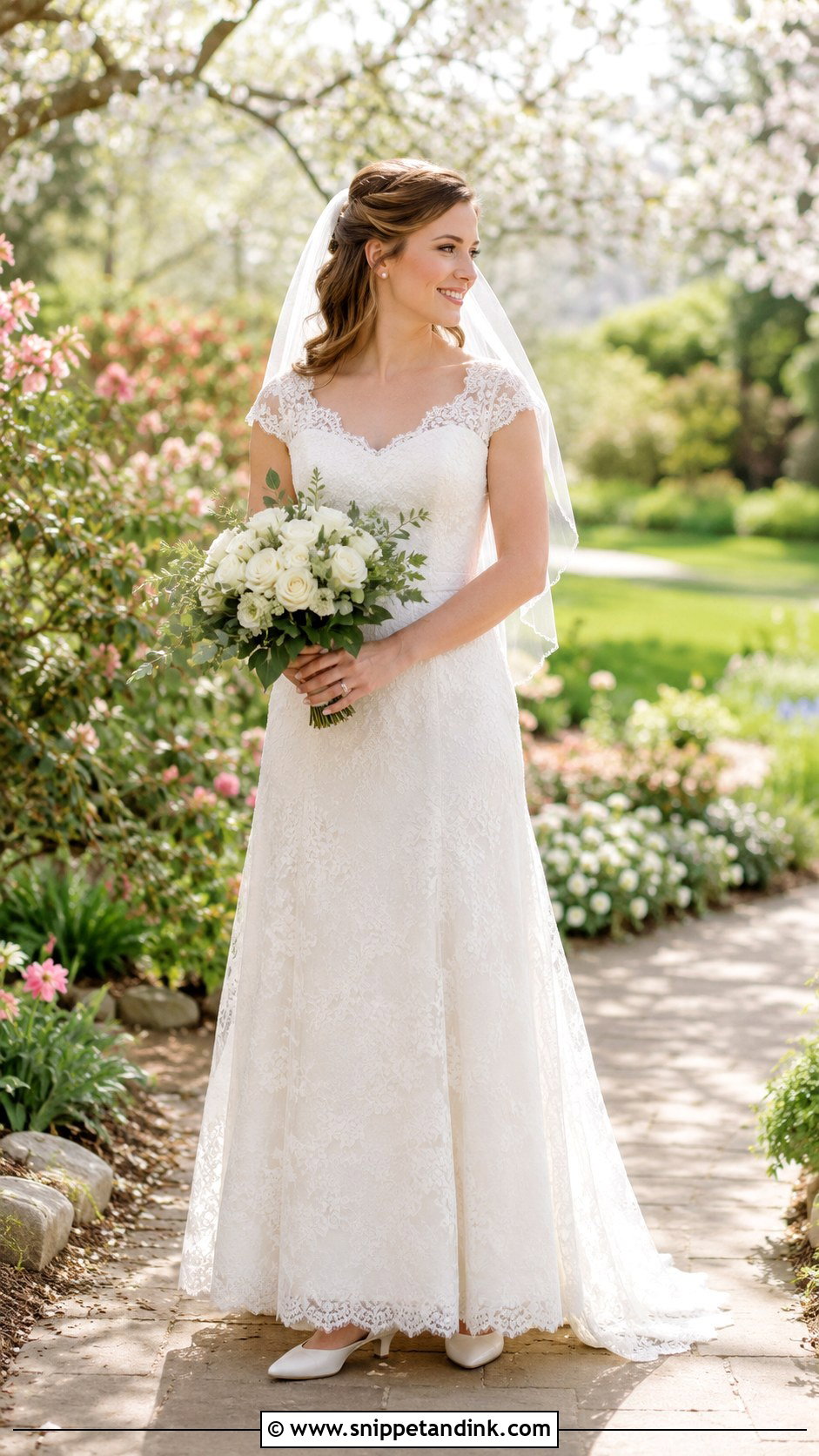
Cap sleeves are my usual answer when a bride asks for a little shoulder coverage without the heat of a full sleeve. They sit best over a fitted bodice, natural waist and softly flared skirt. The detail to check is where the sleeve ends: if it cuts across the fullest part of the upper arm, it digs in and looks tight in every photo. Scalloped edges soften the line between lace and skin. A fingertip veil, pearl studs, ivory kitten heels and a half-up style keep the mood relaxed, with a compact bouquet of white roses. For spring and summer, ask what the lining is made of, since a breathable lining matters more than the lace for comfort.
11. Boho Lace Overlay Wedding Dress
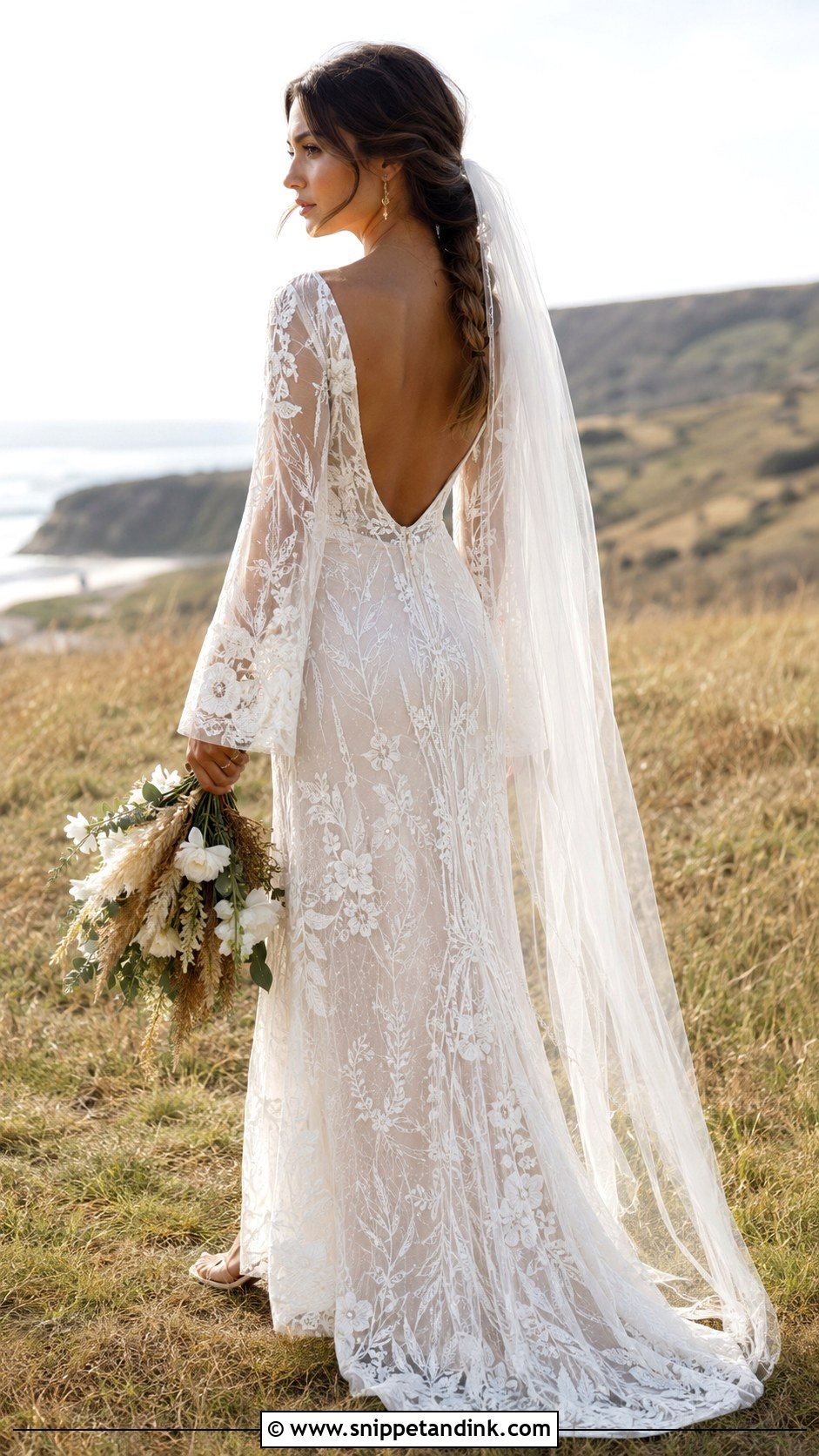
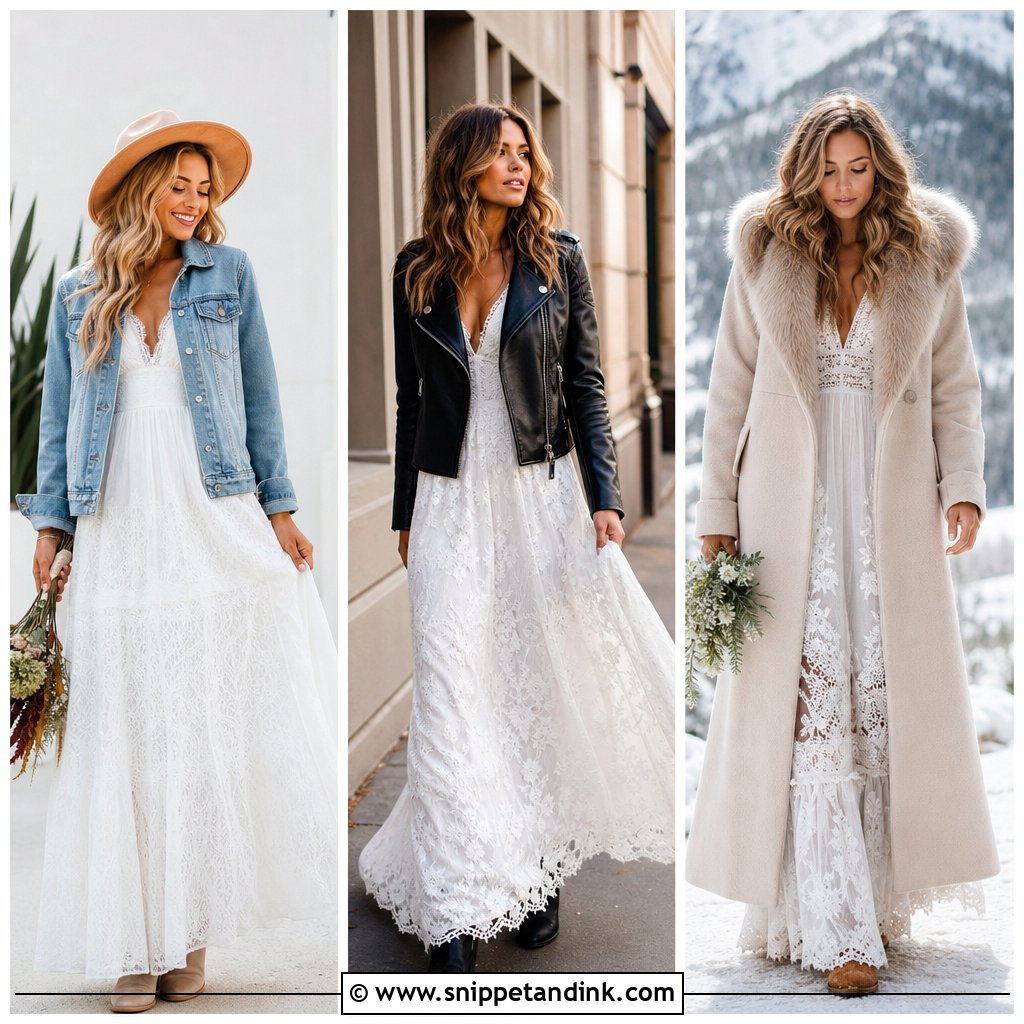
Boho lace looks easy, yet it’s the style I most often see tip into costume. Start with one botanical lace on a flowing sheath or soft A-line, with an open back and perhaps a gentle bell or flutter sleeve. Then stop adding. Low block-heel sandals cope with grass, gravel and packed earth. A sheer fingertip veil or a light floral comb, loose waves or a textured low braid, and small gold earrings are plenty, with white flowers, dried grasses and soft greenery in hand. If you also want fringe, a flower crown and layered necklaces, keep one of them. The lace already carries the mood.
12. Tea Length Lace Overlay Wedding Dress
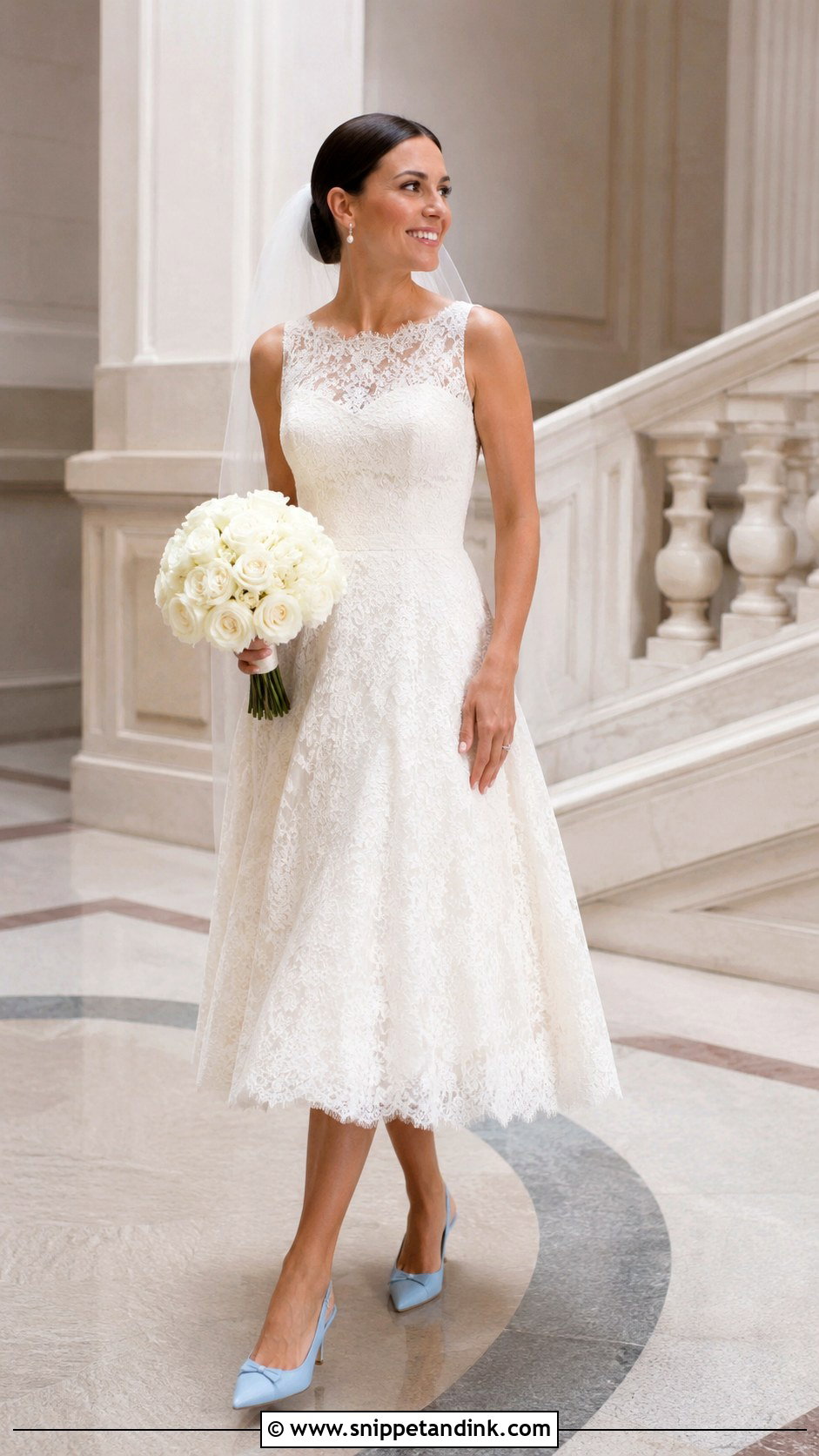
Tea length shows your shoes, so treat them as part of the outfit from the first appointment. The hem should land between the lower calf and the ankle. Fine floral lace over a structured ivory lining helps the skirt hold its shape without piling on petticoats. Pointed pumps, slingbacks or neat block heels in ivory or pale blue all suit it, with a short veil, pearl earrings and a smooth chignon for a retro feel, plus a round bouquet of white roses. It sits naturally at a courthouse, a daytime lunch or a small venue. Book the final hem with your exact wedding shoes on, since a change of heel height moves a visible hem straight away.
13. Sheath Lace Overlay Wedding Dress
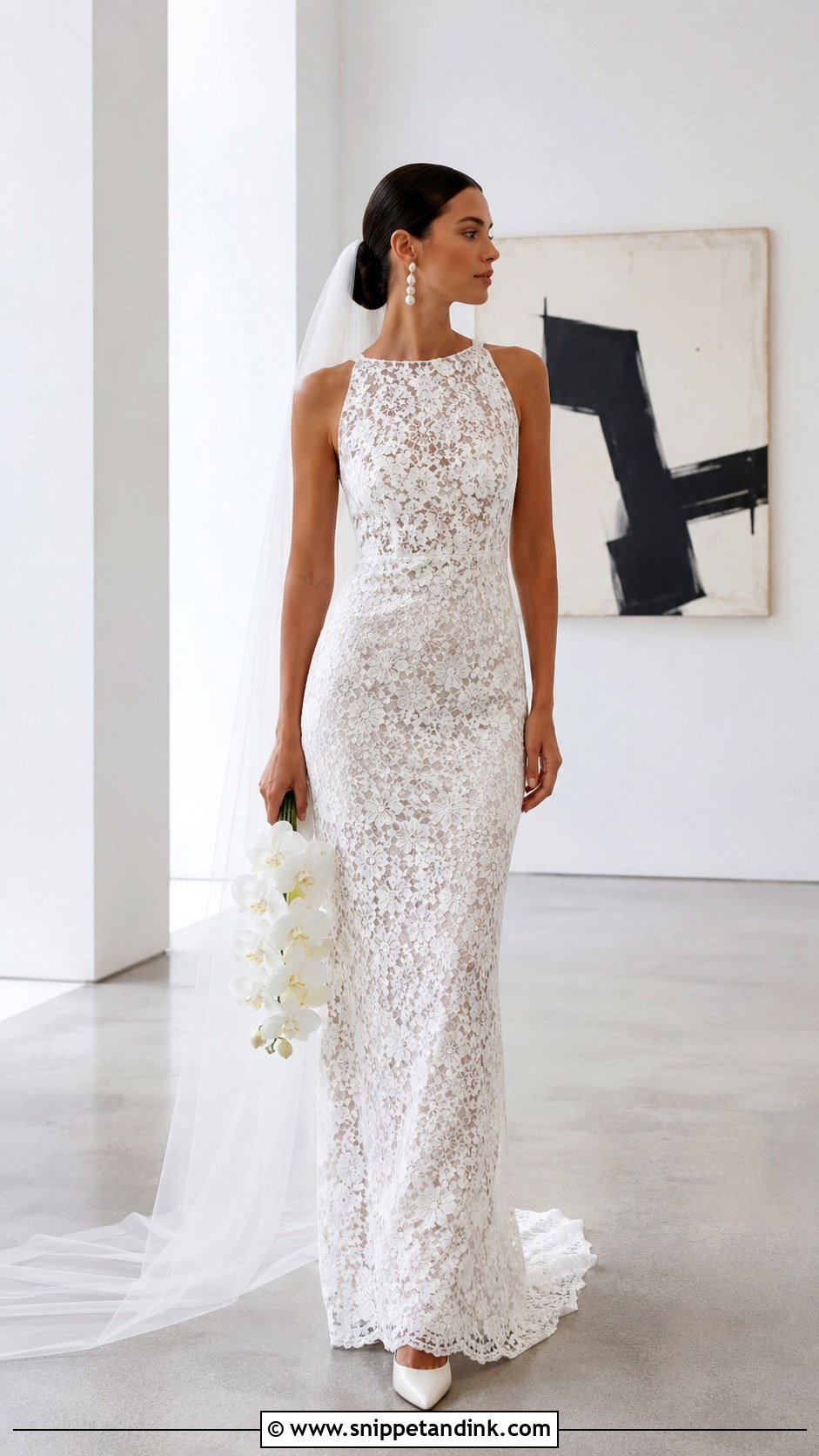
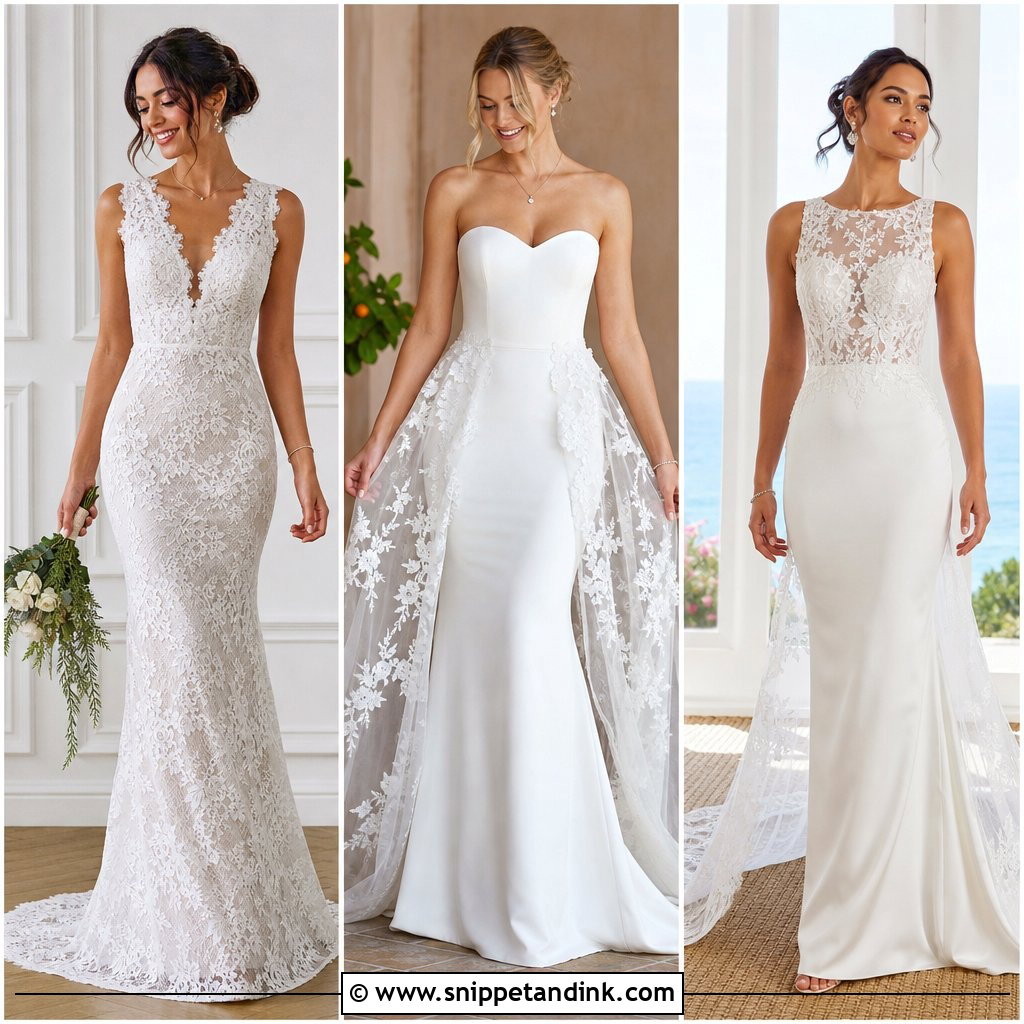
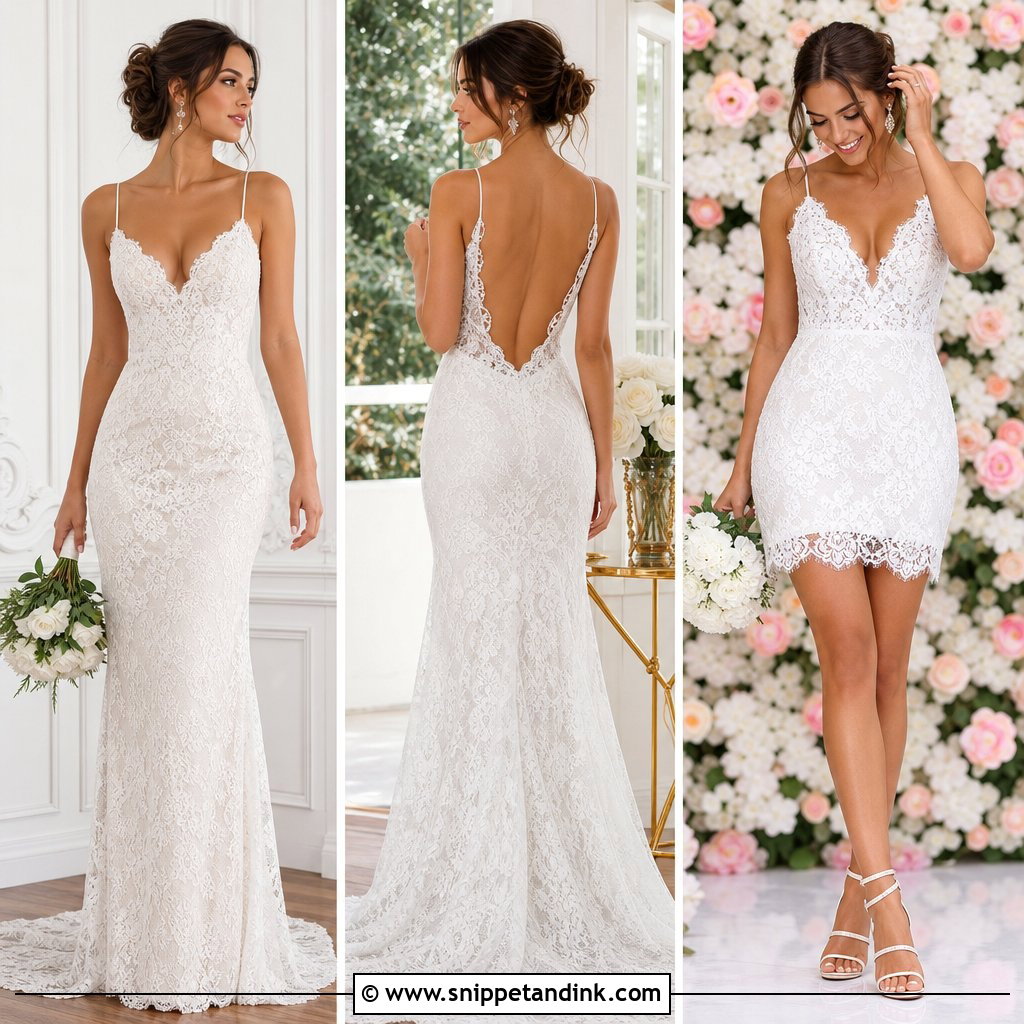
A sheath lace overlay gown follows the body in one clean line, which is why tailoring matters more here than on almost any other cut: every seam and every motif shows. Choose a dress that skims the waist and hips instead of gripping them, with light lace over a stretch lining so you can move. A long plain veil, slim pointed heels, sculptural pearl earrings and a sleek low bun keep it modern. Carry a narrow bouquet of orchids, tulips or callas. If the day involves stairs or uneven ground, I’d ask about a small back slit or a detachable train.
14. Corset Lace Overlay Wedding Dress
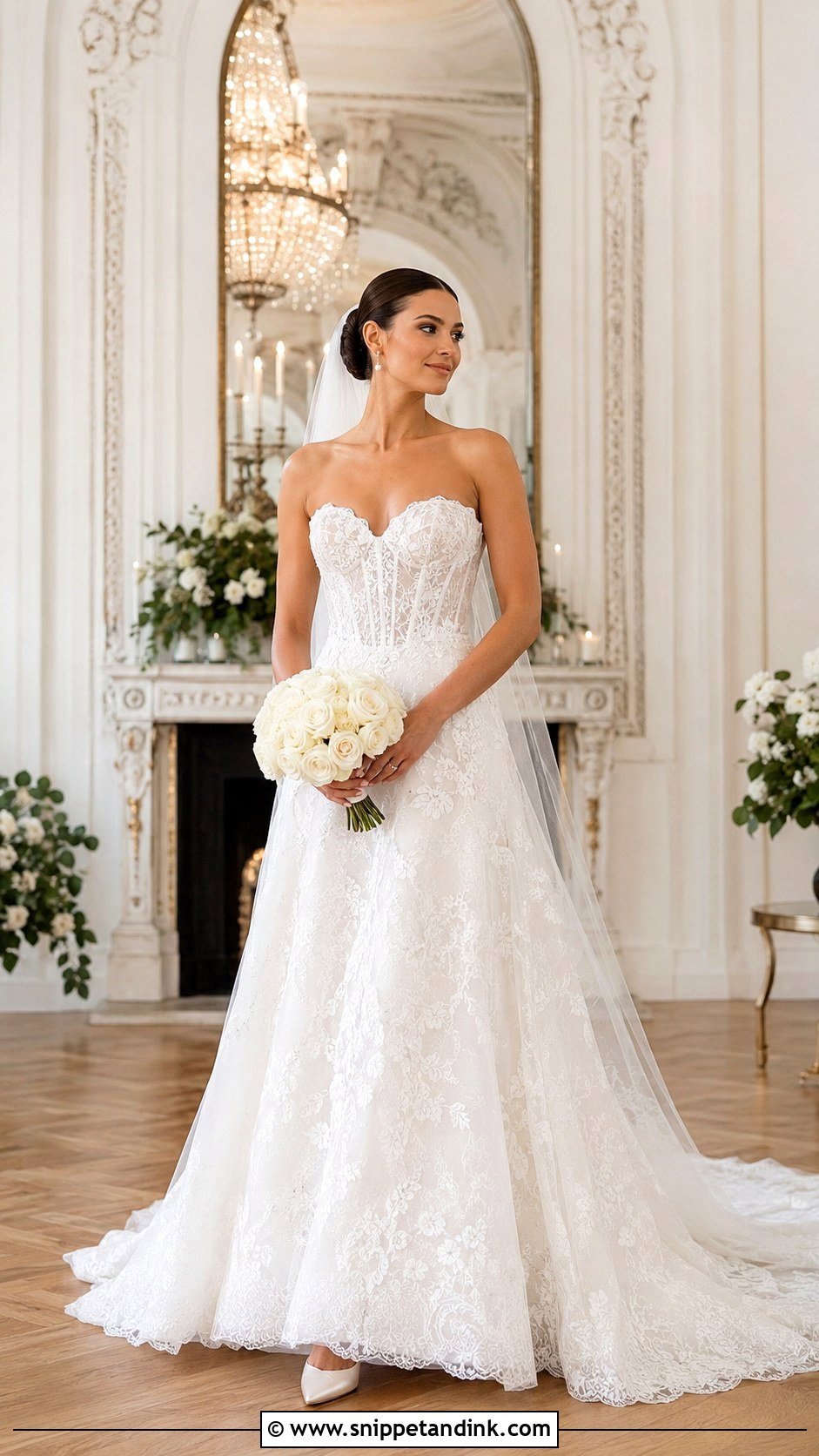
On a corset lace dress I check the construction before I even look at the lace. Boning should sit in proper channels, the back closure should be secure, and the lace should be laid carefully across the bodice rather than draped loosely over the structure, where it bubbles. A straight, scoop or sweetheart top all work depending on the coverage you want. Balance it with an A-line or gathered ball skirt, a plain veil, pearl drops, closed-toe satin heels, a smooth bun and ivory roses. Then take a full, deep breath at the fitting. If you can’t, the corset is too tight, and you’ll feel it at dinner.
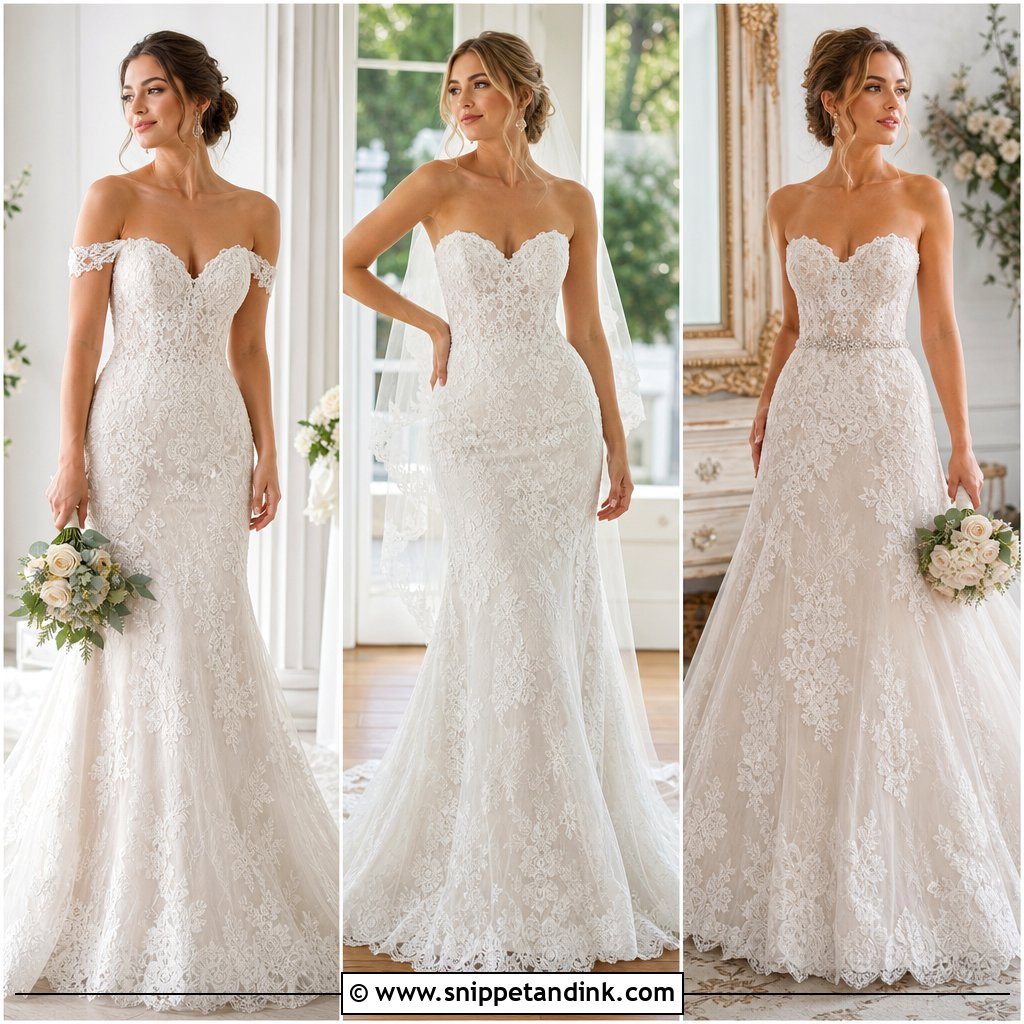

15. Basque Waist Lace Overlay Wedding Dress
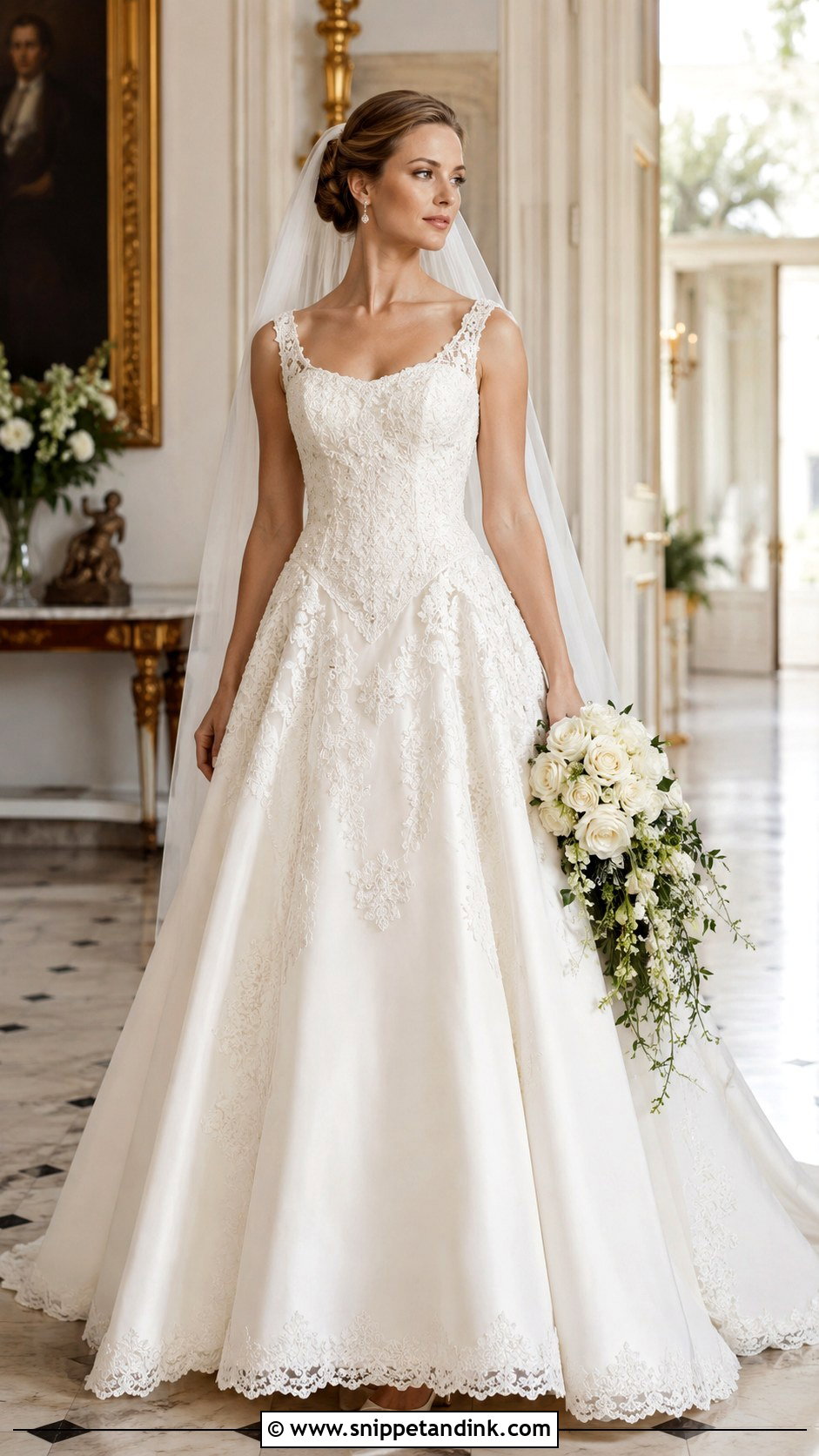
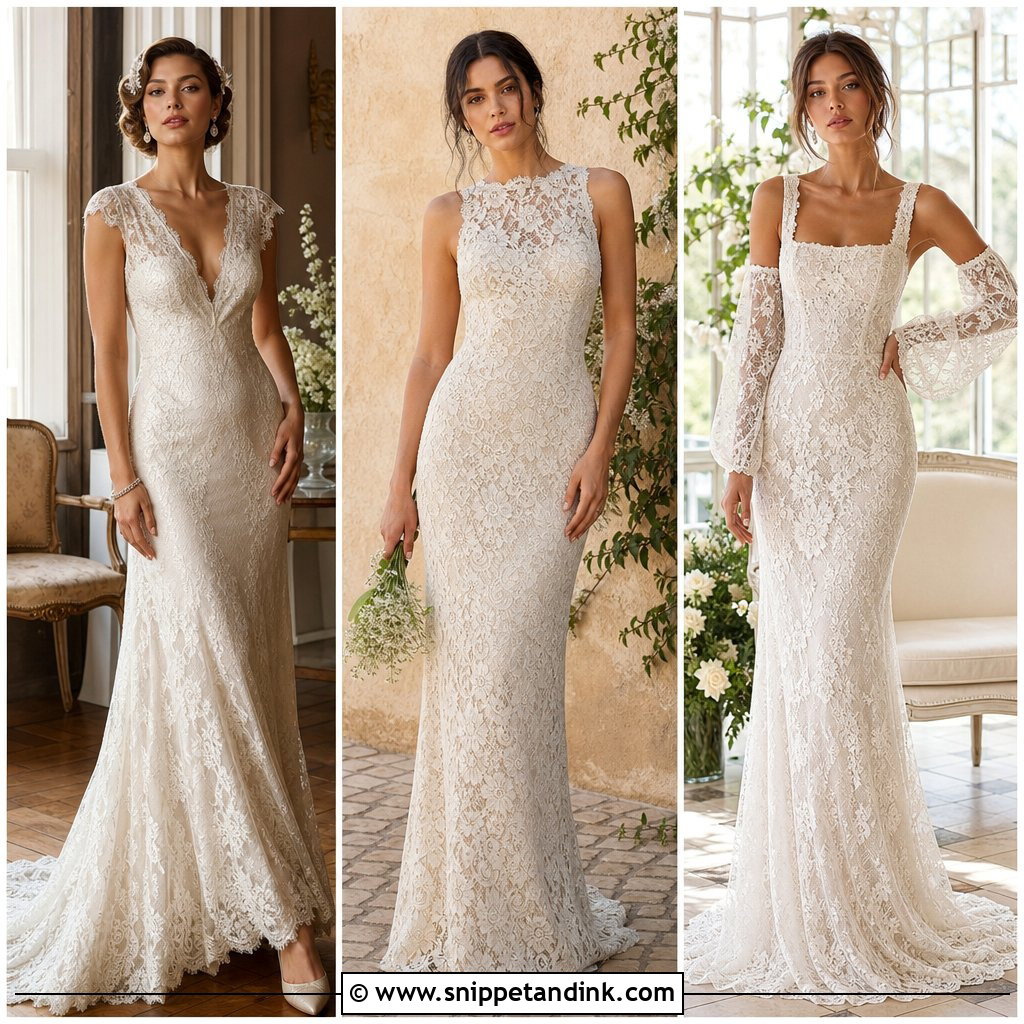
The point of a basque waist dips below the natural waist and gives a lace bodice a long, sharp transition into a full skirt. It looks most refined when the lace motifs follow the V of the waist instead of stopping at a straight seam, which takes careful hand appliqué. Pick a strapless, scoop or off-the-shoulder top depending on the support you need, and leave belts off entirely, because the waistline is already the focal point. A long plain veil, delicate earrings, satin pumps and a polished updo suit it, with white roses and trailing greenery for contrast. In fittings, walk and sit, then check the point is still centred.
16. Floral Lace Overlay Wedding Dress
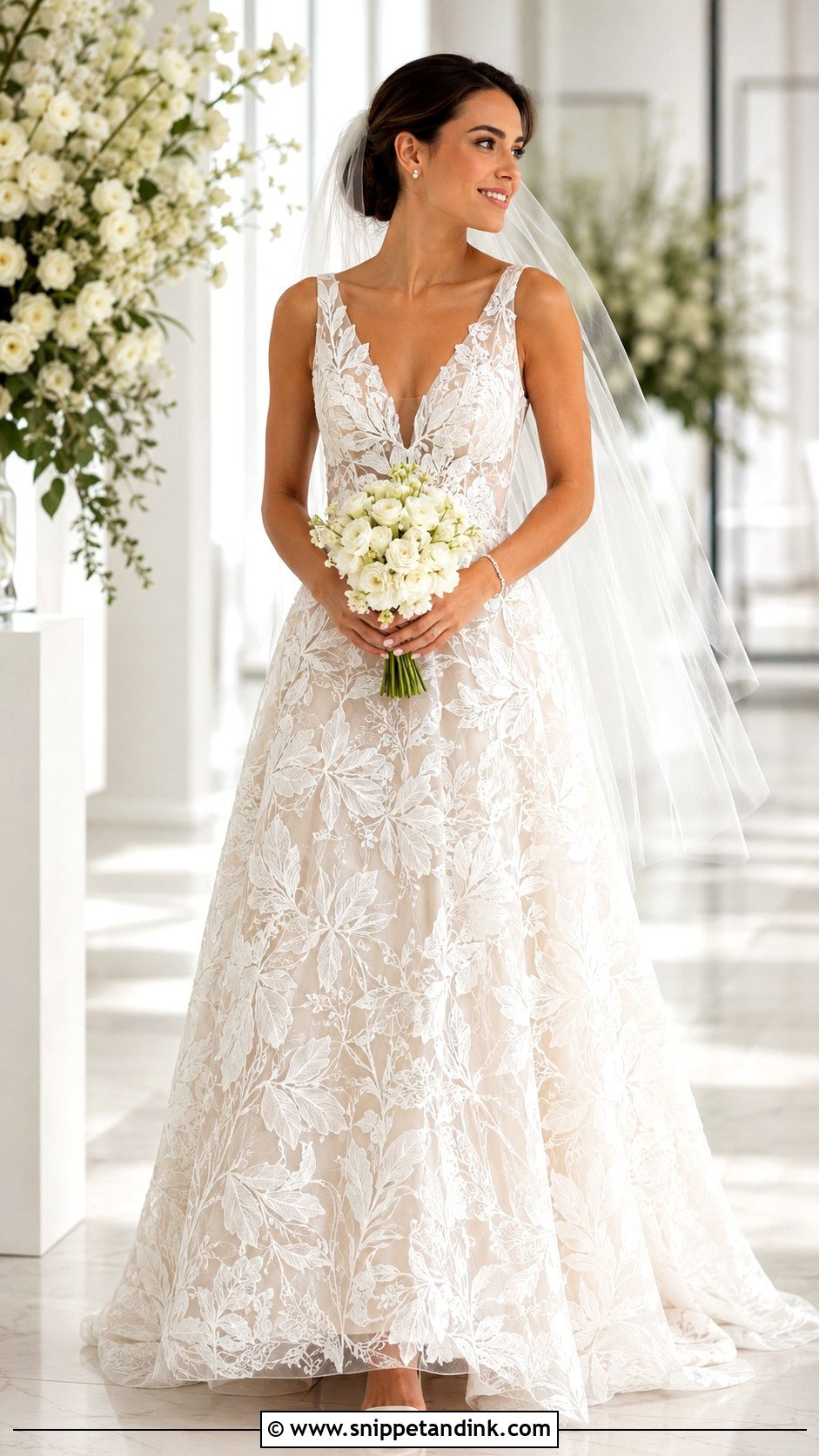
Oversized floral lace needs open fabric to read. Choose an A-line or fit-and-flare with large uninterrupted panels so you see whole flowers rather than fragments. A nude-toned lining gives gentle contrast; matching ivory looks softer and more traditional. Keep the veil plain and the jewellery minimal, and wear a low bun or soft half-up style with ivory block heels. Small white blooms in the bouquet won’t fight a bold pattern. Before alterations, look at how motifs land at the side seams, waist and neckline. A large flower sliced in half at a seam is very visible, and a skilled seamstress can move it.
17. Beaded Lace Overlay Wedding Dress
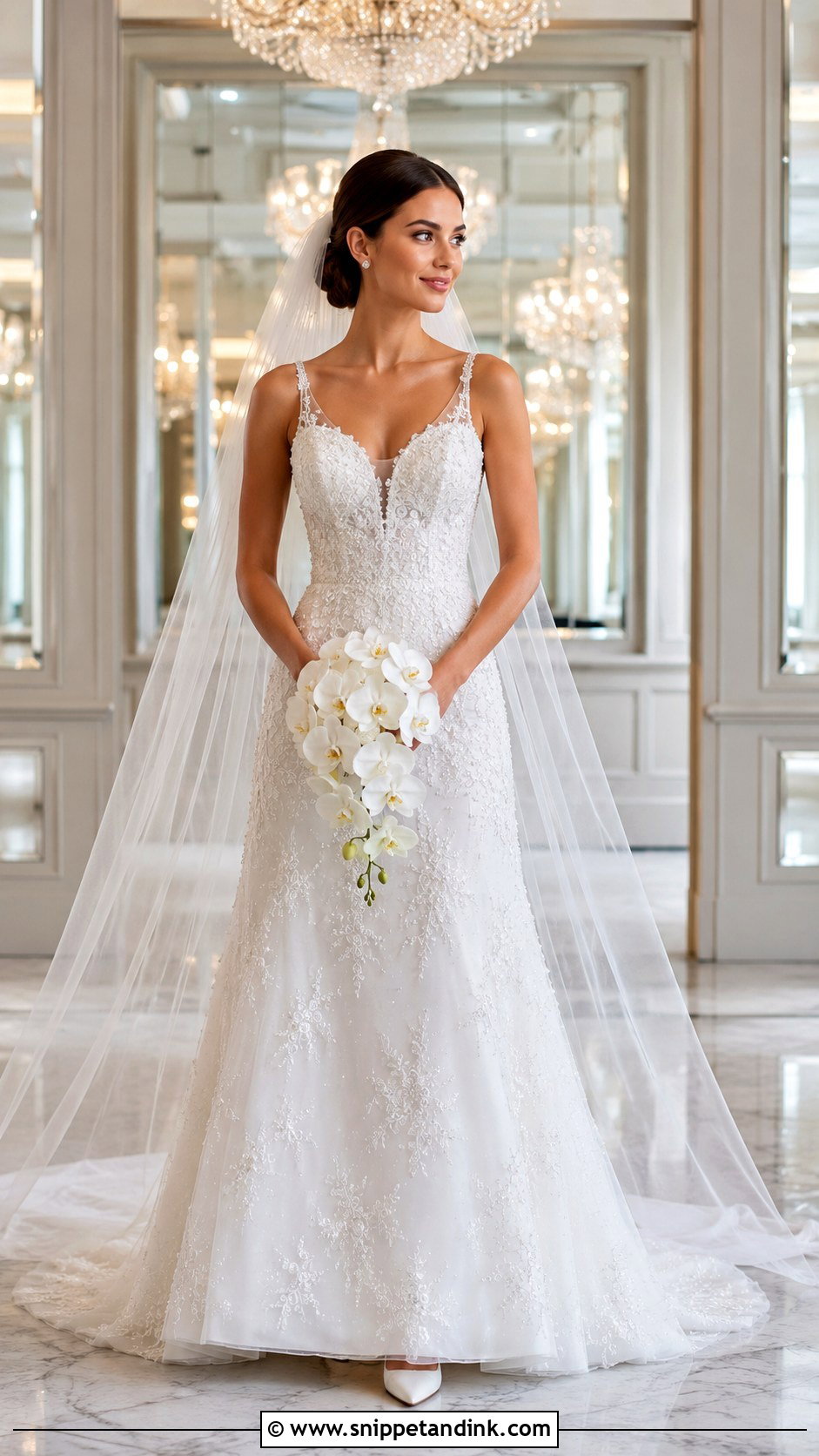
Beading catches candlelight and ballroom spots, so a beaded lace gown earns its place at evening receptions. Choose beading concentrated on the bodice or scattered evenly, not several embellishment techniques competing with each other. A fitted A-line or column keeps it sophisticated, styled with a plain tulle veil, crystal studs, simple satin shoes, a smooth updo and white roses or orchids. Ask about the total weight and how the beads are attached; beads sewn on with knots between them hold far better than loosely chained ones, where one broken thread can shed a whole row. Run your hand under the arms too, where beads scratch skin and snag a veil.
18. Blush Lace Overlay Wedding Dress
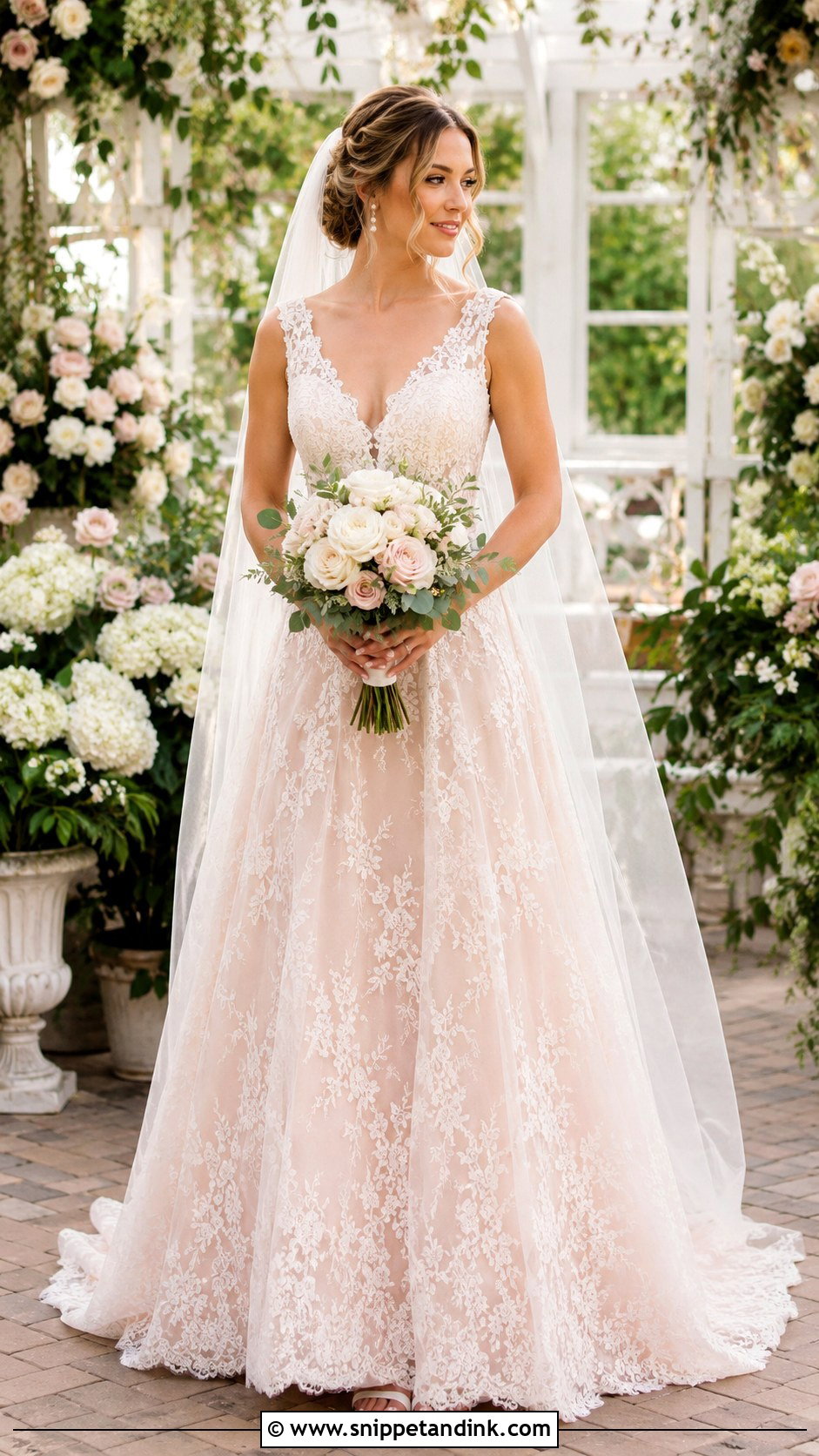
Blush under ivory lace shifts with the light, which is why I always ask brides to look at swatches by a window and again under warm indoor bulbs. The tone can range from an almost invisible champagne pink to a clear dusty blush. A-line and ball gown shapes show the colour across more surface. Match the veil to the lace, not the lining, or the tulle will look off-white beside the dress. Ivory heels, pearl earrings and loose waves or a soft updo suit the palette, with a bouquet in cream, pale pink and muted green. Hold back on pink accessories and let the lining carry the colour.
19. Plus Size Lace Overlay Wedding Dress
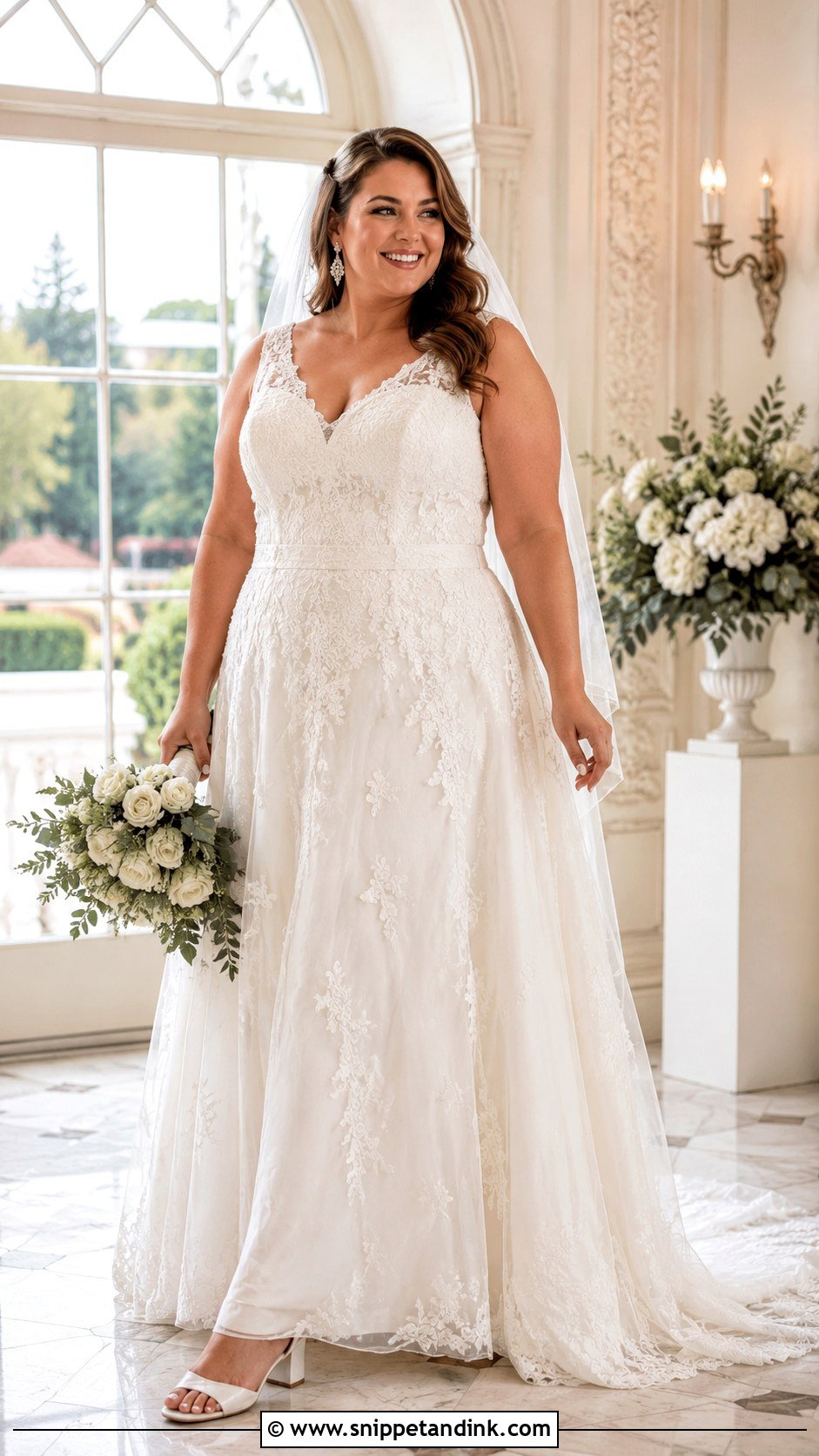
A good plus-size lace gown supports and shapes without hiding the body you have. I look for internal boning, properly placed cups and a waist stay, whether the cut is an A-line, a fit-and-flare or a structured ball gown. Medium-scale motifs stay visible across the whole silhouette, and careful placement can draw the eye to the neckline and waist. A supportive block heel, a simple veil, earrings scaled to the neckline, and a low bun or side-swept waves finish the look. Don’t shrink the bouquet, because a tiny posy looks lost against a full skirt. Shop at your current measurements and budget for alterations: the sample gets fitted to you, never the other way round.

20. Detachable Lace Overlay Wedding Dress
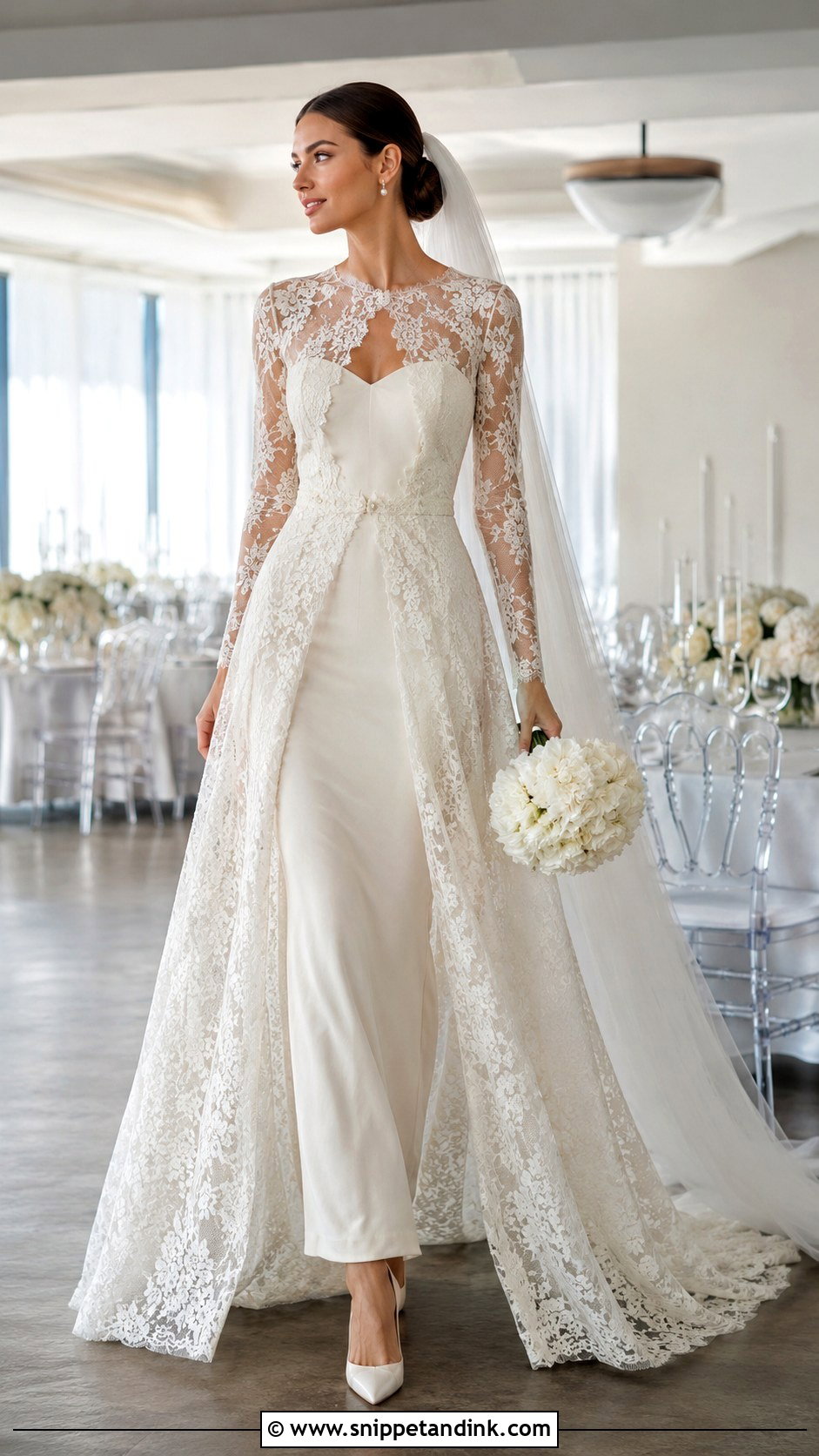
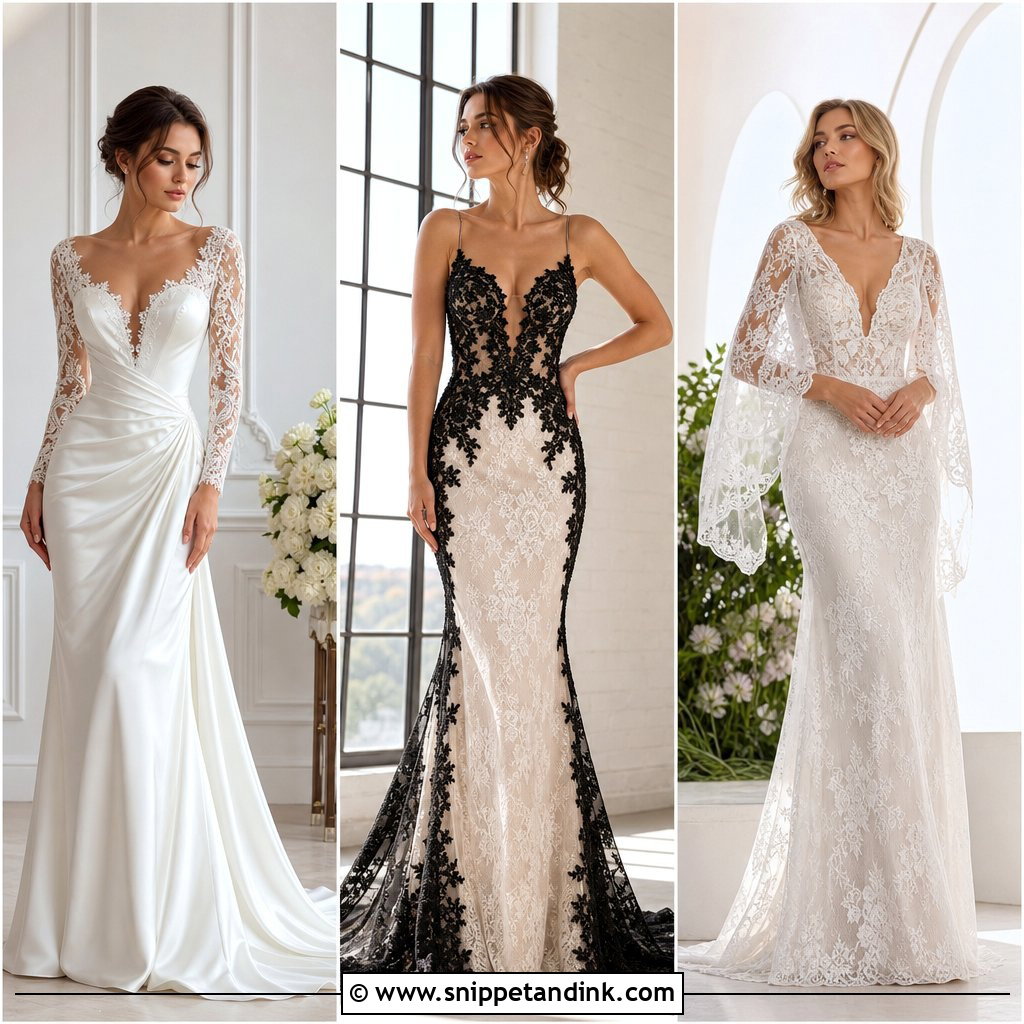
A detachable lace layer gives you two distinct looks from one dress without a full change. The removable piece might be a topper, bolero, overskirt, cape or long-sleeve layer over a simpler base. Wear it for the ceremony and take it off for dancing to reveal a clean strapless or fitted gown underneath. Keep the shoes, earrings and hair the same for both versions so the switch feels planned, and let the plain veil come off at the same moment. Practise the removal at your last fitting with the person who will help you on the day. Hidden hooks and snaps are fiddly, and they catch hair easily.
Why Lace Alterations Take Longer Than Plain Satin
A satin seam can be taken in with a machine. Lace usually can’t, because cutting straight through the pattern leaves half-flowers and a visible line. A good seamstress unpicks the motifs along the seam, adjusts the lining, then hand-stitches the lace back so the pattern flows across the join. Scalloped hems are treated the same way: the scallop is removed and reattached at the new length rather than trimmed.
That hand work is why I tell brides to order early. Made-to-order gowns often take several months to arrive, and I like a first fitting roughly two to three months before the wedding, with the final one a couple of weeks out. Ask your seamstress how she handles lace before you book, and bring the shoes and undergarments you’ll actually wear to every appointment.
Protecting the lace on the day and afterwards
- Turn a raised engagement ring toward your palm when you lift the skirt, or ask for a small piece of clear tape over the prongs for the ceremony.
- Have the florist wrap bouquet stems fully in ribbon so no wire ends touch the lace.
- Learn the bustle at your last fitting with whoever will tie it; lace trains are lifted by small hooks or ribbon loops hidden in the motifs.
- Have the gown professionally cleaned within a few weeks. Spilled champagne and sugary drinks can dry invisible and turn brown later.
- Store it flat or folded with acid-free tissue in a breathable box, never in plastic, and never hang a heavy lace gown by its shoulders for months.
Lace That Still Lets You Dance, Sit and Breathe
Lace has to look right and still let you move through a long day. Start with the silhouette, then compare neckline, sleeve length, the scale of the lace, lining colour and overall weight. Let the accessories support the pattern instead of competing with it. And before you commit to any gown, walk, sit, turn and lift your arms in it. Careful alterations will take care of most of the rest.
You'll Like These Ideas:



Leave a Reply