
Most brides who ask me for a vintage dress aren’t really asking for an old dress. They want a particular decade’s line: the way a 1930s skirt pools, the way a 1950s waist cinches, the way a Victorian collar frames the face. The gowns below run from the Victorian era through the 1990s, and almost every one can be found as a true period piece or as a new dress built with modern support underneath. Drop waists, bias-cut skirts and rows of covered buttons are the details that carry the era. Shoes, veil and a good seamstress do the rest, and they decide whether the result looks like you or like a costume.
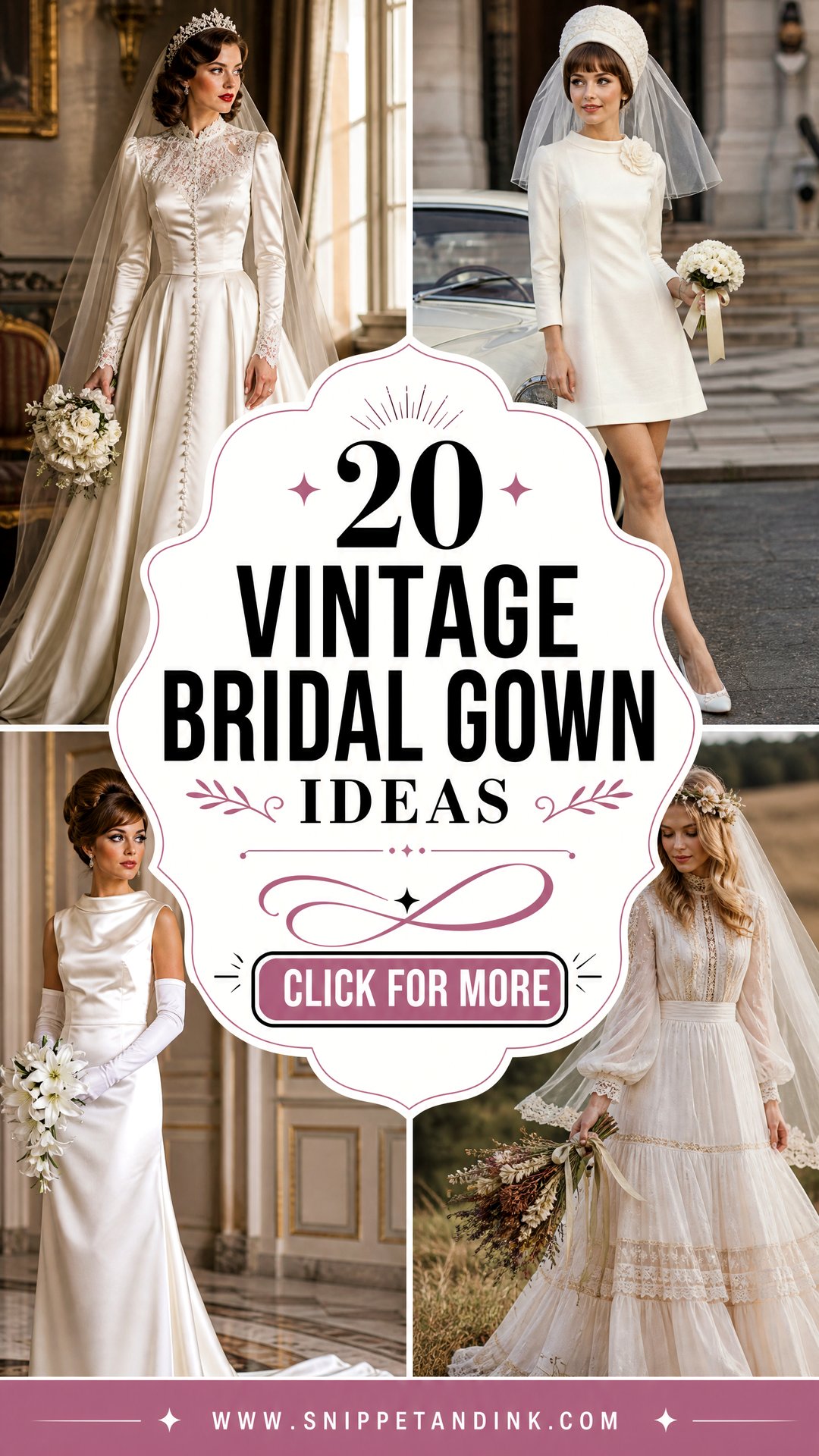
Buying a Gown That Is Genuinely Old
A dress made decades ago is a different purchase from a new dress in an old style, and I treat it like a used car: inspect first, fall in love second. Here is what I check before a bride hands over money.
- Size by measurement, never by label. Older garments are cut smaller and for different foundation garments, so compare bust, waist and hip in inches with a tape, and ask for the shoulder width too.
- Underarms and waist seams. Perspiration from earlier wear weakens silk in exactly these places. Gently pull the fabric near the seam; if it tears like paper, it can’t take alterations.
- Shattering. Some old silks were weighted with metallic salts and split into lengthwise cracks with age. Shattered silk can’t be repaired, only covered.
- Yellowing. Light, even yellowing is often treatable by a specialist cleaner. Brown spots along folds are usually oxidized stains and may never come out.
- Seam allowances. Look inside. Generous seams mean the dress can be let out; tiny overlocked seams mean what you see is the maximum size.
If a dress fails two of these, I suggest buying it as inspiration and having its lines copied in new fabric. That way you get the silhouette without praying the bodice holds through the first dance.
1. Victorian High Neck Vintage Bridal Gown
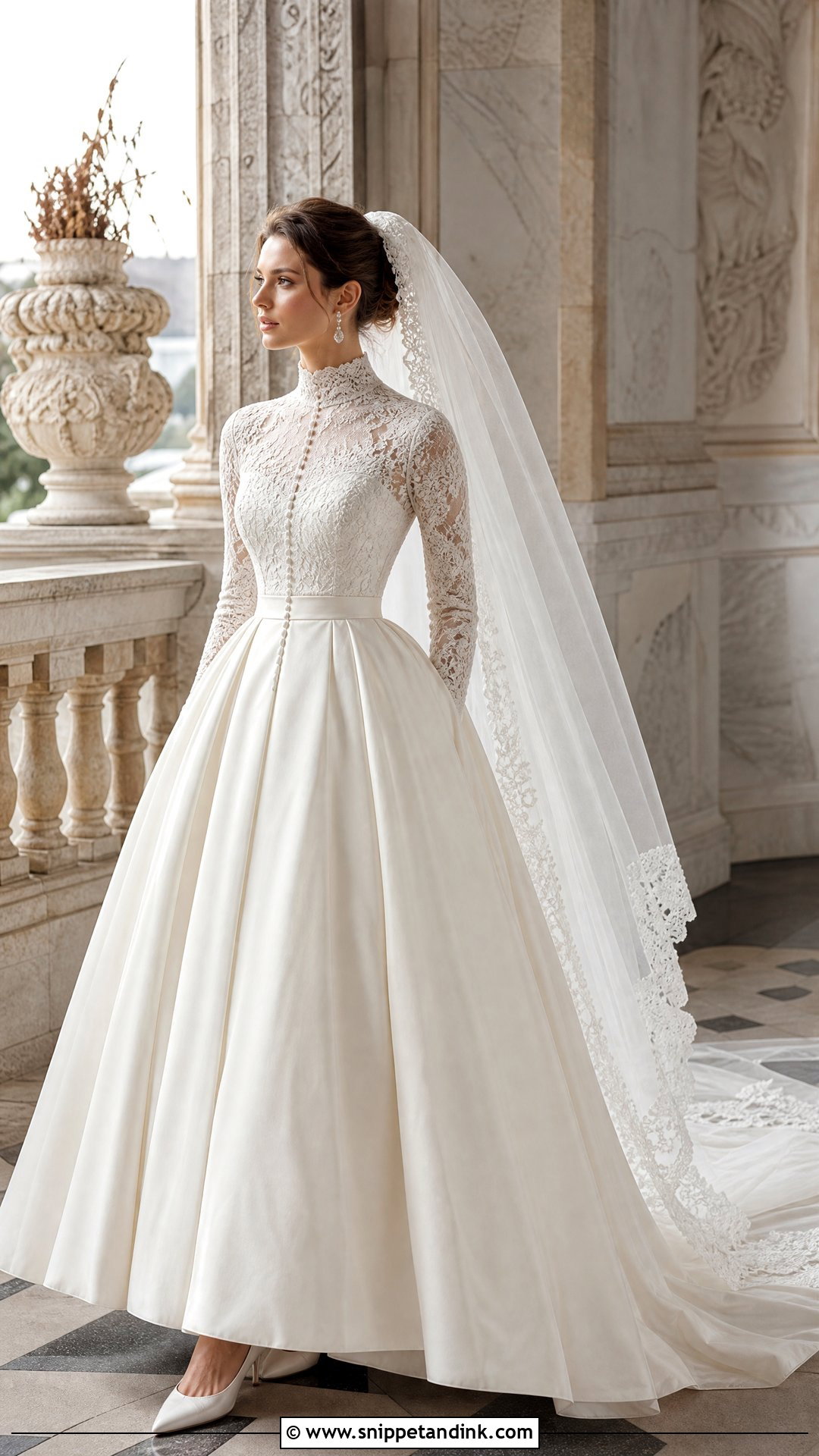
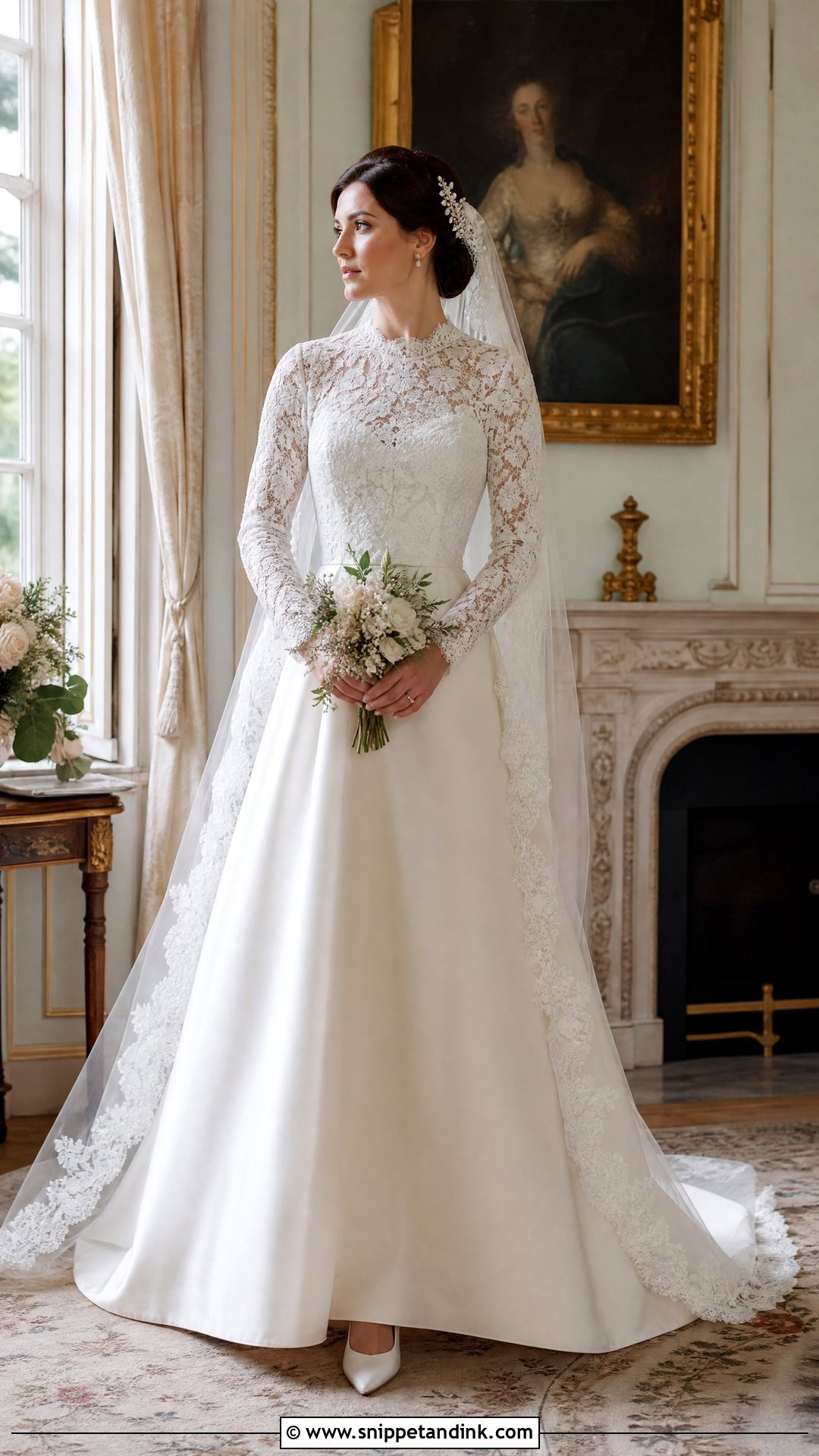
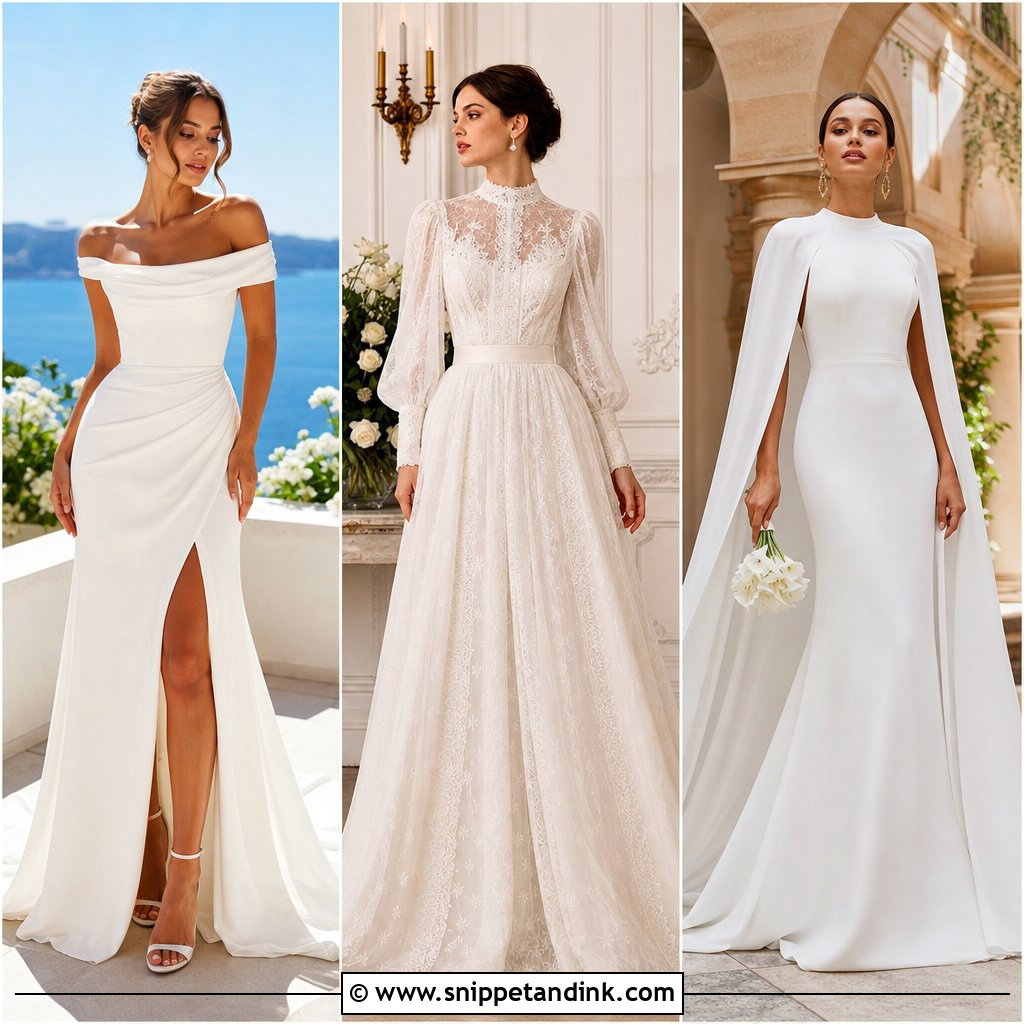
A high Victorian neck is formal and it frames the face more than any other neckline here. I look for a fitted lace bodice, long sleeves, a defined waist and a skirt with real sweep, whether A-line or full ball gown. The detail that keeps it from feeling like fancy dress is restraint: tiny covered buttons and scalloped cuffs, then nothing else competing. Ivory and antique cream read warmer on camera than bright white against all that lace. Keep the hair low, either a bun or a twist, because a tall updo above a collar can shorten the neck. A cathedral veil edged in matching lace and pointed satin pumps finish it, and the look sits best in a historic house or a formal garden.
2. Edwardian Lace Vintage Bridal Gown
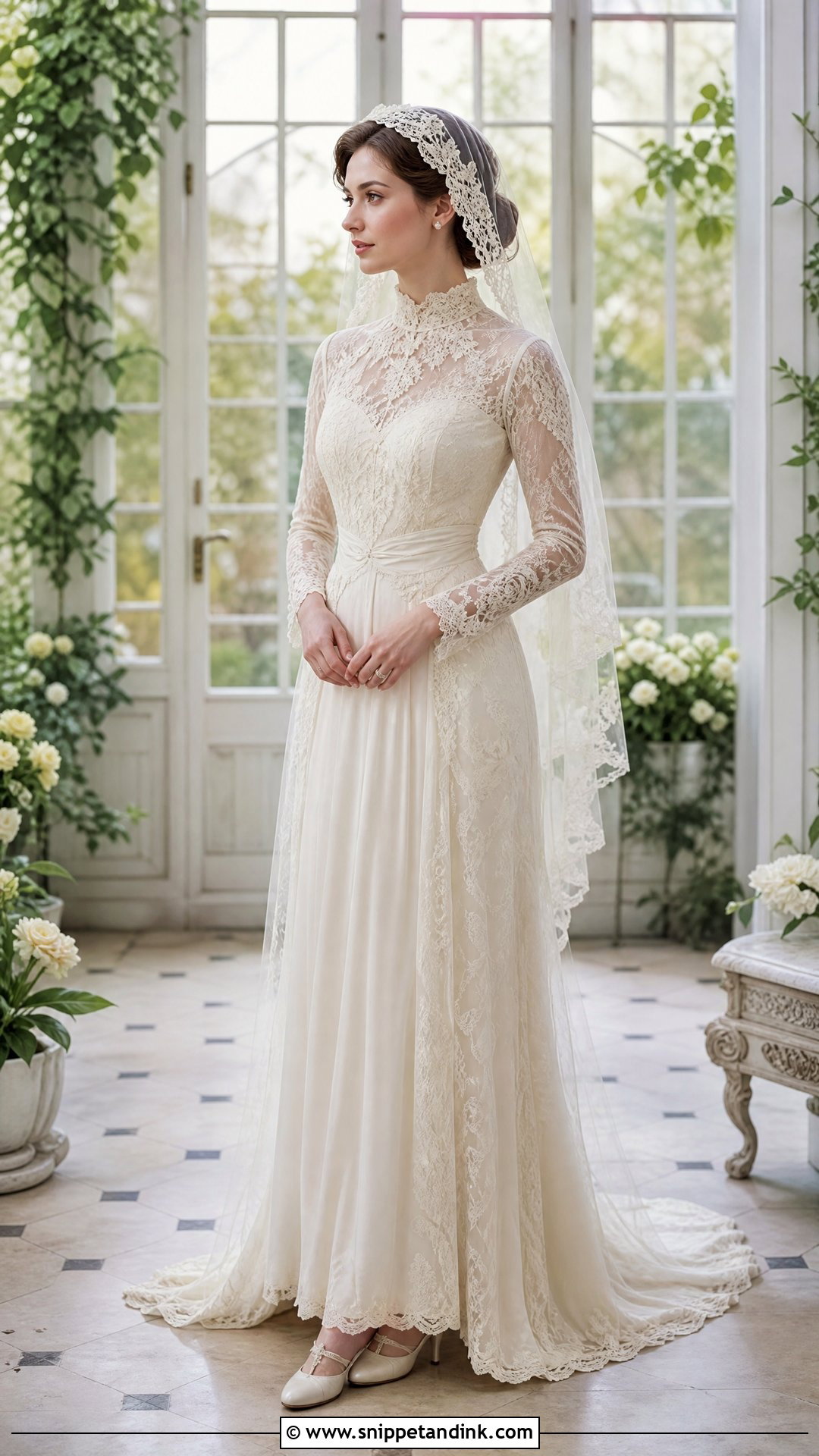
Edwardian dressing is softer than Victorian: less boning, a longer line and gentle gathering at the bust instead of a rigid front. A high illusion neckline and narrow sleeves keep the coverage, while a skirt with a small train moves when you walk. At fittings I check that the illusion mesh matches the skin tone closely; a mismatch shows up as a pale band in flash photos. A floral comb, pearl studs and ivory leather pumps suit it. A fingertip veil is the easy option, though a lace-trimmed Juliet cap veil gives a stronger period nod. Keep the bouquet loose so it doesn’t fight the lace texture.
3. 1910s Empire Waist Vintage Bridal Gown
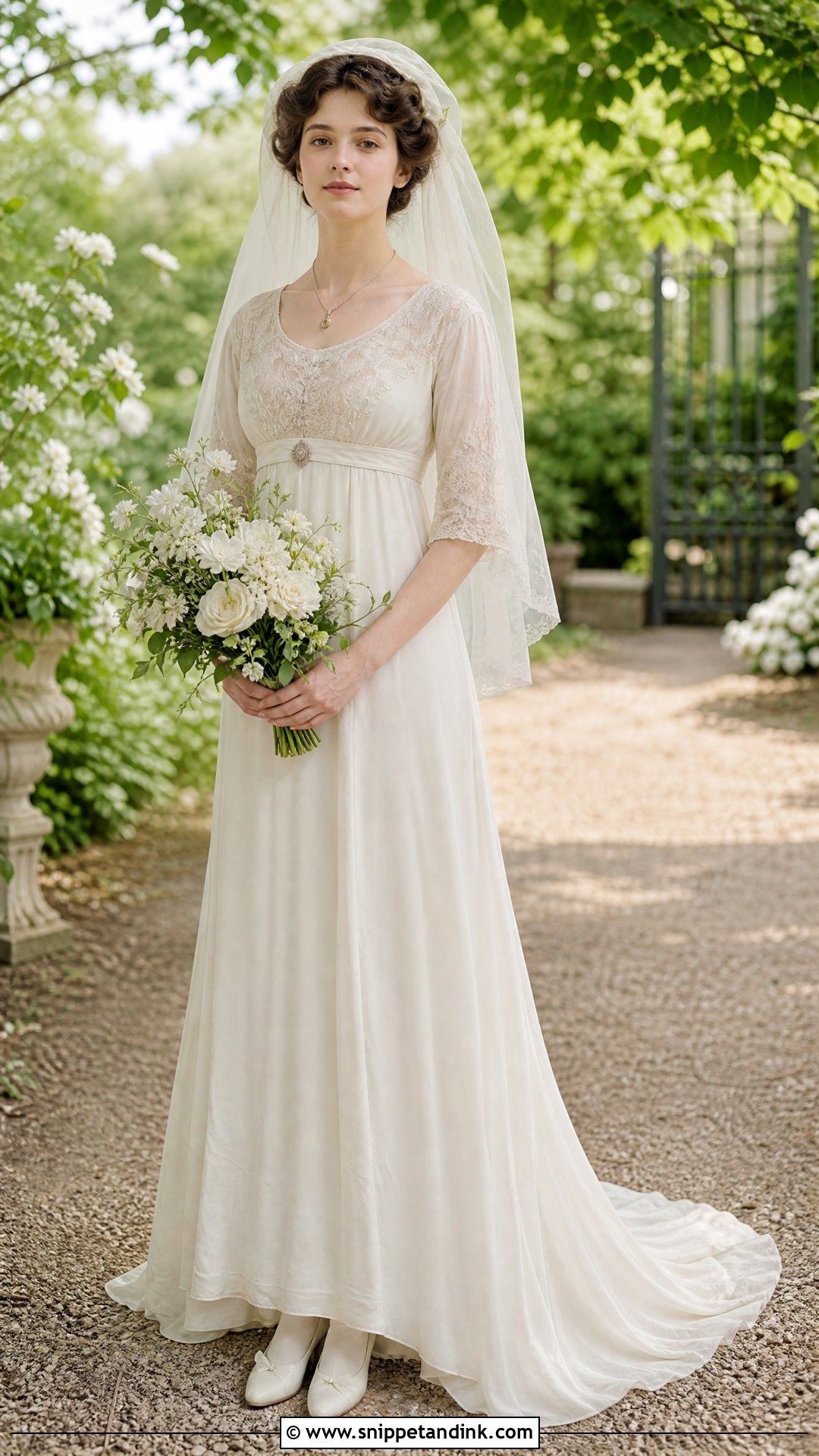
Comfort is the selling point of a 1910s-inspired empire-waist gown. The bodice sits close and the skirt falls from just under the bust, so nothing presses on your stomach at dinner. Chiffon, silk crepe or a lightweight satin give the fluid fall this decade relied on. A lace yoke, a short train and elbow sleeves add detail without crowding the shape. One thing I warn about: chiffon over a slippery lining can twist on the body as you move, so ask for the lining to be tacked at the side seams. Low-heeled button shoes and a softly gathered veil complete it, and it handles a breezy garden or coastal ceremony well.
4. 1920s Beaded Drop Waist Vintage Bridal Gown
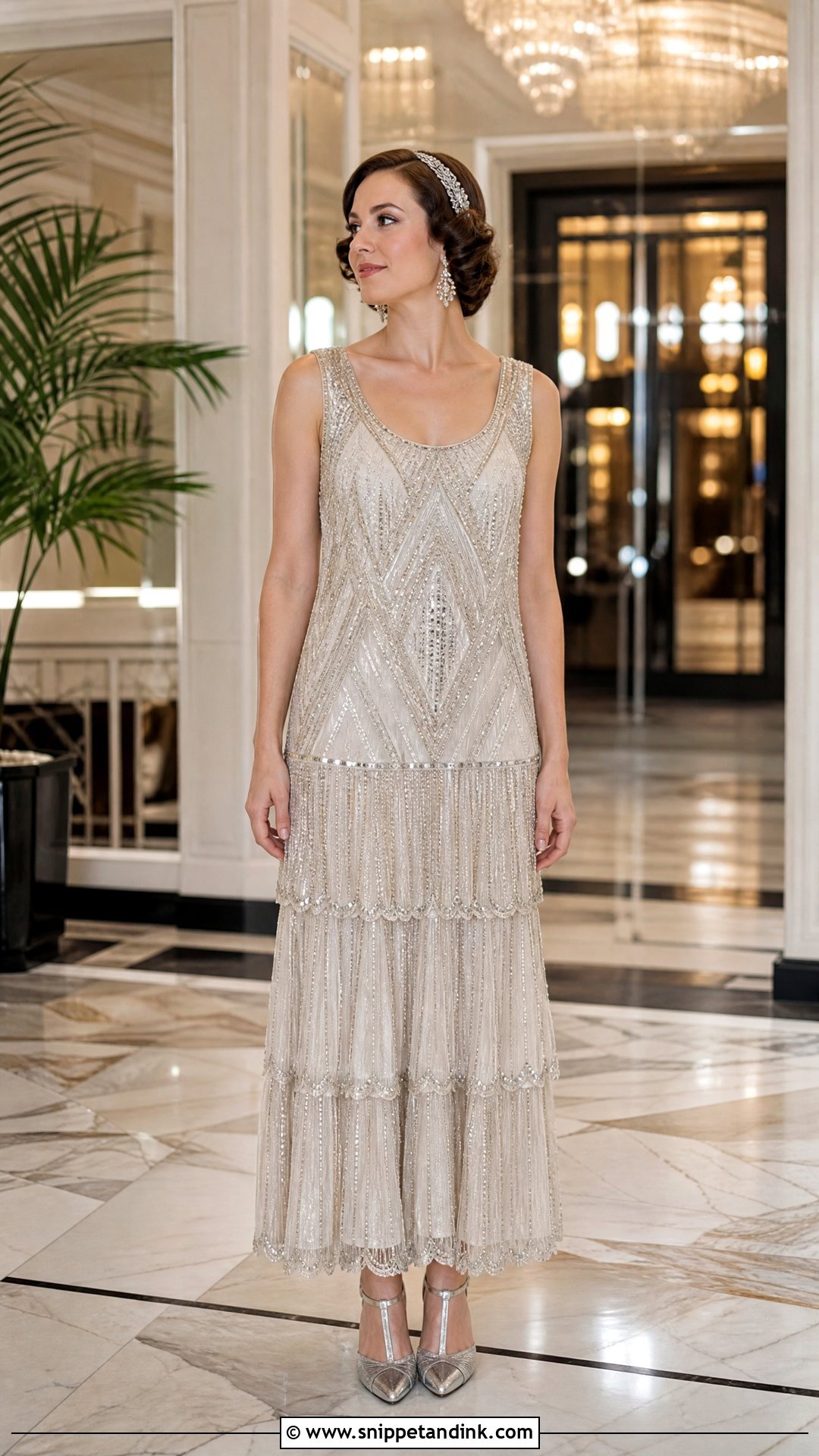
Beadwork is what turns a plain drop-waist shift into a glamorous 1920s bridal look. Choose a straight or relaxed cut with geometric embellishment and a lowered waist seam, and take the hem to chapel length so it reads bridal rather than party dress. Be realistic about weight. A fully beaded gown can be surprisingly heavy and hangs from the shoulders, so I always have brides wear it for twenty minutes at a fitting before deciding. Metallic T-straps, crystal earrings and a beaded headpiece over finger waves suit it, with a sheer cape for ceremony coverage. Because the dress already sparkles, carry simple flowers and a small structured clutch.
5. 1920s Tea Length Vintage Bridal Gown
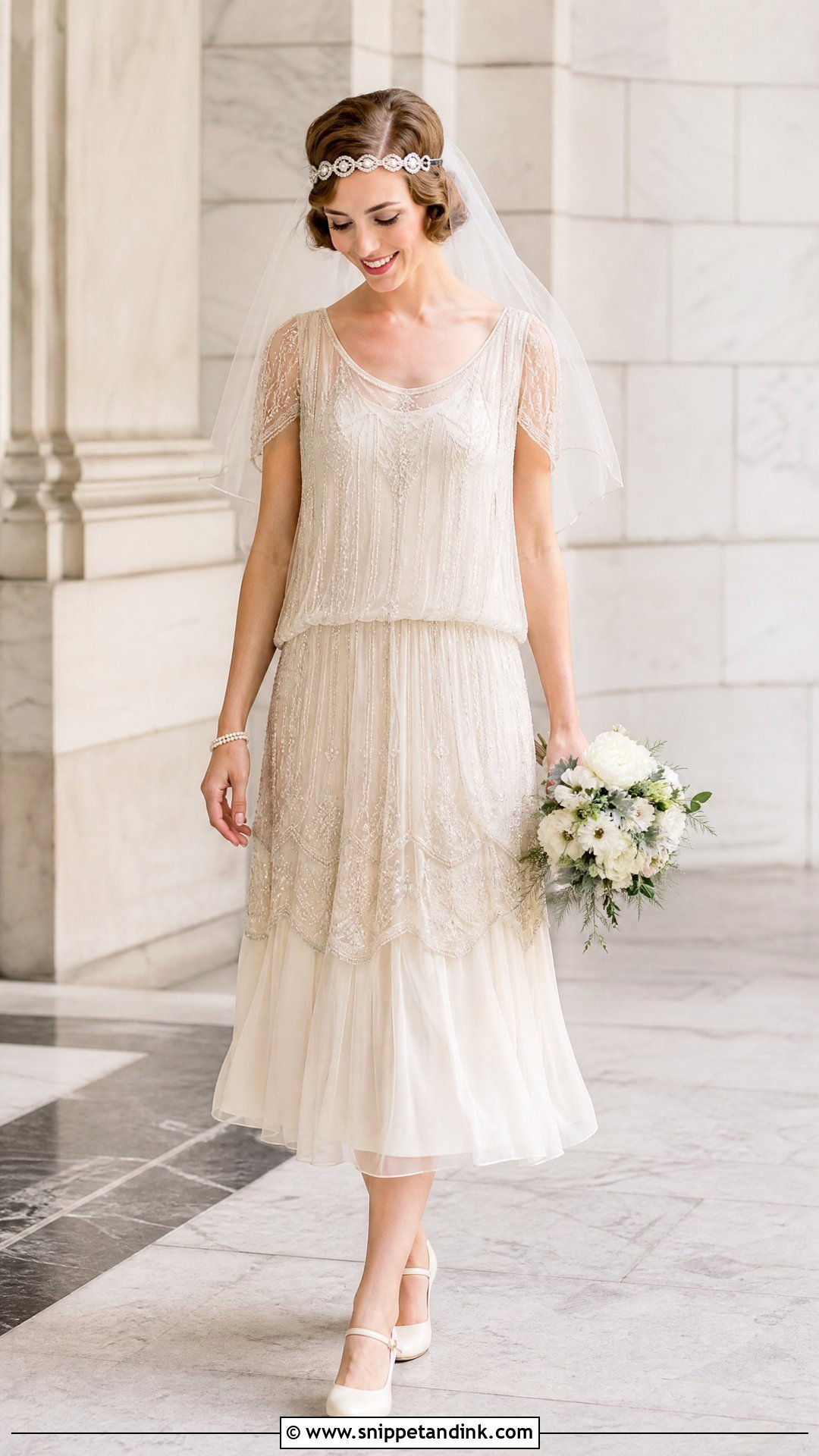
Tea length is the 1920s option I suggest most for courthouse weddings and restaurant receptions, because you can dance in it without bustling anything. A loose beaded bodice, a dropped waist and a layered skirt ending around mid-calf are the core of it. The hem shows your shoes, so treat them as part of the outfit: ivory Mary Janes, metallic T-straps or a low block heel. A birdcage veil or a jeweled band works. Pick one of them, not both, and finish with a small bouquet and a pearl bracelet.
6. 1930s Bias Cut Satin Vintage Bridal Gown
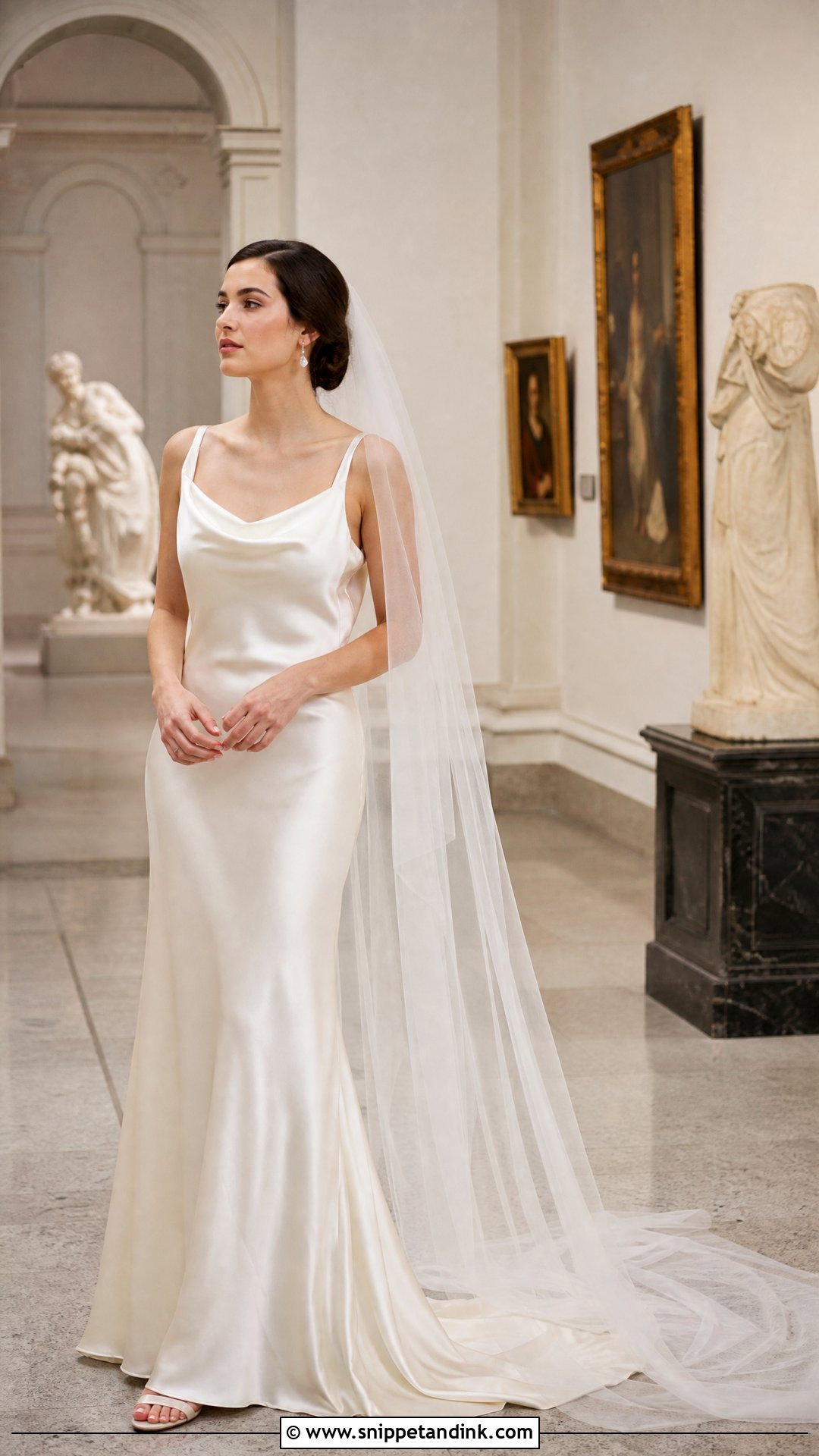
Satin cut on the bias is the closest thing in bridal to a second skin, which is exactly why a 1930s bias-cut satin gown is both the most flattering and the least forgiving dress in this list. The cloth stretches along the diagonal and follows the body with no boning, so it shows every seam line and every undergarment edge. Silk satin, charmeuse or a heavy crepe with a soft neckline and a slight train is what I’d look for. Fit it in the exact shapewear you’ll wear, and expect the hem to be finished last, since bias fabric keeps dropping for a while after it’s cut. Slim satin sandals, teardrop earrings and a long veil under a low chignon suit a hotel or gallery setting.
7. 1930s Cowl Back Vintage Bridal Gown
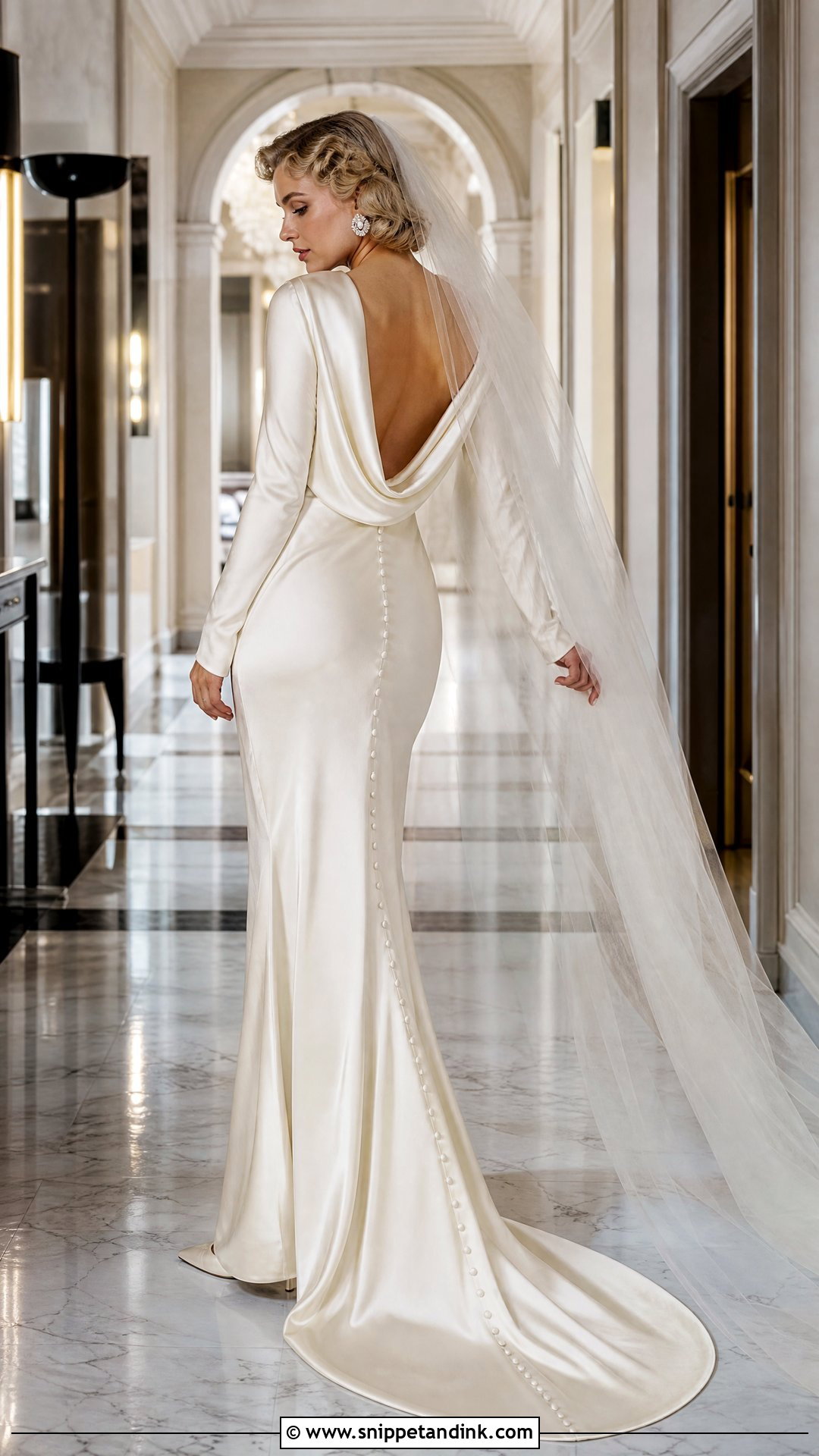
Turn around, and a softly draped cowl back delivers the defining moment of this 1930s look. The front can stay quiet, with a bateau, scoop or modest V, so the open back and fluid train do the work. Weight matters here: thin silk collapses into limp folds, while a substantial satin hangs in clean drapes. A row of covered buttons or a fine chain across the shoulders adds a vintage touch. I’d pair it with a smooth updo so nothing hides the back, sculptural earrings and pointed pumps. A sheer cathedral veil looks striking at the ceremony and comes off later to show the drape. Have the cowl pinned while you sit, because it can gape far lower once you lean back.
8. 1940s Long Sleeve Satin Vintage Bridal Gown
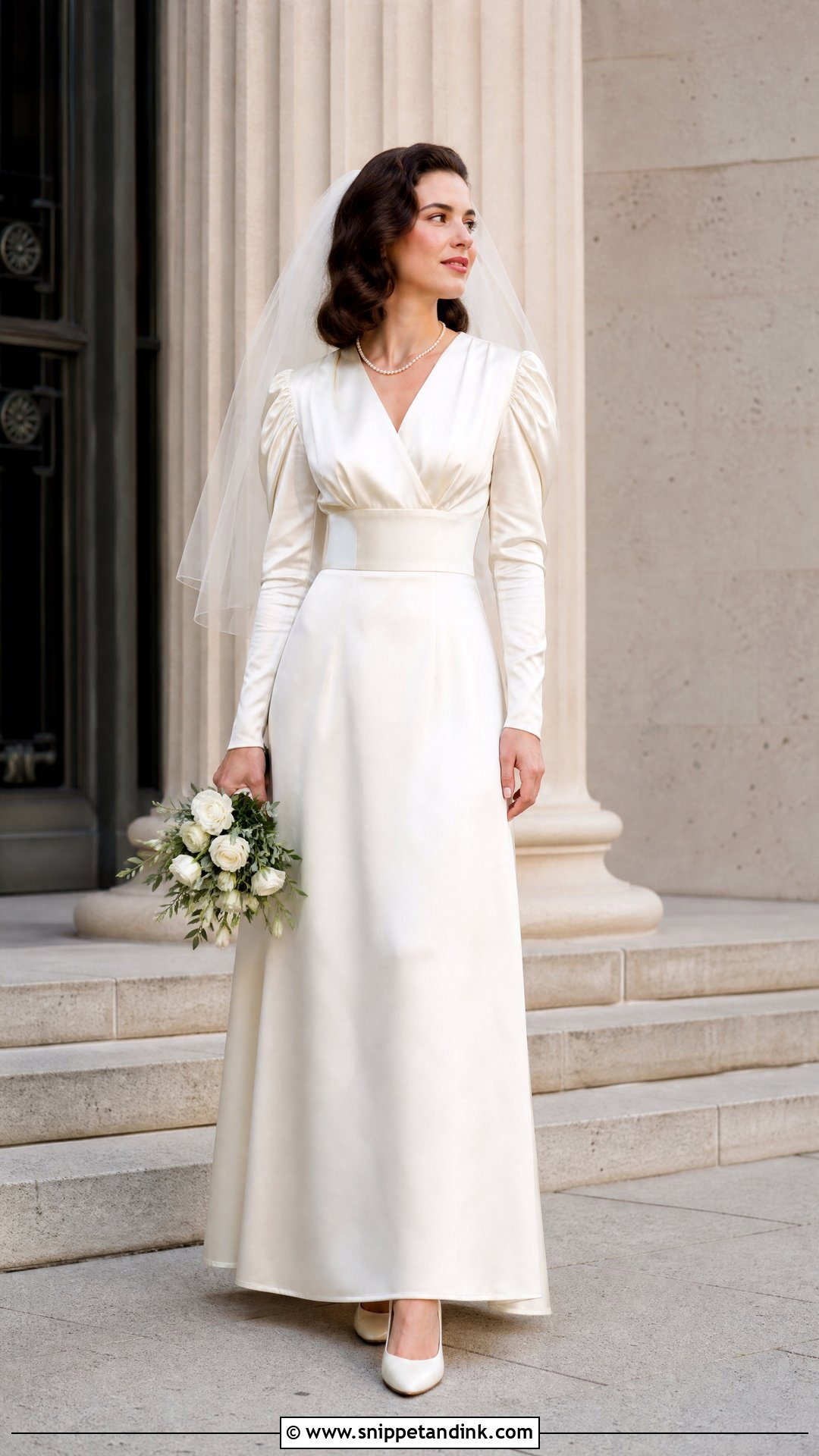
The 1940s gave brides structured shoulders, a fitted waist and an A-line skirt with very little excess, partly because fabric was rationed. A long-sleeve satin gown with a V-neck captures that composed look. Gathered sleeve heads and covered wrist buttons carry the character, and a modest train gives the ceremony its moment. Check your arm lift at fittings; set-in sleeves cut close can stop you from hugging anyone. Closed-toe pumps, a pearl necklace and a shoulder-length veil tucked under rolled waves suit it, and it is a good cool-season choice for a civic hall or historic venue.
9. 1940s Crepe Vintage Bridal Gown
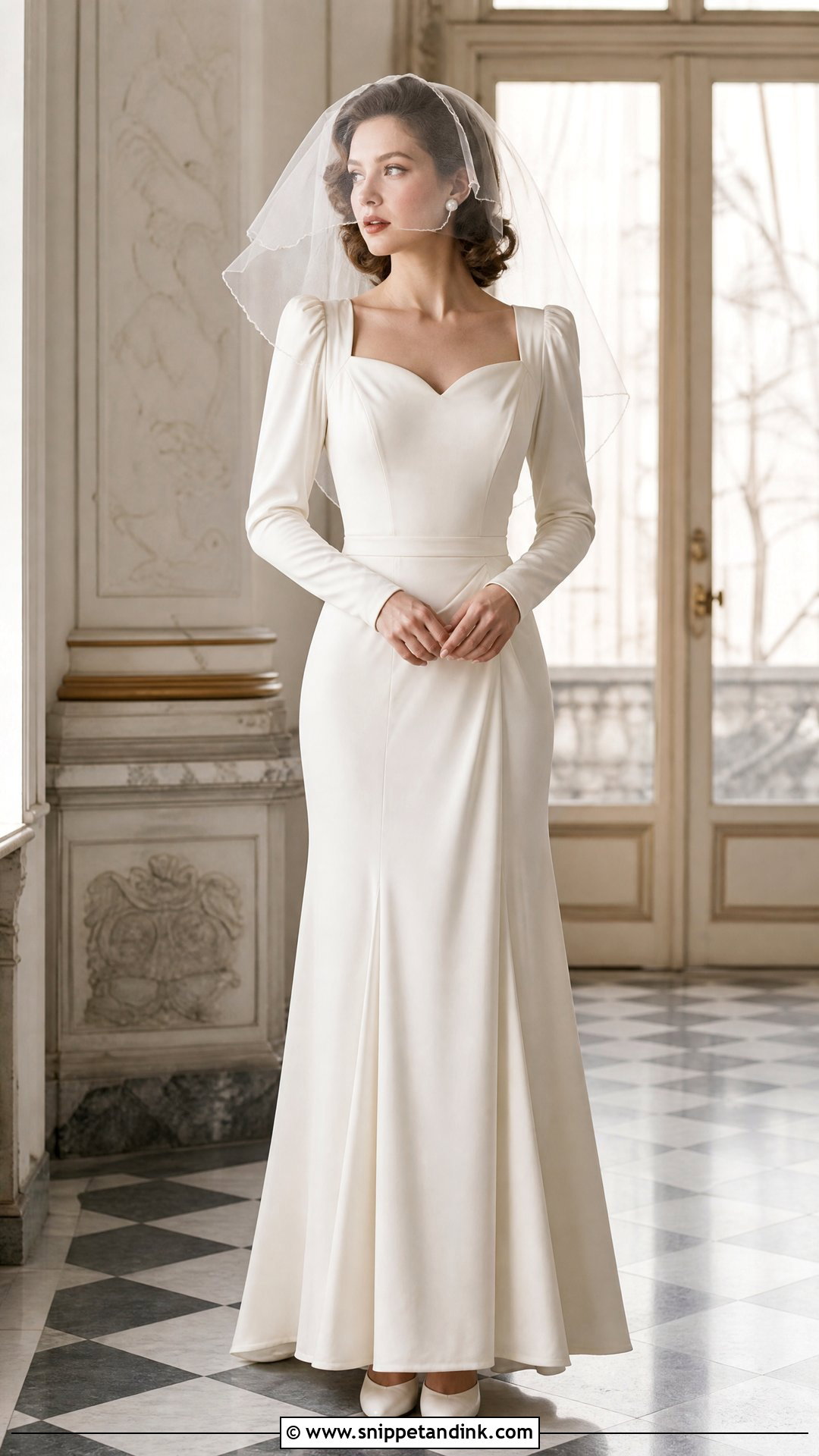
Crepe is matte, so a 1940s crepe gown looks quieter and more tailored than satin. A sweetheart or gentle V, lightly padded shoulders and long tapered sleeves set up the shape, and a narrow waist into a soft flare gives the hourglass without a petticoat. With so little decoration, the seaming is the design, which means fit through the shoulders, waist and upper hips has to be precise. Crepe also shows pressing marks, so ask that the gown is steamed rather than ironed. Ivory pumps, pearl studs and a compact ribbon-tied bouquet keep it simple, with a short blusher or small hat for period mood.
10. 1950s Tea Length Vintage Bridal Gown
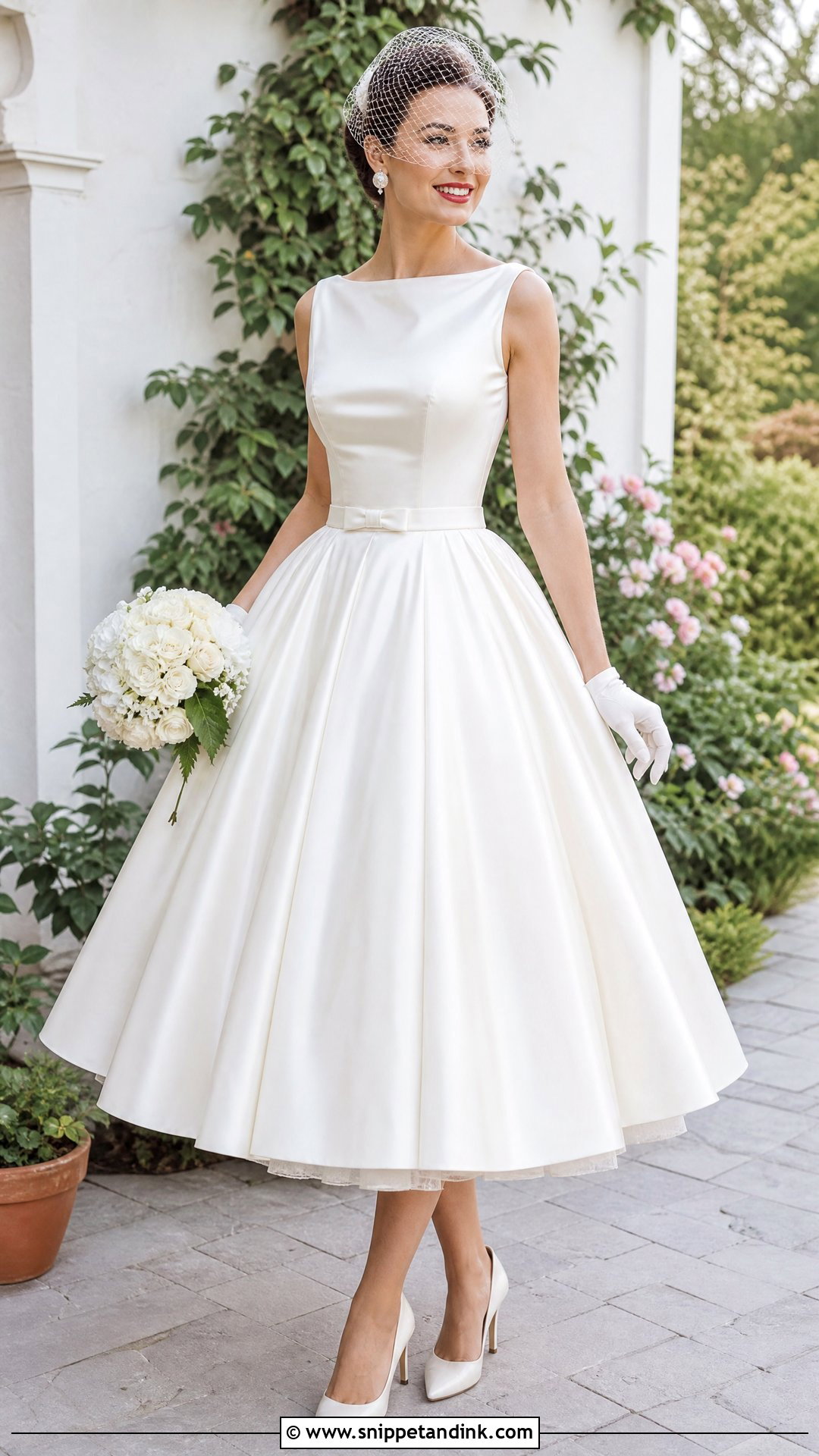
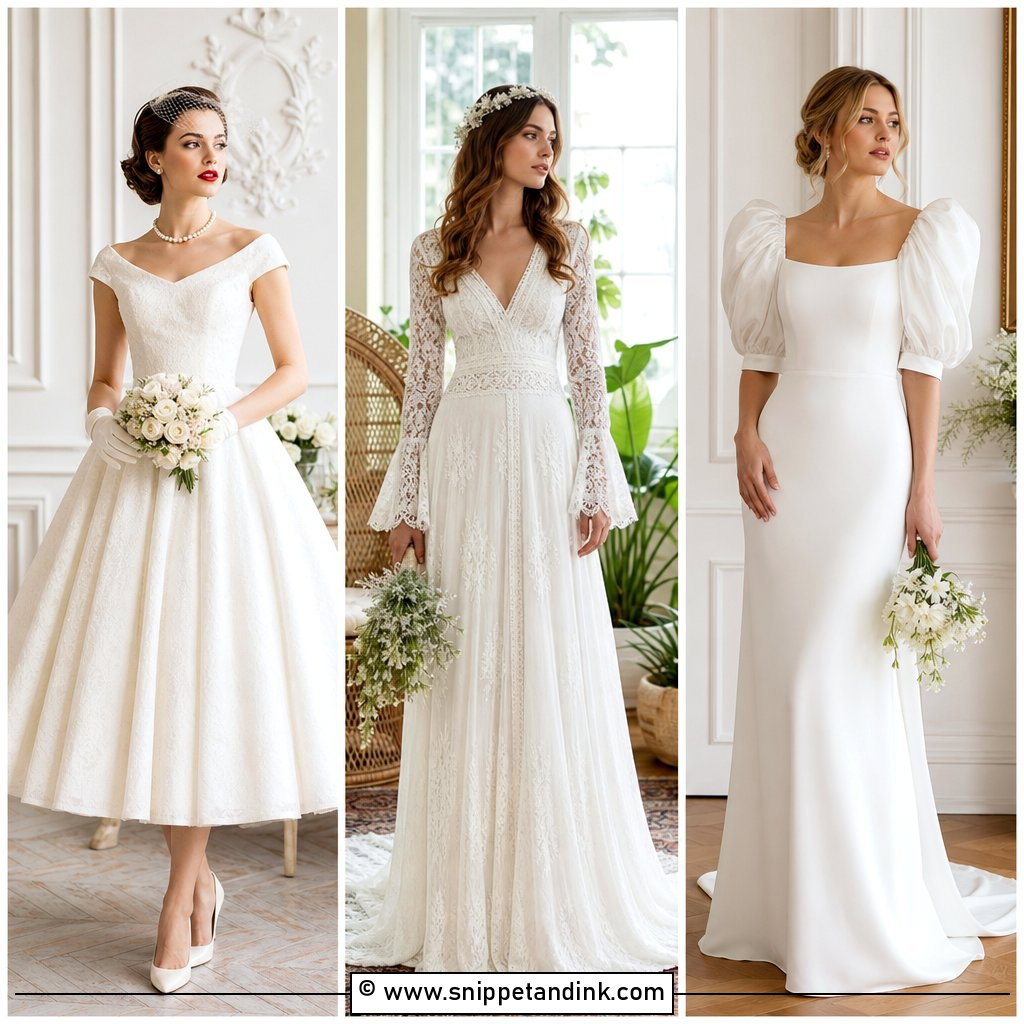
A 1950s tea-length gown pairs a fitted bodice with a full, swinging skirt that ends between knee and ankle. It is easy to walk and dance in, which is half of its appeal. Satin, lace or structured mikado all hold the shape, and a light petticoat controls the volume. I size petticoats with the shoes on, because a skirt that clears the floor in flats can look short once heels go on. Pointed pumps or ankle straps, short gloves, pearl earrings and a birdcage veil complete it. If you add a belt, match it to the gown so it doesn’t cut the figure in half.
11. 1950s Lace Ball Gown
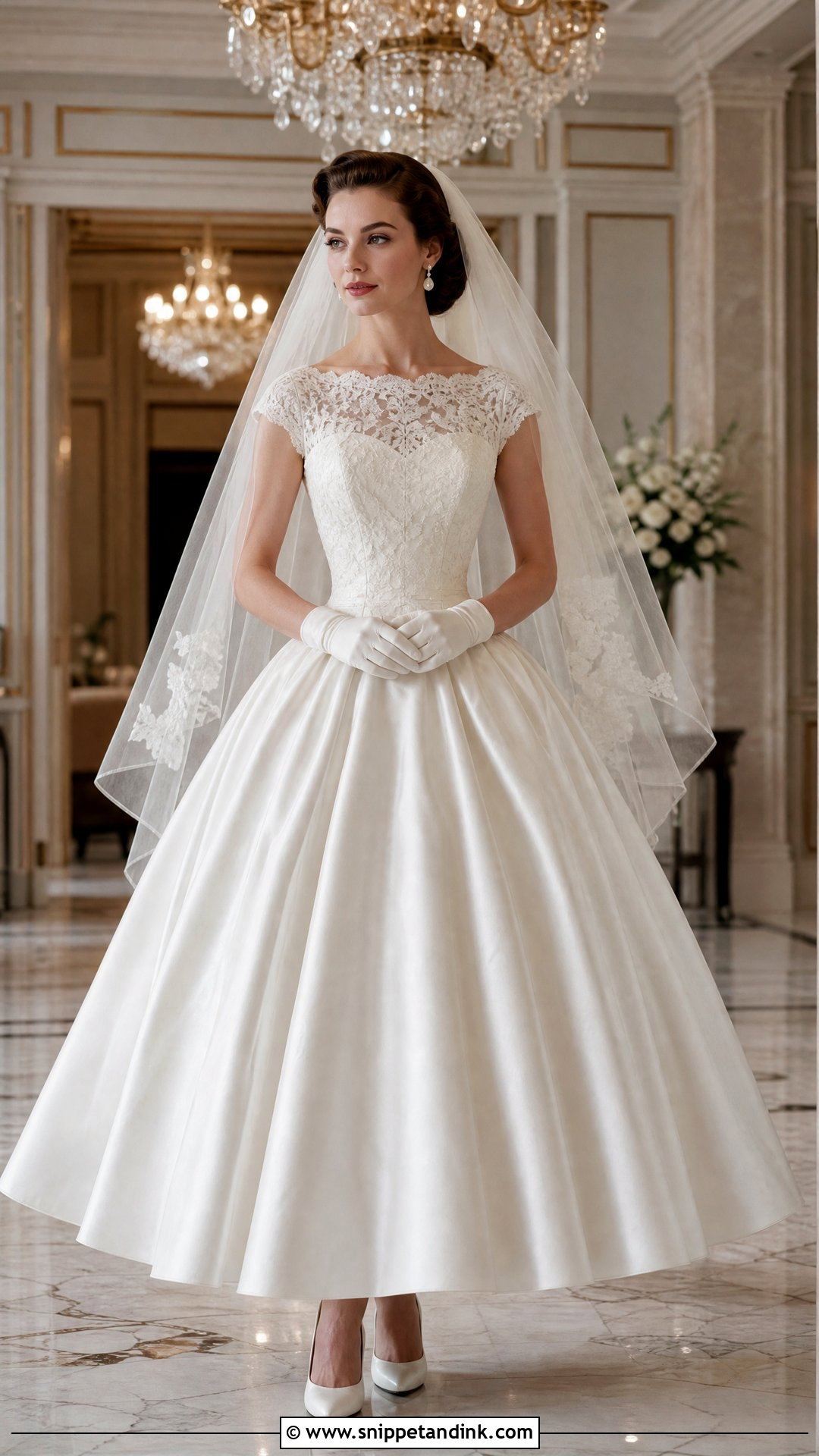
A 1950s lace ball gown is the classic full-skirt drama: defined waist, supportive bodice, then volume. A portrait neckline, cap sleeves or a modest off-the-shoulder cut all suit it. Floral lace over satin keeps the pattern visible, and a structured underskirt holds the silhouette. Proportion is where these succeed or fail. The bodice has to fit closely, the waist has to sit at your actual waist, and the volume should start smoothly rather than pop out from a seam. Pearl studs, a waist-length veil and closed-toe ivory heels, plus short gloves if the sleeves are plain, suit a ballroom or estate.
12. 1960s Mod Mini Vintage Bridal Gown
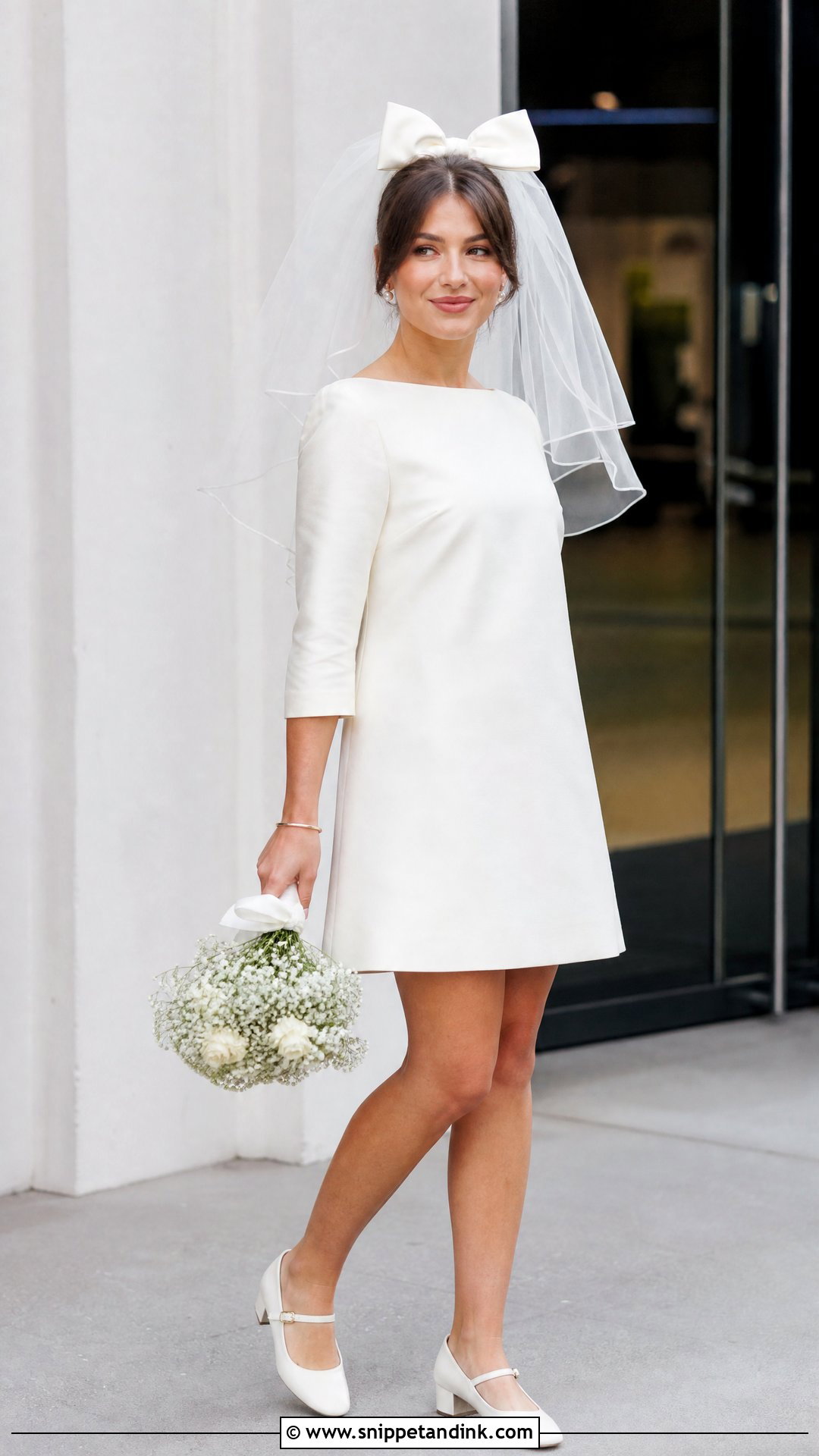
A 1960s mod mini is the boldest dress in this list and it relies on clean lines. A structured A-line ending around the knee, a jewel neckline, bracelet sleeves or a crisp bateau collar make up the shape. The decade’s bridal cues are Mary Janes, short bubble veils and big bows, and borrowing one or two of them is plenty. A short dress needs substantial fabric; thin crepe in a mini reads as a party frock. I’d add opaque tights for a winter date, low block heels and pearl studs. It looks right at a courthouse or a contemporary gallery.
13. 1960s Satin Column Vintage Bridal Gown
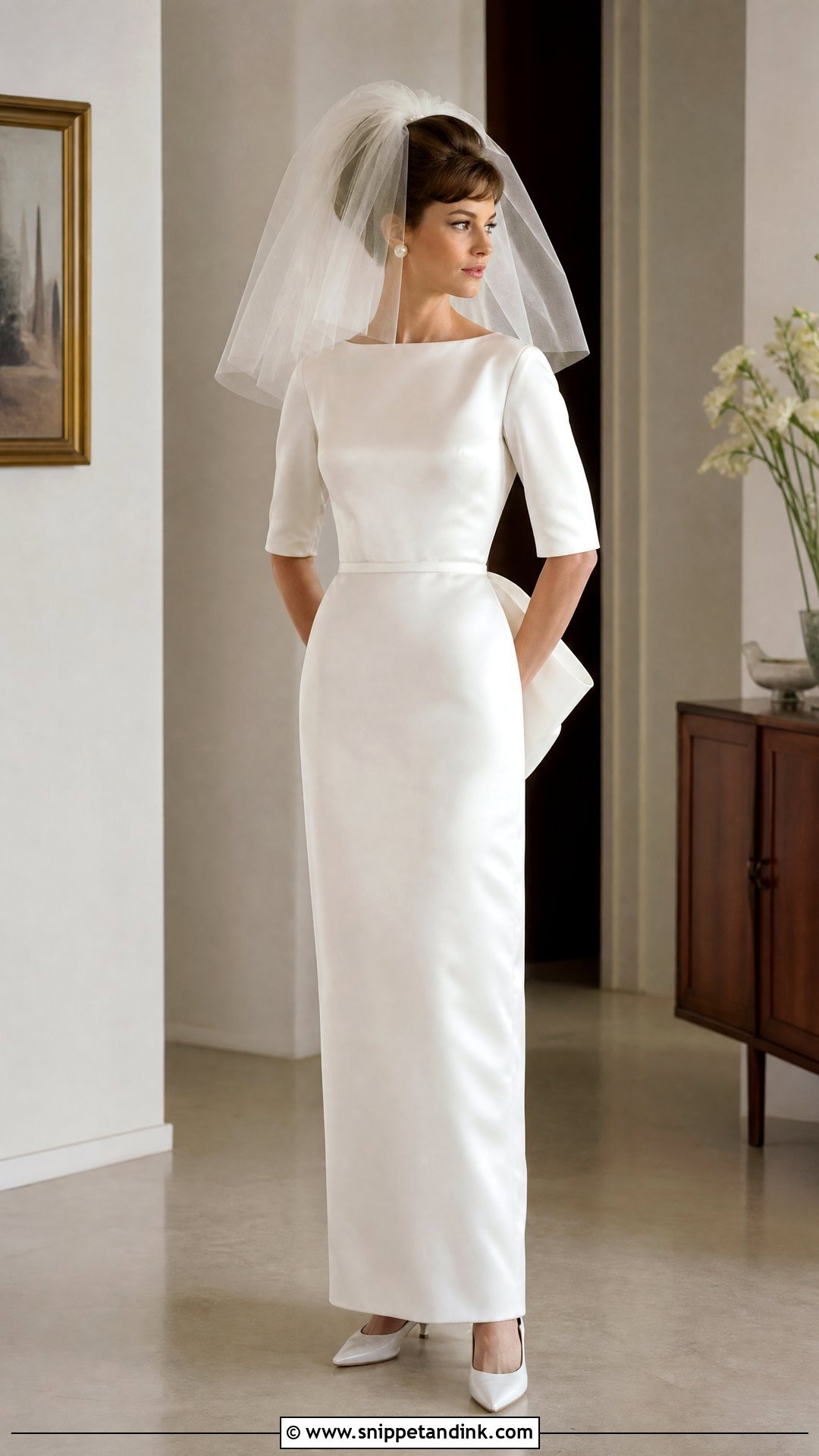
Clean lines define a 1960s satin column, so it suits a bride who would rather have precision than volume. A high bateau neckline, a fitted waist and a straight skirt with a back slit or slight flare let you walk. Elbow sleeves or a detachable cropped jacket give ceremony coverage. The era ran from these sleek sheaths to fuller gowns, so you can lean either way. Because there is nowhere for a fit problem to hide, I spend most fitting time on the shoulders, waist and hips. Pointed kitten heels, pearl earrings, a short bouffant veil and a bow at the back waist are enough.
14. 1970s Prairie Vintage Bridal Gown
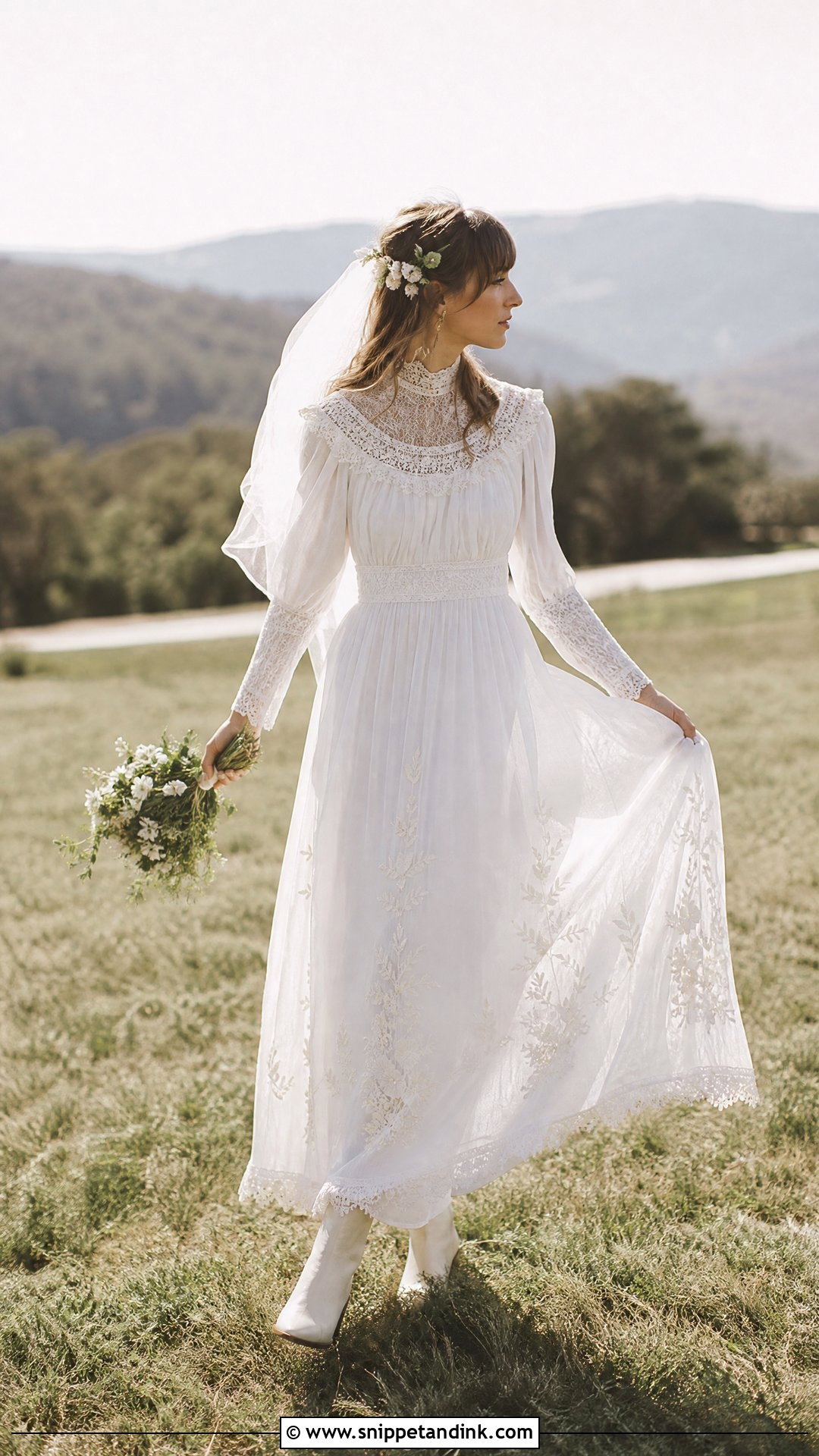
A 1970s prairie gown is made for outdoor weddings. A high lace neckline, a softly gathered bodice, long sleeves and a skirt with a ruffled or embroidered hem are the recognizable pieces, often over an empire shape in light fabric. My practical check is the lining: cotton or another breathable lining matters in a summer meadow far more than in a ballroom. Low block-heel boots or plain leather shoes handle grass. A loose braid or soft waves and a floral headpiece suit it better than a sculpted updo, and barns or woodland venues are its natural setting.


15. 1970s Bell Sleeve Vintage Bridal Gown
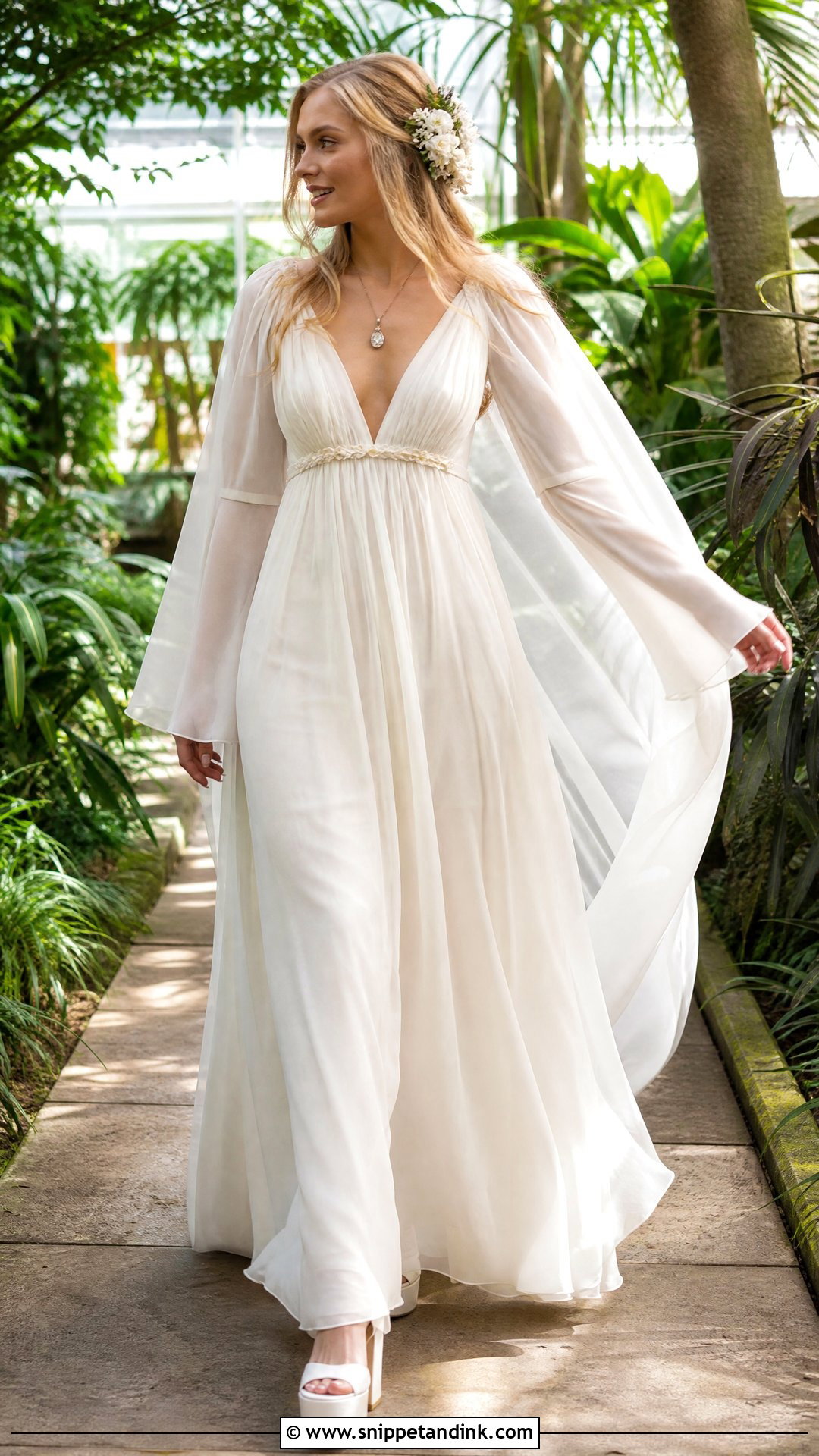
Bell sleeves give this dress its 1970s identity, so everything else stays simple. Chiffon, lace or lightweight crepe with an empire waist and a gentle flare works, and the sleeves can be sheer and wide or fitted to the elbow before opening out. A V, scoop or narrow keyhole neckline keeps attention on the arms. Wide sleeves catch on bouquets, candles and dinner plates, so I add hidden wrist loops on any sleeve wider than the hand. Platform sandals, a delicate pendant and a floral comb in loose waves suit it, and a flowing cape echoes the movement better than a stiff veil.
16. 1980s Puff Sleeve Vintage Bridal Gown
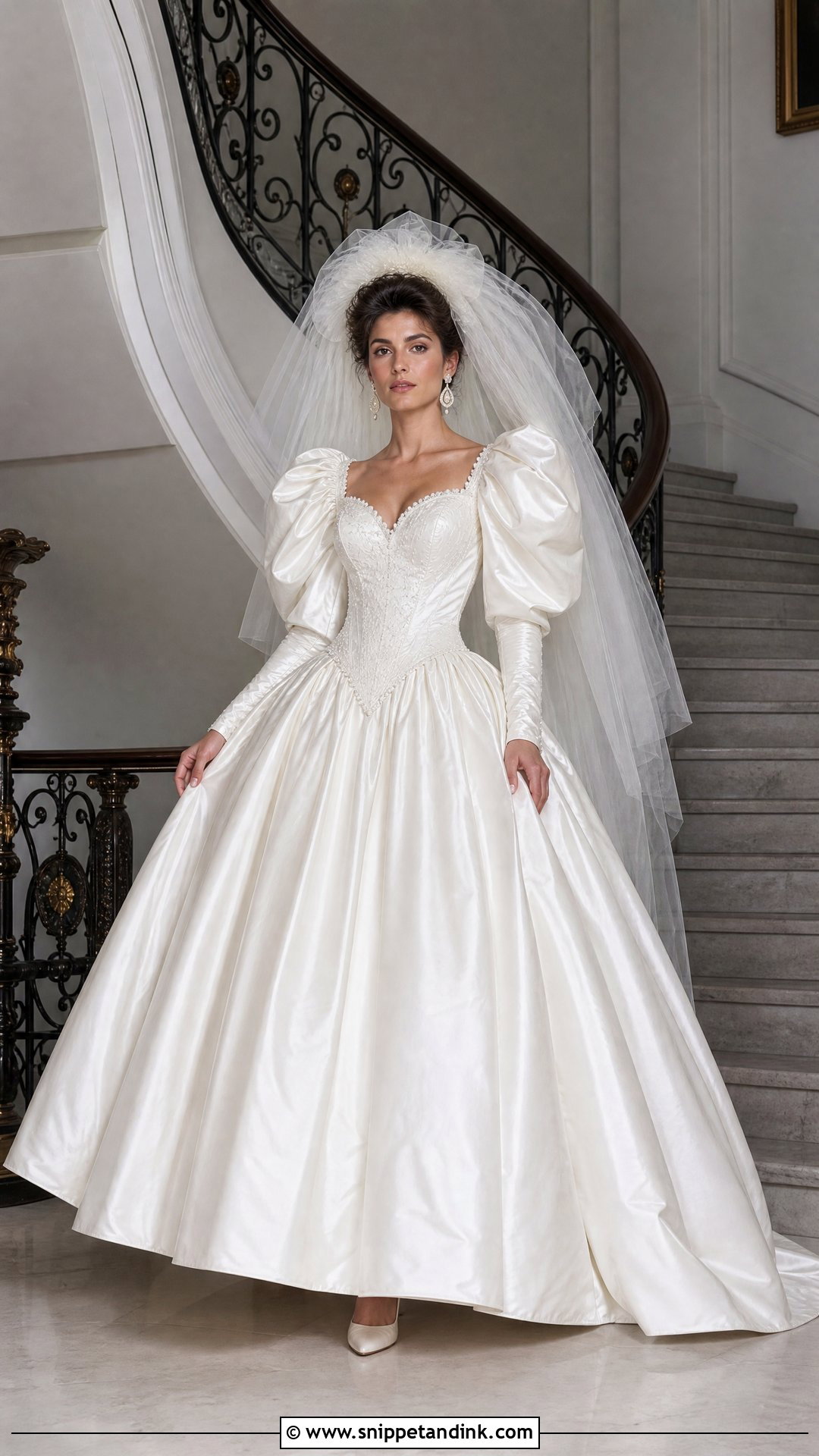
Big shoulders and big skirts are the whole point of an 1980s puff-sleeve gown. A fitted bodice with a basque or natural waist, full sleeves and a generous ball-gown skirt set the shape, with satin, lace appliqués, pearls and bows as the decade’s favorite trims. Long sleeves, sparkle and historical revival details were all part of that era’s bridal style. The risk is that the sleeves swallow you. I usually reduce the sleeve volume a little or move to a matte fabric, which keeps the reference but lets your face lead. Classic pumps, drop earrings and a full veil balanced against the sleeves finish it.
17. 1990s Silk Slip Vintage Bridal Gown
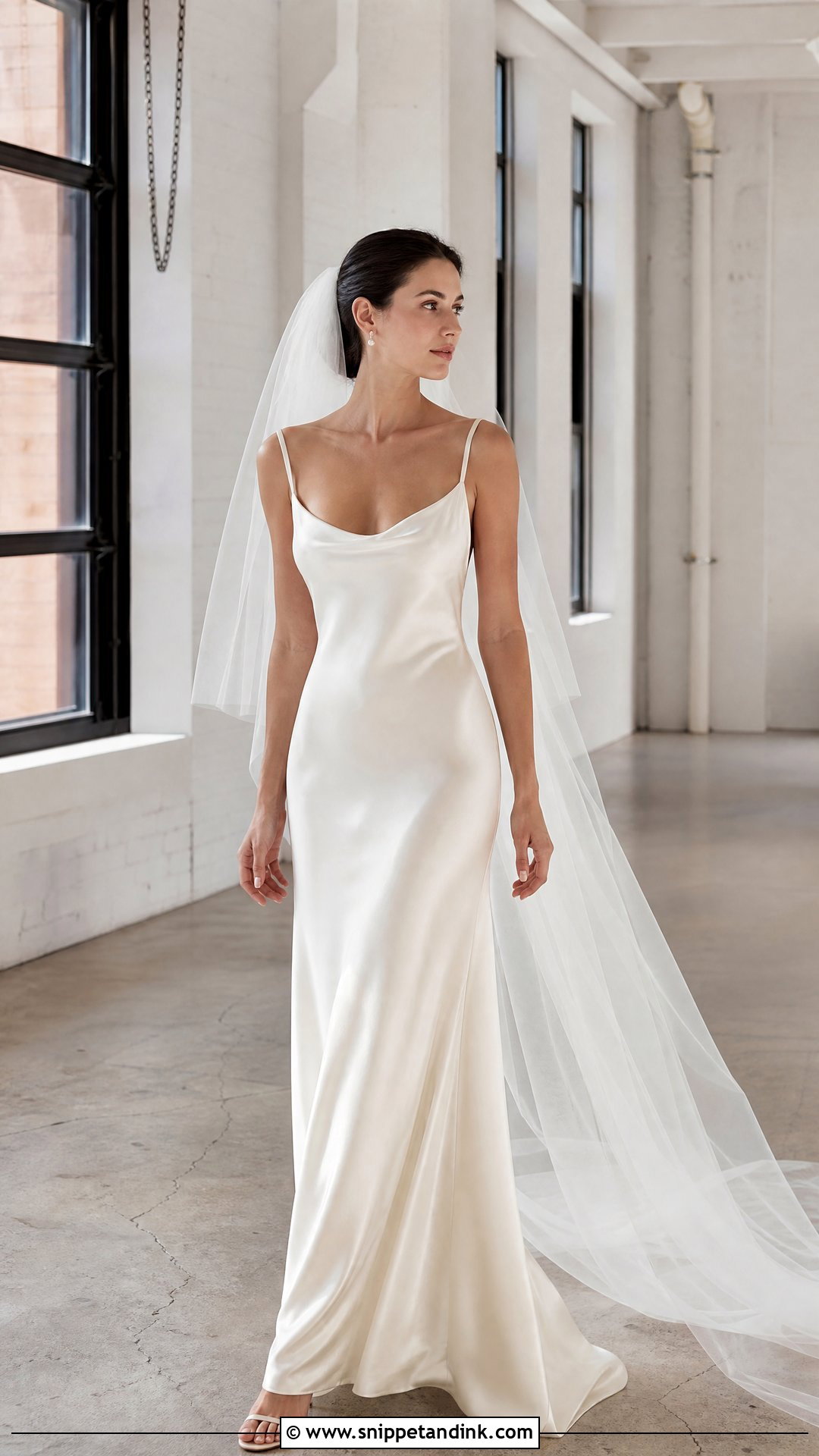
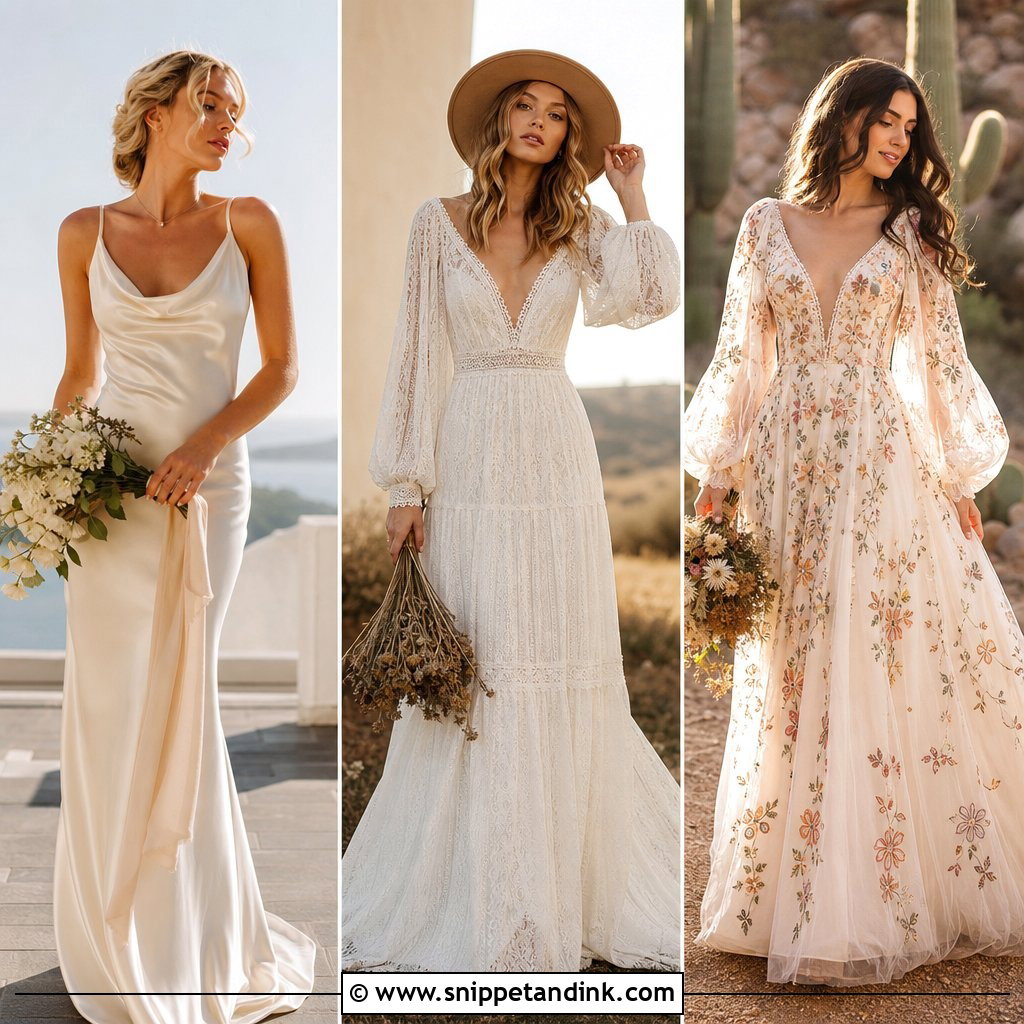
A 1990s silk slip proves vintage doesn’t have to mean ornate. Narrow straps, a softly shaped neckline and a long skirt that skims rather than clings are the details to look for. The fabric has to be weighty; charmeuse or a heavy satin drapes, while a light one shows every ripple. With construction this simple, the undergarments and the hem do all the work, so I fit both with the actual shoes. Barely there sandals, small pearl earrings and a plain cathedral veil add contrast, and a cropped cashmere wrap or tailored coat covers you later. It suits lofts, galleries and coastal venues with clean architecture.
18. Antique Floral Lace Vintage Bridal Gown
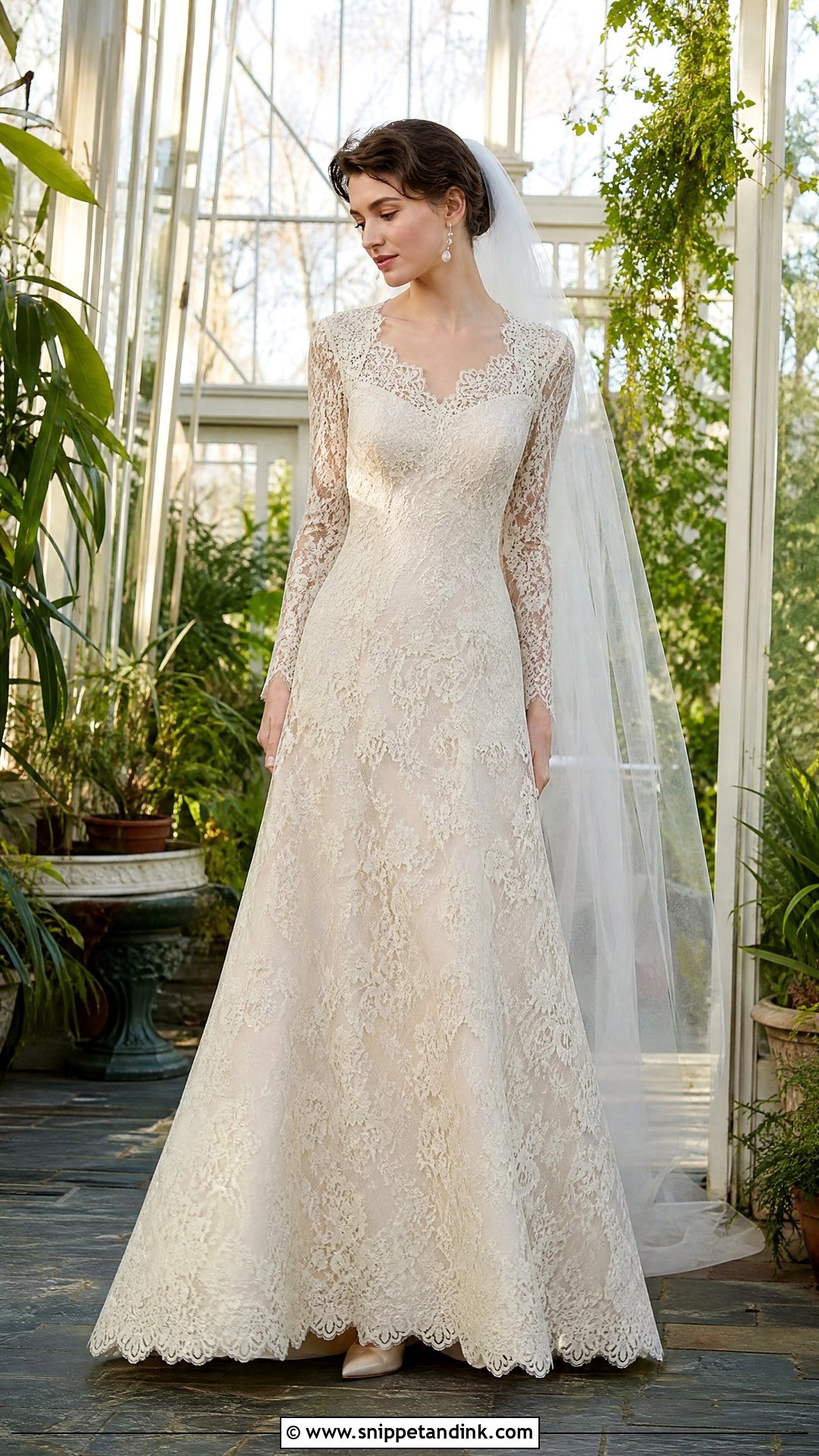
Antique floral lace brings texture and history to almost any vintage shape. Pick lace with a clearly defined botanical pattern and put it over ivory or blush lining so every motif stays visible. A fitted bodice, long sleeves and a gently flared skirt keep it balanced across several periods. If the neckline or hem is scalloped, skip a decorated belt. A plain tulle veil won’t compete with the lace. Family lace can go into cuffs, the veil or the bodice, but old lace needs professional cleaning and reinforcement before anyone cuts into it or stitches it onto new fabric.
19. Champagne Satin Vintage Bridal Gown
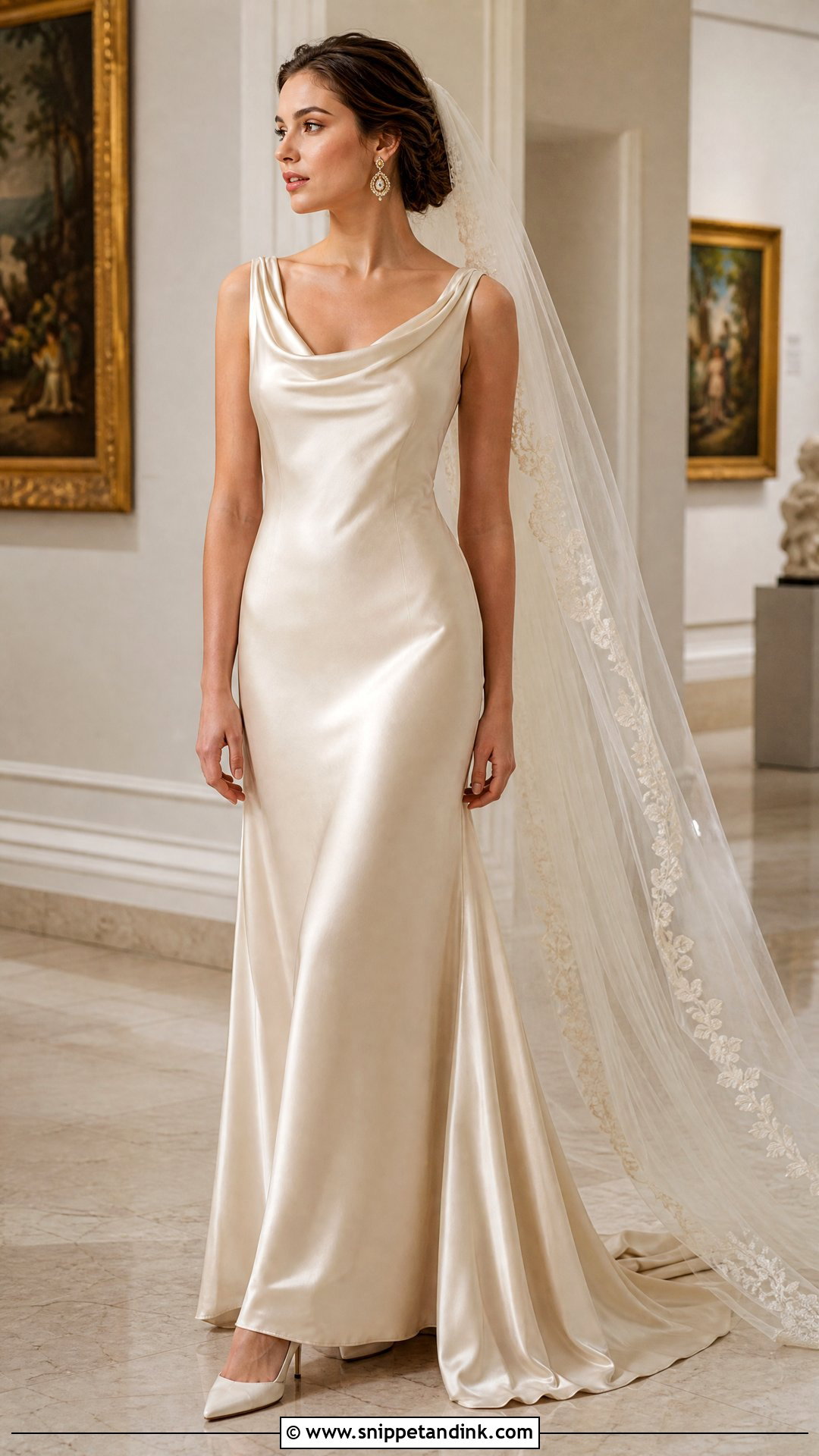
Champagne satin looks gently aged and glows rather than gleams, which is why it suits vintage styling so well. It works on a bias column, a 1950s ball gown or a long-sleeve 1940s shape. Shades vary a lot by undertone, so I always compare swatches against bare skin in daylight, never under shop lighting. Match the shoes and veil to the champagne; bright white accessories look disconnected beside it. A bouquet of cream, blush and muted greenery keeps the color from being lost. Satin reflects light, so smooth tailoring and good support underneath are essential.

20. Heirloom Lace Vintage Bridal Gown
Heirloom lace doesn’t require wearing a whole older dress. A skilled bridal seamstress can set family lace into a modern bodice, sleeves, a veil edge, a removable collar or a train panel. I build the outfit around that one piece and keep the rest plain so it gets the attention. Before alterations begin, have a textile specialist check for discoloration, tears and weak spots. Fragile lace may need backing or appliqué rather than structural use, and any unused sections should be stored separately for the next person in the family.
The Underpinnings Each Era Expects
A vintage silhouette was designed around what women wore under it, and the most common reason a period gown looks wrong is a modern bra doing the wrong job. I plan the foundation garments before the first fitting, not after.
Structured decades
Victorian, 1940s and 1950s shapes want a defined waist. A longline bra or a light waist cincher gives the bodice something to sit on, and a petticoat sized to the skirt keeps the hem even. Bring both to every fitting, because changing them later changes the hem length.
Fluid decades
The 1920s, 1930s and 1990s depend on a smooth line. I’d choose a laser-cut slip or bonded shapewear in a shade close to your skin, and skip anything with a visible band at the hip. For a backless cowl, adhesive cups or a bra built into the dress are usually the only options that stay invisible.
Shoes count as underpinnings too. Settle the heel height before the hem is cut, and wear the shoes around the house so you know they last through photographs and dancing.
Which Decade Is Actually Yours?
Start with the line rather than the label. Try one bias-cut gown, one full-skirt 1950s shape and one straight column, and notice which one you forget you’re wearing after ten minutes; that’s usually the decade. Then look at fabric and neckline, and how the dress moves when you sit, walk and turn. A good seamstress can update proportions without erasing the history. A genuine vintage piece, an heirloom remake or a new dress cut in an old style can all work, as long as the shoes, veil and jewelry speak the same era as the gown.
You'll Like These Ideas:







Leave a Reply