
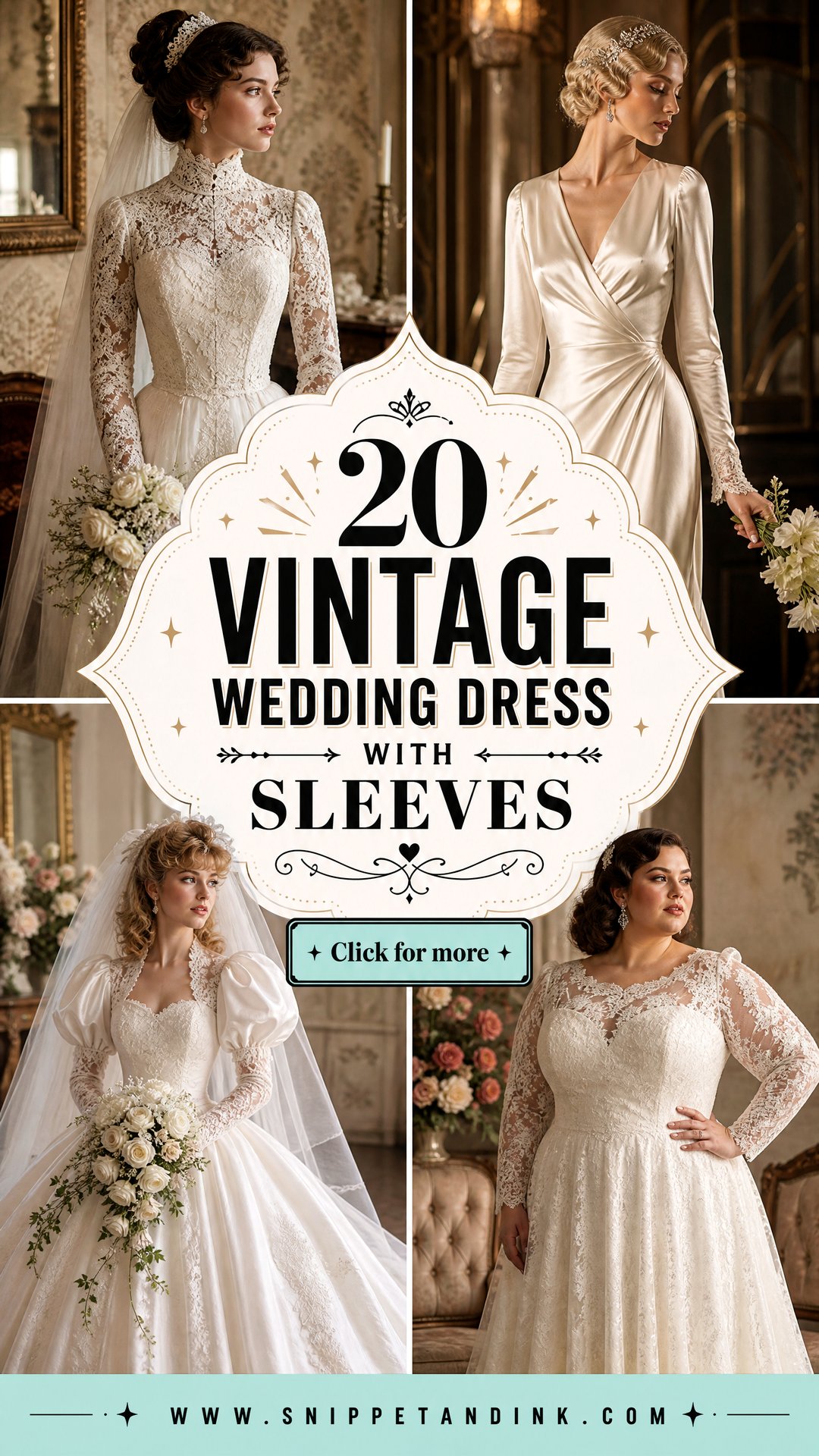
Looking across several decades instead of one makes the search for a sleeved vintage gown much easier. Victorian lace, Edwardian collars, thirties satin, fifties ball gowns and seventies prairie dresses each set a different mood, and the sleeve does a lot of that work. Fitted lace reads formal, bishop sleeves soften everything, and a big puff brings period volume. Bridal fashion keeps borrowing from its own past, which is why a new dress can carry old character with far better structure and comfort. I’d dress each gown with shoes, veil, jewelry and flowers that suit its era, but I always stop short of theming every piece. That’s the difference between a bride and a costume. Twenty gowns follow, each styled head to toe.
One Era in the Dress, Today Everywhere Else
The quickest way for a vintage gown to look like fancy dress is to match every other piece to the same year. A twenties beaded dress with a feathered headband, ropes of knotted pearls and full finger waves can be fun for a themed party; on a bride it can swamp the person inside it. My rule of thumb is that the dress carries the era and the rest leans present day, with one or two accessories bridging the gap.
- Let the hair nod to the decade without copying it. Soft waves suggest the thirties; a full set of pin curls dates a face fast.
- Keep makeup current. Skin that looks like skin, with one period detail such as a red lip for the forties or a fine liner flick for the sixties.
- Pick one accessory that belongs to the era, gloves, a Juliet cap or a beaded headband, and keep the rest simple.
- Brief your florist on the decade too. A loose prairie bouquet with a sleek nineties column looks like two weddings.
Shoes are the exception where I don’t mind being literal. A T-strap or a Mary Jane heel is comfortable and quietly correct, and nobody reads it as costume.
1. Victorian High Neck Lace Wedding Dress
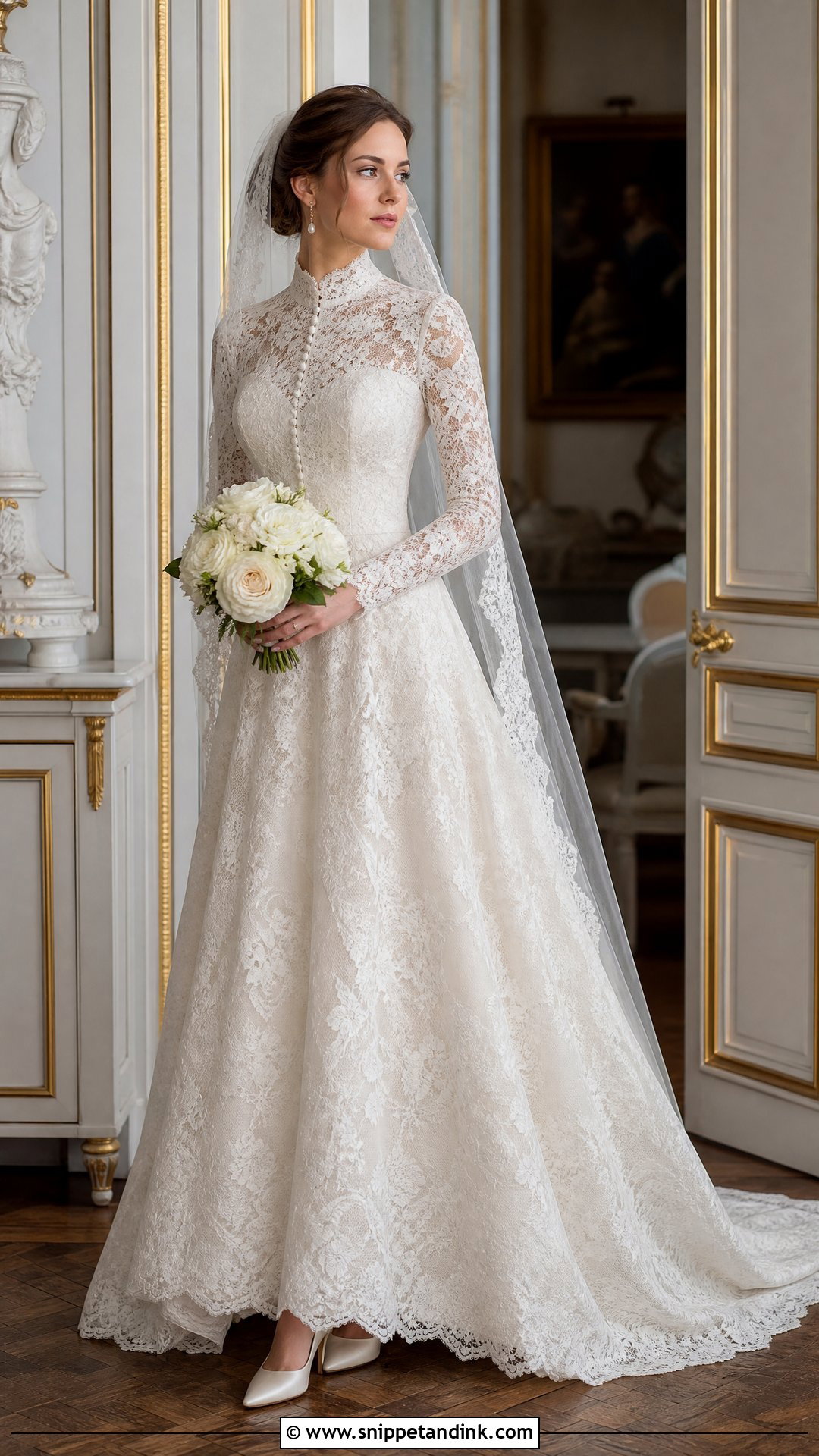
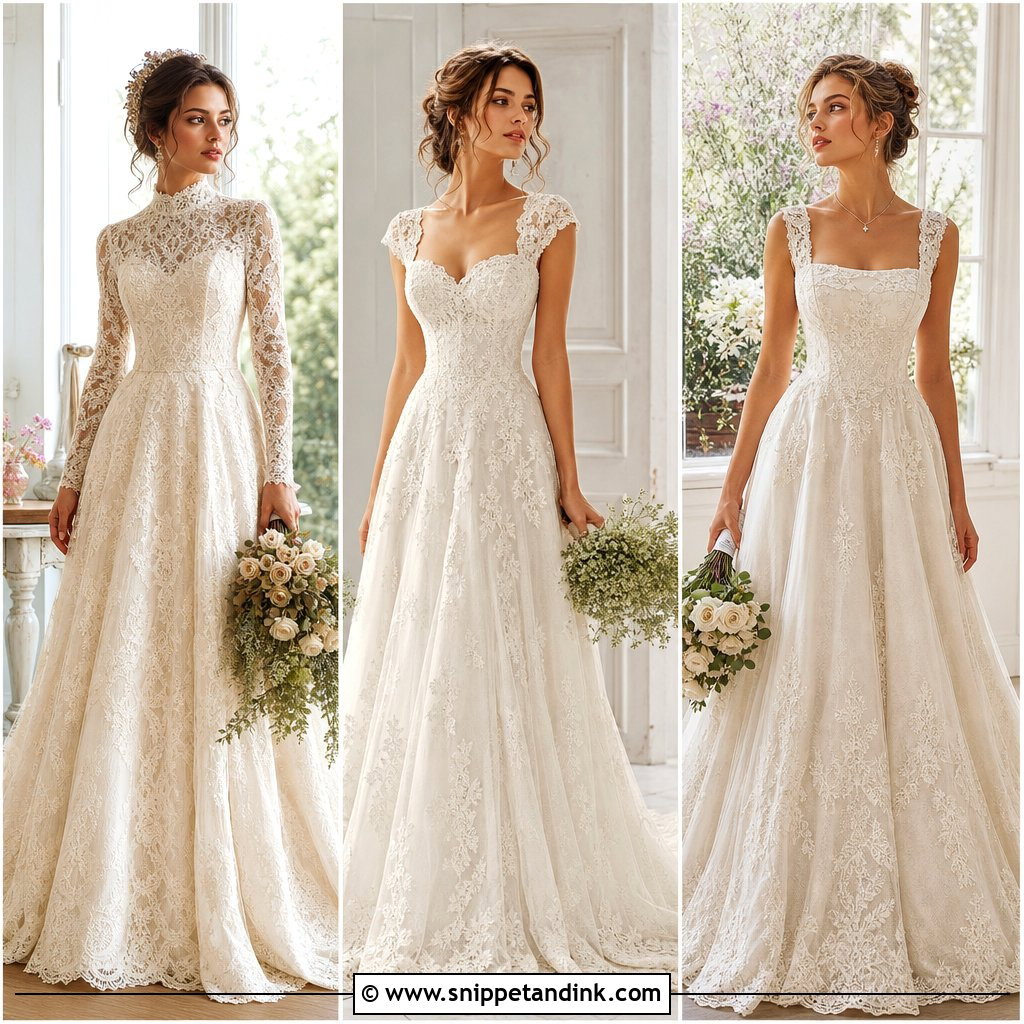
Skip the necklace with this one. A raised collar, covered buttons and long tapered sleeves already frame the face, and anything at the throat fights the lace. I’d keep the skirt softly flared or a restrained A-line so the gown doesn’t drift into museum territory. Ivory lace over a champagne or pale beige lining looks more convincingly old than bright white, which can make lace look new and flat. Pointed satin pumps, pearl drop earrings and a plain fingertip veil under a smooth low bun complete it, and a compact bouquet of white garden roses and greenery keeps the hands neat against all that coverage.
2. Edwardian Lace Wedding Dress With Puff Sleeves
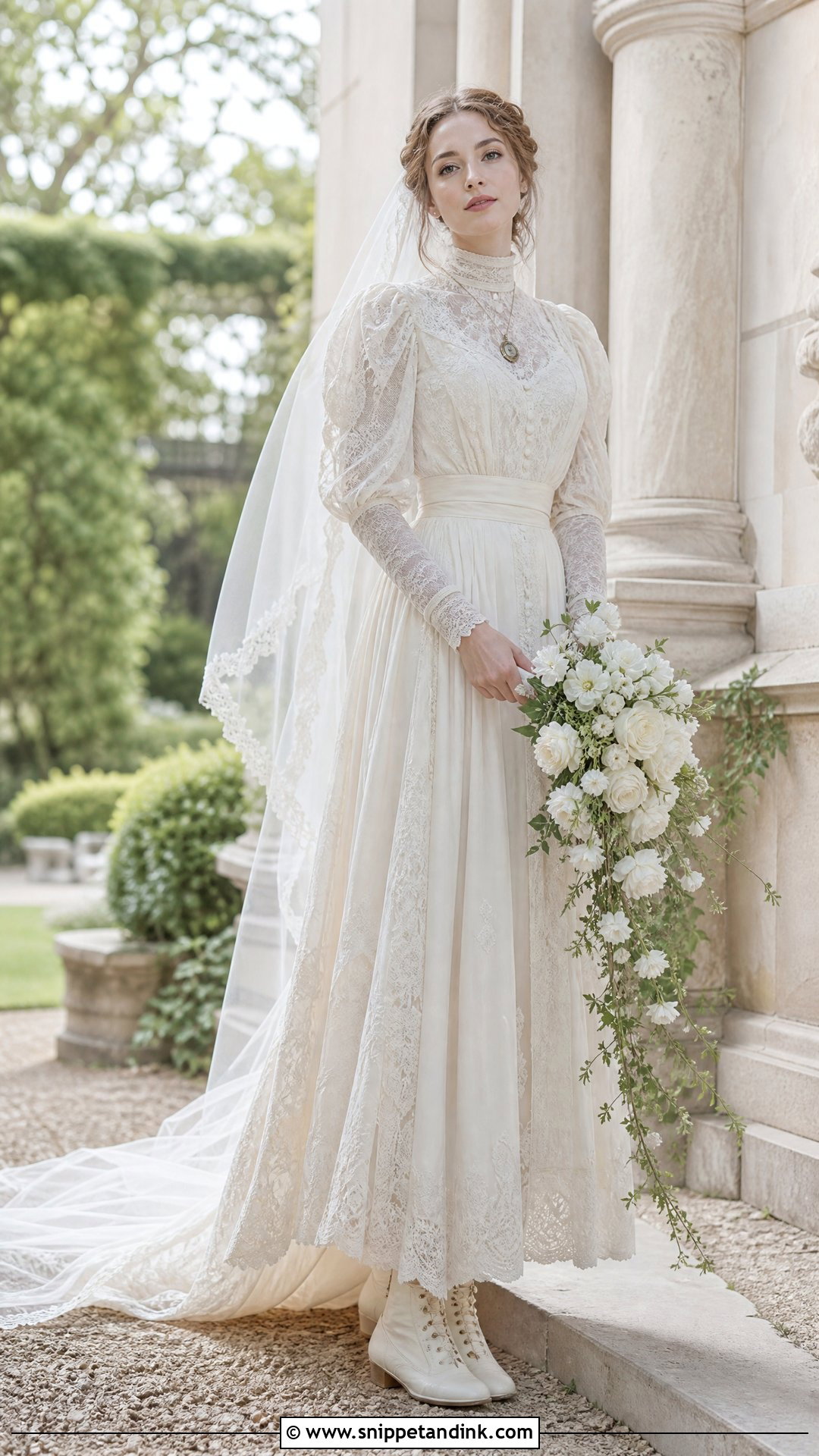
Edwardian dresses were lighter and softer than the Victorian ones before them, and that’s what I want a modern version to keep: airy lace, layers that move, nothing stiff. Look for a high or softly rounded neckline, a defined waist and sleeves that puff above the elbow and narrow to the wrist. Ivory button boots or low-heeled pumps, a long tulle veil and a small pendant suit the period; a loose gathered updo keeps the high neck visible without looking severe. A trailing bouquet of white flowers and light greenery echoes the fluid skirt. Ask your maker for a modern lining and some internal support at the waist. You keep the shape and lose the discomfort.
3. 1910s Tea Length Wedding Dress With Sleeves
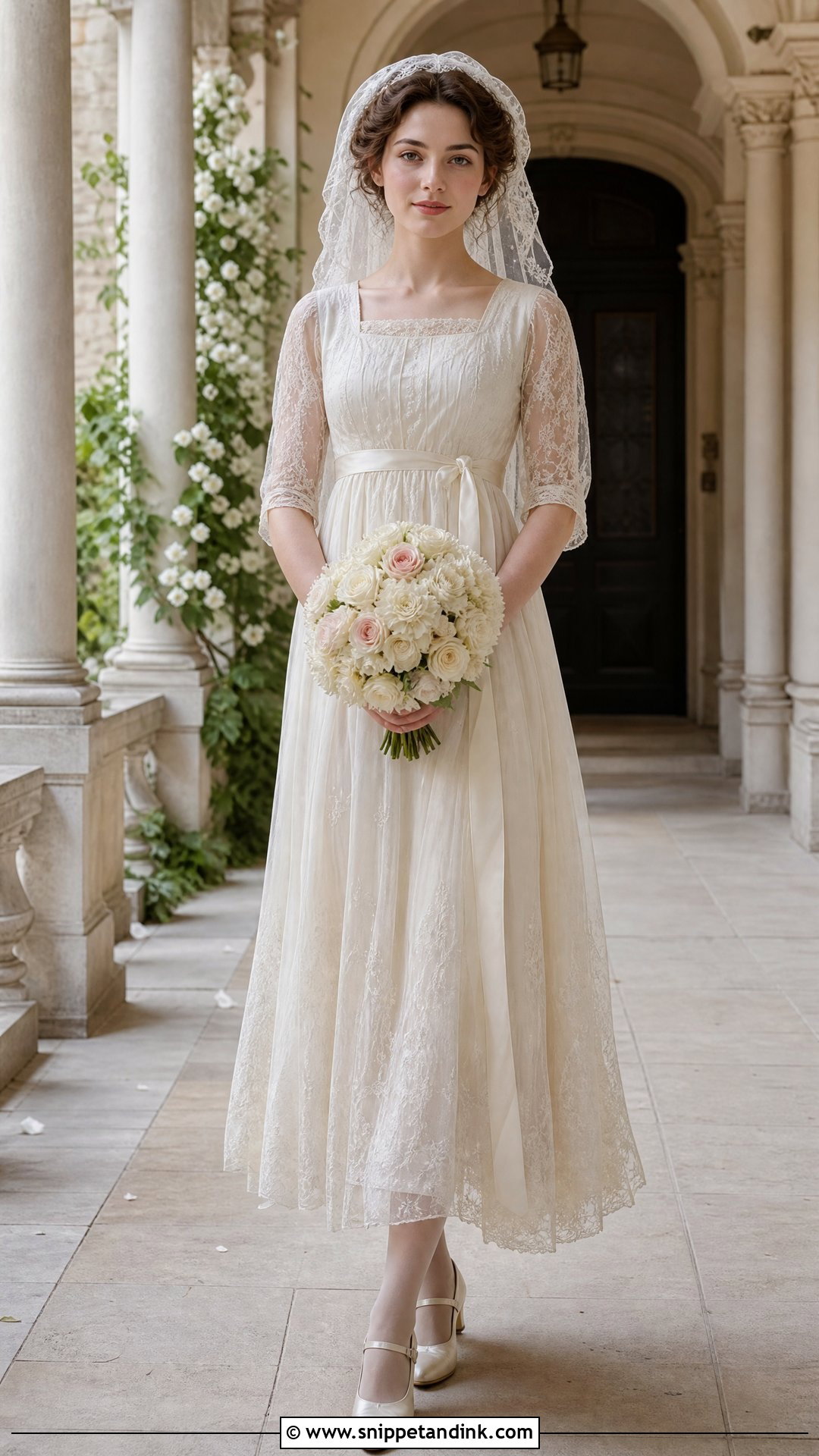
Hems rose in the 1910s as fashion moved fast, which makes a tea-length dress honest to the decade rather than a shortcut. The skirt should drape softly and finish between calf and ankle, with a lace bodice and elbow or full-length sleeves above it. A lightly raised waist nods to the era without turning theatrical. Ivory Mary Jane heels with sheer stockings and a narrow ribbon sash suit the shorter hem; so does a small lace-edged veil or floral headpiece, where a cathedral veil would look out of scale. Pearl studs and a rounded bouquet. I’d choose this for a courthouse, a garden, or an old building where a train would be a nuisance.
4. 1920s Beaded Wedding Dress With Sheer Sleeves
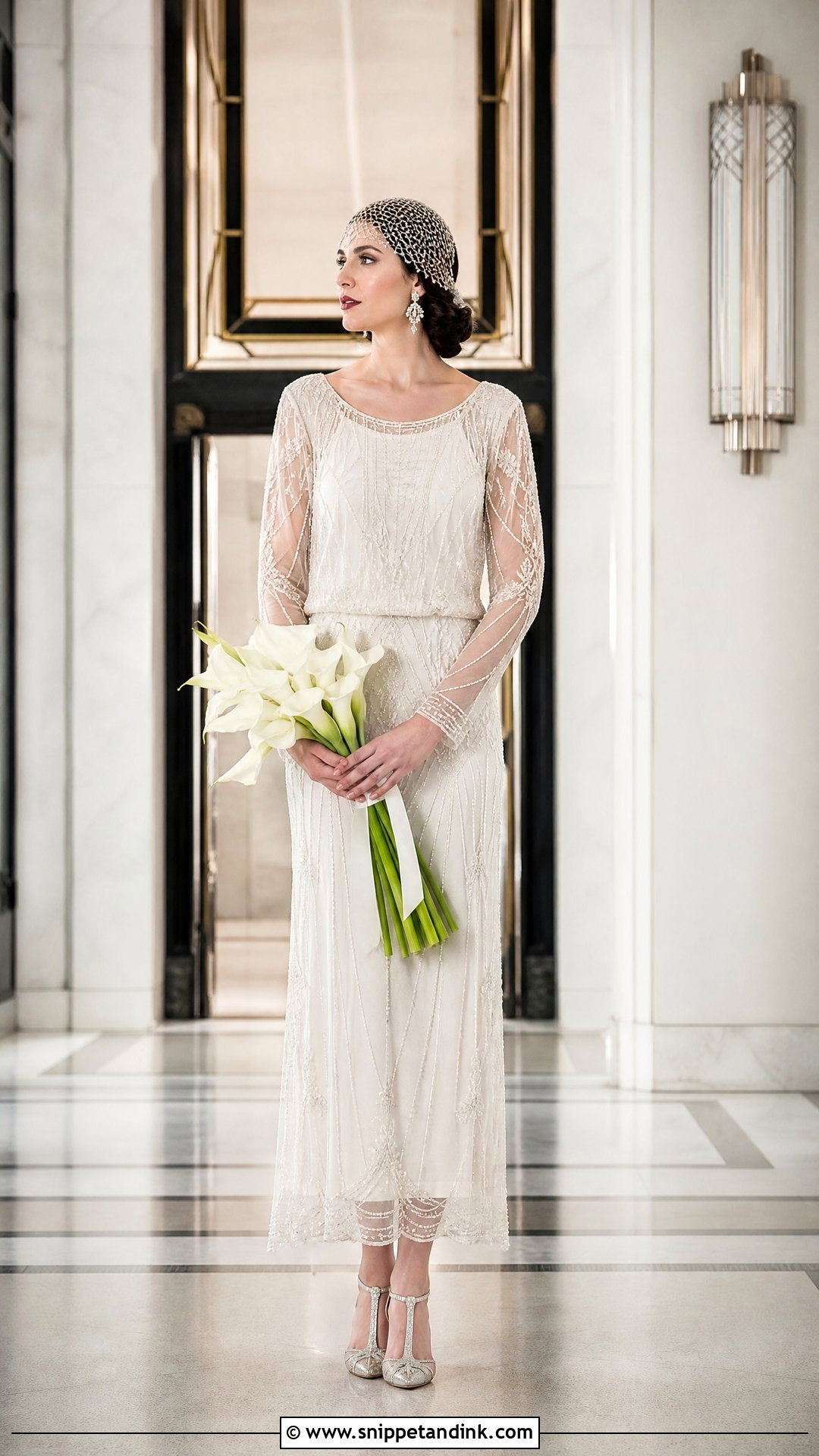
Beadwork is the twenties’ signature, and it’s heavier than it looks. A beaded bodice hangs from the shoulders, so I check the sleeve seams and shoulder seams on any original or close reproduction, because that’s where the weight tears fine fabric first. Choose a straight or slightly dropped waist, sheer sleeves, geometric embellishment and a fluid ankle-length skirt; headpieces of the time often sat low across the forehead, and a narrow beaded headband does that today. Metallic T-strap shoes and crystal earrings, then stop. The beads already move and sparkle. Calla lilies or a small cluster of roses keep the bouquet slim, and finger waves or a sleek bob shape leave the sleeves on show.
5. 1930s Bias Cut Satin Wedding Dress With Sleeves
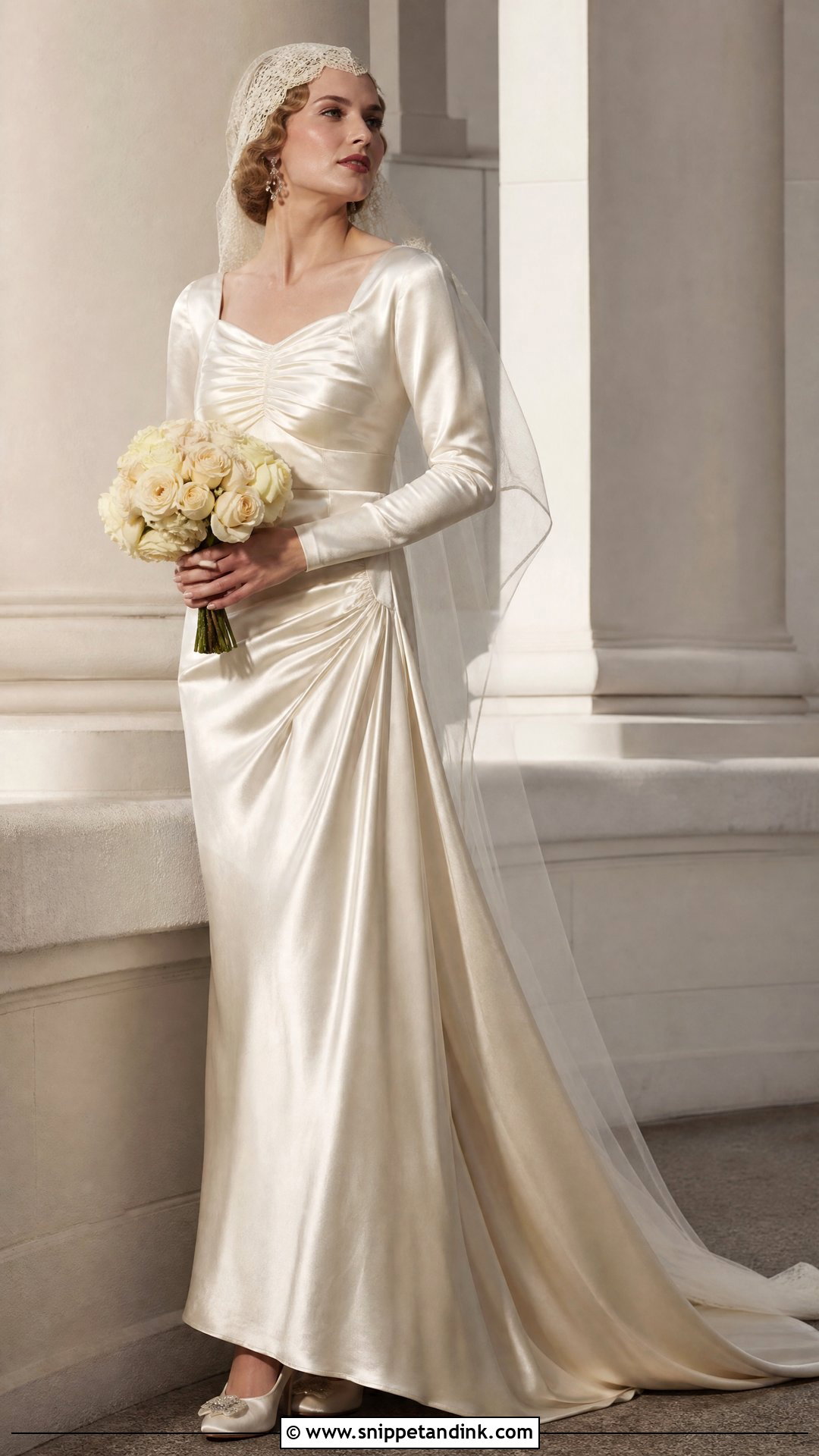
The fabric decides whether a 1930s bias cut wedding dress works. Silk satin or charmeuse cut on the bias skims the body; the same cut in a stiff polyester satin clings in the wrong places and twists at the seams. Thirties brides married in something close to long evening wear, and long fitted sleeves, a gathered bust and a low draped back keep that line. Closed-toe satin heels, a fine bracelet and delicate drop earrings, with a Juliet cap veil and side-parted waves. Cream roses or white orchids in a small bouquet. Underneath, wear smooth, edge-free underwear, nothing with lace edges or thick bands, because bias satin shows every line.
6. 1940s Button Back Wedding Dress With Long Sleeves
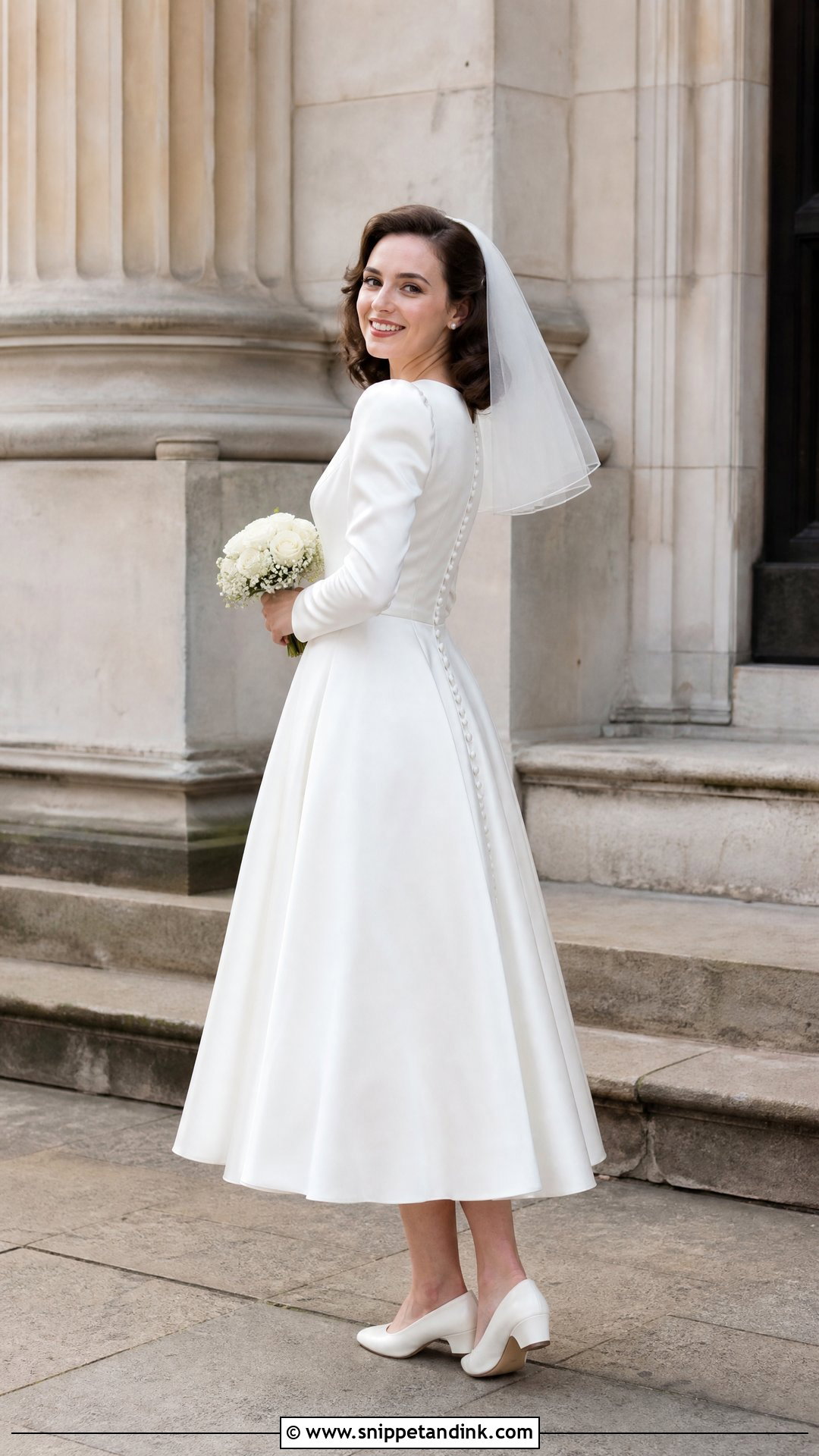
Simplicity was partly necessity for forties brides, with rationing shaping how much fabric a dress could use, and that restraint is what makes a 1940s wedding dress feel so composed today. Structured shoulders, a modest neckline, long sleeves, a fitted waist and a gently flared skirt are the basics. Covered buttons down the back finish it, though I’d warn you that a long row of loops takes a good while to fasten, so plan time in the morning schedule. Low block heels, pearl studs and a shoulder-length veil. For a civil ceremony a small structured bag can stand in for flowers; otherwise white carnations or roses. Soft rolled waves or a tidy low bun.
7. 1950s Lace Ball Gown Wedding Dress With Sleeves
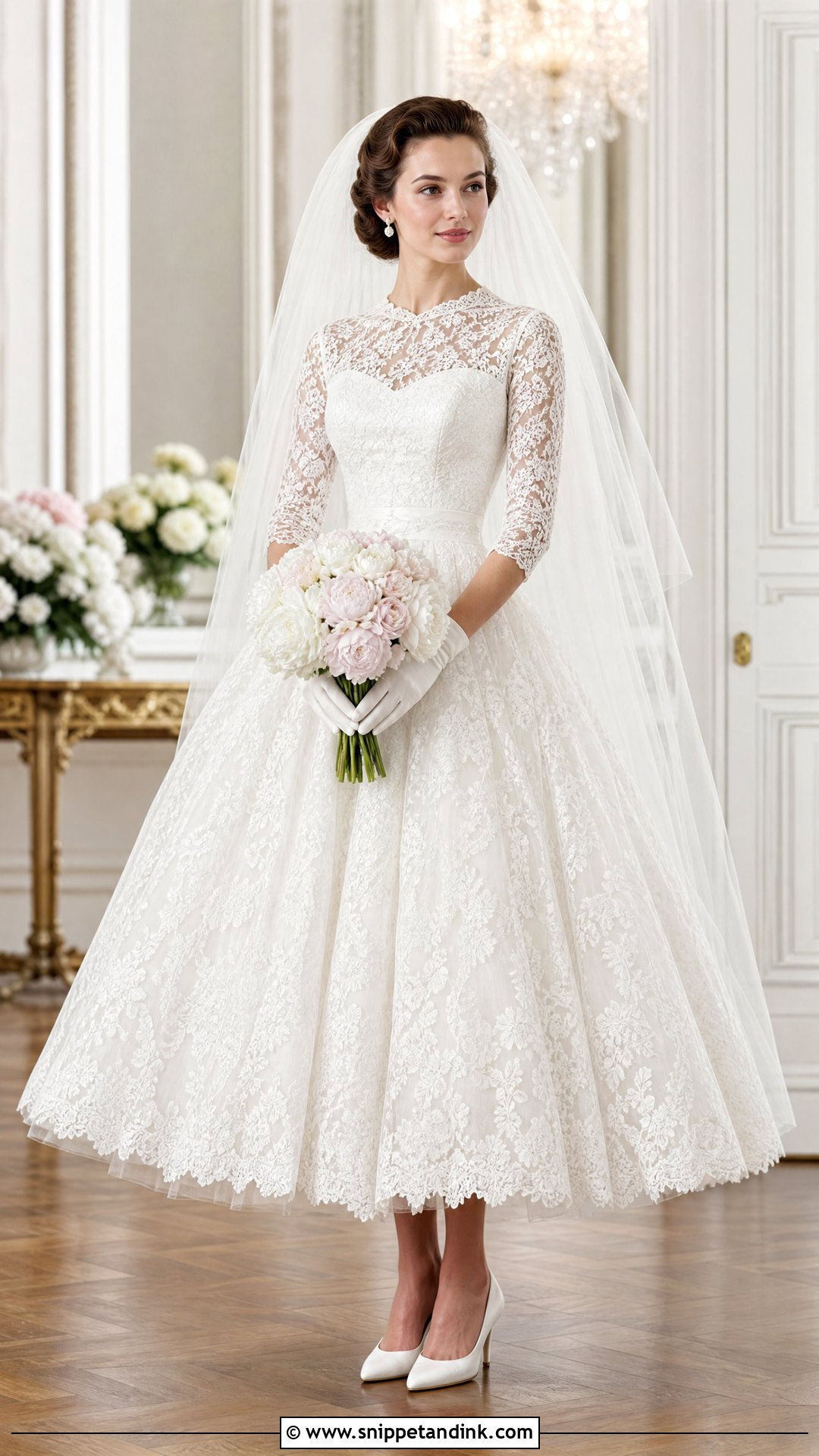
A defined waist and a full skirt are what draw most brides to a fifties lace ball gown. The bodice is fitted lace with long or bracelet-length sleeves, the skirt is held out by light petticoats, and a high neckline with detailed lace keeps the formality of the decade. Pointed pumps, pearl earrings and a waist-length veil. Short gloves pair nicely with bracelet sleeves, but I’d leave them off if the cuffs are already decorated; two busy edges at the wrist look cluttered in close-up. A rounded bouquet of roses, peonies or ranunculus, a smooth bun or polished waves. Leave the waist alone too. A big sash or brooch there blurs the hourglass you chose the dress for.
8. 1950s Tea Length Wedding Dress With Lace Sleeves
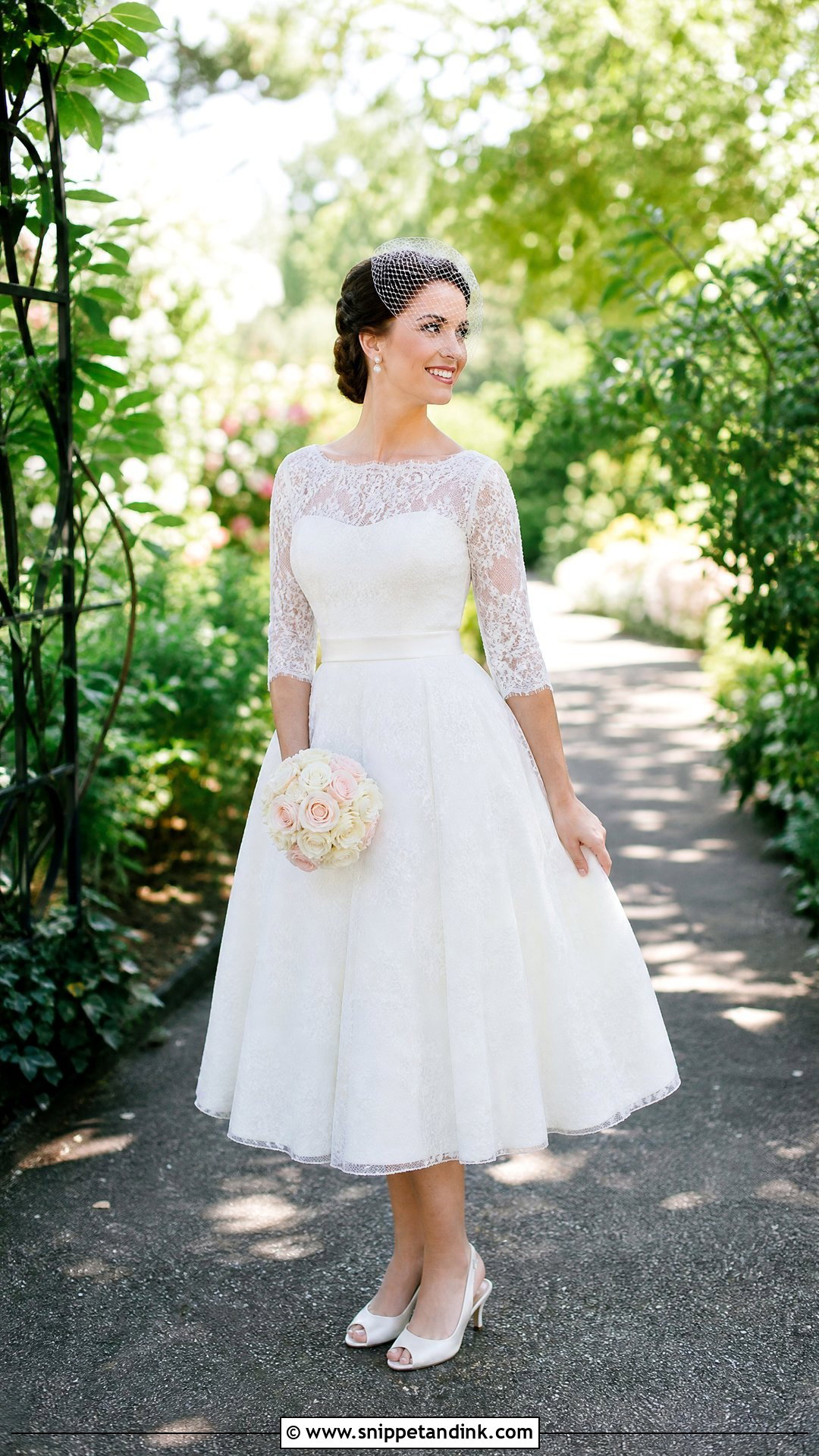
Tea length is the friendliest fifties hem for a small or relaxed wedding. A fitted bodice, natural waist and a skirt ending around mid-calf, with three-quarter lace sleeves for cover that doesn’t feel heavy. Your shoes are on display all day, so choose ivory slingbacks or low pumps that look good from the side and back, not only the front. A birdcage veil, pearl earrings and a compact posy finish the look, with a narrow satin belt matched exactly to the dress if you want the waist sharper. Soft curls or a chin-length set suit it. It dances easily and keeps the hem out of wet grass for outdoor photos.
9. 1960s Mod Mini Wedding Dress With Sleeves
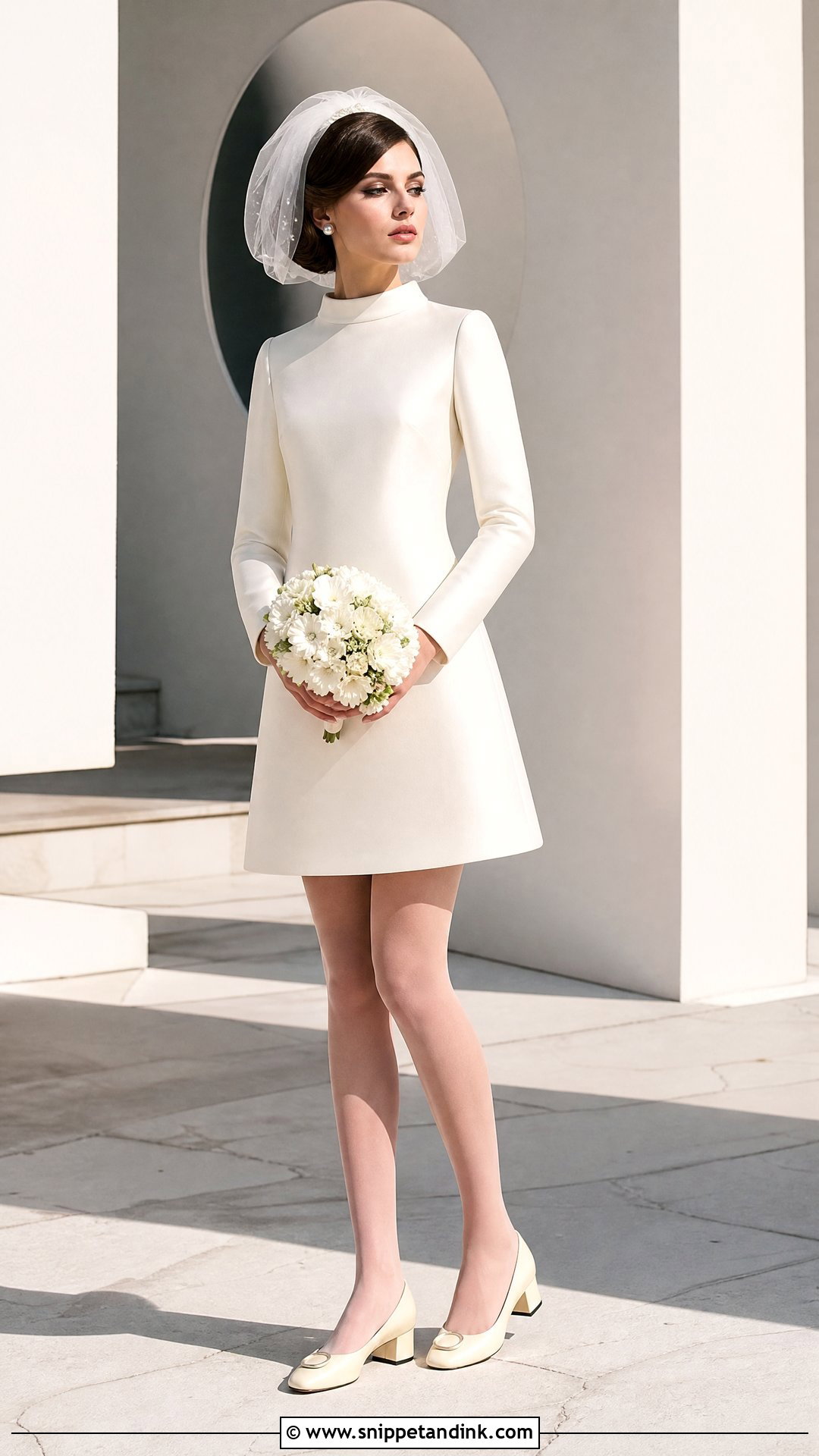
Precise tailoring matters more on a 1960s mod mini wedding dress than on almost anything else here. A short hem leaves nowhere to hide a fit that rides up when you sit. Go for a structured shift or A-line mini with a high neckline and long fitted sleeves in textured crepe, floral lace or a subtle geometric weave, and sit down in it at every fitting. Low block-heel pumps, sheer tights, pearl or sculptural studs. A short bubble veil or a wide fabric headband both say sixties. A neat bouquet of rounded flowers with little greenery. Keep the hair smooth, a sleek bob, a soft flip or a low ponytail. It feels fresh rather than nostalgic when nothing else is overdone.
10. 1960s Empire Waist Wedding Dress With Bell Sleeves
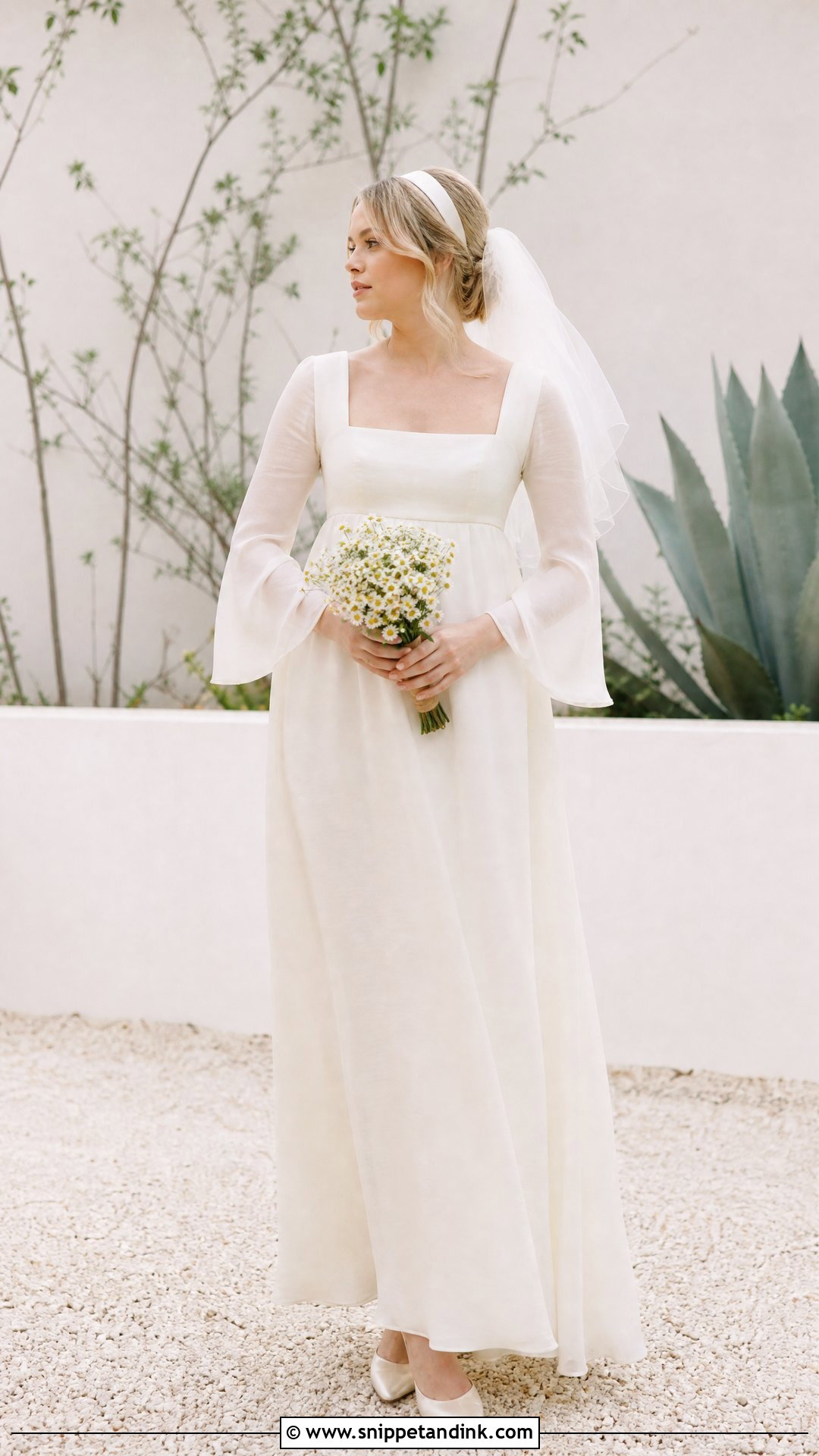
Empire waists became a real bridal option as the sixties went on, and they’re more forgiving than any fitted-waist style here. The seam sits just under the bust and the skirt falls long and loose from there, so it suits many body shapes and is kind to anyone who wants to breathe deeply through dinner. Sheer bell sleeves add movement; a square or rounded neckline keeps the bodice clean. Low satin heels, small pearl earrings and a narrow ribbon headband, with a chapel veil if you want more formality. A loose bouquet of daisies, roses or fine greenery. Pick a light fabric so skirt and sleeves sway together; a heavy one hangs like a curtain from that high seam.
11. 1970s Prairie Wedding Dress With Bishop Sleeves
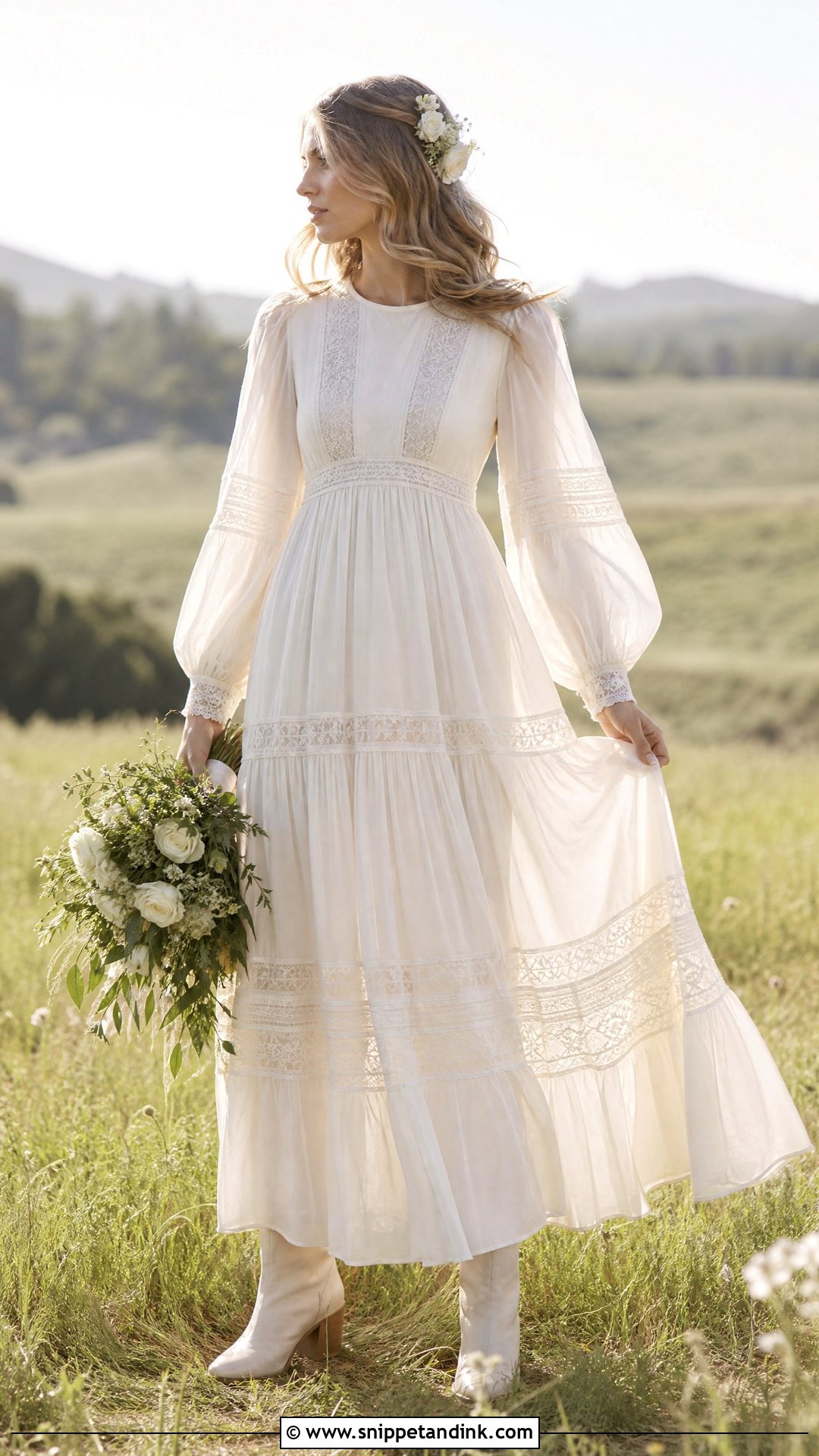
A 1970s prairie wedding dress looks relaxed because of its soft fabric and handmade-looking details, and seventies designers were themselves borrowing from Victorian and even medieval dress: raised waists, ruffles, long full sleeves. Choose a gently fitted bodice with lace panels, a raised waist, full bishop sleeves gathered into narrow cuffs, and a tiered or softly flared skirt. Cream ankle boots or low block heels, a floral comb and delicate gold earrings. A loose gathering of daisies, white roses and greenery in your hands, waves or a relaxed braid. Heavy crystal is the one thing I’d keep away; it looks borrowed from another wedding.
12. 1970s Boho Wedding Dress With Crochet Sleeves
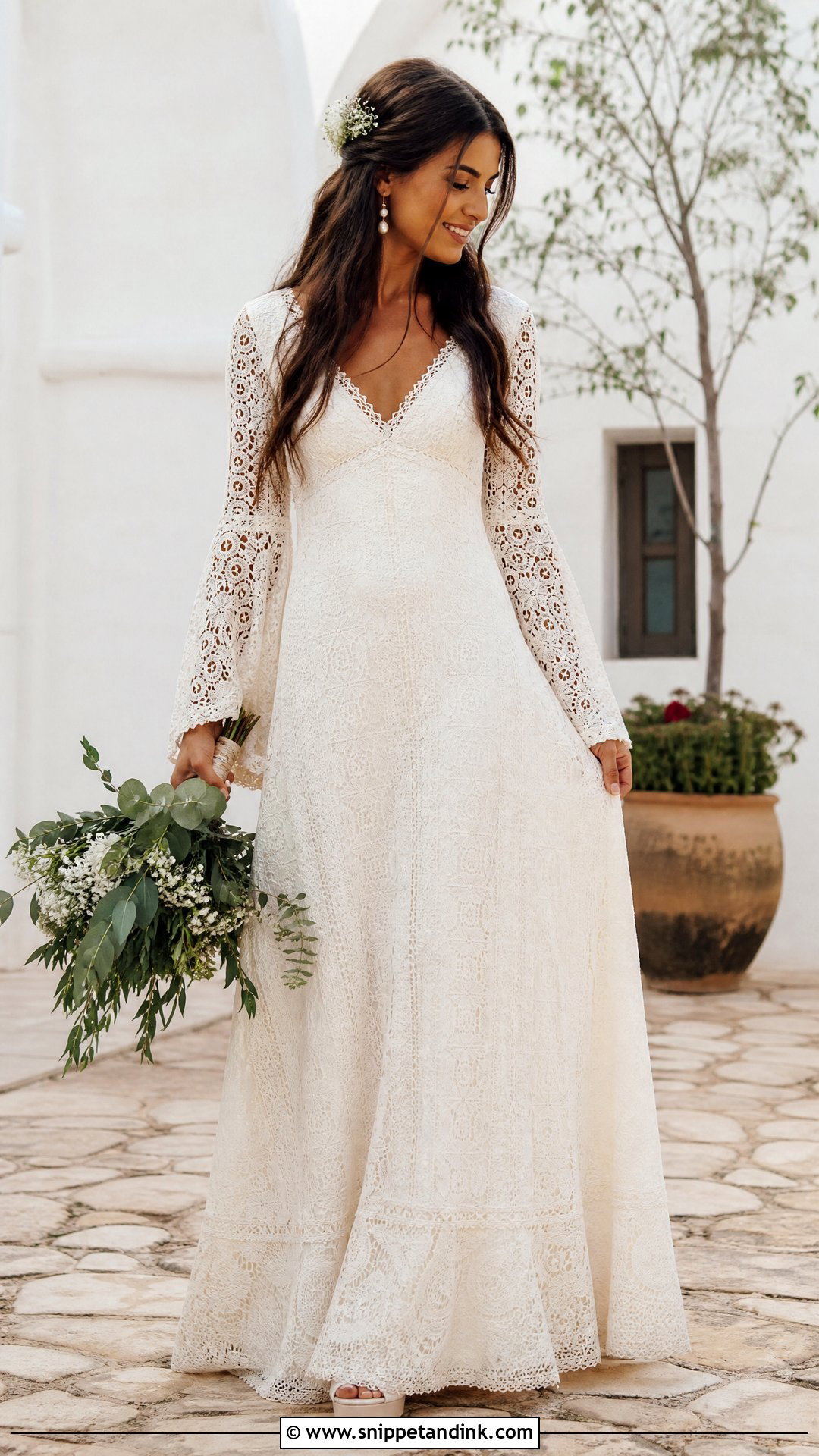
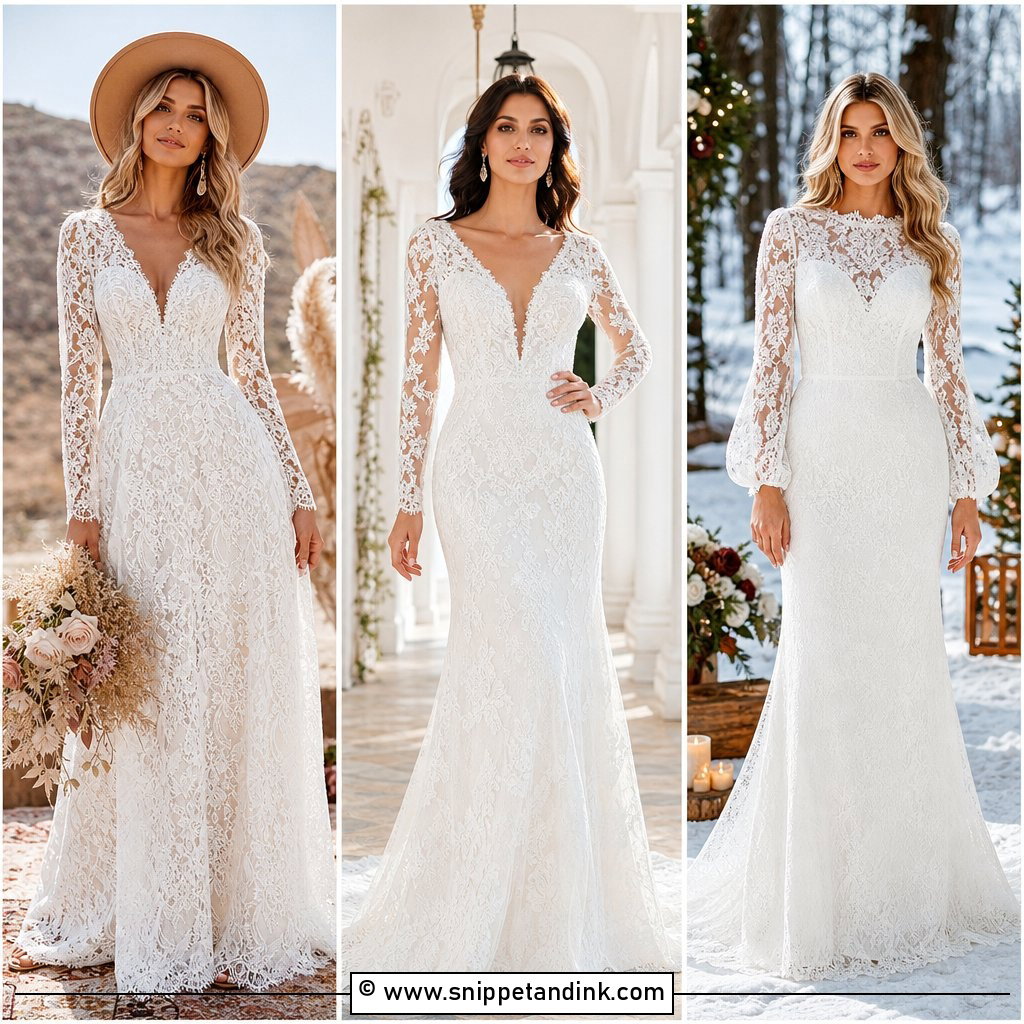
Crochet sleeves bring a handcrafted texture that no machine lace quite matches, and they come with a practical catch: crochet stretches and snags. I check for loose loops near the cuff, because a ring or bracelet catching there can pull a whole row. Choose a slim A-line or column gown with a simple lining beneath the openwork, full crochet sleeves, a modest V-neck and a lightly defined waist. Ivory leather sandals, low platforms or suede ankle boots depending on the ground. A small pendant, natural pearl earrings and a sheer veil under a flower comb. Keep the hair soft and the bouquet loose and wispy. Test the cuffs for movement, especially on a dense or original crochet with little give.
13. 1980s Princess Wedding Dress With Puff Sleeves
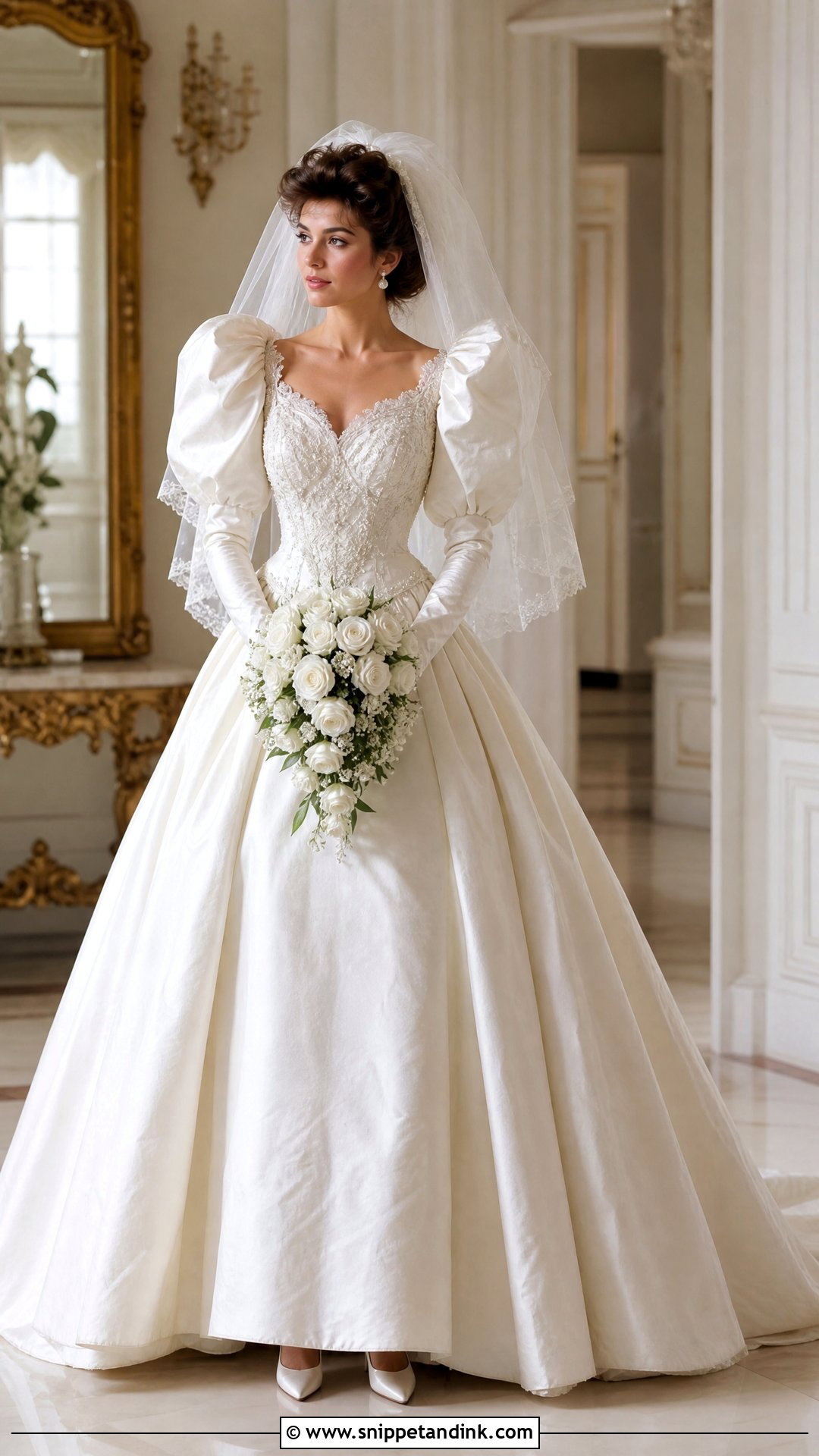
Pick one dominant feature for an 1980s princess wedding dress and let the statement puff sleeves be the second. Eighties gowns piled on lace appliqués, pearls, bows and embroidery all at once, and a modern take looks better with restraint. Keep the fitted bodice and full skirt, then add classic satin pumps, pearl drops and a full fingertip veil. A structured bouquet of white roses holds its own against the volume without adding color. I’d style the hair smooth or in controlled waves; big hair next to big sleeves becomes a lot of shape around the head. A good seamstress can often lighten the inner sleeve support while keeping the outline.
14. 1990s Minimalist Wedding Dress With Long Sleeves
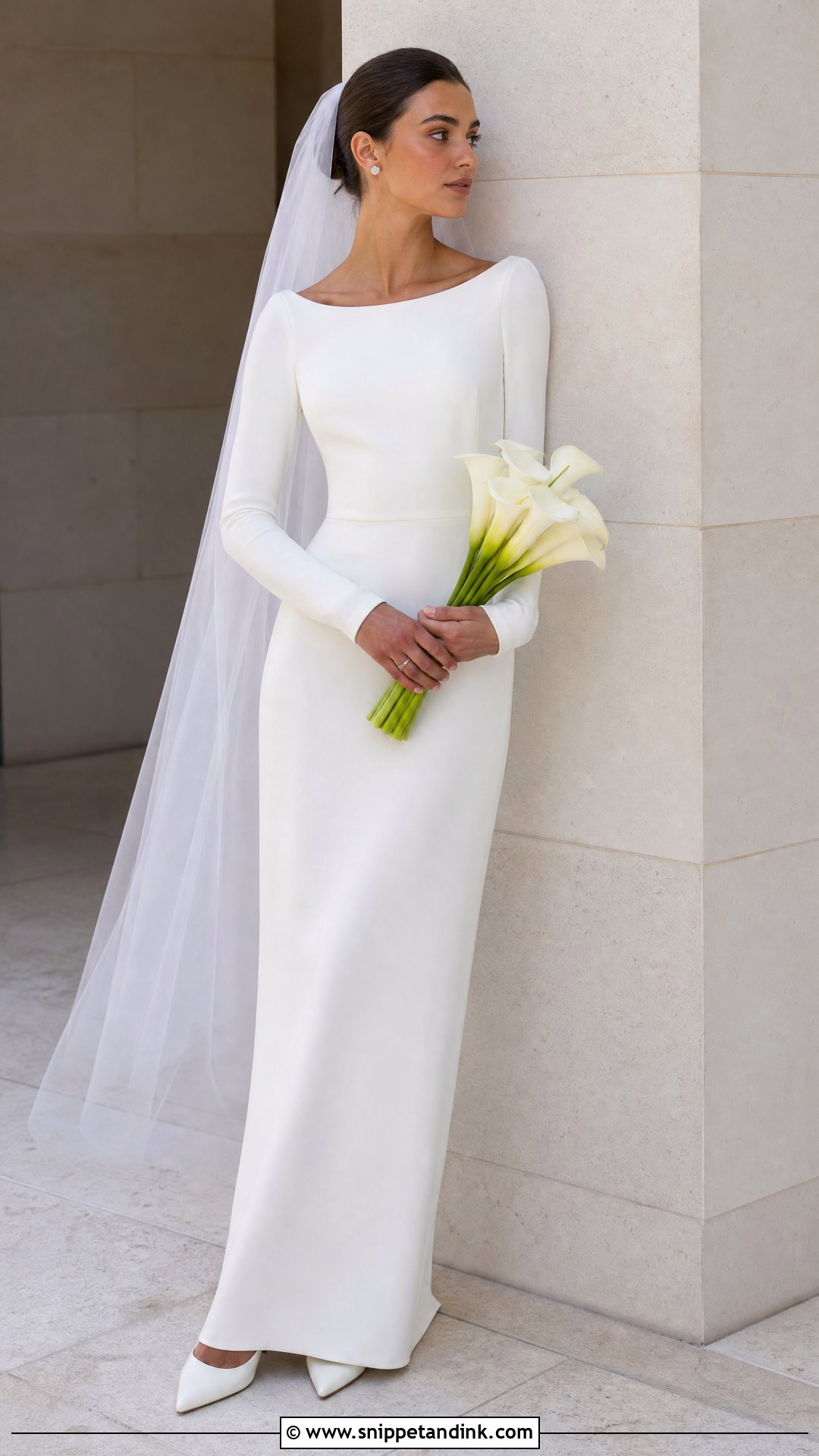
Vintage doesn’t have to mean lace. The nineties produced some of the plainest bridal gowns ever made: a clean column or narrow A-line in matte crepe, silk or satin, long fitted sleeves, a boat neck and a low back. The catch is that a plain gown shows everything. Every seam, every pucker at the zip, every slightly crooked hem. Spend your budget on fabric and tailoring before anything else. Pointed pumps, small diamond or crystal studs and a simple sheer veil, with one flower variety in your hands, white roses or callas. A sleek low bun or a smooth blowout to the shoulders. It suits a modern gallery and an old church equally.

15. Juliet Sleeve Vintage Wedding Dress
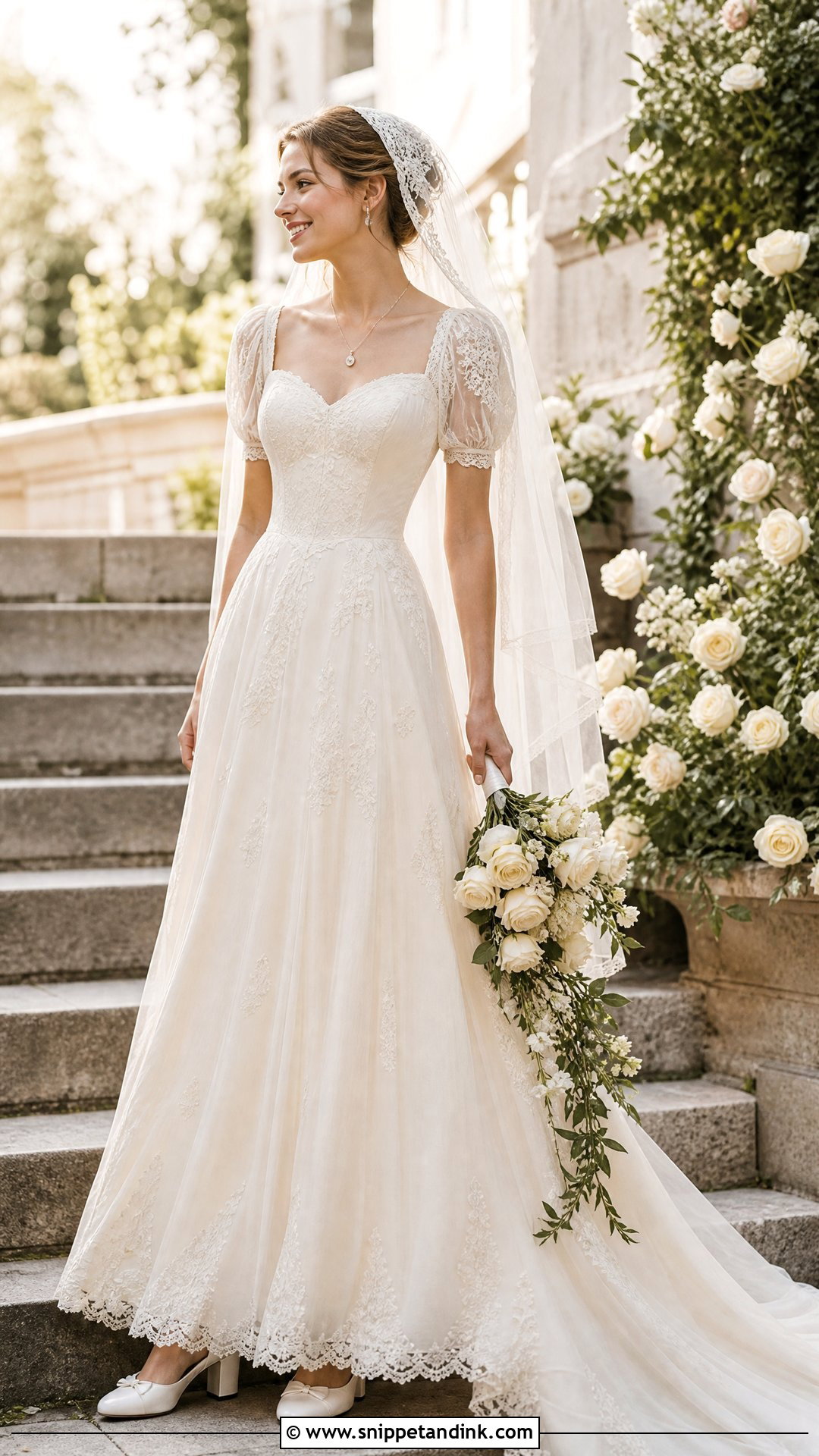
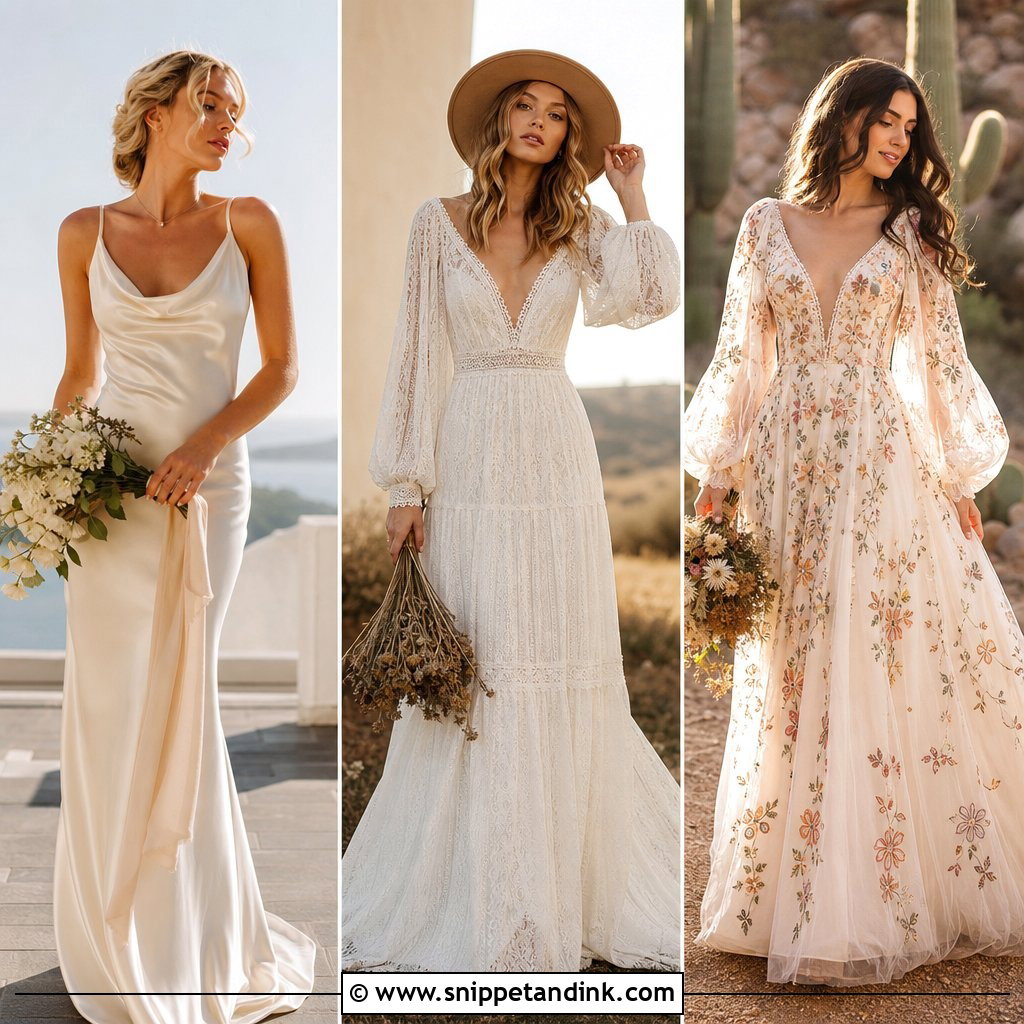
The Juliet sleeve, a rounded puff at the shoulder that becomes close-fitting along the forearm, needs some open neckline around it to breathe. A square, scoop or modest V gives it room; a high neck makes the whole top half crowded. Put it on a fitted lace bodice with a softly flowing A-line skirt. Satin block heels, a delicate pendant and a Juliet cap veil tie the look together, or a narrow floral crown with a plain veil, never both decorated. Cream roses with trailing greenery, soft waves or a low braided bun. During alterations I watch the armhole: the puff should look full and round while you can still lift your arms comfortably.
16. Bishop Sleeve Vintage Wedding Dress
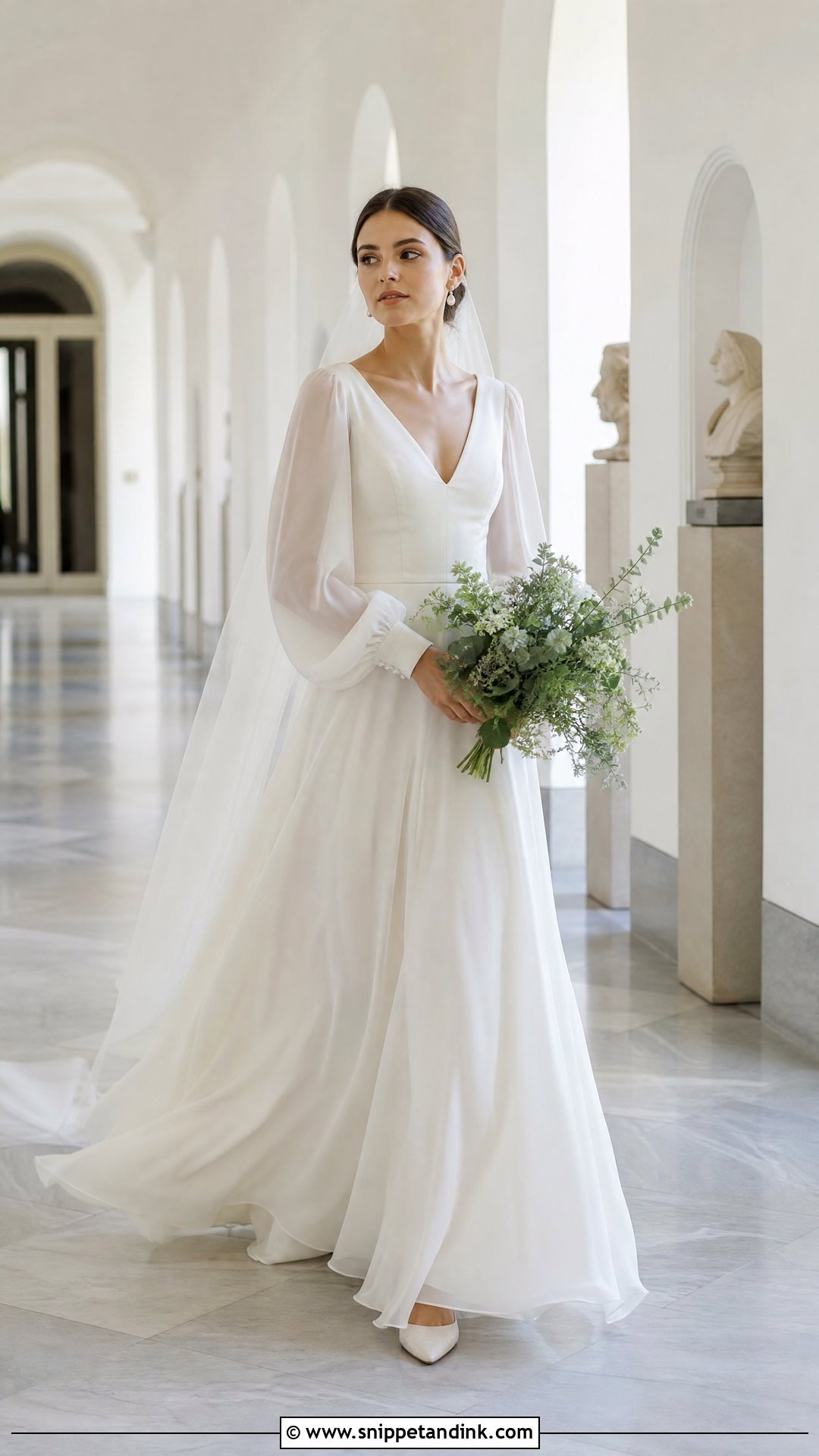
Bishop sleeves give movement without any shoulder volume. They widen gradually along the arm and gather into a fitted lace or buttoned cuff. Choose chiffon, silk georgette or soft lace so the sleeves drape; stiffer fabric turns them into balloons. A defined waist and simple flowing skirt balance the length of sleeve. Low pointed heels, pearl earrings, a narrow chapel veil and a small bouquet with trailing greenery that repeats the sleeve’s line. A low bun keeps the cuffs and neckline in view. If the sleeves are sheer, I ask for discreet reinforcement at the underarm and wrist, the two places that take all the strain, and on an original gown I’d consider it essential.
17. Bell Sleeve Vintage Wedding Dress
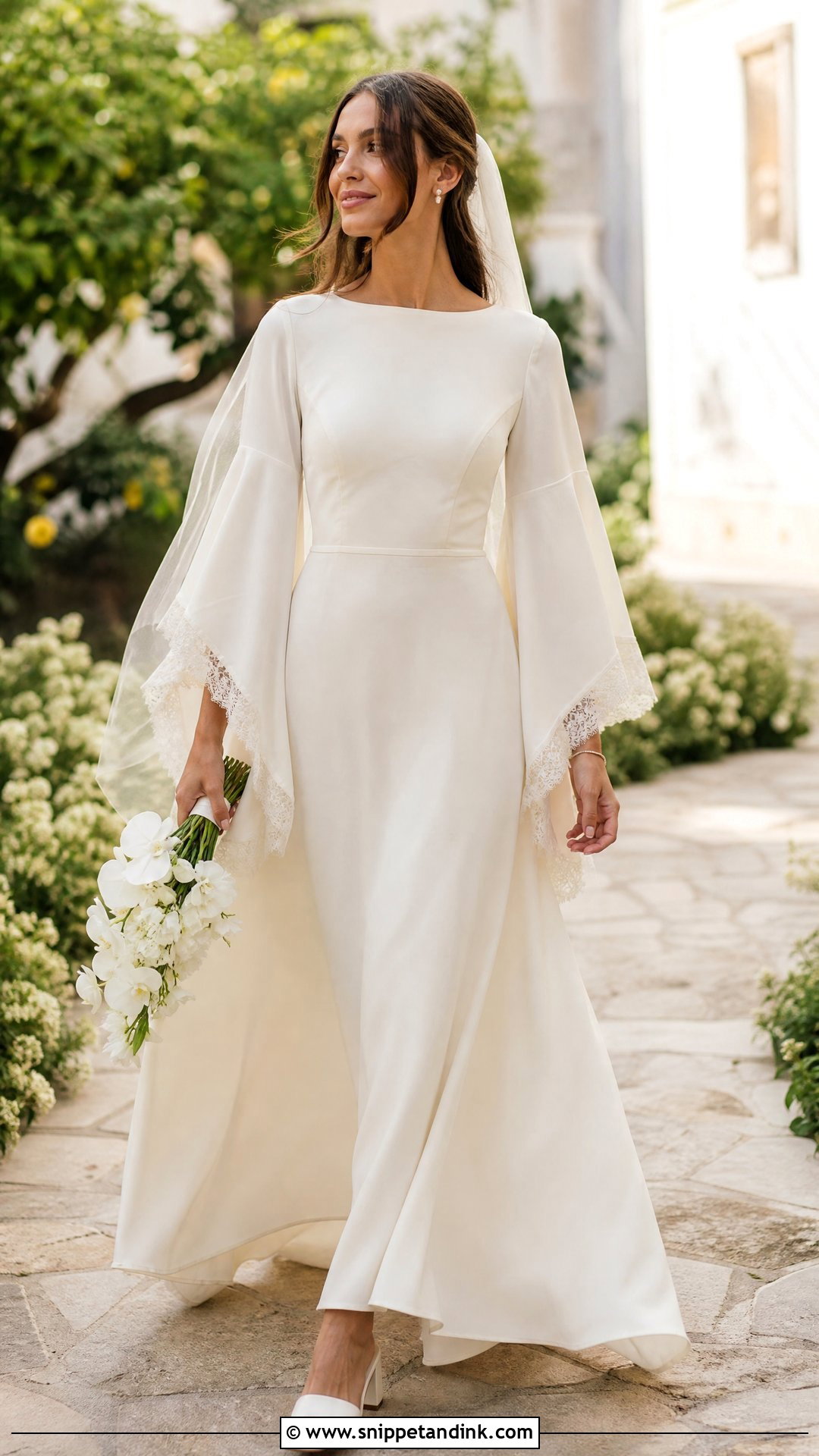
Wide bell sleeves already make the outfit, so everything else should go quiet. An A-line or lightly fitted gown with sleeves flaring below the elbow, in lace-edged chiffon for a soft bohemian feel or smooth crepe for something more architectural. Block-heel sandals or plain closed-toe pumps by season, small earrings, a fine bracelet, and a veil that falls behind the arms rather than over them. Carry a narrow bouquet. A wide one plus wide sleeves turns your silhouette into a triangle in photos. Loose waves or a center-parted low bun. Before buying, eat a meal and greet a line of guests in the sample; very long cuffs may need discreet loops to hold them up during dinner.
18. Puff Sleeve Vintage Wedding Dress
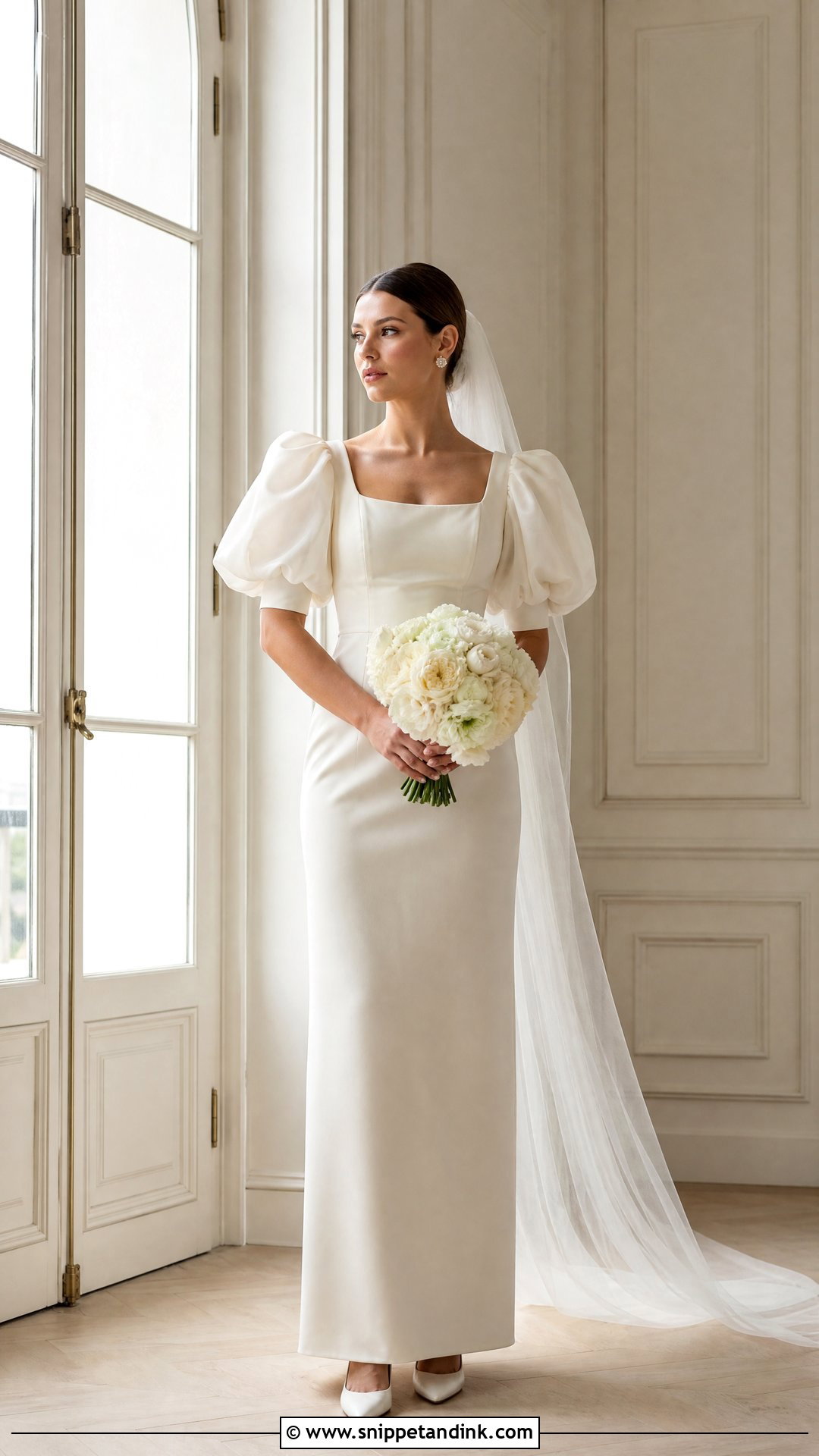
Puff sleeves draw the eye up toward your face and shoulders, which is lovely if that’s where you want attention. Balance them with a fitted waist and a clean A-line or column skirt. Organza puffs look airy and sculpted; lace or satin is richer and more formal. Classic ivory pumps, a simple veil and earrings that sit close to the ear, since drops get lost against the volume. No large necklace if the bodice is pleated or embroidered, and a medium rounded bouquet. Keep the hair smooth and lifted off the shoulders. On broad shoulders, I’d go for a softer, lower puff; brides who want structure can choose a defined puff that narrows sharply at the cuff.
19. Velvet Winter Vintage Wedding Dress With Sleeves
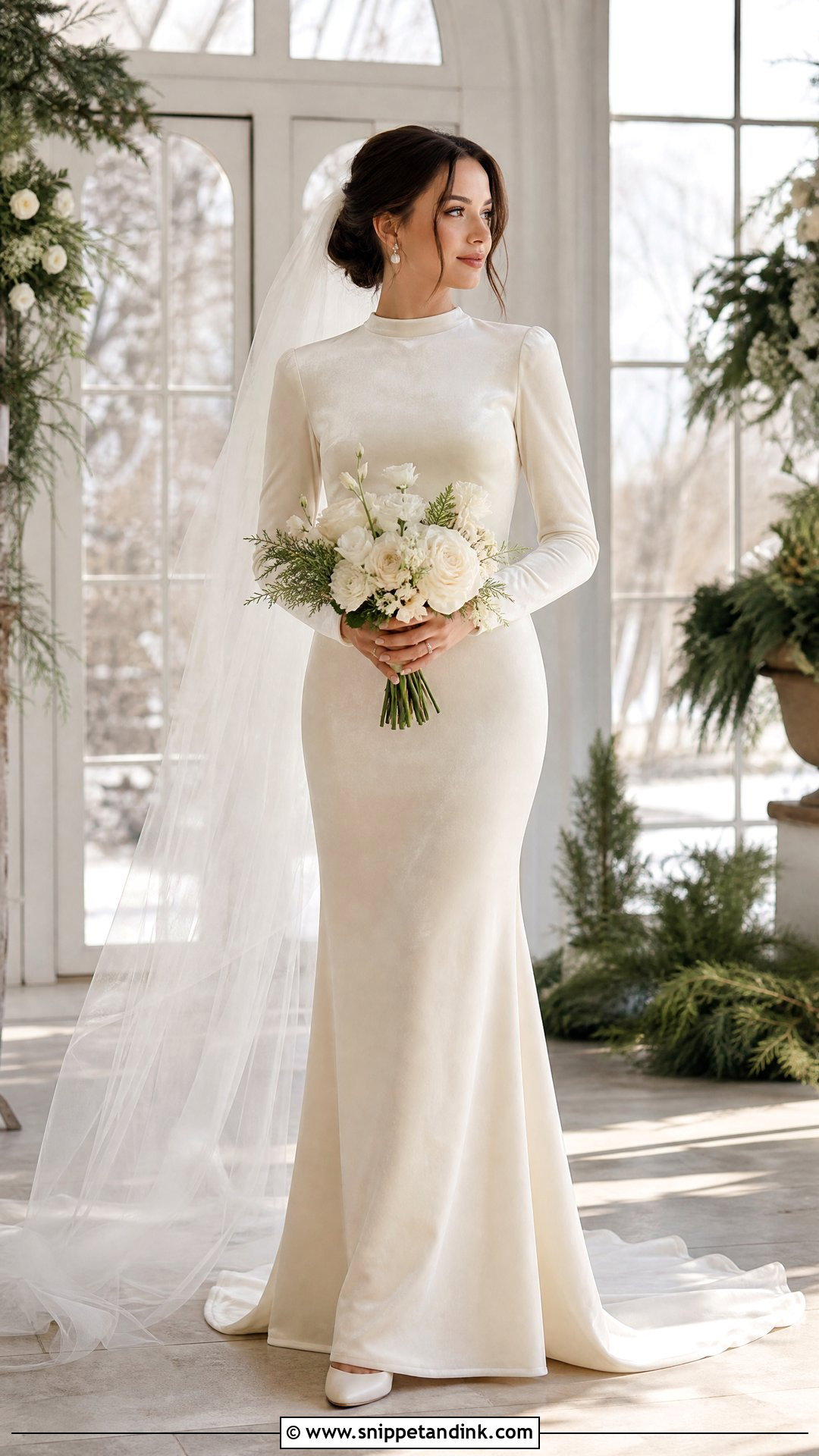
Velvet is the most practical fabric here for a cold wedding, and the one most likely to surprise you in photos. Its pile reflects light differently from each direction, so a skirt that looks cream from the front can read darker from the side. Look at it under bright light and from several angles before final alterations. Choose silk velvet or a lighter blend in ivory, cream or soft champagne, with a fitted bodice, long narrow sleeves and a gently flared skirt. Closed-toe block heels, pearl earrings and a plain cathedral veil. A tailored ivory coat or faux-fur wrap for outdoor photos, off indoors. White roses or anemones with seasonal greenery, and a polished low bun.


20. Plus Size Vintage Lace Wedding Dress With Sleeves
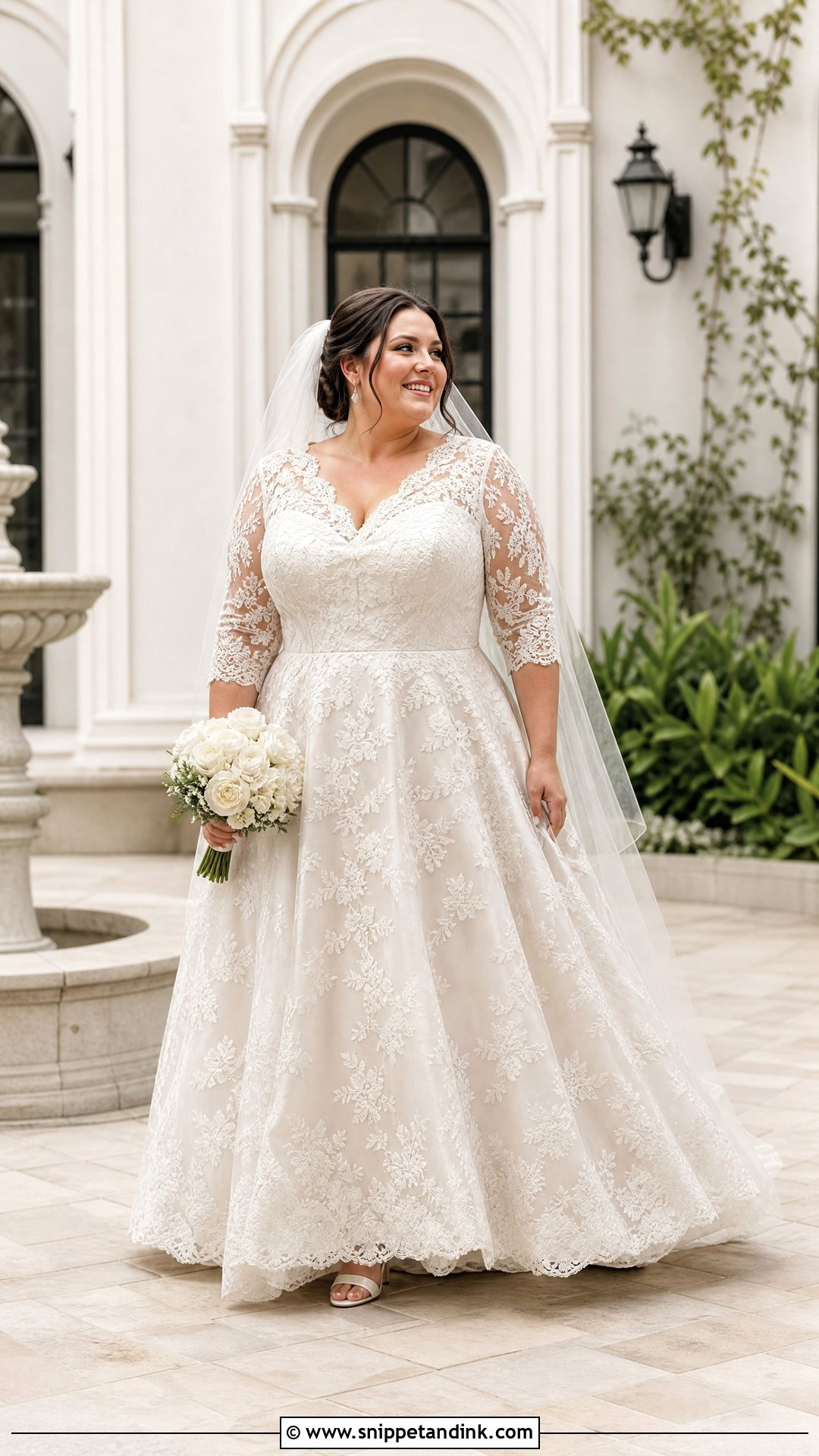
Real structure, not concealment, is what a plus size vintage lace dress should give you. A supportive bodice, a defined waist and an A-line or softly flared skirt are the framework; long lace sleeves with lining placed only where you want it give coverage while the pattern still shows. An open neckline, a soft V, scoop or square, balances the sleeves and frames the face. Supportive block heels, pearl drops, a fingertip veil and a medium rounded bouquet keep the proportions right. At every fitting I check three things: sleeve mobility, bust support and how it feels sitting down. Original gowns from most eras were made in a narrow range of small sizes, so a reproduction is often the realistic route, and it can still have covered buttons and period lace.
Underarms, Cuffs and Lace: Where Old Sleeves Give Way
If you’re buying a genuine vintage gown, the sleeves deserve a closer look than the bodice. They take the strain every time you move, and decades of folding leave their marks there first. When I go over an original dress, these are the places I check before anything else.
The underarm seam
Old perspiration weakens fabric, and silk in particular can split along the seam when you lift your arms for the first time. Hold the seam up to daylight and gently stretch it between your fingers. Thin, shiny patches or a faint discoloration mean it needs reinforcing before it’s worn.
Cuffs and buttons
Covered buttons lose their fabric, and thread loops break. A restorer can usually re-cover buttons or replace a set, but matching an aged ivory is slow work, so allow time.
Sheer and lace sleeves
Old net and tulle can go brittle. Sometimes the kindest repair is to lift the lace motifs off and reapply them onto new tulle tinted to match. That keeps the lace you fell for and gives you a sleeve that will survive dancing.
Bring any original dress to a seamstress experienced with vintage fabric before you commit to buying if you can, and ask her plainly what can be fixed and what can only be stabilized. Some repairs simply aren’t possible, and it’s much better to hear that early.
Which Decade Feels Like You on a Long Day?
A sleeved vintage gown should give you the character of its decade and the comfort of a modern dress. Start with the era or sleeve you keep returning to: Victorian lace for formality, thirties satin for glamour, fifties skirts for shape, seventies sleeves for ease. Then weigh it against your venue, the season, how much altering it needs and, for an original, the state of the fabric. Shoes, veil, jewelry and flowers should support the gown, not compete. Original or new, the fit is what I’d put the most money into. A sleeved gown that stays put and lets you move is the one you’ll still feel like yourself in at the last dance.
You'll Like These Ideas:






Leave a Reply