
Guests forget the cake’s piping within a week, but they remember whether it was good. The flavors I bake most are still vanilla, chocolate, lemon and red velvet, and more couples now pair one of those with something less expected: pistachio, tiramisu, coconut and passion fruit, or Earl Grey with lavender. The right choice depends on more than taste. Season, venue temperature, frosting, filling and how sweet you like the last bite all change what works. Here are 20 Wedding Cake Flavors
Tasting Samples the Way a Baker Does
Most tastings give you small pieces of several sponges, fillings and frostings. They’re easy to rush through, and it’s easy to end up choosing the sweetest one simply because it was tasted last. I suggest a few habits:
- Start with the lightest flavors, like vanilla and lemon, and finish with the richest ones, like chocolate and caramel.
- Taste each sponge with its intended frosting and filling together. A forkful of sponge alone tells you little about the slice your guests will eat.
- Drink water between samples rather than coffee or wine, which change how sweet everything tastes.
- Write a one-word note after each one. After six samples, memories blur.
Come to the tasting after a light meal. If you’re very hungry, everything tastes good; if you’re full, nothing does.
1. Vanilla Wedding Cake
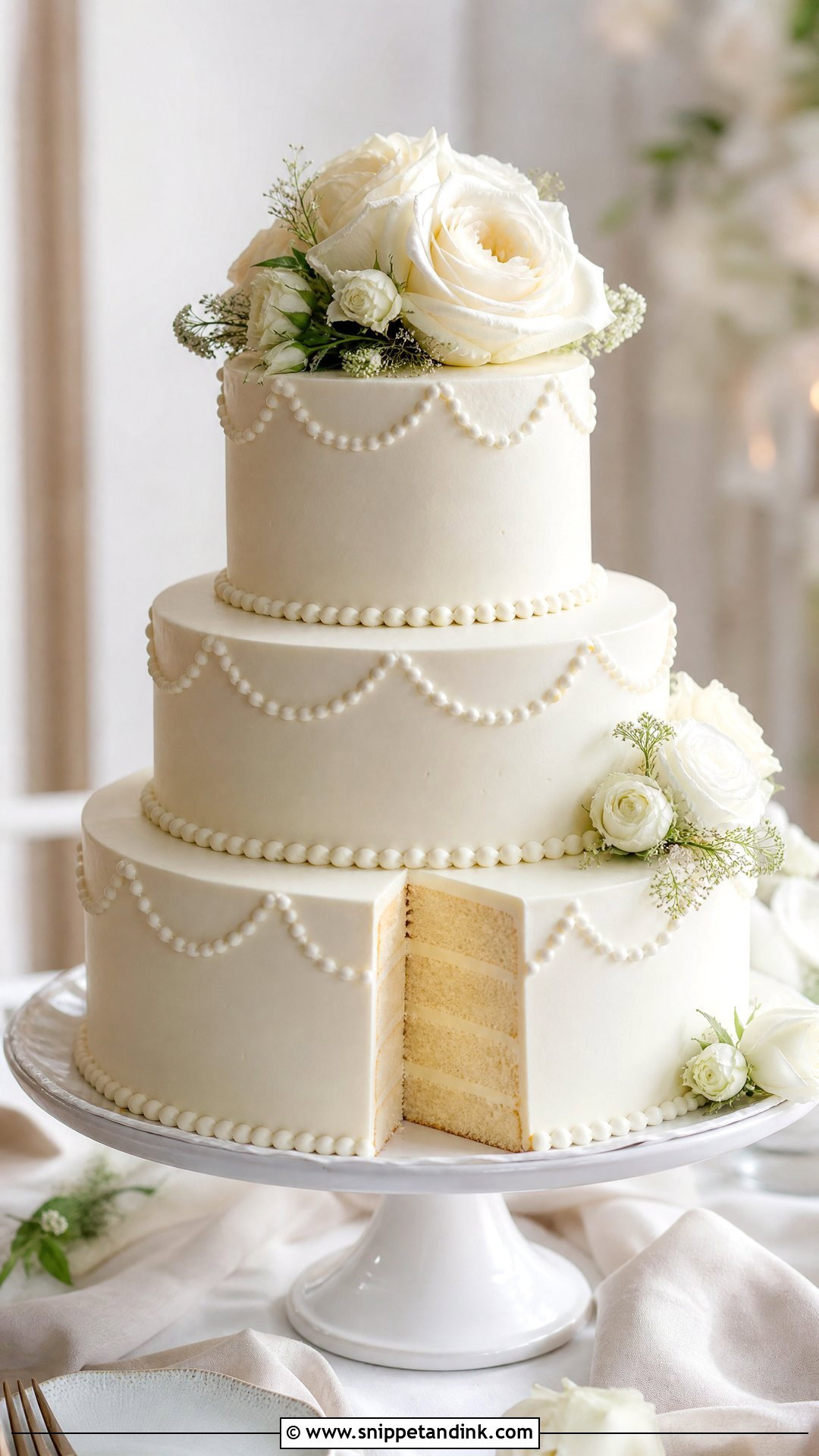
Vanilla is the flavor I can pair with almost anything, which is exactly why it’s so often underestimated. The ivory crumb takes Swiss meringue buttercream, raspberry jam, lemon curd, pastry cream or fresh berries equally well, and it sits lightly after a big dinner, which matters with a large guest list. The difference between a forgettable vanilla and a memorable one is the vanilla itself: real bean or paste rather than imitation extract, plus a little browned butter or almond in the buttercream. I’d taste two versions side by side at your tasting if you can.
2. Chocolate Wedding Cake
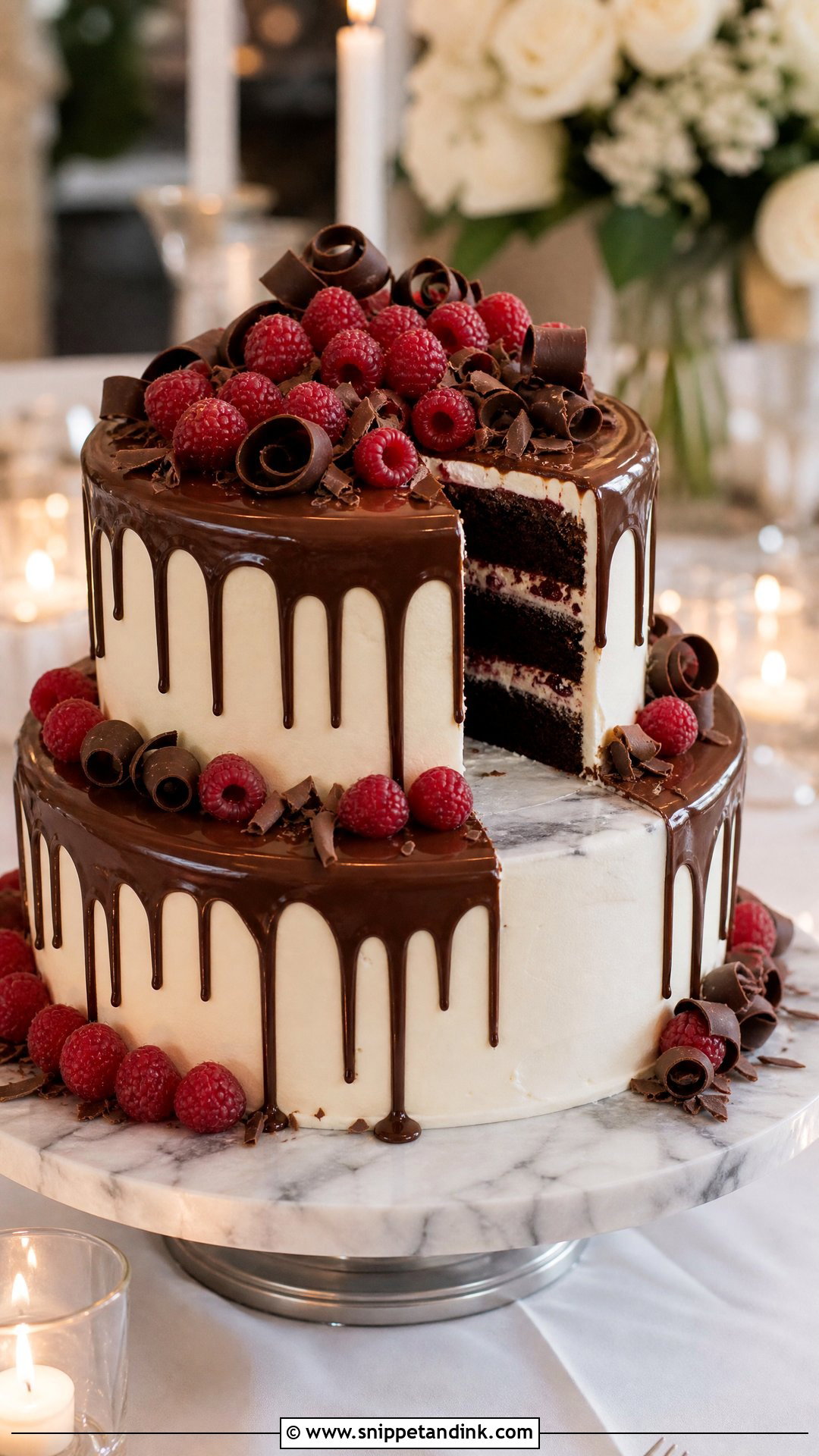
Chocolate cake ranges from a dark, slightly bitter sponge to a soft devil’s food, and the filling should pull it back toward balance: ganache, vanilla buttercream, salted caramel, raspberry, mocha cream or whipped mascarpone. A dark chocolate crumb under white buttercream shows through as a grey shadow if the coating is thin, so I put on a firmer crumb coat and a thicker final layer. It’s a favorite for evening receptions. Keep the outside ivory and let the chocolate be the reveal when it’s sliced, or go for a drip with fresh flowers.
3. Lemon Raspberry Wedding Cake
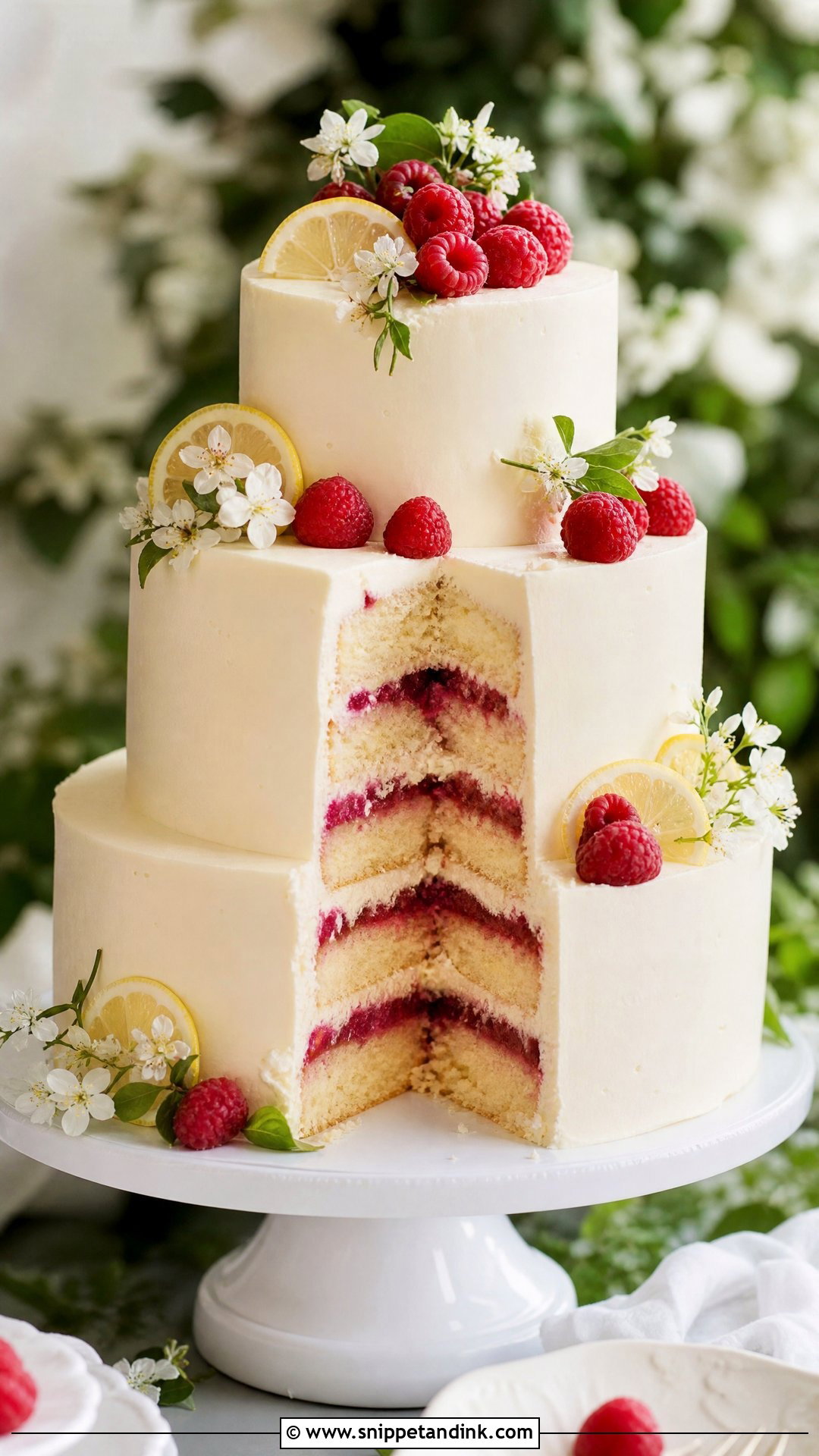
Lemon and raspberry is the pairing I suggest most for summer and garden weddings, because it still tastes fresh after a heavy meal. The citrus sponge is clean, the raspberry filling brings sweet-tart contrast, and the cut slice of pale yellow with a pink stripe looks good on the plate. Lemon buttercream, vanilla Swiss meringue or cream cheese frosting all suit it. One thing I watch: a fresh fruit filling is wetter than a jam, so I pipe a buttercream dam around each layer to stop it seeping out the sides of a stacked cake.
4. Red Velvet Wedding Cake
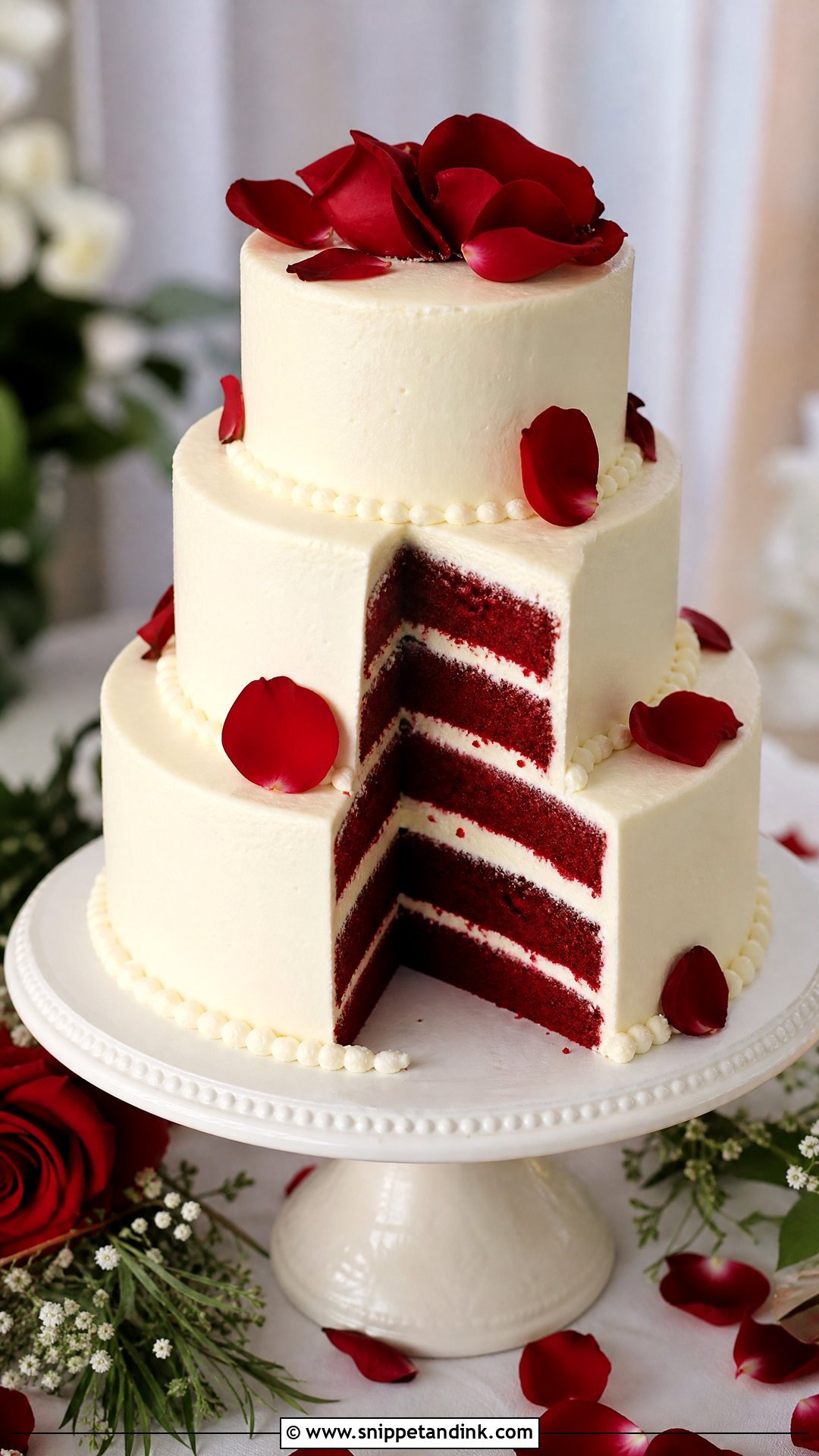
Red velvet is a mild cocoa cake with a buttermilk tang, and its color is the reason people choose it. Cream cheese frosting is the traditional partner. I’d raise one practical point: cream cheese frosting is soft and needs to stay cool, so for a tall stacked design I often use cream cheese inside as the filling and a firmer vanilla buttercream outside. Keep the exterior white with red rose accents and the red crumb stays a surprise until the knife goes in.
5. Almond Wedding Cake
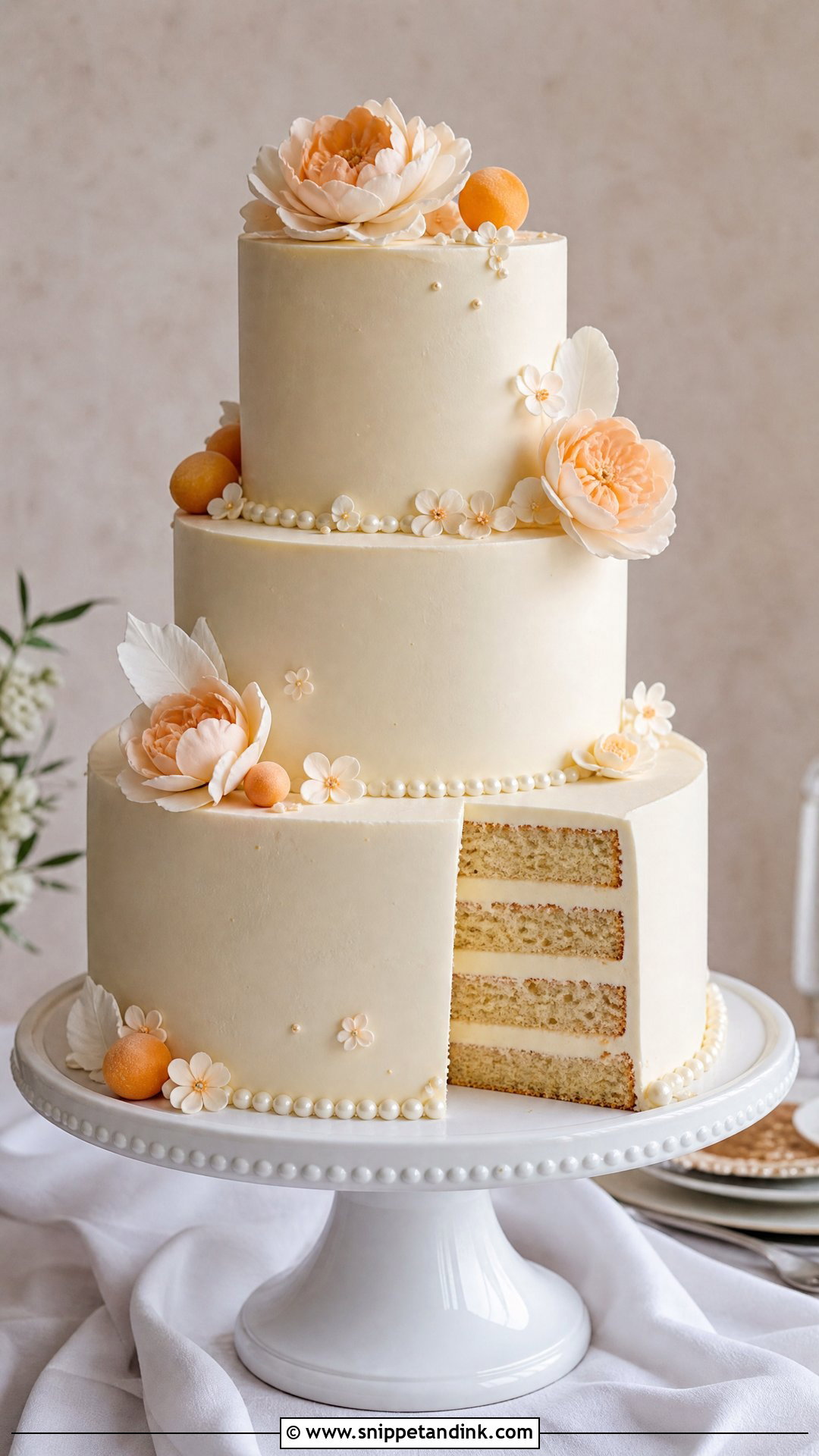
Almond tastes like a wedding cake to a lot of people, because it was the bakery standard for decades. It’s fragrant and gently nutty, and it suits vanilla buttercream, raspberry, cherry, apricot or white chocolate. The risk is a heavy hand with extract, which turns sharp and slightly medicinal, so I build the flavor with ground almonds in the batter and only a little extract. Ivory frosting, piped borders, edible pearls and sugar flowers suit its traditional character. Flag it clearly for guests with nut allergies.
6. Strawberry Wedding Cake
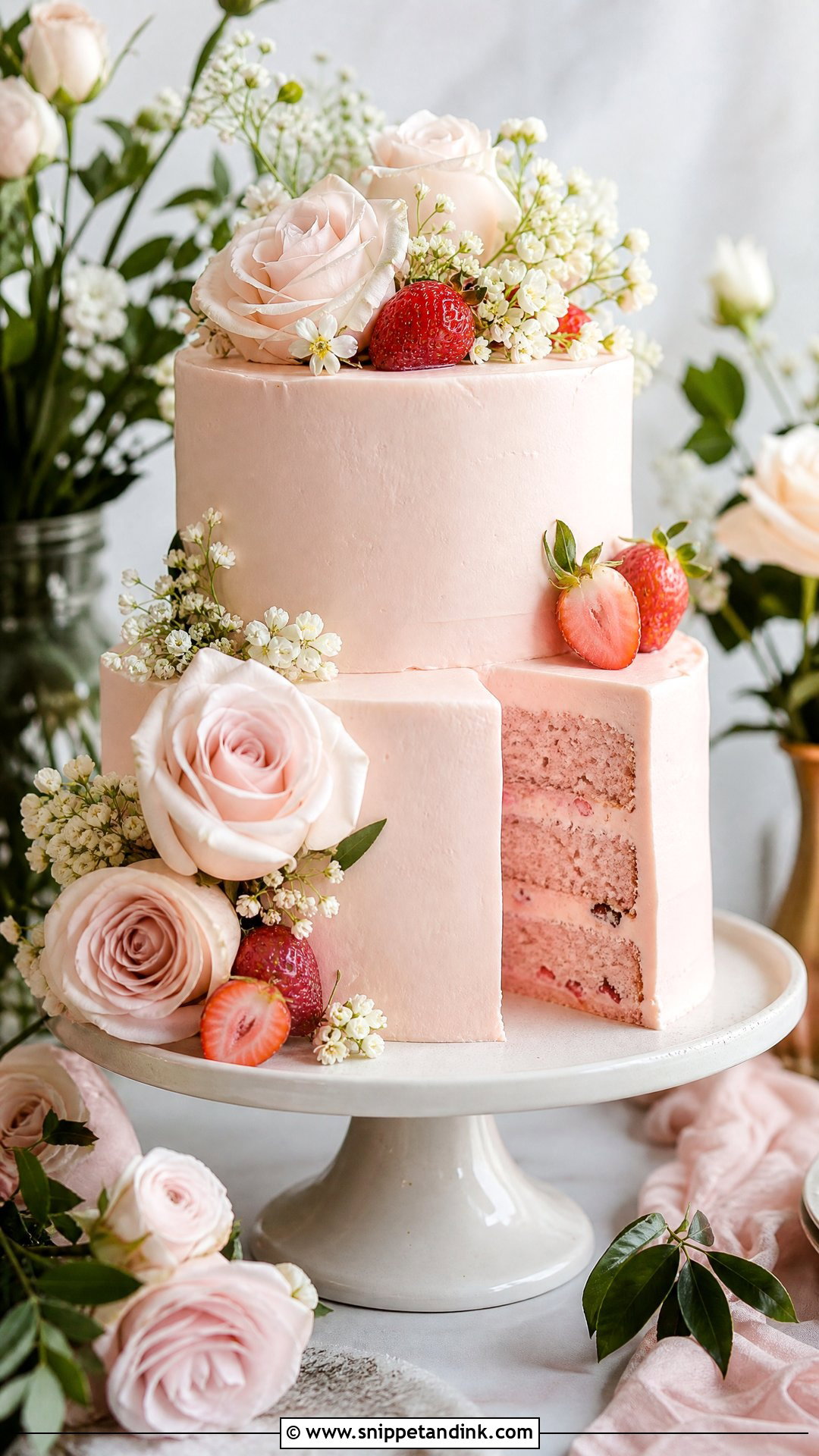
Strawberry cake made with real fruit is a softer, paler pink than most people expect, which I think is prettier than the bright artificial version. Concentrating the strawberries into a reduced puree gives the flavor without making the sponge soggy. It goes with vanilla buttercream, cream cheese, whipped cream, white chocolate or lemon curd. It’s an easy one to put in a single tier next to vanilla or chocolate, and fresh strawberries with blush flowers make the outside match.
7. Carrot Wedding Cake
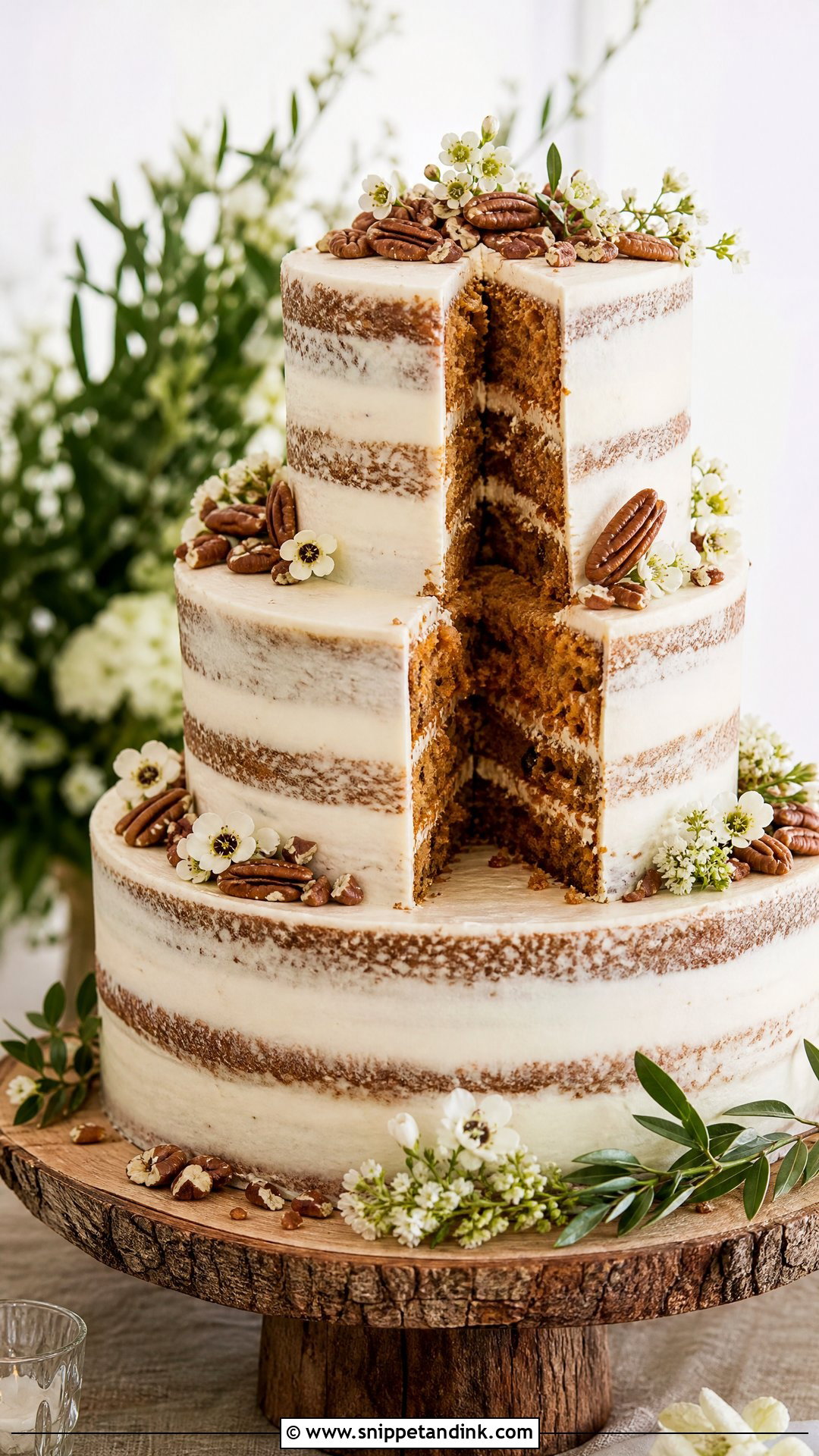
Carrot cake belongs to autumn and rustic receptions. The golden crumb with cinnamon, nutmeg and often walnuts or pecans is made for cream cheese frosting. I always ask about nuts here: plenty of guests dislike the texture, and some can’t eat them at all, so I’ll often leave them out of the cake and offer them on the side or not at all. A smooth ivory finish, pressed flowers or a semi-naked coat all work. Carrot cake is also dense and moist, so it stacks and travels better than most.
8. Champagne Wedding Cake
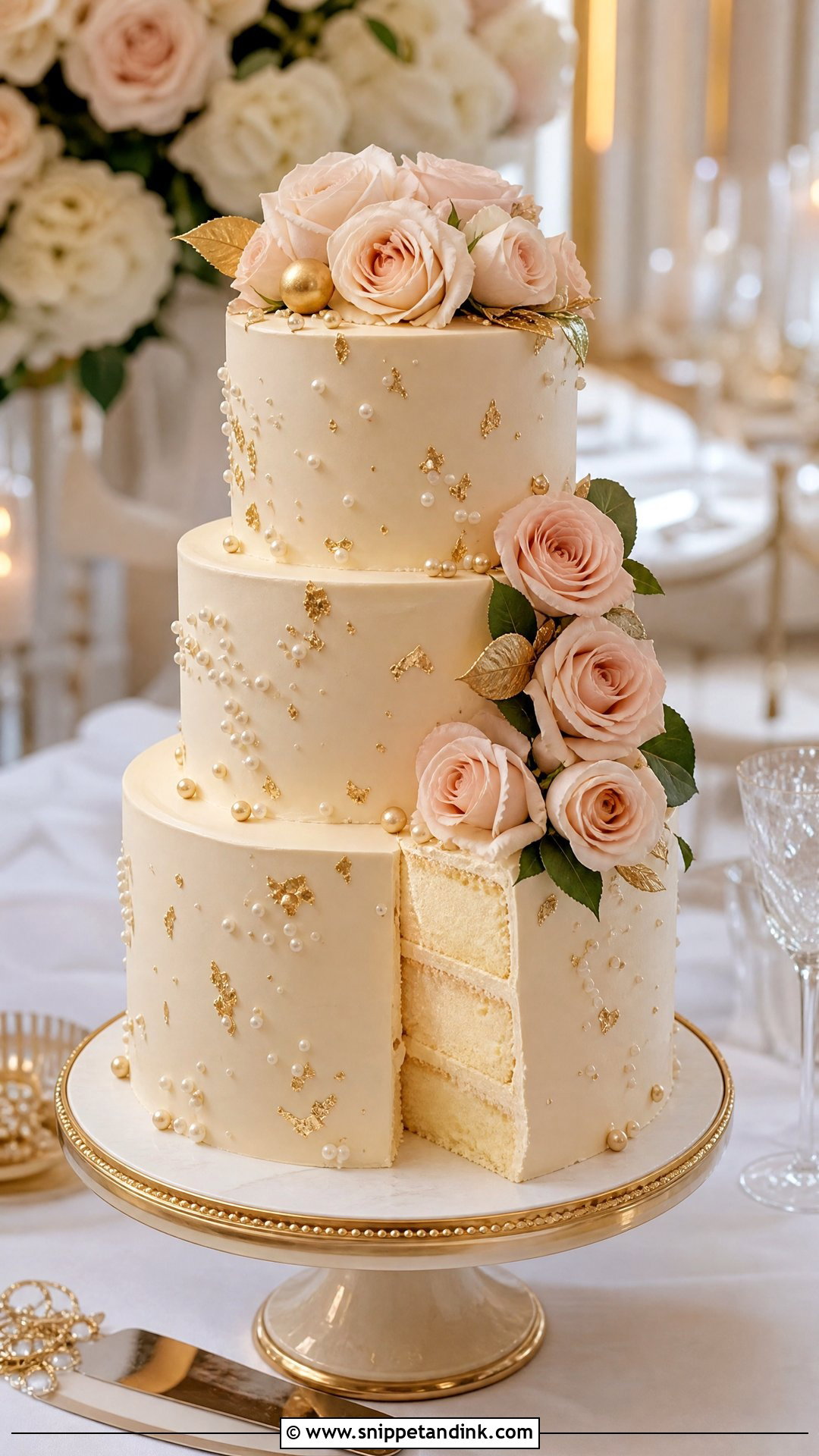
Champagne cake is a light vanilla-style sponge with a delicate wine note, usually paired with champagne buttercream, strawberry, raspberry preserves or white chocolate cream. To be honest, the champagne flavor is subtle, since most of the alcohol and fizz bake out, so it tastes like a refined vanilla with a slight fruity edge. That’s fine for a formal or evening reception where you want something a little different without risk. Ivory frosting, gold accents and blush flowers suit it.
9. Coconut Wedding Cake
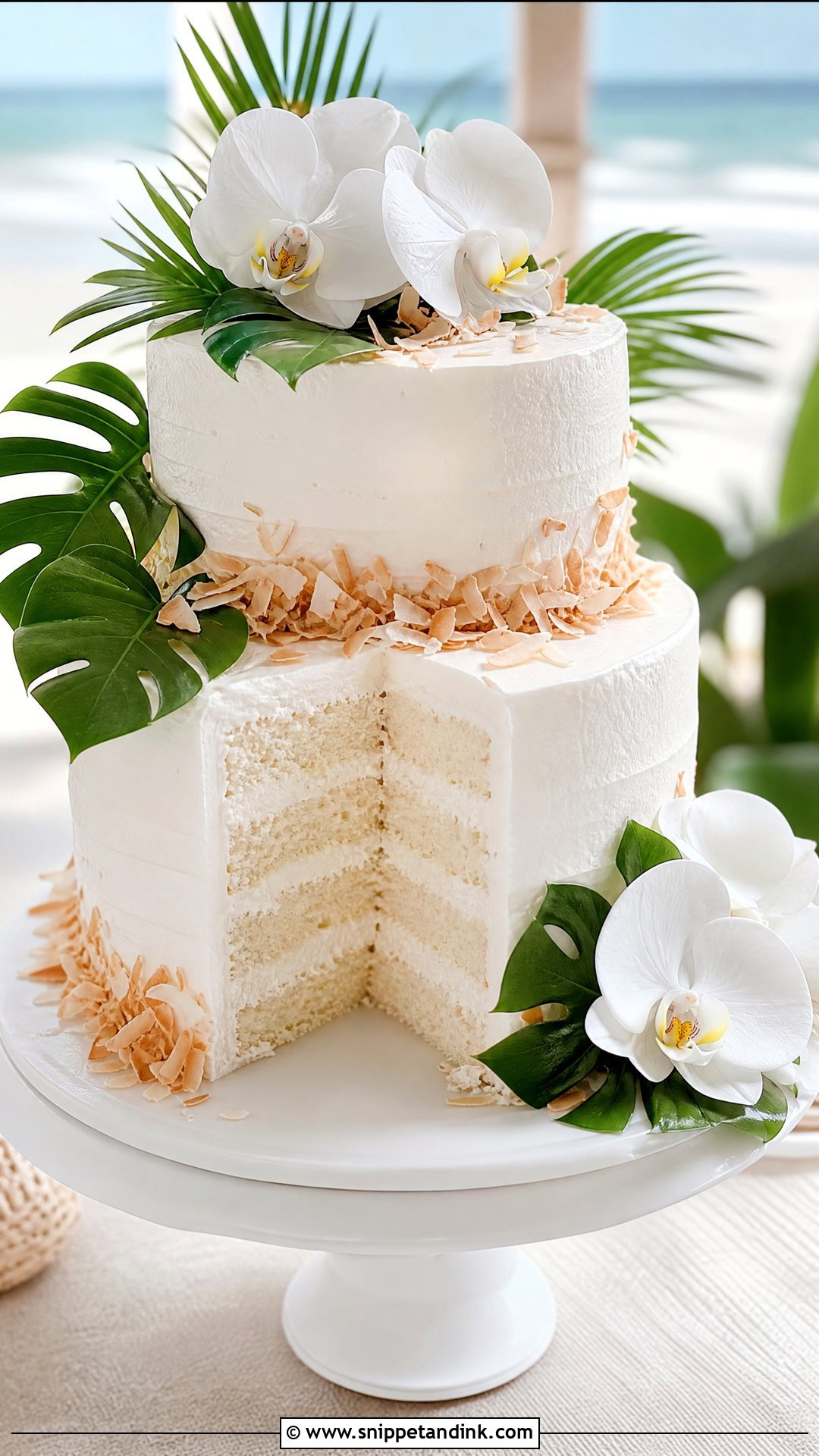
Coconut milk or cream in the batter gives a soft, fragrant crumb, and shredded coconut adds texture if you want it. It’s natural at a beach or summer wedding. Coconut tends toward sweetness, so I pair it with something bright, like lime curd, pineapple or passion fruit, rather than more coconut frosting. Smooth white buttercream with toasted coconut flakes and white flowers keeps it bridal. Check for guests who dislike coconut texture; offering it in one tier is a sensible compromise.
10. Pistachio Wedding Cake
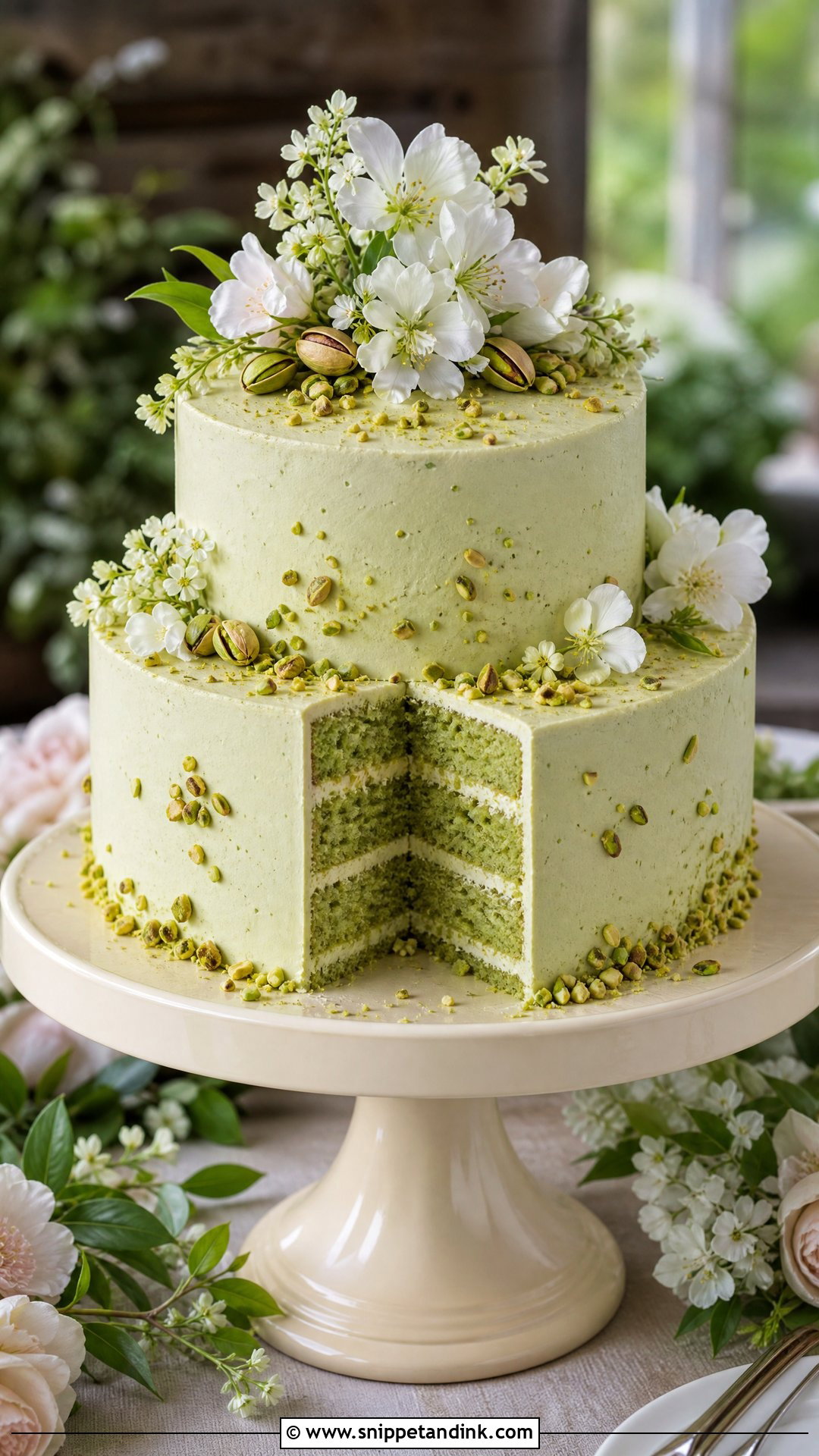
Pistachio has a naturally pale green crumb and a soft nutty flavor that most guests enjoy even if they’ve never had it in a cake. It pairs with rosewater buttercream, vanilla bean, raspberry, lemon curd, honey cream or white chocolate ganache. Good pistachio paste is expensive, and that does show in the quote. I’d decorate with pale green or ivory frosting, crushed pistachios and edible flowers for a garden or Mediterranean-style reception, and label it for nut allergies.
11. Tiramisu Wedding Cake
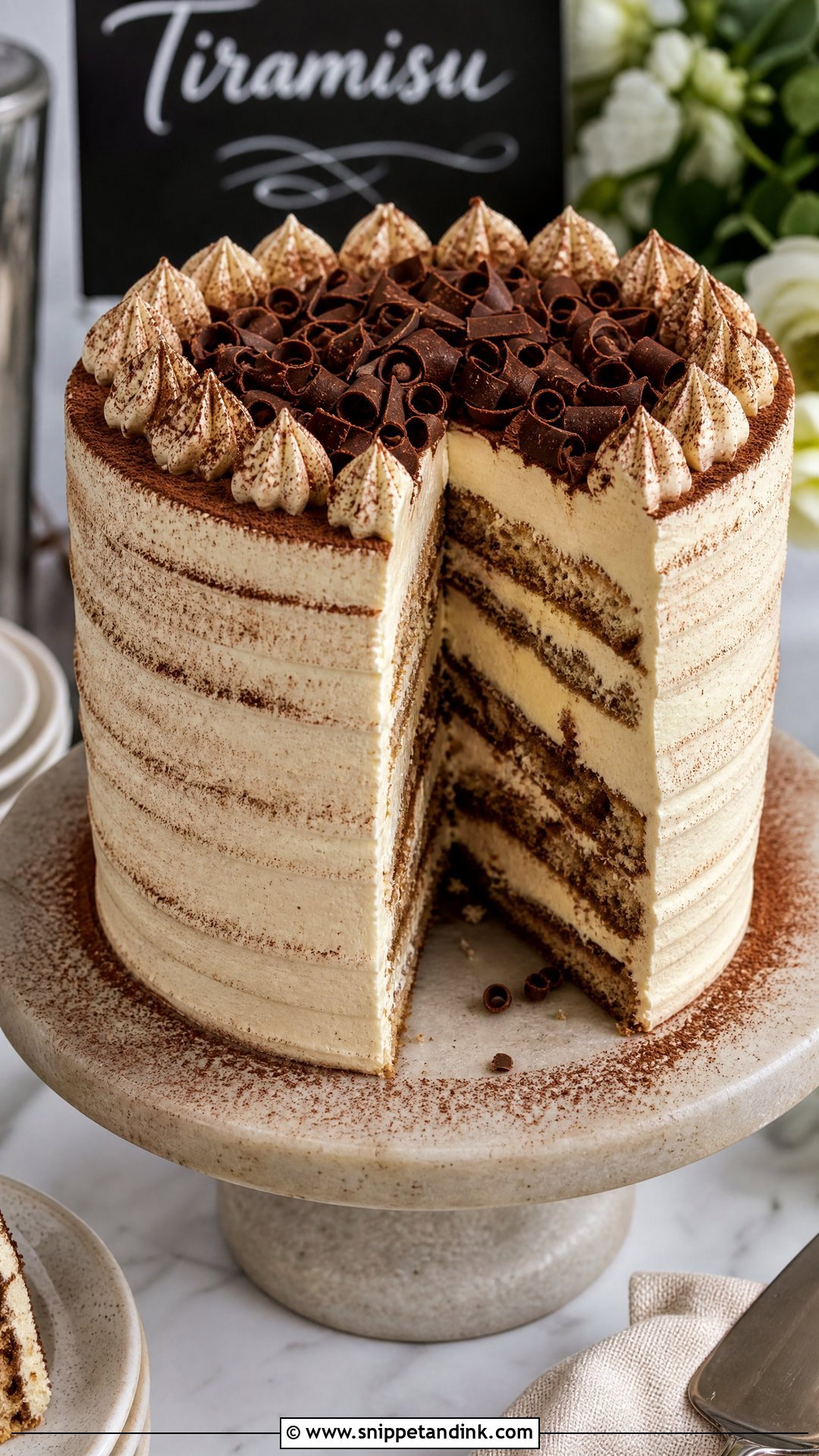
Tiramisu wedding cake is soft sponge soaked in espresso syrup, layered with mascarpone cream and finished with cocoa. It’s rich but smooth. My caution is temperature: mascarpone fillings need refrigeration, and a soaked sponge is heavy, so I support the tiers more than usual and keep the cake chilled until shortly before it goes out. It suits evening receptions and restaurant weddings. Cocoa shading, chocolate curls and a little piping finish the outside. If you’re serving alcohol-free, ask for the syrup without liqueur.
12. Earl Grey Lavender Wedding Cake
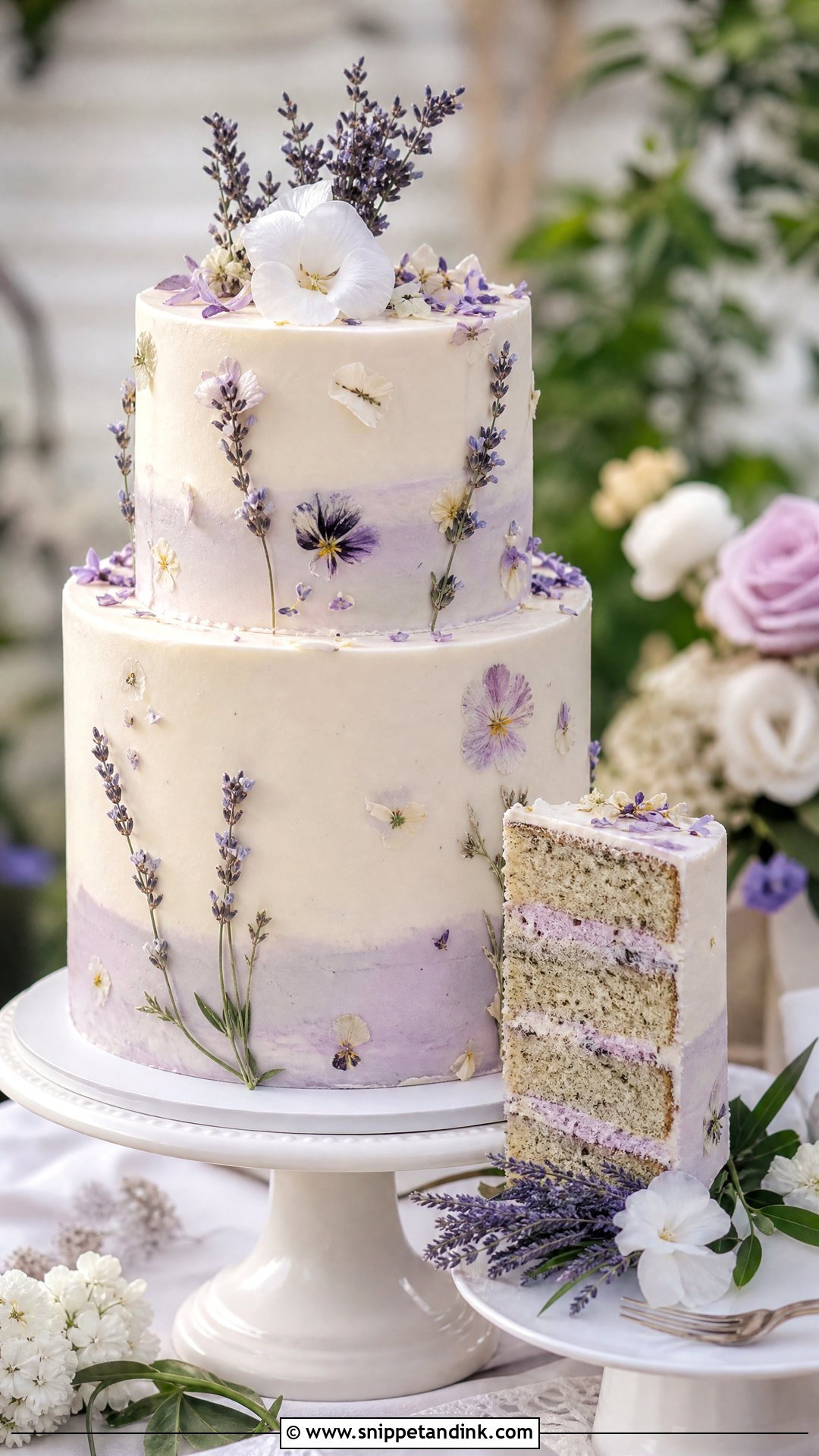
Earl Grey brings bergamot, and lavender brings a floral scent. Together they’re delicate, but only if the lavender is kept well in the background; too much tastes like soap, and I’d rather under-flavor than risk it. I steep the tea in the milk or butter so the flavor goes through the whole crumb. Honey buttercream, vanilla, lemon curd, blackberry or mascarpone all pair with it. Pale lavender or ivory frosting with tiny pressed flowers suits a spring garden or an afternoon reception.
13. Brown Butter Salted Caramel Wedding Cake
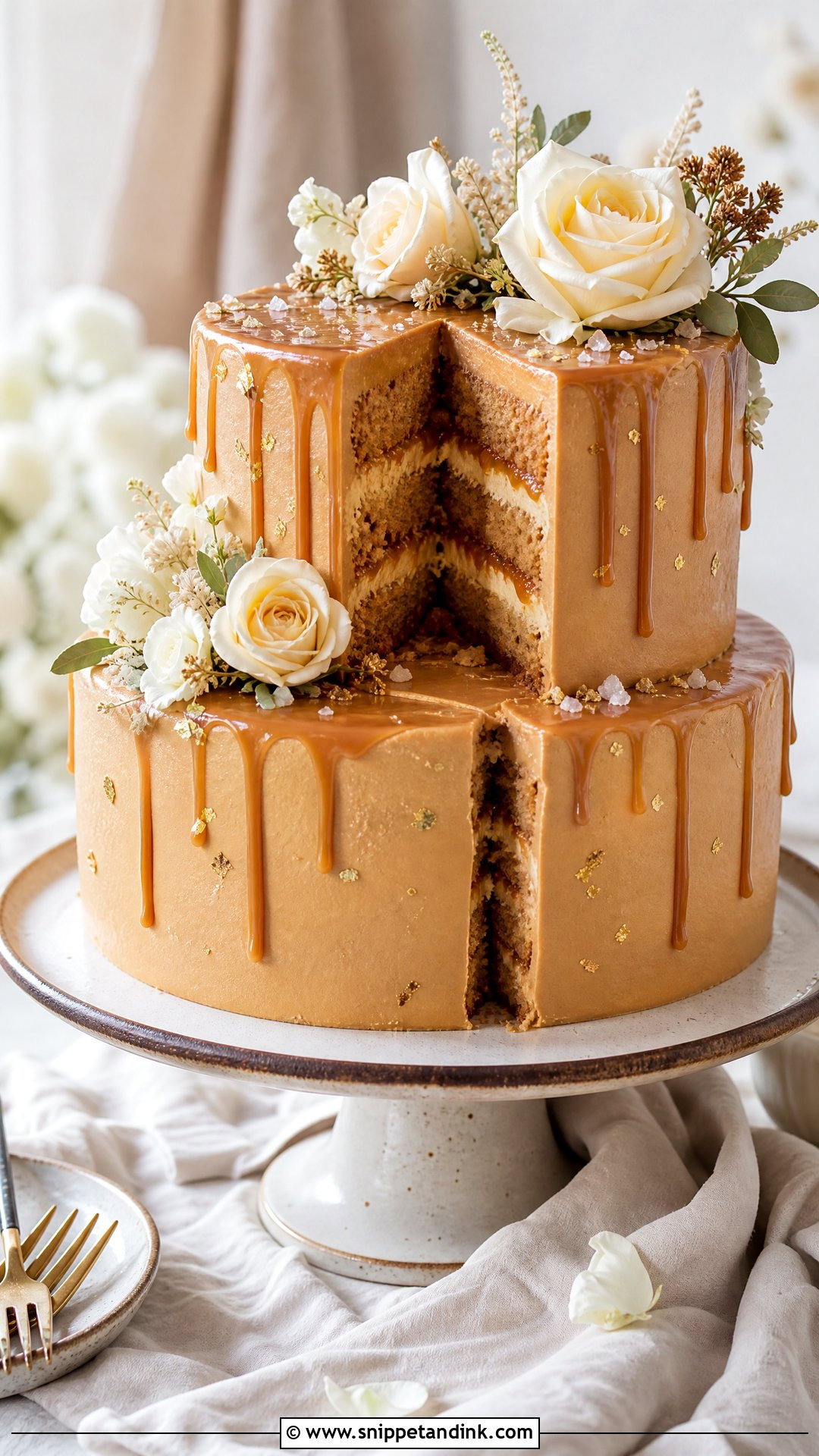
Brown butter gives the sponge a toasted, nutty depth, and salted caramel adds sweetness with enough salt to stop it cloying. It suits vanilla buttercream, caramel Swiss meringue, cream cheese frosting, or a thin ganache. Caramel filling is soft, and in a warm room it can slowly ooze, so I cook it to a slightly firmer set for wedding cakes and keep the layers thin. Ivory frosting with a caramel drip and a little gold makes sense at a candlelit autumn reception.
14. Cookies And Cream Wedding Cake
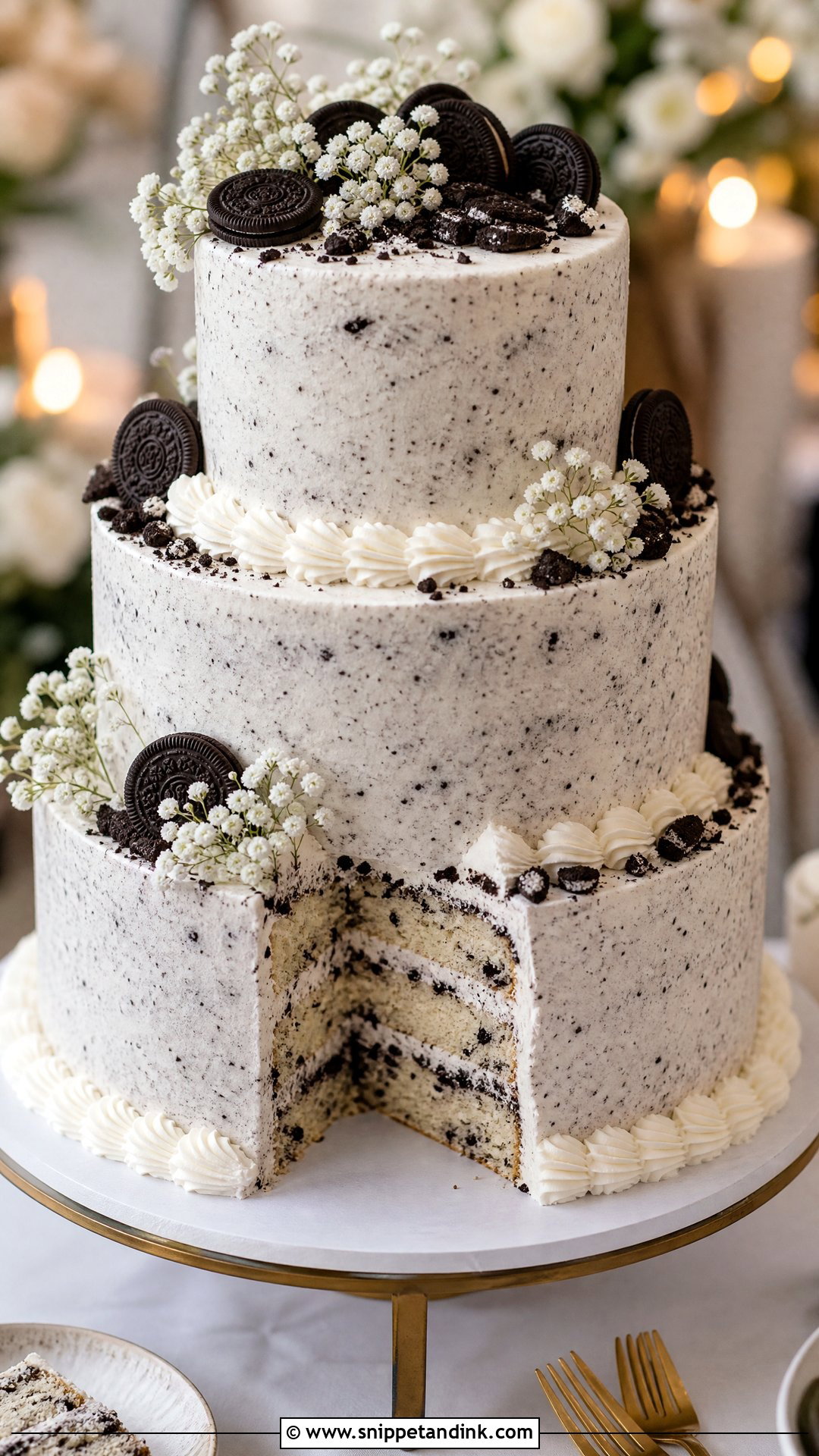
Crushed chocolate sandwich cookies folded into vanilla or chocolate layers and through the buttercream give you a flavor almost everyone recognizes. Ganache, cream cheese or a cookies-and-cream filling all suit it. On the outside, cookie crumbs speckle white buttercream grey, which some couples love and others don’t, so I keep crumbs inside and use a clean white finish with a few flowers. It’s a good pick for a relaxed reception where you’d rather please people than surprise them.
15. Black Forest Wedding Cake
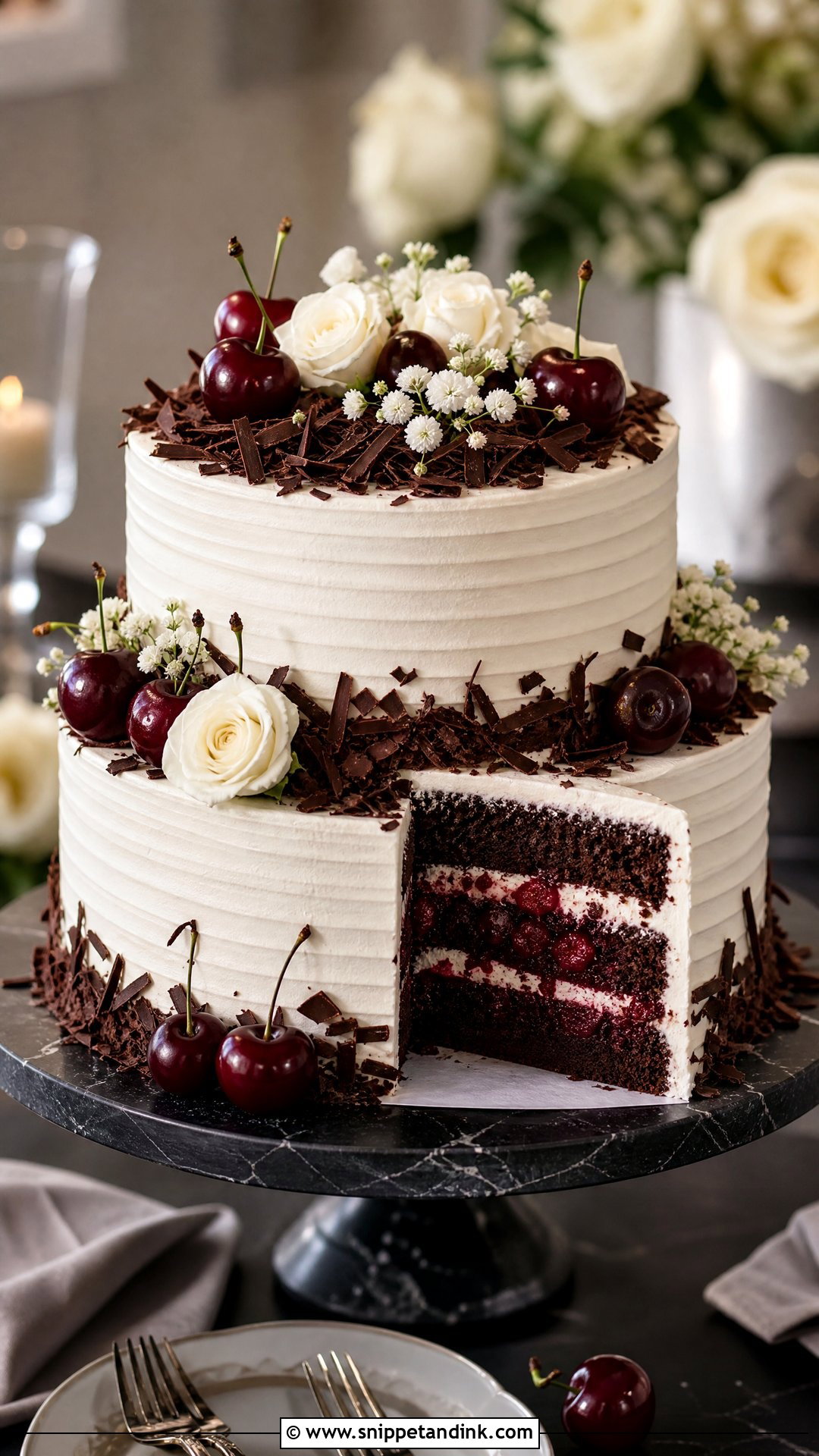
Chocolate sponge, cherry, cream and shavings: the classic version uses whipped cream, which won’t hold a tiered wedding cake for long. For weddings I swap in a whipped vanilla buttercream or a stabilized cream and use a cooked cherry compote rather than fresh cherries, which release juice. Dark chocolate sponge with a smooth outside finish, a few fresh cherries, chocolate curls and white flowers keeps it from looking heavy. It suits winter menus and evening receptions.
16. Orange Creamsicle Wedding Cake
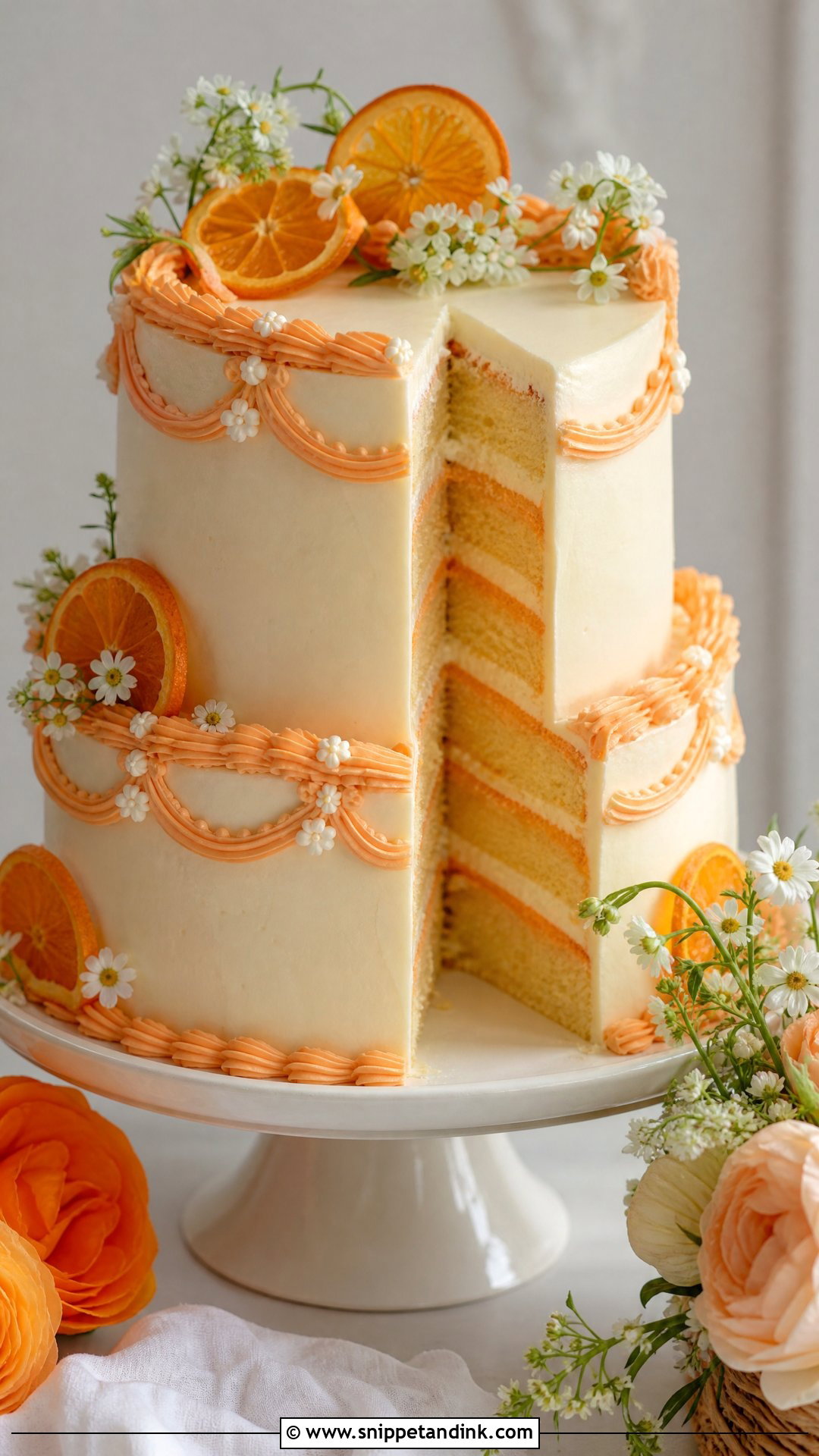
Orange creamsicle combines orange cake or plenty of zest with vanilla buttercream, cream filling or white chocolate mousse. It’s citrus without the tartness of lemon, so it suits guests who find lemon too sharp. Zest carries the flavor far better than juice, which thins the batter. Ivory frosting with soft orange accents, candied orange slices and small blossoms suits a summer or brunch wedding. Mousse fillings need to stay cool, so for an outdoor reception I’d keep it to a buttercream.
17. Matcha Wedding Cake
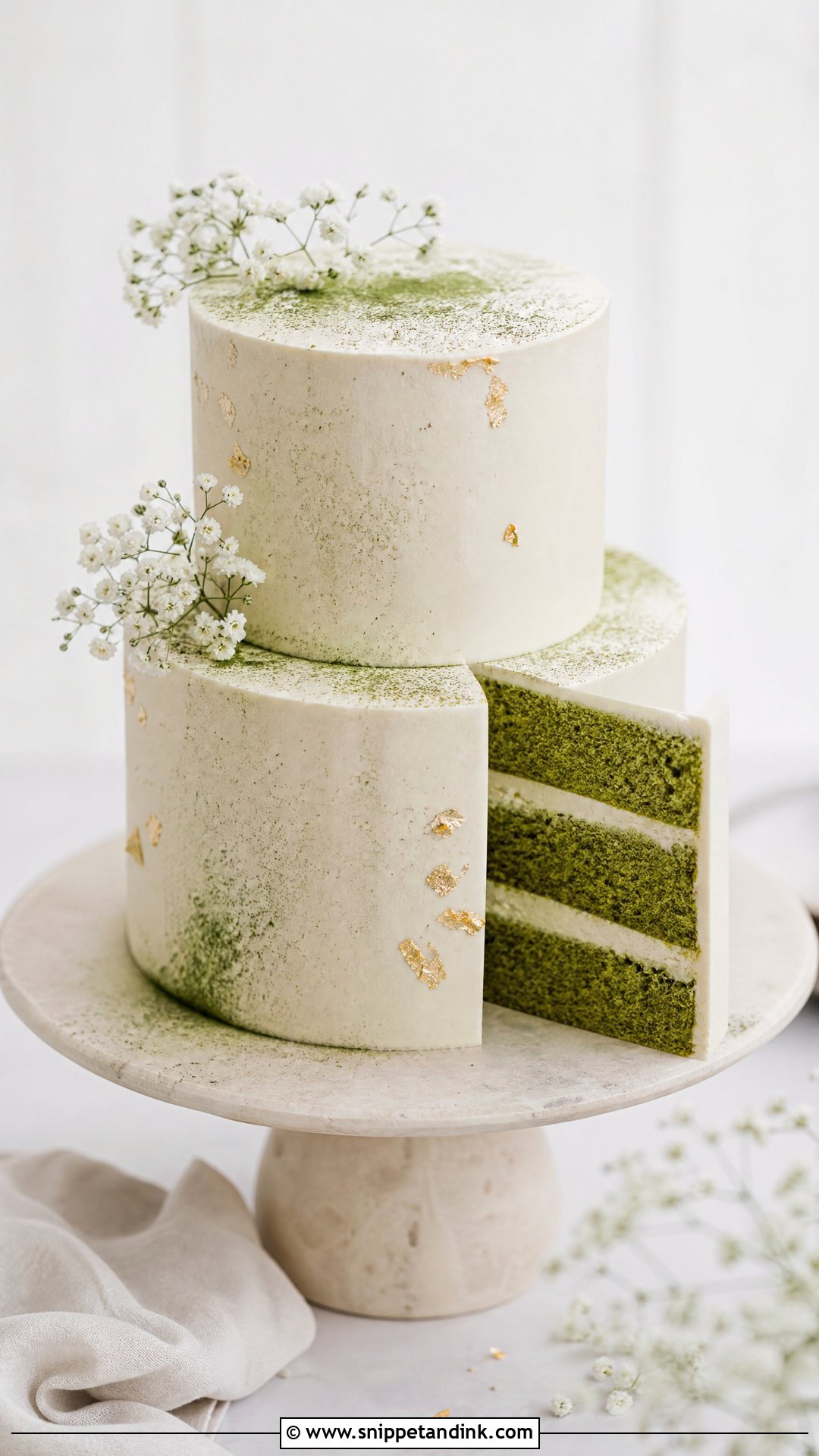
Matcha gives a soft green crumb and an earthy tea flavor that works well for couples who like their desserts less sweet. It pairs with vanilla buttercream, white chocolate cream, yuzu curd, raspberry or black sesame. The grade matters: culinary-grade matcha can turn bitter and dull green when baked, so ask your baker what they use and taste it before you commit. Pale green frosting, clean edges, tiny white flowers and a little gold suit a modern venue.
18. Funfetti Wedding Cake
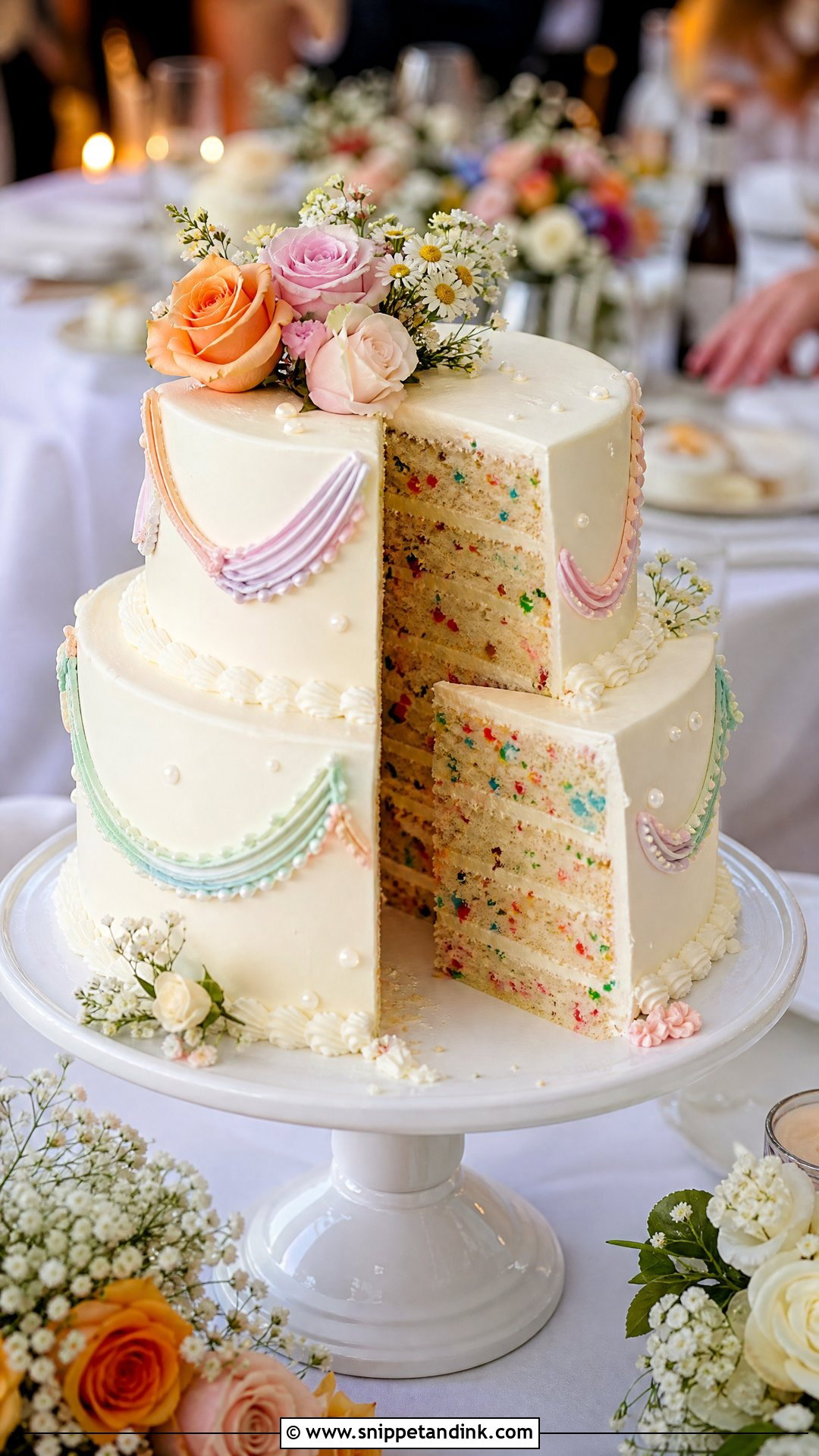
Funfetti is vanilla sponge with rainbow sprinkles baked through, and it gets an audible reaction when it’s cut. Smooth vanilla buttercream, white chocolate frosting or a soft cream filling keep it from going too sugary. I use sprinkles made for baking, because standard ones can bleed color into the batter and leave muddy streaks. The outside stays plain and polished with pearl sprinkles, piped borders, pastel flowers or a topper. It’s a fun tier for a relaxed, personal reception.
19. Hummingbird Wedding Cake
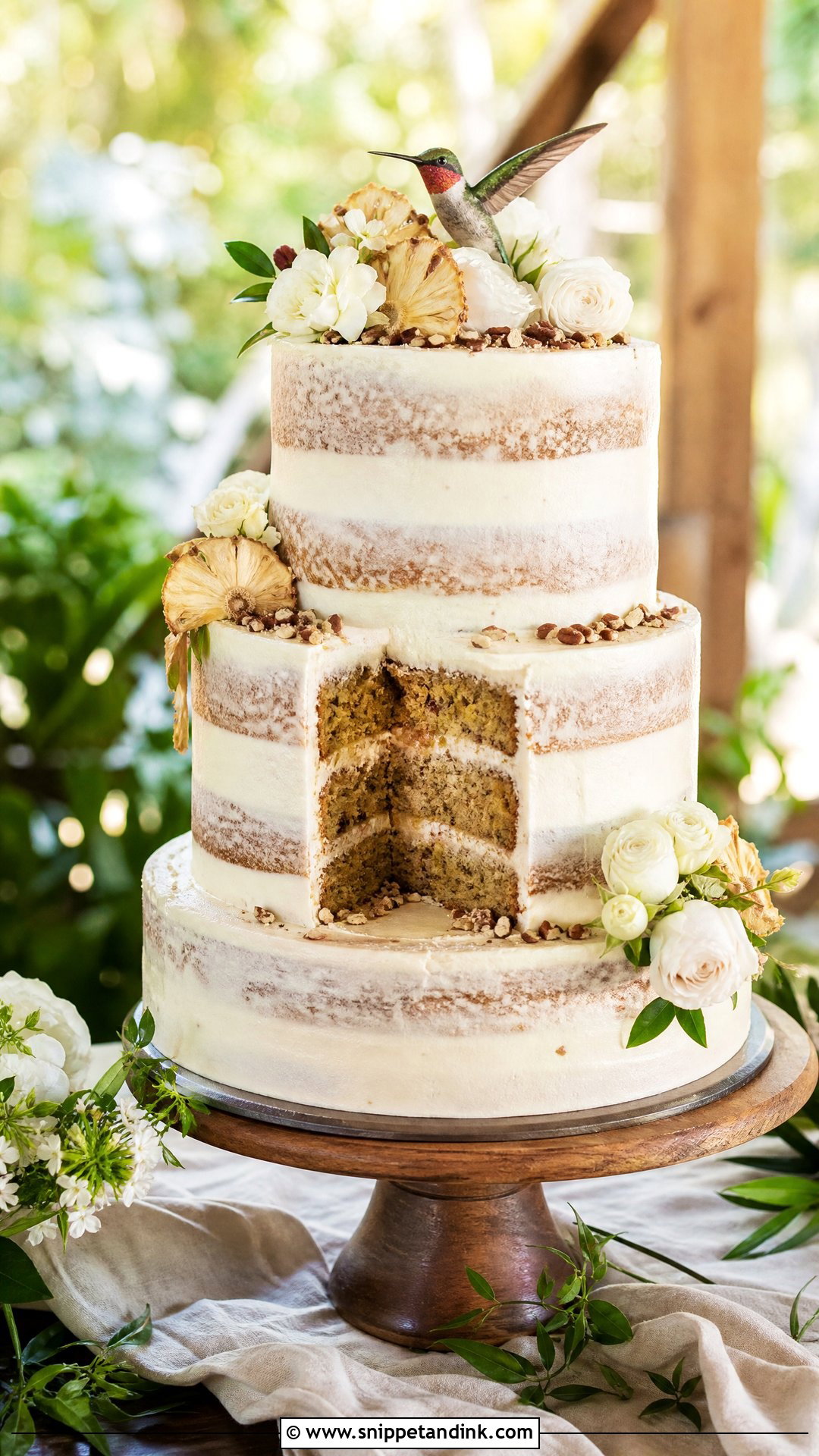
Hummingbird cake comes from the American South: banana, pineapple, warm spice and often pecans, with cream cheese frosting to balance the fruit. It’s very moist, which means it stays fresh well but is soft to stack, so it needs good support between tiers. It suits garden and outdoor weddings in late summer or autumn. A semi-naked finish looks rustic; smooth ivory with flowers looks more formal. Chopped pecans or dried pineapple flowers make an easy decoration.
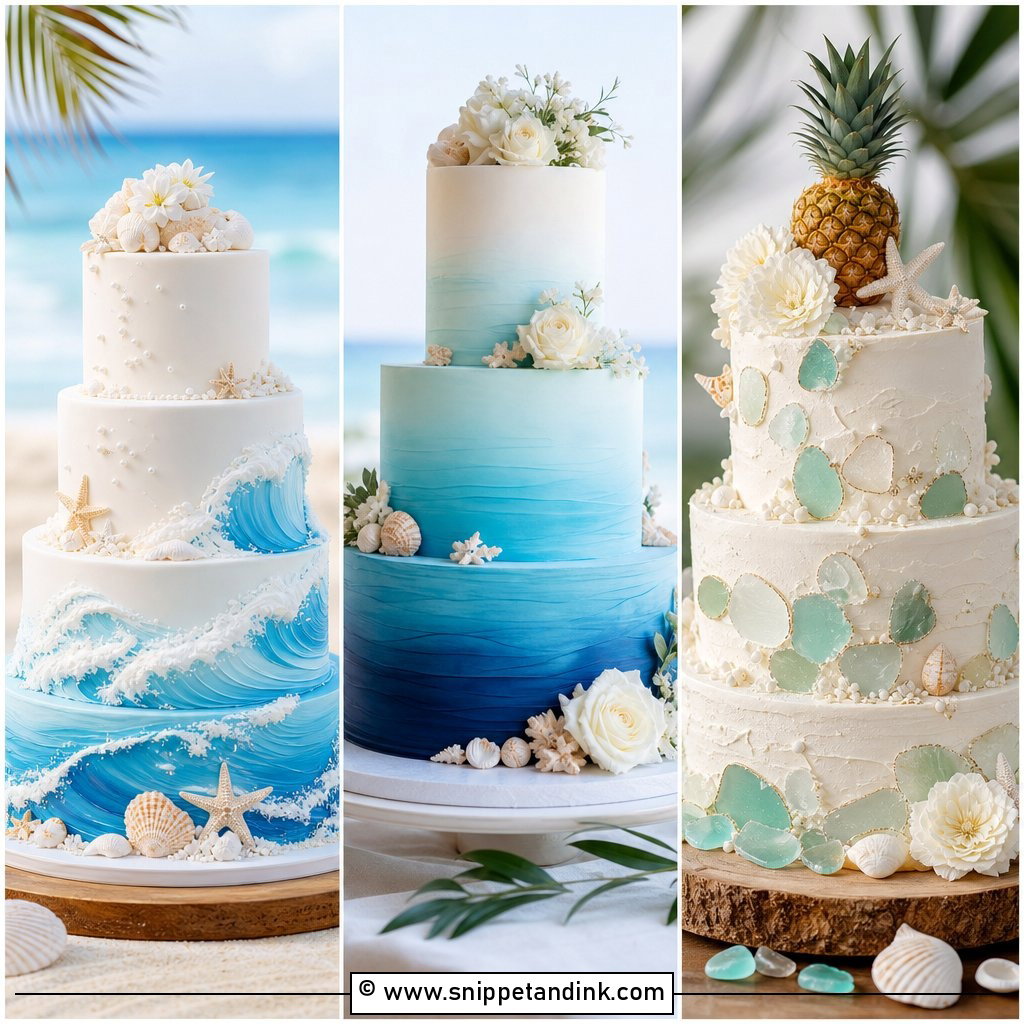
20. Coconut Passion Fruit Wedding Cake
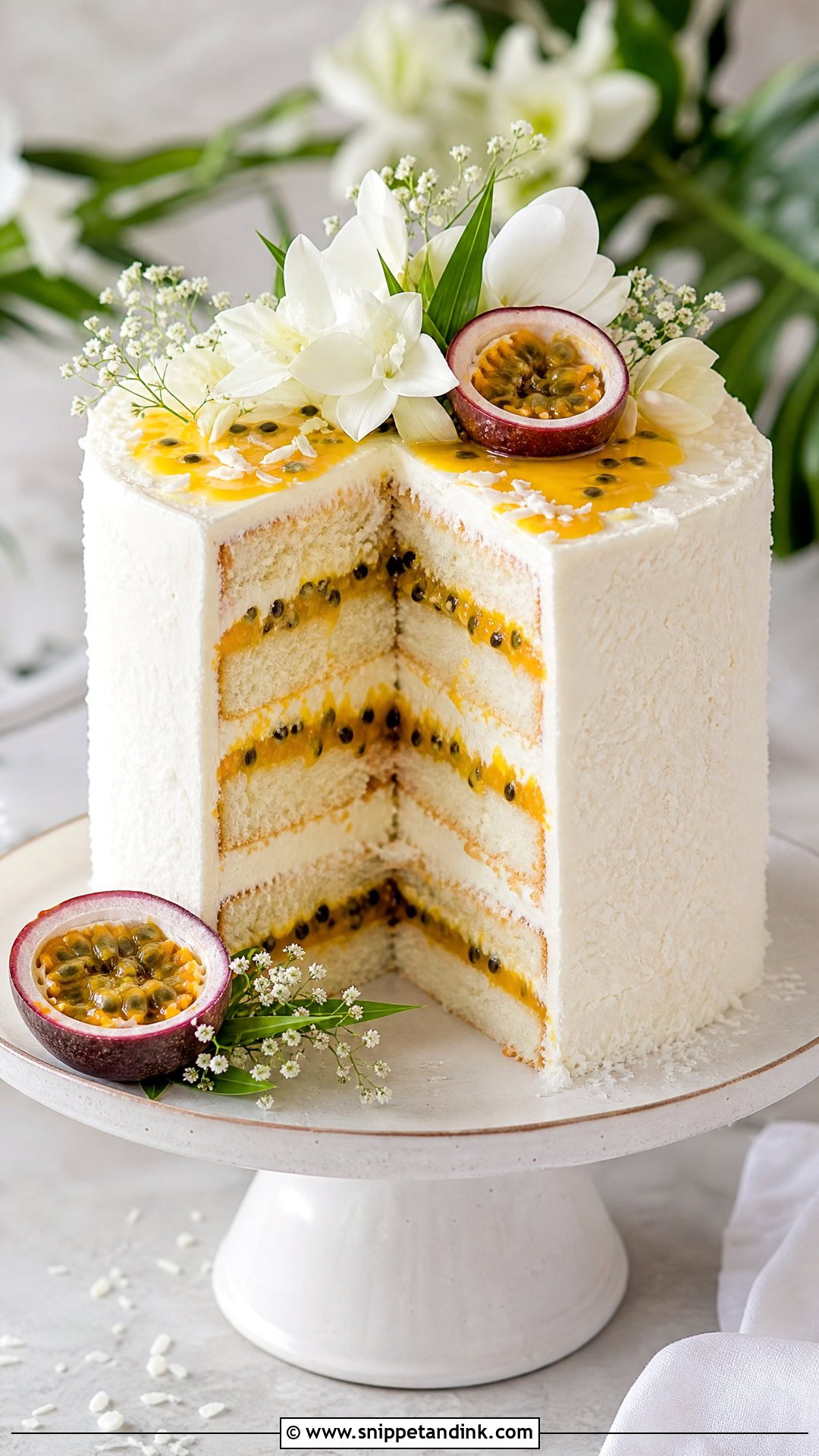
Coconut passion fruit wedding cake balances a creamy coconut sponge with a sharp passion fruit curd. The acidity is what keeps it from tasting too rich. Coconut buttercream, vanilla Swiss meringue or white chocolate frosting work on the outside. Curd is a soft filling, so I keep it to a thin layer inside a buttercream dam, especially for a beach venue where heat is a factor. White frosting, a passion fruit glaze accent, tropical greenery and delicate flowers suit a destination or summer wedding.
Fillings That Can’t Sit Out on a Warm Afternoon
Some fillings on this list need refrigeration, and a wedding cake often stands at room temperature for hours. Fresh whipped cream, mascarpone, cream cheese, mousse and cut fresh fruit are the ones I plan around. That doesn’t rule them out. I keep them in thin layers sealed by buttercream, chill the cake until close to display, and set it out later on hot days. Jams, curds cooked to a firm set, ganache and buttercreams are much more tolerant if your cake will be out from the start of the meal.
Which Flavor Belongs in Which Tier
The bottom tier gives the most slices, so I put the flavor most guests will enjoy there. A bolder choice like matcha, Earl Grey or tiramisu goes into a smaller tier for the people who are curious. If you plan to save the top tier for your first anniversary, choose a flavor that freezes well. Butter sponges with buttercream do fine wrapped tightly; fresh fruit, whipped cream and mousse fillings come out watery, so those are best eaten on the day.
Sweetness Is the Detail Most Couples Forget to Mention
Vanilla, almond, chocolate and red velvet are dependable; lemon raspberry, pistachio, tiramisu and coconut passion fruit make a cake feel more personal. If you have several tiers, I’d mix one crowd-pleaser with one bolder flavor. And tell your baker how sweet you like things. Two cakes with the same flavor name can taste completely different depending on the frosting, the filling and how much sugar goes into each, and that’s usually what guests actually notice when they take the first bite.
You'll Like These Ideas:









Leave a Reply