
A simple cake can still be the one guests talk about. In my experience, the cakes that feel most personal are rarely the tallest or the most expensive. They’re the ones where a single thing was chosen with care: a colour, a texture, an unusual shape, a flavour that means something to the couple. Clean shapes, soft buttercream, fresh flowers, fruit, pearls, mini tiers and vintage piping all show up below. My advice is to let one detail lead and keep the rest quiet. That works at a garden party, a city loft, a barn or a ballroom, and it keeps the design easy to make well.
Turning a Saved Photo Into a Brief Your Baker Can Use
Most couples arrive with a folder of screenshots. That’s useful, but a photo shows me what a cake looked like in one light, on one day, in another kitchen. What I really need is to know which part of the picture you love. Is it the colour, the texture, the flowers or the shape? Once I know that, I can design something that suits your day instead of copying someone else’s.
A good first conversation covers:
- Your approximate guest count and whether everyone will be served from the display cake.
- The venue, whether it’s indoors or outdoors, and the time of year.
- Two or three photos, each with a note on the single detail you like.
- Flavours you love and any allergies or dietary needs among close family.
- Your budget range, said plainly. It saves both of us time.
Popular bakers fill their summer weekends early, so contact them as soon as your date is set. Tastings usually happen a few months out, and final numbers are normally confirmed a few weeks before the wedding.
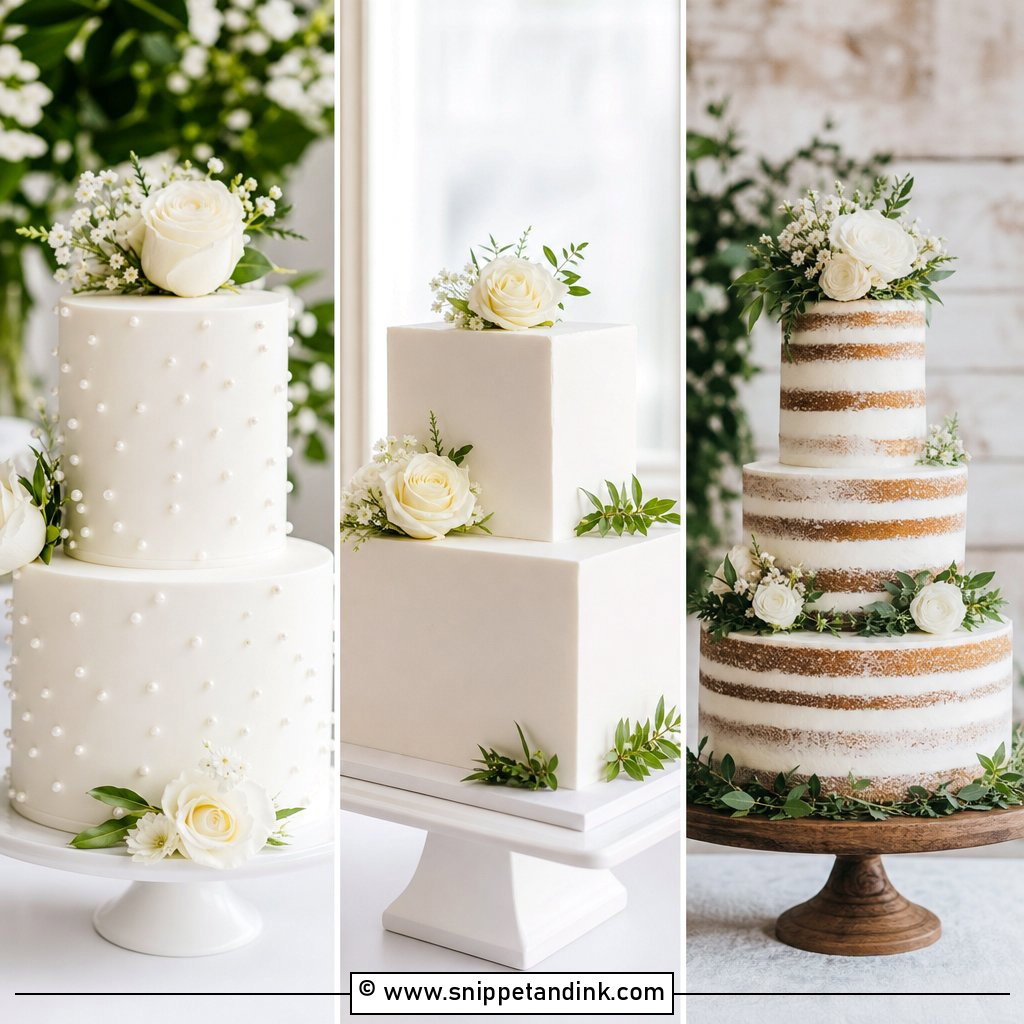
1. Simple Two Tier Wedding Cake
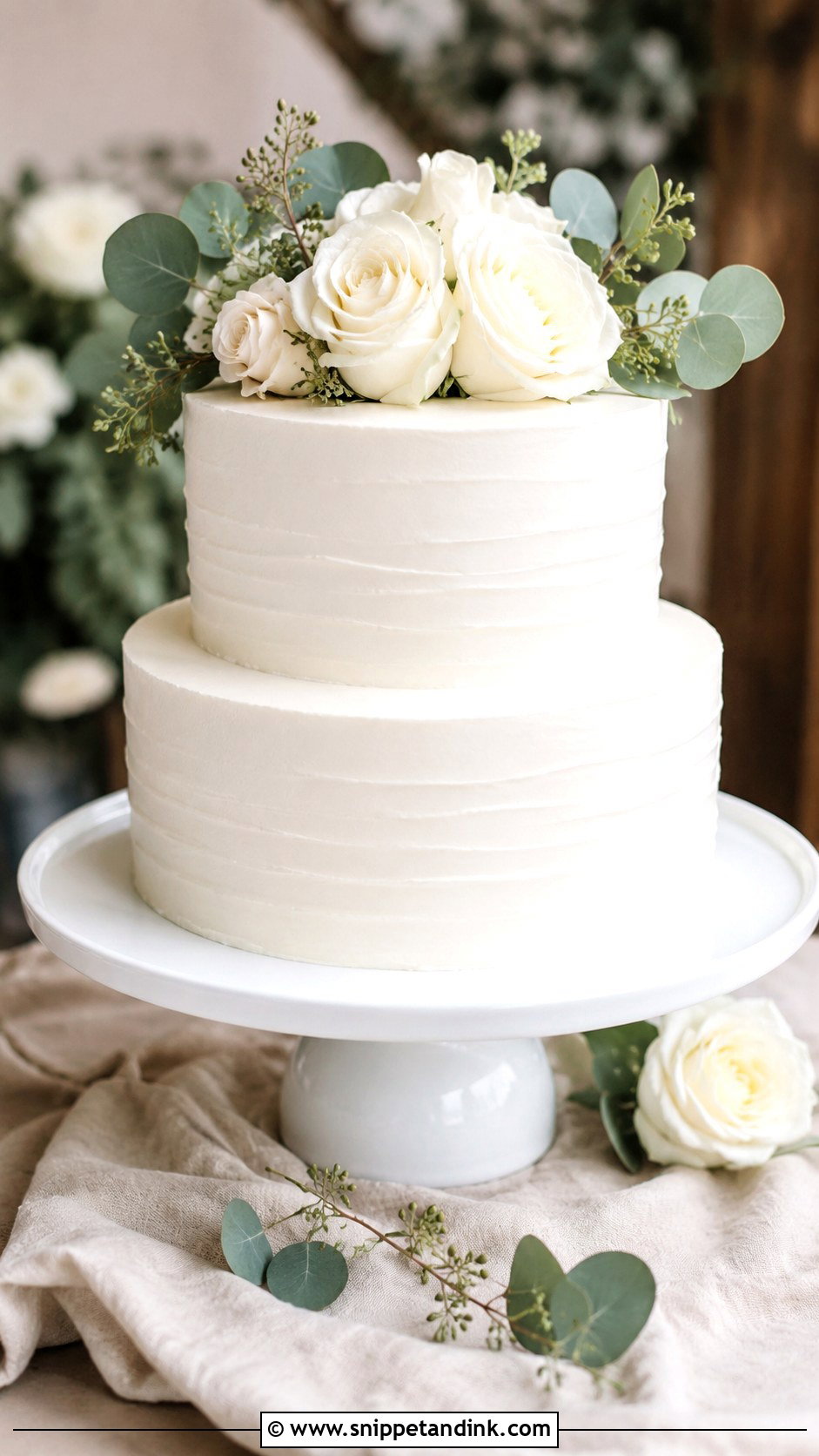
Two tiers give a reception table height without crowding it. Smooth white buttercream with a small cluster of flowers, some greenery or a few pearls is the classic version, with vanilla, almond, lemon or a champagne-style sponge inside. For something less expected, I’ll make the top tier taller than the bottom. That proportion looks modern, but a tall tier is really two cakes stacked on a hidden board, so it needs its own internal supports. Ask for it early so your baker can plan the structure.
2. Single Tier Wedding Cake
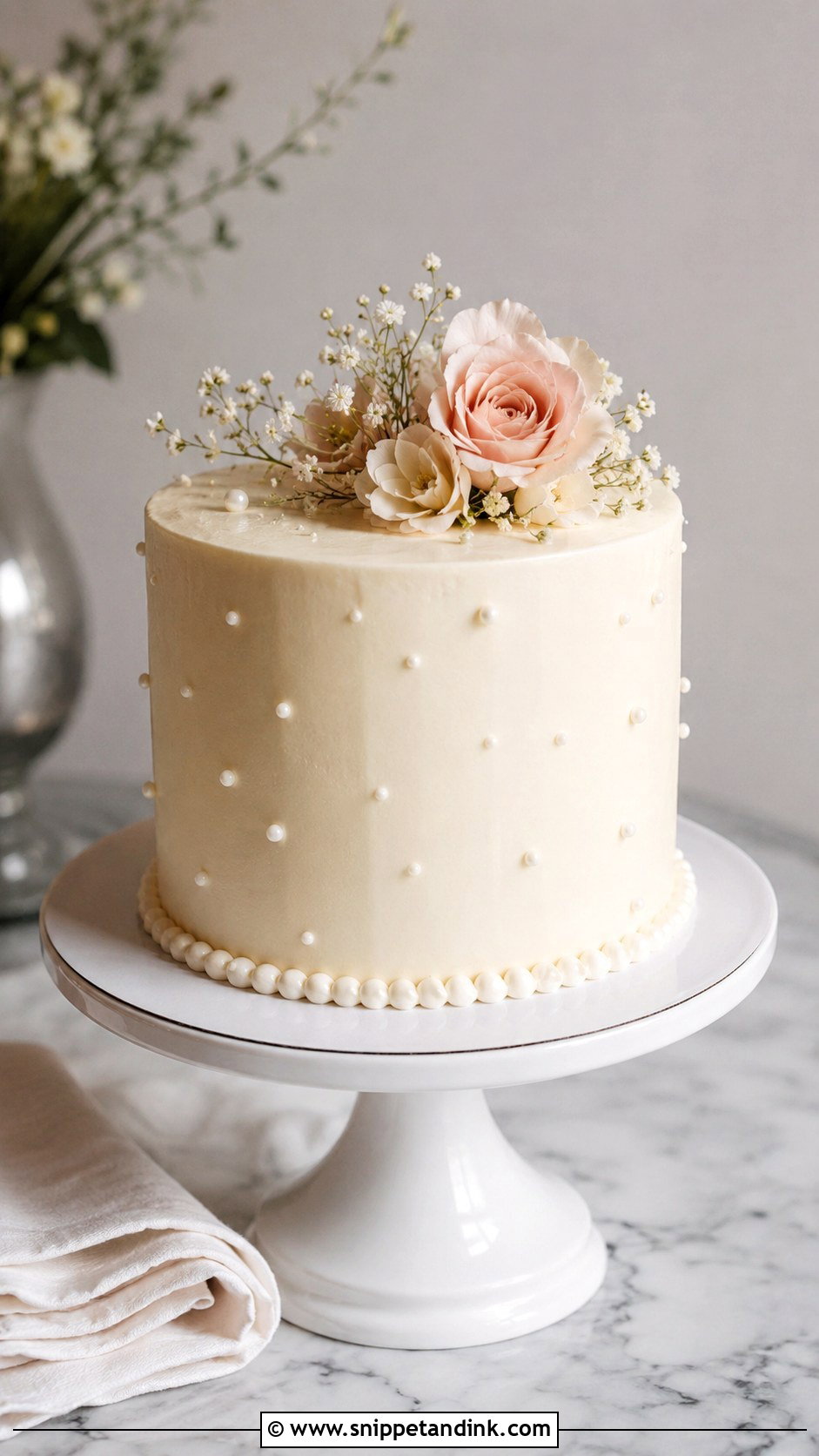
One tier is all an elopement, a courthouse lunch or a small backyard dinner needs. The challenge is making it look intentional rather than like a birthday cake that wandered in. Height does most of that work: a tall, narrow round with smooth frosting and a few fresh blooms on a good stand reads as a wedding cake. A small piped border, pressed flowers or a delicate topper can finish it. It’s easy to cut, easy to carry and kinder to the budget.
3. White Buttercream Wedding Cake
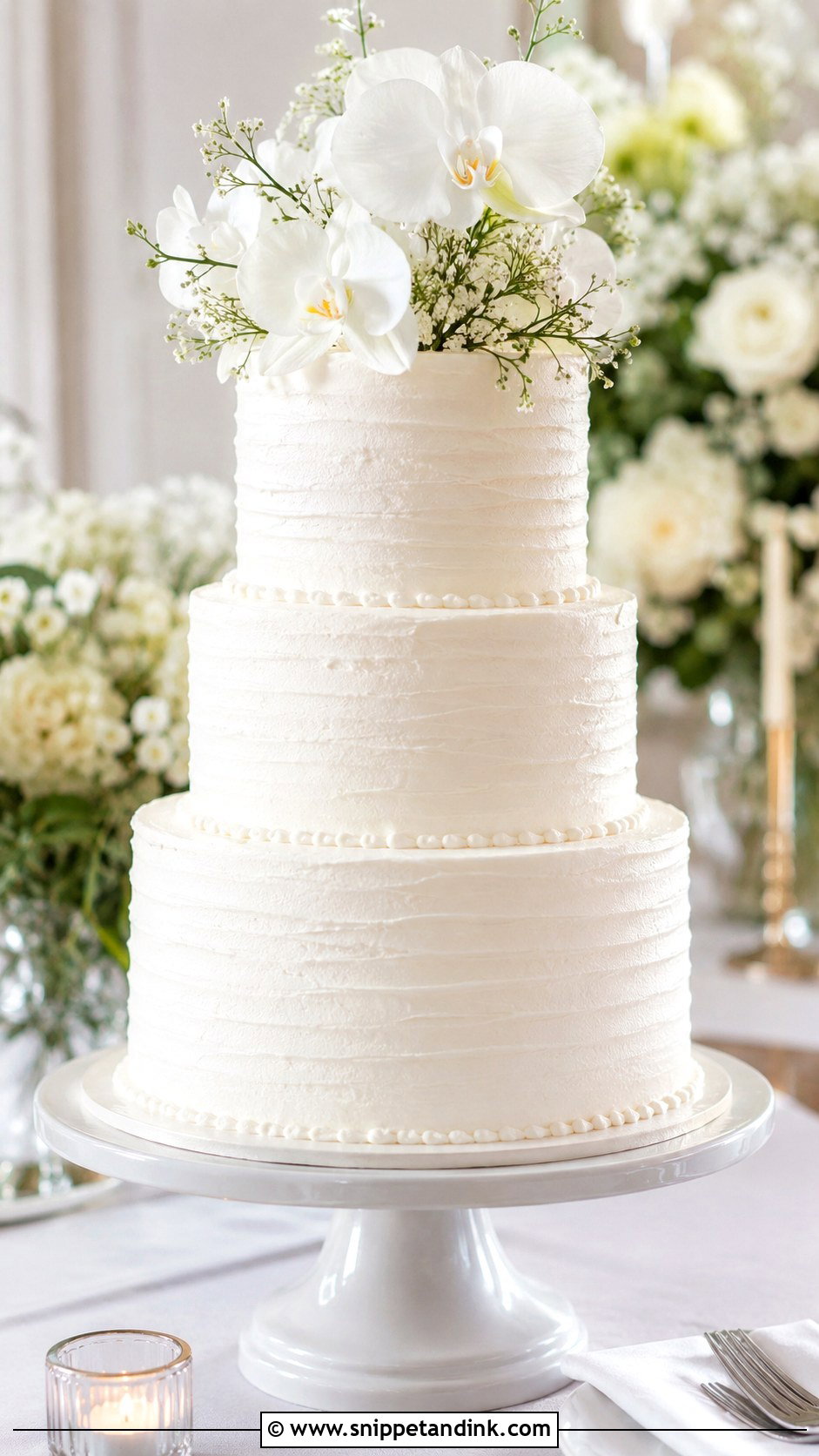
Buttercream has a softness fondant can’t copy, which is why I steer most couples toward it. For a truly smooth finish I chill the crumb-coated cake, then run a warmed scraper around it; the slight warmth melts the surface just enough to close every tiny gap. Keep it smooth for a modern room or lightly textured for something relaxed. White roses, orchids or small sprigs of greenery suit it, and nearly every flavour works inside, from vanilla bean to lemon raspberry. It marks easily, so once it’s set up, nobody should touch it until it’s cut.
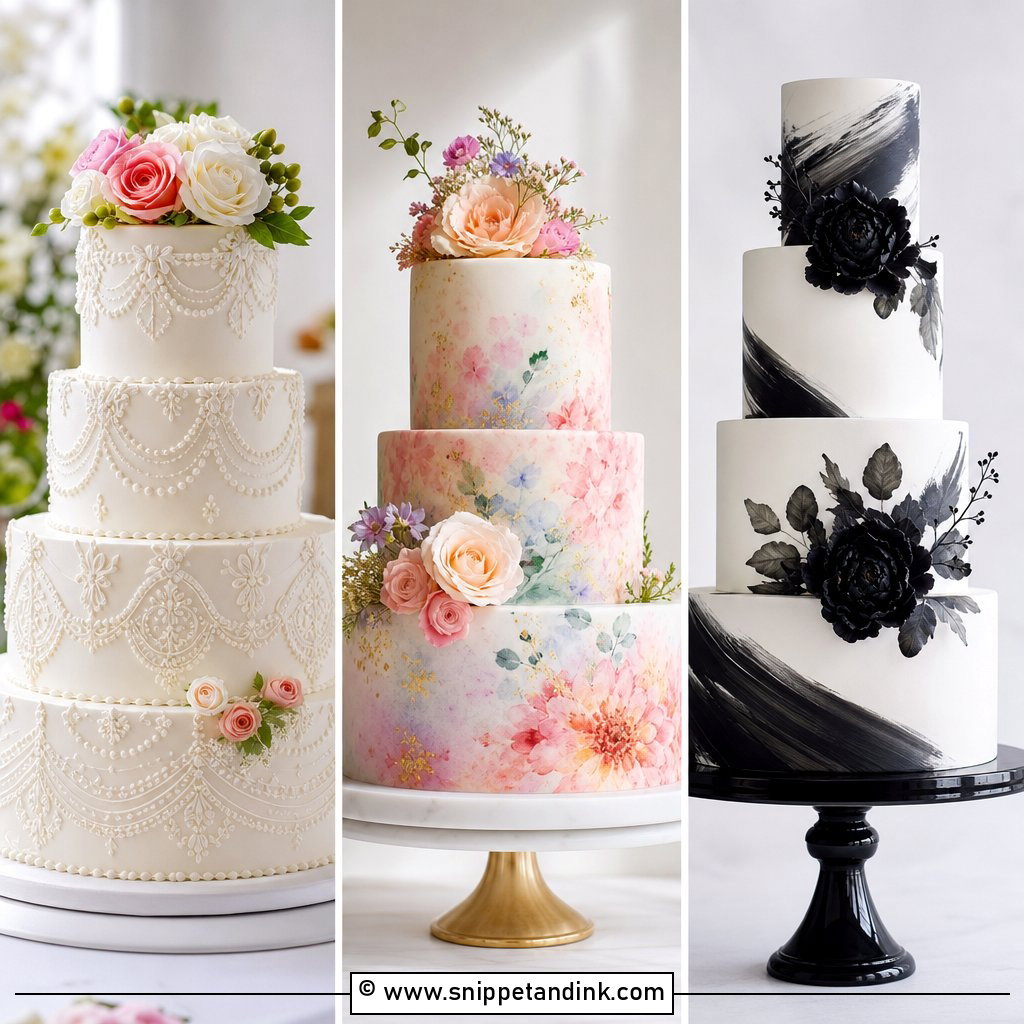
4. Vintage Wedding Cake
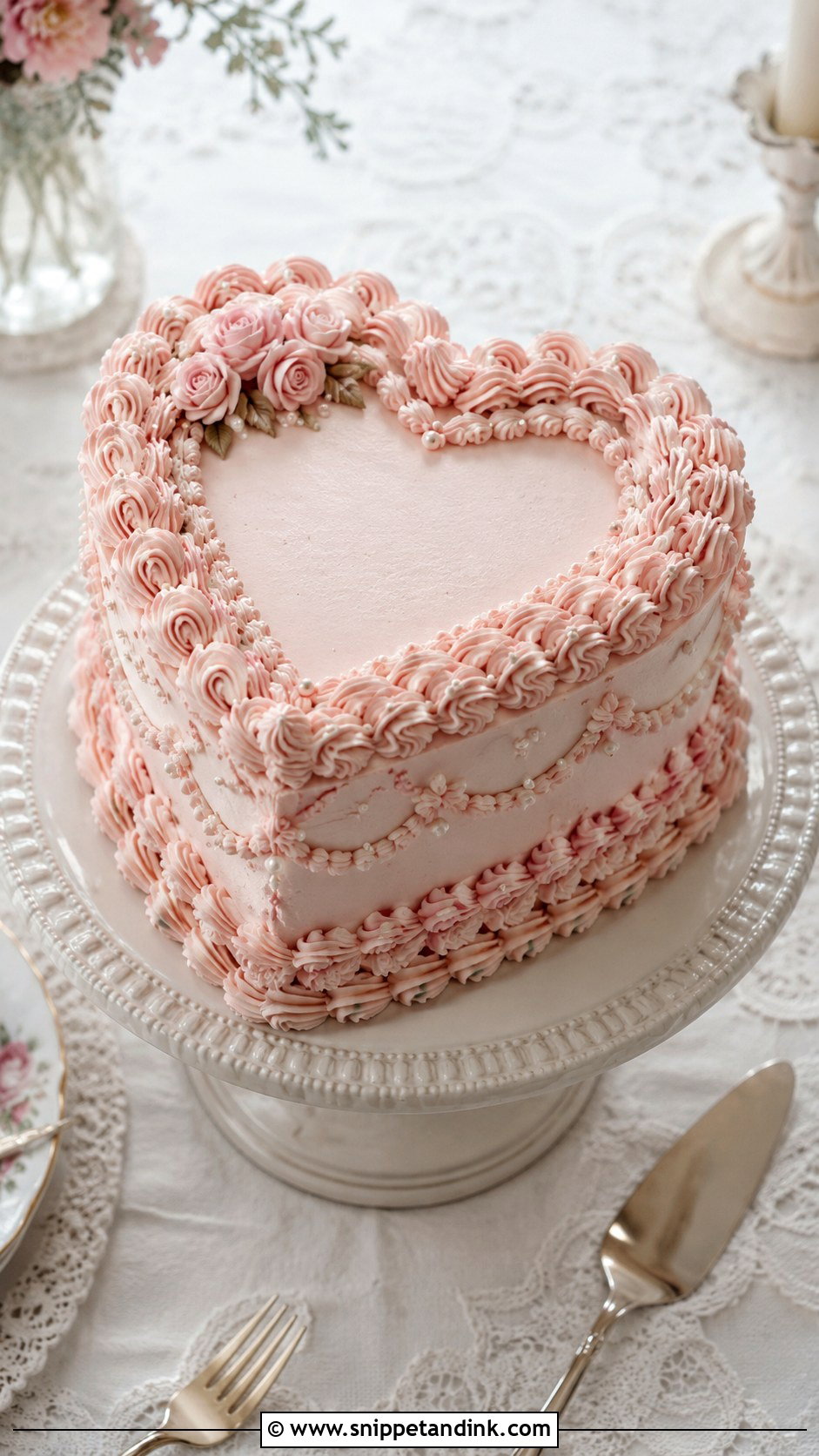
Vintage cakes get their charm from piping: shell borders, soft swags, small pearls and overpiped scrolls. Pale palettes keep the style fresh, so I’d choose ivory, blush, powder blue or butter yellow over anything bright. Heart-shaped vintage cakes are popular for small weddings, while two tiers give more presence. Piped buttercream needs a stiffer consistency than spreading buttercream, otherwise the shells slump within an hour in a warm room. Done well, the piping is decoration enough without toppers or big flowers.
5. Minimalist Wedding Cake
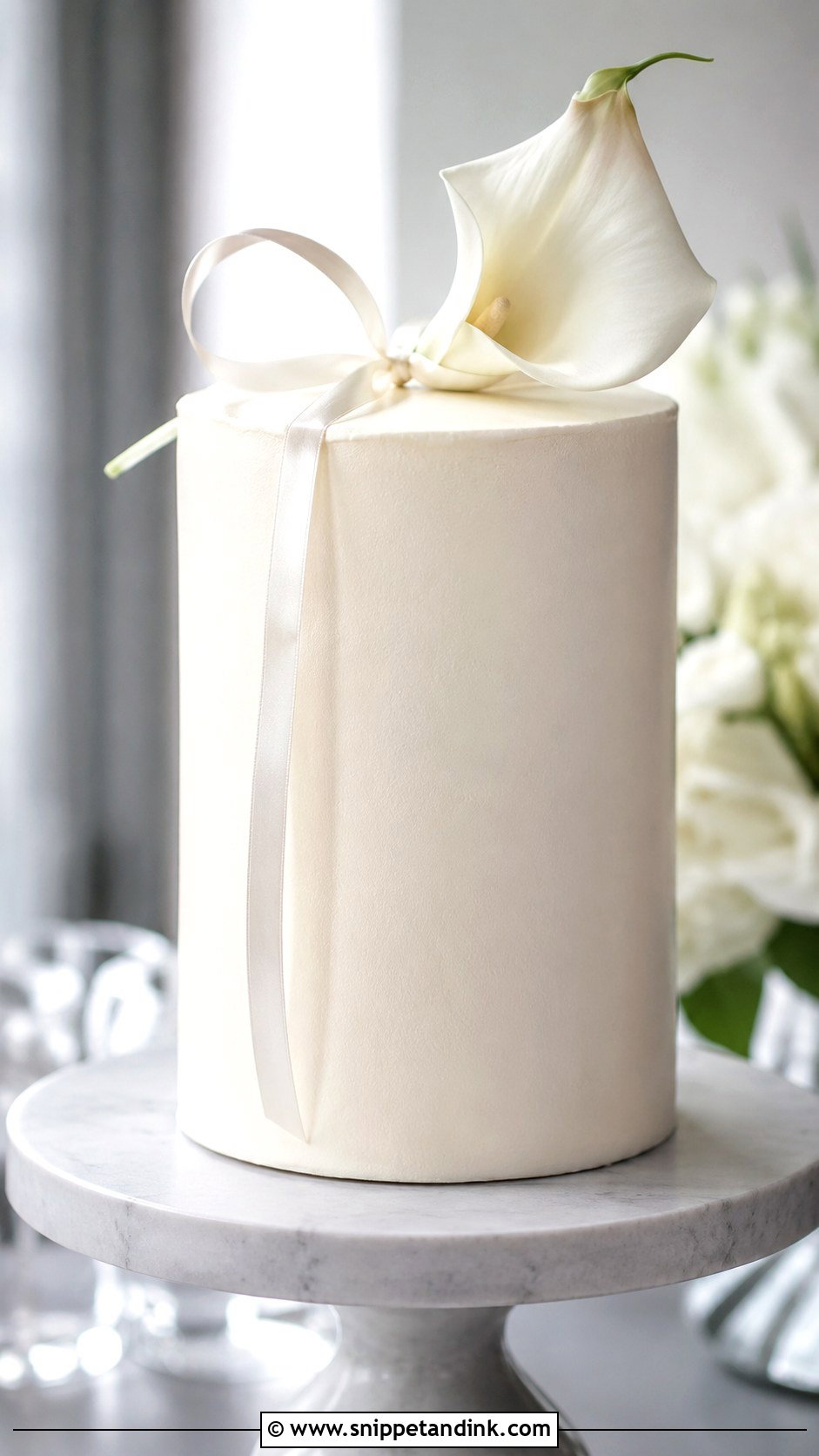
A minimalist wedding cake has smooth frosting, a soft neutral colour and one chosen accent: a single flower, a thin ribbon, a fine gold edge or a modern topper. Couples are sometimes surprised that minimal doesn’t mean cheap. With nothing to hide behind, every edge has to be razor sharp, and that takes more finishing time than a cake covered in flowers. Square, tall round or slim two-tier shapes all suit it, with vanilla bean, almond, coconut or lemon inside.
6. Rustic Wedding Cake
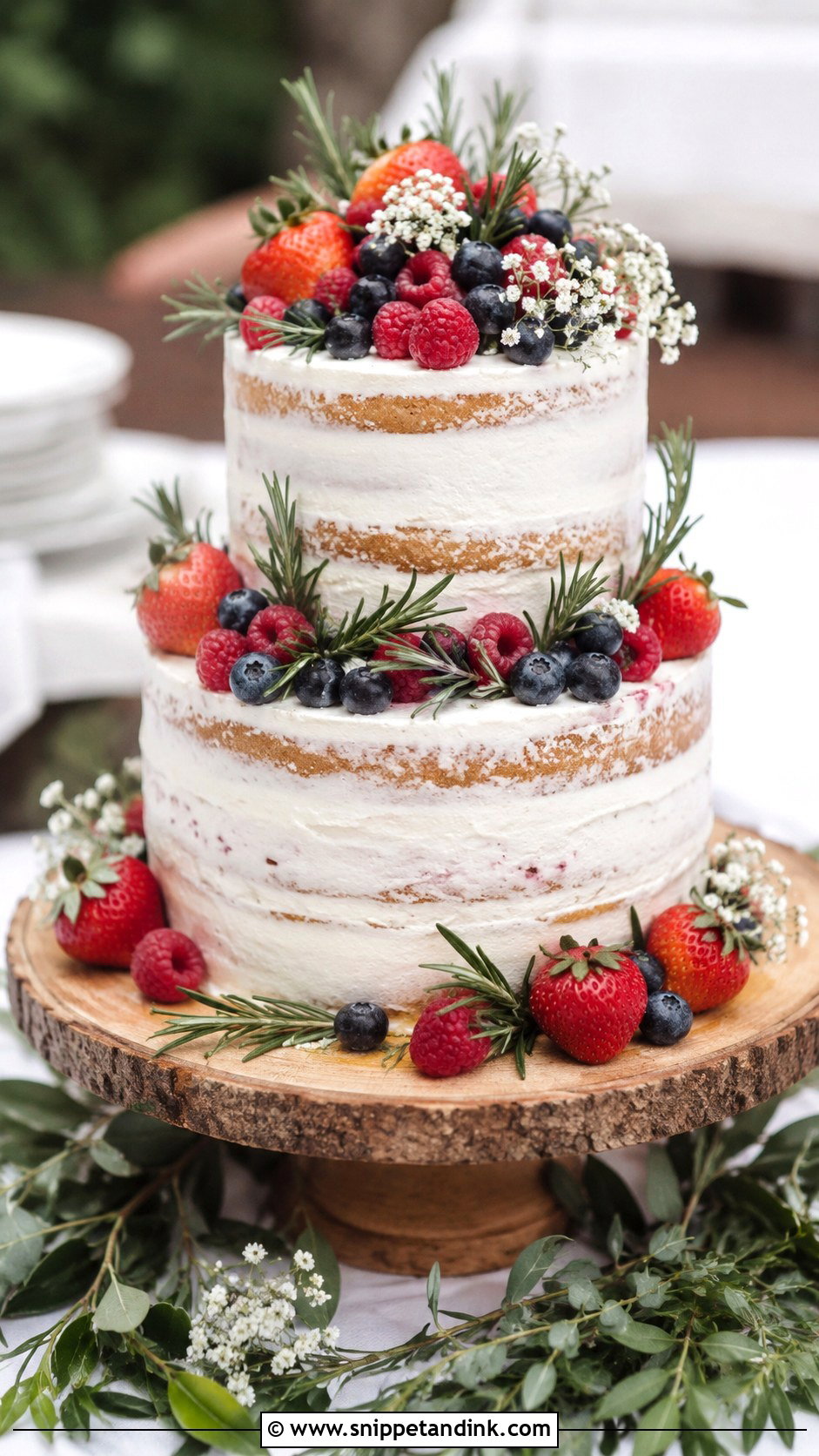
A rustic wedding cake suits barns, ranches, gardens and anywhere outdoors. Semi-naked or textured buttercream, seasonal blooms, herbs like rosemary, figs or blueberries, and cream-coloured frosting over a vanilla or spice sponge all fit the setting. It should feel relaxed, not messy. If you’re using a wood slice as a stand, I always put a sealed cake board between the wood and the cake, since raw timber can carry sap and dust. It’s also a natural choice for anyone who dislikes fondant.
7. Semi Naked Wedding Cake
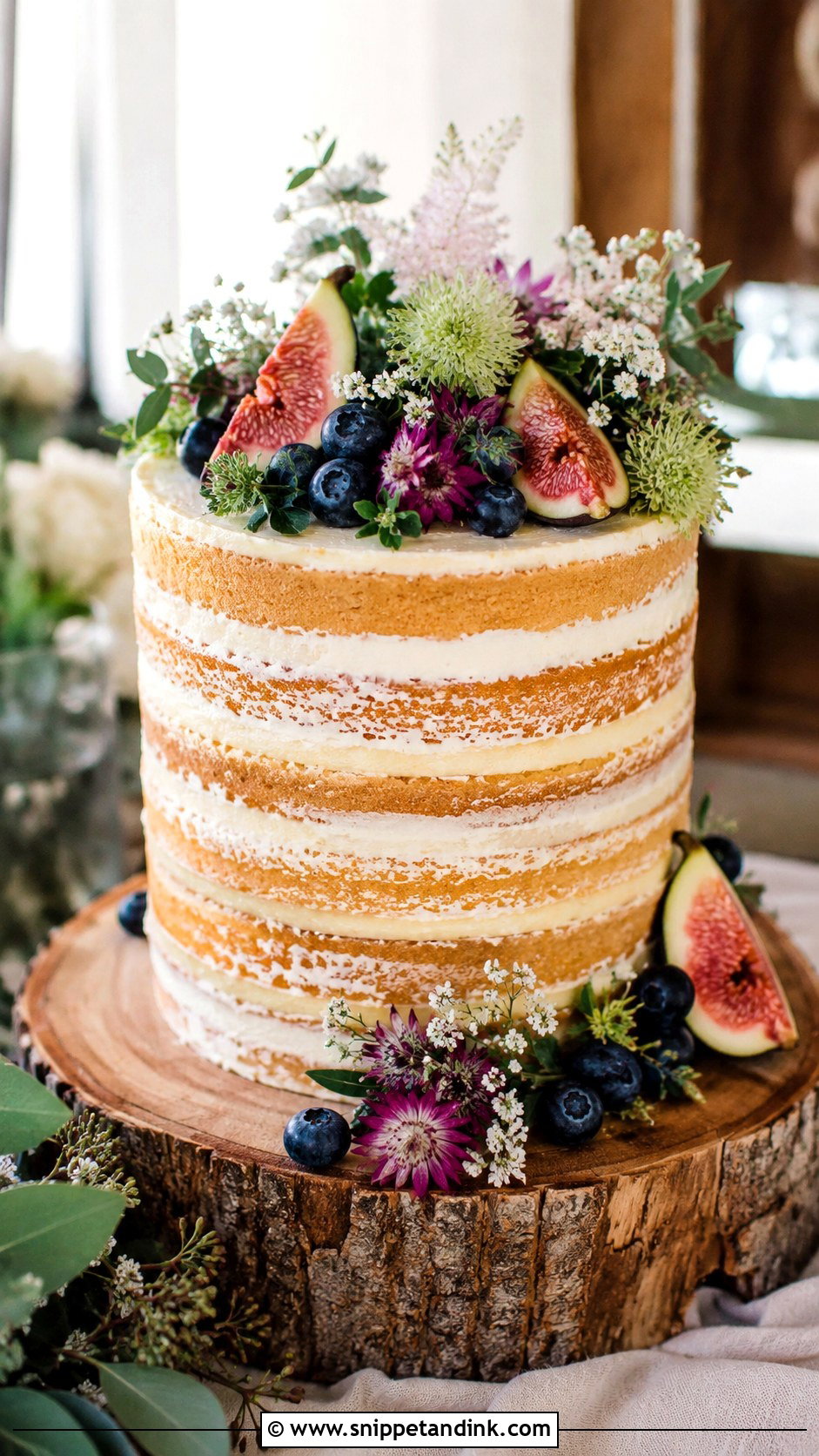
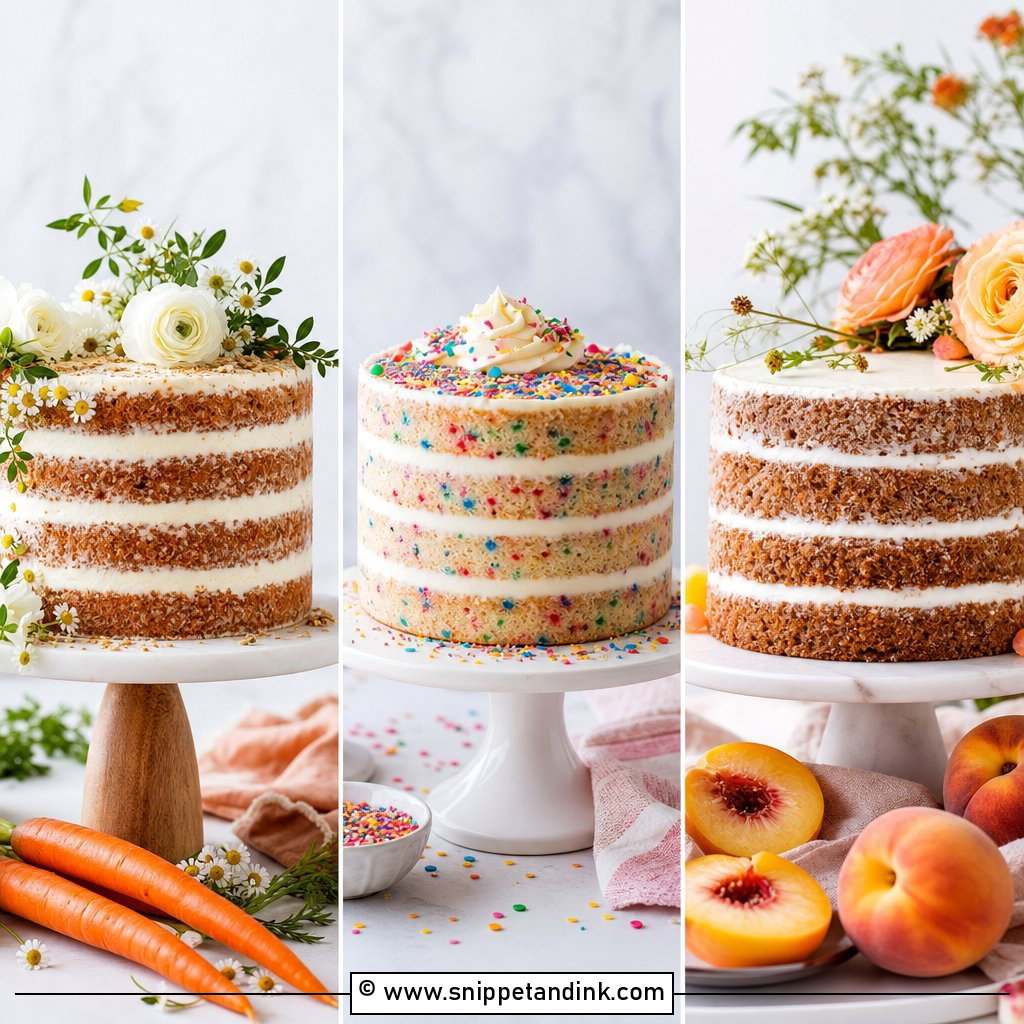
Semi-naked cakes show the sponge through a thin scraped coat of frosting, so the layers become part of the decoration. Vanilla, chocolate, almond, carrot and lemon all look good cut this way. Berries, small flowers and herbs finish it, and a dusting of powdered sugar adds a frosted look, although sugar dissolves into buttercream quickly on a humid day. I dust it on site, right before guests arrive. A wood slice, ceramic stand or linen-covered table with greenery around the base suits it.
8. Floral Wedding Cake
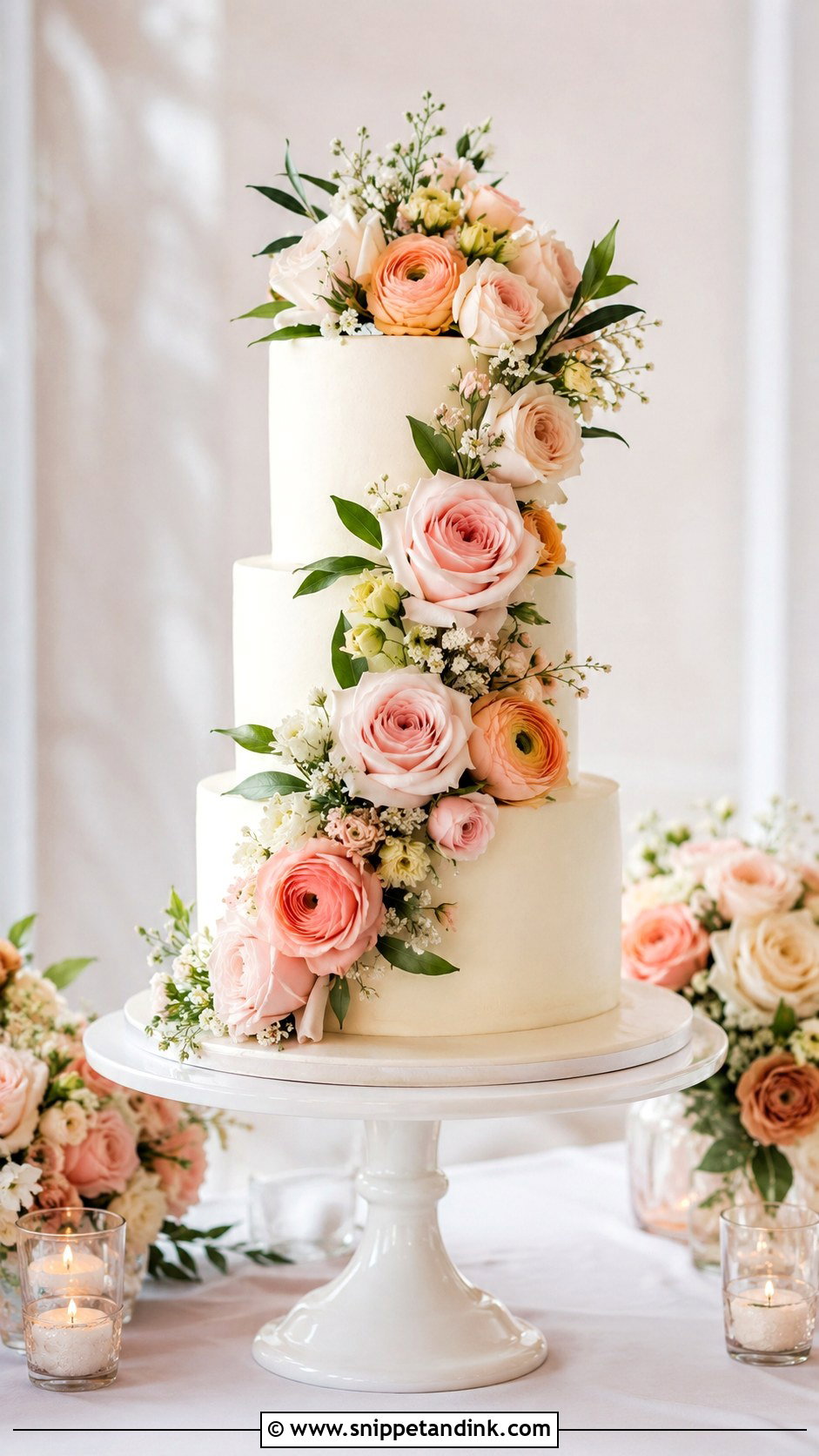
Flowers on a cake feel modern when they’re placed with restraint: one cascade, one corner cluster or a few stems tucked between tiers rather than full coverage. Matching them to the bouquet or the ceremony arch ties the day together, and I ask the florist to set aside extra stems from the same order for that reason. Keep the frosting smooth so the flowers do the work. White, blush, lavender and peach are the easy colours, though one bold bloom on a plain cake can be striking.
9. Pressed Flower Wedding Cake
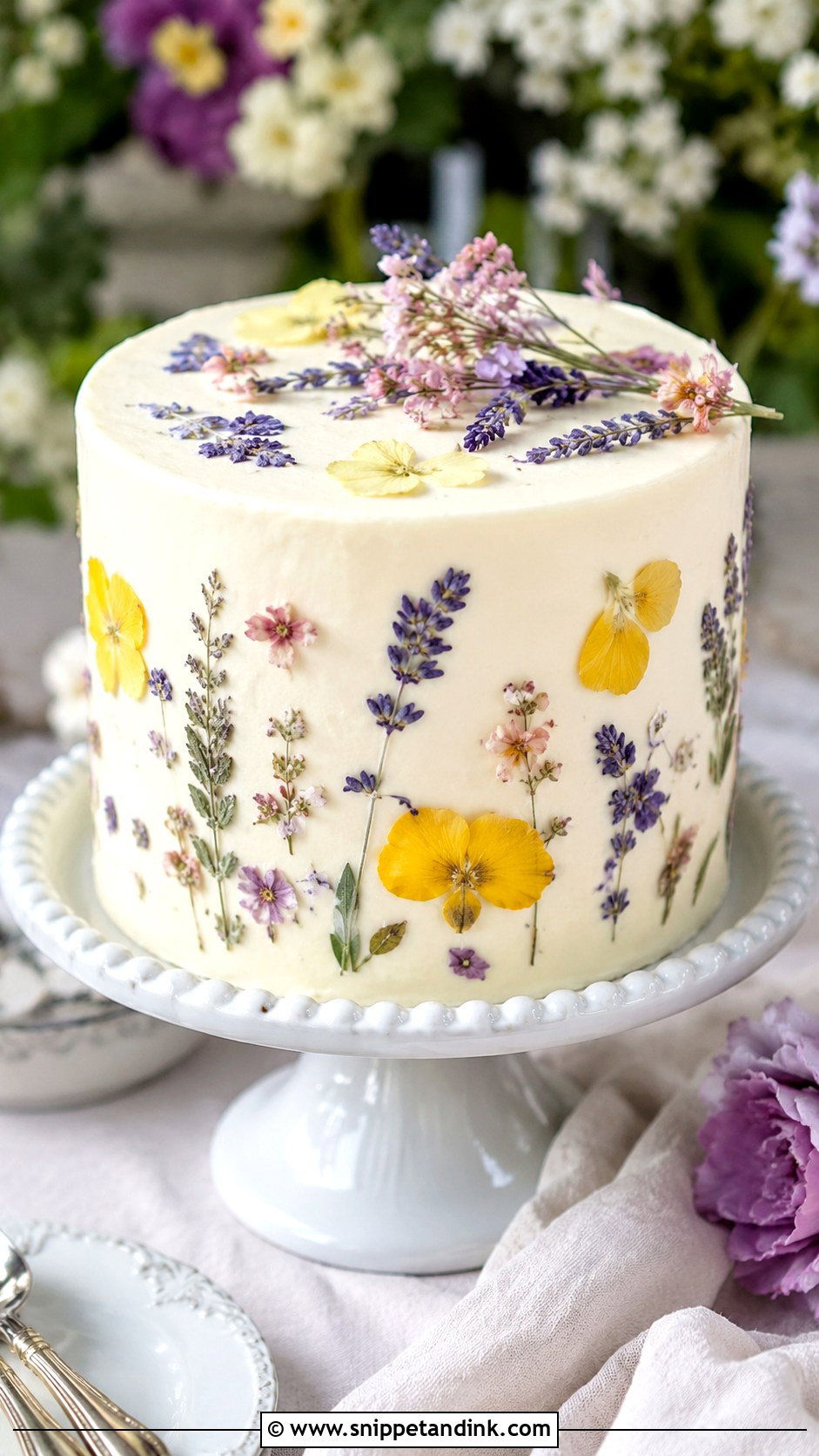
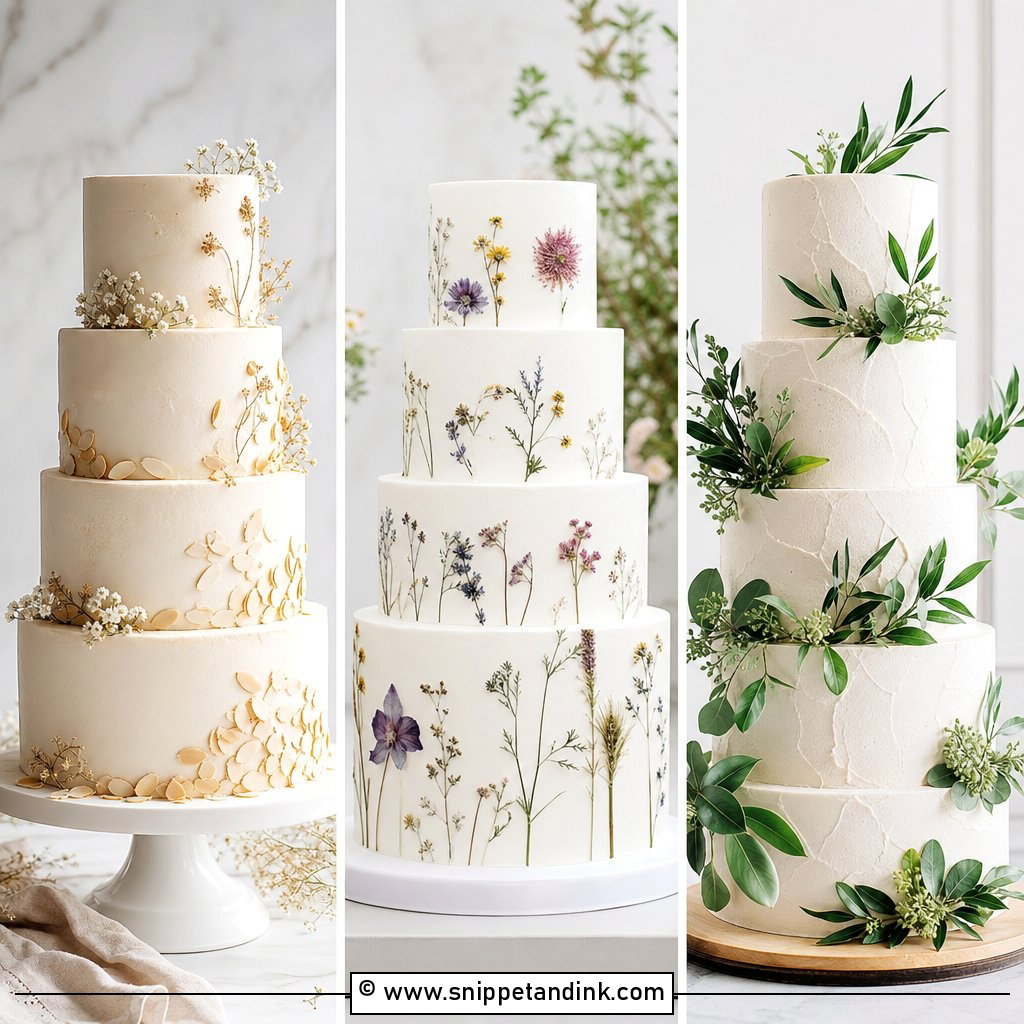
Pressed flowers make a flat floral pattern that looks hand-painted from a distance. Every petal stands out on white or ivory buttercream, scattered lightly or arranged as a loose wreath. Use only edible blooms in your palette: lavender, yellow, pink or blue all exist among edible varieties. Pressed petals sitting on moist frosting can darken over many hours, so I apply them as close to the event as I can. Spring and summer garden weddings suit them best.
10. Pearl Wedding Cake
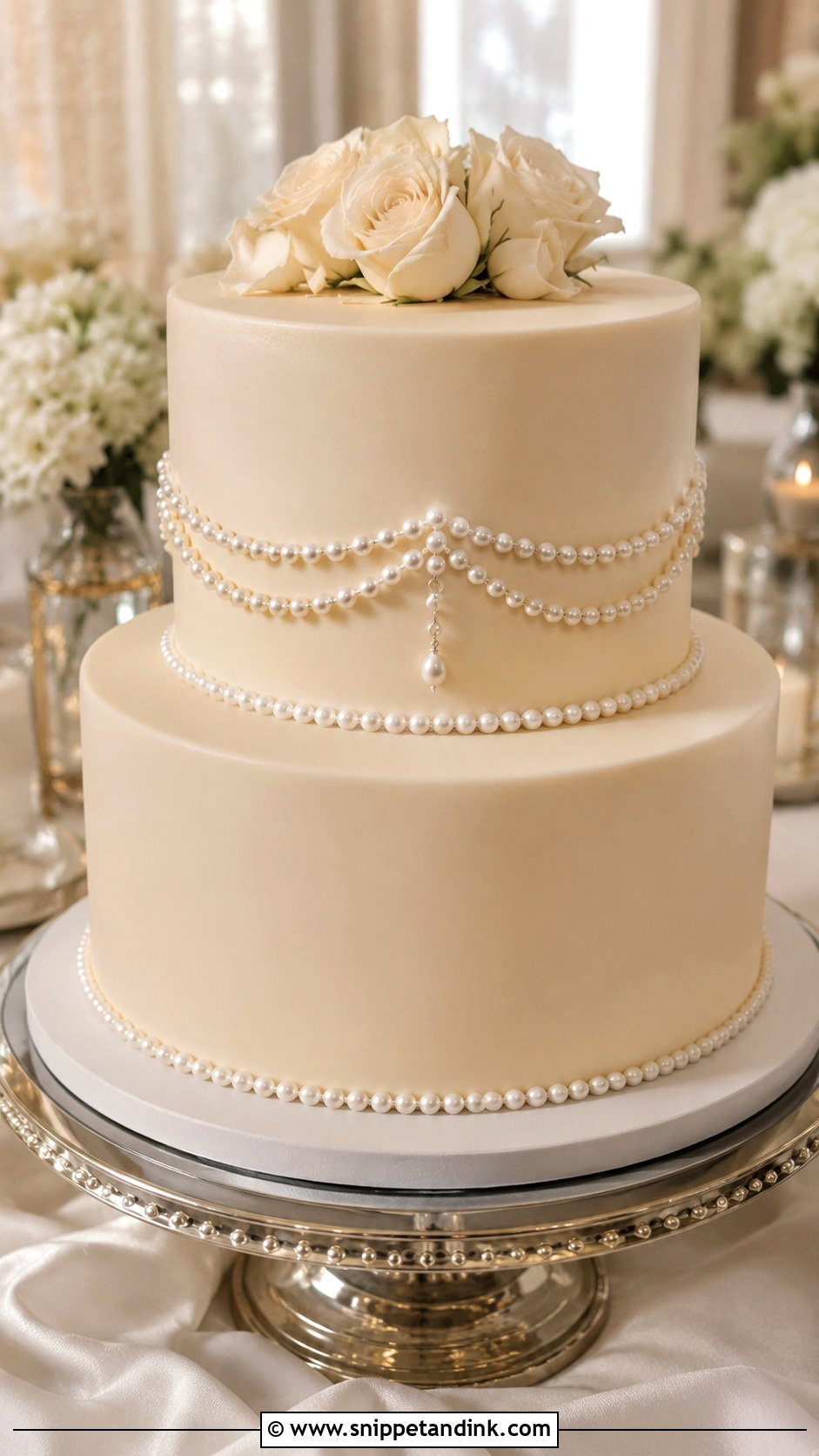
Pearls make a cake glamorous without glitter. Edible pearls can be scattered over smooth buttercream, set around tier borders or lined up vertically, usually on ivory, white or champagne. Hard sugar pearls are crunchy, and some guests find them unpleasant to bite into, so for scattered designs I often use softer fondant pearls I roll by hand. They’re a natural echo if your dress, veil or earrings carry pearls, and they pair with satin ribbon, tiny flowers or smooth fondant.
11. Bow Wedding Cake
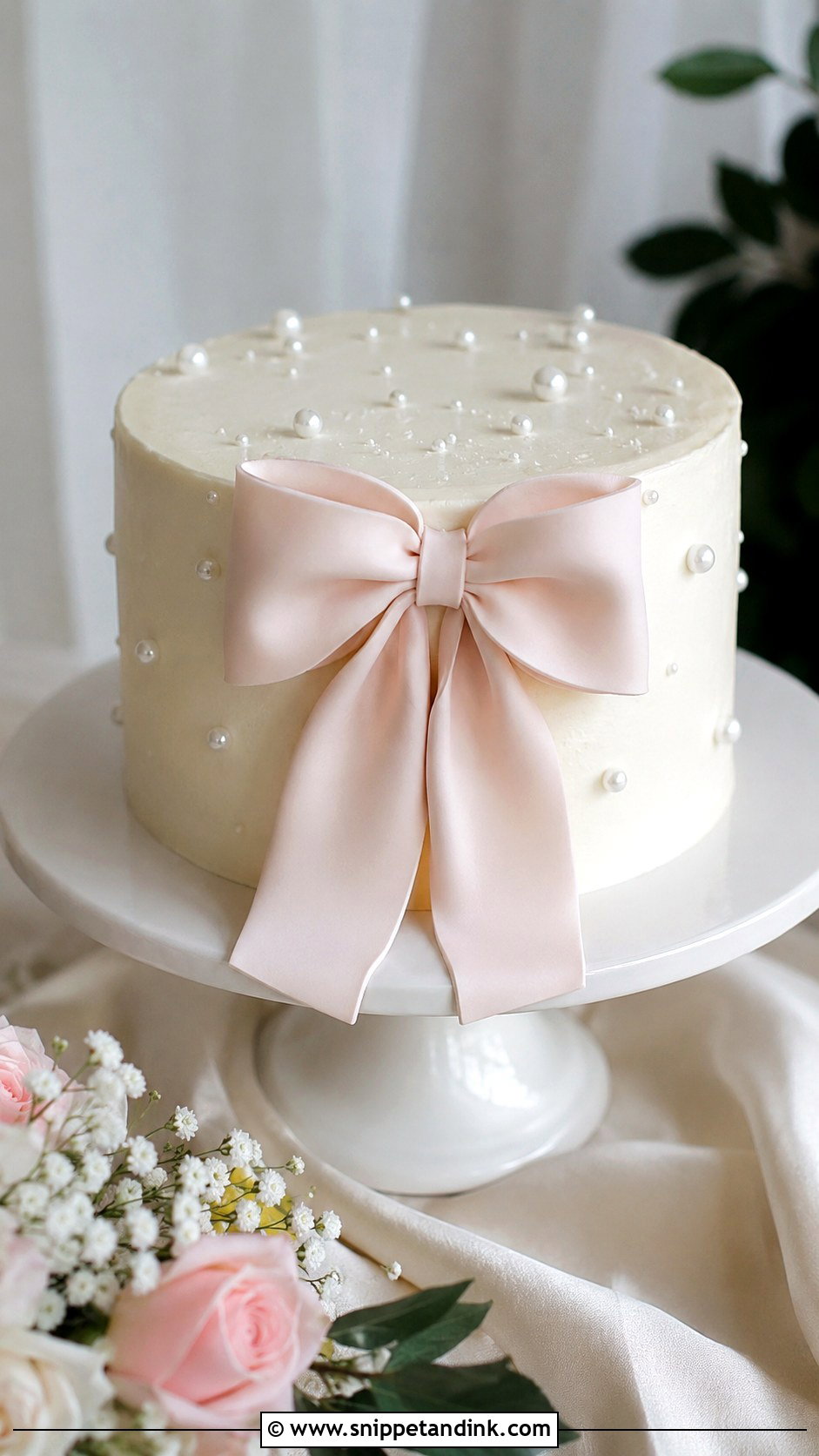
One bow on a clean cake is enough. It can be fondant, an edible silk-effect ribbon, or real ribbon wrapped carefully around a tier. Fondant bows have to be made days ahead; I shape the loops over rolled tissue and let them dry hard, otherwise they collapse the moment they’re attached. White and ivory read classic, while blush, black, dusty blue or sage can pick up the wedding palette. Keep the frosting smooth so the bow is the feature, on one tier or two.
12. Square Wedding Cake
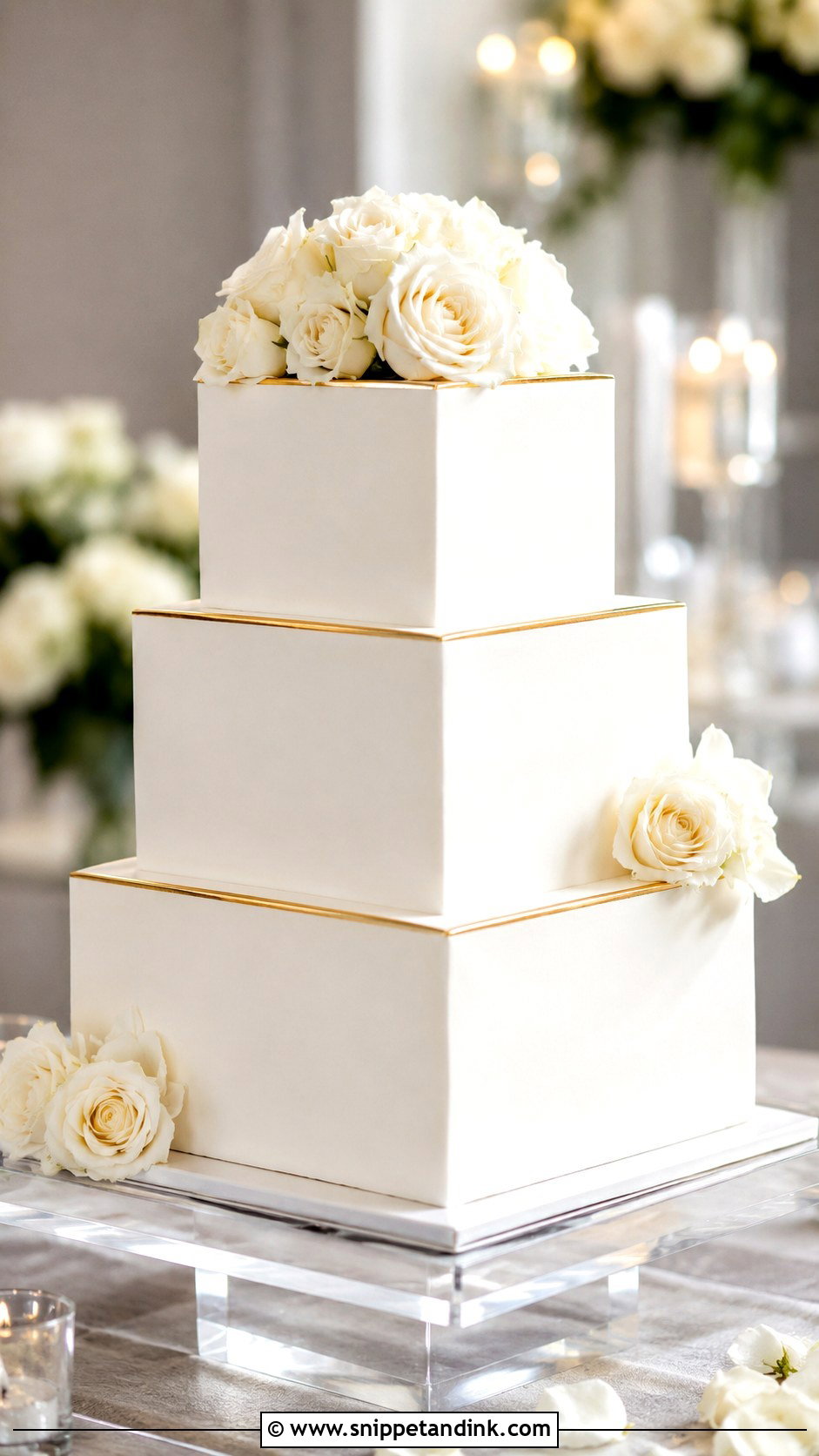
Square tiers make plain buttercream look architectural, which suits contemporary venues and city weddings. Keep it all white, add thin piping, use pressed flowers, or put a single floral cluster on one top corner. The corners are the weak point: in fondant they can crack or tear when the covering is smoothed down, and in buttercream they soften first in heat. Stacked square tiers also have to line up precisely, or the whole cake looks twisted. Vanilla bean, chocolate espresso, almond or lemon suit the clean shape.
13. Heart Wedding Cake
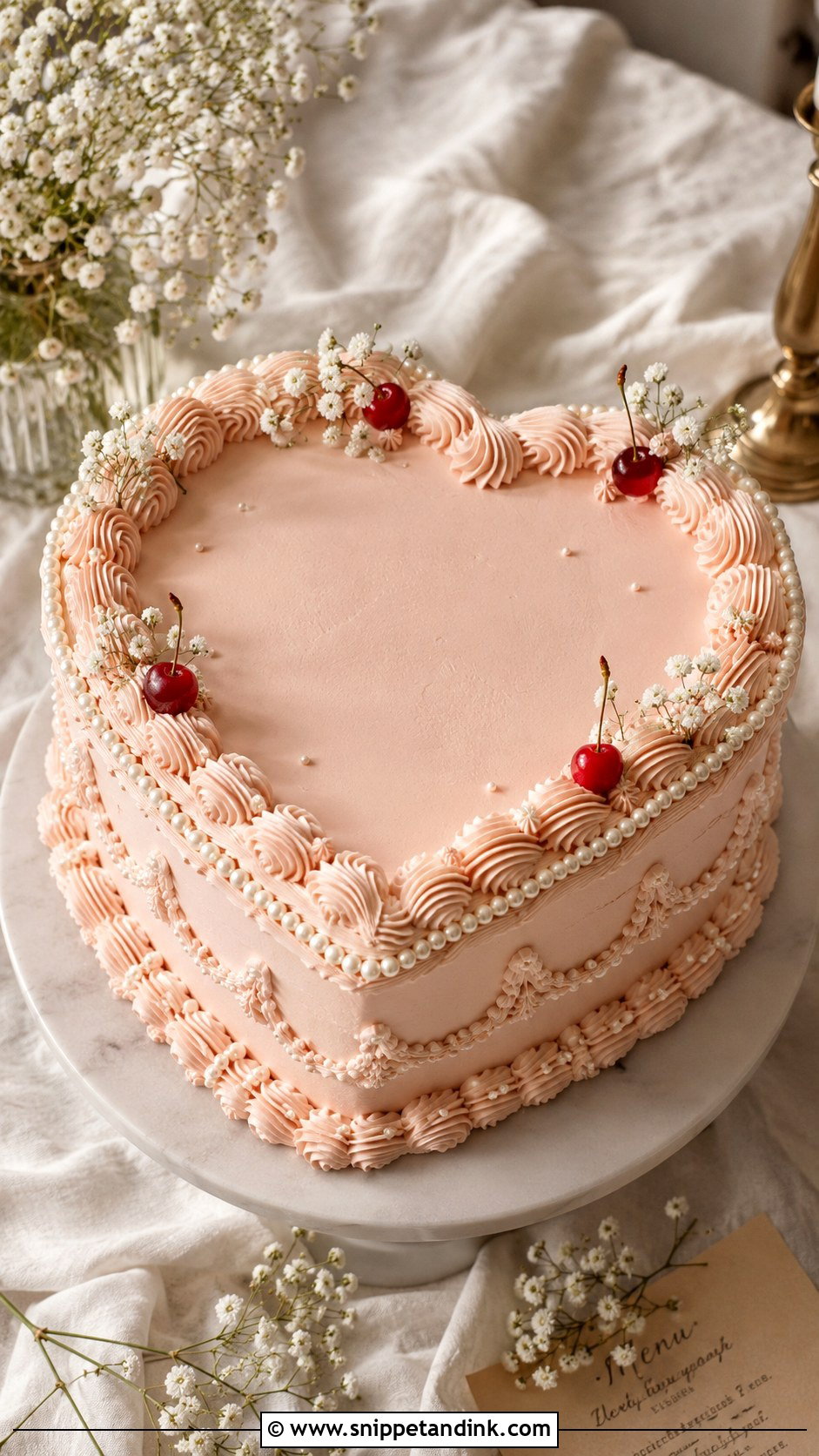
A heart cake brings personality to a smaller wedding. Vintage piping, pearl borders, cherries, tiny flowers or a short piped message on top all suit the shape, and soft colours keep it sweet rather than loud. Hearts cut awkwardly into neat portions, so I usually suggest one as a cutting cake while guests are served from a sheet cake or other desserts. It adds a bit of fun to the cake table and looks charming in close-up photos.
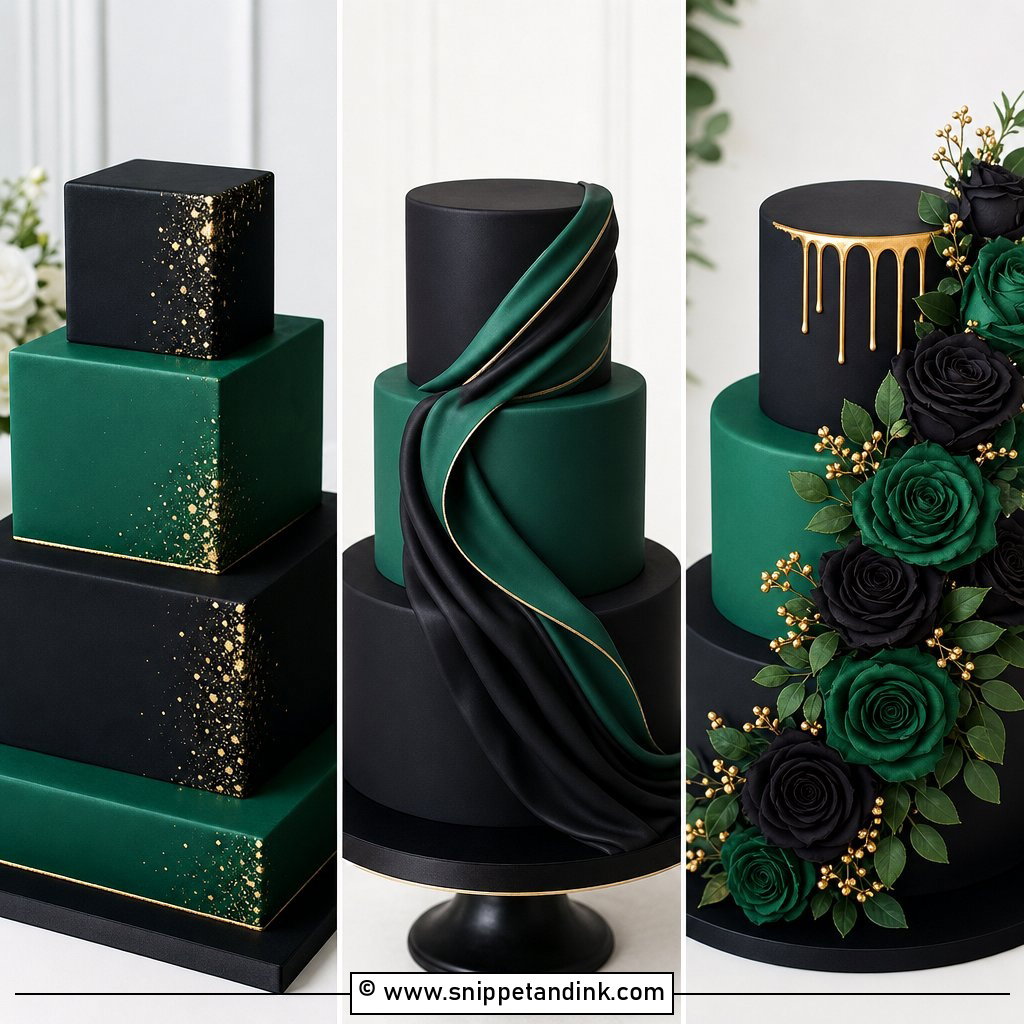
14. Black And White Wedding Cake
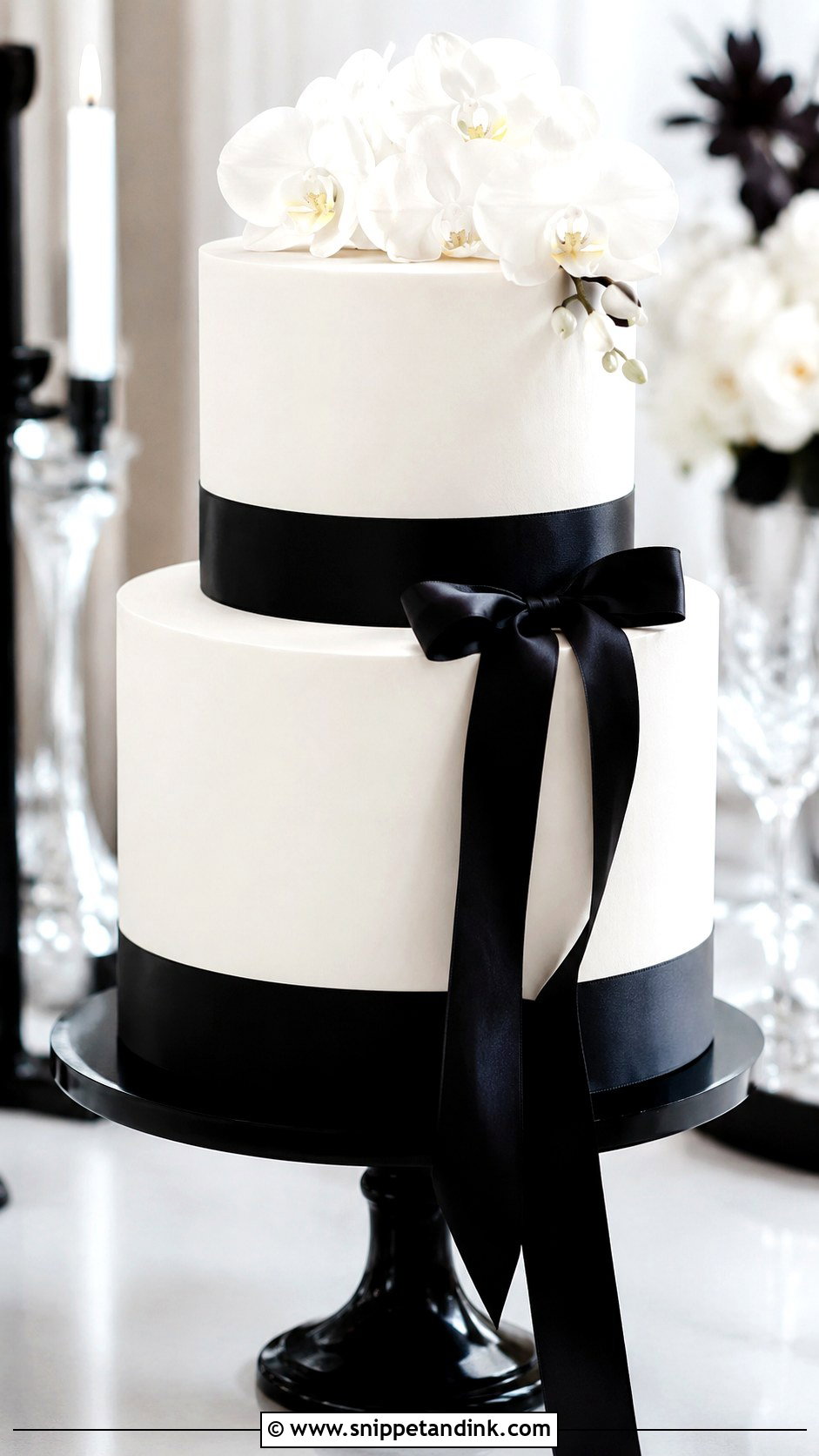
Black and white is bold but can still look refined. Start with a smooth white cake and add black ribbon, black piping, small black flowers or a clean monogram, or reverse it with a matte black tier and white blooms. Use the dark accents sparingly and leave plenty of clean space. A matte black surface shows every fingerprint and speck of dust, so I handle those tiers with gloves and add them to the stand last. It suits formal hotel receptions and evening weddings.
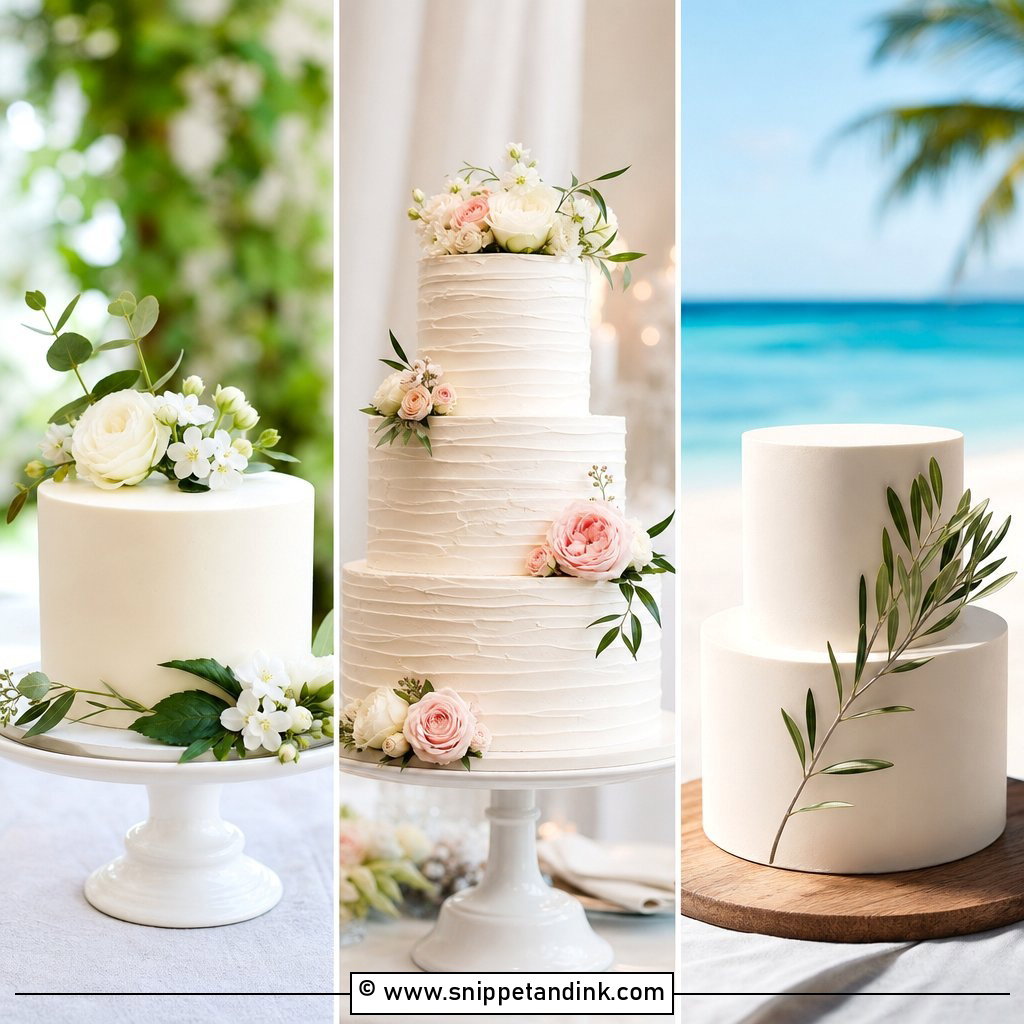
15. Blue Wedding Cake
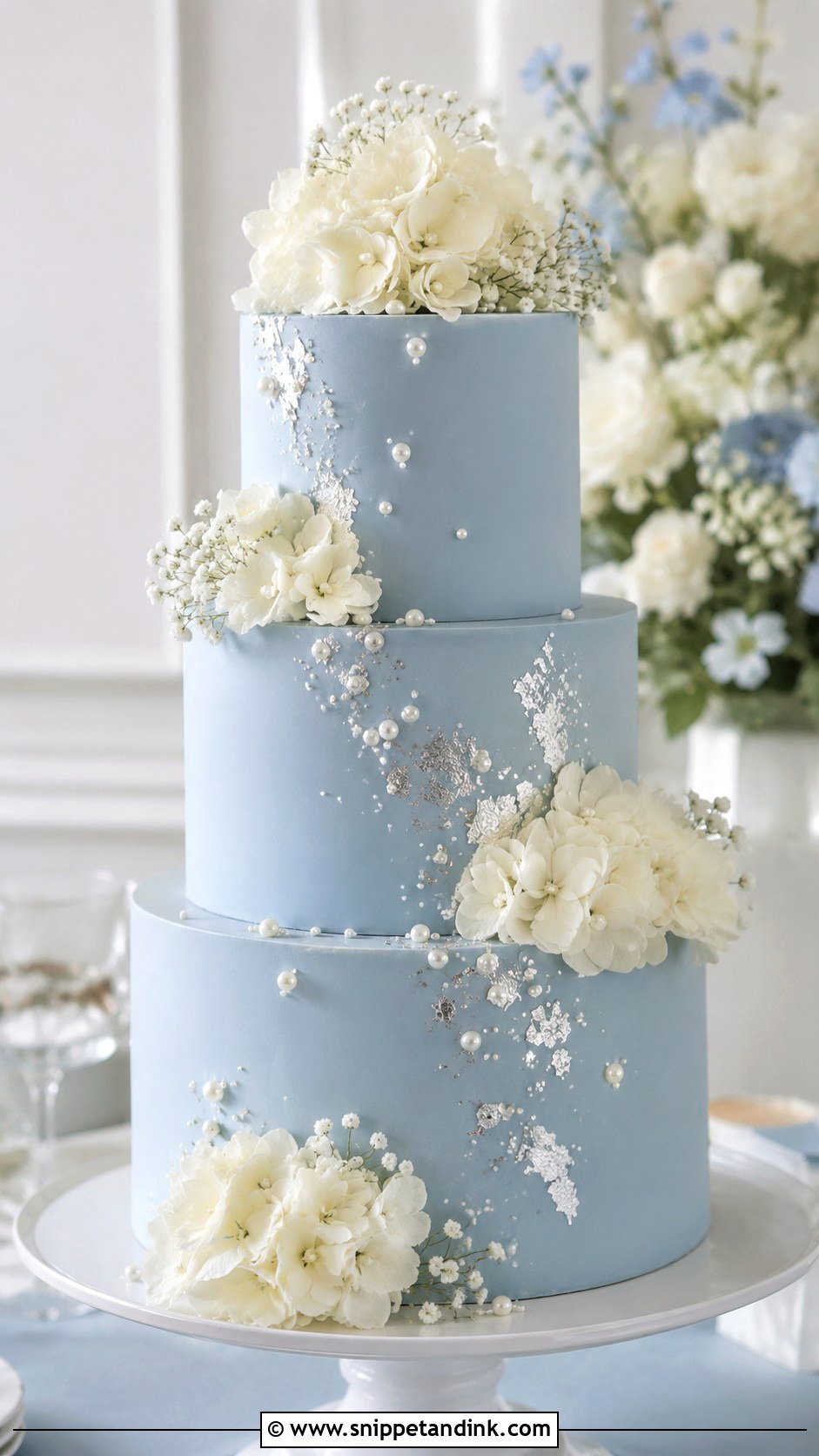
Blue adds colour while staying calm. Dusty blue, pale blue and French blue are the shades couples ask for most, used as buttercream on one tier, as a watercolour finish, or as blue flowers on a white cake. Getting a dusty blue usually needs a drop of black or grey in the mix; pure blue on its own looks like a children’s party. It pairs with silver, ivory, white roses and pearls, and suits coastal, garden and classic ballroom settings alike. Keep the shape simple so the colour leads.
16. Green Wedding Cake
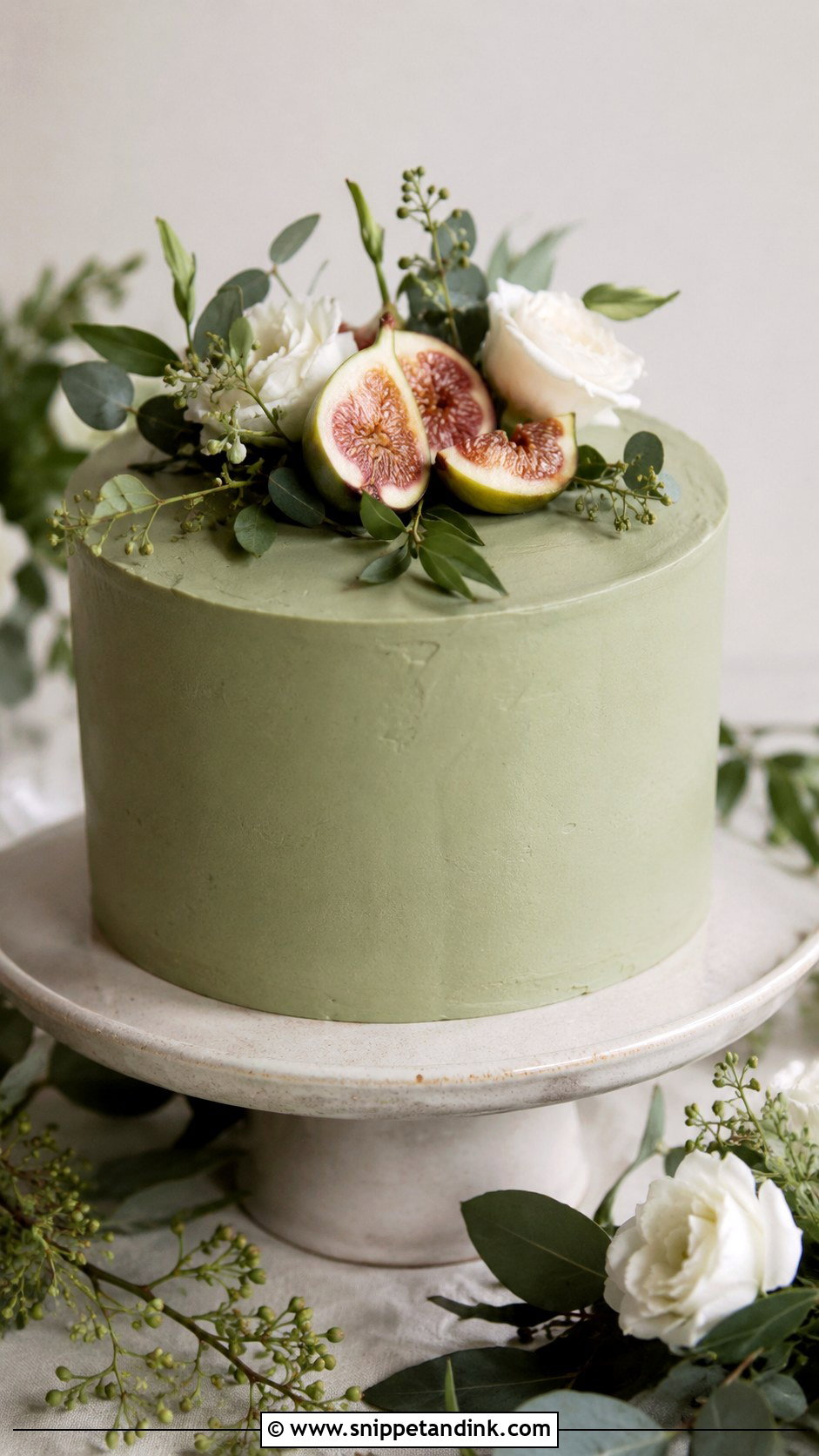
A green wedding cake suits couples who love organic, botanical styling. Sage, olive, eucalyptus and soft mint blend easily with wedding flowers and table decor. Smooth green buttercream reads modern; a white cake with greenery feels more classic. Pistachio is my favourite pairing here, because the sponge or buttercream comes out naturally pale green and the colour matches the flavour. Lemon and vanilla work too. Finish with fresh herbs, small white flowers, figs or delicate leaves.
17. Pink Wedding Cake
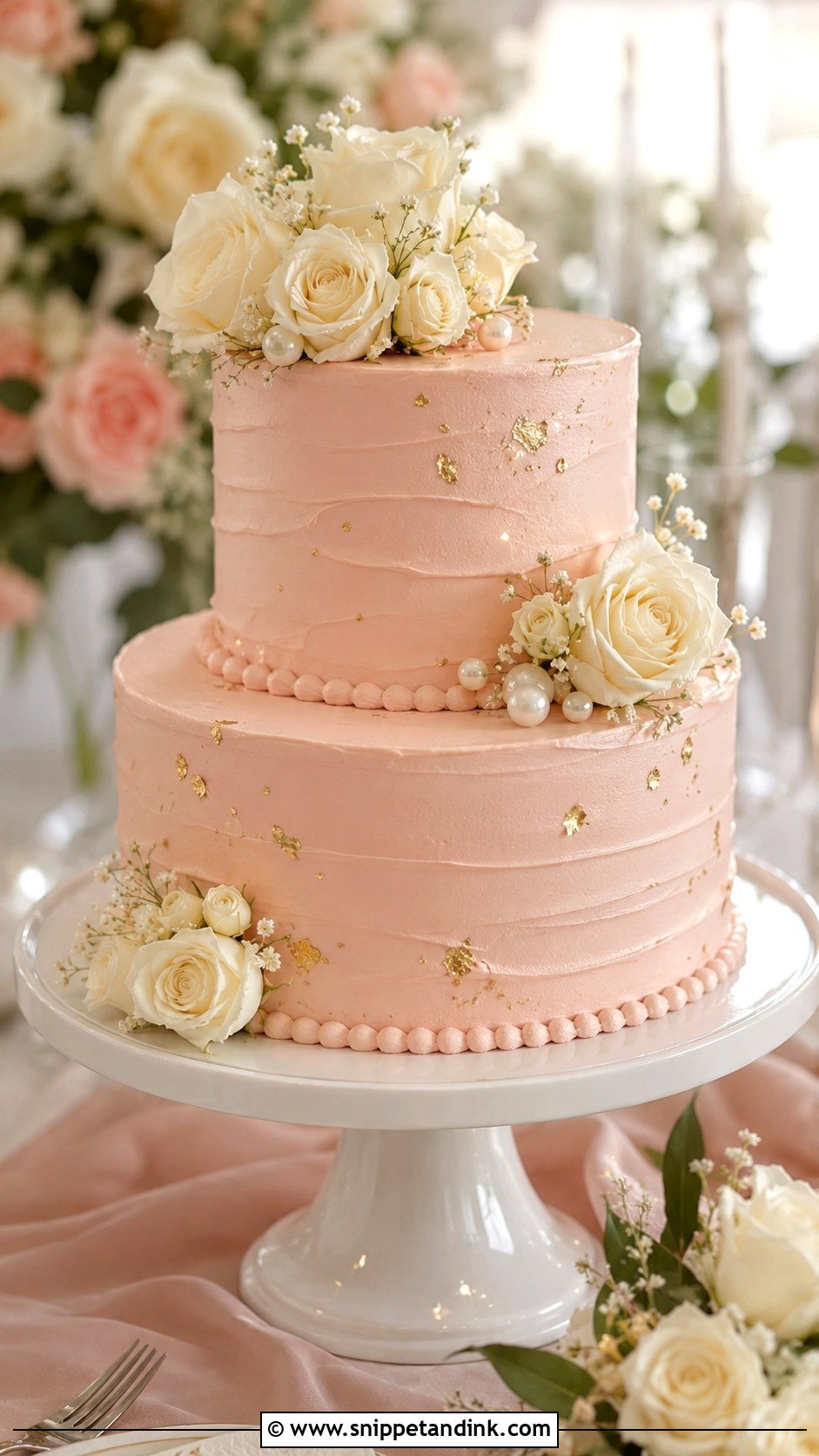
Pink is all about the shade. Blush, dusty rose, mauve and pale pink feel grown-up; bright candy pink rarely does. Smooth buttercream, simple piping or a single floral cluster keeps it balanced, with ivory flowers, pearls, gold or soft greenery alongside. One practical thing I warn about: some pink colourings fade noticeably under strong sunlight or bright display lights, so a pink cake shouldn’t sit in a sunny window for hours. It moves away from plain white while still fitting a classic setting.
18. Gold Wedding Cake
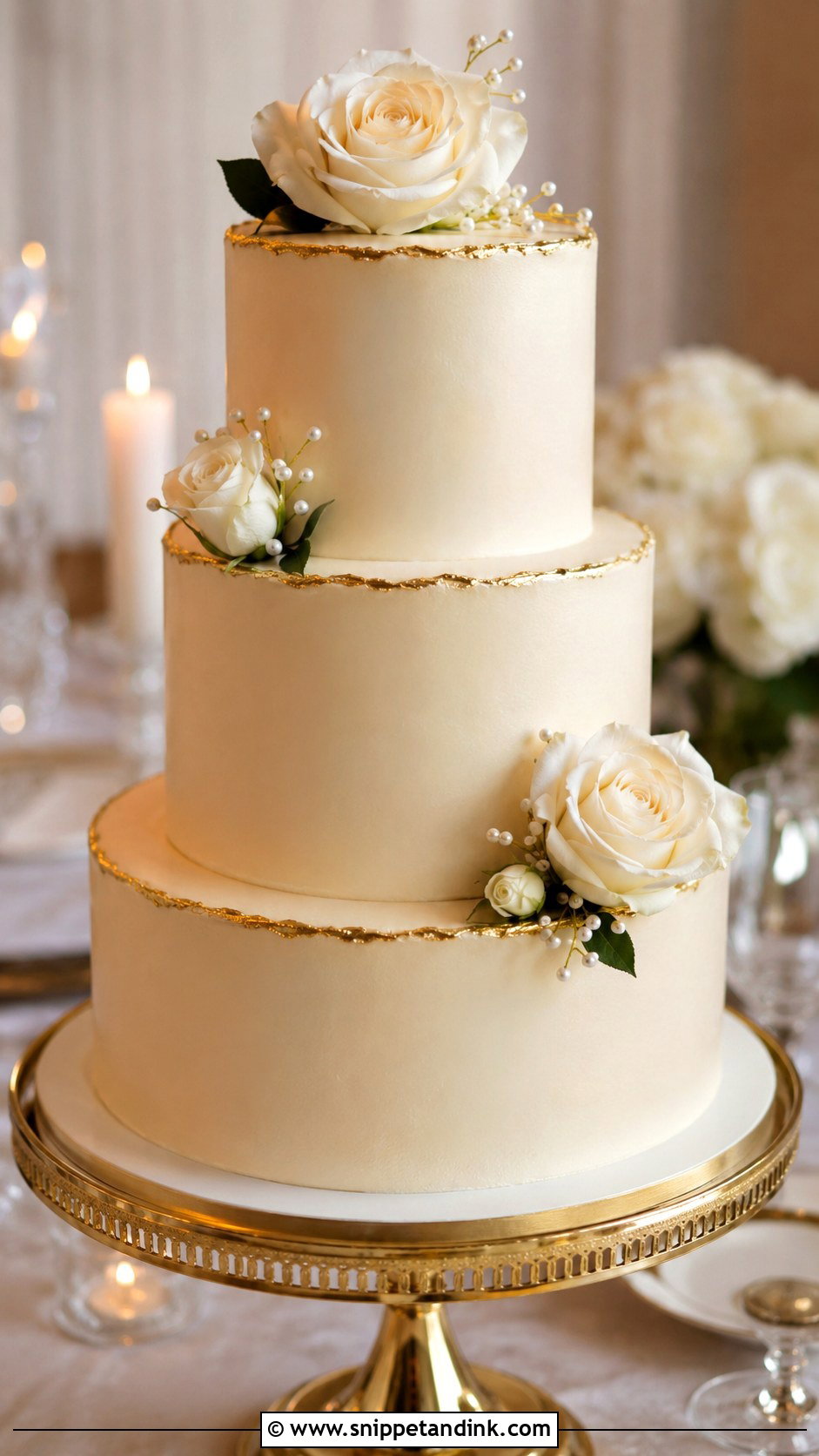
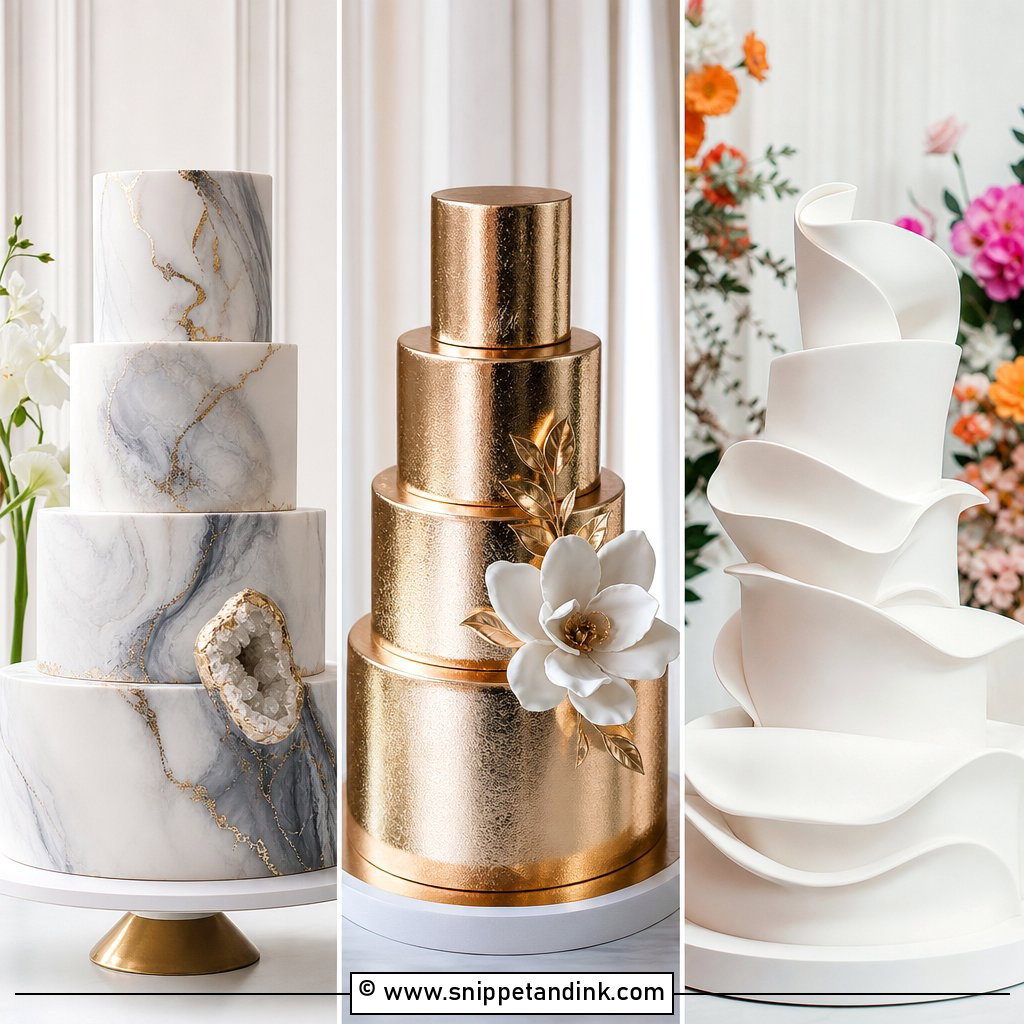
Gold works best in small amounts: a thin edge, brushed texture, a few flecks of edible gold leaf, or one gilded tier at most. Keep the base white, ivory or champagne. Painting a whole tier gold takes a lot of lustre, and the surface can taste faintly chalky, whereas edible gold leaf has almost no taste at all. That’s why I prefer leaf for anything large. It suits formal weddings, hotel receptions and candlelit dinners, with white roses, orchids, pearls and clean fondant.
19. Marble Wedding Cake
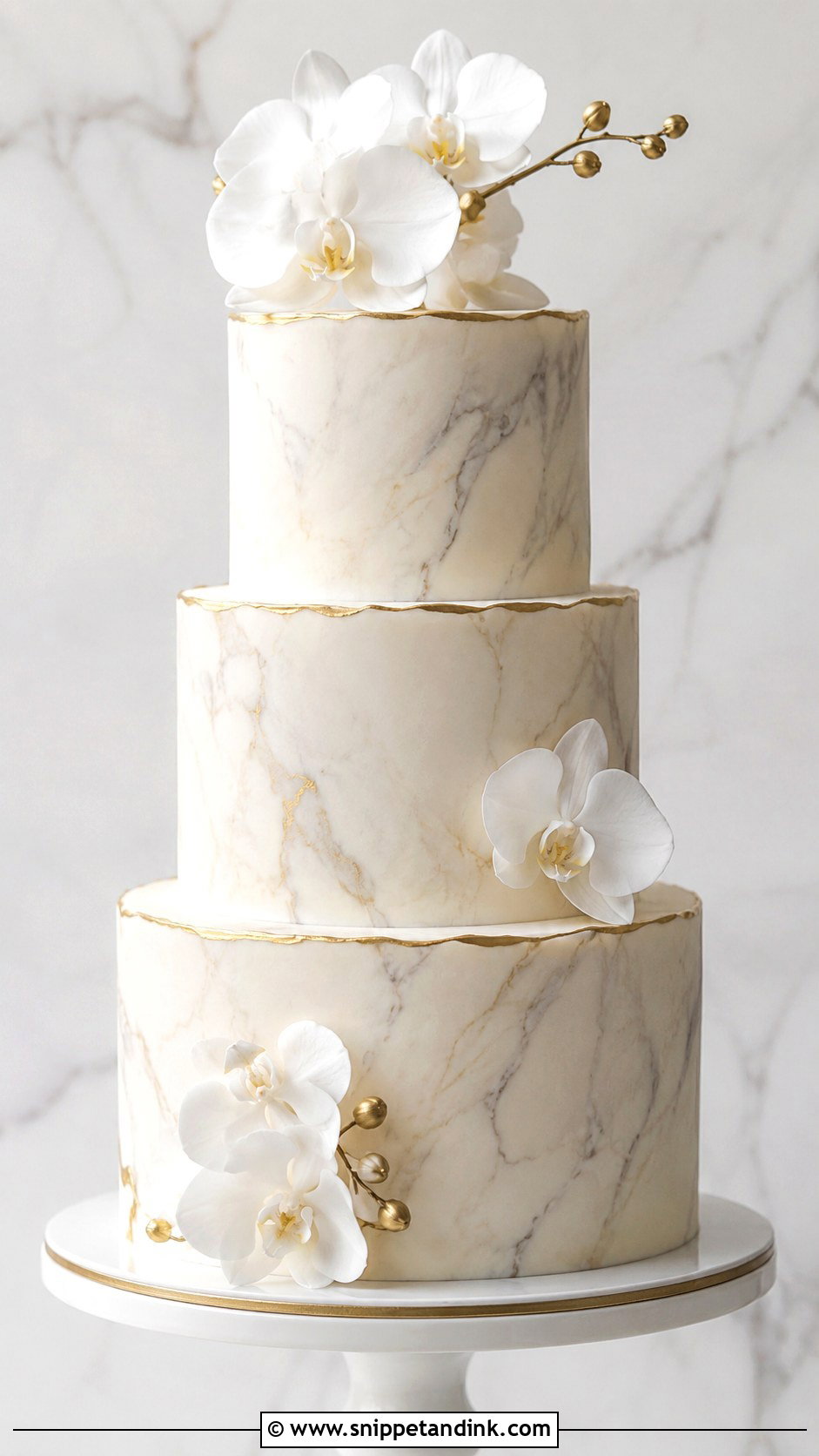
Marbling turns a plain surface into something that looks like stone. Soft grey, beige, blush or blue veins can run through fondant or buttercream. The trick in fondant is to stop kneading early: work the colours too long and they blend into a flat grey instead of streaks. Keep the pattern gentle so the cake still feels romantic. A small flower cluster, a gold edge or a clear acrylic topper finishes it, and a white pedestal or acrylic stand suits modern, neutral weddings.



20. Textured Buttercream Wedding Cake
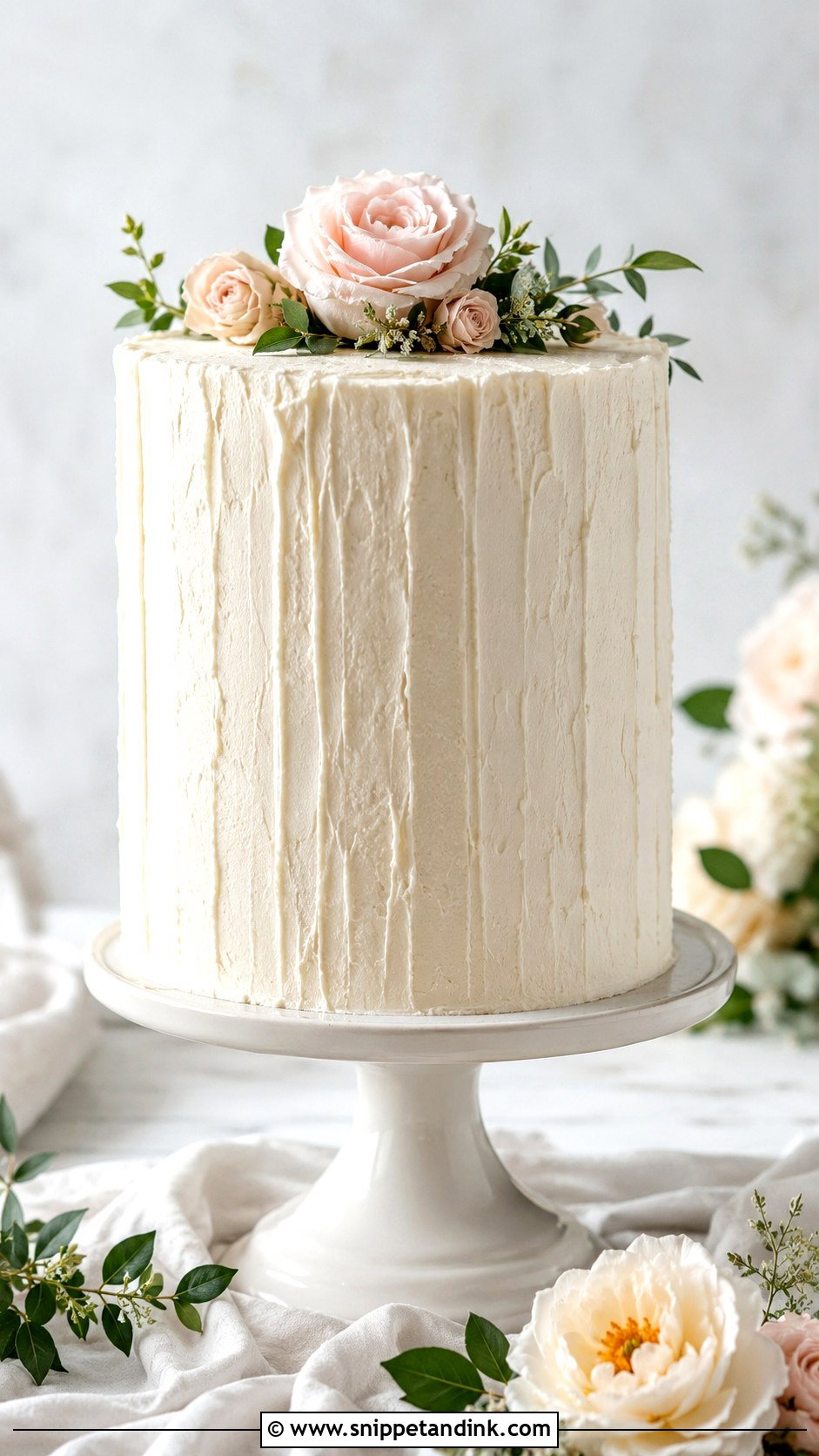
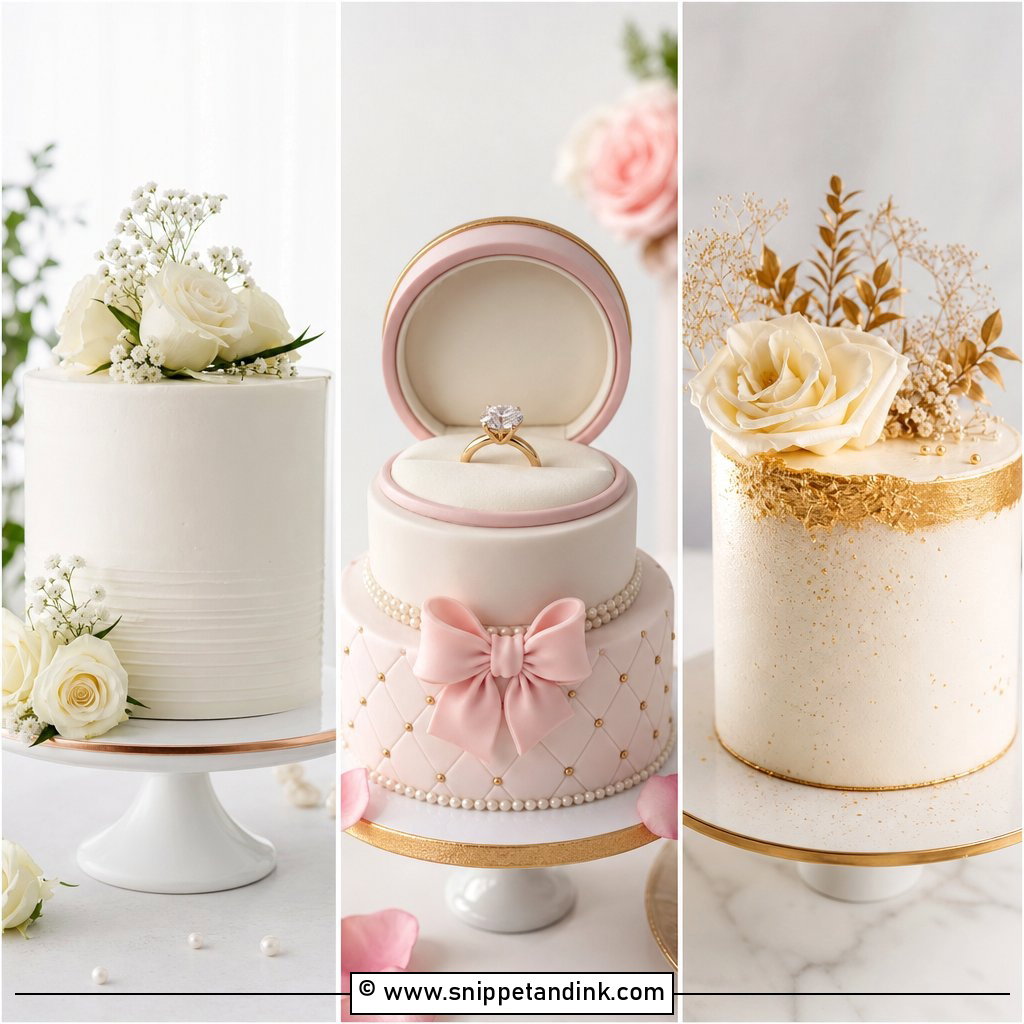
Texture gives a cake interest with no extra decoration at all. Vertical lines, soft waves, palette strokes, rough icing or gentle ridges all catch the light. I decide the texture before the first tier is stacked, because combed lines in particular need to line up from tier to tier, and that can’t be fixed afterward. White or ivory keeps it classic; a soft colour makes it modern. One floral accent or a few berries are plenty, and it can feel rustic, elegant or minimalist depending on the stand.
21. Ruffle Wedding Cake
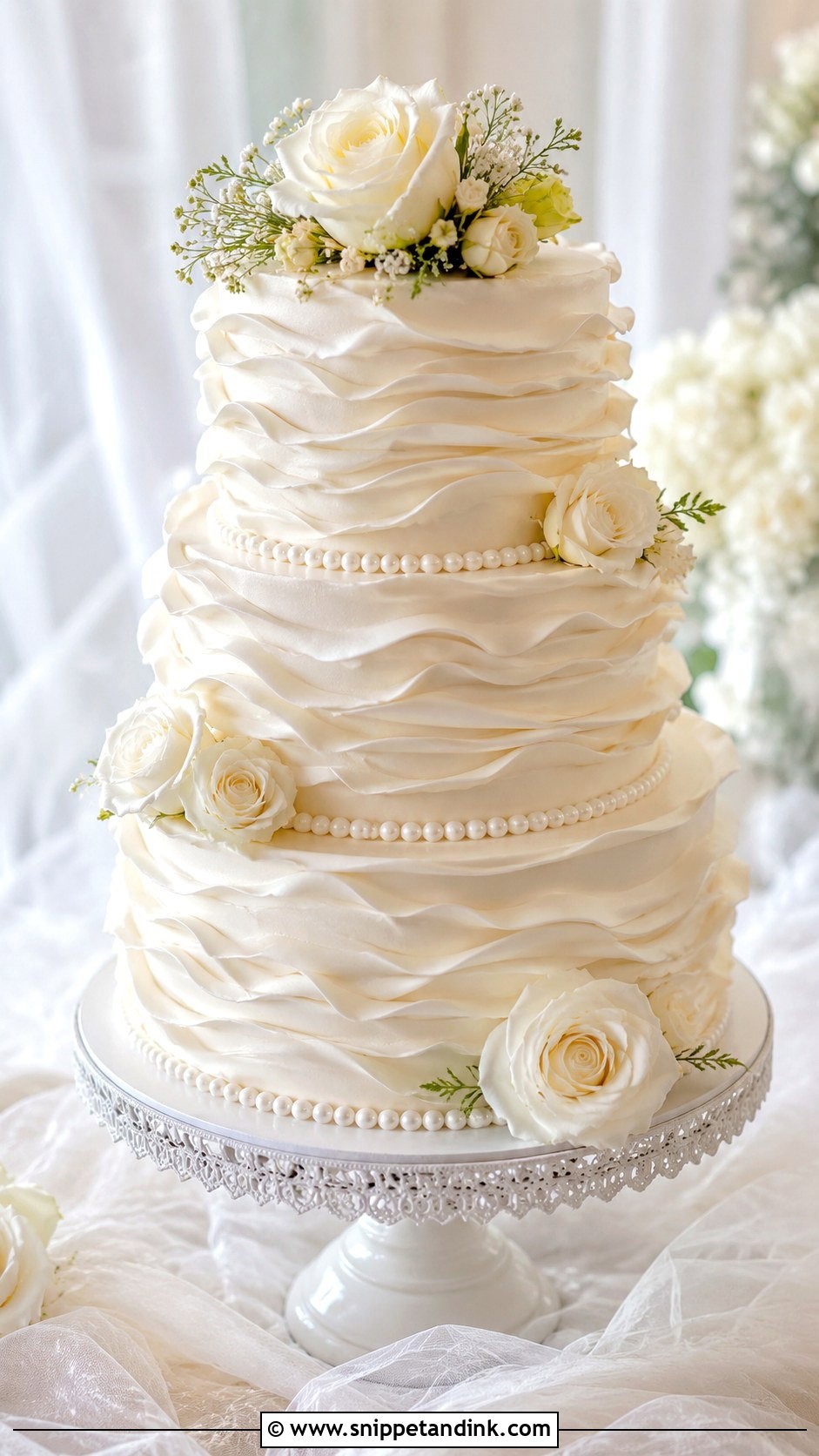
Ruffles add movement, and they look best on one statement tier with smooth tiers above or below. They can be made in buttercream or fondant. Buttercream ruffles are piped with a petal tip and take a long time per tier; fondant ruffles are crisper but heavier, and in a hot room either kind can start to droop. White and ivory are classic, while blush or champagne add a gentle colour. They echo a dress with layered, soft fabric particularly well.
22. Watercolor Wedding Cake
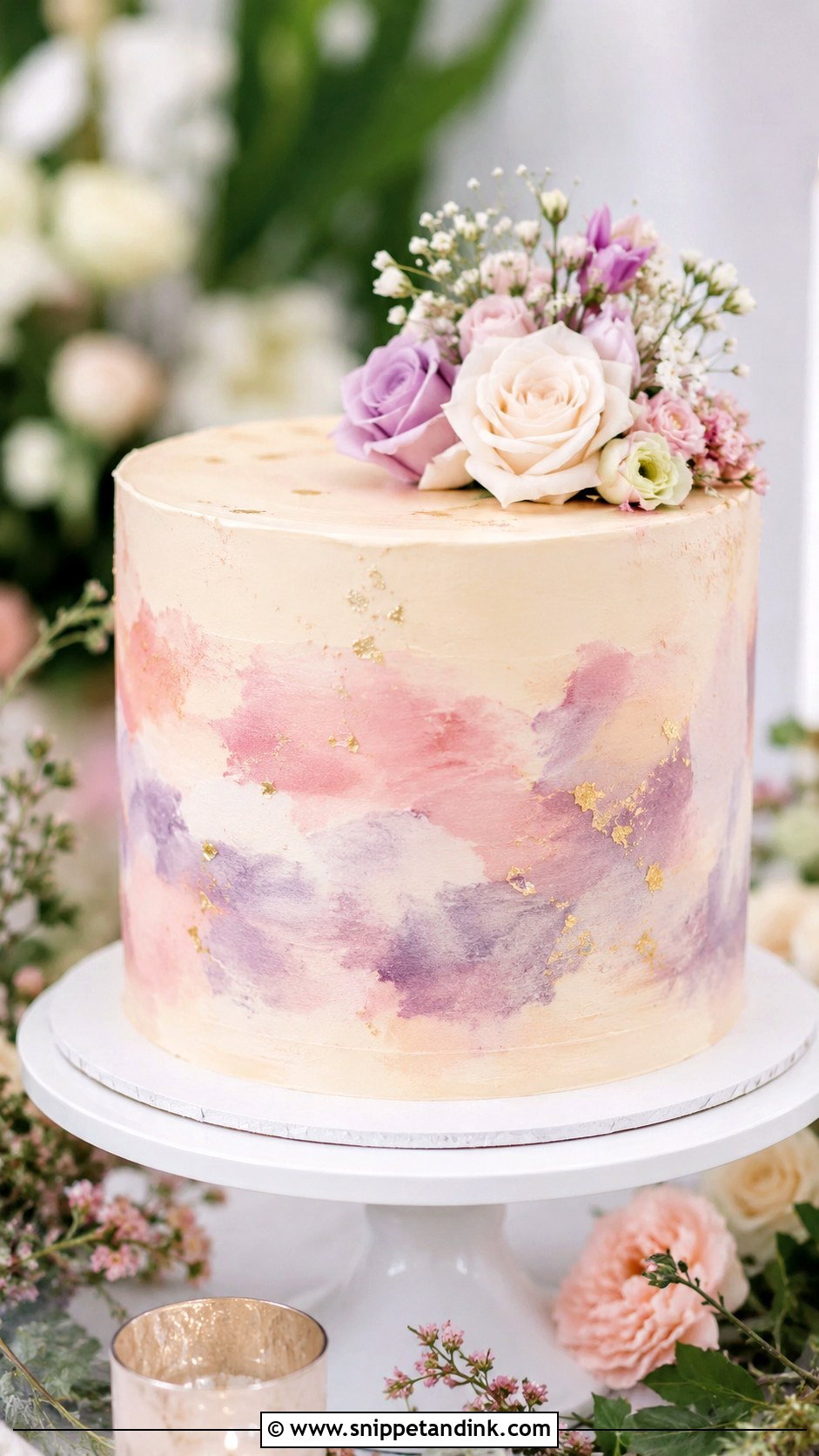
A watercolor wedding cake blends colour softly across the frosting, almost like paint on paper. I build it with a palette knife and two or three neighbouring shades, such as blush with peach or blue with sage. Add too many colours and they muddy where they meet. Keep the shape simple and let the finish lead, with a few fresh flowers, edible gold flecks or a thin piped border. Lemon, raspberry, vanilla, or almond with fruit filling match the mood.
23. Drip Wedding Cake
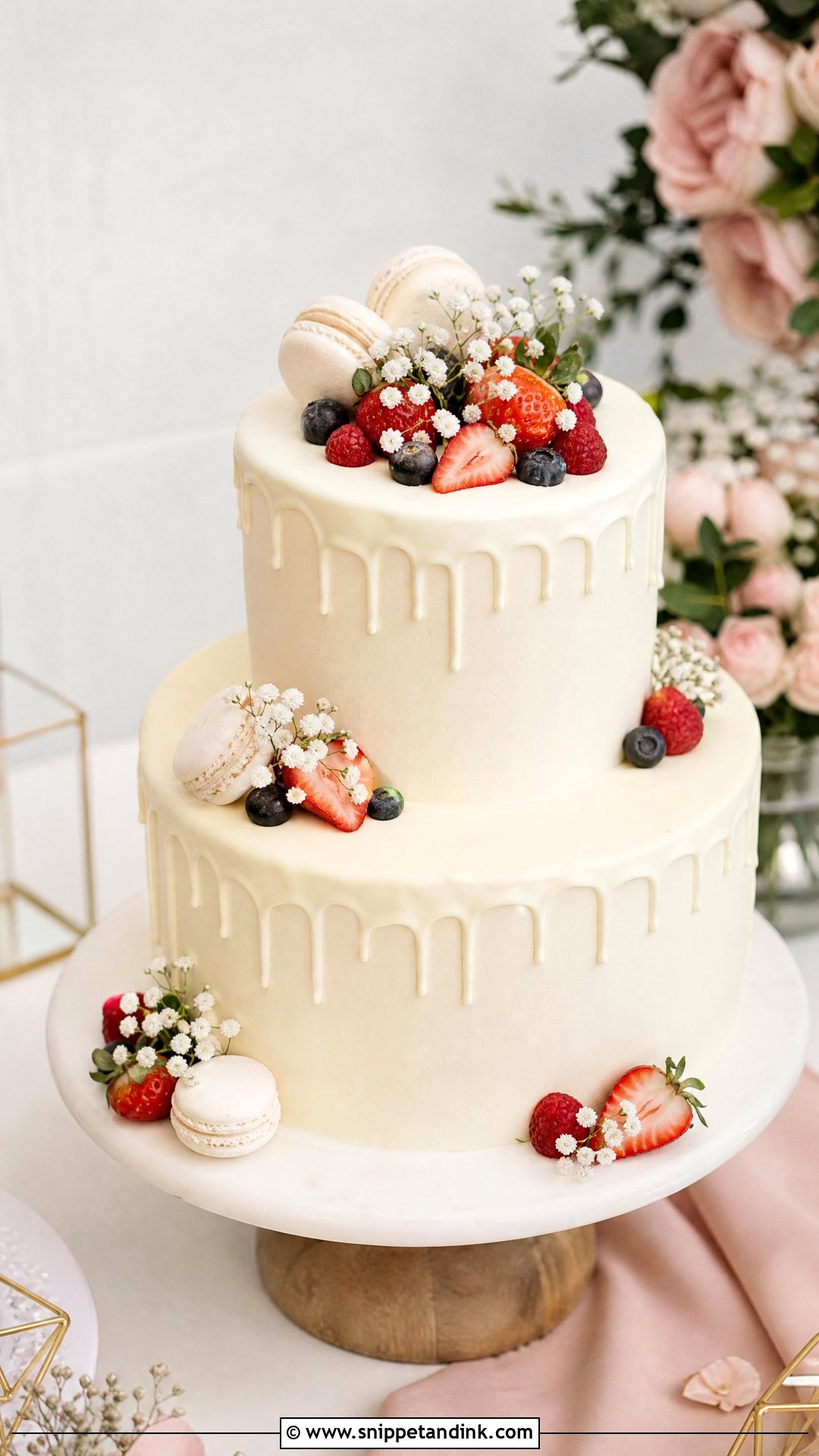
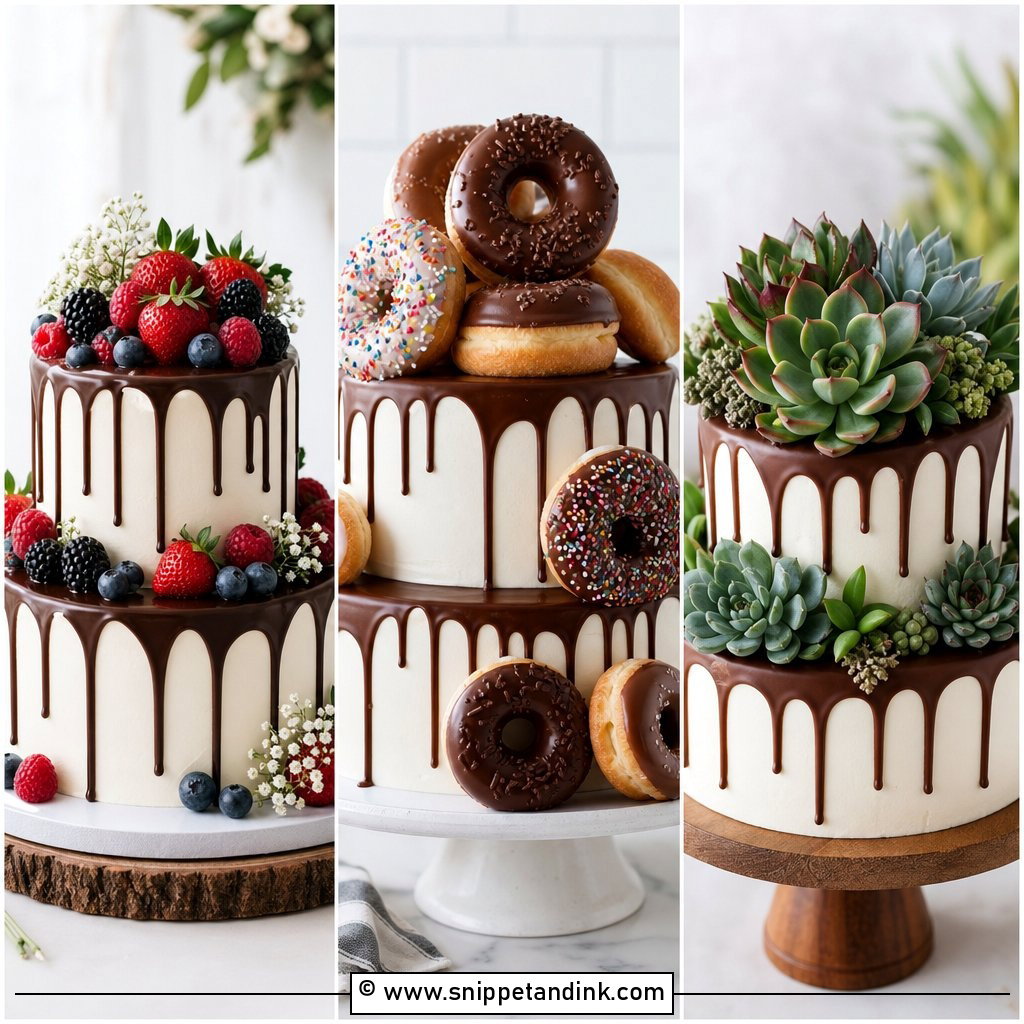
A drip only looks wedding-worthy when it’s clean and controlled. White chocolate, caramel, berry glaze or light ganache can all make a pretty edge. Berry glazes run thinner than ganache, so they need less pushed over the edge and a colder cake to stop them racing to the board. Use a soft palette and few toppings: smooth buttercream, a delicate drip, fresh flowers and a few berries is enough. It can lean rustic, modern or romantic depending on the stand.
24. Fruit Wedding Cake
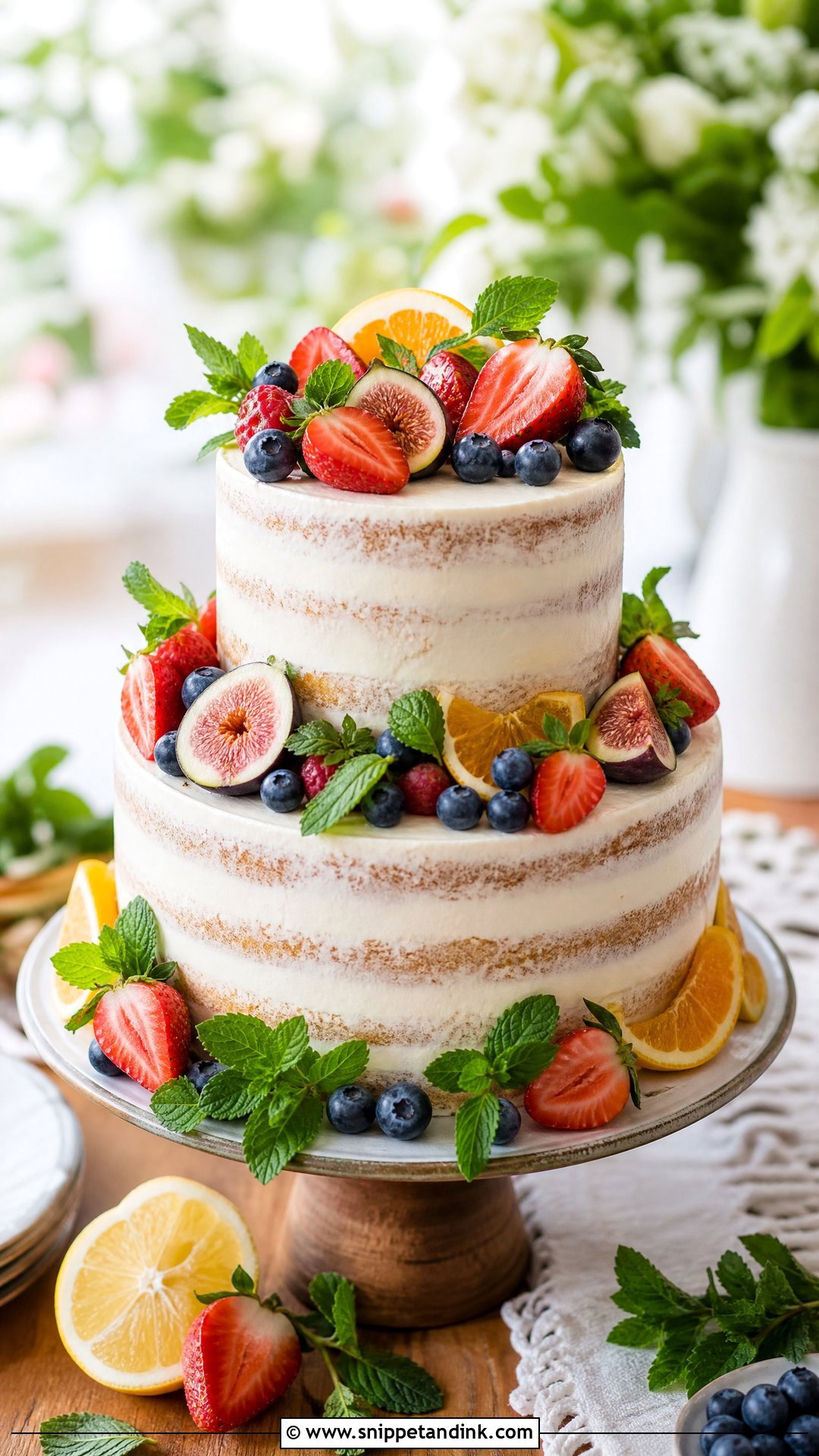
Fruit can turn a simple cake into a seasonal centrepiece. Berries, figs, citrus slices, peaches and cherries all work against clean frosting. Some fruit behaves better than others. Cut peaches and apples brown within the hour, so I brush them with a thin glaze, while figs and whole berries hold their colour much longer. A semi-naked cake with berries feels rustic; smooth white buttercream with figs and flowers feels more formal. Match the fruit to the season for the best flavour.


25. Lemon Wedding Cake
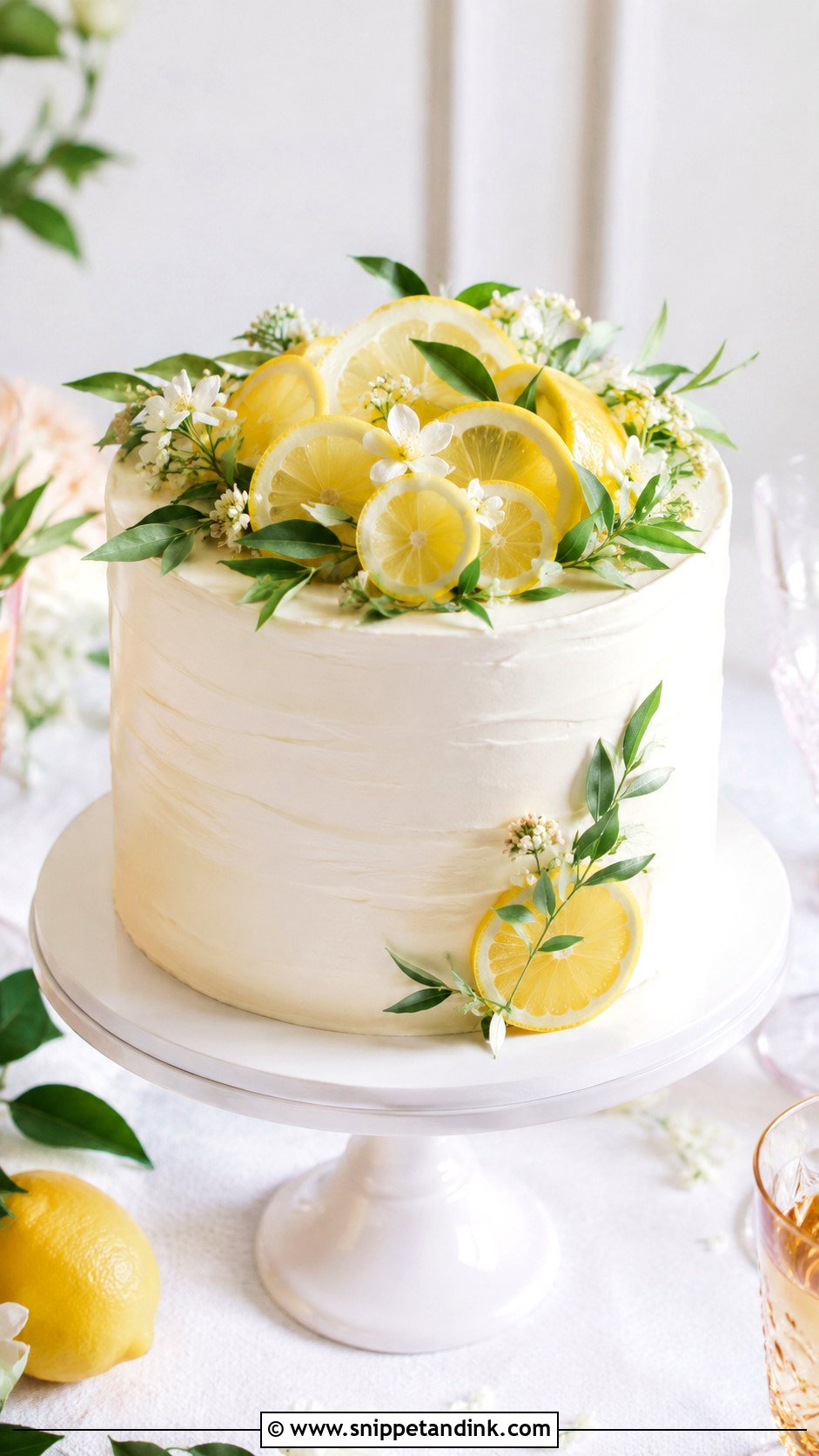
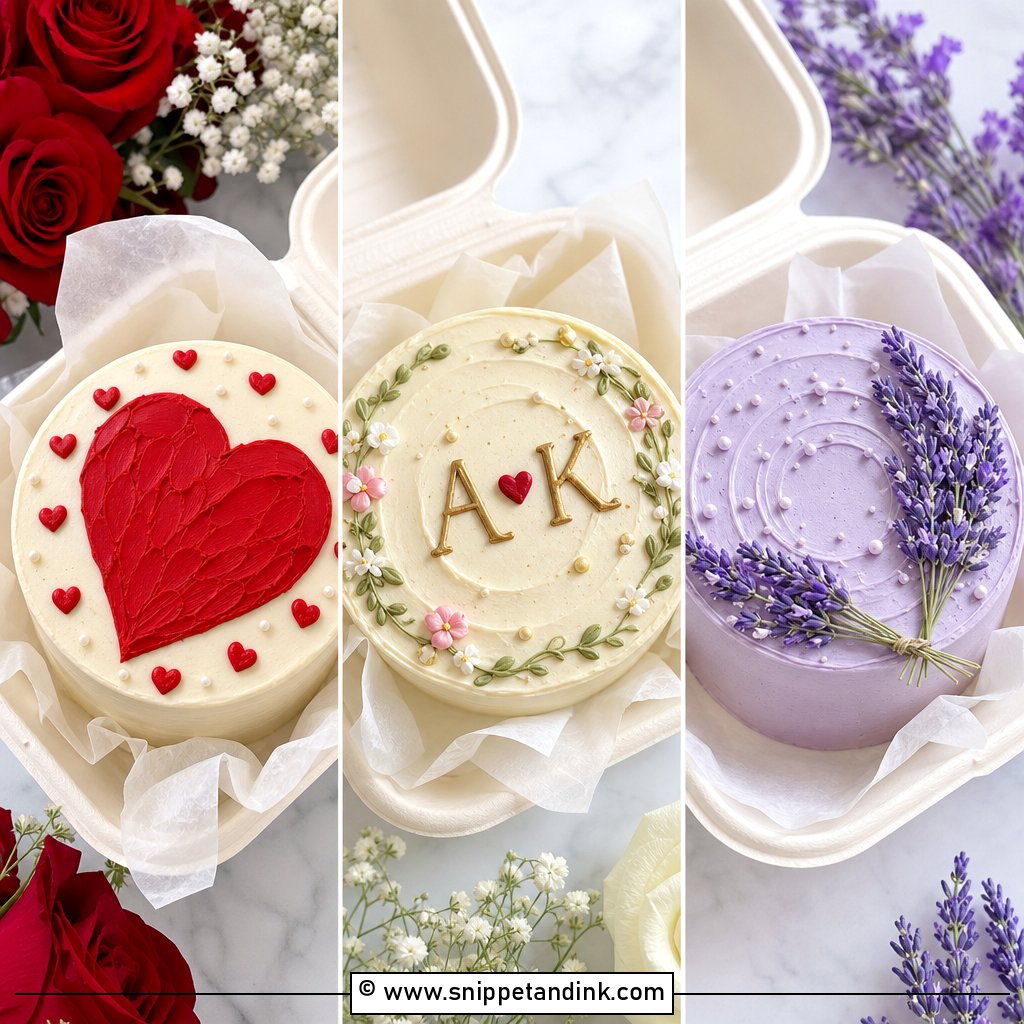
A lemon wedding cake tastes light after a full meal, and the colour can be subtle or sunny. Pale yellow sponge, white buttercream, lemon curd and a few citrus decorations look clean and inviting. Curd is soft, though, and layers can slide on it in a warm tent, so I chill the filled cake thoroughly and dowel taller tiers. Fresh flowers, thin lemon slices or tiny leaves finish it. Blueberry, raspberry, elderflower and vanilla all pair well.
26. Chocolate Wedding Cake
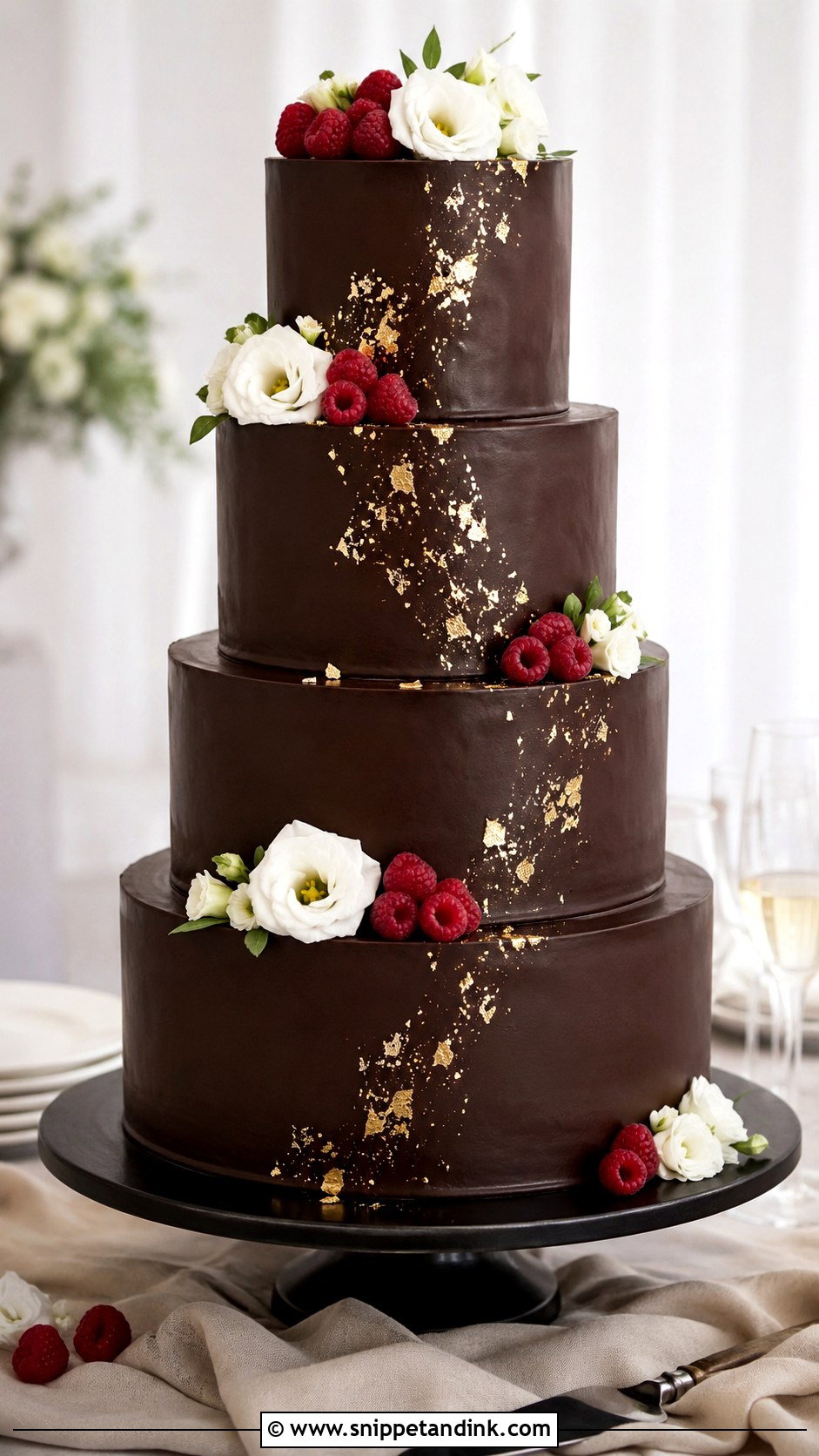
Chocolate is the least expected choice for a wedding and often the most eaten. Smooth dark chocolate ganache, chocolate buttercream, or a white exterior hiding chocolate layers all work. Ganache is my preference for warm days, because it sets firm and holds sharper edges than buttercream. Fresh berries, white flowers, a little cocoa or gold flecks give contrast. A tall single tier looks chic, two tiers more formal, and guests rarely leave a slice behind.
27. Coconut Wedding Cake
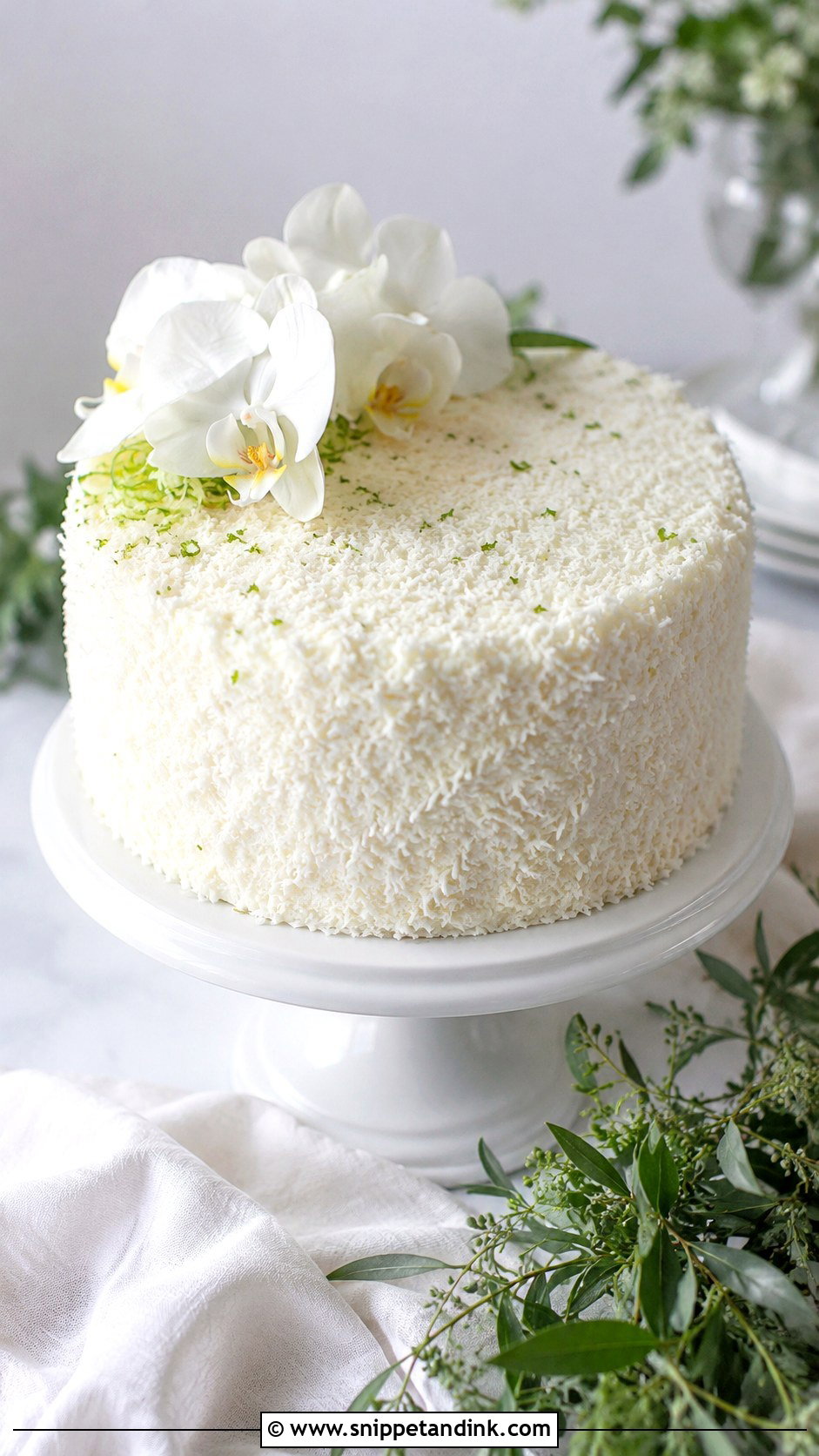
Coconut gives flavour and texture in one move. White flakes pressed onto the sides look bright on a dessert table and conveniently hide small imperfections in the frosting underneath. Pair coconut sponge with vanilla buttercream, cream cheese frosting, lime filling or pineapple curd. Coconut is commonly treated as a tree nut on allergen lists, so I’d mention it on a sign at the cake table. It suits warm-weather and outdoor receptions without needing a beach theme.
28. Mini Wedding Cake
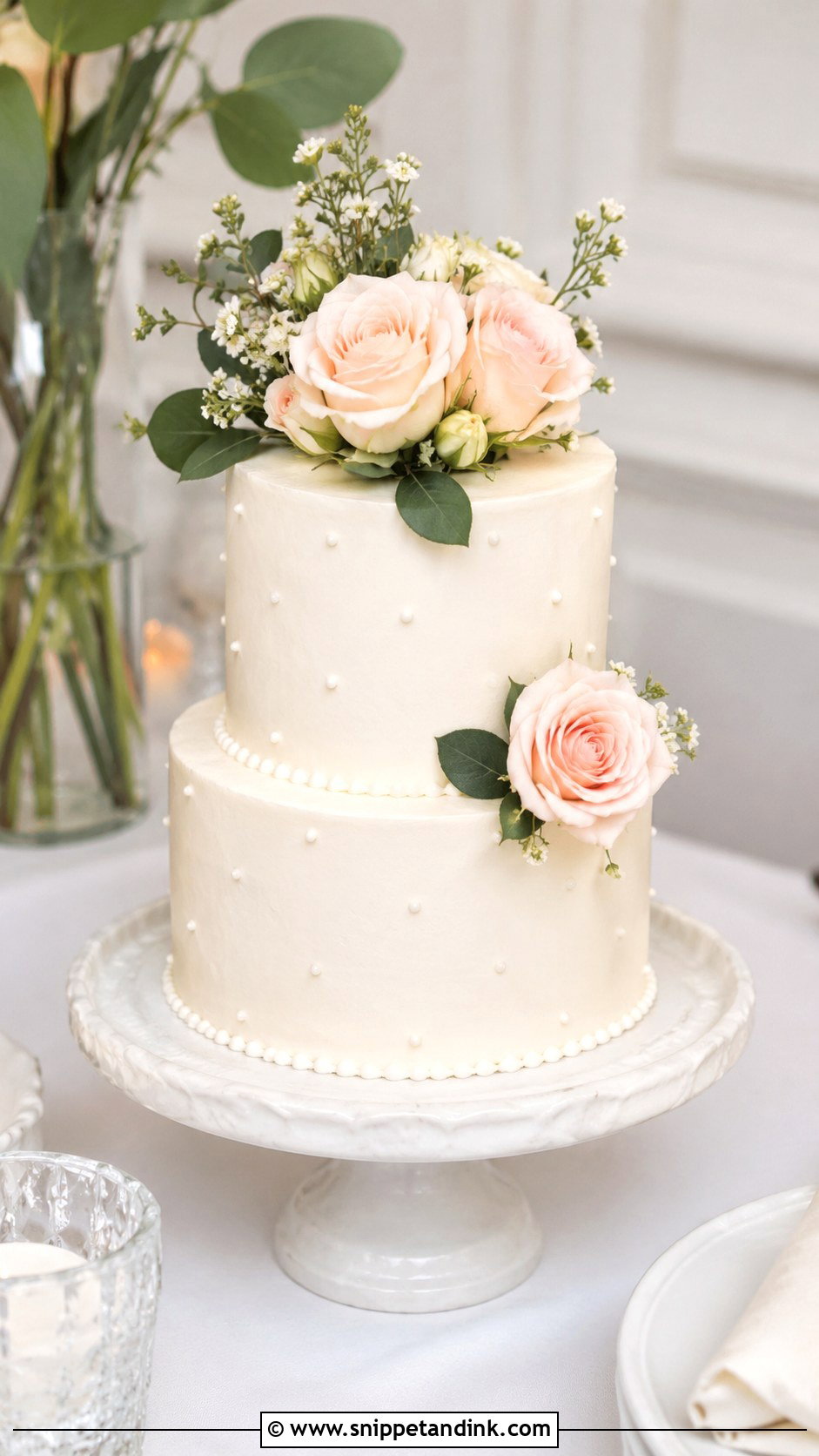
A mini cake suits small weddings or couples who want a personal cutting cake. It can be one small tier, a tiny two-tier or a petite heart. Because it’s small, the detail has to be good: vintage piping, fresh flowers, pearls or a crisp minimalist finish. Don’t expect the price to shrink in proportion to the size, since piping and finishing take nearly as long on a small cake as on a larger one. It’s easy to transport and pairs well with a dessert table.
29. Cupcake Wedding Cake
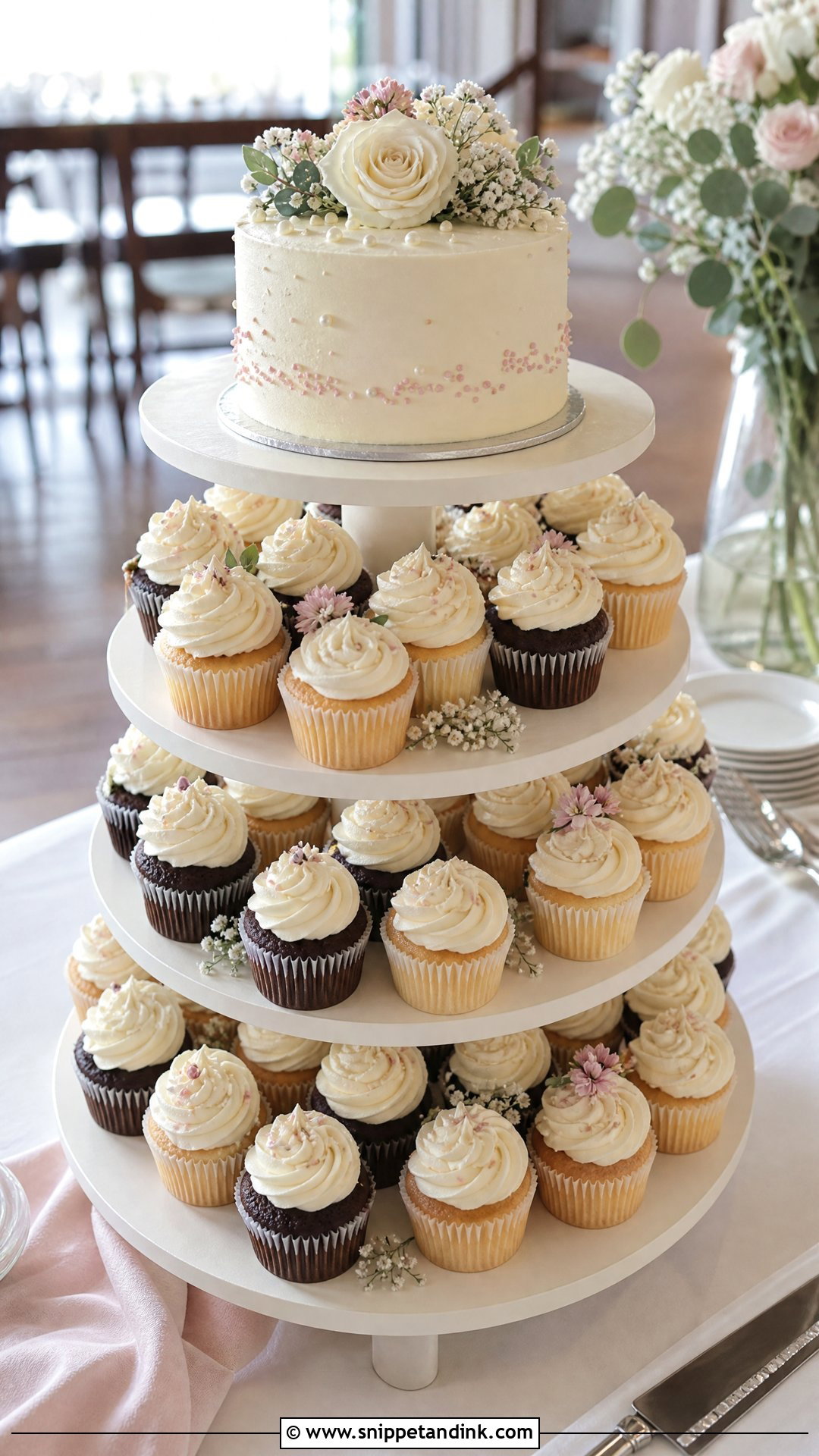
A cupcake wedding cake puts cupcakes on a tiered stand with a small cutting cake on top, so you get the look of a wedding cake with individual portions. Matching frosting and decorations make the display cohesive, and vanilla, chocolate, lemon and red velvet give guests a choice. Paper liners can peel away from the cake in humidity, so I bake in greaseproof or foil-lined cases for summer weddings. Guests can help themselves without waiting for slices.
30. Dessert Table Wedding Cake
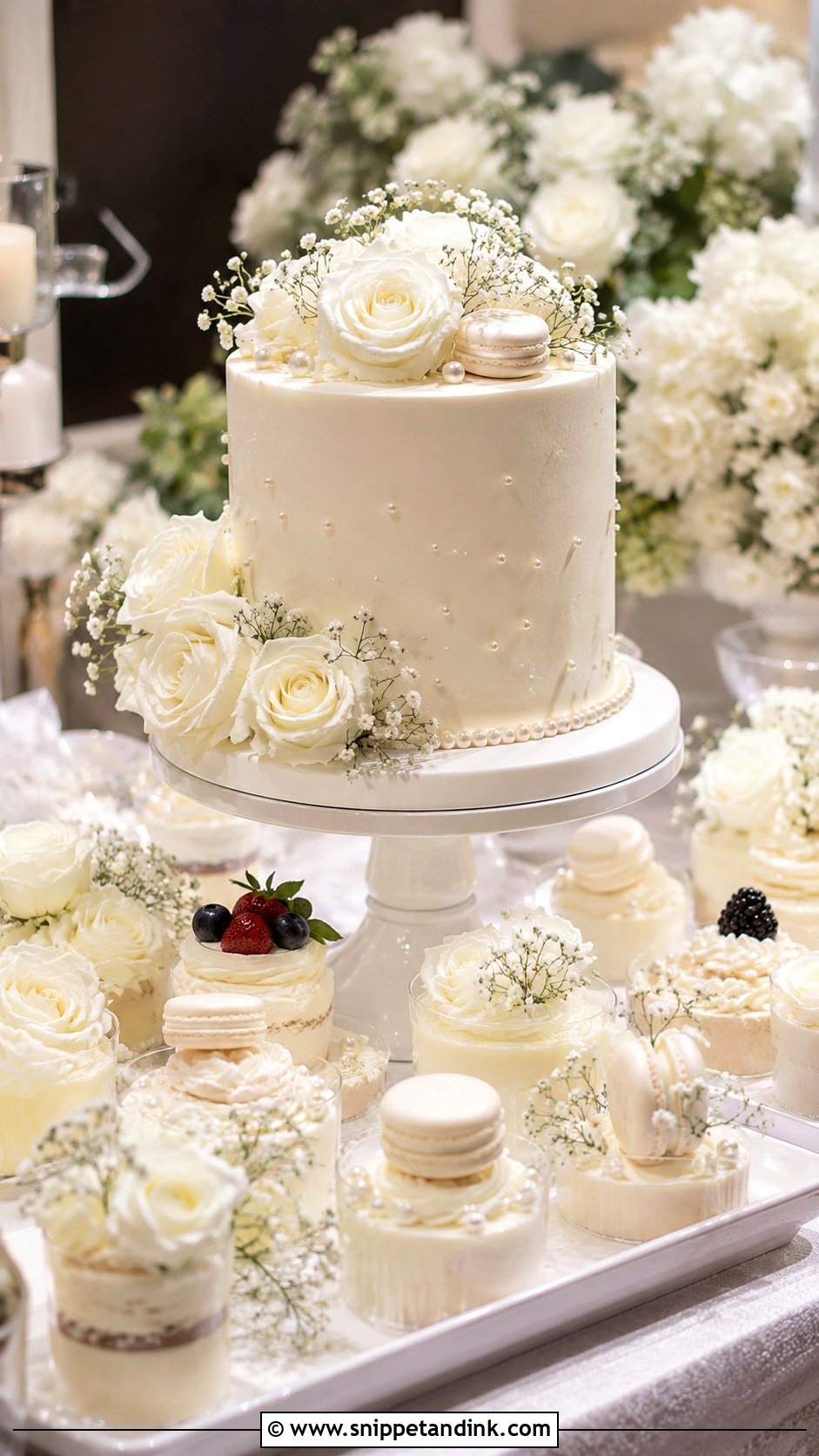
Here the cake is the centrepiece of a larger sweet display, with cookies, macarons, mini cakes, tarts or dessert cups around it. It’s a good answer when guests have very different tastes. Raise the cake higher than everything else so it stays the focal point. Anything filled with fresh cream or custard shouldn’t sit out for hours, so I’d plan to set those out in smaller batches. Matching colours, flowers, linens and labels make the table look planned.
Why Blue Buttercream Turns Green and Black Frosting Stains Teeth
Several cakes above rely on colour, and colour in frosting has limits that photos don’t show.
Blue and yellow butter
Butter is yellow, so blue colouring stirred into butter-based buttercream can drift toward teal or green. I whiten the base first or use a meringue buttercream, which starts paler. If a true sky blue matters to you, ask to see a sample in daylight.
Very dark colours
Black and navy take a lot of colouring, which can leave a bitter taste and stain lips and teeth in photos. For black, I start from chocolate buttercream or use black fondant for accents, so less dye is needed. Deep red behaves similarly. If you want a dark palette, keep it to details rather than covering whole tiers.
The Cutting Fee and the Top Tier You Keep
Many venues charge a per-guest fee to cut and plate a cake brought in from an outside baker, and some charge it on cupcakes and desserts too. Ask before you sign, because it can change whether a big display cake or a small cutting cake plus kitchen cake makes more sense.
If you plan to keep the top tier for your first anniversary, tell your baker so it can be boxed separately. Chill it until firm, wrap it tightly in several layers of cling film and foil, and freeze it. Sponge cakes taste best eaten within a few months, so many couples now enjoy it at a smaller milestone and order a fresh small cake for the anniversary itself.
One Detail, Done Properly
A wedding cake doesn’t have to be complicated to be memorable. A simple cake becomes yours when its shape, texture, colour, flavour or decoration says something about your wedding. Think about the venue, the season, your flowers, details on your dress and your guest count before you settle the design. A small cake looks considered on the right stand, and a plain one comes alive with fresh blooms, pearls, fruit or soft piping. Pick the one that sounds like the two of you, then keep every other detail clean.
You'll Like These Ideas:








Leave a Reply