
A Scandinavian-style wedding cake is mostly an exercise in leaving things off. The decoration shrinks to a sprig, a berry cluster or a single pressed bloom, and the flavors lean on almond, cardamom, elderflower and tart northern fruit. What people underestimate is that restraint puts more pressure on the baker, not less: with nothing to hide behind, the buttercream finish, the tier proportions and the freshness of the fruit carry the whole design. Below are the twenty directions I’d sketch for a couple who want a calm, pared-back cake, with notes on how each one behaves once it leaves the kitchen.
Why a Plain Cake Needs a Sharper Brief
When a couple brings me a photo of a cake with one sprig of rosemary on it, they often assume it will be the easy, cheaper option. It can be cheaper on sugar flowers, but the finish has to be near perfect, because every air bubble, lean or uneven tier shows on a bare surface. So the brief for a minimalist cake is less about what goes on it and more about how the surface and proportions should look.
- Say which finish you mean. Smooth, combed ridges, palette-knife strokes, semi-naked and naked are five different techniques with different timings, and a photo alone can be read several ways.
- Give the guest count, not the number of tiers. I’ll work out heights and diameters from servings, then adjust proportions so the cake looks balanced from where guests will stand.
- Tell me the true white of your dress and linens. Ivory buttercream next to a bright white tablecloth can look yellow, and pure white next to an ivory gown can look gray.
- Bring flowers into the conversation early. If your florist is supplying stems for the cake, I need to know which ones so I can check they are food safe and plan how to insert them.
- Ask who dresses the cake on site. Fresh berries, herbs and flowers go on at the venue, and someone has to have time and clean hands for that.
A tasting is where most of these choices settle. Taste the almond and cardamom sponges side by side if you’re torn, since the difference between them is bigger than people expect.
1. Nordic Minimalist Wedding Cake
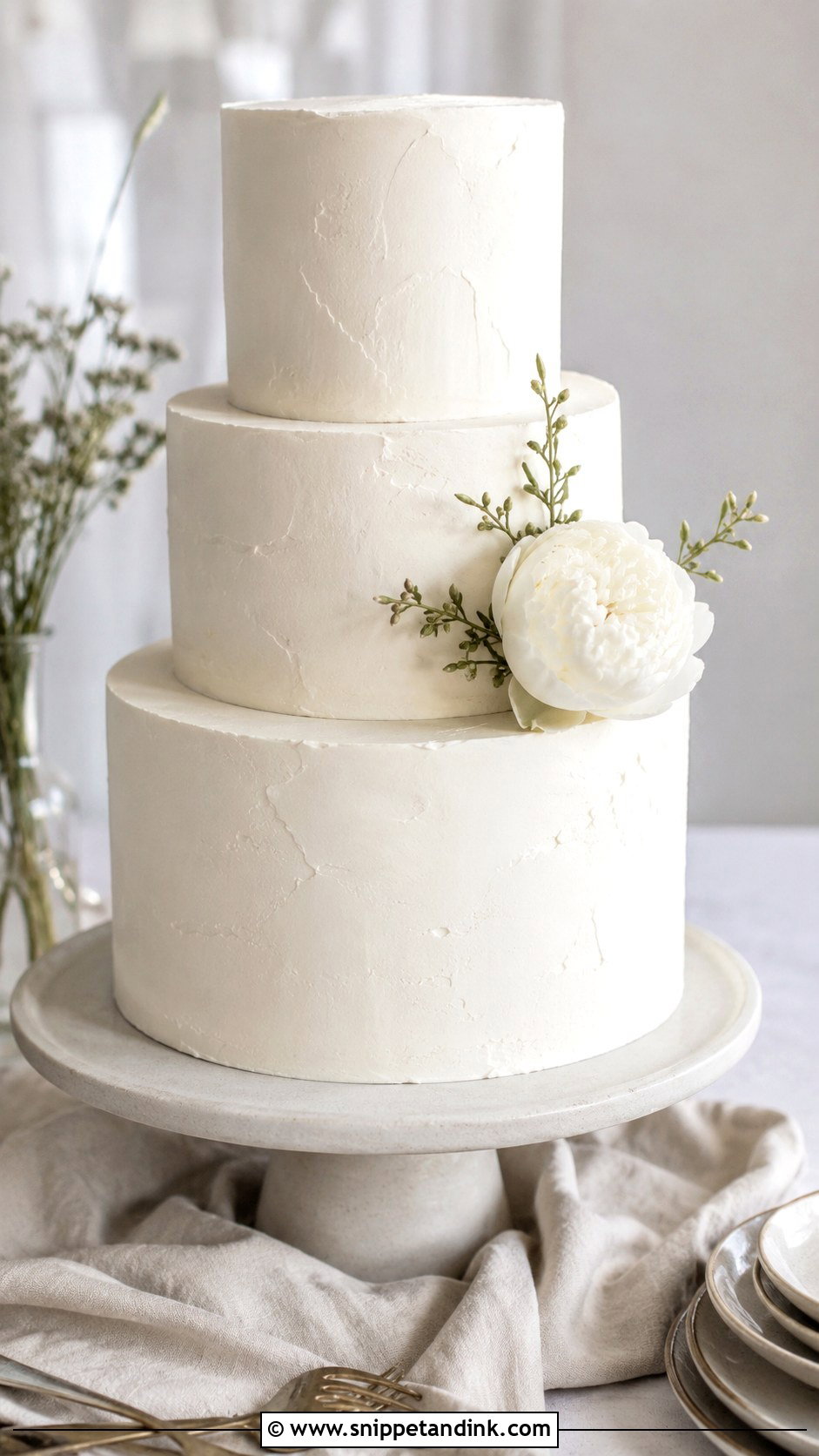
Two or three plain tiers in warm ivory sounds easy, and it’s actually the design I’m most careful with. A pure white finish can read slightly blue under daylight, so I tint the buttercream a shade toward cream before smoothing. I also keep the edges crisp but not razor sharp, because a softly rounded top edge looks handmade without looking careless. One sprig of greenery or a single white bloom is plenty. Vanilla almond, elderflower or light lemon keeps the flavor as quiet as the outside, and a matte ceramic stand finishes it better than a shiny metal one.
2. Nordic Birch Wedding Cake
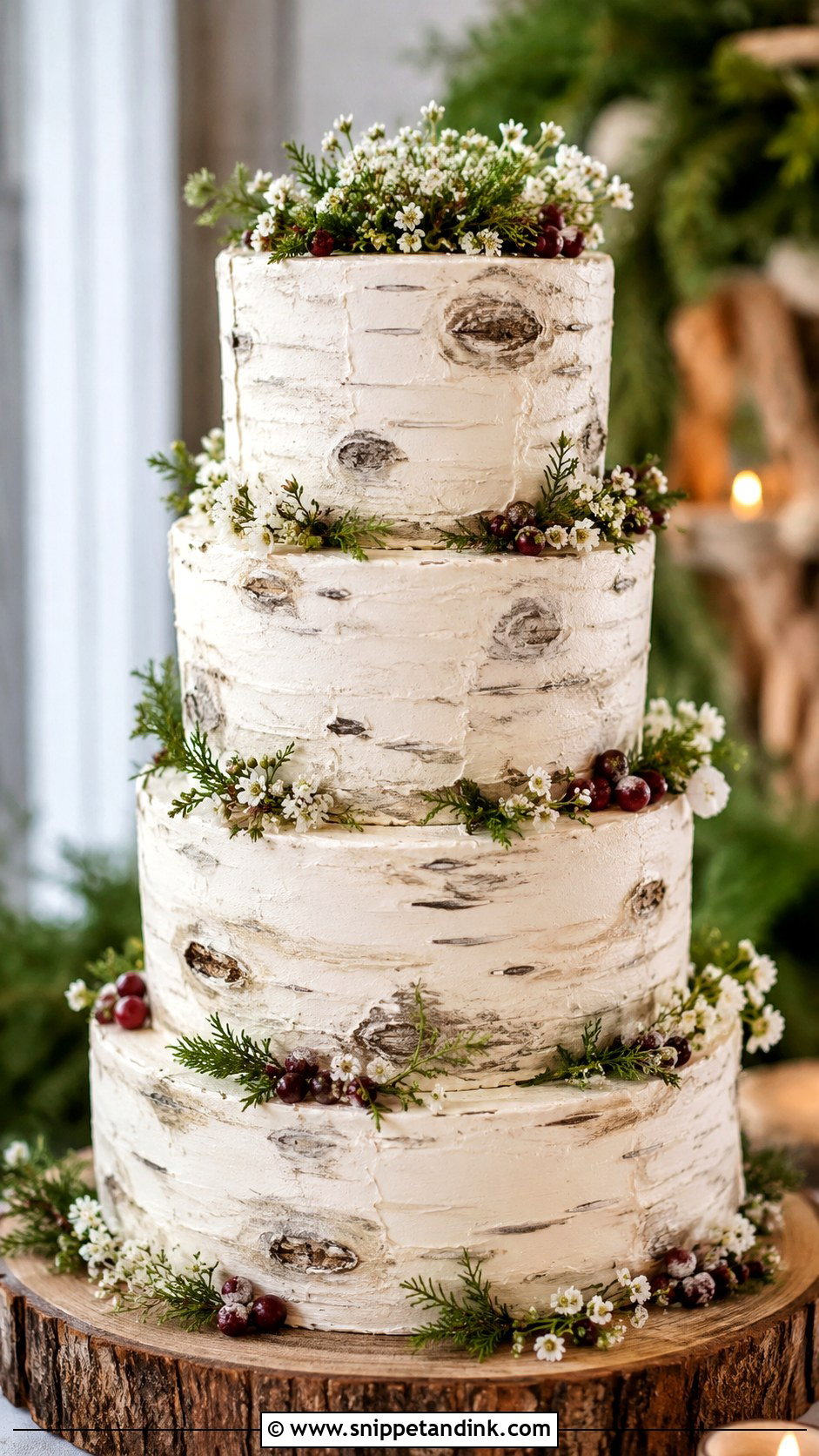
A Nordic birch wedding cake gets its bark effect from gray-brown buttercream dragged vertically over an ivory base with a palette knife or a small brush. I add the dark marks while the base coat is still slightly soft, then chill and scrape once lightly, which blurs the lines into something that looks like real bark instead of stripes. Overdo it and the cake reads as a log cake for Christmas. Lingonberries, a few white flowers or thin shards of chocolate bark are enough on top, with vanilla and berry or almond and cream inside. I’d steer this toward lodges and forest venues; in a polished ballroom it can look out of place.
3. Nordic Wildflower Wedding Cake
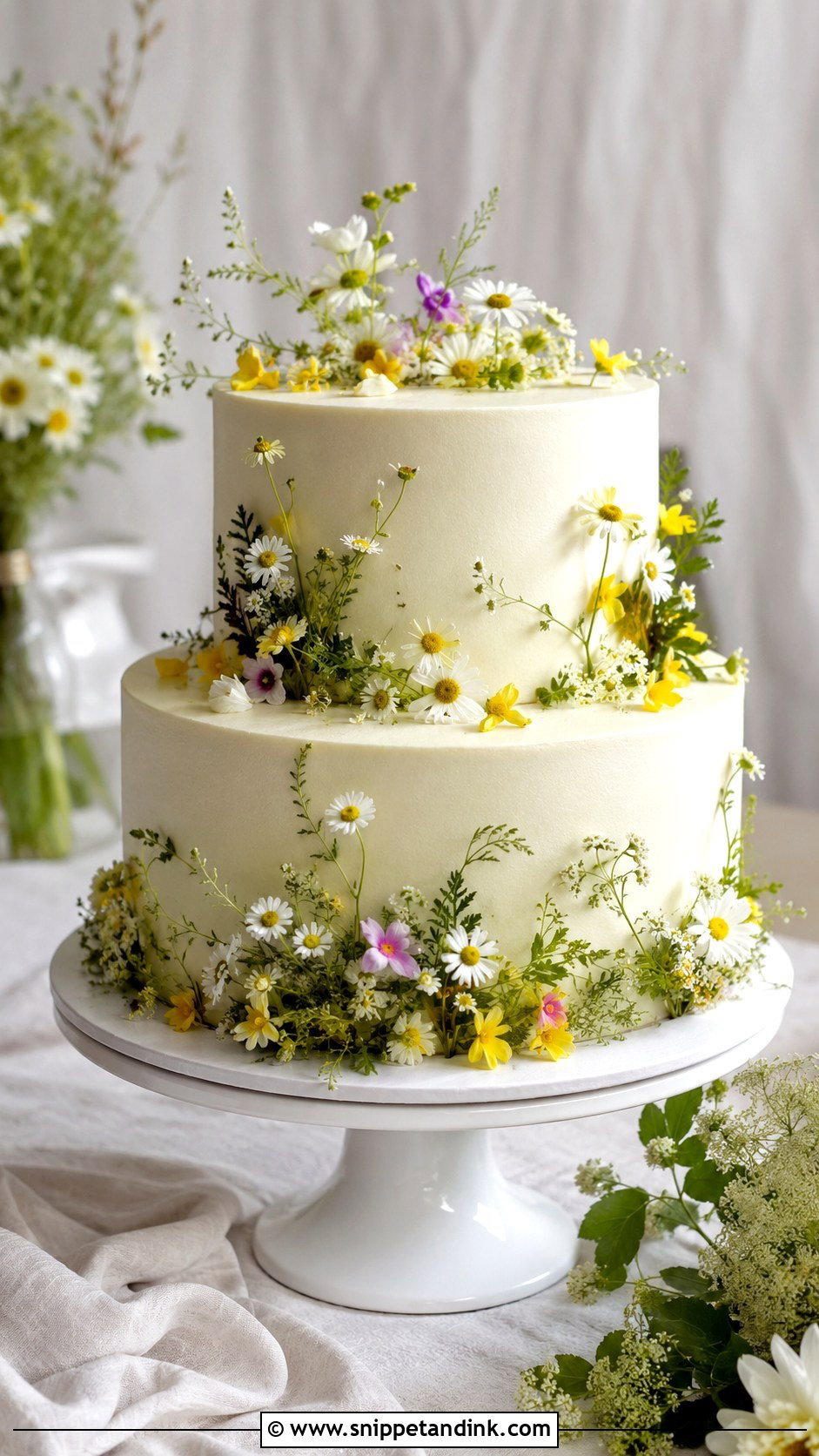
Small meadow flowers scattered lightly across the tiers are the heart of a Nordic wildflower wedding cake. Chamomile, tiny daisies and edible petals sit well against white buttercream or a thin semi-naked coat. One thing I always flag: real gypsophila is not food safe, so if you love that misty look, I recreate it with tiny piped dots or edible flowers of a similar size instead. The trick to making flowers look grown rather than placed is to tuck a few stems partly behind the tier edge so they disappear and reappear. Lemon elderflower and honey vanilla suit the spring and summer dates this cake belongs to.
4. Nordic Naked Wedding Cake
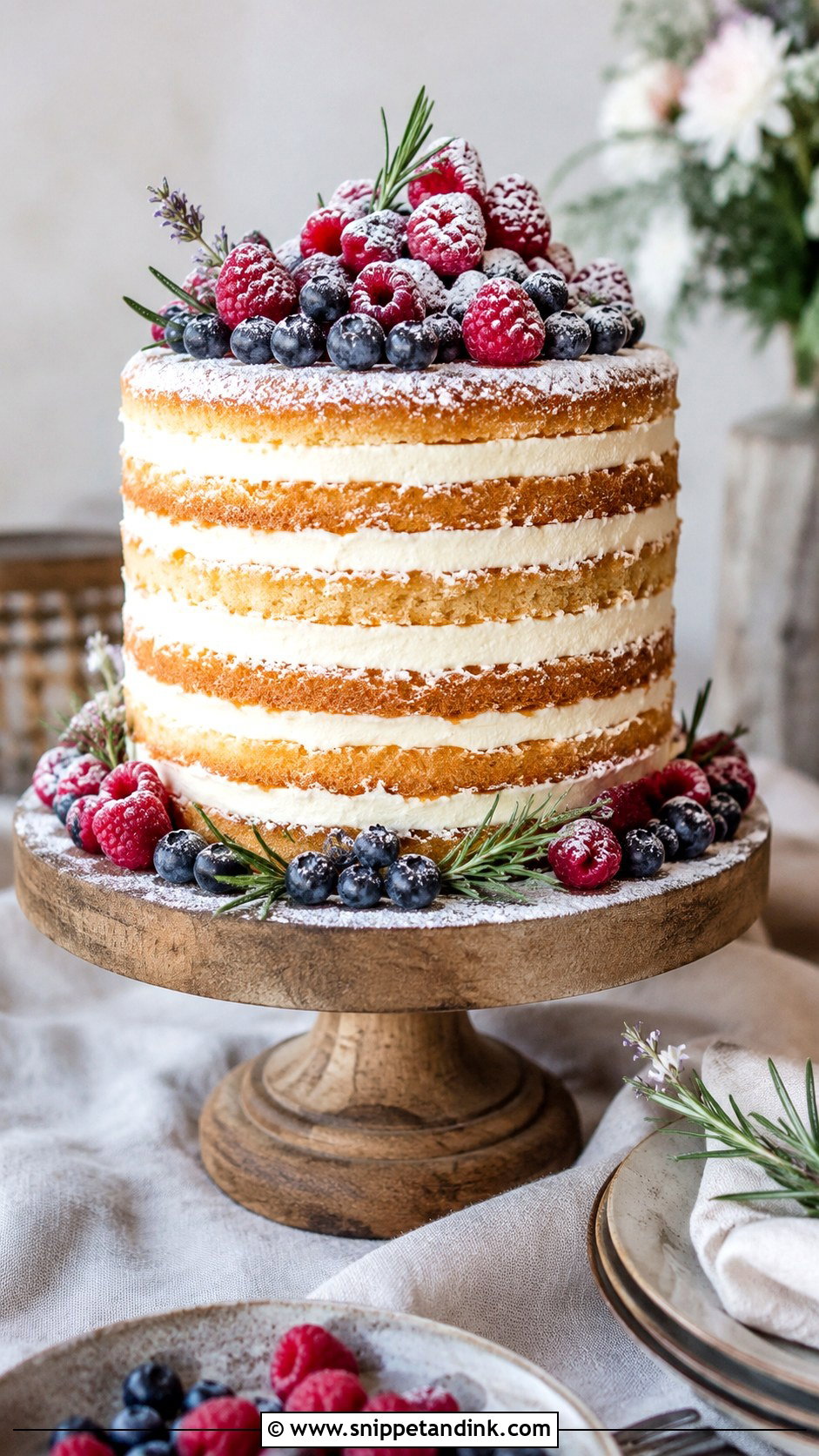
With a naked cake, the sponge is the decoration, so I bake these levels flatter than usual and trim every layer so the stripes line up when you look at the side. Only a whisper of buttercream goes between and around the layers. The honest drawback is that exposed sponge dries out quickly, which is why I brush every layer with syrup and assemble as close to the wedding as I can. Almond sponge and cardamom cake both hold moisture well here. Finish with berries, herbs or a light dust of powdered sugar applied at the venue, not before, because sugar melts into fresh cake within hours.
5. Nordic Semi Naked Wedding Cake
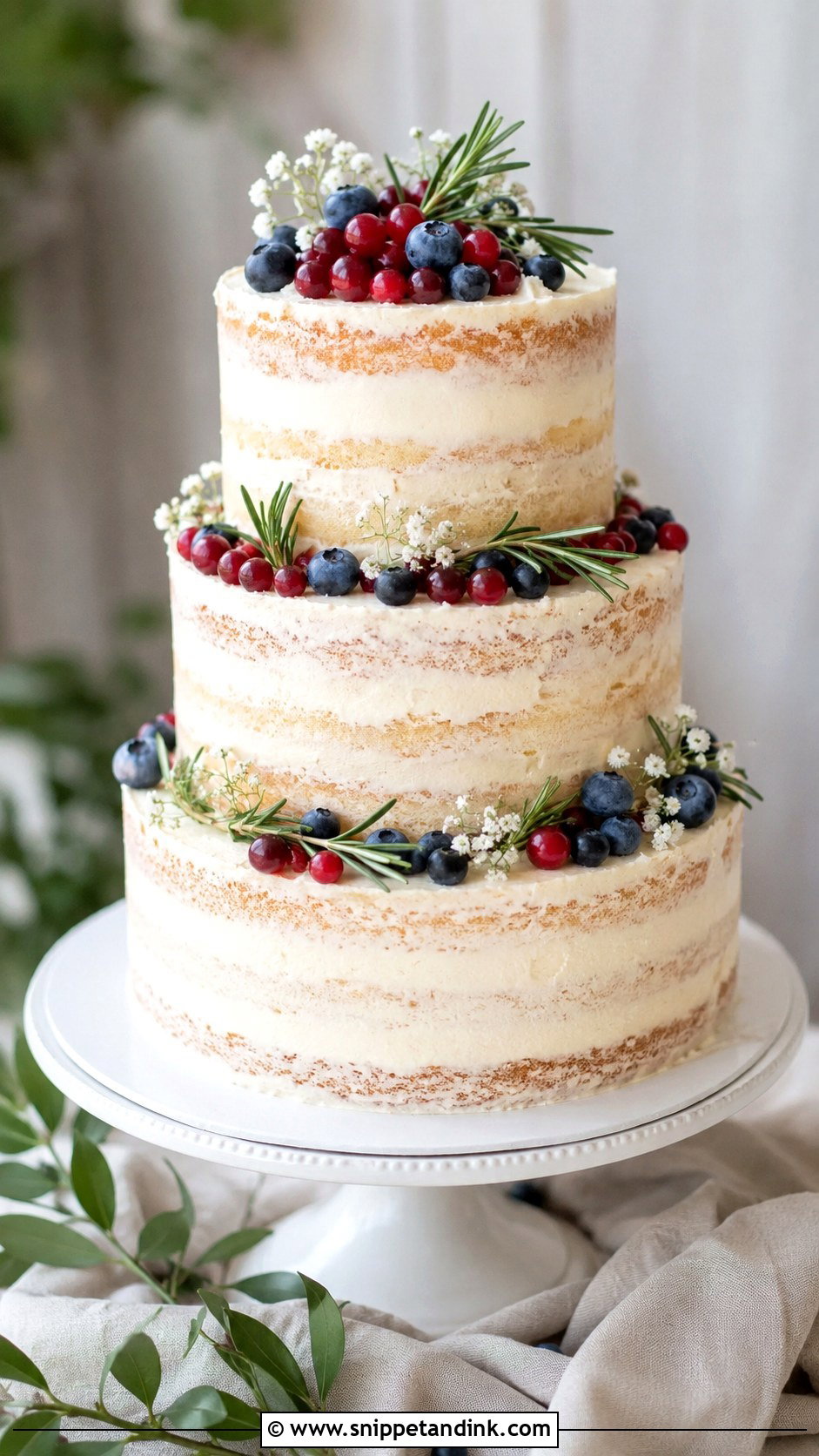
Semi-naked sits halfway: a thin buttercream coat scraped back until the sponge just shows through at the edges. It’s the version I suggest when someone wants the rustic look but worries a fully naked cake will look unfinished in photos. The scraping is a judgment call, and I’d rather leave a little more coverage than too little, because the coat thins further as the cake warms up in a barn or garden. Blueberries, lingonberries, rosemary or thyme add color. Vanilla sponge with cloudberry cream or lemon curd tastes the way this style looks. Keep the tier heights even, or the whole cake starts to look homemade in the wrong way.
6. Nordic Blueberry Wedding Cake
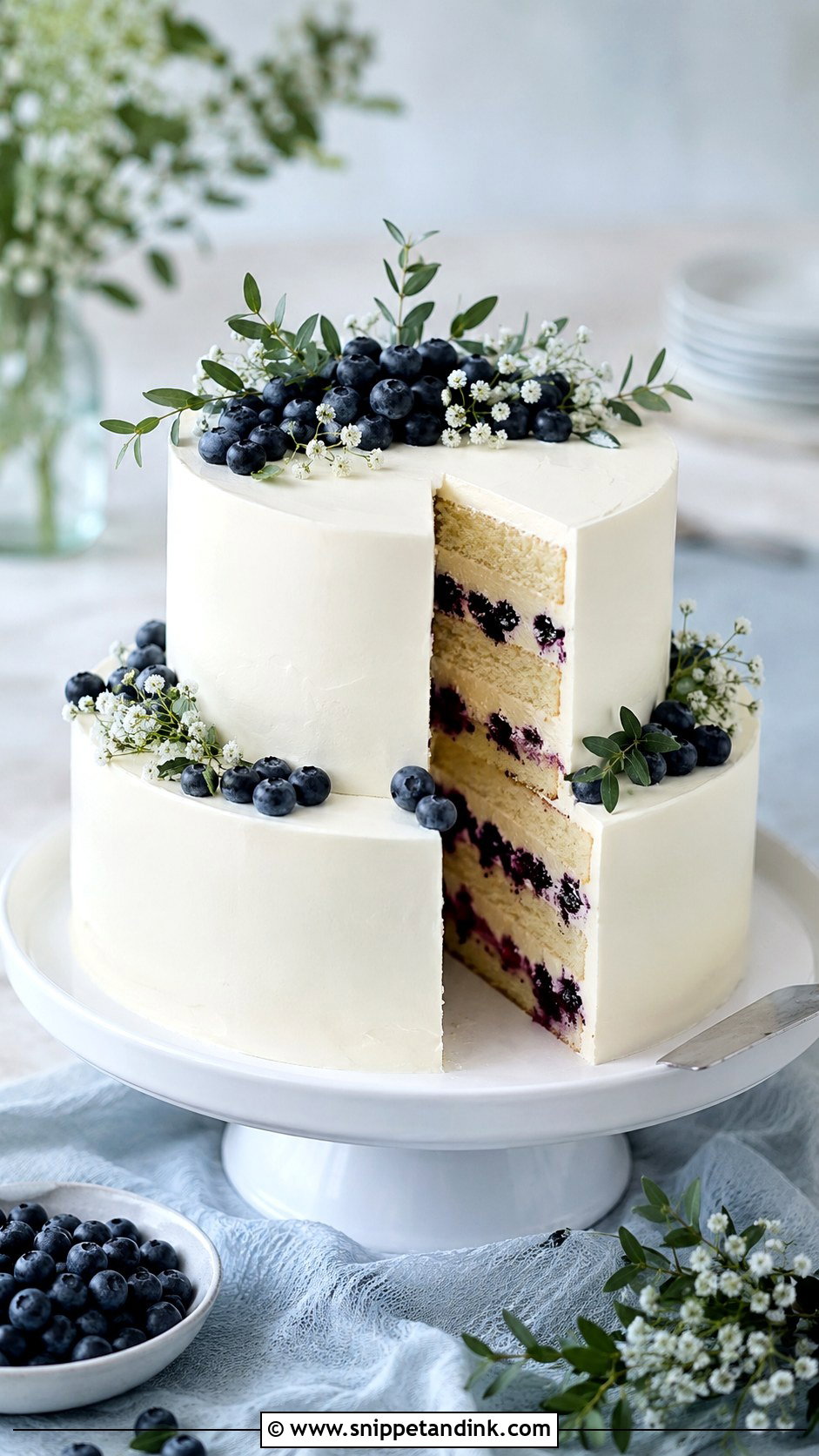
Blueberries give the sharpest contrast you’ll find on a pale cake, which is why I like them as the only color on the table. Inside, vanilla sponge with a blueberry compote and a mascarpone or buttercream frosting is a crowd-pleaser. The catch is juice: a compote that’s too loose will bleed purple into the sponge and through a thin frosting, so I cook it down until it holds a line on a spoon and pipe a buttercream dam around each filled layer. Outside, clusters of fresh berries with small white flowers keep it crisp. Late summer is when blueberries taste best, and guests notice.
7. Nordic Lingonberry Wedding Cake
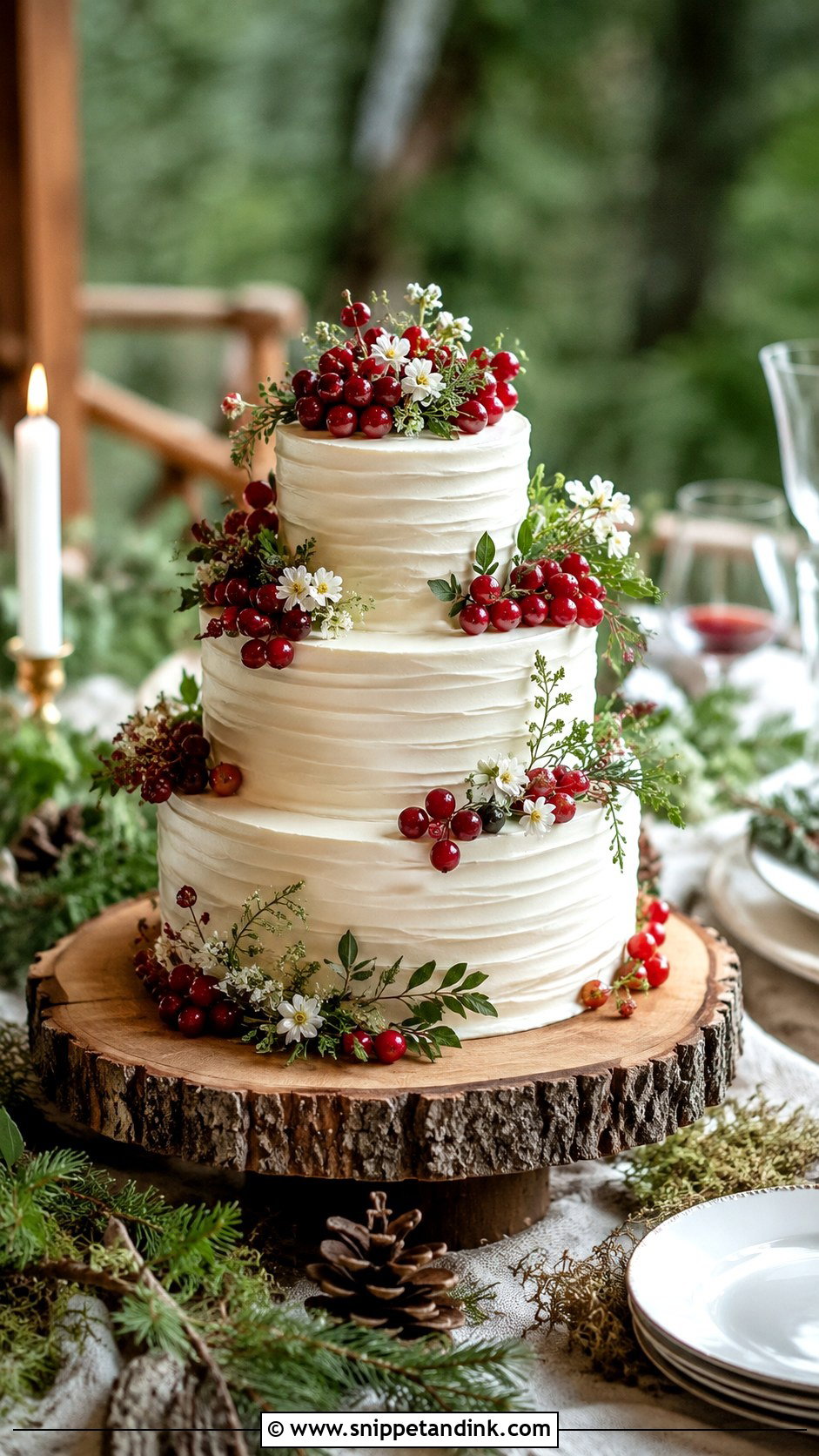
Lingonberries are small, red and properly tart, and that sharpness is what makes this cake taste lighter than it looks. They balance vanilla, almond and cardamom, and they cut through a rich buttercream. As a decoration they hold up better than raspberries because their skins are firmer and they don’t weep on the frosting. Fresh lingonberries can be hard to source outside their autumn season, so I often use a cooked lingonberry jam inside and frozen berries, thawed and dried on paper, for the top. Red berries against ivory buttercream suit fall, winter and woodland weddings in particular.
8. Nordic Cardamom Wedding Cake
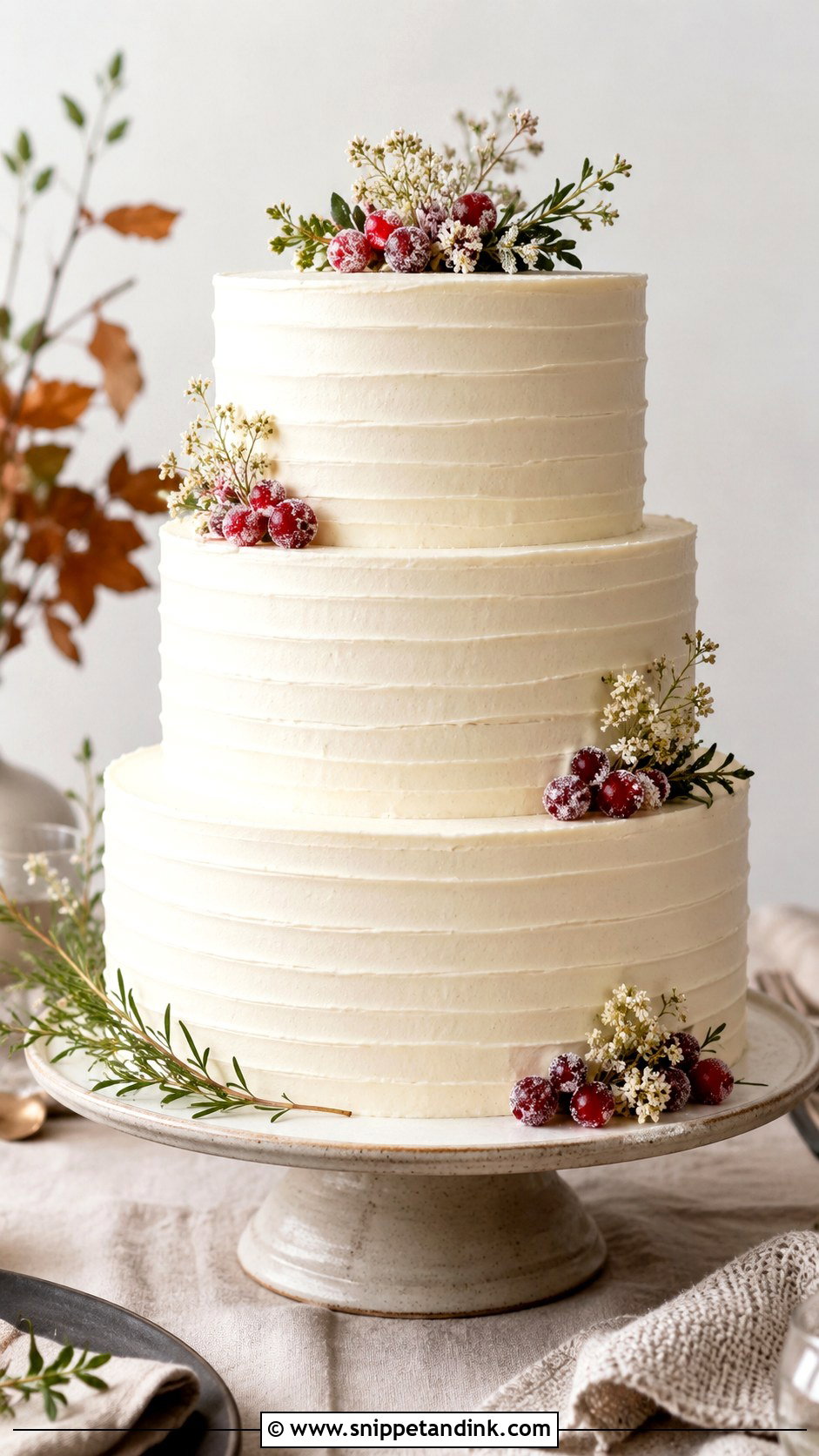
Cardamom shows up all over Scandinavian baking, from buns to coffee breads, and a little of it turns a plain sponge into something people ask about. I grind the seeds fresh rather than using pre-ground, which loses its perfume fast and can taste dusty. A little goes a long way; too much and it starts to taste medicinal. Pair it with vanilla buttercream, cream cheese frosting, pear filling or berry compote. Outside, pale buttercream with soft ridges or a smooth finish, plus a few sugared berries, keeps the look light. I’d put this on the menu for autumn and cold-weather dates.
9. Nordic Almond Wedding Cake
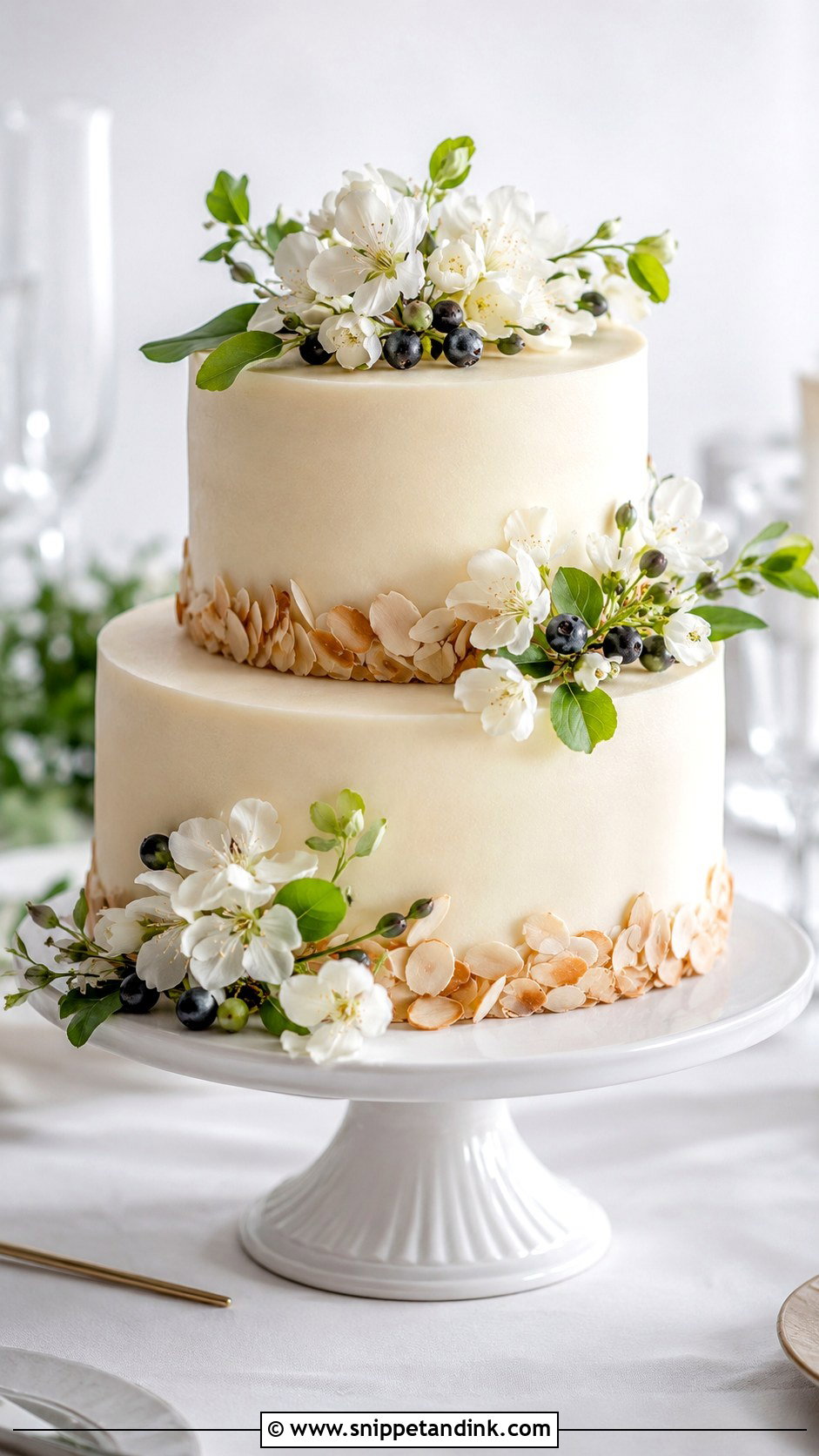
Almond is the flavor I’d call most quietly Nordic, since it turns up in so many celebration bakes there. It pairs with raspberry, cloudberry, vanilla or whipped cream fillings. For the outside you can go smooth ivory buttercream, white fondant or a marzipan covering, and marzipan is worth considering on its own merits: it seals in moisture and gives a soft, matte surface that photographs without glare. Sliced toasted almonds pressed around the base hide the seam between cake and board. Do check your guest list for nut allergies early, since almond flavoring usually runs through every component of this cake.
10. Nordic Kransekake Wedding Cake
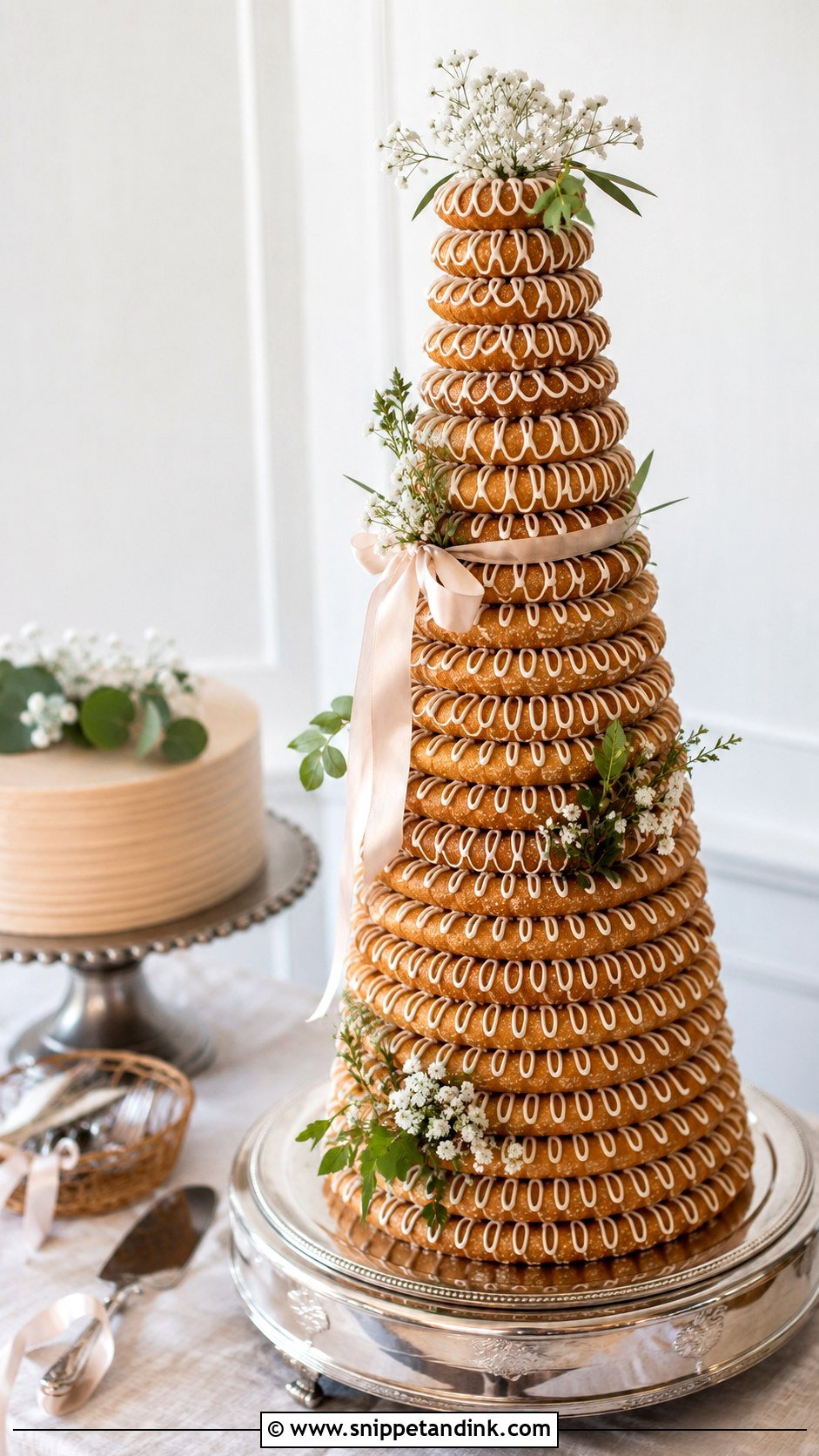
Kransekake is made from rings of almond paste, sugar and egg white, baked and stacked from largest to smallest into a tall cone, then held together with zigzags of white icing. It’s dense and chewy, closer to a soft macaron than a sponge, so I always recommend serving it beside a small cutting cake for guests who expect something cakey. Flags, small flowers or greenery around the base suit the wedding version. The rings keep well for several days if stored airtight, which makes it one of the few wedding bakes you can safely make ahead. For couples with Scandinavian roots, it carries real family meaning.
11. Nordic White Buttercream Wedding Cake
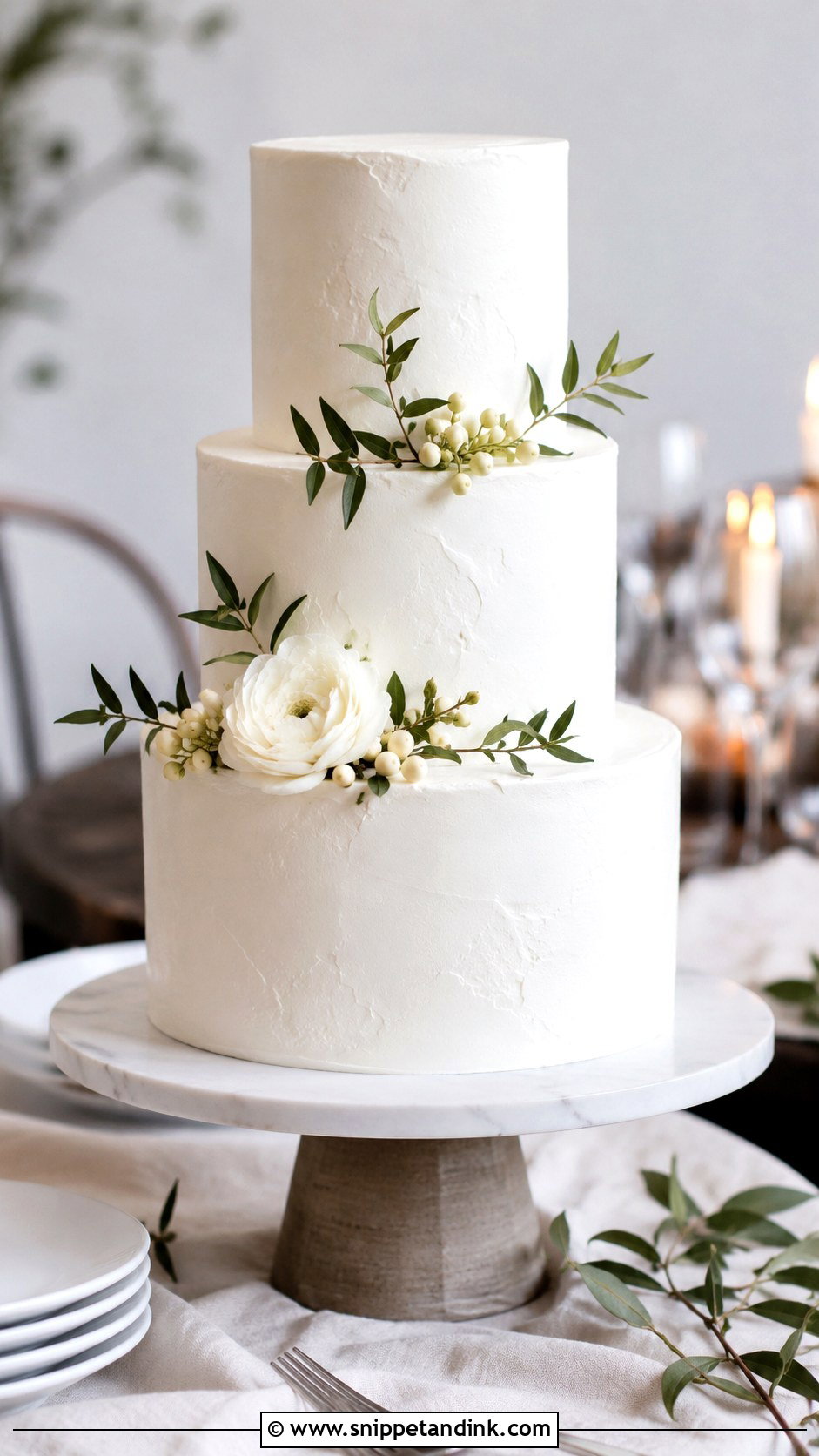
White buttercream on stacked tiers is the base most of the cakes in this list are built on, so the finish has to be good. I use a meringue-based buttercream for this style because it smooths to a satin surface rather than the slightly gritty crust of a powdered-sugar version. From there you can leave it flat, comb in fine ridges or swirl it with a spatula. One floral cluster, a thin branch or a few pale berries is all the decoration it needs. Vanilla bean, lemon cream, almond or elderflower all suit it, and it adapts to a city loft as readily as to a barn.
12. Nordic Pressed Flower Wedding Cake
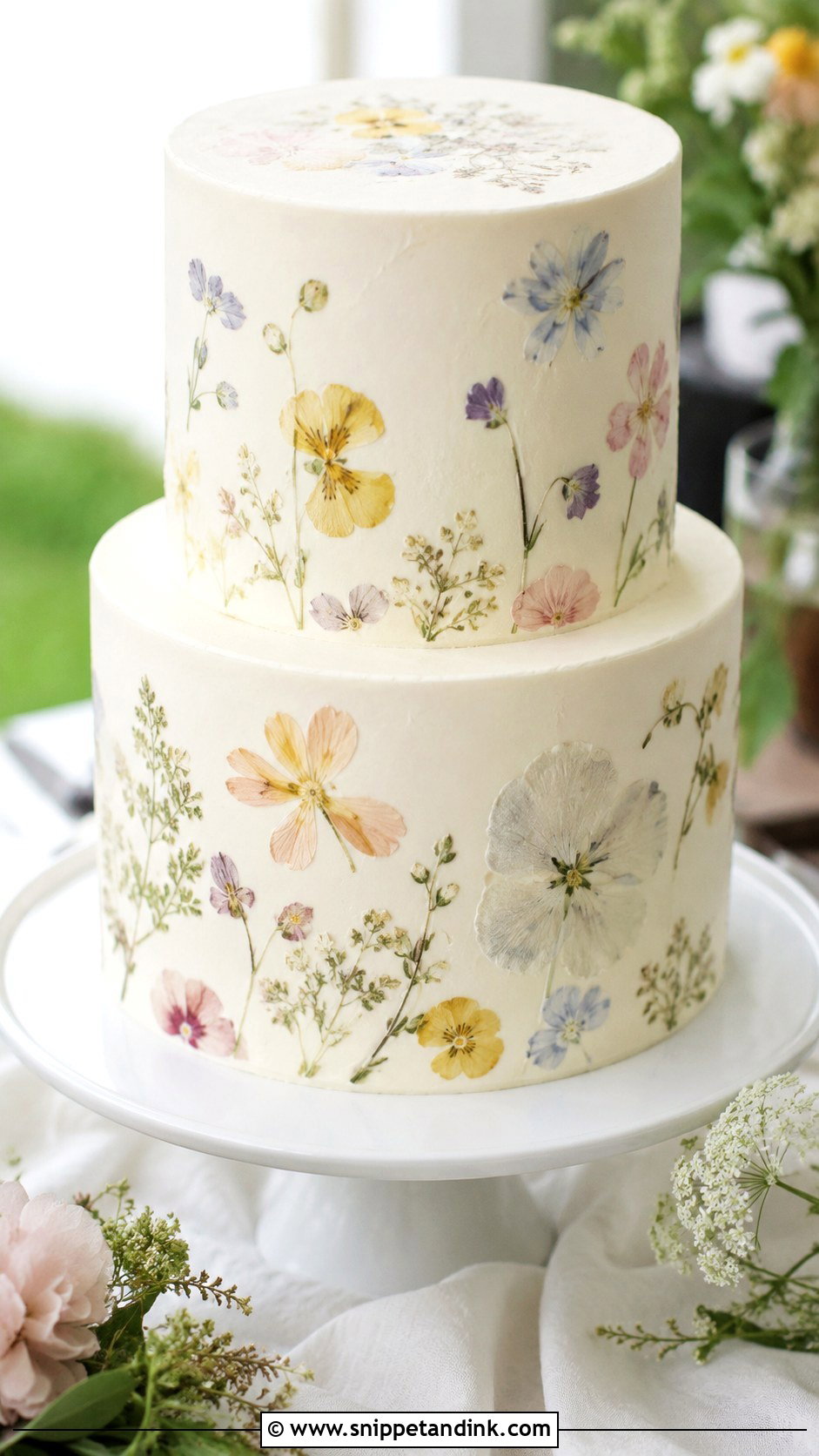
Edible pressed flowers, pressed flat against smooth buttercream or fondant, give you a botanical look that no piped flower can match. Violas, pansies and small cornflowers press well and keep their shape. They’re stuck on with a little water or piping gel, and I place them on a well-chilled cake so they don’t slide. Two warnings: pressed petals fade under strong sun, and they wrinkle if the buttercream gets warm and sweats. Soft yellows, whites and pale blues keep the palette calm. Lemon, vanilla elderflower or honey almond suit the delicate look, especially for a spring garden wedding.
13. Nordic Greenery Wedding Cake
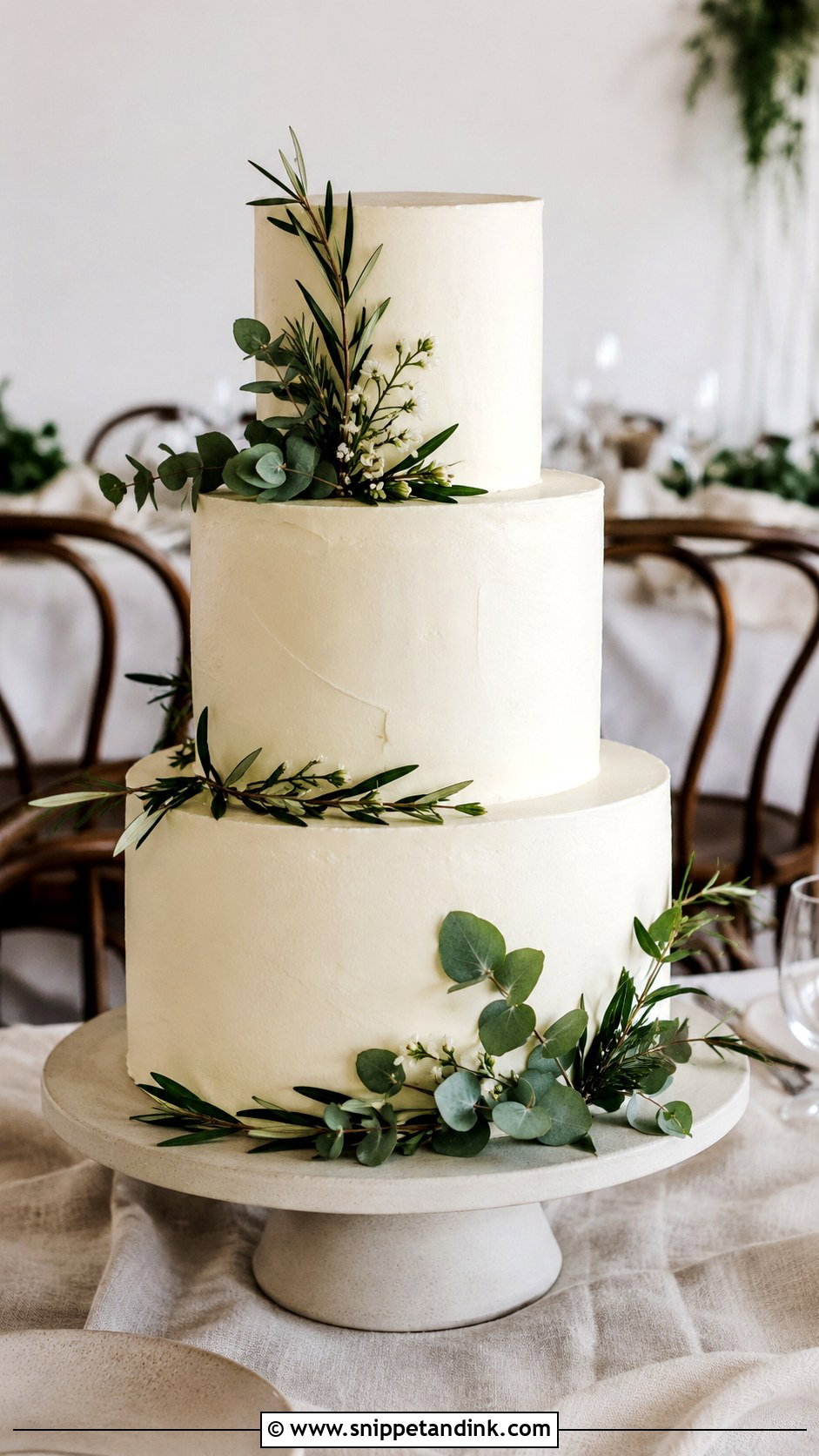
Greenery gives you shape and movement on a cake without adding any color, and that’s exactly why it fits this style. Eucalyptus, olive leaves, fern tips and rosemary can wrap a tier or sit in small clusters. Not all of it is edible, eucalyptus included, so I wrap every stem in floral tape and push it into a drinking straw or flower pick before it touches the cake. Keep the base white, ivory or pale beige so the leaves stand out. A smooth finish reads modern, a semi-naked one reads rustic, and pear cardamom matches either.
14. Nordic Winter Wedding Cake
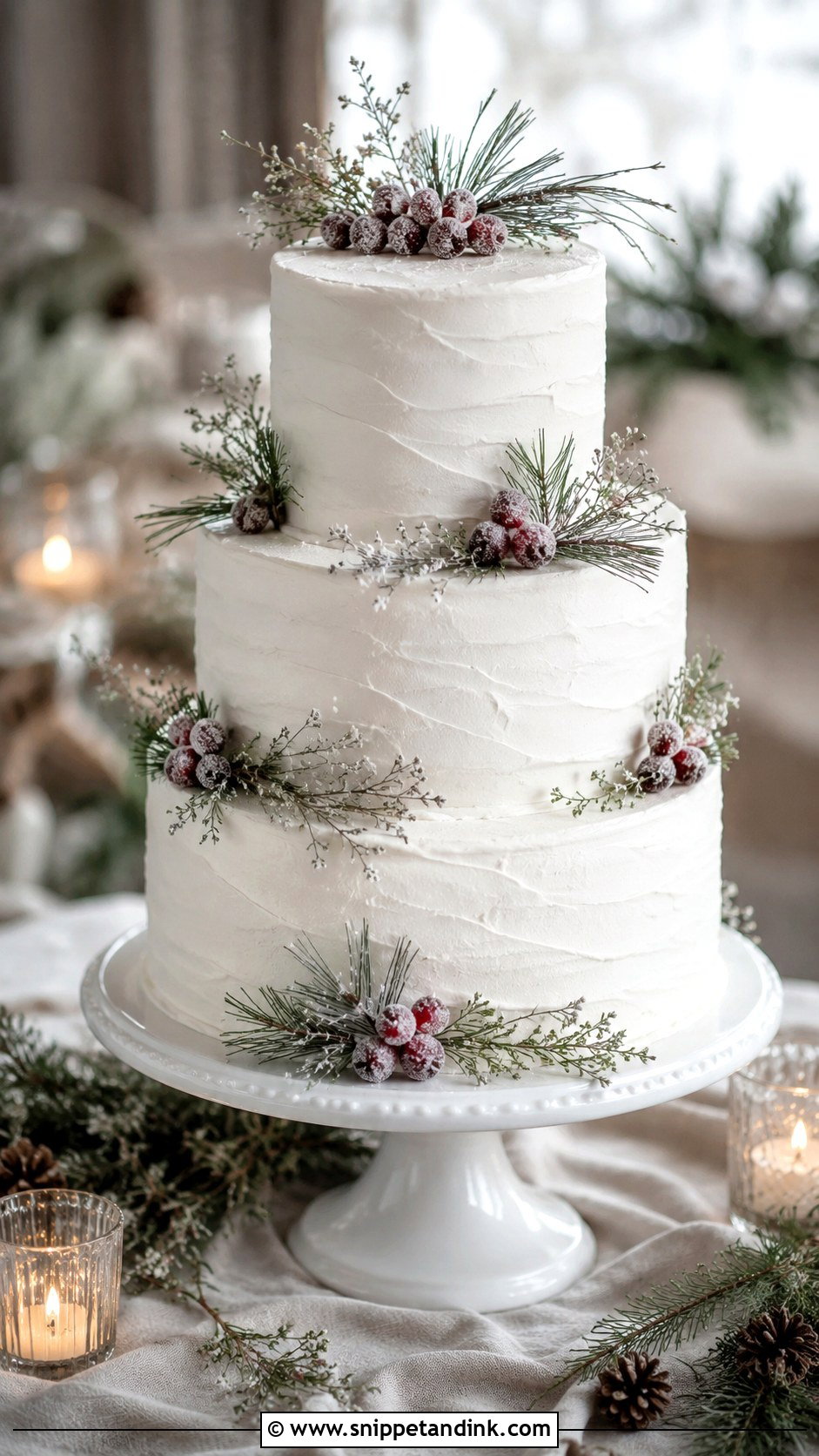
The risk with a winter cake is tipping into a Christmas theme, so I keep it to white buttercream with pale gray shading, sugared cranberries, frosted rosemary or a few pine-style sprigs. Sugared berries are simple to make: dip in egg white or a thin syrup, roll in caster sugar and let them dry overnight so the crust sets hard. White chocolate, vanilla almond or a cardamom sponge with cream filling all taste right in cold months. Candlelight is the friend of this cake. A white stand, a linen cloth and warm light make the frosted texture glow instead of looking flat.

15. Nordic Summer Berry Wedding Cake
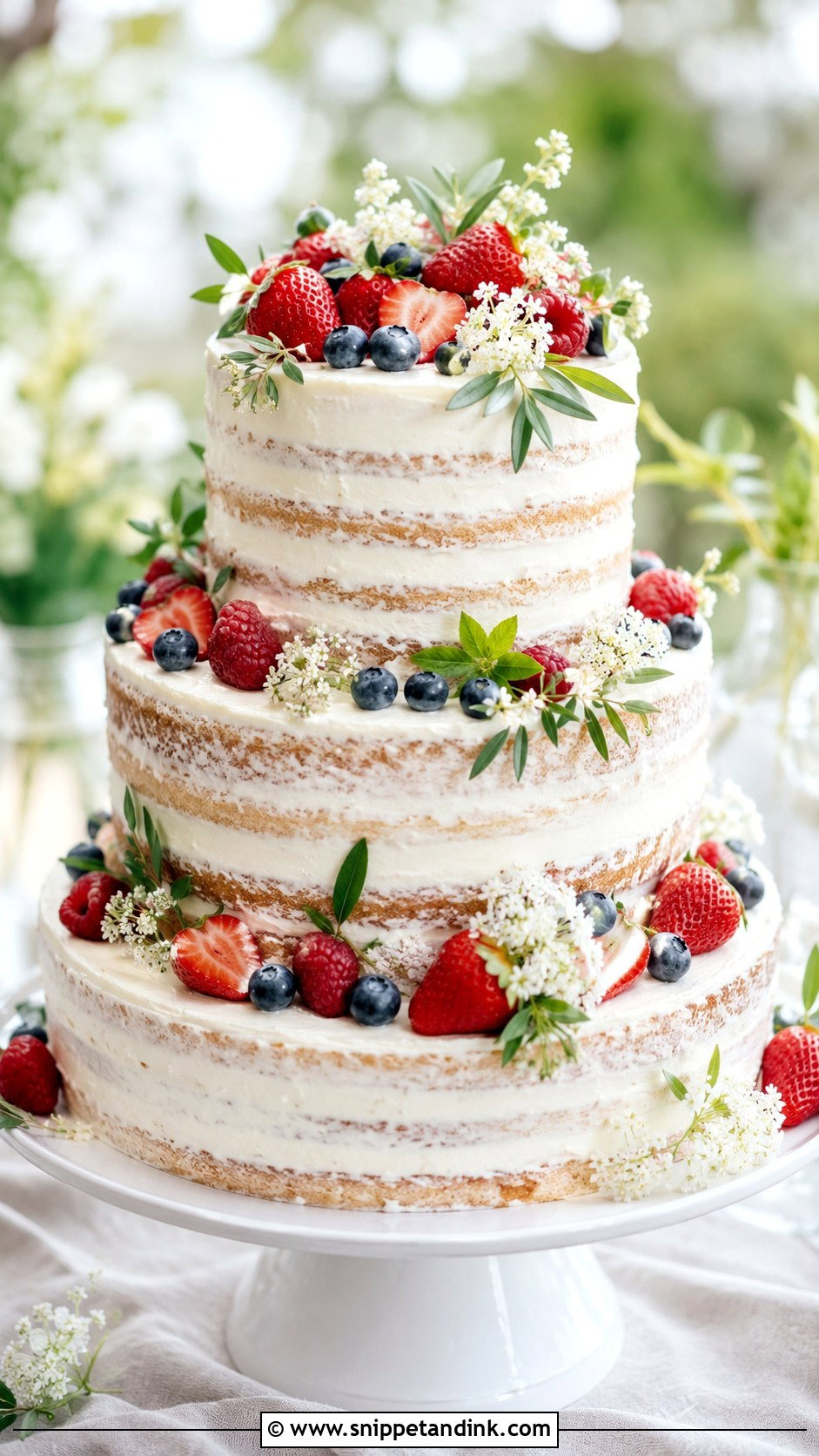
Strawberries, blueberries and raspberries crowded onto a white cake can look like a summer fair if you’re not careful, so I group them in two or three clusters and leave plenty of bare frosting in between. Raspberries and cut strawberries weep within a few hours, which means I add them at the venue, not in the kitchen. Whole berries, uncut, last far longer. Vanilla sponge, lemon cream or almond cake with berry filling suit warm weather. For a garden or lakeside reception, ask your baker where the cake will stand; berries in direct sun soften fast.
16. Nordic Rustic Wedding Cake
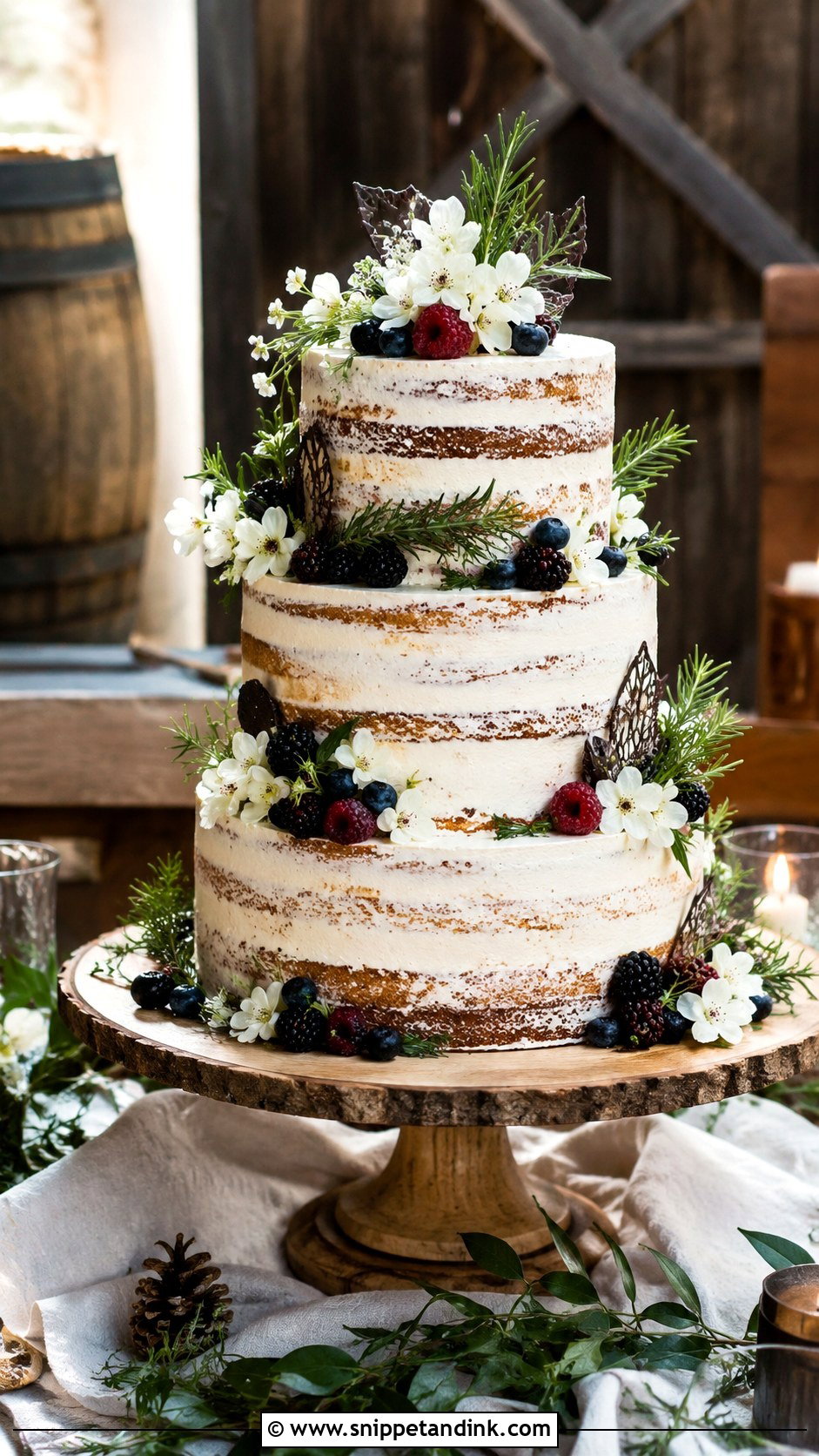
Rustic is where texture does the work: a semi-naked or roughly combed buttercream, stacked tiers with no fussy borders, and earthy decoration like bark-style chocolate, berries and small herbs. A wooden slab stand completes it, but make sure it’s sealed or lined, because raw wood can mark buttercream and absorb grease. The palette stays soft with ivory, cream, brown and muted berry tones. Spice cake, pear cardamom and honey cake with cream frosting taste as warm as it looks. I keep the edges tidy even on the roughest finish, otherwise rustic slides quickly into messy.
17. Nordic Coastal Wedding Cake
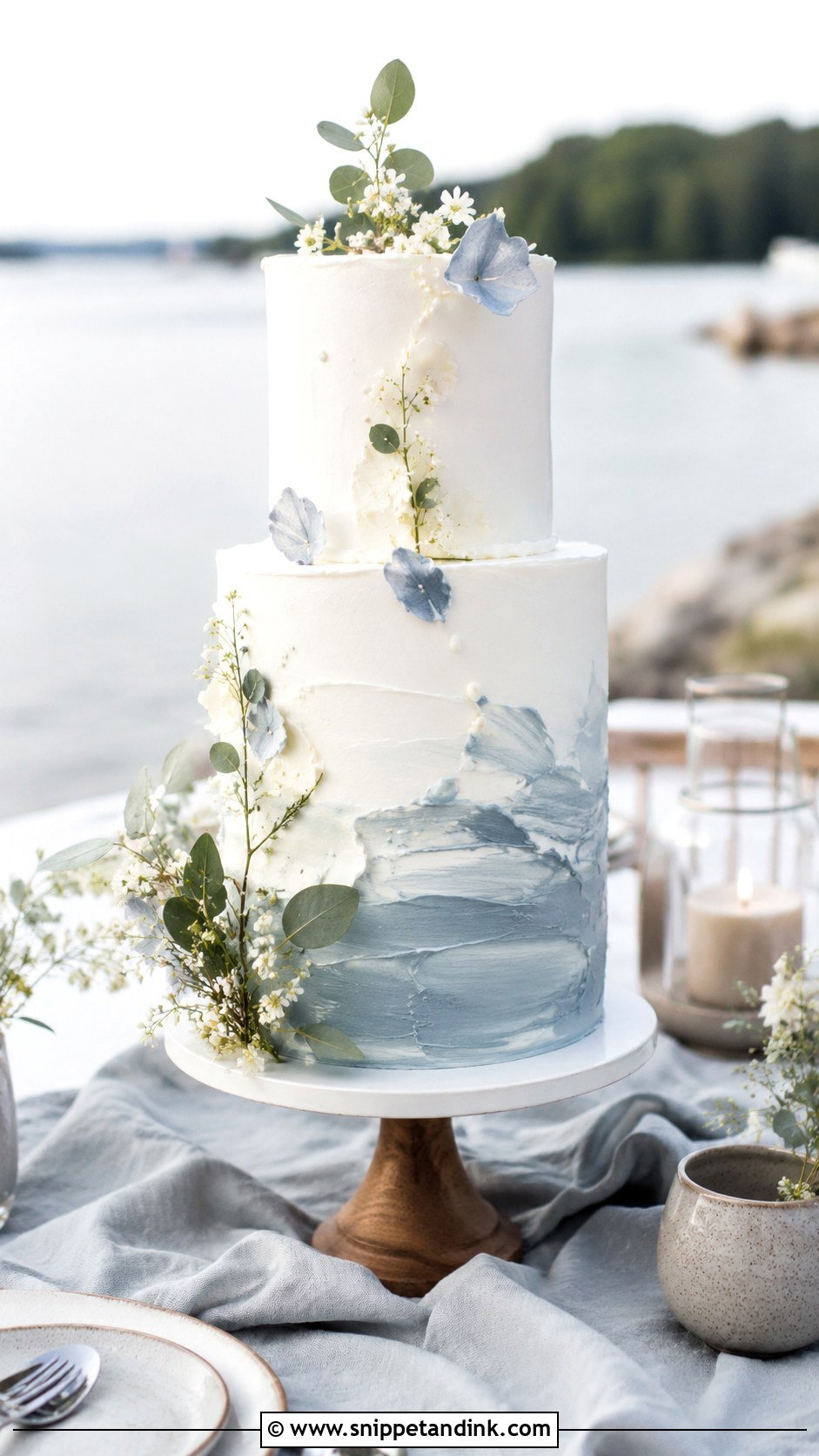
A coastal cake in this style suggests water through color, not shells. Soft white buttercream, cool gray-blue accents and a light watercolor wash on one tier are usually enough. I mix the blue with a touch of gray or black, because a pure sky blue looks childish next to the sea and pale blues can fade in strong sunlight. Silver-green leaves and tiny white flowers suit it better than tropical blooms. Lemon, elderflower or blueberry fillings keep it fresh. Seaside venues are often humid and windy, so I bring this one in a box and dress it indoors.
18. Nordic Lavender Wedding Cake
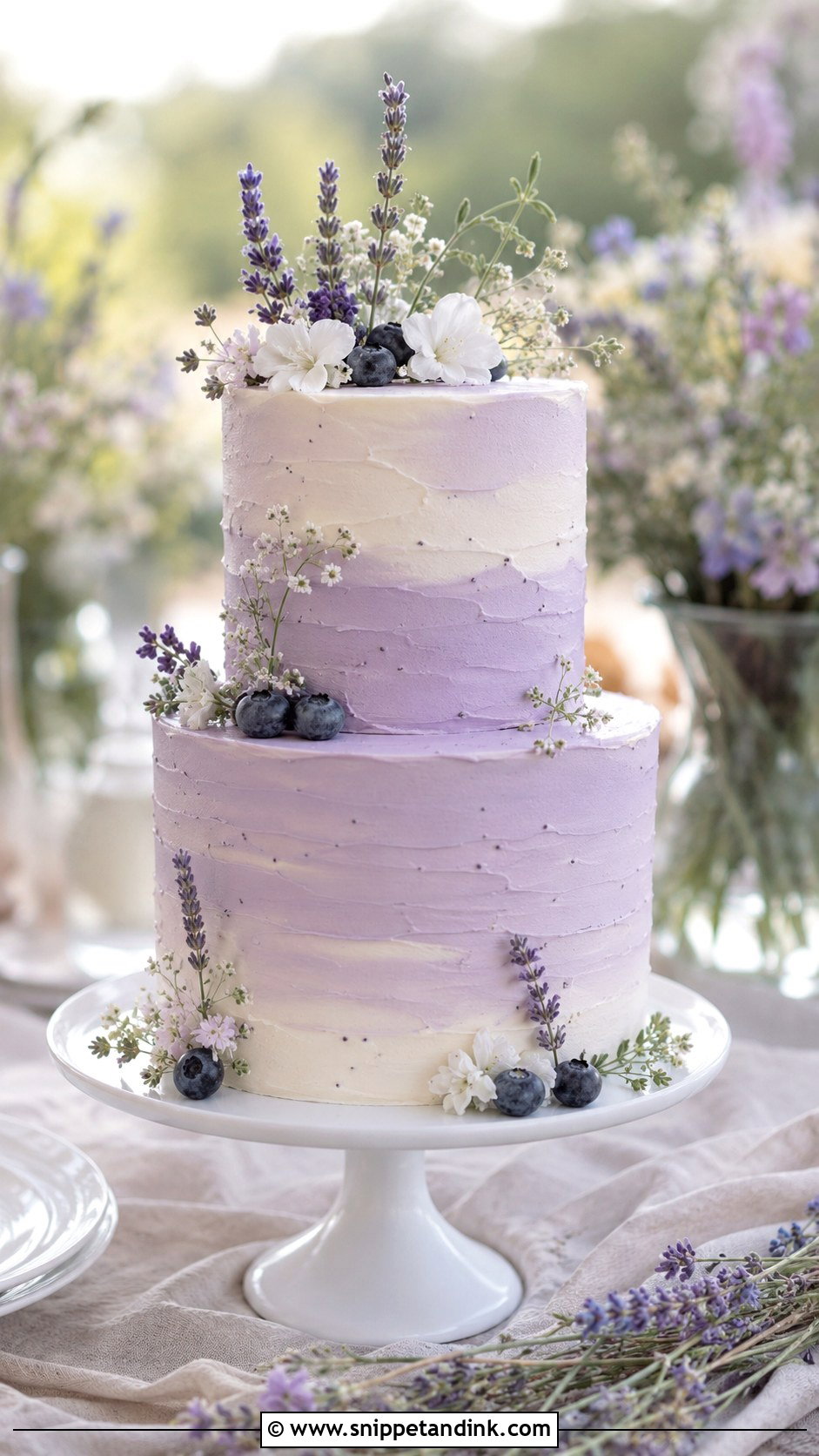
Lavender is the most overpowering flavor I work with. Even a little too much tastes soapy, so I infuse it gently into a syrup or cream rather than adding dried buds to the batter, and only culinary lavender goes anywhere near the cake. Honey, vanilla, lemon and almond all soften it. The color should stay pale: an ivory cake with a few sprigs, or a very light lavender buttercream. Blueberries or small white flowers add contrast. It’s a spring and summer cake, and it sits well in a garden or countryside setting where real lavender might already be growing.
19. Nordic Honey Wedding Cake
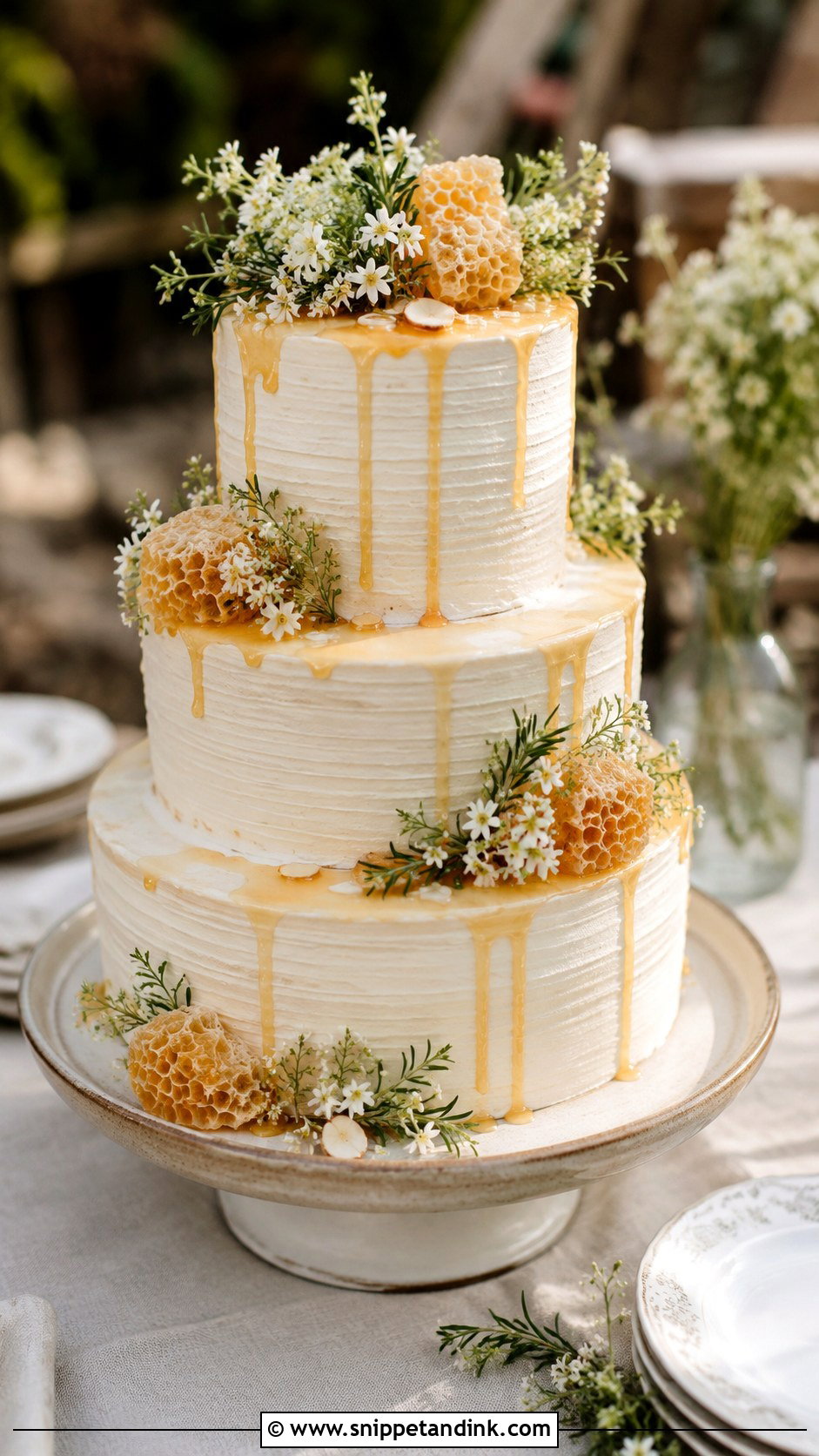
Honey brings a warm, rounded sweetness that pairs with almond, vanilla, lemon, pear and cream cheese frosting. I use it in the sponge and in a soaking syrup, because honey keeps cake moist longer than sugar alone. The outside can be smooth ivory buttercream with a faint golden tint or a lightly textured finish. For decoration, small white flowers, fresh herbs or honeycomb-style pieces work, and a drip should be kept very thin. Real honeycomb leaks once cut, so I place it on a small disc of wafer paper. Rustic weddings and garden receptions suit it most.
20. Nordic Modern Wedding Cake
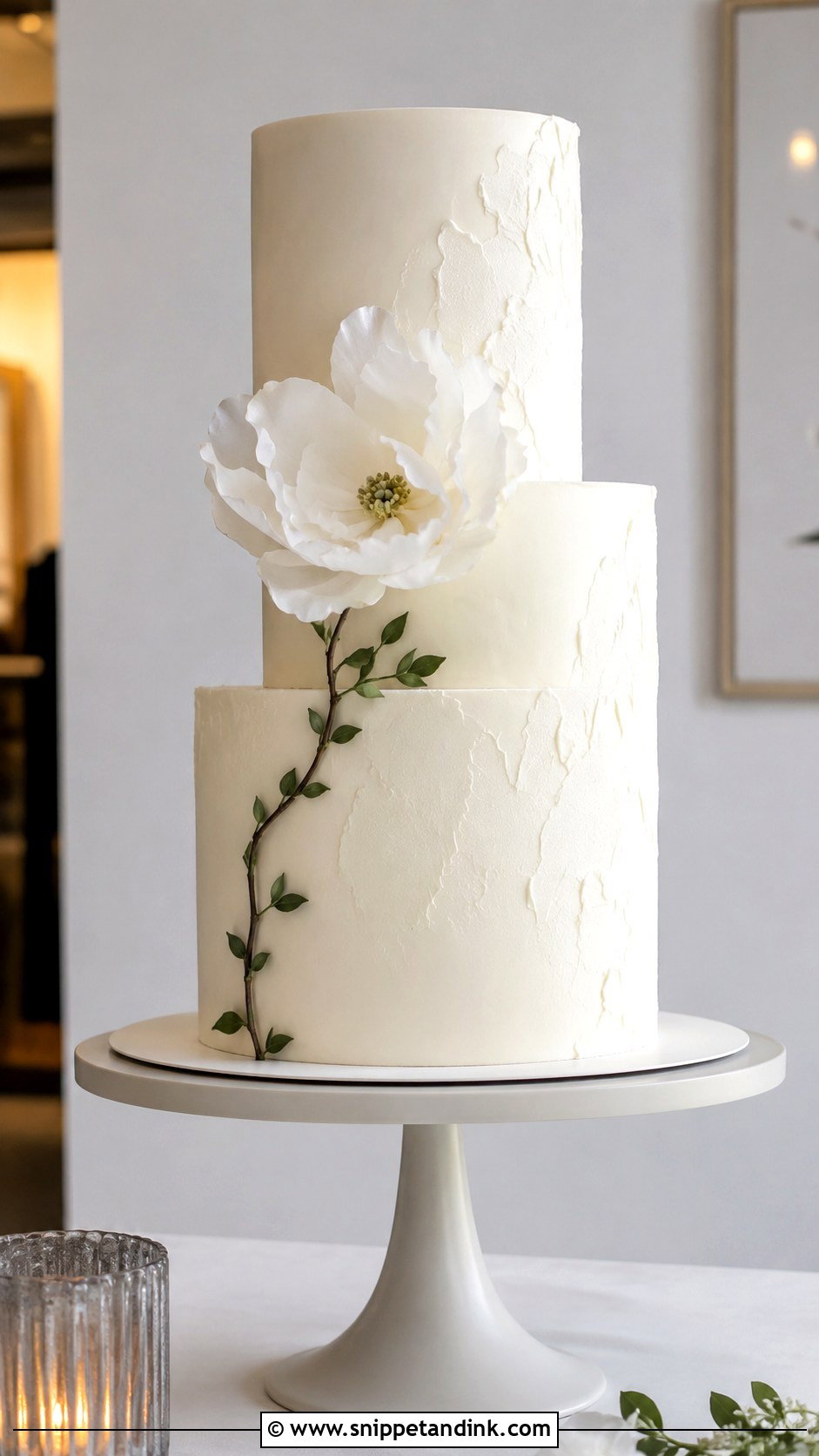
Tall tiers, clean edges and offset stacking give this version a sharper, more architectural look. The extra height comes from double-barrel tiers, which need internal dowels and a board halfway up so the lower half isn’t crushed, so mention this at your consultation, because it affects structure and price. Stick to one restrained color: ivory, stone gray, soft beige or muted sage. A single sculptural sugar flower or a line of greenery is enough. Vanilla elderflower, almond raspberry or lemon cream stays light. Gallery spaces and modern venues suit it best.
Real Berries, Herbs and Flowers on Cake Without Ruining It
Nearly every cake above uses something fresh, and that’s where most problems on the day start. Fruit weeps, flowers wilt, and some of the prettiest greenery is not something you want touching food.
Flowers and Leaves
Edible flowers such as violas, pansies, cornflowers, chamomile and roses grown without sprays can sit directly on buttercream. Anything else, from eucalyptus to hydrangea, gets its stem wrapped in floral tape and set into a straw or pick so no sap reaches the cake. Florist flowers are usually treated with preservatives, so I wash and dry them and never let them rest flat on a slice that will be served. Some common choices, like lily of the valley and sweet pea, should not go on a cake at all.
Fruit
Whole berries are far more stable than cut ones. Blueberries, lingonberries and red currants can sit on a cake for most of a reception; halved strawberries and raspberries release juice within a few hours. I dry every berry on paper towel before placement and add them at the venue.
Heat
Buttercream softens in a warm room, and a summer marquee can get hot by the afternoon. Ask the venue to set the cake table away from windows, heaters and the dance floor lights, and to keep the cake in its box somewhere cool until an hour or so before it is displayed. Naked and semi-naked cakes also dry out faster in warm air, which is one more reason to cut them earlier in the evening rather than last.
Restraint Takes More Skill Than Decoration
The cakes in this list look simple, and every one of them depends on a clean finish, fruit that is fresh on the day, and flavors chosen with care. Pick one texture, one color accent and one or two decorations, then spend your tasting appointment on flavor and structure rather than adding detail. Smooth buttercream, semi-naked tiers, a kransekake or a berry cake can all carry this look. The best Nordic cake is one where guests notice the taste before anything else, and remember how calm the table looked when they walked in.
You'll Like These Ideas:










Leave a Reply