
Four tiers is the height where a wedding cake stops being dessert and starts holding its own in the room. It reads from the back of a ballroom, it gives the cake cutting a real backdrop, and it leaves me enough surface to put texture on one tier and calm on the others. The ideas below run from plain white to heavy Lambeth piping, pressed petals, marble and square tiers. As you scroll, pay attention to which finishes make you stop, because the finish decides almost everything else: how far ahead your baker needs to start, how the cake copes with a warm room, and how many people it can feed.
How Many Slices Four Tiers Really Give You
Couples often assume four tiers means a huge guest list. It depends entirely on the tier sizes. A common round stack of 6, 8, 10 and 12 inch tiers cut into standard wedding portions (about one inch by two inches, four inches tall) gives roughly 130 slices. Step up to 8, 10, 12 and 14 inches and you’re closer to 200. Party-sized portions are bigger, so the same cake feeds noticeably fewer.
If you love the height but have a small guest list, I can make one or two tiers from styrofoam dummies, iced to match, and cut a kitchen cake in the back for serving. Nobody can tell from across the room. The reverse works too: a modest four-tier display plus a sheet cake of the same flavor stretches to a large wedding without making the display tier enormous.
What holds the tiers up
Every tier sits on its own cake board, supported by dowels pushed into the tier below so the weight goes down through the supports rather than squashing sponge. On a four-tier cake I also run a long central dowel through the stack, or build in a hidden support system, so nothing slides if the table gets bumped. Ask your baker how they support tall cakes. A confident answer is a good sign.
- Sponge choice matters: dense cakes like mud cake or pound cake carry weight better than very light chiffon in the lower tiers.
- Soft fillings such as fresh cream or mousse belong in the top tier, not the base.
- Plan on a design meeting several months ahead for heavy sugarwork or hand piping.
1. 4 Tier White Wedding Cake
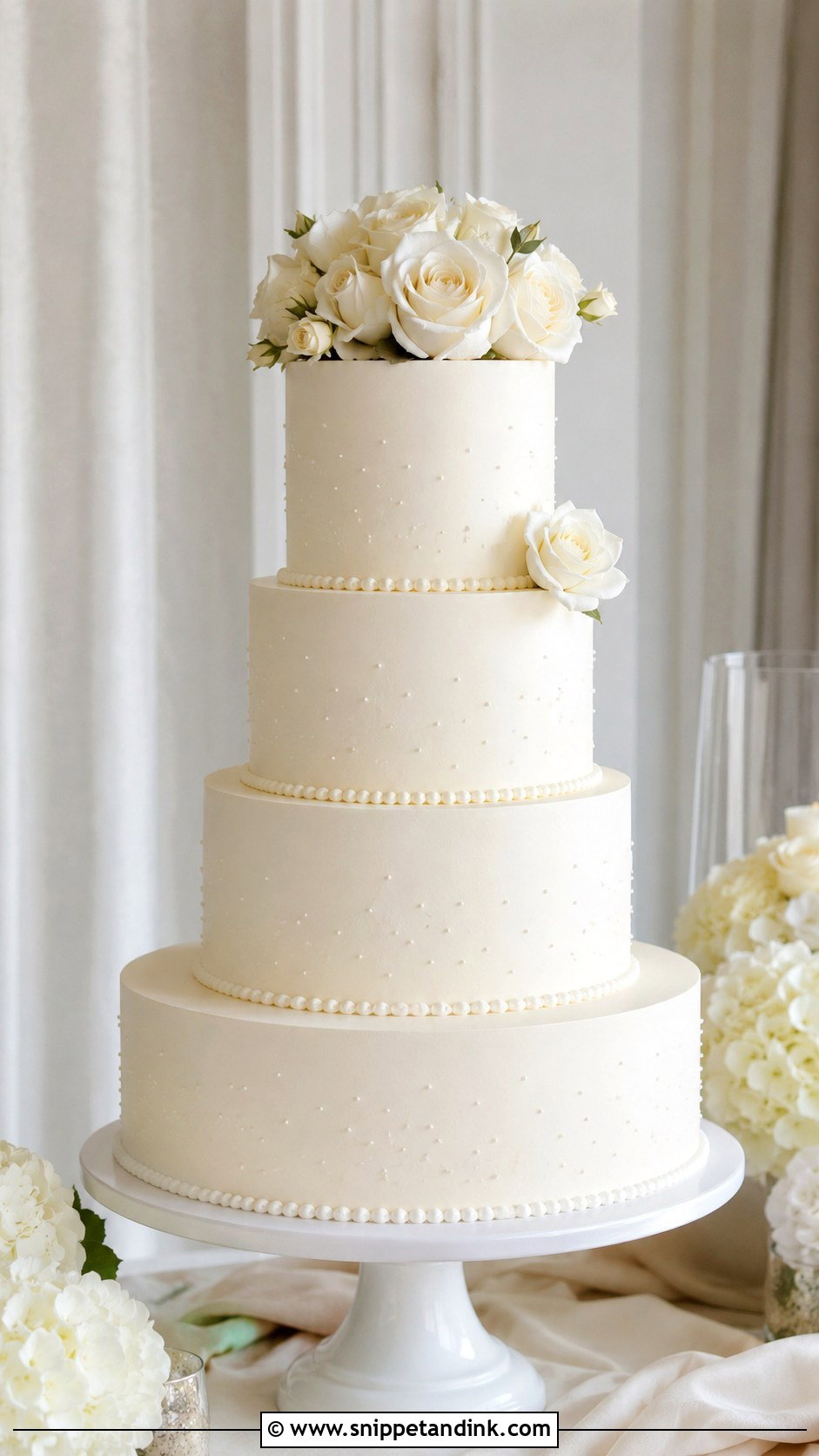
Plain white is the hardest cake to fake. With nothing to hide behind, every bulge in the buttercream and every uneven tier height shows, so I spend more time on the smoothing here than on anything decorative. Once the surface is clean, a little soft piping, a row of pearl dots or a satin ribbon is plenty. Ask for a warm ivory rather than bright white if your dress is ivory; a stark white cake next to it makes the gown look yellow in photos. Vanilla bean, almond or lemon keeps the inside as light as the outside.
2. 4 Tier Buttercream Wedding Cake
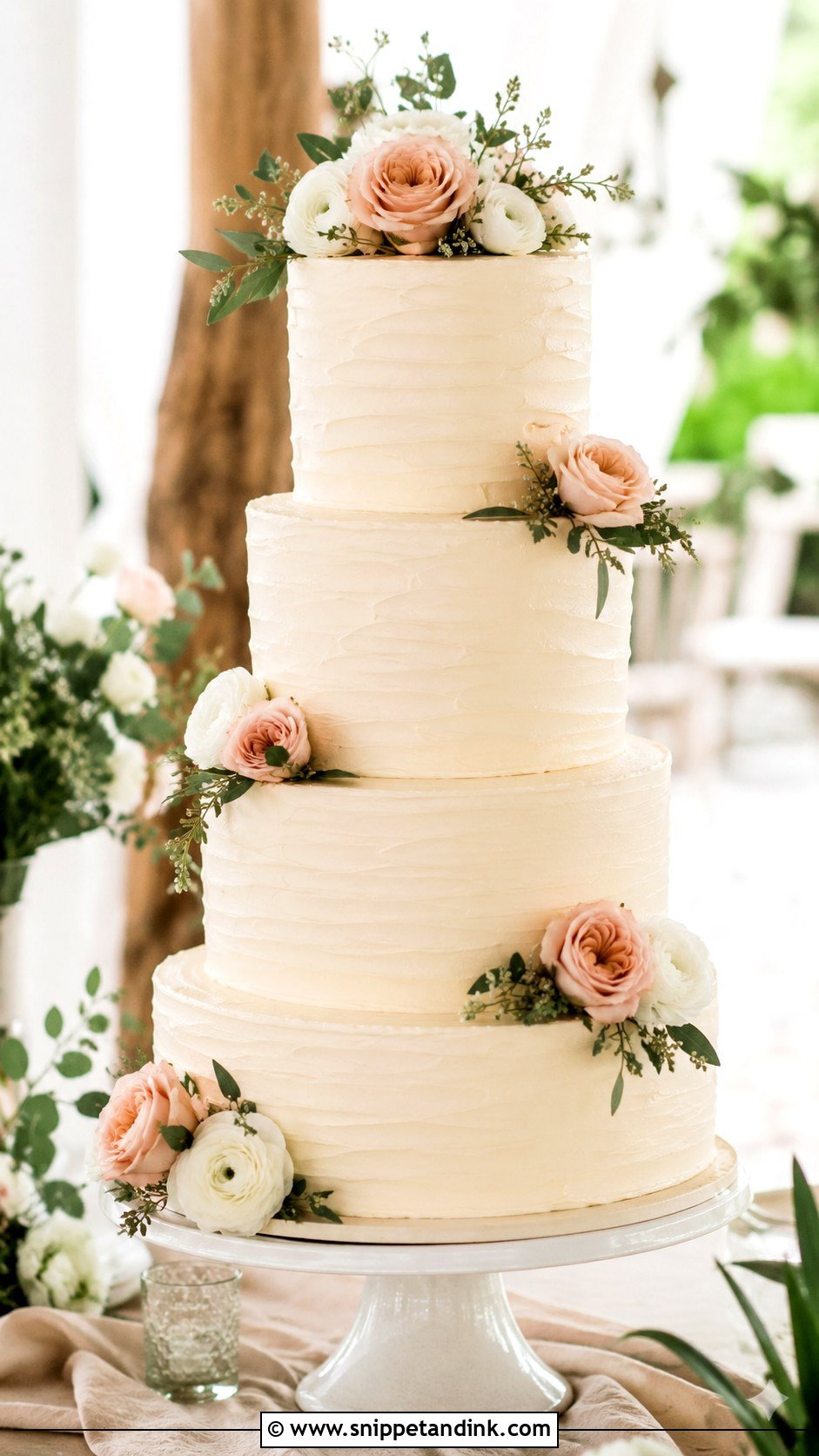
Buttercream is what I’d pick if flavor matters more to you than knife-edge corners. It tints easily to blush, sage or champagne, and it takes a combed or lightly textured finish that hides small dents from transport. The trade-off is temperature: a Swiss meringue buttercream starts to soften once the room climbs past the low twenties Celsius, so in a summer marquee I push for the cake to sit out of direct sun and come out as late as the schedule allows. Fresh greenery and sugar blooms both sit on it happily.
3. 4 Tier Fondant Wedding Cake
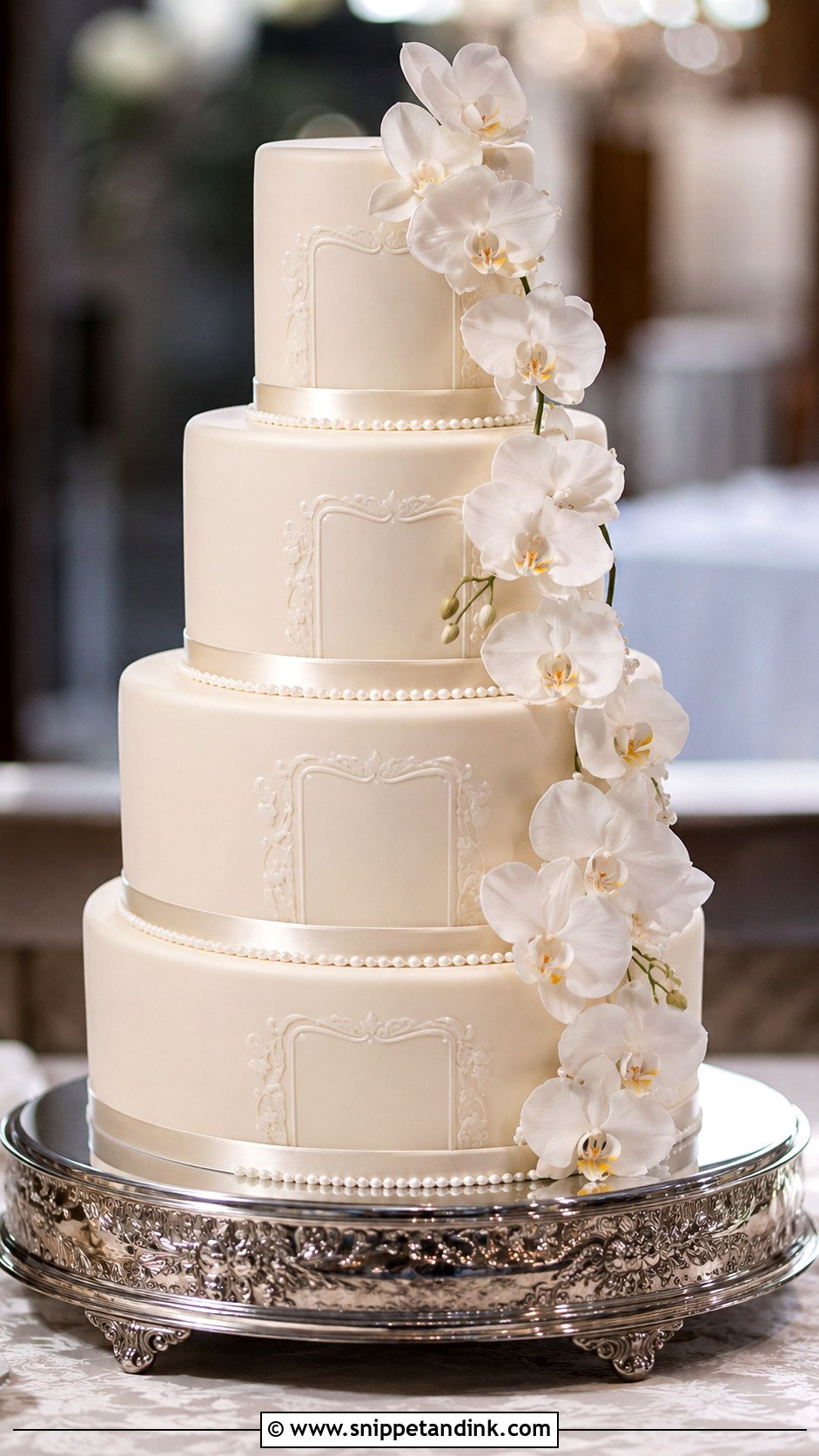
Fondant gives me crisp edges and a surface I can emboss, paint or monogram, and it protects the cake underneath through a long reception. What people don’t expect is how it reacts to cold: bring a fondant cake straight from a fridge into a warm room and it beads with condensation, which can make painted details run. I let it come up to room temperature in its box. Keep texture to one or two tiers so it doesn’t look stiff, and remember fondant can be peeled off at serving for guests who dislike it.
4. 4 Tier Floral Wedding Cake
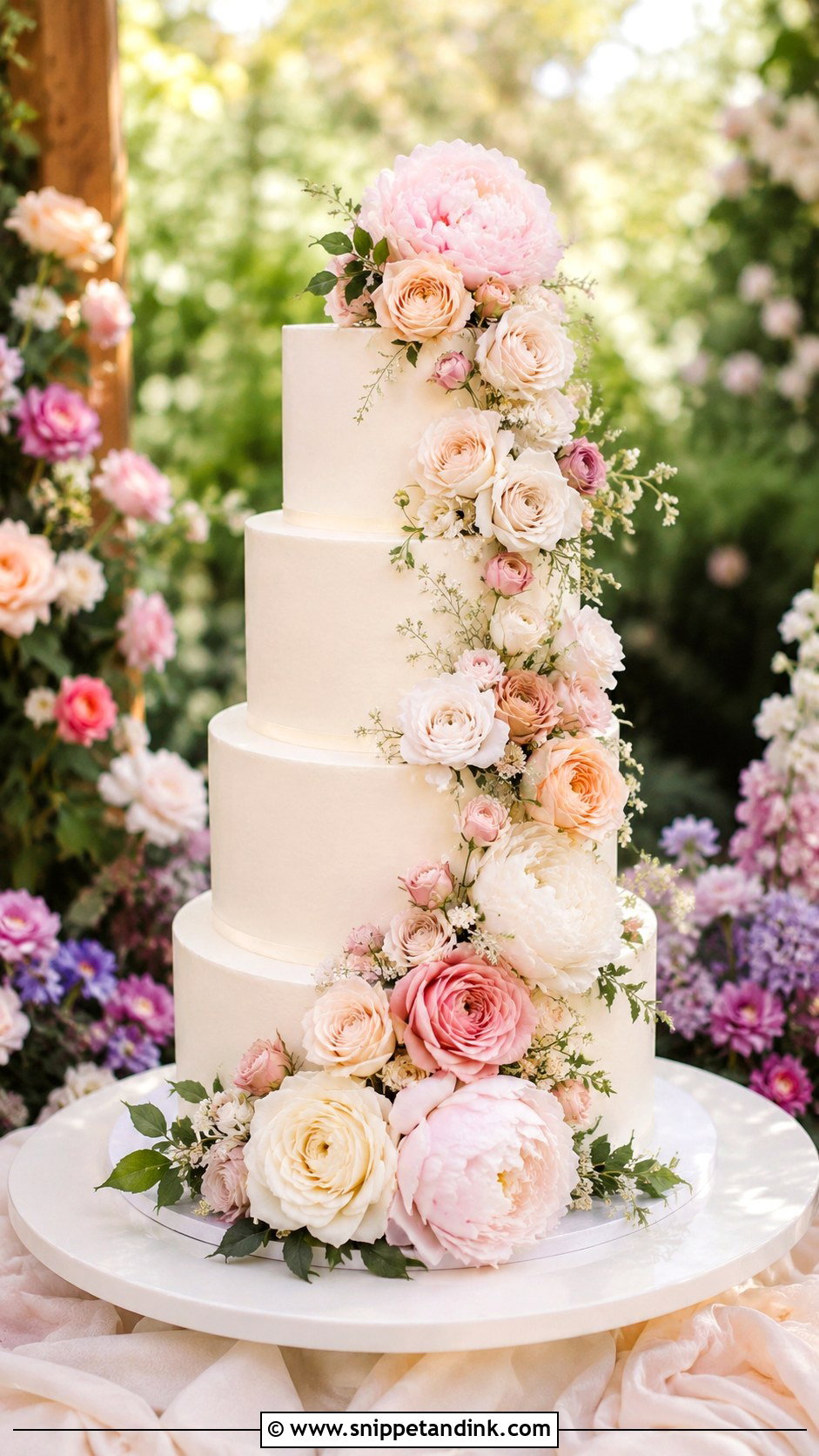
Flowers cascading down one side, tucked between tiers or circling the base are the quickest way to tie the cake to the bouquet. If you want fresh stems, tell your florist early. Anything touching cake should be unsprayed, the stems wrapped in floral tape and pushed into straws or picks, and some popular blooms (hydrangea, lily of the valley, many lilies) are toxic and best kept off food entirely. Sugar flowers cost more in hours but avoid every one of those problems and never wilt.
5. 4 Tier Vintage Wedding Cake
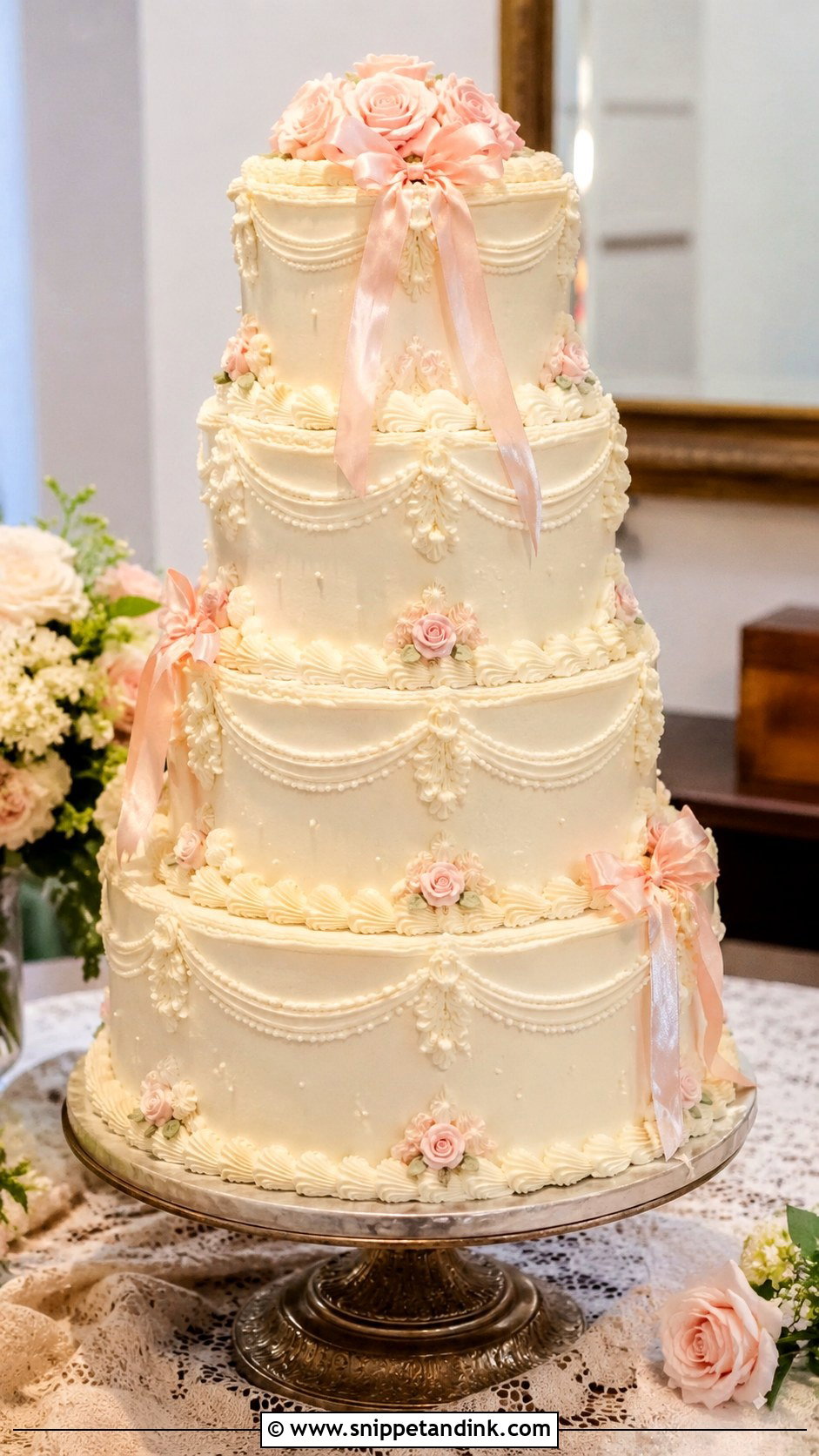
Vintage piping is slow work. Shell borders, swags, scrolls and over-piped ruffles take hours per tier, and four tiers multiplies that, so this is a cake to book early rather than squeeze in. I pipe these in a stiffer buttercream so the shapes hold their edges in a warm room. Pale pink, butter yellow and light blue all suit the style, and glacé cherries, sugar roses or tiny bows finish it. With four tiers of height, the piping has room to breathe instead of crowding.
6. 4 Tier Lambeth Wedding Cake
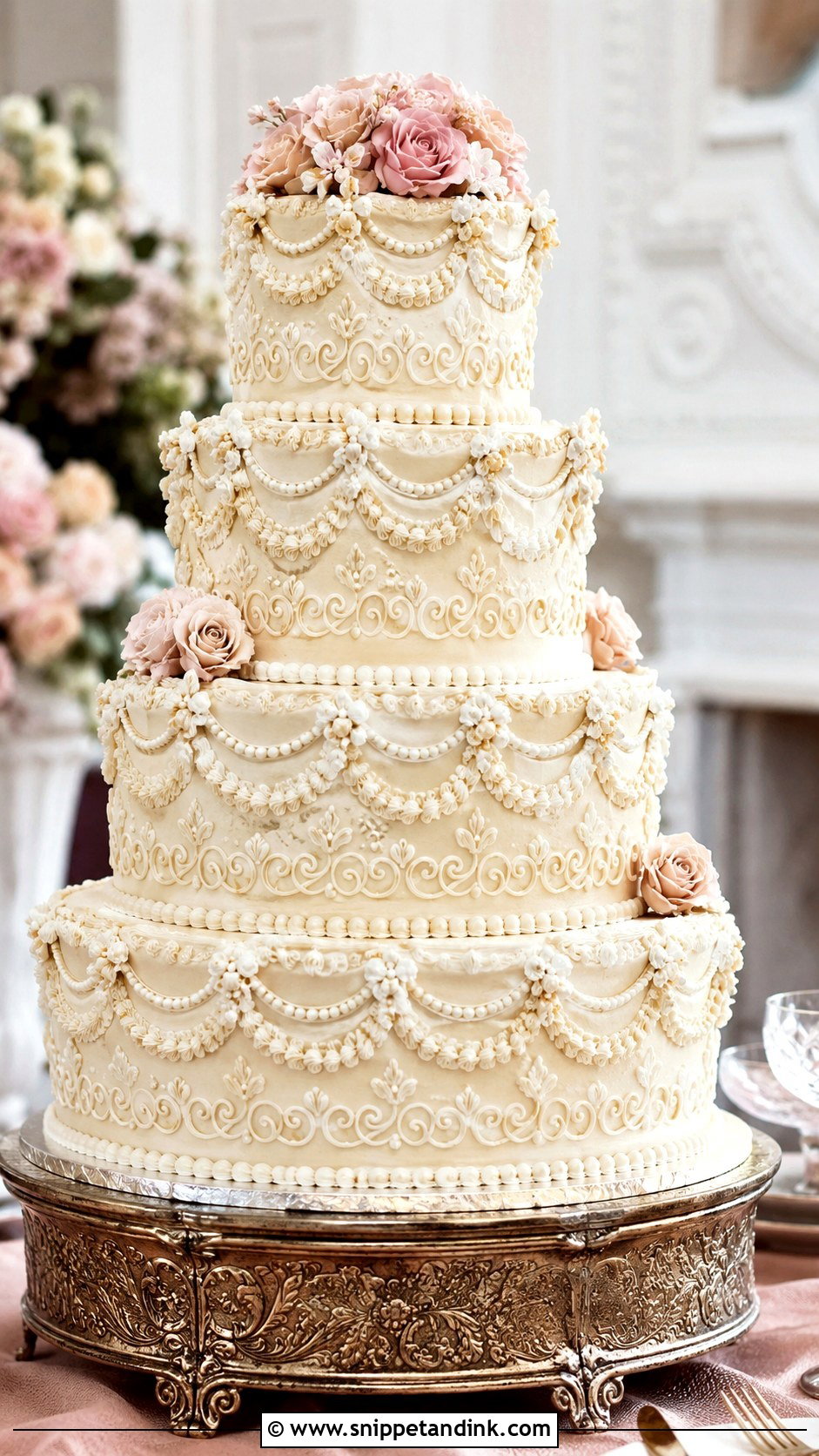
Lambeth is vintage piping turned all the way up: layered borders, overpiping and raised garlands on every tier. My honest advice is to keep the table plain around it, because the cake already carries all the texture the corner can take. Ivory on ivory is the classic version; a hint of sage or champagne in the details makes it feel newer. Almond, strawberry or pistachio sponge inside suits the nostalgic look.
7. 4 Tier Pearl Wedding Cake
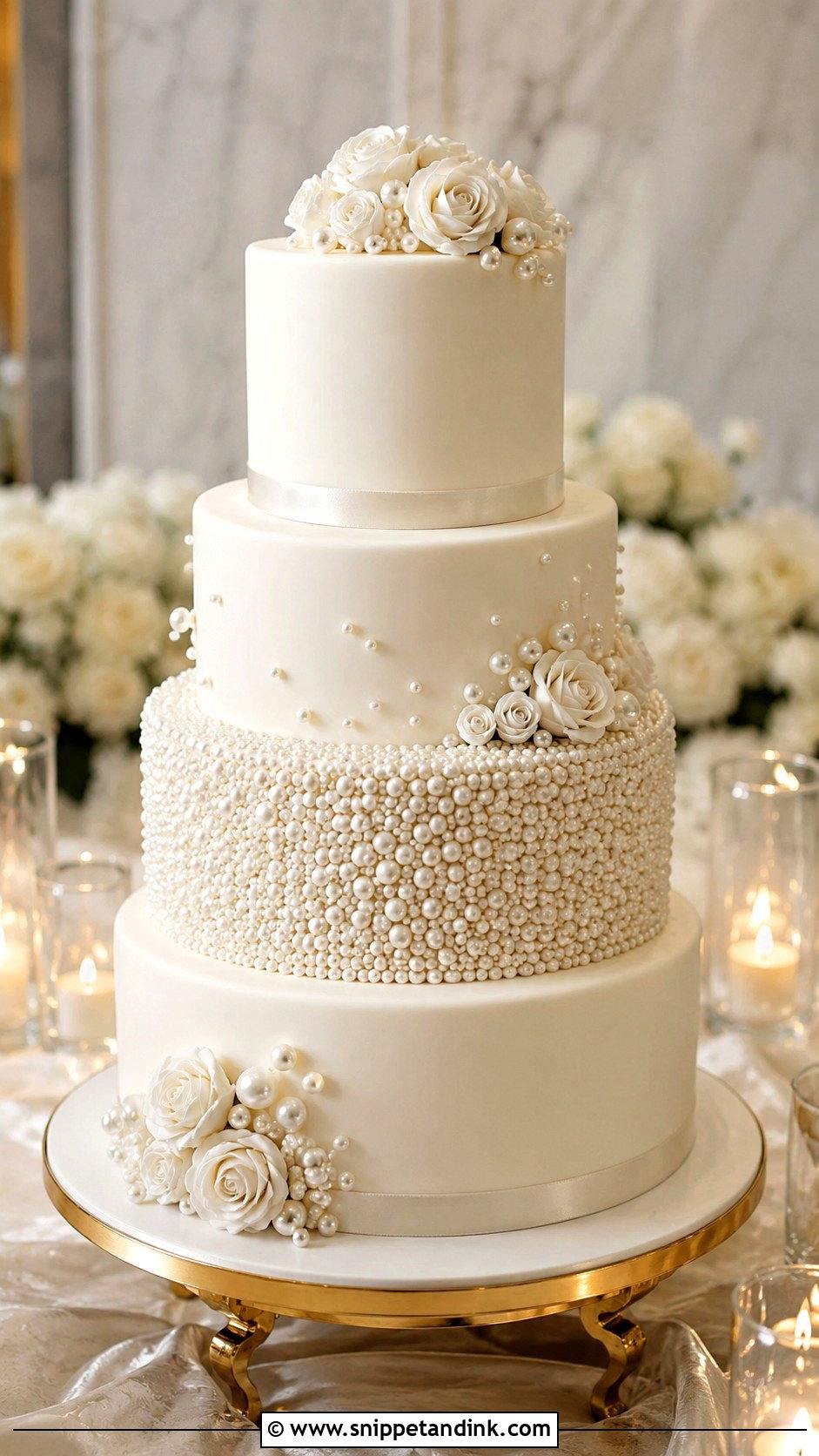
The key is balance. I usually cover one tier heavily in pearls and leave the others smooth, because four fully beaded tiers start to look like costume jewelry. Edible pearls are sugar dragées, and they’re hard enough that I warn couples about them before serving; a scatter is fine, a solid pearl coat on the tier being cut is not kind to teeth. Ivory, champagne and blush bases all suit them, and a few white roses or a satin bow finishes the cake without crowding it.
8. 4 Tier Gold Wedding Cake
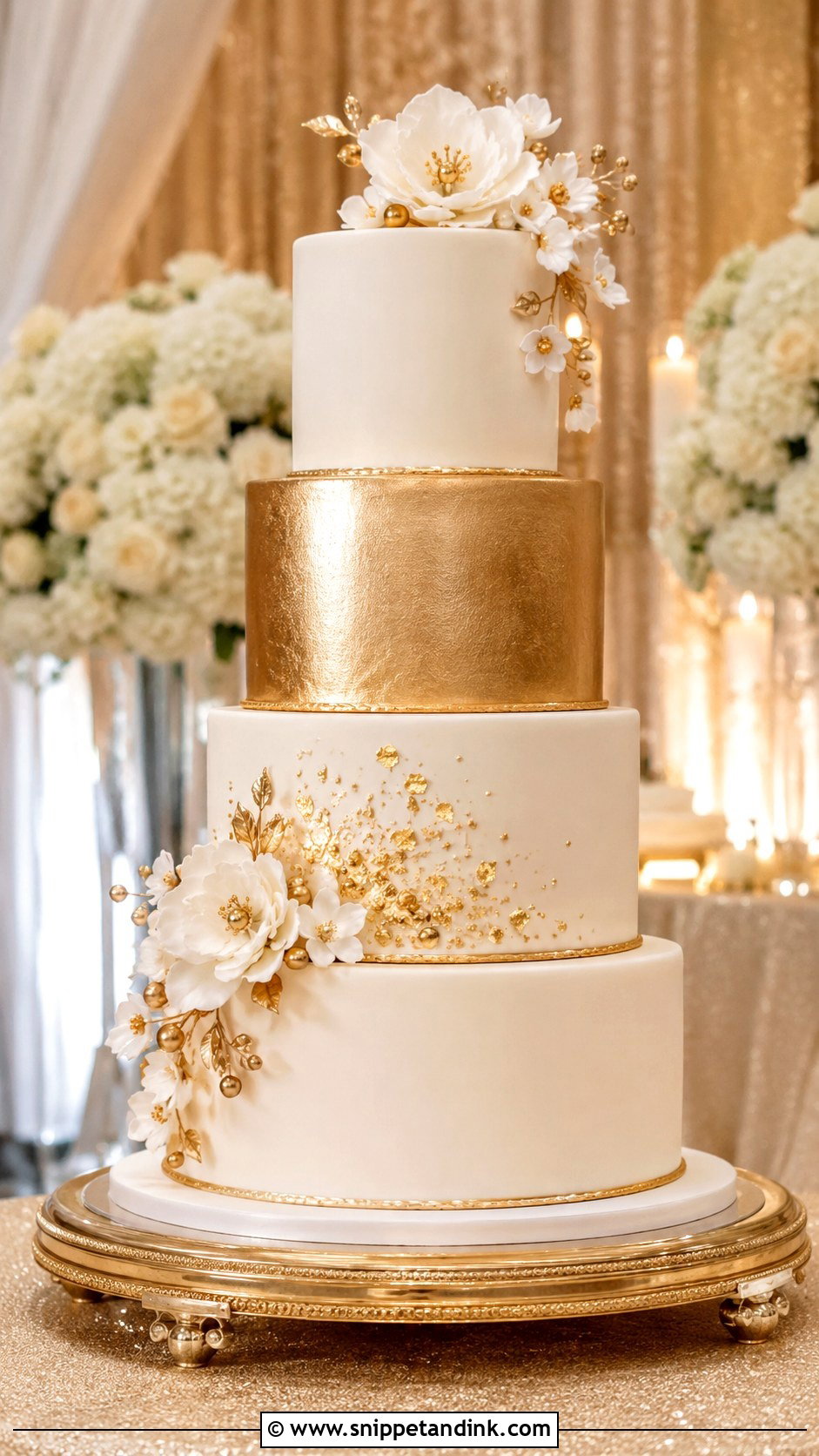
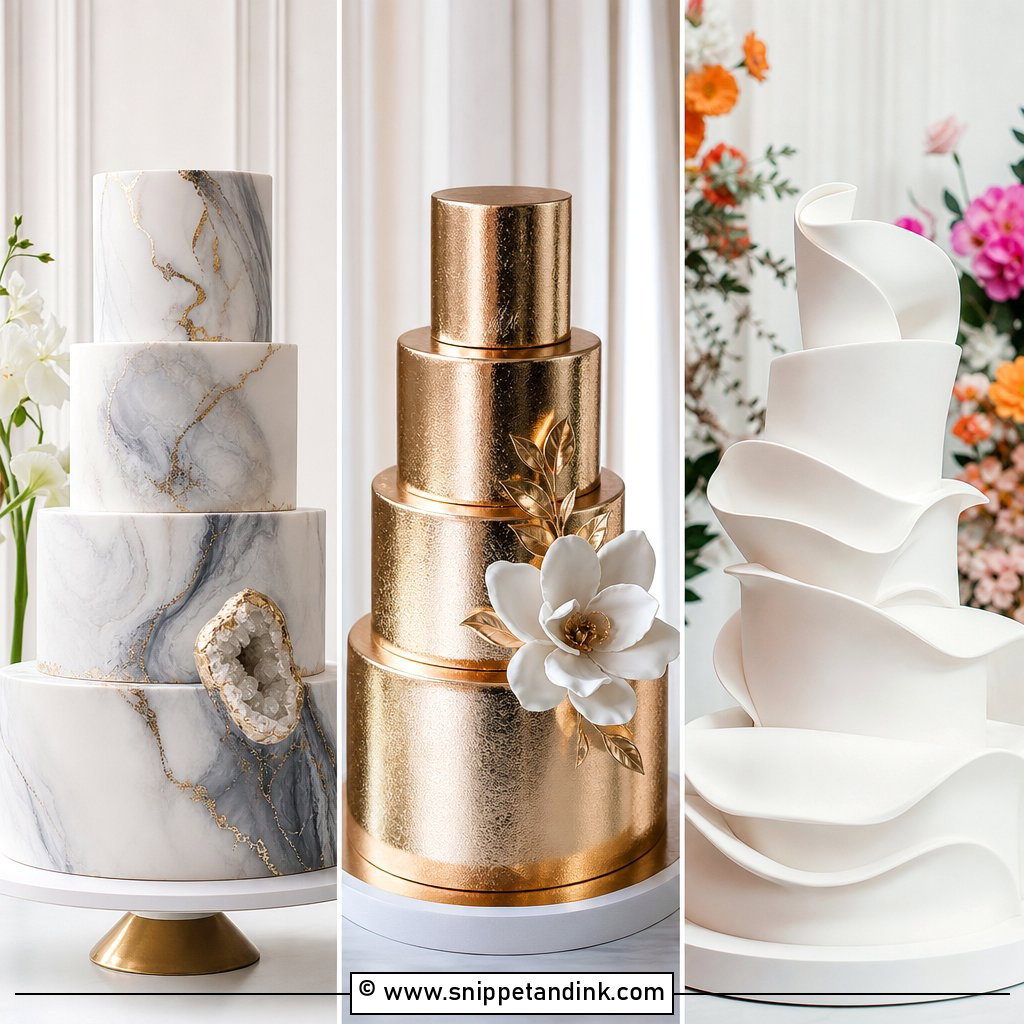
Gold works hardest as an accent. One tier wrapped in leaf, or a marbled tier with gold veining, looks richer than four tiers painted solid. Real edible gold leaf is fine to eat, but some metallic dusts are sold as non-toxic decoration only, so ask your baker which they’re using. Leaf is also delicate to apply and catches every fingerprint, which is part of why gold cakes carry a higher quote. Caramel, chocolate ganache or vanilla bean fillings match the warm color.
9. 4 Tier Rustic Wedding Cake
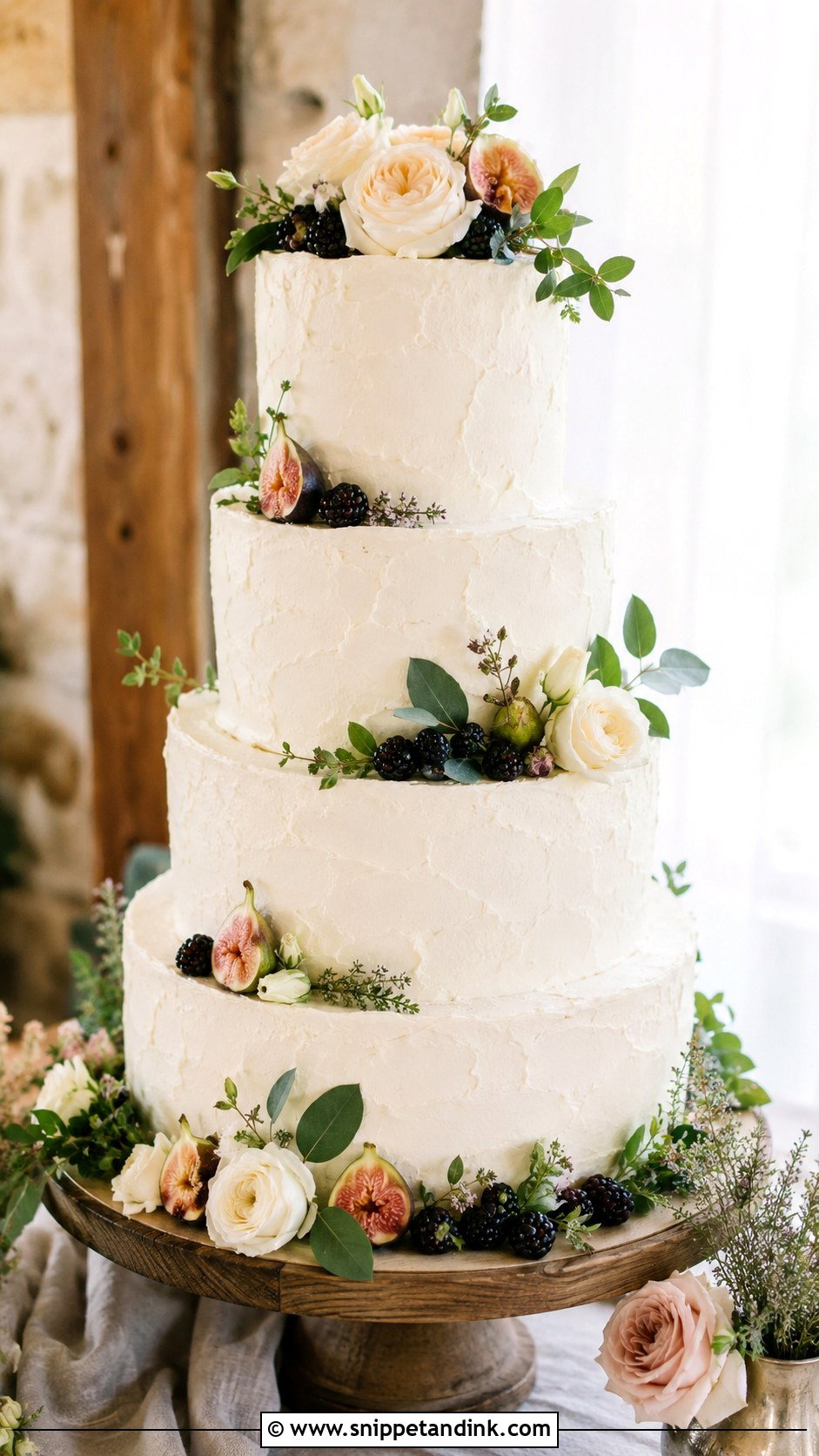
Rustic is where I see the most structural trouble. A semi-naked finish looks relaxed on two tiers, but on four the exposed sponge dries out faster and the stack has less protection, so I usually recommend a full textured buttercream coat with only a hint of sponge showing at the top. Figs, berries, garden roses and small herbs add warmth. Put it on a wooden stand and keep any fruit added on the day, since cut fruit weeps onto icing within hours.
10. 4 Tier Modern Wedding Cake
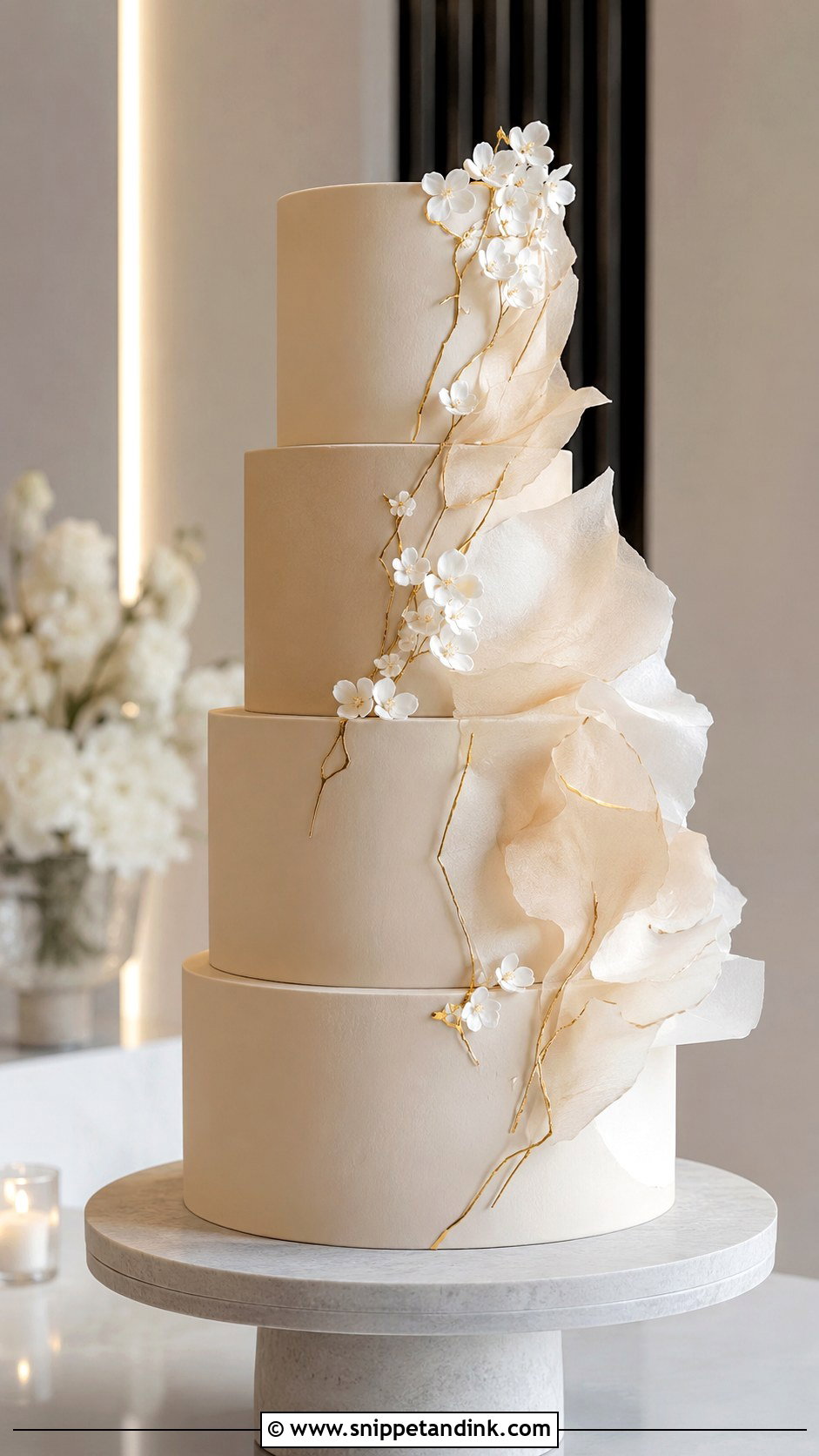
A modern cake needs one strong idea and the restraint to stop there. That might be offset tiers, wafer paper petals, a ribbed finish or sculptural sugar pieces on a single tier. Matte beige, clay pink, soft gray and muted green all look more current than bright white. Gallery spaces and rooftops suit it, but offset tiers need very careful internal support, so make sure your baker has built that style before.
11. 4 Tier Minimalist Wedding Cake
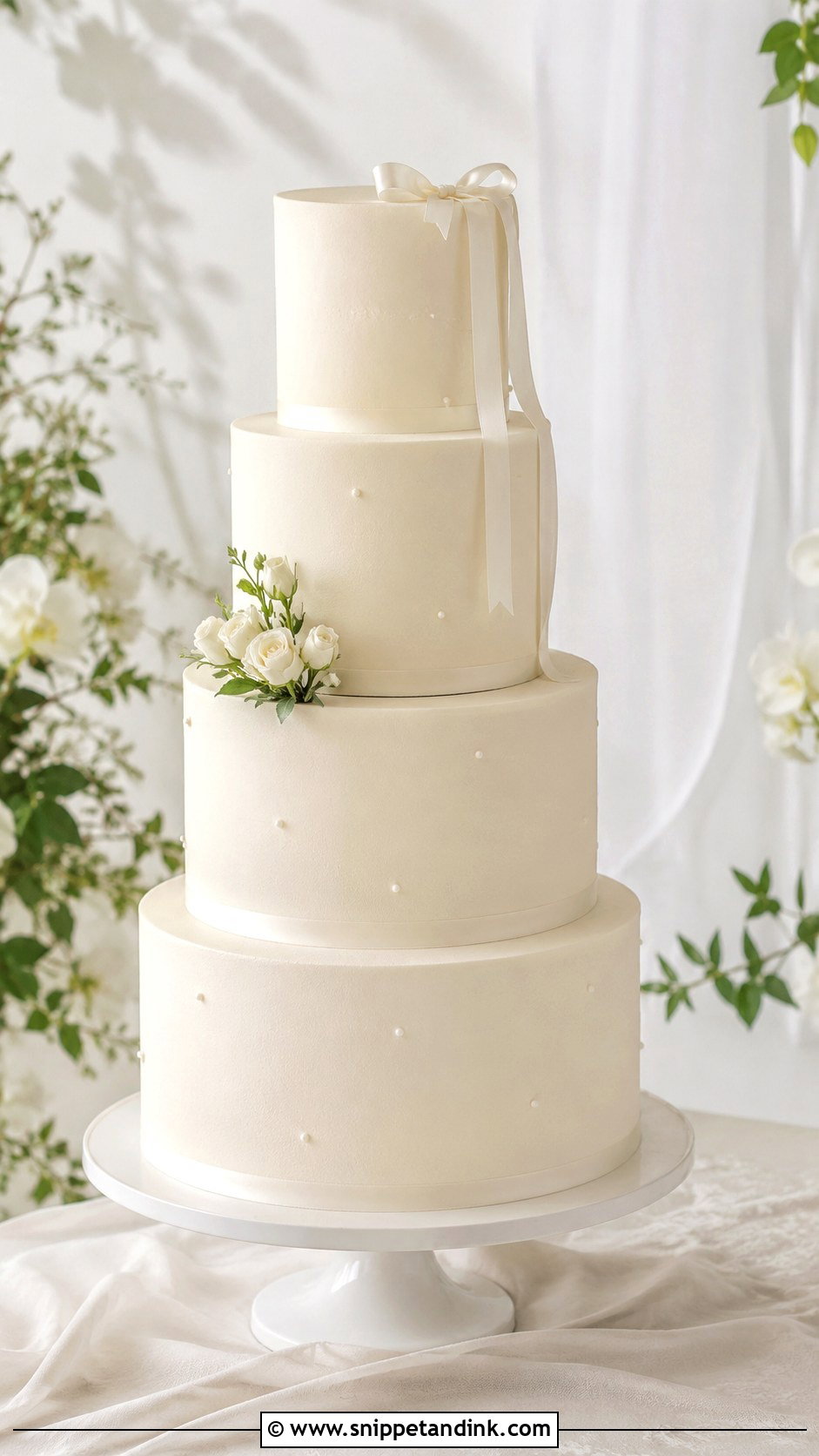
Minimal cakes rely on height. Smooth white buttercream, a thin ribbon at each base and a single small floral cluster are enough. I like recommending this to couples whose flowers or linens are already bold, because the cake won’t fight them. The plain outside also frees you to be adventurous inside: coconut, raspberry or lemon with a sharp curd makes a quiet cake memorable.
12. 4 Tier Black And White Wedding Cake
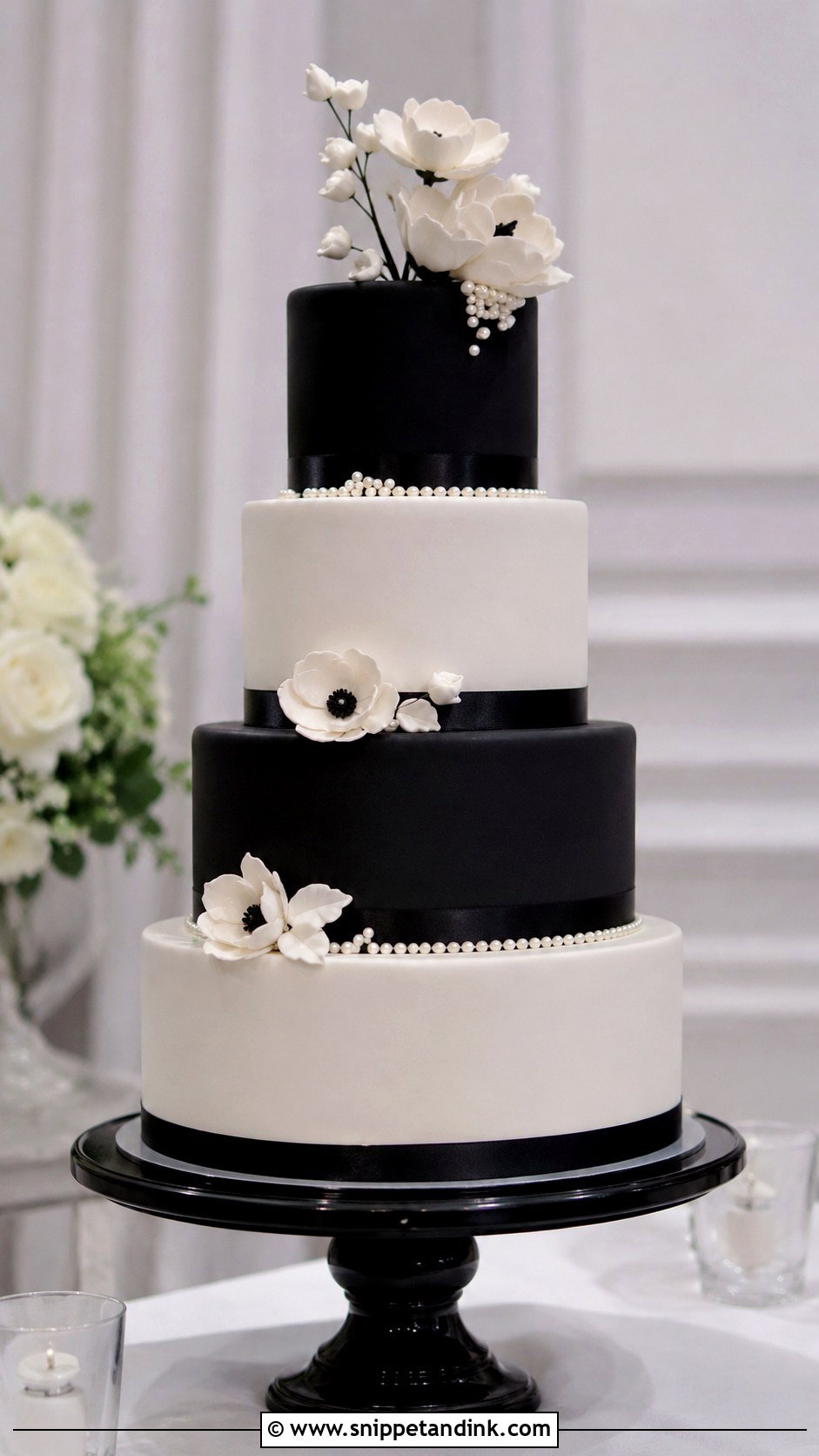
Black is a color I handle carefully. Getting fondant or buttercream truly black takes a lot of coloring, which can taste bitter and stain lips and teeth, so I keep it to a bottom tier, ribbon bands or painted brushstrokes rather than covering everything. Evening receptions and black-tie dress codes suit the contrast best. Keep the shapes clean and let white sugar flowers do the softening. Chocolate, espresso or cookies and cream fit the look naturally.
13. 4 Tier Blush Wedding Cake
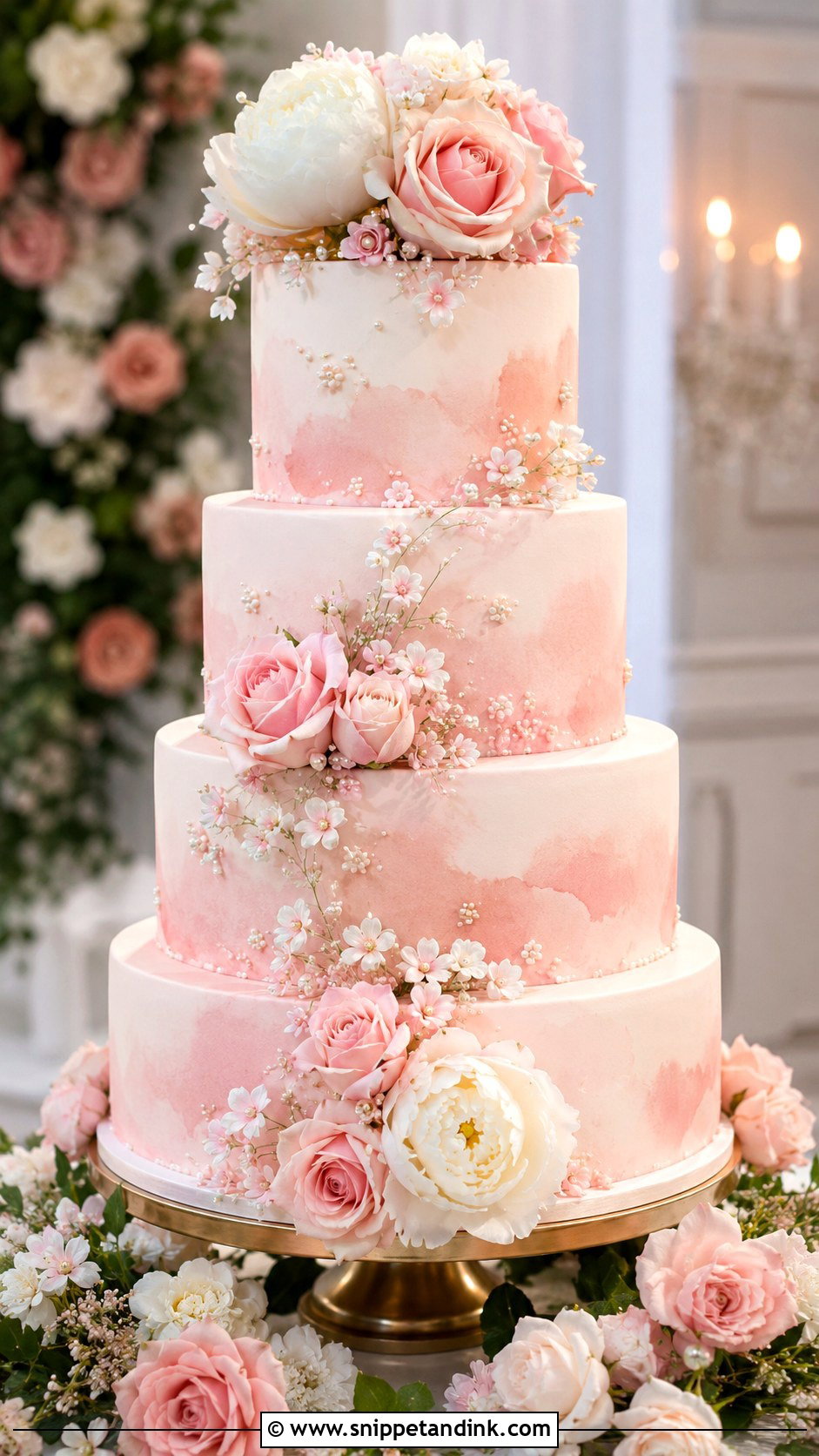
Blush is forgiving. A pale pink finish, a watercolor wash or an ombré fade from deep at the base to almost white at the top all sit easily with roses, peonies and ranunculus. The one thing I check is lighting: under warm candlelight, very pale blush can read as plain ivory, so I go a shade deeper than the sample if the reception is lit mostly by candles. Strawberry, rosewater or raspberry fillings carry the color inside.
14. 4 Tier Blue Wedding Cake
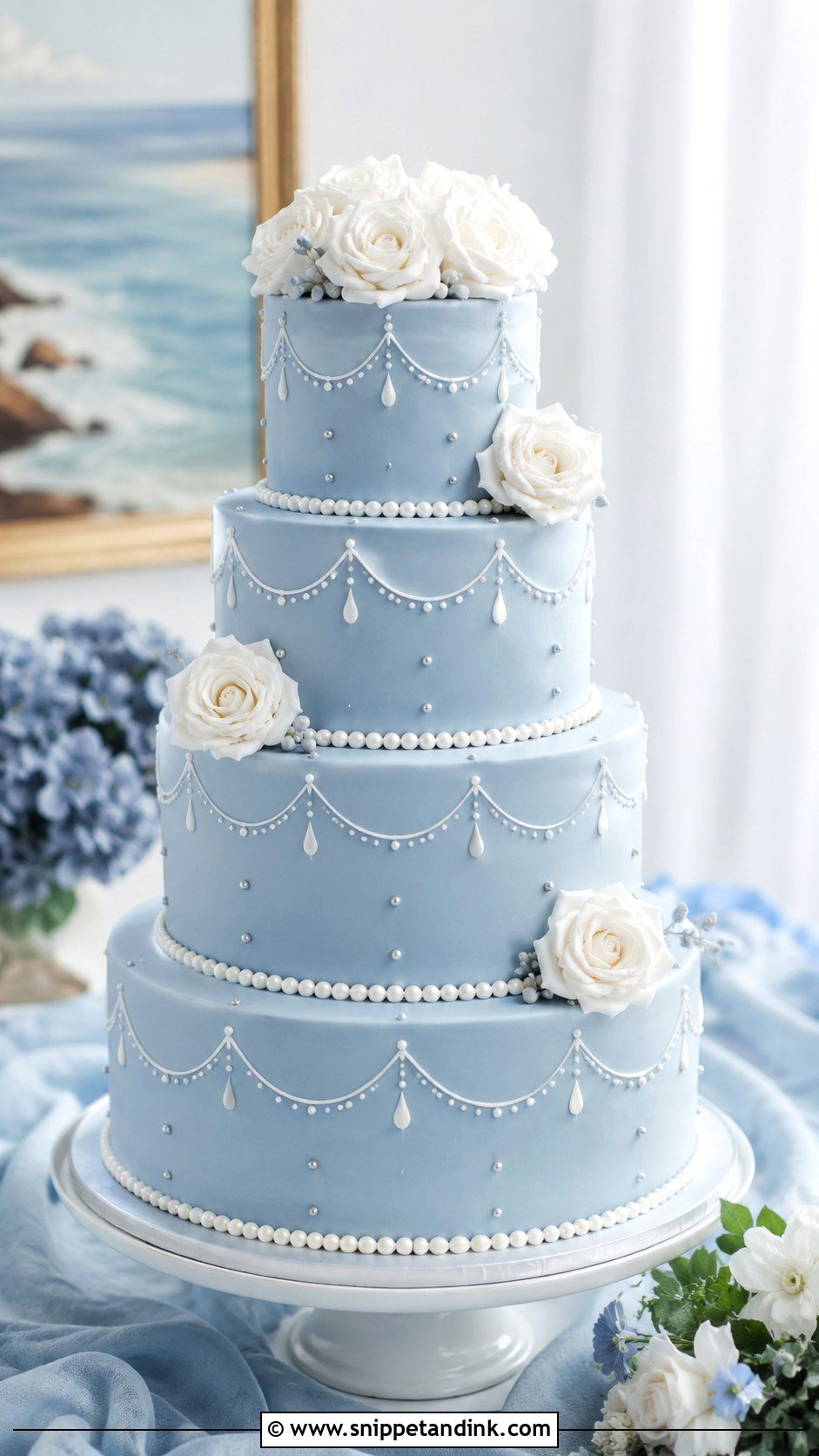
Blue changes personality with the shade. Pale blue is soft, dusty blue is quieter and more grown up, and navy belongs to an evening formal. Navy has the same issue as black: a lot of coloring goes into it, so I’d rather do one statement navy tier than four. Silver details, white flowers and fine piping keep it bridal rather than nautical. For a waterfront wedding, lemon or blueberry sponge fits the mood.
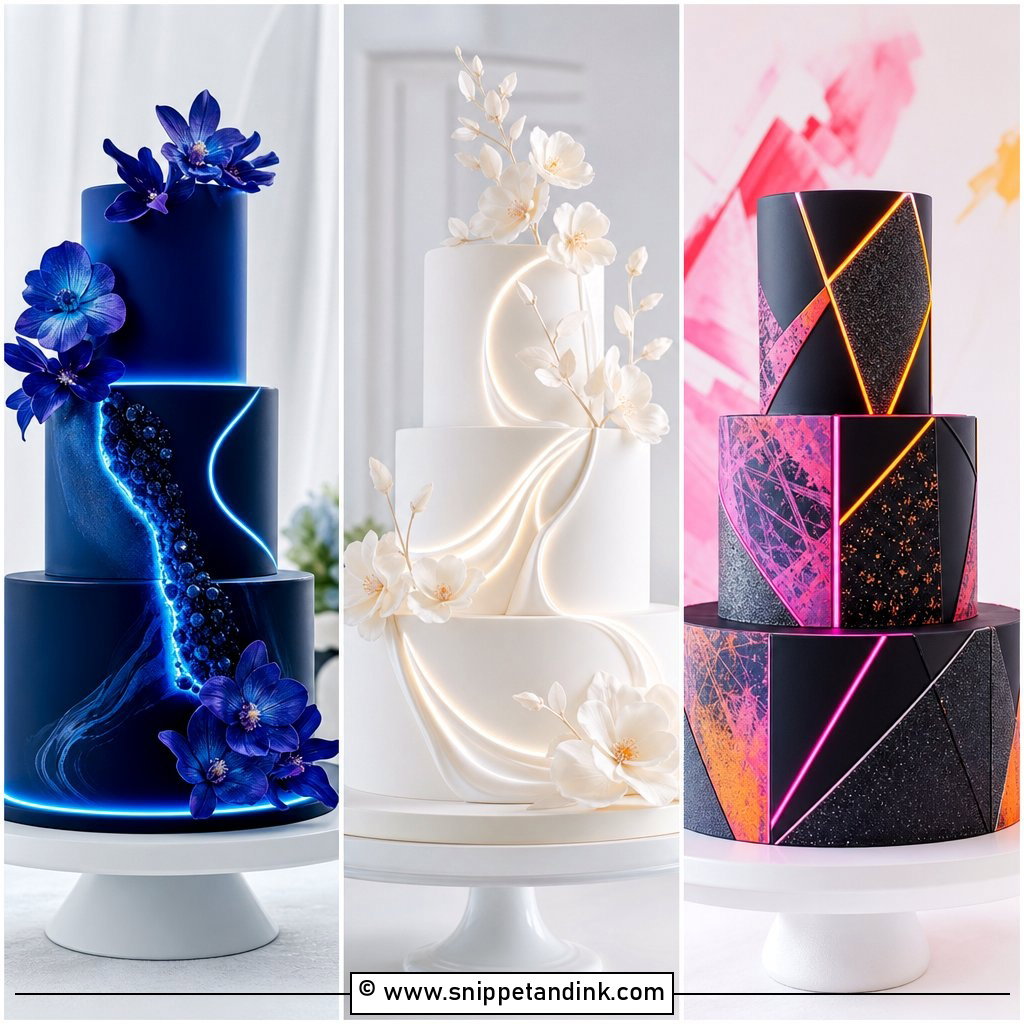

15. 4 Tier Green Wedding Cake
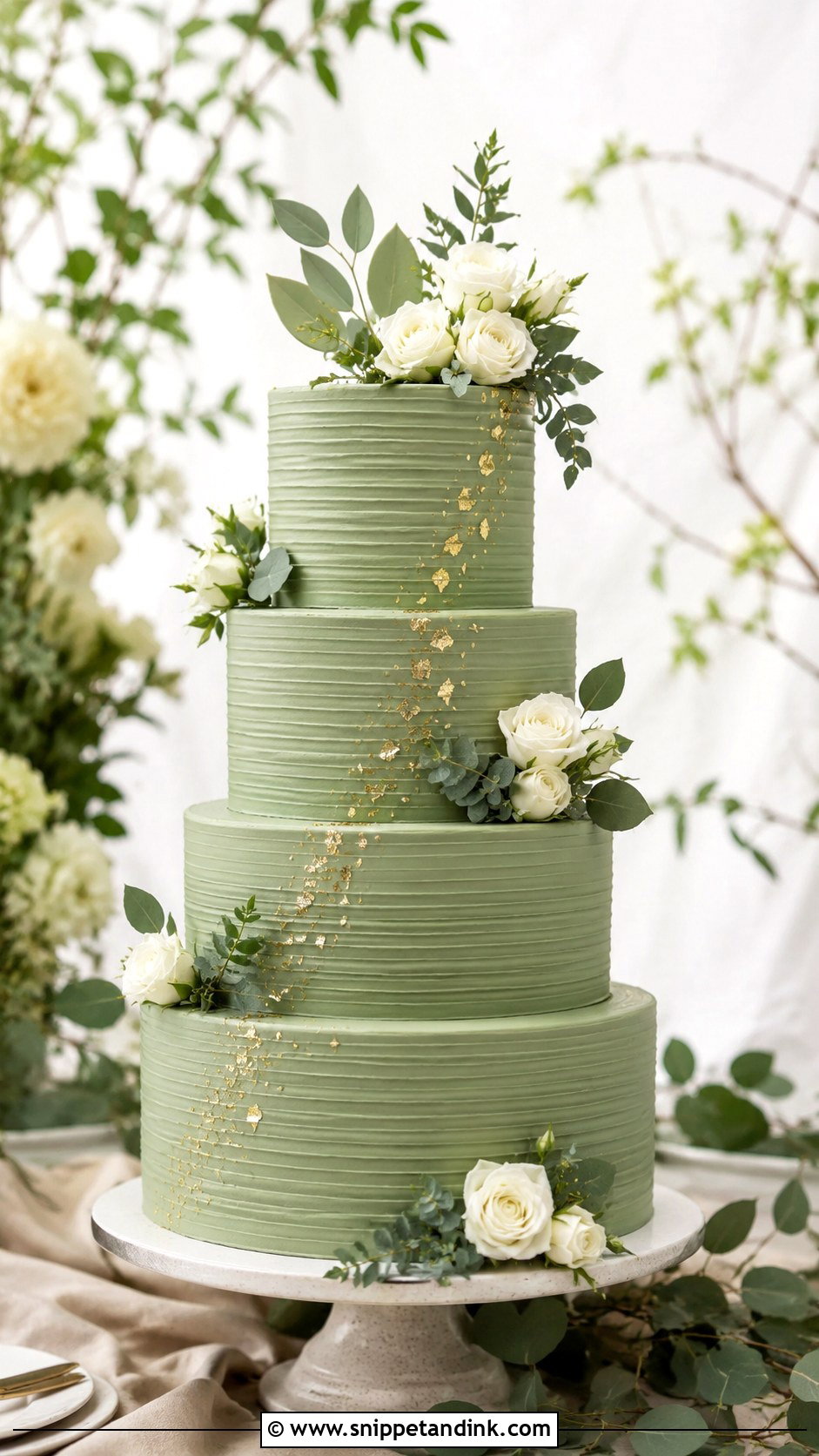
Sage green is the easy shade to live with; it sits next to eucalyptus, white flowers and gold without effort. Olive and forest green are more dramatic but need a strong reception palette around them. Green can be the base color, a painted texture on one tier or pressed leaves set into buttercream. If you want the inside to match, pistachio and matcha both give a natural green crumb, though matcha’s bitterness divides guests, so I suggest it for one tier only.
16. 4 Tier Marble Wedding Cake
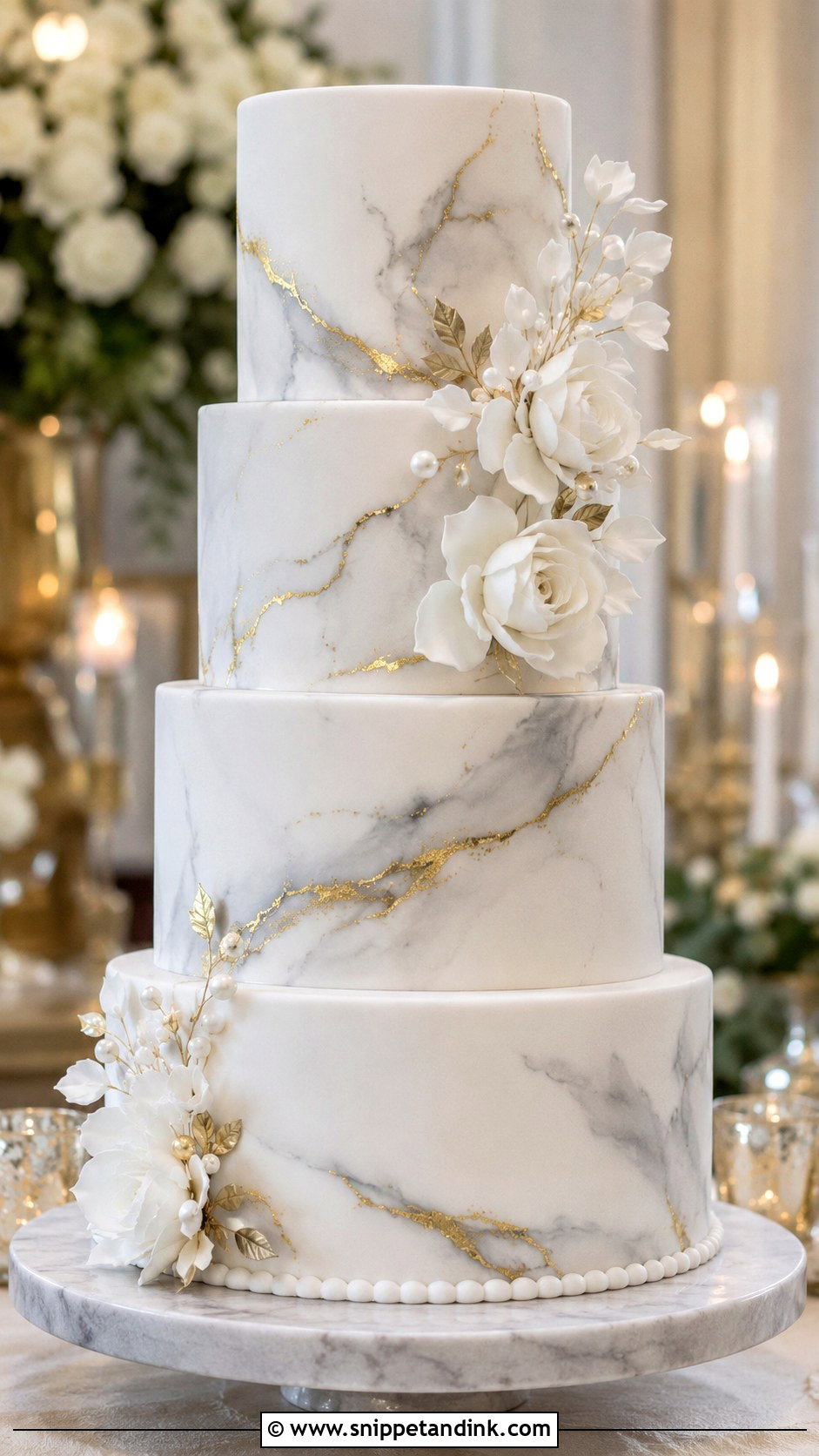
Marble needs very little added to it. I fold color through the fondant before rolling, and each tier comes out a little different, which is part of the charm; if you want perfectly matched veining across all four, say so, because it’s harder than it looks. Soft gray on white is the classic, though blush, beige and green marble work too. A thin gold line traced along a few veins adds polish. Keep the florals sparse. Vanilla, chocolate, almond or salted caramel fit the polished look.
17. 4 Tier Lace Wedding Cake
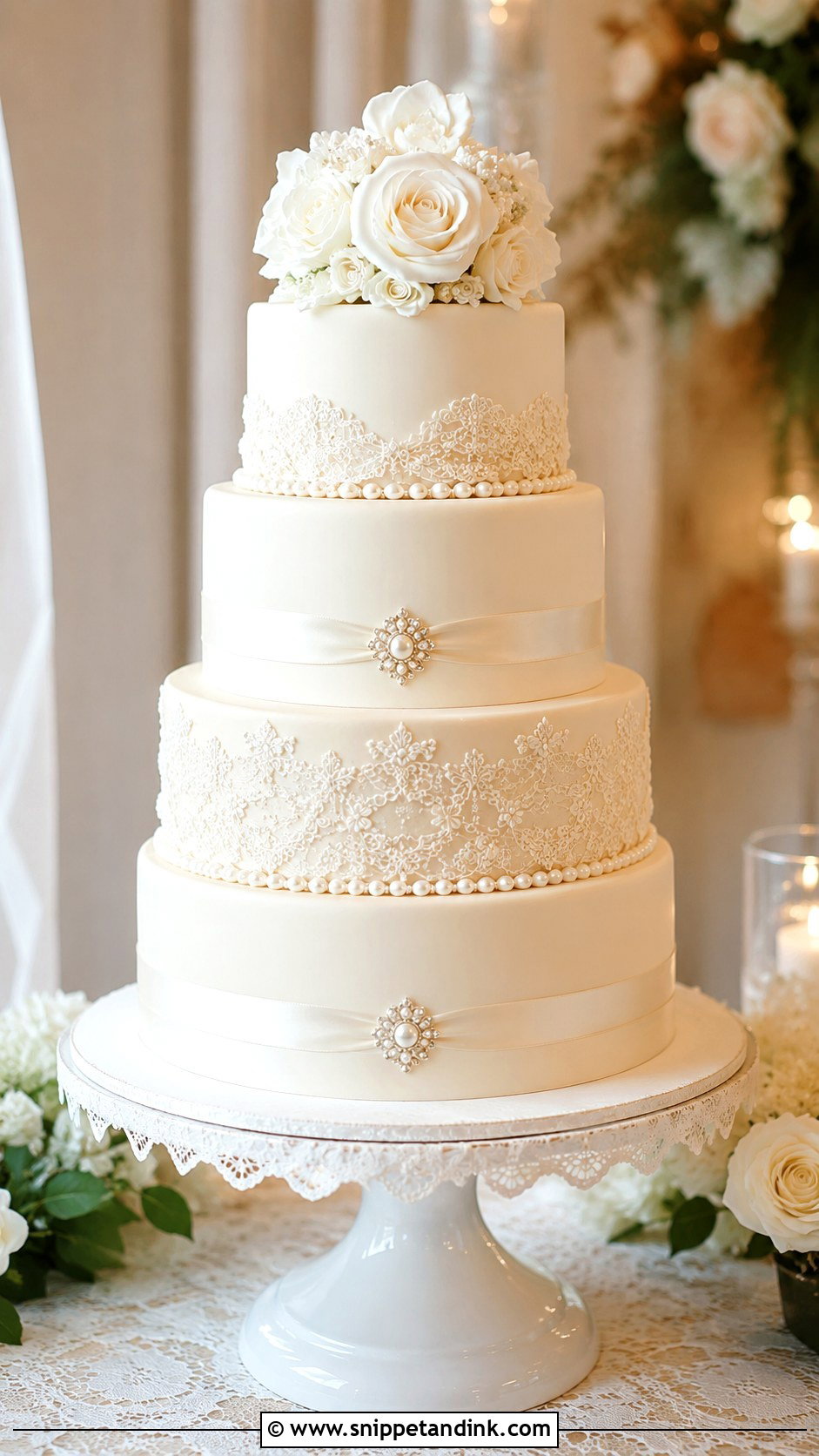
Lace is the cake I’m most often asked to match to a dress, and the best way to do it is to bring me a close photo of the actual lace, not the whole gown. I can reproduce a motif with a silicone mold, a stencil or piped royal icing, and each gives a different depth. Use it on one or two tiers and leave the rest smooth, otherwise the pattern turns into wallpaper. Ivory on ivory suits a candlelit estate wedding, and champagne lace adds warmth.
18. 4 Tier Pressed Flower Wedding Cake
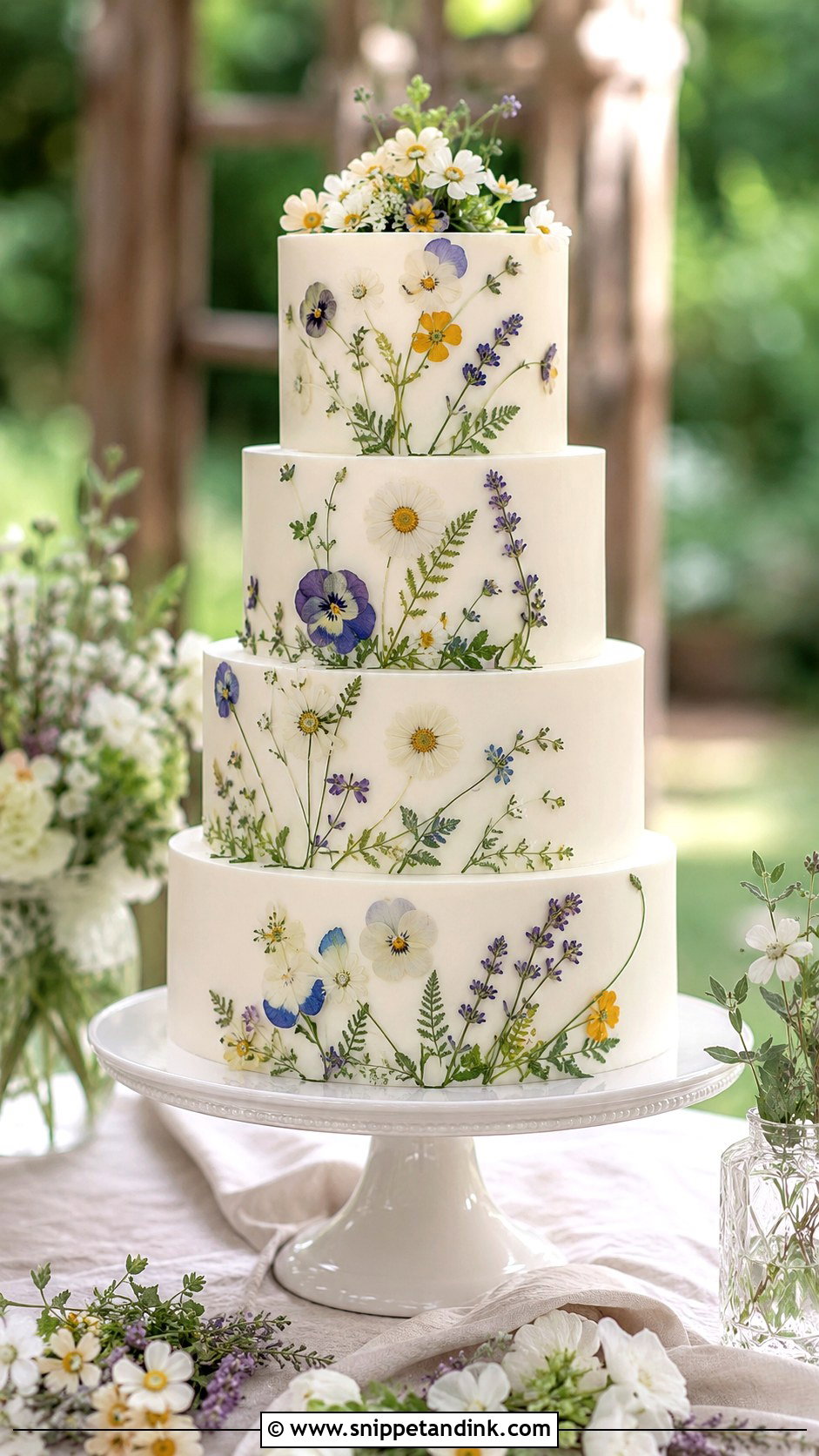
A pressed flower wedding cake is all about color staying true. Edible pressed petals fade with light and moisture, so I press them onto the buttercream as close to delivery as possible and avoid placing the cake by a sunny window. Wafer paper flowers hold their color longer if you need a cake that will stand out for hours. A loose scatter feels handmade; vertical trails feel tidier. Lemon, lavender or honey flavors suit a garden reception.
19. 4 Tier Ruffle Wedding Cake
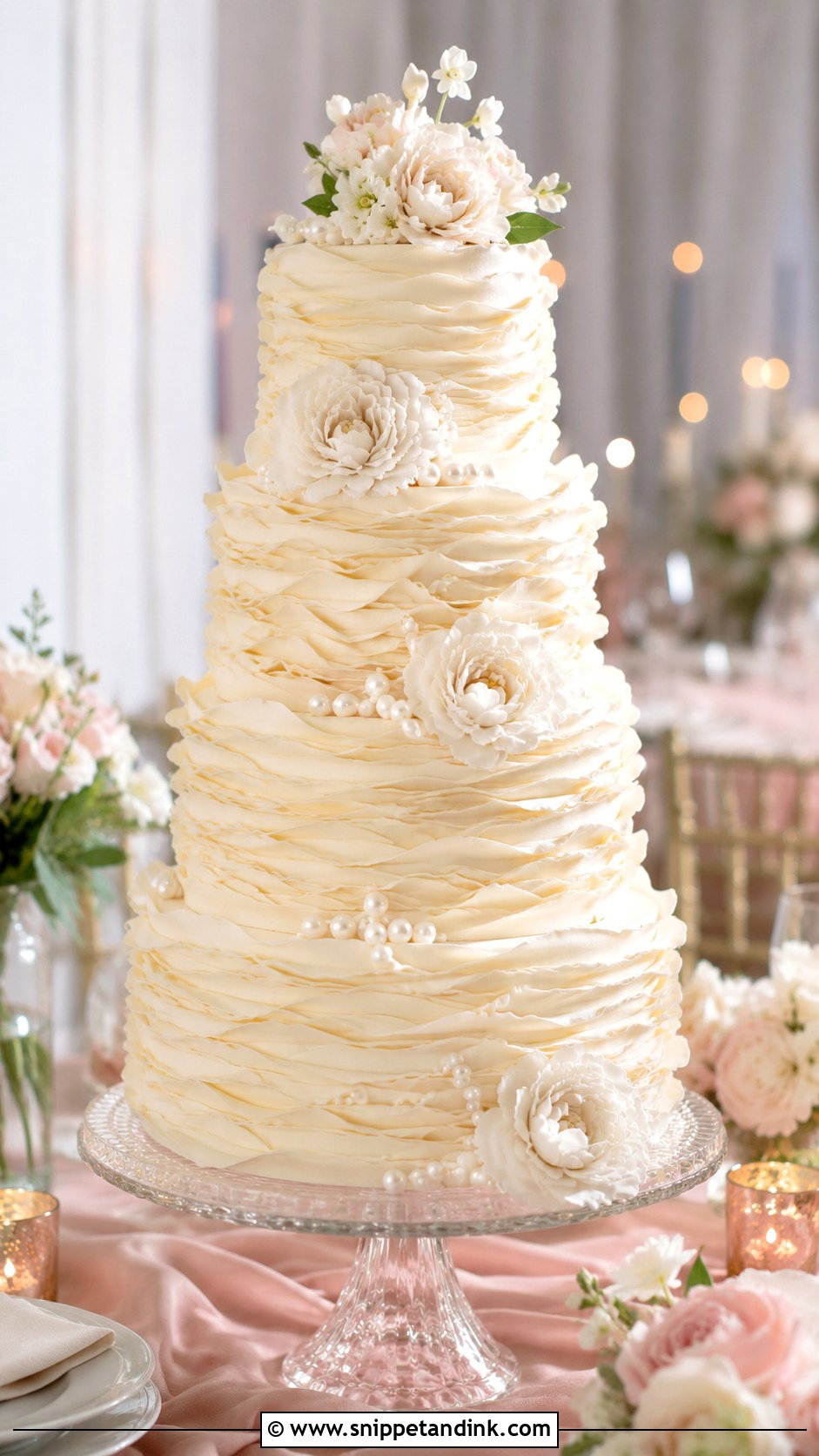
Ruffles add movement, but they’re one of the most time-consuming finishes to pipe or cut, and buttercream ruffles are the first thing to droop on a hot day. If your reception is outdoors in summer, I’d suggest fondant ruffles or ruffles on just the top two tiers. Pale shades show the shadows between each fold best in photos. Finish with a simple topper so the texture stays the focus.





20. 4 Tier Square Wedding Cake
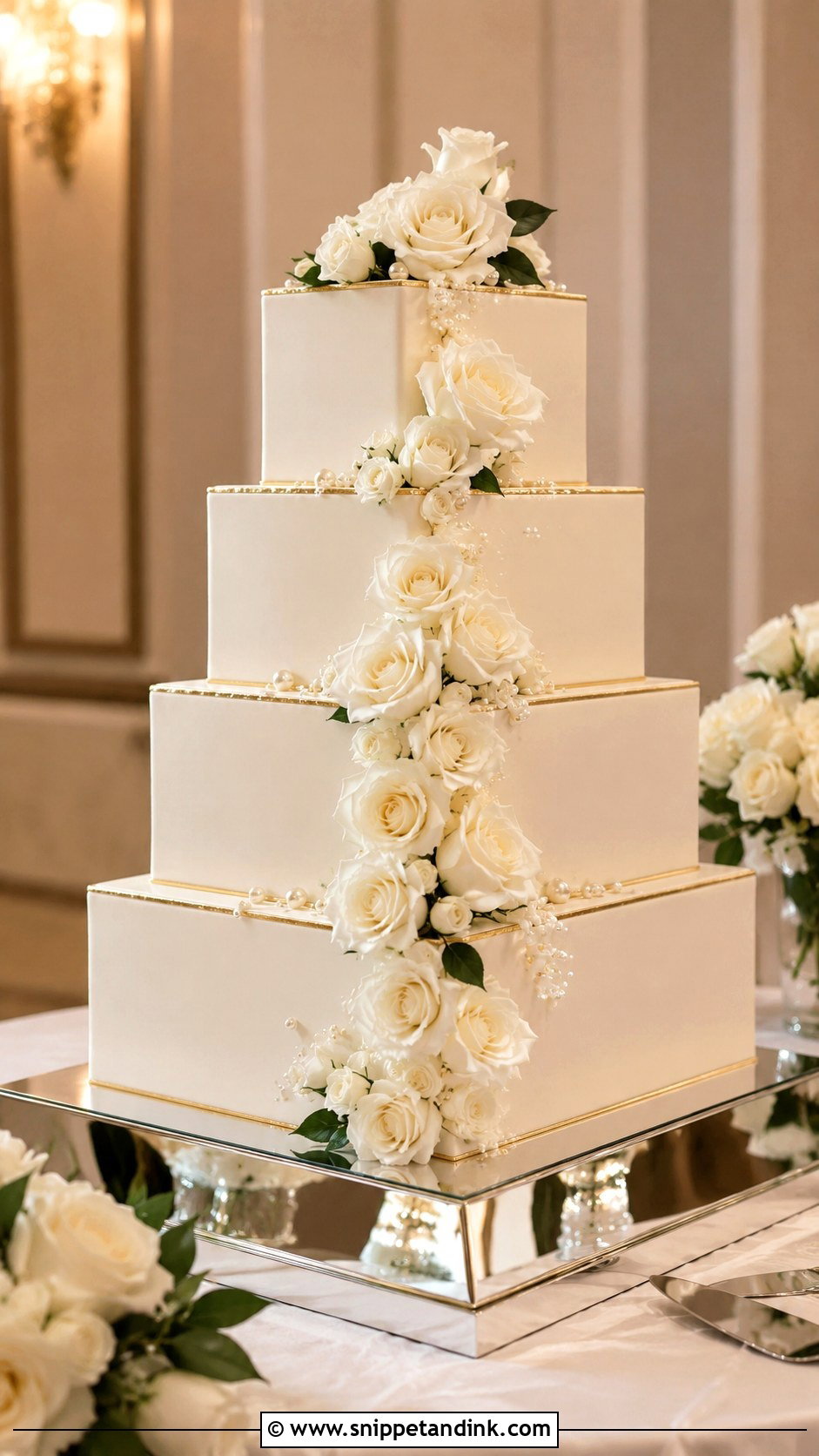
Square tiers look architectural and give flat panels that suit monograms, lace or painted florals. They’re also harder to finish: every corner has to be sharp, and the smallest wobble in the stacking shows along those straight lines. Square tiers yield more slices than round ones of the same width, which helps with a large guest list. Cascading flowers or rounded pearl details soften the edges. Chocolate, red velvet or lemon all suit the structure.
Getting Four Tiers From the Kitchen to the Cake Table
A cake this tall rarely travels fully stacked. I deliver the tiers boxed separately, or in two halves, and assemble on site, which means I need a sturdy, level table in position and the room to work around it before guests arrive. Wobbly folding tables and soft lawn are the two things I dread most. If the cake is outdoors, the table needs to sit on a firm board or paving.
Ask the venue three things before the delivery is booked: what time the room is free, how warm it will be, and who looks after the cake between setup and cutting. Buttercream cakes want shade and a cool room; fondant tolerates more but hates being moved from fridge to heat. Flowers from the florist should arrive before I finish, so I can place them while the icing is still workable around the stems.
On the day itself
- Keep the cake table away from heaters, speakers and the main walkway.
- Cut the cake soon after dinner if the room is warm; it holds its shape best in the first hours.
- Let the caterer remove the dowels and boards before slicing, or brief whoever will do it.
- If you plan to keep the top tier, have an airtight box ready so it can go straight into the freezer.
Sending Your Baker the Right Screenshot
Save two or three of these, not ten, and note what you actually like in each one: the piping, the color, the shape. That tells me more than a full board. Bring your guest count, the venue’s room temperature and where the cake will stand, because a four-tier design that suits an air-conditioned ballroom may need a different finish in a summer tent. From there we can agree on structure, flavors per tier and delivery time, and the design you saved will look the same on the day as it does on your phone.
You'll Like These Ideas:







Leave a Reply