
A plain cake is the hardest thing I make. With no piping or sugar flowers to hide behind, every wobble in the frosting, every leaning tier and every dented edge is on show, so the work moves from decorating to finishing. What you get in return is a cake that sits quietly next to your flowers and linens instead of competing with them. Below are the pared-back designs I’d actually put in front of a couple, with notes on how each one behaves once it leaves my kitchen.
Why a Plain Cake Rarely Costs Less
Couples often come to me expecting a simple design to be the budget option. Sometimes it is, but usually the savings on sugar work go straight into finishing time. A smooth buttercream coat with sharp edges can take longer than piping a border, because there’s nothing to cover a mistake.
What drives the price on a minimal cake:
- Tier height and number. Tall tiers need extra layers, more support and more filling.
- The finish. Knife-sharp edges in buttercream or a ganache-and-fondant shell take real hours.
- Shape. Squares and hexagons take longer to coat than rounds.
- Fresh flowers. Someone has to wrap, place and remove them, and many florists charge for that.
- Delivery and stacking on site, which tall or heavy cakes almost always need.
If you want to bring the cost down, reduce the tier count or add a plain kitchen cake for serving. Asking for a rougher finish to save money tends to defeat the whole look.
1. Simple White Wedding Cake
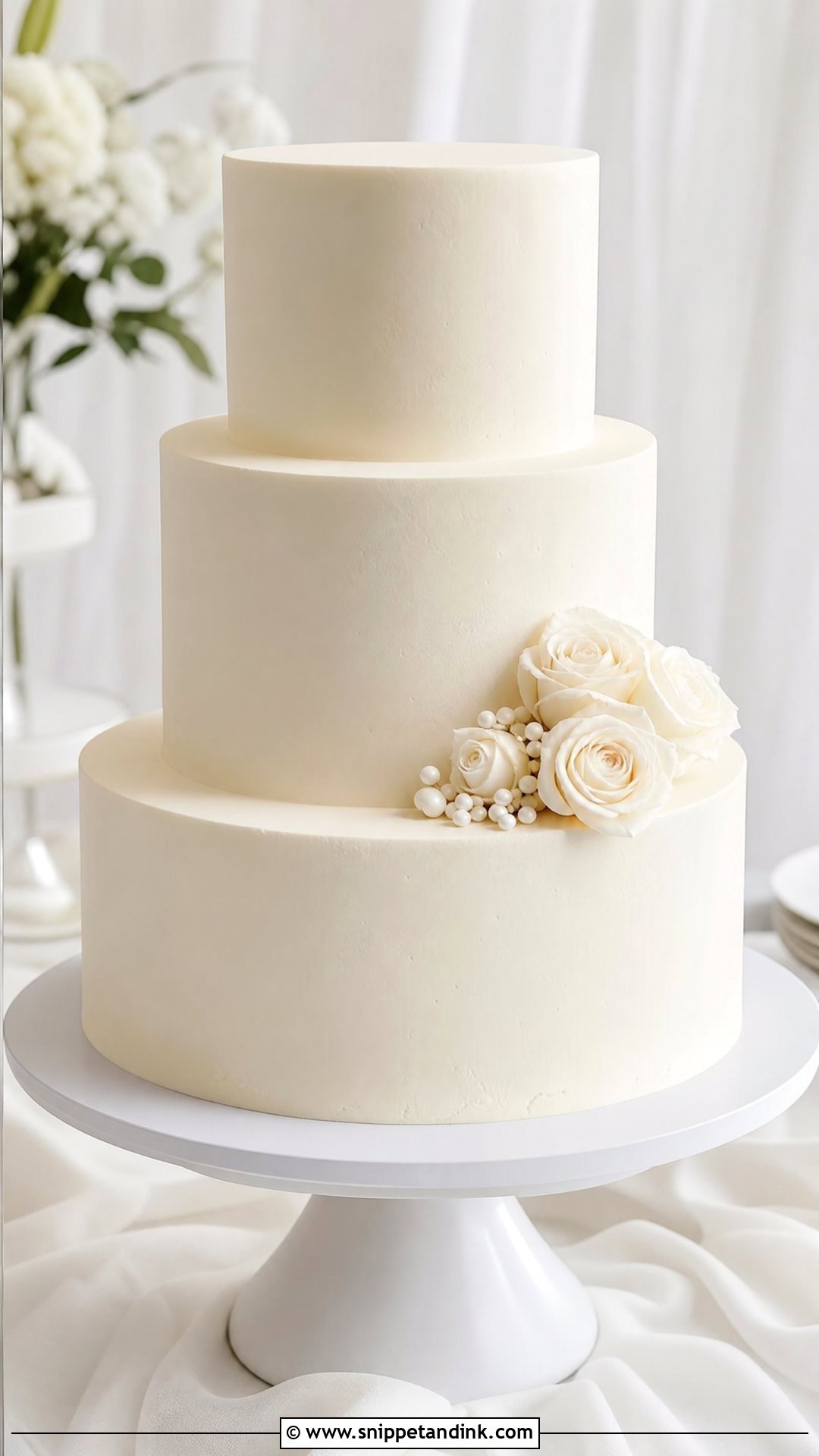
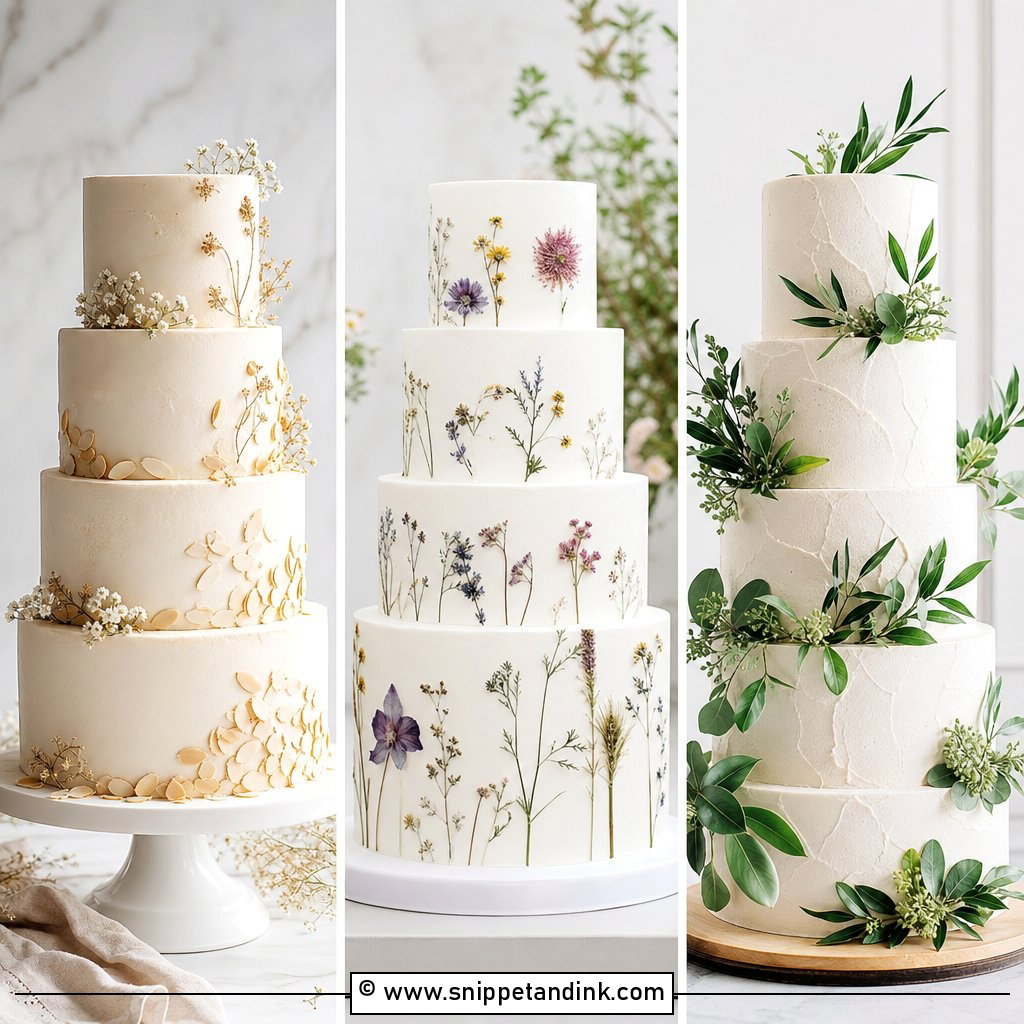
Start here if you’re unsure. An all-white cake lives or dies on proportion, so I sketch the tier heights before I think about a single decoration. Sharp edges read modern; a gently rounded top edge reads softer and is far more forgiving in buttercream. One cluster of white flowers or a slim ribbon at the base is plenty. Because it carries no colour of its own, it never clashes with the dress, the linens or the venue.
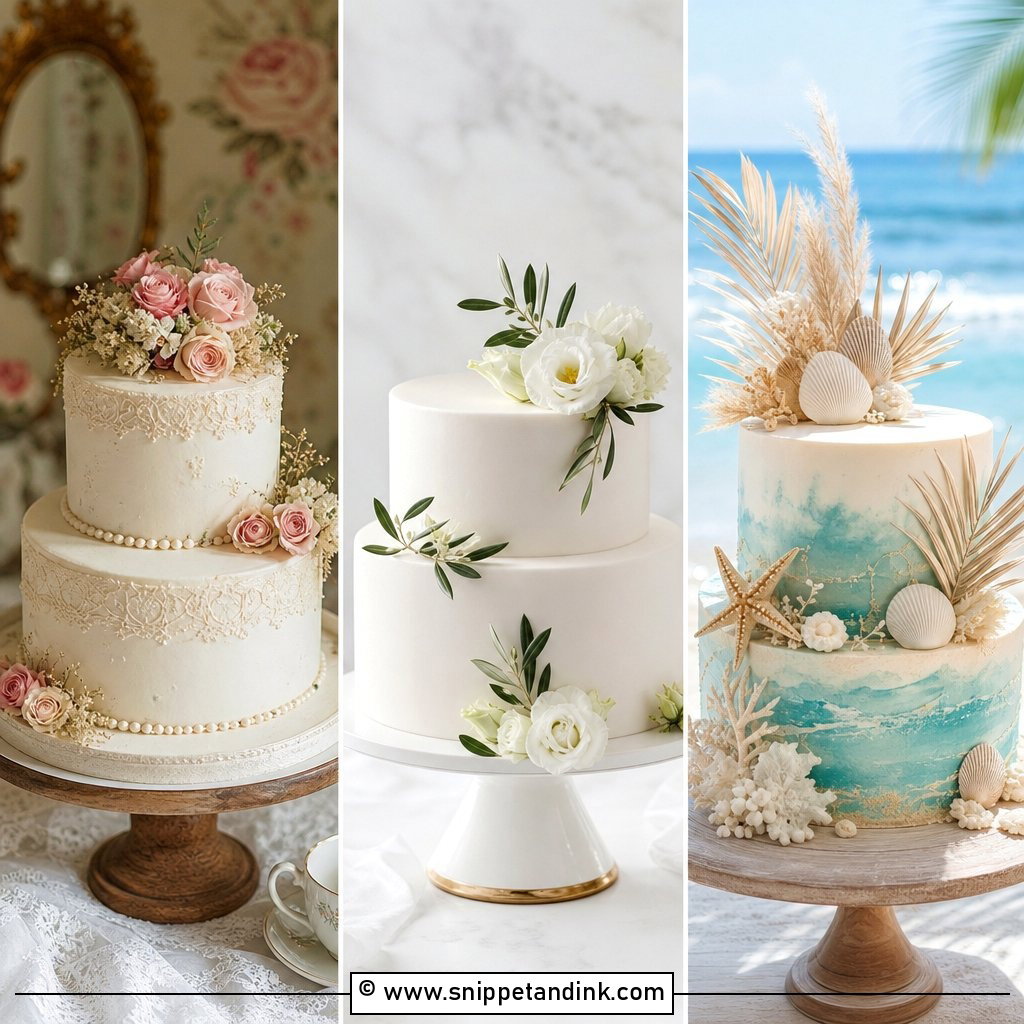
2. Two Tier Minimalist Wedding Cake
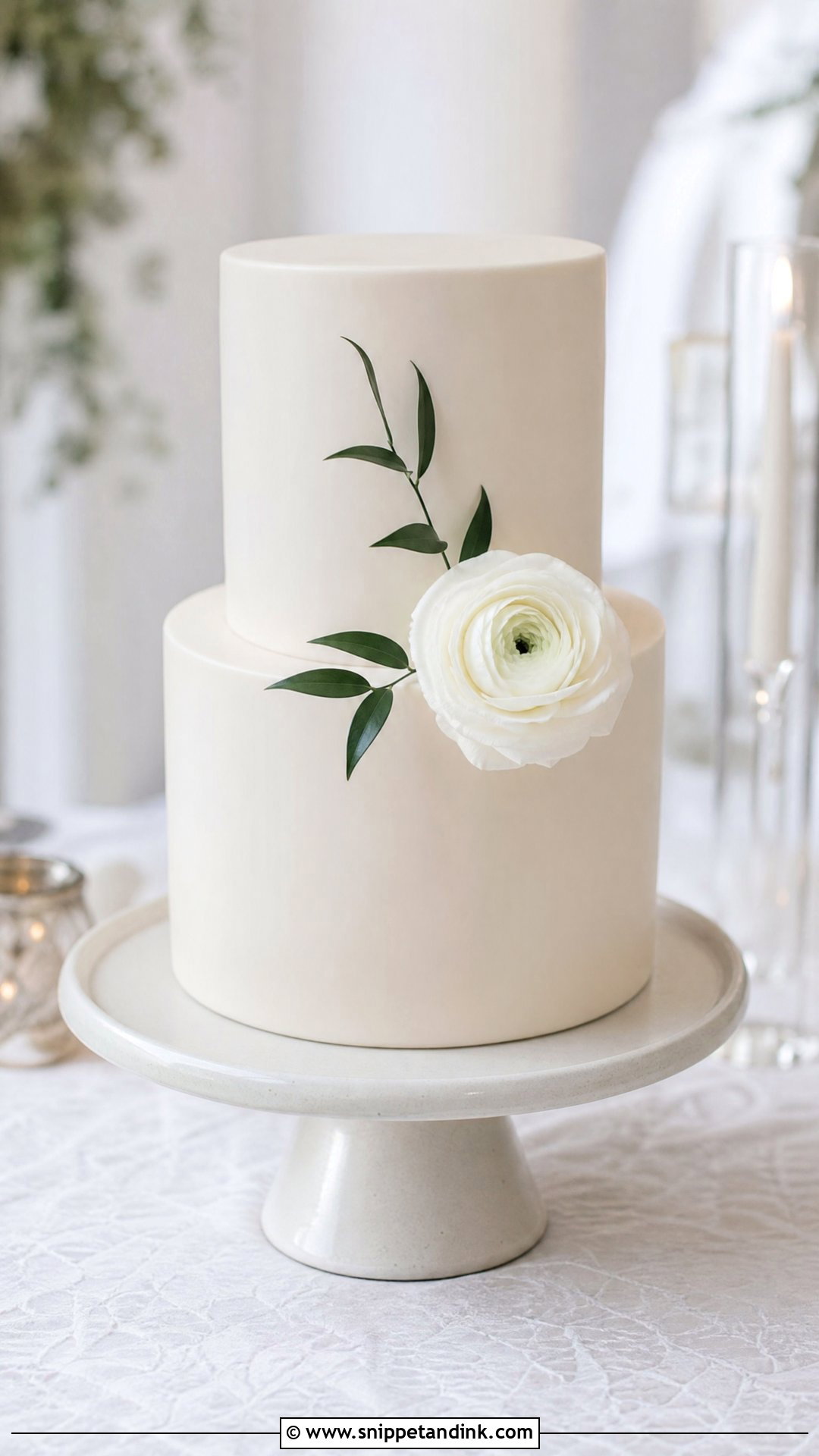
Two tiers give you height without the formality of a towering cake, and they suit a guest list of roughly forty to seventy depending on tier depth. I keep the frosting white or ivory, the balanced tier sizes about two inches apart in diameter, and the decoration to one point of focus. The gap between tiers matters more than people expect: too narrow and the cake looks like a stack of boxes, too wide and the top tier looks lost. A plain stand keeps attention on that silhouette.
3. Single Tier Wedding Cake
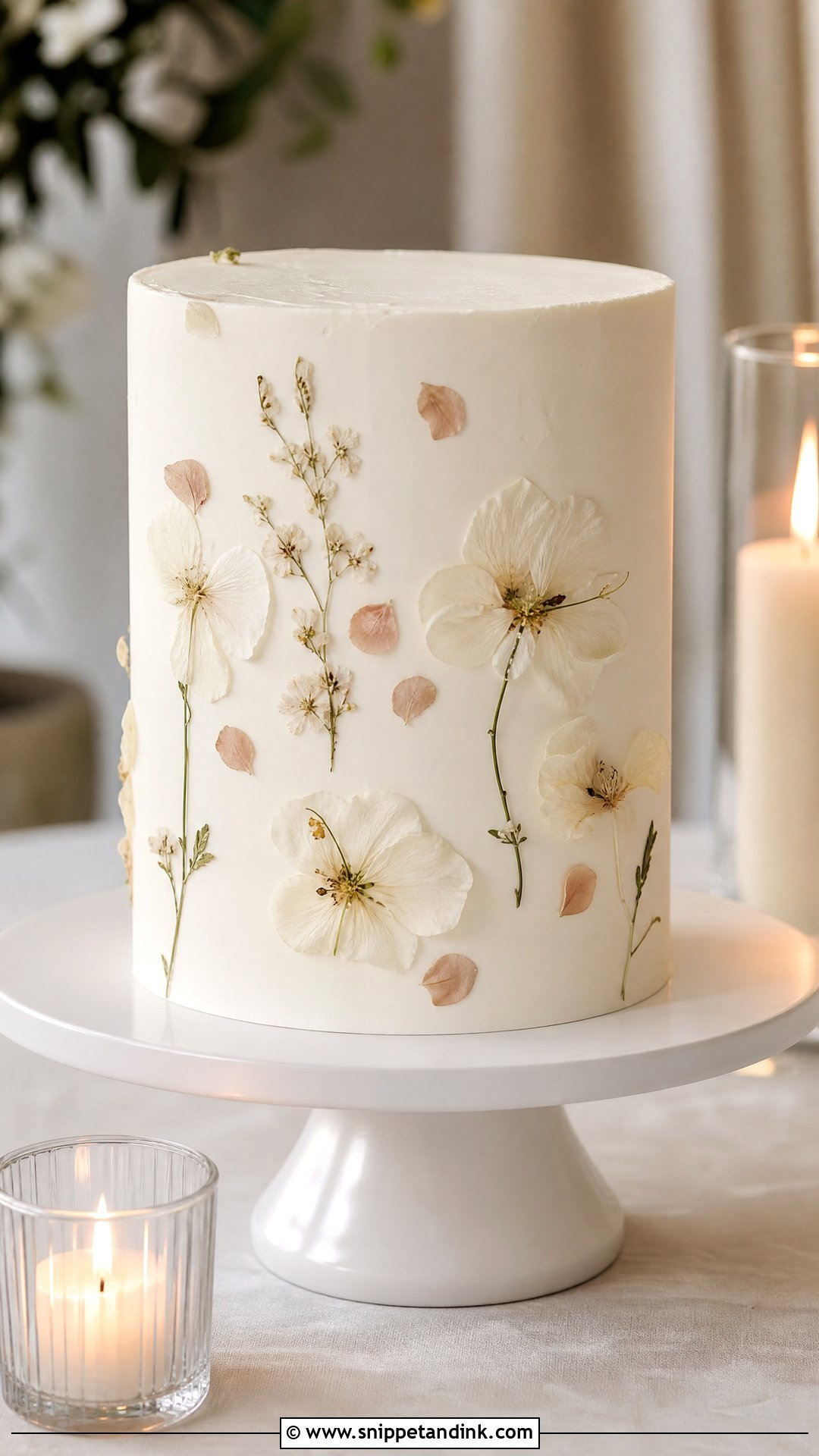
A single tier only looks chic if it’s tall. A standard four-inch round reads as a birthday cake from across the room, so I build these at six inches or more, which means internal support even in one tier. Ask for smooth sides and a crisp top edge, then add one thing: pressed edible flowers, a soft palette-knife texture, or a few fresh blooms set off-centre. Micro weddings and courthouse receptions suit it, especially when there’s a dessert table carrying the rest of the load.
4. White Buttercream Wedding Cake
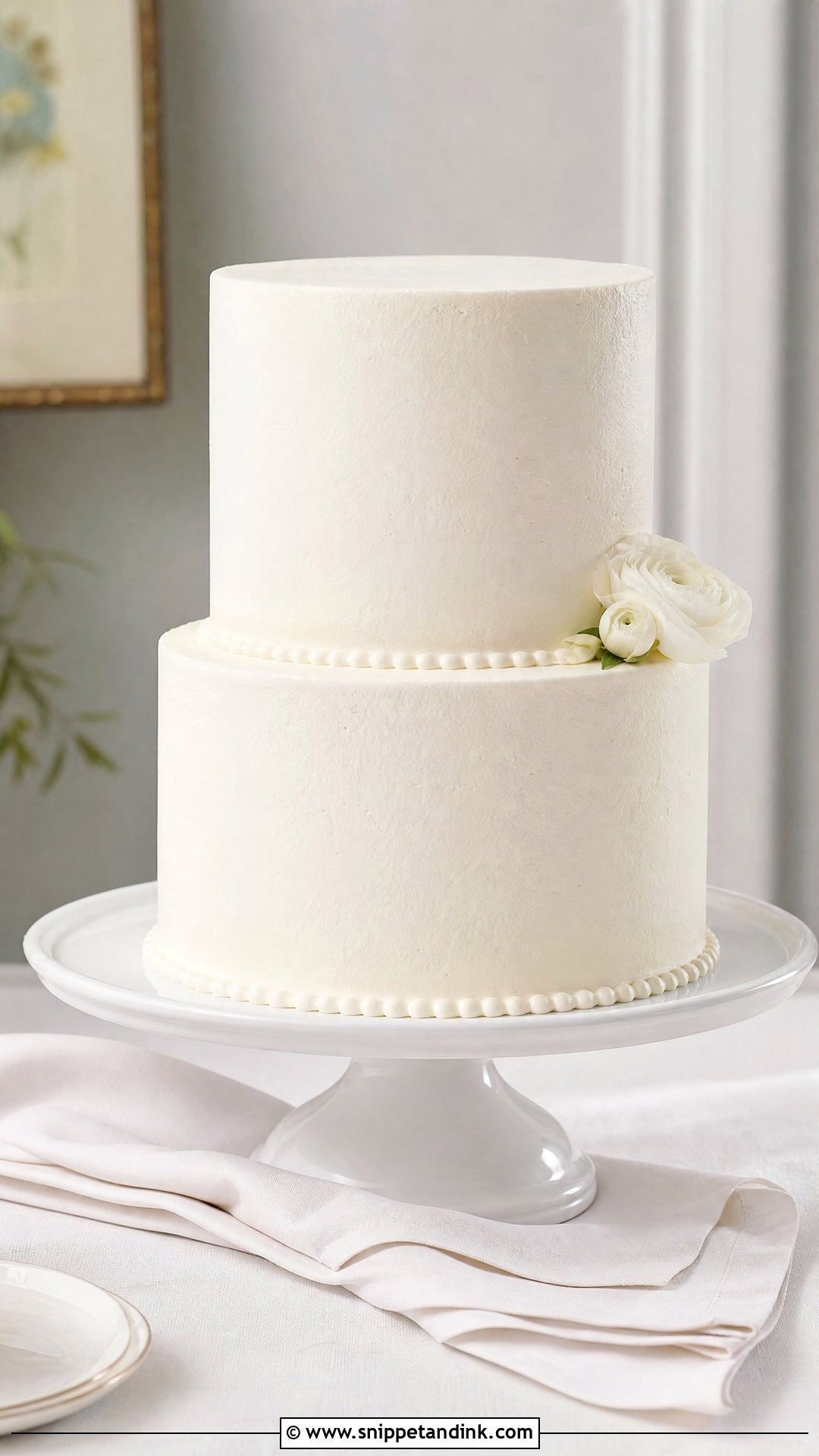
Buttercream gives a softer, creamier finish than fondant, and most guests prefer the taste. The catch is temperature. An American buttercream crusts and holds reasonably well; a Swiss or Italian meringue buttercream is silkier to eat but softens fast in a warm room, so I ask where the cake will stand and for how long before I choose. Keep the finish smooth with very little piping, maybe a fine bead at each base. A matte stand and a few white stems nearby finish it without fuss.
5. Smooth Fondant Wedding Cake
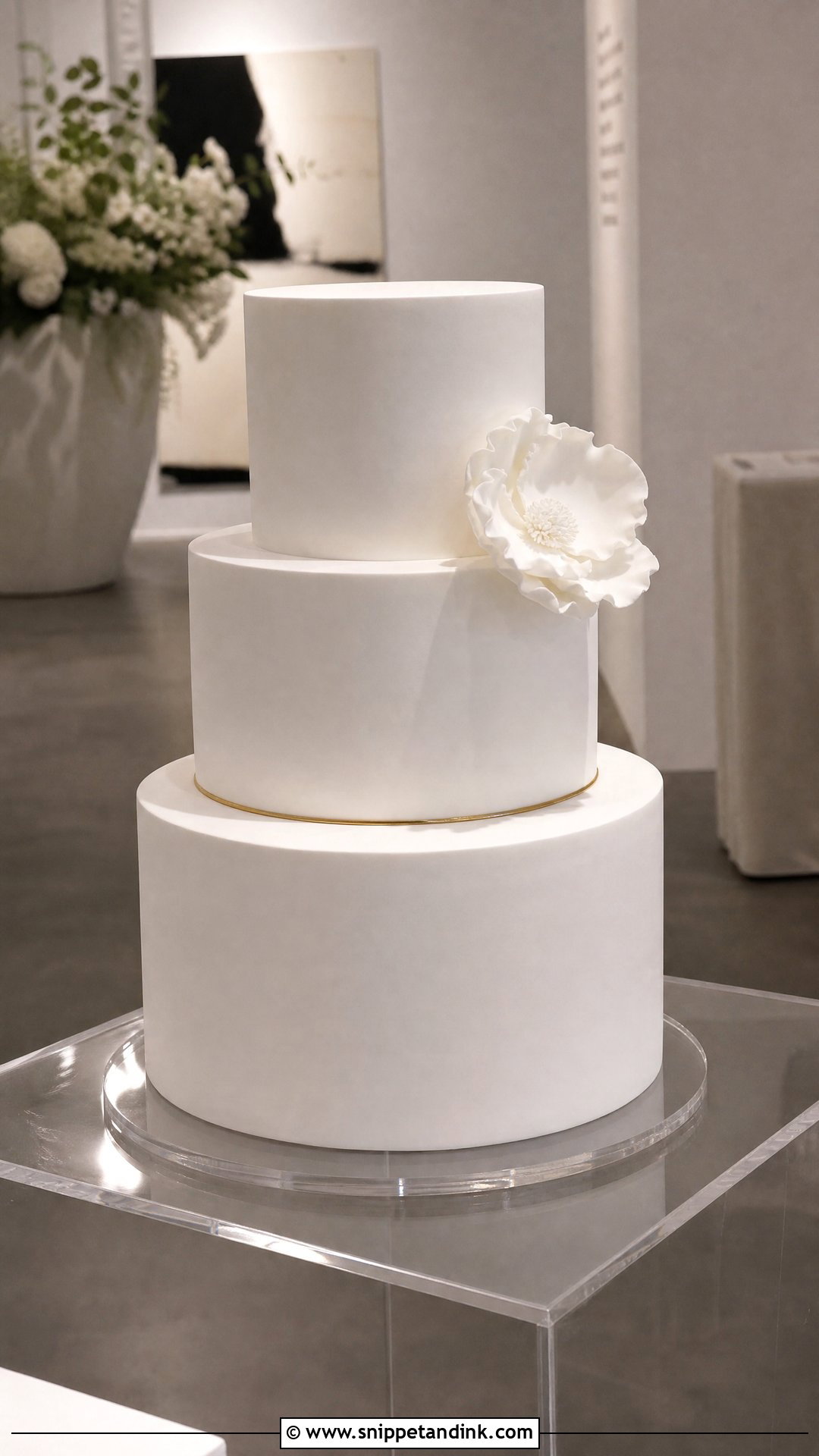
Fondant is what gets you that knife-edge, sculptural wedding cake profile. Under it there’s still buttercream or ganache, and a firm ganache coat is what actually gives the sharp corners; the fondant just seals and smooths it. Square tiers and tall rounds both suit it. I limit decoration to a hand-painted gold line, a single sugar flower or one ribbon. The trade-off is taste: plenty of guests peel fondant off, so I keep it thin and make sure the cake underneath is worth eating.
6. Textured Buttercream Wedding Cake
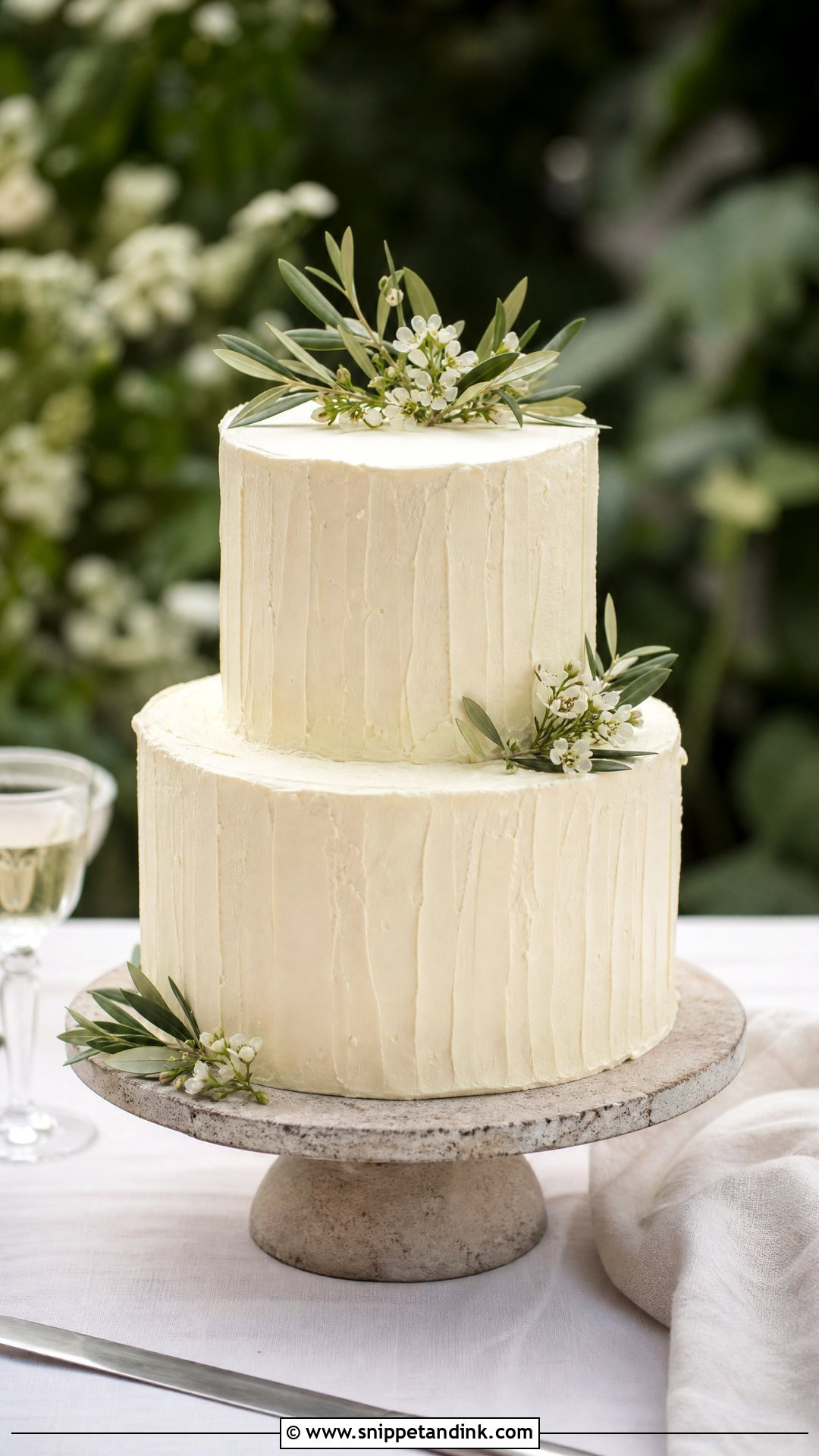
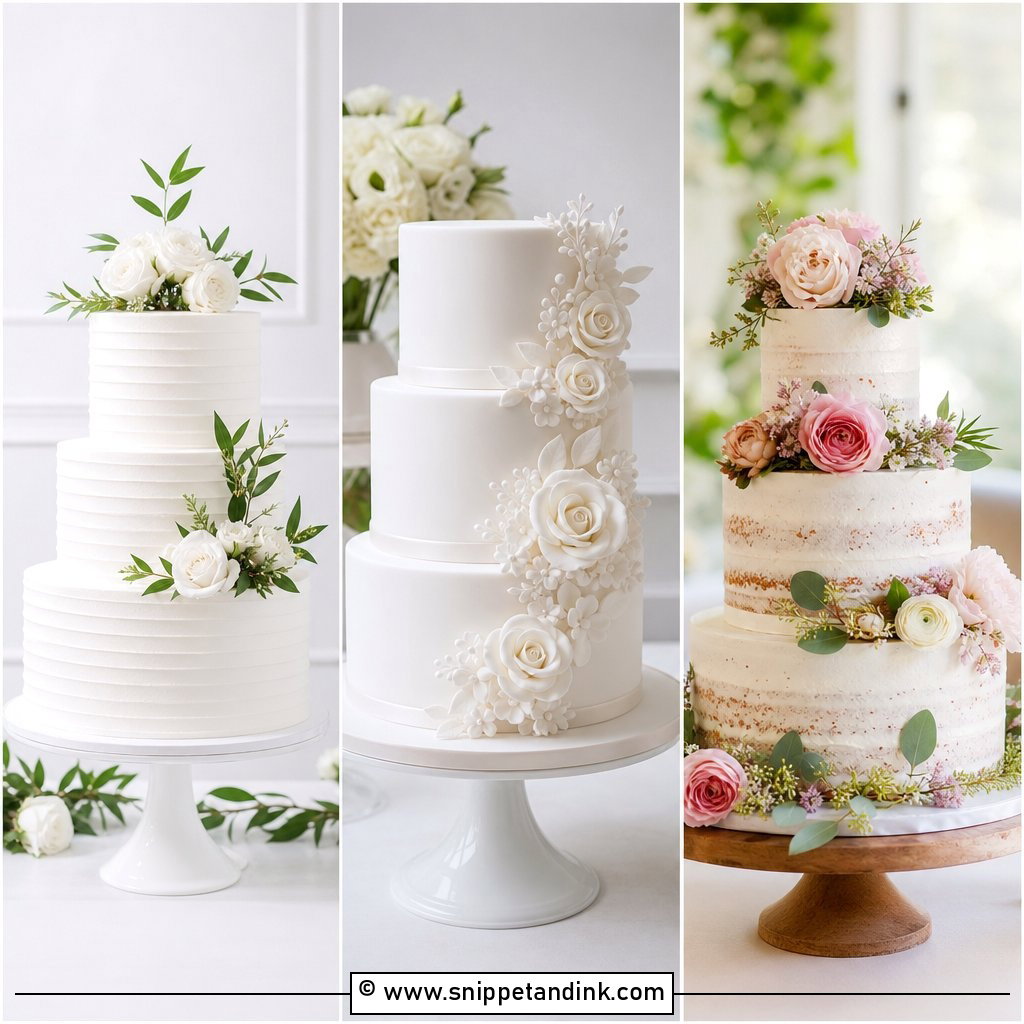
Texture lets a plain cake hold your attention without adding anything to it. I use a comb or palette knife to drag vertical lines, shallow waves or a loose stucco pattern into the buttercream while it’s still soft. The difficulty is consistency: a combed pattern has to meet itself cleanly at the back seam, and that’s where rushed cakes show their join. Stay within white, ivory or pale oat so the texture does the talking. It suits outdoor and garden settings because it looks made by hand.
7. Pearl Wedding Cake
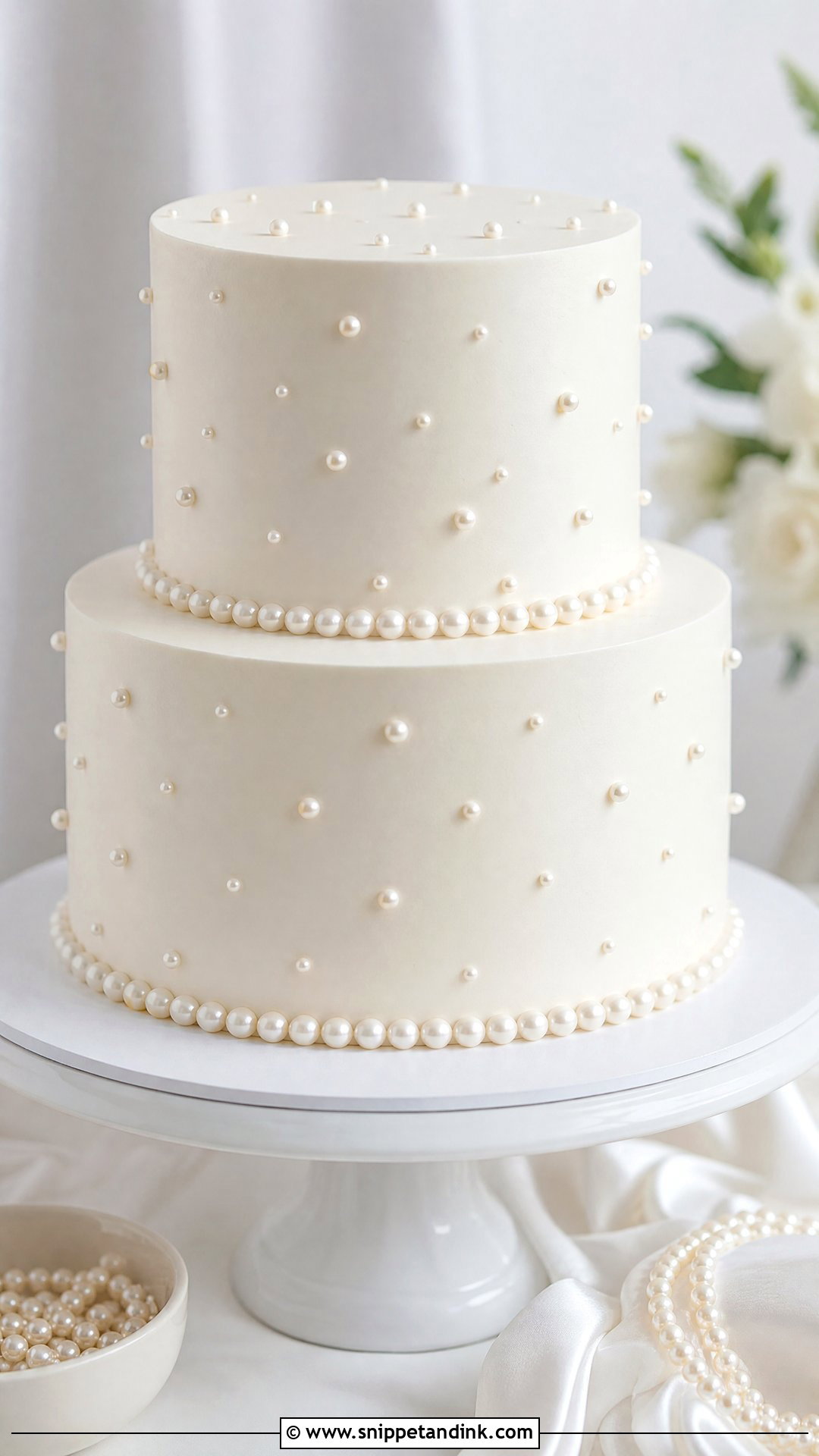
Sugar pearls are fiddly but rewarding. I place them one at a time with tweezers and a dot of piping gel, in a tidy base border, neat vertical lines, or a light scatter on one tier only. Covering the whole cake tips it back toward fussy, which defeats the point. Pearlescent dragées also catch flash, so in evening reception photos they glow a little. If you’re wearing pearls or a satin gown, this ties the two together; skip the flowers so nothing competes.
8. White Floral Wedding Cake
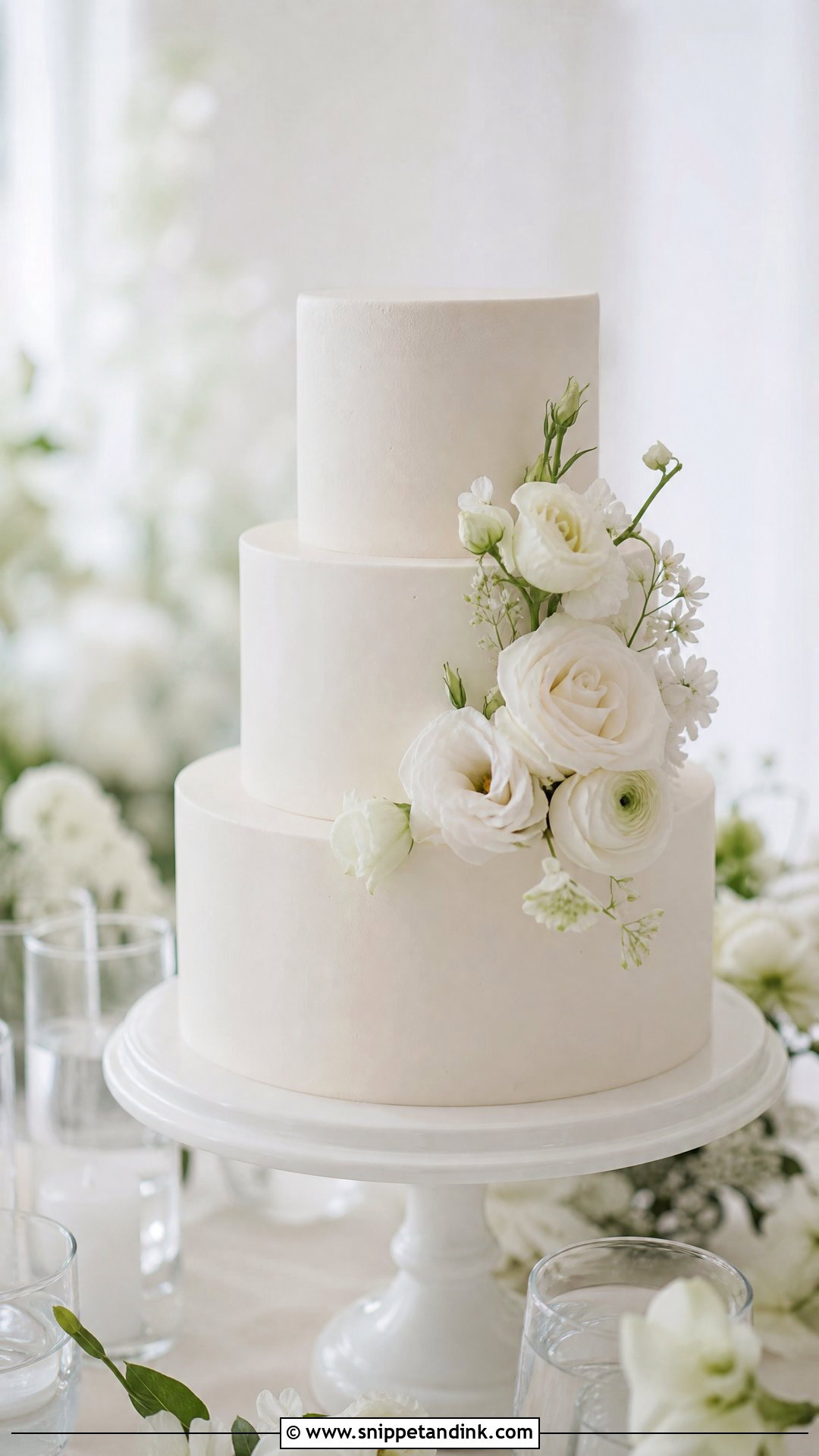
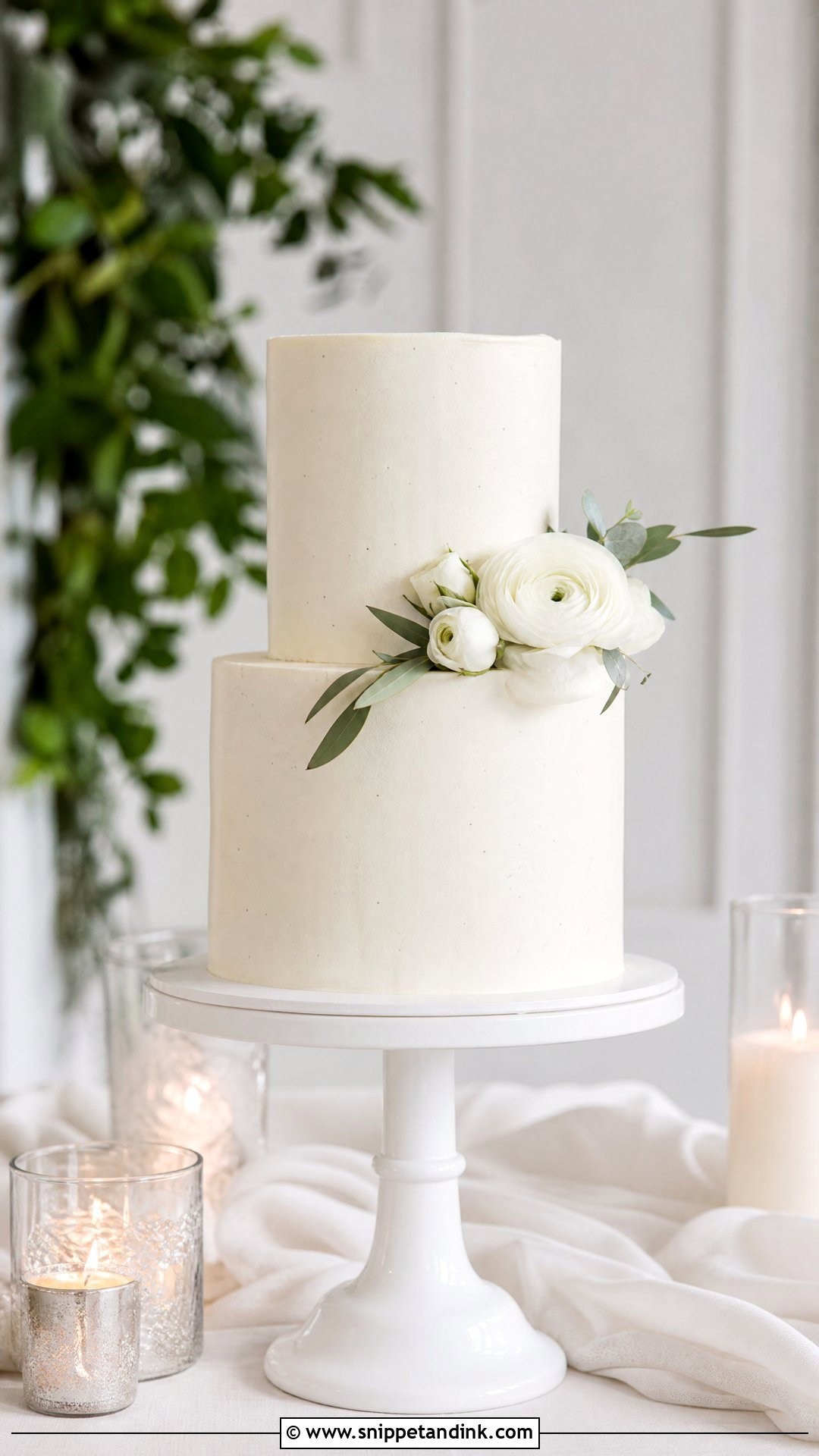
Fewer flowers almost always looks better on a minimal cake. I’d place one small cluster of white roses, ranunculus or lisianthus to one side for a modern line, or on top for a more traditional finish. Every fresh stem needs a barrier, either wrapped and taped or set in a small pick, so sap and any florist treatment never touch the frosting. If your reception is already full of florals, a restrained cake connects to them rather than shouting over them.
9. Greenery Wedding Cake
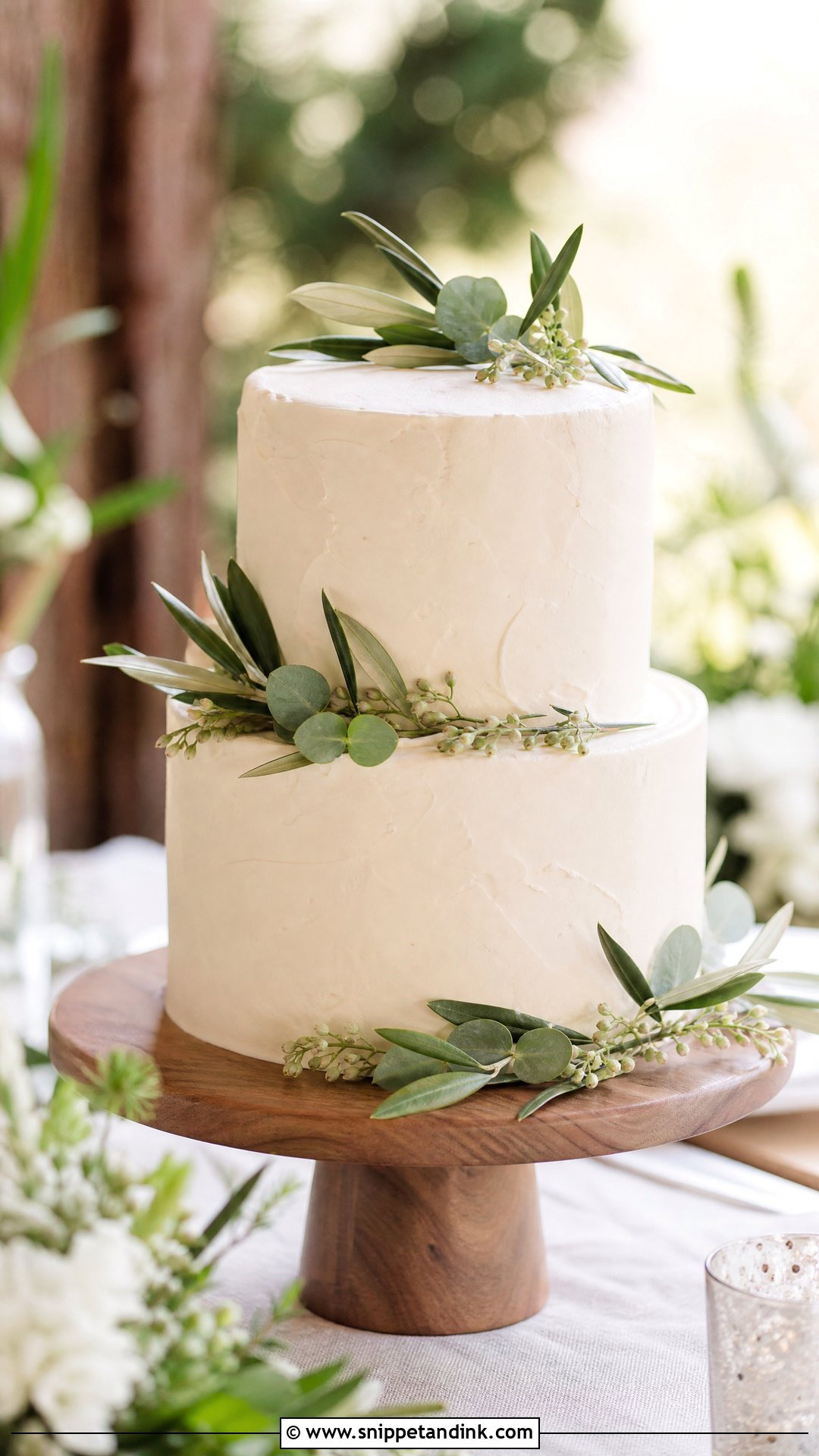
Greenery makes the cake feel relaxed and grown rather than decorated. Olive sprigs, rosemary and small fern fronds work well; I’m more cautious with eucalyptus, which many cake makers treat as unsafe to touch food and keep strictly wrapped or replace with a lookalike. White buttercream lets the green read clearly. Talk to your florist and baker together so the cuttings are unsprayed and the placement is agreed before the day, not improvised on the cake table.
10. Modern Square Wedding Cake
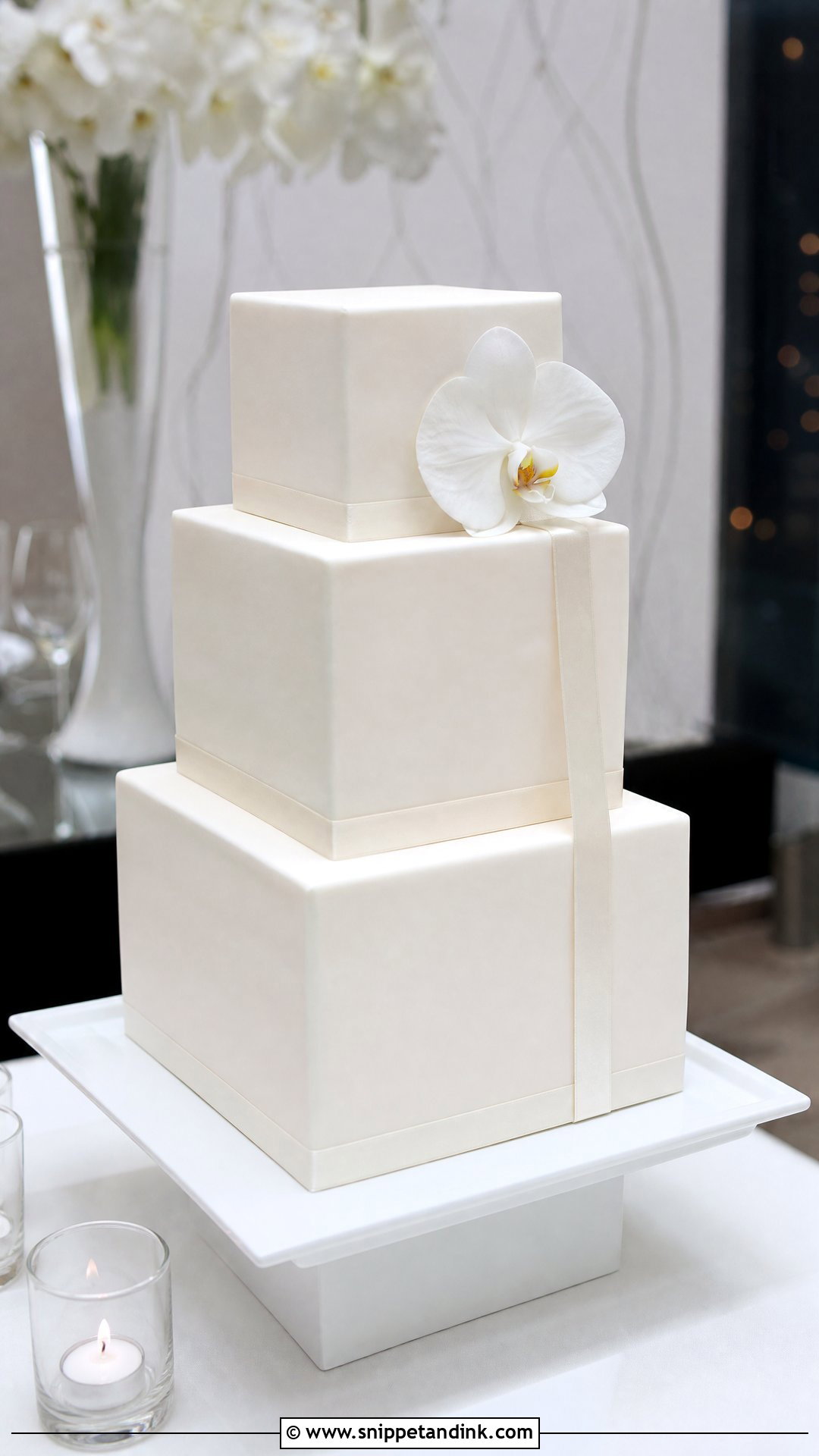
Square tiers look structured in a way rounds never do, but they’re harder to finish. Each corner has to be smoothed sharp on two faces at once, and a soft corner is the first thing your eye lands on. White fondant over ganache gives the cleanest result; buttercream squares are possible but read slightly softer. One accent is enough: a ribbon, a flower, a small metallic line. An acrylic or plain ceramic stand keeps the geometry crisp in city and modern venues.
11. Tall Tier Wedding Cake
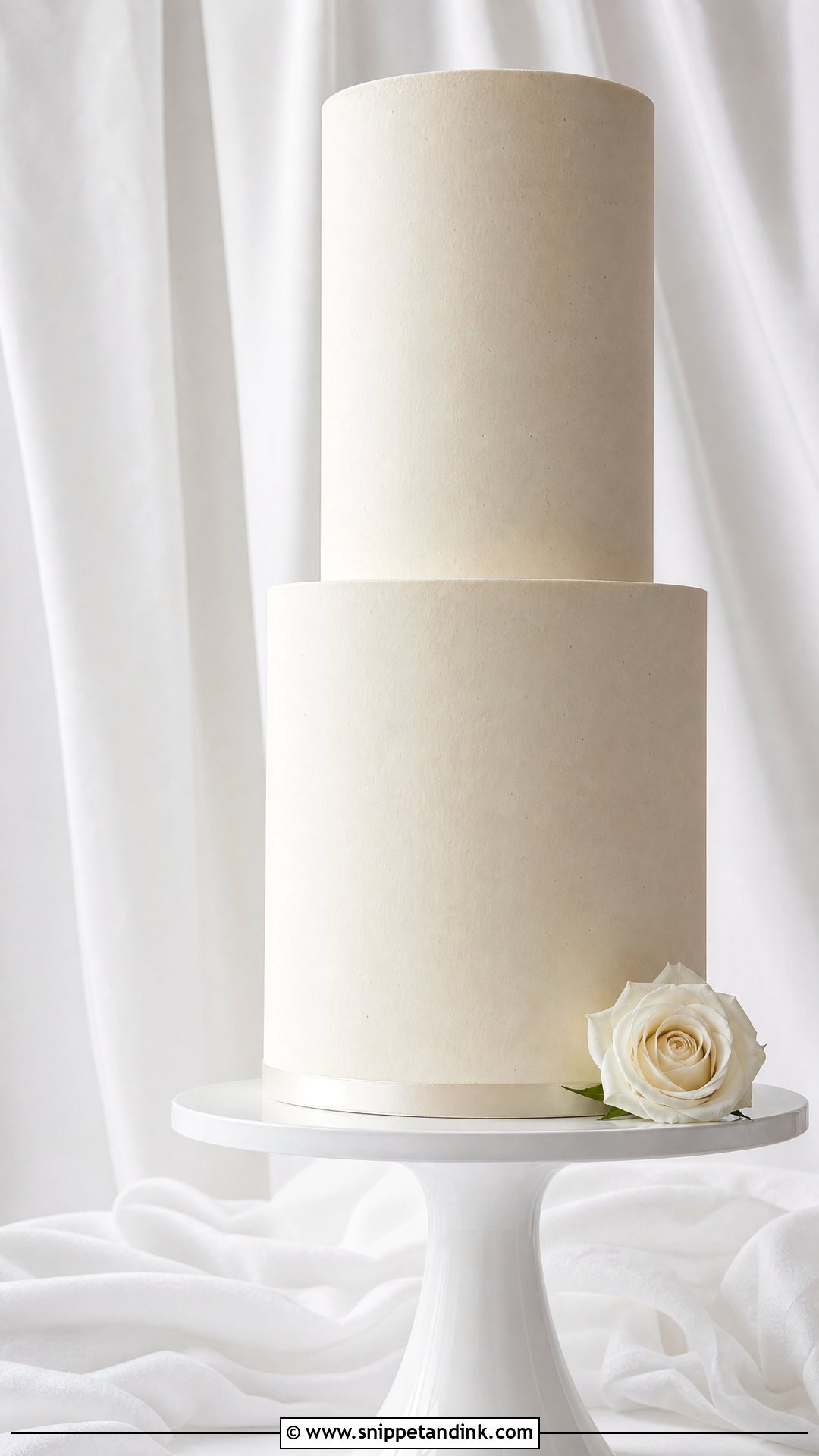
Height does the decorating here. I’ll often build tiers at five or six inches tall instead of four, which makes a white cake look custom straight away. The engineering changes with it: taller tiers need more dowels and a central support, and they’re less stable in transport, so I usually stack these at the venue. Add one restrained detail, such as a slim ribbon or a single bloom. It gives you impact without colour or a large topper.
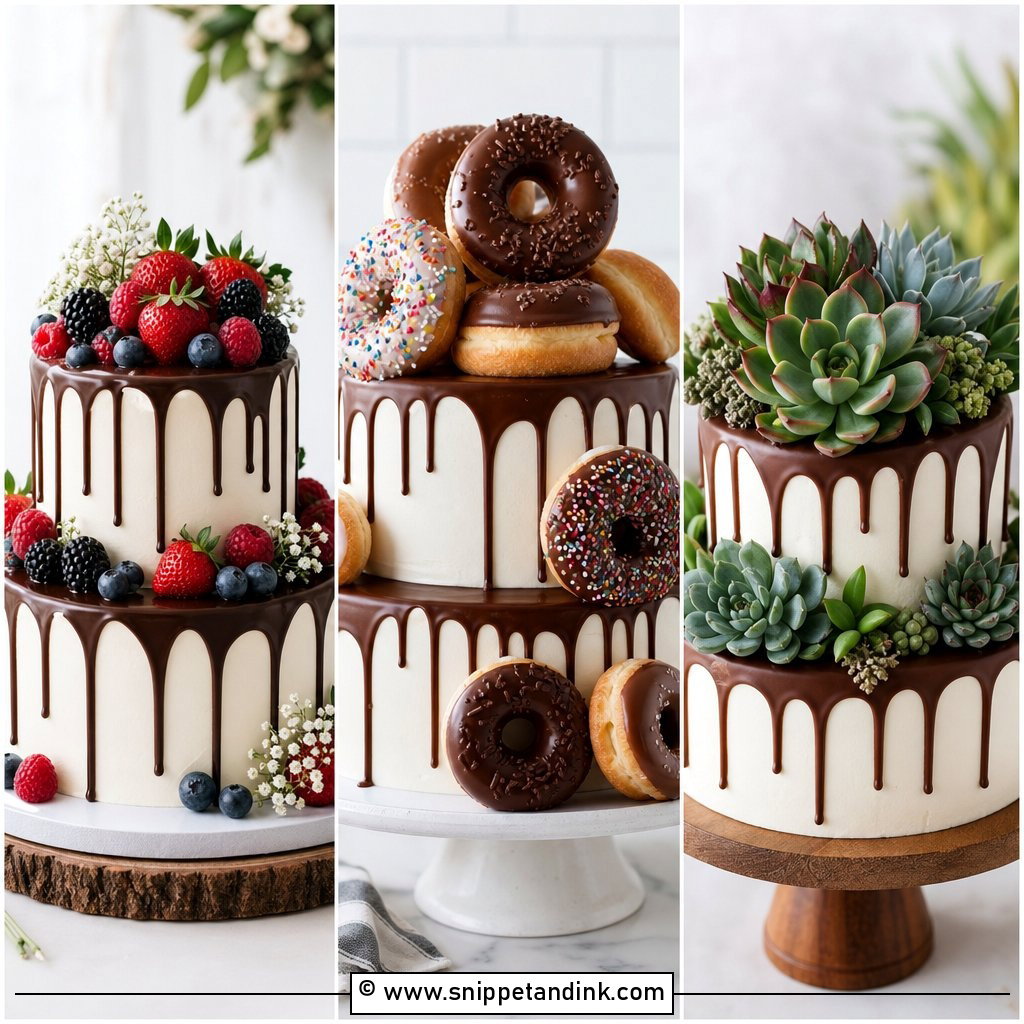
12. Minimalist Drip Wedding Cake
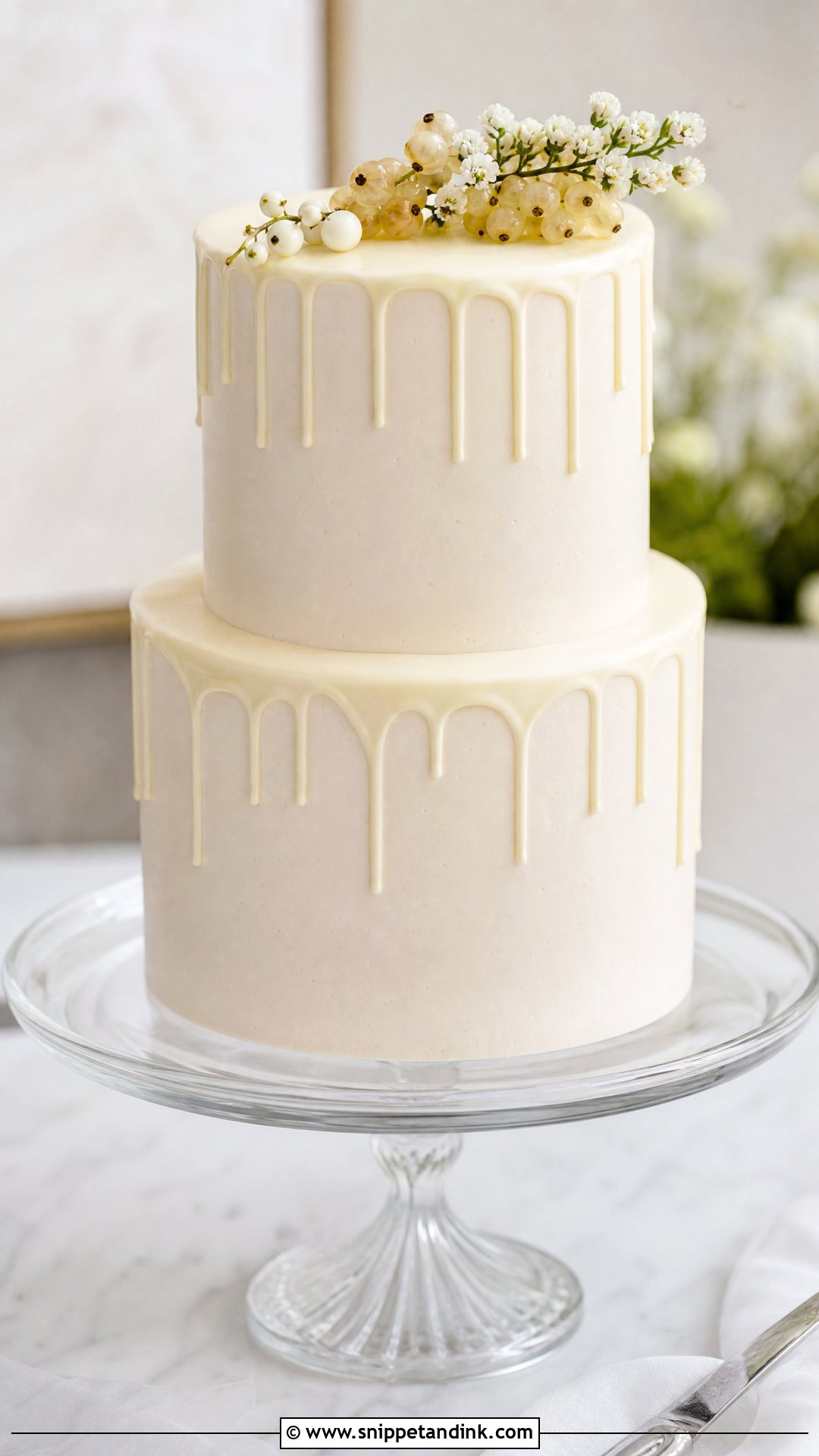
A drip only looks minimal when it’s thin and controlled. I pour white chocolate ganache at a slightly cooled temperature onto a well-chilled cake, so each drip stops partway down instead of puddling on the board. Tone-on-tone ivory on ivory is the quietest version; a pale champagne drip adds warmth. Keep the top simple, with a small cluster of flowers or a few berries. In a hot marquee a drip can soften and slide, so I’d avoid it for long outdoor displays in summer.
13. Gold Accent Wedding Cake
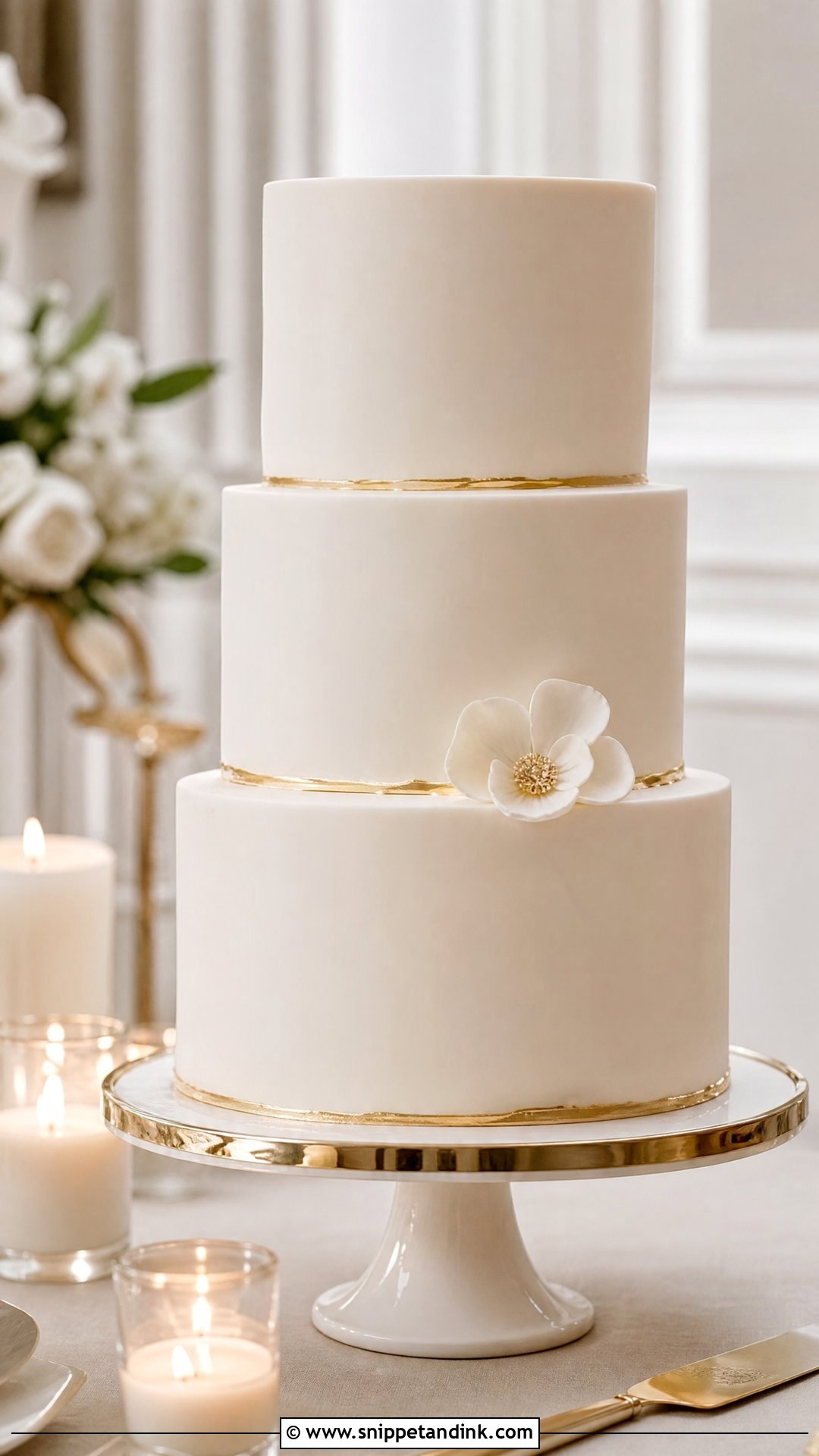
Gold works like jewellery on a cake: a little reads expensive, a lot reads costume. I hand-paint a fine line or apply a few flakes of gold leaf, or add a narrow band between tiers. Metallic paints vary in whether they’re edible or only non-toxic, so ask your baker which they use and keep it to areas guests won’t eat if it’s decorative only. White, ivory or warm beige frosting suits the warmth of gold. Candlelit ballrooms and hotel receptions bring out the shine.
14. Black And White Wedding Cake
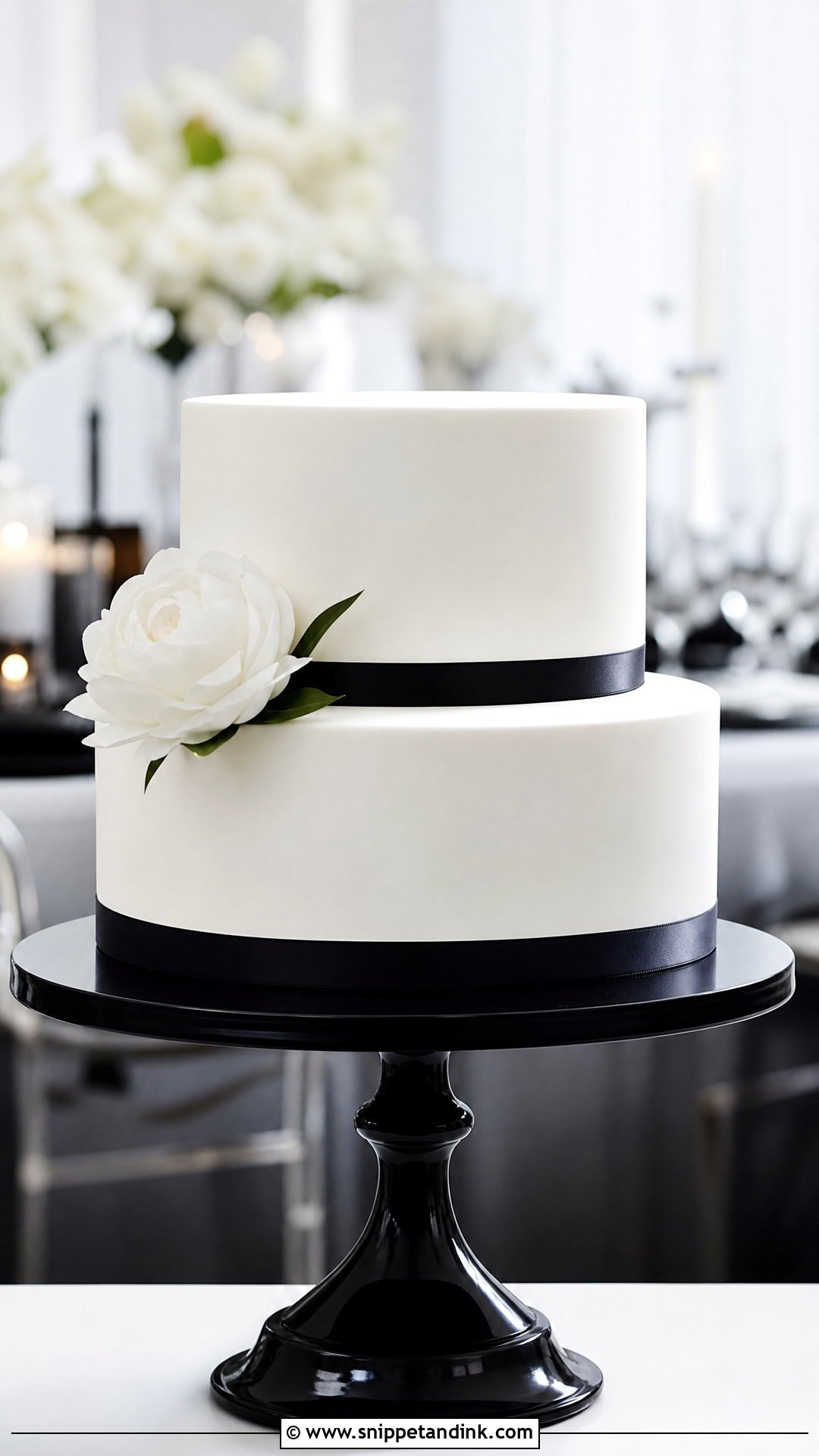
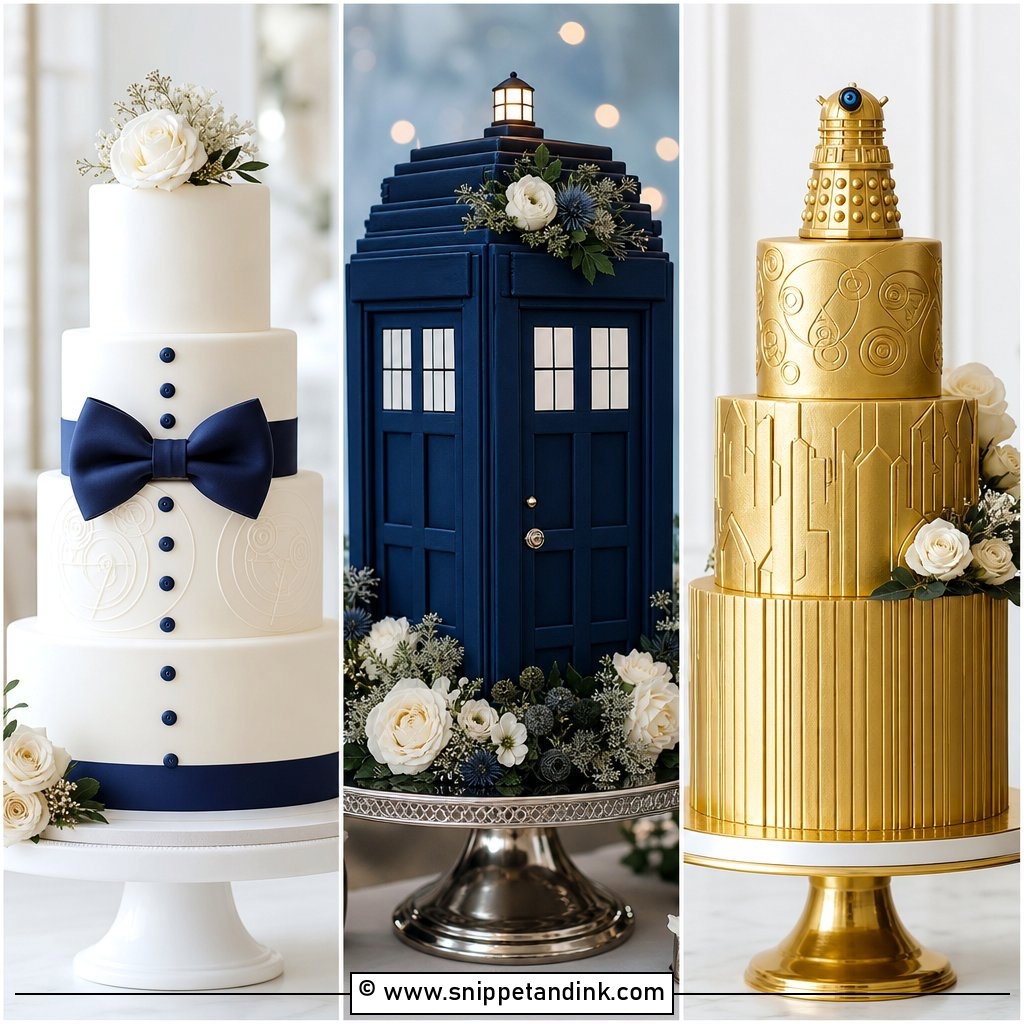
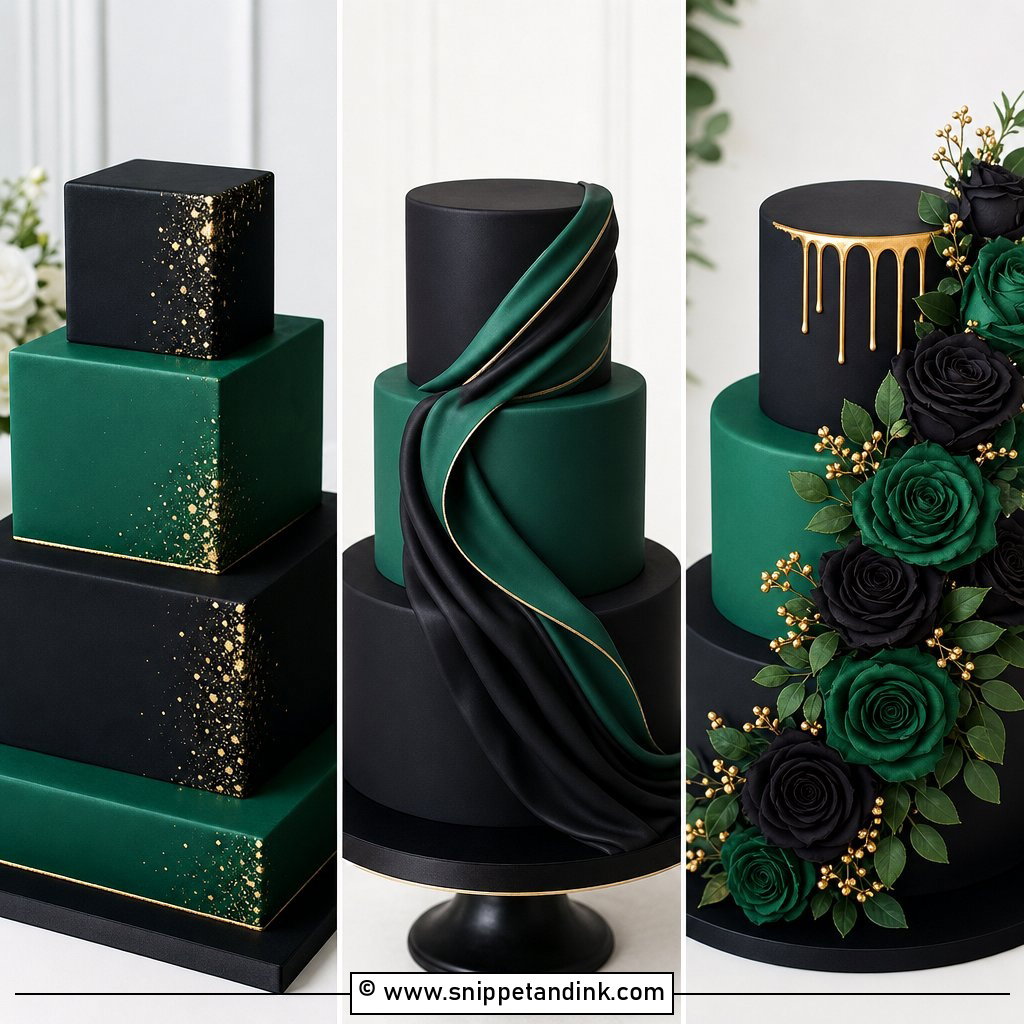
Black on a white cake is a strong move, so I let it appear once. A satin ribbon, a thin painted line or one graphic border is enough; two black elements already start to fight. Black icing also stains teeth and tongues, which is worth knowing before you ask for a black-coated tier rather than a black accent. Formal city weddings and black-tie receptions suit the contrast. Choose the stand to set the mood: black for drama, white to keep it softer.

15. Monochrome Wedding Cake
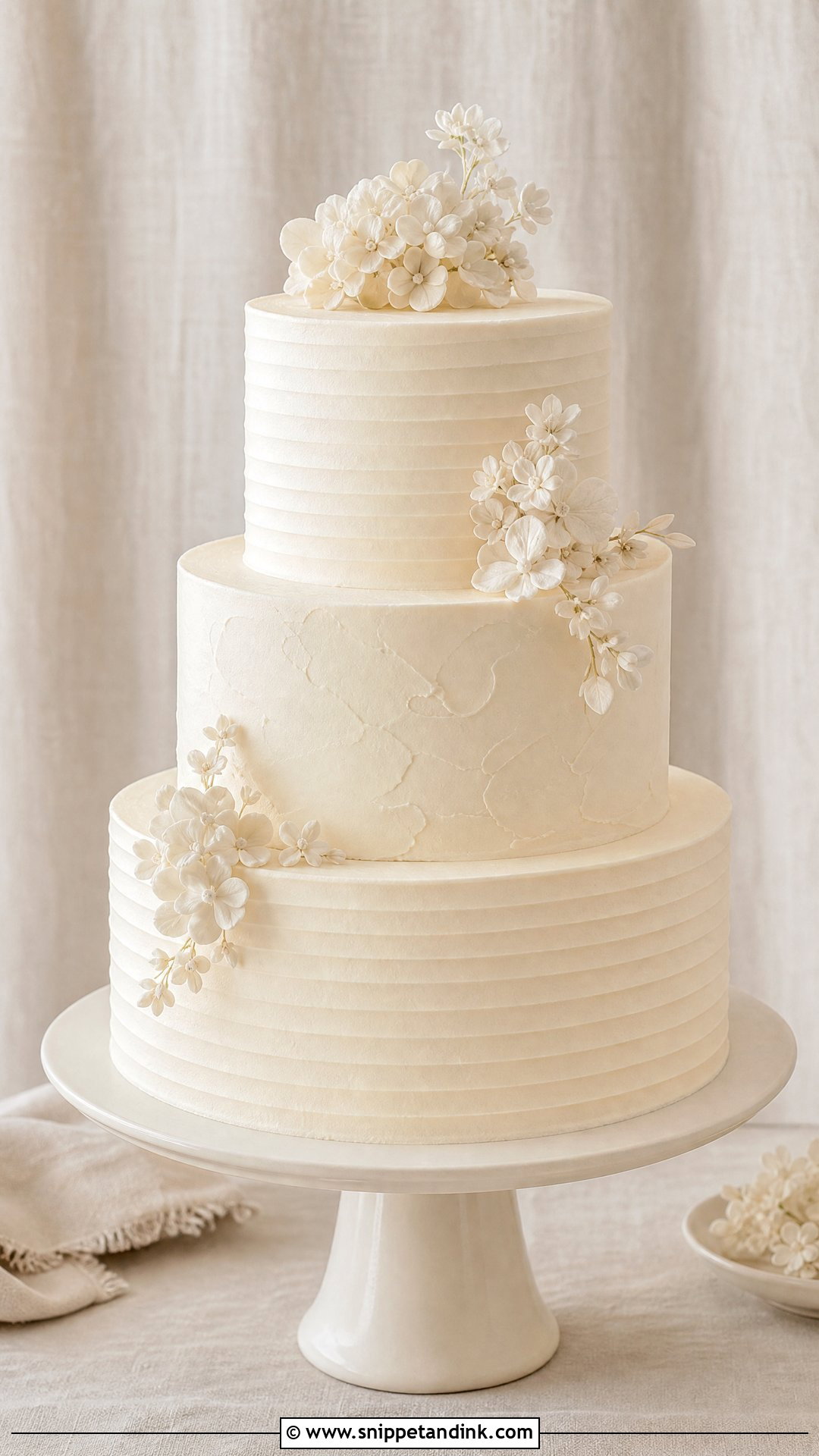
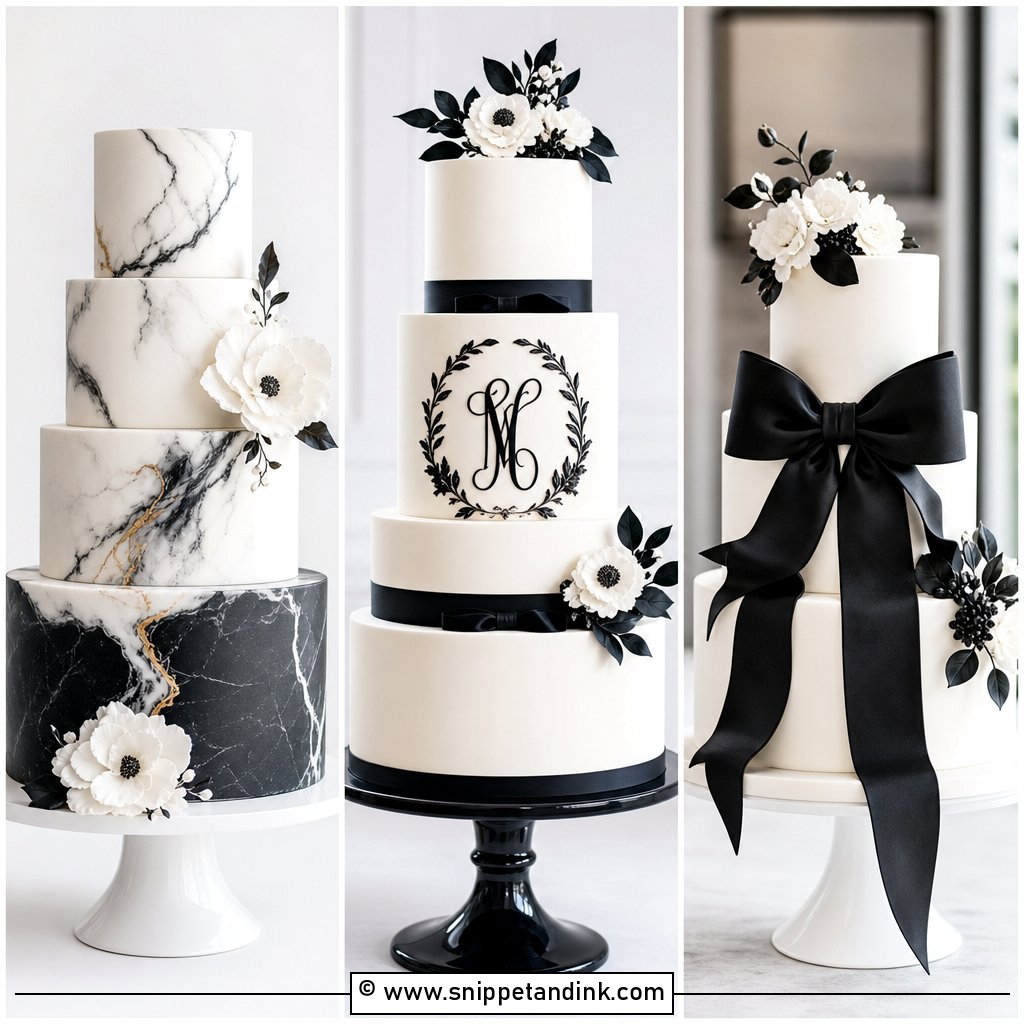
Keeping one colour from top to bottom makes the cake calm, and it lets texture carry the interest. Ivory, cream, taupe, soft blush and pale grey all work, and I’ll often vary the finish tier by tier, smooth on one, gently ridged on the next. Getting several batches of tinted buttercream to match exactly is the hidden skill, so I mix one large batch for the whole cake. It blends into a quiet décor scheme and is very easy to photograph.
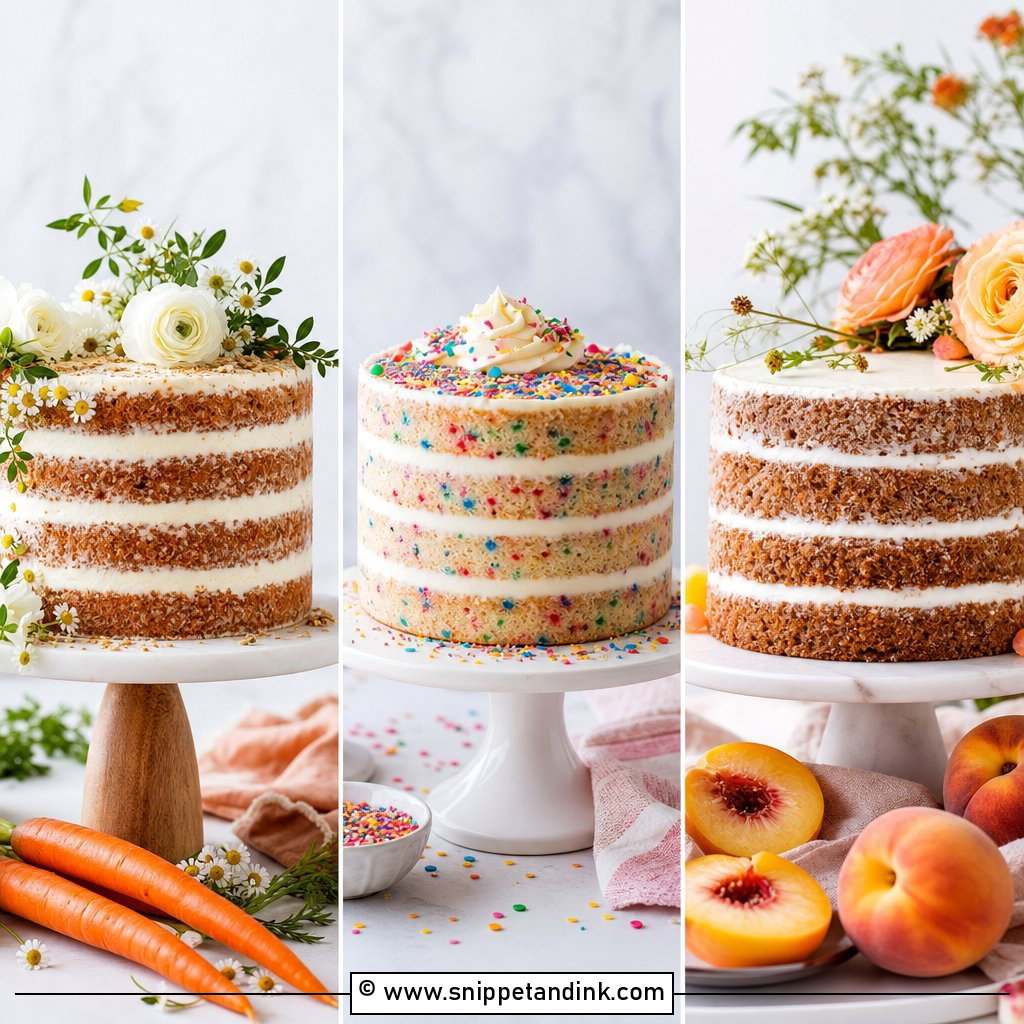
16. Naked Wedding Cake
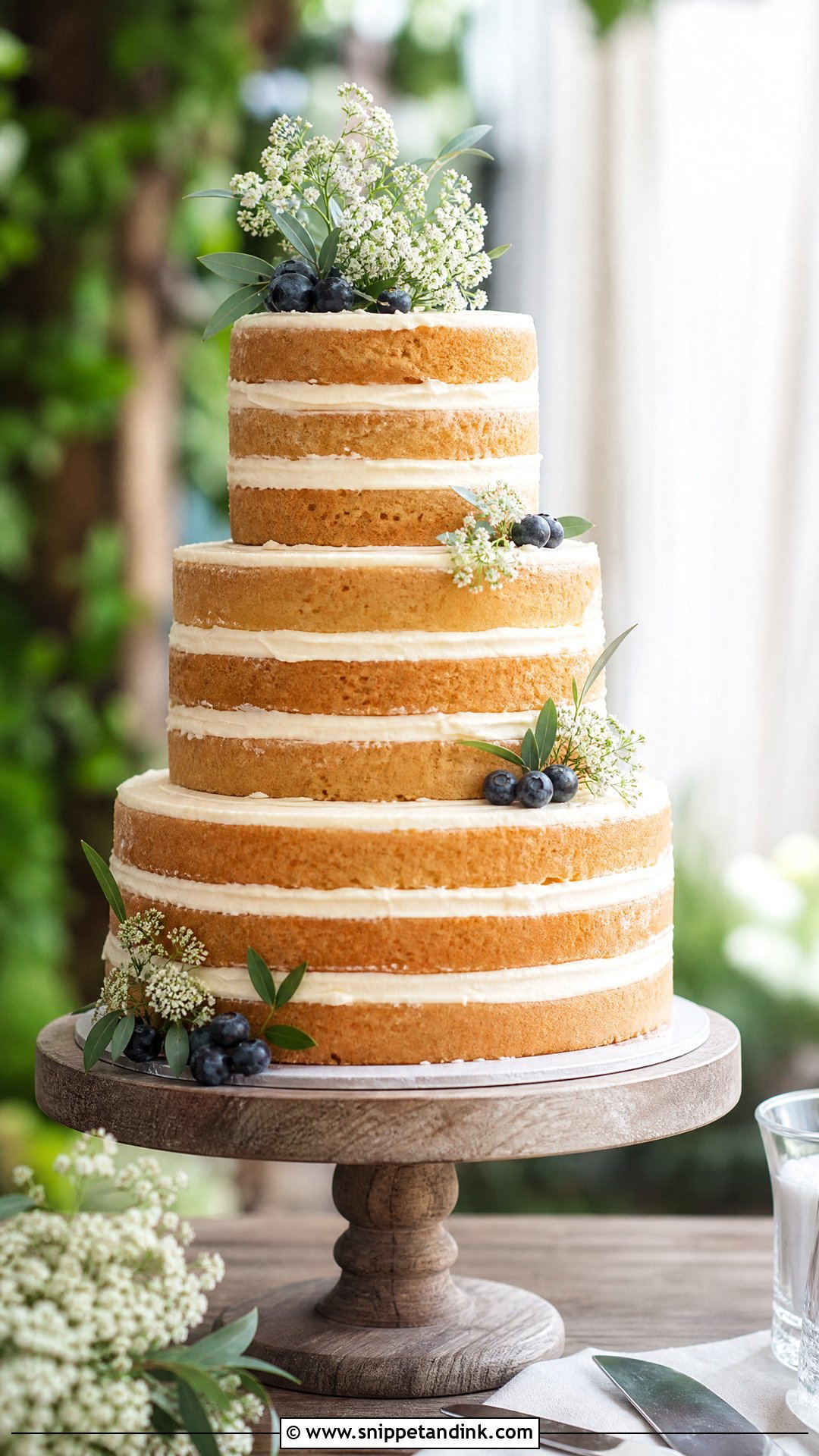
A naked wedding cake shows every layer, so the bake itself has to be level and even in colour. With almost no frosting on the outside, the sponge dries faster than a coated cake, which is why I assemble these as close to the day as possible and syrup the layers lightly. Keep the decoration modest, with a few white blooms, berries or herbs. Vanilla, almond and lemon sponges look prettiest against pale filling. Barns and relaxed garden receptions are its natural home.
17. Semi Naked Wedding Cake
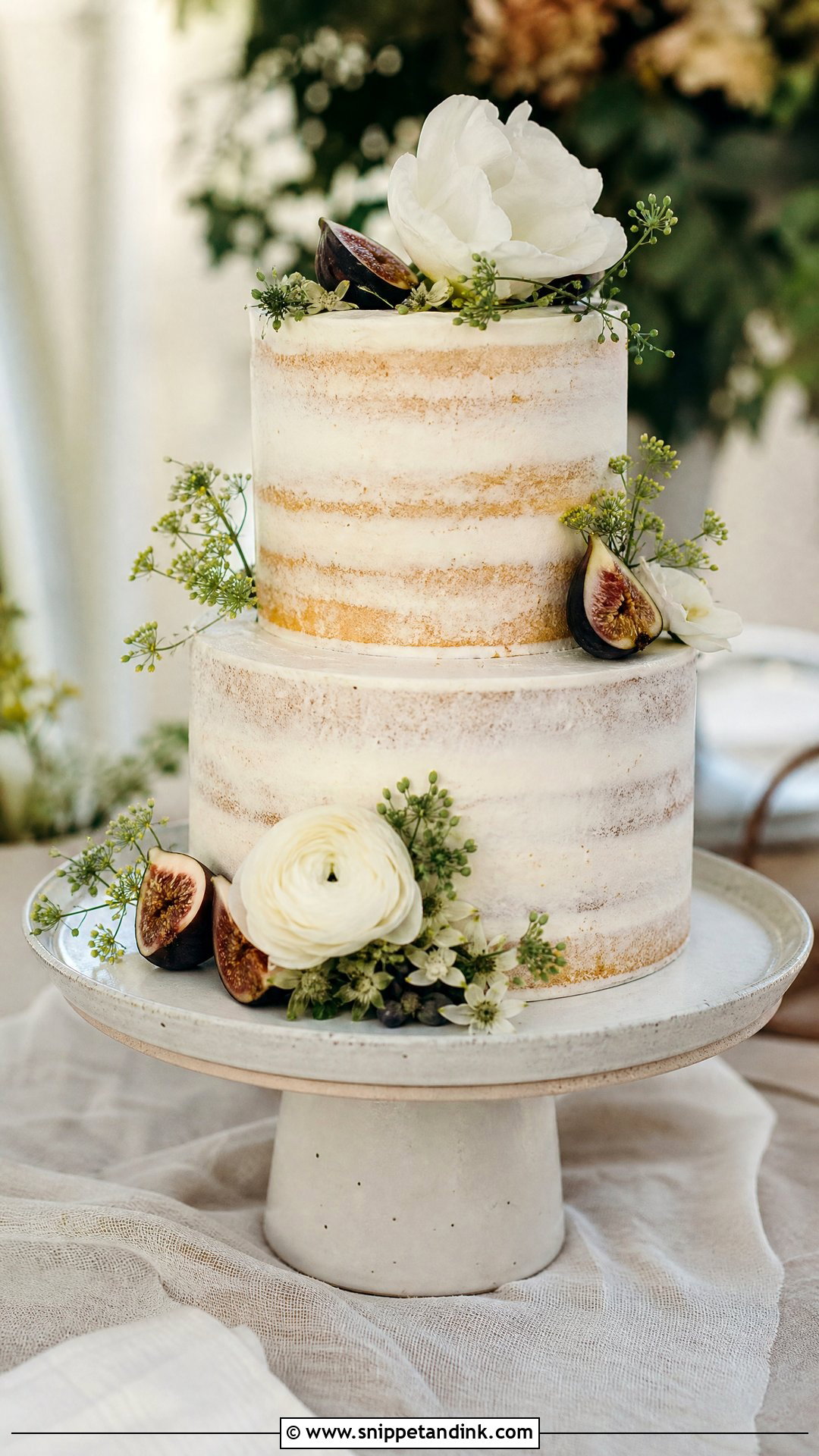
The semi naked finish is a thin scraped coat that lets the sponge peek through, and it’s tidier and less prone to drying than a fully naked cake. The scraping has to look deliberate, with even coverage around the whole tier, or it just reads as unfinished. I’d add figs, berries or a couple of fresh flowers and stop there. It suits spring through autumn, but I’d move it out of direct sun, since the thin coat gives the cake little protection.
18. Minimalist Heart Wedding Cake
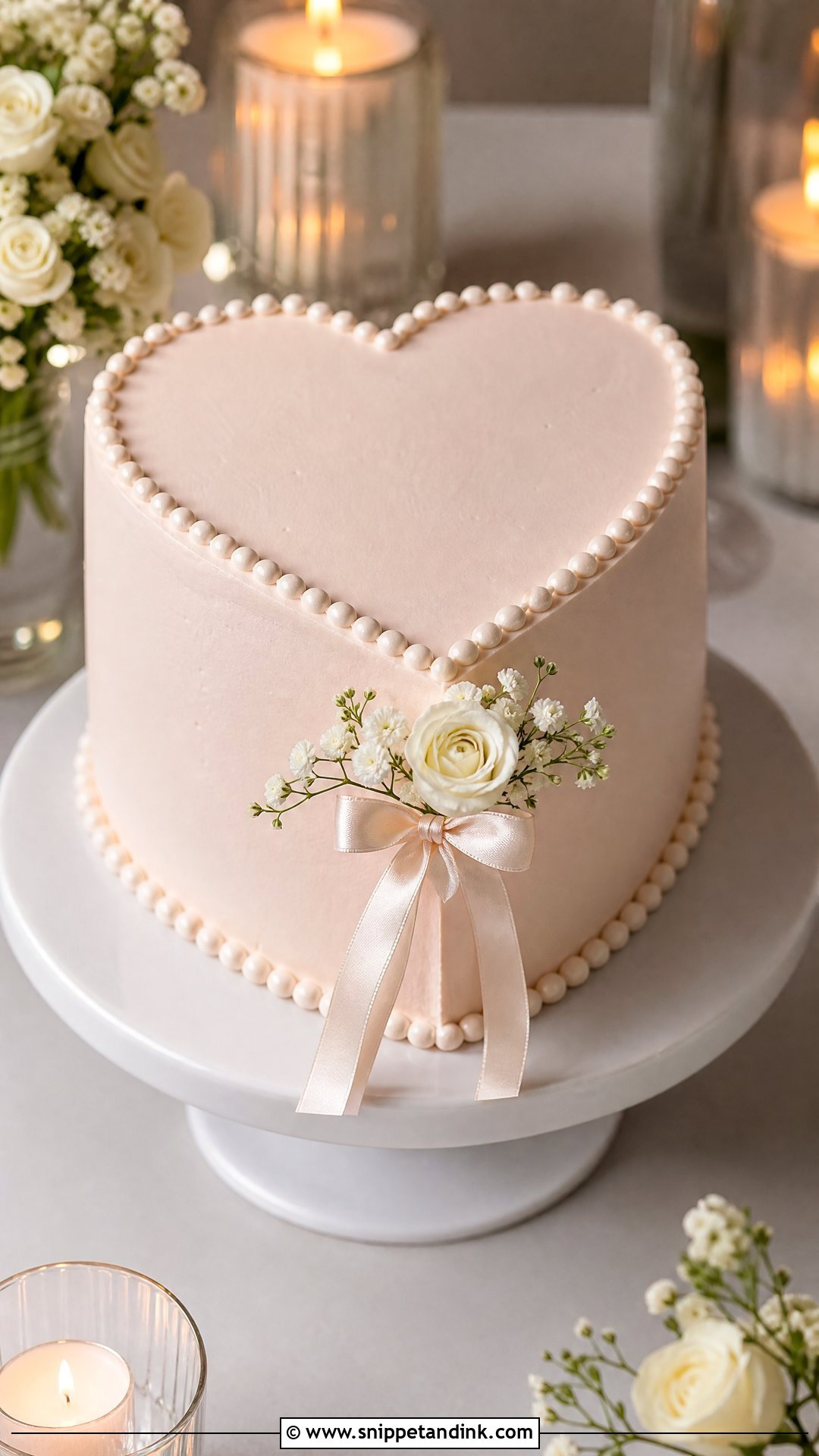
Heart shapes can tip into cute very quickly, so the styling has to stay disciplined. I’d use smooth white, ivory or pale blush frosting, then a fine piped border, a satin bow or one flower and nothing more. Hearts are harder to coat cleanly than rounds because of the inward point at the top, so look closely at a baker’s past heart cakes. Elopements and intimate receptions suit the size best. A plain white pedestal and a few candles finish it.
19. Ribbon Wedding Cake
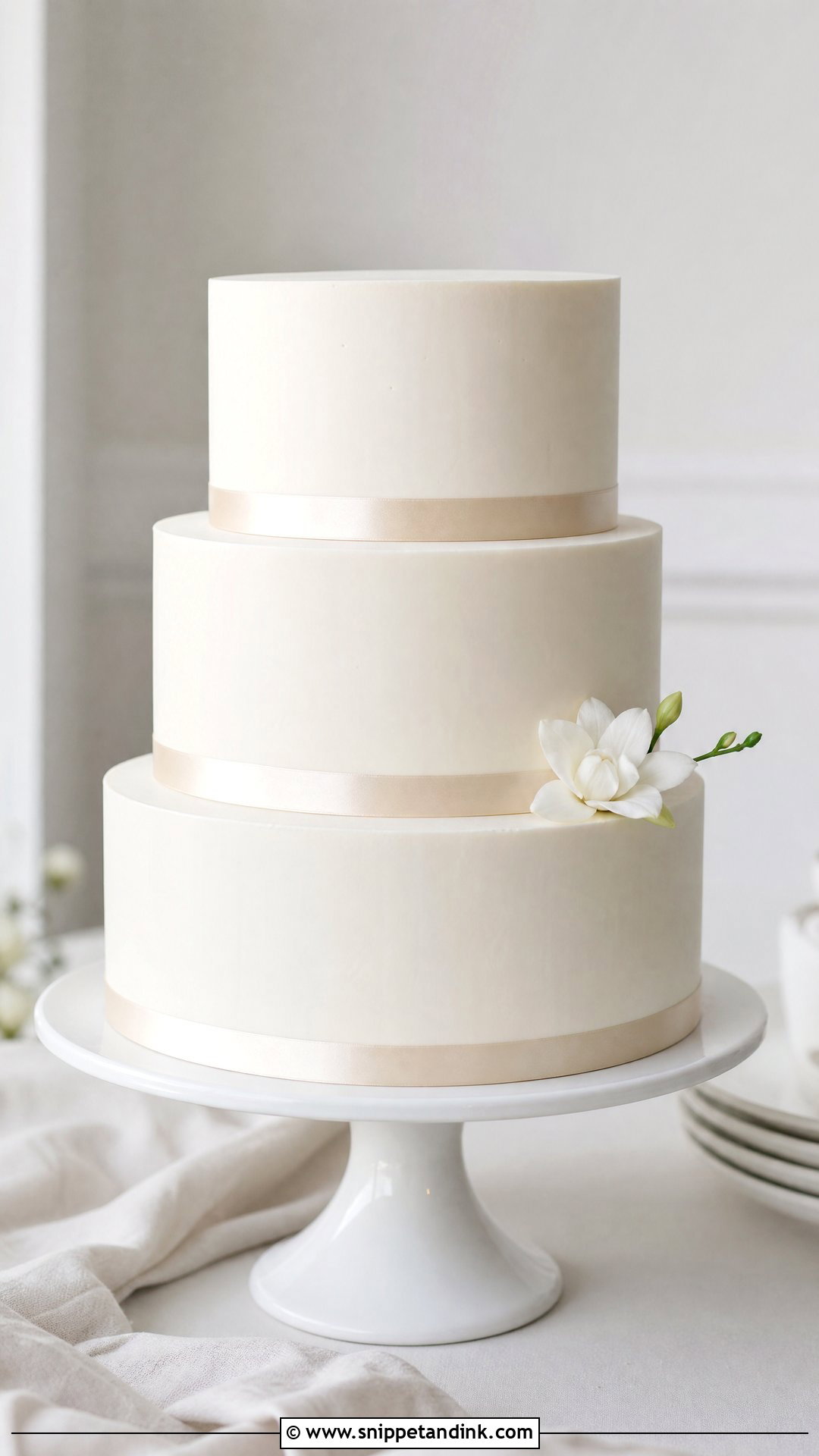
Ribbon is the cheapest way to make a plain cake look finished. I lay a strip of food-safe tape or a thin band of fondant behind it first, because buttercream will grease straight through satin and leave a dark stripe within an hour. Ivory reads classic, black reads formal, and blush, taupe or sage pull in your palette. Keep the rest of the cake bare. Velvet and wired ribbons are harder to lay flat, so I tend to stay with satin or silk.



20. Calla Lily Wedding Cake
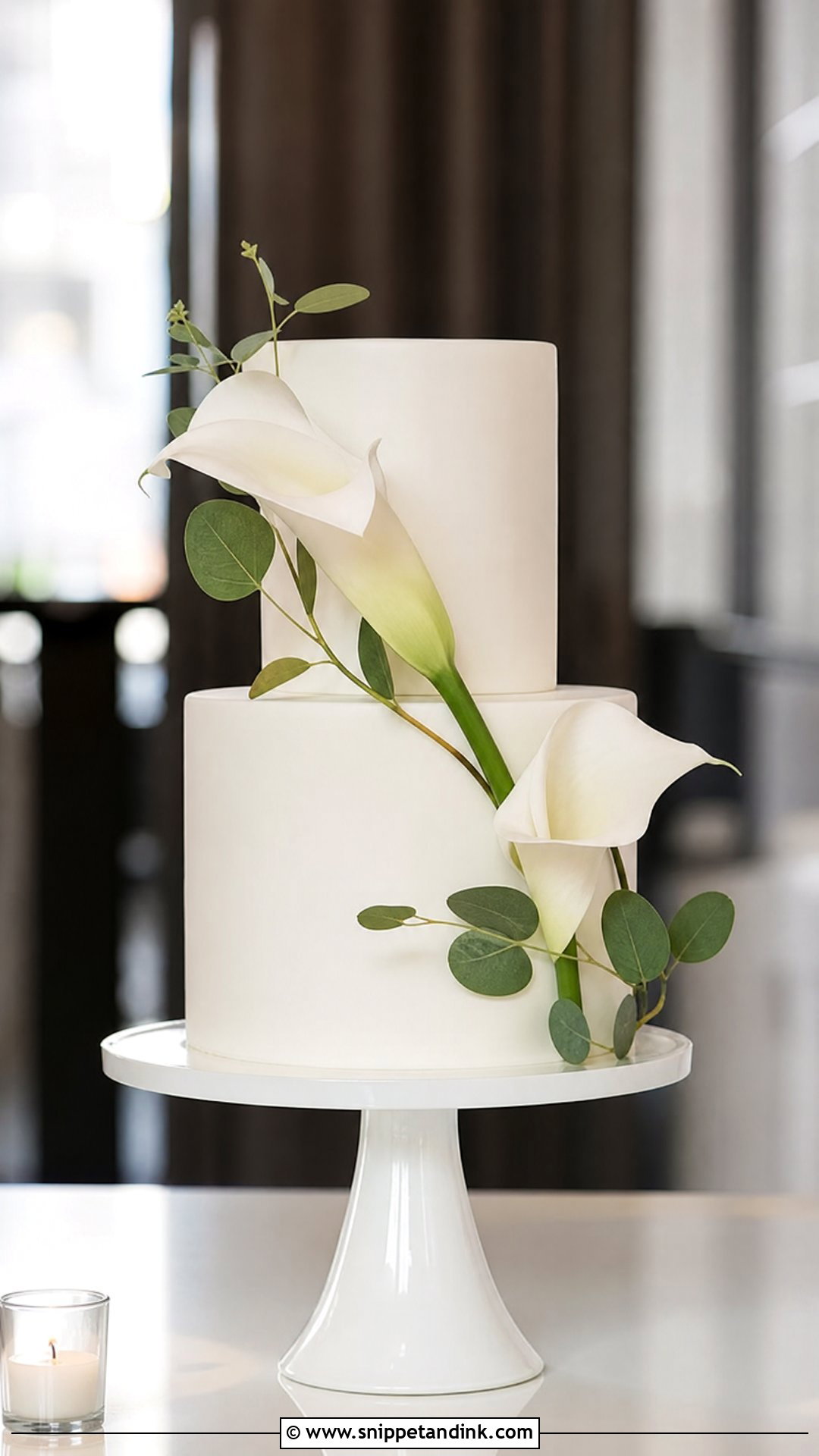
Callas are one of the easiest flowers to use on a calla lily wedding cake because their shape is already clean. I lay one or two stems diagonally across the tiers or rest a small group at the base. Fresh callas belong to a plant family that shouldn’t be eaten, so they must be wrapped and kept off the cut surface; sugar callas avoid the question entirely. Smooth white frosting and sharp edges are all the cake needs. Sleek gowns and simple bouquets match it.
21. Orchid Wedding Cake
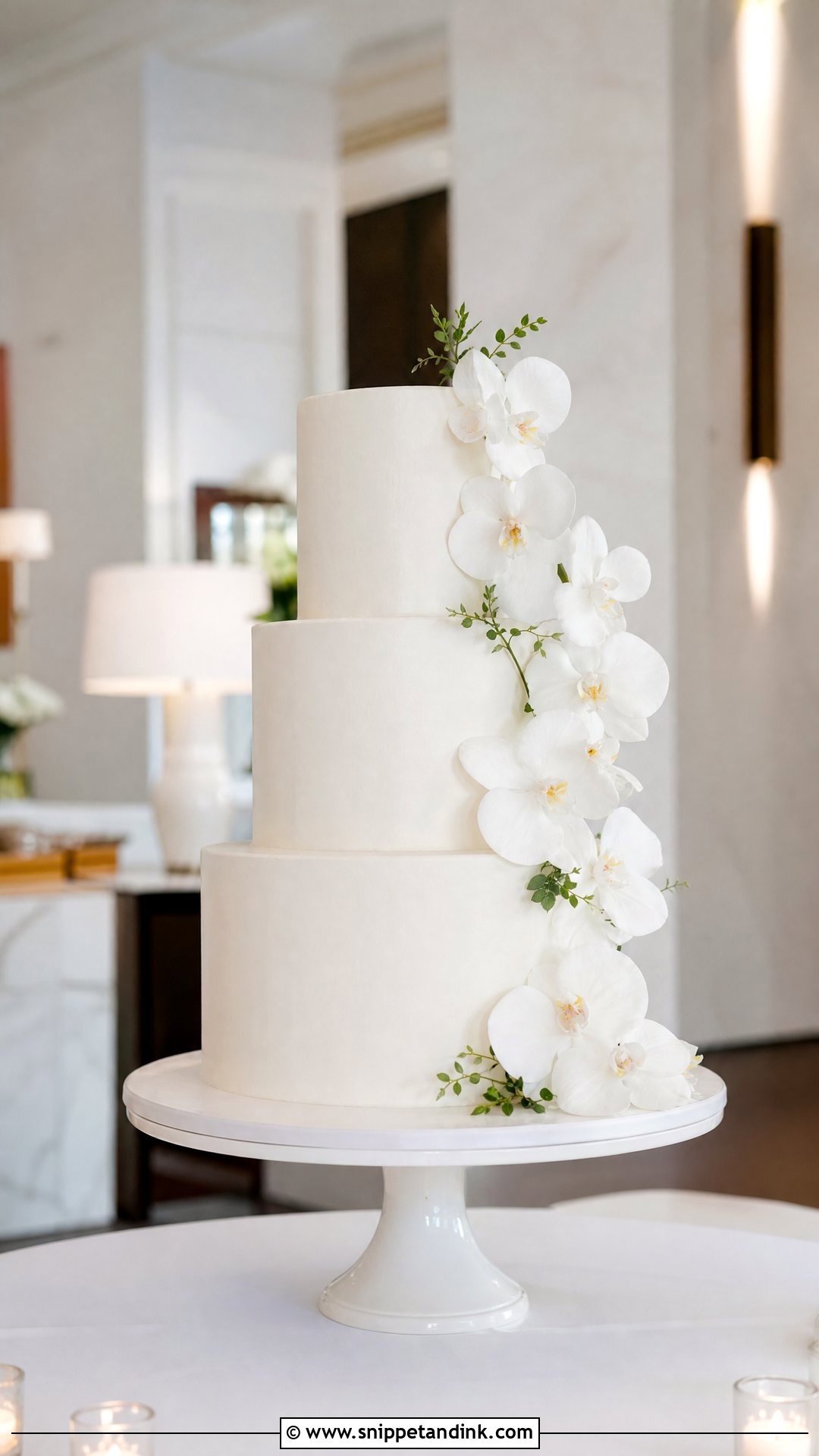
Orchids look expensive without any colour, which is why they sit so well on a white cake. I’ll run a short cascade down one side or set a few blooms on top. Phalaenopsis petals bruise easily, so I place them at the venue after stacking, never before transport. Leave the rest of the cake free of piping and other decoration. Hotel receptions and tropical settings suit them, and sugar orchids are an option if you’d rather nothing fresh touched the cake.
22. Pressed Flower Wedding Cake
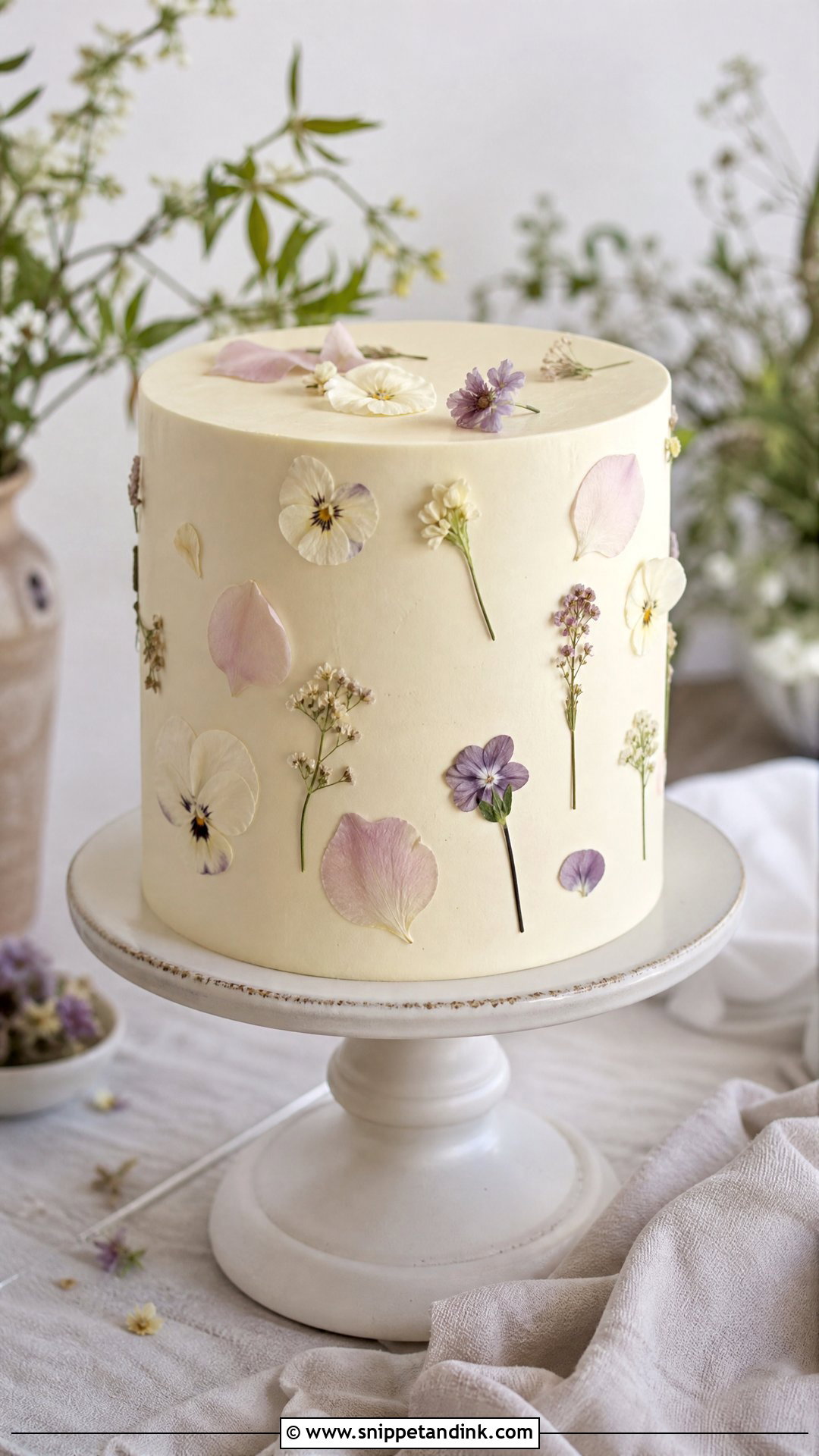
Pressed flowers need to be edible varieties, pressed flat and fully dry, then pressed gently onto buttercream that’s been chilled just enough to hold them. Pansies, violas and cornflower petals are the usual choices. I keep them to a band around one tier or a loose line down one side, in pale white, blush, lavender or soft yellow. Moisture is the risk: in a humid room they can darken or curl, so I add them late. Spring and garden weddings suit them best.
23. Geometric Wedding Cake
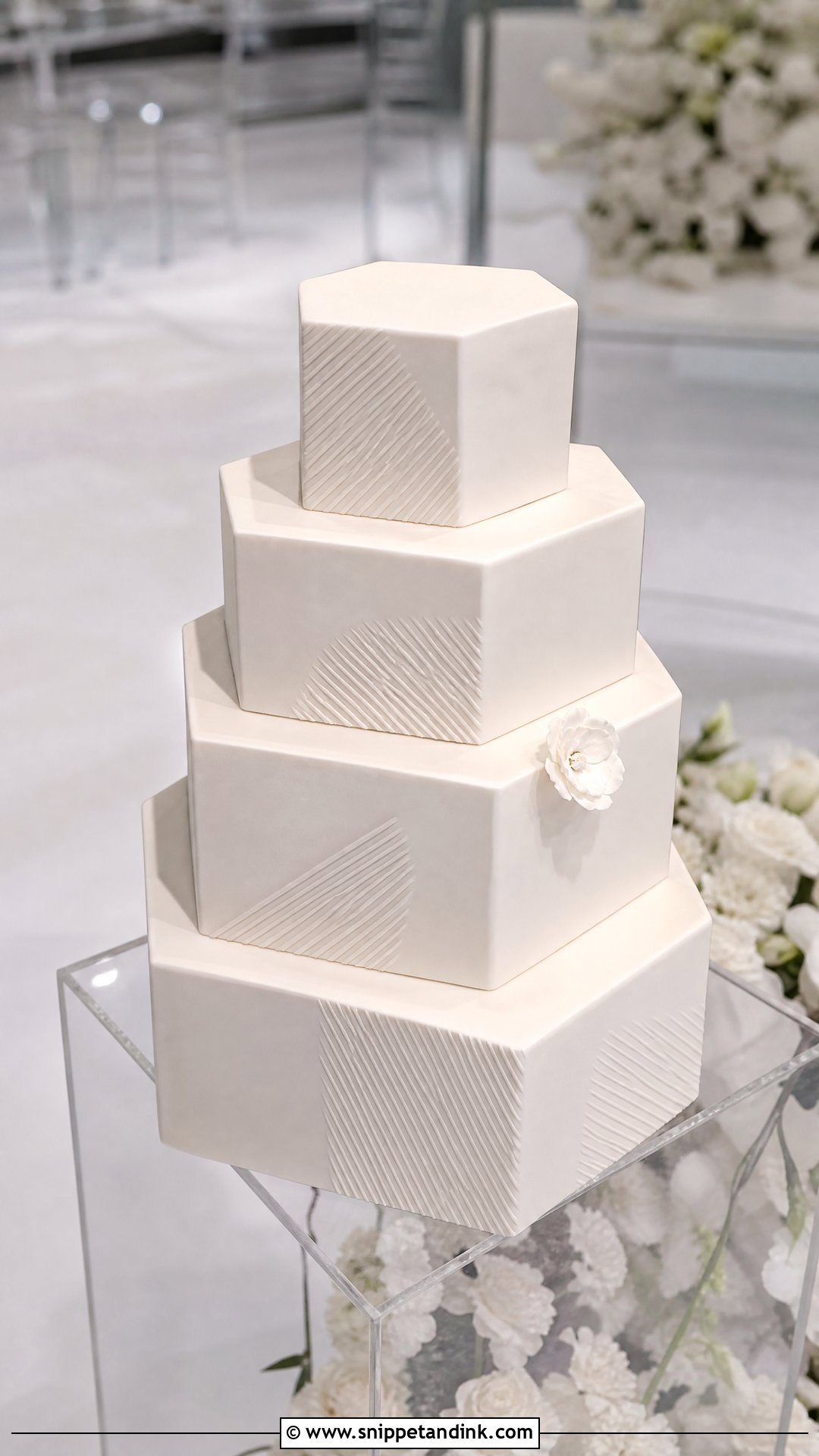
A geometric wedding cake leans on shape: hexagon tiers, one angled tier, or a faint embossed pattern. Hexagons take more time to finish than rounds because every facet needs its own sharp edge, and that’s reflected in the quote. Stick with neutral colours so the geometry stays the point. Lofts, galleries and city venues suit it, and couples who like architectural detail tend to love it. Leave toppers and flowers off; the form is already doing the work.
24. Small Wedding Cake
Small cakes need height to hold their place on a table. A tall single tier or a petite two-tier with six-inch and four-inch layers both have presence. Smooth frosting, clean edges and one decoration make it look intentional. If you’re serving more guests than the cake feeds, I’d suggest an undecorated kitchen cake of the same flavour, cut out of sight. A raised stand does a lot here, lifting the cake to eye level for photos.


25. Minimalist Vintage Wedding Cake
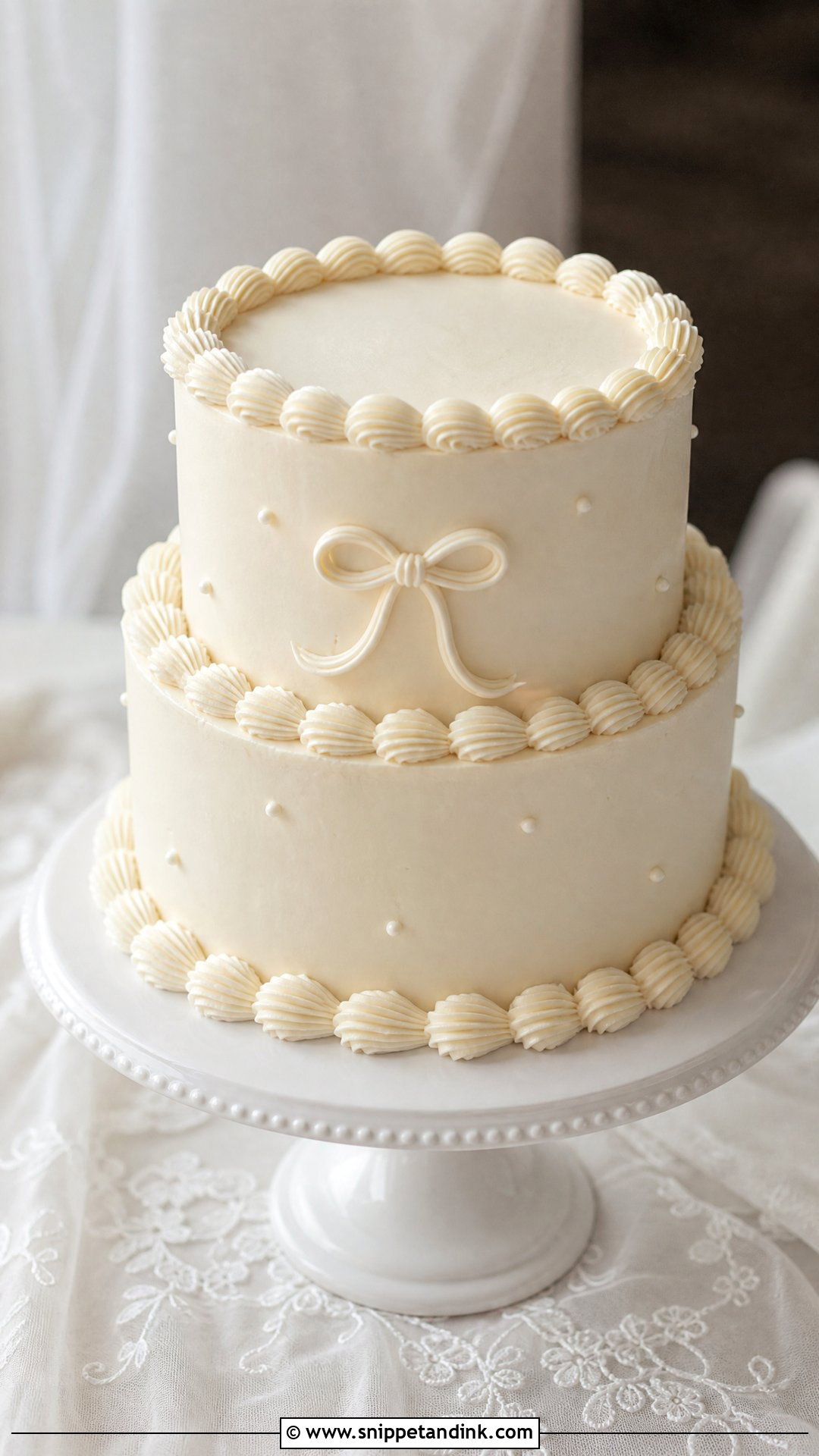
Vintage detail and minimalism meet when the piping is kept to a single element. I’d choose a soft shell border, a row of tiny piped dots or one bow, all in white, ivory or pale cream. Old-style Lambeth cakes cover every surface; this borrows one motif and stops. Piping needs a slightly stiffer buttercream than coating, so ask your baker to show you a piped sample at the tasting. A small two-tier or heart shape suits this best.
Heat, Sun and the Long Wait Before the Cutting
Most cake problems I see at weddings have nothing to do with the bake. They come from where the cake stands. A minimalist cake is less forgiving here, because a bulge or a sliding tier is impossible to hide.
Where to put the table
Keep the cake out of direct sun, away from heaters, kitchen doors and dance floor lights, and off the side of a marquee that bakes in the afternoon. Meringue buttercream starts to soften once a room gets properly warm. In summer I’d ask the venue for the coolest indoor corner and plan for the cake to arrive as close to the reception as possible.
Moving from cold to warm
A fondant cake taken from a fridge into a humid room will sweat, beading with moisture that can mark the surface. I let fondant cakes come to room temperature slowly and in their box. Buttercream cakes travel chilled and firm, then settle.
What to Confirm With Your Baker Two Weeks Out
- Delivery window and who at the venue receives the cake.
- Whether fresh flowers arrive from your florist or the baker, and who places them.
- The stand: whose it is, its diameter, and when it gets collected.
- Who cuts and plates the cake, and whether the venue charges a cutting fee.
- How the top tier should be boxed if you plan to keep it.
These small logistics are where minimal cakes go wrong, so I’d rather settle them in an email than on the day.
One Clean Detail Is Usually Enough
If there’s one thing I’d want you to take away, it’s that a plain cake isn’t a cheaper or easier cake. You’re paying for smooth finishing, level tiers and careful placement, so look closely at how a baker’s plain cakes look in their photos, not only their showpieces. Settle on a shape and one detail, ask about the room temperature and how long it will stand, and you’ll end up with a cake that looks calm and deliberate from the first photo to the last slice.
You'll Like These Ideas:







Leave a Reply