
A secondhand or remade dress can look every bit as bridal as a new one; it just asks more of the fitting room. What matters is starting with a garment, or reclaimed fabric, that is well built, then adapting it to your body and venue. A thrifted satin gown can become a sleek minimal look, and an heirloom lace dress can be reshaped into something current. Vintage veils, deadstock fabric, removable layers and reused embellishment add character without tipping into crafty. If the dress is sentimental, photograph it before anyone touches it and ask a bridal tailor what can be saved. The twenty ideas below run from romantic to tailored, each styled head to toe.
Inspecting a Secondhand Gown Under the Shop Lights
Shopping for a used or vintage wedding dress is mostly about spotting problems a tailor can’t fix. I go through the same checks every time, in this order, before a bride even tries it on.
- Smell it. A musty smell means mildew, which can leave permanent spots and weaken fibers.
- Turn it inside out and look at the seam allowances. Wide allowances mean the dress can be let out; narrow, serged ones mean it can only be taken in.
- Check the underarms, the hem and the bodice edge for yellow or brown marks. Old sweat and sugar stains often won’t fully come out.
- Gently pull the fabric near a seam. Very old silk can split like wet paper, and no alteration fixes that.
- Work the zipper and count the buttons and loops. These are easy to replace, but it adds to the bill.
- Ignore the size label. Bridal and vintage sizing run small, so go by your measurements against the dress.
If a dress passes all of that and you love it, the price of alterations is the last thing to weigh. On a thrifted gown, the tailoring can easily cost more than the dress, and that’s worth knowing before you buy rather than after.
1. Thrifted Satin Wedding Dress
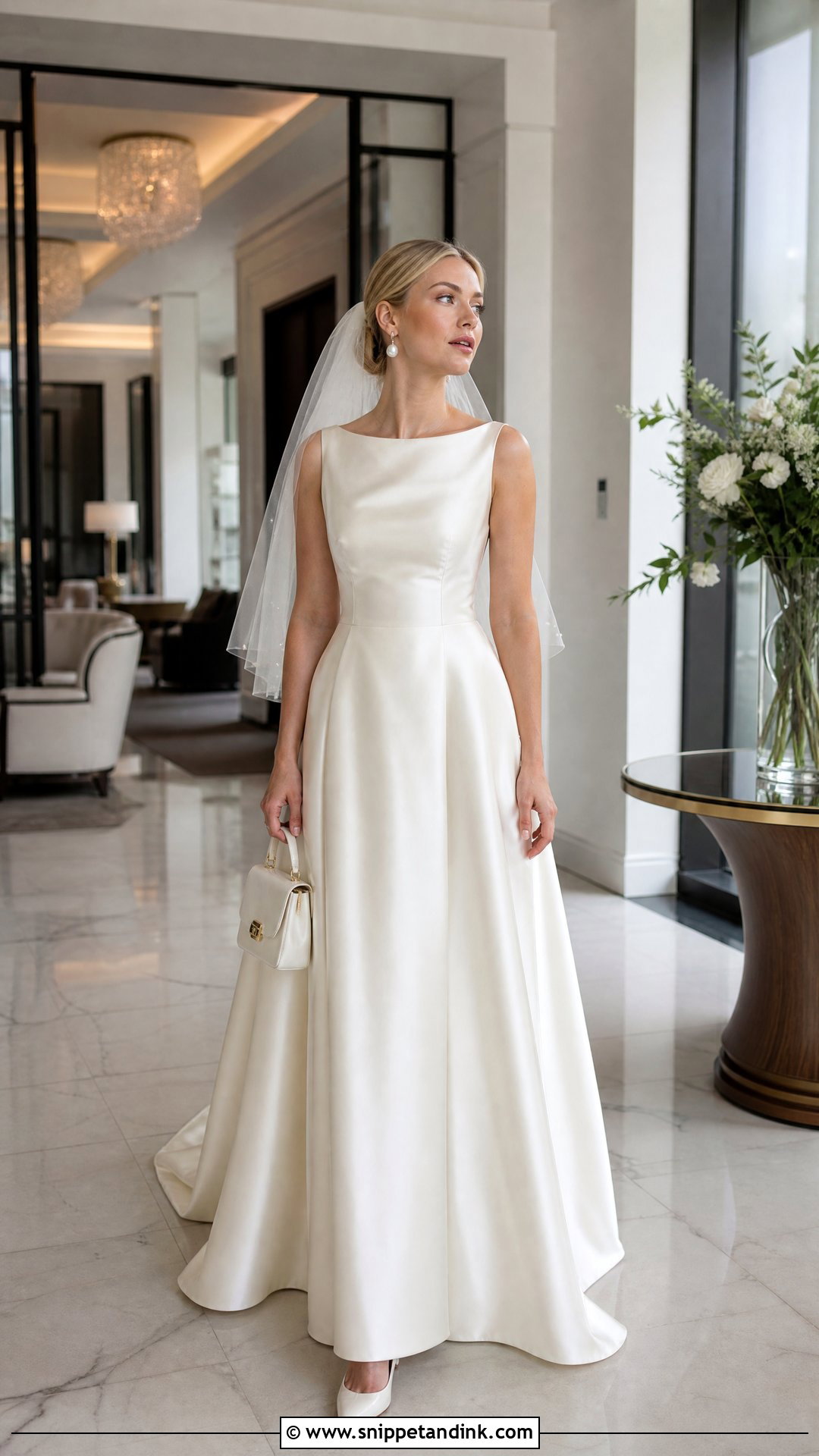
Thrifted satin is my favorite starting point because good satin survives decades in a garment bag. On the rack, I look for a heavy fabric with a smooth face, intact seams and no yellow lines along the folds. A tailor can reshape the neckline, take in the waist, shorten the train or slim the skirt without losing the gown’s character. Pointed ivory pumps, pearl drops and a structured mini bag made from leftover fabric complete it, with a simple fingertip veil. For a cold day, a cropped secondhand wool coat in cream works. Satin creases at every fold, so steam it, hanging, the morning of the wedding.
2. Upcycled Vintage Lace Wedding Dress
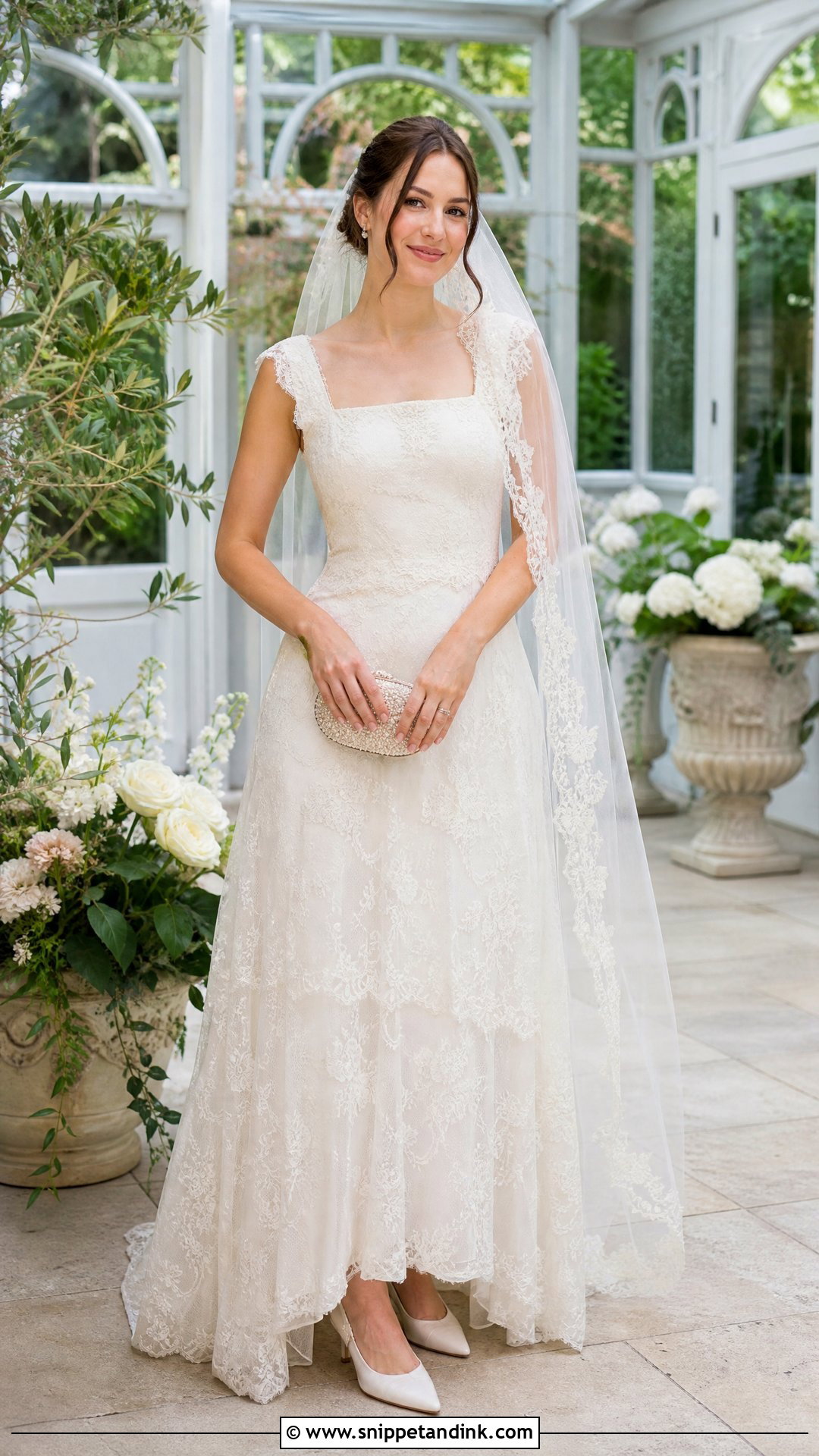
Old lace carries history, and the motifs are what’s worth saving even when the sleeves or silhouette look dated. A bridal seamstress cuts the good sections out around their edges and lays them over a new fitted lining, often with a soft square neckline and a flowing A-line skirt. Ivory slingbacks, small pearl studs and a narrow lace-edged veil suit it, with a vintage beaded clutch. Old lace has usually mellowed to cream, and bright white accessories next to it make it look dingy, so I keep everything in champagne, oyster and soft ivory instead.
3. Heirloom Wedding Dress Redesign
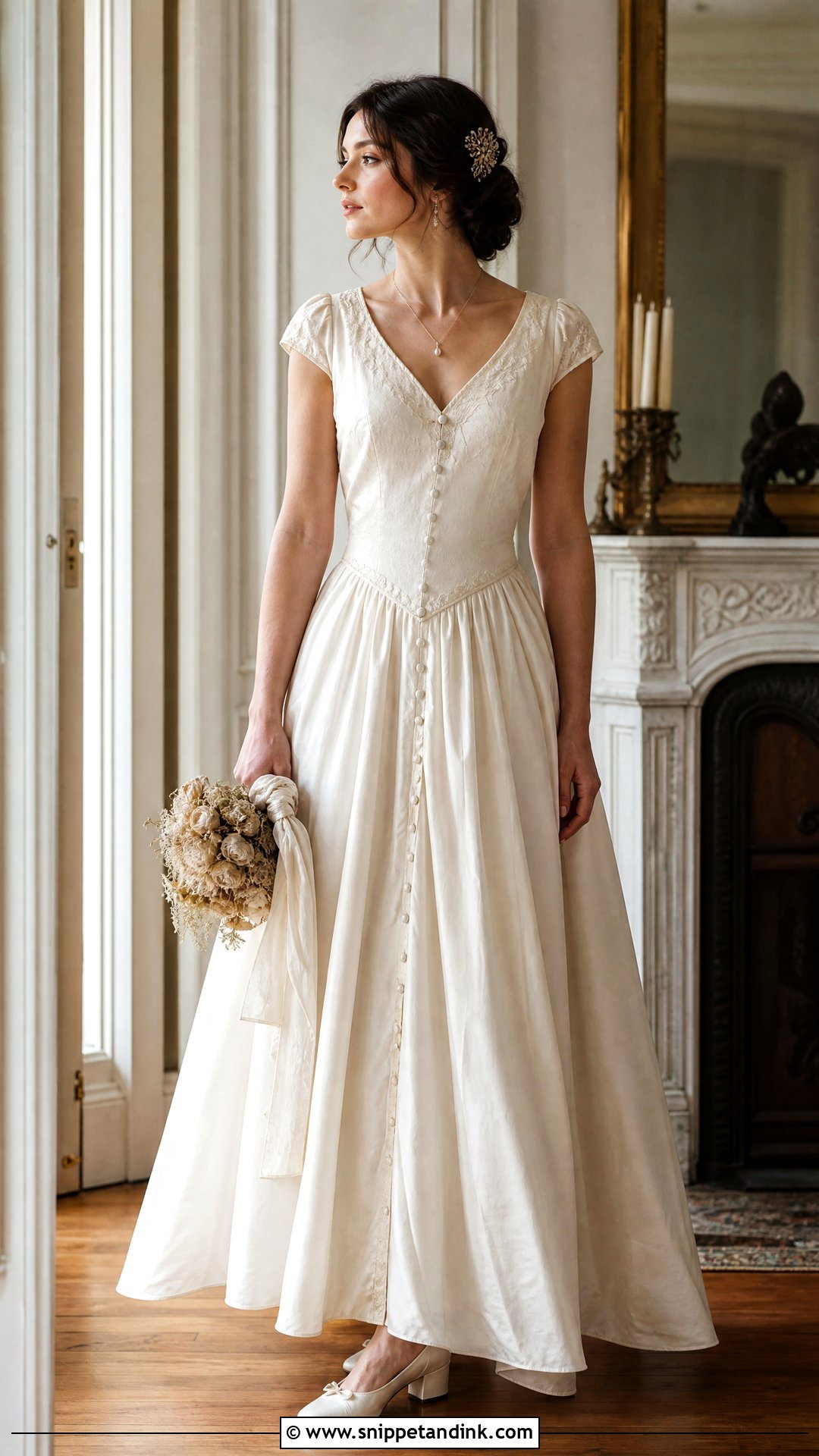
You don’t have to preserve every detail of a family dress to honor it. Start by naming the parts that matter, perhaps the covered buttons, embroidered cuffs, lace panels or the train, and rebuild the rest around a shape that suits you. A high-neck gown might become a fitted V-neck with cap sleeves and a softly gathered skirt. Finish the heirloom wedding dress redesign with low block heels, a vintage-style comb and a bouquet wrapped in saved fabric. Plan more fittings than for a new dress. Older fabric can shrink slightly when steamed or split along old needle holes, and I’d rather find that early.
4. Patchwork Wedding Dress
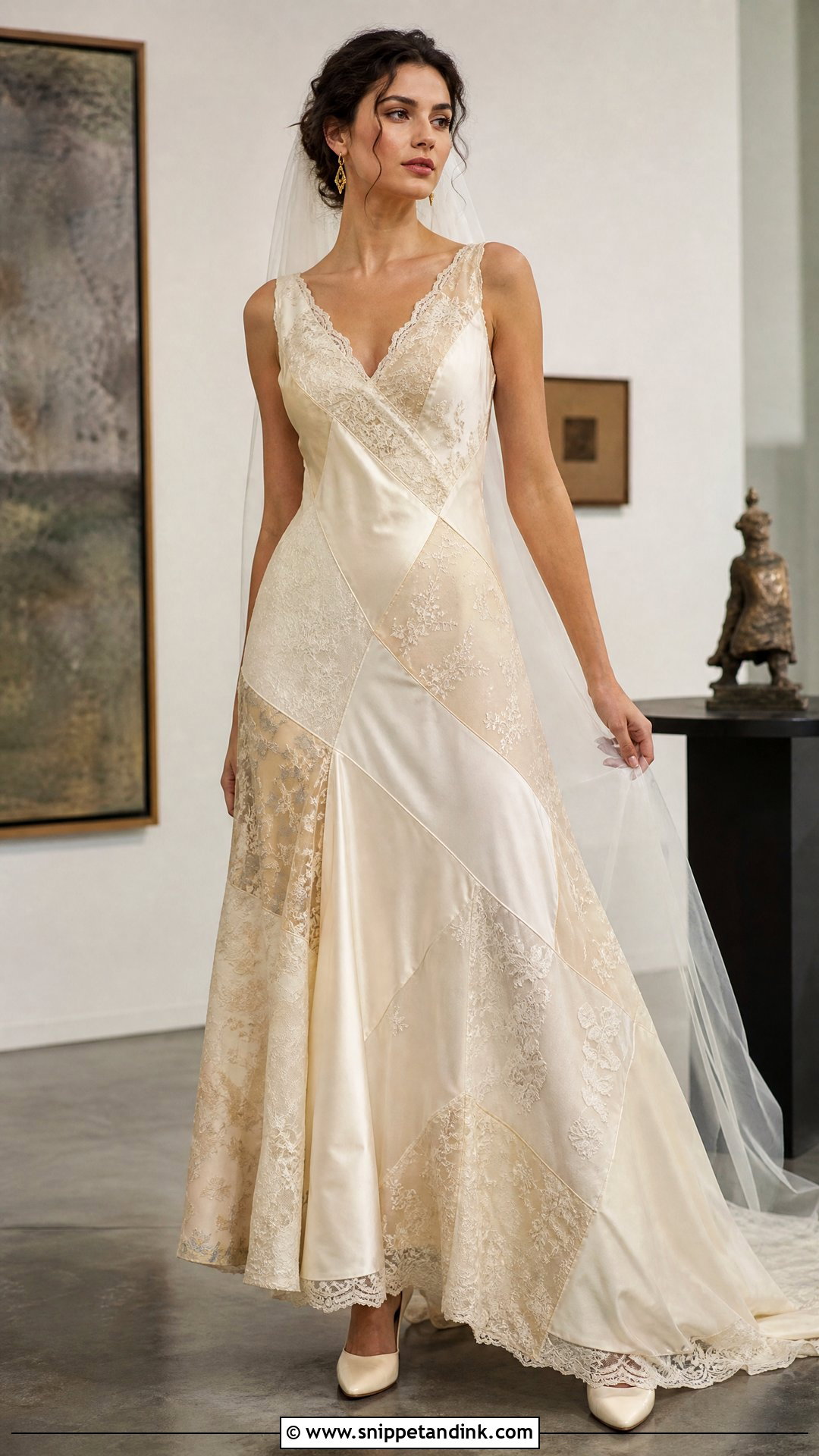
A patchwork wedding dress stitches together lace, satin, chiffon and embroidery from several unwanted gowns. Keep it to one tight palette of ivory, cream and pale champagne, and use large pieces placed with intent rather than scraps everywhere. A fitted bodice with big lace panels and a flowing paneled skirt looks polished; dozens of tiny pieces look busy. Every joined seam takes strain from fabrics that stretch differently, so ask the maker to reinforce them all and line the sheer parts. Simple sandals or classic pumps, small gold hoops or pearl studs and a plain recycled-tulle veil keep the rest quiet.
5. Recycled Tulle Wedding Dress
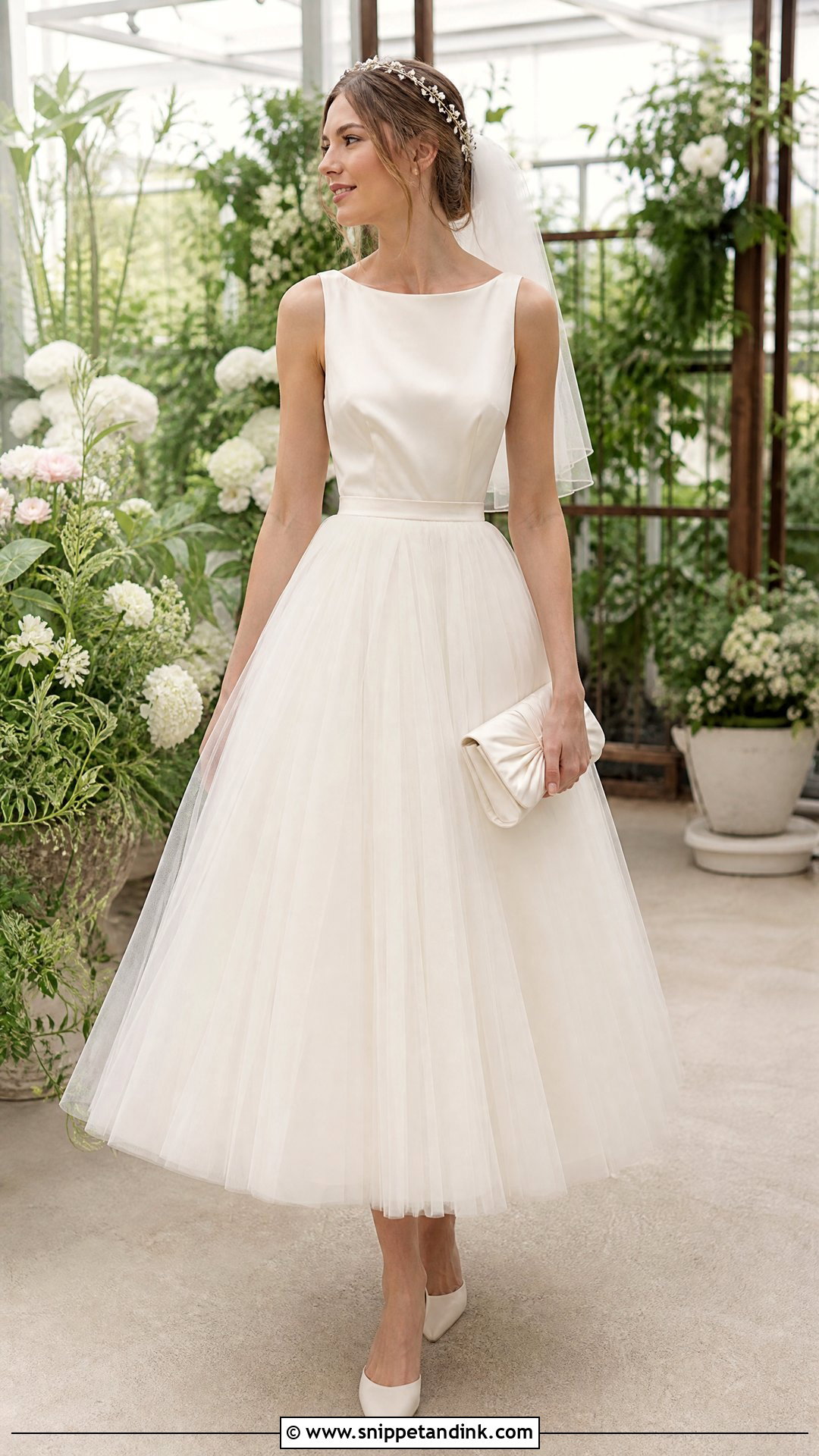
Reclaimed tulle makes an airy skirt, but old tulle snags and goes uneven. I put the strongest sections on the outside and hide the smaller pieces underneath for volume. A smooth secondhand satin or crepe bodice keeps it from looking like a costume, and a narrow ribbon from leftover fabric marks the waist. Pointed flats, a delicate hair vine and a small satin clutch suit it. A long veil over a full tulle skirt is too much tulle; a short blusher or a simple bow balances it better. Wear it somewhere with smooth ground, like a greenhouse or a bright indoor space, because gravel and brambles shred tulle hems.
6. Deadstock Silk Wedding Dress
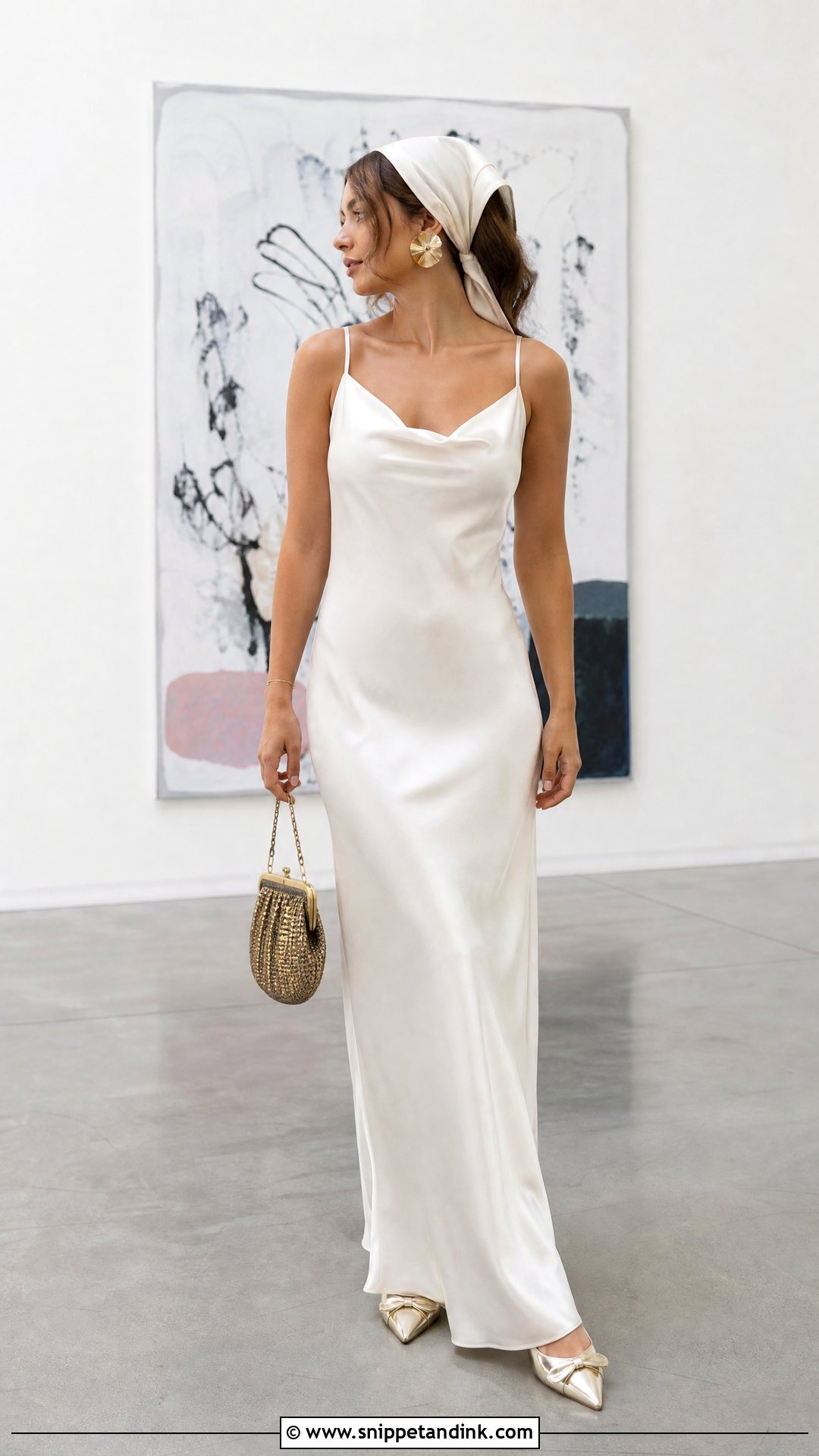
Deadstock silk is unused fabric left over from production, so it looks new without anything new being made. A bias-cut column shows off how silk drapes. Choose a softly curved neckline, slim straps and a low back that still feels secure. A secondhand silk scarf can tie at the neck, wrap the shoulders or go in your hair. Bias silk is hard to sew; it stretches as it hangs and seams can ripple, so I’d only trust it to a dressmaker who has cut bias before, and the dress should hang for a day before hemming. A good lining stops it being see-through. Metallic kitten heels, sculptural earrings and a small vintage evening bag finish it.
7. Wedding Dress With Detachable Overskirt
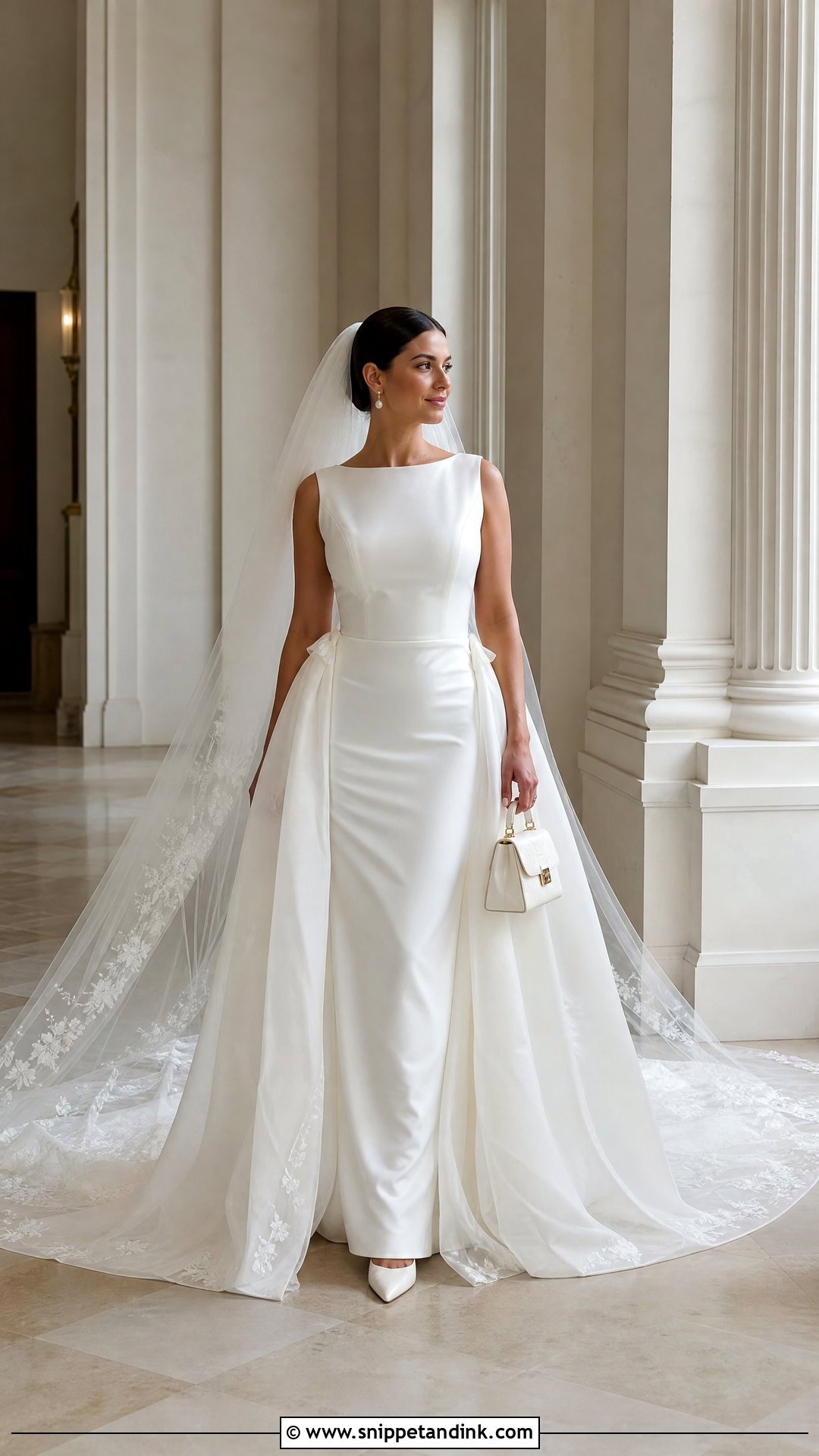
A detachable overskirt gives you two looks from reclaimed fabric. Start with a streamlined secondhand sheath, column or fitted midi, then have a removable overskirt made from reclaimed satin, organza or tulle that fastens at the waist. Wear it with a cathedral-length recycled veil and pointed pumps for the ceremony; later, take off both and switch to embellished flats or low sandals. A small top-handle bag goes with the second look. Walk around in it at the final fitting. If the overskirt twists as you move, the closure needs another hook point.
8. Recycled Bridal Separates
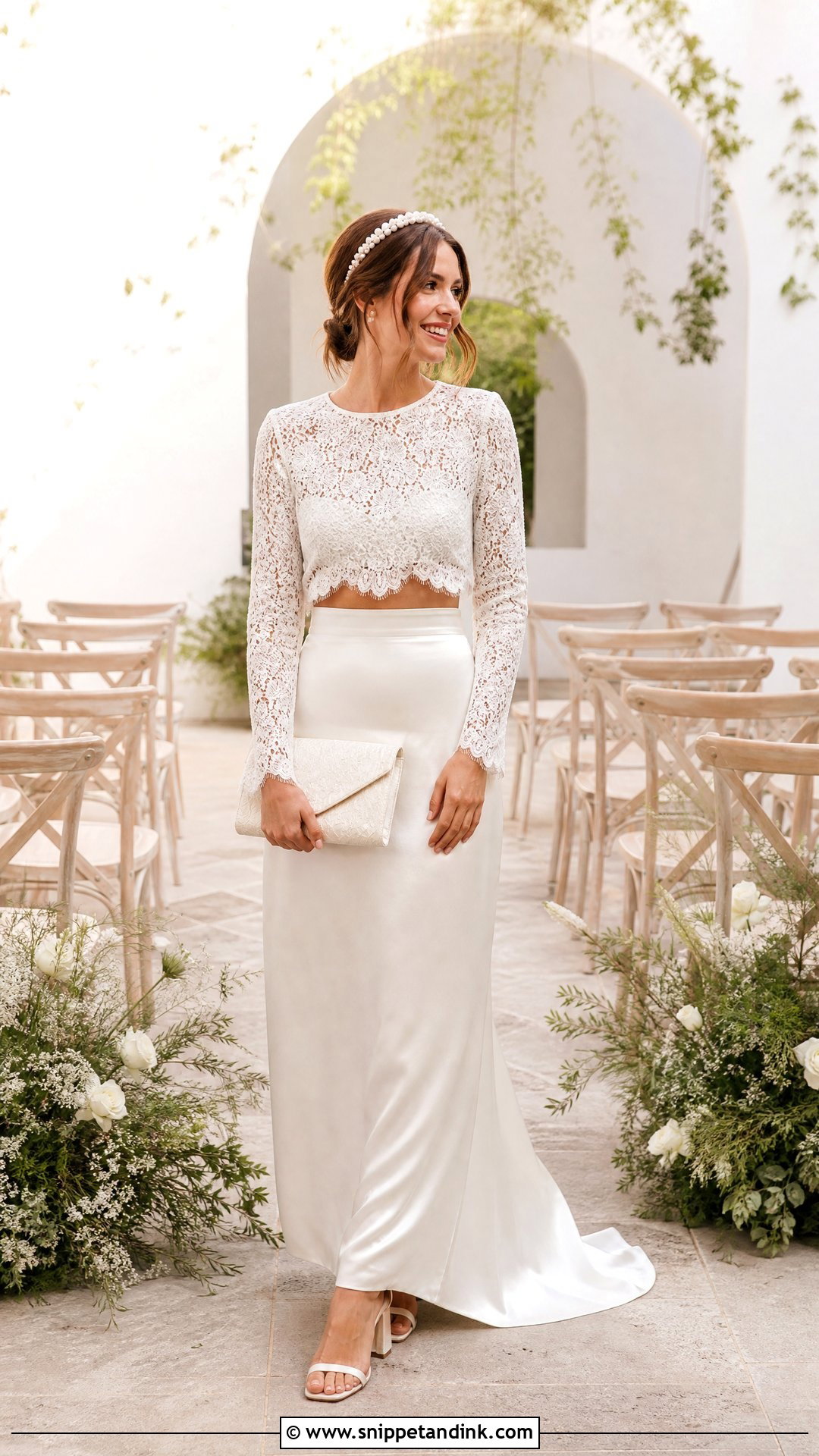
Bridal separates get worn again, which makes them the most practical recycled option. A reclaimed lace top over a high-waisted deadstock satin skirt looks coordinated, as long as the top meets or slightly overlaps the waistband so no gap appears when you raise your arms. An internal bodysuit or lining adds support. Block-heel sandals, a pearl headband and a vintage envelope clutch complete it. Afterward, the top goes with tailored trousers and the skirt can be shortened or dyed. Keep both pieces in the same ivory, since two whites side by side rarely match. Separates also solve the problem of being one size on top and another below.
9. Upcycled Wedding Jumpsuit
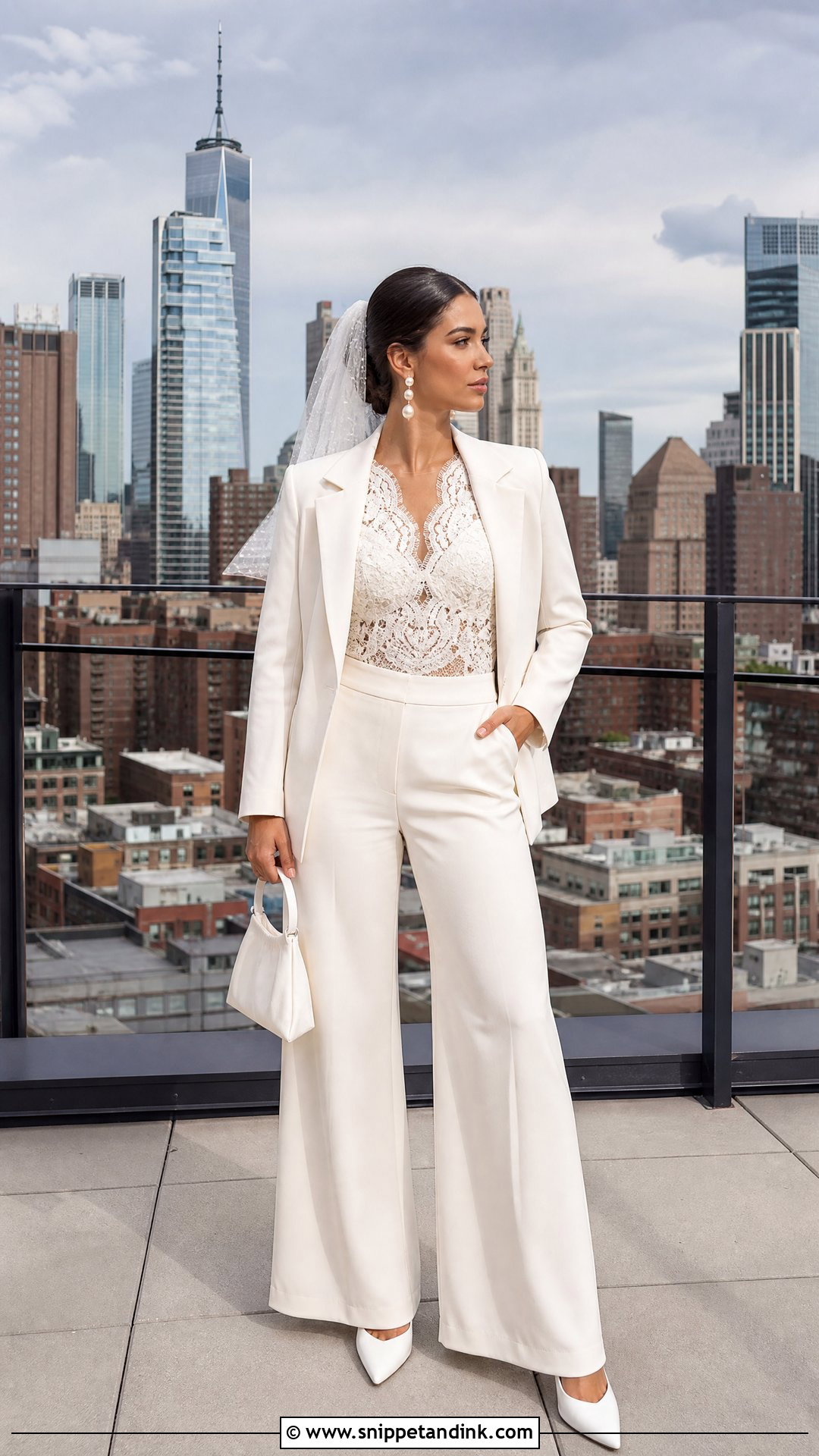
A jumpsuit is the sharpest way to wear something recycled. A vintage wide-leg jumpsuit can be taken in at the waist, given a cleaner neckline and lined, or an old wedding bodice can be joined to reclaimed crepe trousers. Torso length is the measurement that makes or breaks a jumpsuit; too short and it pulls every time you sit, so I check it seated as well as standing. The trousers should almost touch the floor with the shoes still showing. Pointed pumps, a structured secondhand blazer and bold pearl or crystal earrings suit it, with a short veil or an oversized hair bow to say bride.
10. Dyed Vintage Wedding Dress
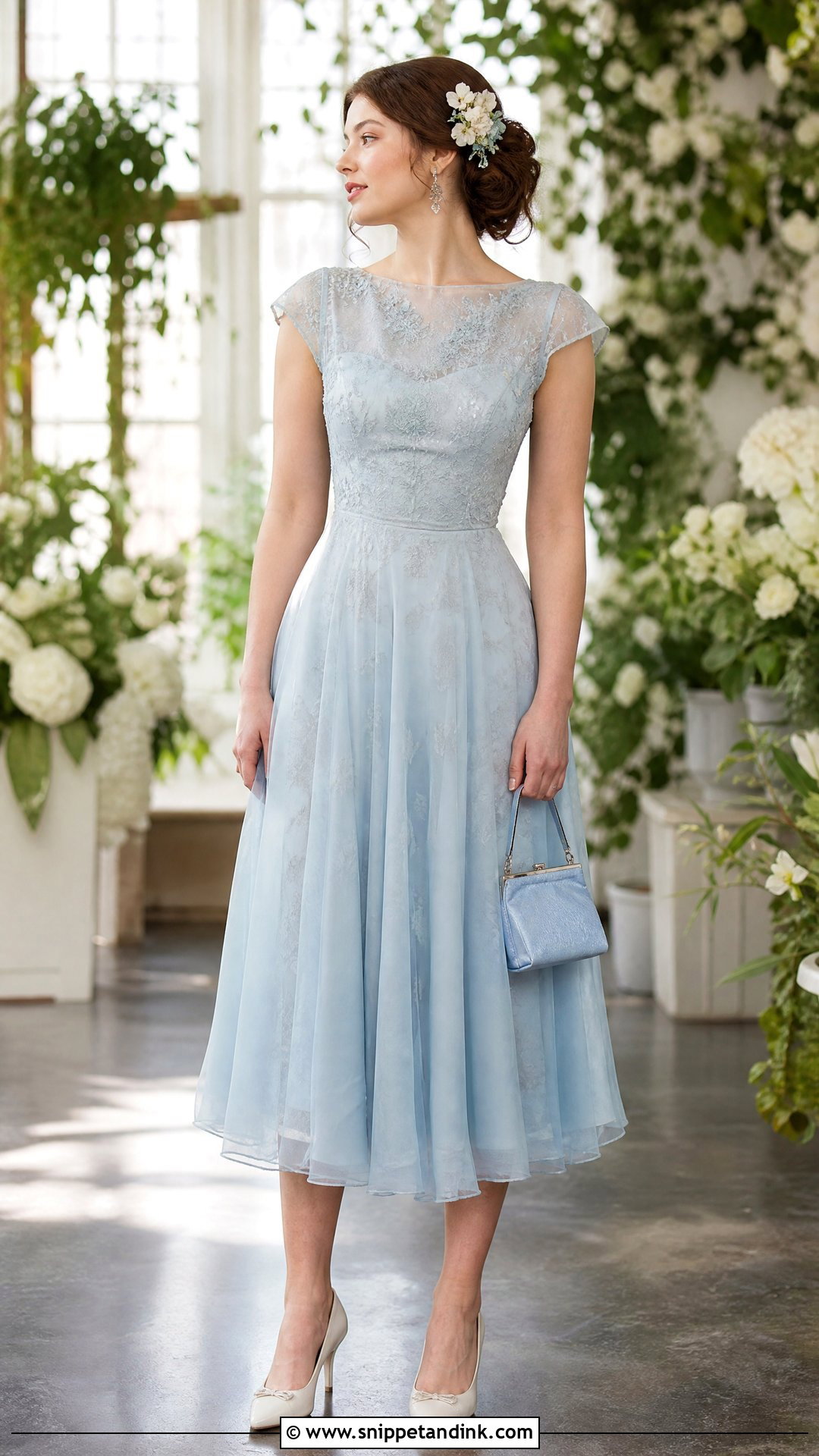
Dyeing a vintage dress pale blue, blush, sage, dove gray or muted champagne gives it a new personality and also hides the yellowing of age. The trouble is that vintage fabric, lace, thread and lining often take dye differently, so you can end up with a blue dress and white seams. I always test on a hidden scrap before committing. Once the color is set, tailor the shape and replace closures that feel weak. Neutral ivory heels, simple earrings and a tonal bag suit it, with a plain veil or a comb of fabric flowers. For a valuable or sentimental gown, pay a professional dyer rather than trying it at home.
11. Recycled Lace Sleeve Wedding Dress
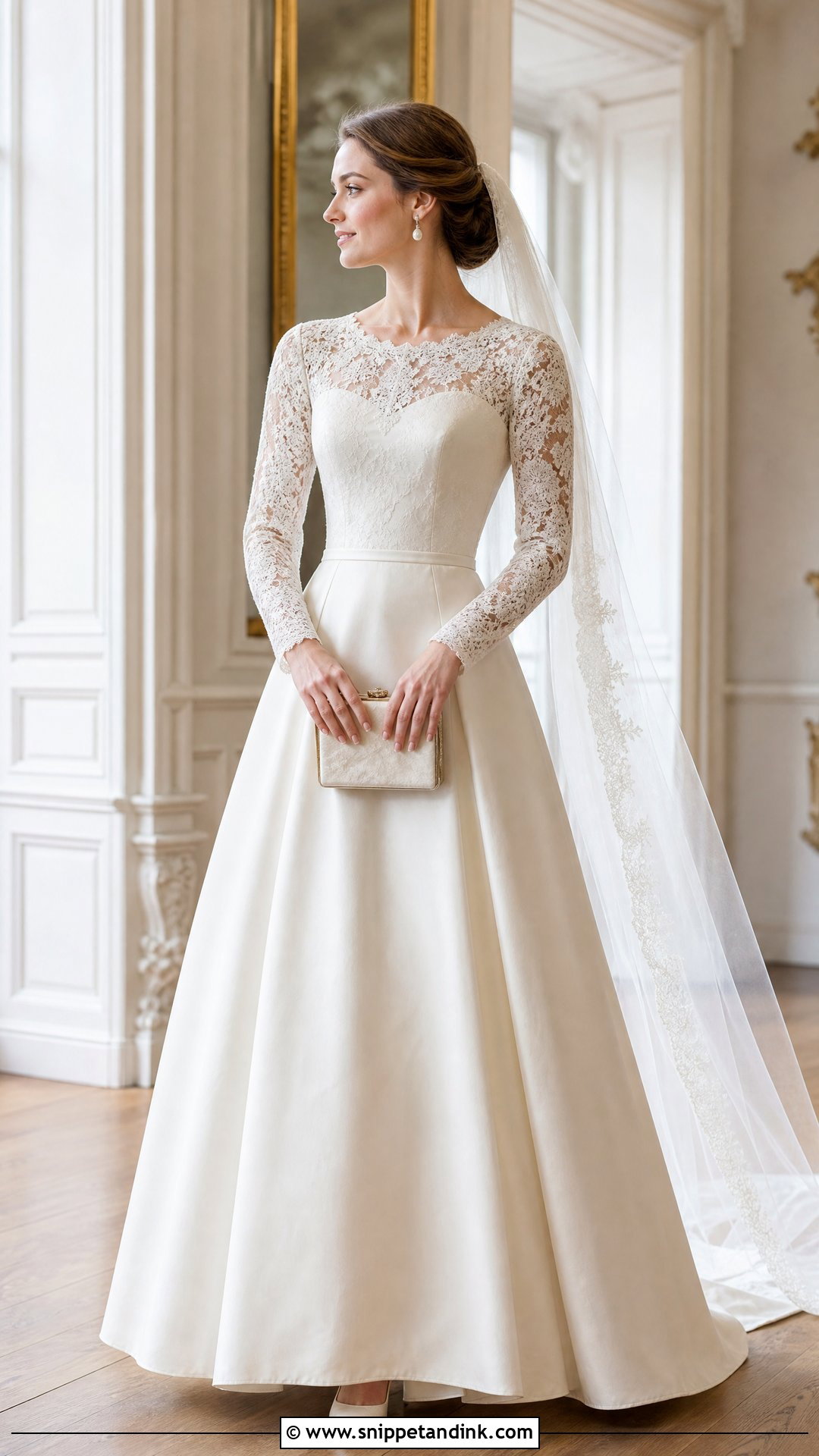
Sleeves cut from an older gown can change a plain secondhand dress completely. Matching lace can become fitted wrist-length sleeves, flutter sleeves or a removable bolero. I repeat a little of the same lace at the neckline or waist so the sleeves look like they were always there. Lace sleeves made from salvaged pieces can be scratchy where the motifs are cut, so I ask for a soft lining or narrow binding at the cuffs and underarms, and have the bride raise her arms before the final stitch. Closed-toe pumps, pearl earrings, a chapel veil and a vintage box clutch complete it. It’s a good cool-season choice.
12. Short Upcycled Wedding Dress
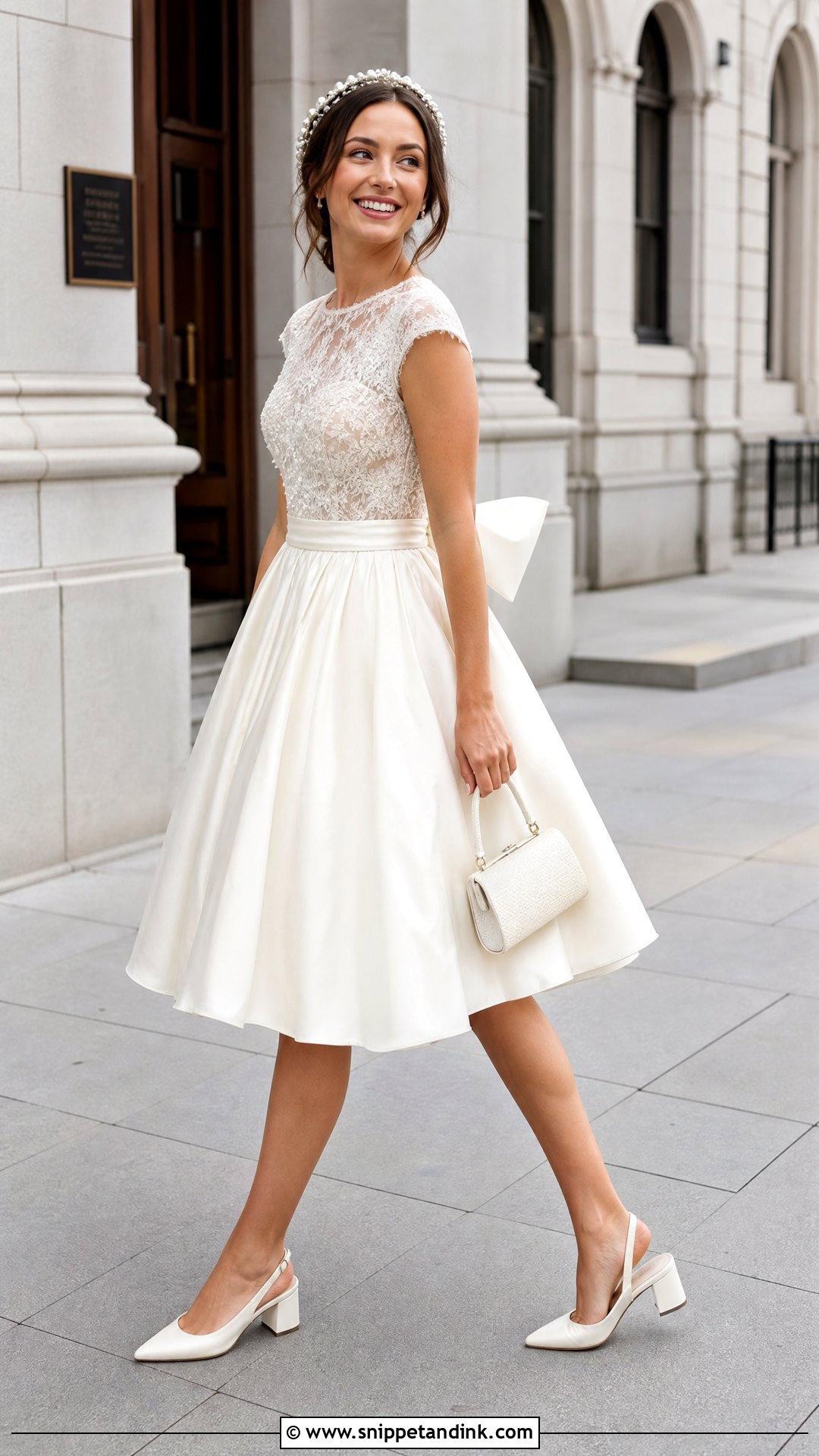
A ruined hem or a stained train doesn’t end a dress’s life. Cutting it to knee or tea length removes the damage and gives you a playful outfit. Keep the original bodice and use spare fabric for covered buttons, a waist bow or a bit of extra volume in the skirt. Slingback heels, sheer socks or tights in cold weather and a small vintage bag suit it, with a birdcage veil, headband or shoulder-length veil instead of a long one. Hem it with your wedding shoes on and check it’s level from the side; satin skirts often dip at the back once shortened. It’s an easy choice for courthouse and daytime weddings.
13. Recycled Boho Wedding Dress
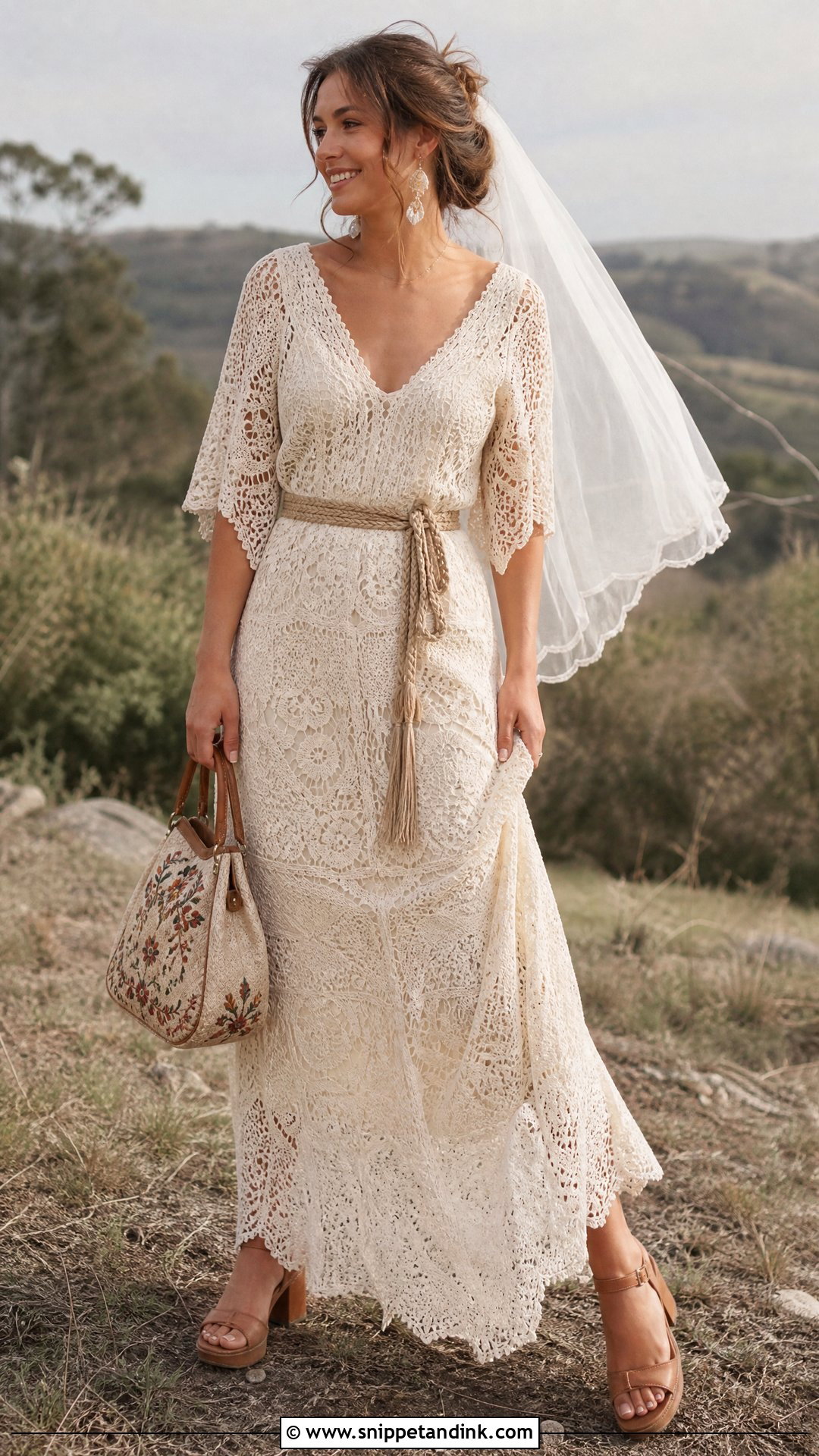
A recycled boho dress looks most genuine when the textiles are old and the construction relaxed. Try an embroidered cotton dress, an older lace gown, or a simple slip under a reclaimed crochet overdress. Keep it loose with just a little waist definition from a woven sash or narrow ribbon. Leather block-heel sandals, small drop earrings and a vintage fringed or embroidered bag suit it, plus a light veil under a loose bun. Vintage crochet can stretch out of shape when it hangs, so I’d have it tacked to the slip at a few points. Don’t pile on rustic details; let the dress lead. It suits outdoor and casual ceremonies.
14. Minimal Recycled Slip Wedding Dress
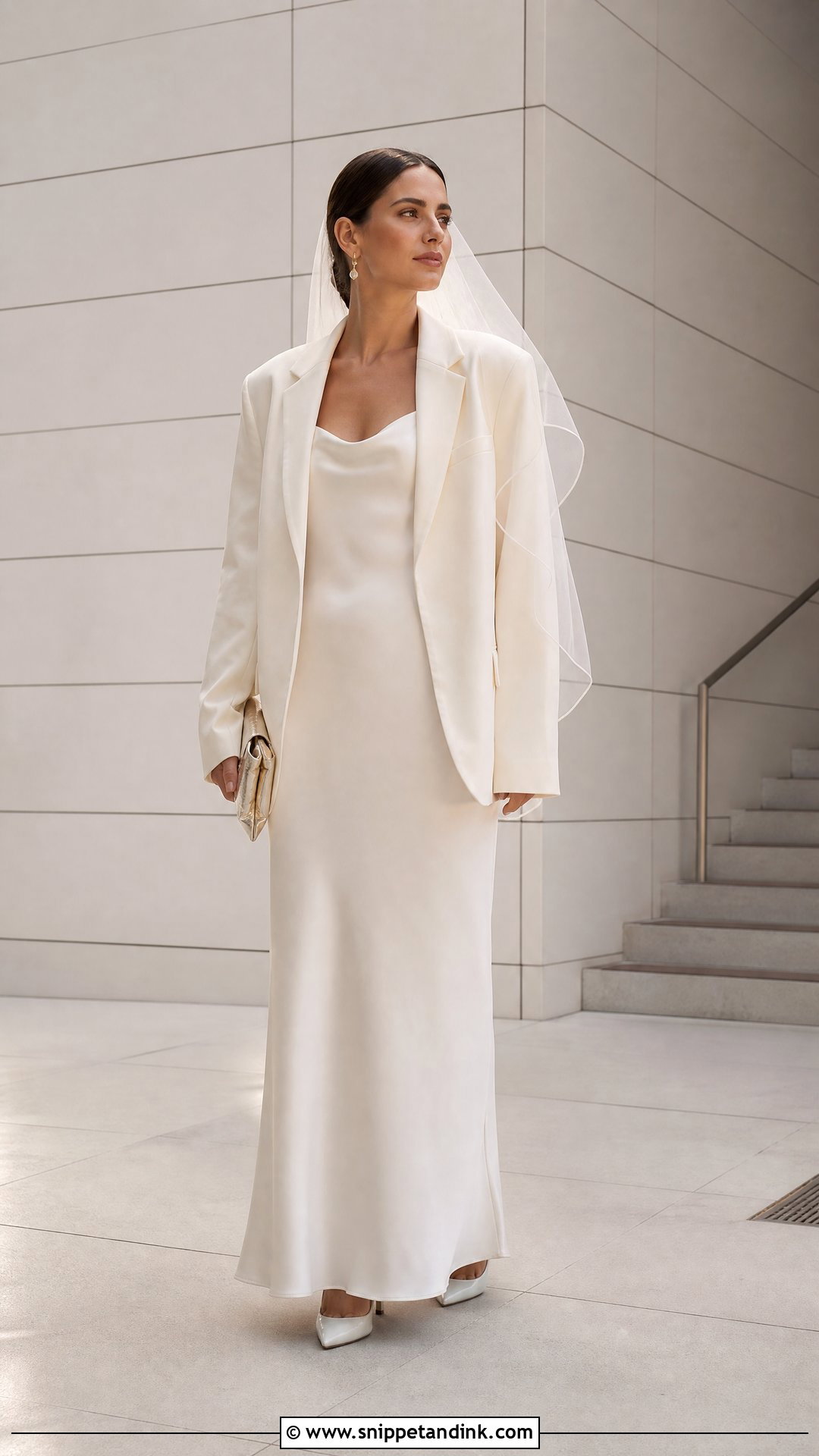
In a slip dress, fit is everything because there’s nothing to hide behind. Look for secondhand silk, satin or crepe with little embellishment and enough seam allowance to tailor. A subtle cowl neck, narrow straps and a gently flared skirt keep it simple. An oversized vintage blazer works for the ceremony and comes off for the reception. Slip dresses show every pull, so alterations should concentrate on the bust, hips and hem, and I’d plan your underwear before the first fitting, not after. Sleek kitten heels, geometric earrings, a metallic clutch and a sheer fingertip veil finish it.
15. Recycled Ball Gown Wedding Dress
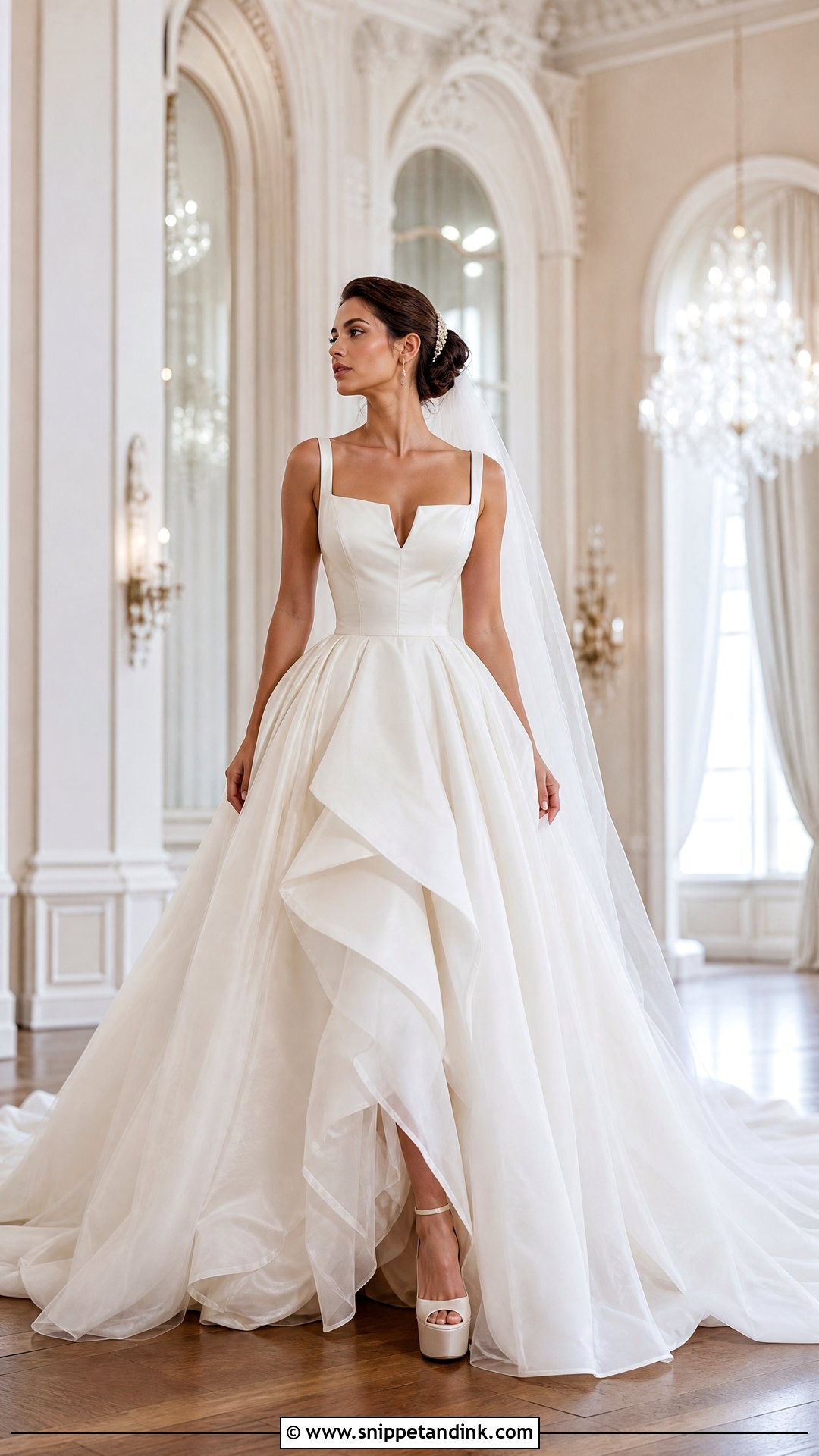
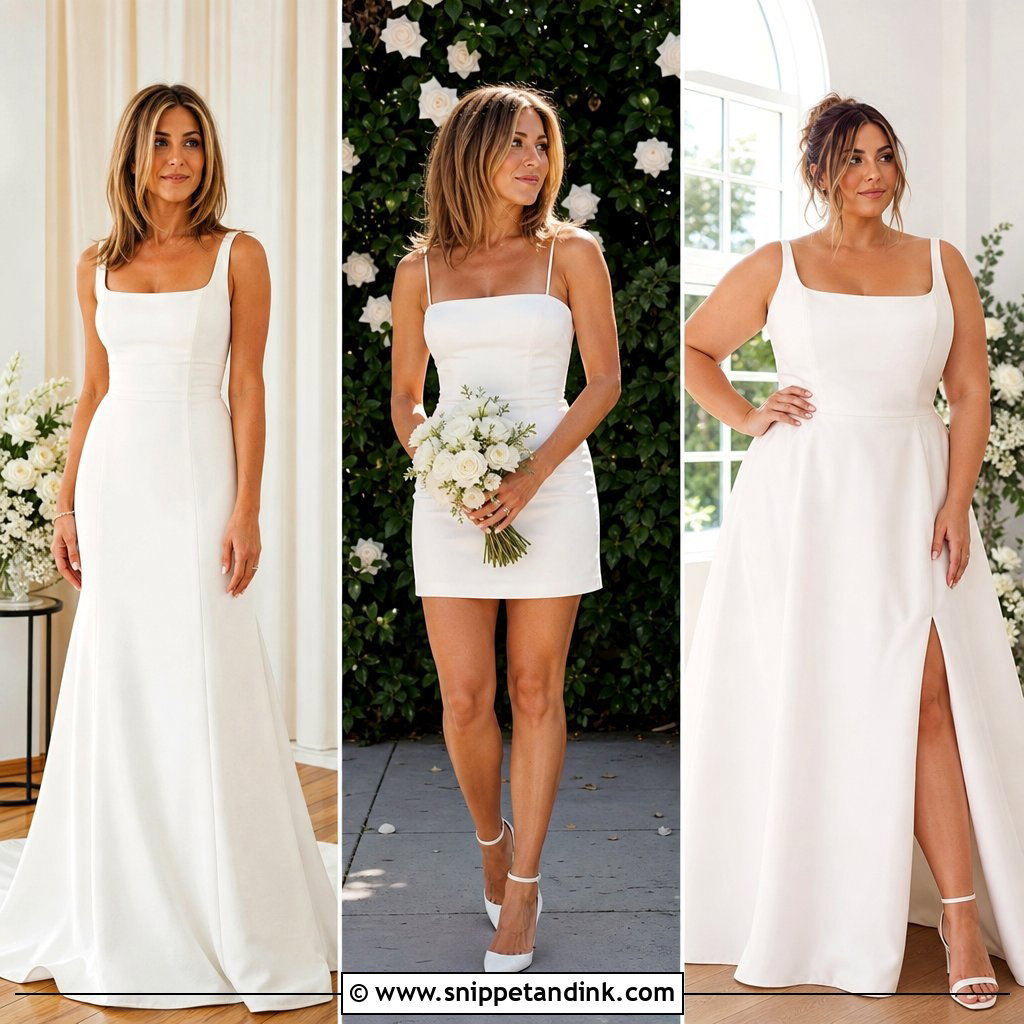
A secondhand ball gown gives you full formal drama without new fabric being produced. Look for a supportive bodice and full skirt even if the surface details look dated; beading can come off, the neckline can be reshaped, and a damaged outer layer can be replaced with reclaimed organza or tulle. Keep the long train or sculpted waist if they’re in good condition. Removing beading leaves tiny holes in satin, though, so I check a hidden spot first to see whether they’ll show. Platform heels, a vintage tiara or pearl comb and small studs suit it, with a veil that doesn’t fight the volume. The hem should float just above the floor in your shoes.
16. Corset And Skirt Recycled Wedding Dress
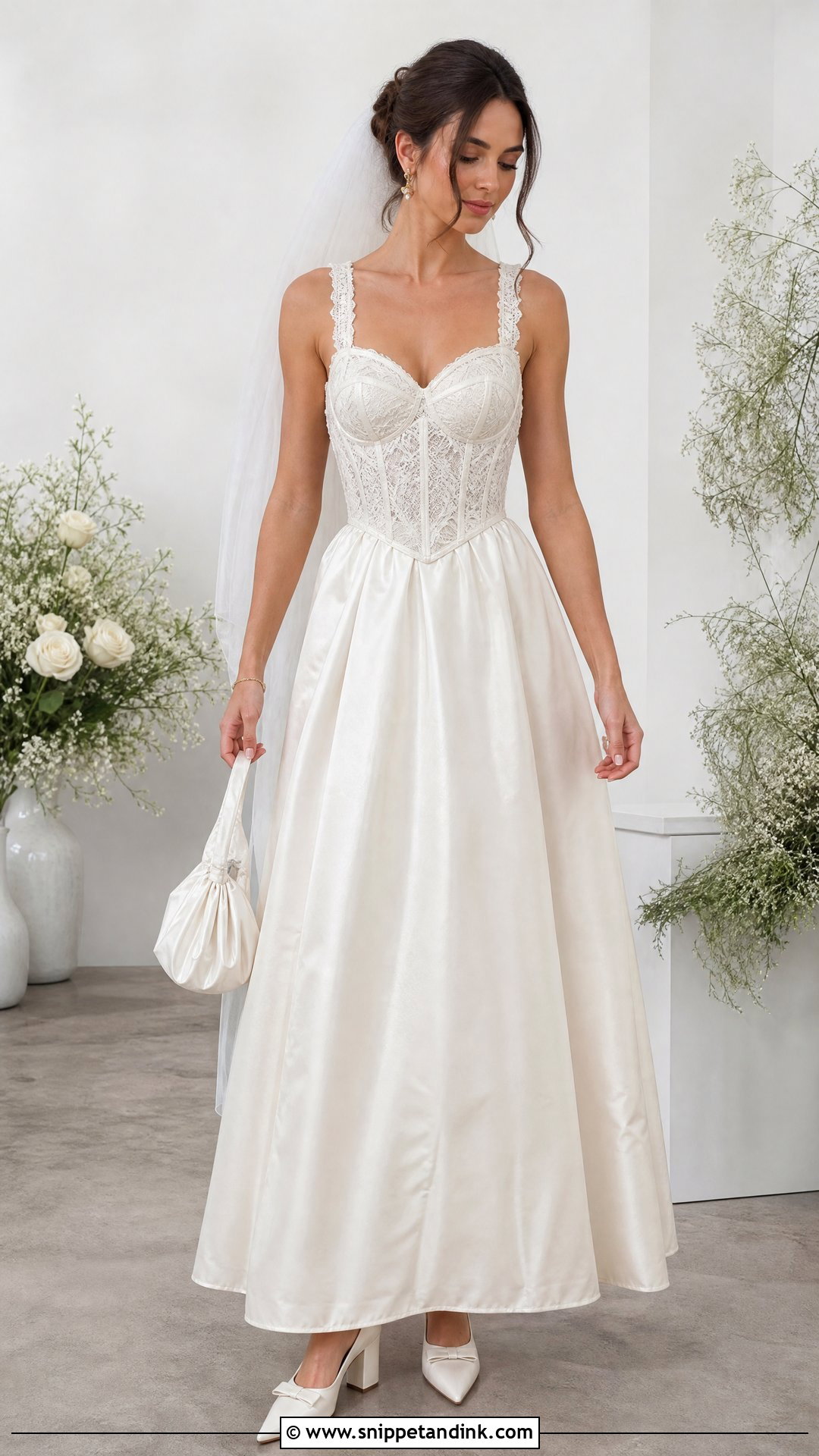
A corset and skirt can combine the best parts of two old dresses. A vintage lace or satin bodice is rebuilt into a properly fitted corset top, then paired with a reclaimed A-line or gathered skirt. The waistlines must line up exactly or it reads as two garments. Add removable straps or a sheer lace layer for support or coverage. Boning, cups and closures need an experienced tailor; a corset made tight enough to look dramatic but not built properly will dig in by dinner. Pointed block heels, drop earrings, a simple veil under a polished bun and a bag from leftover skirt fabric finish it.
17. Recycled Floral Applique Wedding Dress
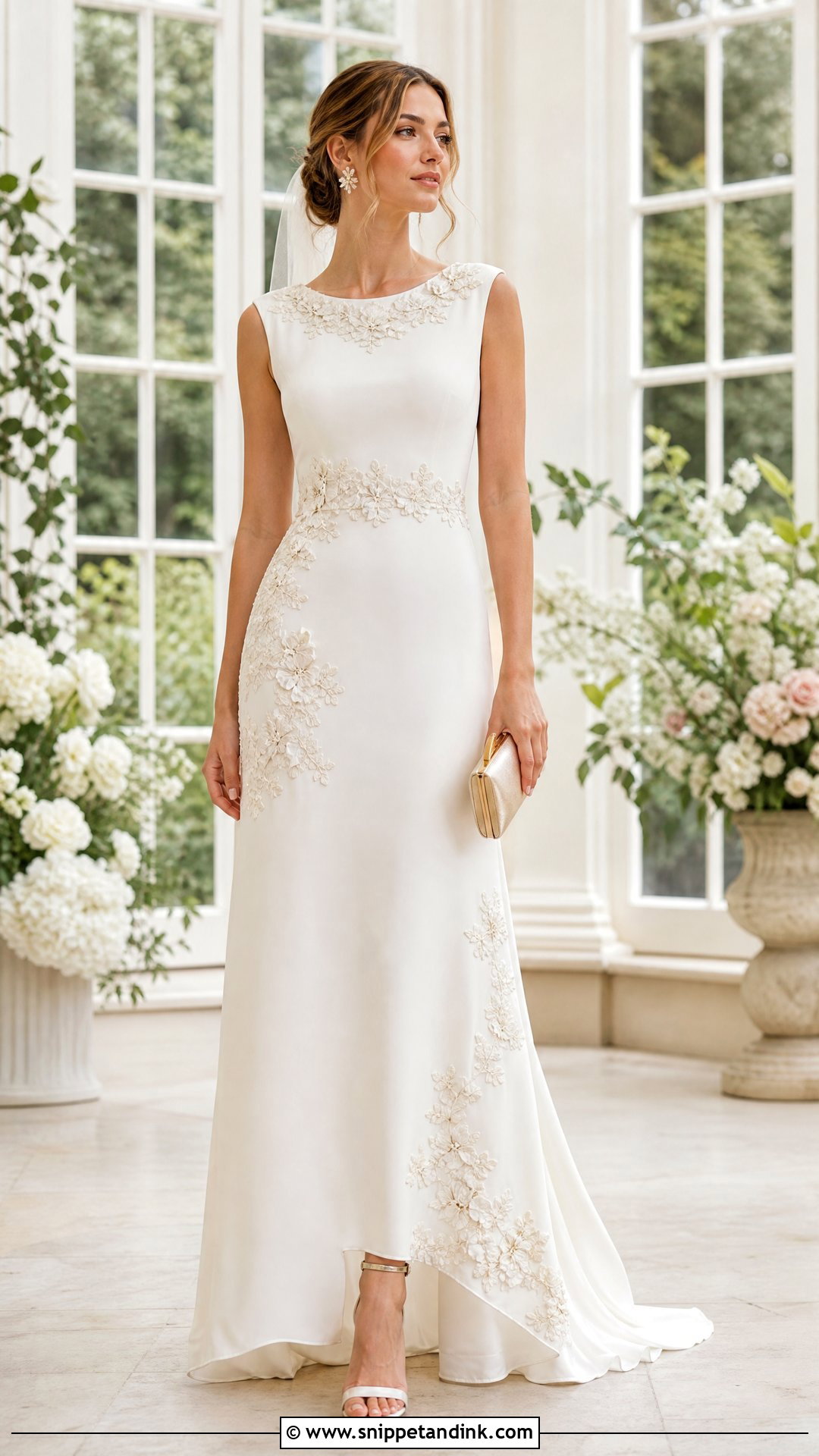
Floral appliqués cut from damaged lace, embroidered curtains, old veils or unwearable gowns can refresh a plain secondhand dress. Place them around the neckline, waist, sleeves or lower skirt with enough space between them to read clearly. I always hand-stitch appliqués; glue shows through sheer fabric and stiffens over time. A neutral crepe or satin base lets the flowers stand out. If the motifs vary in shade, grade them from light to dark rather than mixing at random. Ivory ankle-strap heels, floral earrings, a plain tulle veil and a structured clutch keep it from going too sweet.
18. Upcycled Wedding Suit
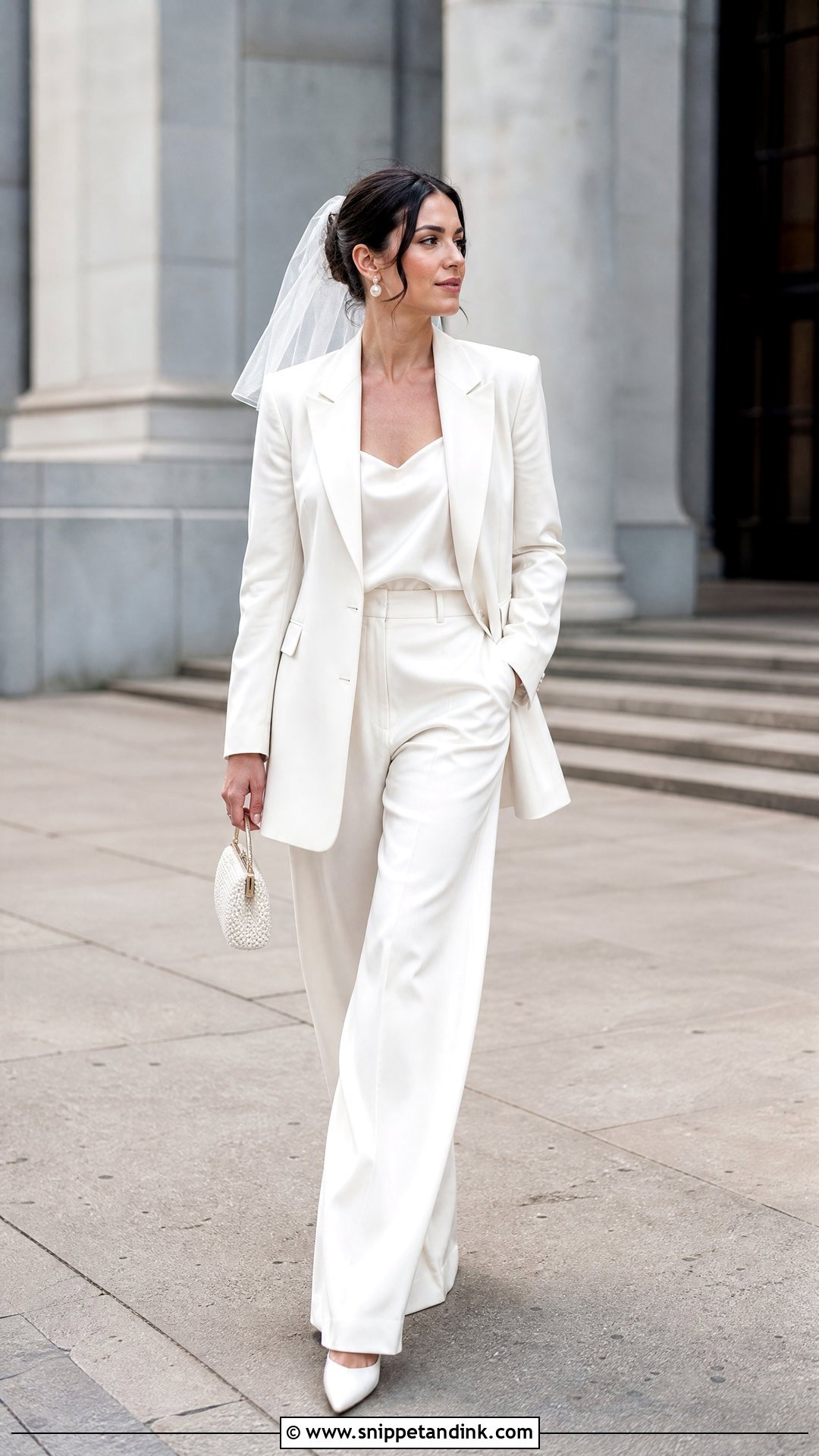
A secondhand ivory suit becomes bridal with good tailoring and a few ceremonial touches. Choose a longline blazer with straight or wide-leg trousers, then adjust the shoulders, sleeves, waist and hem. Shoulders are the hardest and priciest alteration on a jacket, so I’d buy one that already fits there and change everything else. Underneath, wear a reclaimed silk camisole or a lace top made from an old dress. Pointed heels lengthen the trouser line, pearl earrings and a small vintage bag soften it, and a shoulder-length veil, structured headband or big fabric flower makes it clearly bridal. Wear the blazer closed for the ceremony and open it later.
19. Recycled Beach Wedding Dress
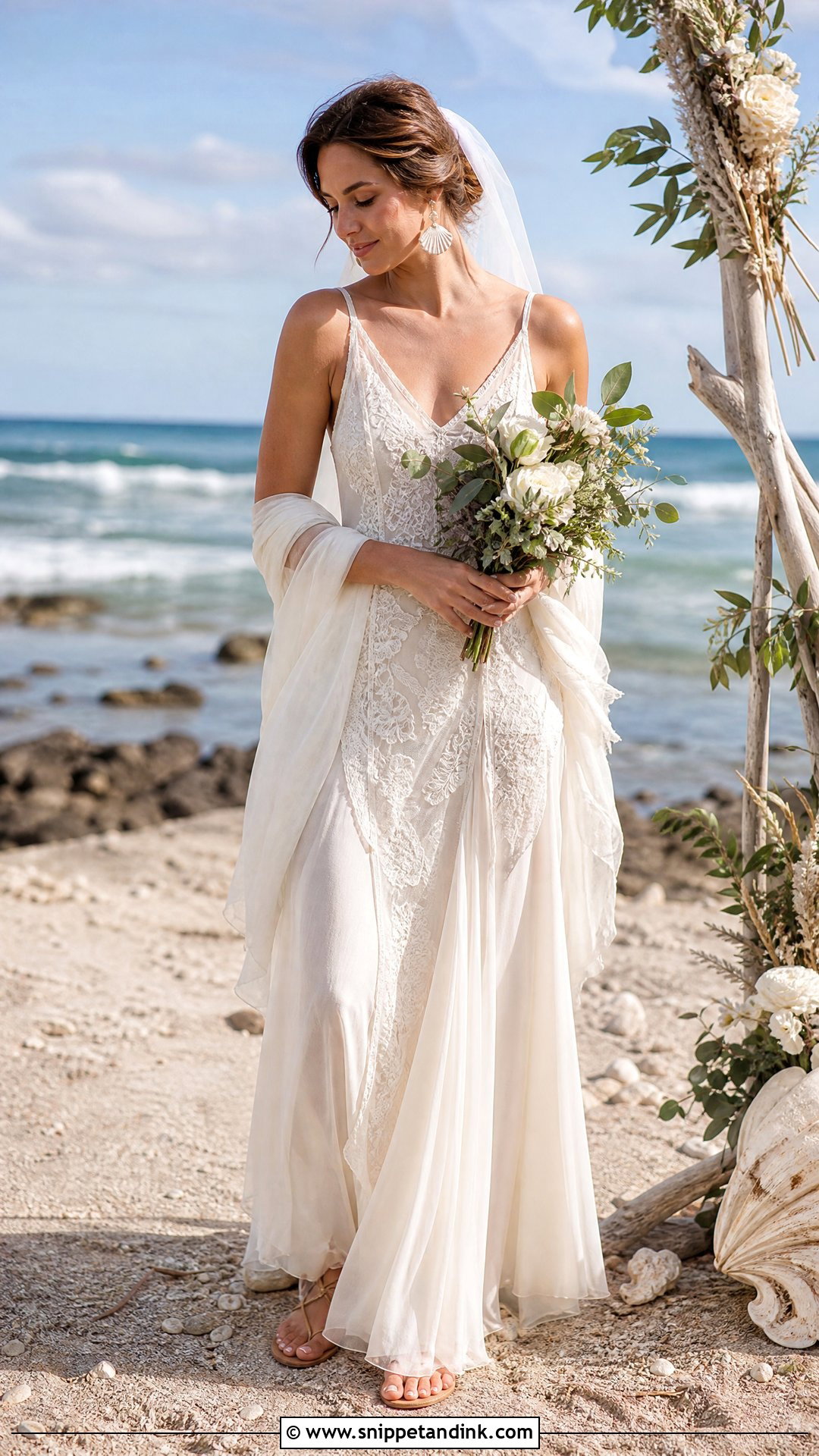
For a beach wedding, light reclaimed fabric moves in the breeze and stays comfortable in humidity. A secondhand chiffon gown, a soft cotton dress or a silk slip with an upcycled lace overlay all work. Remove heavy trains and stiff layers that collect sand. Flat leather sandals, small shell earrings and a light wrap for the evening suit it, with a short veil, narrow scarf or floral comb instead of a long veil the wind will grab. Hem it to clear the sand barefoot, since you may well take your sandals off. Secure straps and a supportive lining matter more in wind than anywhere else.
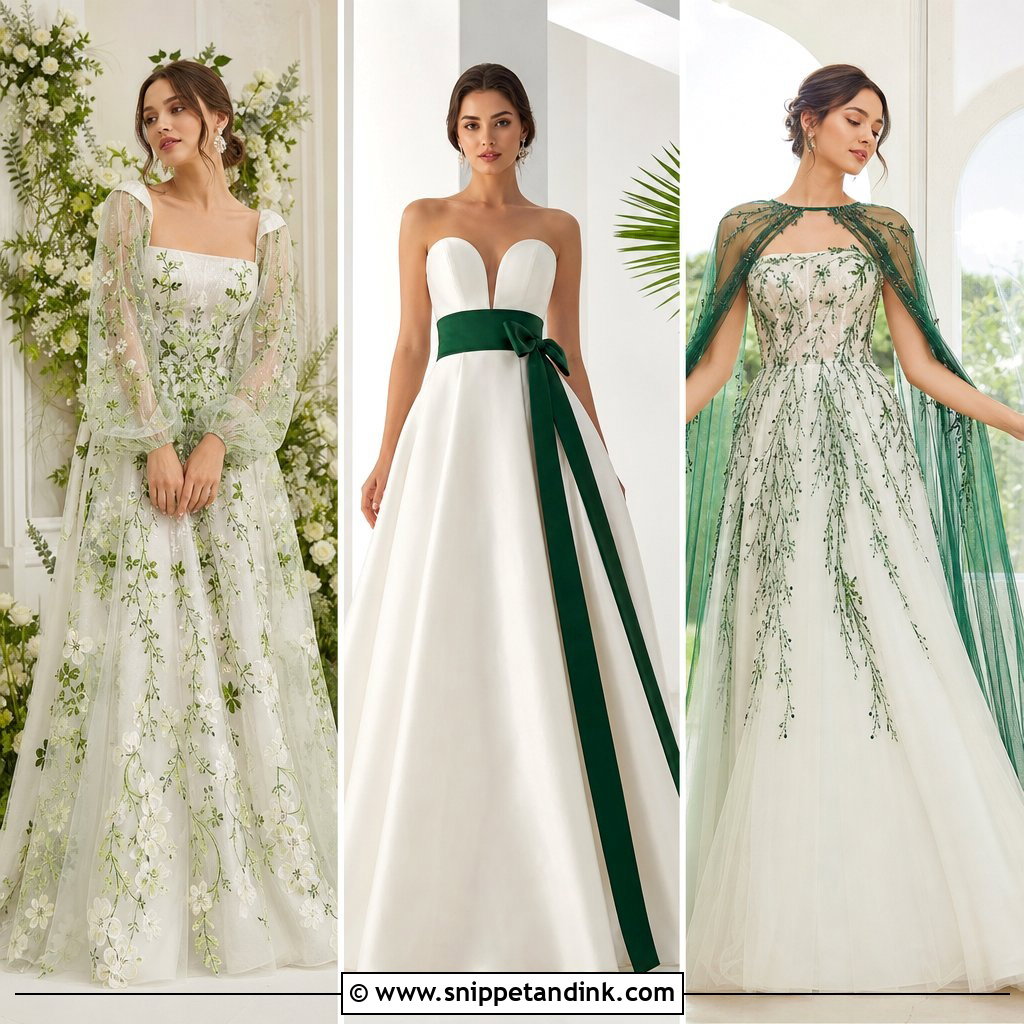
20. Reworked Wedding Dress With Cape
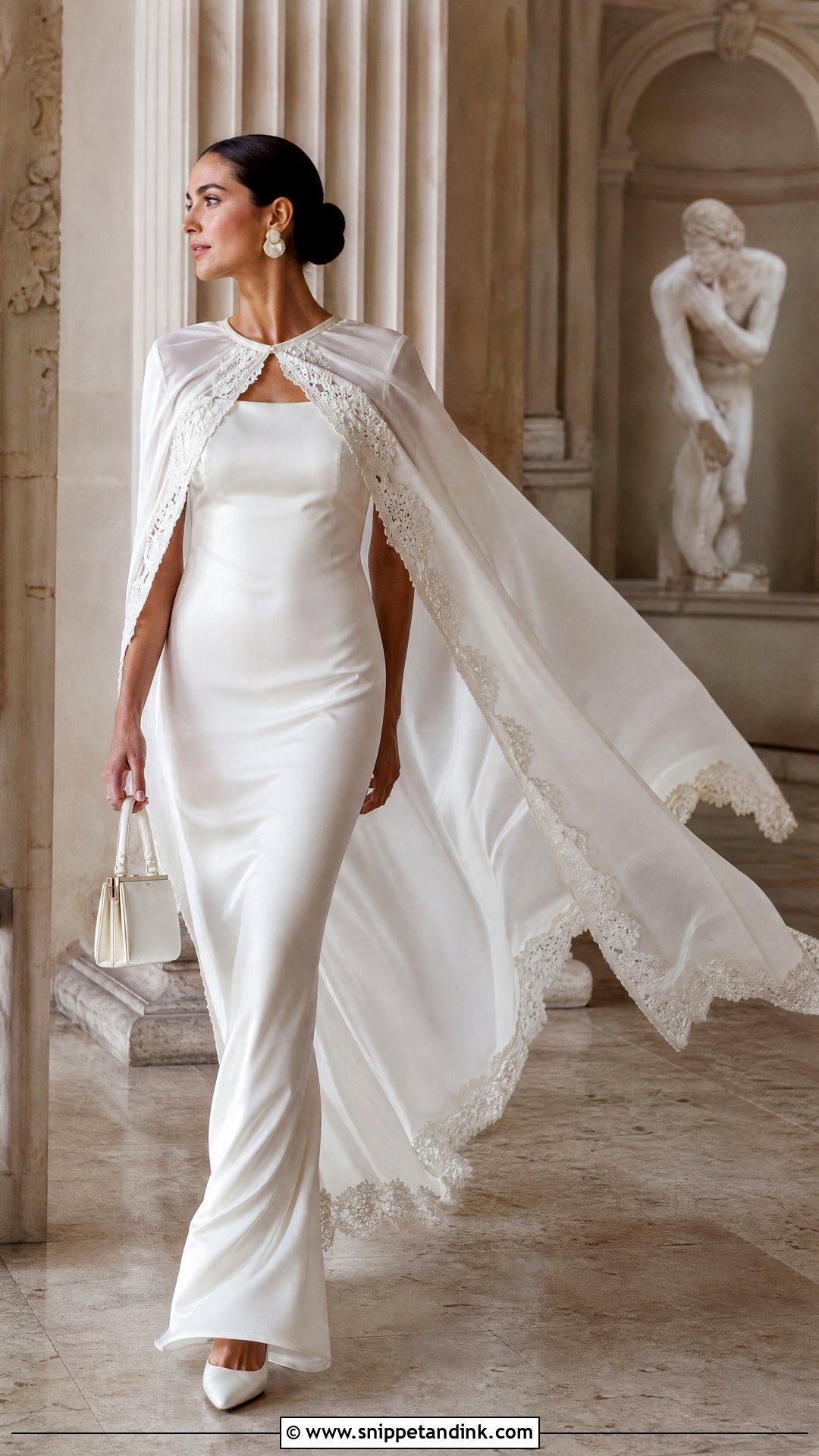
A cape cut from an old veil, a sheer gown layer or reclaimed organza adds drama to a simple recycled dress. Start with a fitted secondhand column or A-line, then attach the cape at the shoulders or neckline with discreet fasteners so it comes off after photos. Edge it with salvaged lace, covered buttons or narrow satin binding. Closed-toe heels, sculptural earrings and a small top-handle bag suit it; skip a separate veil so the layers don’t compete. Check the cape length in your wedding shoes and practice walking. A floor-length cape is easy to step on when you turn, so I often take it a few centimeters shorter than the dress.
How Early Should a Thrifted Dress Reach the Tailor?
Earlier than a new gown. A dress made for you arrives close to your size; a secondhand one may need reshaping, a new lining or parts rebuilt. I’d aim to have it in hand roughly six months out and with the tailor soon after, leaving room for one fitting more than you think you need.
Have it cleaned before alterations start, not after. Cleaning can shrink old fabric slightly and lift stains that change which panels you want to keep, so the tailor should be working with the dress in its final state.
If the remake goes wrong close to the date
Have a fallback that’s already wearable, whether a simple secondhand slip or a suit that fits off the rack. Most of the time it stays in the closet. When an old seam gives way at the last fitting, though, it means you aren’t buying a dress in a panic two weeks before the wedding.
An Old Gown Earns Its Second Wedding Through Tailoring
The right recycled outfit respects the material it came from and still looks like you. Judge a dress on fit, fabric condition and construction rather than how it looked on its first bride. A skilled tailor can update a dated neckline, cut away damage, join separate garments and turn reclaimed fabric into polished details. Finish with comfortable shoes, a veil or headpiece that suits the shape, and a secondhand bag. Photograph heirloom dresses before altering them, and keep spare lace, buttons and satin for future keepsakes. Vintage romance or sharp tailoring, the old dress will carry its story into your day.
You'll Like These Ideas:



Leave a Reply