
A gown that lives in a garment box gets looked at maybe twice a decade. Cut and remade, the same satin and lace can be worn, held or hung where you see it every week. Below are wearable transformations, home keepsakes, family heirlooms and a few plainly practical pieces. As a bridal stylist I look at a dress in parts: the lace, the satin, the lining, the buttons down the back, the beading. Each part suits a different project, and which one is right for you depends on the fabric’s condition, your sewing budget and how much of the original you need to recognize afterward.
What Your Gown Is Made Of Decides What It Can Become
Before I suggest any project, I turn the gown inside out and find the care label. Fiber content tells you more than the look of the fabric does. Most modern gowns are polyester satin and polyester tulle, with lace that may be nylon or a cotton blend. Silk gowns exist, but they’re the minority, and they behave differently in almost every project below.
- Polyester won’t take ordinary household dye. It needs a dye made for synthetics, applied with heat, and the result often lands a shade lighter than hoped.
- Silk and other natural fibers take acid dyes well, so a silk gown can go to a deep navy or black.
- Mixed gowns dye unevenly. Thread, lining and lace can each take a different shade, so ask for a test on an inside seam allowance first.
Then look for damage you can’t see yet. Champagne and cake spills dry clear, but the sugar in them oxidizes into brown marks months or years later. That’s why I have a gown professionally cleaned before cutting, by a cleaner who handles bridal wear: some beading is glued rather than sewn, and the wrong solvent can loosen it.
Finally, feel the bodice. Boning, padding and interfacing mean the top half holds less reusable fabric than it seems. The skirt and train hold most of it.
1. Short Wedding Dress
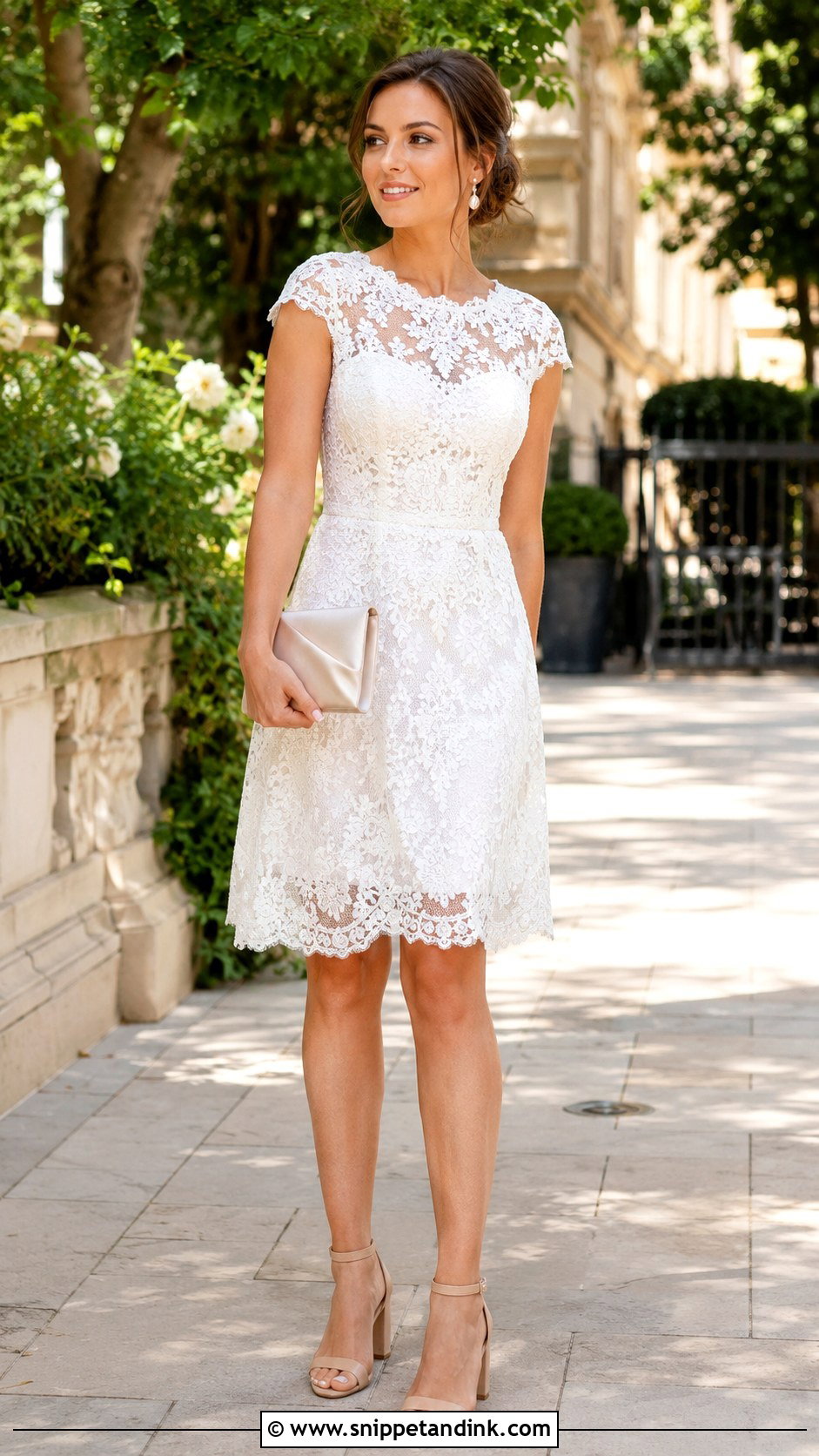
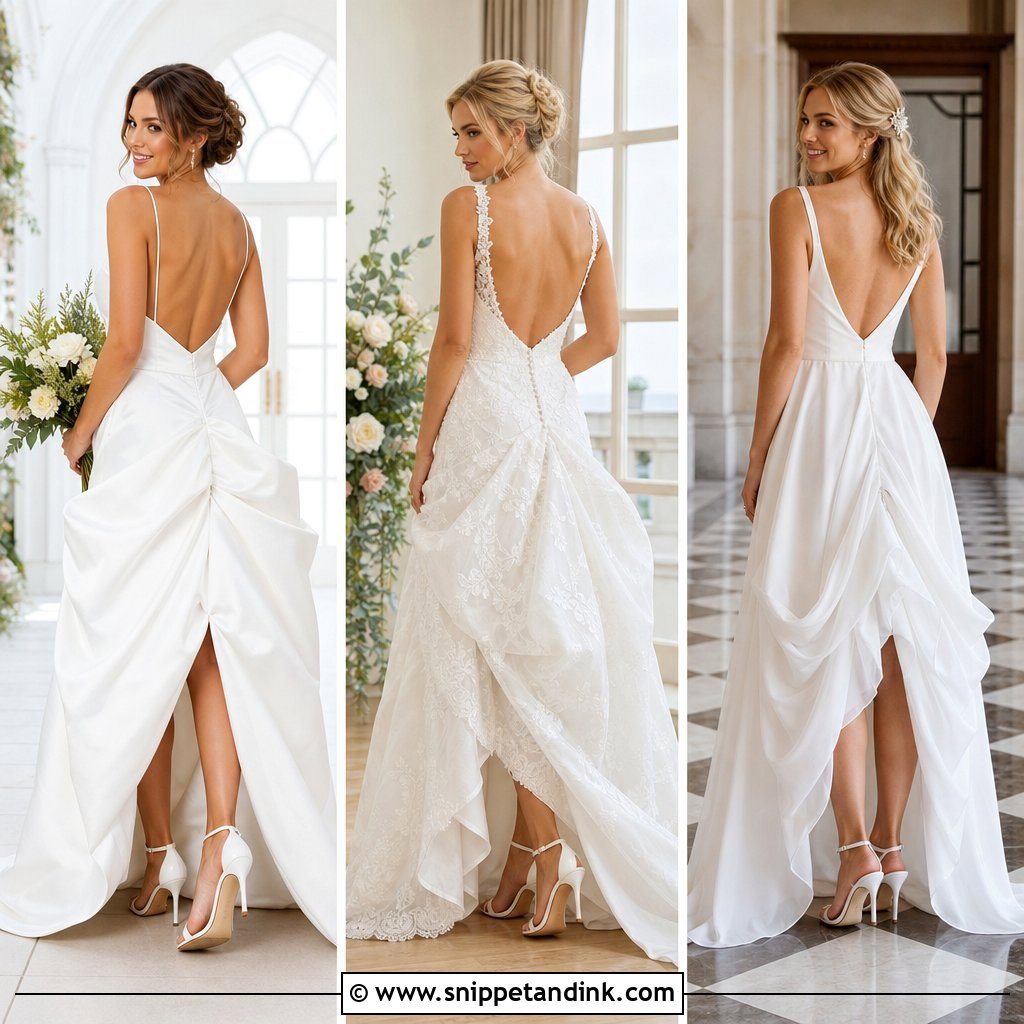
Shortening is the most direct route back into wearing your dress, and it only works if the bodice still fits you now. A tailor removes the train, cuts the skirt and rehems it at mini, knee or tea length. The thing I check first is the hem itself. On a lace gown the scalloped edge usually runs along the bottom, so it has to be lifted off and re-stitched higher, which takes far more hand time than a straight satin hem. Crepe and simple A-line shapes are the easiest to shorten. Keep the neckline as it was for sentiment or swap in slimmer straps, then add nude heels and a small clutch for an anniversary lunch or a courthouse ceremony.
2. Wedding Dress Cocktail Dress
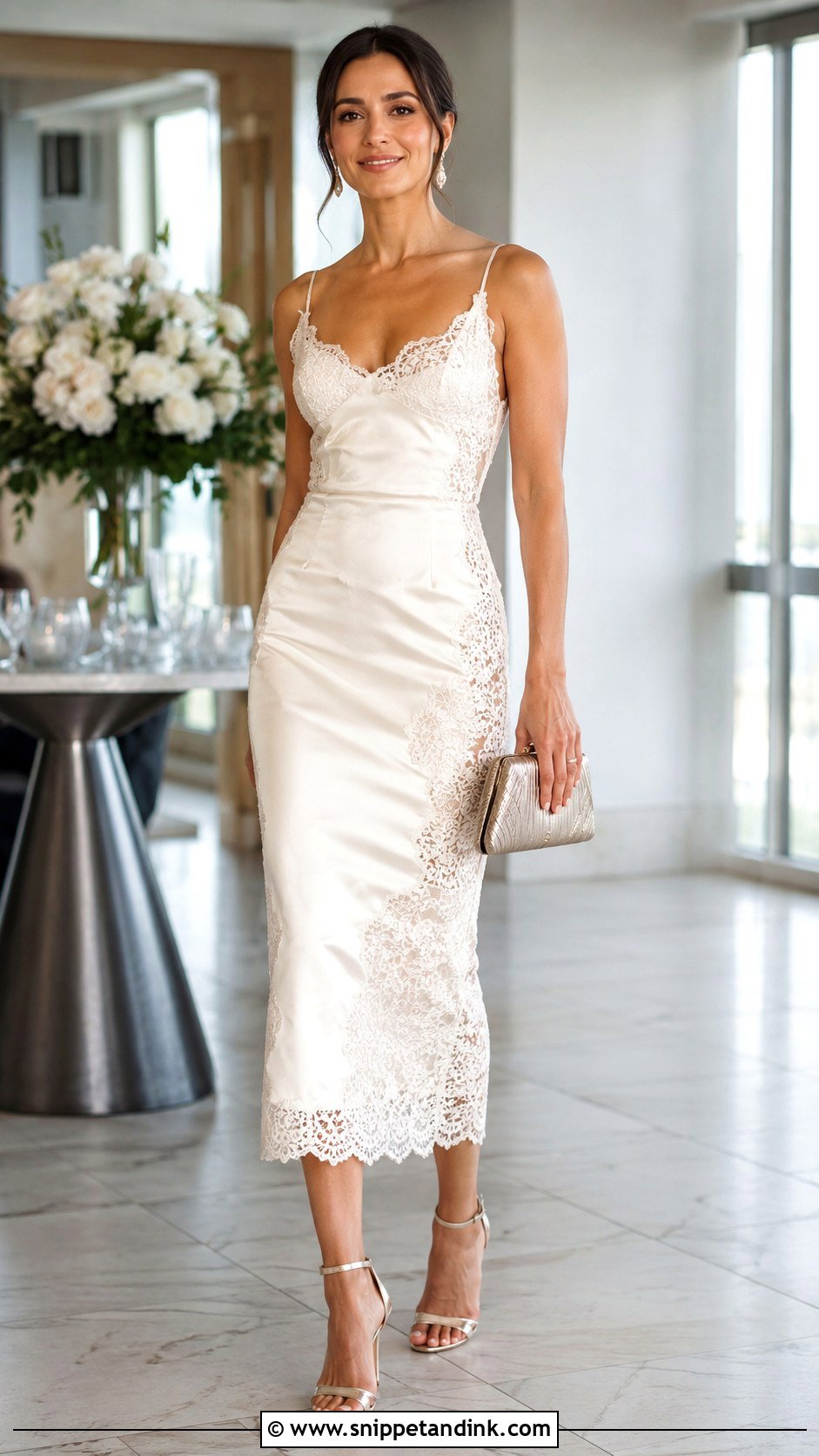
A cocktail conversion goes further than cutting length. The seamstress strips out heavy underlayers, takes in the waist and rebuilds the silhouette as a sheath, strapless midi or off-shoulder shape, reusing lace or beaded appliqués as accents. Dyeing is the step people underestimate. Most modern gowns are polyester, which ignores ordinary household dye, so a champagne, navy or black result needs a dye made for synthetics and someone who has used it before. Silk takes color far more readily. Lace sewn with polyester thread can stay white while the satin around it darkens, which reads as intentional on some designs and patchy on others.
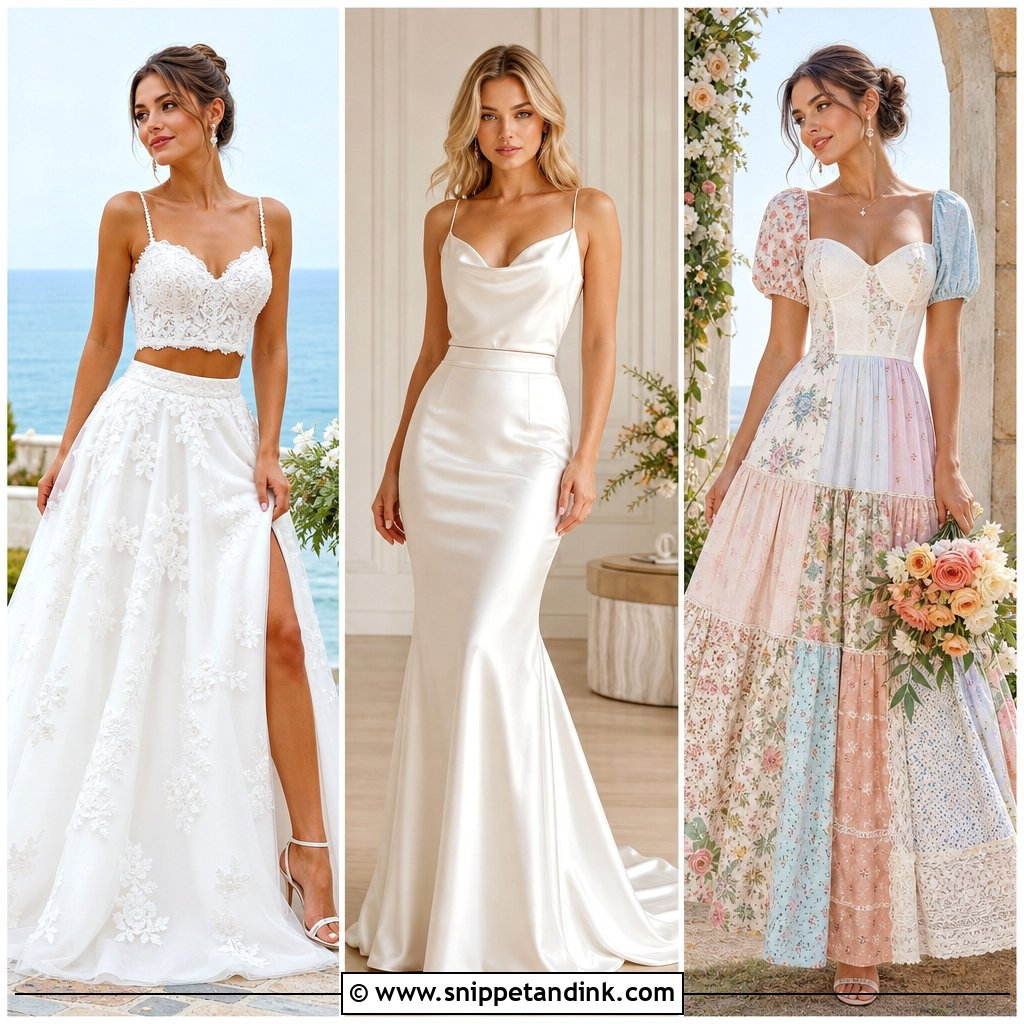
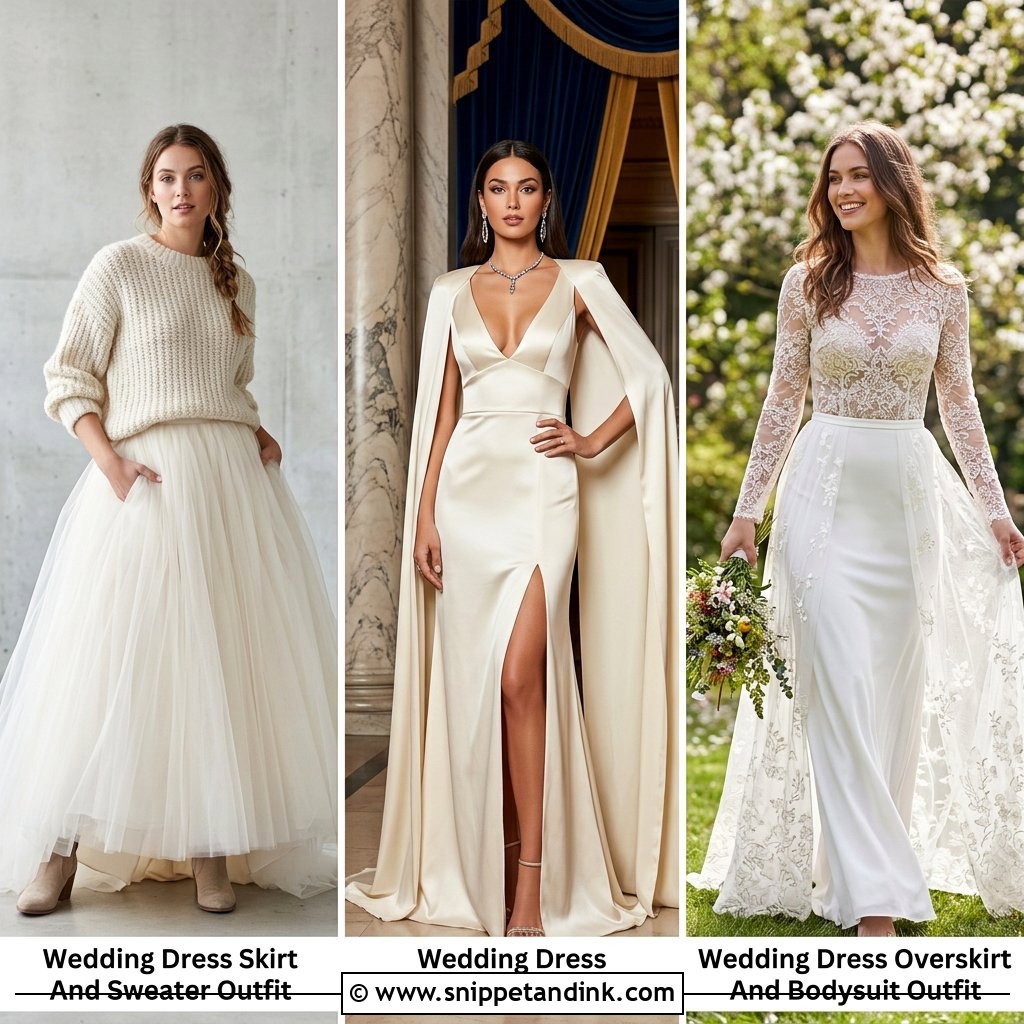
3. Wedding Dress Two Piece Set
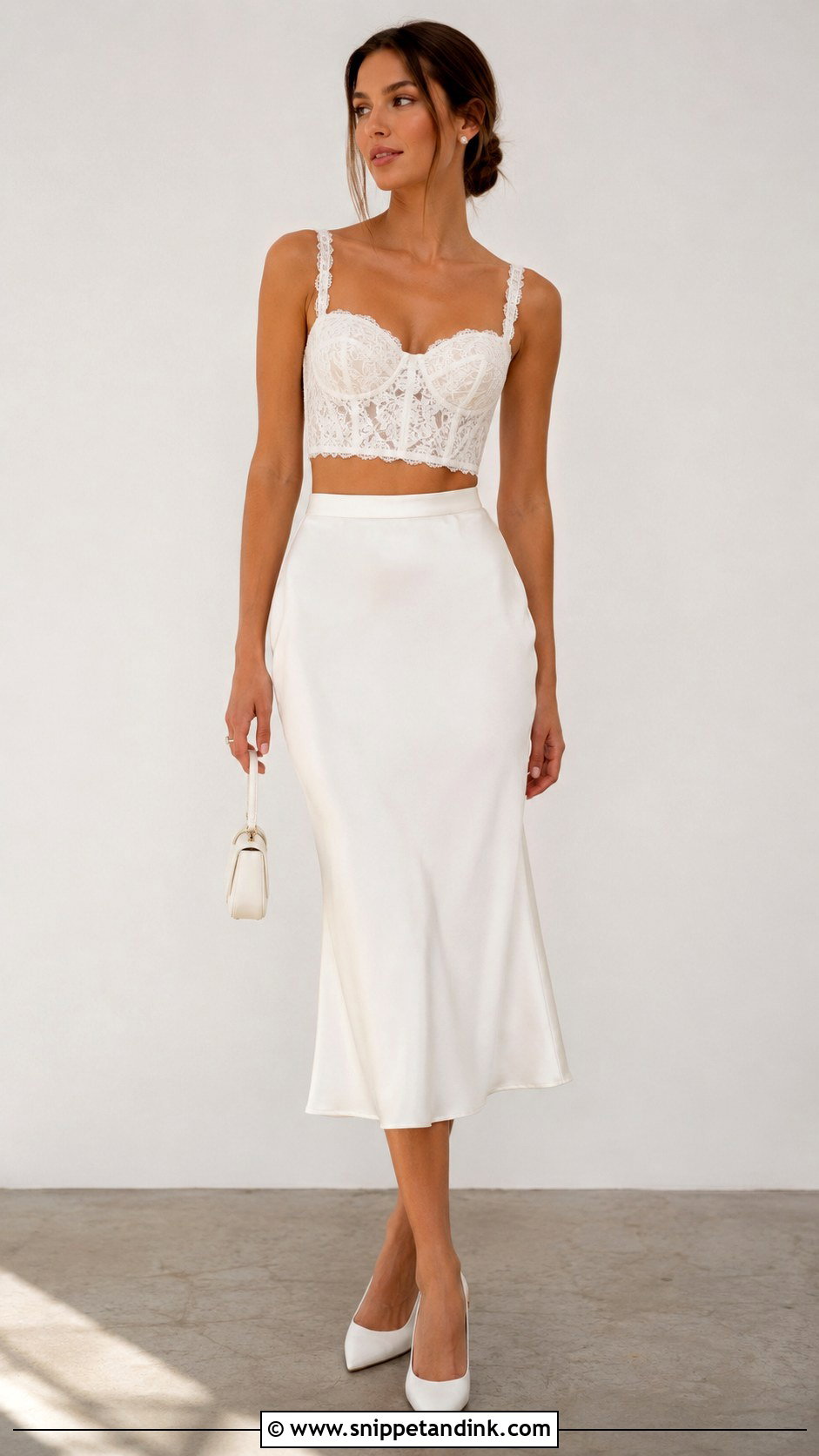
Splitting the gown in two makes sense when the top and bottom have different strengths, say a lace bodice you adore over a plain skirt. The bodice becomes a crop top, corset top or sleeveless shell; the skirt becomes a midi or full evening skirt. Expect the top to need a new waist finish, because the bodice was built to attach to a skirt and the seam allowance there is often trimmed short. Worn together the pieces read as a set. Apart, the top goes over trousers or jeans and the skirt over a plain camisole, with block heels and pearl studs.
4. Wedding Dress Skirt
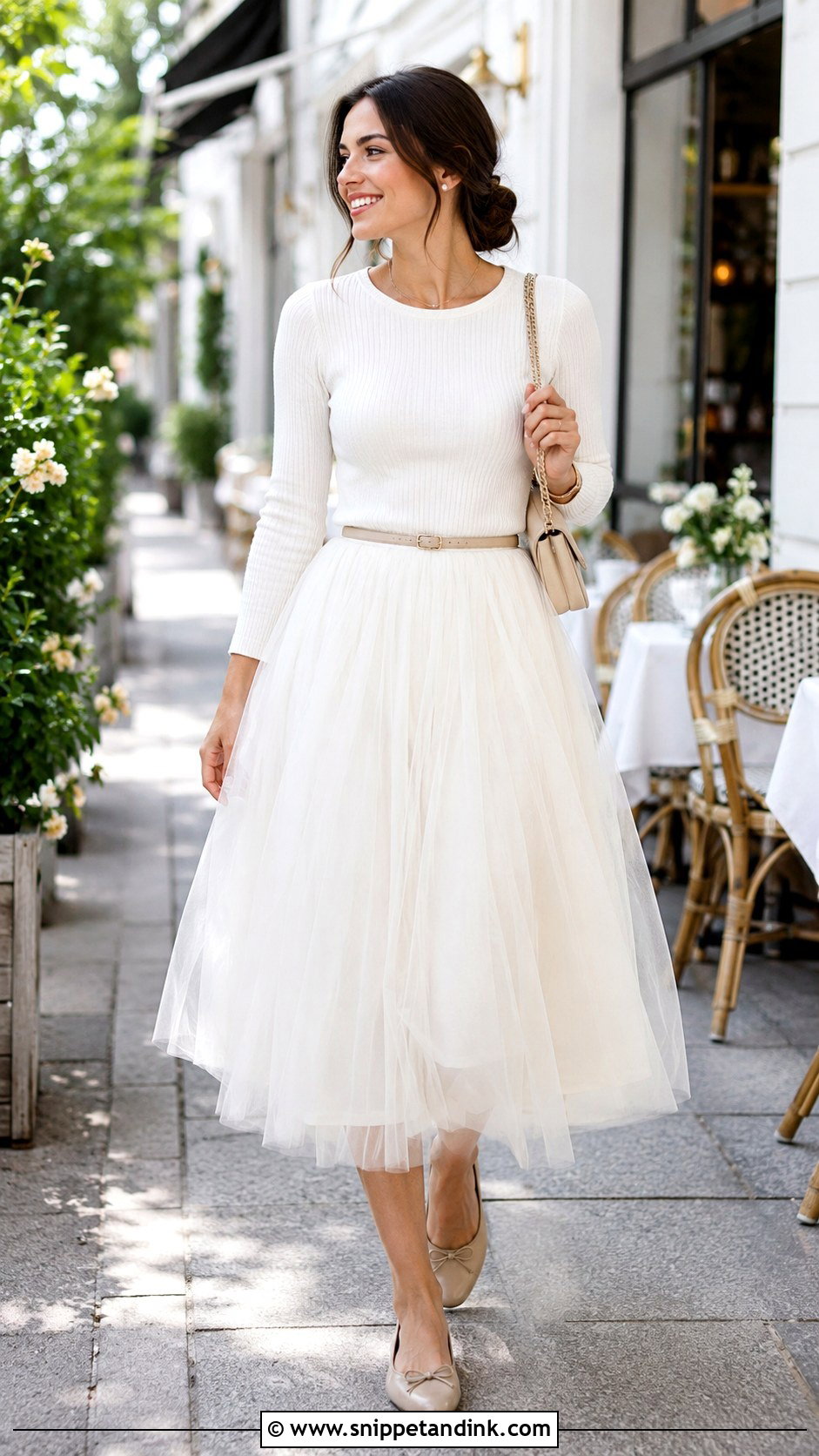
When the bodice is the damaged or dated part, the skirt is usually still sound. A tailor detaches it and resets it on a new waistband as a high-waisted midi, maxi or tea-length skirt. Each fabric behaves differently once it’s off the gown: tulle collapses without a slip beneath it, satin shows every crease from sitting, and lace needs an underlayer so it doesn’t look see-through in daylight. I’d pair it with a fitted knit or a crisp button-down rather than another delicate top, so the skirt carries the outfit alone. Ballet flats by day, pointed heels at night.
5. Wedding Dress Blouse
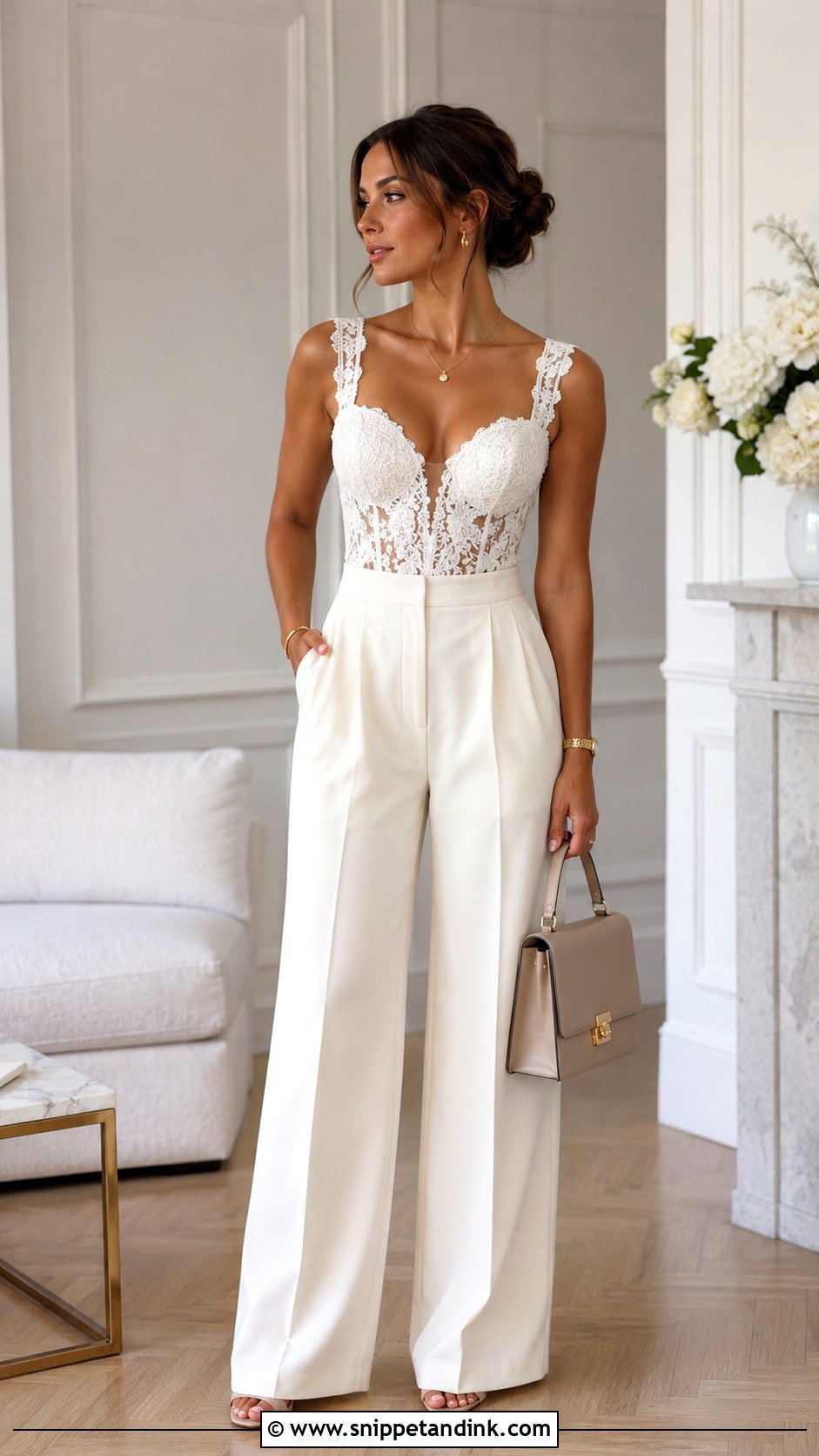
If the top half of your gown is where the detail lives, a blouse keeps that detail and drops the formality. Lace sleeves, an embroidered bodice, an illusion neckline or satin panels can all be reshaped into a top, usually with a new lining, thinner beading and a hem long enough to tuck in. One honest warning: boned bodices don’t convert easily into soft blouses. Removing the boning changes how the fabric sits, so ask to see the inside construction before you commit. Wide-leg trousers and low heels make it smart; dark denim and flats make it casual.
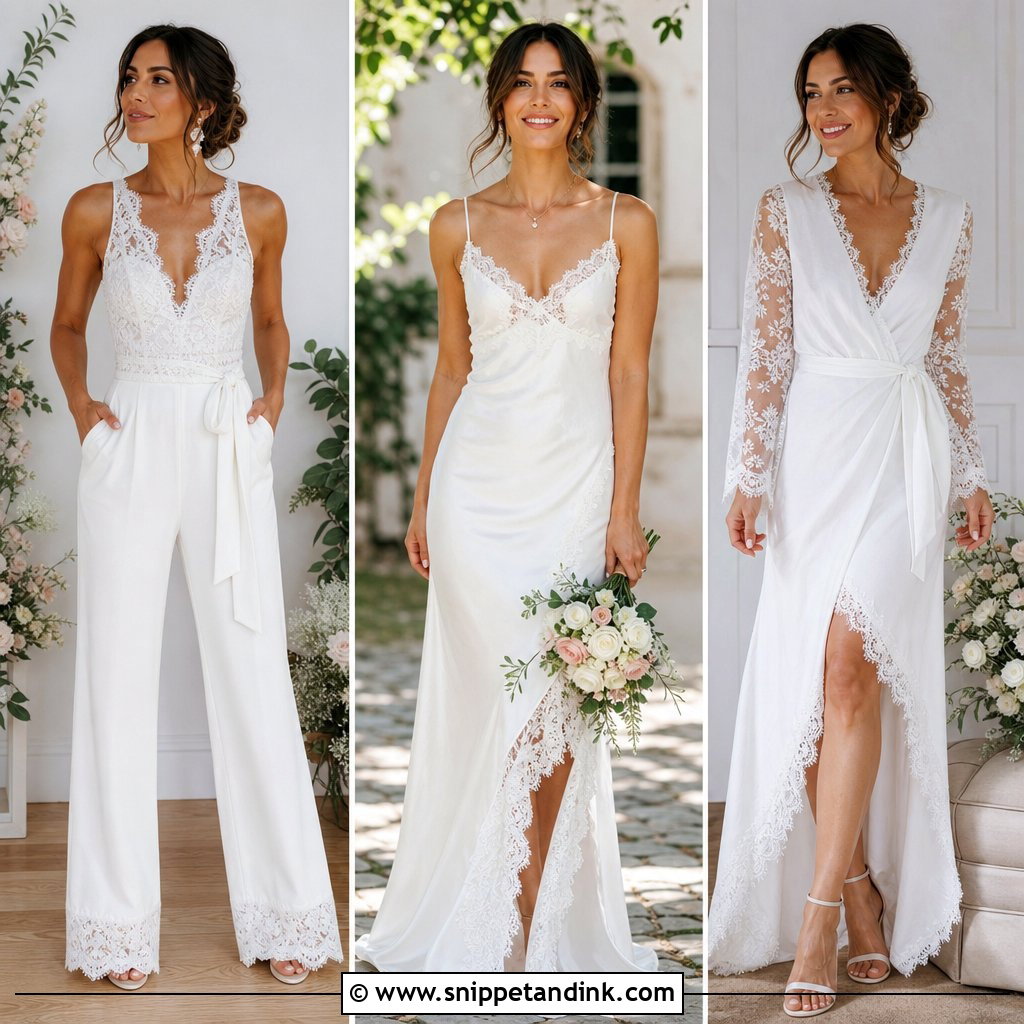
6. Wedding Dress Robe
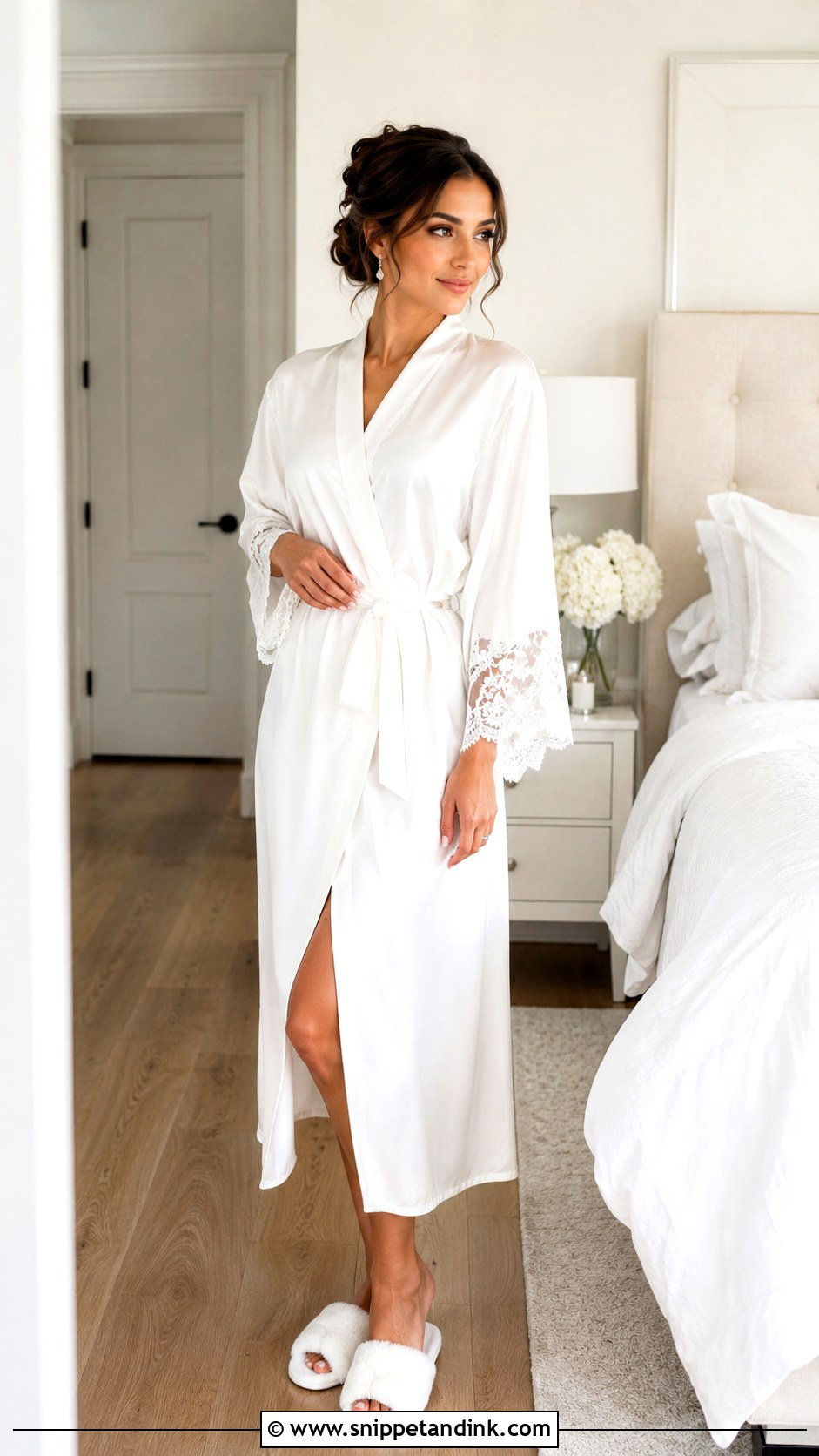
A wedding dress robe turns the softest parts of the gown into something you’ll reach for on a slow morning. Satin and silk drape well as a wrap with a waist tie, and the lining, which most people forget about, is often the most comfortable fabric in the whole dress. Sheer panels or embroidery can sit at the cuffs, back or hem. Before cutting, I test-wash a scrap. If the satin water-spots or shrinks, the robe will be dry clean only, which undercuts the point of something you wear at home. Made well, it can later pass to a daughter or sister.
7. Wedding Dress Jacket
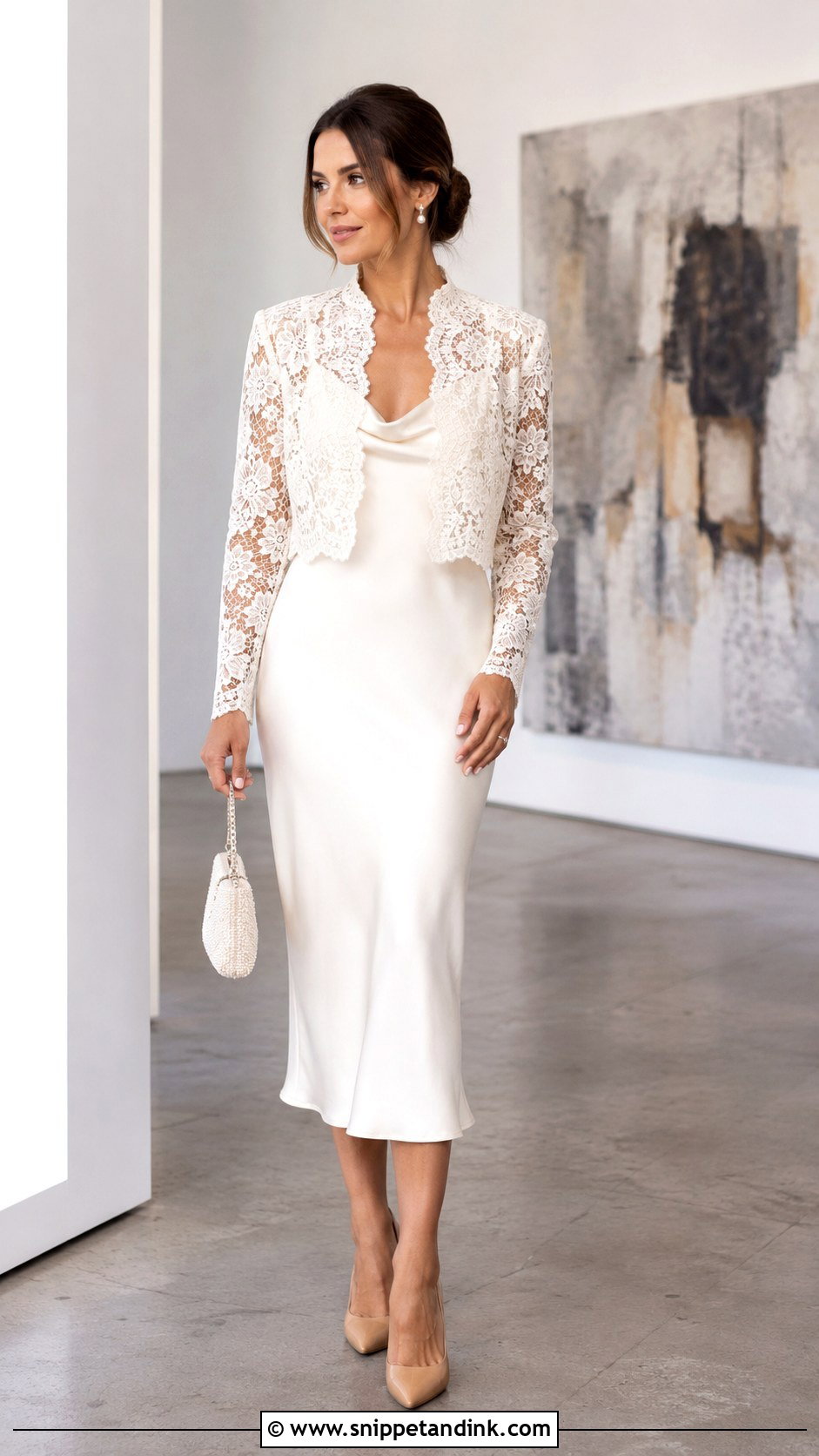
Structured fabric and long lace sleeves are what a jacket needs. The gown can become a cropped jacket, bolero, capelet or light evening layer, and decorative backs or illusion lace make the most interesting versions. Lace alone has no body, so a seamstress will back it with organza or interfacing to stop it stretching out at the shoulders. A cropped shape sits best over high-waisted pieces, while a longer cut looks relaxed over a slip dress, jumpsuit or camisole and trousers. You get the texture of the gown without anyone reading it as bridal.
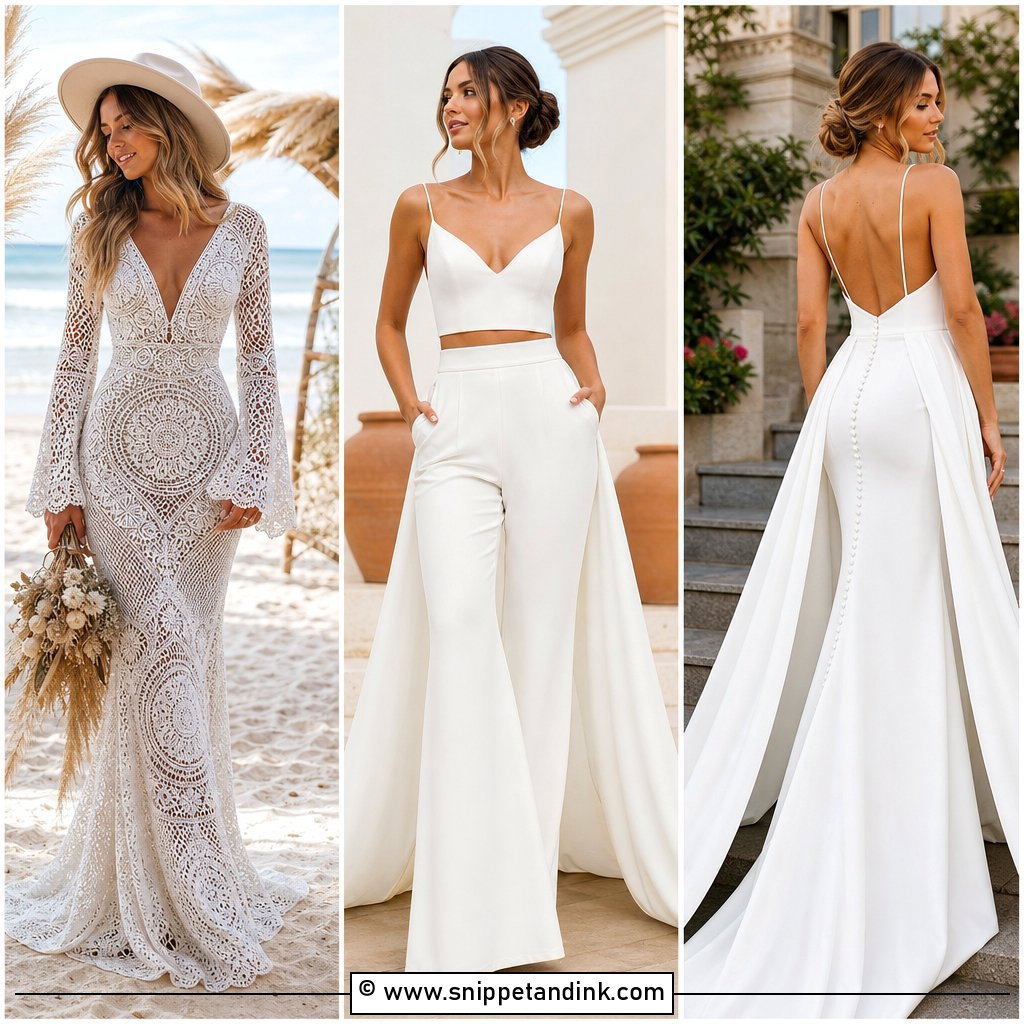
8. Wedding Dress Jumpsuit
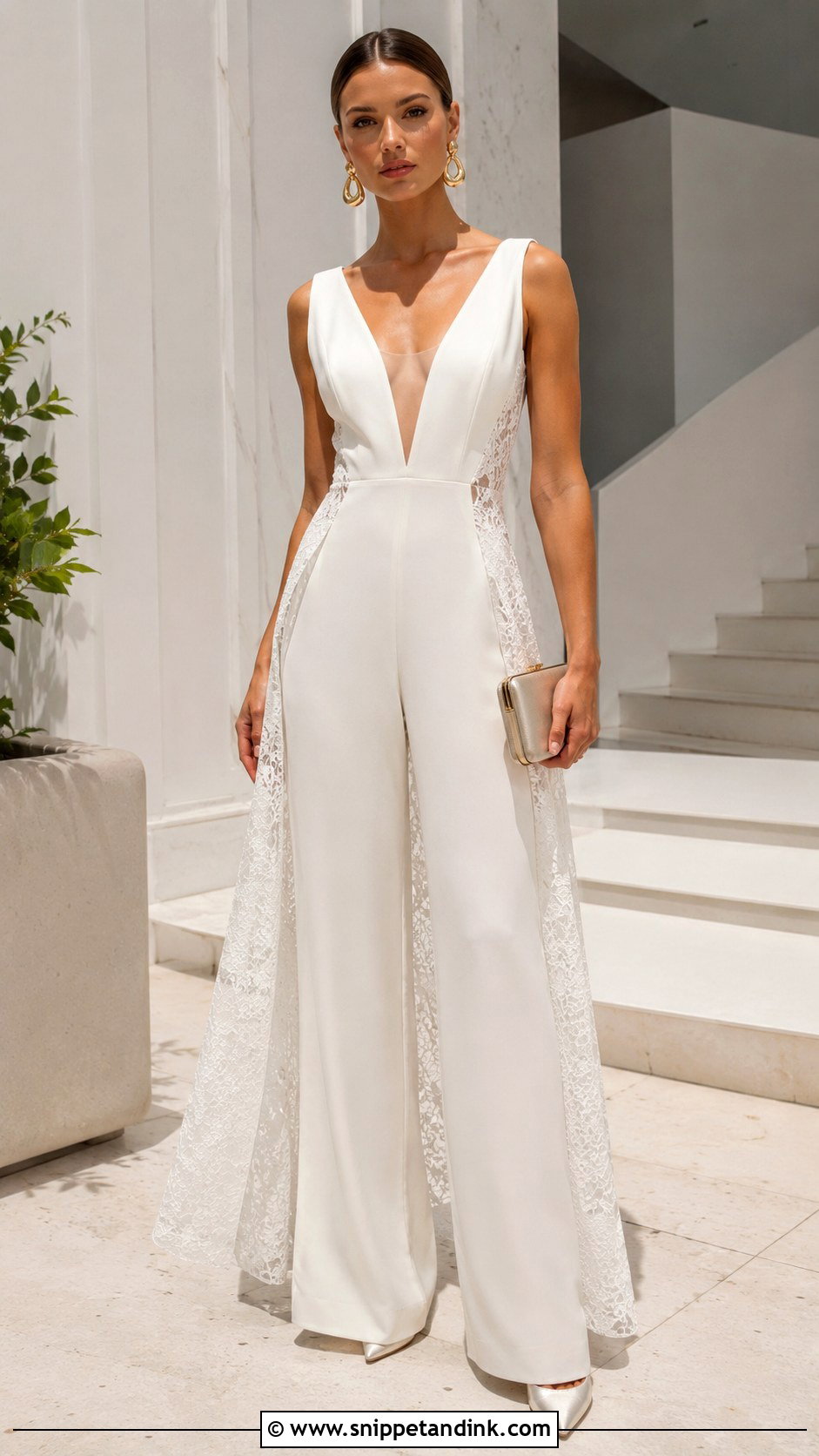
This is the most demanding conversion here, and I’d only send a gown to someone who drafts their own patterns. Wide-leg trousers eat yardage, so you need a full skirt or long train to cut them from. Satin makes smooth trousers but shows seat creases after an hour of sitting; crepe recovers far better. Lace usually goes on the bodice, with straps or sleeves rebuilt cleanly. Minimal gowns with a strong neckline are the best starting point, because that neckline anchors the new design. Finish with pointed heels and sculptural earrings.
9. Wedding Dress Rehearsal Outfit
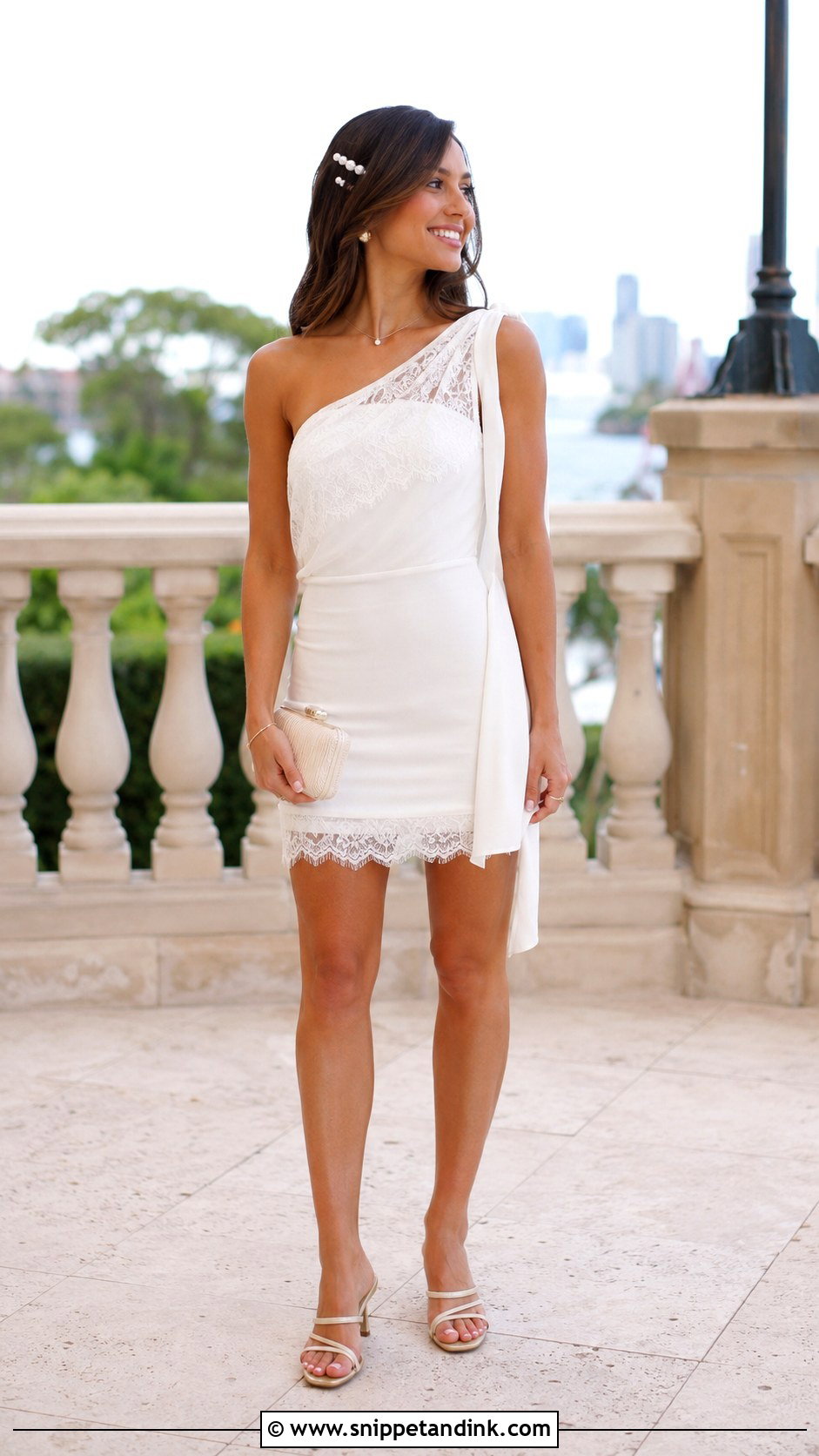
Wearing part of the gown again for a rehearsal outfit for a vow renewal, an anniversary party or a family gathering lets you nod to the original without repeating it. The remake might be a white mini, a midi, a two piece set or a tailored top with trousers. My rule here is one recognizable detail and nothing more: the sleeve lace, the back buttons or a patch of bodice beading. Everything else gets simplified so the outfit looks current rather than like a shortened wedding dress.
10. Wedding Dress Anniversary Outfit
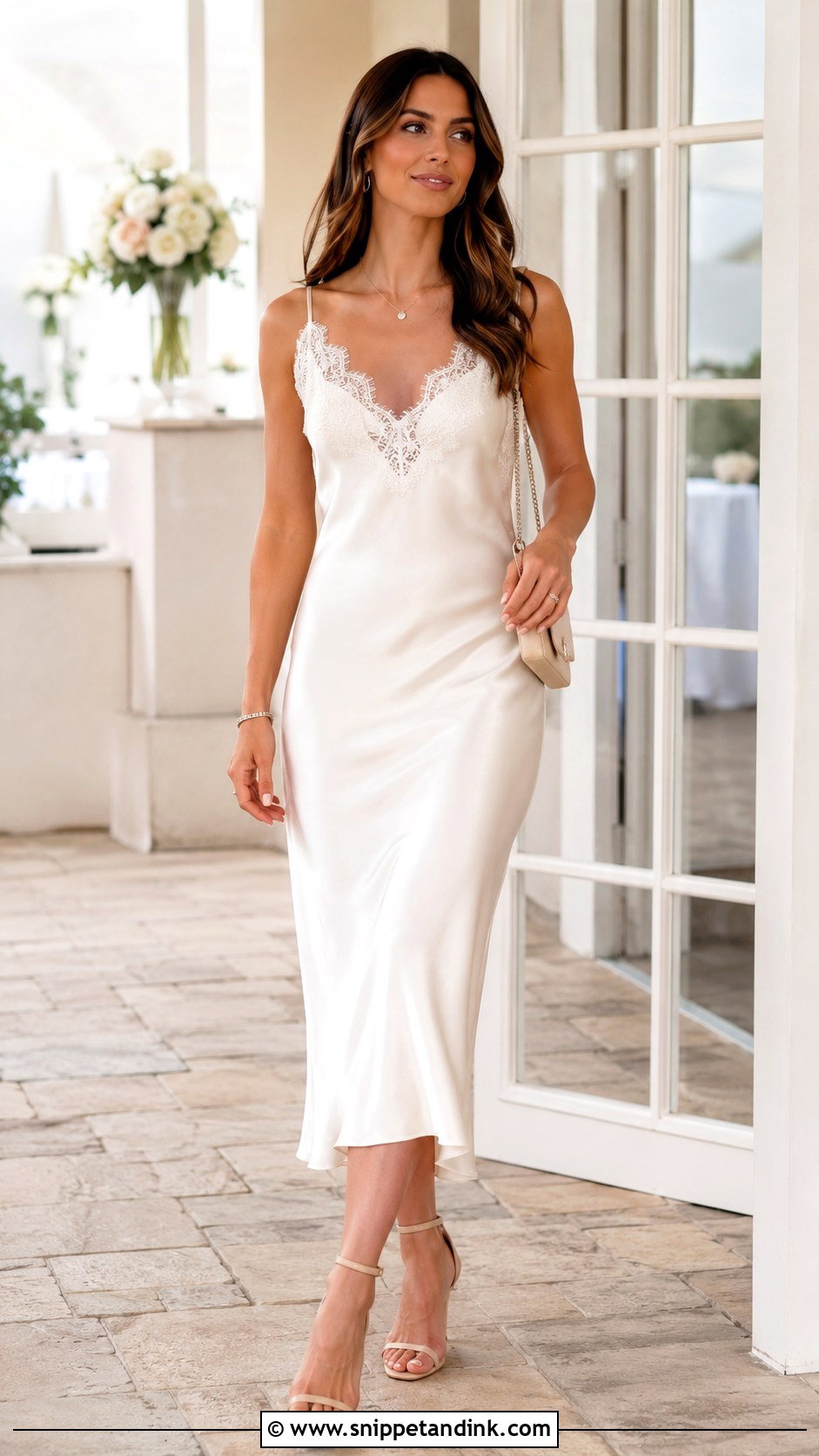
An anniversary dress creates a yearly ritual, but only if it’s comfortable enough to wear through a whole dinner. A satin slip dress, lace midi, skirt or blouse all qualify. Anything still corseted probably won’t leave the wardrobe more than once. If the gown looks very bridal, a soft neutral or a deeper color helps, though the fiber decides which dye will actually take. Save spare lace or buttons for small matching accessories.
11. Wedding Dress Baby Blanket
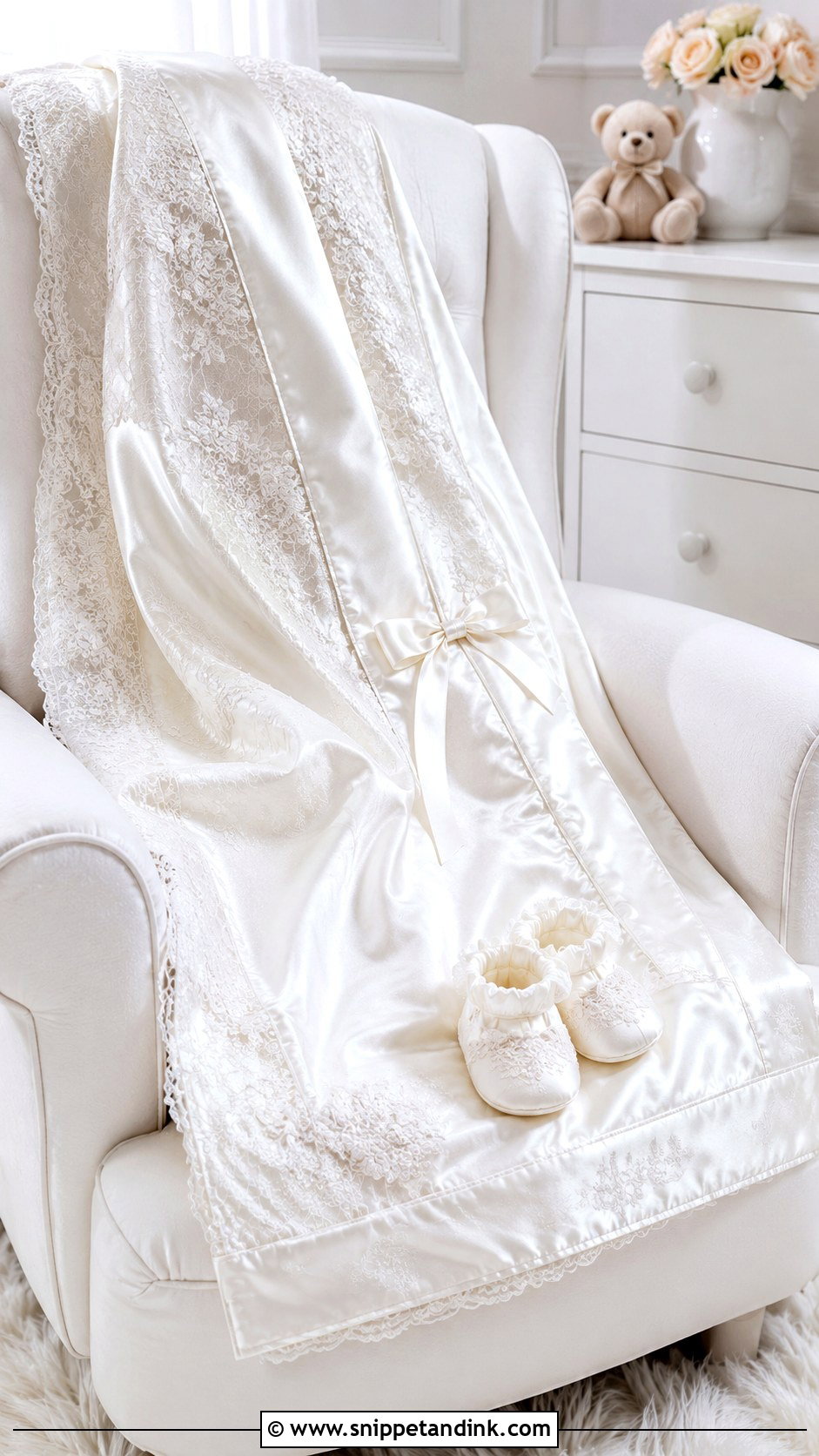
A wedding dress baby blanket is a keepsake first and a blanket second. Satin, lace and tulle are too fragile and too slippery for daily use, so I’d plan it for photos, nursery display and storage. A soft cotton backing makes it pleasant to touch, and a lace border, an embroidered date or a bodice patch gives it meaning. Keep beads and sequins off any surface a baby’s face might touch; they can be pulled loose and swallowed.
12. Wedding Dress Baby Dress
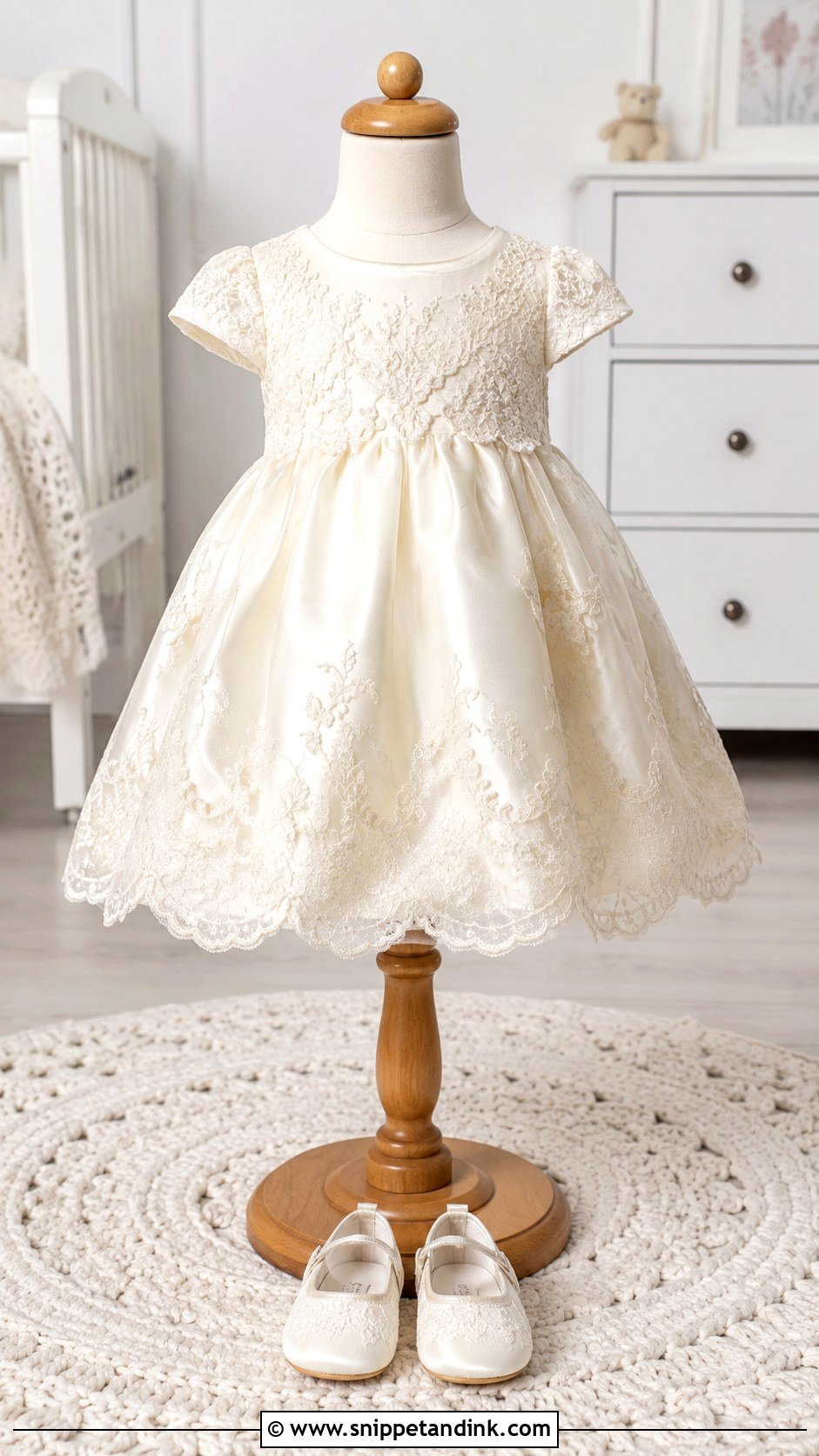
A christening or milestone dress cut from your gown has to be built around the baby, not the fabric. The seamstress should line it in cotton and keep the wedding satin or lace on the outside, with no heavy beading, scratchy trim or fragile closures near the baby’s skin. Snaps or a few large buttons are far easier than a row of fabric-covered buttons when you’re dressing a wriggling infant. A gathered skirt, cap sleeves and a small bow are plenty. Tiny garments use very little fabric, so this one can come from the offcuts of a larger project.
13. Wedding Dress Flower Girl Dress
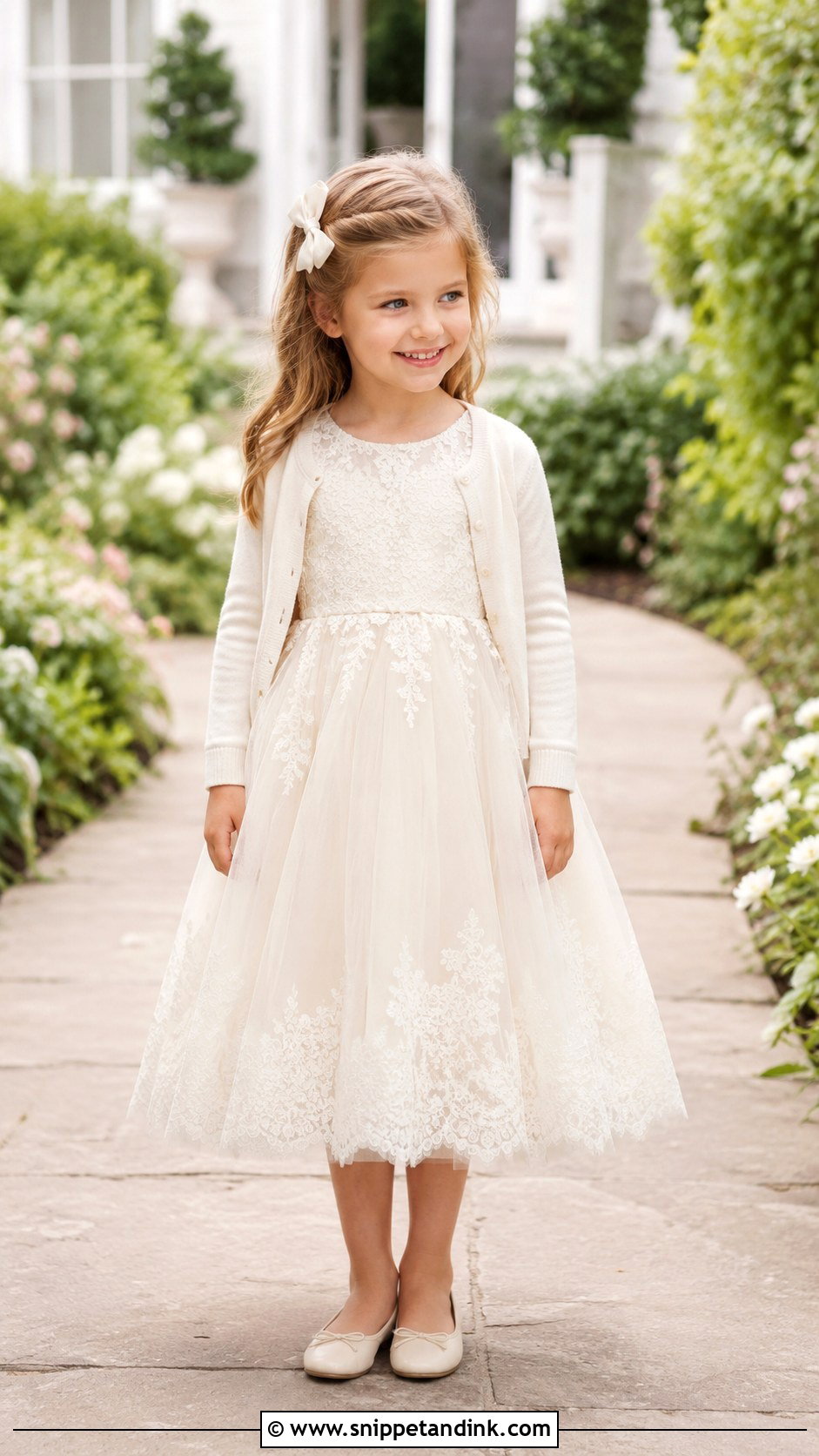
Children’s dresses take surprisingly little fabric, which makes a flower girl dress a good second project from a gown with a full skirt. The lace, tulle, satin or organza is resized into a fitted bodice over a soft skirt, and a sash cut from the lining or train ties it back to the original. Go easy with beading. A child spends the reception sitting on the floor or dancing, and stiff beaded seams scratch. Book the final fitting close to the date, because children grow quickly.
14. Wedding Dress Handbag
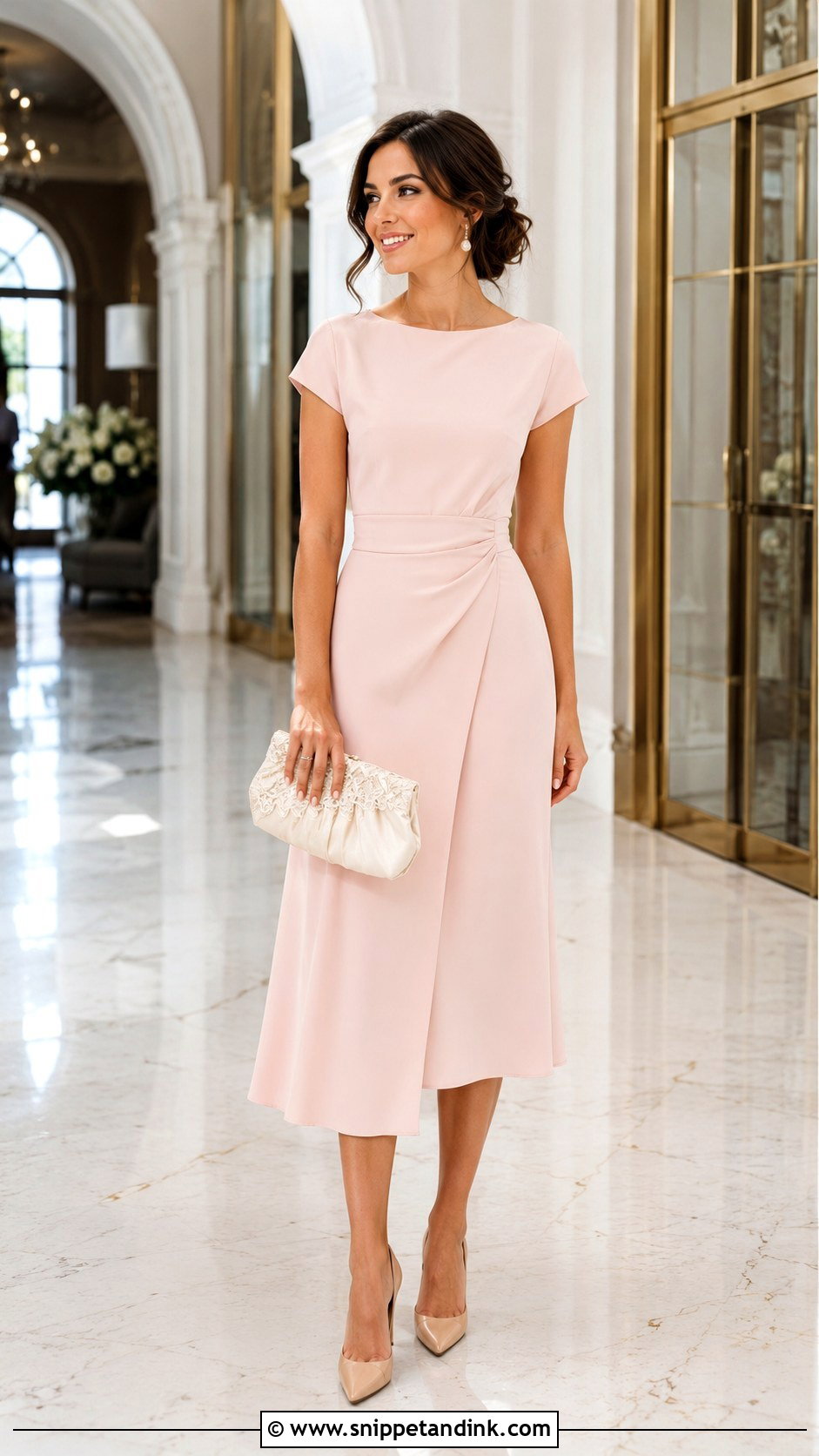
A bag needs only a small amount of fabric, so it’s my usual suggestion for a gown with great details and not enough sound material for a garment. Satin becomes a clutch, lace goes over a lining, and beaded appliqués decorate the flap or handle. Whatever the shape, from a drawstring pouch to a structured mini, the outer fabric needs firm interfacing behind it or the satin will dent and crease the first time it’s carried. A label inside with your wedding date is a quiet touch.
15. Wedding Dress Hair Accessories
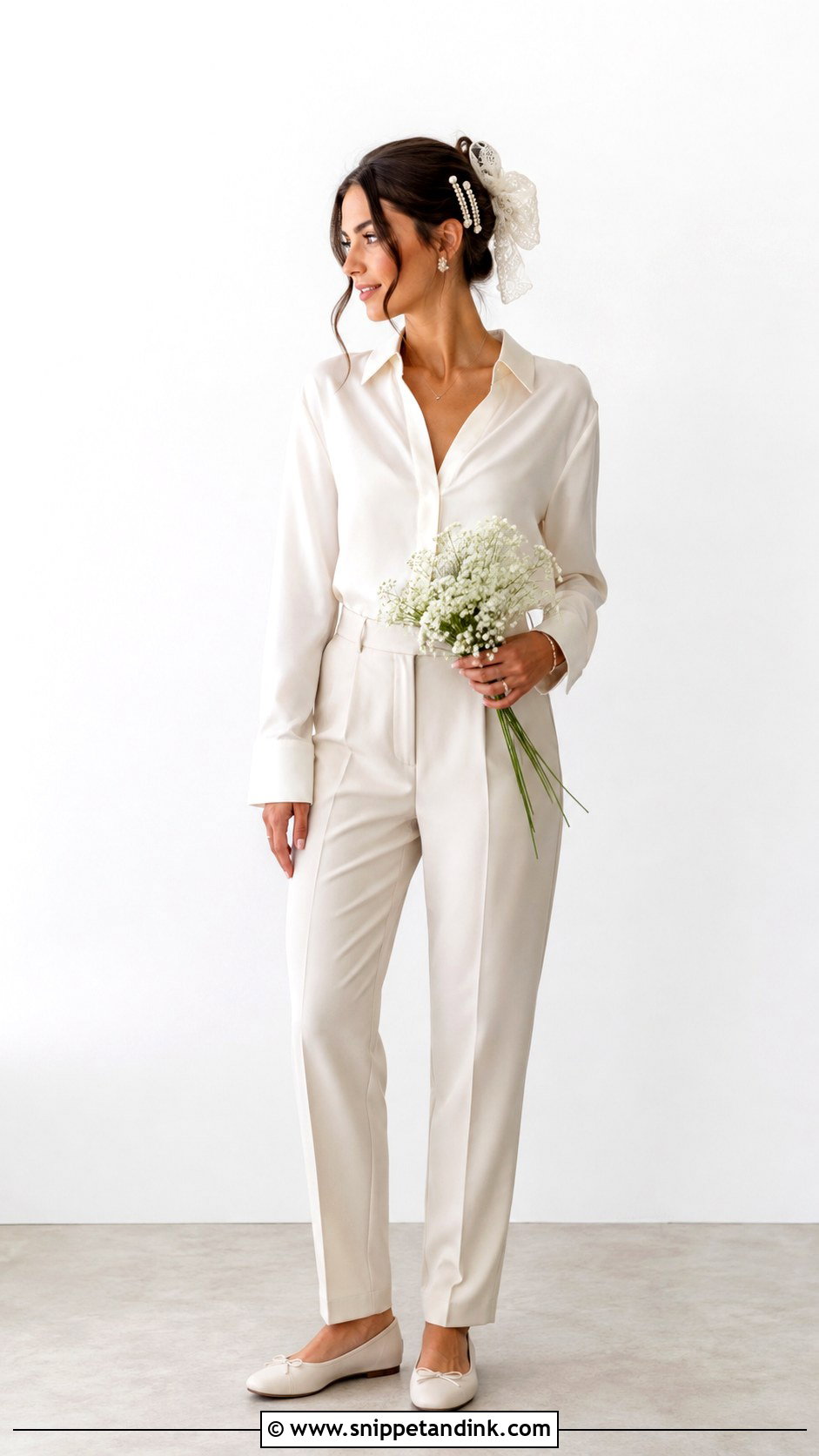
Alteration scraps are exactly the right size for hair pieces. Lace, beaded trim, satin, tulle and buttons become headbands, bows, barrettes, combs and ribbon ties. A satin bow sits neatly at the base of a low ponytail; a lace barrette is softer. If the gown had pearls or crystals, stitch them to a comb rather than gluing them, because glued stones pop off once the comb has been pushed into hair a few times. This works even when the dress is too damaged or too small to remake into clothing.
16. Wedding Dress Veil
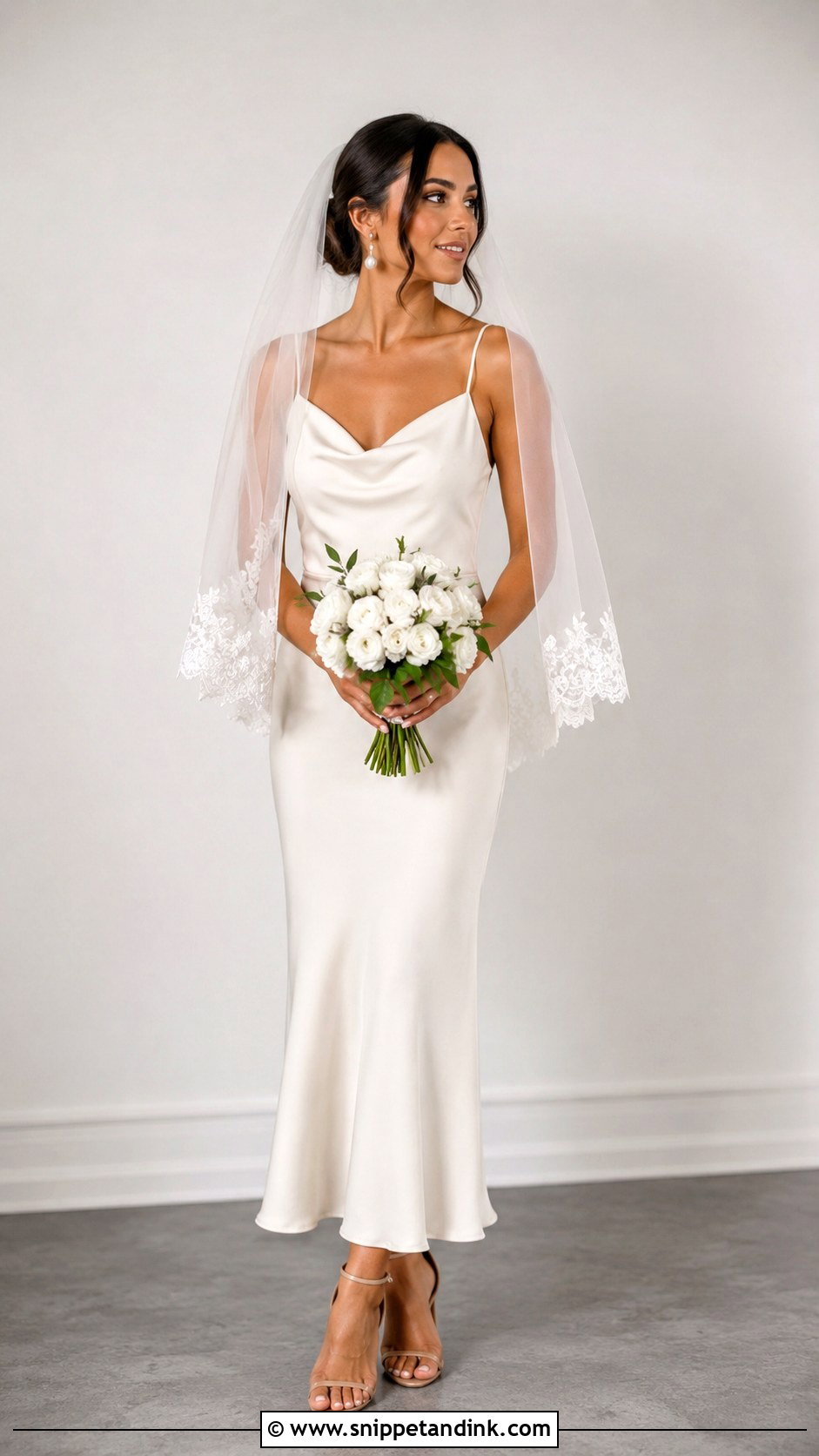
Long trains and overskirts usually hold enough tulle or lace for a veil, which is how a gown reaches the next bride in the family without anyone wearing the full dress. Depending on yardage, a seamstress can cut a fingertip, chapel or birdcage veil or a small tulle hairpiece, with lace from the hem along the edge. Check the tulle first. Older nylon tulle can yellow or turn brittle, and silk tulle drapes very differently from stiffer polyester net. Keep the finished veil light so it falls rather than sticking out.
17. Wedding Dress Bouquet Wrap
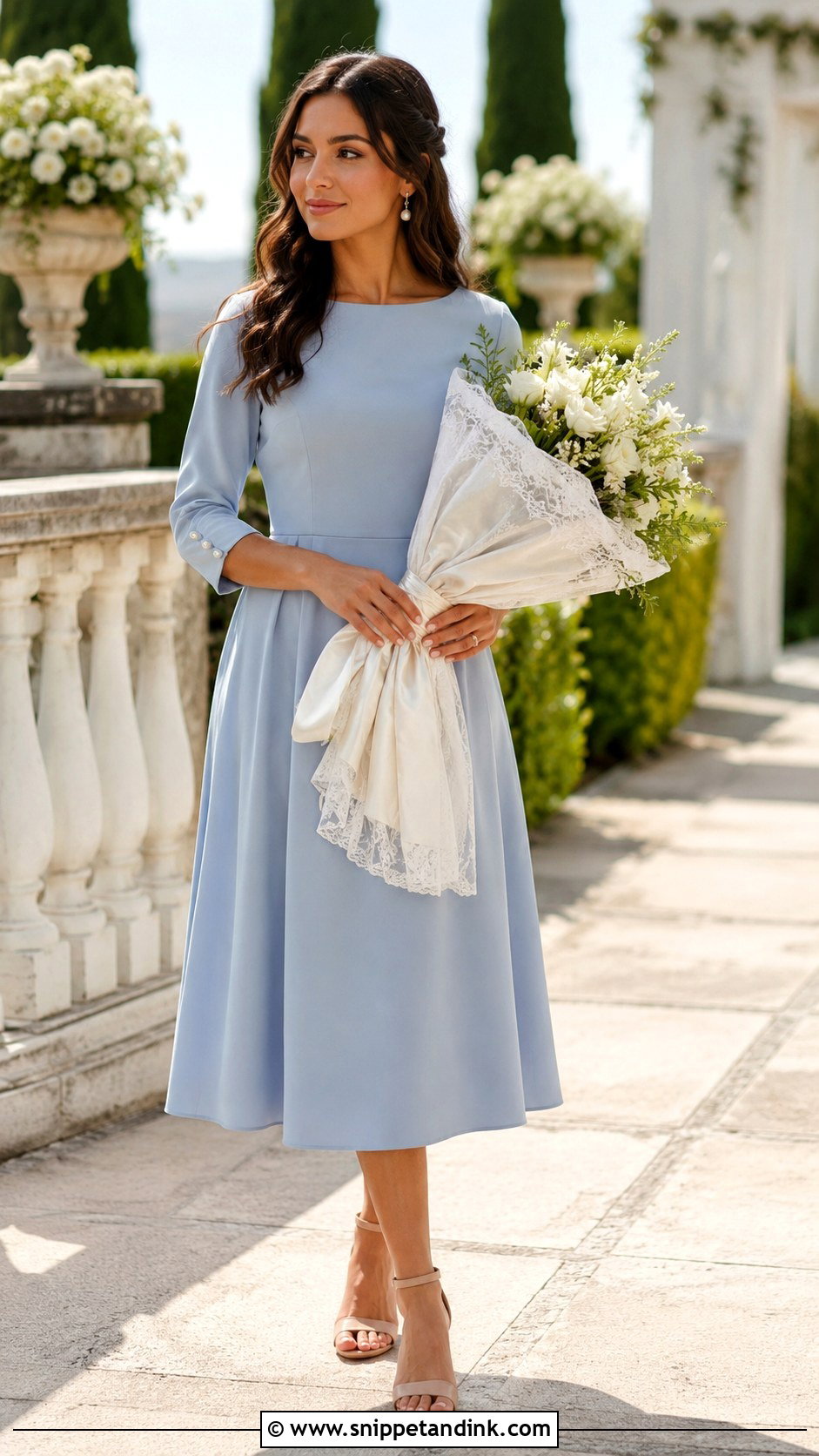
Wrapping a bouquet takes very little fabric, so it’s the easy choice if you want to keep the gown mostly whole. Lace, satin, buttons or beaded trim can bind the stems for a future wedding, a vow renewal or a memorial bouquet. Ask the florist to tape the stems before the fabric goes on, because damp stems will water-mark satin within the hour. A charm, embroidered initials or a hidden strip of blue ribbon can go underneath, closed with an original dress button.
18. Wedding Dress Ring Pillow
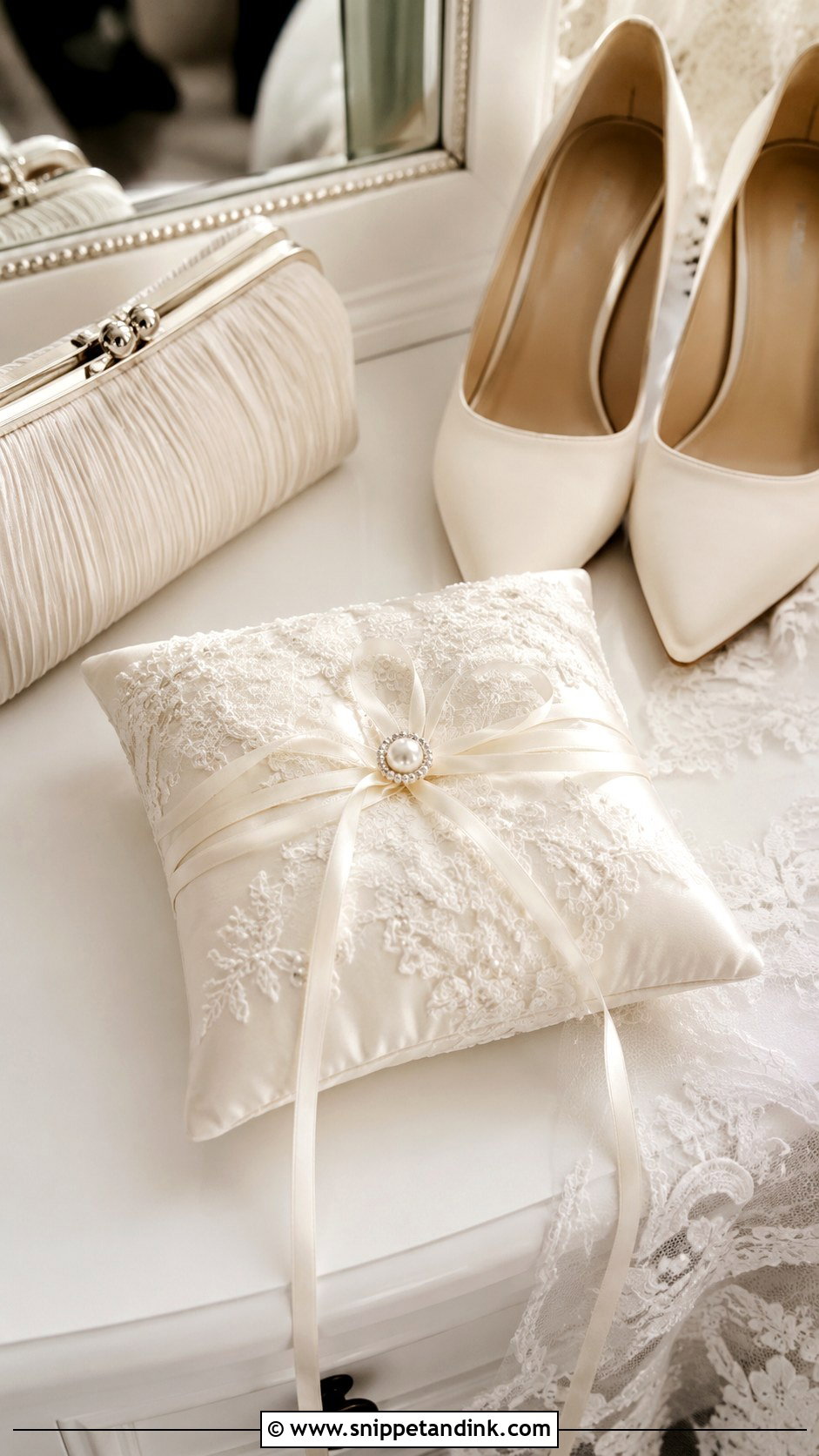
A ring pillow is small enough to make from scraps and needs no major alteration, so it suits a modest budget. Use plain fabric for the base and lay lace from the gown over the top, with buttons, pearls or a small appliqué at the center. The ribbons are the part to get right. Stitch them through the pillow rather than tacking them on the surface, because a ring bearer will swing it. Afterward it goes into a keepsake box or onto a shelf, ready for the next family wedding.
19. Wedding Dress Memory Quilt
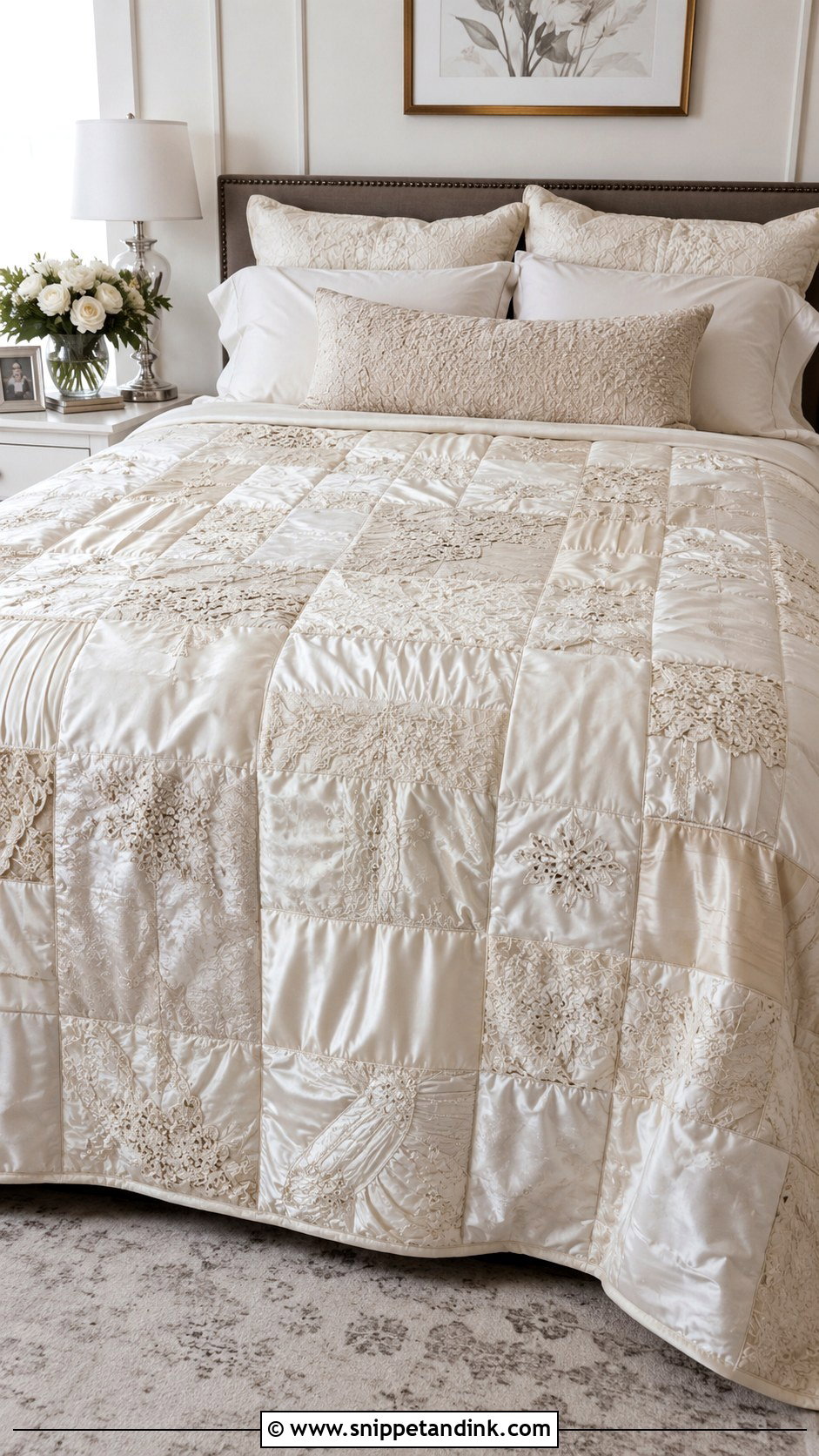
A memory quilt is the project for someone who wants to touch the fabric often instead of keeping it hidden. Gown fabric is combined with cotton, linen or other family textiles, and the quilter’s first job is stabilizing the slippery parts: satin, lace, tulle and beaded areas get a fusible backing so they don’t shift or fray in the seams. Patches from the bodice, hem, sleeves and lining add texture. Look for a quilter who has worked with bridal fabric, since ordinary quilting-cotton technique doesn’t transfer to satin.
20. Wedding Dress Throw Pillow
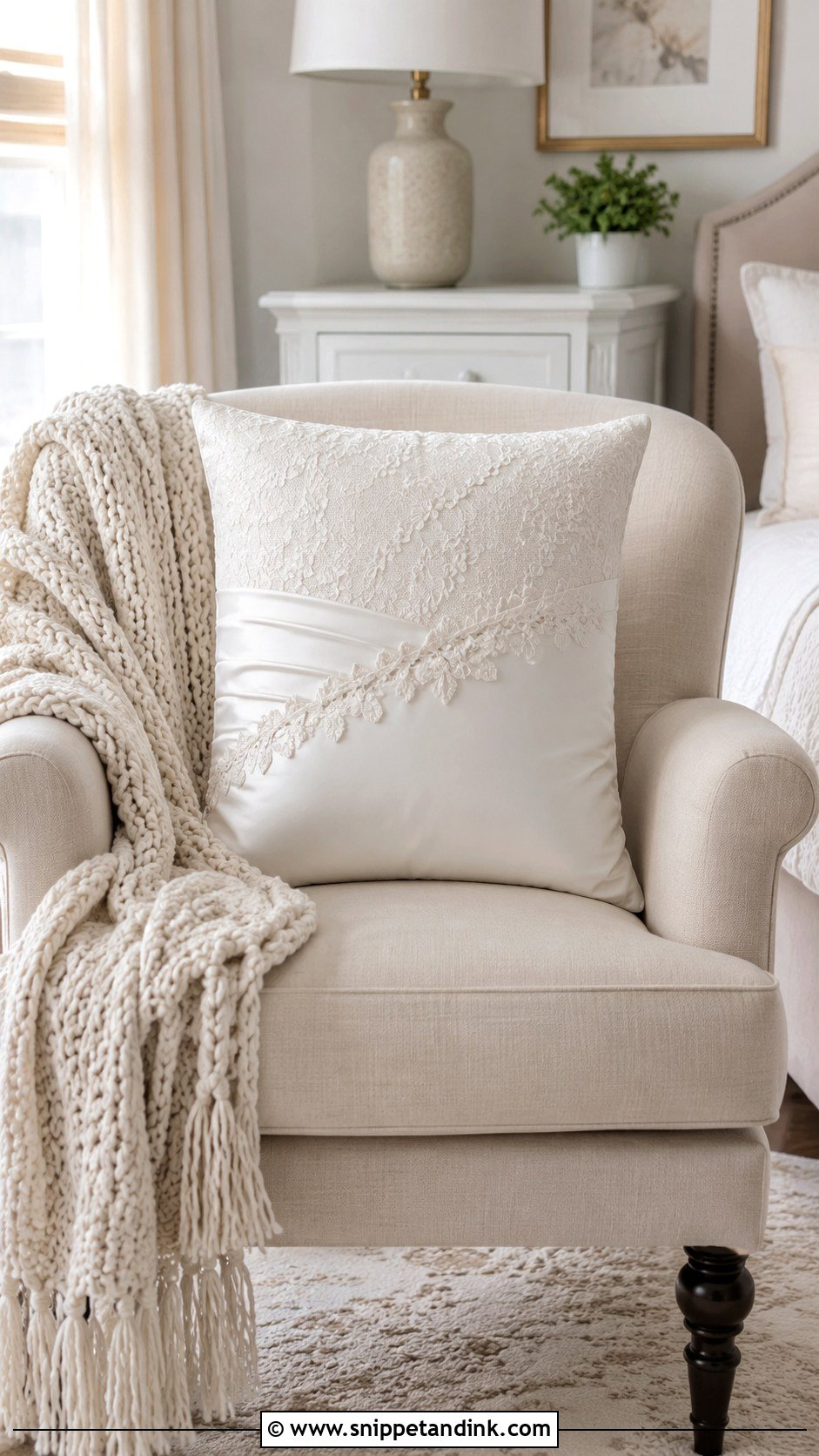
A pillow is where I send gowns with stains or damage, because the maker can cut around the problem areas and keep only the best fabric. Lace covers the front, satin forms the back and the gown’s buttons make a closure. For a minimal room, use a single lace panel or one strip of beading rather than covering the whole face. Keep it out of direct sun; satin fades and lace yellows faster than you’d expect.
21. Wedding Dress Shadow Box
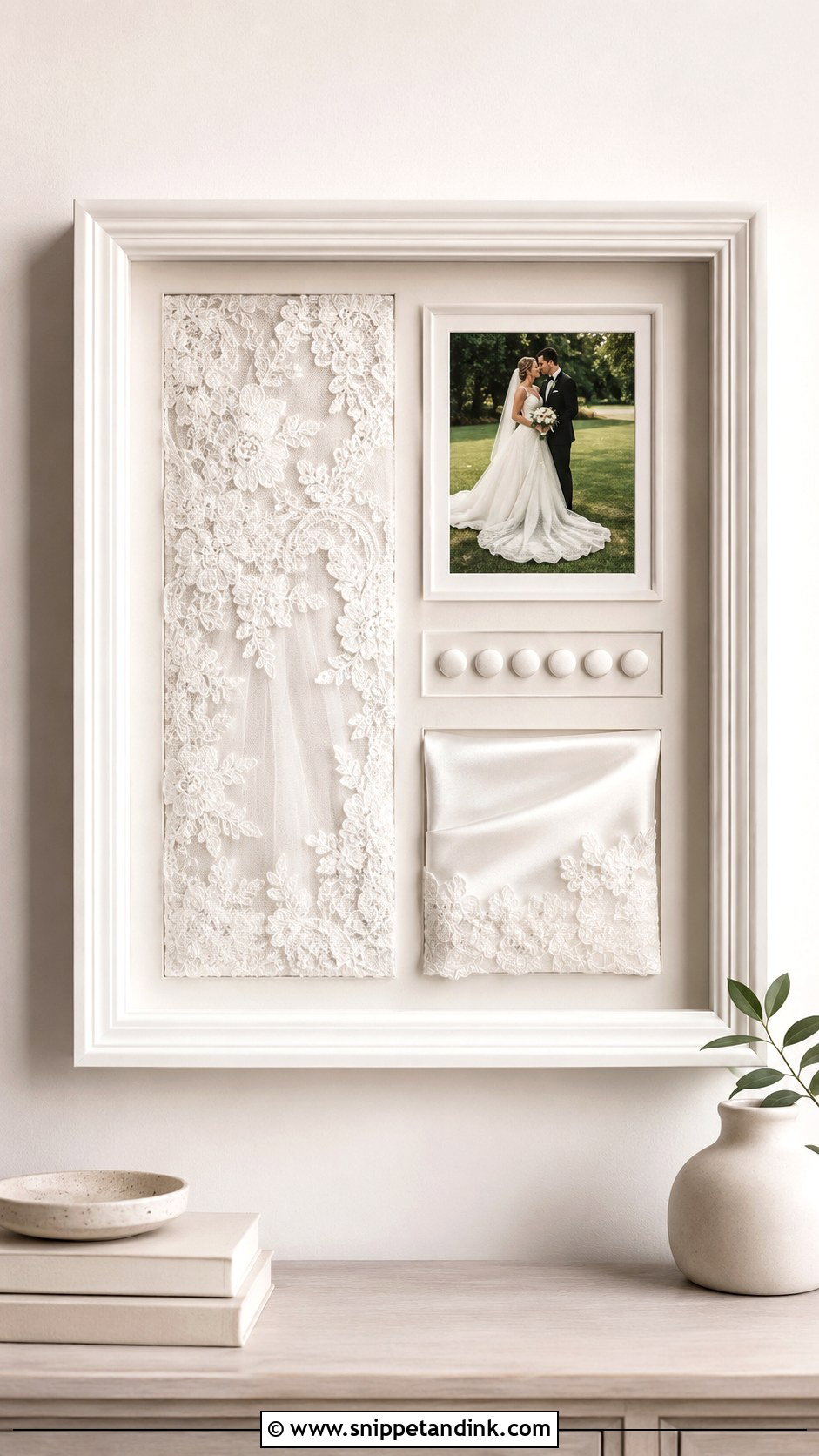
If you’ll never wear the dress again but can’t bear to cut much of it, frame it. A shadow box can hold bodice lace, back buttons, a section of hem, the veil, a photo, the invitation and professionally preserved flowers. Ask the framer for acid-free backing and UV-filtering glass, since ordinary card and glass let fabric yellow on the wall. Clean spacing and neutral backing look better than filling every corner. It’s also the gentlest option for heirloom gowns too fragile to alter.
22. Wedding Dress Table Runner
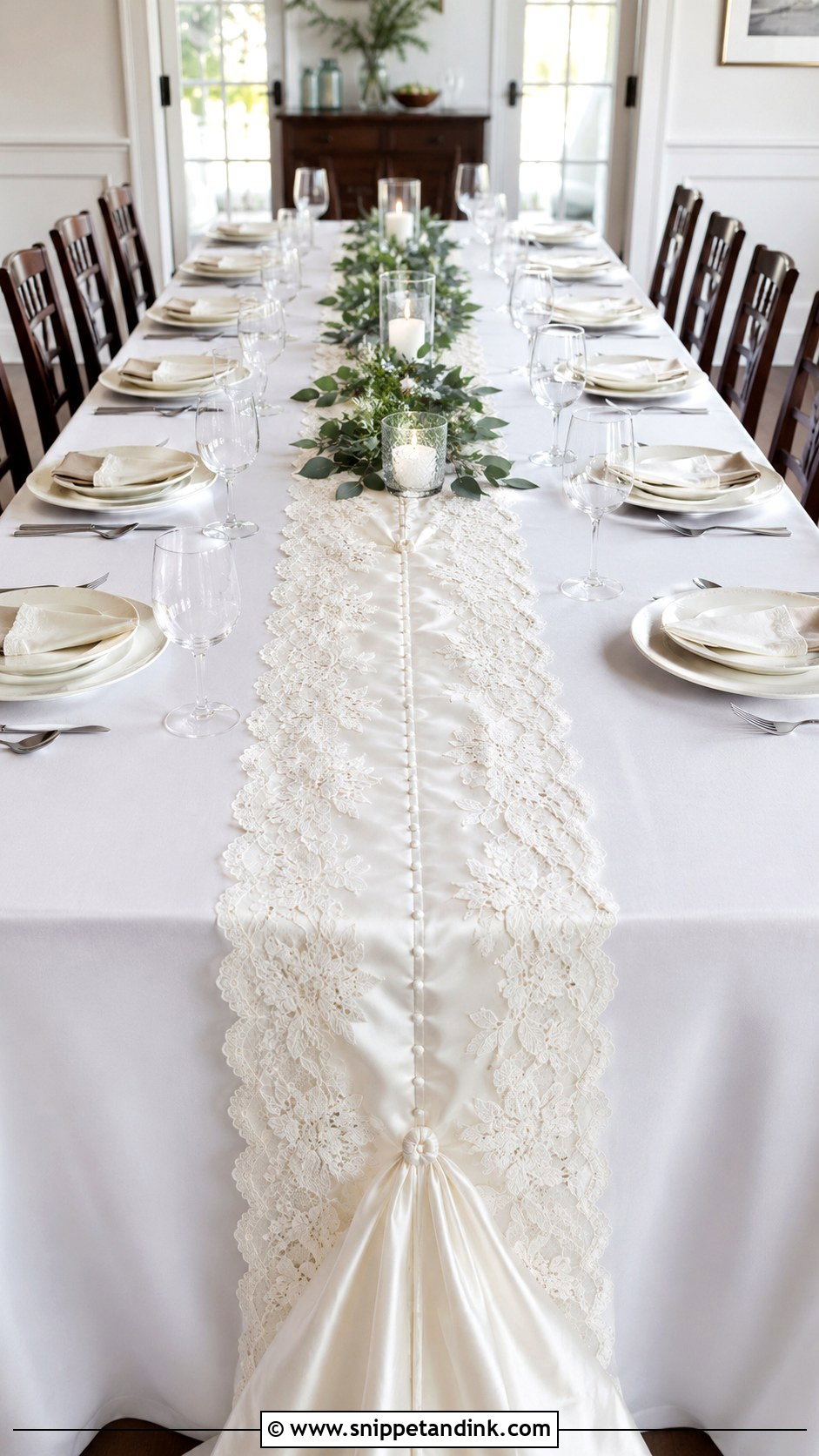
A runner suits a gown with a long, detailed train or hemline, since that’s where the yardage is. Lace overlays, tulle, satin panels and embroidered sections are sewn into a long strip with finished edges and laid over a plain tablecloth so the texture shows. Treat it as a decorative layer for anniversaries and family dinners. Wax and gravy don’t come out of lace easily, so keep candles in holders and serving dishes off it.
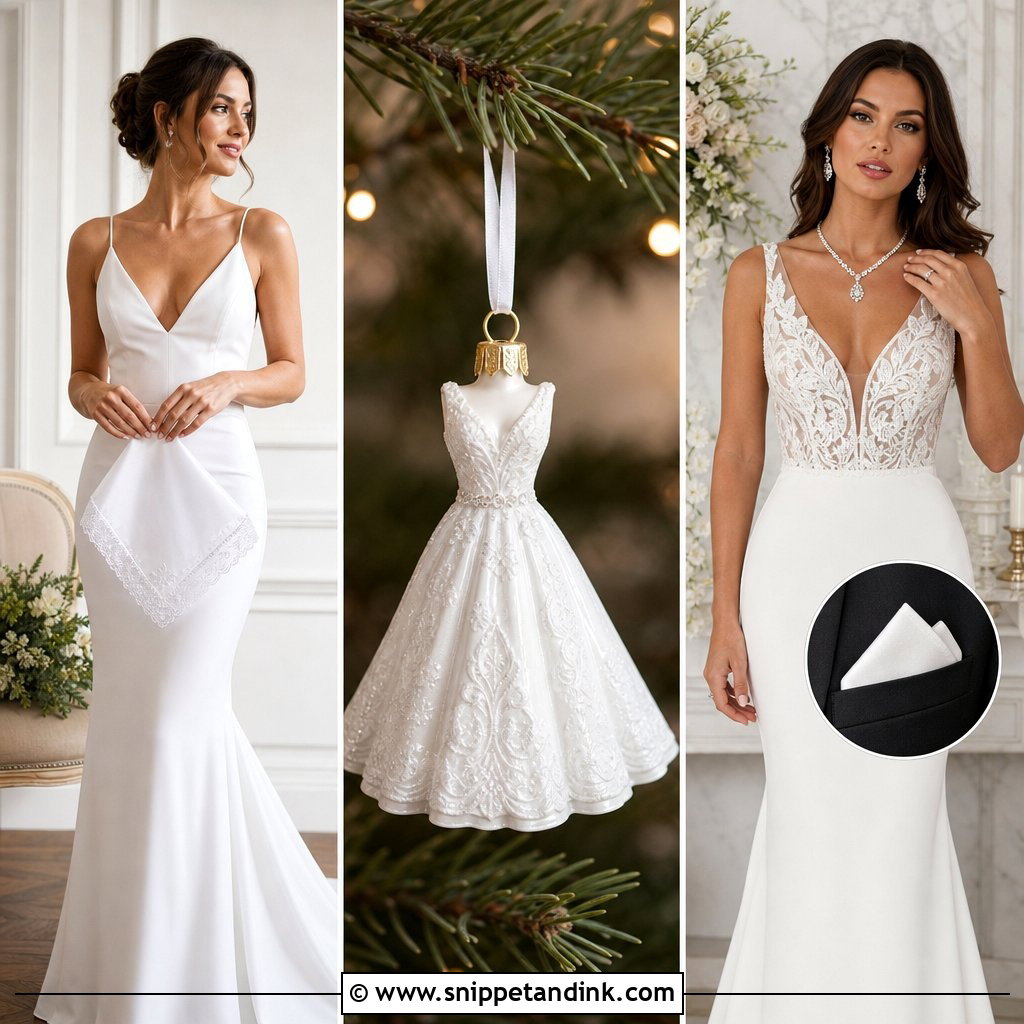
23. Wedding Dress Christmas-Free Ornament Set
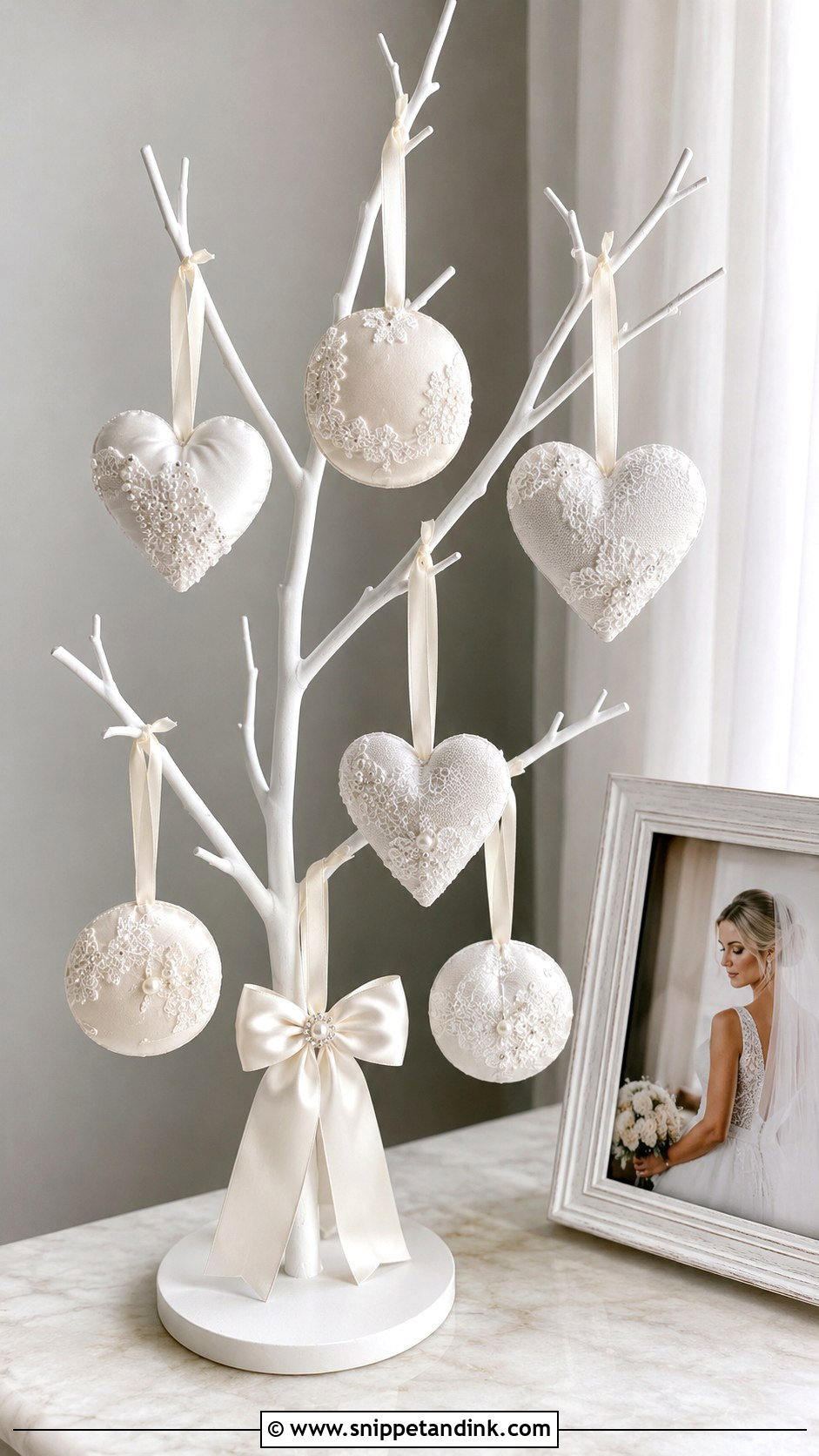
These ornaments don’t need a holiday theme. Small pieces of gown fabric become hearts, stars, circles, bows or soft hanging shapes for a nursery, closet door, memory wall or keepsake branch, finished with lace, pearls and buttons. Scraps left from bigger projects are enough, and even a damaged gown usually has sound fabric for several. I like making a set and giving matching pieces to parents, siblings or close friends, each with tiny embroidered initials or a date. Stuff them lightly so the satin doesn’t strain at the seams.
24. Wedding Dress Keepsake Bear
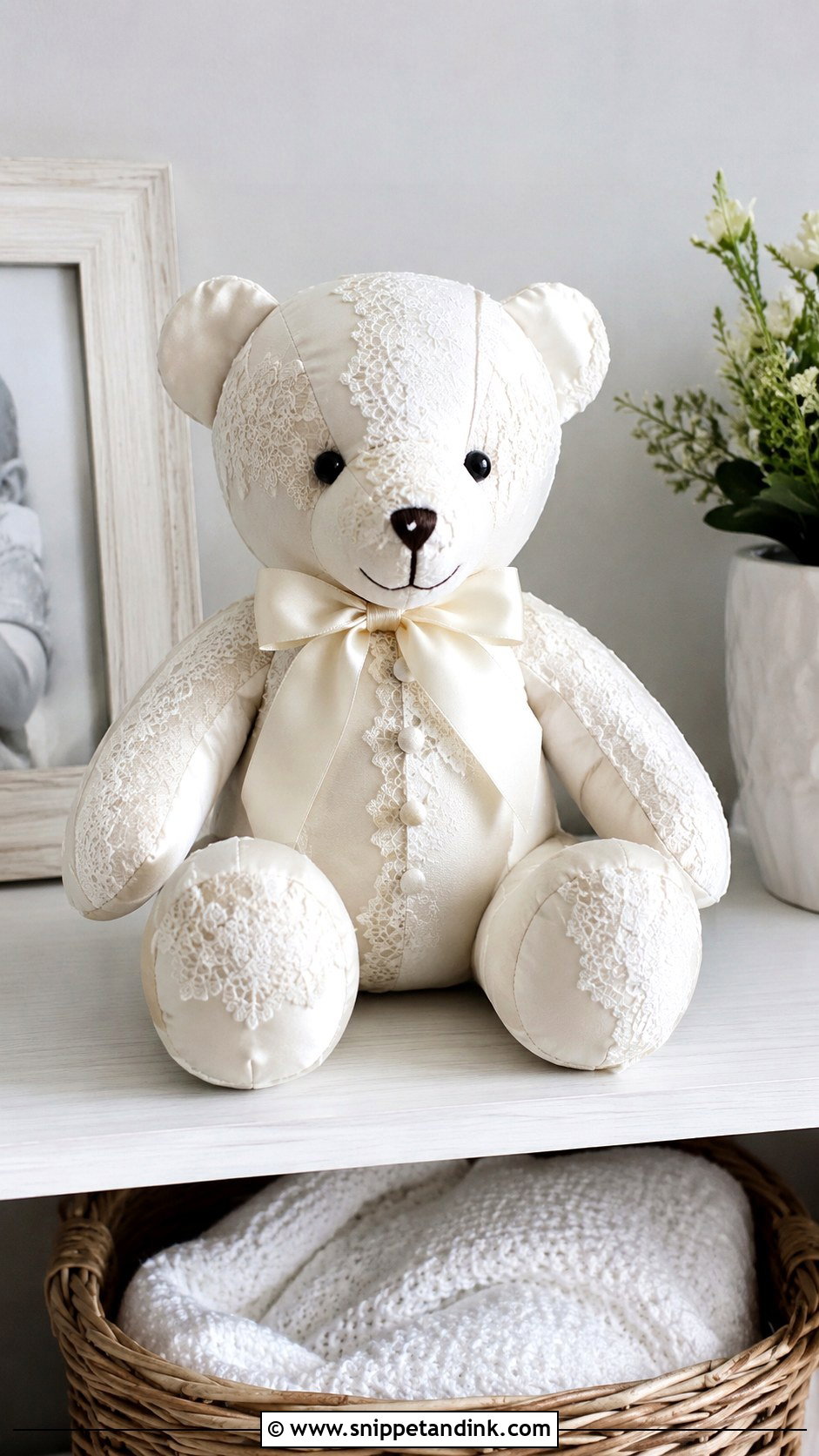
A bear made from the gown is a display piece more than a toy. Wedding fabrics fray and tear under rough play, so a good maker uses sturdy backing fabric inside and puts the lace or satin on the outside. If a small child will have it, skip button eyes and sewn-on pearls and ask for embroidered features instead; anything that can be chewed off is a choking risk. An embroidered date, initials or a small bow from the dress makes it personal.
25. Wedding Dress Donation
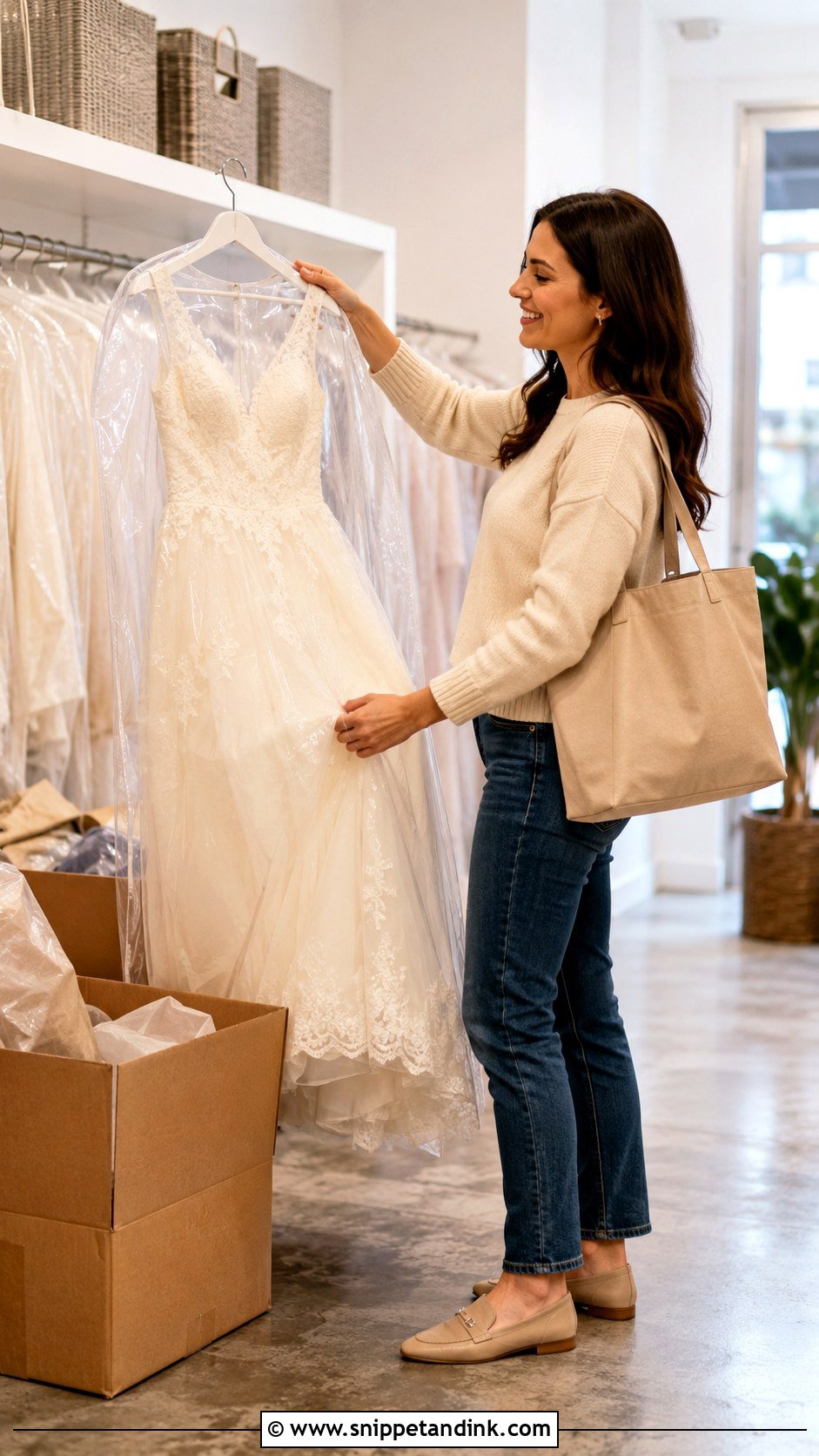
Donating your wedding dress counts as repurposing when you’re ready to let it help someone else. Gowns go to resale charities, theater programs, fashion students, textile artists and groups that turn dresses into keepsakes. Each has its own rules on condition, cleaning, size and age, so check before you post anything. If the dress is damaged, offer the usable lace, buttons or trim instead of the whole garment. Letting go can feel freeing when storage has become a worry. The memory stays with you; the dress simply gets a second use.
Getting Three Projects Out of One Dress
If you want something to wear and something for the house, plan the cuts together before anyone starts. Once a skirt is shortened, the panels trimmed off are odd shapes, and a quilter or pillow maker can only use what’s left.
Map the gown at the first appointment
Bring the gown and a short list in priority order. A good seamstress will chalk or pin where each piece comes from: the main garment first, then the larger offcuts for a pillow or runner, then scraps for hair pieces, ornaments or a ring pillow. For anything wearable, ask for a muslin mock-up. It costs an extra fitting, but it shows whether the new shape works on your body before the real fabric is touched.
Give the work time
Remaking a gown is slow handwork, and prices vary widely by region and complexity. A shortened hem might take a couple of weeks, while a jumpsuit or cocktail rebuild can take months if the seamstress is booked through wedding season. Fitted pieces need at least two fittings, so if the remake is for an anniversary, start well ahead.
Keep every offcut, wrapped in acid-free tissue inside a cotton bag rather than plastic, which traps moisture. Small leftovers often become the keepsakes people use most, years later.
Clean It, Photograph It, Then Cut
The right project is the one that fits how you live, not the one that looks best on a pin board. Some people want something to wear; others want a quilt, a pillow or a small object for a shelf. Before anything is cut, have the gown cleaned, photograph it from every side, inspect the stains in daylight and remove fragile embellishments by hand. Then sit down with a maker who has handled bridal fabric. One dress can usually stretch to several things, such as a short dress, a bouquet wrap and a pillow from the leftovers, and each keeps the gown in use long after the wedding.
You'll Like These Ideas:


Leave a Reply