
Start with the feeling, not the gown. If you can tell me you want to look calm and sculptural, or warm and a little undone, I can build everything else around it: the dress, then the veil, shoes, jewelry and flowers. Designers keep returning to Basque waists, sculpted bodices, bows and dimensional flowers, which gives a white gown plenty of ways to feel personal. The twenty looks below run from ball gowns to a jumpsuit with a detachable train. With each one I’ve noted what I’d test in the fitting room, because a dress that looks right on a hanger can still fail you at the reception.
Sample Gowns Are Clipped, So Learn to Read Them
Most salons carry one sample of each gown, usually in a standard sample size, and the consultant clips or pins it to fit you. That means the dress you try rarely fits the way your finished gown will. A few things help you see past the clips.
- Wear smooth nude underwear and bring a strapless bra if you’ll want one; it’s hard to judge a neckline over the wrong underwear.
- Ask to see the back. The clips show you how much the gown will be taken in, and a dress pulled in a great deal may change shape when it’s altered.
- Judge the fabric with your hands. Lift the skirt and feel its weight; heavy satin and mikado are tiring over a long day.
- Bring a pair of shoes close to the height you’ll wear. Hems pooling on the floor make every gown look wrong.
- Keep your group small. Two people whose taste you trust give clearer feedback than six.
Try one gown you would never choose from a photo. I’ve seen that wildcard change a bride’s mind more often than any picture, because movement and weight only show up in person.
1. Basque Waist Bridal Dress
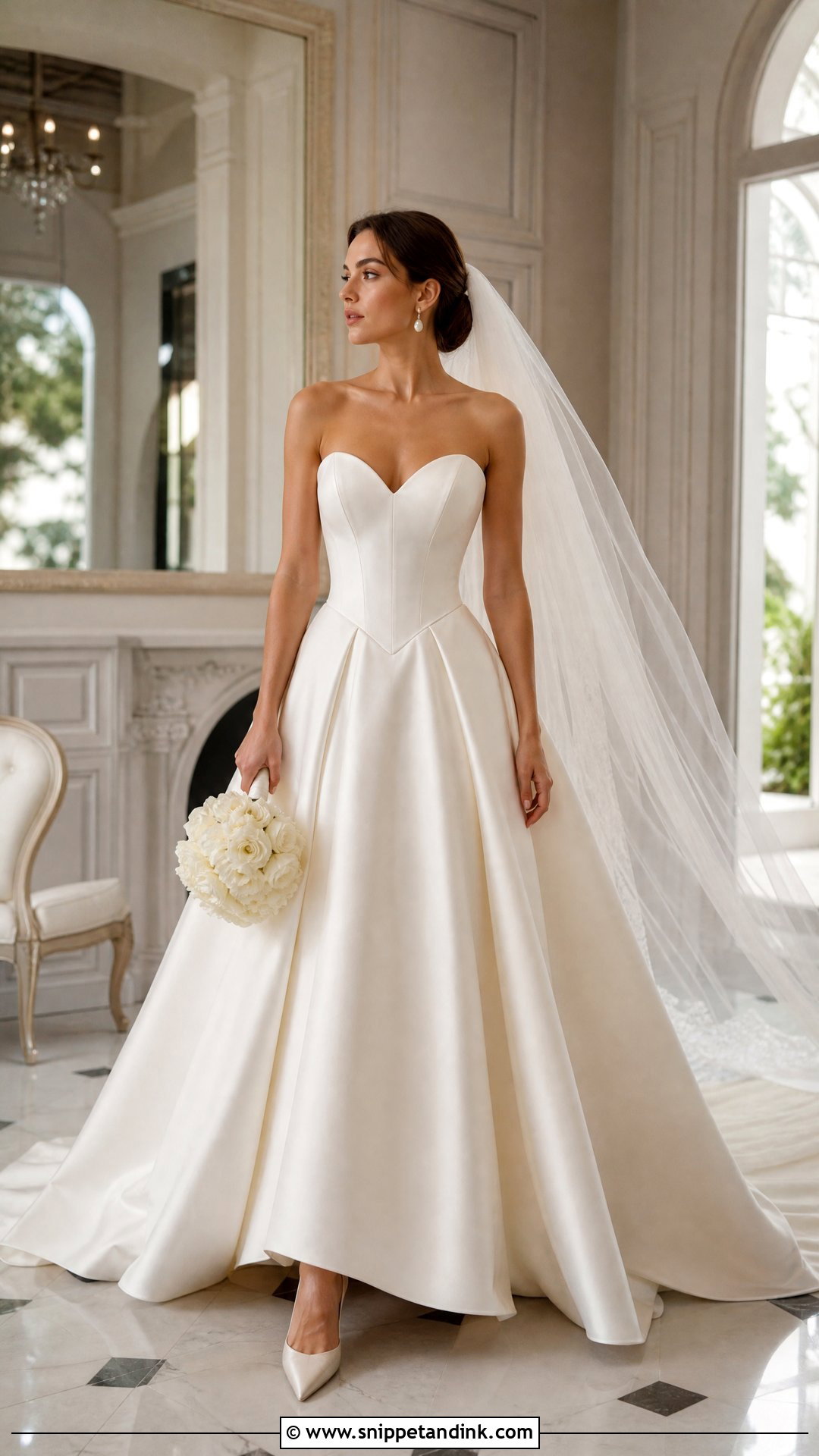
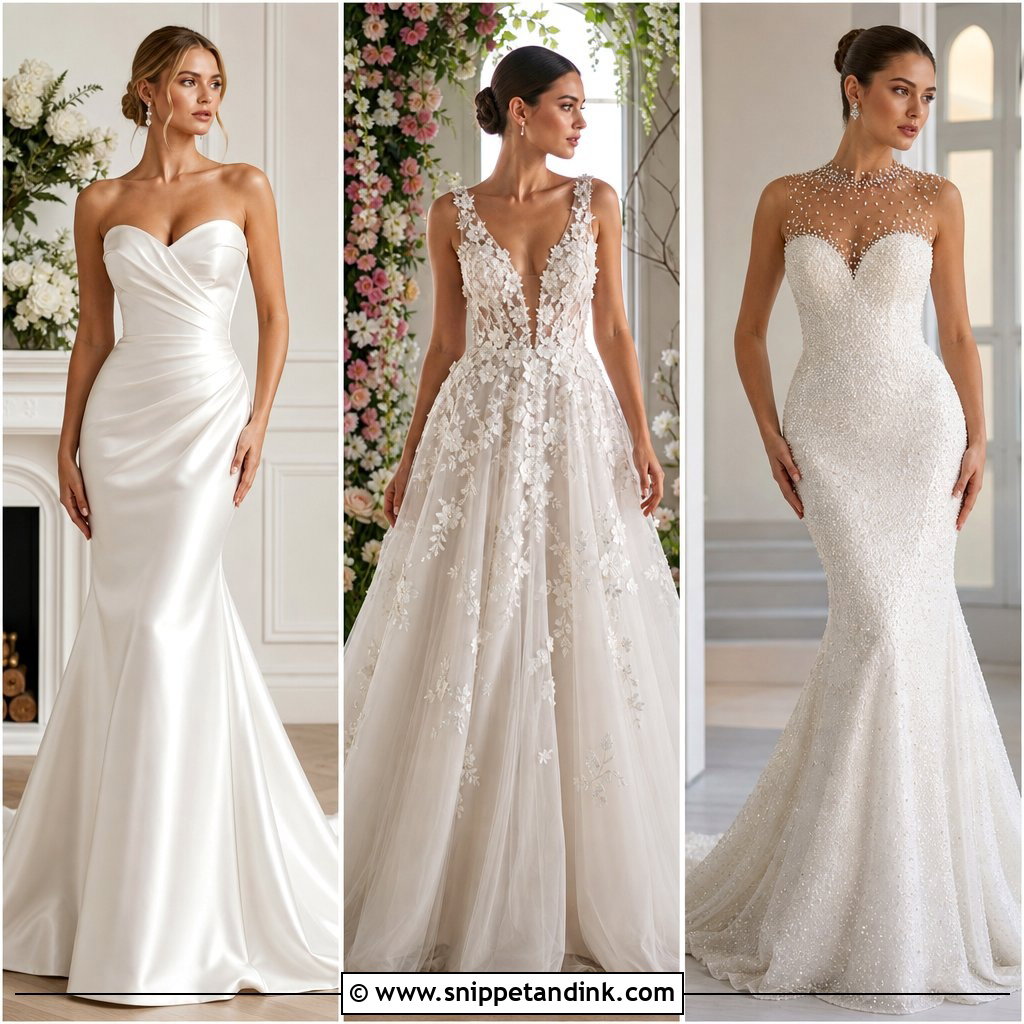
The Basque point is a V that dips below your natural waist, and it carves the torso in a way no other waistline does. Structured satin or mikado shows it best. Get the depth right first: on a short torso, a deep point pushes into the hip bones when you sit, so I often raise it a little in alterations. A full skirt with a medium train balances the bodice without fuss. Pointed ivory pumps, pearl drops and a raw-edge cathedral veil. White roses and greenery in a compact bouquet. Grand settings suit it: a ballroom, an estate, a large indoor hall.
2. Strapless Satin Ball Gown Bridal Dress
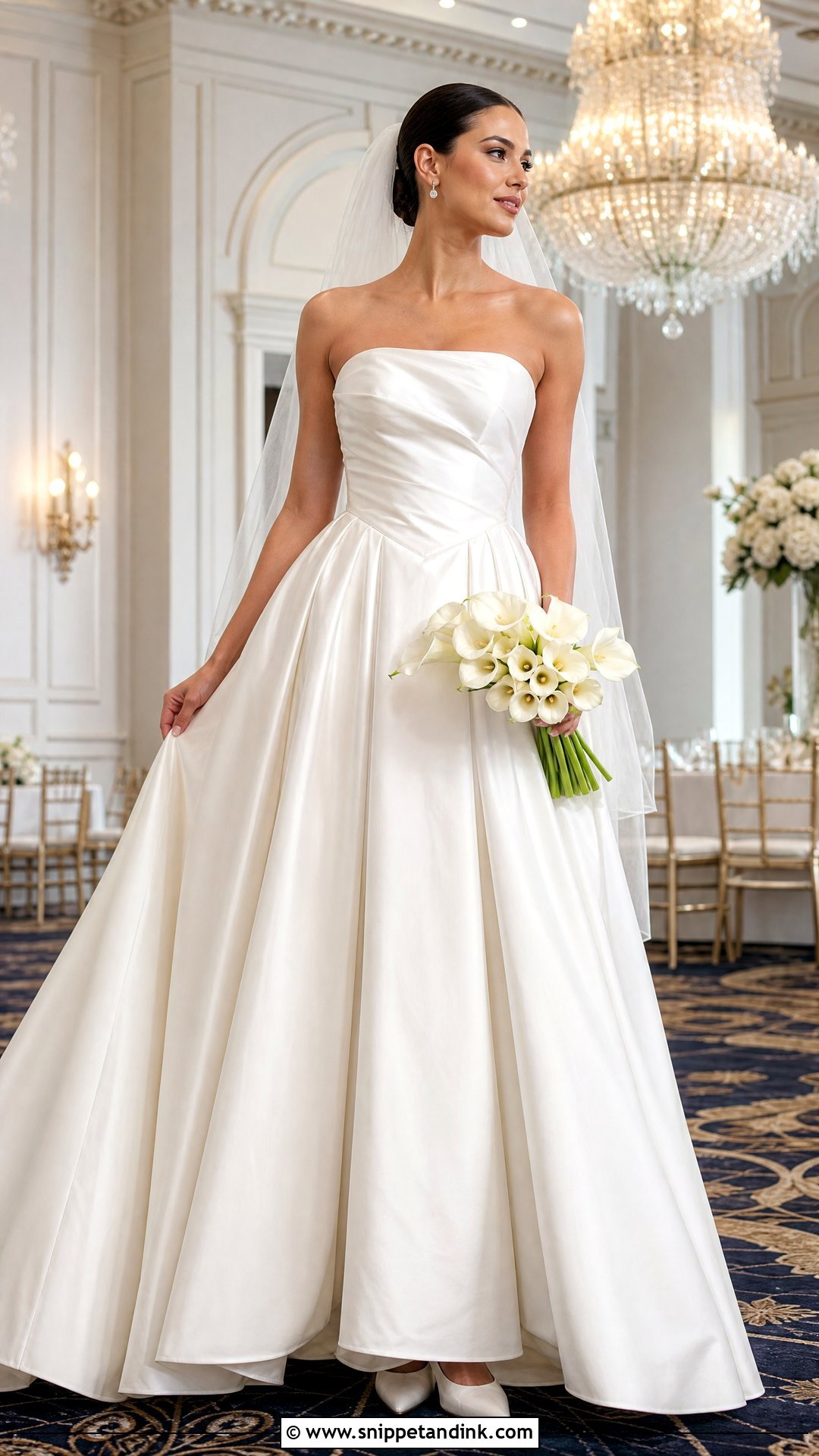
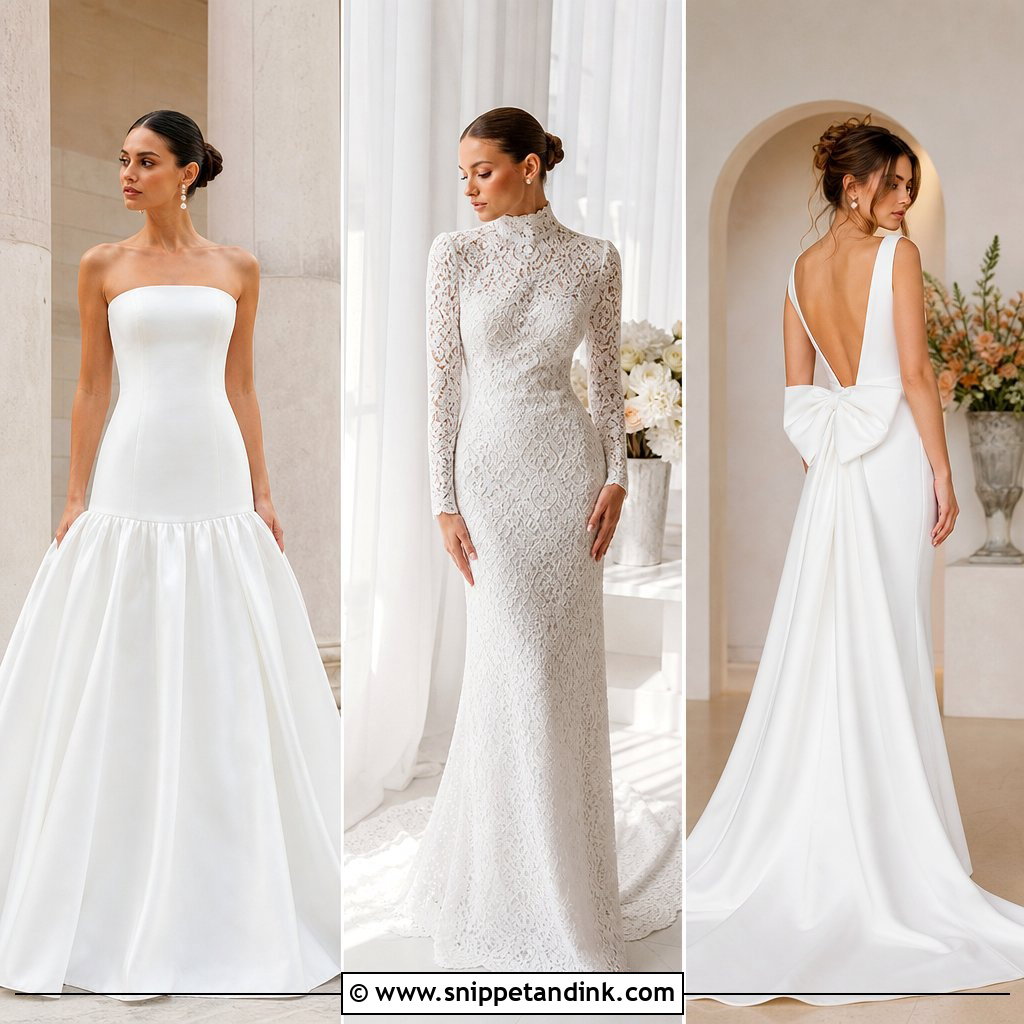
Strapless satin ball gowns rely on what you can’t see. A good one has a built-in corset or waist stay that holds the bodice up by gripping your waist, not by squeezing your chest, and I’d ask the salon to show you that inside before you fall for the outside. Soft pleats in the skirt look cleaner than heavy gathering. A fingertip veil, crystal studs and satin pumps. A sleek bun or soft waves to show the neckline, and calla lilies or roses tied with ivory ribbon. Hidden pockets are worth asking for. Satin shows wrinkles quickly, so arrange steaming close to the ceremony.
3. Long Sleeve Lace Bridal Dress
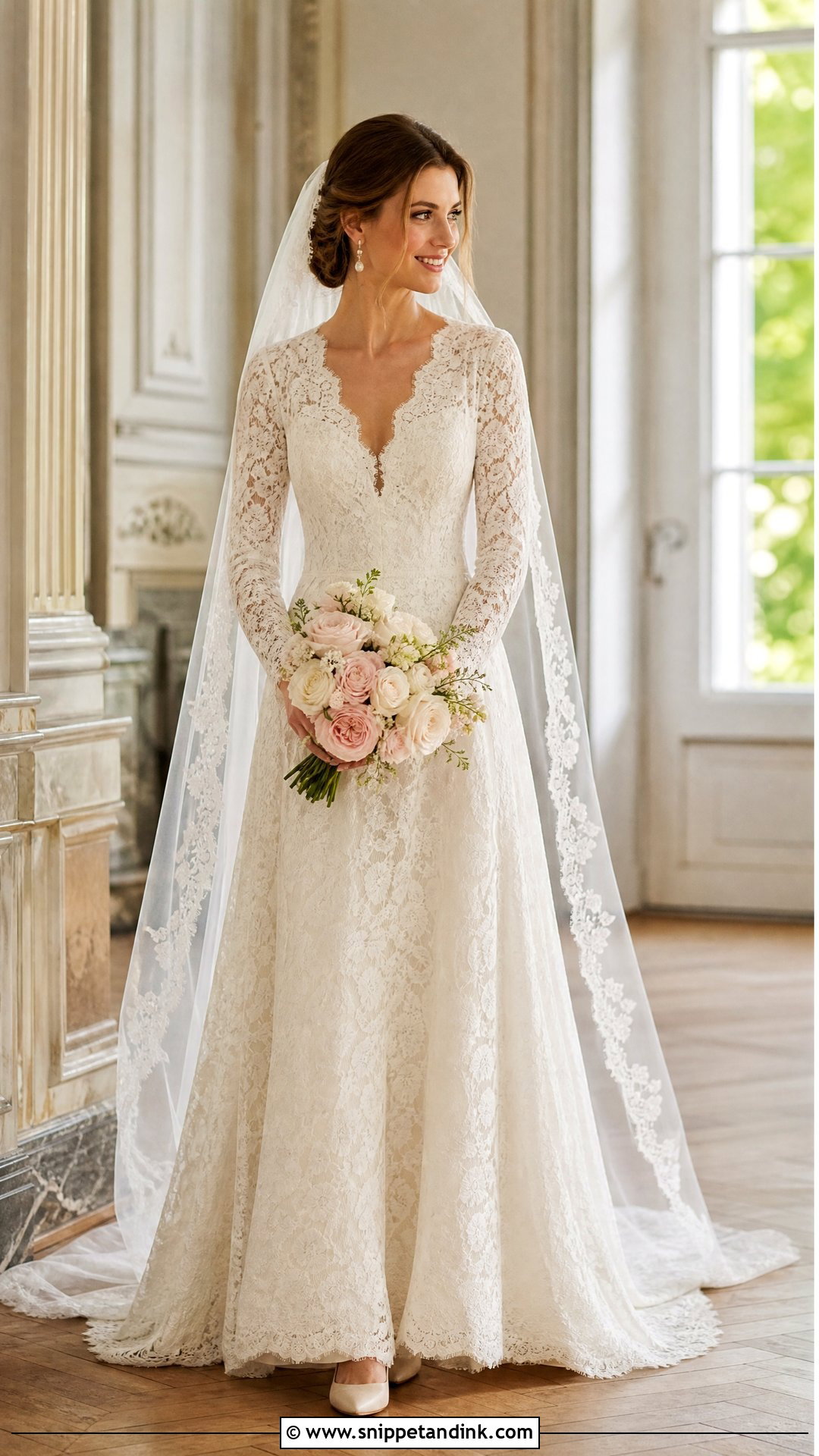
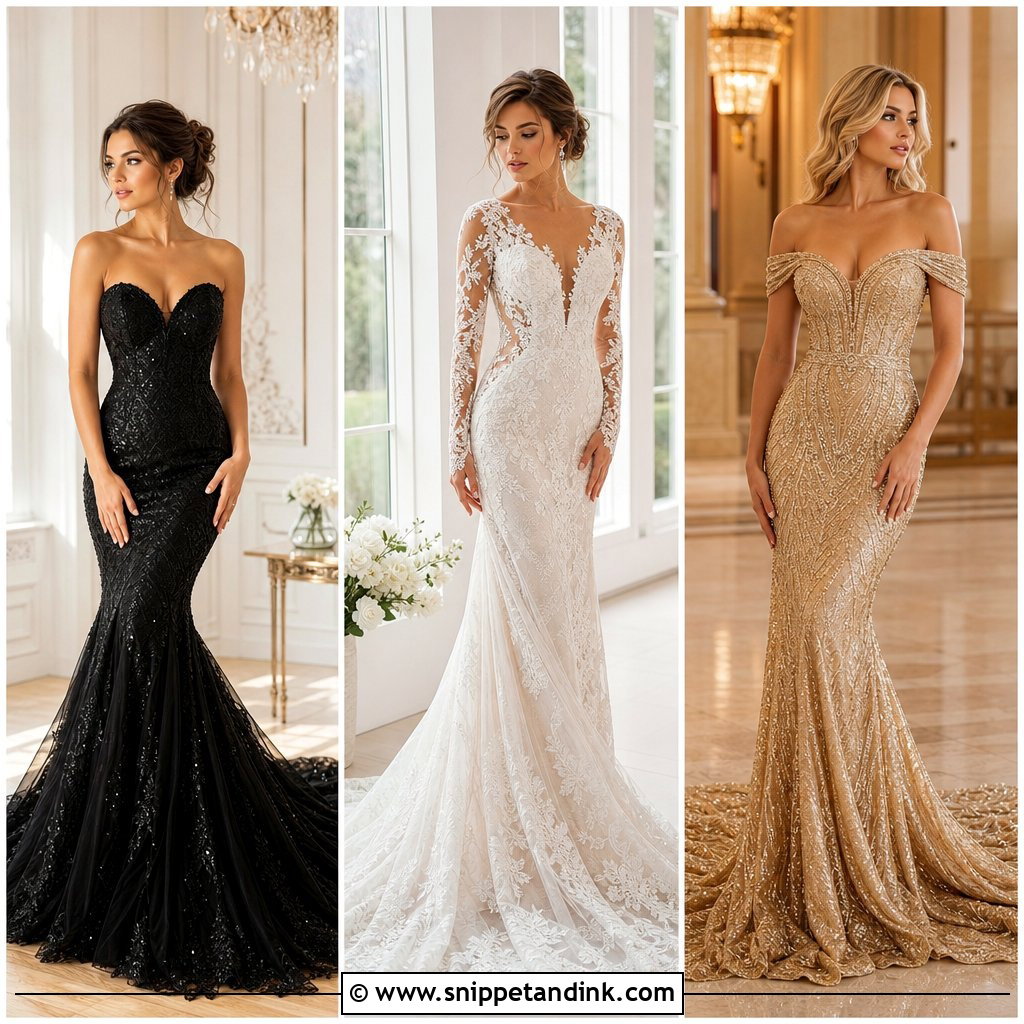
Long lace sleeves give coverage and a lot of romance, but they have to be cut for movement. A sleeve fitted while your arms hang down will bind the moment you lift your bouquet or reach for a hug. Lift your arms at every fitting. A lightly lined bodice, defined waist and A-line skirt keep the lace from looking heavy, and a scoop, bateau, or modest V neckline frames the face. Pearl earrings, low ivory heels and a lace-edged veil that echoes the gown rather than copying it. A loose chignon, garden roses and sweet peas. It suits cooler months and historic venues.
4. Minimalist Crepe Bridal Dress
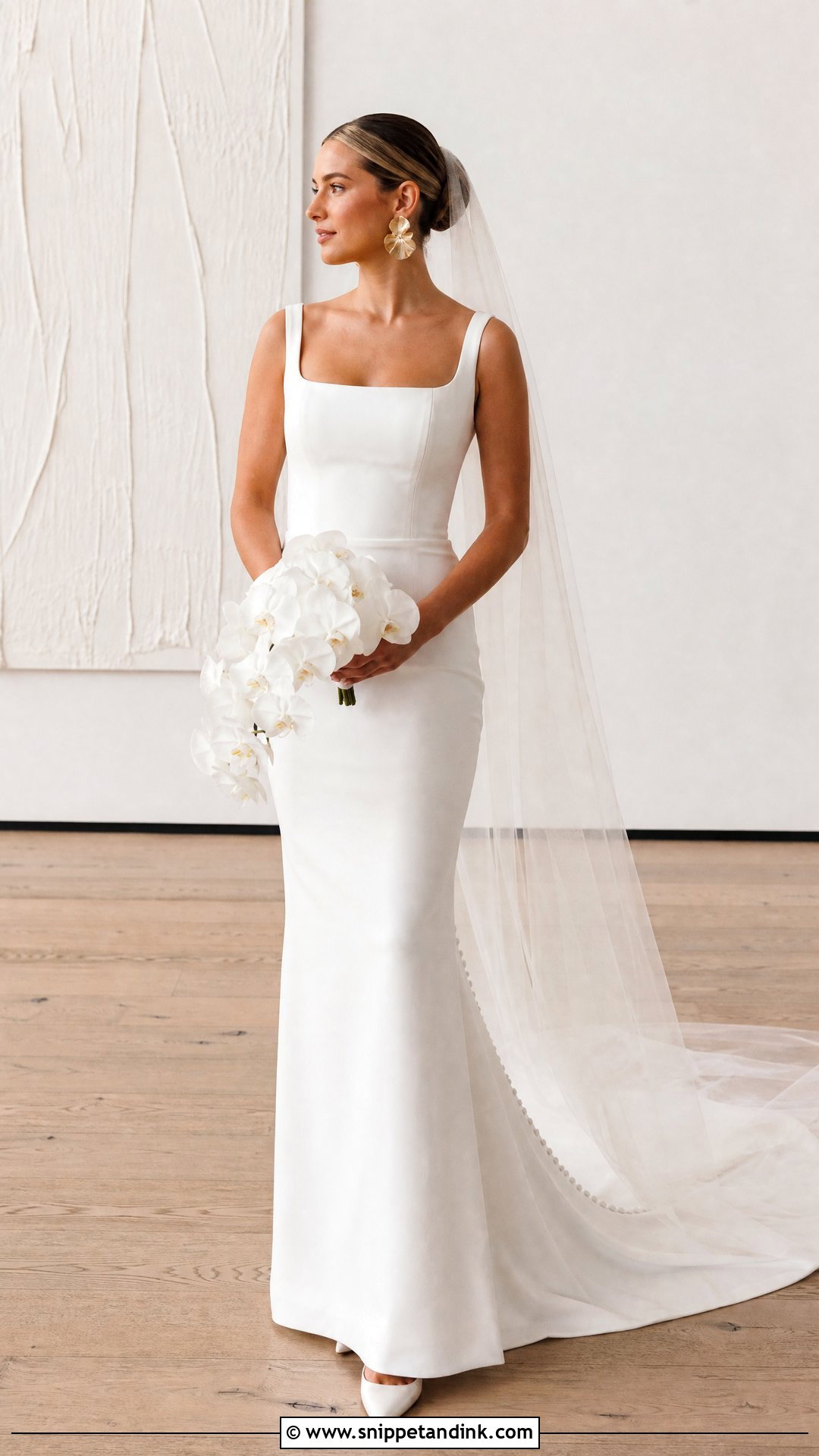
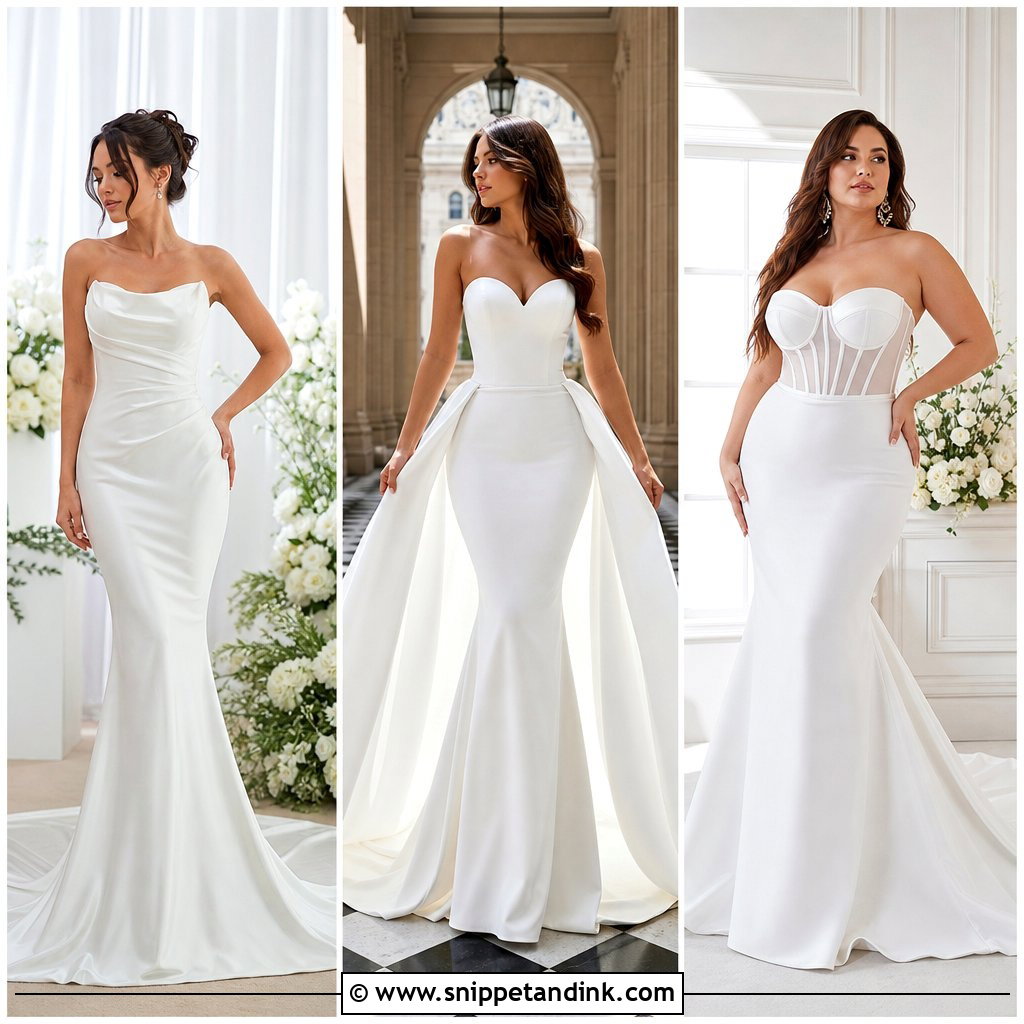
Crepe is honest fabric. It follows your body closely, with nothing to hide behind, so the tailoring and the undergarments make or break it. A column or fit-and-flare with a square neck, covered buttons and a long fluid train is about as clean as bridal gets. Sculptural gold earrings, pointed white heels and a plain tulle veil. A sleek low bun, and white orchids for shape without color. I like a removable cape for the ceremony that comes off for a sharper reception look. Contemporary hotels, galleries and small city weddings suit it best.
5. Off Shoulder Bridal Dress
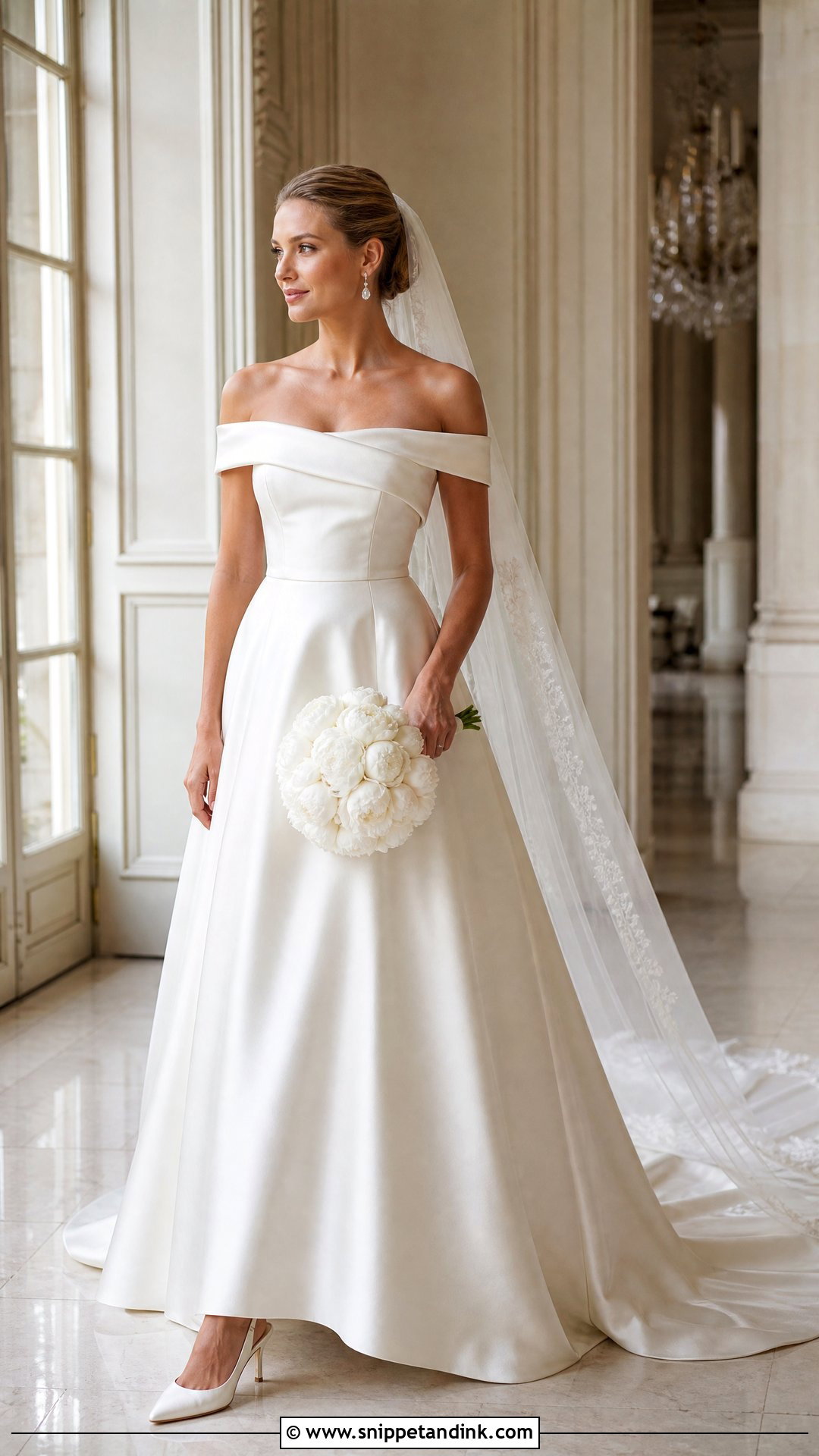
Off-shoulder necklines have two versions. Folded satin bands look structured; lace sleeves look softer. Either way, the bands sit on your upper arms, so your arm movement is limited. Can you lift the bouquet to chest height? Can you hug? Test both. A fitted bodice with an A-line or full skirt keeps the proportions balanced. I’d only add a necklace if it’s very fine; drop earrings and a slim bracelet usually do more. Ivory slingbacks and a plain cathedral veil. Hair in a low bun or side-swept waves so the shoulders show, and a rounded bouquet of peonies or roses.
6. Square Neck A-Line Bridal Dress
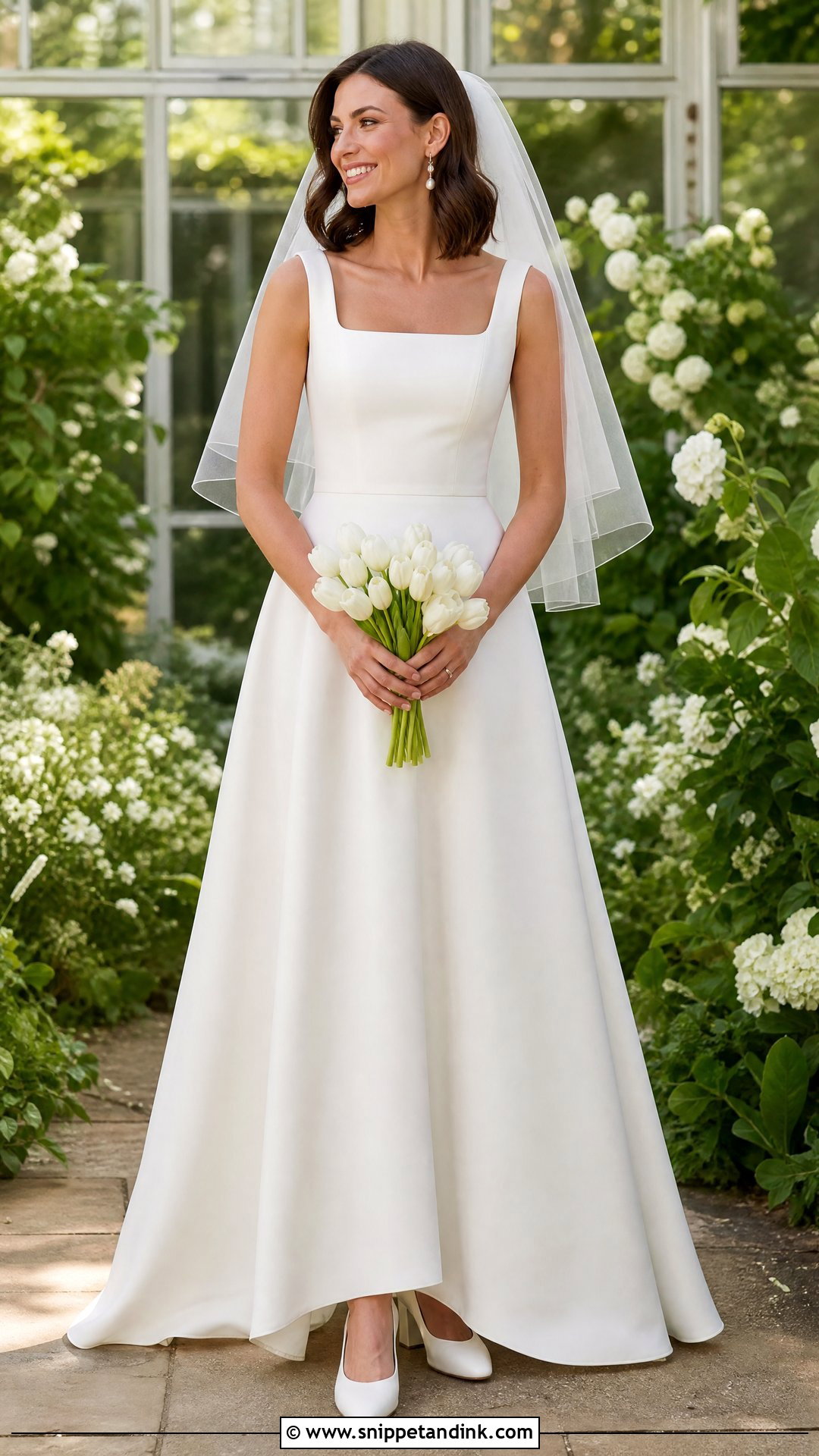
Square necks look polished in matte satin, crepe or lightly textured jacquard, and the A-line skirt below keeps the whole dress relaxed. Strap width changes the feel: wider straps support a fuller bust; slim straps read more delicate. If the neckline feels too low, a seamstress can raise it while keeping the square corners. A shoulder-length veil, pearl-and-gold earrings and closed-toe block heels. Soft waves or a neat bun. White tulips or ranunculus with seasonal greenery. It’s one of the easiest shapes to personalize, and it suits gardens, modern estates and traditional indoor venues alike.
7. Floral Applique Bridal Dress
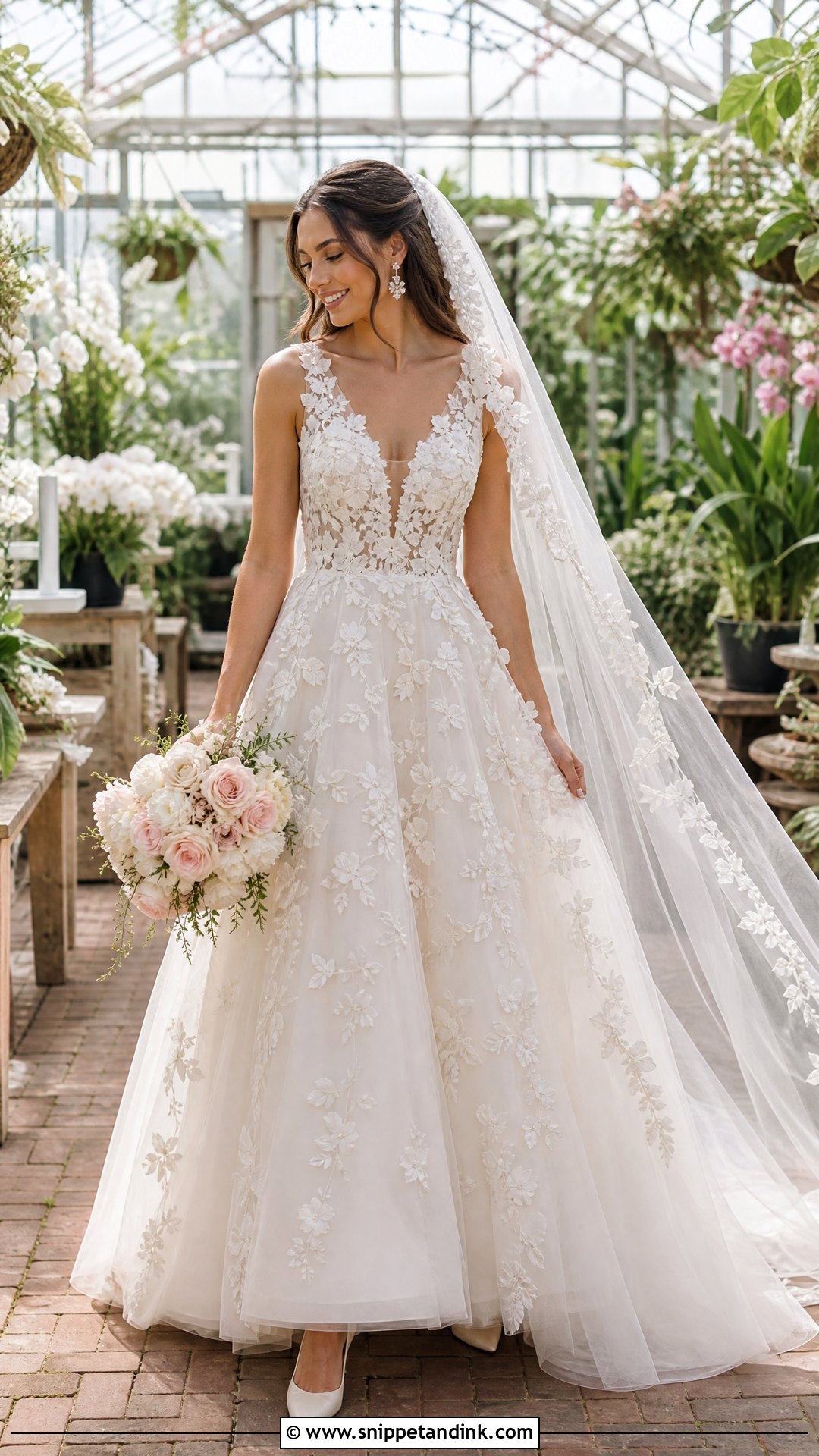
Appliqué works best when it thins out as it travels down. Flowers clustered on the bodice and fading into a tulle A-line skirt keep the dress light, whereas flowers spread evenly from top to hem can look heavy. Turn one over at the appointment to see how it’s attached; flowers tacked at several points last much better. Simple ivory heels, small crystal earrings and a sheer veil with a few flowers near the edge. A low textured bun with some loose face-framing pieces. White and blush flowers in the bouquet, without making it a theme. Skip the necklace. A greenhouse or garden in spring is its natural setting.
8. Corset Bodice Bridal Dress
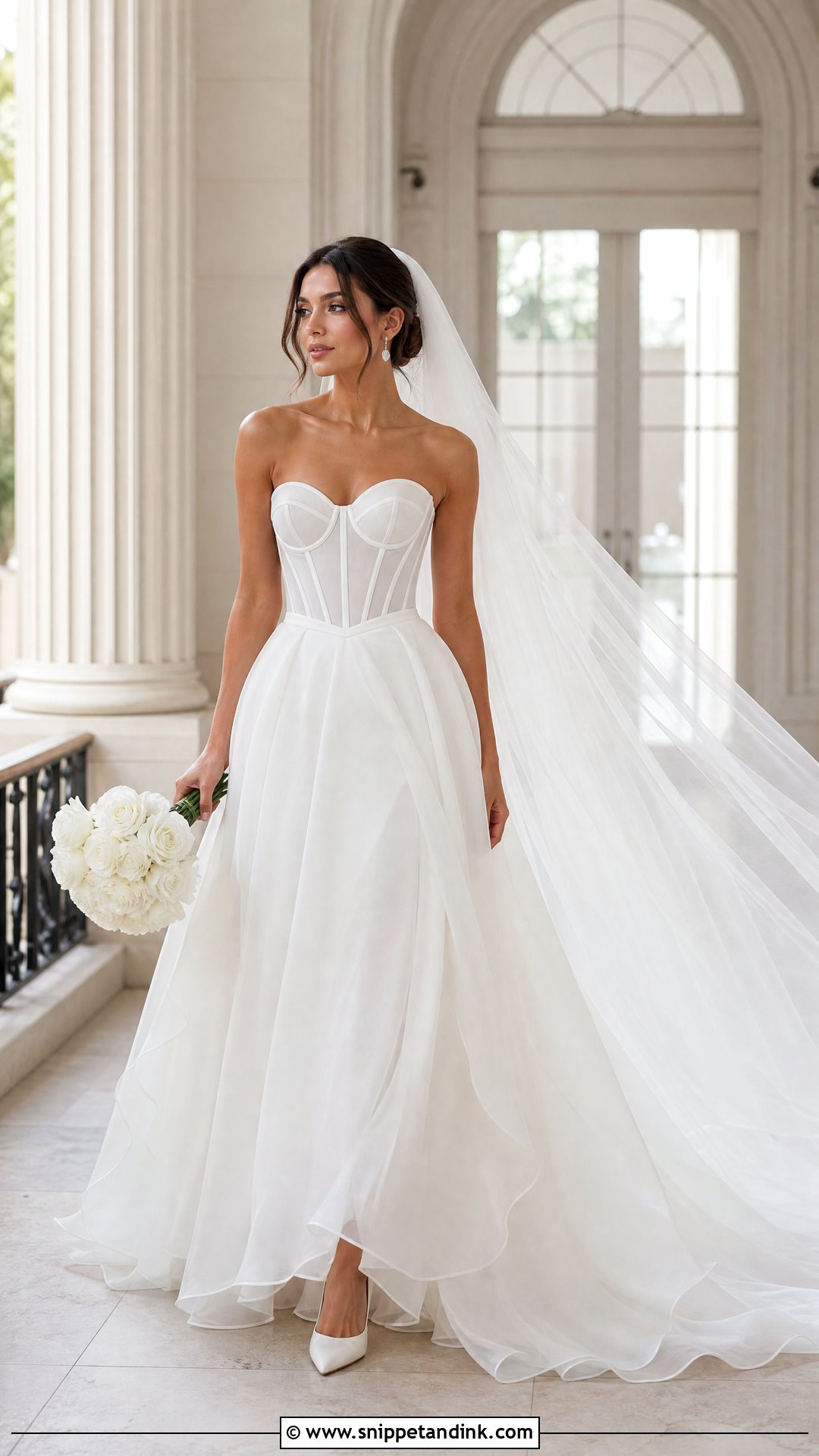
A corset bodice should hold you, not hurt you. Check for real internal boning, cups that fit your bust and lining that gives the coverage you’re comfortable with. Then pair the fitted top with flowing satin, organza or tulle so it doesn’t look stiff. Drop earrings, pointed ivory heels and a plain chapel-length veil. A polished ponytail or structured bun keeps the bodice visible. White roses with trailing foliage soften it. Sit, bend and walk at every fitting. If you find yourself tugging the top up after ten minutes, it needs taking in at the side seams before the day.
9. Drop Waist Bridal Dress
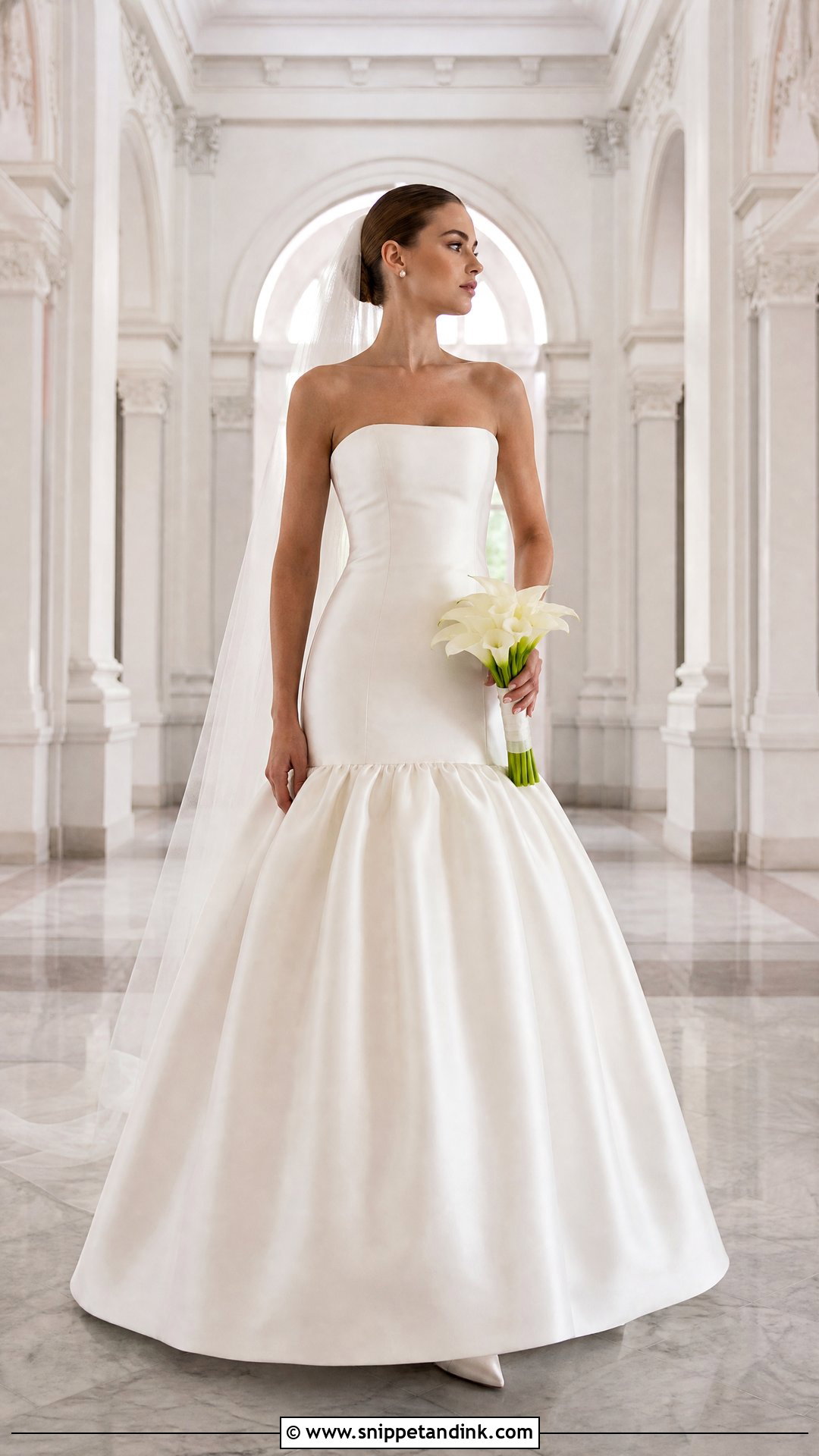
Drop waists lengthen the bodice toward the hip before the skirt opens, so where that seam lands depends entirely on your proportions. A small shift up or down changes the whole balance, and I always ask the seamstress to mark it while you stand in your wedding shoes. Smooth satin gives a sculptural line; lace softens it. Keep styling focused: a long plain veil, pearl studs and sleek pointed heels. A neat center-parted bun echoes the precise lines. A small bouquet of white roses or callas, never a wide one, which fights the long torso. Formal venues and fashion-minded brides suit it best.
10. Slip Bridal Dress With Veil
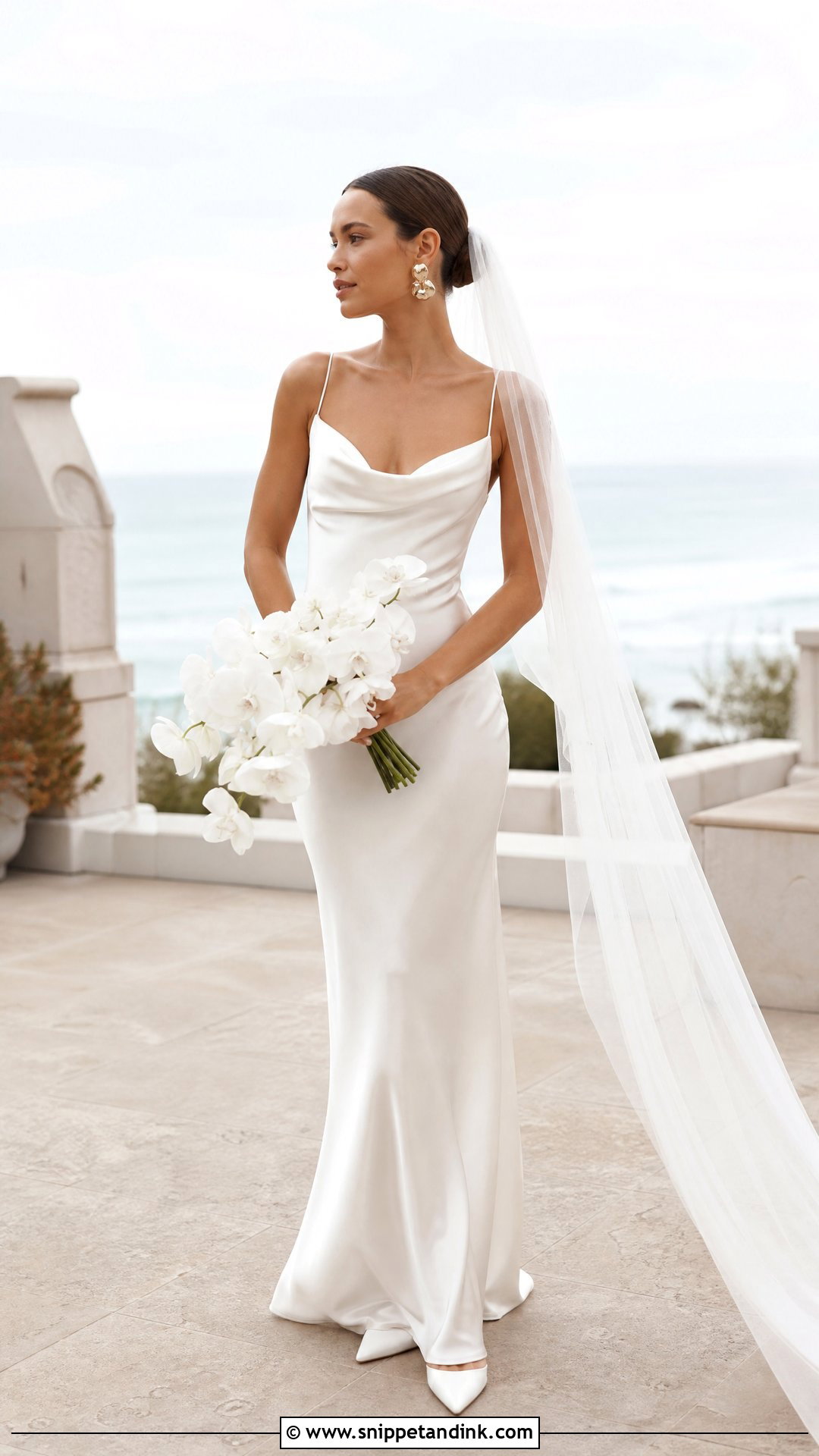
Slip dresses look simple and are surprisingly hard to wear well. Bias-cut satin shows every seam and underlayer, so bring your exact undergarments to every fitting. Look for a softly draped neckline, narrow straps and a skirt that moves rather than clings. Add structure through accessories: pointed mules, sculptural earrings and a long sheer veil give contrast. A smooth low bun or glossy waves. One variety of flower, such as orchids or roses. Keep a light wrap or an ivory blazer nearby; slip dresses are cold in the evening, and it suits intimate and destination weddings.
11. Tea Length Bridal Dress
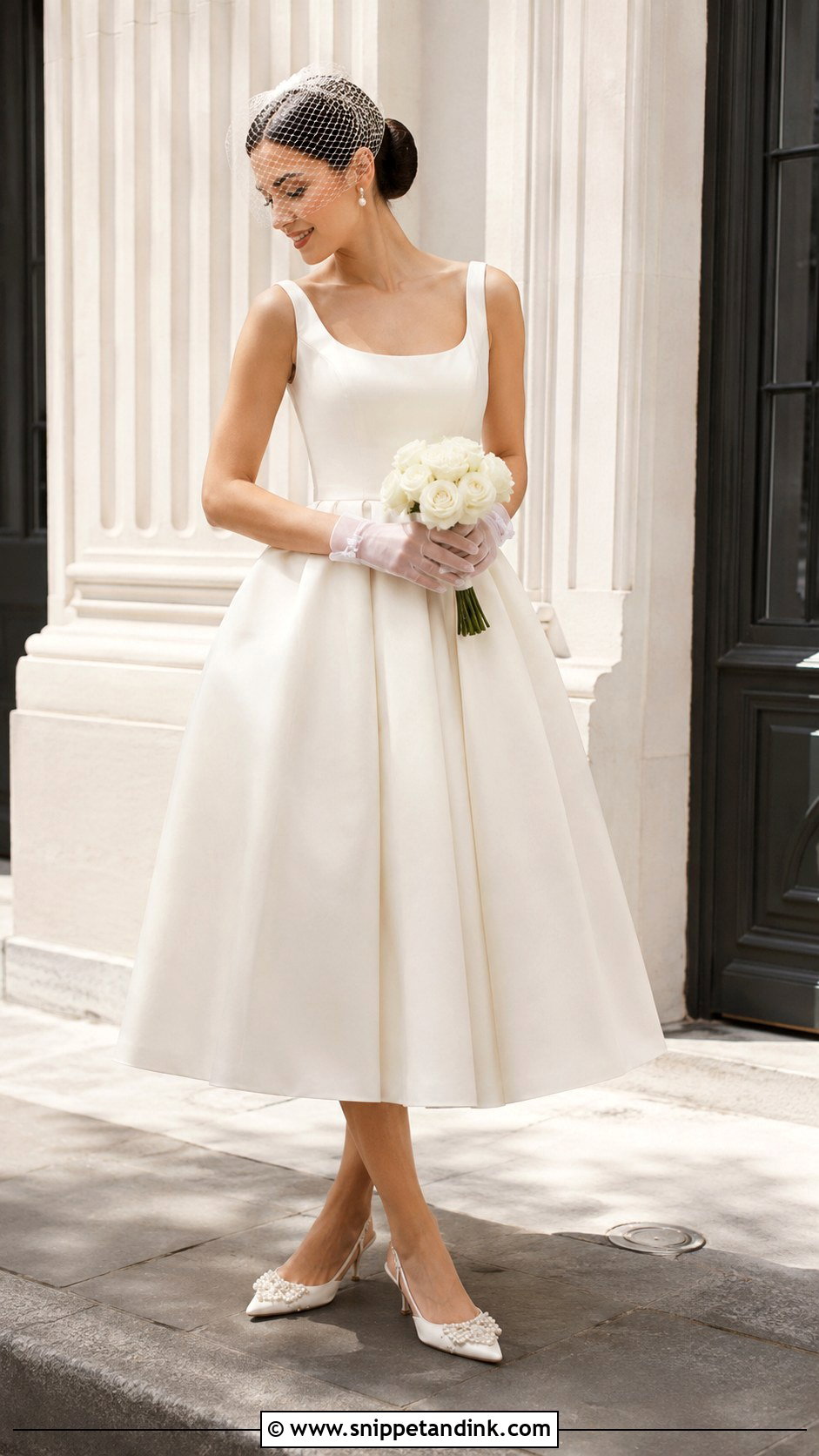
A shorter hem puts your shoes and your walk on display, so tea length rewards comfortable, beautiful shoes more than any other gown. Choose a fitted bodice with a full skirt ending between knee and ankle, and check the hem is level while you’re wearing the actual pumps or slingbacks. Short gloves, pearl earrings and a birdcage or shoulder-length veil give it a vintage note. A neat bun or softly curled bob suits the length. White roses, daisies or seasonal flowers in a compact bouquet. Courthouse ceremonies, daytime weddings and smaller receptions are where it shines.
12. Bridal Mini Dress With Overskirt
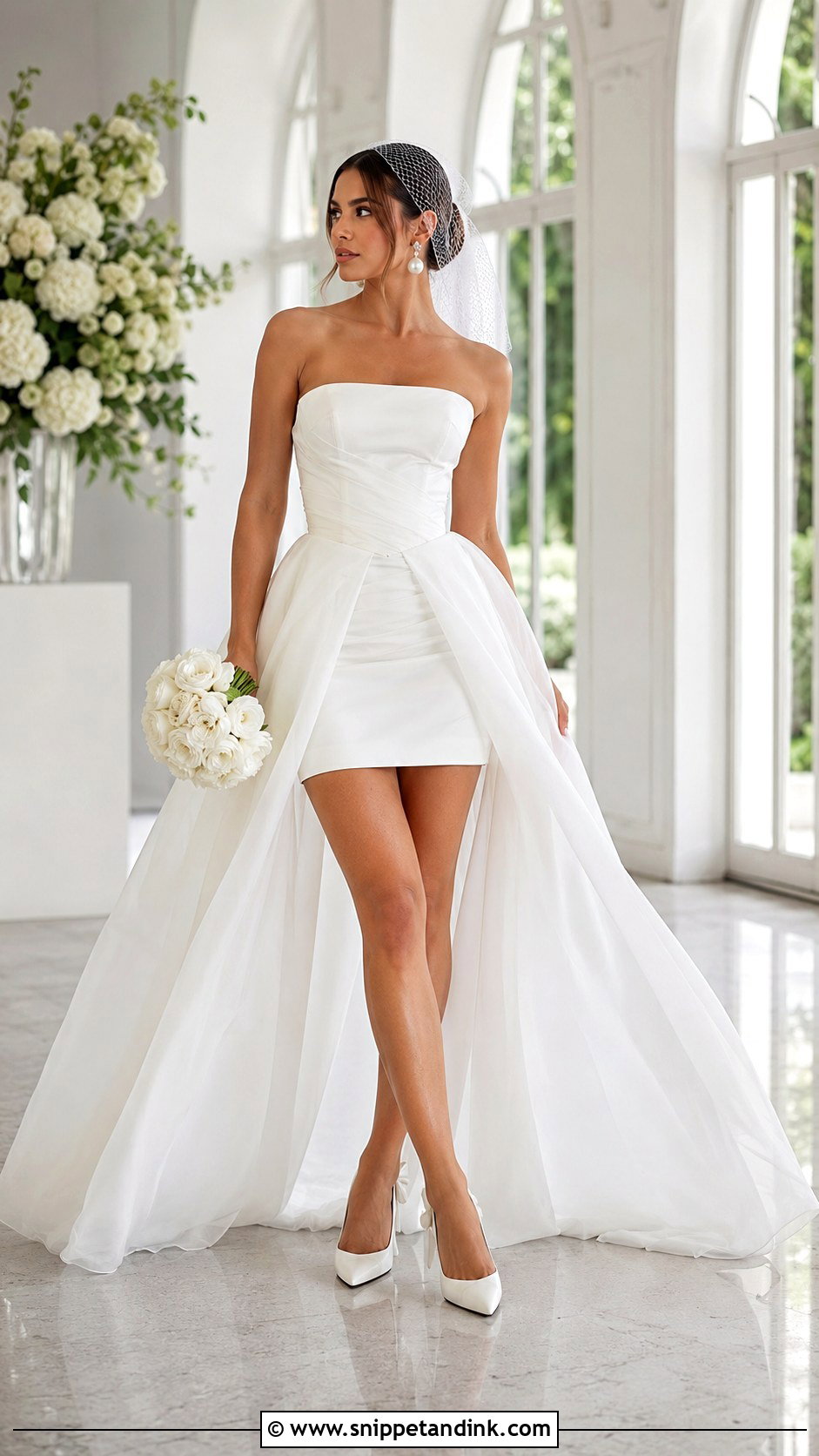
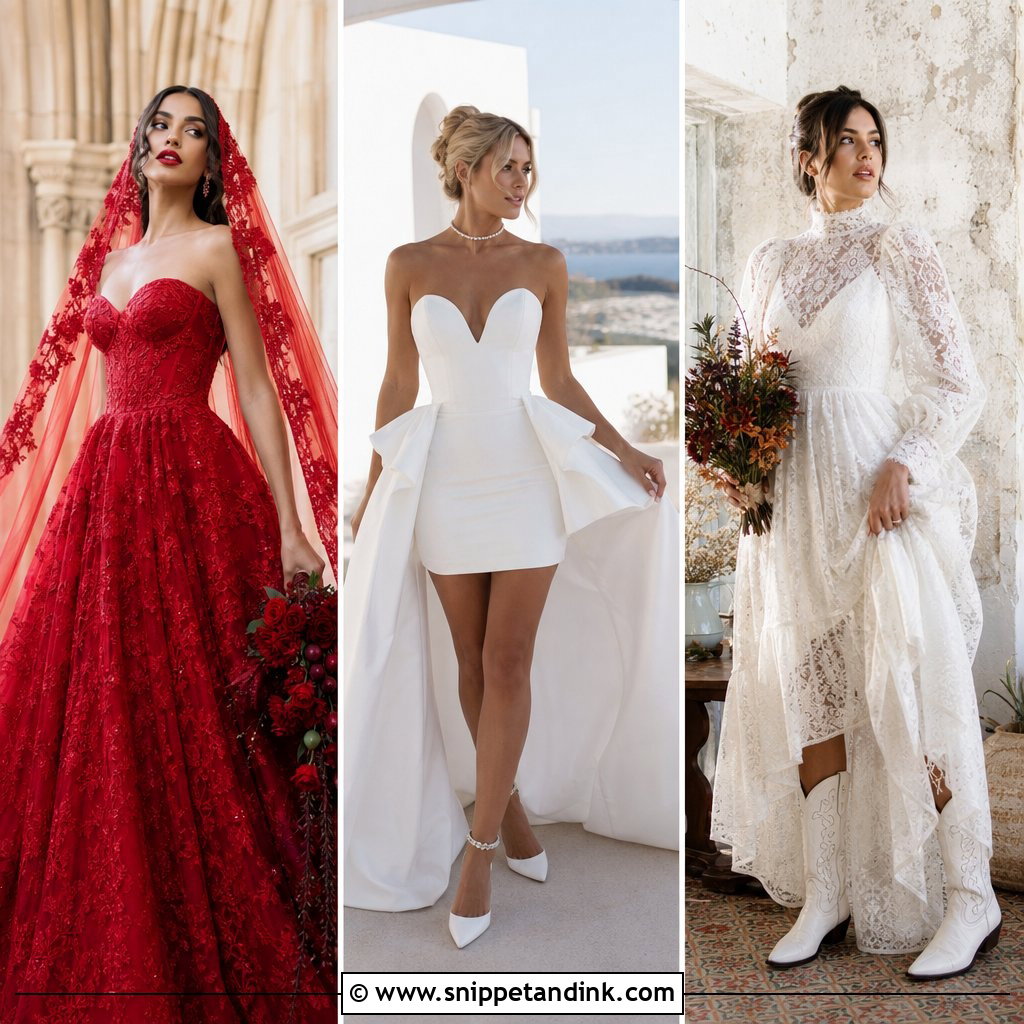
Two looks, one dress. A structured mini with a detachable overskirt in light organza or satin reads as a full gown for the ceremony, then the skirt comes off for the party. The fastening is what I check hardest: snaps or a hidden hook band that someone can release in under a minute, without you having to undress. The mini itself needs enough length and structure to dance in. Pointed pumps, statement earrings and a simple fingertip veil. A high ponytail or sleek bun. Keep the bouquet compact and white so the dress stays visible.
13. High Neck Bridal Dress
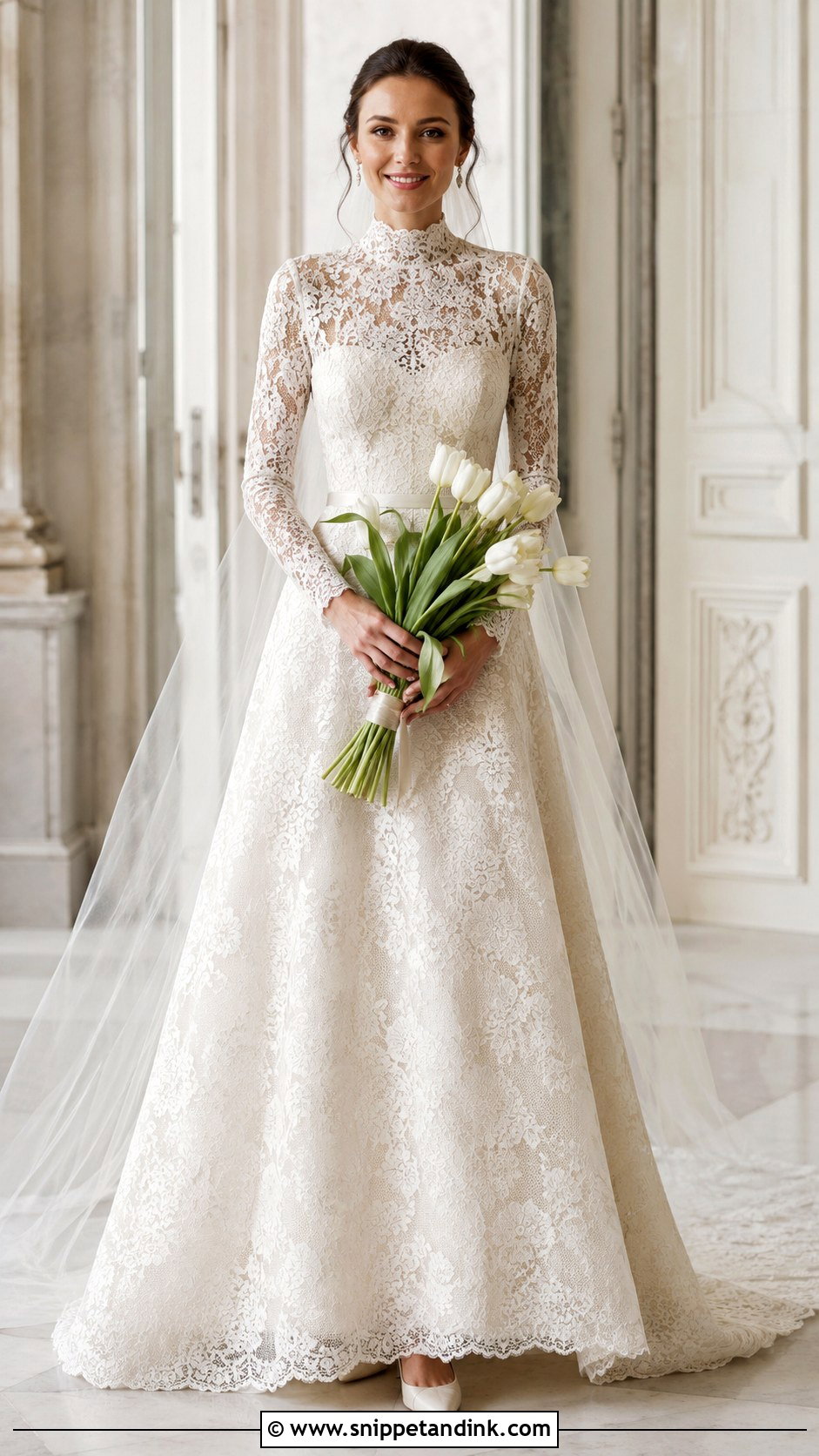
High necklines frame the face strongly, and the collar fit is where it can go wrong. It should sit smoothly without rubbing, pulling back or stopping you turning your head toward guests. I check it seated as well as standing. Sheer lace looks romantic; smooth crepe looks modern. A fitted bodice with a column or A-line skirt keeps it light. Skip the necklace, and choose delicate earrings, a fine bracelet and pointed ivory shoes. A low bun or polished updo shows the whole neckline. Set a plain veil underneath the hair so it falls cleanly. Long-stemmed tulips or callas echo the vertical line.
14. Boho Lace Bridal Dress
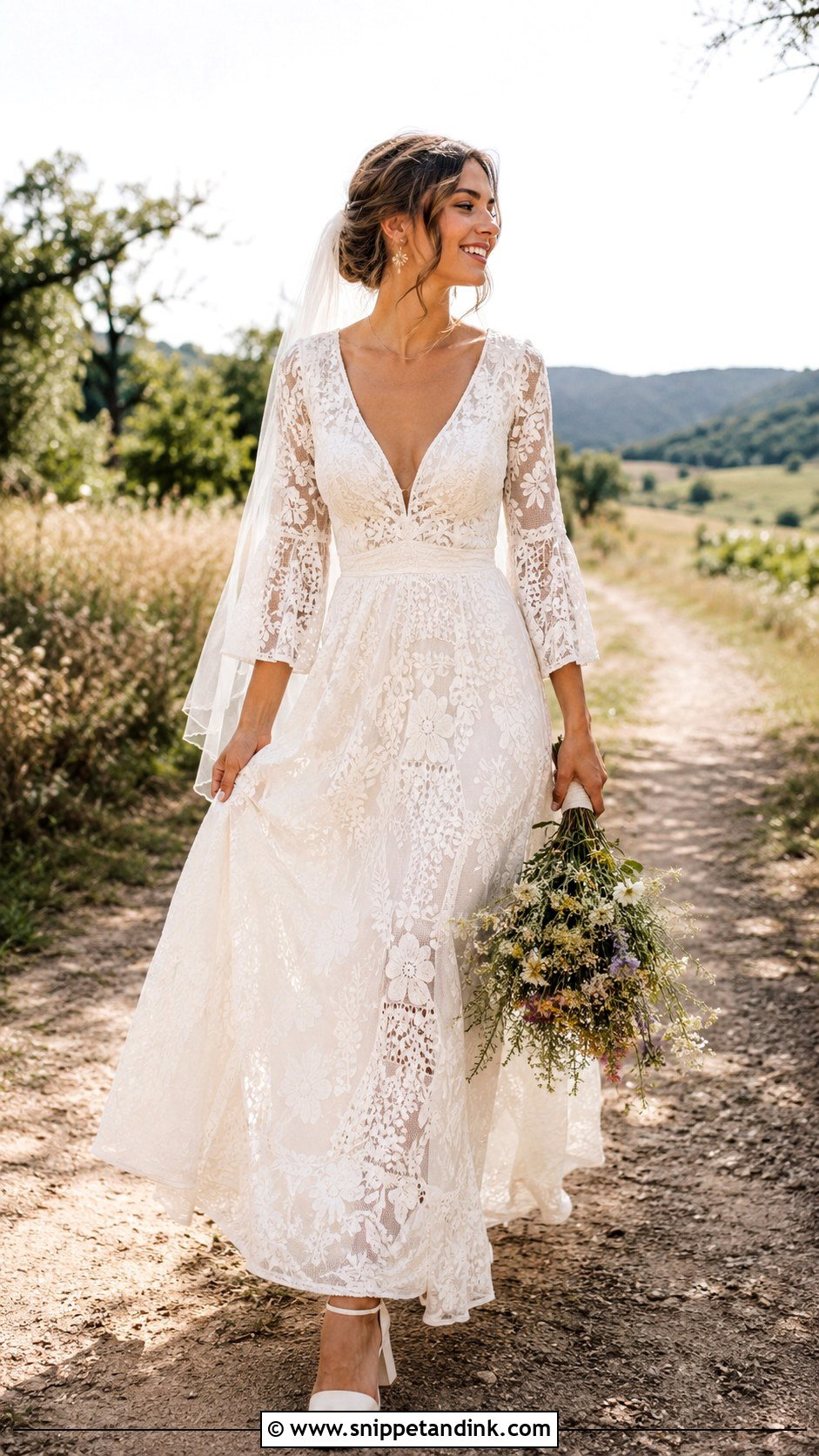
Boho lace should look thought through, not thrown together. A flowing A-line or sheath in botanical lace, with comfortable lining and light bell or flutter sleeves, carries the mood alone. Ivory block-heel sandals, small gold earrings and a simple veil set under loose waves. Wildflowers and white roses with textured greenery. Keep the decoration to the lace. For outdoor venues, think about the ground: a train dragging over dirt, sand or woodland paths picks up stains and leaves. A bustle or wrist loop solves that for the reception.


15. Pearl Bridal Dress
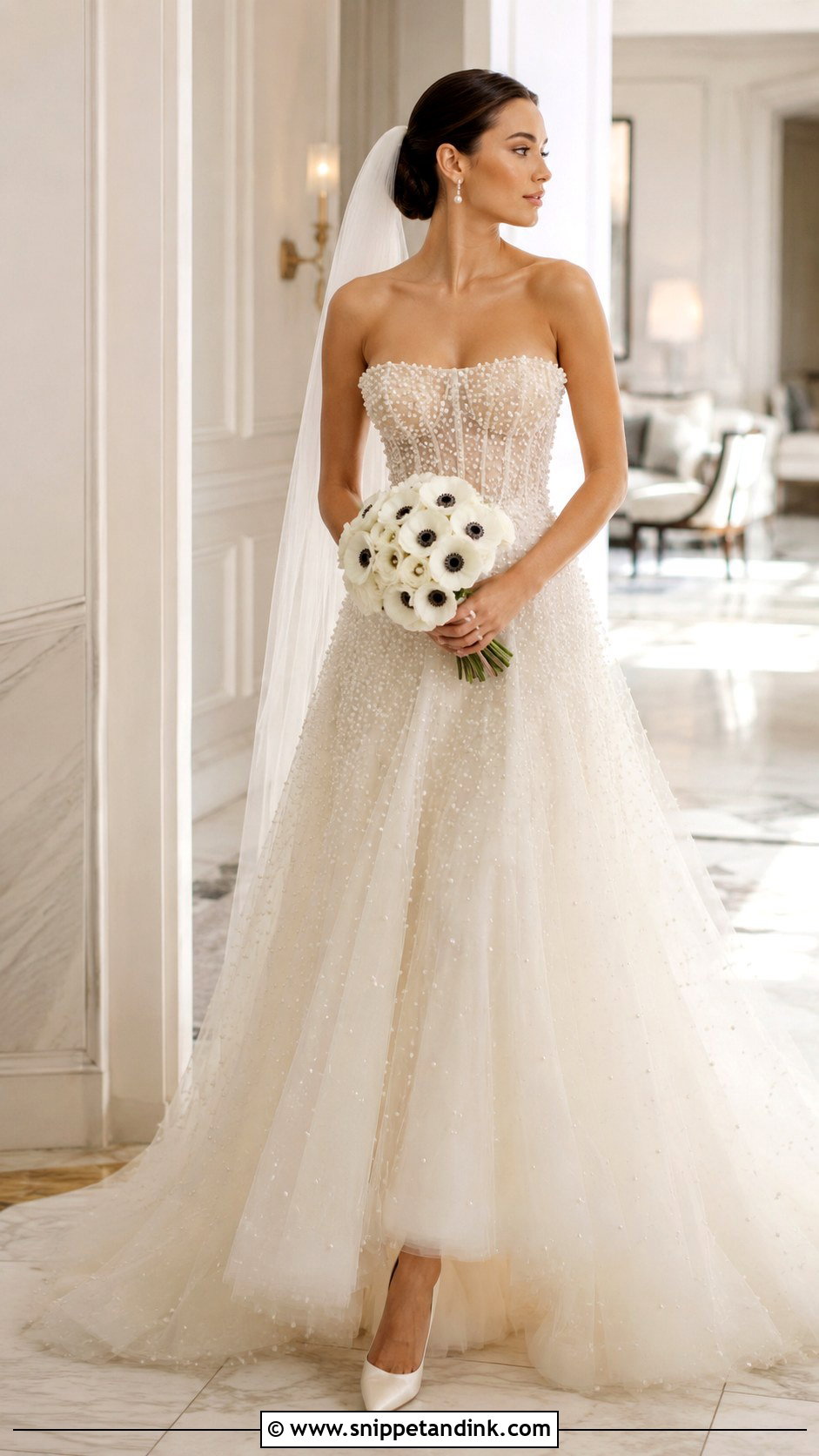
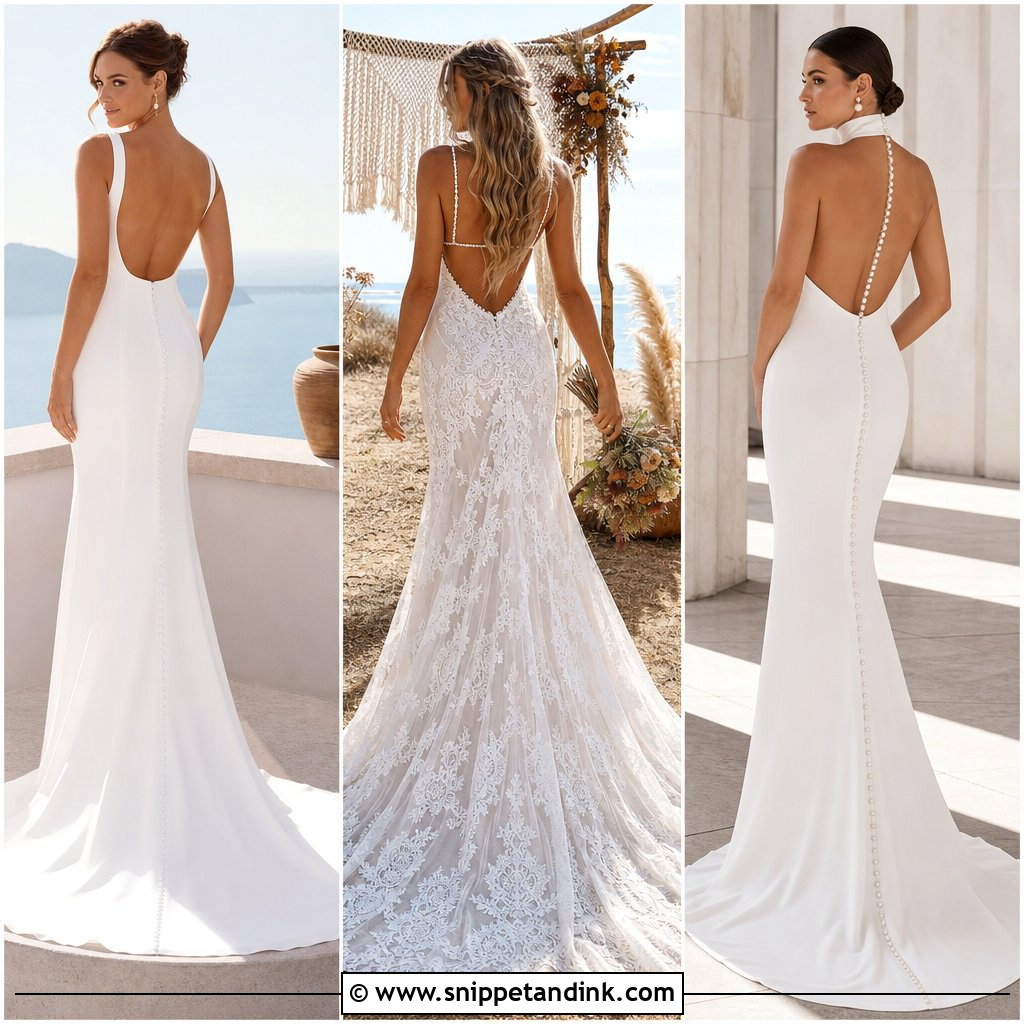
Pearls give a soft glow instead of crystal glitter. Choose one placement, scattered across tulle, gathered at the bodice or running along the neckline and straps, so the dress feels balanced. Raised pearls snag fine tulle, so watch how the veil behaves against the bodice when you turn your head. Satin pumps, small pearl earrings and a clean veil without extra trim. A smooth bun and fresh makeup. White roses or anemones tied with ribbon. Store the gown flat or properly supported before the wedding; hanging a heavily pearled dress for months can stretch the seams under the weight.
16. Cape Sleeve Bridal Dress
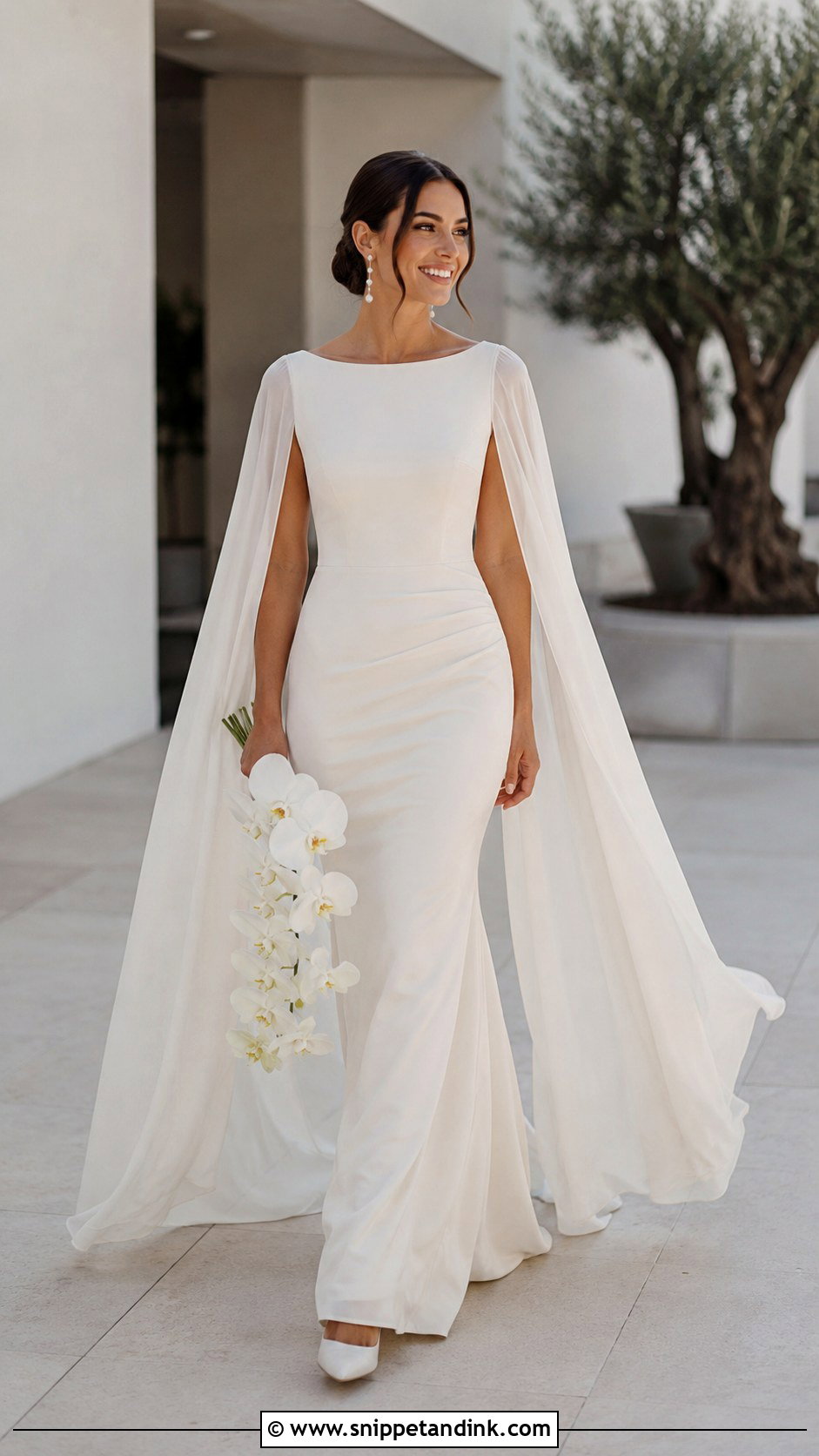
Cape sleeves make the entrance. Flowing chiffon looks light, embellished tulle looks romantic and structured crepe looks sharp. Underneath, keep the dress streamlined, a column, sheath or gentle A-line, because cape plus volume quickly becomes too much. The same goes for veils: I’d skip one or choose a short plain one, never a cathedral veil competing with the cape. Simple drop earrings, closed-toe heels and a polished low bun. A narrow bouquet of orchids or callas. Practice turning at the fitting; capes catch under the arms, around the bouquet and on the train.
17. Vintage Inspired Satin Bridal Dress
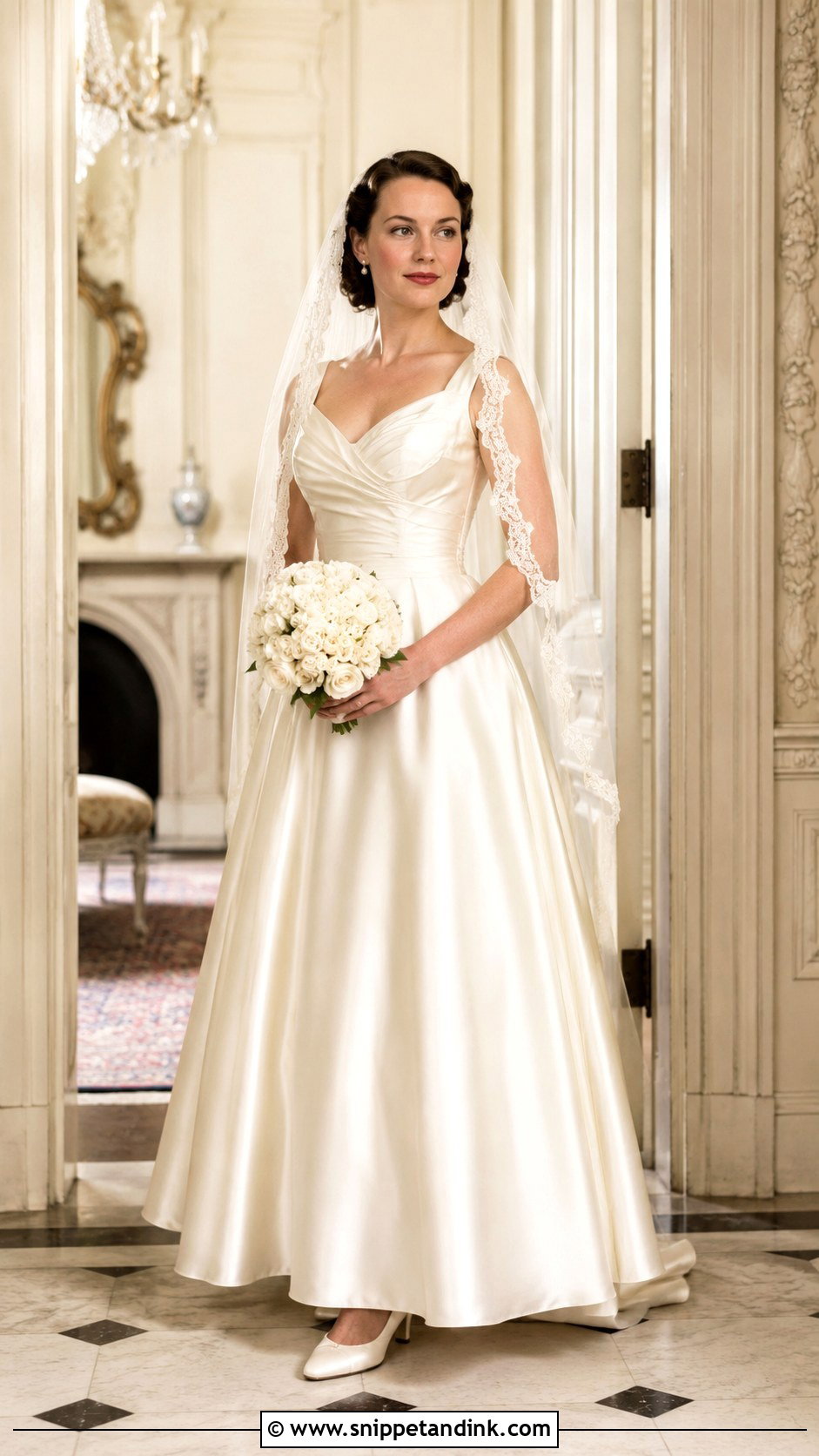
Vintage references work when they’re specific and few. A softly gathered bust, covered buttons, a defined waist and a gently full skirt suggest an earlier era without looking like a costume. Long sleeves, a bateau neck or a soft cowl back add character. Pearl drop earrings, ivory pumps and a lace-edged fingertip veil. Soft waves or a structured chignon. Roses and sweet peas in a rounded bouquet, maybe with a family brooch pinned to the ribbon. Satin creases from the garment bag, so have it pressed professionally a day or two before. Then keep accessories edited.
18. One Shoulder Bridal Dress
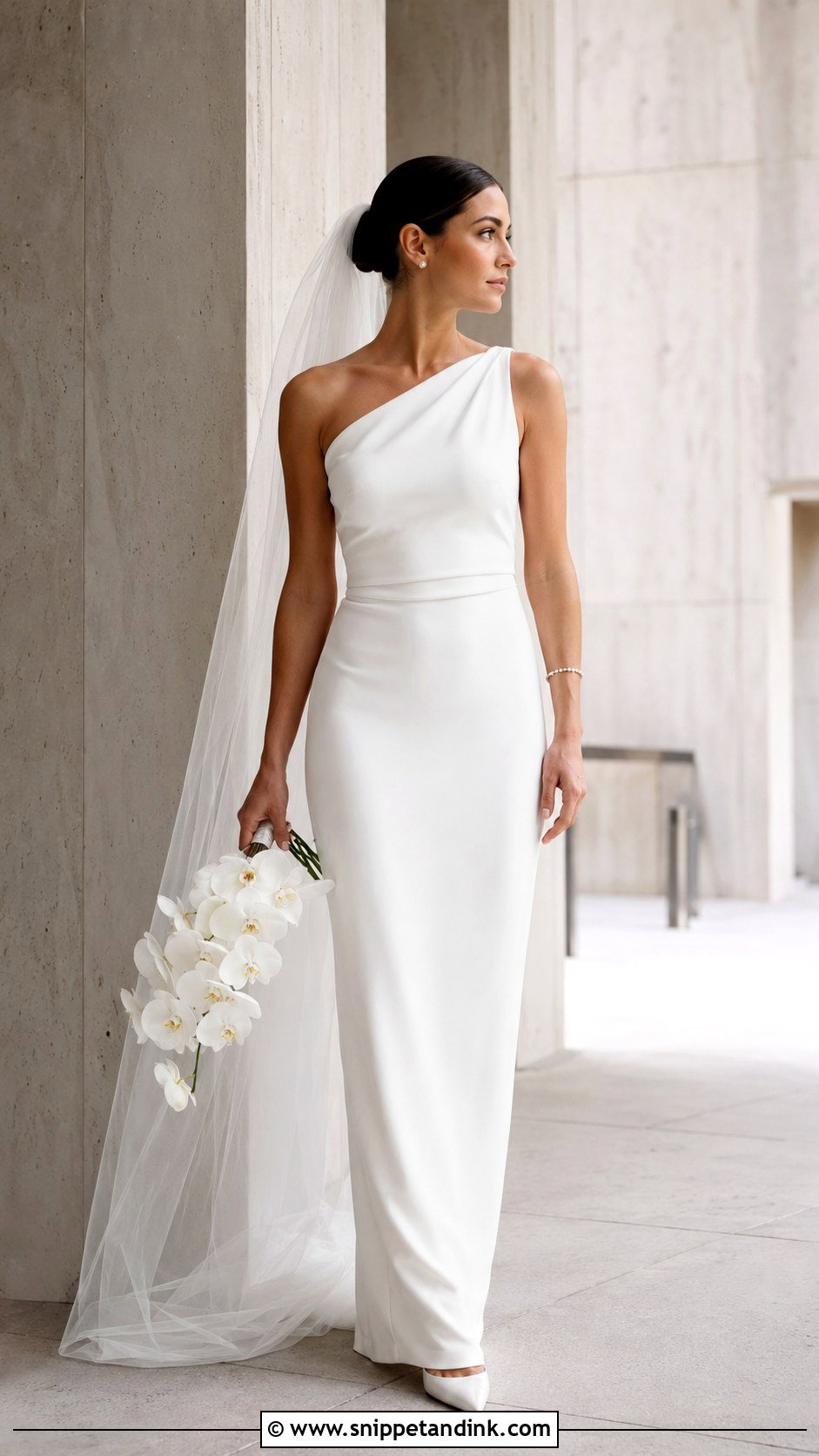
The asymmetry is the whole point of a one-shoulder gown, so everything else should respect it. Hair goes to the opposite side or up in a low bun; there’s no necklace; the veil attaches low and falls behind. Sculpted crepe looks clean, draped satin moves more. A fitted column, mermaid or narrow A-line keeps the shape balanced. A single bracelet, small earrings and sleek ivory heels. Minimal white orchids. The single strap carries more of the bodice than you’d think, so I check that it doesn’t slide outward when you raise that arm.
19. Square Neck Bridal Dress With Sleeves
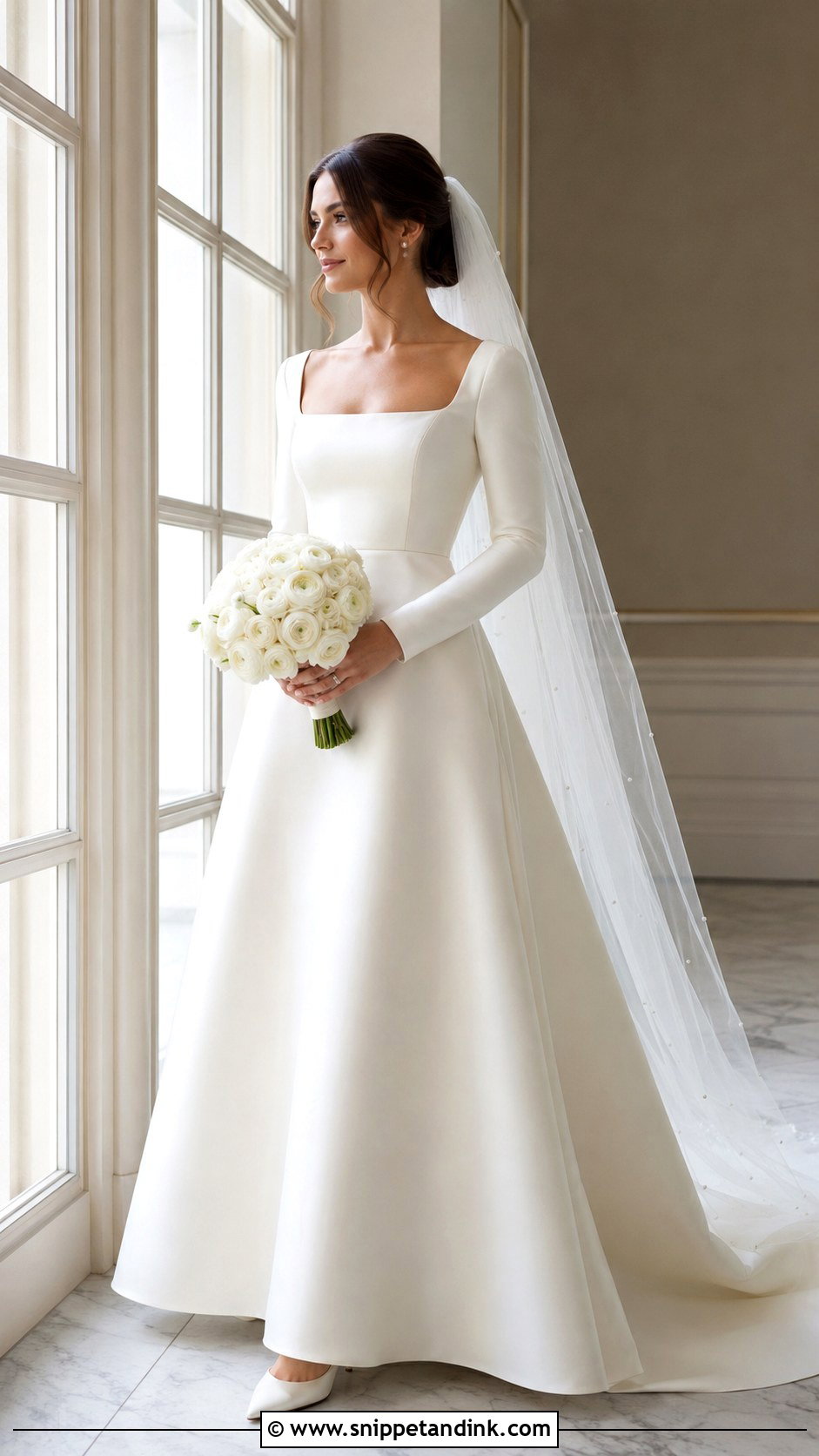
Square necklines with sleeves suit almost any season and give more coverage than strapless shapes. The corners are what I examine: they should lie flat, and if they gape, it’s usually because the bodice is slightly too wide across the chest. Slim crepe sleeves read minimal; floral lace sleeves read soft. An A-line moves easily; a fitted skirt looks more streamlined. Pearl studs, low pointed heels and a chapel veil set under a neat bun. Ranunculus, roses and greenery for texture. Make sure the sleeves still let you lift your arms freely.

20. Bridal Jumpsuit With Detachable Train
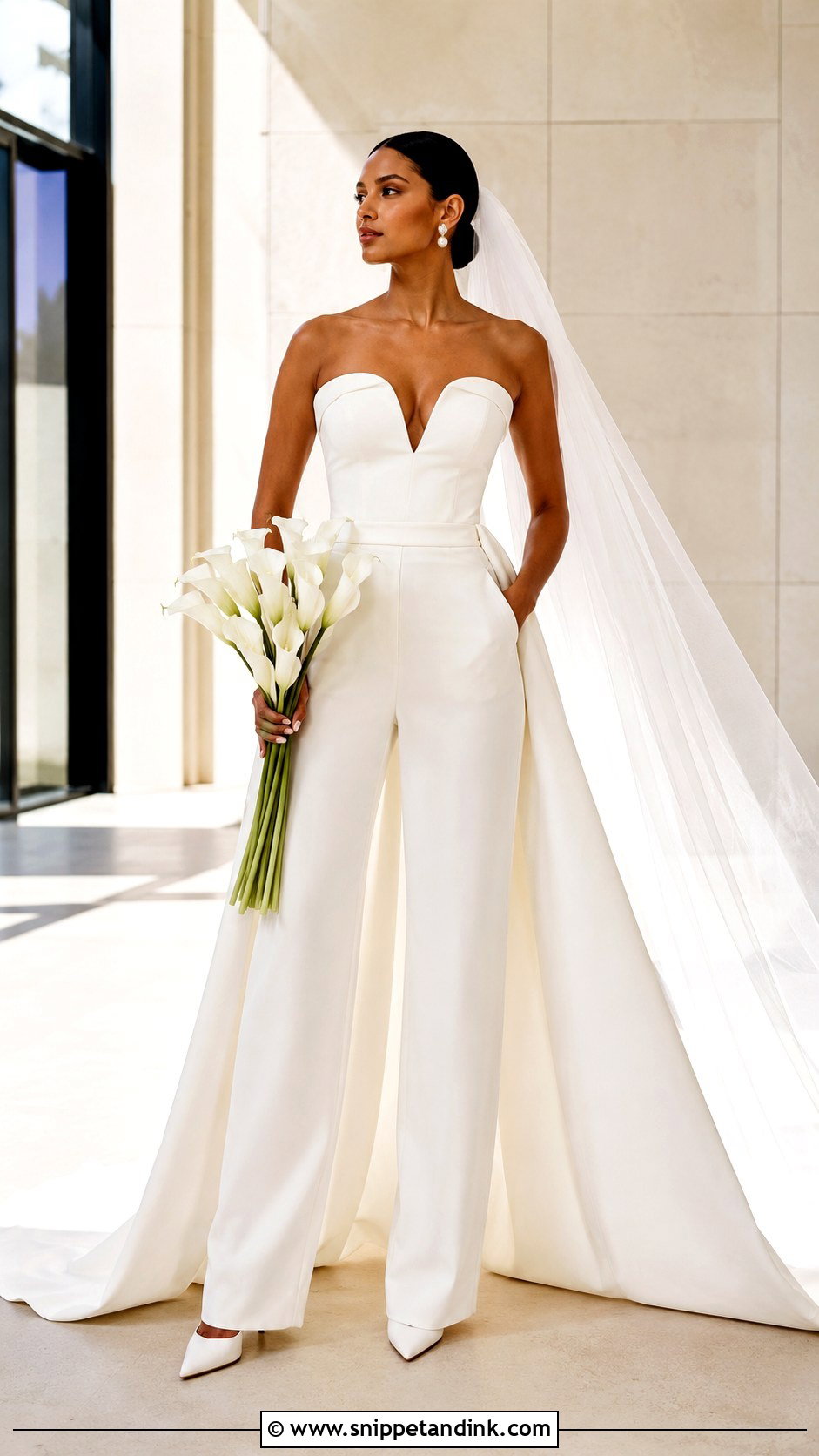
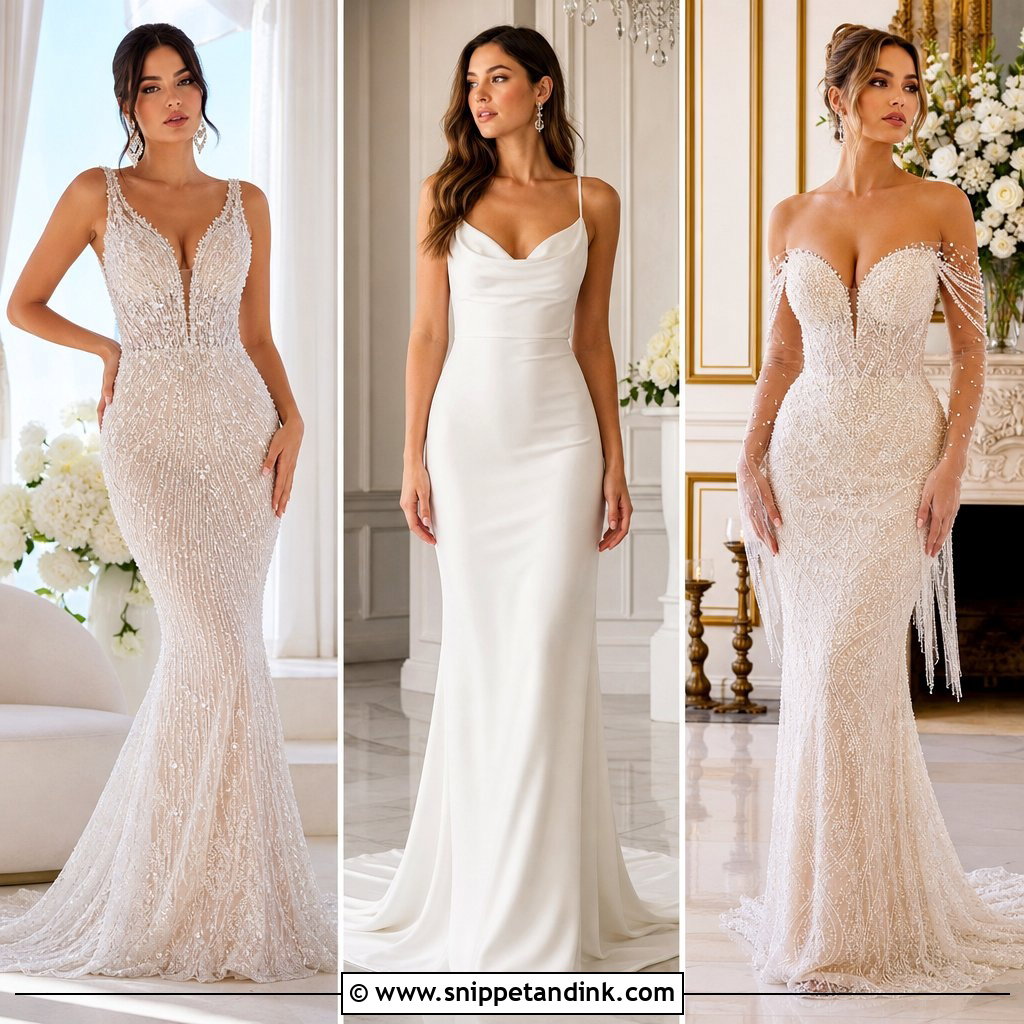
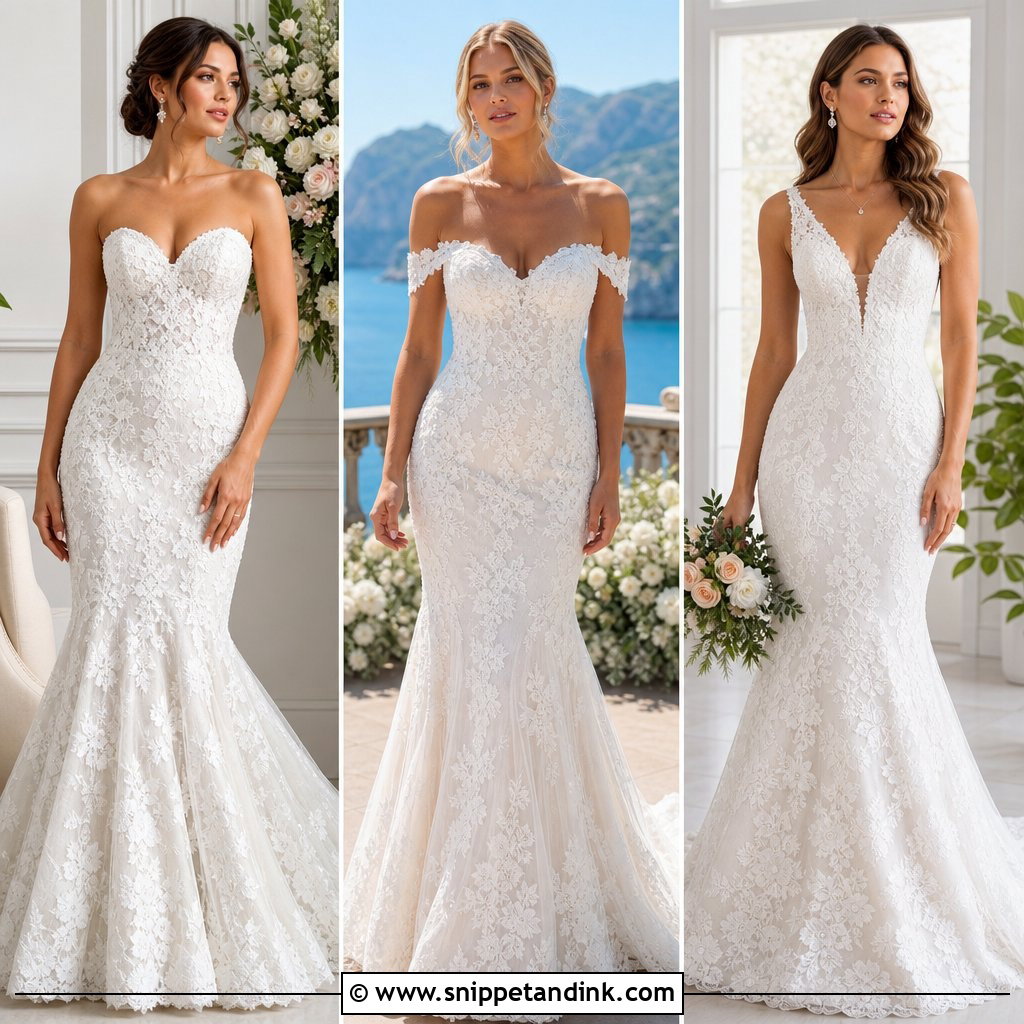
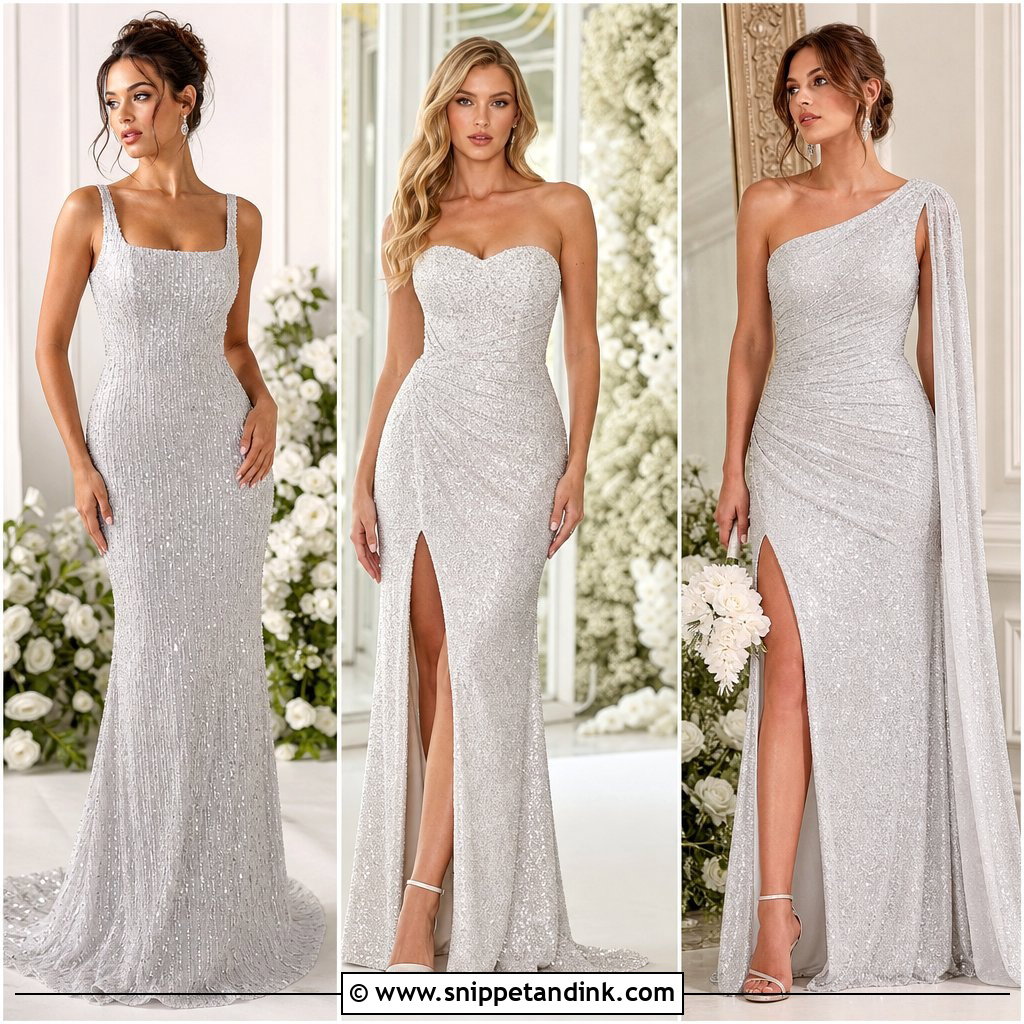
A bridal jumpsuit with a detachable train gives you ceremony drama and complete freedom afterward. Tailored wide-leg trousers, a structured bodice and a clean neckline in crepe, satin or a light suiting fabric. The train or overskirt attaches for the aisle and comes off for the party. Pointed pumps, bold pearl earrings and a sleek veil or modern bow. A smooth ponytail or low bun. A sculptural bouquet of anthuriums, callas or orchids. Torso length is the fit point I watch most; too short and it pulls every time you sit. Bring the wedding shoes to every fitting so the hem is exact.
Step Into the Gown on the Wedding Morning, Never Over Your Head
The gown goes on last, after hair and makeup are finished, and it goes on feet first. Lay it open on a clean sheet, step into the center and let two people lift it up and guide your arms into the straps or sleeves. Pulling a gown over your head ruins the hair and leaves makeup on the neckline.
What I keep in a small bag for the day
- White safety pins and a needle threaded in the gown’s color, for a popped button or loose hem.
- Double-sided fabric tape for a neckline that shifts.
- White chalk, which can disguise a small mark on a white or ivory gown until it can be cleaned properly.
- Clean white cloths for blotting spills, plus a few tissues.
- A written note or photo of how the bustle fastens, for whoever does it during the reception.
Practice the bustle at the final fitting with the person who’ll fasten it. Hooks, buttons and ribbon ties all look obvious in daylight and much less obvious in a dim corner of a reception hall.
What Your Saved Gowns Have in Common
The right gown isn’t the most popular silhouette. It’s the one that supports your body, suits the setting and feels like you. Go back through the looks you saved from these ideas and look for repeats: square necklines, satin, fitted sleeves, full skirts. Bring those patterns to your appointment, and stay open to the alternatives a stylist suggests. Test every gown sitting, walking, lifting your arms and turning. Once it feels comfortable and recognizably yours, build the veil, shoes, jewelry, hair and bouquet around it.
You'll Like These Ideas:



Leave a Reply