
A flutter sleeve is cut to fall loose from the shoulder rather than wrap the arm, so it moves every time you do. That’s the appeal, and it’s also what makes it tricky to fit. In chiffon it floats, in lace it settles, in satin it holds a curve, and the same sleeve can look airy on one bodice and fussy on another. The twenty gowns below cover beach dresses, ballroom gowns, courthouse tea lengths and detachable versions, each styled with the neckline, veil and shoes I’d put with it. As you look, notice where each sleeve starts on the shoulder and how far it falls. Those two measurements decide more than the fabric does.
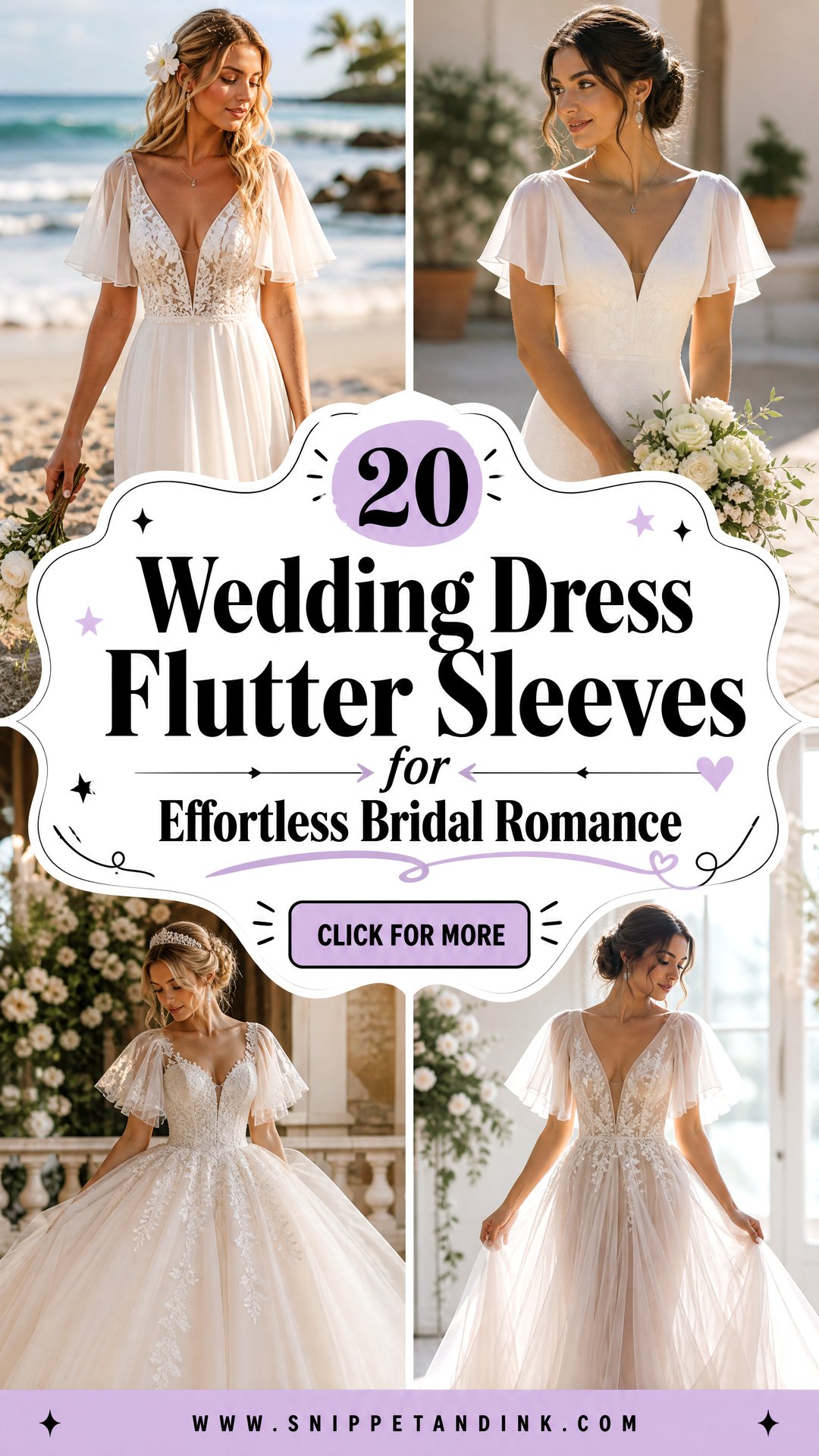
Where a Flutter Sleeve Starts Changes Your Whole Shoulder Line
Brides tend to judge flutter sleeves by fabric, but cut and placement do more to flatter or fight your frame. Here’s how I read them when someone tries one on.
Gathered versus circle-cut
A gathered sleeve is a strip of fabric pulled in at the seam, so it puffs slightly at the top. A circle-cut sleeve is cut on a curve and lies flat at the shoulder, flaring only at the edge. If you have broad shoulders, the circle cut is usually kinder, because it adds no width where you already have it.
Length against the upper arm
Where the hem of the sleeve ends draws the eye to that point. A sleeve that stops at the widest part of the upper arm emphasizes it; one that ends a little above or a little below tends to look slimmer. Tiered sleeves, two or three short layers, give coverage without the weight of one long panel.
Petite frames
On a petite bride, a long or very full flutter can swallow the shoulder. I’d look at shorter, single-layer sleeves set right at the shoulder point, and keep the veil fingertip length or shorter so the upper half doesn’t get crowded.
1. Chiffon Flutter Sleeve Wedding Dress
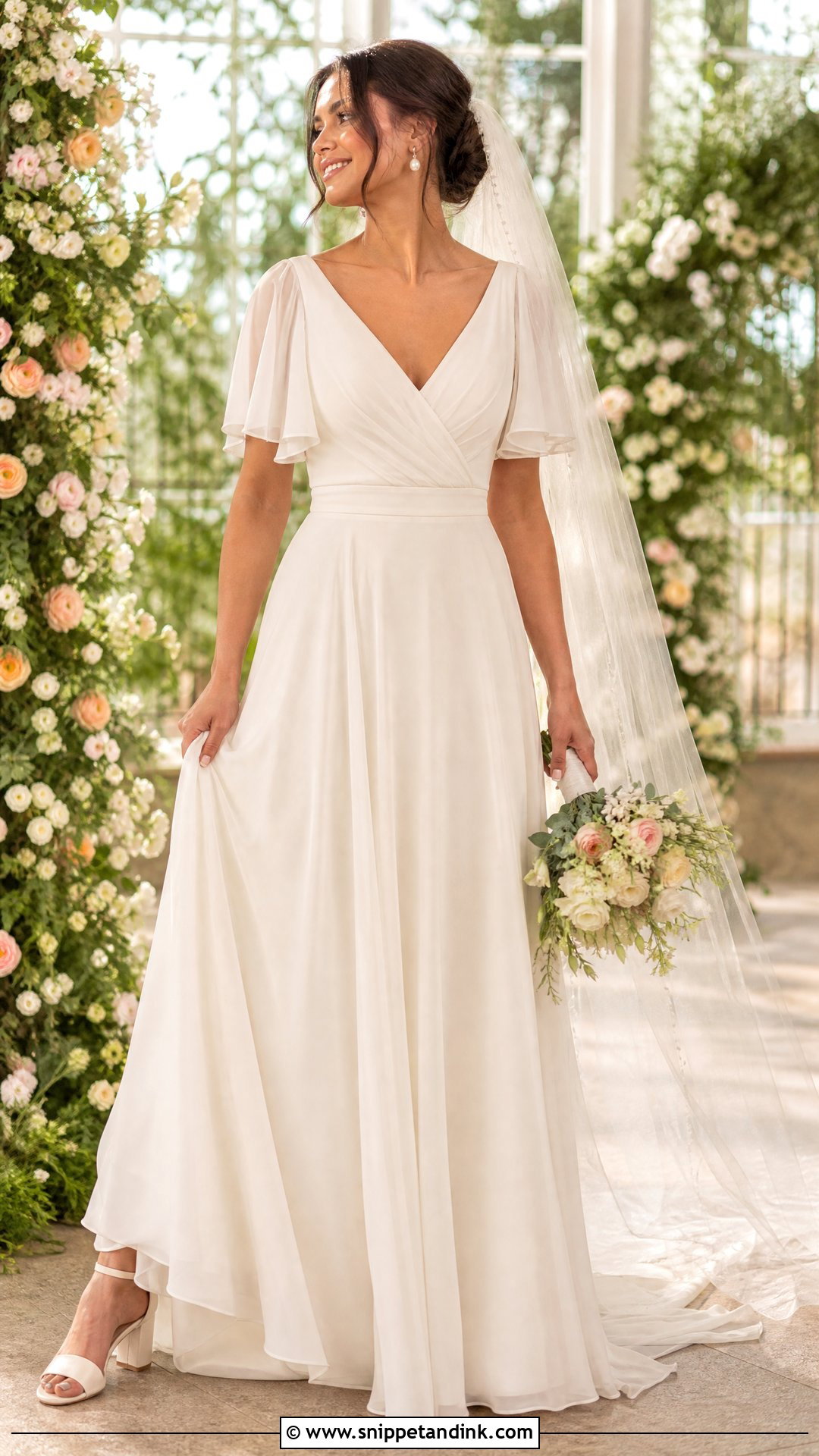
Chiffon is the fabric flutter sleeves were made for, because it falls in soft folds instead of standing away from the arm. A chiffon flutter sleeve wedding dress with a gathered V-neck bodice and layered skirt stays comfortable in warm weather and moves with any breeze at a garden or beach ceremony. The weak spot is the armhole. Chiffon has almost no give, so if the armhole is cut tight the sleeve drags the shoulder seam forward whenever you reach for your bouquet. I have brides raise and lower their arms several times while the seamstress watches the shoulder line. Pearl drops, a fingertip veil, ivory block heels and a low bun complete it without competing with the sleeves.
2. Lace Flutter Sleeve Wedding Dress
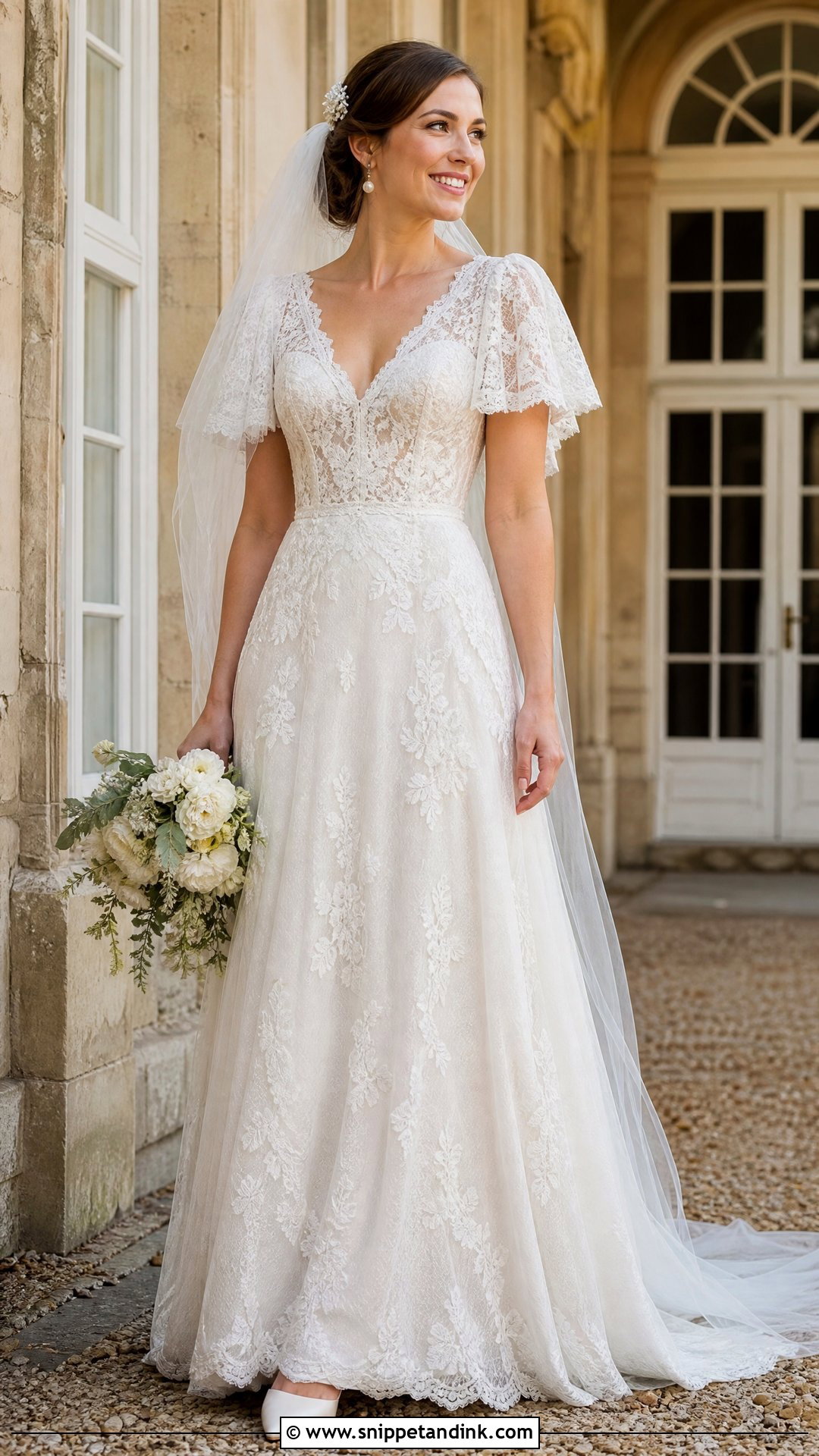
Lace makes a flutter sleeve more traditional, and also heavier, so it falls closer to the arm. A fitted lace bodice with a scalloped V-neck and flowing A-line skirt shows the floral pattern best when the sleeve is slightly sheer. Before you commit, rub the inside of the sleeve against the back of your arm. Corded lace in particular can feel scratchy after a few hours, and a soft lining around the armhole fixes it without stiffening the flutter. I’d pick a chapel veil with a plain edge so it doesn’t fight the lace, then pearl studs, a small floral comb and pointed ivory pumps. Garden estates and historic venues suit this gown.
3. Boho Flutter Sleeve Wedding Dress
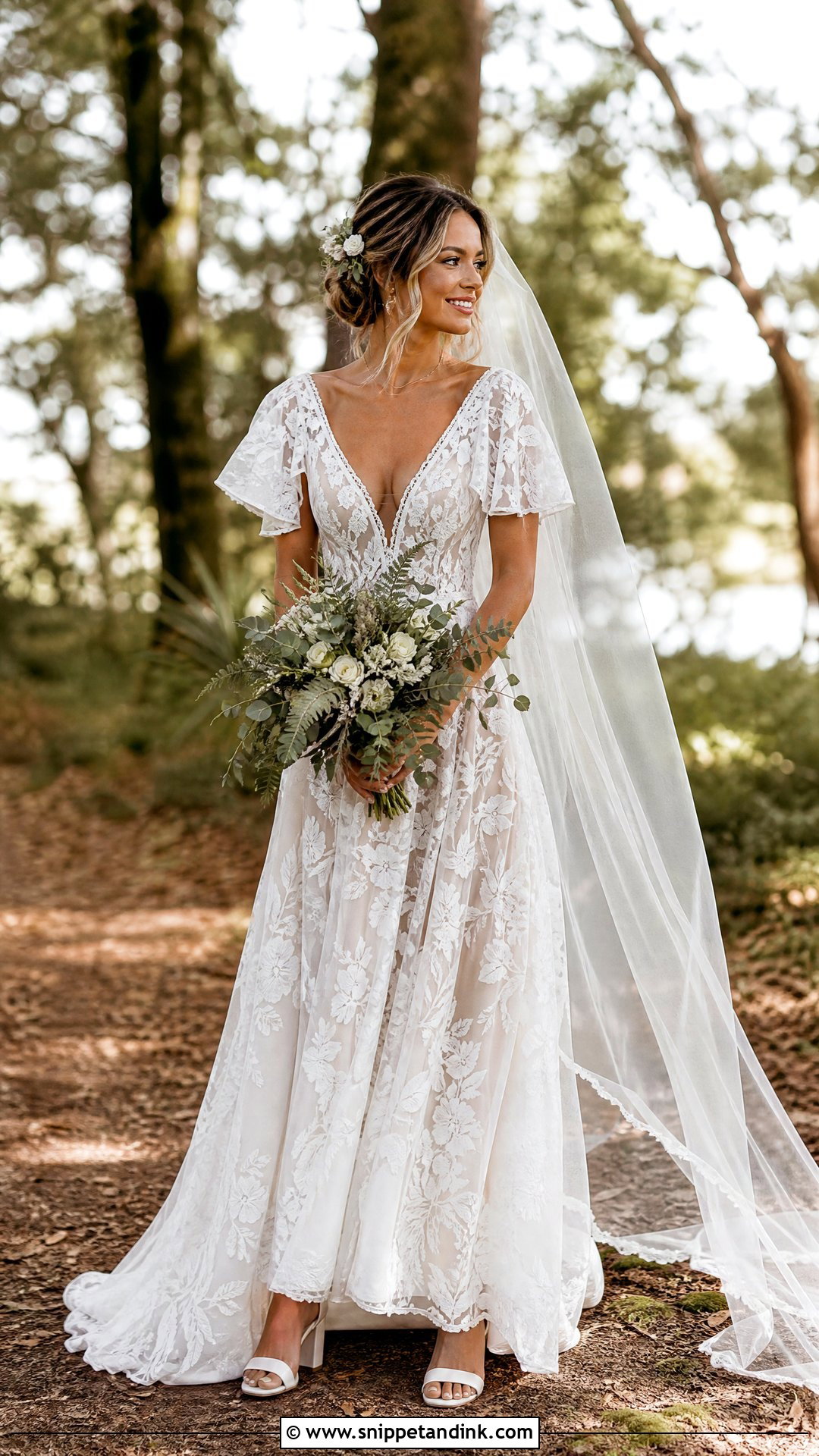
Boho flutter sleeves look best when the whole gown is unstructured: a soft bodice, defined waist and relaxed floor-length skirt. Botanical lace, light chiffon panels or a little embroidery are enough. Heavy beading weighs the sleeves down until they stop moving, which defeats the point. Loose waves, a floral hairpiece and leather or ivory block-heel sandals keep it grounded, and a raw-edge veil adds movement without formality. This is a dress for woodland, desert, barn, or backyard settings. Keep jewelry to small gold earrings and one fine bracelet. Everything else should feel easy to walk across grass in.
4. Plus Size Flutter Sleeve Wedding Dress
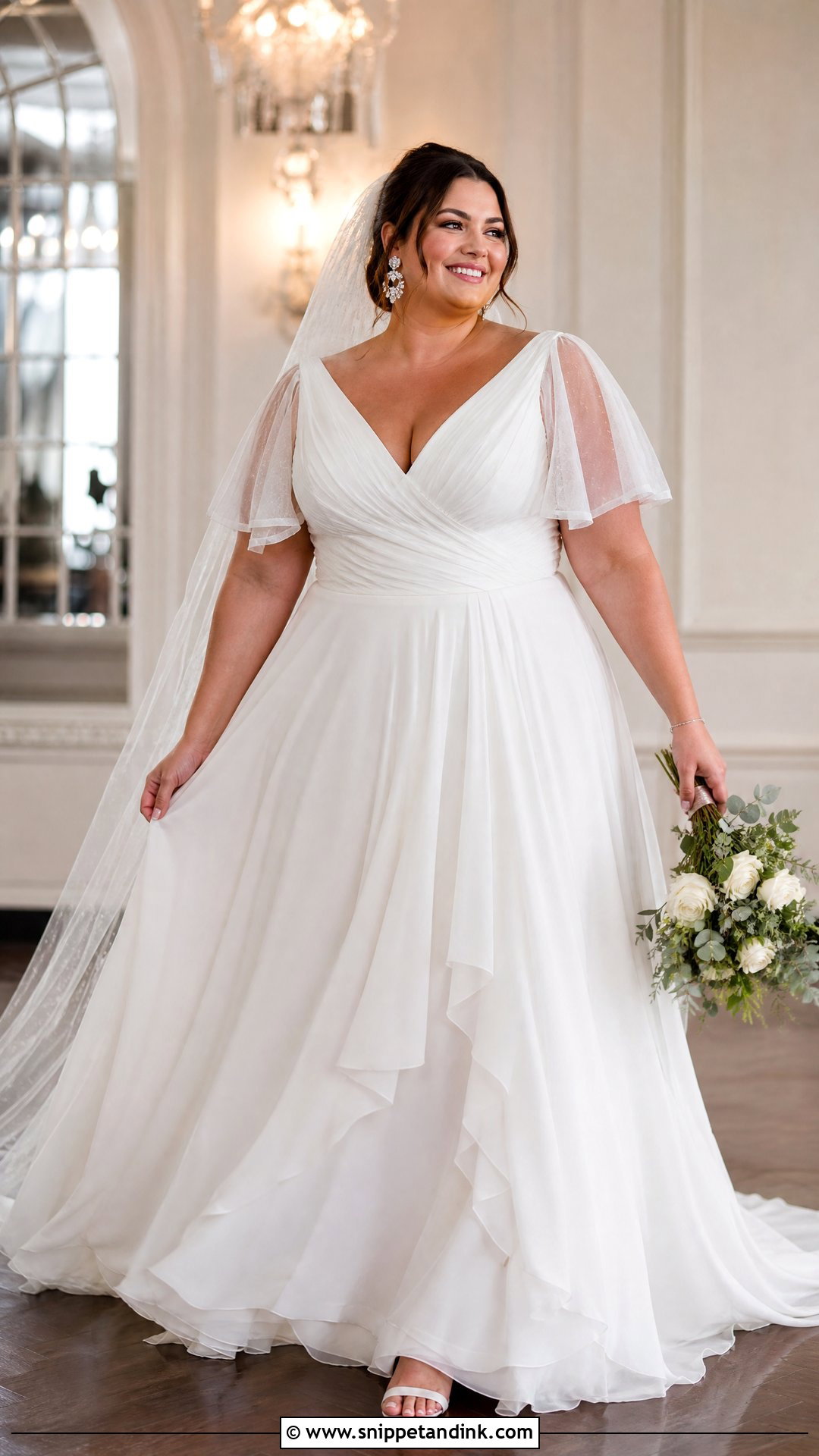
On a plus size gown, the flutter sleeve should be purely decorative and never asked to hold anything up. The support needs to come from a structured V-neck bodice, a defined natural waist and proper straps hidden beneath the sleeves. Chiffon or soft tulle sleeves skim the upper arm without clinging, and a flowing A-line skirt balances the proportions. When I fit these gowns, I watch the sleeve seam when the bride hugs someone, because that’s where a sleeve sewn straight to the armhole pulls and gapes. Cushioned block heels, statement earrings and a cathedral veil beneath a low updo finish it. Buy your bra or shapewear only after the final fitting, so it works with the finished neckline and back.
5. Beach Flutter Sleeve Wedding Dress
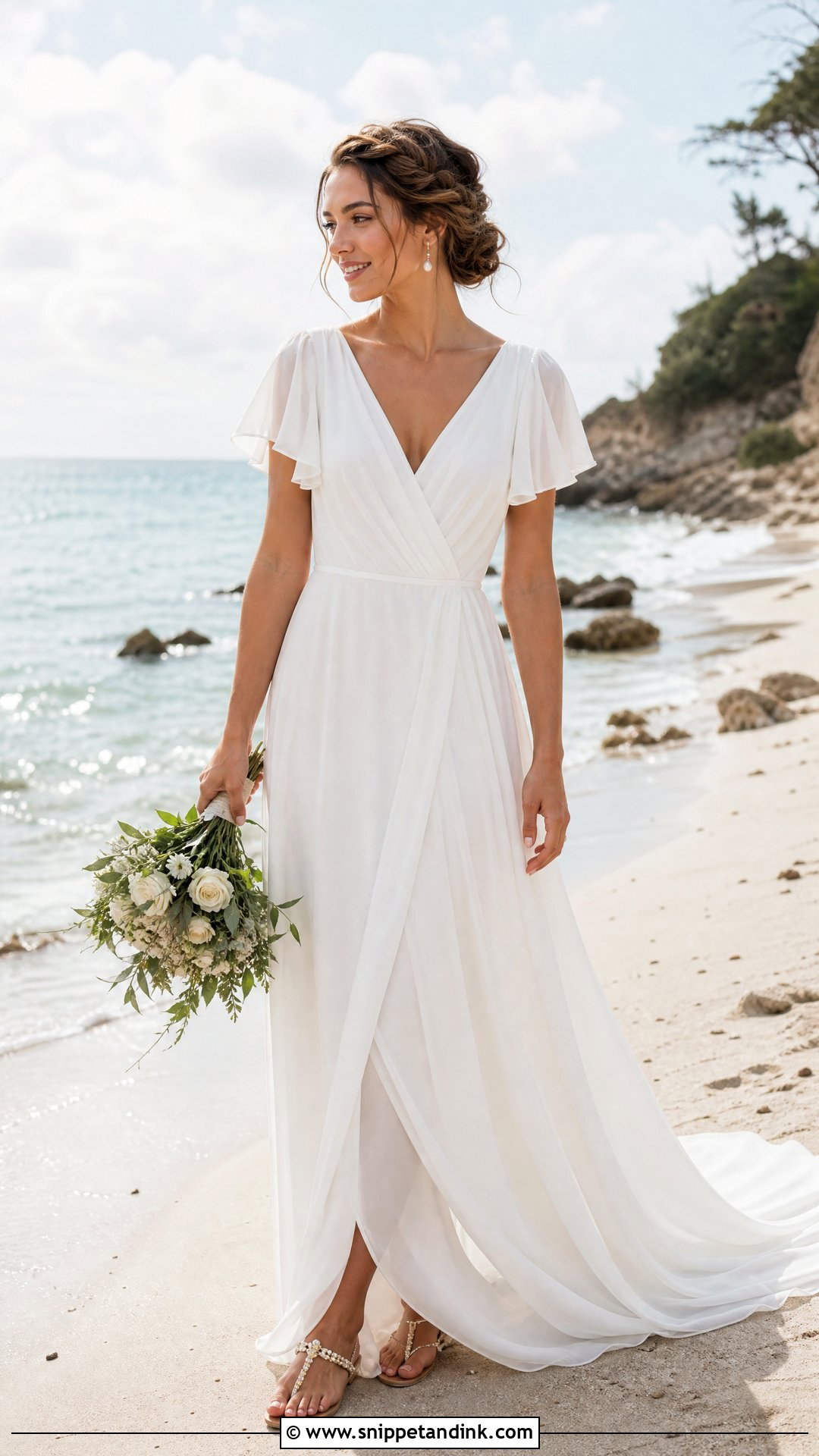
Beach wind is the test any beach gown has to pass, and flutter sleeves are more exposed than most. A lightweight chiffon skirt over a fitted lining, a manageable sweep train and a V-neck or wrap bodice stay relaxed without turning into a sail. Flat embellished sandals or bridal espadrilles stay steady on sand, with pearl earrings and a loose braided updo. Pick a short veil; a long one in coastal wind wraps around your face mid-vows. Leave heavy beading, petticoats and thick satin sleeves at the shop. A simple white and green bouquet suits the setting. Stand outside in the dress at least once before the day so you know how much the skirt lifts.
6. Long Flutter Sleeve Wedding Dress
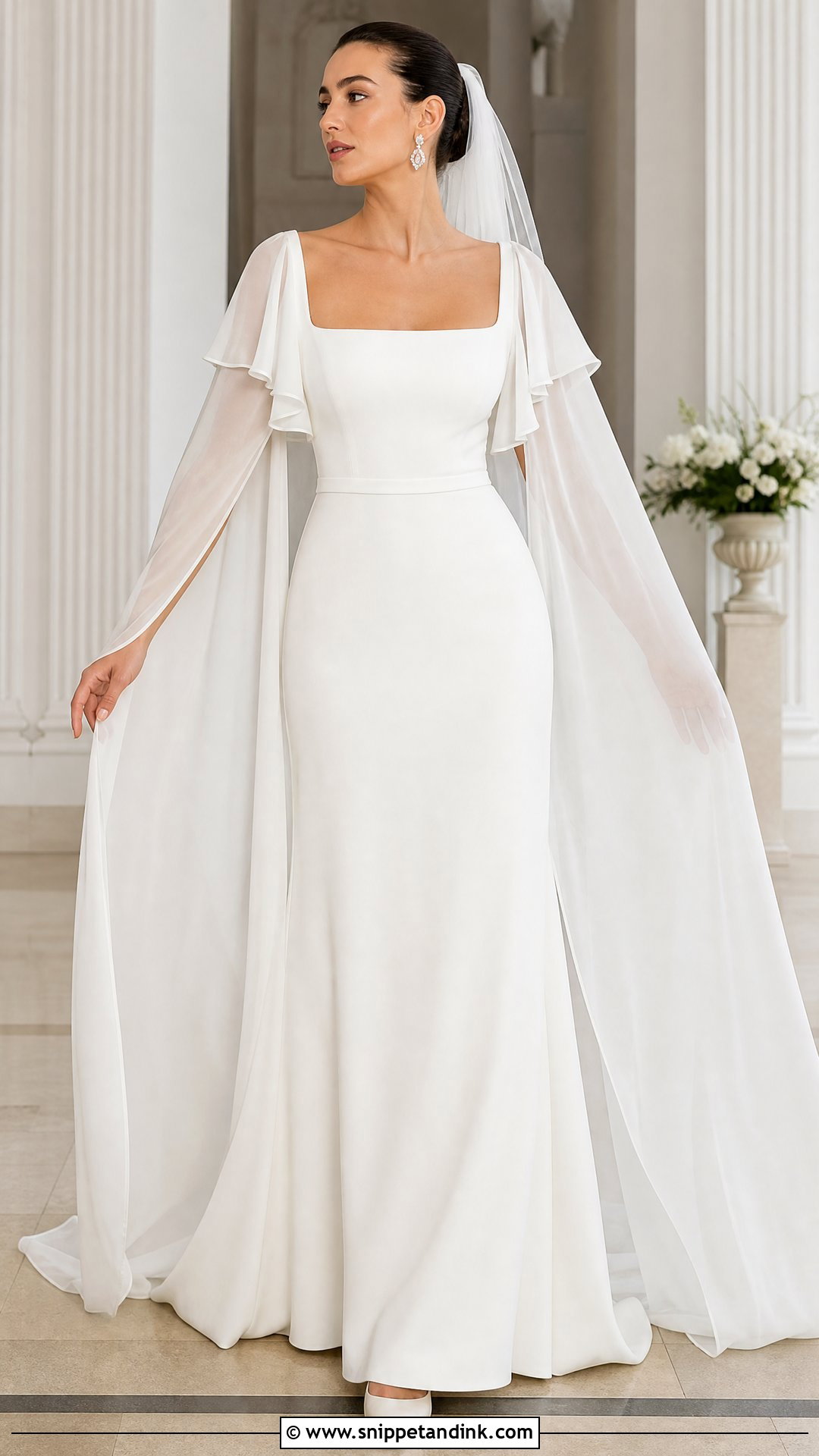
Long flutter sleeves open gradually from shoulder to wrist and swing like a short cape. They’re dramatic but softer than a fitted full-length sleeve. Put them on a streamlined crepe or chiffon gown with a square neckline, fitted waist and narrow A-line skirt so the sleeve is the only volume in the outfit. The risk is the cuff. A wide sleeve edge drags across dinner plates, catches on rings and gets in the way when you exchange vows, so walk, sit and hold a bouquet in it before you buy. Sleek hair, crystal earrings, pointed pumps and a plain chapel veil. Formal indoor ceremonies and cooler shoulder seasons suit it.
7. Short Flutter Sleeve Wedding Dress
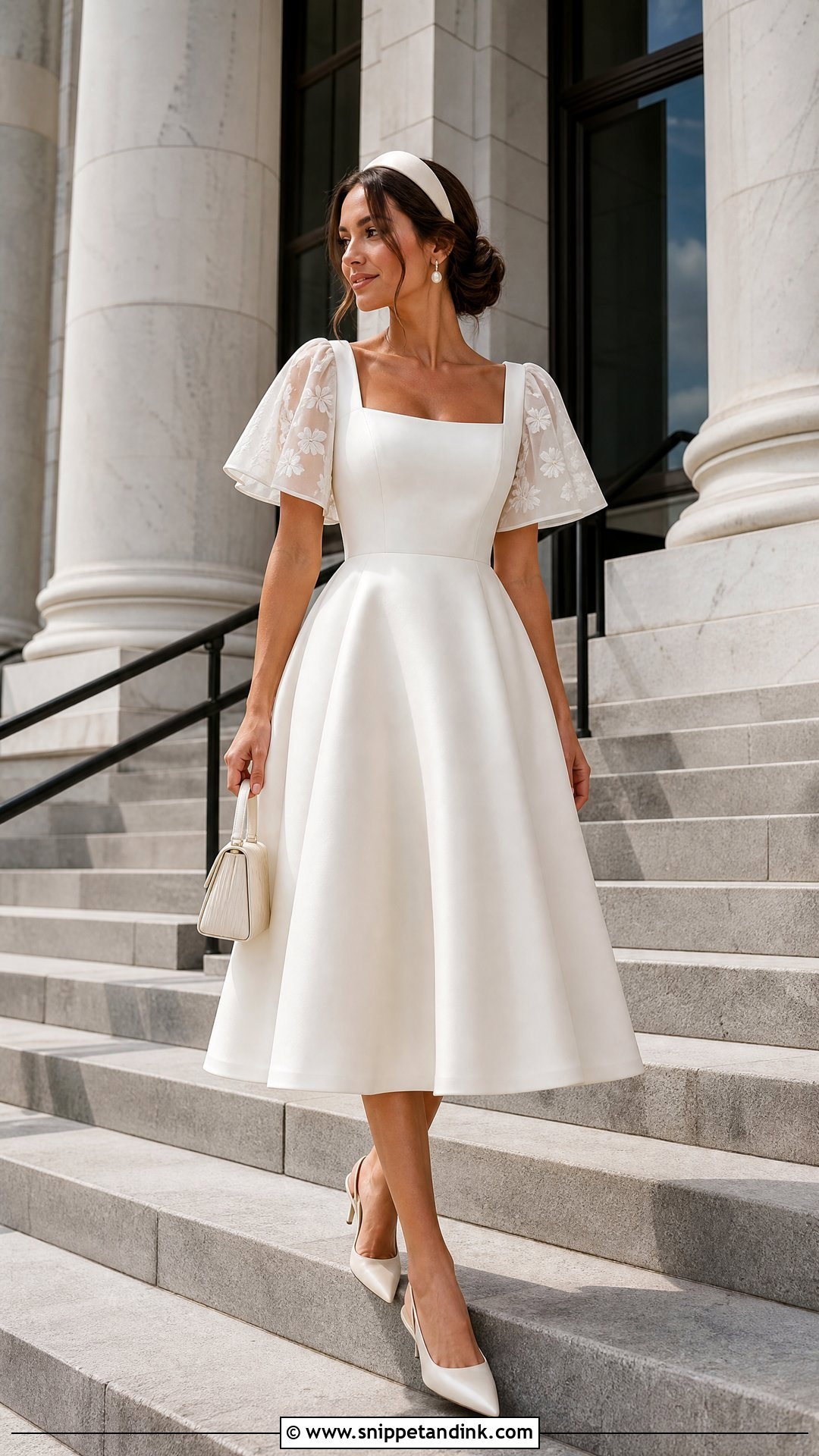
Courthouse ceremonies and small dinners need a dress that looks bridal without a train to manage. A short flutter sleeve gown with a fitted waist and a tea or knee-length skirt does that. Smooth crepe, embroidered organza or a firmer chiffon keeps the shape crisp at the shorter length, where a limp fabric just looks like a sundress. Keep the neckline plain, a bateau or modest V, so the sleeves and skirt provide the movement. I’d add pointed slingbacks, pearl earrings, a small top-handle bag and a birdcage veil or satin headband. It handles photographs, dinner, and dancing with no bustle, and it doubles as a reception change.
8. A-Line Flutter Sleeve Wedding Dress
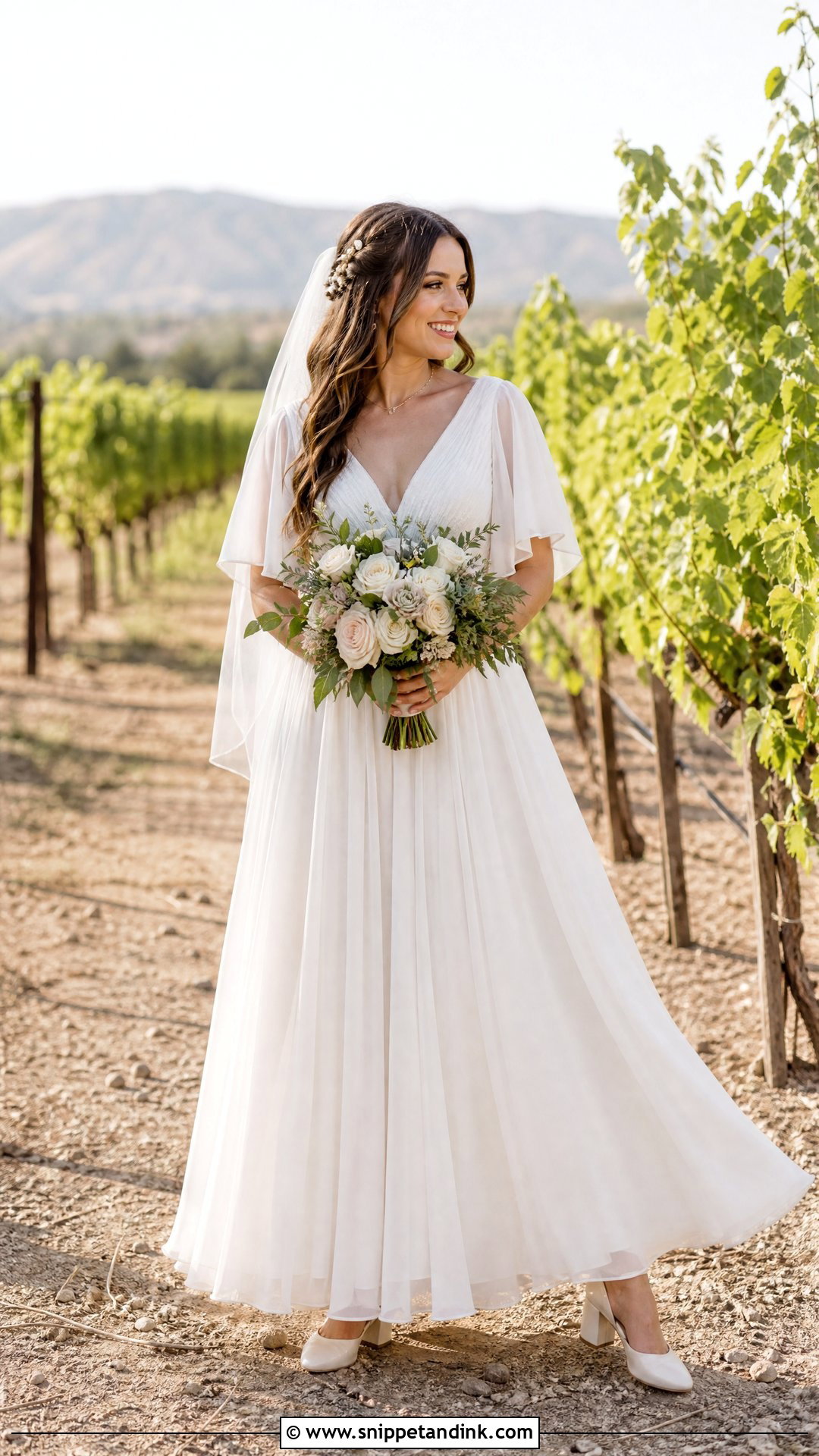
The A-line is the easiest partner for flutter sleeves because the skirt and sleeve widen in the same direction, so the whole dress reads as one soft shape. Look for a supportive bodice, a subtle V-neck and a light chiffon or tulle overlay, and keep the sleeves short enough that they don’t add width at the shoulder. A waist-length veil, pearl hairpins and block-heel pumps are enough. Carry a medium bouquet. An oversized one hides the waist that makes this silhouette work. During alterations I check two things in motion: that the waist seam sits at your natural waist when you walk, and that the hem clears your shoes. Ballrooms, gardens, vineyards and coastal venues all suit it.
9. Mermaid Flutter Sleeve Wedding Dress
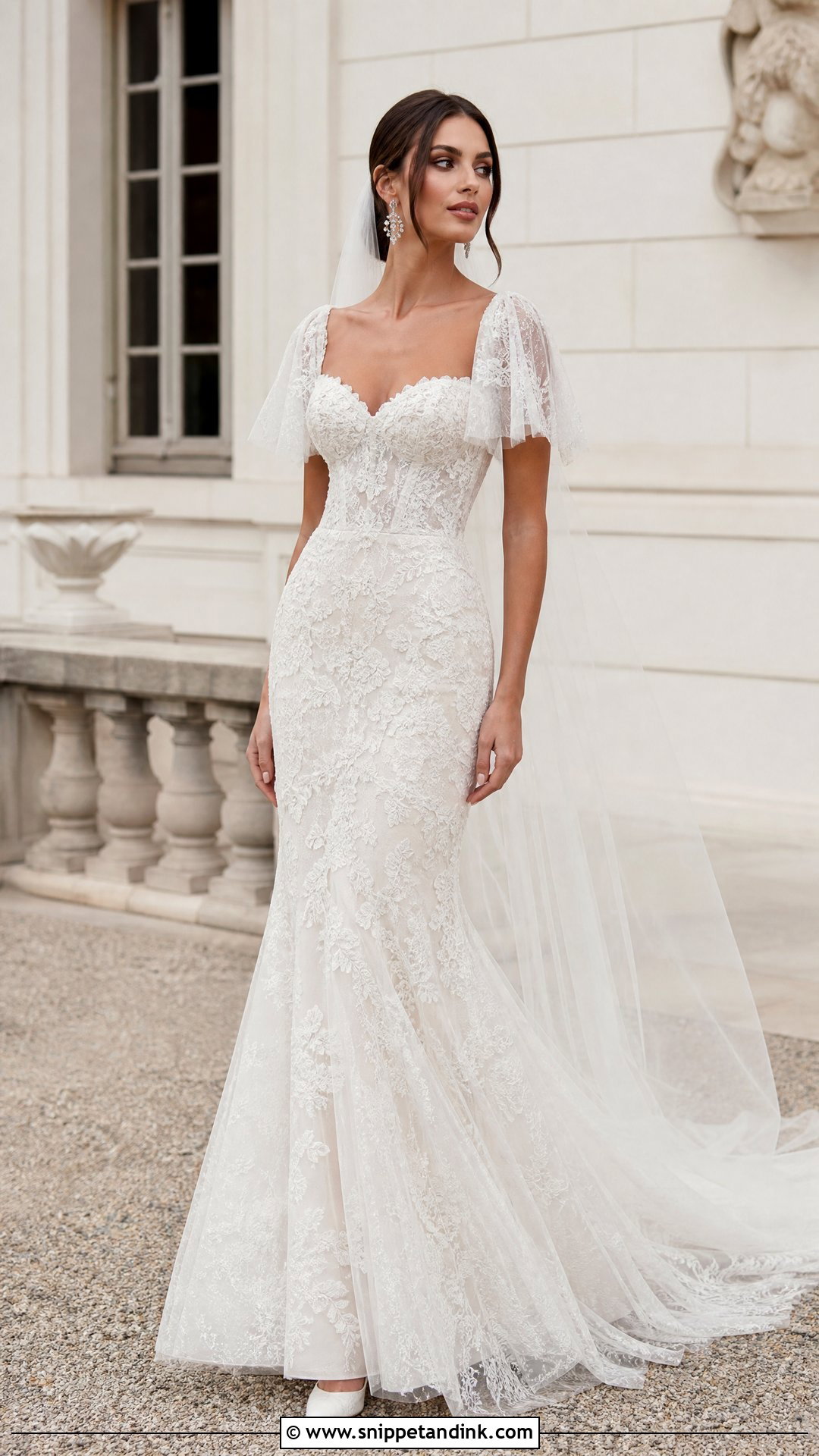
Yes, flutter sleeves work on a mermaid gown, and they’re a smart way to soften a very fitted shape. Choose a dress that follows the body through the hips and then opens into a controlled flare, with light tulle or lace sleeves over a sweetheart or V-neck bodice. Add a long plain veil, crystal drop earrings and pointed ivory heels, with a low bun or side-swept waves. Mermaid skirts shorten your stride, so practice walking and sitting at every fitting. Watch the bodice when you lift your arms, too. If the sleeves are attached tightly, the whole bodice rides up, and on a fitted gown there’s no slack to hide it.
10. Ball Gown Flutter Sleeve Wedding Dress
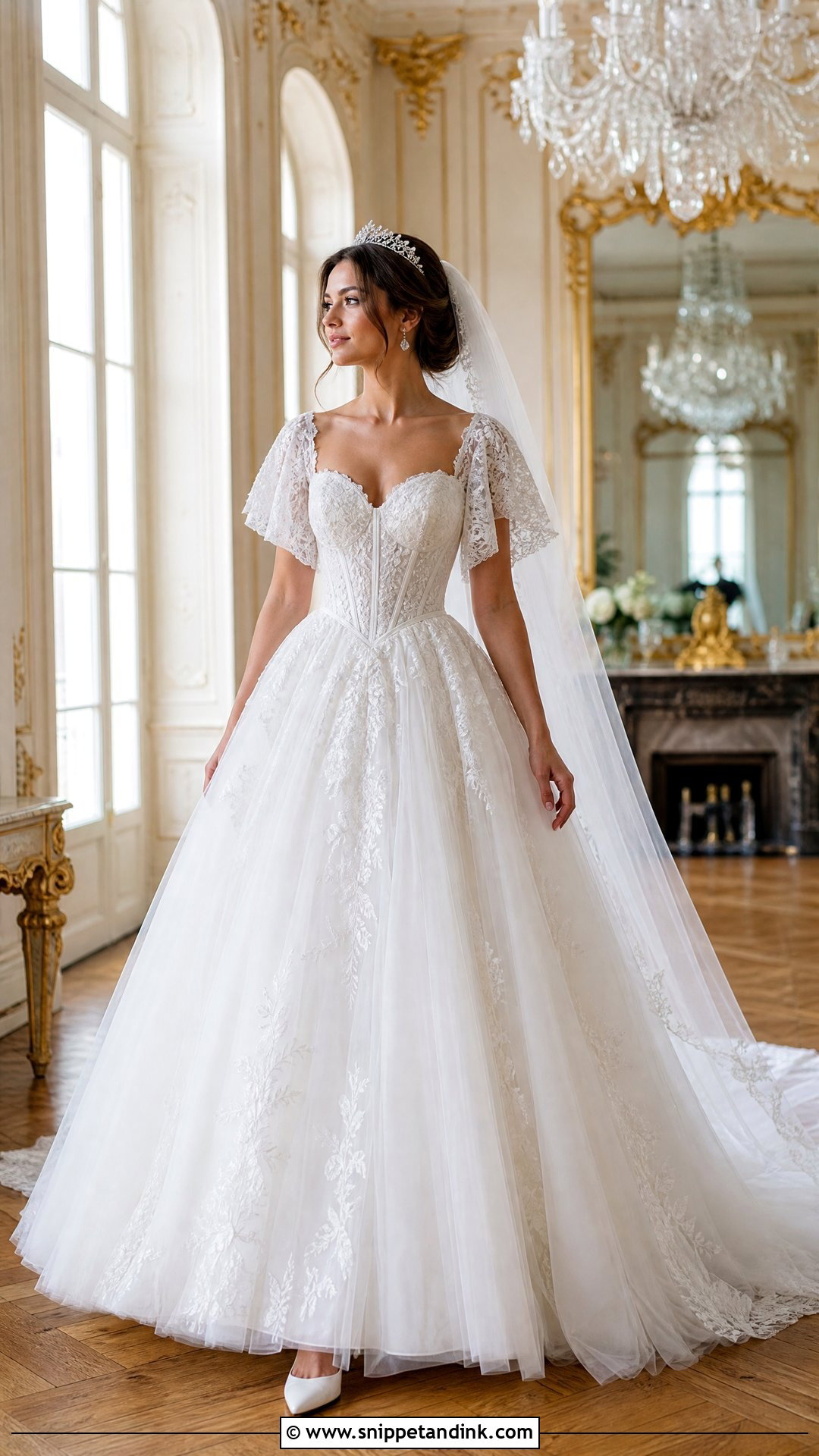
A full ball gown needs restraint in the sleeve, or the upper half starts competing with the skirt. Choose a structured bodice with a natural or basque waist over layers of soft tulle, with sheer flutter sleeves carrying a few scattered lace appliqués that match the skirt. Keep the sleeves narrow and close to the shoulder; very wide ones on a ball gown make the bride look boxy in front-on photos. A cathedral veil, a delicate tiara, pearl earrings and closed-toe satin pumps finish it, and skip the necklace if the bodice is embroidered. Grand hotels and formal estates suit the volume. Ask about bustle styles early so the train can be lifted comfortably before dinner.
11. Satin Flutter Sleeve Wedding Dress
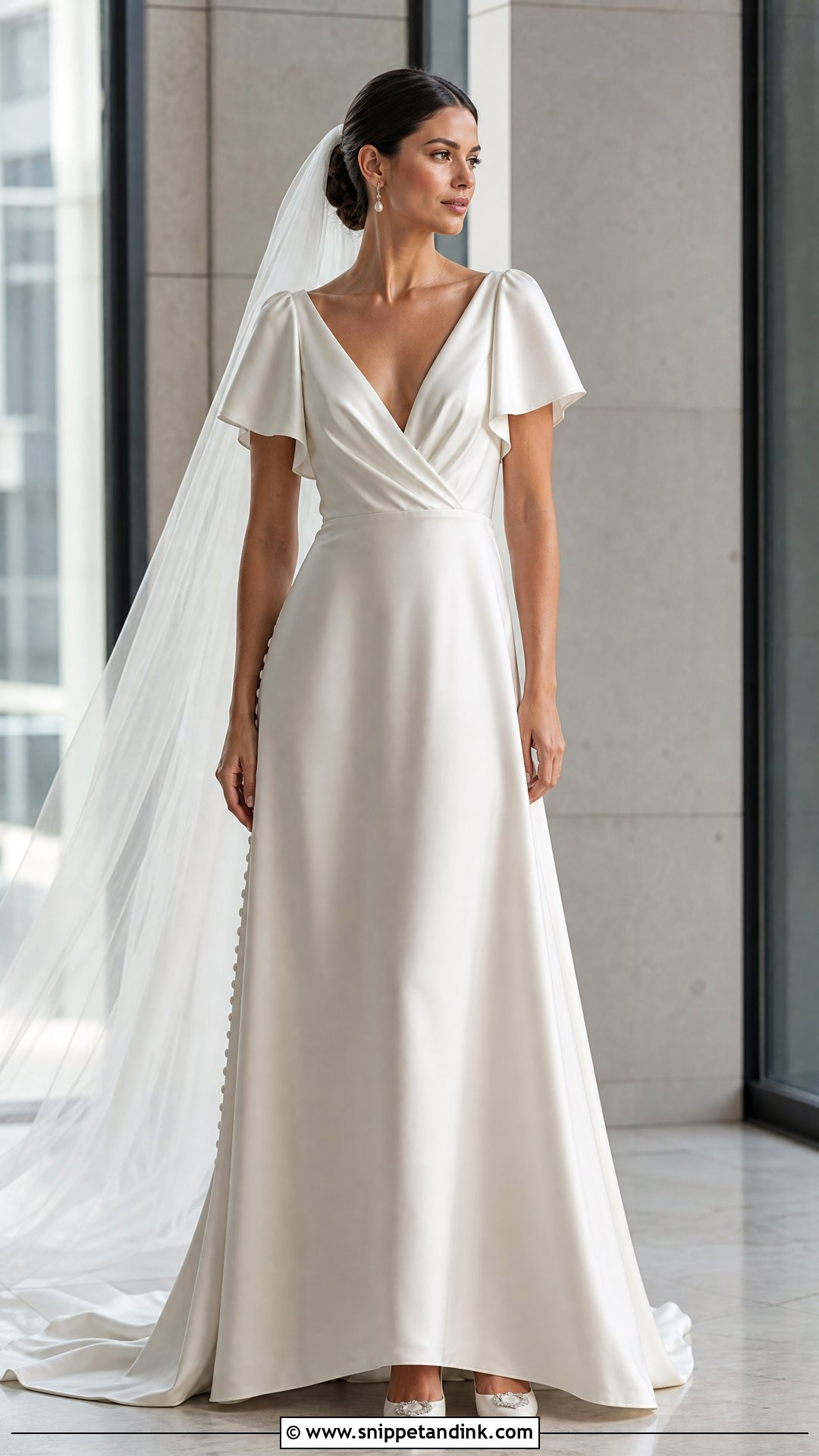
Satin is the unexpected choice here, and it gives the most modern result. A softly draped A-line with a V-neck bodice, covered buttons and satin sleeves cut on a gentle curve looks sculpted rather than floaty. The fabric weight matters: heavy duchess satin stands stiffly away from the arm like a shelf, so ask for a lighter satin that still drapes. Satin also shows every pull at the seams, which is why I inspect the armholes under bright light. Style it with a sleek low bun, pearl drops, a plain veil and pointed satin heels, plus a structured bouquet. Book professional steaming close to the day, since satin creases show sharply in flash photos. City venues and galleries suit it.
12. Tulle Flutter Sleeve Wedding Dress
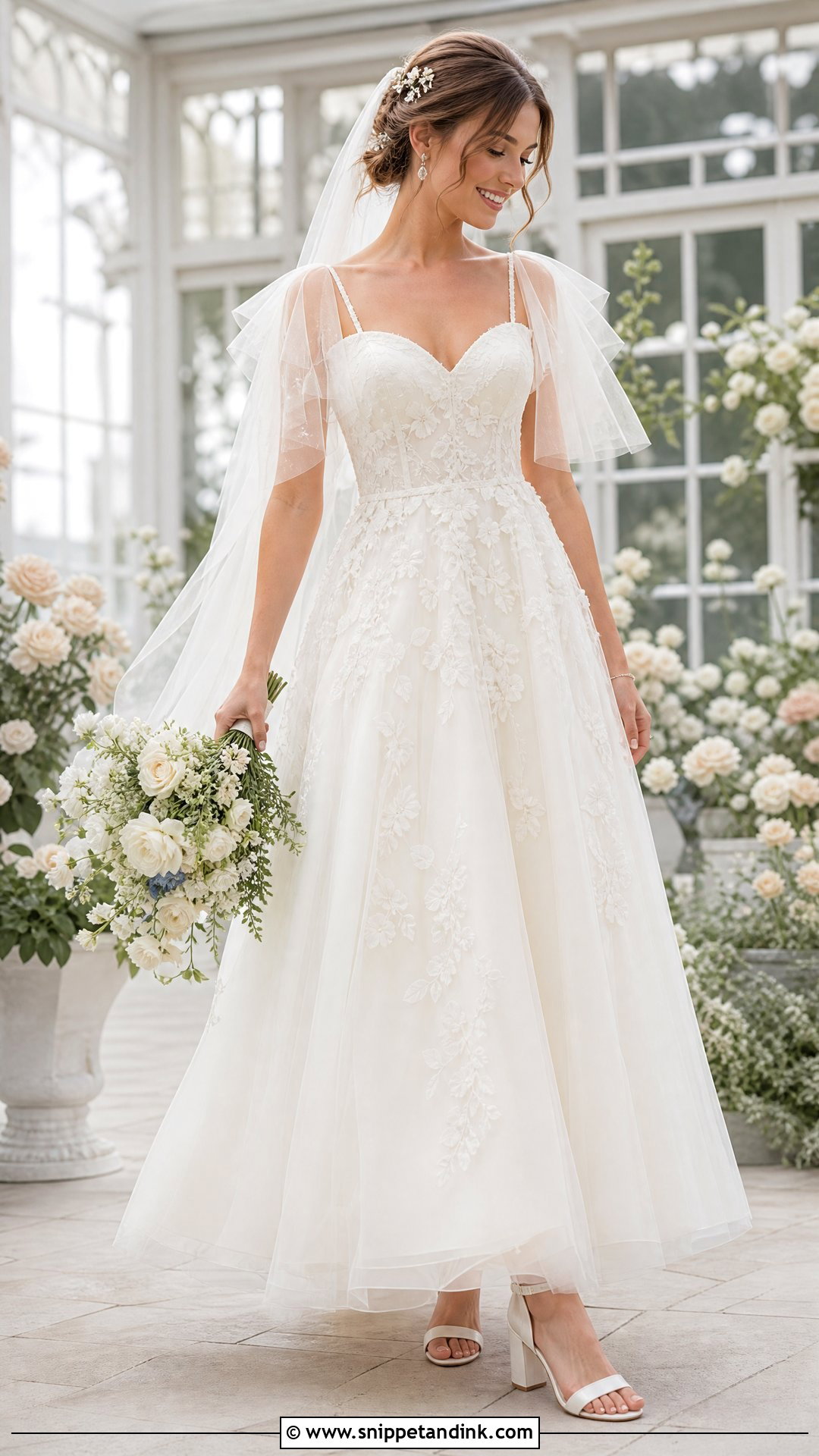
Tulle sleeves are the lightest option in this list, and they barely register on the arm. A lightly structured bodice with narrow straps and sleeves attached cleanly at the shoulder, over a soft A-line skirt with scattered floral appliqués, keeps the delicate effect head to toe. The trade-off is fragility. Tulle snags on prong-set rings, rough bouquet stems and bracelet clasps, so I steer brides toward smooth jewelry and a wrapped bouquet handle. Finish with a fingertip veil, crystal hairpins, fine earrings and ivory block heels, and skip any heavy necklace. Hang it in a breathable garment bag with room around the sleeves so the edges don’t crush before the wedding. Gardens and conservatories suit it.
13. Off-the-Shoulder Flutter Sleeve Wedding Dress
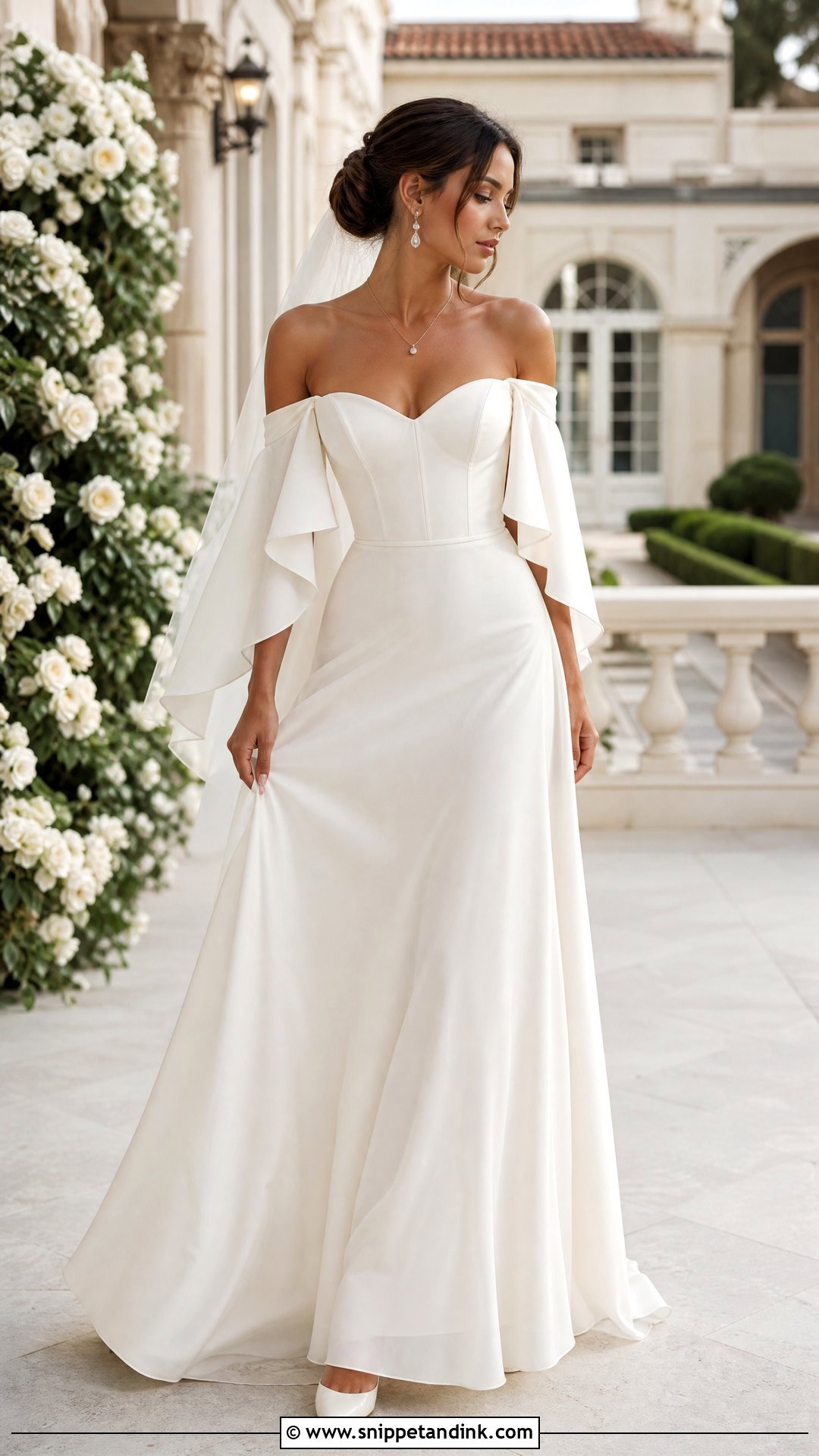
Off-the-shoulder flutter sleeves frame the collarbone, but they can’t be load-bearing. The gown needs a structured inner bodice that holds itself up, with the sleeves floating over the upper arm as decoration. A fitted waist and flowing skirt keep the balance. I’d add a collarbone-length necklace, drop earrings, a low chignon and a veil tucked under the hair, with pointed pumps indoors or block heels outside. This is the one sleeve I’d test most. Walk, sit and raise your arms at the fitting, and if you find yourself hitching the band back up even once, it needs tailoring. A well-fitted band stays put; a loose one slides toward the elbow or bunches in the armpit.
14. Square Neck Flutter Sleeve Wedding Dress
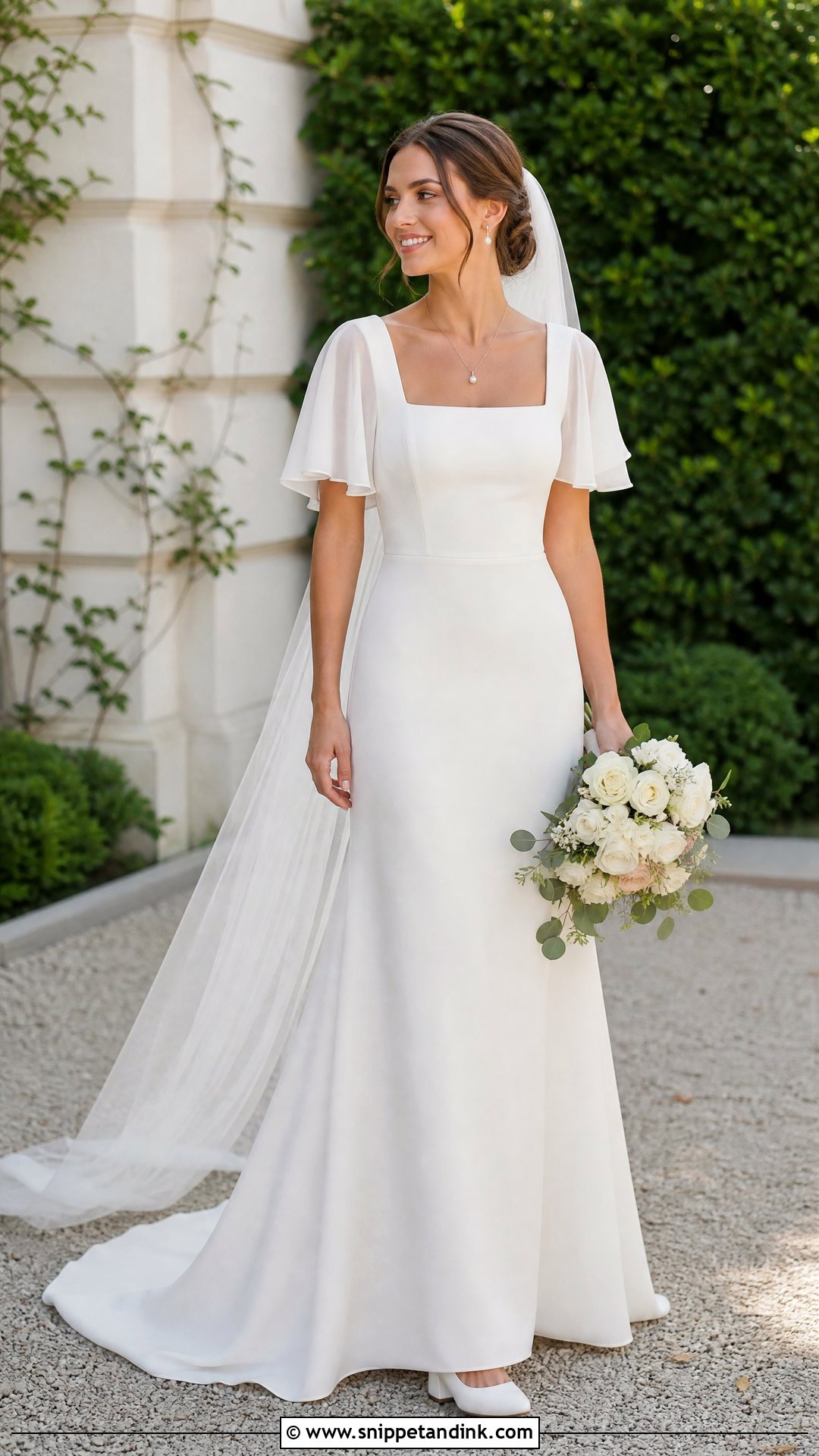
A square neckline gives the structure, and the flutter sleeves soften the hard corners it creates at the shoulder. Choose a fitted bodice and gently flared skirt in crepe, chiffon or light satin. This is a good fit for a bride who wants one romantic detail on an otherwise plain gown. Check that the neckline lies flat across the chest when you sit, because square necklines are notorious for gaping at the top edge once you lean forward. The sleeve should start far enough out that your shoulders move freely. A delicate pendant, small pearl earrings, a low bun, a plain chapel veil and closed-toe block heels complete it.
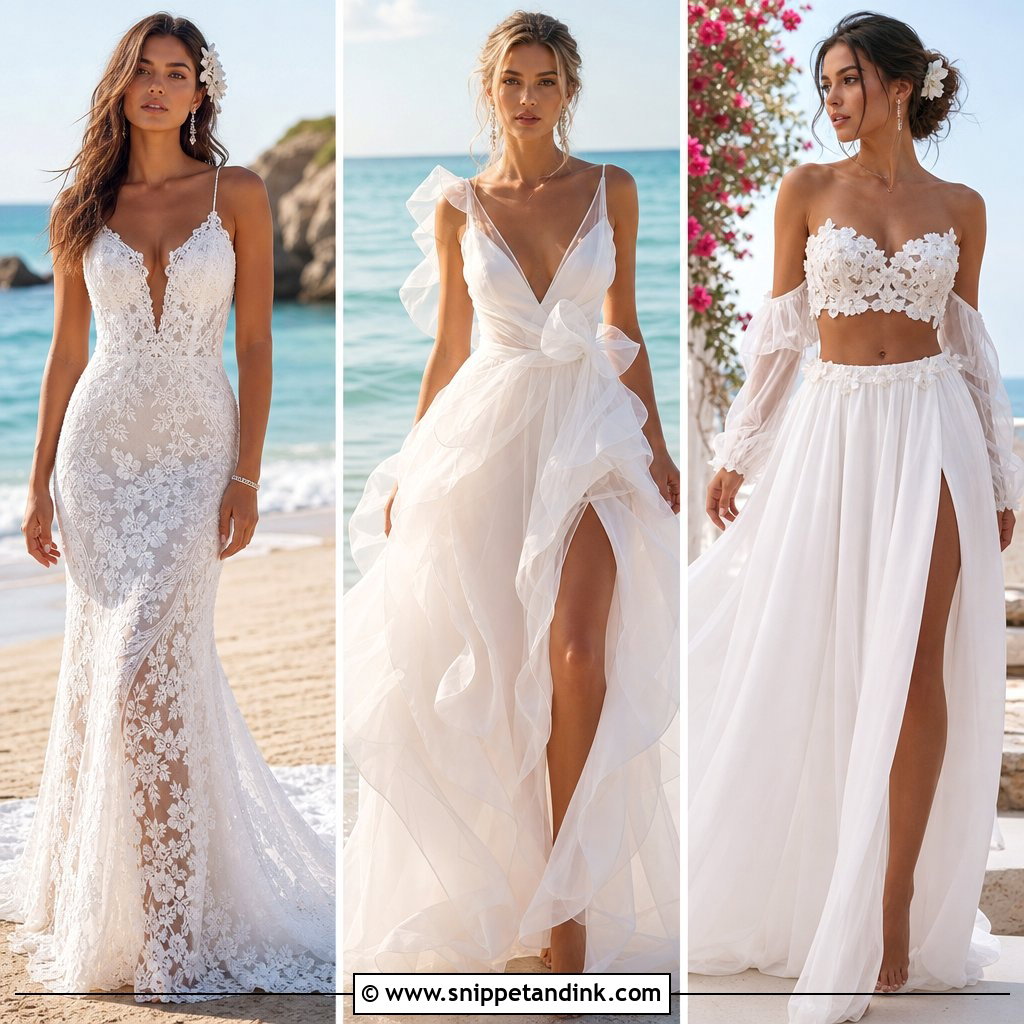

15. V-Neck Flutter Sleeve Wedding Dress
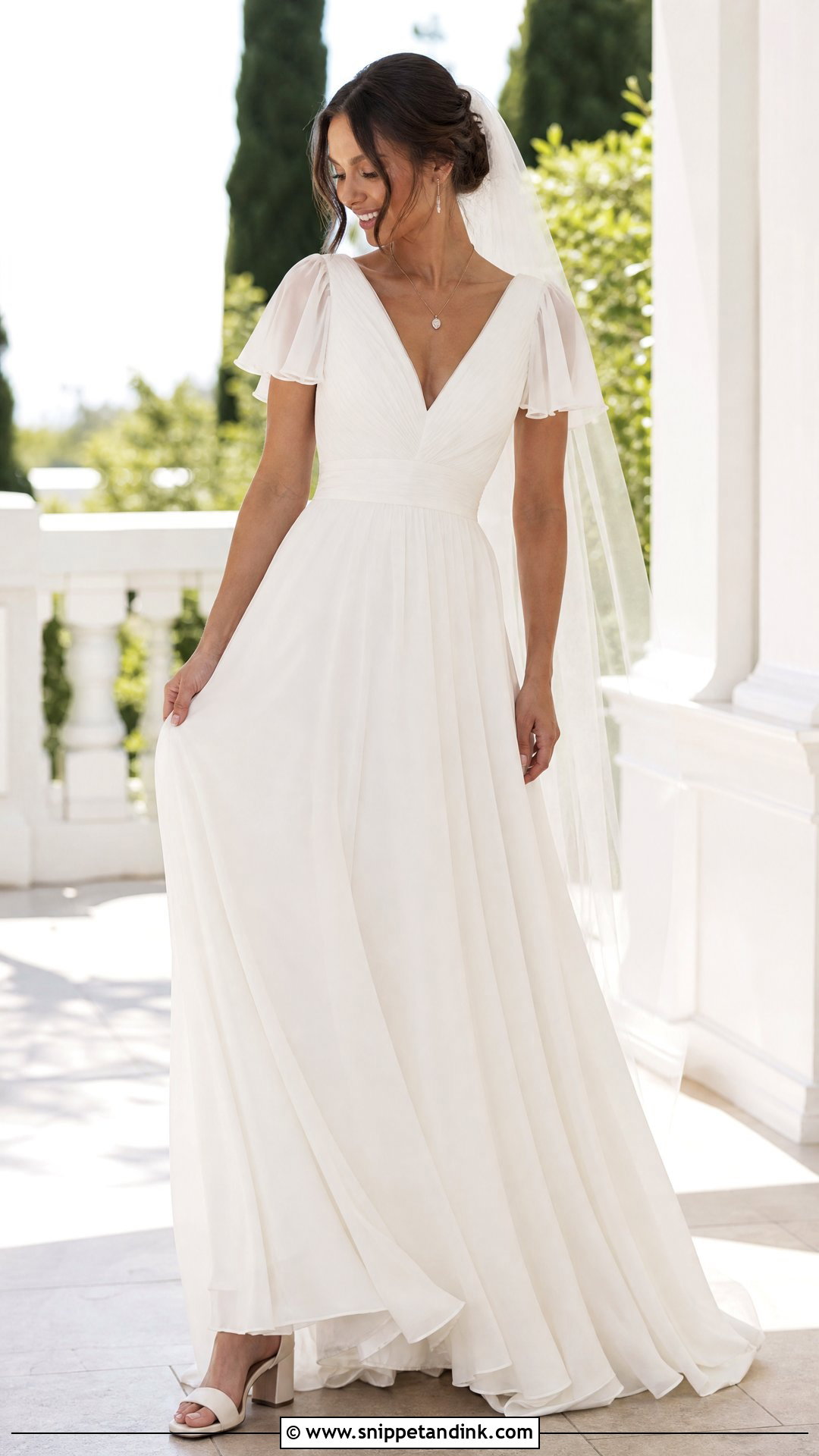
A V-neck lengthens the upper body, and flutter sleeves keep that open shape from looking stark. The depth can range from modest to dramatic depending on the ceremony and your comfort. A V-neck flutter sleeve wedding dress in chiffon, cut as an A-line or empire waist, gives the most fluid result. Remember that loose sleeves do nothing to hold the bust, so the bodice has to support it on its own; for a deep V, I usually suggest a hidden mesh panel. A fine pendant, understated earrings, a soft veil falling behind the sleeves and stable block-heel pumps finish it. Good tailoring keeps the neckline flat from the first photo to the last dance.
16. High Neck Flutter Sleeve Wedding Dress
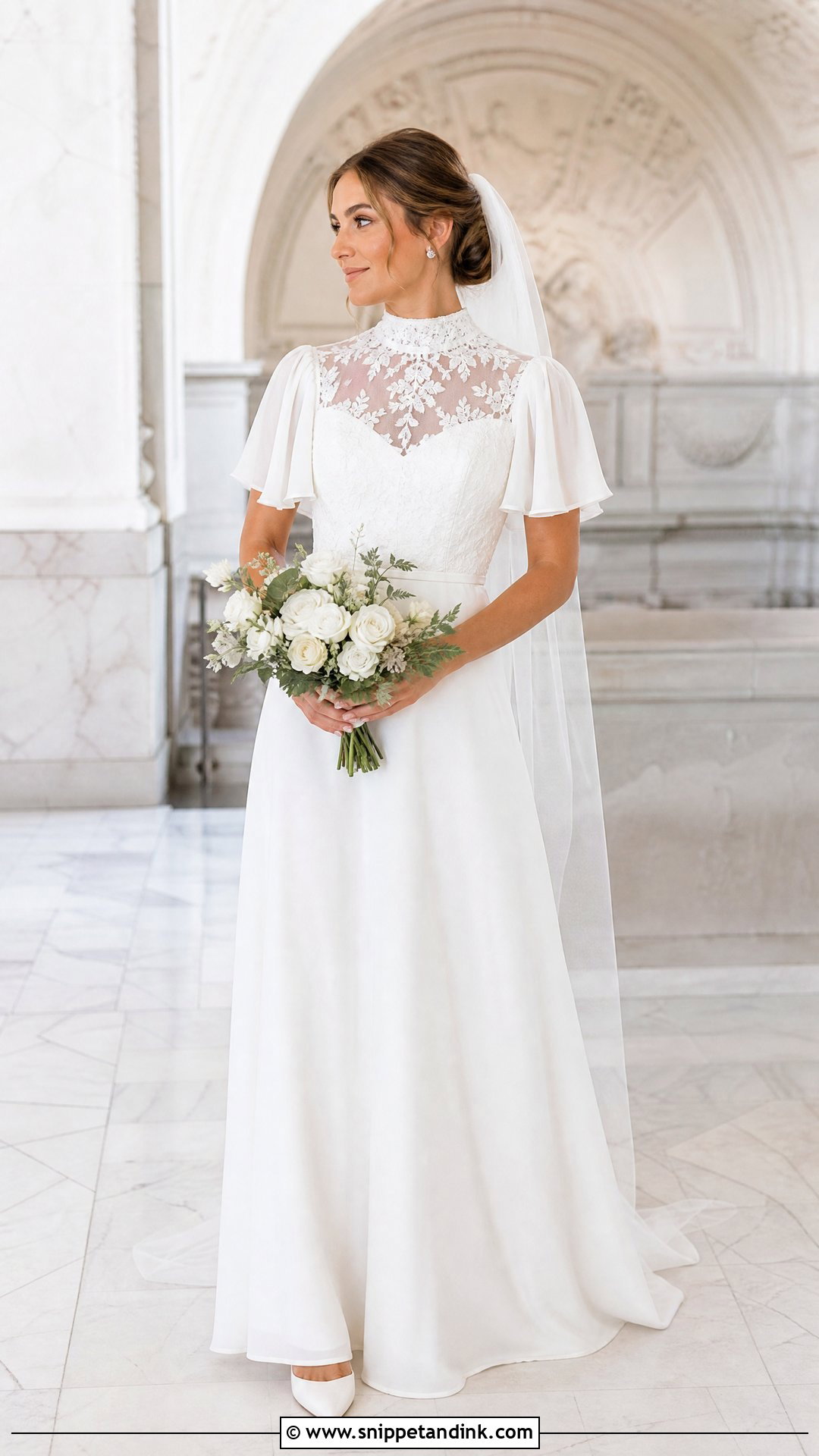
High necklines can make a gown feel heavy, and short flutter sleeves lighten them. Look for a sheer lace yoke over a fitted lining with a lightweight A-line skirt, so the coverage sits mostly at the top. Wear your hair up to show the lace, and skip the necklace altogether since the neckline is already the focal point. Stud earrings, a slim bracelet, pointed pumps and a veil set beneath the bun complete it. Feel the collar edge carefully at the fitting. A scratchy or tight collar is the most common complaint I hear about high necks by mid-reception, and a seamstress can usually soften it with a binding. Traditional ceremonies and cooler spring or fall weddings suit it.
17. Floral Flutter Sleeve Wedding Dress
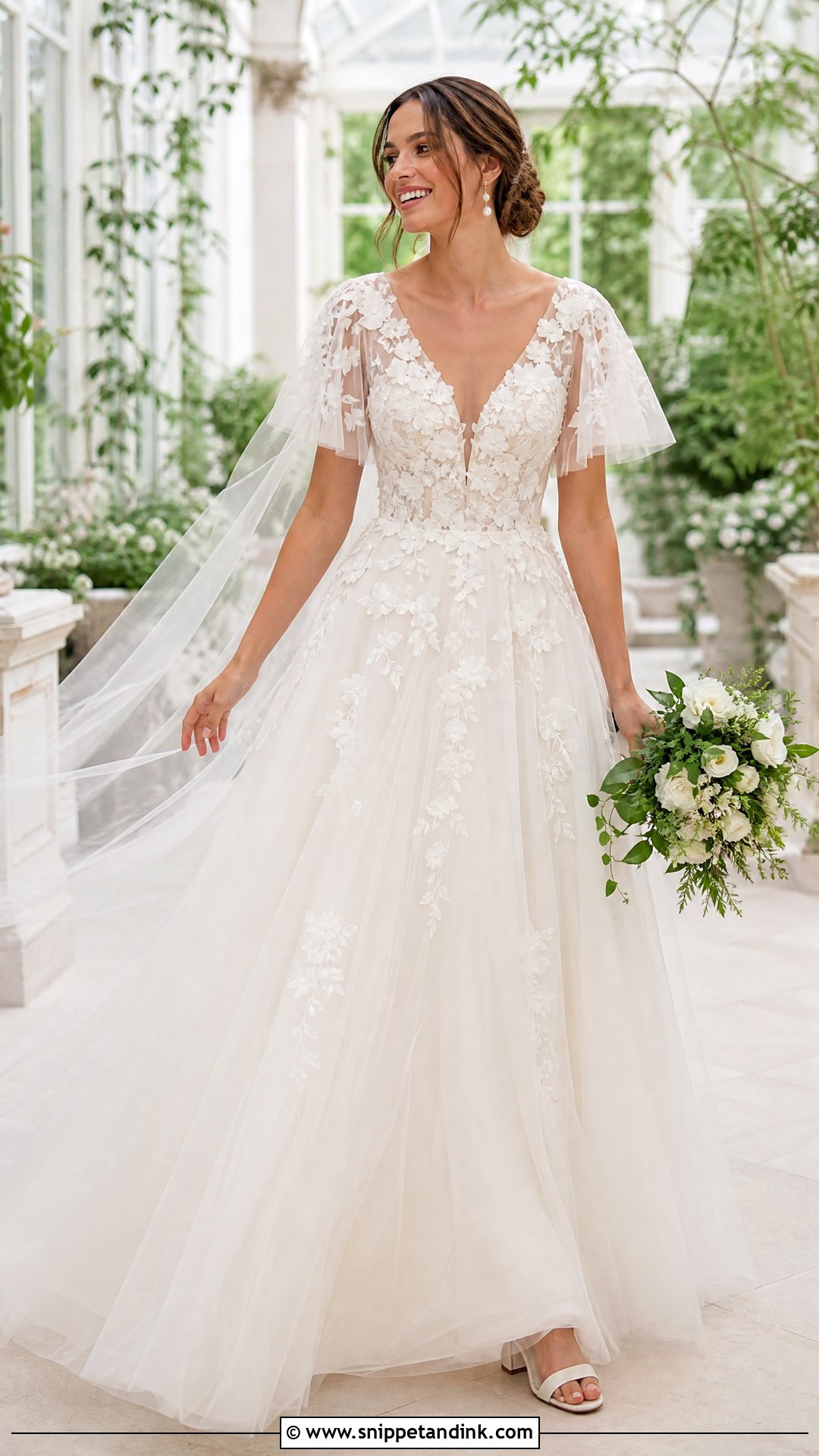
Floral appliqués that spill from the bodice onto the sleeves turn the flutter into the main feature. A tulle or lace gown with flowers placed across the bodice and lightly onto the sleeves, over an A-line skirt, keeps the embellishment from overwhelming you. Check the underside of the sleeve at the fitting. Appliqué edges and any beading can scratch the inner arm all evening, and a seamstress can usually move or line a rough piece. A plain raw-edge veil, pearl earrings, satin block heels and a loose low bun with a few face-framing pieces suit the texture. Keep the bouquet restrained so it doesn’t cover the bodice. Gardens and conservatories are its natural setting.
18. Detachable Flutter Sleeve Wedding Dress
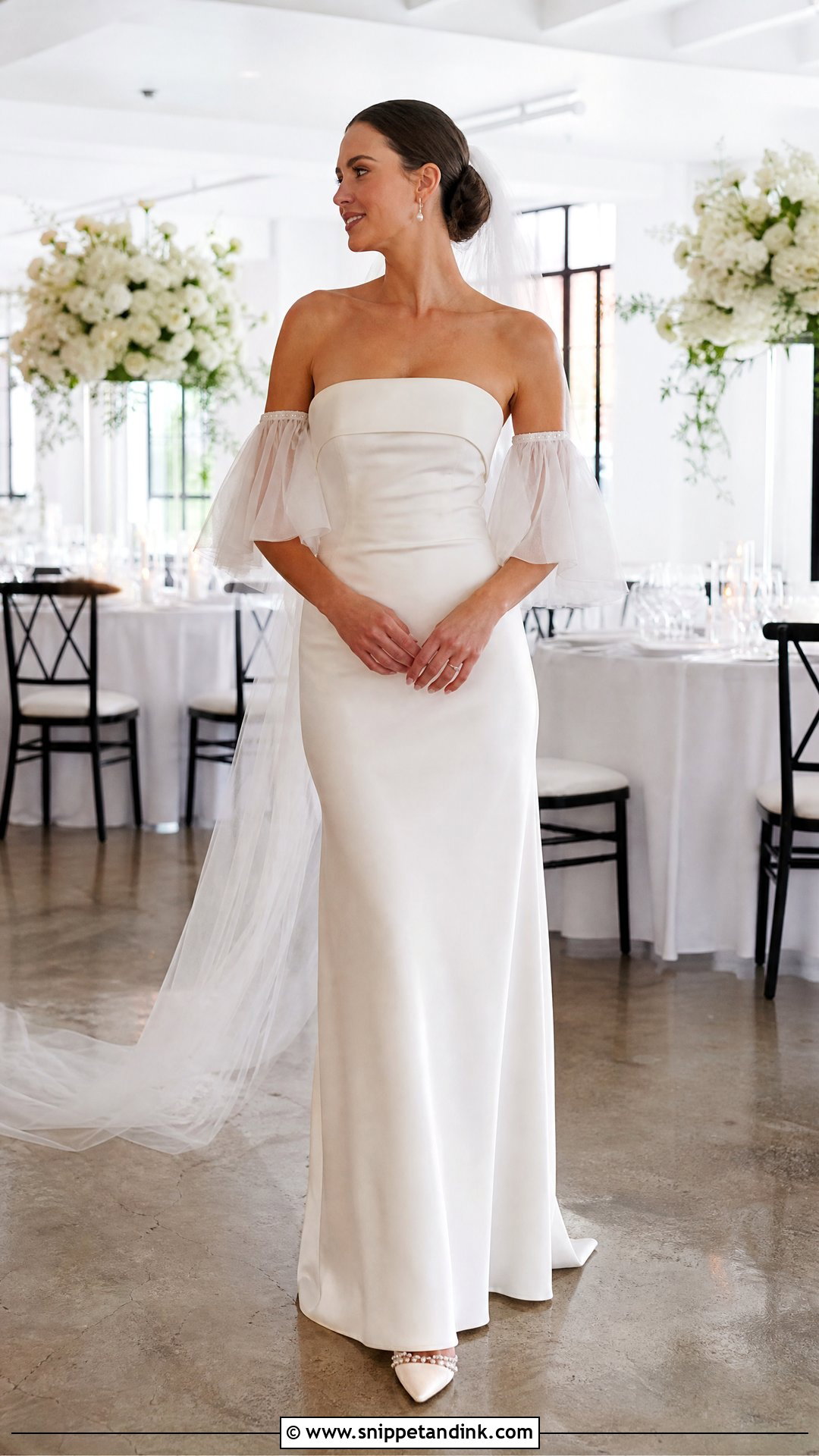
Detachable sleeves give you two looks from one dress. Start with a supportive strapless or sleeveless gown, add lightweight flutter sleeves for the ceremony, then take them off before the reception. The attachment is what I scrutinize: hooks, snaps or tiny covered fasteners should sit under straps or appliqués, never on bare bodice where they’d show in close-ups. Pair the ceremony look with a long veil, pearl earrings and classic ivory heels, then swap to statement earrings or a hair accessory once the sleeves come off. Practice removing them before the day, and hand the job to one specific person, because a rushed bridesmaid can tear fine fabric at the fastener.
19. Vintage Flutter Sleeve Wedding Dress
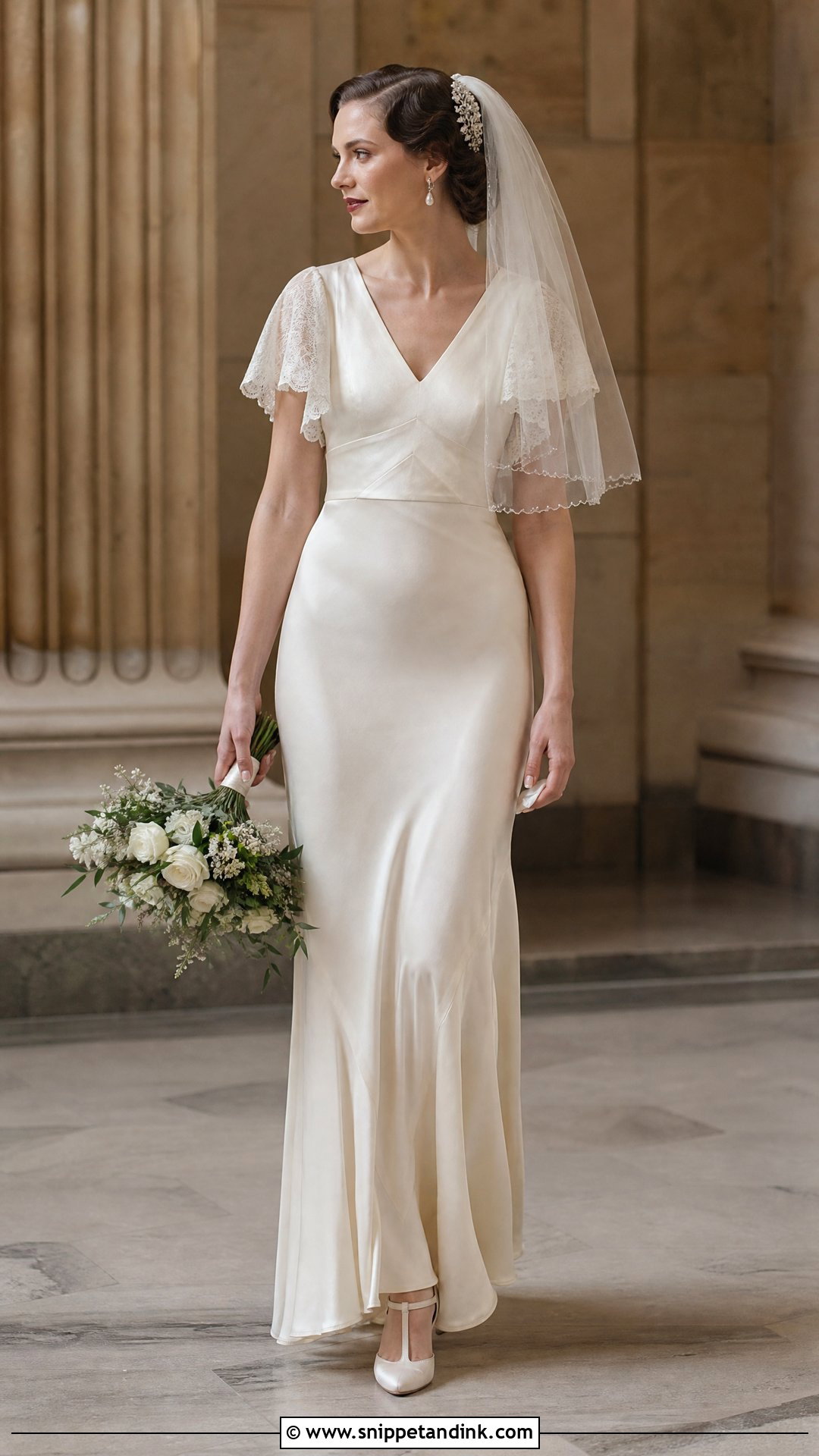
Vintage flutter sleeves suit soft lace, dotted tulle or flowing chiffon, especially on a 1930s-style bias-cut skirt with a defined waist and modest V-neck. Scalloped sleeve edges add movement and period character. Bias cut is honest about every curve, so it’s less forgiving than an A-line; try it on before falling for the photo. Soft finger waves or a low rolled updo, pearl earrings and a lightly embellished comb set the era, with T-strap or low block heels and a fingertip veil that leaves the back visible. Pick one era and stop there. If the gown is a true vintage piece, have the fabric professionally inspected before any alterations begin, since aged chiffon can split at the seams.
20. Minimalist Flutter Sleeve Wedding Dress
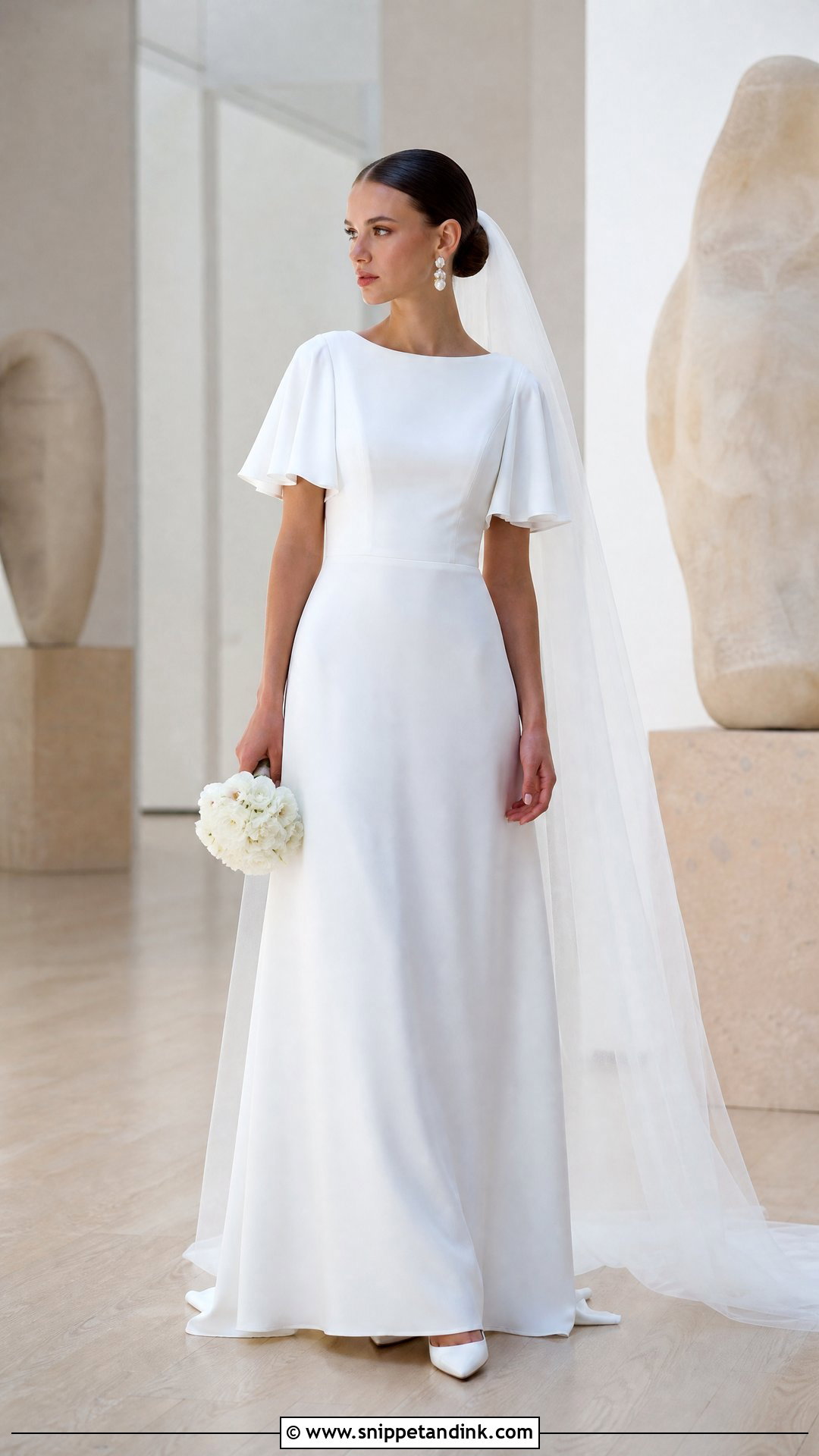
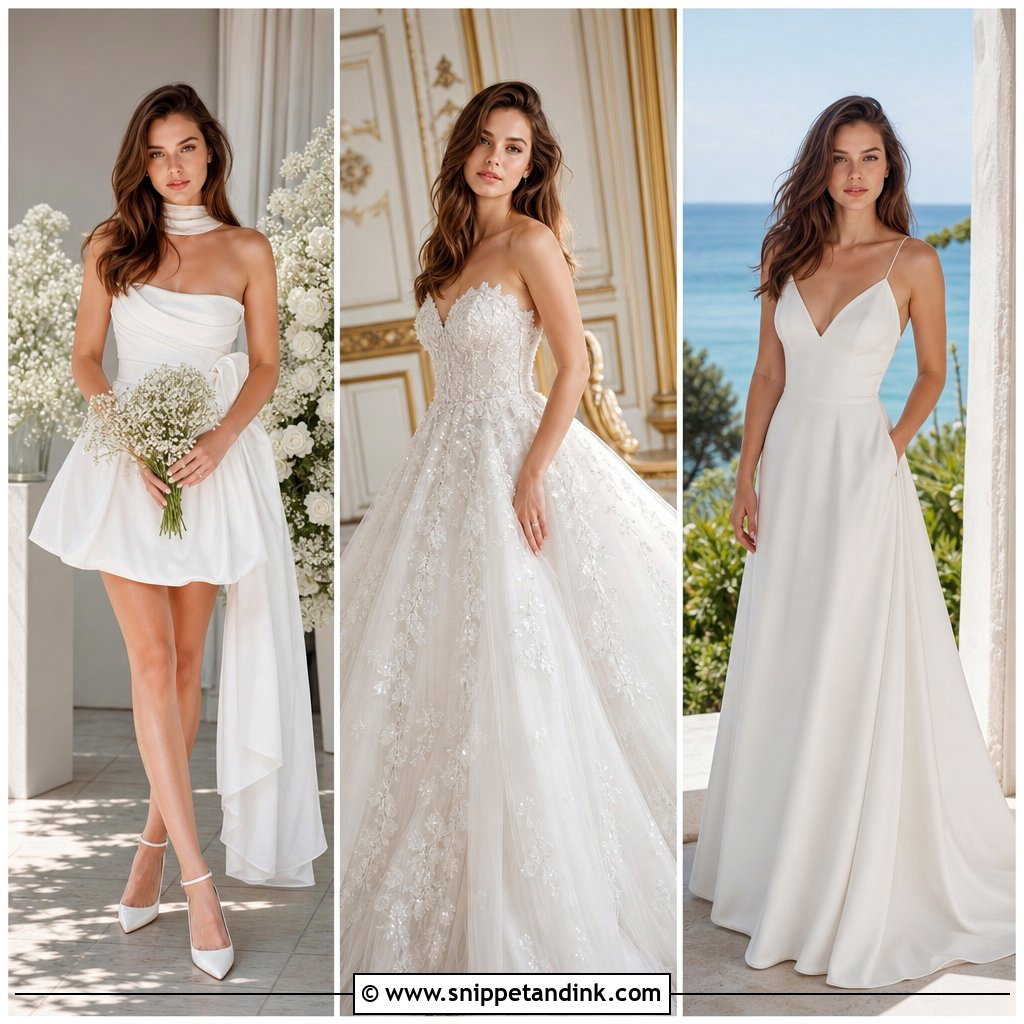
With nothing else on the dress, the sleeve’s cut and movement are all anyone sees. Choose a clean crepe or matte satin gown with a fitted bodice, a subtle waist seam and a column or A-line skirt, and sleeves with smooth, finished edges in place of lace or beads. Plain gowns are the hardest to fake, because every seam shows. That’s why I put the alteration budget into the shoulders, bust, waist and hem rather than into extras. Sculptural earrings, a sleek bun, pointed pumps and a plain cathedral veil finish it, with a compact single-variety bouquet that matches the uncluttered aesthetic. Modern hotels, galleries and rooftops suit it.
Can a Seamstress Add Flutter Sleeves to a Strapless Gown?
Often, yes. It’s one of the more common add-ons I’m asked about, especially by brides who love a strapless gown but want some coverage. A seamstress can drape new sleeves from matching chiffon or tulle and attach them at the bodice edge, or build them onto thin straps so the weight doesn’t sit on the neckline.
- Bring the gown to the seamstress before ordering any fabric. Ivory and white vary a lot, and matching the shade by eye from a swatch card rarely works.
- Ask whether the sleeves will be sewn in or attached with fasteners. Detachable gives you a second look; sewn-in sits more securely.
- Allow extra time on top of standard alterations, since new pieces are drafted and fitted from scratch.
- Check the bodice can stay up without the sleeves. Sleeves added to a strapless gown are decoration, not support.
How Loose Sleeves Behave Over a Long Day
Flutter sleeves are low-maintenance, but they do a few predictable things. Chiffon with a raw or narrow rolled edge can fray slightly where it brushes a bouquet or a chair back, so a quick snip of loose threads before portraits is worth it. In a breeze, light sleeves flip up toward the shoulder; a photographer can wait for a lull, and a tiny hand-sewn weight inside the hem keeps them down if your venue is windy. And when you sit at dinner, check your sleeve edges aren’t resting on the plate. It happens more than you’d think.
Lift Your Arms Before You Sign Off on the Sleeves
A flutter sleeve should move, feel comfortable and never have to do the job of a bodice. Chiffon and tulle float, lace settles with texture, and satin gives a cleaner curve, and each pairs with A-line, ball gown, mermaid, short or minimalist shapes once the neckline and accessories stay in the background. Before approving alterations, walk, sit, dance and raise your arms in the dress, and hug someone if you can. If the sleeves stay put through all of that, you’ve found a gown that will be as comfortable at midnight as it was at the aisle.
You'll Like These Ideas:




Leave a Reply