
An elopement dress has a harder job than a church gown. It has to survive a car boot, a trail or a courthouse corridor, then still look bridal when the photographer lifts the camera. Because the setting can be anything from a registry office to a cliff edge, I start every elopement fitting by asking where the vows happen and how far the bride will walk to get there. Slips, minis, lace midis, crepe columns and tailored separates can all work once the shoes, veil and bouquet are matched to that place. Below are the thirty shapes I find myself recommending most, with notes on where each one struggles.
Getting an Elopement Dress to the Ceremony Without Creases
Most elopements involve travel, and travel is where simple dresses get ruined. I ask about the journey before I talk about necklines, because the answer rules some fabrics out straight away.
- On a flight, carry the dress on in a breathable garment bag. Ask cabin crew about the hanging cupboard; on many full-service flights they will help if space allows.
- Fold with tissue paper between layers. Tissue softens the fold lines so they steam out faster.
- Crepe and polyester recover from packing well. Pure silk, linen and cotton crease hard, so plan a proper steam.
- A small travel steamer is worth packing. Hotel irons are a risk on satin; one wrong setting leaves a shiny scorch mark that never comes out.
- If you hike to the spot, wear practical clothes and change on location. A pop-up tent or the car works as a changing room.
Hang the dress in a steamy bathroom the night you arrive. Light creases drop out on their own, and you will only need to touch up the hem in the morning.
1. Satin Slip Elopement Dress
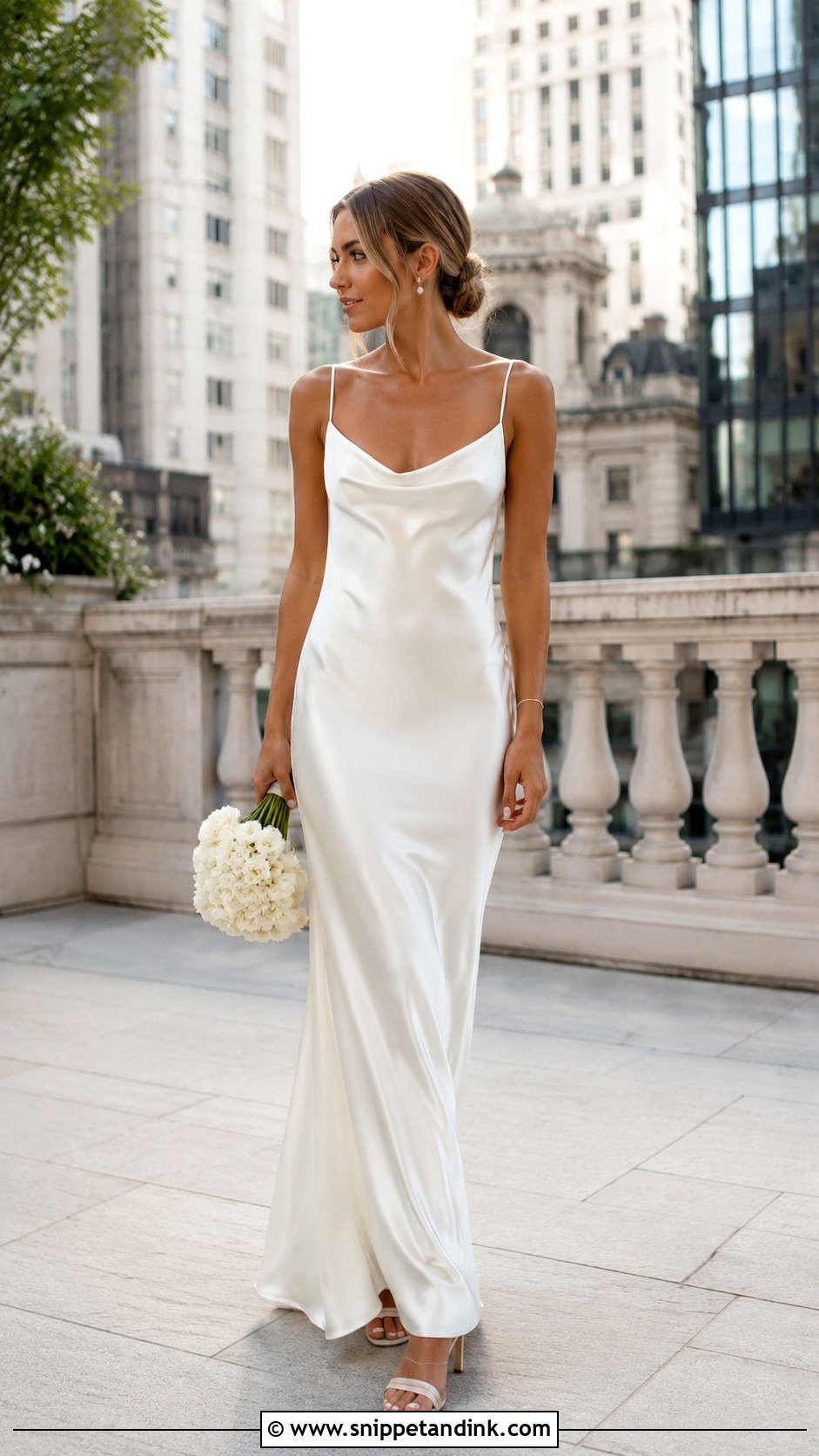
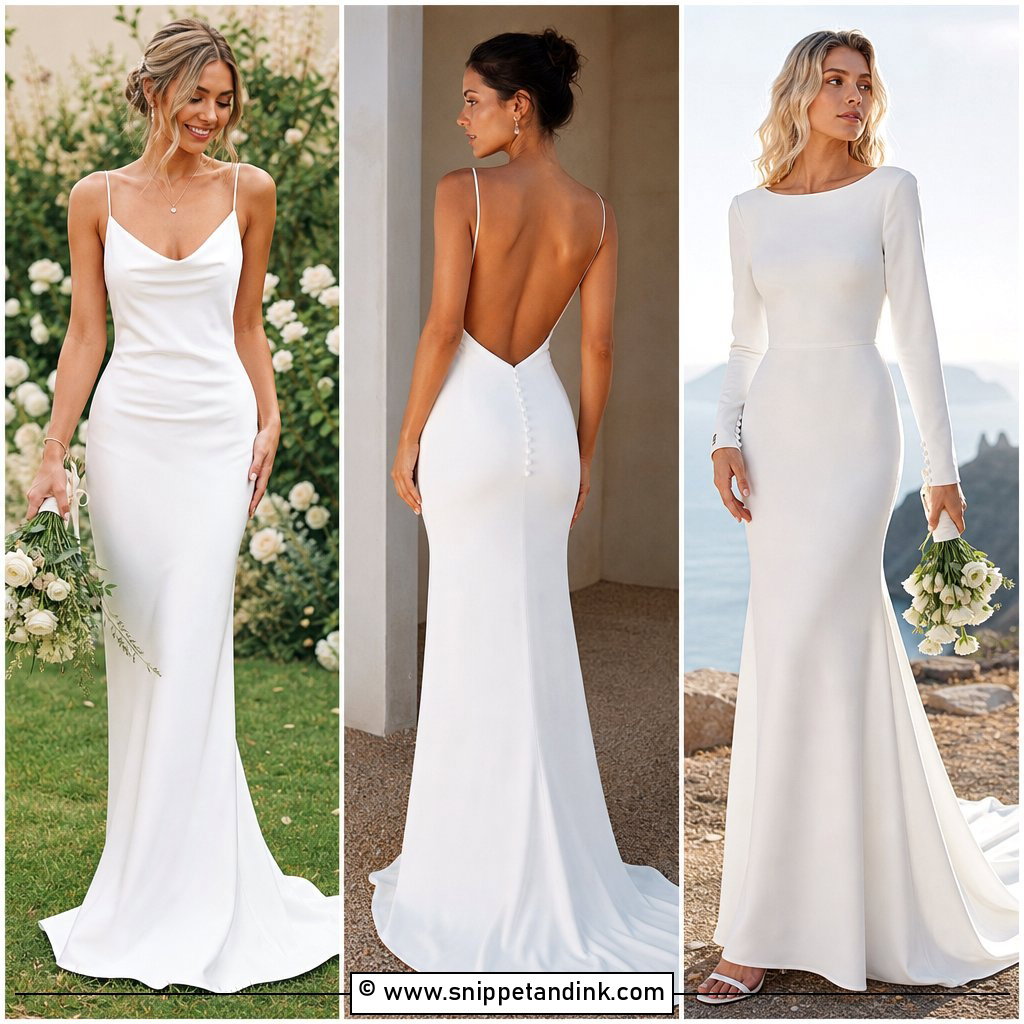
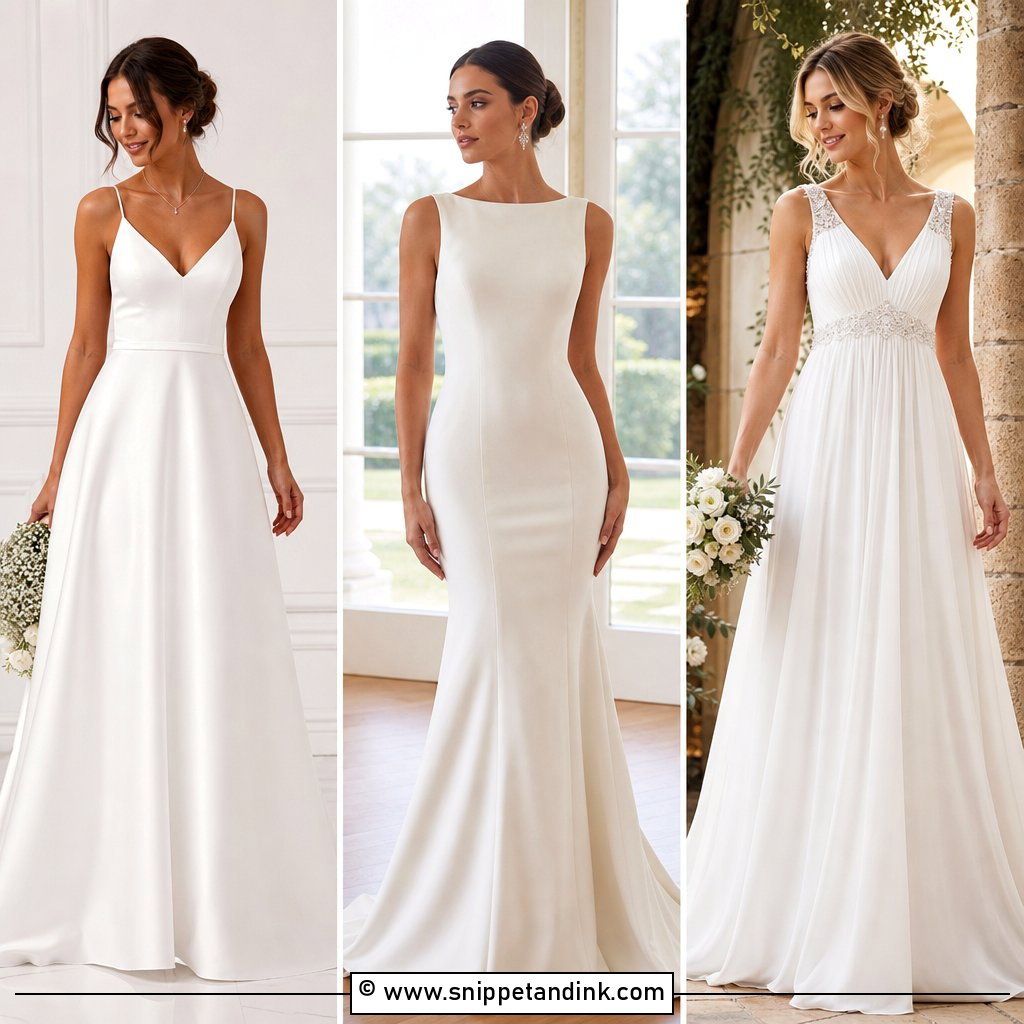
Bias-cut satin skims the body because the fabric is cut on the diagonal, which gives it stretch without any elastane. That same cut shows every seam of your underwear, so I fit a slip over smooth, no-show shapewear or nothing at all. Ivory, pearl and champagne read as bridal outdoors; bright white can look blue in shade. Low strappy heels and pearl studs are enough. Outside, bring a sheer wrap, because satin offers no warmth once the sun drops.
2. White Mini Elopement Dress
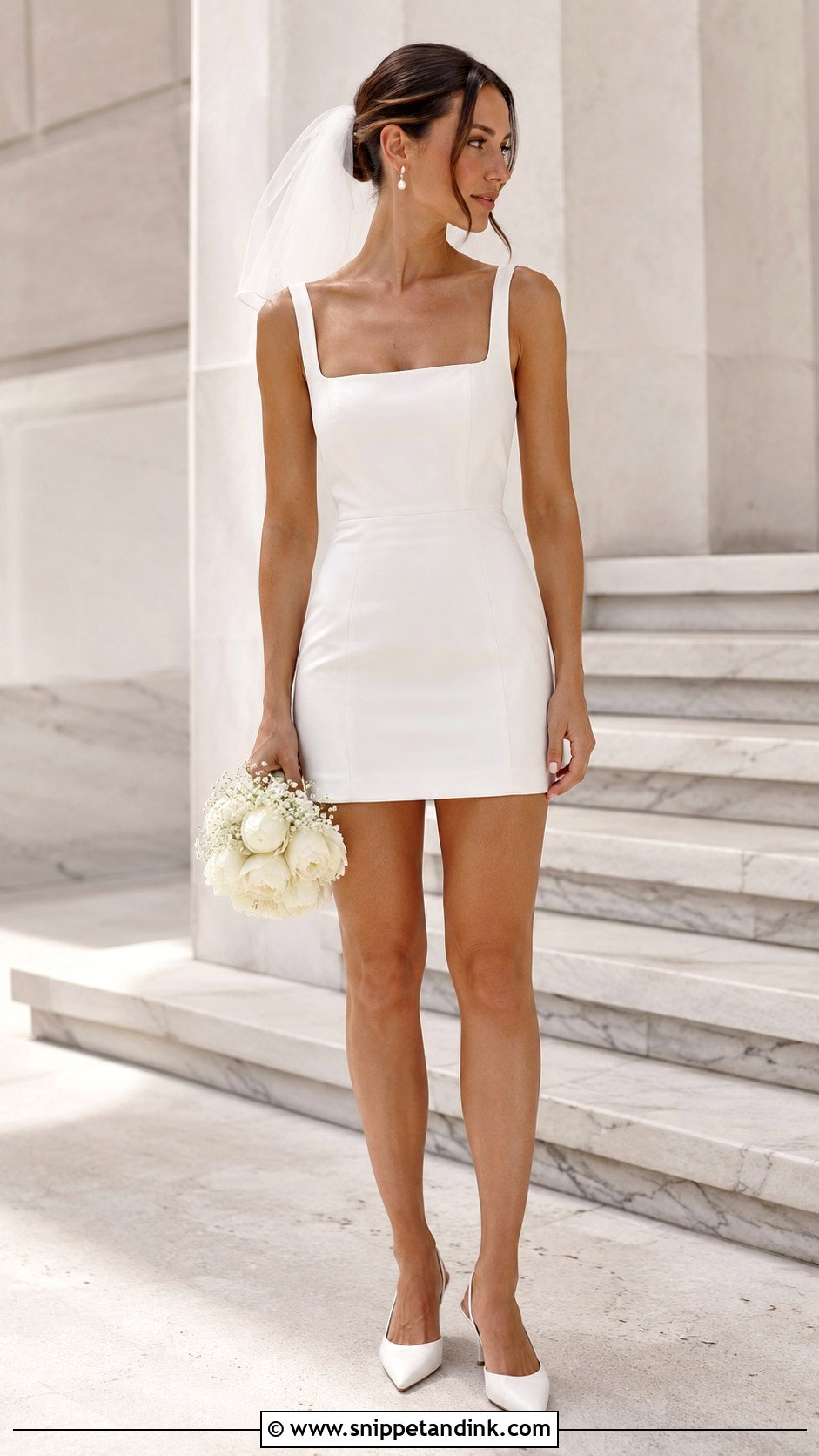
A white mini elopement dress only looks bridal if the fabric has body. Crepe, satin or mikado hold a crisp hem; jersey or cotton jersey will read as a summer party dress no matter how you style it. I sit every mini client down at the fitting to check how far the hem rides up, since courthouse benches and car seats are where minis go wrong. A square neck or long sleeves make it feel deliberate. Finish with slingbacks or pointed pumps and a short veil or satin bow.
3. Lace Midi Elopement Dress
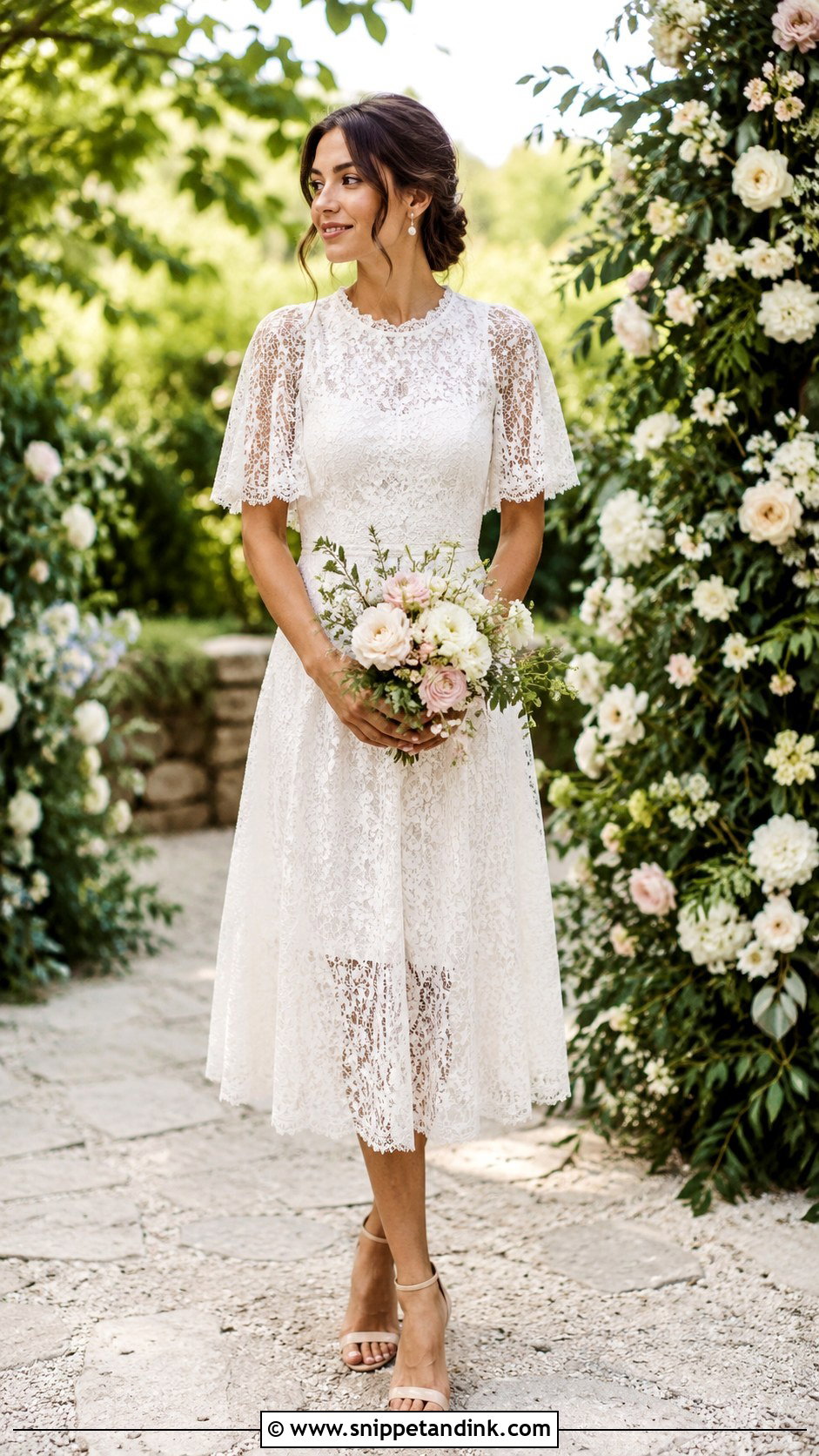
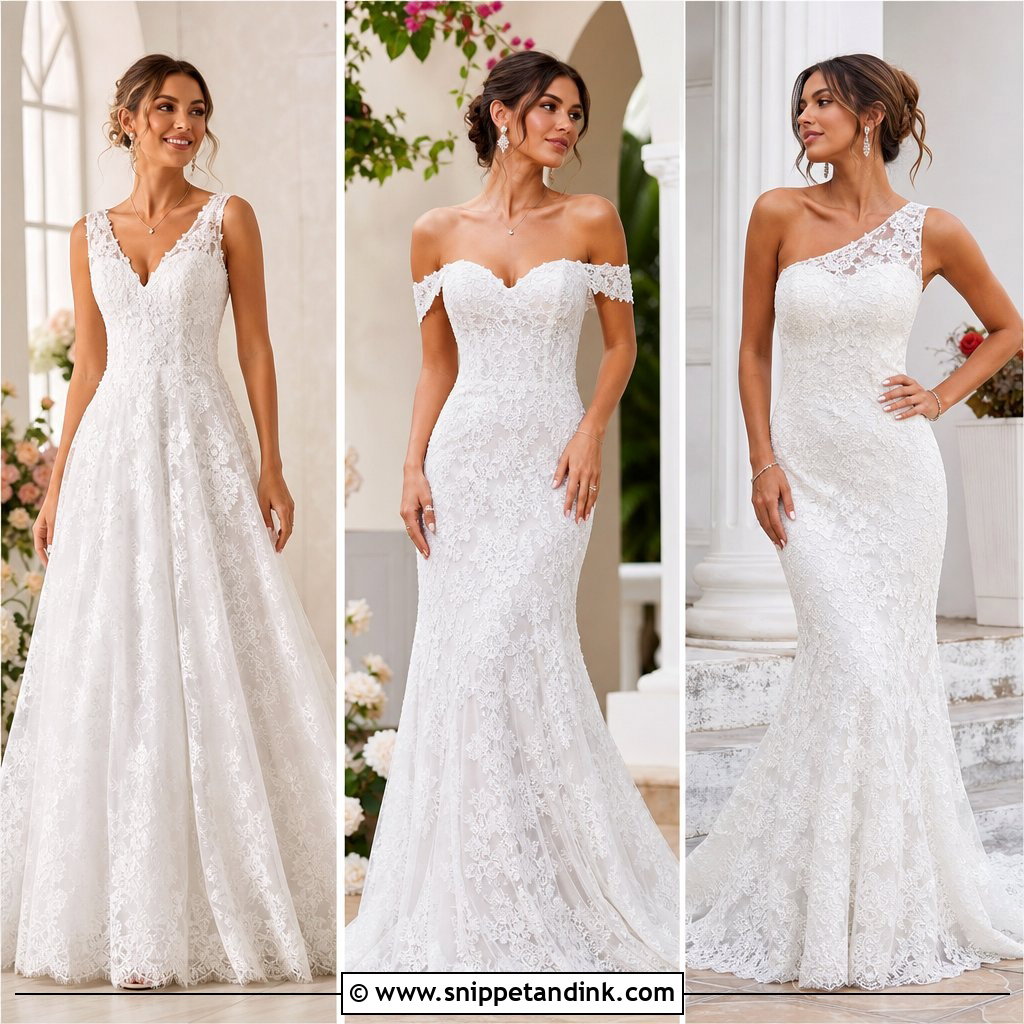
Lace on a midi works hardest when the dress underneath is plain. I look for a fully lined bodice and a clean skirt, because lace stacked on ruffles turns busy in photos. Corded or Chantilly lace sits flatter than heavy guipure, which can scratch inner arms over a long day. Nude or ivory heels keep attention on the texture. The length clears stairs and car doors, so this is the shape I suggest for historic town centres with cobbles and steps.
4. Crepe Column Elopement Dress
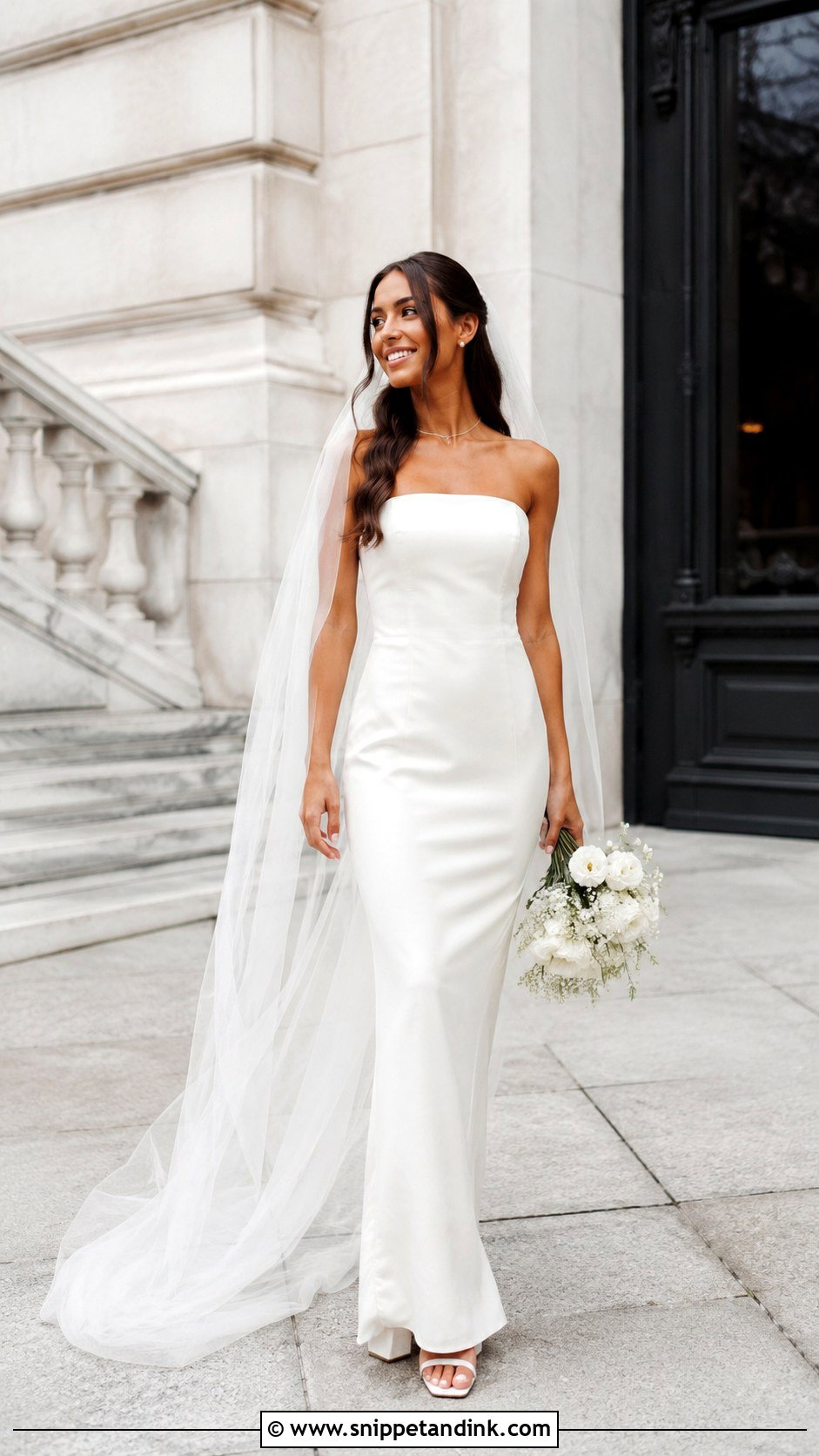
When a bride asks me for a simple dress that still looks expensive, crepe is my answer. It has enough weight to smooth over the body and drop in a straight line, yet it does not trap heat like a lined ball gown. The catch: crepe shows a pulled seam or a badly placed dart instantly, so budget for a proper tailor. I pair columns with block heels when the route includes stone streets or grass. A long veil adds drama for portraits, and a sleek bun keeps the outline modern.
5. Tea Length Elopement Dress
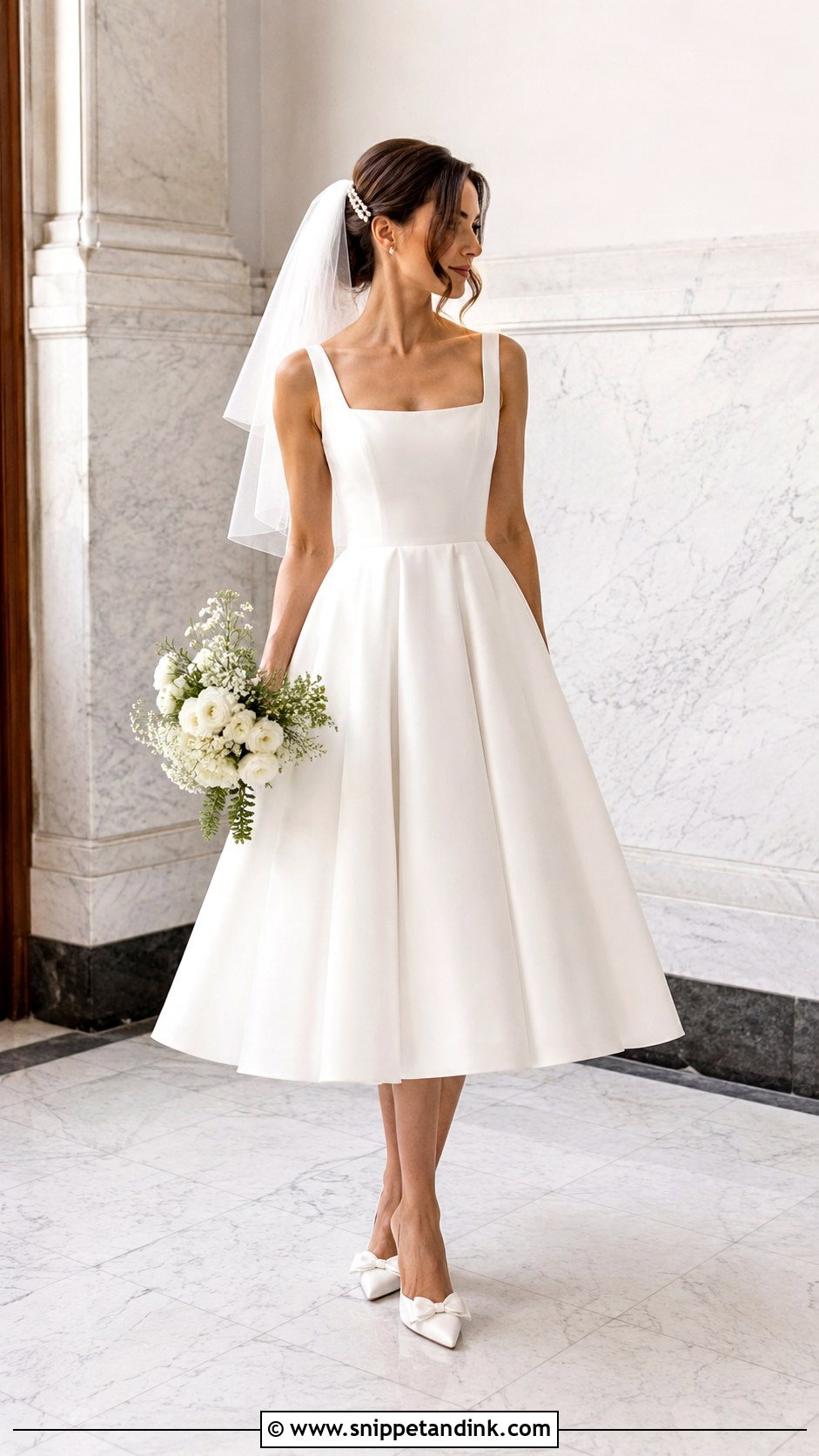
Tea length sits between knee and ankle, which means your shoes are on show all day, so choose them as carefully as the dress. A fitted bodice with a softly flared skirt gives the classic fifties shape. I’d add a layer of soft tulle under the skirt rather than stiff crinoline; it keeps the flare without the rustle in a quiet registry room. Kitten heels, pointed flats or bow pumps all suit it. A short veil or pearl clip is enough on top.
6. Long Sleeve Elopement Dress
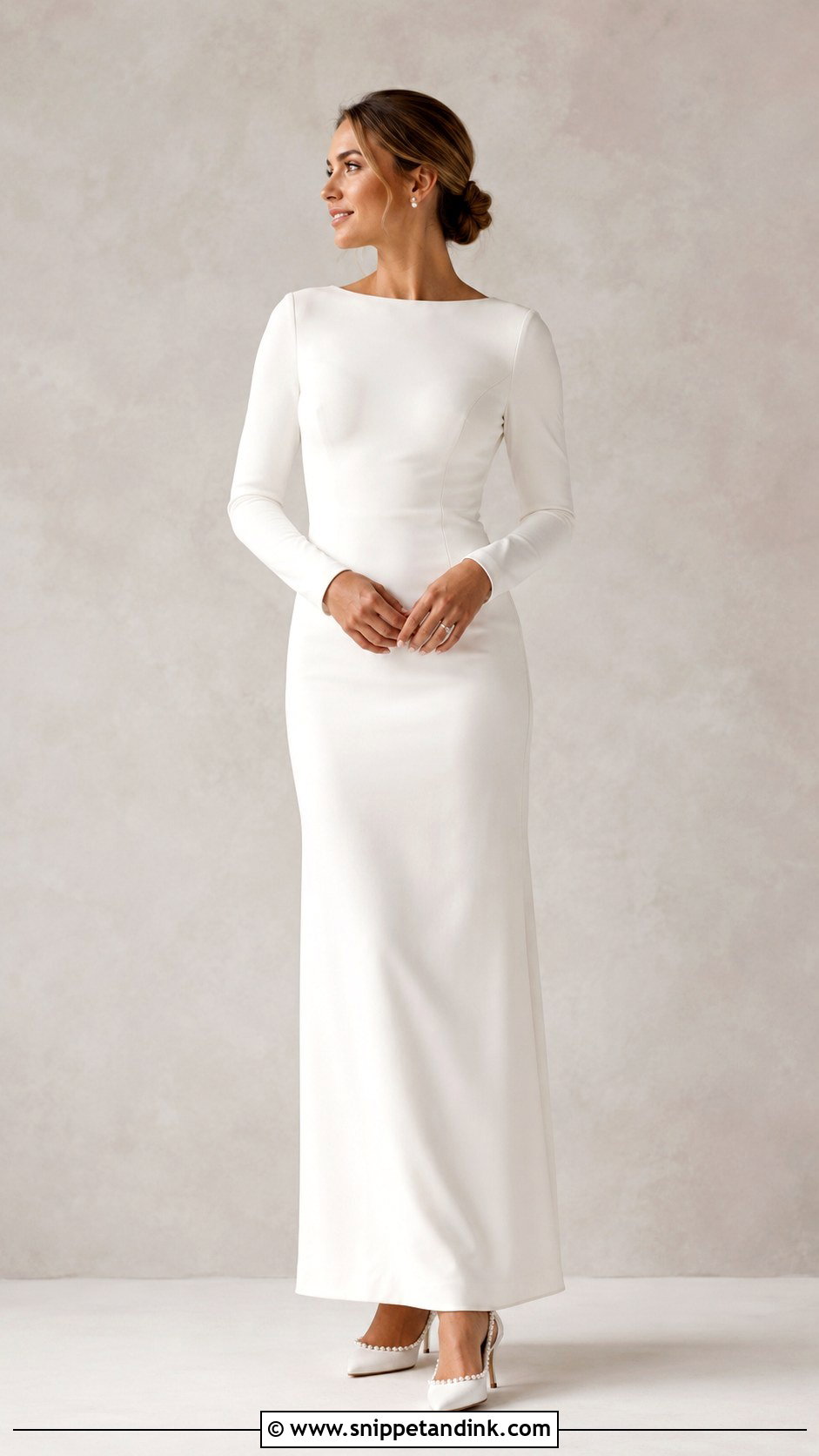
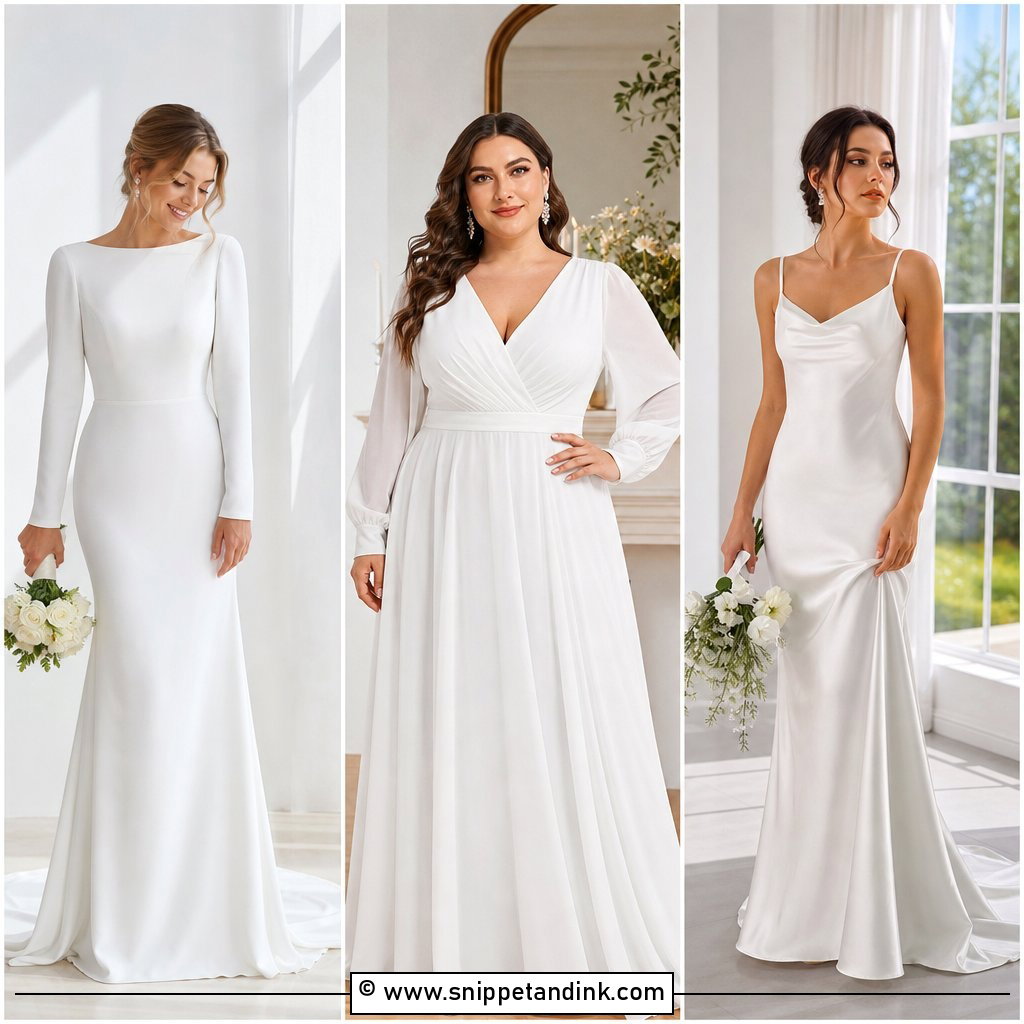
Sleeves earn their place at autumn, winter and dawn ceremonies when bare arms would be covered in goosebumps in every photo. Fitted crepe sleeves look clean; sheer lace feels romantic; chiffon moves. Test the armhole before anything else. I ask brides to lift both arms as if hugging someone taller, because a tight sleeve head pulls the whole bodice up. Keep the rest quiet: classic heels, small bouquet, minimal jewellery. A low chignon or soft waves balances the covered line.
7. Square Neck Elopement Dress
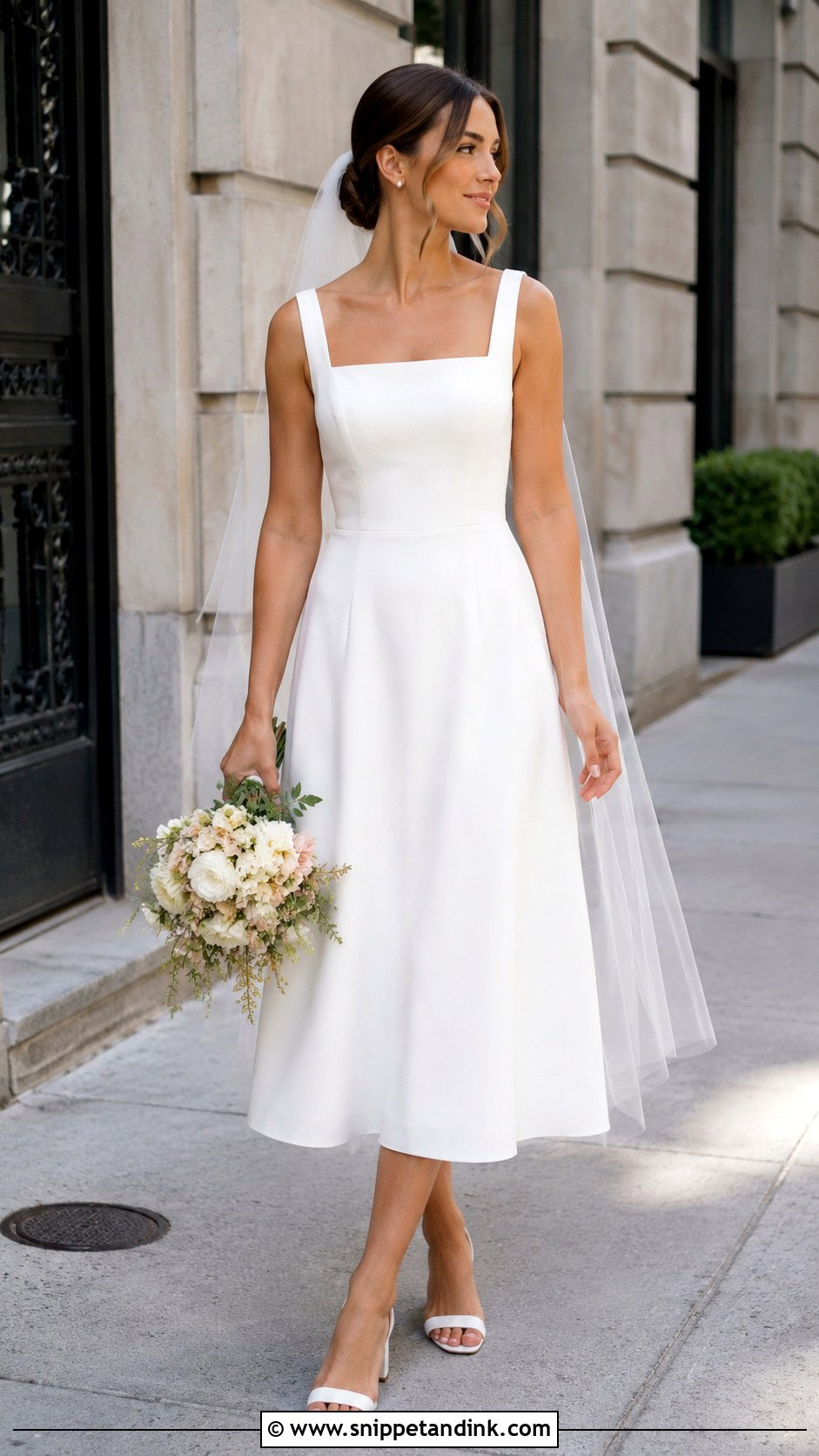
The square neck frames the collarbone and works at any length, from mini to floor. Wide straps help it stay put, which matters more than people think on a windy day. I check that the neckline sits level when the bride bends forward to sign the register; a gaping square edge is hard to fix with tape. Pearl earrings, a sleek veil and low heels finish it. A loose bouquet in white and pale blush softens the straight lines.
8. Off Shoulder Elopement Dress
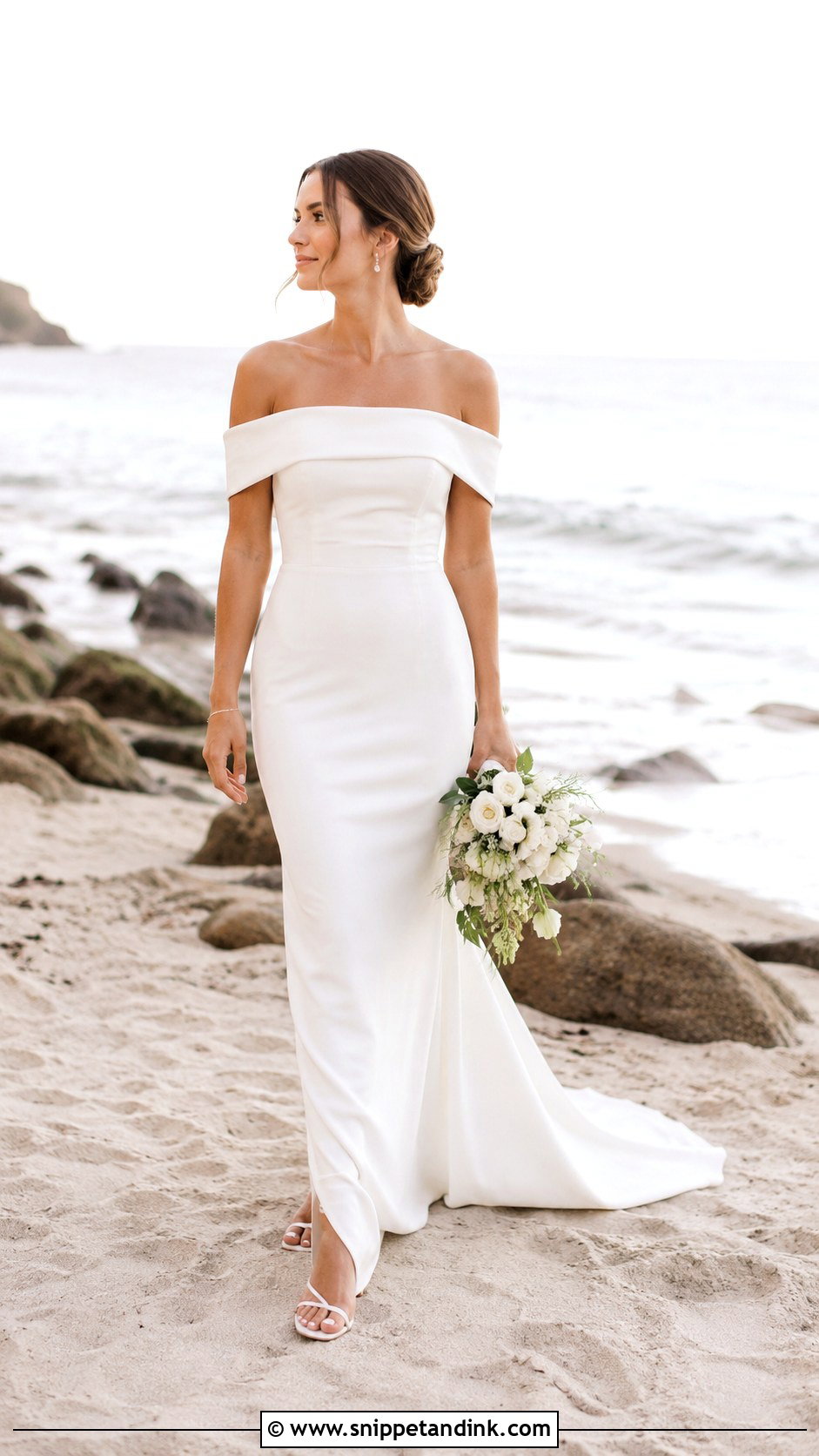
Off-shoulder necklines are lovely in close-up ceremony photos, but they restrict how high you can lift your arms. If you plan to hug everyone or climb anything, a bodice with hidden silicone grip tape and boning is non-negotiable. Fitted crepe looks sleek; an A-line skirt gives more ease. The neckline already does the work, so small drop earrings and a slim bracelet are plenty. Coastal ceremonies suit it well, as long as you have a wrap for the breeze.
9. High Neck Elopement Dress
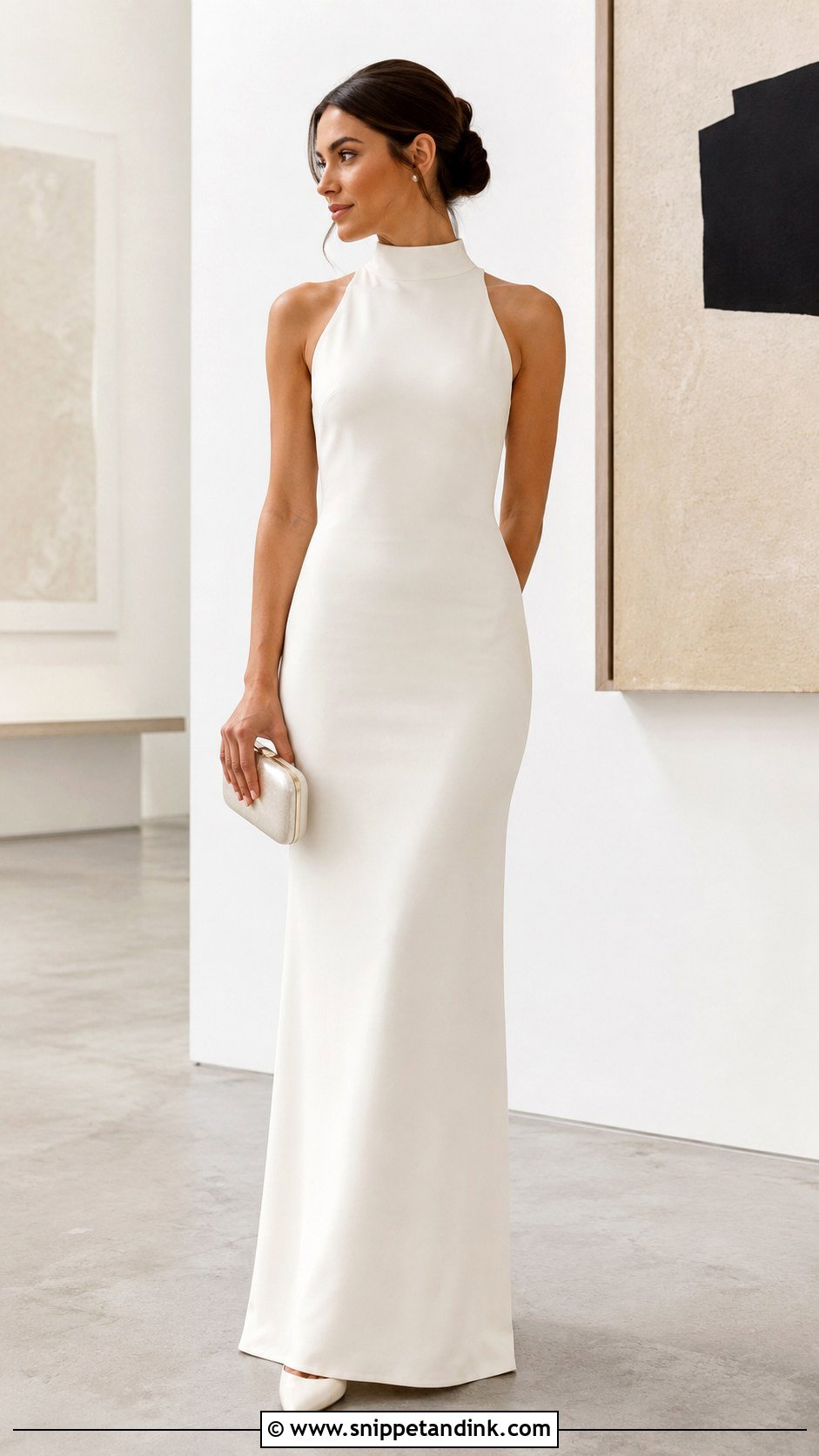
A high neck reads modest and modern at once. Satin or crepe keeps it sharp; a lace midi version softens it for gardens. Wear your hair up or swept back, since loose hair over a high neck hides the very line you chose. I’d skip it for very hot climates; a closed neckline traps heat at the throat. Studs, a slim clutch and simple heels are enough. Shape and fabric make it bridal, not beading.
10. Simple A Line Elopement Dress
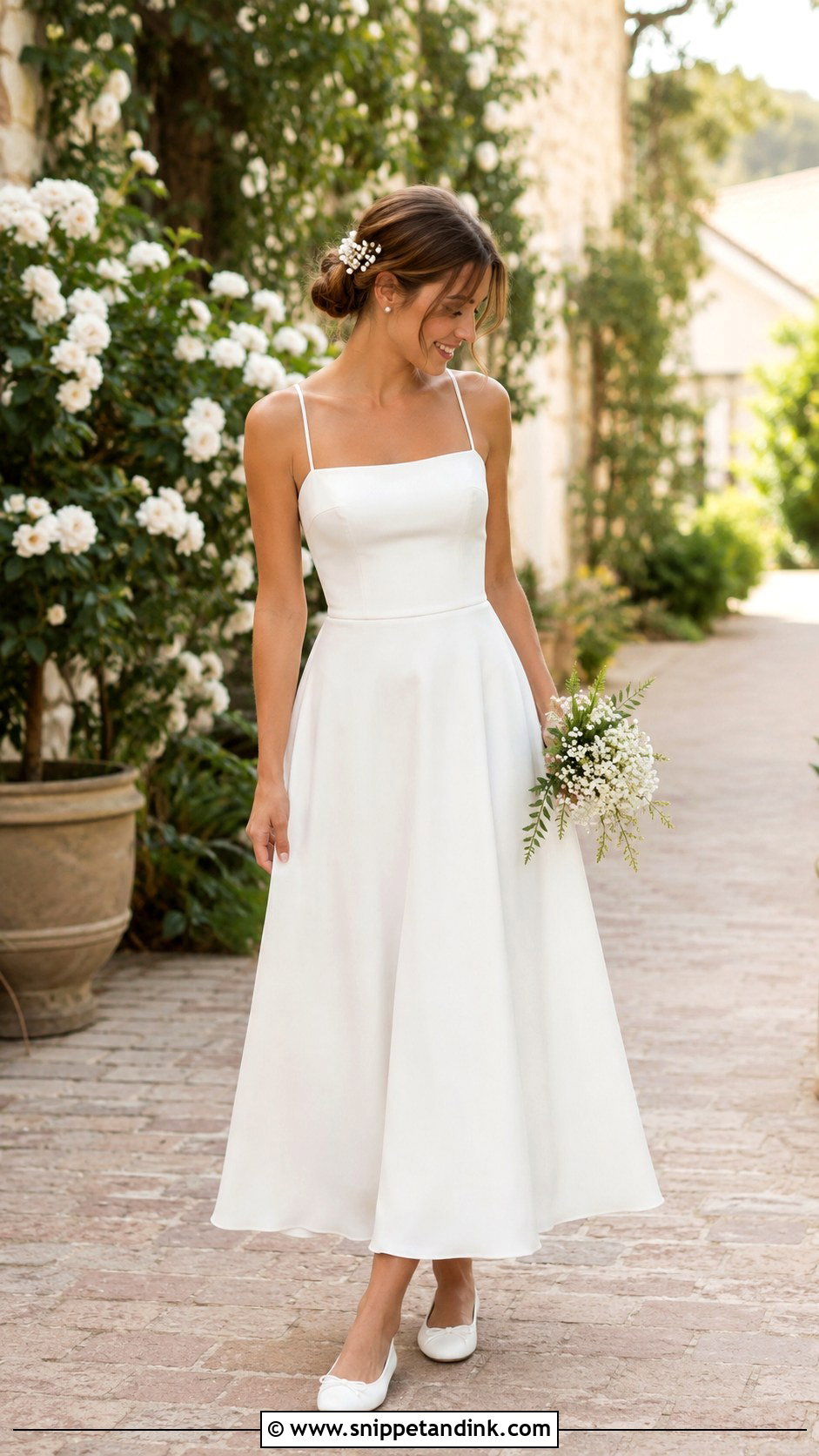
An A-line flatters the waist and lets the skirt fall away from the hips, which is why it sits so comfortably when you’re perched on a rock or a café chair. Thin straps or a square neck freshen it. Your location decides the footwear: block heels for paving, ballet flats for grass, sandals on sand. Add a short veil or pearl comb for a classic touch. Of every shape here, it’s the one I’d send a nervous first-time dress shopper to try on first.
11. Simple Wrap Elopement Dress
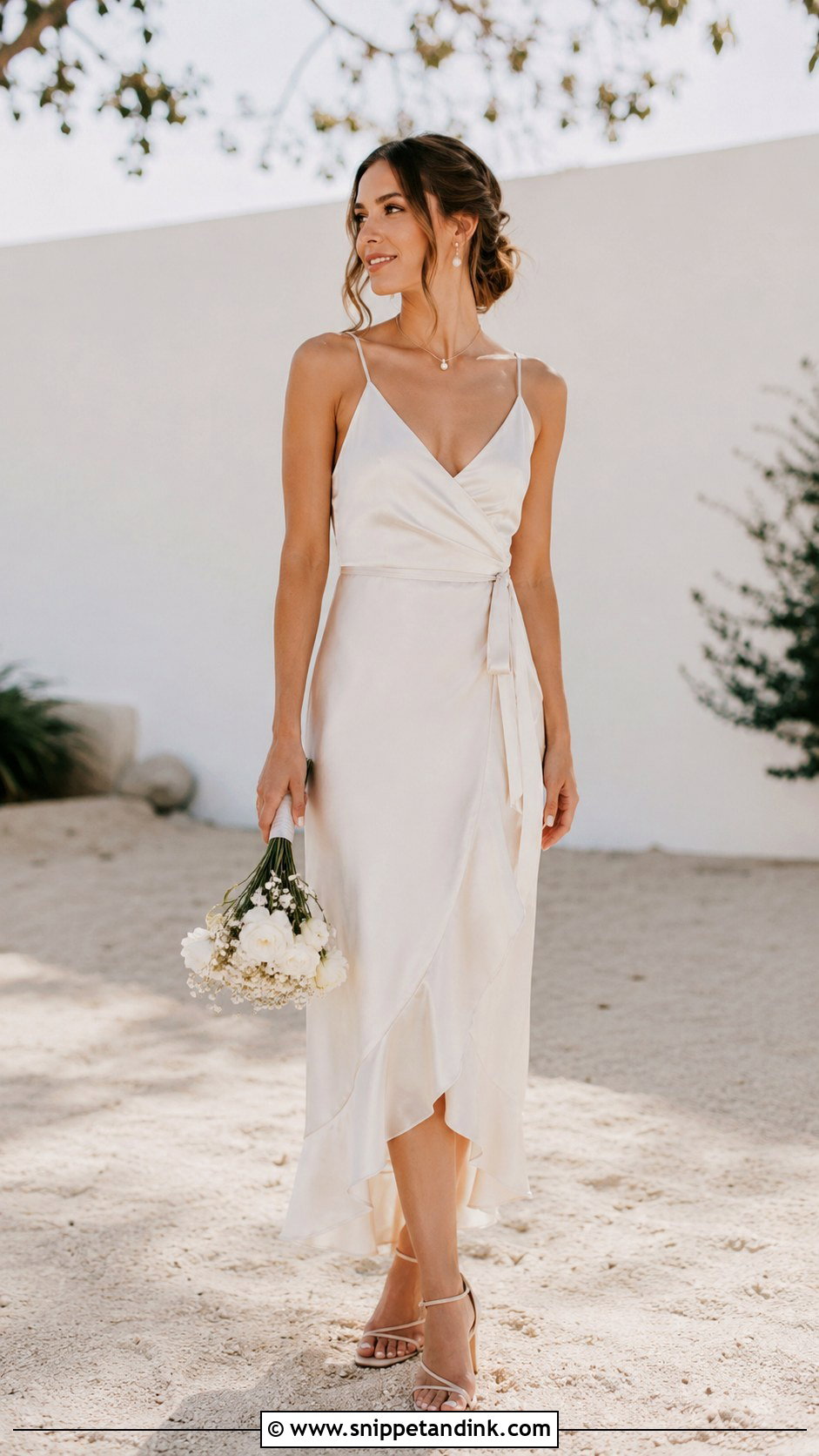
Wrap dresses are adjustable, which makes them forgiving if your weight shifts before the date. The tie defines the waist on most body types. Pick satin, crepe or chiffon in ivory, and a midi wrap dress for courthouse vows, beaches or the back garden. My one warning: a true wrap can blow open. I add a hidden popper at the cross point and a small stitch at the neckline so nothing shifts on a walk outside. Delicate heels and gold or pearl jewellery finish it.
12. Bridal Blazer Dress Elopement Look
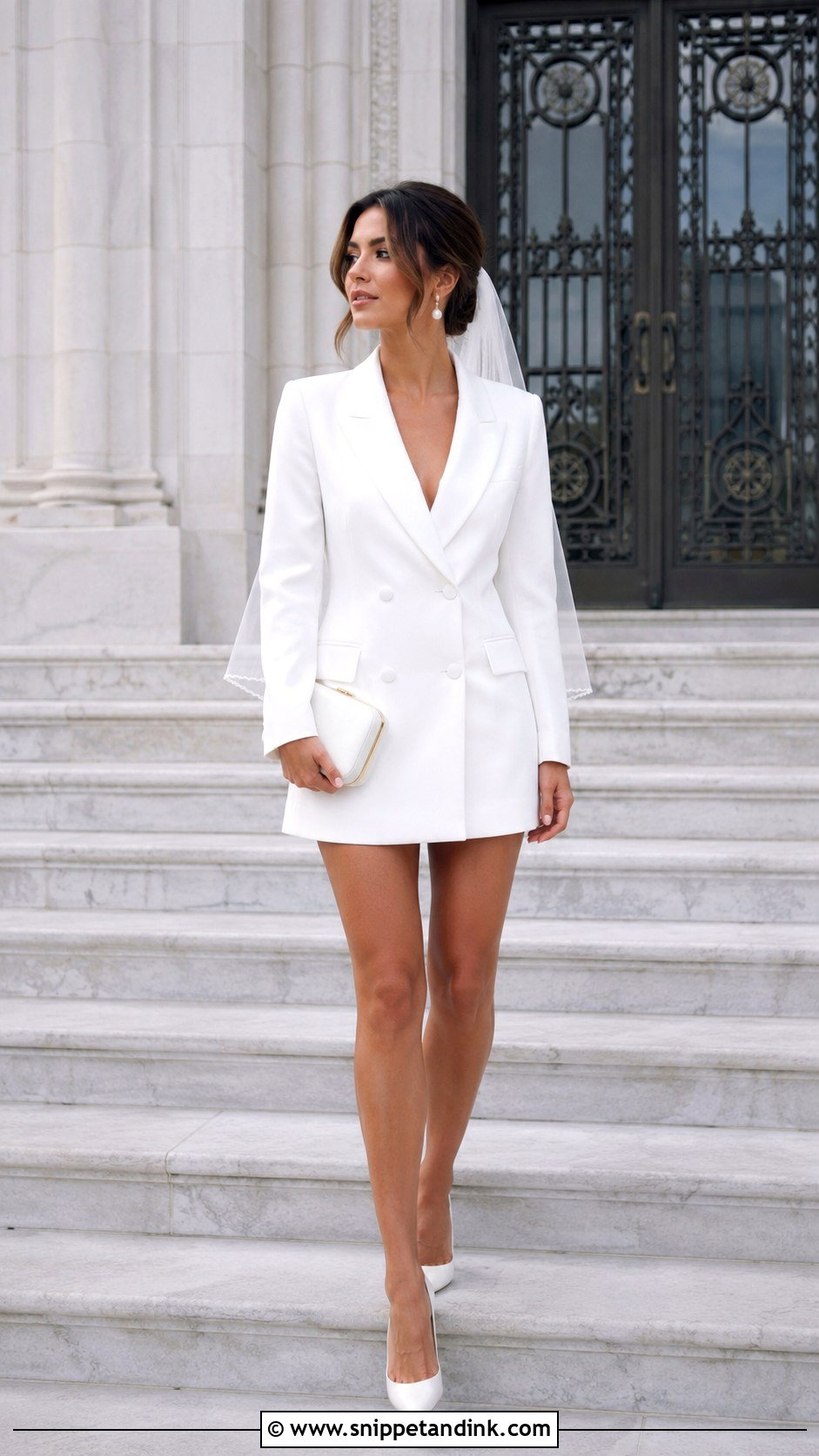
A blazer dress gives an elopement a tailored edge for city hall and downtown streets. Look for a defined waist and clean lapels in white or ivory. Sitting is the test here; blazer dresses are often cut short, and lapels gape when you lean forward. I usually have a small press stud added between the lapels. Pointed pumps, sheer tights if the day is cold, and pearl or crystal earrings. A mini veil or sleek bun makes it read as a wedding outfit rather than office wear.
13. Bridal Suit Elopement Outfit
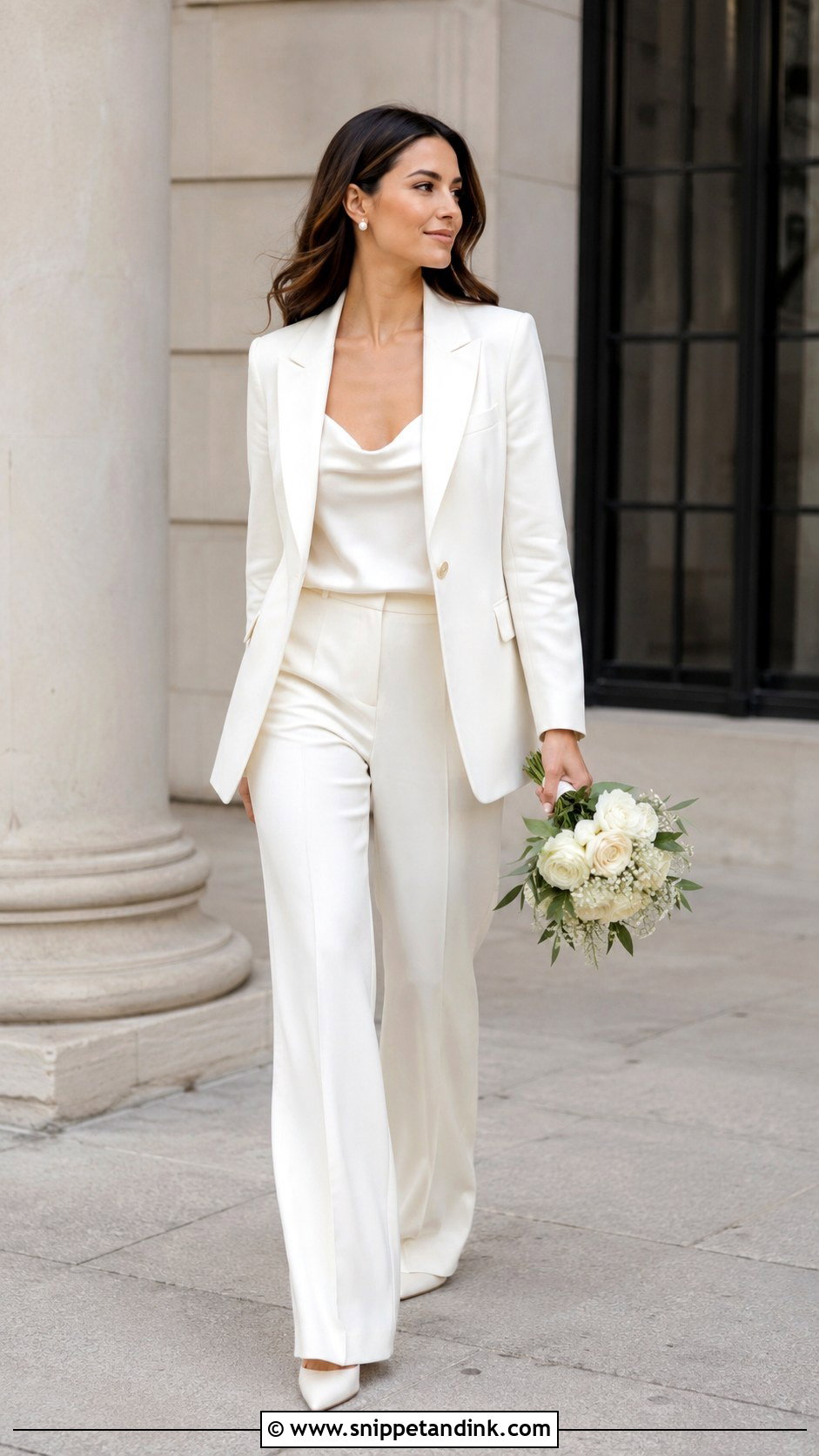
A bridal suit is a real alternative to a dress. A white or ivory blazer with tailored trousers feels personal and lets you move freely. Wide legs soften the look; slim legs suit the city. Get the trousers hemmed for the exact shoes you’ll wear, because a break that pools at the ankle ruins the line in full-length photos. Under the jacket, a silk camisole or bodysuit. A short veil or hair bow plays nicely against the tailoring.
14. Bridal Jumpsuit Elopement Outfit
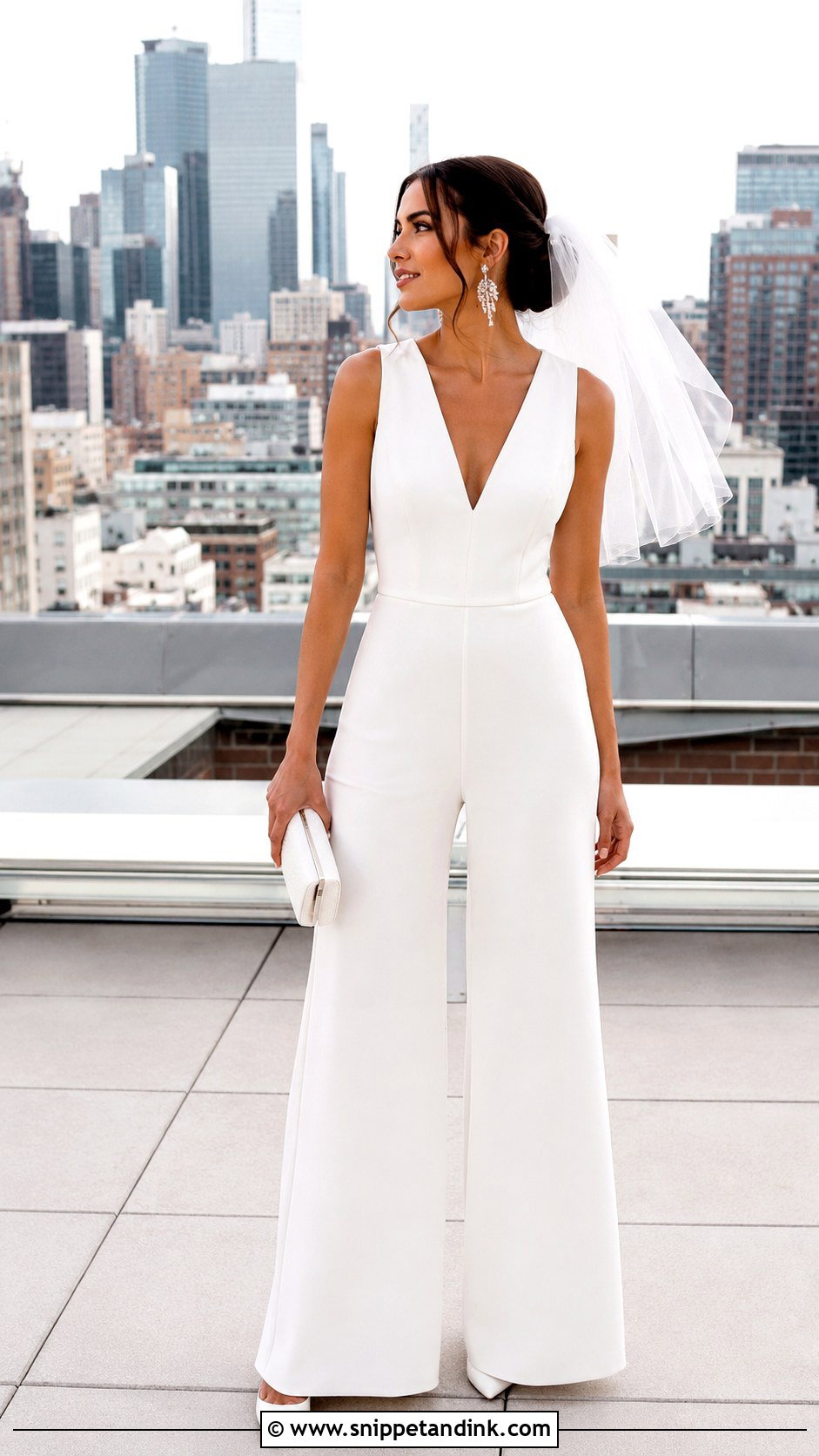
Jumpsuits give you a gown’s line with the freedom of trousers. White crepe with wide legs, a fitted waist and a clean neckline is the version I trust. Before you commit, think about the bathroom; a back-zip jumpsuit means asking for help every time, so look for a side zip or a two-piece that only looks like one. Block heels or pointed pumps, a sleek clutch and statement earrings. A detachable cape or short veil adds ceremony without losing the modern mood.


15. White Midi Elopement Dress
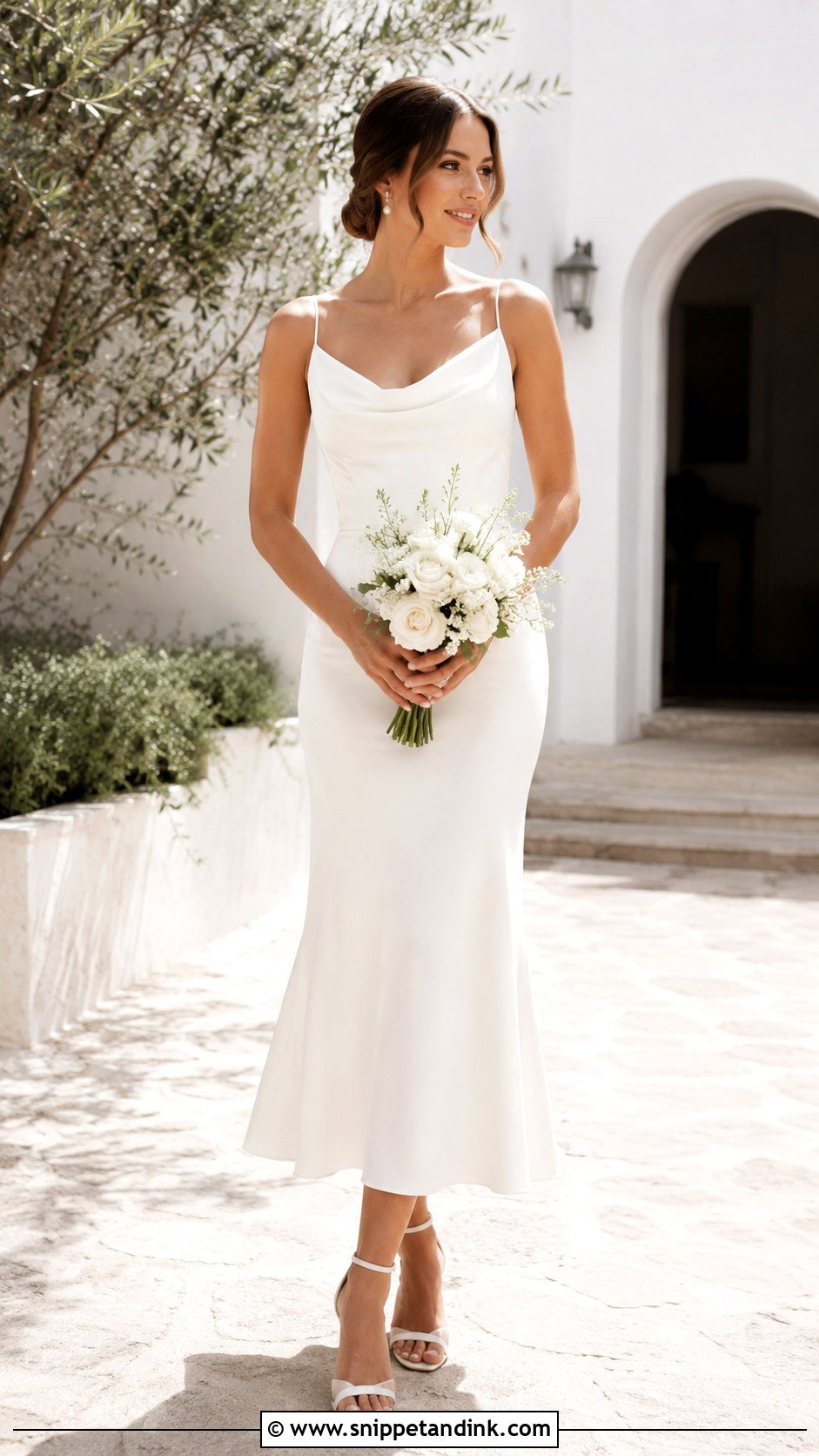
A white midi suits nearly any low-key ceremony: city, beach, garden or back garden. Satin makes it dressier, while a cotton blend or crepe relaxes it. The length is easy to manage and shows off your shoes, so this is where a pair you love can carry the outfit. I’d keep the bouquet clean and the earrings small. Cotton creases fast, though, so steam it on the morning, not the night before.
16. Strapless Elopement Dress
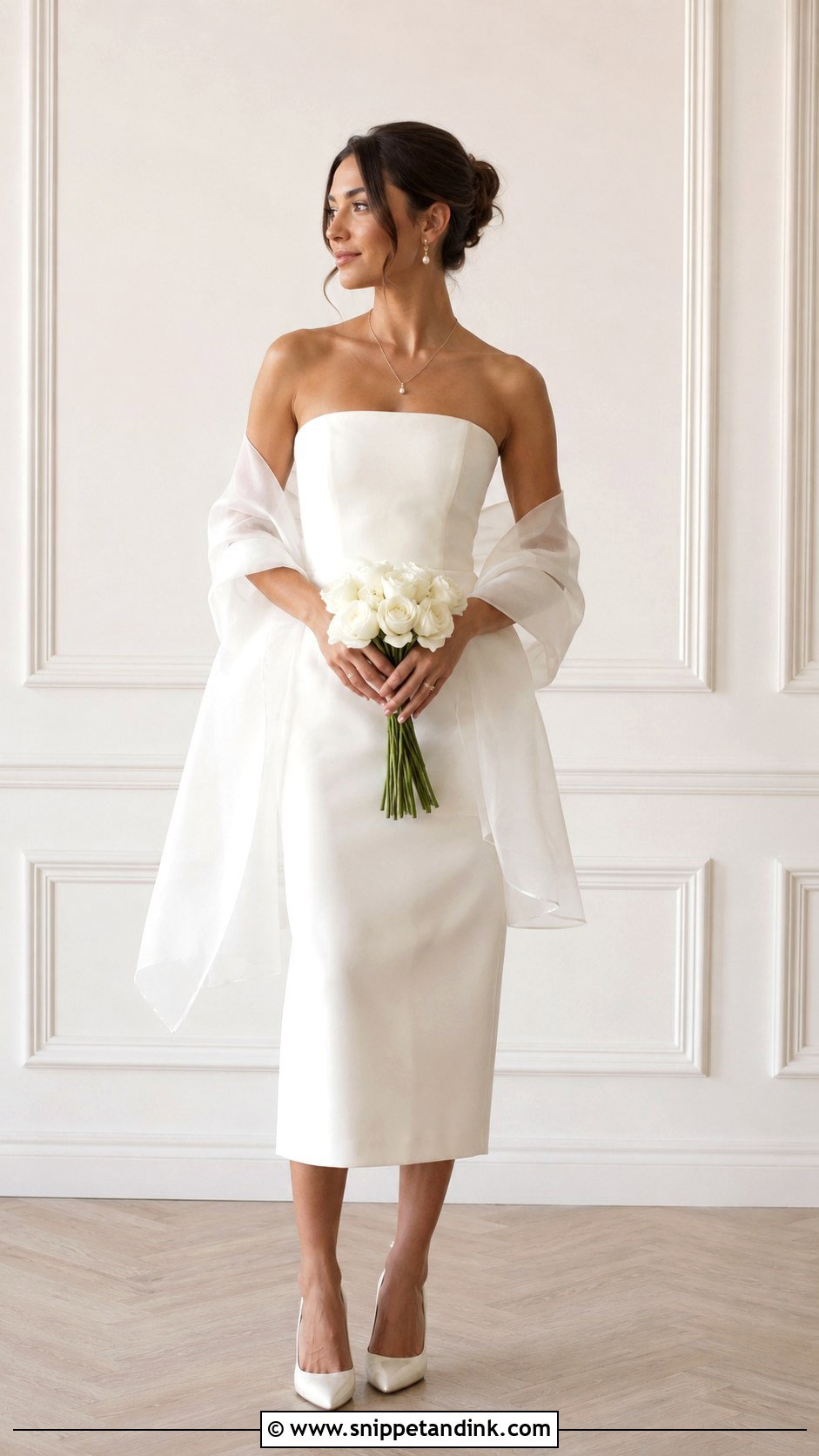
Strapless works when the bodice is built to stay up on its own. I tug the top edge at fittings; if it moves, it needs more boning or a tighter fit at the ribcage, not at the bust. A secure bodice and a skirt with room to walk is the formula. Add a fine necklace, pearl earrings and classic heels. Carry a cropped jacket or soft wrap for cool weather and photos. It suits brides who want a minimal outfit that still feels dressed up.
17. Halter Elopement Dress
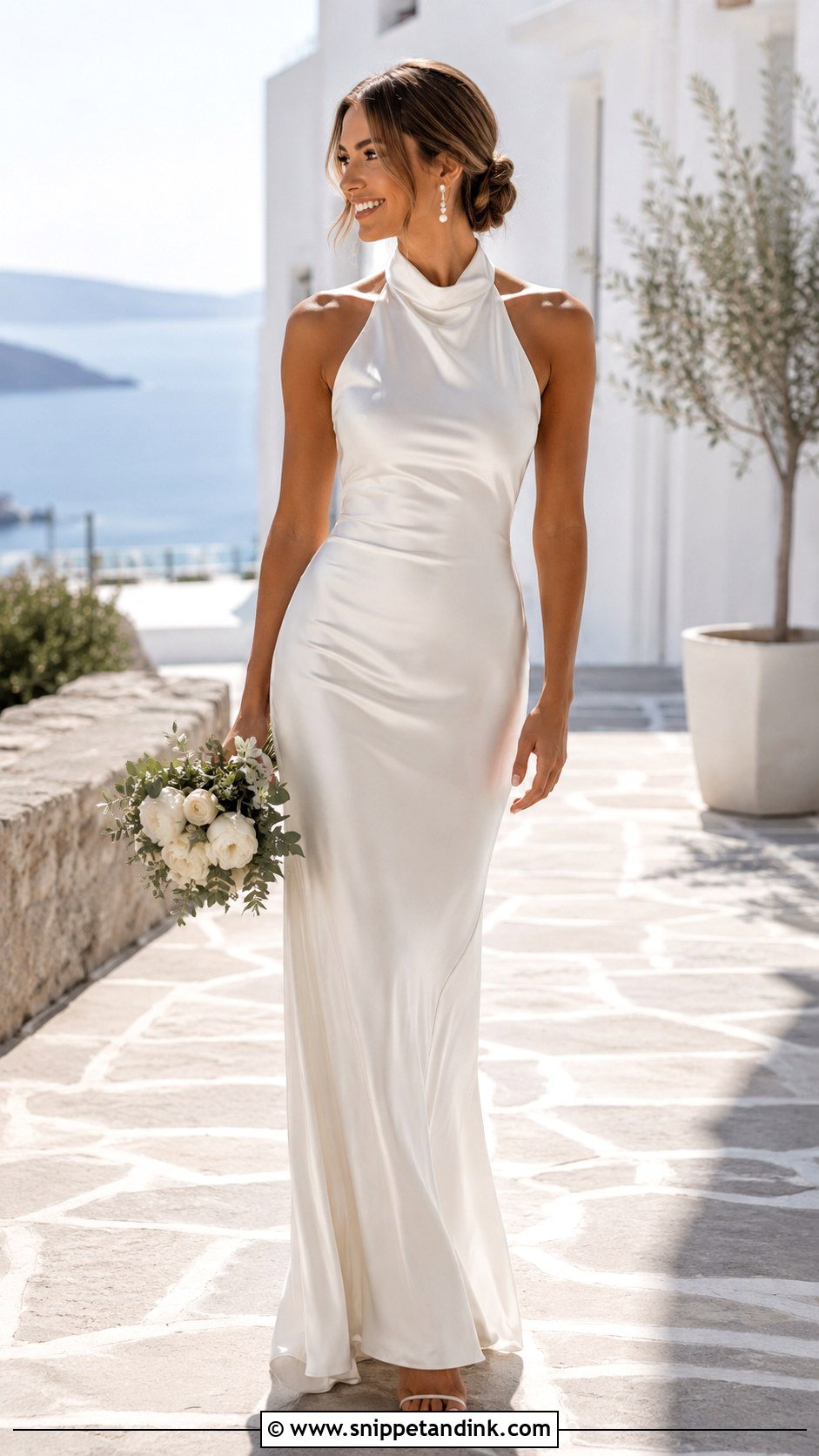
The halter draws the eye up and opens the back, so it pairs well with a column skirt. Satin gives soft shine; crepe gives structure. Skip the necklace and wear earrings. The weight of the skirt hangs from the neck strap, and on a heavy fabric that can give you a headache by the afternoon, so I steer brides towards lighter fabrics or a halter with a hidden back band. Beaches and summer cities suit it best.
18. Backless Elopement Dress
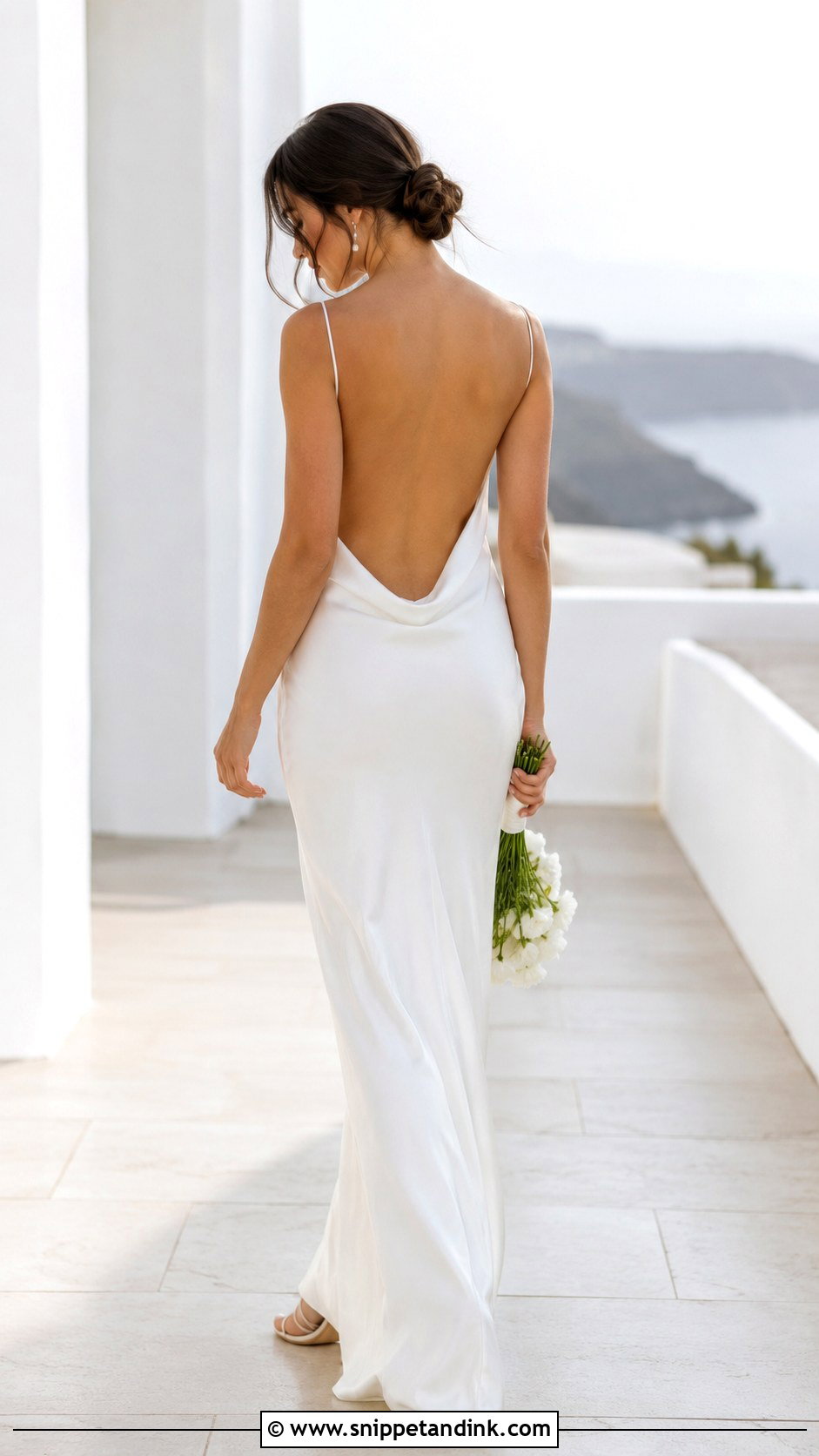
A low back makes the walk away the photo everyone remembers. Choose a slip, crepe column or soft A-line, and keep the front plain so the back carries the interest. Bra options are limited, so plan support early: sewn-in cups or adhesive styles, tried at a fitting, not on the morning. If you need cover before or after, add a sheer scarf or tailored coat. Warm weather and indoor ceremonies suit it best.
19. Simple Beach Elopement Dress
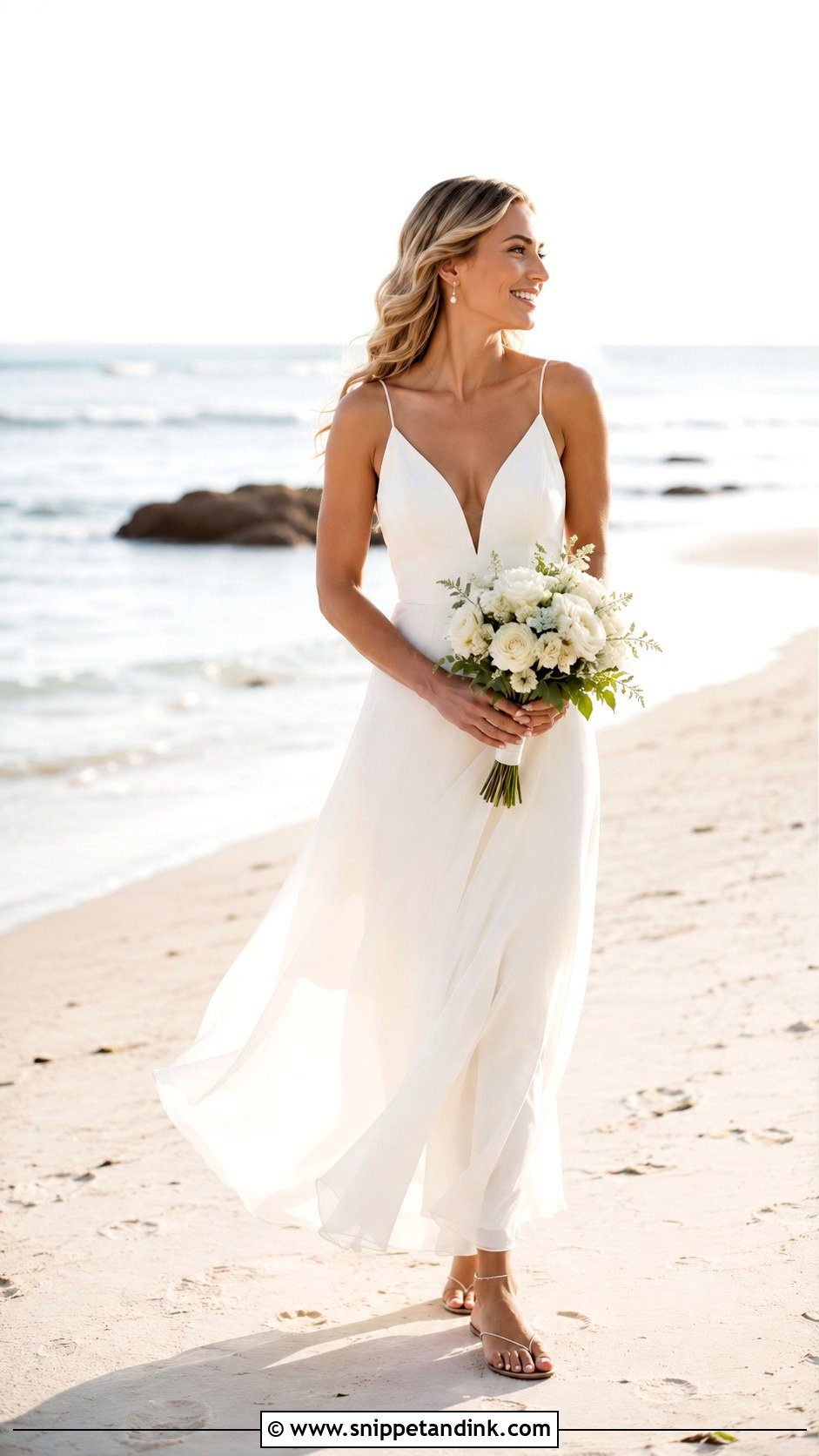
On a beach, fabric choice matters more than style. Chiffon, cotton voile, light crepe and satin all breathe and move with wind, but satin water-marks if spray hits it, so keep it above the tide line. A slip, wrap or relaxed A-line in ivory works well. Flat sandals or low block heels beat stilettos, which sink straight into sand. Leave long heavy trains at home; they collect wet sand and drag. Small pearls or gold hoops and soft waves finish it.




20. Mountain Elopement Dress
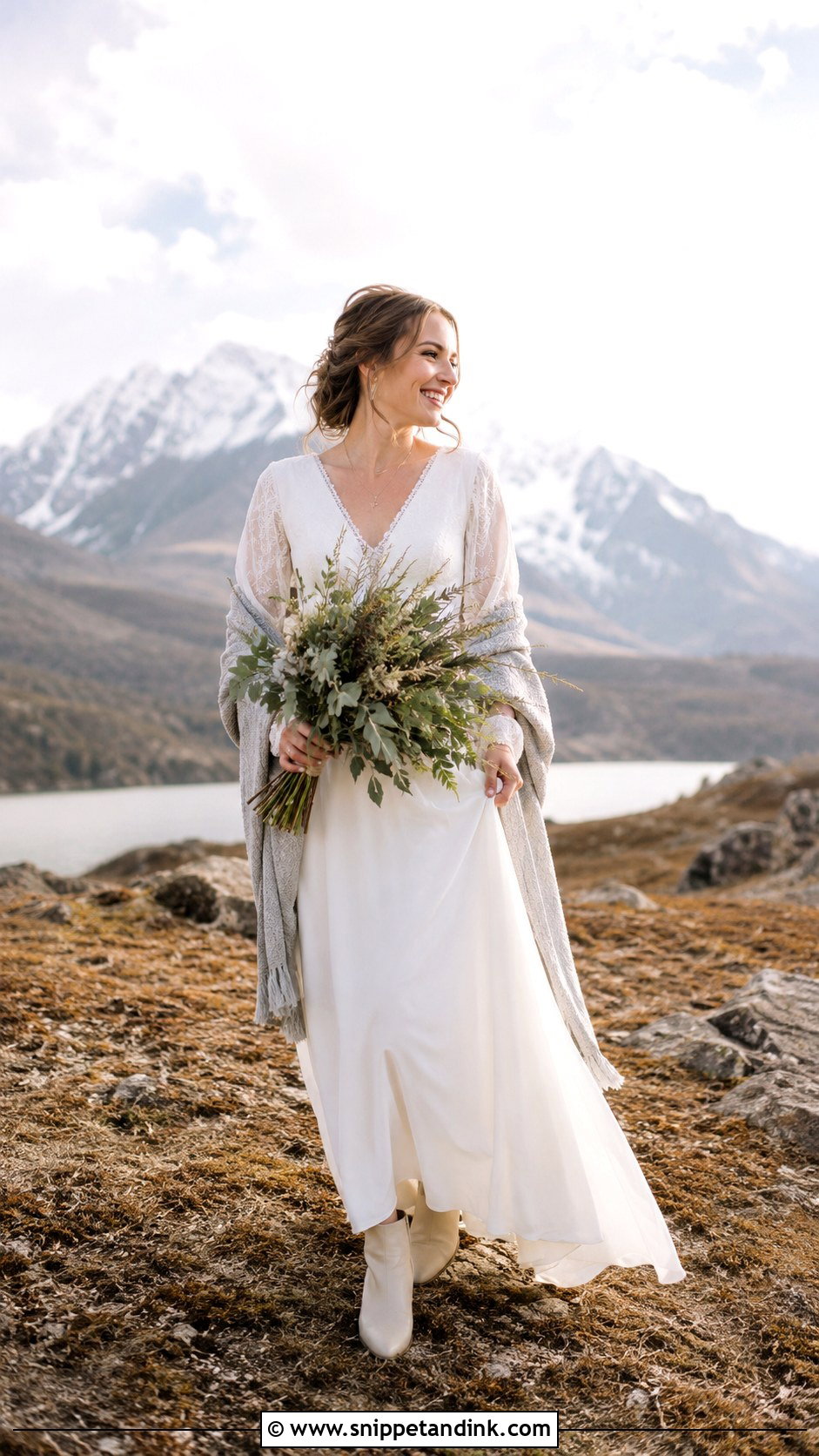
A mountain elopement dress has to cope with trails and wind. A light A-line, a long sleeve crepe dress or a simple satin gown all allow movement. Hike in your boots and change at the spot, or pick bridal boots you can actually walk in. Lace and tulle snag on scrub and rock, so I keep skirts smooth and short of the ground. Layer a white wool coat or knit shawl over it when it’s cold. A greenery bouquet sits naturally against the view.
21. Courthouse Elopement Dress
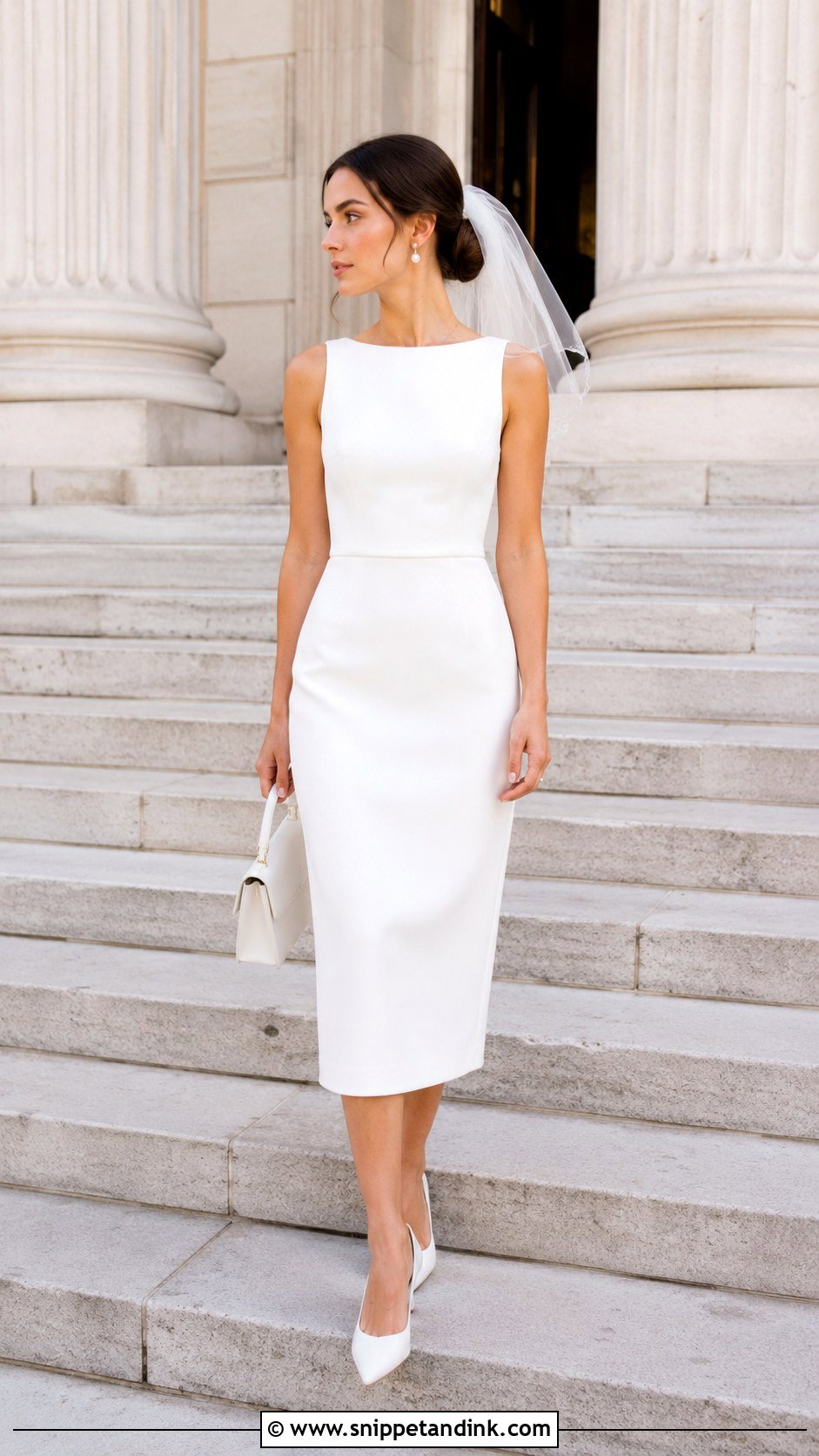
Courthouse backdrops are mostly stone, columns and steps, so sharp lines photograph better than froth. A white mini, a midi sheath, a blazer dress or a clean A-line fits the room. Slingbacks, pointed flats or block pumps handle marble floors without slipping. A structured bag, pearl earrings and a short veil add enough bridal detail. Leave time to walk outside for photos straight after; the light on courthouse steps is often better than inside.
22. Backyard Elopement Dress
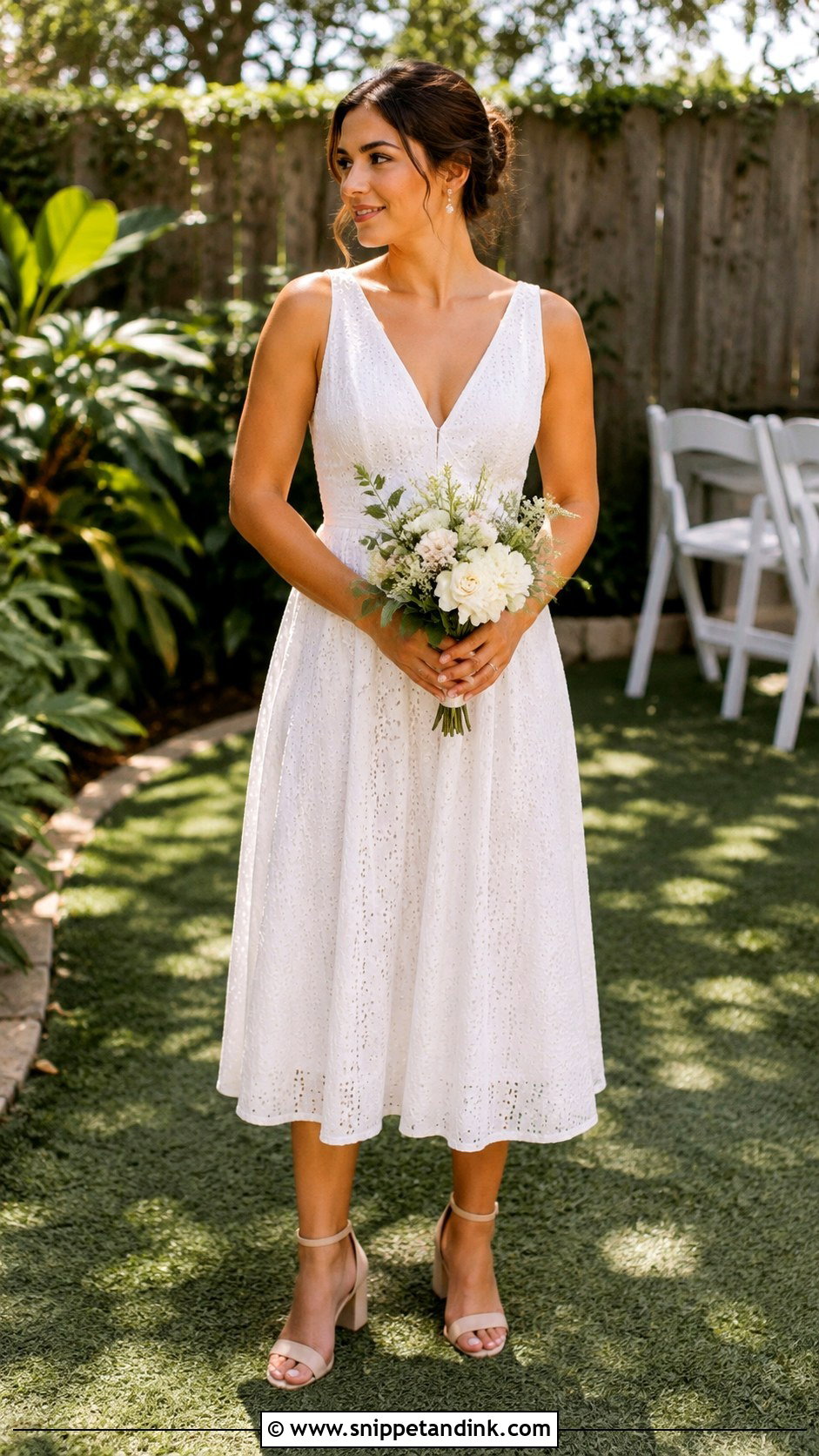
A backyard ceremony calls for a dress that feels pretty without looking out of place in your own garden. A white midi, eyelet cotton, a lace A-line or a satin slip with a cardigan all work. Heels sink into lawns, so I’d choose block heels, ballet flats or dressy sandals. Natural makeup and a small bouquet keep it fresh. Eyelet is underrated here: it breathes, looks bridal and does not show grass marks as quickly as satin.
23. Garden Elopement Dress
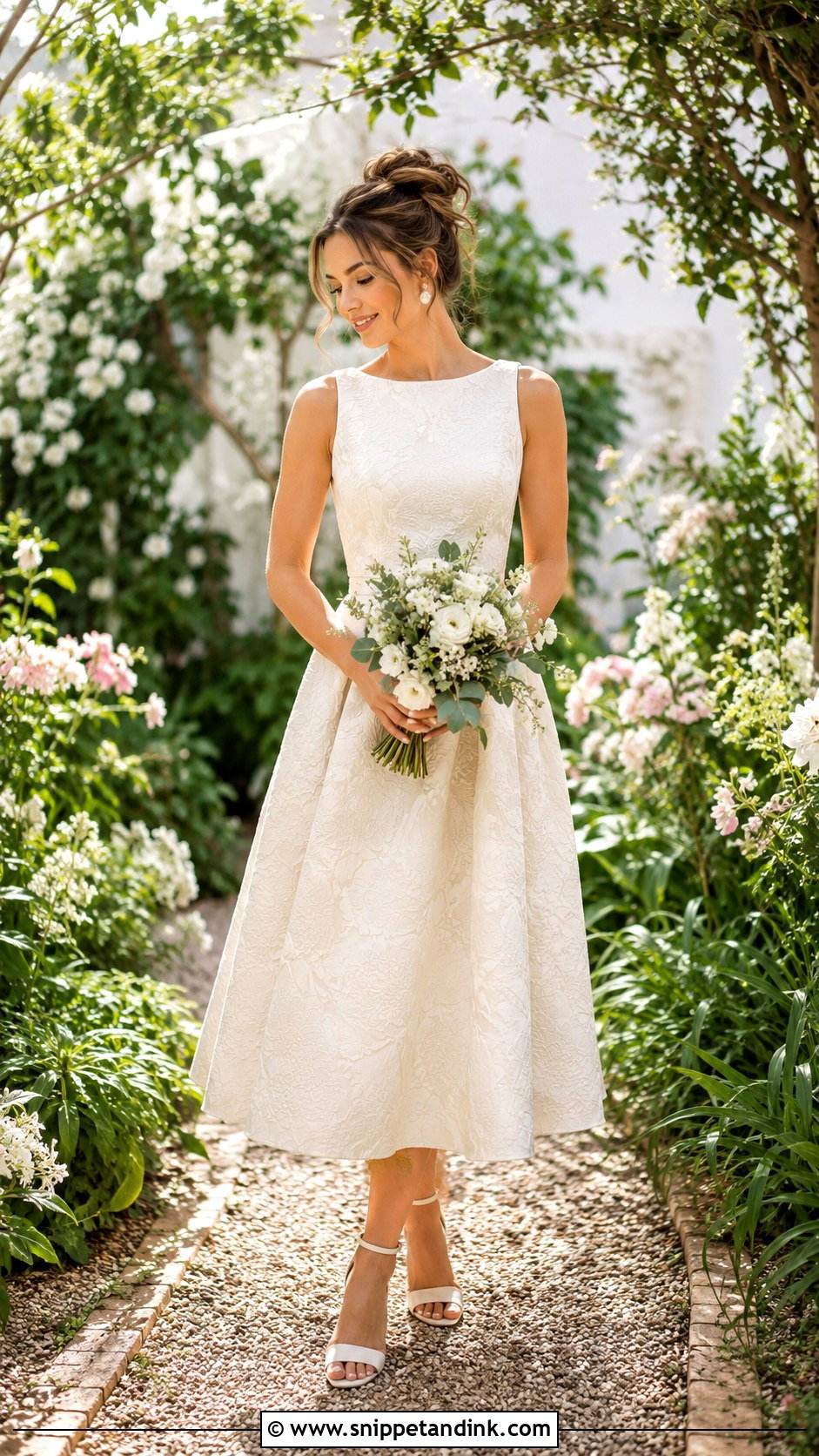
Gardens look best with soft dresses that are not overloaded with detail. A lace midi, chiffon A-line, floral jacquard or simple tulle overlay suits the setting. Keep the colour ivory, white or pale cream. Gravel paths chew up thin heels, so pick block heels or flats. A loose updo, pearl earrings and a bouquet with greenery finish the look. Heavy, stiff fabrics fight the setting; you want something that moves when a breeze comes through.
24. City Hall Elopement Dress
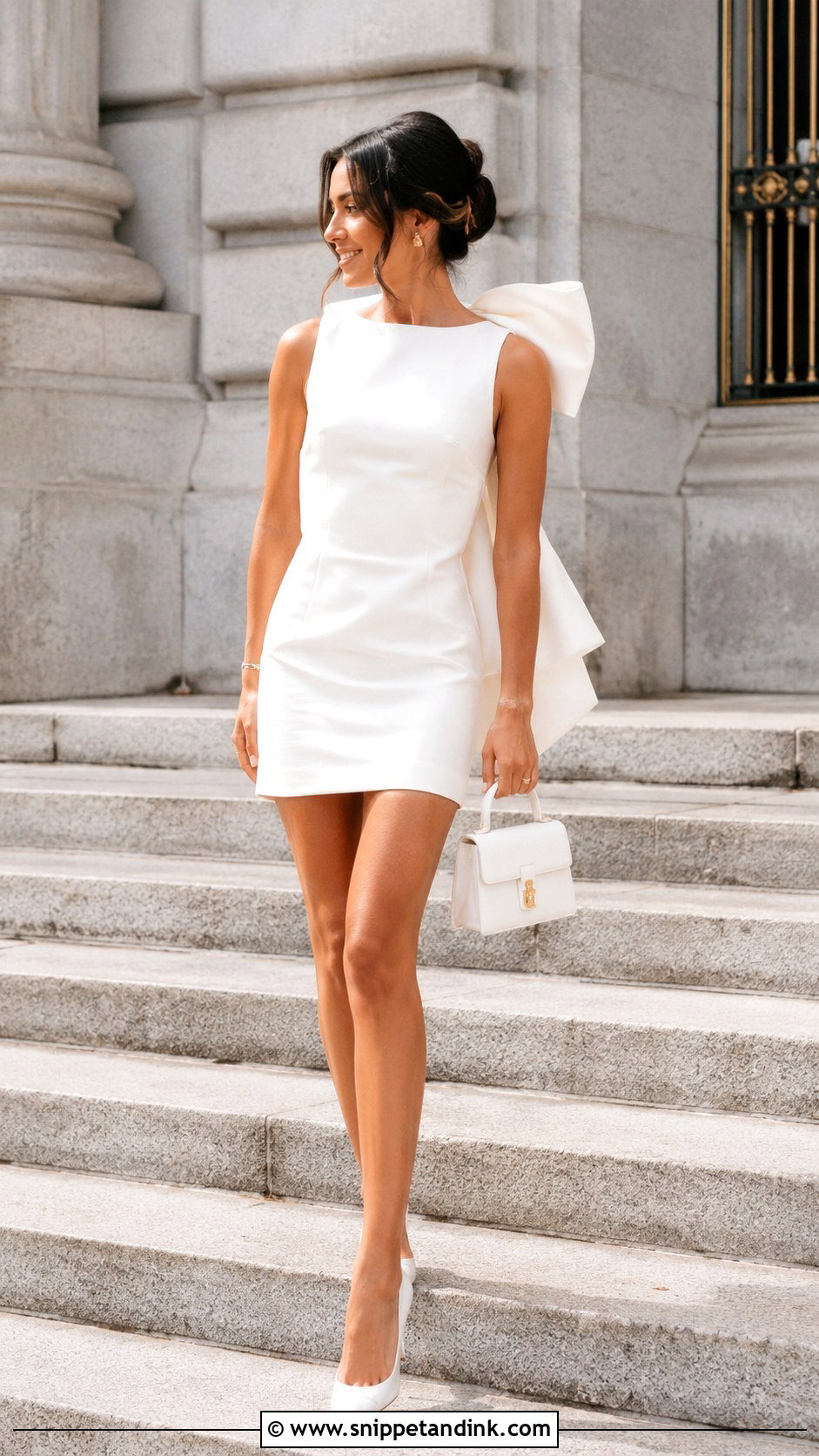
City hall is where you can be a little fashion-forward. White minis, tailored midis, blazer dresses and satin columns all suit the stairs, doors and crosswalks you’ll be photographed against. Because those shots are often taken mid-stride, I check how a skirt moves when walking, not just standing. Pointed pumps, a structured handbag and polished jewellery complete it. A short veil or oversized bow says bride without a full gown.
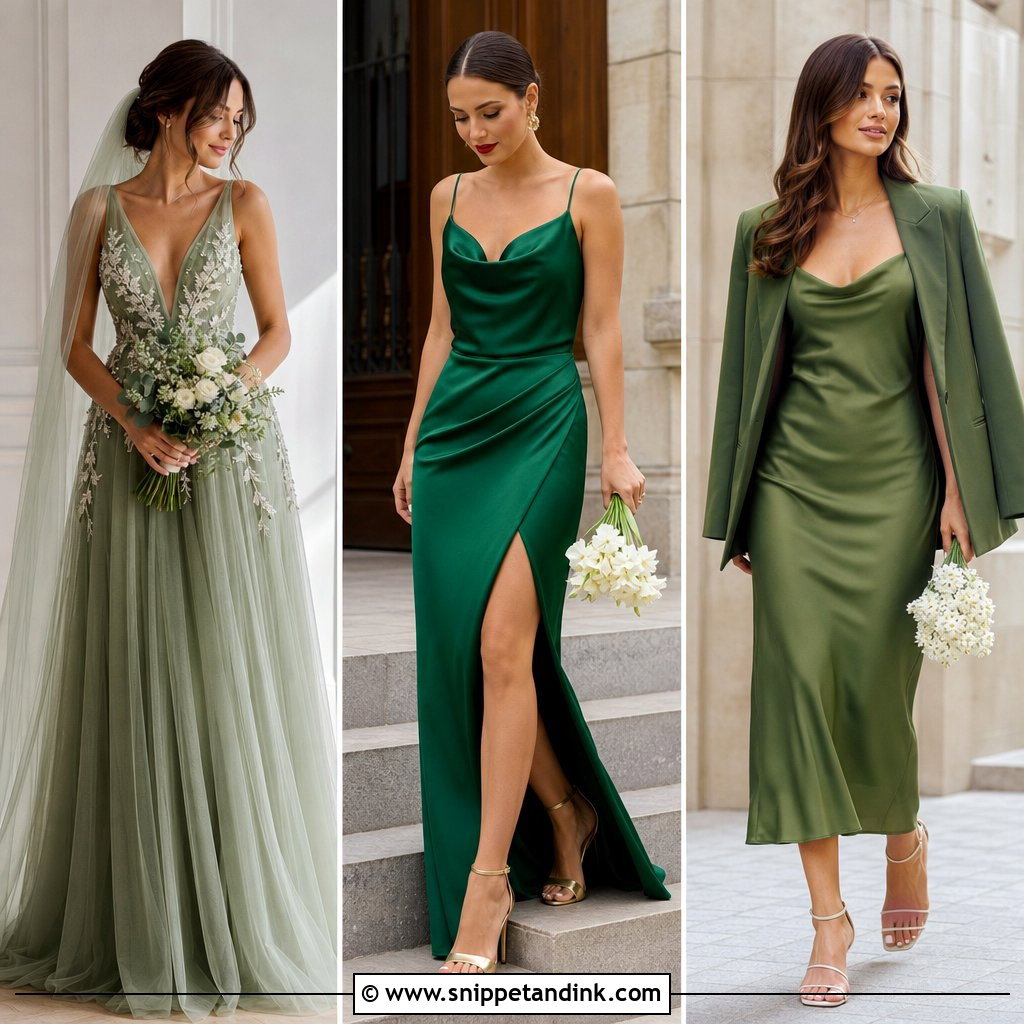
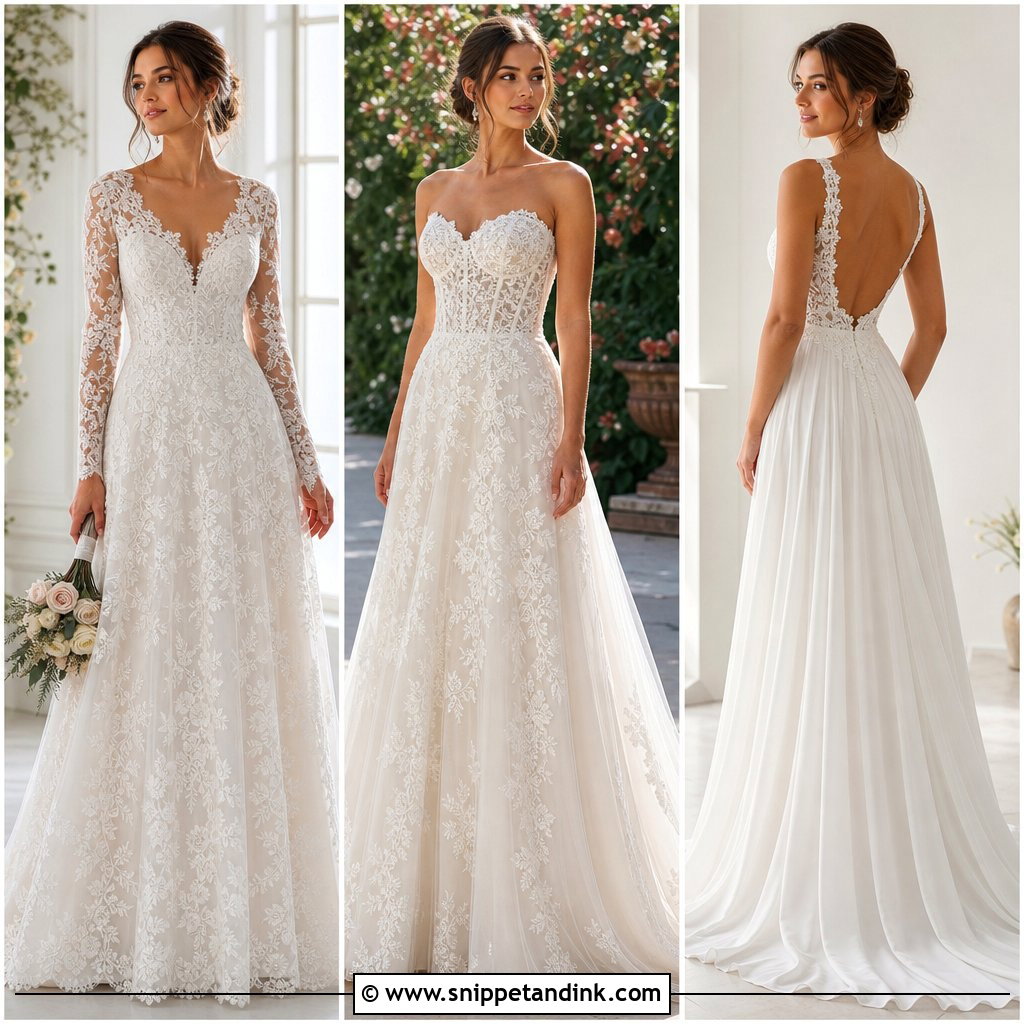
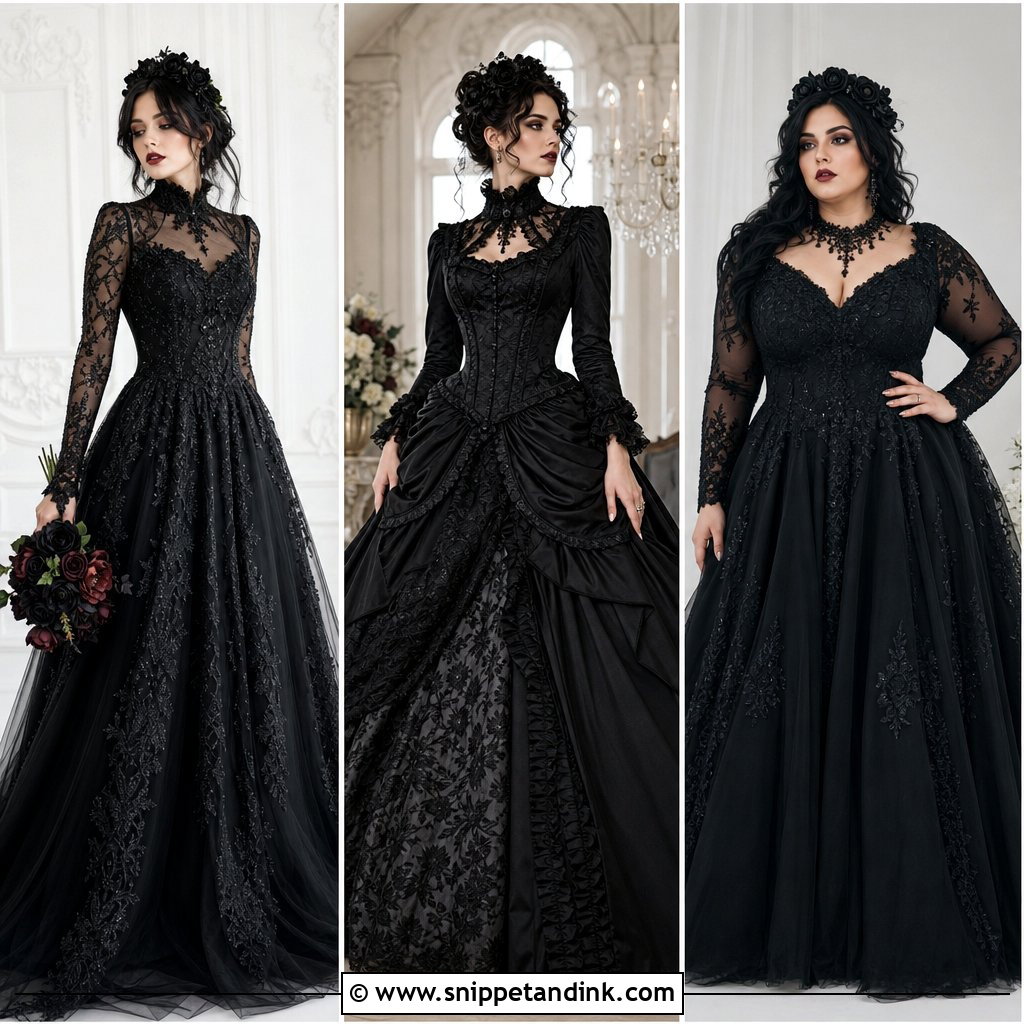

25. Boho Elopement Dress
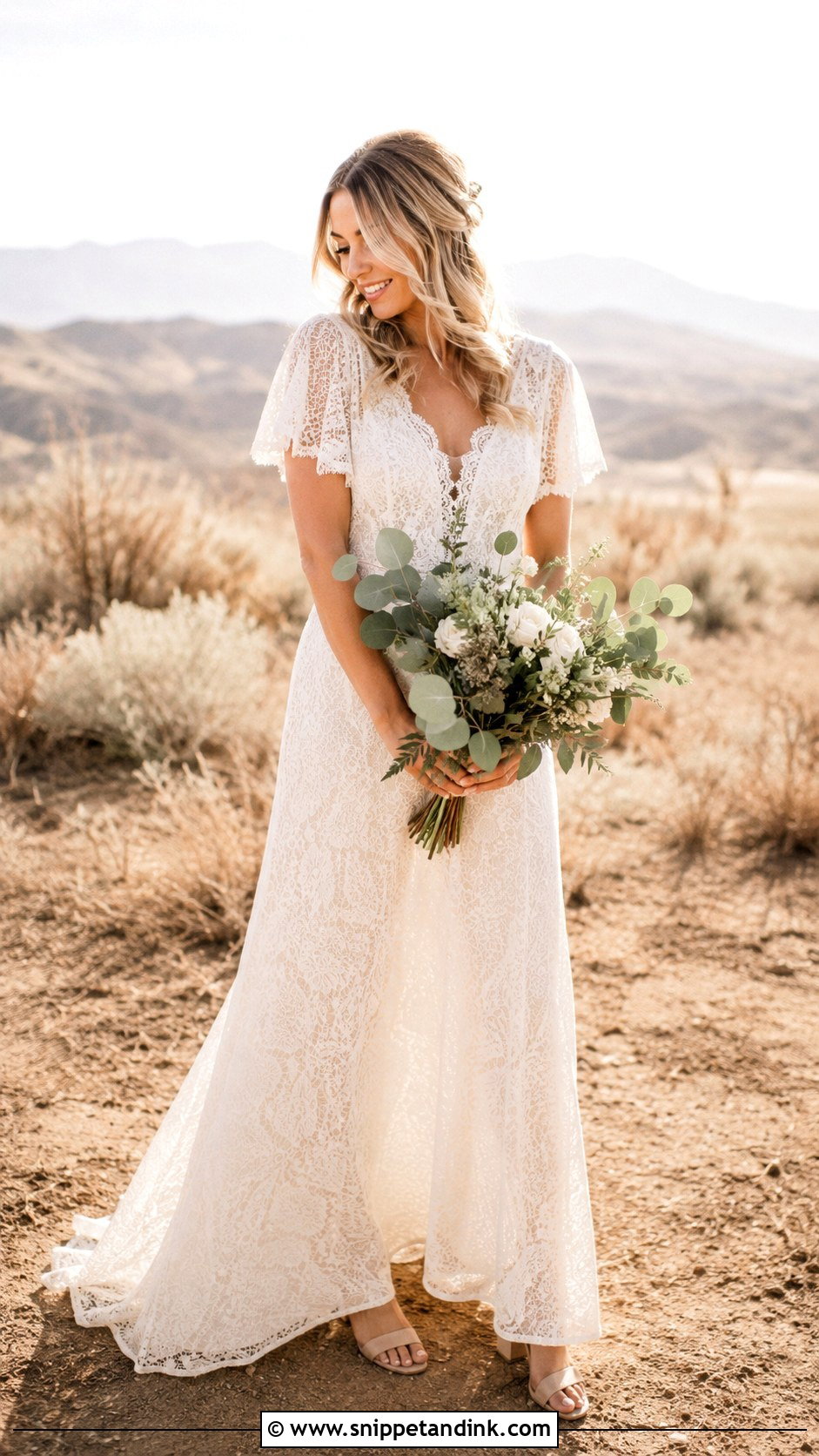
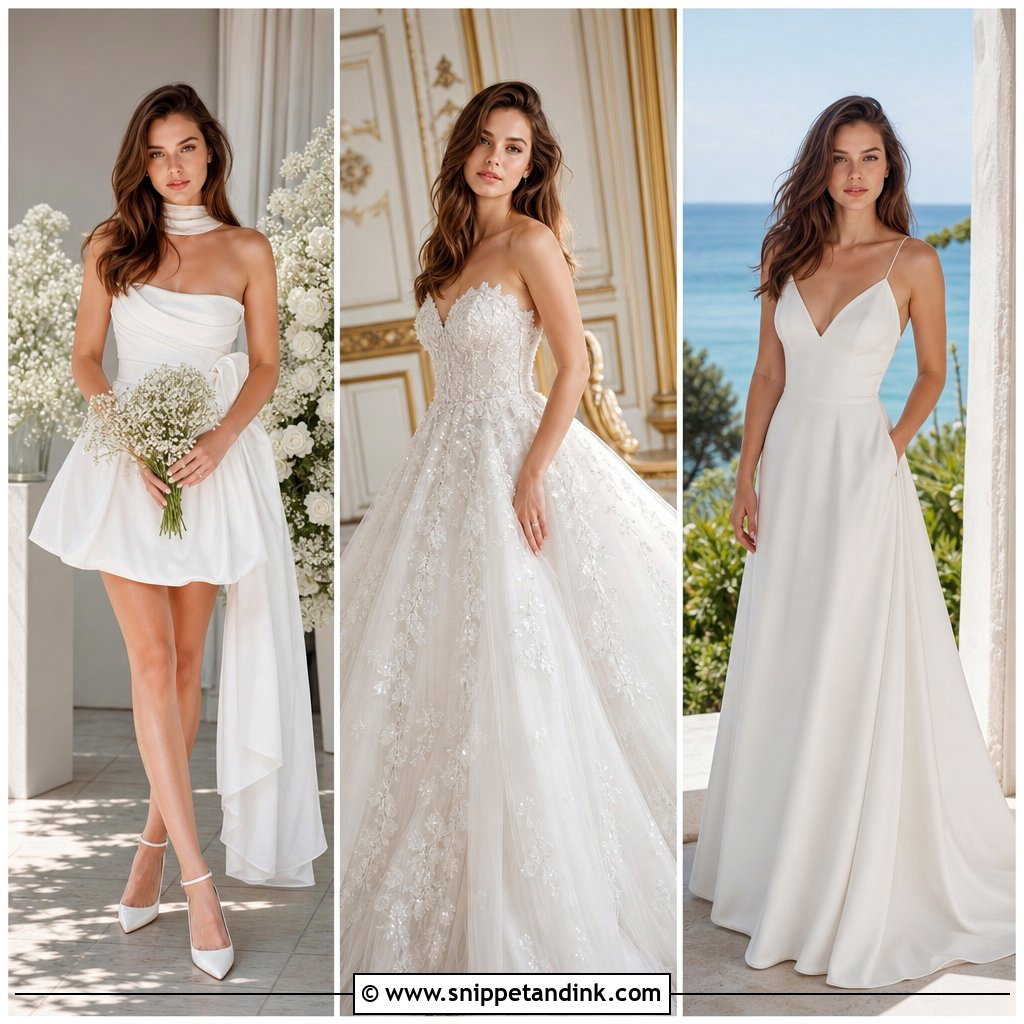
Boho works for an elopement when the shape stays clean and the detail stays soft. Lightweight lace, crochet-inspired texture, flutter sleeves or a relaxed A-line all suit it. Real crochet stretches when it hangs, so I fit it on a hanger overnight before the final hem. Flat sandals, low block heels or ankle boots depend on the ground. Too much fringe looks costume-like; one textured element is enough. Deserts, fields and gardens suit it best.
26. Modern Minimal Elopement Dress
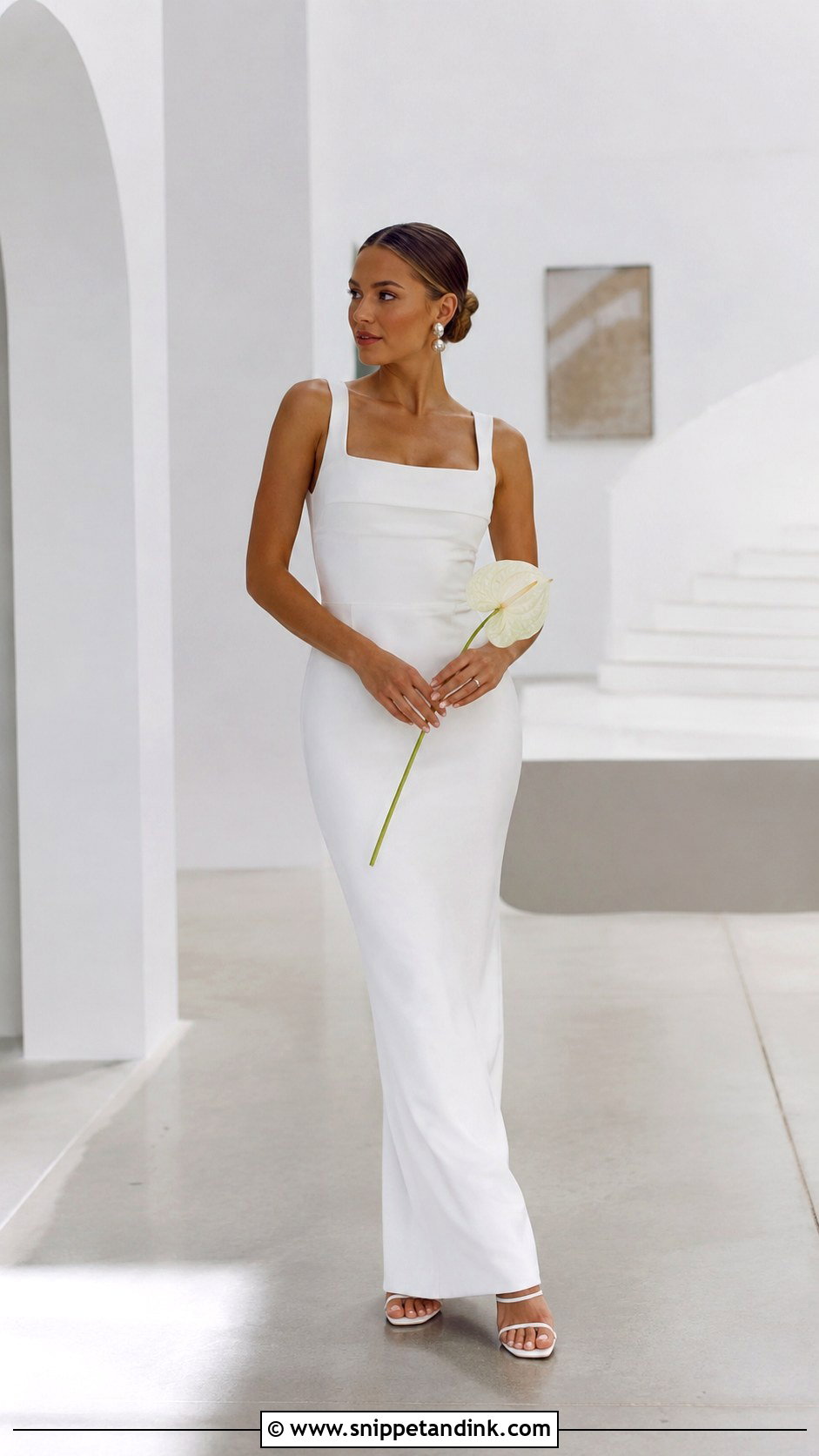
Minimal means every detail is exposed, so fit and fabric do all the work. A strong neckline and smooth fabric replace lace and sparkle. Columns, square-neck midis, satin slips and strapless gowns in white or ivory all qualify. Pair with sleek heels and sculptural earrings, and consider a single-stem bouquet. I spend more fitting time on minimal dresses than on embellished ones, because there is nothing to hide a crooked seam. Galleries, rooftops and modern hotels suit this look.
27. Romantic Tulle Elopement Dress
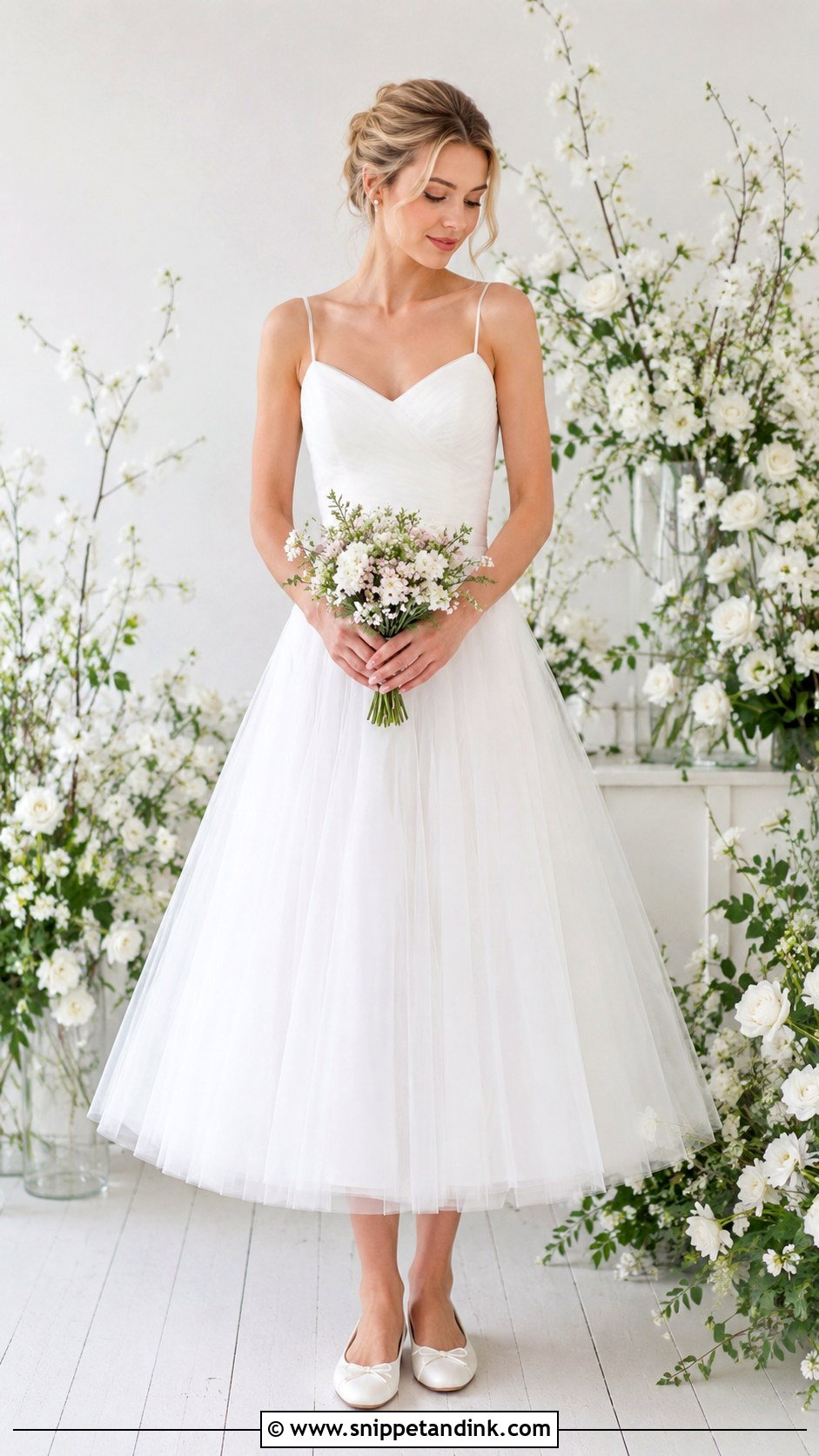
Tulle stays simple when the volume stays soft. A short or midi tulle dress with a fitted bodice and a few layers gives movement without a princess gown. Soft tulle drapes; stiff net stands out, so feel the fabric before you buy. Ballet flats, low heels or simple sandals keep it light. Let the skirt be the detail and keep jewellery small. Gardens, studios and small indoor ceremonies suit it. One warning: tulle catches on Velcro, sequins and rough stone walls.
28. Silk Midi Elopement Dress
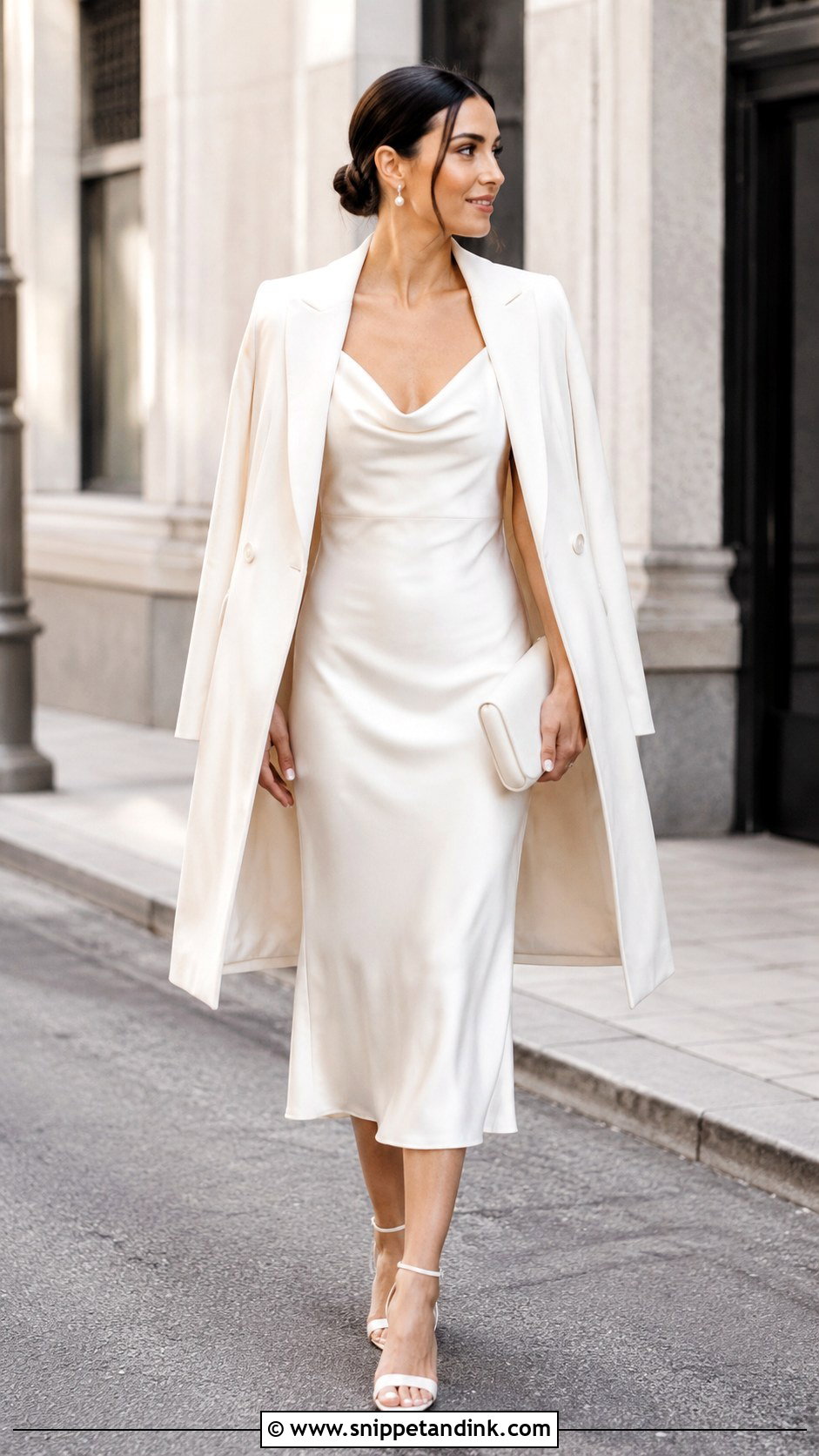
Silk drapes and catches light in a way polyester satin still cannot match, and it feels cool against the skin. Thin straps, a cowl or a clean scoop neckline suit it. It is also unforgiving: silk shows every line and water spot, so smooth, line-free underwear and a careful steam are essential. Strappy sandals, pearl earrings and a small clutch are enough. In cool weather, a tailored coat. City, destination and at-home ceremonies all suit it.
29. High Low Elopement Dress
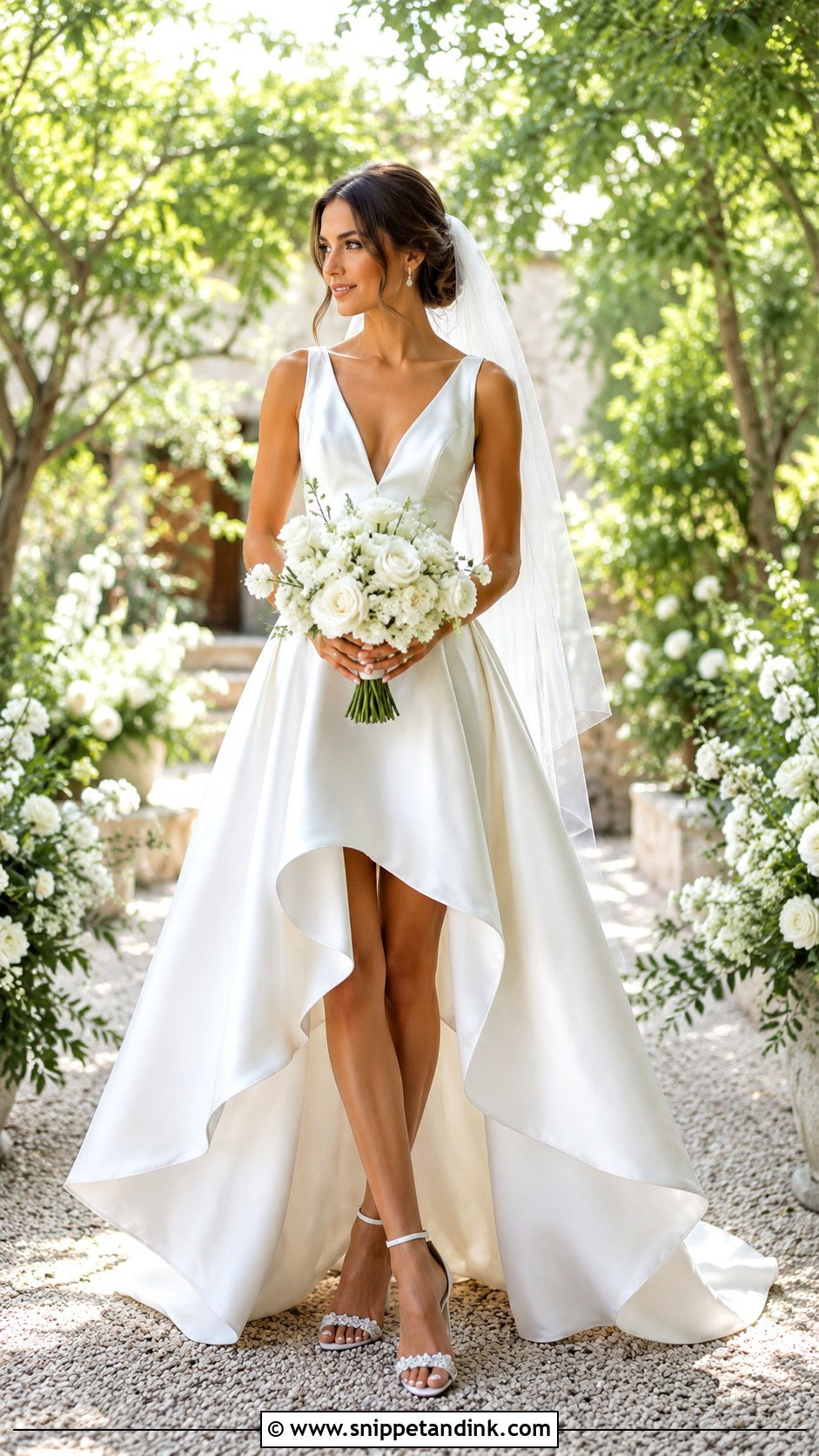
High-low hems give you a gown’s back view with an easy front. Your shoes show, the back adds movement in photos, and you are less likely to trip on a trail. Satin, crepe or tulle keeps the shape bridal. I check the side seams most: a steep dip from front to back can look accidental if it is not cut cleanly. Statement heels, a simple veil and small earrings finish it. It is a good compromise if you can’t decide between a mini and a gown.
30. Simple Plus Size Elopement Dress
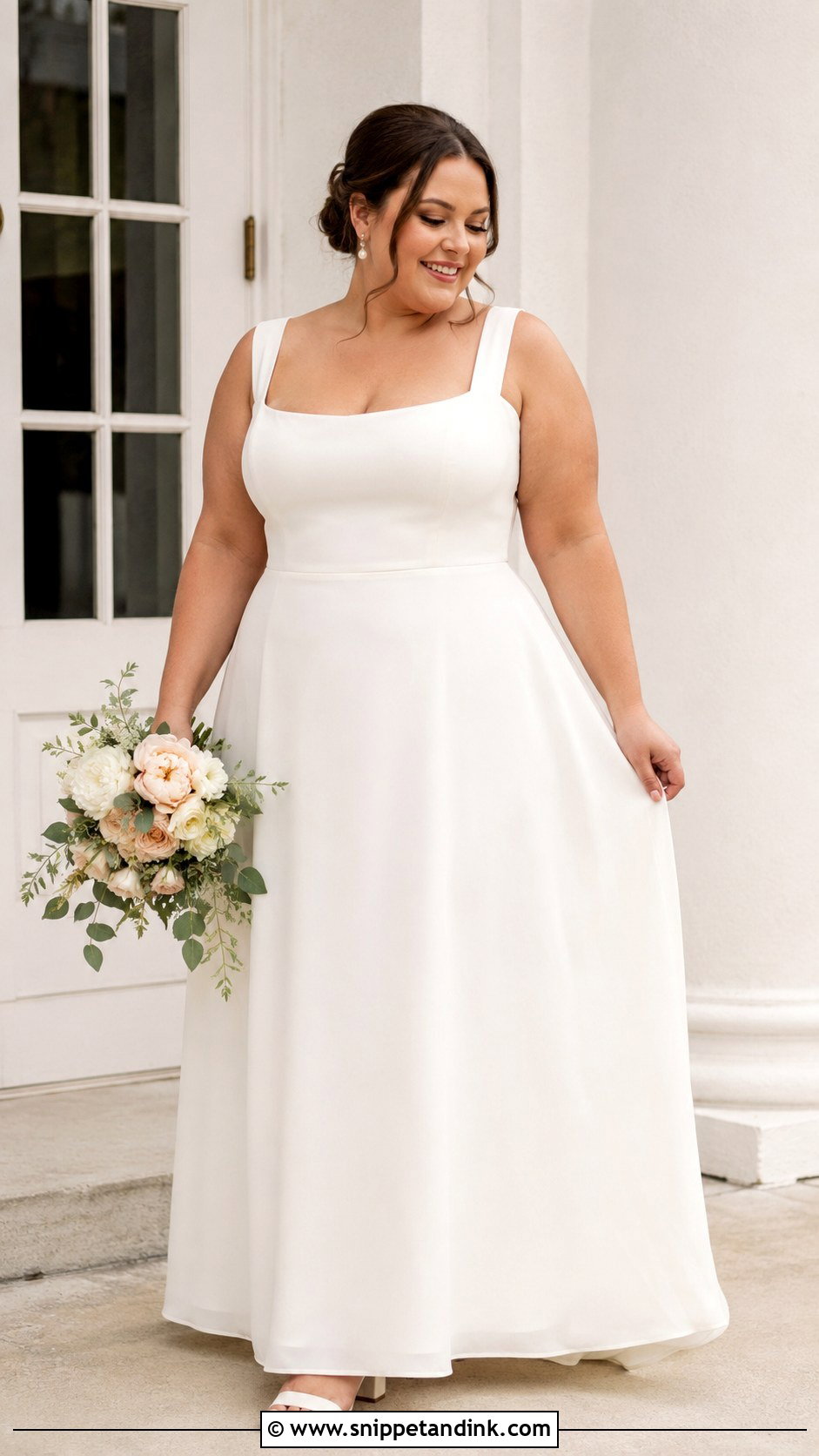
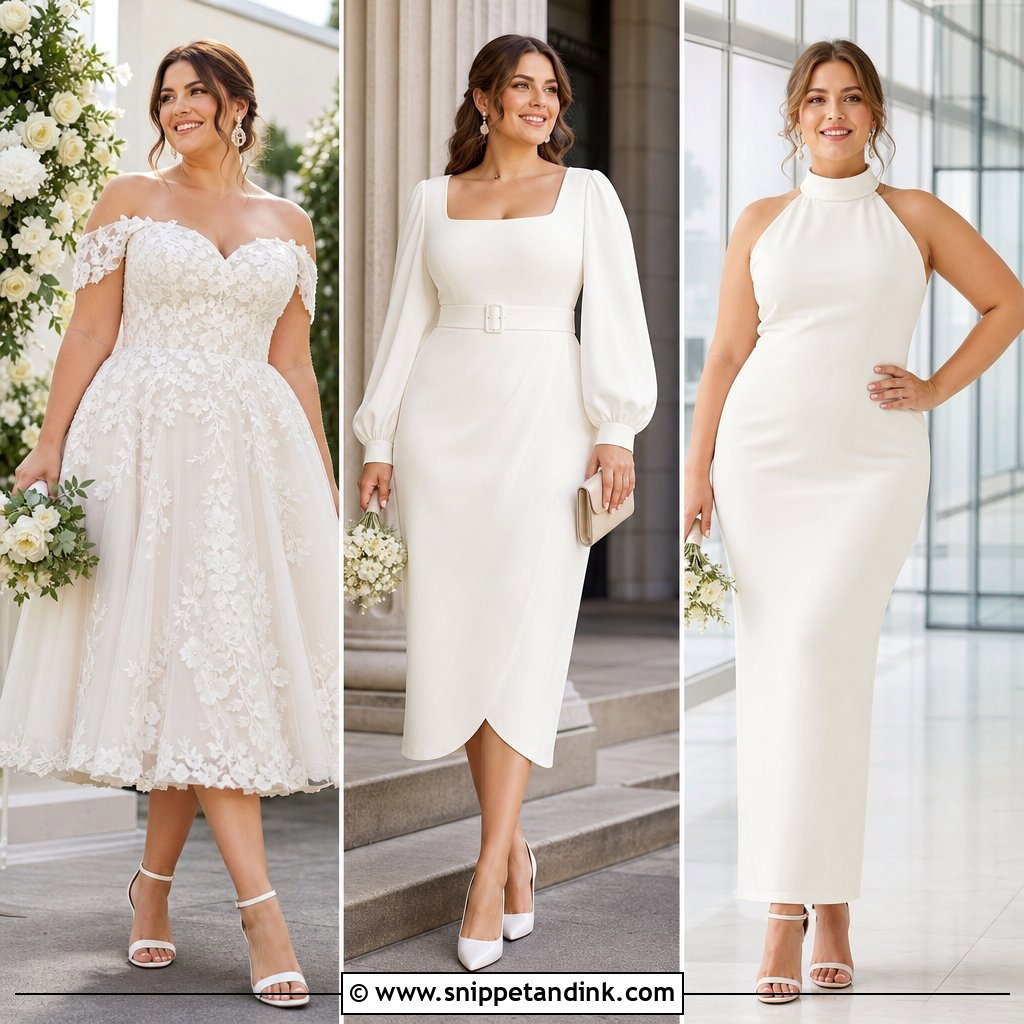
For plus size brides, construction matters more than silhouette. I look for secure straps, an inner corset or supportive lining, and fabrics with weight, because thin satin clings and shows every fold. A-line, wrap, crepe column, satin midi and off-shoulder shapes can all look wonderful on the right body. Ignore rules about what you should wear and pick what feels most like you. Comfortable heels or flats and well-fitted underwear make the whole day easier. A tailored fit beats extra embellishment every time.
The Fitting Elopement Brides Tend to Skip
Because the dress is simple, many eloping brides buy off the rack and wear it straight from the box. Simple dresses need alterations more than embellished ones do, since a crooked hem or loose strap has nowhere to hide. I’d book at least one fitting, and do it in the exact shoes and underwear you will wear.
What I check in that appointment
- The hem with your shoes on, standing on a hard floor. On grass or sand you will sink, so a floor-skimming hem can drag.
- The bodice while sitting, signing and bending. Elopements involve car seats, benches and rocks.
- Straps and bra visibility from behind, since your photographer will shoot your back more than you expect.
- Bustle points if there is any train at all.
Allow a few weeks before the date for alterations. Small shops get busy in peak season, and a slip hem on silk is slow, careful work.
Wind, Rain and a Cold Snap: Pack a Second Layer
Outdoor elopements rarely get the forecast they were promised. I always build a second layer into the outfit rather than leaving it to a borrowed hoodie. A tailored ivory coat, a cropped jacket, a soft knit or a faux fur stole looks deliberate in photos. For rain, a clear umbrella keeps your face visible. Wind is the one that catches brides out: it lifts light skirts and wraps veils around faces, so a few discreet hem weights or a weighted veil comb help. Pack fashion tape and a few safety pins too.
One Dress, One Place: Letting the Location Decide
A heavy gown isn’t a requirement for looking like a bride. A satin slip, lace midi, blazer dress, suit, jumpsuit or crepe column can feel just as meaningful when it suits the place and the day you’ve planned. Think about the weather, how far you’ll walk, your shoes, the photos and how many hours you’ll be wearing it. My advice is to try on the shapes you’d normally skip, because elopement brides often surprise themselves. The right one will feel like your own.
You'll Like These Ideas:




Leave a Reply