
Antique wedding dresses carry a kind of handwork you rarely see in a modern gown: hand-set lace, tiny covered buttons, beading stitched one bead at a time. The trick, in my experience, is borrowing an era without dressing as a museum piece. A Victorian collar, Edwardian lace, a Regency waistline or 1920s beading can each carry a whole look on its own. Corsetry, square necklines, drop waists, soft sleeves and warm champagne tones keep turning up in bridal collections for exactly that reason. Keep the shoes comfortable, the jewelry quiet and the veil sheer enough to show the dress. The ideas below run from heavy trains to easy tea gowns, each styled from head to toe.
Wearing a Truly Old Gown Versus a New One Cut in an Old Style
Many brides say antique when they mean vintage-inspired, and the difference matters. A new gown cut in a period style can be ordered in your size, cleaned normally and danced in. A genuinely old dress is a different project, and I would only take it on with time to spare.
Older dresses usually run small, because sizing and the body shapes clothes were cut for have changed over the decades. Seam allowances are often narrow, so letting a bodice out may not be possible at all. Some old silks were treated with metallic salts to add weight and drape, and that silk can split along folds the moment it is stressed. Before you fall in love, hold the gown up to light and look at the folds and underarms.
- Yellowing and small brown spots are common and sometimes reduce with specialist wet cleaning, but rarely disappear completely. Do not bleach.
- Underarm and neckline stains on silk may be permanent, so ask whether a sleeve or panel can be replaced instead.
- Shattered or splitting silk cannot be safely worn for a full day. Reuse the lace or buttons on a new gown instead.
- Musty smells usually fade with airing; do not spray perfume on old fabric.
If the dress passes those checks, take it to a seamstress who works with old fabric and give her at least three months. Treat any alteration as reversible where you can, so the gown can be passed down again.
1. Victorian High Neck Wedding Dress
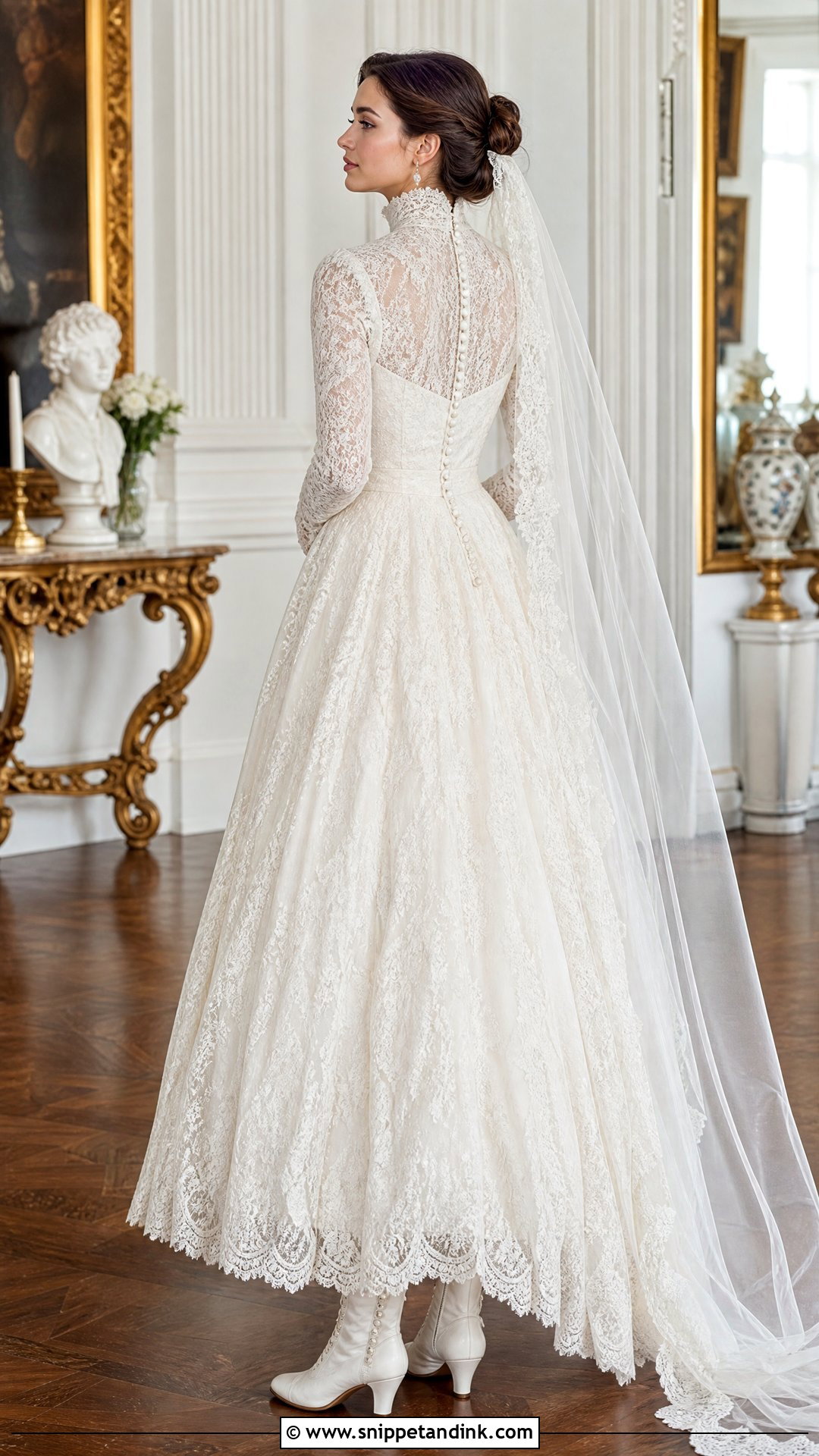
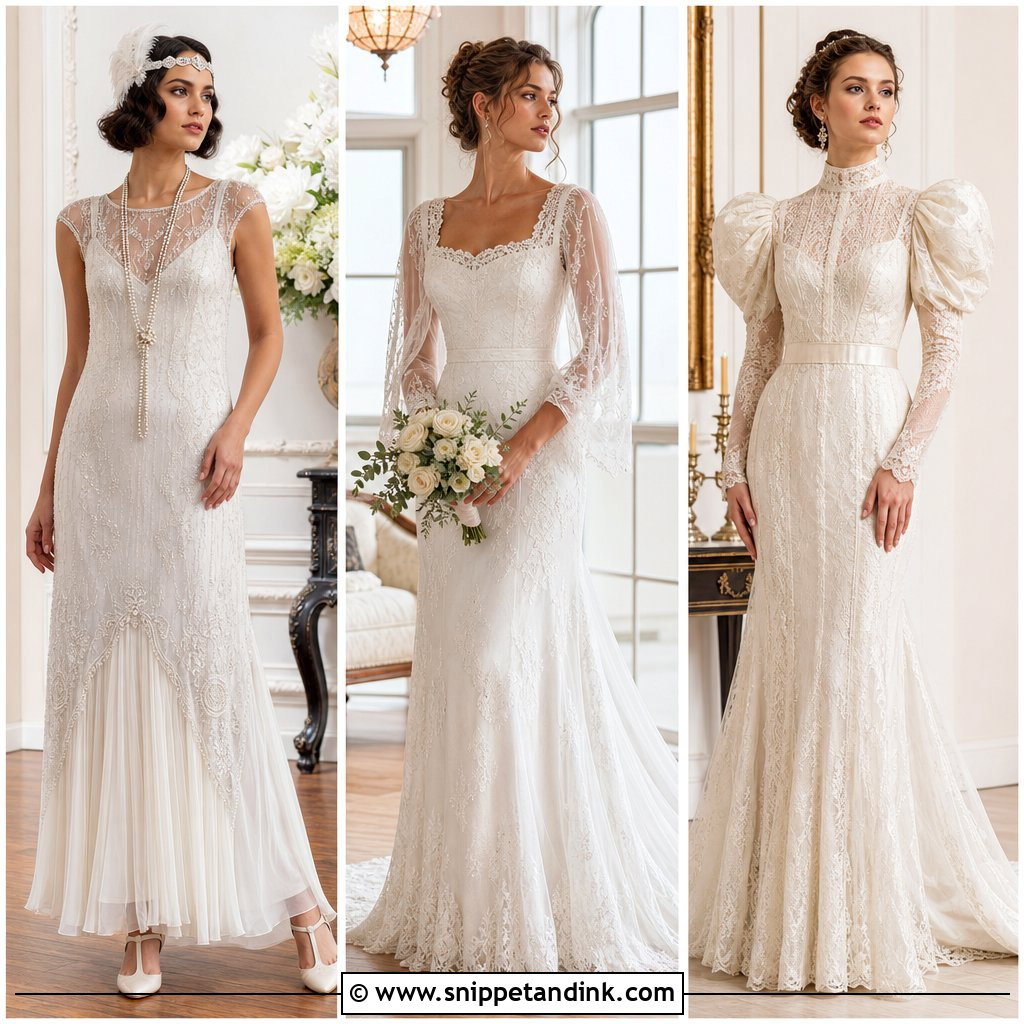
The high Victorian collar is all about posture: it makes you stand tall, which is half its charm and half its challenge. I check that the collar sits a finger’s width from the throat, because lace that is fitted tight will itch by the vows. An ivory gown with a fitted lace bodice, structured waist, long sleeves and covered buttons down the back gives the period line without tipping into theater. Pin a cathedral veil beneath a neat chignon so the collar stays visible. Pearl drops and a small locket are all the jewelry it needs; the neckline is already doing the work.
2. Edwardian Lace Wedding Dress
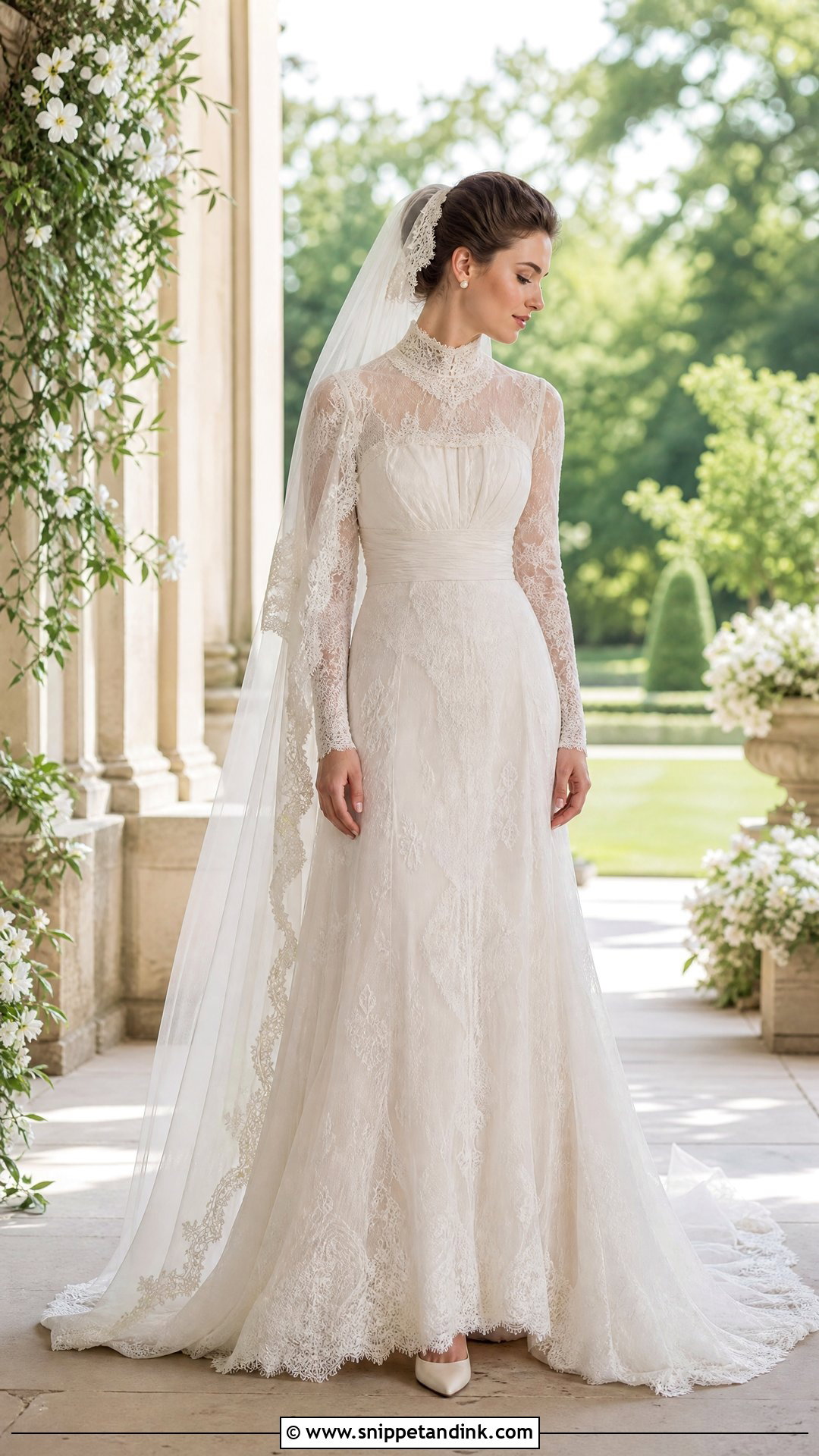
An Edwardian lace wedding dress feels lighter than its Victorian cousin, with a blouson bodice that softly overhangs the waist, long lace sleeves and a fluid A line skirt. That ease suits gardens and country houses. Color is where I steer brides most firmly: pale ivory, champagne or a softly aged white looks right with this lace, while bright optical white makes it read as a modern copy. A loose low bun with a few face-framing pieces, a long veil with narrow lace edging and garden roses with trailing ribbon complete it.
3. 1920s Beaded Wedding Dress
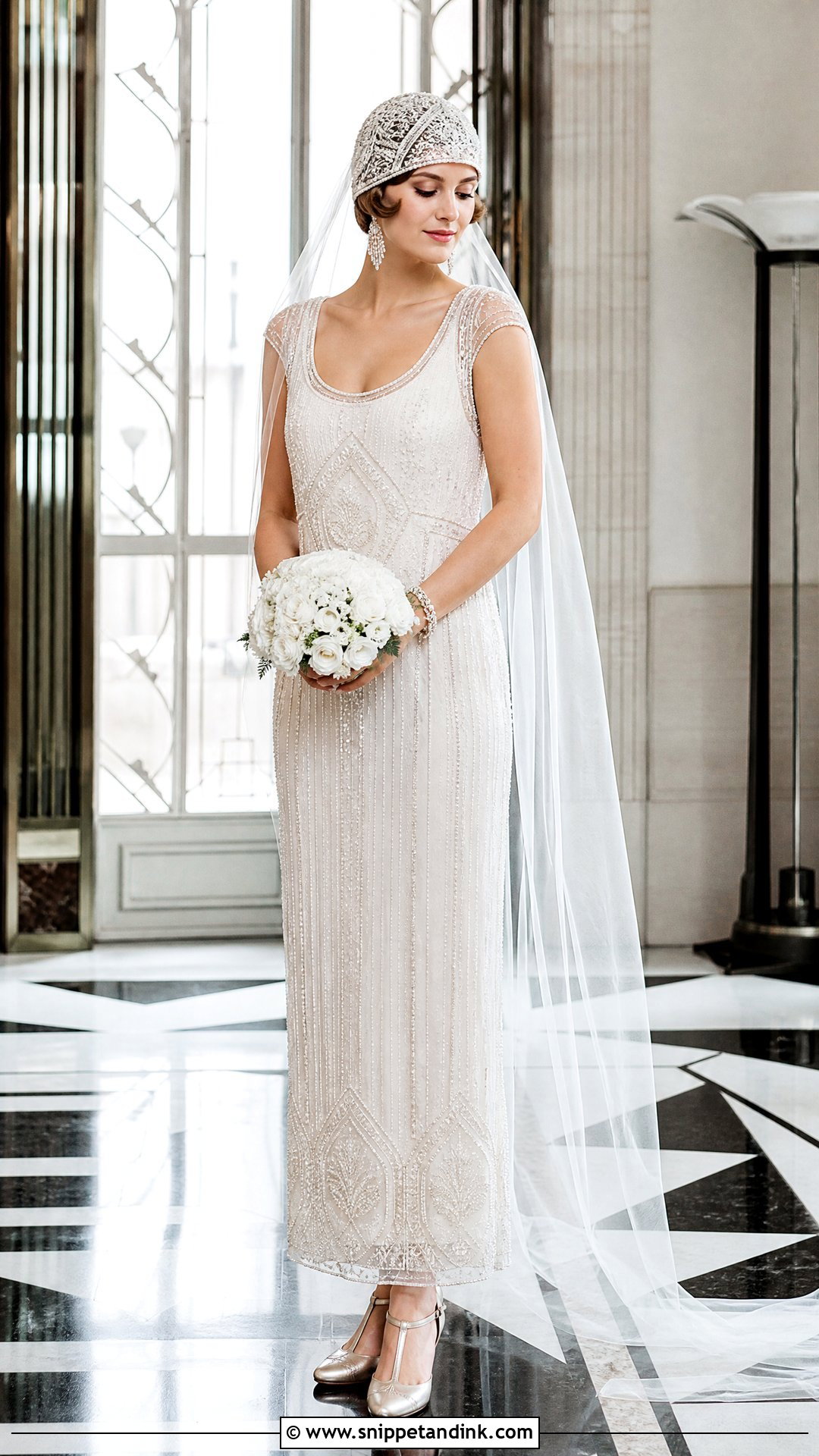
Beading is heavy. A fully beaded 1920s column can weigh far more than brides expect, and that weight pulls the fabric down, so I look for gowns built on a firm base fabric with beading concentrated on the bodice and hem. Geometric patterns, scattered pearls and fine sequins on a straight or gently fitted shape give the period mood; a drop waist strengthens it, and a V or bateau neck keeps it flattering. A Juliet cap veil or narrow beaded headband frames the face. Keep the bouquet small, because a large arrangement hides all the surface work.
4. Regency Empire Waist Wedding Dress
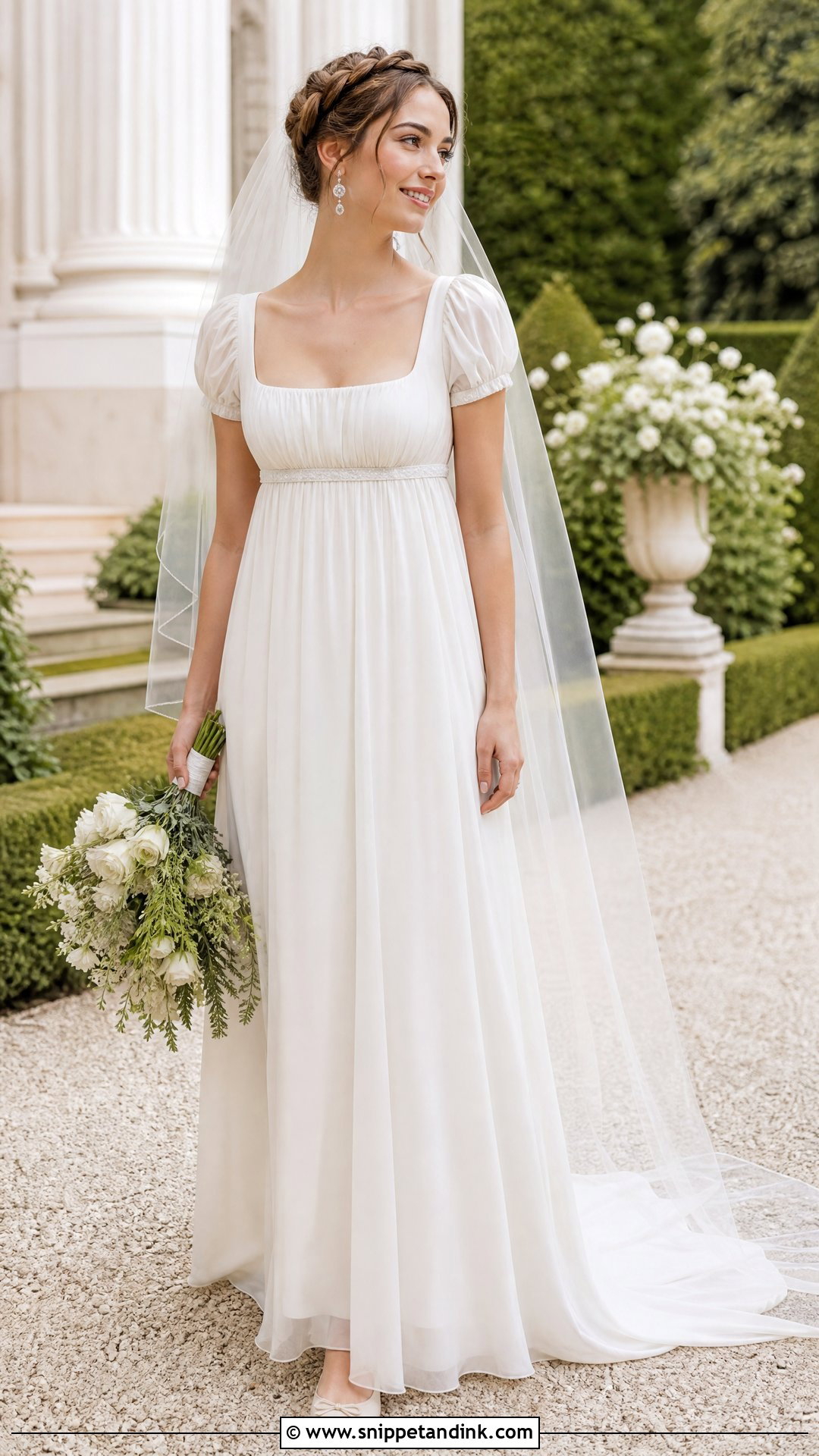
With the waist directly beneath the bust, a Regency empire waist wedding dress lengthens the whole body and leaves the skirt free to fall. Silk, chiffon or crepe drapes properly here; anything stiff stands away from the body and looks like a nightgown. A square neckline and short puff sleeves set the era. Ivory ballet flats suit it far better than heels, and a slim ribbon at the waist is enough of an accent. Skip structured bags and big jewelry, which break the slender line that makes this cut work.
5. Renaissance Square Neck Wedding Dress
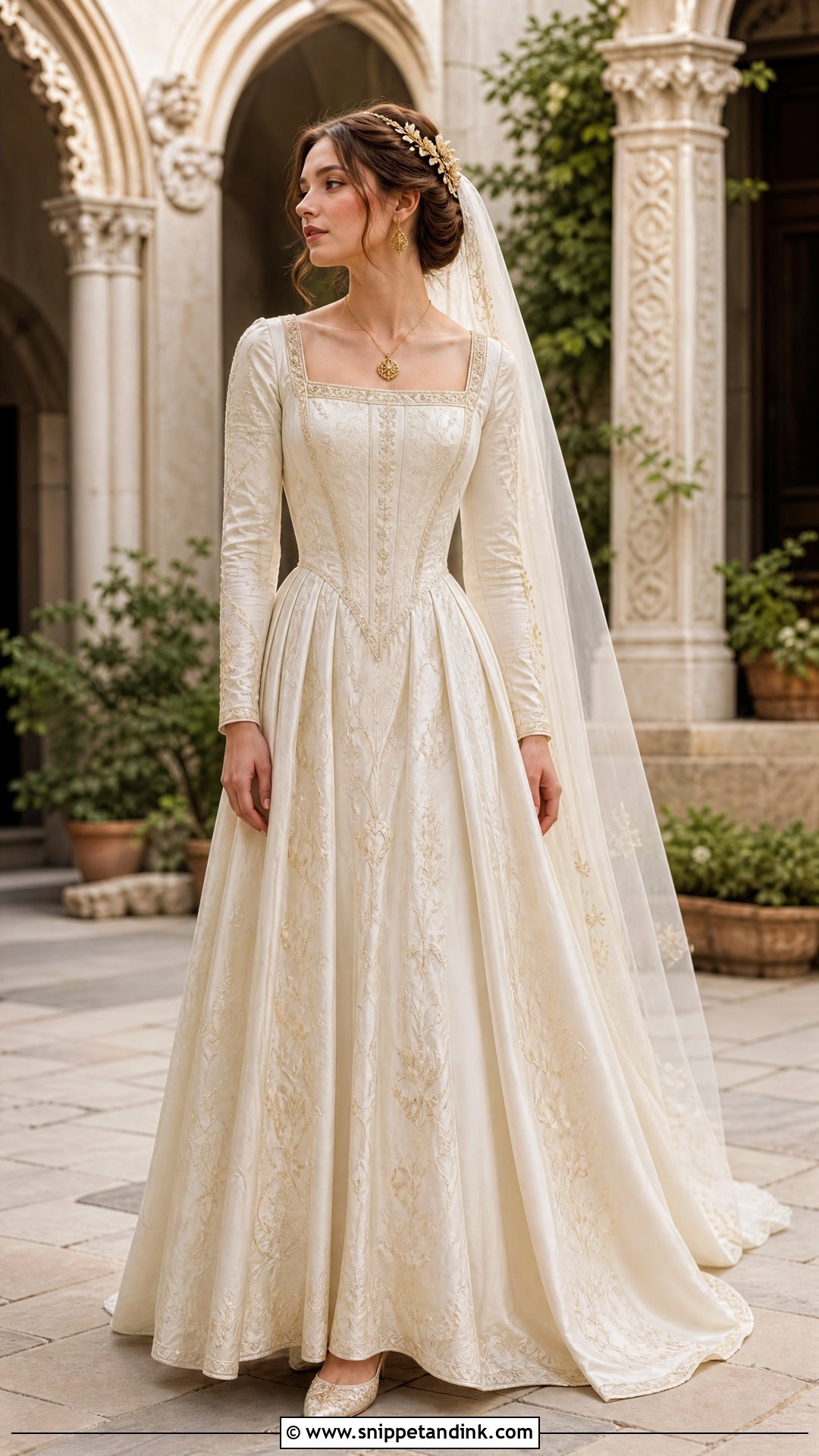
A Renaissance square neck wedding dress pairs a sculpted bodice with a skirt that moves. Corset seaming, embroidery and fitted or statement sleeves are the features that signal the period. I look for silk, brocade or embroidered tulle in ivory or muted champagne. Brocade is warm and heavy, so I would only suggest it for a cool season or an air-conditioned hall. A floral comb in loosely waved hair, a delicate gold pendant and a light veil at the back of the head keep the neckline clear, and pointed flats make dancing easy.
6. Victorian Bustle Wedding Dress
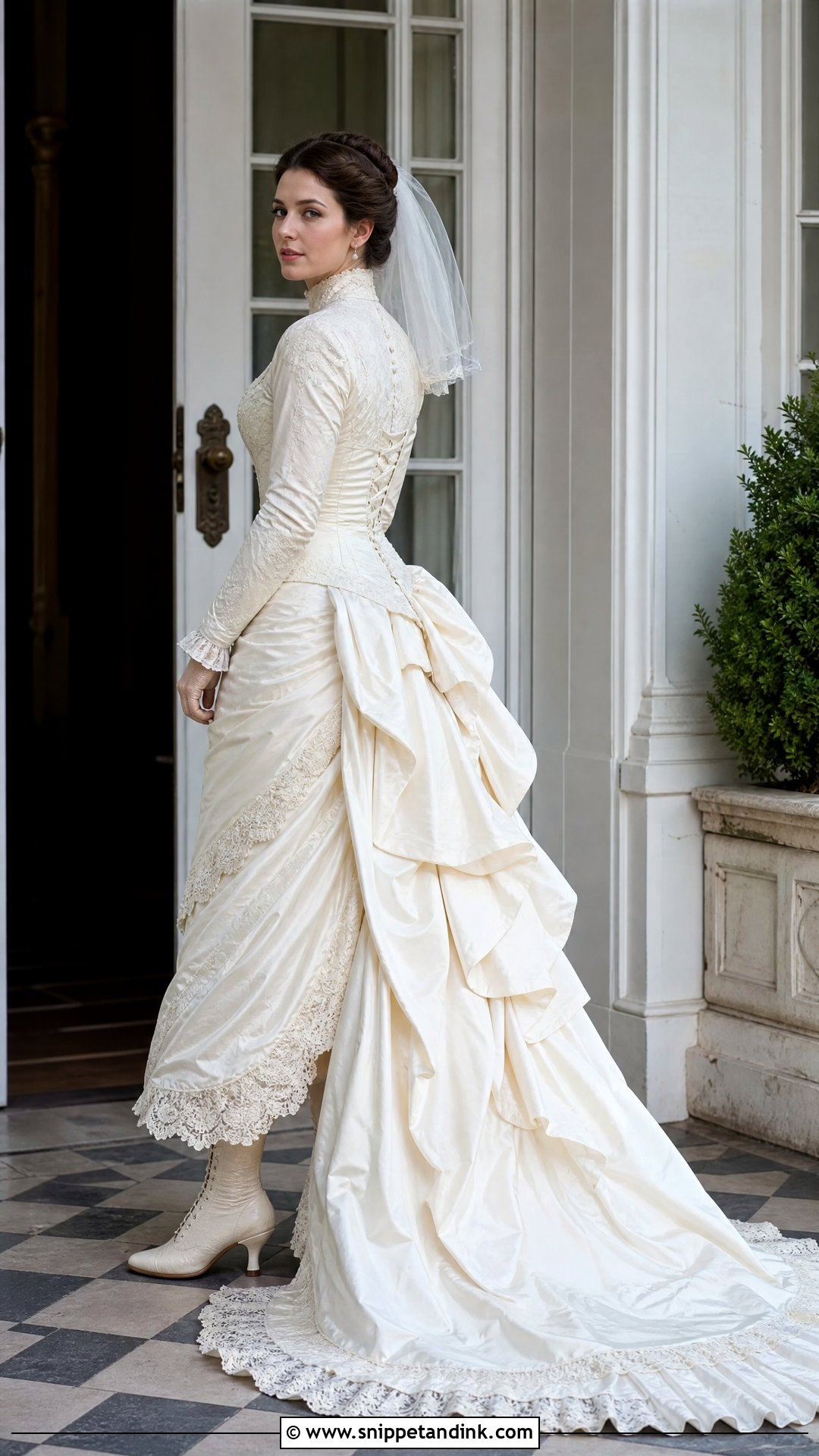
A Victorian bustle wedding dress puts all the volume at the back, so the entrance and the walk away from the altar become the big moments. Modern versions use light internal support rather than the heavy frames of the period, and I insist on that, because a true bustle frame makes sitting nearly impossible. Before the day, practice sitting on the edge of a chair. A shorter veil stops fabric piling on top of the bustle, and lace-up boots with pearl earrings keep the rest restrained.
7. Edwardian Tea Gown Wedding Dress
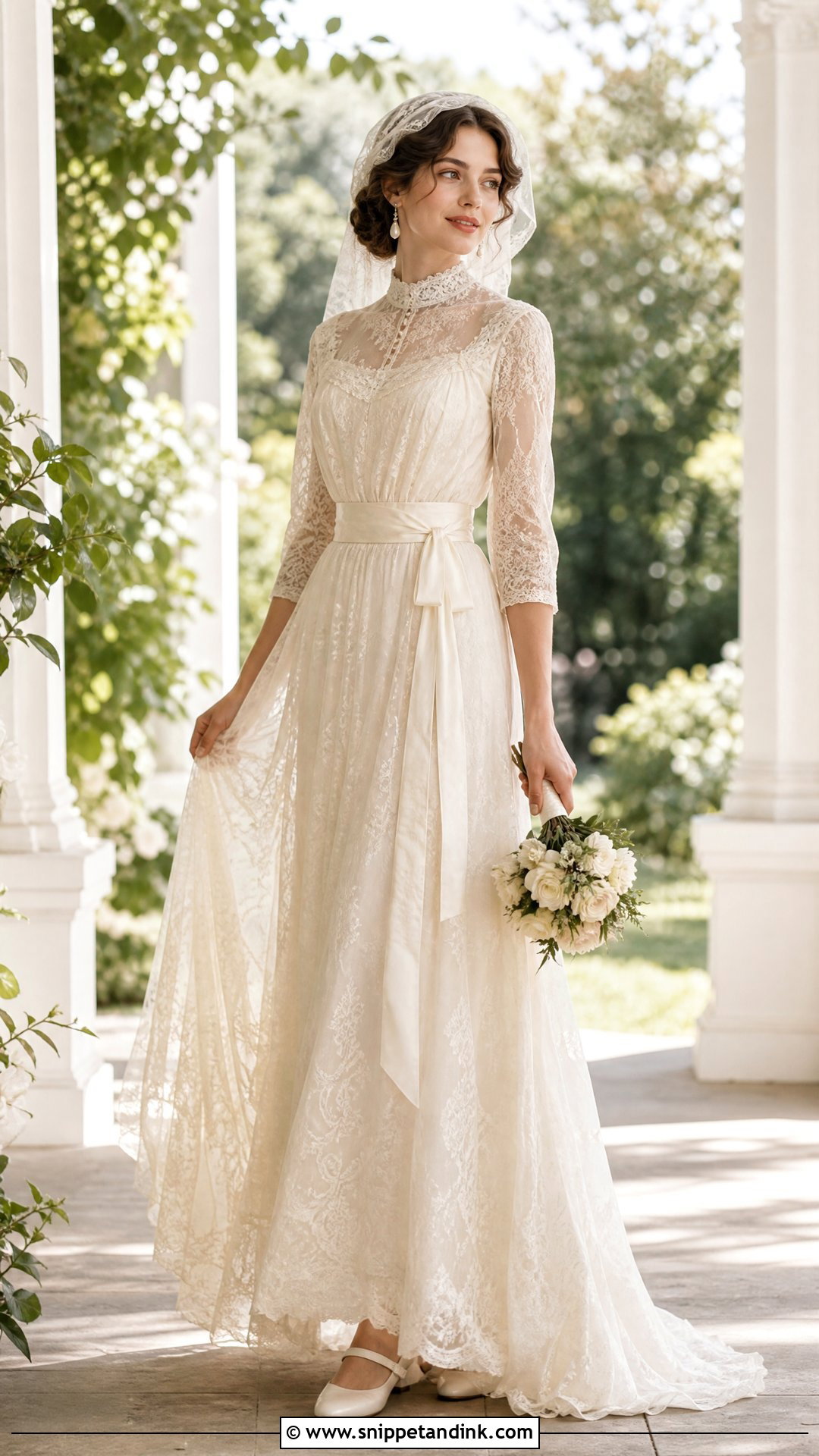
Tea gowns were made for comfort, which is why I like them for garden, home and daytime weddings. Look for a long, fluid gown in soft lace, cotton voile or silk with gentle gathering at the bodice, three-quarter sleeves and a loosely defined waist. Voile creases easily, so allow time to steam it on the morning. Cream Mary Janes, a narrow ribbon sash and a small lace-trimmed veil or floral comb suit it better than a formal cathedral veil. Let the airy shape lead and keep the embellishment light.
8. Antique Crochet Wedding Dress
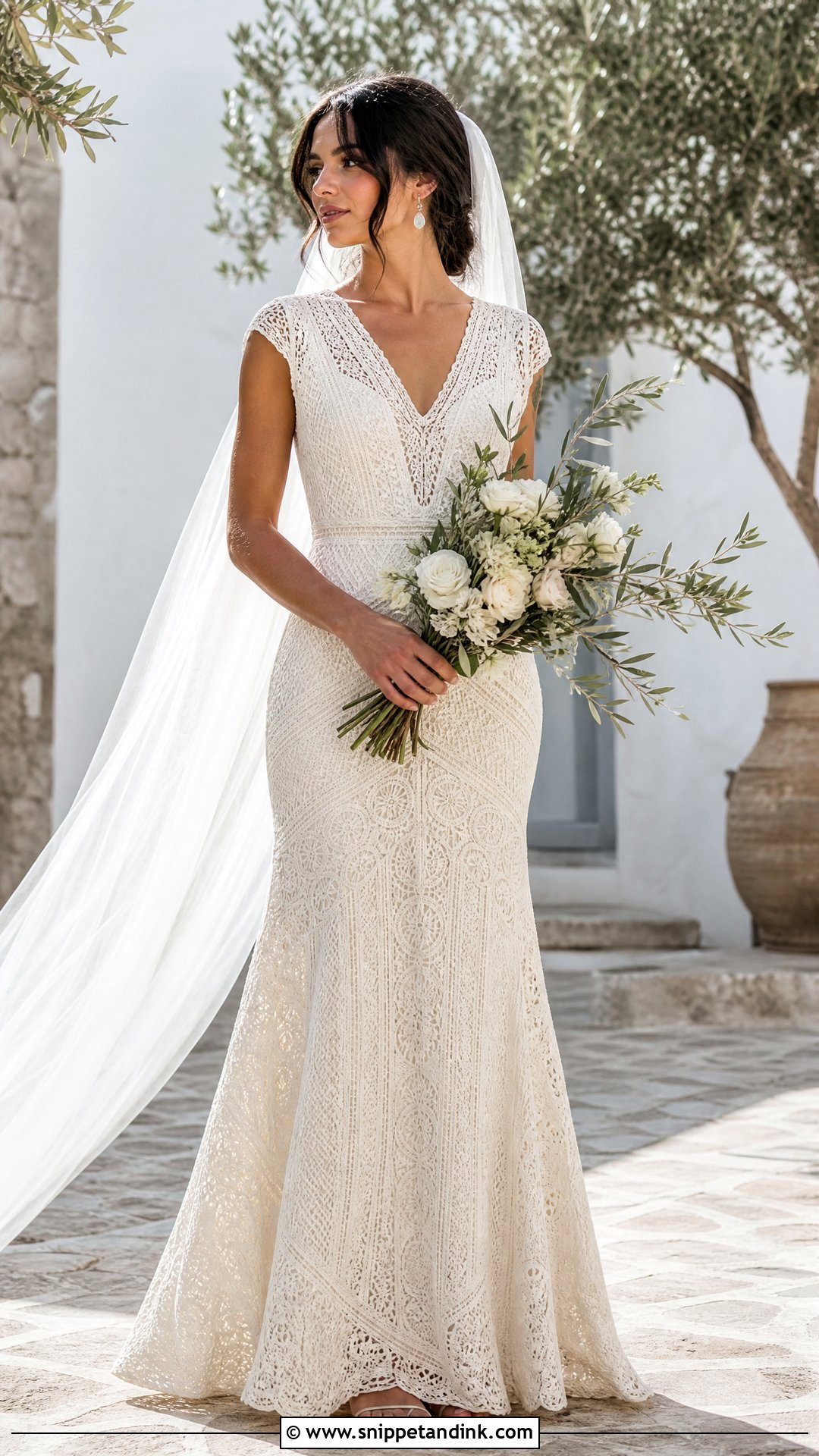
Crochet is all about the lining. An unlined crochet gown shows skin through every hole and can catch on jewelry, so I look for crochet panels over a smooth slip in a tone close to your skin or the crochet itself. Fine, tight patterns read as antique; chunky openwork reads as beach cover-up. A fitted upper body and a soft flare balance the texture. Plain ivory sandals, pearl or opal earrings and a plain tulle veil give contrast, and a bouquet with olive branches suits a warm-weather celebration.
9. Antique Silk Satin Wedding Dress
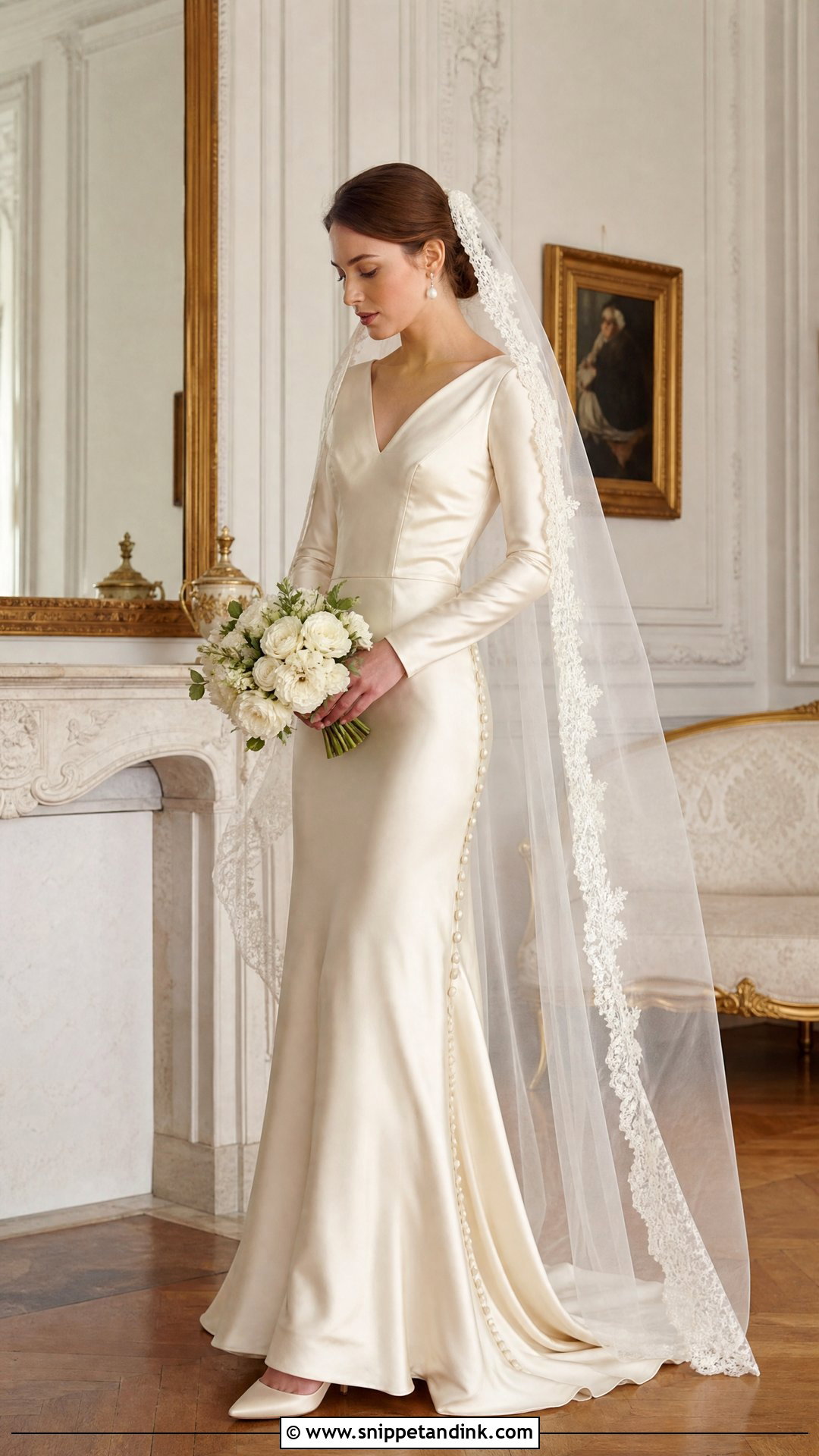
Silk satin shows everything: seams, pins, even the outline of underwear, so this is the one gown where I ask brides to bring their exact undergarments to every fitting. Choose a bias cut or softly structured shape in ivory, cream or pale champagne. A gathered bust, covered buttons, bracelet-length sleeves and a modest train set a vintage mood without lace. Satin creases when you sit, so expect some lap lines by evening. A lace-edged veil adds texture, and a long-stemmed bouquet wrapped in silk ribbon keeps it clean.
10. 1920s Drop Waist Wedding Dress
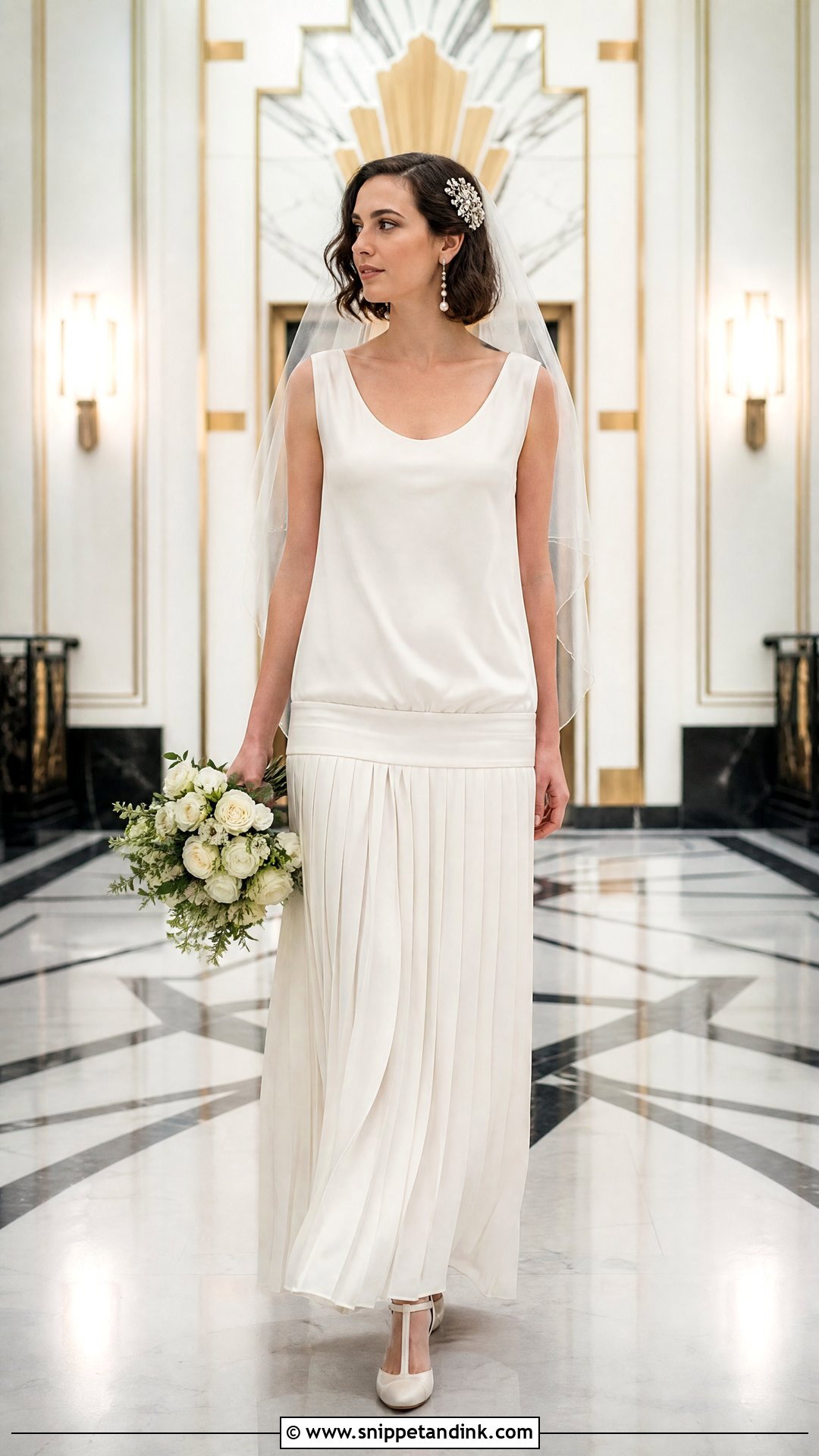
The dropped waist sits below the natural waistline, usually around the hip, and meets a pleated, fringed or flared skirt. That loose, tunic-like line is the heart of the 1920s look, and it only works in fabrics that move: lightweight crepe, silk or chiffon. A stiff fabric turns it boxy. Never belt it at the natural waist, which cancels the whole point of the cut. Low T-strap heels, long pearl earrings and a beaded comb suit it, with a shoulder-length veil that stops above the waistline.
11. Juliet Sleeve Wedding Dress
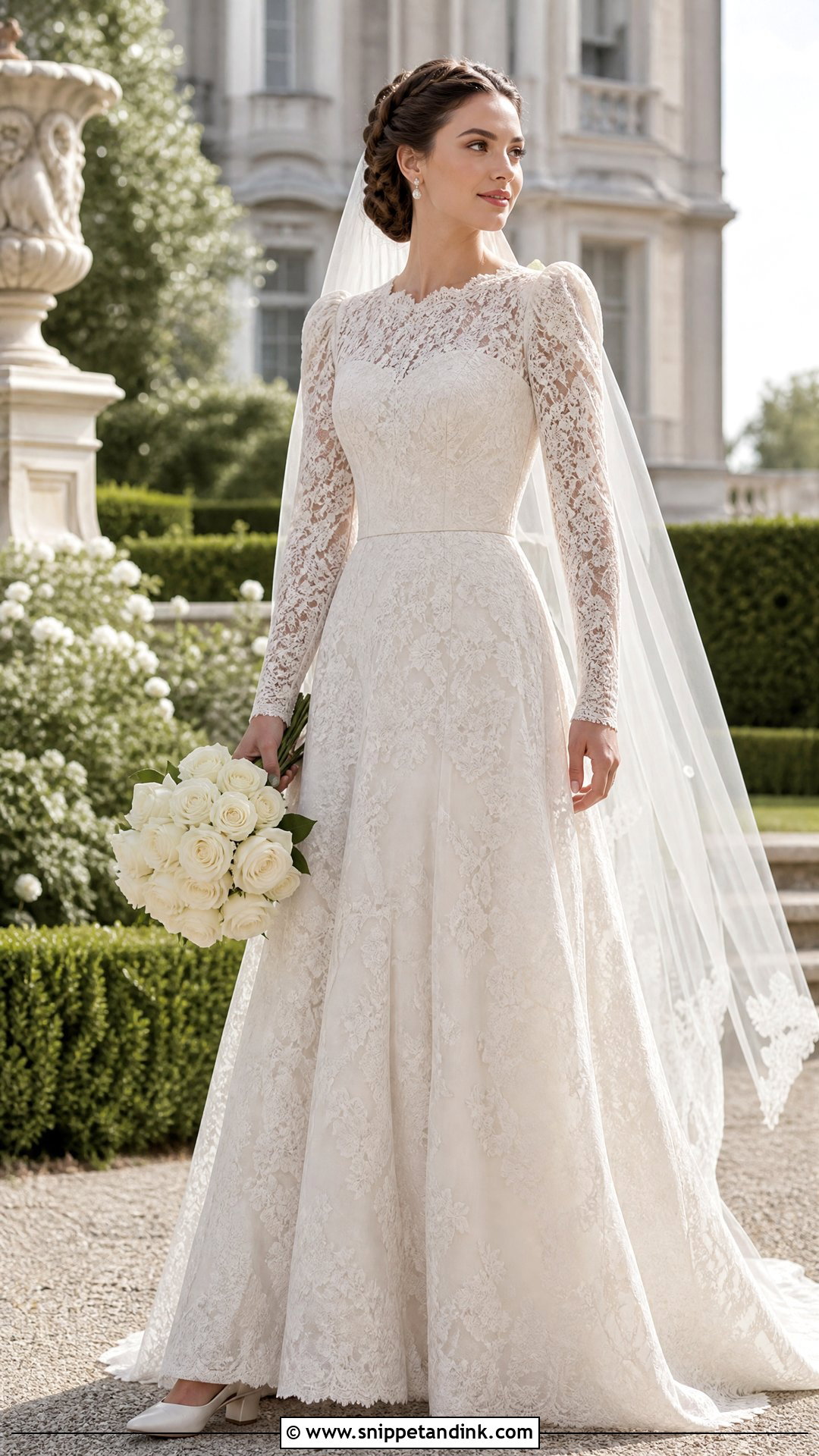
A Juliet sleeve puffs at the shoulder and then fits closely from the upper arm to the wrist, giving volume without hiding your shape. I fit the lower sleeve with enough room to bend the elbow comfortably, because a lace sleeve cut too slim pulls at the seams when you hug. Pair it with a fitted lace bodice, a defined waist and a flowing A line skirt. Keep jewelry simple, a pendant and pearl earrings, and pin a fingertip veil beneath a loose braided bun. Since the sleeves are the focus, choose restrained embellishment elsewhere.
12. Bishop Sleeve Wedding Dress
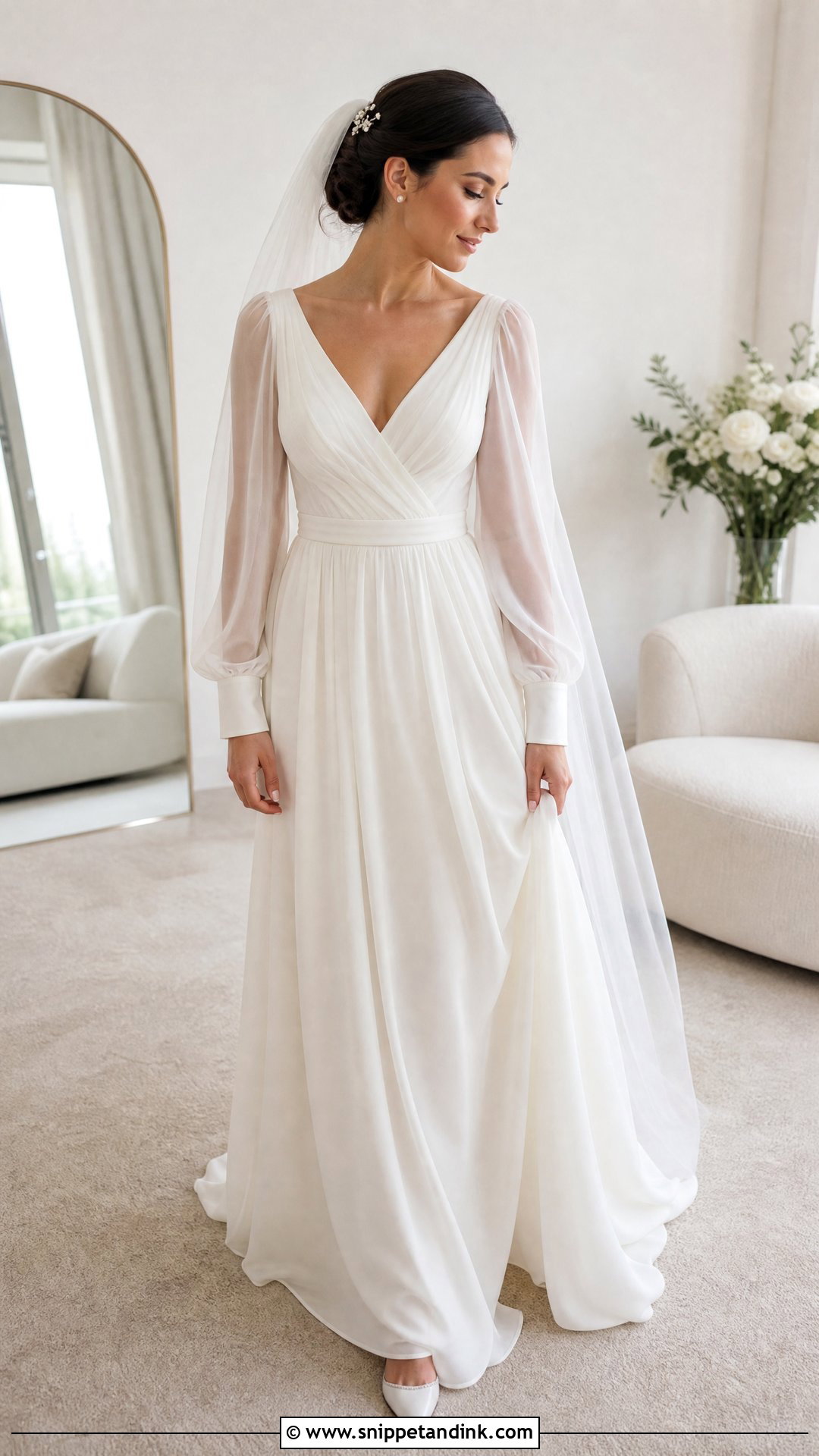
Bishop sleeves billow through the arm and gather into a fitted cuff, and they behave very differently depending on fabric. Chiffon, silk organza and light lace float; heavier fabric hangs like a curtain. I keep the bodice plain, usually a simple V neck with a softly shaped waist, so the sleeves can be the drama. A slim floor-length veil echoes the vertical line. Skip ruffles or big embellishment elsewhere, since the sleeves already give all the movement this dress needs.
13. Antique Floral Embroidered Wedding Dress
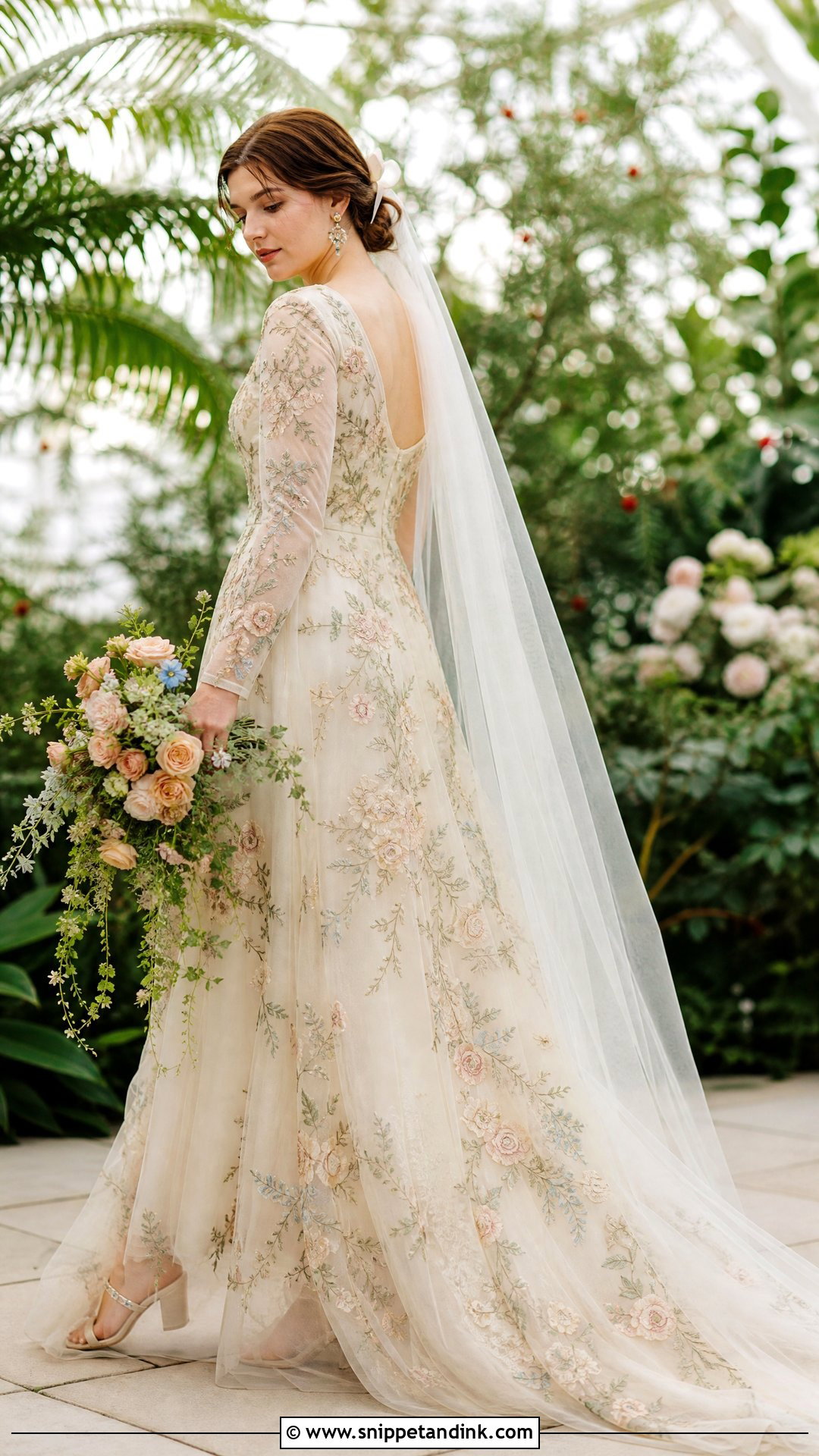
Fine botanical embroidery scattered across the bodice, sleeves and hem feels personal and suits a garden setting much better than one oversized floral motif. Ivory thread gives a subtle tonal finish; blush, sage or pale blue stitching adds gentle color. My favorite styling move here is repetition: pick one or two thread colors and repeat them in the bouquet and a ribbon in the hair. That is what makes the outfit look planned. Use a sheer, plain veil and skip a decorated belt.
14. Antique Champagne Wedding Dress
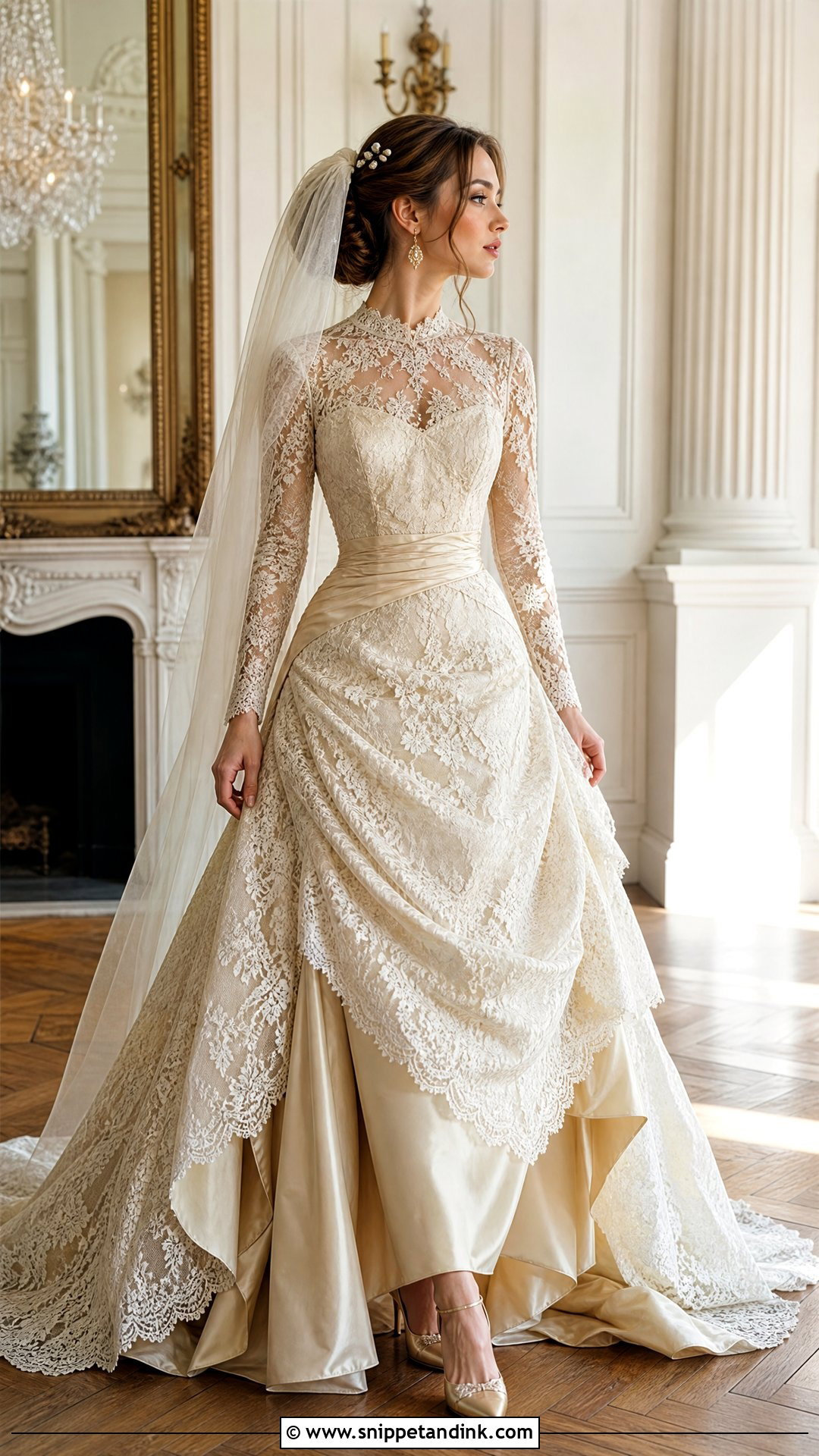
Champagne satin under ivory lace gives depth that reads well in bright daylight. The catch is that champagne varies hugely, from almost pink to almost grey, so I compare every accessory against the dress by a window before buying anything. Nude or champagne shoes work; bright white shoes make the dress look dingy. Antique gold earrings, a pearl hairpin and a cream veil continue the warm undertone, and ivory flowers with touches of beige and blush finish the palette.
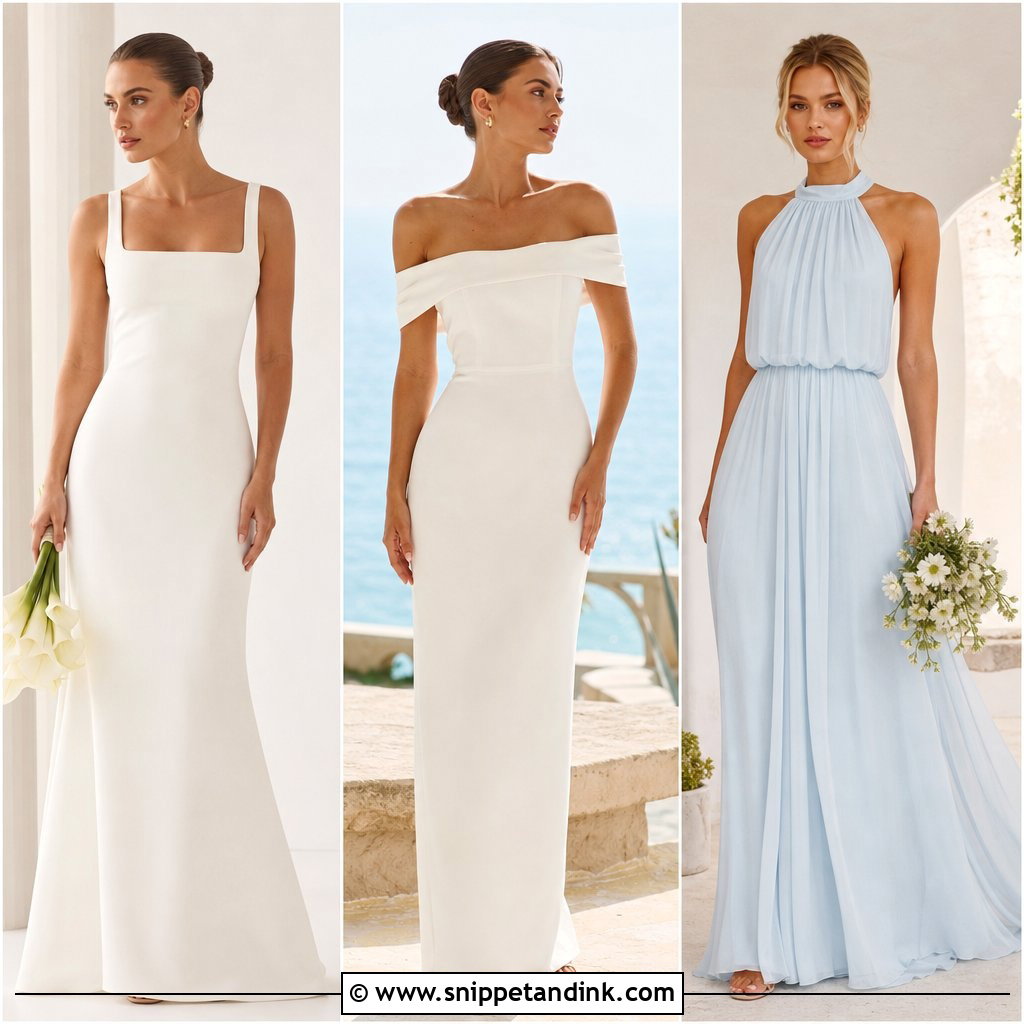


15. Antique Lace Cape Wedding Dress
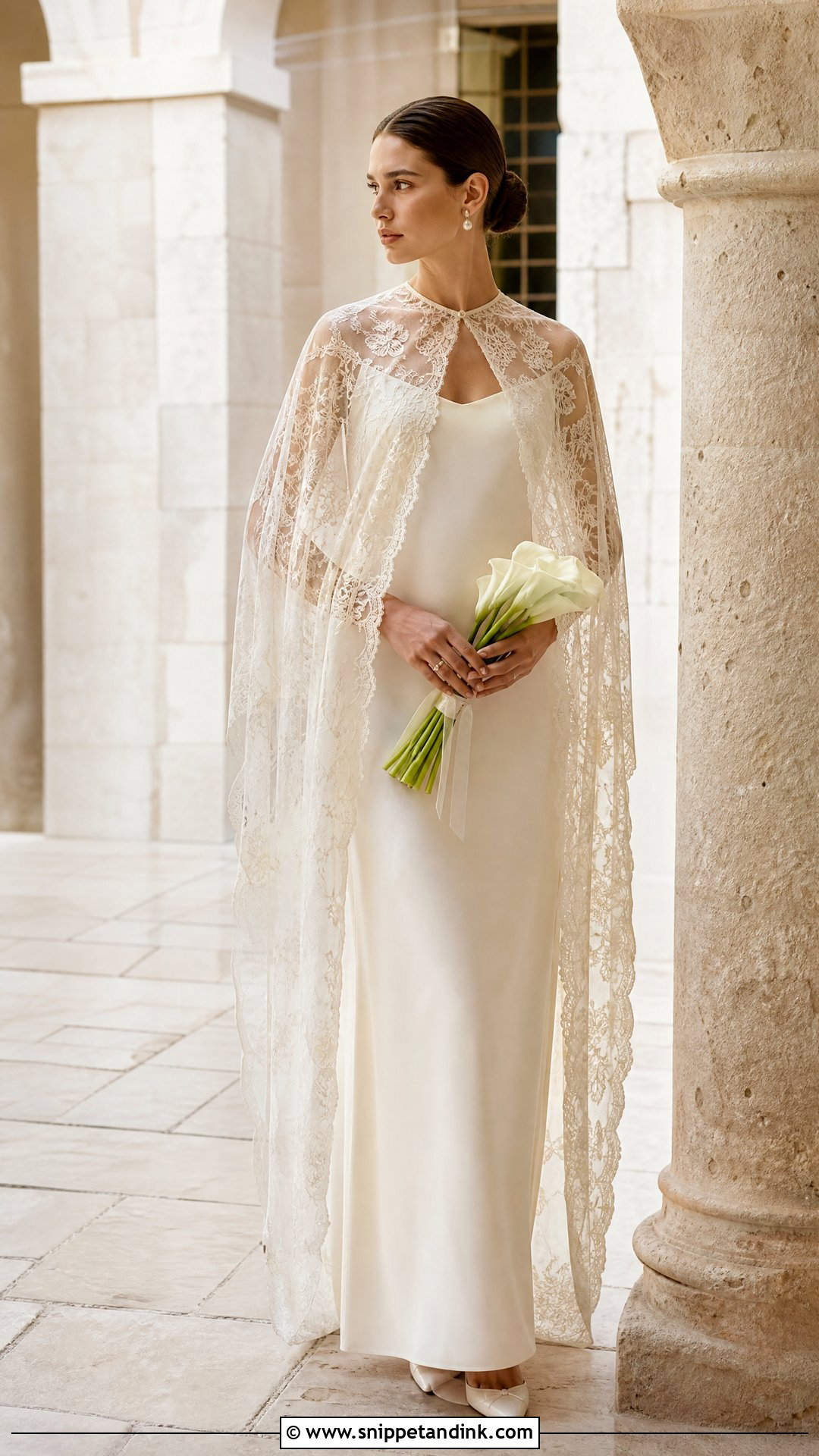
A lace cape can turn a plain column gown into a period look. Over a sleeveless or short-sleeved ivory dress, add a sheer lace cape that closes at the neck and falls to the waist or the floor; scalloped edges and covered buttons strengthen the era. Transparency is key. A cape you can see through gives depth, while an opaque one adds bulk. If the cape is long at the back you may not need a veil at all; with a cropped capelet, a short plain veil works. Carry a narrow bouquet to keep the proportions clean.
16. Victorian Corset Wedding Dress
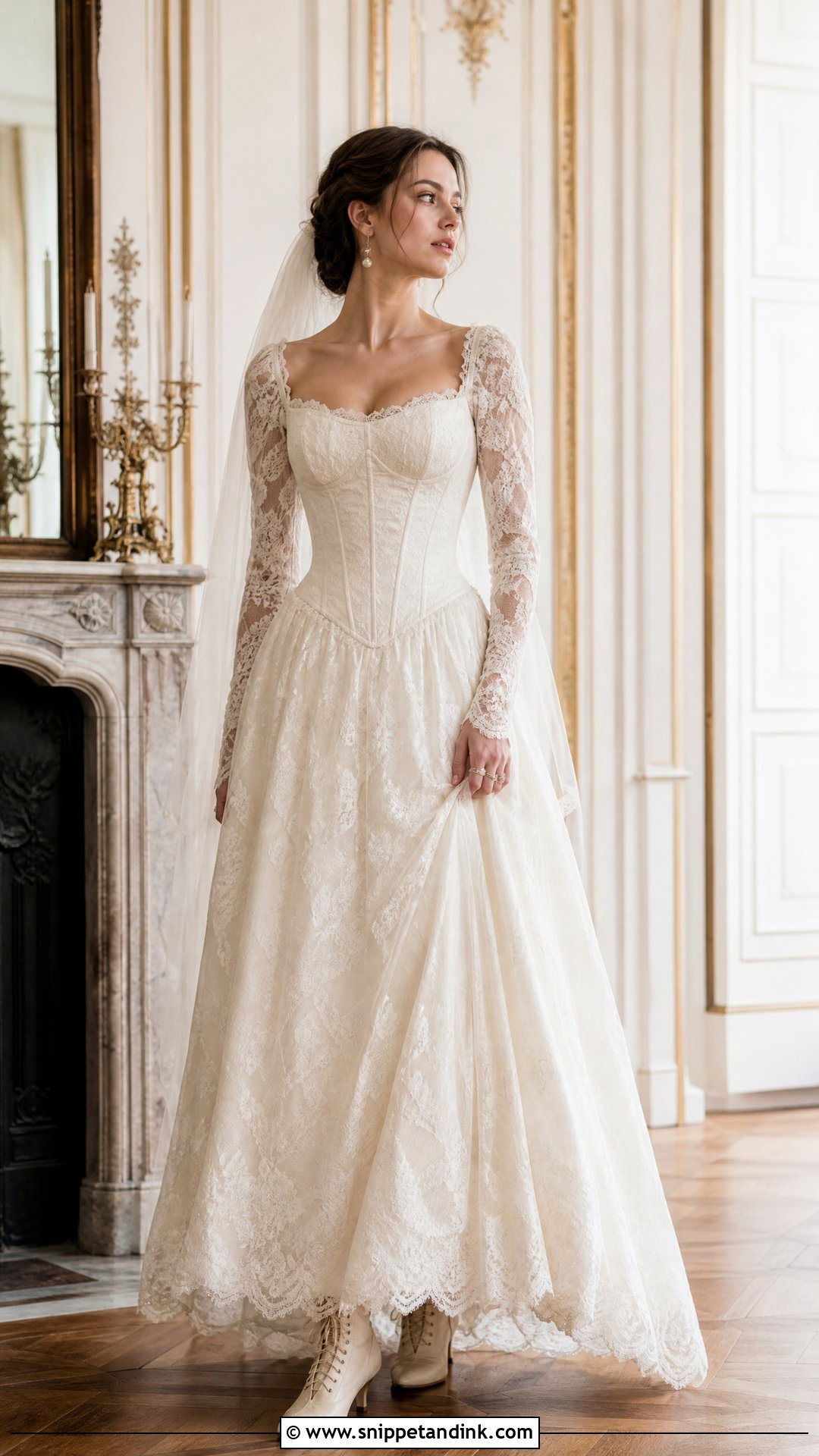
Corsetry should sculpt, not squeeze. I look for internal boning or visible corset seams with a little ease rather than a punishingly tight bodice, and at fittings I make the bride sit, walk and raise her arms before we approve it. A square or softly curved neckline keeps it flattering, and an A line skirt balances the fitted waist. Lace-up ivory boots and pearl drops suit the era. Place the veil at the back of a structured low updo so the bodice stays visible, and let ribbon tails on the bouquet soften the tailoring.
17. Antique Two Piece Wedding Dress
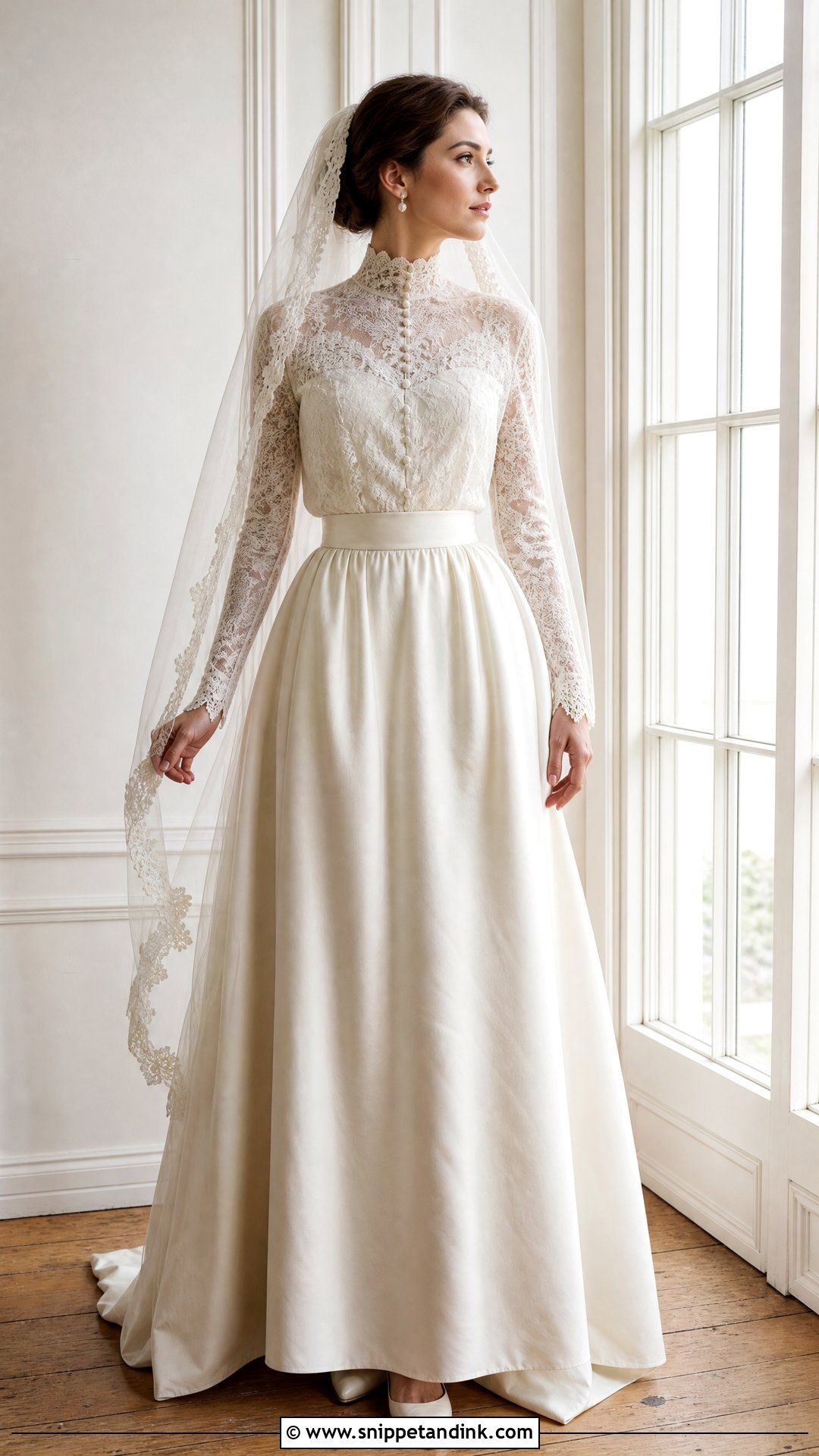
Separates are easier to fit than a one-piece gown, since a tailor can alter the blouse and skirt independently. A high-neck lace blouse with long sleeves and covered buttons over a full silk, satin or chiffon skirt is the classic antique pairing. The two must meet cleanly at the natural waist; any gap when you raise your arms spoils the period line. A narrow velvet or satin sash covers the join if needed. Make sure both pieces share the same undertone of ivory, or they will look like two different garments in photos.
18. Antique Tea Length Wedding Dress
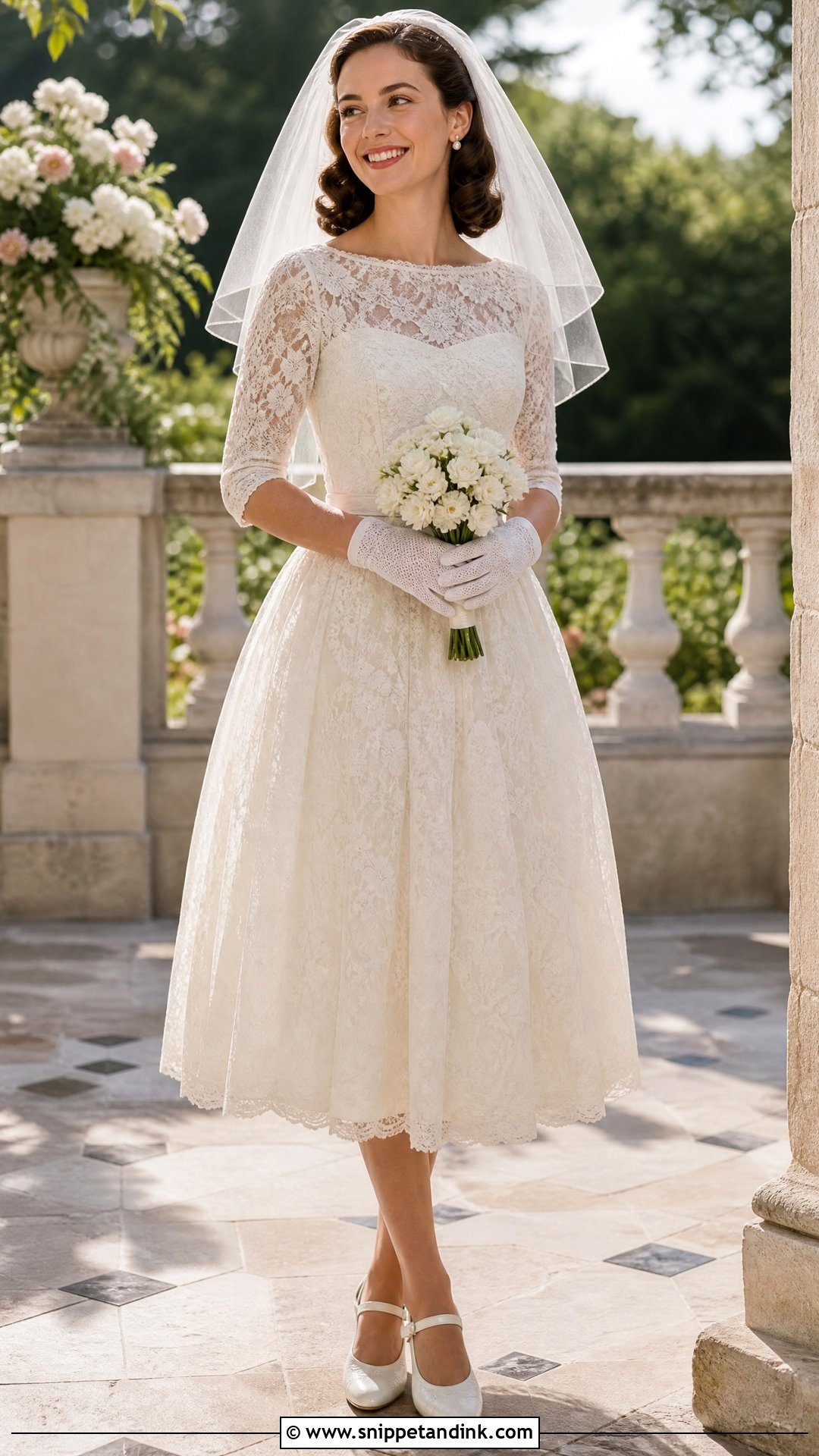
Tea length puts the shoes on show, so choose them early. A fitted lace bodice with a bateau or high neckline over a skirt ending between the knee and ankle is the classic shape. A soft petticoat gives body, though too much volume pushes it toward the 1950s rather than anything older. Ivory Mary Janes, low T-straps or button boots all suit it, as do short gloves and a birdcage or shoulder-length veil. Pick a modest heel with a secure strap, since you will be walking and dancing in full view.
19. Antique Bell Sleeve Wedding Dress
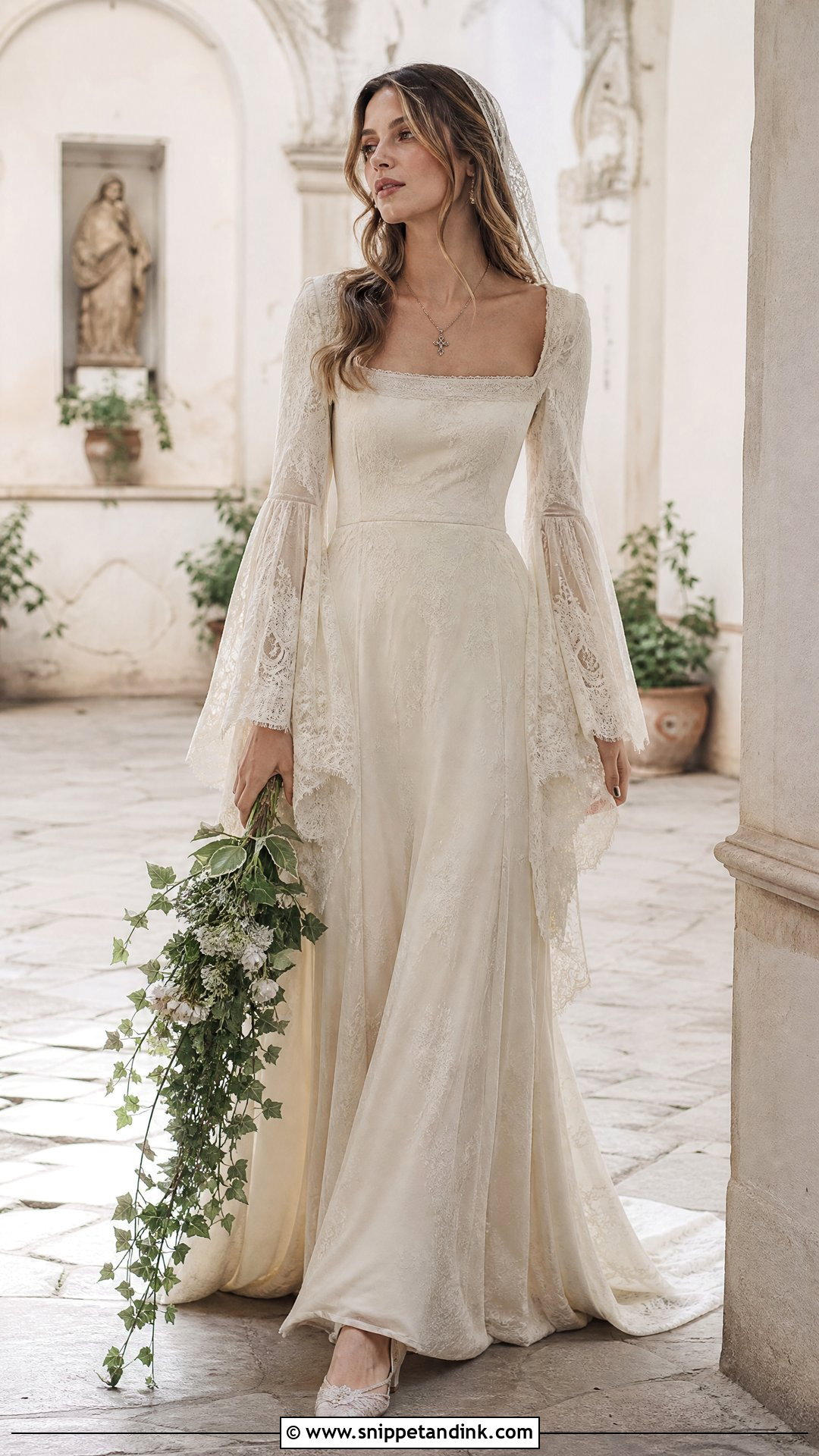
Bell sleeves widen gradually from the elbow or the wrist and swing as you move. Lace gives them a romantic edge; chiffon or silk keeps them lighter and cleaner. The detail I measure at every fitting is the cuff, because a sleeve that falls over the hand gets in the way of holding flowers, signing the register and shaking hands. A square neckline and fluid skirt balance the volume. Pin a narrow veil under loose waves, and let trailing greenery in the bouquet echo the sleeves.
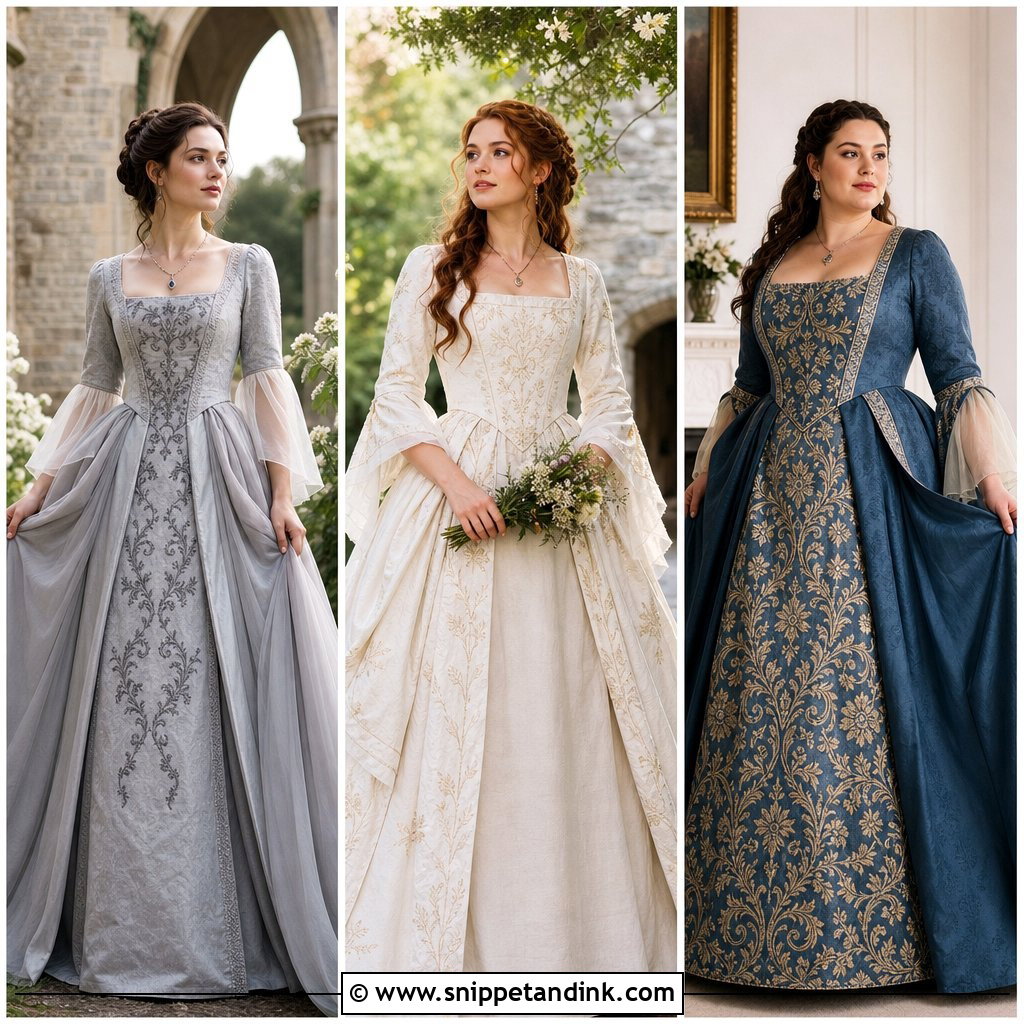
20. Antique Heirloom Lace Wedding Dress
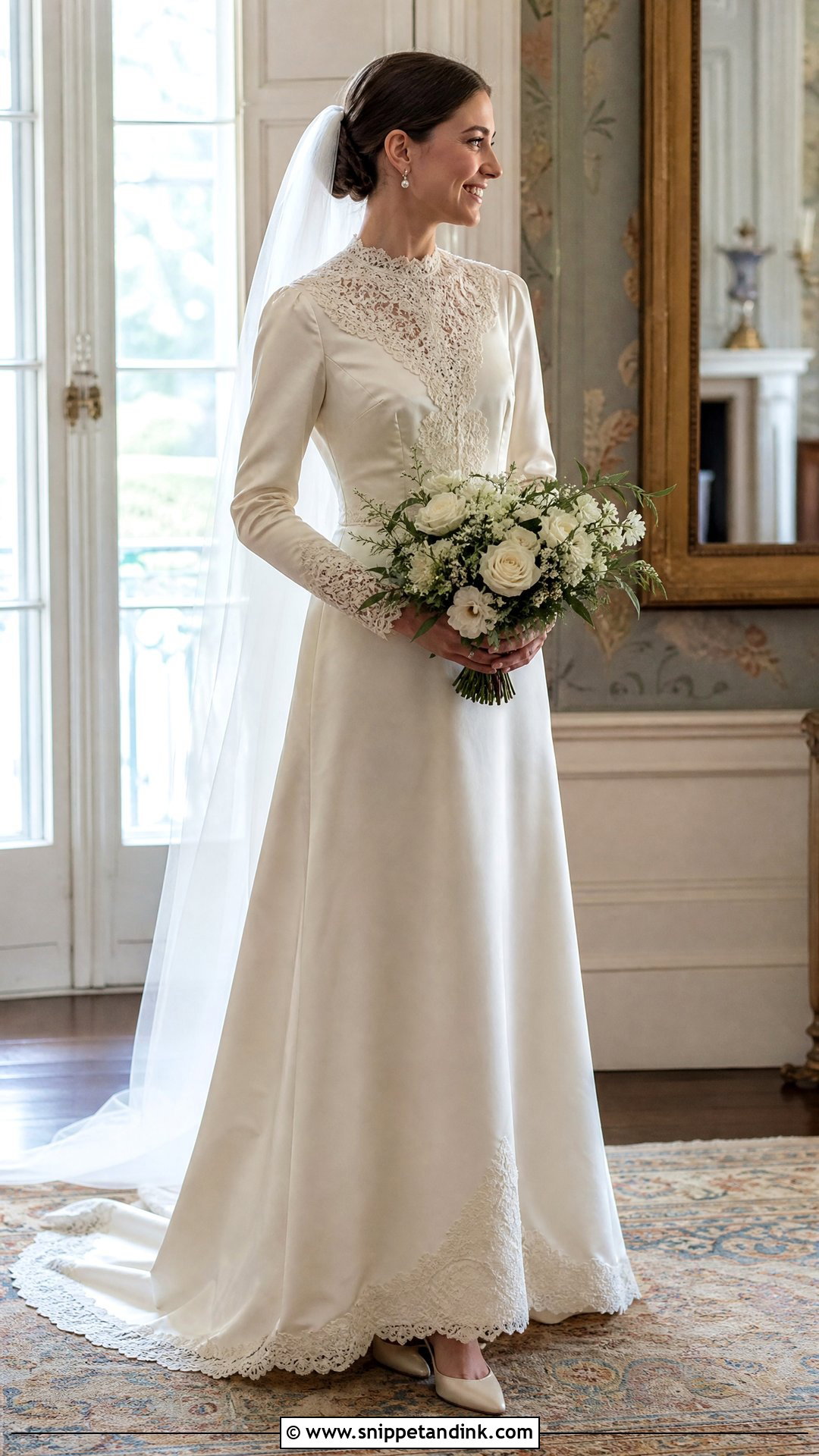
You do not have to wear a whole fragile family gown to carry its history. A specialist can often apply preserved lace to a new bodice, cuffs, sash, veil or removable overskirt. Old lace may be discolored, weakened or uneven, so have it assessed before anyone cuts or stitches it; some pieces need backing on fine net before they can bear any strain. Build on a plain silk or crepe gown so the heirloom is the focus. If the lace is on the dress, keep the veil plain, and the reverse.
21. Antique Ruffle Collar Wedding Dress
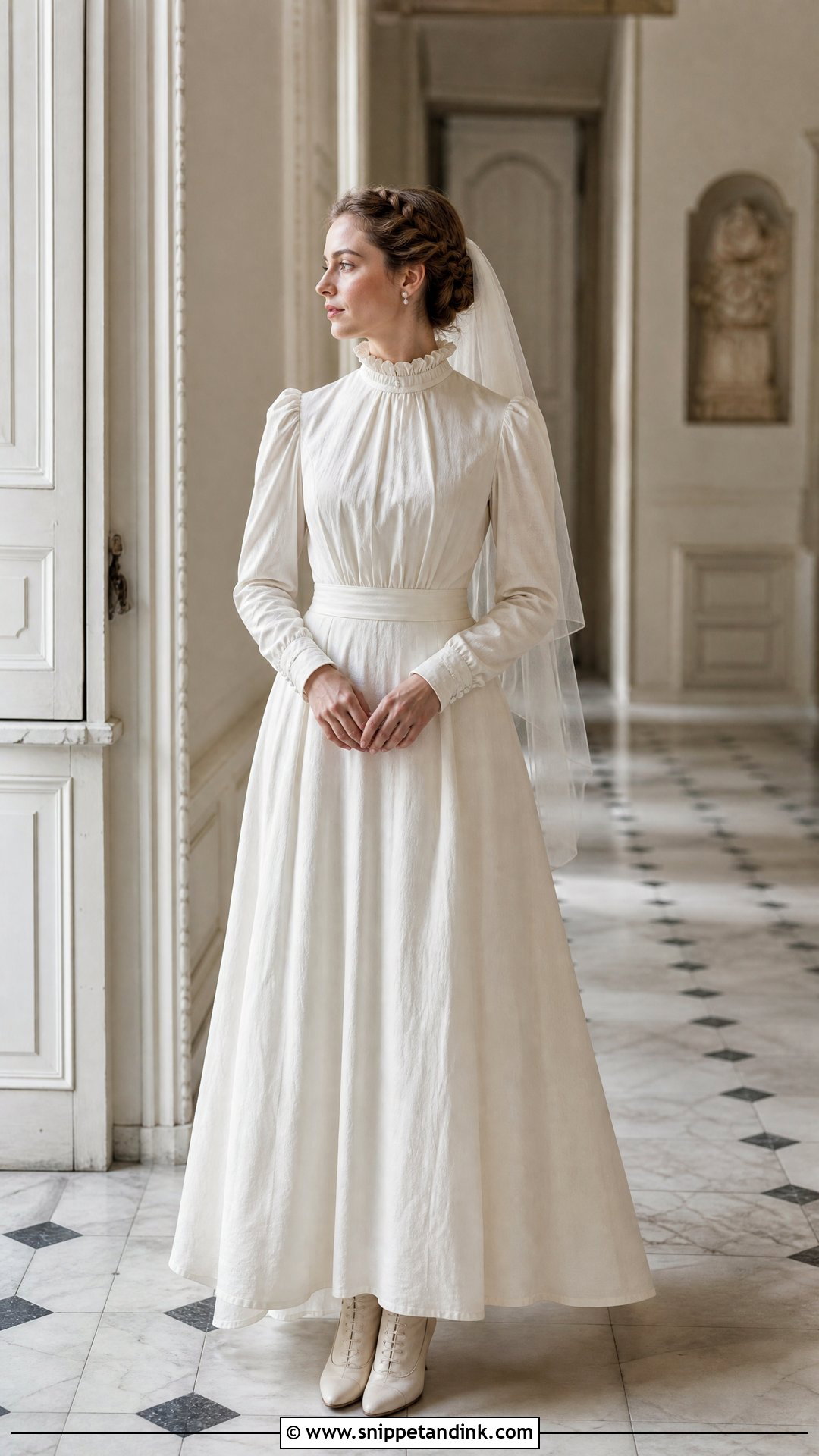
A narrow ruffled collar gives historic character without bulk, provided the fabric is light. Lace, silk or chiffon keeps it soft; anything stiffer and it starts to feel like a costume ruff. I pair it with a fitted gown, long sleeves and a softly flared skirt, and I tell brides to skip the necklace entirely. Keep the hair up in a low bun or braided updo so the collar stays clear. Ivory button boots, pearl studs and a plain fingertip veil complete it.
22. Antique Winter Velvet Wedding Dress
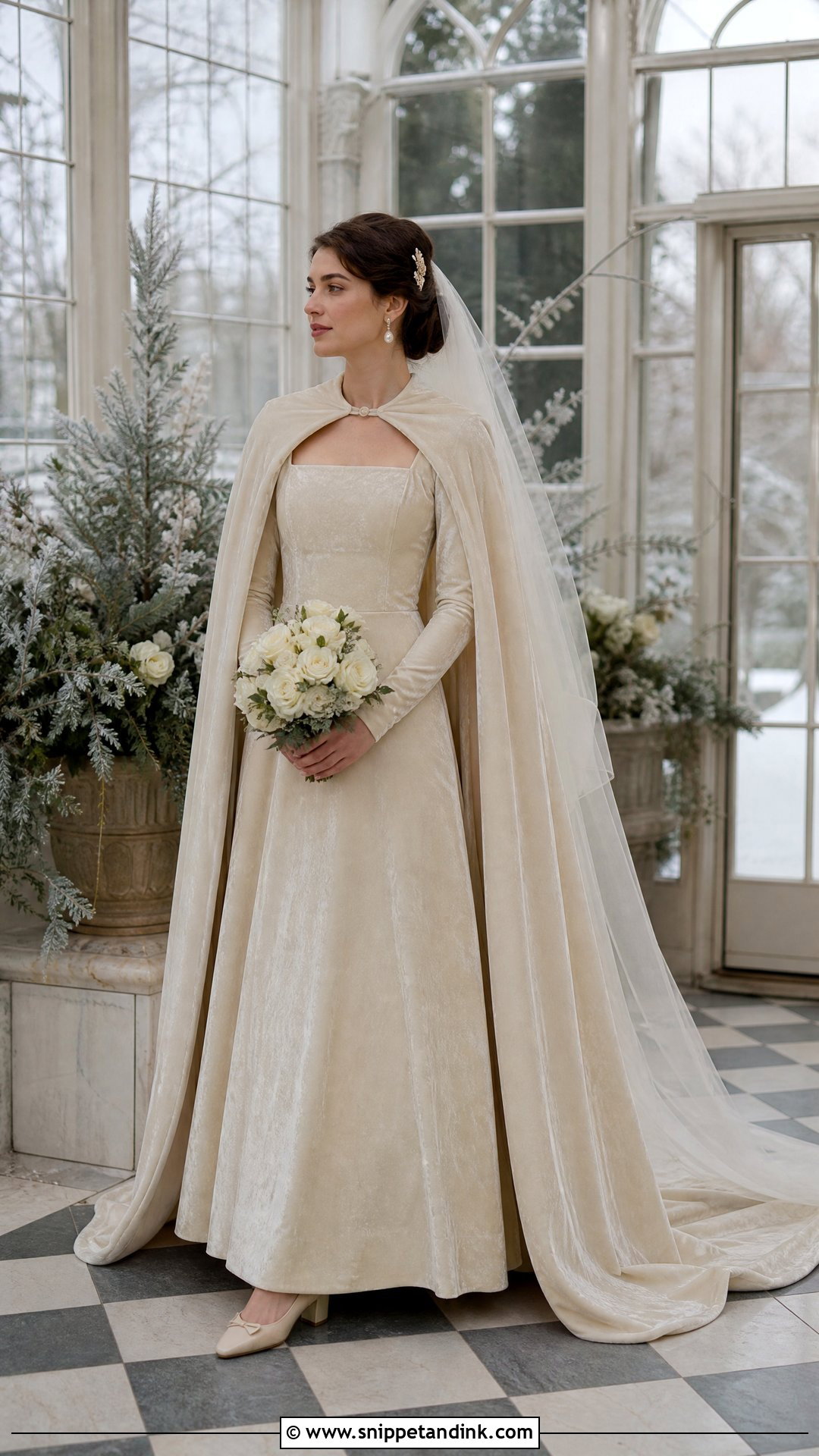
Velvet suits a cold-season wedding because it is warm and catches light softly. In ivory, cream, pale silver or champagne it still reads as bridal. Velvet crushes, though, and marks are hard to steam out, so I store a velvet gown hanging and never folded, and I warn brides about long car journeys. A softly structured A line with a square neck, fitted sleeves and a moderate train is my preferred shape. Closed-toe heels or ankle boots, a removable cape for outdoor photos and very little beading complete it.
23. Antique Garden Wedding Dress
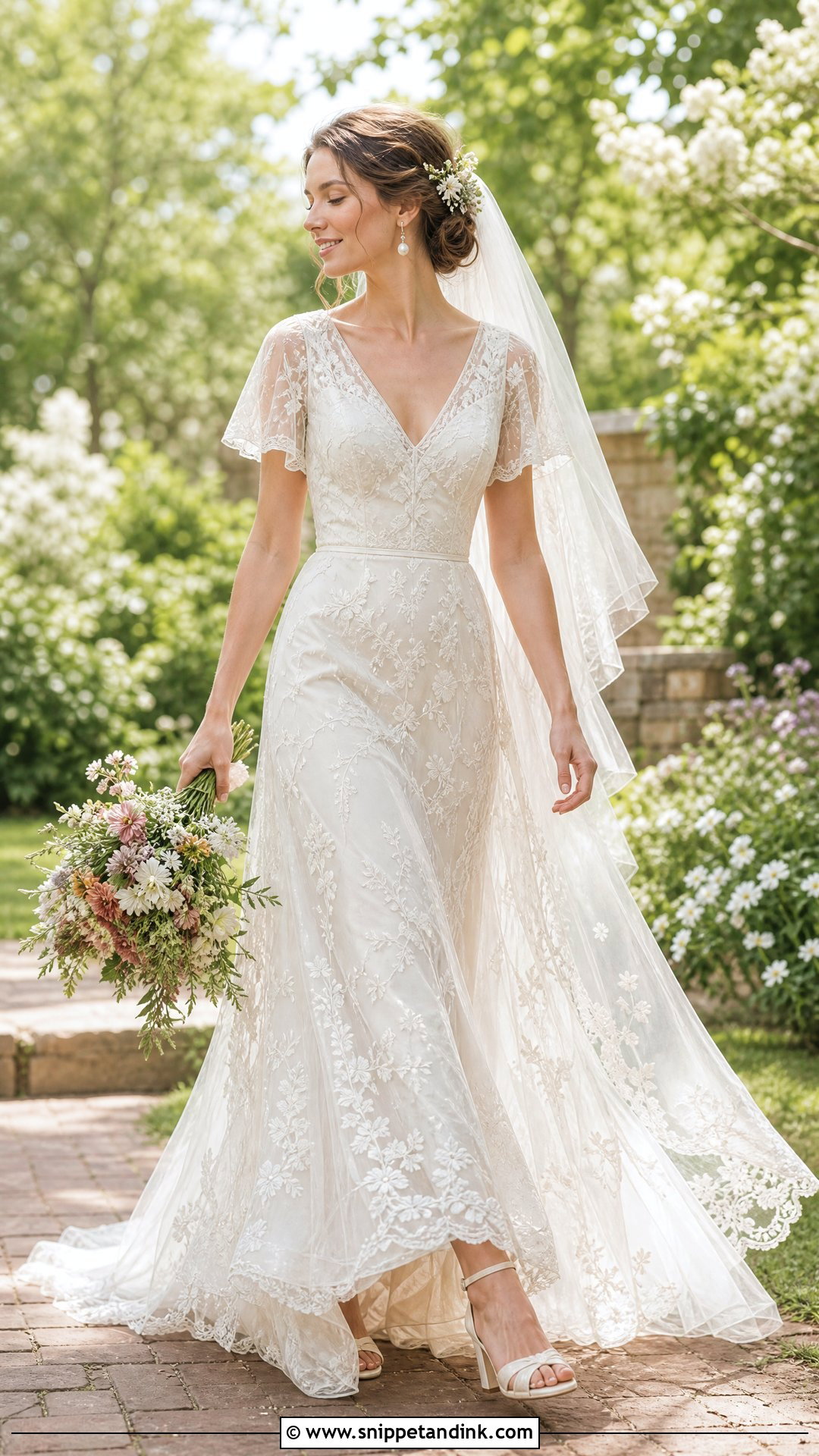
For an outdoor ceremony, ease of movement comes first. A flowing lace or embroidered tulle gown with a fitted waist, flutter sleeves and a short train suits the setting; a long train without a bustle collects grass and soil. Ivory, champagne or muted blush look right outdoors. Choose block heels, flats or bridal boots that will not sink into a lawn, and secure the veil with extra pins or small combs because a breeze will find it. A loose seasonal bouquet with natural greenery finishes the look.
24. Antique Courthouse Wedding Dress
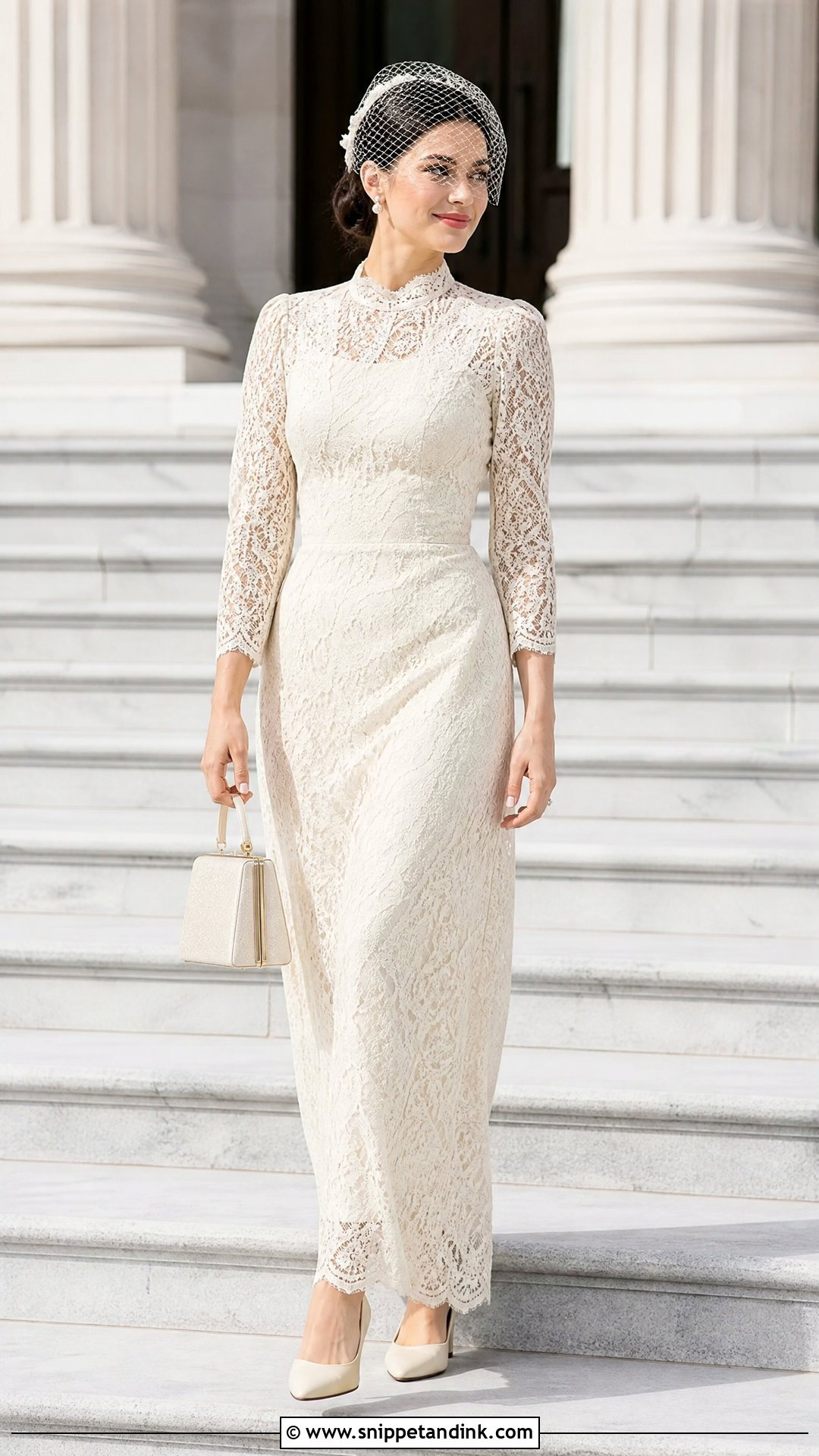
A courthouse wedding needs a dress you can manage in corridors, lifts and cars. A midi or ankle-length lace gown with a high neck, fitted waist and bracelet-length sleeves keeps the antique feel without any train. Ivory pumps or Mary Janes, pearl earrings and a small structured handbag are practical choices. Swap a long veil for a birdcage veil, lace headband or floral comb. In cooler weather I add a tailored cream coat, which also looks good in the steps-of-the-building photo.
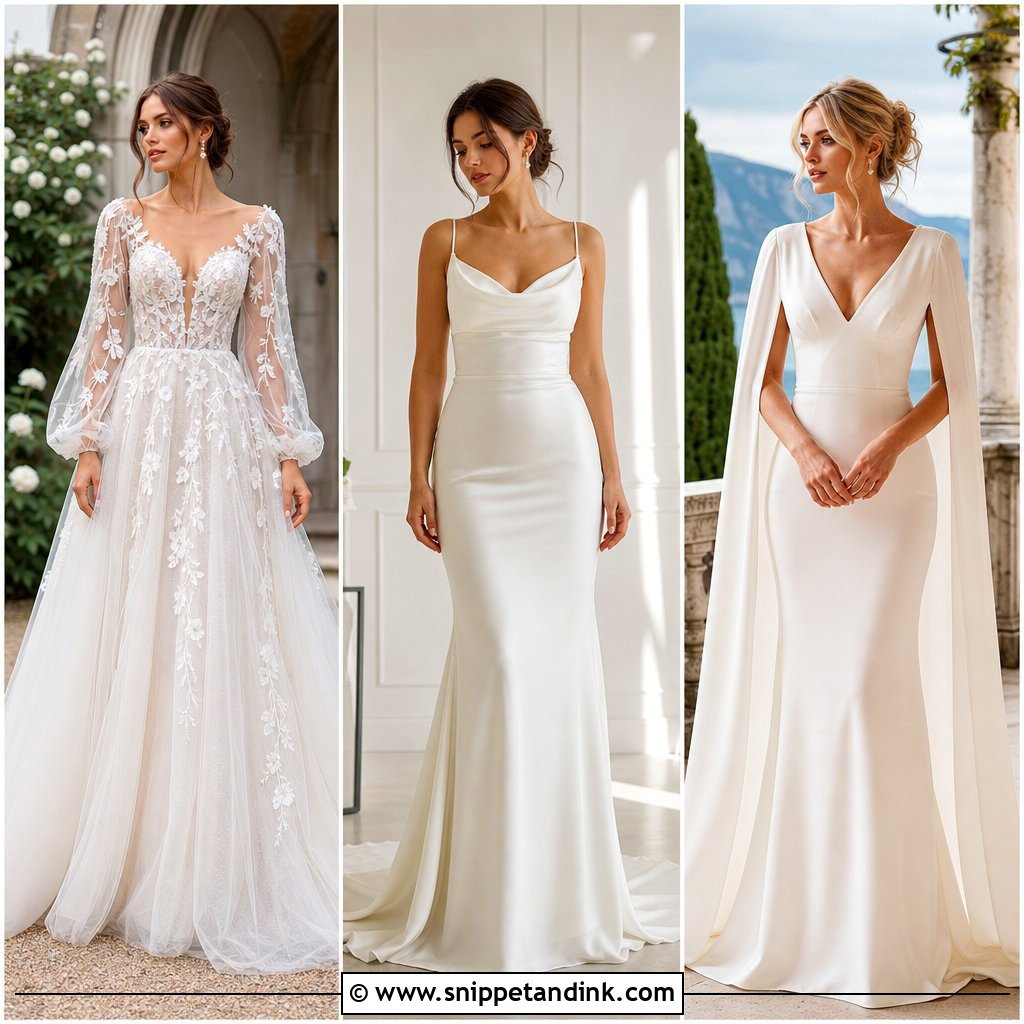
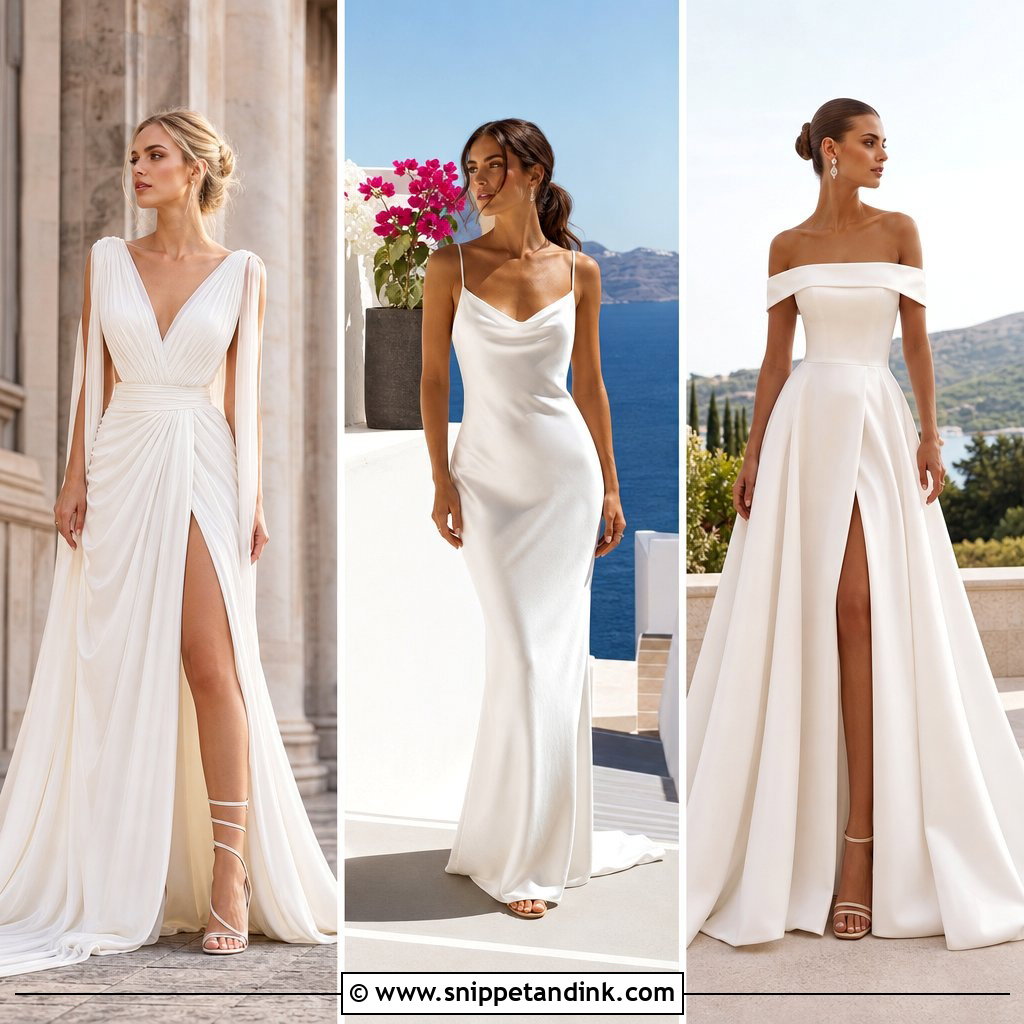
25. Antique Bridal Gown With Cathedral Veil
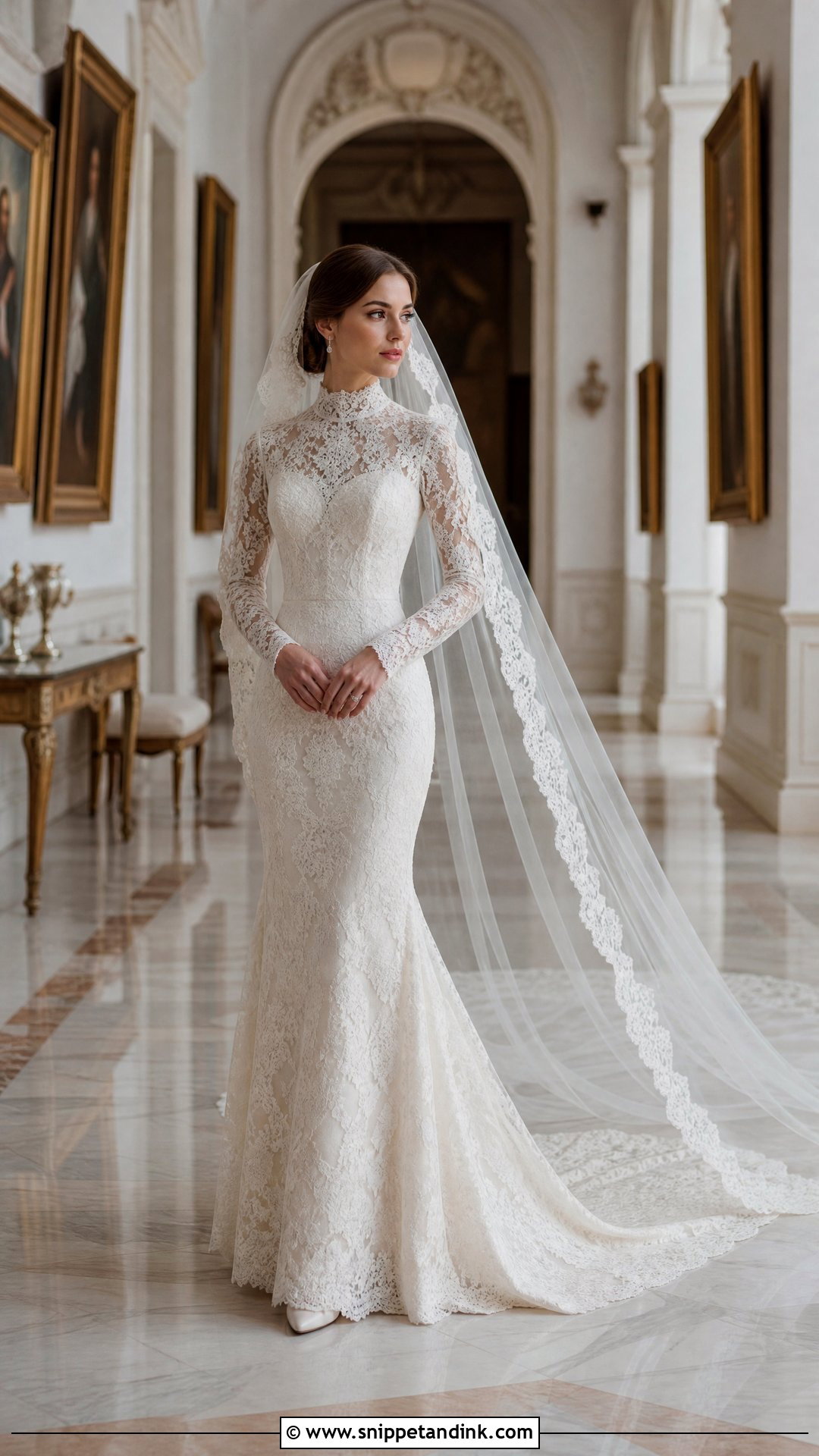
A cathedral veil makes a statement, so the gown under it should be controlled: fitted lace or silk, a high neckline, long sleeves, covered buttons and a manageable train. Choose a sheer veil with narrow lace edging or a few placed motifs that echo the dress rather than repeat it. Secure it into a low bun with combs set firmly, since a long veil has real weight and can pull back on the head. I always view dress and veil together from front, back and side at the final fitting, checking that both share the same shade of ivory.
Keeping One Era in Charge of the Whole Outfit
The quickest way to look like a costume is mixing decades: a flapper headband with a Victorian collar, or Regency flats under a 1950s petticoat. I pick the era of the dress first, then let it decide everything else. A rough guide I use with clients:
- Victorian: high necks, long sleeves, button boots, a low chignon, pearls and lockets. Keep makeup soft and matte.
- Edwardian: soft lace, a loose updo with volume at the front, delicate earrings, Mary Janes or low pumps.
- Regency: empire waists, short sleeves, ballet flats, ribbon in braided hair, very little jewelry.
- 1920s: drop waists, beading, T-straps, long earrings, a Juliet cap or headband, sleek waves or a faux bob.
Hair is where eras clash most often, so take a photo of the dress to your hair trial. One modern touch, such as your own makeup style, is fine and keeps the look from feeling staged. Two or three modern elements next to period ones and the eye stops reading any era at all.
Where History Ends and Your Own Taste Begins
A period-inspired outfit works when the history is a starting point and the fit, comfort and meaning are yours. High collars, lace sleeves, corset seams, drop waists, embroidered flowers and long veils can each set a mood, but they do not all belong in one outfit. Pick one strong feature, then support it with walkable shoes, restrained jewelry, a hairstyle that suits the neckline and a bouquet sized to the dress. If you are wearing an original textile, get professional advice before cleaning or altering it. Whether you lean toward relaxed Edwardian tea gowns or full Victorian drama, the aim is a dress that feels romantic and wearable rather than theatrical.
You'll Like These Ideas:



Leave a Reply