
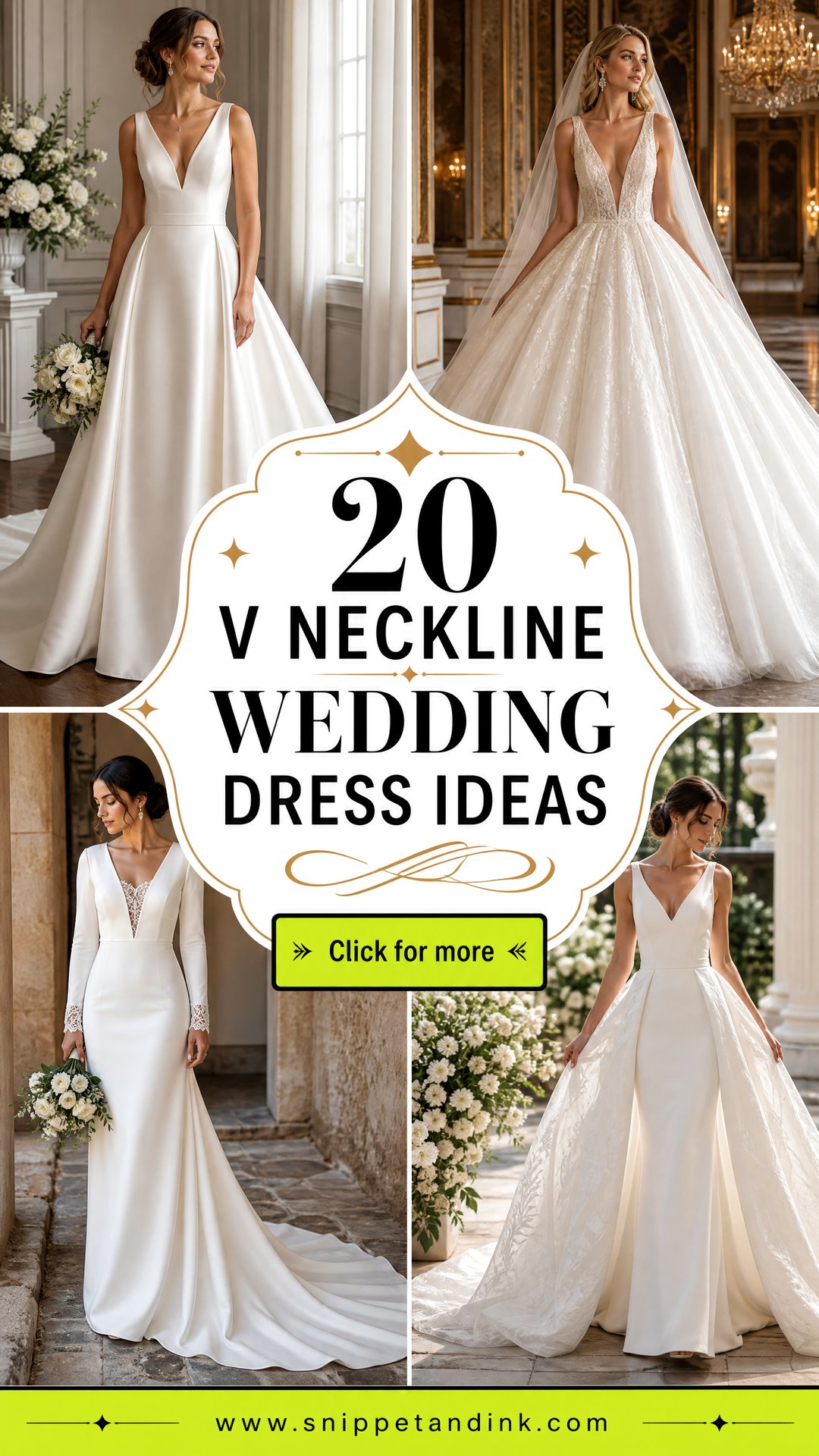
Few necklines move between styles as easily as a V. It sits on clean satin ball gowns, airy chiffon, fitted crepe, romantic lace and even short bridal minis. It can be shallow and understated, or dramatically plunged with an illusion insert for extra security, and it pairs with sleeves, straps, open backs, overskirts and nearly any skirt shape. That range is the reason I keep coming back to it with brides who are undecided. Below are twenty dresses, each styled head to toe, with notes on support, movement and how it behaves at the venue and in photographs.
Reading Your Shoulders and Neck Before Picking a V
When a bride tries her first V, I look at her shoulders before I look at the dress. Where the straps sit, and how wide the V opens at the top, changes the whole balance of the upper body. A V that starts close to the neck makes shoulders look wider. One that starts further out toward the shoulder narrows them visually and shows more collarbone.
What usually works
- Broad or square shoulders: a narrower V with straps set slightly inward, or a softer fabric like chiffon, keeps the top from looking boxy.
- Narrow or sloping shoulders: a wider V with straps set further out helps, and wider straps are less likely to slide off.
- Shorter neck: a deeper, narrower V adds length; skip a choker-style necklace, which shortens it again.
- Long neck: almost any V works, and a shallower or wider one keeps the neck from looking overly long in close-ups.
Bust size matters too, but mostly for support rather than look. A fuller bust spreads the edges of a V, so a narrower opening with built-in cups tends to sit cleaner than a wide one. A smaller bust can take a wider or deeper V with very little help.
1. Satin V-Neck A-Line Wedding Dress
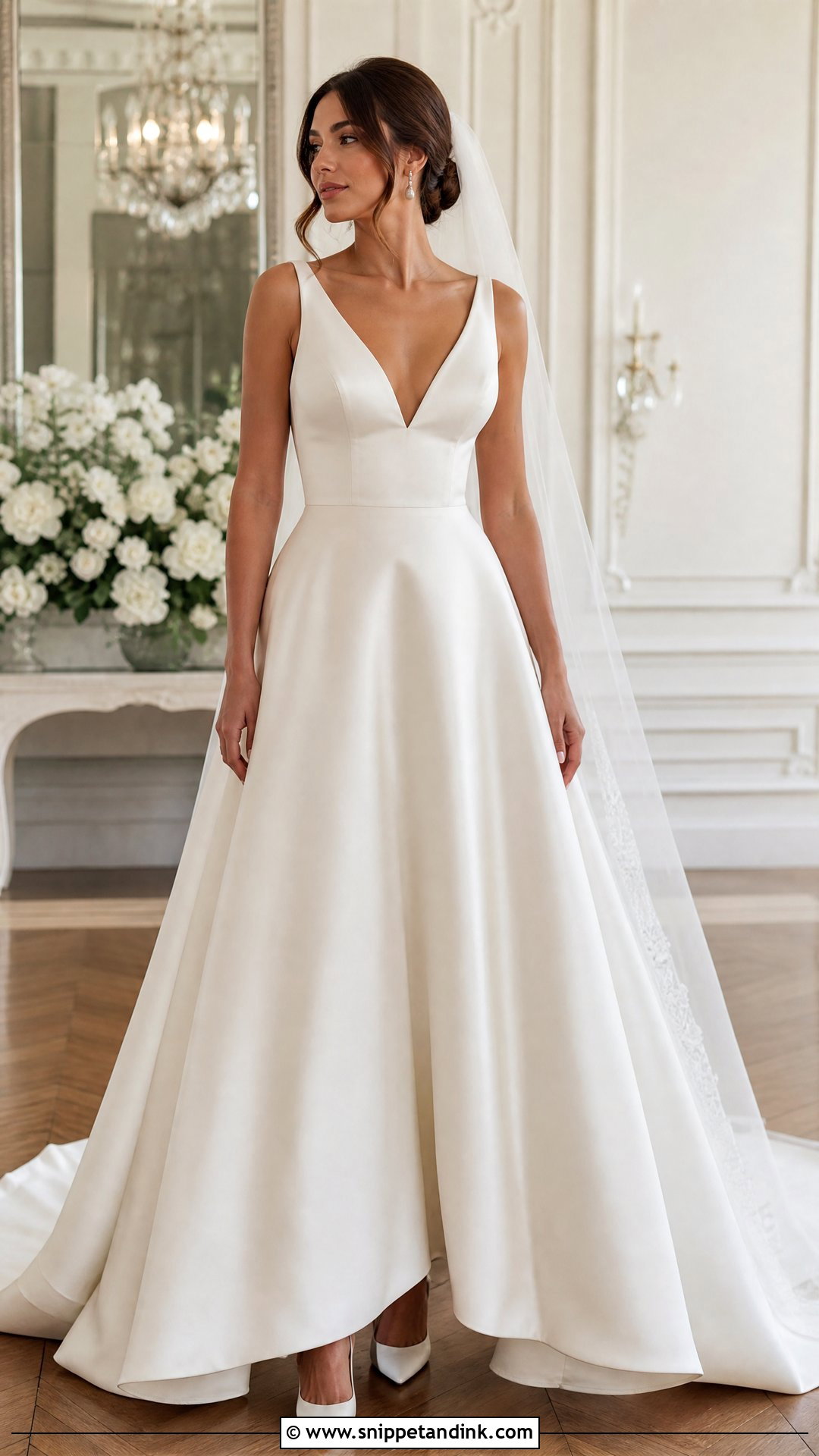
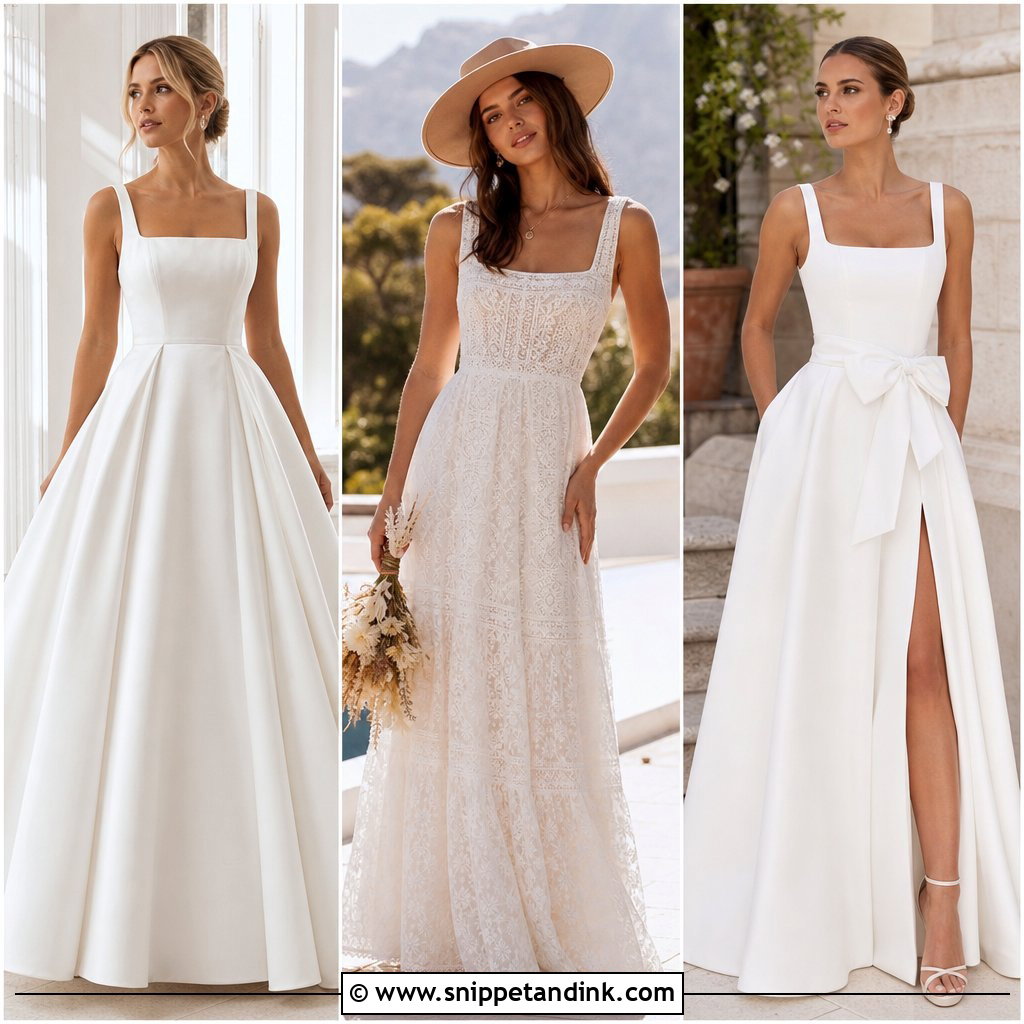
Satin gives the edge of a V a crisp line that lace never quite does. Wide straps, a fitted waist and an A-line skirt that glides over the hips keep it polished, and soft pleats at the waist add movement. A medium V gives more coverage than a plunge and still looks defined. One thing I watch on satin A-lines is the pleat placement: pleats that start too far out from the center make the hips look wider than they are. Pearl drops, pointed ivory pumps, a cathedral veil and a small structured bag for the reception suit it, with a low bun. Ballrooms and hotels suit it.
2. Lace V-Neck A-Line Wedding Dress
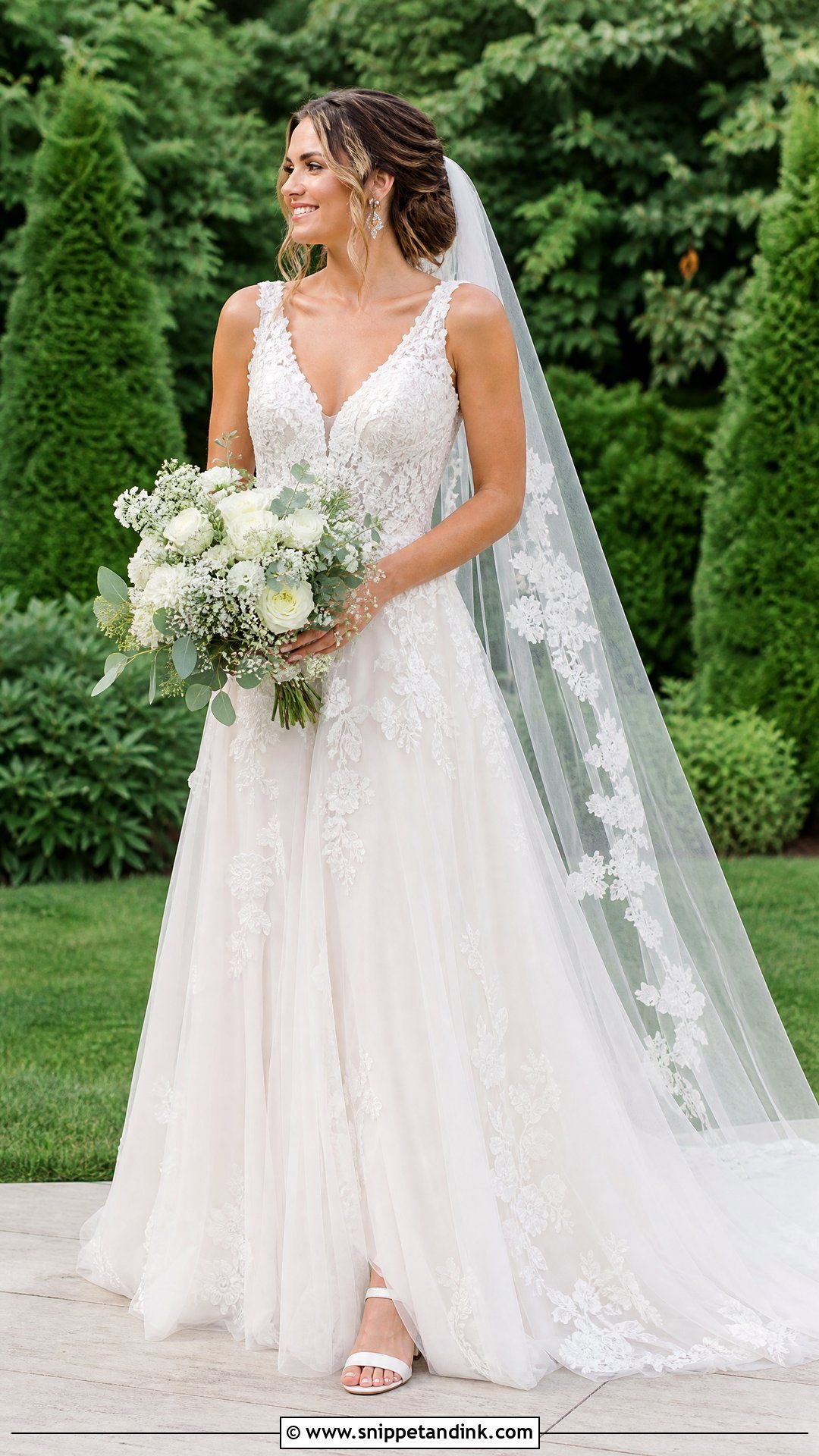
Lace appliqués that trace the edge of the V and carry on across the bodice look far better than lace that stops dead at the waist. A light tulle skirt keeps the focus up top. Choose a nude lining to make the pattern stand out or an ivory one for a softer effect. Appliqués at the neckline sometimes curl at the edges after wear, so I check that each one is stitched flat all the way round. A lace-trimmed fingertip veil, small crystal earrings and block-heel sandals suit a loose chignon or half-up style, with an airy white bouquet.
3. Deep V-Neck Ball Gown Wedding Dress
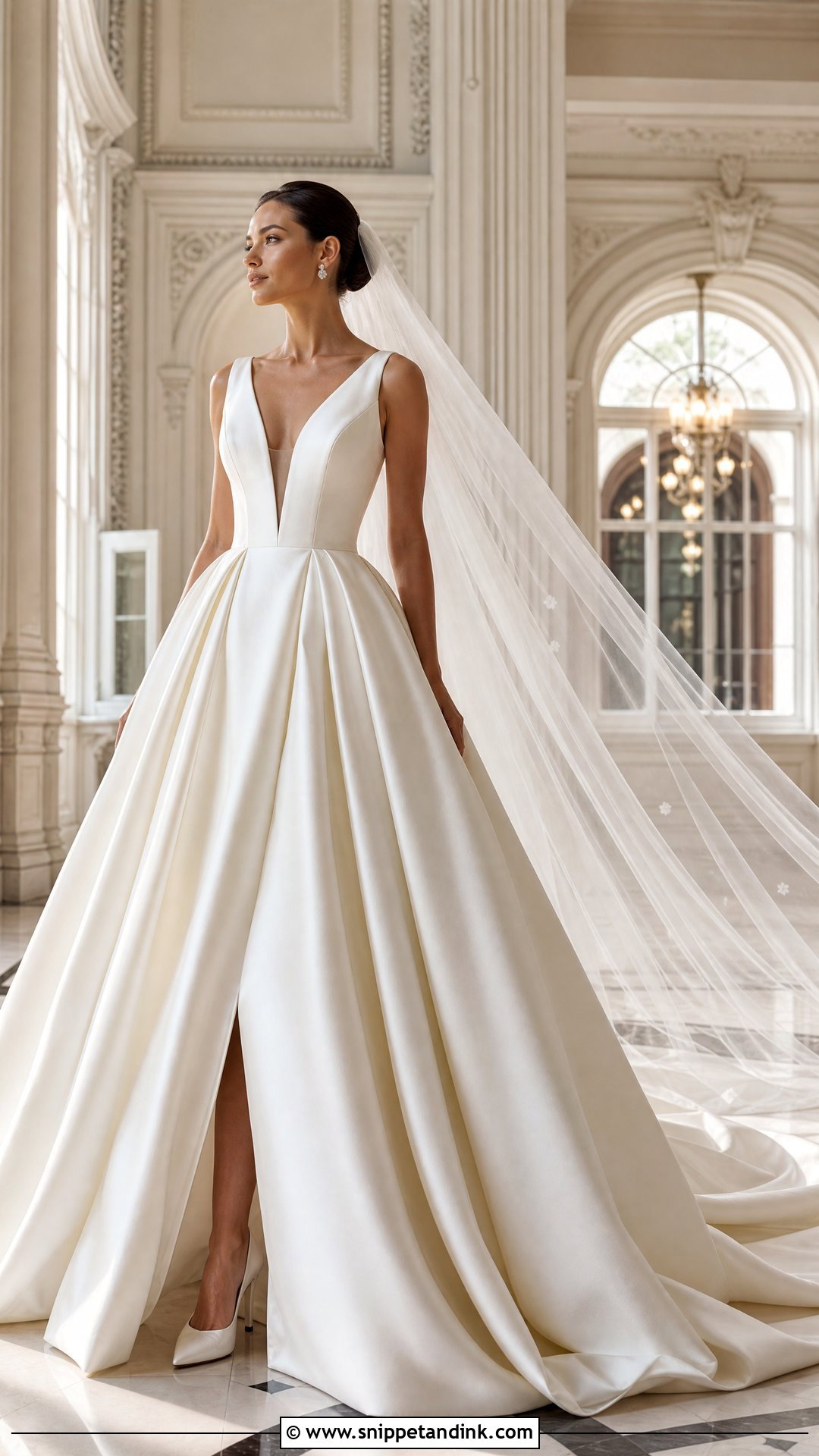
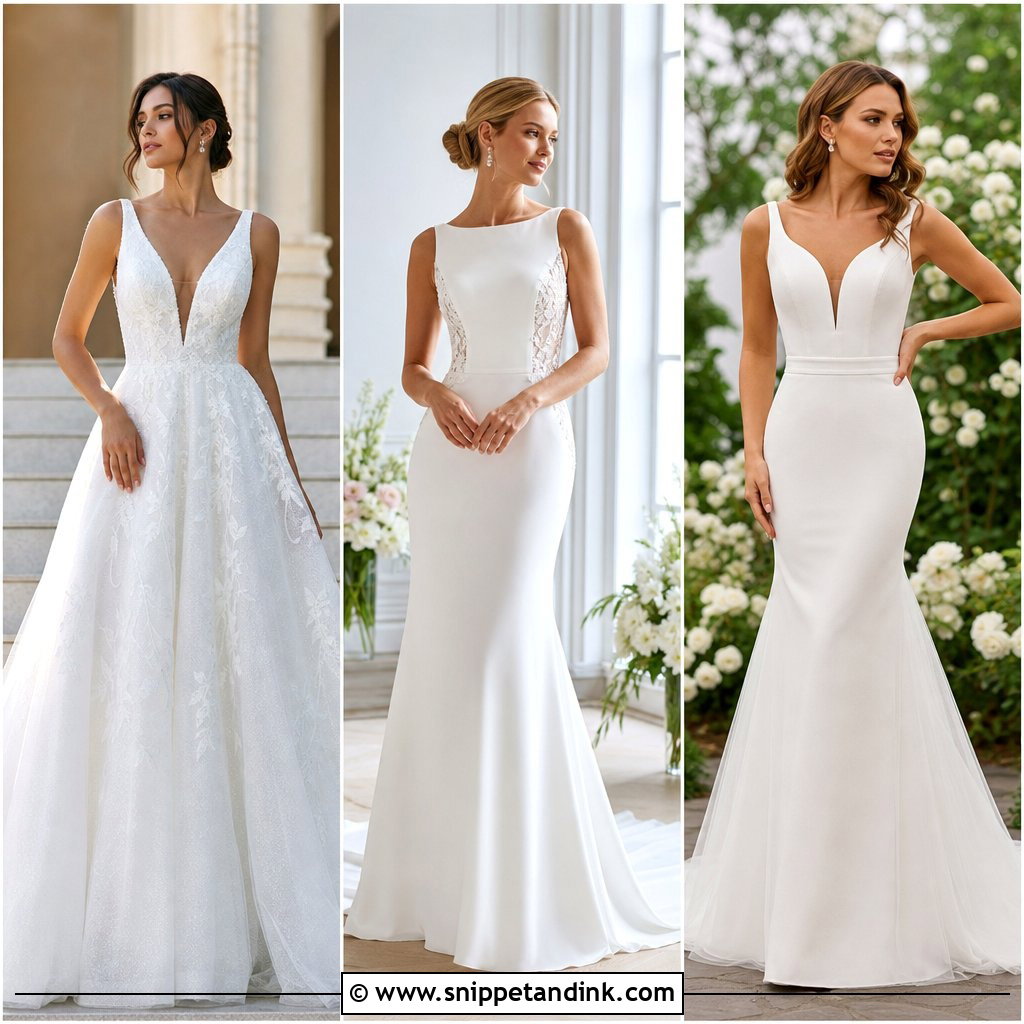
A deep V-neck ball gown puts a modern neckline on a traditional shape, and the contrast is the whole point. An illusion tulle insert keeps the plunge stable. Satin or mikado gives the skirt architectural volume, and a long train makes it formal. Talk to the seamstress about cups, boning, strap placement and mesh in a shade close to your skin; on a skirt this heavy, the bodice has real work to do. Sparkling studs, a sleek bun, a simple cathedral veil and pointed pumps under the skirt finish it. No necklace.
4. Long Sleeve V-Neck Wedding Dress
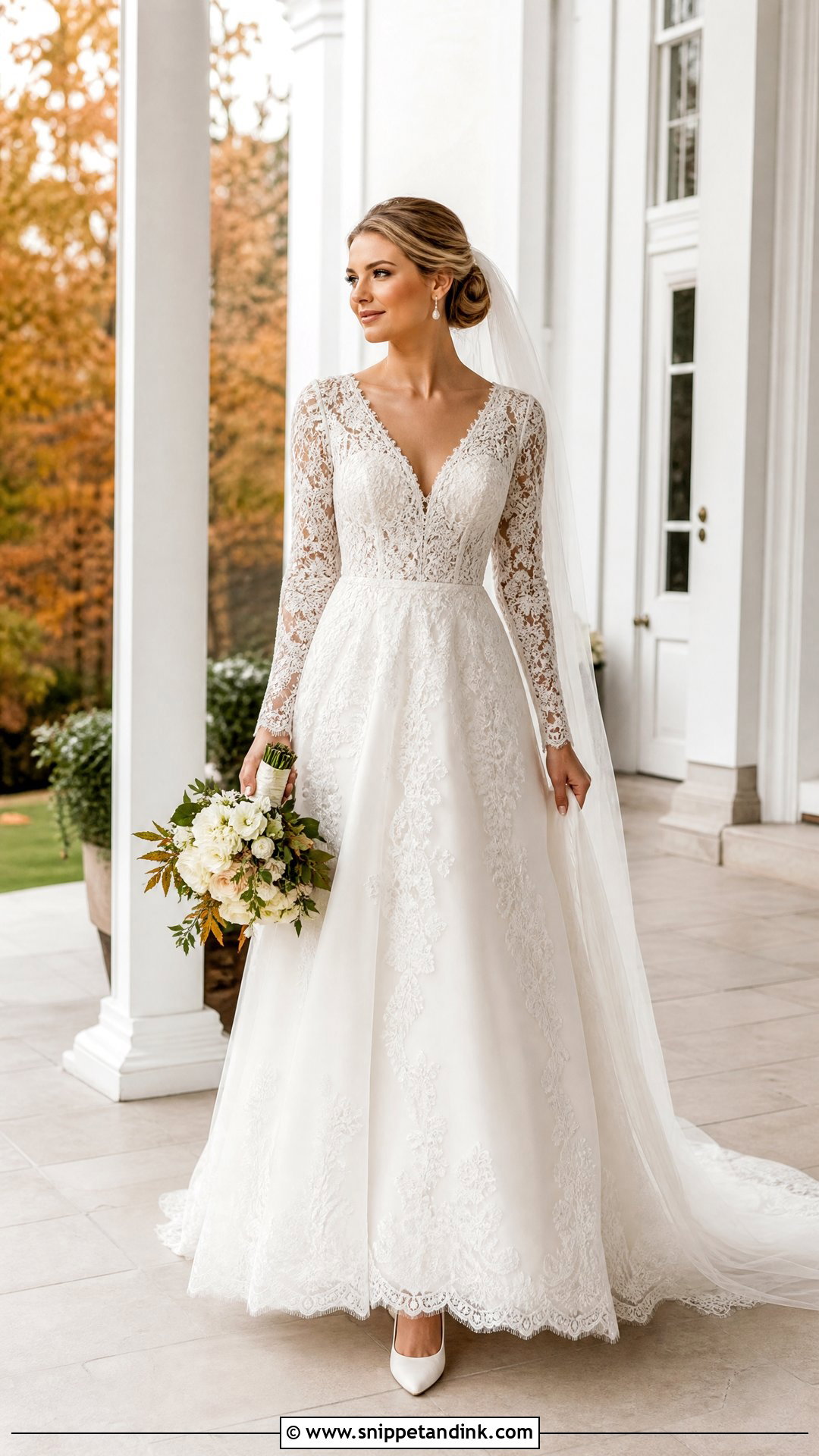
Long sleeves cover the arms while the V keeps the face open, which is why this pairing works so well from fall into winter. Fitted lace sleeves look romantic; crepe sleeves look cleaner. A moderate V over a fitted bodice and an A-line or gently flared skirt is easy to move in. I always ask brides to hug me at the fitting, because a tight sleeve shows up the moment you reach around someone. Closed pumps, pearl earrings, a chapel veil and a low twisted bun suit it, with a removable ivory cape for outdoor photos.
5. Boho V-Neck Wedding Dress With Flutter Sleeves
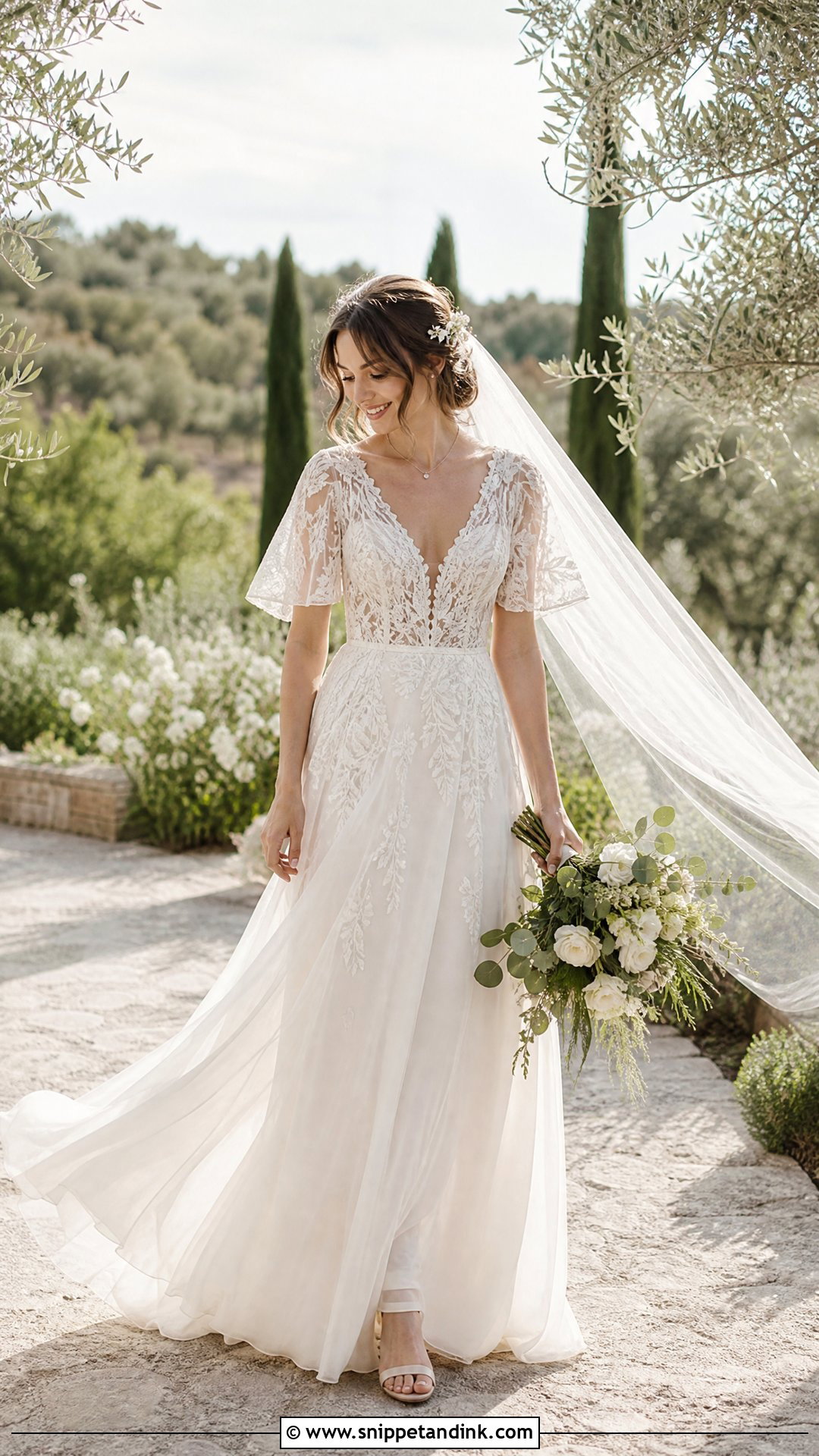
Flutter sleeves belong outdoors, where the fabric can actually move. Lightweight chiffon, soft tulle or botanical lace over a flowing A-line suits gardens and vineyards, and the sleeves should float rather than sit heavy on the shoulder. Keep the V shallow or medium; with no structure in the bodice, a deep V tends to drift. An open back adds a quiet detail. Low block-heel sandals, floral hair pins and a simple fingertip veil go with a loose bouquet of white blooms and greenery. Leave heavy jeweled pieces at home.
6. Crepe V-Neck Fit-and-Flare Wedding Dress
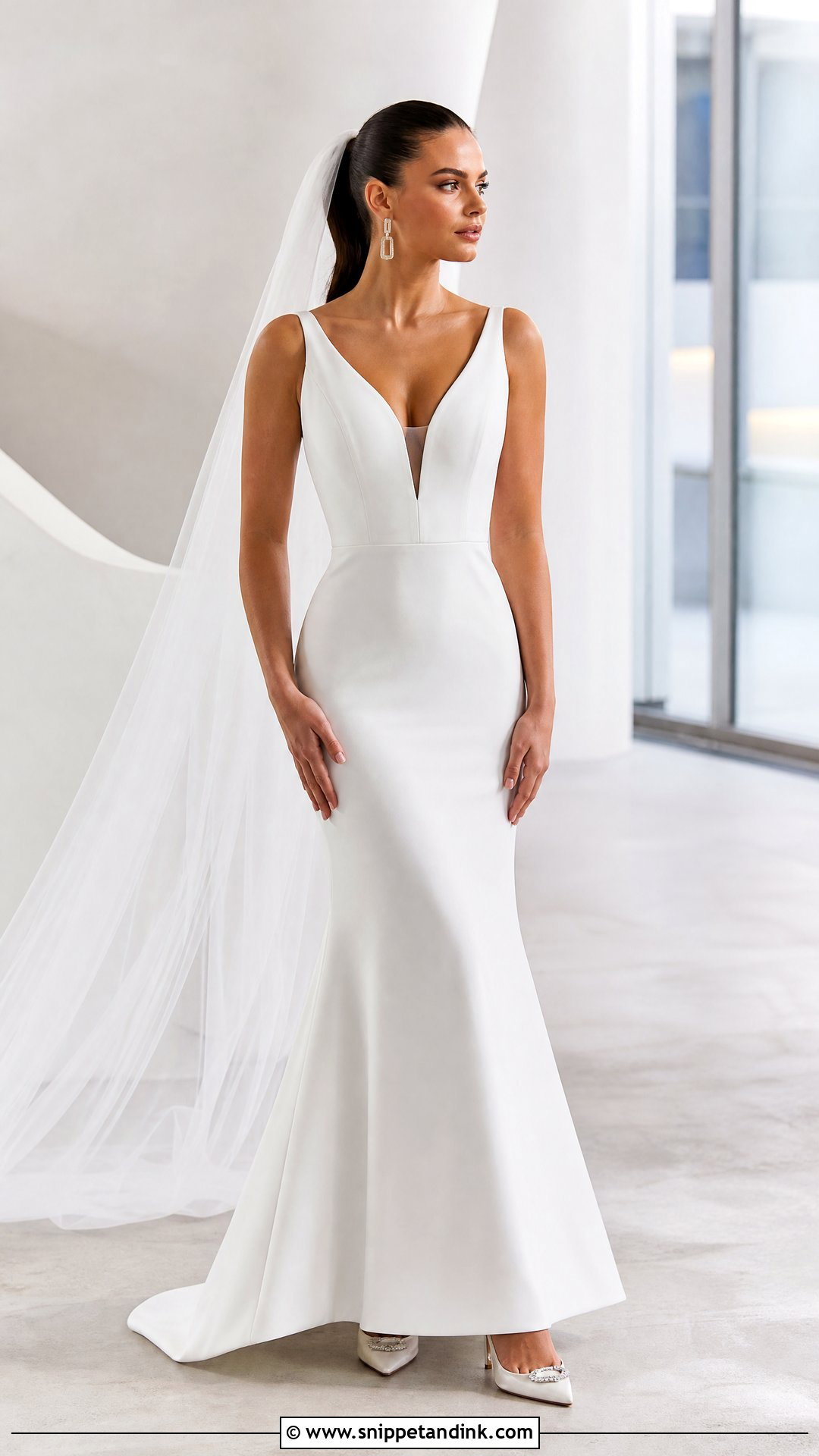
A crepe fit-and-flare relies on its cut. The bodice should skim the torso before the skirt starts to widen around the lower hip or thigh, and wide straps support and balance the fitted shape. A deep V with mesh makes it dramatic; a classic V keeps it understated. Crepe shows every construction line, so wear your intended undergarments to every fitting; I will not sign off a crepe bodice that was fitted over different underwear. Geometric earrings, pointed pumps, a smooth chapel veil and a sleek ponytail suit it, with a single-variety bouquet.
7. V-Neck Mermaid Wedding Dress With Lace
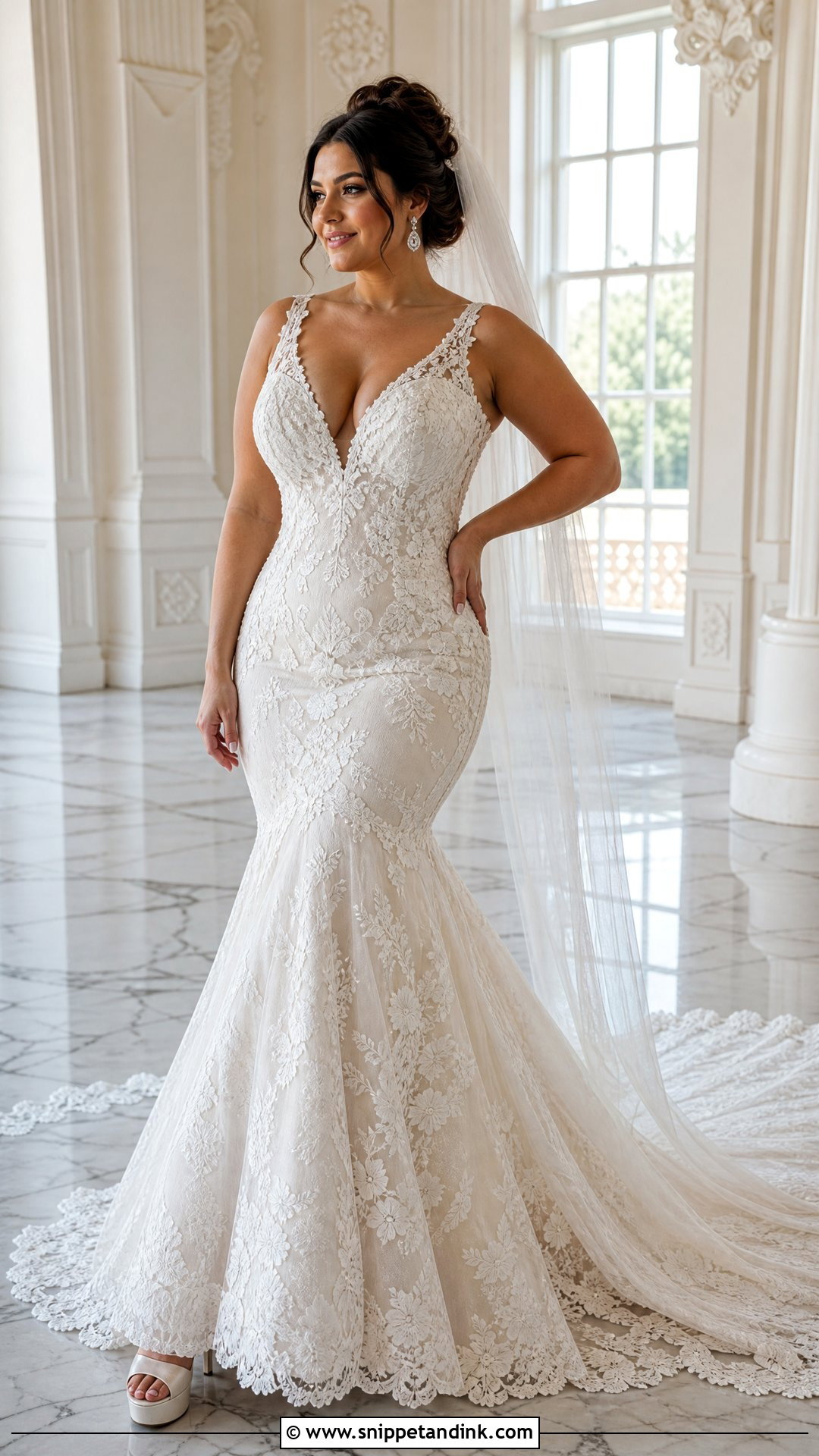
Lace takes the edge off a mermaid. The gown should follow the body through the hips before flaring, and motifs that carry down into the train keep the lace looking continuous. Thin straps feel delicate; wider ones support more. Mermaid skirts vary hugely in how far you can stride, so walk, sit and climb a step at the fitting. Platform sandals hidden under the hem add a little height without pinching. Pair it with a plain single-layer veil, crystal studs and an updo that leaves the neckline and back clear. Leave the necklace out or keep it minimal.
8. Chiffon V-Neck Beach Wedding Dress
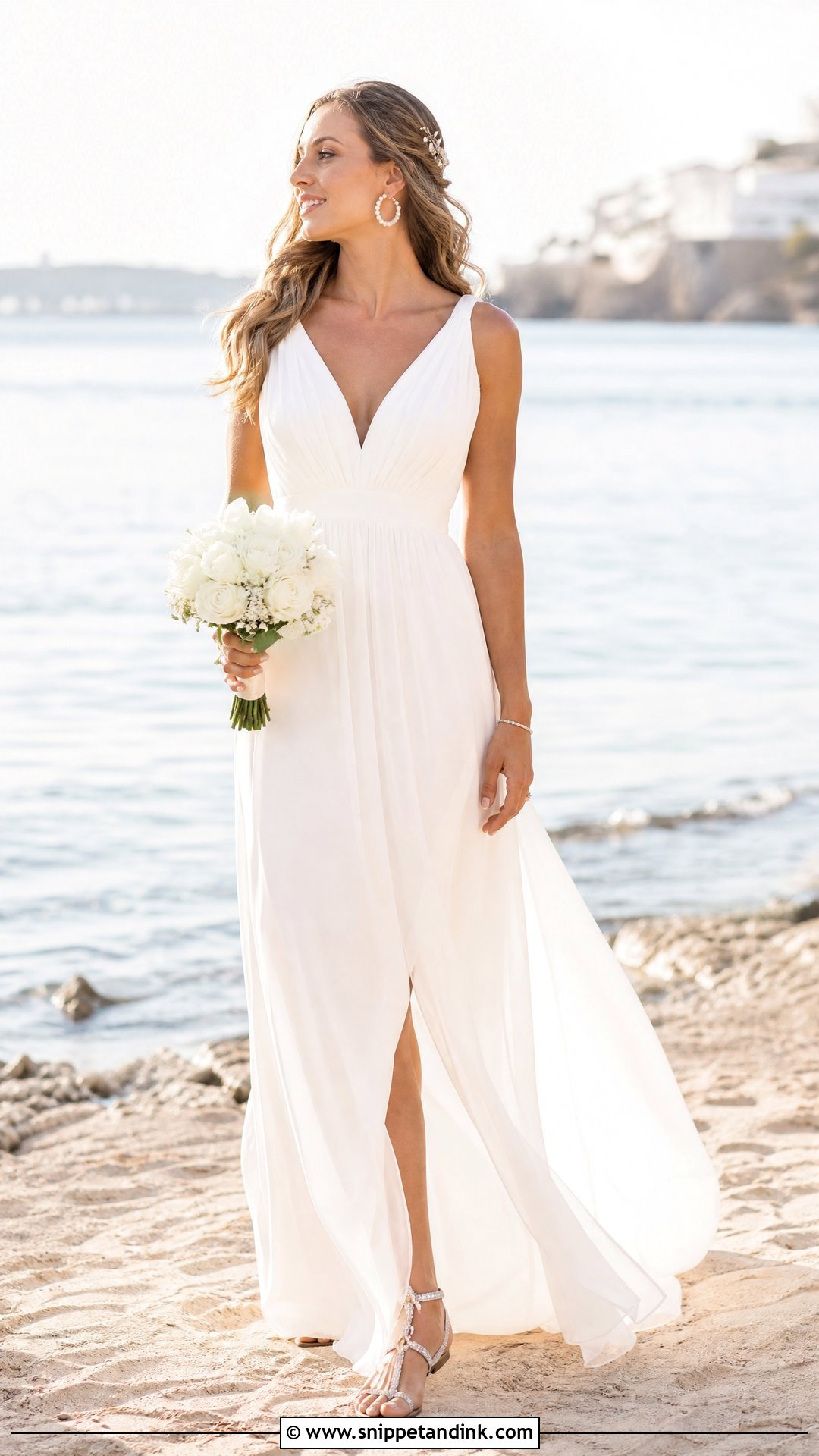
At the beach, simplicity wins. A lined chiffon bodice with supportive straps and a skirt without a long train will not trap sand or heat. A medium V looks relaxed and still shapes the upper body, and you can choose an empire or natural waist depending on where you want definition. Skip heavy underskirts; they feel suffocating in humid sea air. Flat embellished sandals, small pearl hoops and a light veil or delicate comb suit loose waves or a low braided bun, which stands up to wind better than anything intricate. A compact bouquet keeps the bodice visible.
9. Modest V-Neck Wedding Dress With Lace Insert
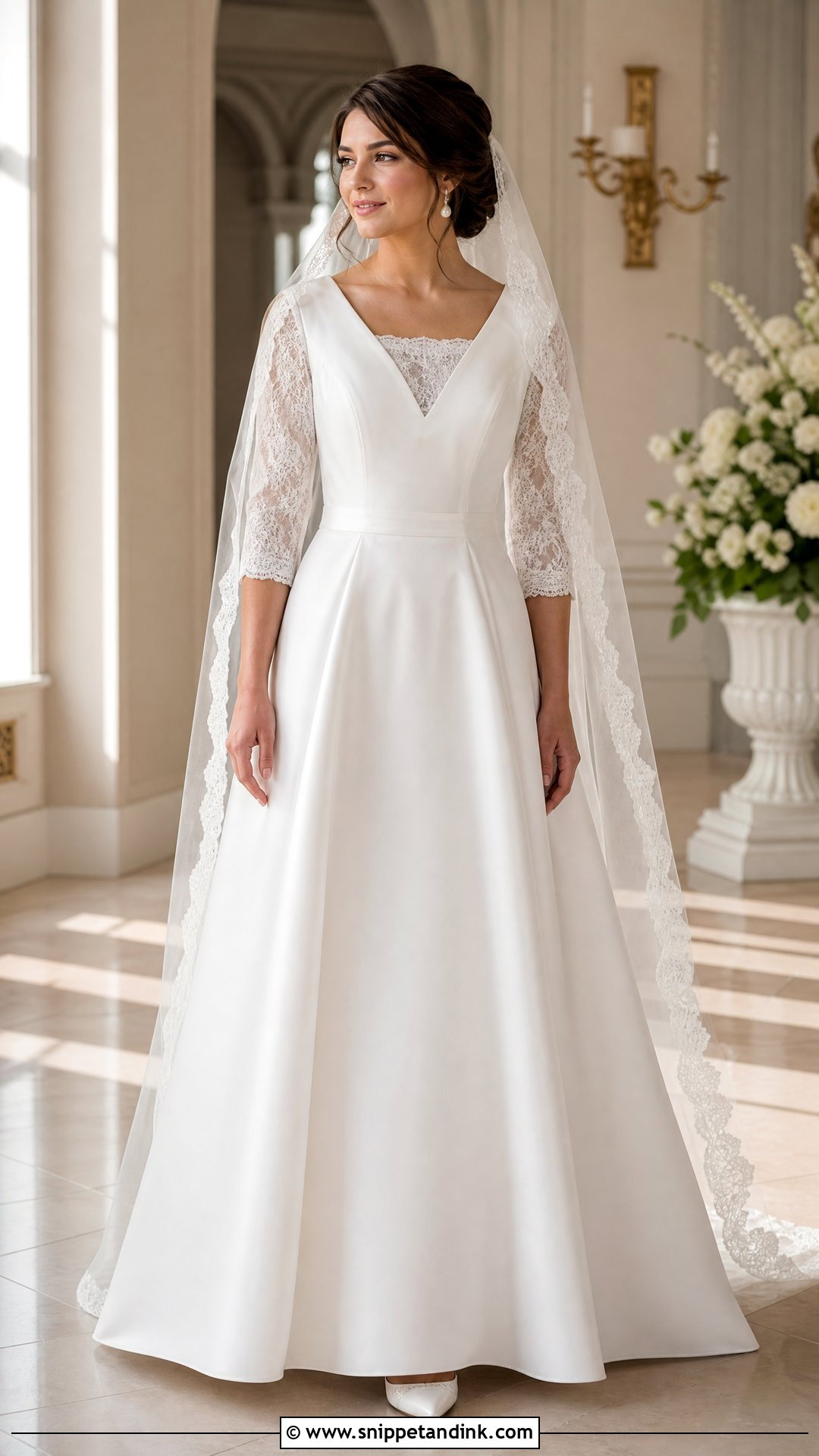
Coverage and a V can coexist. A shallow V, or a deeper cut filled with an opaque or lace insert, keeps the shape of the neckline while closing the gap. Wide straps, short sleeves or three-quarter sleeves balance it, over a satin, chiffon or tulle A-line. If the gown you love is too open, a tailor can add matching appliqué, lined mesh or a modesty panel. Decide early, though: changing a neckline can affect the bodice structure and where the lace falls, and that takes more than one fitting. Pearl earrings, closed heels, a lace-edged chapel veil and a low bun suit it.
10. Beaded V-Neck Wedding Dress With Tulle Skirt
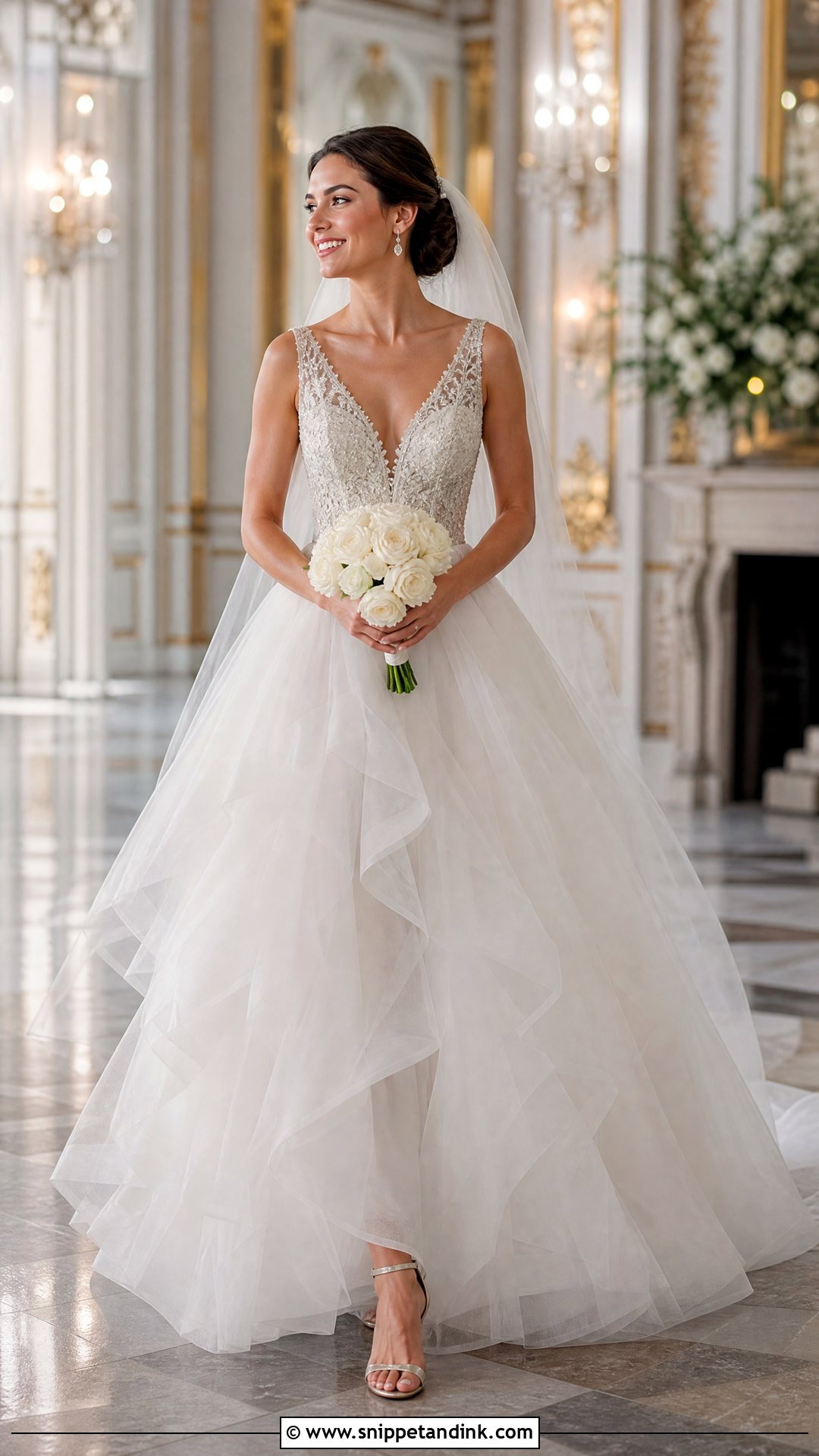
Beading that follows the neckline and fades into layered tulle defines the upper body without weighing down the whole dress. A neutral lining lets crystal, pearl or silver detail show. The underarm is where beading causes trouble: if any beads feel rough at the fitting, ask for soft trim or a lining layer added there, which is a small and common adjustment. Simple drop earrings, metallic ivory sandals and a plain veil that will not snag go with a side-swept updo or smooth low bun. Keep the bouquet compact so the bodice stays visible.
11. V-Neck Wedding Dress With Spaghetti Straps
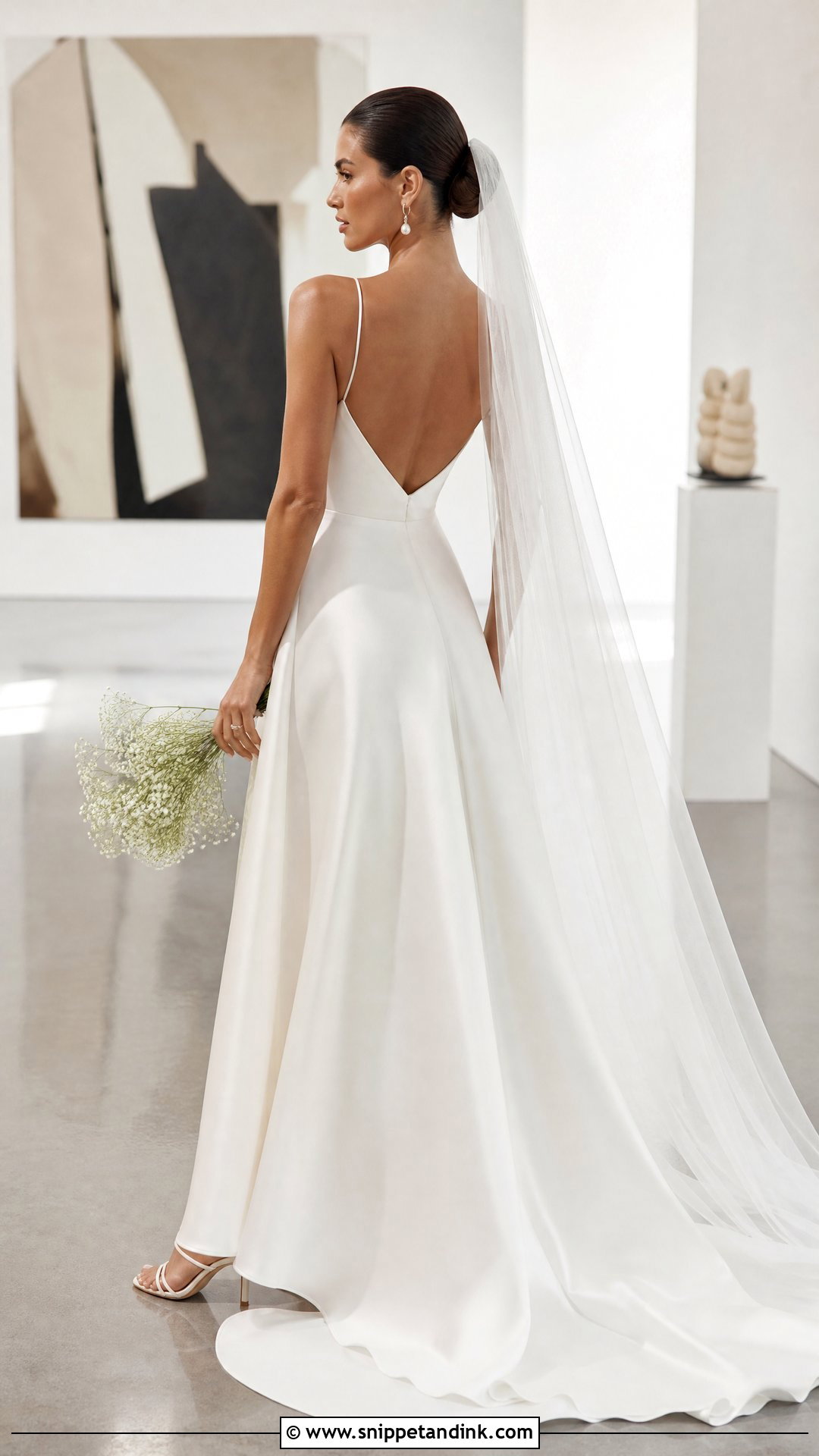
Spaghetti straps suit a satin slip, a chiffon A-line or a soft crepe, and they need a bodice that does the supporting so the straps only guide the neckline. A low back looks sleek; a higher back makes underwear far easier. Ask your tailor to adjust each strap separately, because shoulders are rarely level and an uneven V is noticeable straight on. Built-in cups, hidden boning and mesh can add security without changing the look of delicate spaghetti straps. Pearl drops, strappy ivory heels and a sheer chapel veil suit a smooth bun or loose waves.
12. V-Neck Wedding Dress With Cap Sleeves
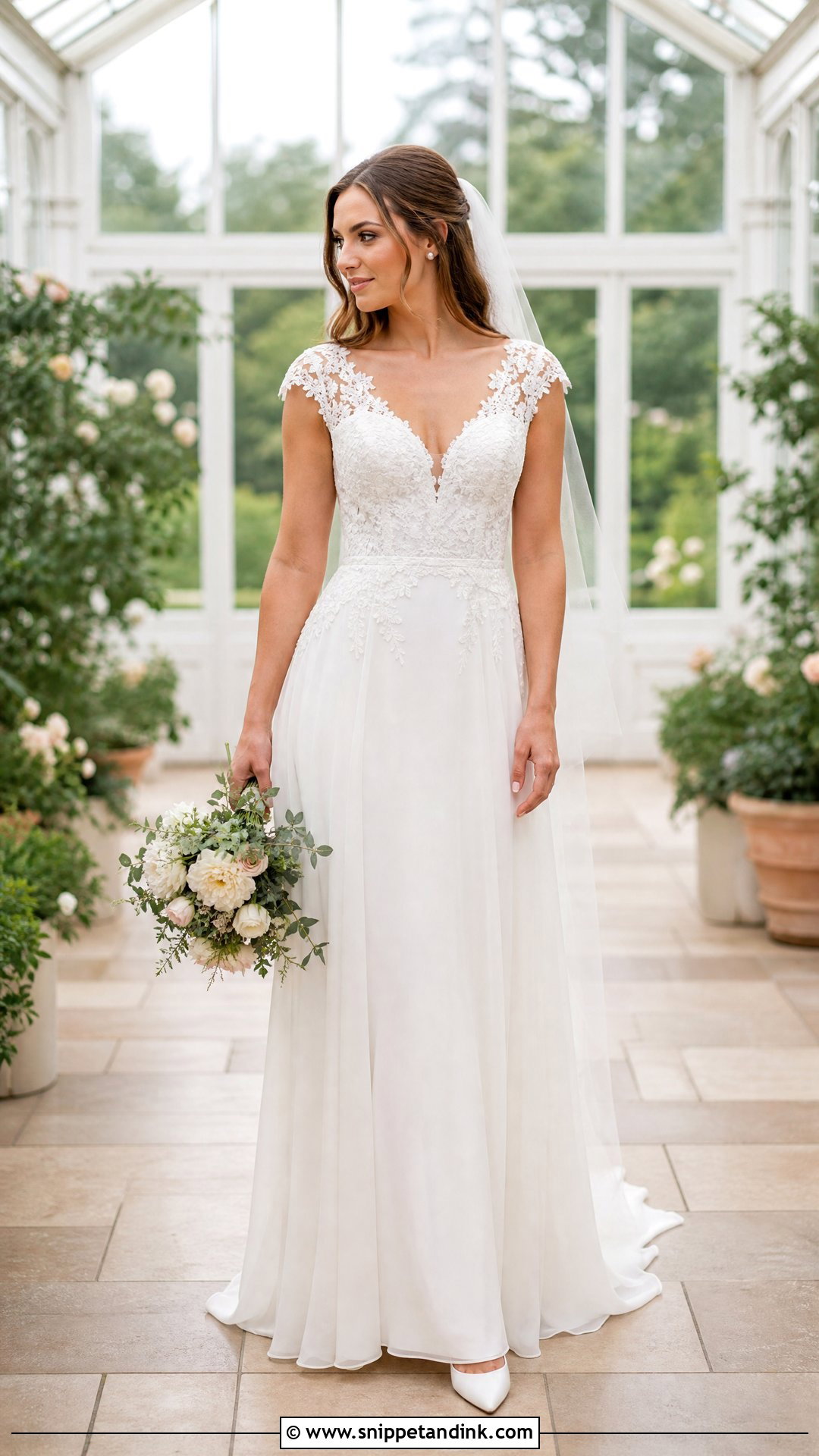
Cap sleeves give a little shoulder coverage and keep the bodice light. Lace caps blending into an appliquéd bodice look the most natural; smooth fabric caps read more minimal. A medium V and natural waist balance the top half, with an A-line for comfort or a fit-and-flare for shape. The sleeves should lie flat with your arms down and not pull the bodice up when you raise them; I test both positions. Pearl studs, pointed ivory heels and a fingertip veil suit a half-up style.
13. Plus-Size V-Neck Wedding Dress With Wide Straps
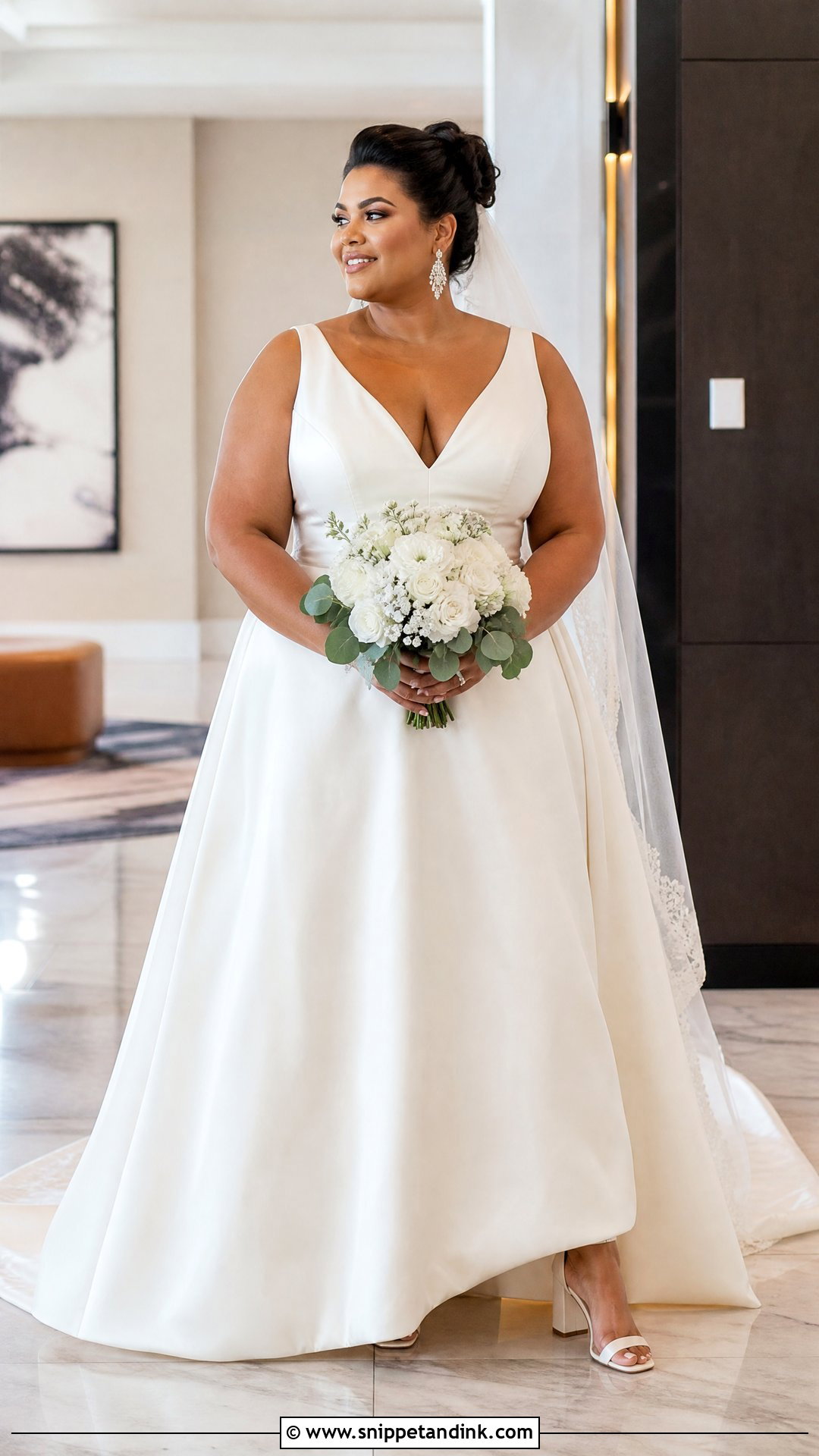
Wide straps on a plus-size V gown do more than support. They frame the neckline and stay put through hours of hugging. I look for quality boning, considered seam placement and cups that suit your proportions rather than a generic shape. An A-line moves easily; a fit-and-flare shows off curves. Satin looks formal, crepe drapes softly and lace adds dimension. Ignore the size on the label and judge how the sample can be altered. The straps should lie flat without slipping off the shoulder, digging in or crowding the neck. Statement earrings, block heels and a chapel veil under an updo finish it.
14. V-Neck Wedding Dress With Open Back
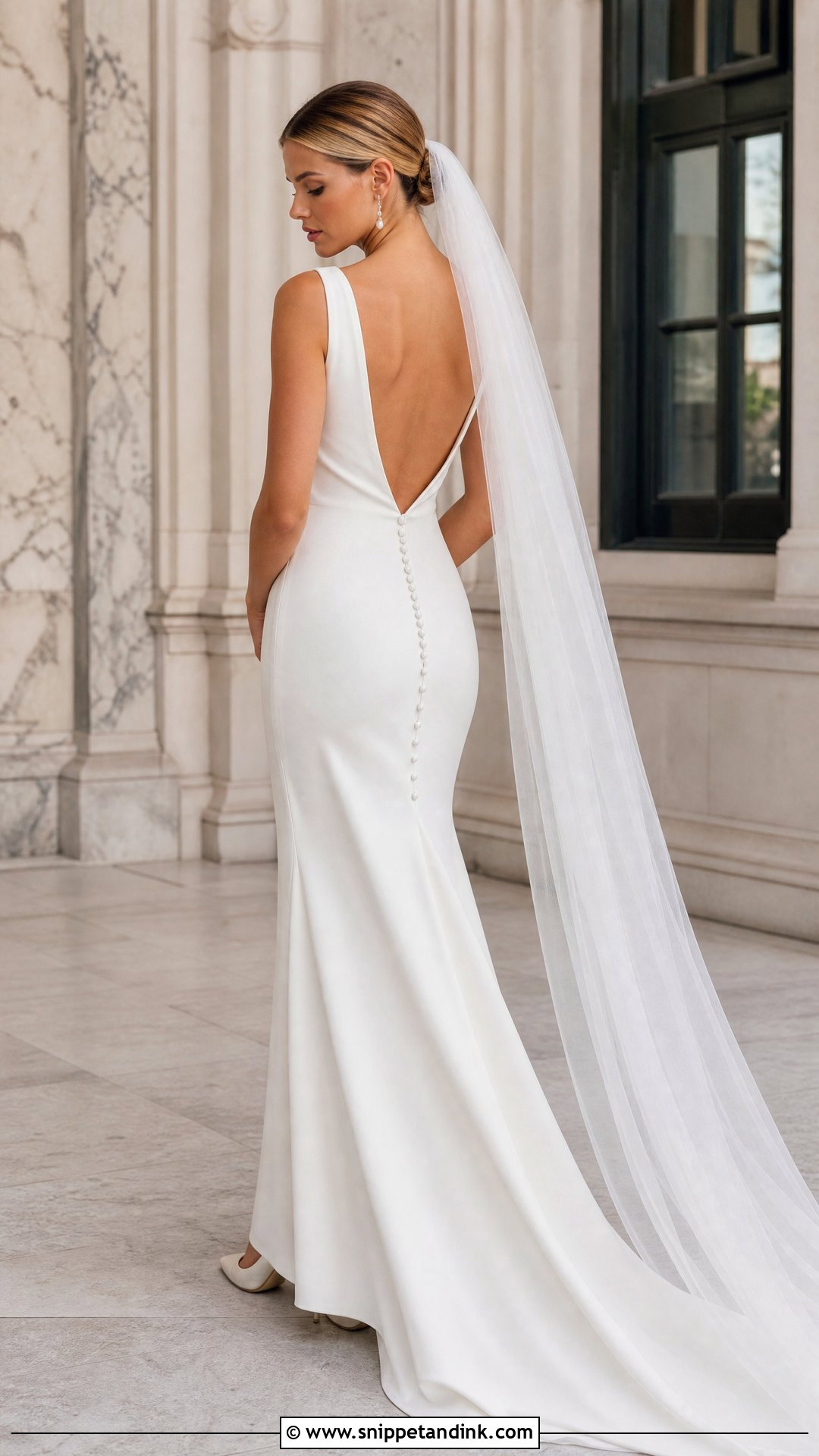
Open the back as well as the front and the bodice loses half its anchor points, so support becomes the main concern. Smooth crepe or satin looks minimal; lace edging softens it. Thin straps look delicate, wide straps steadier. Hidden elastic along the back edge, cups, boning and illusion panels all help, and I test the bodice with the bride leaning forward because that is when an open back lifts away. A low bun or side-swept hair keeps the back on show, with drop earrings, pointed pumps and a veil with a plain sheer center set under the hair.
15. V-Neck Wedding Dress With Detachable Overskirt
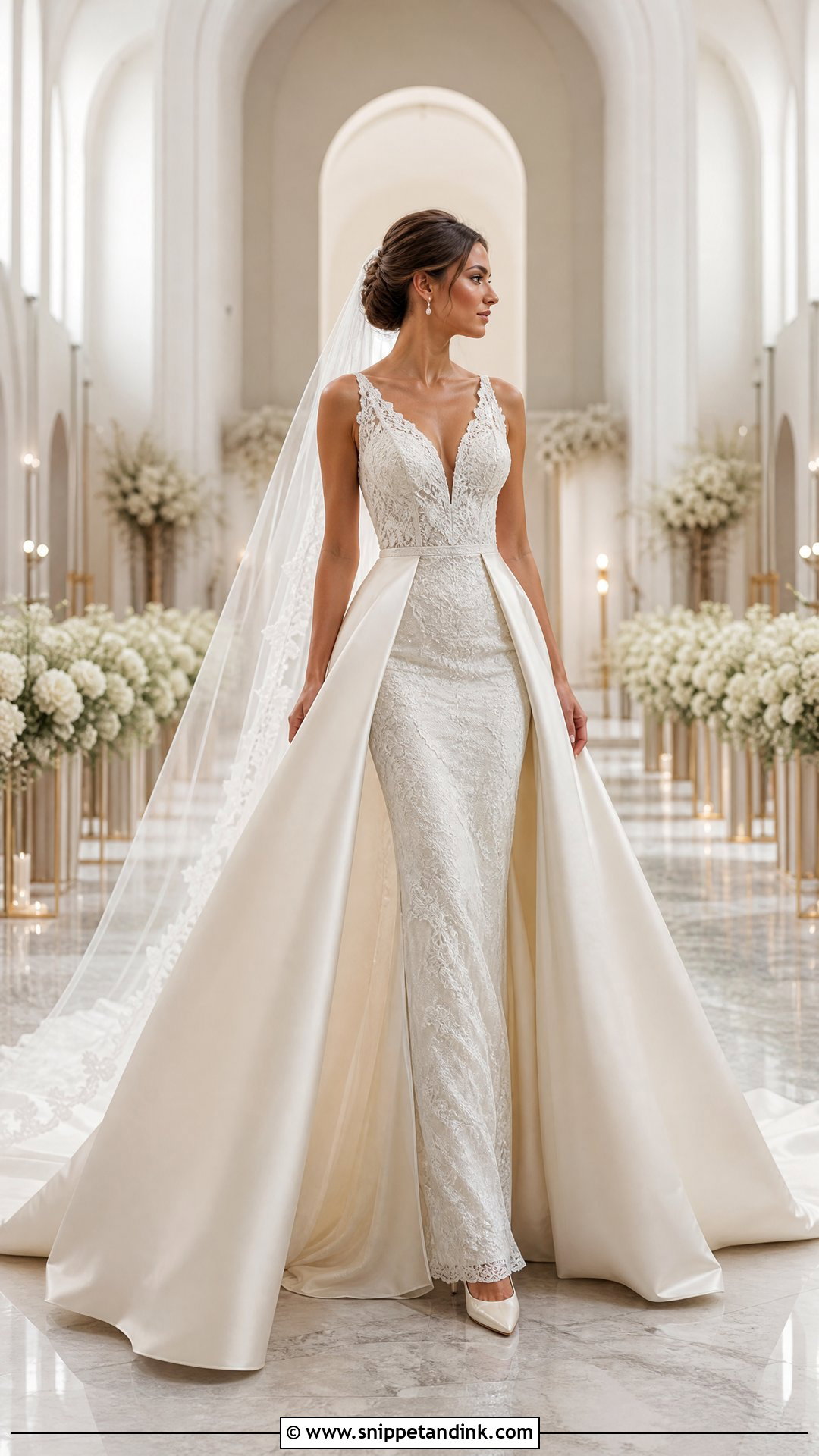
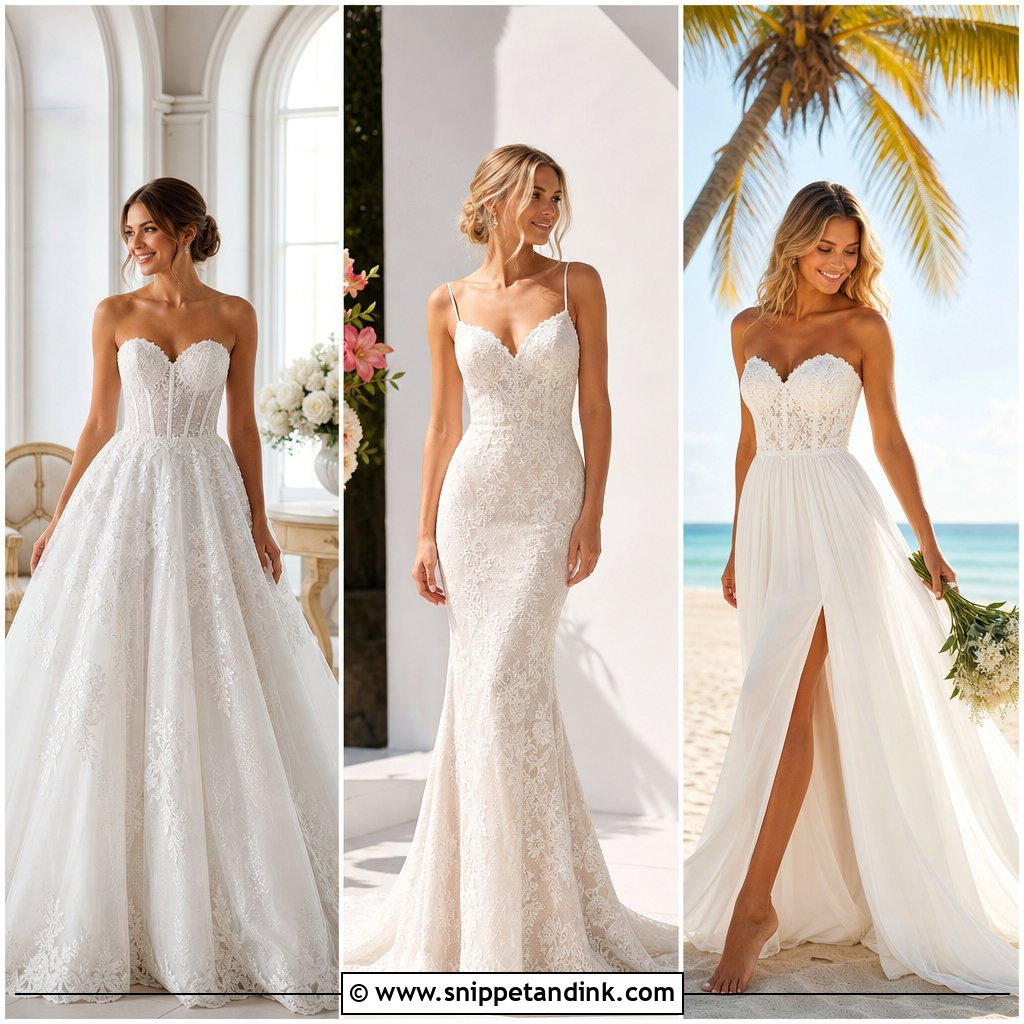
Why choose between a fitted gown and a dramatic skirt? A crepe or lace fit-and-flare with a satin or tulle overskirt at the natural waist gives you both, and the V stops the layered ceremony look from feeling heavy. After photos, the overskirt and veil come off. The closure must sit flat and the attachment points must disappear once the skirt is gone; look for small hooks or snaps hidden under a waist seam. A cathedral veil, pearl earrings and pointed heels suit the ceremony, then statement earrings or a jeweled comb freshen the reception look.
16. V-Neck Wedding Dress With Floral Appliqués
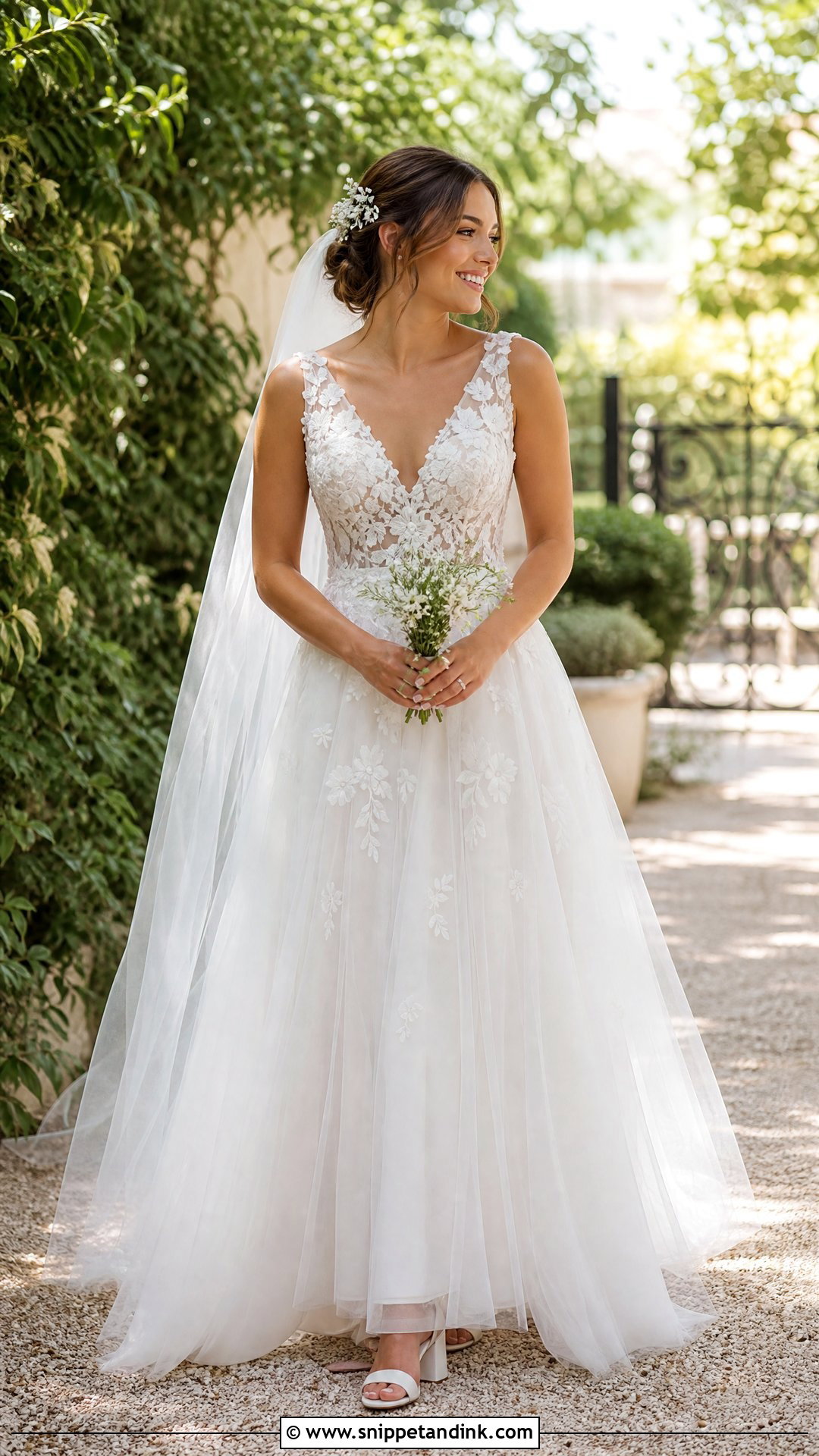
Raised flowers placed along the neckline, straps, waist and upper skirt make a dress feel detailed without all-over lace. On an illusion bodice they seem to float; on a lined bodice they give more coverage. A soft tulle A-line keeps it light. Raised petals, beads and leaves can scratch the inner arm or catch the veil, so I run my hand over every flower near the arms at the fitting. A plain veil with a few appliqués only at the hem avoids competition. Floral hair pins, delicate studs and block-heel sandals suit it, with a bouquet smaller than the bodice.
17. V-Neck Satin Slip Wedding Dress
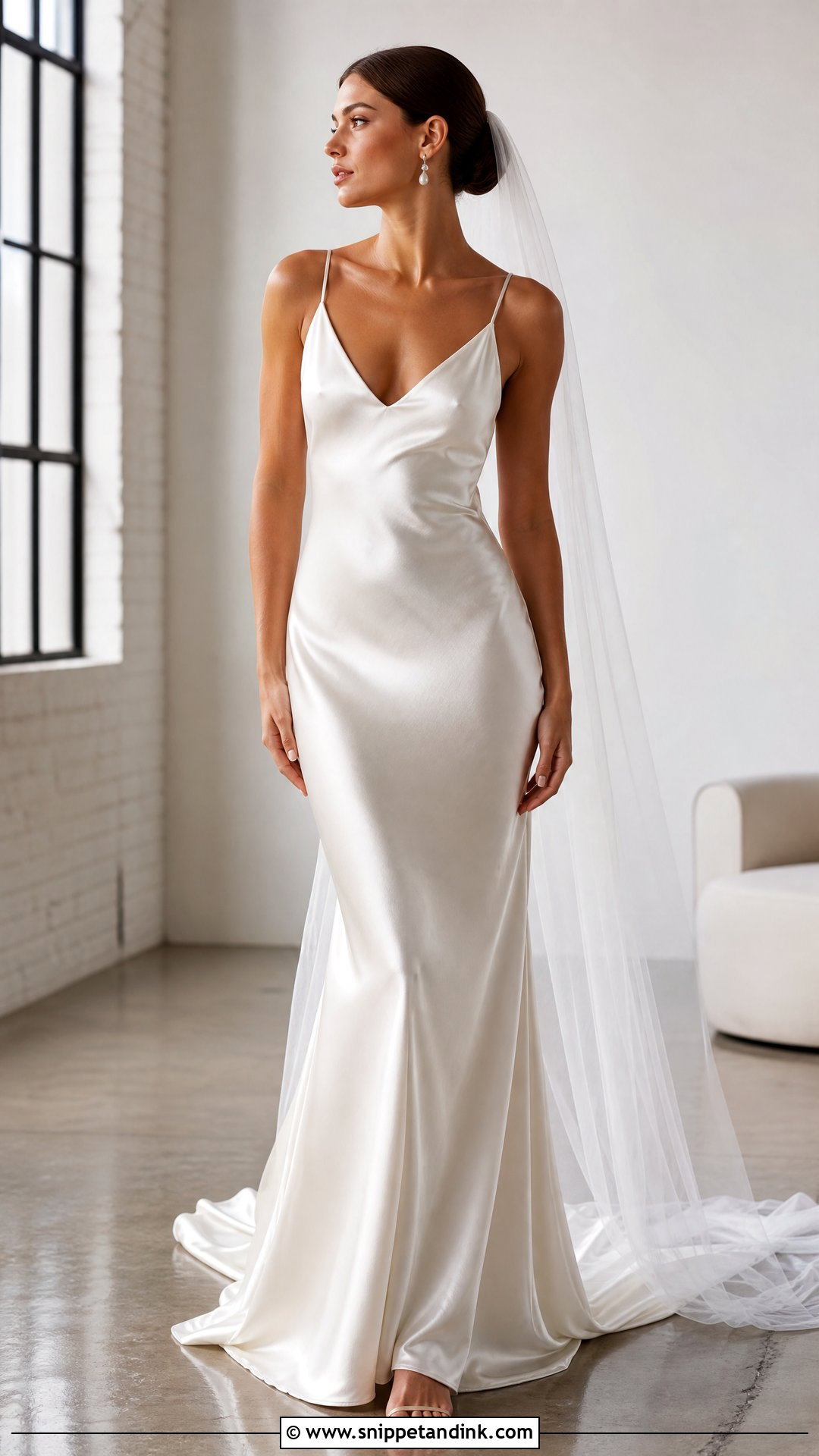
A satin slip should skim, not cling. Bias cutting makes the fabric fall in a fluid line and move gently, and thin straps with a low back keep it minimal. Bias-cut satin is very honest about what is underneath, so bring smooth, flat shapewear or your chosen support to alterations; the tailor cannot adjust neckline, straps, waist and hem accurately without it. Pearl earrings, barely there ivory sandals and a long sheer veil suit a neat bun or glossy waves. A structured white blazer or a light cape gives you a layer for a cool ceremony.
18. Short V-Neck Wedding Dress
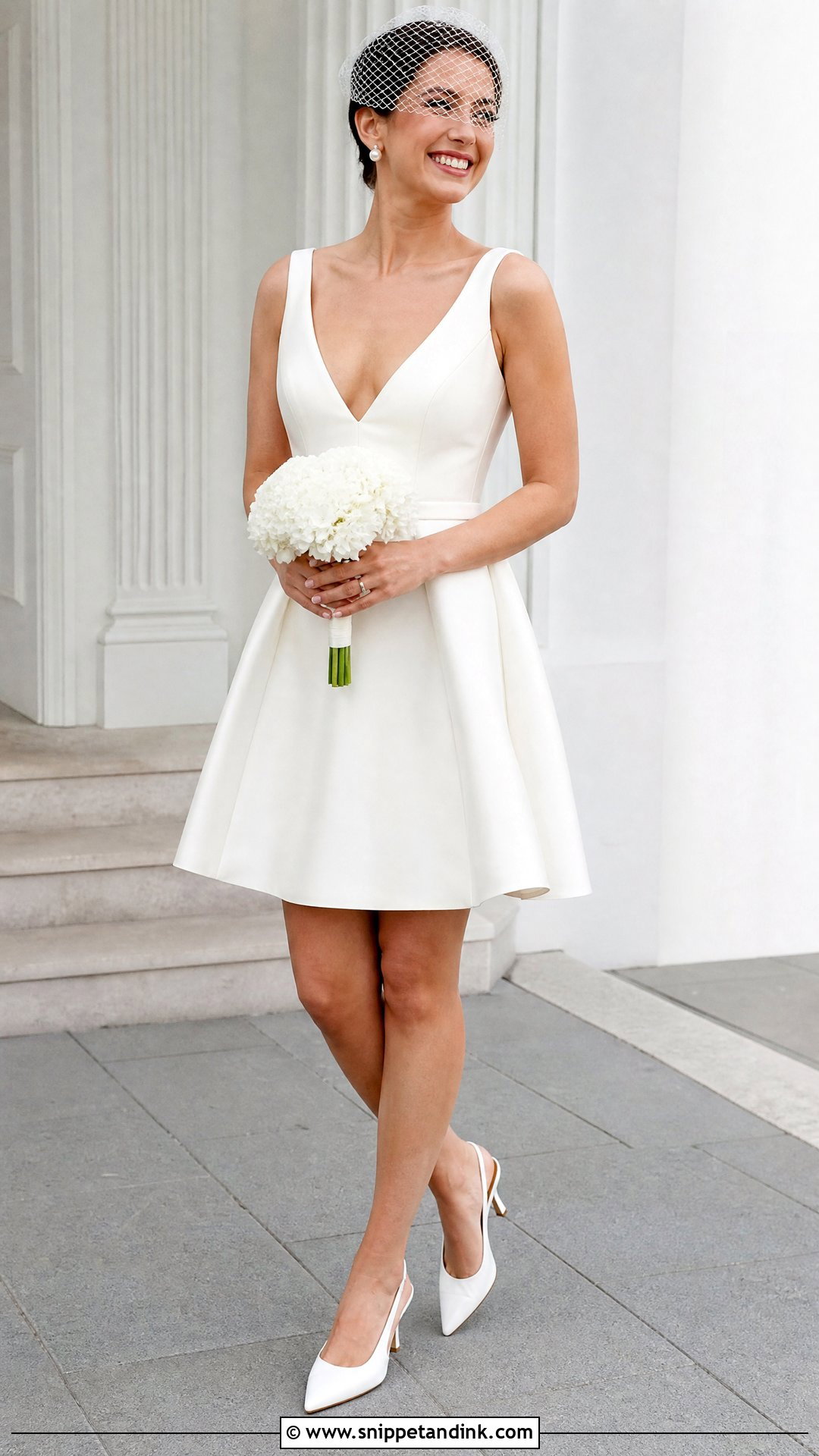
Short dresses suit civil ceremonies, a reception change or a small celebration. A structured A-line mini, a knee-length lace dress or a fitted crepe midi sets the formality, and wide straps with a defined waist keep it bridal. Neckline, waist and hem are all on display, so the tailoring has to be exact. If the skirt is very short, a secure lining or fitted shorts underneath make sitting and dancing easier. Pointed pumps, slingbacks or embellished flats are worth showing off, with pearl earrings, a birdcage or shoulder-length veil and a compact bouquet.
19. V-Neck Wedding Dress With Pockets
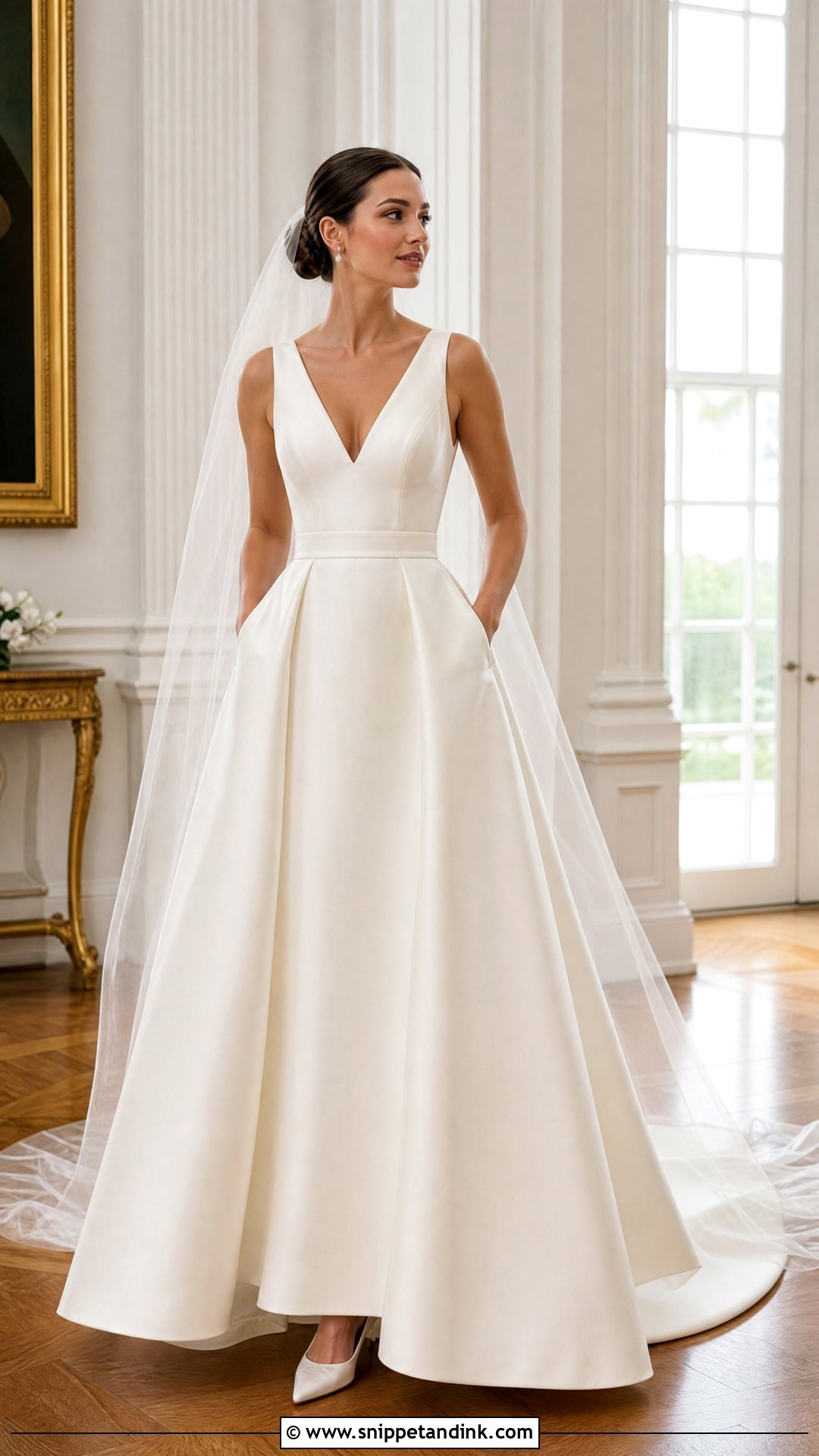
Pockets need fabric with enough body to hide them, which is why they sit so well in satin, Mikado, and structured A-line skirts. A clean V bodice with wide straps and a defined waist keeps it classic. Ask about pocket depth and placement at the fitting: they should fall at hand level, lie flat on the hips and disappear when your arms hang naturally. Use them for relaxed portrait poses, not for a phone. Pearl drops, pointed ivory heels, a cathedral veil and a low bun suit it.



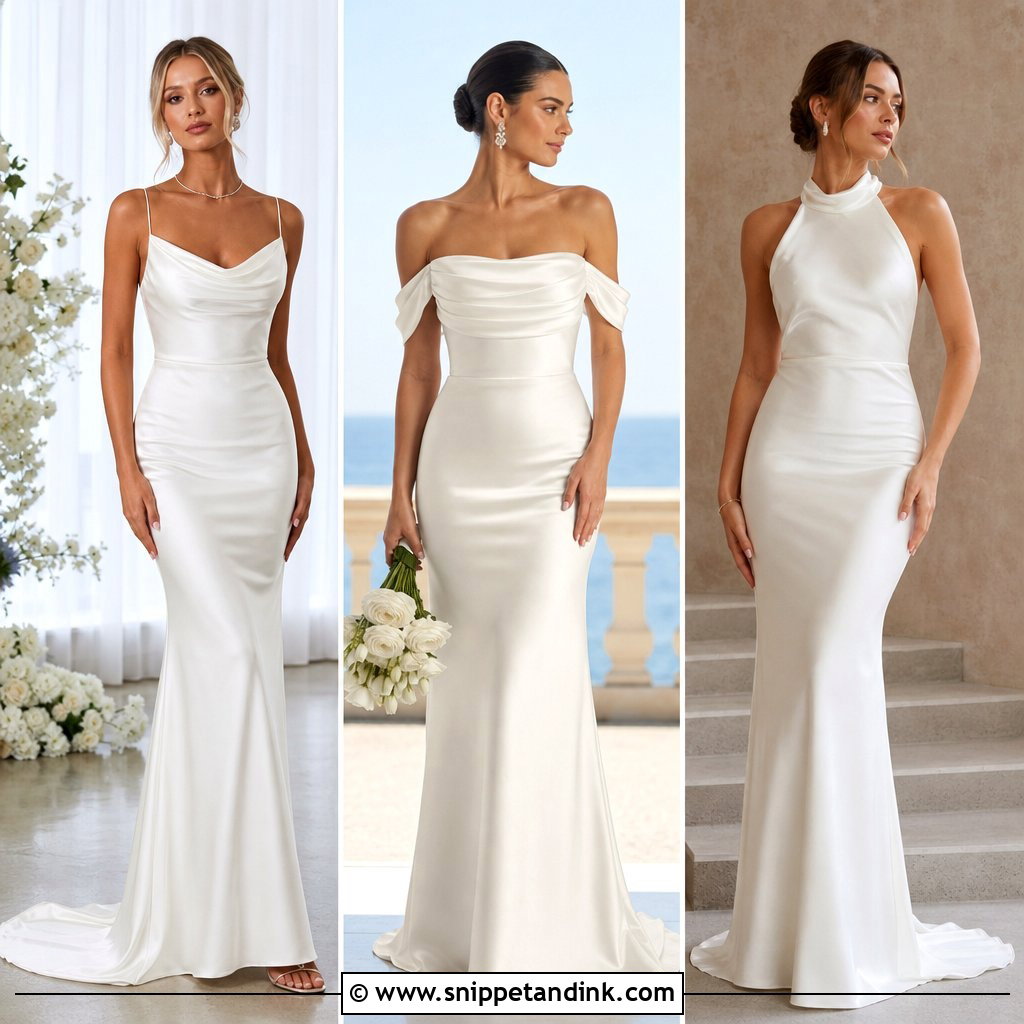
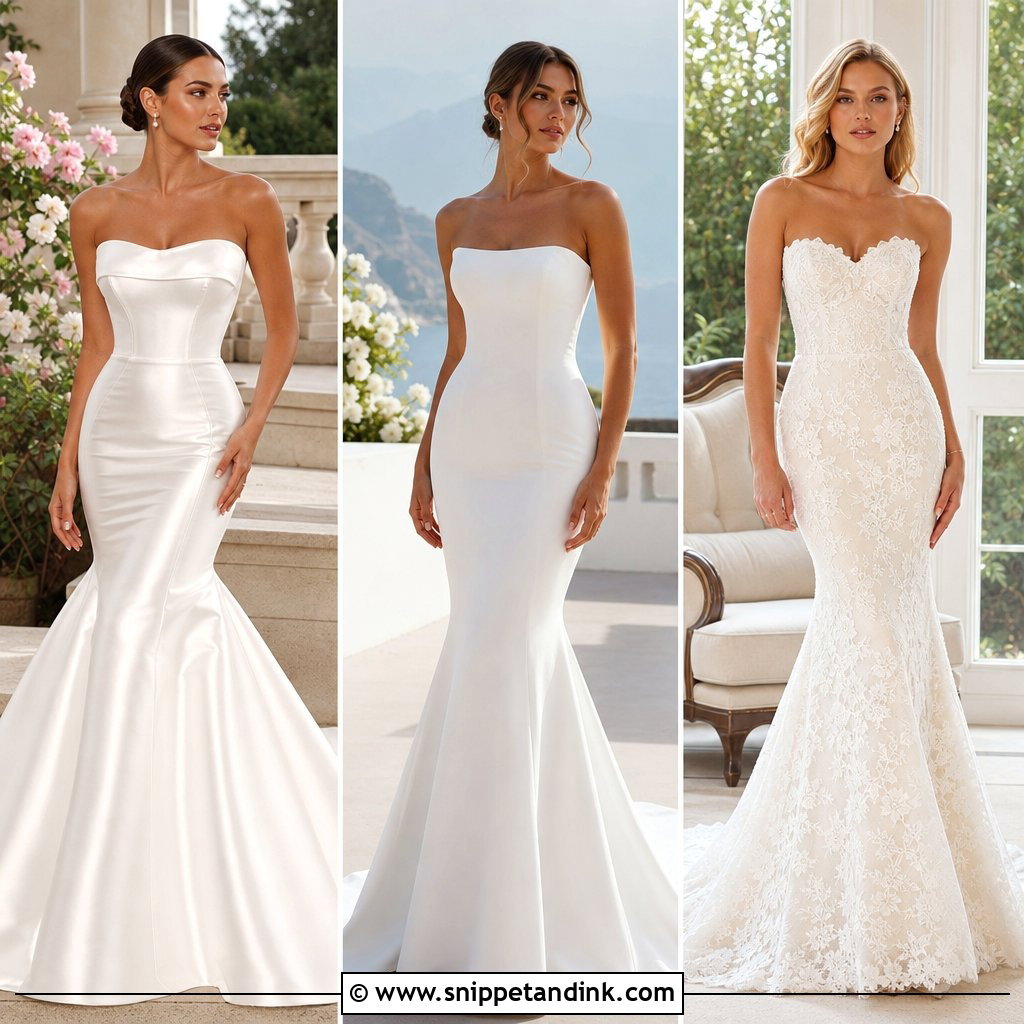
20. V-Neck Wedding Dress With Bridal Cape
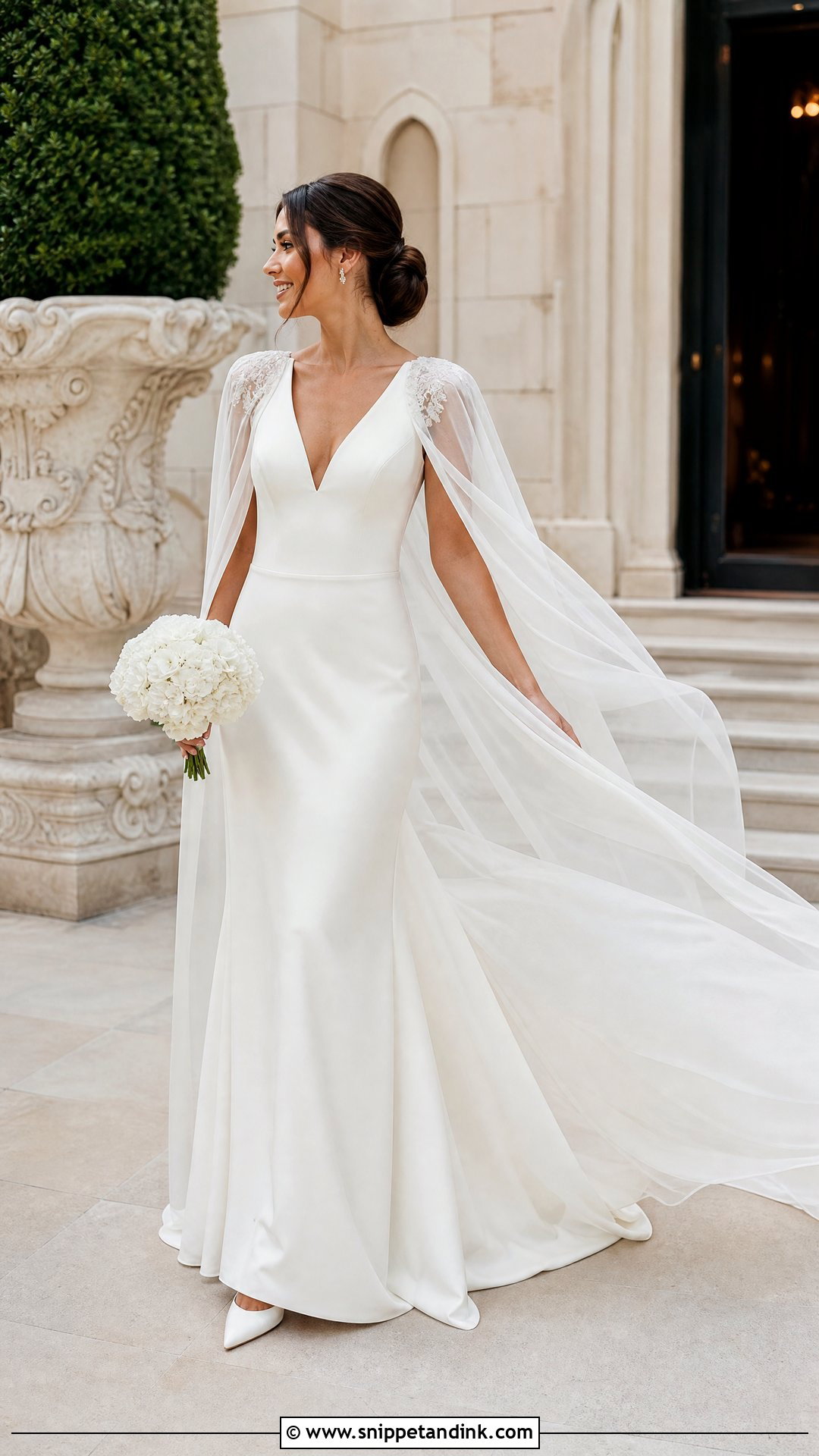
A cape gives a V neck dress a second mood without a full change. Over a simple satin, crepe or lace gown with a fitted bodice and clean A-line, a sheer chapel cape adds soft movement while a structured floor-length one feels formal. The V stays visible beneath it. Make sure the cape fastens on its own anchor points rather than hanging from delicate straps, which it will stretch. Skip the veil if the cape already gives enough length. Crystal studs, pointed pumps and a polished updo suit it; take the cape off after the ceremony and add statement earrings or a decorative comb.
Steaming, Hanging and Moving the Dress the Night Before
Every dress arrives at the venue with some creases, and how you deal with them depends on the fabric. Satin and slip dresses crease the most and show it most, so I steam them from the inside of the skirt, keeping the steamer moving and well away from the face of the fabric. Chiffon and tulle drop most wrinkles if hung for a day in a bathroom with the shower running nearby. Crepe needs very little. Never put an iron on beading or appliqués; heat can melt glue on the back of beads and flatten raised lace.
Hang a heavy gown by its inner hanging loops, not by the straps, which stretch overnight and change where the V sits. Keep it in a breathable garment bag until the morning. For the drive, lay it flat across the back seat or hang it from a hook with the skirt supported, and keep it away from anything that might mark ivory fabric.
A small kit worth packing
- A handheld steamer and a clean white towel.
- Fashion tape and a few safety pins in ivory.
- Chalk or a stain pen made for fabric, tested on a hidden seam first.
- A needle threaded in the dress color for a loose strap or hook.
How Will This Neckline Feel by Midnight?
A V neck dress has to feel secure and comfortable from the vows to the last song. As the twenty here show, the neckline works with satin, lace, crepe, chiffon and tulle, and with sleeves, open backs, overskirts and capes. Start with the depth and silhouette you are comfortable in, then think about venue, season, accessories, support and the alterations it will need. Bring your real shoes and undergarments to every fitting, and walk, sit, bend and raise your arms each time. Good tailoring can make even a dramatic V dependable, and the best dress is the one that lets you move without a second thought.
You'll Like These Ideas:



Leave a Reply