
Sleeves on a plain wedding dress do two jobs at once. They give you coverage, and they become the main design detail when there’s no lace or beading elsewhere to look at. Minimalist bridal lines now cover almost every shape with sleeves, from clean A-lines and fitted crepe to satin ball gowns, short hems and floating chiffon, so you can find one for nearly any venue or season. I start every appointment with the silhouette, then the sleeve construction, then a fabric that matches how formal the day is. Accessories come last and should stay light. Below are twenty complete looks, from long fitted sleeves to soft flutter sleeves and detachable ones, each with the detail I’d test before buying.
Why Sleeves Are Hard to Judge on a Sample Gown
Most bridal shops keep samples in one or two sizes and clip them to fit you. That works well enough for a bodice, but sleeves can’t be clipped. In a sample that’s too big, they hang loose and look shapeless; in one that’s too small, they squeeze and you’ll rule out a style that might suit you perfectly.
So in appointments I look past how the sample sleeve fits and focus on three things you can still judge.
- Where the shoulder seam sits. If it lands well off your shoulder in a sample that fits elsewhere, the cut may never sit right on you.
- How the fabric moves. Lift your arms and see whether it drapes, stretches or pulls.
- Where the sleeve ends compared with your arm. Length is the easiest thing to change later.
What alterations can and can’t fix
Shortening a plain sleeve from the cuff is a routine job. Taking in the width is usually fine too. Lace cuffs with a finished scallop edge are harder, because the edge has to be unpicked and moved up. Making a sleeve bigger or recutting an armhole that’s too low is the job I’d least want to rely on, since there’s often no spare fabric. If a sample sleeve feels tight under the arm, ask the shop about the made-to-measure option before you order.
1. Simple Long Sleeve Satin Wedding Dress
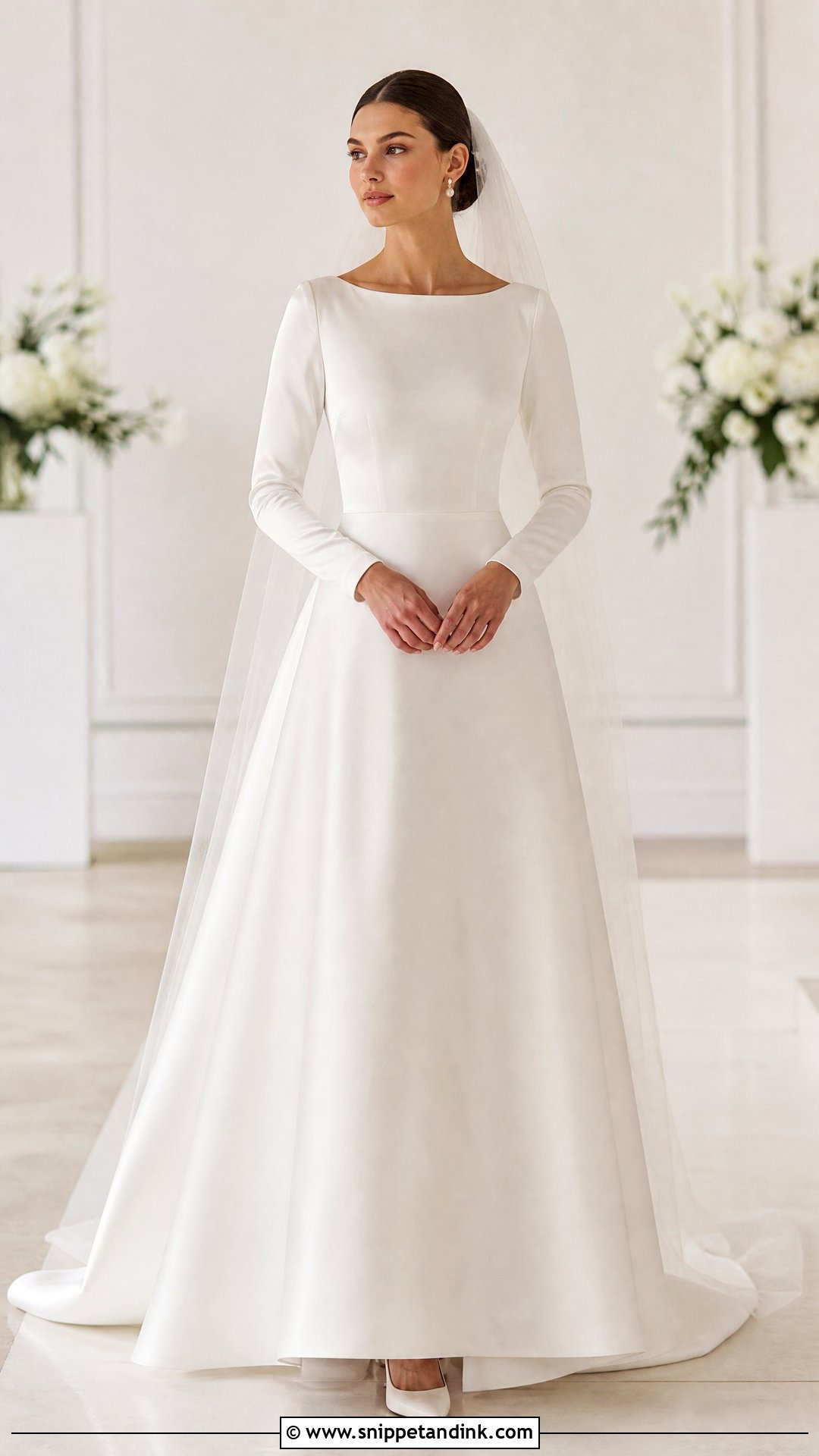
Satin with long sleeves needs no lace at all; the sheen is the decoration. An A-line with a fitted bodice, natural waist and softly structured skirt is the safest version. The trouble with satin sleeves is that the fabric has little give, so a sleeve that looks perfect with your arms at your sides can pull hard across the back when you hug. I have brides hug me at every fitting for exactly this reason. A bateau, scoop or shallow V-neck balances the coverage. Pointed ivory pumps, small pearl earrings, a plain fingertip veil and a sleek low bun keep it clean.
2. Simple Long Sleeve Crepe Wedding Dress
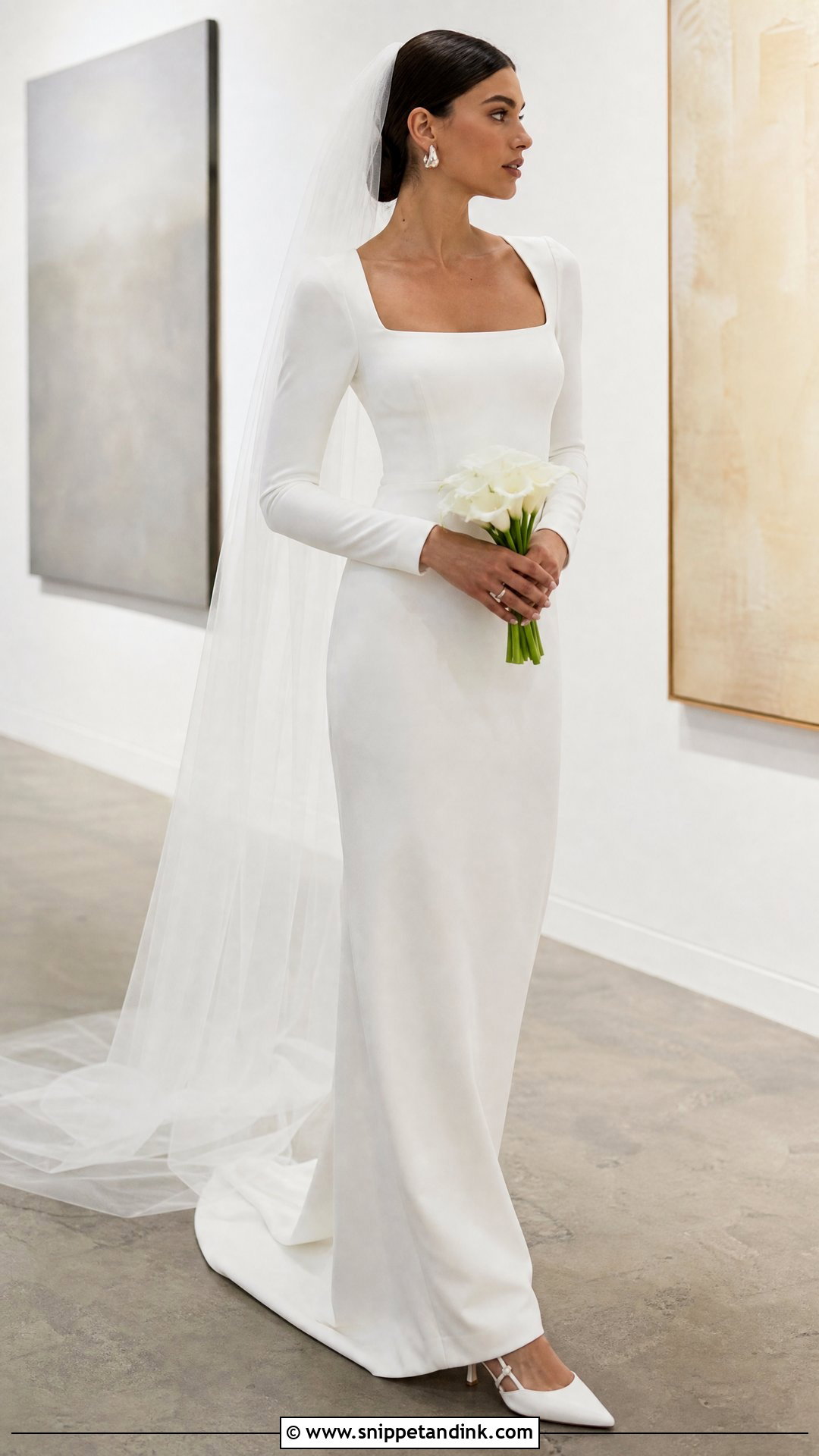
Crepe is matte, so it shows off seams and tailoring rather than shine, which suits a sheath or fit-and-flare. My first question with a close crepe sleeve is whether the fabric has stretch in it. Without some, a fitted sleeve is uncomfortable within an hour. A square neckline adds structure; a covered back keeps the look minimal. Pointed slingbacks, sculptural studs and a small structured clutch for later suit it, and a plain cathedral veil gives ceremony drama without changing the dress. Polished hair and few accessories let the line speak.
3. Simple Chiffon Wedding Dress With Bishop Sleeves
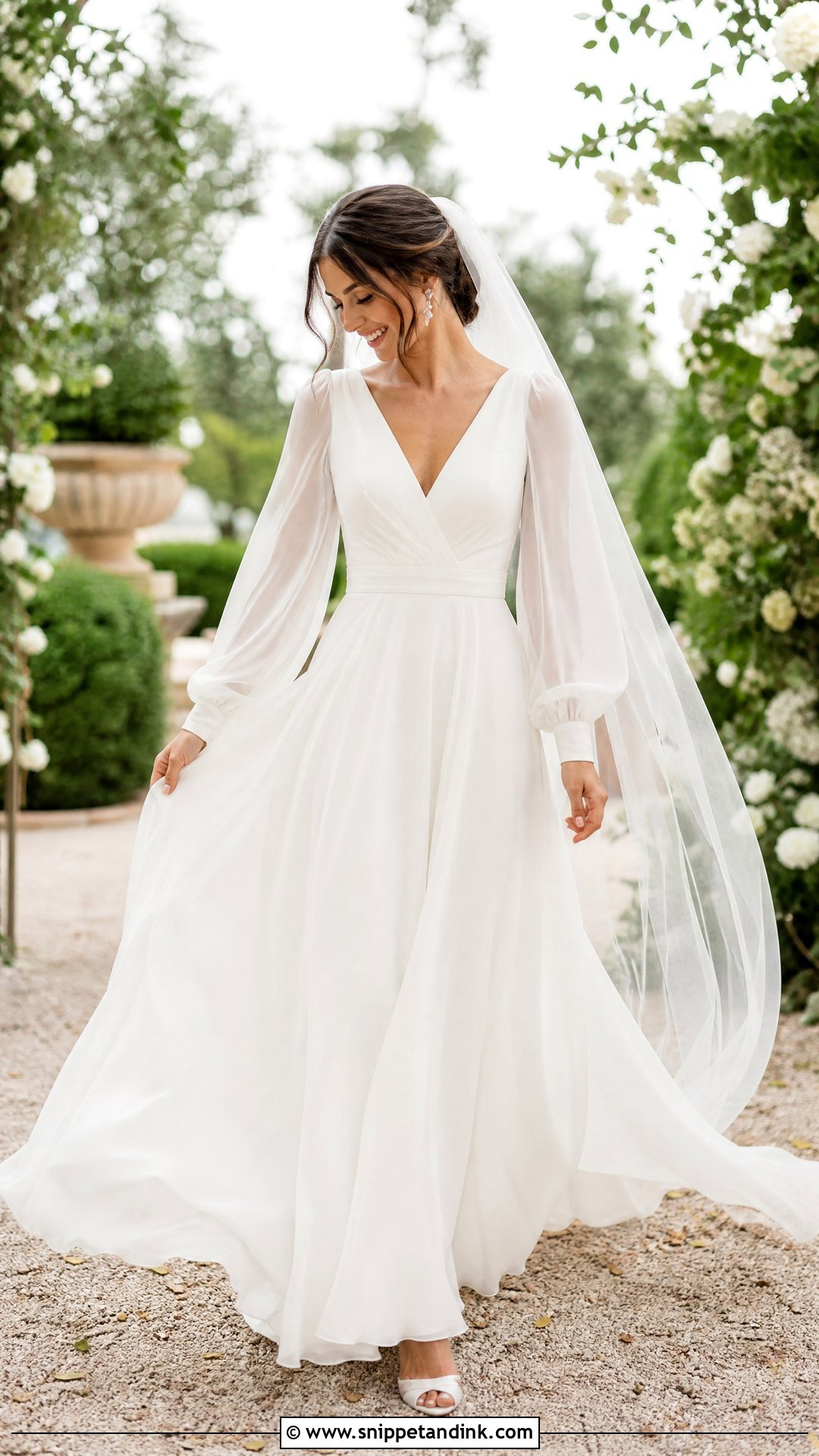
Bishop sleeves billow from shoulder to wrist and gather into a cuff, and on a chiffon A-line with a defined waist they move with every gesture. Narrow cuffs keep the volume looking intentional rather than oversized. I’d check the cuff closure carefully: tiny buttons are pretty but fiddly to do up yourself, and a hidden snap is easier. A V-neck or softly gathered bodice suits the airy fabric, and a lined skirt gives coverage. Low block heels, small drop earrings and a barely there tulle veil finish it, with loose waves or a relaxed bun. Gardens, coasts and countryside venues suit it best.
4. Simple Square Neck Wedding Dress With Sleeves
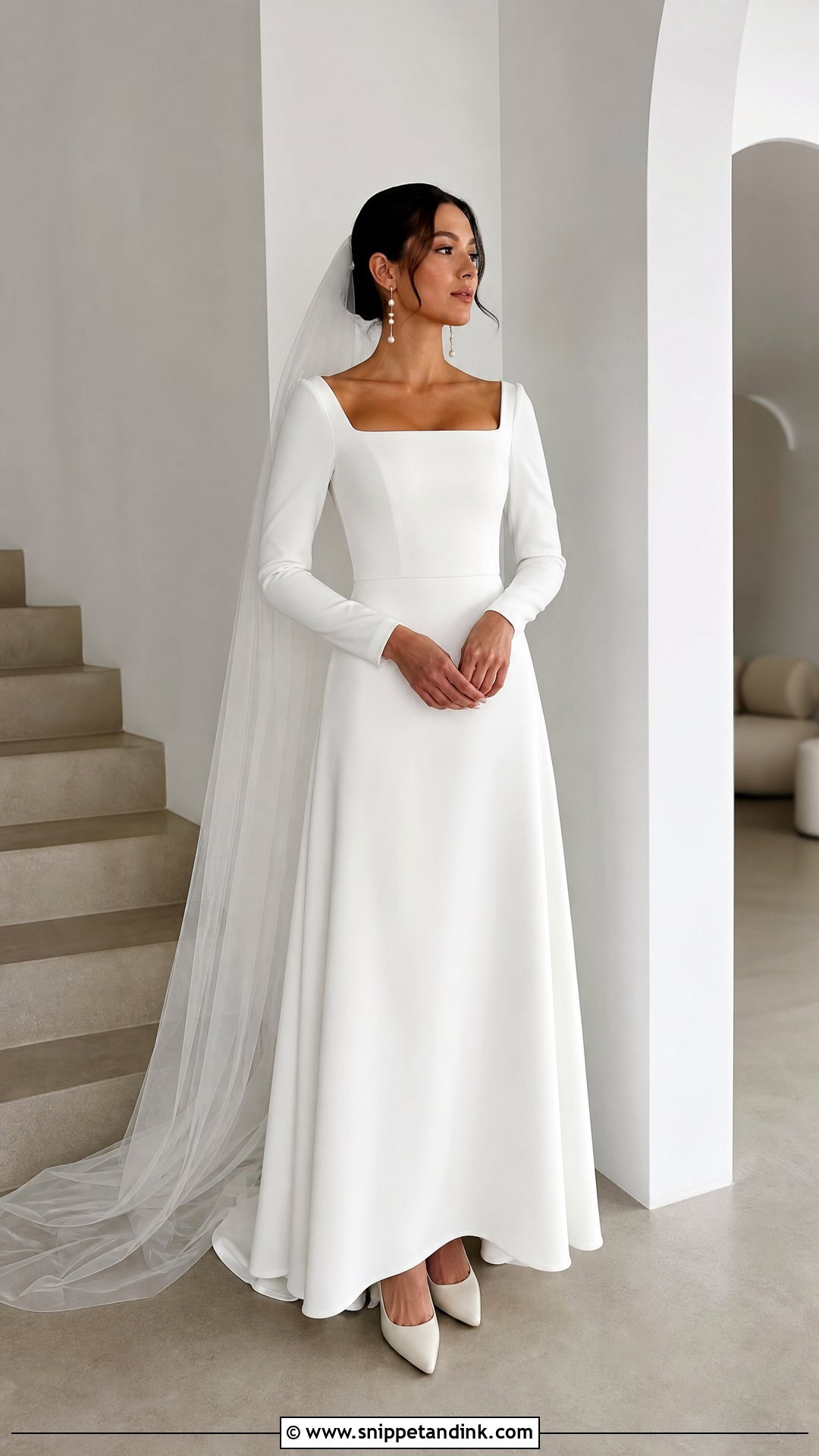
Square necklines with long fitted sleeves feel classic without looking old-fashioned, and the shape is architectural enough that crepe, satin or matte stretch fabric all hold it. If the neckline sits low, the bodice needs real support underneath. I test this by having the bride bend as if picking up her bouquet from a chair. Pearl drop earrings, closed-toe heels, a single-layer veil with a raw edge and a center-parted bun suit the structure. I’d skip a necklace unless the chest looks bare; usually it doesn’t.
5. Simple Boat Neck Wedding Dress With Long Sleeves
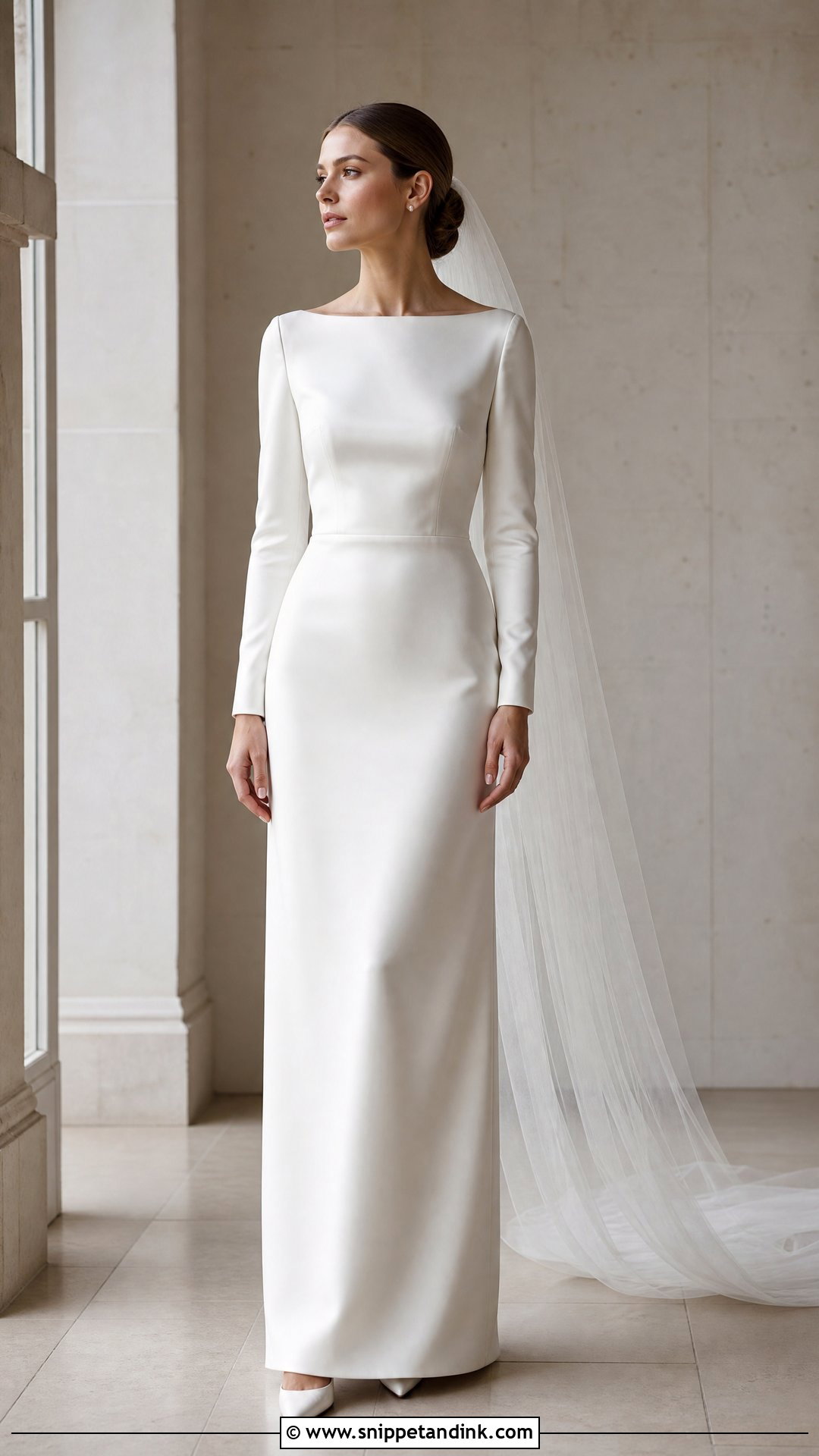
A boat neck wedding dress runs straight across the collarbone, so it covers more than it seems to while still drawing attention to the shoulders and face. Slim long sleeves suit it, over a column, sheath or understated mermaid skirt. Heavier crepe or satin holds the line; a softer knit-backed fabric moves more easily. One fitting point: a boat neck can slide toward the shoulder edges when you reach forward, so it needs to be fitted closely at the shoulder seam. A low V-back gives contrast. Pointed pumps, a slim bracelet and small studs finish it, with a low chignon and a narrow veil or comb instead of a necklace.
6. Simple High Neck Wedding Dress With Sleeves
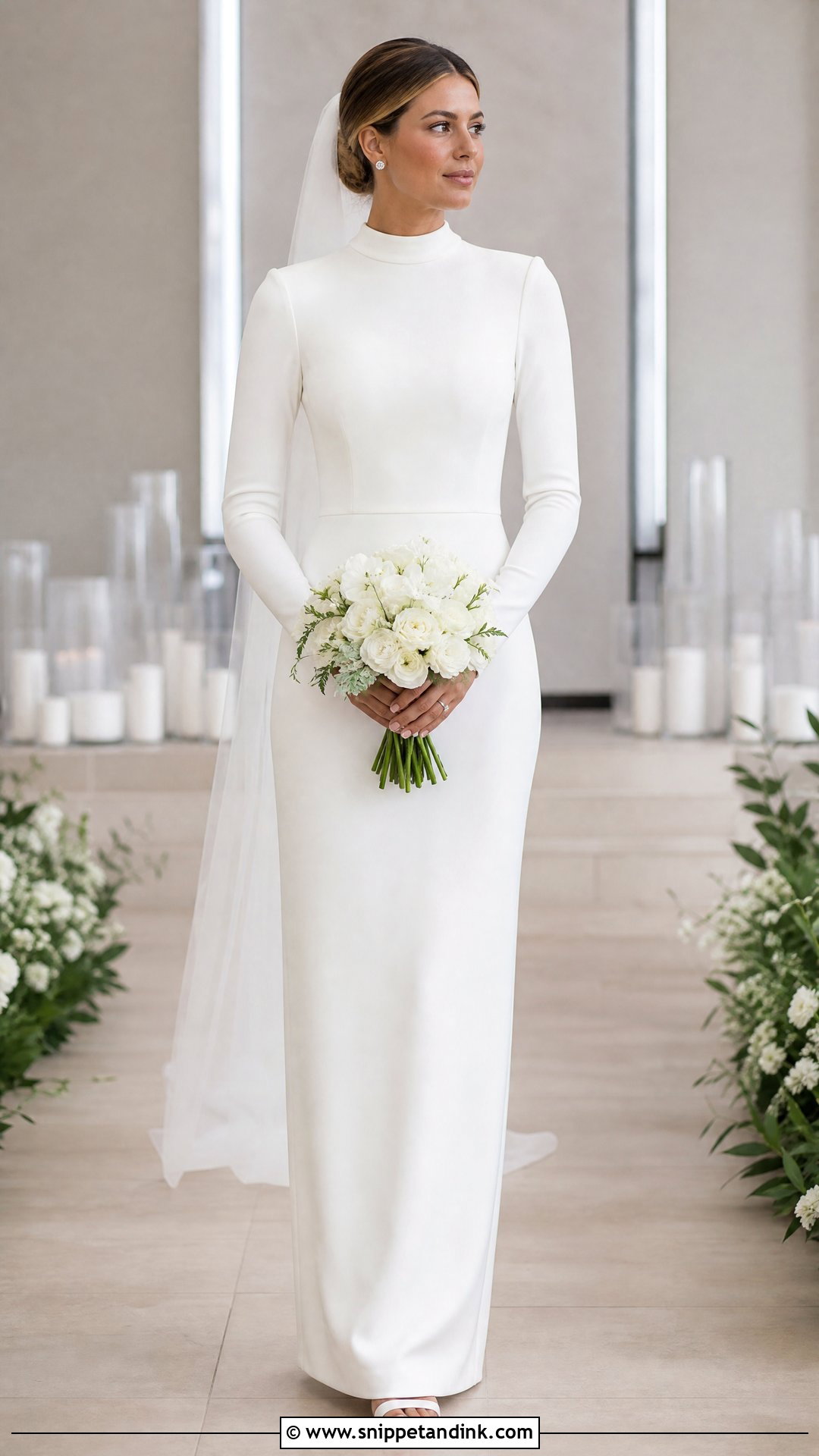
High necks depend entirely on tailoring. A smooth crepe or satin gown with fitted sleeves, a defined waist and a straight or gently flared skirt looks clean only if the collar fits exactly. A mock neck feels contemporary; a softly gathered neckline is a little more relaxed. The collar is what I check while the bride is seated, because sitting pushes the neck forward and a tight collar starts rubbing within minutes. With so much coverage at the front, an open or keyhole back gives balance. Sleek ivory heels, small studs, a low bun and a narrow veil tucked beneath it are all it needs.
7. Simple V Neck Wedding Dress With Lace Sleeves
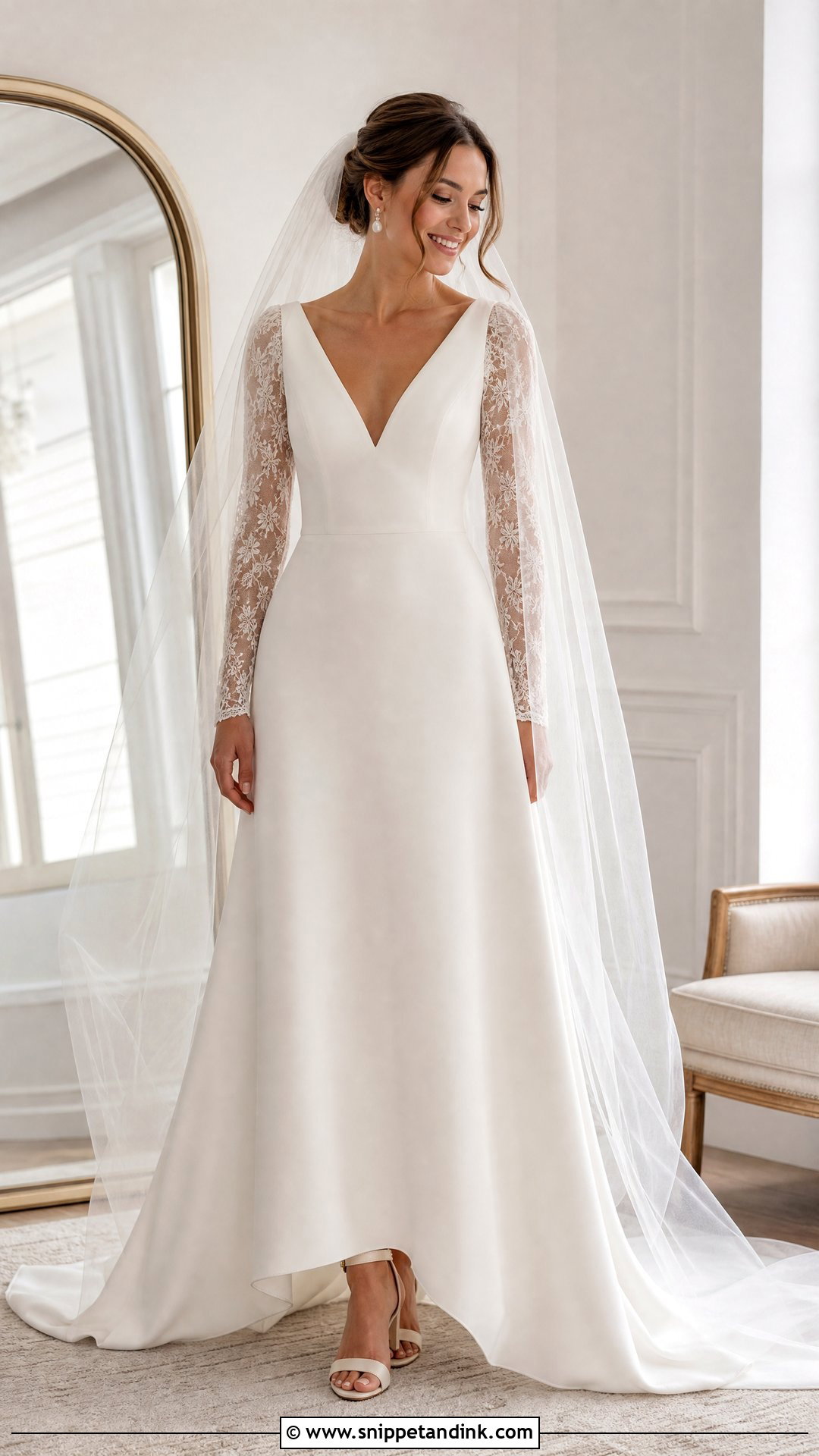
Lace only on the sleeves, with a plain crepe or chiffon skirt and a V-neck bodice, is about the most restrained way to wear lace. I look for an open pattern with plenty of space between motifs, because dense lace on the arms reads heavy. Match the lace color to the main fabric in daylight; the two are often dyed separately and can drift apart. A medium V-neck stays supportive once altered. Ivory ankle-strap heels, tiny pearl earrings, a sheer untrimmed veil and soft waves or a loose chignon suit it. At fittings, check the lace motifs sit the same way on both arms.
8. Simple Off The Shoulder Wedding Dress With Sleeves
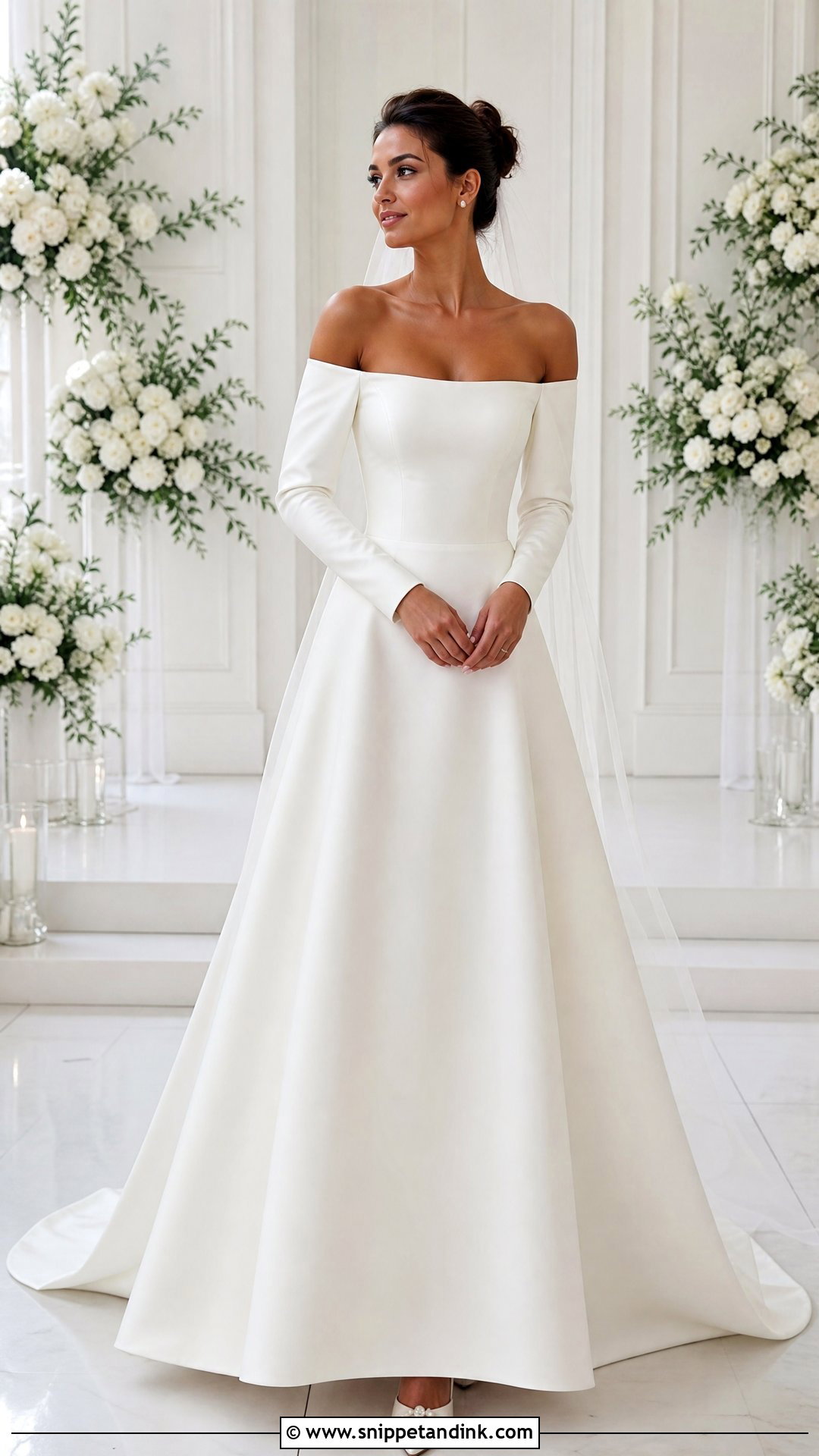
Sleeves set below the shoulder limit how high you can lift your arms. That’s the honest trade-off with an off-the-shoulder dress, and I make sure brides feel it in the fitting room rather than discover it during the first dance. A folded satin neckline with fitted sleeves or soft draped bands keeps it minimal, over a structured A-line or fit-and-flare skirt. The bodice should be held up by built-in cups and boning, never by the sleeves. Pearl studs, pointed heels, a bare neckline and a simple veil under a polished updo complete it.
9. Simple Three Quarter Sleeve Wedding Dress
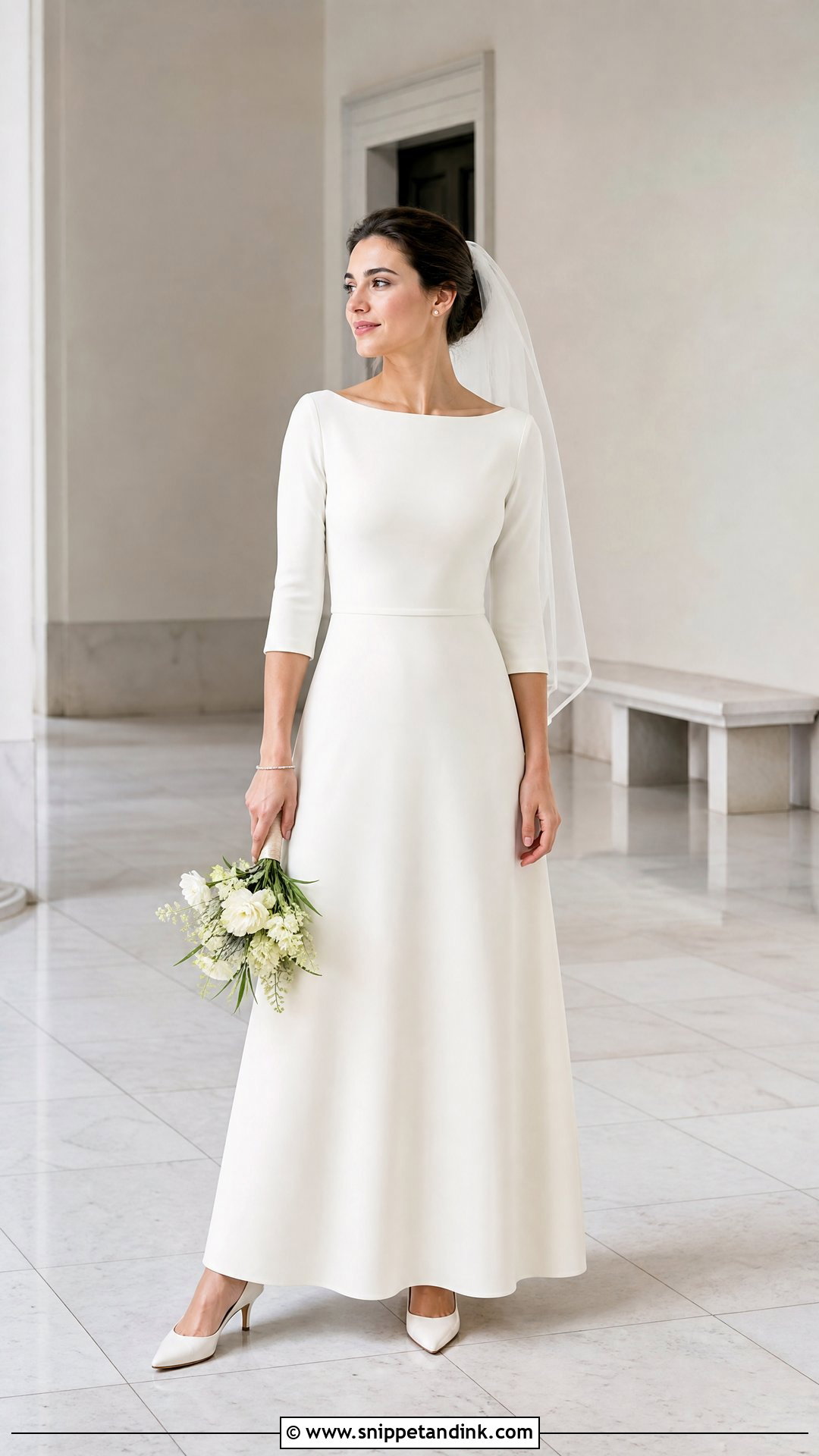
Three-quarter sleeves end between the elbow and wrist, leaving room for a bracelet or a small watch, and they make a simple midi or floor-length gown feel neat without the formality of full sleeves. An A-line in crepe, satin or soft chiffon with a scoop or bateau neckline is easy to wear. Where the sleeve stops matters. I’d avoid a hem landing at the widest part of the forearm, which makes the arm look heavier, and aim just below the elbow or closer to the wrist instead. Low pointed heels, pearl earrings and a short veil or comb suit it, with a curled bob, ponytail or low chignon.
10. Simple Short Sleeve Wedding Dress
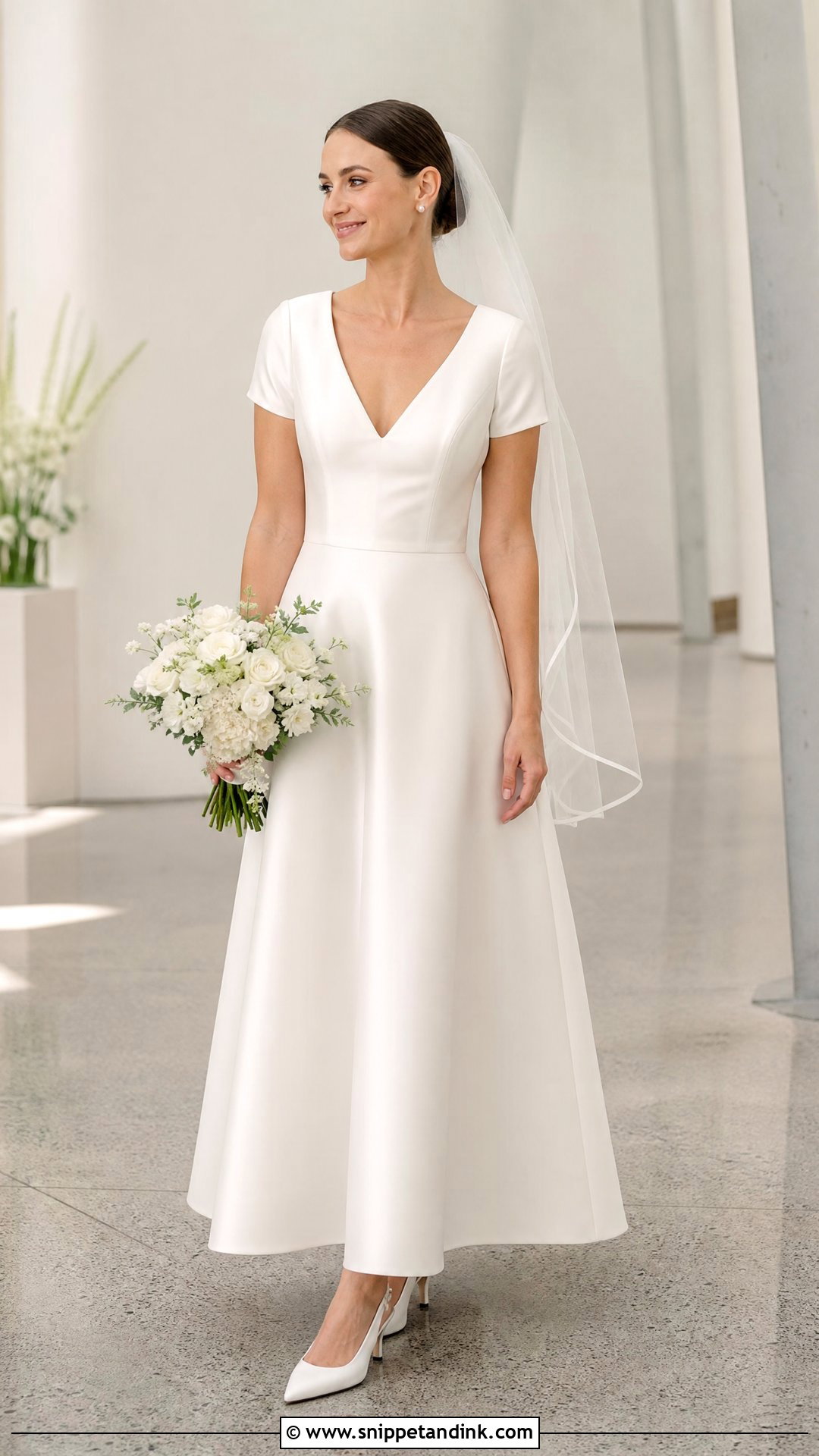
Short sleeves cover the upper arm without the weight of a long sleeve. They can end just below the shoulder or around mid-upper-arm, and smooth crepe or satin on a fitted bodice keeps them clean over an A-line, tea-length or column skirt. The sleeve opening is my fitting focus. Too tight and it cuts in when you raise a glass; too wide and it stands away from the arm and looks borrowed. A shallow V-neck lengthens the upper body, a round neck feels classic. Slingback pumps, pearl studs, a compact bouquet of greenery and a shoulder-length veil or small bow finish it.
11. Simple Cap Sleeve A Line Wedding Dress
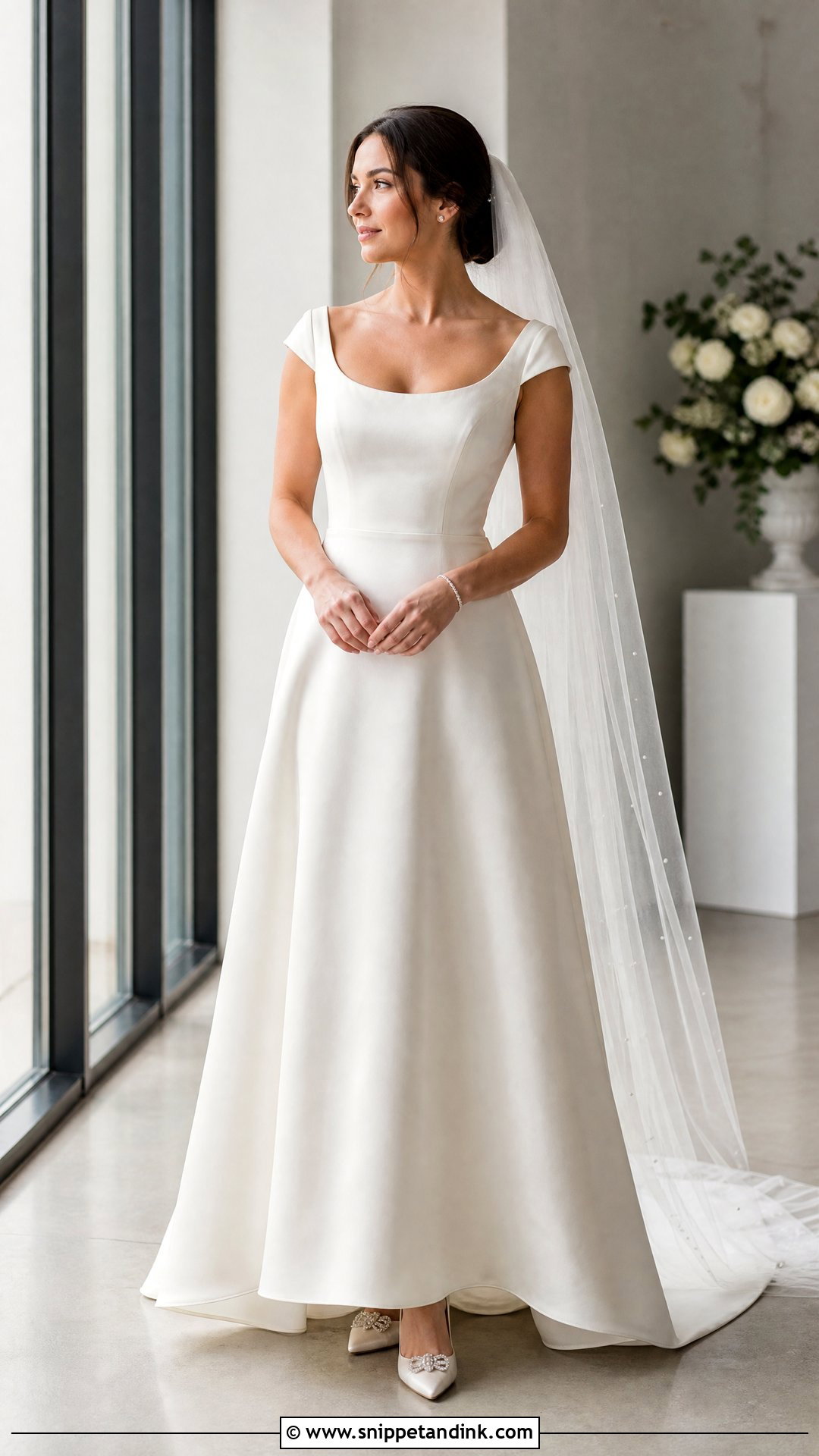
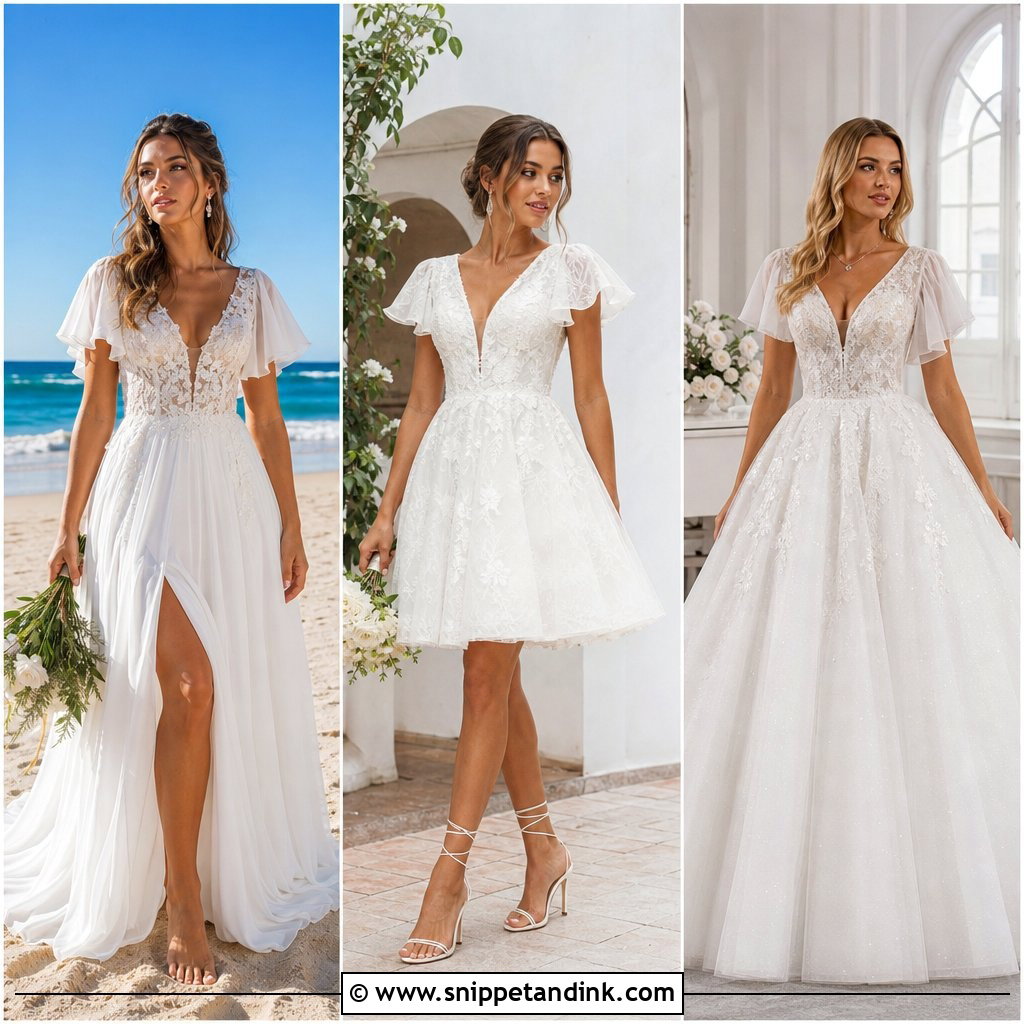
Cap sleeves sit over the top of the shoulder and stop short of the underarm, which is what separates them from a short sleeve. On a simple A-line with bodice and sleeves in the same plain fabric, they give just a hint of coverage. If they’re cut too narrow, they pinch or slide off the shoulder, so I have brides rotate their arms in a full circle before I pin anything. A scoop, bateau or modest V-neck and a skirt flowing from the natural waist suit them. Low pointed heels, a fine bracelet, pearl or crystal studs and a fingertip veil or floral hairpin keep the look light.
12. Simple Flutter Sleeve Wedding Dress
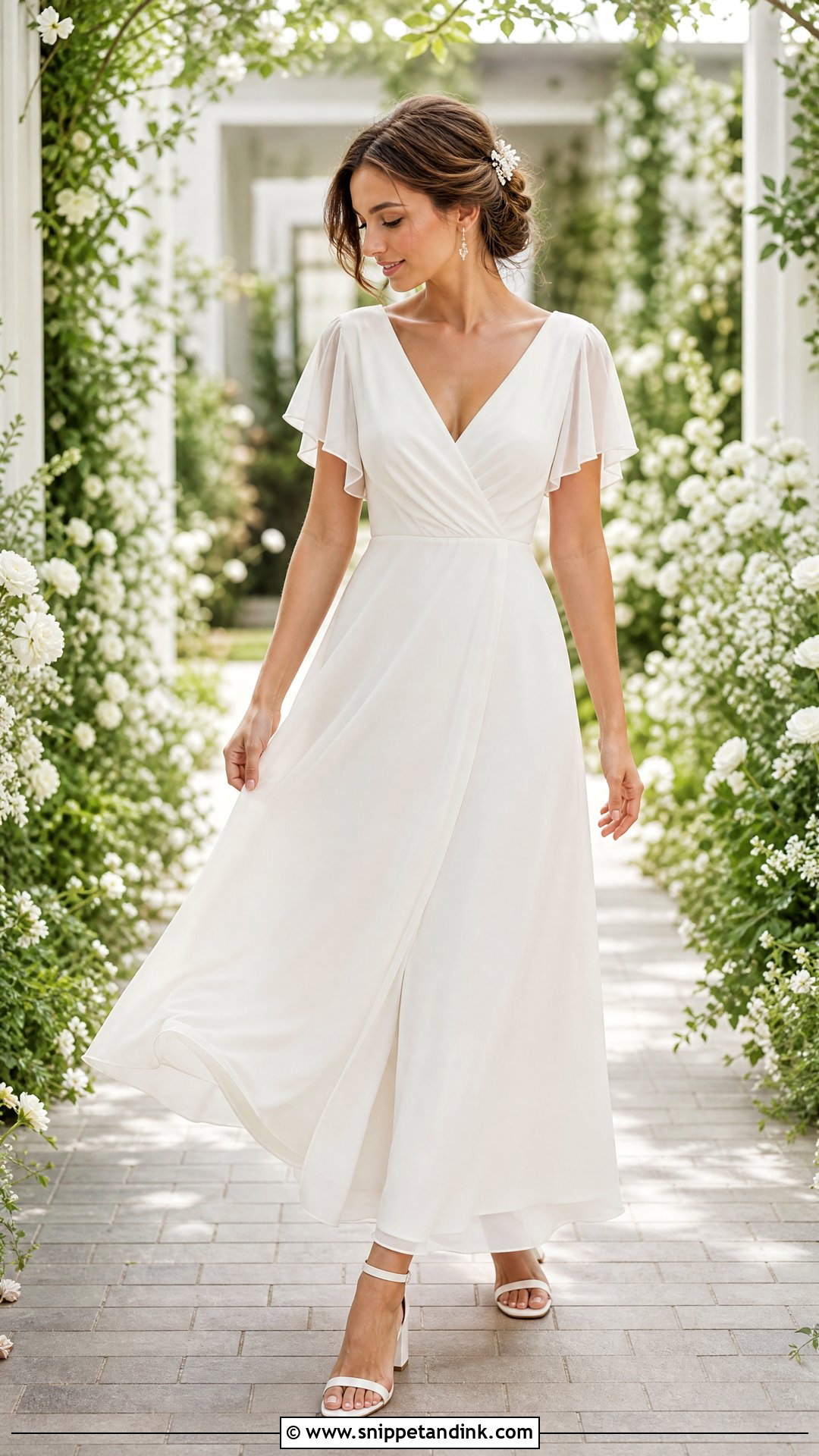
Flutter sleeves only work in fabrics that fall: chiffon, georgette, anything light enough not to stand away from the arm. Over a wrap bodice, V-neck and flowing A-line skirt, they look soft and easy. The armholes still need fitting. Because flutters are loose, they can show the side of your bra when you lift your arms or turn for photos, which I check at the final fitting. Keep ruffles off the rest of the dress. Strappy block heels, delicate drop earrings, a simple comb and loose curls or a softly pinned style finish it.
13. Simple Puff Sleeve Wedding Dress
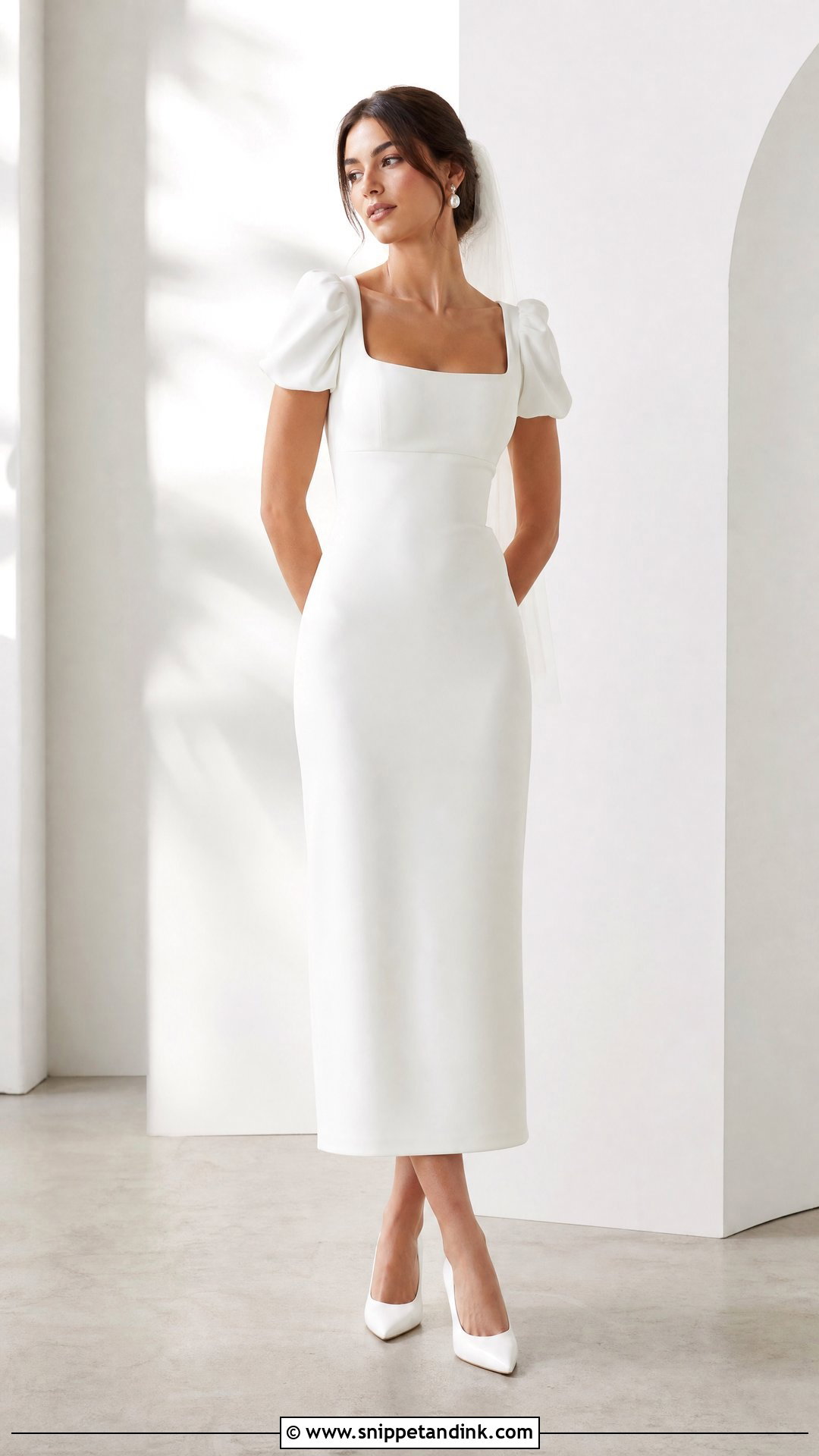
Puff sleeves look current when the volume is controlled: a small puff at the shoulder, a fitted cuff and little gathering through the bodice. Matte satin or structured crepe gives a crisp outline, organza a lighter and more visible one. I scale the puff to the rest of the dress. If the skirt is already full or the waist strongly defined, a big sleeve makes the whole outline crowded. A square neckline with a straight, tea-length or softly flared skirt suits it. Pointed pumps, small pearl earrings, a plain shoulder-length veil and a neat low ponytail or bun keep the top half calm.
14. Simple Bell Sleeve Wedding Dress
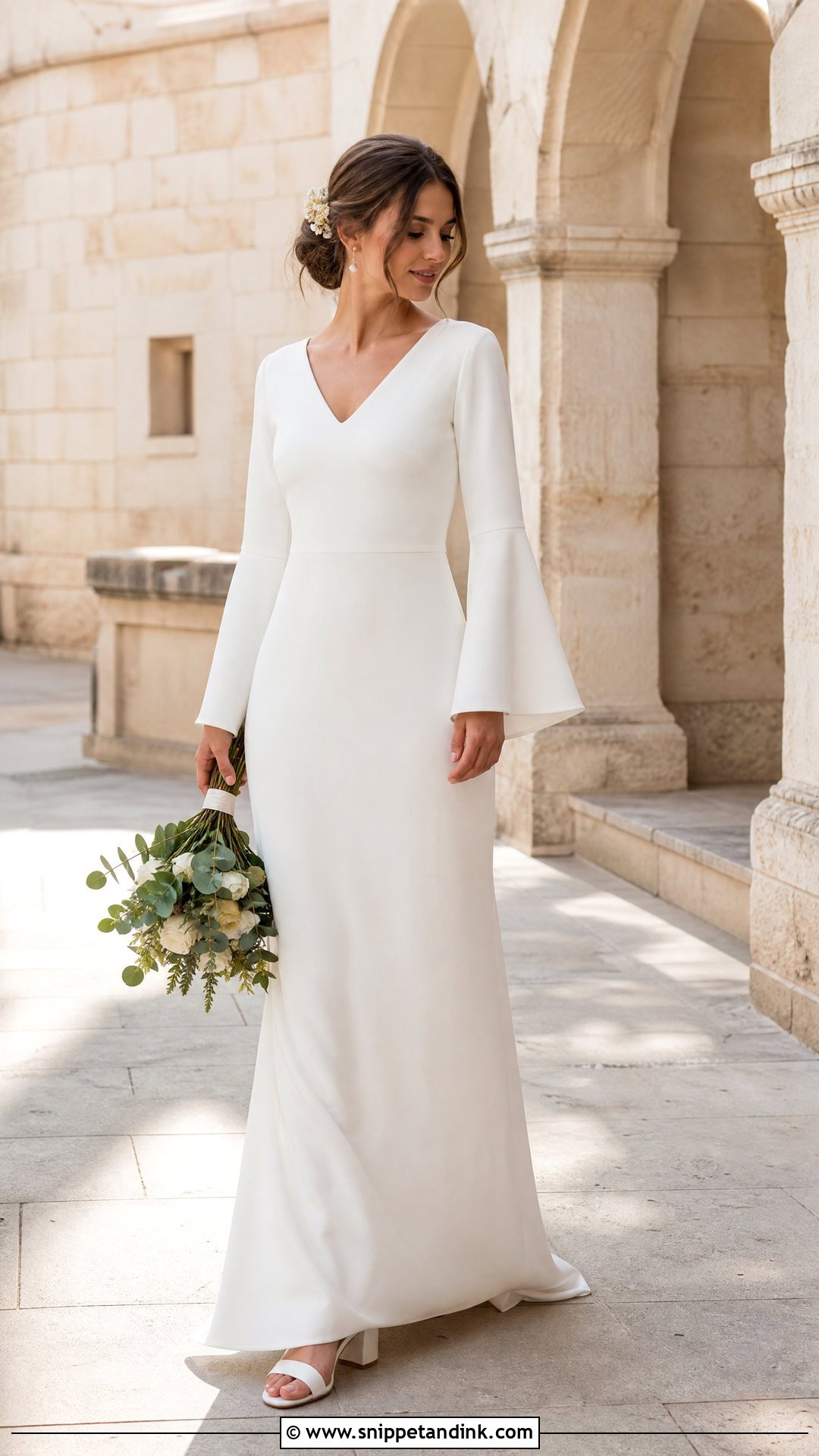
Bell sleeves get their drama from movement, not decoration, so I keep everything else plain: a crepe sheath or chiffon A-line, sleeves widening gradually below the elbow, a modest V-neck or scoop and a smooth skirt without tiers or heavy lace. Think about practical moments before choosing very wide cuffs. Eating, greeting guests and holding the bouquet all happen with your arms forward, and a sleeve ending a little above the fingertips gives the effect without trailing through your dinner. Block-heel sandals, small drop earrings, a narrow veil and a relaxed center part finish the look.

15. Simple Wedding Dress With Detachable Sleeves
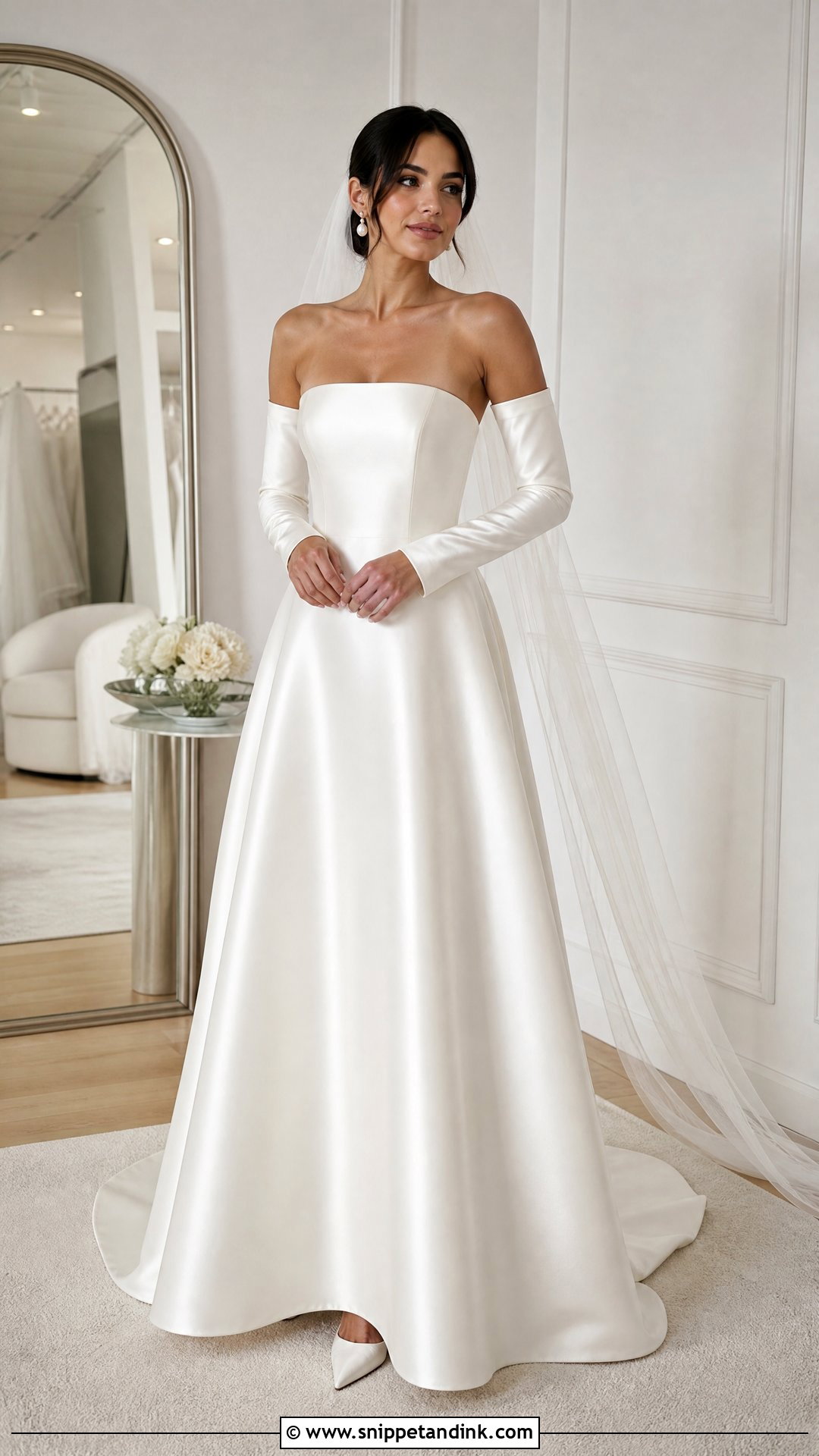
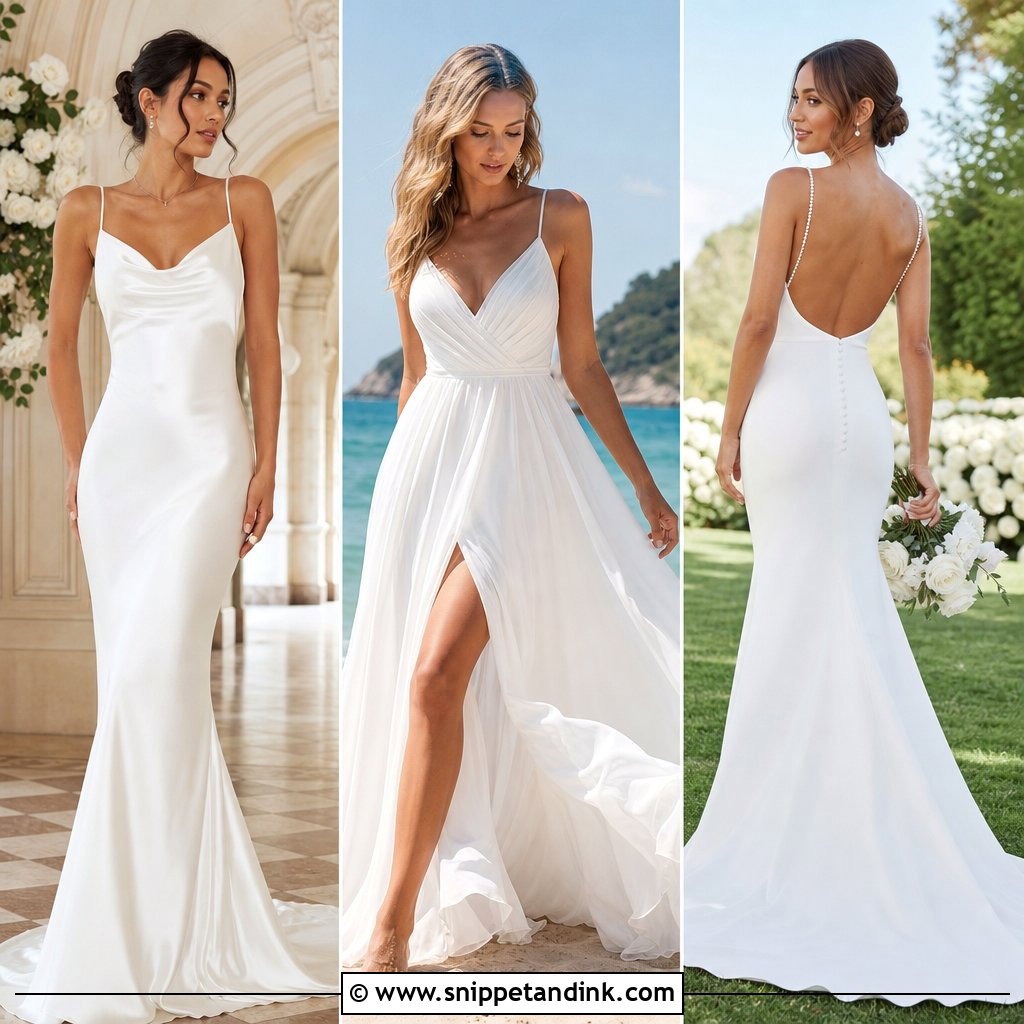
Detachable sleeves give you two looks without a full outfit change. Start with a clean strapless, square-neck or sleeveless A-line, add fitted crepe sleeves, airy chiffon or off-the-shoulder bands for the ceremony, then take them off for the reception. Before buying, I ask exactly how they attach and whether loops, snaps or elastic stay visible once removed, because a row of little loops along a bare neckline spoils the second look. The attachments should hold without pulling the bodice. Keep shoes, pearl earrings and veil the same for both versions, and photograph each one at a fitting from the front, side and back.
16. Simple Low Back Wedding Dress With Long Sleeves
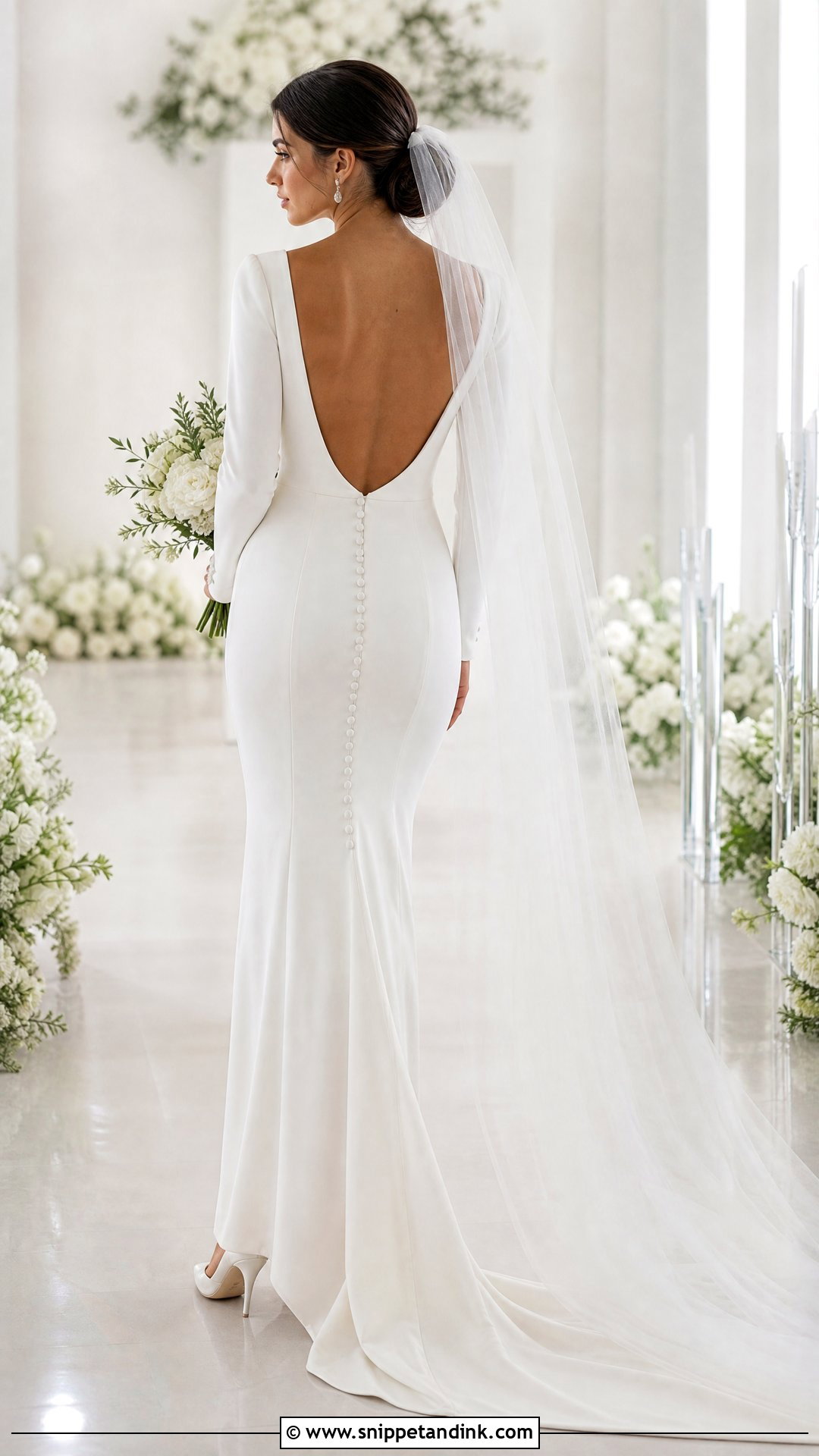
Long sleeves and a low back balance each other: full coverage at the front, a surprise from behind. A plain crepe or satin gown with a bateau or high neckline, fitted sleeves and a low square or rounded back suits a sheath or fit-and-flare skirt, and covered buttons add a traditional touch. Ordinary bras won’t work, so talk about built-in cups or alterations before you buy. At fittings, I watch the back edge while the bride sits, bends and walks; it should stay flat against the body, not gape. Pointed pumps, drop earrings and a veil set above a low chignon finish it.
17. Simple Wrap Wedding Dress With Sleeves
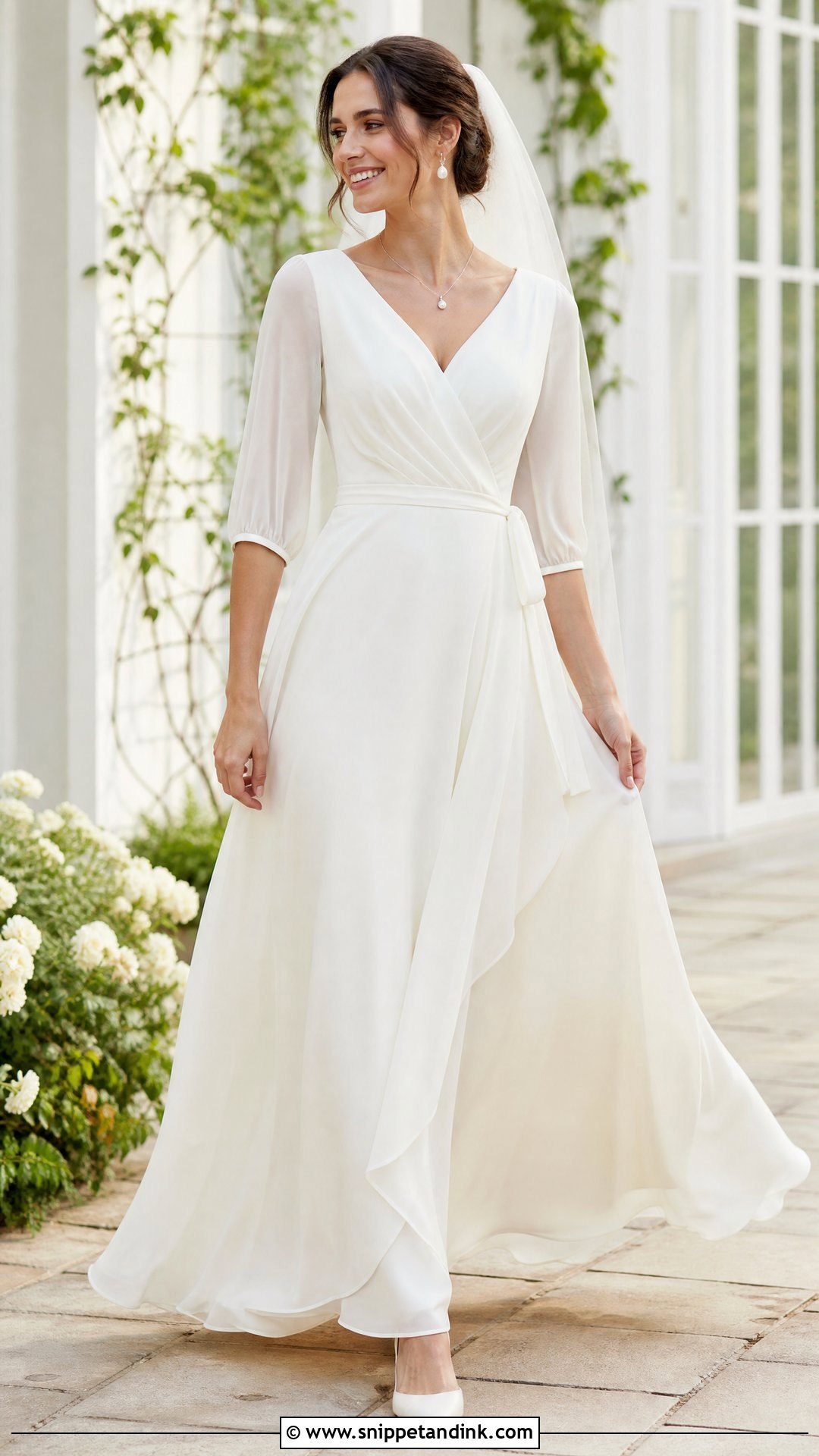
A wrap-style bodice softly defines the waist, and on a wedding dress I’d always choose a properly constructed faux wrap over a true wrap, which can open when you move. Three-quarter, flutter or slim long sleeves all pair naturally with it, over a chiffon or matte crepe skirt. The thing to check is where the waist tie or gathered seam lands. It should sit at your natural waist and flow into the skirt without bunching. Have the neckline secured with a hidden stitch or snap. Low block heels, a fine pendant if the V allows, small pearl earrings and a fingertip veil or floral comb complete it.
18. Simple Plus Size Wedding Dress With Sleeves
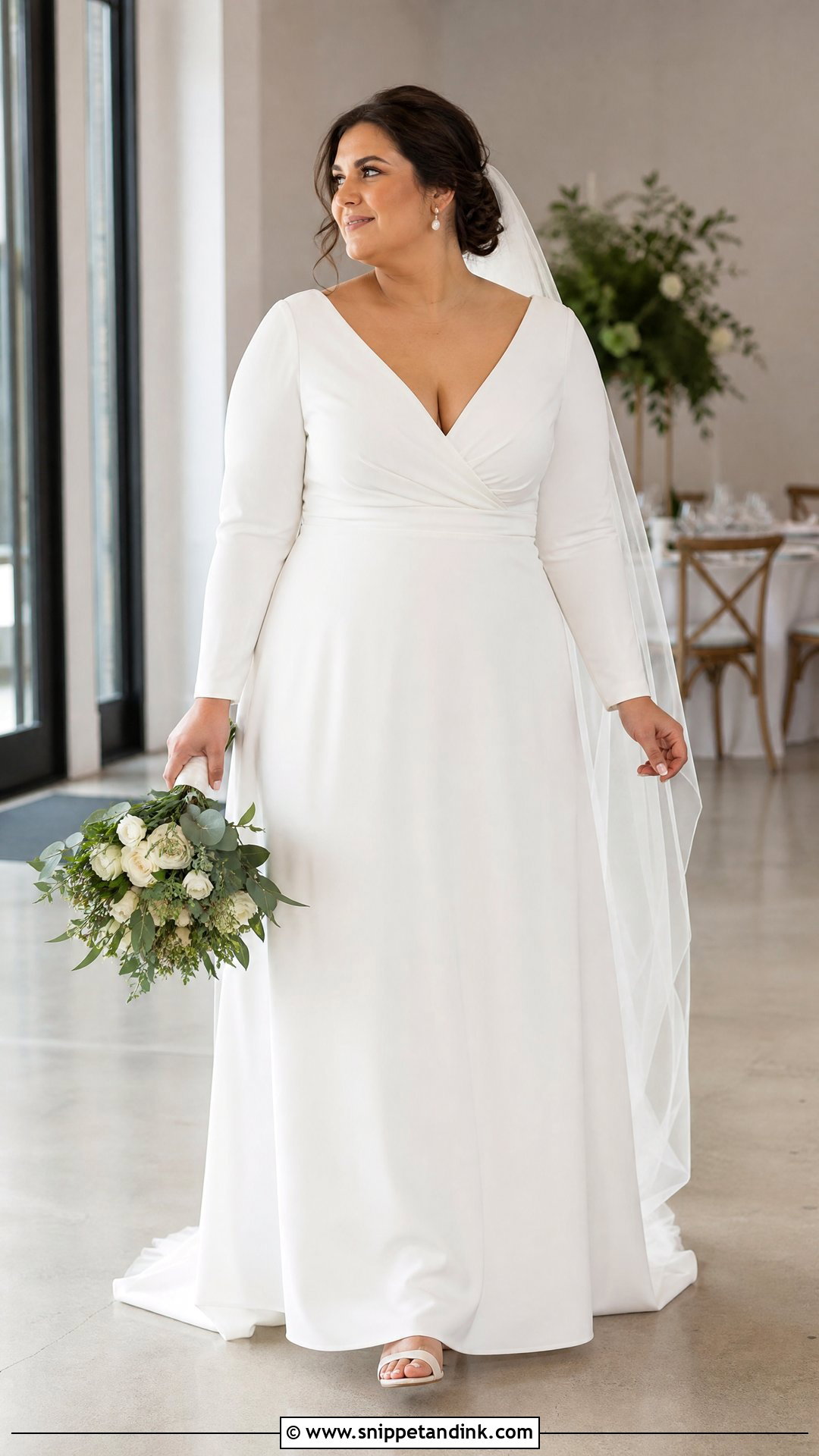
Fit, support and proportion matter far more than any rule about what a plus-size bride should avoid. A structured A-line or soft fit-and-flare with comfortable sleeves and fabric that skims without pulling is a good starting point, and many minimalist bridal lines now offer these shapes in extended sizes. Long illusion sleeves give light coverage; lined crepe sleeves feel smoother and more substantial. Sleeve mobility is where I spend the most time at these fittings, because the upper arm and full-bust area need room to move together. A defined waist seam can balance the shape once it sits correctly. Supportive block heels, medium-scale earrings and a veil in proportion to the train finish the look.
19. Simple Petite Wedding Dress With Sleeves
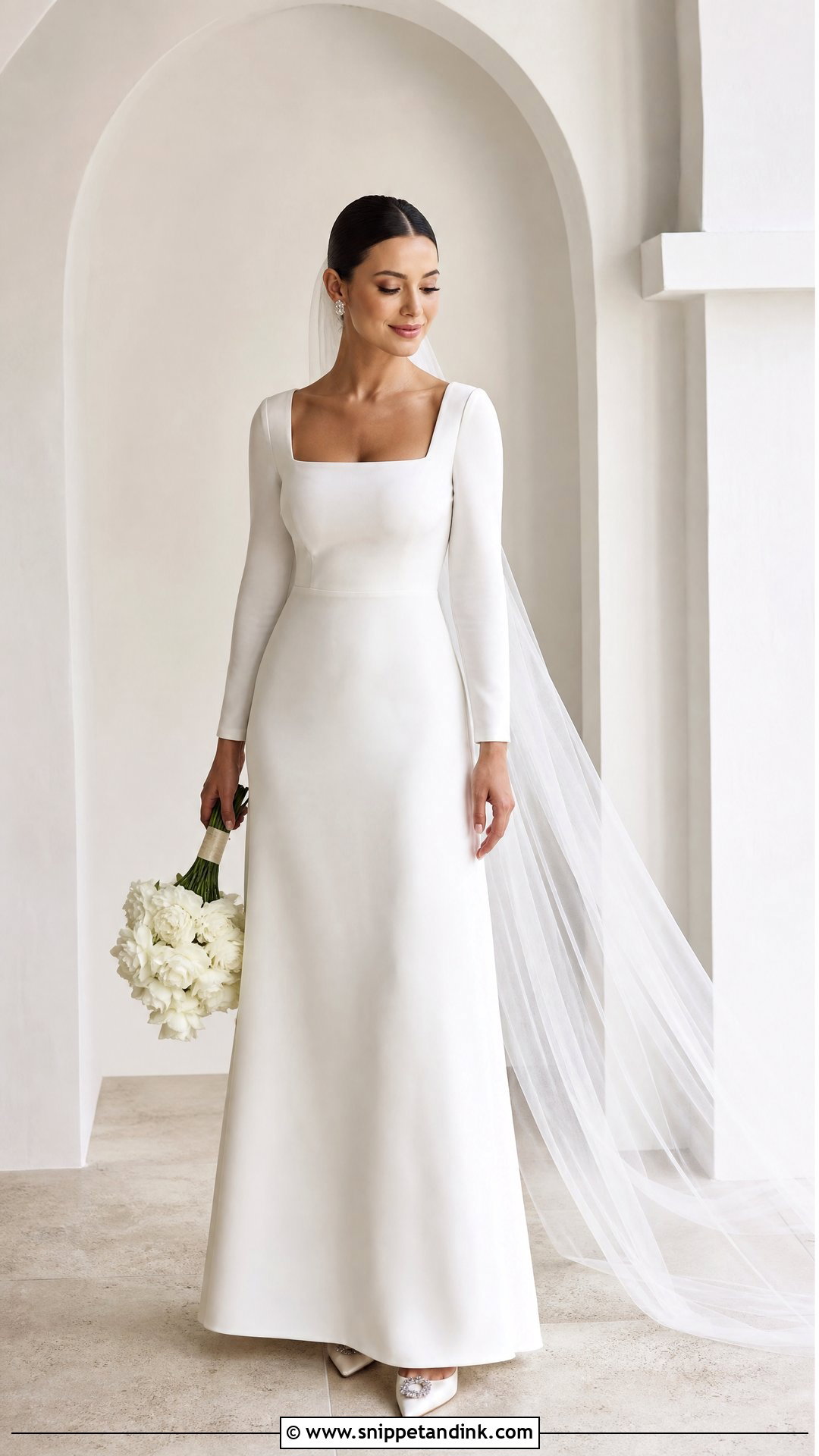
Petite brides can wear sleeves, full-length skirts, and even trains when the dress is properly proportioned. Taking up the hem alone rarely gets you there. Petite alterations often need the waist raised, the bodice shortened, darts moved and the sleeves taken up from the shoulder or cuff, so I raise all of these at the first fitting. A column or narrow A-line in plain crepe or satin keeps a long vertical line. Sleeves should end exactly at the wrist bone. A V-neck or square neck adds definition. Pointed-toe heels, delicate earrings and a narrow veil that follows the dress rather than trailing far behind it suit a smaller frame.



20. Simple Long Sleeve Mini Wedding Dress
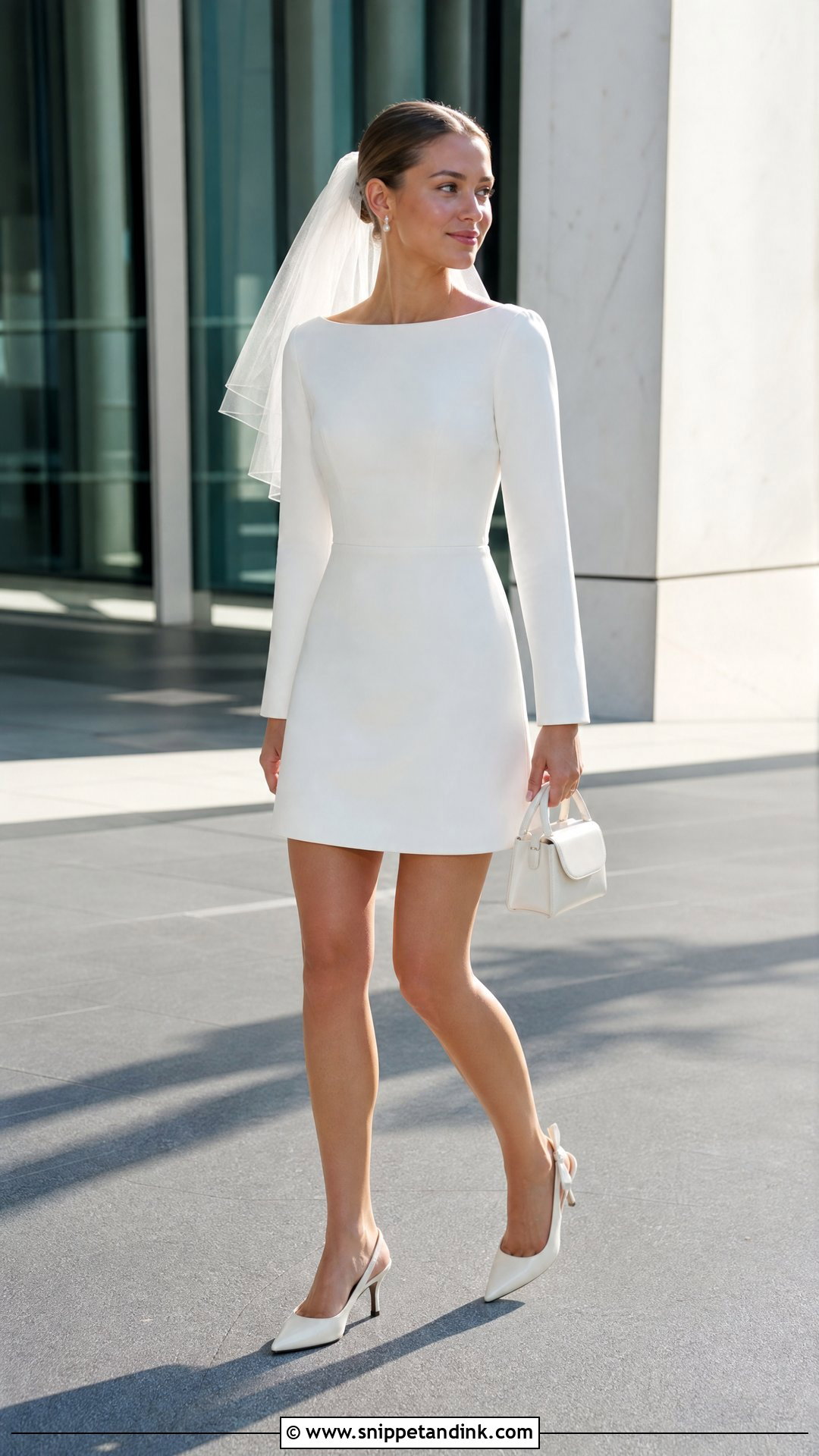
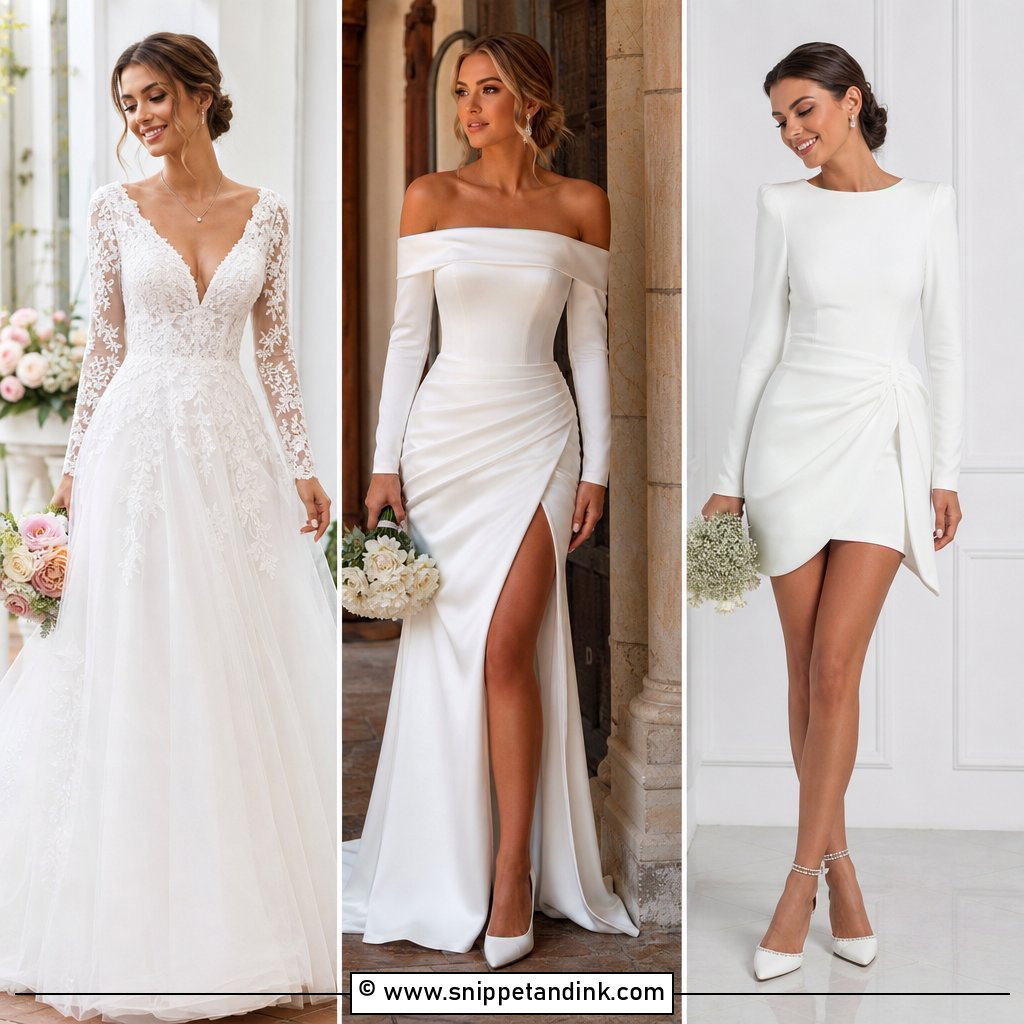
Long sleeves on a mini balance the bare legs, so the dress feels covered rather than short. That’s why I’d choose this for a courthouse ceremony, a reception change or a relaxed party. The fabric has to carry it: substantial crepe, satin or a textured weave looks bridal; a thin fabric looks like evening wear. A square, bateau or high neck and fitted sleeves keep the line sleek. Walk, sit and climb a few stairs while someone watches the hem from behind. If a true mini feels too short, go just above the knee. Pointed slingbacks, pearl earrings, a small structured bag and a short veil or tailored bow finish it.
Bracelets, Bouquet Ribbons and Ring Photos With Sleeves
Once your arms are covered, a few accessories behave differently. Most of these problems show up on the day, so it’s worth trying them out at a fitting.
- Bracelets catch on lace and chiffon cuffs and can pull threads. With long sleeves I’d skip them or choose a smooth bangle worn under the cuff.
- Ring photos happen at the wrist. A chunky cuff or a sleeve that falls over the hand hides the ring, so check how your hand looks in a close-up.
- Bouquet ribbon and wire can scrape fine fabric. Ask your florist to wrap the stems smoothly and keep pins well tucked in.
- Gloves rarely work with long sleeves. Short sleeves or cap sleeves can carry a wrist-length glove for a vintage look.
- Watches are best left off for the ceremony. They create a hard line under a fitted sleeve and show in photos as a bump.
Then there’s the veil. A long veil falling over long sleeves can hide their shape completely in photos from behind. If your sleeves have a detail at the shoulder or back, choose a veil that sits lower on the head or a shorter length.
Coverage You Can Still Dance In
The simplest sleeved dresses rely on fit more than design, so put your effort into the fitting room. Satin and crepe give structure, chiffon a softer drape, and long, short, cap, flutter and detachable sleeves each offer a different amount of coverage. Once a silhouette feels right, test it while sitting, walking, raising your arms and holding a bouquet, then let a good alterations specialist refine the bodice, waist, hem and sleeves. Comfortable shoes, light jewelry and a veil or hair piece in the same clean spirit as the dress are all you need to add.
You'll Like These Ideas:





Leave a Reply