
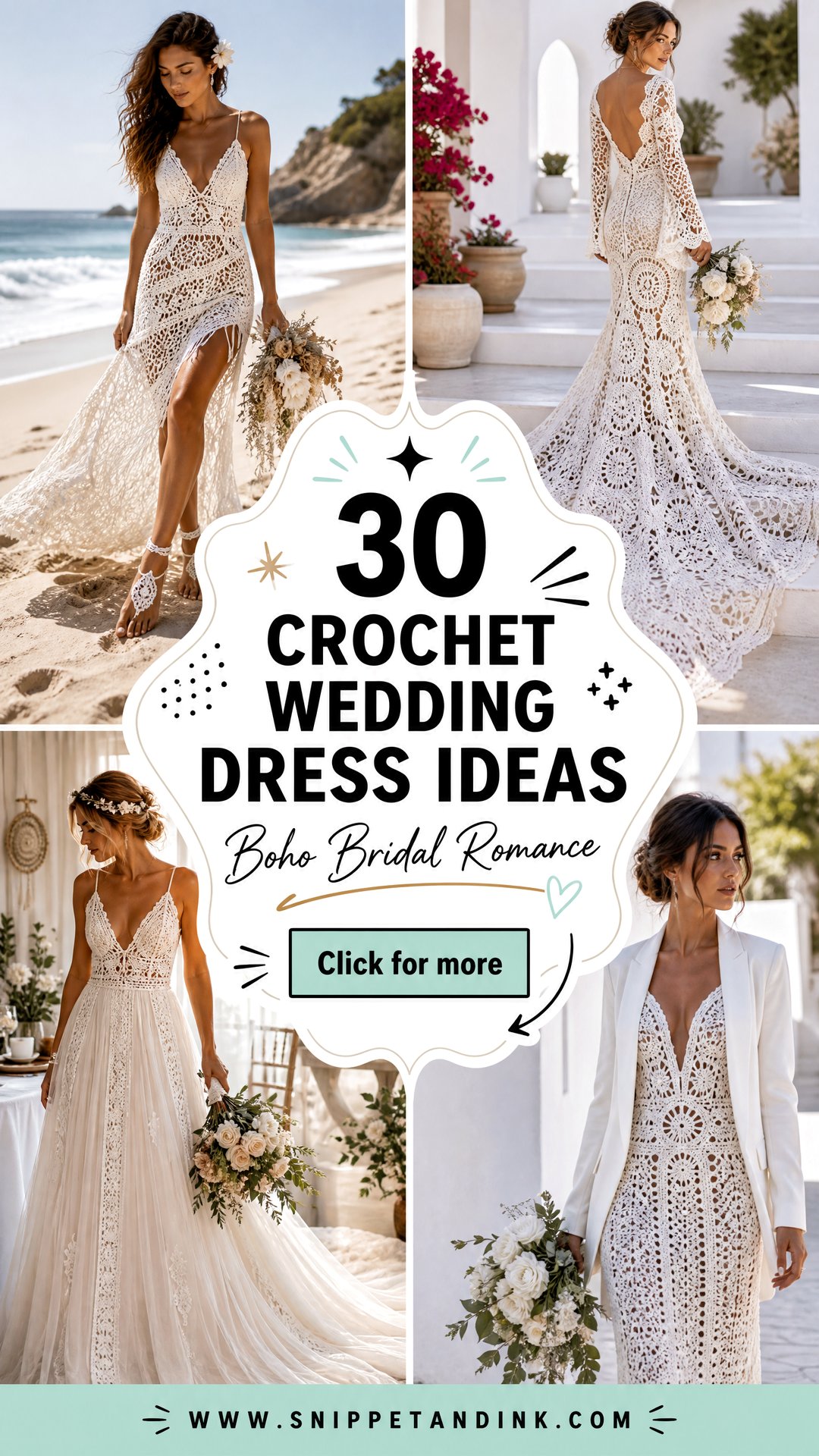
Crochet behaves differently from any other bridal fabric, and that’s the first thing I explain to a bride who’s fallen for one. It’s built from loops of yarn rather than woven cloth, so it stretches, it breathes, and it can look beachy or quite polished depending on the stitch and the lining underneath. That same structure means it snags, grows when it hangs, and needs a careful hand at alterations. The ideas below cover beach gowns, city dresses, sleeves, scalloped hems and two-piece sets, each with the styling and fitting notes I’d give in person.
Yarn, Stitch Density and Lining Decide How the Gown Behaves
Two crochet dresses can look identical on a hanger and wear completely differently by the reception. The difference sits in three places, and they’re what I check before I look at the style.
- Fibre: cotton breathes and holds a stitch well, and mercerised cotton adds a slight sheen and keeps its shape longer. Linen blends feel cool but crease. Acrylic is cheaper and lighter on the wallet, but it traps heat and can pill where your arms rub the bodice.
- Stitch density: a tight stitch holds its shape and needs less lining. A very open, lacy stitch is lighter and prettier in sunlight, but it stretches more and depends on the lining for structure and coverage.
- Lining: a smooth lining in nude, ivory or a colour matched to the yarn makes the gown look finished. A lining in the wrong shade shows through every gap in the pattern, and that’s what makes a crochet dress look homemade in the wrong way.
Try the dress on and sit for five minutes, then stand and look at the seat and the hips. If the yarn has bagged out, it will do the same on the day, only more.
1. Boho Crochet Wedding Dress With Bell Sleeves
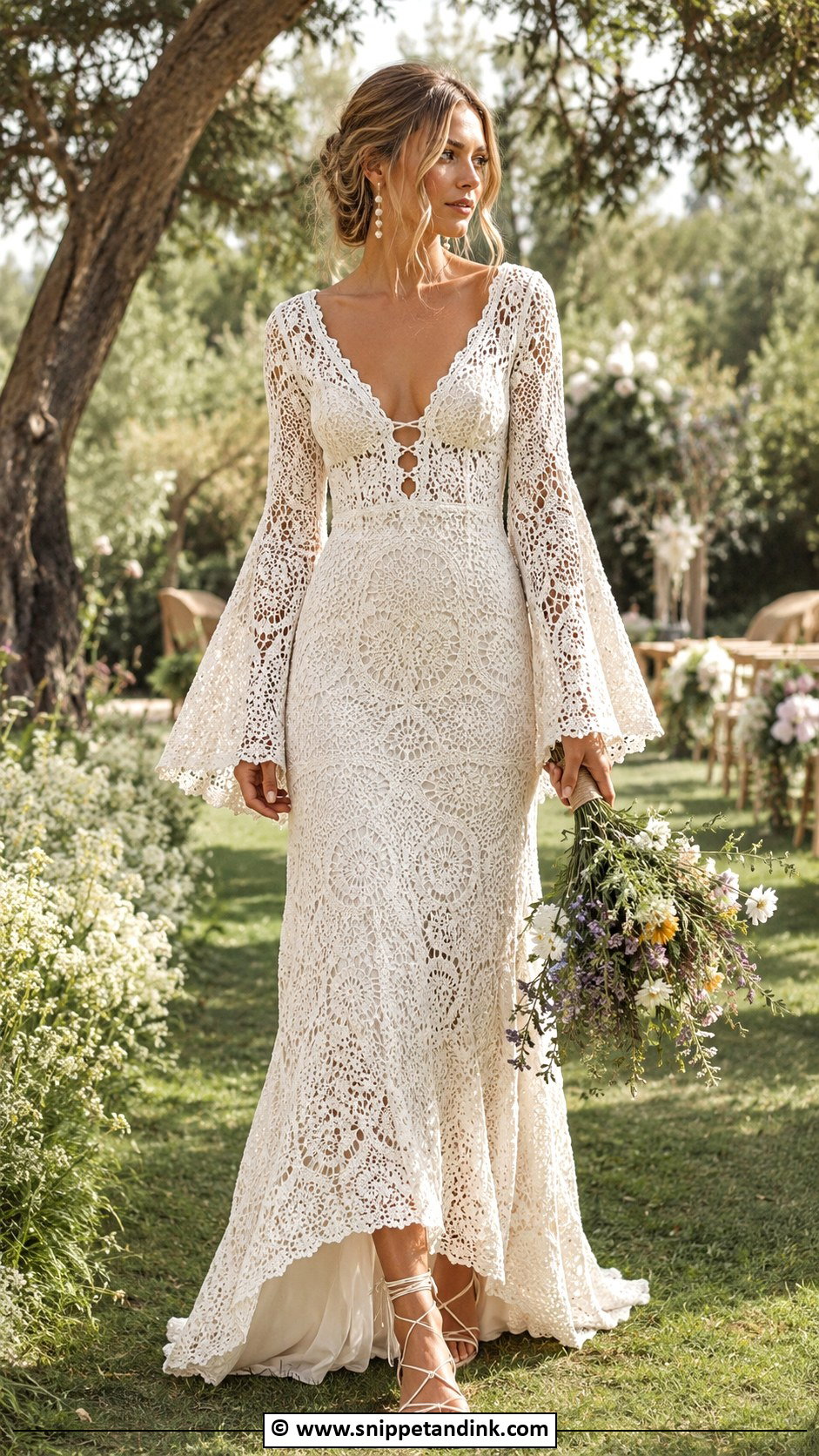
Bell sleeves on a boho crochet wedding dress float as you walk, and they also dip into everything: the cake, the guest book pen, a glass of red. I suggest brides practise signing and eating in them at a fitting. Keep the bodice fitted and the neckline a soft V or square so the sleeves stay the feature. An open stitch needs a lining that matches either your skin or the yarn, or you’ll see patchy shadow in photos. Loose waves, pearl drops, flat sandals and a wildflower bouquet suit outdoor ceremonies.
2. Beach Crochet Wedding Dress With Barefoot Sandals
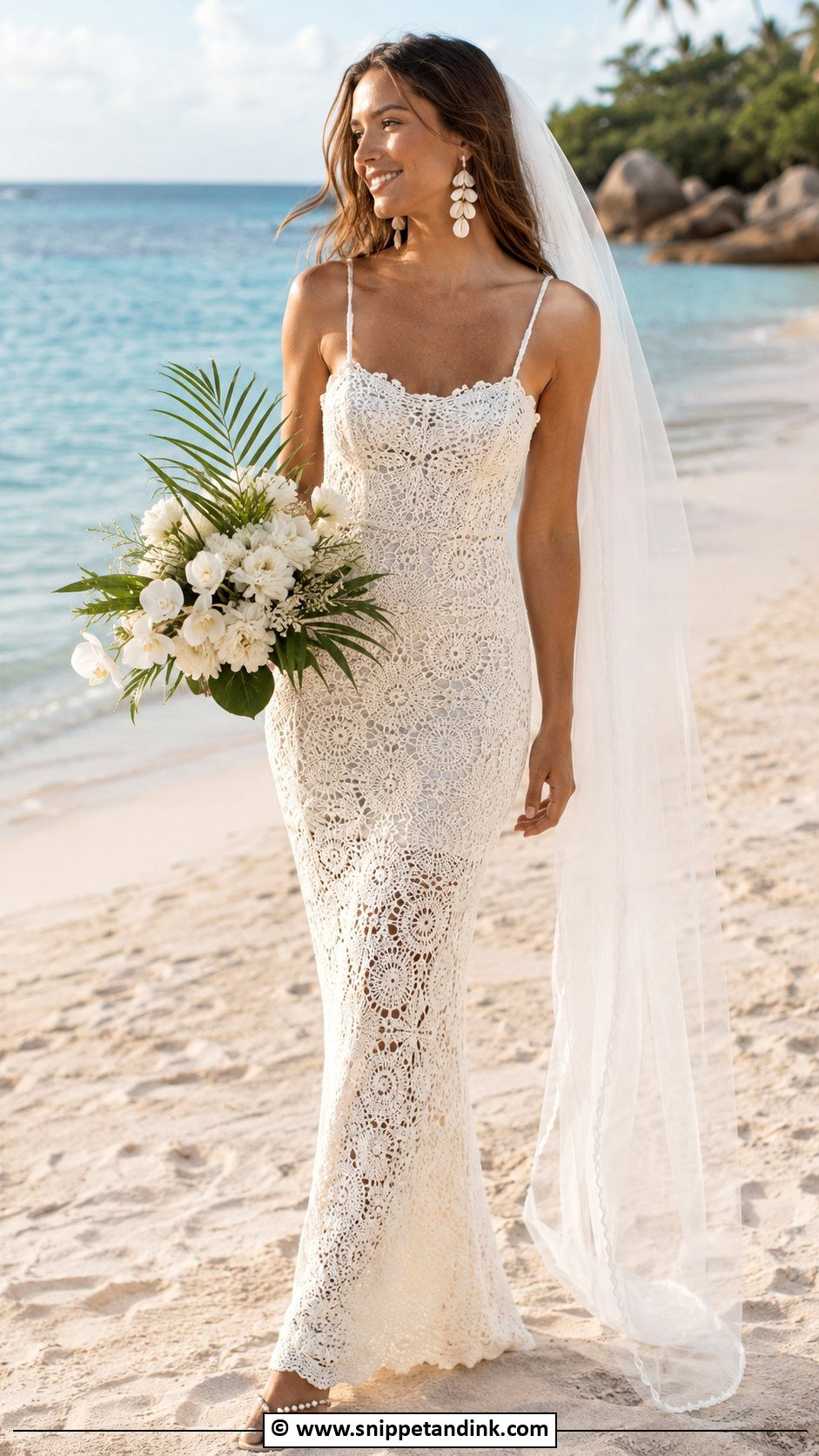
Cotton or a cotton blend is what I want for a beach gown, since it breathes and doesn’t cling in humidity the way acrylic yarn does. Salt air and a sea breeze suit a relaxed column or A-line with spaghetti straps, a halter or short sleeves. Barefoot sandals are fine on firm sand; flat pearl sandals give more support on soft sand. Keep it simple with shell-inspired earrings, a sheer fingertip veil and a loose low bun, plus white tropical flowers.
3. Long Sleeve Crochet Wedding Dress With Veil
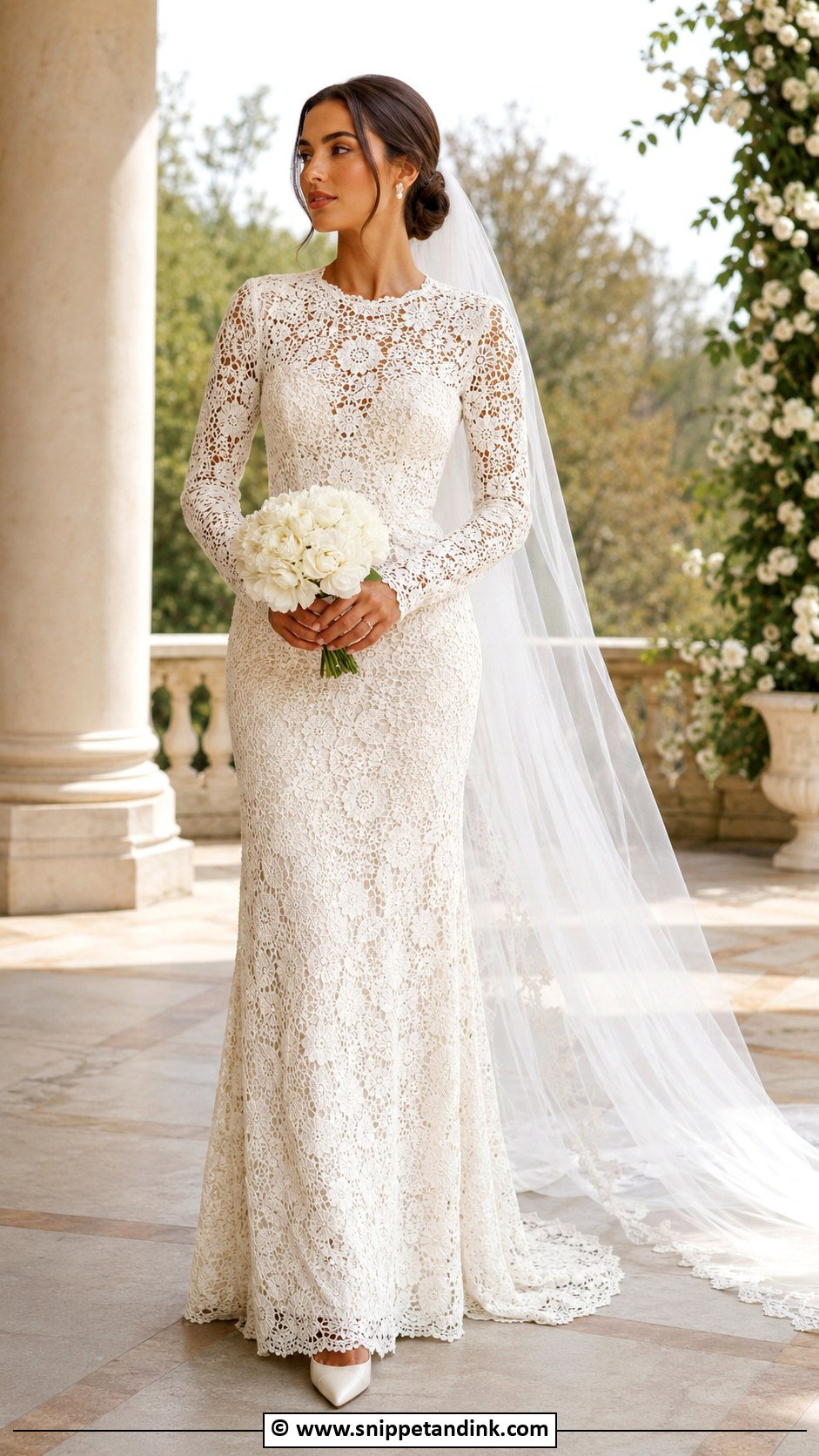
Long crochet sleeves breathe better than lace sleeves, which makes them a good choice for spring and fall when the temperature swings. The catch is that crochet sleeves grow. Cotton yarn relaxes with warmth and movement, so a sleeve fitted snugly at the morning fitting can sit slightly looser by evening. I fit them a touch closer than a woven sleeve for that reason. A slim A-line or sheath, a cathedral veil, pointed heels and pearl studs keep it classic, with a smooth low bun to show the sleeve work.
4. Vintage Crochet Wedding Dress With Mary Jane Heels
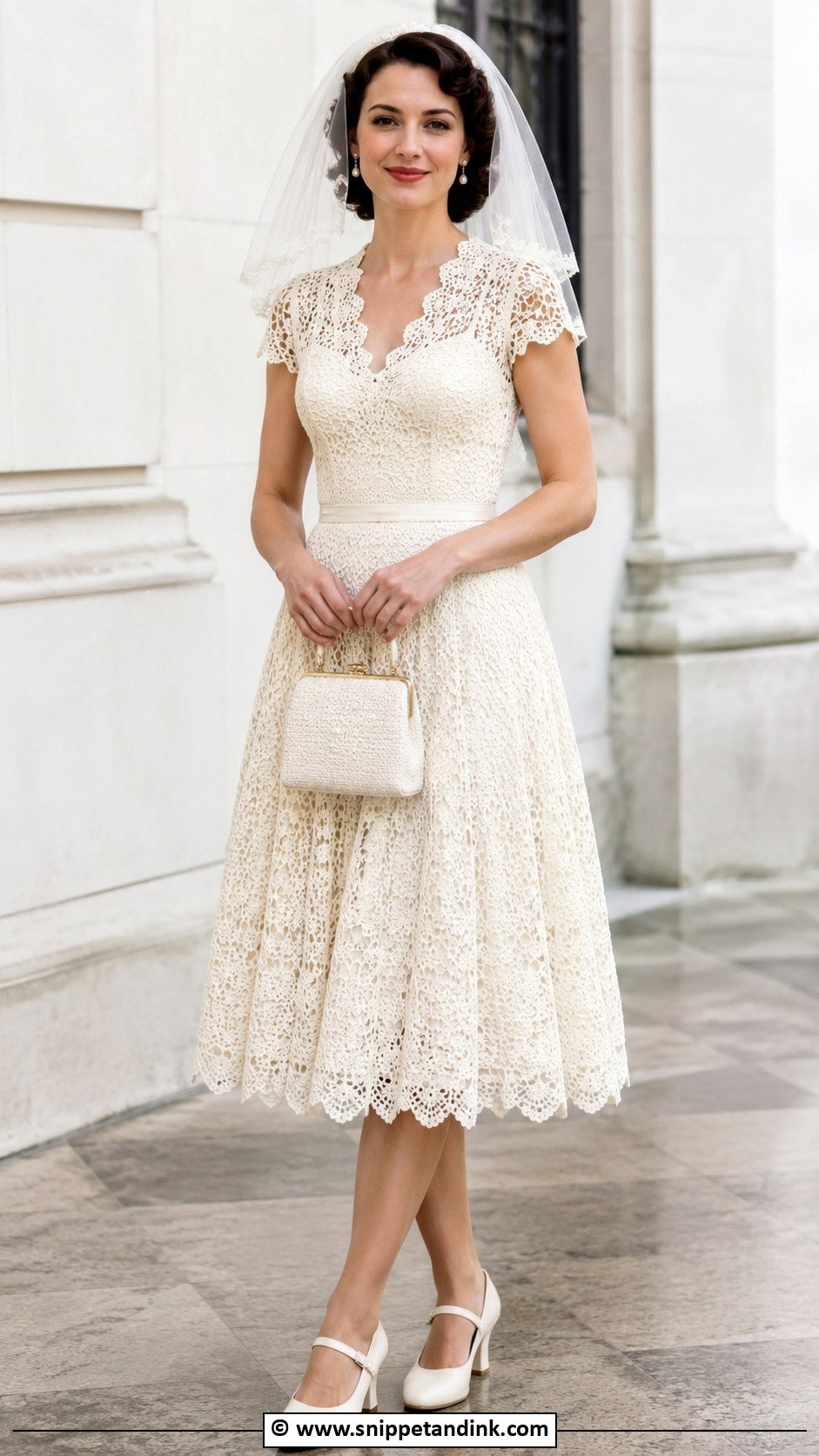
Vintage crochet slides into costume quickly, and the shoes usually decide which side it lands on. Ivory Mary Janes with a modern block heel keep it fresh, while a very retro shoe tips it over. Tea-length or ankle-length gowns with scalloped edges, floral motifs or a high neckline give the period feel. A neat bun, soft blush and a small structured bag carry the rest. A short veil or bow veil finishes it without leaning too far into the past.
5. Crochet Mermaid Wedding Dress With Strappy Heels
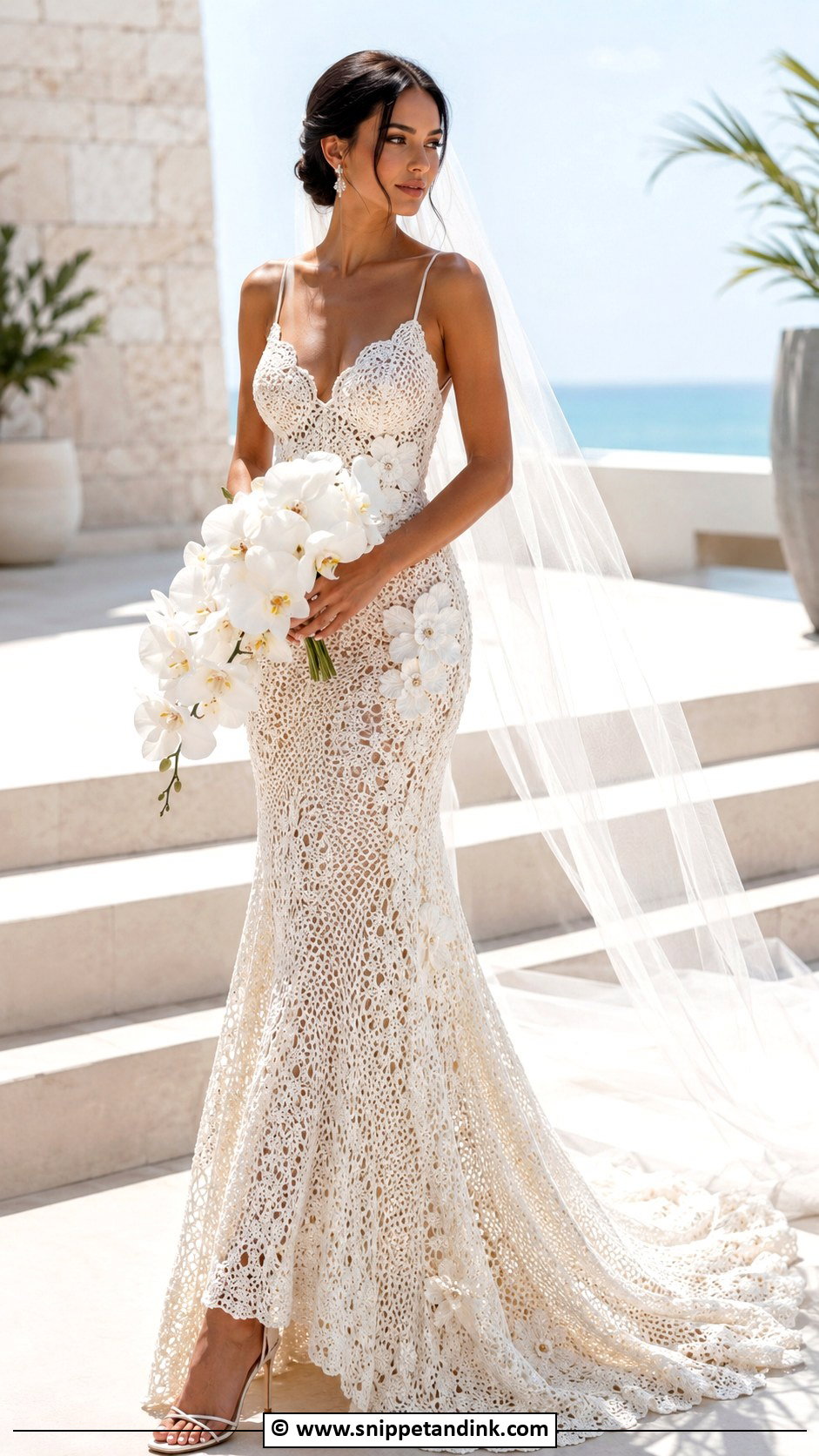
A fitted crochet gown stretches as you wear it, so a crochet mermaid wedding dress needs a firm lining doing the structural work, not the yarn. I check whether the lining is a stretch fabric that moves with you or a woven one that holds the shape. Ideally the bodice has both. The flare should start below the knee. Floral or geometric stitch patterns, strappy heels, a sleek veil and a polished updo suit resorts and modern indoor ceremonies.
6. Crochet A Line Wedding Dress With Pearl Earrings
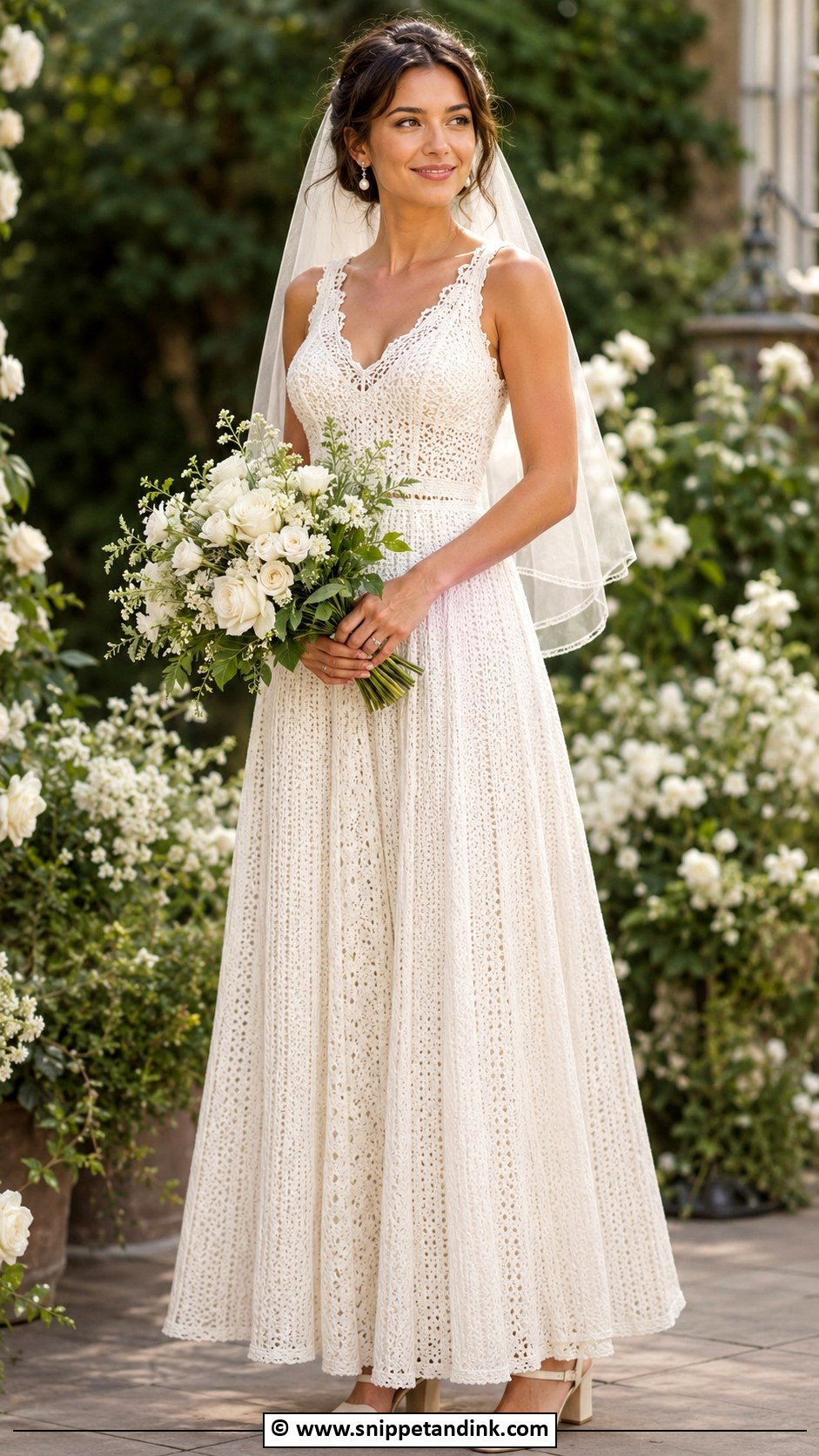
An A-line is the crochet shape I’d recommend to most brides, because the skirt hangs away from the body and the stretch of the yarn doesn’t distort it. All-over crochet with a smooth lining, or a crochet bodice above a soft skirt, both work. A narrow satin belt gives the waist some definition if the yarn feels too soft. Pearl earrings, ivory block heels and a fingertip veil keep it clean for gardens and daytime ceremonies.
7. Crochet Wedding Dress With Open Back
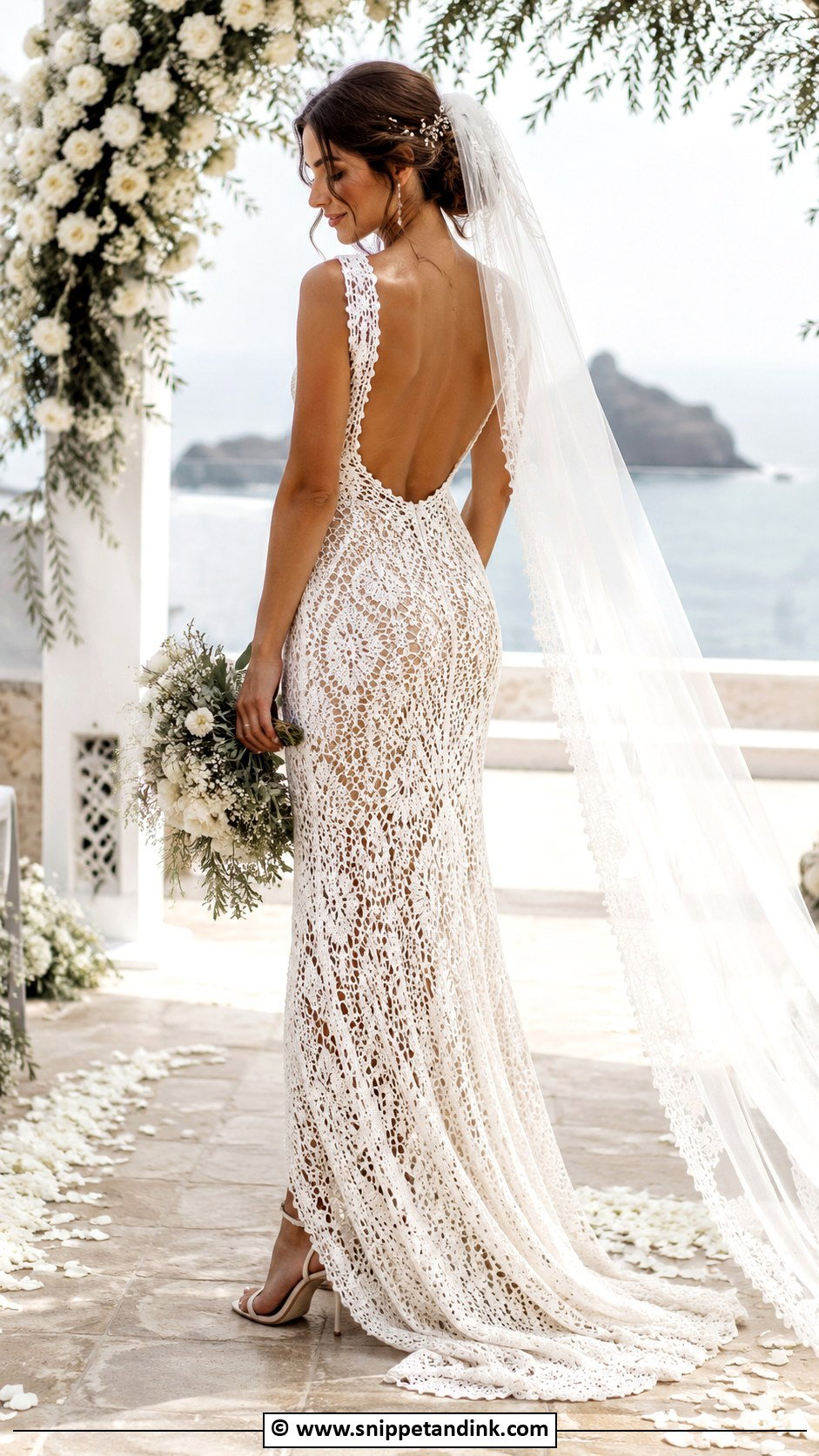
Open backs on crochet need more support than on a woven dress, because the yarn has no rigidity to keep the side edges flat. I look for a stay tape or a fine elastic sewn along the inner edge of the back opening. Without one, the sides gape when you lean forward. A high front neckline or simple straps makes the back the statement. Keep the hair in a low chignon, and remove a long veil after the ceremony so the back is visible at the reception.
8. Crochet Mini Wedding Dress With Block Heels
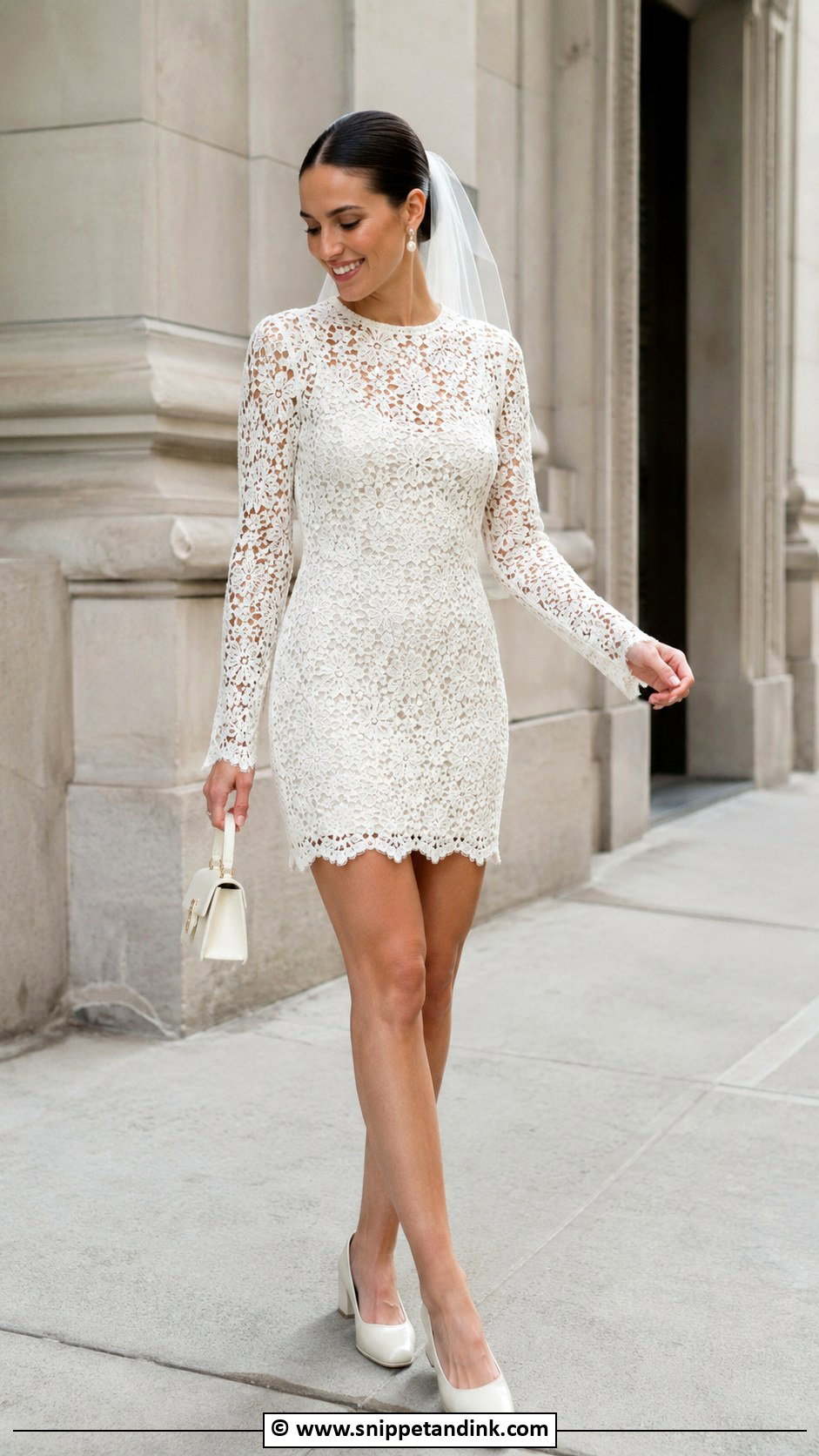
Minis are the best way into crochet for a courthouse ceremony, a reception change or a casual elopement, and lining matters most here because the hem sits high. A lined mini with long sleeves, a square neckline or scalloped trim still reads as bridal. Ivory block heels, pearl earrings and a top-handle bag give it polish, and a short veil or satin bow adds a ceremony touch. Sheer tights work if you’d like more coverage.
9. Crochet Two Piece Wedding Dress With Maxi Skirt
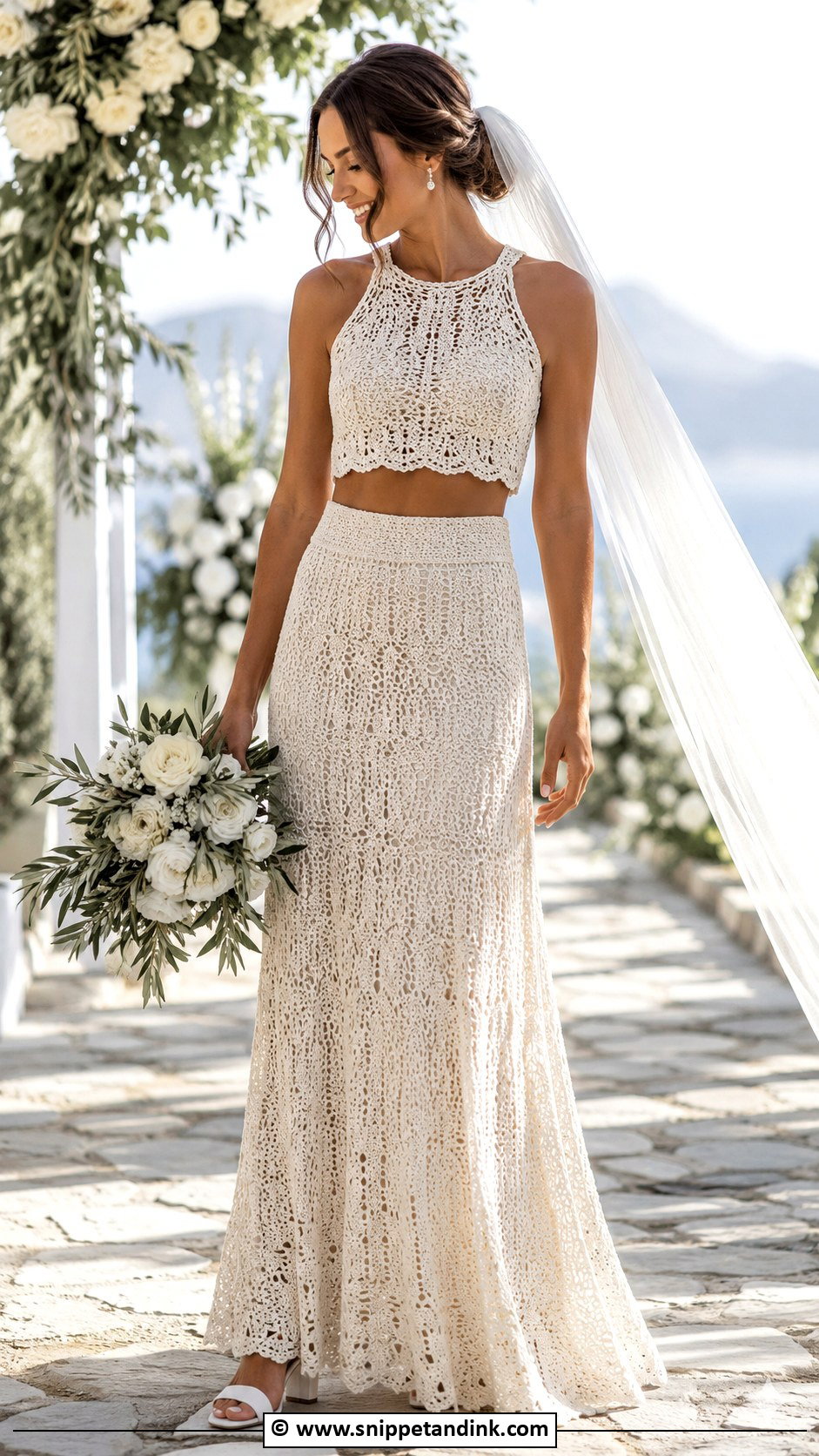
With two-piece crochet, check the gap between the top and the skirt waistband while your arms are raised. Crochet crop tops ride up more than woven ones because the yarn stretches upward as you lift. A high-waisted maxi skirt in a lined ivory or cream solves most of that. Low pearl heels, a soft veil and minimal jewelry balance it, with a bouquet of white flowers and olive branches. Either piece can be worn again after the wedding.
10. Crochet Halter Wedding Dress With Gold Sandals
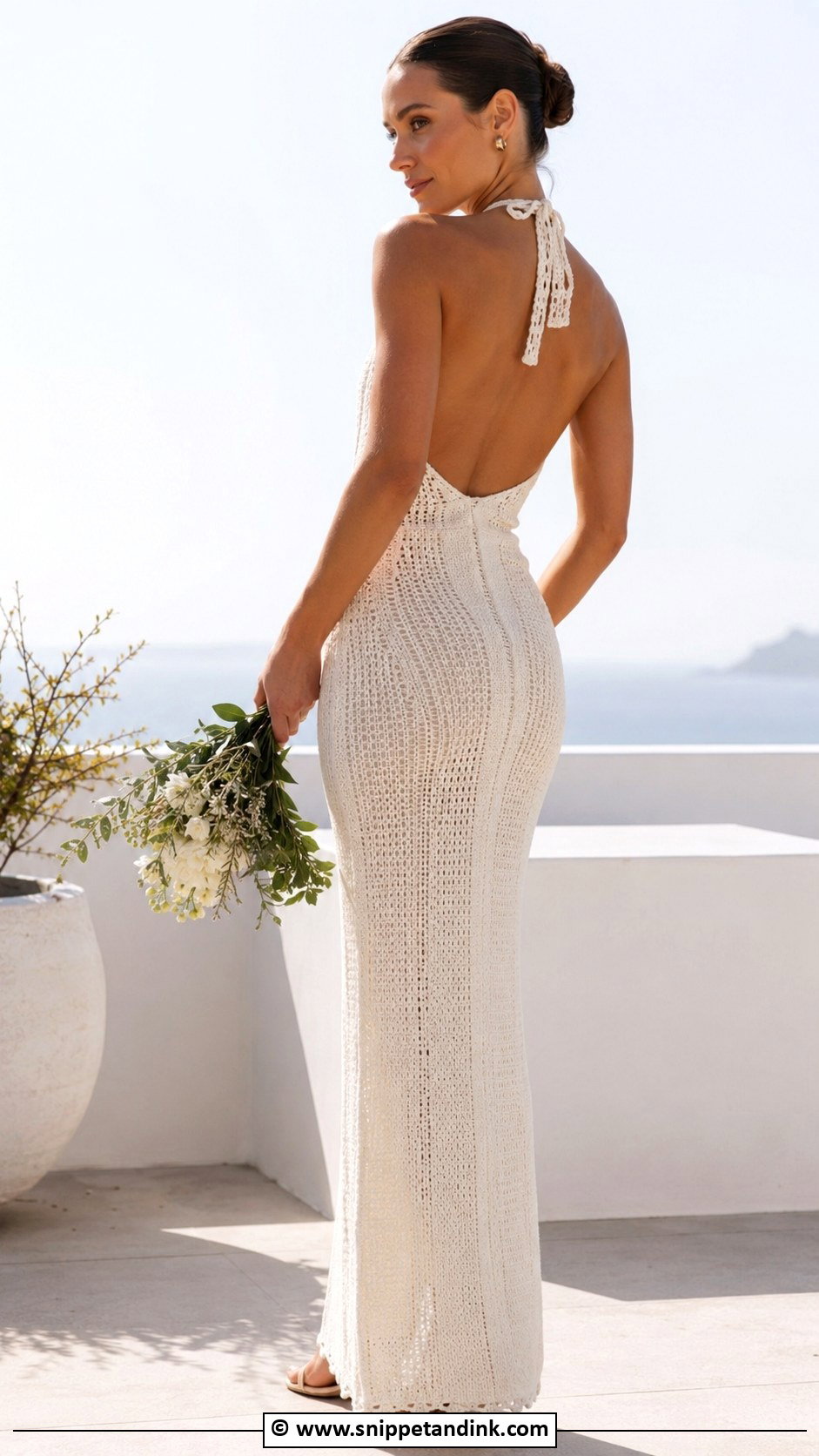
A halter puts all the weight of the dress on the back of your neck, and crochet is heavier than it looks. On a long, fully crocheted gown I ask for the halter strap to be reinforced or slightly wider, so it doesn’t dig in after a few hours. Column and flowing A-line shapes both work. Gold sandals and small gold hoops suit ivory yarn, with a sleek bun or smooth ponytail for beaches and rooftops.
11. Crochet Wedding Dress With Fringe Hem
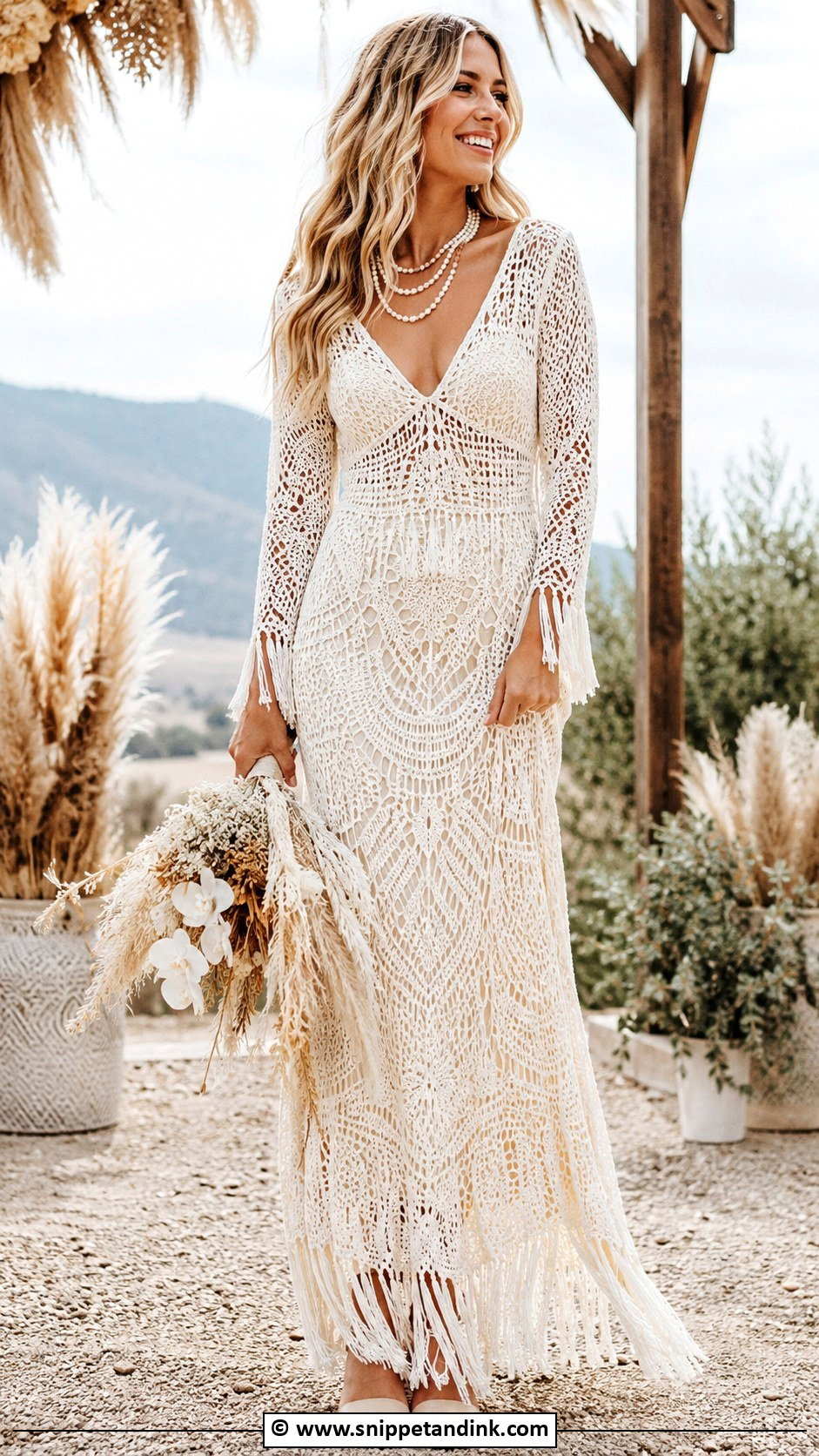
Fringe on crochet is often knotted into the stitches rather than sewn on, which means it tangles and can pull loops loose if it’s yanked. I’d keep it to the sleeves, the hem or the train. A fringe hem works best over a simple slip lining so it can swing freely. Ivory sandals, layered pearls and loose waves suit desert, beach and festival-style weddings. With this much texture, swap a full veil for a flower comb or pearl pins.
12. Crochet Wedding Dress With High Neck
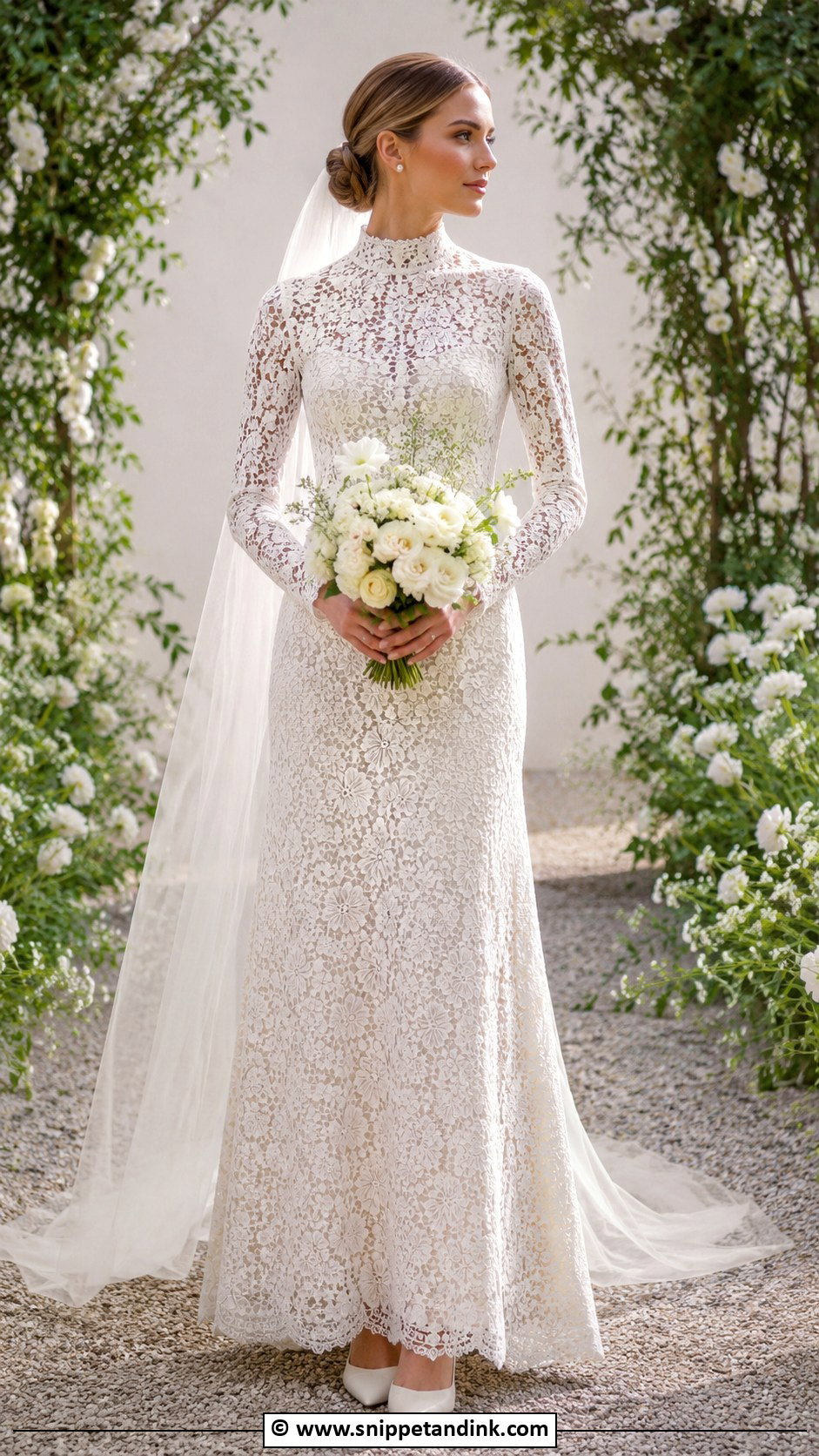
A high neck lets the stitch work frame the face, especially if the dress has fine floral motifs. Crochet doesn’t trap heat the way a heavy lace high neck can, which makes this a good choice for warmer months than you’d expect. Choose a fitted bodice with a soft A-line or column skirt. Pointed pumps, pearl studs and a clean low bun keep it neat, and a long veil softens the neckline. Fresh, simple makeup suits the texture.
13. Off Shoulder Crochet Wedding Dress With Low Bun
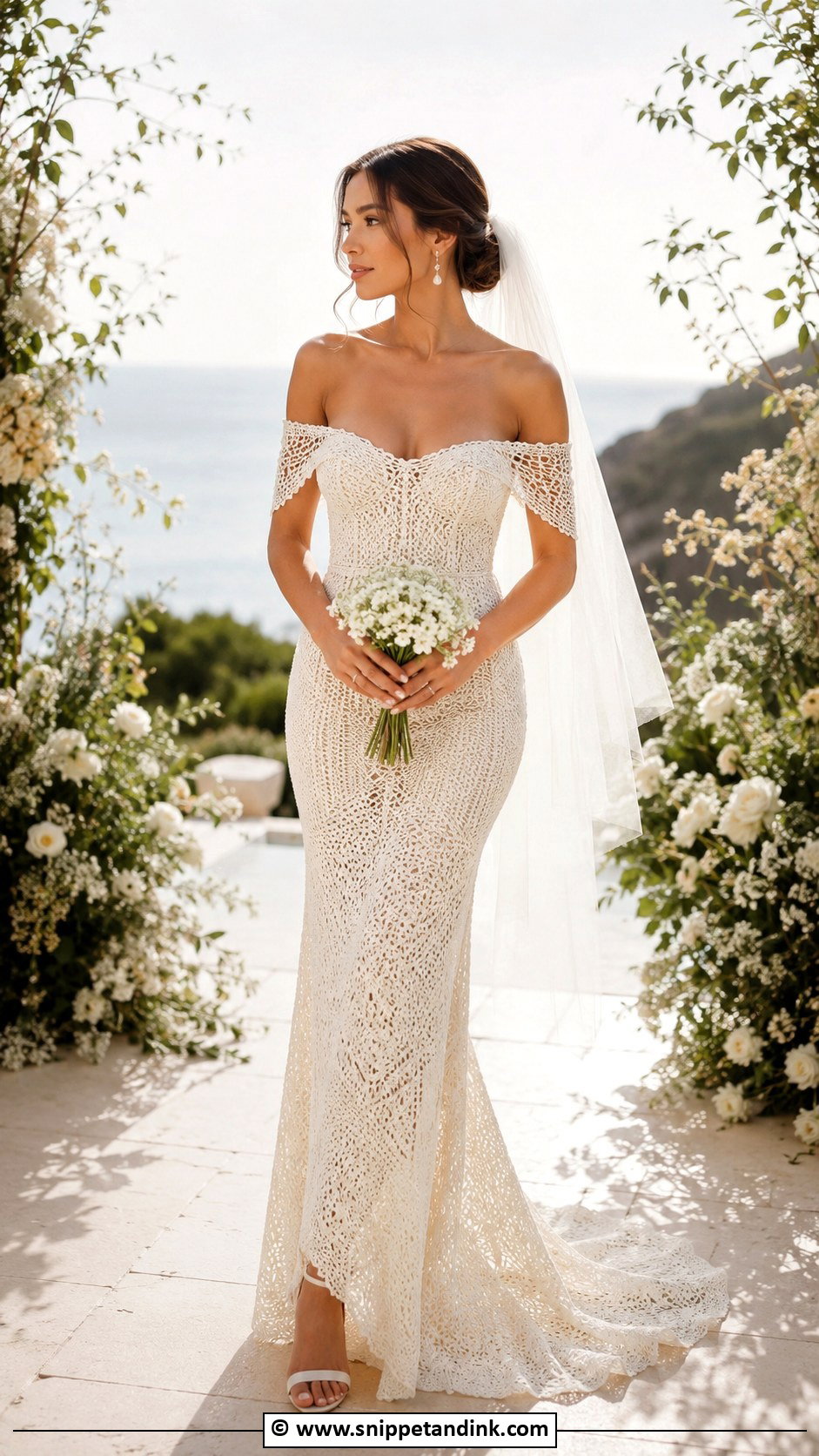
Off-shoulder crochet slides more than off-shoulder satin. The band needs an elastic or a boned inner structure to stay put, and I wouldn’t sign off on one without it. Once that’s sorted, fitted and flowing skirts both work. A low bun, pearl drops and ivory heeled sandals keep the collarbone in view, and a soft tulle veil adds ceremony drama. Keep the shoes and jewelry plain if the stitch pattern is bold.
14. Crochet Slip Wedding Dress With Sheer Overlay
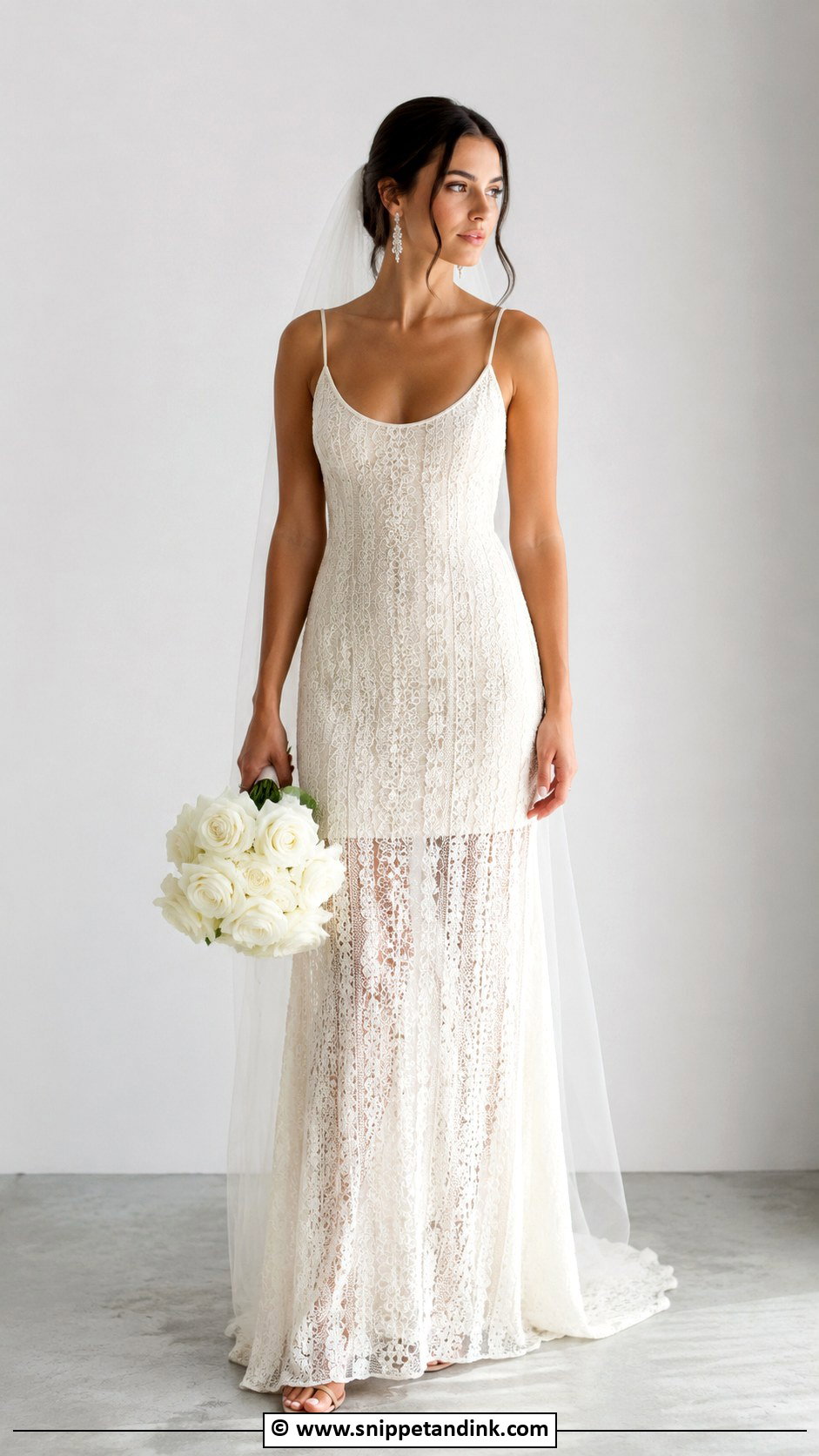
A smooth slip under a crochet overlay gives you coverage and comfort with handmade texture on top. The slip shapes the entire outfit, so that’s what gets fitted first, with the overlay adjusted over it afterwards. If the overlay is cut slightly larger than the slip, it hangs with a soft gap that looks expensive. Straight or lightly flared silhouettes suit it. Barely-there heels, a simple veil and delicate earrings keep it minimal, and a white rose bouquet finishes it.
15. Crochet Wedding Dress With Scalloped Hem
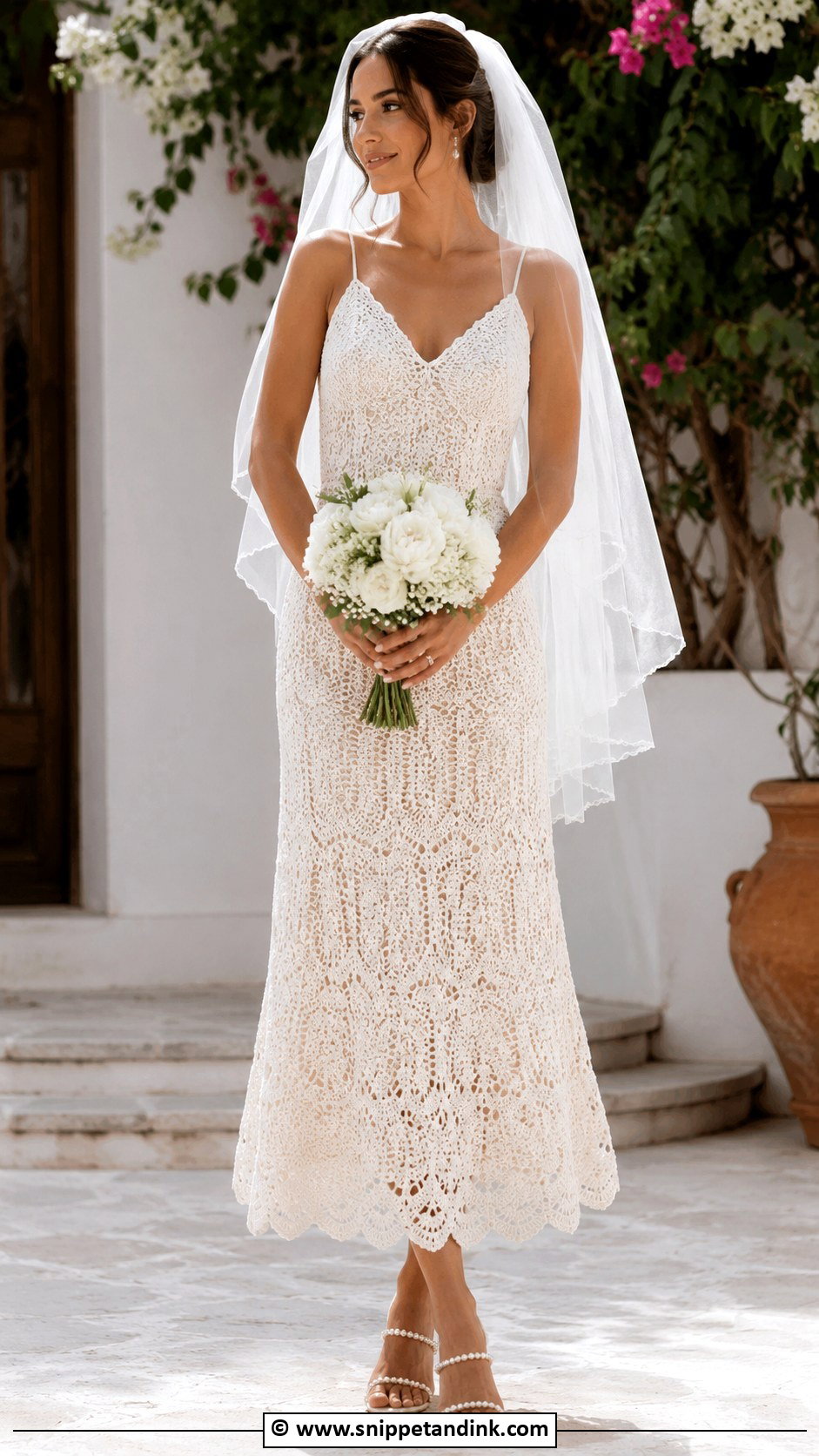
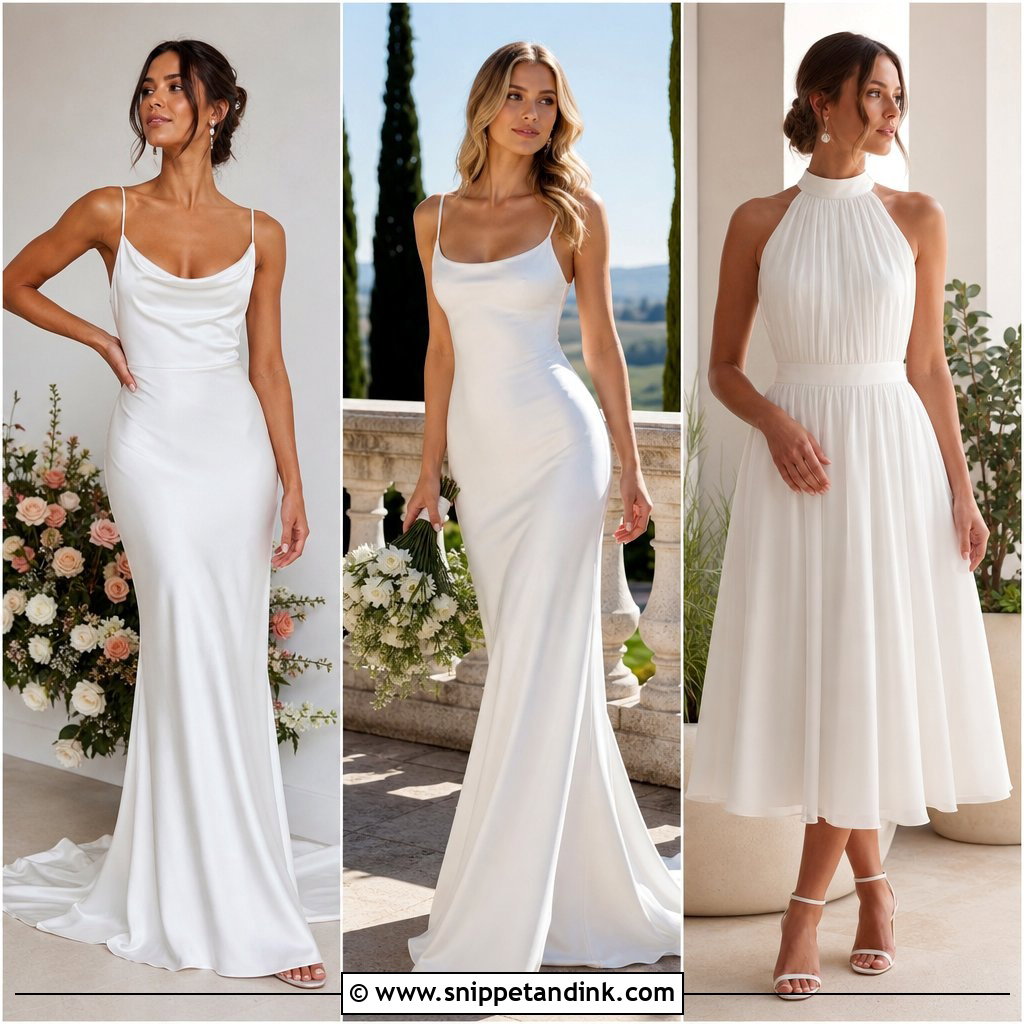
Scalloped edges are one of the few crochet details that photograph clearly from a distance, so I want them visible. That rules out a hem that pools on the floor. Choose midi, maxi or tea length in a column, A-line or soft trumpet. Simple ivory heels or pearl sandals keep the hem in view. A fingertip veil, small earrings and rounded white blooms complete it, and it suits almost any venue.
16. Crochet Wedding Dress With Cap Sleeves
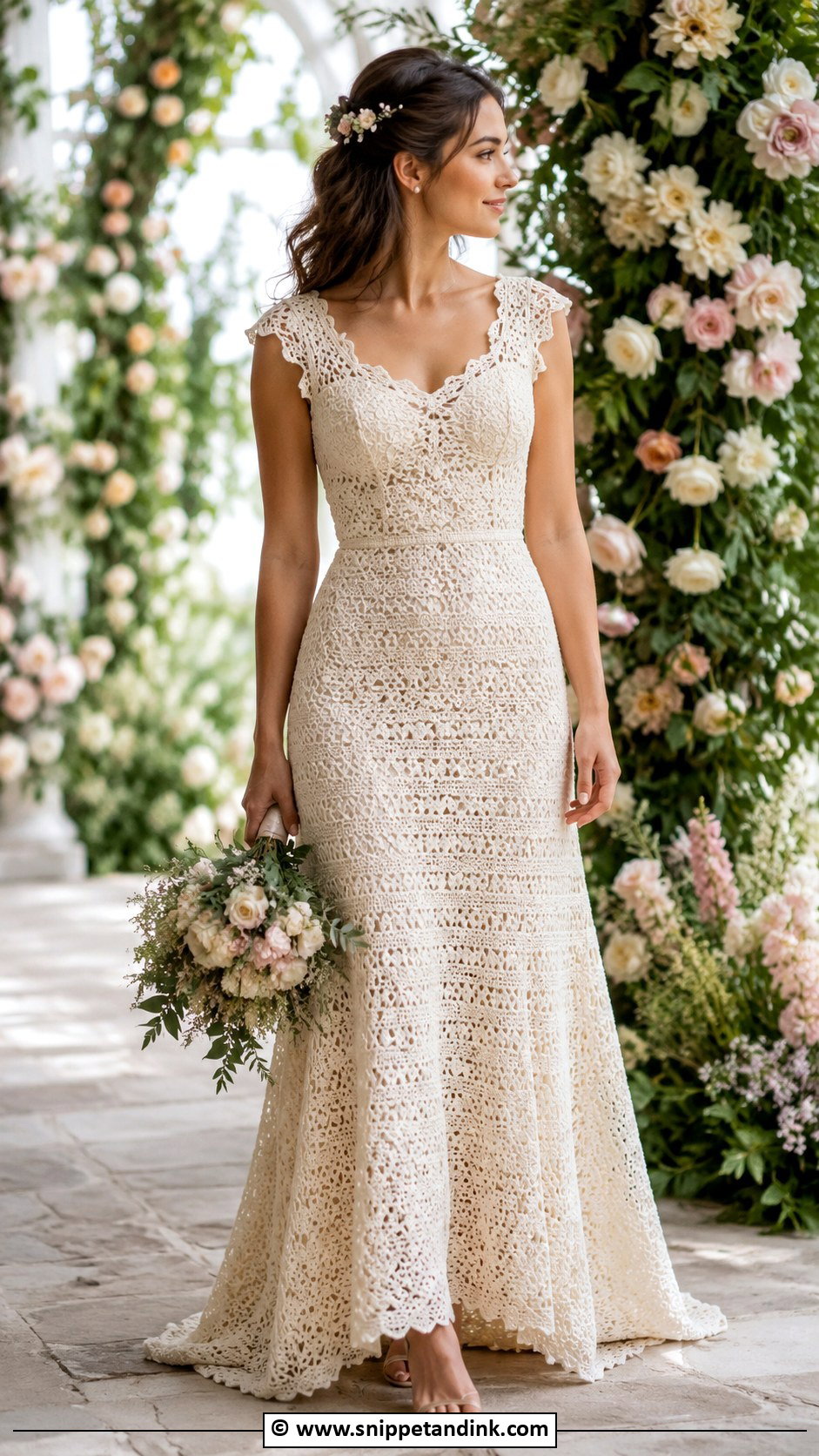
Cap sleeves give a little coverage over the shoulder without any of the arm restriction of a full sleeve. Crochet cap sleeves can curl at the edge over a long day, so ask whether the edge has a firm finishing row. A fitted bodice with a flowing skirt reads classic; a slim dress reads modern. Low heels, pearl studs and a soft half-up style suit them, with a short veil or floral comb for spring and summer.
17. Crochet Wedding Dress With Puff Sleeves
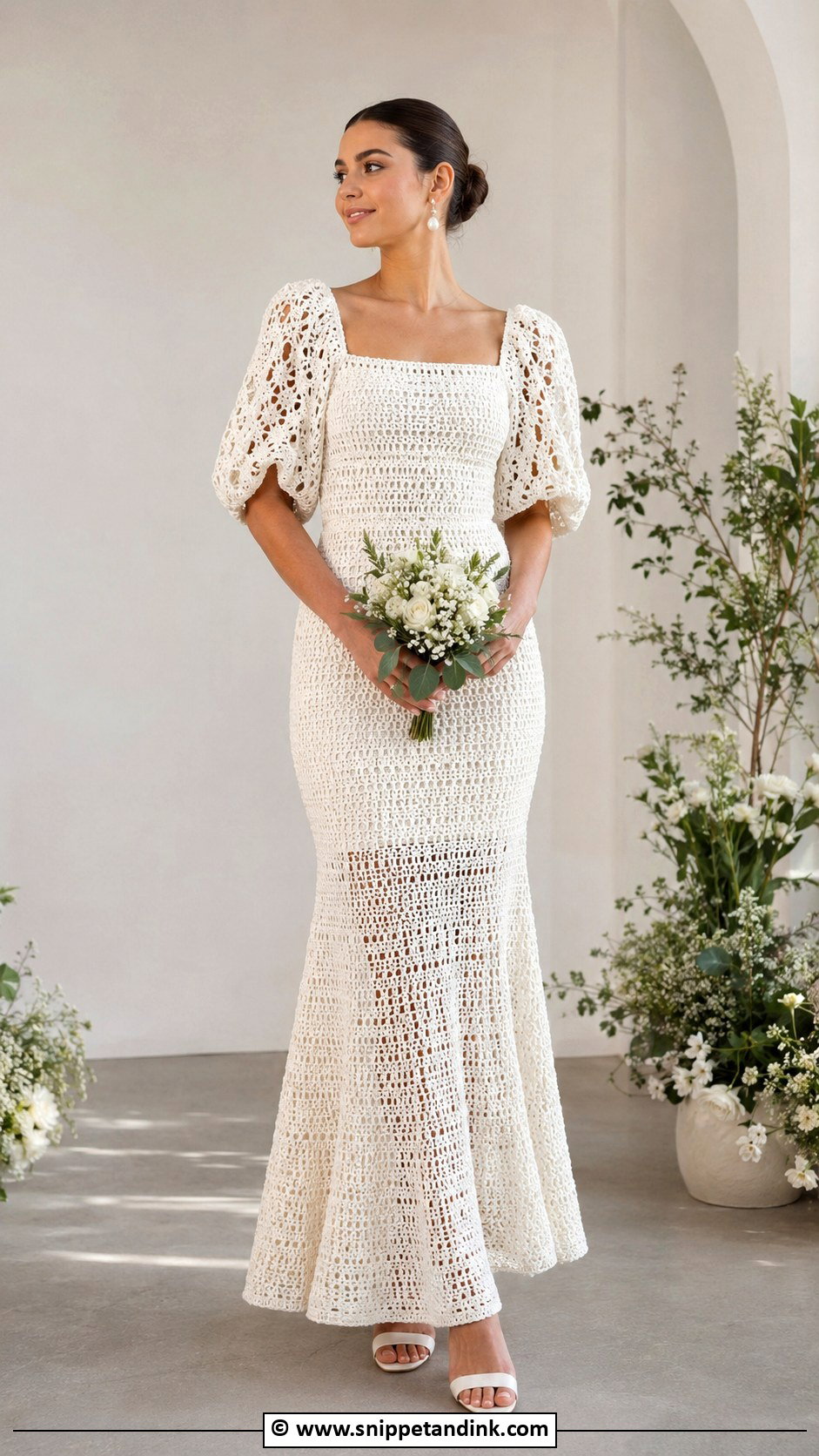
Puff sleeves add width at the shoulder, so the rest of the dress has to stay quiet. A square neckline, a fitted waist and a lightly flared skirt keep the balance. In crochet, the puff comes from the yarn’s own body or from a tulle support inside the sleeve, and the second option holds its shape far longer. Simple heels, a sleek bun and tiny pearl earrings work, with a plain veil rather than a detailed one.
18. Crochet Column Wedding Dress With Minimal Jewelry
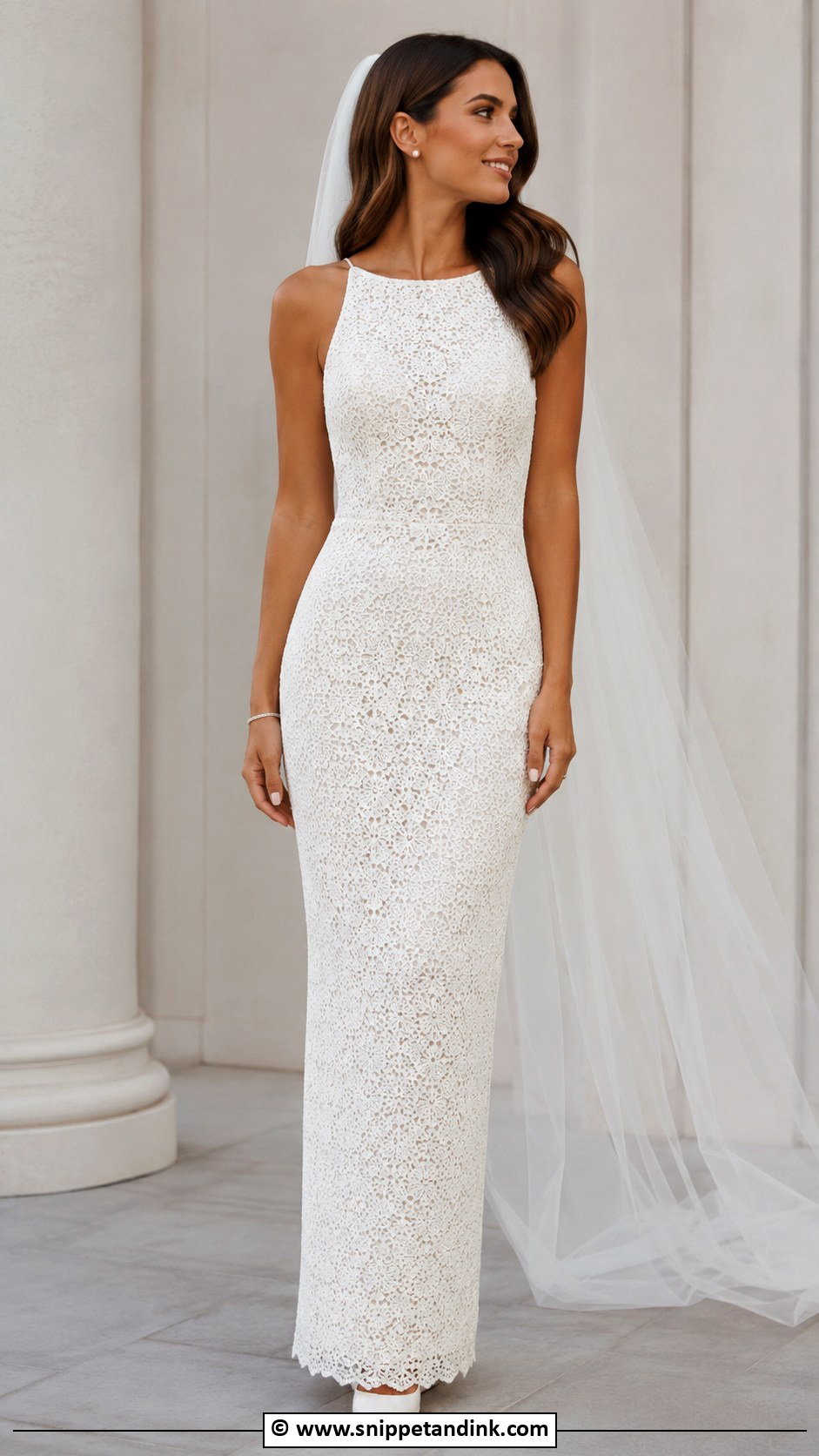
Columns are the cleanest crochet shape, and the hardest to fit, because a straight skirt shows every place the yarn has stretched. I fit them standing and sitting, and check the seat after the bride has sat for a few minutes. A lined ivory dress with clean straps, a square neck or a boat neck suits city venues and galleries. Pearl studs, pointed heels and a smooth bun keep it refined, and a long plain veil adds ceremony impact.
19. Crochet Midi Wedding Dress With Slingback Heels
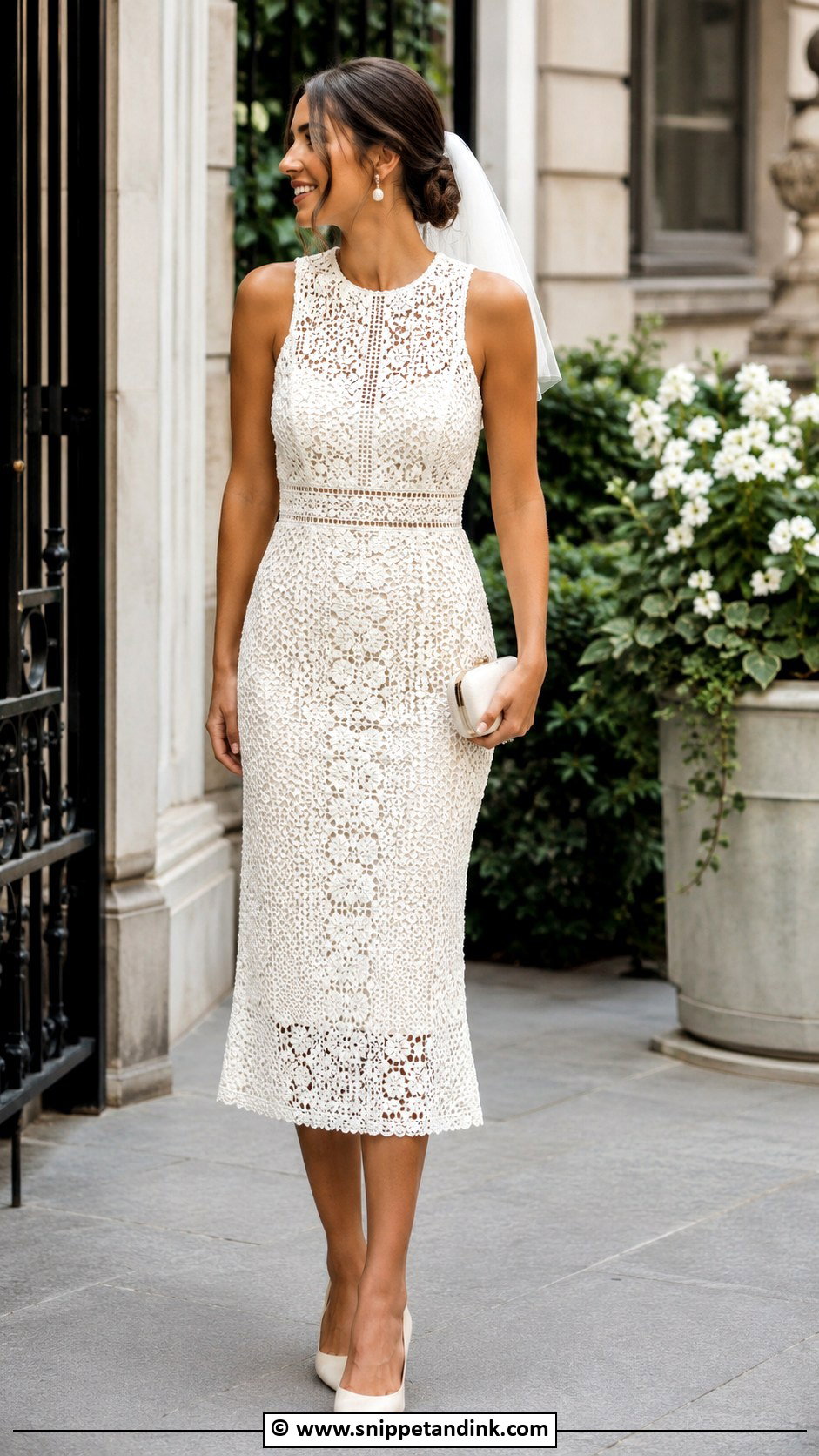
Midi length keeps crochet off the ground, where it would otherwise pick up grass, sand and dust. A crochet midi wedding dress with a fitted bodice and a hem just below the knee or at mid-calf moves easily and shows off your shoes. Ivory slingbacks, pearl earrings and a small clutch suit it, with a short veil or bow. Courthouse weddings, garden ceremonies and casual receptions are its natural home, and it’s easy to wear again.
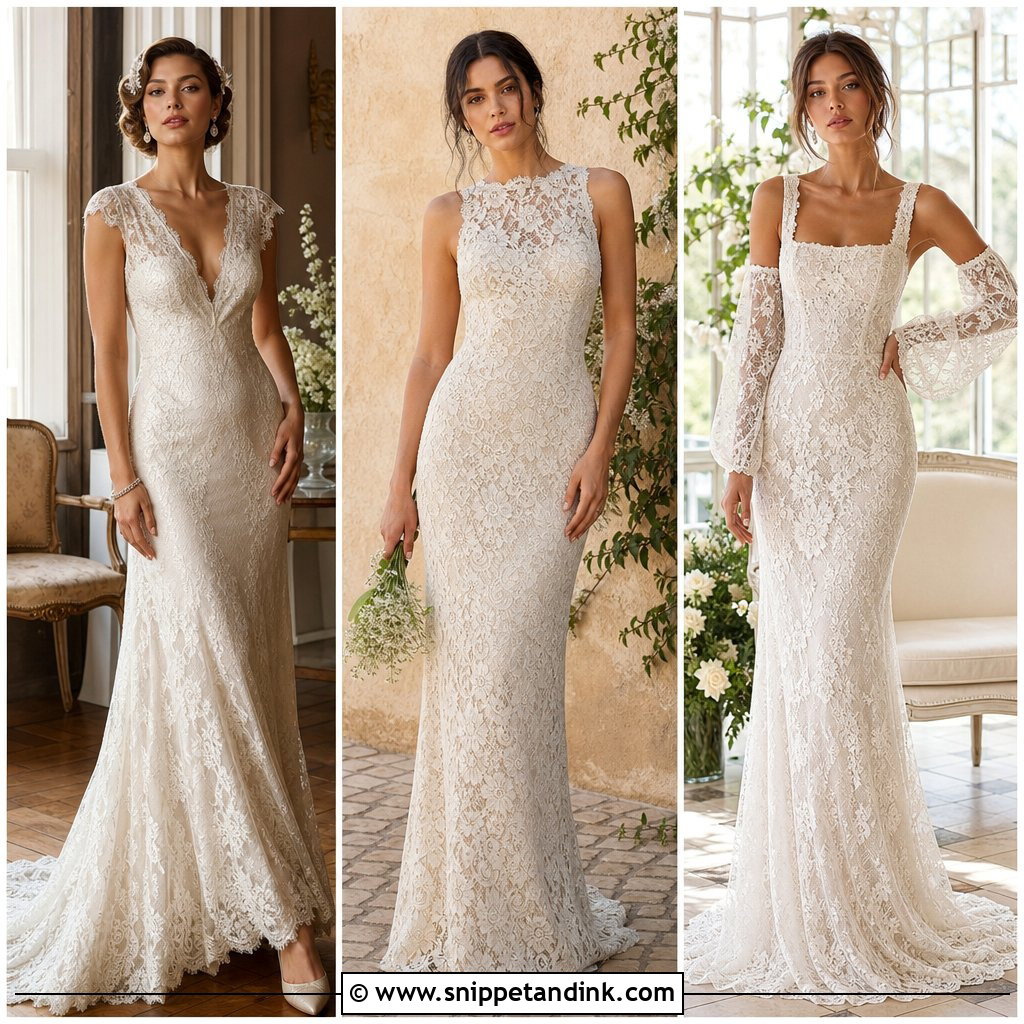
20. Crochet Wedding Dress With Floral Applique
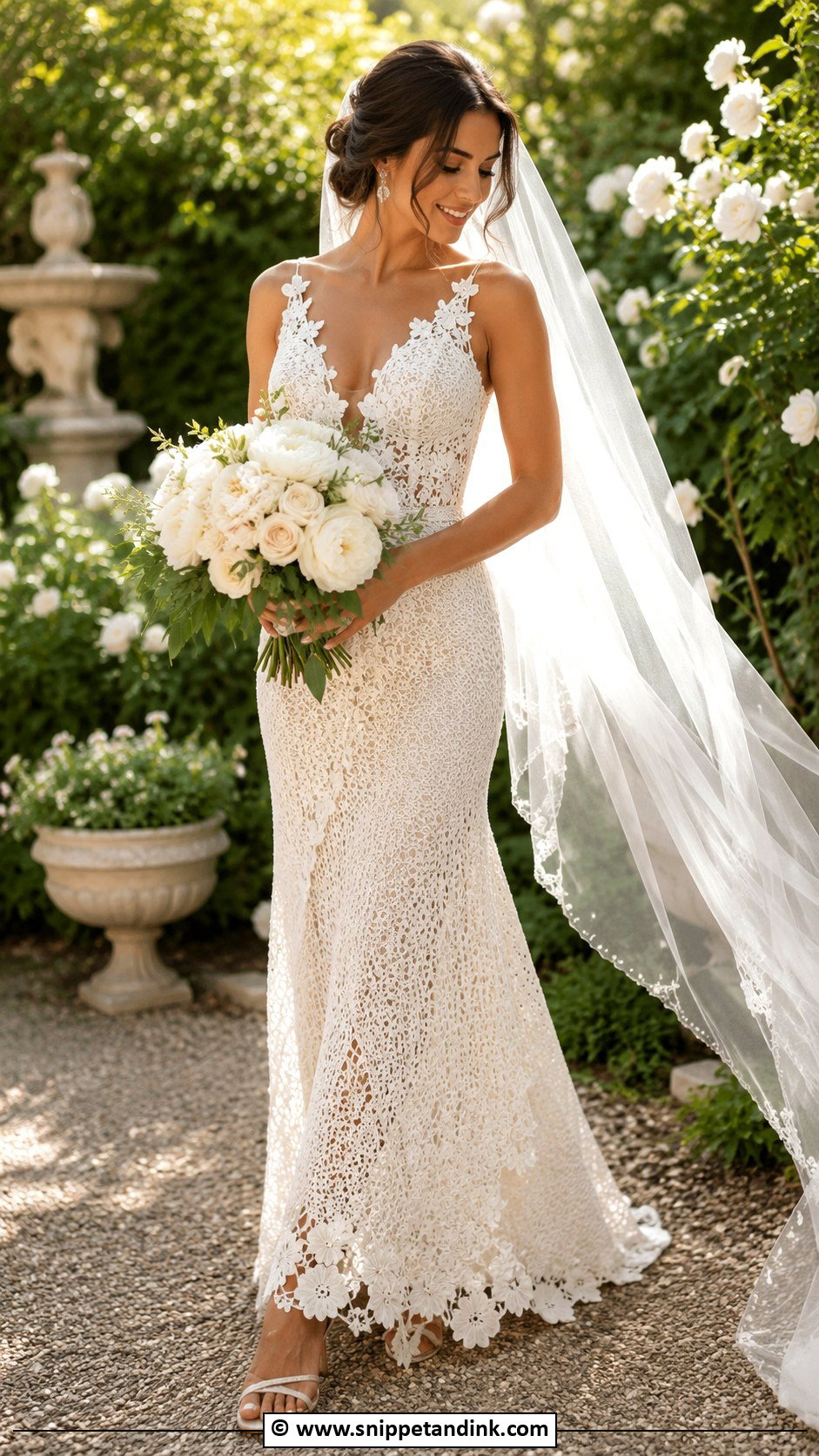
Floral appliqué on crochet adds a second texture, and I check how it’s attached. Appliqués sewn through both the crochet and the lining hold better than ones stitched only to the yarn, which can pull loops out of shape. Tonal ivory or cream flowers, perhaps with pearl centres, can sit on the bodice, sleeves, hem or train. Keep heels, veil and earrings simple, and choose peonies, roses or ranunculus for garden ceremonies.
21. Crochet Wedding Dress With Square Neck
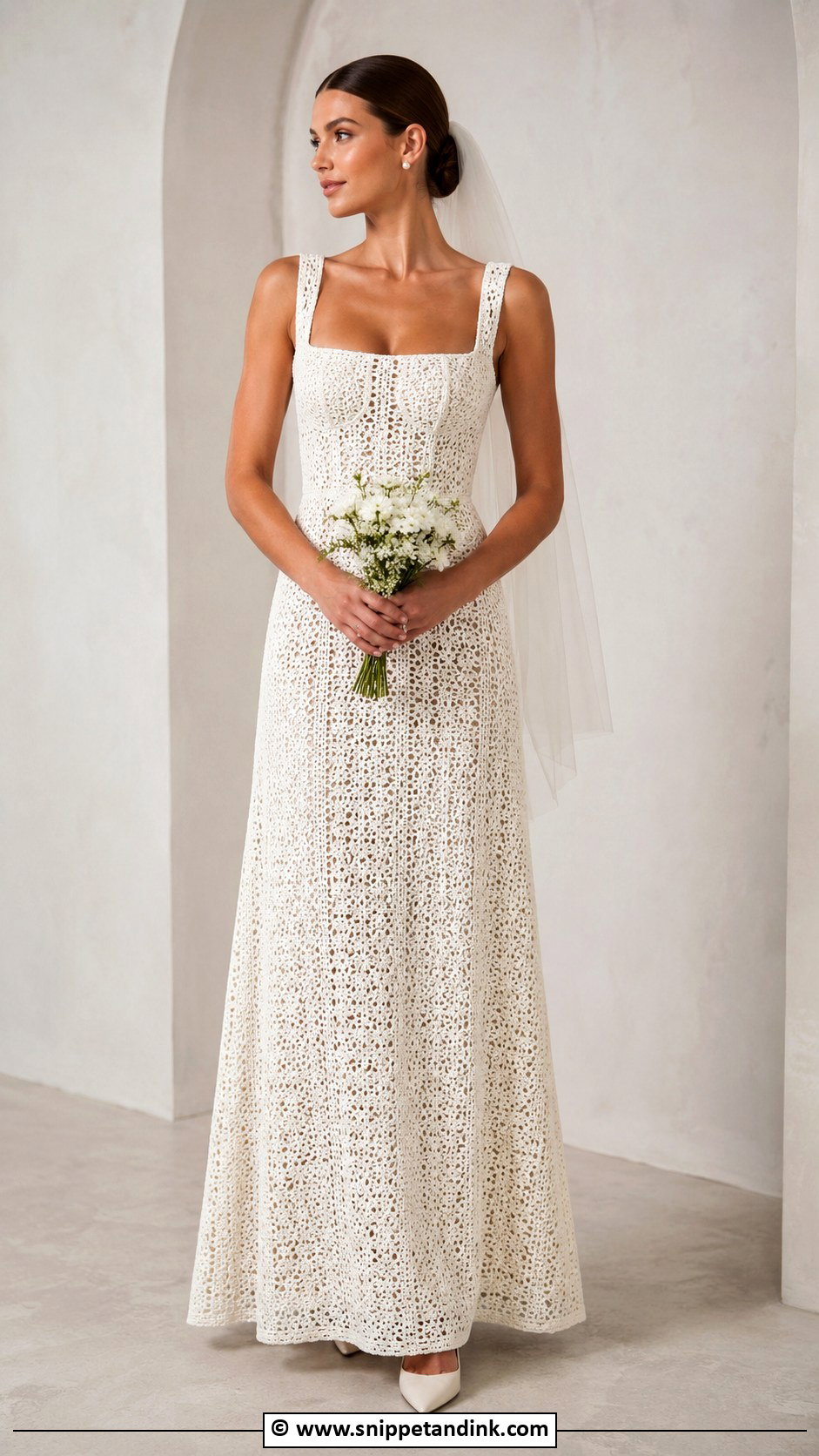
Square necklines need the crochet edge reinforced, otherwise the corners slowly stretch into a rounded shape. A structured bodice also helps carry the weight of a heavier stitch pattern. With a slim A-line or column skirt, this is the most polished crochet look on the list, without leaning bohemian. Pearl studs, a smooth low bun and ivory pumps or block heels suit it, with a simple veil.
22. Crochet Wedding Dress With Train
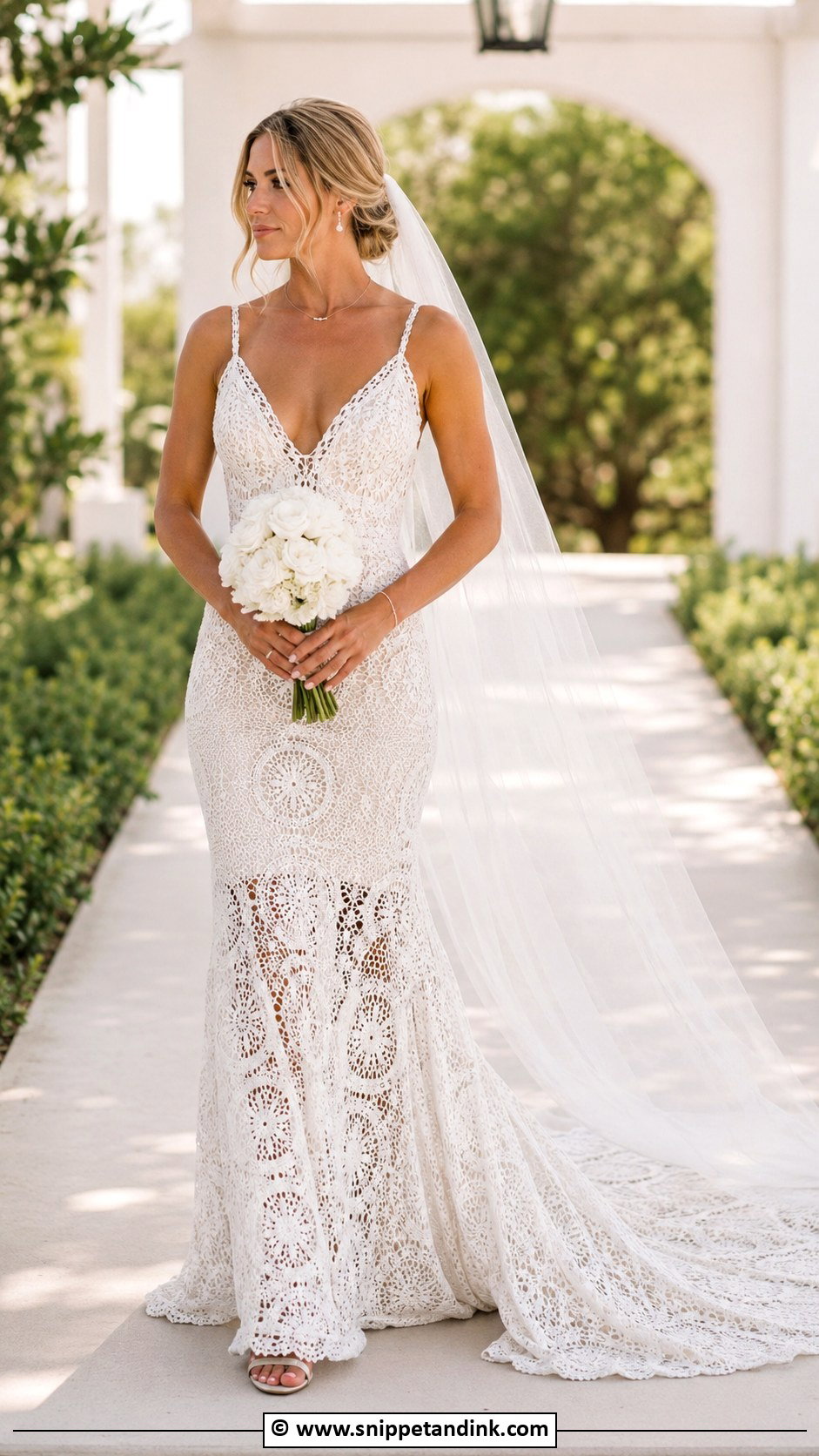
Crochet trains drag unevenly because the yarn grips the ground instead of sliding over it, the way satin would. A supportive lining under the train helps it glide. Short trains move easily, while long trains suit clean aisles at resorts and lawns. Keep the bouquet compact if the train has scalloped or floral edges so the detail shows in photos. Plan the bustle early, and test that the hooks don’t pull the stitches.
23. Crochet Wedding Dress With Satin Belt
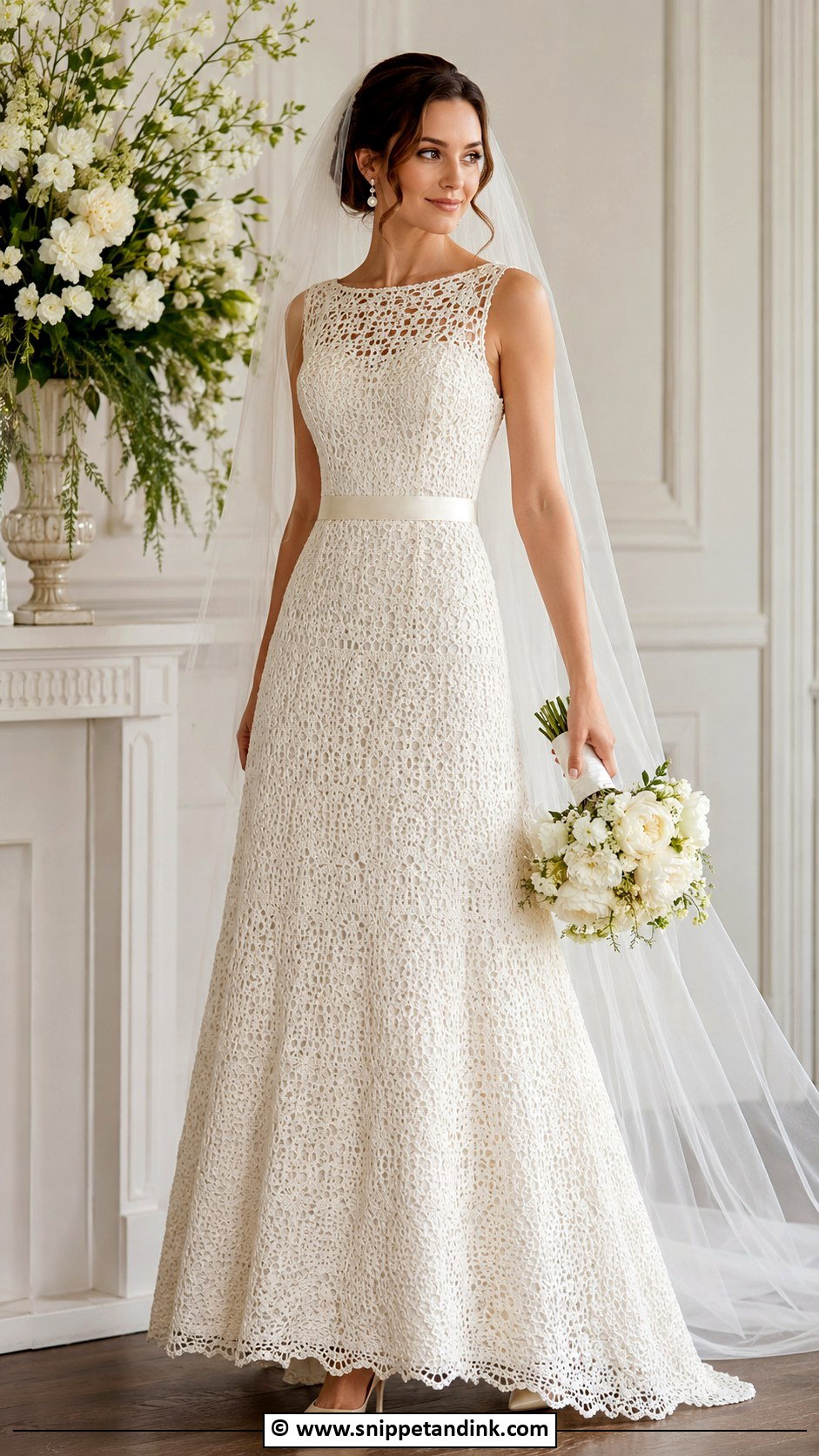
A satin belt does two jobs on an all-over crochet gown: it defines the waist and it stops the yarn from stretching downward through the bodice over the day. A narrow ivory belt looks subtle; a wider one adds structure. Satin pumps, pearl earrings and a classic veil give a more traditional finish, on A-line, sheath and tea-length shapes. It’s my fix for a crochet gown that feels too relaxed on its own.
24. Crochet Wedding Dress With Tulle Skirt
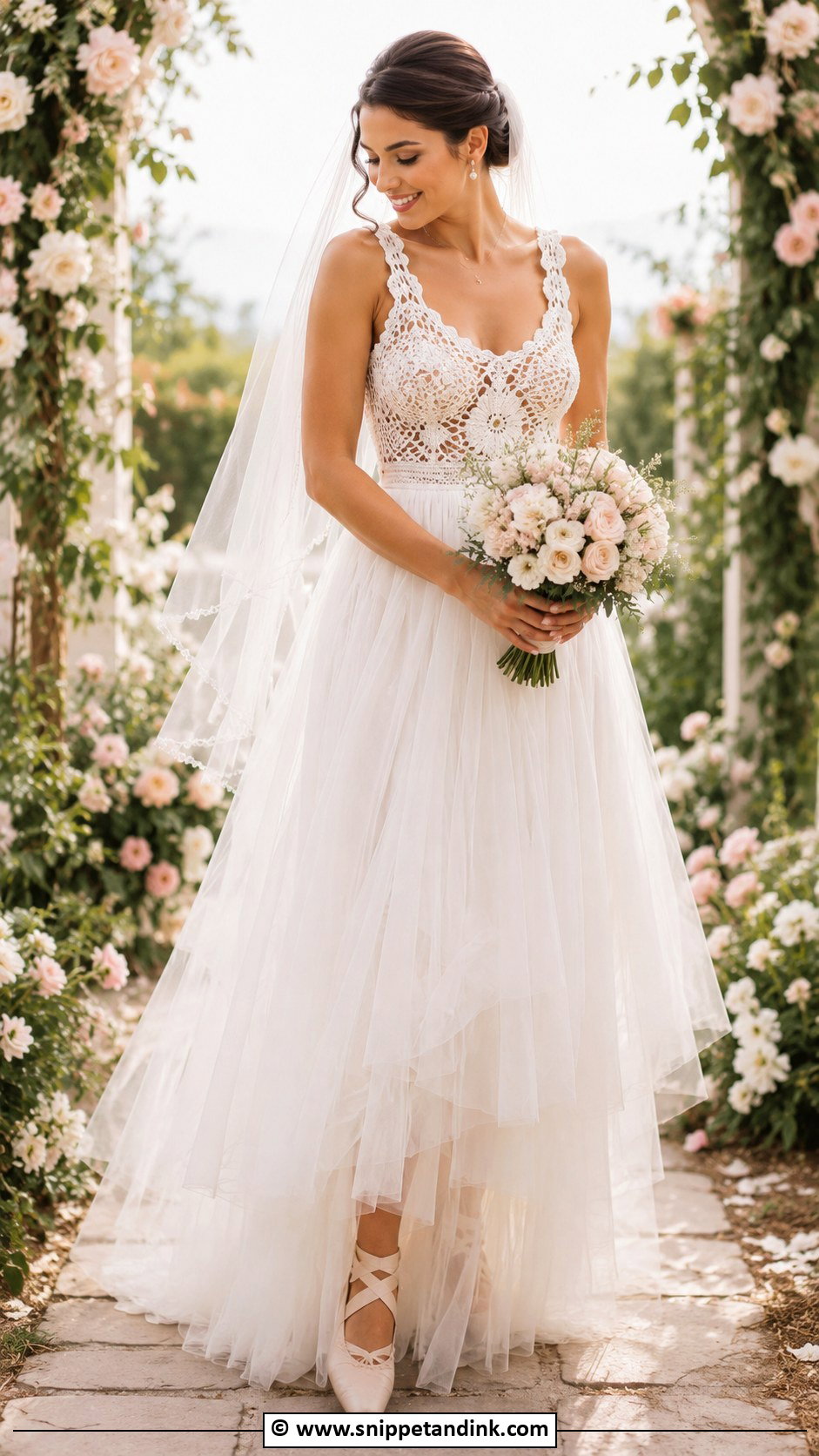
A crochet bodice over a layered tulle skirt gives handmade detail above and traditional bridal movement below. I make sure the join at the waist is lined and stabilised, because tulle pulls downward on stretchy yarn. A crochet overlay across sheer tulle works too. Ballet-inspired heels, pearl earrings and a soft veil keep it gentle, along with a white and blush bouquet. Keep the bodice fitted so the skirt stays balanced.
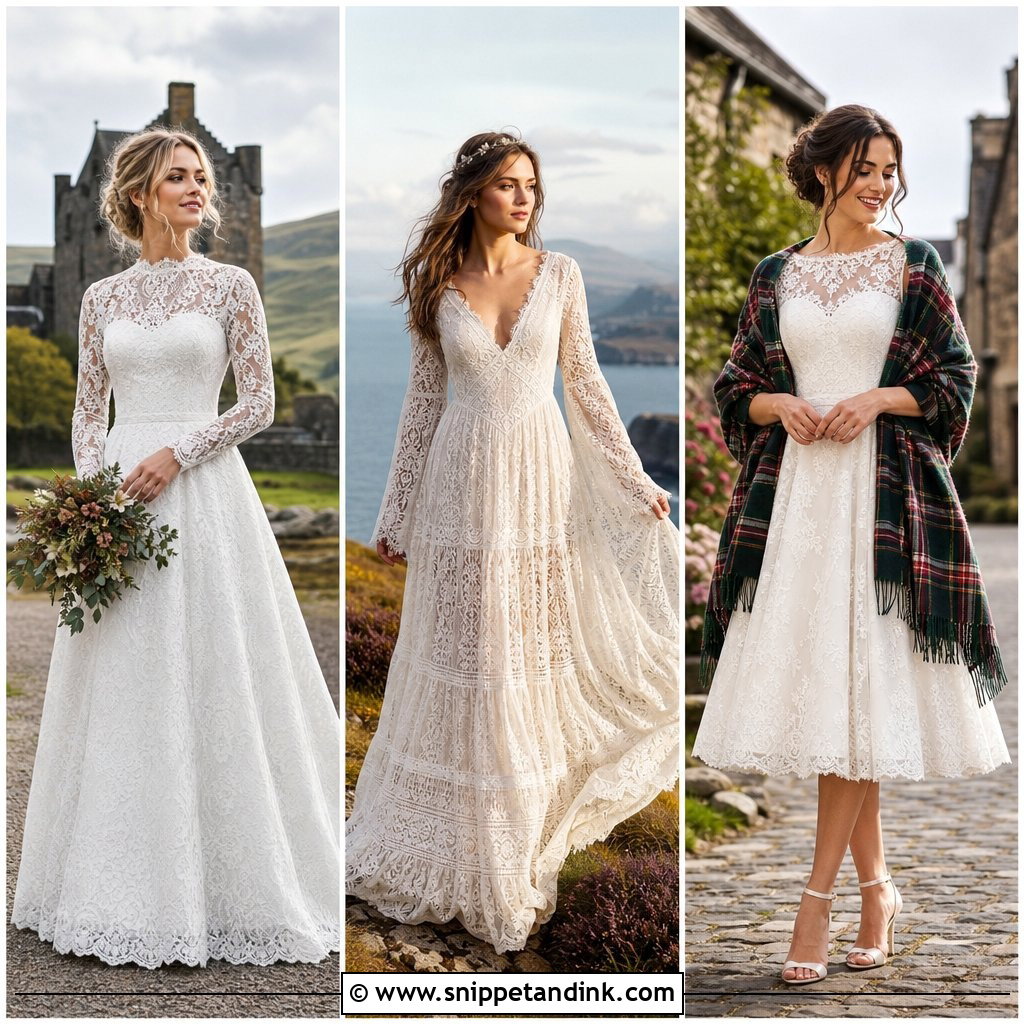
25. Crochet Wedding Dress With Blazer
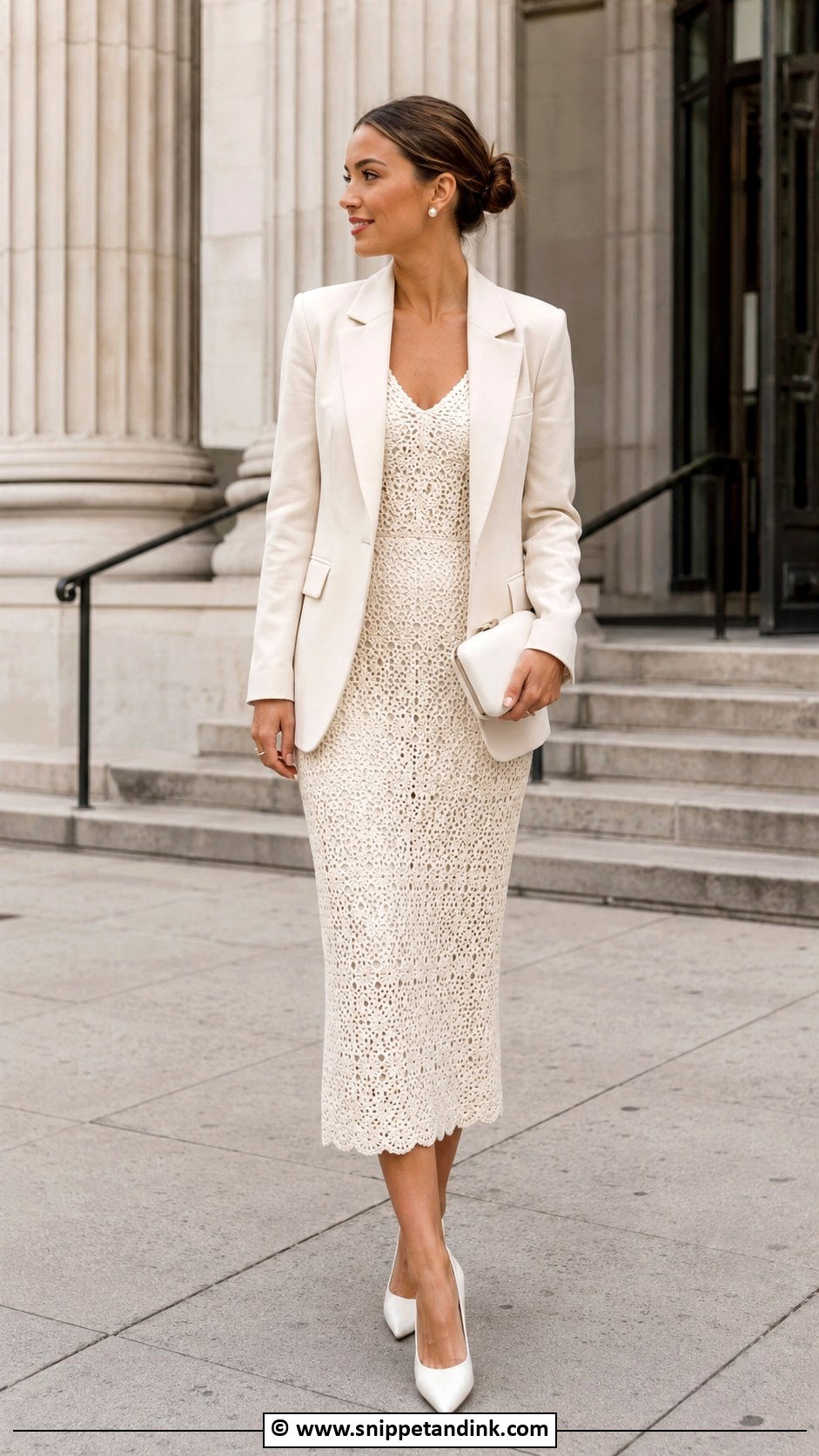
Pairing soft crochet with a sharp ivory blazer works because the two textures argue in a good way. Start with a slim crochet midi or column dress. The blazer’s lining should be smooth so it doesn’t catch the yarn when you take it on and off. Pointed pumps, pearl studs and a sleek clutch suit city and courthouse weddings. Take the blazer off later for a softer reception look.
26. Crochet Wedding Dress With Cowboy Boots
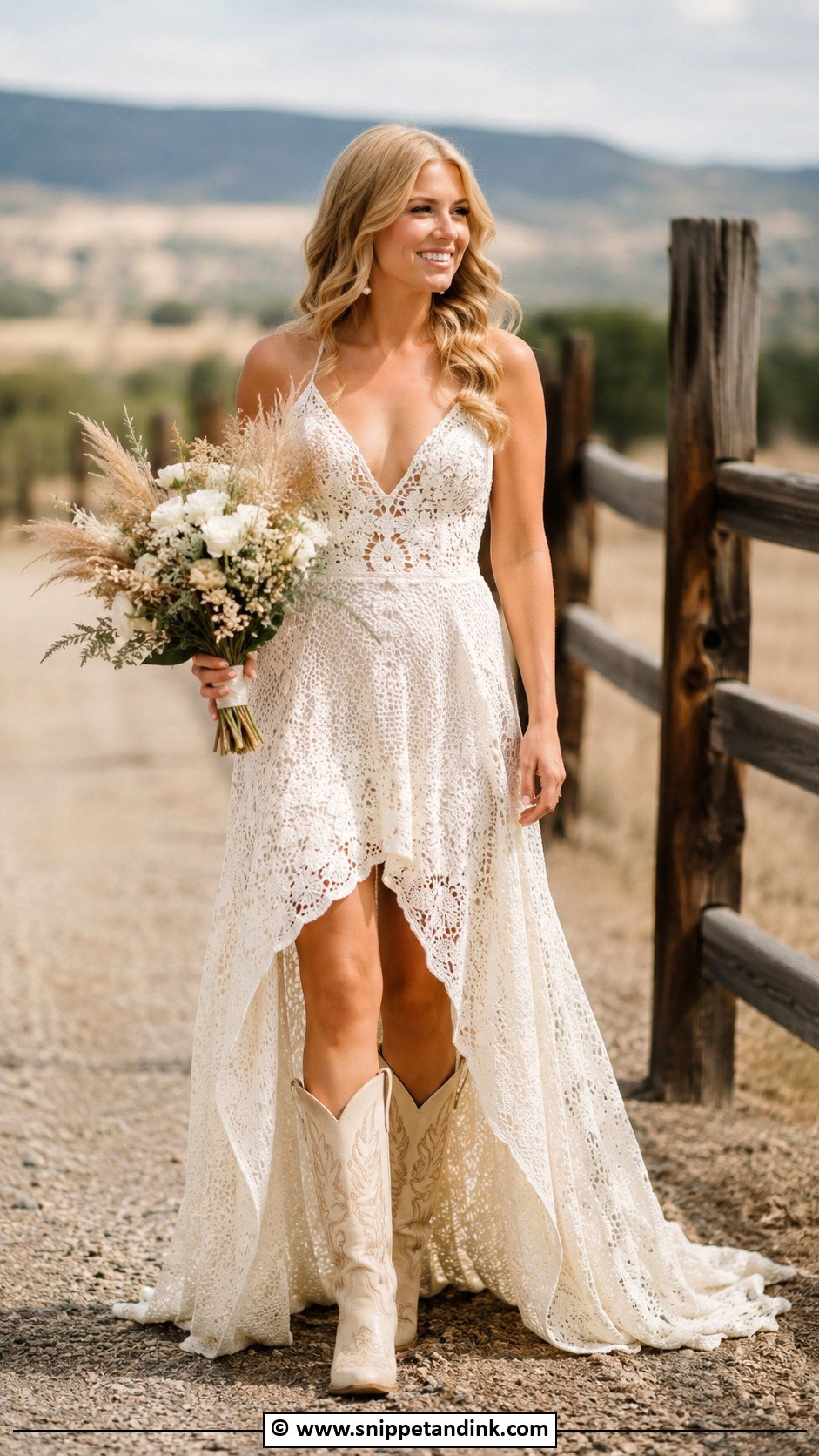
Crochet and cowboy boots share the same handmade, relaxed feel, so they pair naturally. Choose a midi or high-low dress so the boots show, and stick to ivory, cream or light tan leather. Watch the boot pull loops and decorative stitching, which catch crochet hems. Loose waves, pearl earrings and a bouquet with dried grasses finish it for ranch venues and open fields.
27. Crochet Wedding Dress With Cape
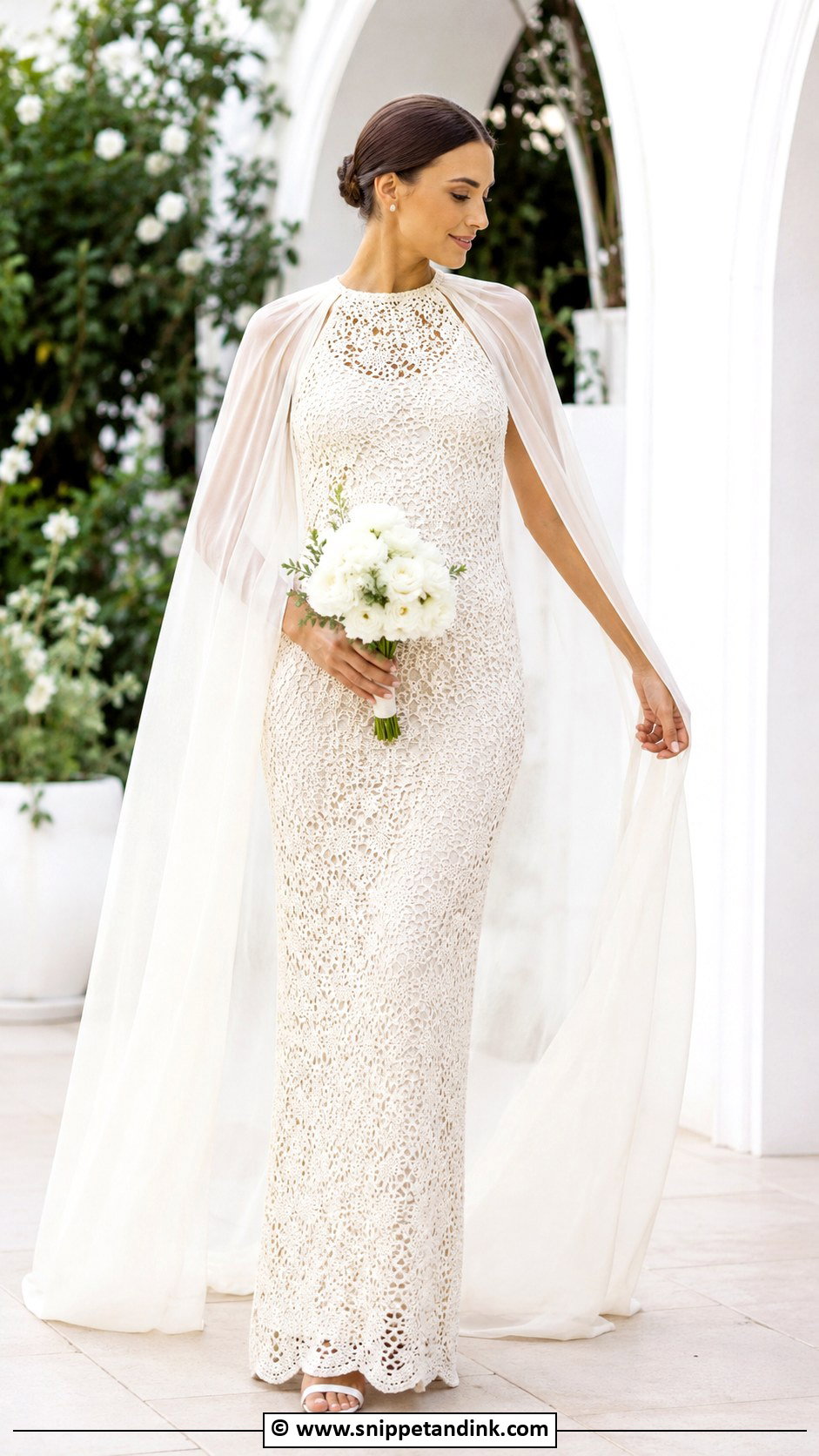
A cape over crochet should be lighter than the dress beneath it, or it flattens the texture. Sheer tulle or soft chiffon works over a simple crochet column or fitted A-line. A wedding dress with a cape can replace the veil and moves well in photos. Make sure the cape fastens to the lining or a strap, not directly to the yarn. Sleek heels, small earrings and a polished bun keep the look clean.
28. Crochet Wedding Dress With Side Slit
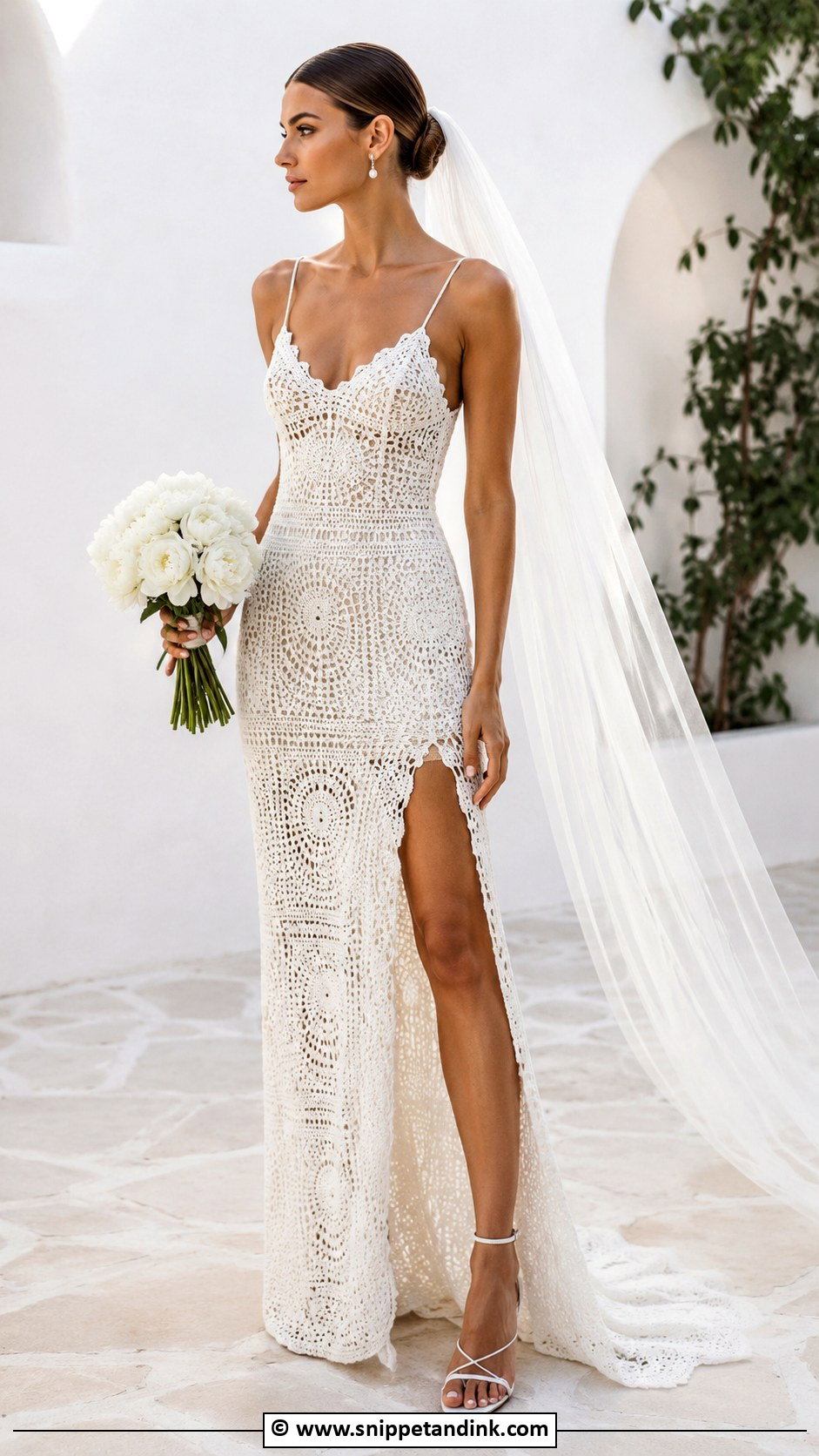
Slits are where crochet stretches most, because every step pulls the edge open. Ask for the slit to be finished with a firm edging and reinforced at the top, or it can creep higher over the day. The lining must stay in place when you sit, especially under an open stitch. Strappy ivory heels show as you move, and a long veil with a smooth hairstyle balances it for beach and resort ceremonies.
29. Crochet Wedding Dress With Short Veil
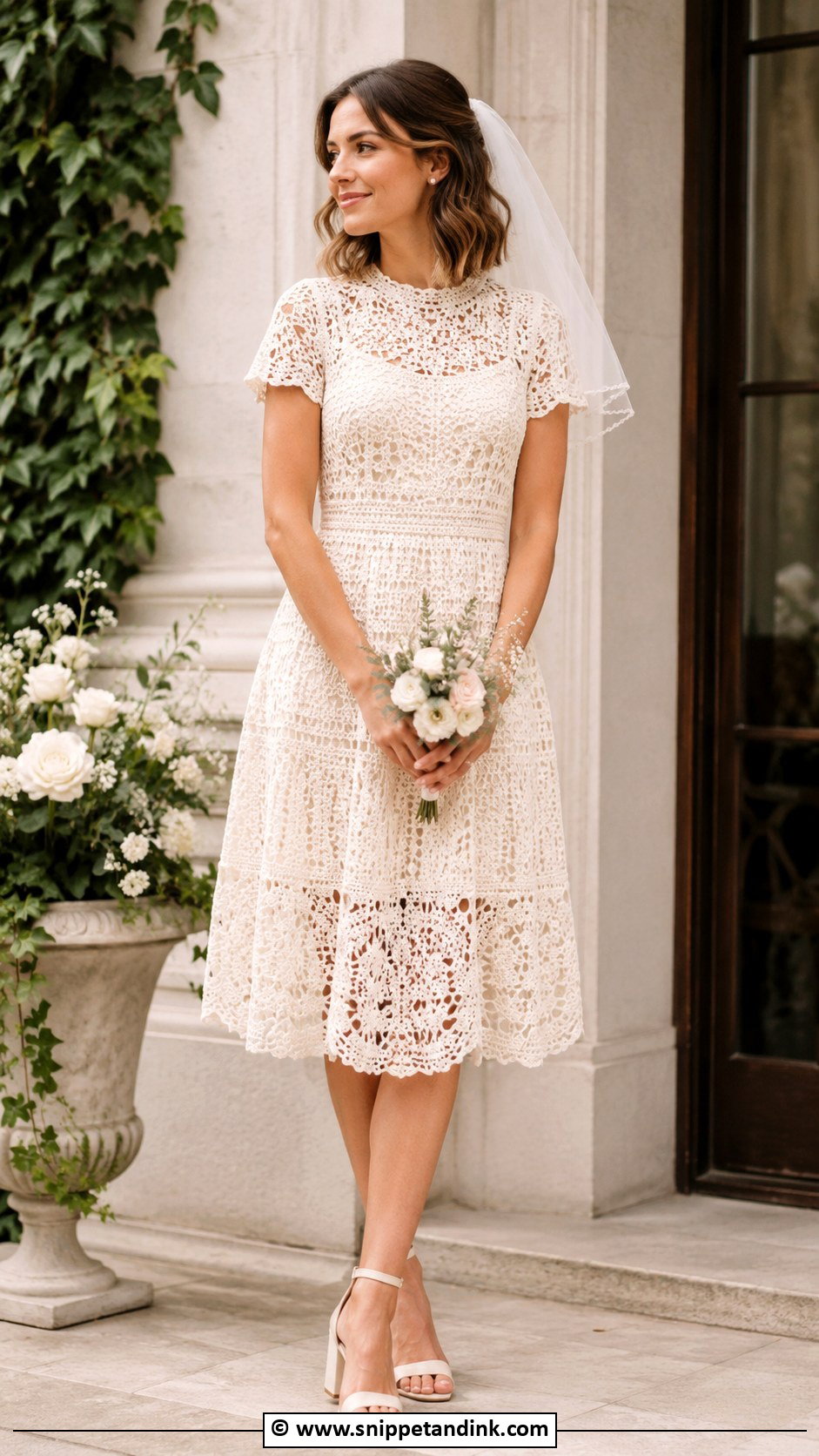
Short veils suit crochet because they leave the stitch work on show, especially detailed sleeves, scalloped hems and open backs. Shoulder, elbow and fingertip lengths all work, depending on the dress shape. With mini, midi, tea-length and vintage-inspired dresses, I usually keep the veil above the hem line. A plain tulle edge avoids catching on the yarn. Block heels, pearl studs and a small bouquet finish it.
30. Crochet Wedding Dress With Pearl Accessories
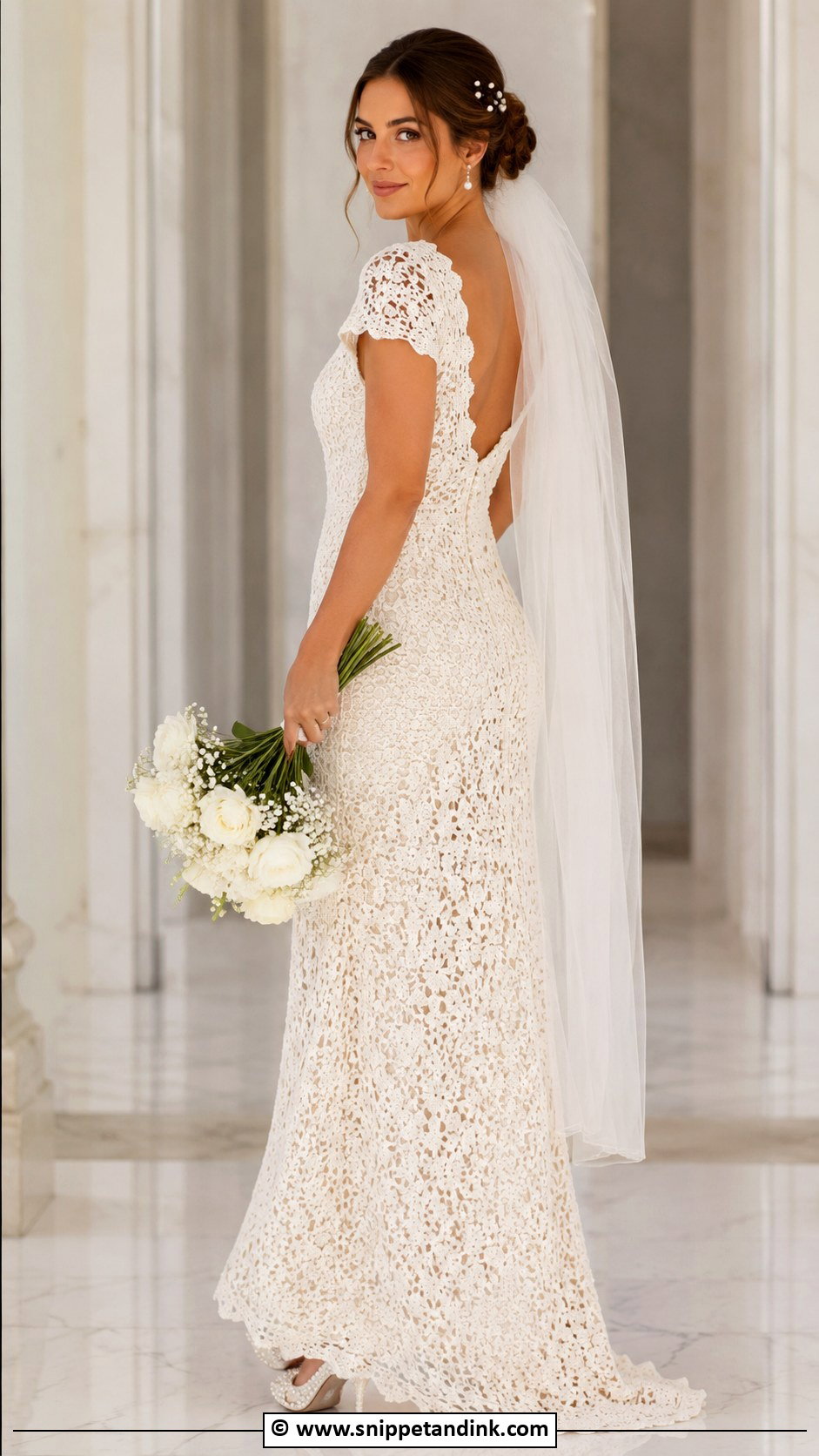
Pearls and crochet both have a soft, rounded texture, which is why they sit so comfortably together. I’d choose one or two pearl accents rather than all of them: earrings, hair pins or pearl-trimmed shoes. Avoid pearl bracelets with prongs or clasps that can snag the sleeves. A smooth veil and a white bouquet keep the outfit clean on almost any crochet shape, from beach gowns to long sleeves.
Altering, Steaming and Storing Handmade Crochet
Alterations
Crochet can’t be cut and hemmed like woven fabric. Snip a loop in the wrong place and a run can start. I send crochet gowns to a seamstress who has worked with knit or crochet before and ask whether she plans to take the dress in at the lining, at the seams, or by reworking stitches. Shortening a crocheted hem sometimes means removing and refinishing rows, which takes longer than a normal hem, so allow extra weeks.
If your dress is made to order by a crochet artist, ask for the expected timeline in writing and add a buffer, since every row is made by hand.
Steaming and the day itself
Never press crochet flat with a hot iron. It crushes the raised texture of the stitches. A handheld steamer held a few inches away relaxes creases from travel. On the day, remove rings with prongs while getting dressed, and keep a small crochet hook or a blunt needle in the emergency kit. A pulled loop can be worked back to the inside rather than cut.
Storage
Don’t hang a crochet gown for weeks before the wedding or for years after it. Its own weight slowly stretches the shoulders and lengthens the body. Fold it with acid-free tissue between the layers and store it flat in a breathable box. After the wedding, have it cleaned by someone who will treat it as a delicate knit.
Let the Stitches Do the Talking
Crochet can lean boho, modern, vintage, coastal or classic, and the styling decides which. Start with the silhouette and the lining, because those control how the yarn behaves through a long day. Then think about the venue, the season and how you’ll move before adding sleeves, trains, belts or shoes. Ask about stretch, snagging and alterations before you commit. Get those right and the rest is simply what you love.
You'll Like These Ideas:





Leave a Reply