
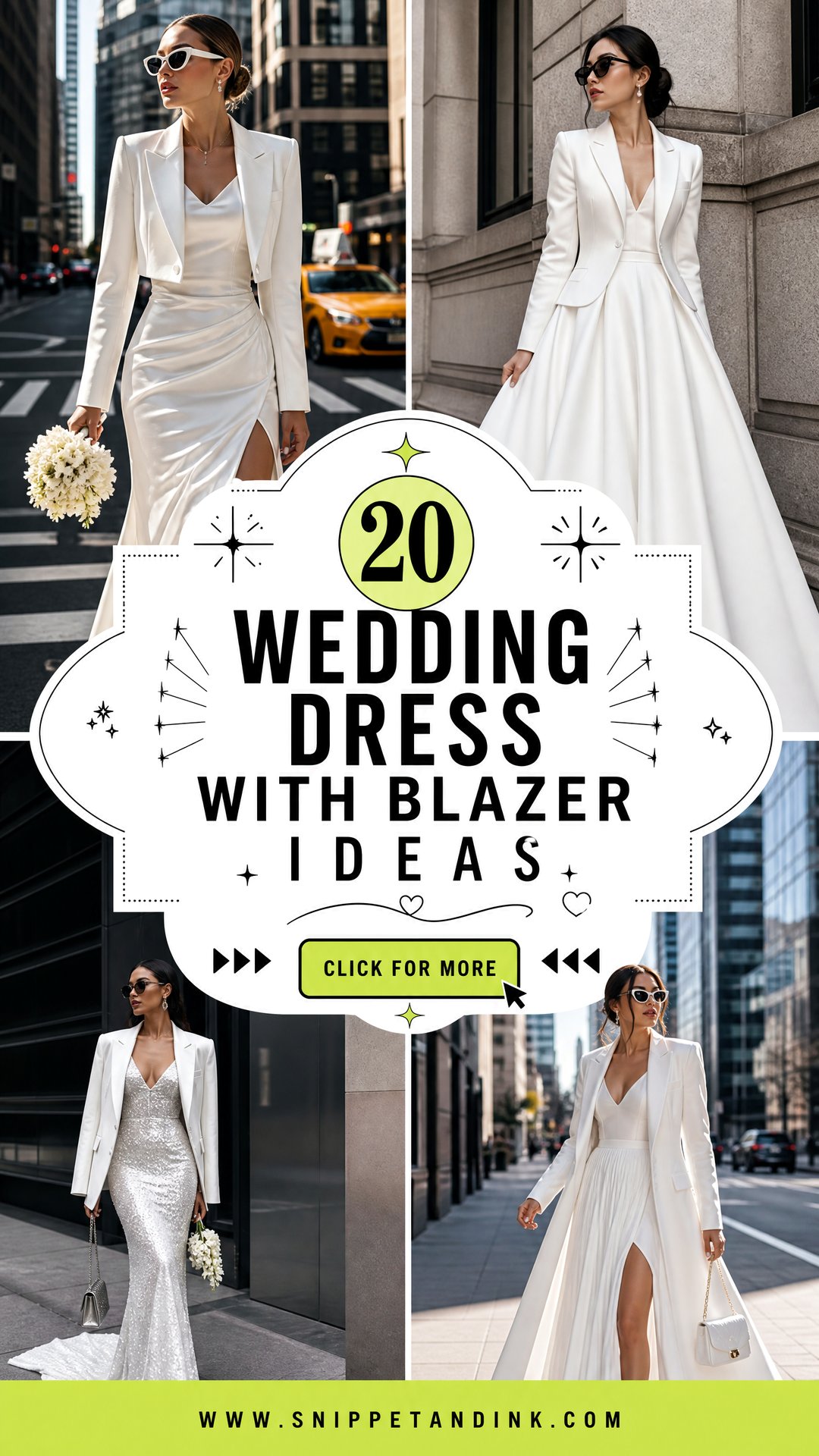
A blazer over a wedding dress changes the posture of a bridal outfit. The shoulders read squarer, the skirt reads softer by comparison, and the whole thing starts to look like something you chose rather than something a shop sold you. When I put these pairings together for city weddings, the ones that work always come down to proportion: where the jacket ends against the dress, and whether the two whites agree with each other. You can put a cropped jacket over a full satin gown, an oversized one over a mini, or go longline for a slow walk into a registry office. Below are twenty pairings, each with the fitting notes I would give you if you were standing in front of my mirror.
Fit the Jacket Over the Gown, Never on Its Own
A blazer fitted by itself will be wrong once it goes over a wedding dress. The gown adds bulk at the bust and back, a corset changes your posture, and a full skirt pushes the jacket hem outward. Bring the dress, the shoes and the underwear you plan to wear to every jacket fitting, and ask the tailor to pin with the dress on.
What I check at a blazer fitting
- The shoulder seam ends at the edge of your shoulder bone. Any wider and the jacket slides back when worn open.
- The sleeve stops at the wrist bone with your arm bent around a bouquet. A sleeve set with a straight arm rides up during the procession.
- The front closes with no X-shaped pull at the button, standing and sitting.
- The lining is smooth enough not to grab lace, sequins or beading.
- The back vent lies flat when you sit, because you will be photographed seated at dinner.
Allow roughly four to six weeks for alterations to a bought blazer and book them alongside your dress fittings, not after them. A made-to-measure jacket takes longer, often two months or more depending on the tailor’s workload, so ask about timing at the first appointment.
1. Satin Wedding Dress With Cropped Blazer
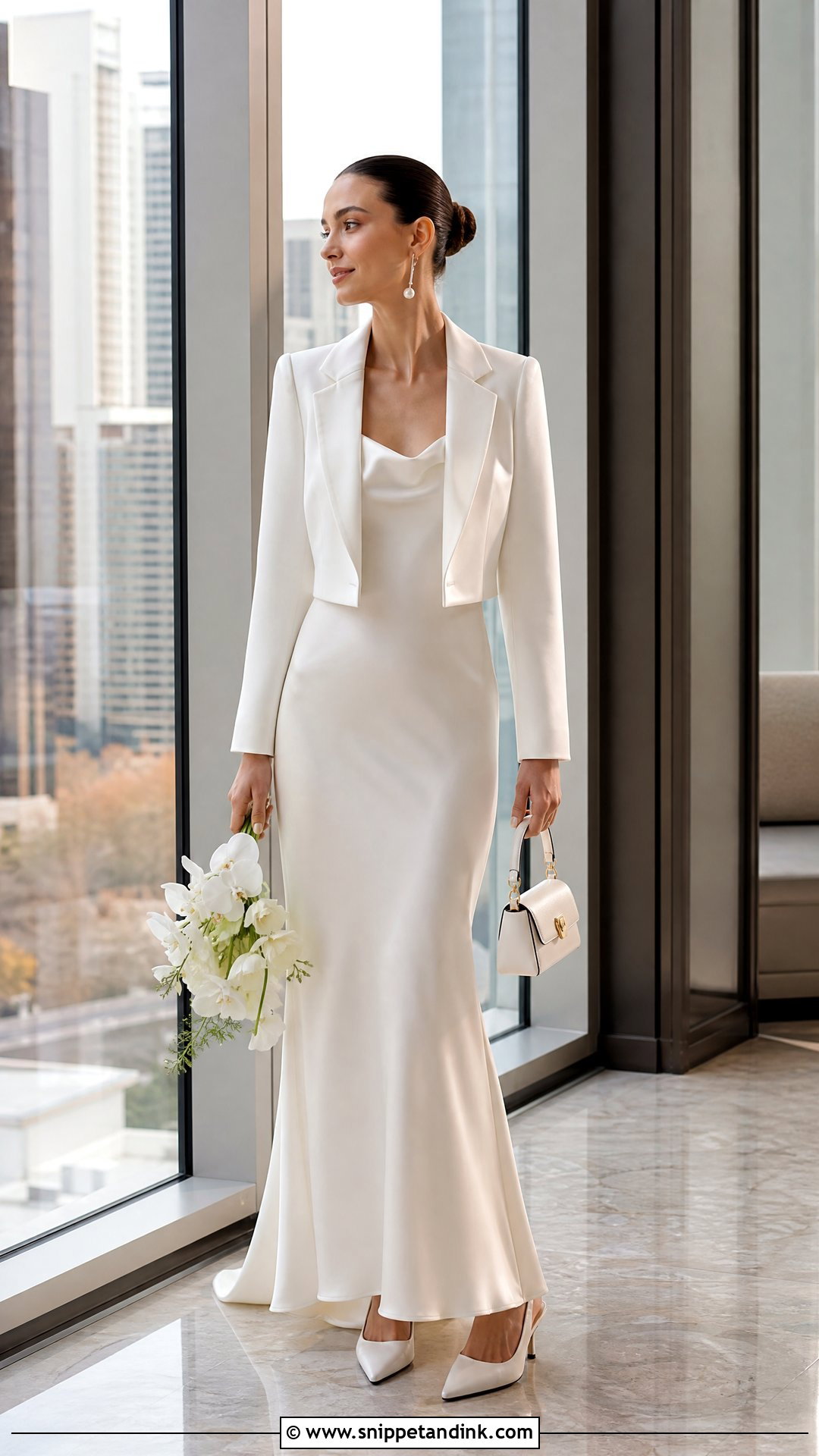
Satin under satin is harder than it looks. Two satins from different mills rarely share the same sheen or the same ivory, so I would rather put a matte crepe jacket over a satin bias-cut midi or gown and let the contrast look deliberate. Keep the blazer ending at the natural waist so the bias drape below it falls without interruption. Bias-cut fabric clings wherever a lining rubs, so ask for a slippery cupro lining rather than a cheap polyester one. Pointed slingbacks and pearl drops are plenty, and a low bun keeps the collar clear. Check both ivories by a window, never under shop lighting.
2. Lace Wedding Dress With White Blazer
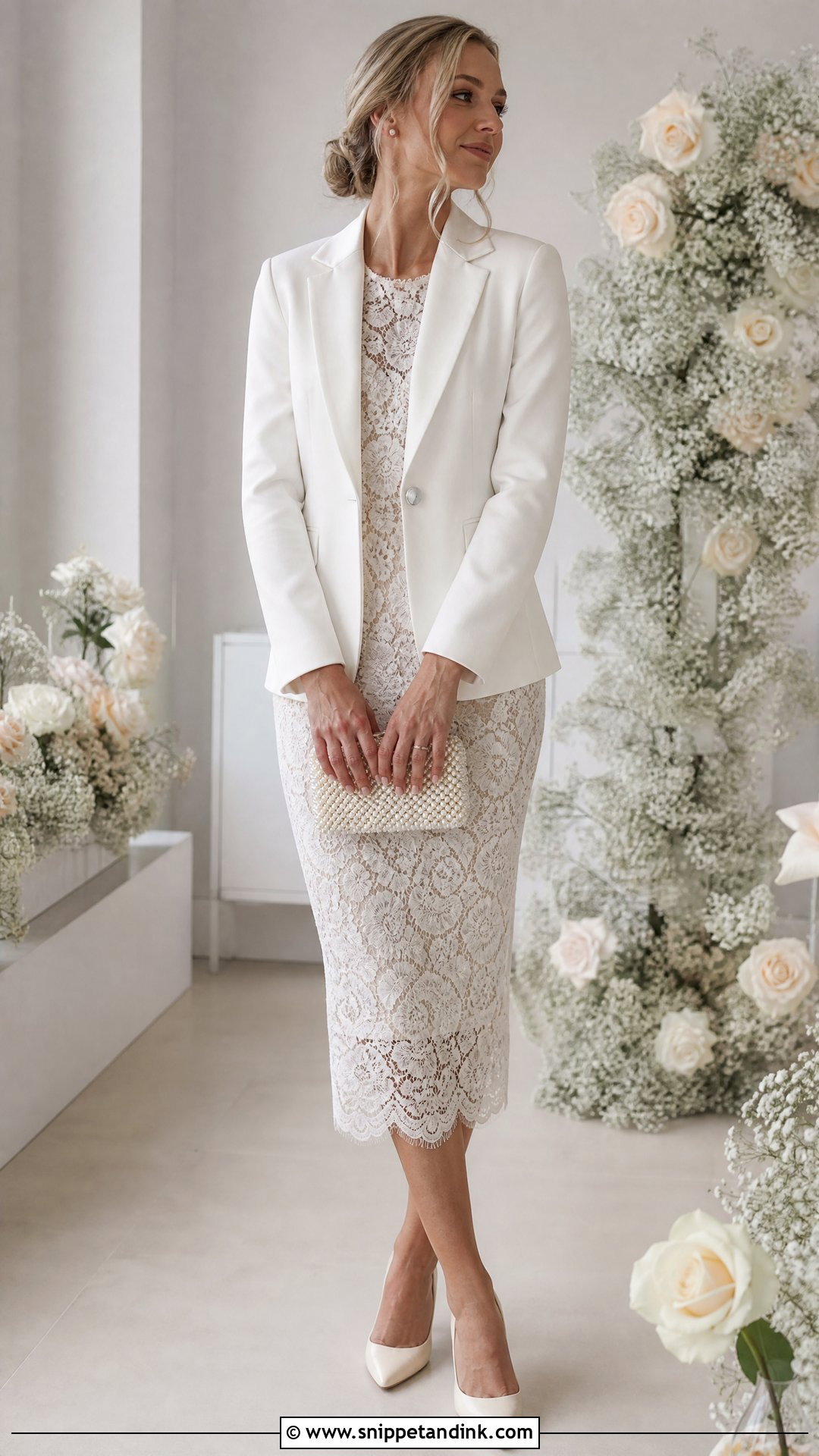
Lace snags. That is the first thing I think about here, because the inside of a jacket and the scallops of a fitted lace midi dress spend the whole day rubbing against each other. A fully lined, single-breasted white blazer with narrow lapels solves most of it and frames the lace instead of burying it. Hip length or slightly cropped is the right range. Keep the shoes and clutch plain, since the lace is already busy. Many brides wear the jacket properly for the vows, then drape it over the shoulders for portraits, which shows off the bodice without an outfit change.
3. Mini Wedding Dress With Oversized Blazer
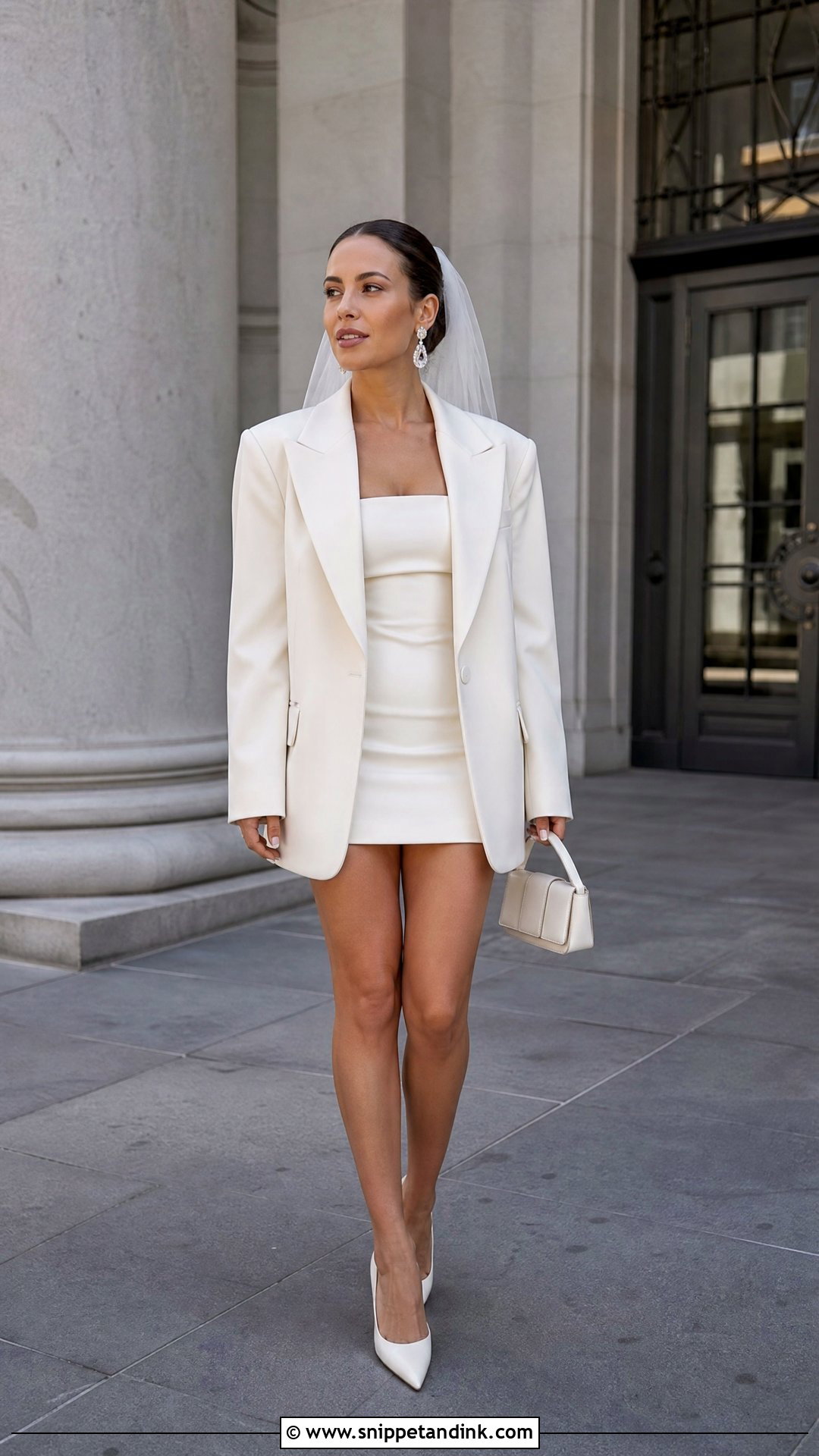
The risk with an oversized blazer over a mini is that it swallows you. I aim for one of two hem relationships: the jacket finishing just below the dress hem, so the pair reads as a blazer dress, or stopping clearly above it. Anything in between looks like the dress is peeking out by accident. Ivory crepe or satin minis hold their shape under a heavier jacket far better than chiffon. Sheer white tights help in cold months, and a pointed or ankle-strap heel lengthens the leg against all that boxy fabric. A short veil or an embellished headband stops it looking like office wear.
4. Slip Wedding Dress With Longline Blazer
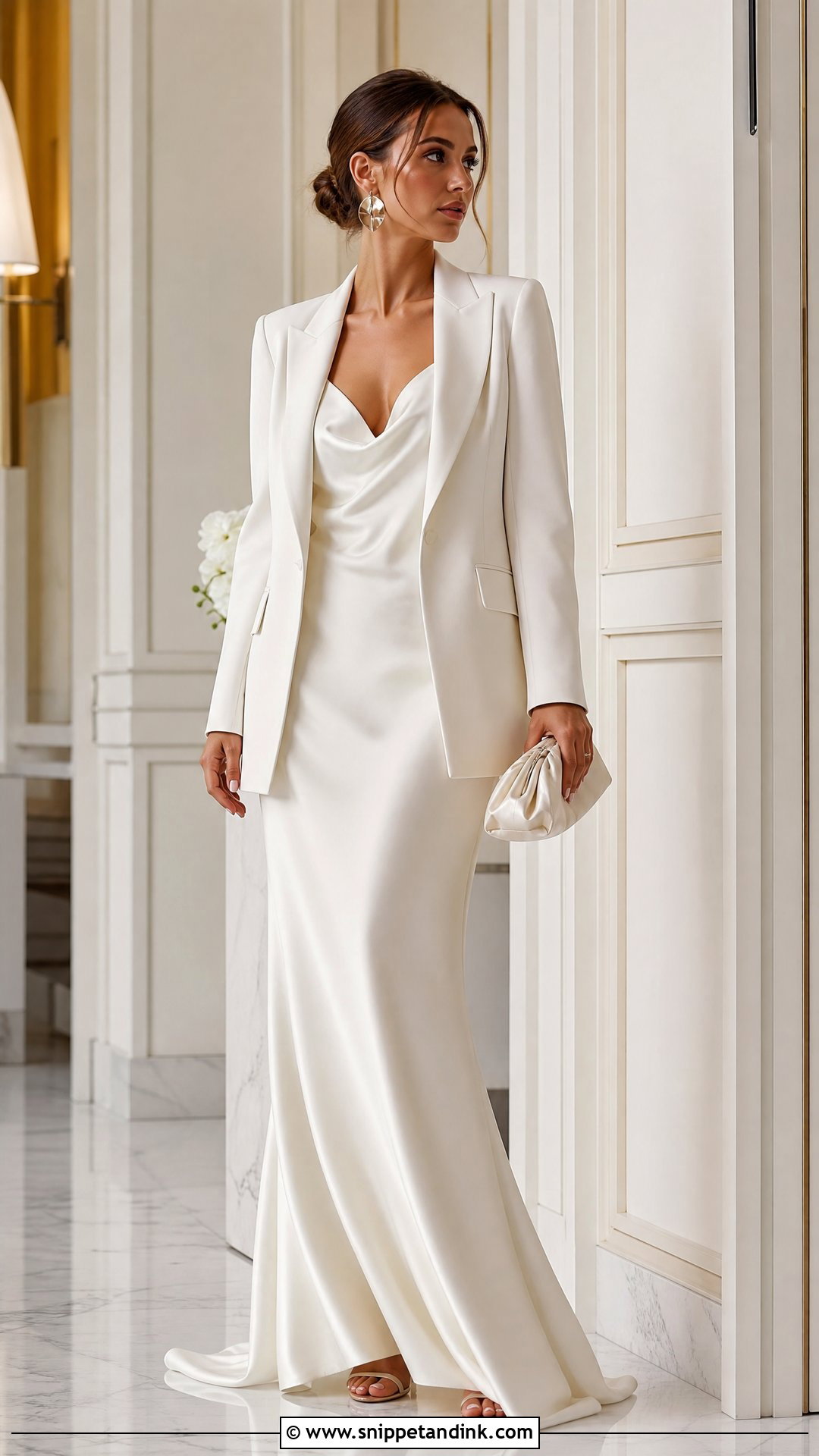
This pairing is about echo: two long vertical lines, one fluid and one tailored. The jacket should stop at the upper thigh, in lightweight crepe or fine wool, because anything heavier drags a slip dress’s thin straps backward at the shoulder. Do a sitting test at your fitting. A long jacket bunches underneath you in a car or at a dinner table and creases across the back vent. I would steer you away from boxy cuts entirely, since they hide the drape that makes a slip worth wearing. Slim heels and a sleek ponytail or center-parted bun keep it spare.
5. Strapless Wedding Dress With Tuxedo Blazer
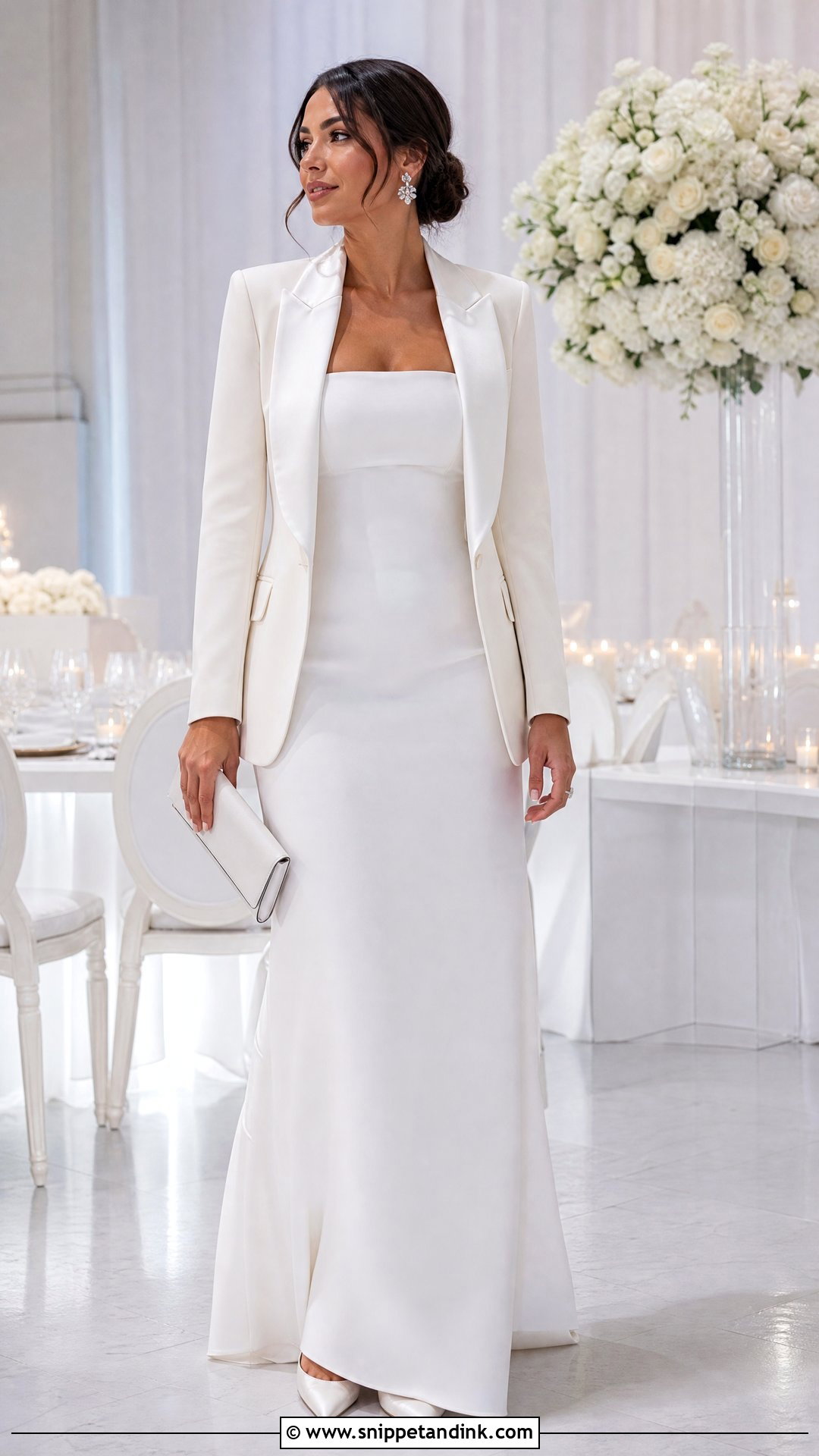
Strapless bodices stay up through boning and a snug fit at the ribs, and a jacket gives you cover for the moment you start hitching the dress. A tuxedo blazer is my favorite partner for one because its satin lapels pick up the sheen of the gown. Matching ivory is simplest; soft cream over bright white works only if you test it in daylight first. Open, it shows the neckline. Buttoned, it gives a sharper portrait. I usually leave the neck bare, since lapels and a pendant end up competing for the same few inches.
6. A-Line Wedding Dress With Fitted Blazer
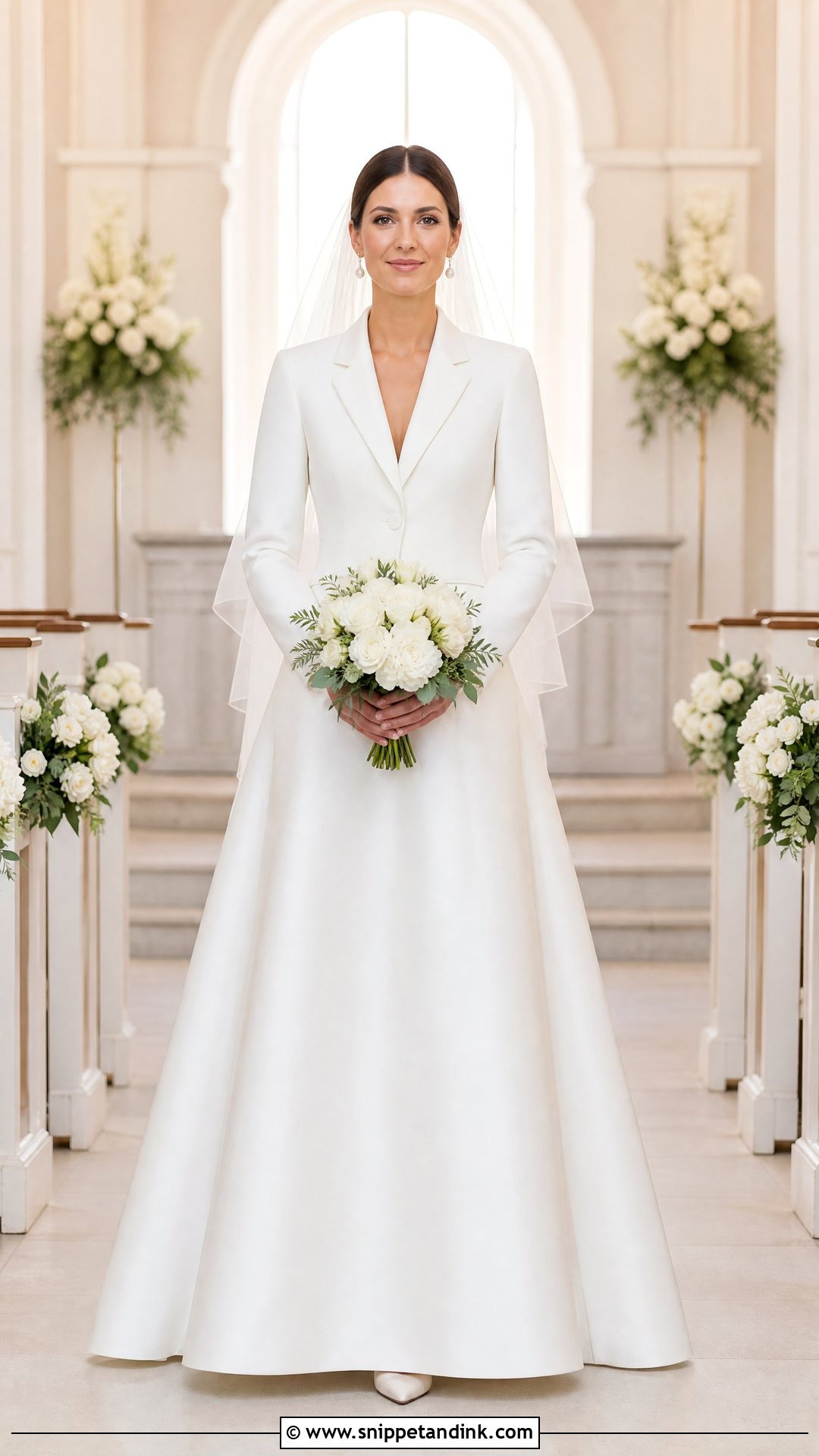
An A-line skirt already does a lot of work, so the jacket only has to follow the shoulders and waist and stop by the upper hip. Any longer and the blazer hem lands on the widest part of the skirt, which makes both pieces look heavier. Watch the button when you raise your arms: if the fabric pulls into an X across the front, the jacket is a size too small. Plain crepe sits well over satin or organza. If the bodice is detailed, leave the blazer unembellished, and anchor a medium veil under a low bun rather than into the jacket collar.
7. Tea-Length Wedding Dress With Double-Breasted Blazer
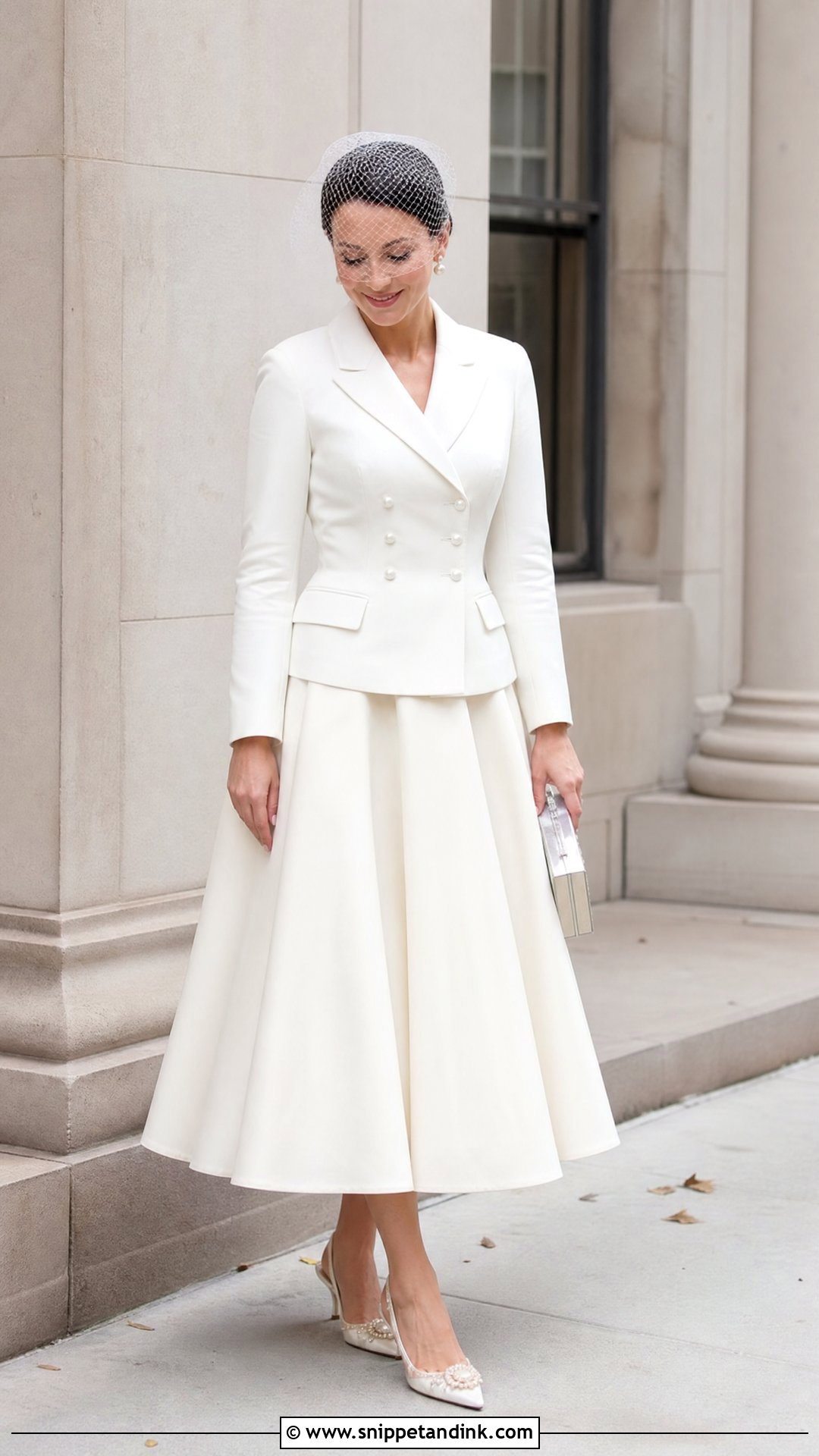
Tea length puts your shoes on show, so this is the pairing where I spend half the fitting looking at feet. A double-breasted blazer adds weight on top, which a full skirt ending between knee and ankle balances well, provided the jacket stops at the waist or high hip. Pearl buttons are a quiet bridal touch. Double-breasted jackets are cut to be fastened and look awkward hanging open, so make sure you can button it comfortably while holding flowers. A birdcage veil nudges the outfit toward a retro daytime wedding, and embellished pumps or block heels finish it.
8. Mermaid Wedding Dress With Tailored Blazer
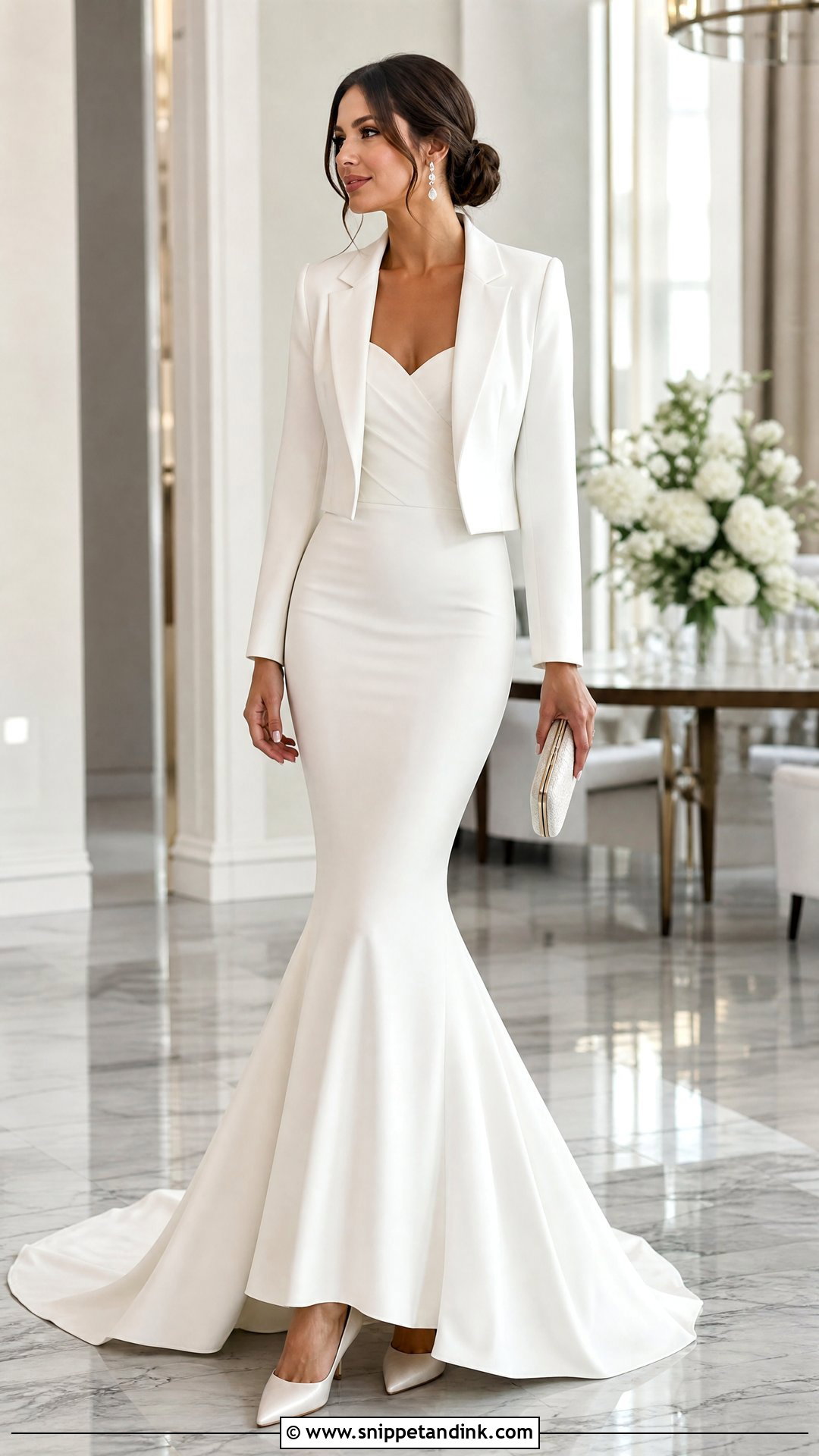
Mermaid gowns hug the body down to the knee, so any jacket longer than the waist lands on the curve and breaks it. Waist length is the only cut I would put over one. Keep shoulder padding minimal and lapels clean, because the gown already has a strong outline of its own. The heels will be hidden under the hem, so choose them for comfort on a long standing day. An updo lightens the top half. Wear the jacket for the entrance or for chilly outdoor portraits, then take it off at the reception when the flare needs room to move.
9. Sequin Wedding Dress With Minimal Blazer
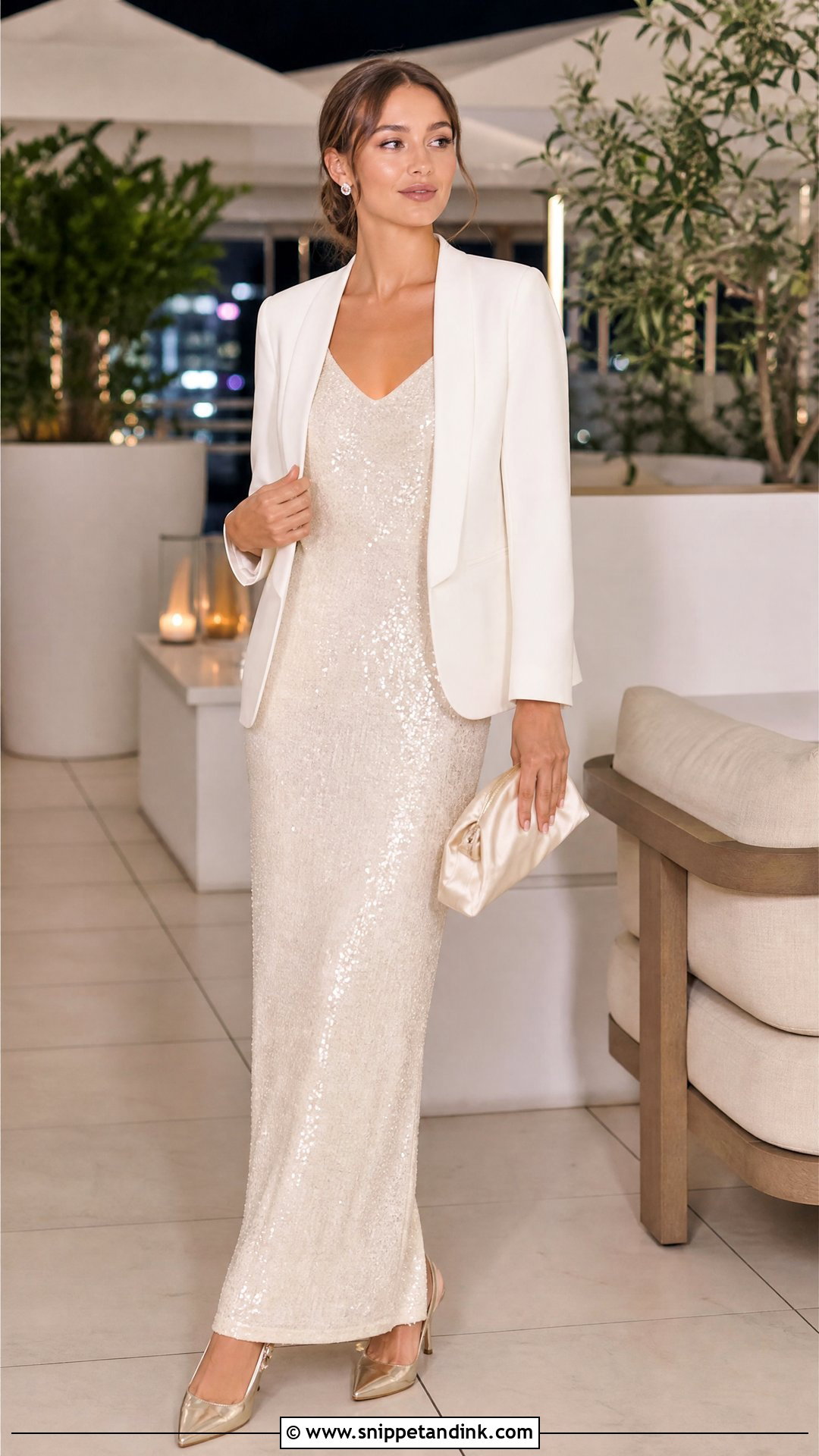
Sequins scratch. They catch the lining of a jacket and can pull threads from the inside, so before I pair a blazer with a sequin dress I turn it inside out and feel the lining; smooth acetate or silk is the safe choice. Keep the jacket in plain crepe with clean lapels and covered buttons, because beading on both pieces crowds the outfit. Worn open, the sequins still catch the light while your shoulders stay covered. Metallic slingbacks and crystal studs are about as much extra shine as this can take. Sleek hair and glowing, not frosted, skin keep it evening-ready.
10. Pearl Wedding Dress With Matching Blazer
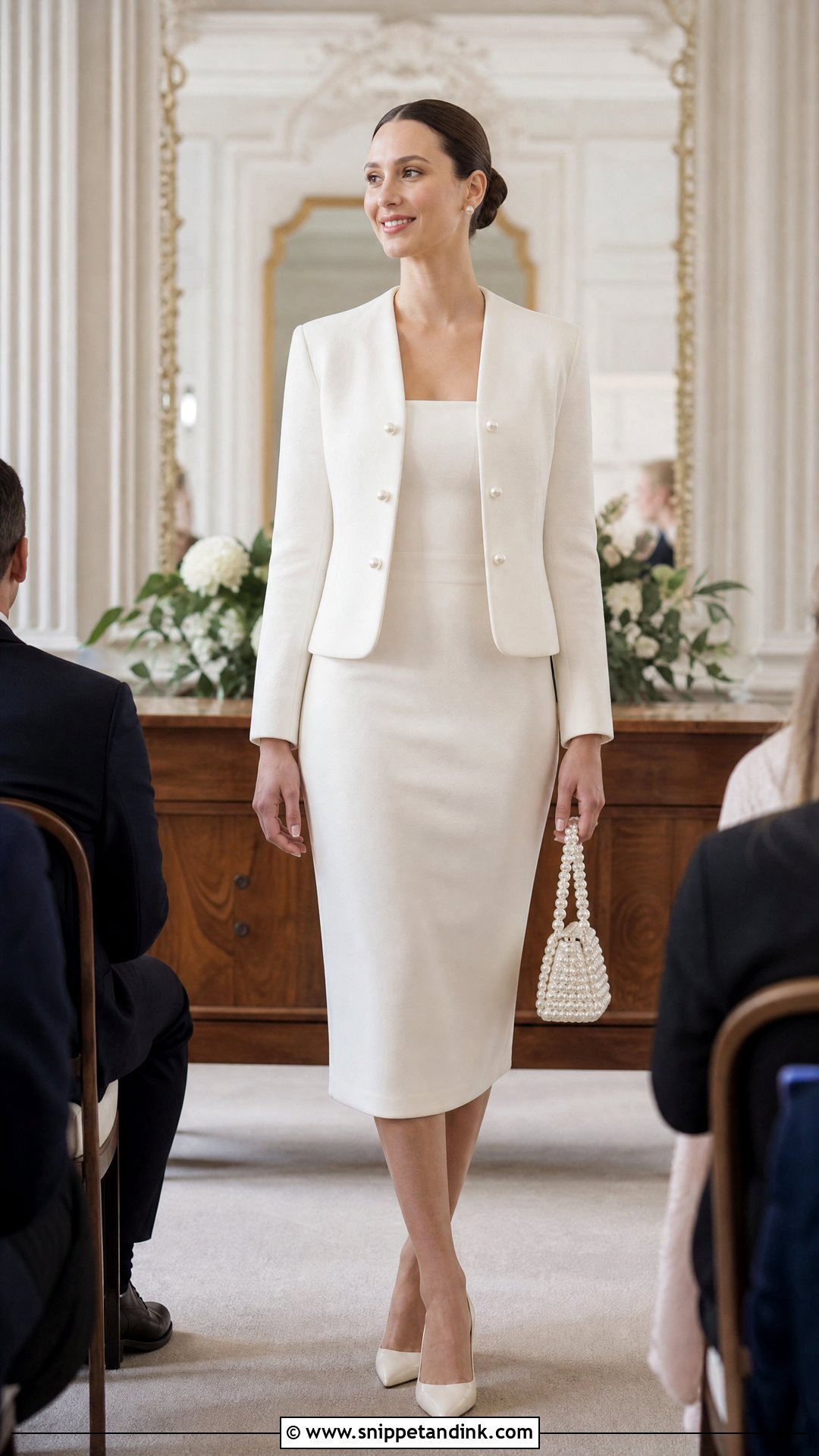
Pearl embellishment is heavier than people expect. If both the gown and the blazer are beaded all over, the jacket drags on the dress and the beads clack against each other every time you move. Keep the repetition controlled: pearls concentrated around the neckline or sleeves of the dress, and pearl buttons or a lightly trimmed lapel on the jacket. That small echo is what makes two separate pieces look like a set. Raise your arms at the fitting and check nothing catches. I suggest it for a civil ceremony, a bridal luncheon or a smaller reception outfit change.
11. Column Wedding Dress With Cape Blazer
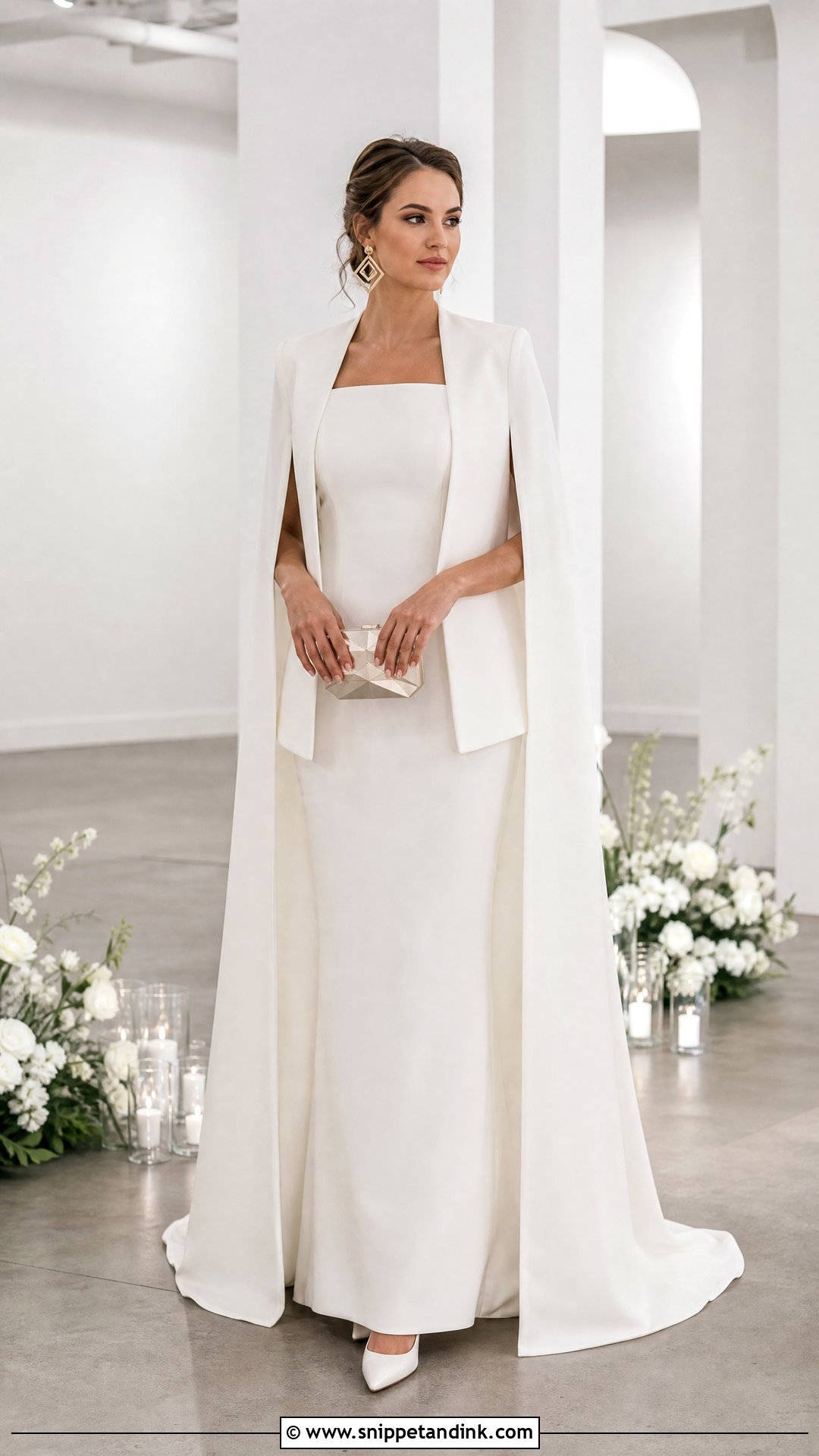
A cape blazer is half jacket and half wrap. It sits on the shoulders and falls past the arms rather than enclosing them, which gives the most movement of anything here and the least warmth, so I only recommend it indoors or in mild weather. Underneath, it needs a sleek column in crepe or stretch satin with very little embellishment. The fit at the shoulder decides everything: a cape that is loose there slides backward the first time you lift a glass. Ask for a discreet hook or internal button at the collar. A smooth updo keeps the shoulder line clean.
12. Square-Neck Wedding Dress With Cropped Blazer
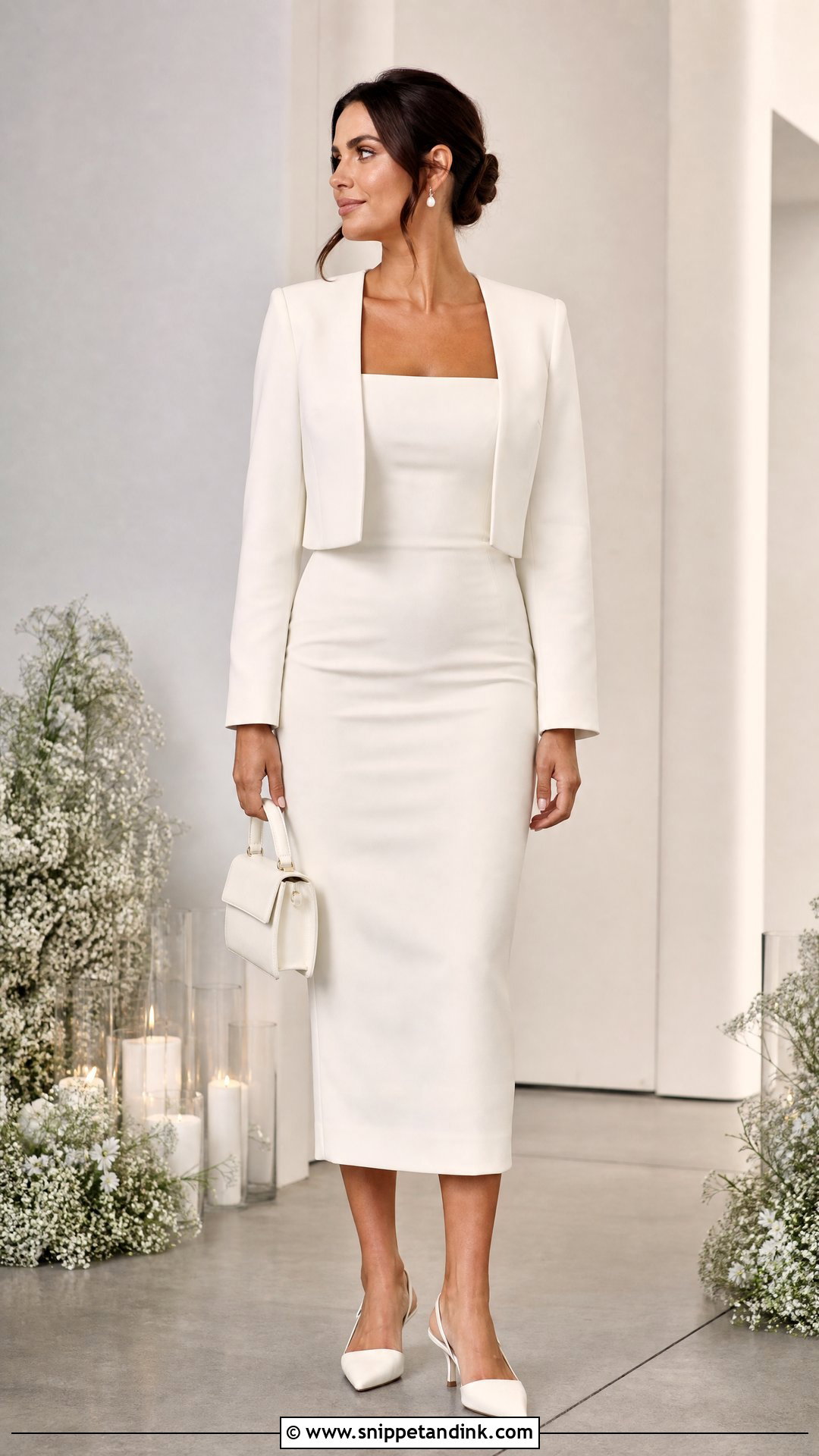
Square necklines and short jackets share the same geometry, which is why they sit so comfortably together. I prefer a collarless cropped blazer or one with very small lapels, cut so the corners of the neckline still show; once the jacket covers them, the dress loses its point. Wide straps underneath make it easy to slip the blazer on and off without shifting anything. Repeat one detail between the two pieces, such as covered buttons or matching piping, and the separates look made for each other. A waved bob or low chignon finishes it.
13. High-Neck Wedding Dress With Collarless Blazer
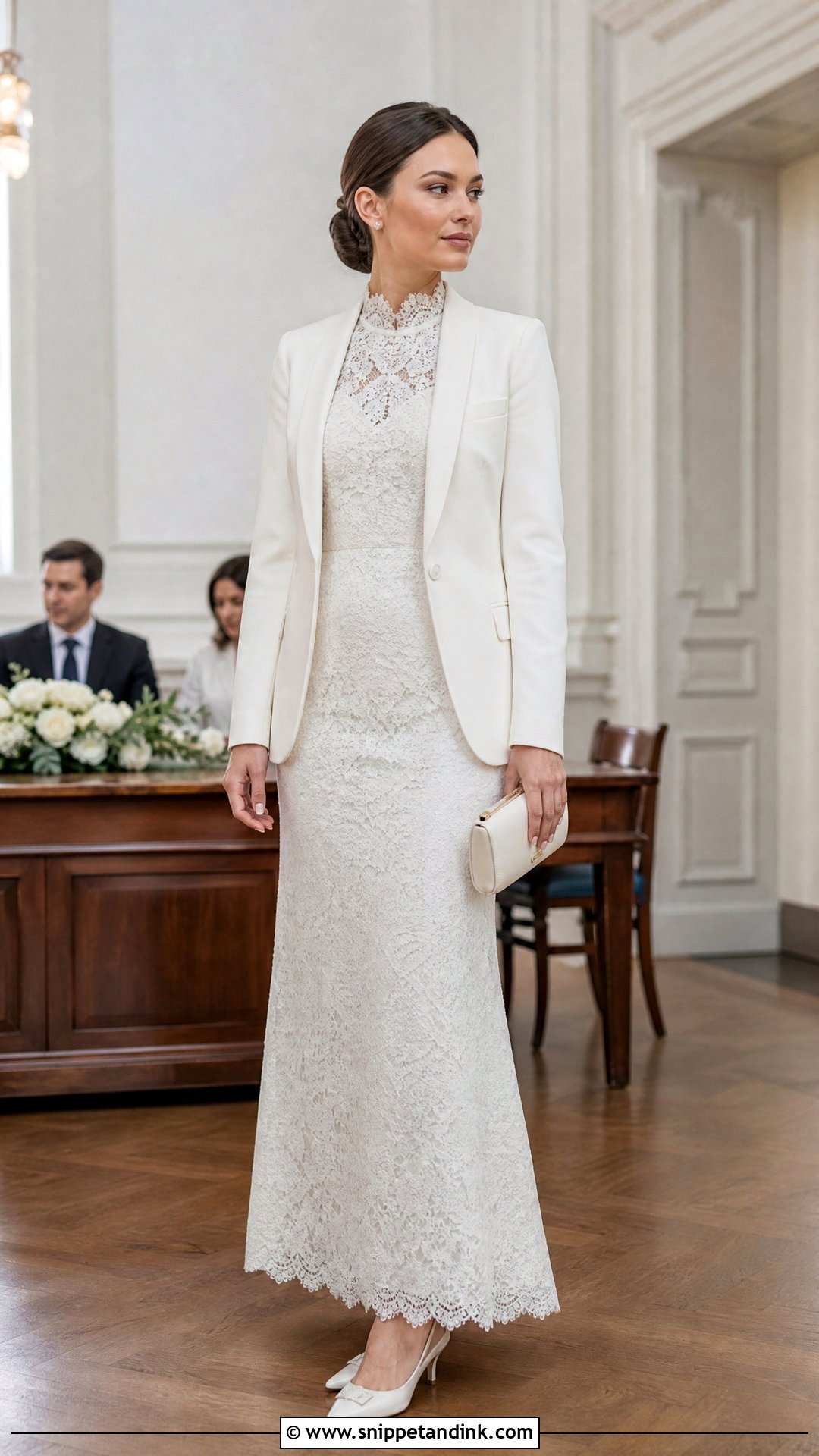
Lapels plus a high collar means two necklines fighting over the same small space, so a collarless jacket is what I reach for with a high-neck wedding dress. A round opening and a concealed fastening let a mock neck or lace collar stay fully visible. Cropped or waist length keeps it light. If the dress carries lace or embroidery, choose a smooth jacket fabric so the two textures do not blur into one another. Hair up shows the line of the neck. It is a sensible answer for a modest bride or a cold-season civil ceremony.
14. Wedding Dress With Belted Blazer
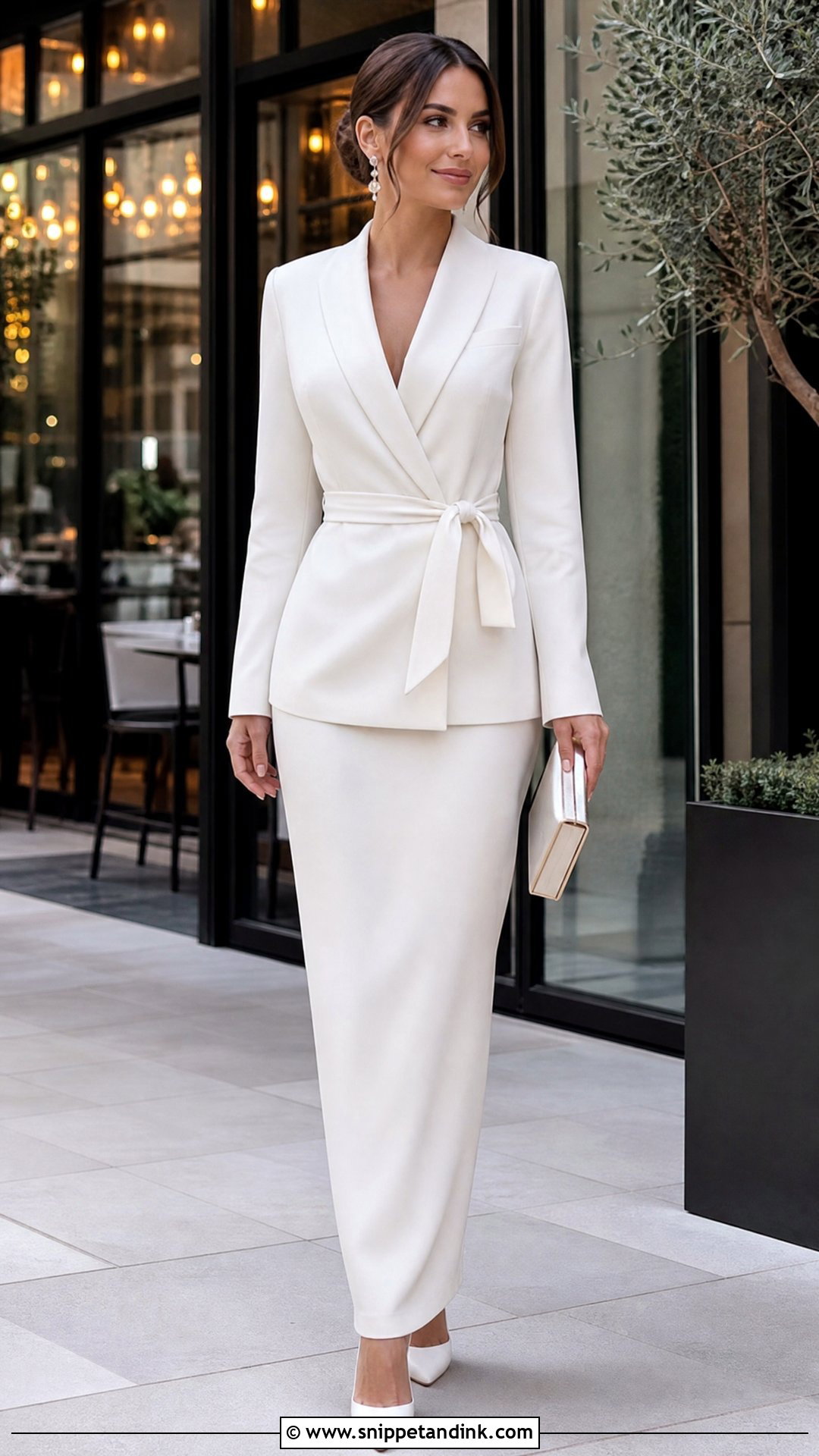
Belted wrap blazers do one thing very well and one thing badly. They pull a straight slip or column into a clear waist, but they also gather whatever is underneath, and thin satin ripples under a tightly tied belt. Tie it at the natural waist, firm enough to hold and loose enough that you can slide a flat hand between belt and jacket. A fabric-covered belt keeps the line clean, while a narrow pearl or crystal one adds a little shine. Wear it closed for the ceremony and open later, when you are eating and dancing.
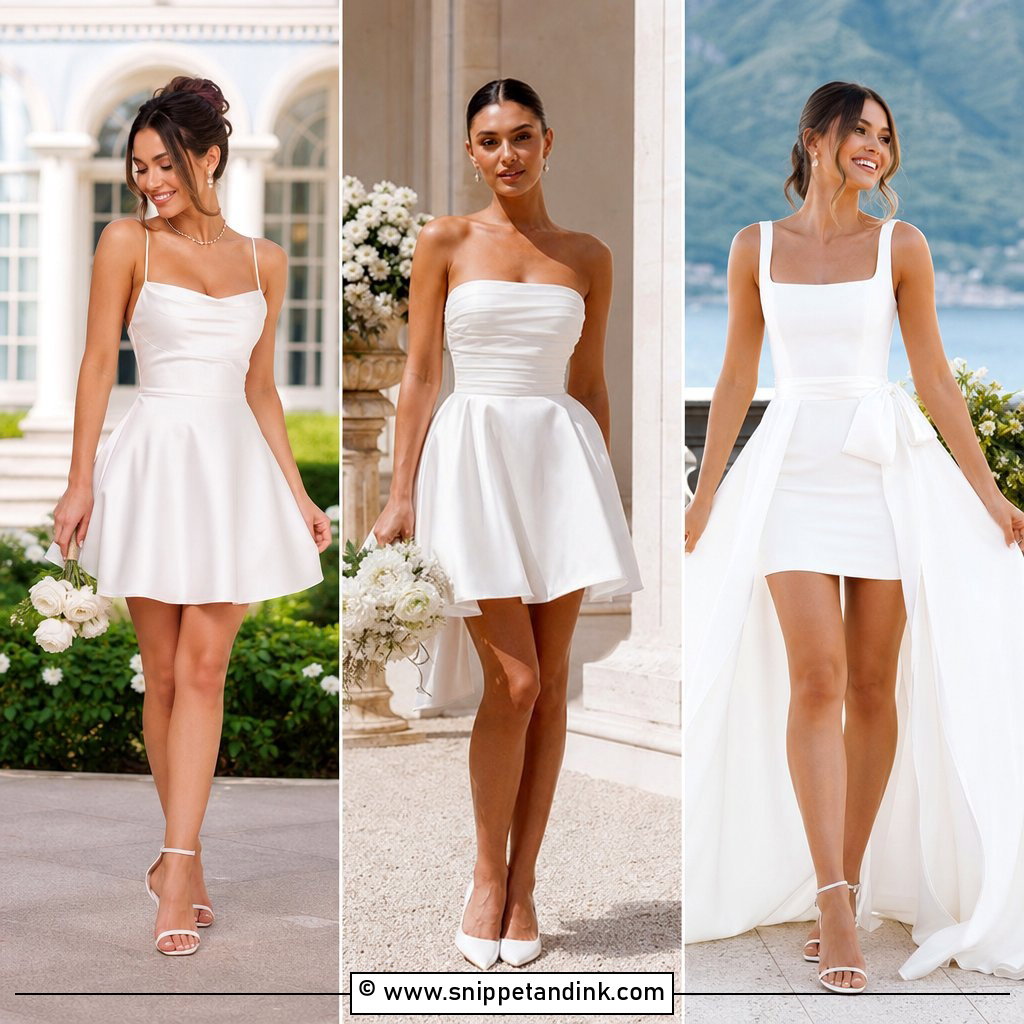
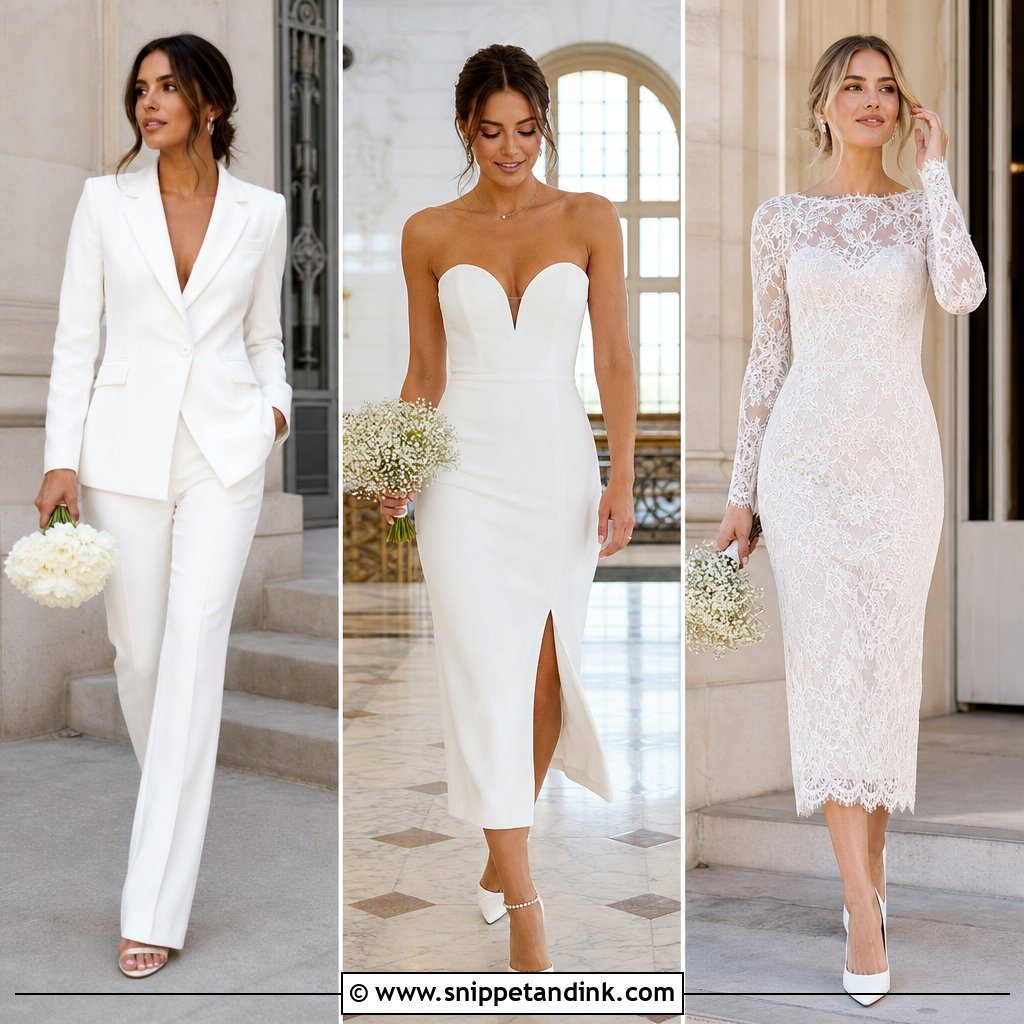
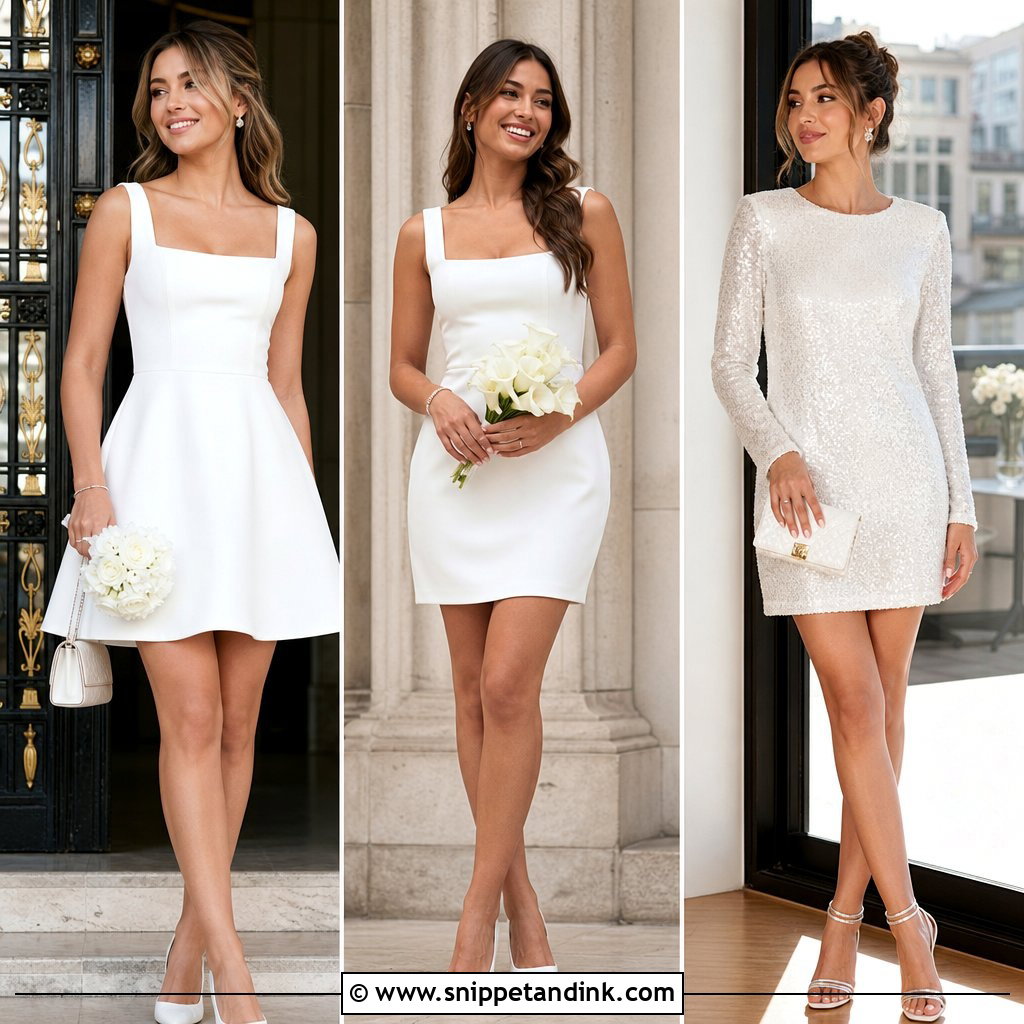
15. Backless Wedding Dress With Blazer
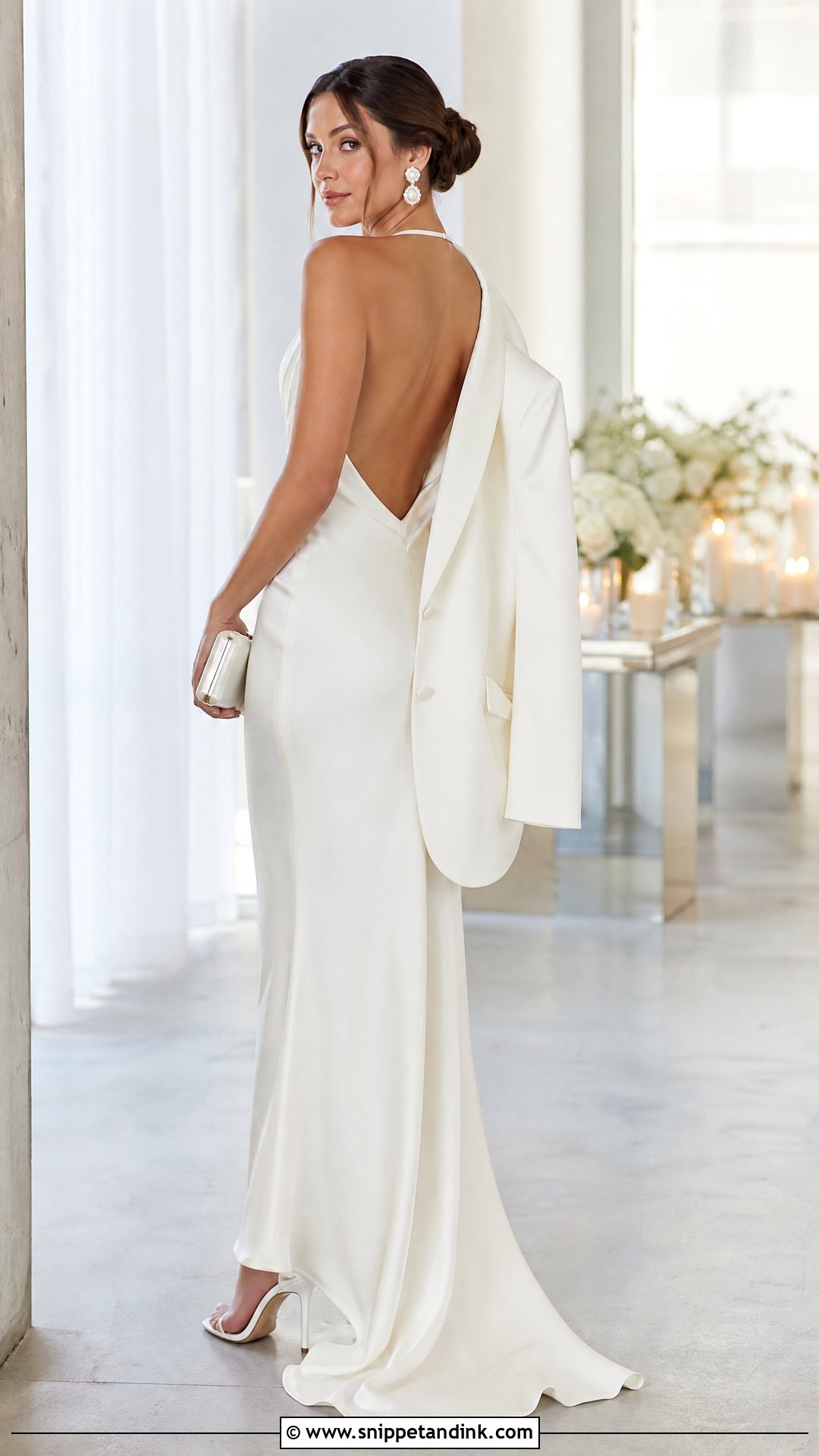
A backless gown gives you two looks in one day, and the blazer is the switch: covered for the ceremony, especially in a religious venue that asks for it, then off for the reveal at the reception. The front of the dress must be completely secure on its own, because once the jacket comes off nothing is helping it. Hip length suits most fitted gowns; cropped works over a defined waist. Wear earrings rather than a necklace and put the hair up so the back gets its moment. Run a hand along the jacket lining for rough seams that could snag.
16. Bow Wedding Dress With Simple Blazer
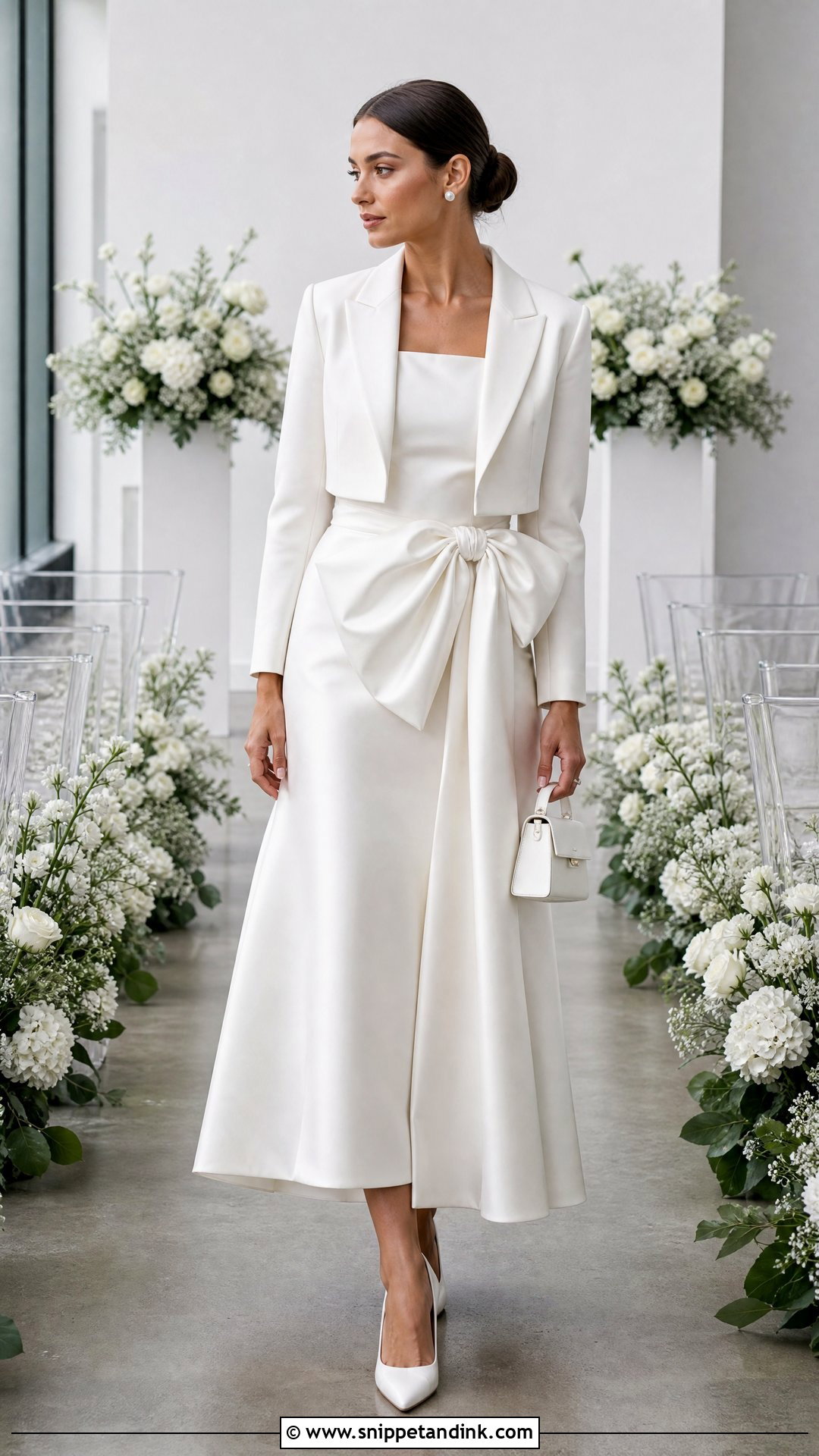
Where the bow sits decides the jacket. A front or waist bow needs a cropped blazer that ends above it. A large back bow cannot sit under a jacket at all without being crushed, so treat the blazer as an arrival layer and take it off before the ceremony or portraits. Crushed taffeta does not recover well once the day has started, which is the practical reason I am strict about this. Smooth ivory crepe makes a quiet backdrop for satin, organza or taffeta, and everything else should stay restrained.
17. Pleated Wedding Dress With Long Blazer
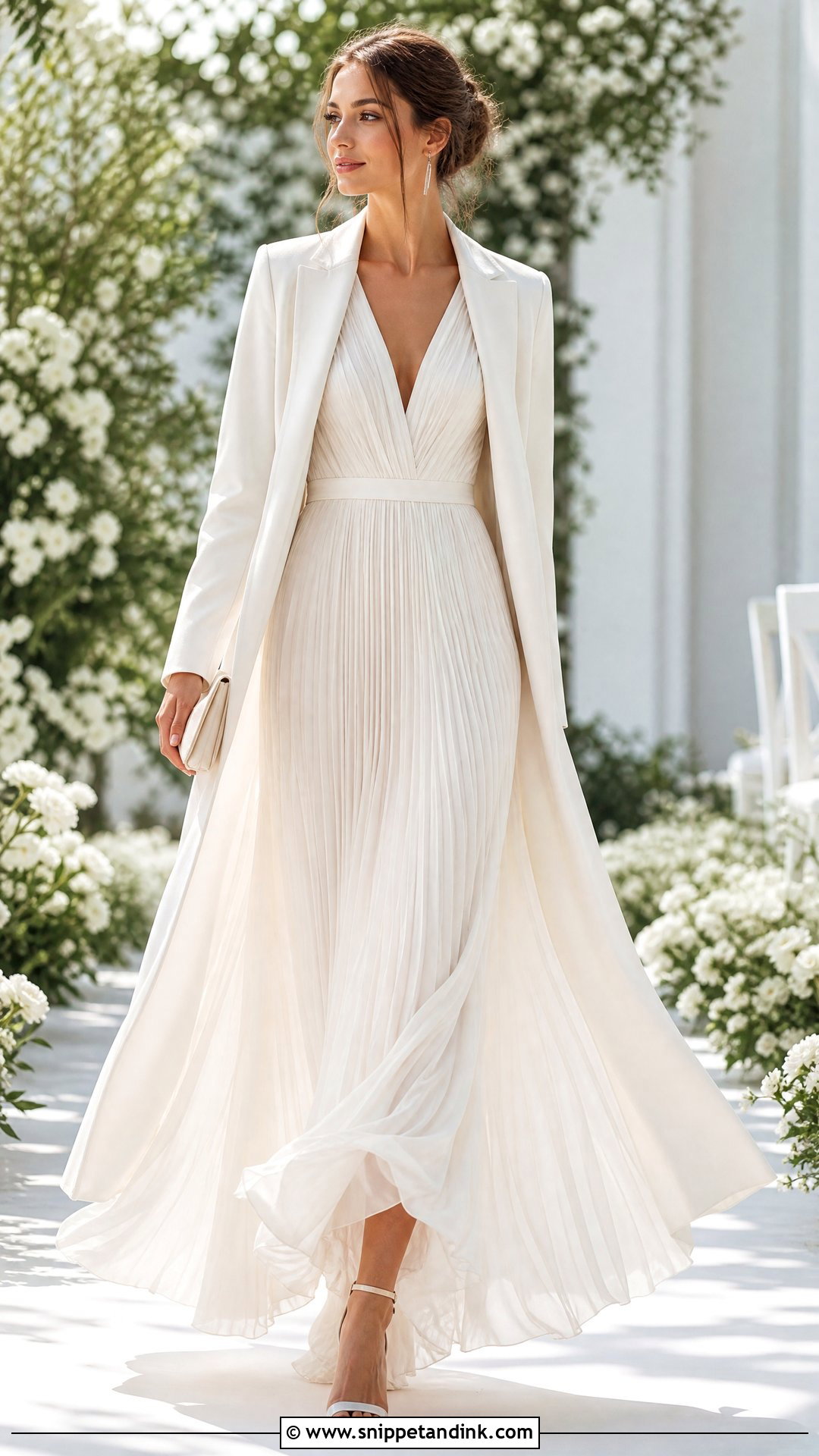
Fine pleats need room to swing, and a closed jacket takes it away. I would put a pleated midi or maxi dress in chiffon or light crepe under an open longline blazer that ends above the fullest part of the skirt, unbuttoned so you keep one long vertical line. Pleats also crush under warmth and pressure, so avoid sitting on the skirt bunched beneath a long jacket. Ask your seamstress whether the pleats are heat-set before anyone steams them, because some natural-fiber pleats relax under steam. Garden and destination weddings suit this airy dress with a removable warm layer.
18. Plus-Size Wedding Dress With Structured Blazer
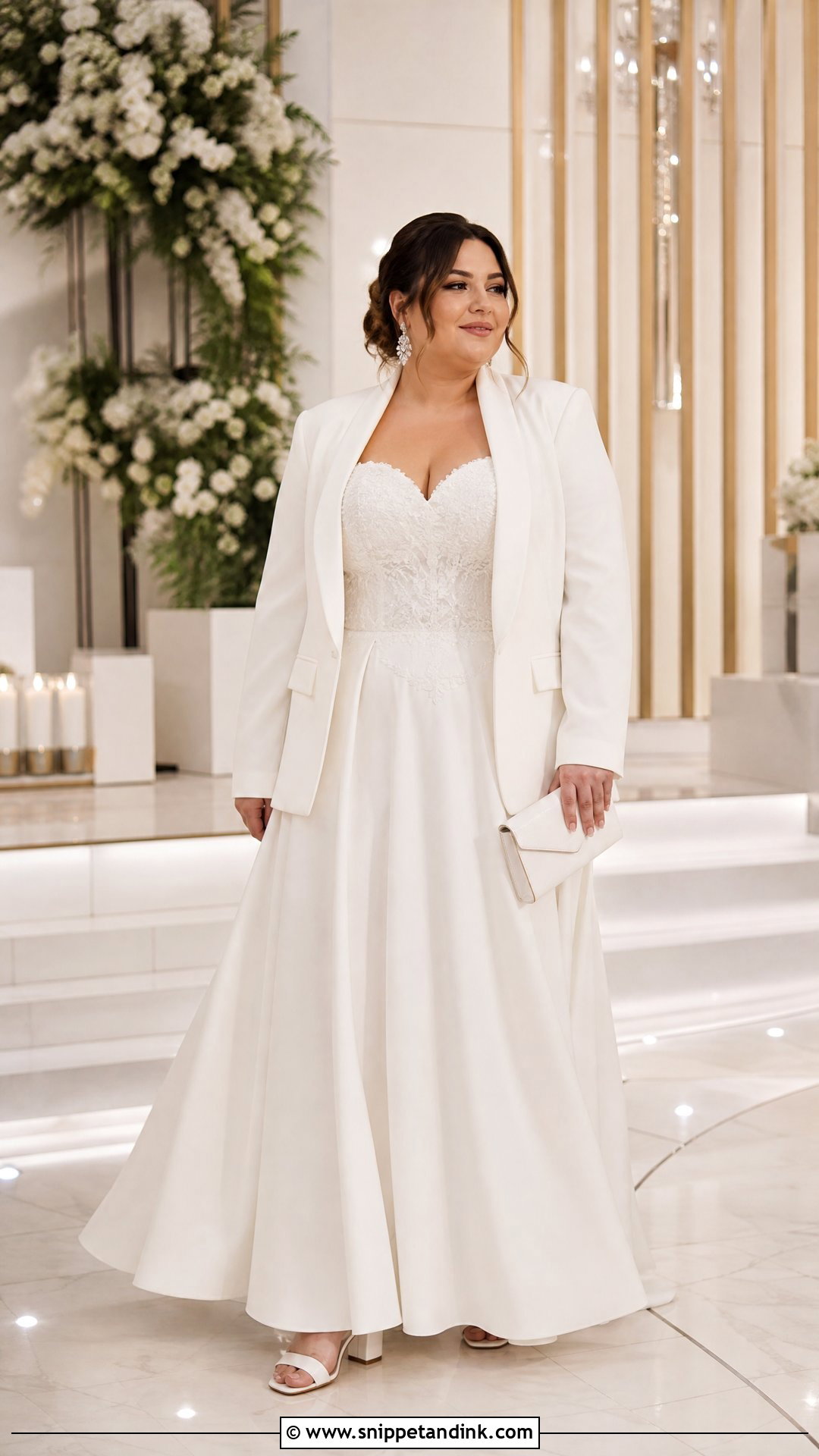
On a curvy bride, a blazer usually fails at the bust and shoulder before anywhere else. Buy it to fit the fullest part of your bust, then have the waist taken in and the sleeves shortened; shoulder alterations are possible but fiddly and expensive. The jacket should button without pulling and still let you lift your arms to hug people. Waist length or a gently shaped hip length gives definition without restricting movement. A structured clutch and earrings that frame the face finish it, and block heels make a long day kinder on your feet.
19. Maternity Wedding Dress With Open Blazer
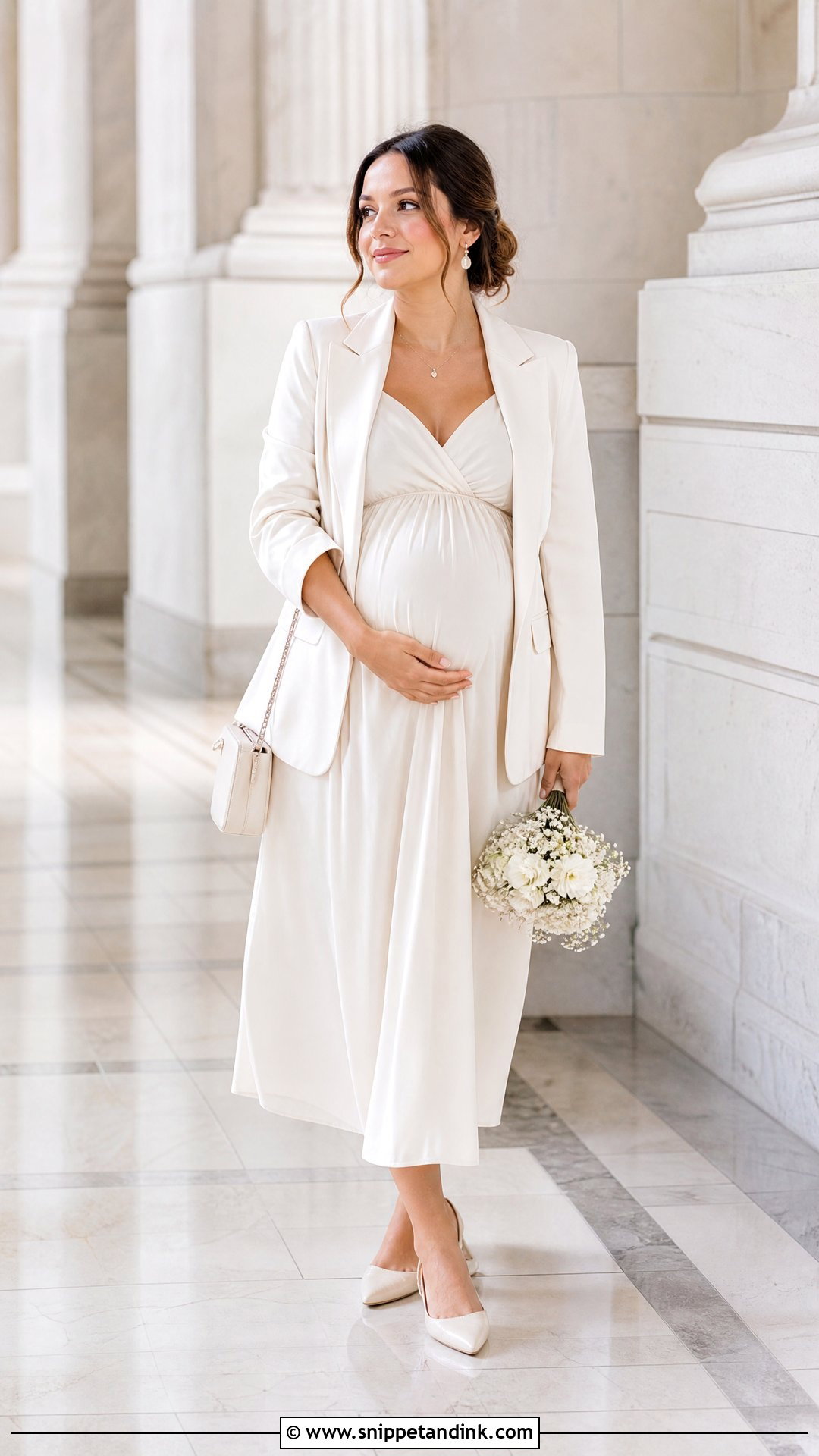
Bodies change quickly in pregnancy, so I would schedule the final maternity fitting as late as your dressmaker allows, ideally within two weeks of the wedding. An open single-breasted blazer is the right jacket here: it is designed to hang unfastened and puts no pressure on the bump. Lightweight crepe over an empire-line or stretch column keeps you from overheating. Avoid stiff closures and tight armholes, since you will want to move freely and many pregnant brides swell a little by evening. Supportive block heels or pointed flats are the honest footwear choice.
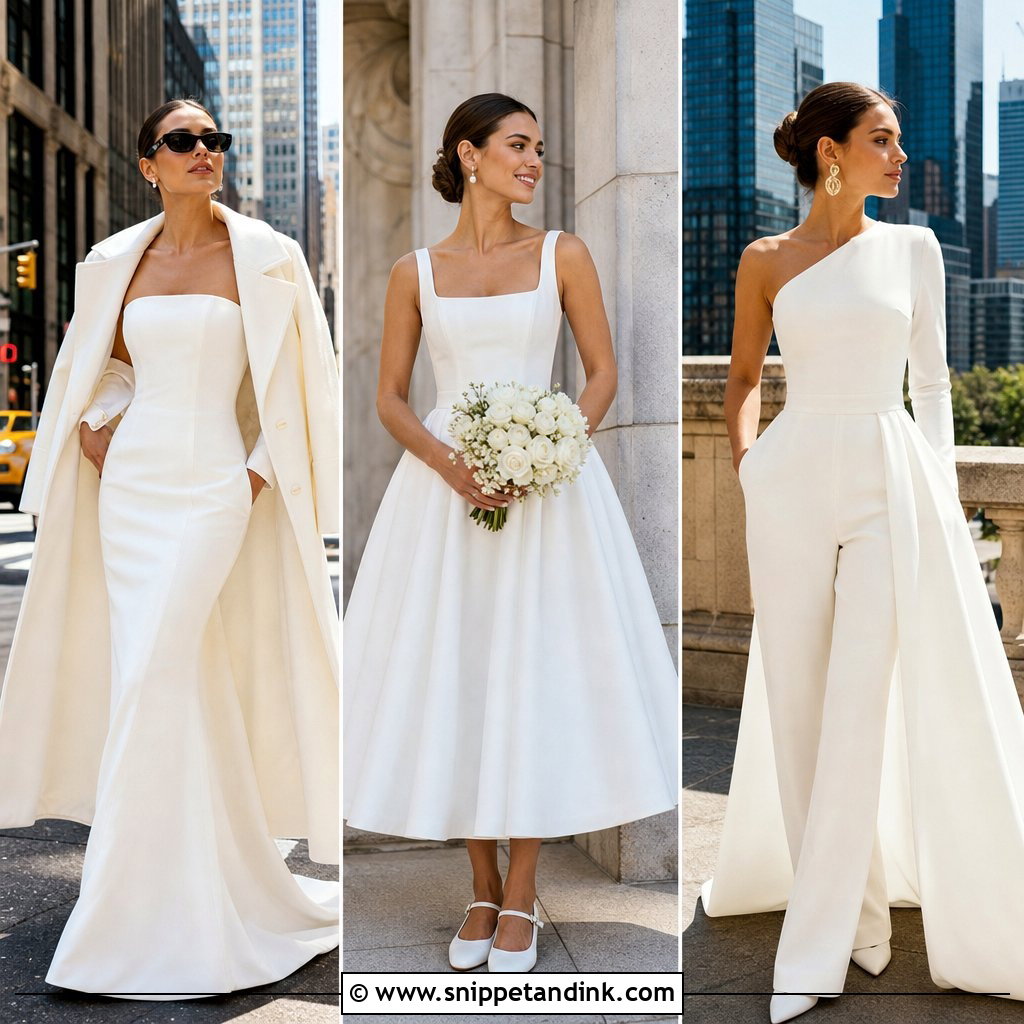
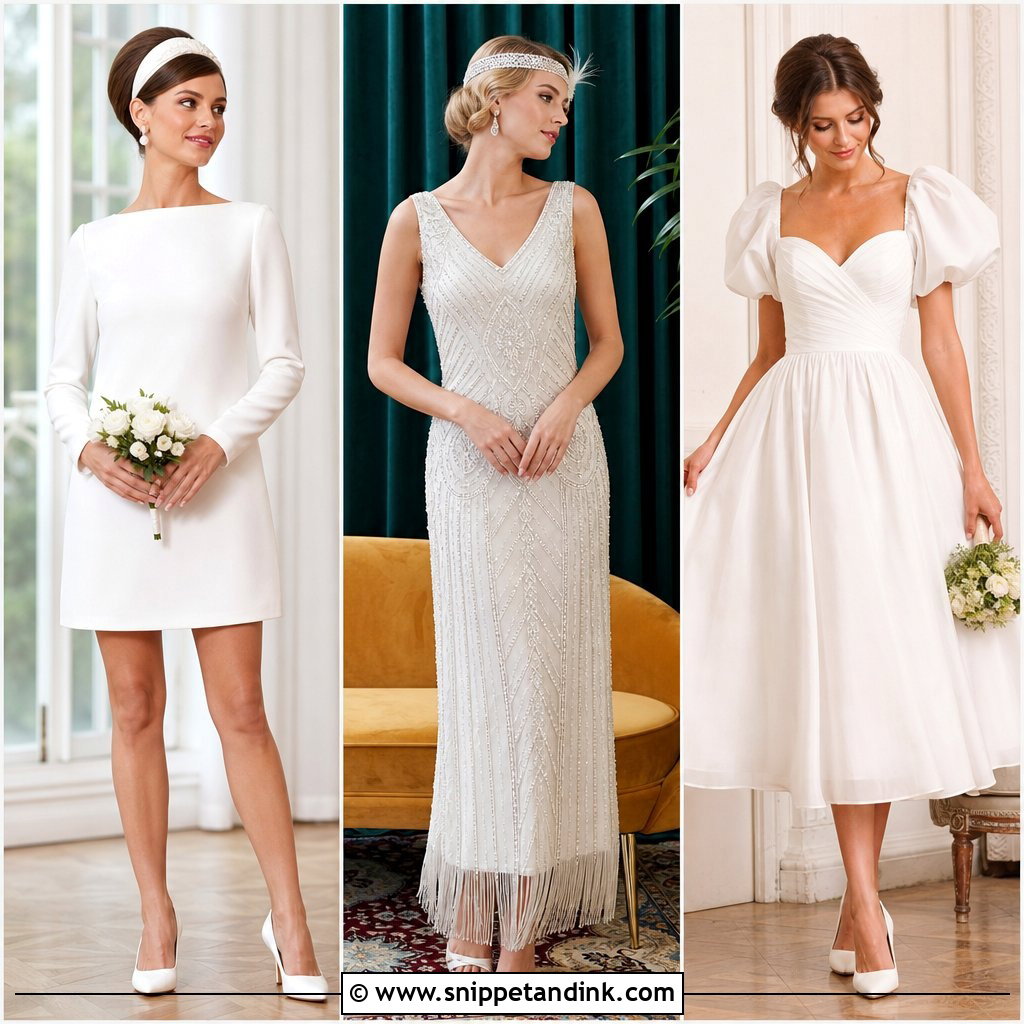
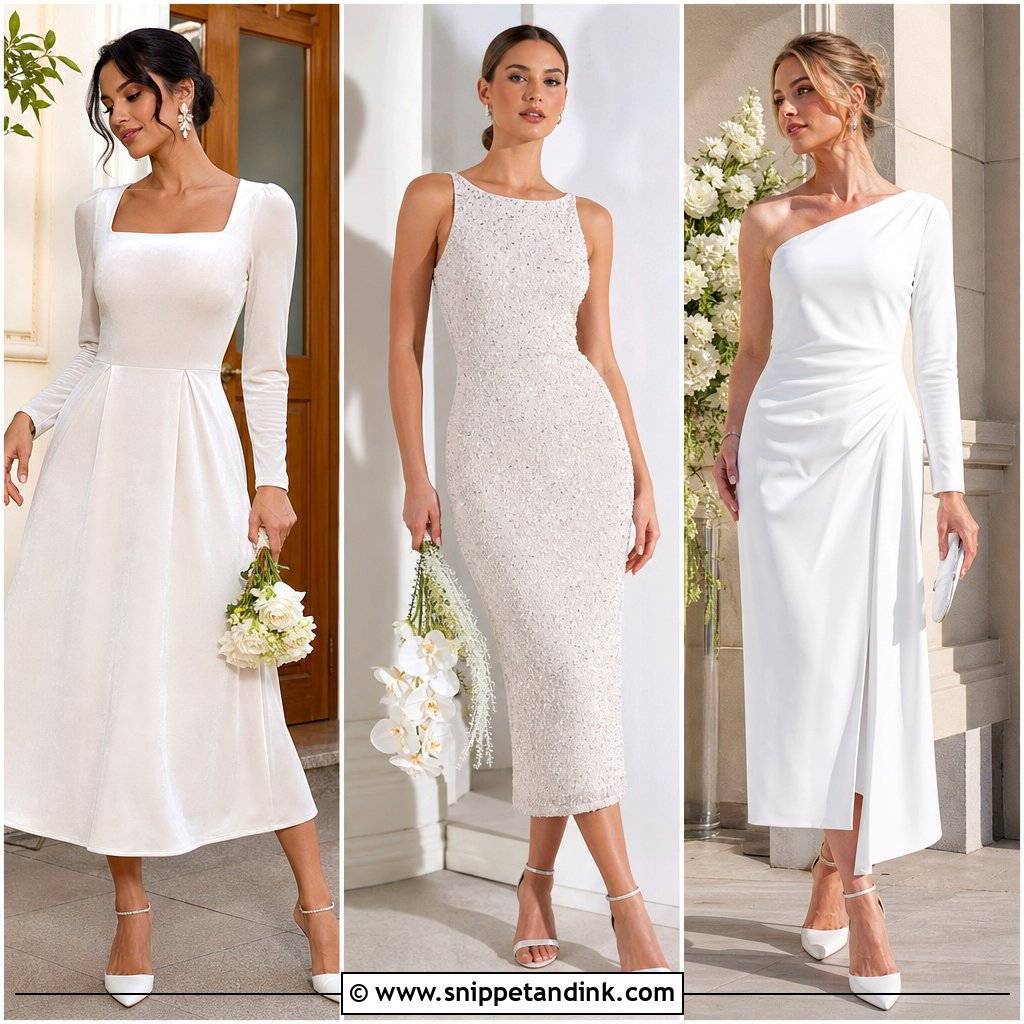

20. Black Blazer With White Wedding Dress
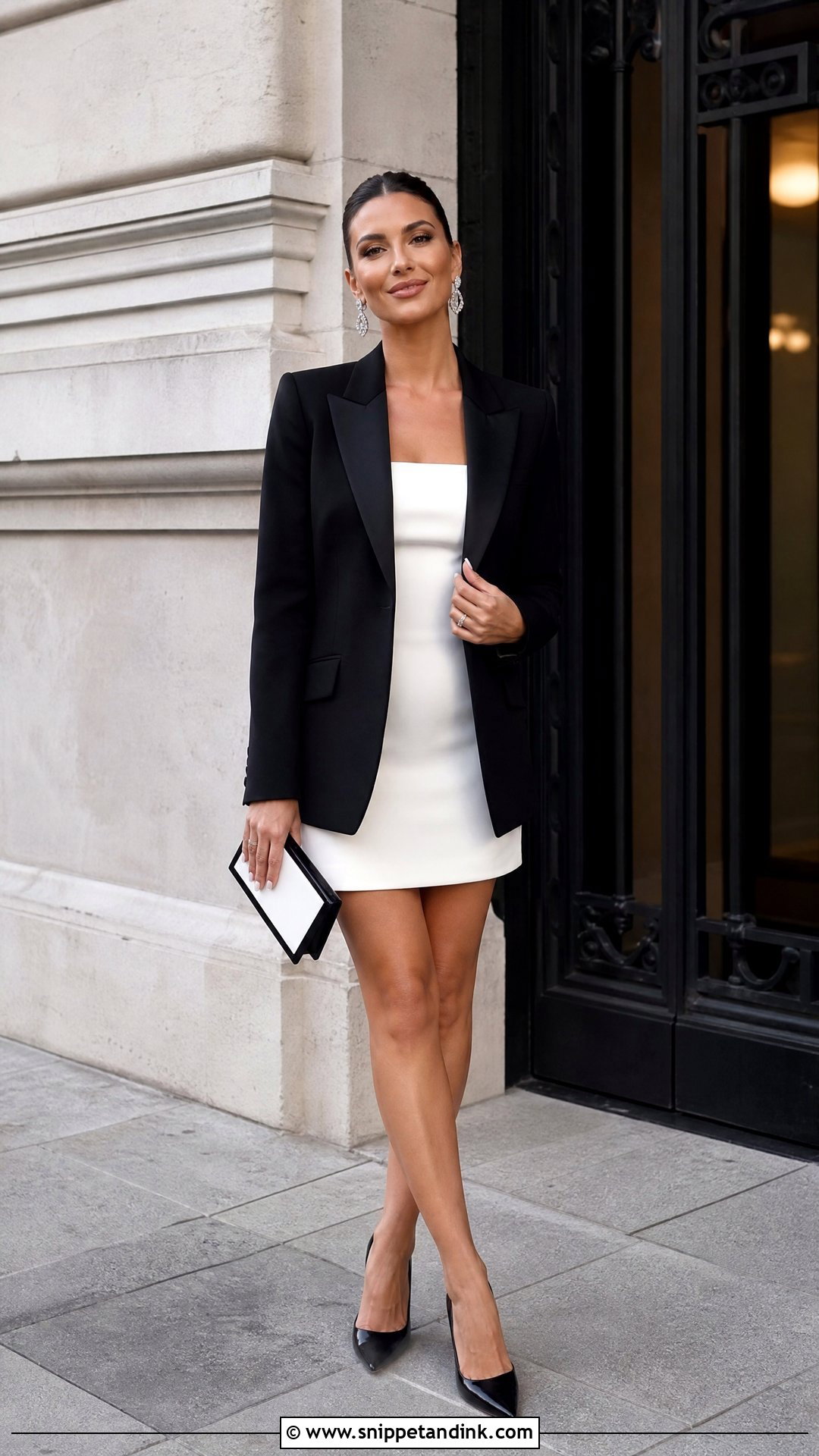
Black against white is graphic, and cameras exaggerate it. In bright sun the dress can lose its detail while the jacket turns into a flat dark shape, so mention this pairing to your photographer ahead of time. A sharp tuxedo blazer with satin lapels, worn open, keeps a band of white visible down the center. Underneath, keep the dress minimal. Black pumps continue the contrast and white satin heels soften it. A black ribbon on the bouquet or a narrow black bow in the hair ties the palette together, and the whole thing looks best at an evening reception under softer light.
Why Two Ivories Turn Into Two Colors on Camera
Bridal white comes in dozens of shades, and two pieces from different makers almost never match exactly. Under warm indoor light the gap hides. In daylight or under flash, a cool white jacket over a warm ivory gown makes the dress look yellow, and a creamy jacket over bright white makes the jacket look grubby. Hold a swatch of the jacket fabric against the gown beside a window before you commit.
If they will not match, aim for obvious contrast instead. Matte crepe over glossy satin, or a clear cream over clear white, reads as a decision. A near miss reads as a mistake.
Somebody Has to Hold the Blazer at the Reception
Most brides take the jacket off at some point, and that is exactly when it gets creased, lost or sat on. Decide in advance who looks after it. A bridesmaid with a padded hanger beats the back of a chair, where the shoulders pick up a dent within the hour.
- Pack a travel steamer in the getting-ready kit. Crepe and wool release creases quickly, but satin can water-spot, so steam it from the inside.
- Hang it on a shaped hanger the moment it comes off. Wire hangers leave points in the shoulders.
- Keep a lint roller nearby if the blazer is black. It shows every petal and every thread from the tablecloth.
- If you get cold late in the night, wear a cropped blazer over the shoulders without putting your arms in, which keeps the sleeves crease-free while you eat.
Proportion Comes Before Polish
Every pairing here comes back to proportion. Cropped jackets suit full skirts and defined waists; longline blazers suit slips and columns. Matching whites look calm and black over white looks bold, so let the mood of your wedding decide. Take the jacket and the dress to fittings together, check the shoulders and sleeves with a bouquet in your hand, and compare both pieces in daylight. Then settle whether the blazer stays on all day or comes off for the reception, and plan your hair and jewelry around that answer.
You'll Like These Ideas:


Leave a Reply