
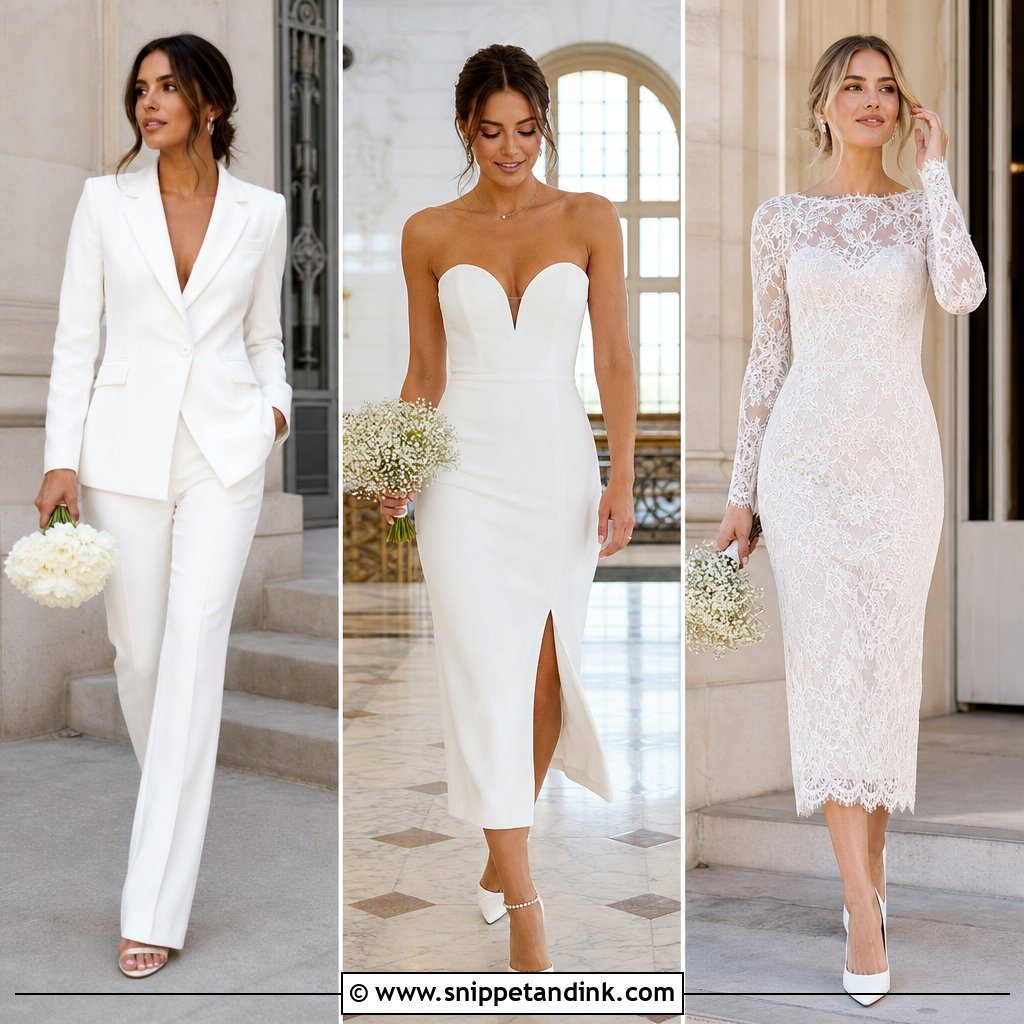
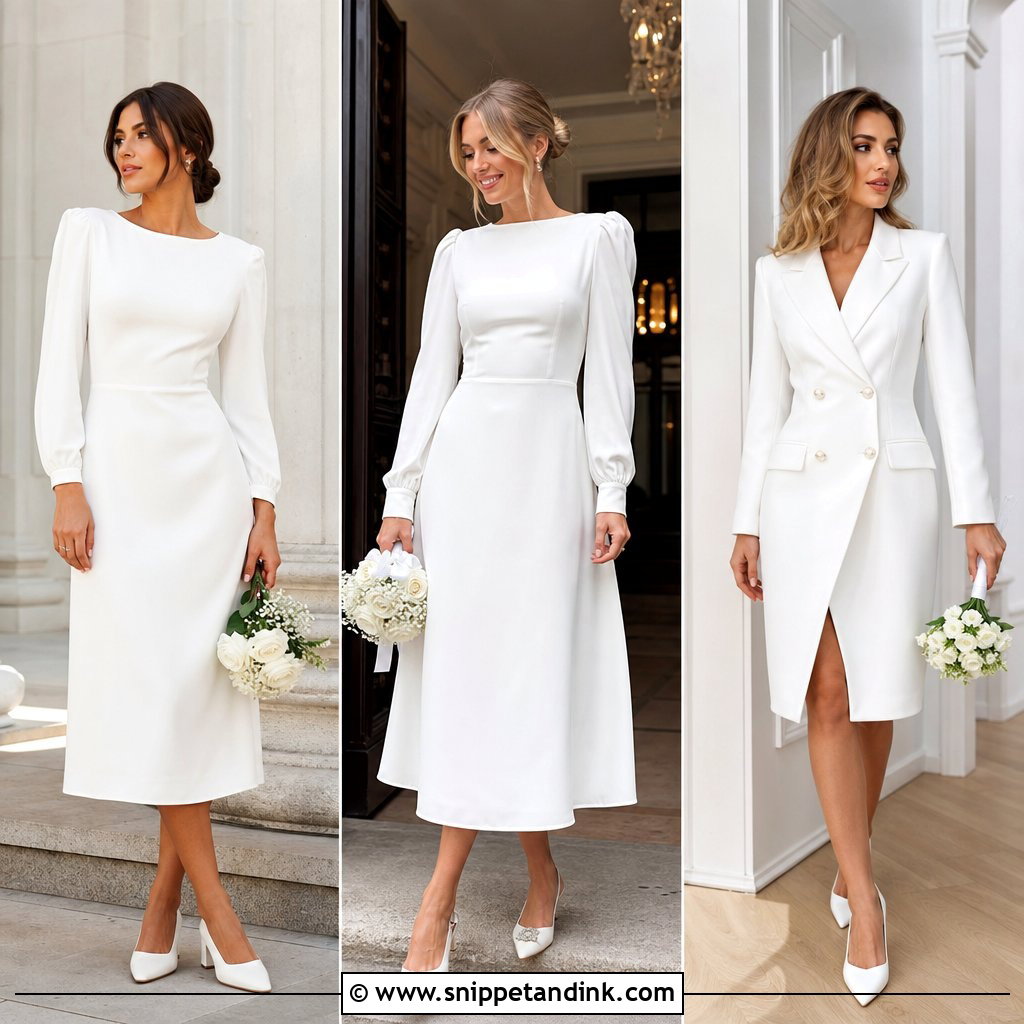
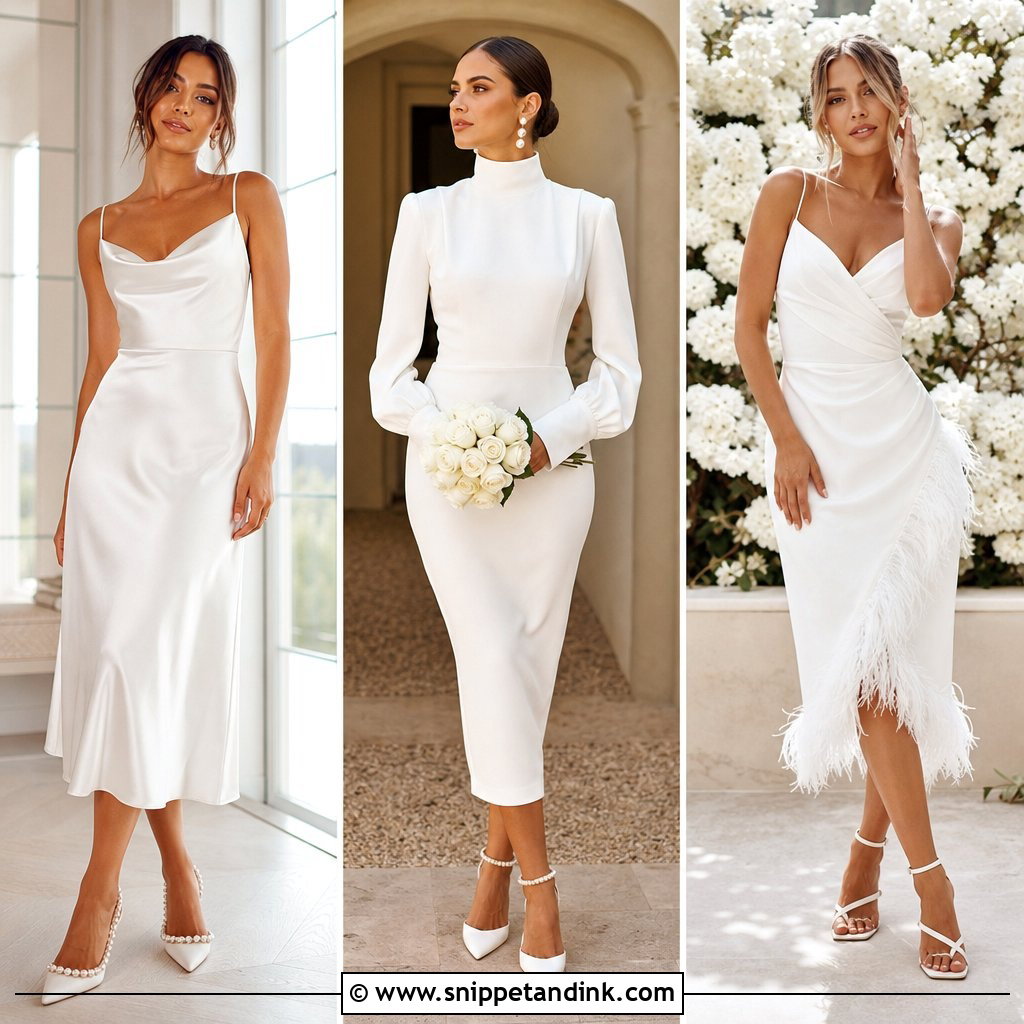
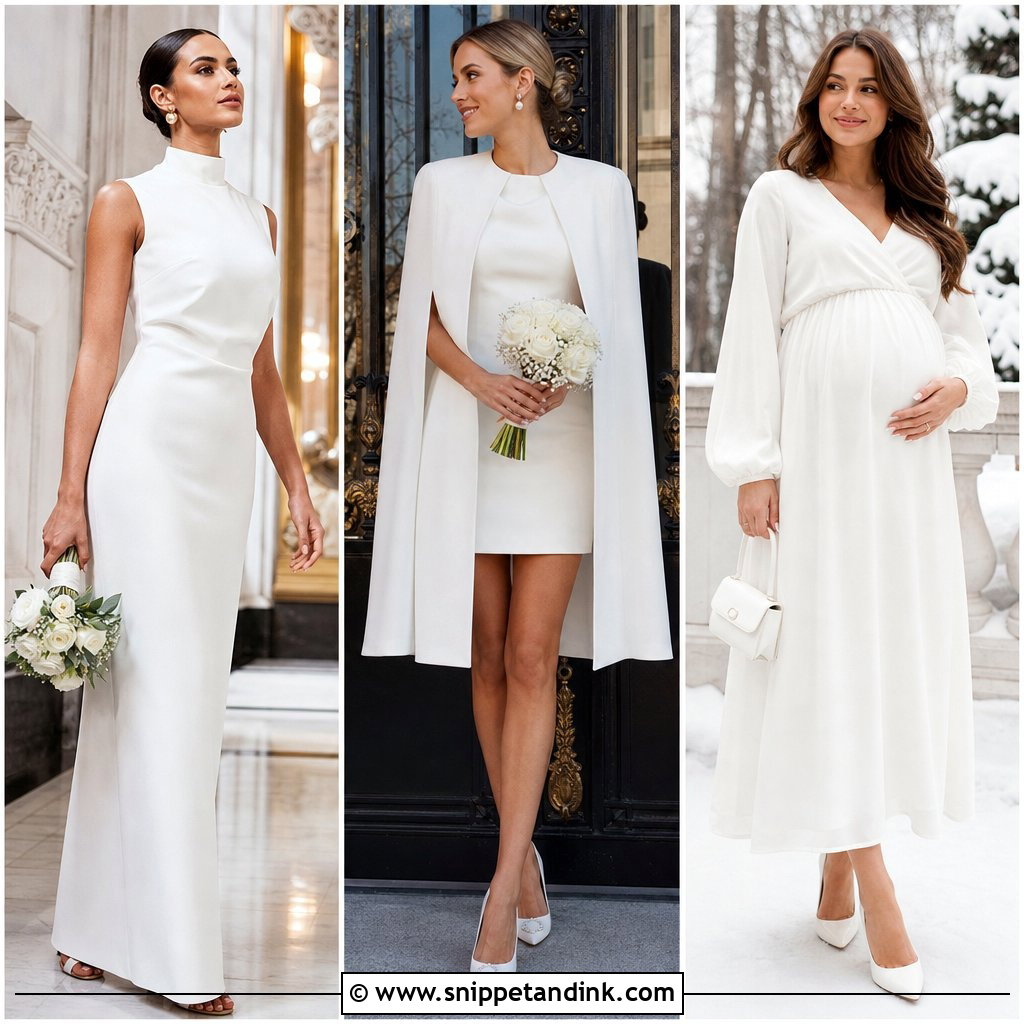
Short dresses used to be the backup plan, the thing you changed into after the cake. These days I style just as many brides who wear one for the vows: city hall ceremonies, elopements, destination weddings, rehearsal dinners. The risk with any short white dress is that it reads as a party dress rather than a wedding dress. What tips it over the line is fabric quality, a deliberate silhouette, and one or two bridal cues like a veil, gloves or pearls. Below are thirty versions, from structured minis to lace tea lengths, with what I’d check on each before you wear it in front of a registrar.
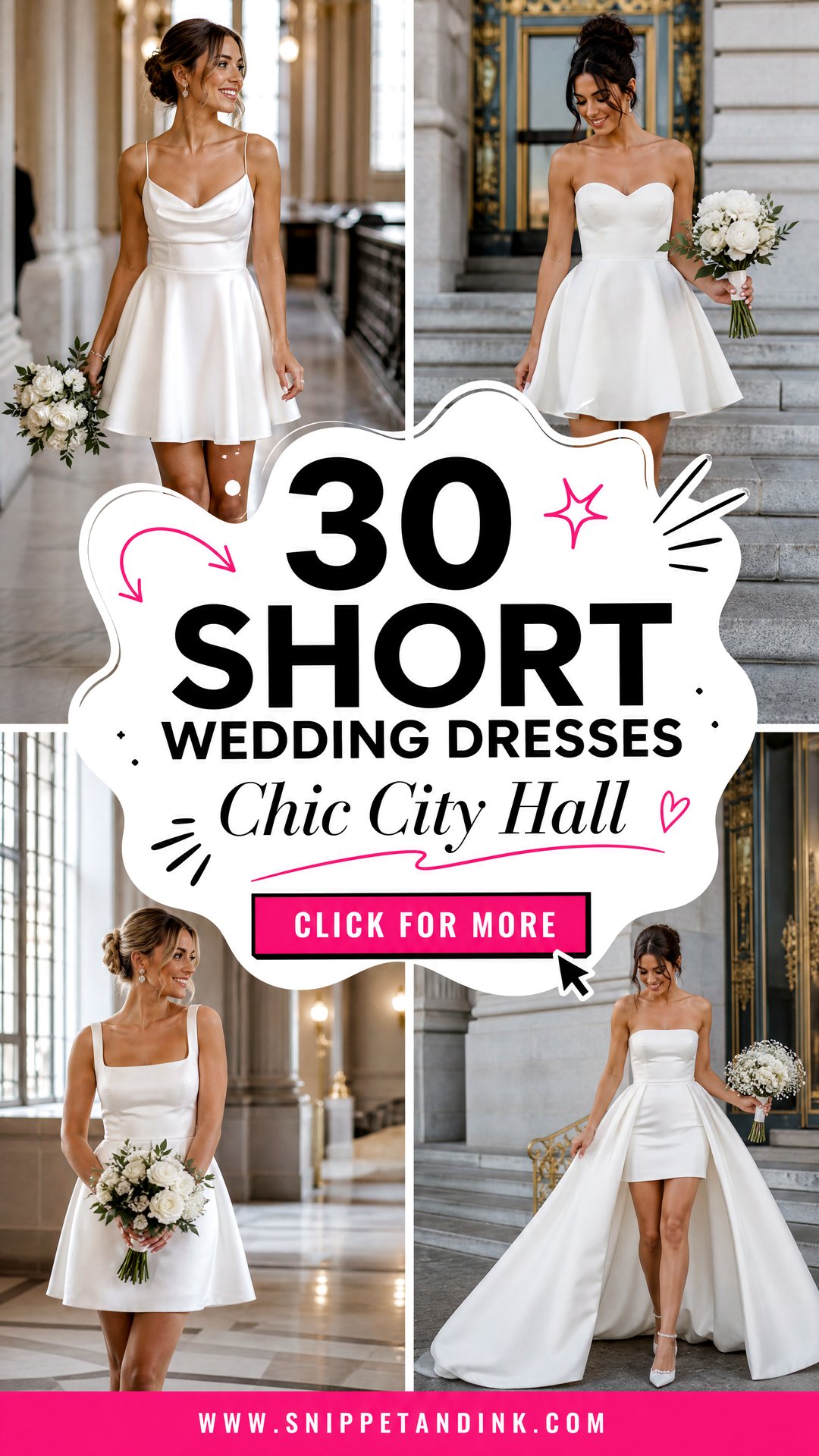
What Separates a Bridal Mini From a Party Dress
Standing in a courthouse corridor, you’ll probably share the space with other couples, some in jeans and some in full gowns. A short dress needs to look clearly bridal there, and in my experience three things do most of that work.
First, fabric weight and finish. Lace, heavy satin, mikado, crepe and structured jacquard read as wedding fabrics. Thin polyester and jersey read as everyday, even in white. Second, a clear bridal accessory, a veil, gloves or a bow, so anyone glancing over knows who’s getting married. Third, the colour. Pure bright white can look flat under fluorescent lighting, while soft ivory or a warm white usually photographs better indoors.
I’d rather a bride spend on a well-made short dress and keep accessories simple than buy a cheap dress and pile on extras.
1. Short Lace Wedding Dress
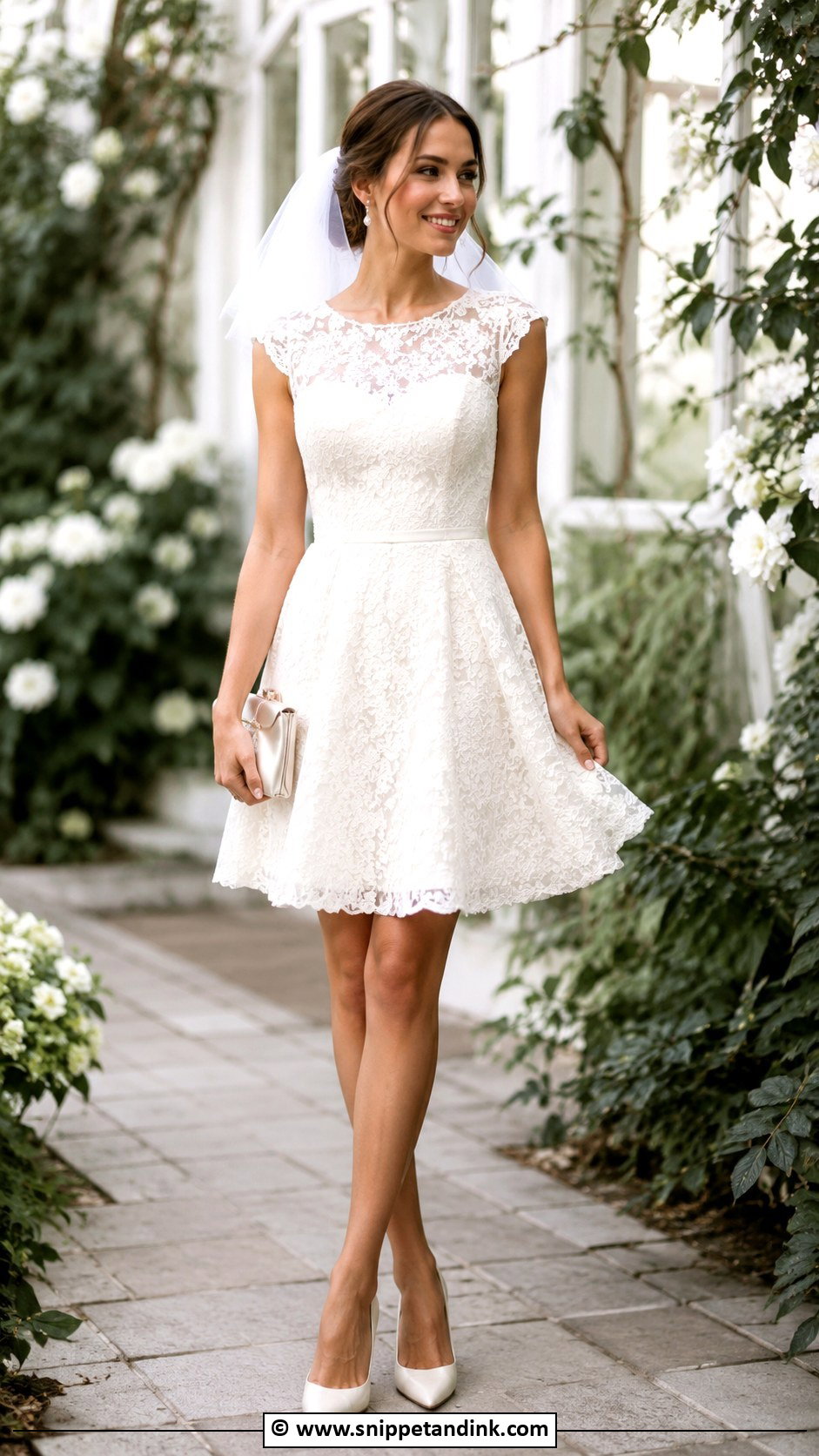
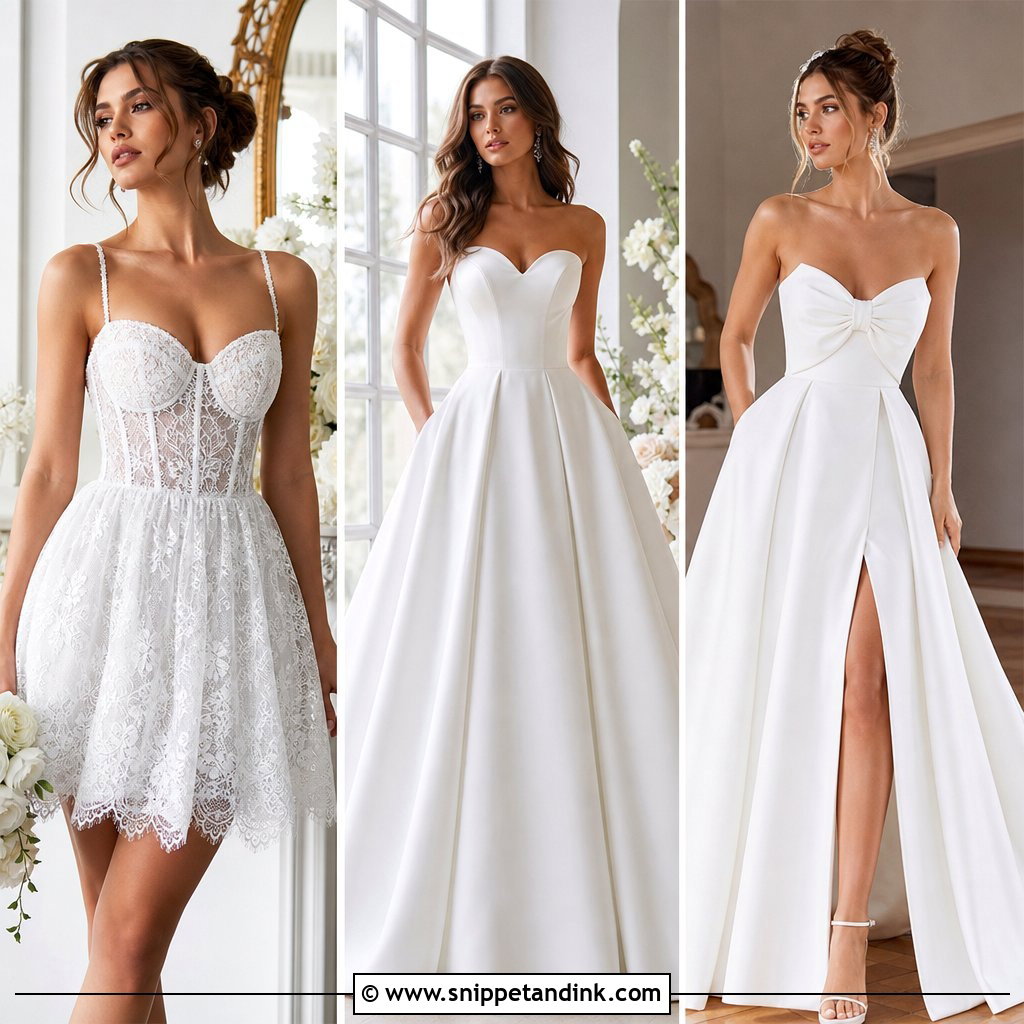
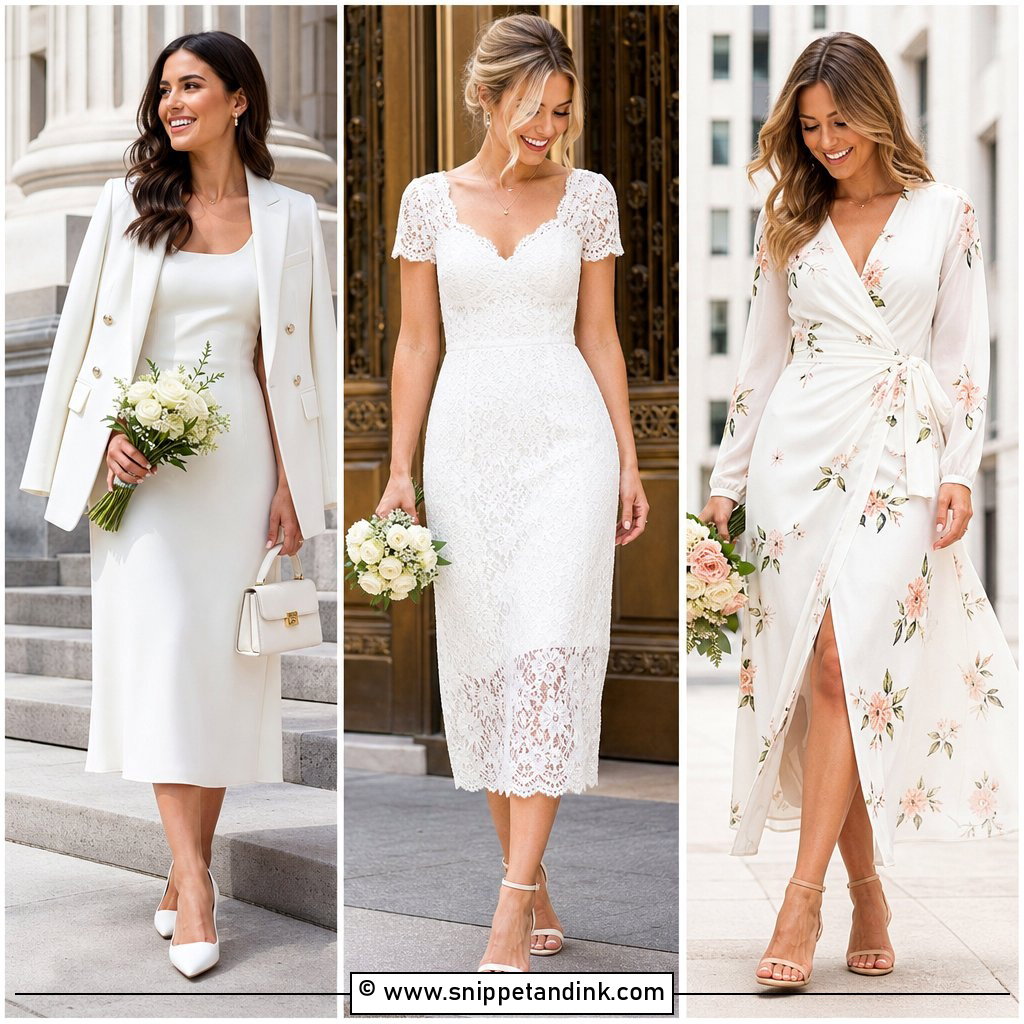
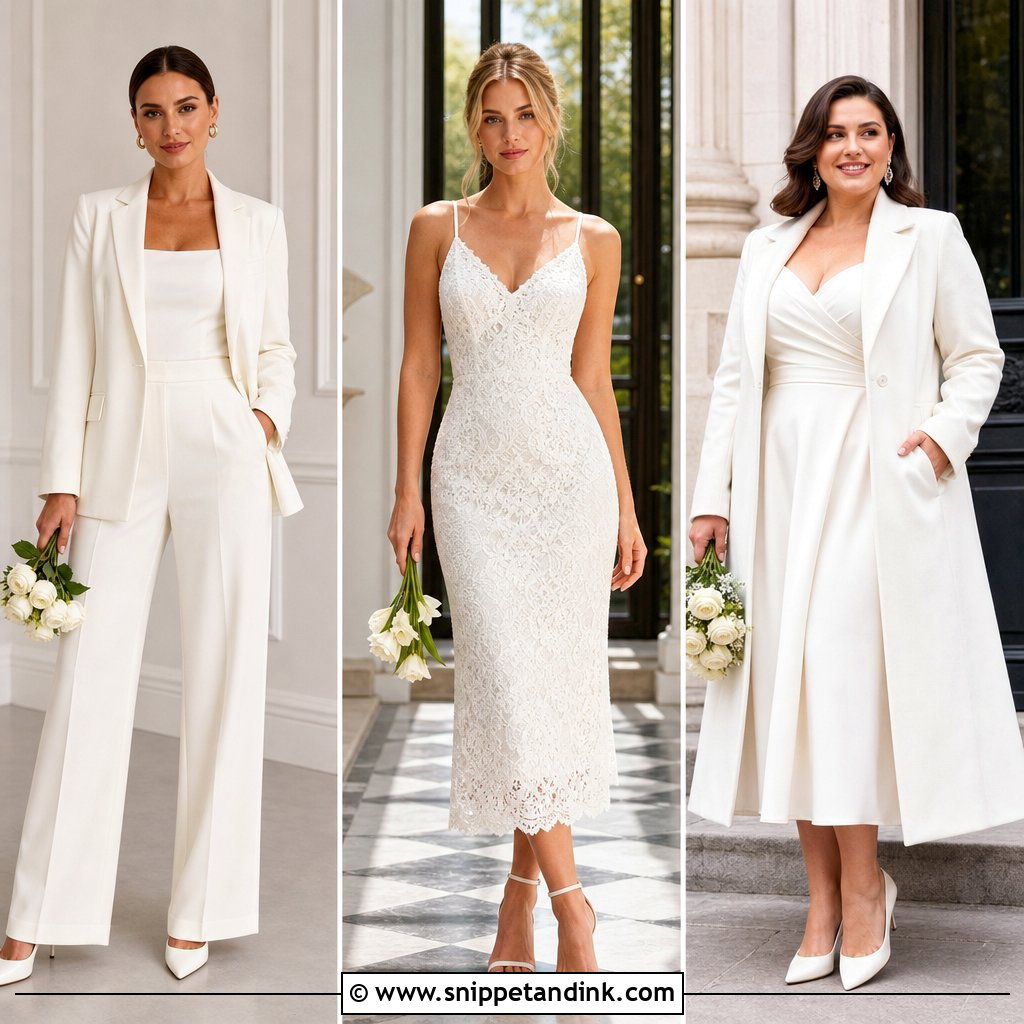
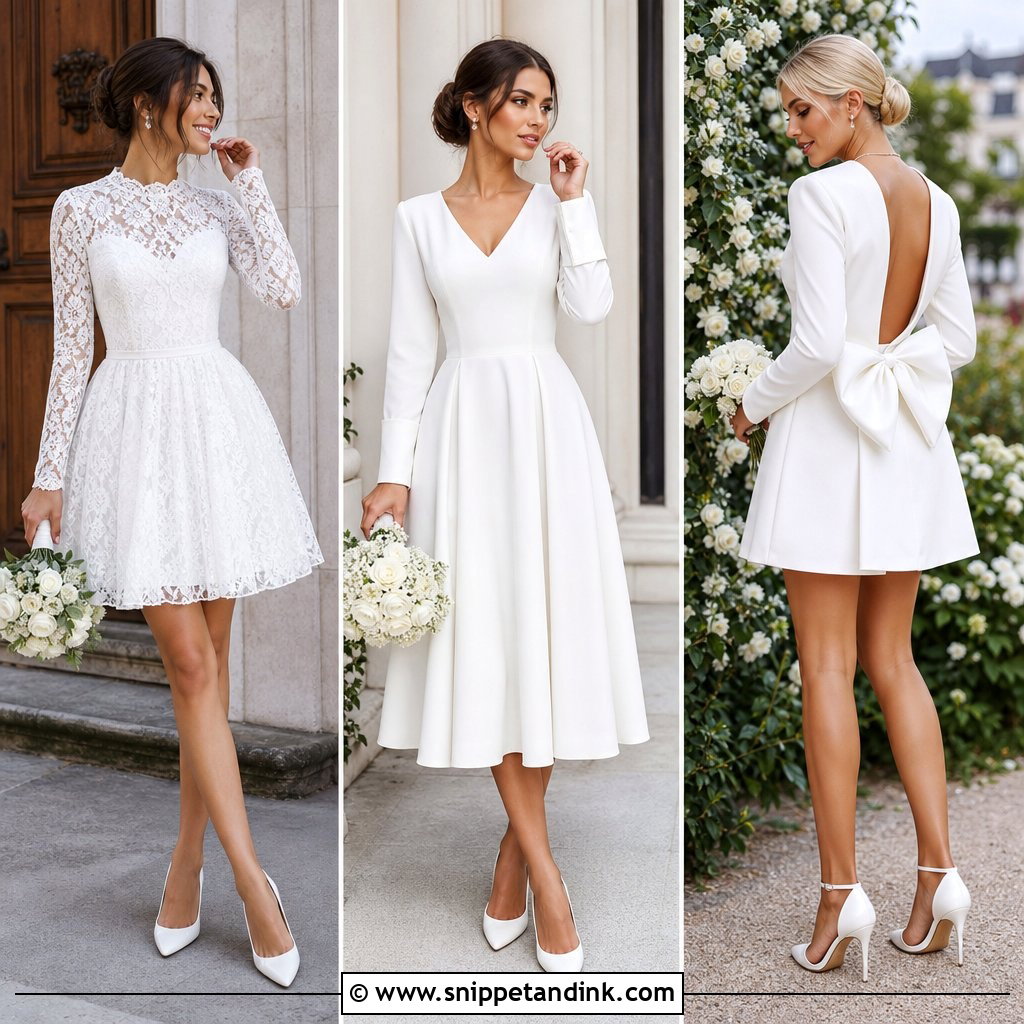
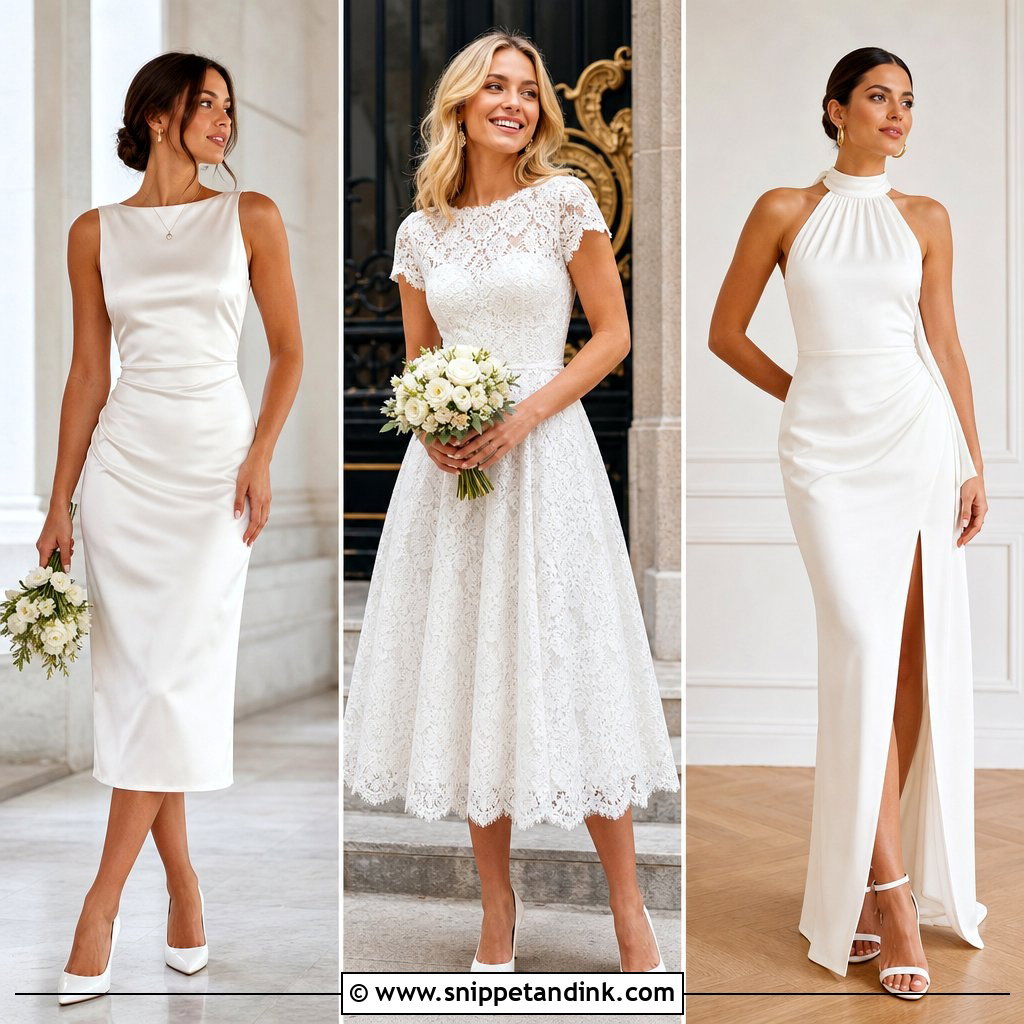
Lace does more than any other fabric to make a short hem look bridal, because people associate it with wedding dresses before they even register the length. A fitted lace bodice over a softly flared skirt gives shape without bulk. I check the hem edge: a scalloped lace border looks finished, while a cut lace edge with a plain binding looks cheap above the knee. Keep accessories clean, pearl drops and pointed ivory heels, so the lace stays the texture in the outfit.
2. Short Satin Wedding Dress
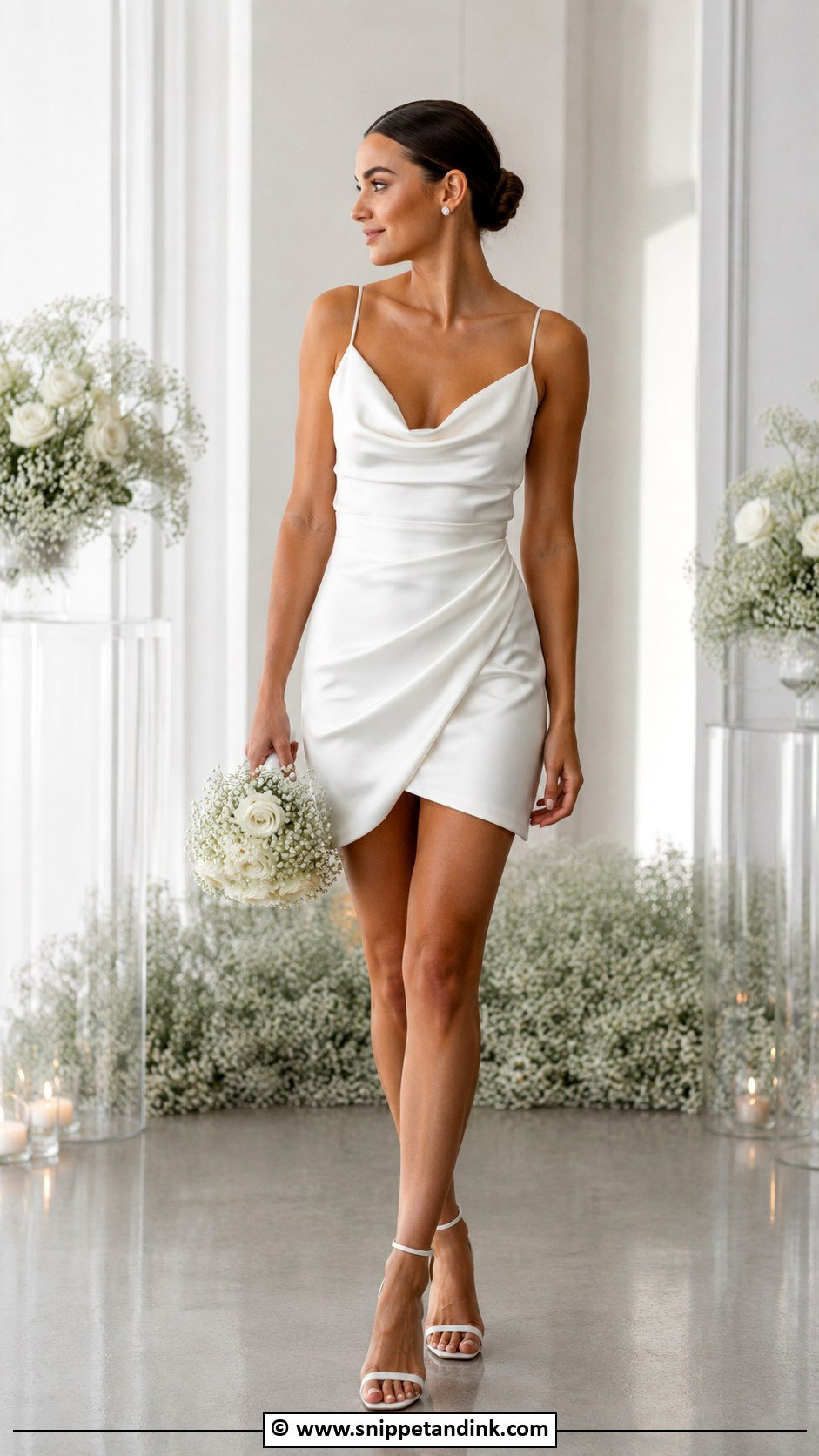
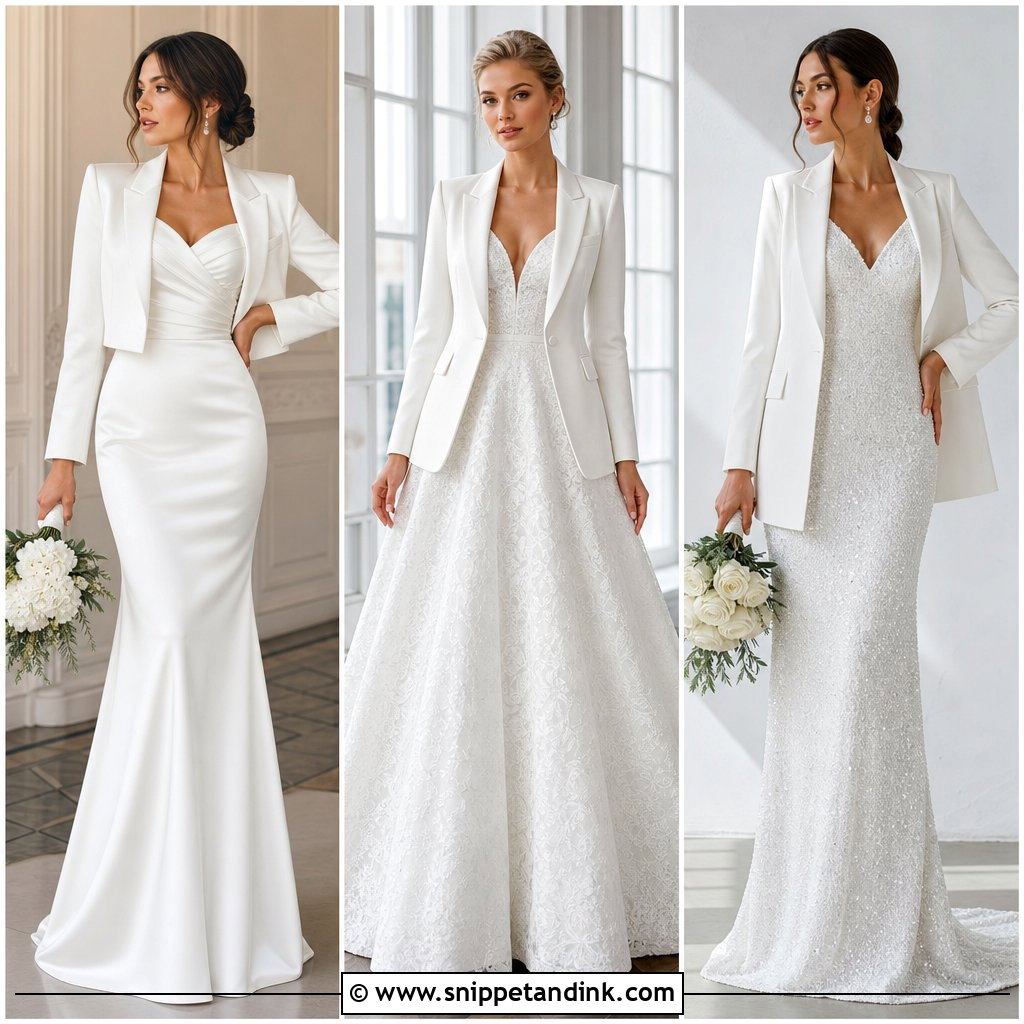
Short satin has a sheen that photographs like a special-occasion fabric, which is exactly what a short dress needs. Thin satin is the problem. It wrinkles across the lap during the car ride and clings to anything underneath, so I look for heavier duchess satin or a lined version with light boning. A square or cowl neckline suits it. On a cold day, a cropped bridal jacket over the shoulders looks far more deliberate than a borrowed cardigan.
3. Short A Line Wedding Dress
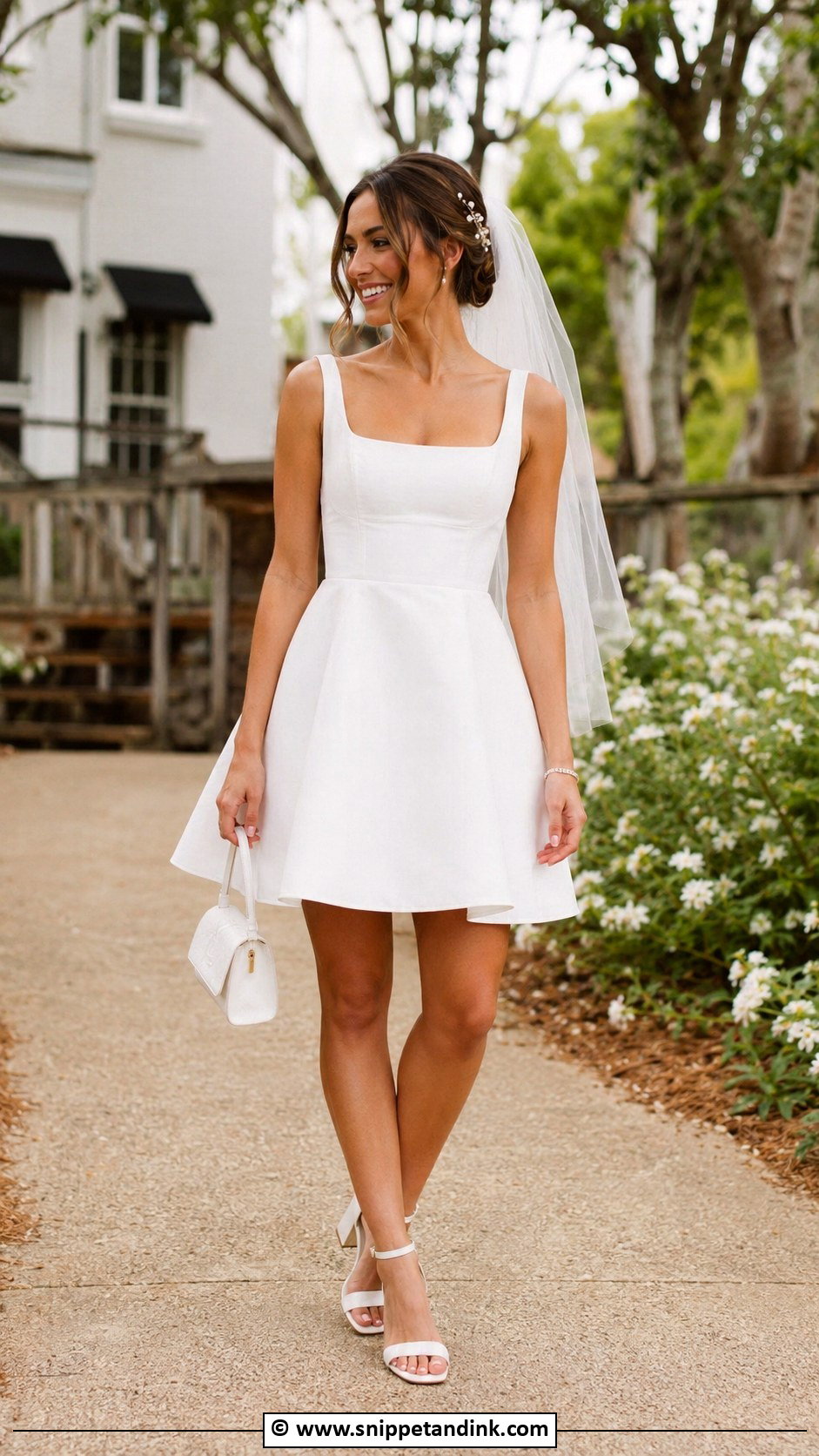
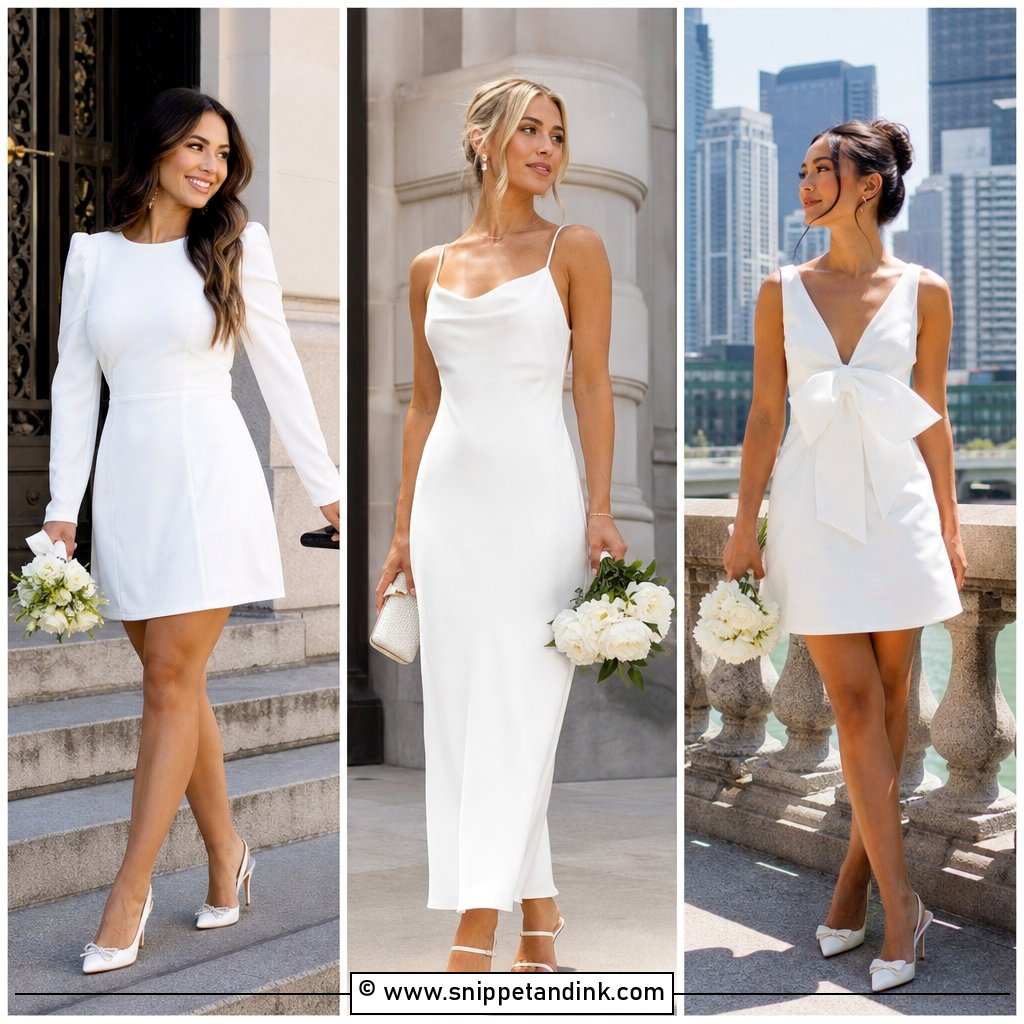
An A-line defines the waist and skims the hips, so it flatters a wide range of figures and lets you walk briskly up courthouse steps. Pair it with block heels or slingback pumps, since you’ll likely stand in a queue, then for the ceremony, then for photos outside. A plain bodice can take texture from accessories, a beaded headband or lace gloves. Check the skirt has enough flare to sit down comfortably in a waiting room.
4. Short Strapless Wedding Dress
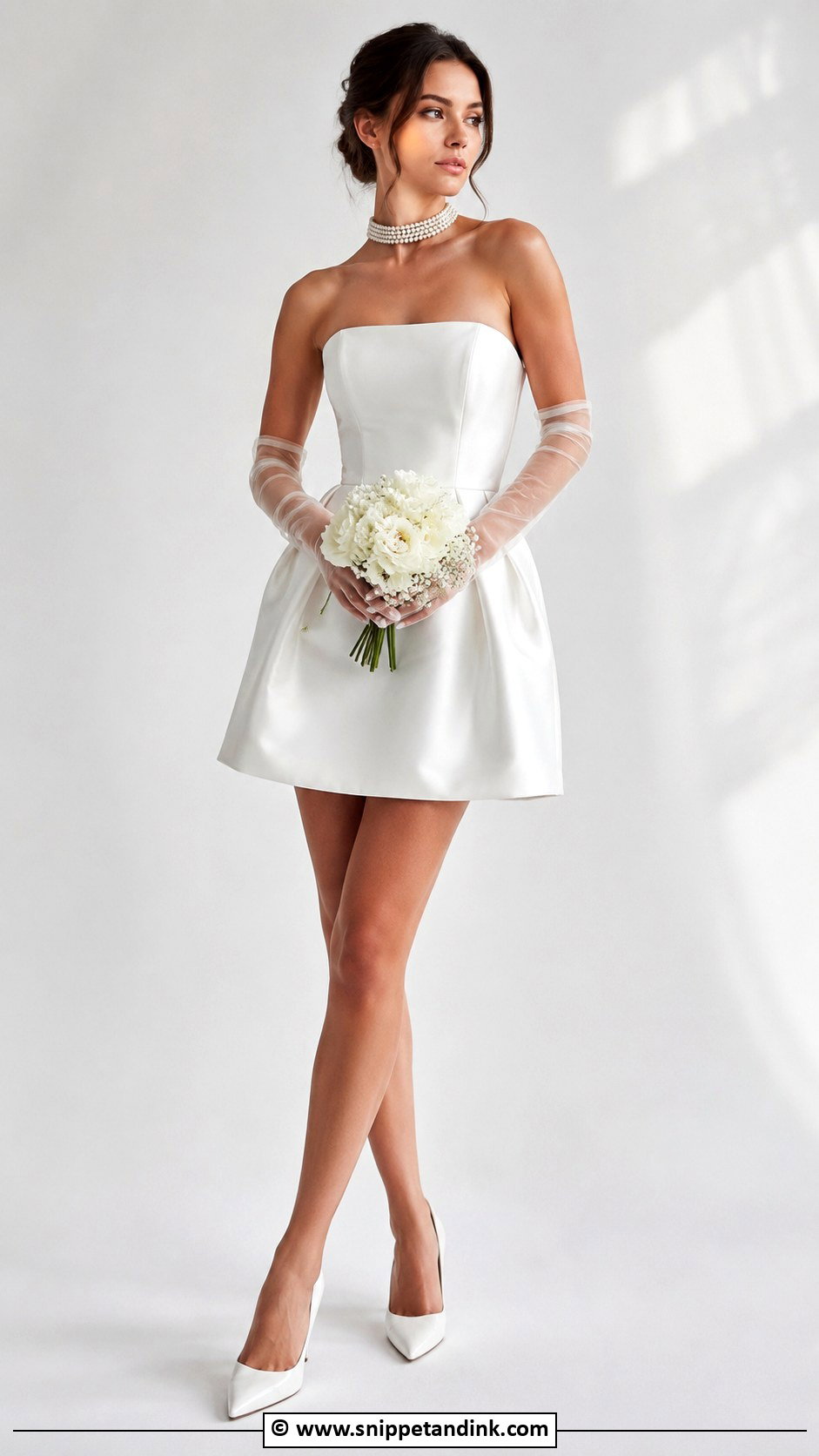
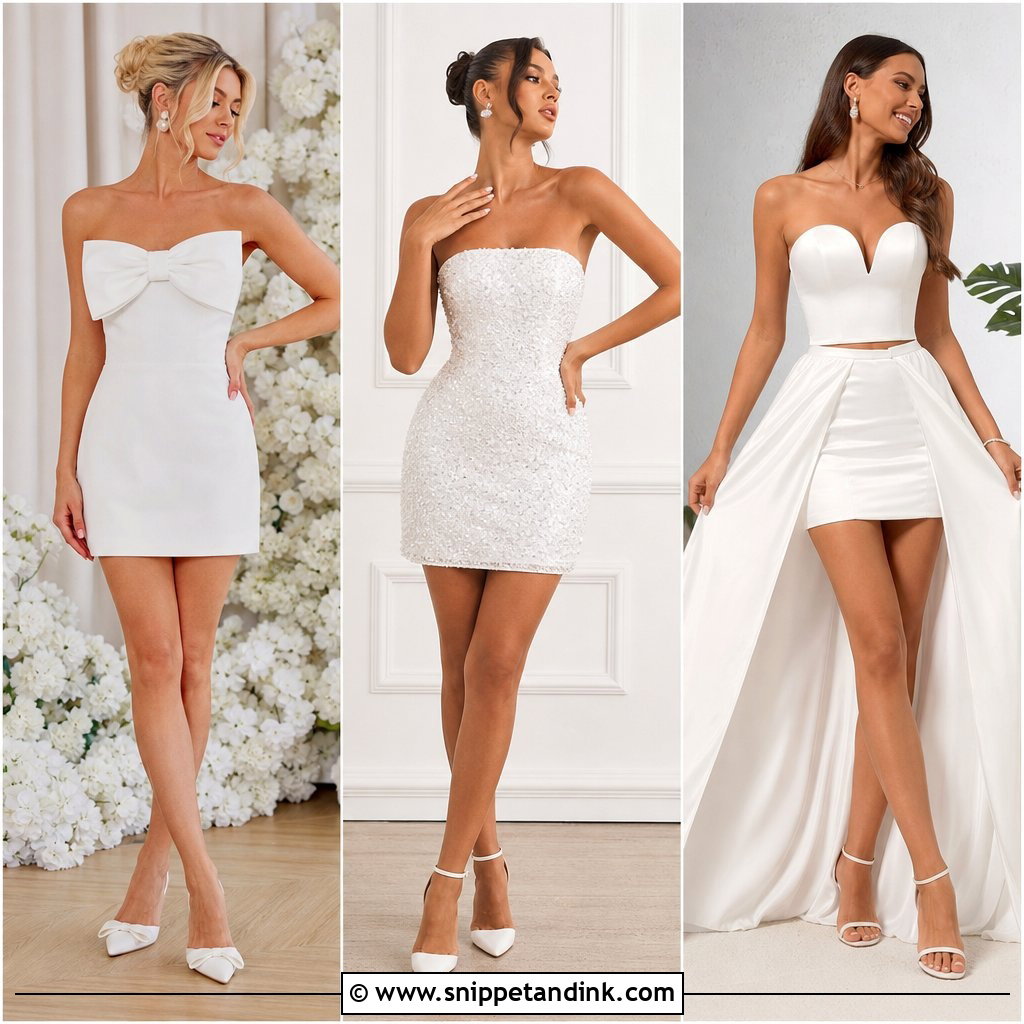
With no straps, everything depends on the bodice. A structured, boned bodice with a waist stay holds the dress up and keeps the neckline flat; a soft unstructured one slides down by the second photo. Fuller busts need internal cups or a corset-style build, which I’d rather see than a strapless bra. If you want coverage for the ceremony, sheer gloves or a cropped bolero come off afterwards. Keep hair up or tucked back so the neckline stays open.
5. Short Off Shoulder Wedding Dress
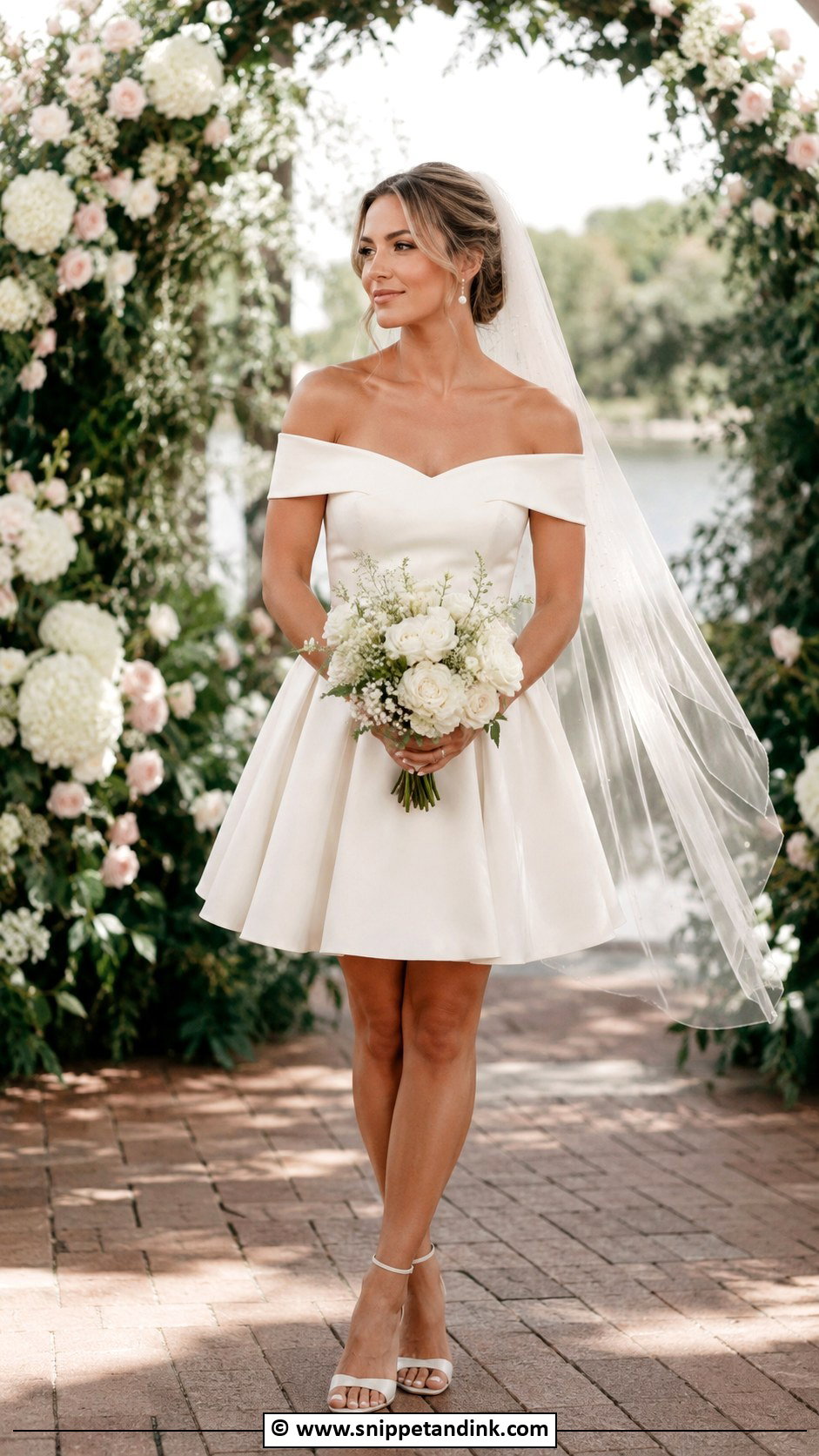
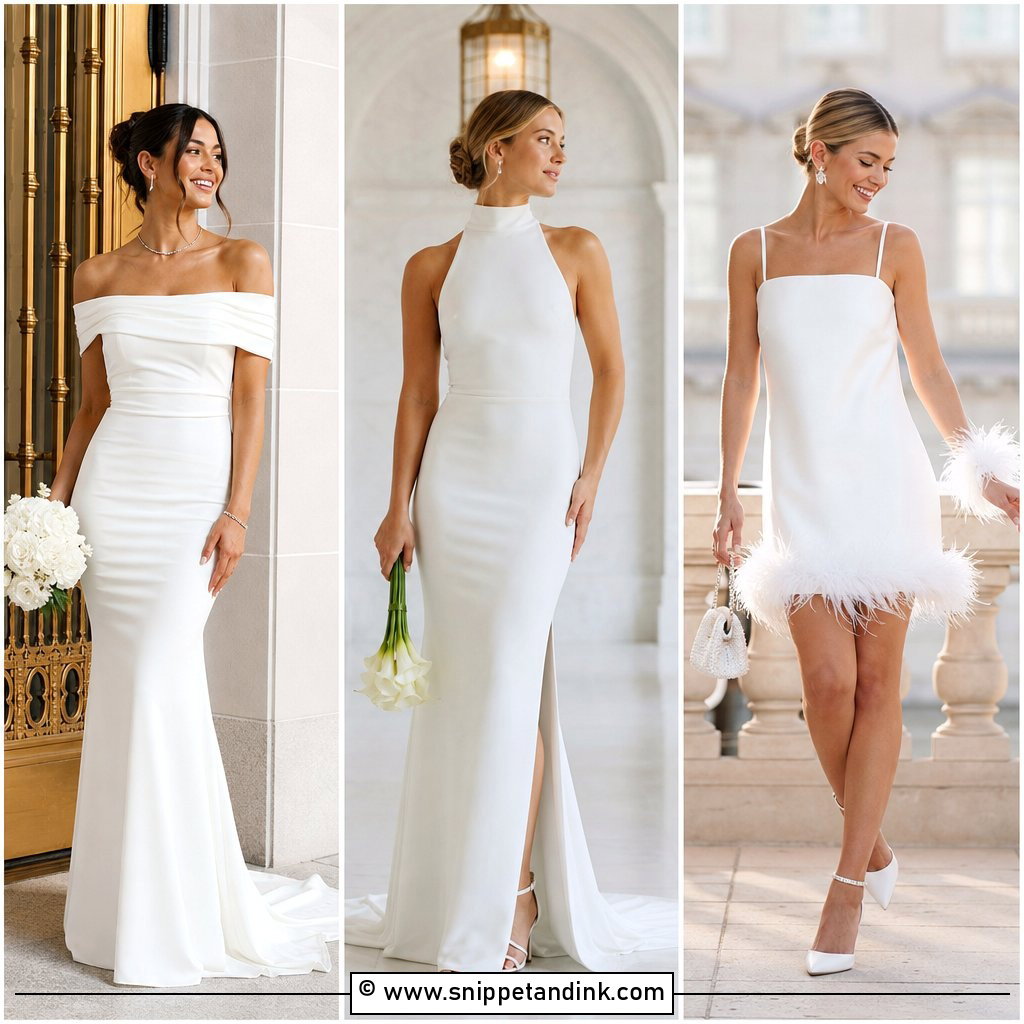
Off-shoulder necklines show the collarbones and soften the look, but they restrict how high you can lift your arms. At the fitting, I ask brides to hug me and hold a bouquet up as if throwing it. If the band rides up or digs in, it needs adjusting. A fitted bodice over a fuller skirt is the classic shape; a sleek sheath looks more modern. If the sleeves are dramatic, skip the necklace.
6. Short Long Sleeve Wedding Dress
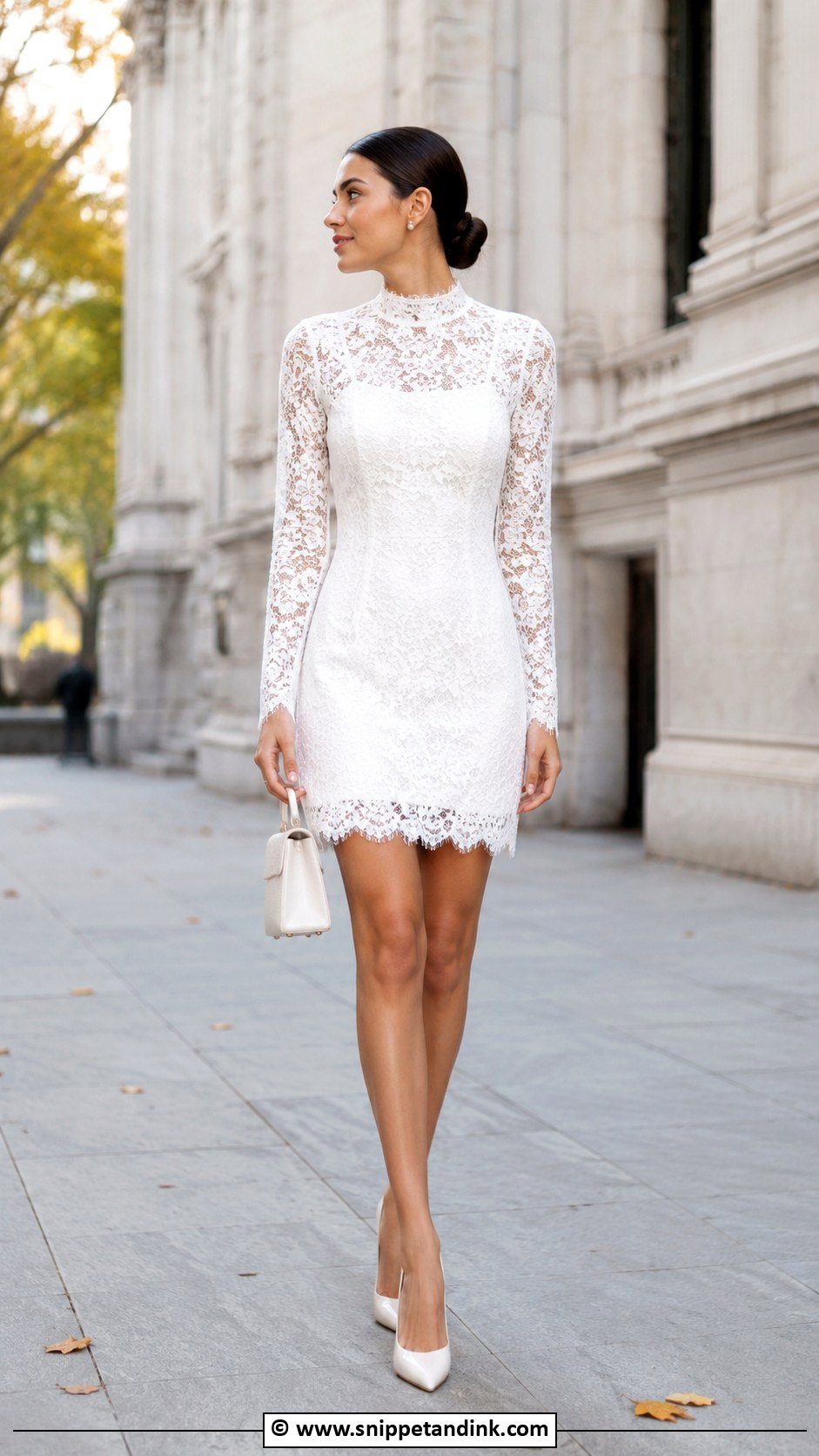
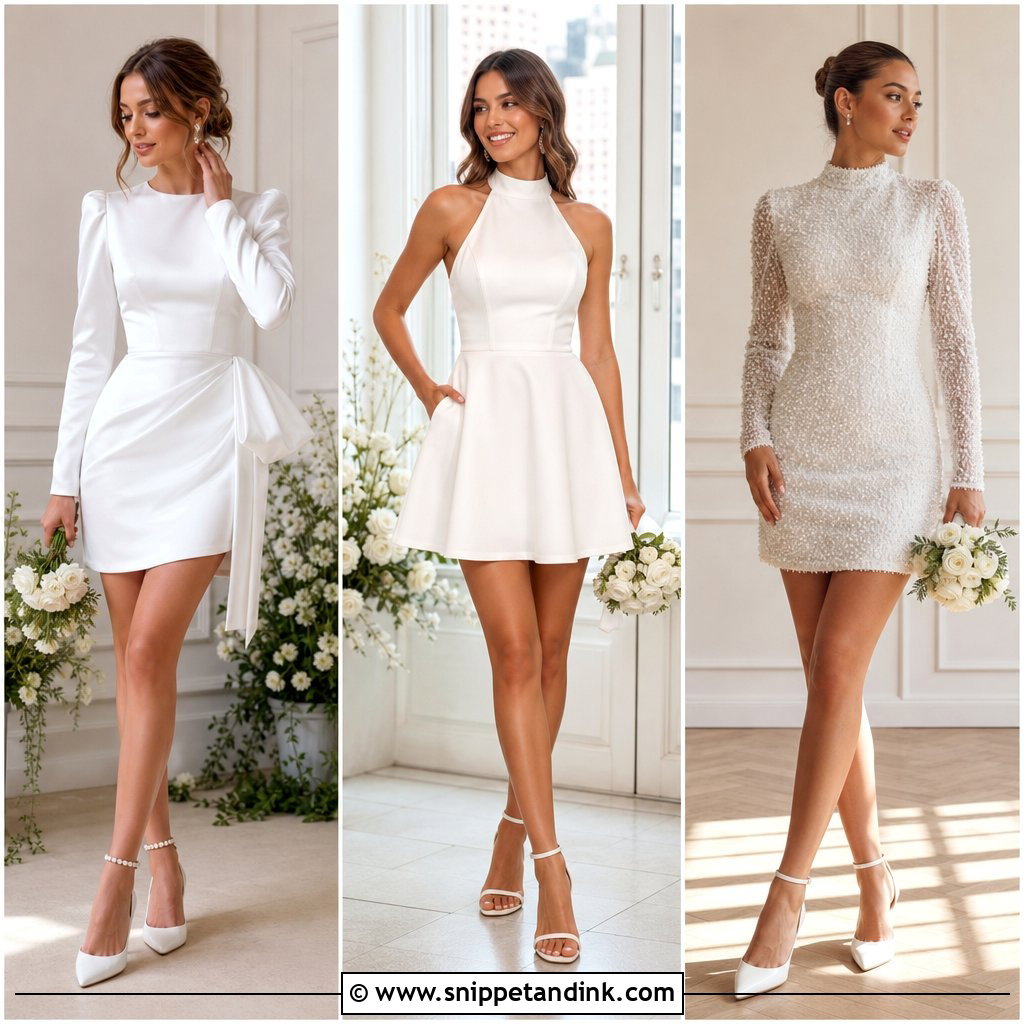
Long sleeves over a short skirt is a balance I like for autumn and winter city weddings. The sleeves can be lace, sheer mesh, satin or crepe. Pair them with a mini or knee-length skirt and heels that lengthen the leg. When the sleeves are embellished, the shoes need to be simple, or the outfit gets busy from wrist to ankle. Check the cuff on sheer sleeves; it should sit at the wrist bone, not slide over your hand when you sign the register.
7. Short Puff Sleeve Wedding Dress
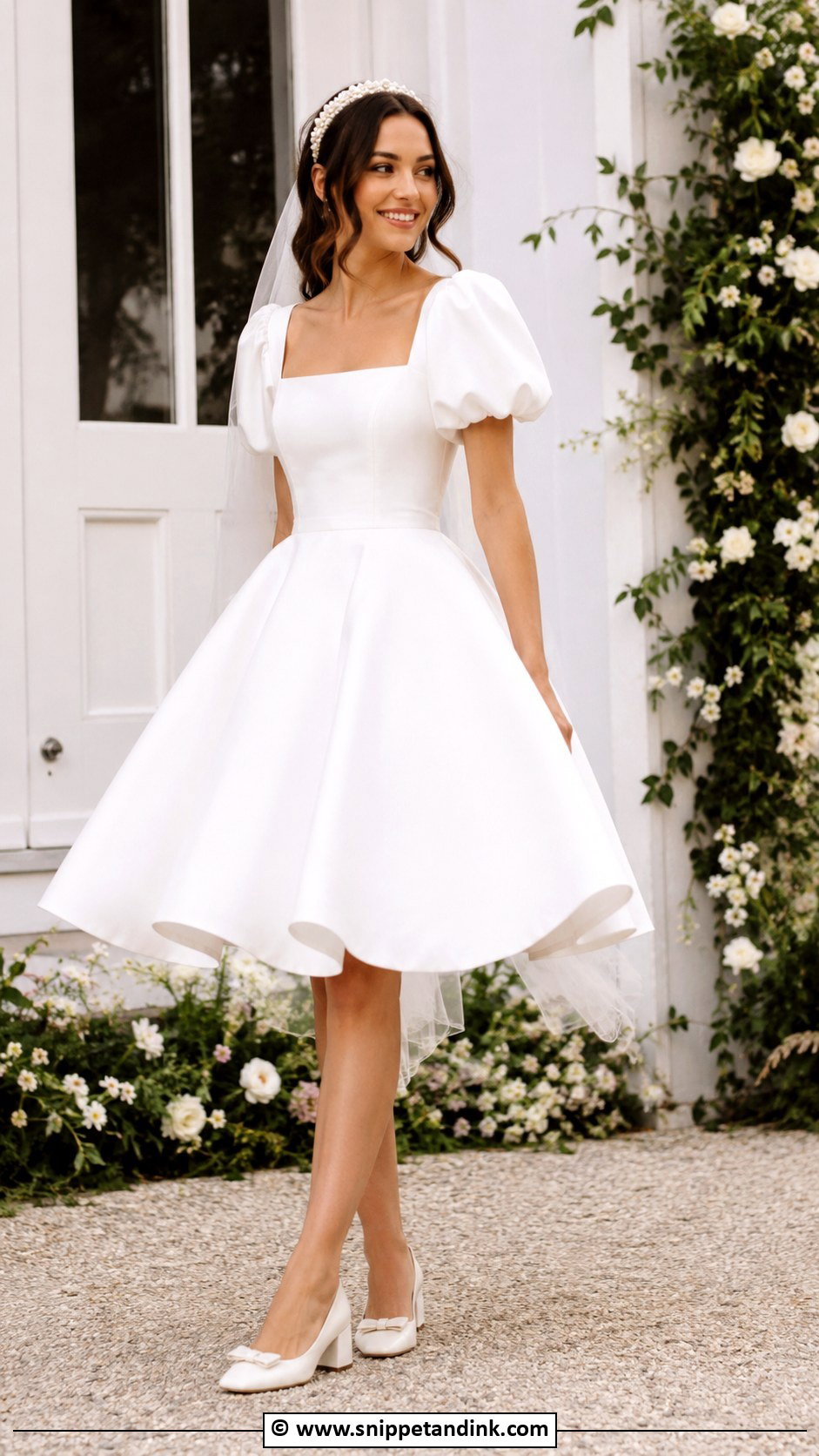
Puff sleeves have a vintage sweetness, and their size is the whole decision. A small puff on a fitted bodice looks charming; a large sculptural one makes a statement and needs a calmer skirt. The fabric decides whether it holds. Organza and taffeta keep their shape, while chiffon puffs collapse in humidity. Low block heels and a pearl headband suit the look. Keep accessories delicate so the sleeves stay the focus.
8. Short Corset Wedding Dress
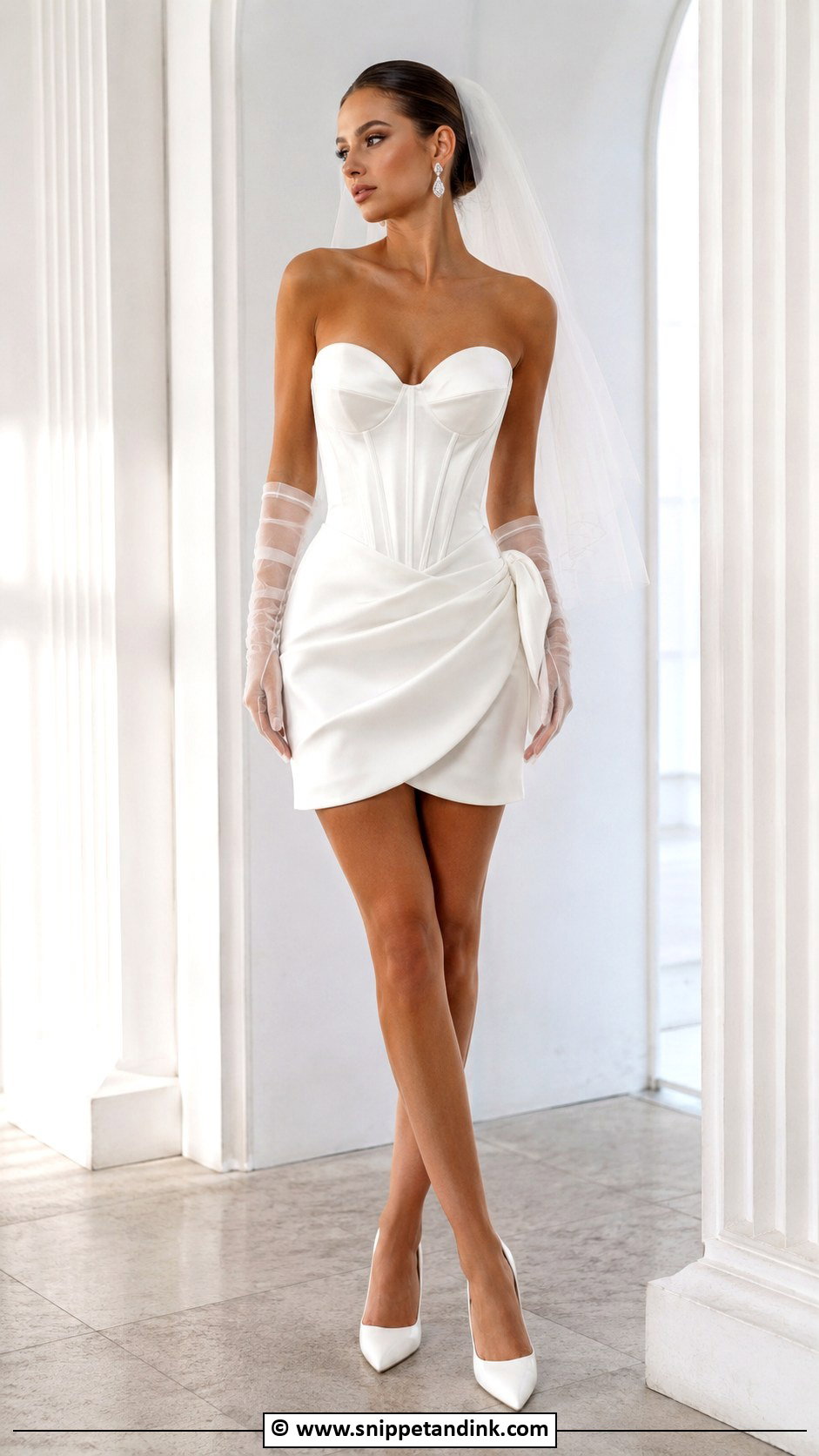
A short corset wedding dress gives real support without straps, if the boning is good. Spiral steel bones bend with you and stay comfortable; cheap plastic boning warps at the waist after a few hours. I ask every bride to sit down and take a deep breath in a corset at the fitting, then eat something small. Pointed pumps and sheer gloves suit the structure. Lace or satin keeps it softer than heavy embellishment.
9. Short Halter Wedding Dress
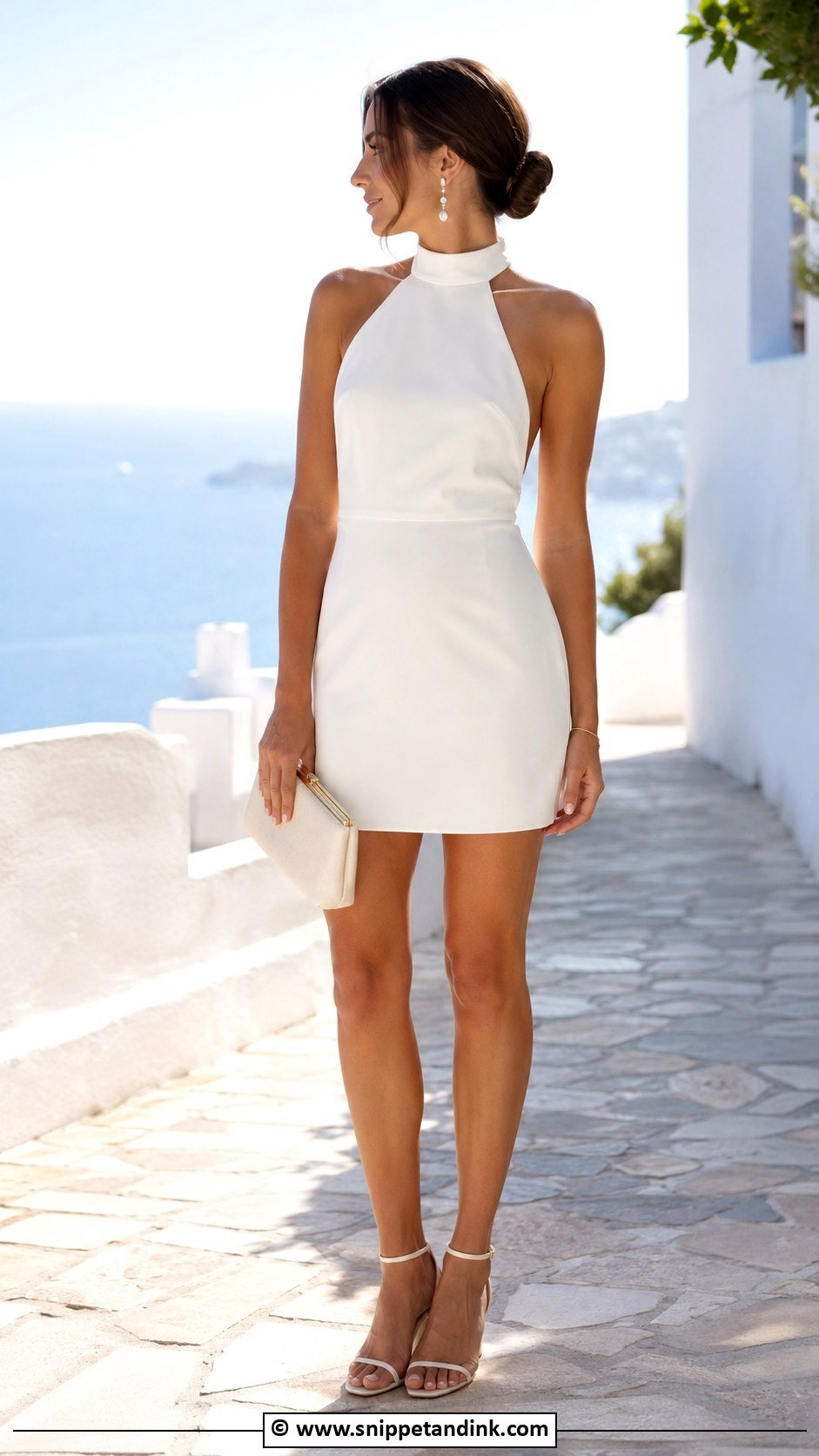
A halter draws the eye up toward the face and shoulders, which is why I suggest it for summer ceremonies and destination elopements. The neck strap holds most of the weight, so if it’s a heavy fabric, it can pull on your neck by evening. Lightweight satin, crepe or chiffon is kinder. With an open back, a short birdcage veil keeps the back detail on show. Sleek hair and sculptural earrings complete it.
10. Short Square Neck Wedding Dress
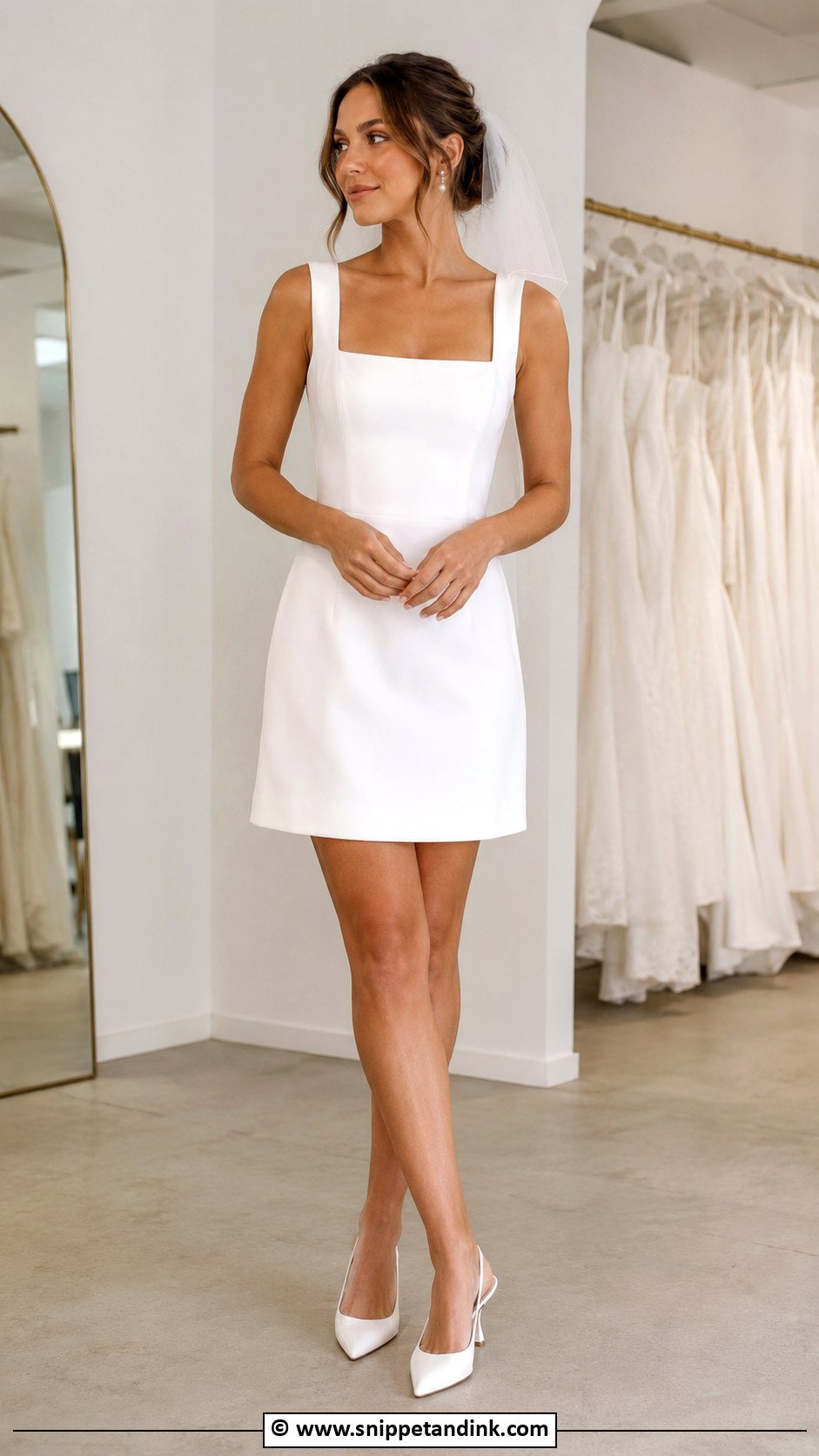
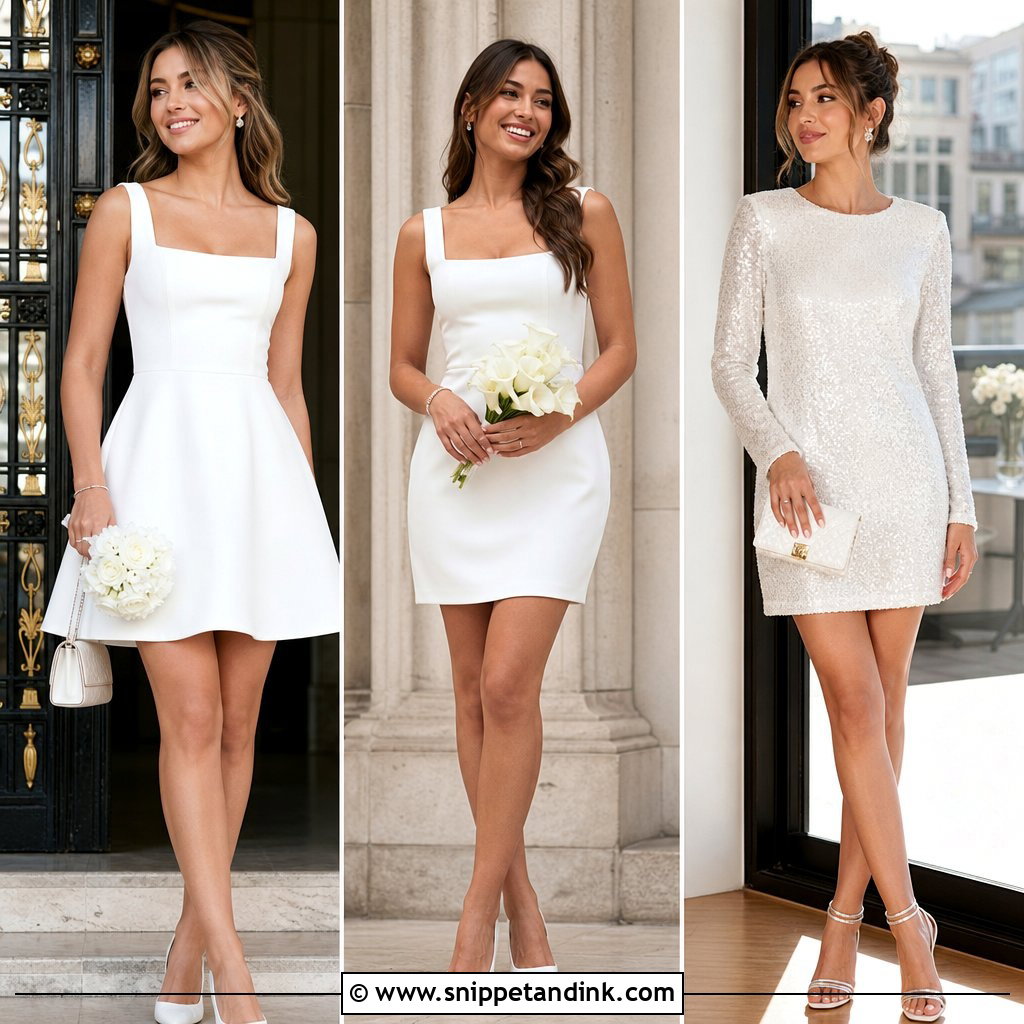
Square necklines frame the face cleanly and pair well with pearl earrings or a fine chain. They also usually come with wider straps, which means a regular bra often works underneath, a practical bonus many brides appreciate. A square-neck mini with slingbacks and a short veil is classic; a full skirt in jacquard adds drama. Almond or pointed toes keep the proportions clean.
11. Short V Neck Wedding Dress
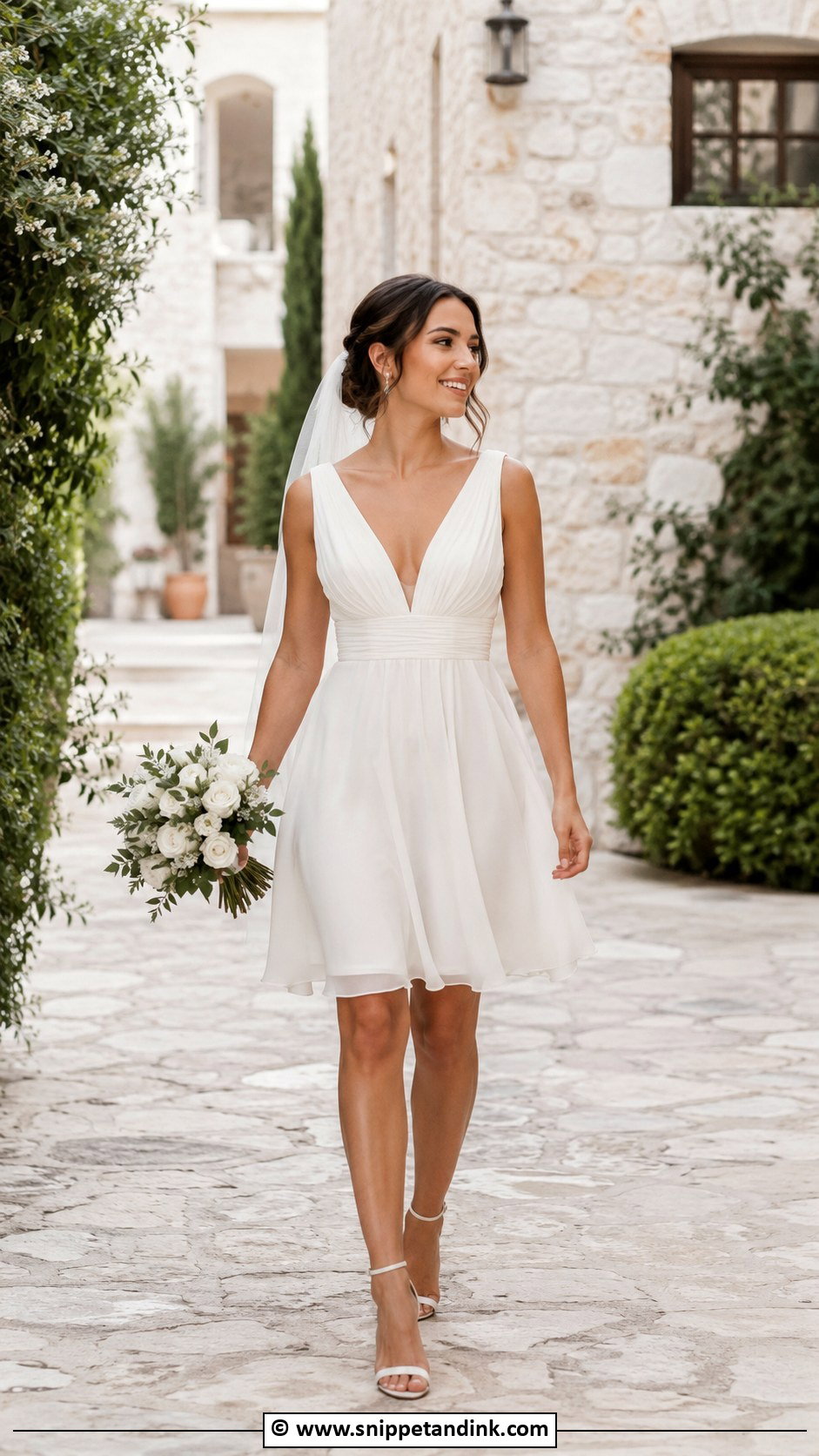
A modest V elongates the upper body without feeling exposed, and it suits soft fabrics like chiffon, crepe and lace. In a flowing dress, I add definition at the waist with a seam or a slim belt, otherwise the skirt and bodice blur together. A fitted V-neck needs very little jewellery. Drop earrings and ankle-strap heels suit outdoor ceremonies and small weddings.
12. Short High Neck Wedding Dress
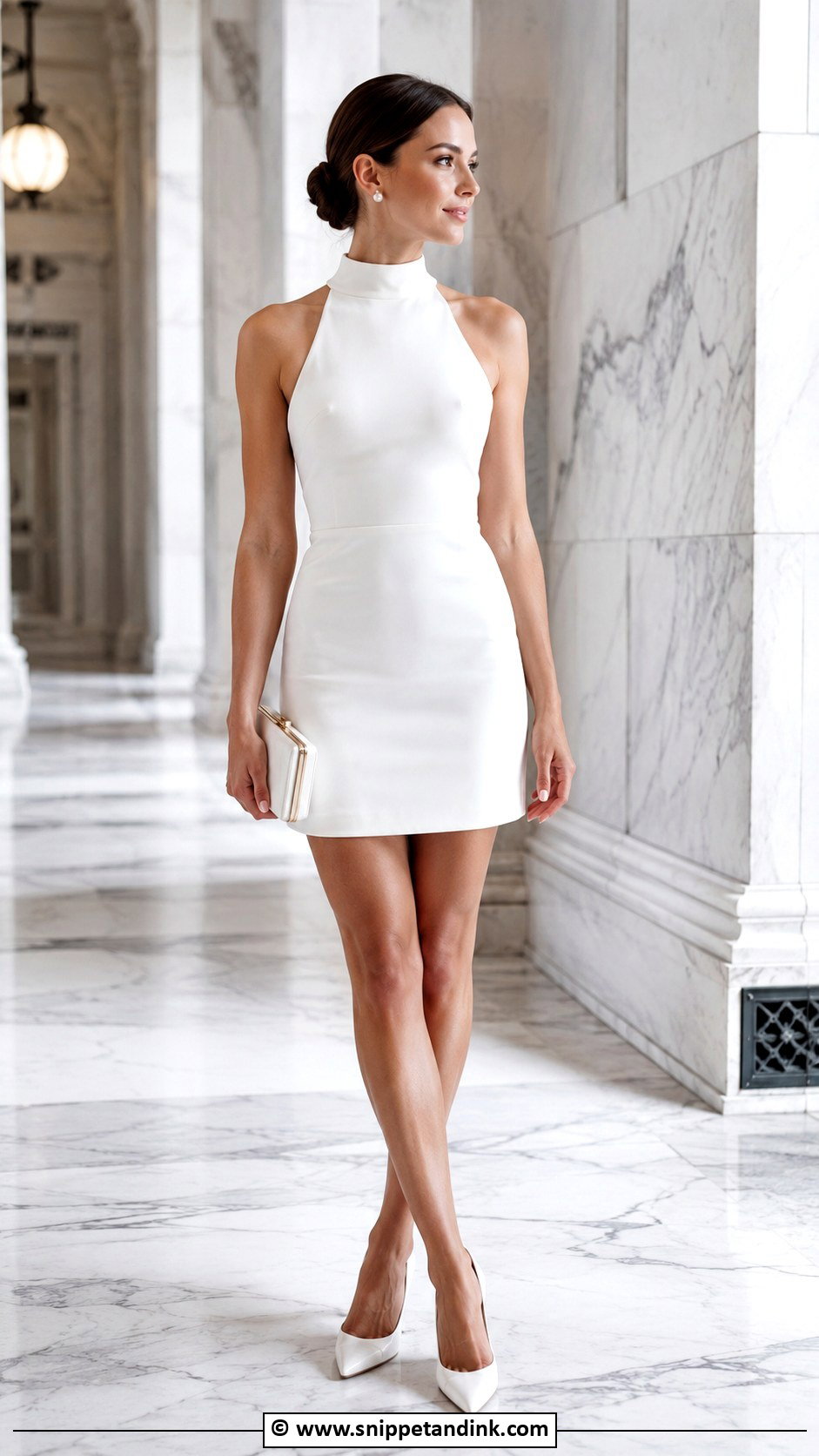
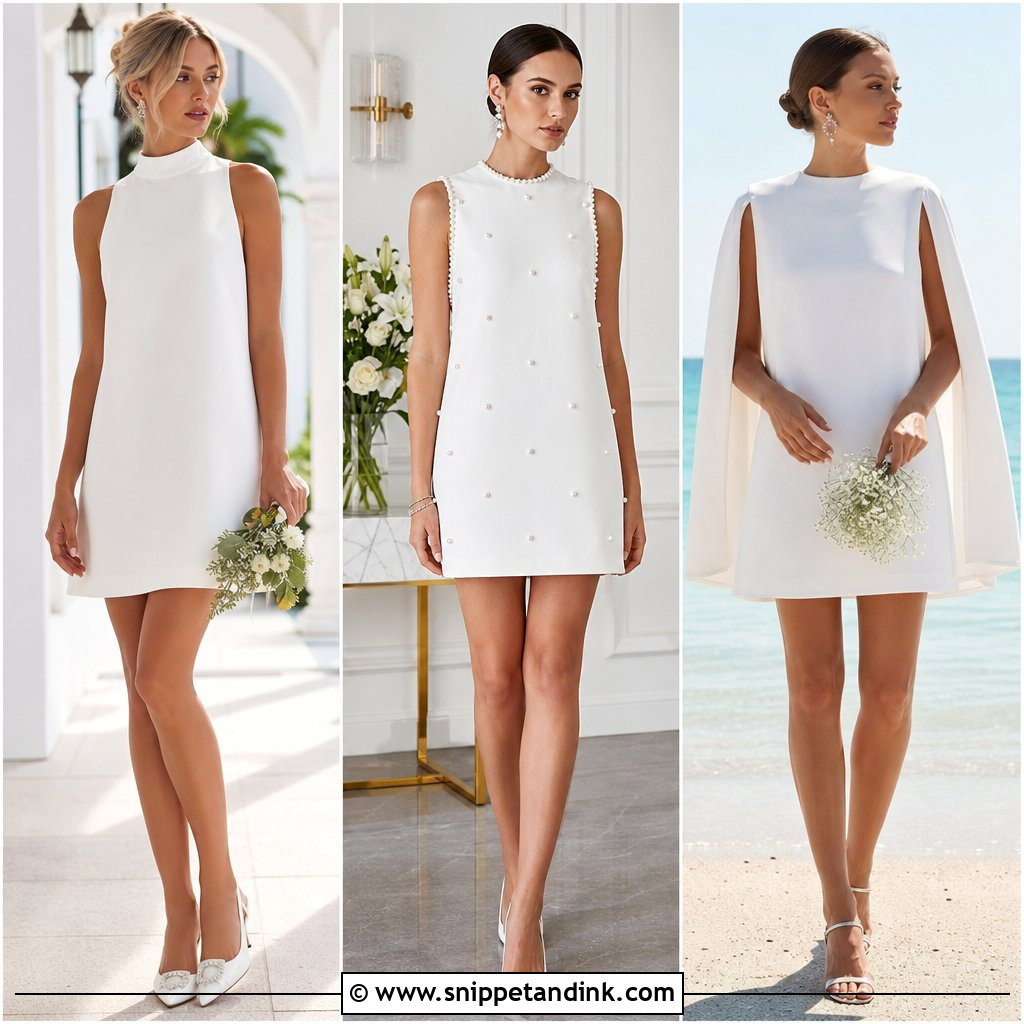
High necks with a short hem create a modern, almost editorial balance: covered at the top, legs on show. I suggest it to brides who want modest coverage above but don’t want a long gown. Crepe and mikado look sharp; sheer lace or a keyhole back softens it. Skip the necklace and focus on earrings or a bracelet. A low bun keeps hair off the collar, where it would otherwise catch.
13. Short Tea Length Wedding Dress
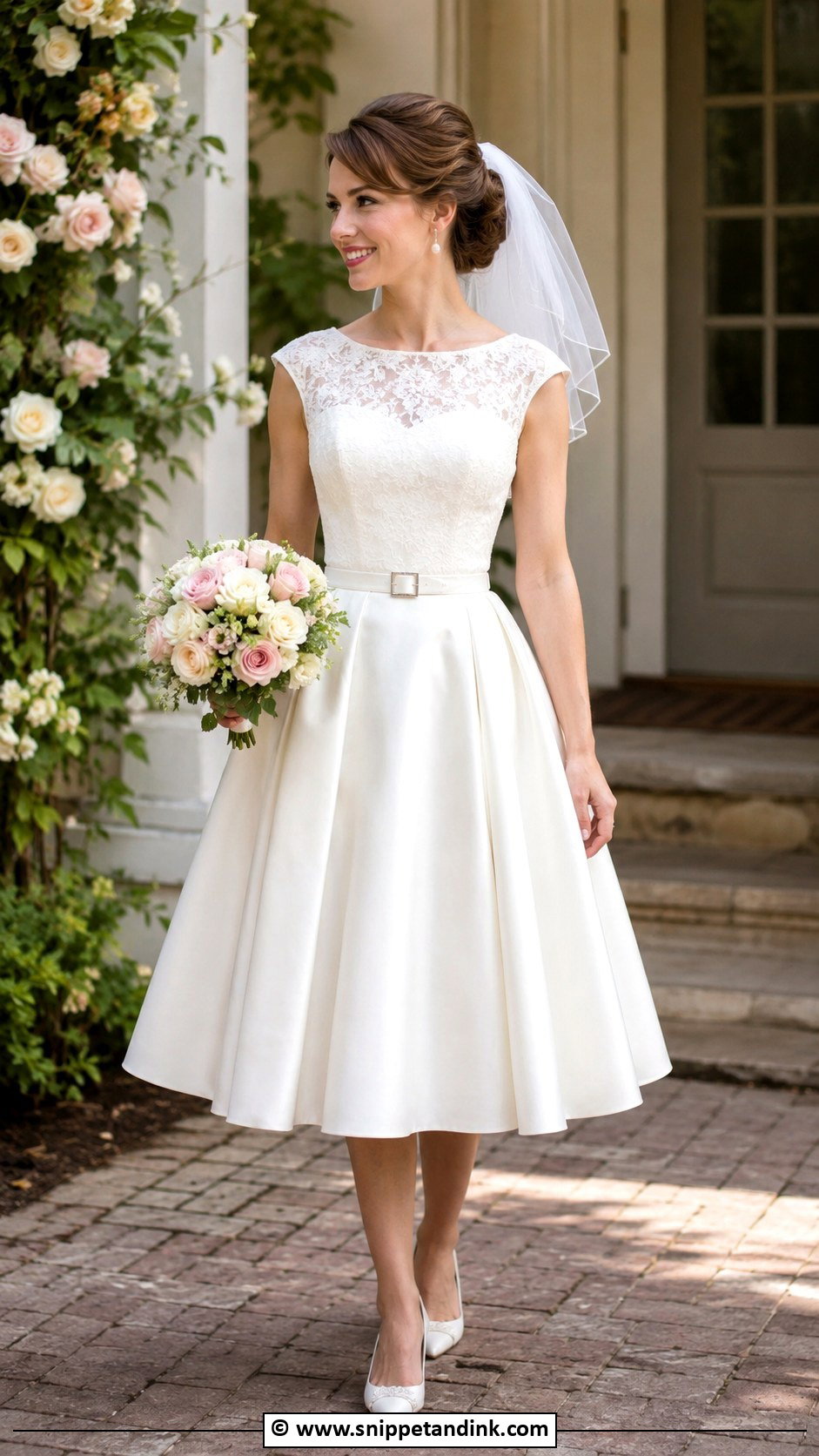
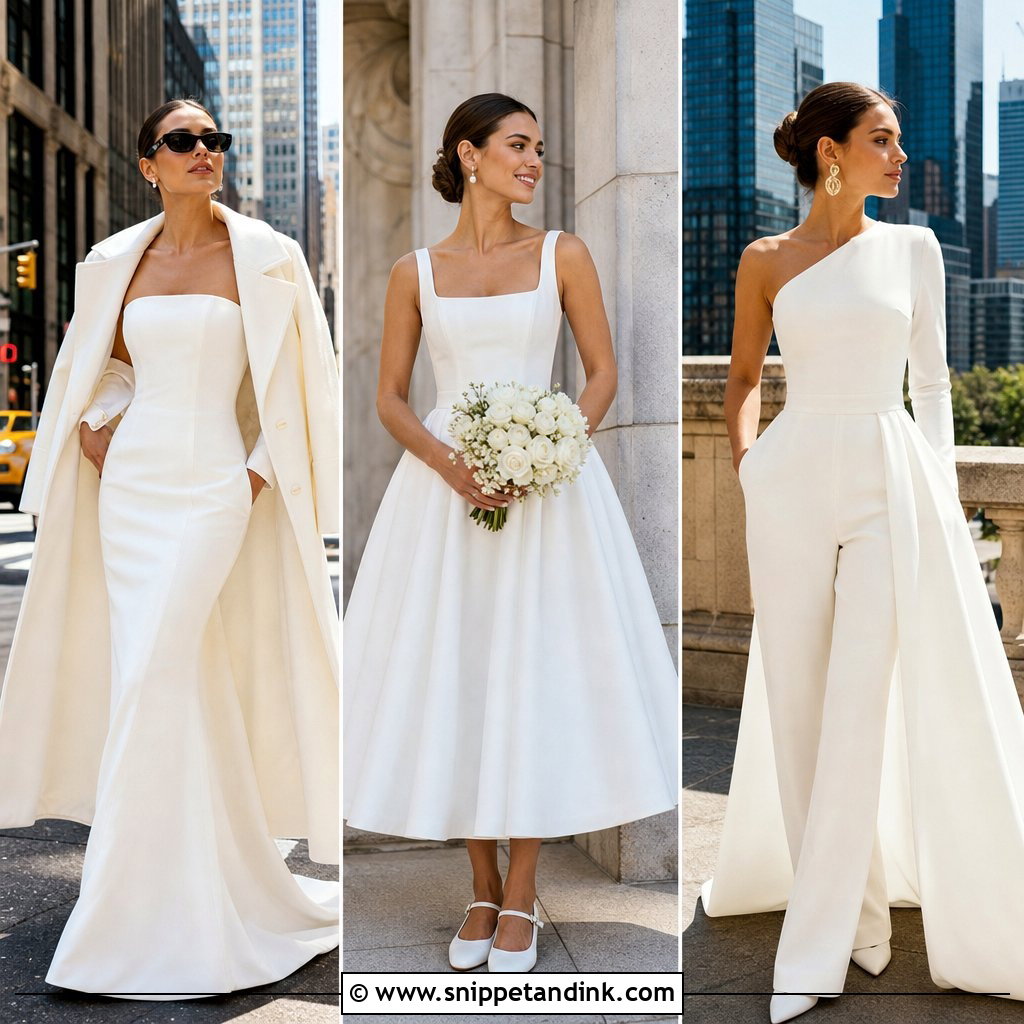
Tea length falls between the knee and ankle, which gives you the fifties shape and lets your shoes show. I always pick shoes before hemming, since kitten heels and block heels change where a tea length should end. A petticoat under the skirt gives it bounce. It’s a length I suggest to brides who want more coverage than a mini but no train. Crisp fabrics hold structure; tulle layers feel softer.
14. Short Knee Length Wedding Dress
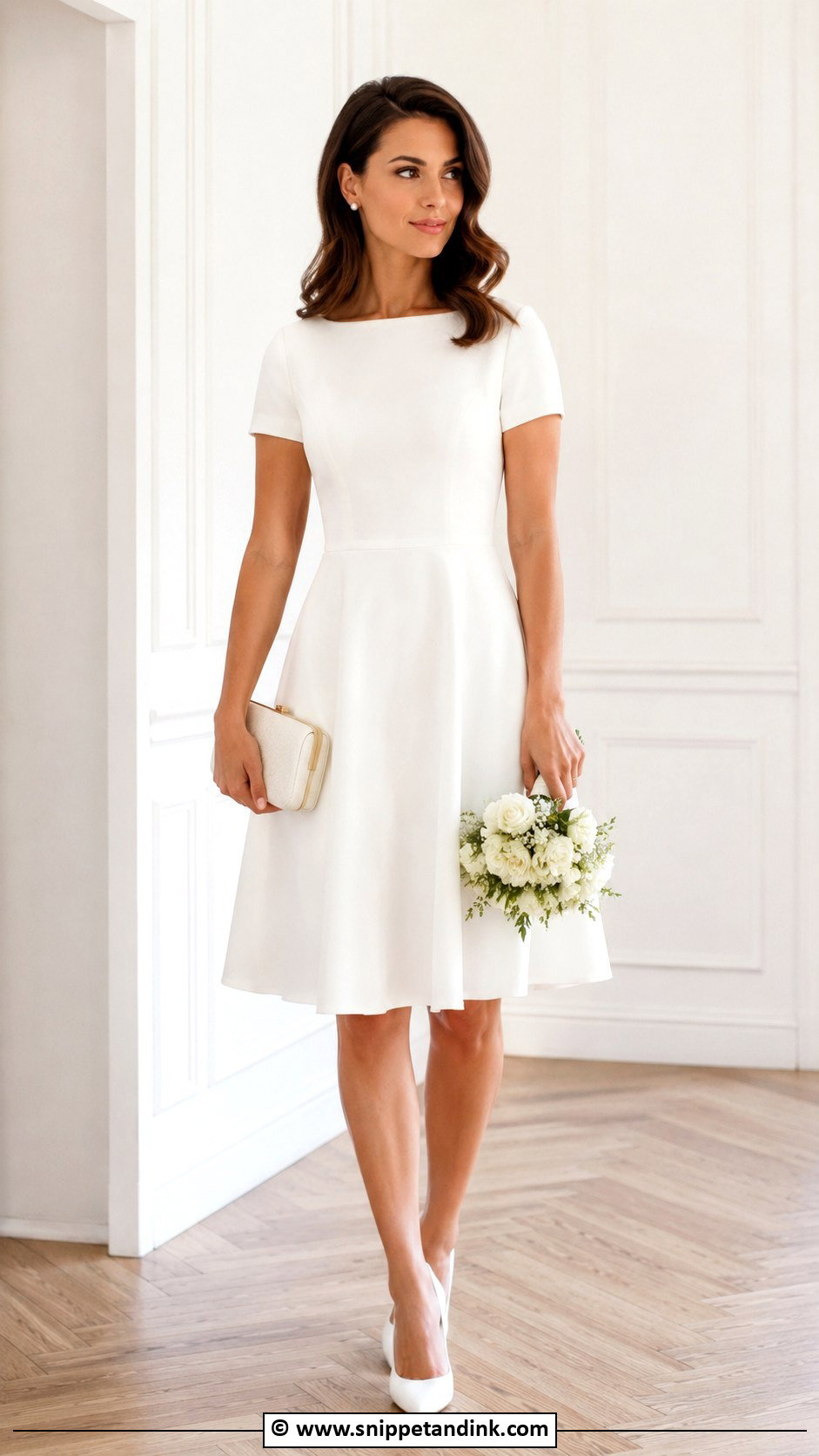
Knee length is the least daring short hem and often the most practical. It works at courthouses, brunches and smaller receptions without anyone wondering if it’s a cocktail dress, provided the fabric is right. Lace, satin, crepe and textured jacquard read as bridal; jersey and thin cotton don’t. A fitted sheath looks sharp with pointed pumps and a blazer. A flared version suits pearls and a veil.
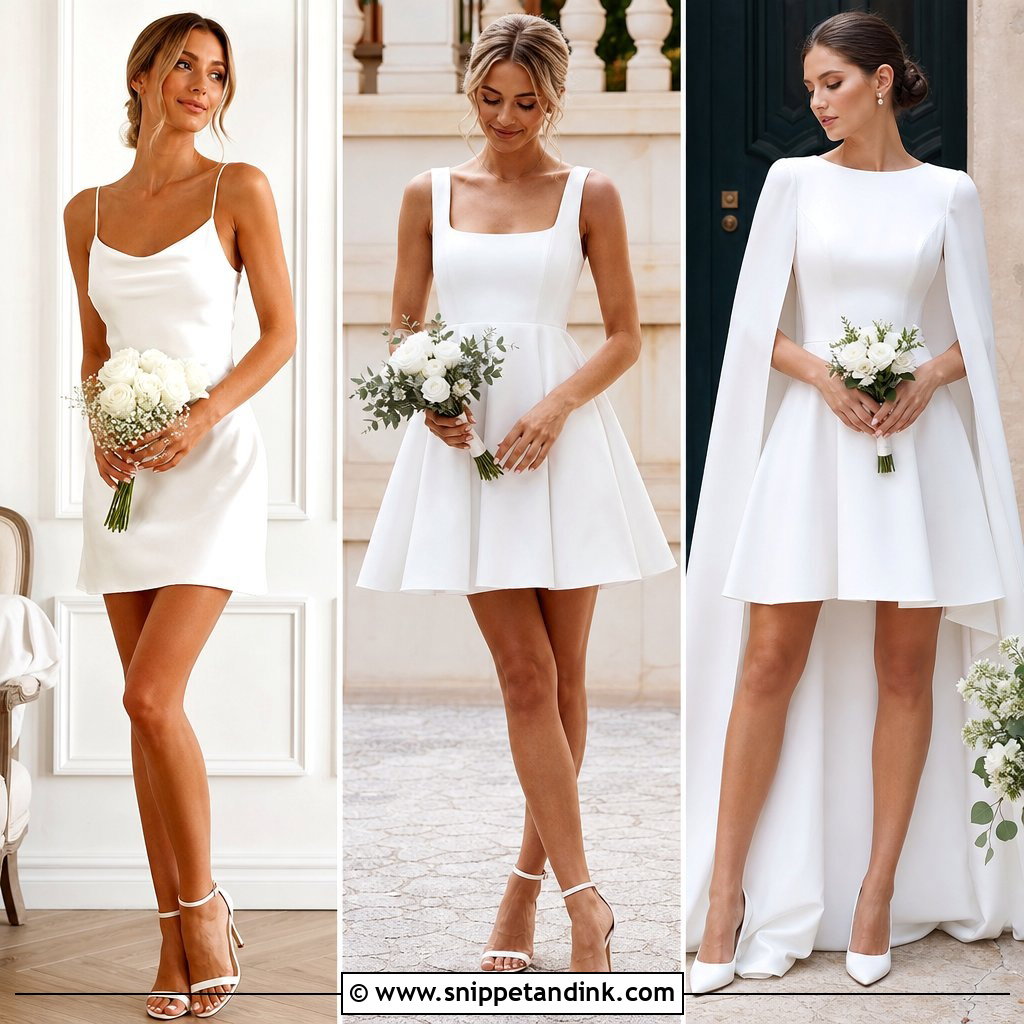
15. Short Mini Wedding Dress
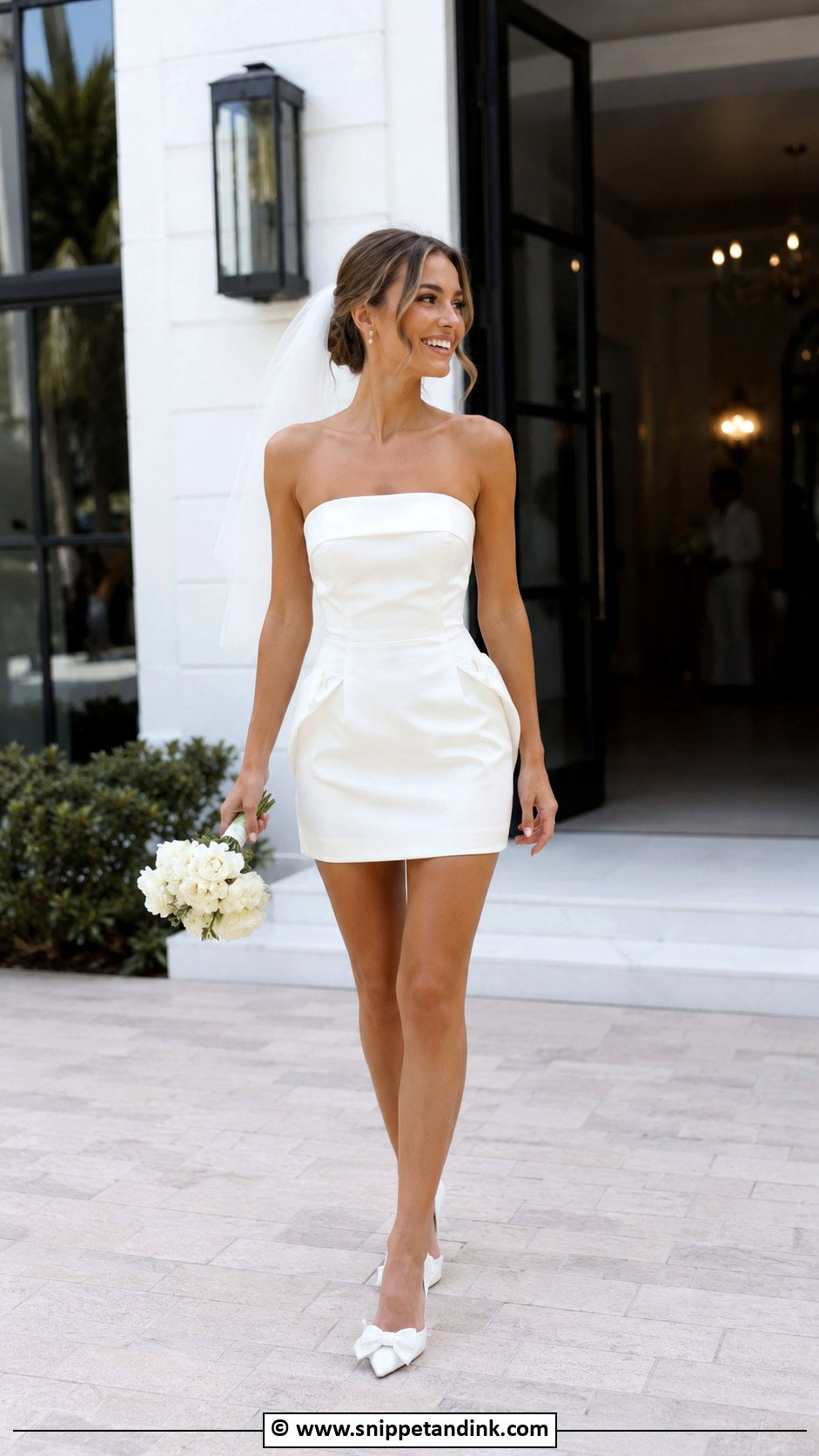
A mini puts your legs and shoes into the look, and it has to be intentional to read as bridal. Quality fabric and strong structure help, as do one or two details like pearls, bows or feathers. A very short hem balances well with a higher neckline or long sleeves. Test how it behaves when you sit, walk stairs and bend to sign the register. If you’re tugging it down, go an inch longer.
16. Short Beaded Wedding Dress
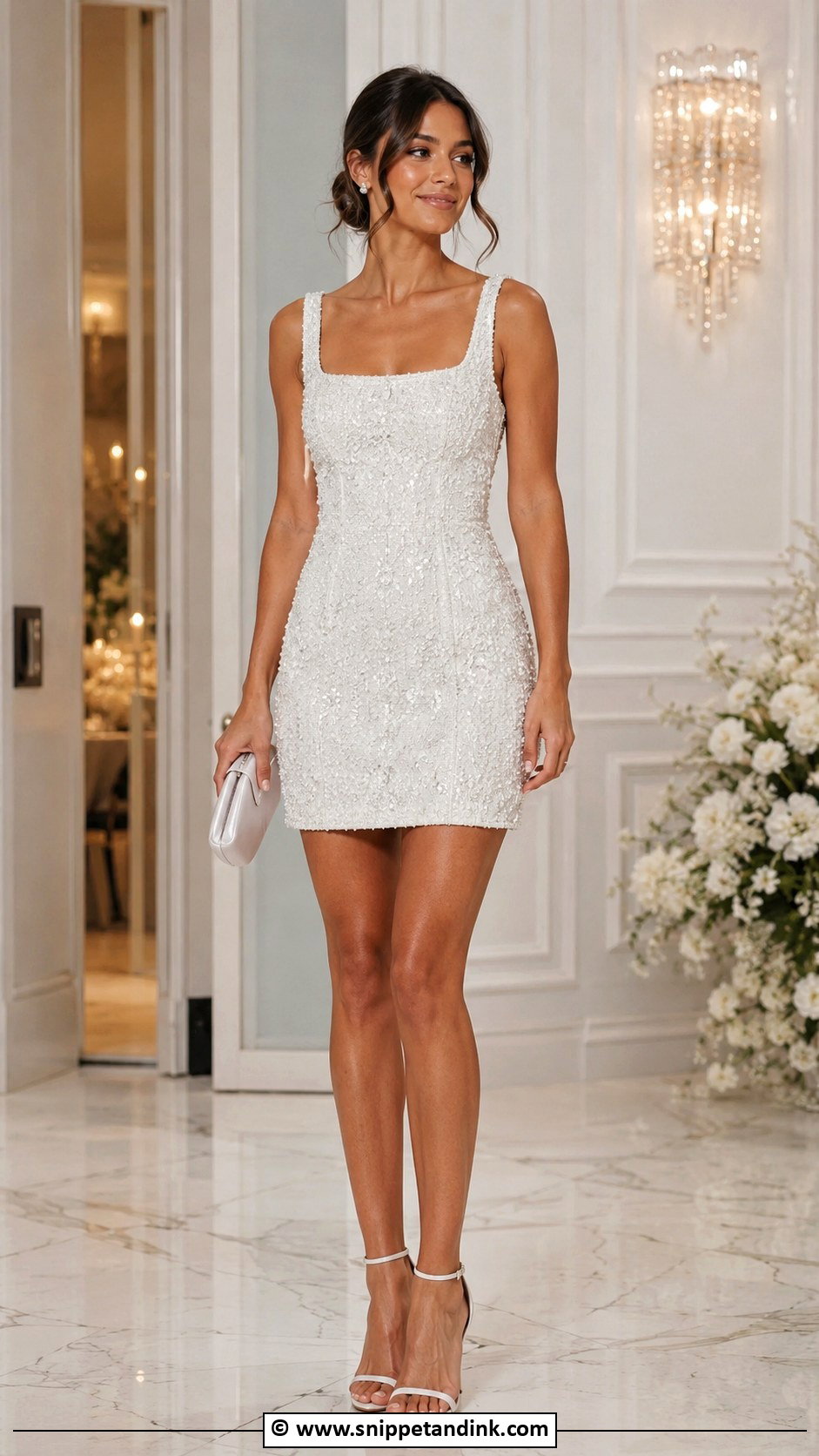
Beaded short dresses sparkle without the weight of a beaded gown, which makes them good for evening ceremonies and after-parties. The lining matters more than the beading. Beads on the inside seams scratch, so I check that the bodice and underarms are fully lined in something soft. Keep shoes and earrings simple. Fresh, glowing makeup suits the sparkle better than heavy shimmer, which competes.
17. Short Pearl Wedding Dress
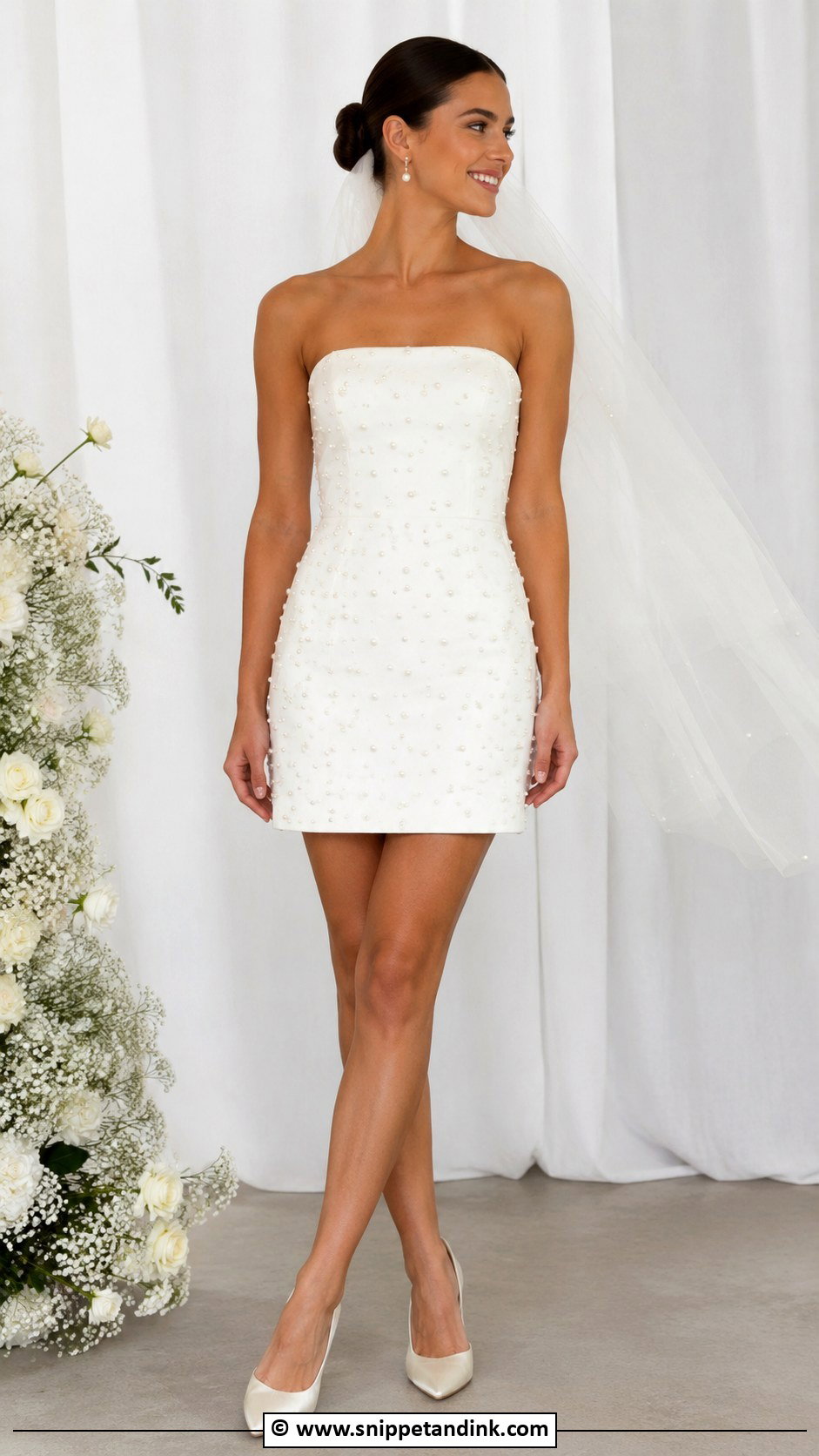
Pearls look bridal almost instantly. They might be scattered, trim the neckline or straps, act as buttons, or cover the whole dress. On a mini, I prefer pearl buttons or pearl-trim sleeves to full beading, which can look costume-heavy. Don’t layer too many pearl accessories if the dress is already covered. Satin pumps and a clean bun keep it current.
18. Short Bow Wedding Dress
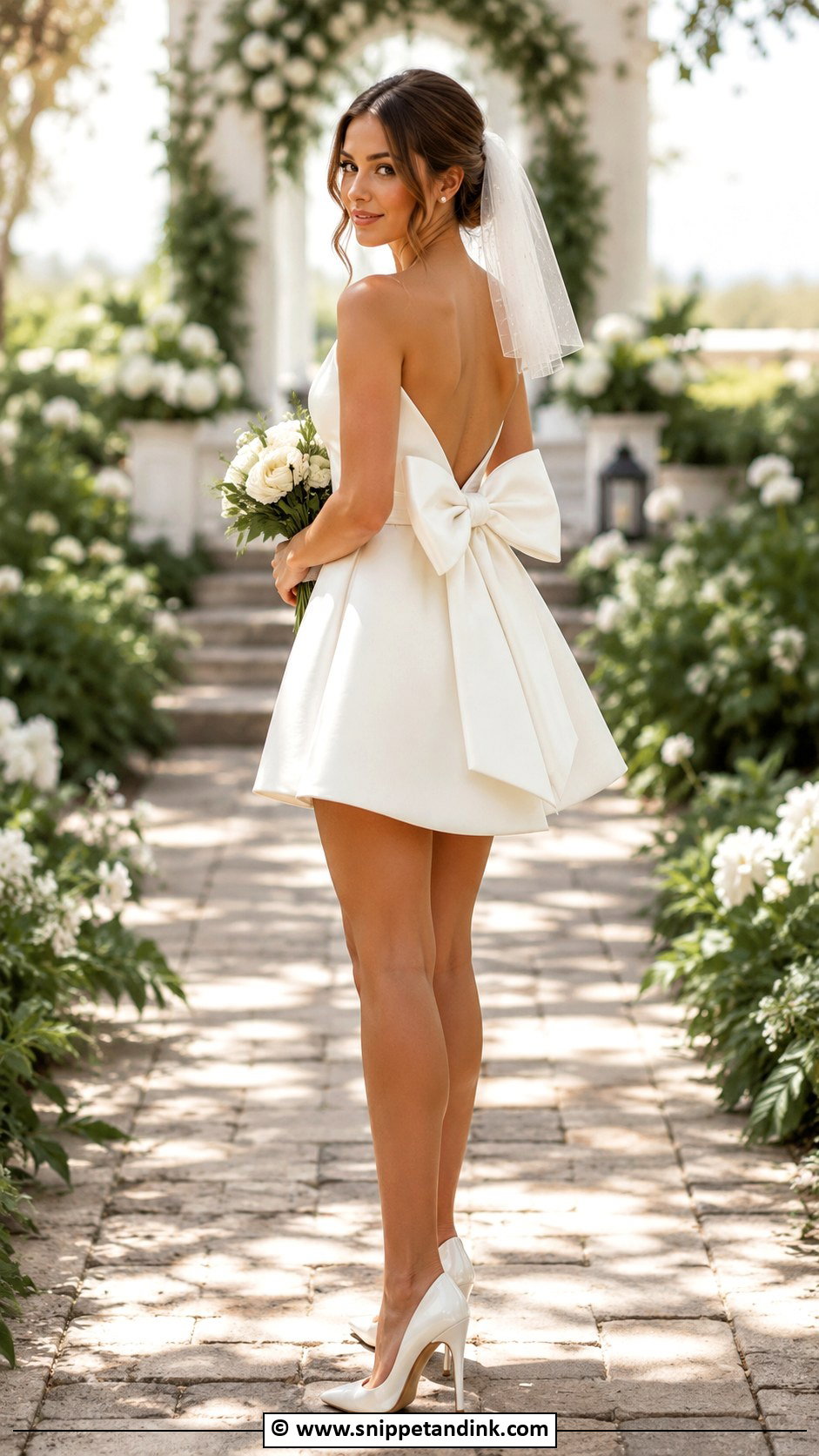
A bow adds sweetness, and placement controls the mood. At the back waist it shows in walking-away photos; at the shoulder it frames the face. Oversized bows need stiffened fabric or they droop by afternoon. A structured mini with a back bow suits courthouse steps; a bow-tie shoulder on a flared skirt is softer. The bow should look deliberate. One is enough.
19. Short Tulle Wedding Dress
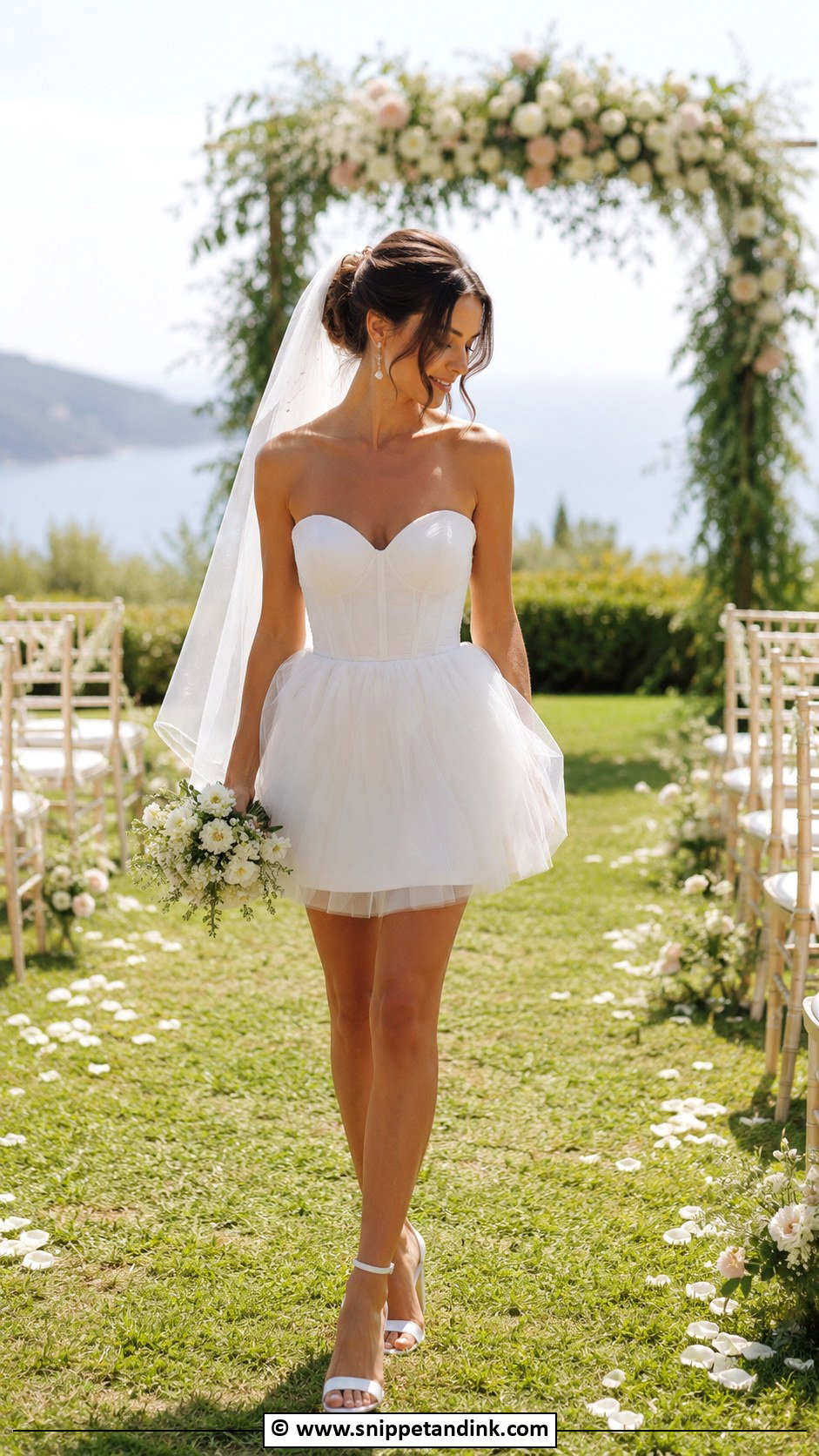
A short tulle wedding dress gives volume without the weight of a long ball gown. Layered tulle makes a mini or tea length feel joyful and light, and it moves in photos. Very full skirts need a fitted bodice to keep the shape balanced. Tulle catches on bouquet wire and rough jewellery, so I suggest smooth accessories. Keep sparkle minimal, since the texture already does the work.
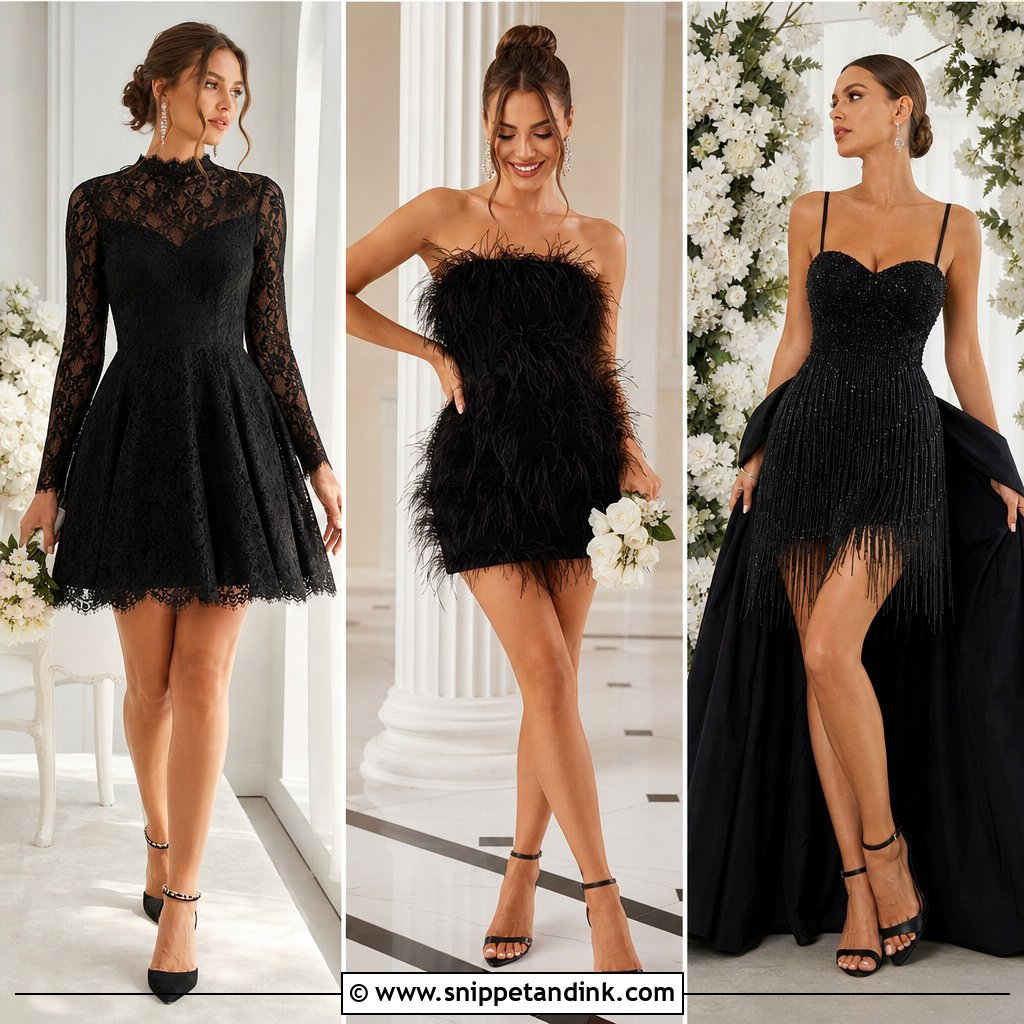
20. Short Organza Wedding Dress
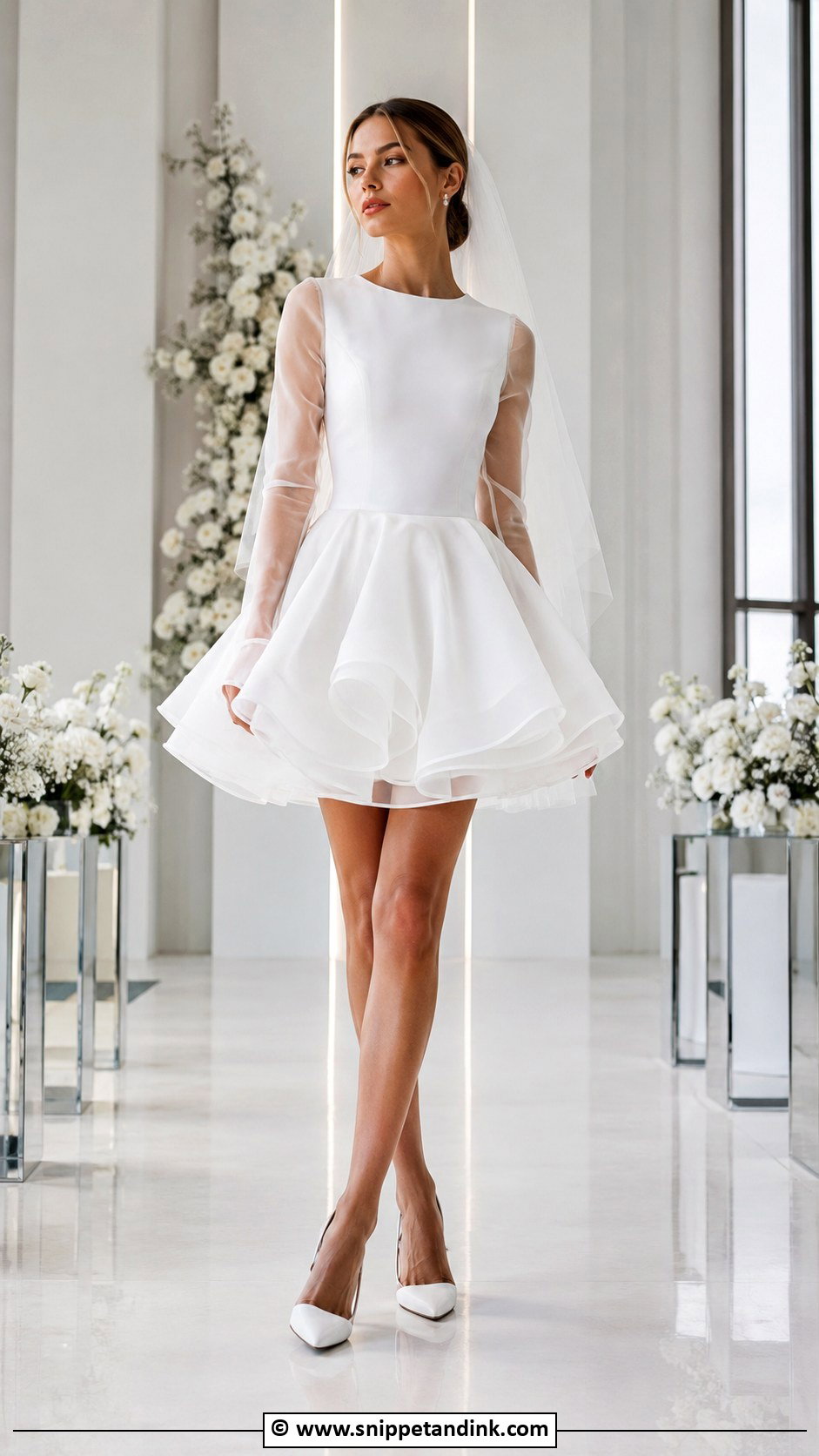
Organza is crisp and sheer, so it holds structure for puff sleeves, sculptural bows and layered hems without weighing much. The downside is creasing. Organza wrinkles sharply and those creases don’t relax on their own, so pack a steamer. An organza mini with a structured bodice looks dramatic; a tea length with gentle volume is softer. It suits spring and summer weddings well.
21. Short Crepe Wedding Dress
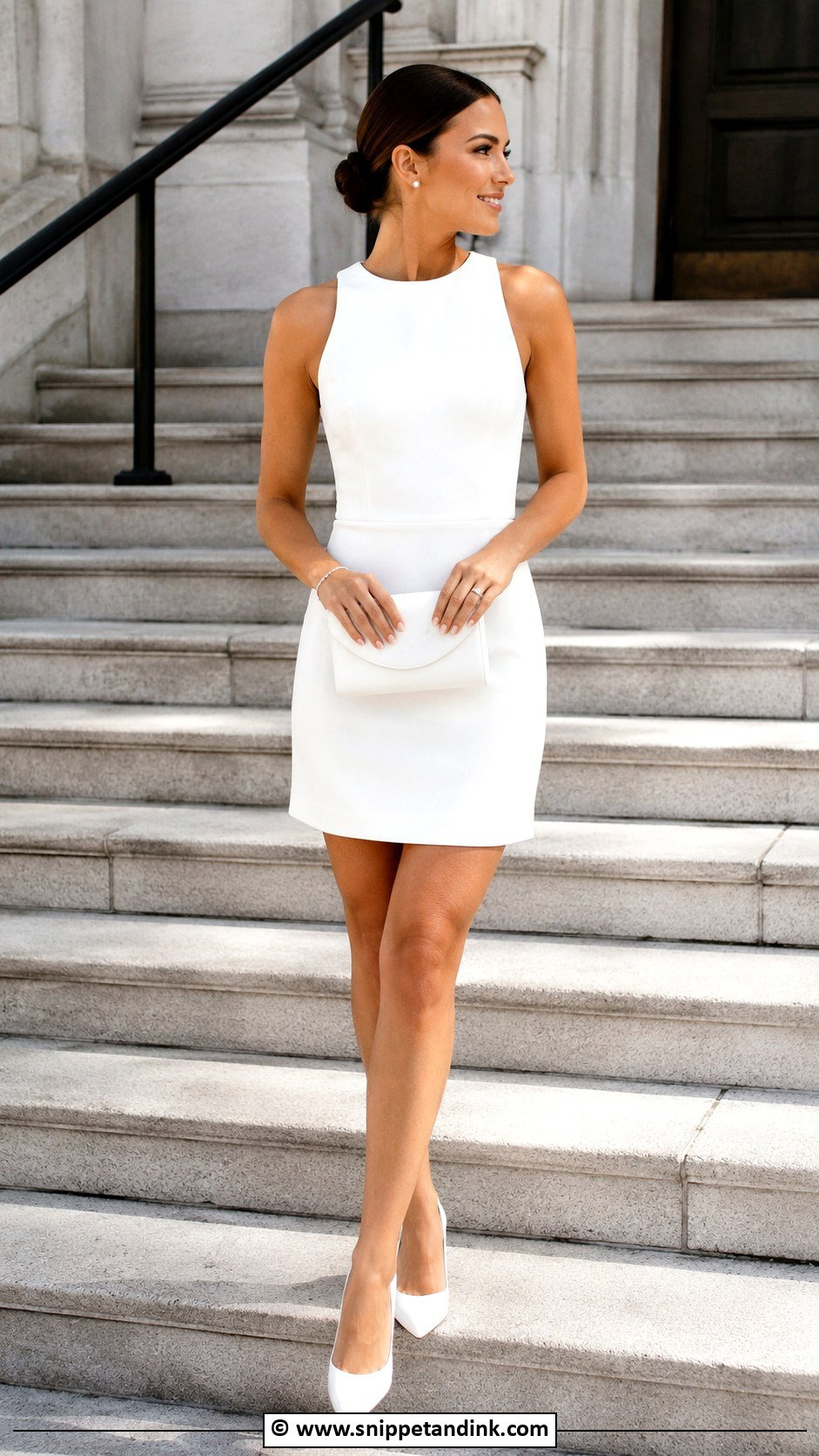
Crepe is matte and smooth, which means fit is everything. There’s no lace or beading to distract from a pulled seam. I check side seams and the back zip especially, as they show any strain. Crepe has weight enough to look polished but feels easier to wear than stiff satin. A sheath mini or knee length pairs with pointed pumps and a low bun. Mark the hem at a flattering point on the leg, usually just above the knee.
22. Short Blazer Wedding Dress
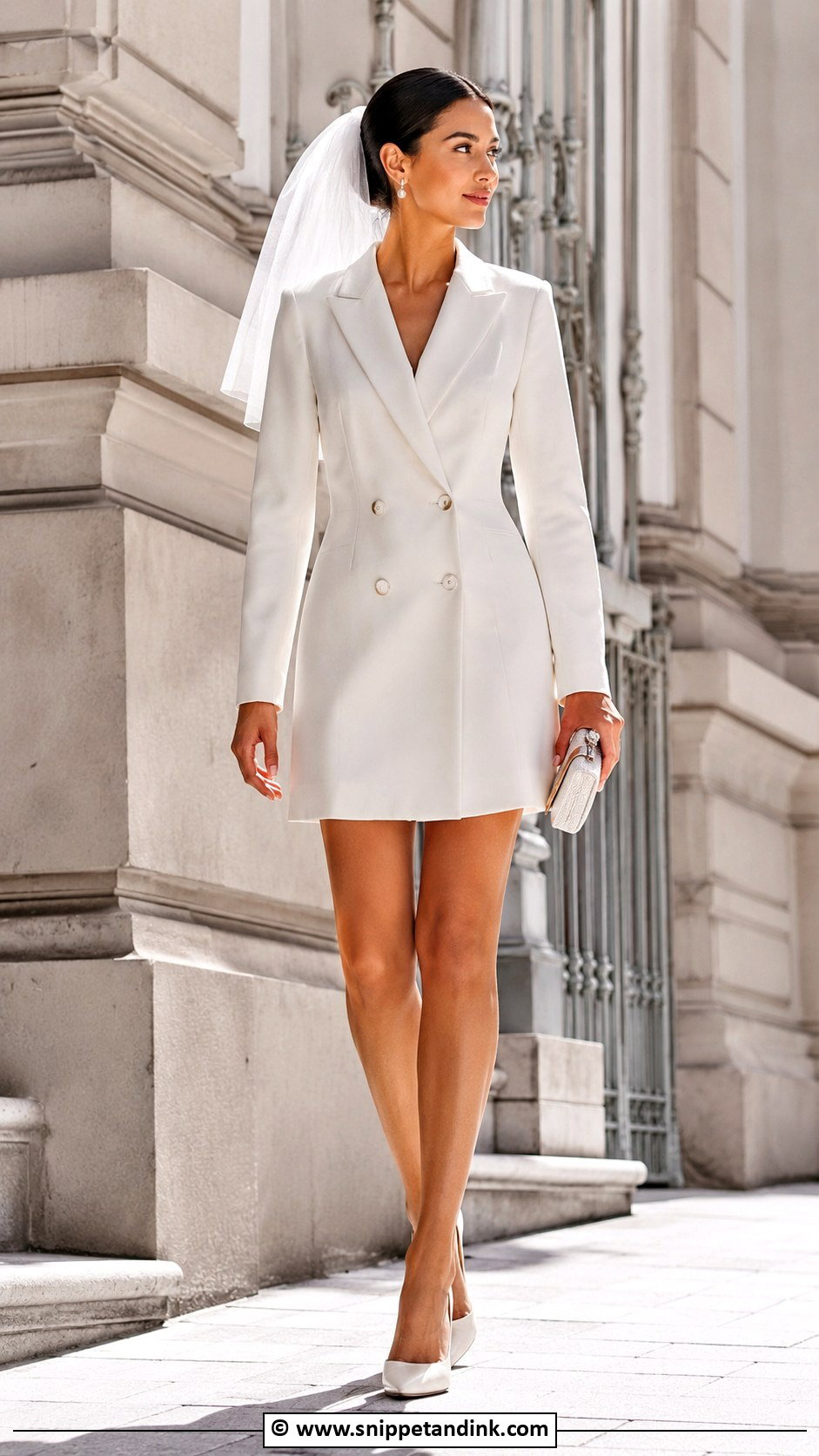
A blazer dress gives you tailoring and a sharp, confident look for a city ceremony. Double-breasted ivory or white with pointed heels and pearl earrings is the classic version. Most blazer dresses have a deep neckline, so I’d plan a lace camisole or bridal bralette underneath, and test the coverage when you lean forward. A short veil softens the tailoring and makes it look bridal rather than corporate.
23. Short Slip Wedding Dress
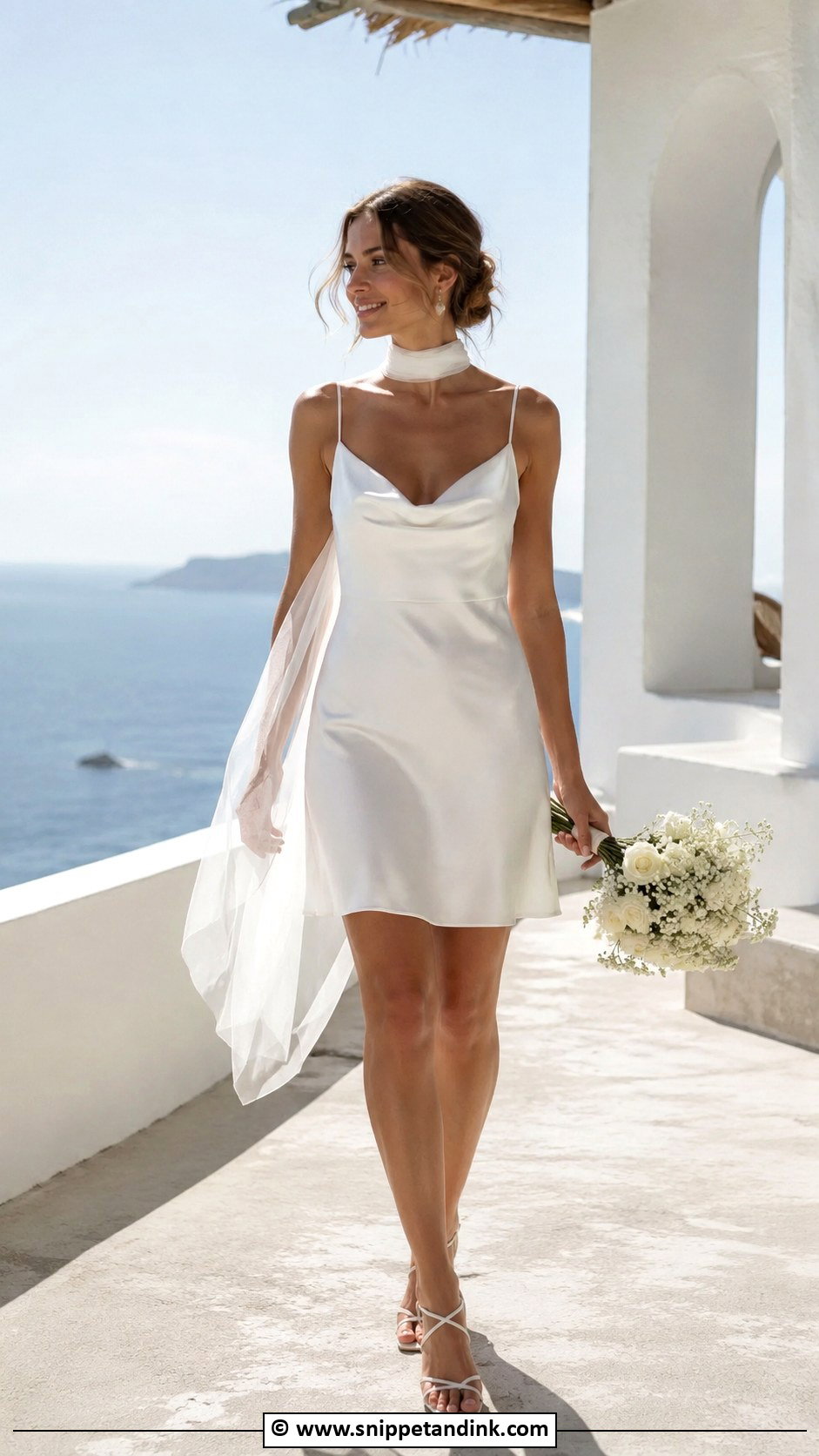
A slip dress has almost no structure, so it relies entirely on fabric drape and what’s underneath. It should skim rather than cling. Bias-cut satin shows every line, which is why smooth undergarments matter more here than with any other dress. A cowl or straight neck looks chic with strappy sandals and a loose updo. Add a cropped blazer or sheer wrap for coverage in cooler settings.
24. Short Sheath Wedding Dress
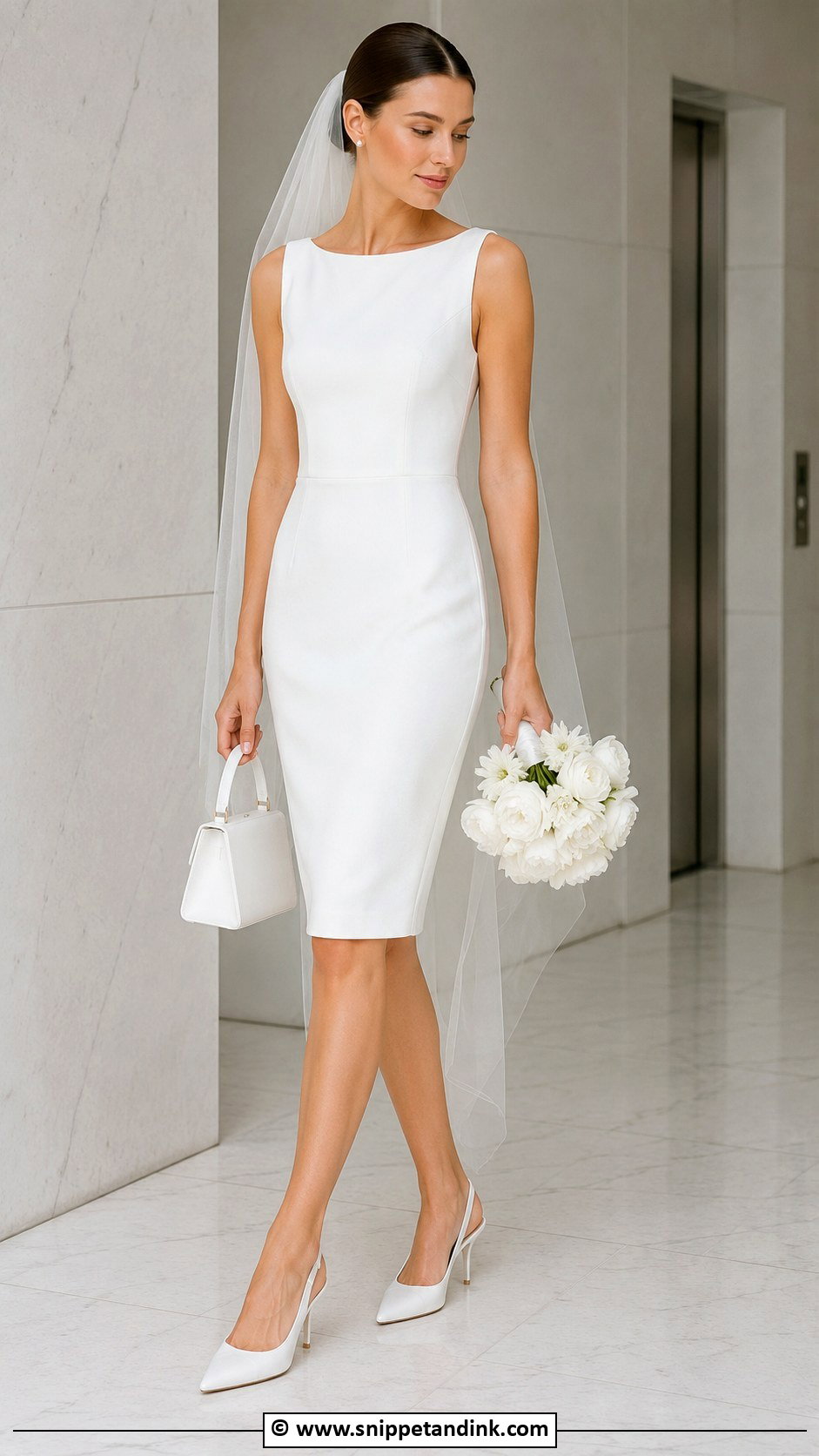
Short sheaths follow the body without volume, which makes them clean and modern. Fit determines everything; a sheath that’s slightly too tight pulls across the hips when you sit. Subtle ruching, lace sleeves or a square neck add detail. Knee length is refined; a mini is more playful. Slingback pumps and a structured bag finish it. Take a long stride at the fitting to check you can walk without the hem riding up.
25. Short Fit And Flare Wedding Dress
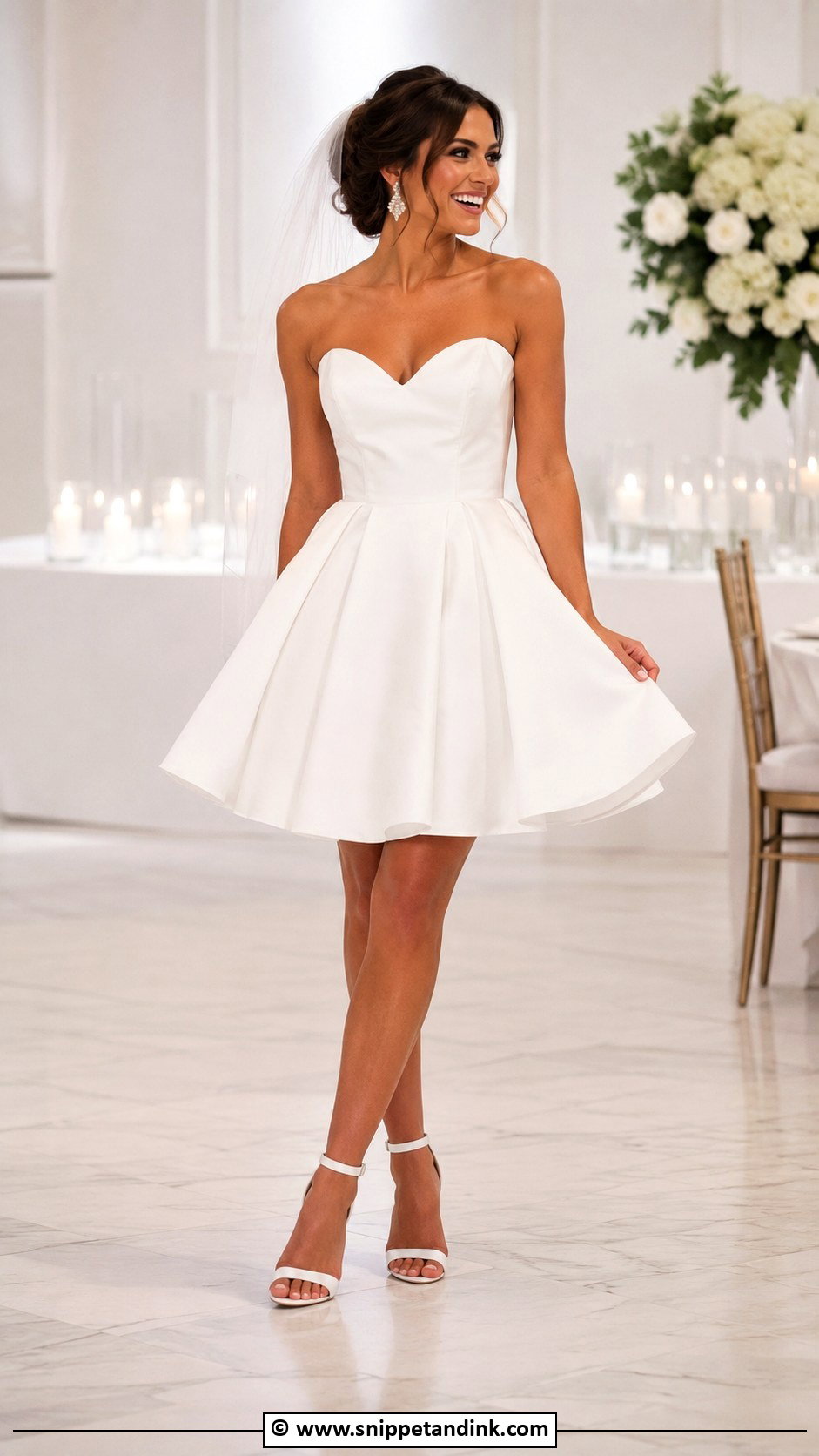
A short fit and flare wedding dress fits through the bodice and flares from the waist, which is the most dance-friendly shape on this list. The flare should begin at your natural waist. Too low and it shortens the legs. Sweetheart, square and strapless necklines all suit it. Lace or tulle feels romantic; satin or mikado cleaner. Ankle-strap heels keep you steady while dancing.
26. Short Drop Waist Wedding Dress
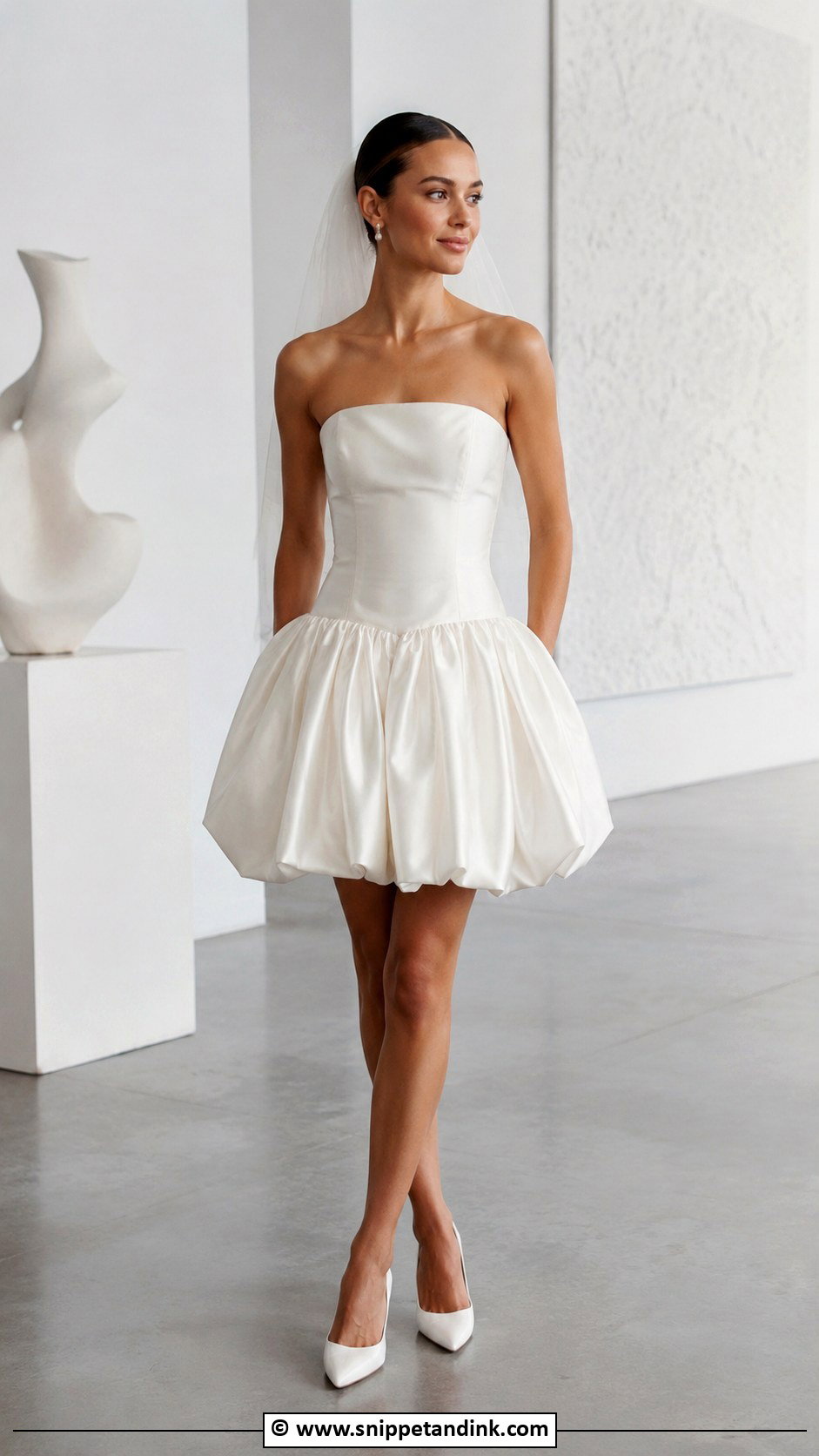
A short drop waist wedding dress moves the waistline down to the hips, lengthening the torso and creating a fresh shape. On a petite bride, a very low drop can make the legs look short, so I’d raise it slightly. A structured bodice and fuller mini or tea-length skirt is the classic version. Pointed pumps and simple earrings keep the shape the focus.
27. Short High Low Wedding Dress
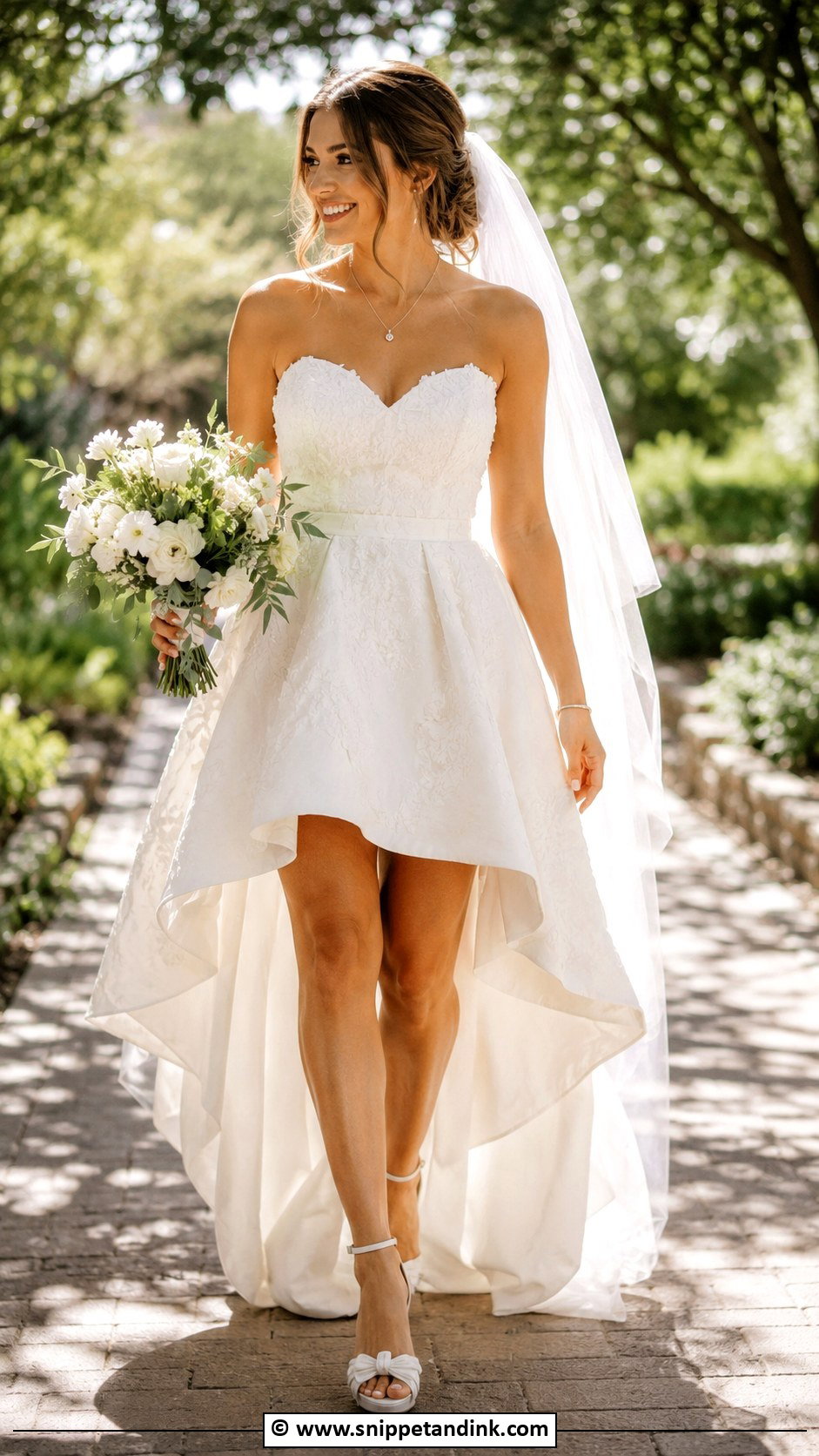
A high-low hem is short in front to show your shoes and longer at the back for movement. Tulle and organza feel soft; satin and crepe look cleaner. The back length is the practical issue. Stairs, grass and city pavements catch a trailing hem, so I’d keep it short enough to stay off the ground. Standout heels earn their place here, since they’re on show the whole time.
28. Short Wedding Dress With Overskirt
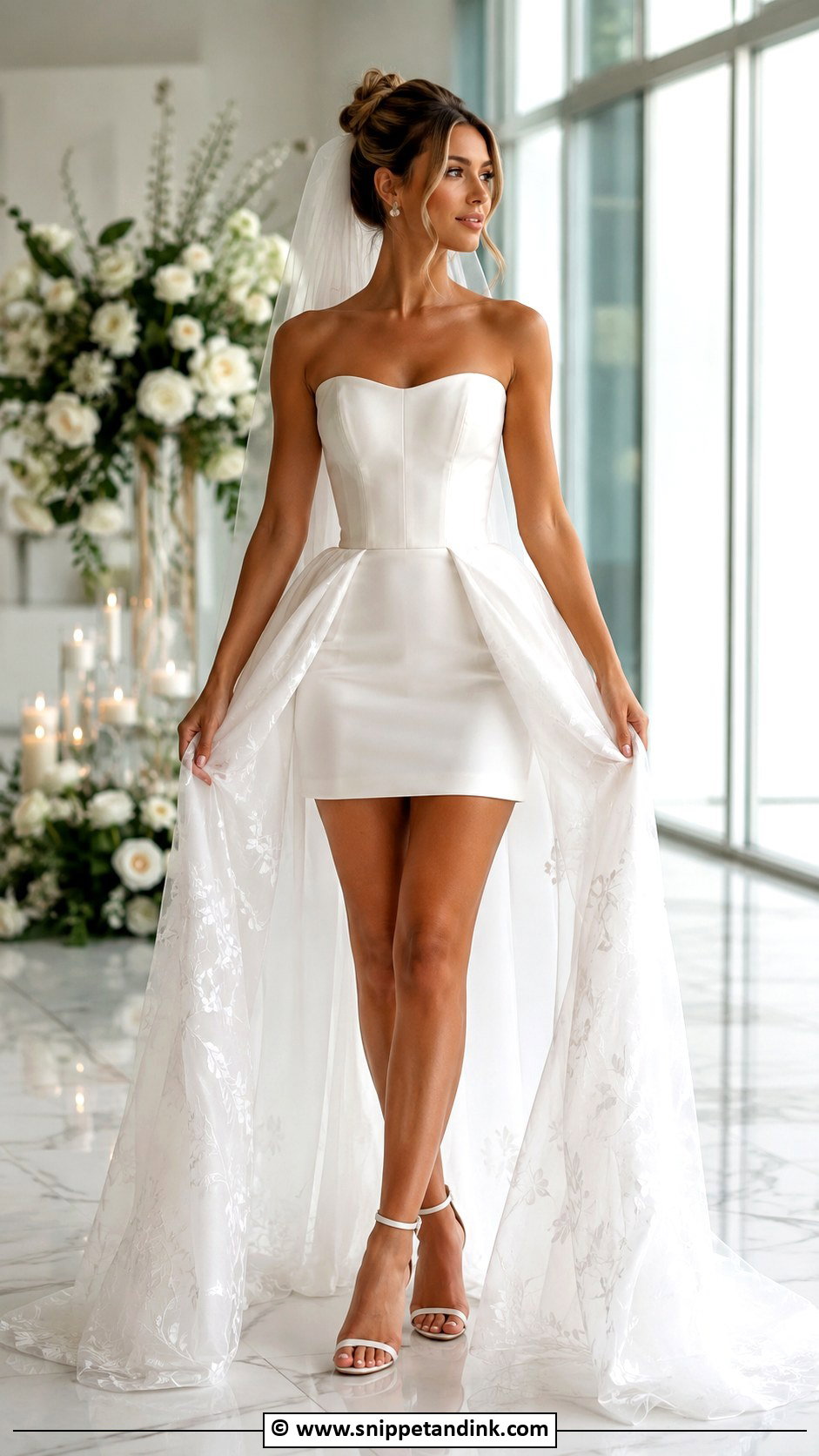
An overskirt gives you a long silhouette for the ceremony and a short dress for the party, without a full outfit change. Most attach with hooks or snaps at the waist. I’d practise removing it with whoever will help on the day, because it often comes off in a corridor in a hurry. The overskirt should match the dress’s fabric tone closely, as two slightly different whites look obvious in photos.
29. Short Wedding Dress With Gloves
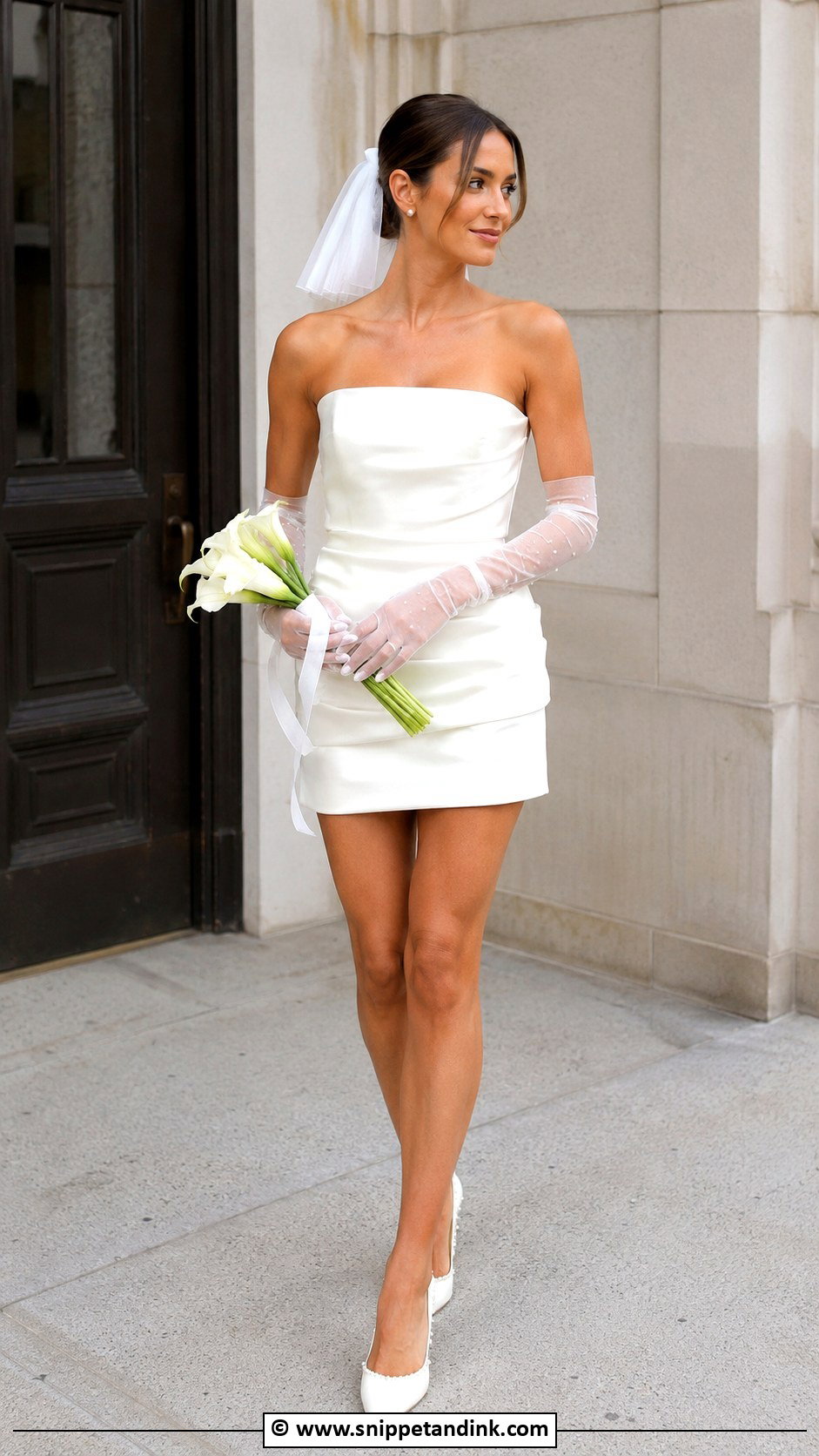
Gloves make even a simple mini look ceremonial. Sheer gloves feel romantic, satin classic, pearl-trimmed more decorative. They suit strapless, off-shoulder and square-neck dresses, where there’s room for them to show. Glove length should be in proportion: wrist-length with a mini, elbow-length with a midi. The practical catch is the ring exchange. Choose gloves you can slip off quickly, or ones with a finger opening.
30. Short Wedding Dress With Veil
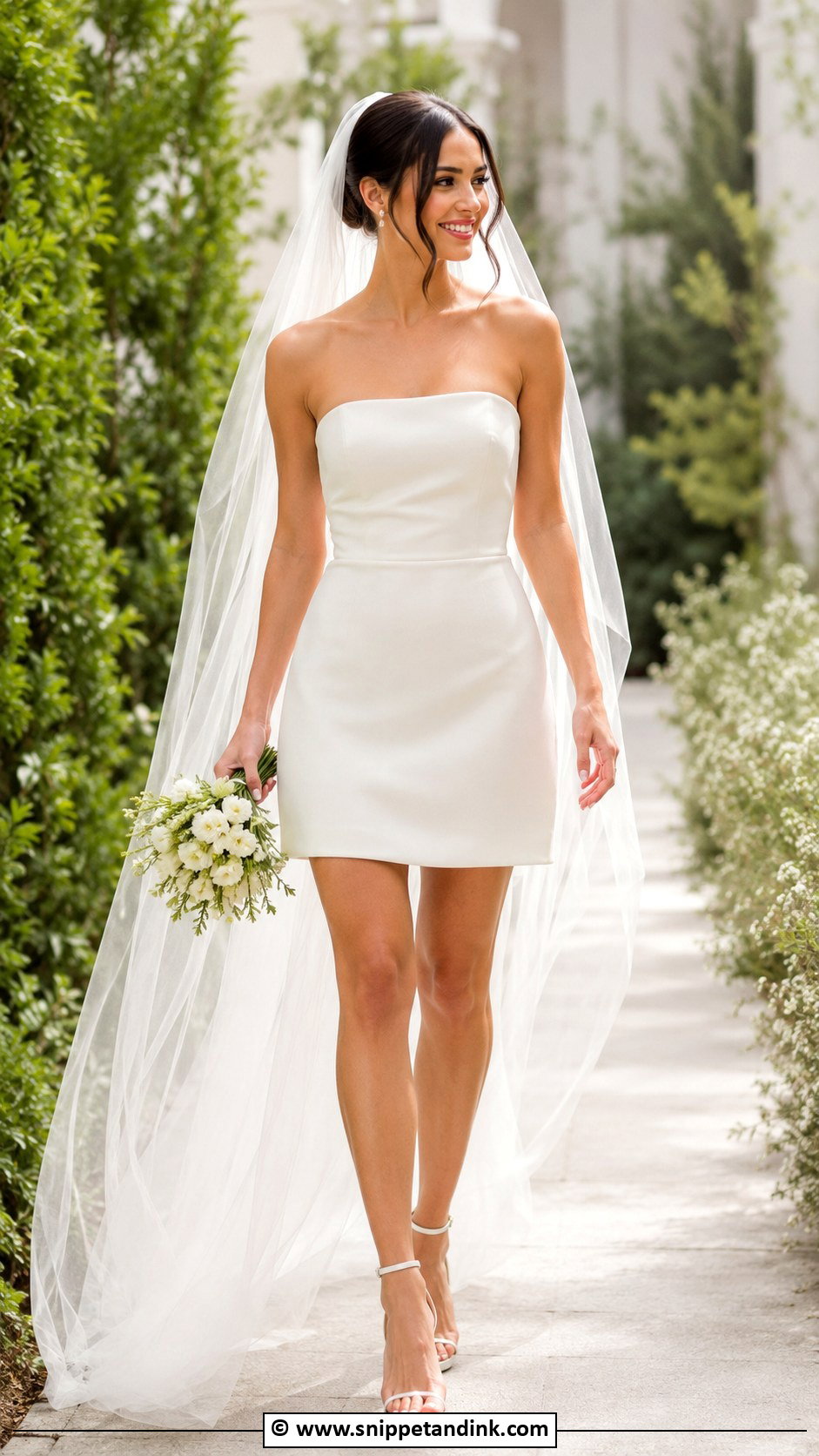
A veil is the single quickest way to make a short dress look bridal. A birdcage veil suits vintage-inspired dresses; a shoulder-length veil suits a modern mini. A long sheer veil with a plain short dress creates a striking contrast. In a windy city, a longer veil needs securing with a comb and a few pins under the hair. Elegant heels and a small bouquet complete the look.
A City Hall Day From the Dress Point of View
Civil ceremonies are short, but the day around them isn’t. You’ll probably queue, go through security, wait in a corridor, stand for the ceremony and then walk outside for photos. That shapes what you wear.
- Arrival: bring a coat or blazer you’d be happy to be photographed in, since government buildings are often air-conditioned.
- Security: metal boning, belt buckles and a hair full of pins can set off scanners, so leave time.
- Waiting: you’ll likely sit on hard chairs. A dress that rides up or creases badly will show it.
- Photos outside: wind on courthouse steps catches veils and short skirts, so secure the veil well and test the skirt in a breeze.
Shoes, Hosiery and the Legs on Show
A short dress makes your shoes part of the outfit, so I treat them as seriously as the dress. Break them in at home for at least a week, and scuff the soles lightly with sandpaper so they grip polished floors.
Sheer hosiery is worth considering in cold months or for modest ceremonies; ultra-sheer nude or ivory with a matte finish looks most natural in photos. If you’re going bare-legged, moisturise rather than using shimmer, which catches flash. A spare pair of tights in your bag saves the day if a ladder appears.
Short Hem, Full Bridal Outfit
A short wedding dress can be classic, playful or minimal, depending on the fabric, shape and styling around it. The trick is to dress it as a complete wedding outfit, not a shorter white dress. Shoes, veil, jewellery, hair and accessories all need to look deliberate. Lace reads traditional, satin sleek, tulle soft and tailoring modern. If you want comfort and the ability to move freely while still looking bridal, a short dress handles it well.
You'll Like These Ideas:



Leave a Reply