
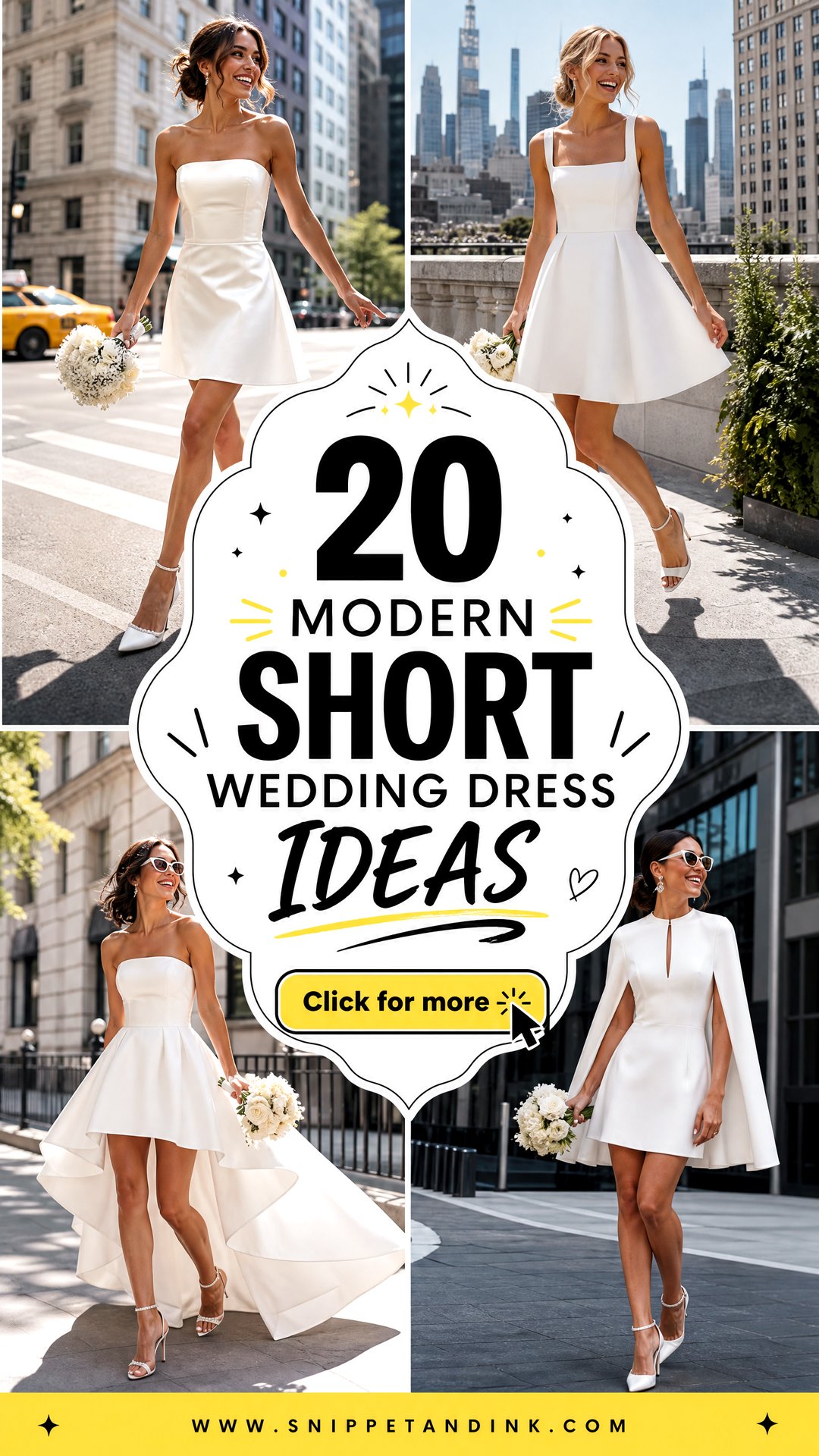
A shorter hem can feel every bit as bridal as a floor-length gown. It just has to be planned more carefully, because a short dress shows legs, shoes and fit in a way a long skirt hides. I put brides in short dresses for courthouse ceremonies, garden parties, destination weddings and the reception change, or after-party where a train would only get trodden on. Mini, knee, tea and midi lengths all bring the shoes into the outfit. Pick the length you can move in, then add the bridal signal with a veil, jewelry, a good bag or a dramatic sleeve. The twenty looks below run from clean satin and lace to playful volume, sparkle and separates.
Where the Hem Should Land on Your Leg
Short dresses are judged at the hem more than anywhere else. A small difference in length decides whether a dress looks deliberate or slightly off, and each length has its own sweet spot.
- Mini: mid-thigh or a little lower. Sit down in front of a mirror, because a mini rises noticeably when you’re seated and more again on a bar stool or a car seat.
- Knee length: just covering the kneecap or slightly below it, which looks intentional in photos and stays modest when you sit.
- Midi and tea length: at the slimmest point of the lower leg, below the widest part of the calf. Stopping on the broadest part makes the leg look shorter.
- High-low: set the front by the same rules, then judge the back on the floor you’ll actually walk on.
I never mark a hem without the wedding shoes on. Heel height changes how the leg looks beneath it, and a flat sandal makes a midi read longer than it did with heels.
Then think about camera angles. Photographers often shoot from slightly below on steps, and city hall weddings usually end with an exit photo on a staircase. If a mini worries you from that angle, fitted shorts underneath settle it.
1. Simple Satin Short Wedding Dress
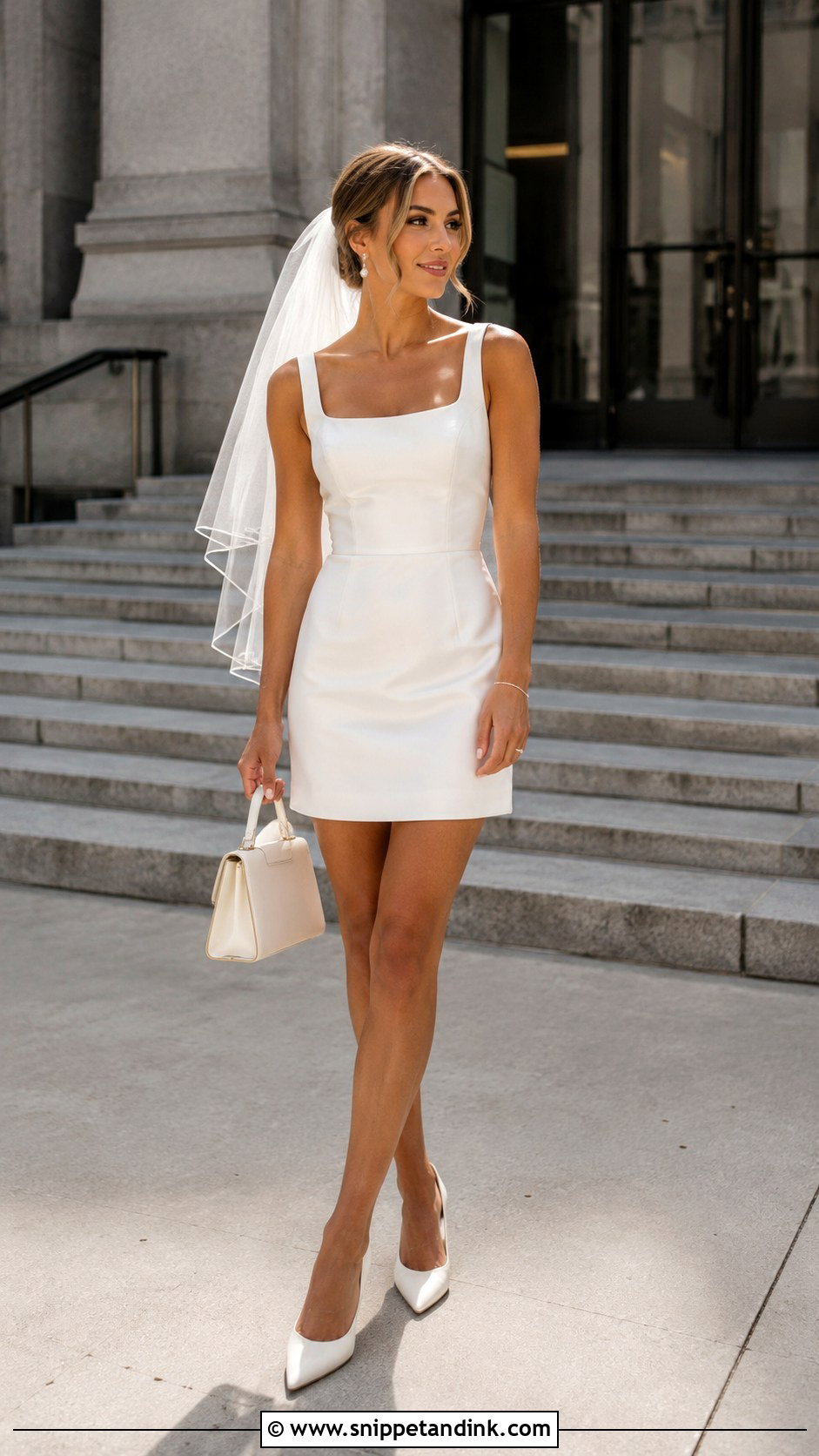
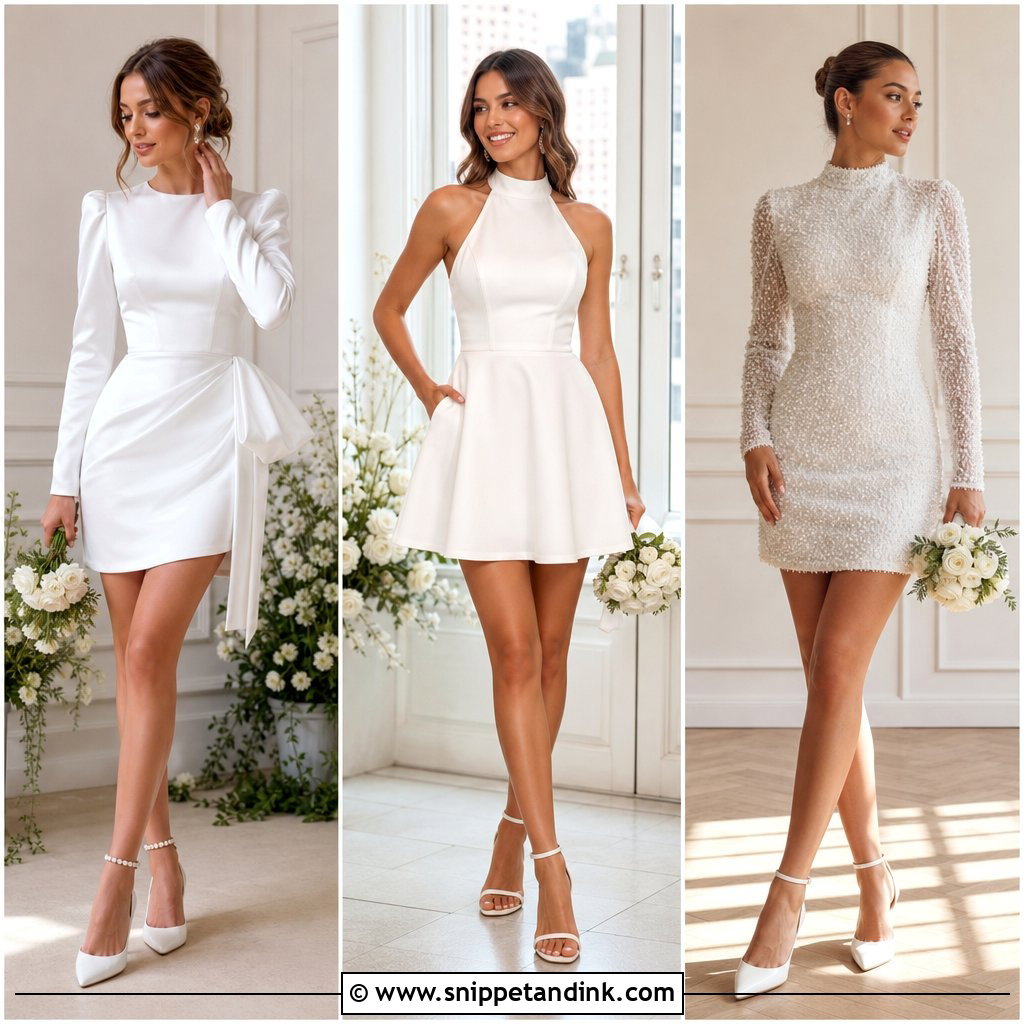
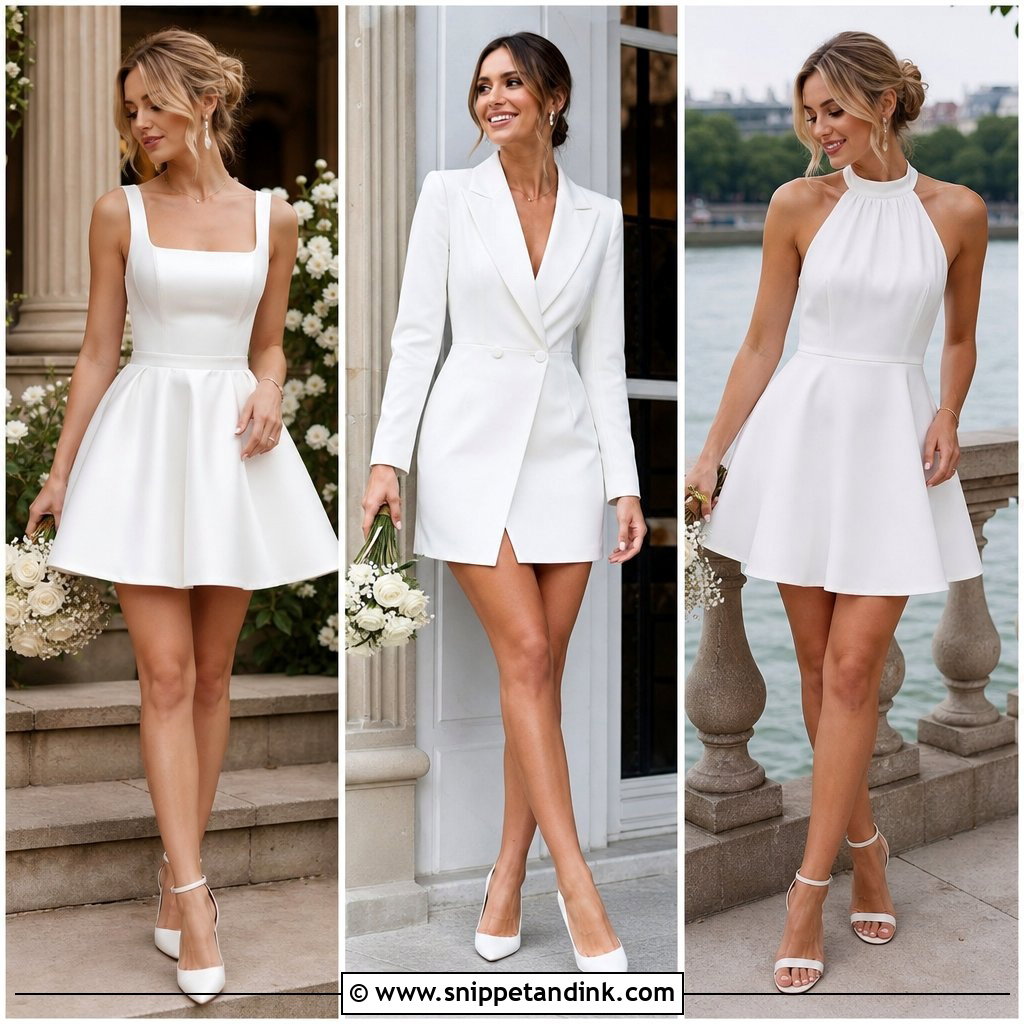
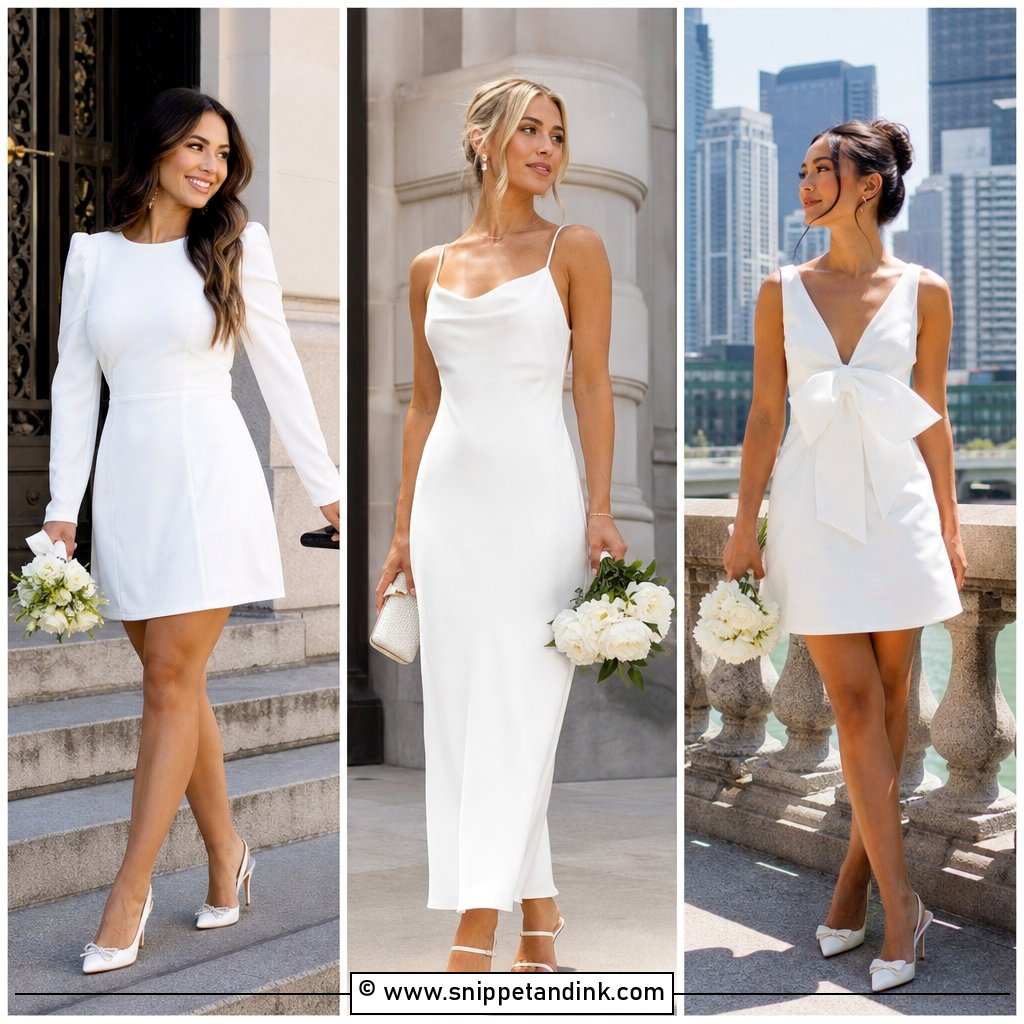
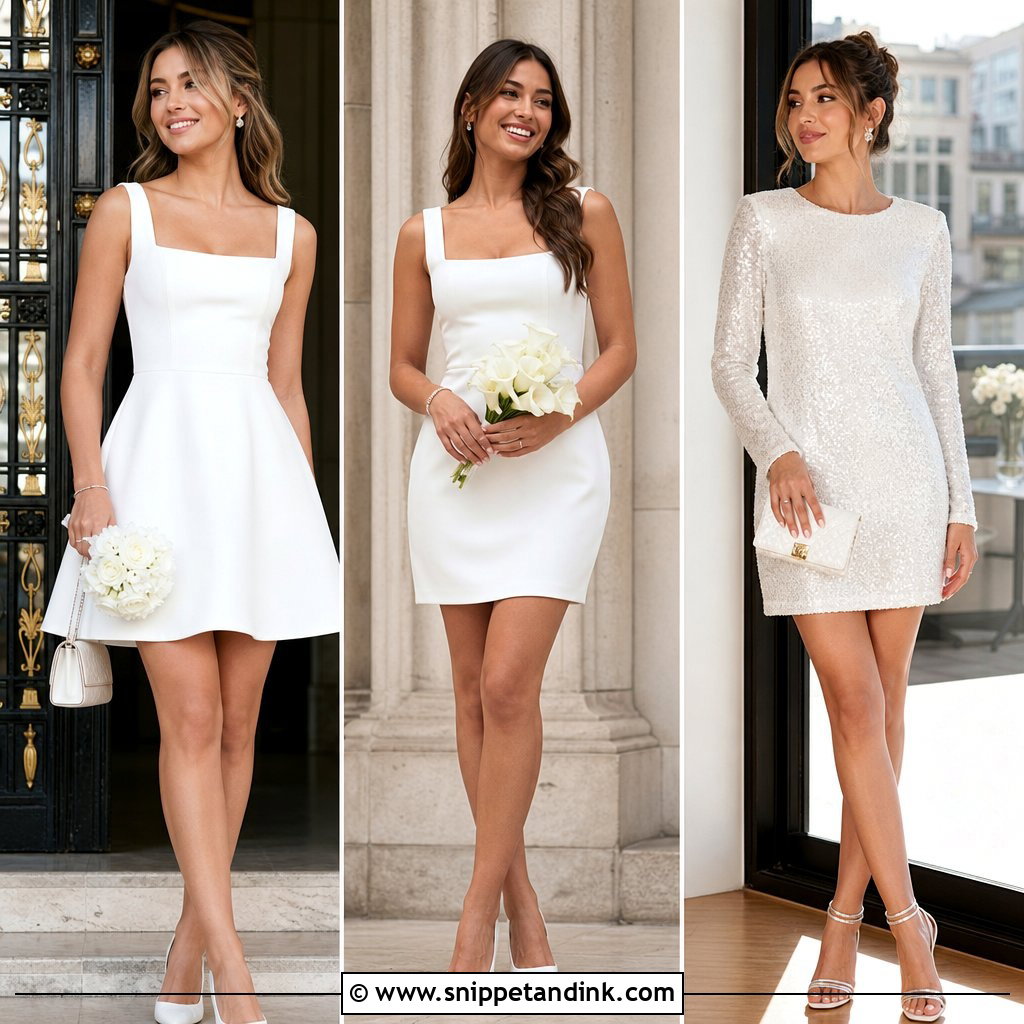
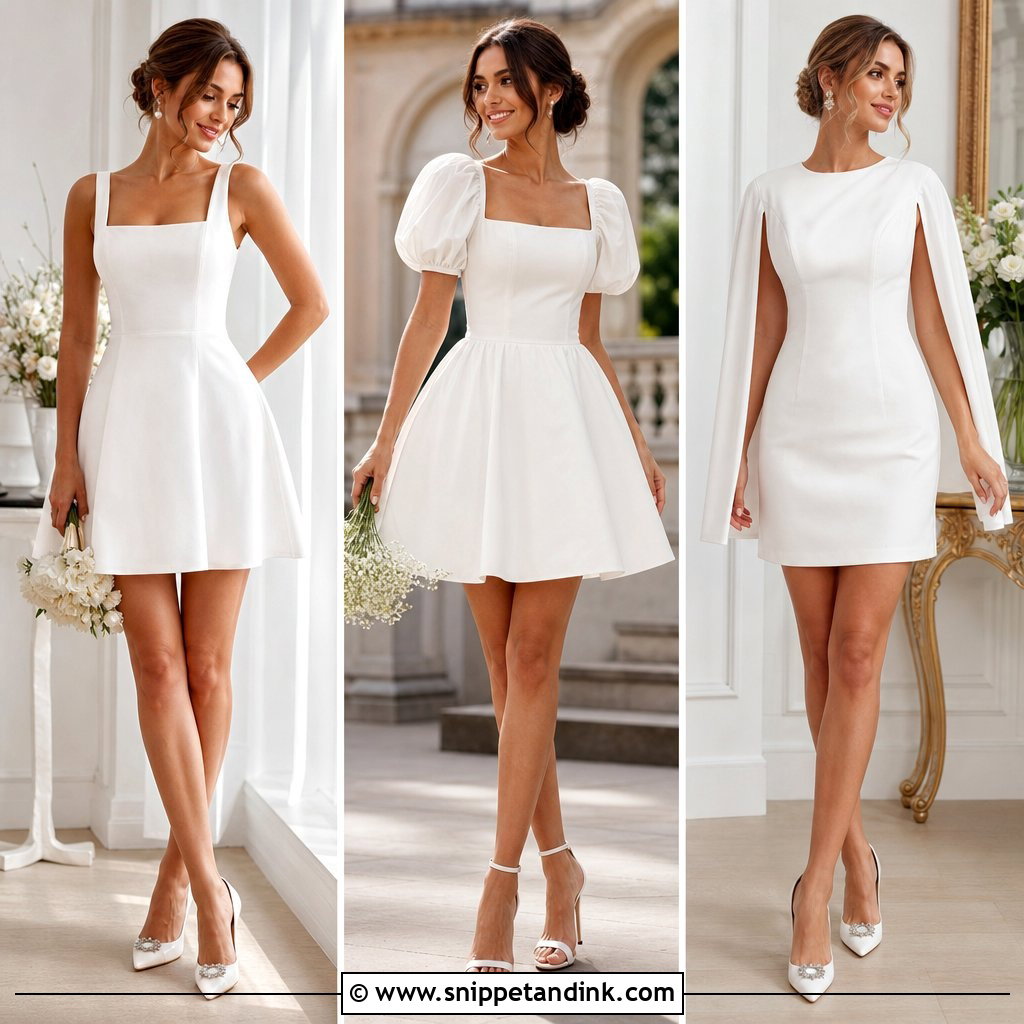
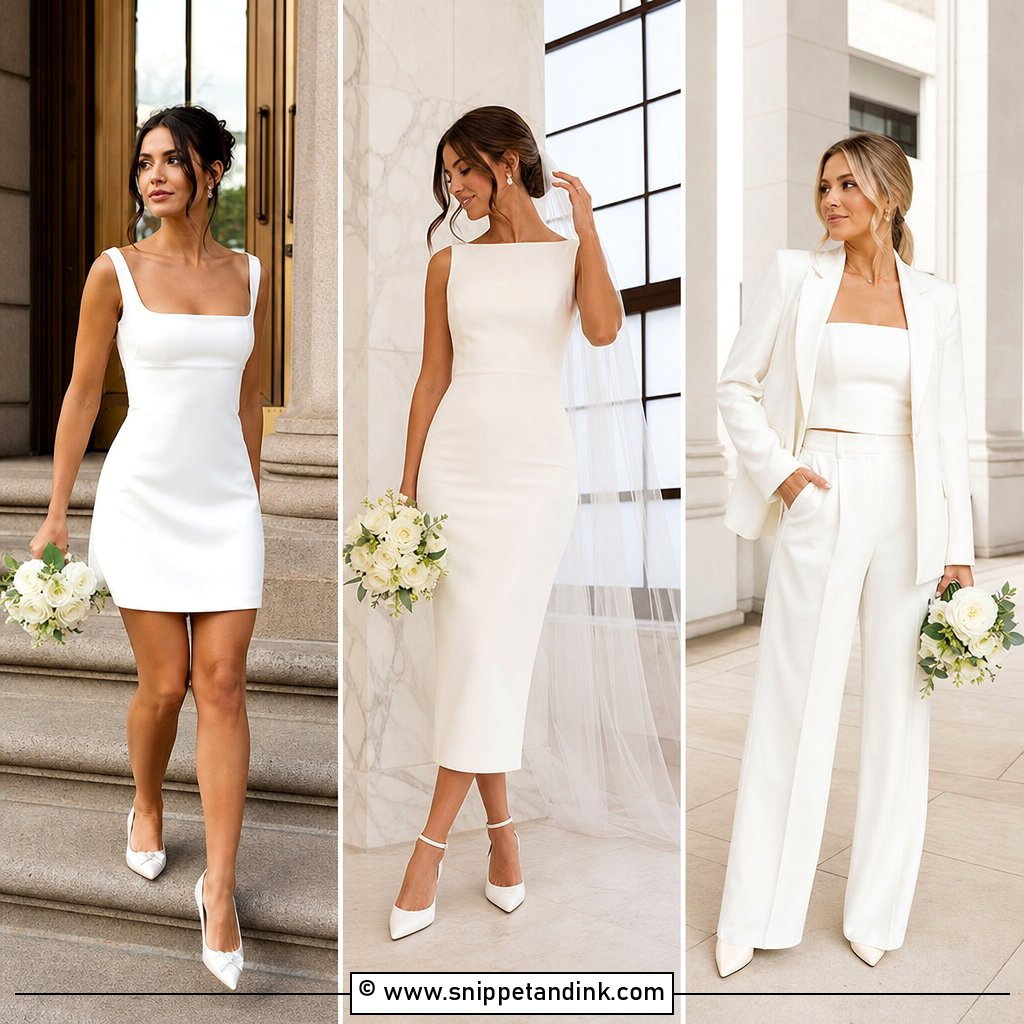
Satin is what makes a plain mini read as a wedding dress rather than a party dress, provided it has enough weight to hang smoothly. Look for an ivory mini with a softly structured bodice, a square or straight neckline and a slightly flared skirt, and insist on a defined waist; without one, the simple shape slides toward casual. Pointed slingbacks, small pearl earrings and a structured top-handle bag go with it, and a sheer fingertip veil adds movement. Wear a sleek low bun or shoulder-length waves. Have the hem professionally set at the point that feels most comfortable on your legs. Courthouses, restaurant receptions and minimalist city weddings suit it.
2. Strapless Bubble Hem Short Wedding Dress
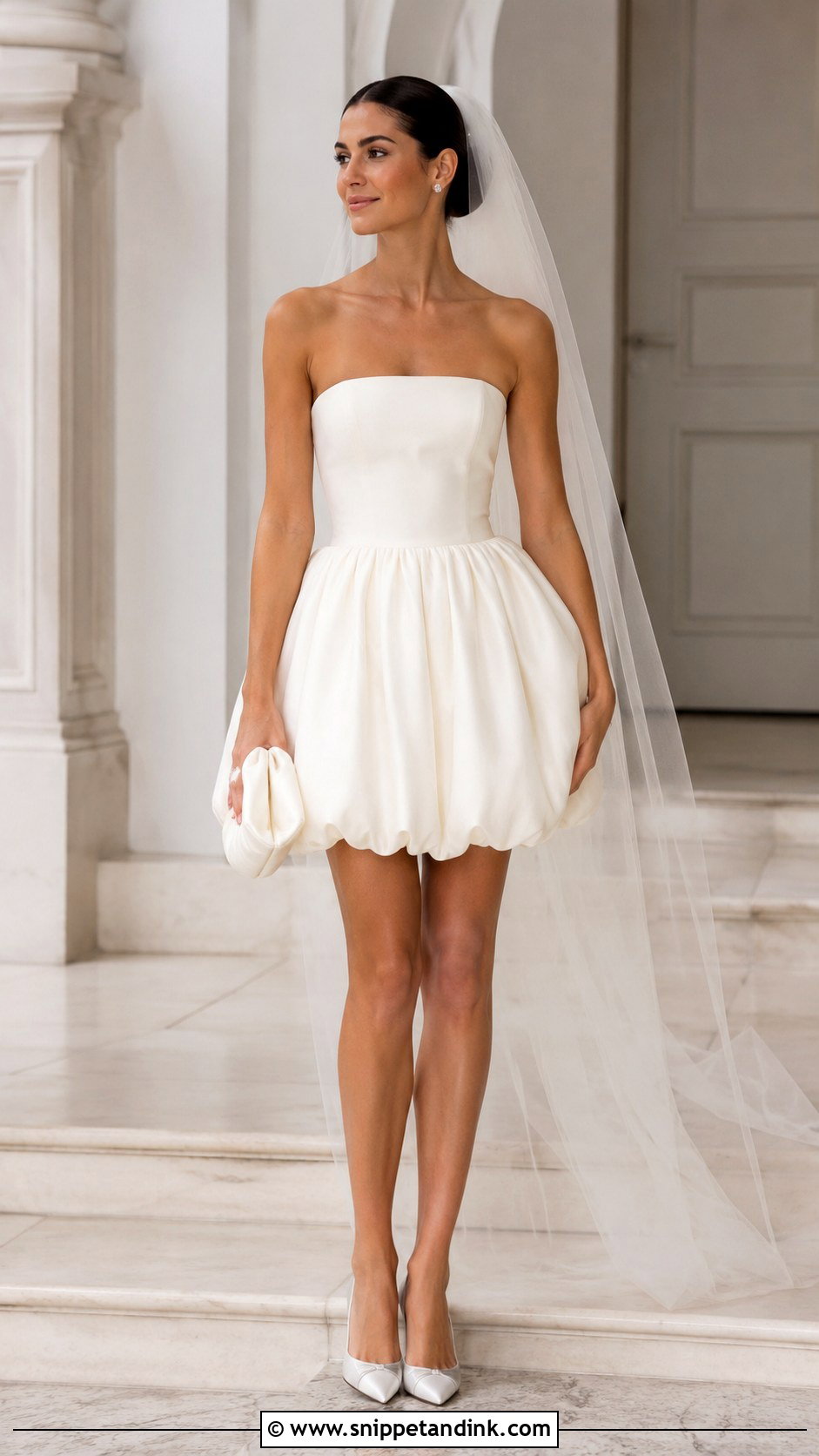
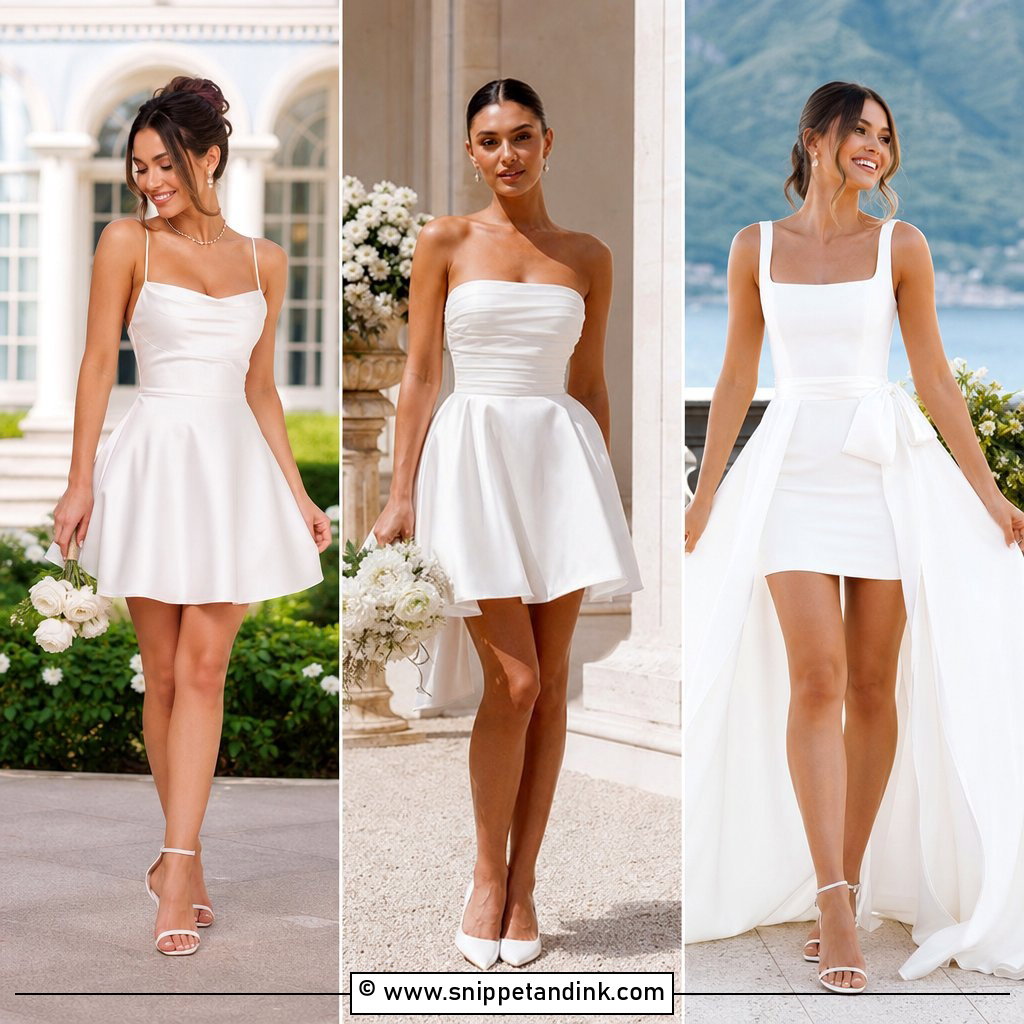
Bubble hems change more than any other shape here when you sit: the gathered skirt rides up and the volume flattens. So I always have a bride sit in one, and walk in it several times, before she buys. The shape is a strapless, supportive fitted bodice over a skirt that curves out and gathers beneath. Keep accessories refined with white pointed pumps, crystal studs and a small satin clutch, and add a long plain veil if you want ceremony drama without changing the dress. A polished ponytail or smooth bun shows the neck and shoulders. Solid internal support keeps the bodice where it belongs. Modern indoor venues, rooftops and reception parties suit it.
3. Square Neck A-Line Short Wedding Dress
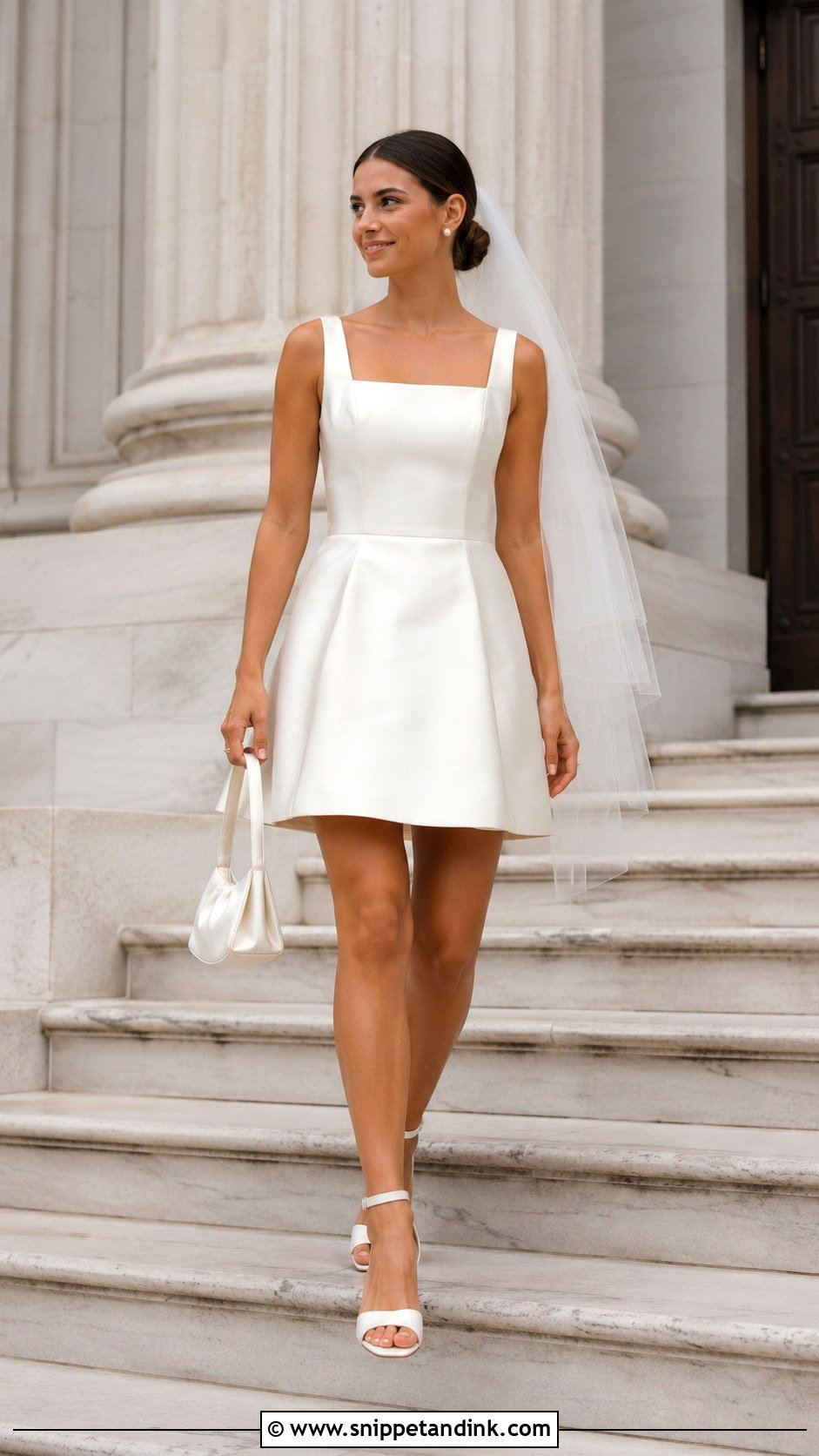
Square necks are easy to personalize: a delicate pendant fits the open space, or pearl studs alone keep it cleaner. Choose a structured mini or knee-length dress with wide straps, a fitted waist and a skirt that moves gently away from the body. Mikado or faille gives a sharper silhouette than lighter satin. Ankle-strap block heels and a compact leather or satin bag make it practical on courthouse steps and garden paths, and a waist-length veil with a narrow finished edge adds tradition. I’d put the alterations budget into the bust and waist, because that tailoring is what makes a simple dress look expensive.
4. Long Sleeve Lace Short Wedding Dress
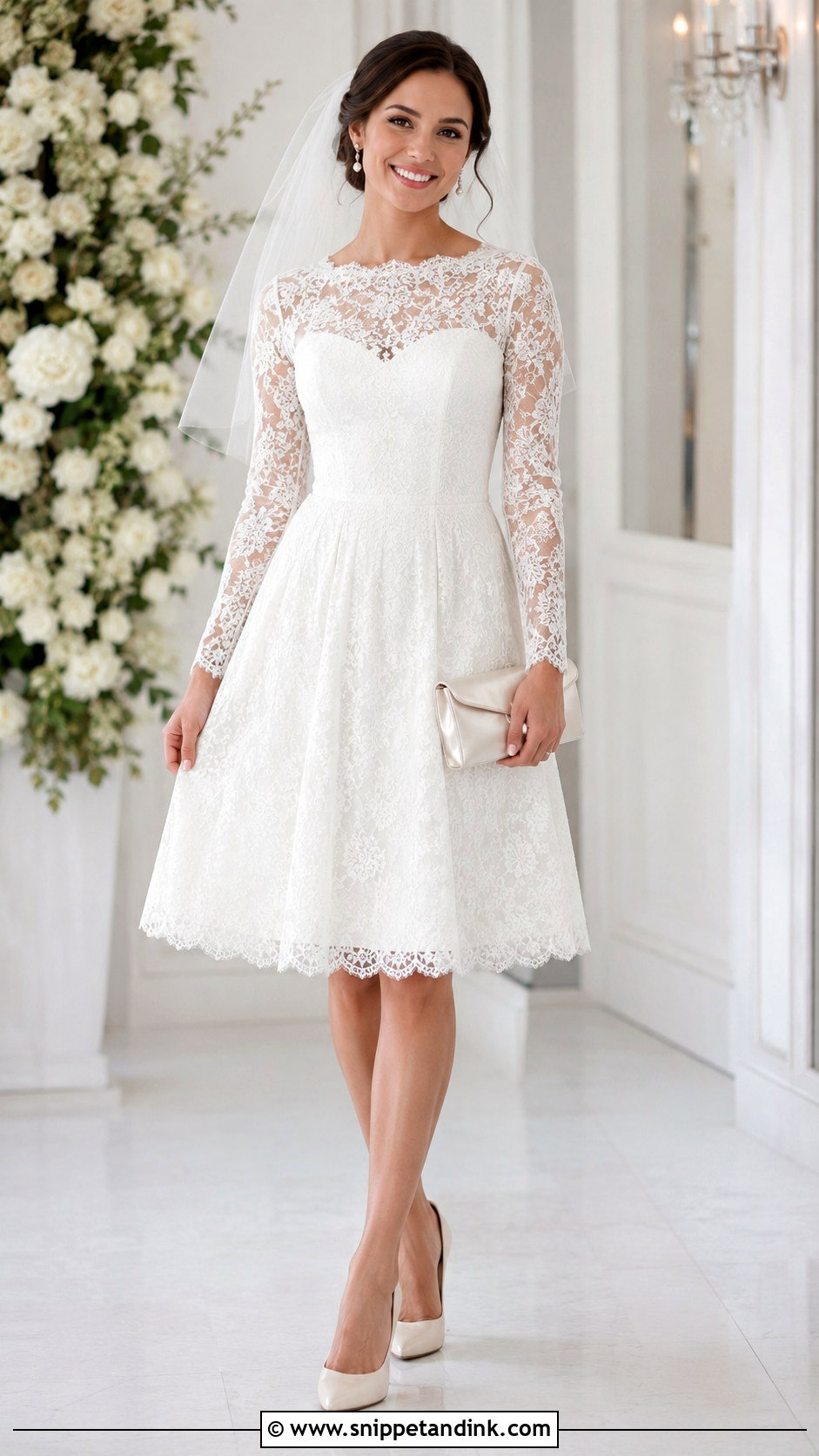
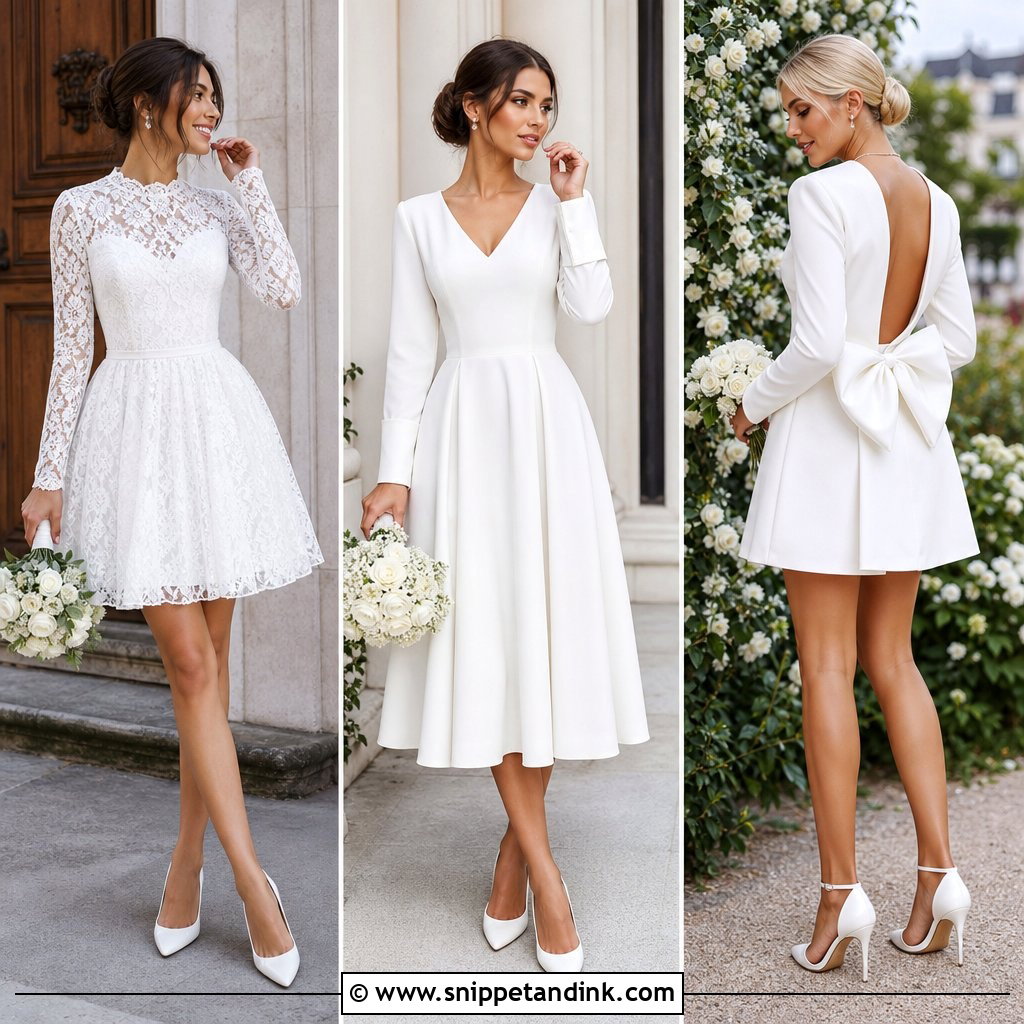
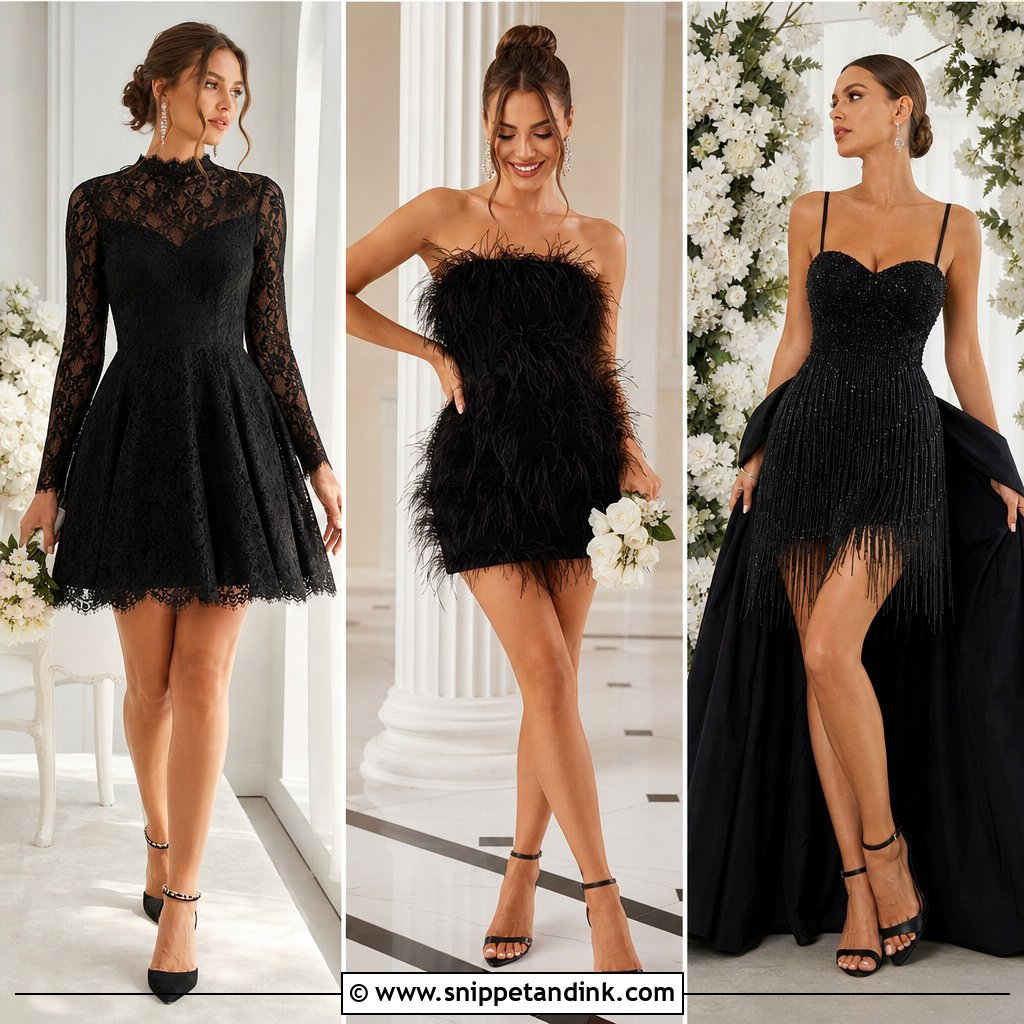
Long lace sleeves balance a short hem, so a mini with sleeves feels more covered than it is. Pick a fitted or softly flared dress with a lined bodice, sheer long sleeves and scalloped edges at the cuffs or neckline; knee length gives more coverage, a mini feels lighter for a reception. Ivory pumps, pearl drop earrings and a smooth satin clutch won’t compete with the lace, and a neat chignon with a short veil suits the texture. On a cold day, a tailored cream coat beats a casual jacket. The first thing I do with a lace sleeve is rub it against the inside of my wrist, because some lace is stiff and scratchy. Good lining makes the pattern show clearly in photos.
5. Off Shoulder Draped Short Wedding Dress
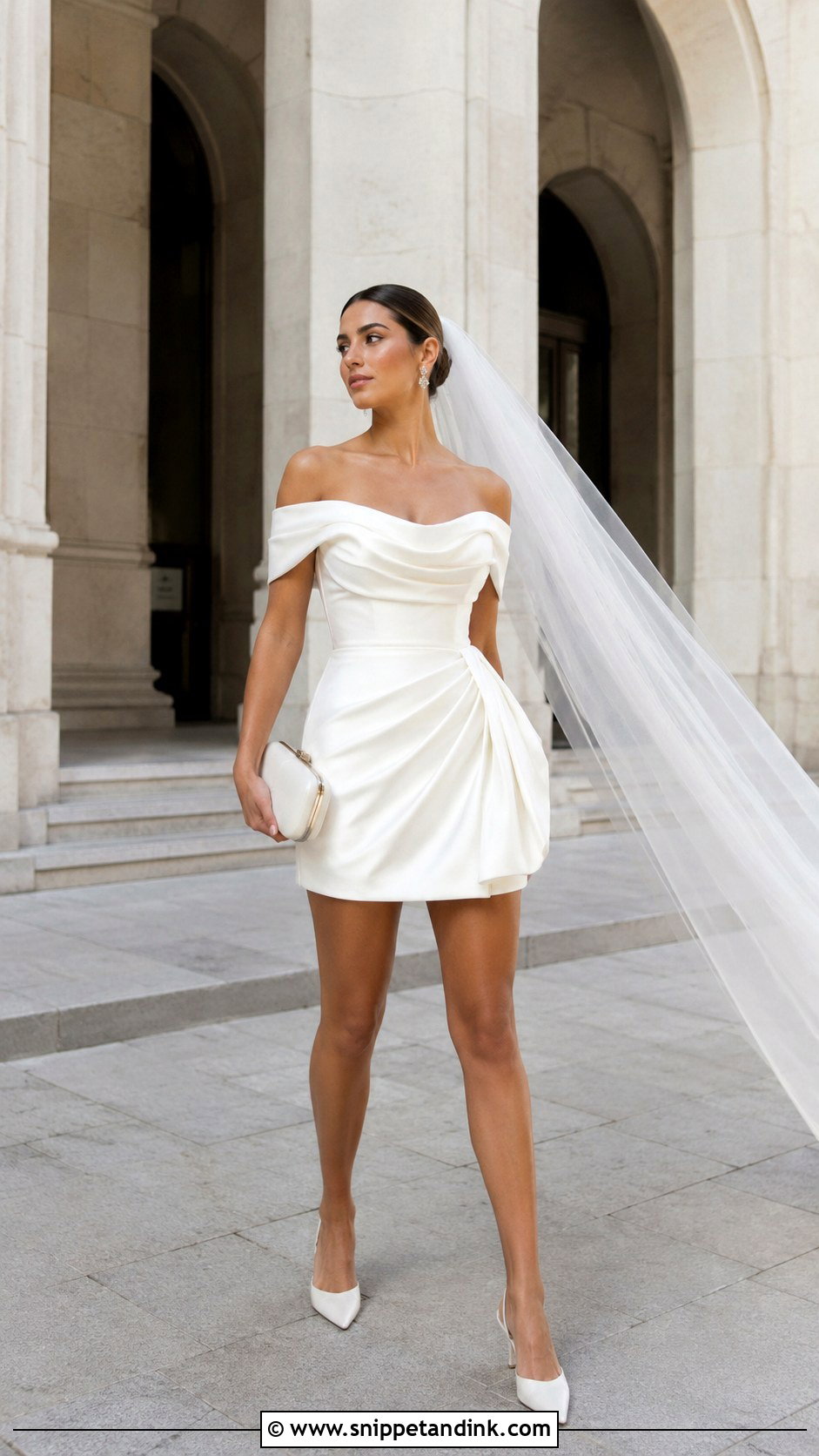
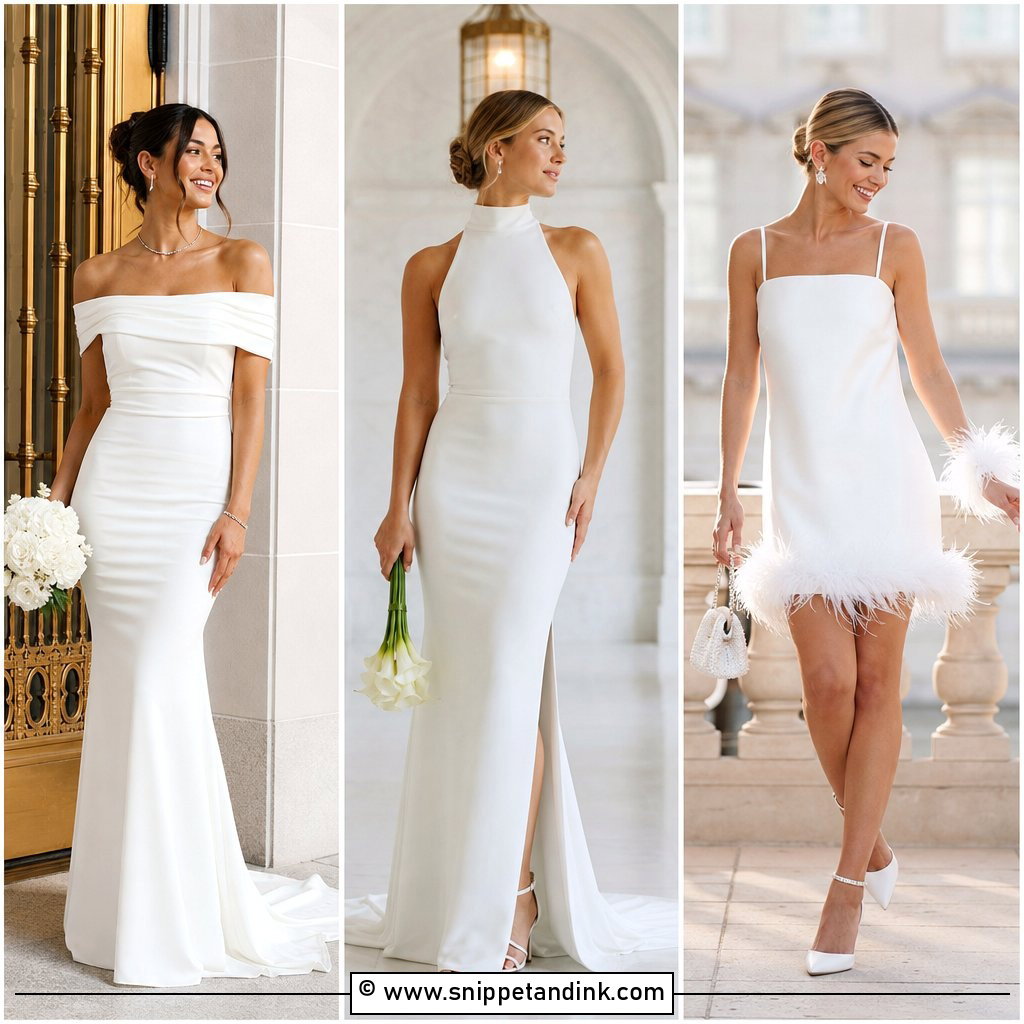
Draping makes an off-shoulder mini sculptural without any decoration, but the neckline has to survive hugs. Choose a design that folds gently across the neckline and gathers at the waist or hip; the asymmetry creates interest even in plain fabric. Kitten-heel slingbacks, silver or pearl earrings and a small curved clutch suit it. A cathedral veil sets up a dramatic contrast with the short hem, while a shoulder-length one stays relaxed. Wear the hair up or swept to one side. Test it by raising your arms and hugging someone before you buy, and keep fashion tape in your bag. City ceremonies and evening receptions suit it.
6. Tea Length Fit And Flare Wedding Dress
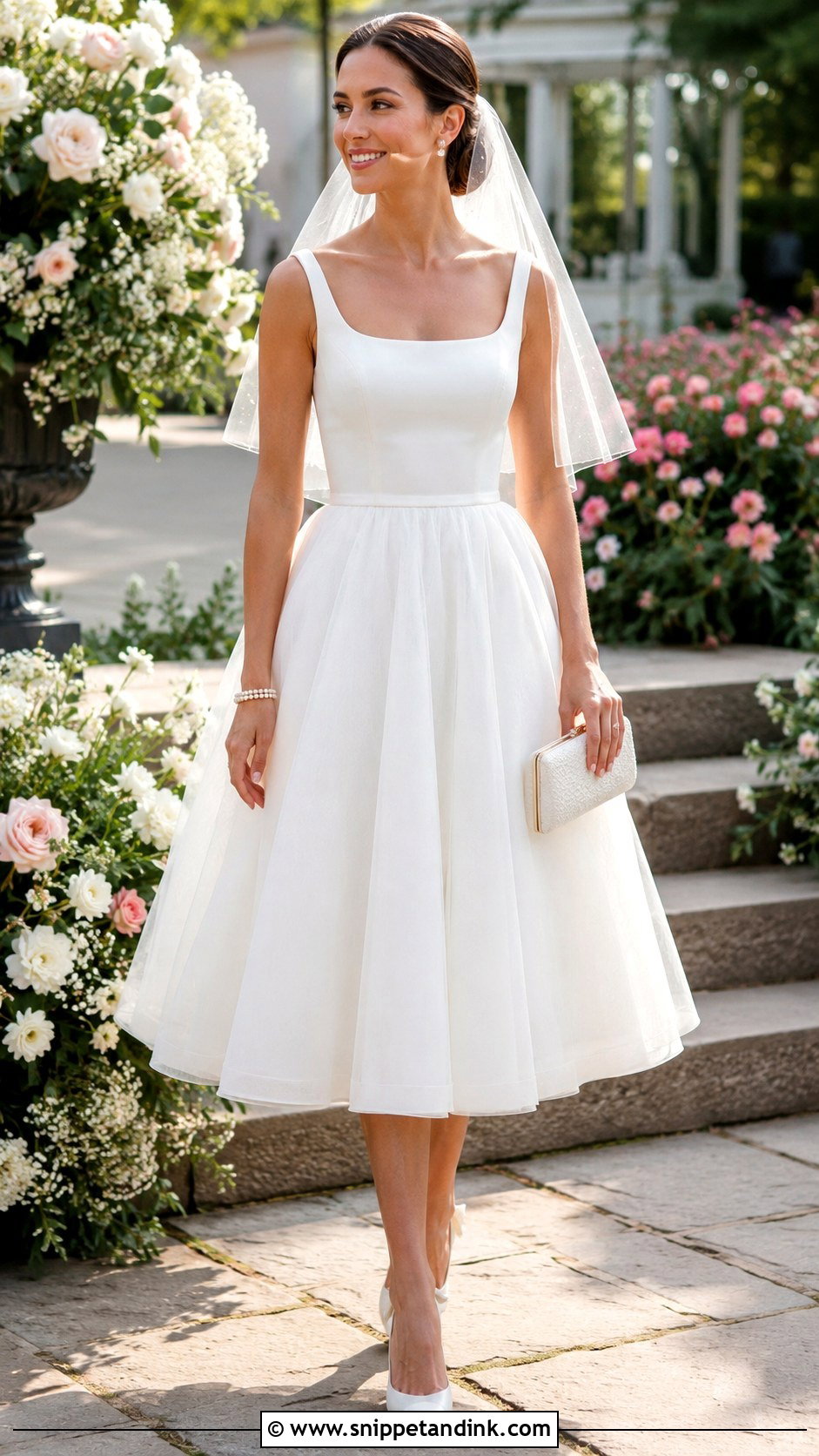
Tea-length fit-and-flare is the most classic shape here. Its volume comes either from layers of organza or tulle, or from the body of satin or mikado for a cleaner finish. Look for a fitted bodice, a natural waist and a skirt ending between knee and ankle. Pointed pumps, a pearl bracelet and a small box clutch complete it; a birdcage veil goes retro, a plain fingertip veil more current. Make sure the widest part of the skirt stands away from your legs so it doesn’t cling as you walk, and don’t let the hem stop at the broadest point of your calf. Gardens, daytime receptions and dance-heavy parties suit it.
7. Satin Midi Short Wedding Dress
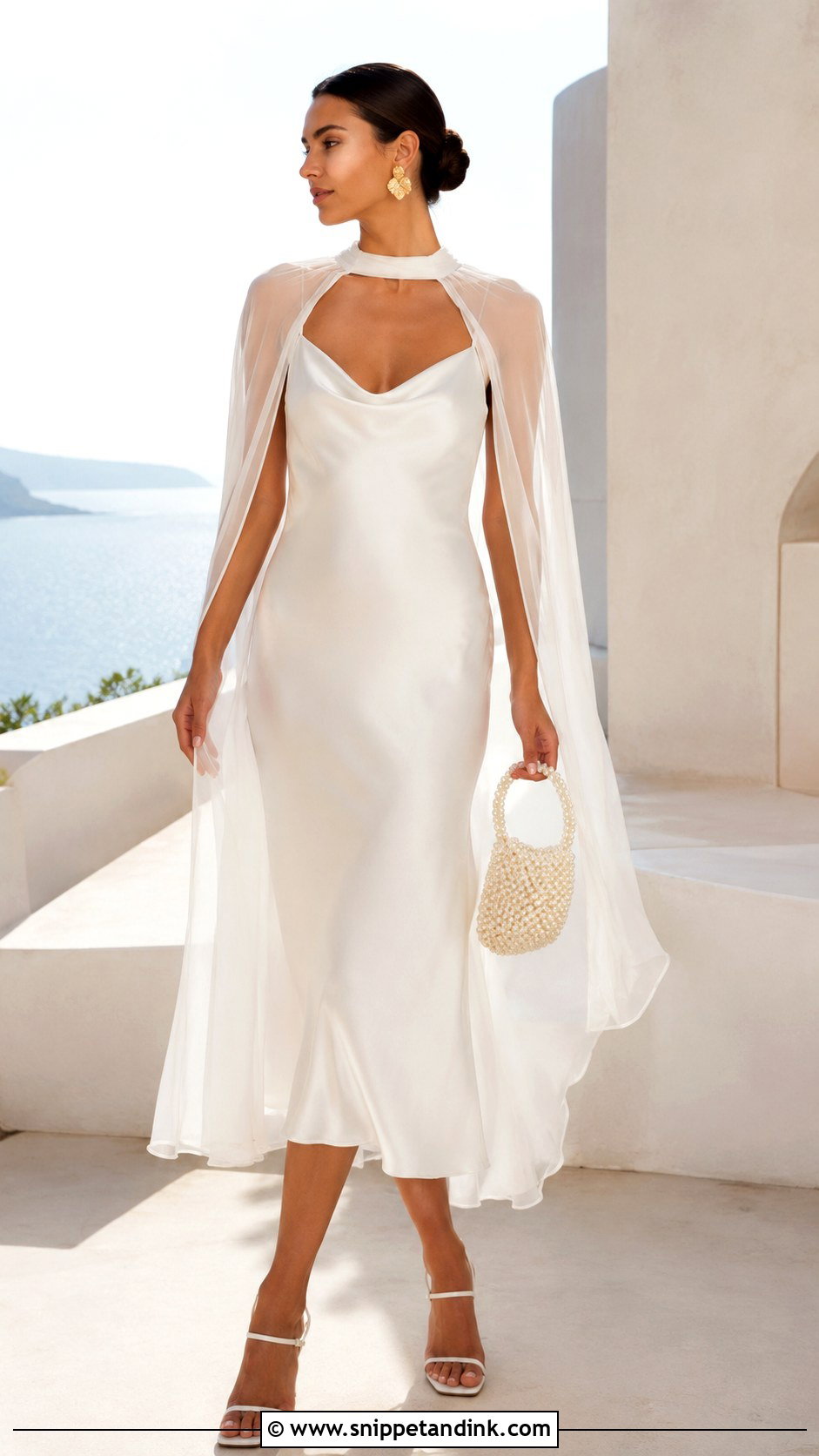
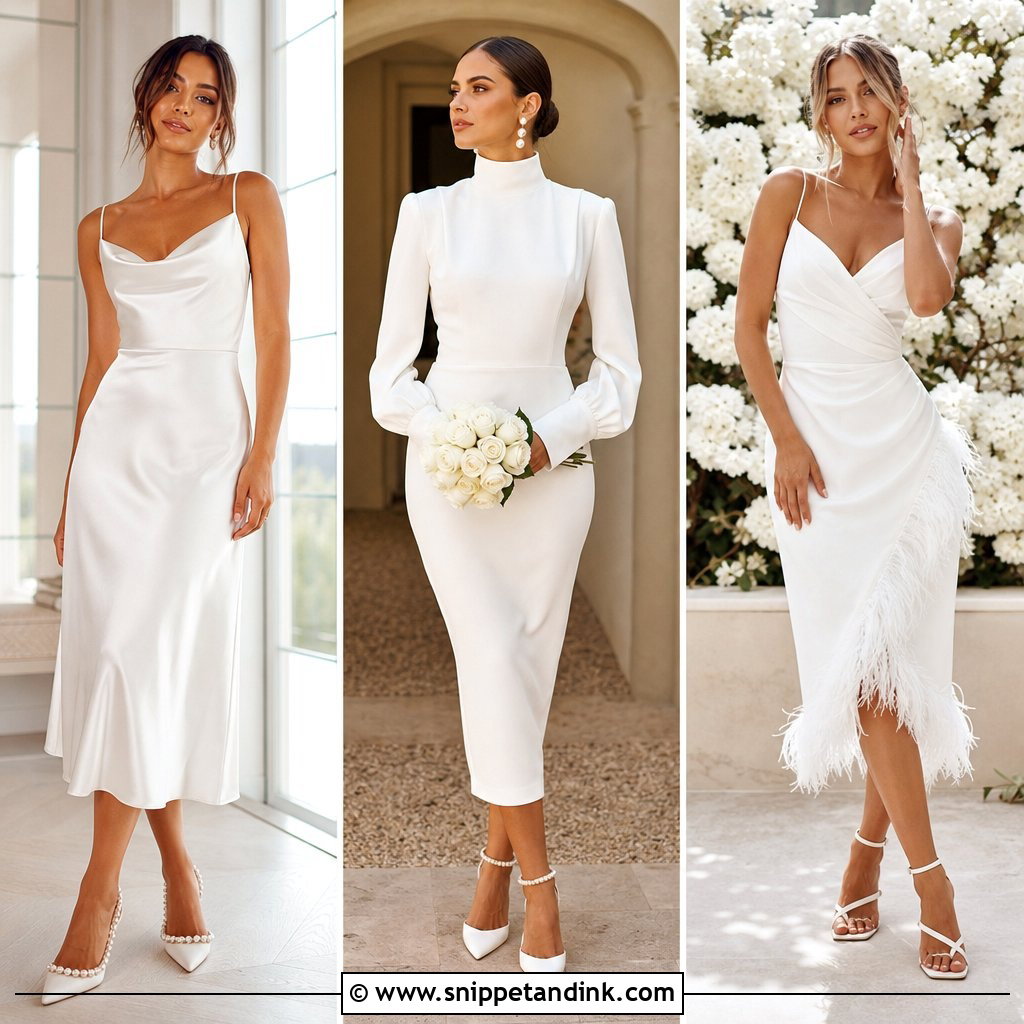
A midi gives you a shorter dress’s freedom with more coverage than a mini. Choose a bias-cut silhouette that skims the body, or a fitted waist and gently flared skirt if you want definition. A cowl, scoop or straight neck keeps it simple. Slim strappy heels, sculptural earrings and a compact pearl bag, plus a sheer veil or light cape for the ceremony that comes off later. Smooth waves and natural makeup suit the fluid fabric. The catch with satin midis is that they crease across the lap after a car ride, so steam at the venue if you can, and wear smooth undergarments that don’t leave lines. Destination ceremonies and small restaurant weddings suit it.
8. Blazer Short Wedding Dress
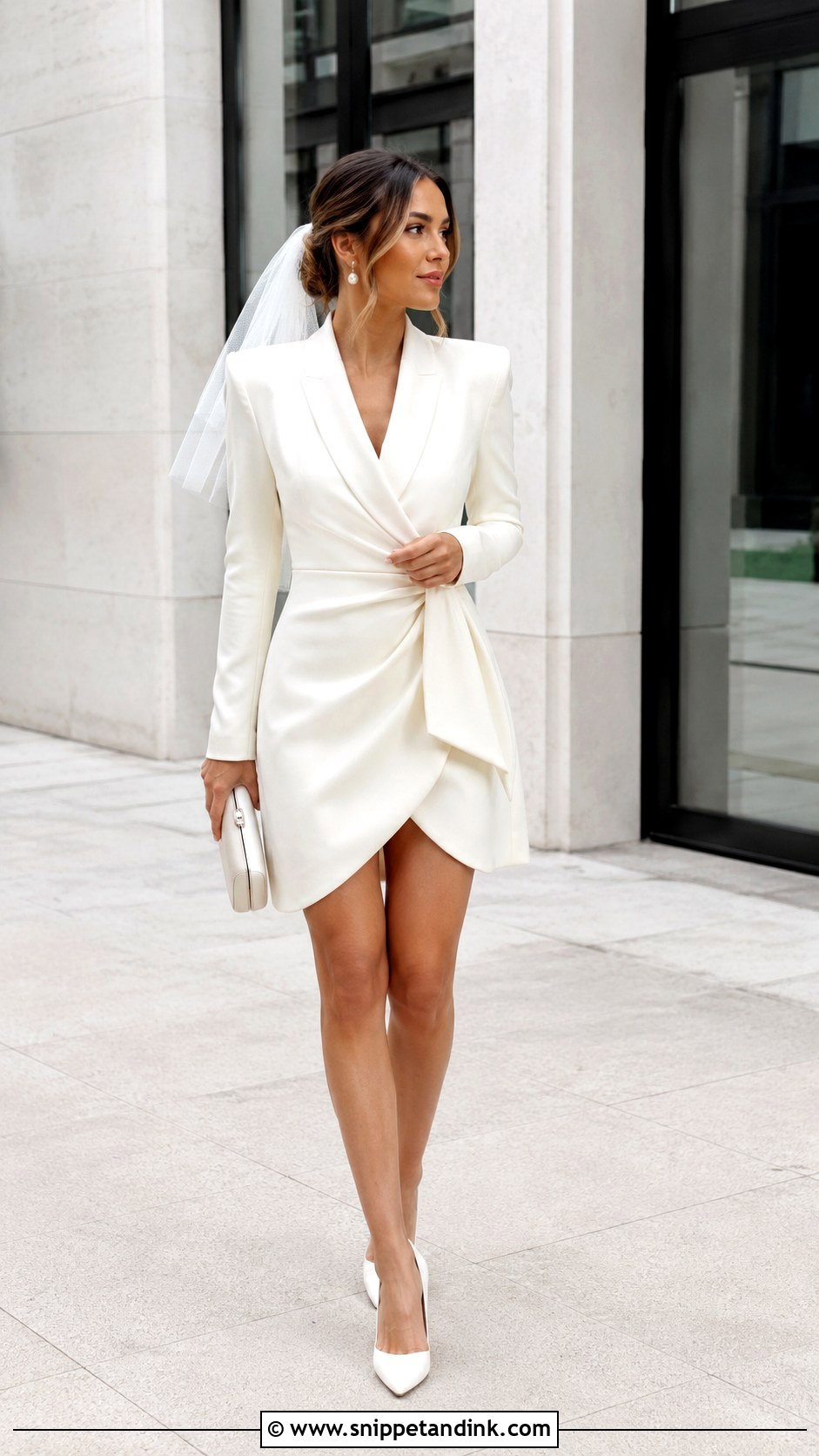
A blazer dress brings real tailoring to a wedding, and tailoring only works if the shoulders fit. That’s the one thing a tailor can’t easily change, so buy for the shoulders and alter the rest. A double-breasted or wrap front with a defined waist and enough length to move is right, in ivory crepe or smooth suiting; thin unlined fabric looks cheap in photos. Pointed pumps, a sleek clutch and simple gold or pearl jewelry complete it. A short veil softens the sharp lines, and a wide headband suits a less traditional ceremony. If the neckline feels open, wear a camisole or a discreet insert, and check that the buttons lie flat when you sit. City hall, galleries and civil ceremonies suit it.
9. Bow Back Short Wedding Dress
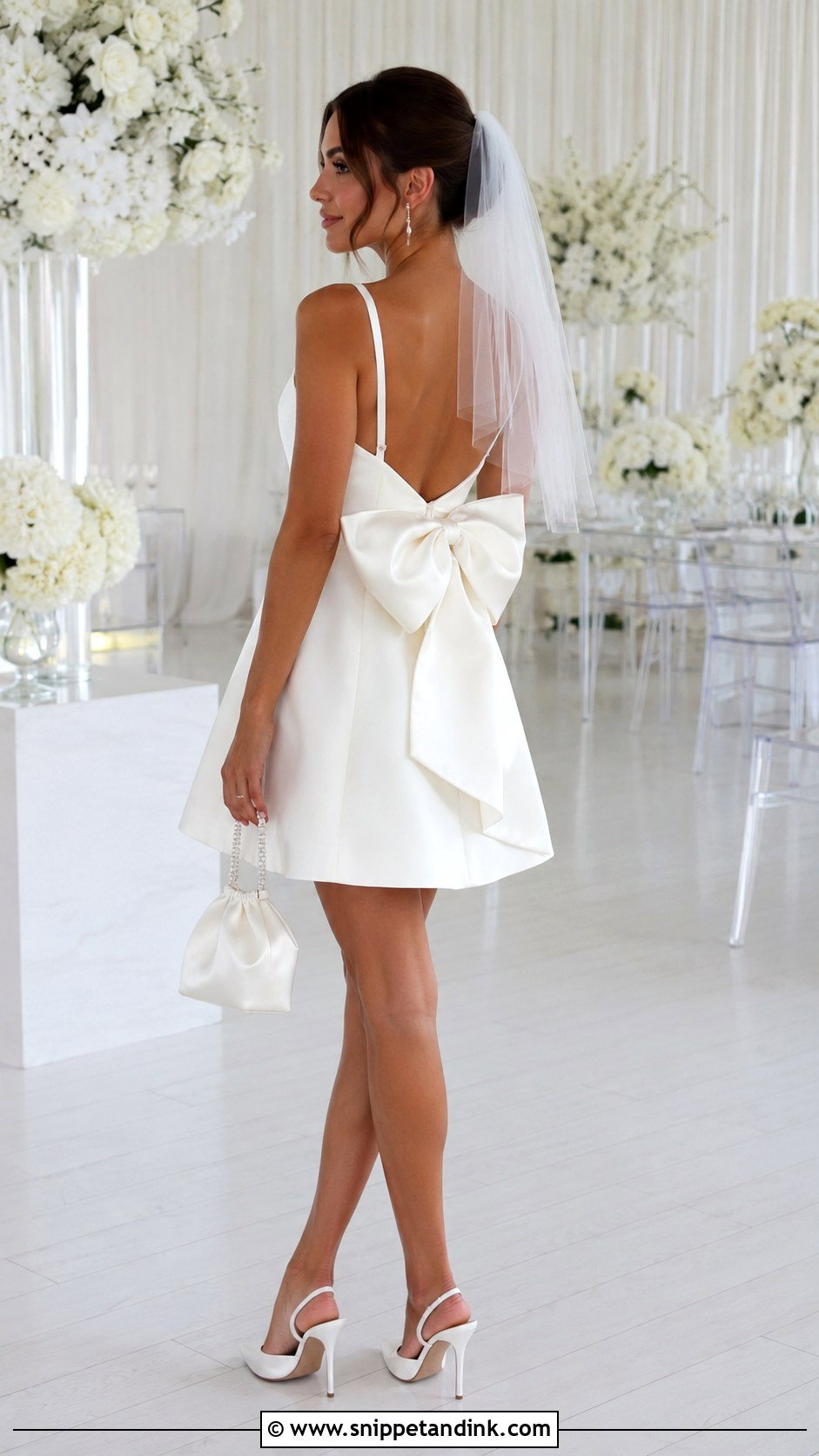
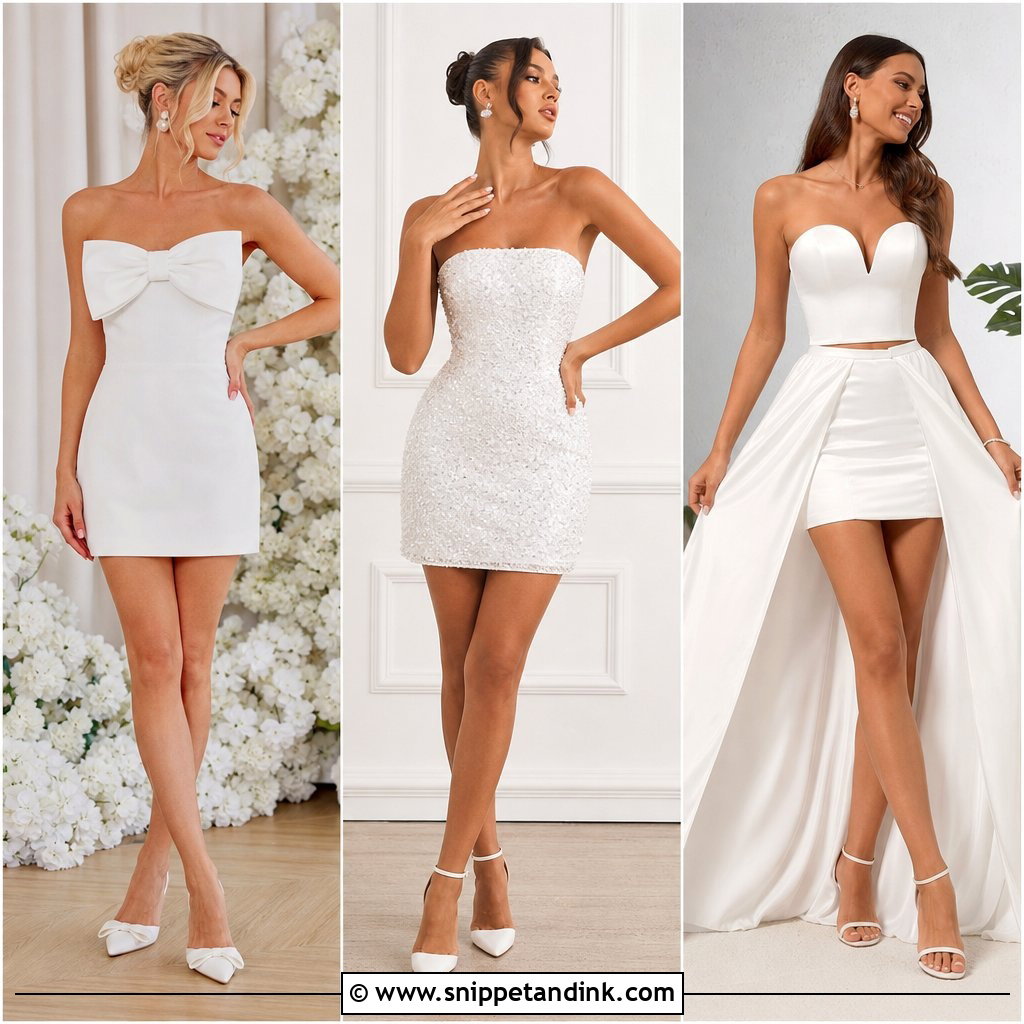
A bow decides your hairstyle: shoulder-level bows need an updo to stay visible, while waist bows work with a low bun. Look for a fitted mini or knee-length A-line with a structured bow at the waist, shoulders or lower back and a fairly clean front so the detail doesn’t overwhelm. Slingback heels, delicate earrings and a small satin bag suit it, and the veil should sit above the bow so it doesn’t crush it. Check that the bow is firmly stitched, evenly shaped and made of fabric stiff enough to keep its form after an evening of leaning back in chairs. It gives the walk back up the aisle a real focal point.
10. Feather Trim Short Wedding Dress
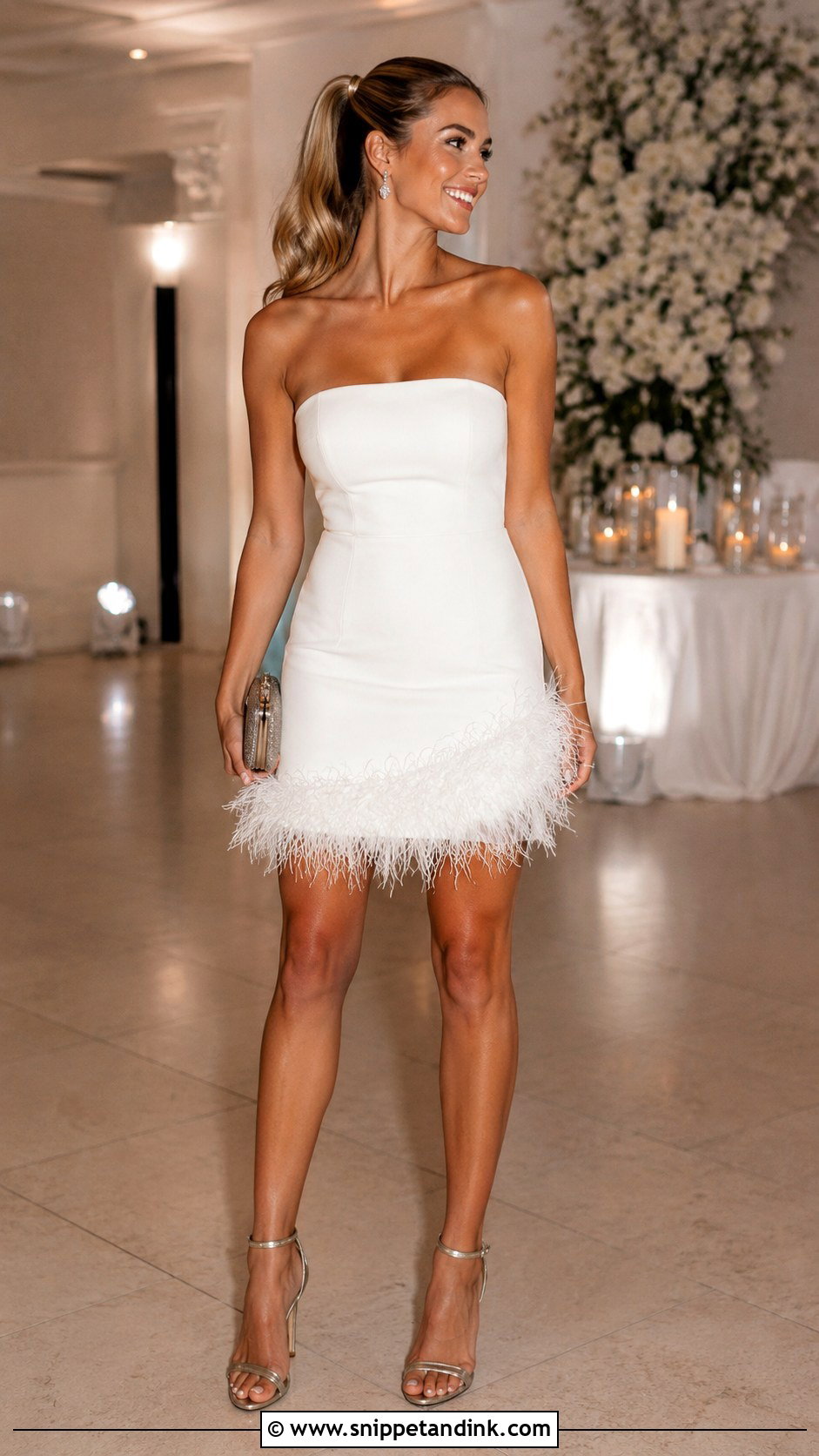
Feather trim belongs on the dance floor, so I usually suggest it for a reception change or after-party dress. Keep the feathers to the hem, cuffs or neckline of a clean mini rather than covering the whole thing, and choose a structured bodice so it doesn’t look like costume. Metallic or ivory heels, sparkling studs and a compact hard-case clutch suit it. Skip an elaborate veil and use a small hair bow or a polished ponytail instead. Feathers shed, so I give the dress a gentle shake in the shop and check how the trim is attached. The hem also needs to let the trim move freely without brushing your knees as you walk.
11. Beaded Short Wedding Dress
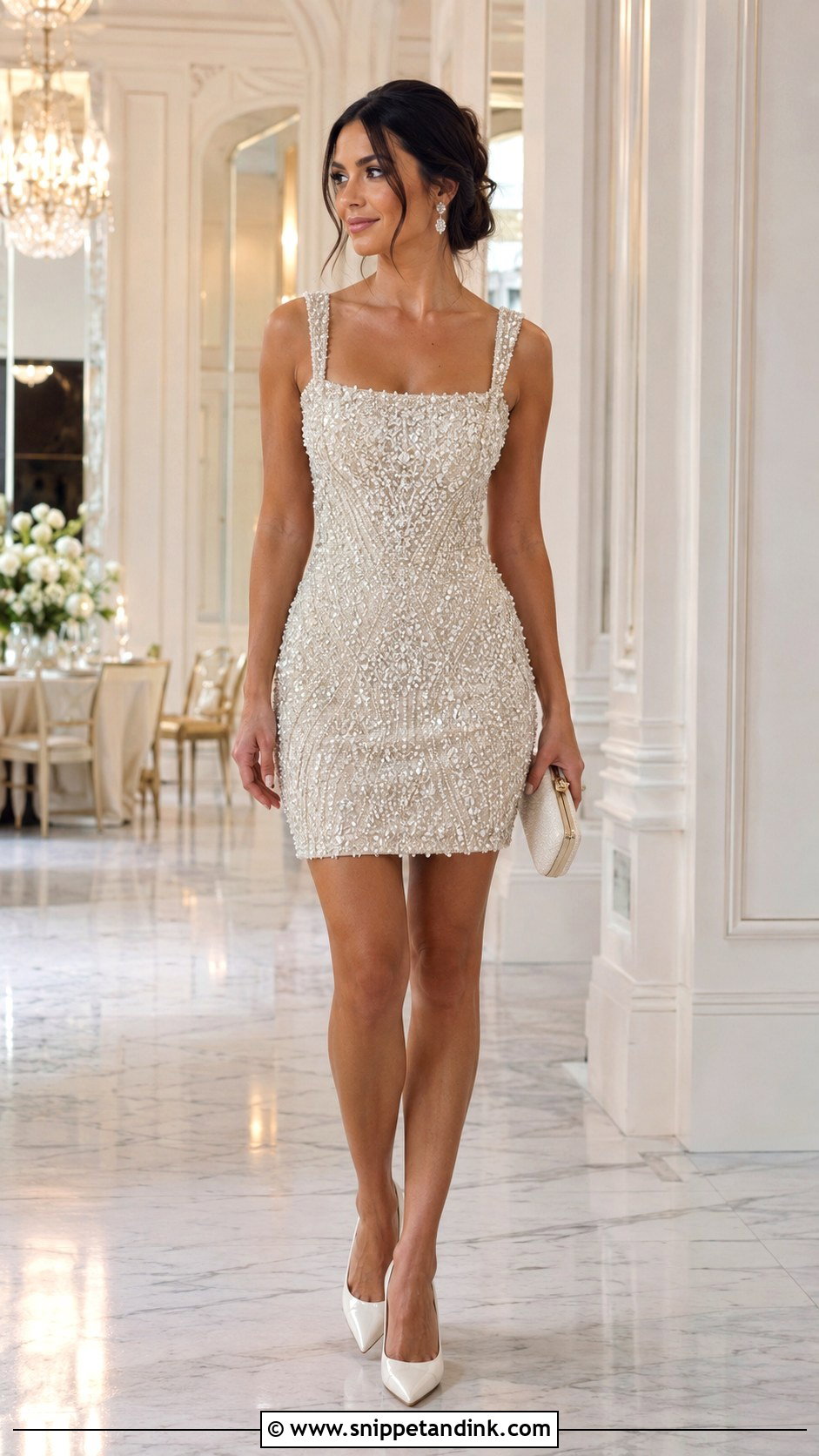
Beading turns a mini into an evening dress at once, and the weight is the thing I test first: a heavily beaded mini pulls on the shoulders and drags when you sit. Choose tonal pearls, crystals, sequins or geometric beadwork on a comfortable ivory lining, in a simple shift, column or fitted shape. Plain satin pumps, small crystal earrings and a minimal clutch keep it balanced; skip a necklace if the neckline is embellished. A sleek bun or soft ponytail finishes it. Check the beadwork closely near the zip, armholes and hem, where it wears first. Evening receptions, ballroom after-parties and indoor ceremonies suit it.
12. Corset Tulle Short Wedding Dress
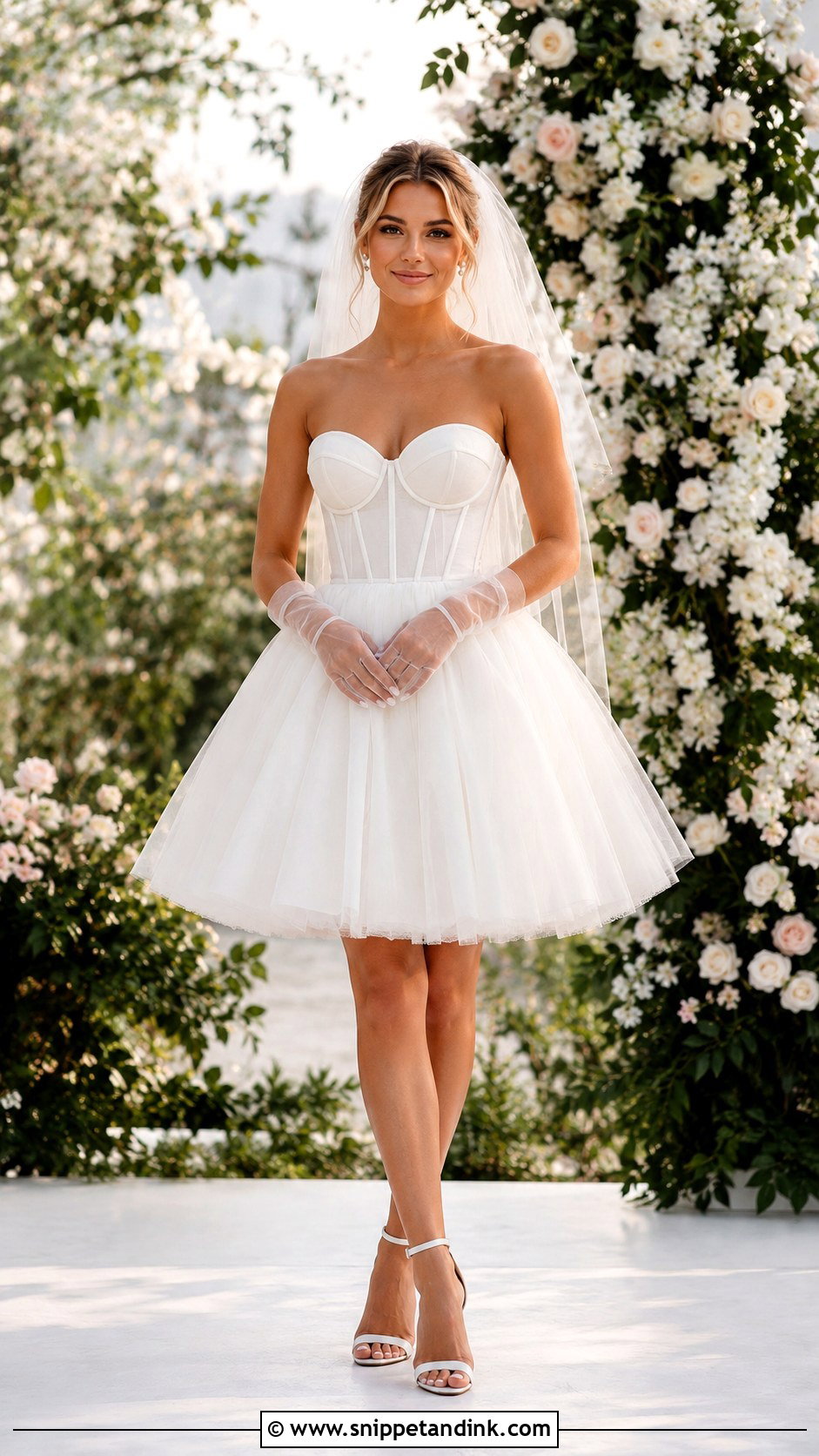
A corset over short tulle has a ballerina feel, and it’s comfortable only if the boning is right: supportive, with secure cups and a waistline that doesn’t dig in. Pick soft layers of ivory tulle in a mini, knee or tea length. Satin ankle-strap heels, pearl earrings and a structured clutch go with it, plus a simple veil echoing the skirt or sheer gloves for ceremony detail. A relaxed updo keeps the neckline open. Sit, walk and lift your arms at the fitting, because you need to breathe, eat and dance in it. Gardens and receptions suit it.
13. High Low Short Wedding Dress
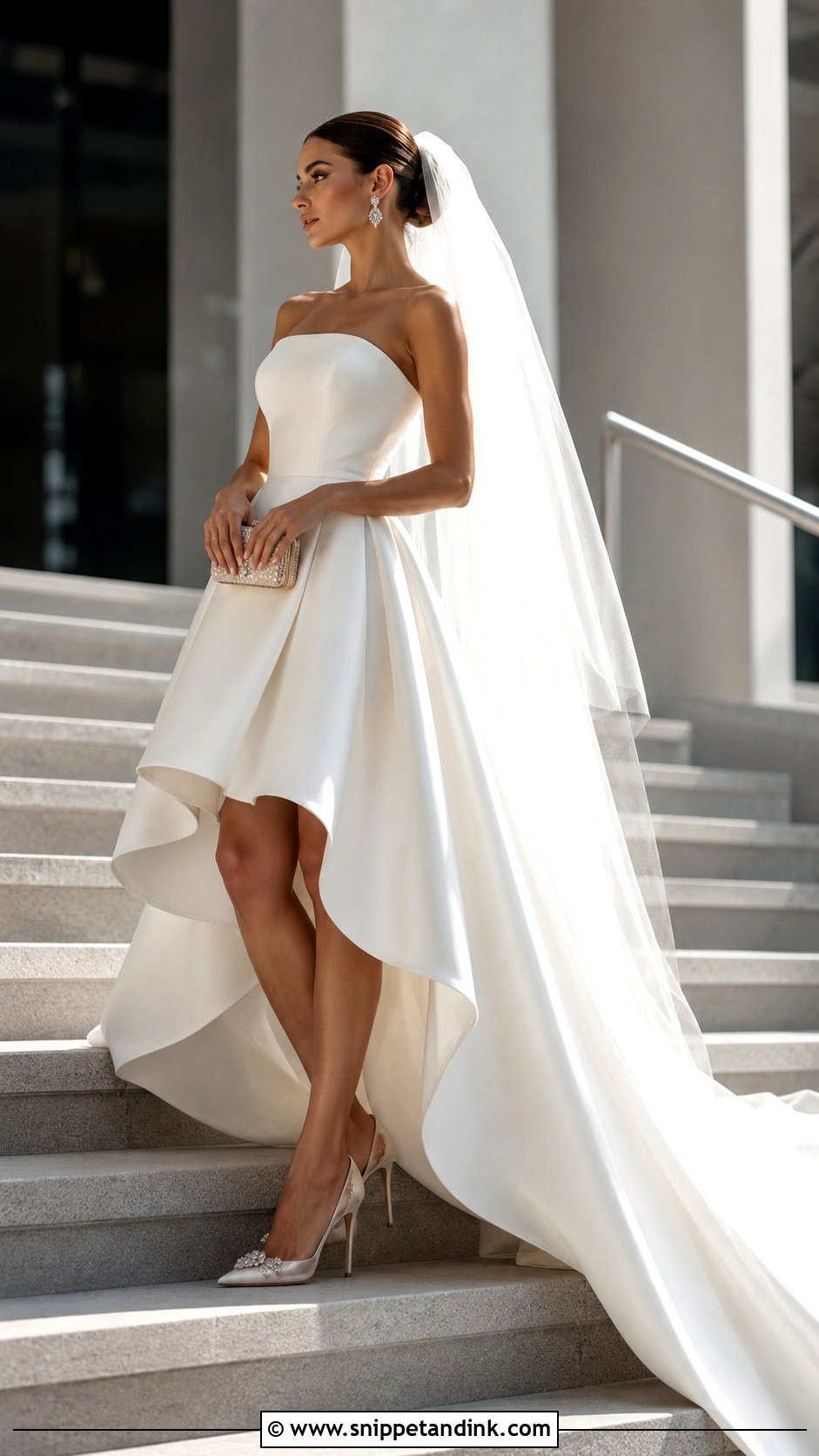
High-low hems give you an aisle moment without a full-length skirt all day. The front might stop above the knee or at midi, while the back runs into a soft train, in crisp satin for an architectural line or organza for lightness. The front shows your shoes, so wear a pair worth looking at: pointed pumps, embellished heels or elegant ankle straps. Add a simple veil, refined earrings and a small clutch. Test the back length on the actual floor you’ll walk on if you can, since a train behaves differently on stone, grass and carpet. A bustle loop or hidden wrist ribbon makes it easier to manage for photos and dancing.
14. Short Wedding Dress With Detachable Overskirt
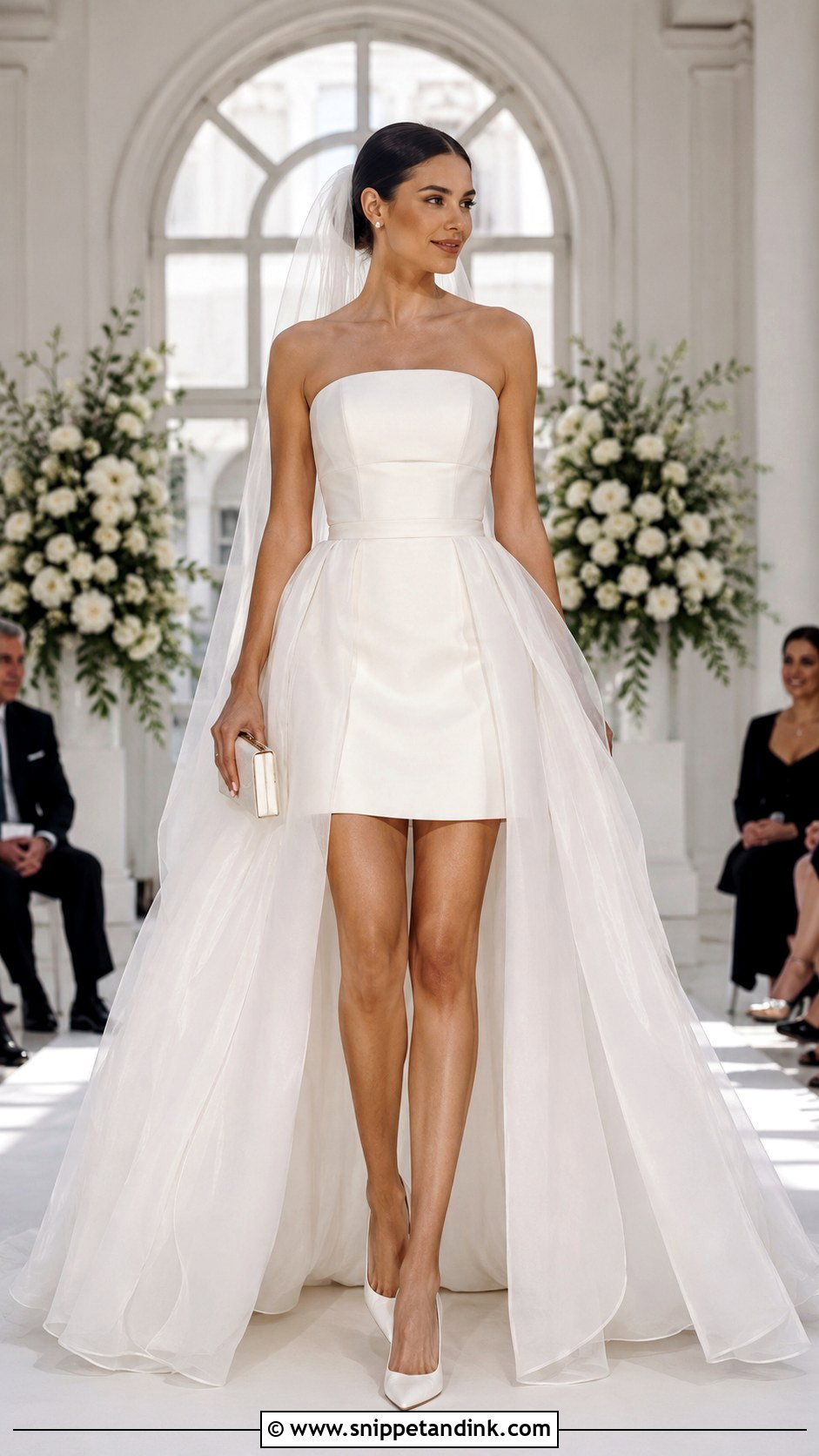
An overskirt gives you two looks from one dress, which means the mini underneath has to look finished on its own. Start with a structured mini or fitted knee-length base and add a sheer tulle, organza or satin overskirt for the ceremony. Choose shoes that suit both versions, such as pointed pumps or slim ankle-strap sandals, with pearl earrings, a clean clutch and a veil that doesn’t pile on more volume. The fastening should sit flat at the waist, and you should be able to take it off without help. Good tailoring keeps the waist defined afterward, with no loops or bulky hooks showing.
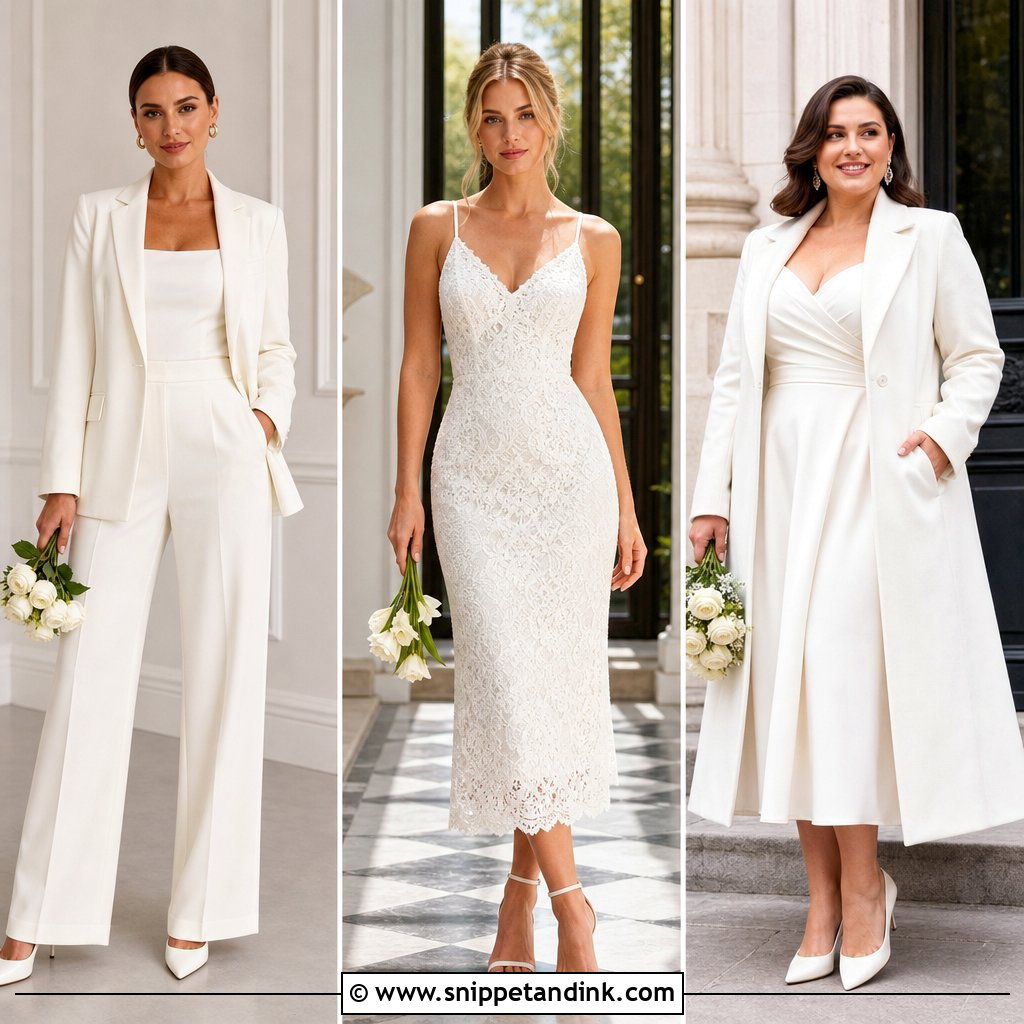
15. Halter Neck Short Wedding Dress
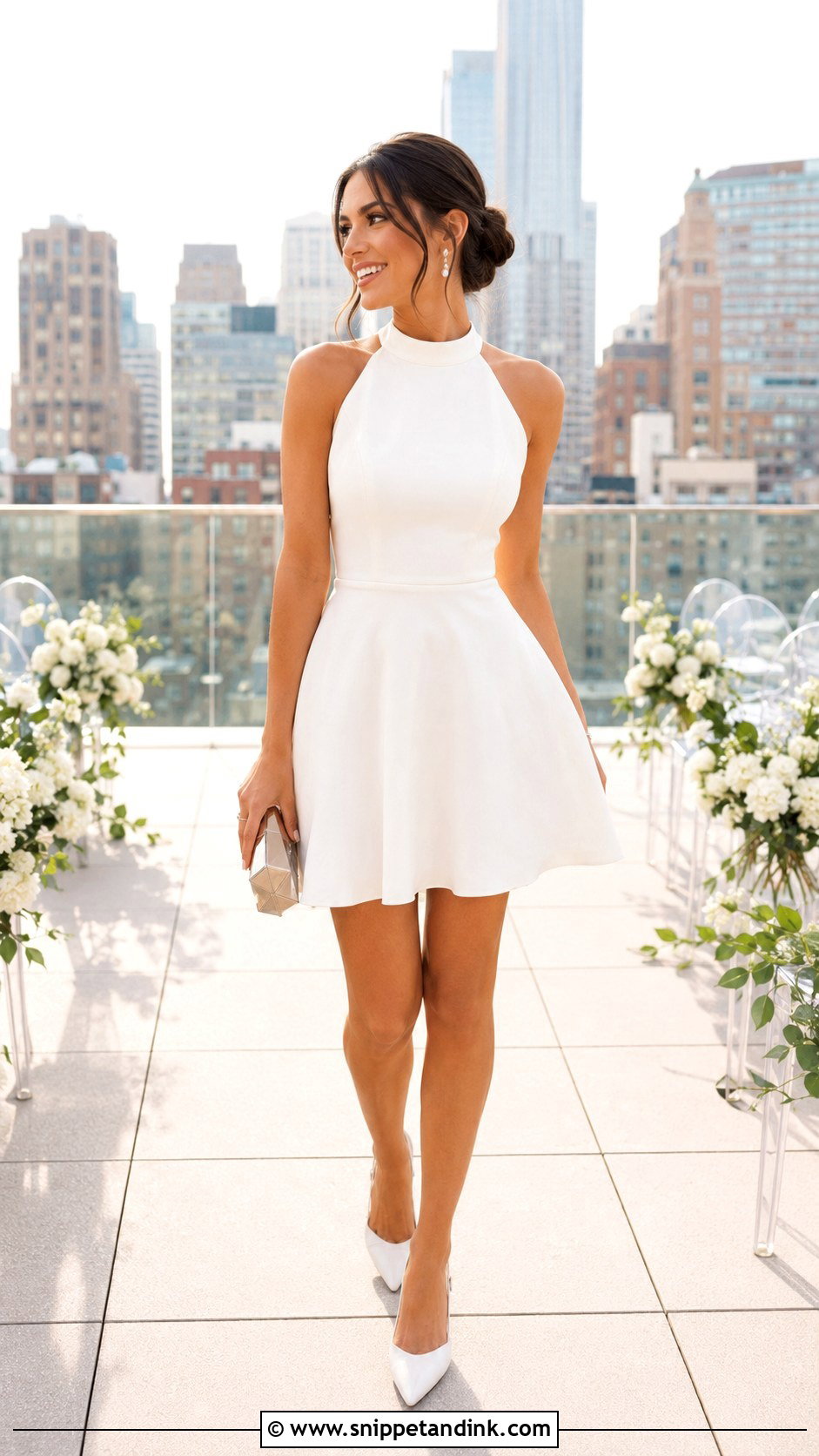
Halters frame the shoulders and suit warm weather, since they leave the arms and upper back bare. Choose a mini or knee-length design with a fitted waist and a narrow column or soft A-line skirt, in satin, crepe or a structured cotton blend depending on how formal the venue is. Drop earrings, pointed slingbacks and a small geometric clutch work well; leave off the necklace, because the neckline already draws the eye up. A low bun or high ponytail keeps the halter shape visible. Sit down in it before buying, as some halters pull at the neck when you’re seated, and make sure the built-in support keeps the front smooth. Rooftops and destination weddings suit it.
16. Puff Sleeve Short Wedding Dress
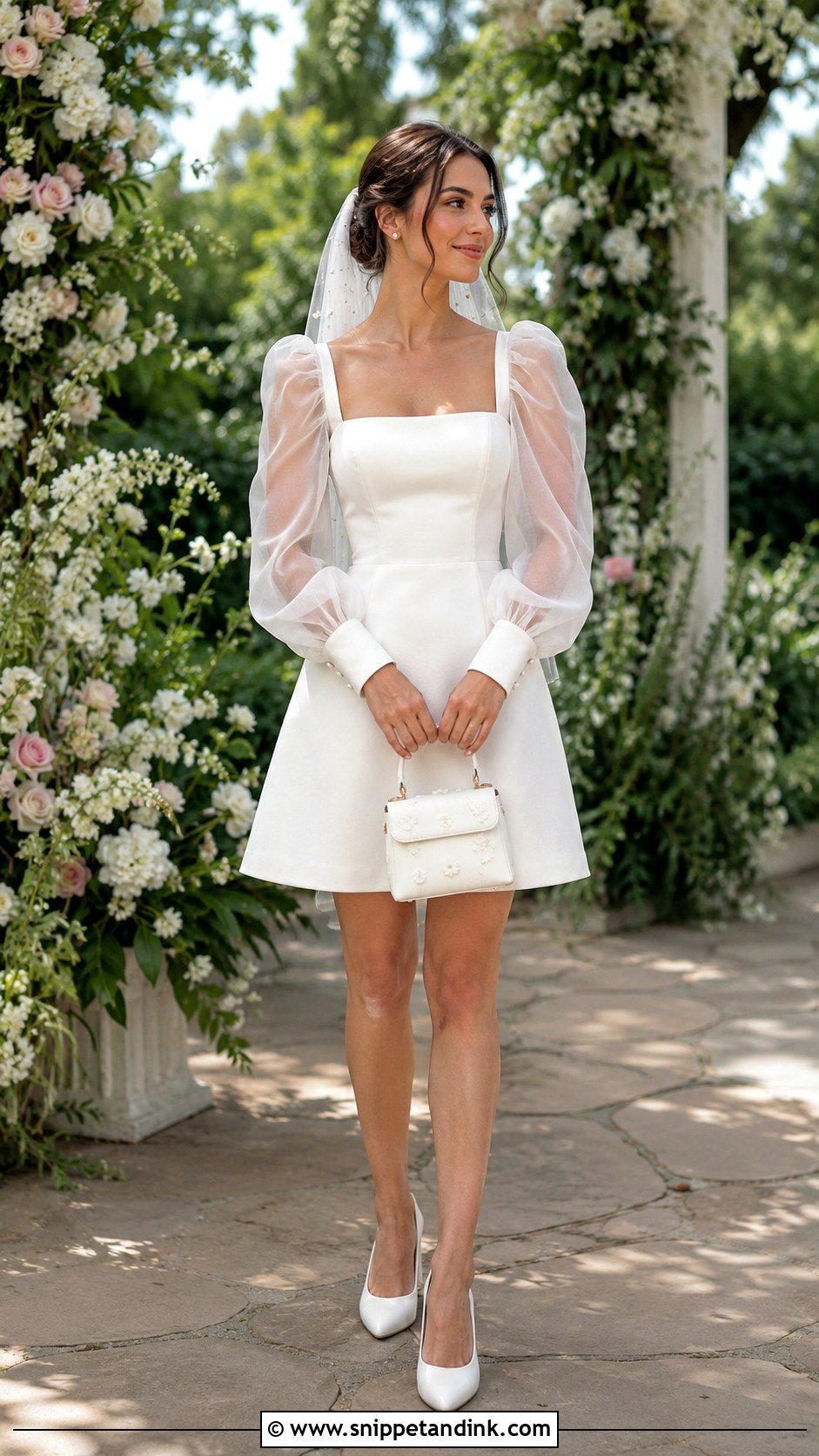
Puff sleeves add width at the shoulder, which balances a short hem nicely but can make a broad-shouldered frame look wider. Choose a mini or knee-length design with fitted cuffs and controlled volume; organza sleeves look light and sheer, satin sleeves bolder. Keep the bodice and skirt simple. Block-heel pumps, pearl studs, a compact top-handle bag and a short veil or hair ribbon complete it. Raise and lower your arms at the fitting, and check that the elastic at the cuff holds the sleeve without leaving marks. Gardens and daytime ceremonies suit it.
17. Pearl Embellished Short Wedding Dress
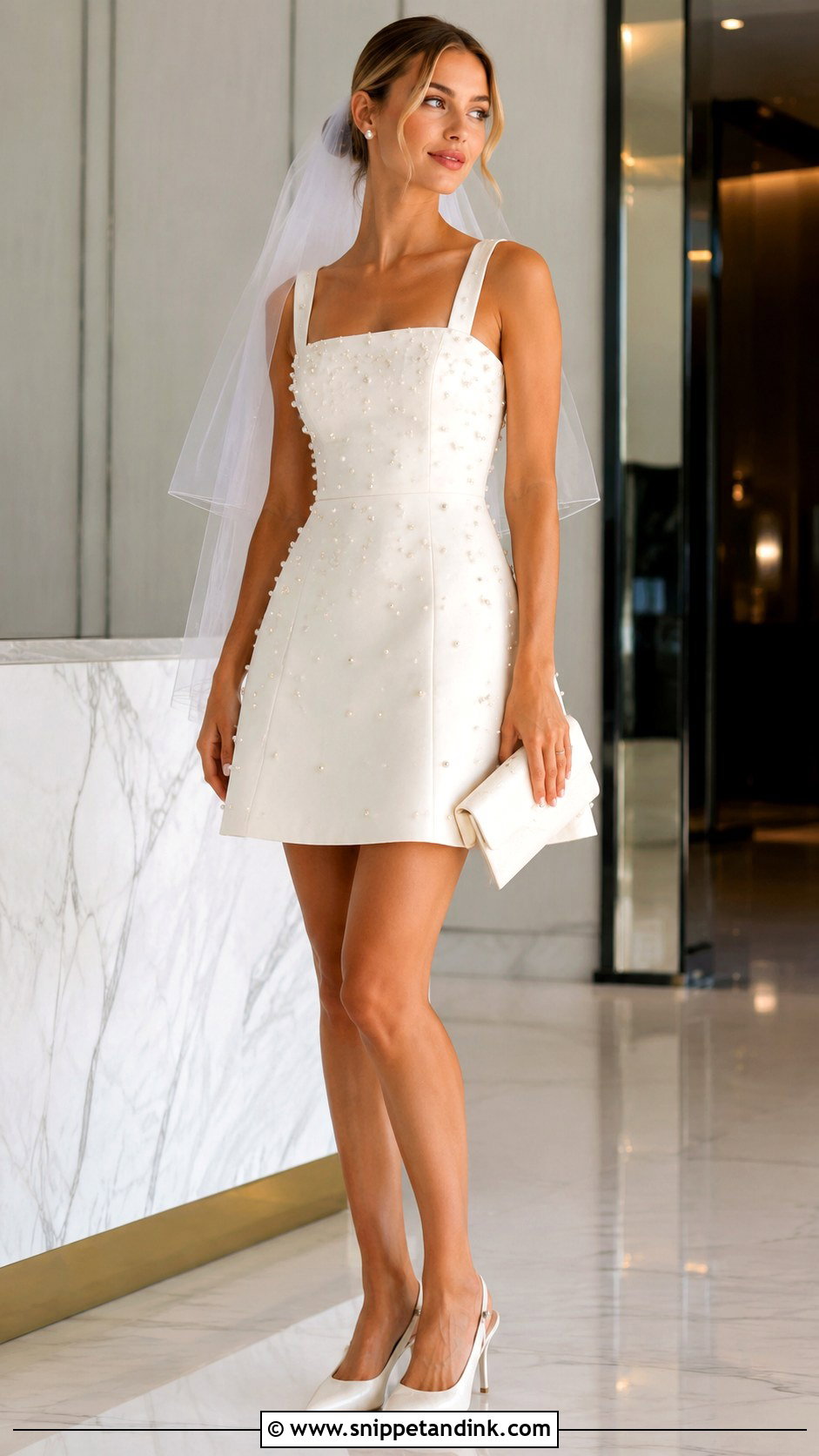
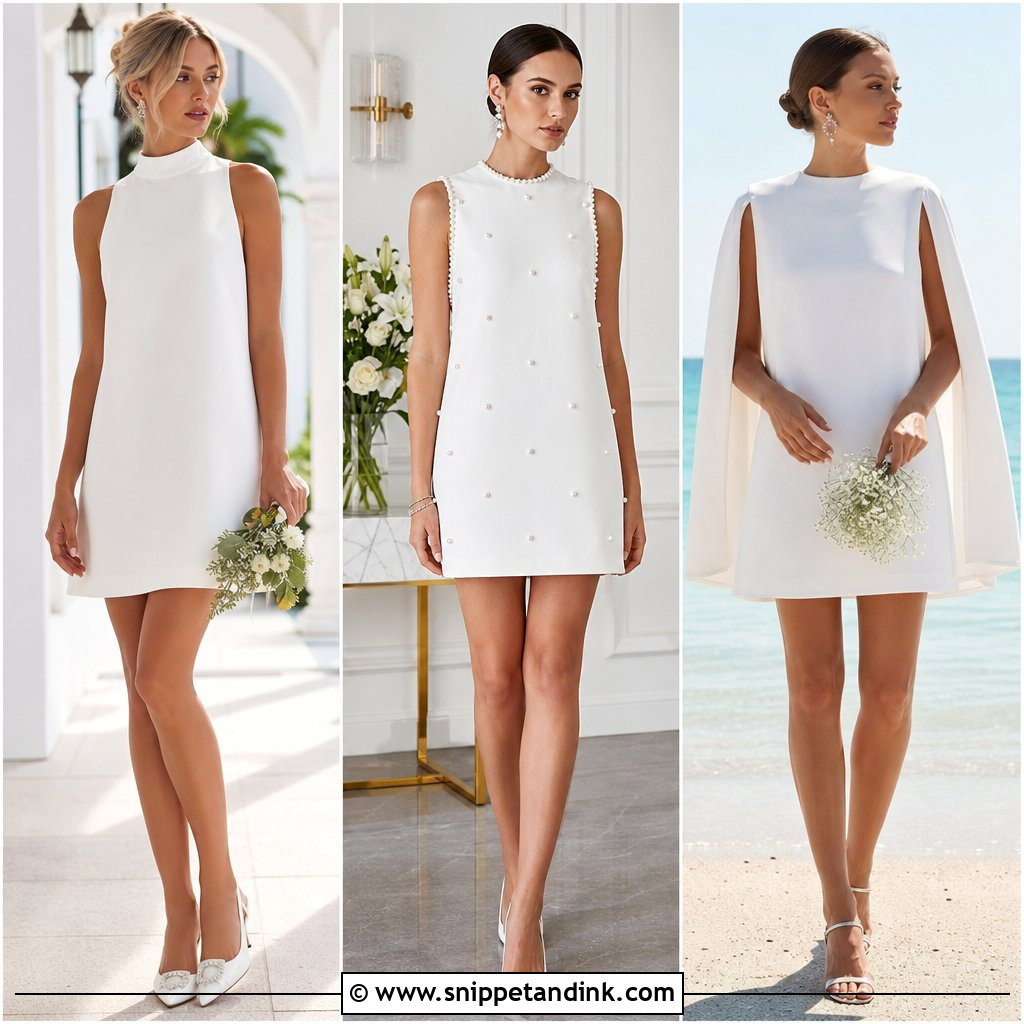
Scattered pearls make a minimal mini unmistakably bridal, but dense pearl coverage hides the shape and adds weight. Choose a fitted shift, A-line or structured sheath with pearls spaced so they catch the light softly. Satin slingbacks, plain pearl studs and a smooth ivory clutch suit it; skip a necklace if there are pearl straps or a detailed neckline. A plain tulle veil contrasts with the raised surface. Check that the pearls are sewn on, not glued, especially at the seat and underarms where friction pulls them loose, and that the lining is smooth so stitching doesn’t scratch. Courthouses, hotel venues and reception changes suit it.
18. Cape Sleeve Short Wedding Dress
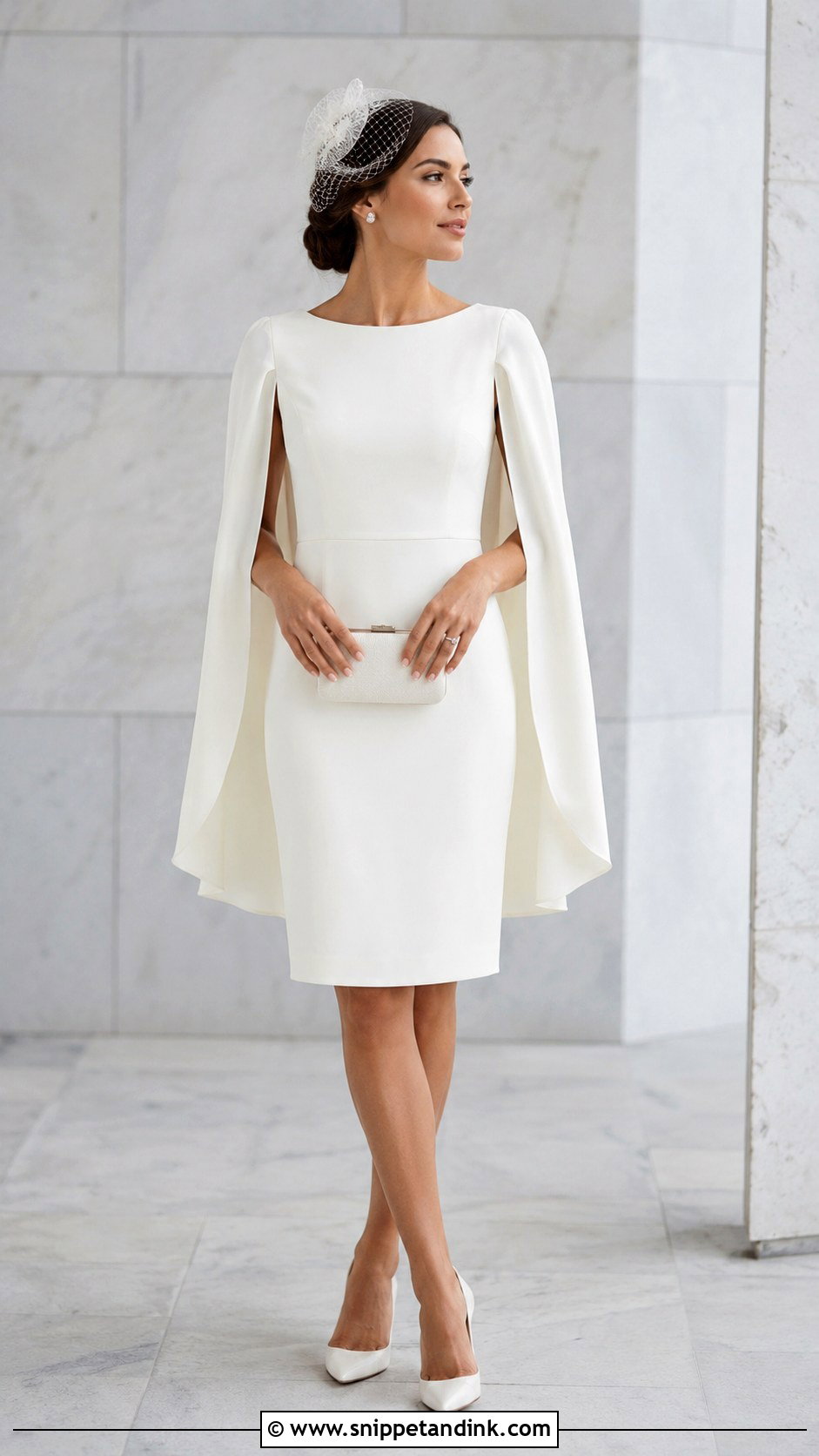
Cape sleeves cover the upper arm without the tightness of a fitted sleeve, which is why I suggest them to brides who feel self-conscious about their arms. Choose a mini or knee-length sheath with flowing panels attached at the shoulder, in chiffon for softness or crepe for a crisper line. Pointed pumps, a structured clutch and simple studs suit it; skip a long veil if it fights the cape, and use a small headpiece or short blusher. A sleek bun keeps the shoulder detail visible. It works for civil ceremonies and cooler indoor venues. The panels shouldn’t reach past your hands or drag across tables, and the arm openings must let you move naturally.
19. Two Piece Short Wedding Dress
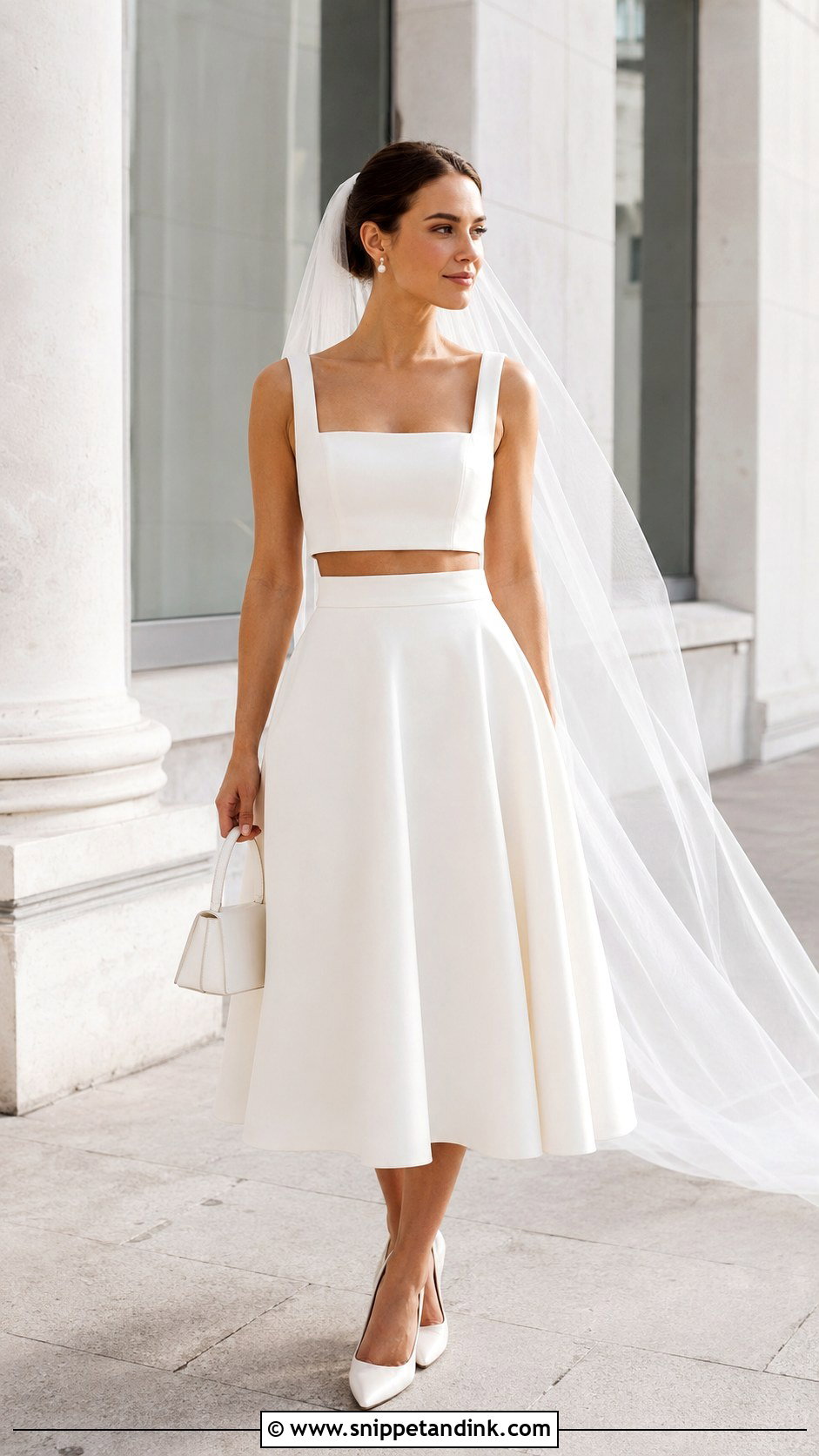
Separates let you rewear each piece later, but the gap between them is where they fail: tops ride up when you raise your arms. Pair a structured corset, square-neck top or sleeved crop with a matching high-waisted mini or tea-length skirt in the same fabric and shade. Show only a narrow strip of skin, or choose pieces that meet at the waist. Pointed heels, small earrings and a structured bridal bag go with it; a long veil makes it ceremonial and a bow headband keeps it relaxed. Bend and lift your arms at the fitting to check nothing shifts. Courthouses and destination weddings suit it.
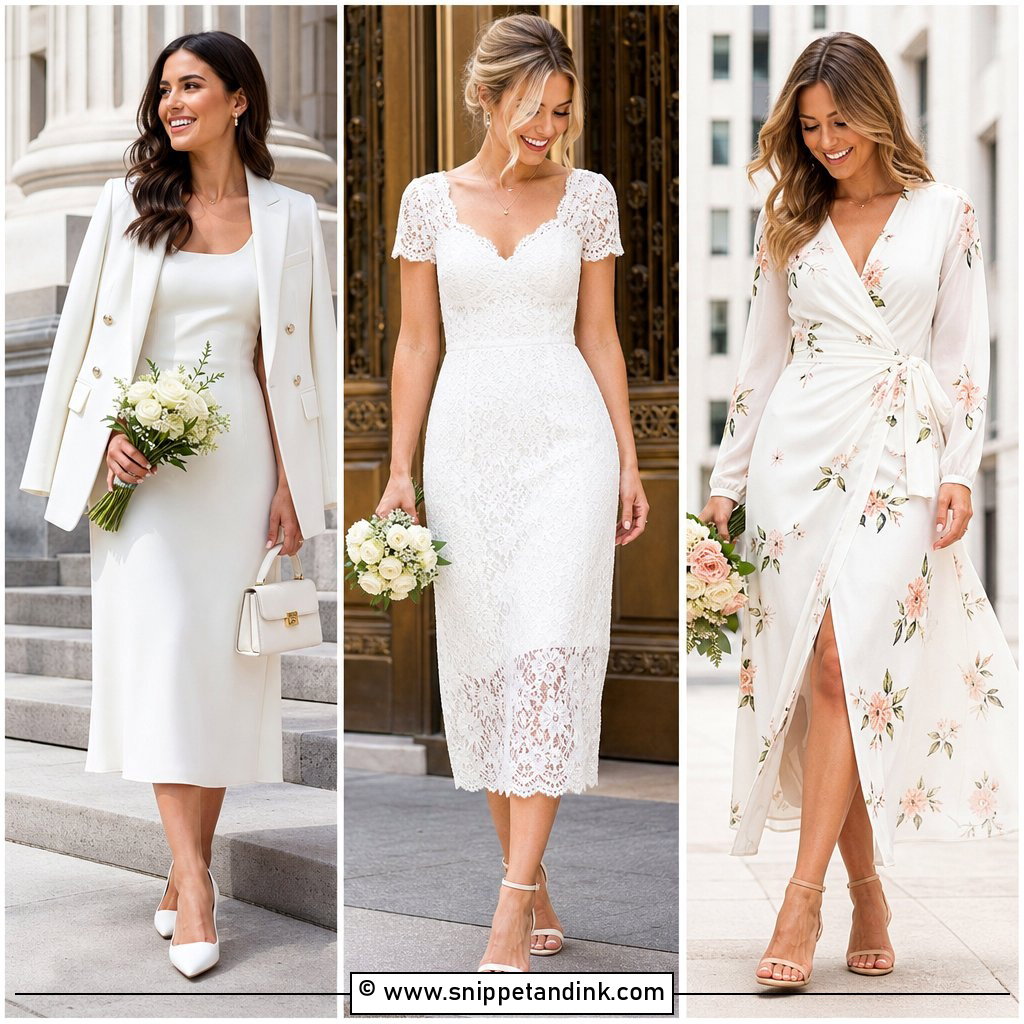
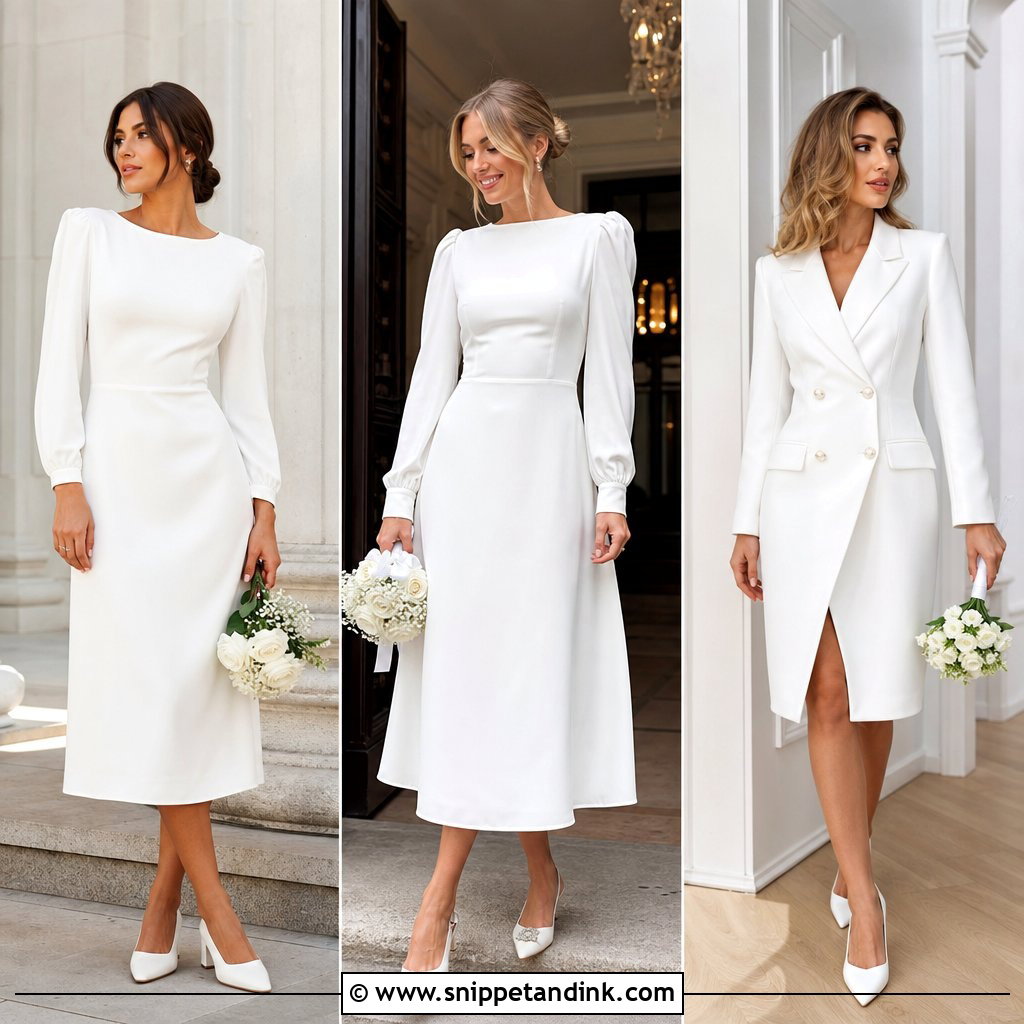
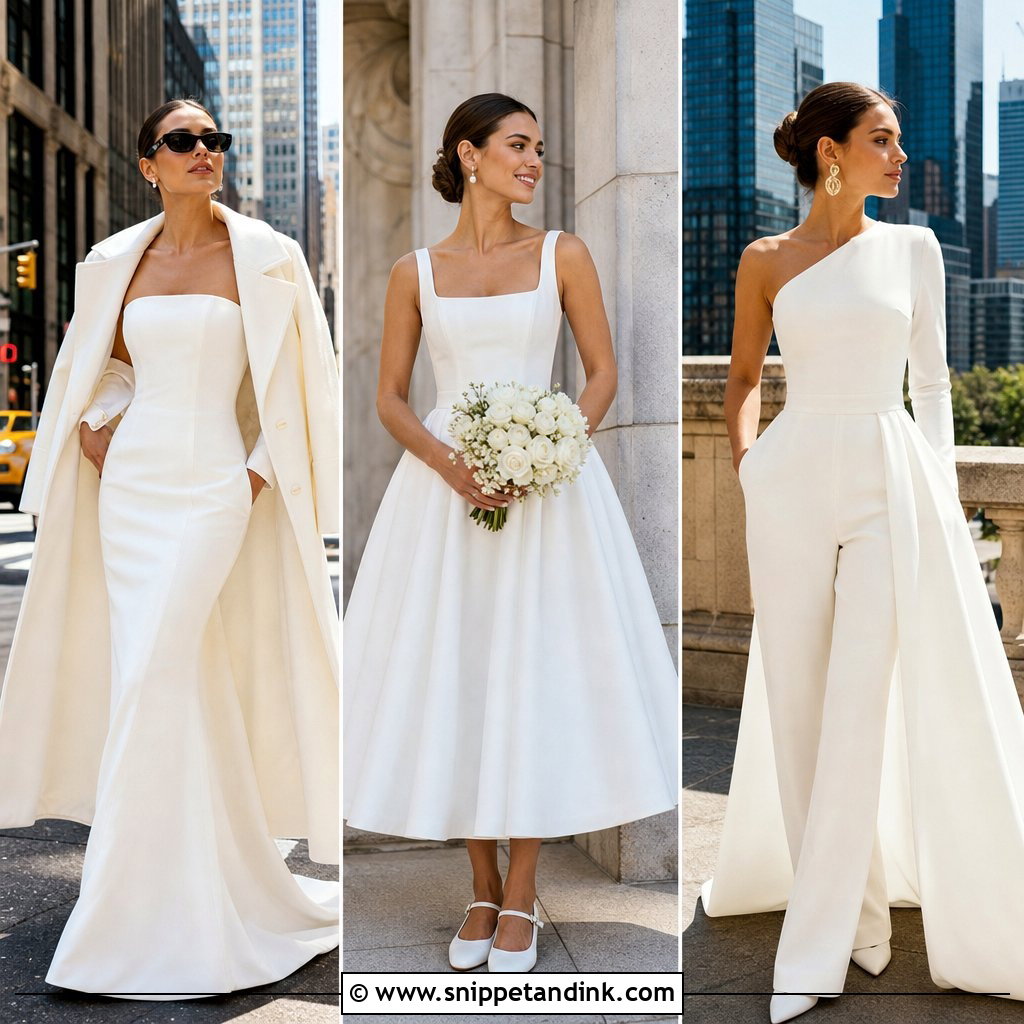
20. Wrap Short Wedding Dress
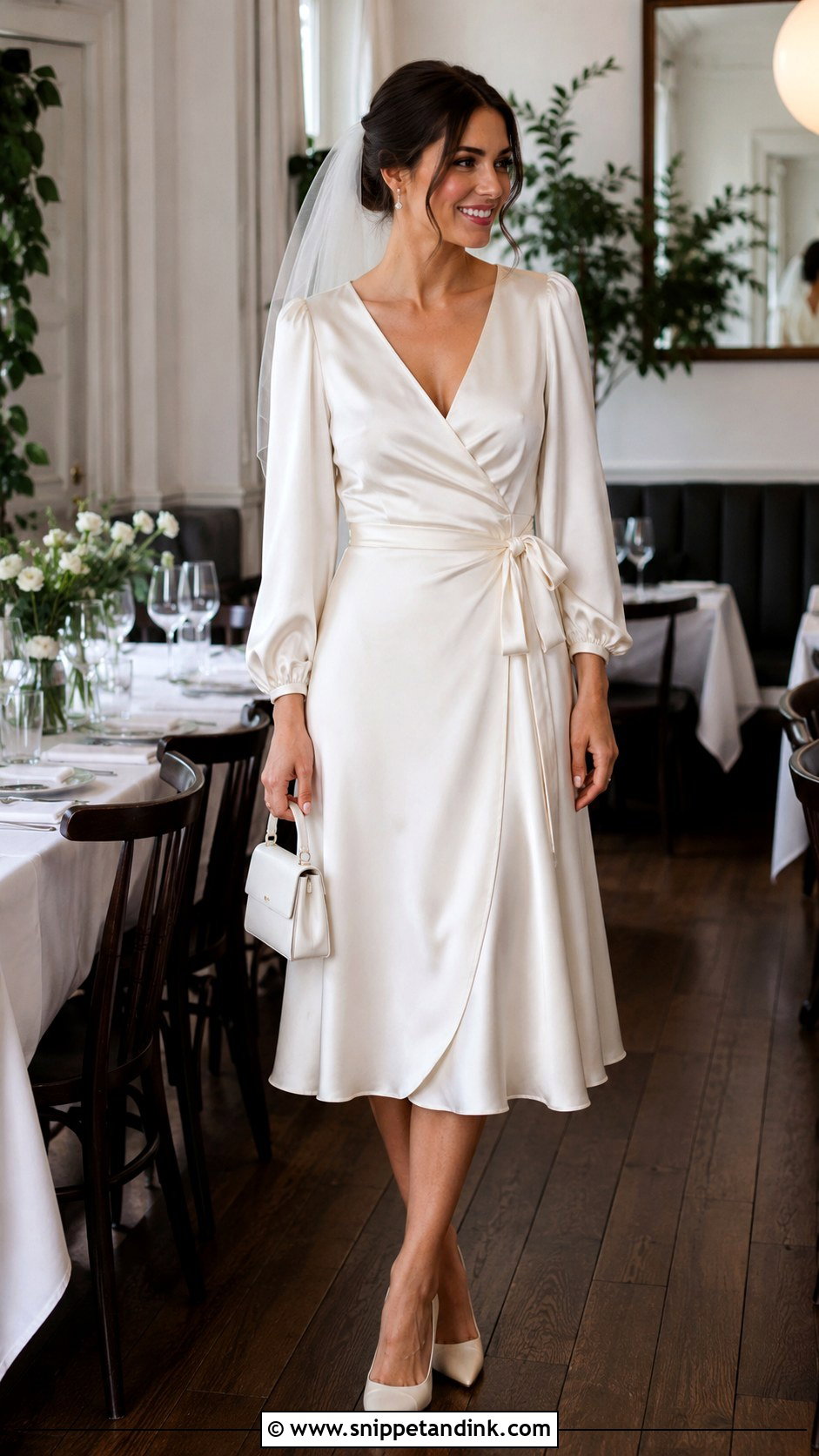
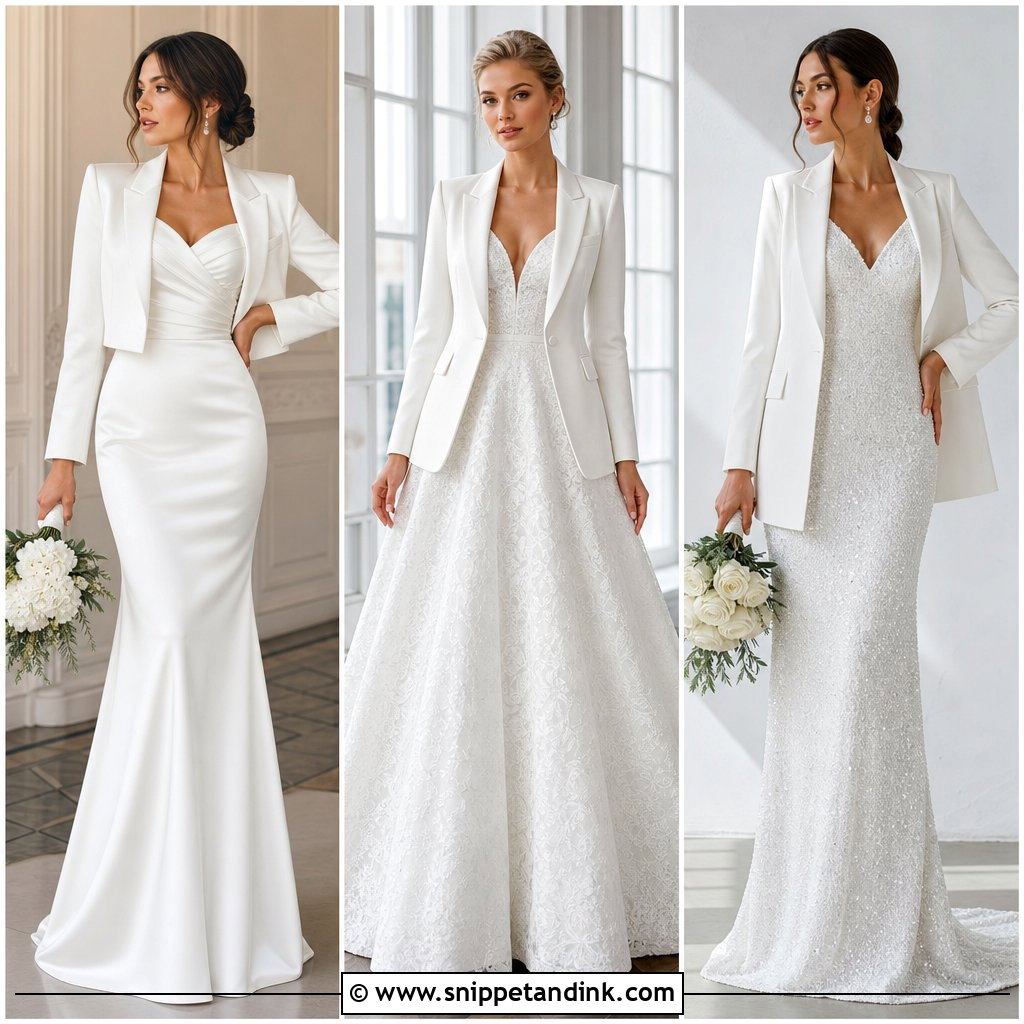
A wrap adjusts at the waist, which helps if you’re unsure of your size months ahead, but its front can shift. Choose a knee-length or midi wrap in satin, crepe or soft jacquard with enough body to hold, a gentle V-neck and a softly flared skirt. Pointed kitten heels, delicate drop earrings and a small top-handle bag suit it, with a fingertip veil for the ceremony or a polished headband for a civil wedding. A hidden snap at the neckline and a few stitches at the skirt overlap stop it opening. Make sure the tie lies flat when you sit and dance. Intimate ceremonies and restaurant receptions suit it.
Heels, Hosiery and Bare Legs on City Pavement
A short dress puts your legs and shoes in every photo, and a city wedding usually means more walking than brides plan for: car to city hall, across the street for portraits, down restaurant or subway stairs.
Shoes
Thin stiletto heels catch in pavement grates, cobblestone joints and old wooden floors, while a block or kitten heel copes far better. New soles slip on polished stone, so scuff them lightly or add grip pads, and wear the shoes around the house for a couple of weeks to soften them. Put blister plasters on before you leave, not once it already hurts.
Legs and tights
Bare legs look most natural in warm months, but anything uneven shows: patchy self-tan, dry shins, fresh razor nicks. Shave or wax a day or two ahead rather than that morning, and moisturize well. If you use self-tan, apply it several days before and check on a white cloth that it no longer rubs off onto ivory fabric.
In cold weather, sheer ivory or skin-tone tights look bridal, while opaque or patterned ones pull the outfit toward office wear. Pack a spare pair; a ladder halfway through the day happens often, and a backup costs almost nothing.
Make the Short Hem Look Like a Decision
A shorter hemline can look polished, romantic and fully bridal. Your venue, your comfort and your appetite for detail decide the rest: clean satin and tailored blazers stay simple, while lace, pearls, feathers, bows and beading lean decorative. Tea lengths bring classic movement, and minis make room for statement shoes. Whatever shape you pick, prioritize secure construction, comfortable lining and precise alterations, and let the accessories support the dress rather than crowd it. Then walk, sit and dance in the complete look before the day, so nothing surprises you between the ceremony and the last song.
You'll Like These Ideas:



Leave a Reply