
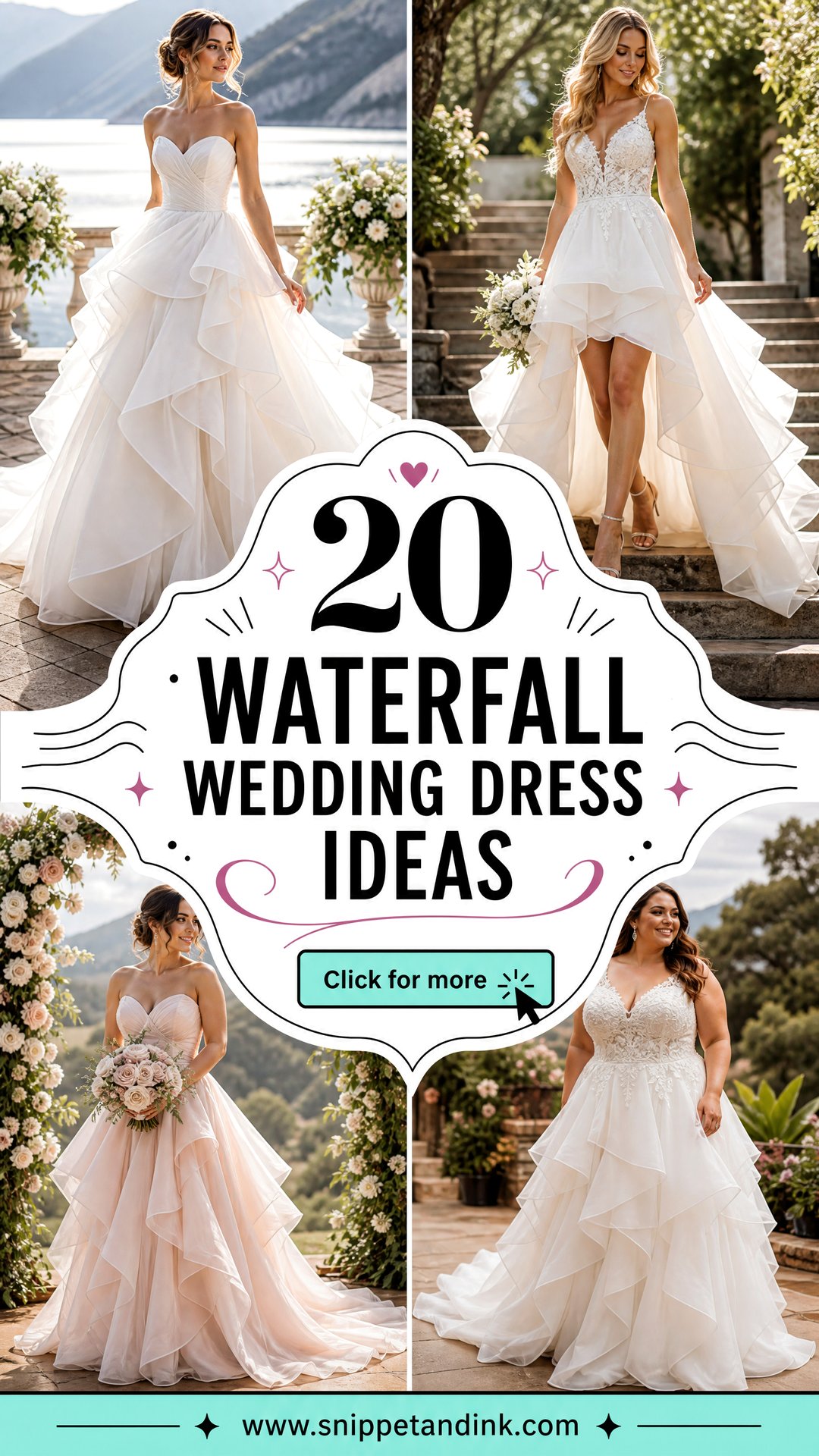
A waterfall skirt is built from layers that tumble down the gown, sometimes airy and soft, sometimes sharply sculpted, sometimes a mass of ruffles running into the train. They’re having a moment as layered skirts and bolder draping come back into bridal collections. What I watch at fittings is where the cascade starts and how much it weighs, because those two things decide whether the dress flatters your proportions and whether you can still move at hour eight. With a skirt doing this much, accessories should be chosen on purpose rather than added by habit. The looks below range from sleek corseted gowns to floral cascades and overskirts that come off for the party.
Organza, Tulle or Chiffon in a Cascading Skirt
The same waterfall design looks completely different in each fabric, so I always have brides feel all three before choosing a style.
Organza
Crisp and slightly stiff, it holds each tier in a defined curl and gives the skirt that sculpted look. It also rustles when you walk and shows creases readily, so it needs careful steaming. Silk organza can water-spot, which matters if your day might be wet.
Tulle
Soft and frothy, tulle makes a lighter, cloudier cascade and forgives a lot of handling. The trade-off is snagging. It catches on bracelets, rough floors and bouquet stems, and a pulled thread is hard to hide.
Chiffon
Chiffon drapes rather than stands, so the cascade falls in soft folds and moves with every breeze. It suits a beach or garden but won’t give you sculpted tiers. Some makers stitch a narrow horsehair braid into the edges of organza or tulle ruffles to make them curl and hold; ask whether yours has it, because it changes how the skirt behaves after hours of sitting.
1. Strapless Organza Waterfall Wedding Dress
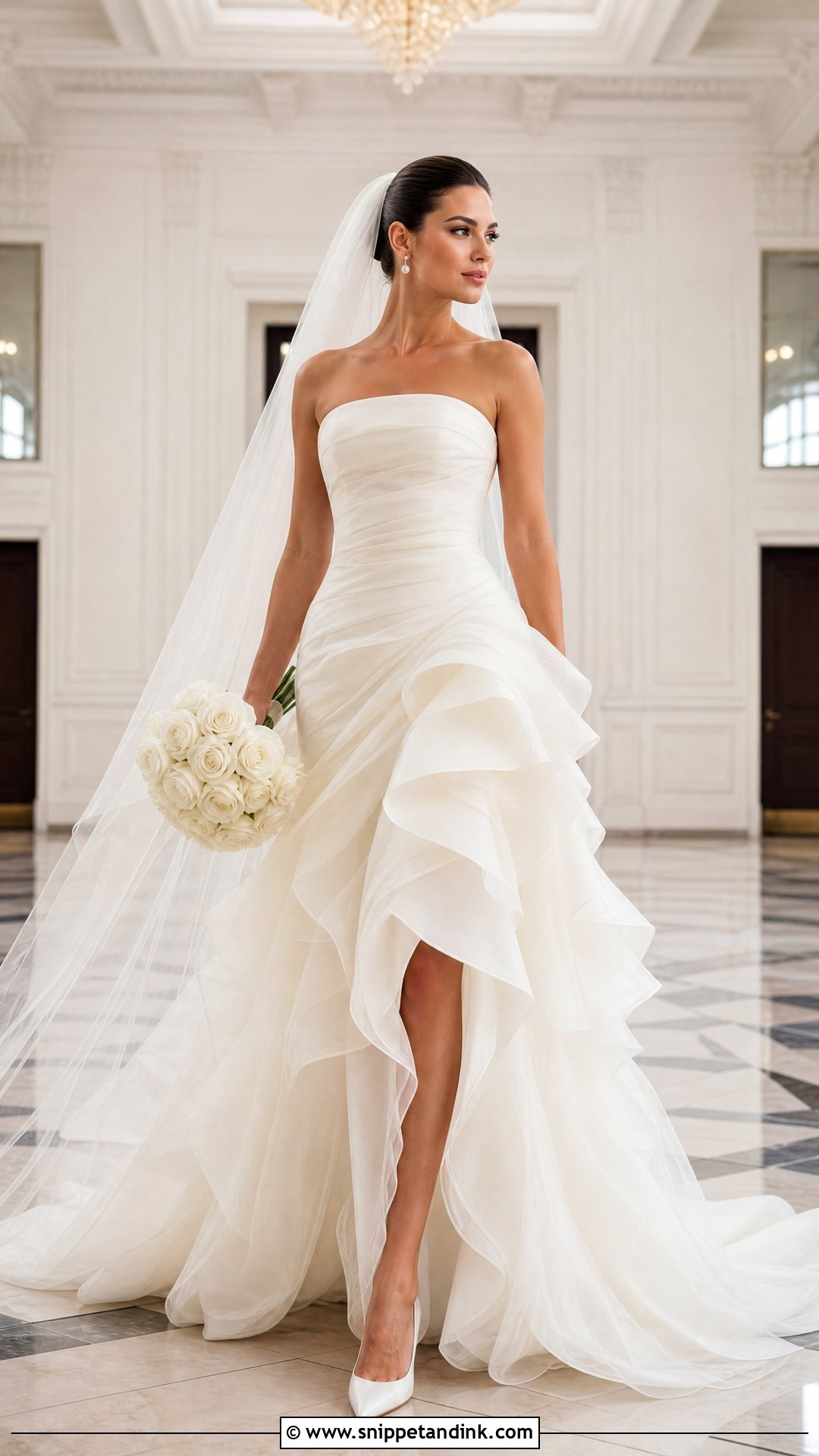
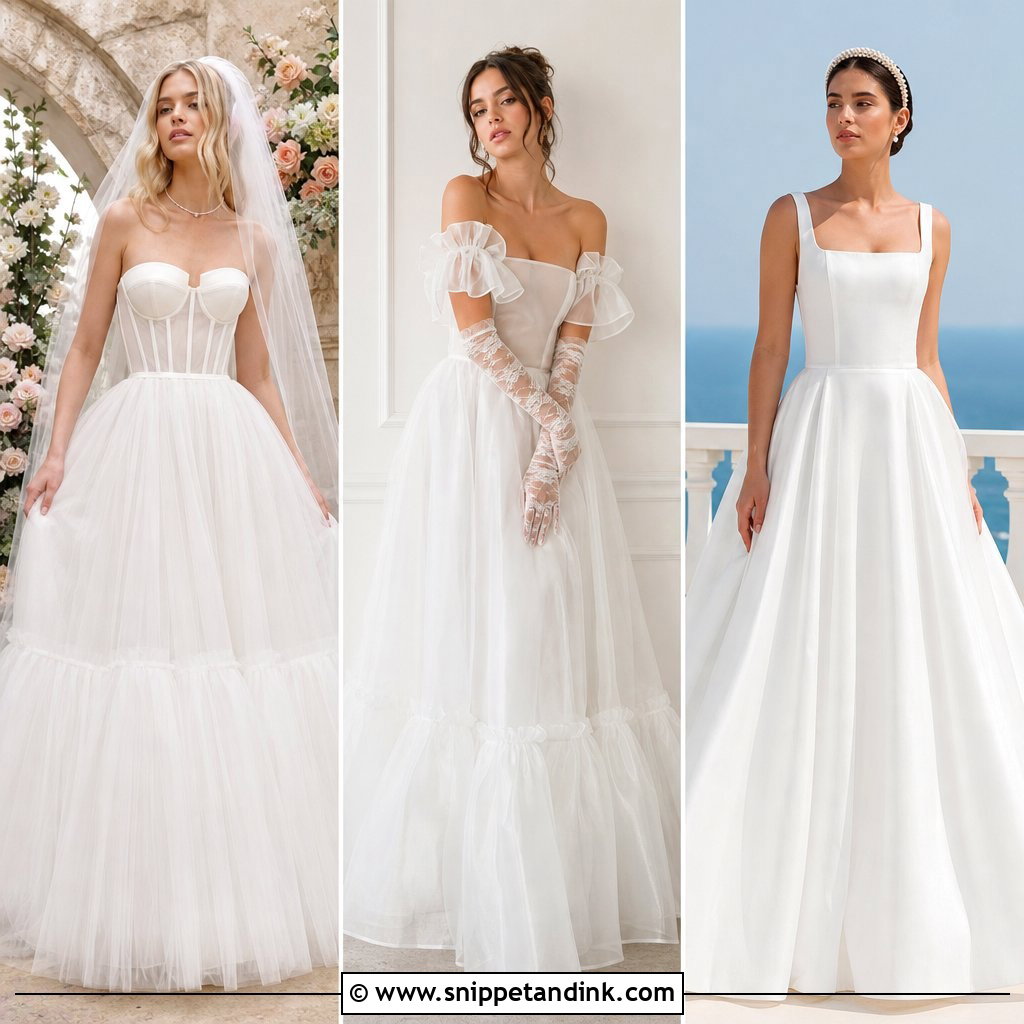
Crisp organza is the fabric that holds a waterfall’s shape best, which is why it suits a strapless gown that wants to look sculptural. Each tier keeps its edge as you walk instead of collapsing. Balance all that skirt with a fitted bodice and a straight or gently curved neckline. Pointed ivory pumps, pearl drops and a smooth low bun keep the top clean. For the ceremony, a cathedral veil with a plain raw edge works; anything lace-trimmed fights the ruffles. A compact bouquet of white roses or calla lilies finishes it. The structure shows best in a ballroom or modern estate, where there’s room for the skirt to make its entrance.
2. Sweetheart Tulle Waterfall Wedding Dress
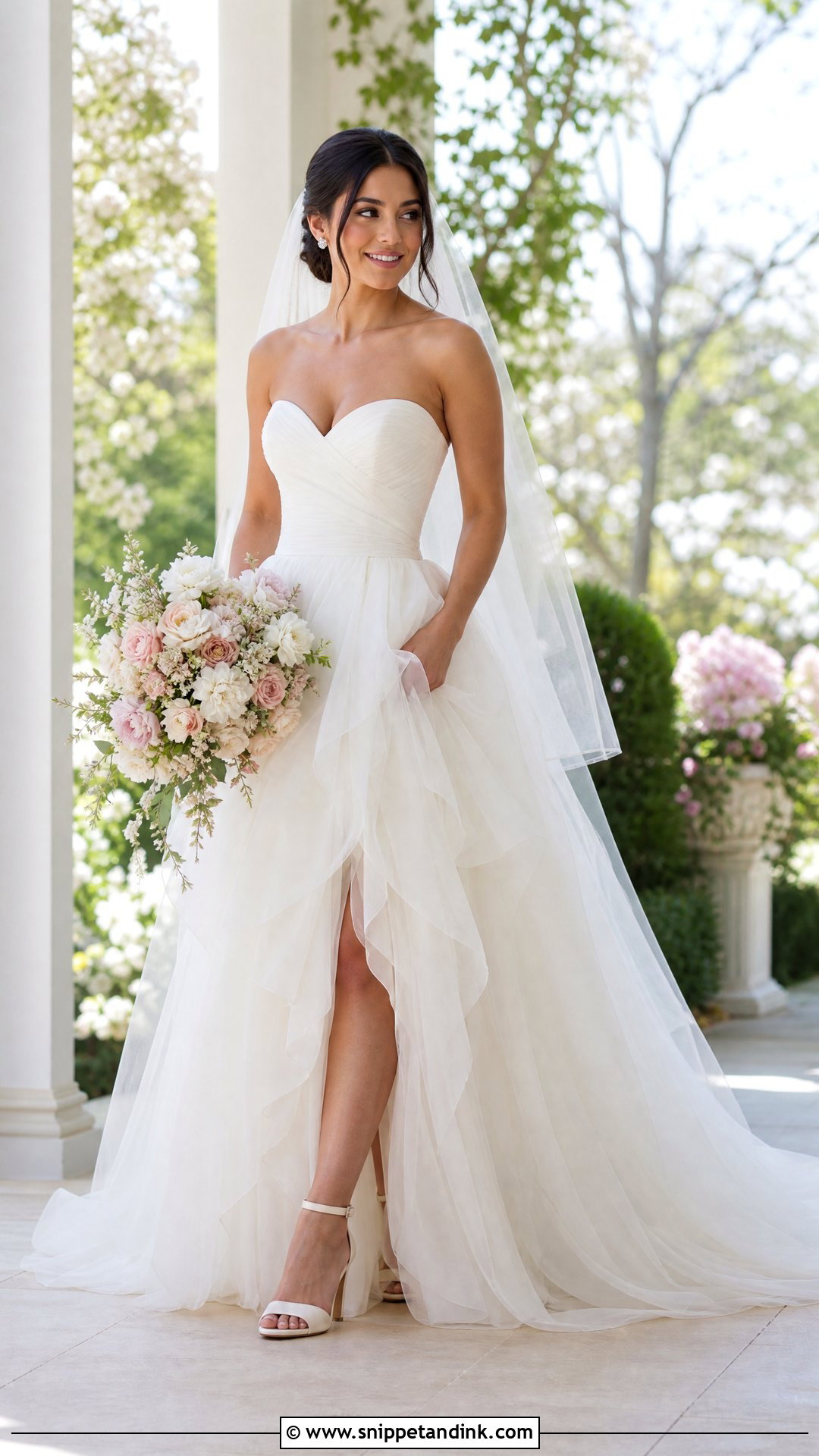
Tulle makes the softest waterfall, and a sweetheart neckline suits that mood. The bodice needs real support, discreet boning, ruching or a lace-up back, because tulle skirts are light but long and they tug the neckline down more than you’d think. Narrow tiers at the hip opening into fuller layers at the hem give the cascade its rhythm. Crystal studs, a fine tennis bracelet and ivory satin heels keep the styling light, and a loose chignon with a few face-framing pieces stops it looking formal. A fingertip veil with minimal edging and a rounded bouquet in white, blush and pale peach complete it for a garden or spring hotel wedding.
3. Lace Bodice Waterfall Wedding Dress
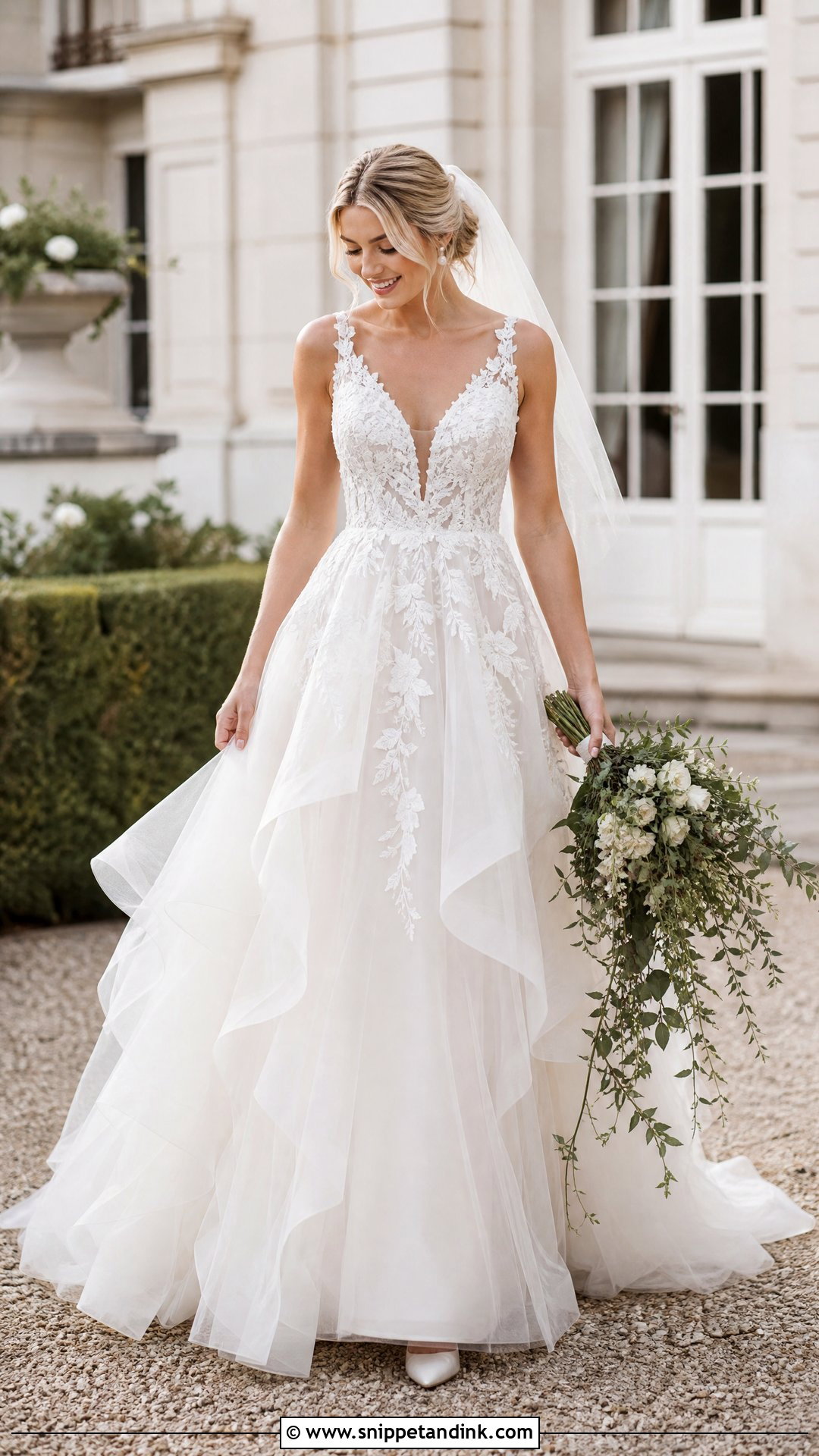
Lace above a waterfall skirt gives you detail where people stand close and movement where they see you from afar. I like appliqués that spill just below the waist into the tulle or organza, which blurs the join between bodice and skirt. A V-neckline lengthens the upper body, and wider straps are more comfortable than they look. Pearl earrings, a slender hair vine and closed-toe ivory heels suit it. Keep the veil plain unless its lace matches the gown closely, and choose white garden roses with trailing greenery. During alterations, ask the seamstress to place those spilling appliqués so they define your waist rather than hide it.
4. Long Sleeve Waterfall Wedding Dress
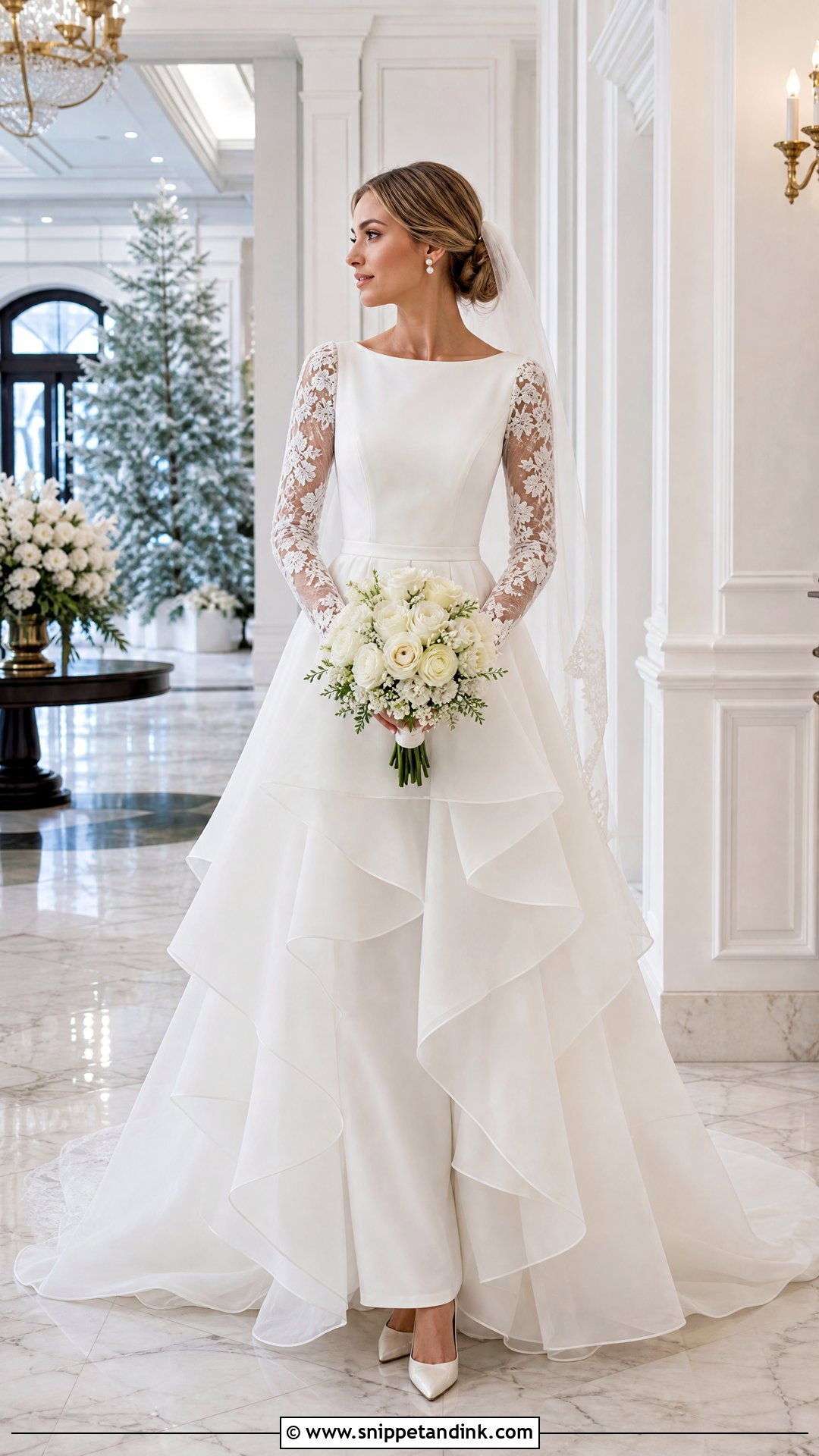
Sleeves on a waterfall gown change the whole balance. Sheer lace feels delicate; fitted crepe looks cleaner and more modern. With that much going on in the skirt, I keep the bodice moderately fitted and the waist clearly marked, or the silhouette turns into one big cloud. Small pearl or diamond earrings, a neat low bun and pointed pumps are enough, with a chapel veil that comes off before the skirt is hidden too long. For cool weather, a tailored ivory wrap can go over the shoulders between photos. A structured bouquet keeps things tidy. Fall and winter suit this one best, especially with a skirt in substantial organza, satin or layered mikado.
5. Off Shoulder Waterfall Wedding Dress
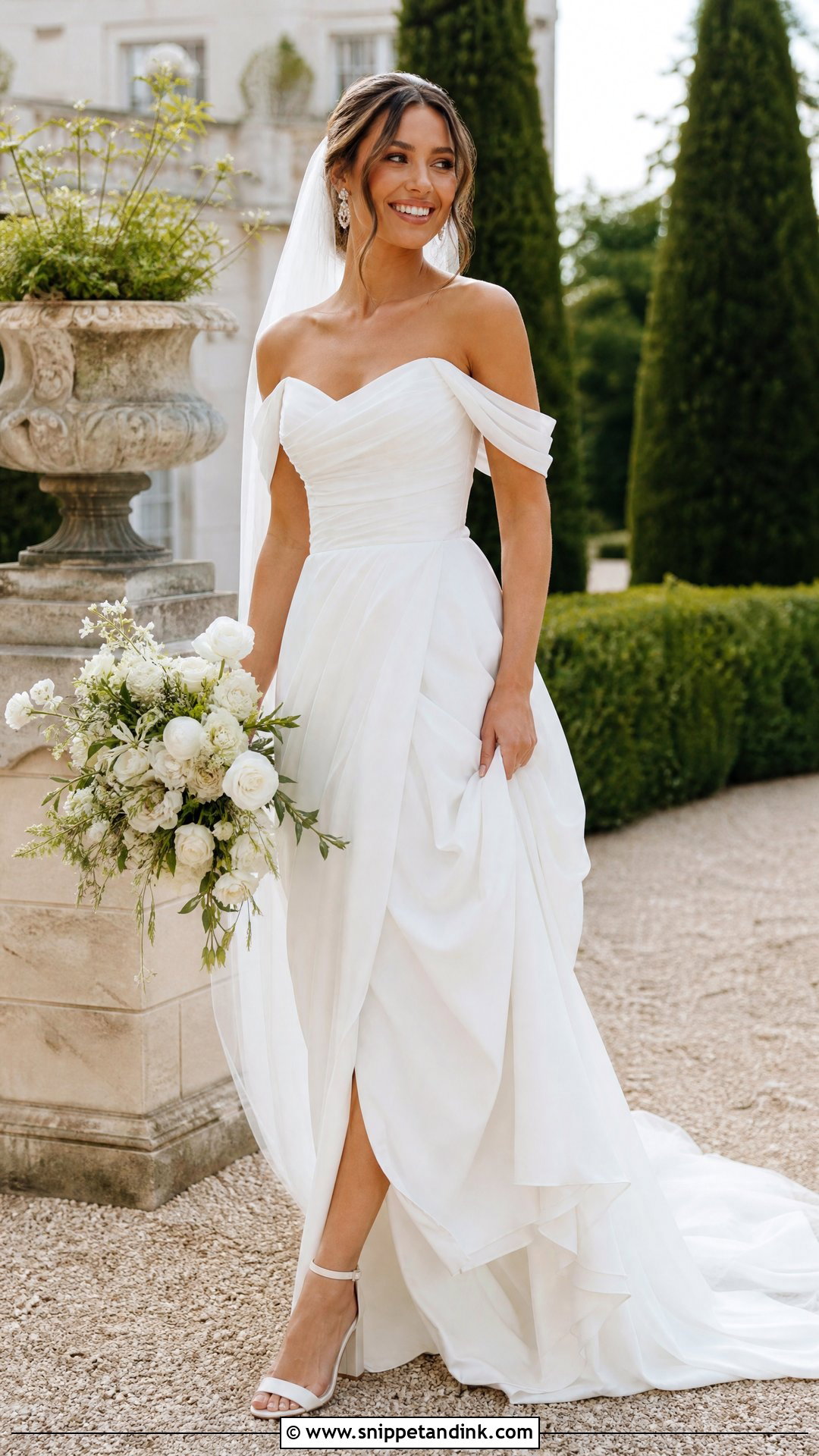
Off-the-shoulder draping frames the collarbone and softens a big cascading skirt. The weak point is sleeve placement: bands that sit too low slide when you raise your arms, so ask for internal support and a tested position. Choose either a short pearl necklace or sparkling drop earrings, not both, and sweep the hair back to show the neckline. Ivory block heels, a simple veil and a loose bouquet of white flowers with a little greenery finish it. At fittings, lift your arms and sit down a few times; if the bands creep, they’ll creep all day. Formal gardens, estates and classic indoor venues suit it.
6. One Shoulder Waterfall Wedding Dress
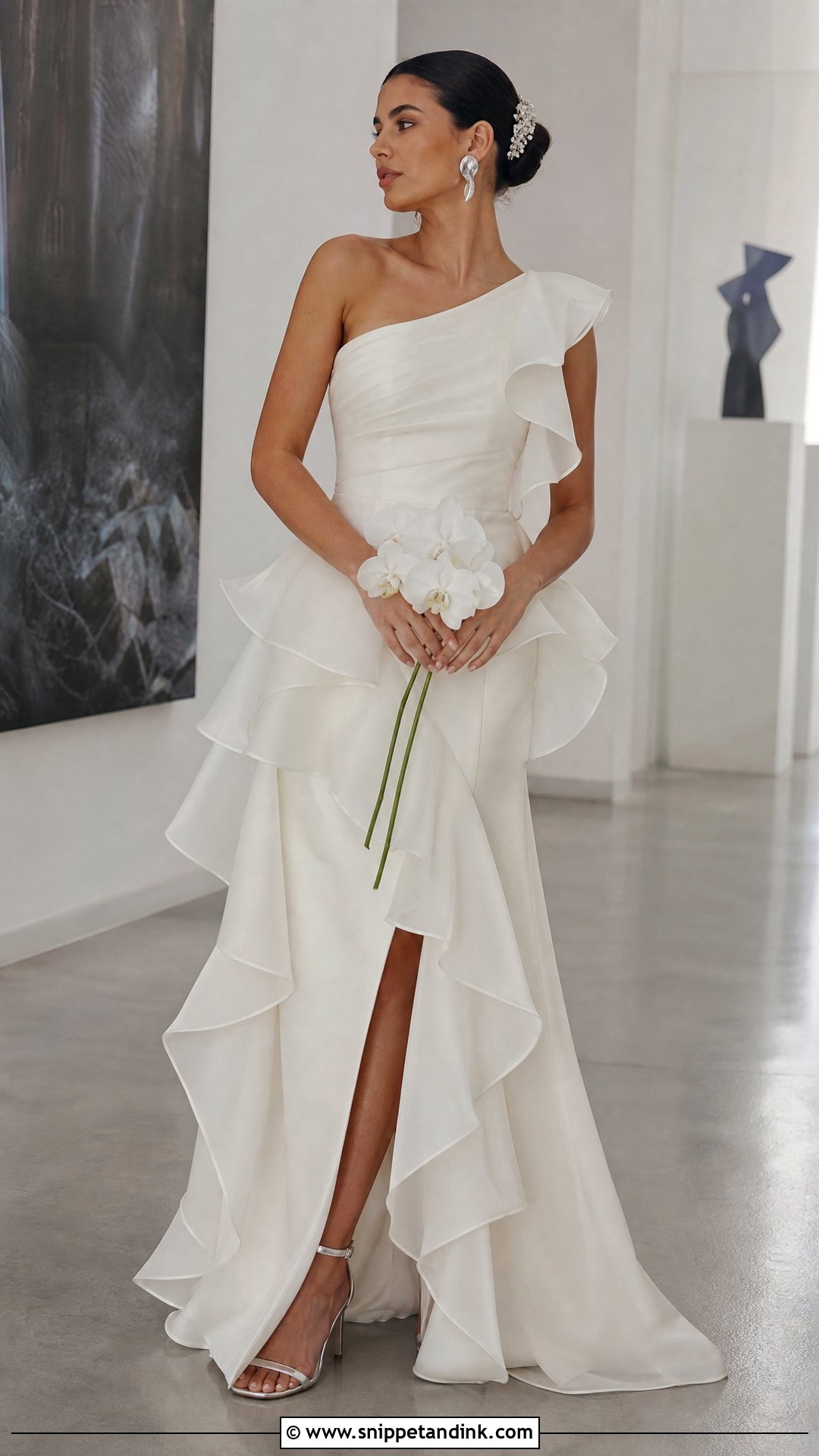
A one-shoulder neckline points the eye diagonally, so it pairs naturally with an asymmetrical skirt with ruffles falling from the opposite hip. Clean fabric such as silk organza or smooth satin lets the construction show. Put the sleek bun on the side away from the covered shoulder and wear one sculptural earring or a pair of small studs. Metallic silver or ivory heels finish the look. A traditional veil often cuts across the neckline awkwardly, so I’d go with a small comb or a slim headband and carry a slender, slightly trailing bouquet. Galleries, rooftops and architectural spaces with plain backgrounds let the shape read clearly.
7. Halter Neck Waterfall Wedding Dress
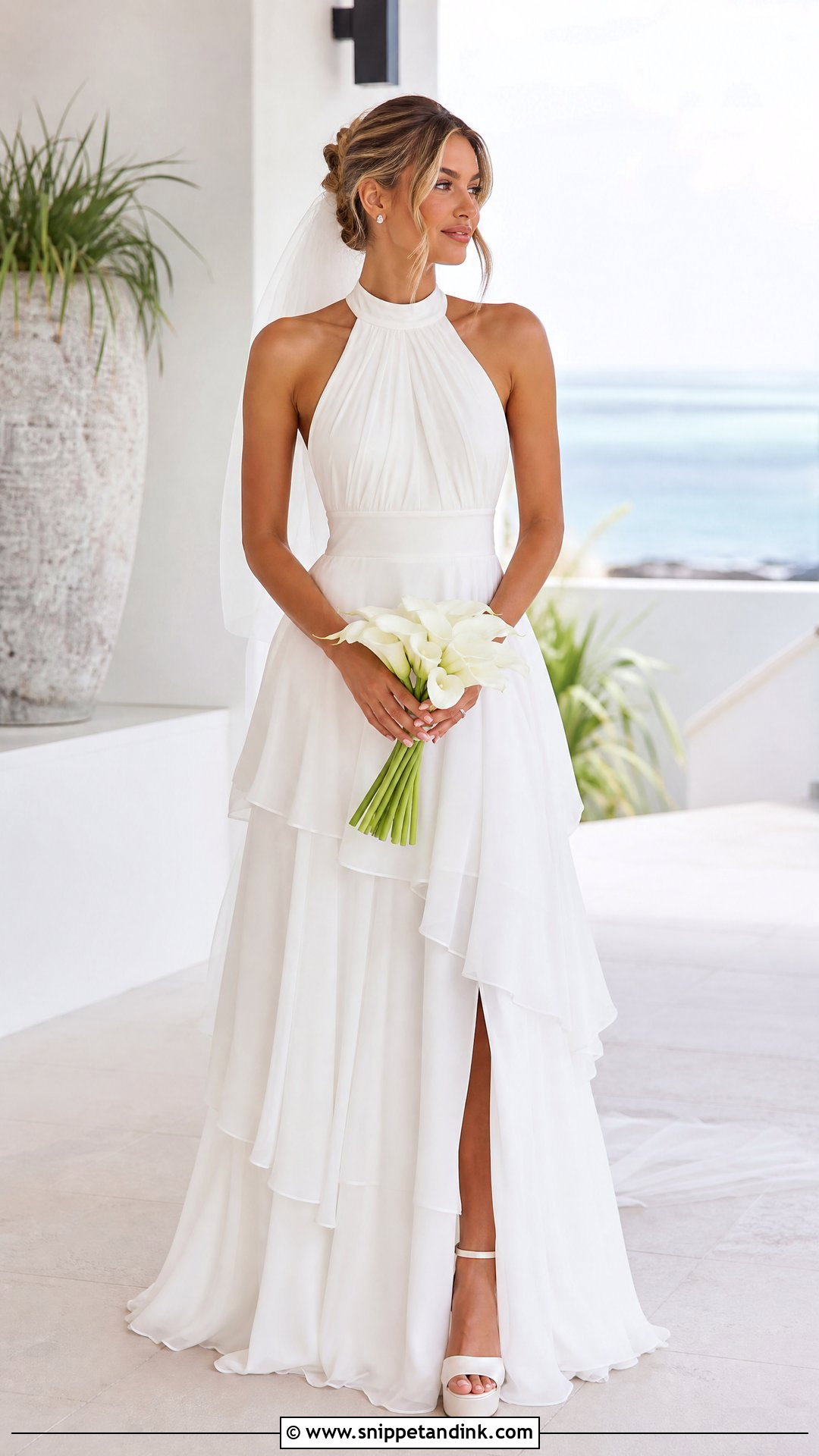
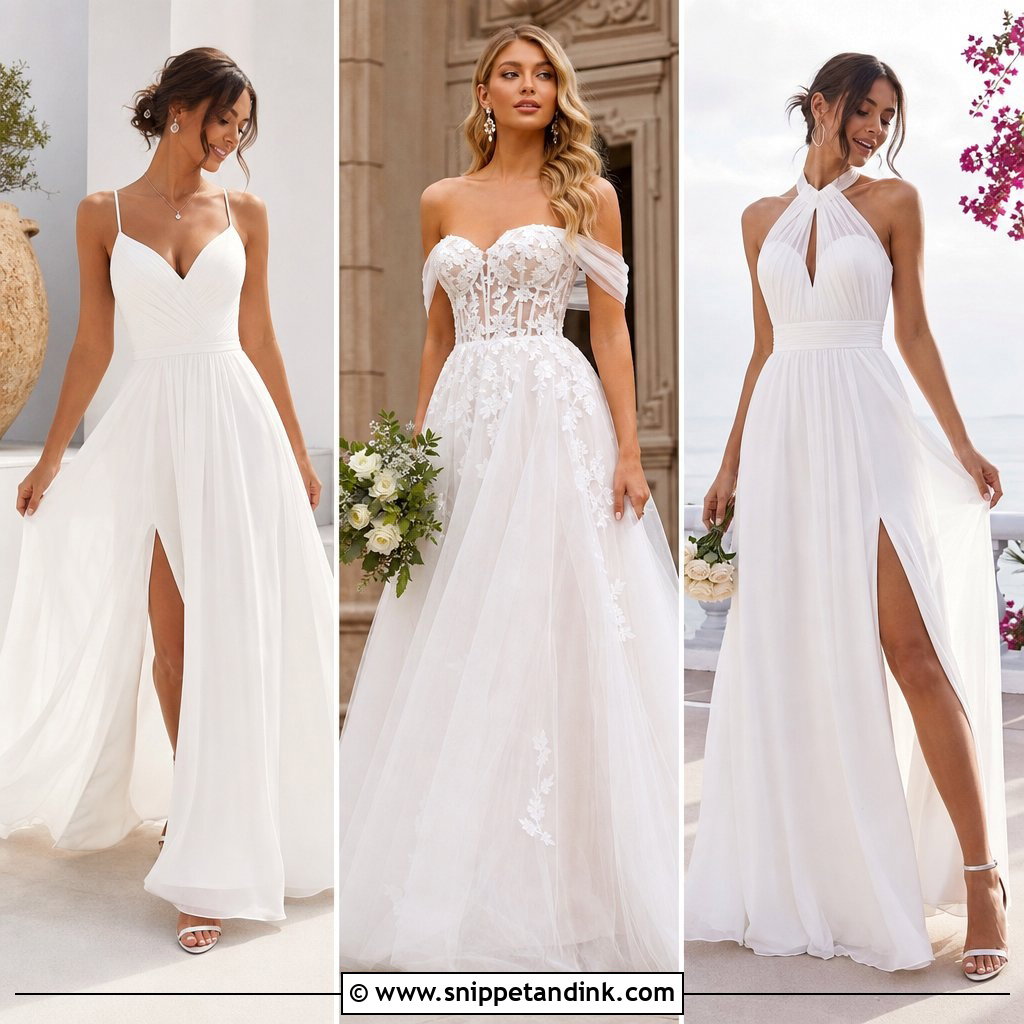
Open shoulders keep a halter gown light on top, which balances a heavy waterfall below. The halter itself needs care: a strap that’s too tight or too narrow presses on the back of the neck and gives some brides a headache by the reception, so try it on for a good half hour. Look for a fitted bodice with a clean waist seam. Wear an updo, delicate studs and no necklace. Ivory platform sandals or sturdy block heels make it easier to walk in a long skirt. A short veil pinned below the bun keeps the line sleek, though a floral hair comb is a simpler choice. Calla lilies or orchids suit a coastal resort or modern ballroom.
8. Corset Waterfall Wedding Dress
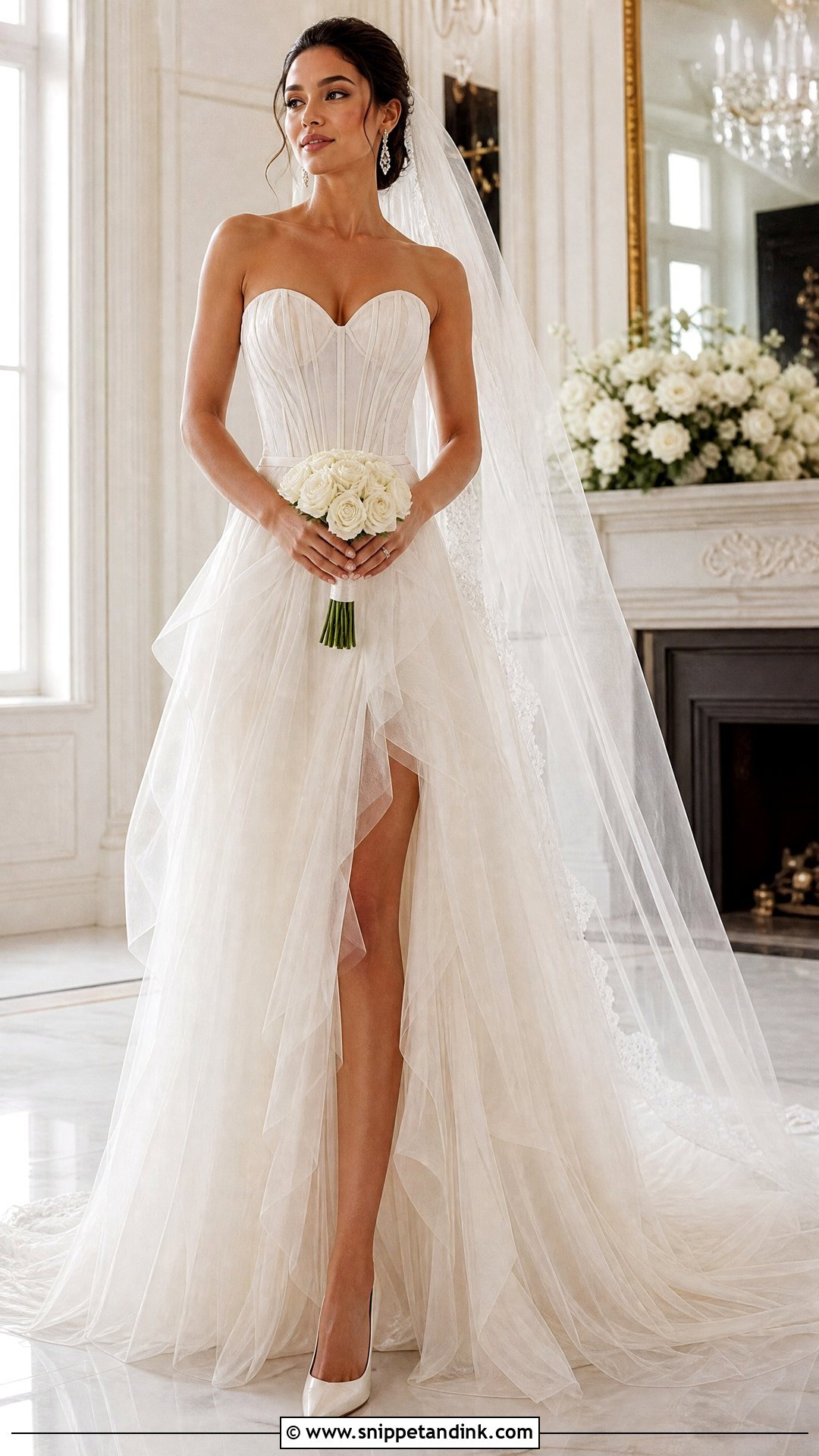
A corset defines the waist sharply before the cascade takes over. I look for proper boning, cups placed where your bust actually sits and either lined or lightly sheer panels, depending on your comfort. An elongated corset that dips below the waist makes the change into the skirt look gradual rather than abrupt. Crystal drops, a simple bracelet and closed-toe satin pumps suit the glamour, with a polished bun or structured waves. A plain-edged cathedral veil keeps the corsetry and skirt visible, and a compact white rose bouquet is all it needs. Have the corset altered by a professional and test it by sitting through a long meal; it should hold you, not stop you breathing.
9. A-Line Waterfall Wedding Dress
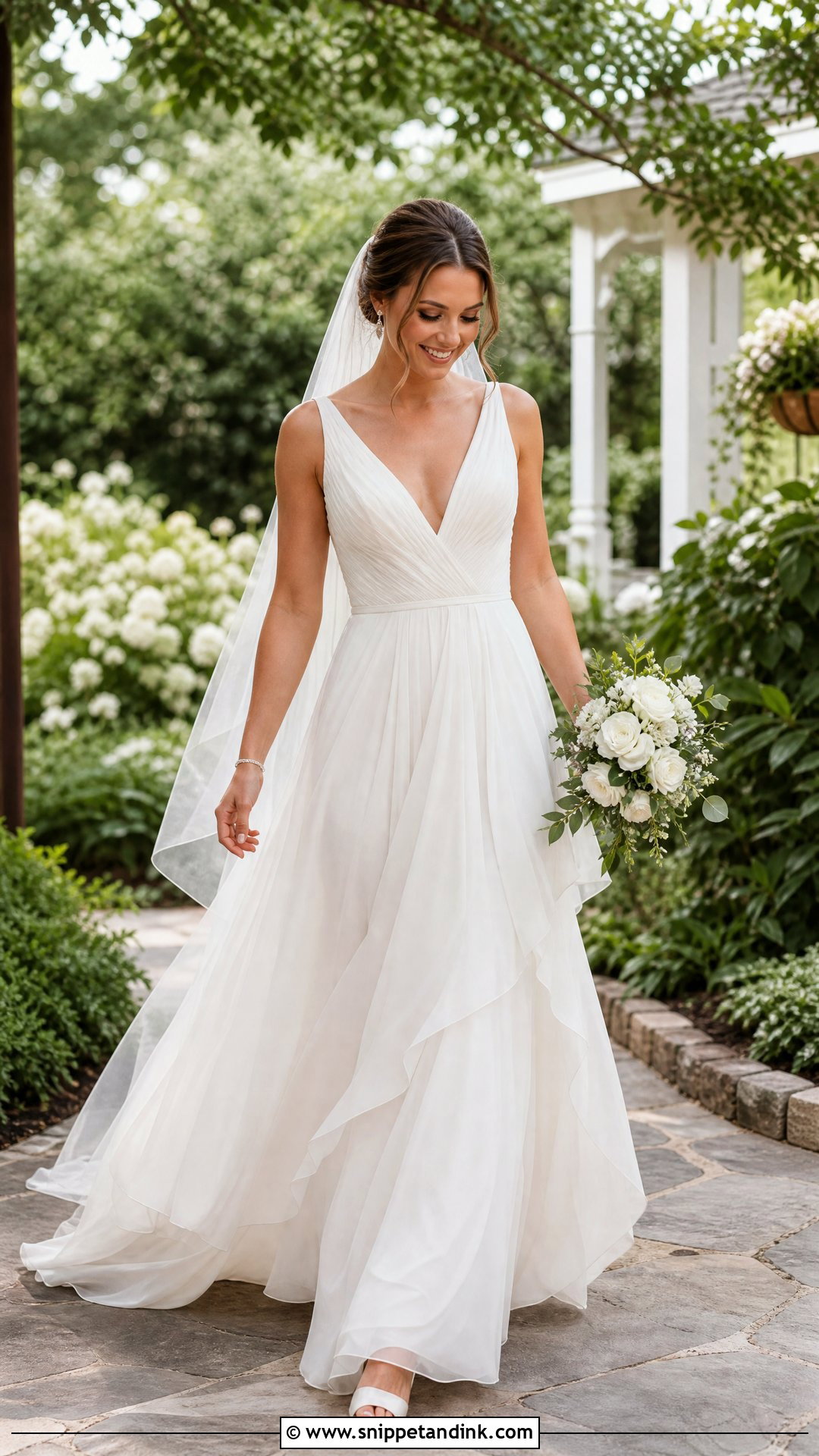
For brides who find a ball gown too much, an A-line waterfall is the comfortable middle ground. The skirt widens gradually from the waist, with soft ruffles or draped panels forming the cascade. Lightweight chiffon, tulle or organza move easily and feel far less structured. Low block heels, pearl studs and a delicate bracelet fit the relaxed shape, as do soft waves or a half-up style. A fingertip veil adds a bridal note without covering the skirt, and a medium bouquet of white flowers with light greenery finishes it. It flatters most figures and suits gardens, country estates, beaches and small hotel weddings, and it’s honestly easy to dance in.
10. Ball Gown Waterfall Wedding Dress
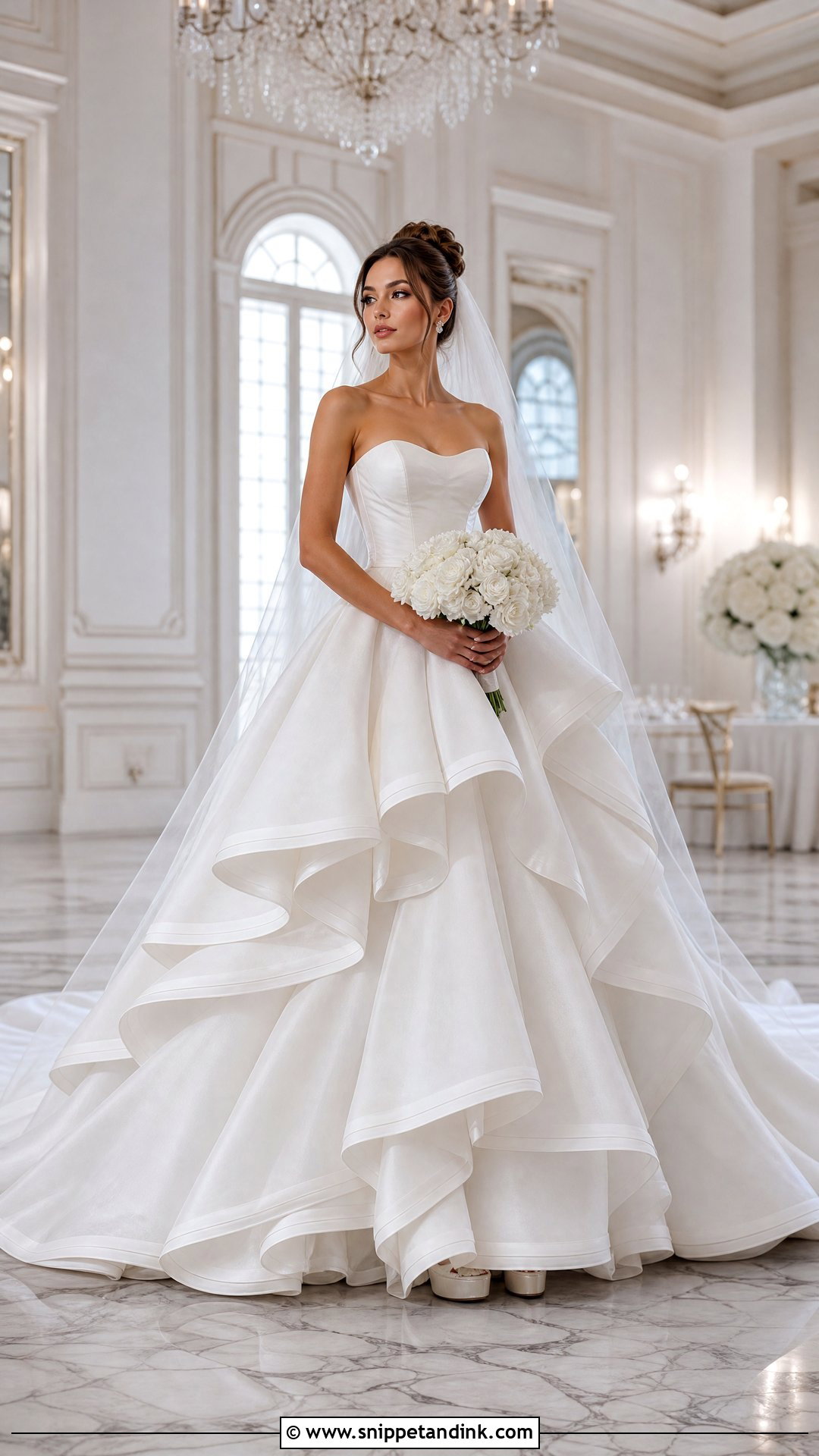
Nothing on this list fills a room like a waterfall ball gown. A fitted bodice anchors it while wide tiers of organza, tulle or horsehair-trimmed fabric build volume you can see from any angle; the horsehair braid along each edge is what makes the tiers curl and hold. Sparkling studs, a refined updo and comfortable platform heels hidden under the hem keep you upright. A long plain veil heightens the entrance and comes off after portraits. Keep the bouquet medium-sized, since the dress already has scale. Before you commit, measure the aisle and the gaps between reception tables. A gown this full needs space, and a bustle plan for after the ceremony.
11. Mermaid Waterfall Wedding Dress
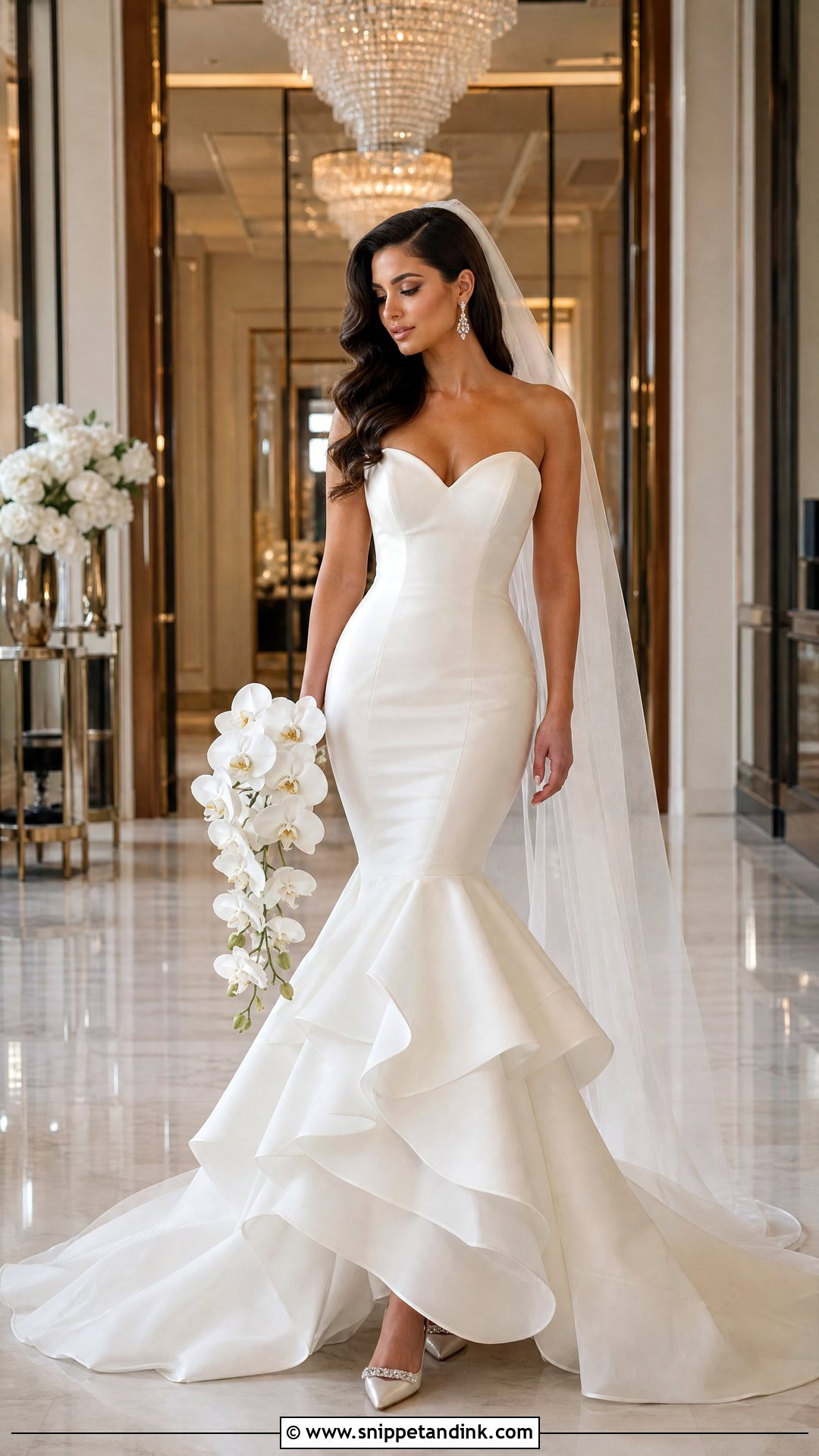
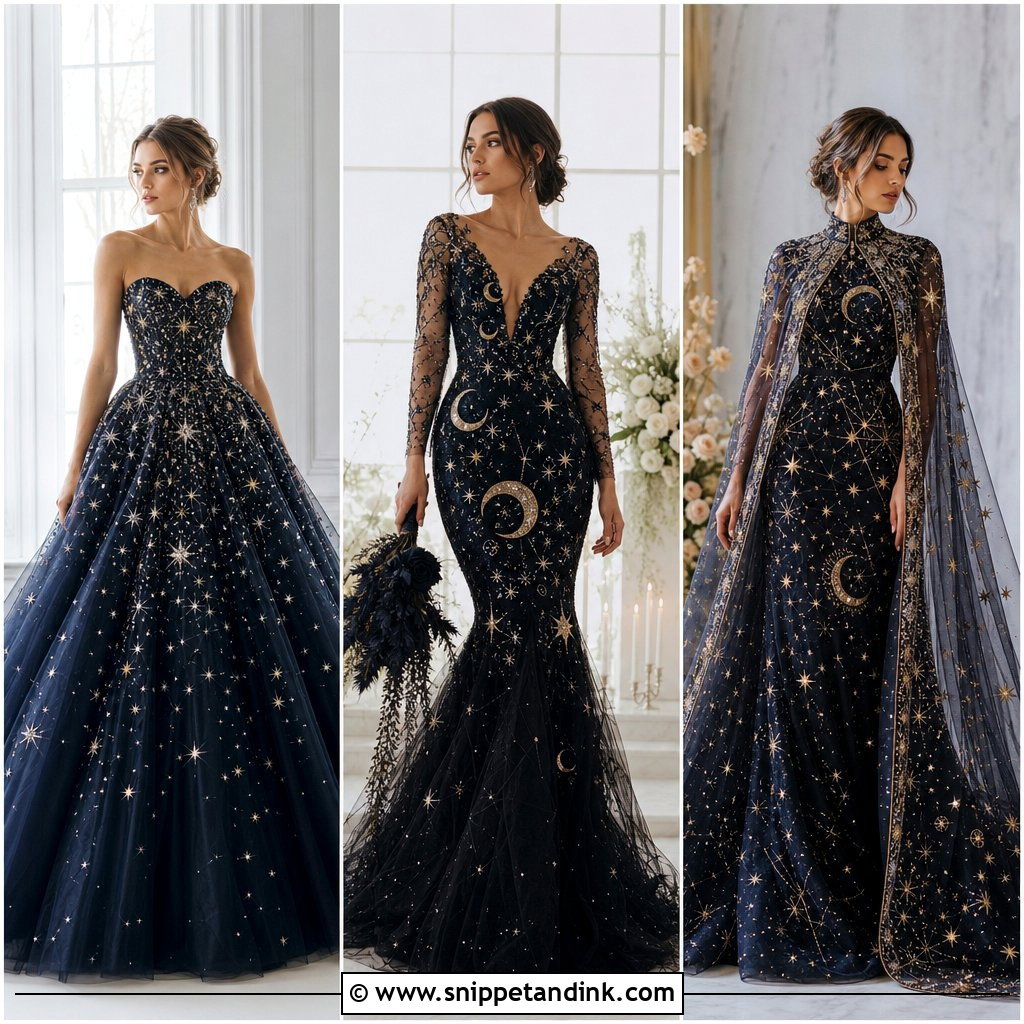
A mermaid waterfall fits close through the bodice and hips, then releases its cascade at the thigh or knee. That flare point is everything. Set too high, it looks bottom-heavy; too low, and you’ll be shuffling. Test your stride and a few dance moves at every fitting. A secure lining and some flex in the construction let you sit without fighting the dress. Pointed pumps, drop earrings and smooth side-parted waves suit the glamour, with a narrow veil or a detachable tulle cape for ceremony drama that doesn’t hide the shape. Orchids, roses or calla lilies in a streamlined bouquet finish the look for upscale hotels and grand estates.
12. High Low Waterfall Wedding Dress
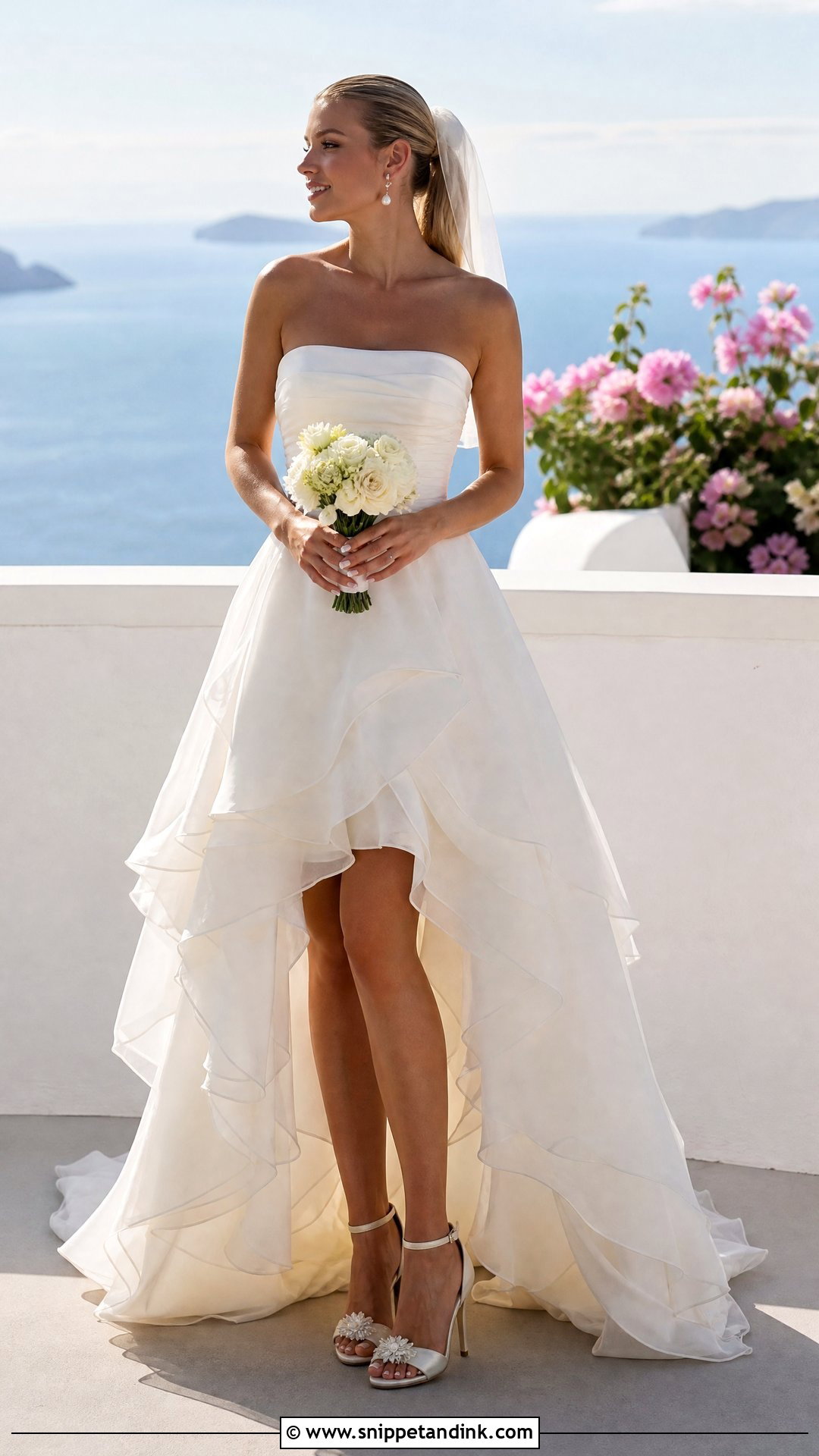
A high-low hem lets your shoes join the outfit while the back keeps its train. I’d choose a gradual slope rather than an extreme drop from knee to floor, which can date quickly and looks unbalanced in walking shots. The ruffles should frame the legs without gathering into bulk around the knees. Embellished ivory pumps, ankle-strap sandals or satin platforms all work, paired with pearl earrings, a sleek ponytail and a short veil or modern bow. Hold a compact bouquet so the open front stays visible. Because the shoes are on show all day, break them in properly. It’s well suited to outdoor, destination and party-led weddings.
13. Asymmetrical Waterfall Wedding Dress
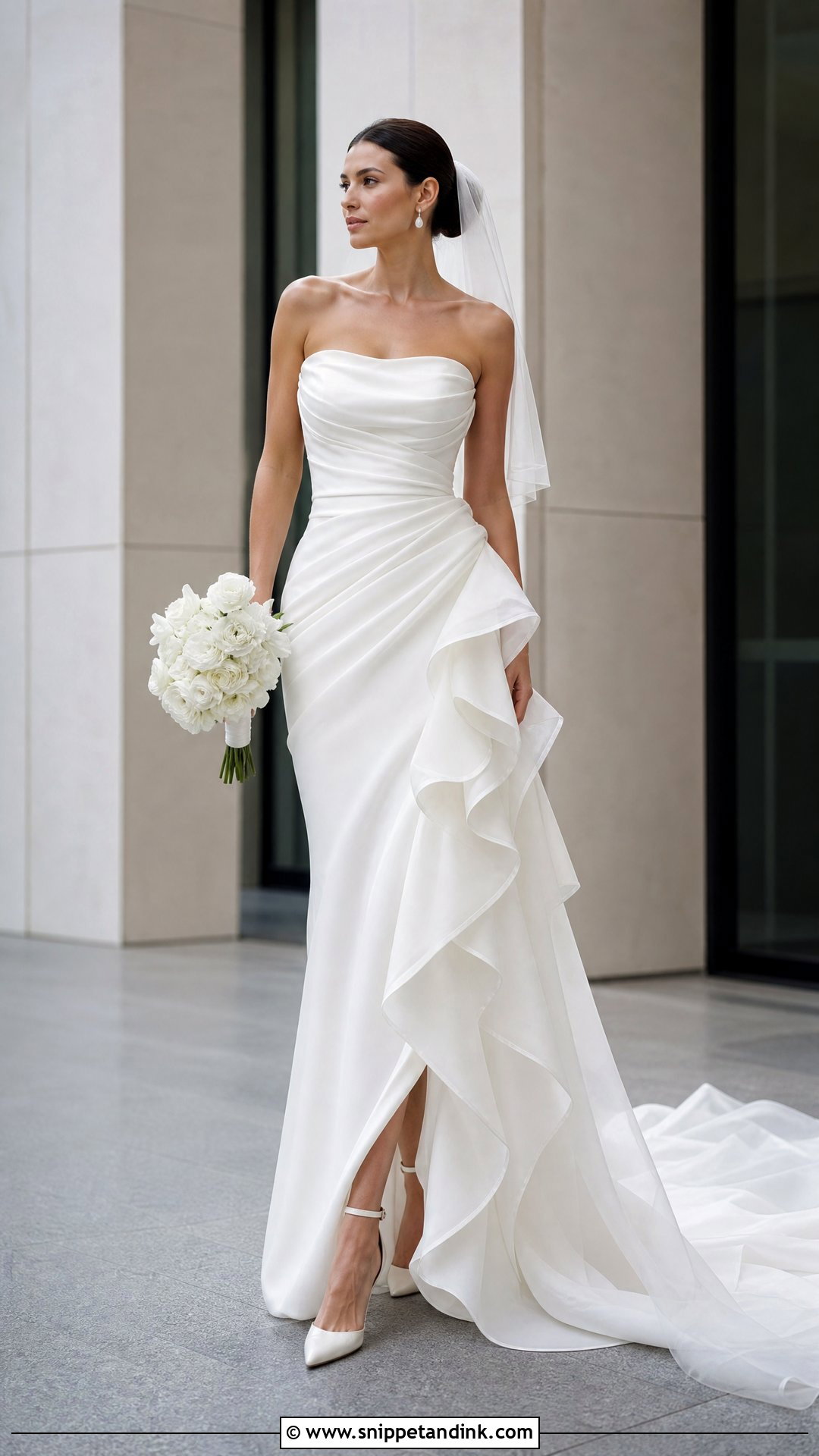
Diagonal draping is what gives an asymmetrical waterfall its movement. The cascade may start at one hip, sweep across the skirt and finish in a side train, so the bodice should stay plain: strapless, square or one-shoulder. Minimal earrings, a smooth updo, clean ivory heels and a short veil or small hairpiece keep attention on the construction. Carry a structured bouquet on the side opposite the main ruffle, so it doesn’t sit on top of the cascade in photos. Look at the dress from front, side and back in a three-way mirror at each fitting. Asymmetric gowns can look perfect head-on and lopsided from behind.
14. Floral Appliqué Waterfall Wedding Dress
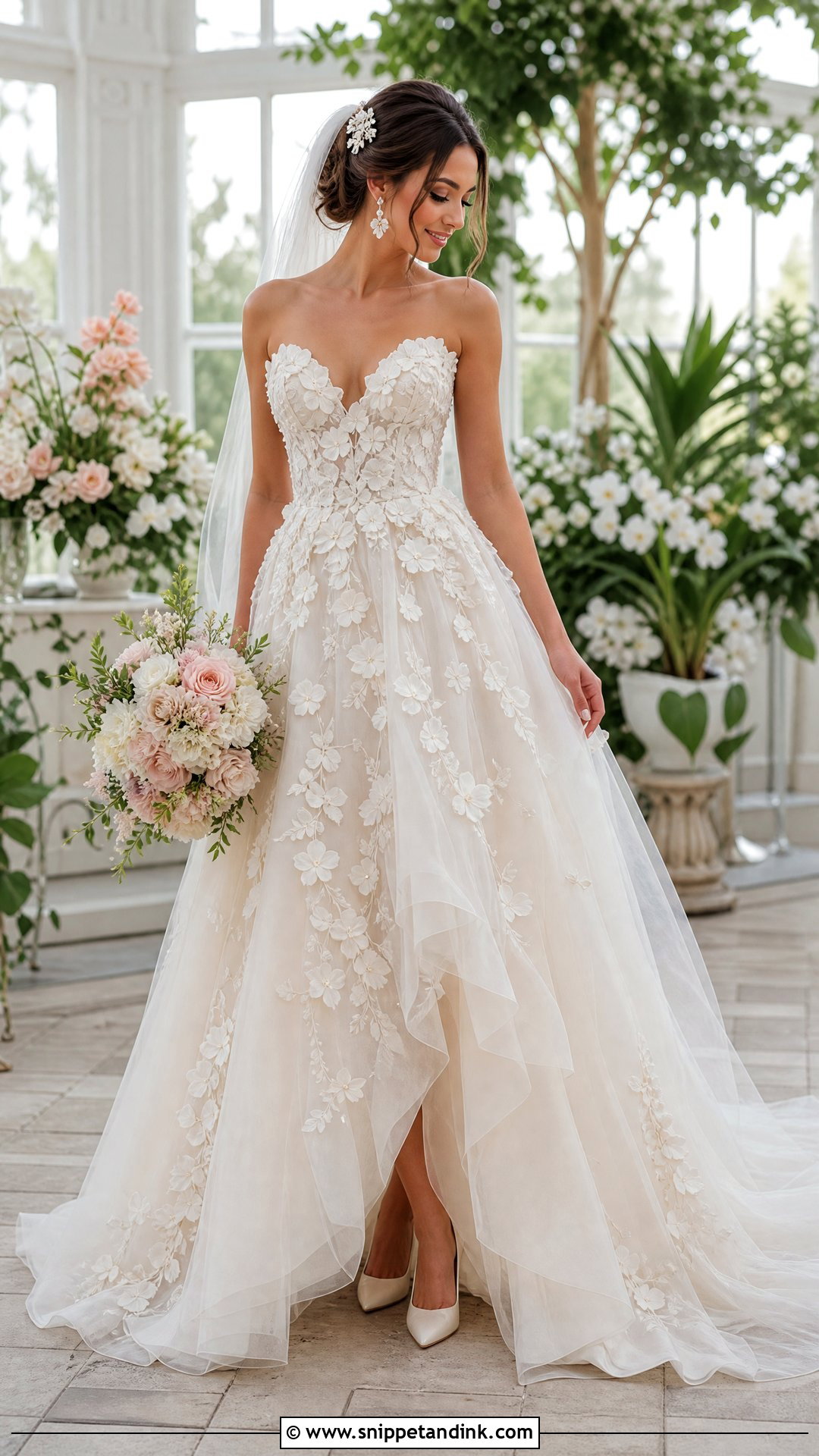
Appliqués give a waterfall depth from bodice to hem. The arrangement I trust most has flowers that grow larger or spread farther apart as they move down into the skirt, which keeps the waist from looking crowded. Small floral earrings, a delicate comb and plain ivory heels suit it. A sheer veil with just a few matching appliqués complements the gown; a heavily decorated one overloads it. Choose a soft white and pale blush bouquet with a controlled shape. Before you buy, run your hand over the skirt. Appliqués stitched only at their centers lift at the edges and snag on the tiers below, so look for ones secured all the way round. Gardens and conservatories suit it.
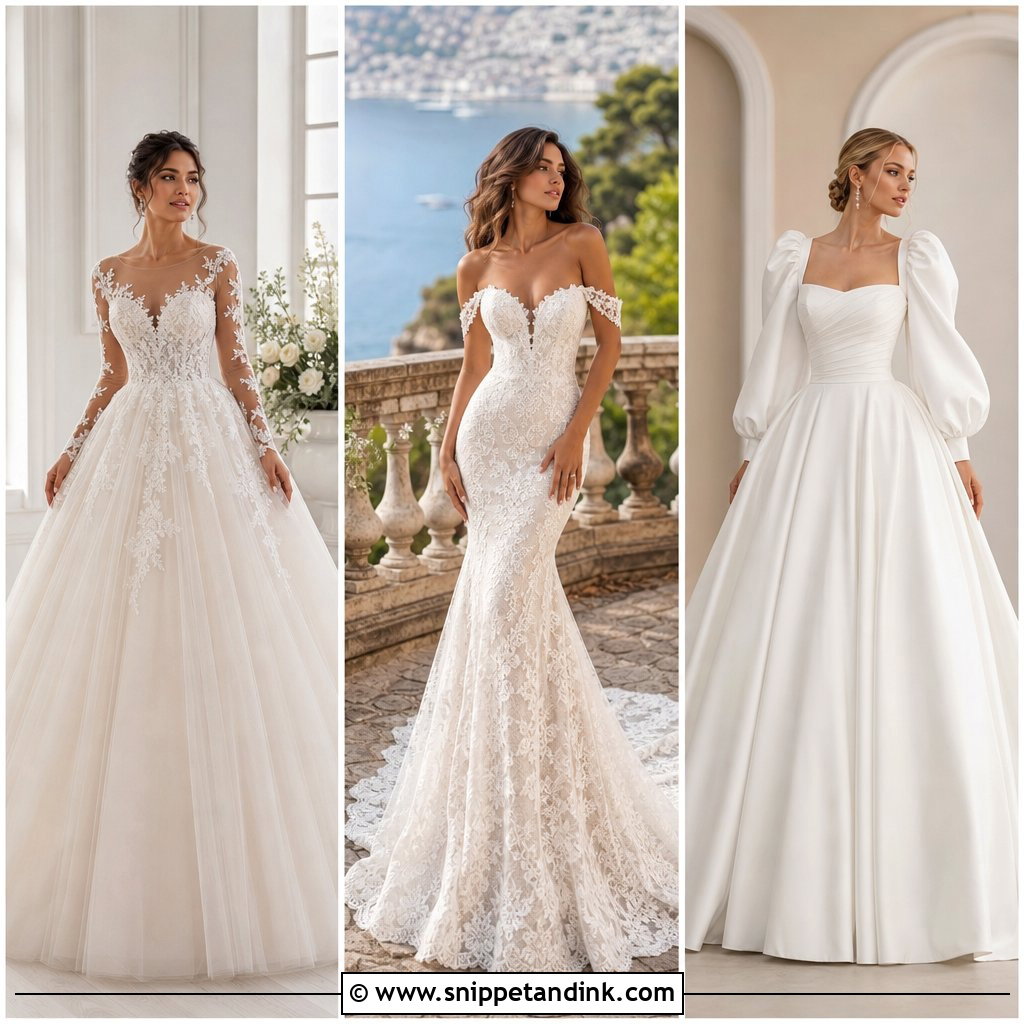
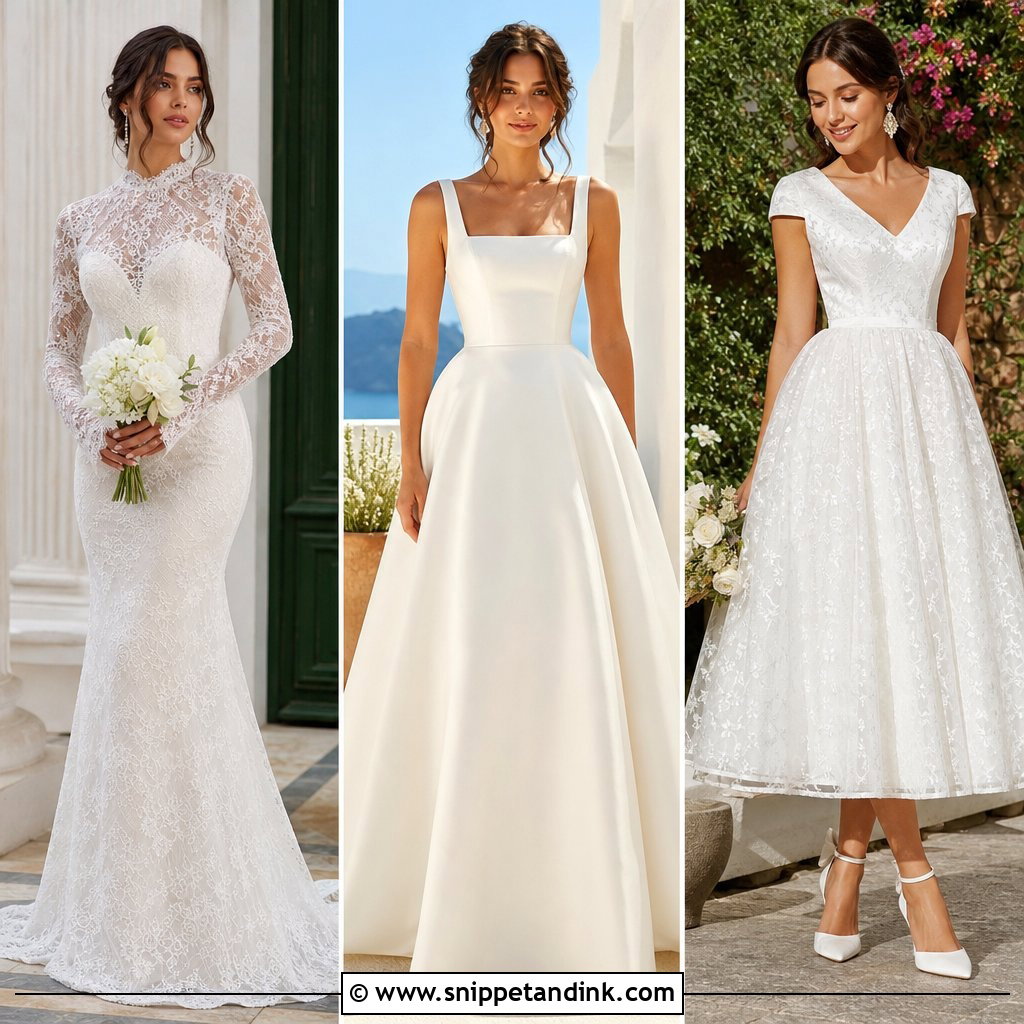

15. Satin And Organza Waterfall Wedding Dress
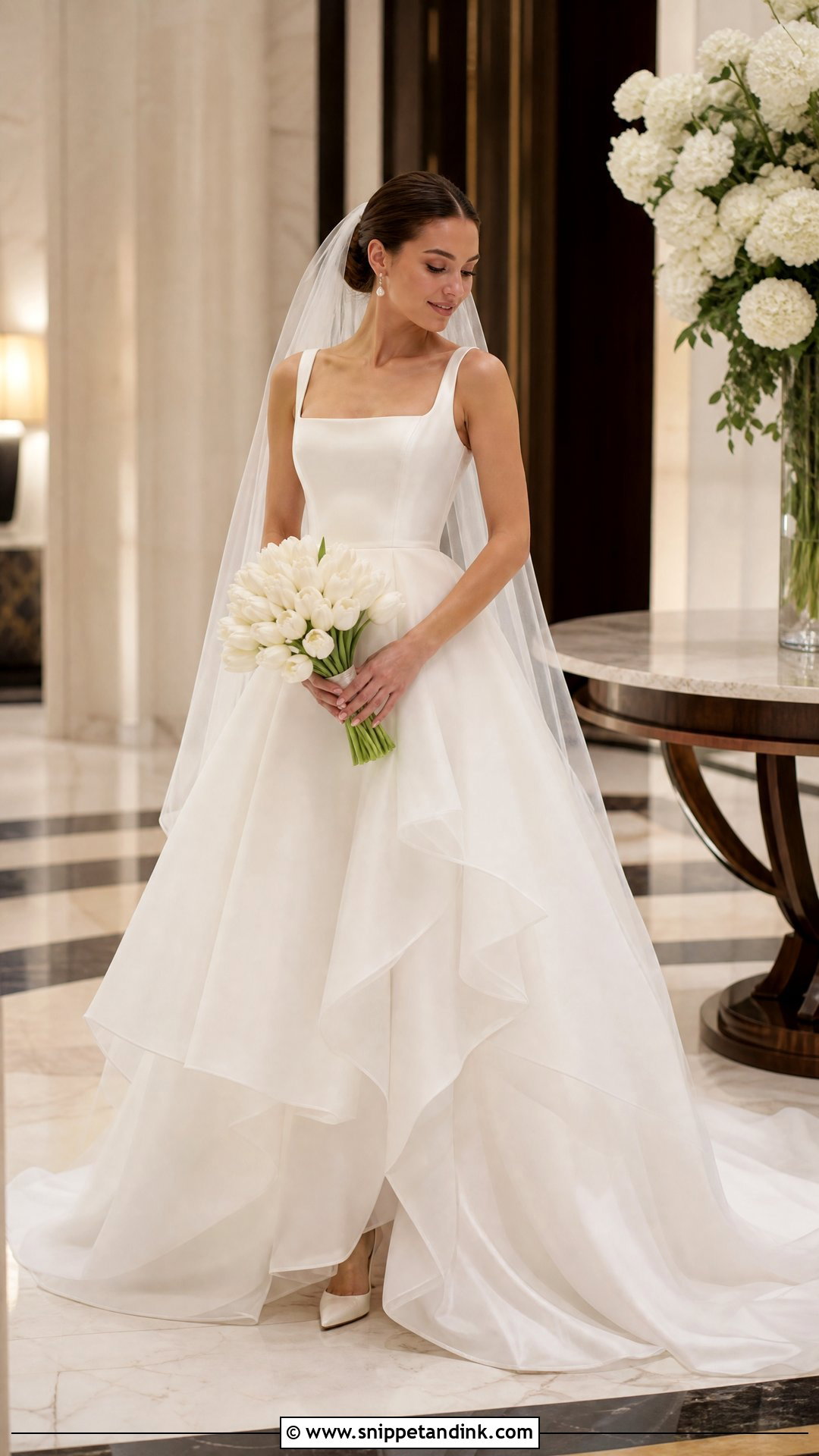
Satin on top and organza below gives a waterfall gown contrast you can see from the back of the room. The satin bodice reads polished and smooth, while the organza ruffles add lightness and catch the light as you move. A clean square, scoop or strapless neckline lets the two textures speak. Pearl drops, a neat chignon and satin pointed-toe pumps keep the styling classic, with a simple chapel veil that adds no third texture. A structured bouquet of white roses or tulips finishes it. Ask for fabric samples while shopping and compare them in daylight and under warm bulbs; satin and organza dyed to the same ivory often look different once sewn side by side.
16. Detachable Overskirt Waterfall Wedding Dress
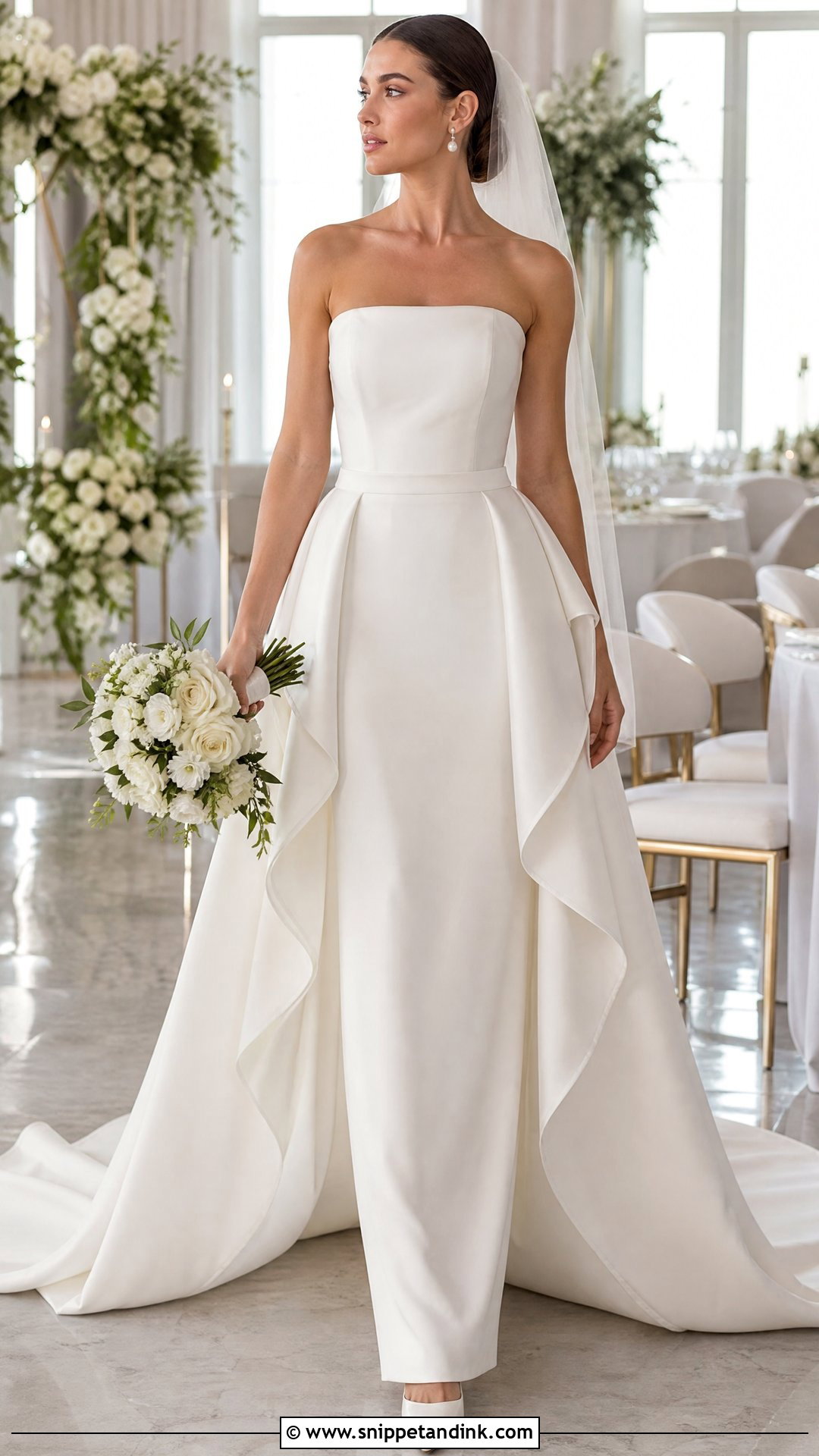
One gown, two looks. The waterfall overskirt goes over a fitted crepe, satin or lace dress for the ceremony, then comes off to reveal a slimmer reception outfit. The attachment should sit at the natural waist under a belt, seam or row of covered buttons. Pair the ceremony look with a long veil, pearl earrings and classic ivory pumps; afterwards, switch to statement earrings or a sparkling hair accessory. Keep the bouquet structured so it works with both shapes. Practice taking the overskirt off with whoever will help you on the day. Hooks and snaps that seemed easy at the shop are fiddly with nervous hands in a restroom.
17. Blush Waterfall Wedding Dress
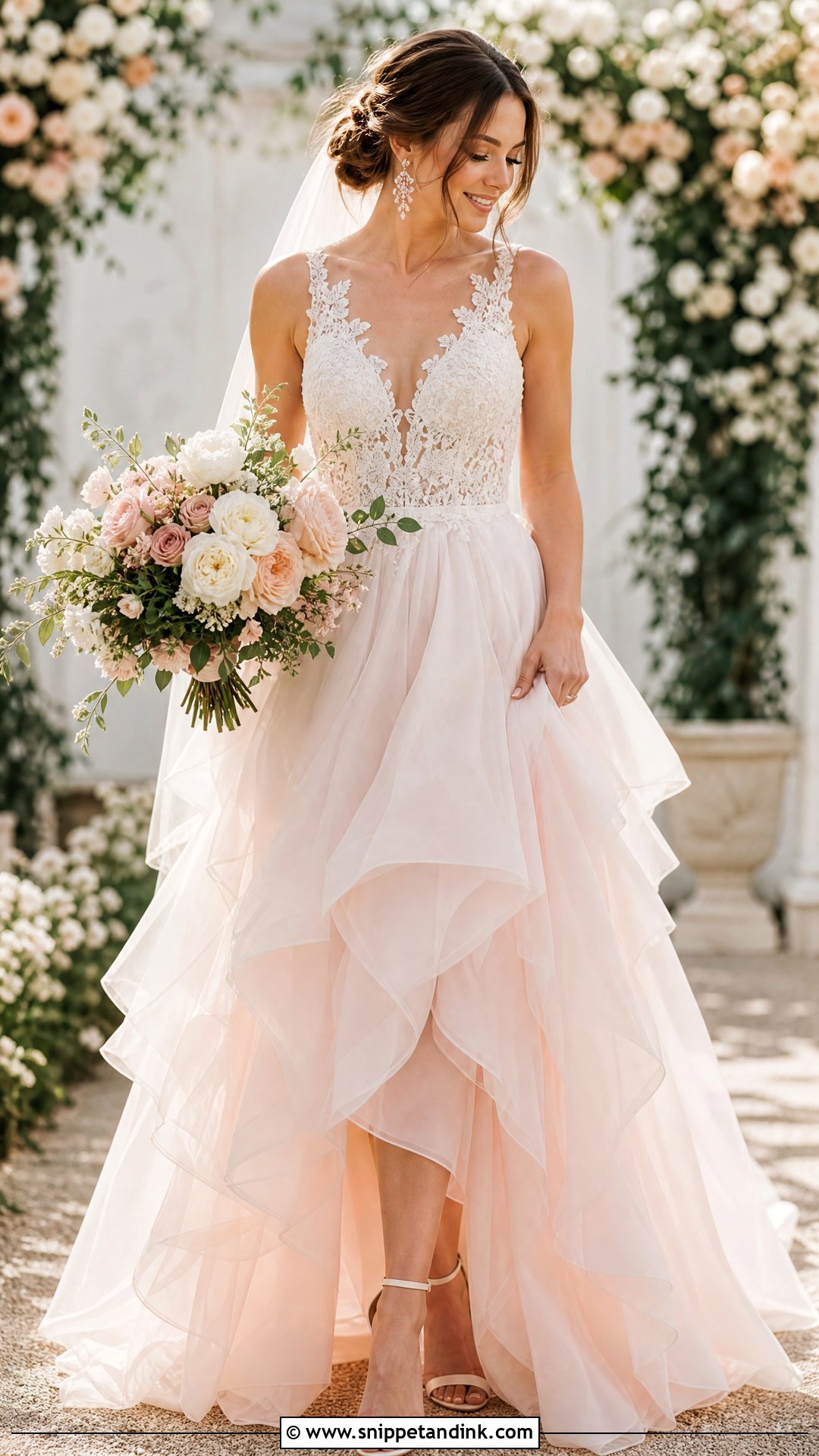
Blush in a waterfall gown works best as a glow rather than a color. Layers of pale pink, nude or rosy tulle under an ivory overlay give depth while the dress still reads as bridal. A fitted lace or satin bodice anchors the airy skirt. Rose gold earrings, neutral ivory heels and a loose low bun suit it. Pick a plain ivory veil so the pink shows through, or skip it for a delicate crystal hair vine. Flowers in cream and soft pink with muted greenery complete it. Always look at blush fabric by a window. Shop lighting is usually warm and can hide a grey or peach undertone that shows clearly outdoors.
18. Plus Size Waterfall Wedding Dress
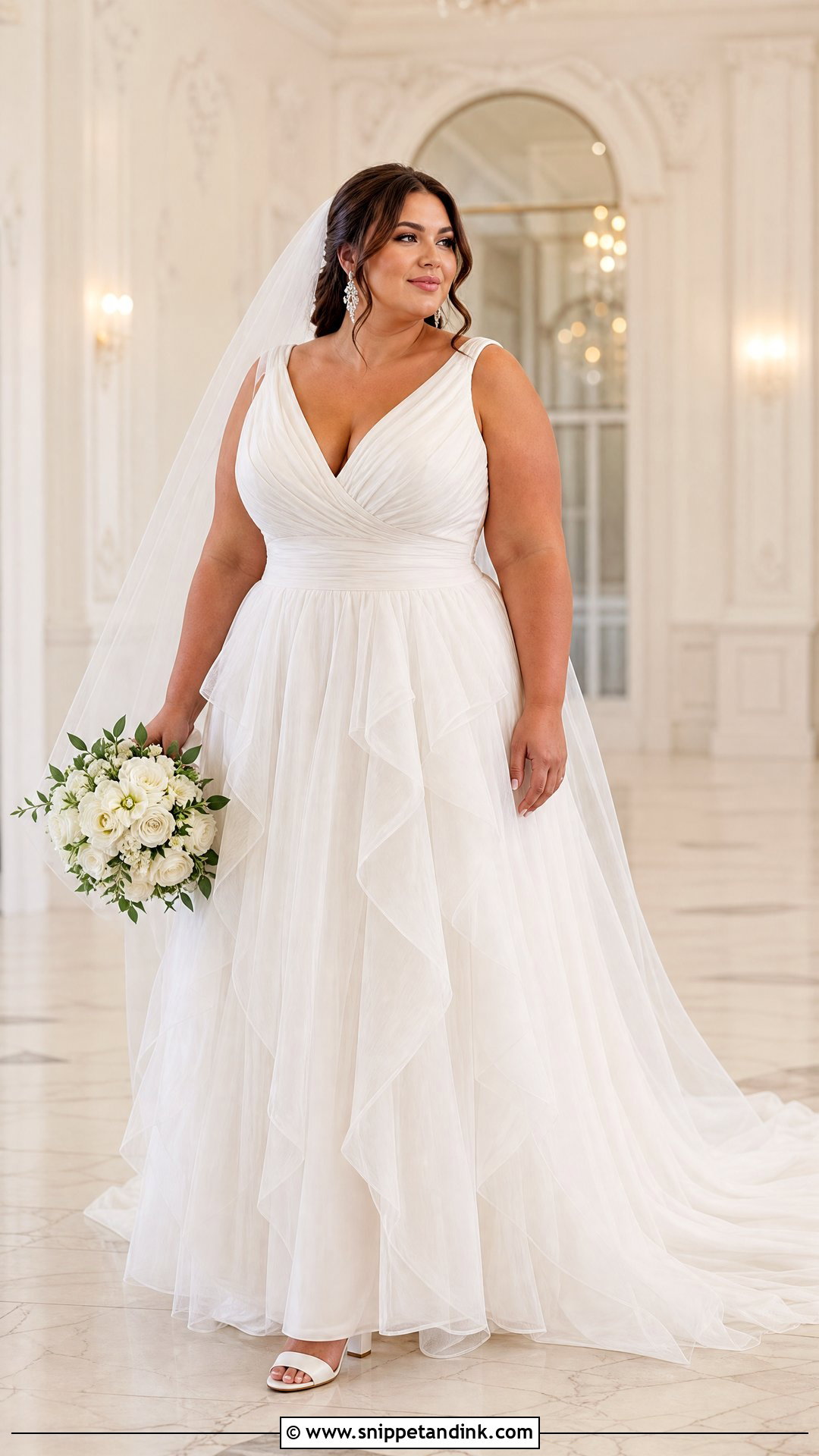
On a plus-size gown, the most important decision is where the cascade begins. Ruffles starting right at the waist add bulk exactly where most brides don’t want it; starting a little lower, or running on a diagonal, creates a longer line through the skirt. A structured bodice with comfortable straps or sleeves gives support you can rely on. Block heels, statement earrings and a polished updo or soft waves suit it, with a fingertip or chapel veil and a medium bouquet in proportion to the skirt. Order for your current measurements, not a hoped-for future size. A good seamstress can refine the neckline, waist, hem and support far more easily than she can let out a tiered skirt.
19. Petite Waterfall Wedding Dress
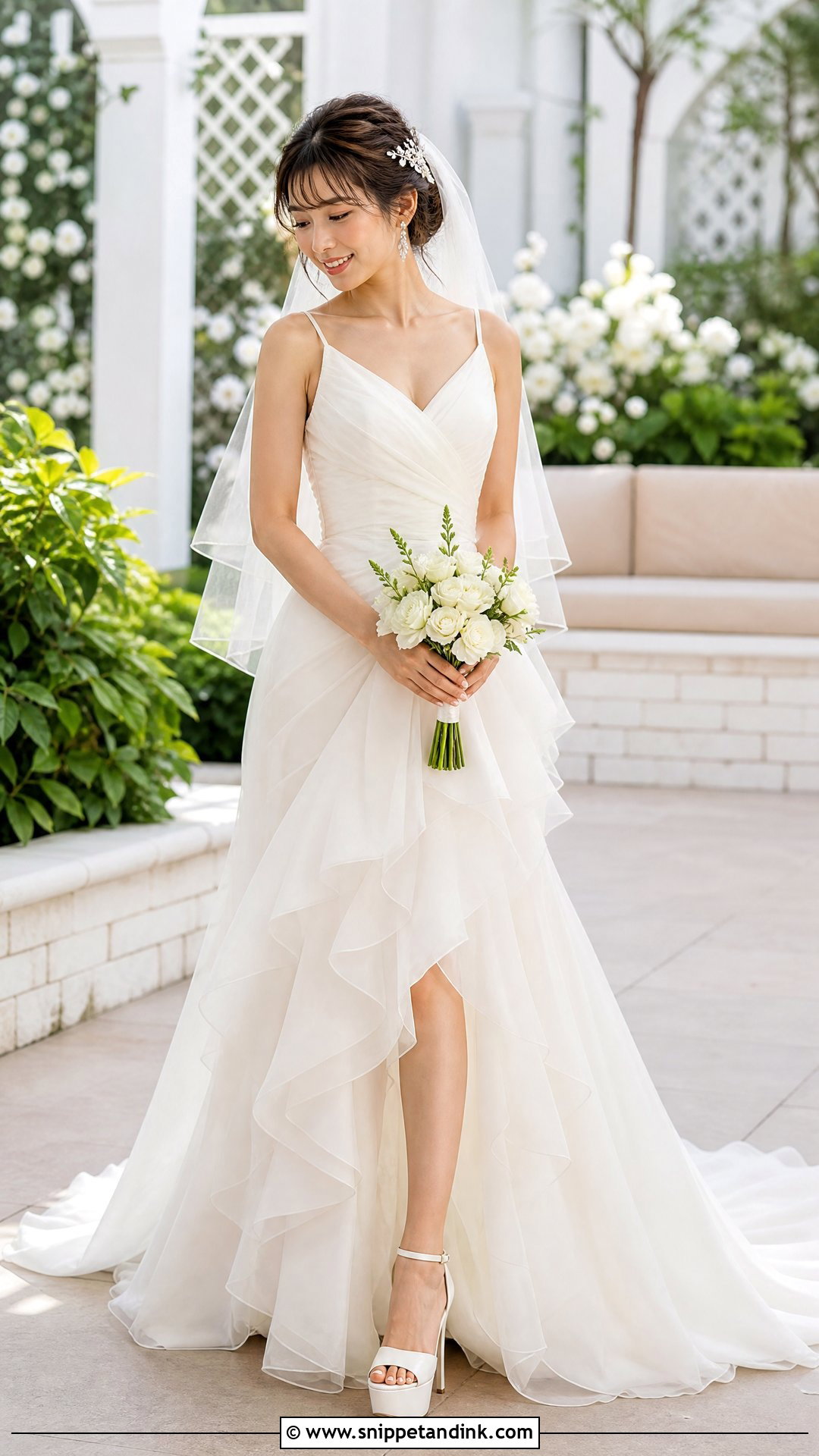
A petite bride can carry a waterfall gown when the layers are scaled to her frame. Narrow cascades, a clearly defined waist and a skirt with movement rather than width keep the proportions right; an A-line or modified ball gown usually works better than a full one. Ivory platform heels or pointed pumps add height under the hem. Small drops, a delicate comb, a slim bouquet and a fingertip veil keep accessories in scale, since a very wide veil can swallow you. Shortening a waterfall skirt isn’t like hemming a plain one. Ask whether the ruffle placement, bodice, waist and train can all be adjusted, because cutting from the bottom often removes the best tier.

20. Minimalist Waterfall Wedding Dress
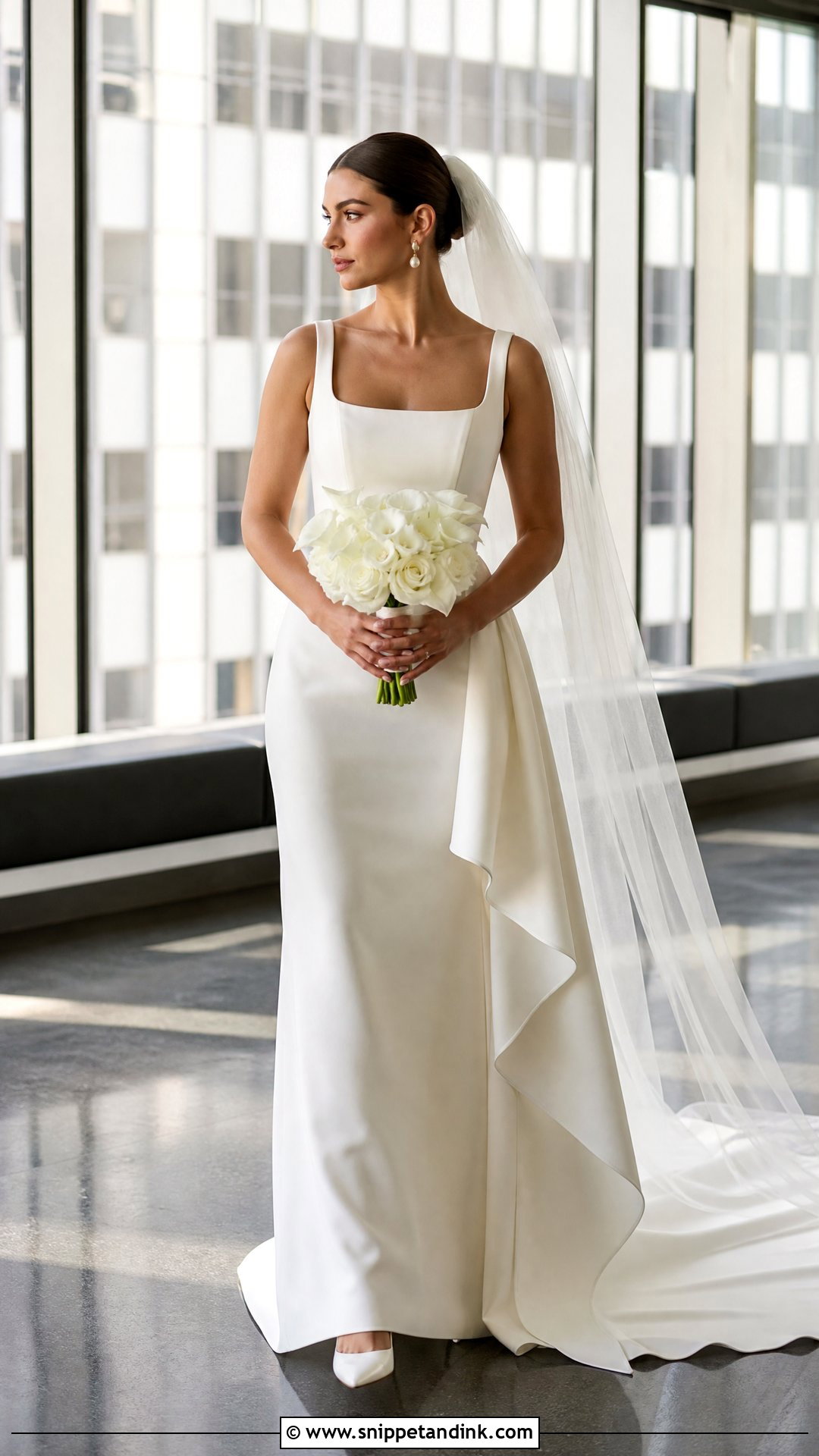
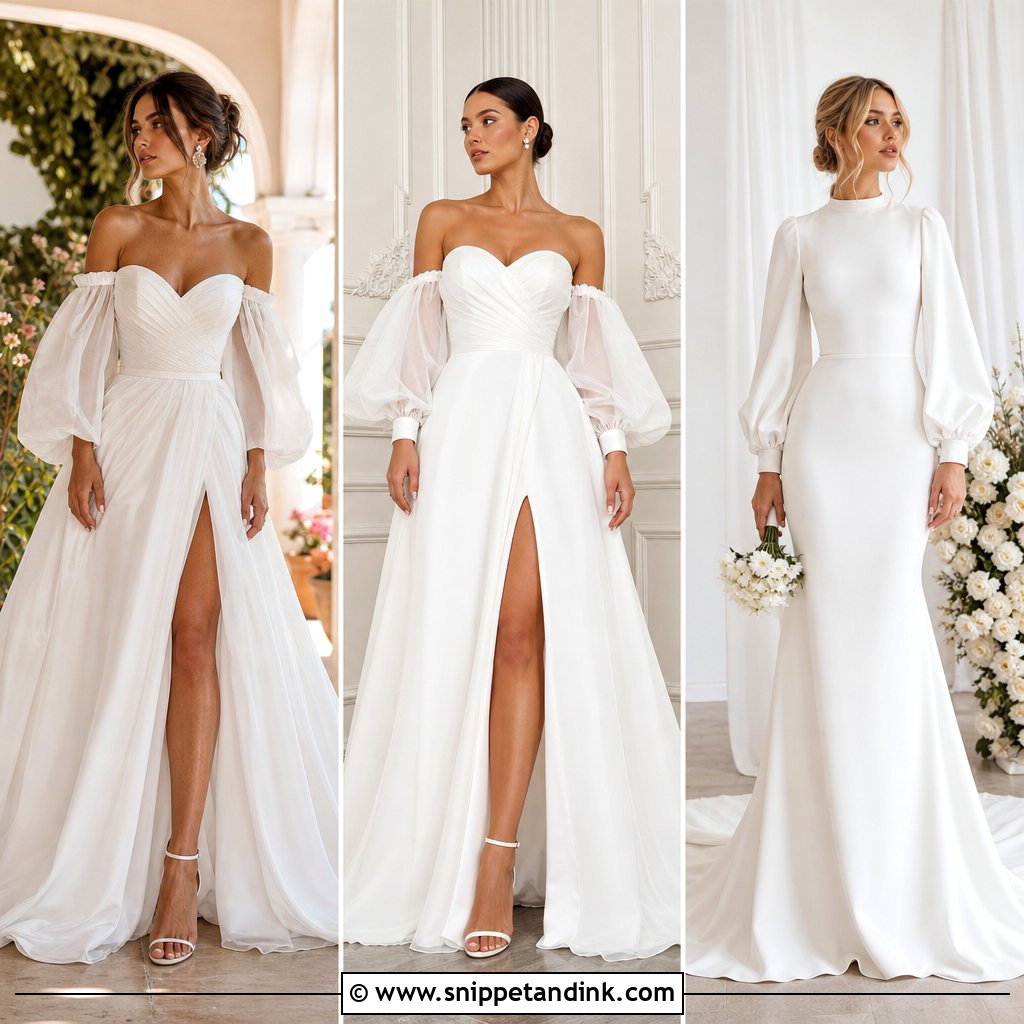
Can a waterfall gown be minimal? Yes, if there’s only one cascade. Choose smooth crepe, satin or mikado with a single draped ruffle falling from the waist into a side or back train, and keep the bodice to a square, bateau or strapless neckline. Sculptural earrings, sleek hair, pointed ivory pumps and a compact one-color bouquet are all you need. A plain cathedral veil adds impact for the ceremony; no veil looks sharper. Minimal gowns expose every seam, so the tailoring has to be exact; a ripple at the waist or a fold that won’t sit flat is obvious on plain fabric. City venues, galleries and modern hotels suit it.
Bustling a Train Made of Ruffles
A plain train can be lifted with a few hooks. A cascading one is trickier, because each ruffle has a direction, and lifting it in the wrong place flips the tiers over and shows the lining. Ask your seamstress which bustle suits your skirt. An over-bustle hooks the train up onto the back of the gown and keeps the ruffles facing out; an under-bustle tucks the train beneath, which often works better on very full tulle.
Have her color-code the loops with small ribbons, then film her bustling it at your final fitting. The person doing it on the day, usually a bridesmaid or your mother, should practice at least once. Expect to need a few minutes and some floor space.
Getting the Cascade From Car to Aisle Uncrushed
Layered skirts crush easily in a car, so book a vehicle with a wide door and a roomy back seat. Before you sit, have someone lift the back of the skirt up and over, so you sit on the lining rather than on the ruffles. On arrival, hang the dress high from a door frame and steam any flattened tiers on a low setting, keeping the steamer moving and a little away from the fabric. Never press organza ruffles with an iron on the day; a hot plate leaves shine and flattens the curl for good.
Ruffles Should Move When You Do
A good waterfall gown moves well and still lets you sit, eat and dance. Cascading organza looks bold and sculptural; tulle feels lighter and more romantic. Lace, satin, appliqués and detachable overskirts give you more ways to make it yours. Look at how the neckline, waist, skirt volume, accessories and venue work together before you decide. At fittings, walk, sit, turn and practice the bustle with the person who’ll do it on the day. A classic ball gown or a clean asymmetric line will both feel like yours when every layer is doing a job.
You'll Like These Ideas:





Leave a Reply