
Brides who arrive at a salon with complete looks in mind, gown plus veil plus shoes, decide faster and regret less than those chasing one neckline. The twenty dresses below run from classic silhouettes to modern runway-inspired details, with the fabrics and accessories that finish each one. Right now designers are showing everything from lace and satin ball gowns to basque waists, detachable overskirts, pearl work and shorter hems. Before you book appointments, think about the venue, the season and how much you’ll need to move. A dress has to look right in photos and still let you walk, sit and dance.
Bridal Sizes Run Smaller Than Your Usual Label
The first thing I tell a bride is to ignore the number. Most bridal designers cut to their own size charts, which commonly run one or two sizes smaller than high-street clothing. A gown is ordered by your largest measurement among bust, waist and hips, then altered down everywhere else, because taking a dress in is routine and letting one out is often impossible.
What to bring to the first appointment
- A strapless or low-back bra in nude, or the shapewear you’re considering.
- Shoes close to the heel height you plan to wear, so hem and train make sense.
- Two or three people at most. Every extra opinion slows the decision.
- Photos of your venue, since a gown that suits a ballroom may overwhelm a small registry office.
Salon samples are usually in one or two sizes and clipped to fit, so judge shape and fabric, not fit. Try contrasting silhouettes early: a ball gown, a sheath and an A-line in the first session will tell you more than ten versions of the same shape.
1. Satin Ball Gown Wedding Dress
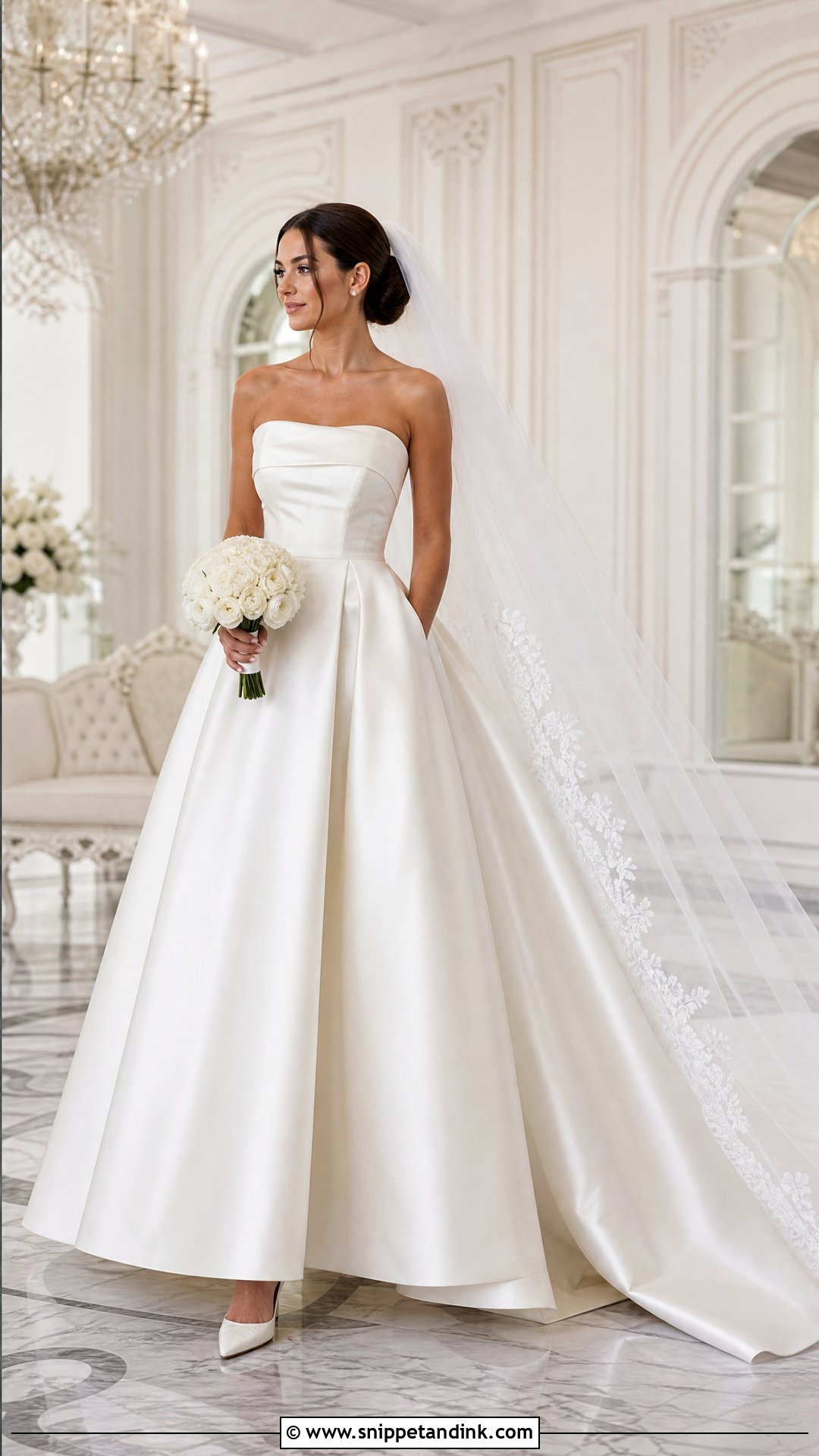
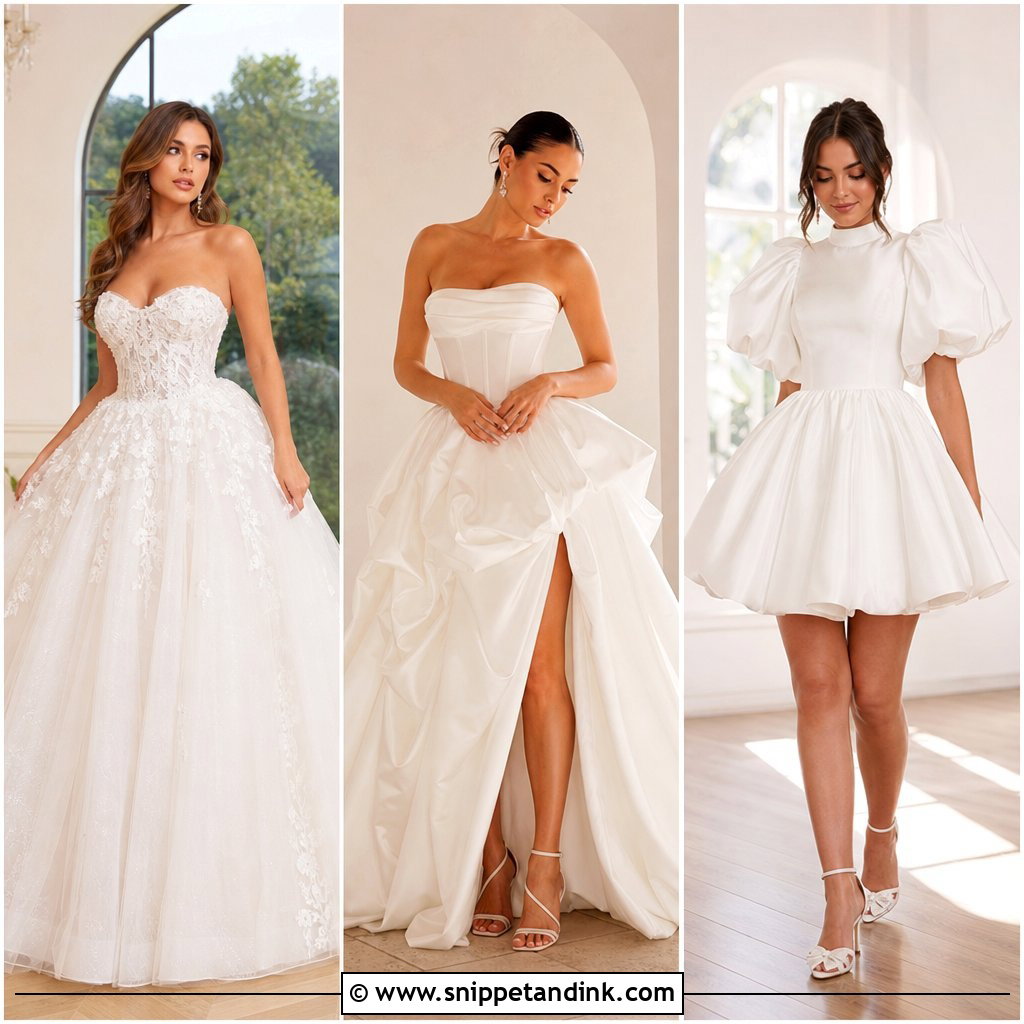
Satin ball gowns depend on what’s underneath. A structured bodice with a curved strapless neck, a defined waist and a skirt that holds its own volume needs a proper petticoat or a crinoline layer; without one, heavy satin collapses flat by the reception. Ivory satin has a soft glow, and covered buttons down the back are a classic finish. Pointed ivory pumps, pearl studs and a raw-edge cathedral veil complete it, with a compact bouquet so the proportions stay balanced. Ask your seamstress for a bustle with enough attachment points for a heavy train. Ballrooms, historic houses and formal indoor ceremonies suit it.
2. Lace A-Line Wedding Dress
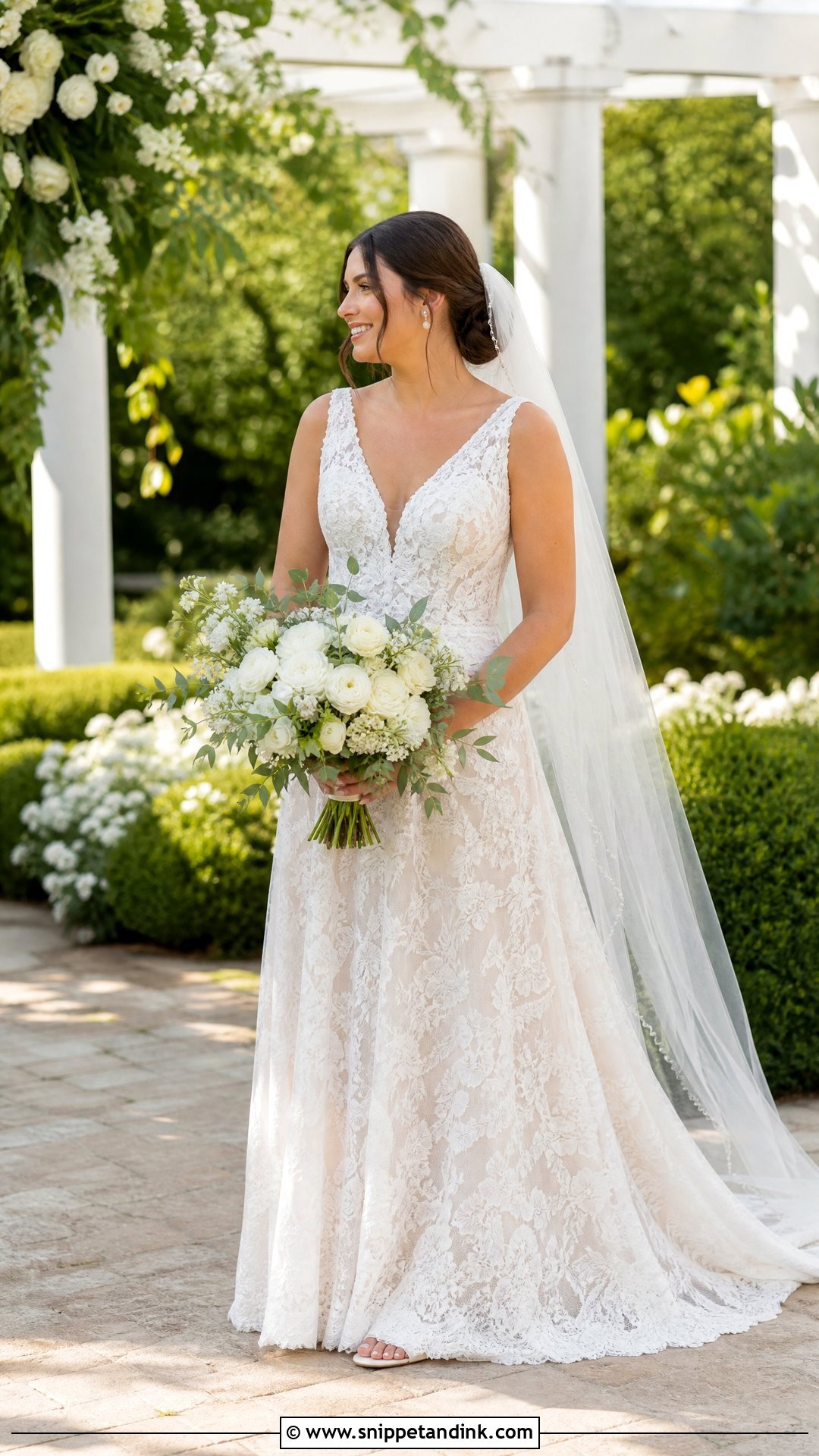
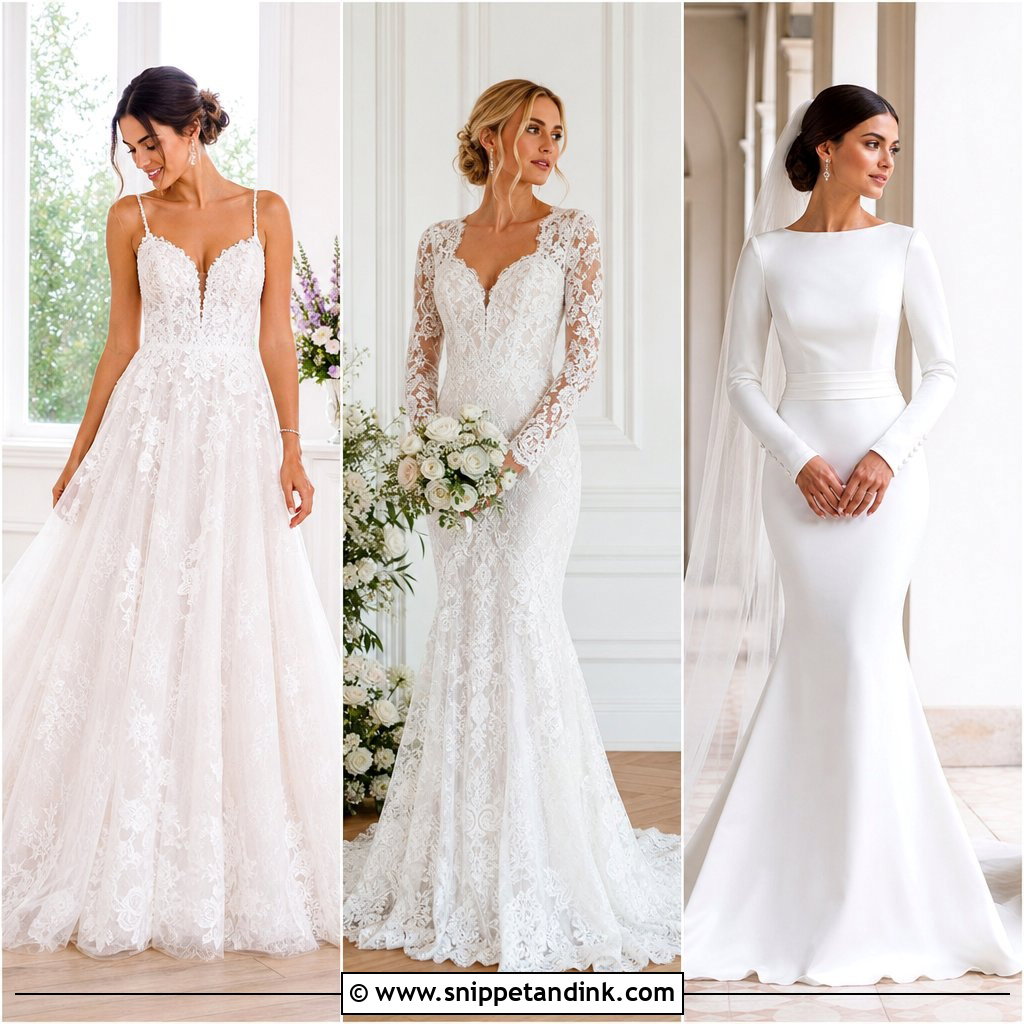
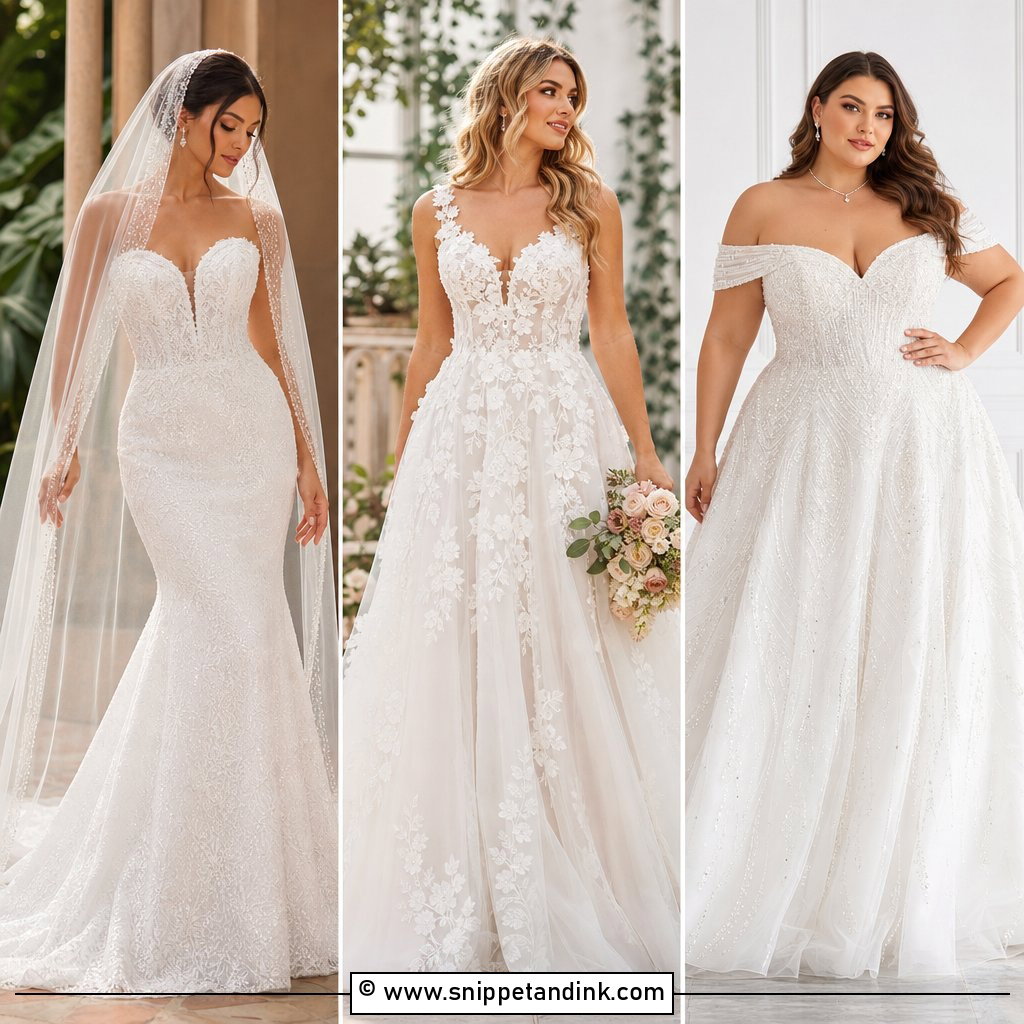
Lace A-lines suit more bodies and venues than any shape I fit. The bodice follows the natural waist, then the skirt widens gently. Floral lace over a lining a shade darker or warmer than the lace makes the pattern visible in photos; lace over a matching lining can disappear into one pale blur. A V-neck lengthens the upper body and wider straps add support. A fingertip veil, low block heels, a fine pendant and pearl earrings finish it, with a loose white bouquet. Lightweight skirt layers make it easy to walk and dance in.
3. Basque Waist Wedding Dress
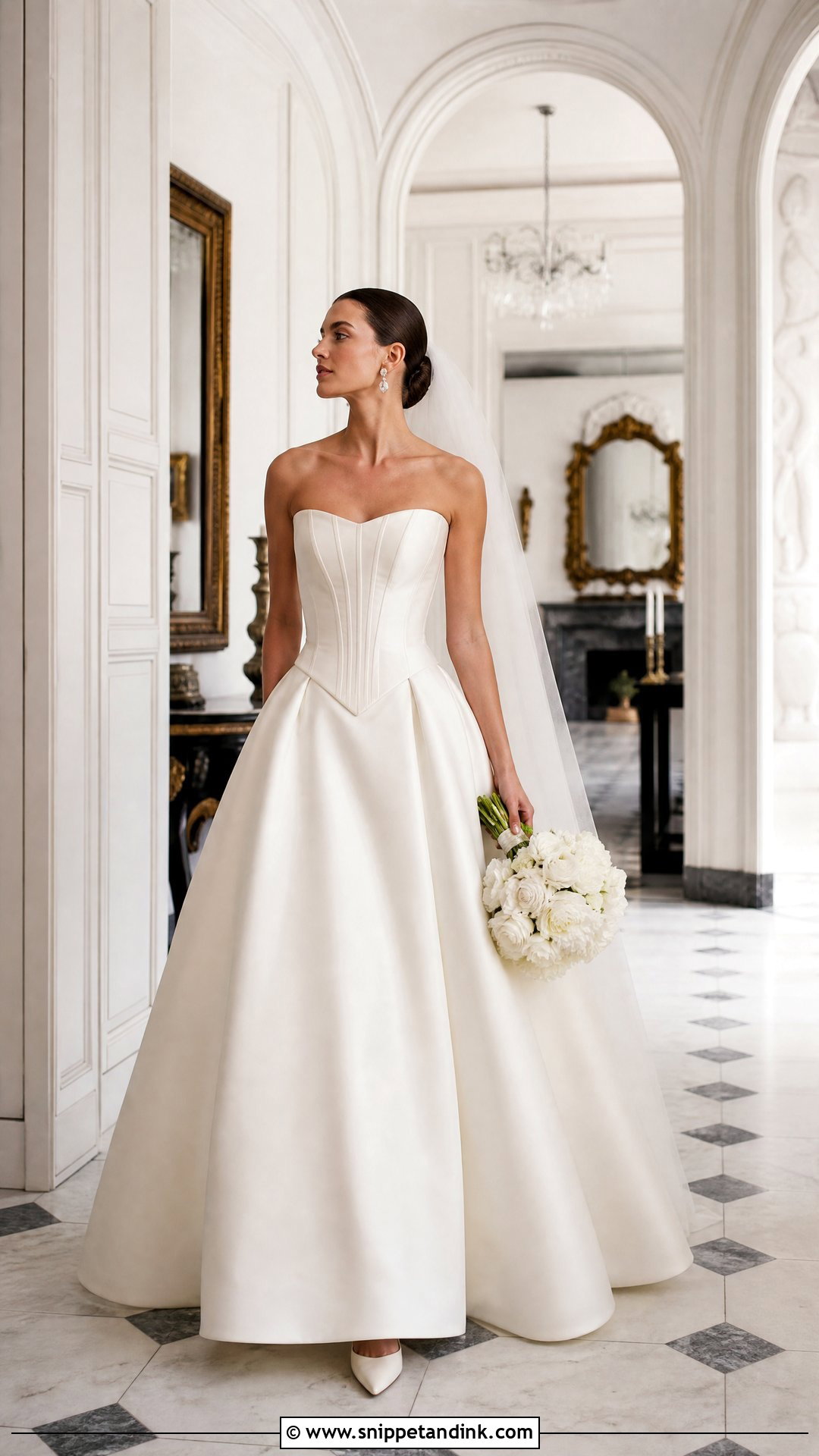
A basque waist wedding dress dips into a point below the natural waist, which lengthens the torso and narrows the hips visually. It’s usually built on a corset bodice with a full satin or mikado skirt and a strapless neck, so the waist does all the talking. A sleek bun, drop earrings, pointed pumps and a long plain veil set under the hair keep it clean; skip the necklace. That V point is the alteration I watch most. If the bodice is even slightly long, the point folds when you sit, so test it seated.
4. Off Shoulder Wedding Dress
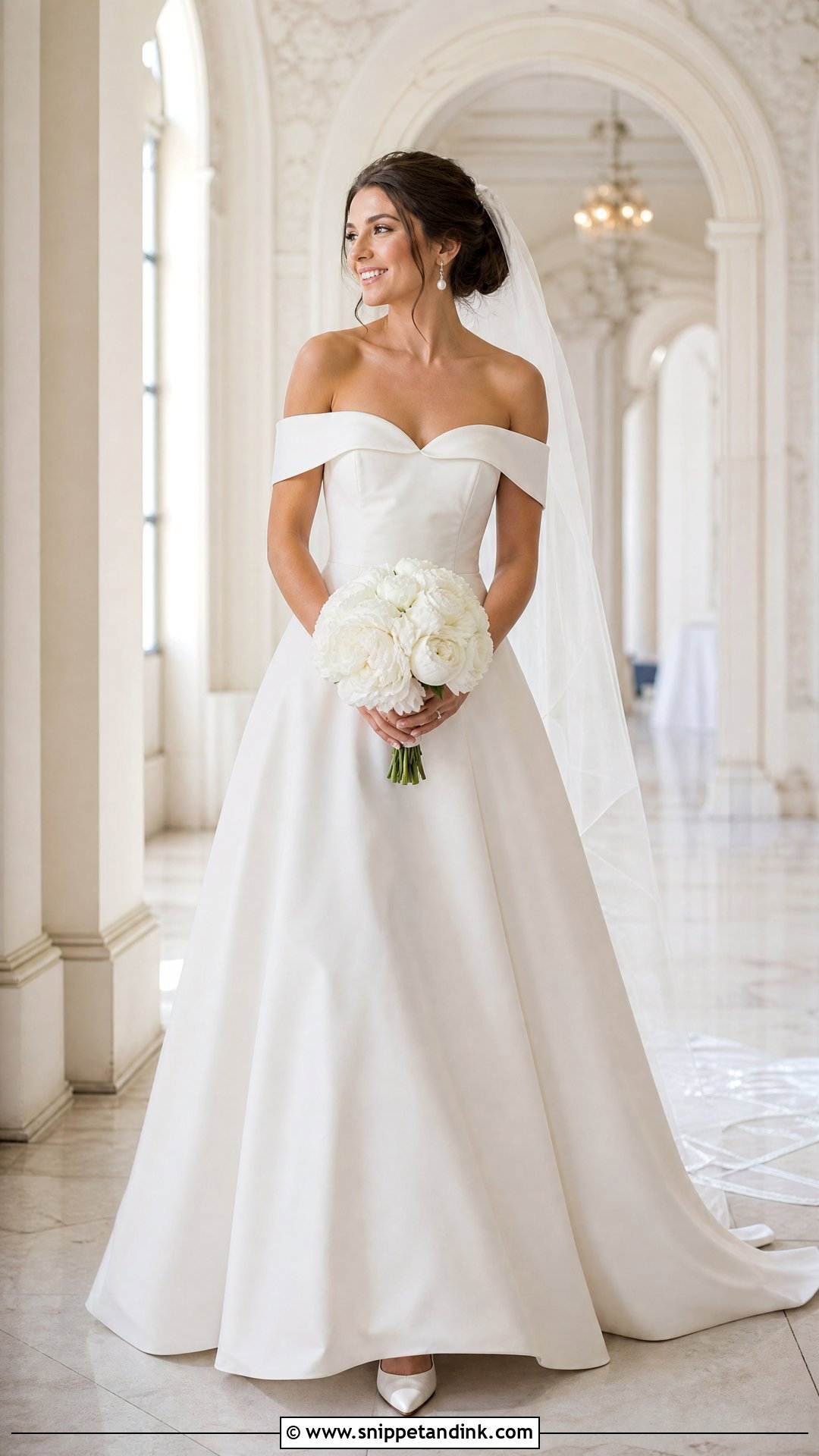
Off-shoulder bands frame the collarbones, but they only stay put if the dress is built to carry them. I look for internal boning or a waist stay holding the bodice so the sleeves aren’t doing the work. A full A-line skirt is classic; fitted crepe is cleaner. A choker-length necklace, pearl drops, closed heels and a chapel veil complete it, with hair low or swept back. In the sample, raise your arms, hug someone and sit down. If the band rides up, the armhole is too narrow, and that’s an easier fix before you order than after.
5. Long Sleeve Lace Wedding Dress
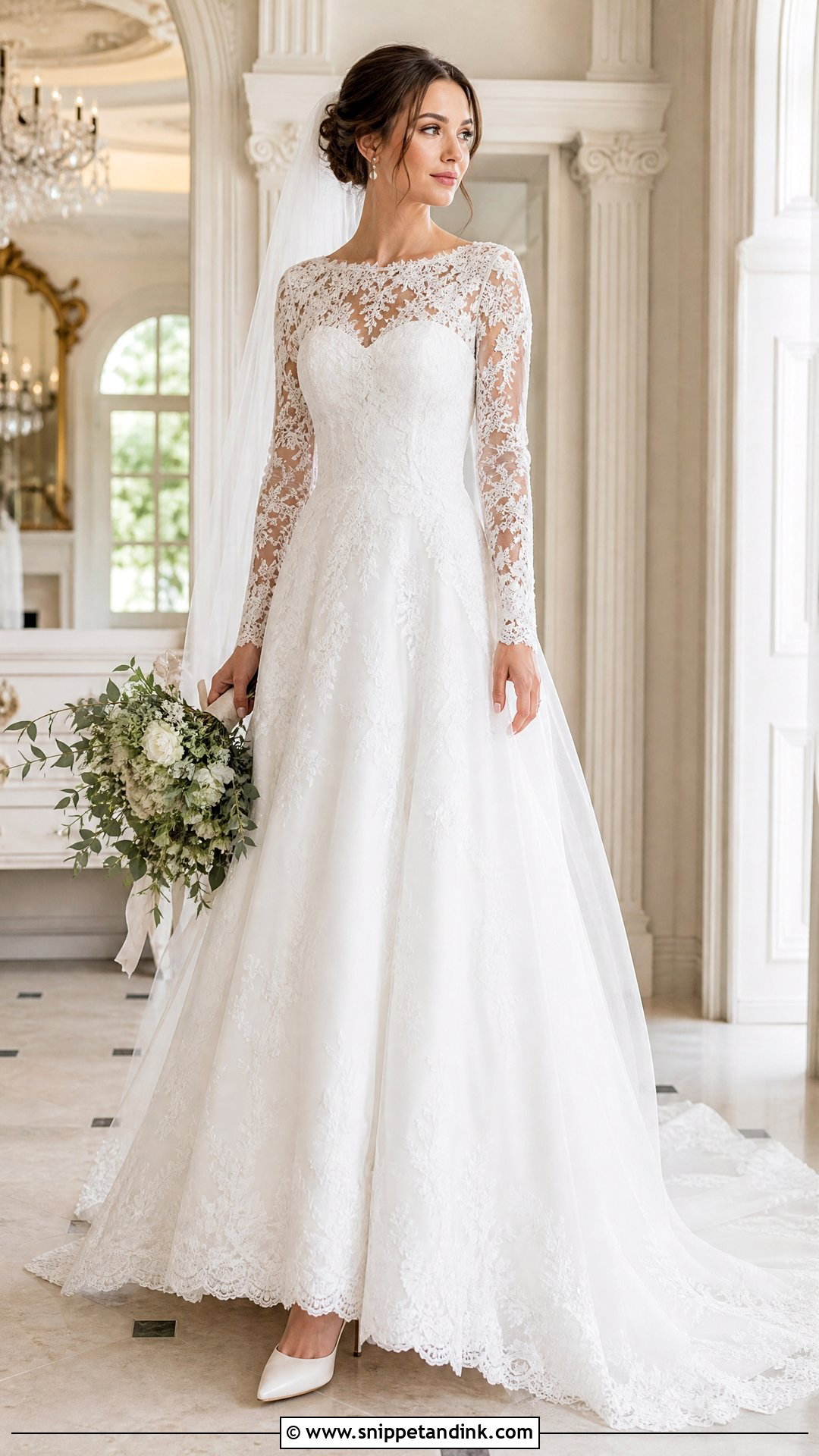
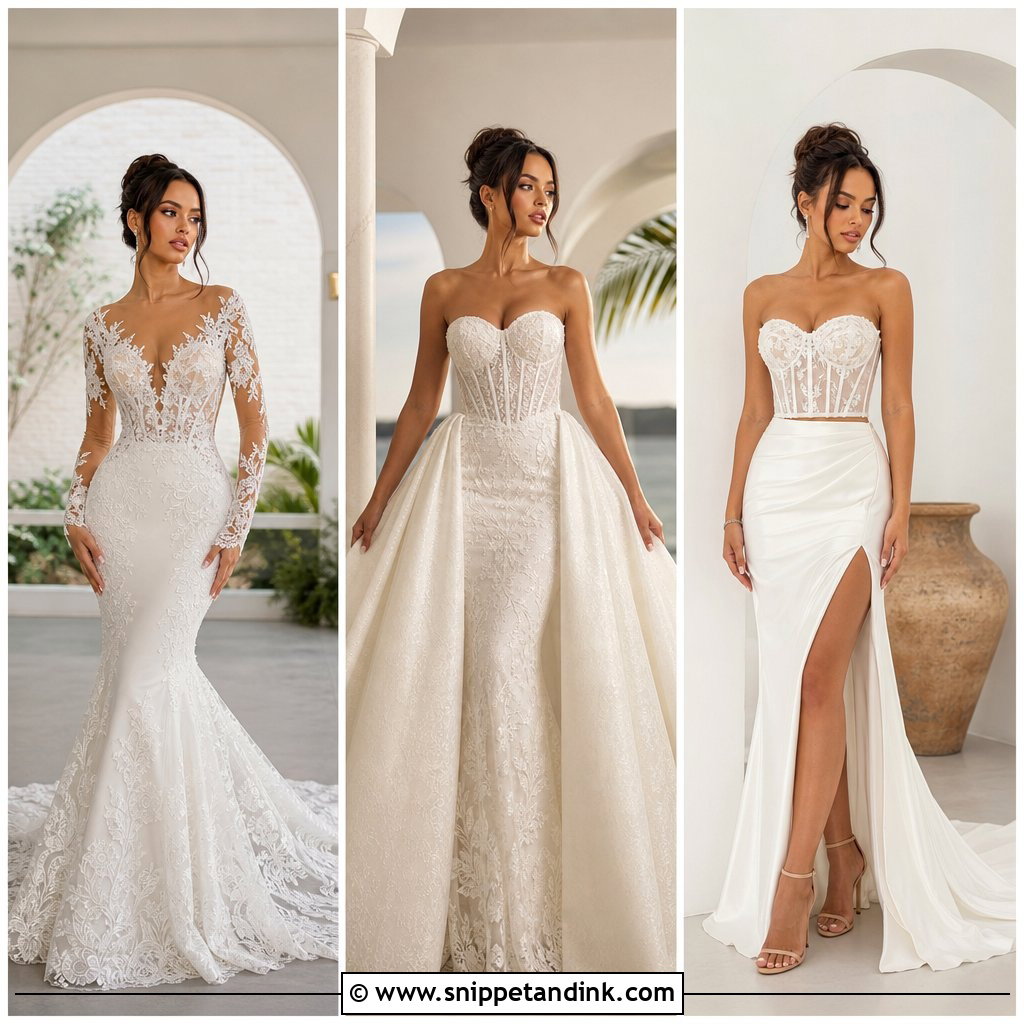
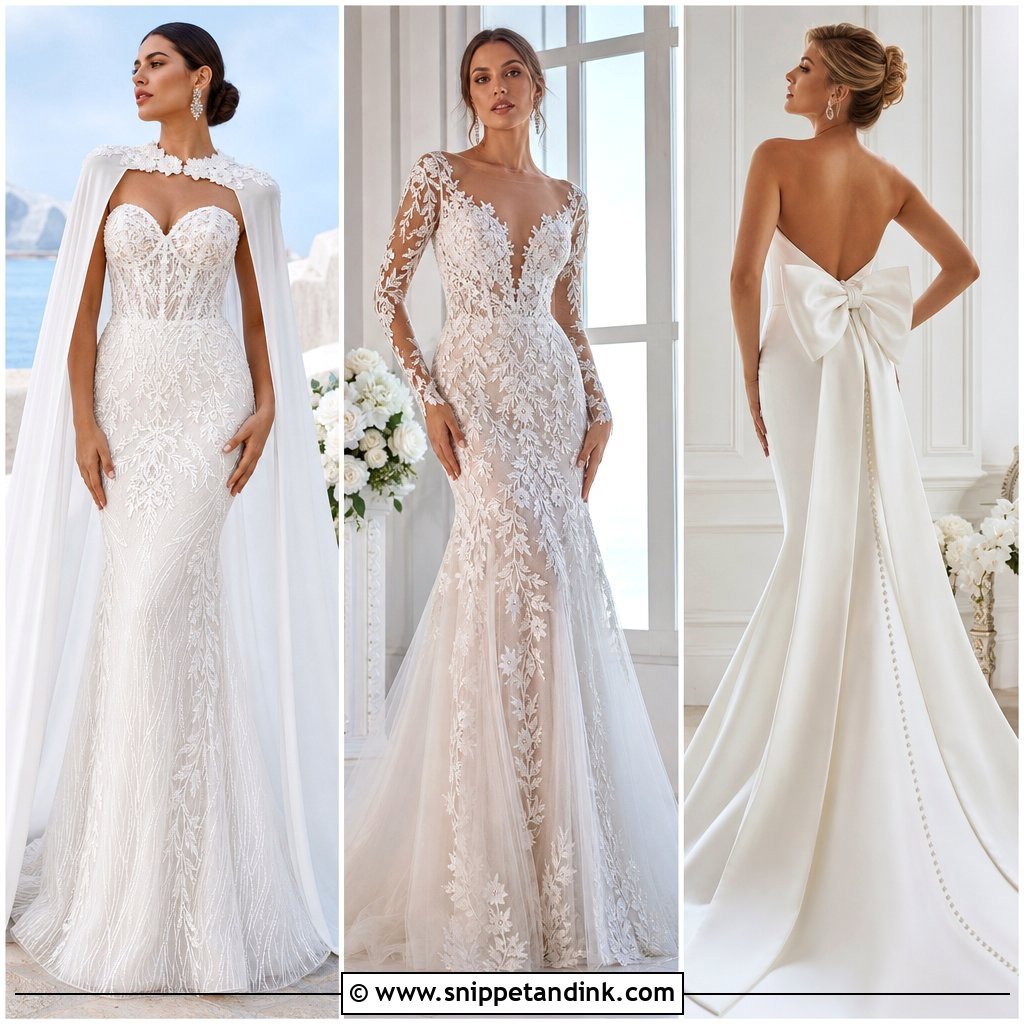
Long lace sleeves give coverage and romance at once. Fitted illusion sleeves edged with lace appliqués, a lined bodice and a flowing A-line skirt are the build to look for, with covered buttons at cuffs and back. Closed pumps, a simple comb veil, pearl earrings and greenery in the bouquet are enough; the lace already handles the neckline, so leave the necklace off. For cold weather, add an ivory coat or removable cape for outdoor portraits. Sleeves on wedding gowns are often altered too tight. I leave enough room to bend the elbow fully, because you’ll be holding a bouquet for hours.
6. Mermaid Wedding Dress
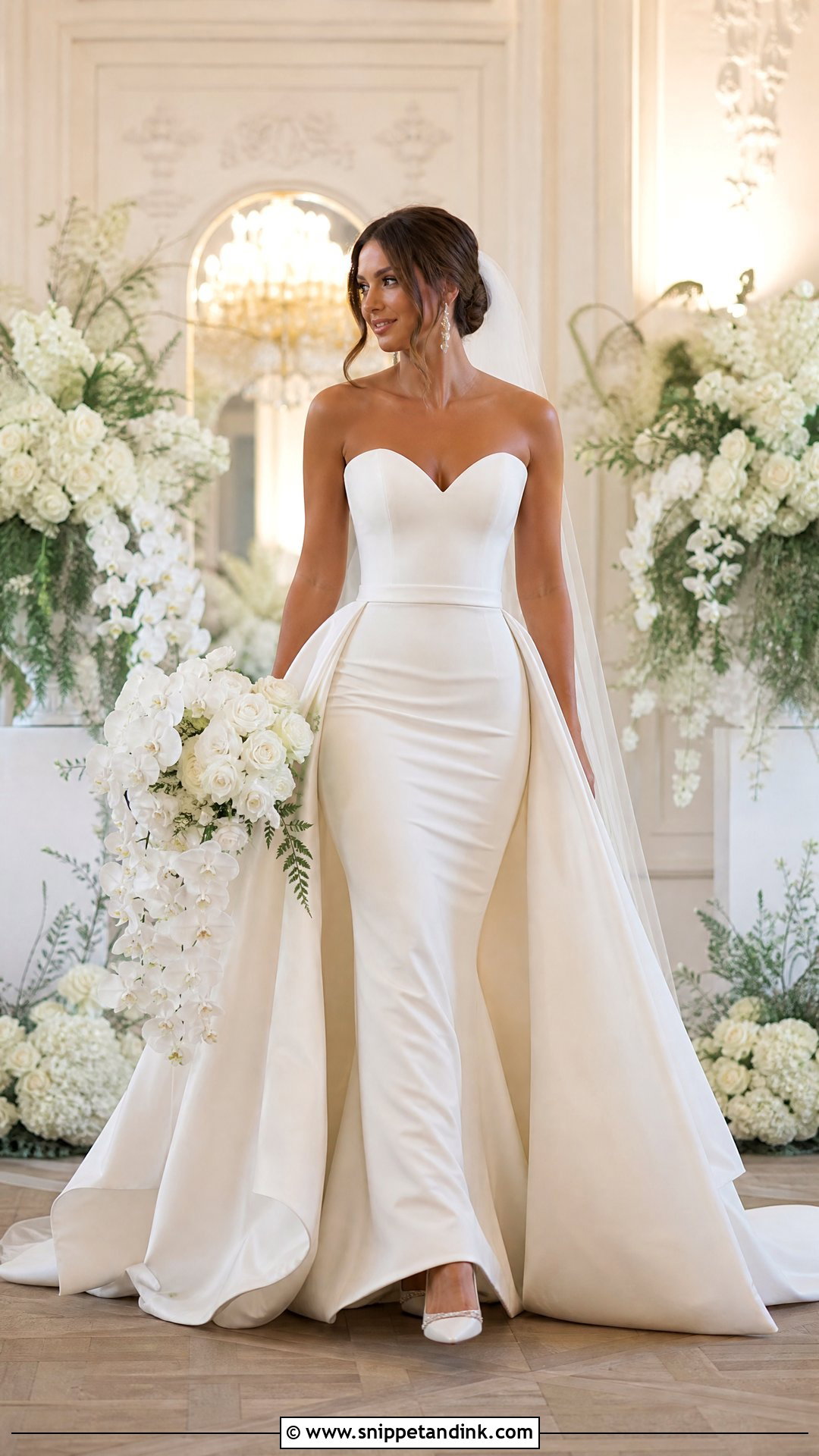
Mermaid gowns fit close to the knee before flaring, and structured crepe, satin or lace give the shape. A sweetheart, straight strapless or softly draped neckline suits the long line. Long drops, pointed heels and a narrow veil keep it sleek, and a small cascading bouquet echoes the vertical lines. Where the flare starts decides how well you can move: at or just above the knee, you’ll take short steps and need help with stairs; lower down, even shorter. Sit and walk in it before you buy. A removable overskirt is another option for ceremony drama and reception flexibility.
7. Minimalist Sheath Wedding Dress
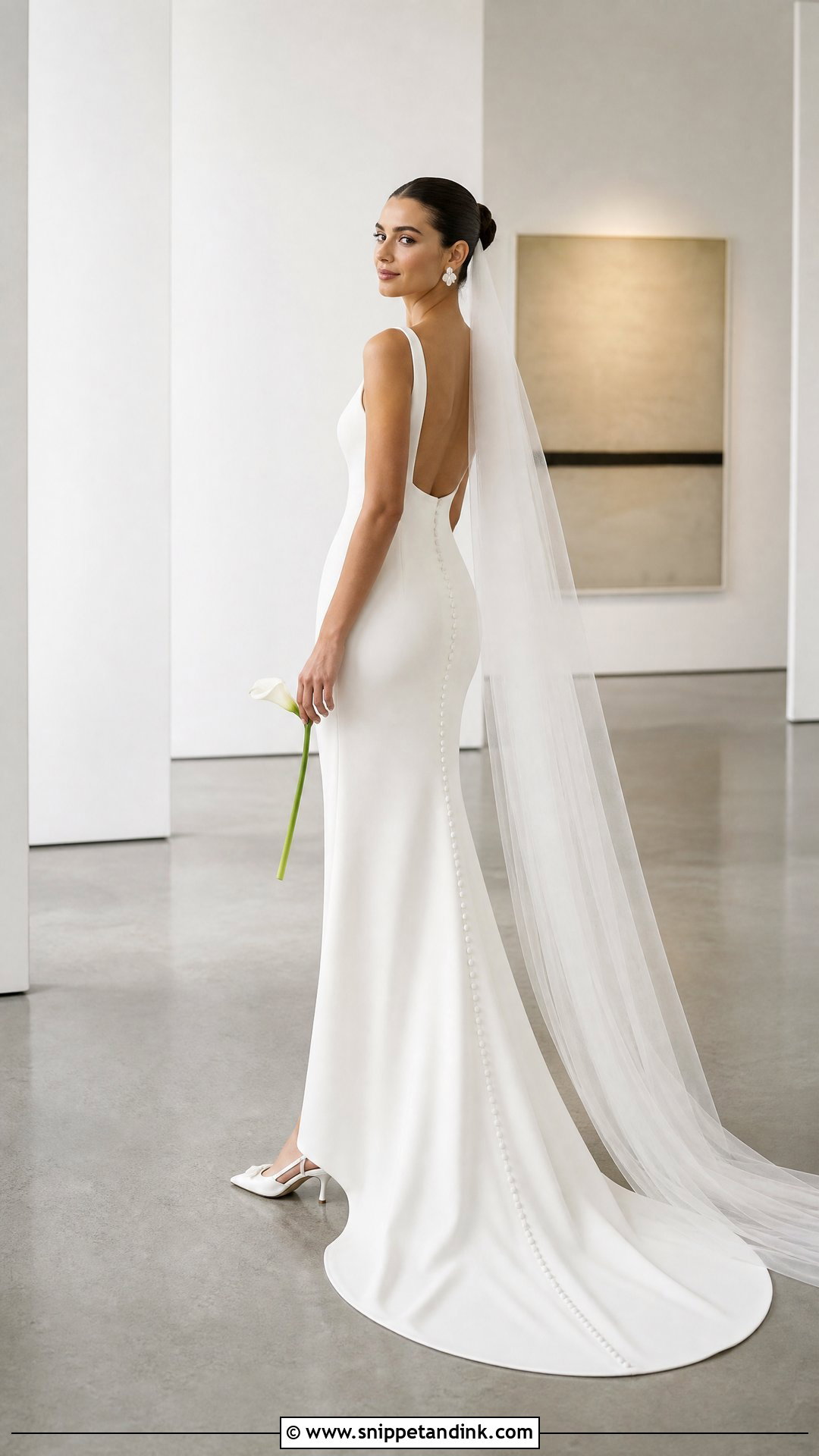
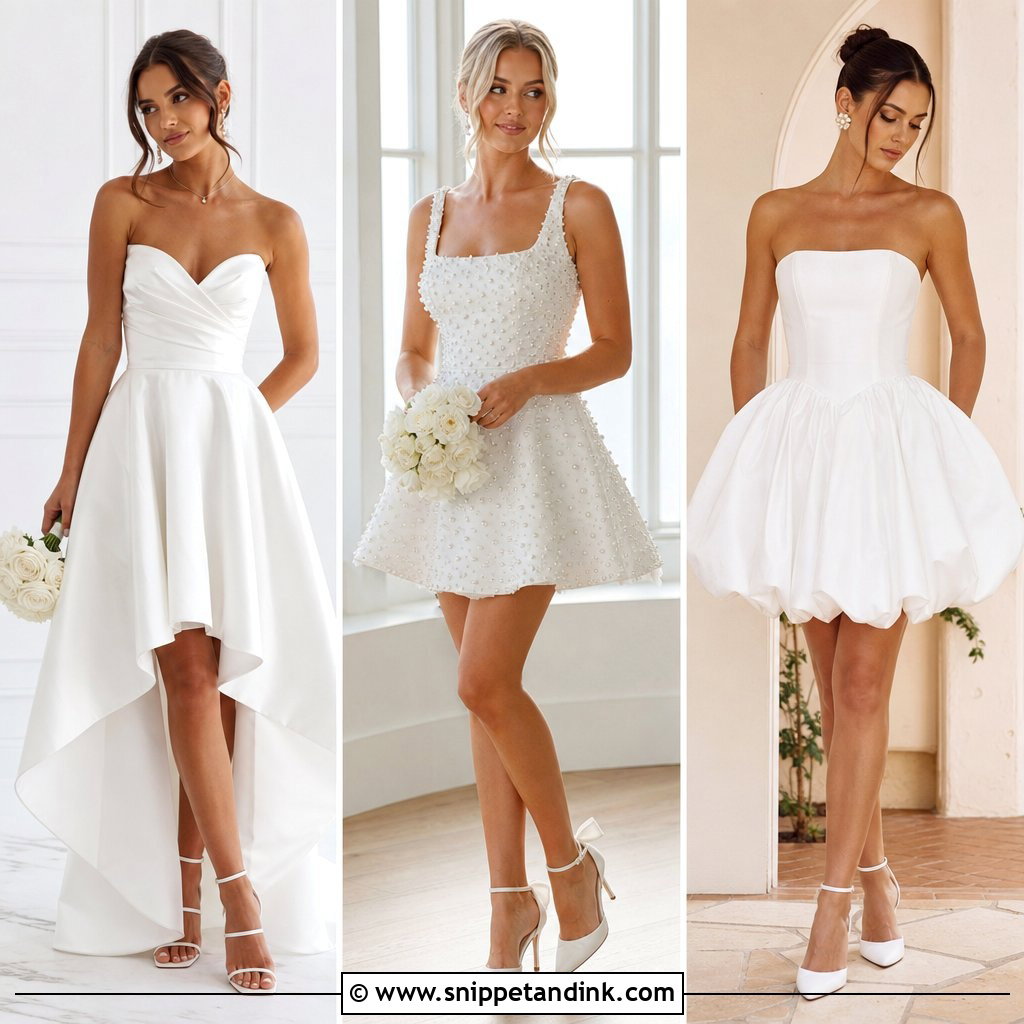
A sheath has nowhere to hide, which is its appeal and its risk. Smooth crepe or silk with a square neck, fitted waist and straight skirt looks deliberate rather than plain, especially with a low back, covered buttons or a detachable shoulder bow. Slingbacks, sculptural earrings, a sleek bun and a single-layer chapel veil complete it, with a one-flower bouquet. Every seam, wrinkle and undergarment line shows through plain fabric. I ask brides to choose their underwear before the first fitting and wear it to every fitting after, because changing it later changes how the dress falls.
8. Square Neck Wedding Dress
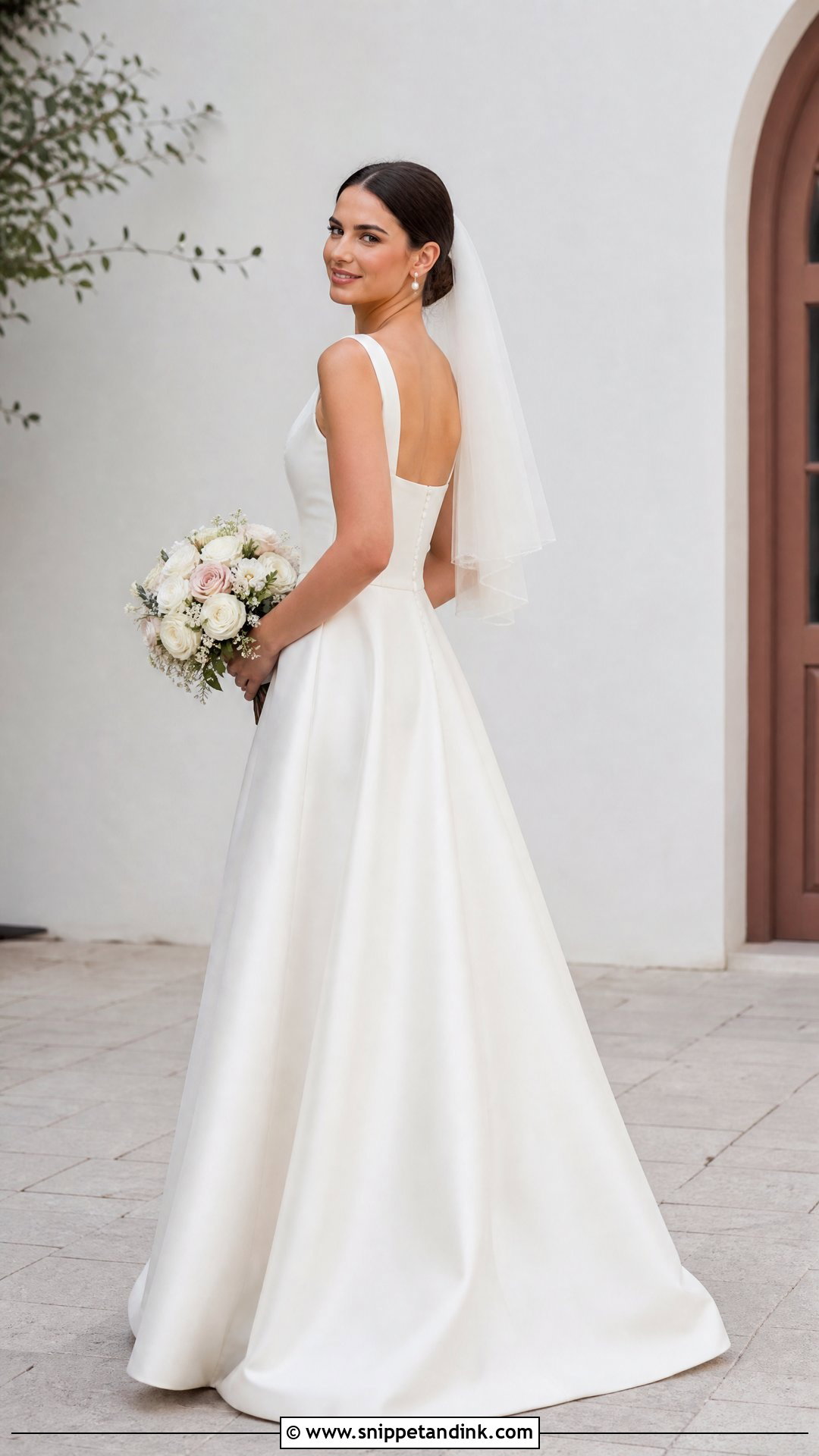
A square neck sets a clean frame, and with wide straps and a fitted bodice it suits most frames. An A-line skirt in satin, crepe or floral jacquard works well, and a low square back repeats the shape behind. Pearl studs, an elbow veil, block heels and a rounded bouquet complete it, with a smooth updo. Wide straps tend to slip toward the edge of narrow or sloping shoulders, so I often move them in a fraction at the back. You should be able to breathe deeply, sit and reach forward without the neckline lifting.
9. Scoop Neck Wedding Dress
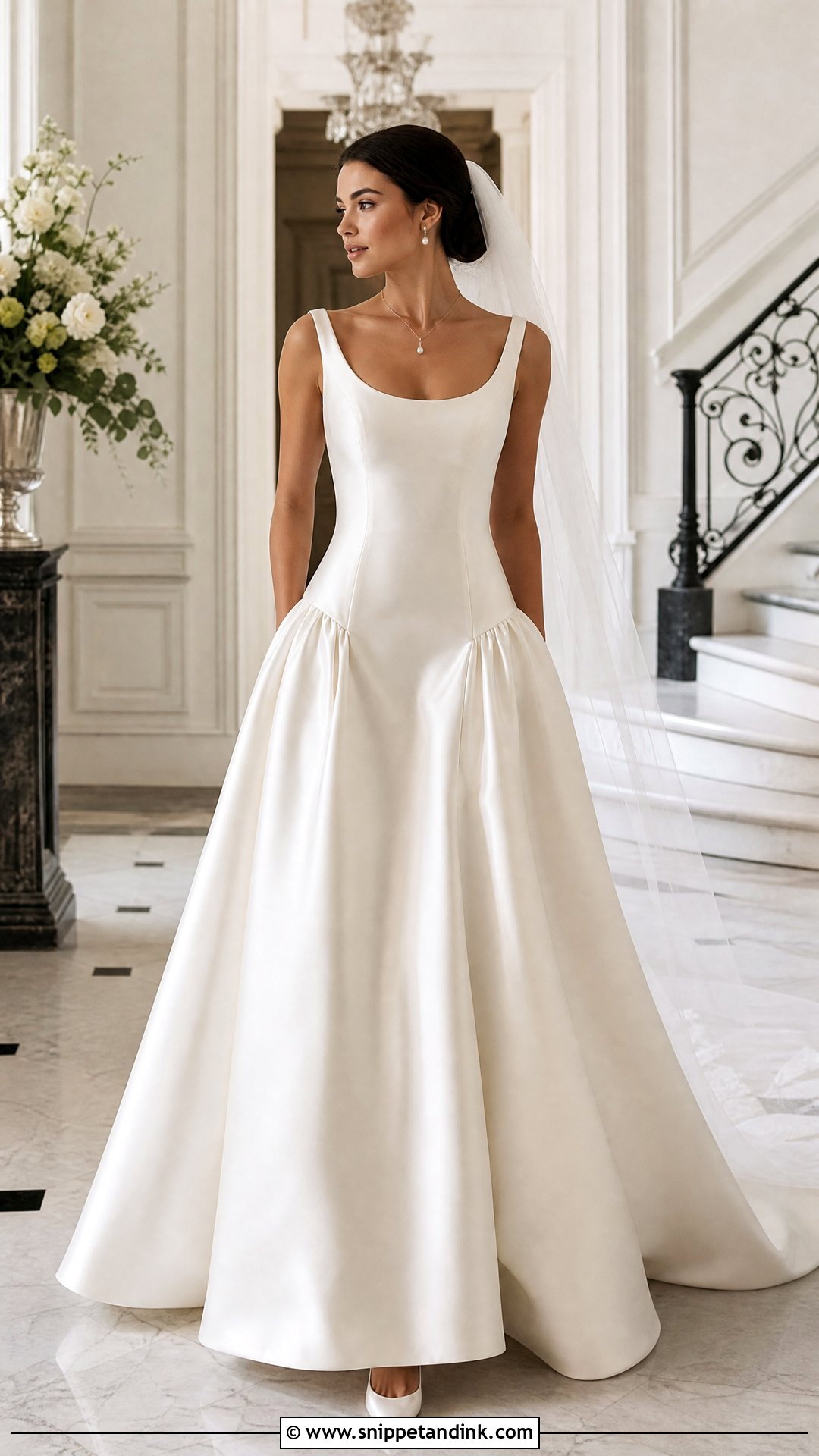
Scoop necks are gentler than plunges or sharp angles. A satin gown with a fitted bodice and a drop waist or A-line skirt makes a long, balanced line, and wide straps make the neckline easy to wear for twelve hours. A fine pendant, pearl earrings, pointed heels, a long veil with subtle edging and a low chignon suit it. Scoops gape when you lean forward, especially on a smaller bust. If the neckline sits low, ask about fine mesh at the center front or a little extra internal support. Check it bending forward in the mirror, the way you’ll lean to sign the register.
10. Halter Neck Wedding Dress
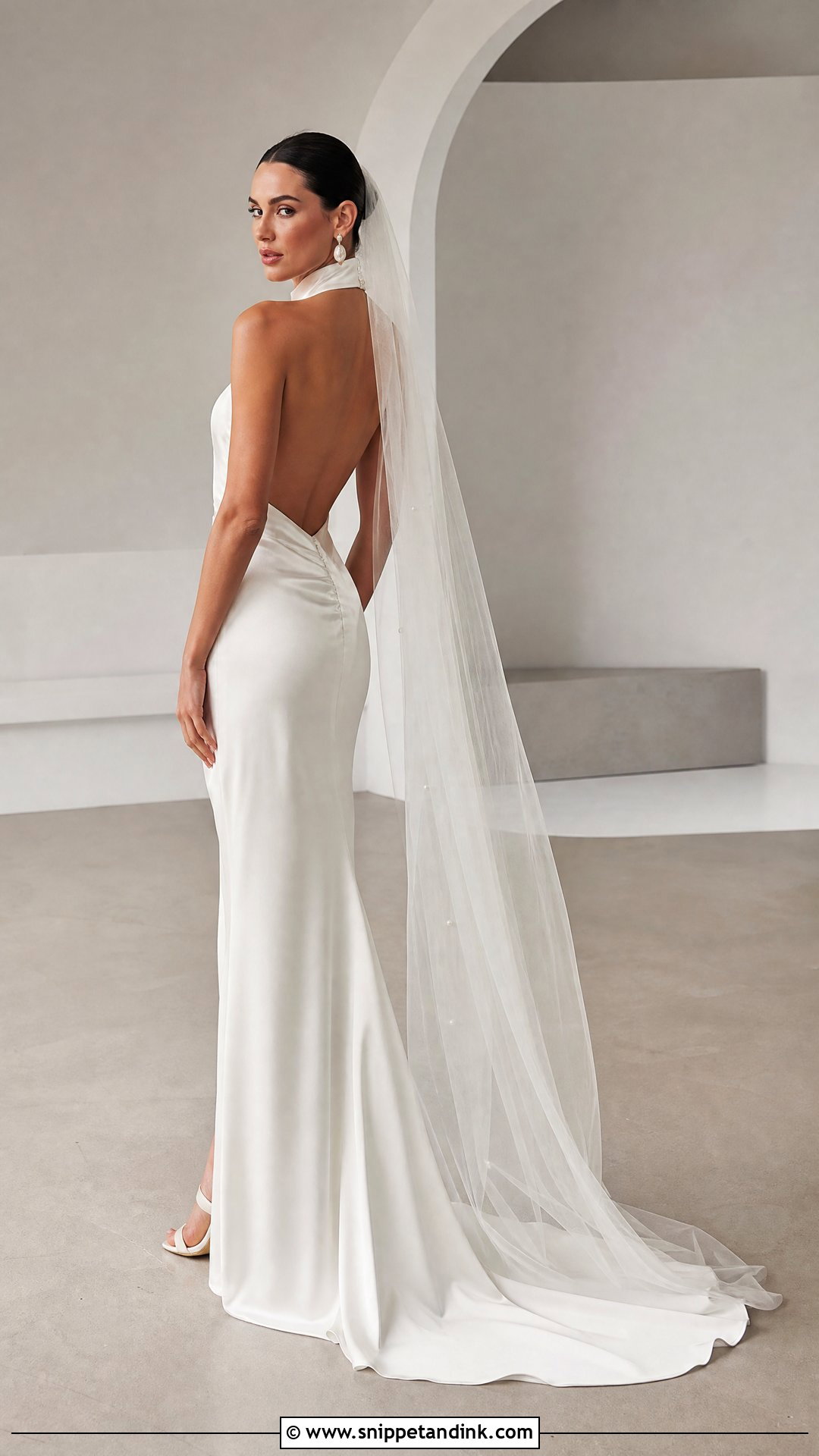
A halter neck wedding dress puts the shoulders on show and gives a sleek line. Fluid satin drapes softly; structured crepe holds a sharper shape. A fitted column skirt with a short train keeps it modern, and an open back gives guests something to see. Statement earrings, metallic or ivory sandals and a neat bun suit it, with no necklace. A light fingertip veil or a narrow scarf adds movement. Halters hang their weight from the neck, so the closure needs to sit flat; I check it with the bride turning her head and sitting down.
11. Pearl Wedding Dress
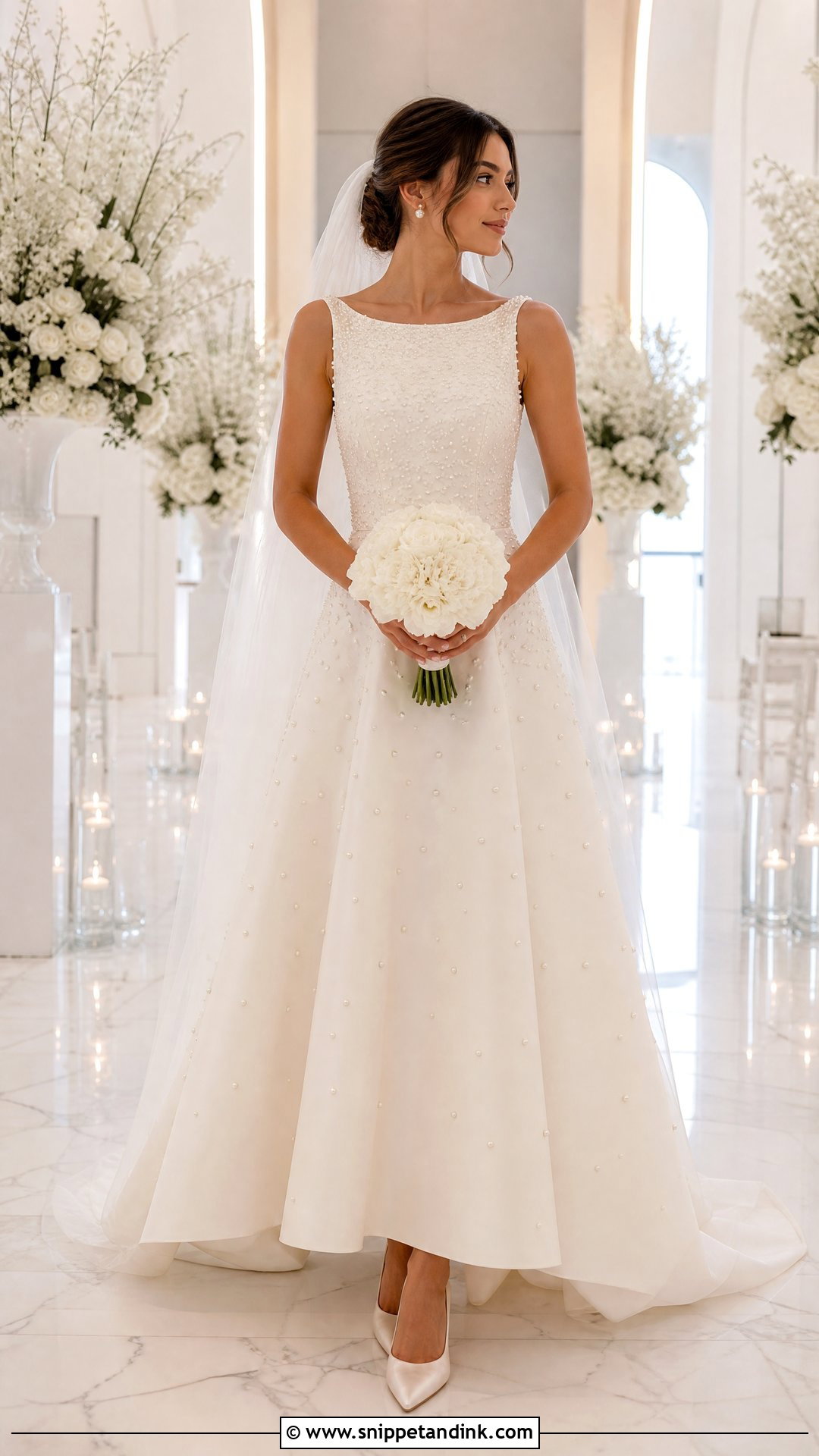
Scattered pearls fading from bodice into skirt turn a simple A-line or fitted dress into a detailed one. A neutral lining keeps the pearls visible without making them harsh. Pearl earrings, satin pumps, a plain veil and a compact white bouquet complete it. Pick one or two pearl accessories at most; a necklace, bracelet and hairpiece on top of a pearl gown is too much. I inspect sample pearls by tugging gently; loose ones snag veil tulle, and a sewn pearl pulled free from a sample often means the production gown uses the same method. A smooth lining keeps the backs from pressing into skin.
12. Floral Applique Wedding Dress
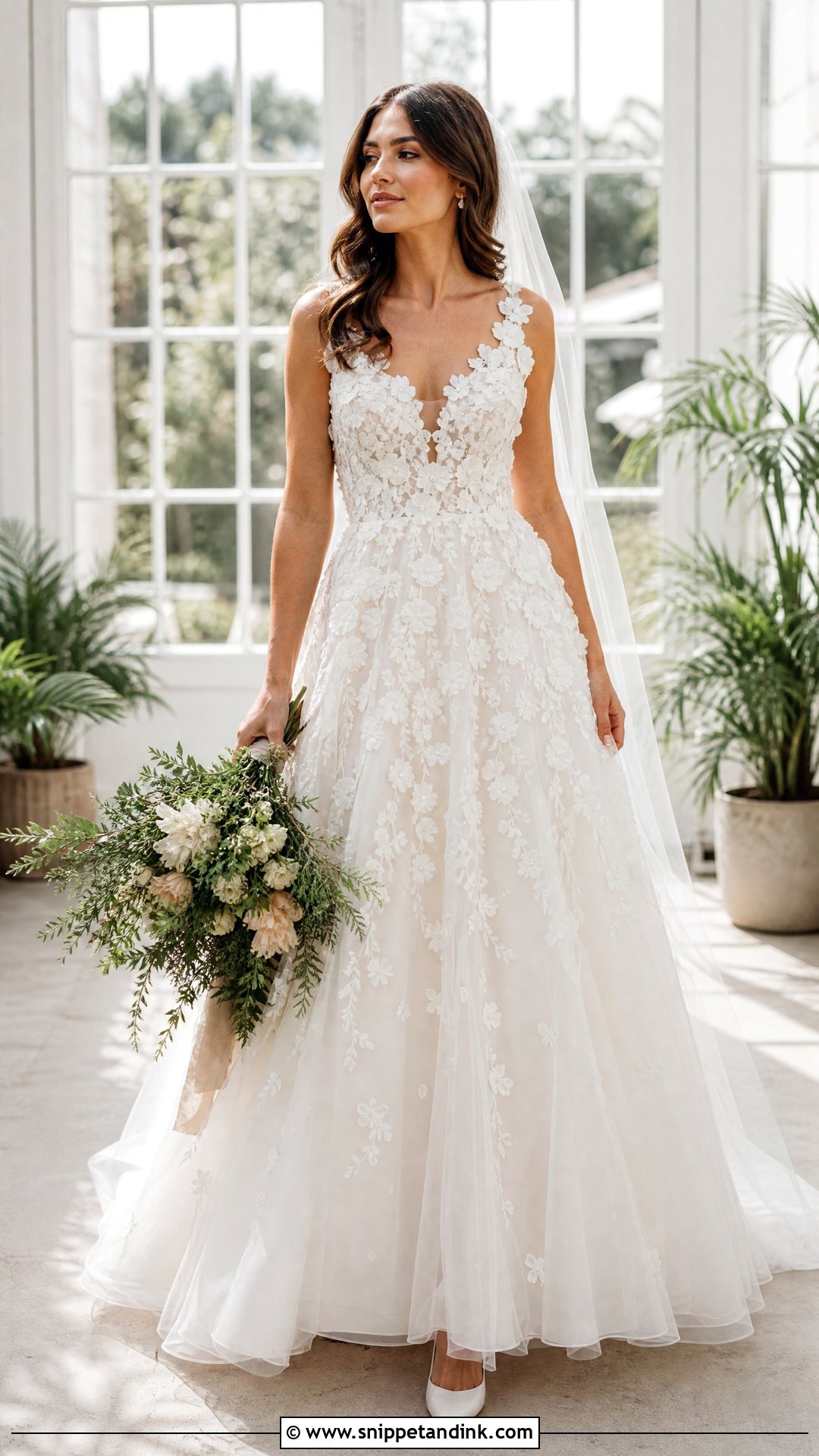
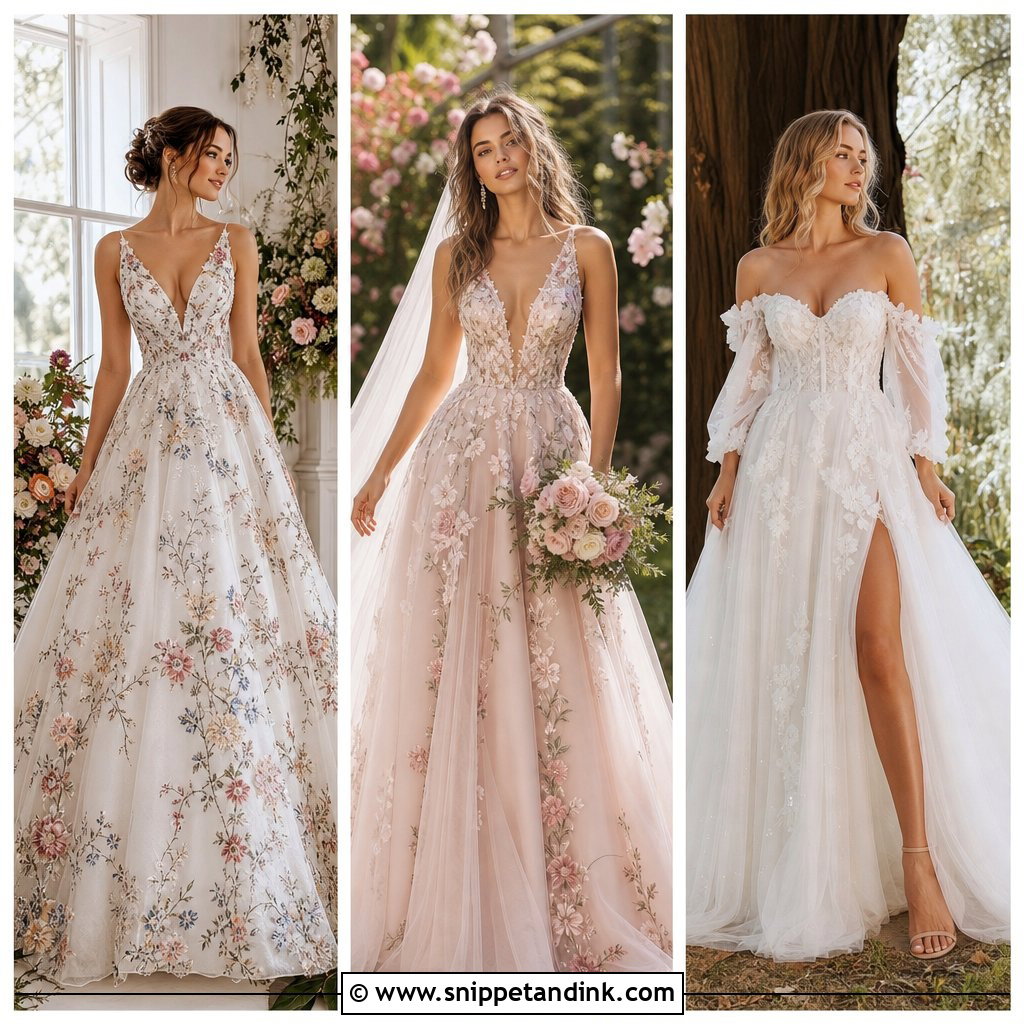
A floral applique wedding dress gets its texture from raised flowers placed across the bodice and trailing onto the skirt. Soft ivory keeps it elegant, and a little beading brightens it without stealing the show. Simple earrings, closed heels and a plain tulle veil keep the appliqués visible; a loose bouquet echoes the flowers without copying them. The placement of the largest flowers is what I study in the mirror, front, side and back. A big bloom sitting right on the hip or the bust point draws the eye somewhere you may not want it, and a seamstress can usually move an appliqué.
13. Detachable Overskirt Wedding Dress
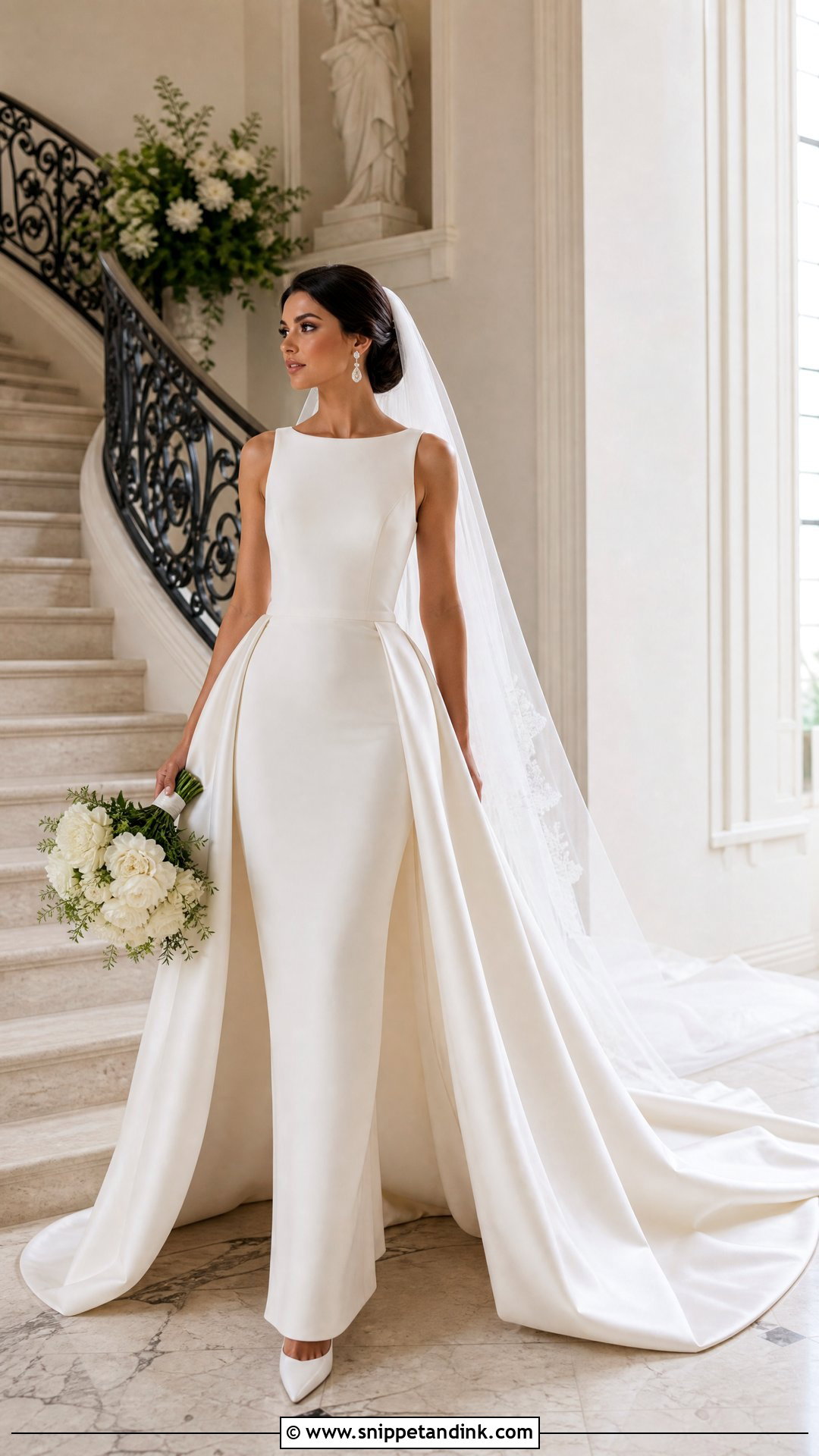
Two looks, one dress: a fitted column, sheath or mermaid underneath, with a full satin or tulle overskirt on top for the ceremony and its train. Take it off later and you’ve got a lighter silhouette for dancing. Pointed pumps, drop earrings, a cathedral veil and a structured bouquet complete it. The overskirt waistband should sit flat, not add a ridge. Practice taking it off and putting it back on, and choose one helper who knows the fastenings, whether hooks, snaps or a narrow belt. I write the steps down for that person, because the swap often happens in a rush between portraits and the entrance.
14. Drop Waist Wedding Dress
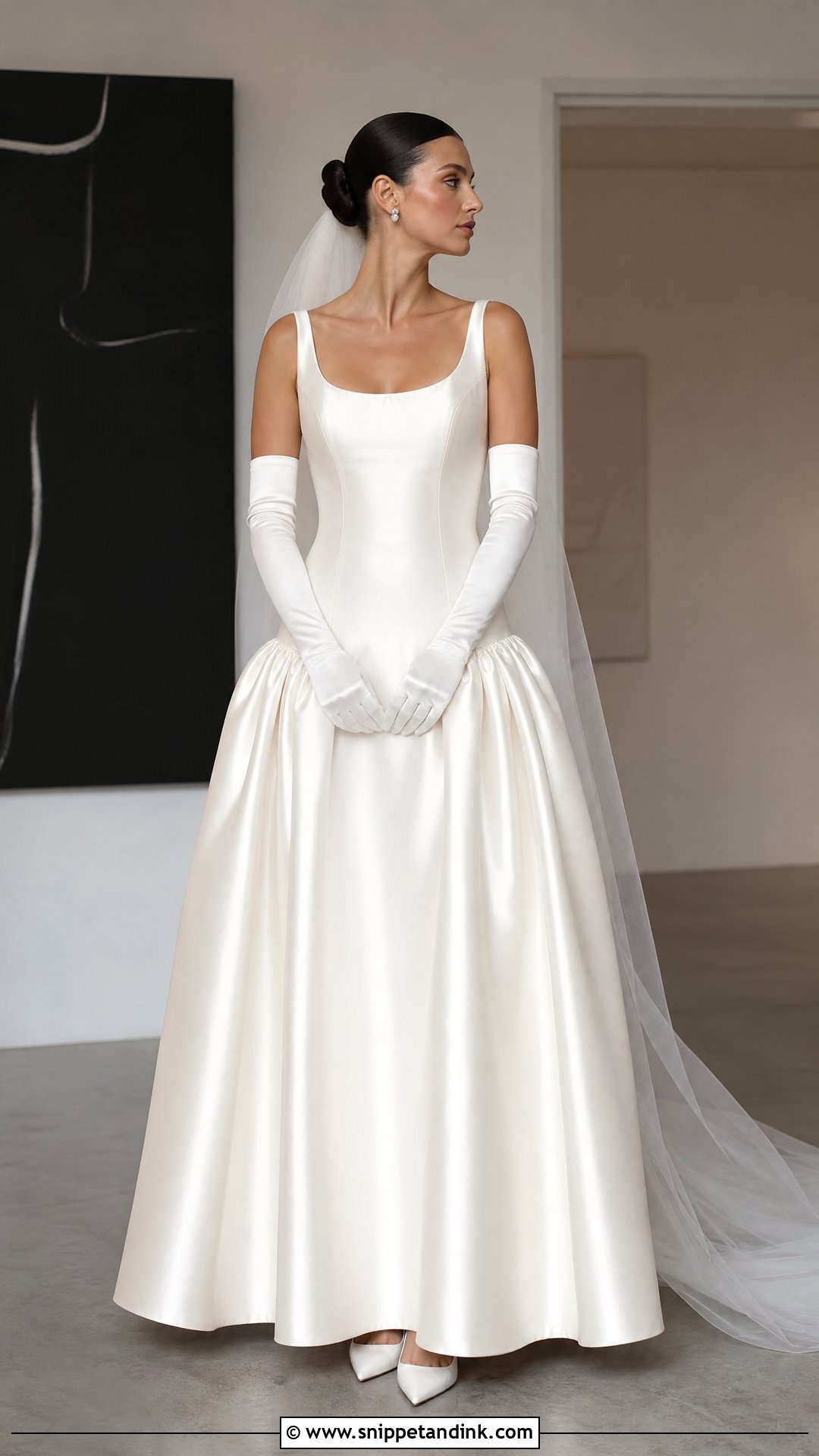
A drop waist carries the bodice below the natural waist before the skirt opens out, which lengthens the torso. Structured satin with a scoop or strapless neck looks clean; subtle lace adds texture. Elbow gloves, small earrings, pointed pumps, a long plain veil and a sleek bun keep the focus on that long line. This shape is hardest on fuller hips, because the seam lands right across them. The bodice should fit close without creasing horizontally, and the seam should stay comfortable seated. Sit and walk in every fitting.

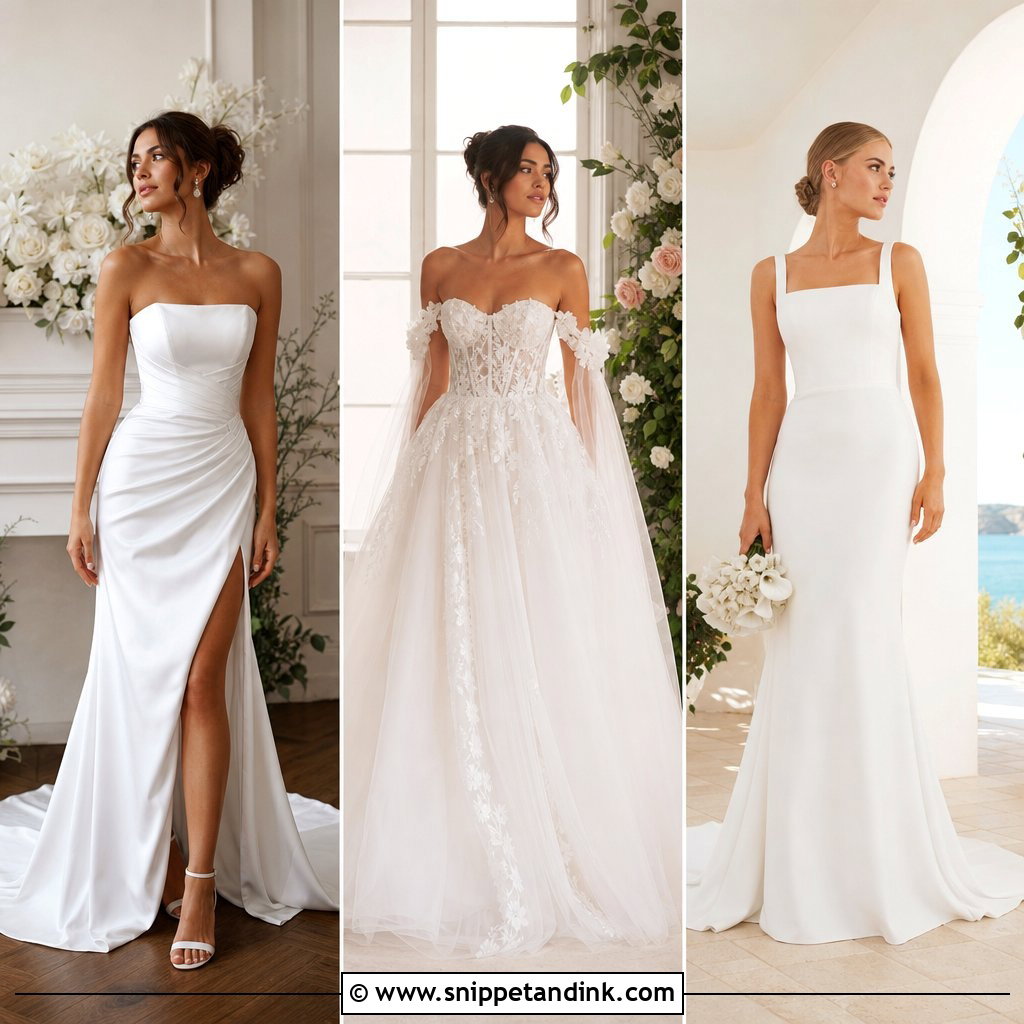
15. Corset A-Line Wedding Dress
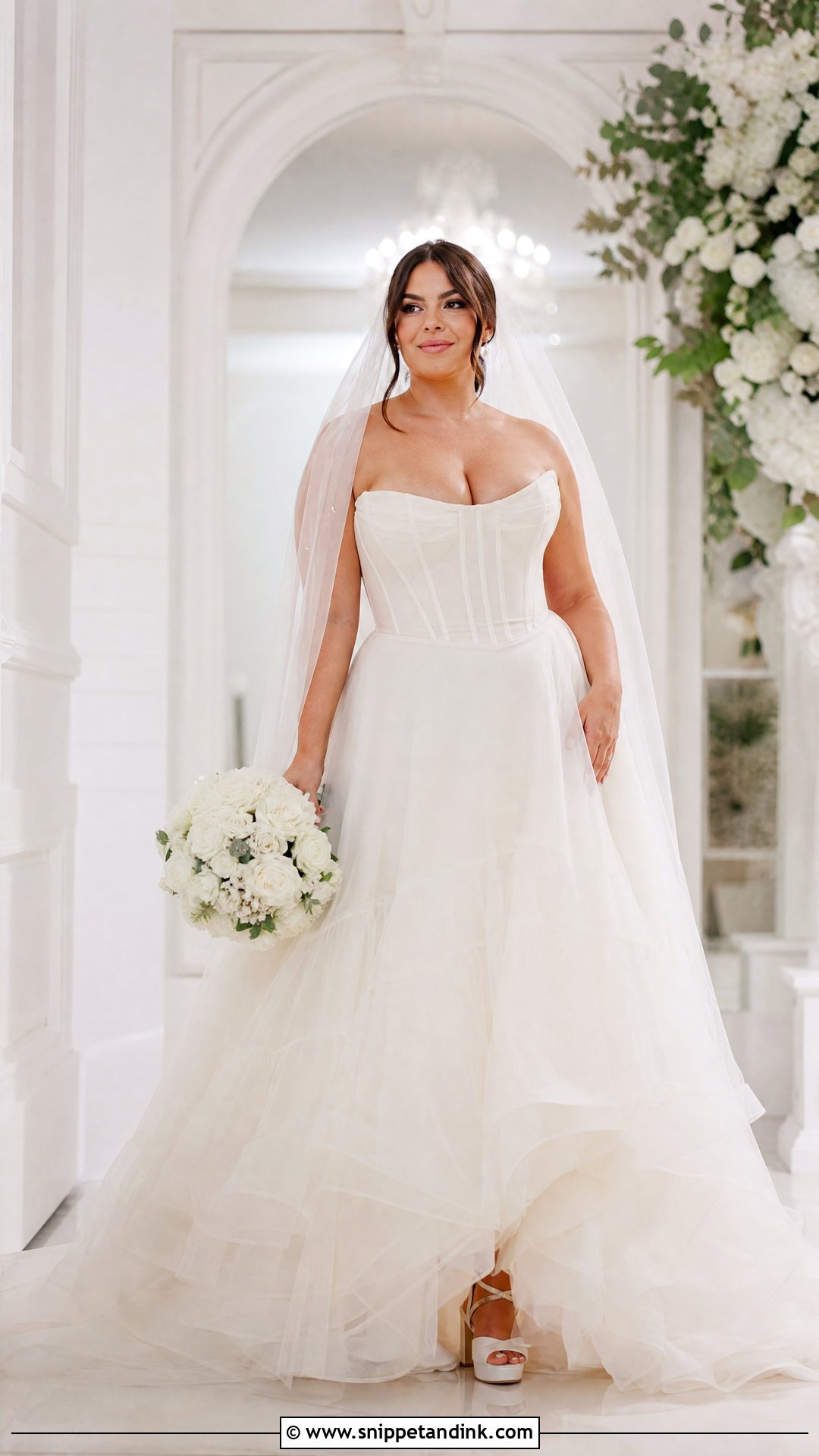
A corset A-line gives you the support of a structured bodice and a skirt that moves. Visible seaming or subtle boning, a curved neckline and a waist flowing into tulle or satin is the classic version. A fingertip veil, crystal studs, block heels and a rounded bouquet finish it, and detachable straps or sleeves add coverage when you need it. A corset should support, not squeeze; I test by having the bride sit and take a full breath. Ask how the back closes and whether lacing can be eased after dinner. Fit the cups and waist position, and ignore the number on the size tag.
16. Tea Length Wedding Dress
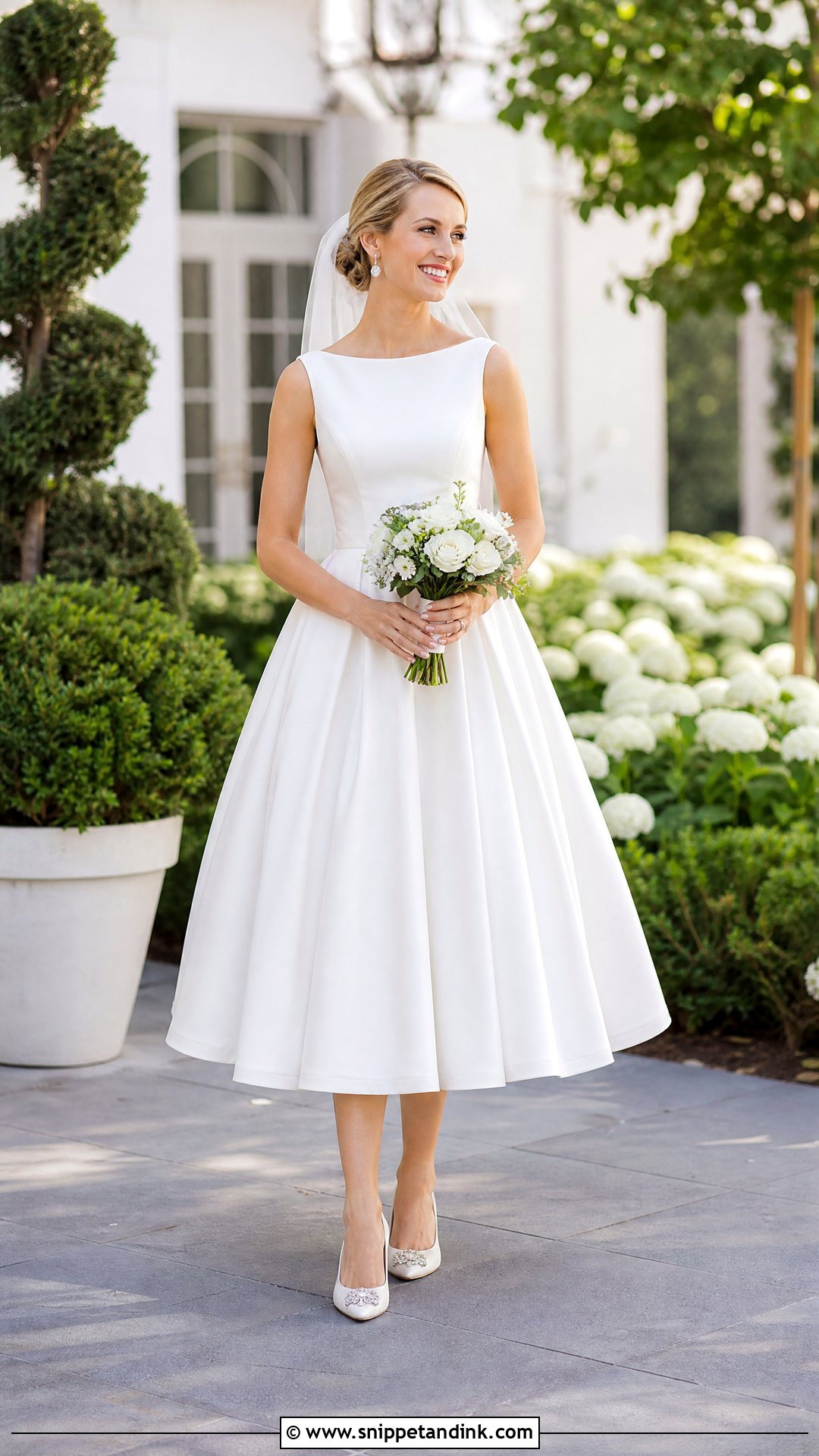
A tea-length dress keeps the shoes in view and lightens the whole look. A fitted bodice and a skirt ending between knee and ankle, with enough volume to move, is the shape. Satin looks polished; lace or organza softer. Embellished pumps, a short veil, pearl earrings and a compact bouquet complete it, with a narrow belt if you want contrast. Courthouse ceremonies, gardens and small weddings suit it. An inch changes everything at this length, so I always pin the hem with the exact shoes on.
17. Short Bridal Wedding Dress
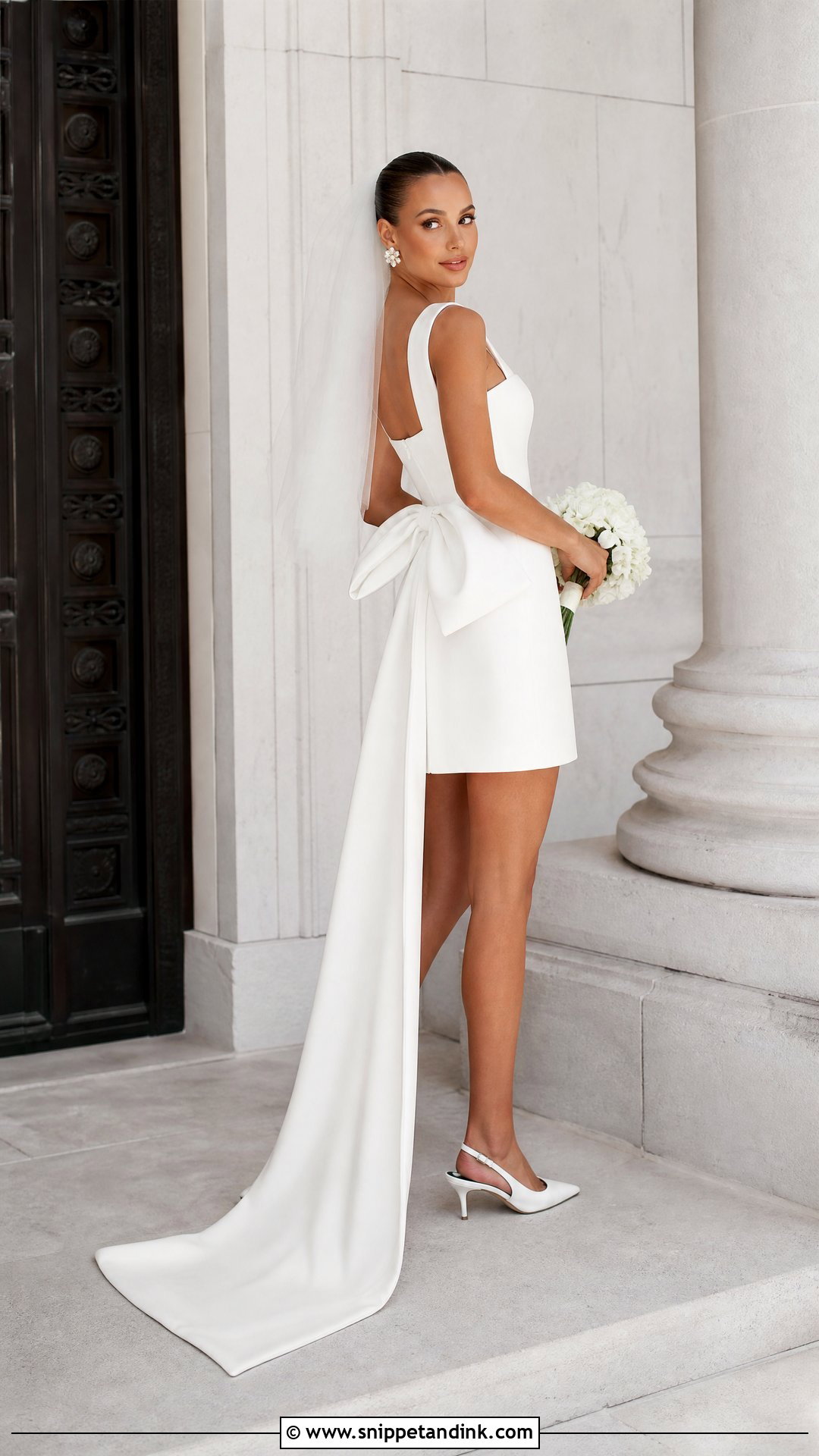
A short bridal dress works for an informal ceremony or as a reception change. A tailored mini with a structured bodice, a clean neckline and enough room in the skirt to move is the place to start. A bow, a floral appliqué or a detachable train makes it read as bridal, and sheer tights help in cold weather. Pointed pumps or slingbacks, statement earrings and a short veil complete it. Check the hem sitting, walking and climbing steps; built-in shorts or a smooth lining give peace of mind. Fabric quality decides whether it looks bridal or like a white party dress.
18. Chiffon Beach Wedding Dress
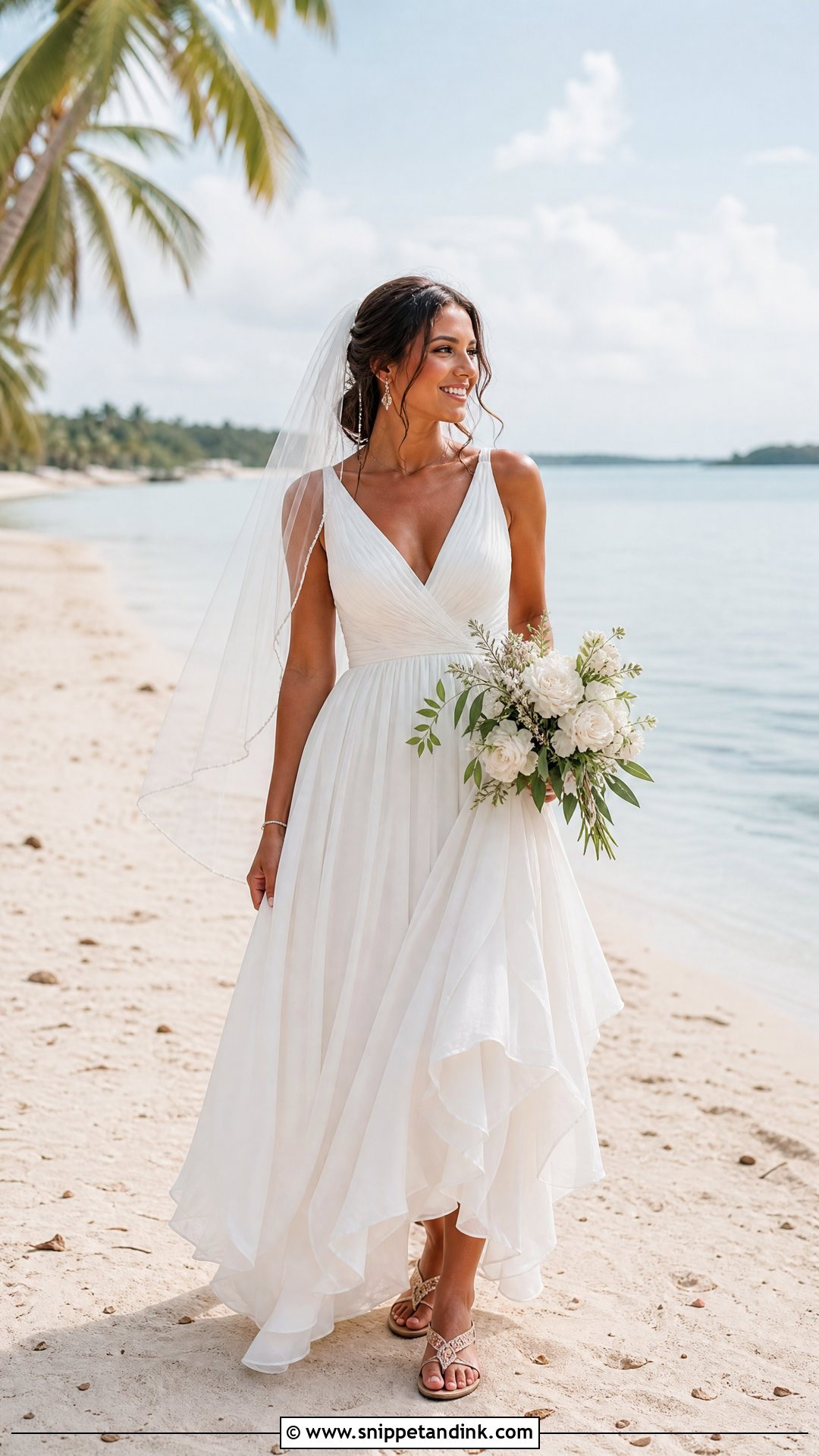
Chiffon moves in a sea breeze and doesn’t trap heat, which is why it suits a beach. A supportive V-neck bodice, a defined waist and a layered A-line skirt that floats rather than clings is the build. Flat embellished sandals, fine earrings, a fingertip veil and a loose bouquet complete it. Pin hair firmly; loose curls drop fast in salty, humid air. Keep the train short, since chiffon drags sand along with it. The lining needs enough body to stop the skirt going see-through in bright sun, so I check every beach gown outdoors.
19. Boho Lace Wedding Dress
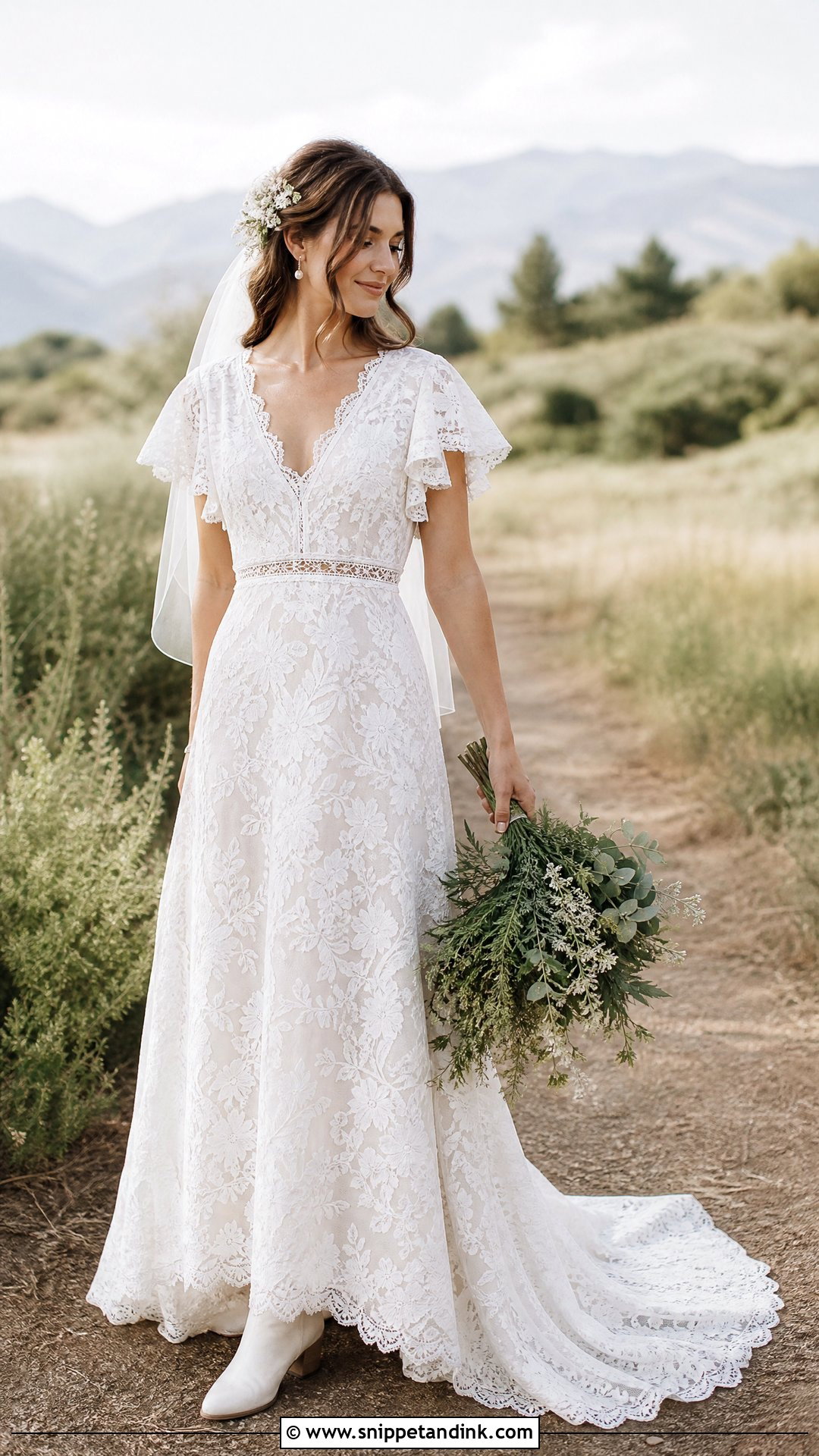
A boho lace wedding dress works when the rest of the outfit stays relaxed too. A soft sheath or A-line with botanical lace, flutter sleeves, a comfortable lining and a modest train suits outdoor ground. Low block heels or refined ankle boots, a floral comb, small earrings, a light veil and a loose greenery bouquet complete it. Pile on too many rustic extras and it tips into costume. Some boho laces are stiff cotton or corded types that scratch. I check the armholes and neckline, and ask the seamstress to edge any rough lace with soft tulle.

20. Modest High Neck Wedding Dress
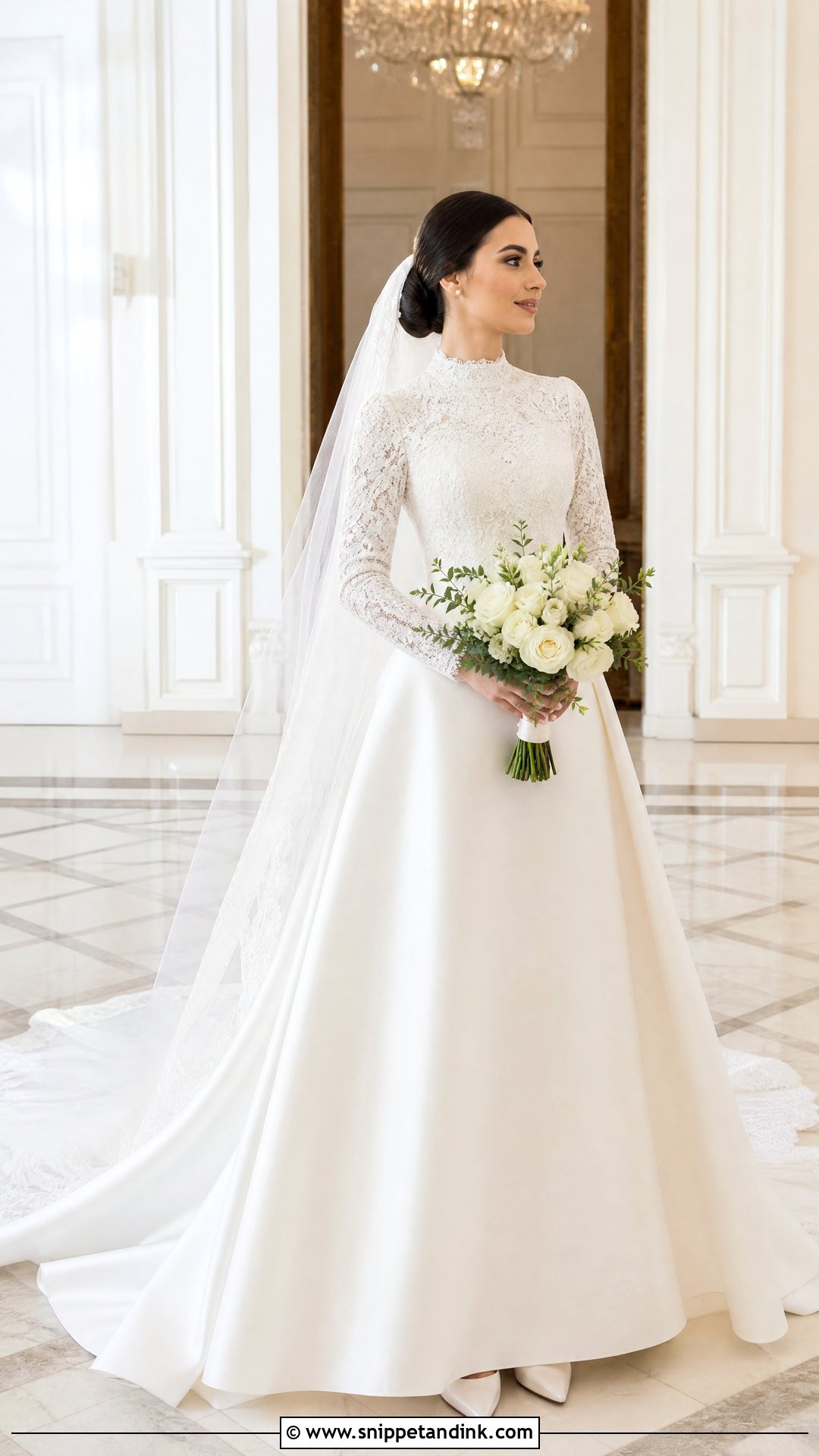
A modest high-neck gown covers fully and still shows a clear bridal shape. A lined bodice with a lace or satin neck, fitted long sleeves and an A-line skirt is the core, with covered buttons, narrow cuffs and a chapel train for traditional detail. Pearl studs, closed heels, a long veil and a structured bouquet complete it, with a low bun. High collars rub when they’re cut close, so I leave a little ease and check that you can turn your head freely. Test the sleeve and shoulder range at fittings too. A breathable lining makes full coverage bearable for a long day.
A Gown Takes Longer to Arrive Than Most Brides Expect
Made-to-order gowns are cut and sewn after you order, and many take four to six months to arrive, sometimes longer for heavily beaded or imported designs. Rush orders exist but usually cost extra. Here’s the order of events I plan with brides:
- Shop and order roughly eight to ten months before the wedding.
- Book the seamstress once the gown is ordered; good ones fill up in peak season.
- First fitting about eight to twelve weeks out, with shoes and undergarments.
- A second, and sometimes third, fitting to refine the bodice, hem and bustle.
- Final fitting and pickup one to two weeks before the day, so weight changes are minimal.
Ask about the bustle at the first fitting
Any gown with a train needs a way to lift it for the reception. An over bustle hooks the train up onto the back of the skirt; an under, or French, bustle tucks it underneath with ties. Heavy satin and long trains often need several points. Have your seamstress show your helper how it fastens, and take a short video on your phone.
The Gown Should Still Feel Like You at Midnight
Start from what the day asks of you: the venue, the weather and how long you’ll be standing, then let the dress shape follow. The options here range from satin ball gowns and mermaids to light beach chiffon and short dresses. Save a few complete looks before your appointments, and try at least one shape you didn’t expect to like; brides often surprise themselves. Bring your undergarments and shoes, walk around in every gown, and think through the train, sleeves and embellishment. Accessories should support the dress, not compete with it. The right gown still feels like you at midnight.
You'll Like These Ideas:








Leave a Reply