
A split changes how a wedding dress behaves more than how it looks. The skirt stops fighting your legs, your shoes show when you walk, and a formal gown suddenly feels lighter. The trade-off is that a split has to be engineered: placed at the right height for your body, finished so it doesn’t gape, and strong enough to survive a dance floor. Below are twenty gowns with splits, from loose chiffon on a beach to structured satin in a ballroom, plus courthouse, winter and reception options. For each one I have noted the full outfit I would put together and the fitting detail I would not skip.

Setting the Split Height Sitting Down, Not Standing Up
Most brides judge a split standing still in front of a mirror, which is the one position where it barely shows. I set the height at a fitting the other way round.
The chair test
Sit on an ordinary chair, cross your legs the way you naturally would, and have your seamstress pin the highest point you are comfortable with. That pin is your ceiling. A split always opens wider seated than standing, so if it feels right sitting, standing will look modest by comparison.
The stride test
Now walk at a normal pace and take one big step, as if going up a high stair. If the skirt still pulls across your knee, the split needs to start a little higher, or the skirt needs more width. Split height and skirt width work together, so a narrow column needs a longer opening than a full A-line.
What the seamstress should add
- A bar tack or small reinforcement at the very top of the split, where tearing starts.
- A facing or narrow hem along the edges so they don’t roll outward.
- A modesty panel or a lower-cut lining if you want the option of less leg on the day.
- Weighted edges or a hand-tacked lining on chiffon, which otherwise blows open.
1. Satin A-Line Wedding Dress With Side Split
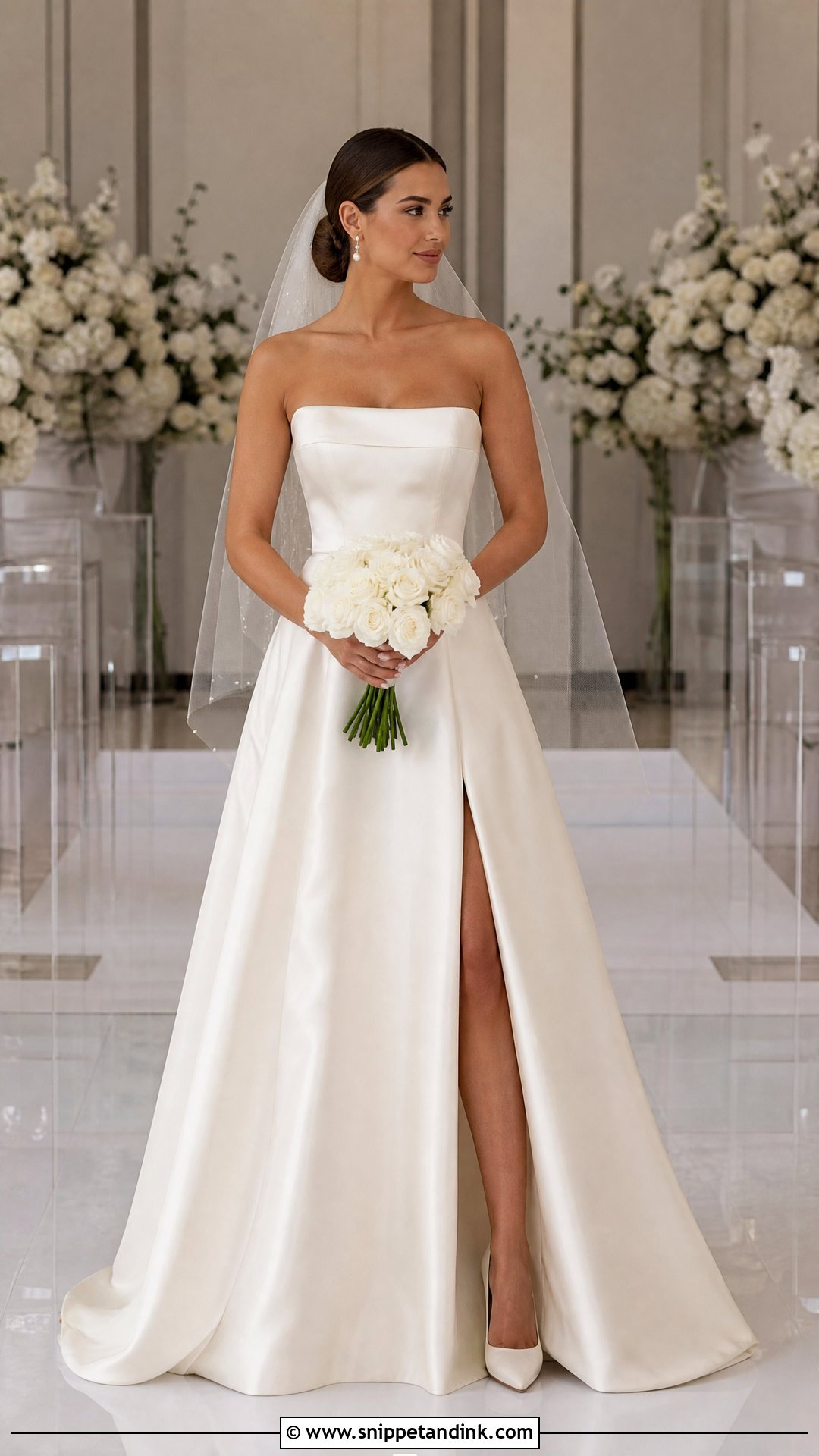
Satin holds the edge of a side split crisply, which is why it is such a good match for an A-line that might otherwise read very traditional. A structured bodice with wide straps or a soft curved neckline gives you support. Start the split just above the knee for a hint of movement, or take it up the thigh if you want the shoes to show with every step. Ivory pointed pumps, pearl drops, a small satin clutch and a fingertip veil keep the line clean; a low bun or sleek waves suit it. The top of a split is where the stress sits, so I always ask for a small reinforcing bar tack there. Without it, satin can tear upward the first time you sit down fast.
2. Lace Wedding Dress With Thigh-High Split
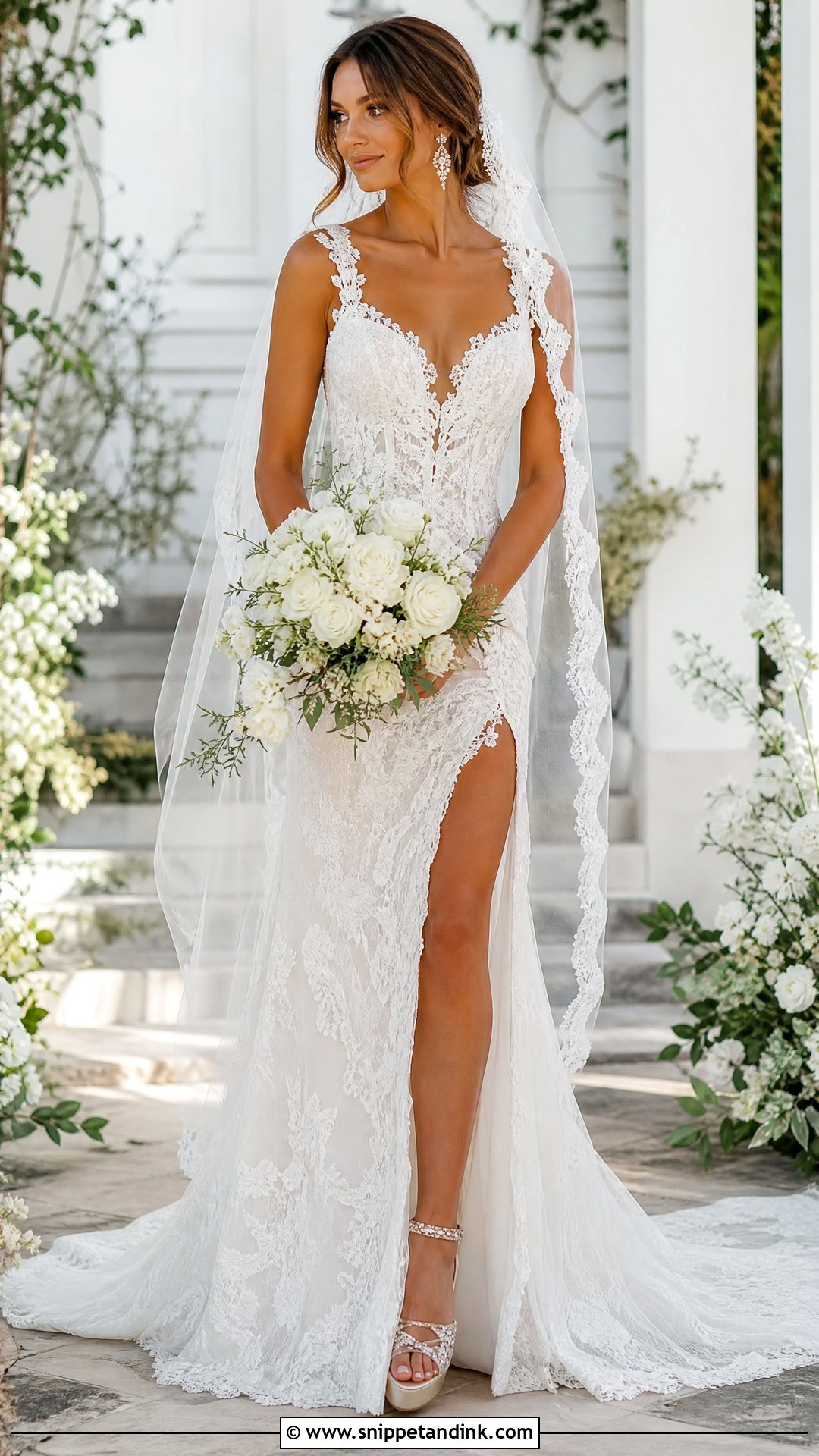
Lace with a thigh-high split pulls traditional texture into a modern shape. What makes it look intentional is lace appliqué that follows the edge of the opening, so the split reads as part of the design rather than a cut someone added later. A nude or ivory lining shows the pattern and gives the coverage you want. Embellished ankle straps, small crystal earrings and a lace-trimmed veil are enough, with soft curls or a loose updo. Lace is busy, so everything else stays plain. Walk past a mirror sideways at your fitting. Lace splits can look neat from the front and ragged from the side if the scallops do not meet properly.
3. Chiffon Beach Wedding Dress With Front Split
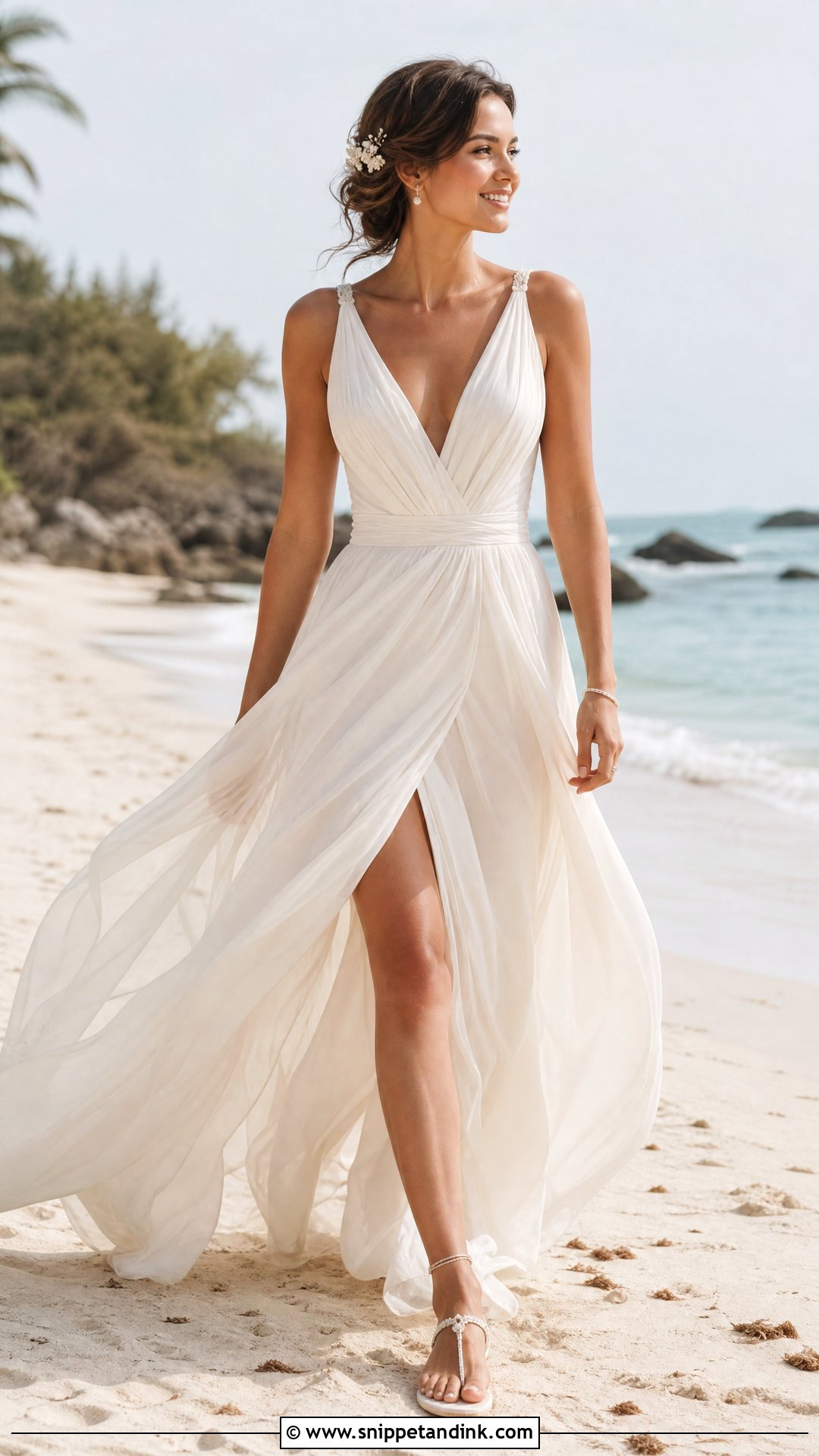
On sand, chiffon is the fabric I recommend most, since it moves with the wind instead of flapping against it. A front split lets you take a full stride without kicking the skirt. A fitted bodice with a V-neck, sturdy straps or soft draping works. Go with flat sandals, never stilettos, on sand, and add pearl studs and maybe a fine anklet, which actually shows through a front split. Loose waves, a floral comb and a light veil finish it. Keep the train short if you are walking on the beach itself. Sheer layers slide apart in a breeze, so I ask for the lining to be tacked to the split edges so nothing opens wider than planned.
4. Strapless Ball Gown Wedding Dress With Split
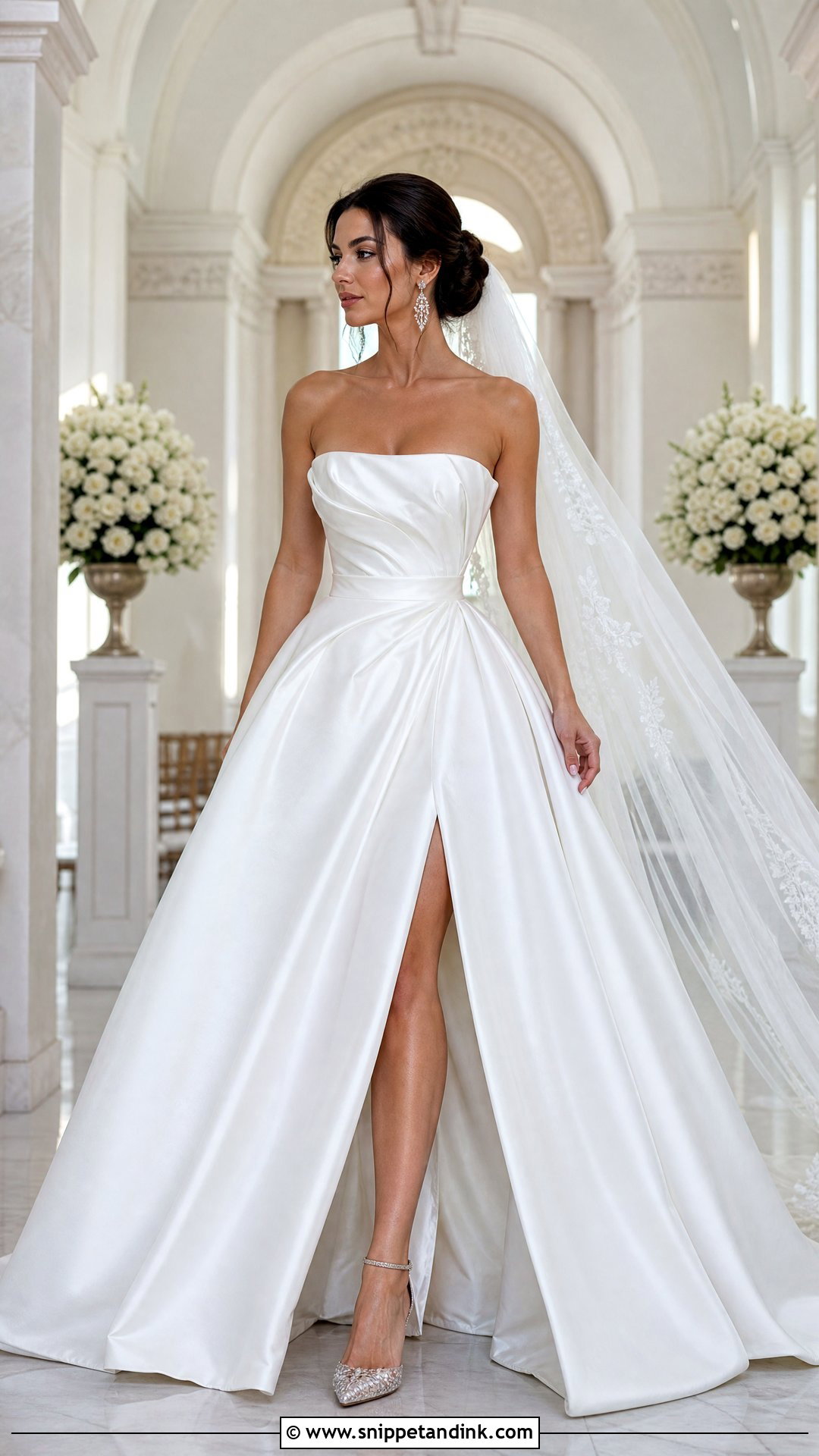
Can a ball gown with a split still feel formal? Yes, if the split opens only when you move. In a full skirt, it lightens the volume and lets your shoes show as you walk. The strapless bodice needs real boning and a neckline that stays put when you lift your arms. Satin, mikado or layered organza all hold the sweep. Crystal pumps, a cathedral veil, statement earrings and a polished updo suit the scale; skip the necklace if the earrings are doing the work. I place a ball gown split inside a fold or pleat so it sits closed while you stand, and I would ask about a hidden snap at the top if you are worried about it springing open.
5. Long Sleeve Wedding Dress With Side Split
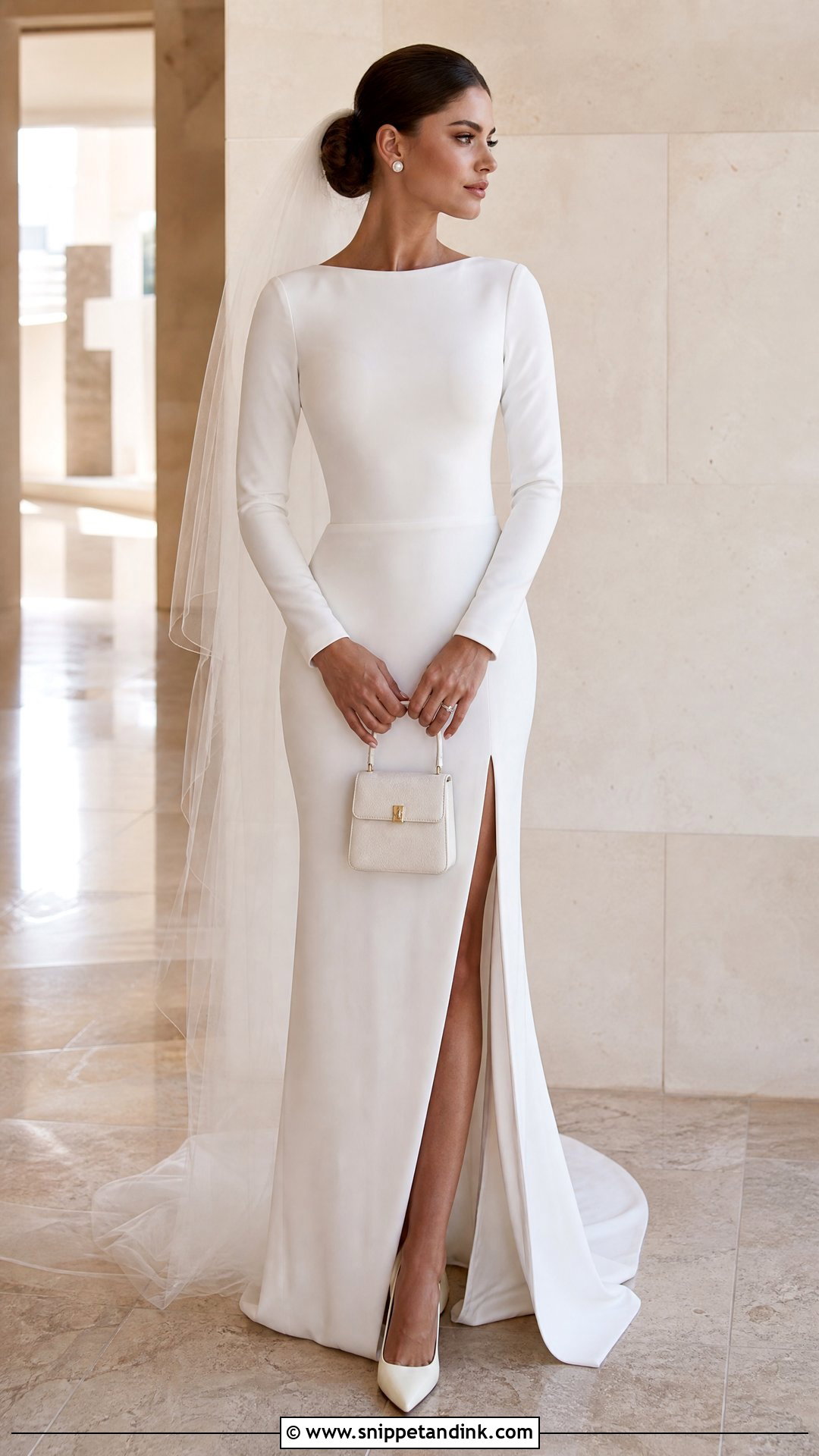
A side split takes the formality down a notch on a long-sleeved dress, especially in stretch crepe, matte satin or lined lace. Fitted sleeves look sleek; bishop sleeves add softness. Pointed pumps, a structured mini bag and small studs make a tidy outfit, with a low chignon and a simple veil. With a high neckline, keep heavy jewellery away from the face. Mid-thigh or just above the knee are both reasonable split heights. The thing to watch is the hip. If a fitted skirt is even slightly tight there, it pulls the split open sideways when you walk, and the only fix is letting out the side seams.
6. Corset Wedding Dress With High Split
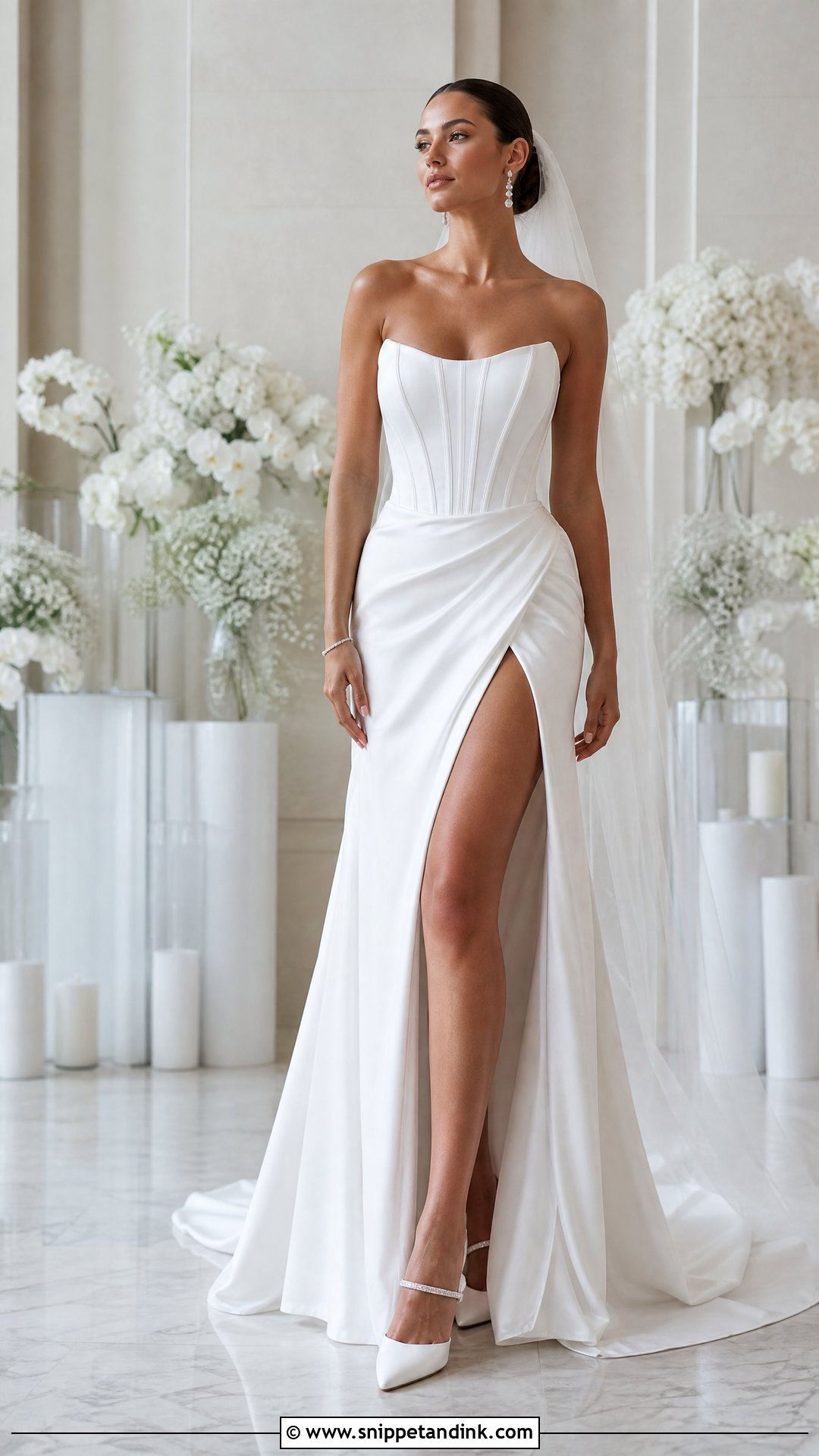
A corset bodice gives the structure; the high split gives the movement. I look for gowns where the corset seams continue into pleats or draping at the waist, so the top and bottom feel like one design. A lined bodice adds coverage without losing the shape. Slingback heels, a narrow bracelet, drop earrings and a plain tulle veil balance the strong lines, with a smooth bun or a ponytail. An over-tight corset makes sitting miserable, and sitting also opens a high split wider. Ask for spiral steel or flexible boning, sewn-in cups and a secure split. Then climb a flight of stairs in it and see whether the skirt falls closed again on its own.
7. Square Neck Wedding Dress With Split
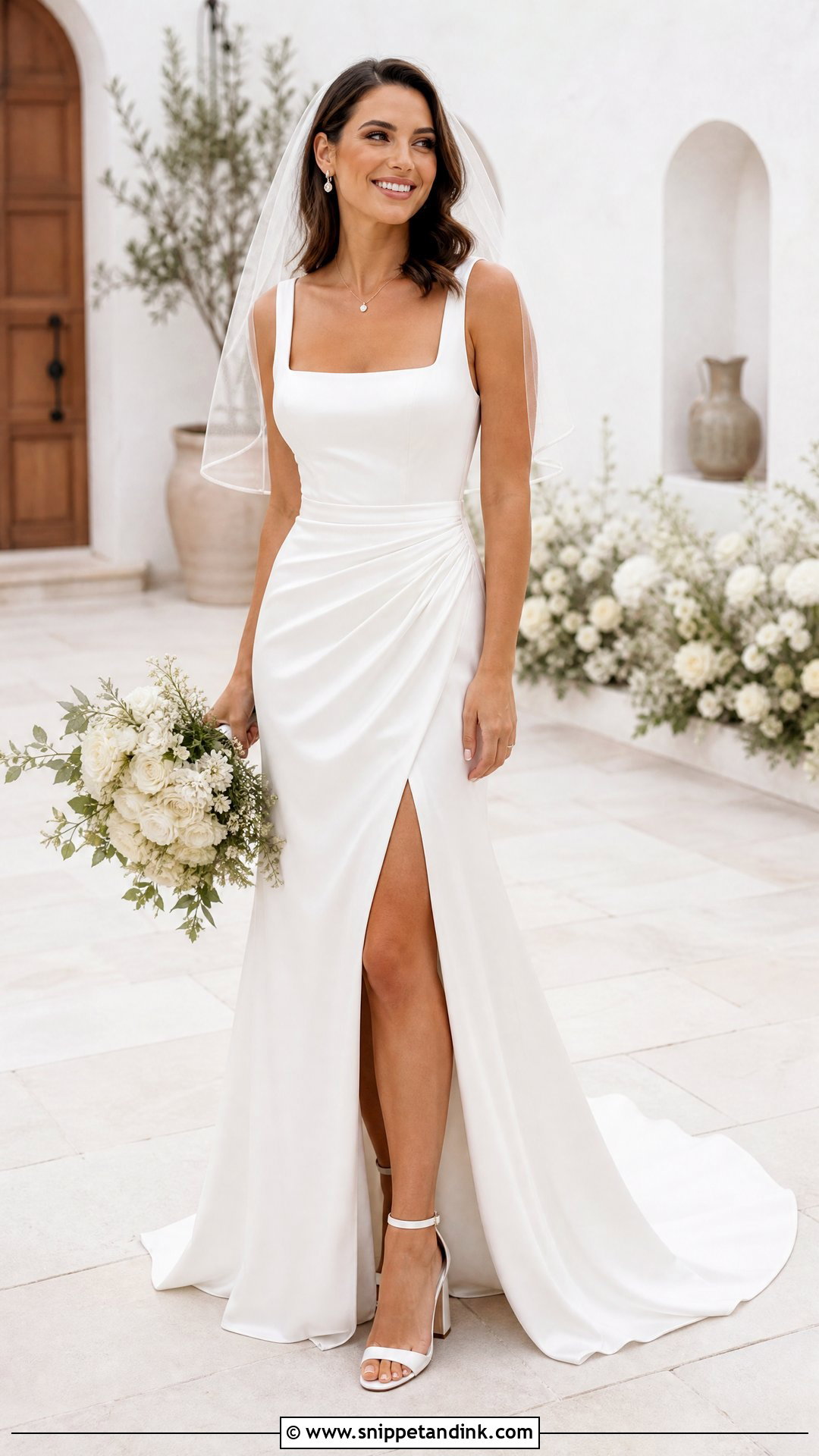
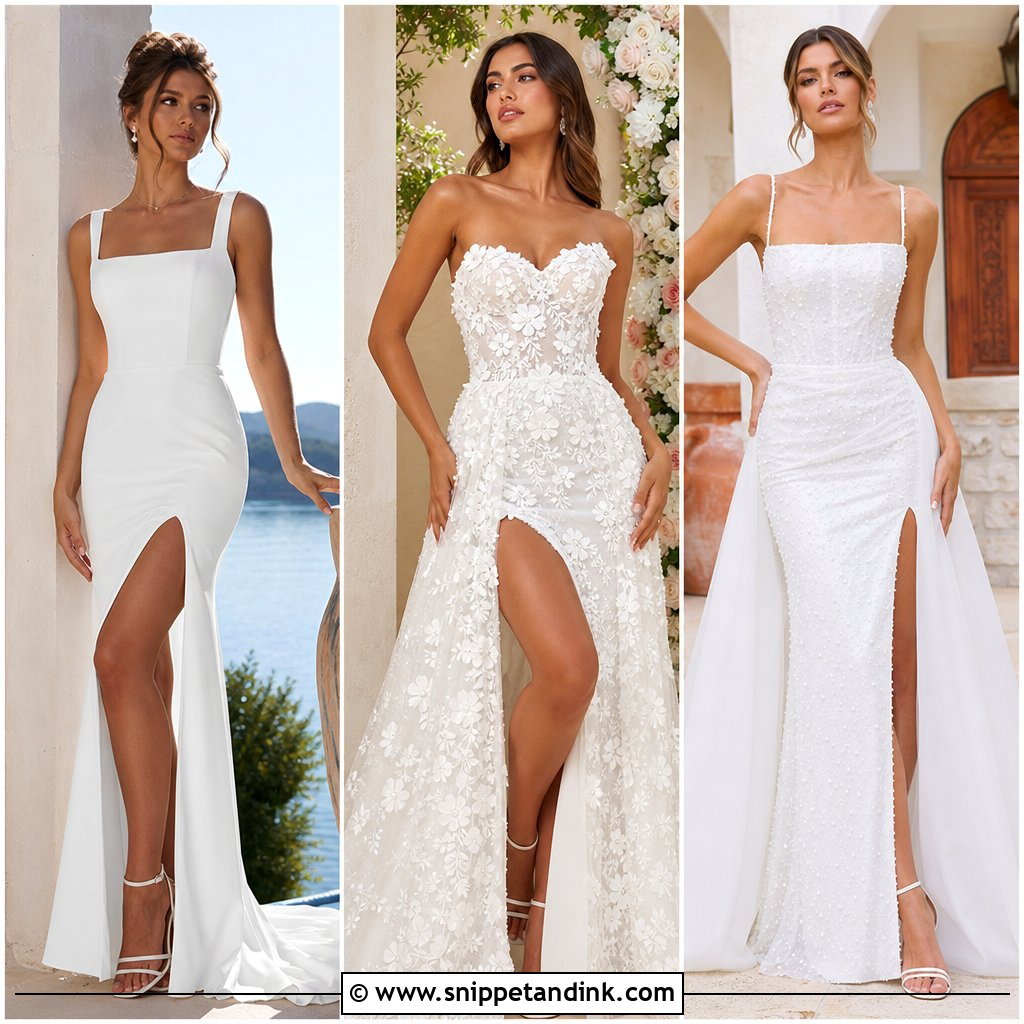
The square neckline frames the collarbones and gives a clean, level line above a split skirt. It works with wide straps, short fitted sleeves or no sleeves at all, so you can choose your support level. A crepe or satin skirt with a side split and a little draping at the waist suits it. Block-heel sandals, a small pendant, pearl earrings and a shoulder-length veil complete it, with soft waves or a half-up style. If you want more coverage, start the split near the knee. Square necks are prone to gaping at the corners, so check they lie flat. I also check that the skirt is not twisting, because a twisted skirt drags the split toward the front.
8. One Shoulder Wedding Dress With Side Split
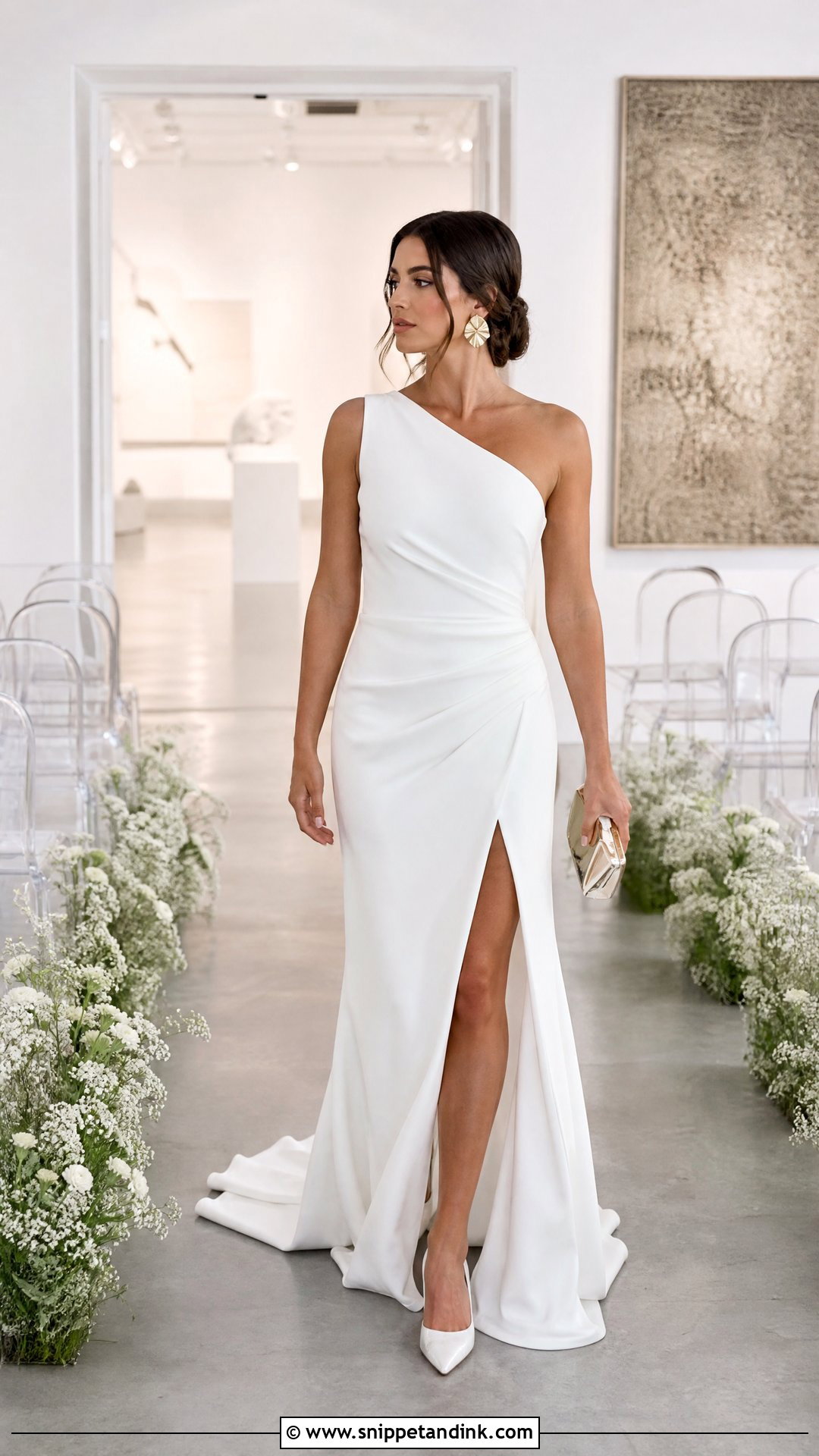
One-shoulder bodices and side splits make a natural diagonal, and I place the split on the opposite side to the covered shoulder so the eye travels across the whole body. Smooth crepe looks minimal; draping adds texture at the waist. Pointed heels, a metallic clutch and one statement earring on the bare side suit it. A low side bun or ponytail keeps the neckline clear. Instead of a long veil, try a short tulle one tucked under the hair, or a comb. The single strap does a lot of work, so I add a hidden elastic or a silicone strip to stop it creeping toward the neck as you move.
9. Off Shoulder Wedding Dress With Split
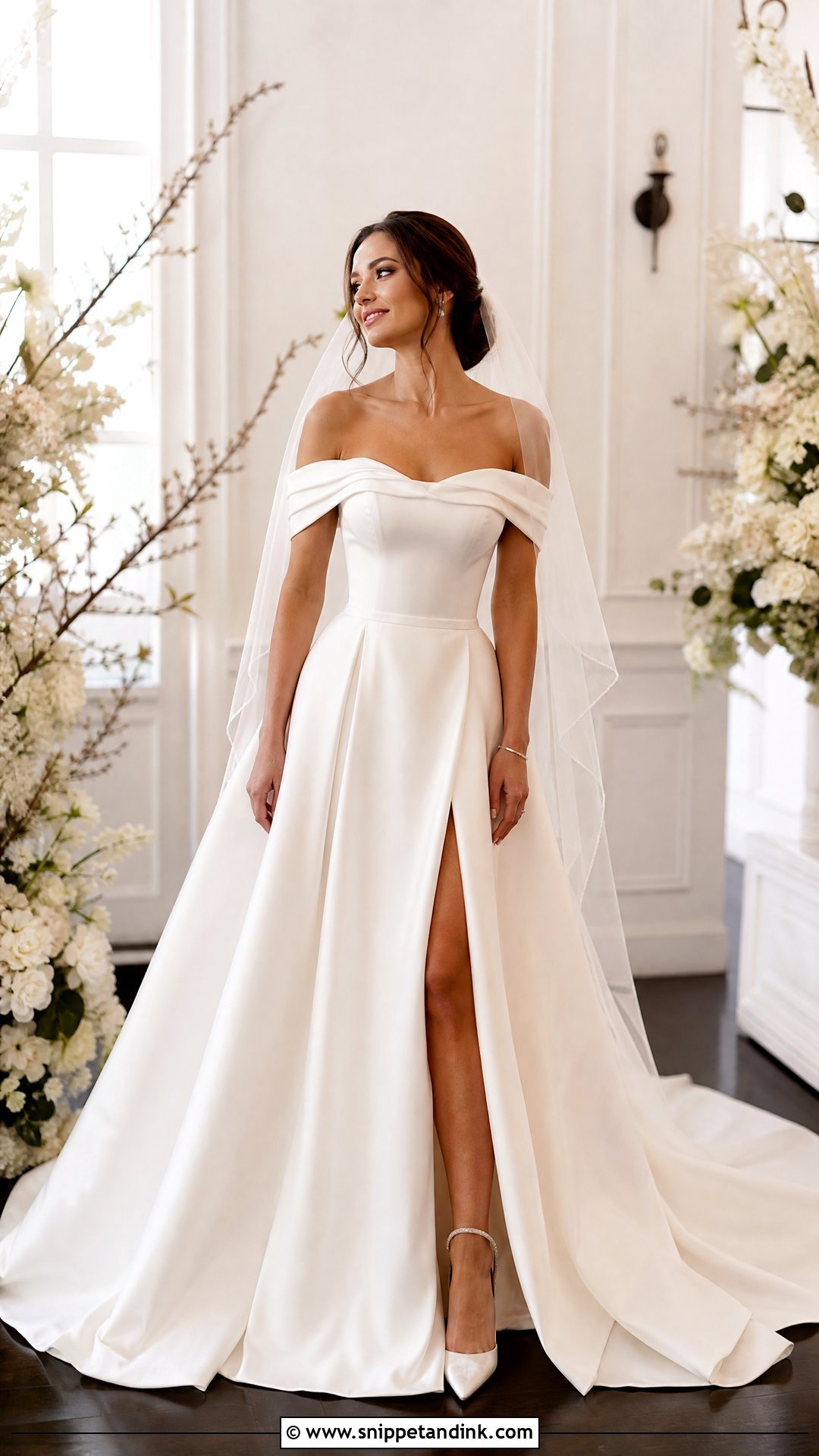
An off-shoulder bodice is soft and romantic; a split keeps it from feeling old-fashioned. Folded satin bands look structured, while light tulle sleeves are gentler. An A-line or a lightly fitted skirt can take a side opening without pulling attention from the neckline. Pointed heels, a slim bracelet, pearl earrings and a sheer fingertip veil keep it simple, and I usually leave the collarbone bare without a necklace. Wear your hair up or swept to one side. Lift your arms and turn at the fitting: the sleeves should hold, and the split should not flap open as the skirt swings.
10. Halter Neck Wedding Dress With Front Split
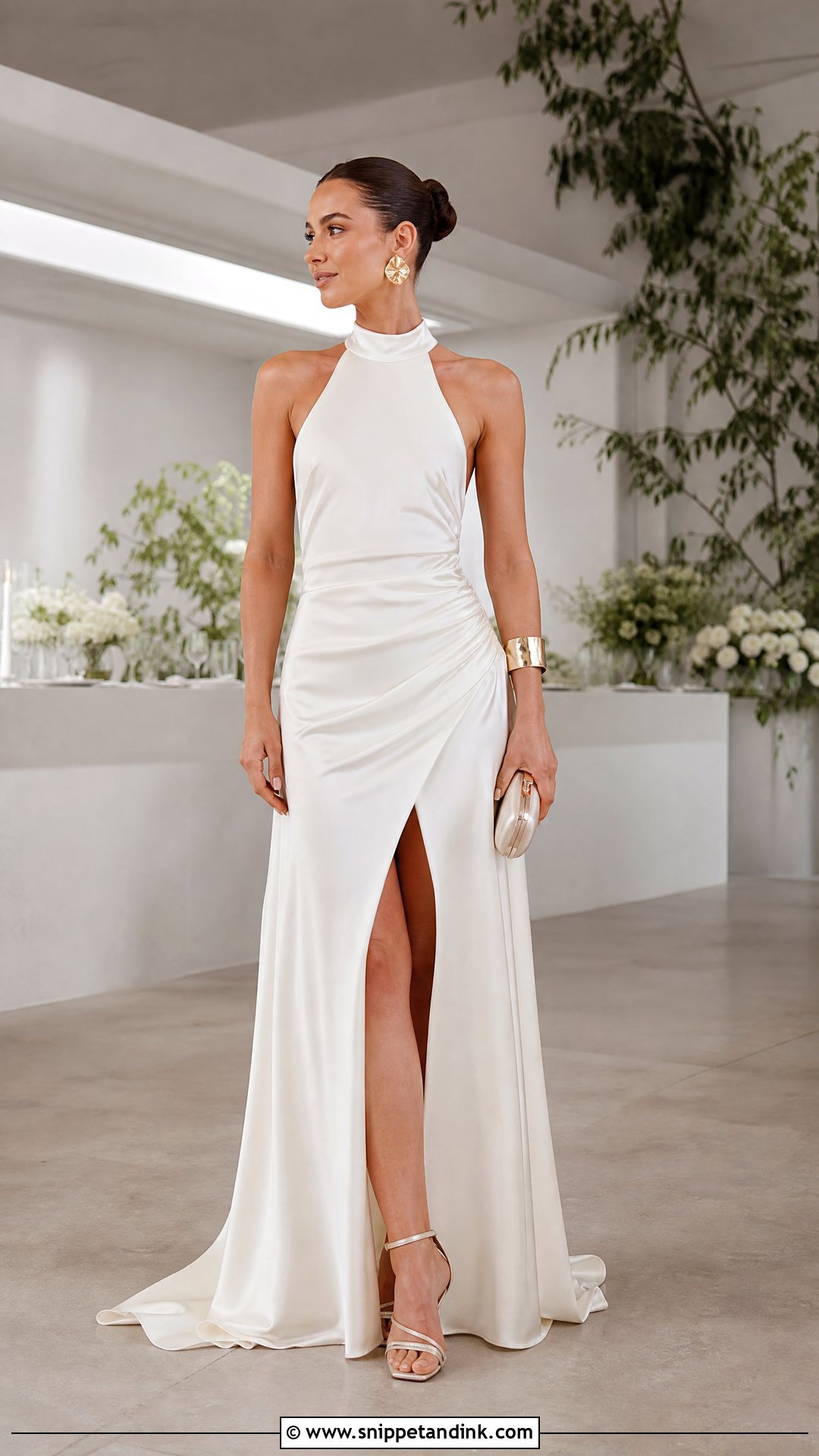
A halter neck lengthens the upper body, and a front split continues that vertical line down the leg. Fluid satin or crepe falls cleanly without bulk. Make sure the halter does not press on the back of the neck; a heavy skirt hanging from a thin halter gives brides a headache by evening. Strappy heels, sculptural earrings, a cuff and a small bag are enough. A sleek bun shows the shoulders, with a veil pinned below it or just a decorative pin. Centre-front splits are the least forgiving, because every gust and every sit shows. I like a hidden modesty panel or an overlapping layer here, especially outdoors.
11. Minimalist Column Wedding Dress With Back Split
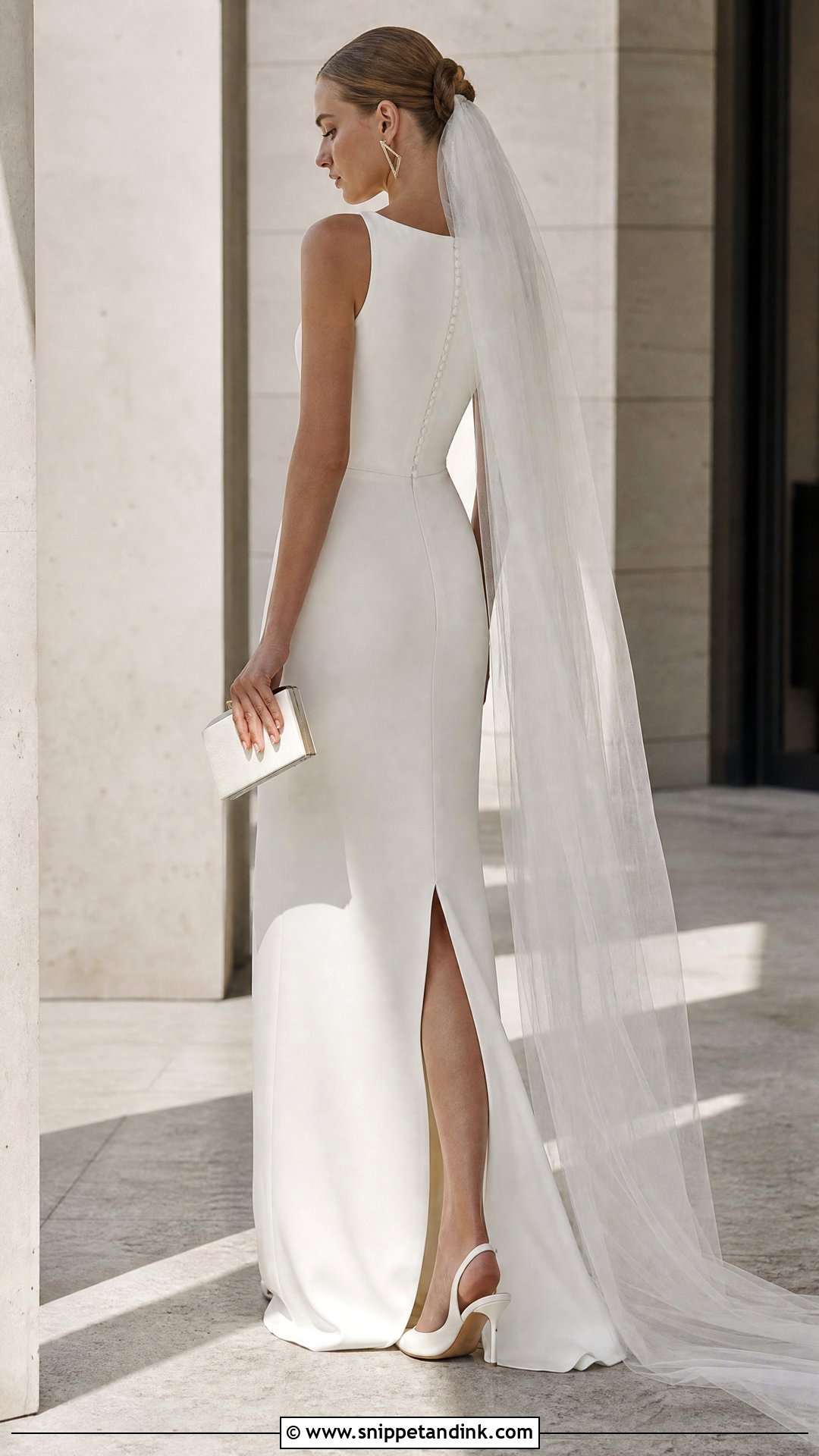
Column dresses depend on tailoring, not decoration. A back split lets a narrow skirt move while the front stays perfectly straight. Heavy crepe or matte satin skims rather than clings. Pointed slingbacks, geometric earrings, a structured clutch and a long plain veil suit it, along with a sleek low bun or smooth shoulder-length hair. A slim belt is optional if you want waist definition. A back split needs to clear the back of your knee when you take a long step but must stay below the seat when you sit. And have the hem done in your actual shoes, because columns show every centimetre of a wrong length.
12. Mermaid Wedding Dress With Side Split
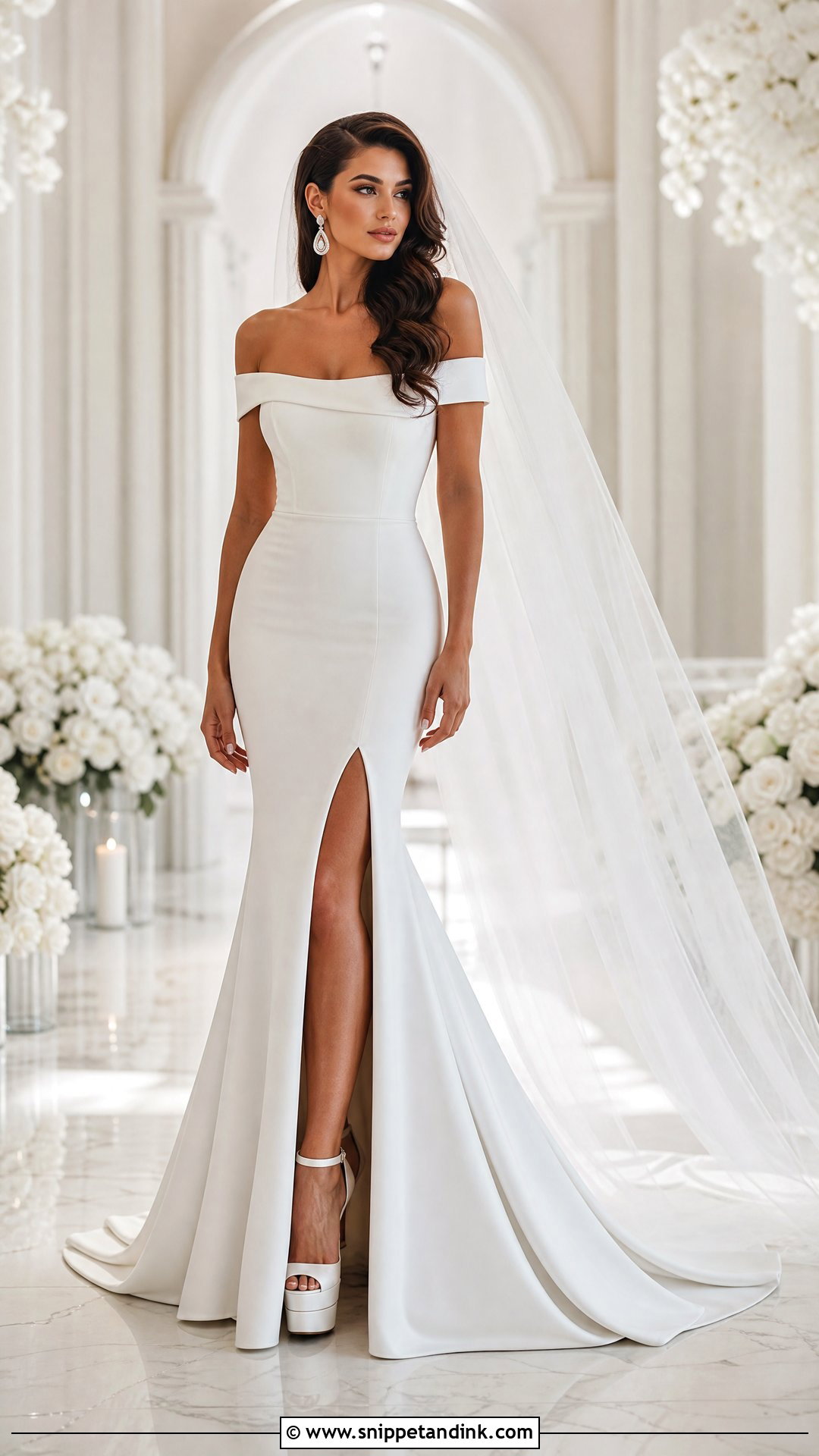
A mermaid with a side split is close-fitted through the upper skirt and flares at the hem, which means the split has to work around that flare. If it starts right at the flare seam, the fabric bunches. Stretch crepe, satin or lined lace gives you room to walk. Platform heels, teardrop earrings and a narrow veil that runs past the train finish it, with side-swept hair. With a heavily detailed gown, keep shoes and jewellery plain. My honest view: on a mermaid, a slightly lower split often looks better and lets you climb stairs, since a tight thigh is what stops your stride, not the split itself.
13. Boho Wedding Dress With Split
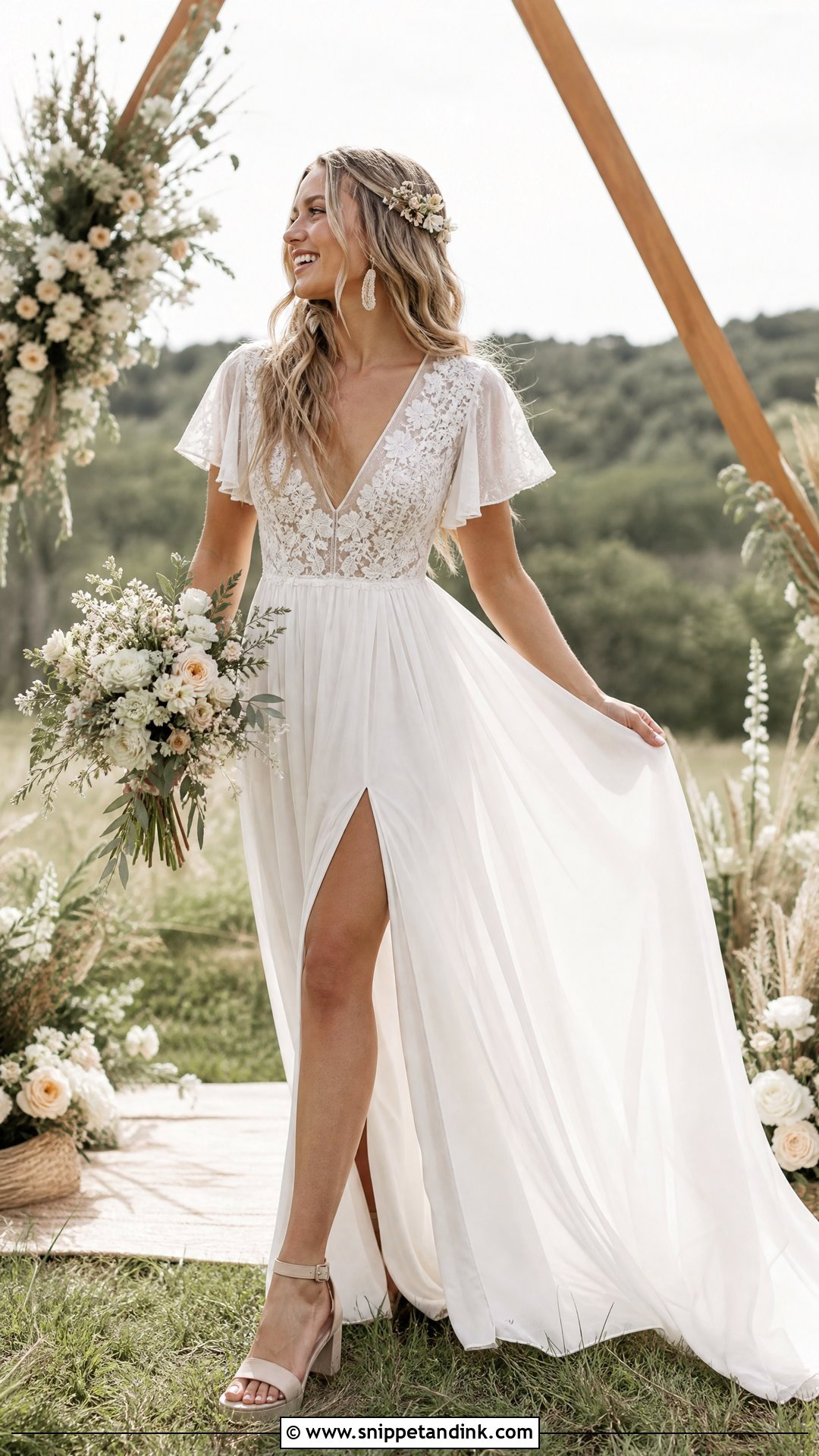
A boho dress with a split moving through chiffon or lace layers looks relaxed in a way stiff fabric never does. Pick a comfortable fitted bodice, flutter sleeves or wide straps rather than heavy boning. The opening can be edged in lace trim or simply fall between panels. Ivory block-heel sandals, a small bouquet, textured earrings and a floral comb suit it, with loose waves or a low braid. A light veil works, and so does a tulle cape. Keep the train short outdoors. Layered splits should part a little as you walk; if the whole leg shows at every step, ask for the inner layer to be cut lower than the outer one.
14. Plus Size Wedding Dress With Side Split
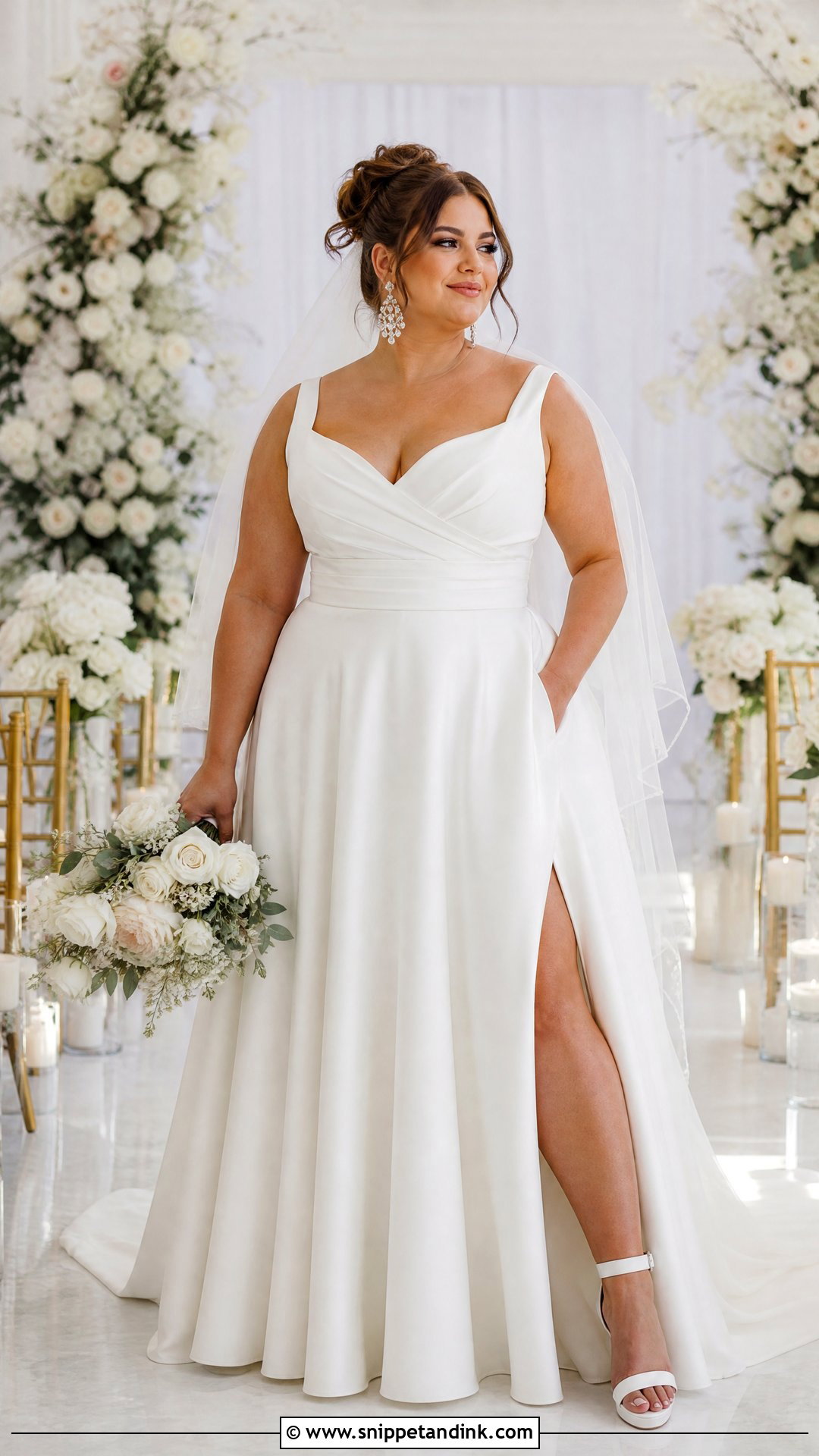
On a plus-size bride, a split dress works when the support is properly built in and the skirt has enough room to move without pulling. I look at A-lines with a structured V or scoop neck, wide straps and a smooth waist seam. Draping beside the split softens the transition across the skirt. Supportive block heels, statement earrings, a fingertip veil and a comfortable clutch complete it. A defined waist does not have to be tight; internal structure and good alterations can shape it while you still breathe and sit easily. Choose the split height that you feel comfortable in, not the one in the photo, and bring your shoes and shapewear to every fitting.
15. Petite Wedding Dress With Front Split
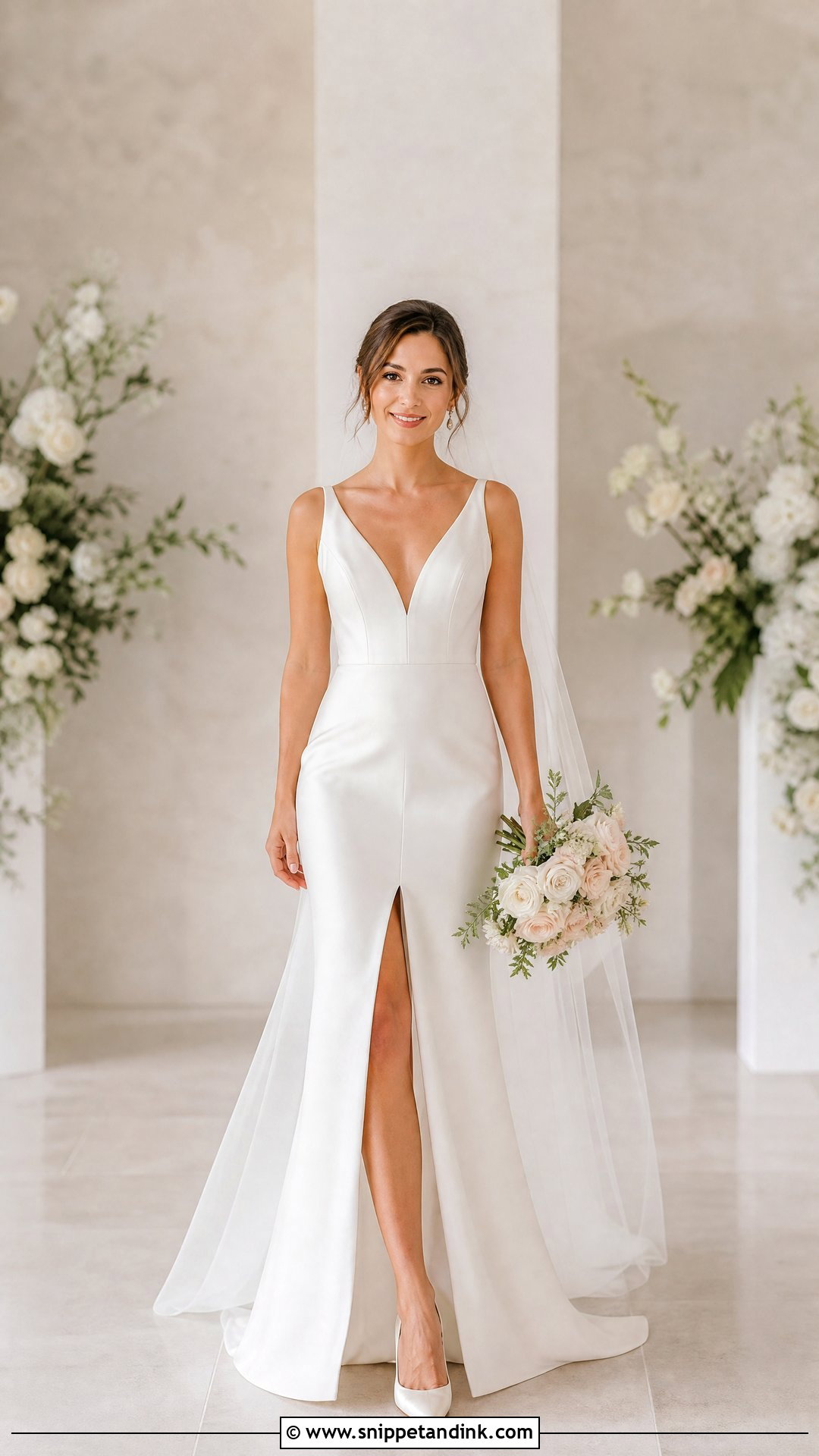
Too much fabric swamps a petite frame, and a front split cuts down that volume. A narrow A-line or column with a defined waist and few horizontal details keeps the line long; a V-neck, square neck or plain strapless top helps too. Pointed heels in ivory or close to your skin tone, small earrings and a narrow veil keep proportions in check. A very wide skirt hides both the split and your shape, and a short train is easier to walk in. I have the split start a little above the knee on petite brides. Any higher and it can visually chop the skirt into pieces.
16. Maternity Wedding Dress With Side Split
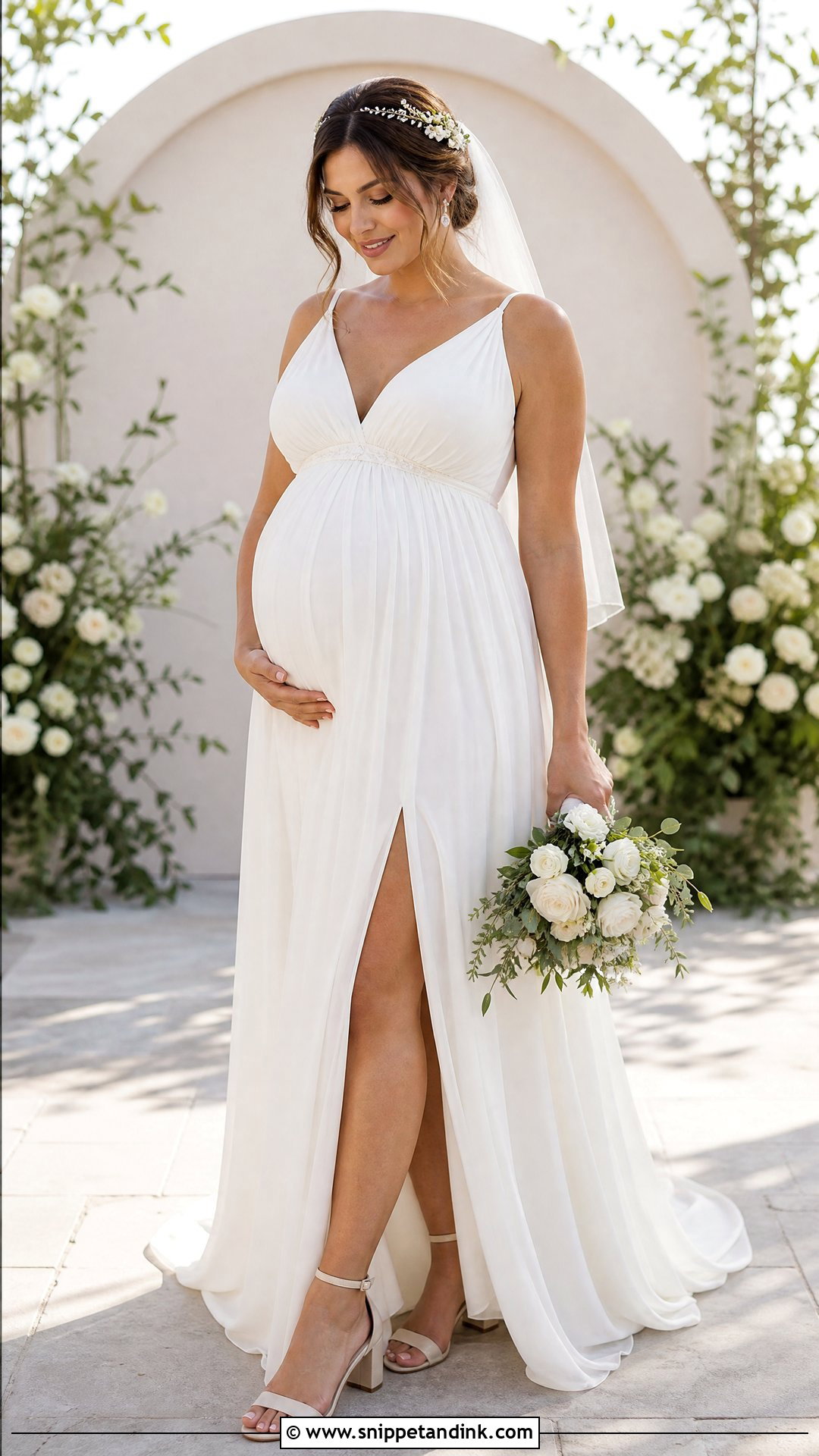
With a maternity wedding dress, comfort comes before everything else. An empire waist lets the skirt fall from under the bust, and stretch chiffon or jersey adapts as your shape changes. A soft side split lets air in and stops the skirt from wrapping round your legs. Low block heels or decorated flats, light earrings and a simple hairpiece suit it; a short veil is far easier than a long heavy one. Avoid stiff waistbands. I schedule the last alteration as close to the date as the seamstress allows, because bump size changes week to week, and ask for a soft lining behind the split.
17. Winter Wedding Dress With Split
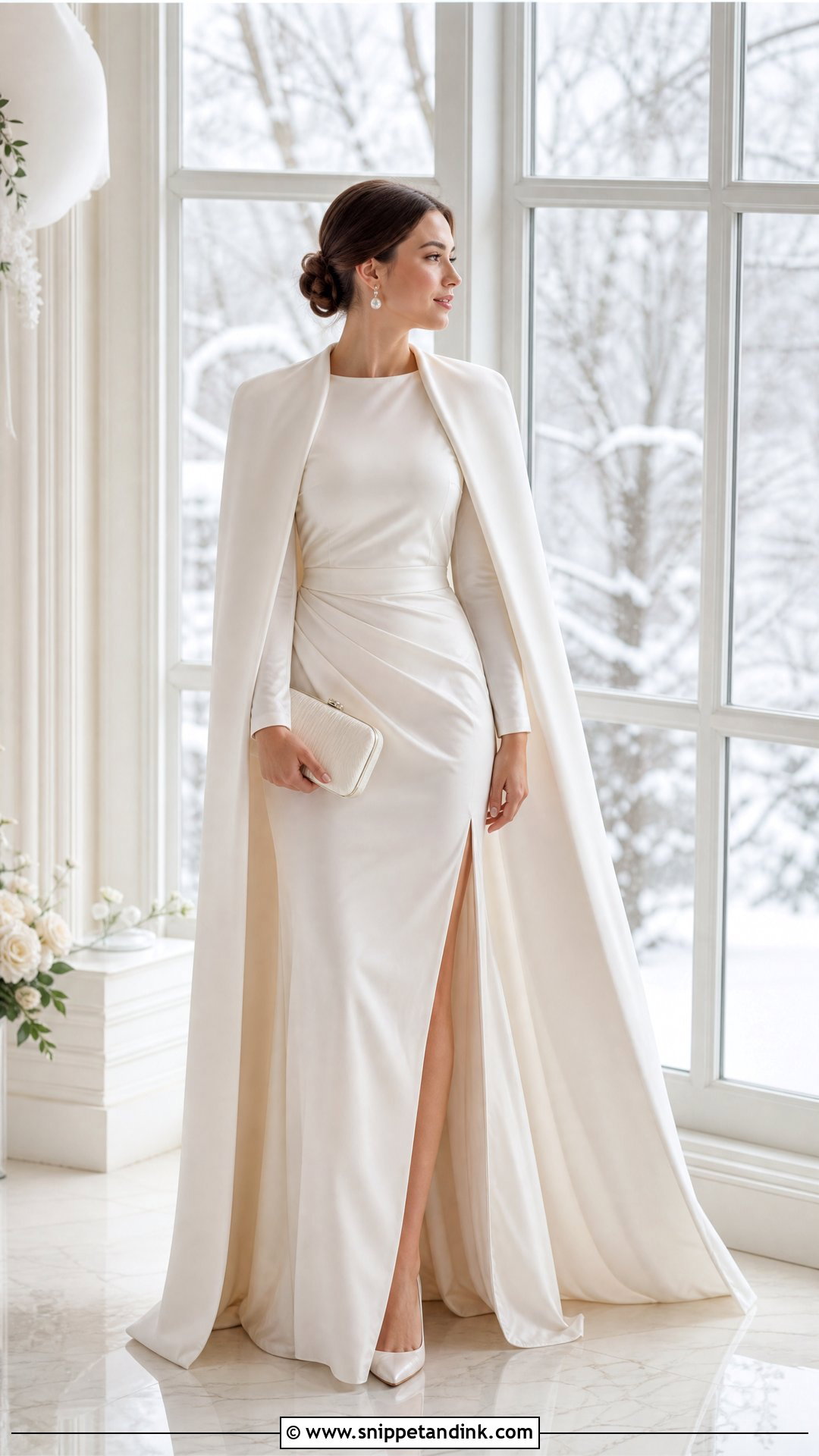
A split works in winter if you plan the layers around it. A long-sleeved satin, crepe or velvet-trimmed gown with the split at mid-thigh or above the knee is my starting point. Closed-toe pumps cover more than sandals, with pearl earrings and a structured clutch. Add a tailored white coat, a faux-fur wrap or a lined cape for outdoor photos and travel. A low bun sits neatly under a veil or a cape collar. Sheer ivory tights are fine if you want them. Coats tend to catch the split edge and fold it under, so try the coat and the dress together before the day.
18. Courthouse Wedding Dress With Split
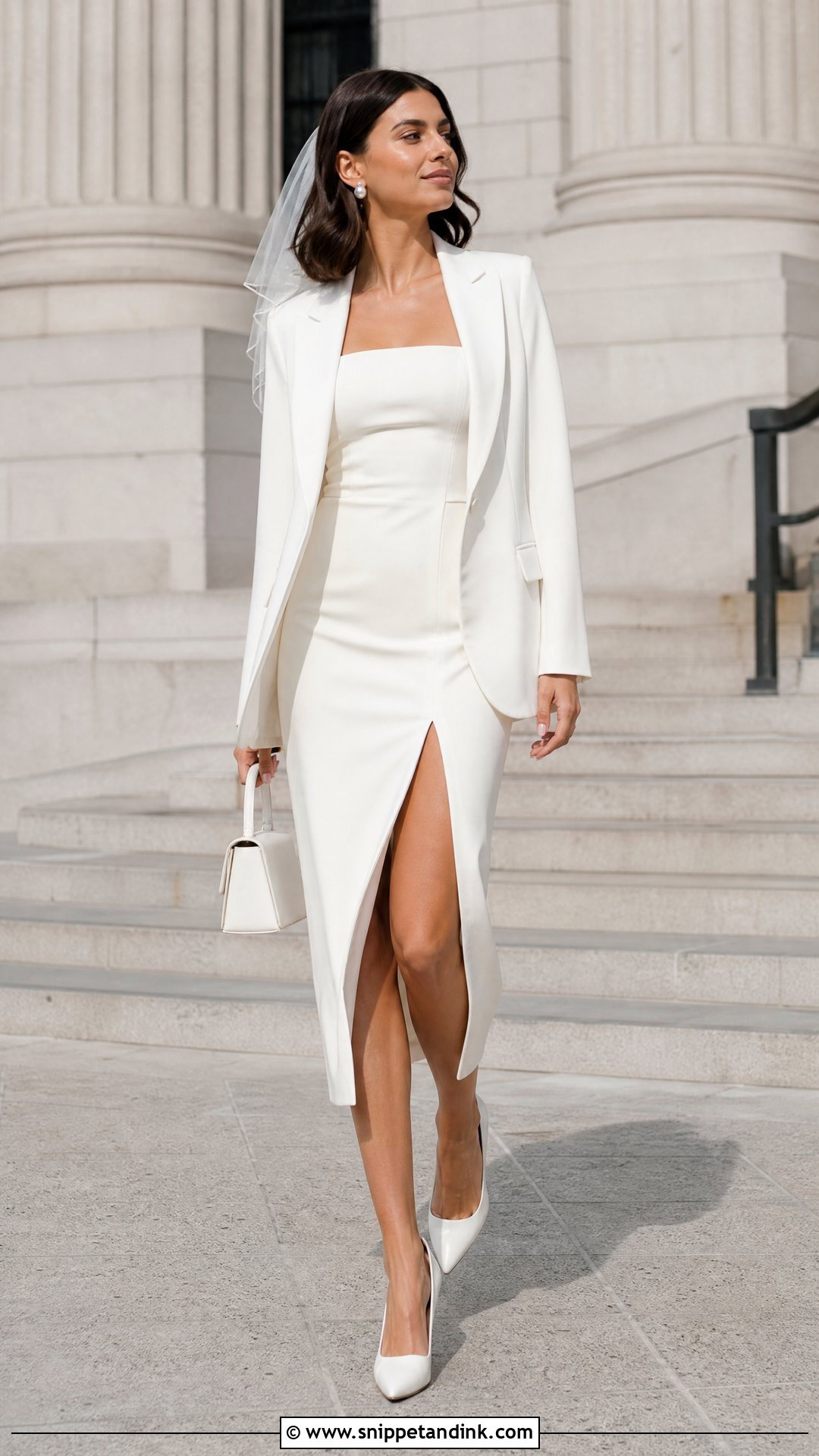
A courthouse dress can feel special without the size of a ball gown. A tailored midi or ankle-length dress with a modest side split, a clean neckline and a lightly defined waist is what I usually suggest. Crepe, satin or a structured woven fabric holds up through a long day. Pointed pumps, a small top-handle bag, pearl studs and a short veil or headband suit it, and a white blazer adds a layer you can take off. On a shorter hem, keep the split shorter too, roughly in proportion. Courthouses mean steps and corridors, so wear shoes you can walk in and check you can take a full stride.
19. Reception Wedding Dress With High Split
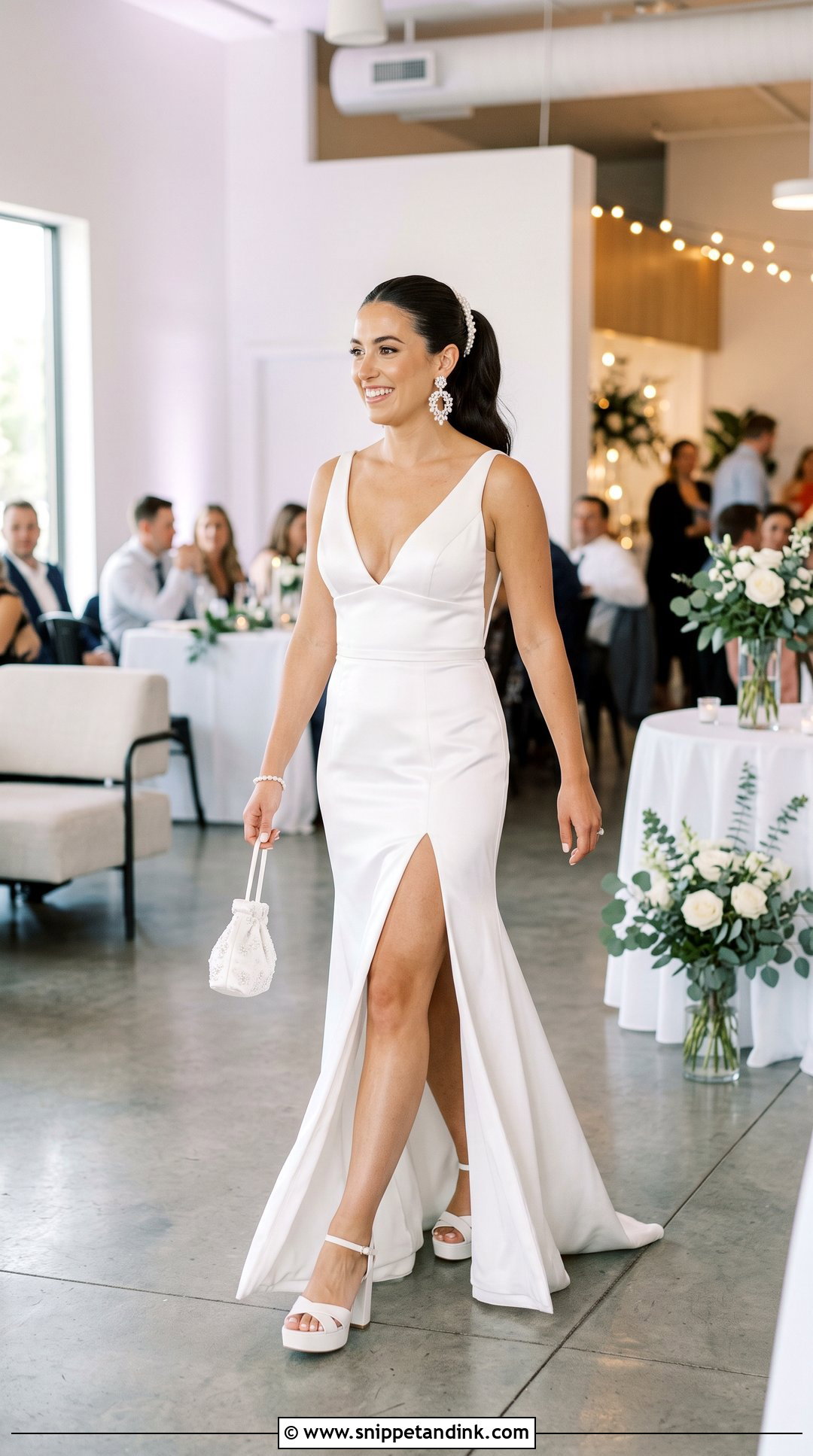
A second dress with a high split makes dancing much easier once the ceremony is over. Fitted satin, stretch crepe or sequins with secure straps and a floor-length hem you can manage are what I look for. The split can be higher than your ceremony gown, as long as the neckline is secure and the accessories stay simple. Platform sandals, statement earrings and a small wristlet are enough, and the veil gives way to a ponytail, a clip or a satin bow. If you are switching to flats later, have the hem set for both heights. A reinforced split top matters most here, since dancing is when splits tear.
20. Wedding Dress With Split And Detachable Overskirt
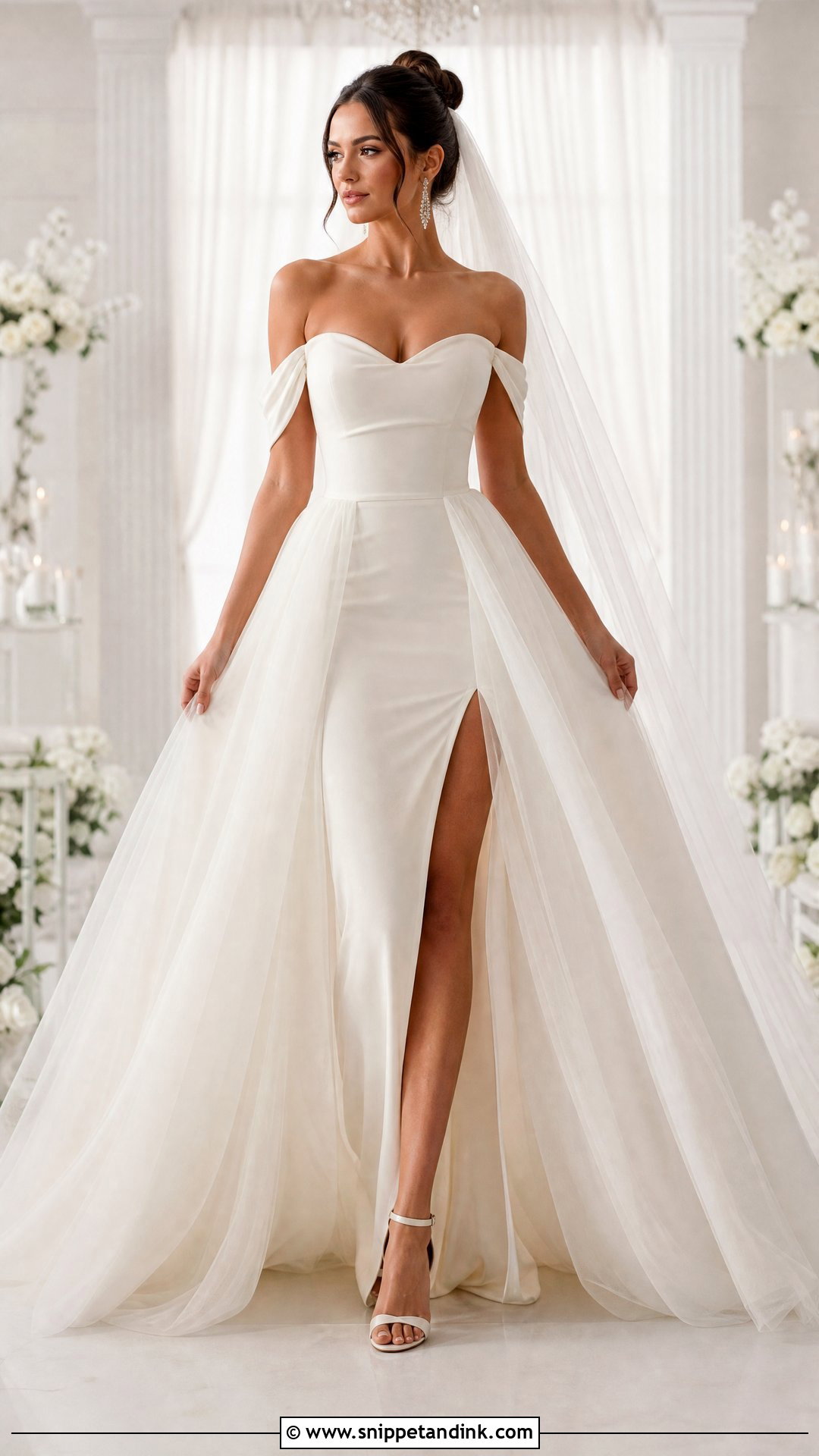
A detachable overskirt gives you a ceremony silhouette and a reception one without a full change. The base is a fitted column, sheath or A-line with a side split; a satin or tulle overskirt goes over it for the ceremony and comes off for the party. Elegant heels, drop earrings, a long veil and a polished updo complete it. The base dress has to be smooth at the waist so the overskirt band lies flat. Fastenings should be hidden and easy enough for a bridesmaid to release. I check the split again with the overskirt off, because it often creases where the band pressed on it.
Your Shoes Are Now Part of the Dress
With a closed skirt, shoes barely show. Give the skirt a split and they appear with every step and in nearly every walking photograph, so I treat them as part of the outfit from the first fitting. Buy them early, because the hem and the split height are both set around the heel you’ll actually wear.
Think about the leg as well. A high split shows the inside of the knee when you sit, and a garter worn high on the thigh can peek out, so wear it lower or on the leg away from the opening. If you plan on a fake tan, test it a few weeks ahead. Streaks on the shin show far more next to white fabric than they do in daily life.
On the day, a split skirt needs a little managing. Ask your bridesmaid to check that the split has fallen closed after you sit and stand, especially before the walk down the aisle, because a fold caught on the wrong side looks like a rip in photos. When you step out of a car, lead with the leg on the split side so the skirt opens the way it was cut, rather than twisting around you.
A Split Should Open as You Walk and Close as You Stand
Every dress here comes down to the same few questions: how high the split goes, how well it is built and how it moves with your stride. A split can start just above the knee or run up to show off your shoes, and it suits almost any silhouette, from ball gown to maternity. Choose it for how it is made rather than how it looks on a hanger. Wear your real shoes at fittings, walk, sit, turn and climb stairs, and balance the opening with your neckline, fabric and setting. Done well, it will feel like part of the dress rather than a feature added to it.
You'll Like These Ideas:





Leave a Reply