
A black wedding dress asks more of the styling than an ivory one does. Dark fabric swallows detail, so the work is in giving the camera something to read: a seam, a sheen, a change of texture between bodice and skirt. Below are twenty complete outfits, from structured satin ball gowns and crepe sheaths to lace mermaid shapes, big sleeves and short hems. For each one I treat the gown, veil, shoes, jewelry and bouquet as a single outfit, because with black, one mismatched piece is the first thing anyone notices.
Matching Three Different Blacks Before the Wedding Morning
Black is not one color. Dyes lean blue, brown or green depending on the fabric and the mill, and you only notice when two pieces stand side by side in daylight. A satin gown, a tulle veil and suede shoes can each be perfectly black on their own and still look like three outfits once photographed together.
Here is how I handle it with brides:
- Ask the shop for a fabric swatch of the gown, or a snip from the hem allowance, and carry it when you buy the veil, shoes, gloves and any wrap.
- Compare pieces next to a window, not under shop spotlights. Warm bulbs hide undertones that daylight shows immediately.
- Order veil tulle from the same maker as the gown where you can. Black net from different suppliers rarely matches.
- Choose matte and shiny on purpose. Matte shoes under a satin gown look intentional; two slightly different sheens look like a mistake.
- Take a phone photo with flash of everything together. Flash exaggerates the brown or blue cast more than the eye does, much like a photographer’s lighting will.
I also tell brides to brief their photographer early. Black dresses need exposure for the fabric, not just for the face, or the gown turns into a flat silhouette. Most experienced photographers know this, but it is worth saying so they plan for it.
1. Black Satin Ball Gown Wedding Dress
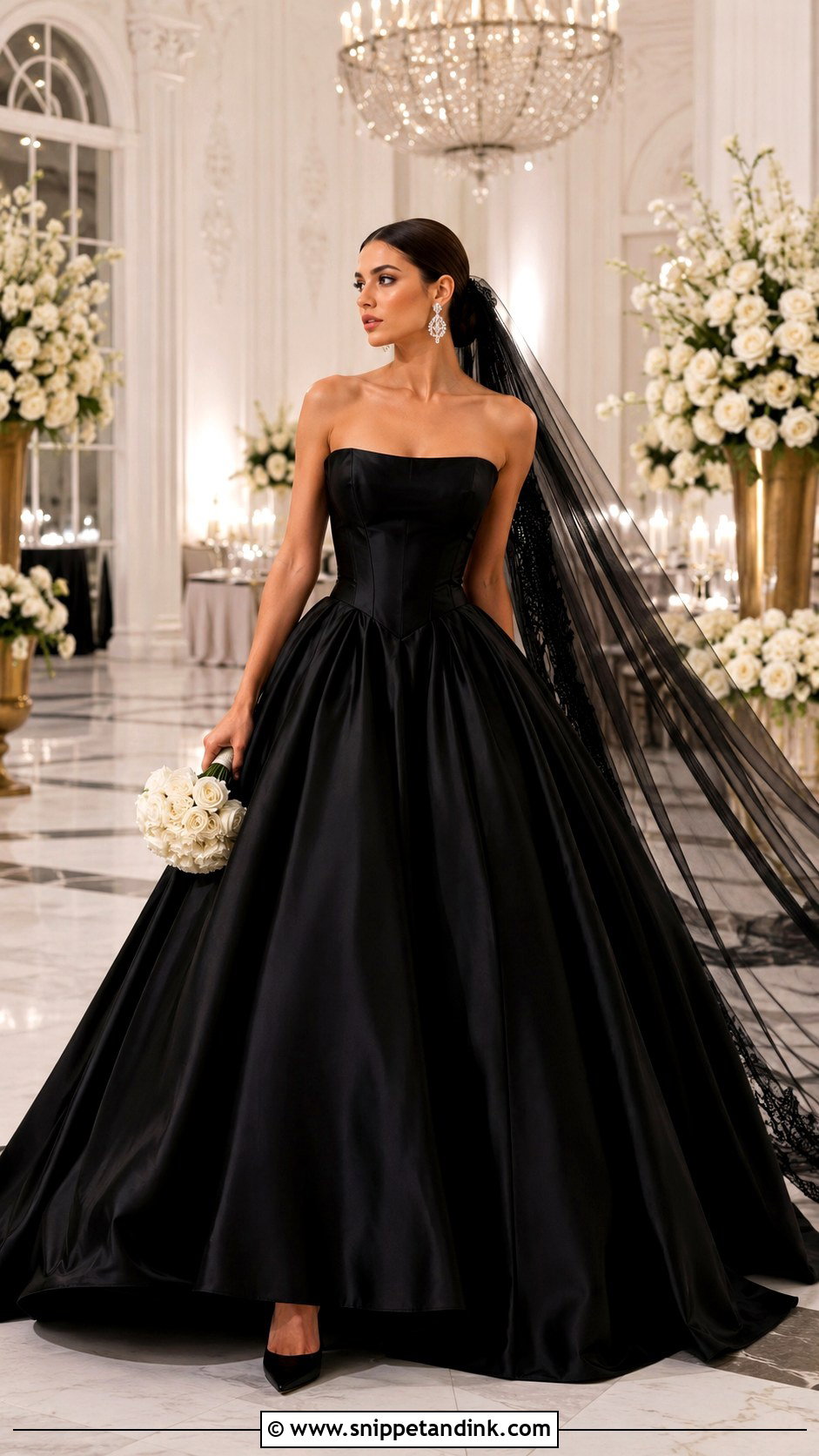
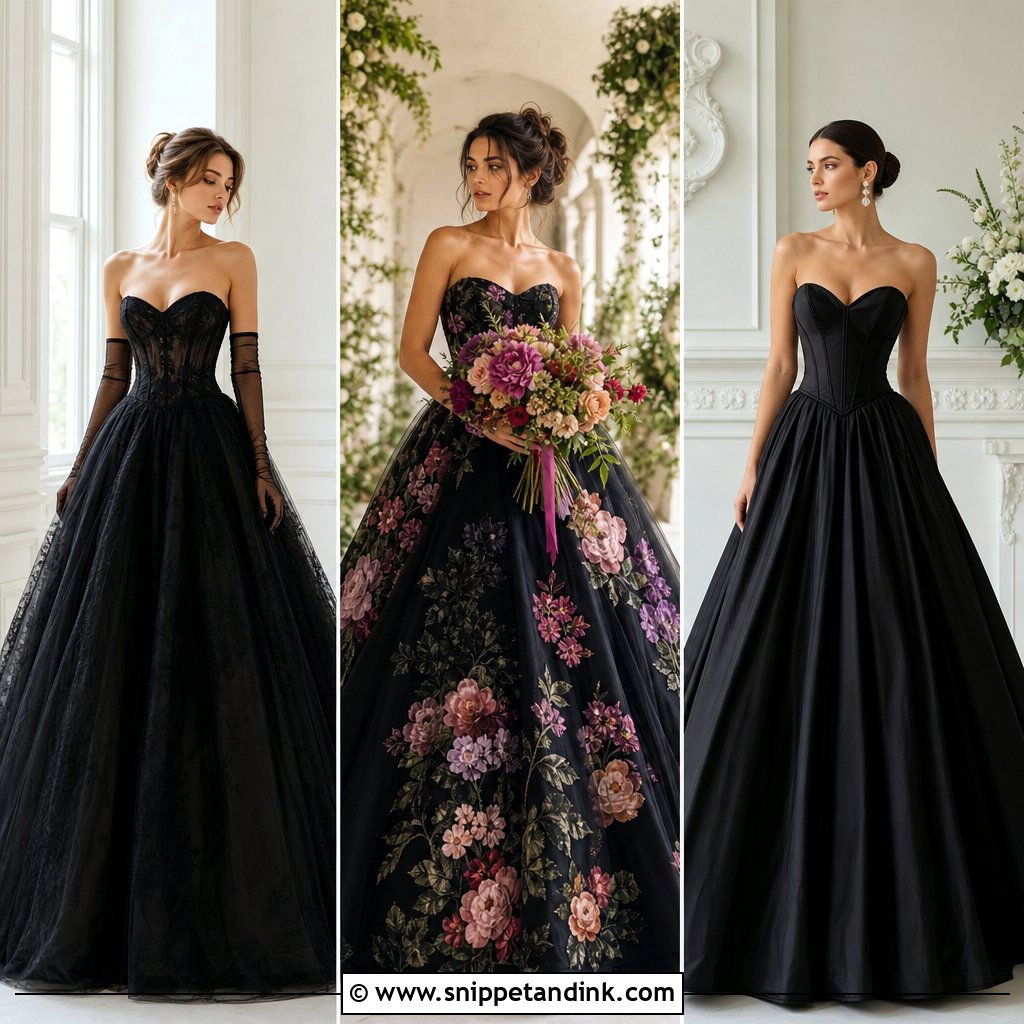
Satin is the easiest black to photograph, because its sheen catches light along every seam and fold. Look for a structured bodice with a defined waist and a skirt with enough interlining to hold its bell shape as you walk. I pair it with pointed black pumps, a cathedral black tulle veil and small crystal studs, plus a sleek low bun so the shoulders stay clear. White roses or pale calla lilies give contrast without fuss. One honest warning: satin shows every crease from sitting in the car, so I always pack a handheld steamer for the venue.
2. Black Lace Long Sleeve Wedding Dress
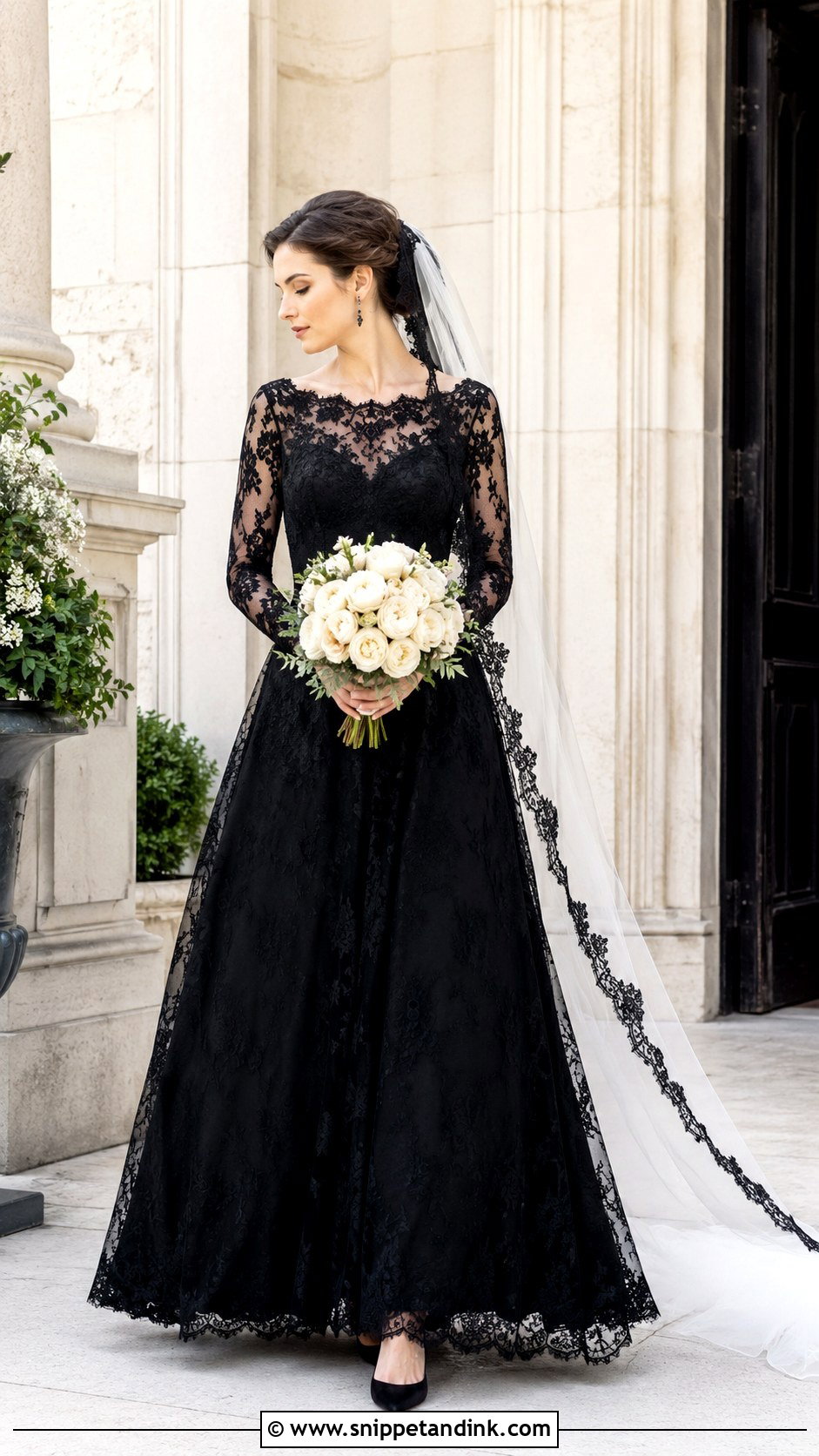
Lace softens an all-black outfit, but only if it has somewhere to show. I look for floral appliqués set over a lighter or nude lining at the sleeves and neckline, because black lace laid on black lining simply disappears in photos. Long illusion sleeves, a fitted bodice and an A-line or fit-and-flare skirt keep the shape traditional. Black velvet pumps, a lace-edged veil and small drops are plenty. A loose chignon or side-swept waves suit the texture, and cream garden roses with greenery bring warmth. It is a strong fit for fall dates and historic venues.
3. Black Mermaid Wedding Dress With Cathedral Train
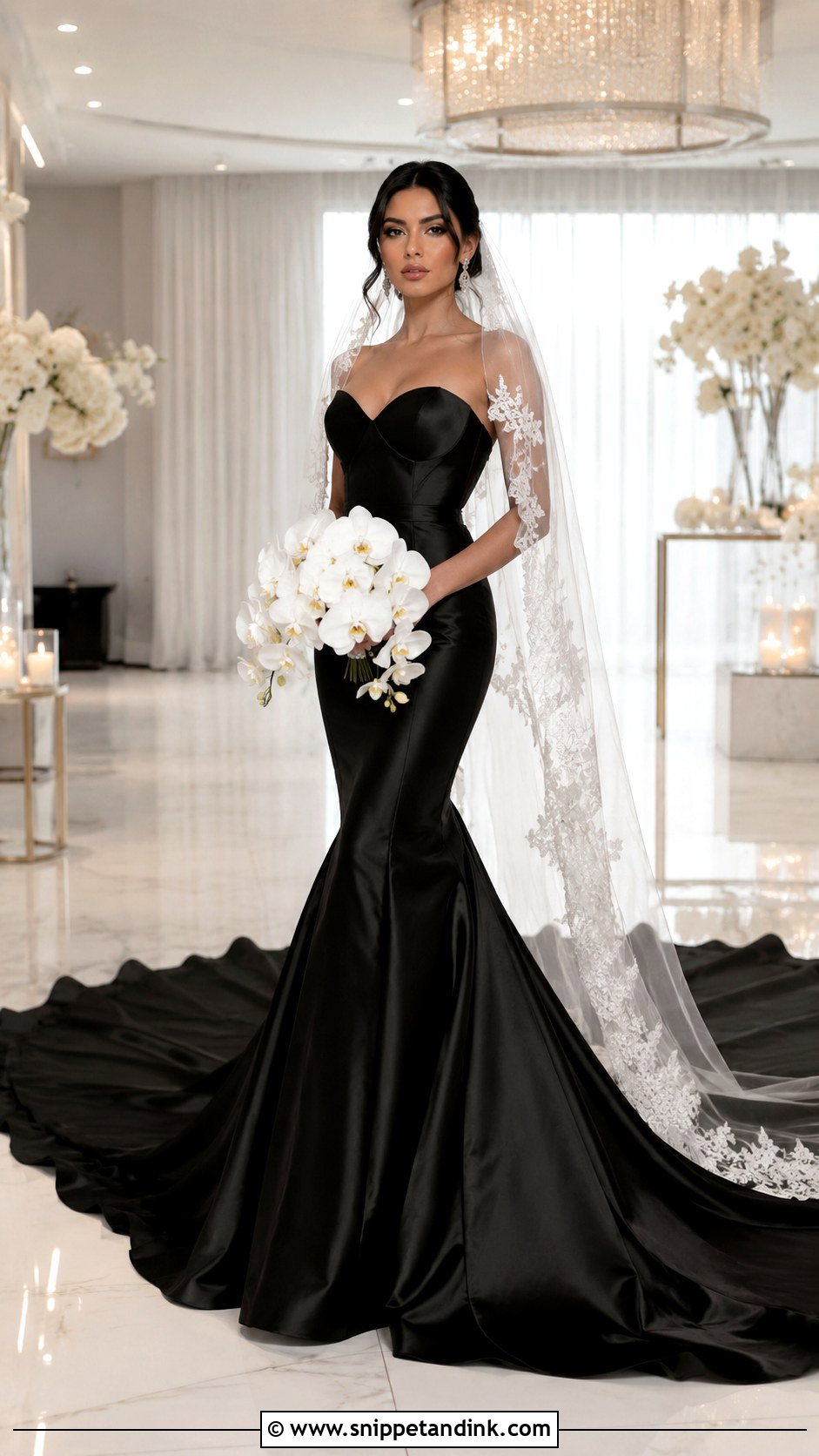
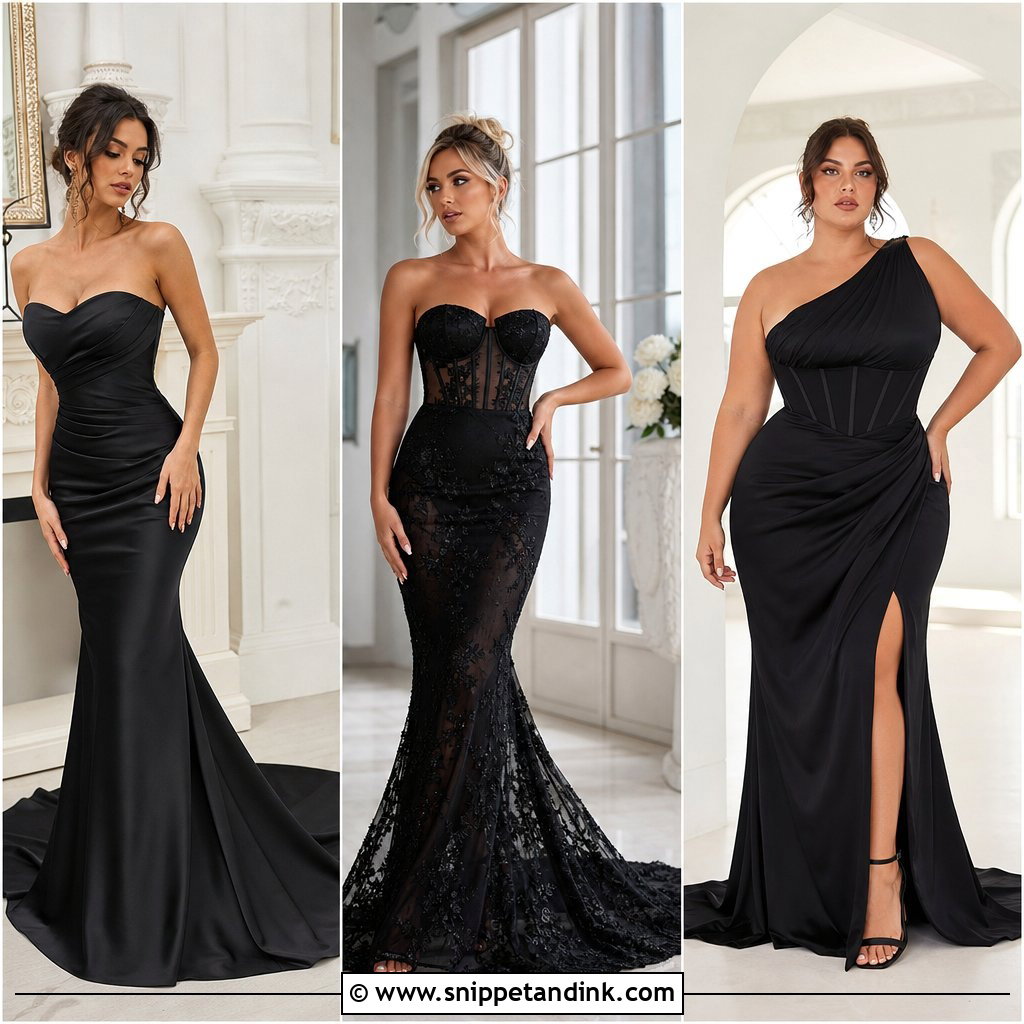
A mermaid cut follows the body through the hips and opens below the knee, so the fit at that flare point decides everything. Too high and you waddle; too low and you can’t climb stairs. Stretch satin, crepe or lace all hold the shape while letting you move. With a cathedral train already doing the talking, I keep the veil to fingertip length and add black platform heels for height and stability, sculptural silver earrings and a sharp side part. White orchids read clearly against the dark fabric. Black-tie evenings and modern event spaces suit it best.
4. Black Tulle A-Line Wedding Dress
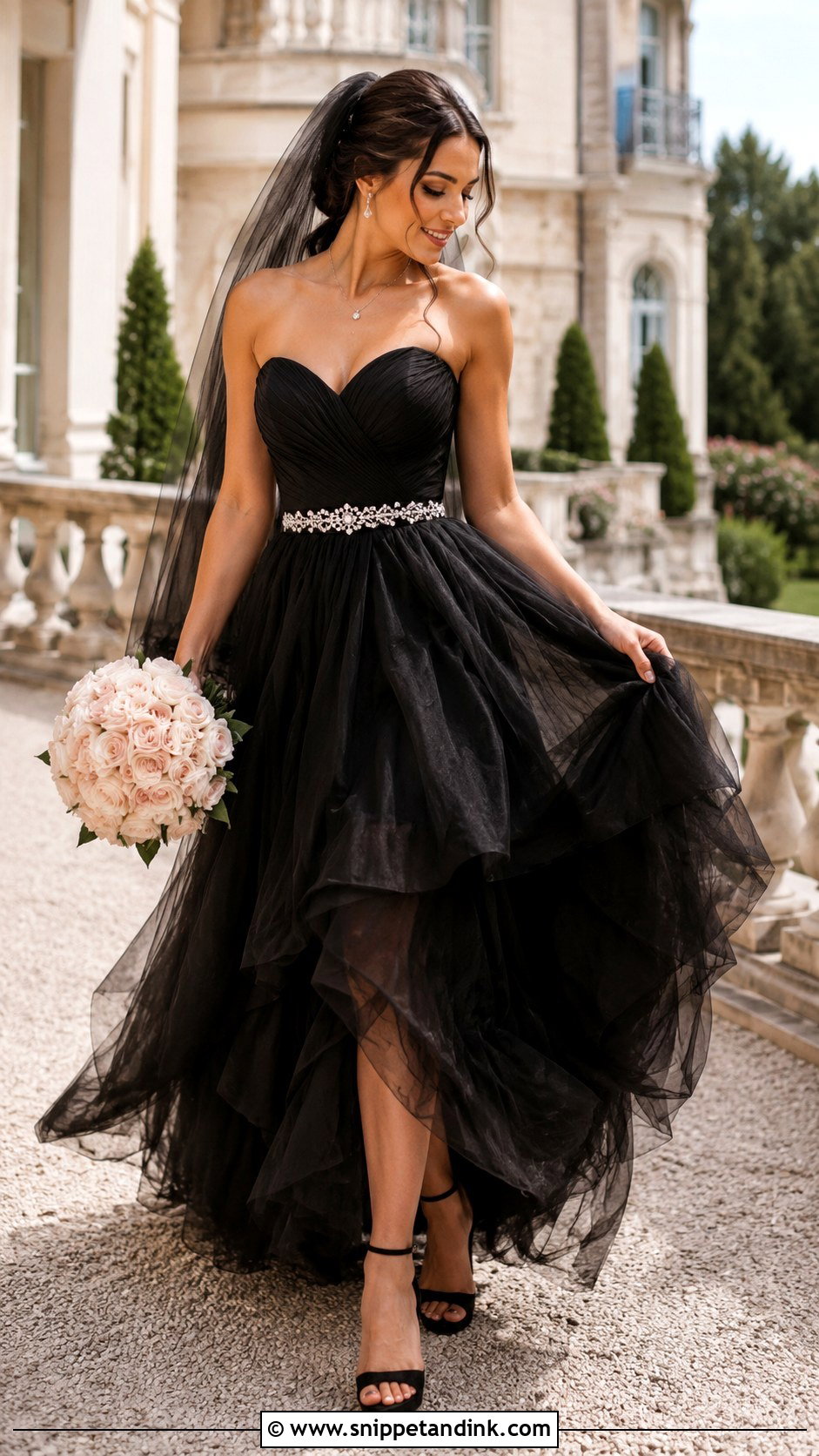
Tulle is where all-black outfits get tricky. Black net lets light through, so a single layer can look charcoal or faintly brown next to a solid satin bodice. I ask for several layers in the skirt and check the gown in daylight before ordering. An A-line with a fitted waist and soft ruching keeps it airy, and a sweetheart or gentle V-neckline keeps the top half light. Black block heels, a narrow crystal belt and a sheer black veil that moves in the breeze finish it, with a fine pendant and studs. Blush roses or white ranunculus suit outdoor estates and spring ceremonies.
5. Black Off-the-Shoulder Wedding Dress
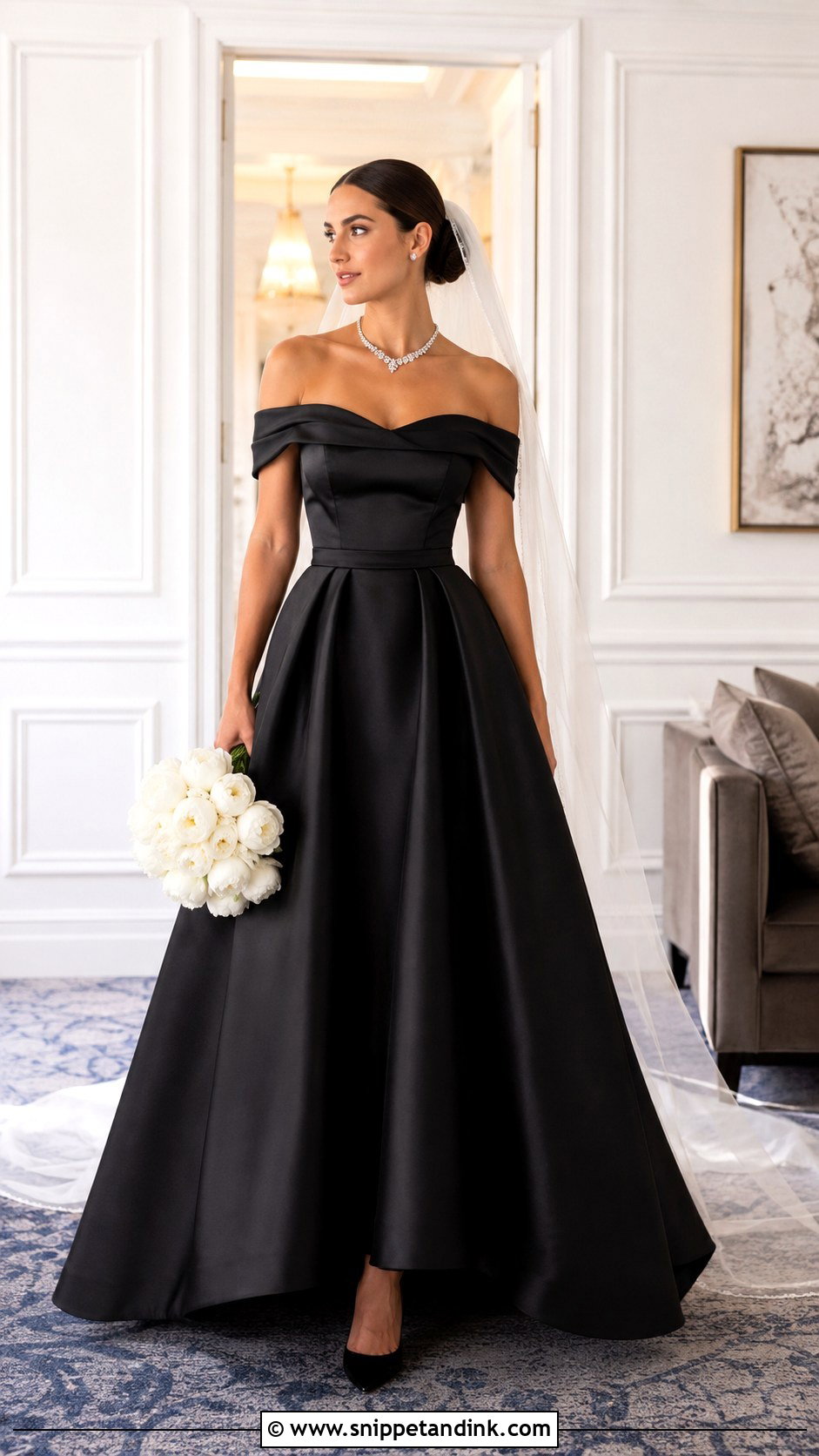
Off-the-shoulder gowns live or die on the internal bodice. If the structure inside isn’t doing the work, the sleeves slide up every time you hug someone, and you spend the day tugging them down. I ask brides to raise their arms and hug me at the fitting before we sign off. A satin or mikado skirt makes it formal, crepe makes it relaxed. Add a short crystal necklace, pointed black heels and a low bun with the veil tucked beneath it so the shoulder line stays visible. White peonies or roses brighten the whole picture, and it flatters most figures because the collarbone and waist do the shaping.
6. Black Strapless Corset Wedding Dress
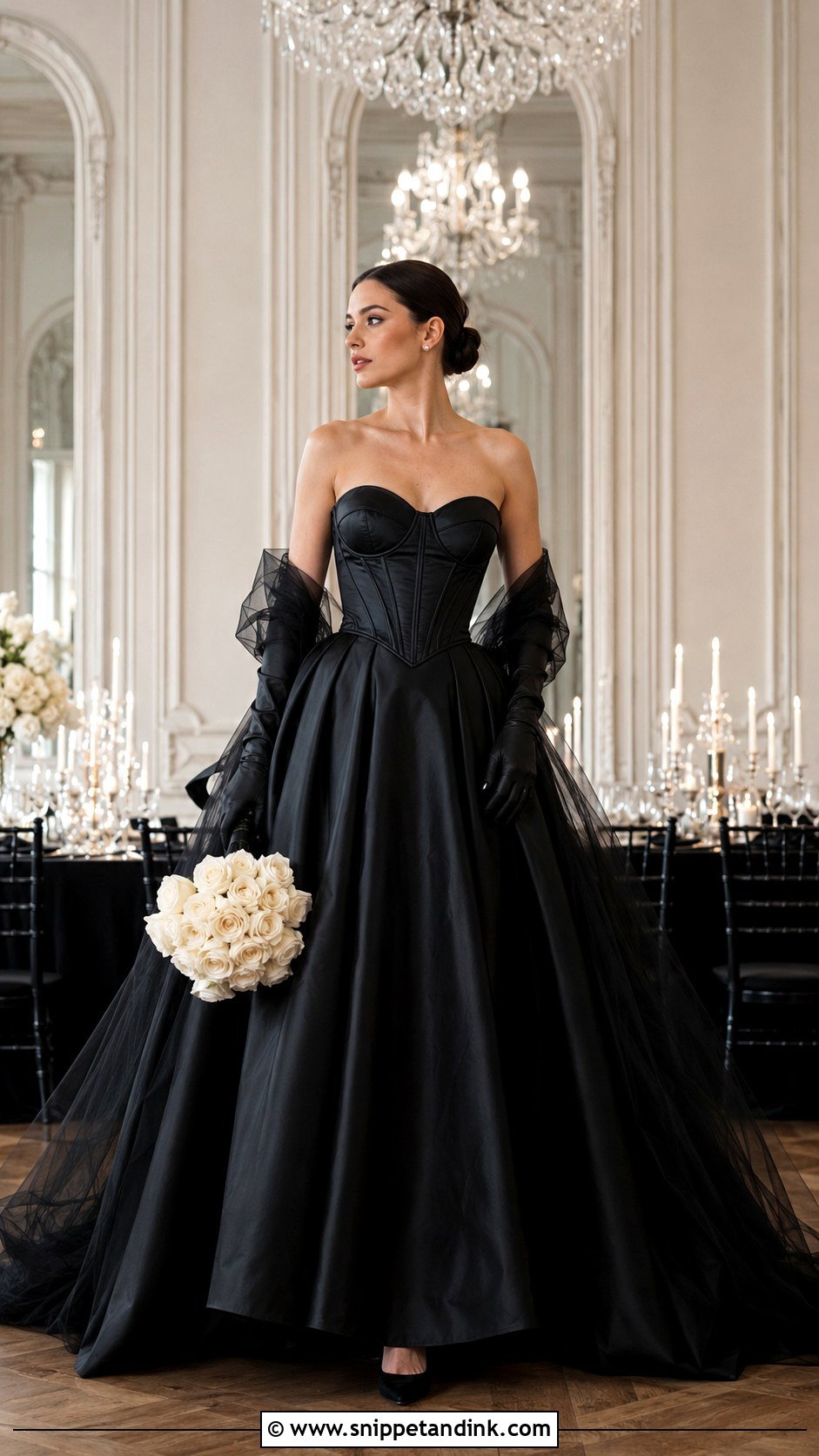
A strapless corset should feel secure before it looks good. Visible boning and a lace-up or concealed back closure are the details I check first, and then I have the bride sit down: if the top edge gaps or digs in when seated, it needs taking in. A full satin skirt gives grandeur, a column skirt gives restraint. Elbow-length black gloves, sparkling studs and closed-toe pumps complete it, with a neat updo. For a ceremony that calls for coverage, a removable black tulle wrap or sheer cape solves it. A white rose bouquet keeps the monochrome intact. Ballrooms and architectural rooms suit this shape.
7. Black Tea-Length Wedding Dress
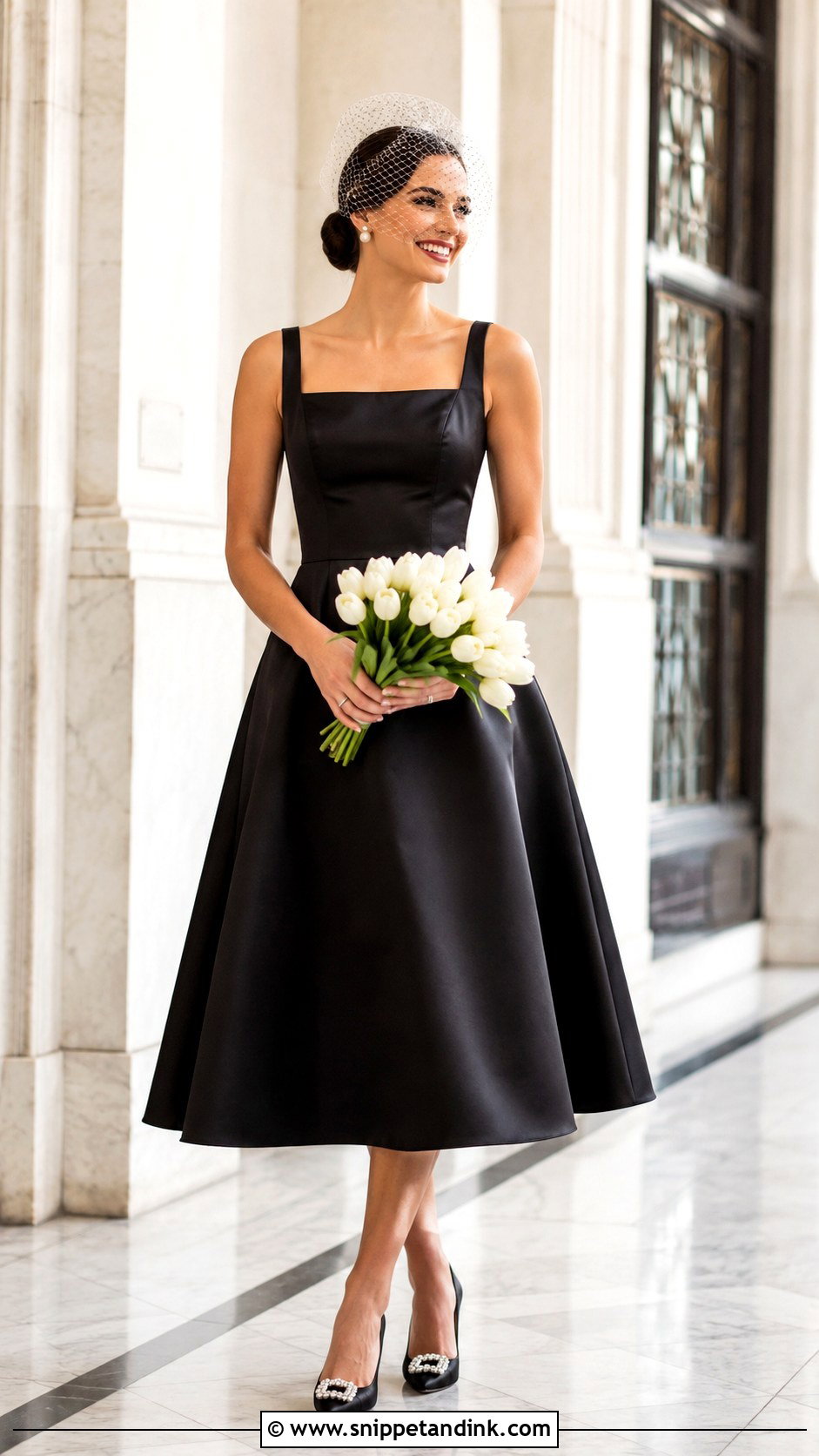
Tea length falls between knee and ankle, so your shoes become part of the dress. I budget the shoe choice almost as seriously as the gown here: embellished black pumps or an ankle strap, and always worn in before the day. Satin, mikado or layered tulle gives the shorter A-line enough body to look bridal. A short birdcage veil, pearl studs and a compact bouquet of white tulips suit the vintage proportions, as do soft waves or a smooth chin-length bob. No train means easy dancing at courthouse ceremonies, daytime weddings and restaurant receptions.
8. Black Minimalist Crepe Wedding Dress
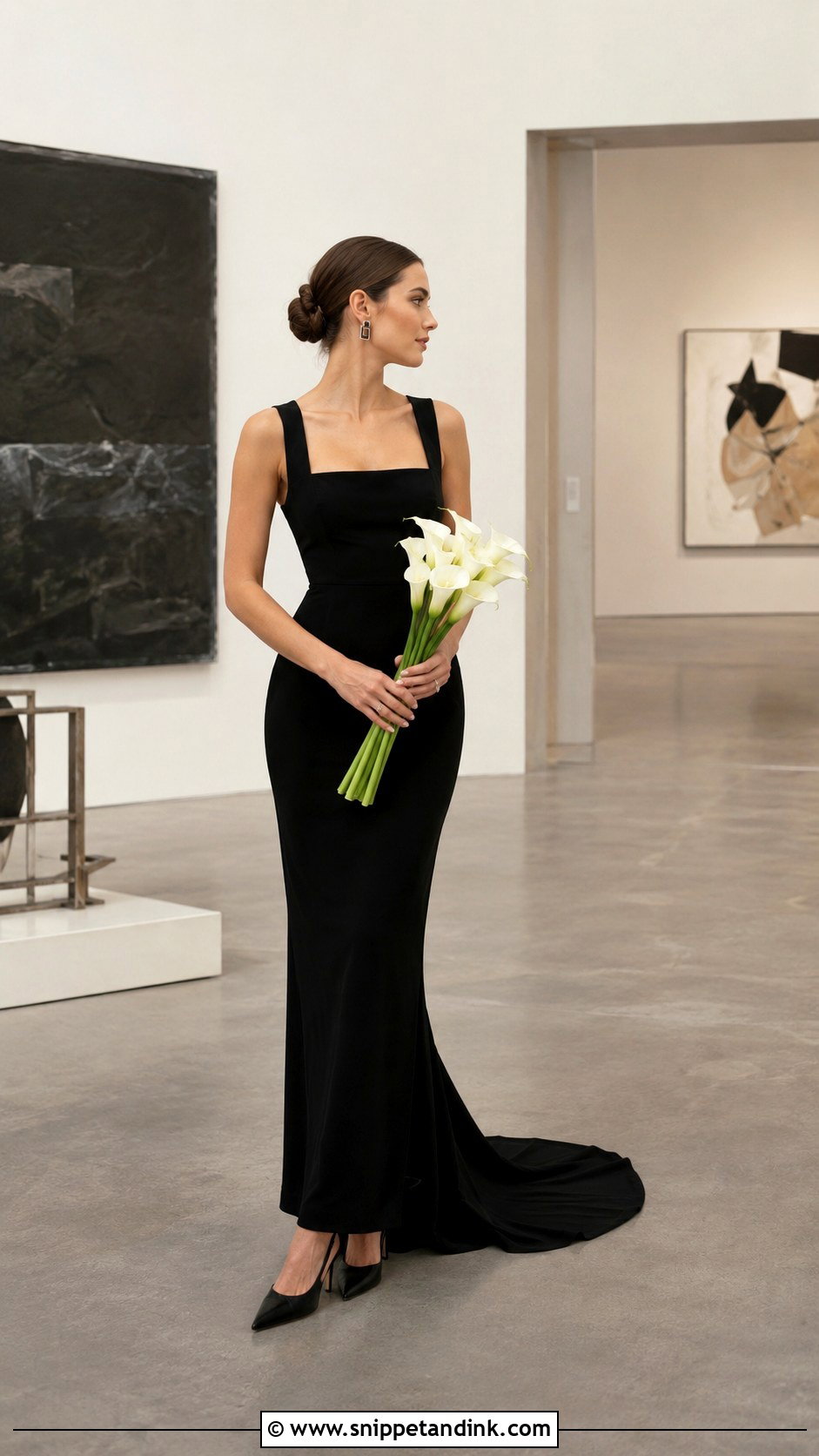
Minimal black crepe has nowhere to hide, which is exactly its appeal and its risk. Crepe is matte, so the tailoring has to carry the outfit: a square, bateau or high neckline, a defined waist and a small sweep train. If the fit is even slightly off at the back, a plain sheath shows it. Simple black slingbacks, geometric earrings and a structured mini bag for the reception keep it modern. A sleek bun or straight hair, plus white anthuriums or callas, matches the clean mood for galleries, rooftops and city hall ceremonies.
9. Black High-Neck Wedding Dress
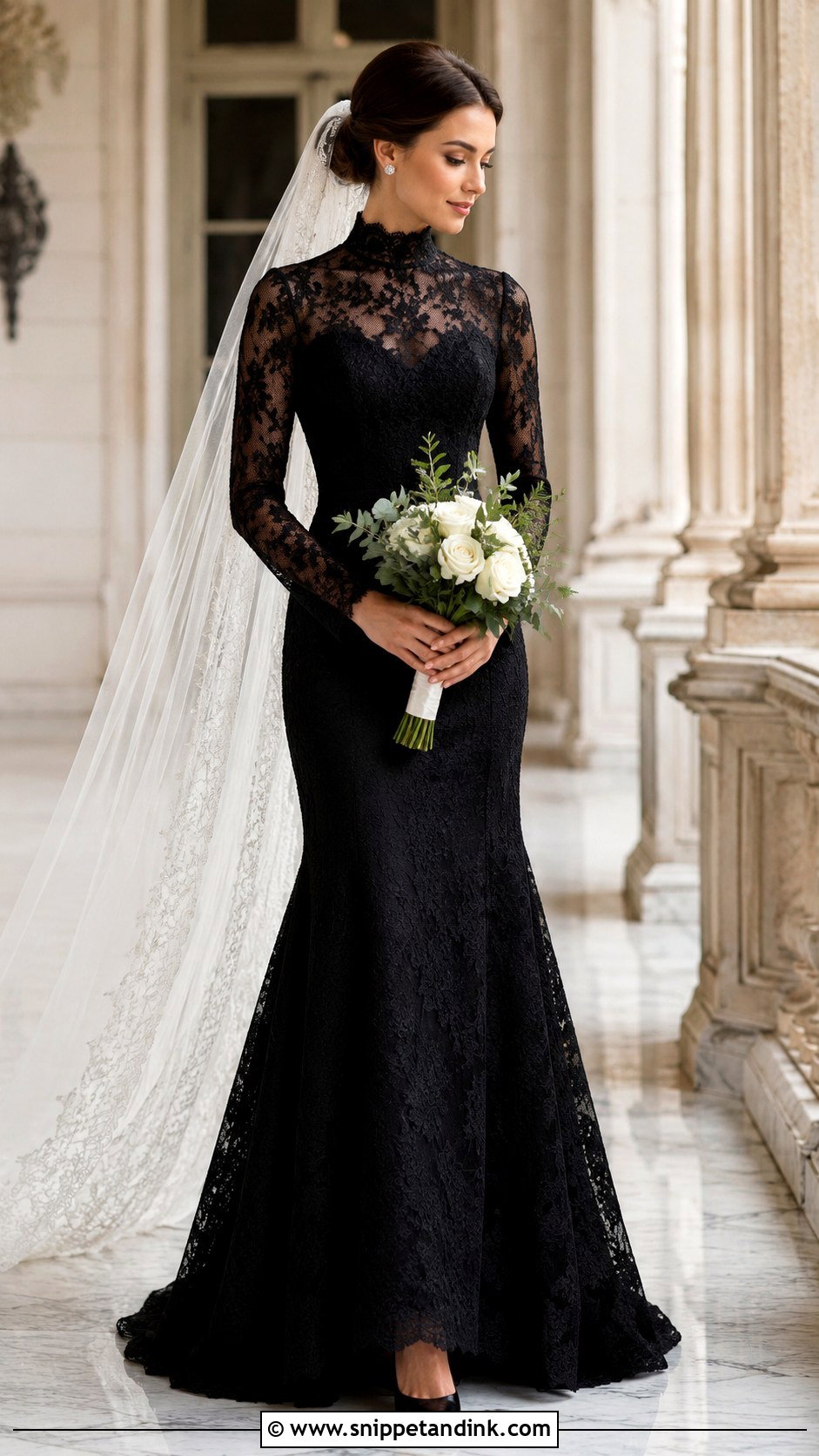
A high neck pulls the eye straight to the face, so I think of it as a portrait neckline. Sheer lace reads romantic and smooth crepe reads contemporary; either way, a fitted waist and a gently flared skirt stop the coverage from looking heavy. I skip the necklace entirely and keep earrings to small diamond or crystal studs. Black pumps and a long veil anchored beneath a polished bun complete it. Ivory roses with soft greenery freshen the bodice without competing. Cooler weather and formal ceremonies are its natural home.
10. Black Wedding Dress With Cape
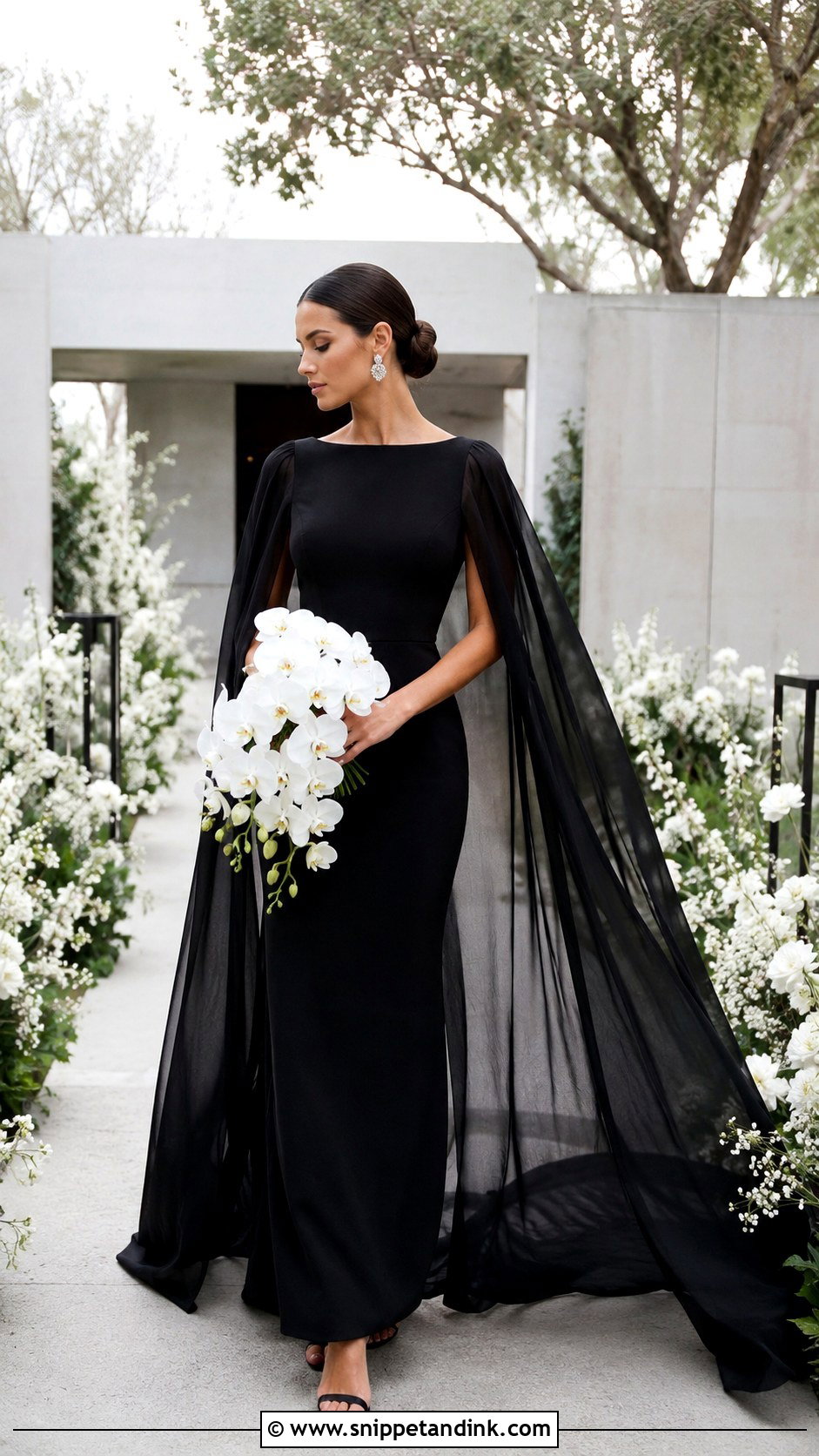
A cape replaces the veil and gives you an entrance with movement. Start from a simple fitted gown and let the cape do the drama: sheer tulle floats, lace adds texture, crepe gives a sharp architectural line. Attachment matters more than most brides expect. A cape fixed at the shoulders hangs differently from one fixed at the neckline, and I always test it with the bride walking briskly, because a cape caught by wind can pull the neckline backwards. Black heels, crystal studs, one slim bracelet and a smooth ponytail or low bun keep it tidy. White orchids finish the look.
11. Black Wedding Dress With Detachable Overskirt
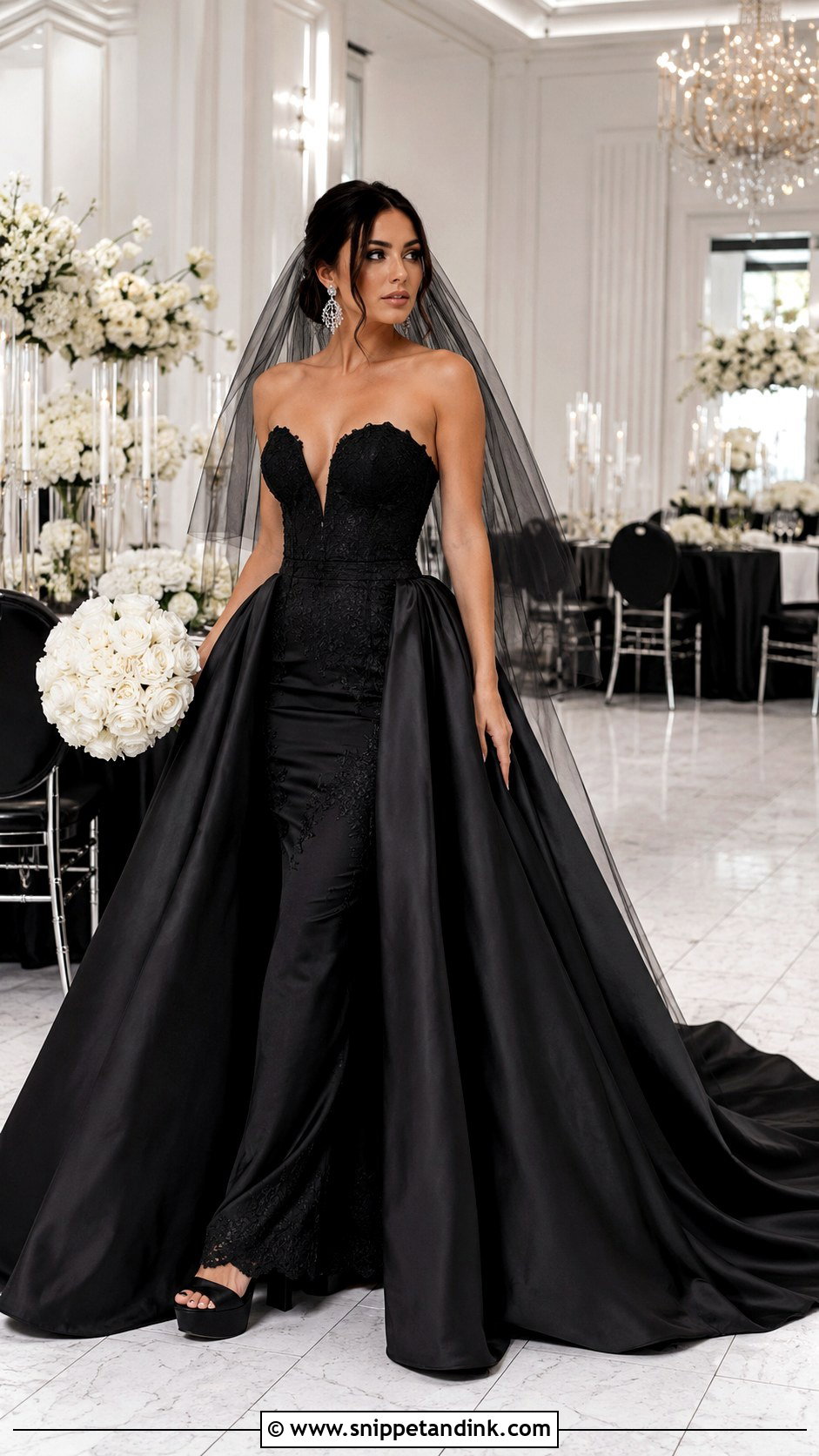
Why choose between a fitted gown and a full skirt when one outfit gives you both? Start with a black sheath, mermaid or column dress, then add a detachable satin or tulle overskirt for the ceremony, open at the front so the gown shows underneath. Ask your seamstress how it fastens. Hidden hooks or snaps are faster to remove than a row of buttons, and someone in your party needs to practice the change before the day. Black platform sandals, chandelier earrings and a simple tulle veil suit the formal portion; afterwards, lose the overskirt and veil and dance. A sleek bun and white roses keep it refined.
12. Black Beaded Wedding Dress
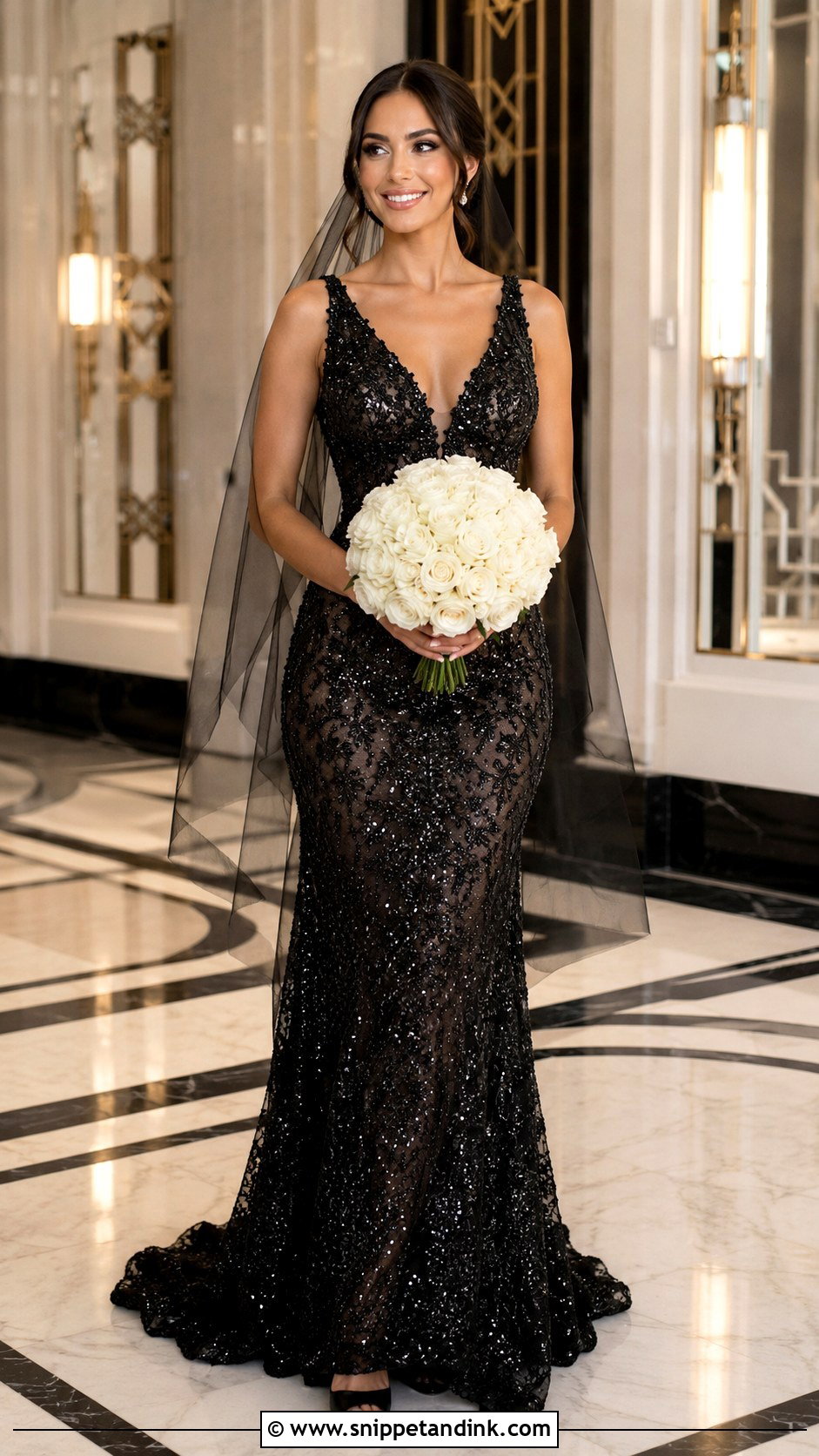
Beading gives black the definition it lacks, especially under bright venue lighting. I steer brides toward one embellishment story, tonal sequins or crystal embroidery or beaded florals, rather than all three together. A V-neck or soft scoop keeps a decorated bodice from looking heavy. Plain black satin heels and small earrings let the beadwork lead. Be careful with veils here: heavy beading snags fine tulle, so I choose a plain black veil with a finished edge. Smooth waves or a low side bun and cream roses complete it for evening weddings, art deco venues and elegant indoor receptions.
13. Black Velvet Wedding Dress
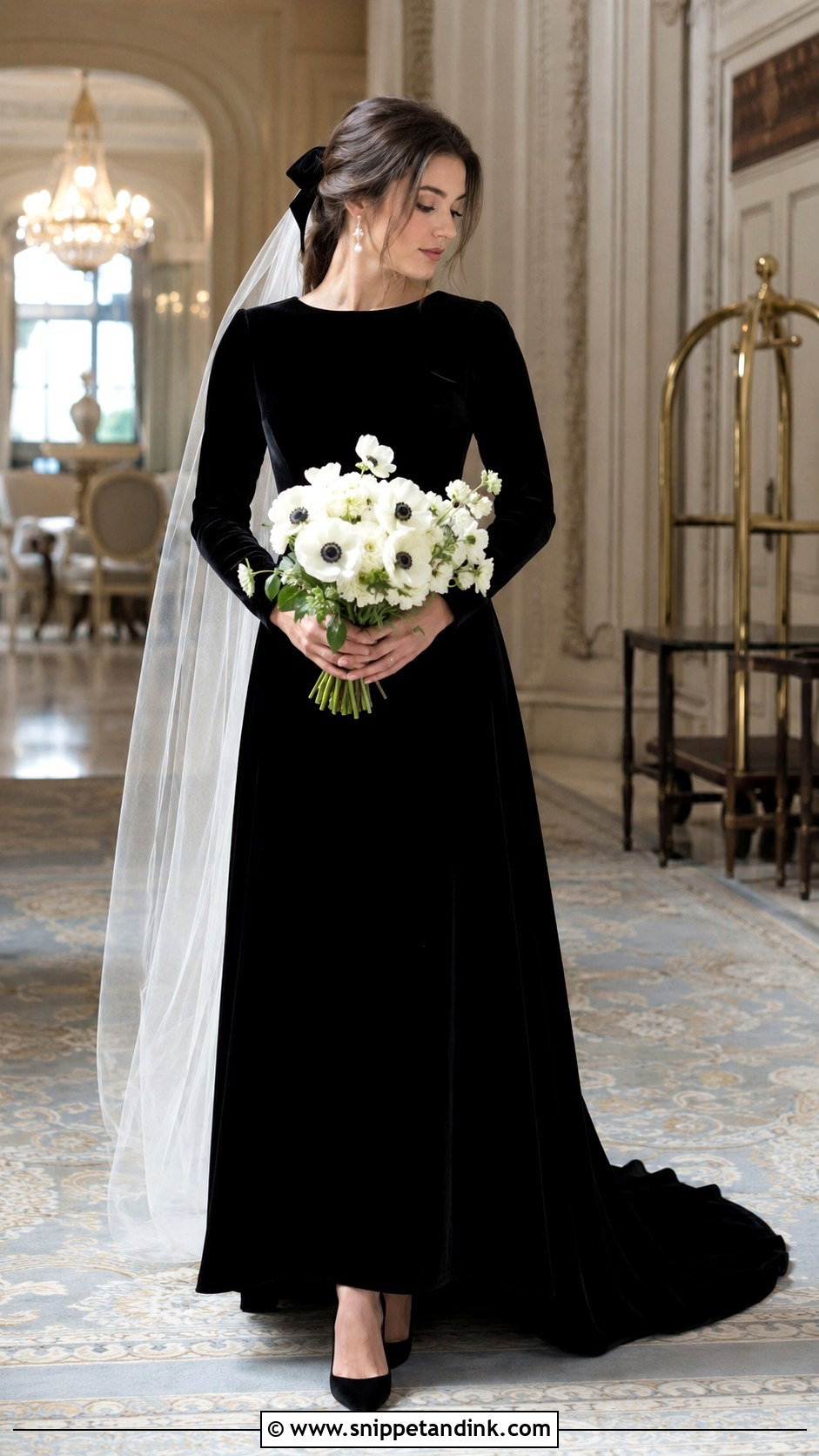
Velvet holds color more deeply than any other black fabric, which is why it suits winter so well. It also has a pile that crushes when you sit for long, leaving shiny patches, so I ask brides to sit on a smooth surface and stand during the long car ride where possible. A fitted A-line or column with long sleeves and a moderate train works best. Because the fabric already carries weight, I keep accessories light: black suede pumps, pearl drops and a narrow velvet hair ribbon, plus a sheer tulle veil to stop it looking dense. White roses, anemones or winter greenery suit mountain venues and historic hotels.
14. Black Boho Lace Wedding Dress
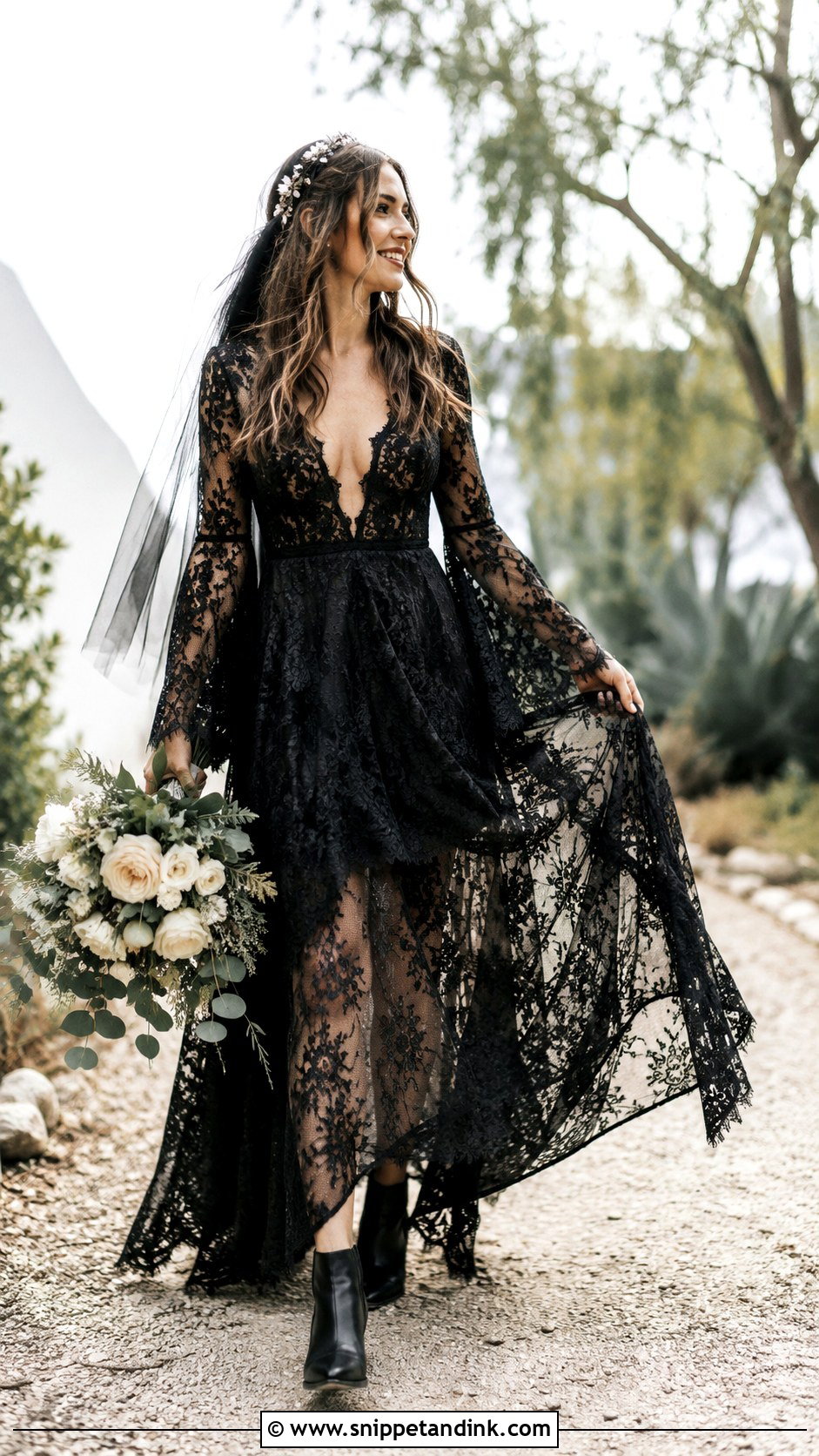
A black boho wedding dress should be easy to move in, so I start with the sleeves. Bell or flutter sleeves give movement, but long bell sleeves drag through food and drinks, so check that you can lift a glass without a cuff dipping in. Floral lace, a softly fitted waist and a flowing skirt carry the rest. Black leather ankle boots or low block heels depend on the ground you’ll stand on. Loose waves, a delicate hair vine and a raw-edged veil suit it, with ivory flowers, eucalyptus and textured greenery. Skip extra statement jewelry; the lace is enough.

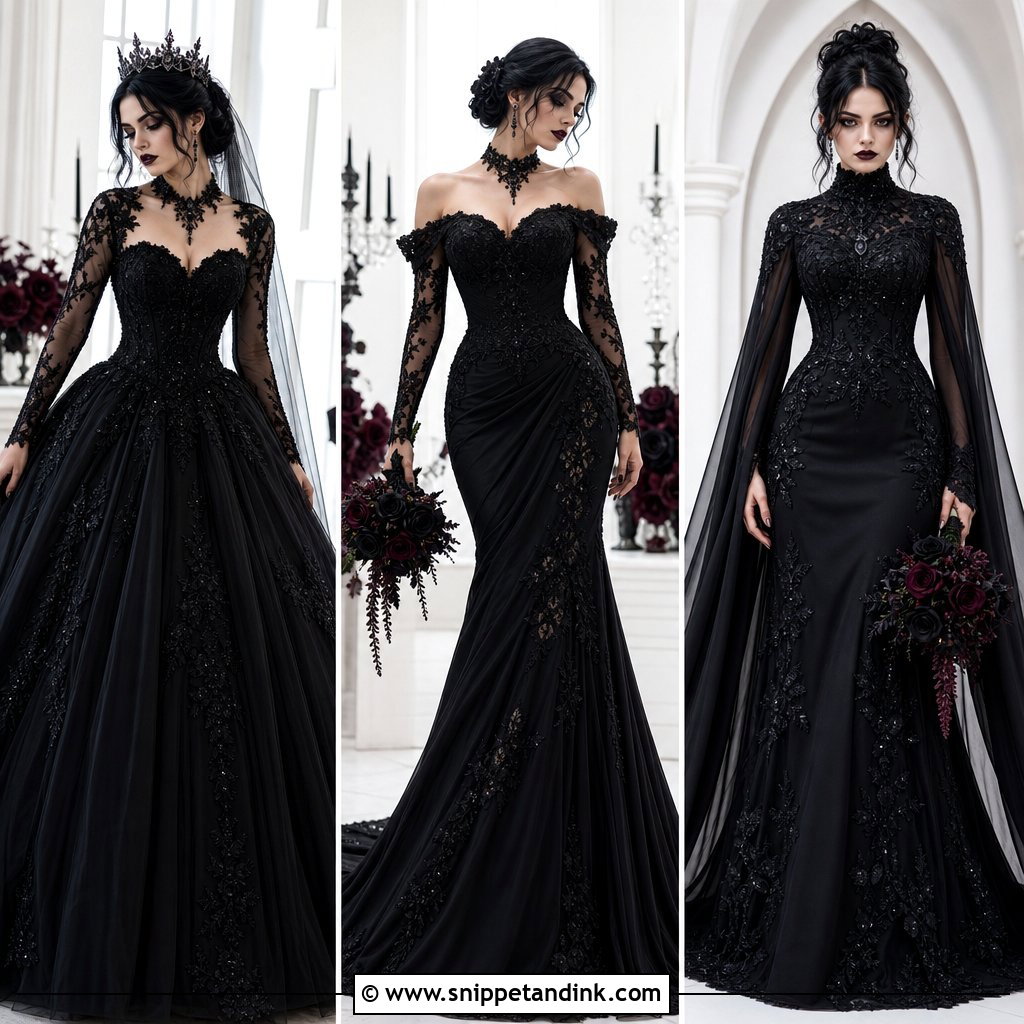
15. Black Square-Neck Wedding Dress
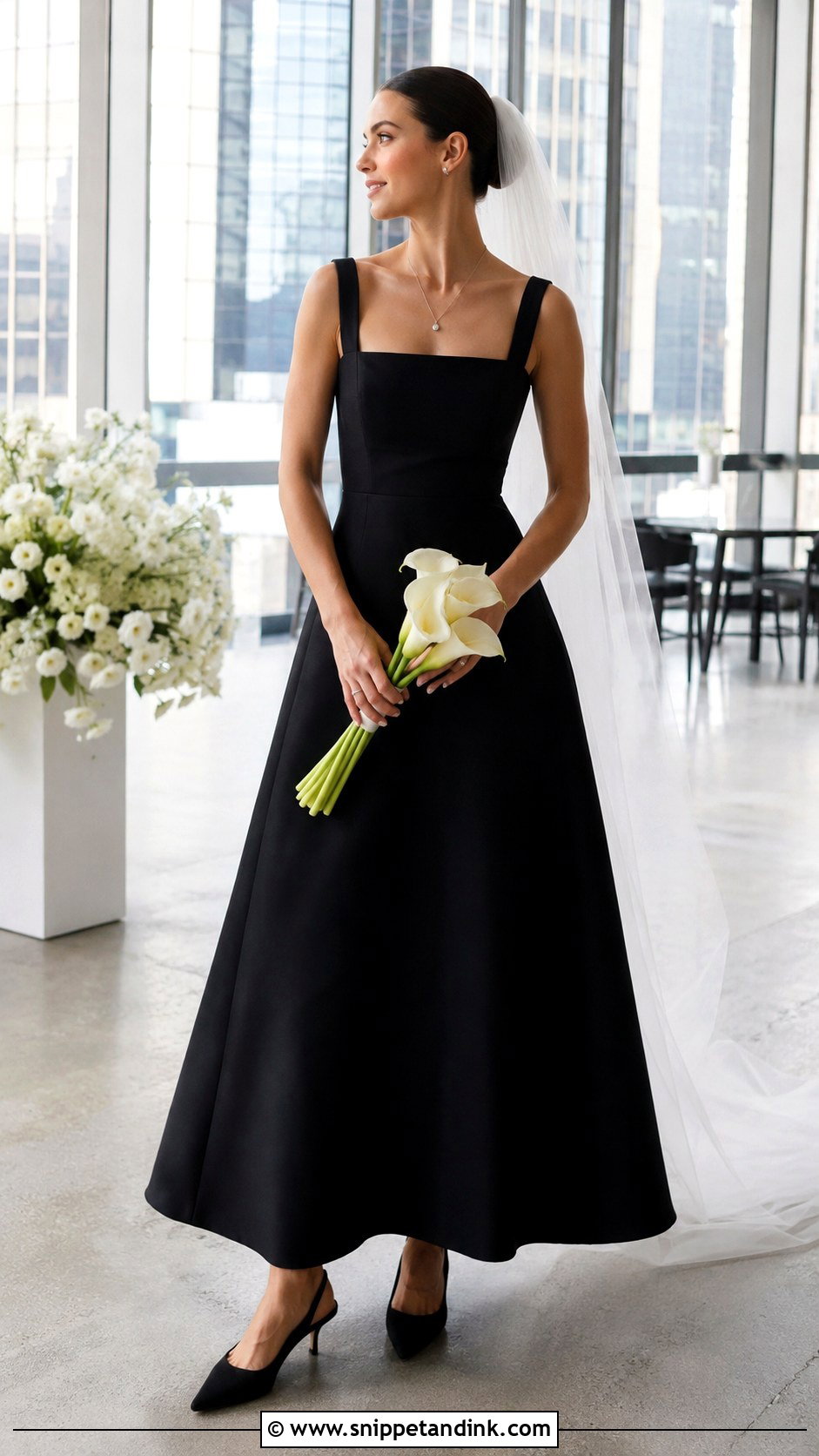
A square neckline frames the collarbone with a crisp, almost architectural line. Wide straps or long sleeves keep it supportive, and an A-line, column or gently flared skirt balances it. Satin and crepe both keep the geometry sharp, where lace would soften the corners. The fit check I do is simple: the neckline edge should lie flat when you breathe in, with no gaping at the corners. Black slingbacks, a fine pendant and a cathedral veil with a plain edge suit it, with a low center-part bun. Long-stemmed white calla lilies echo the straight lines.
16. Black Puff Sleeve Wedding Dress
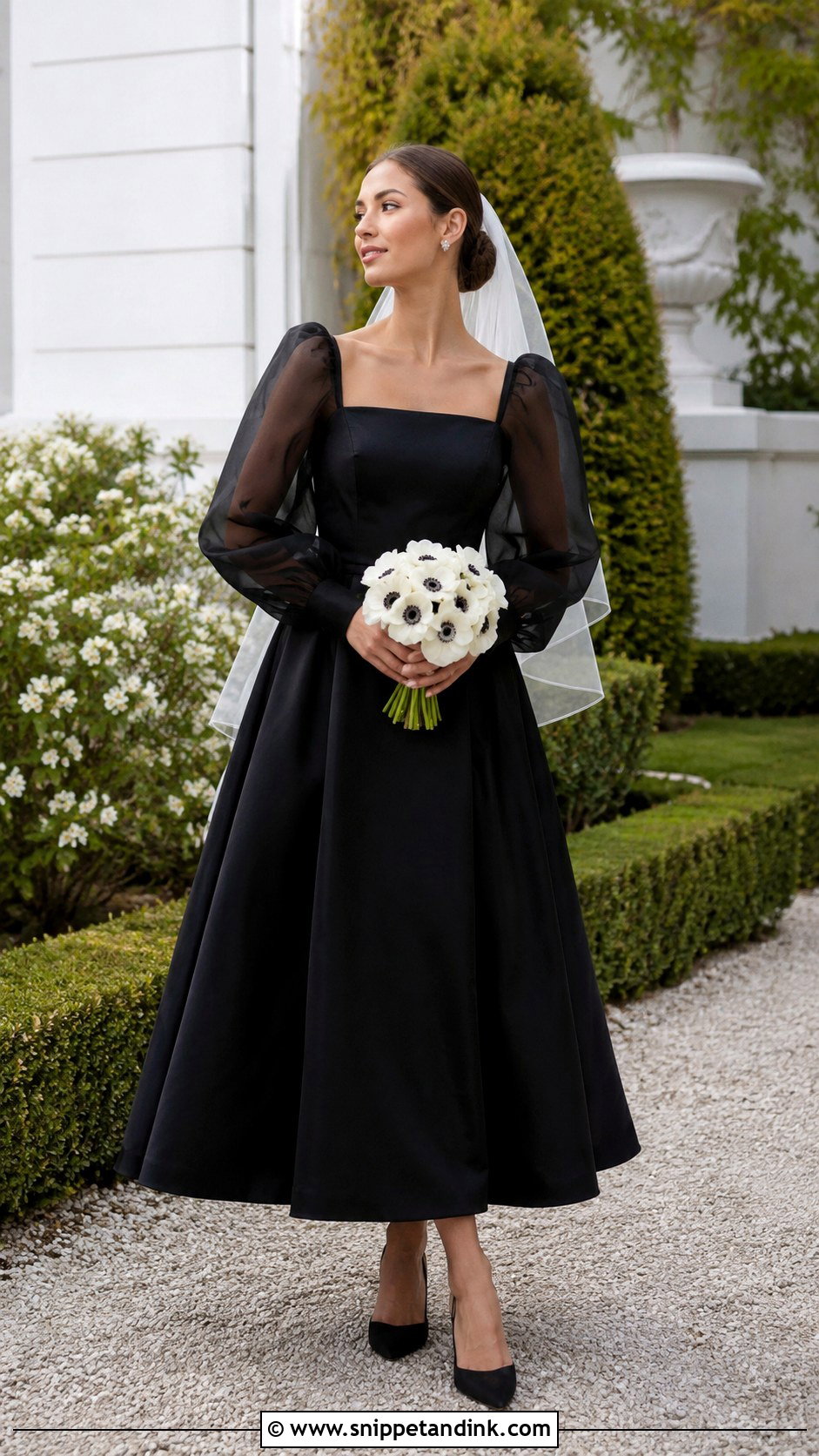
Puff sleeves change a plain black gown more than any other single detail. I recommend sheer organza or tulle so the volume reads as light rather than bulky, and I check how the sleeve sits when the arm is down; a puff that sits too high widens the shoulders in photos. Pair it with a fitted bodice and a controlled A-line or column skirt, and a sweetheart or square neckline. Black pumps, tiny crystal earrings and a veil behind a smooth low bun keep the head area quiet. A compact bouquet of white roses or anemones avoids competing with the sleeves.
17. Black One-Shoulder Wedding Dress
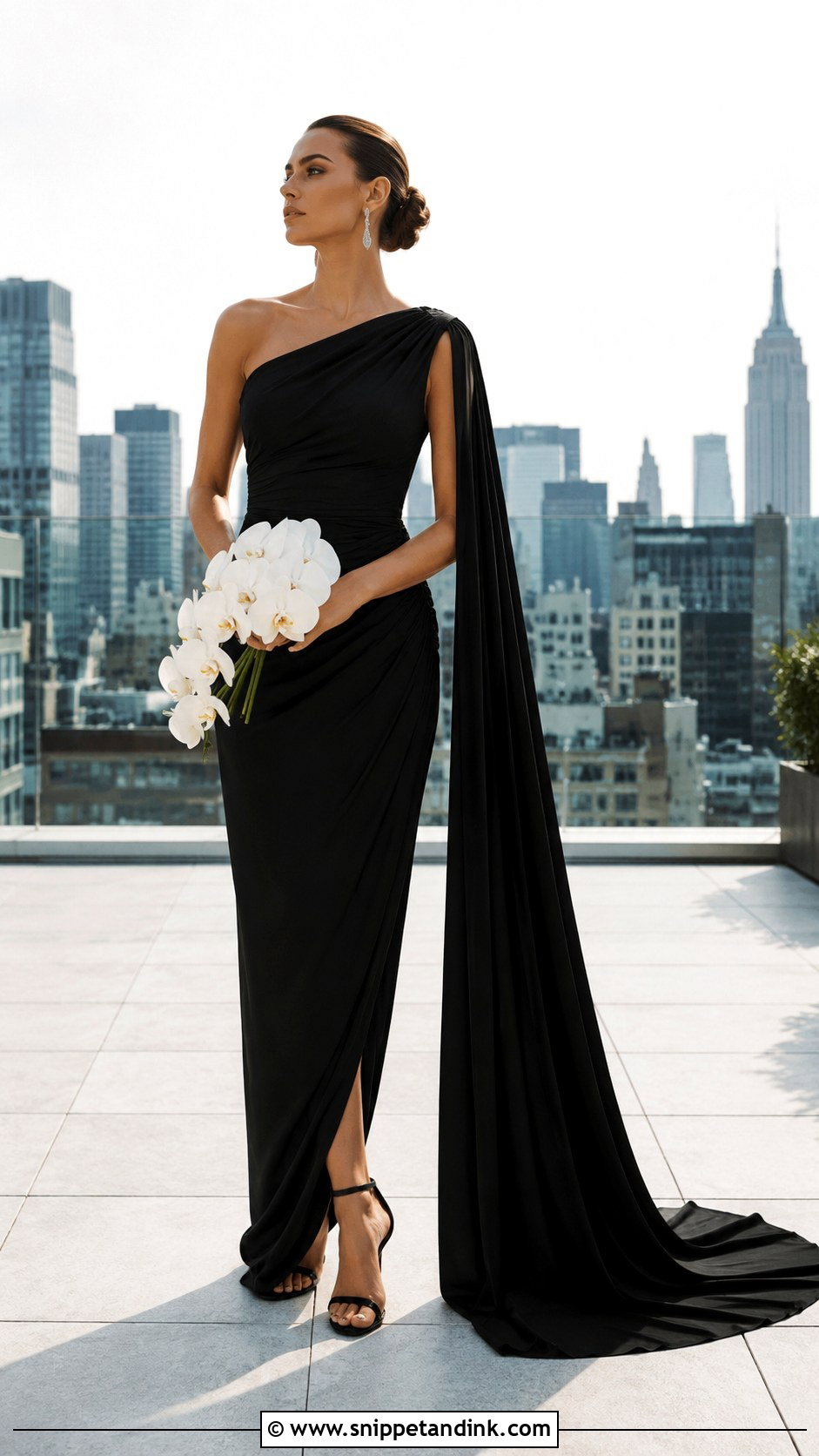
One shoulder breaks the symmetry most bridal necklines rely on, so I style the outfit around that asymmetry. Wear one statement earring on the bare side and sweep the hair back so nothing covers the strap. A fitted bodice with draping across the shoulder, waist or hip, and either a column or A-line skirt, gives the shape. Instead of a veil, I like a detachable shoulder drape that falls into a small train. Black strappy heels finish it. White orchids or calla lilies repeat the long lines, and the look sits well in modern hotels, rooftops and destination venues.
18. Black Floral Appliqué Wedding Dress
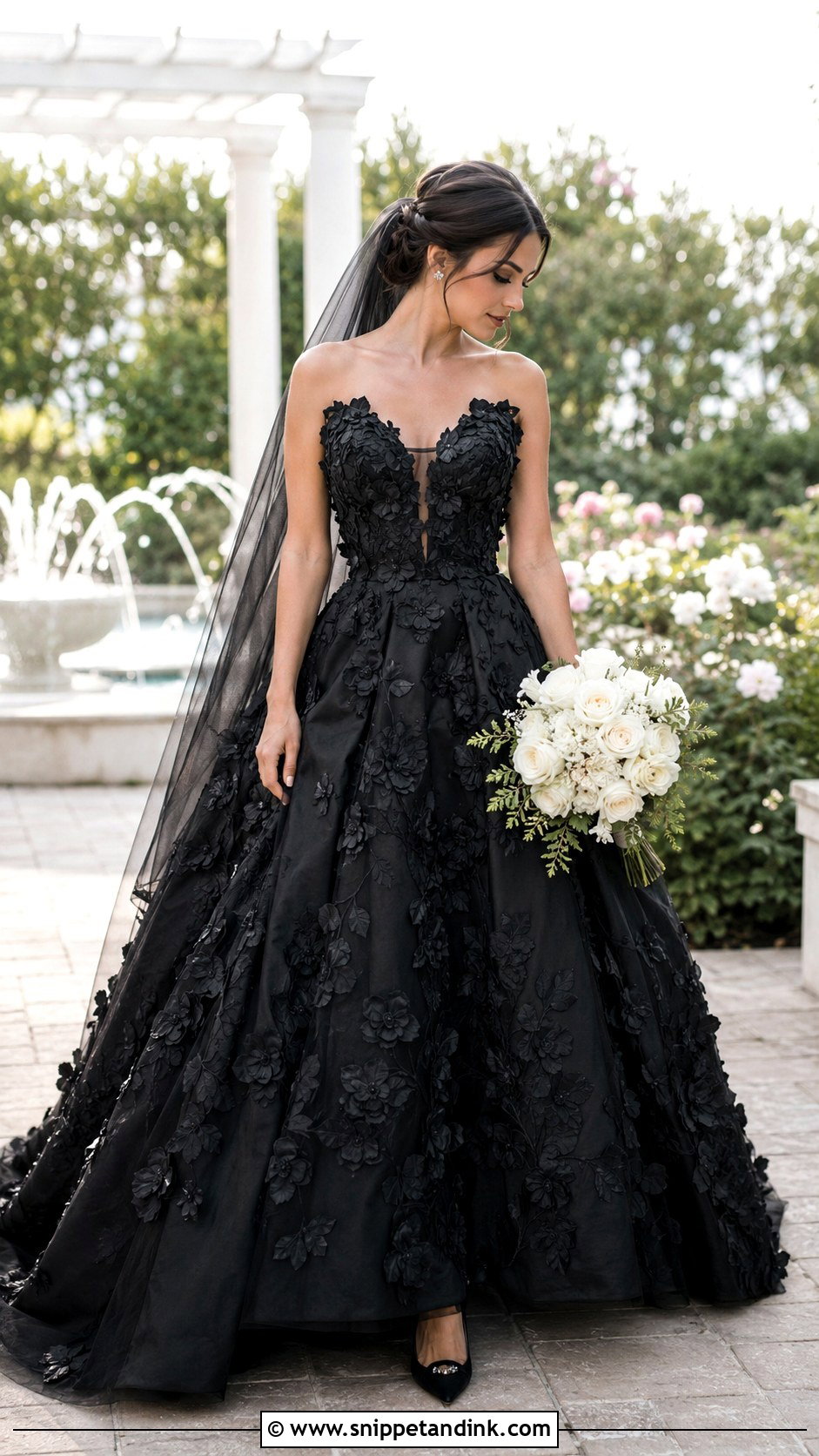
Three-dimensional appliqués give black fabric a surface that light can actually catch. I look for flowers concentrated on the bodice and scattered more loosely down the skirt, on an A-line or ball gown with room to show them. Ask the bridal shop how the appliqués are attached: hand-stitched flowers survive a long day of hugging far better than glued ones. Understated black heels, crystal studs and a plain black tulle veil keep the focus on the dress, with a soft updo. A simple white rose bouquet lets the floral detail stay the lead in garden venues or grand indoor spaces.
19. Black Basque Waist Wedding Dress
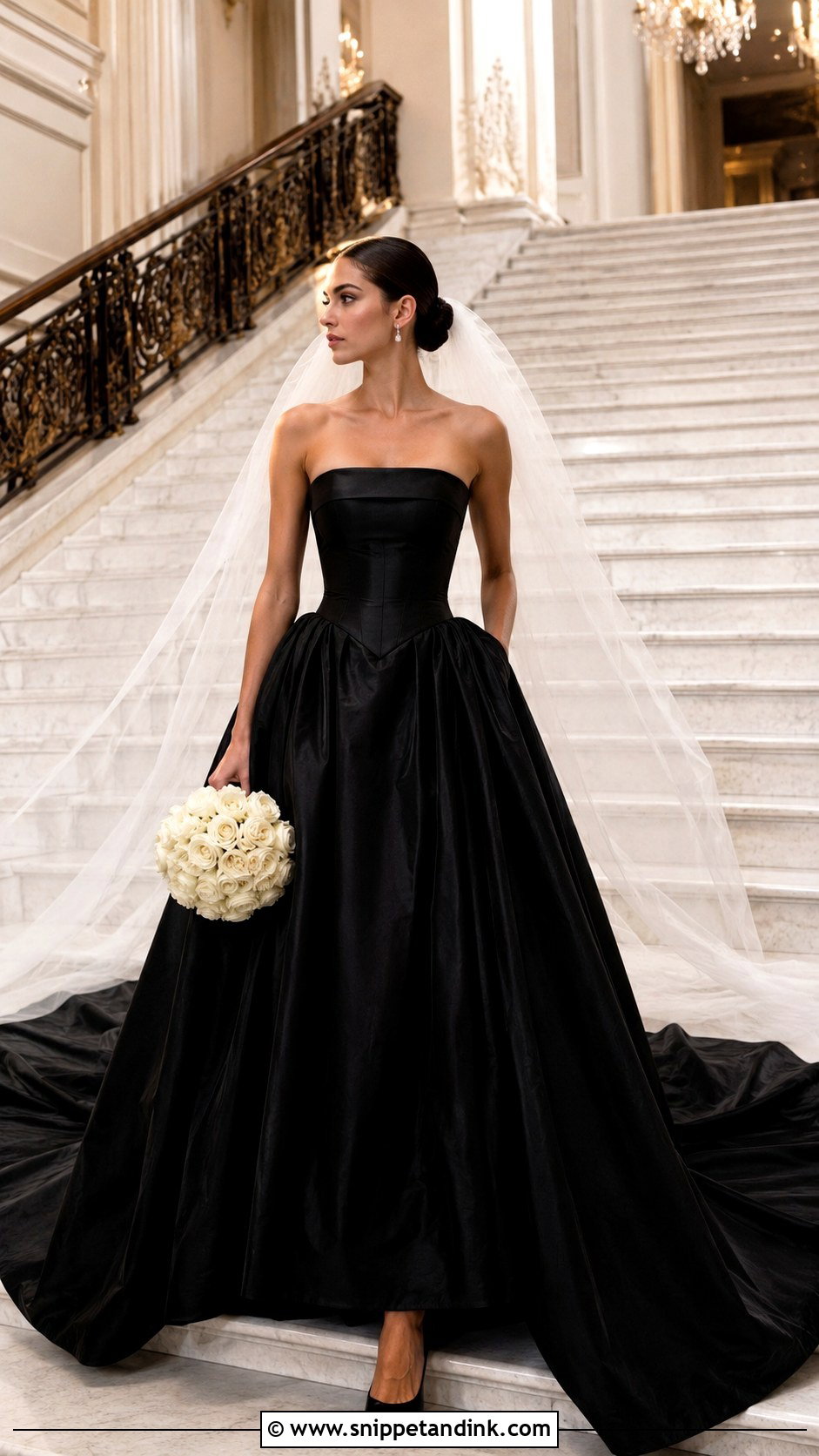
A basque waist dips into a point below the natural waist before the skirt opens, which lengthens the torso visibly. In black satin or mikado it looks formal and structured. Balance that low point with a strapless or off-the-shoulder neckline. Pointed pumps, a sheer cathedral veil and small drop earrings suit it, with a polished bun that keeps the waistline on show. Ivory roses give a classic contrast. Because the point sits below the waist, sitting can push it into the stomach; I check that at the fitting. Internal support and adjusted skirt volume make it work across many sizes.



20. Black Mini Wedding Dress With Veil
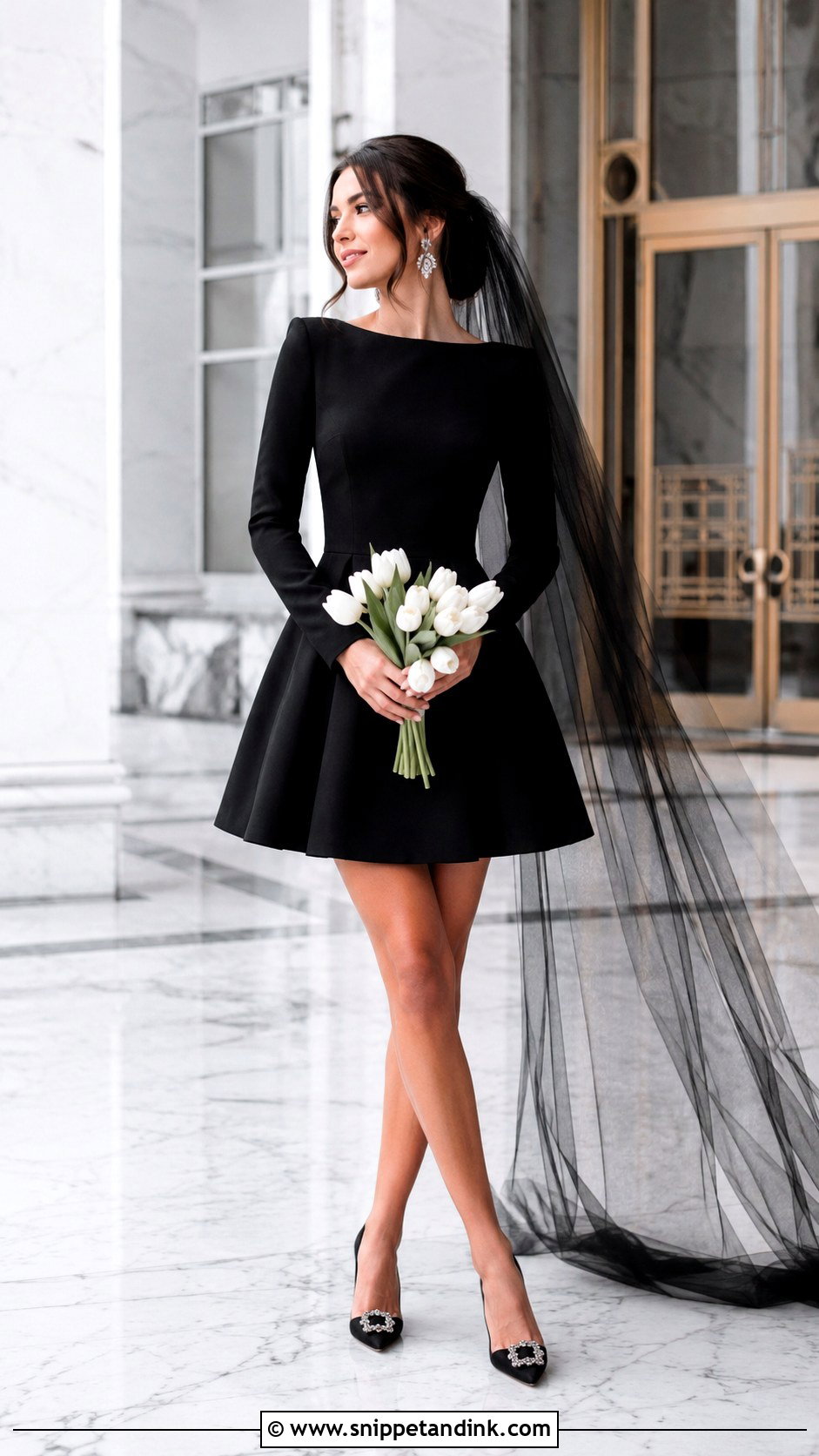
A black mini relies on tailoring and accessories to look bridal rather than like a party dress. I choose a structured A-line, fitted sheath or long-sleeve mini in a fabric with real weight, like mikado or heavy crepe, and a neckline that stays put. Sheer black tights for cooler weather, bare legs for a warm indoor room. Embellished pumps, crystal earrings and a long tulle veil create the contrast between short hem and long veil that makes it read as a wedding outfit. A small bouquet of white tulips or roses, plus a sleek ponytail or soft waves, suits courthouse weddings and reception changes.
What Shows Up on Black That Ivory Would Hide
An ivory gown hides pale marks; a black one shows every one of them. After many dressing mornings, these are the things I plan around:
- Deodorant and setting powder. Both leave white streaks on dark fabric. Let deodorant dry fully before dressing, and finish makeup with the dress fully covered by a robe.
- Lint and pet hair. Velvet and crepe collect it constantly. Pack a lint roller in the emergency kit and keep pets out of the dressing room.
- Lily pollen. The orange pollen from open lilies stains badly. Ask your florist to remove the anthers, and never rub a stain; lift it with tape.
- Dusty or grassy hems. Outdoor ground leaves a grey band along a black hem that is obvious in photos. A bustle helps once the ceremony is done.
- Sweat and salt marks. These dry to faint white tide lines on satin, so a dress shield under the arms on a warm day is worth it.
After the wedding, I send black gowns to a cleaner who handles dark couture fabrics and ask them to test the dye first, since some blacks bleed. Store the dress folded in acid-free tissue in a breathable bag, away from light, because black fades unevenly where sun reaches it.
One Last Fitting Test Under Daylight and Lamplight
Personality, venue, comfort and formality should decide your black outfit, in roughly that order. Fabric changes the mood more than color ever will: satin is structured, lace is soft, crepe is spare and tulle moves. Before you commit, sit, walk, turn and raise your arms in the full outfit, shoes and veil included. Then look at it under daylight and warm indoor light, and have someone photograph you from the side and the back. If every piece still reads as the same black in those photos, you have your look.
You'll Like These Ideas:



Leave a Reply