
When a bride tells me her dress isn’t white, my whole kit changes. A colored gown sits right under the face, it bounces its own tint onto the jaw and neck, and it decides which lip and blush will look intentional and which will look like a mistake. Below are twenty-five colored dresses, from blush to black-and-white, each with the outfit details that suit it and the makeup choices I’d make alongside. A pastel might belong at a garden ceremony and a jewel tone at an evening reception, but either way, plan the dress, shoes, flowers and face as one look.
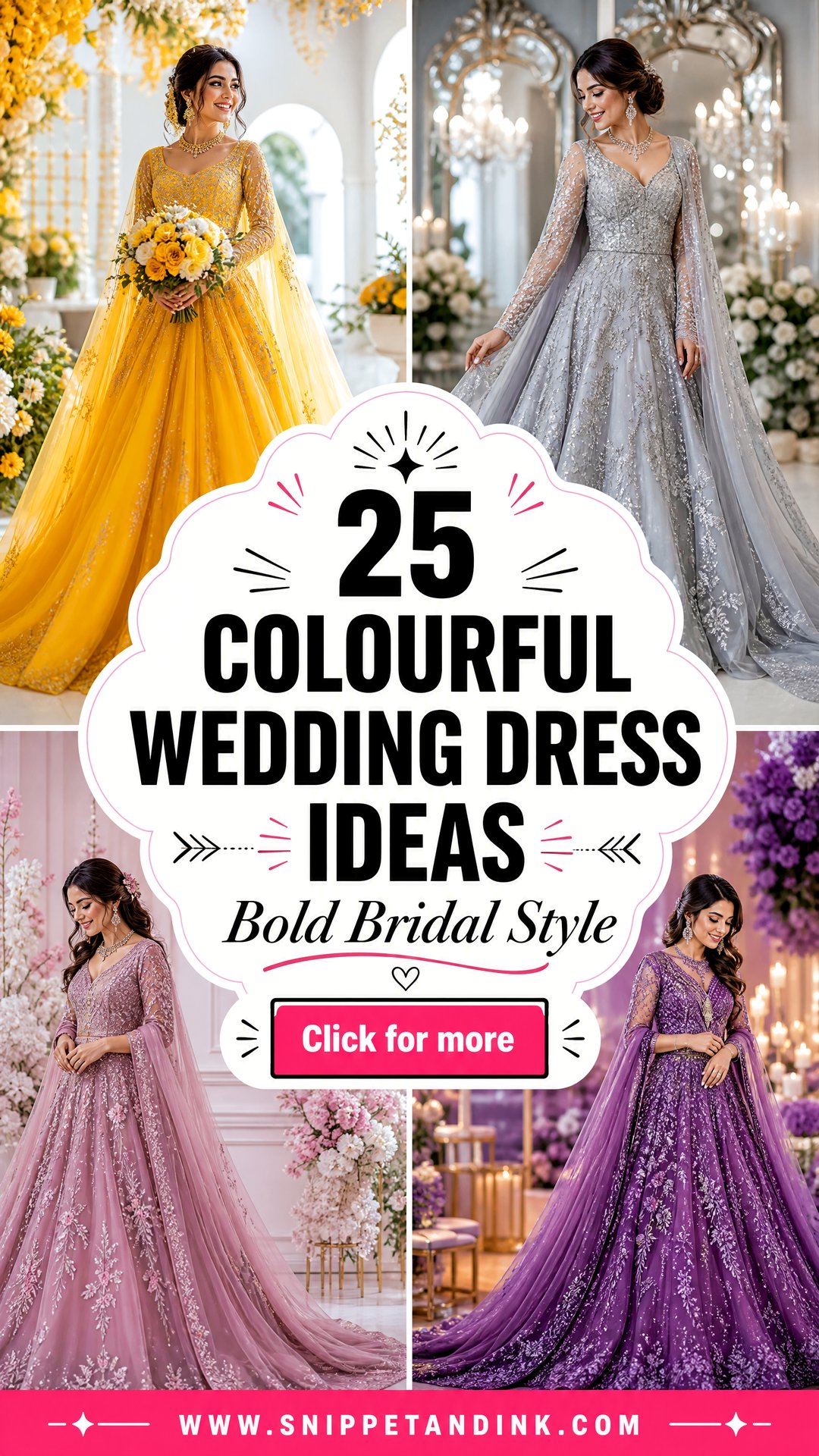
Bring the Fabric, Not Just a Photo, to Your Makeup Trial
Screens lie about color, and dress photos are often edited. If your gown isn’t white, the most useful thing you can bring to a trial is a real piece of the fabric: a swatch from the shop, a spare strip from alterations, or the dress itself if it’s ready. I drape it across the chest while I work, so I’m judging blush and lip against the actual dye, not my memory of it.
- A daylight photo of you wearing the gown, unedited and without filters.
- The neckline shape, because a strapless gown means makeup on the chest and shoulders too.
- The color of your flowers, since a bouquet near the face adds a second color to work with.
- How long you’ll wear it, so I can plan touch-ups for a pale fabric that shows transfer.
Wear a top in a similar shade on the trial day if you can’t bring fabric. It sounds fussy, but the difference between a lipstick that looks right against a white T-shirt and one that works against emerald velvet is huge.
1. Blush Pink Wedding Dress
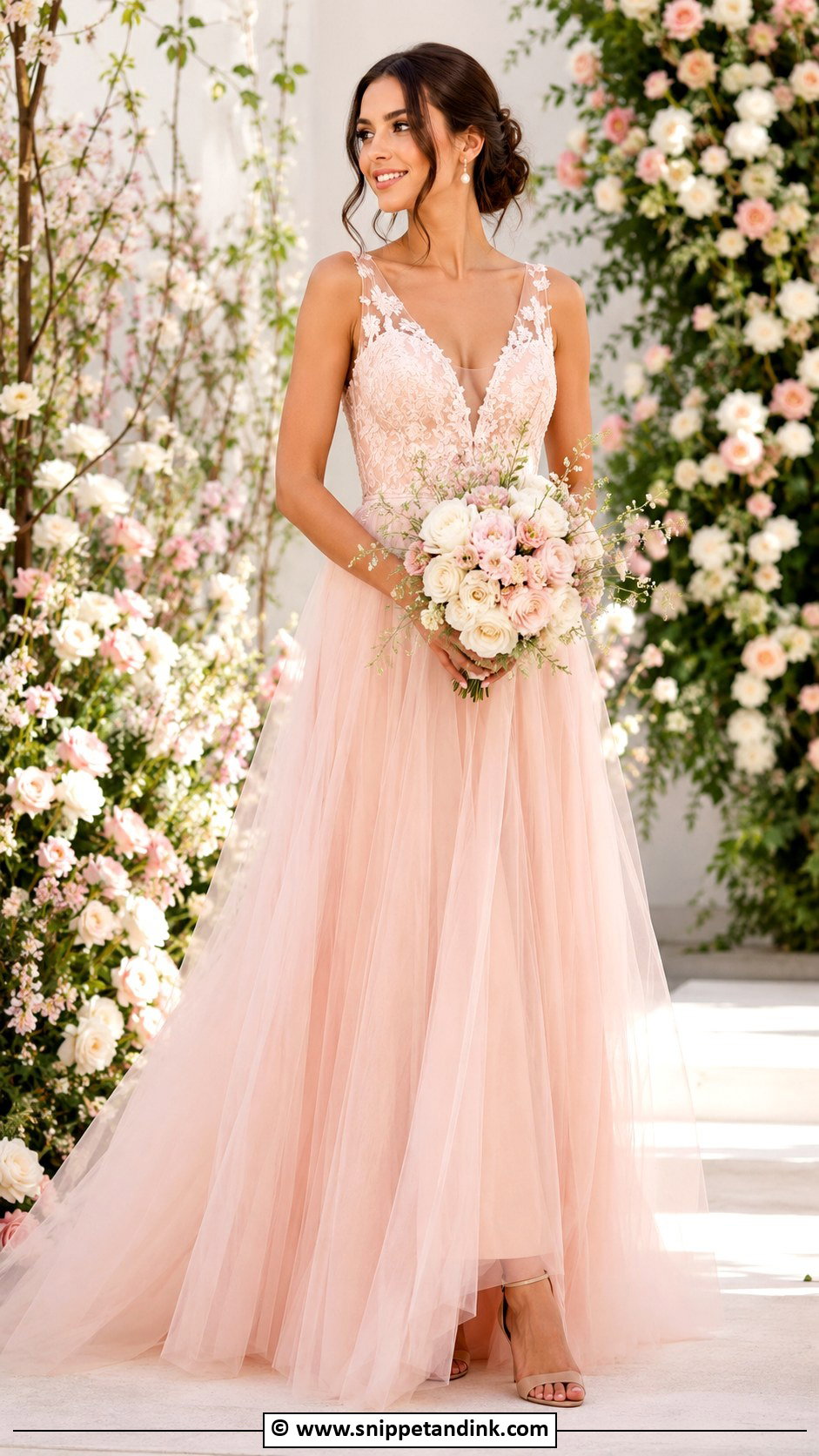
Blush is the easy entry into color, and it’s kind to most complexions because it adds a little warmth near the face. Tulle A-line, lace bodice or satin slip all work, with pearl earrings, nude heels, a sheer veil and ivory, peach and pale pink flowers. On the makeup side I keep cheeks rosy but slightly deeper than the dress, a soft brown liner instead of black, and a natural pink lip. If the blush on the cheeks matches the gown exactly, the face and dress blur together in photos.
2. Champagne Gold Wedding Dress
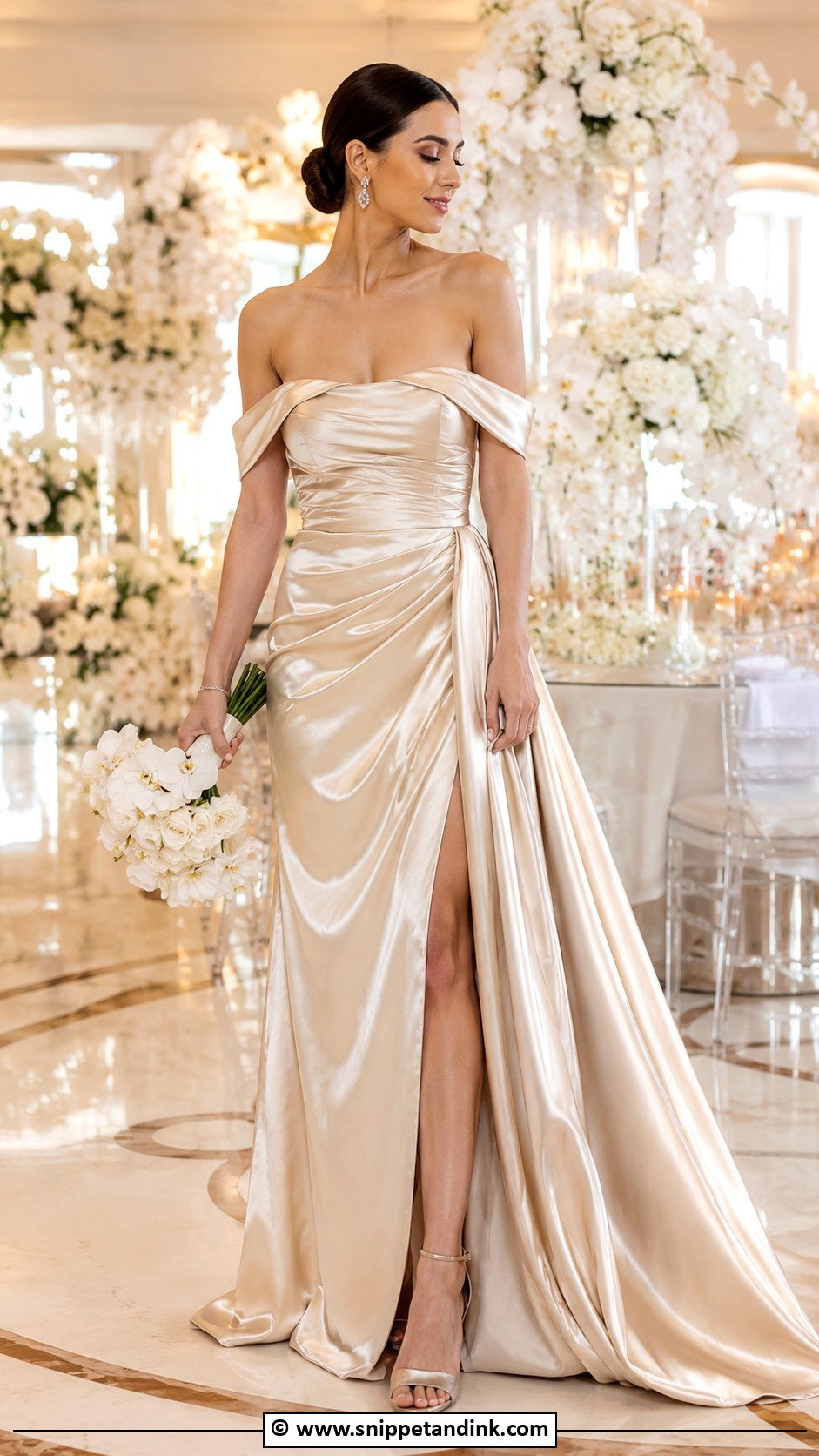
Champagne gold is warm and quietly rich, and it shines most in satin, silk, beaded tulle or metallic-thread lace. Gold or nude heels, small crystal earrings and an ivory bouquet balance the sheen. I treat this gown like a warm light source: it flatters bronzer and a champagne highlight, but heavy glitter on the lids starts competing with the fabric. A low bun or smooth waves keep it polished. Hotel venues and evening weddings in fall suit it, and it’s a good answer for brides who find pure white too stark.
3. Dusty Blue Wedding Dress
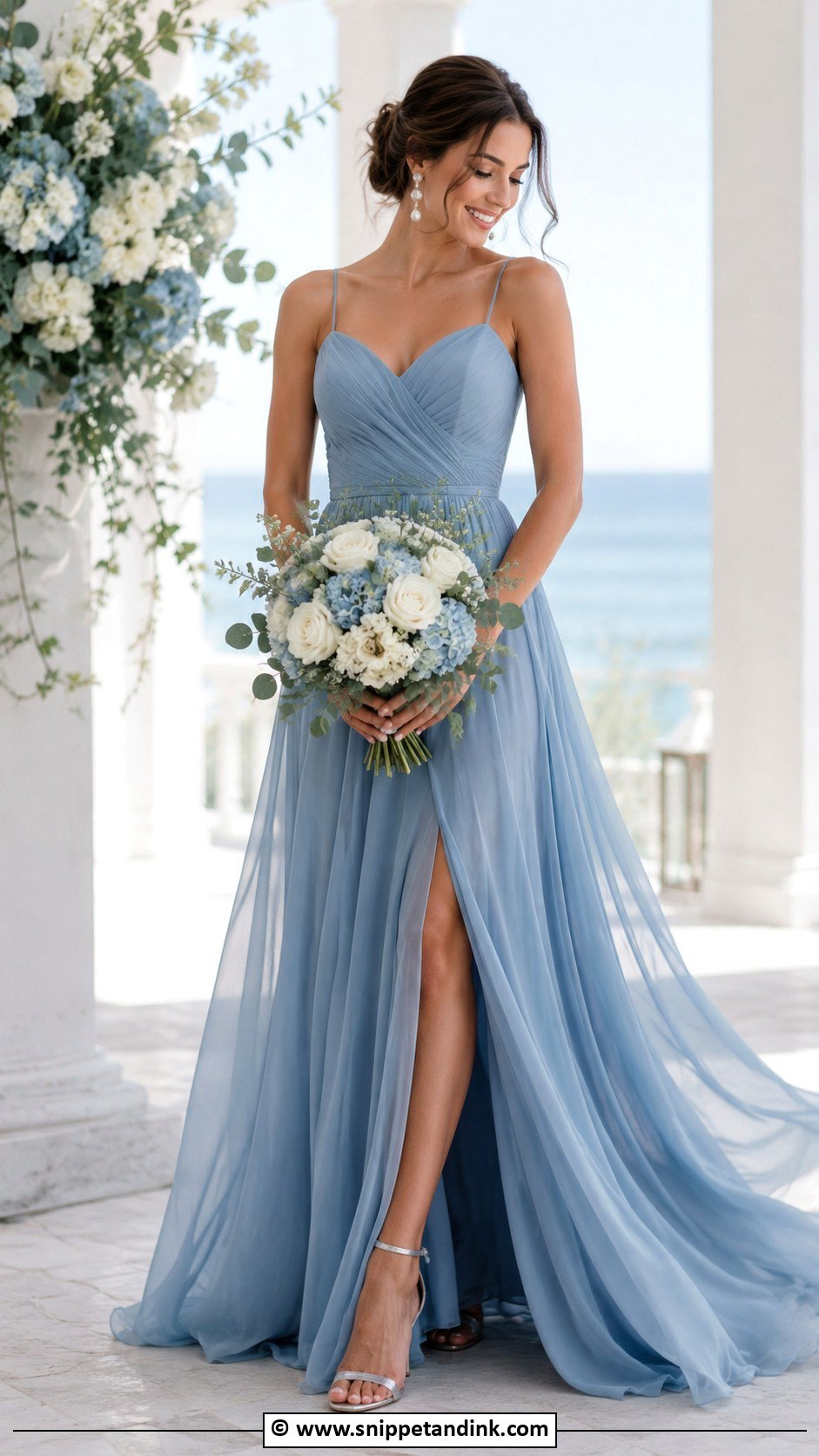
A dusty blue wedding dress has a cool, calm tone, and that’s exactly why I’m careful with warm makeup here. Very orange bronzer looks muddy next to grey-blue fabric, so I go for a neutral or slightly rosy warmth instead. Chiffon, organza, tulle and soft satin all carry it. Silver heels, pearl drops, a pale blue ribbon or a simple veil, plus white roses and blue hydrangeas, complete it for coastal, spring or winter weddings.
4. Sage Green Wedding Dress
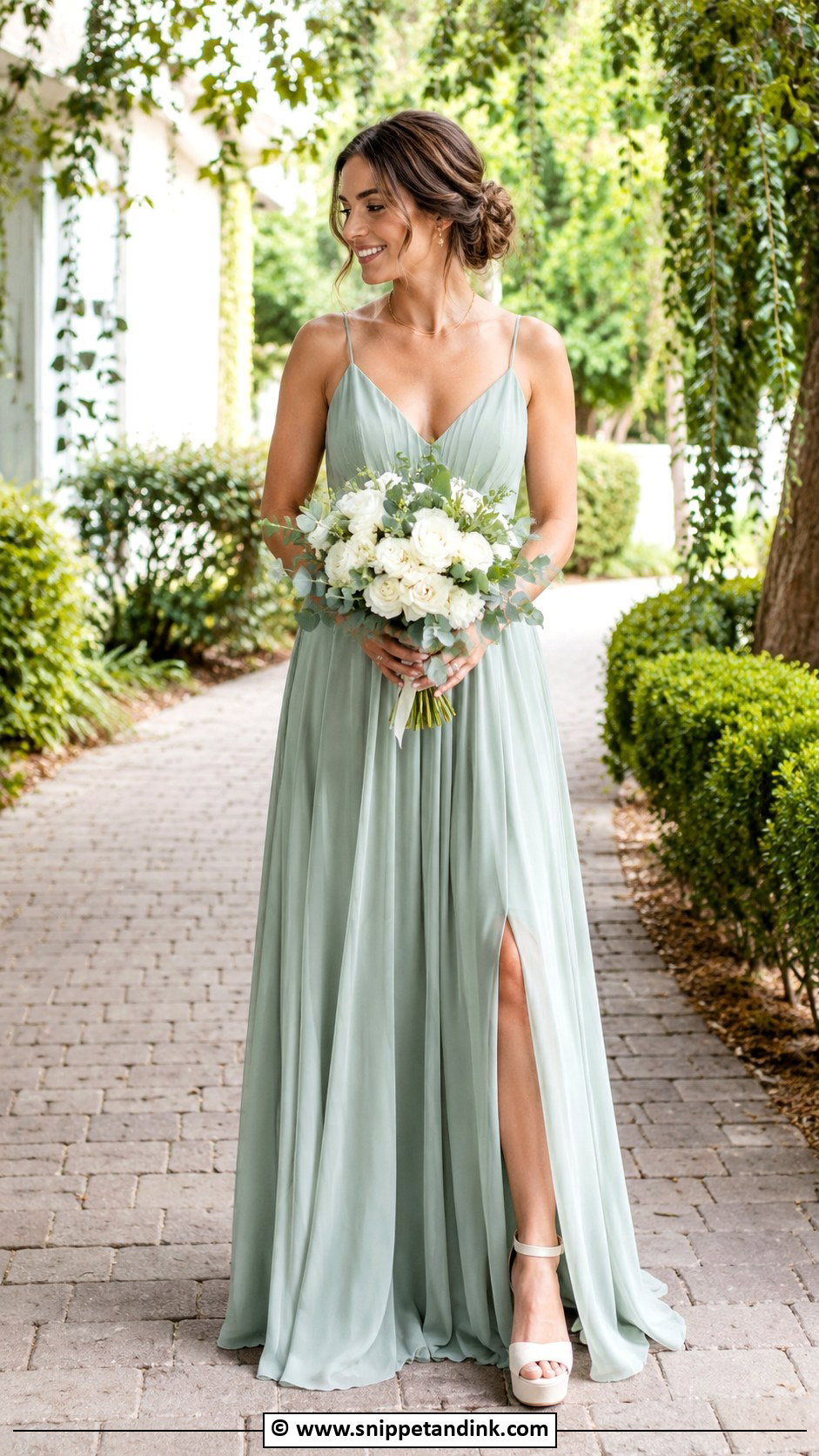
Sage suits brides who want something earthy and calm. Chiffon, matte satin, tulle or plain crepe all work, finished with ivory block heels, gold jewelry, a low textured bun and white flowers with eucalyptus. The thing I check first with green gowns is redness in the skin: green next to the face actually makes redness look slightly calmer, which many brides love, but it can also make a very pale complexion look a bit grey. A touch of peach on the cheeks fixes that. Lace sleeves, a train or a veil sit comfortably with it.
5. Lavender Wedding Dress
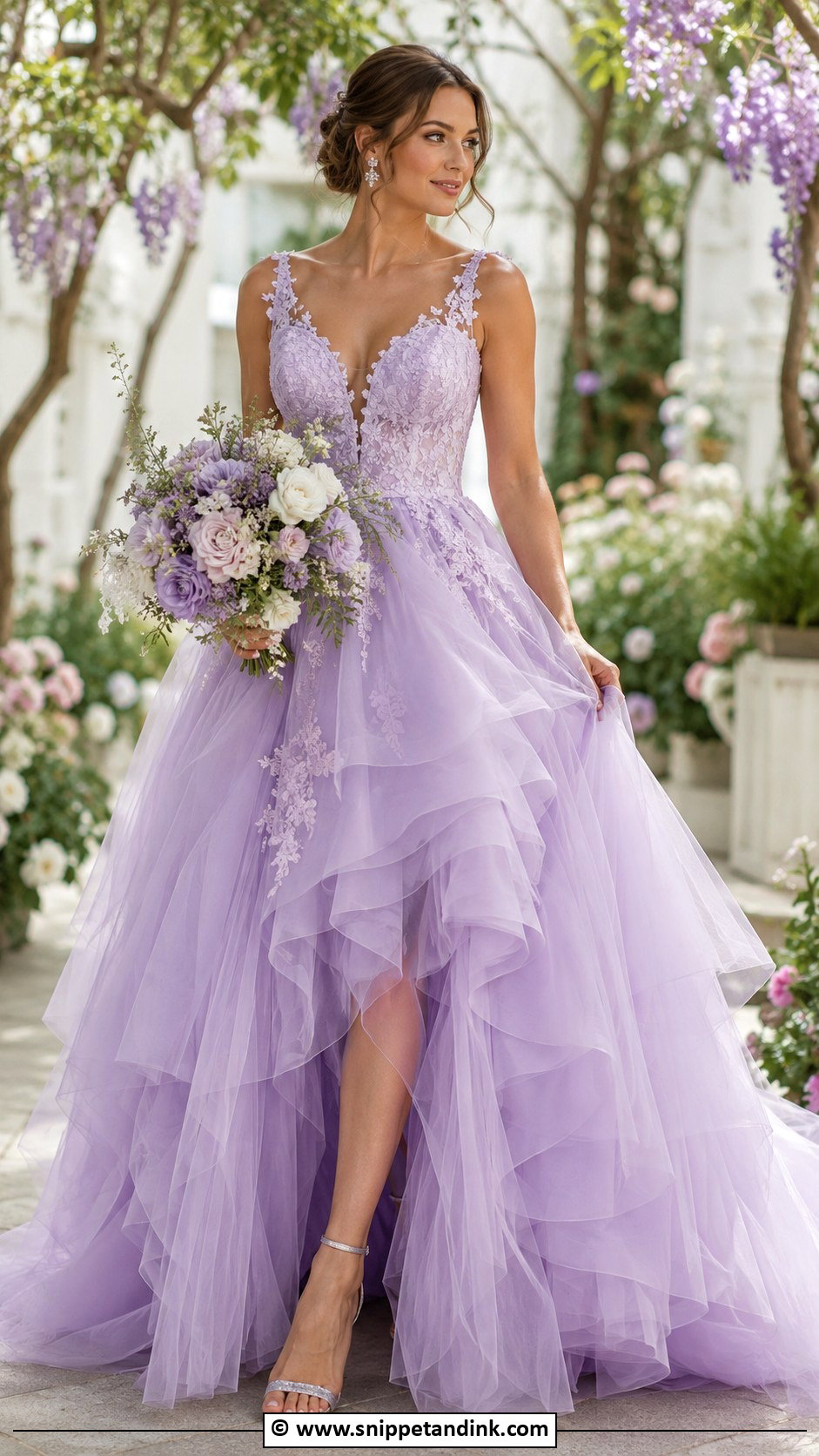
A lavender wedding dress softens everything around it, especially in layered tulle, embroidered lace or flowing chiffon. Silver sandals, crystal earrings and a bouquet of lilacs, white roses and pale greenery suit it. Lavender eyeshadow is tempting, but I keep it to a whisper along the lash line; full lids in the same shade as the dress look like a matching set. Glowing skin and a soft pink lip let the gown carry the color. Sheer sleeves or a floral hair comb are lovely finishing touches for spring.
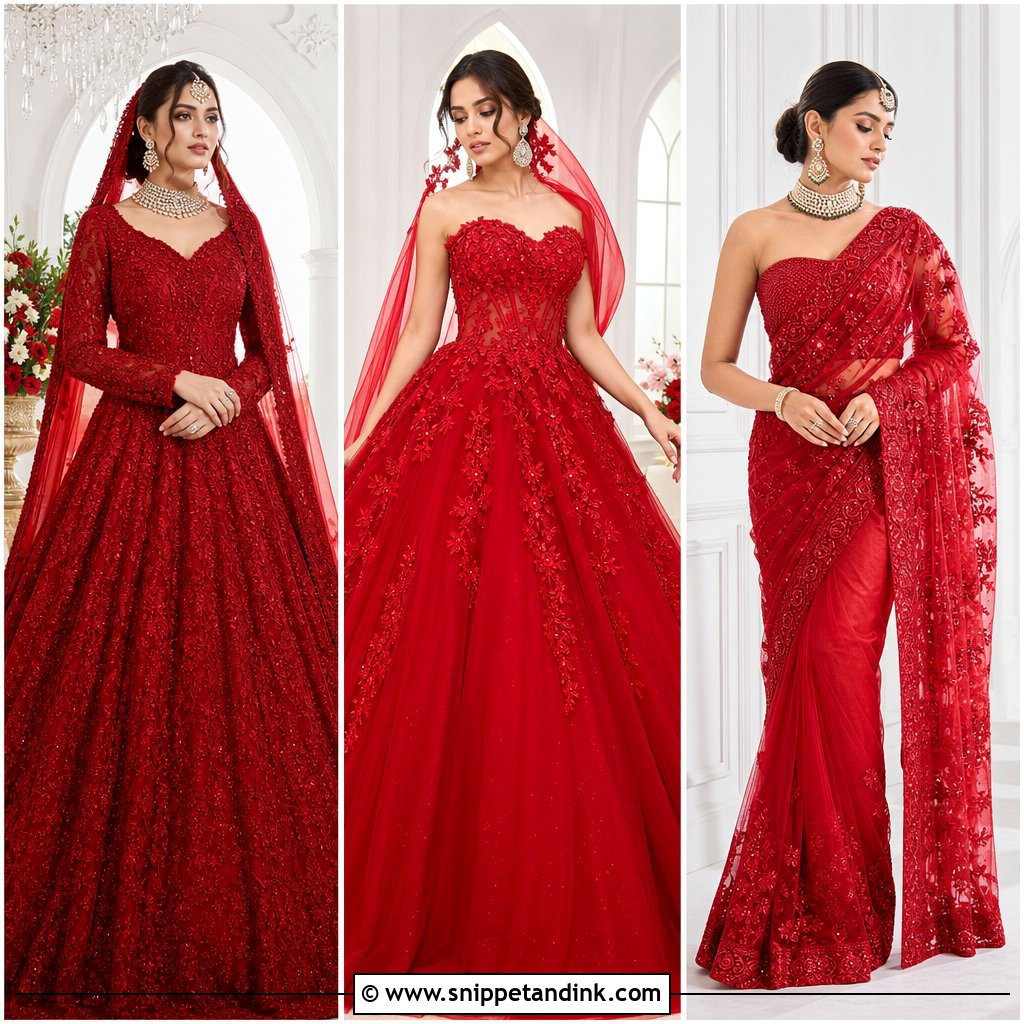
6. Red Wedding Dress
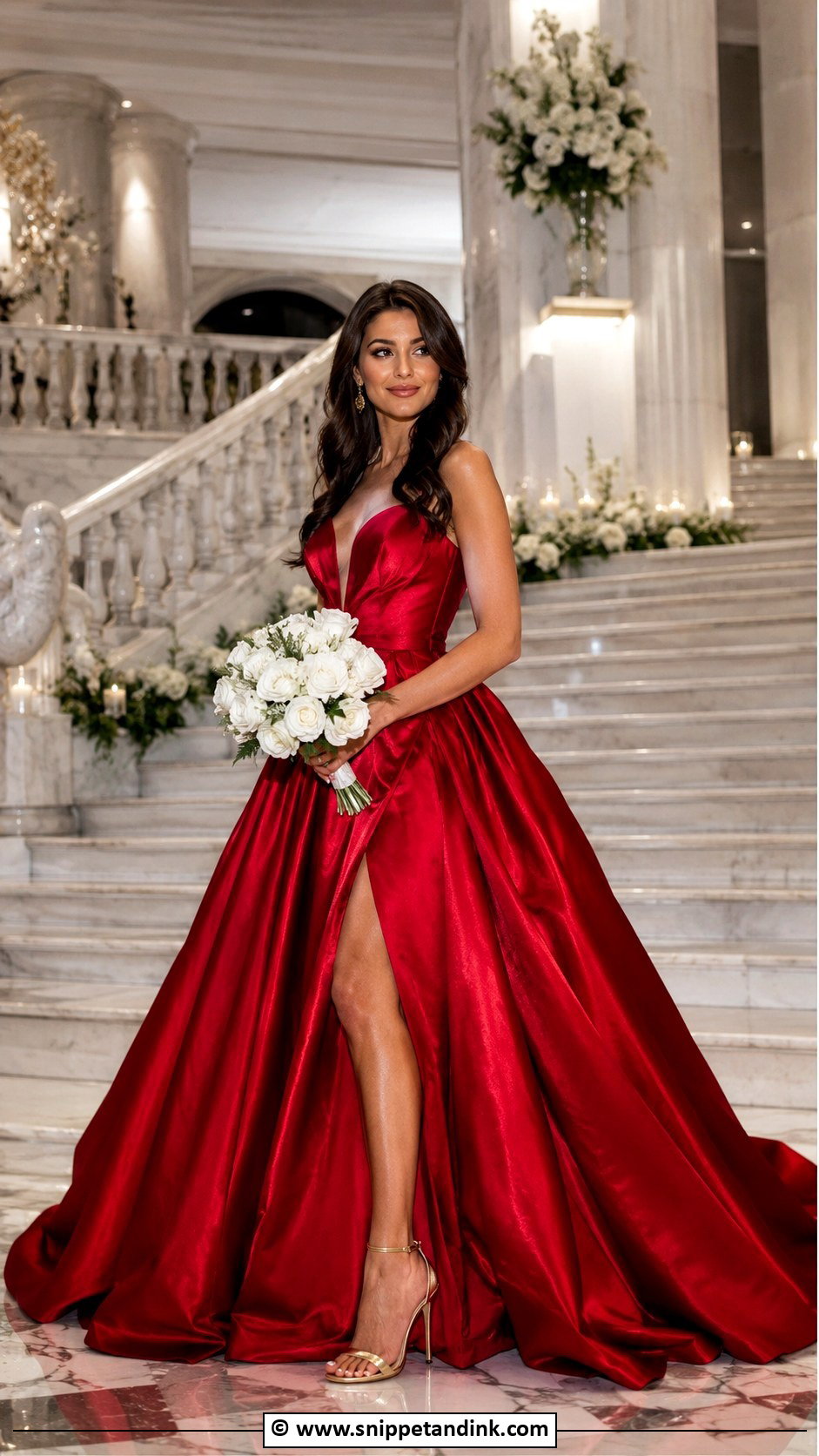
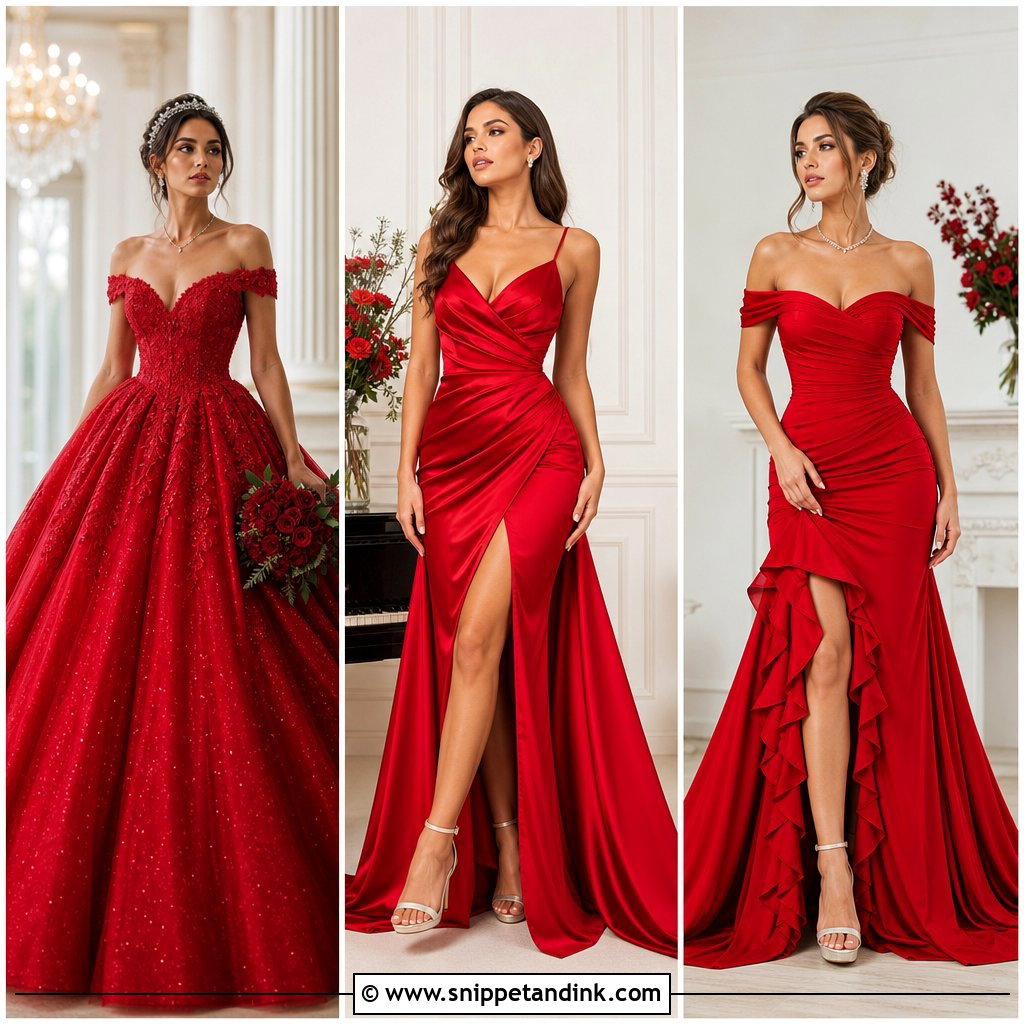
Red takes over a room, so the face needs structure to hold its own. Satin, a full ball gown or a fitted crepe silhouette all work with simple gold jewelry, sleek heels and white flowers or deep red roses. My rule with a red gown is that the lip either matches the dress’s undertone exactly or steps clearly away from it. A blue-red lip on a warm tomato-red dress looks off, and I test that at the trial with the fabric in hand. A clean updo or smooth Hollywood waves finishes it.
7. Black Wedding Dress
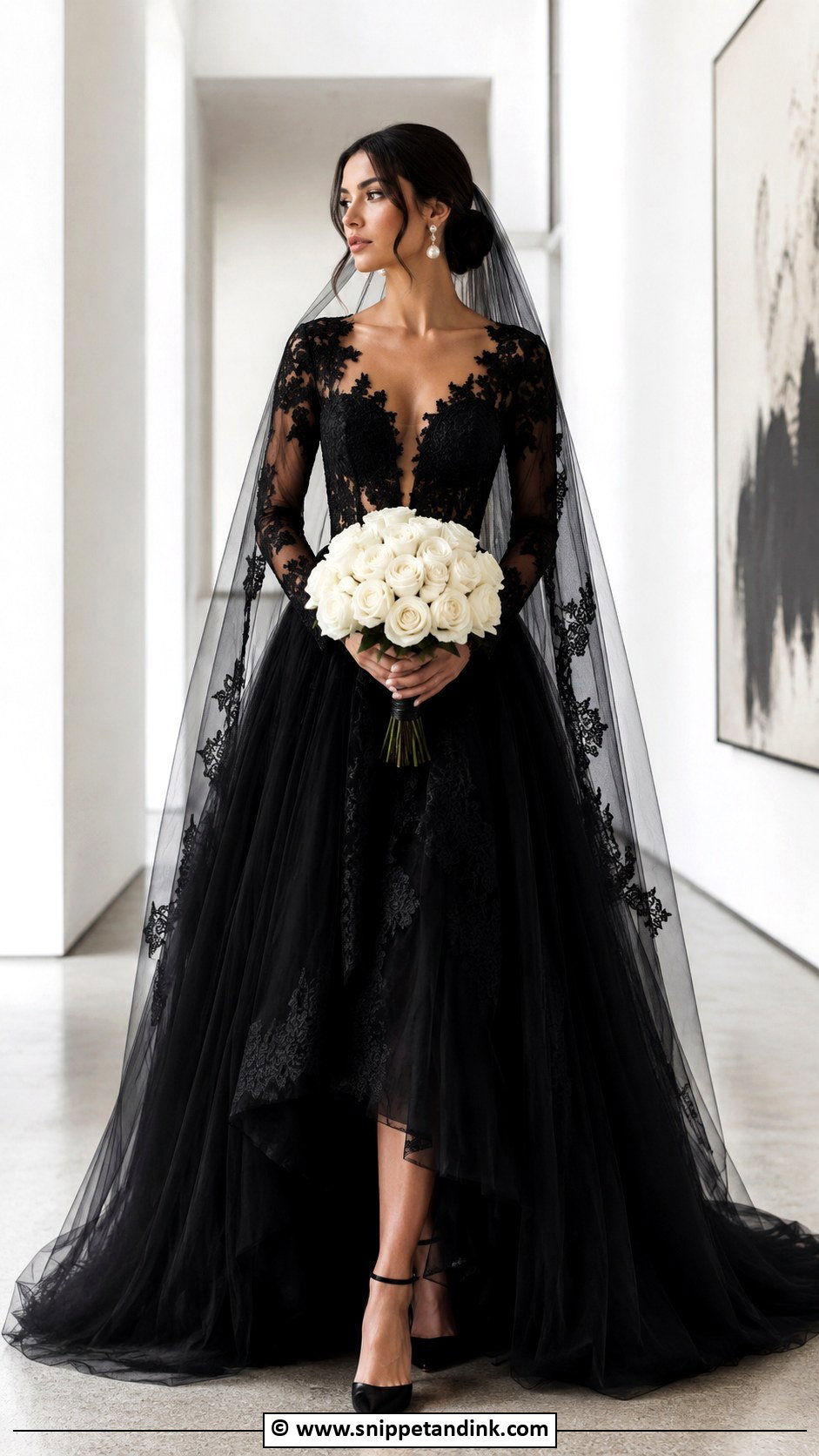
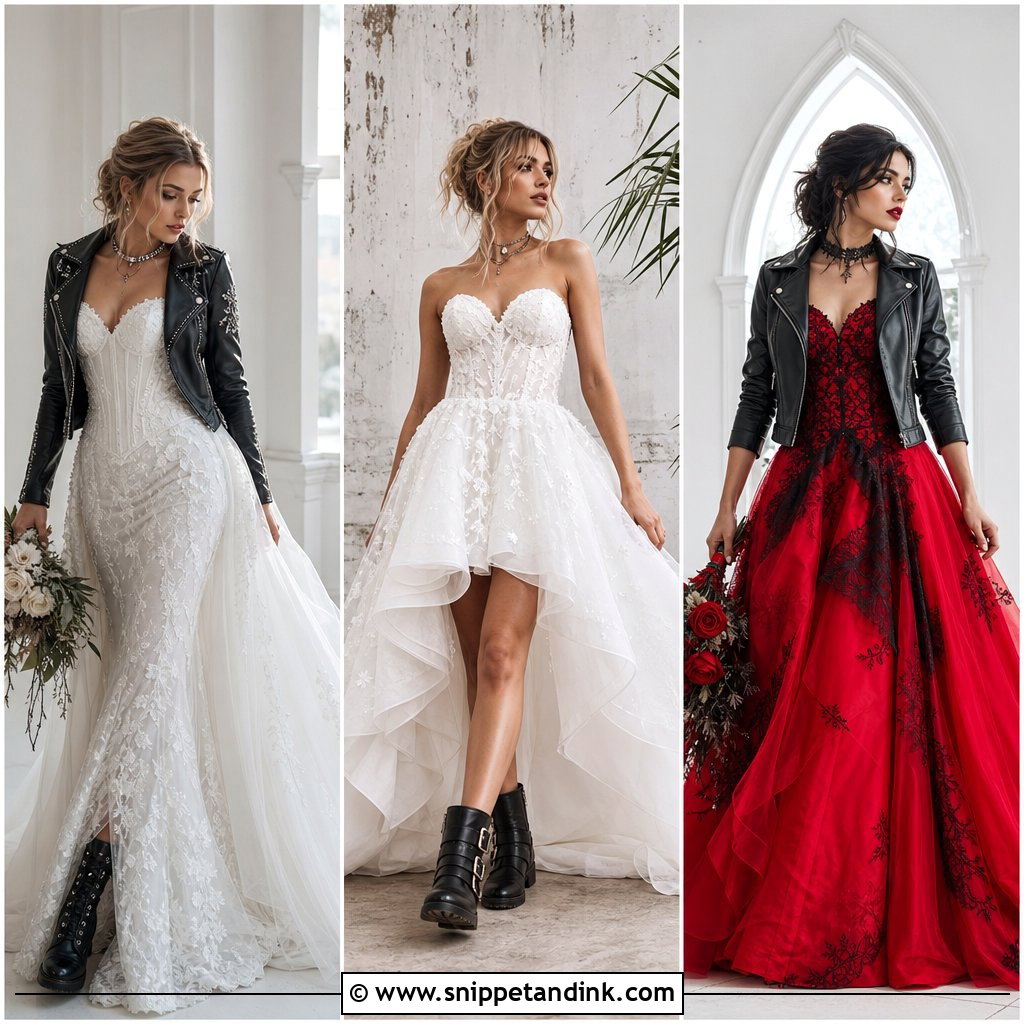
Black can look very chic with the right bridal details. Lace, satin, tulle and structured crepe all carry it, with black heels, pearl or diamond-style earrings and white roses for contrast. A black veil leans fashion; a sheer ivory veil softens it. Defined eyes and a neutral lip are my usual approach, but I watch two things: black fabric next to the jaw exaggerates any line where foundation stops, so I blend well onto the neck, and loose powder shows instantly on dark satin, so I set the face before she steps into the gown.
8. Floral Embroidered Wedding Dress
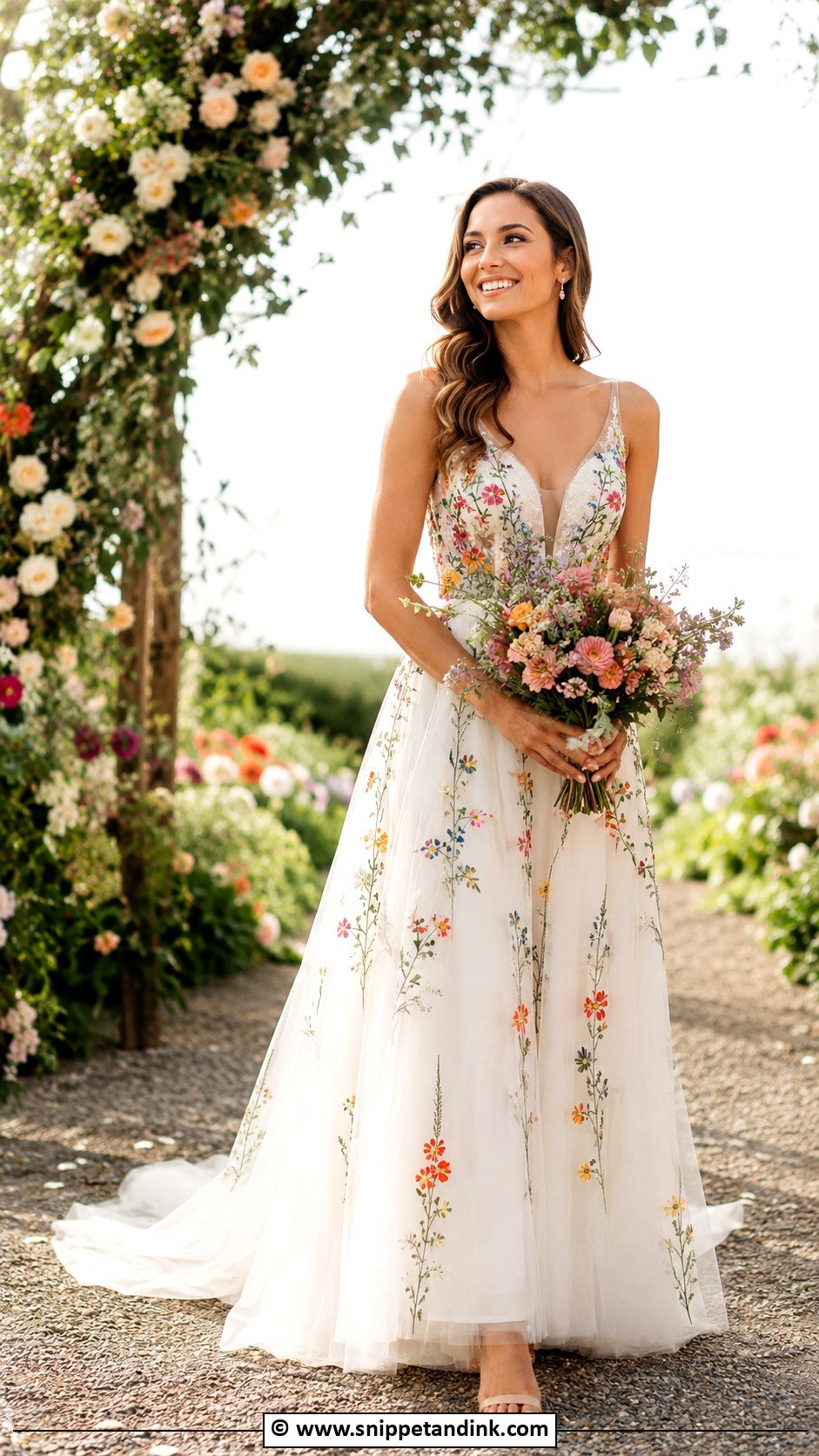
A floral embroidered wedding dress brings color through stitched flowers on a white, ivory, blush or nude base, across the bodice, sleeves or skirt. Simple heels, small earrings and a bouquet repeating one or two embroidery colors keep it cohesive. For makeup I pick a single shade from the embroidery, usually the softest pink or peach, and use it on cheeks and lips; trying to echo several thread colors on one face gets messy fast. Soft waves and a sheer veil keep the detail on the dress.
9. Ombre Wedding Dress
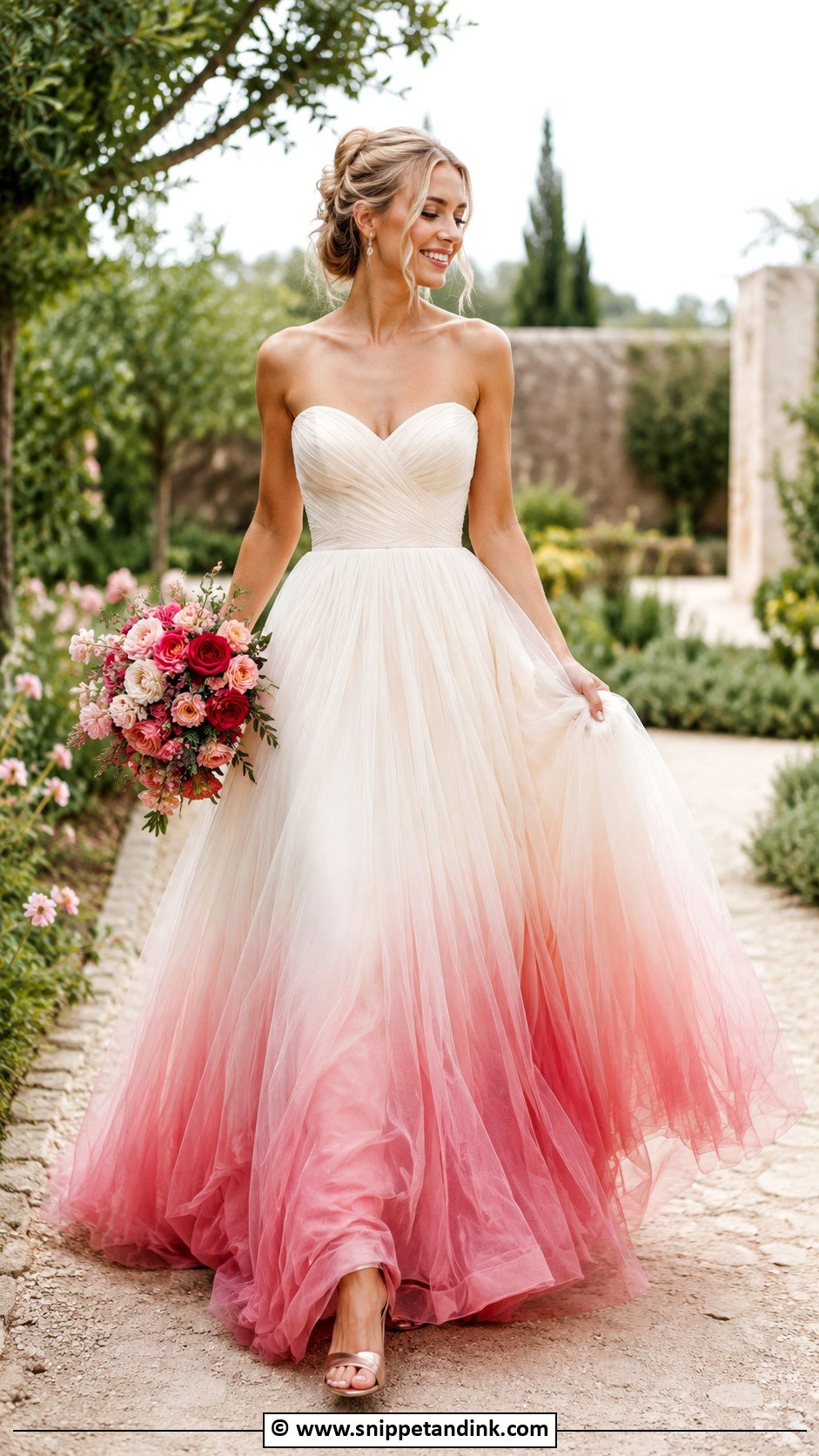
Ombre fades from ivory near the face to pink, blue, lavender, peach or something deeper at the hem, and it moves best in tulle, organza and layered chiffon. Metallic heels, small earrings and a bouquet that picks up the deepest shade complete it. Because the bodice is light, I make up the face as I would for an ivory gown, then let one accent, often the blush, nod to the hem color. It suits beach weddings and garden ceremonies, where walking shots show off the gradient.
10. Yellow Wedding Dress
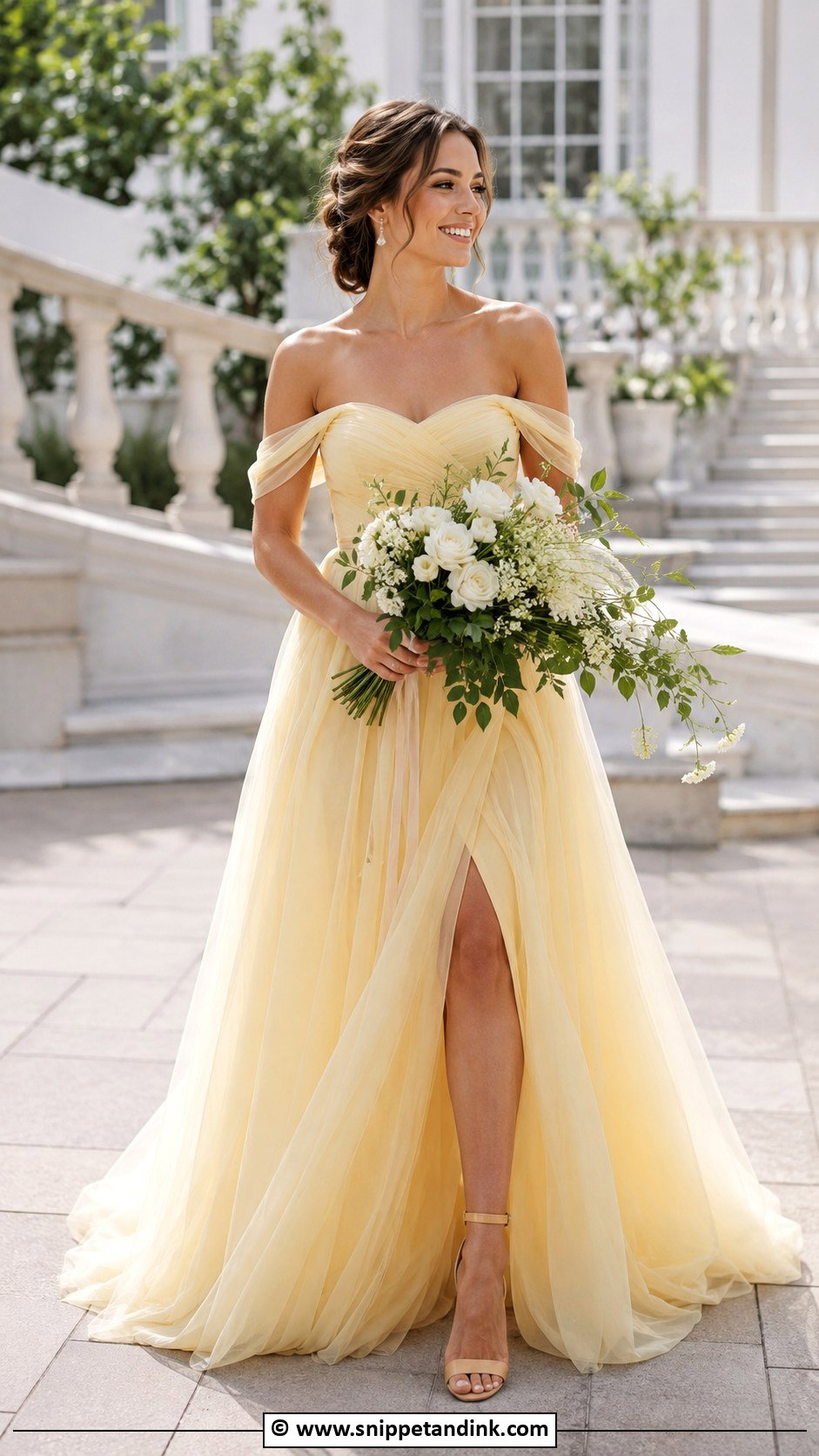
A yellow wedding dress ranges from soft butter to strong marigold. Chiffon, a satin A-line or floral lace keep it bridal, with nude or gold heels, pearl earrings and white blooms with greenery. Yellow reflects onto skin more than most colors, and on some complexions it highlights sallowness under the eyes, so I color-correct that area with a peachy concealer before foundation. Peach blush, glowing skin and a warm pink lip finish it for summer weddings in plenty of daylight.
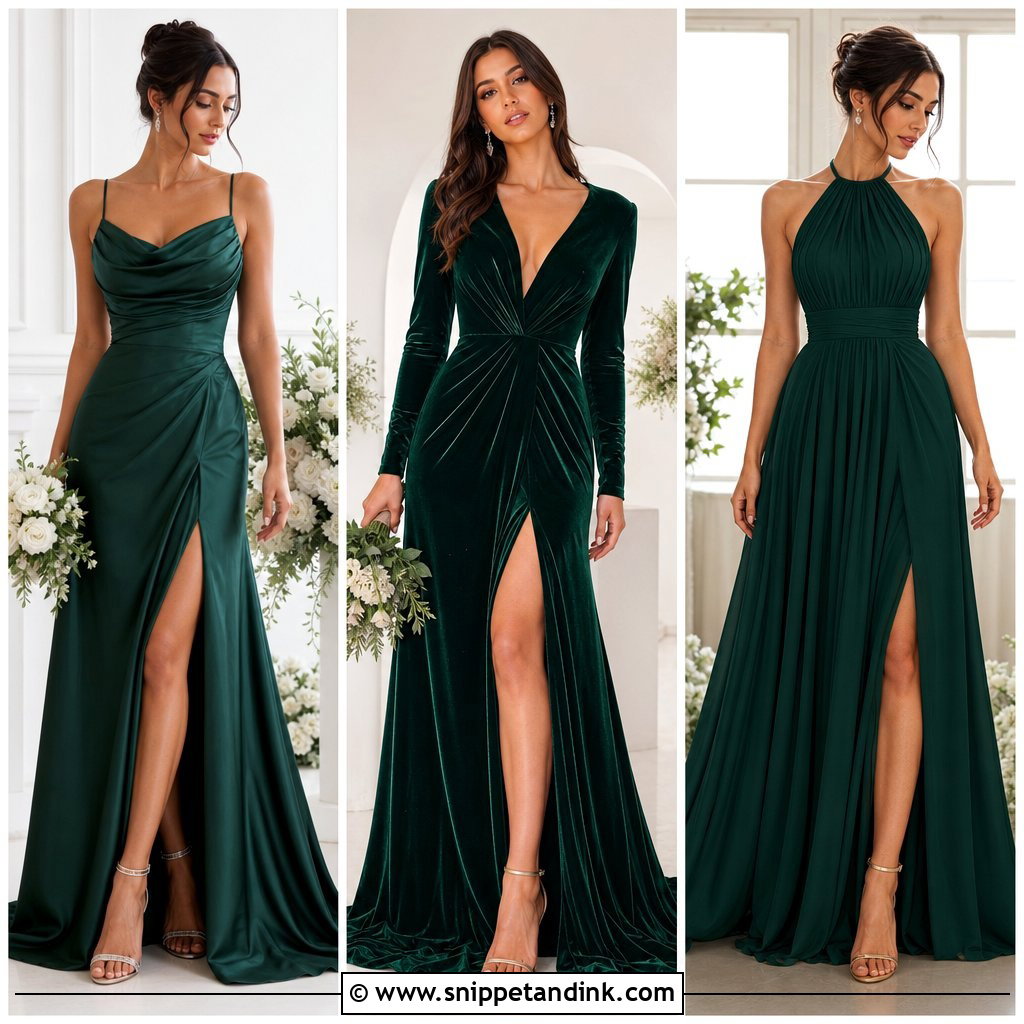
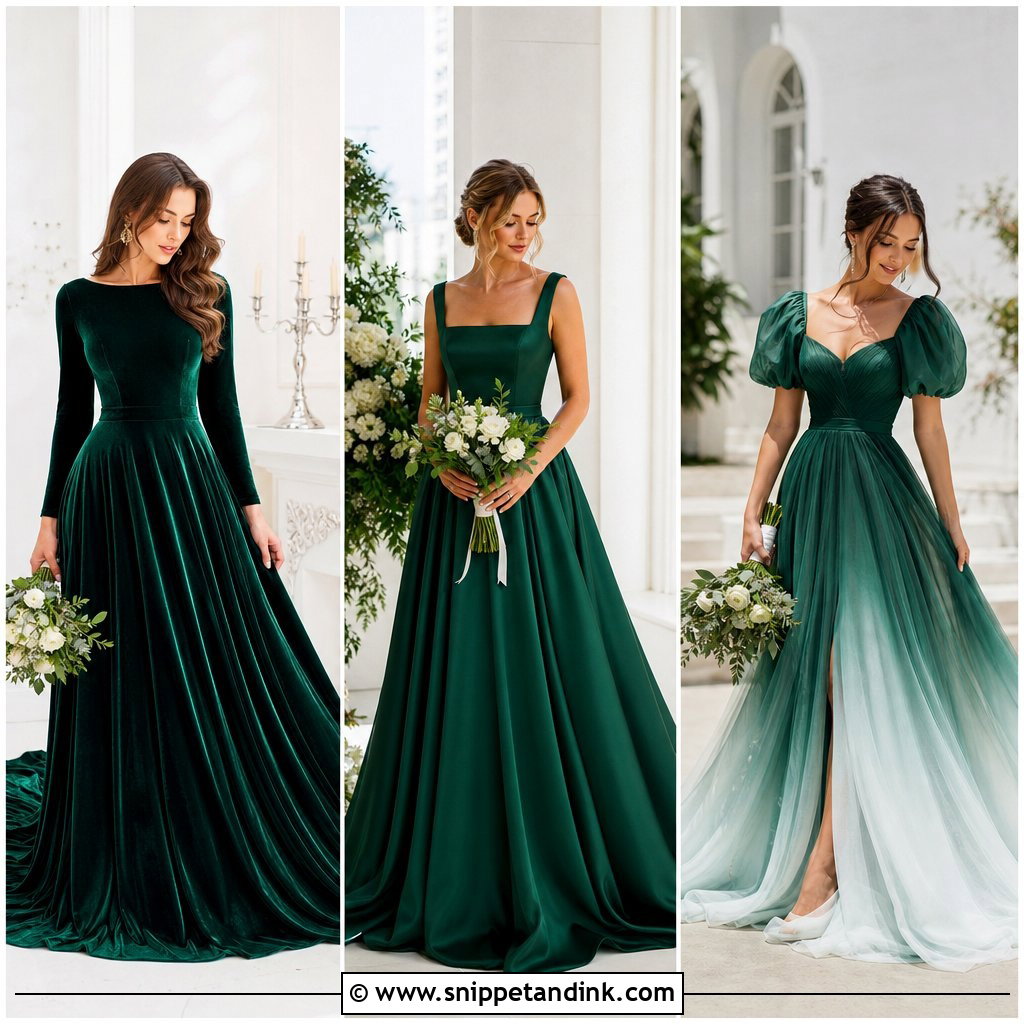
11. Emerald Green Wedding Dress
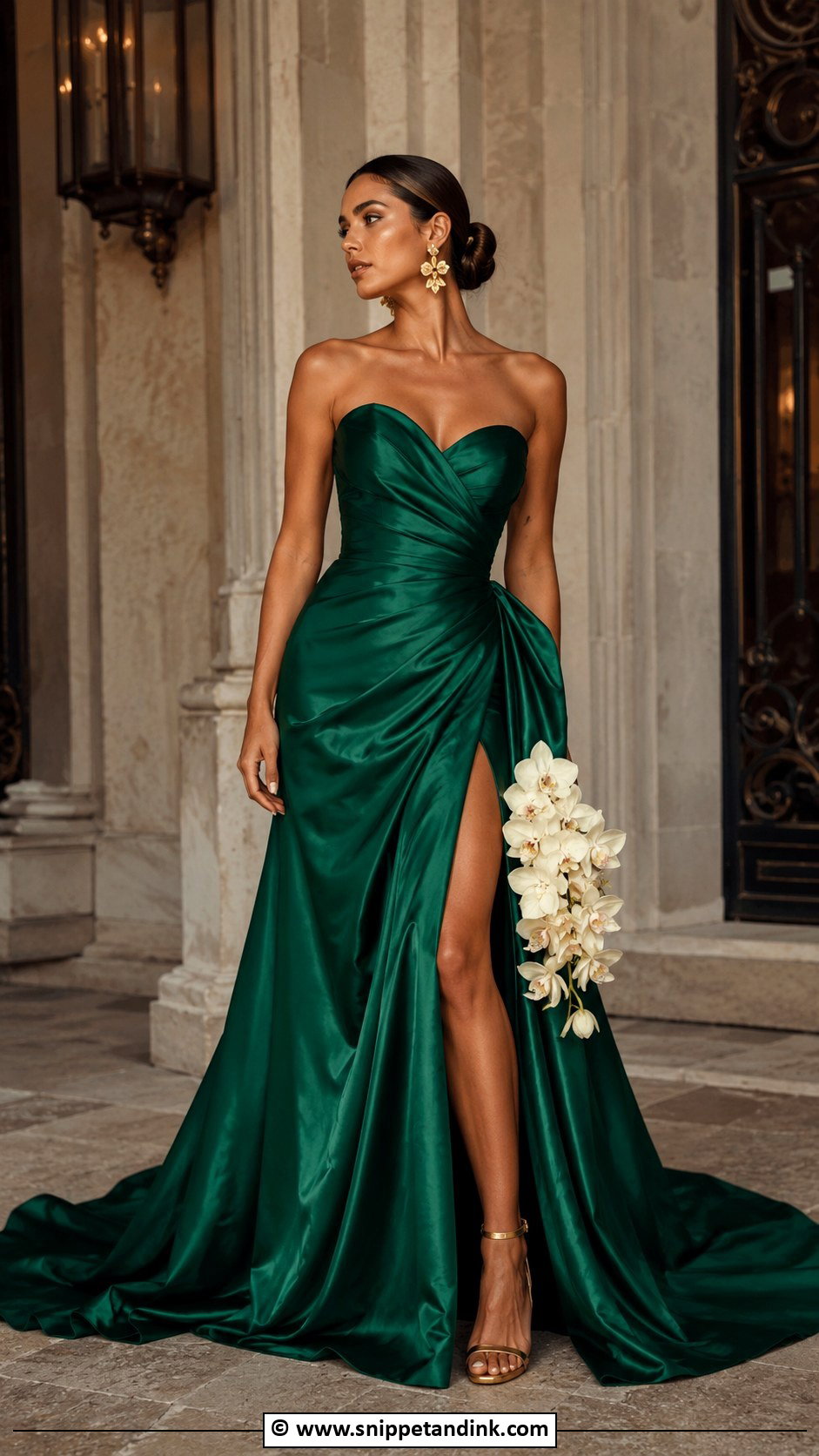
Emerald needs heavy, luxurious fabric to look its best: velvet, satin, silk or crepe. Gold heels, statement earrings and white roses or cream orchids give contrast, and a sleek bun, smooth waves or a long veil keep it formal. Deep green makes red tones in the skin look calmer, so I can use a lighter foundation, but I bring warmth back with bronzer so the face doesn’t look cold against the jewel tone. Choose clean lines over heavy embellishment for evening and winter weddings in historic or formal venues.
12. Powder Blue Wedding Dress
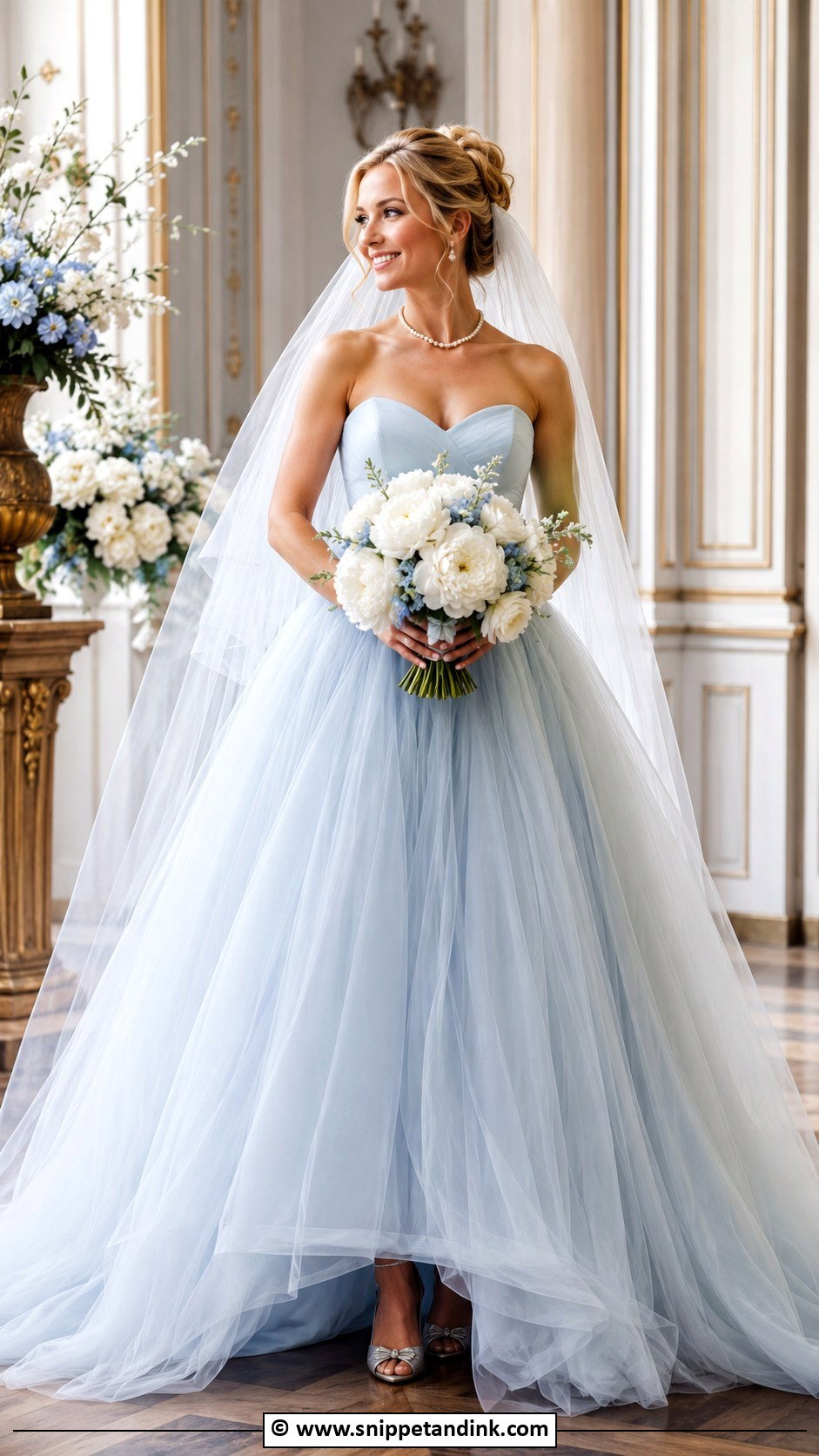
Powder blue gives a soft, storybook feel in tulle ball gowns, lace A-lines or airy organza. Silver heels, pearls and a bouquet of white peonies, pale blue flowers and greenery suit it, along with a sheer veil and gentle curls. Pale blue can make the whites of the eyes look brighter, which I like, but it also shows any yellow-toned concealer, so I match concealer carefully to the skin. Spring garden weddings, coastal ceremonies and classic ballrooms are its natural setting.
13. Peach Wedding Dress
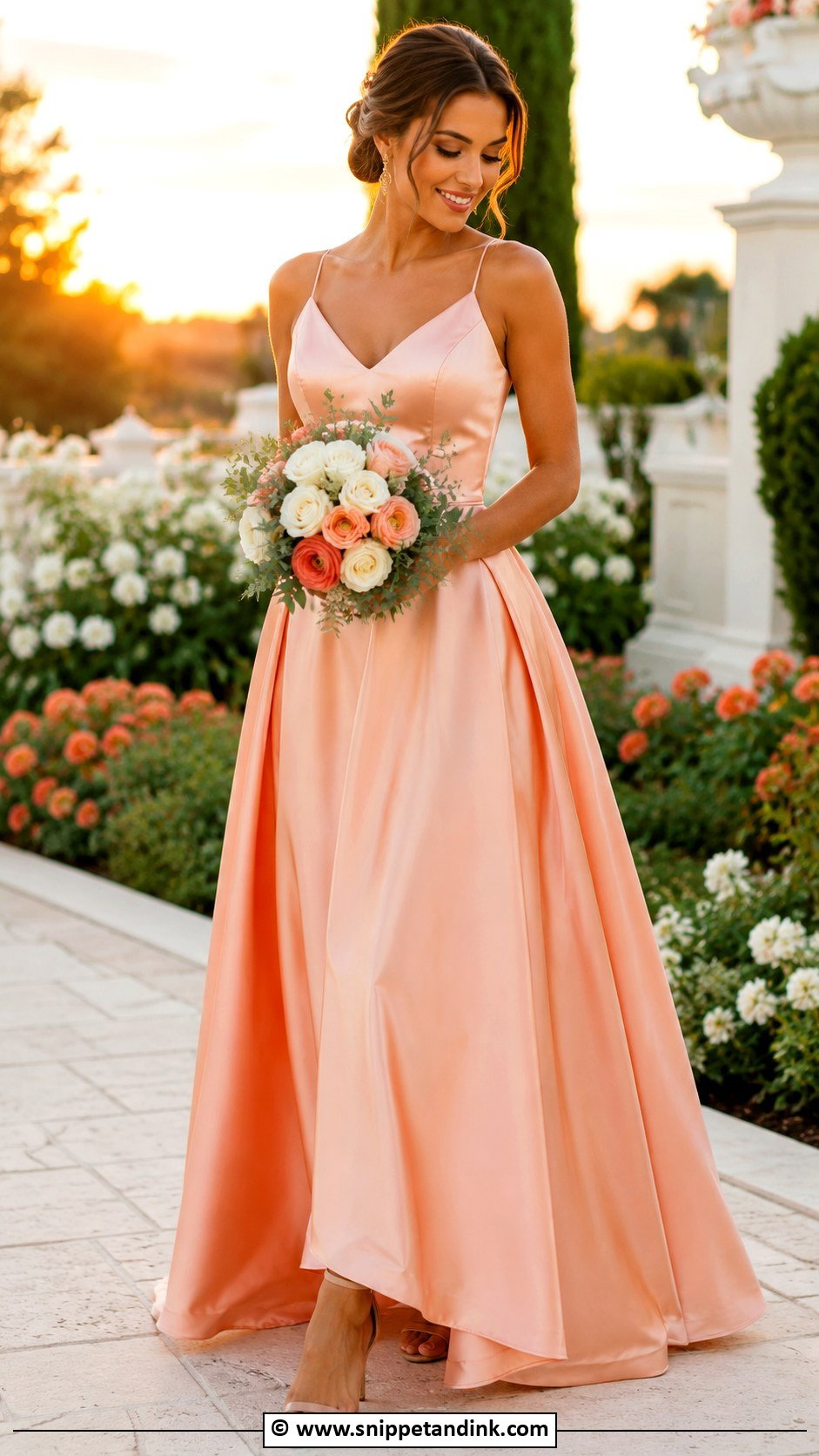
Peach flatters a lot of brides because it throws warmth back onto the face. Chiffon, satin, tulle or lace with soft floral detail all work, with nude heels, gold jewelry and cream, coral and pale orange flowers. I lean into glowing skin, warm blush and a soft coral lip. What I avoid is an orange-heavy bronzer on top of an orange-leaning dress; it all merges, and the bride ends up looking sunburned in photos. Beach ceremonies and sunset portraits suit this one.
14. Lilac Wedding Dress
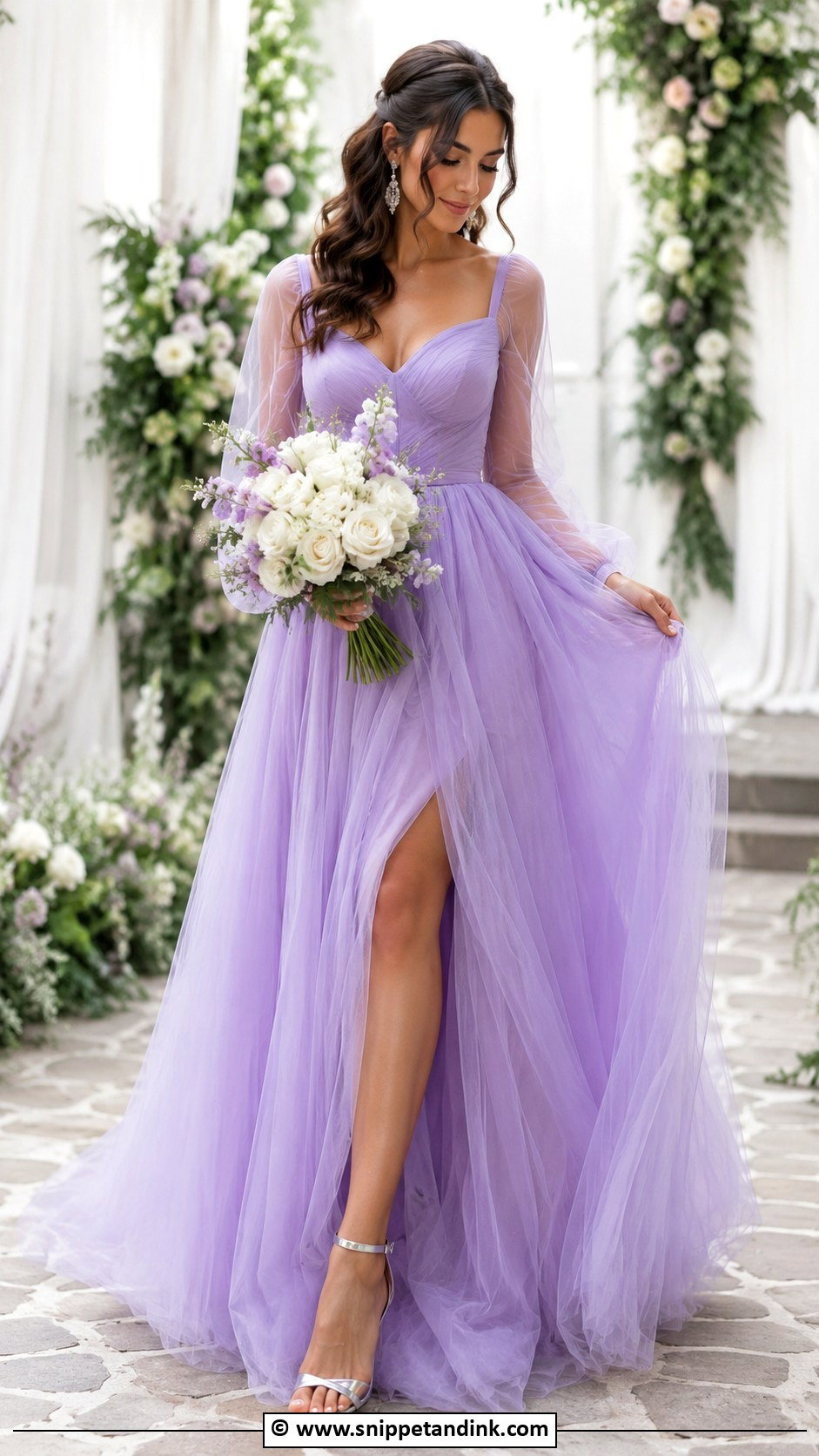
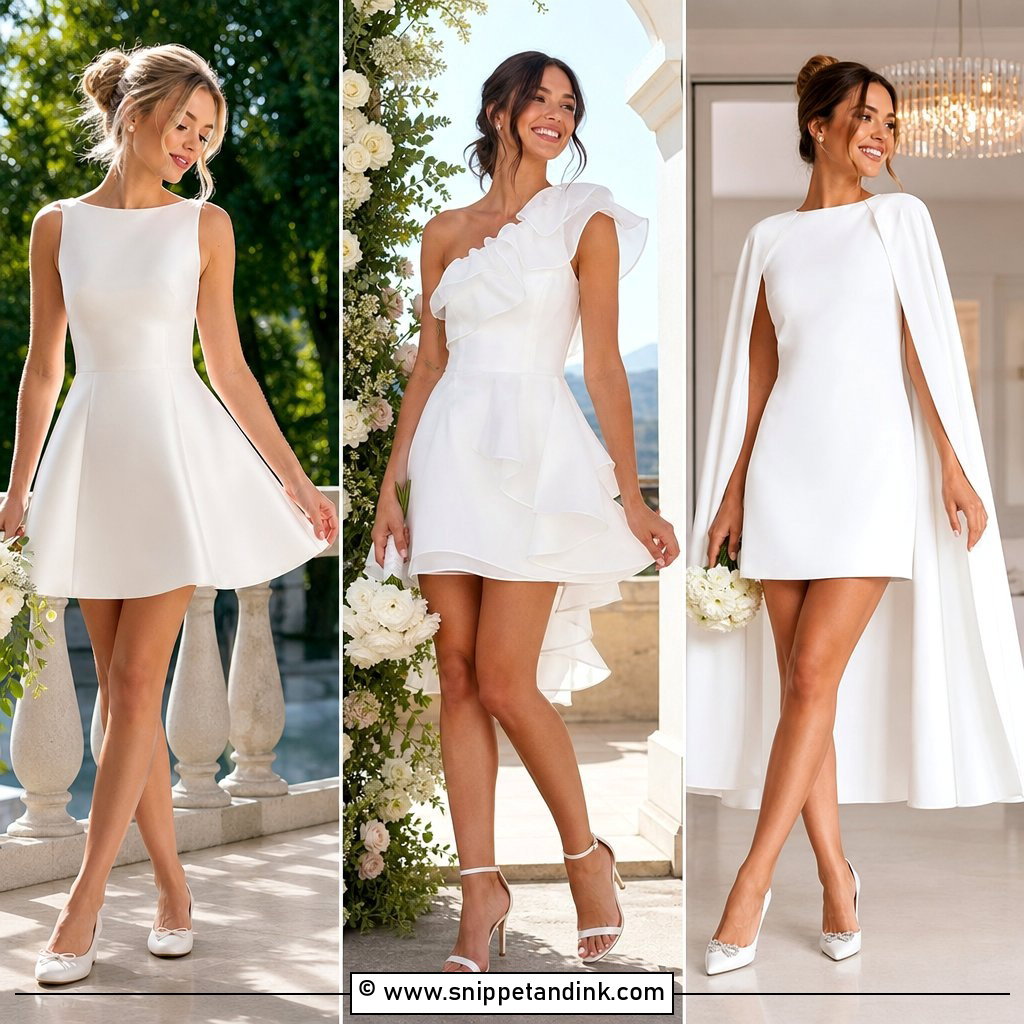
Lilac is lighter than purple but more visible than blush or champagne, with a slightly playful edge. A tulle ball gown, satin midi or lace gown with sheer sleeves works, paired with silver heels, crystal earrings and white flowers with lilac accents. Cool purples can make a warm complexion look a bit sallow, so I warm the cheeks gently and keep the lip pink rather than mauve. Soft curls and glowing skin finish it for spring garden weddings.
15. Rose Gold Wedding Dress
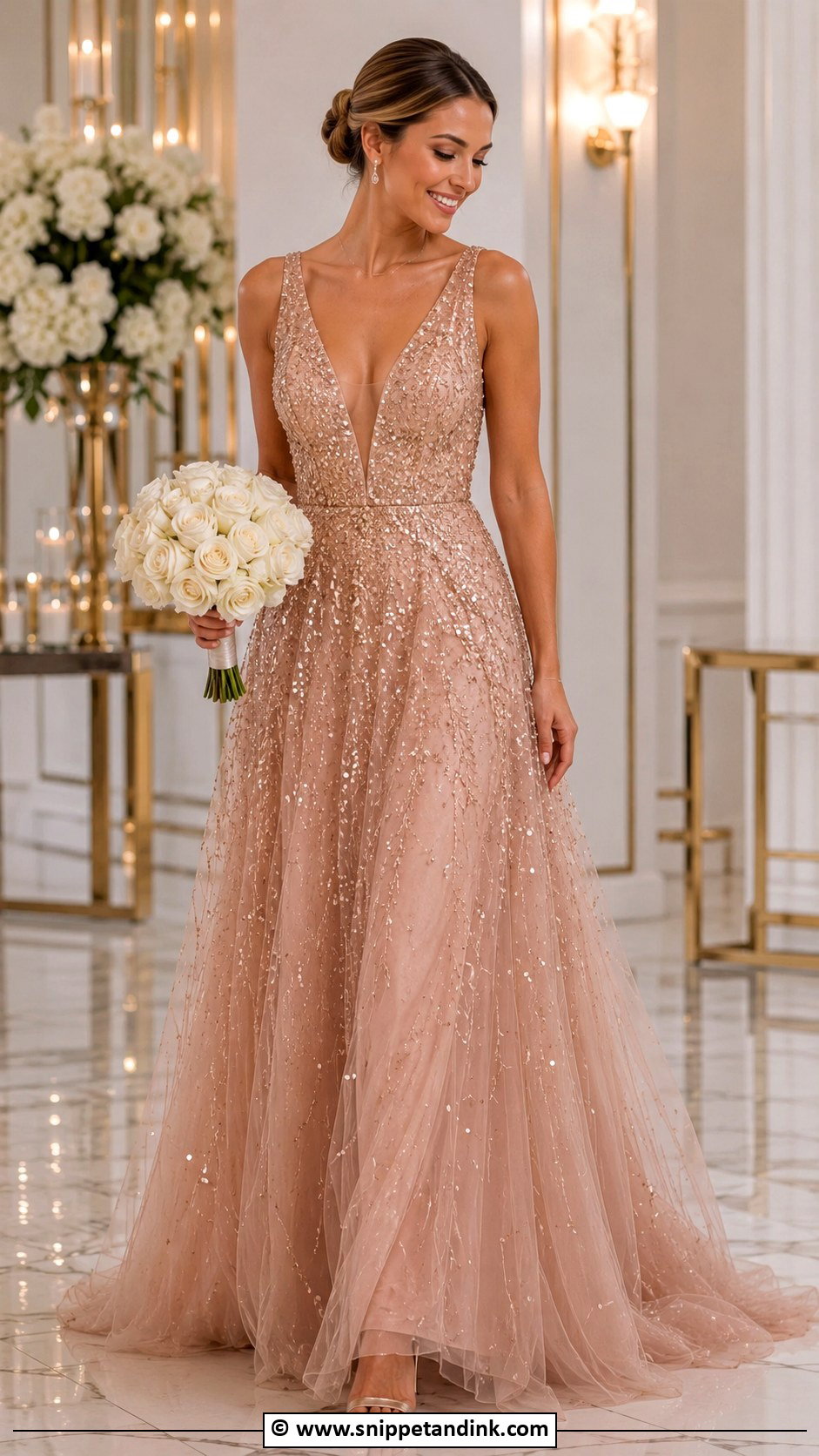
Rose gold mixes pink warmth with metallic shine, softer than bright gold or silver. Sequined tulle, beaded lace, satin or metallic embroidery all catch light, so I keep champagne heels, fine gold jewelry and ivory roses with blush accents. With a shiny gown I cut back on face highlighter; too much shine in two places makes the skin look oily in flash photos. A sleek bun or soft waves suit evening receptions, ballrooms and rooftop venues.
16. Mint Green Wedding Dress
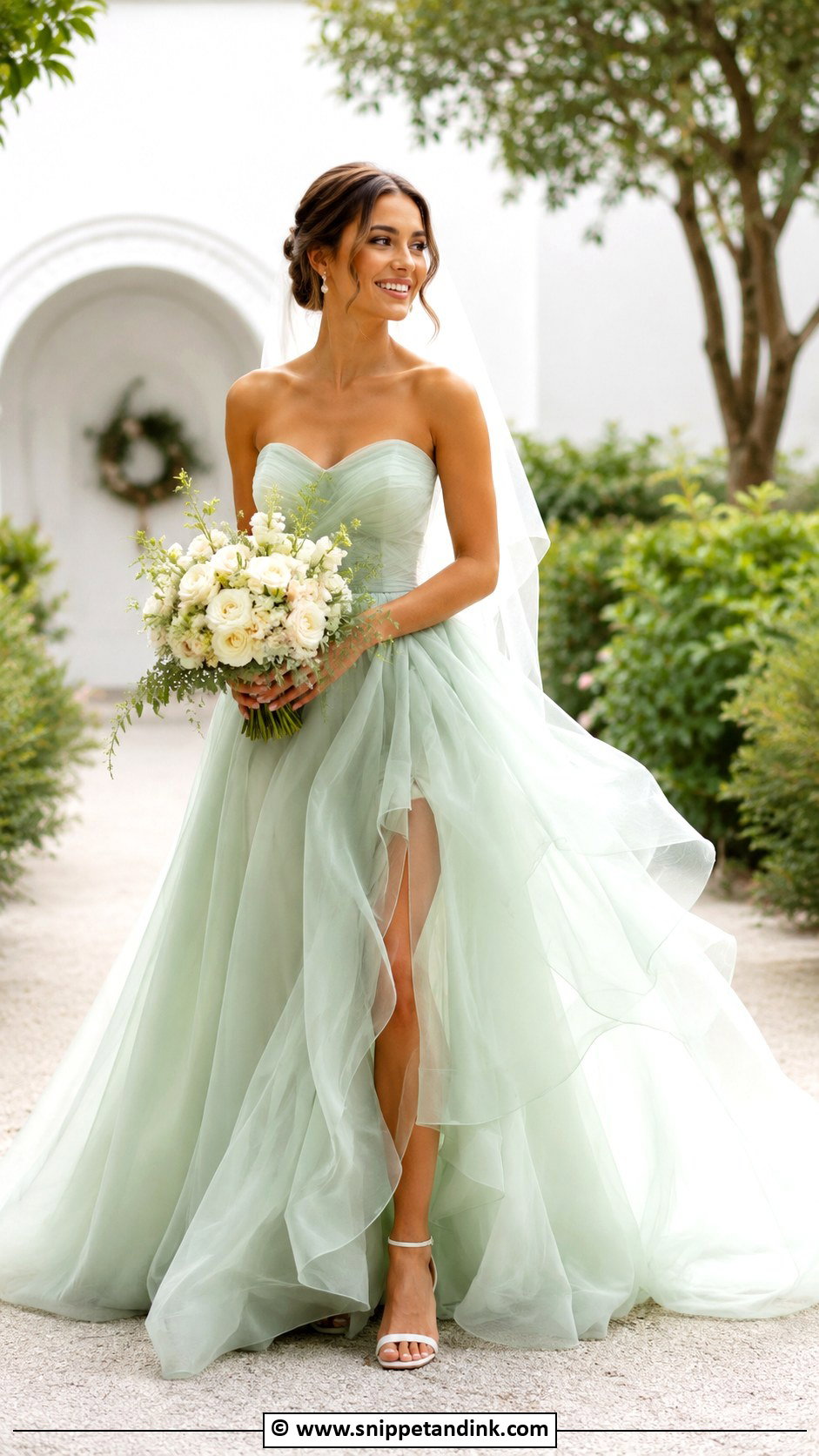
Mint feels fresh and slightly unexpected in chiffon, organza and tulle. White or silver heels, pearl earrings and ivory flowers with greenery keep it clean for spring and seaside weddings. Mint is cool and bright, so I stay away from heavy warm contour and choose soft pink blush, natural eyes and a glossy neutral lip. A sheer veil, delicate pins or a ribbon finish the outfit without diluting the color.
17. Coral Wedding Dress
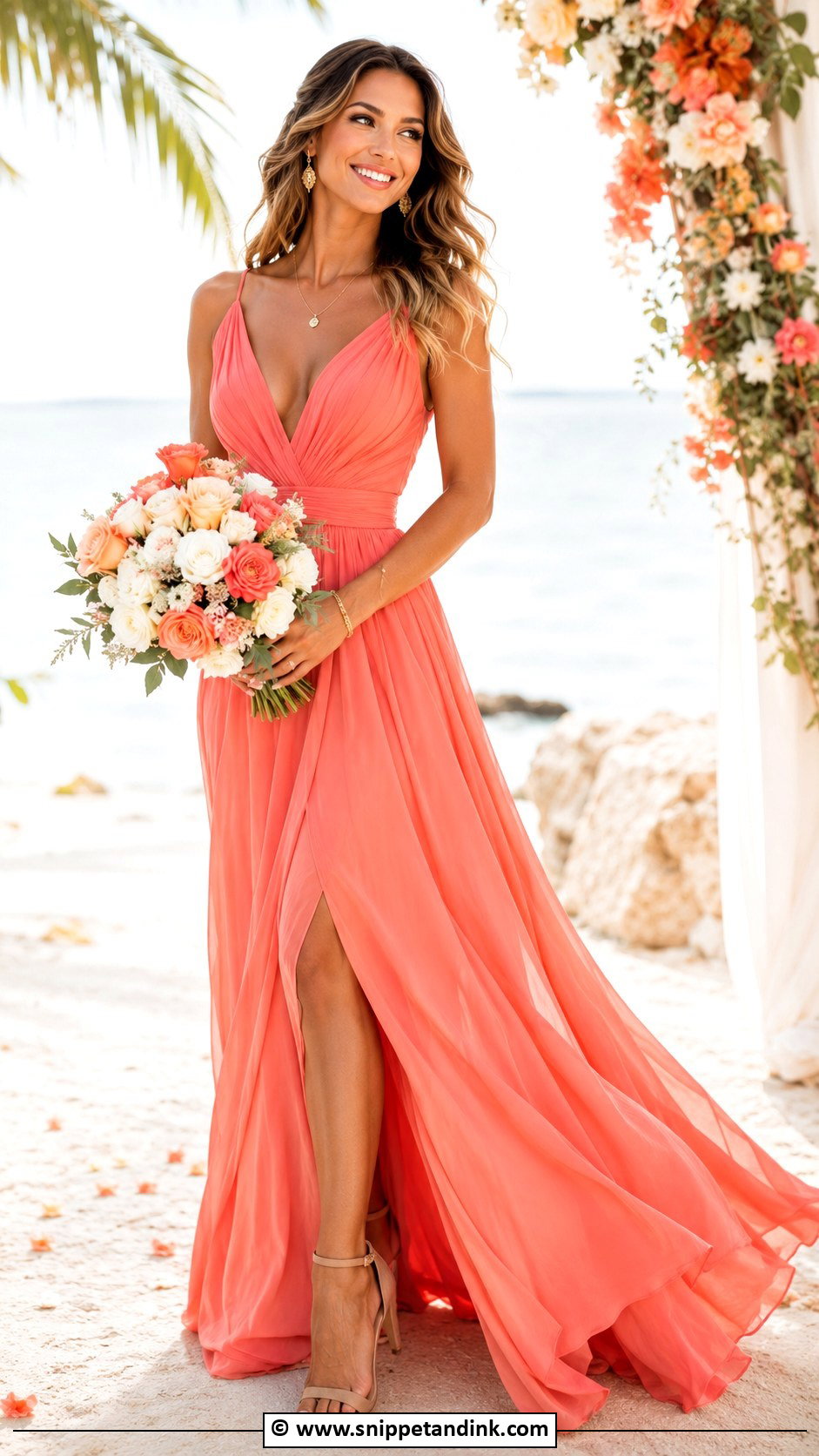
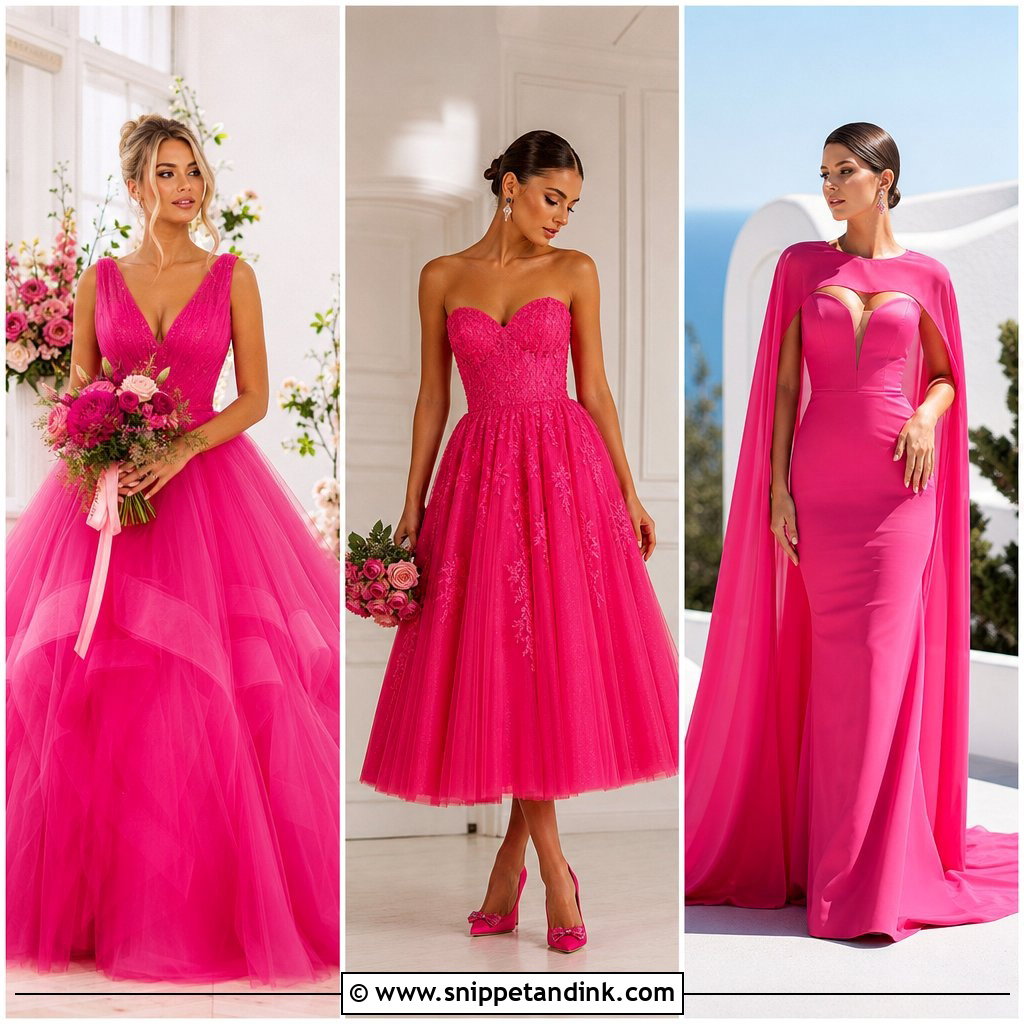
A coral wedding dress sits between pink and orange, bright but still romantic, and it looks great in satin, chiffon, crepe or layered tulle. Nude heels, gold jewelry and ivory, peach and coral flowers complete it, especially for beach and tropical weddings. A clean silhouette suits a strong coral; soft ruffles make it playful. Coral and a bright fuchsia lip fight, so I go to a peachy nude or a coral that’s a shade deeper than the dress.
18. Silver Wedding Dress
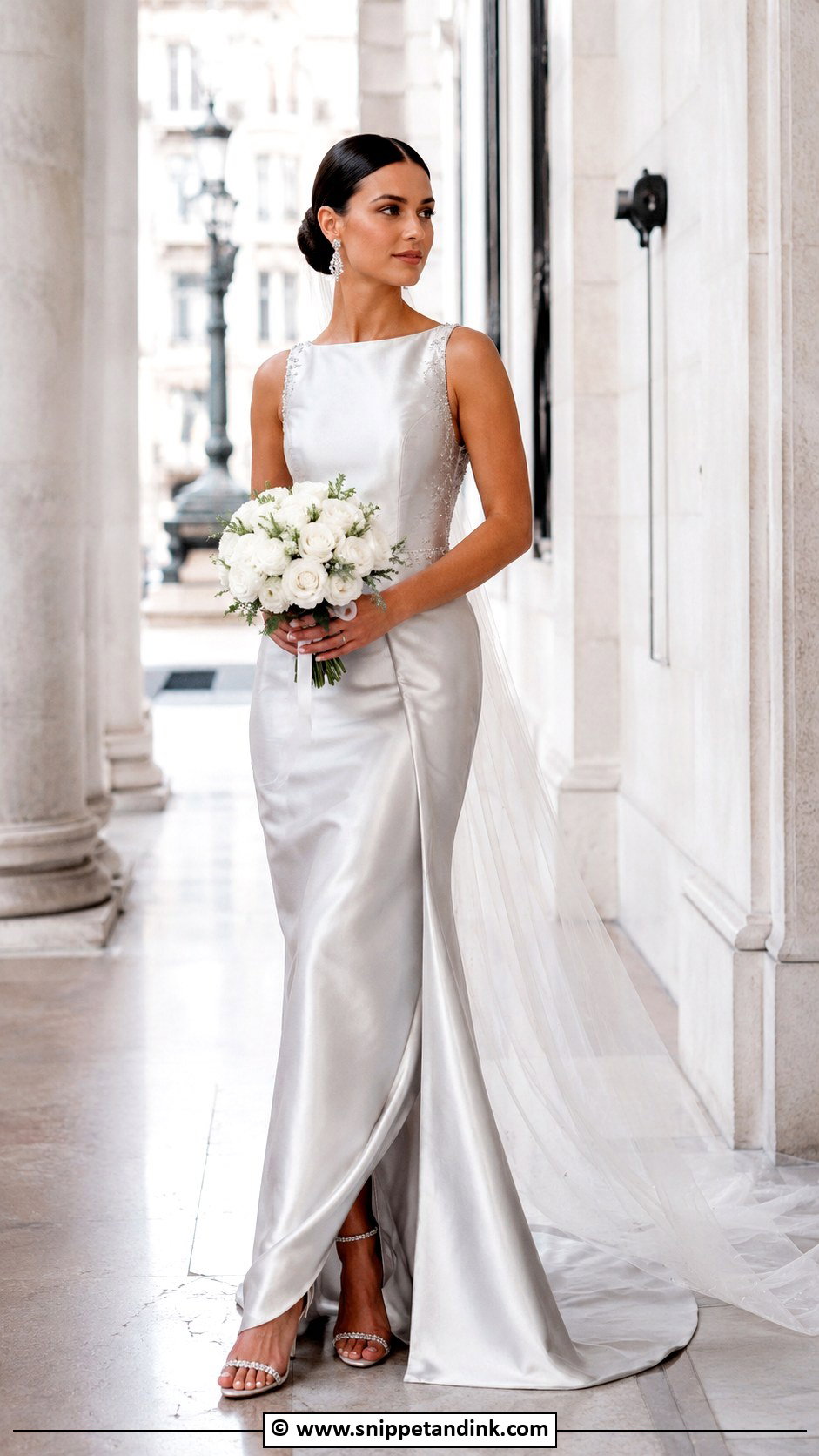
Silver reads sleek and modern, whether that’s smooth satin, beaded tulle or metallic lace. Silver heels, crystal earrings and a white bouquet keep the finish cool. I like a sleek ponytail, bun or soft waves with it. For the face I use cooler pinks and a light, satin finish skin rather than heavy glitter, which can turn grey under flash next to metallic fabric. Winter weddings and city venues suit it, and it’s a neutral that isn’t white, ivory or champagne.
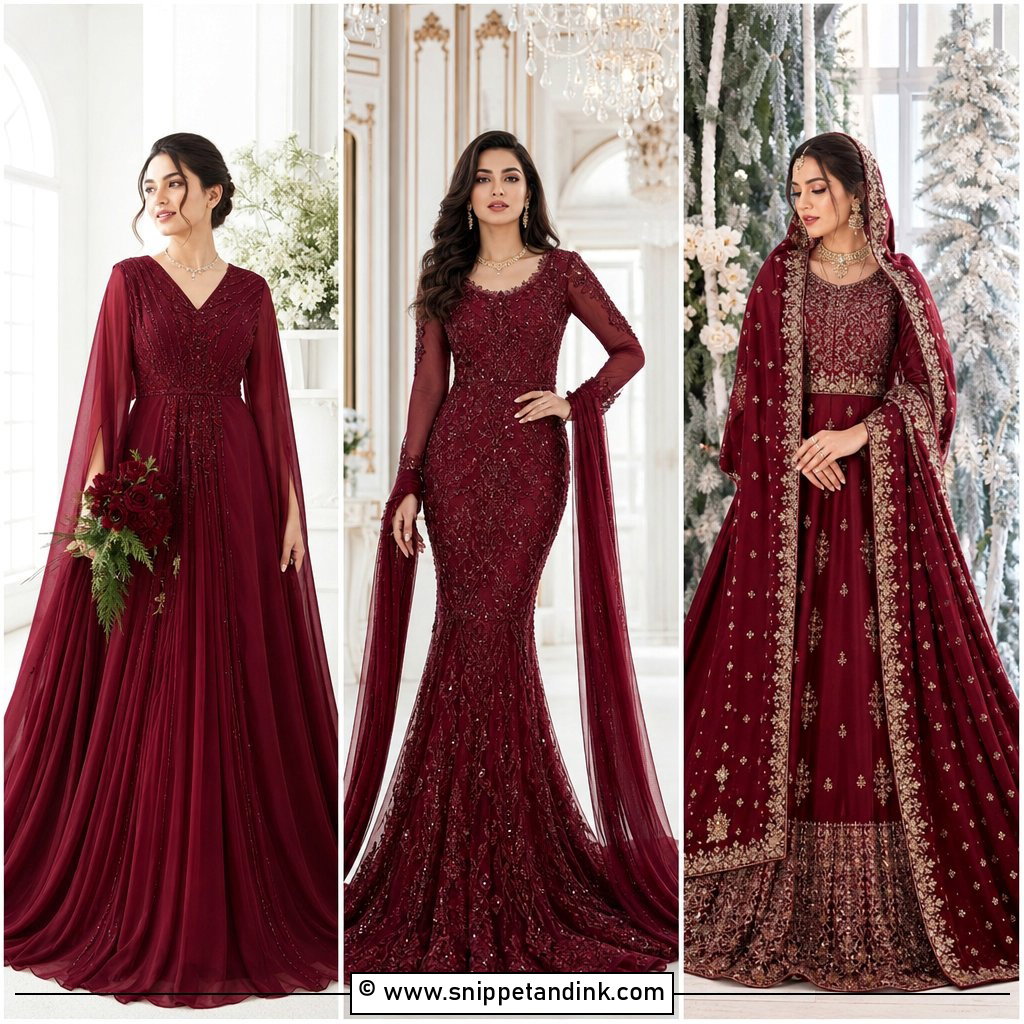
19. Burgundy Wedding Dress
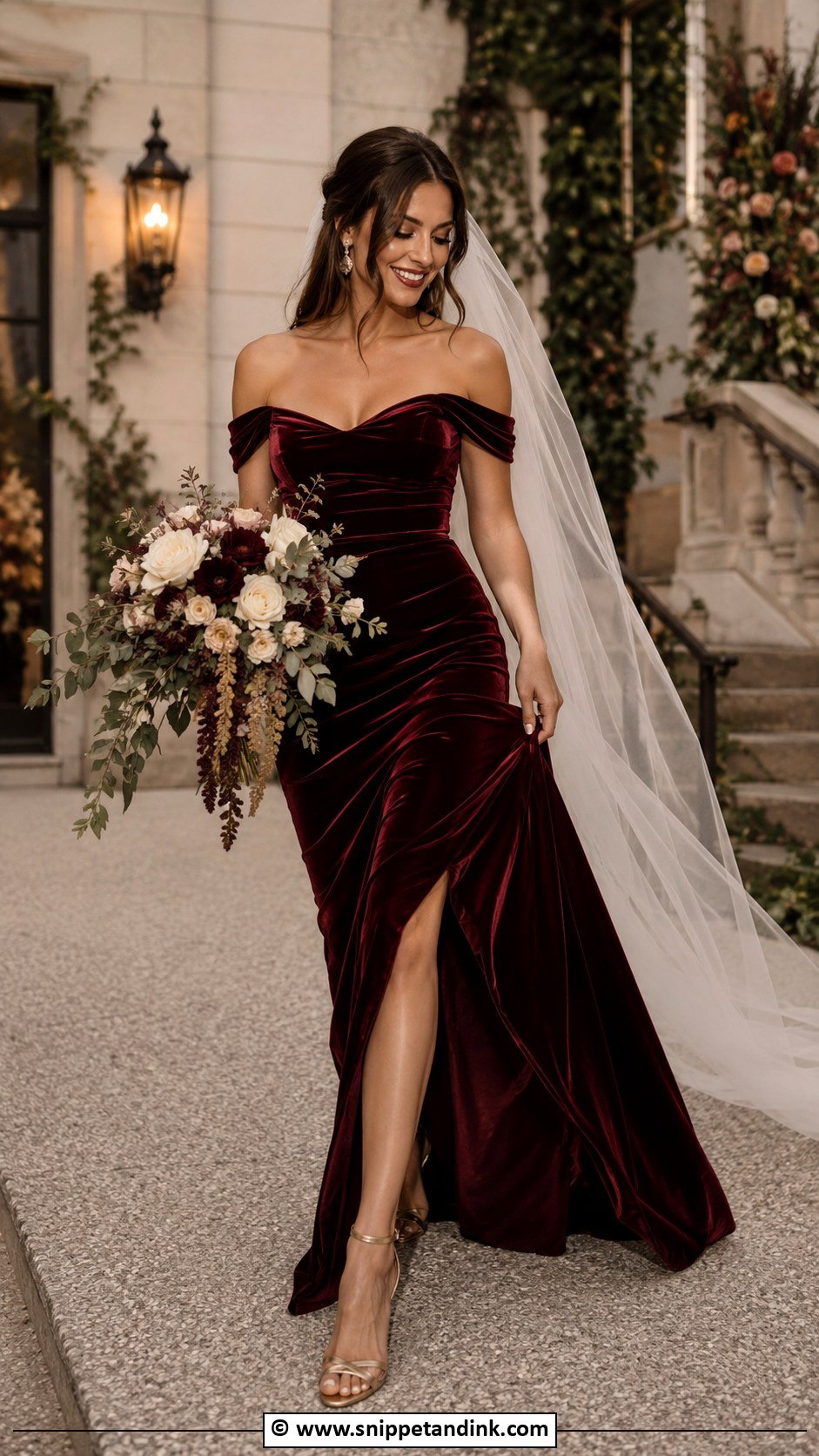
Burgundy is deep and romantic in velvet, satin, lace or structured crepe. Gold heels, delicate earrings and ivory flowers with dark red accents suit fall weddings and moody, candlelit venues. To keep it bridal I add a soft veil, polished hair and defined eyes. With burgundy, I pick either a strong berry lip or the eyes, never both at full strength; deep fabric plus a dark lip plus smoky eyes reads as an evening party look. Leave accessories sparse here.

20. Teal Wedding Dress
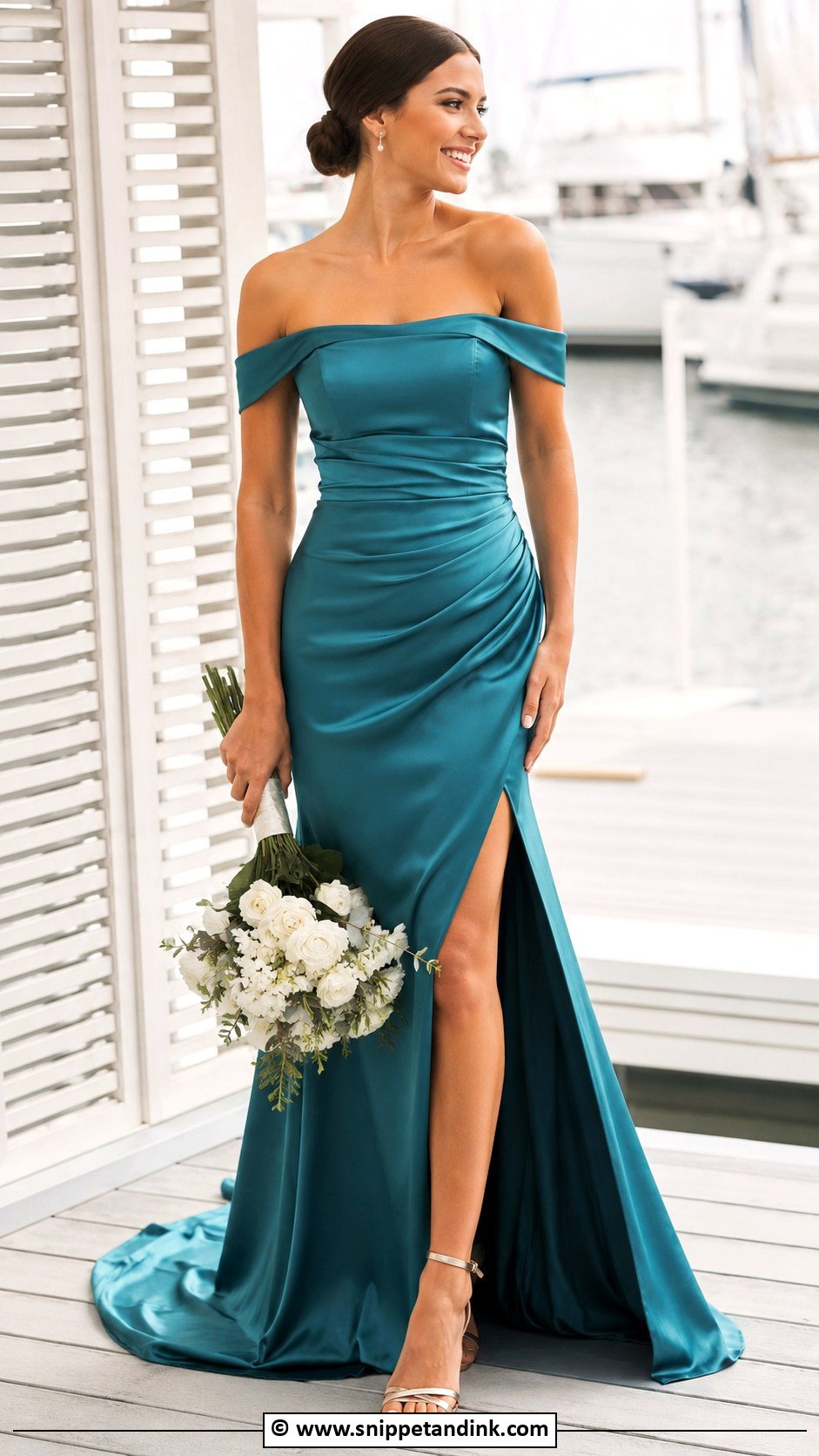
Teal combines blue and green in a way that’s rich but wearable. A satin slip, structured ball gown or flowing chiffon all work depending on the venue, with silver or gold heels, simple earrings and white flowers with greenery. Teal has a habit of showing a green cast under the chin in close-ups, so I warm the neck slightly with foundation or bronzer. Glowing skin and neutral lips balance it at waterfront and evening weddings.
21. Mauve Wedding Dress
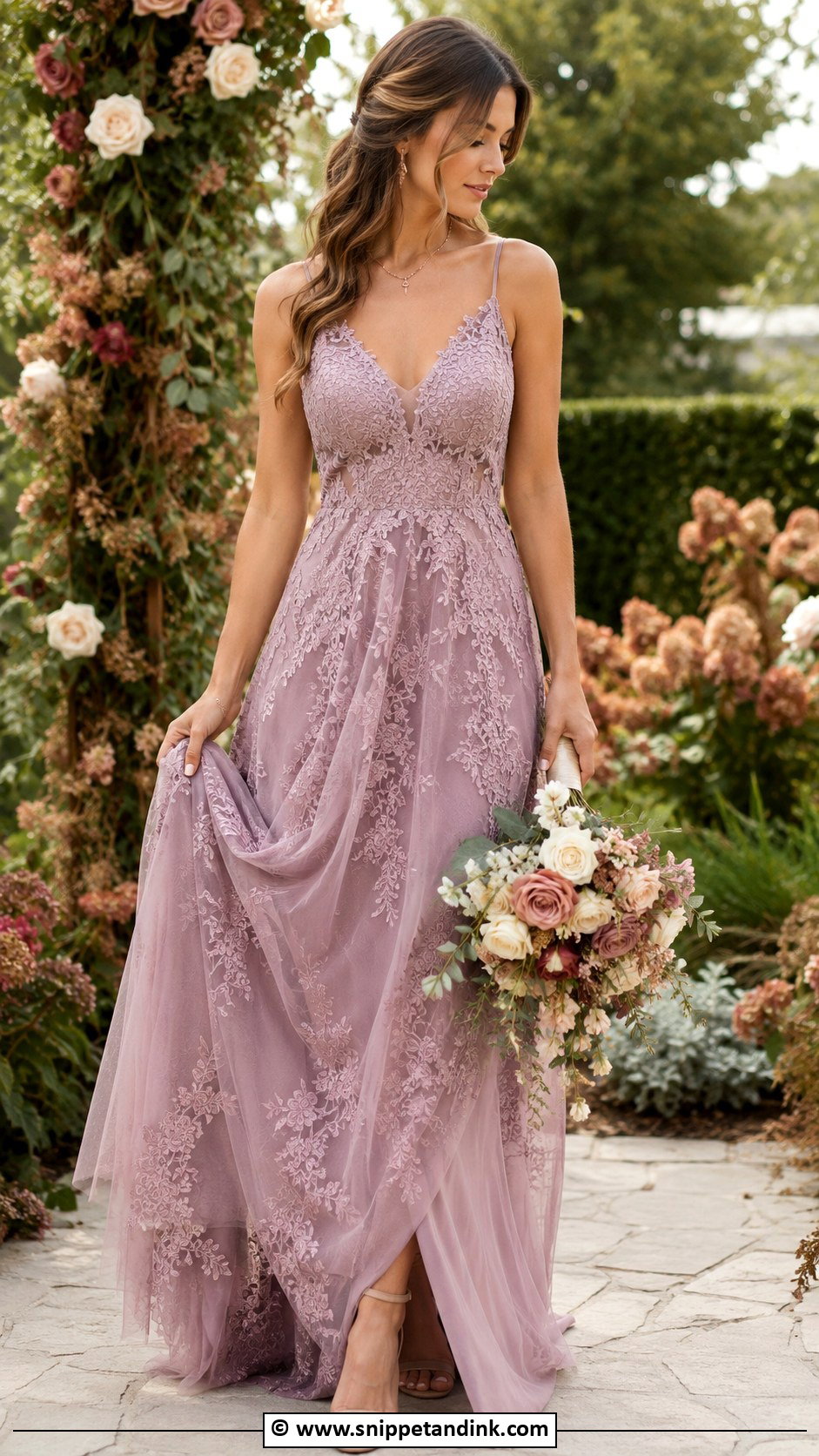
Mauve mixes pink, purple and grey, so it feels grown-up and soft and works across seasons. Lace, a chiffon wrap or a satin A-line all suit it, with nude heels, rose gold jewelry and cream, dusty rose and muted lavender flowers. It’s the easiest colored gown to match makeup to, because a mauve lip and soft rose blush sit naturally with it. I still keep the lip a touch brighter than the dress so the face doesn’t fade. Soft waves and a simple veil complete it for garden and fall weddings.
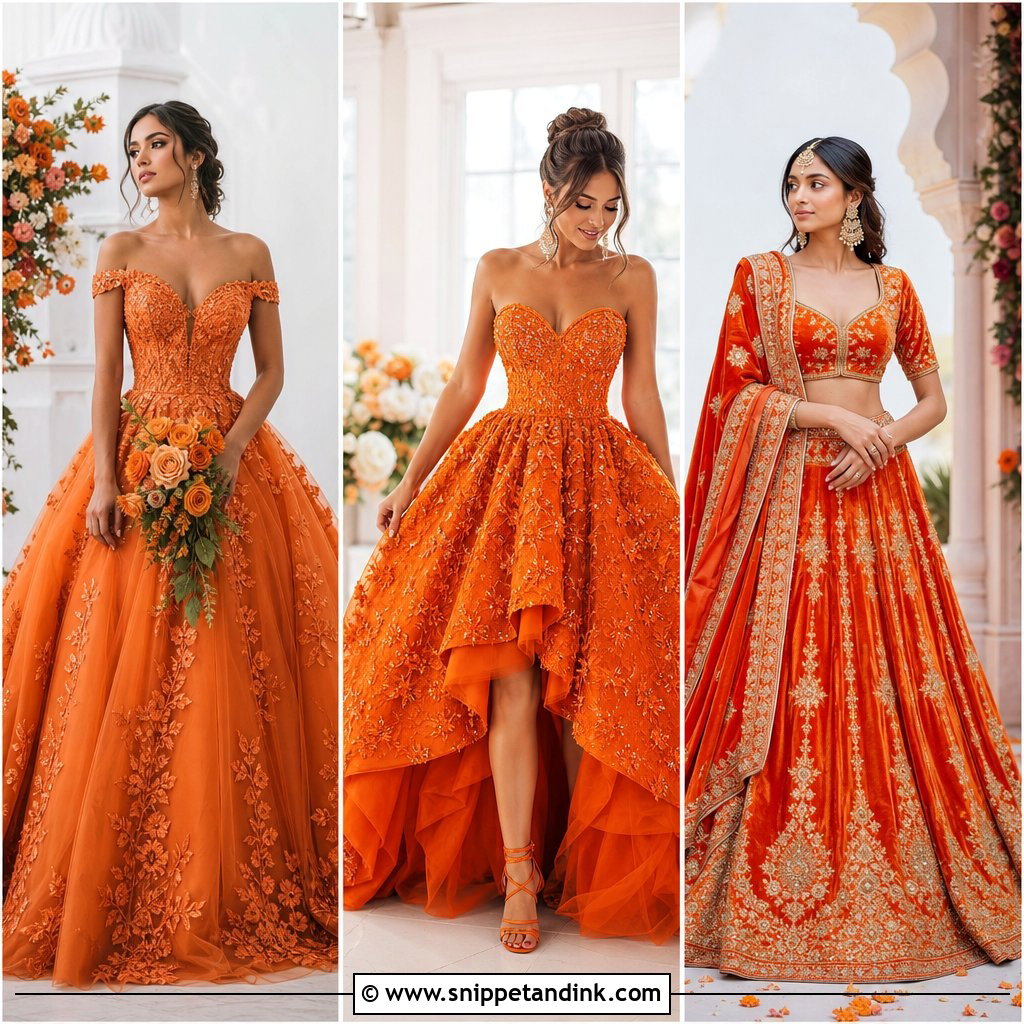
22. Orange Wedding Dress
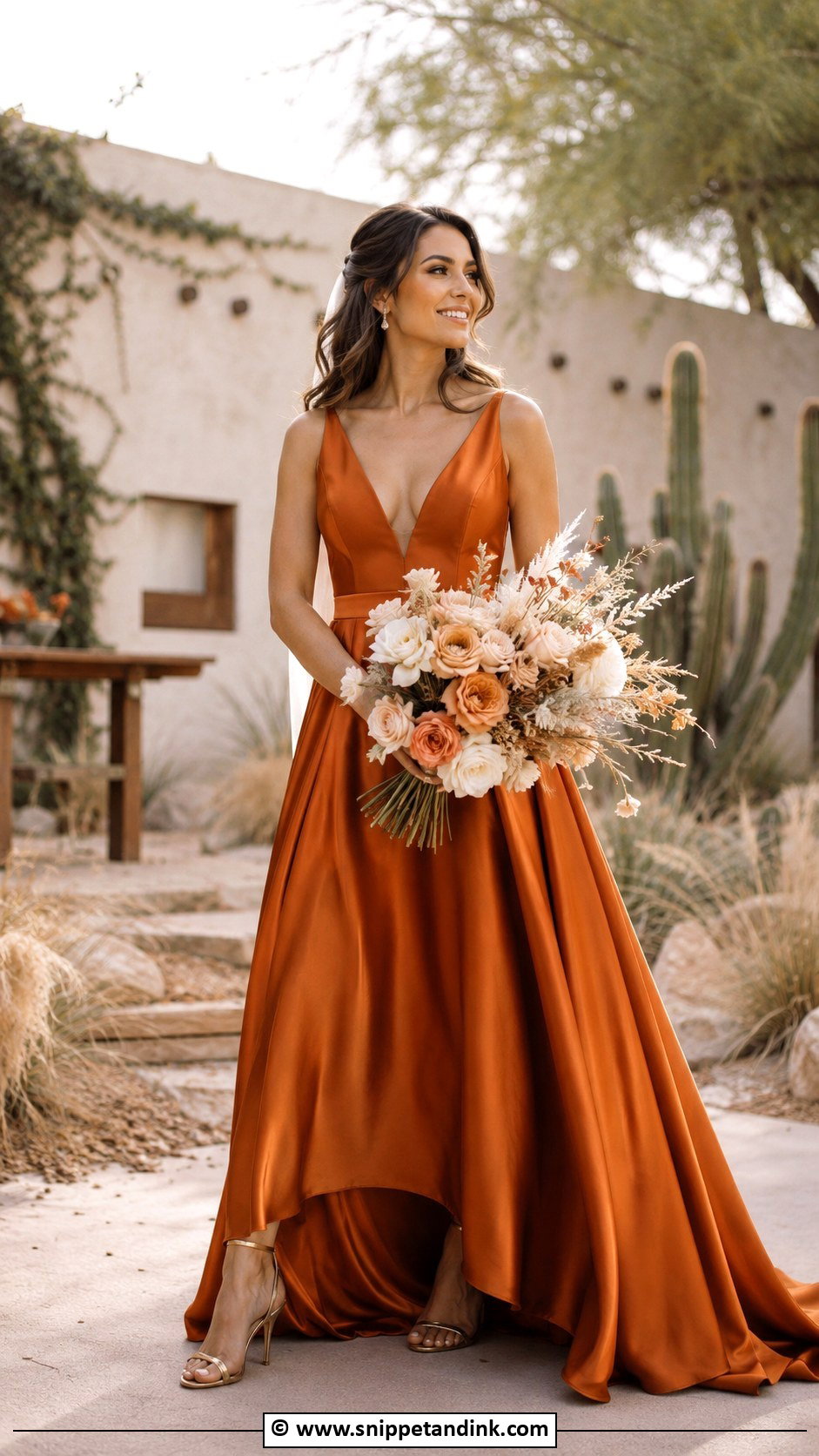
An orange wedding dress can be soft apricot or bold burnt orange. Satin, silk, chiffon or a clean A-line keep it refined, with gold heels, simple earrings and ivory flowers with peach or rust accents. Orange suits desert venues, summer and autumn ceremonies. I do glowing skin and a sleek hairstyle, and choose a lip from the brown or terracotta family; pink lips with burnt orange tend to look accidental. Keep accessories minimal so the color holds center stage.
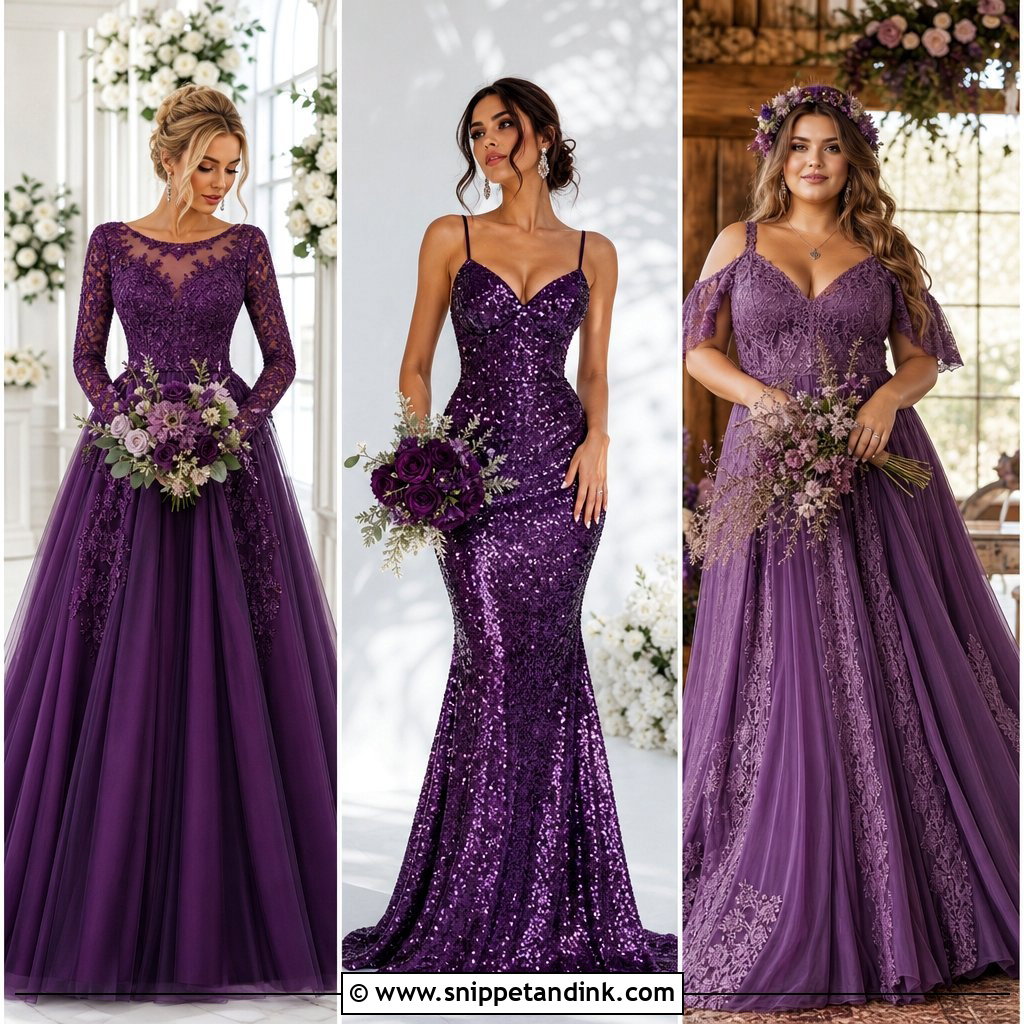
23. Purple Wedding Dress
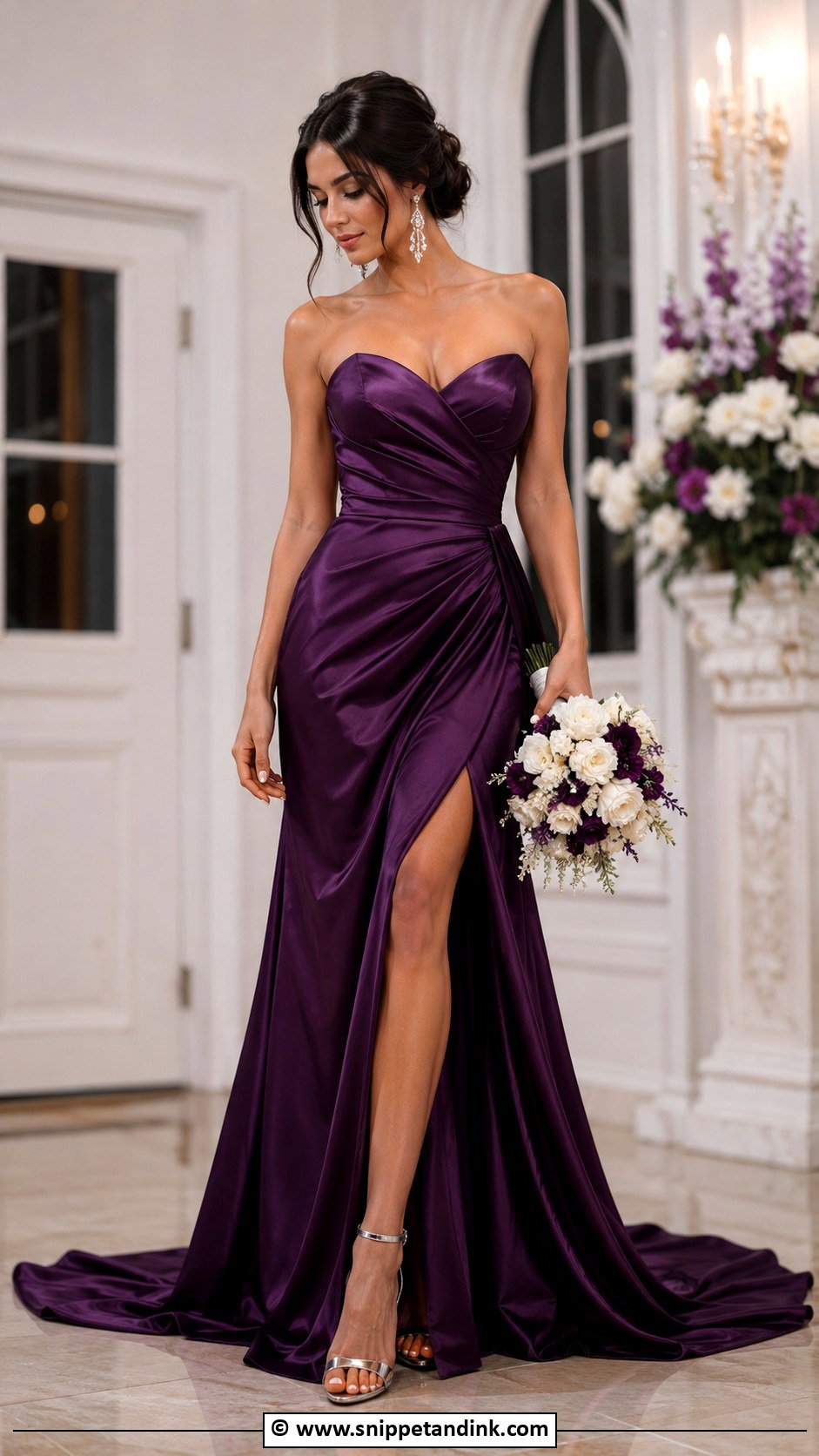
Purple shifts mood with the shade: soft violet is dreamy, deep plum is formal. Tulle gives a fairytale shape, satin is sleek, and lace feels classic. Silver heels, crystal earrings and white flowers with purple accents suit it. With a deep plum gown I keep eyes soft and the lip neutral, because purple fabric already deepens the shadows under the eyes, and I brighten that area with concealer. It works at evening, winter and garden weddings.
24. Multicolor Wedding Dress
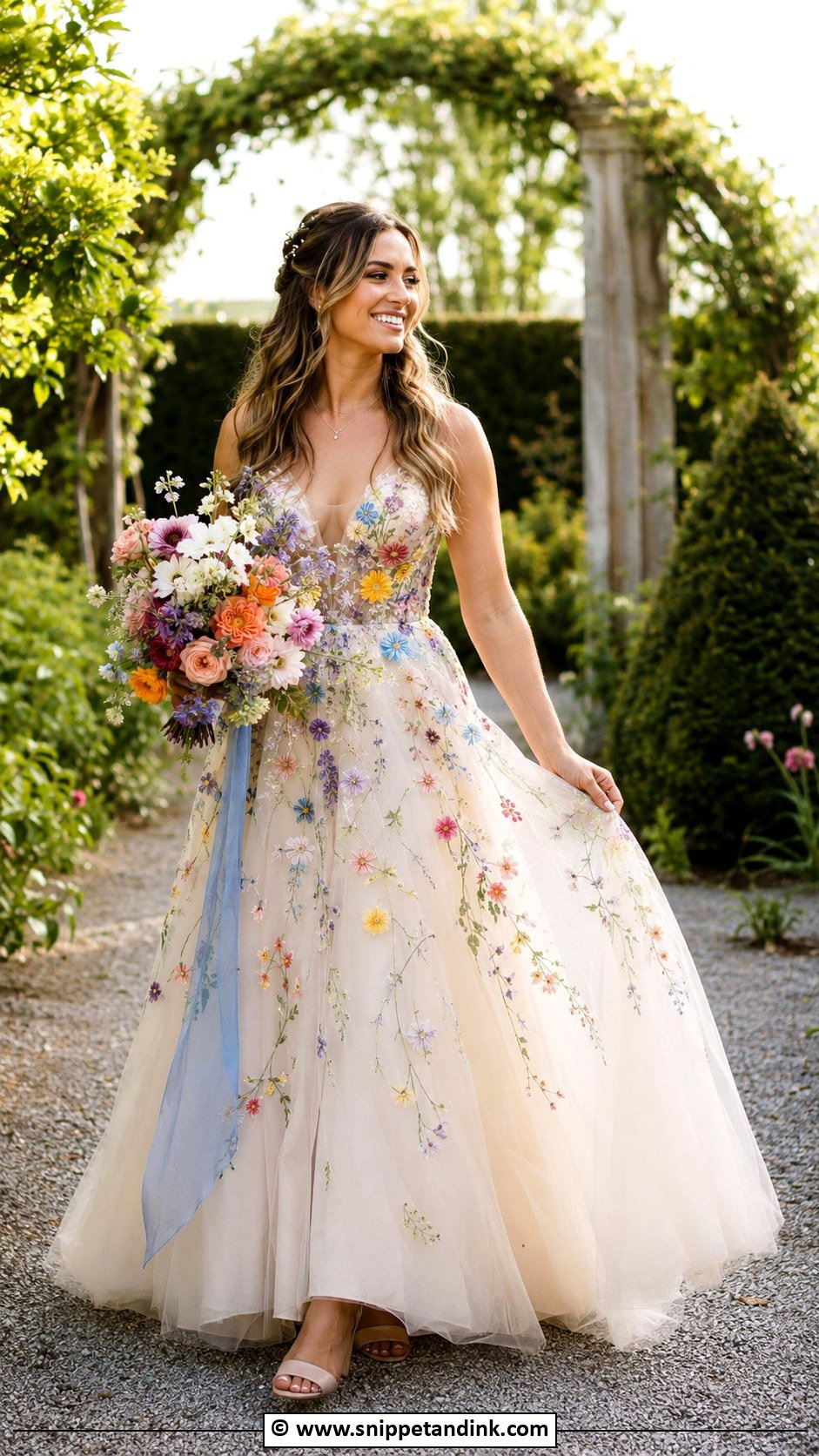
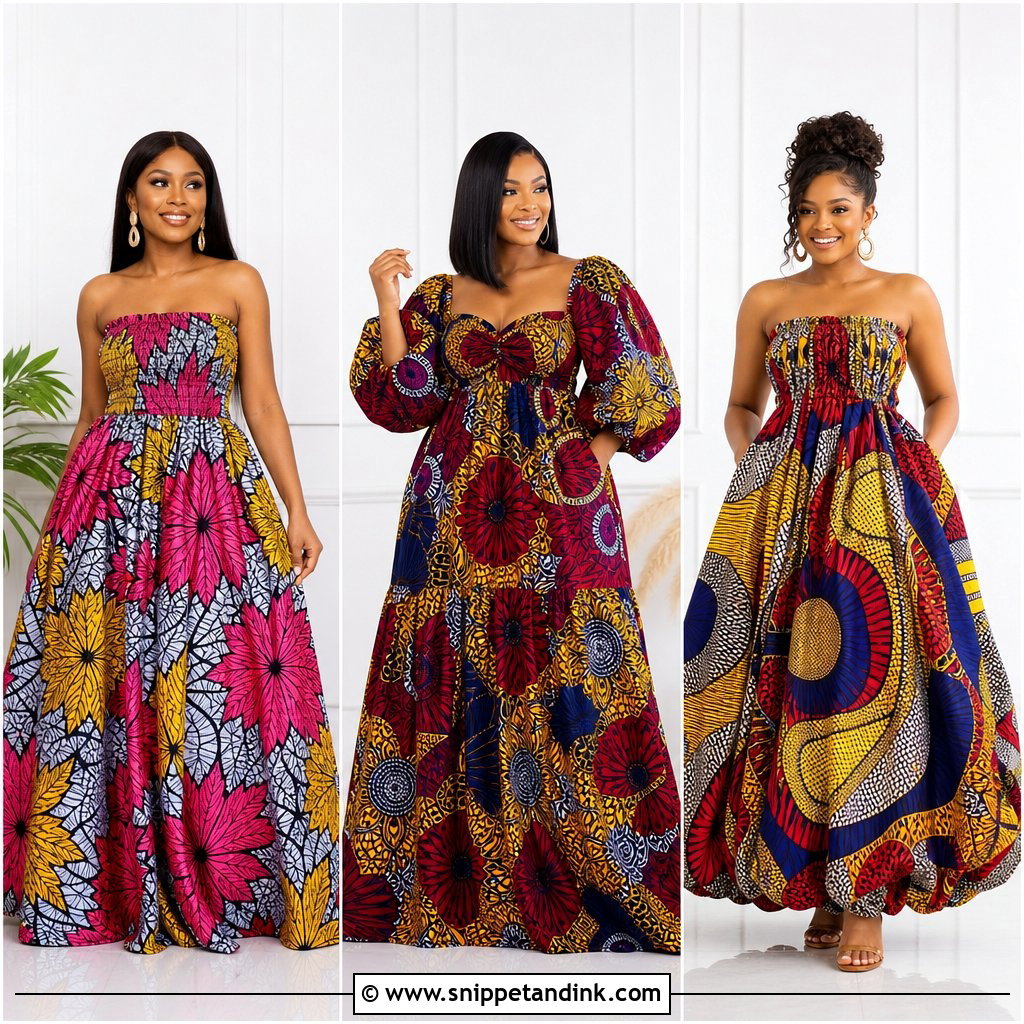
A multicolor gown might be a floral print, rainbow tulle layers, colorful embroidery or a painted skirt. Keep shoes nude, white or metallic, match the jewelry to one accent color and carry a bouquet with only a few shades. On the face, I treat a busy dress the way I’d treat a busy room: neutral, glowing skin and one soft accent, so the bride’s features stay readable in photos. Outdoor and festival-style weddings suit this most.
25. Black And White Wedding Dress
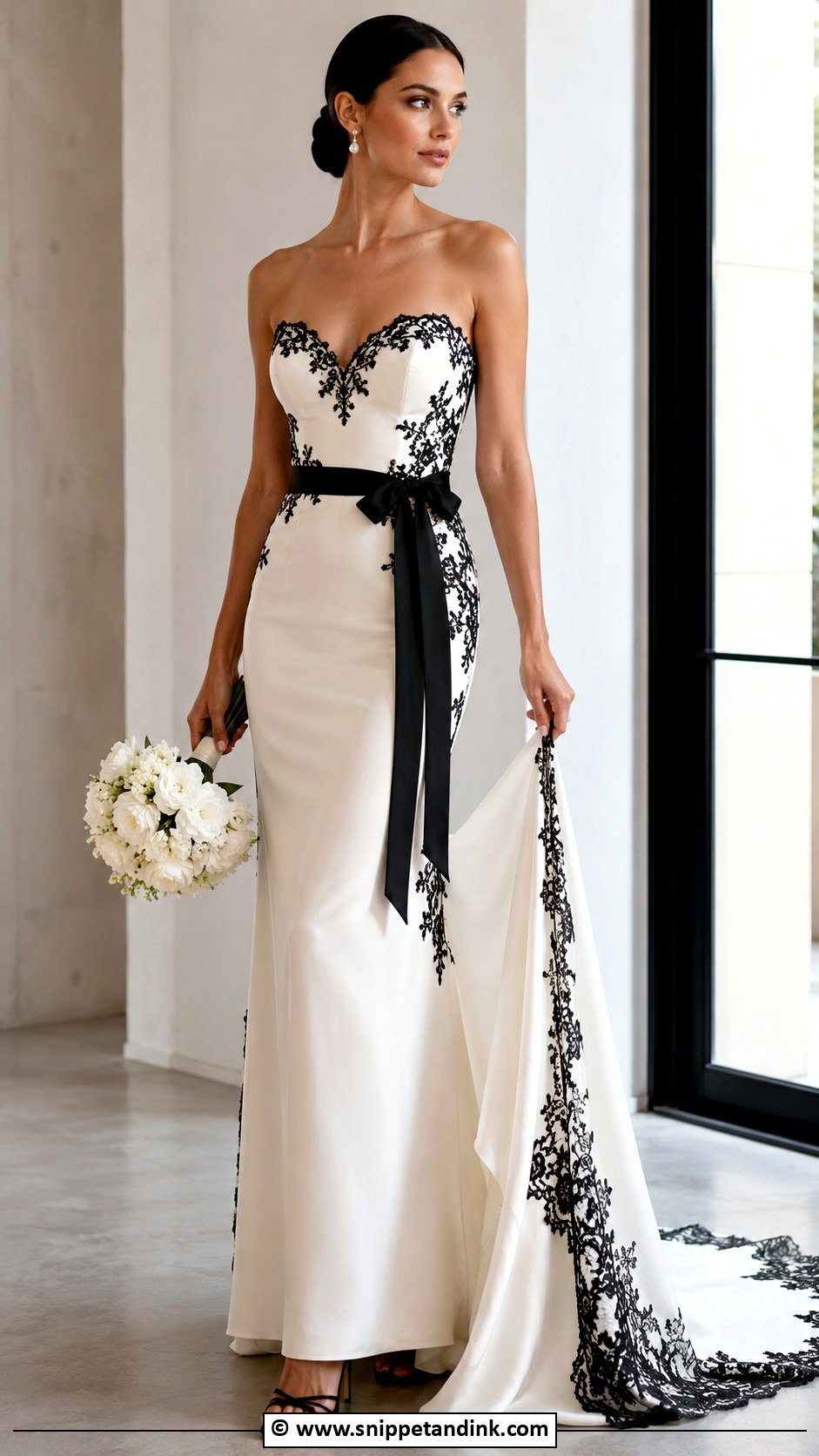
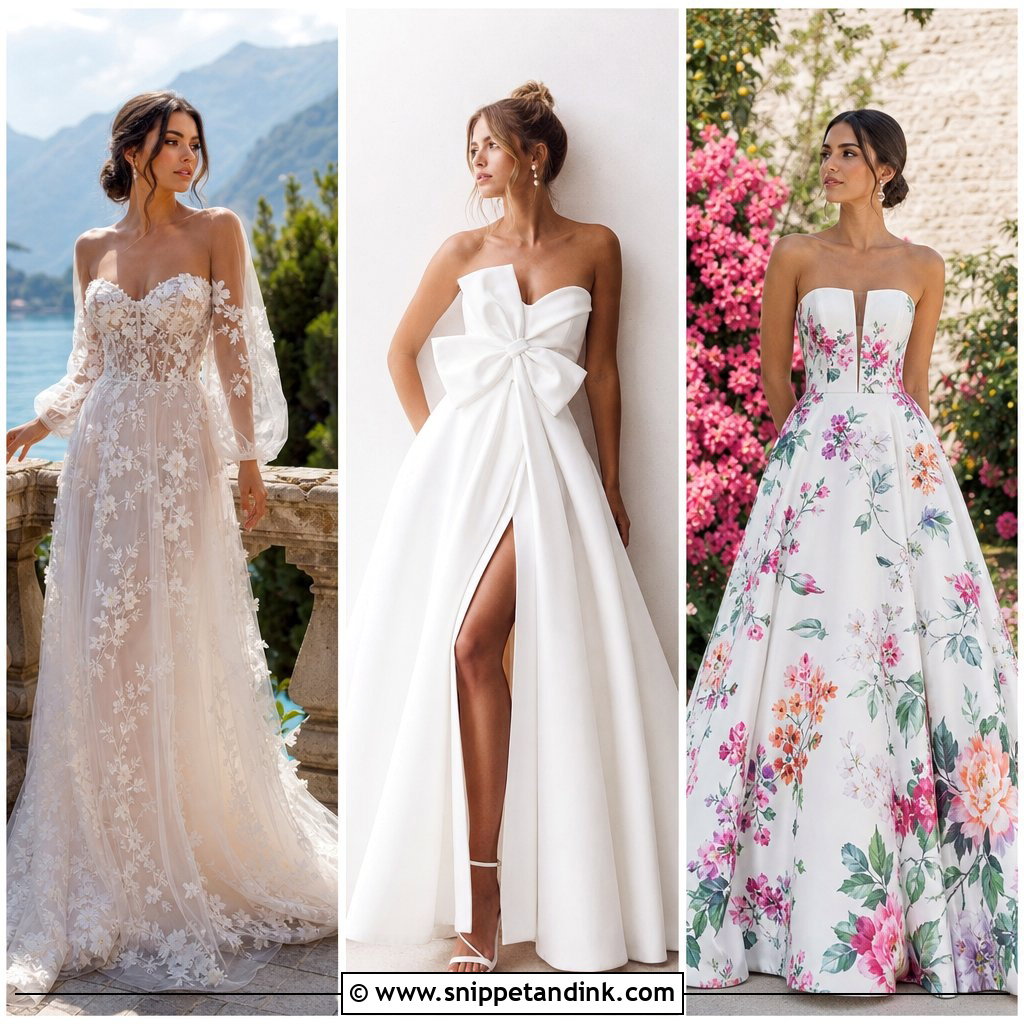
Black and white keeps a classic bridal base with graphic contrast: an ivory gown with black bows, black lace, a black sash or bold floral detail. Black or ivory heels, pearl earrings and white flowers keep it crisp for city weddings, formal ballrooms and editorial-style portraits. I usually pair it with a defined black liner and a clean red or neutral lip, which echoes the contrast without overdoing it. A clean hairstyle keeps it from feeling like a costume.
Saturated Fabric Throws Its Color Onto Your Skin
Strong colors reflect light upward onto the jaw, neck and under the chin, and close-up photos pick it up. Emerald and teal can add a green cast, yellow and gold can make the under-eye area look sallow, and deep red can warm the neck so much it no longer matches the face. I correct for this with foundation and a little bronzer on the neck, chosen while the fabric is next to the skin, not before.
Pastels have the opposite problem. They show everything that touches them. Foundation on the jaw, self-tan on the shoulders and lip color on a fingertip will all mark a powder blue or blush bodice. I let body makeup set fully, press a tissue over the jaw before the dress goes on, and dress the bride with a scarf or pillowcase over her face.
Red Lips, Pink Gowns and Other Clashes Worth Testing
Most makeup clashes with colored gowns come down to undertone. Blue-based lipsticks look sharp next to cool fabrics like silver, navy, lilac and powder blue, and slightly off next to warm ones like coral, peach and gold. Orange-based shades do the reverse. If you’re set on a particular lip, test it in the same session as the dress, in daylight, and take a photo from about two meters away; that’s the distance most guests and many photos see you from.
- Don’t match eyeshadow exactly to the gown; one tone deeper or lighter looks deliberate.
- Keep blush in the same family as the lip so the face reads as one decision.
- Choose one strong feature, eyes or lips, when the dress is already a deep or saturated color.
Let the Gown Lead and Keep Your Face in Step
There’s no single rule for wearing a colored wedding dress. Pastels, metallics, jewel tones, embroidery and bold shades can all look bridal when the silhouette, accessories, flowers, shoes and makeup work together. Before you commit, think about venue, season, lighting and comfort, and how the color will look in photos. Go soft with blush or champagne, or strong with red, emerald or black. Whichever you pick, bring it to your makeup trial so your face is planned around it from the start.
You'll Like These Ideas:




Leave a Reply