
The 1980s gave bridal fashion its biggest proportions: puff sleeves, high necks, basque waists, bows, beading and trains long enough to fill an aisle. Most of those details are back in sample rooms now, but they read very differently on a modern cut. The difference between a gown that looks retro on purpose and one that looks like a costume usually comes down to scale. I keep the sleeve smaller than the original, the fabric a little softer and the accessories quieter. Some of you want a full vintage bridal look, others just one nod to the decade. Below are 30 directions, with what I check when a bride actually puts each one on.
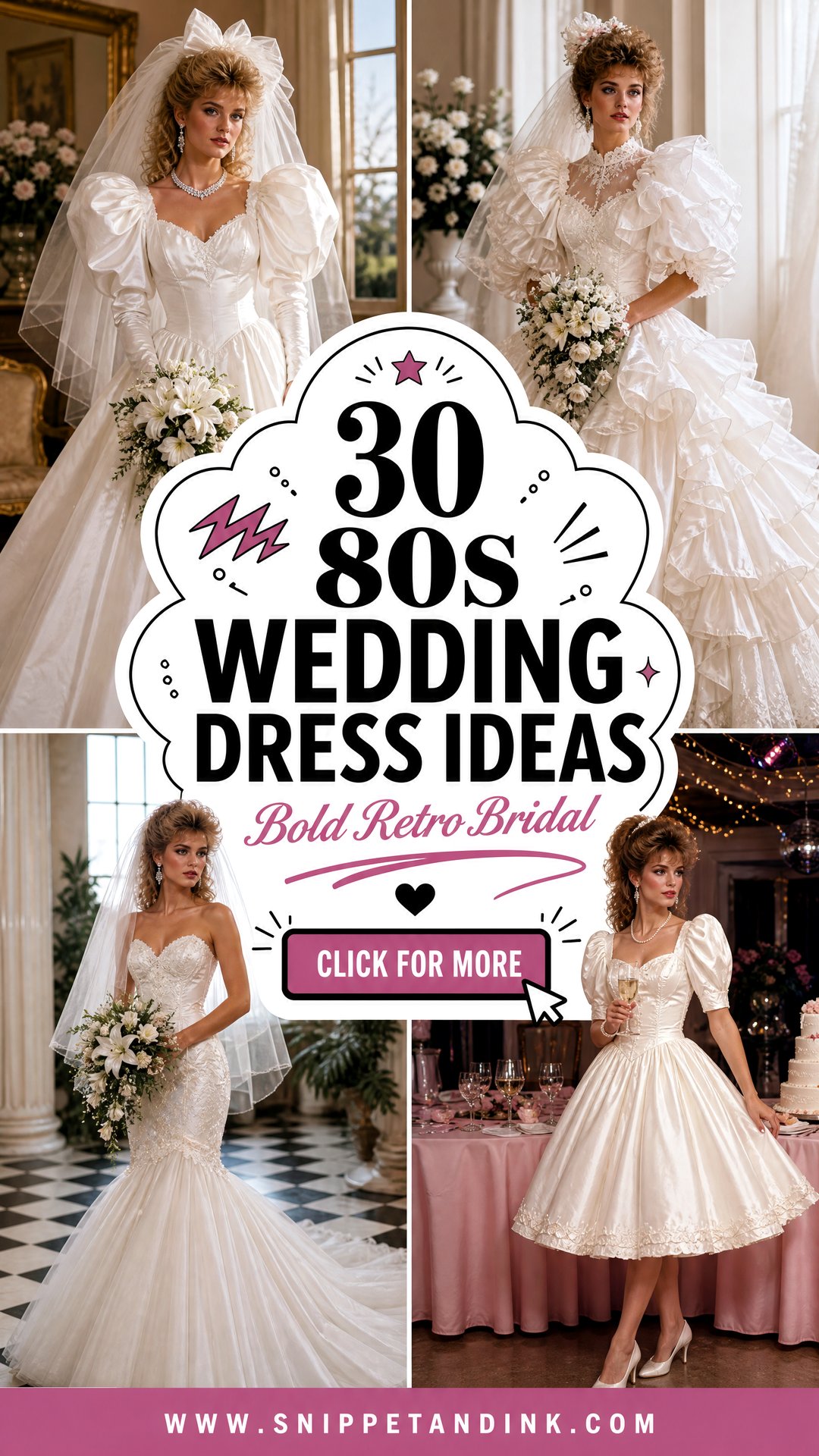
Shrinking the Shoulders So the Gown Reads Retro, Not Costume
Original 1980s gowns put the drama at the shoulder. Sleeves were stuffed with net, bodices carried shoulder pads, and the waist was cinched to make the contrast bigger. On most brides today that scale swallows the neck and makes the head look small in photos. When I fit a retro gown, I work through the shoulder line first.
- Keep the widest point of the sleeve no wider than your hips when you look straight into the mirror. Past that, the top half outweighs the skirt.
- Ask whether the sleeve holds its shape from the fabric or from net inside. Net-stuffed sleeves crush flat in a hug and don’t recover; taffeta or firm organza holds its shape better.
- If you have broad shoulders, put the volume lower, at the elbow or forearm, and leave the cap of the shoulder smooth.
- On a petite frame, choose one volume point only: the sleeve or the skirt, not both at full scale.
Then look at the whole outline from across the room, not just up close. If you see the sleeves before you see your face, scale them down.
1. 80s Puff Sleeve Wedding Dress
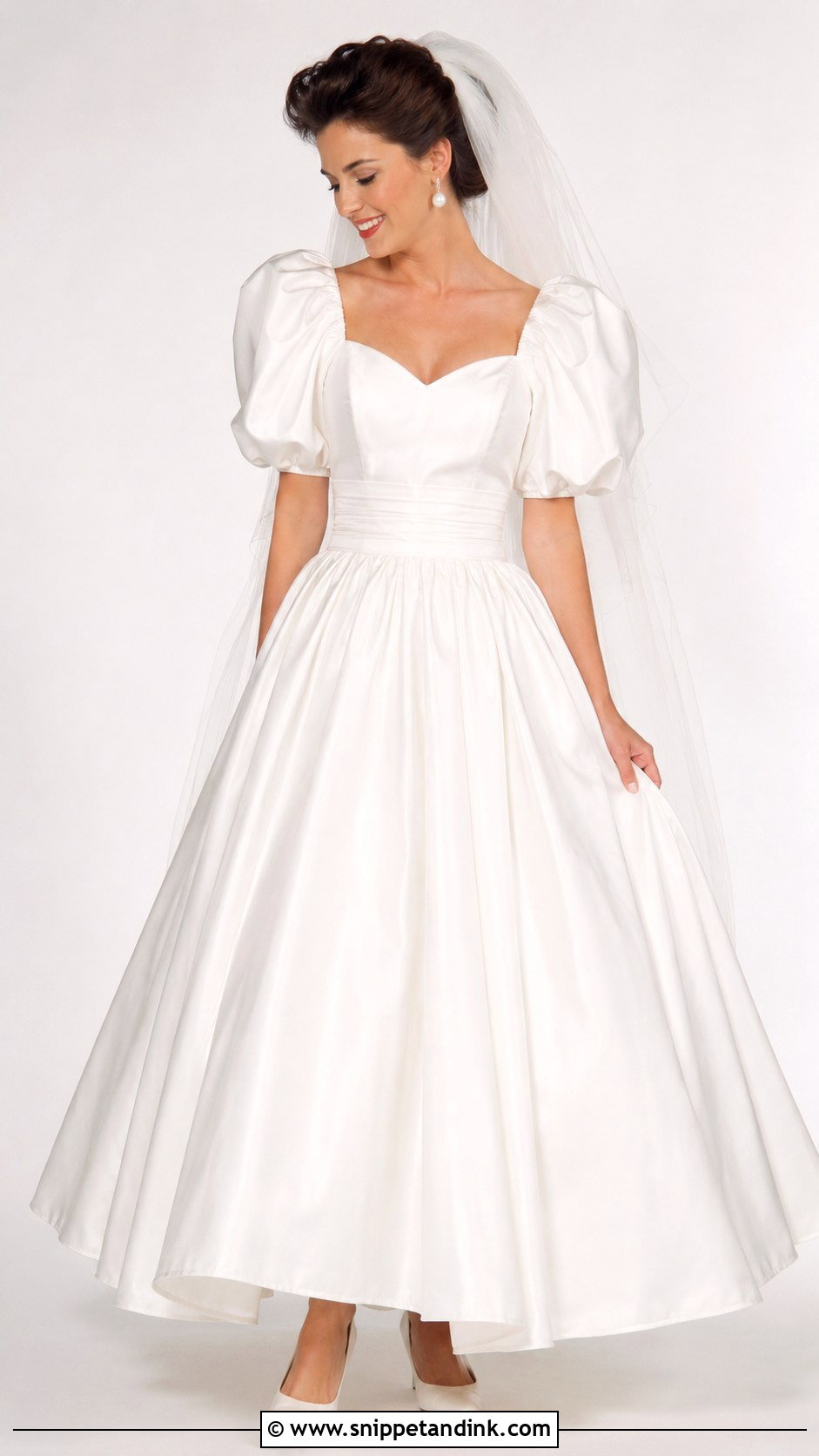
Nothing says 1980s faster than the sleeve, and the puff sleeve wedding dress is where most brides start. The original versions were stuffed with net to hold their round shape, and that is exactly what makes them look dated today. I’d look for a sleeve that holds its curve from the fabric alone, usually taffeta or a firm organza, and stops above the elbow. Then let the neckline stay bare and plain. A pearl headband and drop earrings finish it; add a fingertip veil if you want length without piling more volume near the shoulders.
2. 80s Lace Wedding Dress
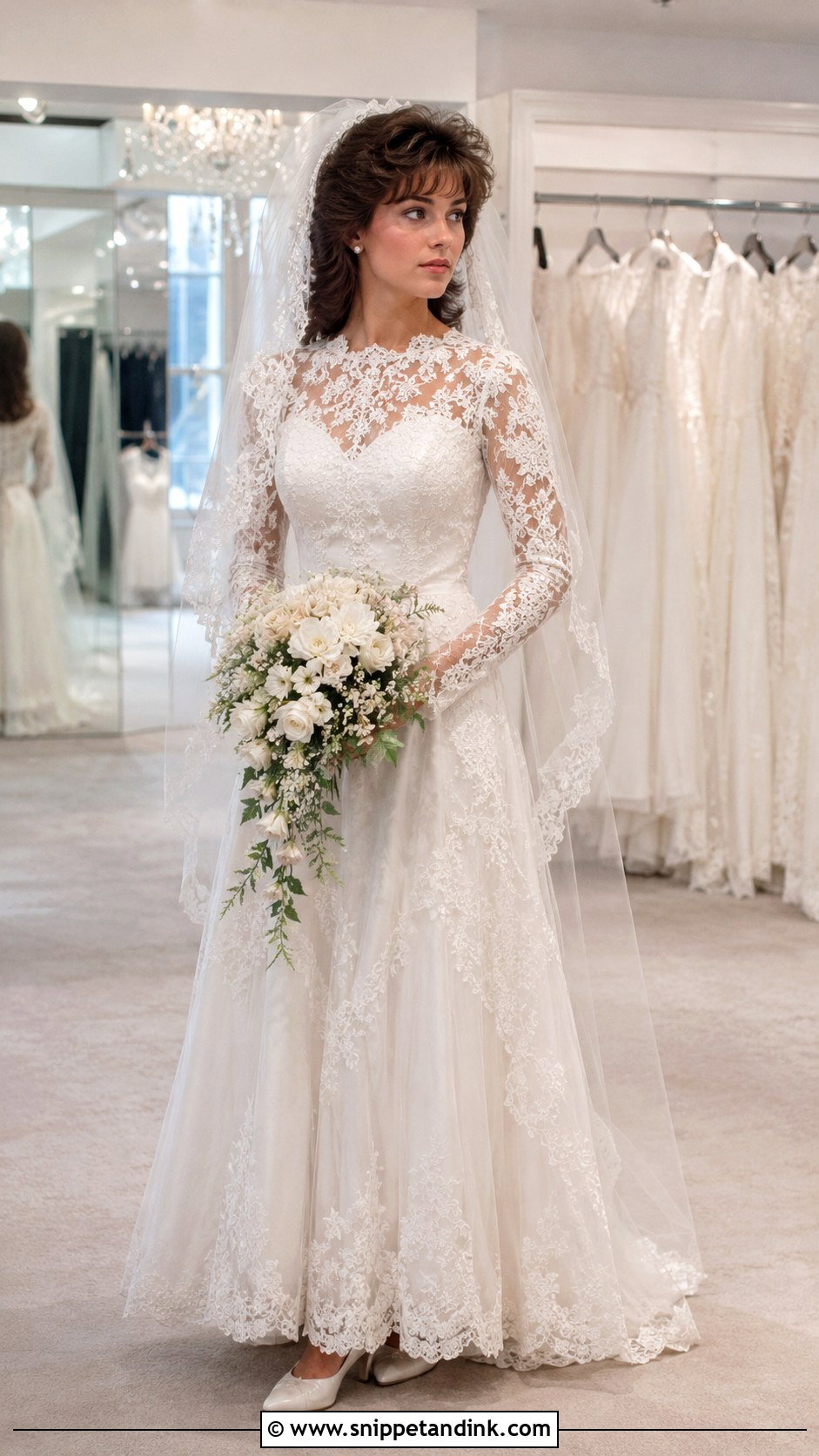
Eighties lace was dense and often scratchy at the neck. Today’s versions use softer floral lace over a fitted bodice with sheer long sleeves, and the comfort difference is huge. When a bride tries one on, I run a finger along the inside of the collar and cuffs, because scalloped lace edges can rub raw by evening. A high neck or illusion yoke keeps the vintage feel; a slimmer skirt pulls it forward a decade. Heavy lace needs a quiet bouquet and a plain or barely edged veil.
3. 80s Satin Ball Gown Wedding Dress
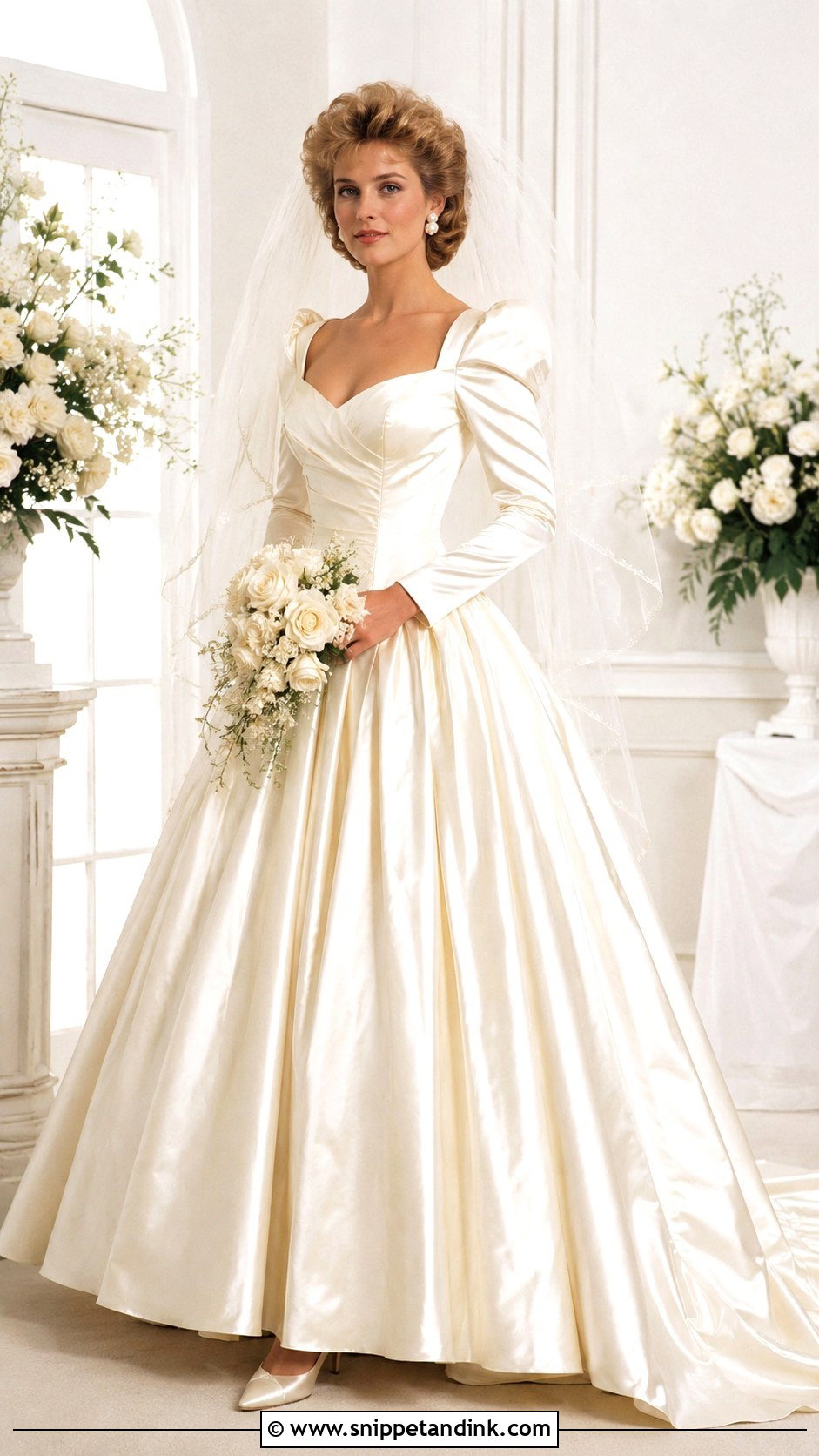
Satin shows everything, which is why the 80s ball gown lives or dies at the alterations stage. A puckered side seam or a bodice that wrinkles at the waist catches light and looks cheap under flash. I ask the seamstress to check the gown with the bride seated, since satin bodices often crease across the stomach when you sit. A portrait or sweetheart neckline softens the volume. Short gloves, pearls, a low bun and a classic veil carry the period without overdoing it.
4. 80s High Neck Wedding Dress
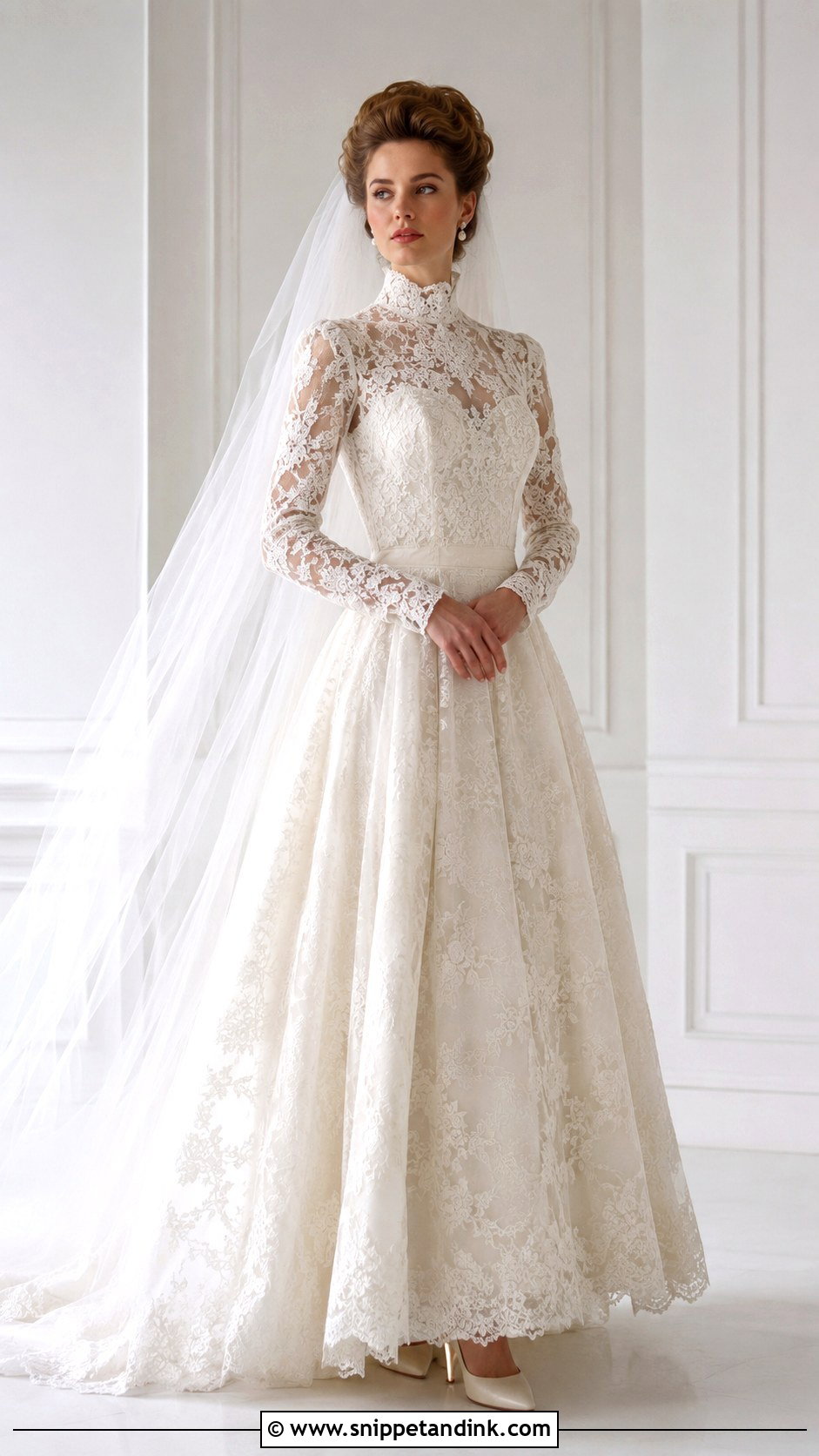
A high neck pulls every eye to the face, so the collar has to fit precisely. Too tight and you feel it every time you swallow during the vows; too loose and it buckles when you turn your head. Lace or satin both work, with long sleeves and a defined waist underneath. I usually suggest a sleek updo so the neckline stays visible, and no necklace at all. Pearl earrings and a long veil are plenty.
5. 80s Taffeta Wedding Dress
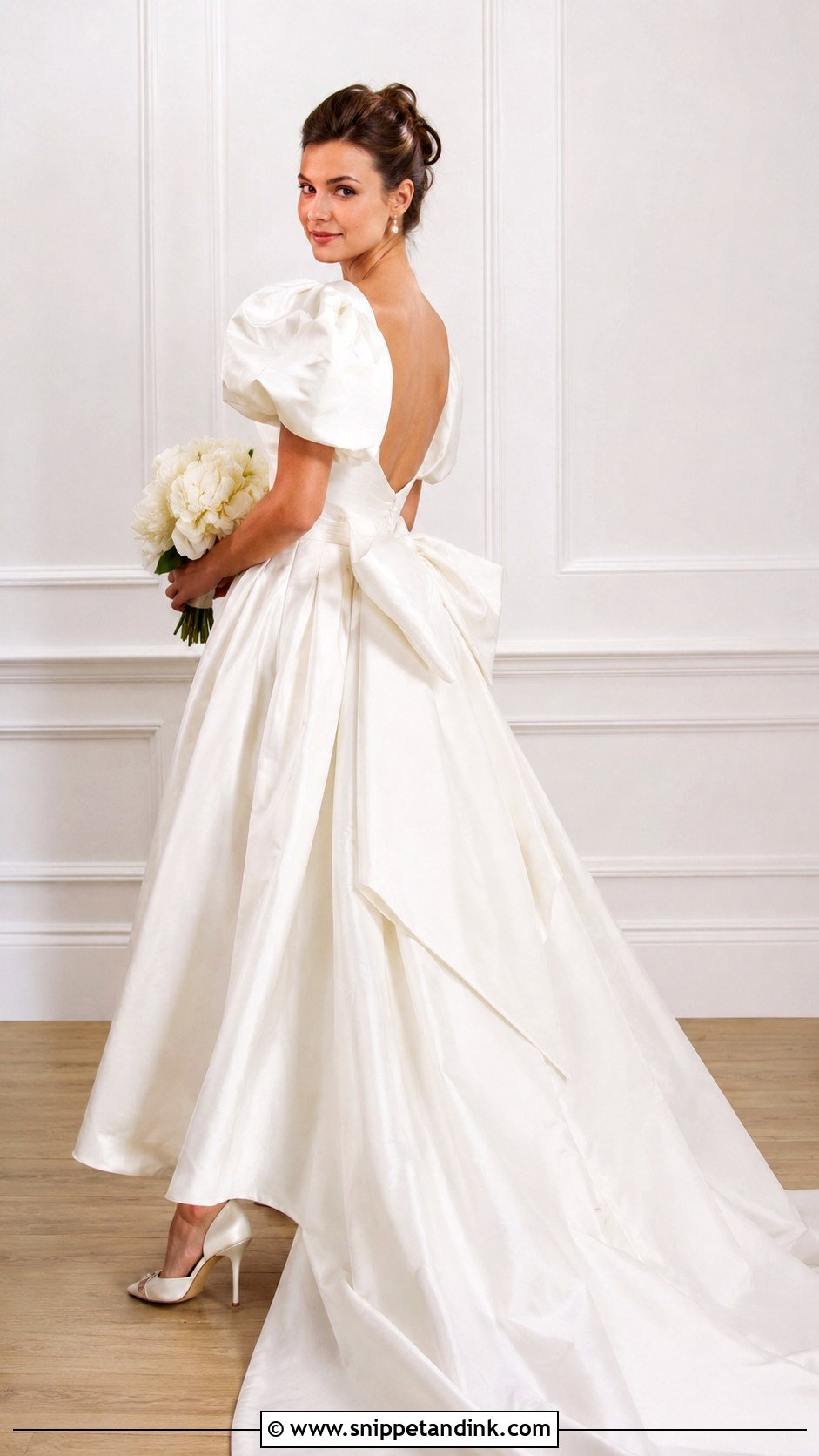
Taffeta was everywhere in the decade because it holds a shape that softer fabrics can’t. It is crisp, it rustles when you walk, and it creases sharply. That last point surprises brides. A taffeta skirt that sits in a car for forty minutes will show it, so I tell them to lift the skirt and sit on the lining, or to have it steamed at the venue. Pick one bold feature only: a back bow, a sculpted bodice or a big sleeve. Satin heels and pearl earrings keep the rest simple.
6. 80s Off Shoulder Wedding Dress
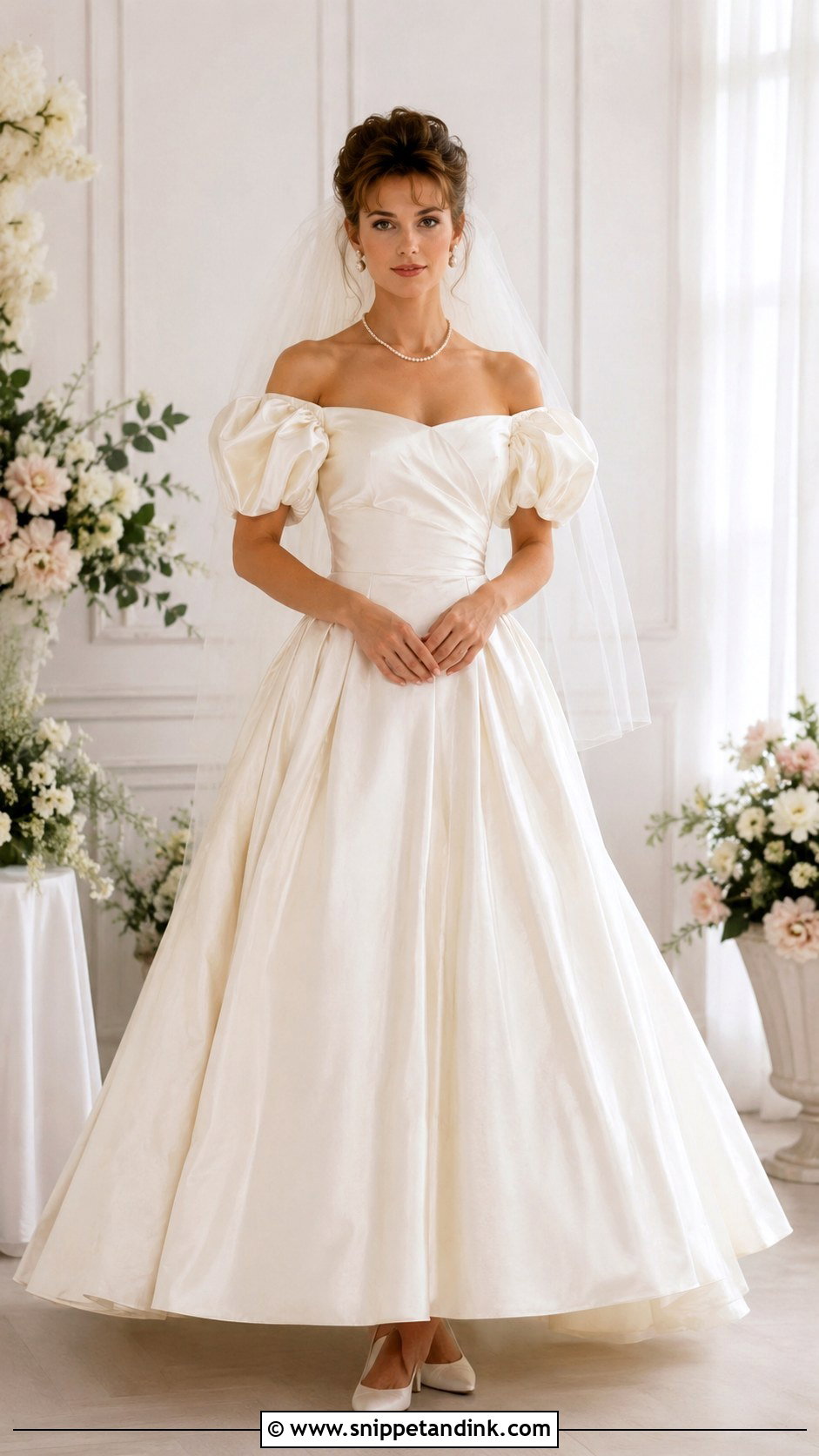
Off-shoulder bands are the softer side of 80s bridal, framing the collarbone with a wide neckline and draped or puffed sleeves. Before ordering, raise your arms in the sample. Hugging someone is almost impossible in a tight band, and a loose one creeps up. A short pearl necklace and soft waves suit the open neckline. Set the veil comb lower at the back of the head, so the fabric doesn’t crowd the shoulders.
7. 80s Princess Wedding Dress
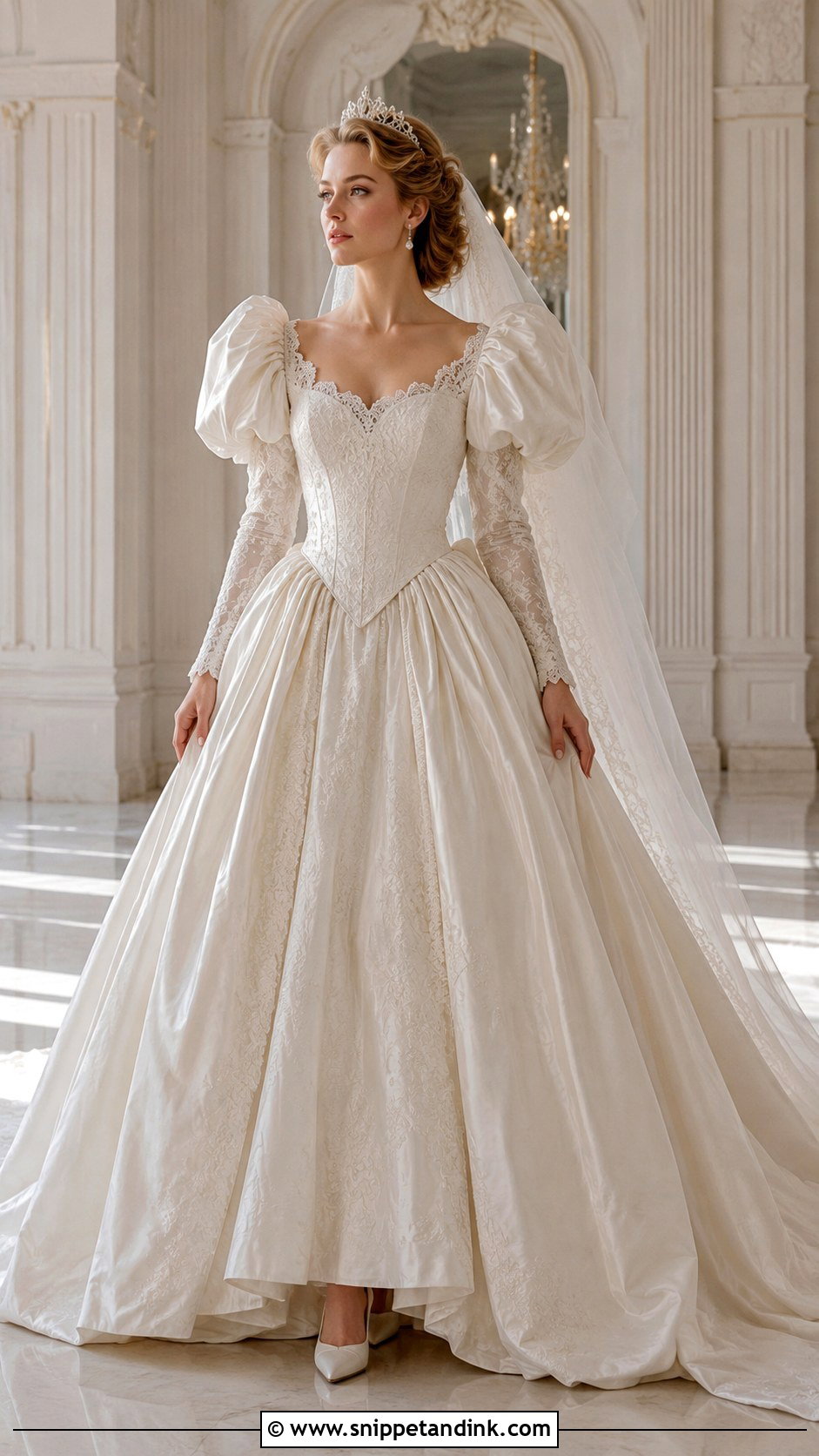
Princess gowns were the fantasy of the decade: big skirt, puff sleeves, a long train, sometimes a basque waist and lace appliqués on top of it all. Wearing one today is less about scaling the skirt back and more about scaling everything else back. A slim tiara, pearl studs and plain ivory pumps let the gown do the talking. These dresses are heavy, often several kilos of skirt and petticoat, so I’d ask for a waist stay inside the bodice to take the weight off your shoulders. It belongs in a ballroom or a church with a long aisle.
8. 80s Tea Length Wedding Dress
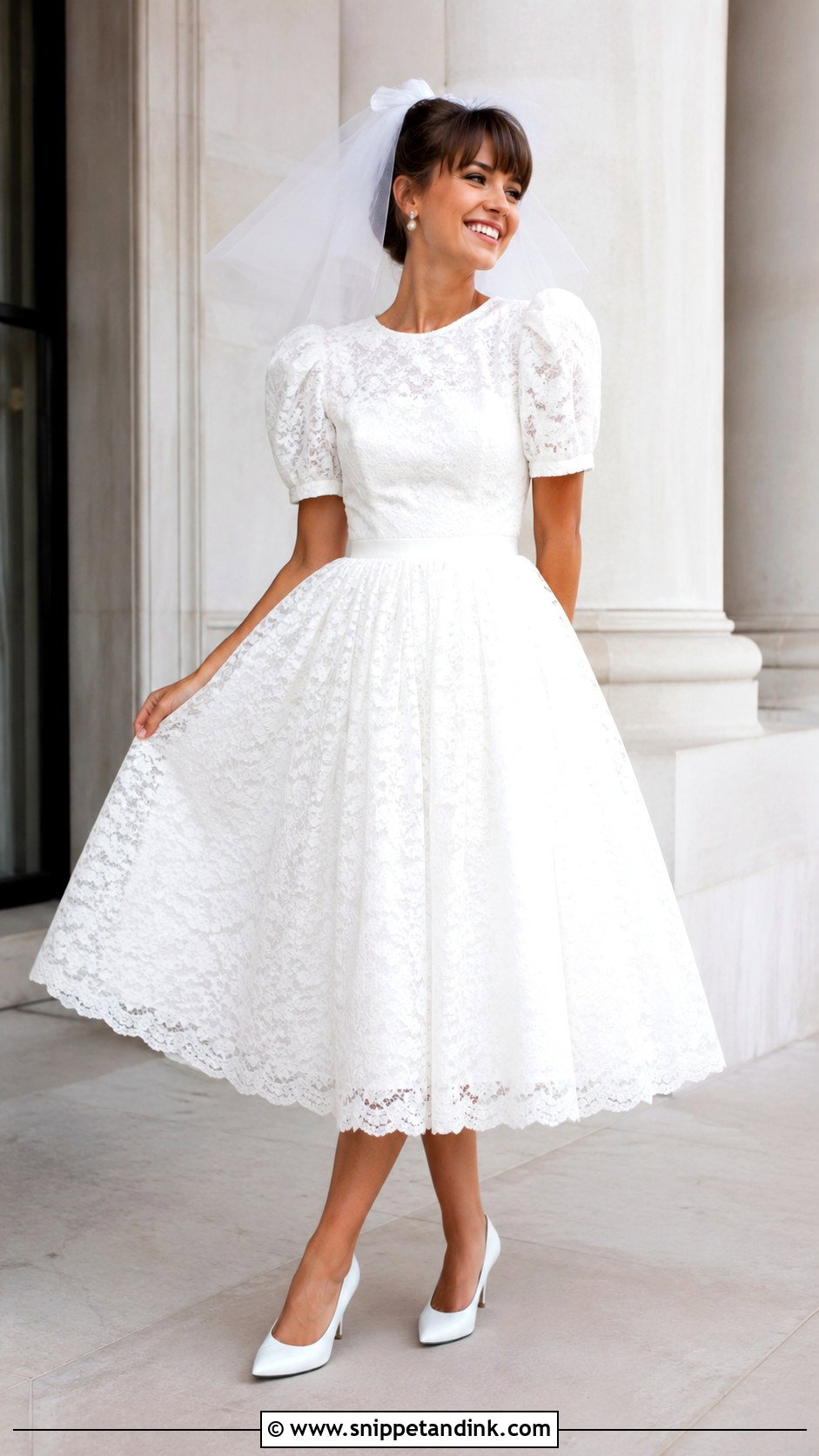
A tea length wedding dress lets you wear the decade without hauling a train around. Puff sleeves, a fitted bodice and a hem between knee and ankle give the full retro shape in a lighter package. The hem is the tricky part. Tea length shows your shoes and ankles all day, so I fit the hem with the actual shoes on, since a two-inch heel change moves the line noticeably. Ivory pumps, pearl earrings and a short veil finish it, and it handles a courthouse ceremony or a dance floor easily.
9. 80s Beaded Wedding Dress
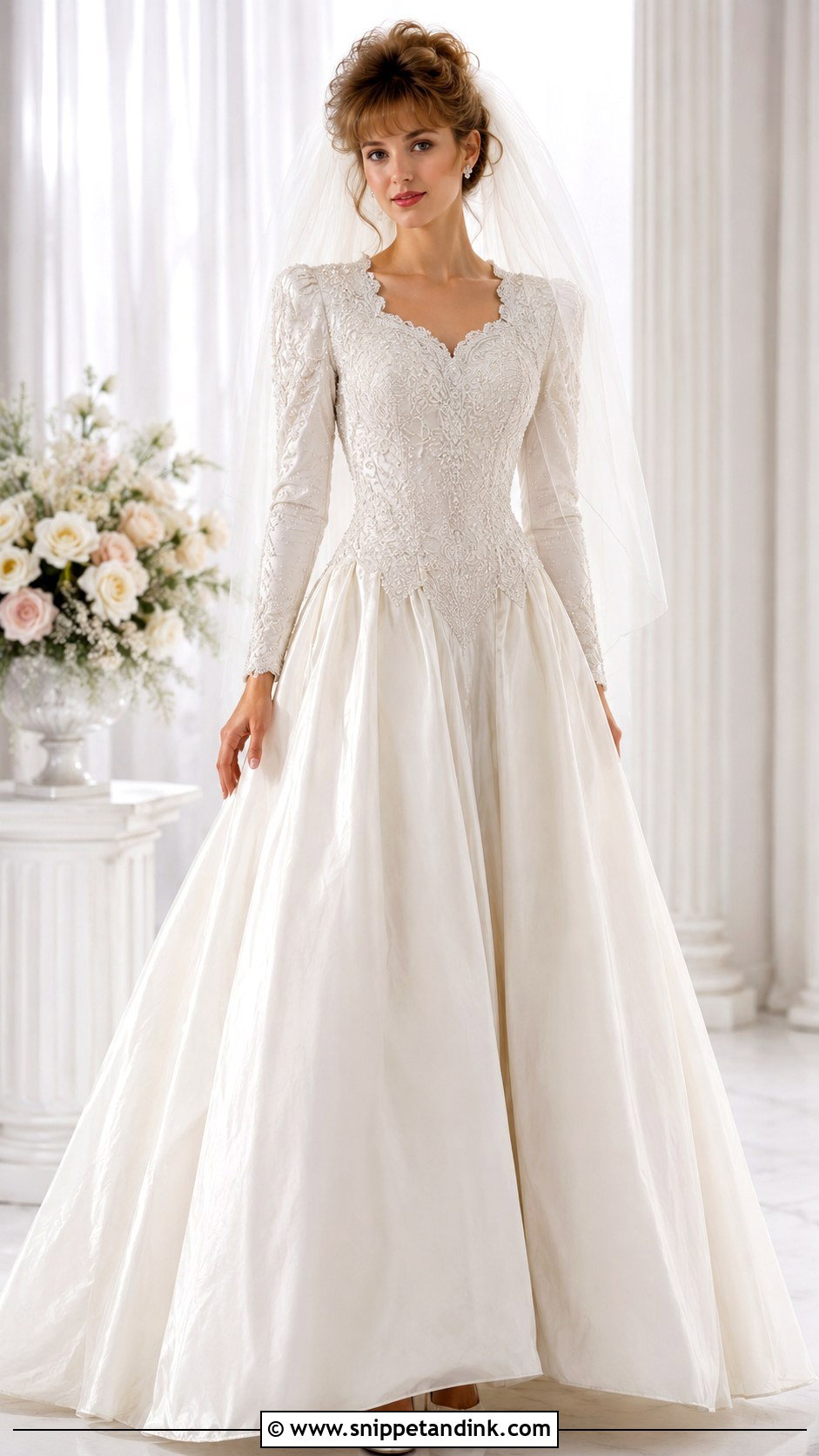
Pearl beading, sequins and embroidered appliqués covered many 80s gowns from collar to hem. I’d keep it to the bodice and sleeves, or scatter it lightly over the skirt, since heavy beadwork adds real weight and pulls a thin fabric out of shape. Check the inside, too. Beading backed with rough netting rubs the underarms. With that much shine already, satin heels, minimal jewelry and an unembellished veil keep it from tipping into flashy.
10. 80s Basque Waist Wedding Dress
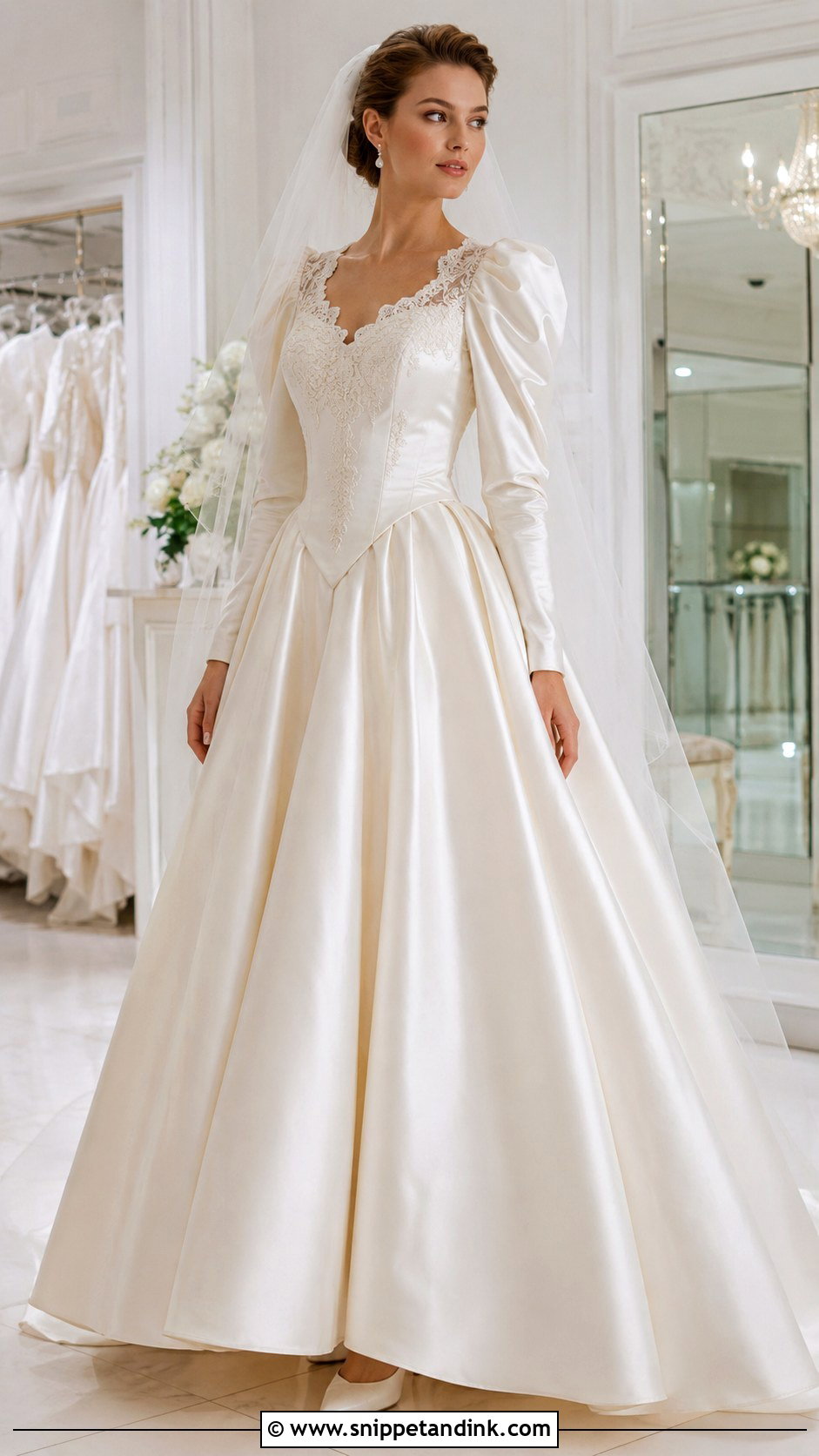
That pointed waistline dipping into a V below the natural waist is the basque, and it gives the torso a long, sculpted look over a full skirt. The point has to land in the right place on your body. I mark it with the bride standing straight and relaxed, never posed, because a point set too low cuts the legs short. Satin, lace or taffeta all hold the line. Puff sleeves or a portrait neckline add more period feel, with a veil long enough to fall past the waist and pearls at the ears.
11. 80s Cathedral Train Wedding Dress
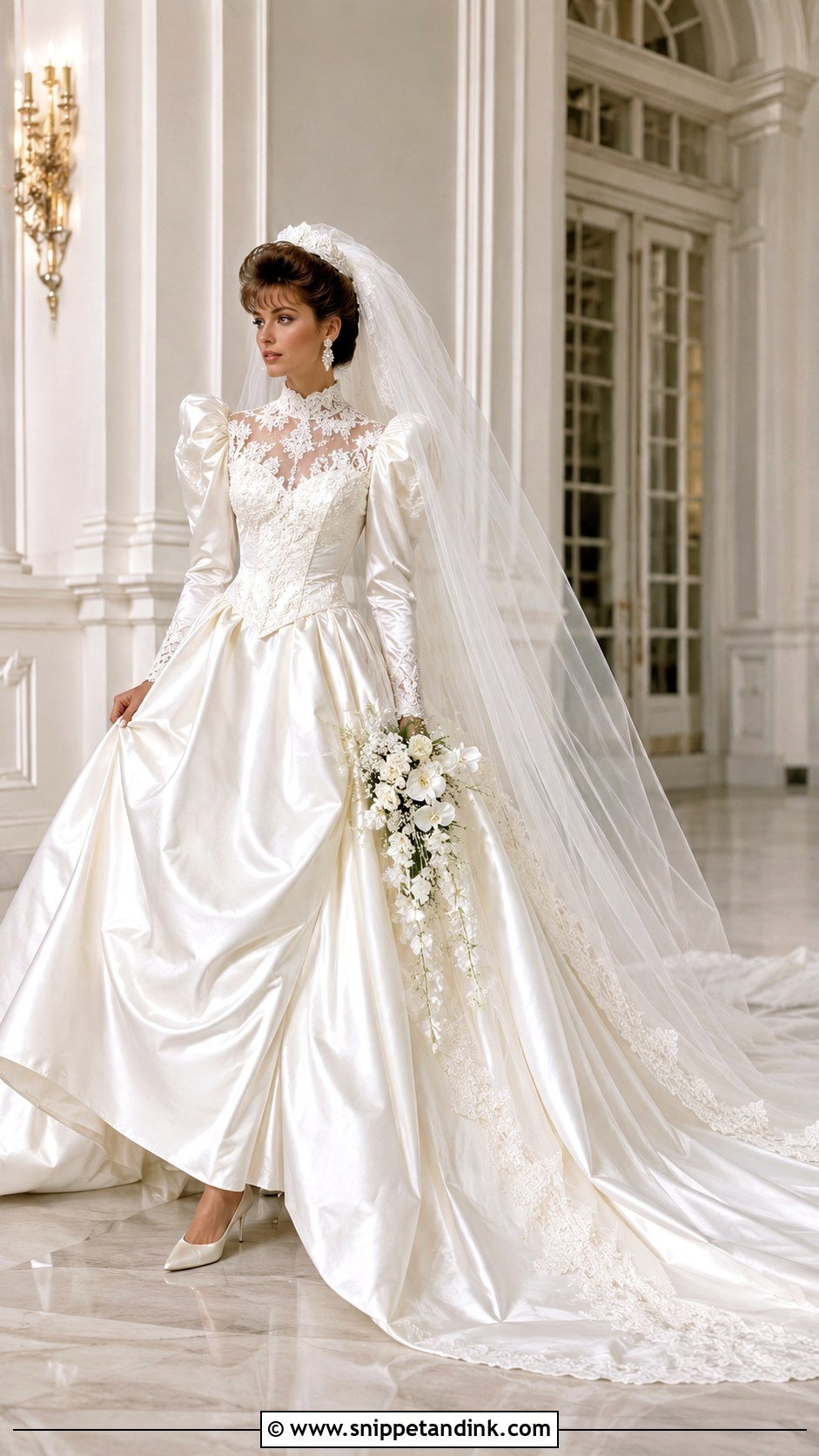
Cathedral trains were the signature of the big 80s church wedding. They photograph wonderfully on the aisle and then become a problem the moment you leave it. A long train needs a bustle, and the type matters: an over-bustle lifts it into soft swags, an under or French bustle folds it beneath. I ask brides to practise the bustle with their maid of honor at the last fitting, not on the day. Keep the rest refined: an updo, pearl earrings and a veil that matches the train’s scale.
12. 80s Bow Wedding Dress
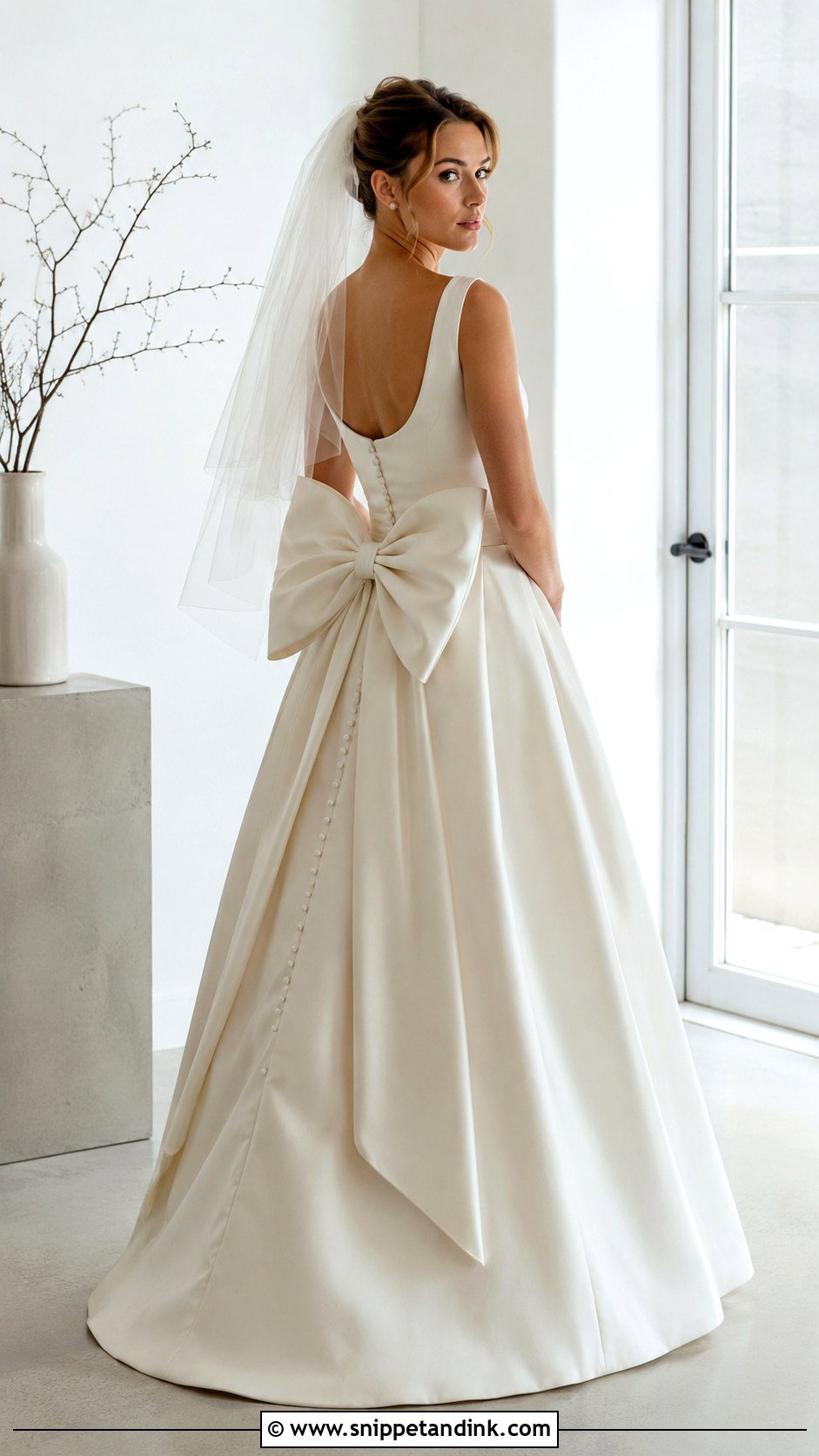
One bow, placed well, is very 80s. Four bows is a costume. I’d pick a single spot, usually the back waist, where it sits above a train or a long veil and shows from the guest seats. Satin and taffeta make sculptural bows that stand on their own; organza bows go limp unless they’re interfaced, so ask how they’re built. A plain veil and simple pumps let the bow be the detail.
13. 80s Ruffle Wedding Dress
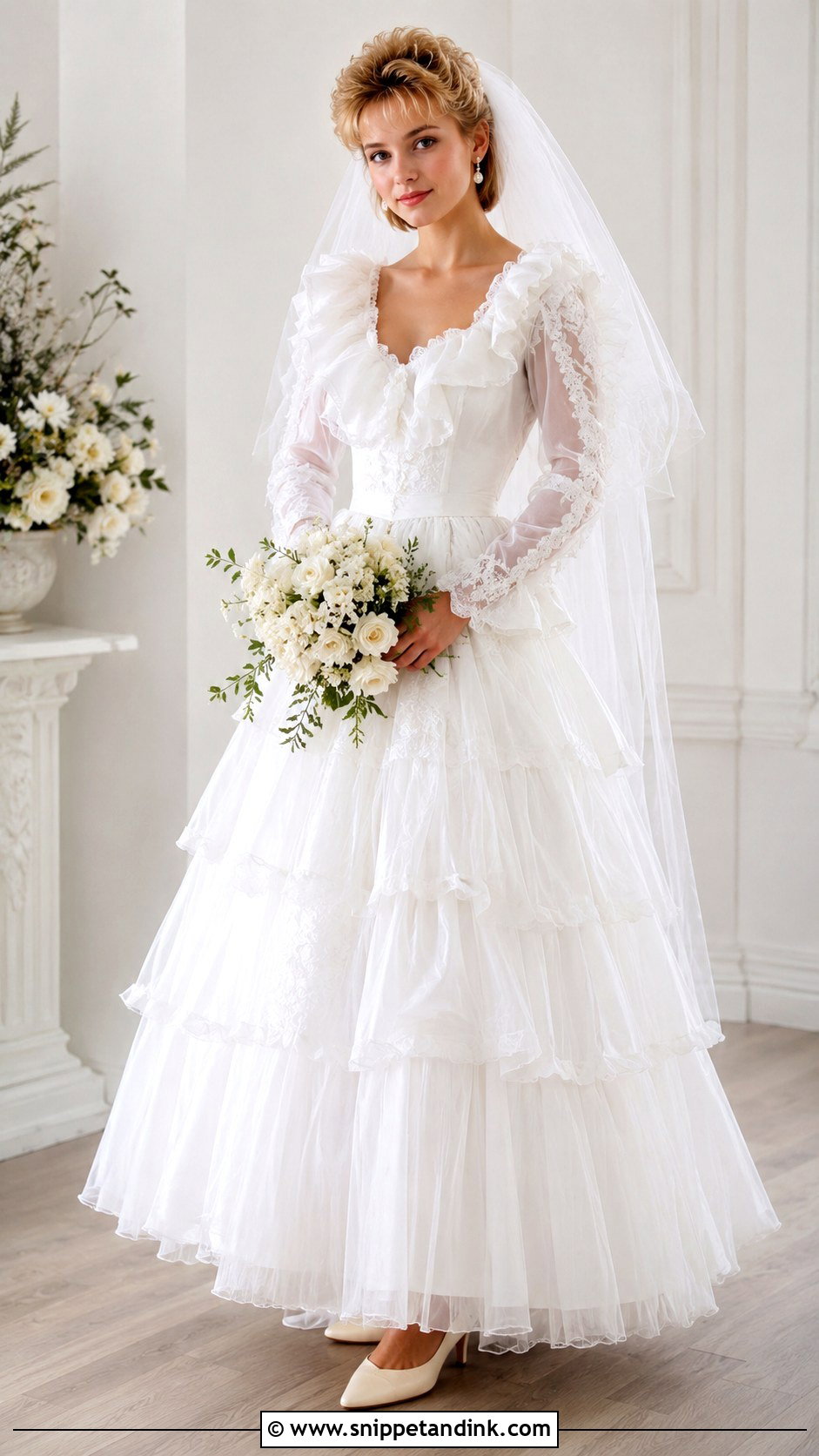
Ruffles add movement, and a ruffled neckline, tiered skirt or soft sleeve trim can each carry the decade alone. Where they sit decides whether they flatter. A ruffle placed at your widest point adds width right there, so I’d keep them at the neckline, sleeve edge or hem. A fitted bodice and defined waist keep the body readable under all that texture. Tiered skirts need a compact bouquet and polished hair so the top half doesn’t get lost.
14. 80s Sheer Sleeve Wedding Dress
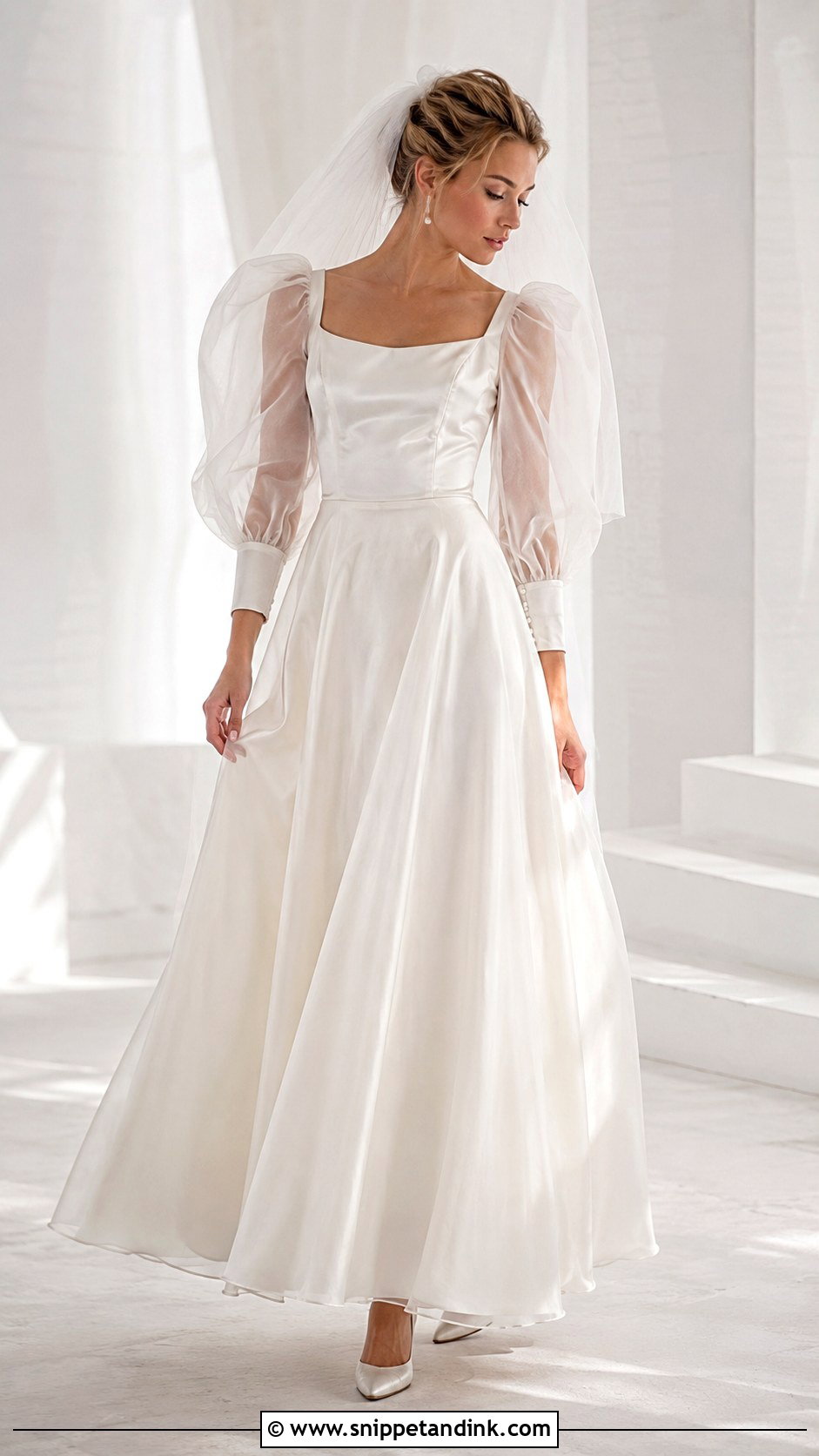
Sheer sleeves keep the 80s shoulder shape but drop most of the bulk. Organza, chiffon or lace with a little lift at the shoulder and a fitted cuff at the wrist give that silhouette in a much lighter way. They are my usual suggestion for a bride who loves the puff sleeve but feels swamped in a solid one. Check the cuff fastening. Tiny loop buttons look lovely and take ages to do up, so allow time when dressing. Pearl drops, ivory heels and a simple veil.
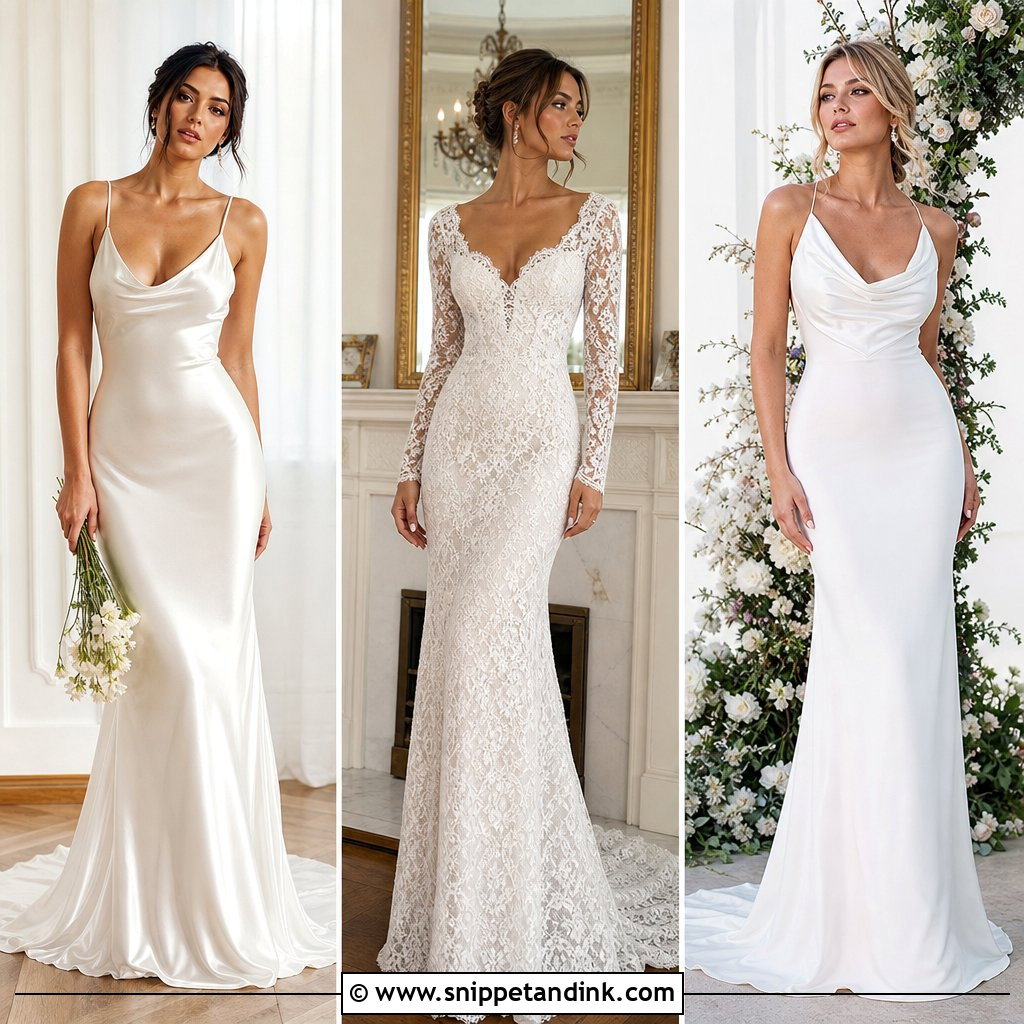
15. 80s Long Sleeve Wedding Dress
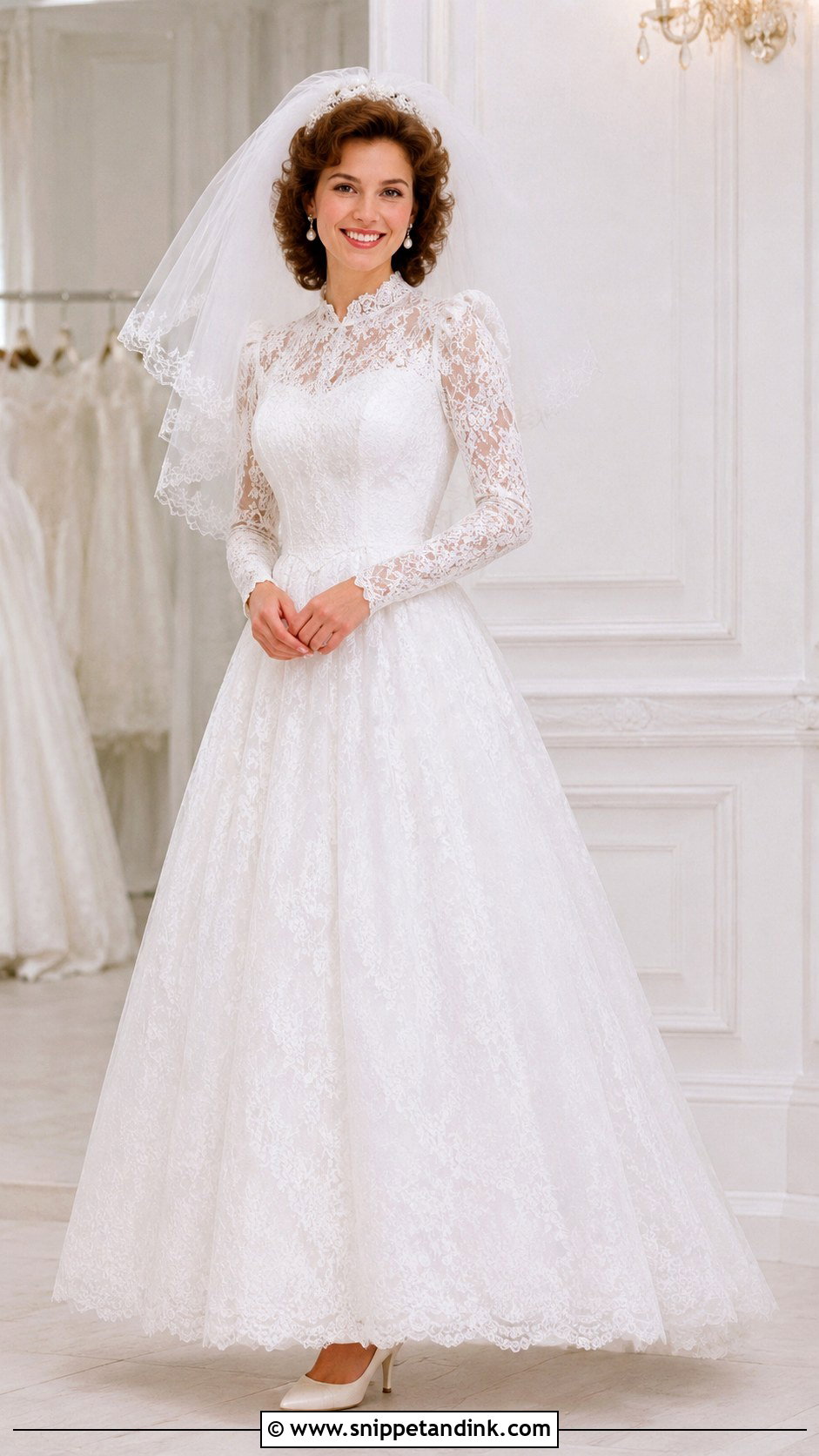
Long sleeves were standard on 80s gowns, in lace for romance or satin for structure. The fit at the armhole decides whether you can actually move. I ask brides to reach forward as if hugging someone and raise one arm as if waving, because a tight armhole drags the whole bodice up. With a high neckline, skip the necklace; with a scoop, a short strand of pearls sits nicely. They suit cooler months and formal churches best.
16. 80s Short Wedding Dress
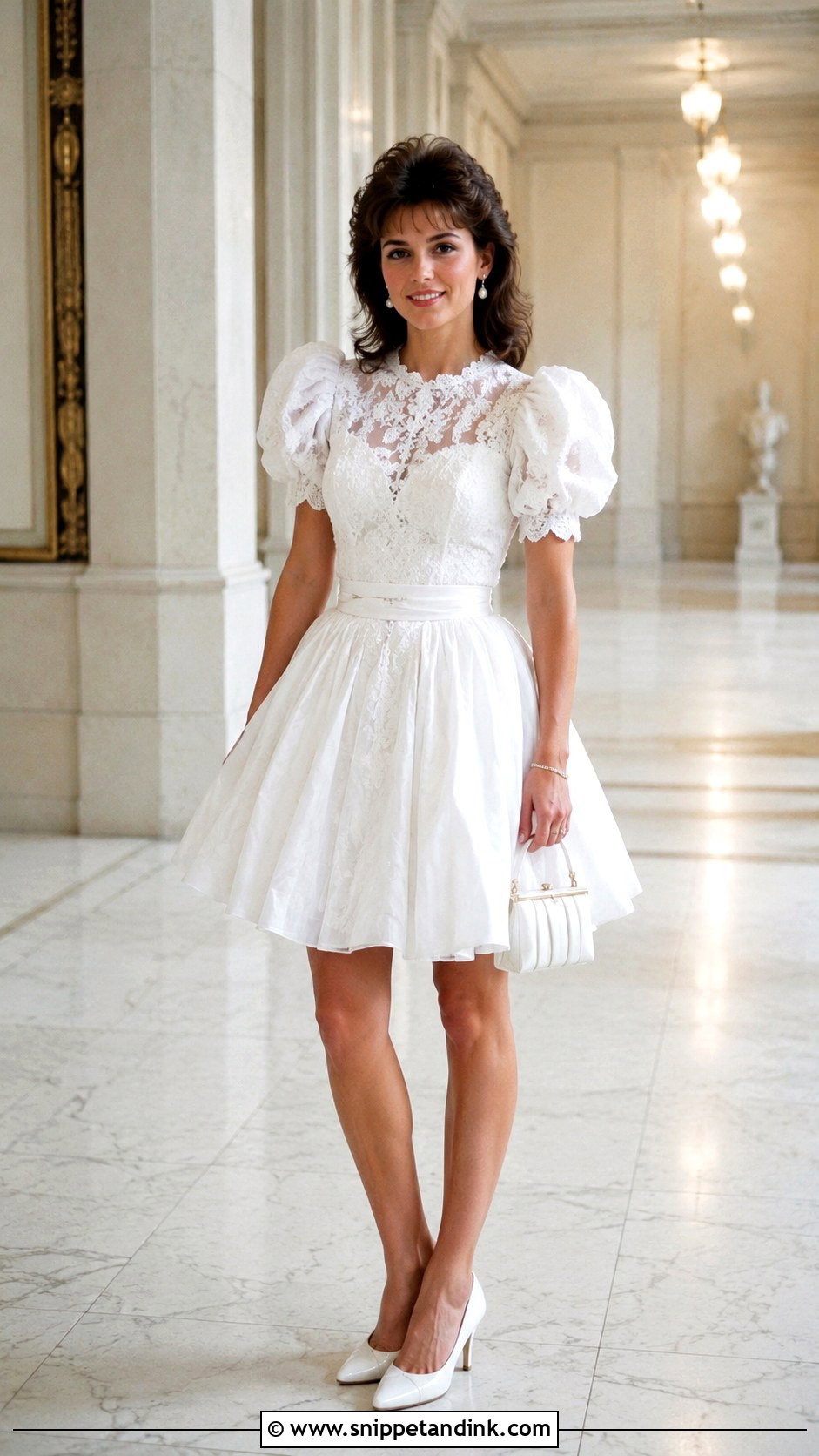
Short 80s dresses had puff sleeves, a nipped waist and a flared skirt, and they still make a fun reception change or courthouse outfit. Knee length is easier to wear than a true mini if you’ll be sitting on a stage or dancing. A birdcage veil or bow headband gives retro charm, with white pumps, pearl earrings and a small structured bag. I’d still pick a bridal fabric, satin or lace, so it doesn’t look like a party dress. It suits a bride who wants to move freely.
17. 80s Mermaid Wedding Dress
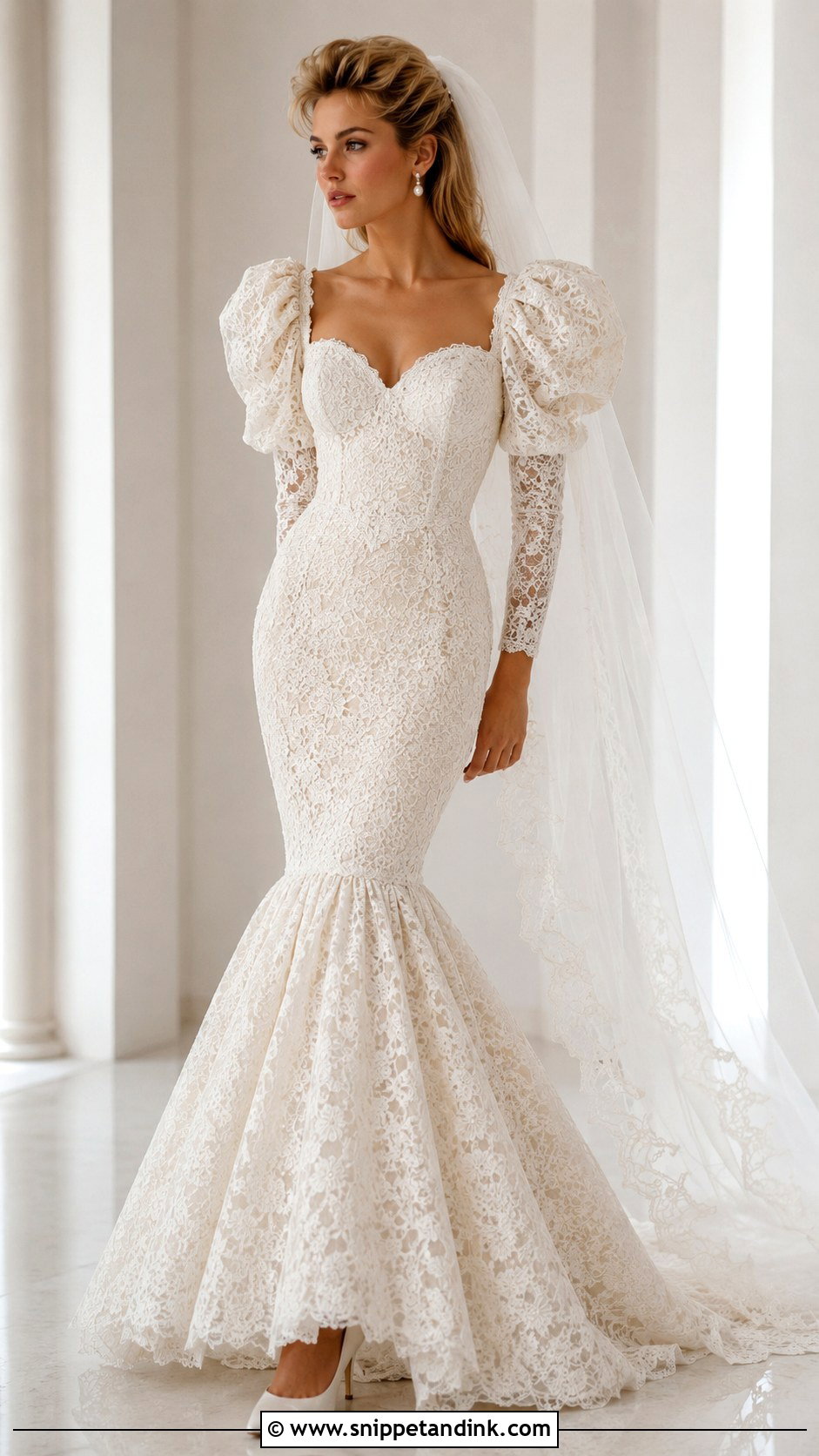
The mermaid wasn’t the classic 80s shape, but adding puff sleeves, beading or a sweetheart neckline gives it that period flavor. The flare point needs care. It should sit right for your leg length, or you’ll shuffle down the aisle, so I always have the bride walk briskly and climb a step in the sample. If the bodice is heavily detailed, keep the skirt smooth. Sleek heels and a long veil balance the shape.
18. 80s A Line Wedding Dress
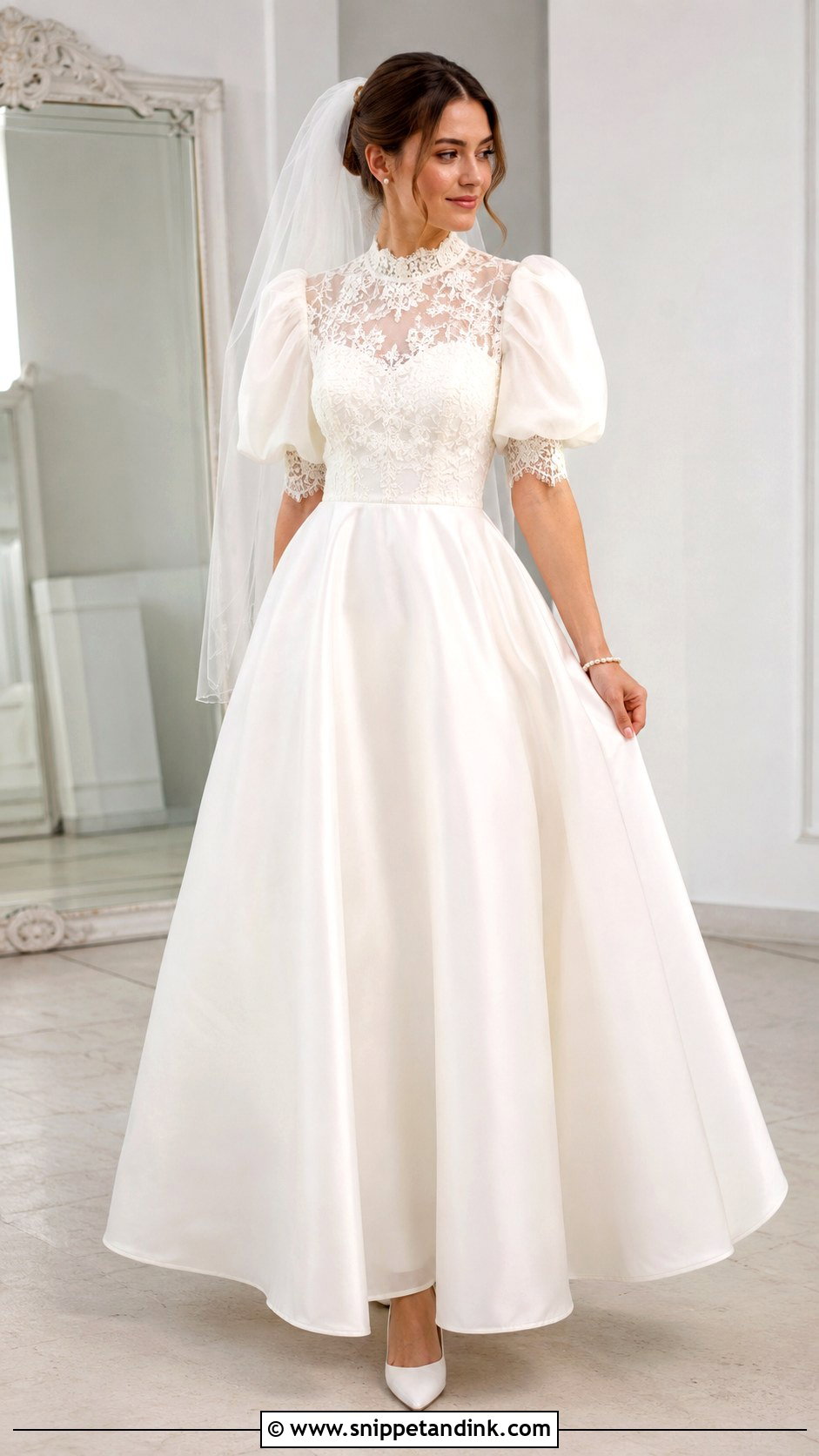
An A-line is the most forgiving shape to carry 80s details. It fits through the bodice and opens gently toward the hem, so it moves easily and alters without much fuss. The retro part comes from what you add: puff sleeves, lace trim, a bow or a satin finish. Because the skirt is calmer than a ball gown, I let the sleeve be a little bigger here than I would on a full skirt. Ivory heels, pearl studs and a soft veil.
19. 80s Organza Wedding Dress
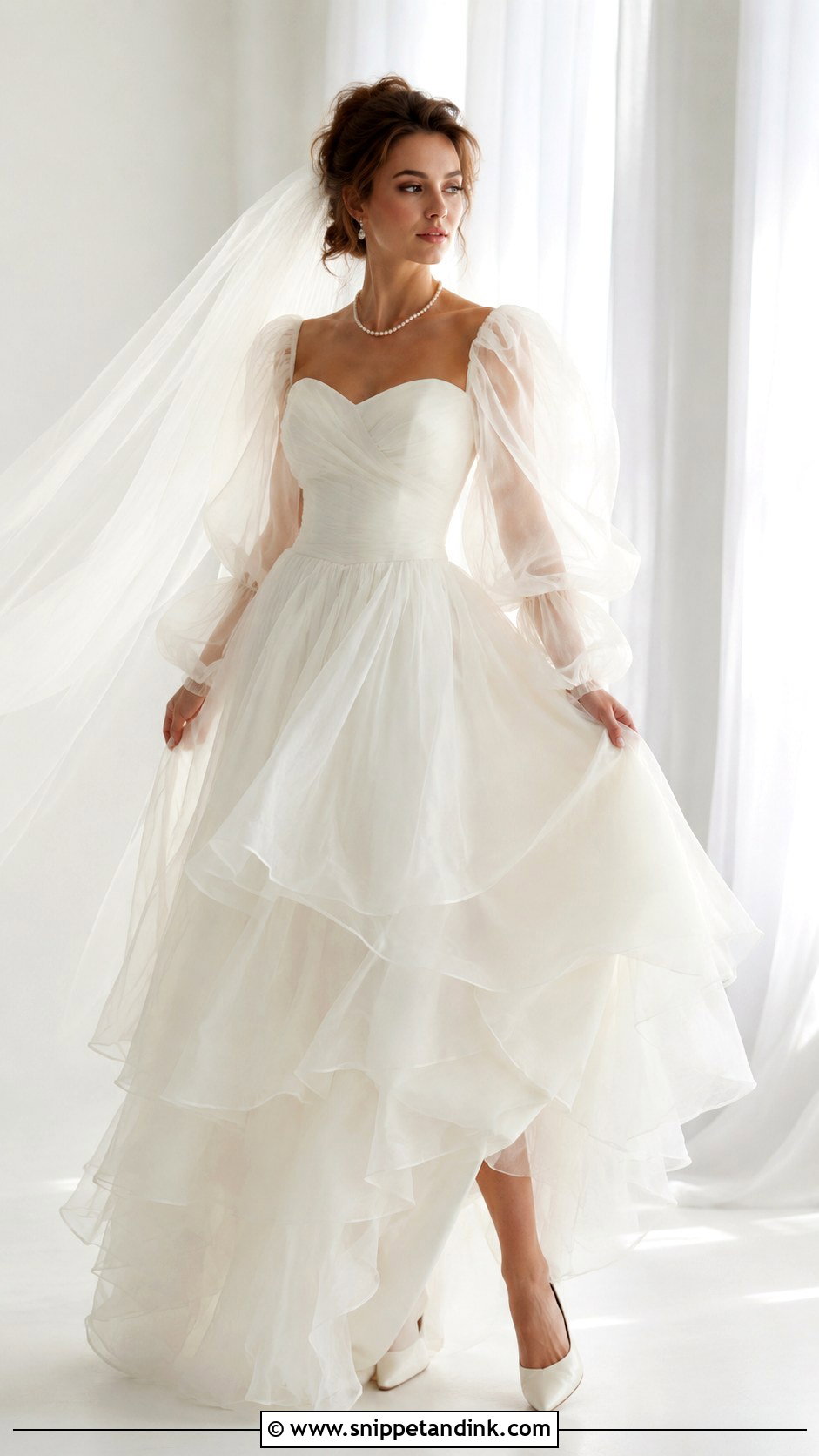
Organza gives an 80s silhouette a floating quality that heavy satin and taffeta can’t. It holds a puff sleeve or a layered skirt while staying light. It is also the easiest fabric to snag. Rings, bouquet wire and beaded bracelets catch the weave, so I tell brides to take rings off while dressing and keep the bouquet stems wrapped. Delicate pearls, white heels and a veil that blends with the layers.

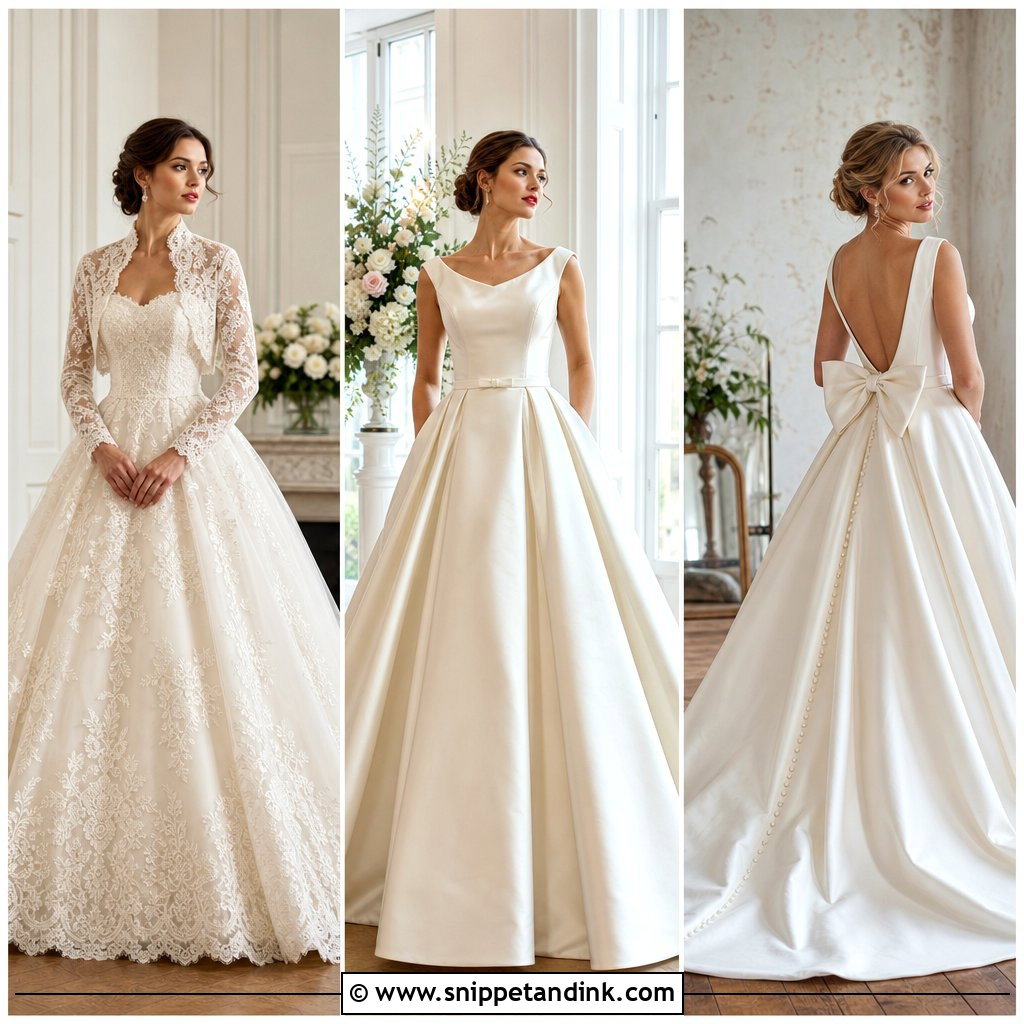

20. 80s Pearl Wedding Dress
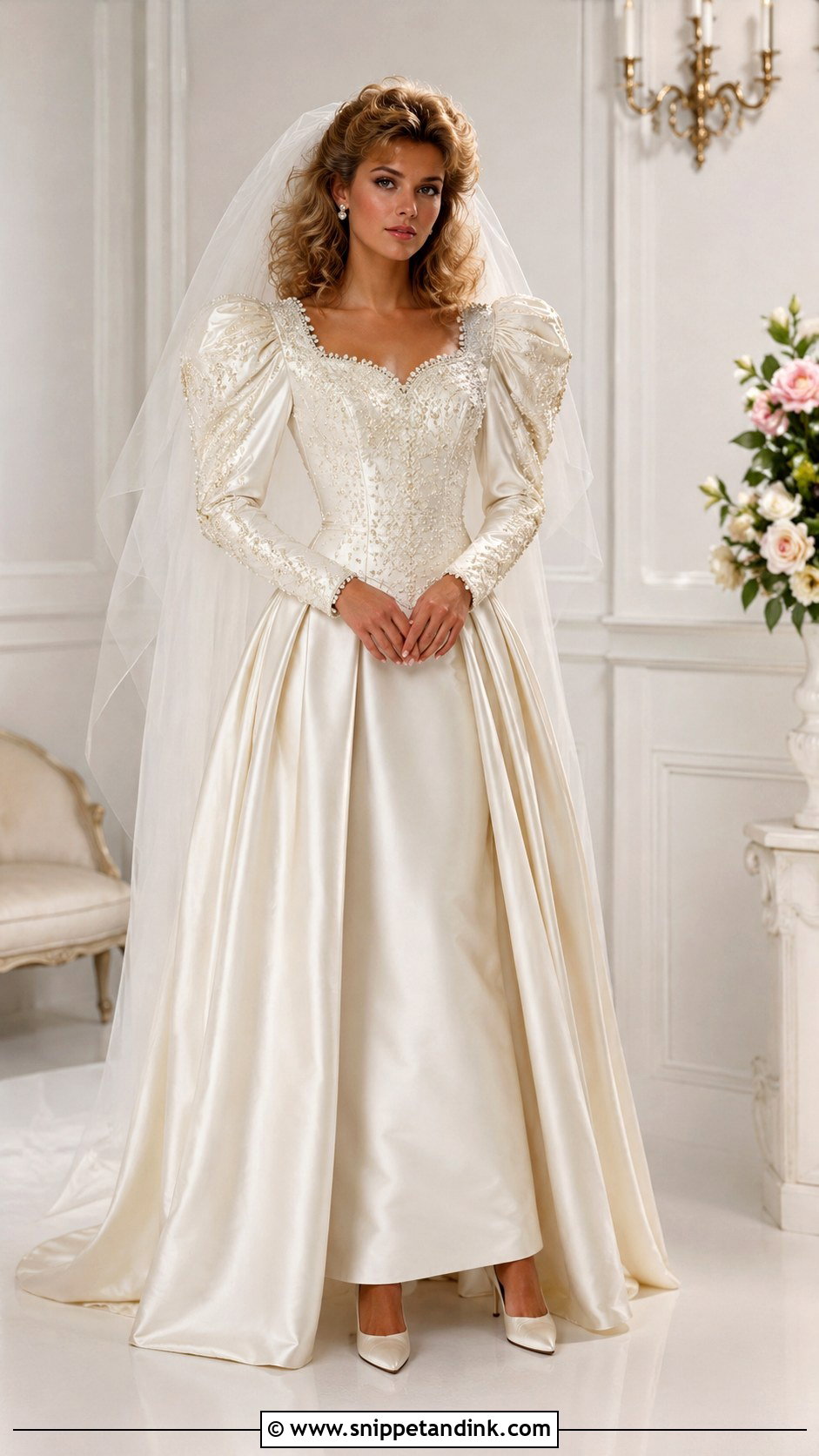
Pearl beading gives a gown a soft glow instead of glitter, which suits the polished side of 80s bridal. It can run over the bodice, sleeves, neckline or train. I prefer pearls placed with intent, framing the face, the waist or the sleeve edge, over pearls scattered everywhere. Sewn pearls also come loose, so ask the shop for spares and keep a few in your emergency kit. Pearl studs, ivory heels and a simple veil, nothing that competes.
21. 80s Illusion Neck Wedding Dress
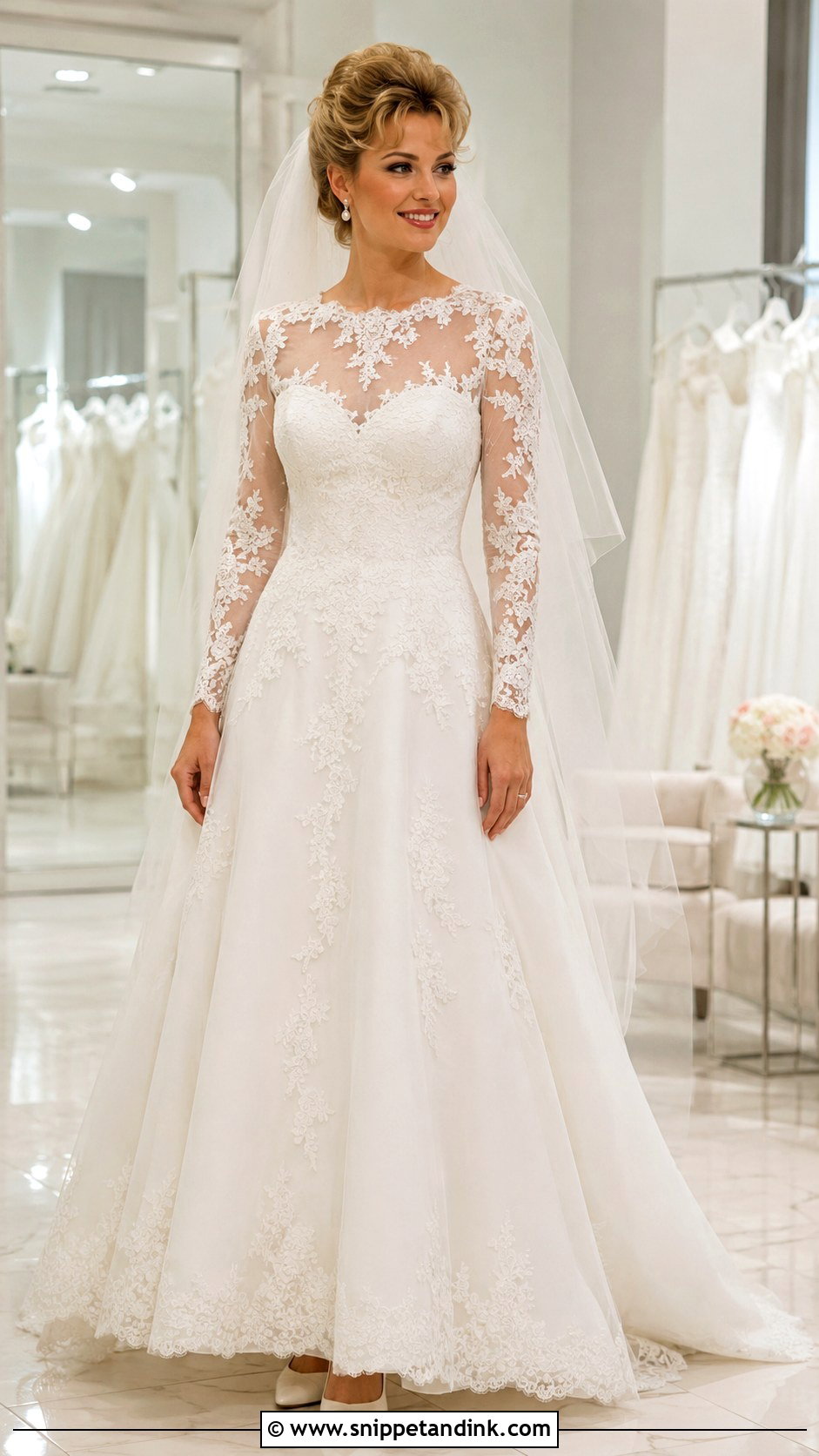
Illusion necklines use sheer mesh or tulle to give coverage that looks almost bare, often with lace appliqués or beaded trim running up onto the skin. The mesh should match your skin tone closely, or it shows as a grey band in photos. I check it in daylight by a window, not only under fitting-room bulbs. Long sleeves and a fitted bodice give the 80s line. Small earrings and a low bun; a necklace just fights the neckline.
22. 80s Scoop Neck Wedding Dress
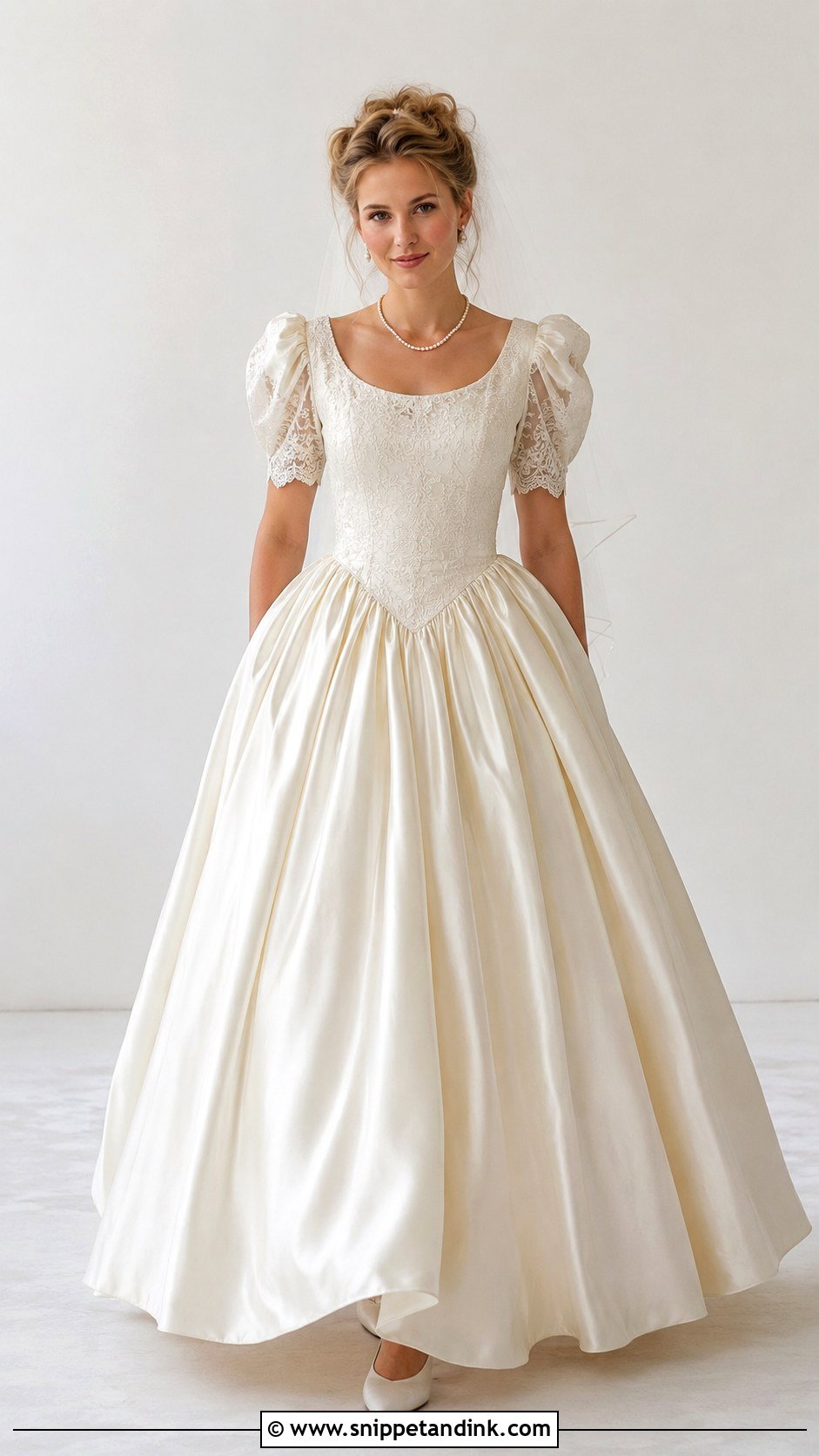
A scoop neck is the easiest neckline here to accessorize. Its rounded curve softens the face and leaves room for a short pearl necklace to sit just above the edge. It pairs well with puff sleeves, lace bodices or a satin skirt. I balance the veil against the gown: a plain veil over heavy lace, a lace-edged veil over clean satin. Pearl studs and white pumps finish it.
23. 80s Portrait Neckline Wedding Dress
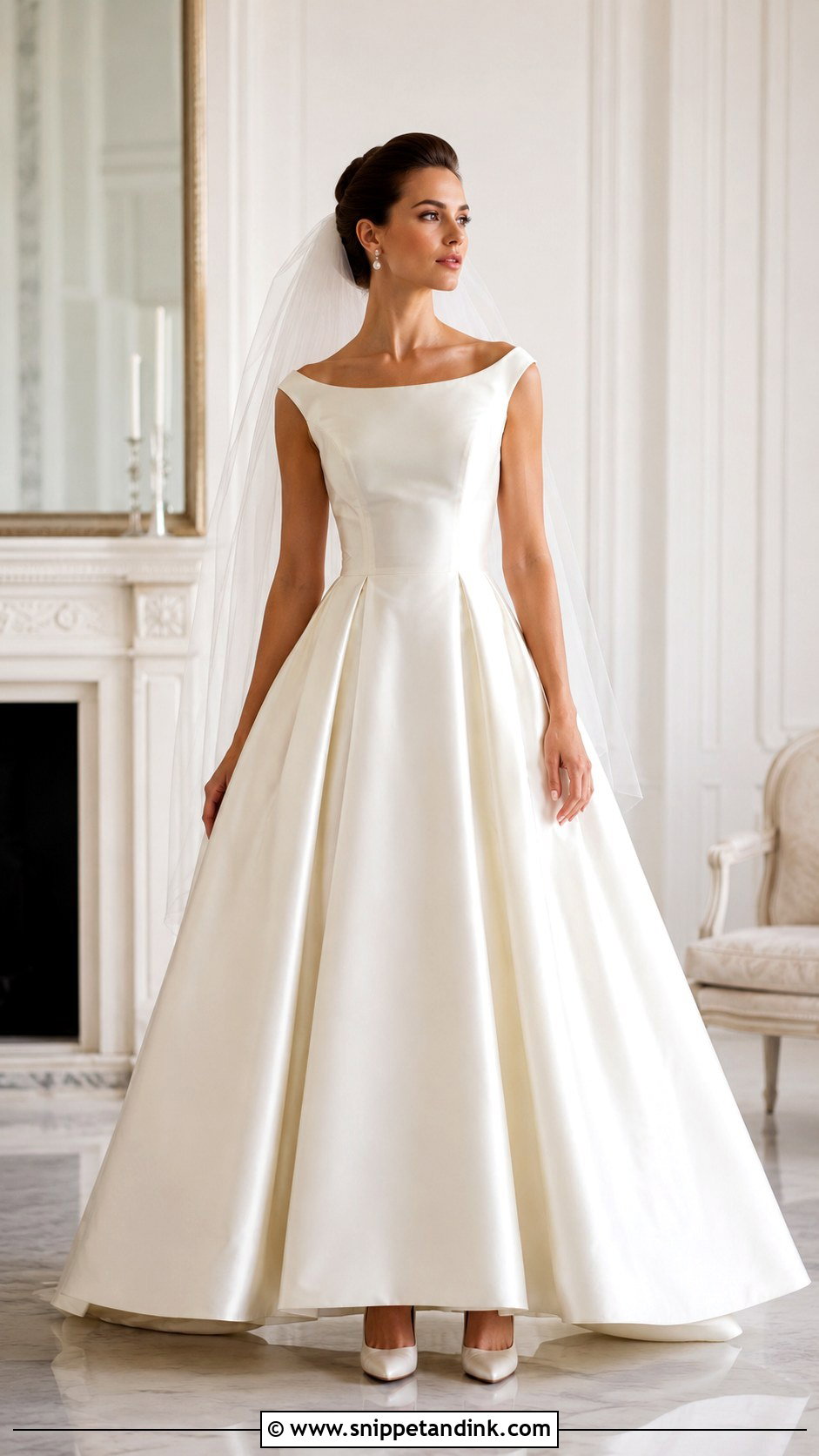
The portrait neckline is a wide band that sweeps across the shoulders, and it was a formal favorite in the decade. Satin or taffeta with a structured bodice and full skirt gives the strongest period effect. Since the neckline already frames you, I’d set the veil comb behind the crown so the fabric falls behind the shoulders and the shape stays visible. A smooth updo, pearl earrings and ivory heels complete it.
24. 80s Drop Waist Wedding Dress
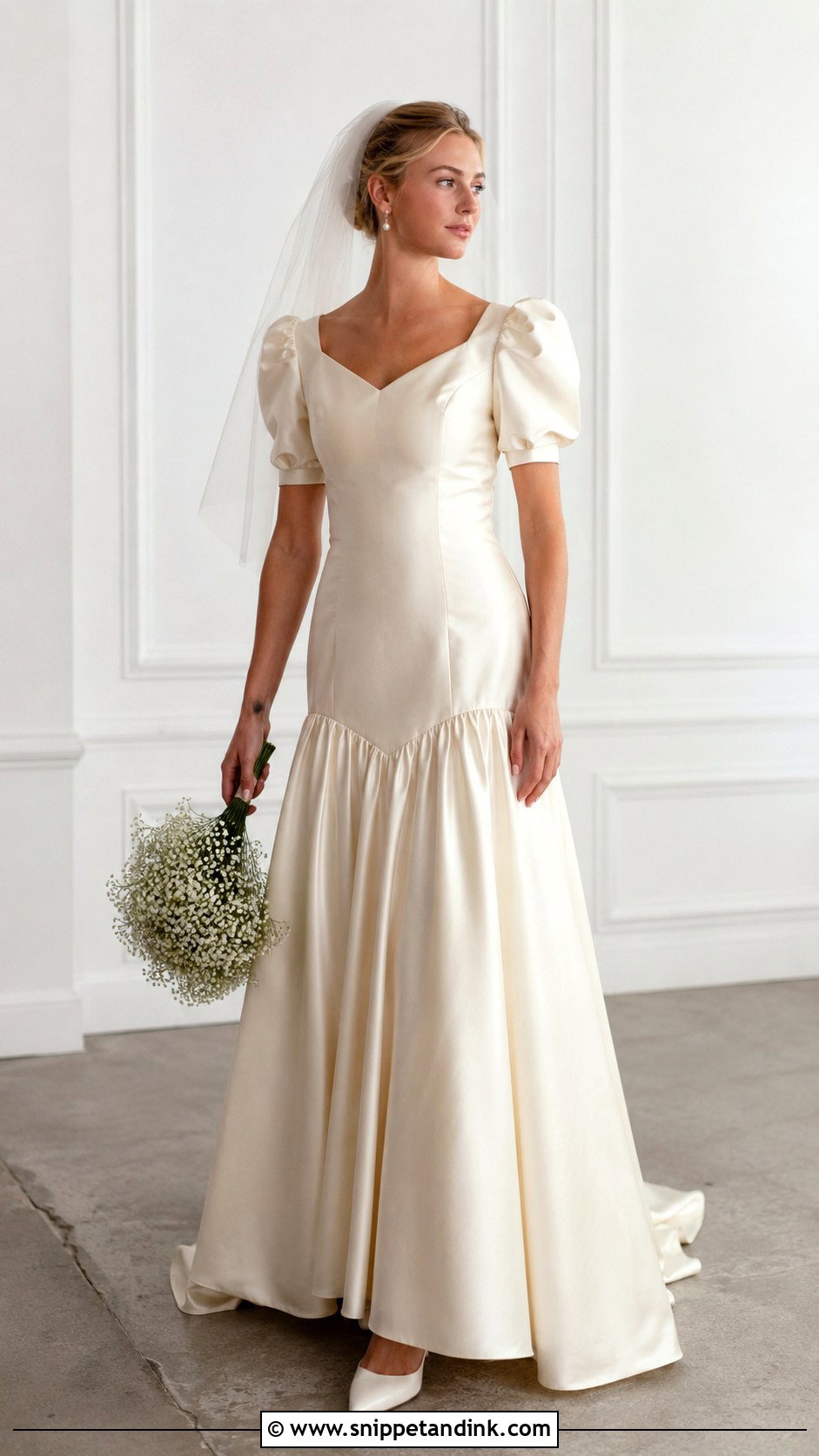
Drop waists push the waistline down toward the hips, creating a long torso before the skirt flares. It’s a shape that depends heavily on tailoring. If the seam falls at your widest point, it draws a line exactly there, so I’d move it up or down during alterations until it sits where you look longest. A bow or puff sleeve adds the 80s note. Pointed heels, pearl earrings and a medium veil.
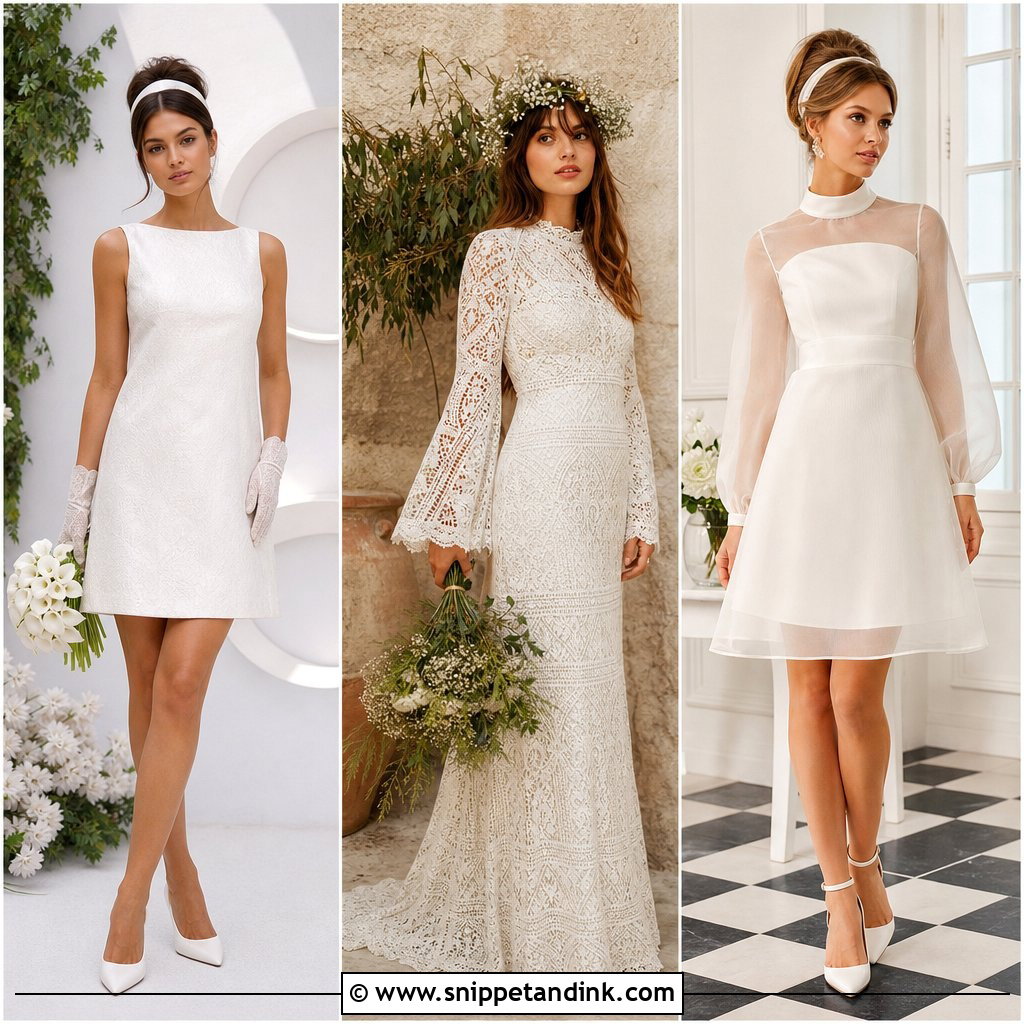

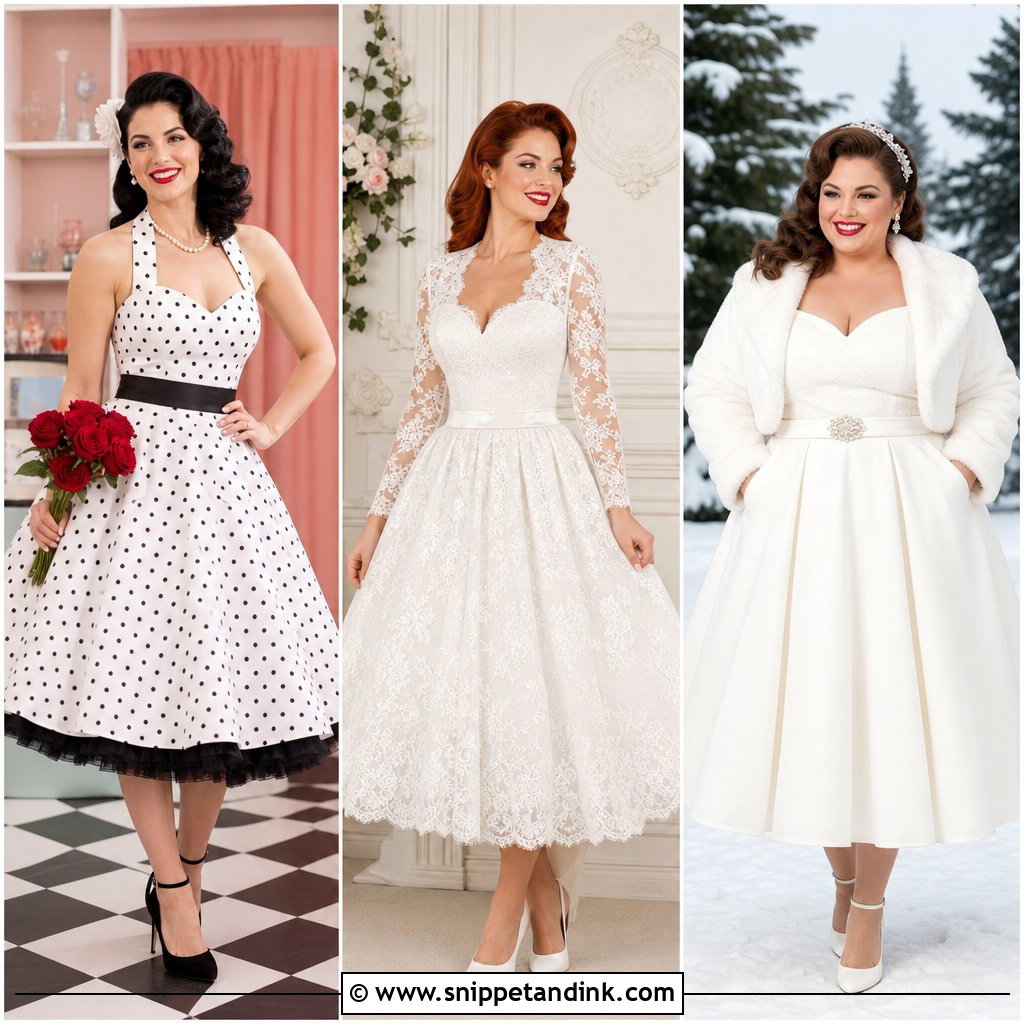

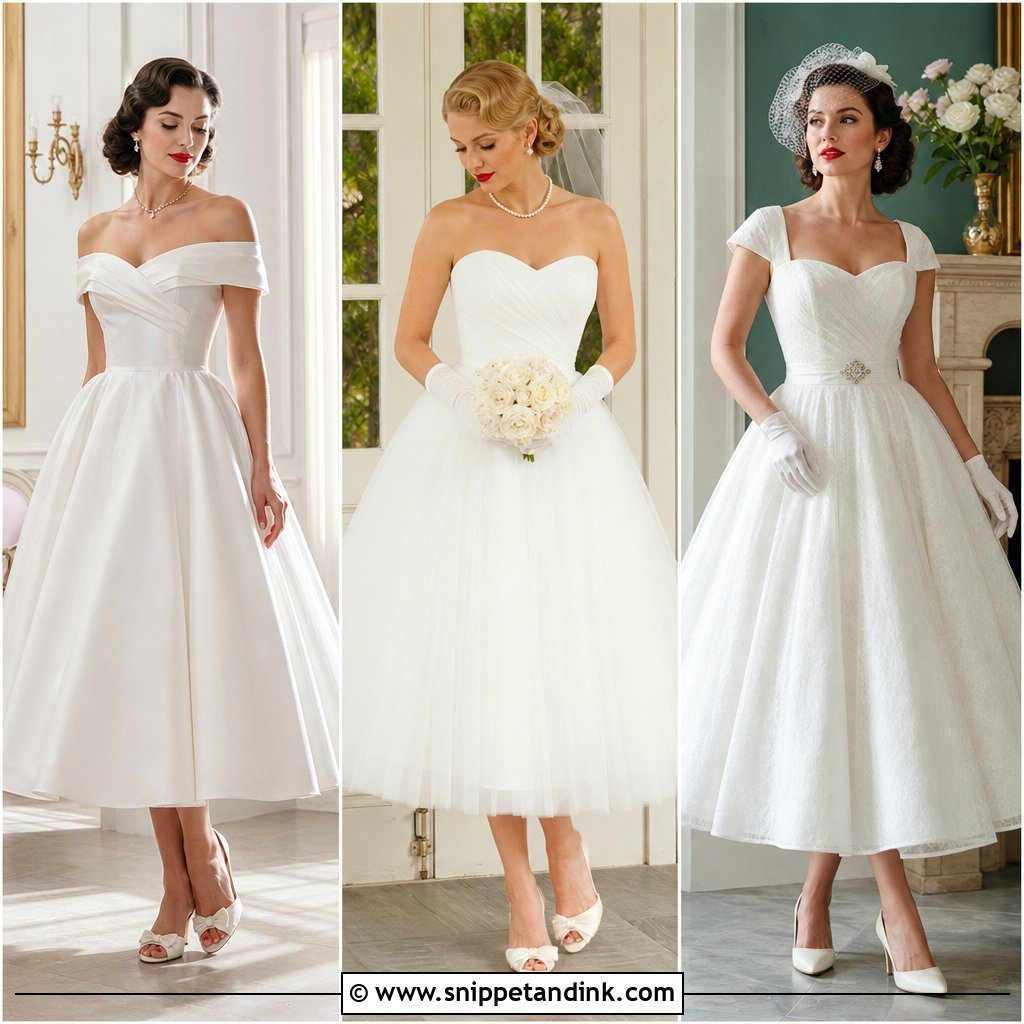
25. 80s Tiered Skirt Wedding Dress
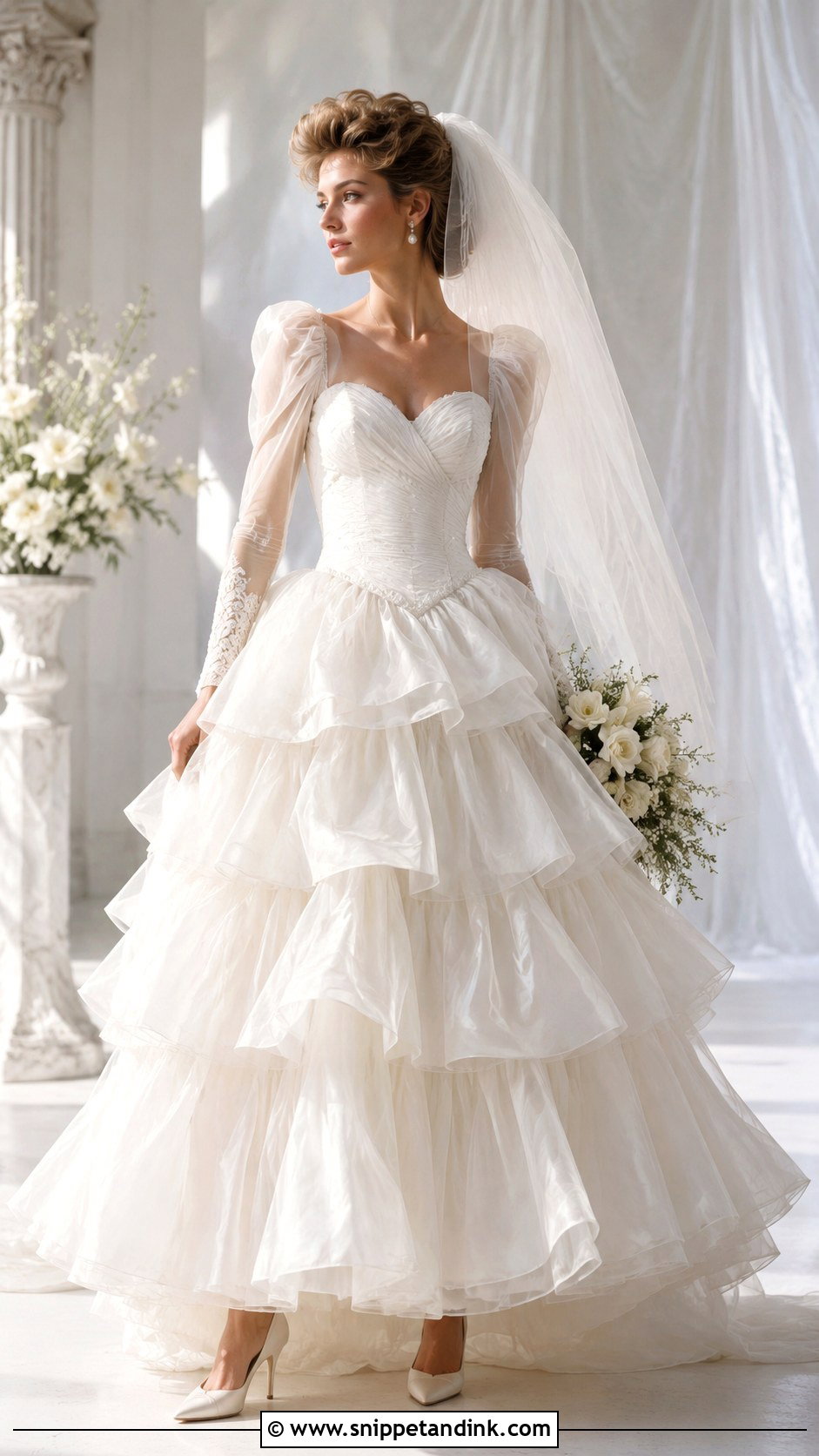
Tiered skirts in organza, tulle, lace or ruffled satin give volume and movement in layers rather than in one big shape. Each tier adds weight and width, so I keep the top half calm: simpler sleeves and minimal jewelry. Check the hem of every tier when you walk. Lower tiers on a long skirt can catch under your heel on stairs. Ivory heels, pearl studs and a plain veil.
26. 80s Sequin Wedding Dress
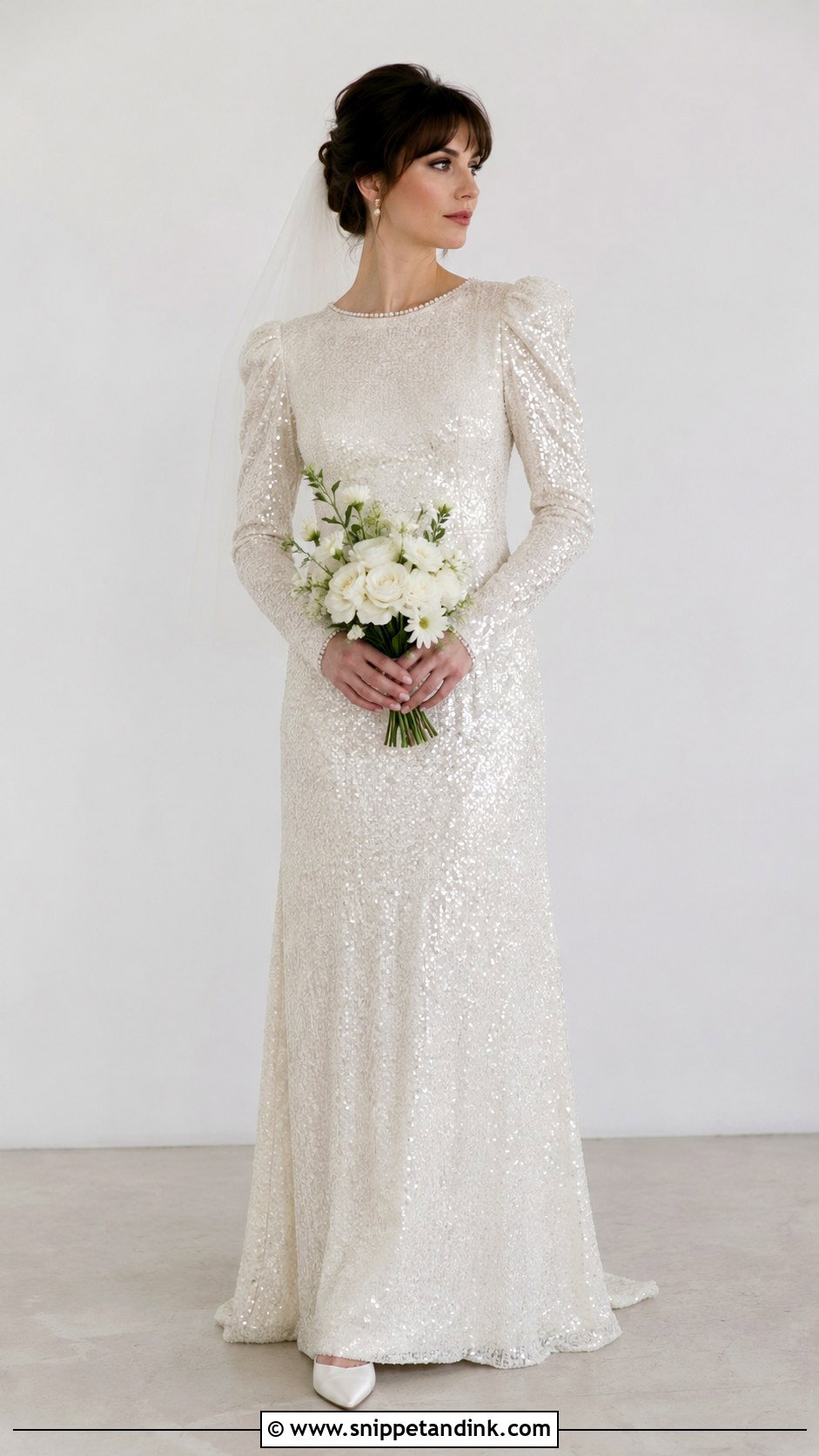
Sequins carried the decade’s party energy, and on a wedding gown they look best in white, ivory or pearl tones rather than bright silver. A fitted bodice over a slim or A-line skirt keeps the sparkle refined. Sequins can scratch the inner arm, so I check whether the sleeve and side panels are lined. Long sleeves or a high neckline balance the shine. Simple heels, small earrings and a soft veil, with no extra sparkle elsewhere.
27. 80s Two Piece Wedding Dress
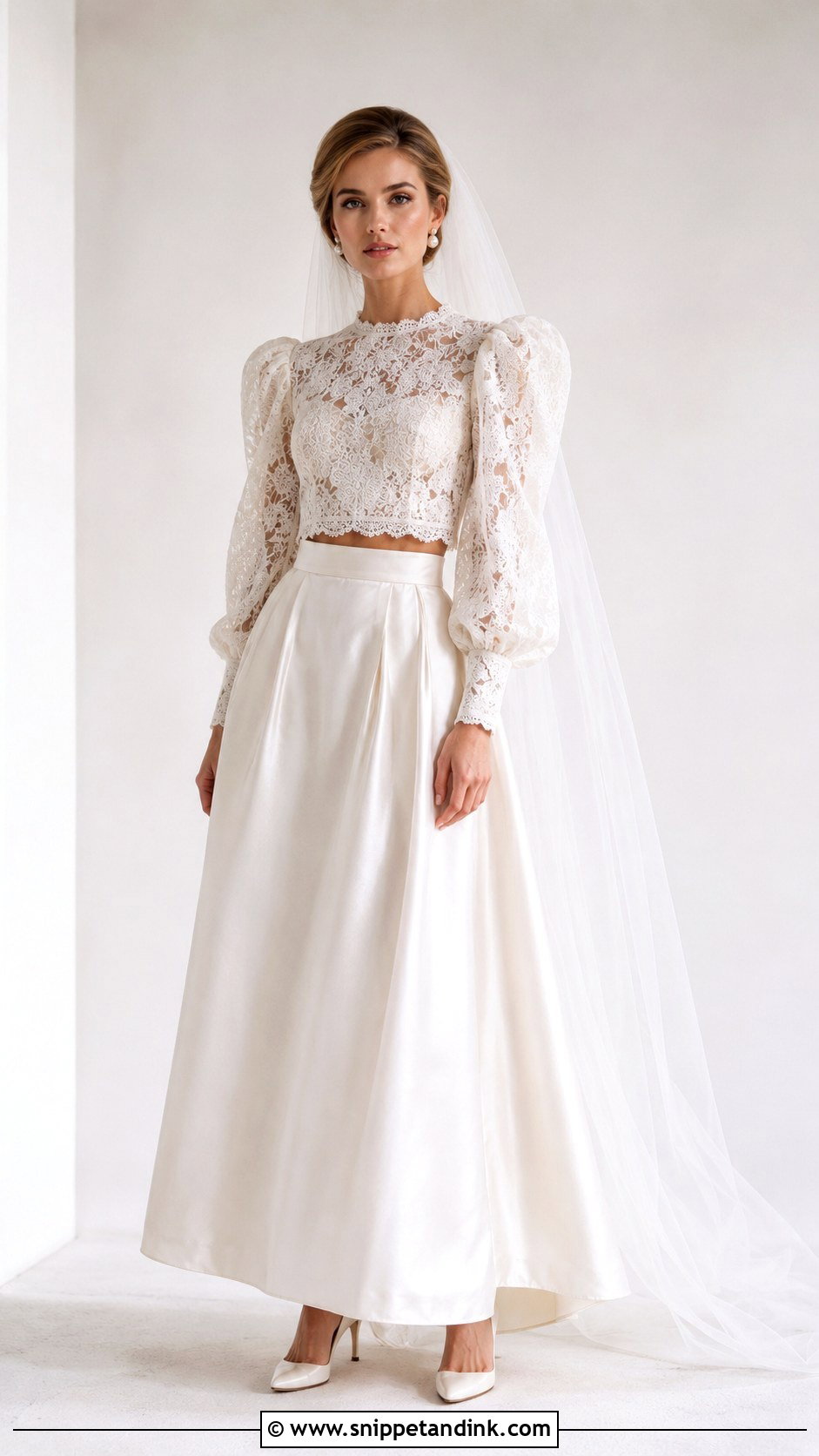
Separates let you keep the 80s details while choosing each piece for your body. A lace puff sleeve top with a high-waisted satin skirt, or a structured bodice with a full taffeta skirt, are both very 80s. The waist join is what I watch: the top needs to tuck or overlap the skirt band so no gap opens when you raise your arms. Keep both pieces the same shade of ivory or white, since mismatched whites look obvious in daylight. A two piece wedding dress also lets you swap the skirt for the reception.
28. 80s Blazer Wedding Dress
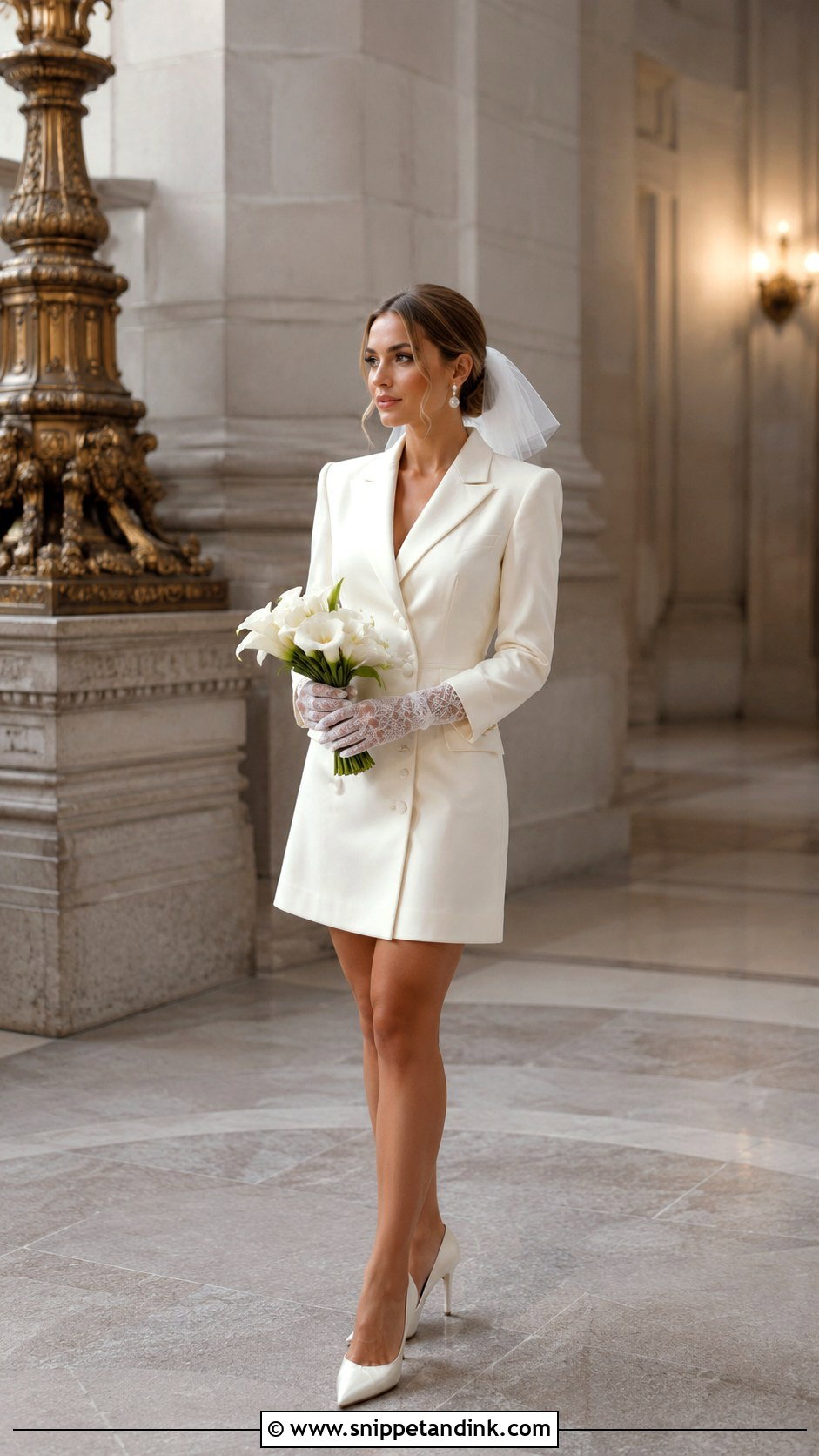
Power shoulders were a defining 80s silhouette, and a white blazer dress turns that into a bridal outfit. Structured shoulders, a fitted waist and covered or pearl buttons keep it formal. The shoulder pads should match your frame. Overly large pads widen you and make the dress look borrowed, so I often have them reduced or replaced with a slimmer pad. Lace gloves, pearl earrings and satin heels soften it, and a short veil or headband makes it bridal. Civil ceremonies and city receptions suit it best.
29. 80s Veil Wedding Dress
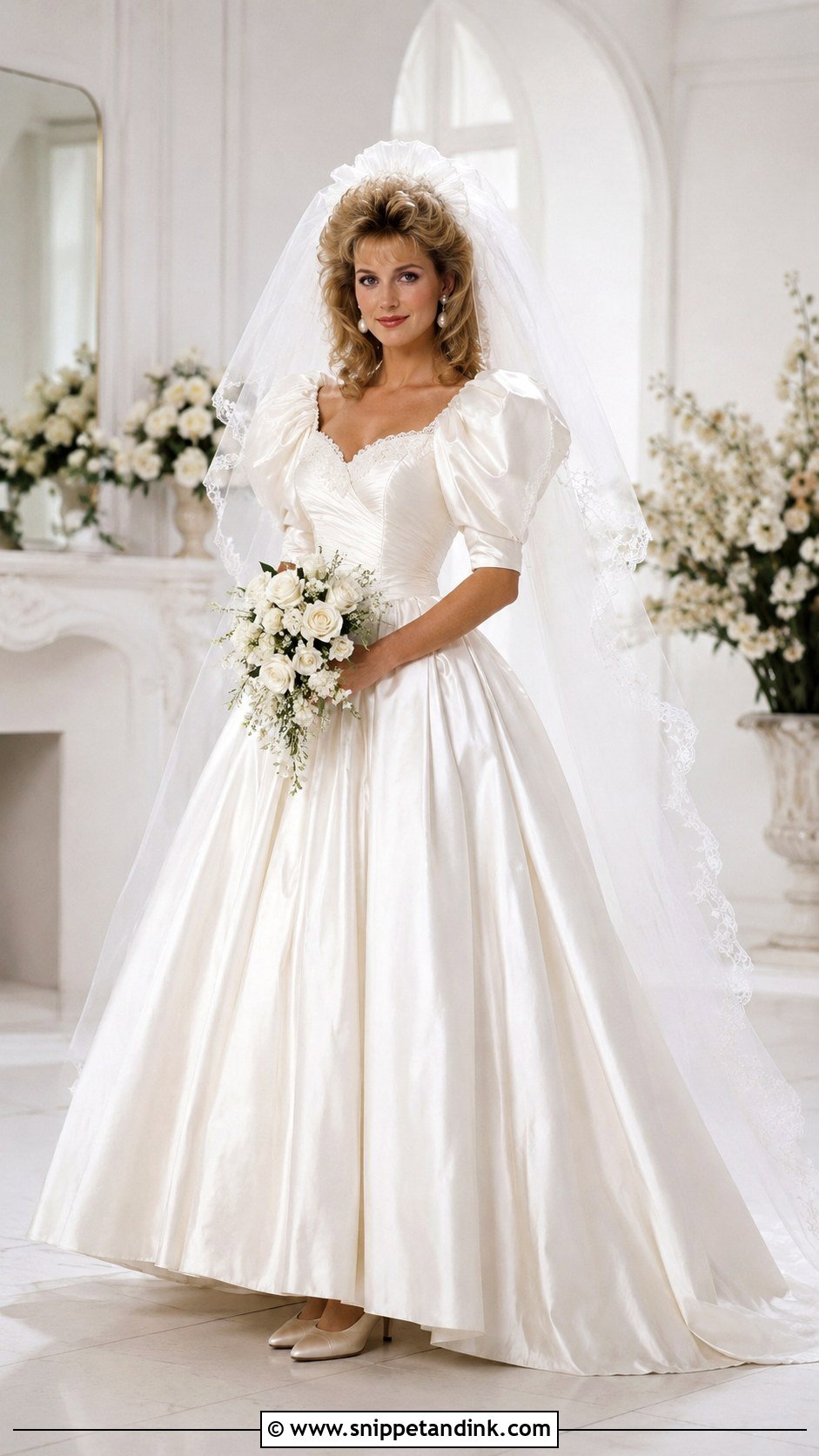
In the 80s, the veil was often as dramatic as the gown, with lace edges, volume at the crown and lots of length. The trick is matching scale. A big gown can carry a full veil; a slim one gets overwhelmed. If the gown is heavily embellished, go for a plain veil; if it’s clean satin, lace edging adds romance. Volume at the crown sits better with a low bun than with loose hair, which can slip under the comb. Pearl earrings and ivory heels complete it.
30. 80s Reception Wedding Dress
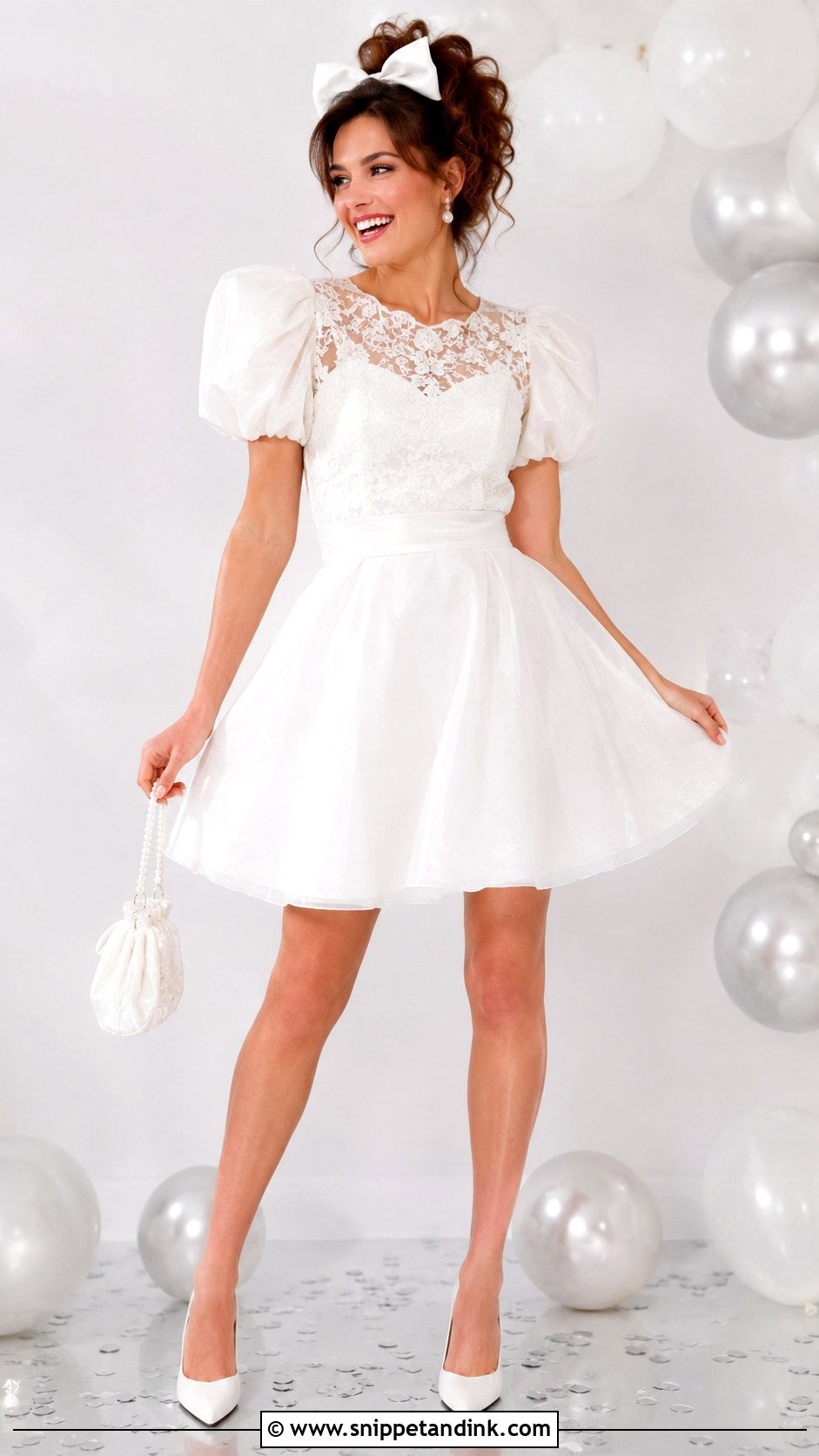
For an 80s reception dress, you want something you can dance in that still carries the theme. A short puff sleeve dress, a tea length satin gown or a lace mini with a fitted waist all work. Plan the change before you buy, since it usually takes fifteen to twenty minutes with help, and a dress with many buttons takes longer. A bow headband or short veil and white pumps keep it playful. Sleeves, shine, lace or bows carry the 80s feel into the party.
Wearing an Original Gown From Your Mother or a Vintage Rail
Plenty of brides drawn to this decade already have a real 1980s gown in the family. These dresses can be worn again, but they need a careful look before you commit to one.
What Time Does to the Fabric
- Synthetic satins and polyester lace often yellow along the folds where they were stored. Specialist cleaning can lighten it, but it rarely returns to pure white, so I’d plan around ivory.
- Elastic at cuffs and waists dries out and snaps. Plan on replacing it.
- Hold the skirt seams up to a window. Thin, brittle patches or pinholes mean the fabric may tear under alteration stress.
- Underarm areas are often stained and sometimes weakened. Check them first.
Alterations That Make It Yours
The most common changes I suggest are taking out or reducing shoulder pads, slimming the sleeve, removing a layer of skirt net and adjusting the neckline. Sizing on older gowns runs differently from today’s sizing, so go by measurements, not the label. Because vintage fabric can’t be replaced, find a seamstress who works on older gowns and give her plenty of time. Ask for a written plan before she cuts anything.
Retro Gowns Need One Detail in Charge
The decade’s details still hold up today when one of them leads and the others follow. Go big with puff sleeves, satin ball gowns, bows, cathedral trains and full veils, or keep it soft with lace sleeves, tea length skirts, pearls and illusion necklines. Either way, scale every accessory to the gown: plain extras around a voluminous dress, texture from a veil or pearls around a sleek one. Then fit it carefully, because good tailoring is what separates a retro gown from a costume.
You'll Like These Ideas:









Leave a Reply