
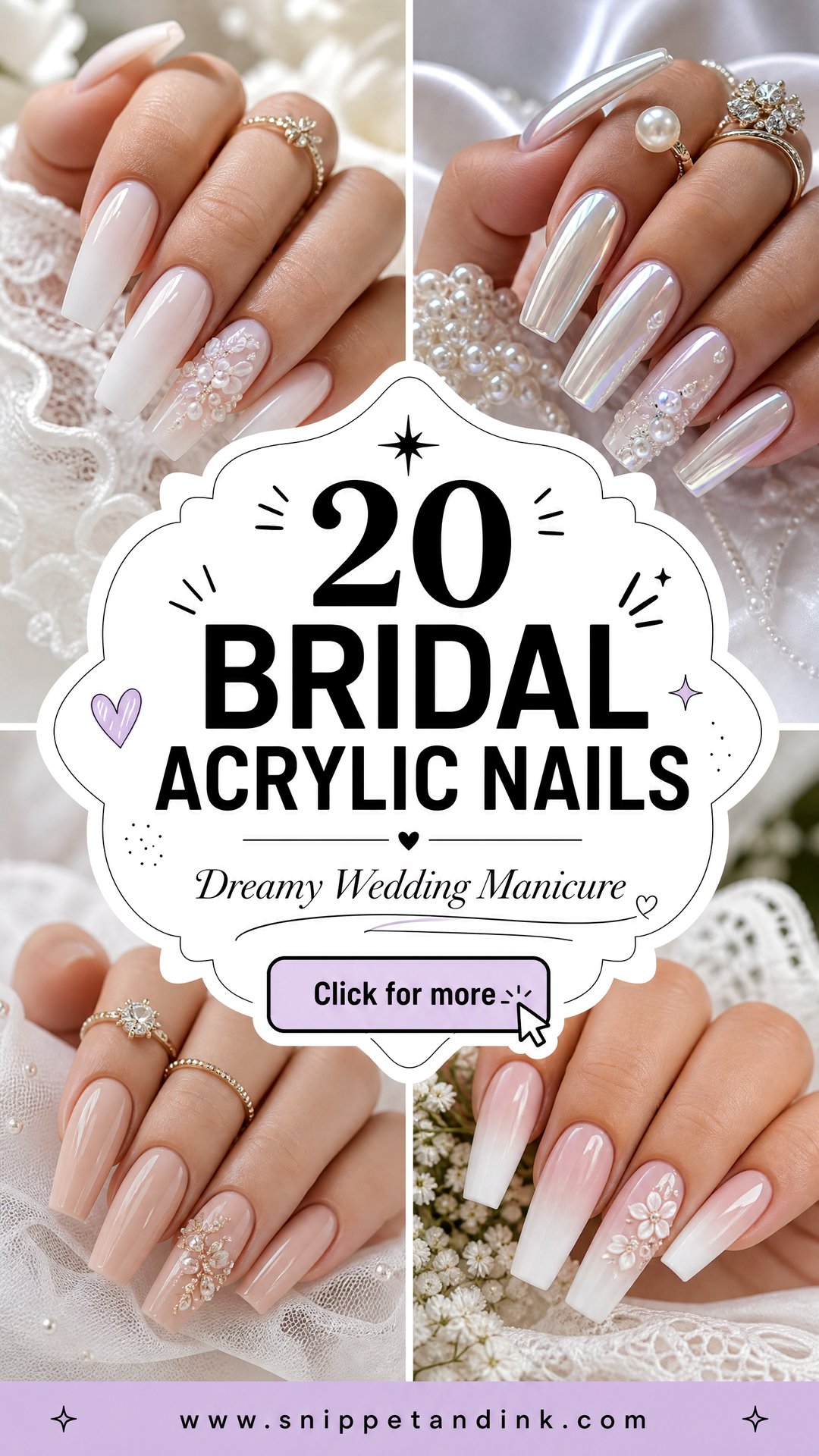
Acrylic is what I suggest to a bride whose own nails are short, peeling or uneven and who wants ten matching nails in the ring photos. Because I’m sculpting the length and curve from scratch, I can give every finger the same shape, which natural nails rarely do. The wedding sets I build most often are quiet ones: sheer pink, a soft nude, milky white, a pearl glaze, a fine French line, with any art kept small enough that the ring stays the focus. Below are twenty bridal acrylic sets, from plain and classic to a little more decorated, with notes on what each shape and finish asks of you.
Acrylic Versus Gel Extensions for a Wedding Set
Acrylic is a powder and liquid mixed into a bead that hardens in air. Gel extensions and soft gel tips cure under a lamp instead. For a bride, the practical differences are strength and flexibility. Acrylic is harder and holds a sharp shape, raised 3D art and long lengths better. Gel is lighter and more flexible, and it feels closer to your own nail.
- Choose acrylic if your nails bend or break easily, if you want medium or long length, or if you want sculpted flowers or pearls set in.
- Gel may suit you better if you want short, natural-looking nails and a lighter feel, or if you react to the smell of acrylic liquid.
- Either way, tell your nail tech if you’ve ever had redness or itching around the cuticle after a manicure, as she may need a different product.
I always ask a first-time acrylic bride to wear a set for at least a week well before the wedding. Typing, doing up earrings and putting in contact lenses all feel different with extensions, and it’s much better to learn that before the wedding week.
1. Classic French Bridal Acrylic Nails
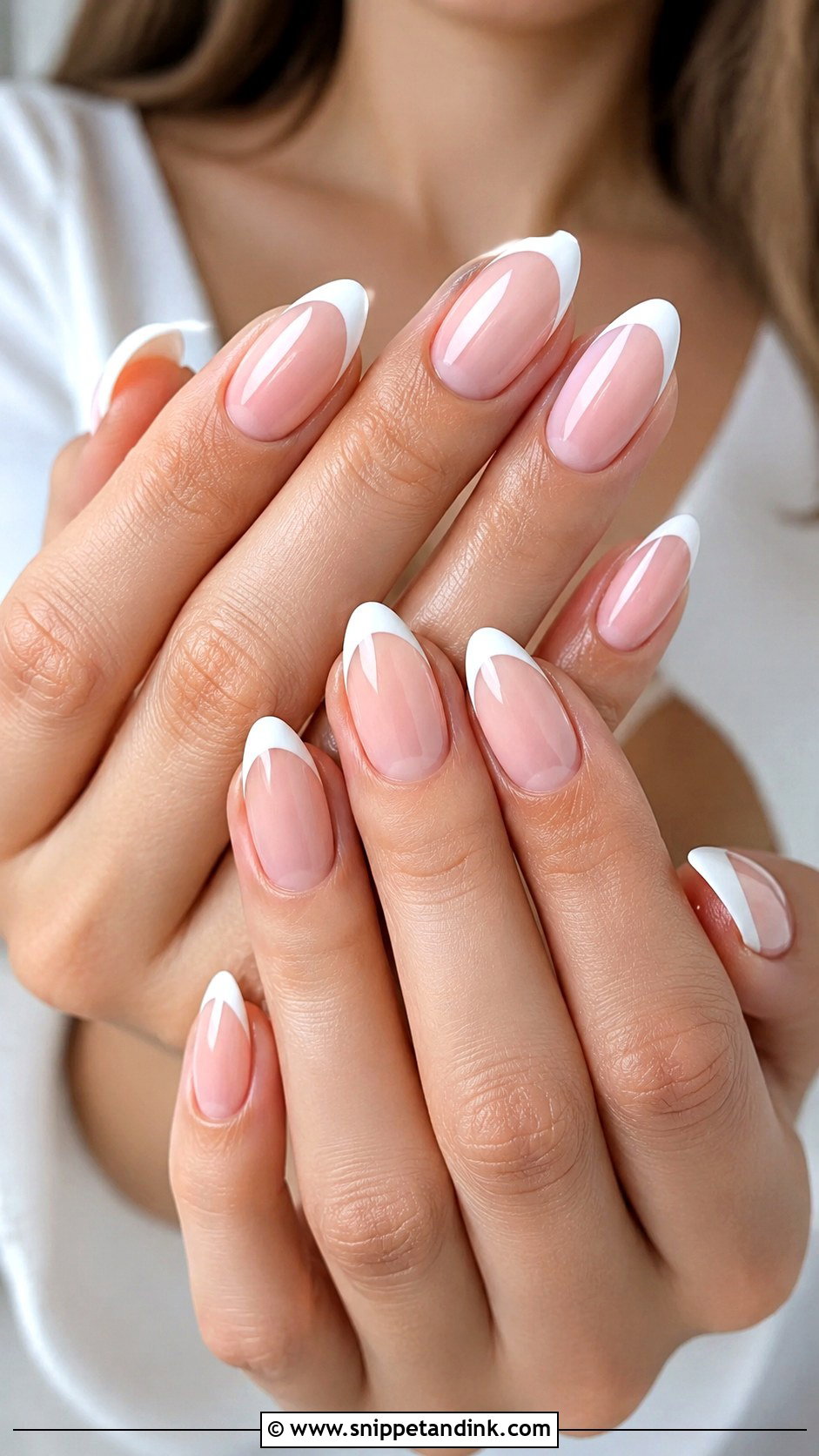
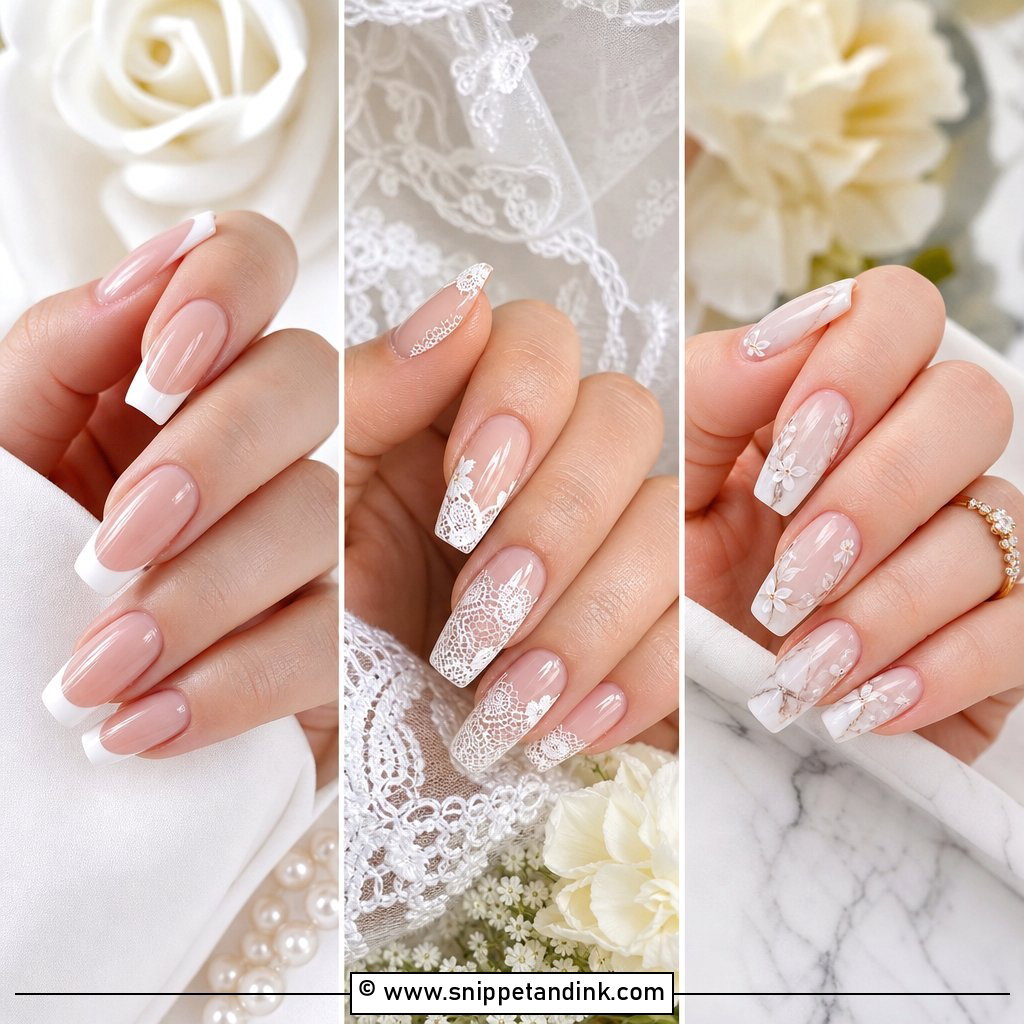
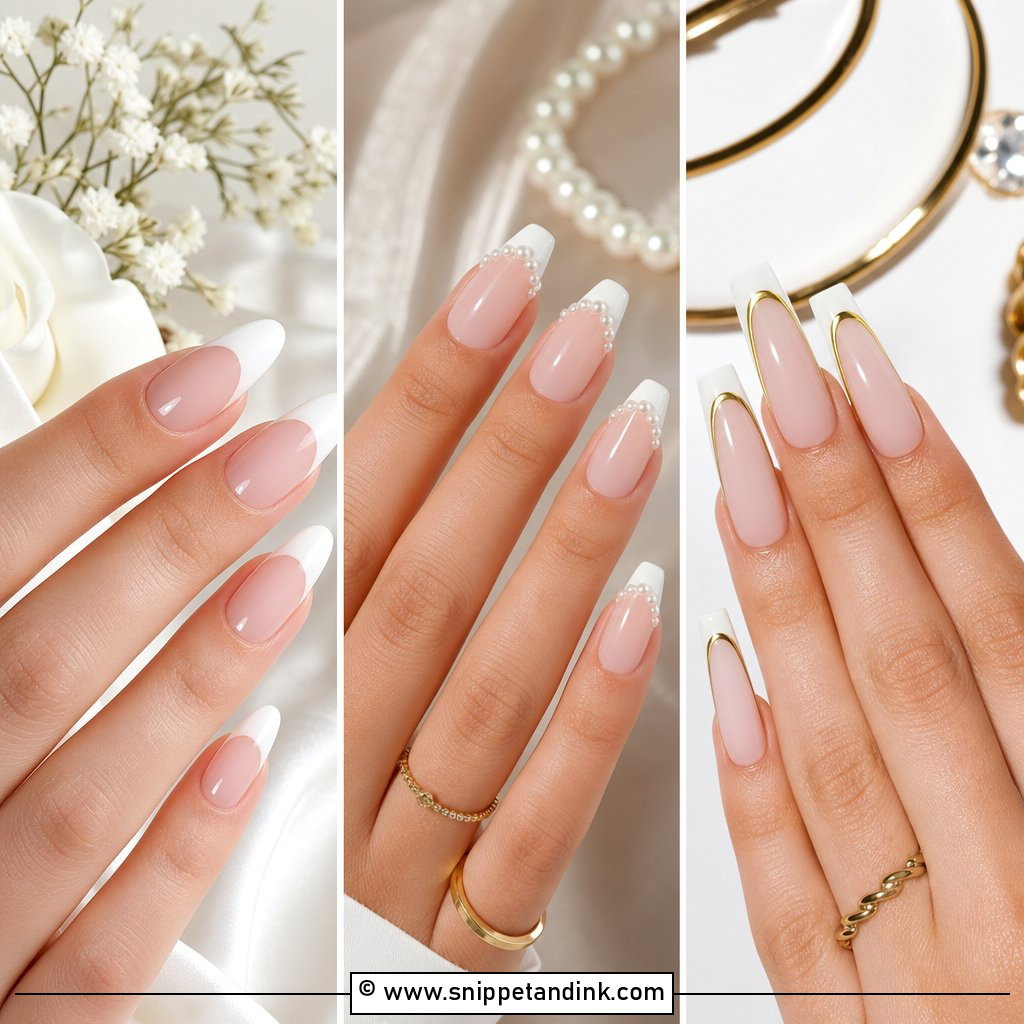
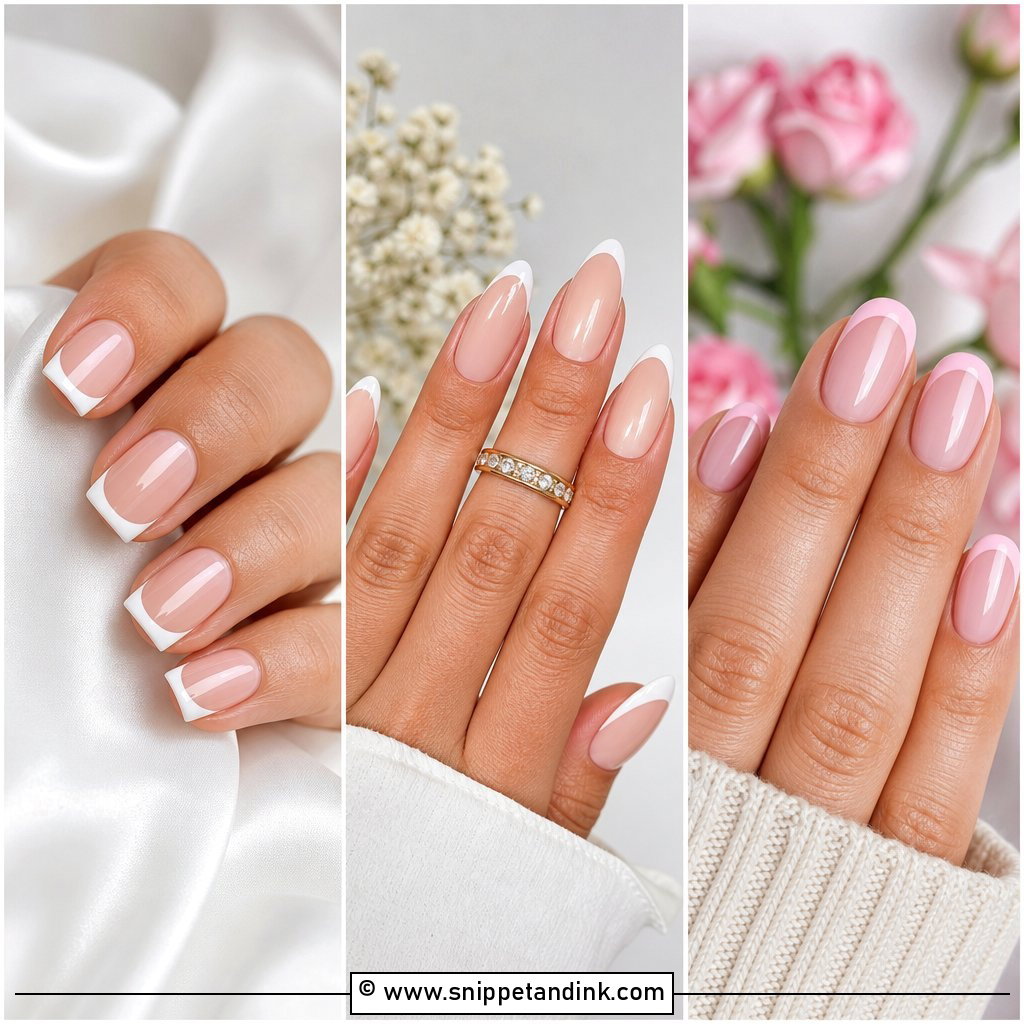
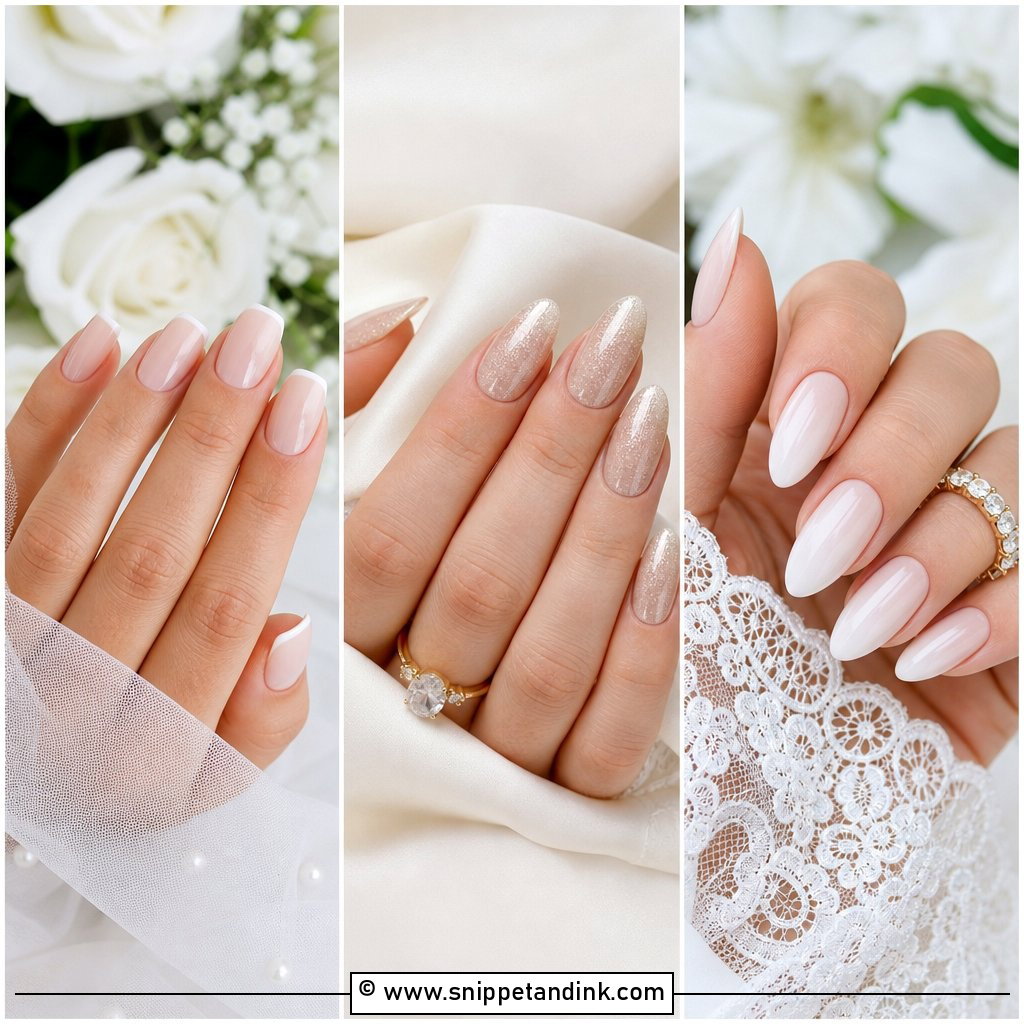
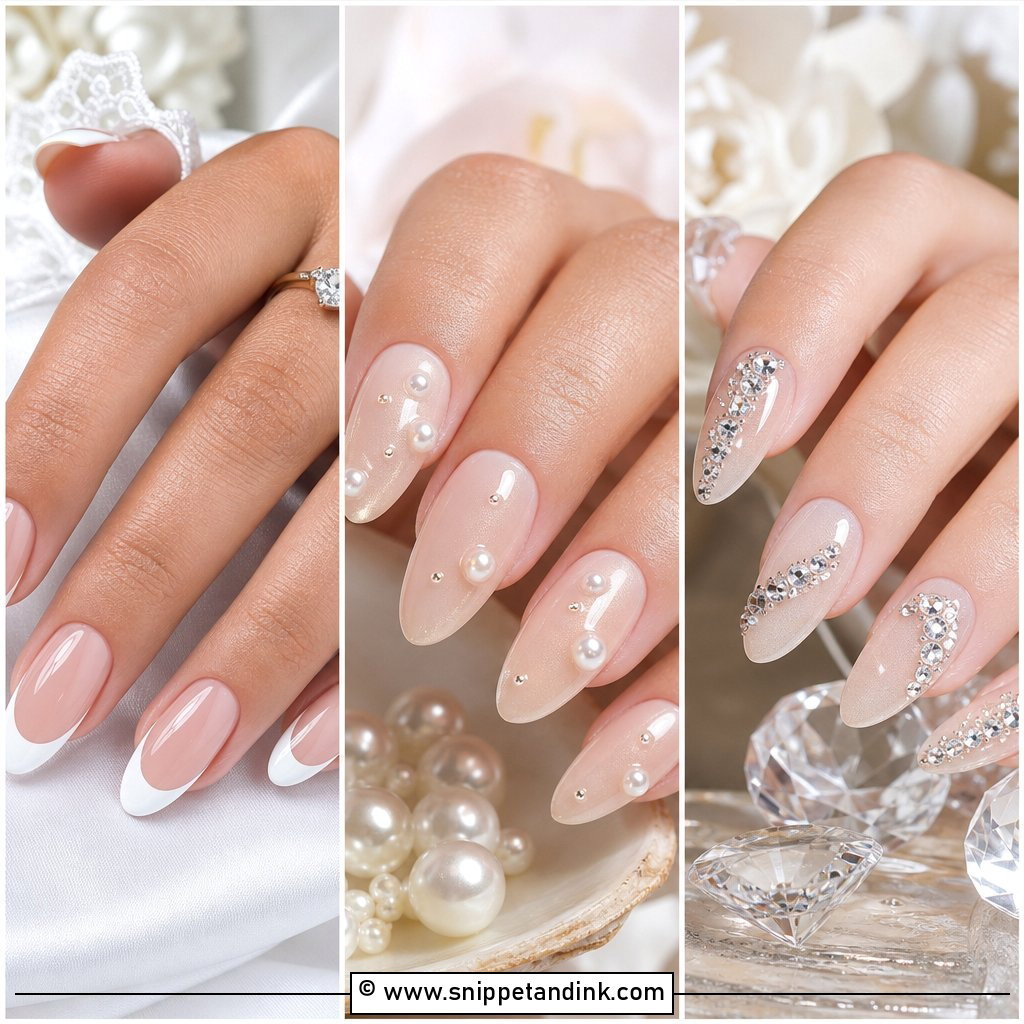
A classic French set is the one I’m asked for more than any other. A pink or nude base keeps the nail looking natural, and the white tip gives it a clean edge. Acrylic helps here because I can make every free edge the same length, so the smile line sits at the same height on all ten fingers; on natural nails that line always wobbles. A medium almond or soft square is the safe shape. I paint the white a little thinner than the traditional version unless you ask otherwise, since a deep tip can look heavy on shorter beds. It goes with lace, satin and pearls alike.
2. Milky White Bridal Acrylic Nails
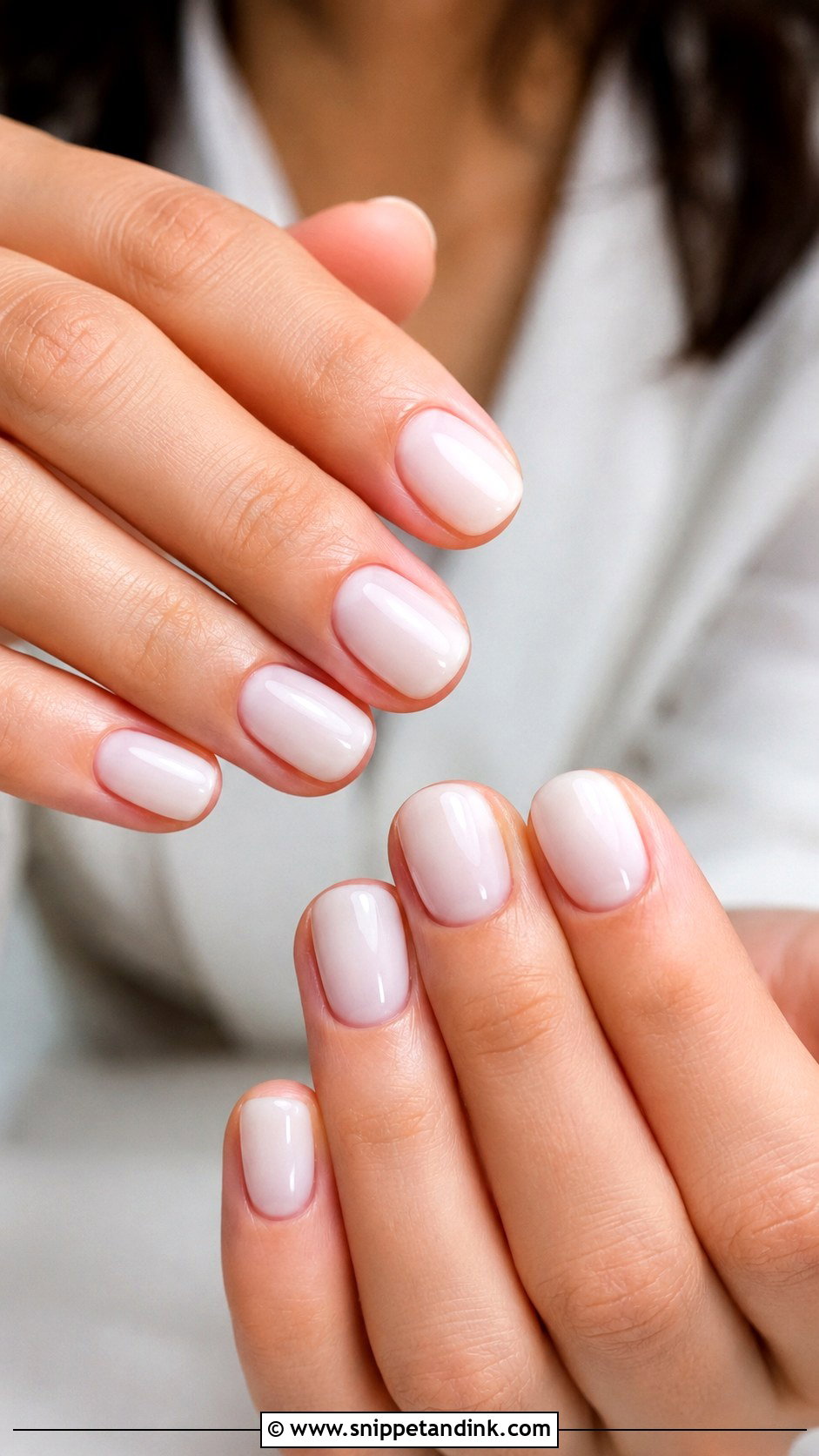
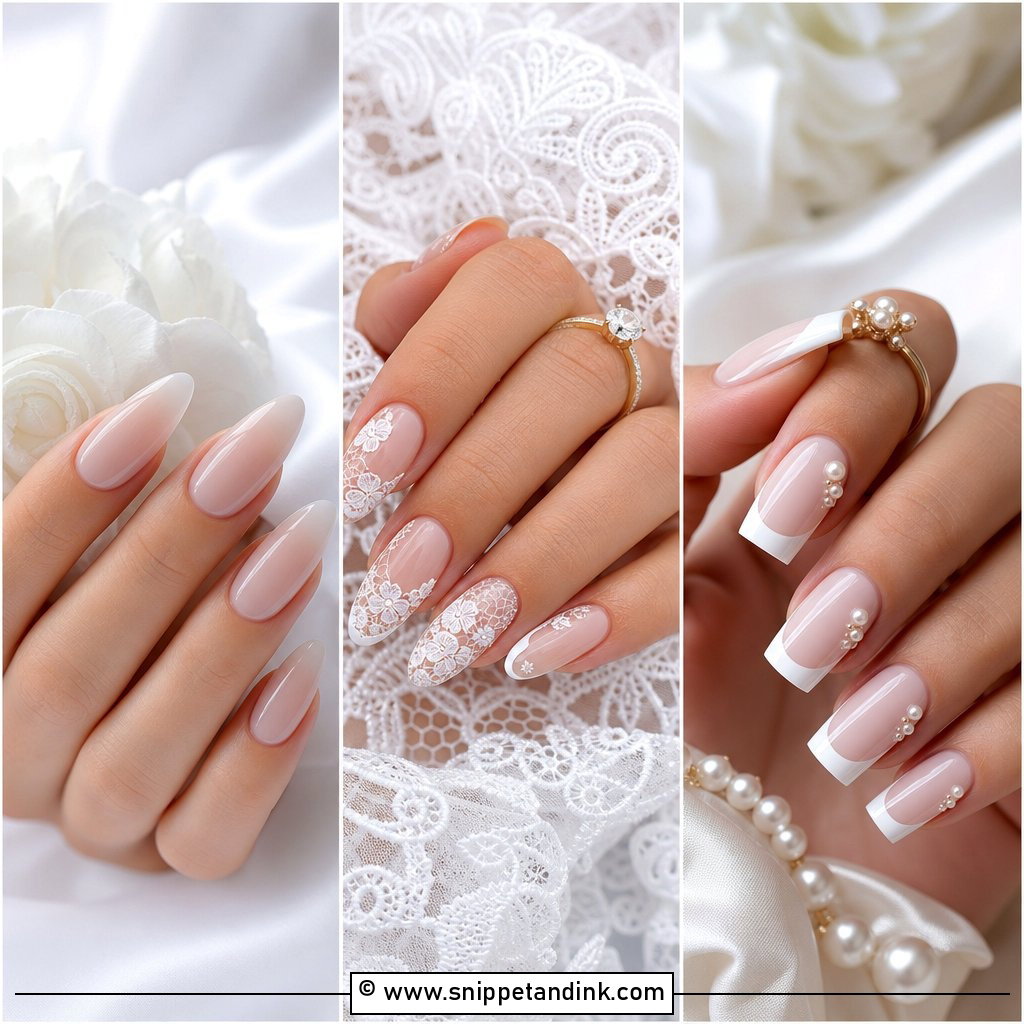
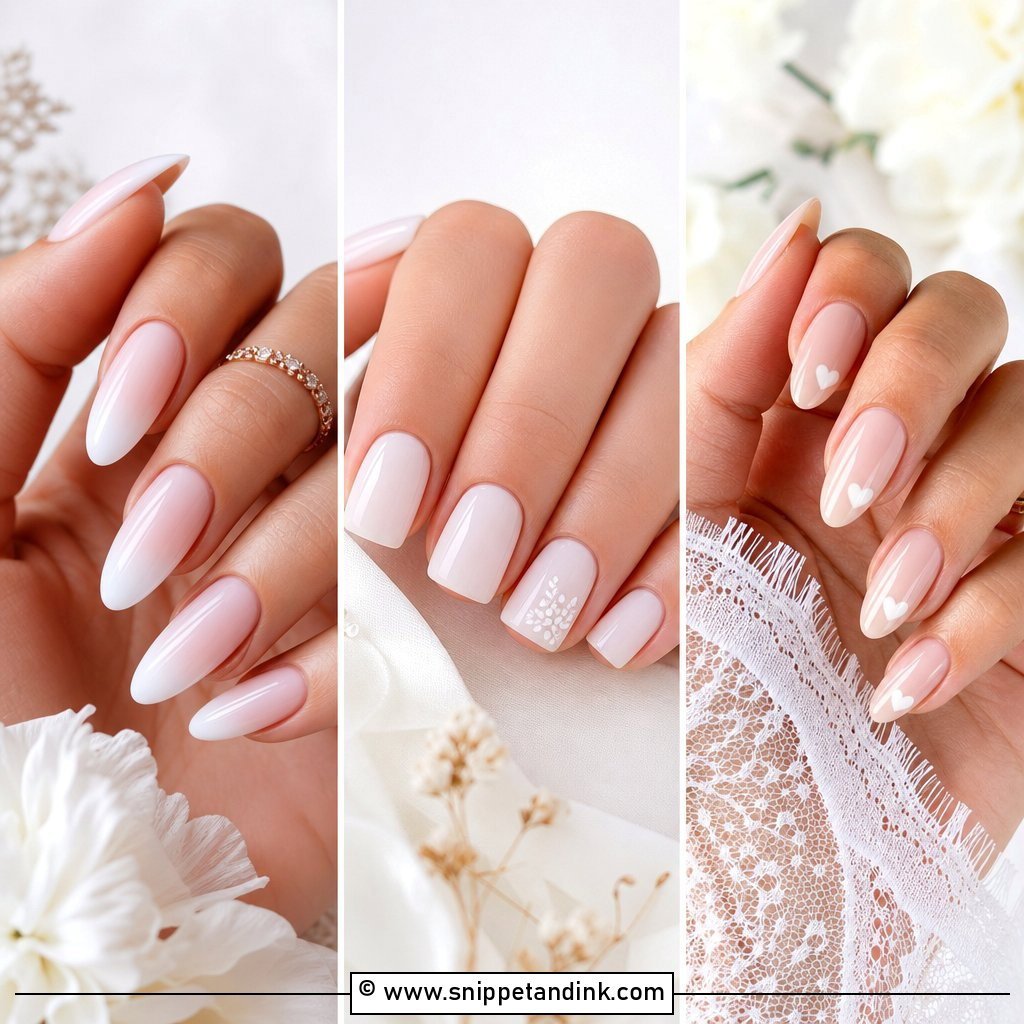
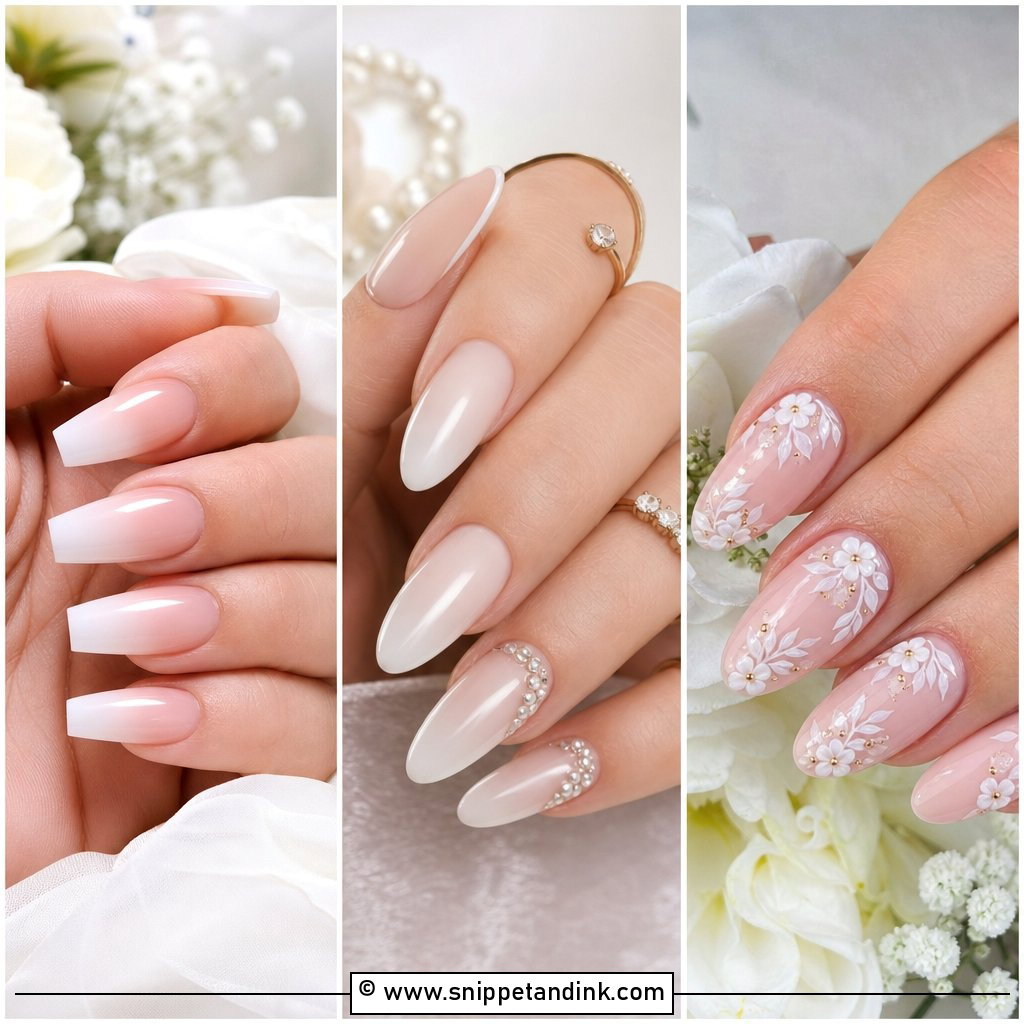
Milky white is a sheer, creamy white that lets a hint of your nail bed through, so it glows rather than looking like correction fluid. It suits most skin tones. The catch is streaking: milky shades show every uneven brushstroke, and on short or ridged natural nails it can look patchy. A smooth acrylic surface solves that, which is why I like this finish on extensions. Short oval, almond or squoval keep it soft. A thick glossy top coat gives the glassy depth that reads well in close-ups.
3. Pearl Chrome Bridal Acrylic Nails
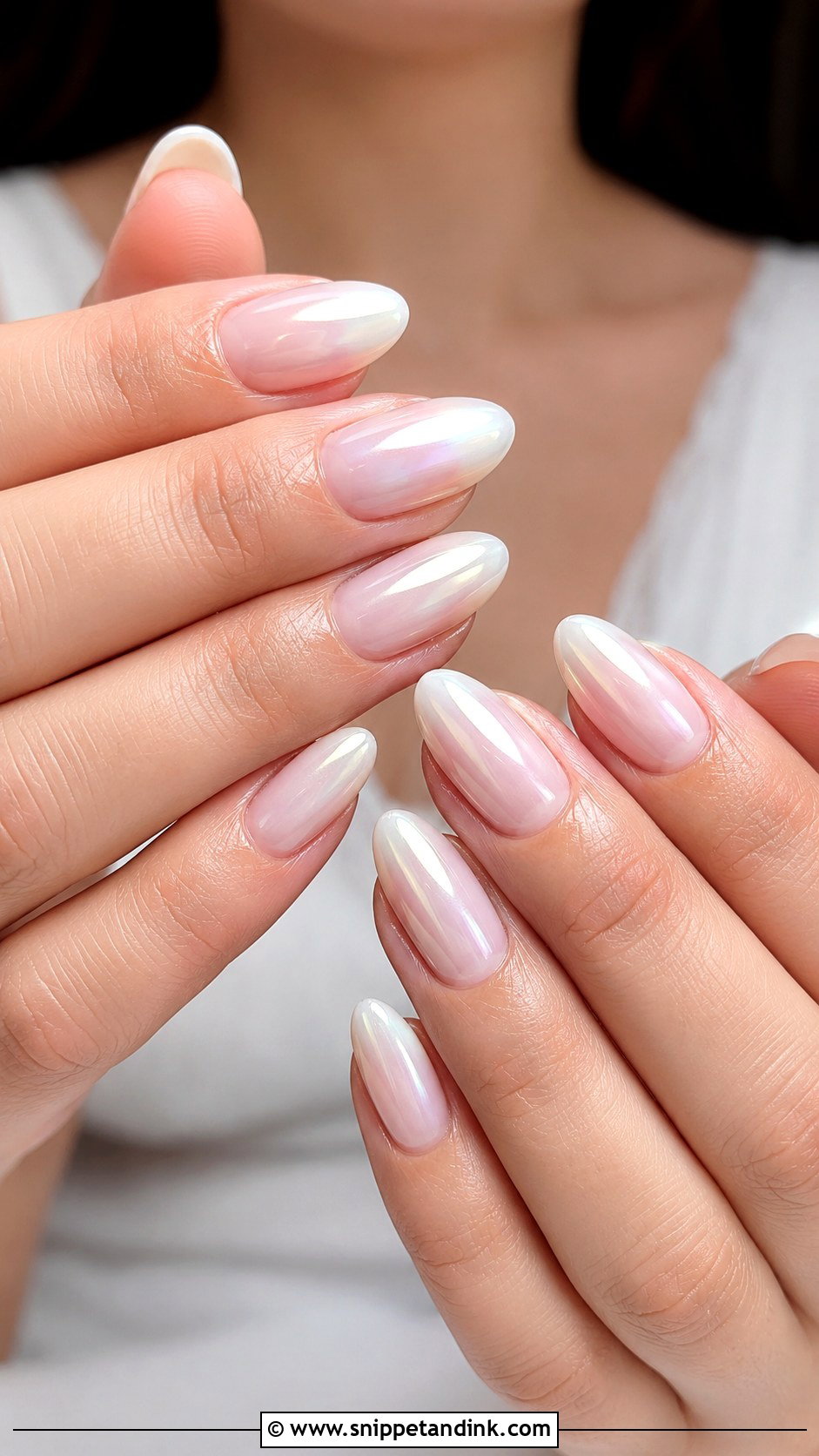
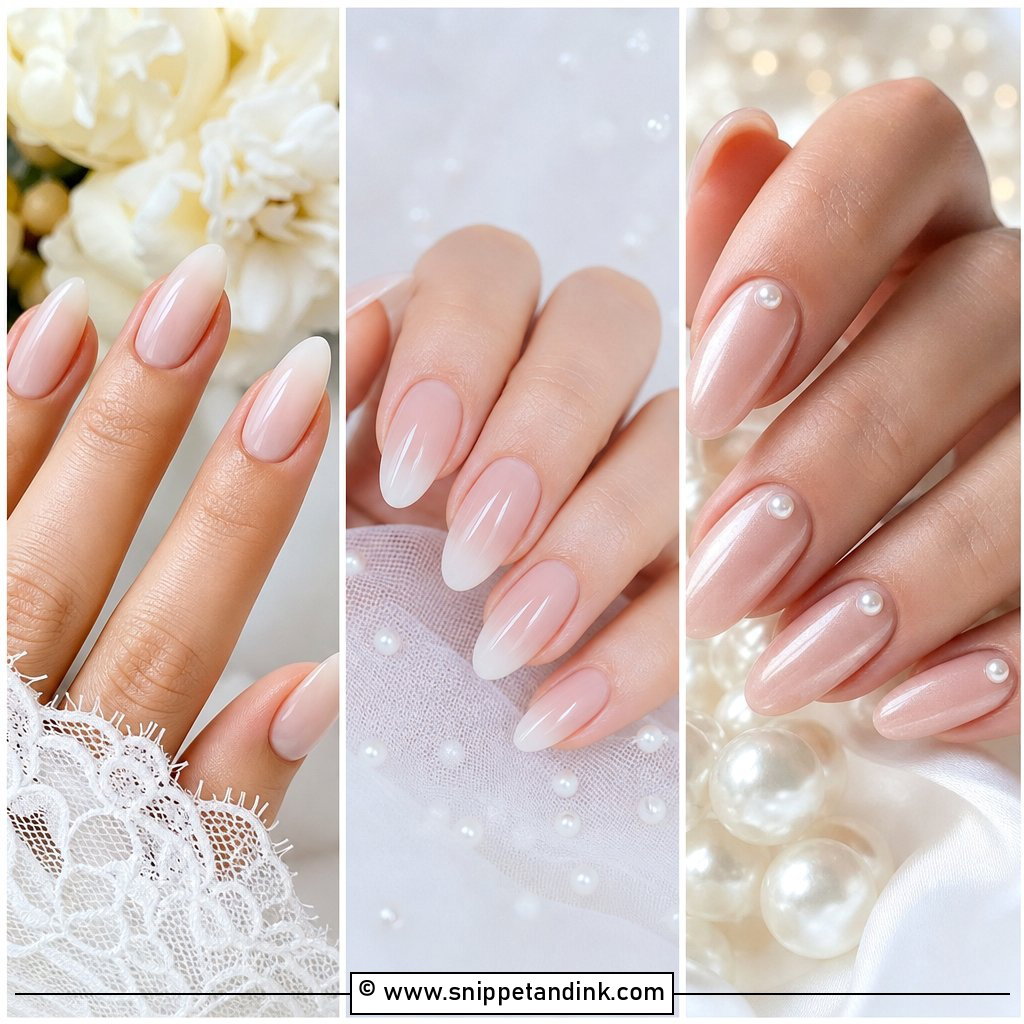
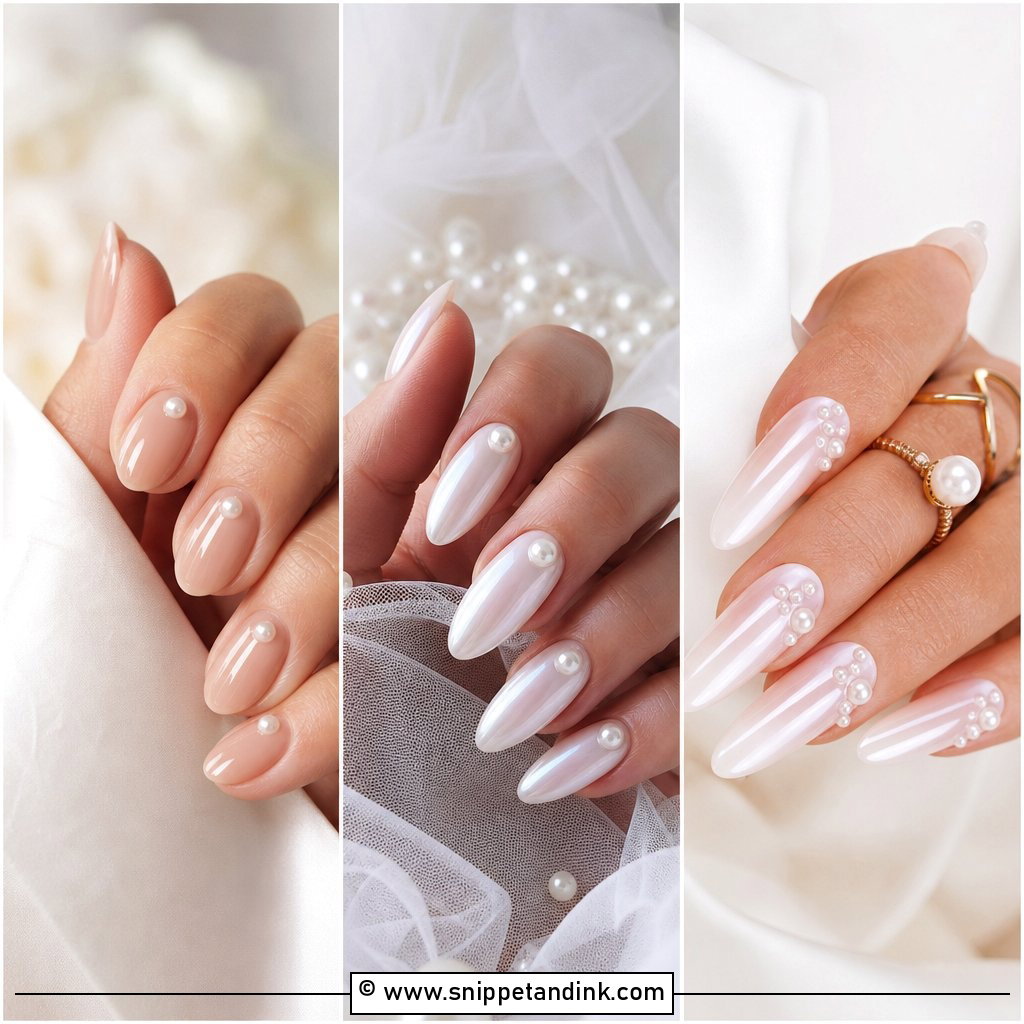
Pearl chrome gives a soft glow instead of sparkle. I start with a sheer pink, nude or milky base, cure a no-wipe top coat, then buff a very light pearl powder over it and seal it in. Less powder is the whole trick; rub in too much and it goes from pearl to mirror. Under flash it catches light without glare. Almond and oval shapes suit it best, and it sits well against silk, satin, organza and plain gowns, where it adds a bit of finish without competing with beading.
4. Nude Bridal Acrylic Nails
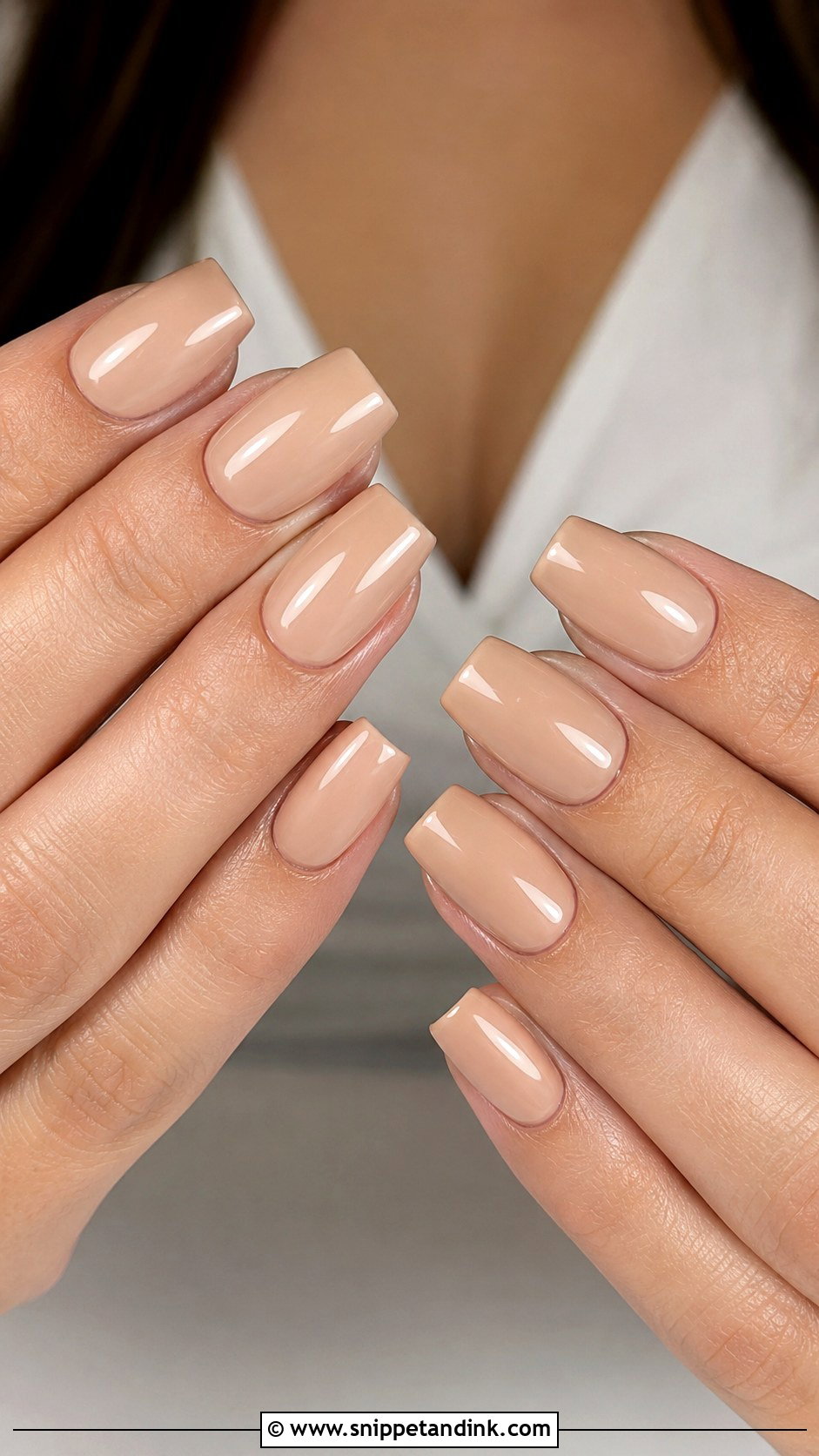
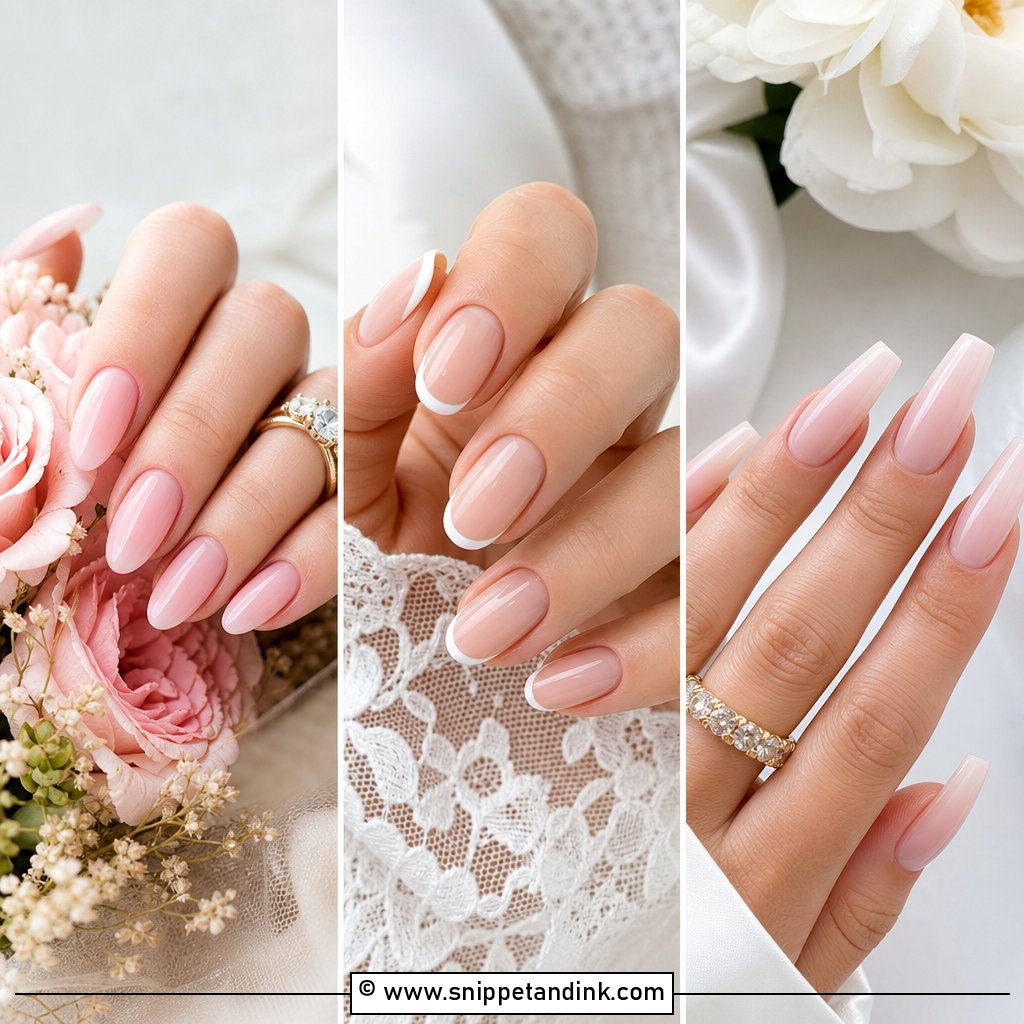
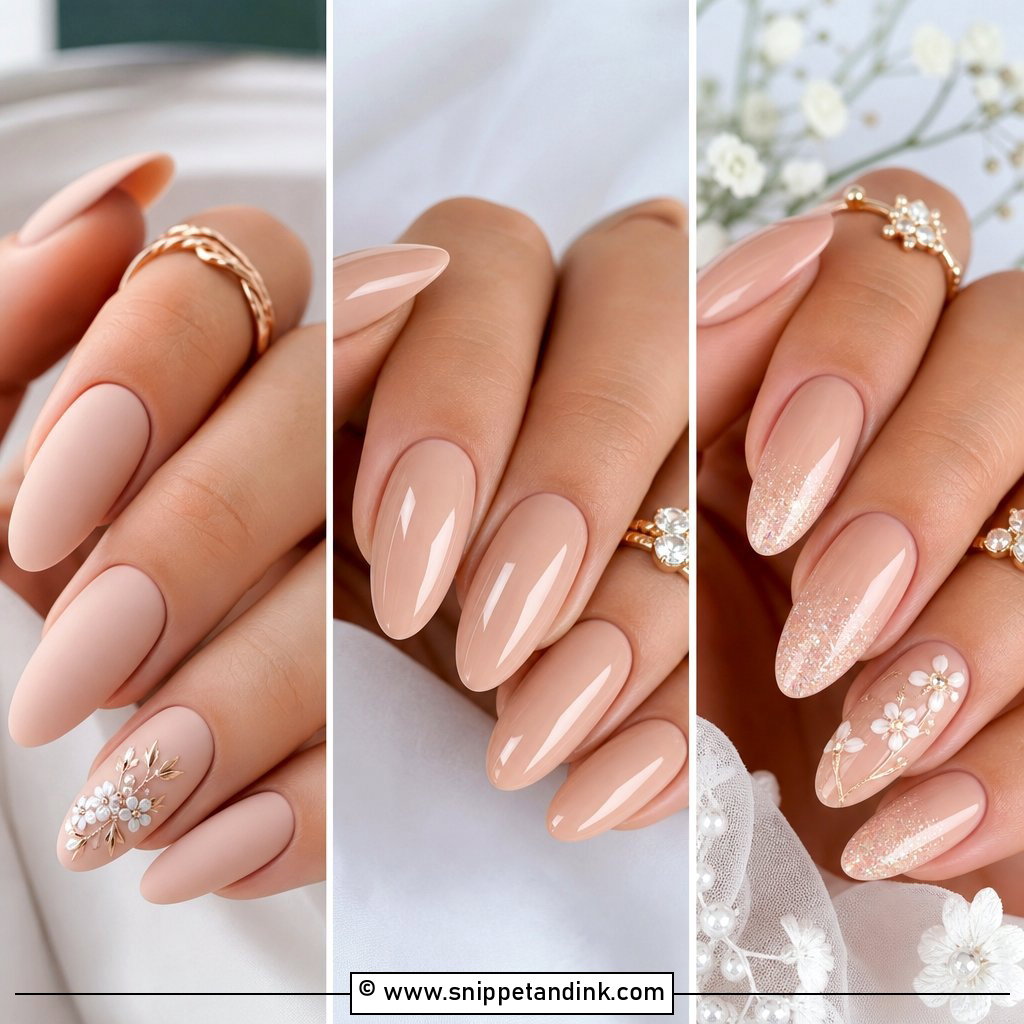
A nude set only works if the shade suits your skin; the wrong beige makes hands look grey in photos. On fair skin I usually reach for pink beige or a soft blush. Medium tones tend to suit peachy nude, caramel or warm taupe, and deep skin tones look rich in cocoa, mocha, rosy brown or a sheer espresso. I always swatch two or three shades against the side of your finger before choosing, because the bottle colour lies. Acrylic gives a smooth canvas in soft almond, oval or square, and the nails step back so the ring and bouquet lead.
5. Blush Pink Bridal Acrylic Nails
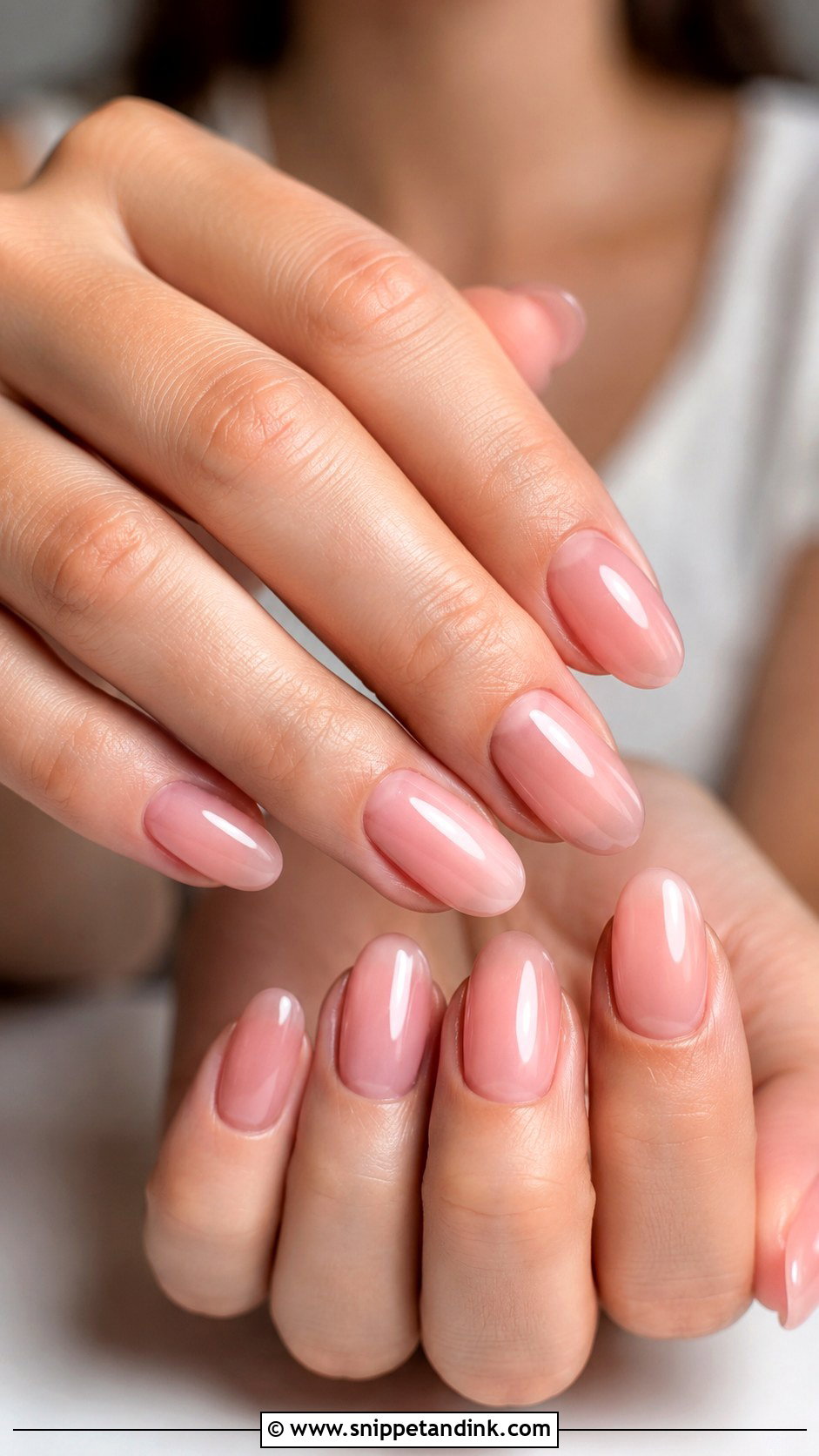
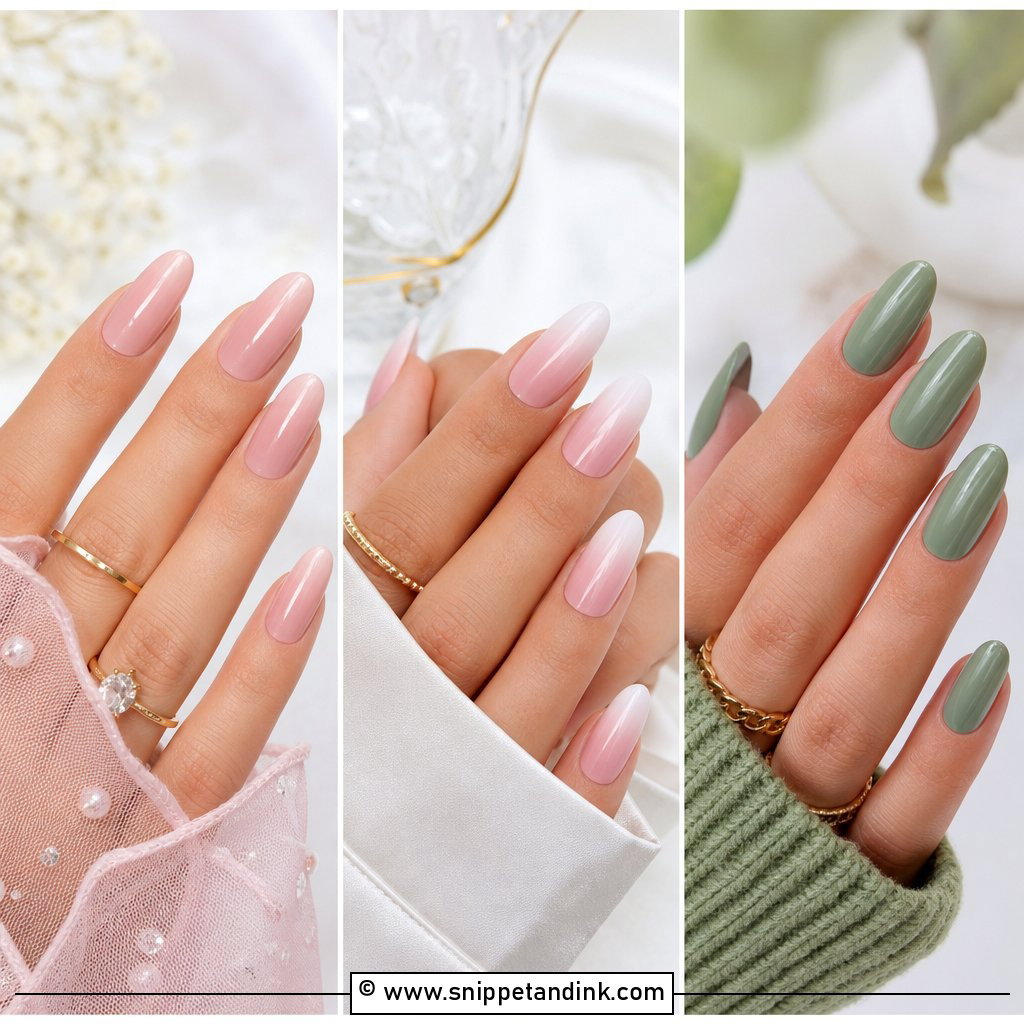
Blush pink has more warmth than milky white but still reads delicate. A sheer blush makes nails look healthy; a more opaque pink gives a solid salon finish and hides the free edge line better. Acrylic keeps the shape even from the ceremony to the last dance. I like this one on almond, oval and short square. Keep it glossy and plain, or add a couple of tiny pearls on the ring finger. It sits easily with white, ivory, champagne and soft floral palettes, and blush is forgiving if you chip it, since small wear barely shows.
6. Ombré French Bridal Acrylic Nails
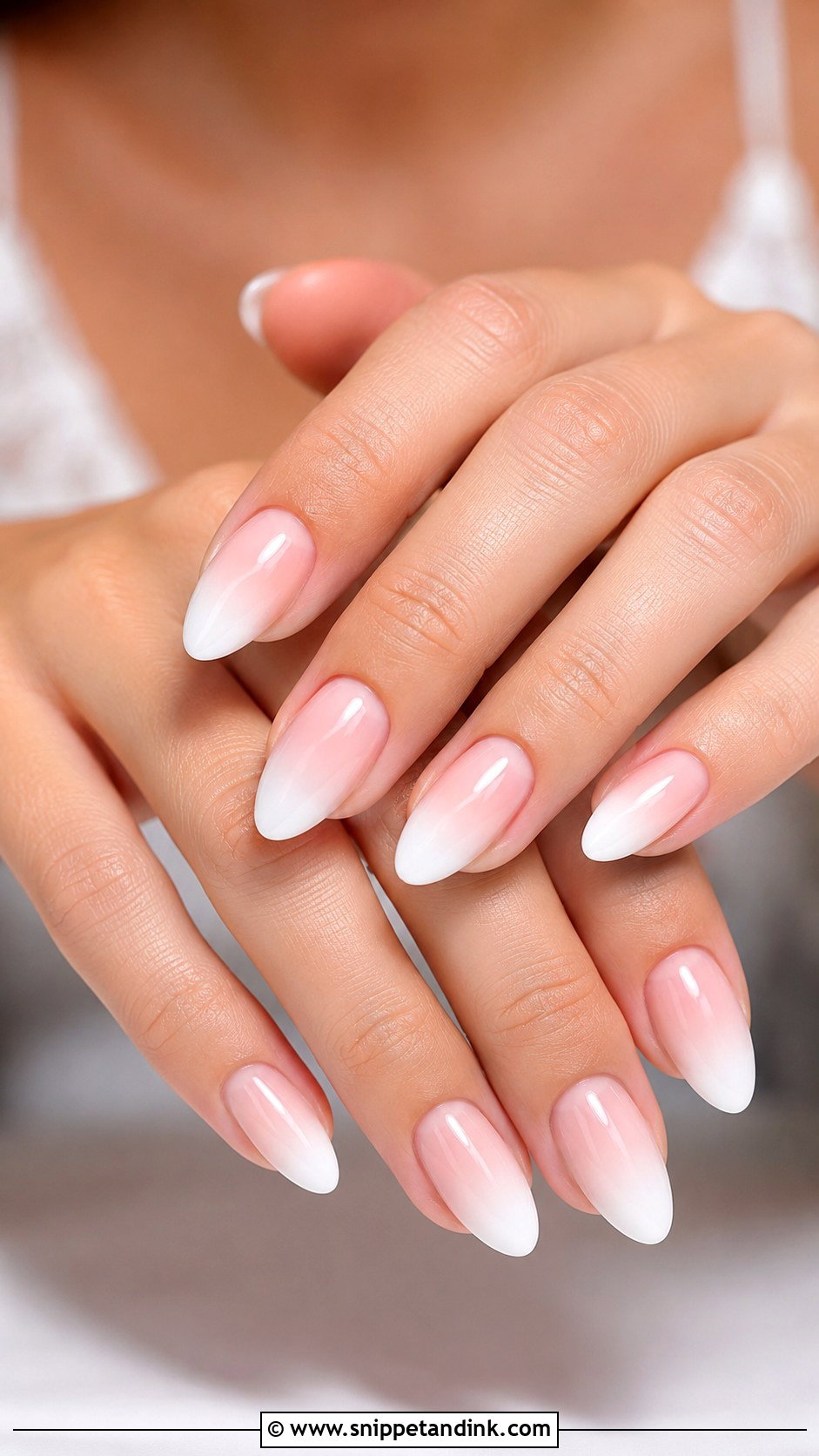
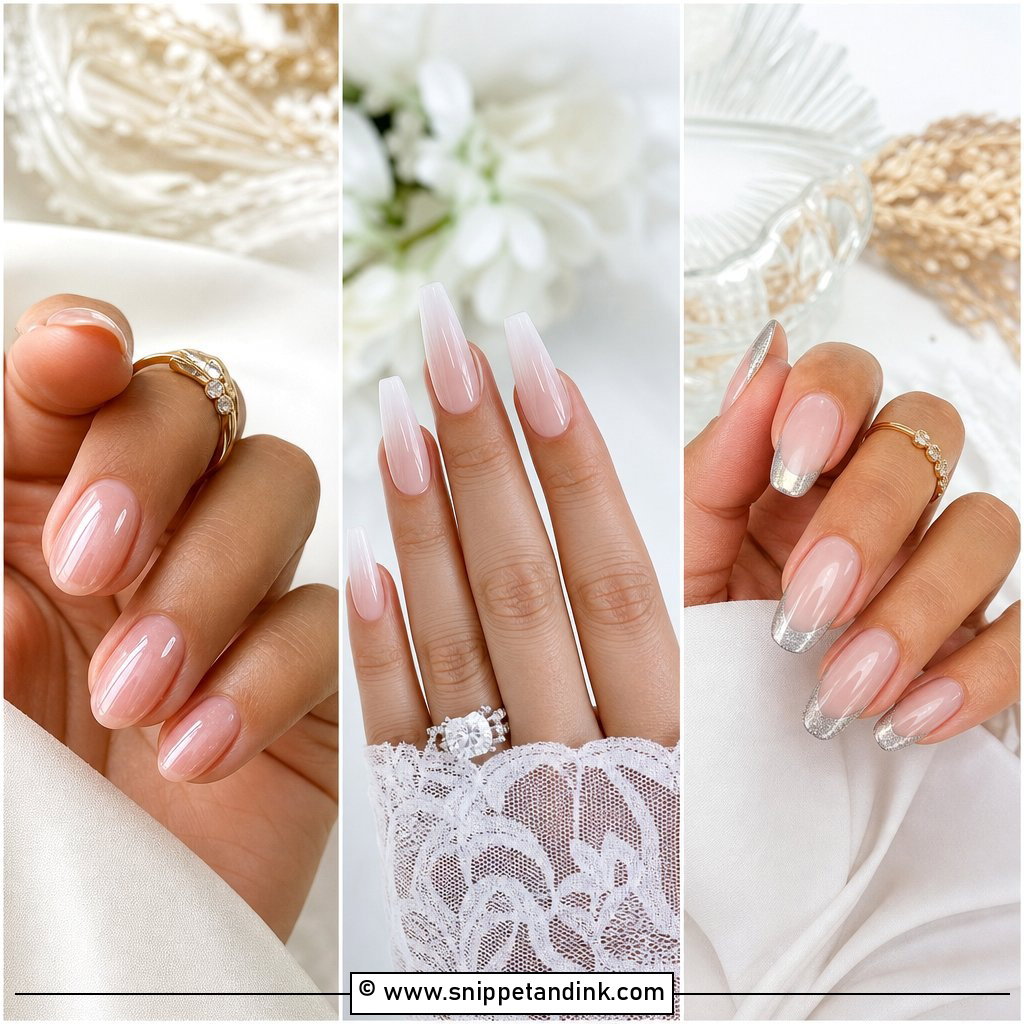
Ombré French bridal acrylic nails soften the French manicure by fading the pink into the white instead of drawing a line. With acrylic I can blend pink and white powders directly as I build, or I airbrush or sponge the fade over a finished base. Medium almond, coffin and square shapes all take it. The fade also makes the nail bed look longer. The one thing to watch is how far the white climbs: if it reaches past the middle of the nail, the set starts to look chalky in photos.
7. Short Bridal Acrylic Nails
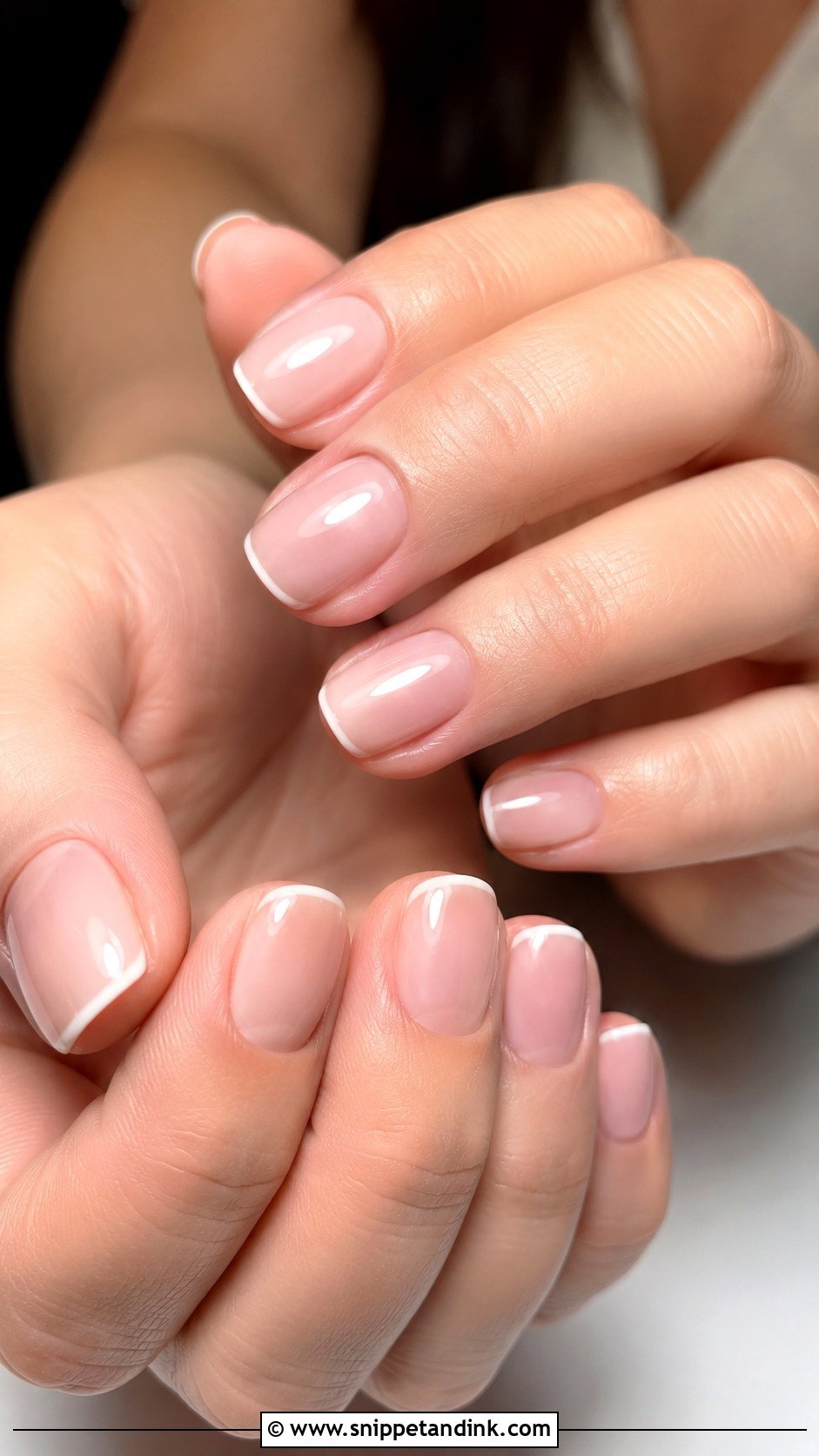
You don’t need long nails for a wedding. A short acrylic set evens out the edges and nail beds, and if you’re not used to extensions, short is far easier on the day. Soft square, squoval and short oval shapes are the most flattering at this length. Sheer pink, milky nude, soft white or a tiny French tip keep things clean. I find brides who’ve never worn acrylic underestimate how often they use their nails, for zips, earring backs and phone screens, and short sets mean fewer surprises while you’re holding flowers and greeting guests.
8. Almond Bridal Acrylic Nails
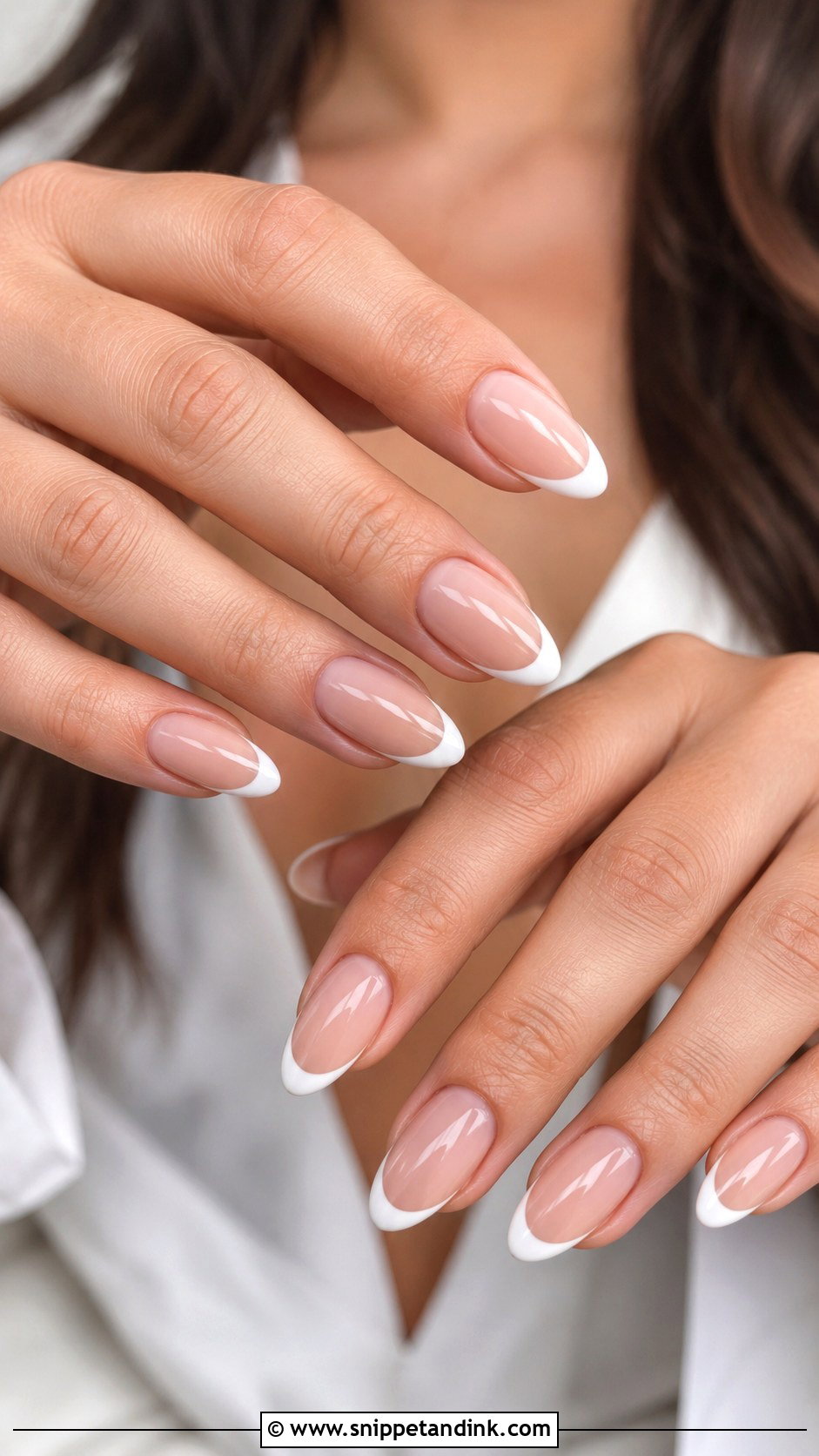
Almond is the shape I recommend most for a wedding. The tapered sides and rounded tip lengthen the fingers and soften knuckles. It takes almost any design, from French tips to pearl chrome, blush or fine florals. Almond does need structure at the stress point where the nail leaves the finger, so I build a proper apex there; without it, a medium almond can snap at the sides. Medium length is the comfortable middle. Pair it with a sheer nude and soft white tips for something classic, or add chrome or tiny pearls near the cuticle for a more current set.
9. Coffin Bridal Acrylic Nails
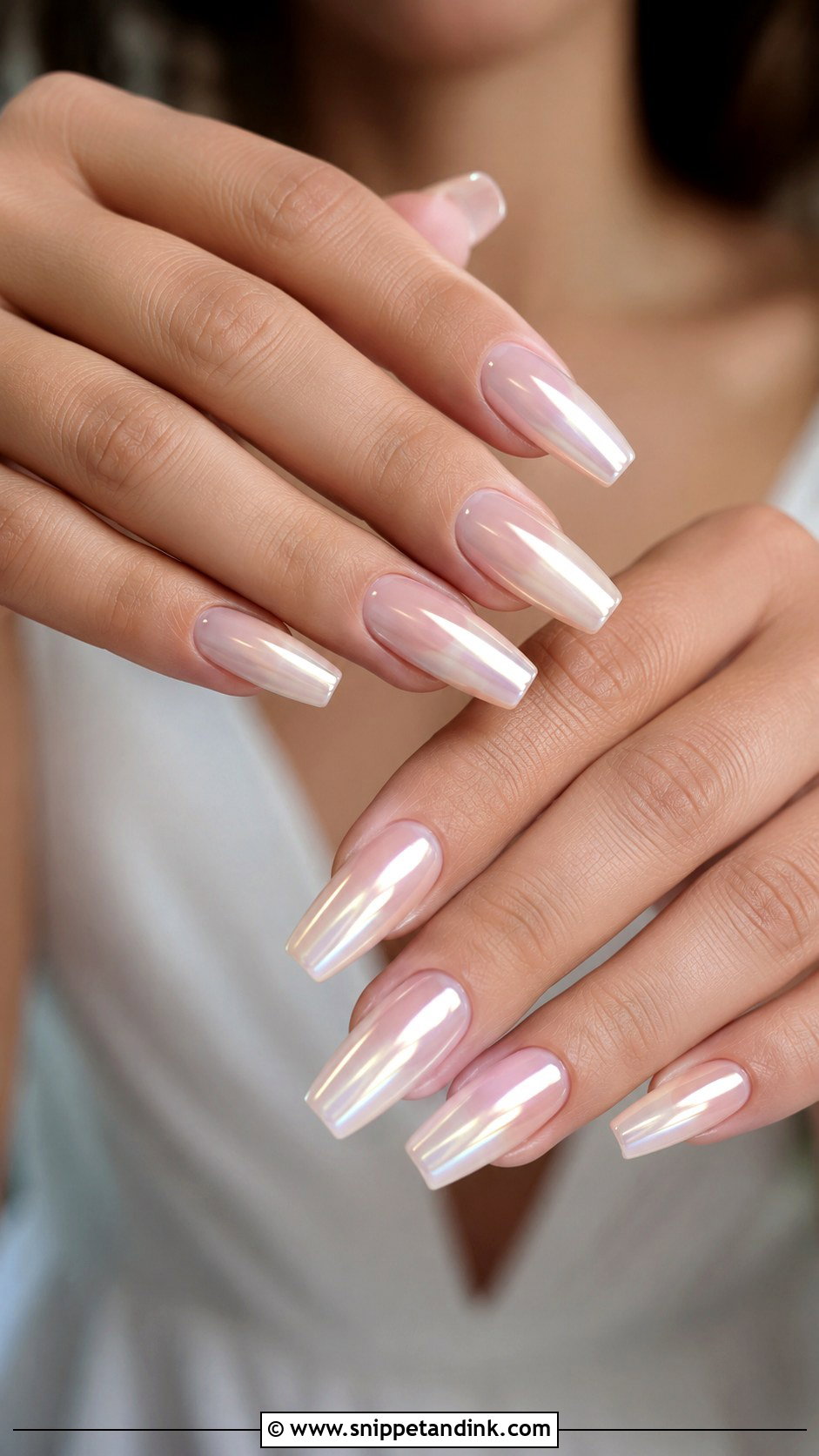
Coffin nails taper and then end in a flat, squared tip, which gives a sharper, fashion-led silhouette. For a bridal version I keep colour soft so the shape doesn’t feel aggressive: milky white, sheer pink, nude ombré and pearl chrome all suit it. I’d steer a first-time acrylic wearer away from long coffins; the flat corners catch on lace and tulle more than almond does. Medium length sits better with structured dresses, minimal jewellery and clean makeup.
10. Square Bridal Acrylic Nails
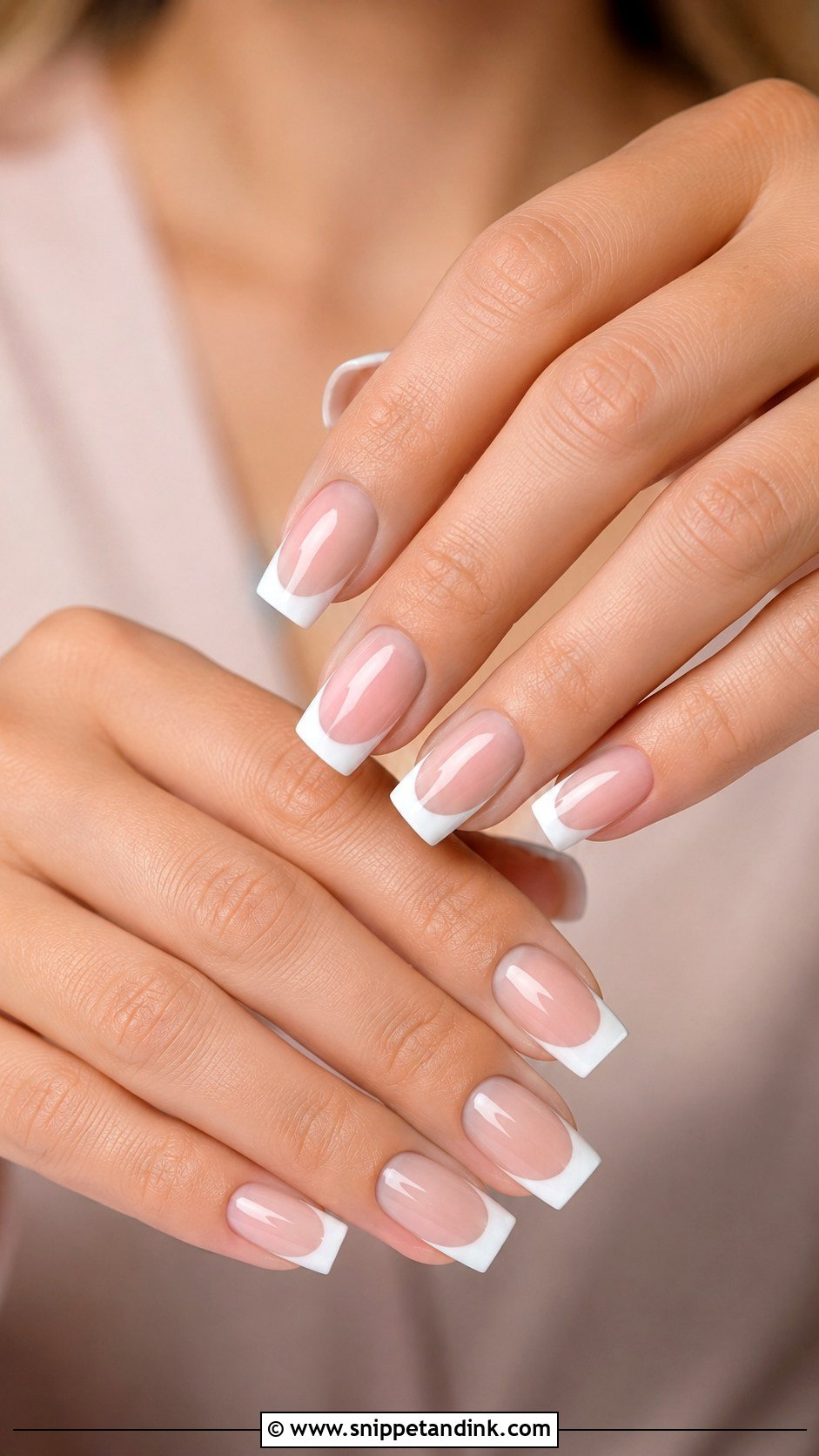
Square is the most traditional salon shape, and acrylic makes it very neat because I can file the free edge perfectly straight. I almost always soften the corners slightly; sharp square corners chip, snag tights and feel boxy on wider nail beds. A French tip on square is classic, while a sheer nude gives a quieter look. Micro French tips, milky white and a few pearl accents all work well on this shape, and it’s sturdy enough for brides who use their hands a lot.
11. White Floral Bridal Acrylic Nails
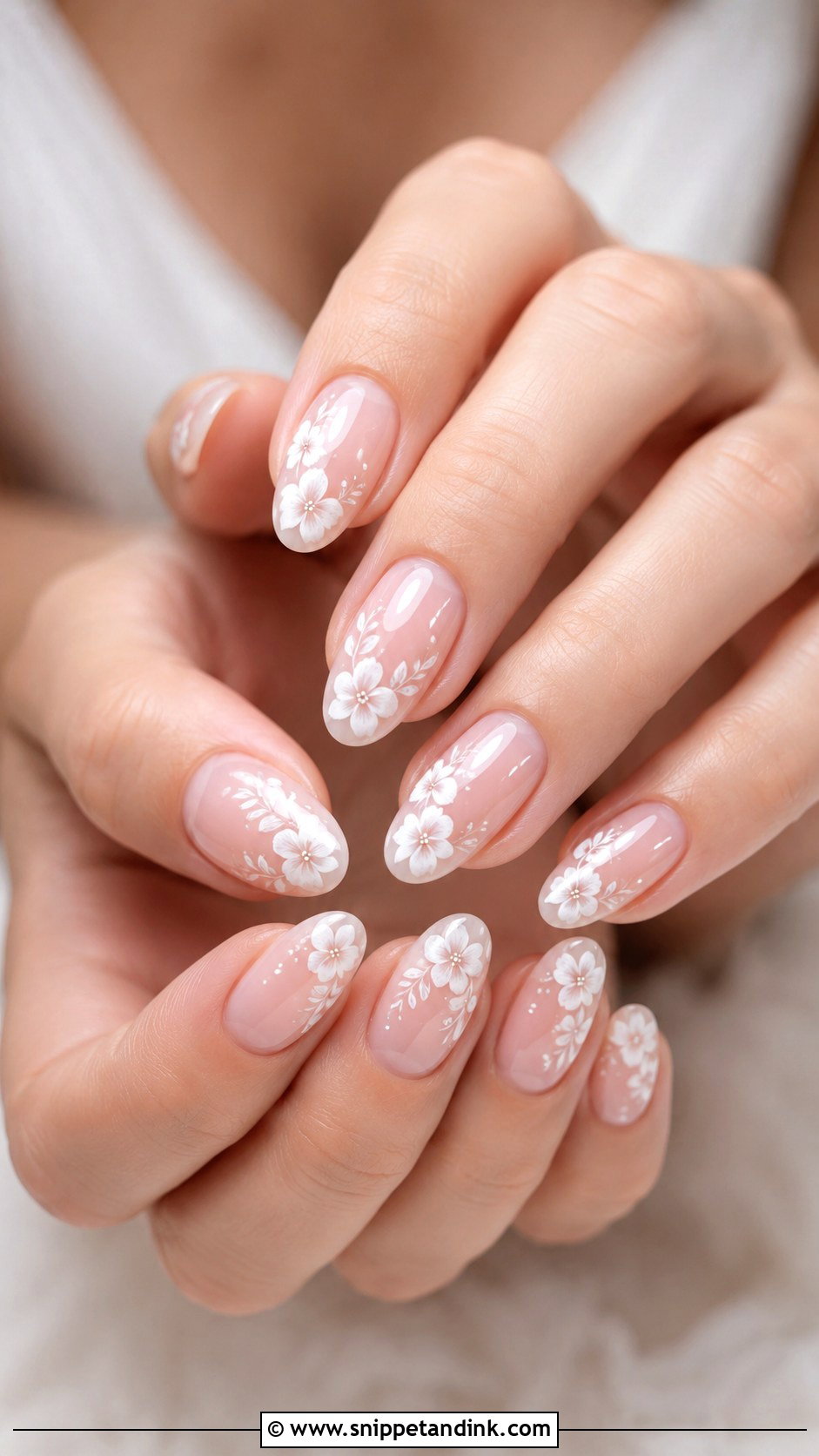
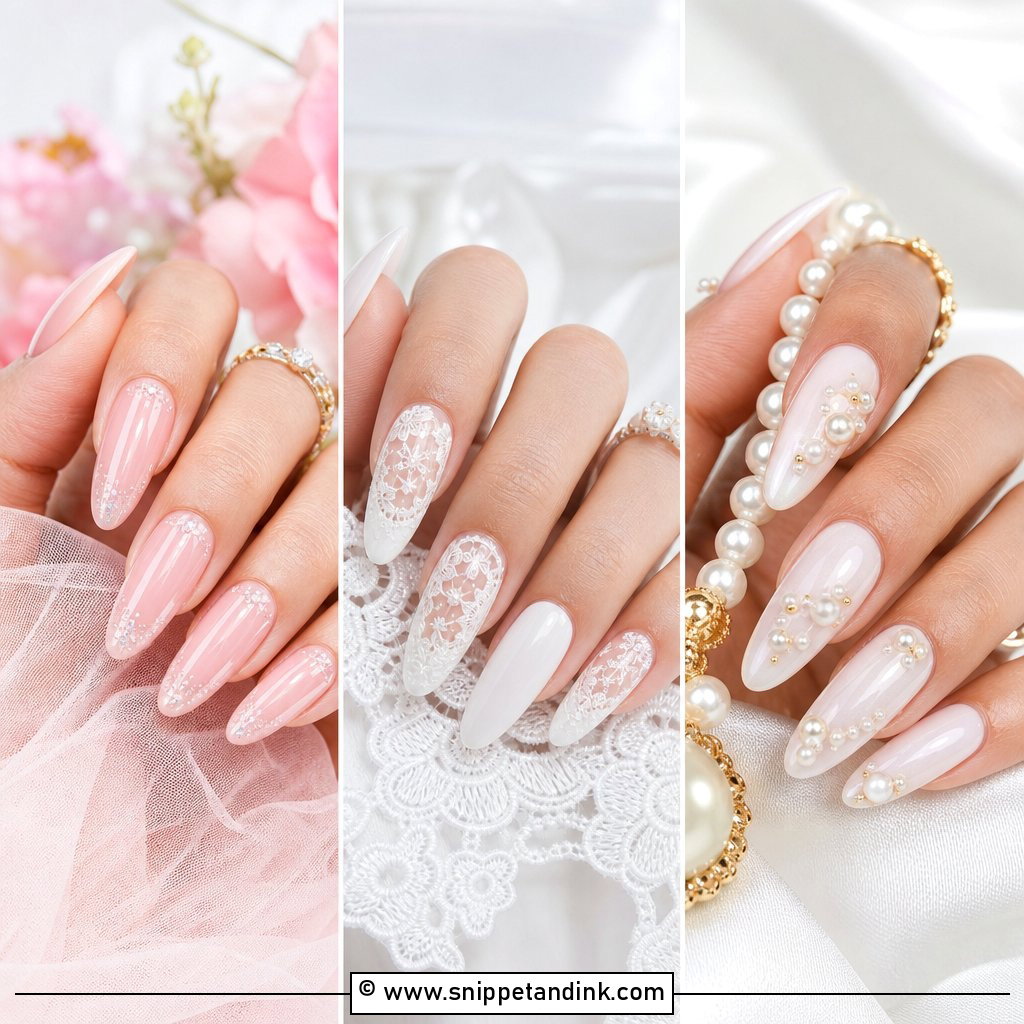
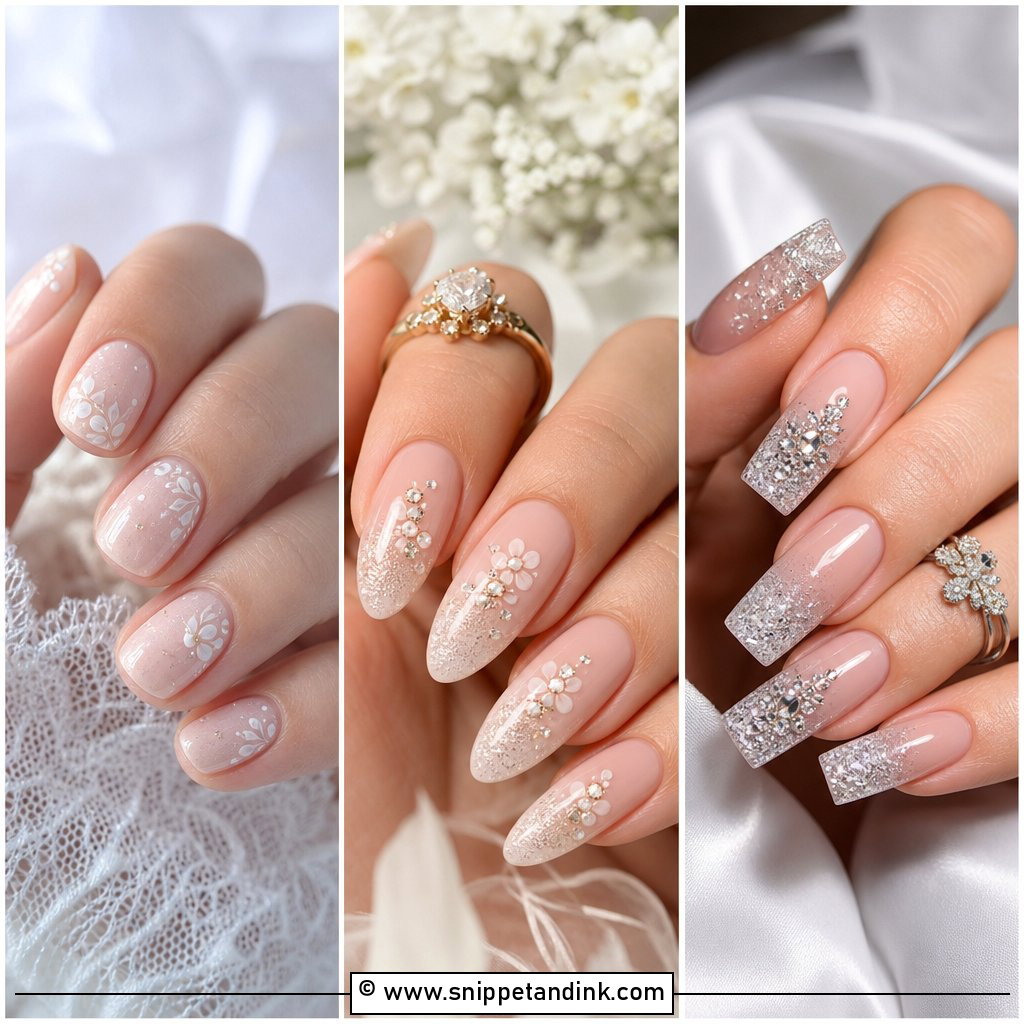
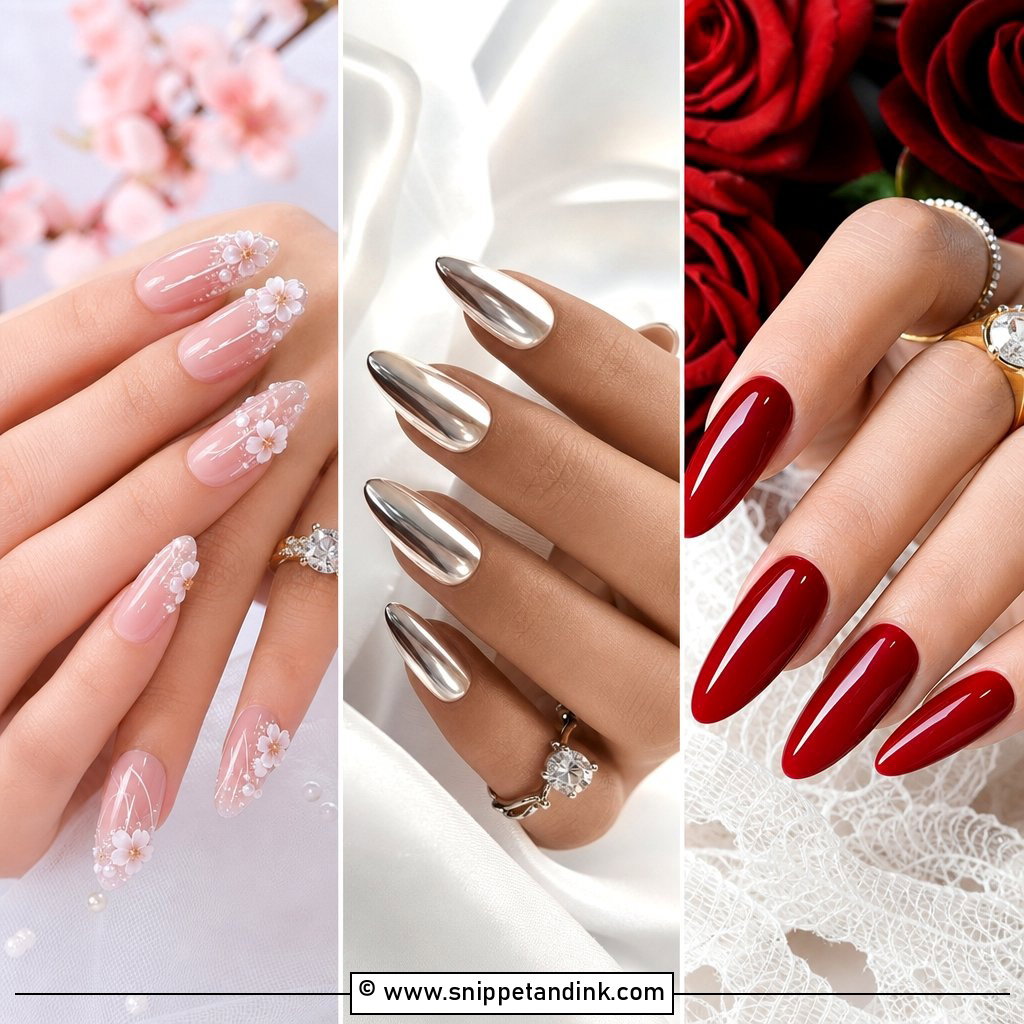
White florals bring in a bit of romance without colour. On a sheer pink, nude or milky base, I paint small flowers across one or two nails, leaving plenty of space between them. Overcrowding is the usual mistake; from a distance a busy floral reads as a white smudge. Acrylic gives me a smooth surface for fine petals and dots. Almond and oval shapes make the art feel graceful, square makes it crisper. It’s a natural fit for garden or spring weddings, or for echoing lace or bouquet details.
12. Pearl Accent Bridal Acrylic Nails
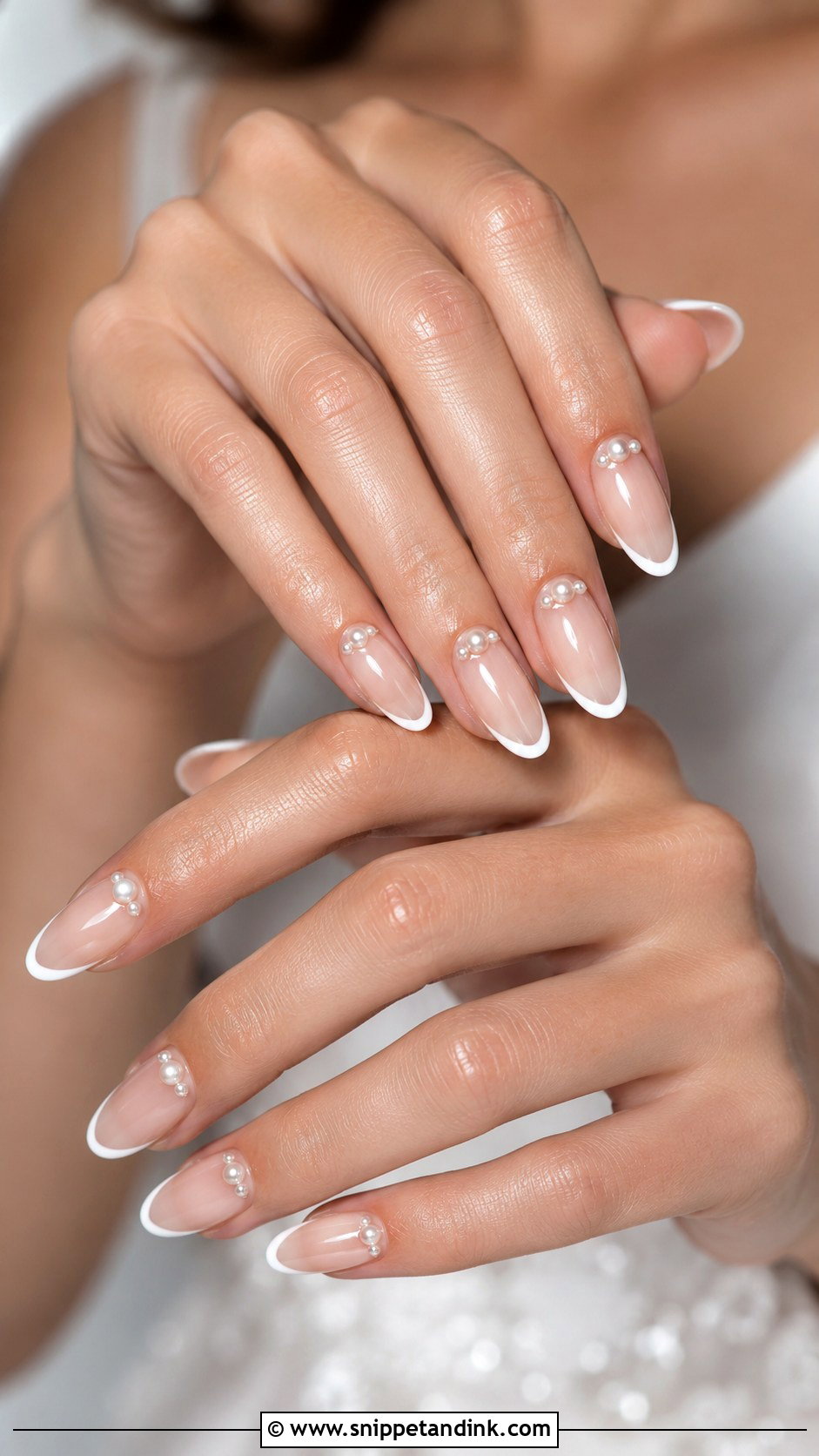
Pearl accents add a little dimension. On a nude, blush, milky or French base, I place tiny flat-back pearls at the cuticle, along a tip line or on one accent nail. Negative space keeps it refined. Pearls tie in naturally with veils, hairpins and classic jewellery. Size matters more than people expect: large domed pearls catch on veil netting and pop off within days, so I stick to small flat-backs set into gel. Almond, oval and soft square all suit it.
13. Lace Bridal Acrylic Nails
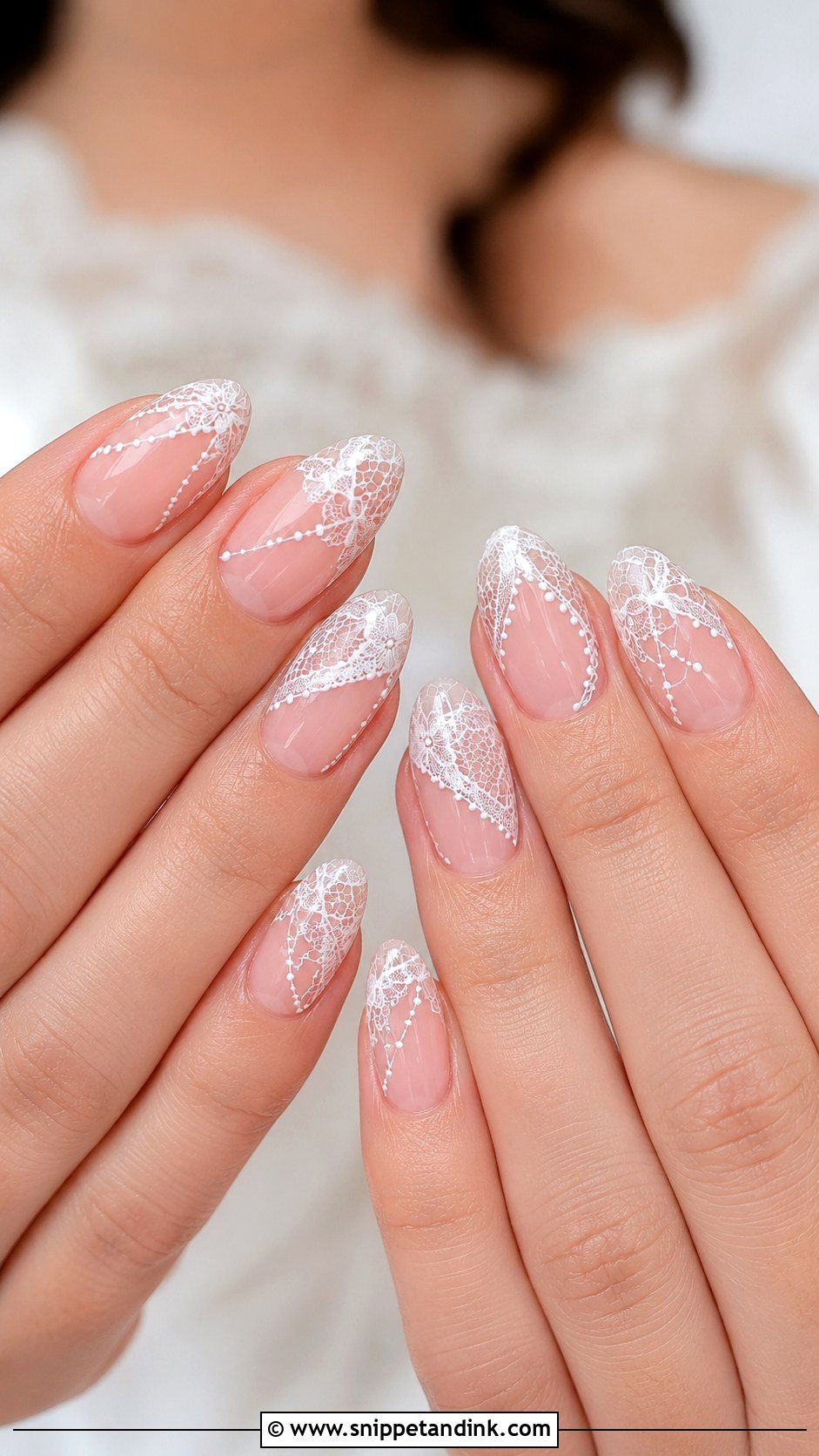
Lace nails are made for gowns with lace sleeves, embroidered veils or appliqué. I paint fine white lace over a sheer nude or soft pink base, either lightly over every nail or on two or three with the rest kept plain. This is slow, careful work, so book extra time; a full lace set can take me noticeably longer than a French. A medium almond or oval suits it. Ask for thin lines, tiny dots and airy spacing so it reads as lace, not as a pattern. A glossy top coat keeps the lines crisp.
14. Glitter Ombré Bridal Acrylic Nails
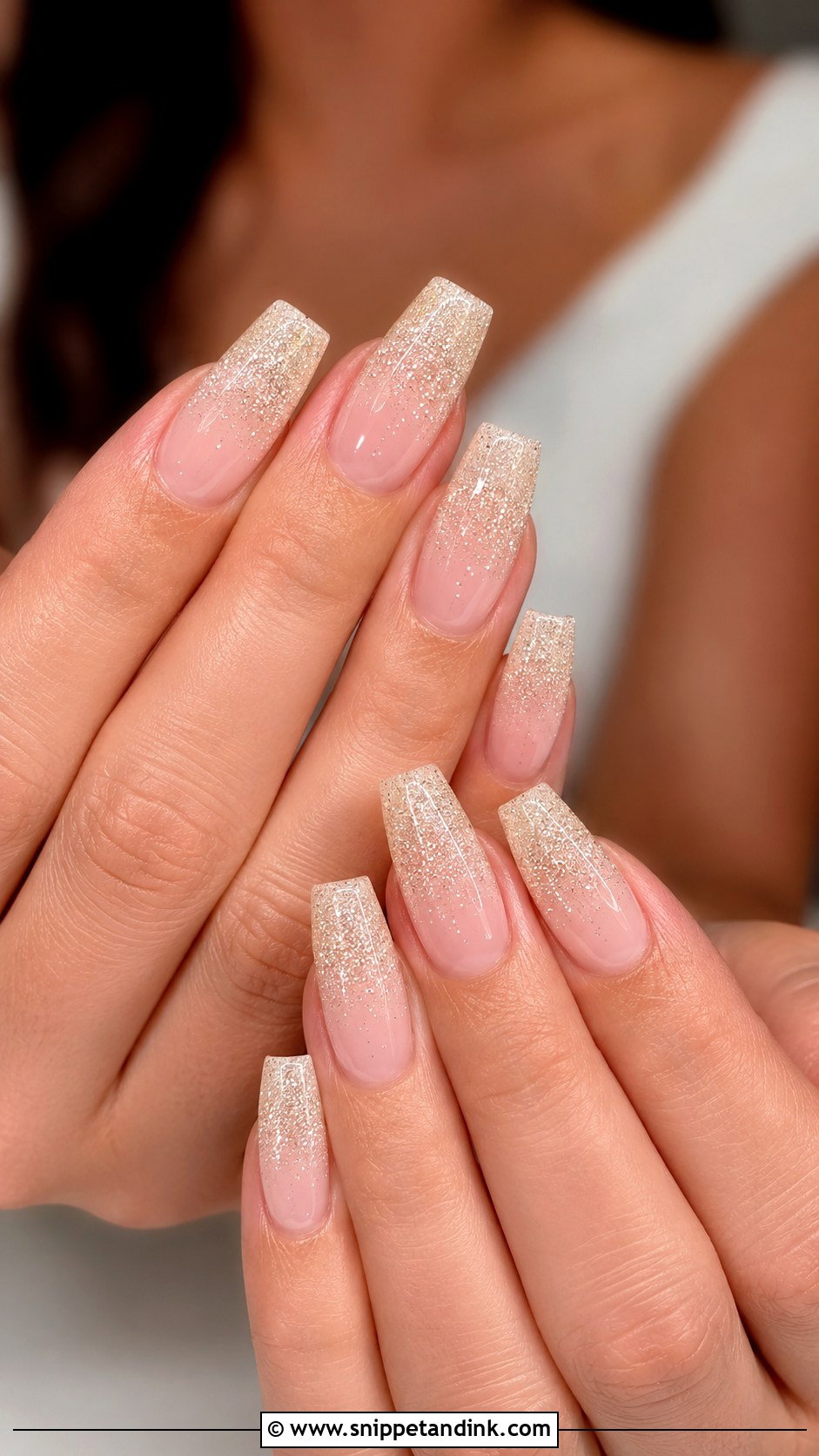
Glitter ombré gives sparkle in a controlled way. The shimmer fades from the tip or cuticle into a nude, pink or milky base, so it’s bright without covering the whole nail. Fine silver, champagne or pearl glitter looks most bridal; chunky glitter looks like a party set. In acrylic, I can encapsulate the glitter inside the product so the surface stays smooth and nothing snags. Almond, coffin and square all suit it. Glitter ombré nails show up well in ring close-ups because they catch light as your hand moves.
15. Gold Detail Bridal Acrylic Nails
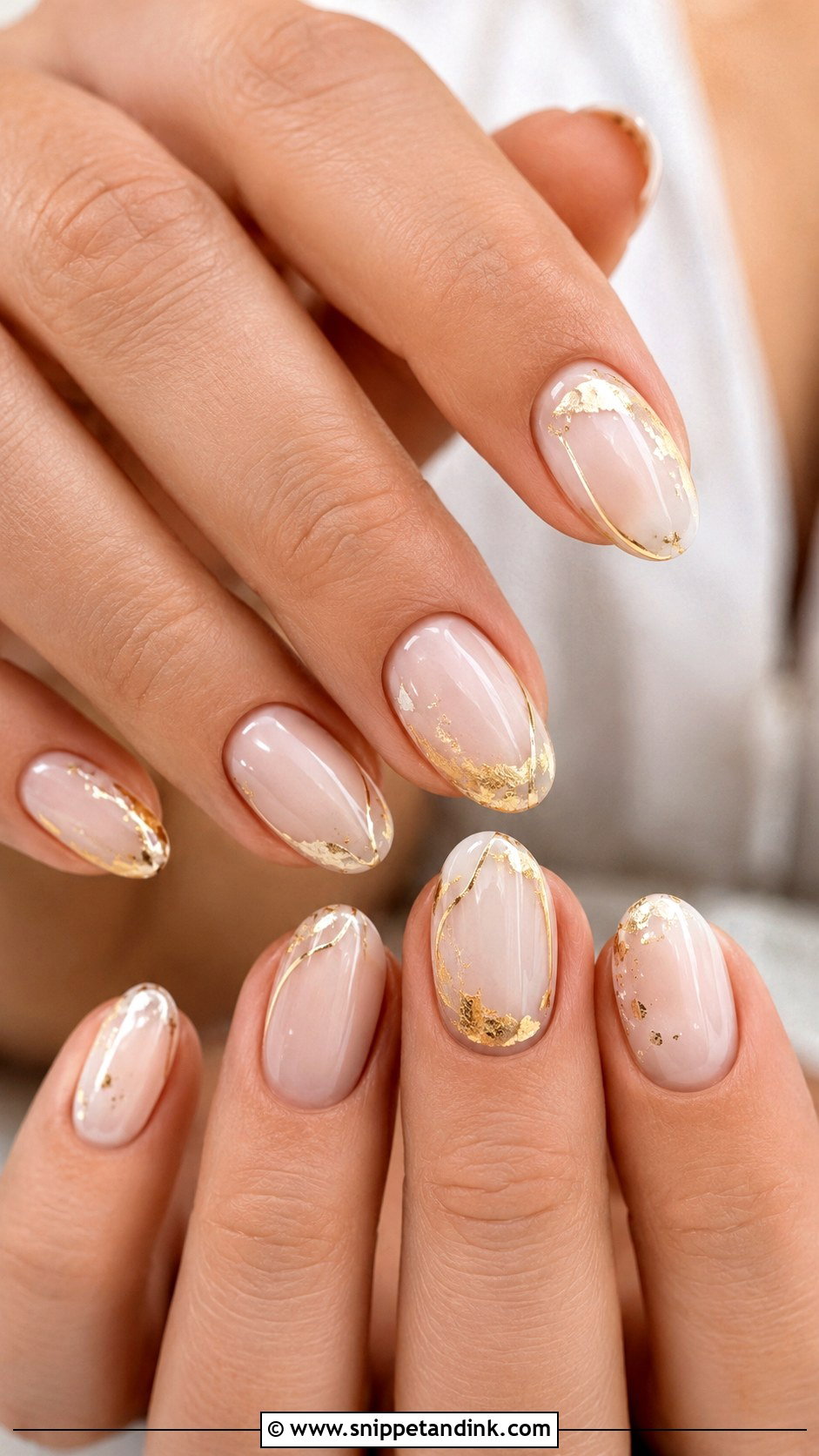
Gold details add warmth to a soft base of nude, blush, ivory or milky white. Thin lines, tiny foil pieces, micro French tips or small cuticle accents are enough. I match the gold to your ring before choosing a foil or leaf; a yellow-gold band next to a cool gold foil looks off in close-ups. Acrylic gives the art a stable base, and a sealed top coat protects fine metallics from wearing off. Keep it minimal. A short oval or medium almond finishes it.
16. Silver Chrome Bridal Acrylic Nails
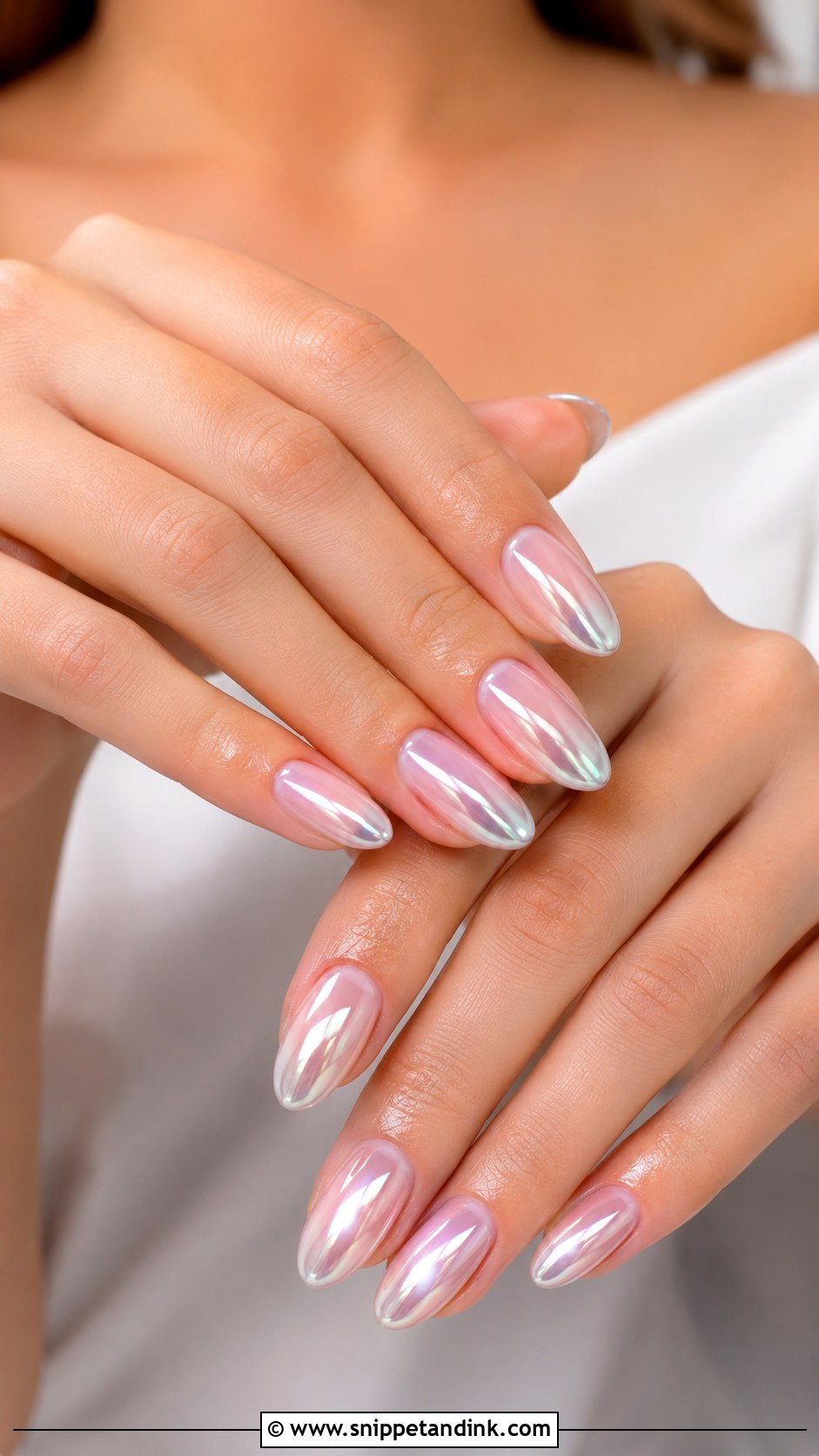
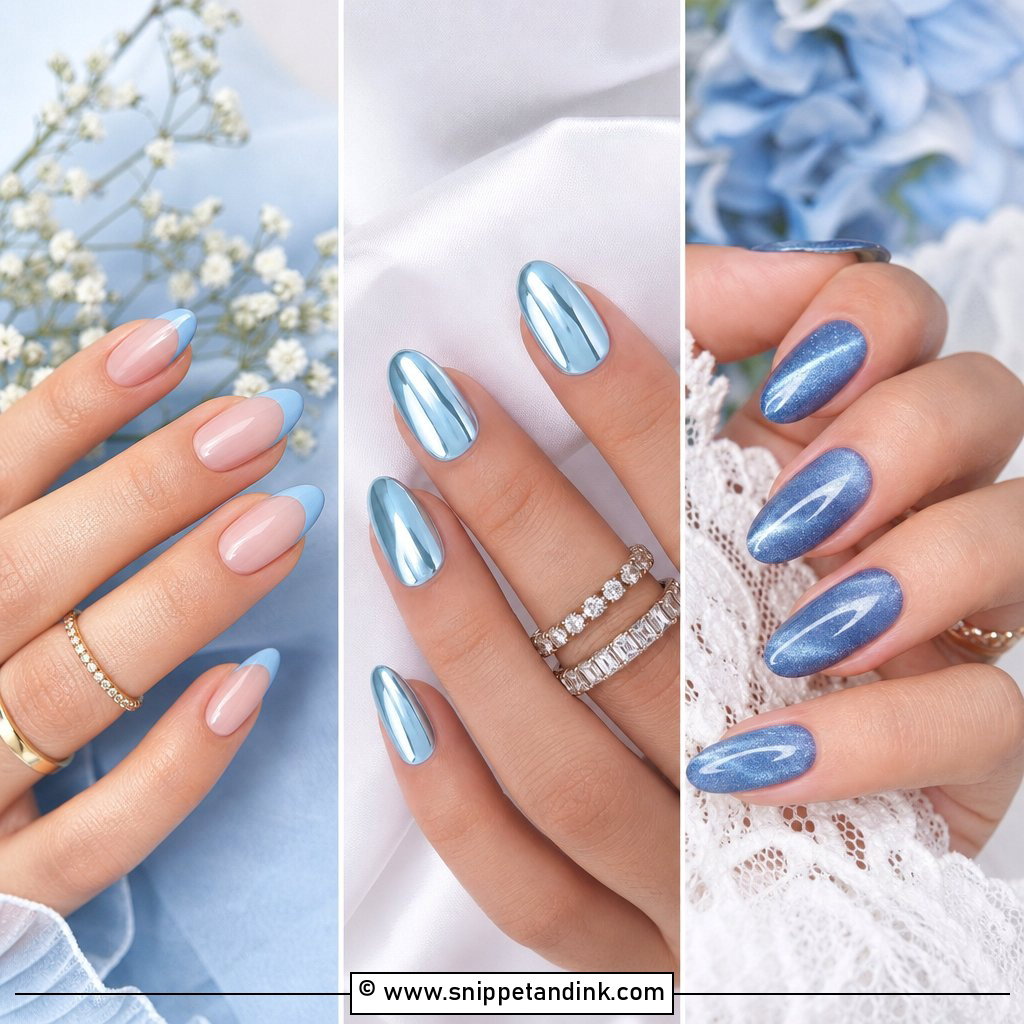
Silver chrome bridal acrylic nails suit brides who wear cool tones. Layered over a sheer white, pale pink or translucent nude, a light silver glaze gives an icy shine instead of a hard mirror. Chrome shows every bump underneath, which is why a well-filed acrylic base matters so much here. It pairs naturally with platinum, white gold and crystal hairpieces. Almond and coffin look striking; shorter ovals keep it subtle. I’d skip it if your ring is yellow gold, as the two metals fight in photos.
17. Something Blue Bridal Acrylic Nails
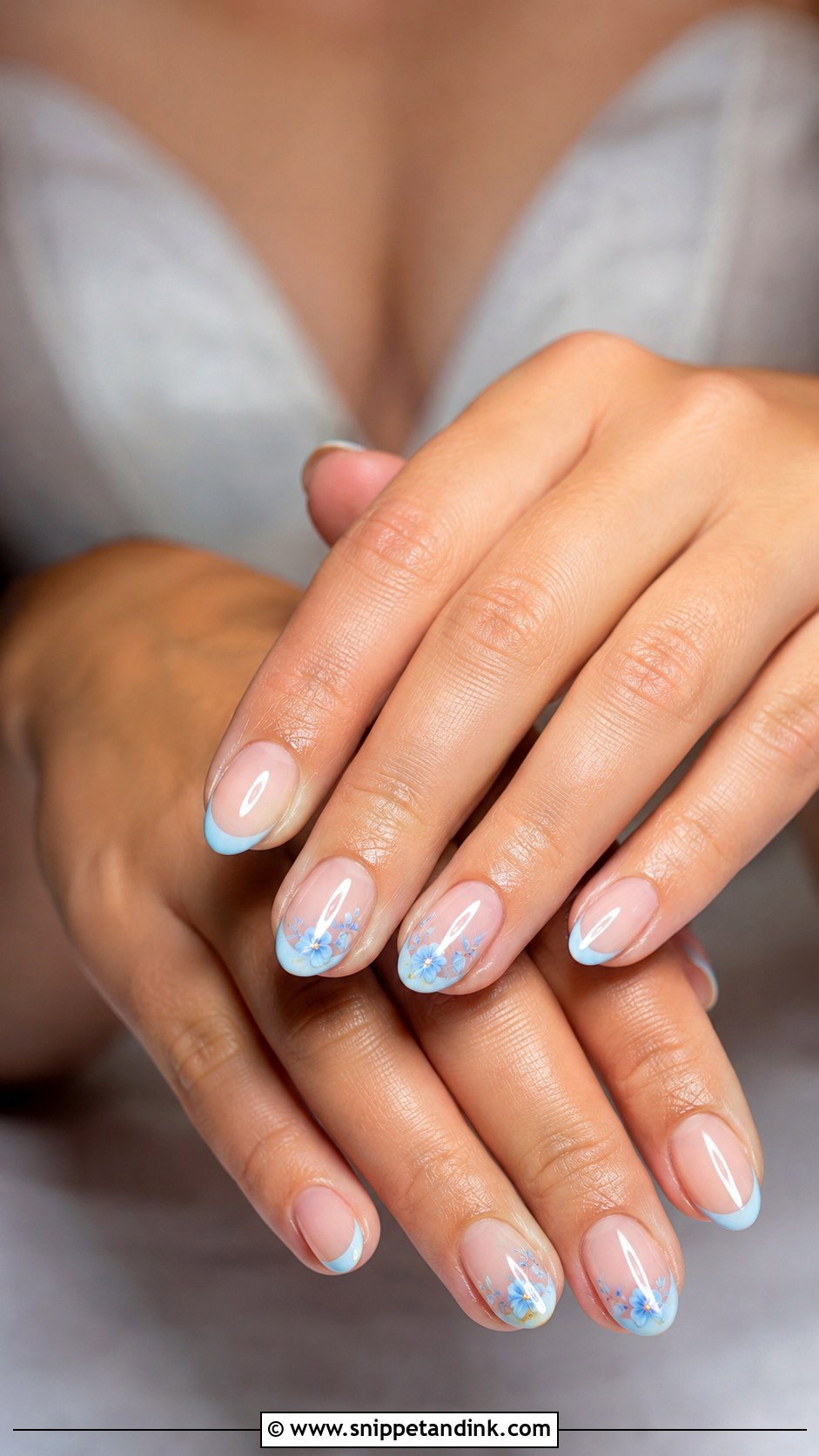
Something blue is an easy tradition to tuck into a manicure. A pale blue French tip, a tiny blue flower, a blue pearl or a small heart on one nail is enough. A sheer pink, nude or milky base keeps the rest of the set bridal. I mix blues slightly greyer than the bottle shade when the palette is dusty or slate, because bright blue looks harsher under indoor lighting. It’s a detail for you and your ring finger, not the whole manicure.
18. 3D Flower Bridal Acrylic Nails
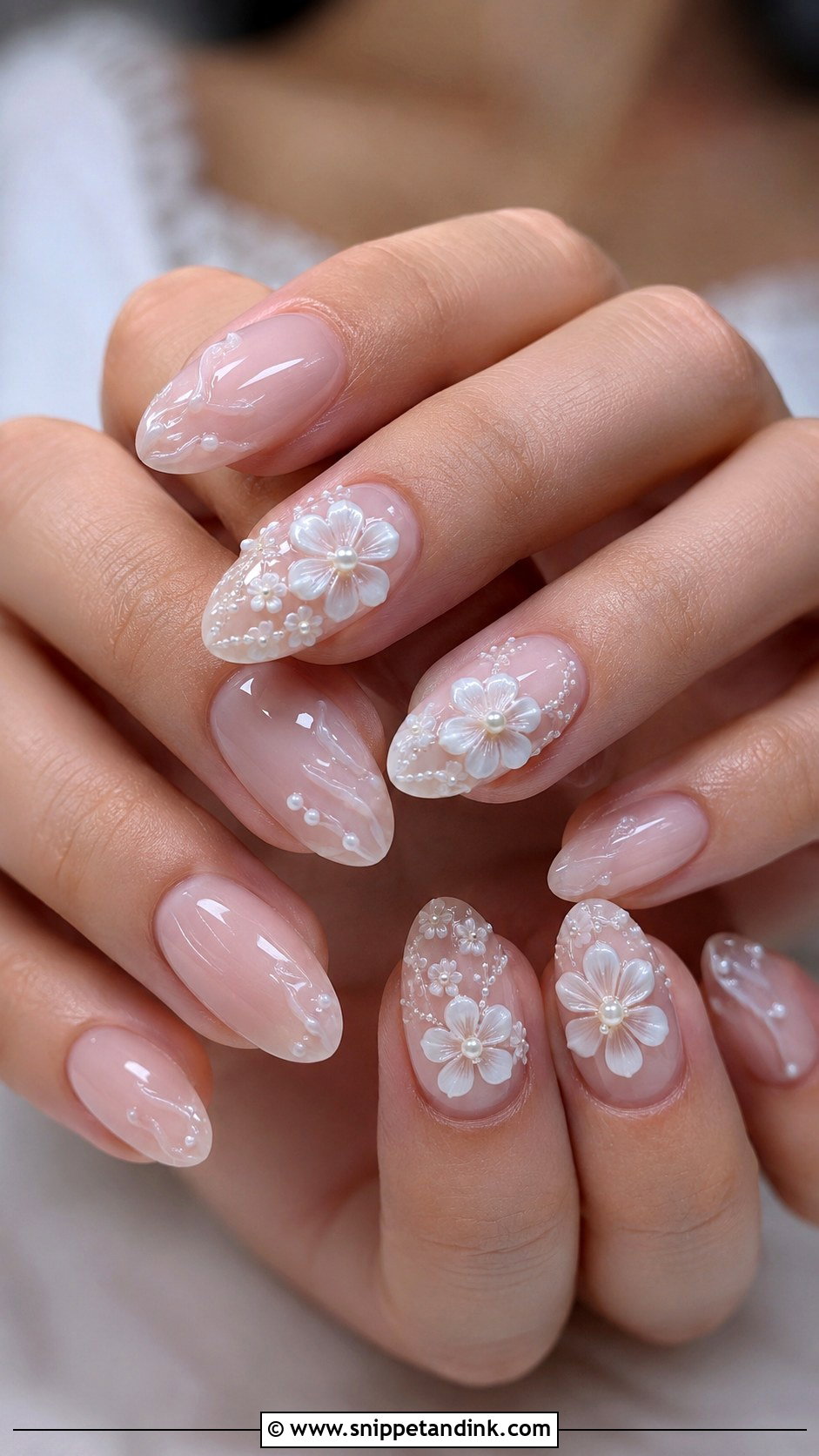
3D flower bridal acrylic nails add texture. I sculpt small flowers in white, ivory or blush acrylic and set them on a sheer nude or milky base. Raised art is where acrylic shines, since the product holds a shape as it sets. I limit 3D flowers to one or two accent nails; on every finger they catch on hair, veil and dress fabric all day. Small petals, a pearl centre and glossy surrounding nails keep it balanced. Almond and oval feel delicate, coffin more dramatic.
19. Micro French Bridal Acrylic Nails
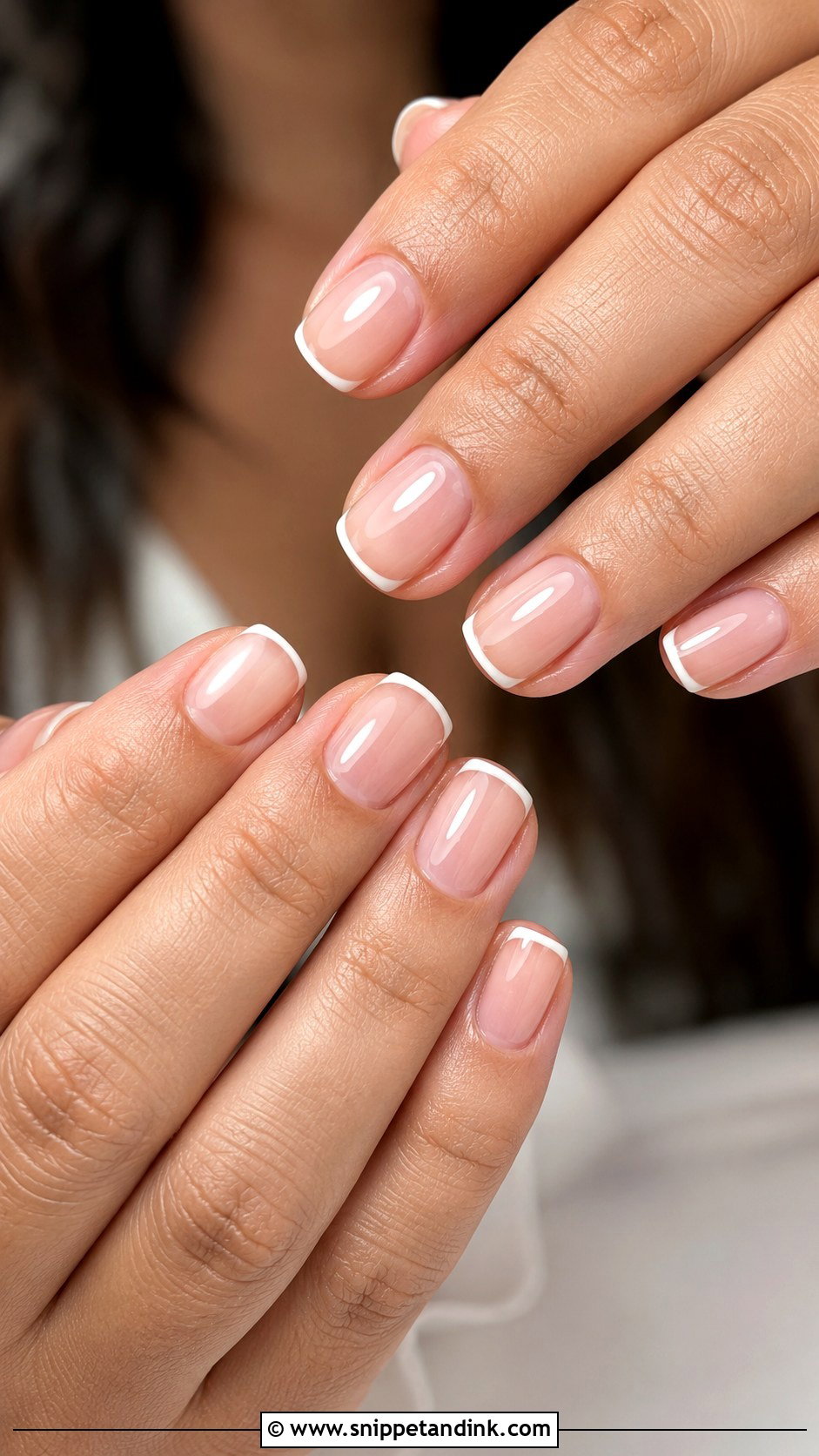
Micro French bridal acrylic nails take the white tip down to a very thin line. It’s clean and understated for brides who find a standard French too bold. A sheer pink, beige or milky base keeps it natural. The thin line is less forgiving than people expect; any unevenness in length shows instantly, which is another reason acrylic is a good base, since every free edge is built to match. Short square, squoval, almond and oval all suit it, and it ages well in photos.
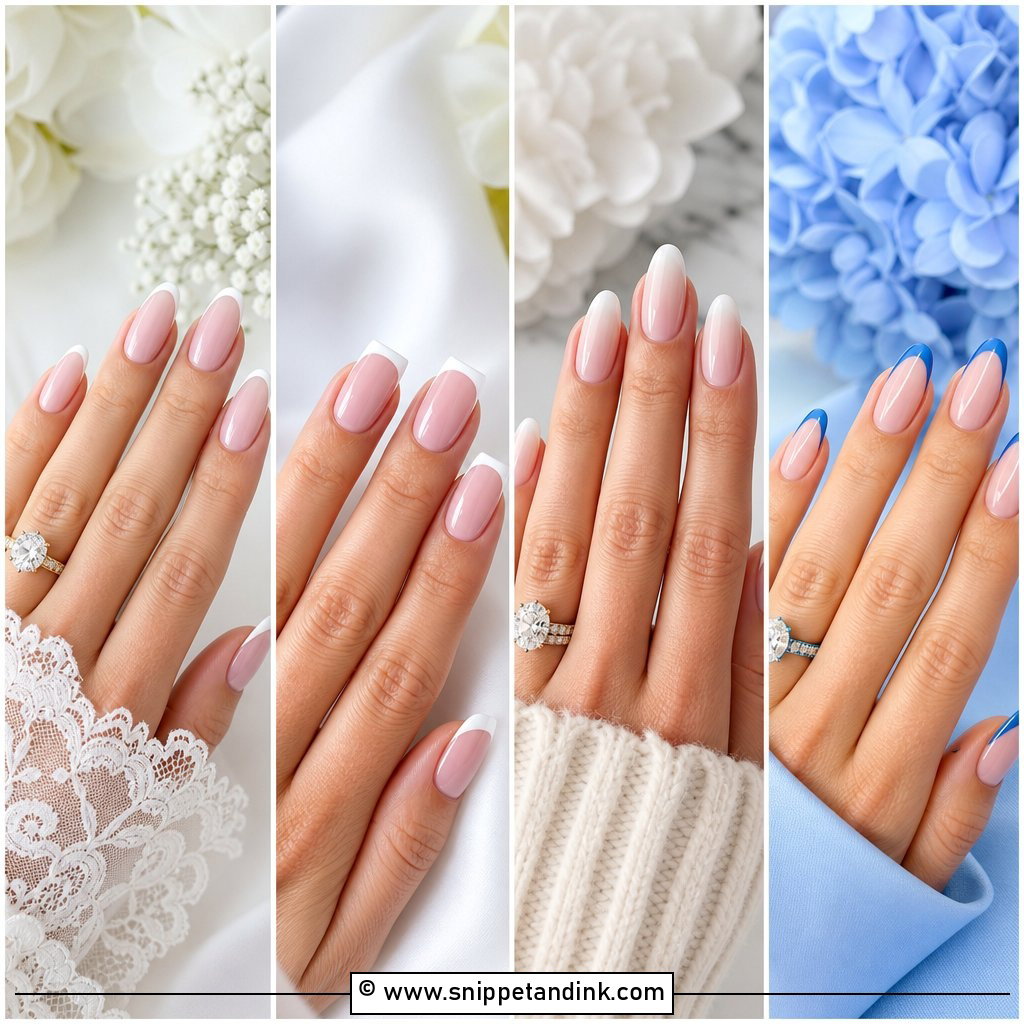
20. Marble Bridal Acrylic Nails
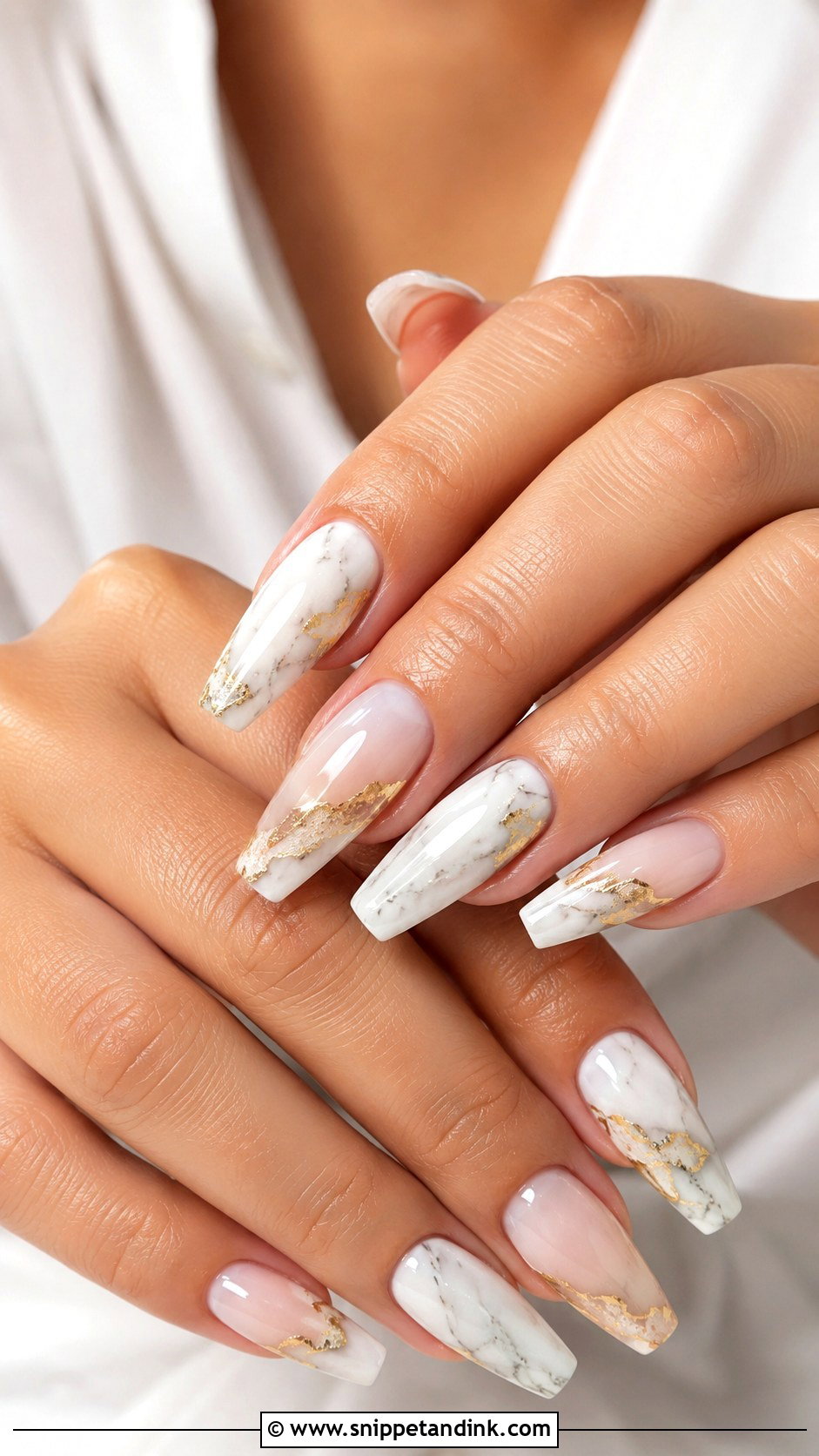
Marble gives an artistic look that still feels refined. For a wedding I use white, ivory, blush or nude with very fine veining and keep heavy dark lines out. A touch of gold foil or pearl shimmer can be added sparingly. I work the marble into wet product so the veins soften at the edges instead of looking drawn on. Almond, coffin and square all take it. It’s a good alternative for brides who don’t want French tips but still want something quiet.
The Wedding Week, Hand by Hand
My preferred appointment for the final set is one to three days before the wedding. That gives any lifting time to show itself so it can be fixed, while the cuticle area still looks freshly done. If you already wear acrylic, a full fill is usually enough; a brand new set is only needed if your current ones have grown out a long way or you’re changing the shape.
- Skip fake tan on your hands for a day after the appointment, as it can settle at the cuticle line.
- Wear gloves for washing up and cleaning; hot water and harsh products dull the top coat.
- Use cuticle oil daily, but keep it off the nail surface on the morning of the wedding so photos don’t pick up a greasy shine.
- Pack a nail glue, a small file and a clear top coat in the bridal emergency kit.
Getting Them Off Without Thinning Your Own Nails
Most of the damage people blame on acrylic actually comes from removal. Never pick or prise a set off; it takes layers of your natural nail with it. The safe route is to have the top filed down and then soak the rest in acetone until it softens and lifts easily. Book a removal appointment after the honeymoon, or ask for a fill if you want to keep them longer. Afterwards your nails may feel thinner for a few weeks while they grow out, so keep them short and oiled.
Quiet Sets Usually Win the Ring Shot
The most detailed set is rarely the best wedding set. A sheer nude, soft French or milky white can look every bit as finished as pearls, chrome, glitter or florals, and it lets the ring and dress lead. Acrylic gives you control over length, shape and strength for a long day of photos and hand-holding. Look at your dress fabric, metal colour, bouquet and how you use your hands before you choose. If you’ve never worn acrylic, a trial set a few weeks ahead tells you more than any picture can.
You'll Like These Ideas:


Leave a Reply