
An ombre is the bridal manicure I’m asked for most, and I understand why. A blended fade has no hard line to fight with your ring, your bouquet stems or the beading on your sleeve, so the hands look finished without looking busy. The shades that work are the quiet ones: sheer pink, milky white, nude, champagne, pearl, the palest blue. The fade itself can sit under a glossy glazed finish, a fine shimmer or nothing at all, and it adapts to short natural nails as easily as to long extensions. Here are twenty versions I’d happily sit down and paint, with what I watch for in each.
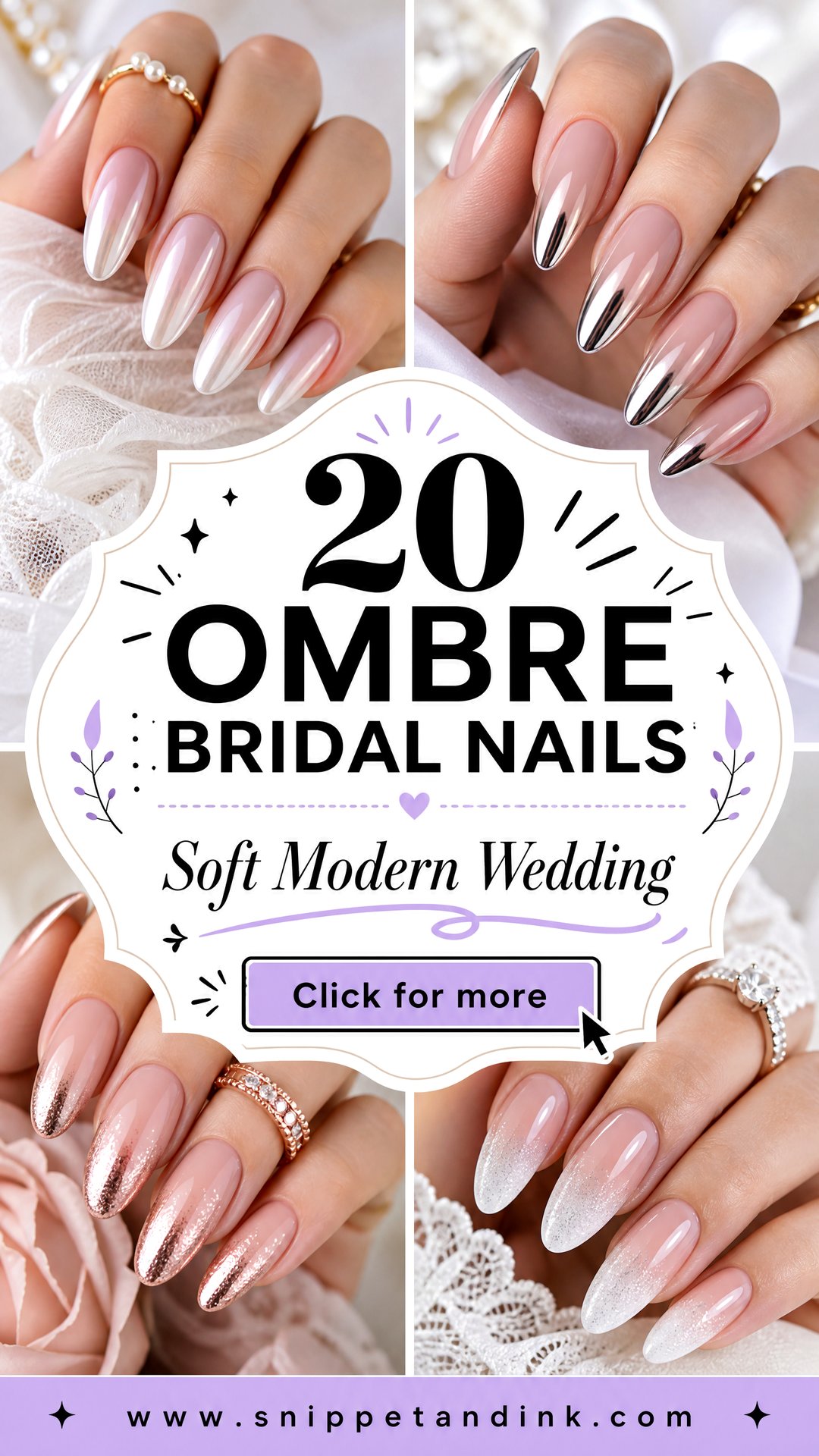
Sponge, Brush or Powder: Three Ways an Ombre Gets Made
The same photo can be recreated in very different ways, and the method decides how long your manicure lasts. Ask which one your nail artist plans to use.
- Sponged regular polish: the quickest and cheapest, but it chips within days and the blend can look grainy up close. Fine for a guest, risky for a bride.
- Blended gel: I paint the colors side by side and soften the join with a brush or sponge before curing. It lasts two to three weeks and stays glossy, which is why most bridal sets are done this way.
- Acrylic powder ombre: pink and white powders blended over extensions, the classic baby boomer. It’s the strongest option and the only one that adds real length, but it needs proper removal afterwards.
For timing, I like to see a bride two or three days before the wedding. That leaves time for any cuticle redness to calm down, and the set is still flawless for the honeymoon photos. Never book the morning of; a smudge or a lifted edge then has nowhere to go.
1. French Ombre Bridal Nails
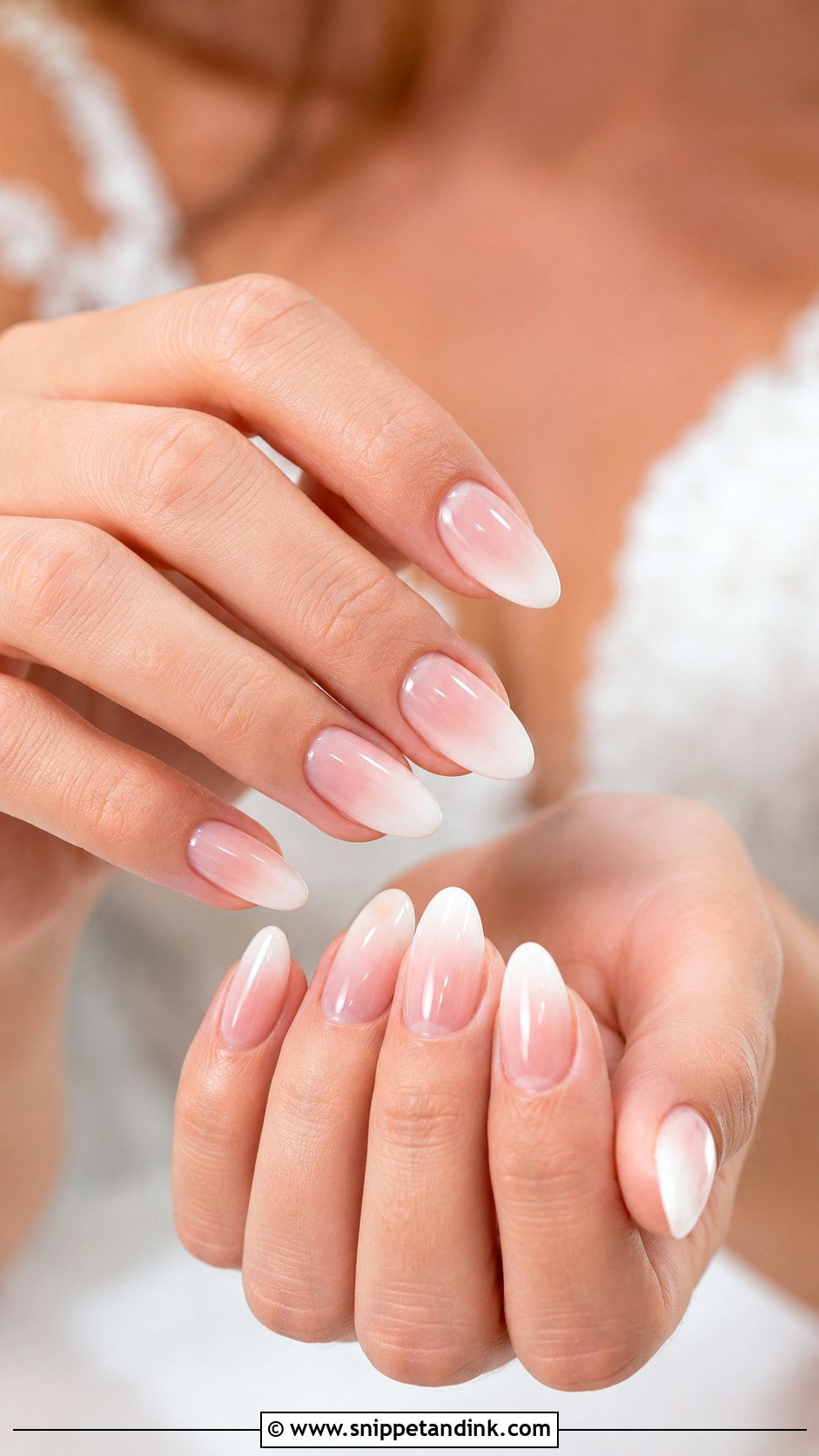
The French fade is the version I paint more than any other. Instead of a crisp smile line, a sheer pink or nude base melts into creamy white at the free edge, sometimes called a baby boomer. On almond, oval and soft square shapes it makes the finger look longer, because the eye reads the blend rather than where the nail ends. The base is where I spend my time: it has to match your nail bed, not the bottle swatch, or the whole hand looks chalky. I keep the white soft at the tip and finish with a high-gloss top coat.
2. Milky White Ombre Bridal Nails
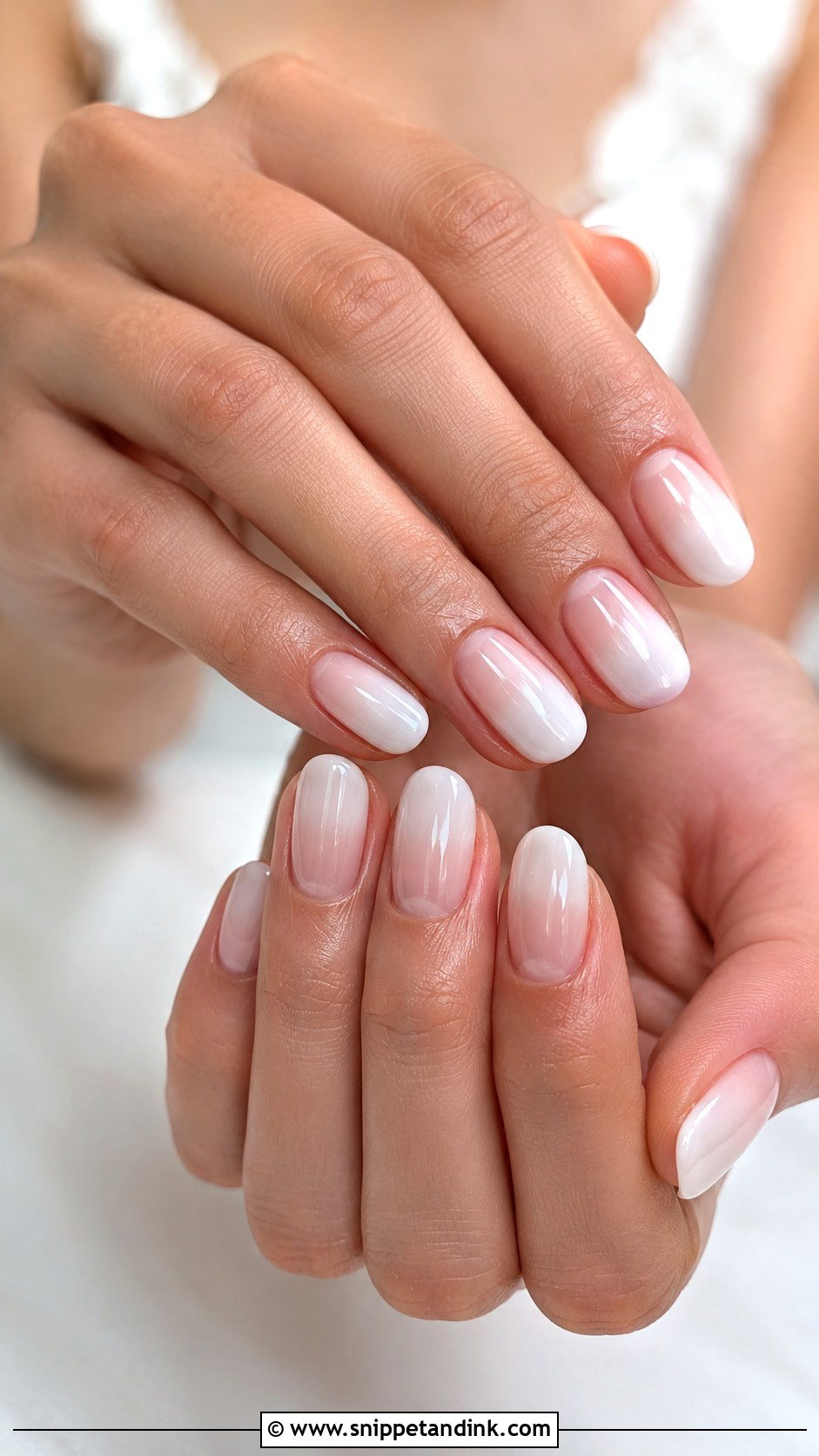
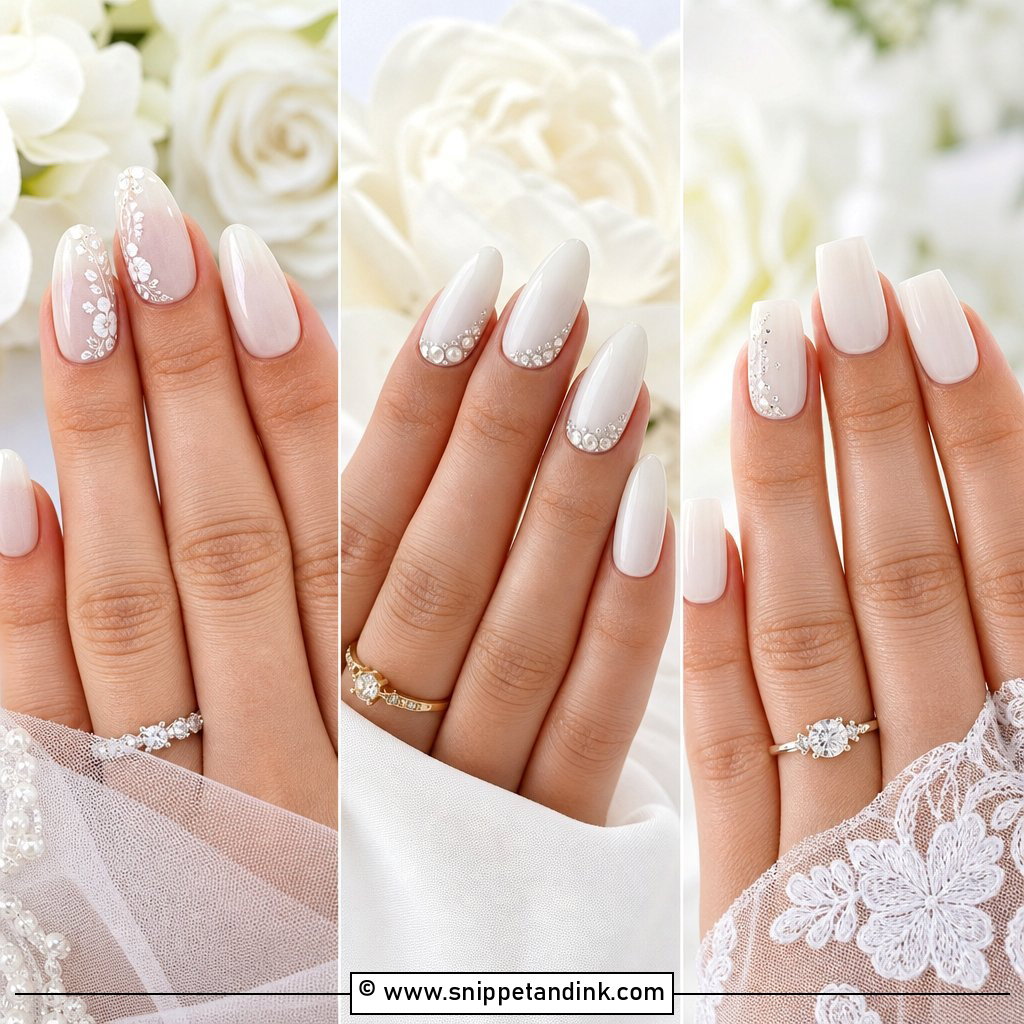
This is the veil of nail looks. A sheer nude or pale pink base blends into a cloudy white that glows without turning bright. The trick is translucency: I build milky gel in thin coats so you can still faintly see the nail through it, because one thick coat of opaque white goes flat and reads like correction fluid in close-ups. It sits naturally beside lace, satin, tulle and pearls, and it’s a clear step up for anyone who usually wears plain nude.
3. Pink And White Ombre Bridal Nails
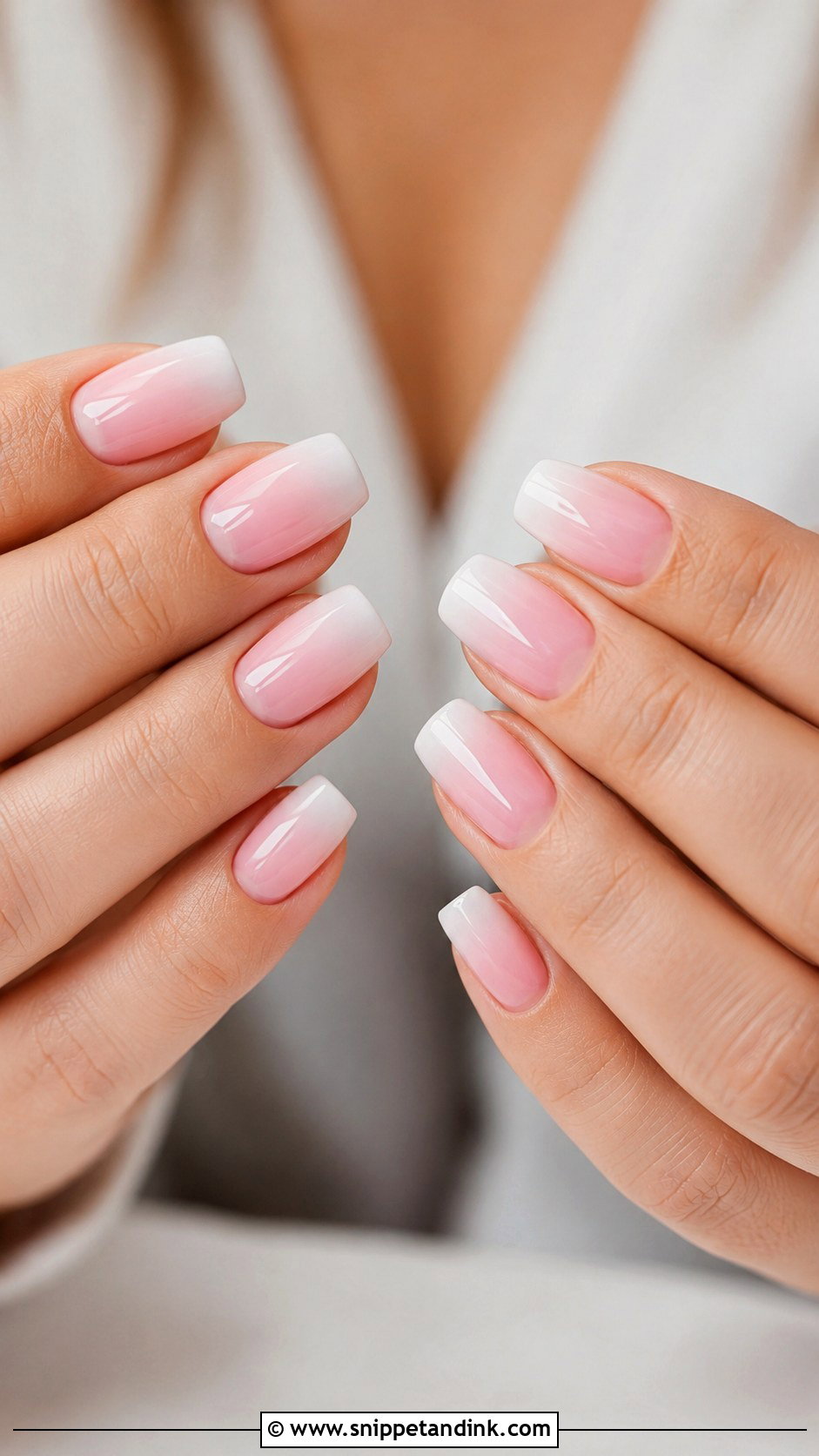
Pink warms the nail bed and the white fade keeps it bridal, so this one suits nearly every dress. Shade choice depends on your skin, not the trend. Baby pink sits well on fair and medium skin; on deeper skin tones I reach for rose or a nude-pink, because pale baby pink can look grey against the hand. The blend must be smooth with no visible band where the colors meet. I’d keep the shape simple, oval or almond, so the color does the talking.
4. Nude Ombre Bridal Nails
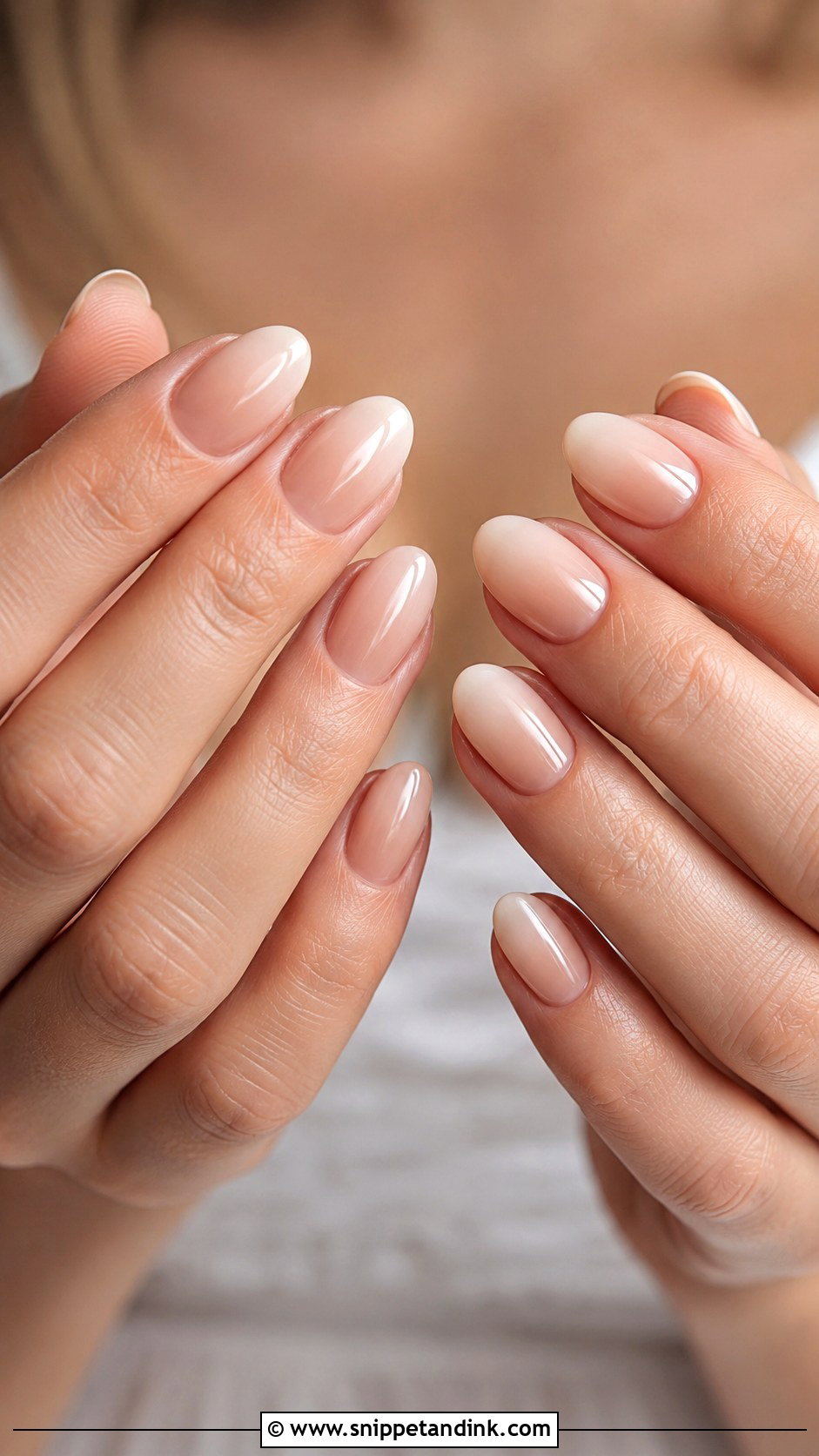
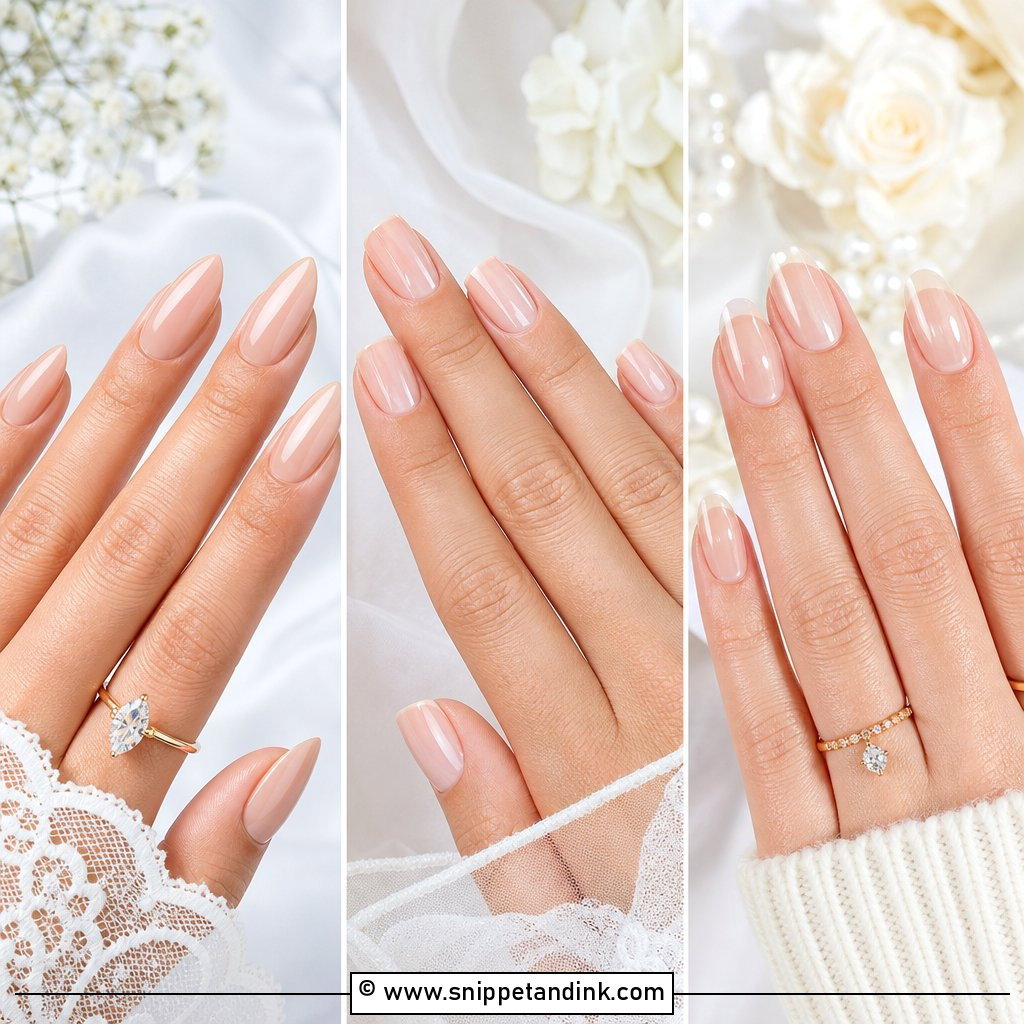
Nude ombre looks understated but takes the most care to get right. It usually runs from a skin-toned base into beige, cream or a soft white tip, and the base is everything. Peach nudes warm the hand, beige reads modern, and rosy nudes soften in close-up photos, but the wrong undertone washes you out completely. I swatch two or three shades on your actual nail before we commit. With a glossy finish it lets your engagement ring be the brightest thing on the hand.
5. Blush Ombre Bridal Nails
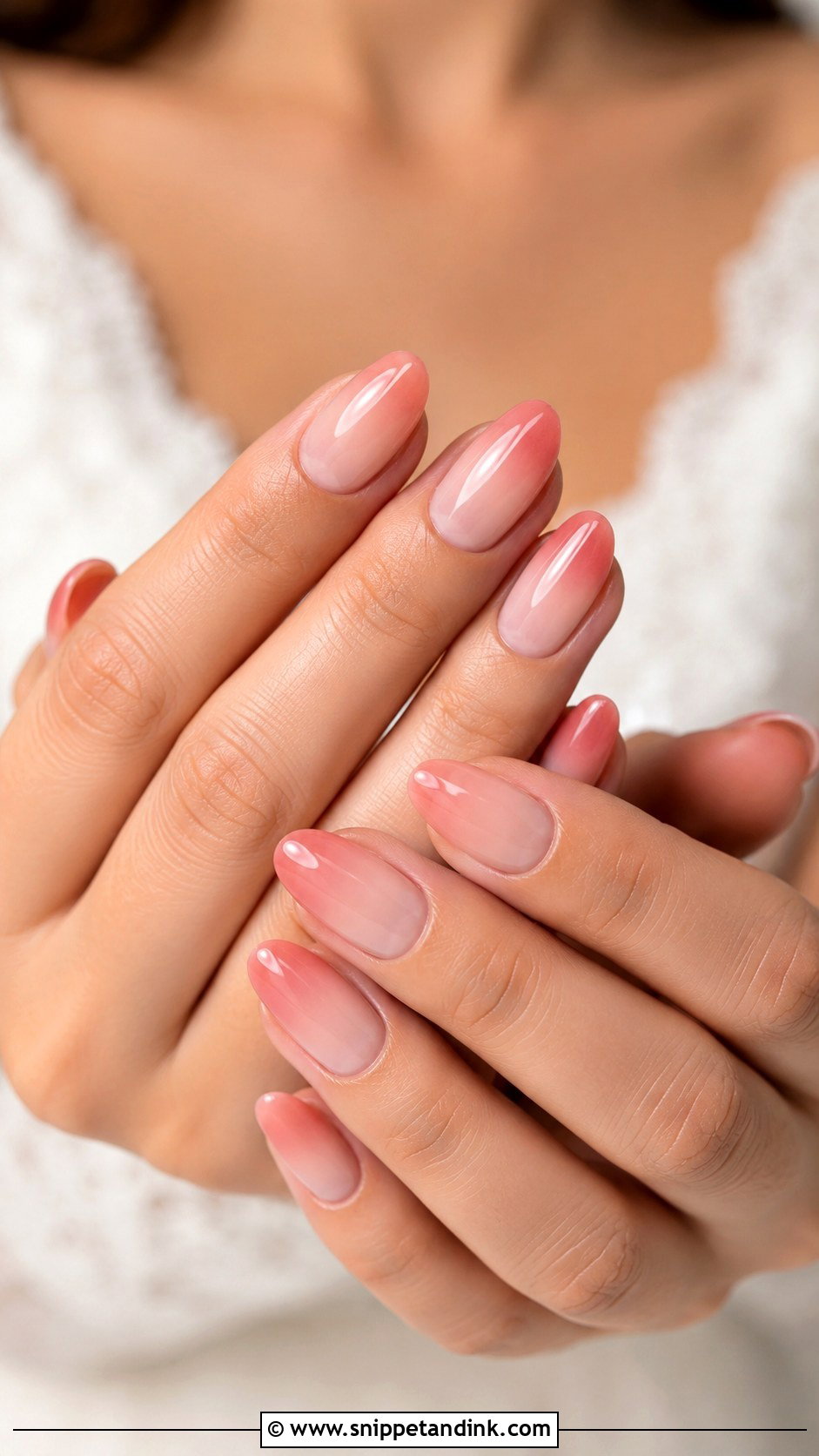
Blush adds a healthy flush rather than a color statement. I start from a sheer nude or pale pink and build a slightly deeper blush through the center or toward the tips, using jelly-textured gel so it stays see-through. Thick cream polish in the same shade looks heavy and painted. It matches rosy makeup and pink flowers easily, and it holds up on short oval nails just as well as on a longer coffin shape.
6. Pearl Ombre Bridal Nails
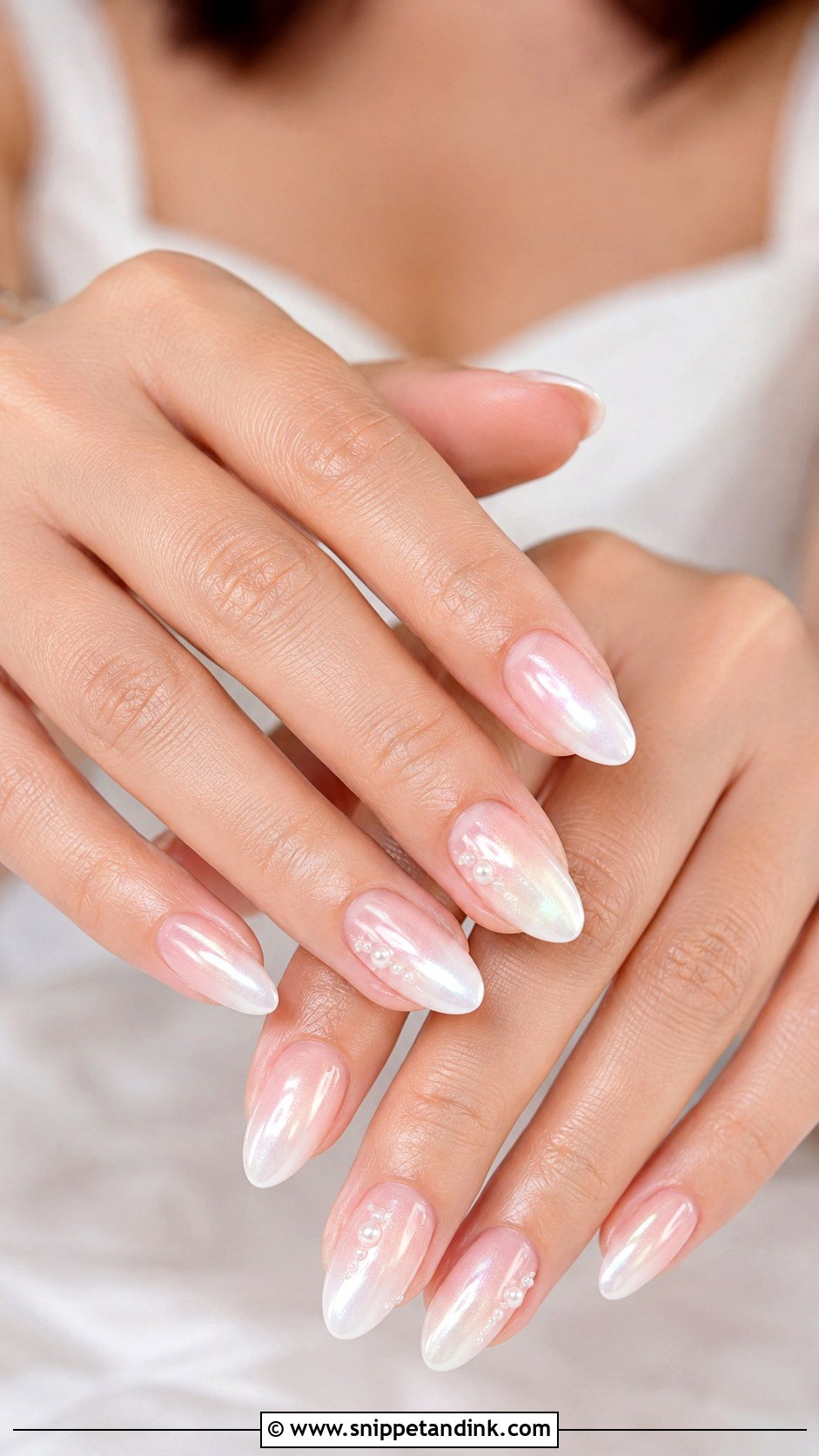
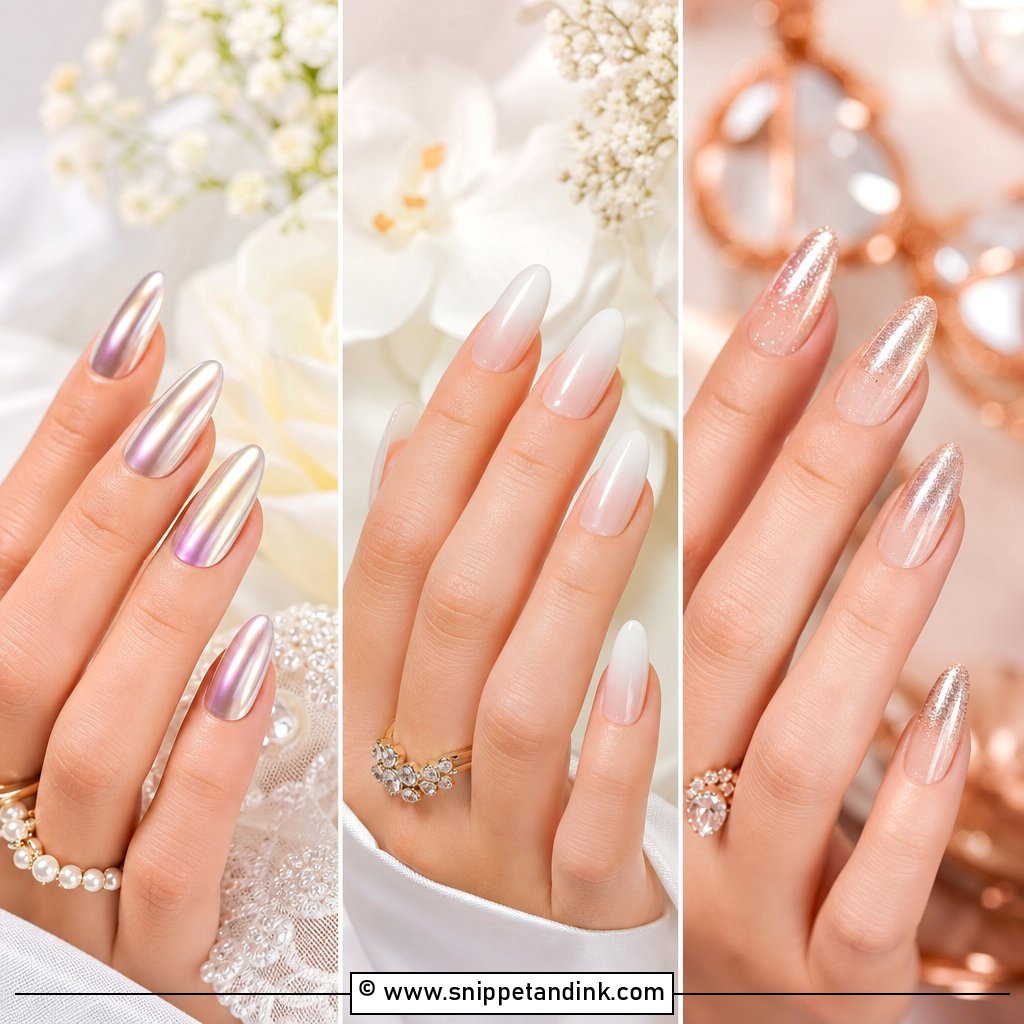
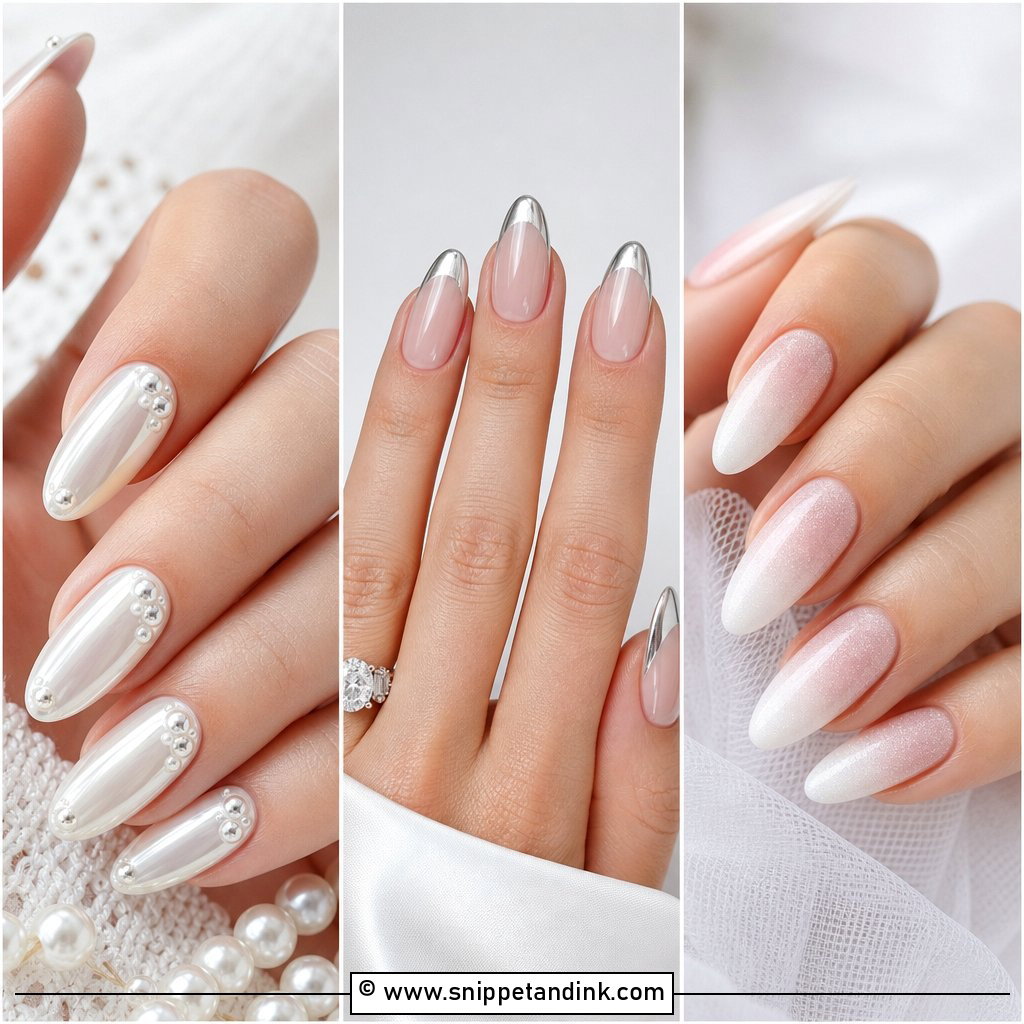
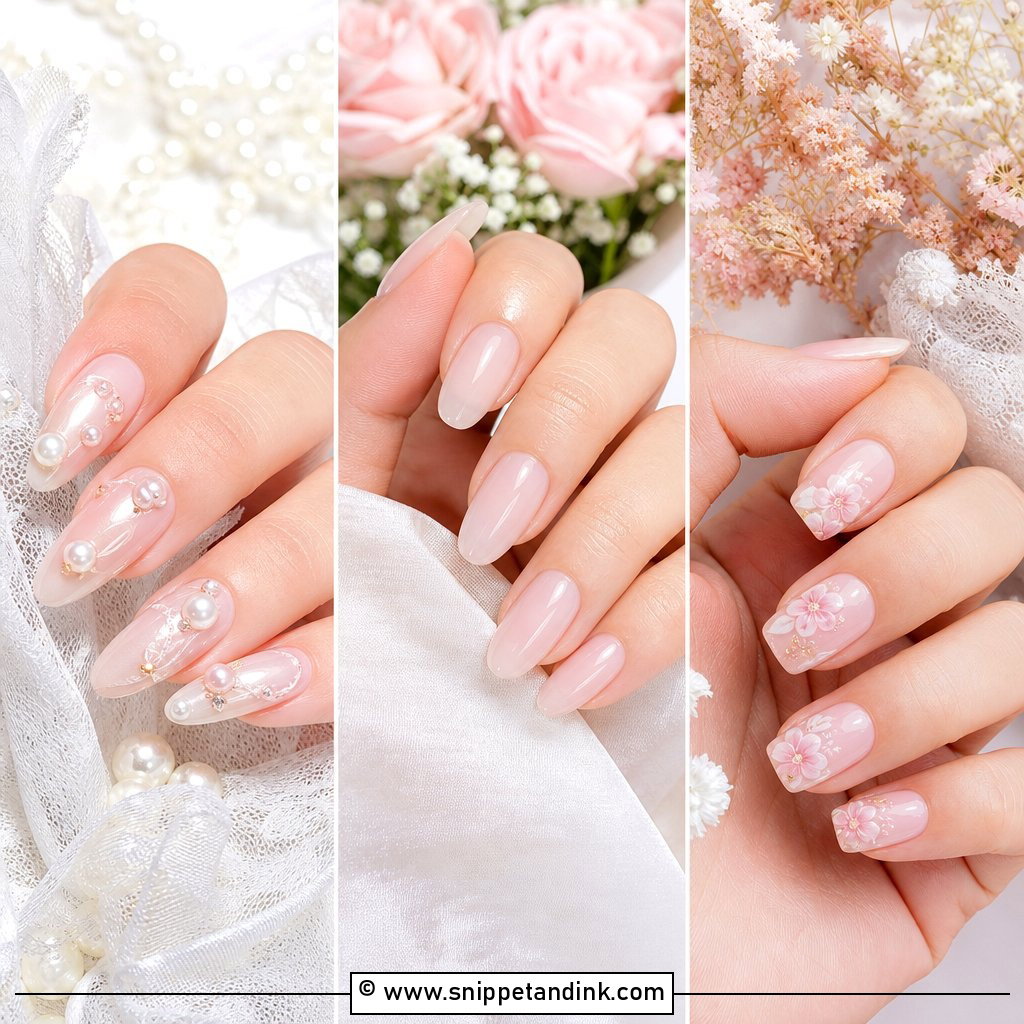
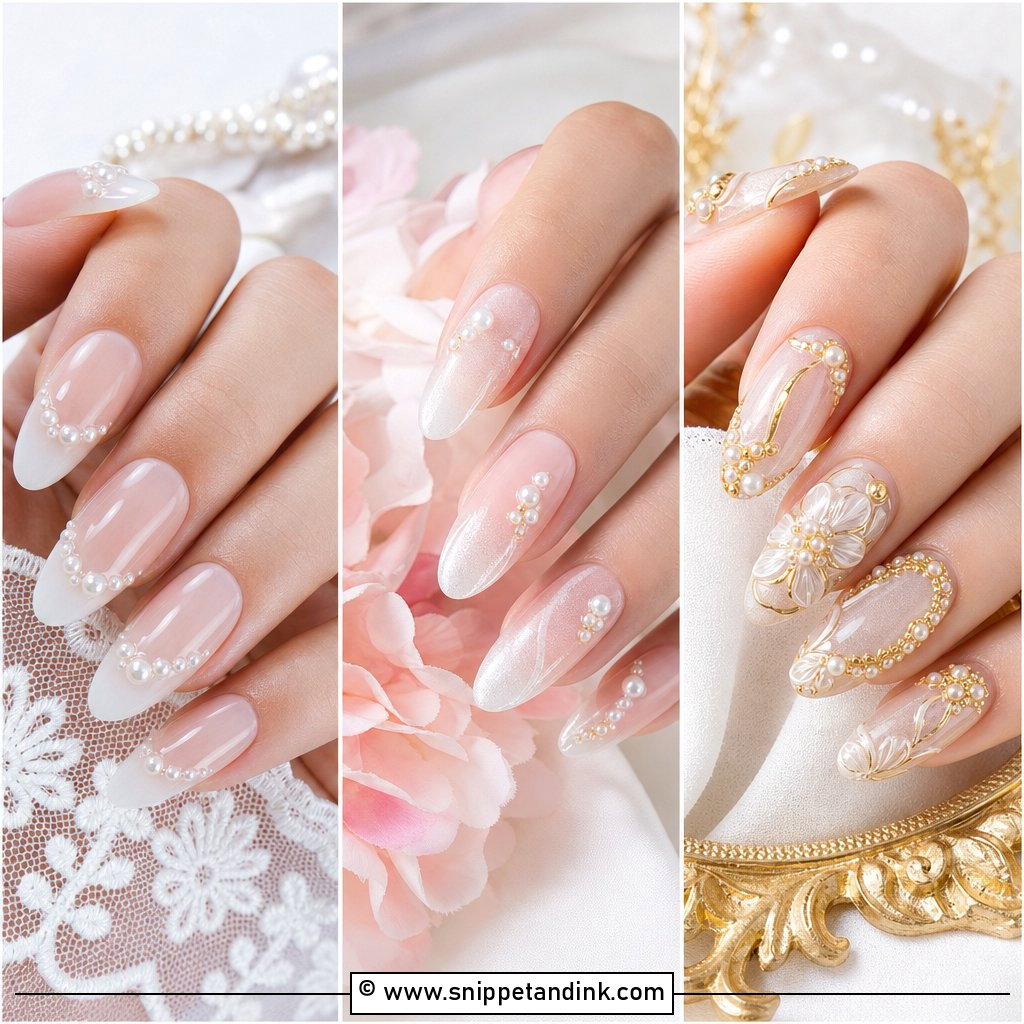
When a bride asks for shine but not glitter, pearl is my answer. I lay down a soft fade, usually pink, nude, or milky white, then buff a pearl powder over the top coat so it catches light like the inside of a shell. Less is more here. If the powder goes on too heavily it hides the gradient underneath, and then you’ve paid for an ombre nobody can see. A medium almond shape suits it, and it sits naturally beside pearl earrings or a pearl-edged veil.
7. Chrome Ombre Bridal Nails
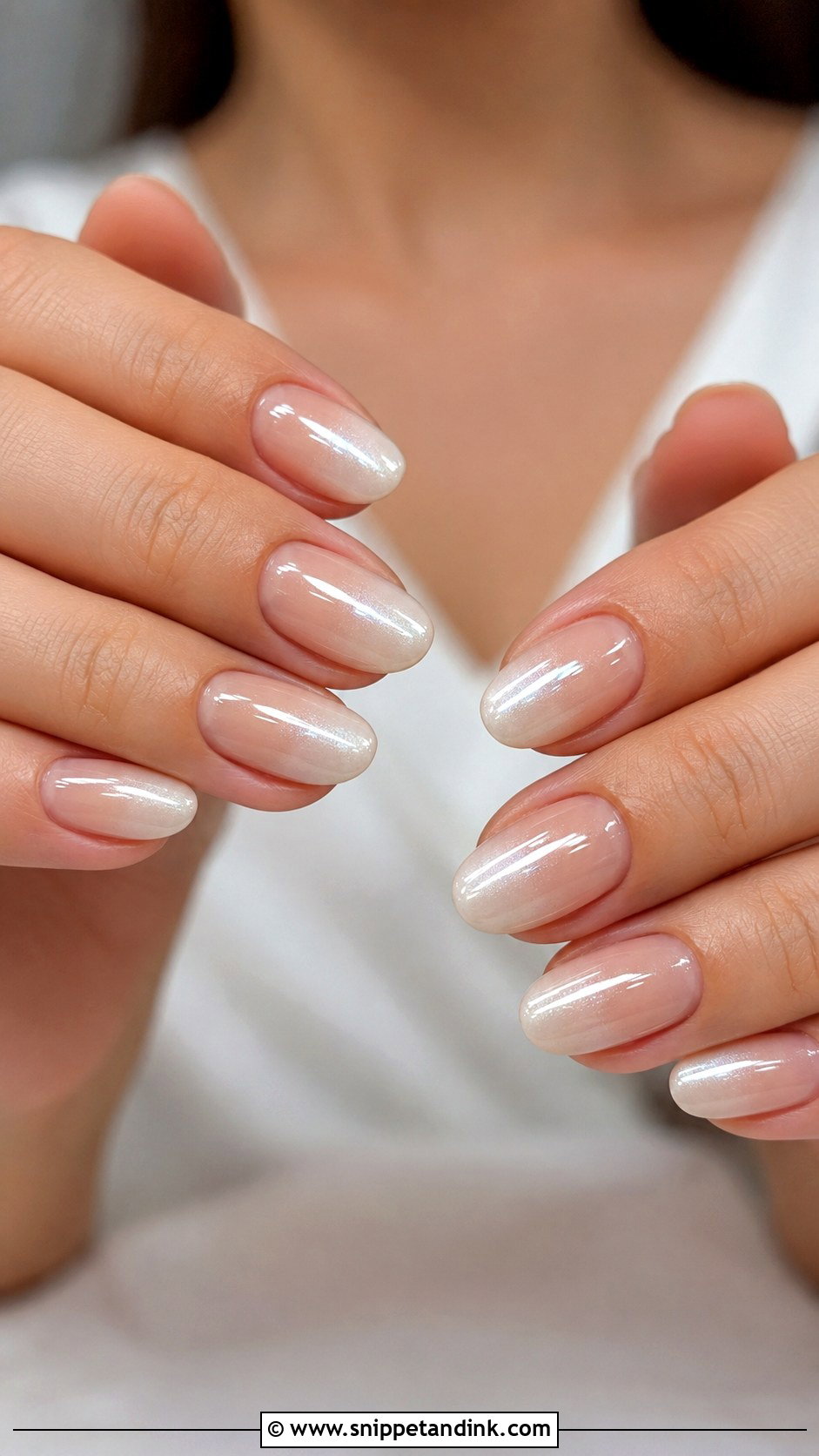
Chrome over a sheer fade is the modern take, and it lives or dies on restraint. A nude-to-white blend with fine pearly chrome looks clean; a blush-to-ivory blend with soft chrome feels warmer. I rub the powder in lightly so the nail glows instead of reflecting like a mirror, because full mirror chrome flashes hard under a camera flash. Chrome also needs its edges sealed properly, or it starts to chip at the tips within days. Almond or oval keeps it refined.
8. Glitter Ombre Bridal Nails
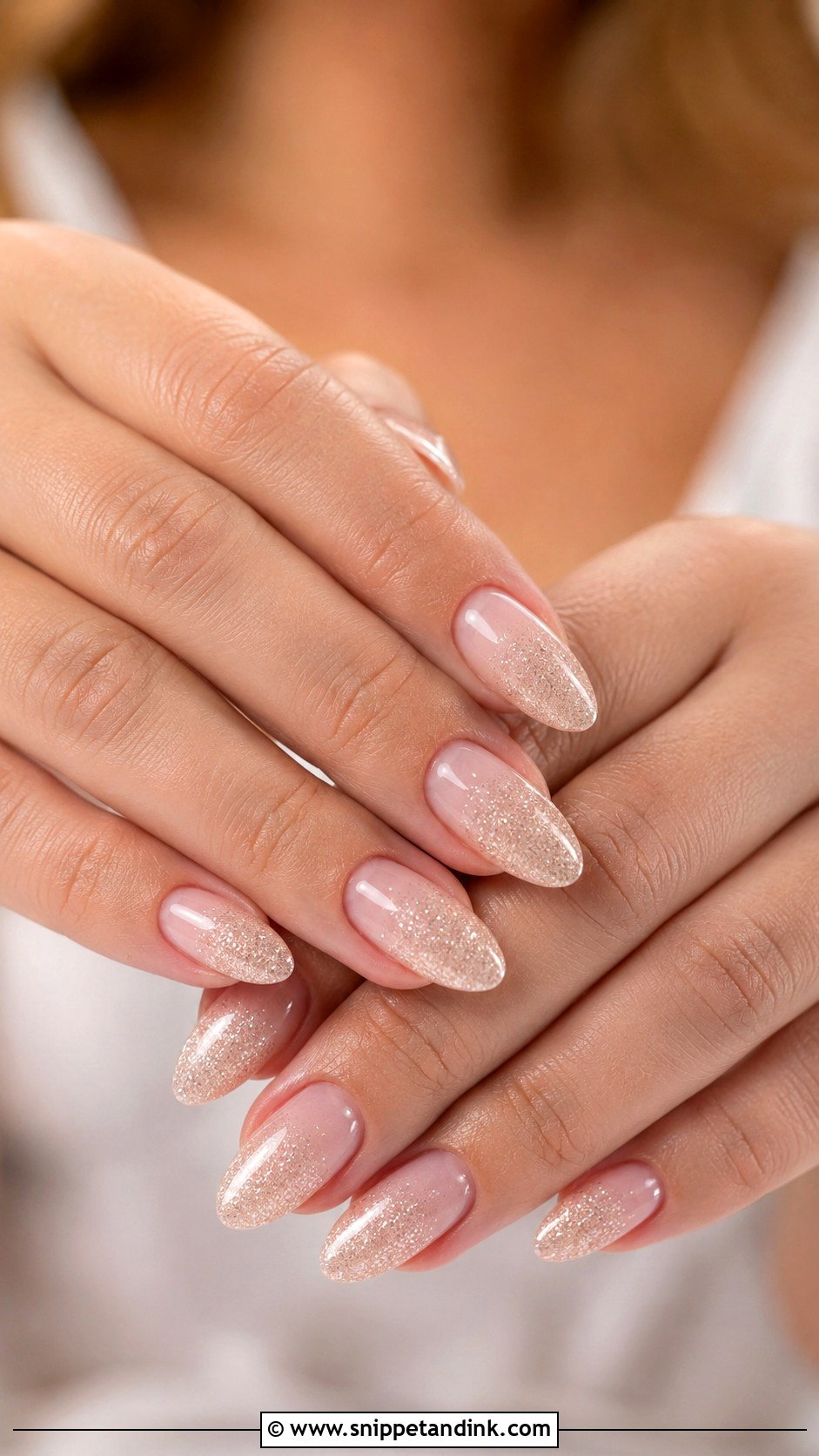
Glitter can still look grown-up if it’s placed with care. I fade fine champagne, silver or rose gold glitter from the tips, sometimes the cuticle, into a sheer base, so the sparkle thins out rather than stopping. Chunky hex glitter looks crafty in macro ring shots; fine glitter catches light without texture. It suits evening receptions and formal rooms. Bear in mind glitter is the slowest finish to soak off afterwards, so leave time for removal later rather than picking at it.
9. Champagne Ombre Bridal Nails
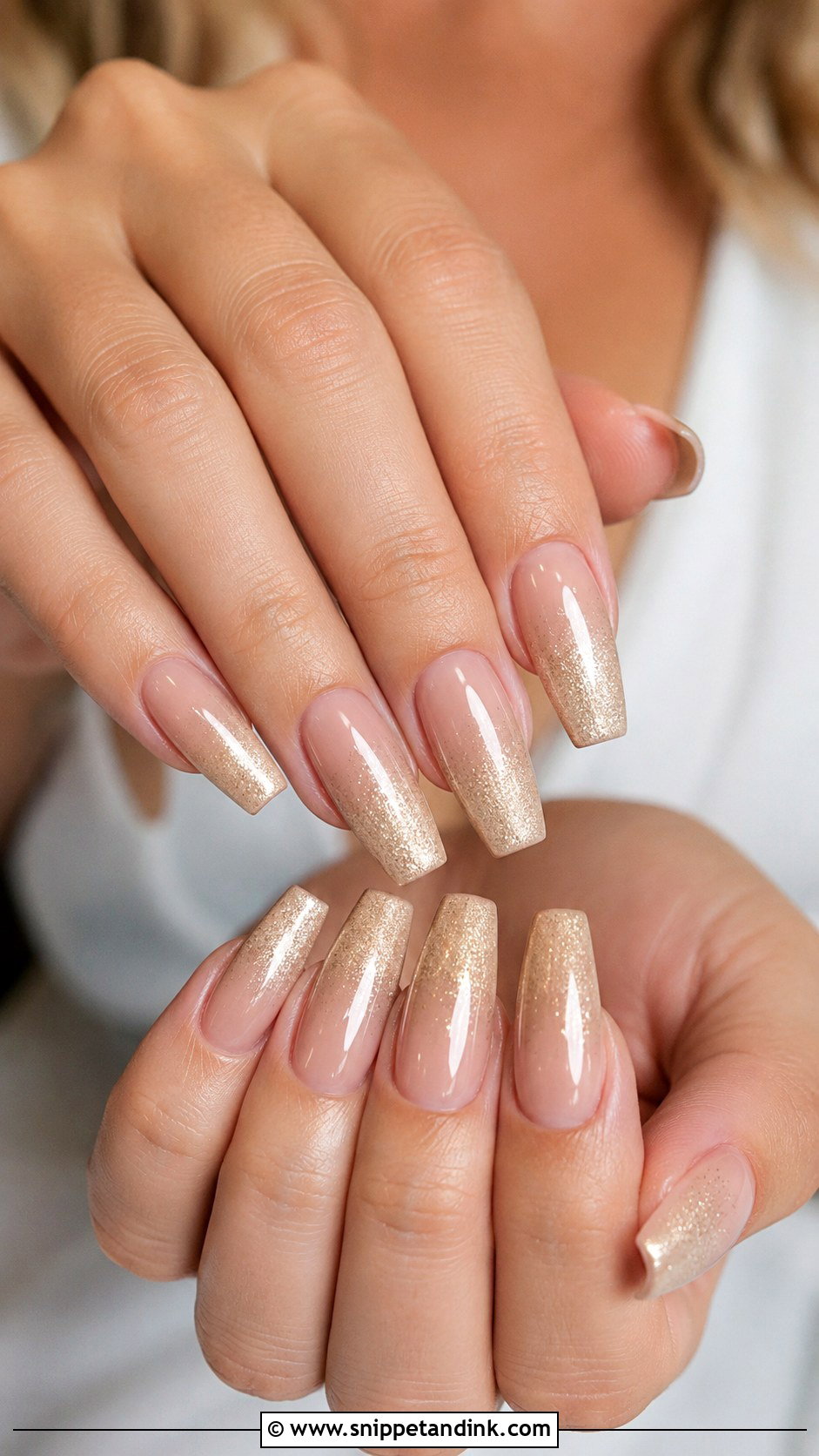
Champagne sits between gold and nude, which is why I like it for warm-toned brides. The base blends from nude, beige or pale pink into a champagne shimmer tip, and it pairs naturally with gold jewelry, ivory fabric and neutral flowers. On almond and coffin nails the longer tip gives the shimmer room to fade gradually. I always use micro-shimmer here; larger flakes break up the blend and look bitty from arm’s length.
10. Rose Gold Ombre Bridal Nails
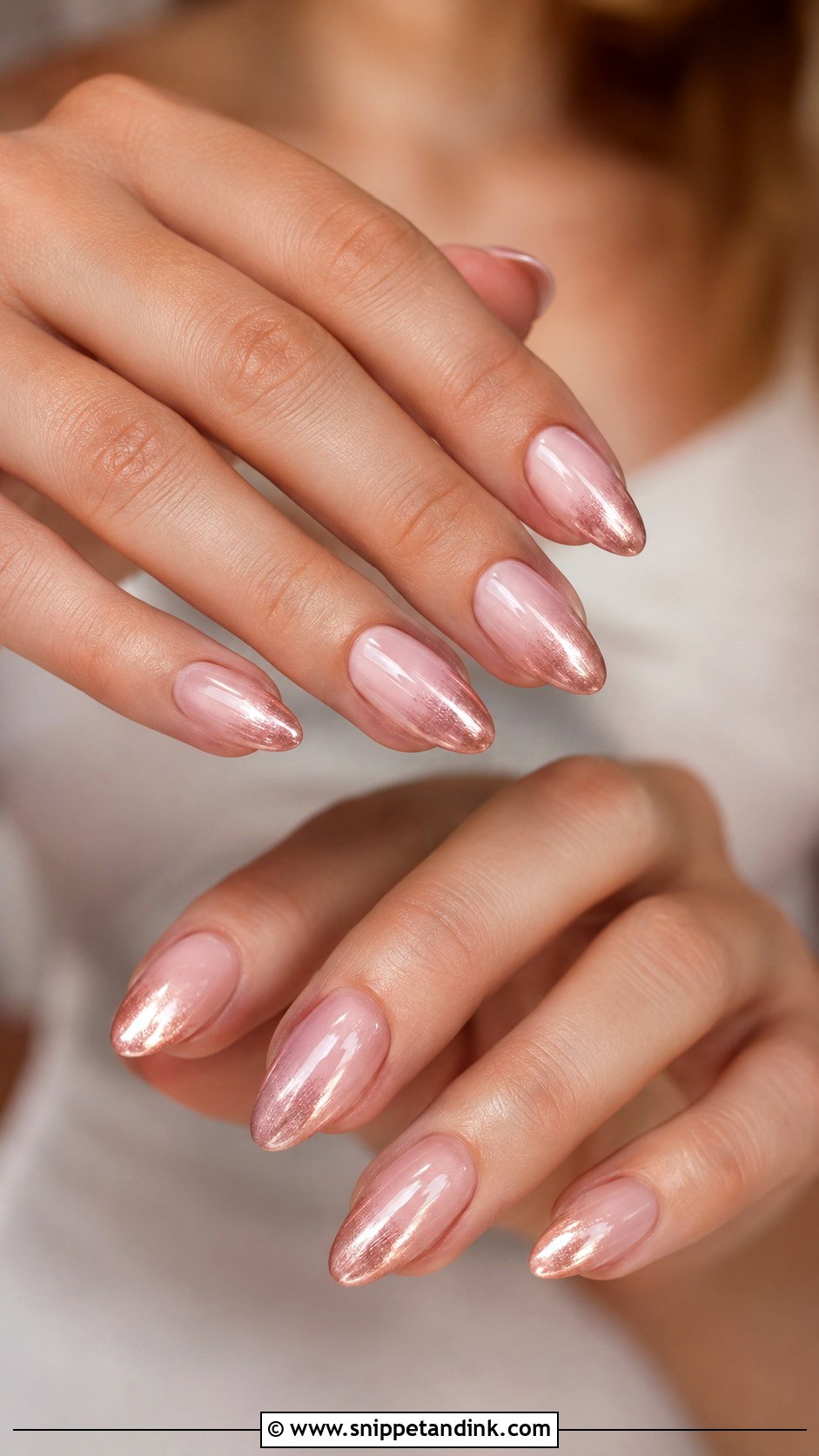
Rose gold brings warmth and a little sparkle together. A sheer pink or nude base fades into rose gold shimmer at the tips, which ties in with rose gold rings and blush flowers. I avoid foil for a bridal set. Foil crinkles and catches on lace and tulle, while a fine metallic shimmer sits flat under top coat. Medium almond is the most flattering length for it, though it makes short square nails look polished too.
11. Ivory Ombre Bridal Nails
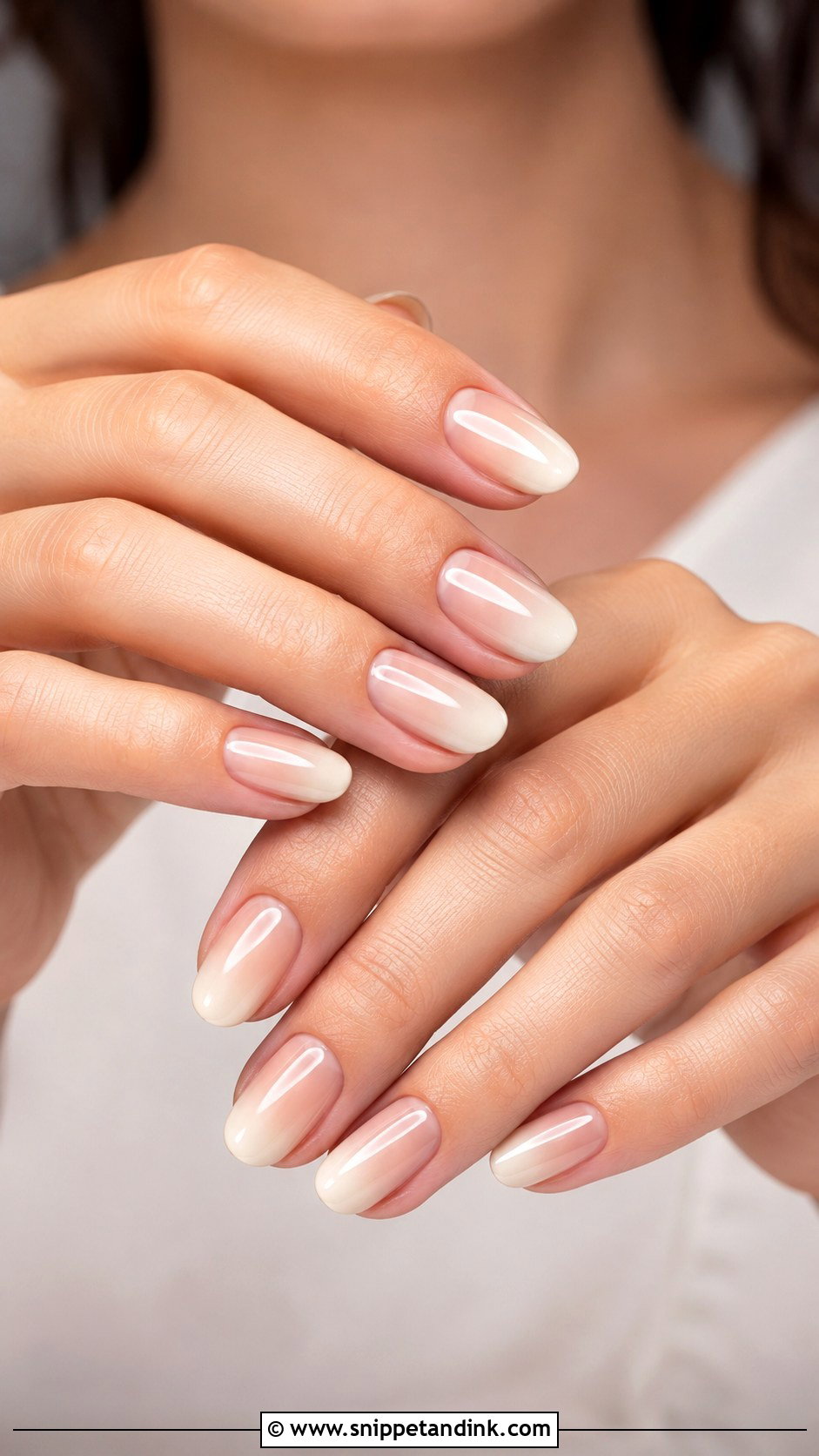
Bright white can look harsh next to an ivory gown, and that’s usually when I suggest this instead. The base stays sheer pink, beige or nude and the tips fade into a creamy ivory that matches the dress rather than competing with it. It also suits brides who feel stark white looks too bold on their skin. I’d bring a fabric swatch to the appointment so I can mix the ivory against it. Gloss keeps it clean; a pearly top makes it glow.
12. Almond Ombre Bridal Nails
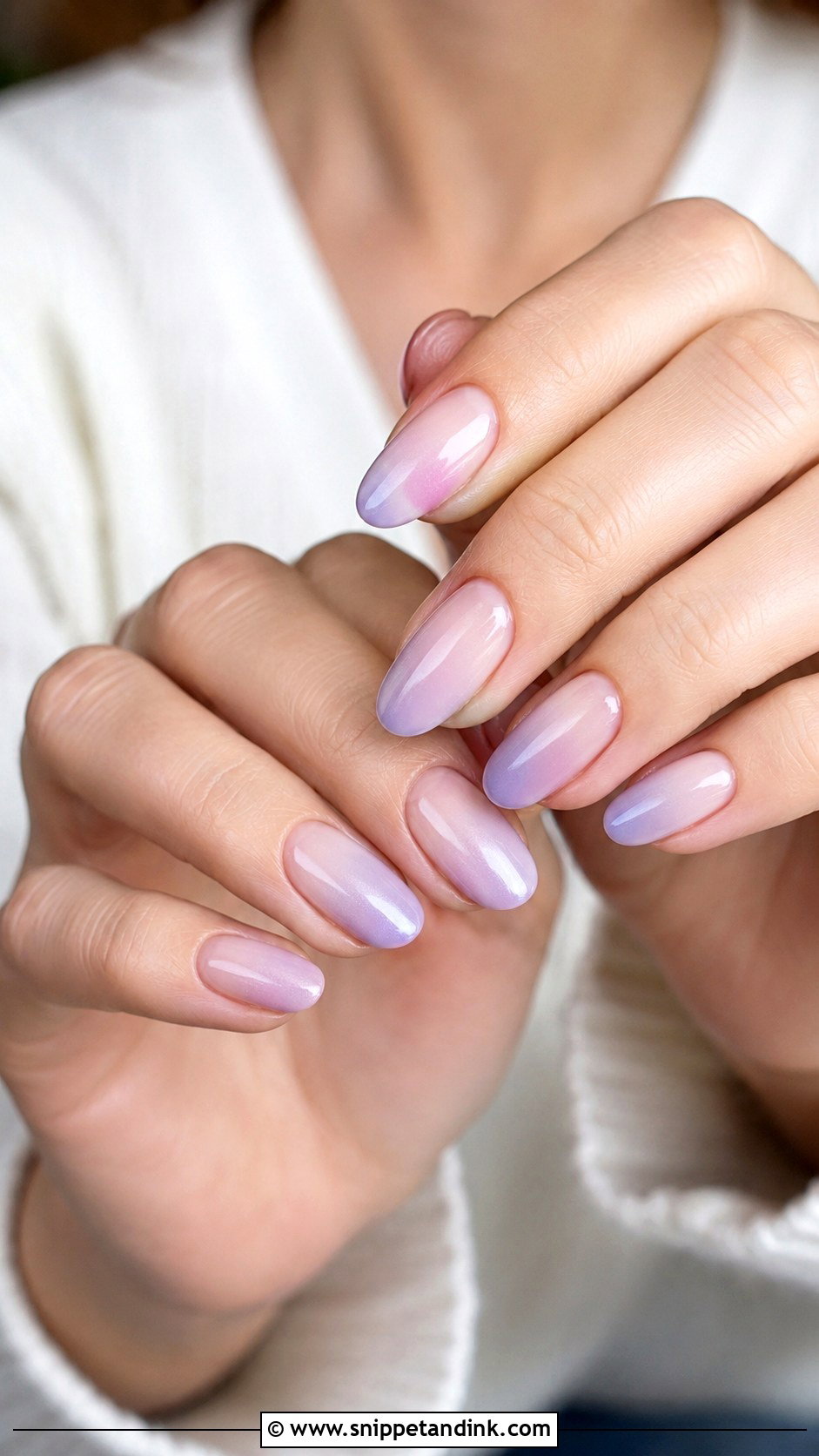
Almond is the shape I recommend most to brides, because the tapered sides and rounded tip lengthen the fingers and give any gradient a smooth path to follow. A pink-to-white French fade is the classic choice, but milky nude, pearl and champagne all work on it. It’s a sensible middle ground between short natural nails and stiletto or extra-long coffin nails. I keep the point soft rather than sharp; a blunt almond tip is far less likely to break on a dress zip.
13. Short Ombre Bridal Nails
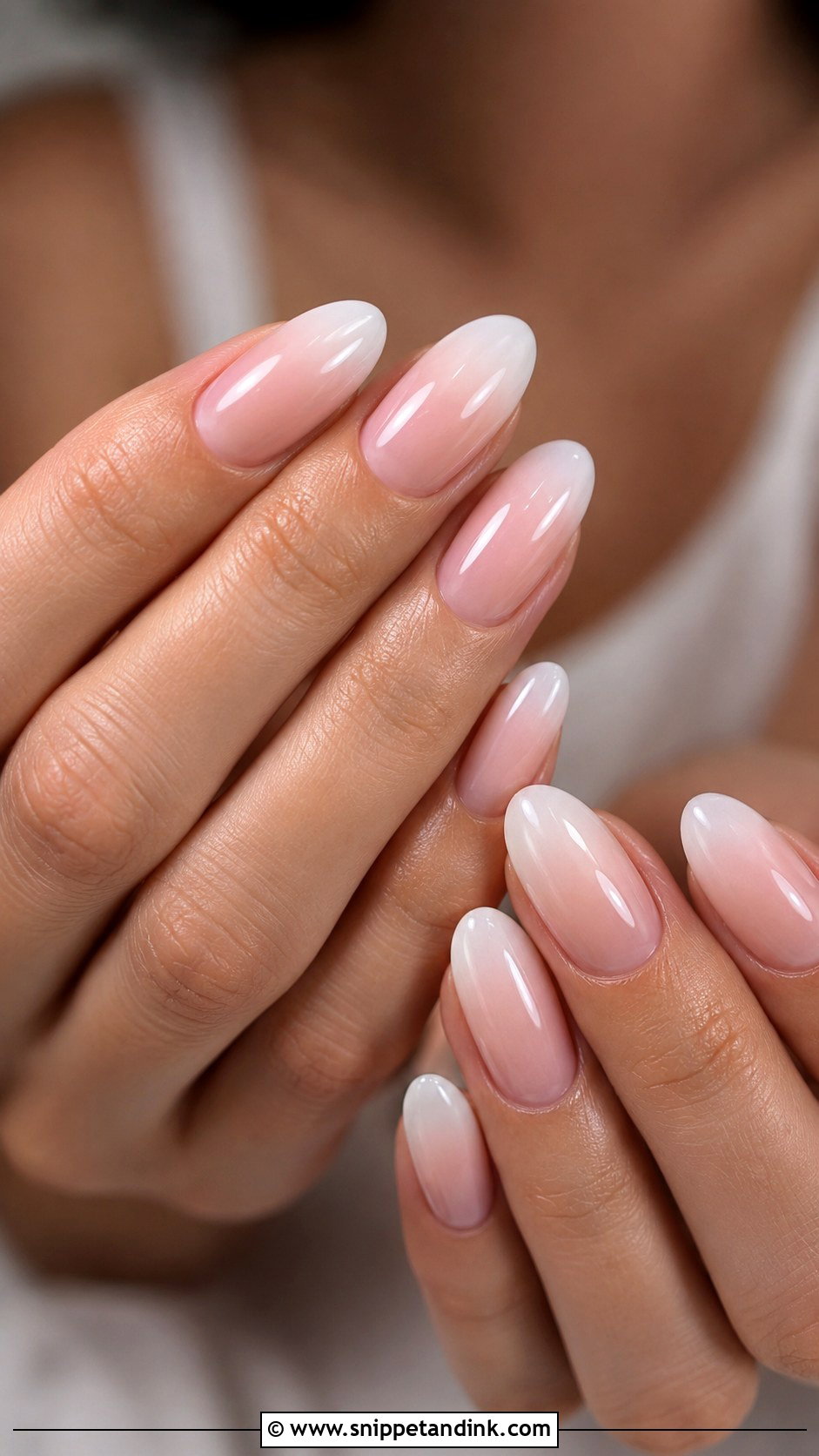
Short nails can absolutely carry an ombre; the blend just needs to stay in the top third so it doesn’t look muddy. A soft fade makes a short nail look neater and slightly longer without extensions. Sheer pink, nude, milky white and beige keep it clean. Squoval or oval edges are kind to short nails, and if you want sparkle, a whisper of fine glitter at the tip is plenty. If you never wear long nails day to day, this is the set you’ll forget you’re wearing by the speeches.
14. Square Ombre Bridal Nails
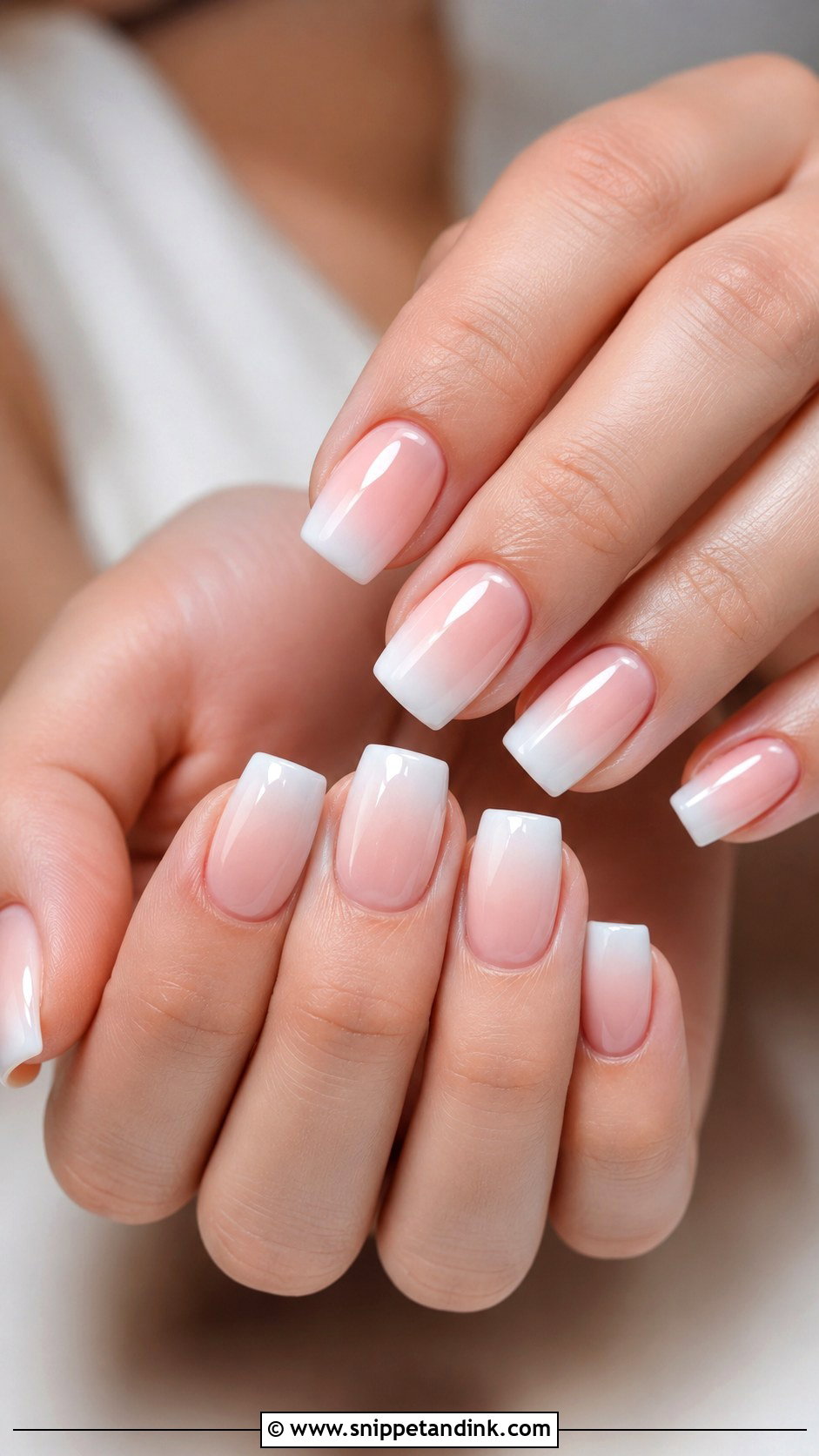
Square gives a straight, tidy edge that suits French, nude and milky fades. The corners are the weak point. Sharp corners snag on tulle and chip first, so I round them slightly into a soft square for most brides. A short soft square reads natural; a medium length gives the gradient more space. Keep the white band at the tip thin, since a thick band visually shortens the nail.
15. Coffin Ombre Bridal Nails
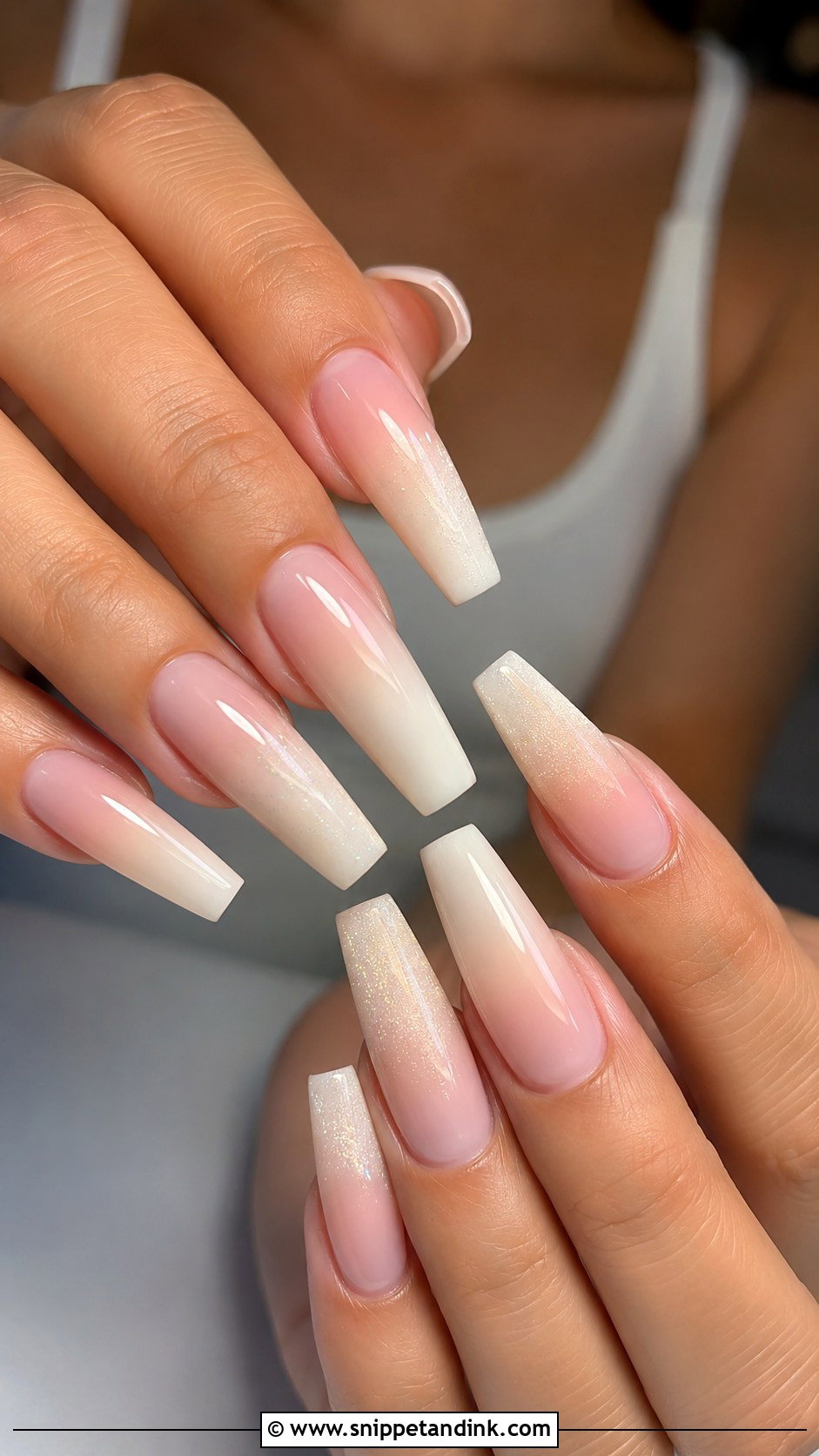
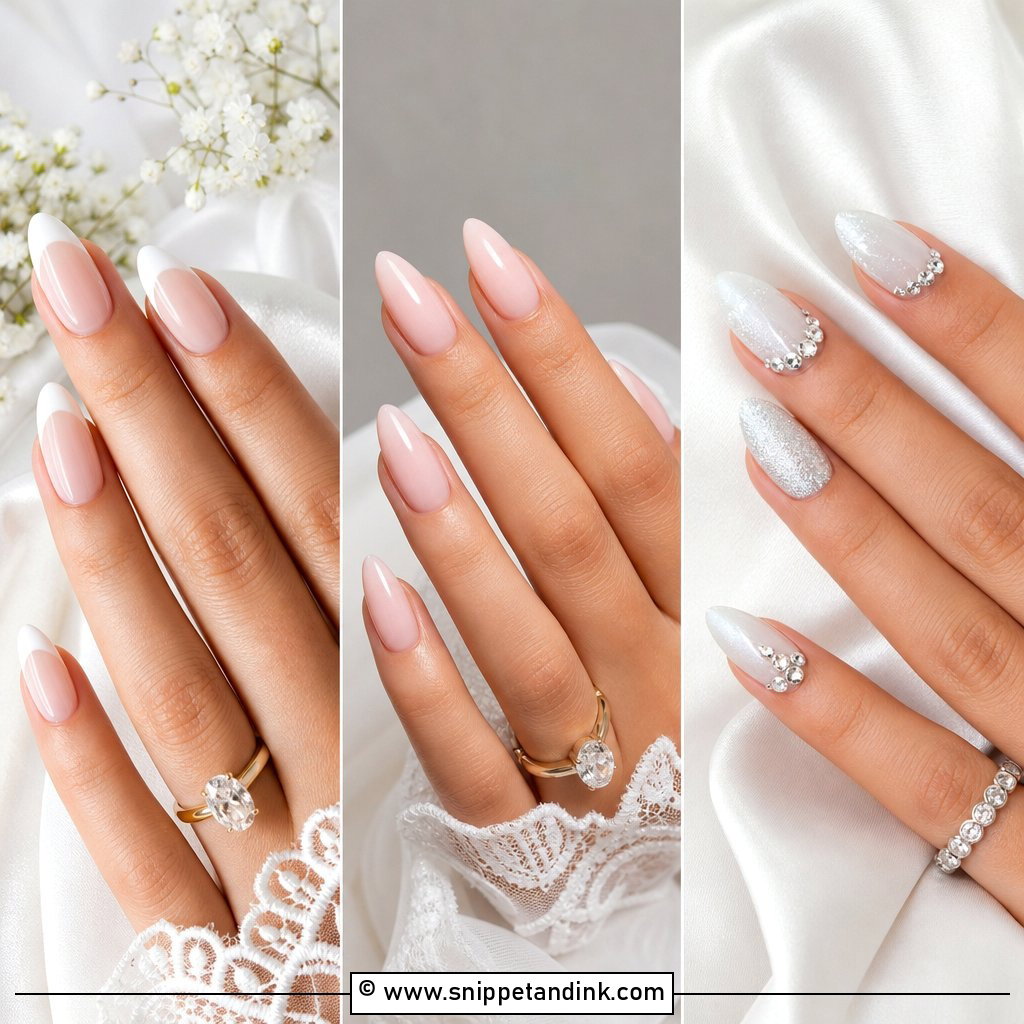
Coffin is the glamorous end of the list, and the long tapered shape gives a gradient plenty of room. Nude-to-white, blush-to-ivory and champagne shimmer all work. Because the shape is already dramatic, I keep the colors soft and the finish glossy. Practically, think about the day before you commit to length: long extensions make bustle buttons, earring backs and contact lenses fiddly. It balances a sleek or heavily beaded gown well, but I’d do a trial set first if you’ve never worn this length.
16. Oval Ombre Bridal Nails
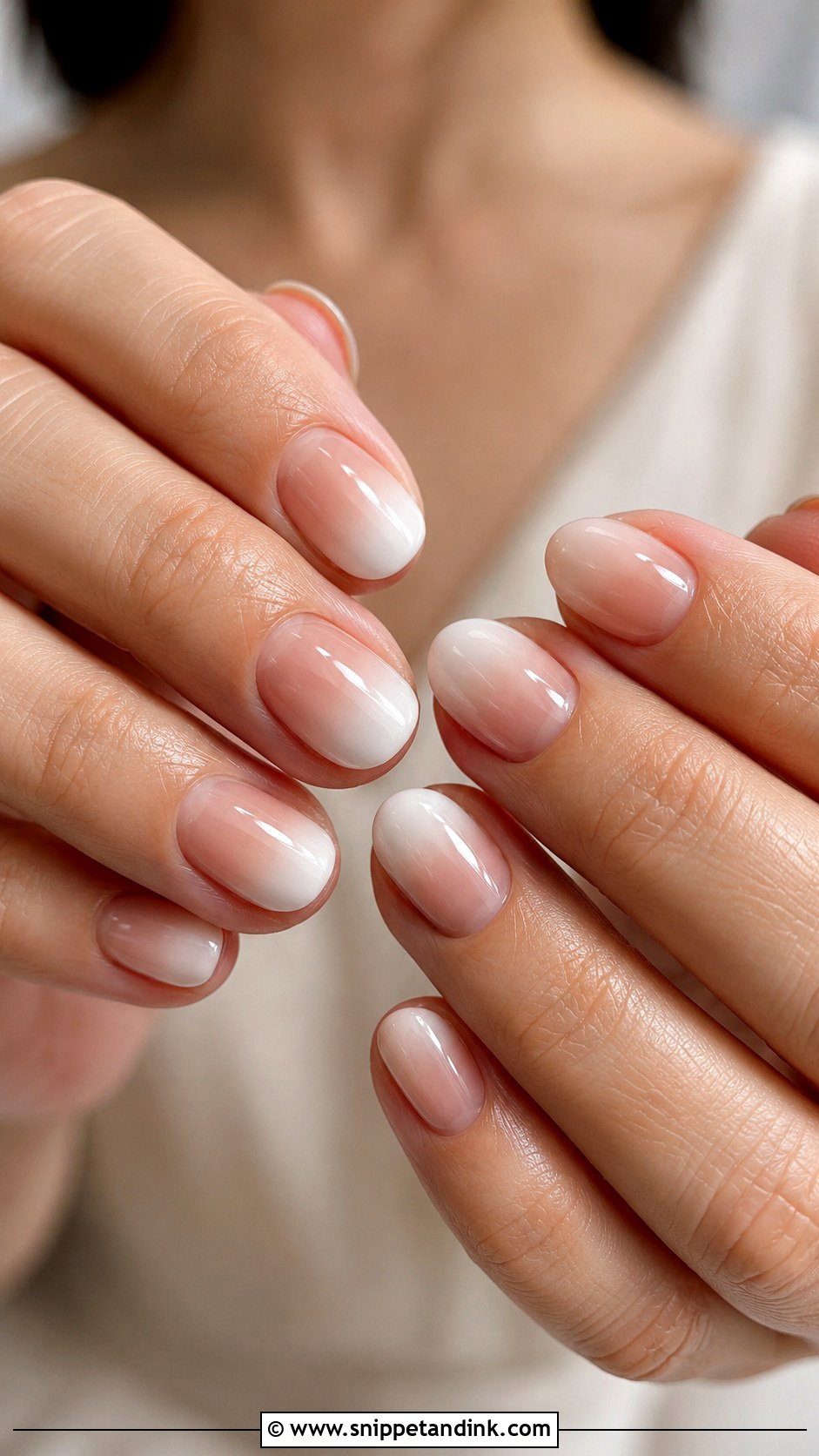
Oval is the most forgiving shape I file. The rounded edge softens the hand on short and medium lengths, and the fade looks naturally gentle on it. A sheer pink-to-white gradient never dates, and nude-to-ivory feels current. Ovals are also the least likely shape to snag or chip, which matters when you’re hugging people for ten hours. I finish them with high gloss and leave it there.
17. Blue Ombre Bridal Nails
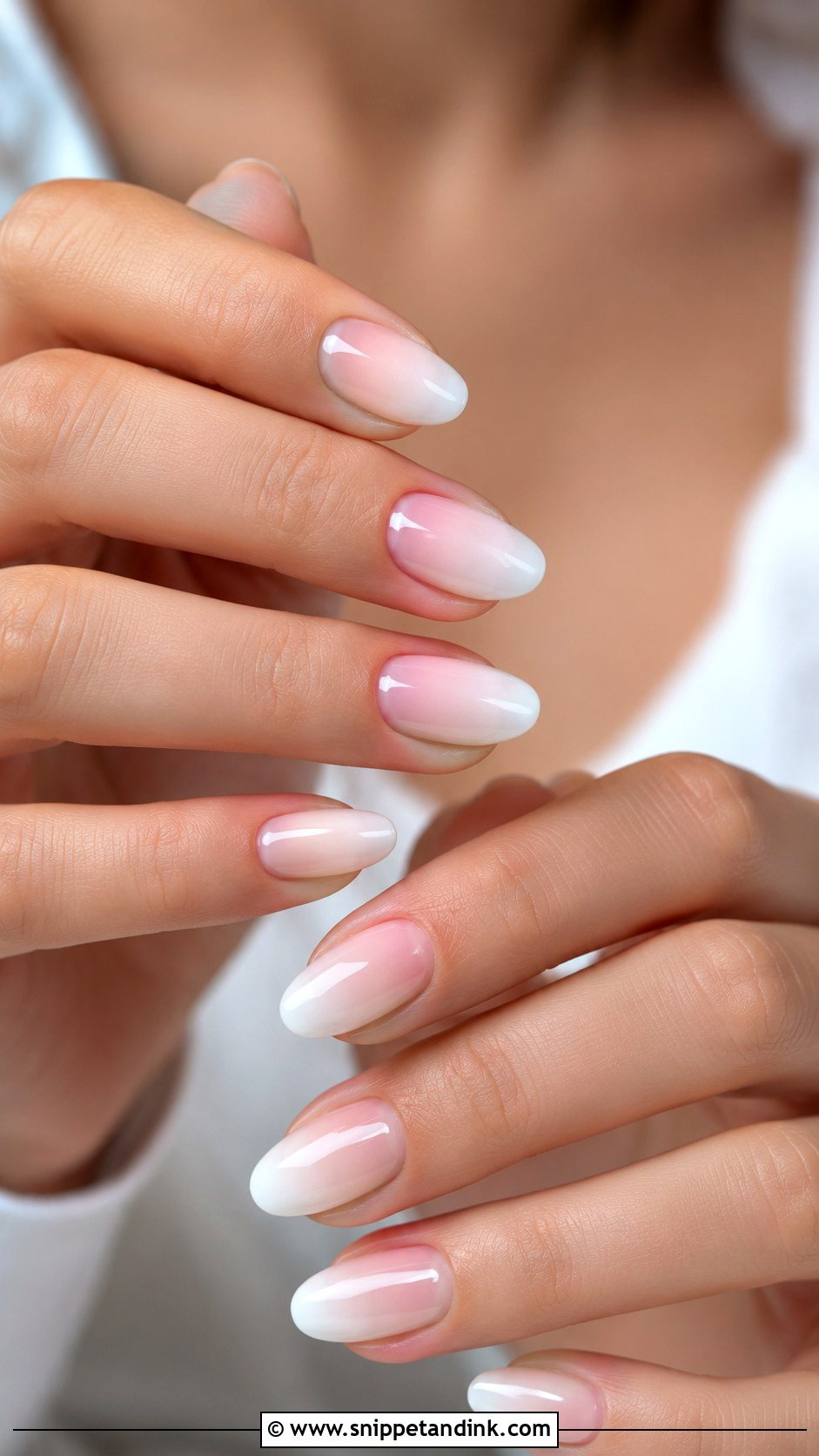
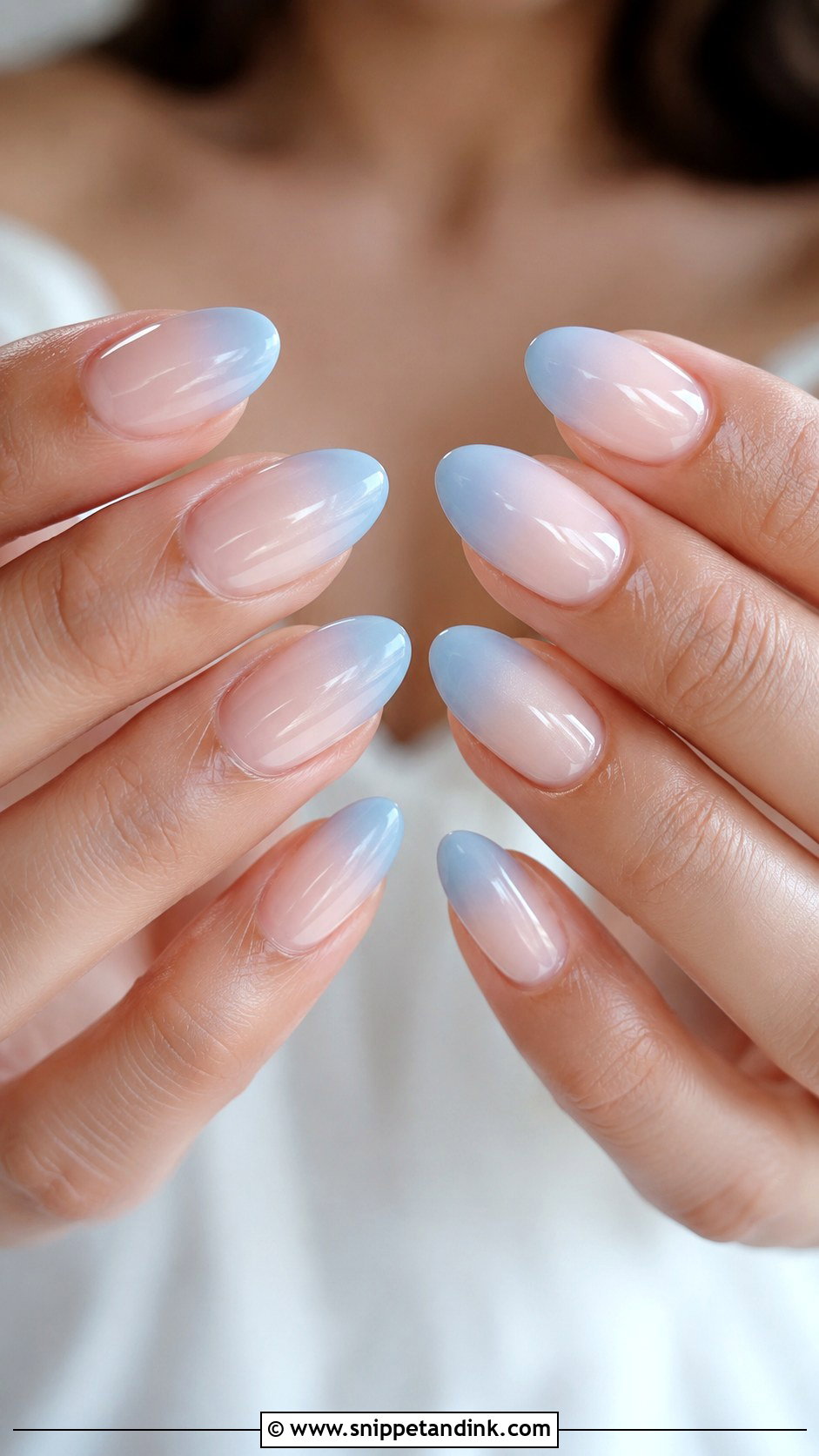
Pale blue is my favorite quiet way to wear something blue. Baby, powder or misty blue fading into nude or milky white keeps it bridal rather than bold. Cool blues can make warm skin look slightly sallow, so I often slip a sheer pink under the blue to warm it up before blending. It suits spring dates, coastal venues and cool-toned accessories. Keep the art minimal and let the fade do the work on an oval or almond nail.
18. Lavender Ombre Bridal Nails
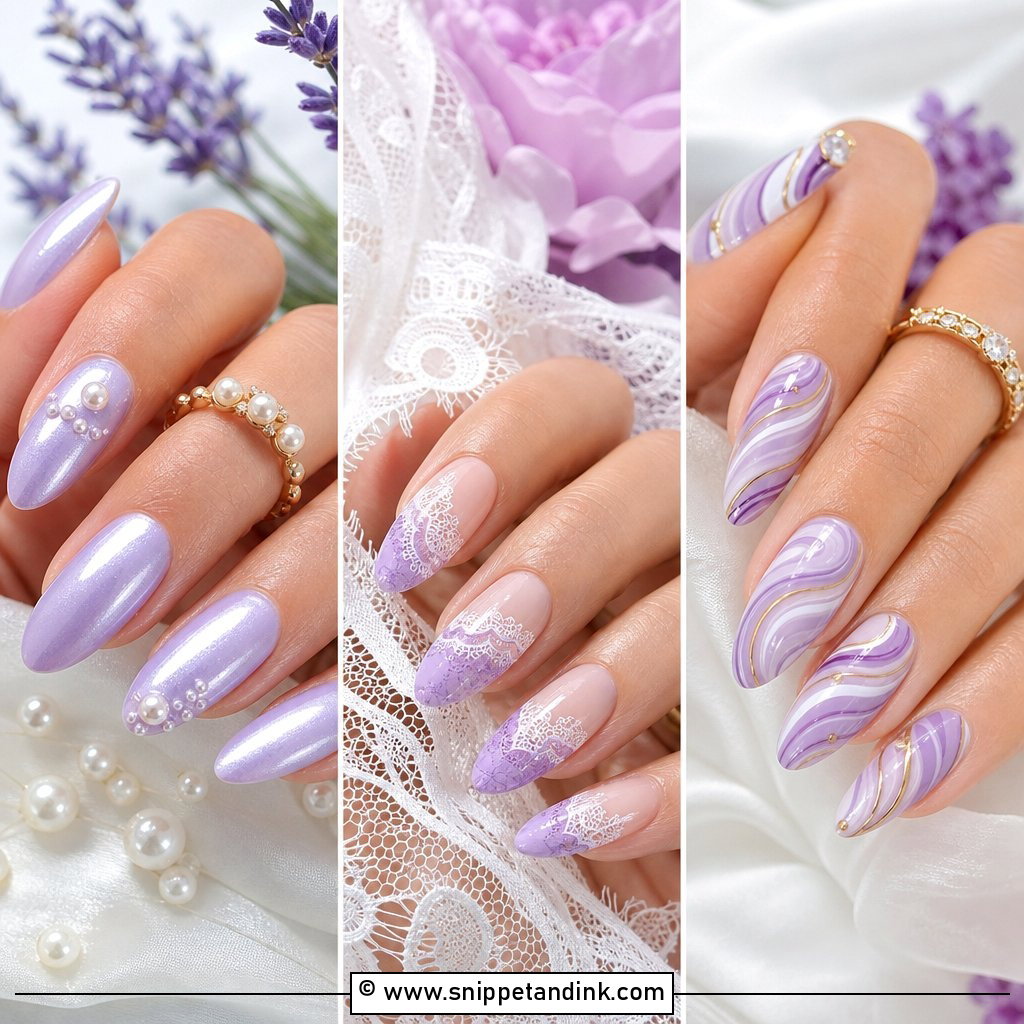
Pale purple surprises people, in a good way. Lavender ombre bridal nails sit well with white, ivory and silver, and blending the lavender into a sheer nude, pink or milky base keeps it delicate. Lavender shifts under different light, looking greyer in shade and pinker under warm bulbs, so I check it in daylight at the trial before we lock it in. A pearly top coat adds dimension without glitter, and almond or oval shapes suit the color best.
19. Peach Ombre Bridal Nails
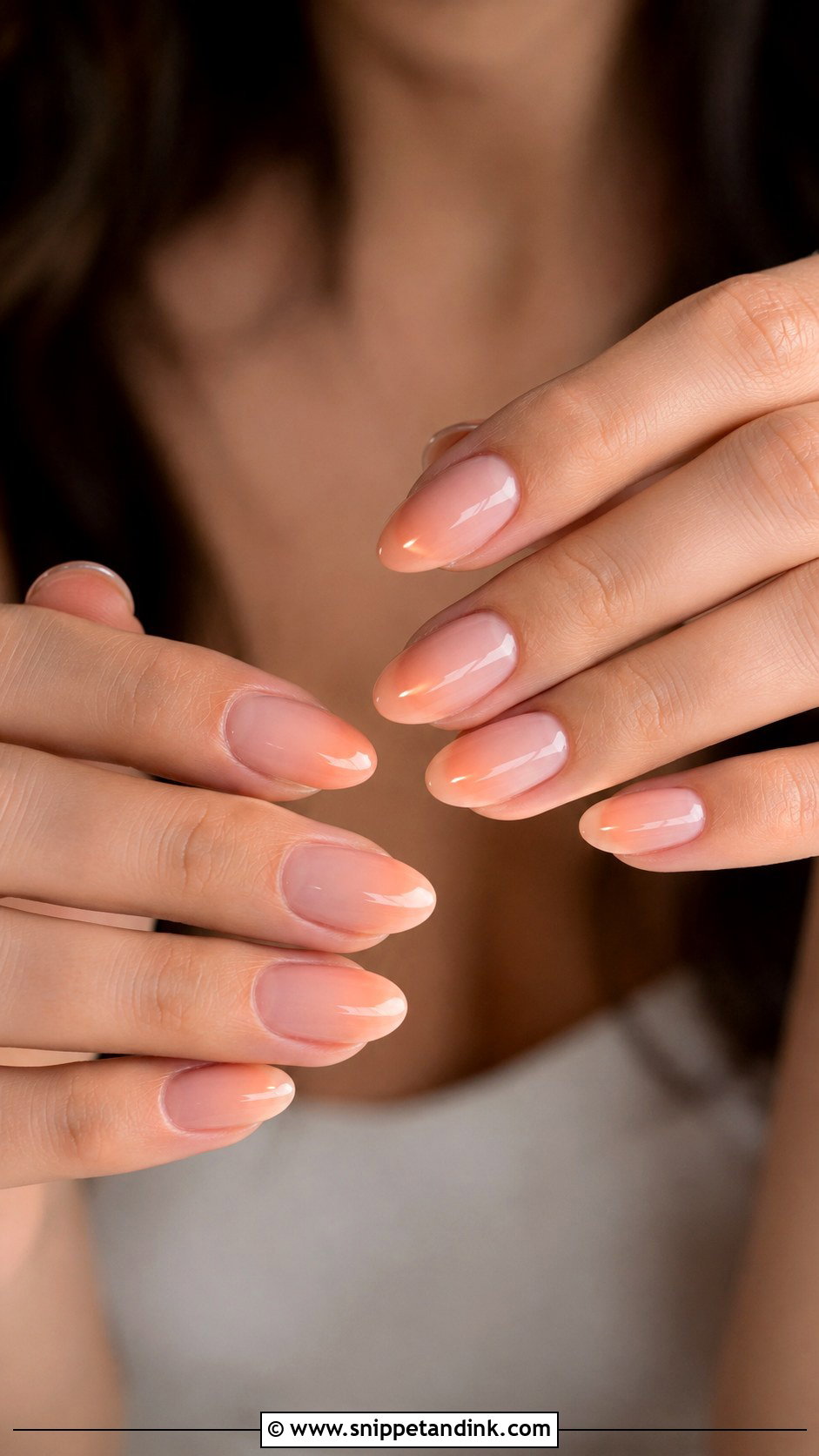
Peach is the warm-skin friend on this list. A sheer nude or pink base fades into a pale peach tip that looks fresh in summer and outdoors, and it pairs naturally with gold jewelry and coral flowers. The danger is drifting toward orange; I mix peach down with a touch of nude until it reads muted. A jelly finish keeps it sheer and healthy-looking, on short ovals or medium almonds alike.
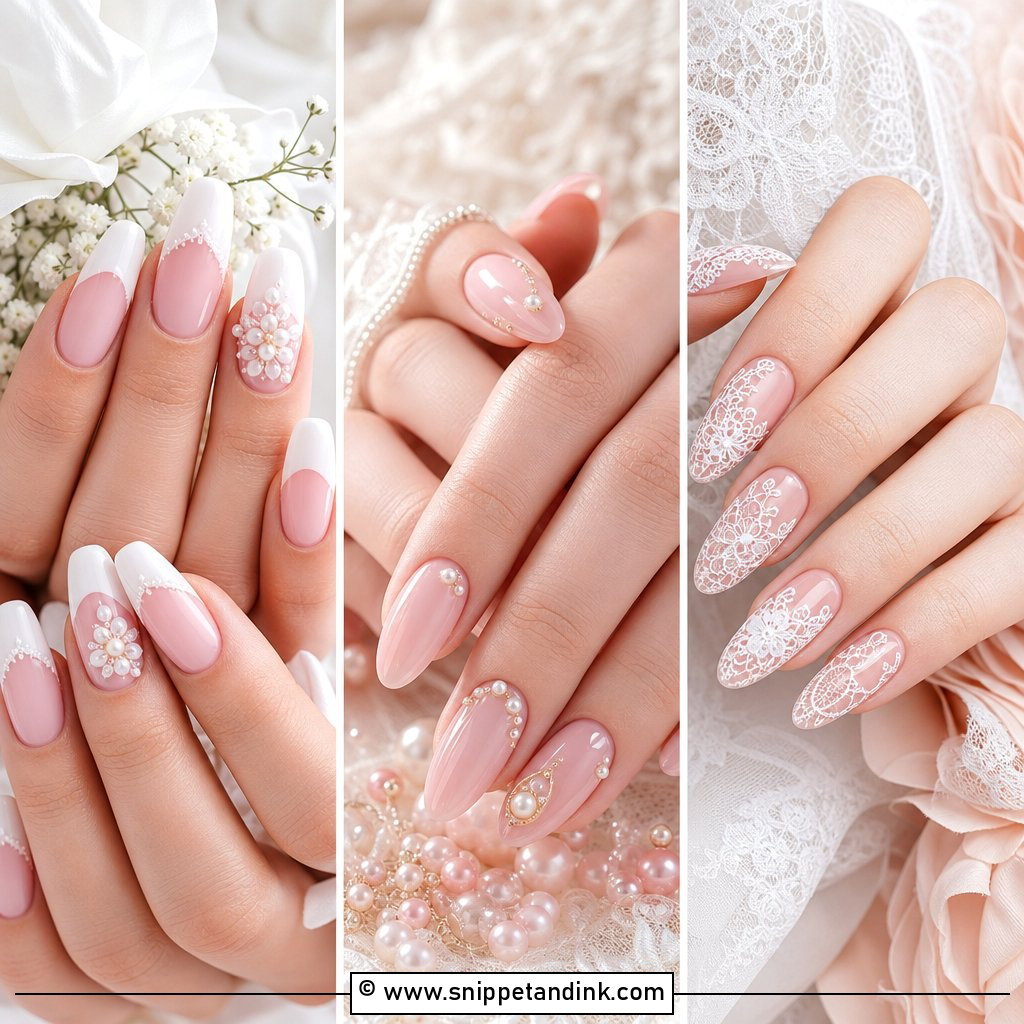
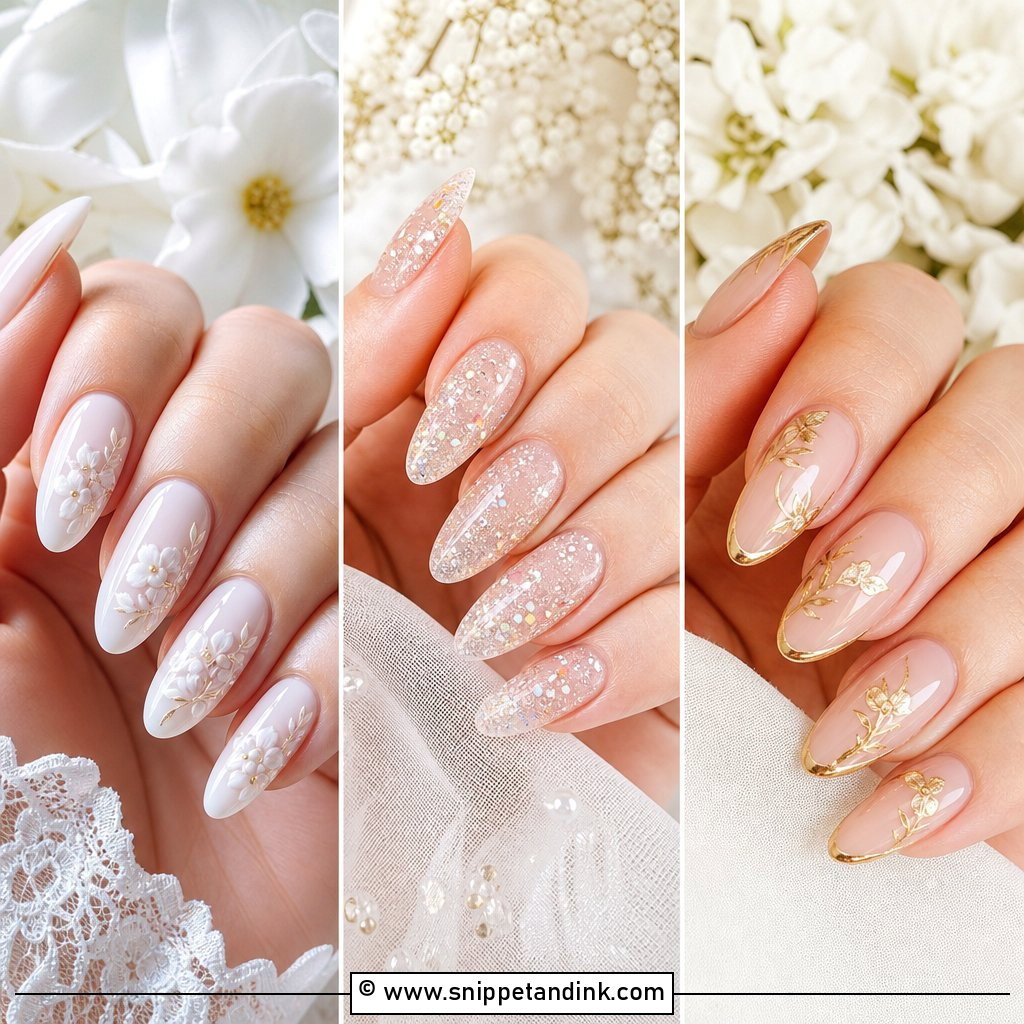
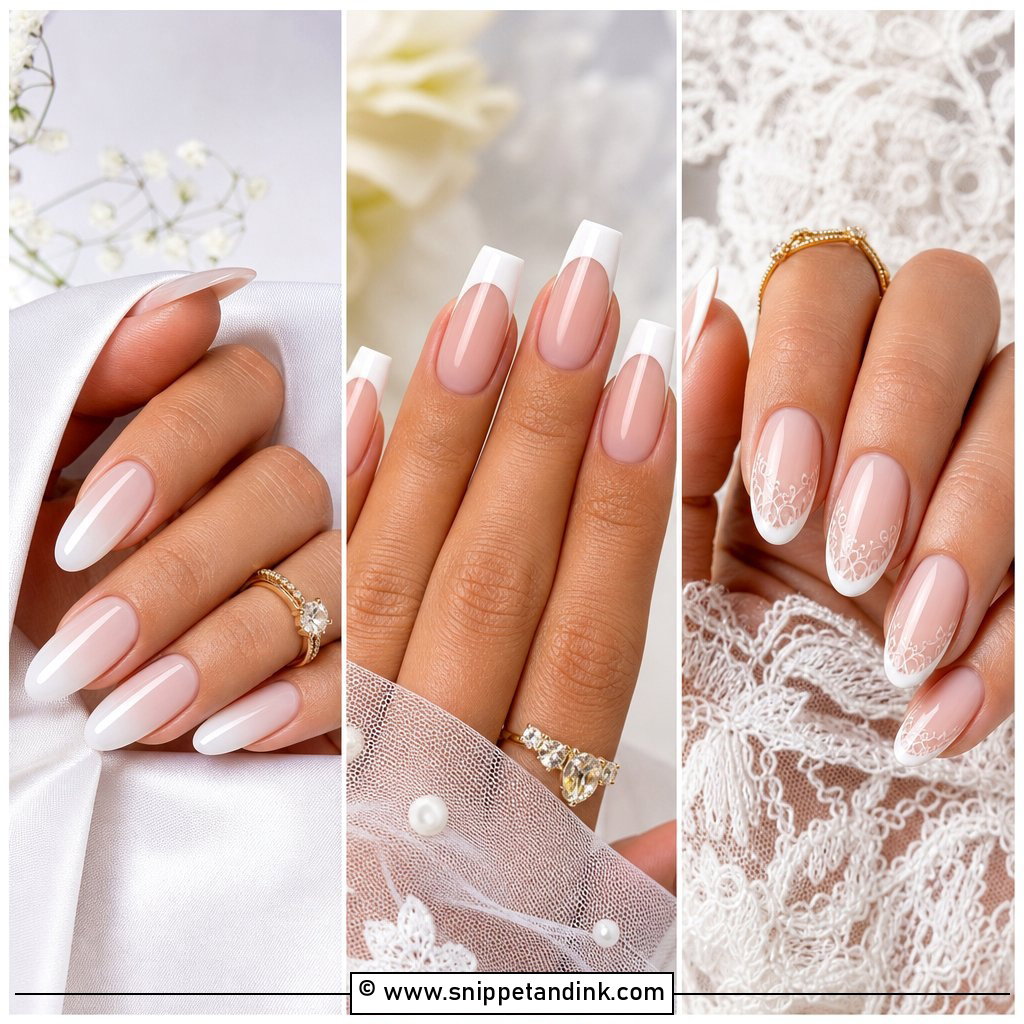
20. White Glitter Ombre Bridal Nails
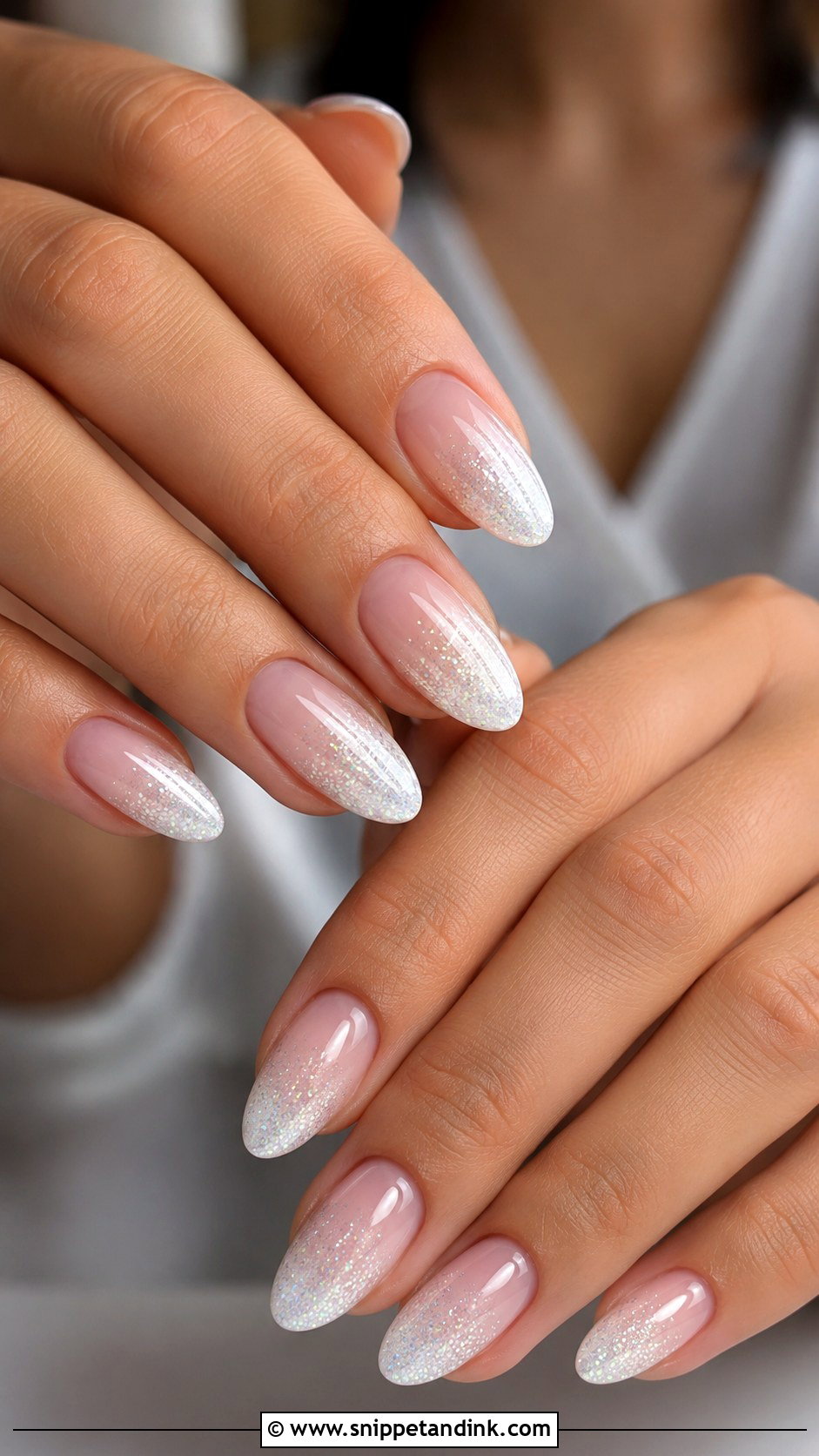
Fine white or iridescent glitter fading from the tips over a sheer pink, nude or milky base gives a snowy sparkle that still reads classic. It holds its own beside crystal accessories and beaded gowns, and it glints in close-up photos. Density is the thing I control most carefully: I scatter finely milled glitter so the base still shows between flecks. A thick glossy top coat over it smooths the surface so nothing catches on a veil.
Why the Same Milky White Changes From Room to Room
Sheer shades are sensitive to light. Warm reception lighting pushes ivory and champagne toward yellow, daylight makes milky white look cooler, and a direct flash brightens anything white on the nail. At a trial I take a quick phone photo by a window and another under indoor bulbs, so you see both versions before the day.
Ring photos are taken very close, and at that distance cuticles matter as much as color. I ask brides to use cuticle oil every evening for the two weeks before their appointment. If you’re having a spray tan, book it before your nails, or wear gloves while it develops; tan stains around the nail plate and dulls a sheer base.
Small Repairs on the Morning, and Safe Removal After
An ombre forgives small damage better than a solid color, because the eye follows the blend rather than the edge. If a tip chips, file it smooth with a fine buffer, dab a sheer milky polish over the spot and seal it with clear top coat. Pack those three things plus a tiny tube of nail glue if you’re wearing extensions.
When the honeymoon is over, please don’t peel the gel off. It takes layers of your natural nail with it and leaves them thin for weeks. Book a soak-off, or file the shine away and soak the nails in acetone until the product lifts gently.
The Fade Should Look Like Your Own Nails, Only Better
Every set above starts from the same place: a base that matches your nail bed and a fade blended so smoothly nobody can see where it changes. From there it’s about your dress fabric, your jewelry metal, how long you’re comfortable wearing your nails and how the color behaves in your venue’s light. Book a trial if you can, look at the result in daylight and indoors, and wear it for a few days. If it still feels like your hands at the end of the week, it’s the right one.
You'll Like These Ideas:


Leave a Reply