
A meadow on your fingertips is one of the most requested bridal sets I do for garden and outdoor weddings, and it suits a plain, minimal dress just as well, where a little floral detail is all the outfit needs. The appeal is range. The base can be a sheer nude, a milky white gel or a pastel tip, and the flowers can be real dried petals or stems painted with a brush thinner than an eyelash. Below are twenty full sets I’d be happy to put on a bride, with notes on shape, finish and how each one holds up from getting ready to the send-off.
The Wedding Week Calendar for a Hand-Painted Set
Fine floral art is slow. A full set of painted wildflowers can take two to three hours in the chair, and encapsulated dried flowers take longer because every layer is cured. That’s why the schedule matters as much as the design.
- Four to six weeks out: a trial. We test your base shade, shape and one or two accent designs, and you live with them for a week to see how they wear.
- Two weeks out: stop cutting your cuticles at home and start using cuticle oil every night. Healthy cuticles make the final set look neater than any art can.
- One to three days before: the final set. Gel needs no drying time, and this window leaves room to fix a chip without risking a same-day rush.
- Morning of: nothing except oil and hand cream, wiped off the nail surface before photos.
If you’re doing a regular polish instead of gel, the art has to go on the evening before at the latest, and you’ll need to be careful while sleeping and dressing. For a design this detailed, I’d always choose gel.
1. Wildflower Wedding Nails With Sheer Nude Base
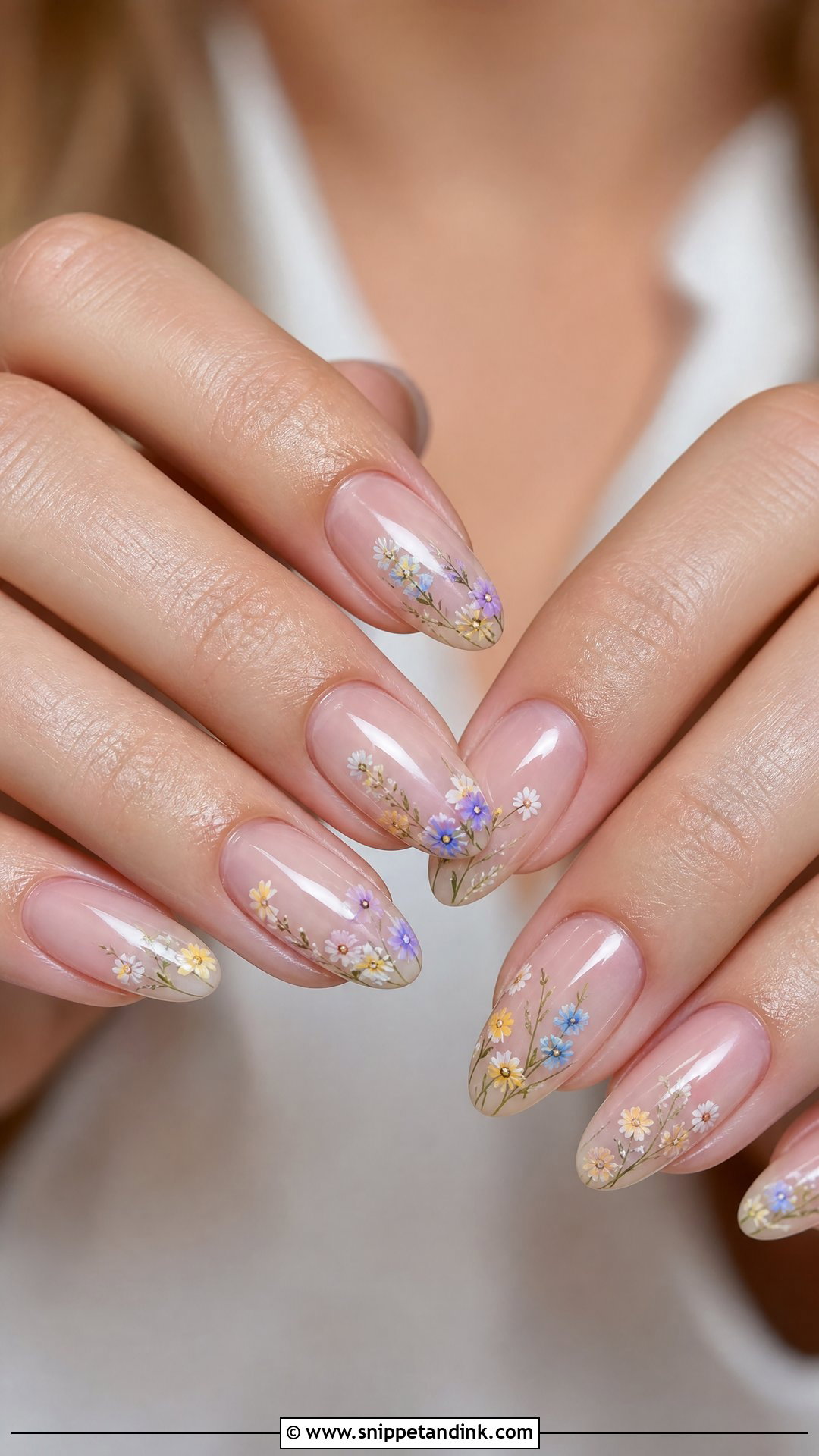
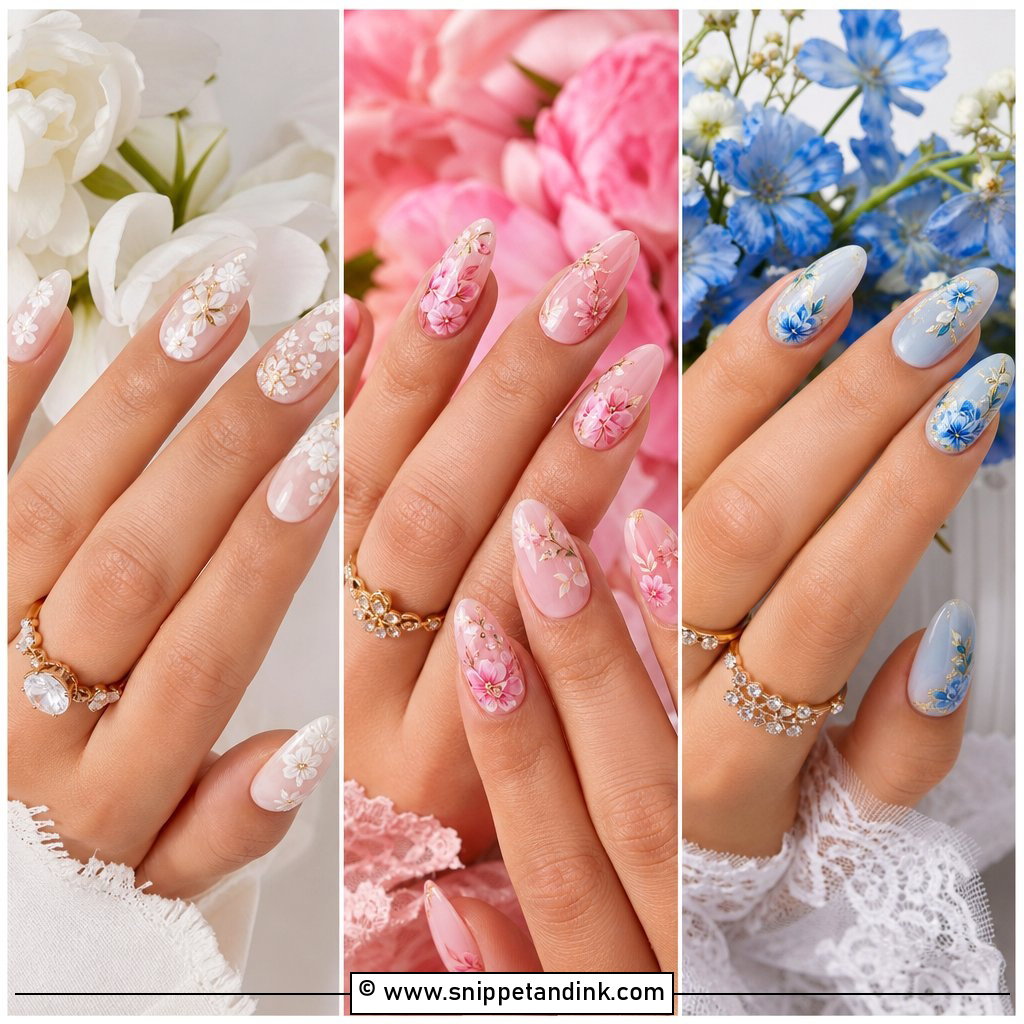
This is the set I’d suggest if you’ve never worn nail art before. A barely-there pink or beige lets your own nail tone show, then tiny white, lavender, yellow and pale blue flowers are painted near the tips or down one side, with fine green stems. The nude needs matching to your undertone: too pink on olive skin looks chalky in photos, so I swatch two or three shades on your actual nail first. Almond and oval shapes give the flowers room and lengthen the fingers in close-ups.
2. Milky White Wildflower Wedding Nails
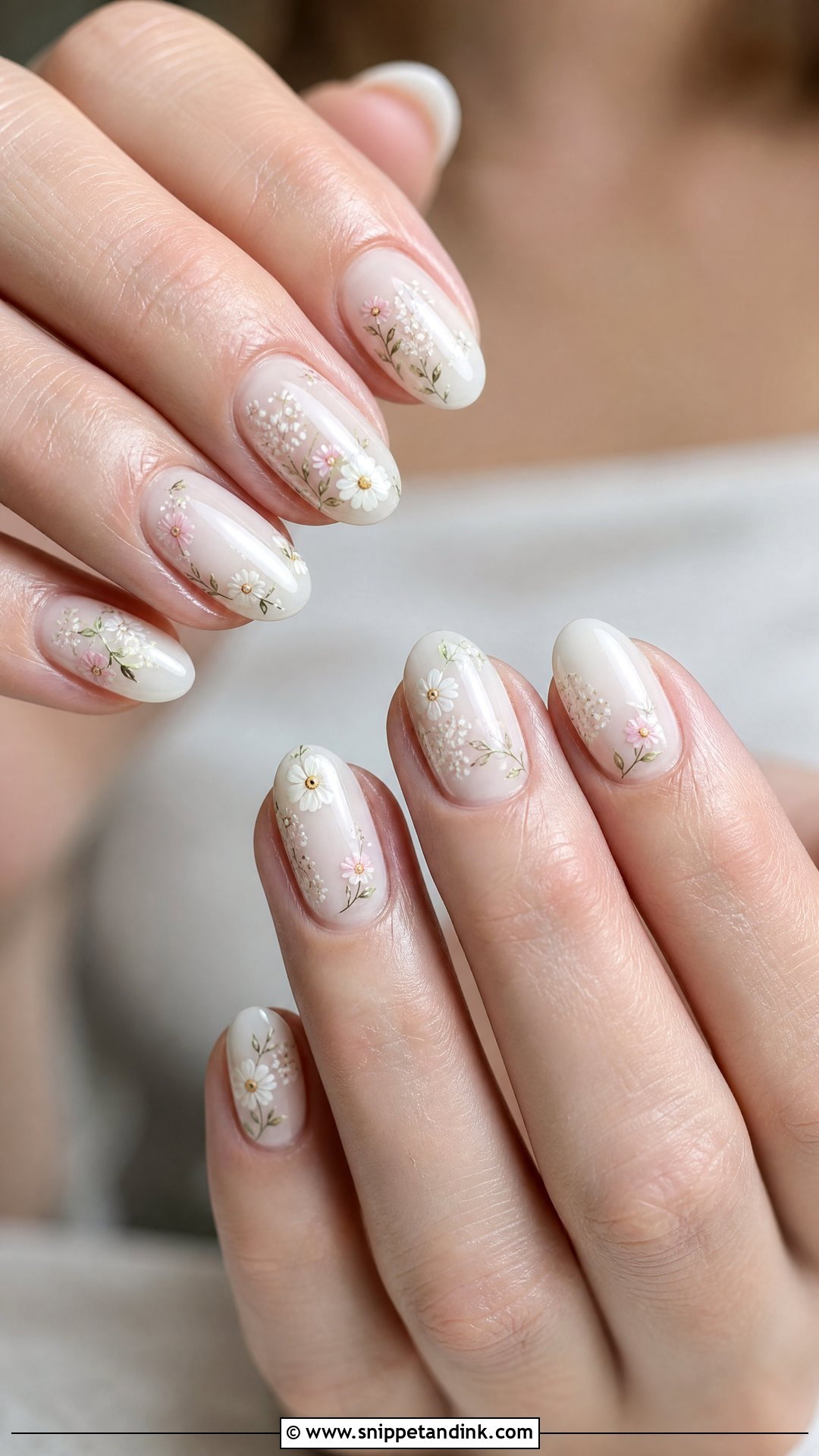
Milky white looks soft and very bridal, and it’s surprisingly forgiving, because the cloudy base hides ridges and uneven nail beds. Bright flowers fight with it, so I keep to muted daisies, baby’s breath, pale pink petals and thin leaves. Scatter them across every nail or keep them to two accents per hand for a calmer set. Milky gels can look patchy if applied in one thick coat; two thin coats, each fully cured, give that even glow. It sits well with lace, pearls and simple makeup.
3. Dried Flower Wedding Nails
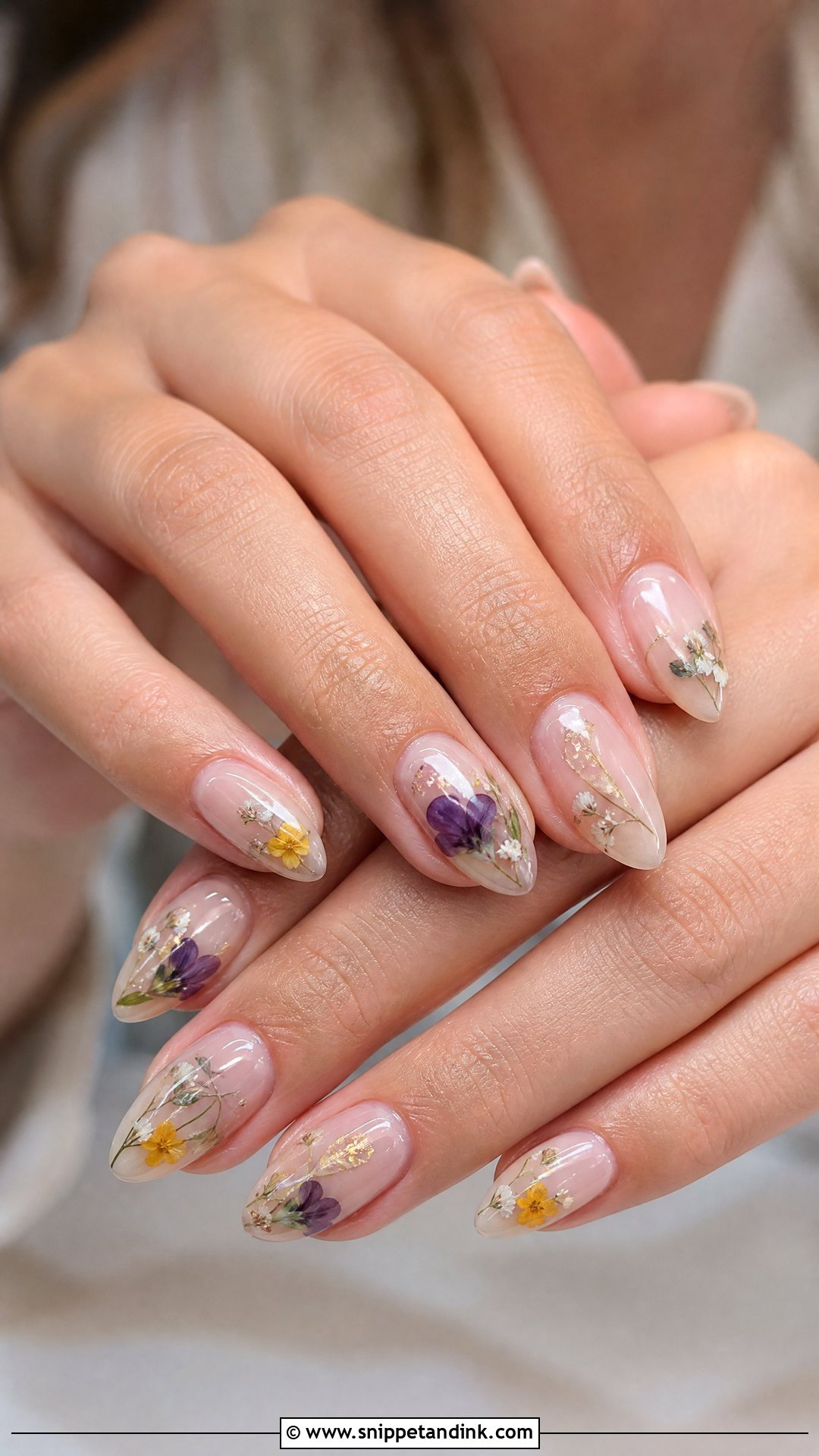
Real pressed petals sealed under clear gel, builder gel or acrylic give the most natural version of all. Dried flower wedding nails can carry tiny purple blooms, baby’s breath, yellow petals or greenery over a clear or nude base. The petals must be completely flat and dry, or they trap moisture and the gel can lift around them. I float them in a thin layer, cure, then build a smooth layer over the top and file it level so nothing catches on tulle or hair. Expect them to sit a touch thicker than a plain gel set.
4. French Tip Wildflower Wedding Nails
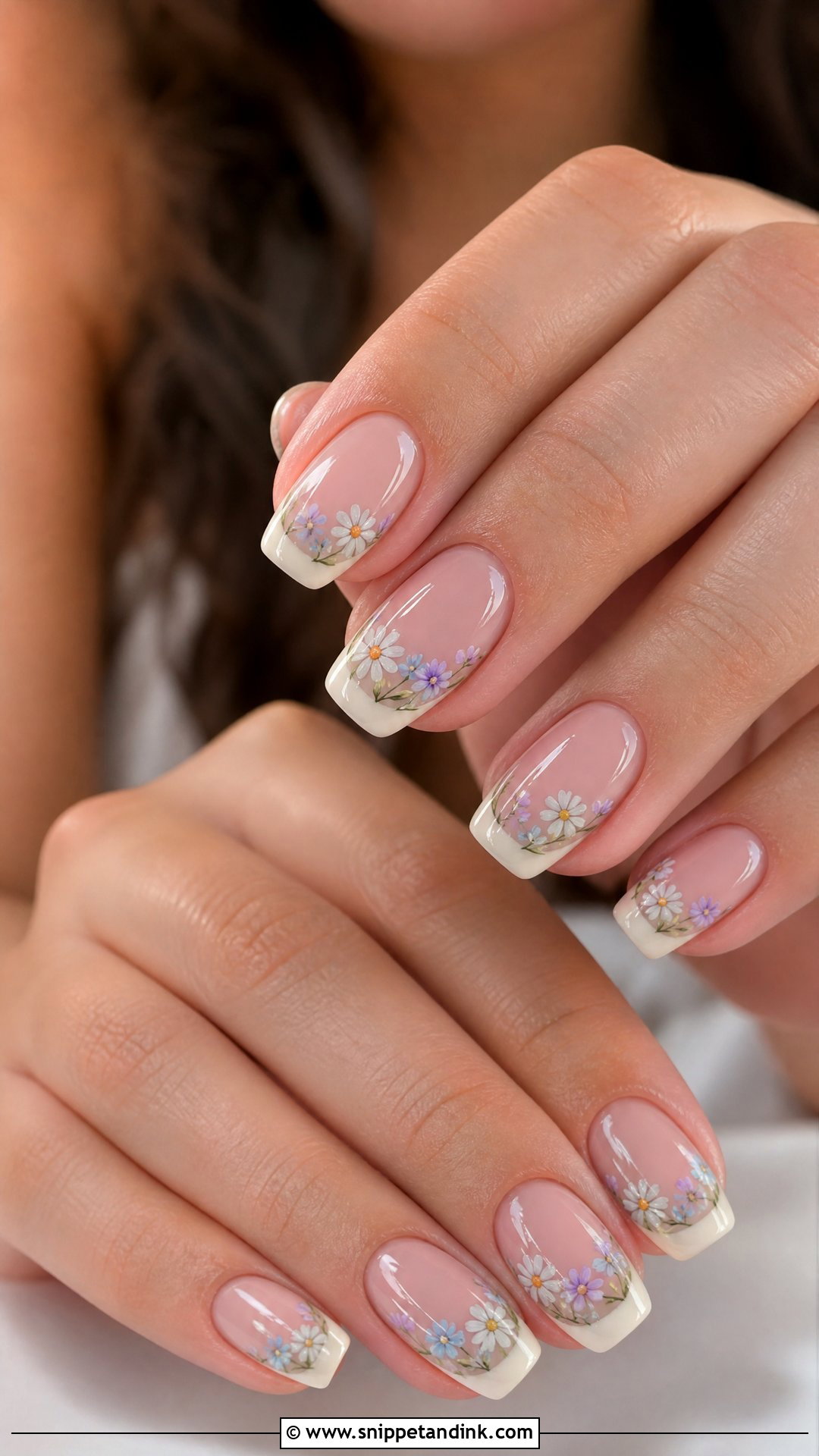
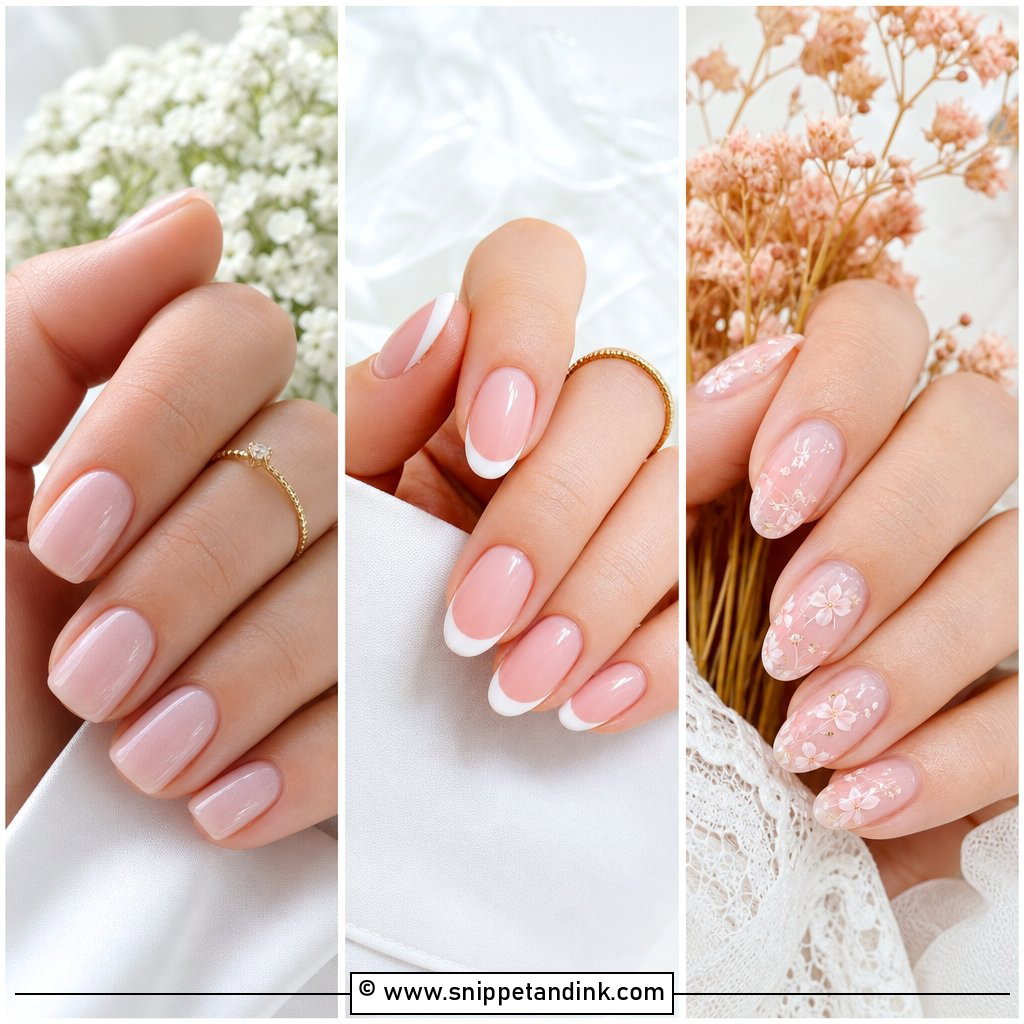
French tips are already the classic bridal manicure, so adding wildflowers along the smile line, at the sidewalls or on a couple of accent nails keeps it recognizable while making it yours. The base stays sheer pink or nude and the tips can be white, ivory or a soft pastel. Almond, square and squoval all work. A crisp smile line matters more here than the flowers; if it wobbles, the eye goes straight to it. White daisies with small stems keep it quiet, while tiny blue, lilac or blush flowers can pick up your table arrangements.
5. Pink Wildflower Wedding Nails
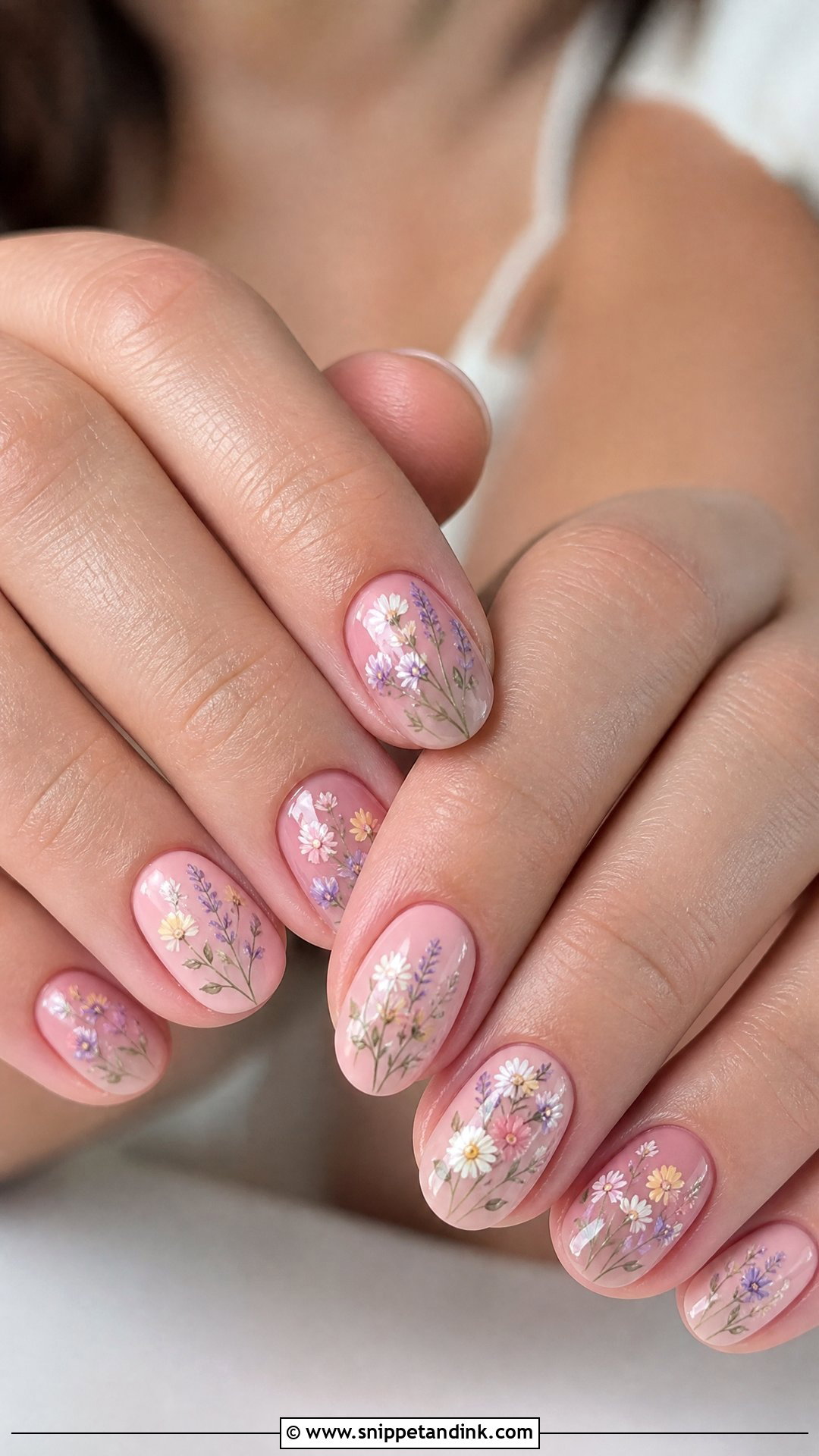
Pink bases are easy to wear, but the shade has to suit your skin and the dress. Blush, sheer rose and pale ballet pink each read differently next to ivory versus bright white fabric, so I check against a dress swatch if you have one. Small white, lavender and muted yellow flowers stand out well on pink. Keep the art fine for a minimal look, or add more blooms for a garden-party feel. A gloss topcoat keeps it fresh; a pearl shimmer top adds glow. Short oval, almond and medium rounded square all flatter it.
6. Blue Wildflower Wedding Nails
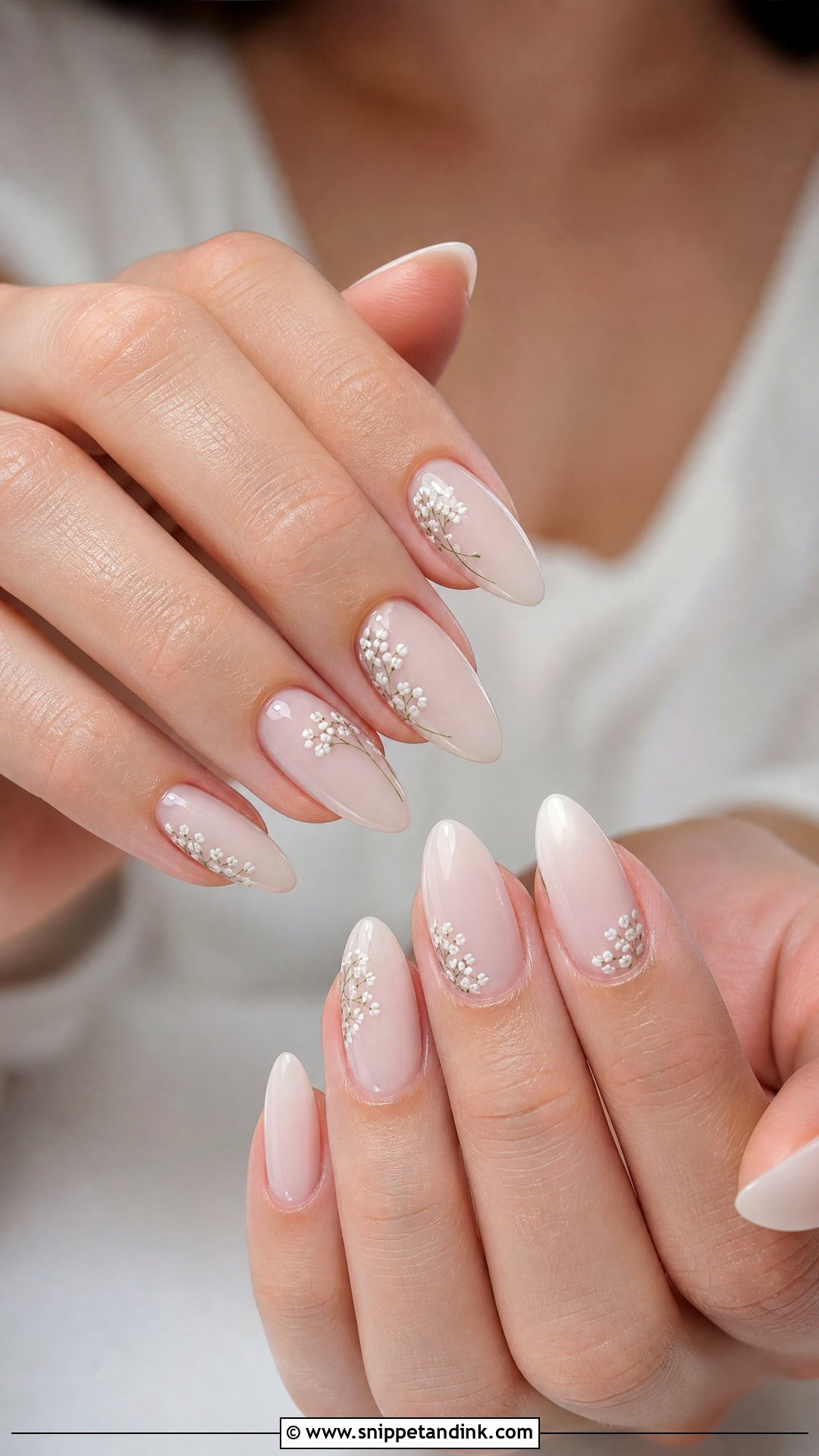
Here’s an easy something blue. Go very soft with a sheer nude and tiny blue blossoms, or more visible with pale blue French tips and floral accents. Cornflower, dusty and powder blue all work for a bride. Blue pigments can stain the natural nail if a base coat is skipped, so I never skip it. White daisies with tiny yellow centers and fine green stems keep the design natural. It ties in neatly with blue bridesmaid dresses, blue embroidery or forget-me-nots in the bouquet, and it suits coastal venues and spring ceremonies.
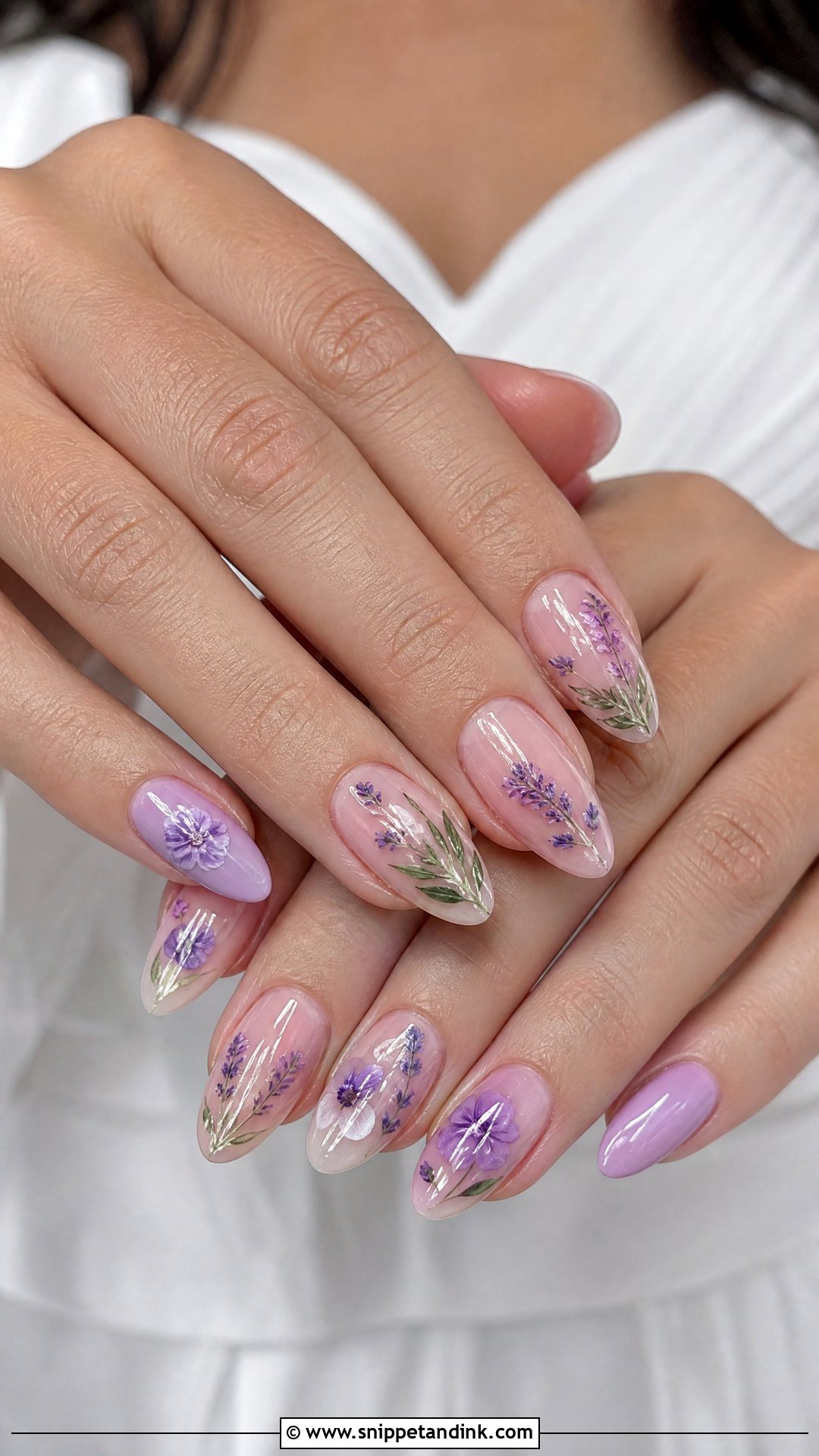
7. Purple Wildflower Wedding Nails
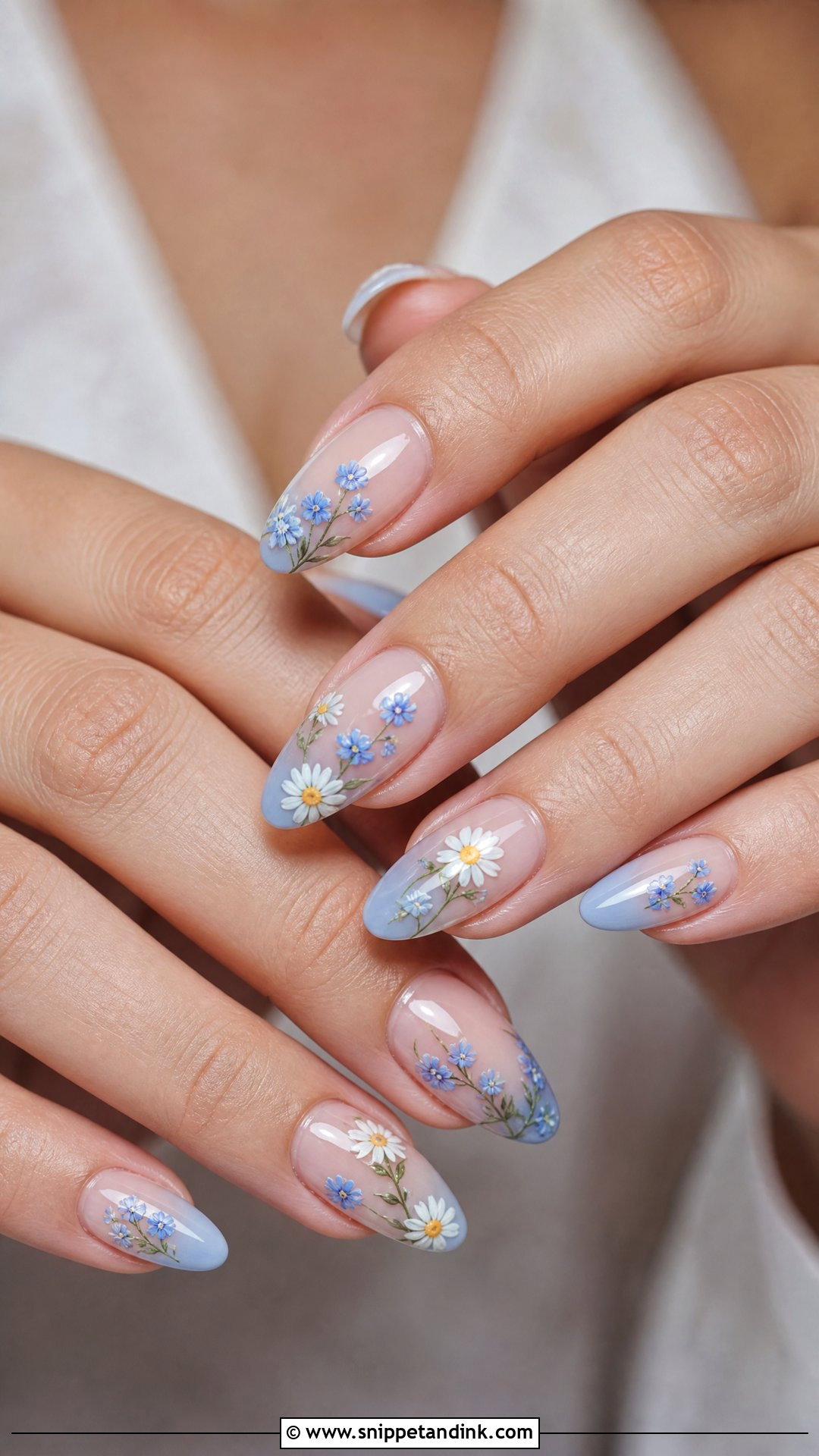
Purple wildflower wedding nails bring a lavender-field feel. Lilac, mauve and violet flowers sit well over sheer nude, milky white or pale pink. Keep the work airy: once purple covers more than a third of the nail, it stops reading as bridal. Lavender sprigs are just a line of tiny dots along a stem, so they’re one of the quicker designs to paint. Gloss looks elegant; matte gives a more rustic mood. Silver jewelry and lavender bridesmaids complete the story.
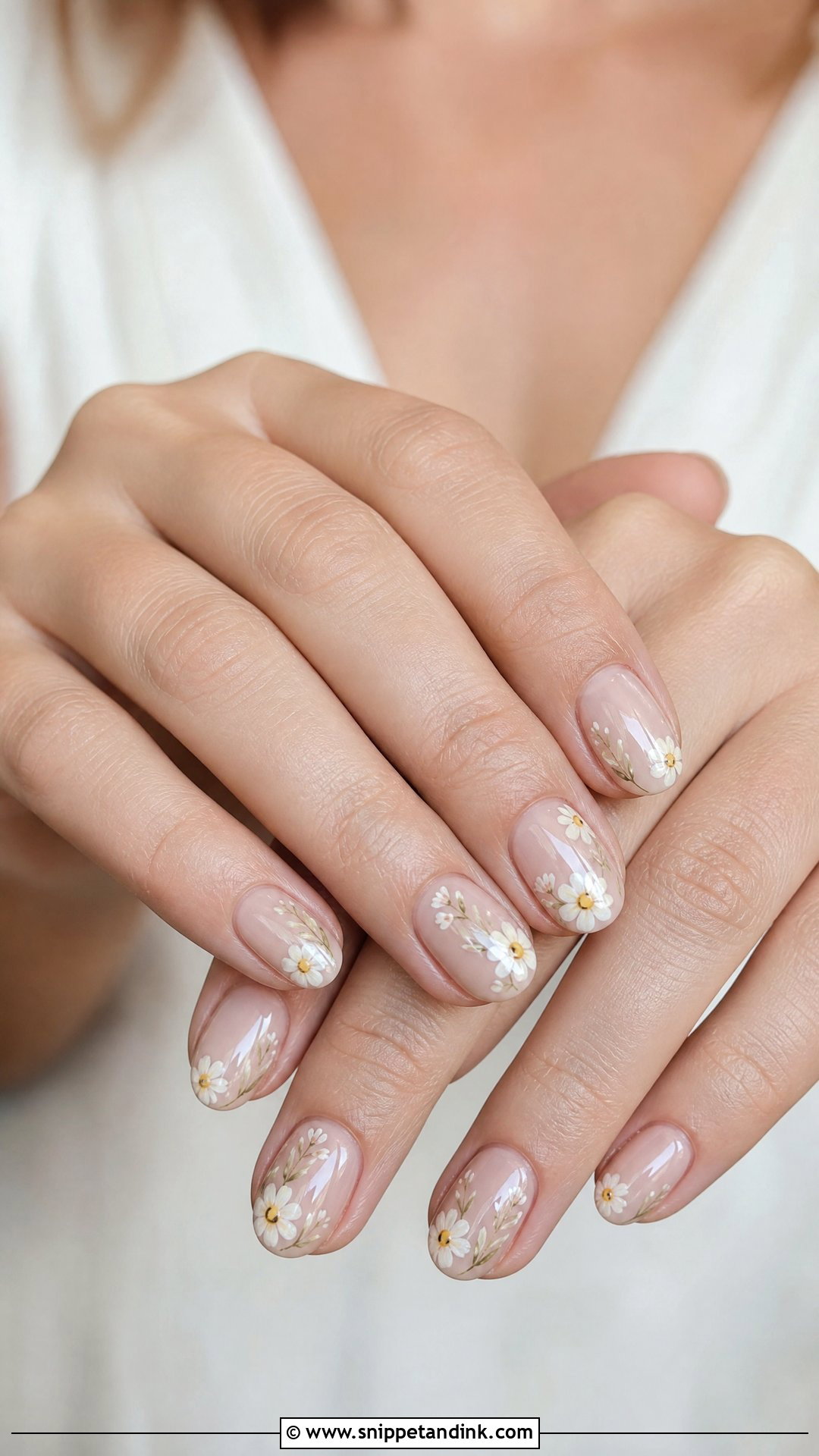
8. Daisy Wildflower Wedding Nails
Daisies are the most cheerful flower in nail art and the easiest to scale down, which makes them ideal on short nails. Daisy wildflower wedding nails look fresh on nude, sheer pink or clear bases. I build each daisy from five or six dots dragged inward with a dotting tool, then add the yellow center last so it sits on top. Space them out and add curved green stems for a meadow effect. A milky overlay on top softens the daisies so they look slightly diffused.
9. Baby’s Breath Wedding Nails
Baby’s breath on nails is really just tiny white dots on fine stems, and that simplicity is why it works for a minimalist bride. A sheer pink, nude or milky base keeps it clean. Place the clusters near the cuticle, along one side or scattered lightly. Since it’s almost colorless, it won’t clash with any bouquet. The dots need to vary in size, or the cluster looks like polka dots; I use two dotting tools to get that natural spread. Simple gowns, pearls and soft updos suit it.
10. Pressed Wildflower Wedding Nails
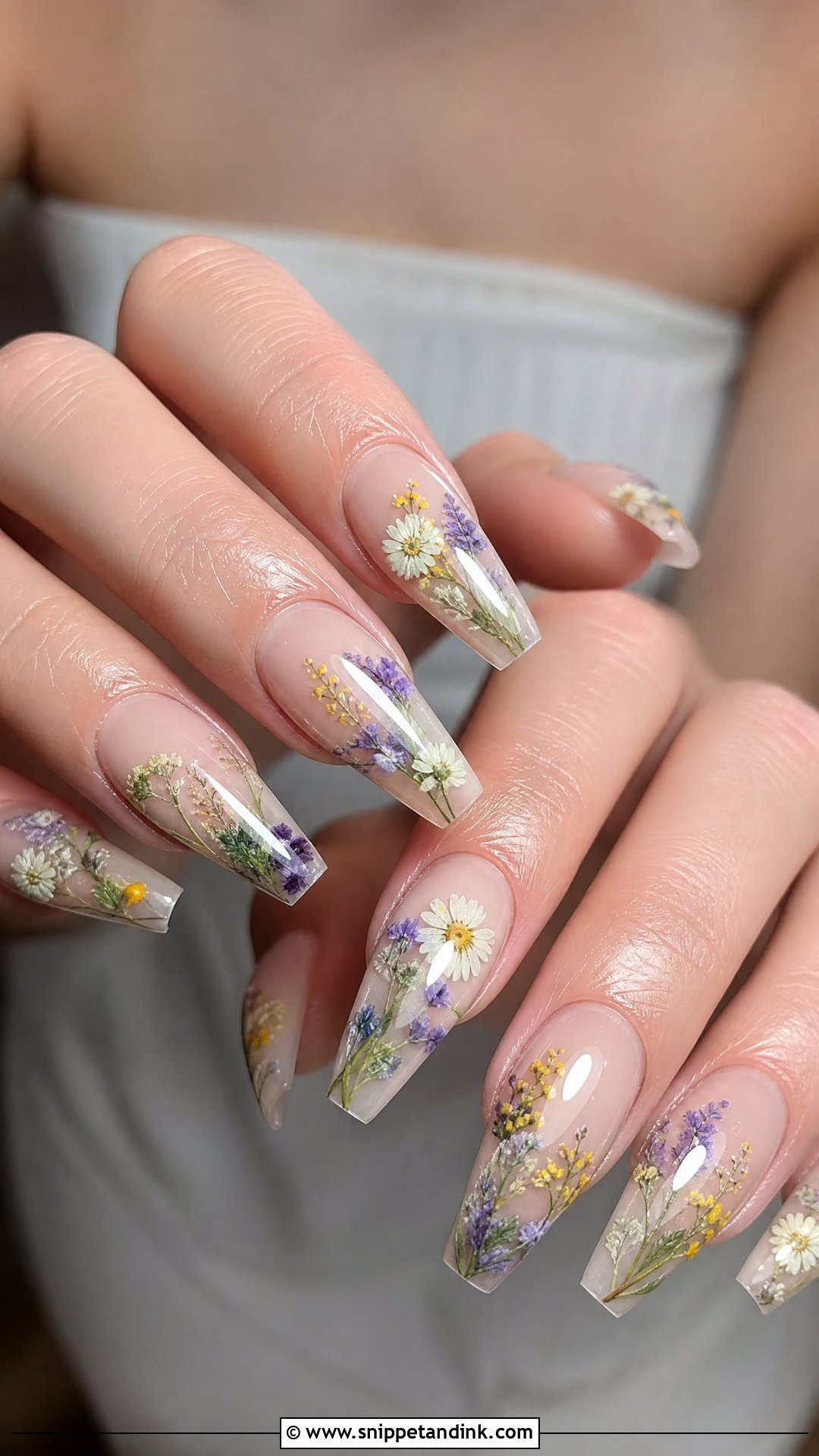
Unlike painted flowers, pressed ones carry the real texture of a petal, which makes each nail one of a kind. They’re layered into clear gel or acrylic and sealed with a glossy topcoat, arranged as a tiny bouquet per nail or used sparingly. A clear base looks most natural; a sheer nude looks more bridal. Almond and coffin shapes give the space a bouquet needs. Thick petals and stems are the main cause of a lumpy finish, so I trim or split them before placing them.
11. Short Wildflower Wedding Nails
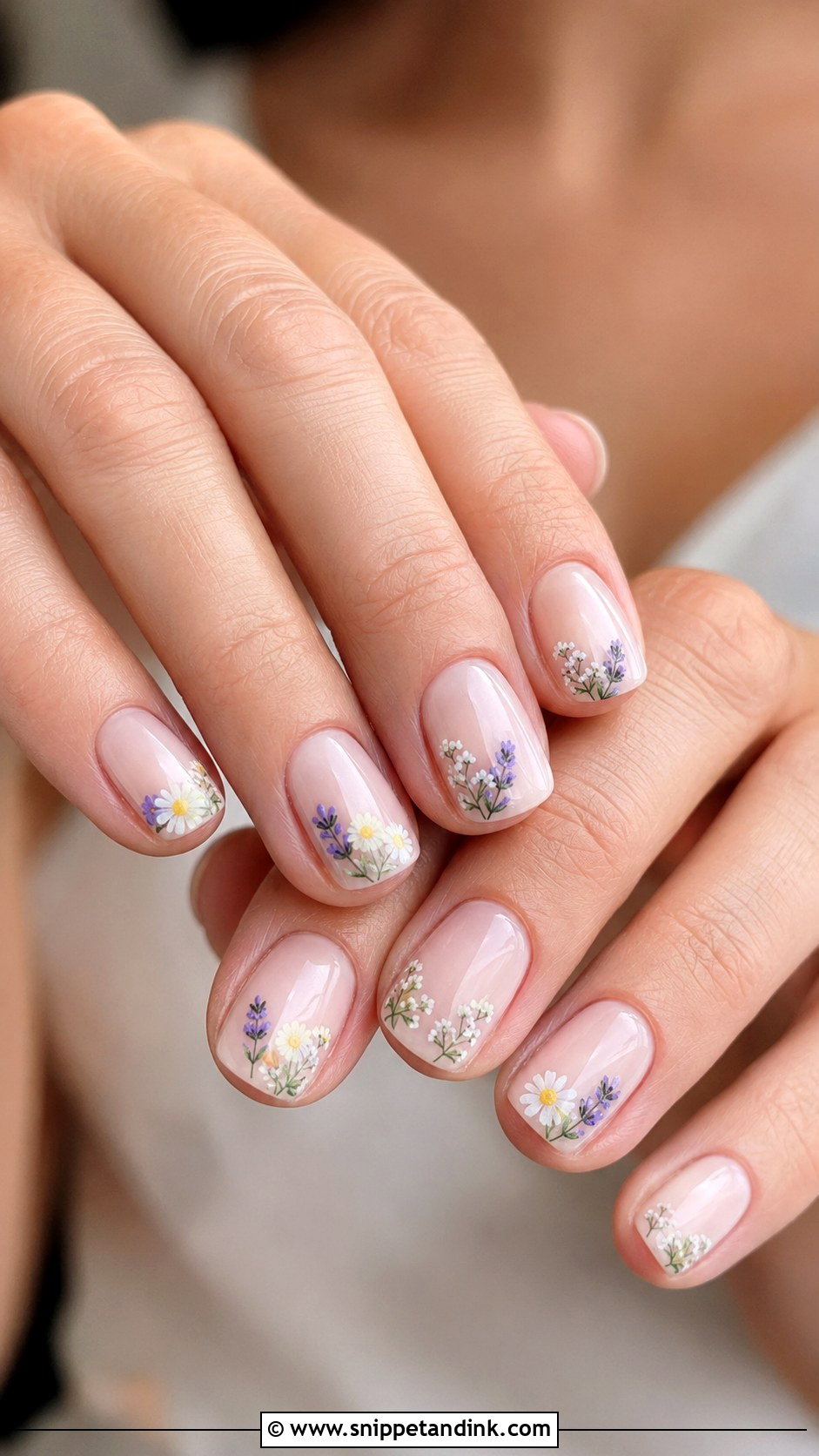
Short nails are what I’d suggest for anyone who types, cooks or simply doesn’t wear length, and they look polished when the shape is neat and the art is scaled to fit. Soft nude, pale pink or milky white bases make the nail bed look longer. Tiny daisies, lavender sprigs or baby’s breath accents can go near the tips or down one side. Short nails also chip less at the free edge, which matters when you’re hugging, carrying a bouquet and dancing for hours.
12. Almond Wildflower Wedding Nails
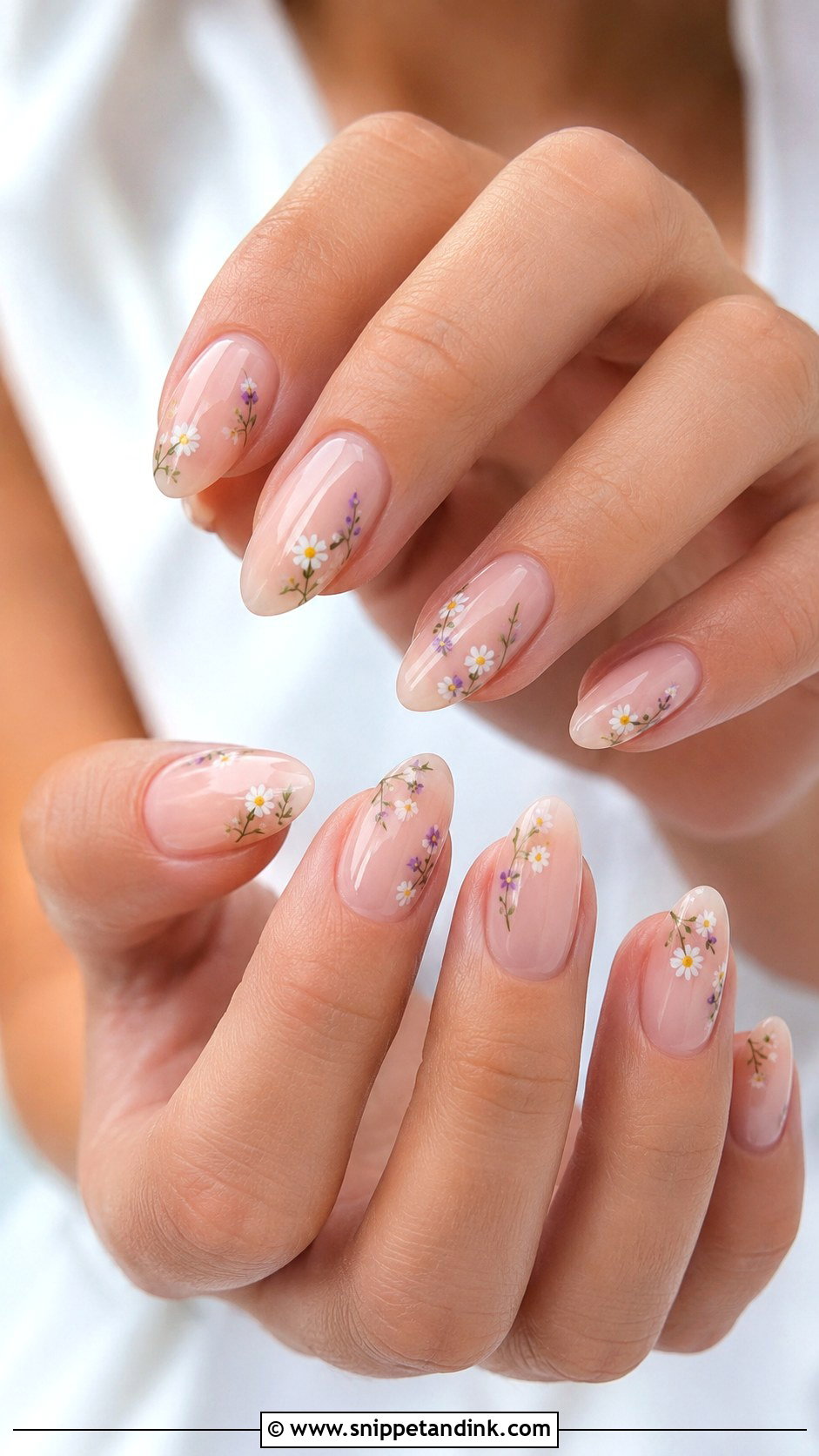
Almond’s tapered tip lengthens the fingers and suits floral art naturally. On a sheer nude or milky pink base, I let small flowers follow the curve of the nail so they form a soft vine. Keep it to white blooms or add pastel pink, blue, yellow and lavender. Almond also takes chrome, shimmer or encapsulated dried flowers well. Its narrow tip is the weak point on natural nails, so if yours are thin or soft, I’d build a gel overlay underneath to stop it snapping the week of the wedding.
13. Square Wildflower Wedding Nails
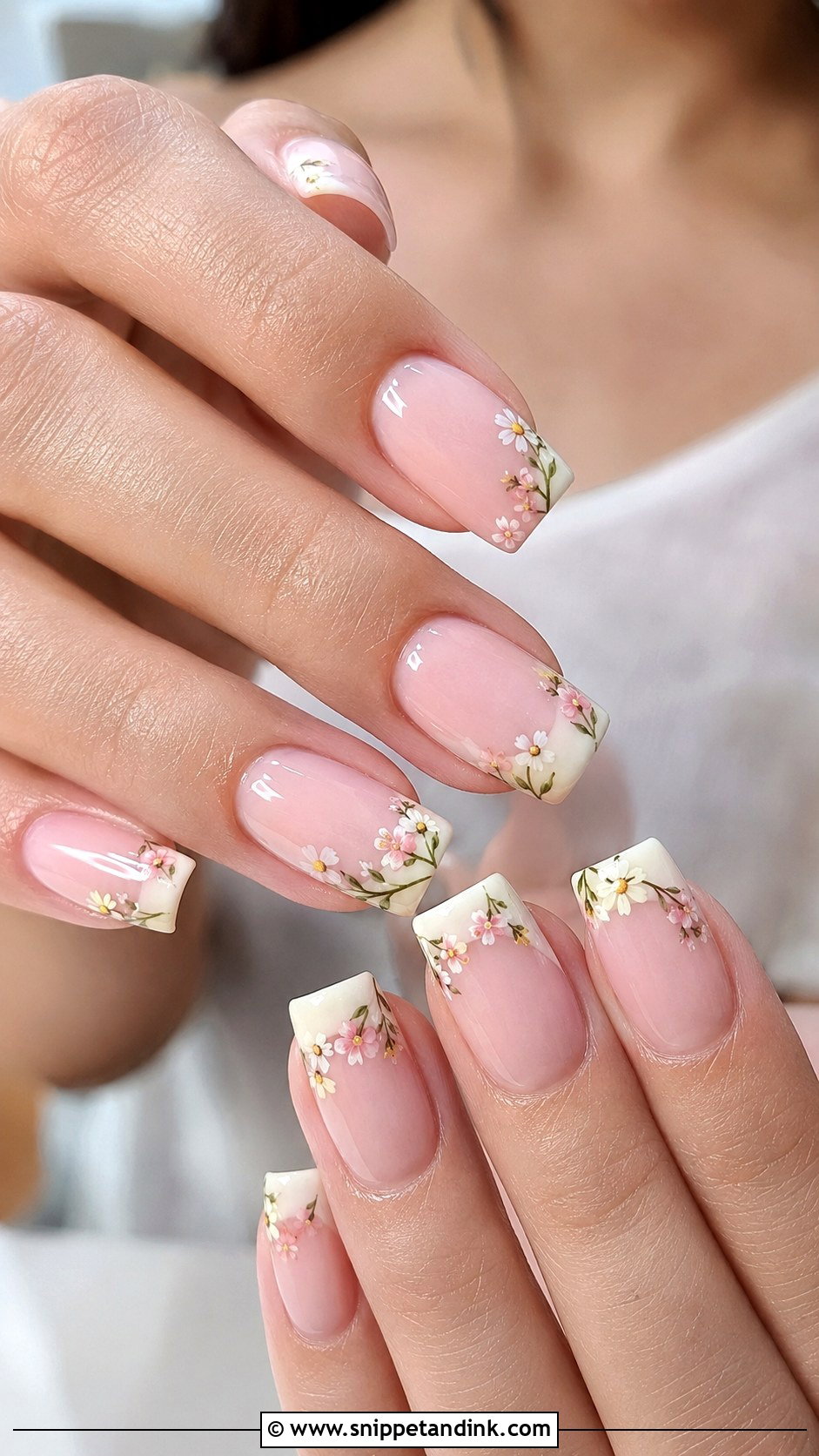
Square nails bring clean edges and a more structured feel, which modern, minimalist dresses tend to suit. A sheer pink or nude base works with tiny flowers at the tips or corners. You can add a white French tip with wildflowers along the edge, or keep the nail clear and let the art stand alone. Short to medium is the wearable range. Sharp corners do catch on lace and tulle, so I soften them very slightly, which still reads as square in photos.
14. Chrome Wildflower Wedding Nails
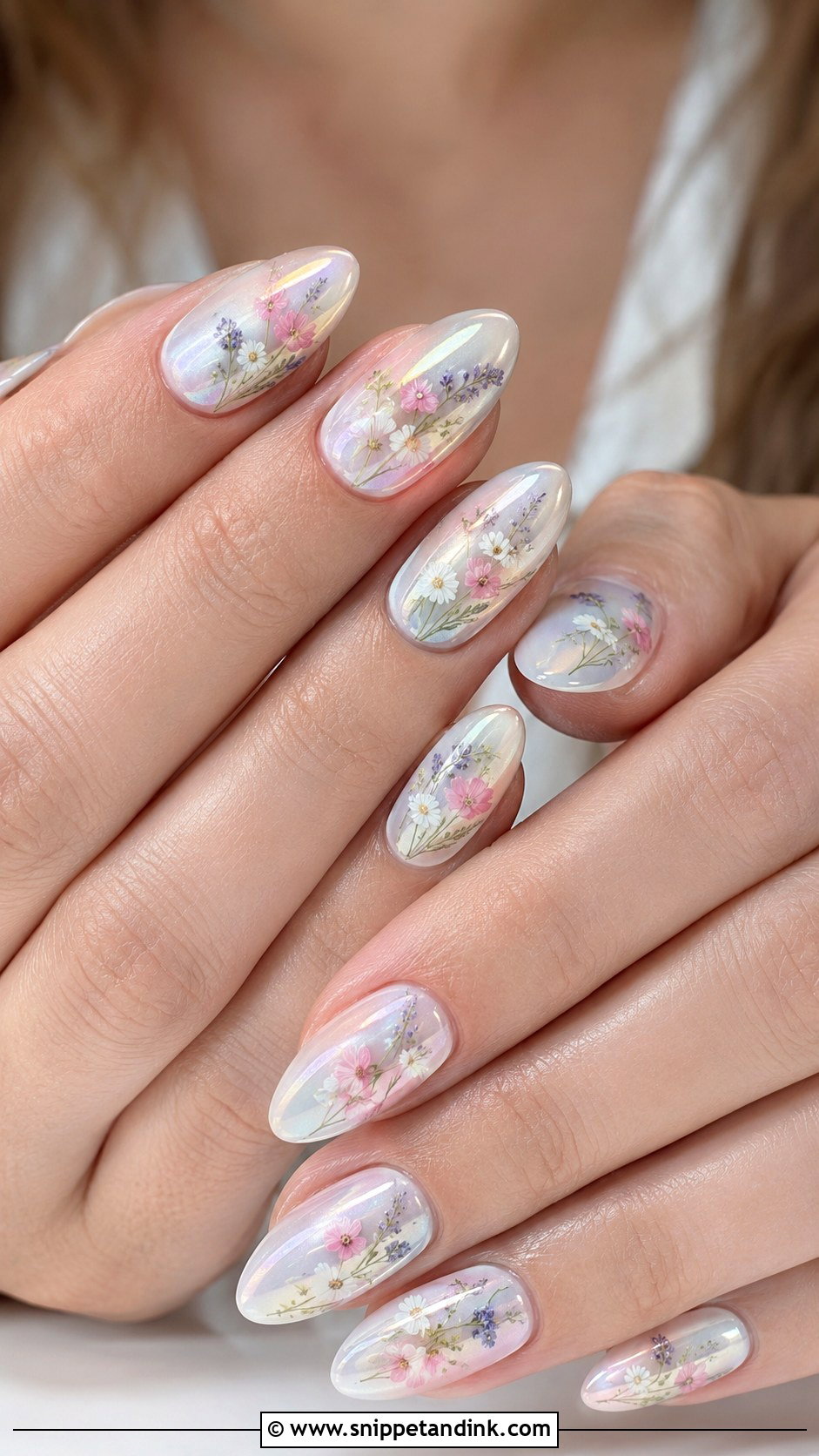
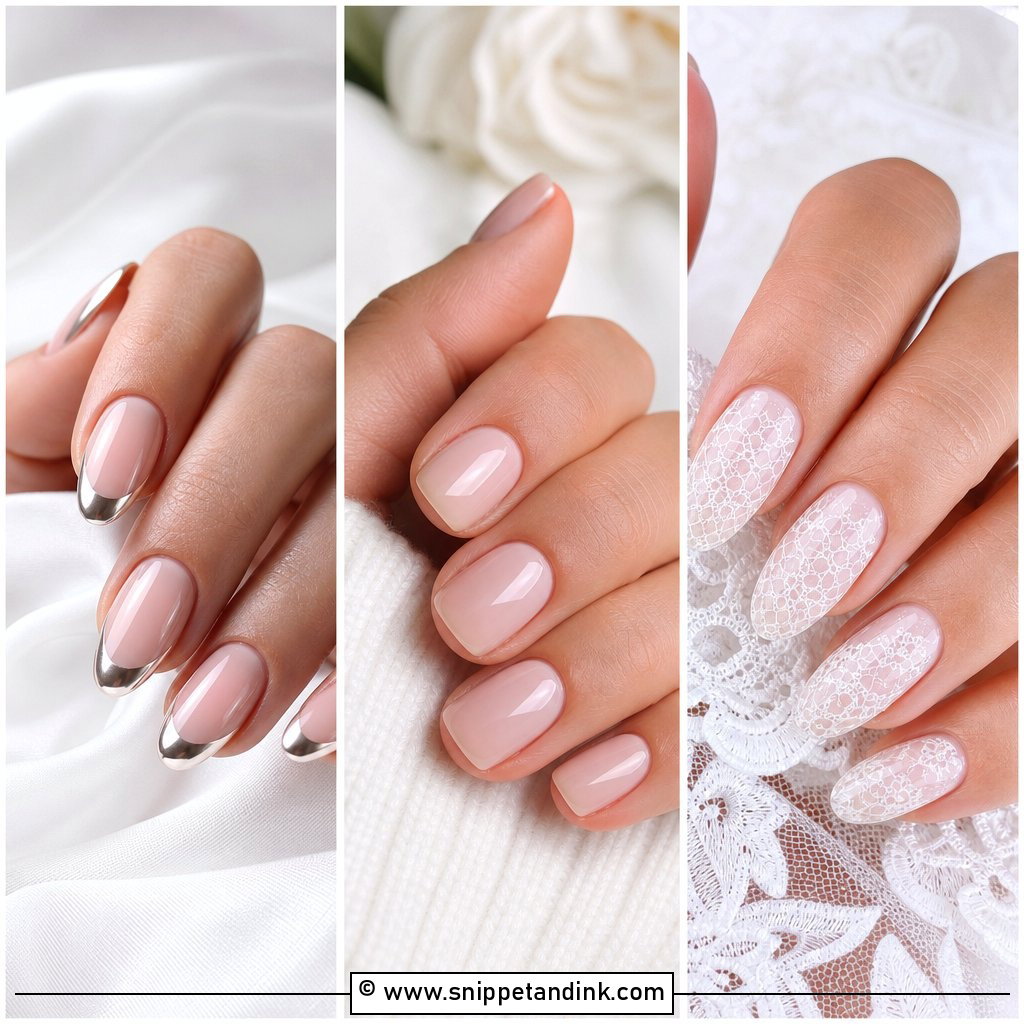
Chrome adds glow without looking flashy as long as it stays subtle. A pearl, glazed or iridescent powder goes over a milky white or nude base, and the flowers are painted on top or sealed beneath, depending on the finish you want. White flowers, pale pink petals and tiny lavender accents look prettiest with that sheen. Too heavy a chrome and the art disappears. Chrome also reflects flash strongly, so I keep it to a sheer layer for brides with a lot of indoor reception photos.
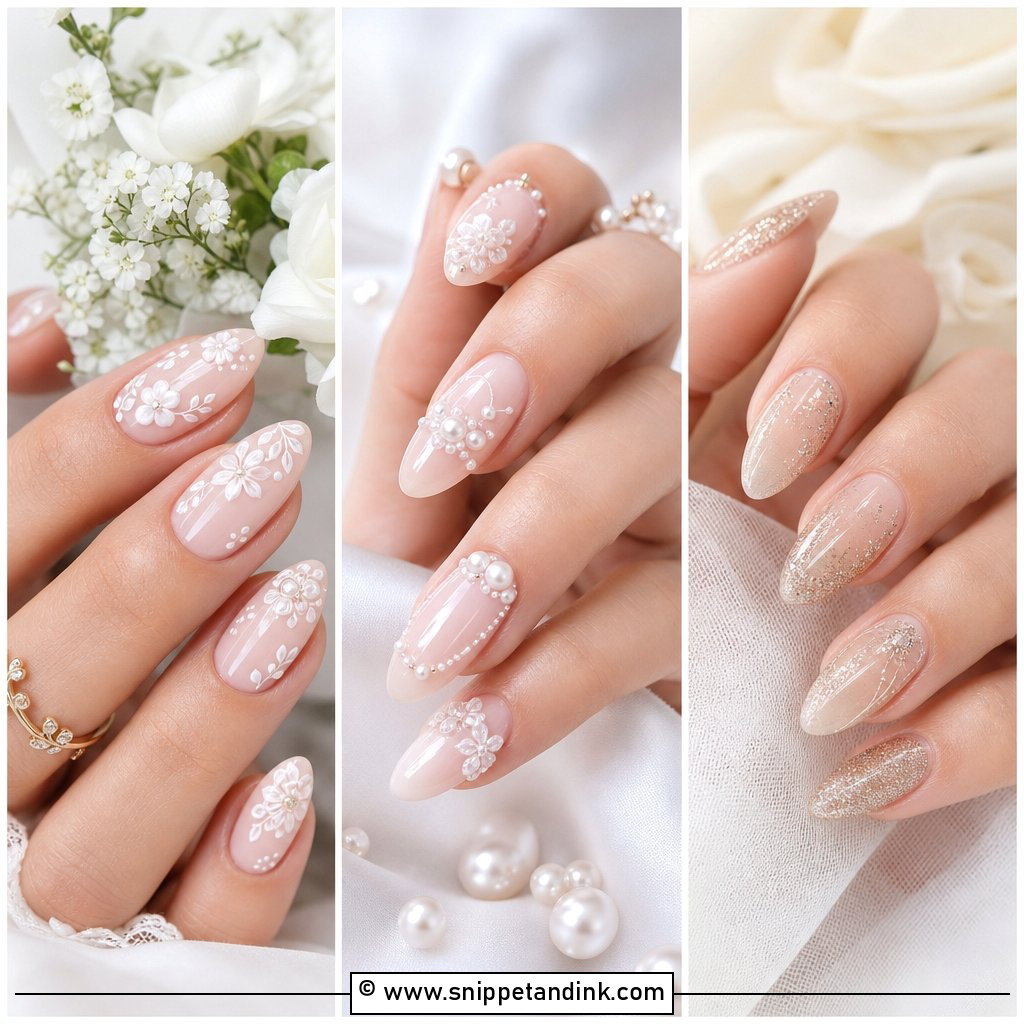
15. Ombre Wildflower Wedding Nails
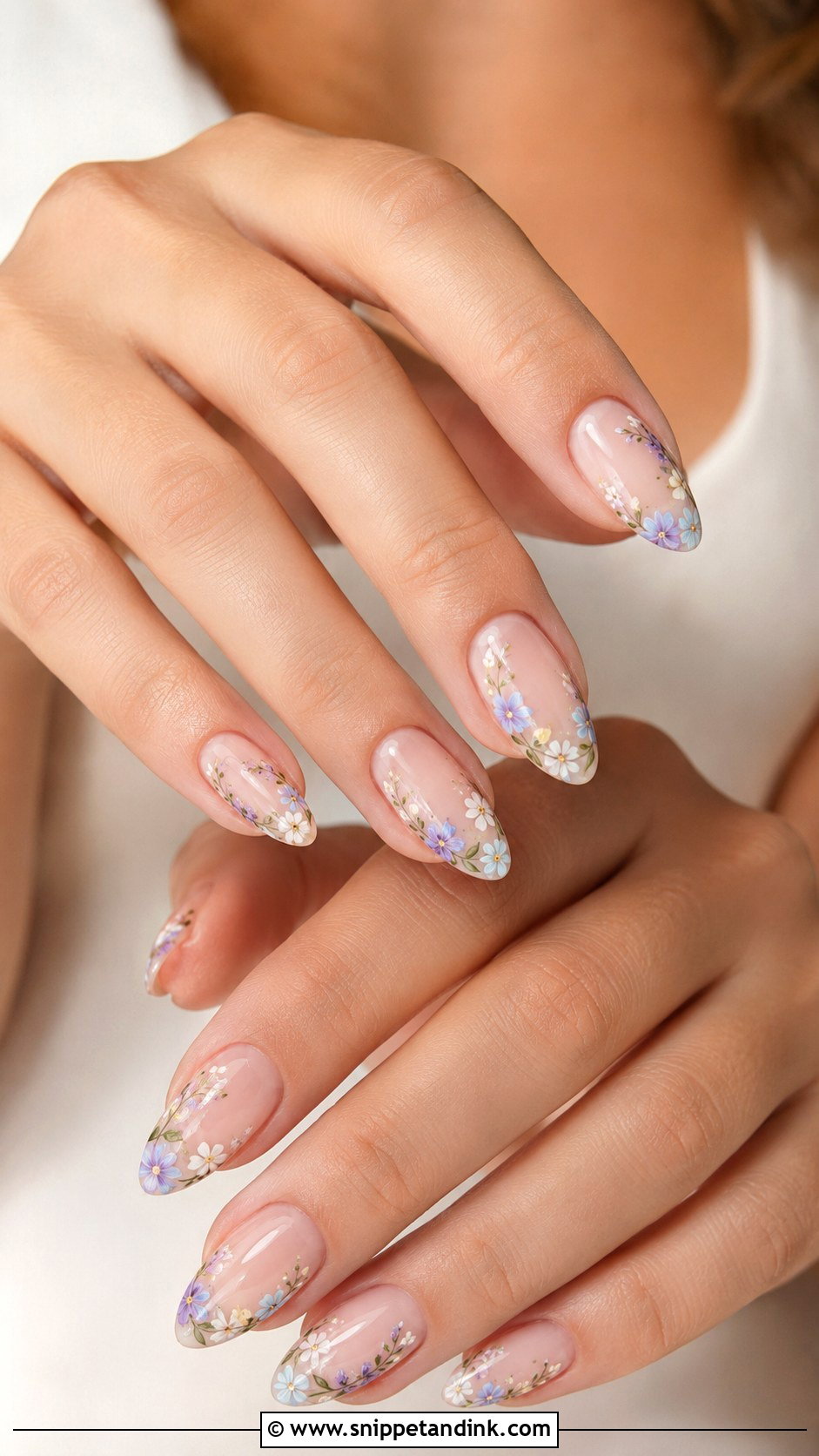
Gradient bases give the flowers something to float over. Ombre wildflower wedding nails can fade from nude to white, pink to nude, or milky white to clear, with small flowers painted where the colors meet or scattered across. A sponge or airbrush gives the smoothest blend, and I seal it before painting so the flower lines stay sharp. Almond, coffin and oval give the fade room. White flowers with pale green stems keep it subtle, while soft yellow, lavender and blue petals echo a meadow bouquet.
16. Garden Wildflower Wedding Nails
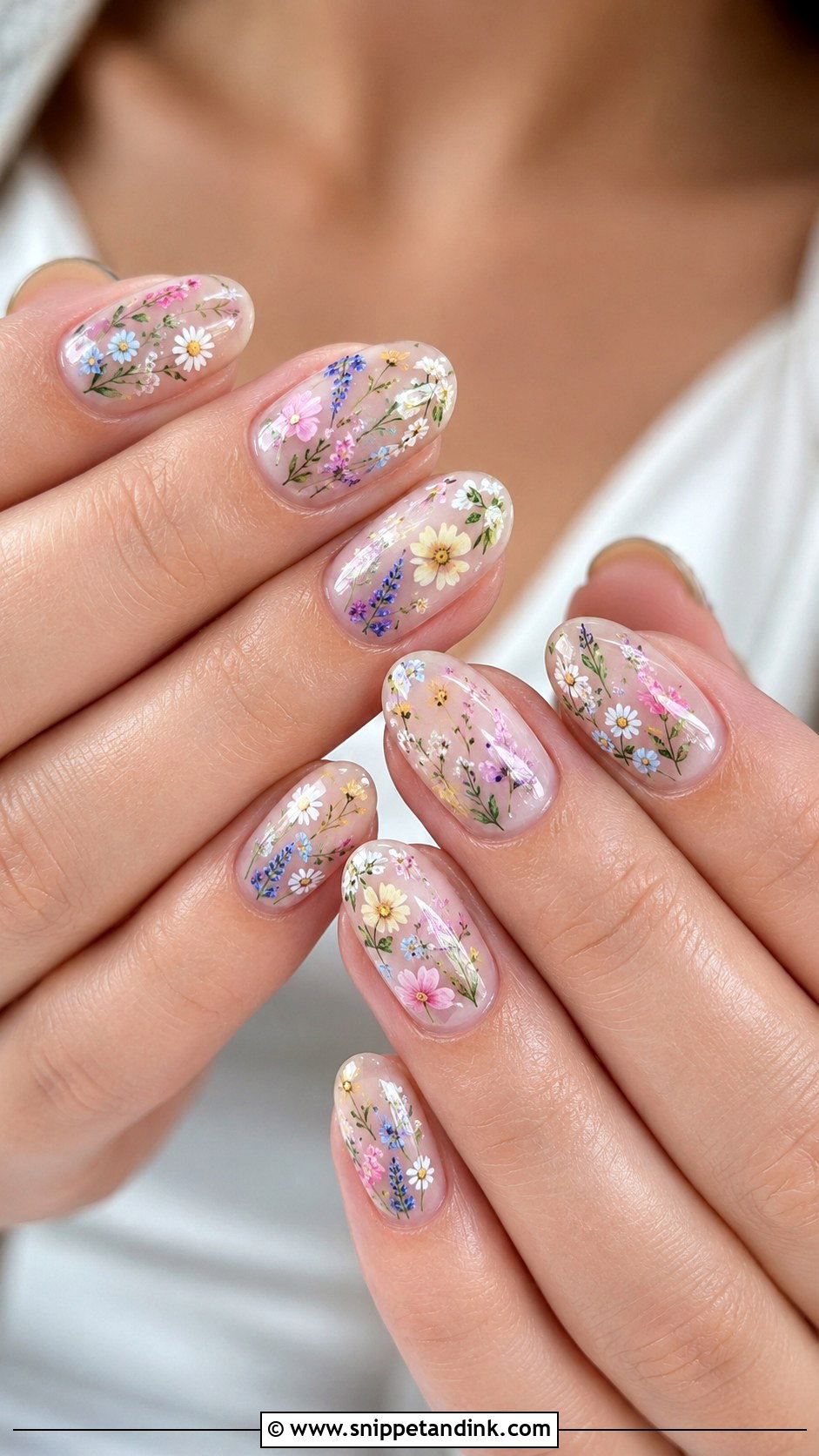
A fuller set mixes tiny blooms, curved stems, leaves and soft colors across all ten nails, and it’s the most time-consuming design here. The risk is crowding. I plan the layout across both hands first so the flowers flow from nail to nail, and I leave real negative space between them. A sheer nude or pale pink base keeps it light. Daisies, lavender, baby’s breath, small blue flowers and soft yellow blossoms in one palette tie it together, and it suits greenhouse and backyard weddings.
17. Minimal Wildflower Wedding Nails
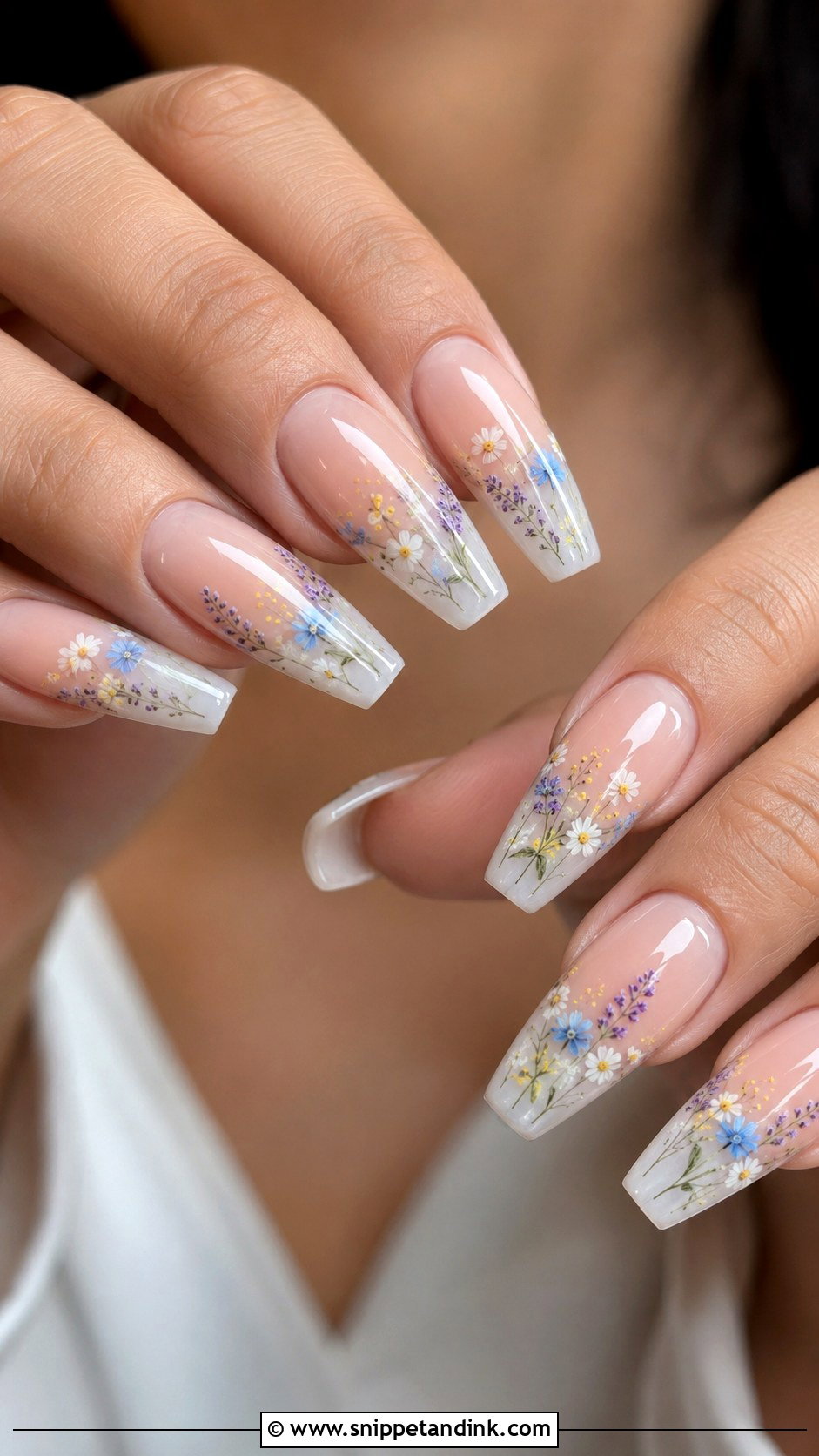
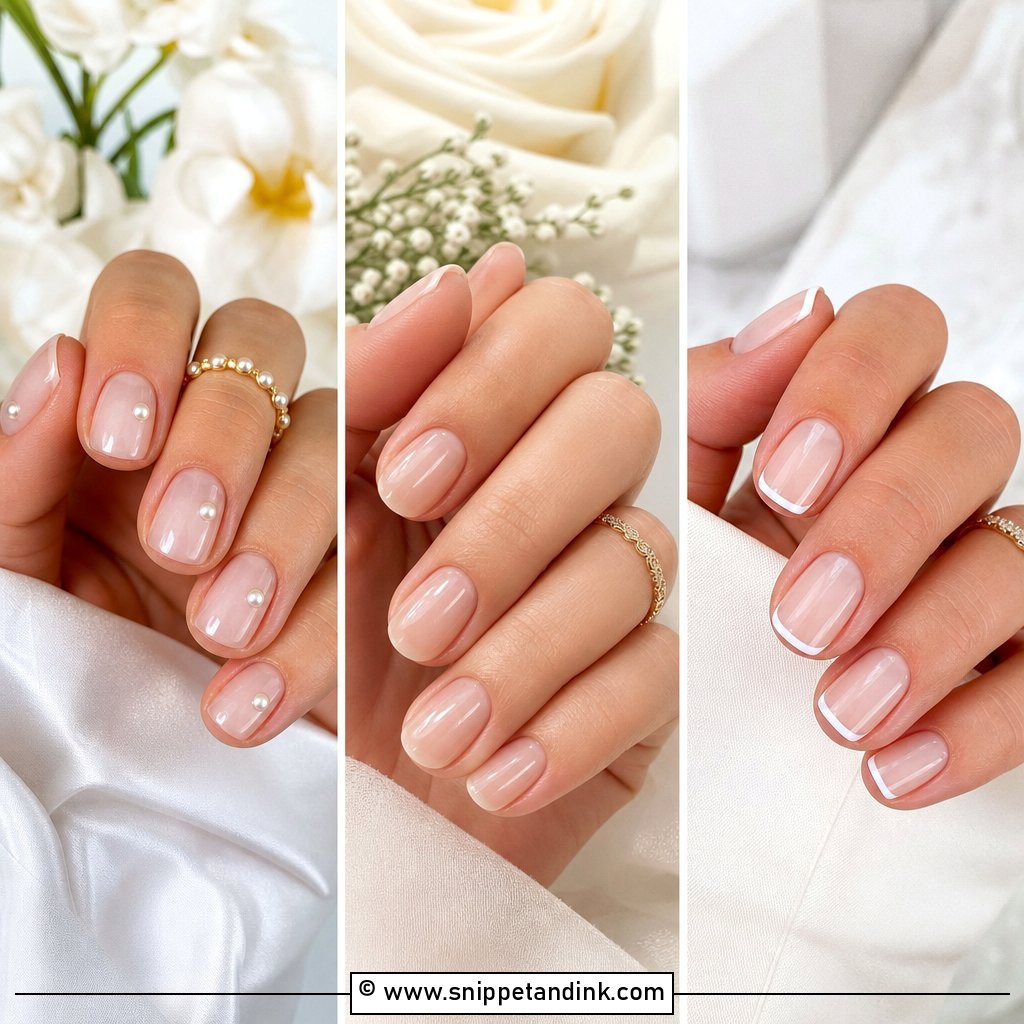
Just a hint of flower is often all a bride wants. The base stays very clean in sheer nude, clear pink or milky beige, with one or two tiny wildflowers per nail near the cuticle or along one side. White alone is quietest, or add a touch of lavender, yellow or blue, with thin stems and tiny leaves. It’s the set I’d recommend if you go back to work straight after the honeymoon, because it doesn’t look out of place in an office.
18. Colorful Wildflower Wedding Nails
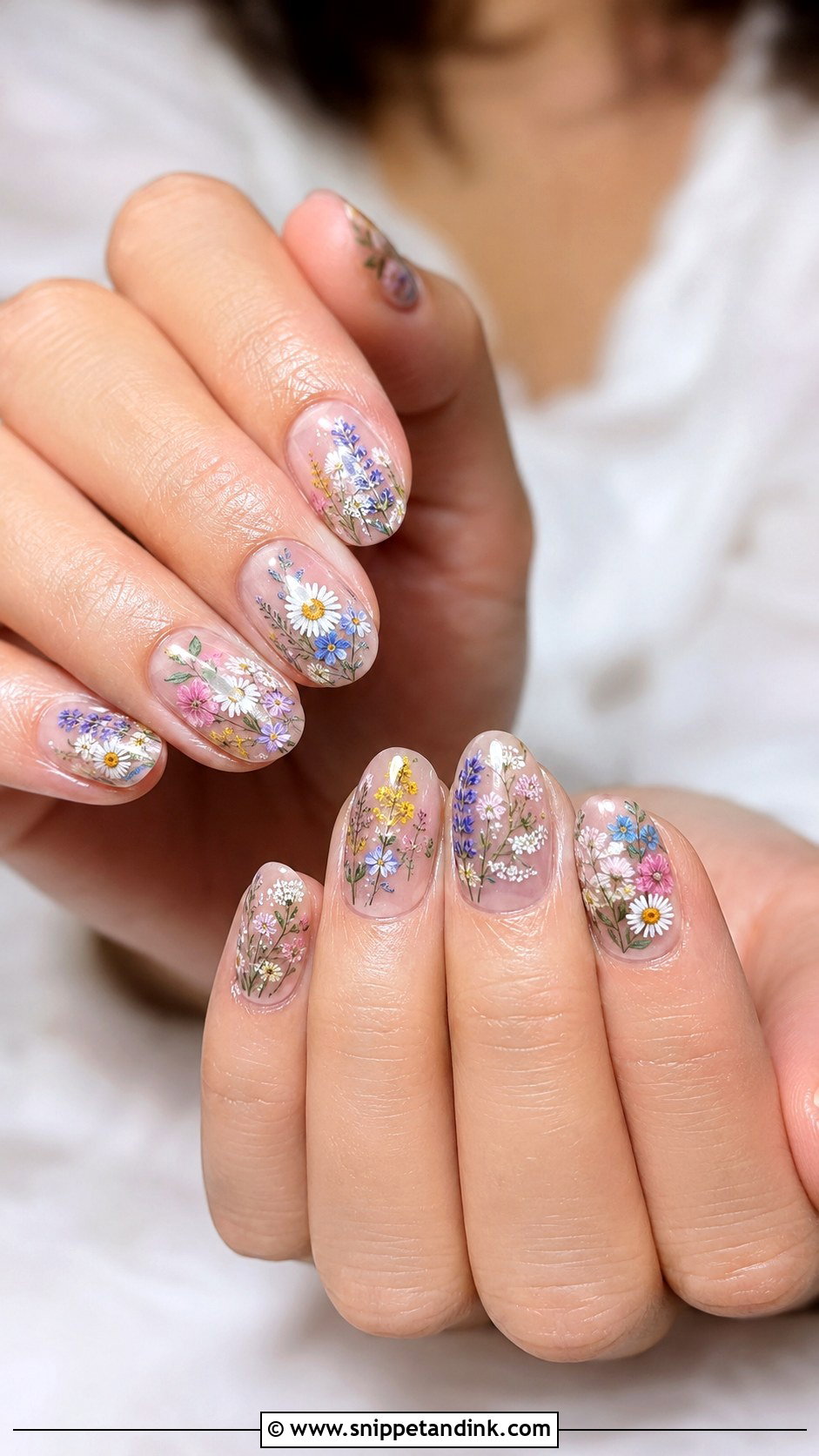
To keep a colorful set bridal, put all the color in the flowers and keep the base sheer or neutral. Soft pink, butter yellow, lavender, sky blue and sage green make a cheerful palette that doesn’t shout. Scatter the blooms or paint each nail as a tiny bouquet. If your bouquet is mixed wildflowers, I’ll pull the colors straight from it. Keep shapes small and fine, and finish with gloss, which pulls the different colors together better than matte does.
19. Matte Wildflower Wedding Nails
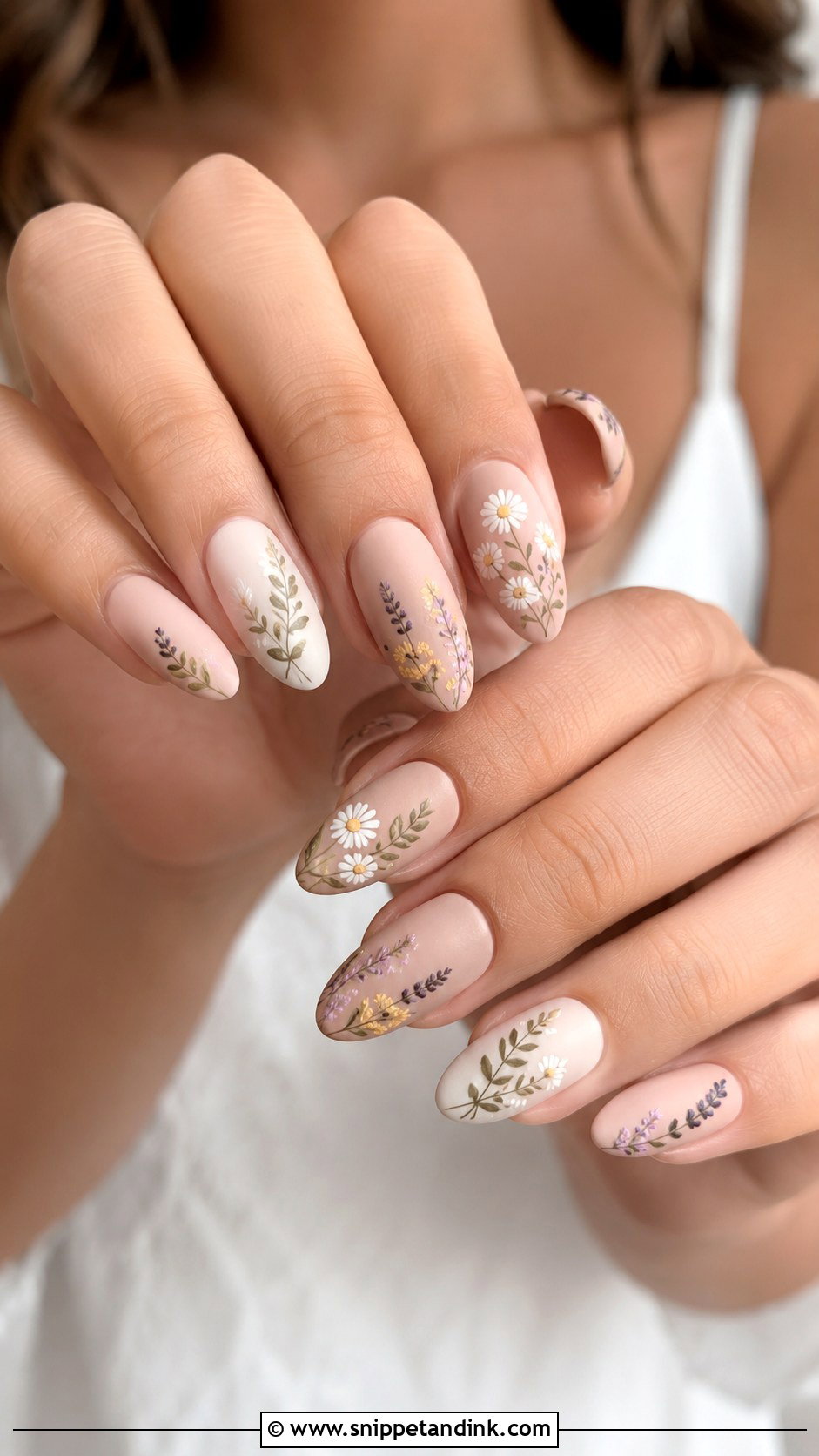
A matte topcoat gives a velvety, muted finish that suits rustic, outdoor and boho weddings. Nude, blush or milky bases look soft under tiny floral art, and white daisies, lavender stems and pale yellow blooms stay visible without getting loud. Matte shows every bump, so I level the layers carefully before the final seal. It also picks up hand cream and oils, and can look shiny on the fingertips after a day or two, so I’d do this one close to the wedding. Linen, tulle and embroidered gowns pair well with it.
20. Pearl Wildflower Wedding Nails
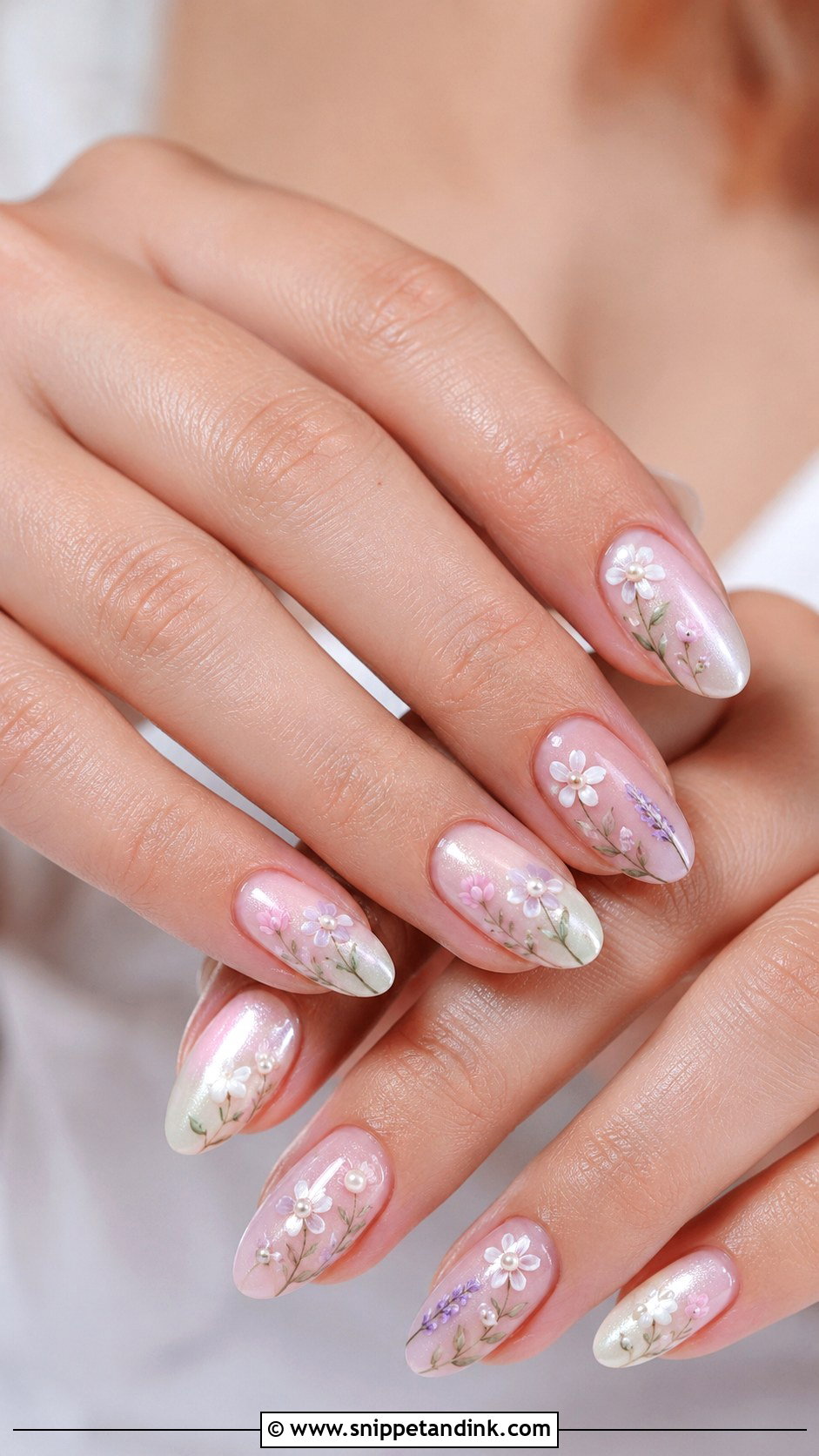
Pearls and flowers are two old bridal details, and on nails they meet on a sheer pink, milky white or nude base with a gentle pearl shimmer. The wildflowers are hand painted or made from dried petals, and tiny pearl accents sit at the flower centers or near the cuticle. Keep the pearls very small and glue them into gel, not on top of it, or they’ll pop off on the first hug. It matches pearl earrings, beaded gowns and satin dresses.
Tiny Painted Flowers Beside a New Ring Under a Macro Lens
Your photographer will shoot your hands with a macro lens, often holding the bouquet or next to your new ring. At that magnification, a few things show that you’d never notice across a table.
Scale against the stone
I keep each painted flower roughly the size of the diamond or smaller. When the art is bigger than the stone, the ring looks lost in the photo. On the ring finger itself, many brides choose a plain nail or one tiny bloom near the cuticle, so the ring is the clear focus.
Cuticles and edges show first
A lifted edge, a flooded cuticle or a dry, ragged side wall looks far worse in a macro shot than a slightly uneven petal. Clean prep and a well-capped free edge are what keep the set looking fresh by the time the photographer gets to the detail shots.
If something chips on the day
Pack a small bottle of clear top coat and a nail file in the emergency kit. A small chip at the tip can be smoothed and sealed in a minute. For a broken nail, a quick file down to match the others looks better than a patched-on tip.
Ten Small Canvases, One Meadow
A wildflower manicure ties your hands to the flowers around you, and there’s a version for nearly any bride, from sheer nudes and milky whites to dried petals, daisies, lavender sprigs, chrome and pearls. What makes it work is balancing detail, color and nail shape: a soft base keeps it bridal, and tiny art adds charm without crowding your hands. Bring a photo of your bouquet and your dress swatch to the appointment. In a garden, barn, backyard or ballroom, these wildflower nail designs will feel personal and still look fresh in the last photo of the night.
You'll Like These Ideas:


Leave a Reply