
Decorated sugar cookies are small, but guests do take them home and actually eat them, which is more than you can say for most favors. They also double as dessert table treats, shower sweets, place cards or a late-night snack. In my kitchen the work is split evenly between the cookie and the icing: a buttery cut-out that holds its edges in the oven, then royal icing laid down in stages with drying time in between. Below are twenty designs I make for weddings, from lace and monograms to beach shapes, with notes on what each one asks of the decorator and how it holds up once it’s packed.
How Far Ahead Decorated Cookies Need Ordering
Couples are often surprised by how early cookie decorators book up. A single royal icing cookie is a multi-day job: bake and cool, flood the base, dry it overnight, add details, dry again, then bag. For a hundred or more custom favors, that adds up to days of work, so many decorators take wedding orders several weeks to a few months ahead, especially in peak season. Lead times vary a lot by maker.
When I take a wedding order, these are the things I need settled before I can quote:
- Final count, plus a few spares for breakage in transit.
- How many designs are in the set. Each extra design adds time, so a set of three usually costs less per cookie than a set of eight.
- Size. Favor cookies around three inches are very different work from large place-card plaques.
- Packaging: individually heat-sealed, ribboned, boxed or delivered loose on trays.
- Allergies and dietary needs. Most royal icing contains egg white or meringue powder, and many cookies are made in kitchens with nuts.
Pricing depends heavily on detail and region, so I’d always ask for a quote on your exact design rather than relying on a general per-cookie figure.
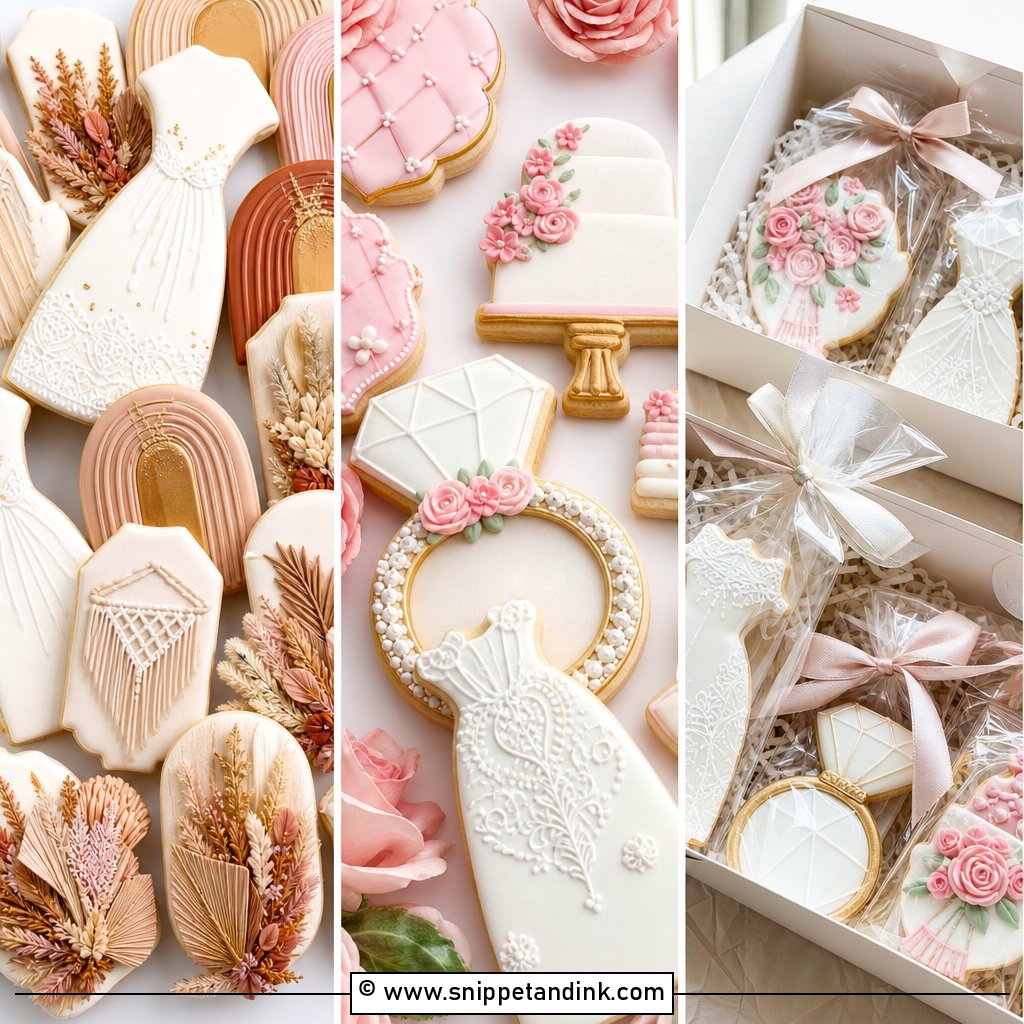
1. Wedding Dress Sugar Cookies
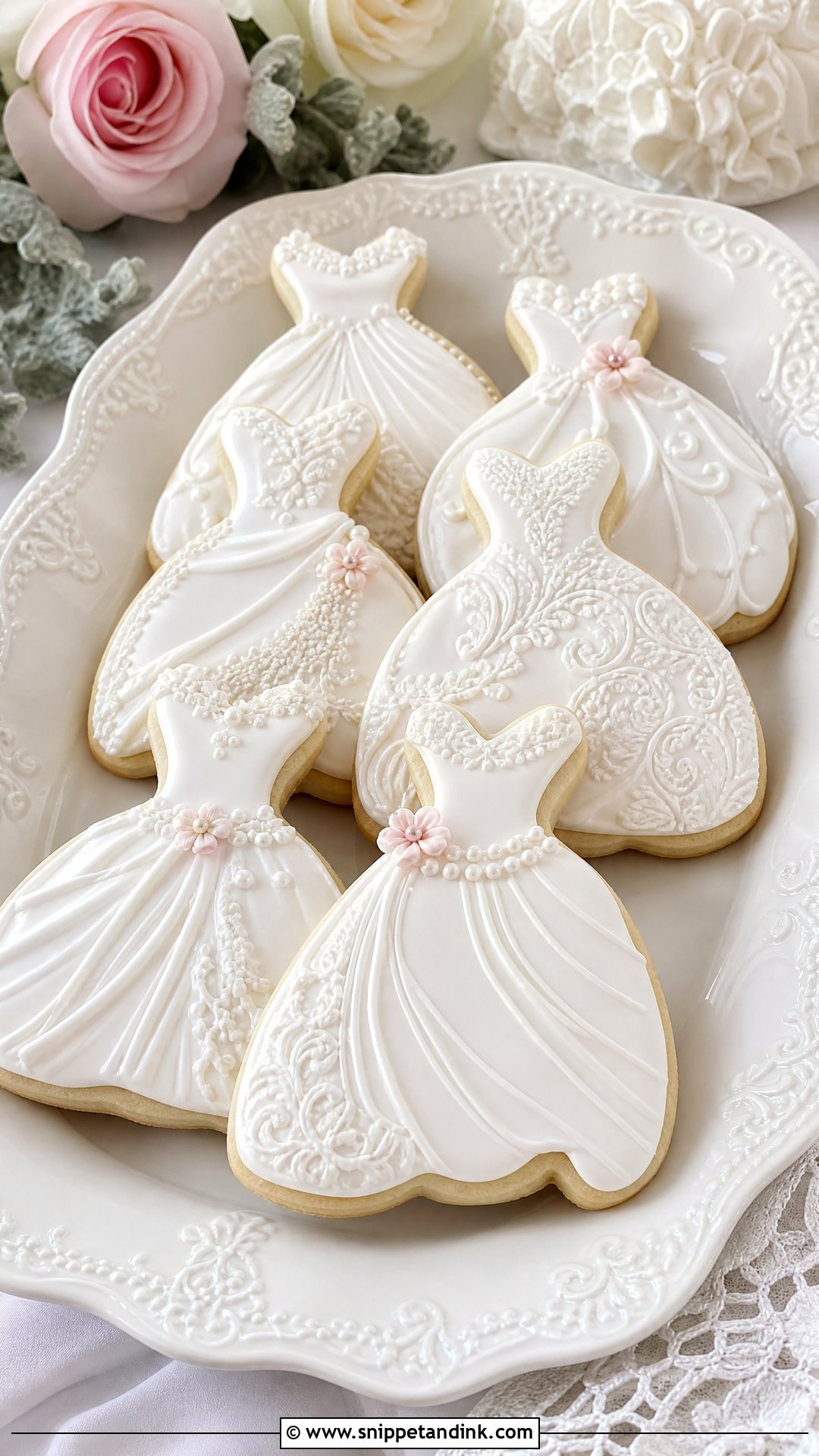
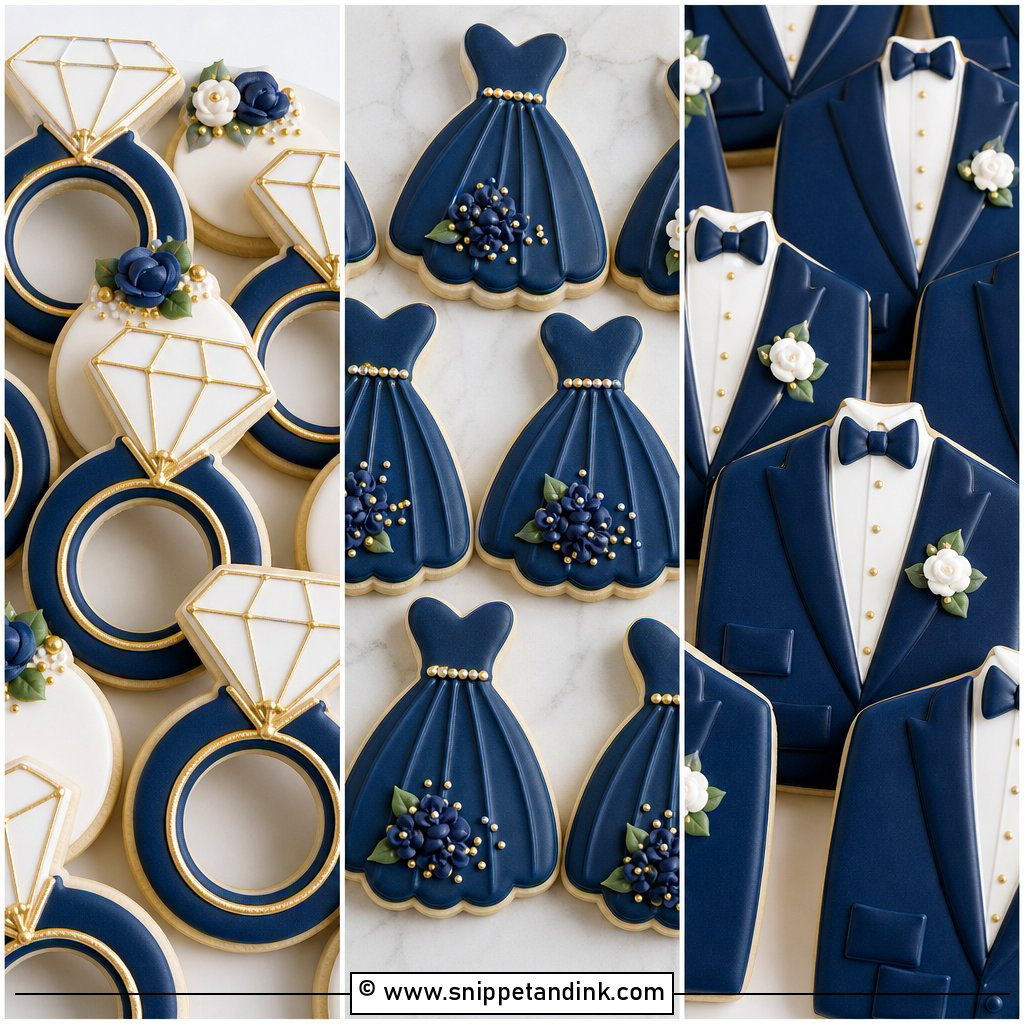
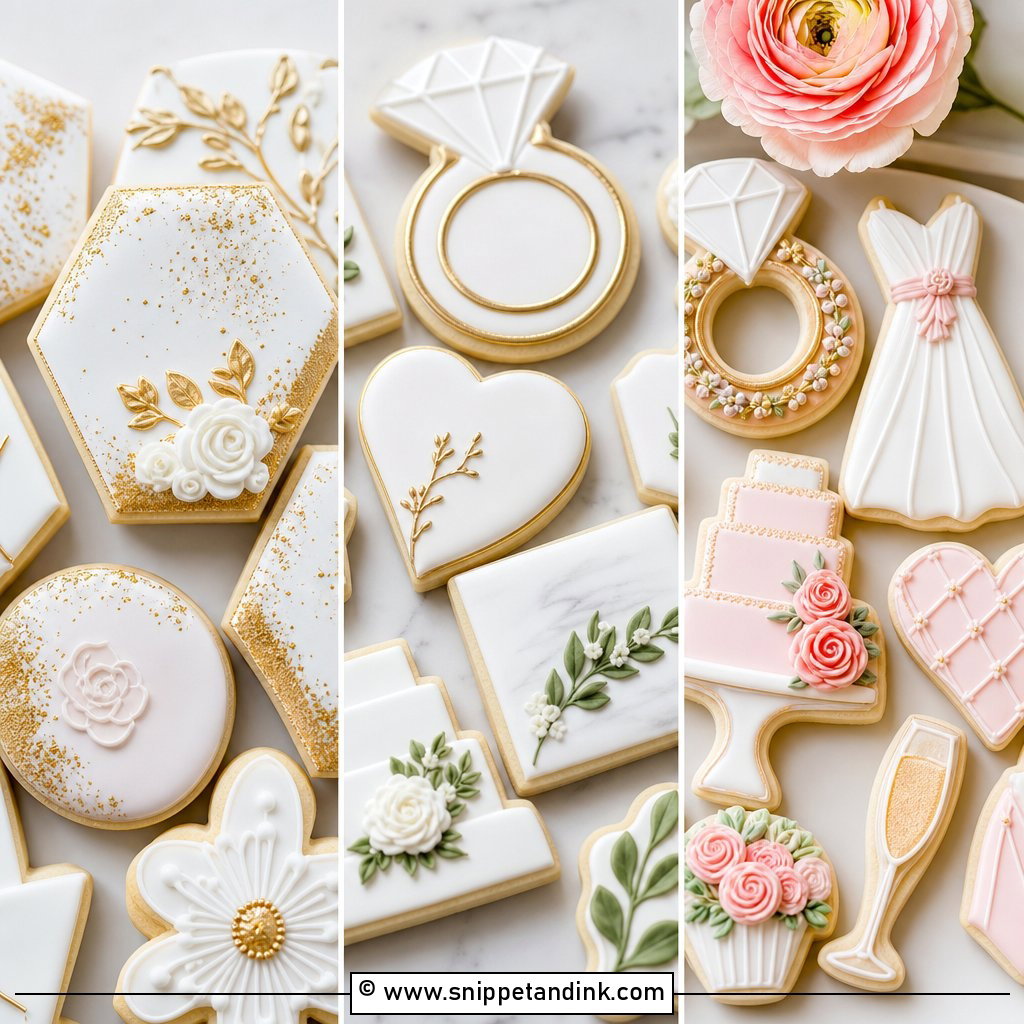
The dress shape is the most recognizable bridal cookie, which is why it sells out first on shower tables. I flood the gown in white or ivory, let the base set fully, then add piped lace, pearl dots or a ruffled skirt on top so the detail stands up instead of sinking in. Ivory is easier on the eye than pure white, which can look gray next to a real gown in photos. For a modern wedding I keep the silhouette plain with a single metallic line at the waist. Each one goes into a clear bag with ribbon only after it has dried overnight.
2. Wedding Ring Sugar Cookies
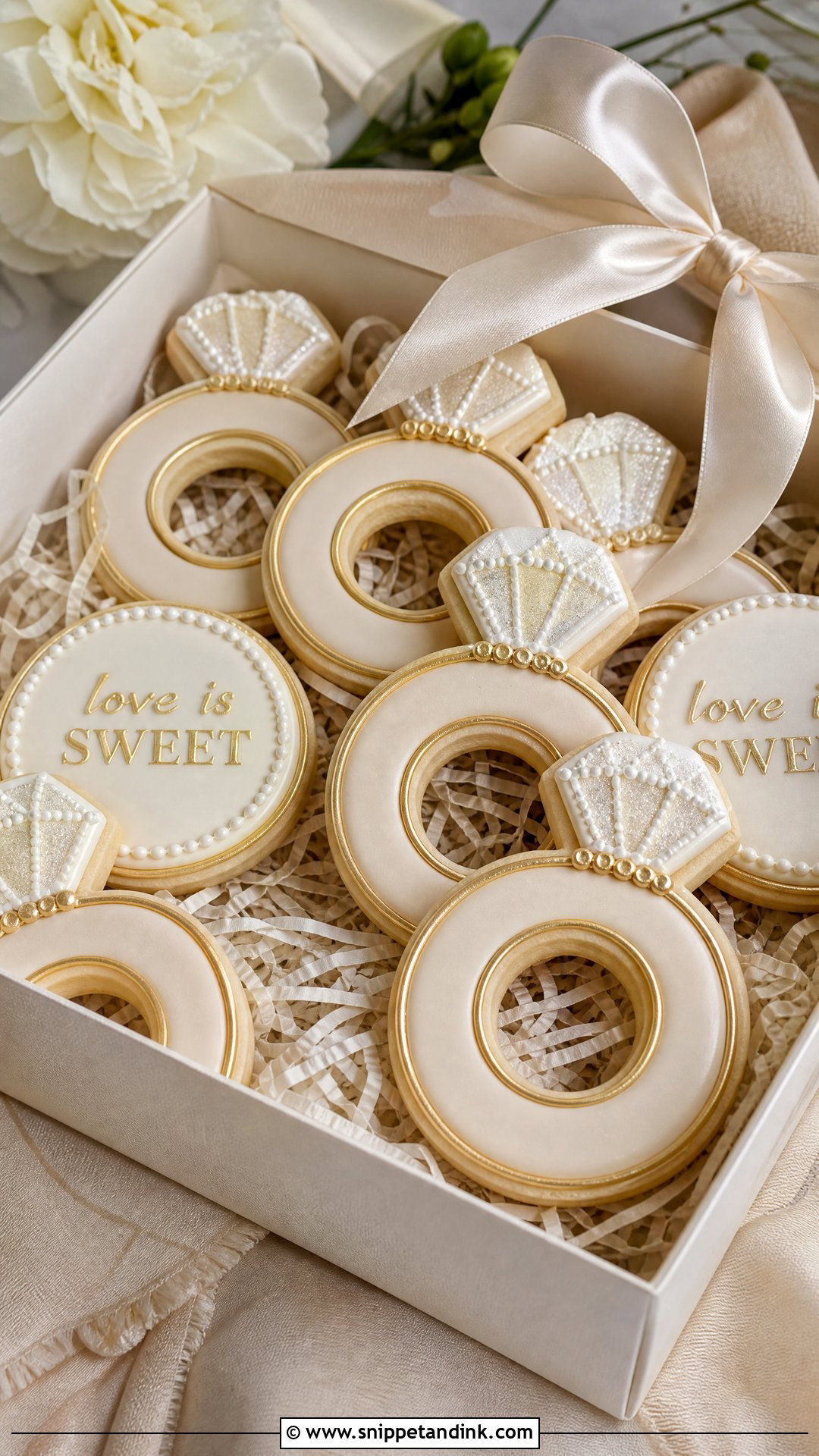
A plain round cutter does most of the work for Wedding ring sugar cookies, decorated with ivory icing and a gold or champagne band. The diamond is a small white flood with edible shimmer brushed on once it’s dry. Gold paint needs a fully hardened surface, otherwise the brush drags and dents the icing, so I wait at least a day before painting. On a white platter beside champagne napkins they look expensive for very little effort. They fit easily into a mixed box alongside hearts and monograms.
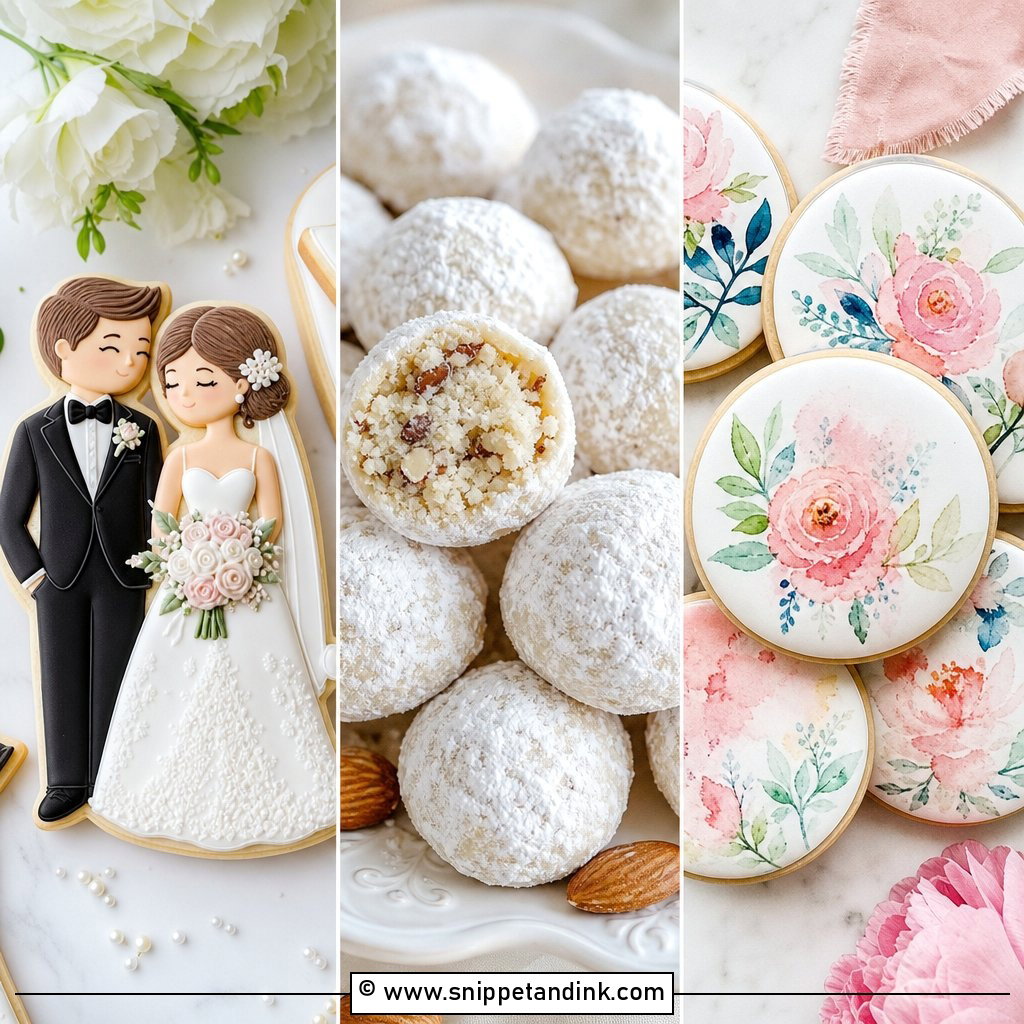
3. Bride And Groom Sugar Cookies
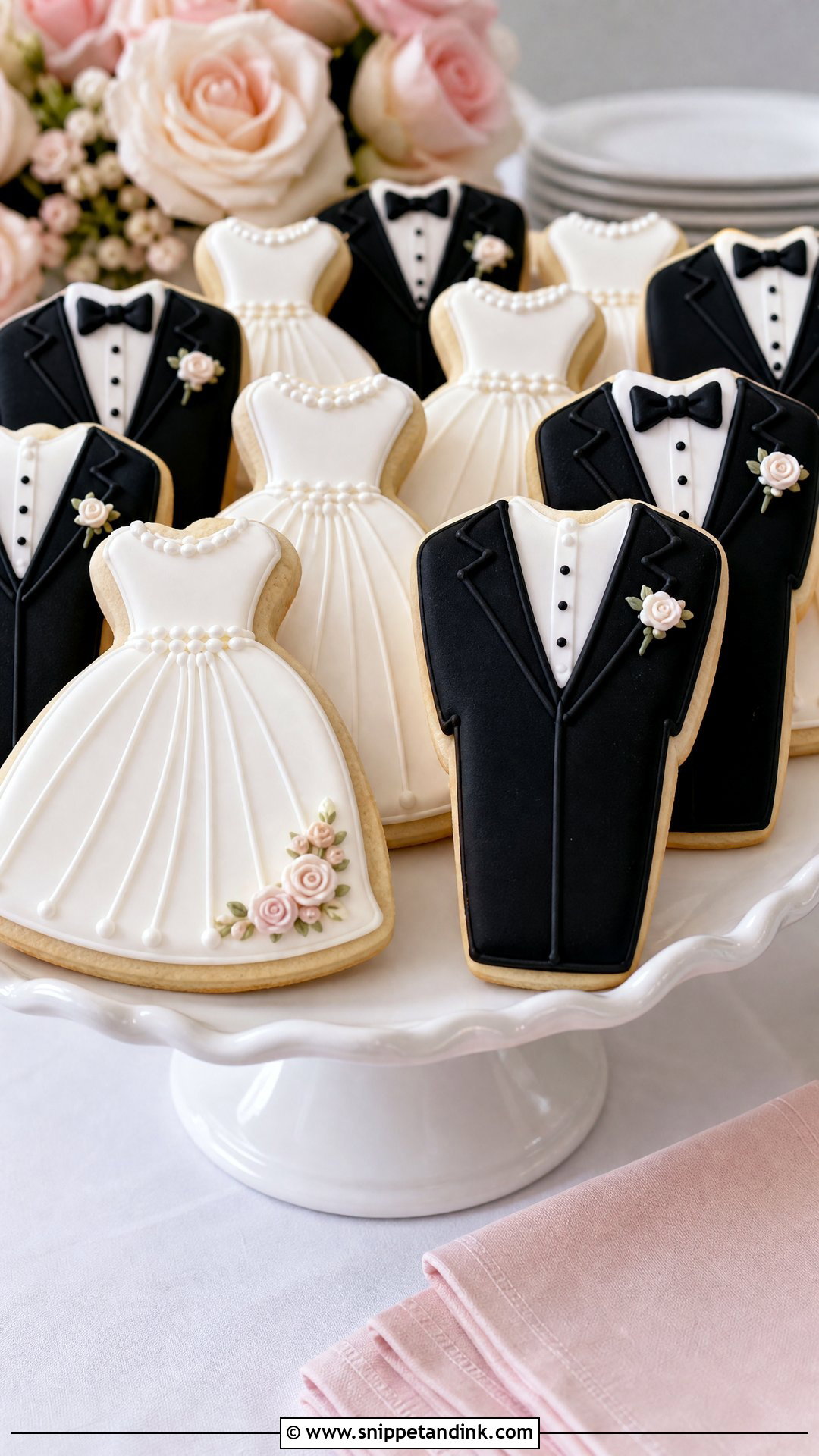
These make a natural pair for engagement parties and rehearsal dinners: one cookie in a white gown finish, the other in a black tuxedo layout with a bow tie and lapels. Black icing is the tricky part. It takes a lot of gel color, tastes bitter if overdone and bleeds into neighboring white if both are wet at the same time, so I start from cocoa-darkened icing and let the white areas crust before the black goes on. Wrapped as a two-cookie set, they make a sweet guest favor. Simple heart or rectangle cutters look more refined than people shapes.
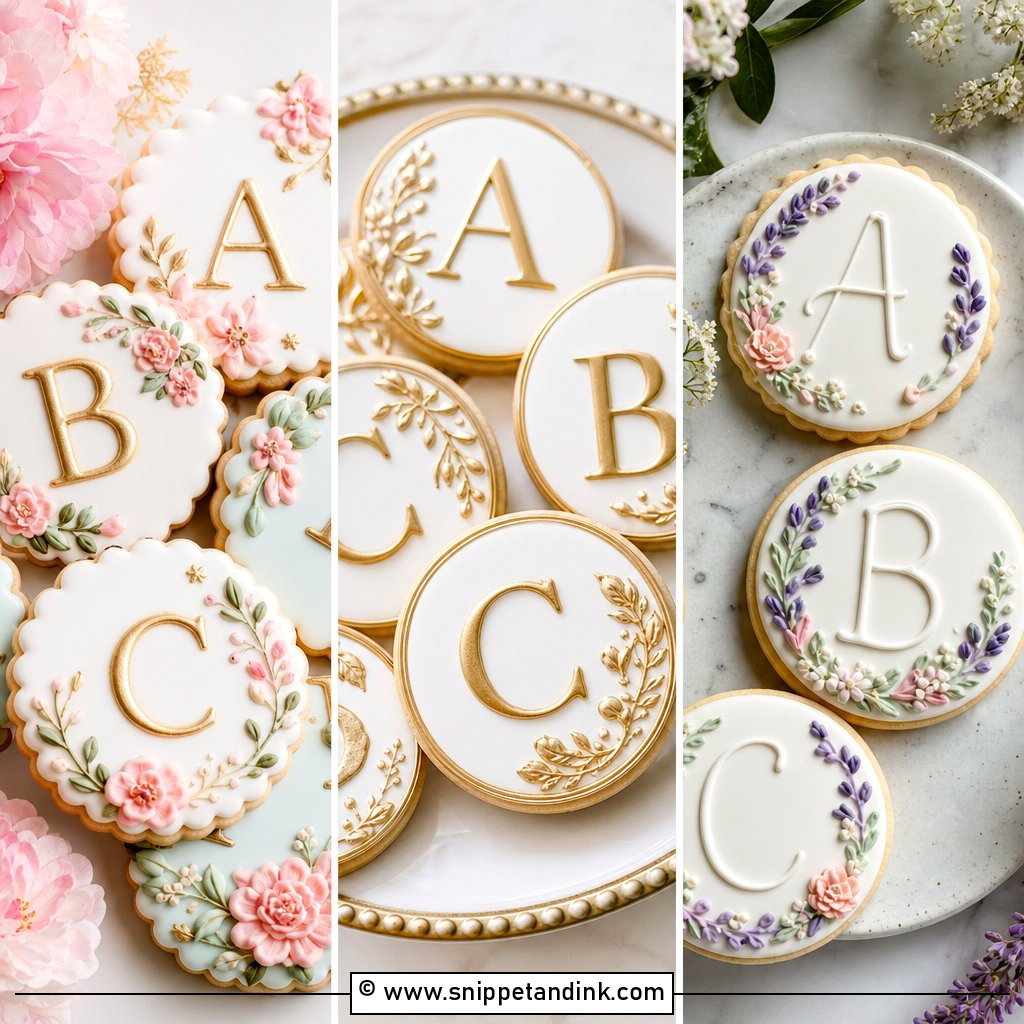
4. Monogram Wedding Sugar Cookies
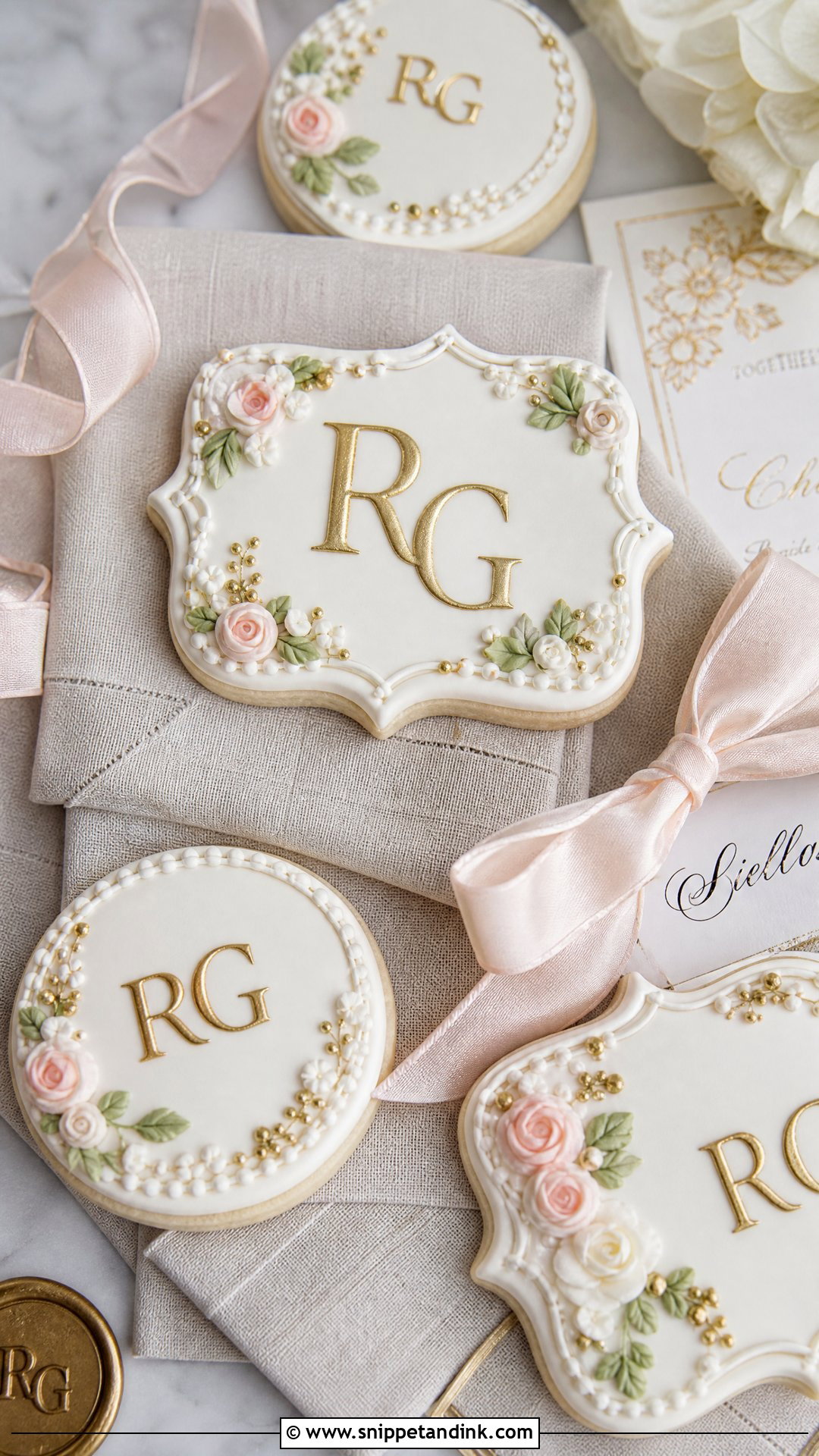
Monograms make a dessert table look custom immediately. I flood round, oval or plaque cookies in ivory, blush, sage or soft blue, let them dry fully, then pipe the initials in white, gold or a deeper shade of the palette. Lettering is where shaky hands show, so I project or trace the monogram onto the dry base with a food-safe marker before piping over it. A thin border or a small floral corner is plenty. Using the same monogram as the invitations ties the stationery and the table together, and a cookie on each folded napkin works as a place setting.
5. Floral Wedding Sugar Cookies
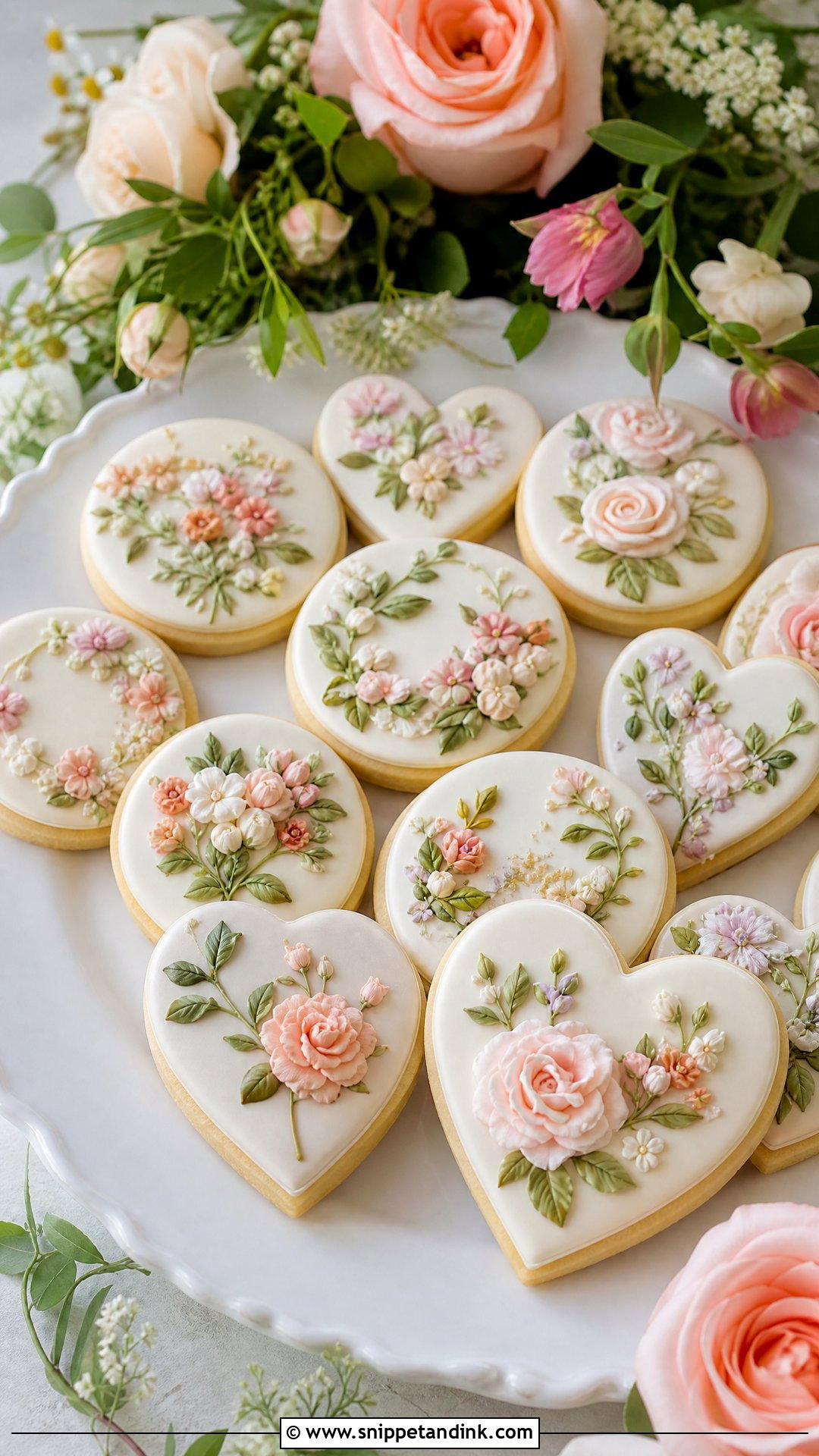
For garden and spring weddings, I match the icing to the bouquet. Roses, daisies, lavender sprigs and greenery all read well piped on a smooth royal icing base over round, heart or plaque cookies. Piped flowers can be made a week ahead and dried separately, then attached with a dot of icing, which saves a lot of time on large orders. Dried edible petals add texture but must be grown for eating, not taken from a florist. Grouping the flowers around one edge looks more current than covering the whole top.
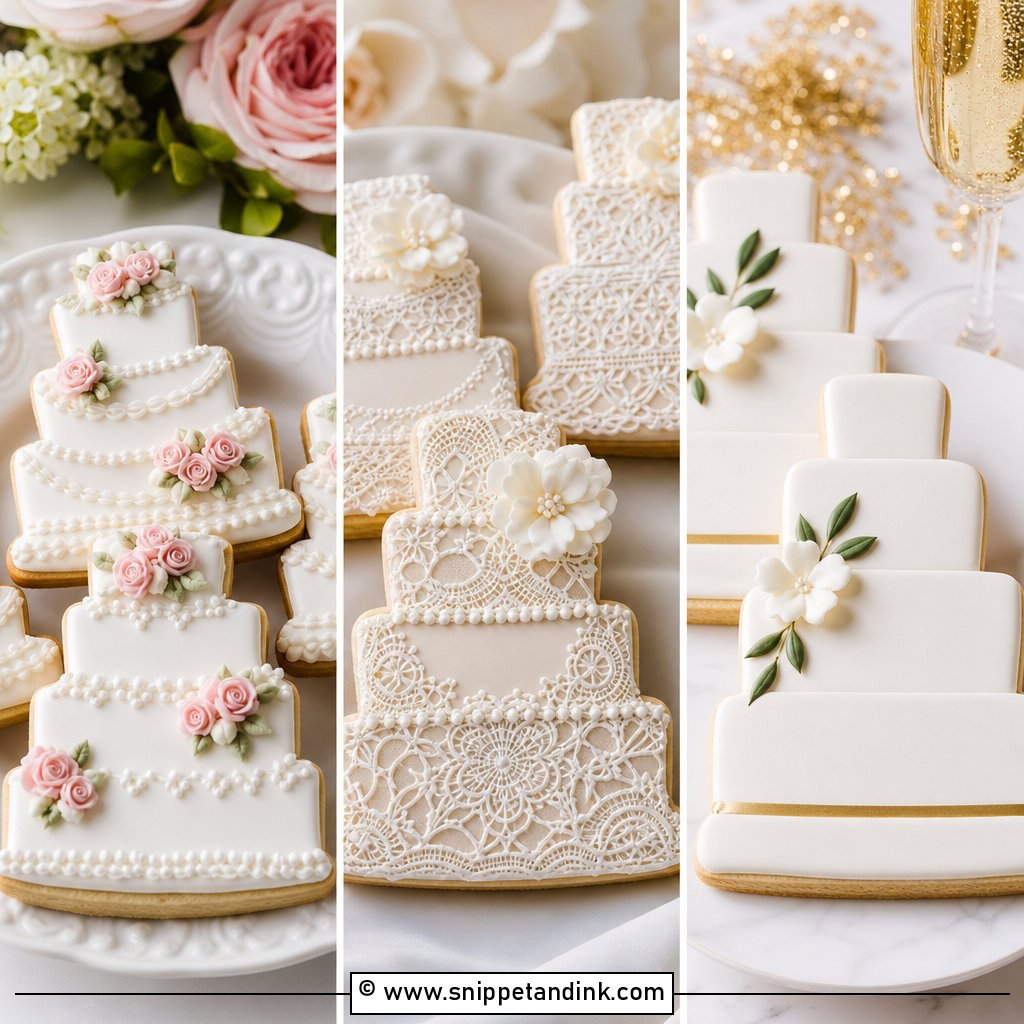
6. Lace Wedding Sugar Cookies
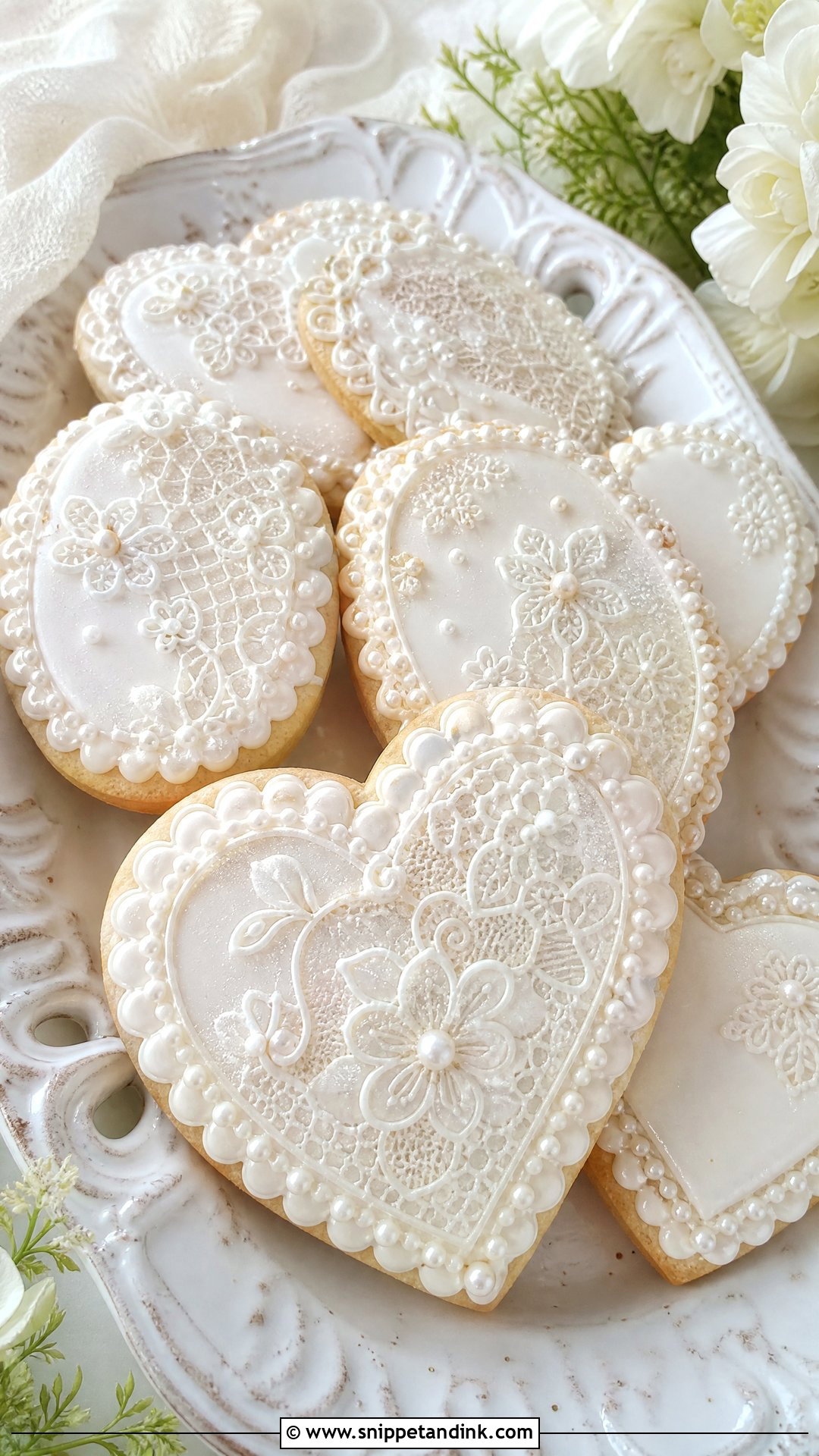
Lace cookies echo a gown or veil, and they reward patience more than any other design here. I pipe the lace in slightly stiffer icing than the flood so the loops and scallops stay raised rather than melting flat. Stencils with an airbrush or palette knife are faster for large counts but give a flatter, printed look. Leave breathing room around the pattern unless you want a deliberately vintage, all-over effect. A pearl border or a small gold initial finishes them for ballroom or church weddings.
7. Heart Wedding Sugar Cookies
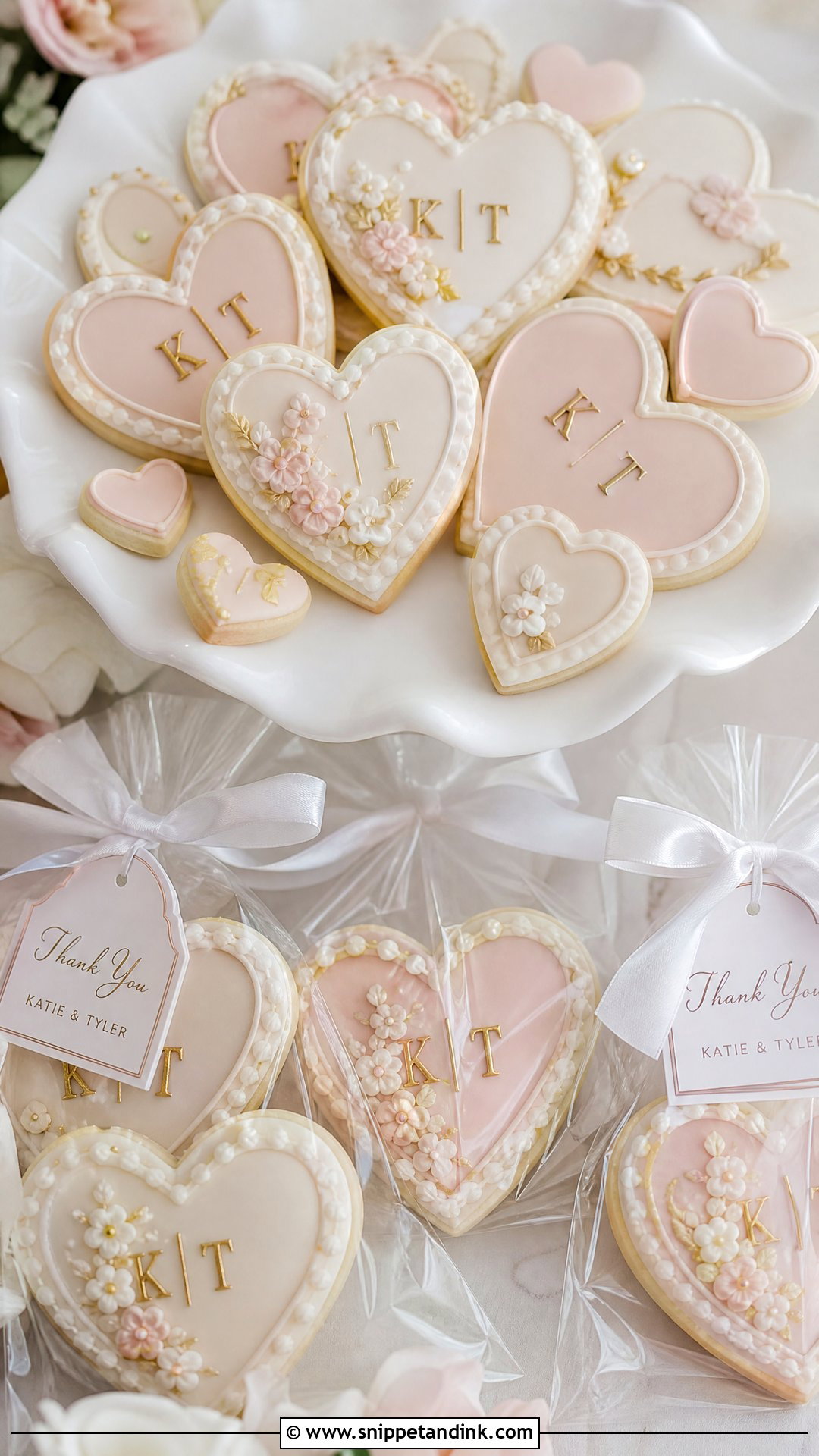
Hearts are the most forgiving shape to decorate, and the easiest to scale from mini favors to place-card size. I’d steer the color toward ivory, blush, dusty rose or sage for a wedding, since bright reds and pinks tend to stain teeth and look loud in a box. Initials, a date, tiny florals or a thin border all suit them. A mix of plain, floral and monogram hearts reads as a set without every cookie being identical, and the plain ones are quick enough to keep the cost per cookie down.
8. Wedding Cake Sugar Cookies
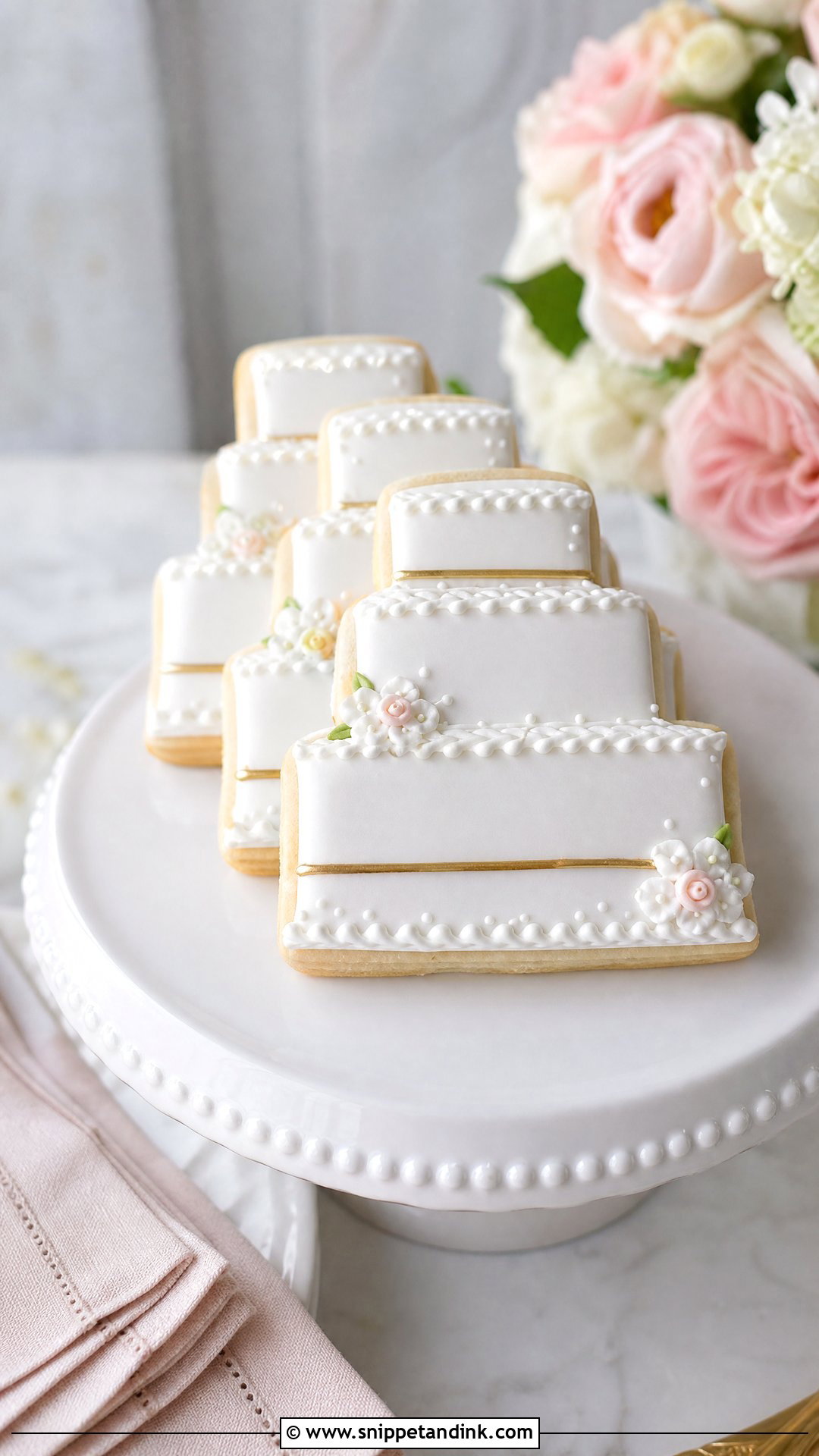
Tiered cake shapes give guests the look of the wedding cake in a hand-held size. For Wedding cake sugar cookies I flood each tier separately, letting one dry before the next touches it, so the tiers read as distinct layers instead of one blob. Borders, pearl dots or a gold line then go on top. If there’s a real cake, I copy one detail from it, such as its piping style or main flower. White and ivory are easiest; blush or sage work too. They’re a fun shower centerpiece when a full cake isn’t on the menu.
9. Champagne Glass Wedding Sugar Cookies
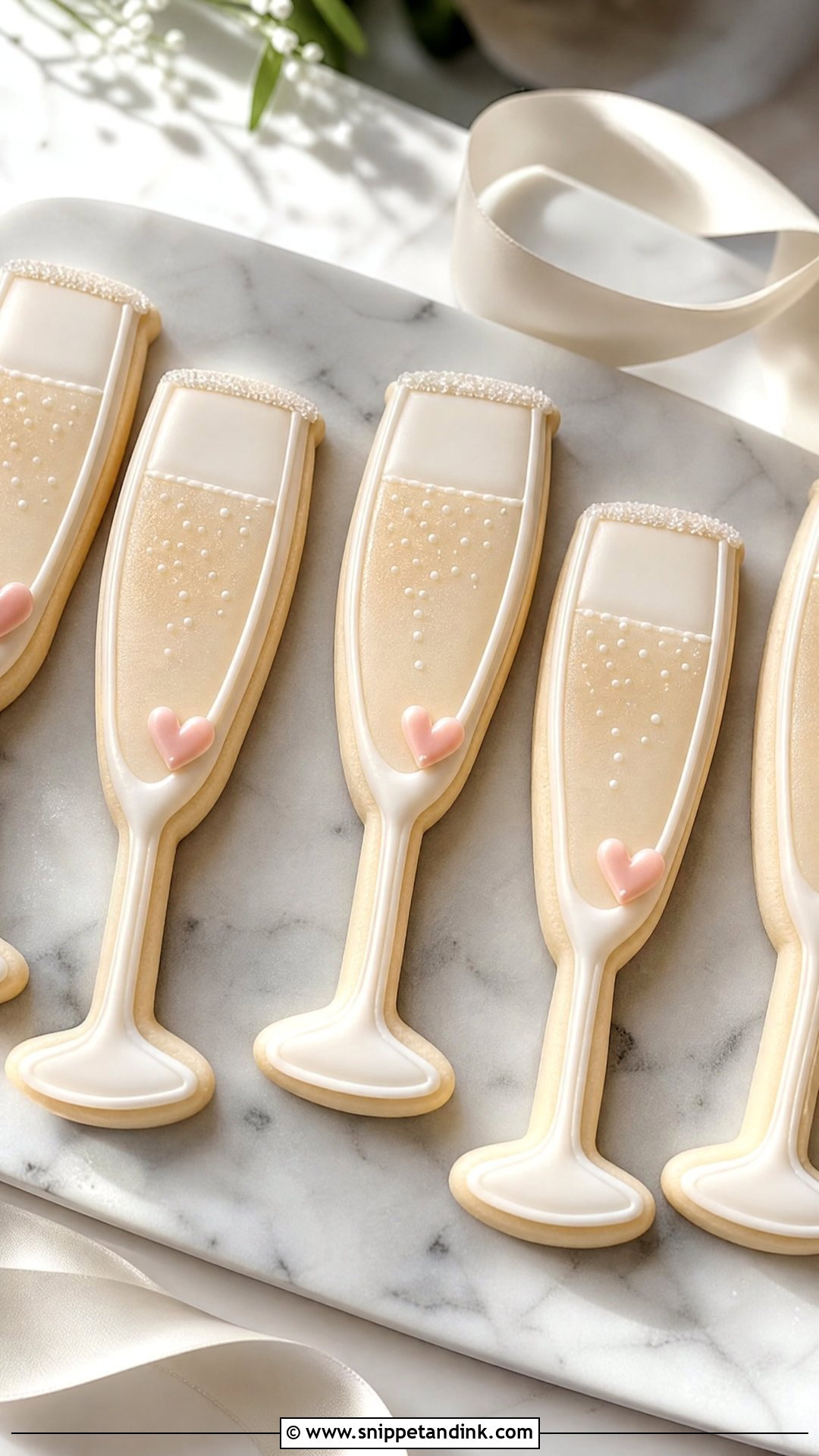
A flute shape is simple to cut and immediately says celebration. I ice the glass in pale gold and the top section in ivory, then add white dots for bubbles and a sanding-sugar rim. The thin stem is the weak point; it snaps easily in transit, so I bake these slightly thicker than other shapes and pack them flat. They’re a natural fit for engagement parties, showers and welcome bags. Add a blush heart or a tiny flower if the event is playful, and pair them with ring cookies for a set.
10. Bridal Bouquet Sugar Cookies
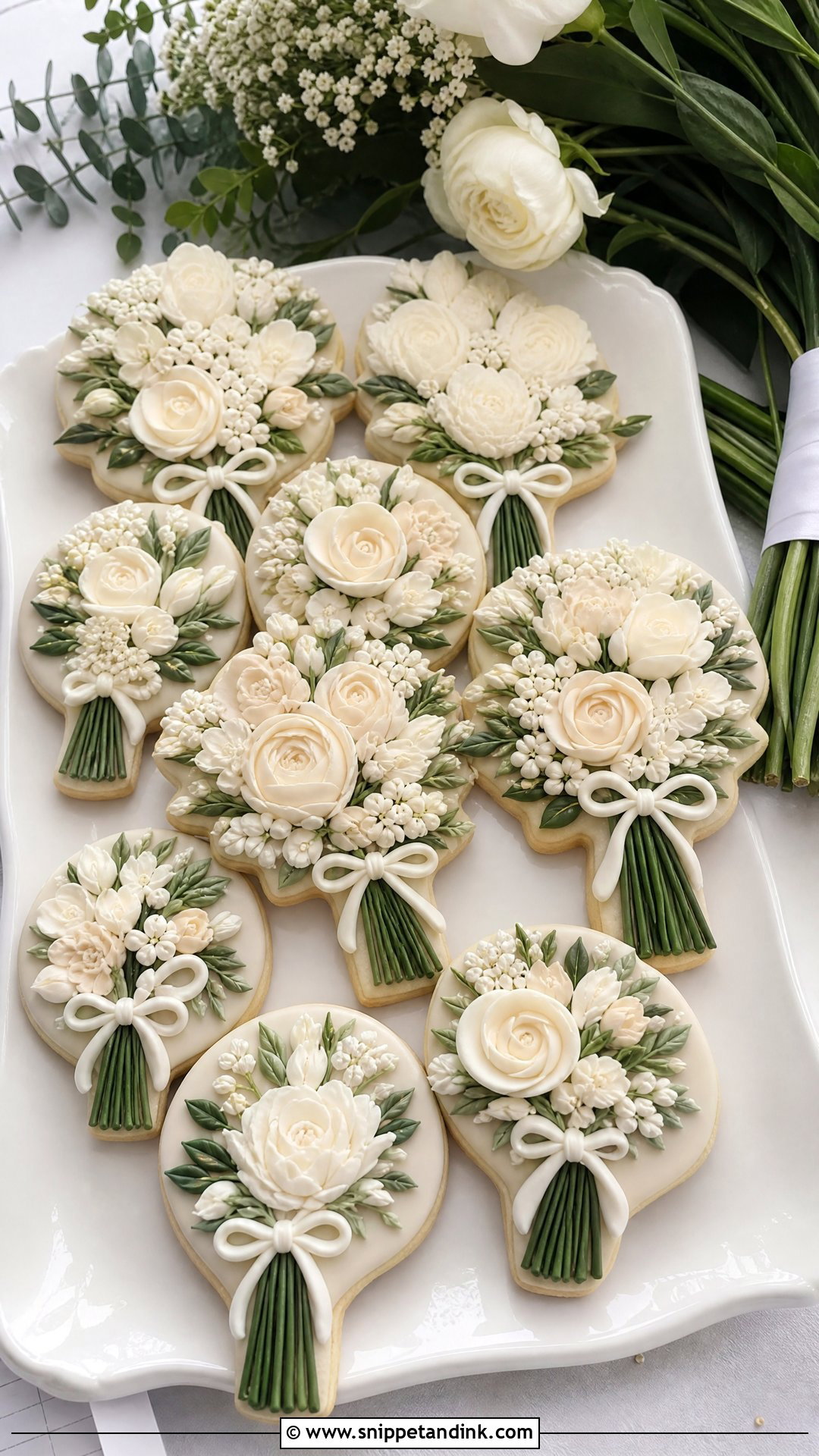
Turning the actual bouquet into a cookie takes a conversation with the florist, or at least a clear photo of the final flowers. I pipe roses, peonies, ranunculus, baby’s breath and greenery onto a pale base so the flowers stay the focus, then add a small ribbon at the bottom to suggest a tied stem. Peonies and ranunculus need several piped layers to look full, so they take longer than simpler blooms. They suit bridesmaid proposal boxes, showers and getting-ready trays, especially when the flowers are central to the whole wedding.
11. Minimalist Wedding Sugar Cookies
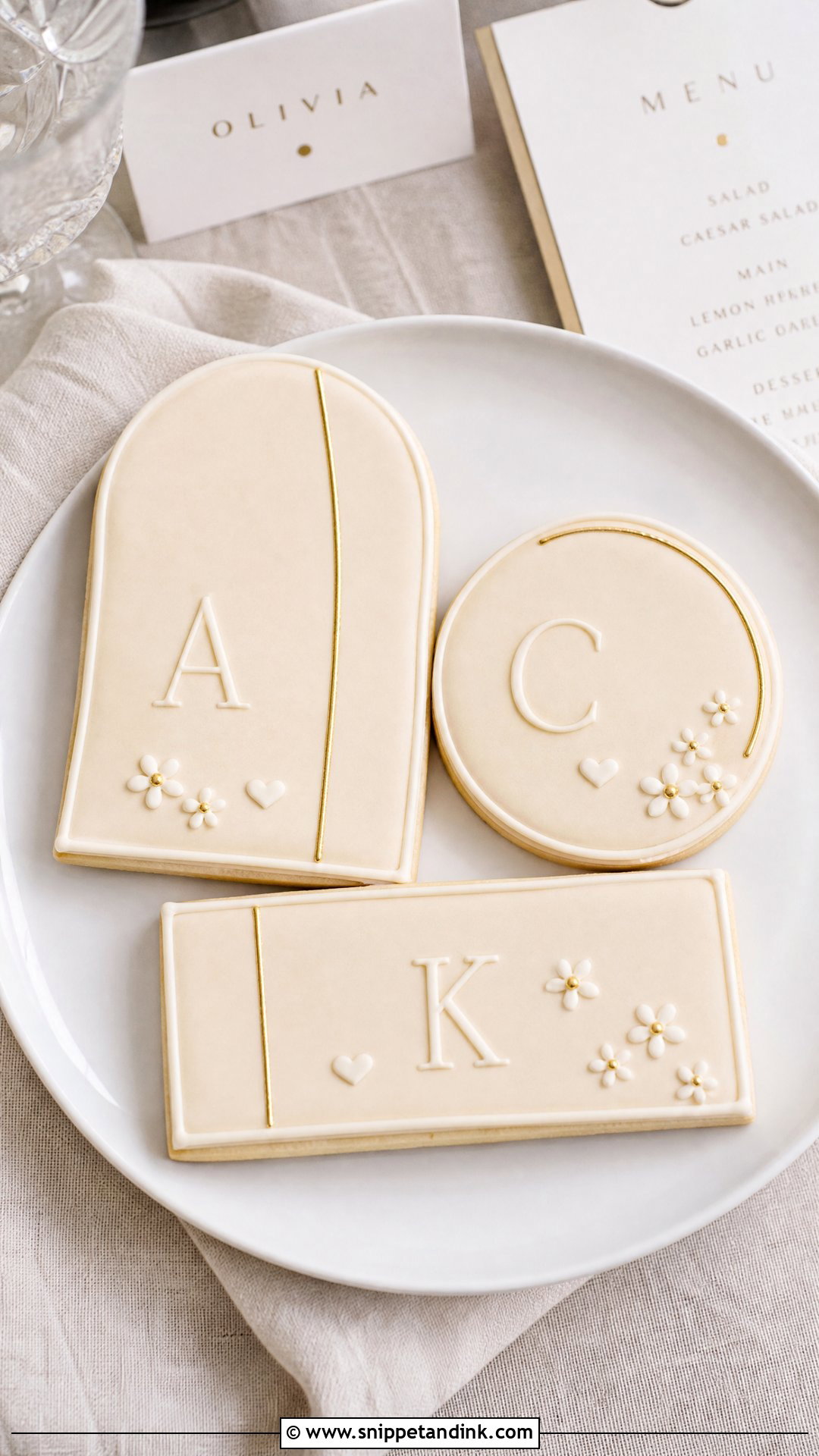
Minimal cookies have nowhere to hide. The flood has to be completely smooth and free of air bubbles, which I pop with a scribe tool before the surface sets, because on a plain white circle one crater is the first thing anyone sees. Circles, arches or rounded rectangles in white, beige or pale gray carry a single detail: a thin gold line, a tiny initial or one flower. Leaving blank space is the design. They fit modern tables with acrylic signs and neutral linens, and they match nearly any palette.
12. Vintage Wedding Sugar Cookies
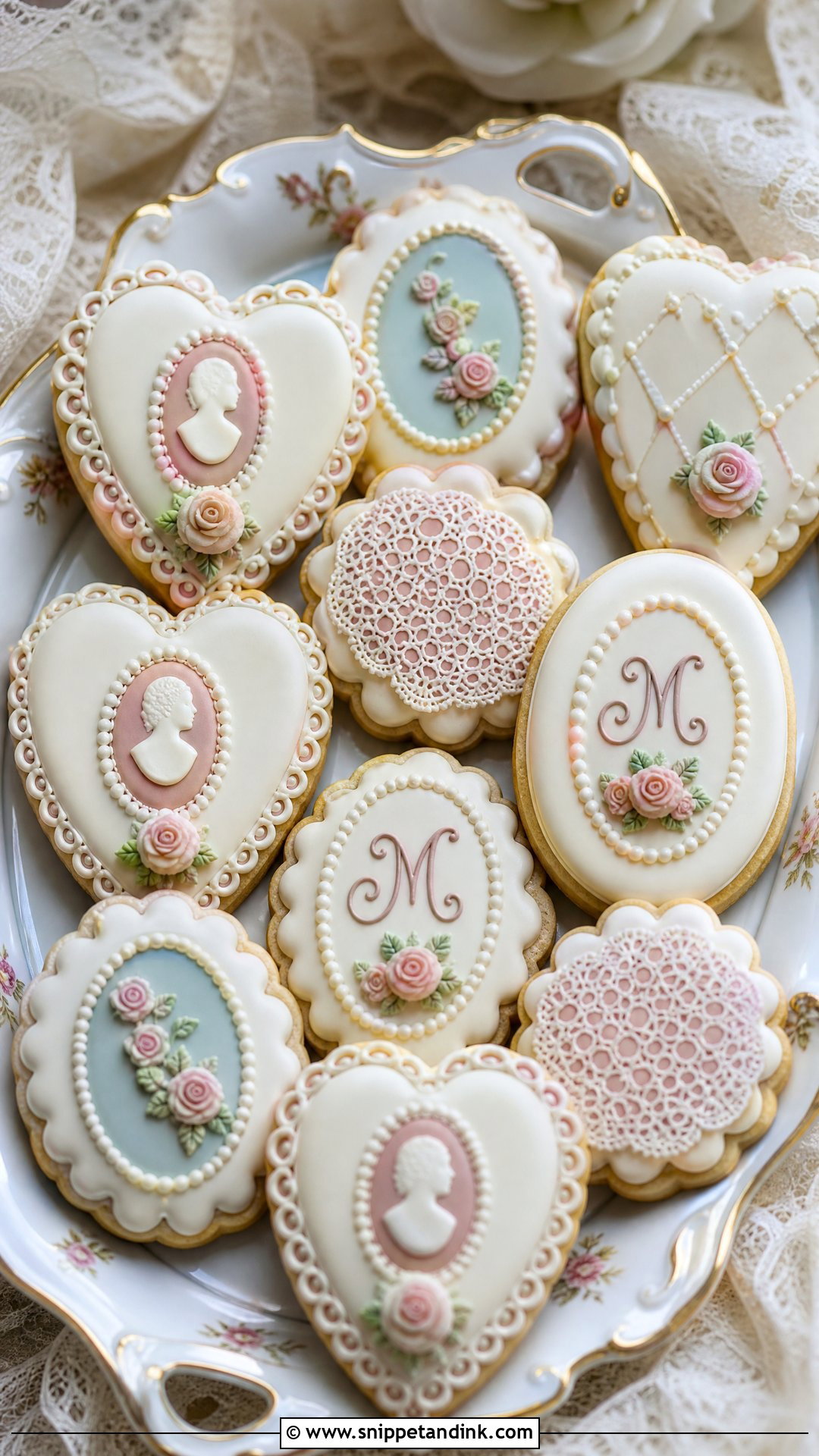
Vintage sets lean on oval, scalloped and plaque cutters with ivory icing, piped borders, pearl dots and small florals in dusty rose, antique gold, pale blue and cream. A cameo-style monogram is the detail people photograph. I get the antique gold by mixing gold luster with a little brown rather than using bright yellow gold, which looks too new for this style. They suit tea-party showers and historic venues, and they show best on vintage trays or a tiered stand.
13. Boho Wedding Sugar Cookies
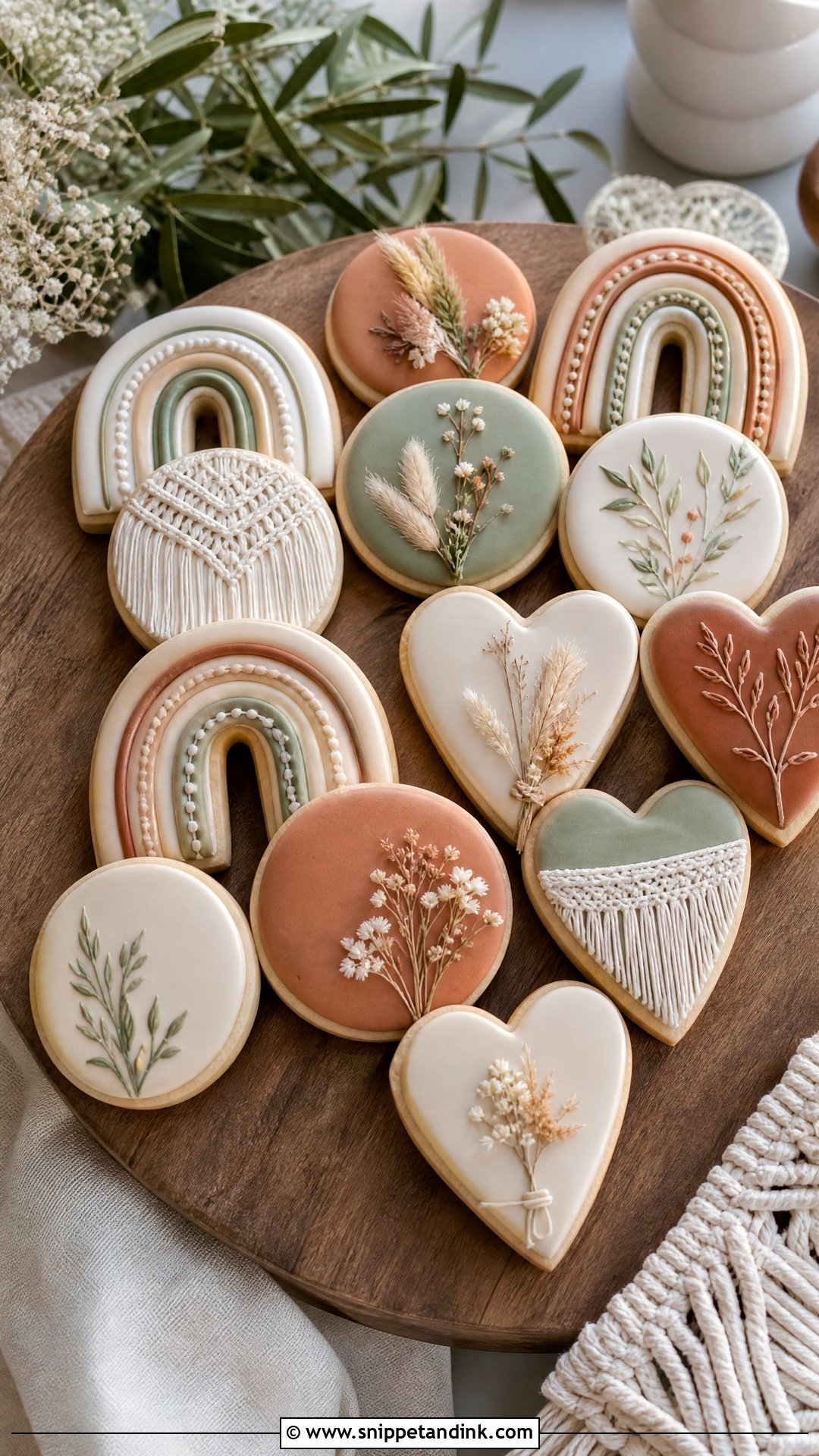
Boho cookies use arch, rainbow and heart shapes in terracotta, sand, sage and muted pink. Painted greenery, sunburst lines or macrame-style piping finish them, with dried edible flowers for texture. Terracotta and rust tones are hard to mix in royal icing without turning orange, so I build them from a brown base with a touch of red and test a swatch dry, because icing darkens as it sets. A matte finish suits the look better than shine. Kraft tags and soft ribbon match the theme for desert, barn or outdoor weddings.
14. Beach Wedding Sugar Cookies
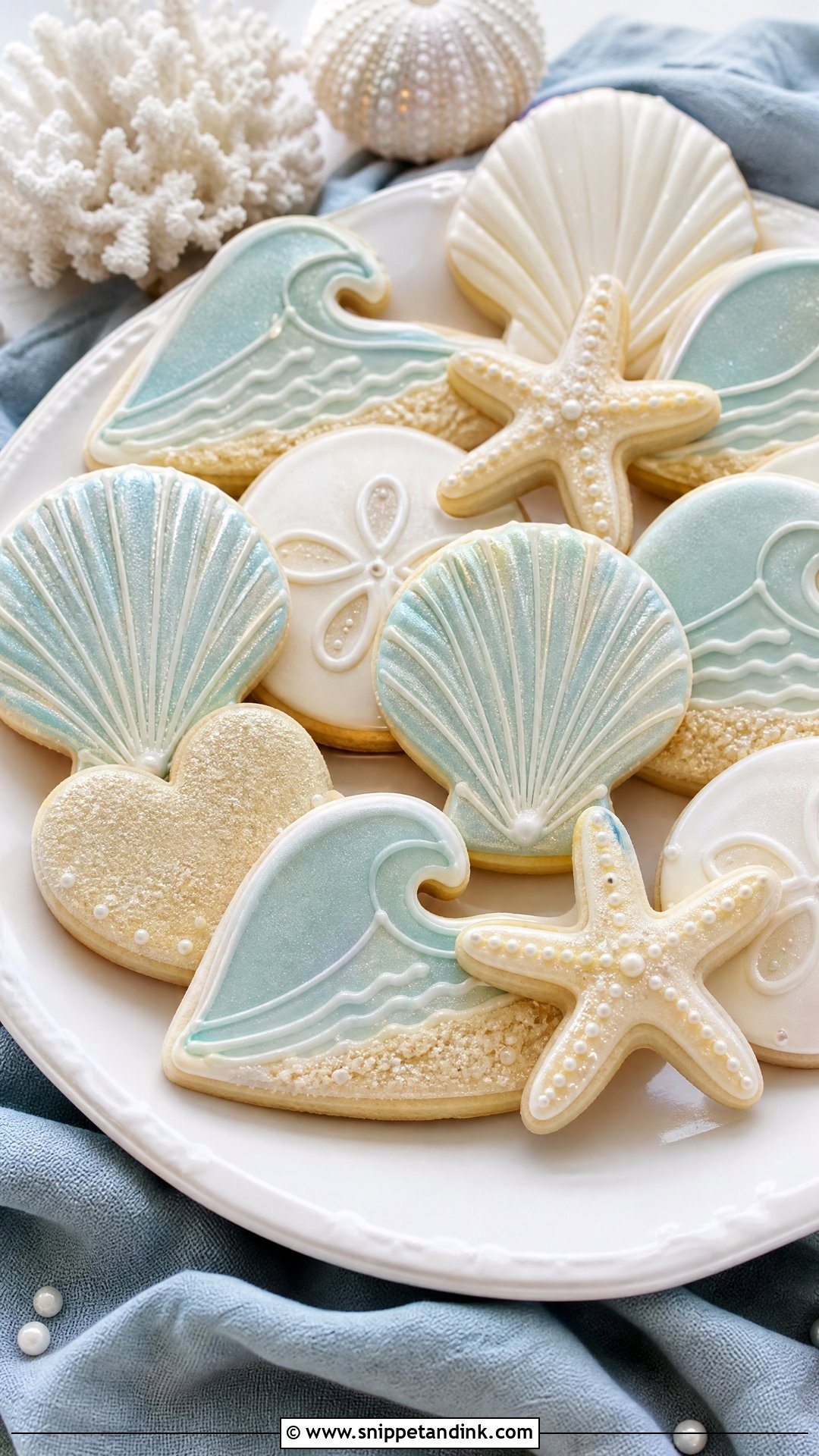
Shells, starfish, sand dollars and waves bring the coast to the table, in ivory, sandy beige, pale blue and seafoam. I make edible sand from crushed cookie crumbs or sanding sugar pressed into wet icing, and add subtle shimmer to shells. Beach wedding sugar cookies shipped or carried to a destination face real heat, so I’d skip any chocolate details and keep them sealed and out of the sun. Keep the ocean details refined rather than cartoonish; a shell with one pearl accent says enough. They suit welcome bags for traveling guests.
15. Garden Wedding Sugar Cookies
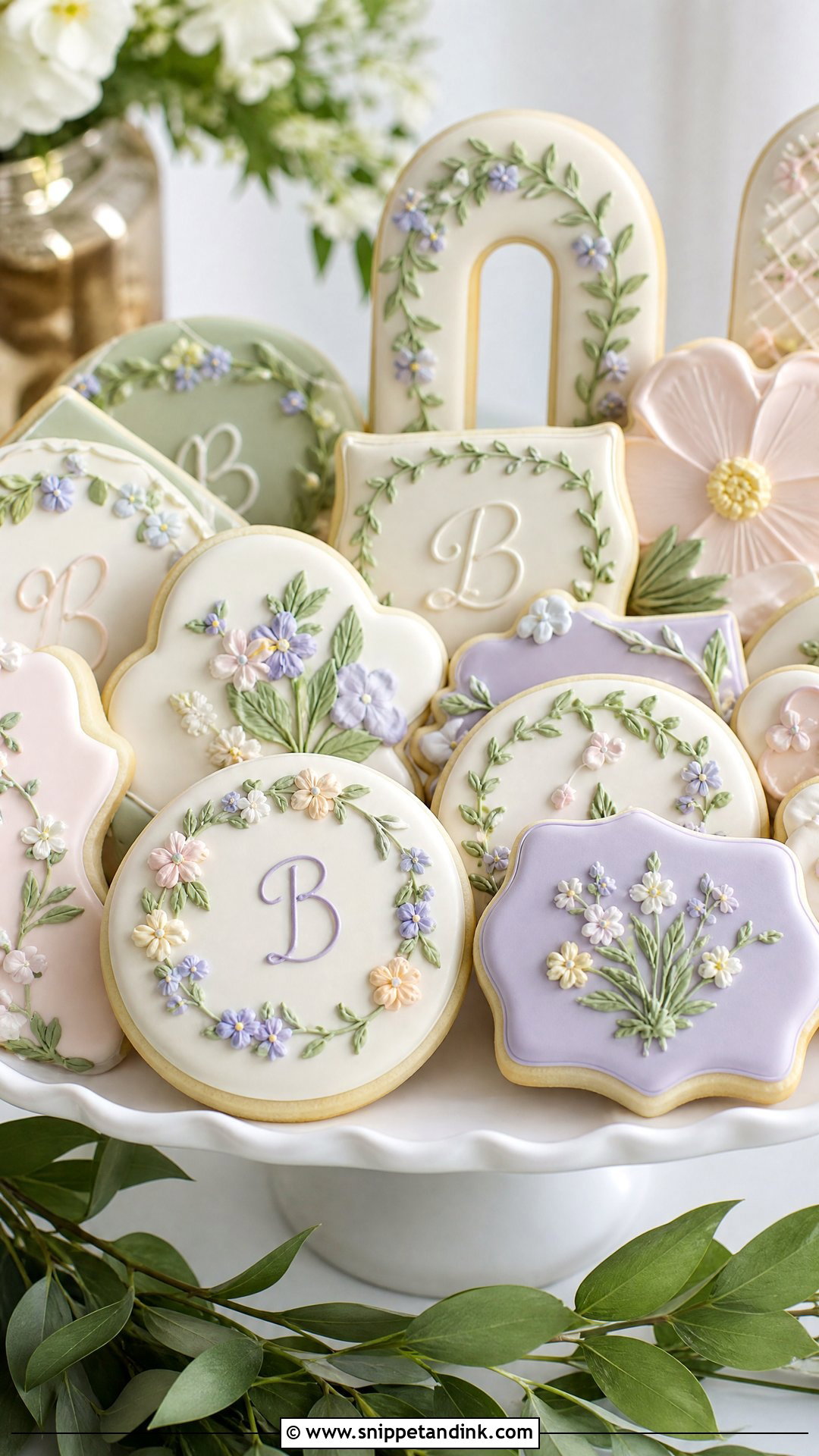
Garden cookies carry soft color: pastel royal icing on round, arch or flower shapes with trailing vines, small blossoms and leafy borders. Lavender, butter yellow, blush and sage sit well together. I cluster the flowers along one edge rather than covering the top, which leaves space for a tiny monogram or the date in the center. Pastels fade if the finished cookies sit in direct sunlight for long, so I’d keep the display out of a sunny window. They suit spring weddings and backyard showers.
16. Rustic Wedding Sugar Cookies
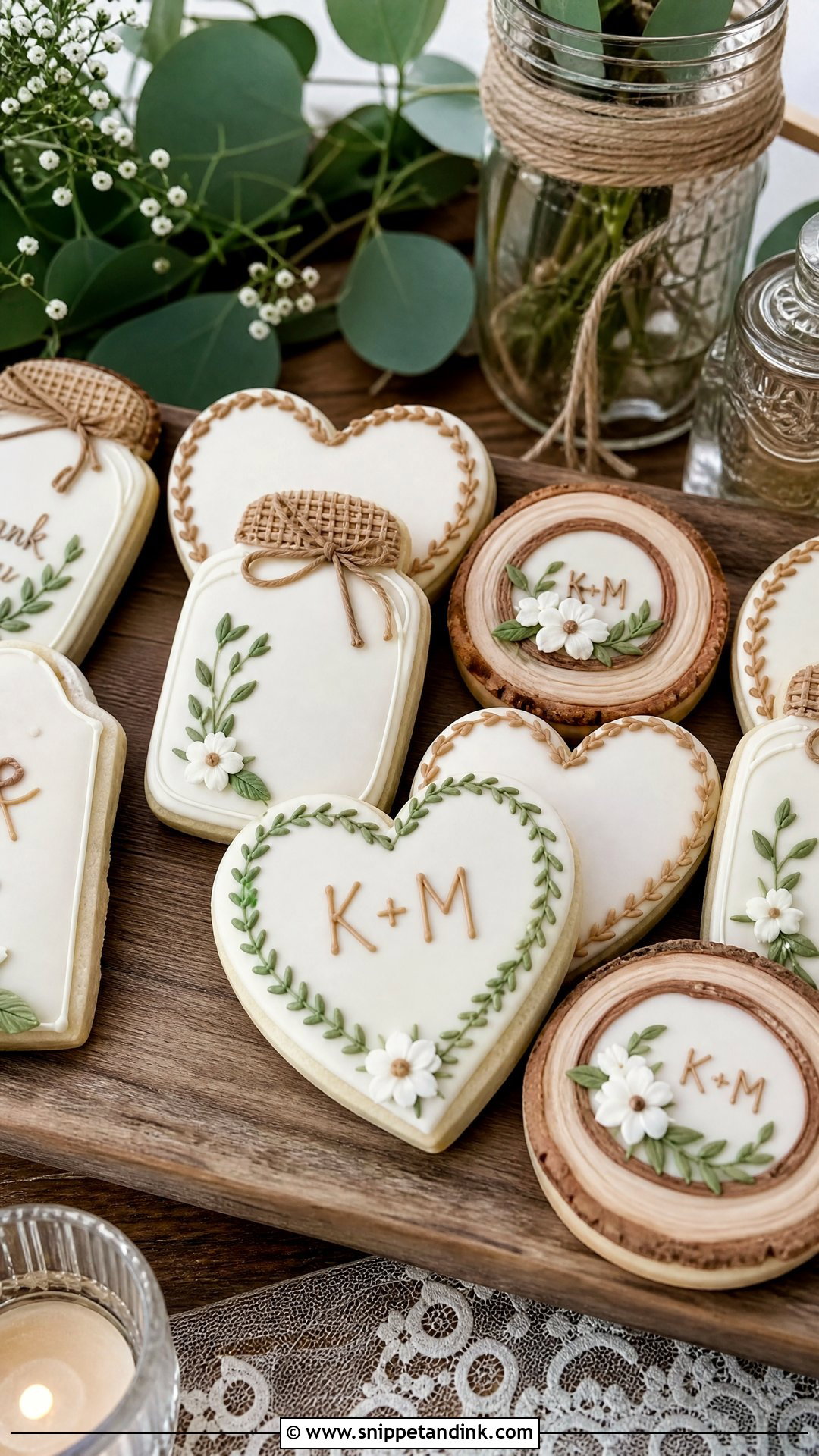
Rustic doesn’t have to mean messy. Heart, mason jar, wood-slice and tag shapes in warm ivory with tan accents, simple greenery and brown details that hint at wood grain without looking heavy. I draw the wood grain with a fine brush and diluted brown gel over a dry base; piping it tends to look clumsy. A piped wreath or twine-style border adds coziness. Kraft boxes and wooden stands suit them at barn and backyard receptions. The best versions look handmade and finished, not careless.
17. Gold Wedding Sugar Cookies
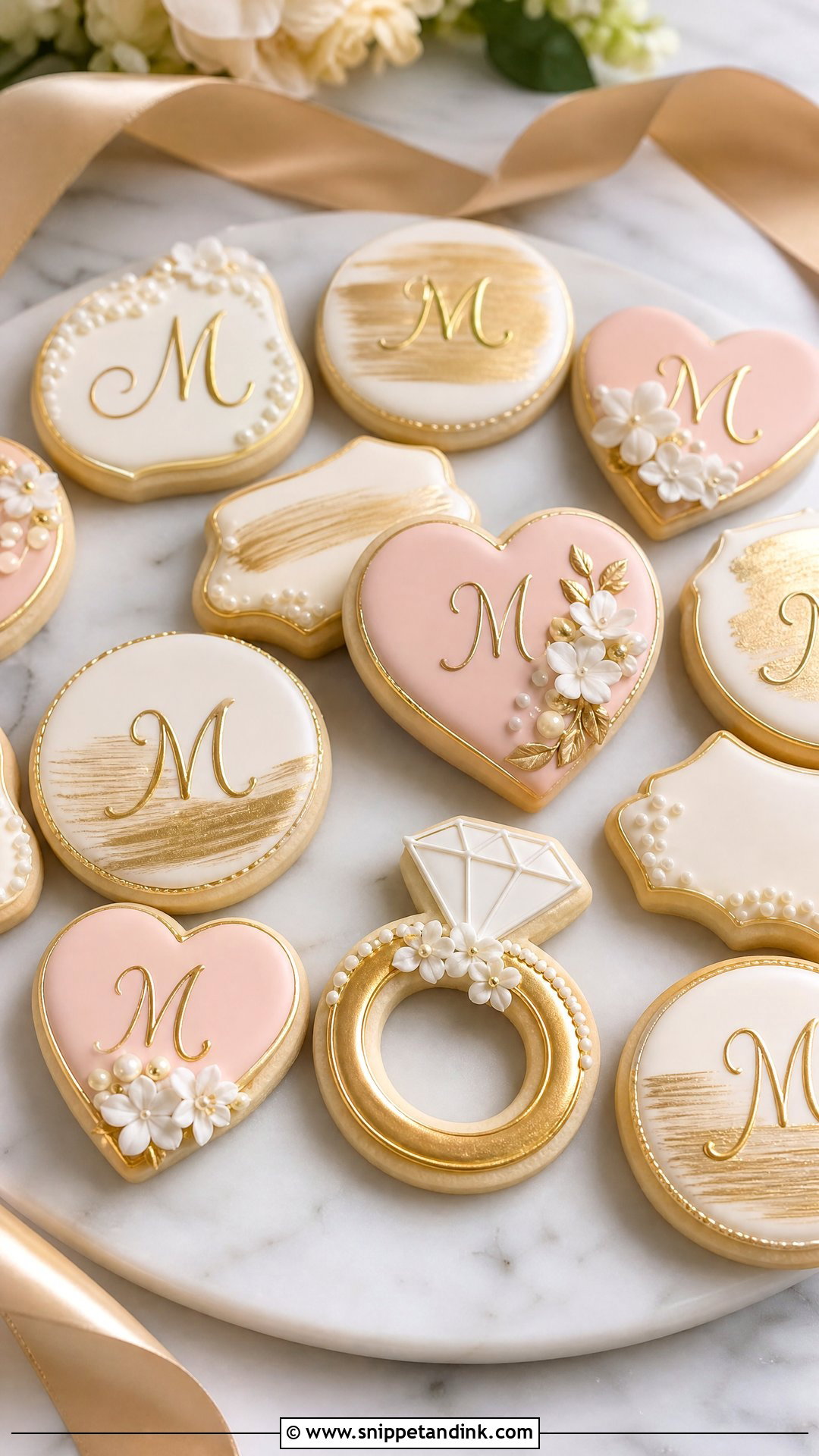
Gold works best as an accent rather than a coating. I paint it with luster dust mixed into a quick-drying alcohol-based liquid over a fully hardened base, or use metallic sanding sugar on wet icing for sparkle. On a white, ivory, blush or black base, gold suits monograms, borders, ring shapes and brush strokes. Check that the gold you’re ordering is labeled edible rather than for decoration only, since some craft metallic dusts are not meant for eating. These look most at home at evening weddings and glam showers.
18. Personalized Wedding Sugar Cookies
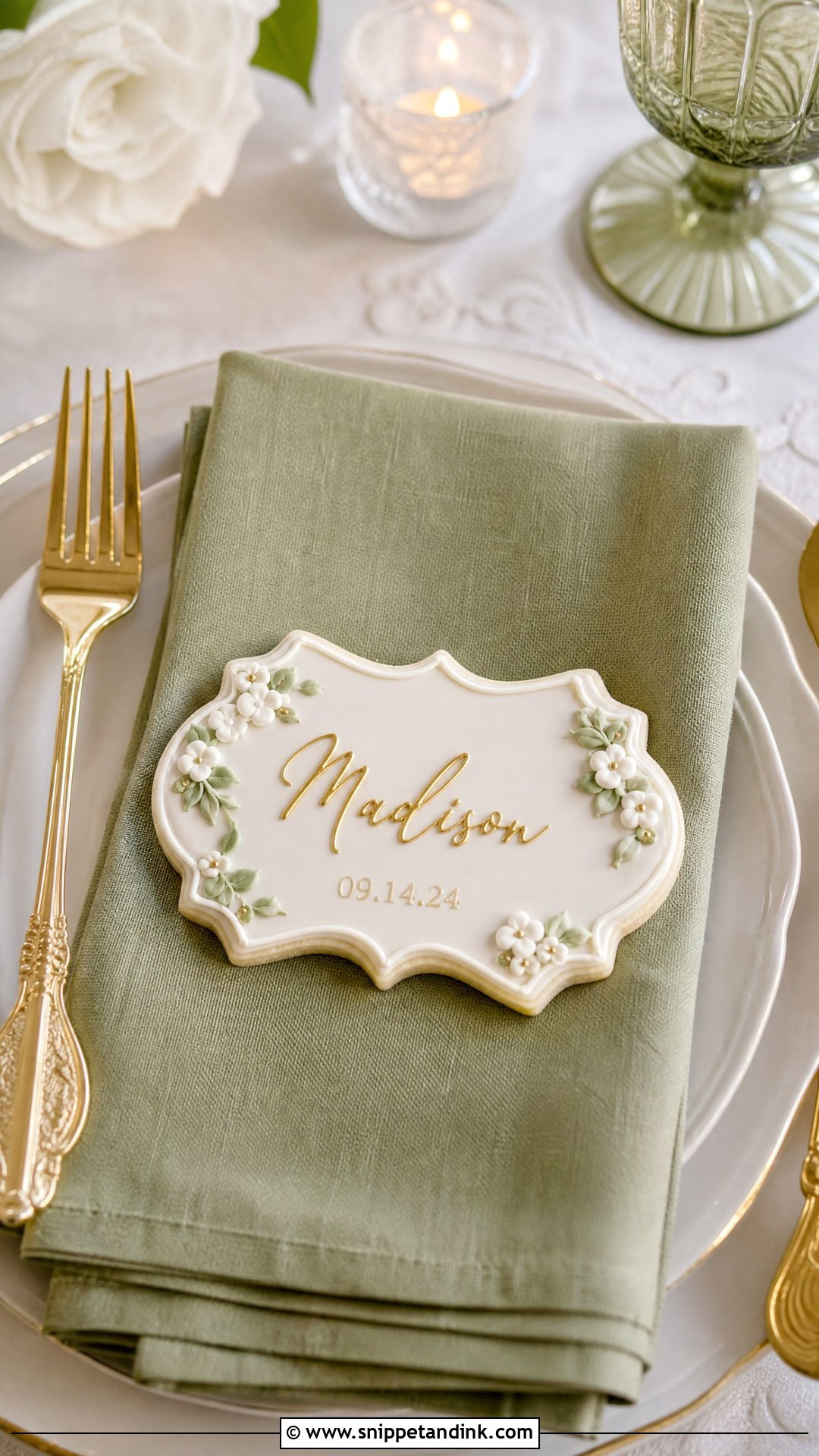
Names and dates turn a cookie into something guests keep on the table. Plaque, rectangle, heart or arch shapes give lettering enough room, and these Personalized wedding sugar cookies double as edible place cards at each setting. I need a final, checked guest list before I start piping names, and late changes are the most common headache, so give your decorator a cutoff date and a few blanks for last-minute additions. Use white or gold writing on a base that matches the linens, and keep extra decoration light so names stay readable.
19. Watercolor Wedding Sugar Cookies
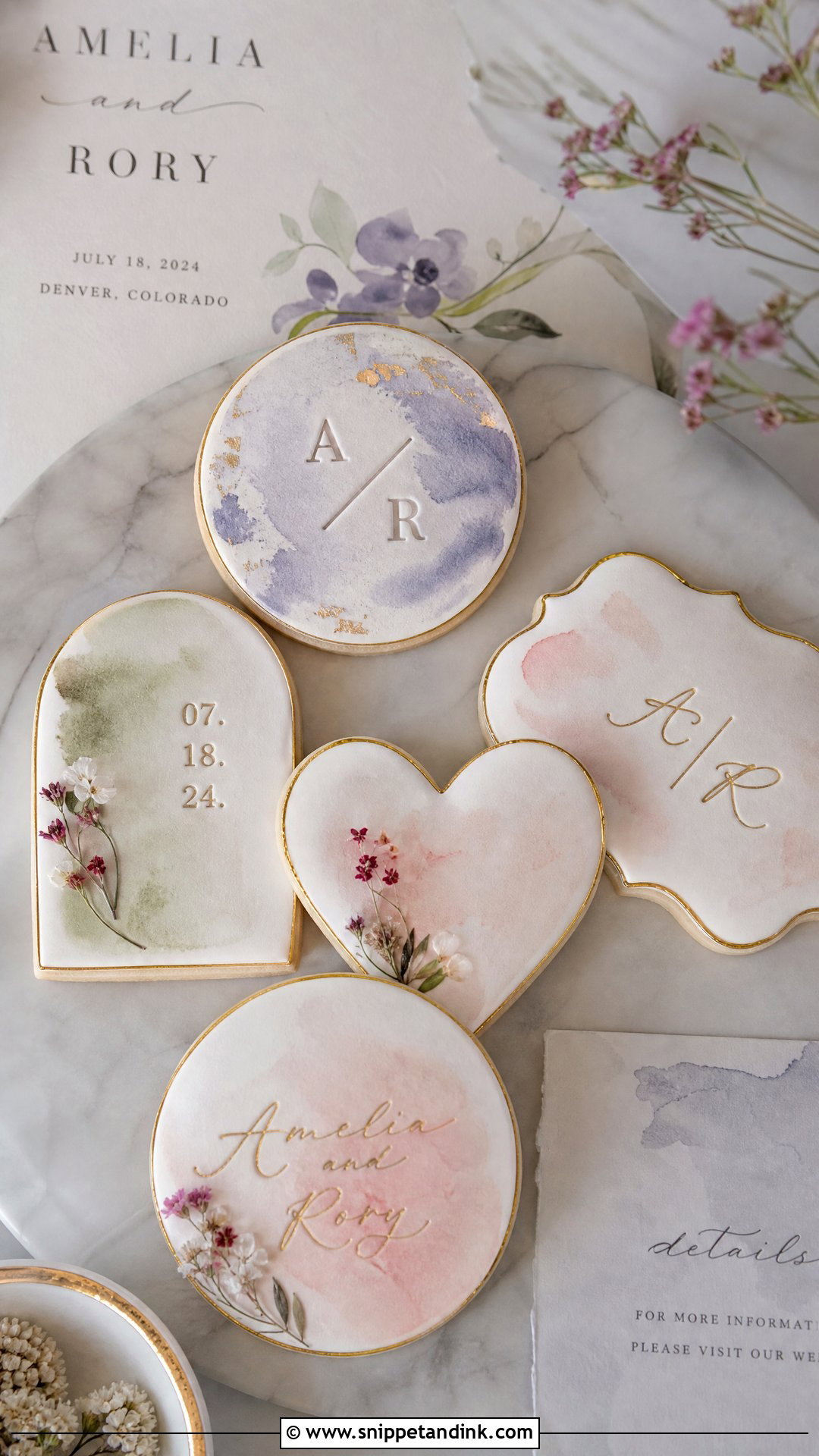
Watercolor effects look painterly on round, arch or plaque cookies with a fully dried white or ivory base. I dilute gel color with a little clear alcohol and wash it on in layers; too much liquid dissolves the icing beneath and leaves pits. Blush, lavender, blue and sage blend softly, and the result should look airy, never muddy. A thin gold edge or small initials finishes them. Every cookie comes out slightly different, which suits fine-art and spring weddings and pairs well with watercolor invitations.
20. Wedding Favor Sugar Cookies
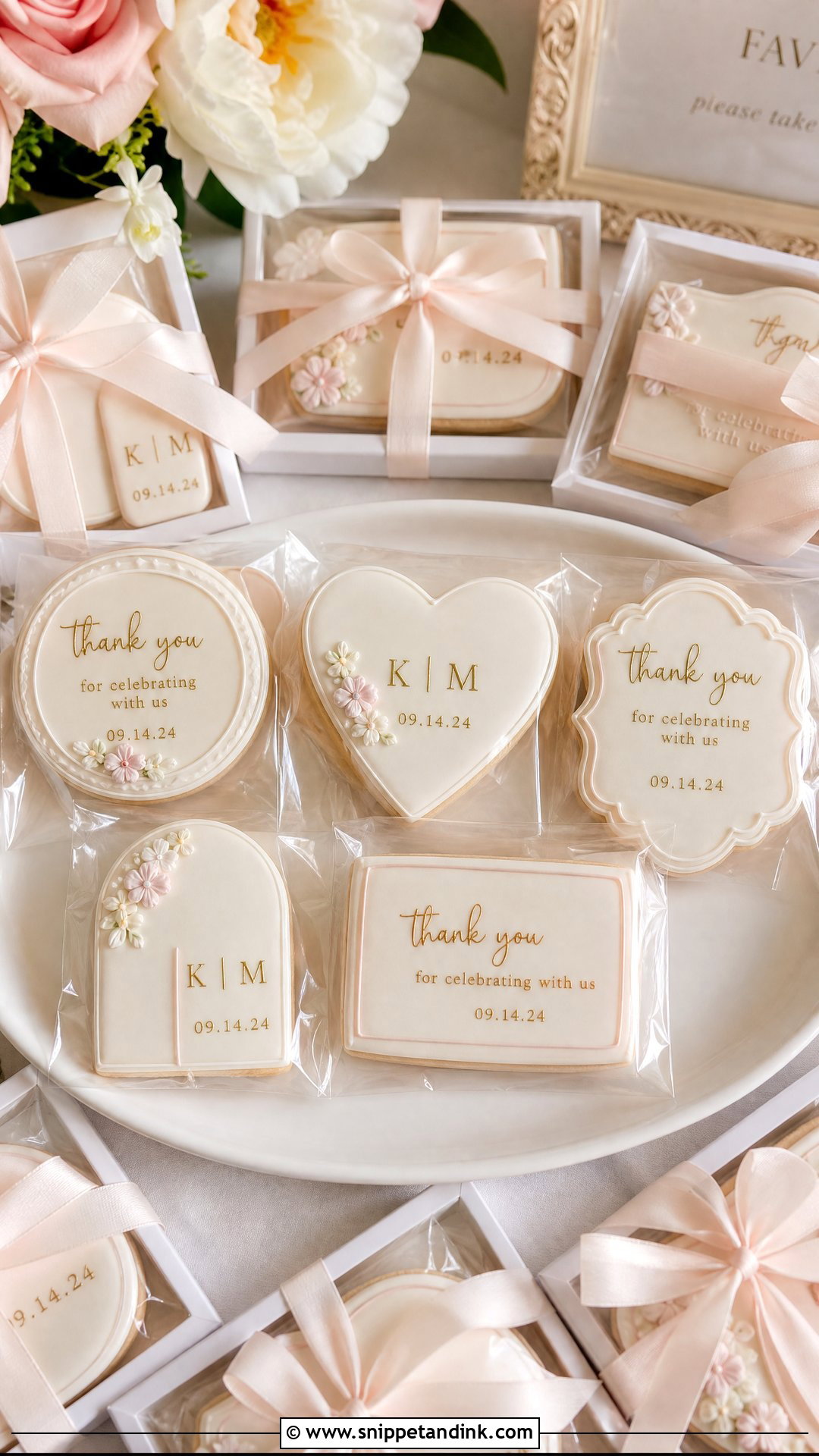
Favor cookies need to be sturdy above everything. Circles, hearts, rectangles and plaques travel without breaking, unlike thin necks or stems. Smooth royal icing, a simple border and one clear detail such as initials, the date or a short thank-you are enough. Tall piped decorations get crushed when stacked, so I keep favor designs fairly flat. The icing must be dry right through before wrapping, which usually means overnight, or the bag fogs and marks the surface. Clear bags, ribbon, stickers and small favor boxes all finish them nicely.
Humidity, Bleeding Colors and Other Royal Icing Problems
Royal icing is sugar and egg white, and it reacts to the air. In humid weather the surface stays tacky longer, metallic paint smudges and dark colors can bleed into white areas, leaving a pink or gray halo. I dry cookies under a small fan in a cool room on muggy days and let dark sections crust before any light color touches them.
If you’re planning an outdoor summer wedding, keep the favors out of direct sun and away from steamy kitchen areas until they’re set out. A warm tent won’t melt royal icing the way it melts buttercream, but heat and humidity will soften the cookie and dull the shine.
Storing Favors From Delivery to the Last Guest
- Keep sealed cookies at cool room temperature. The fridge does more harm than good, because condensation forms on the icing when they come back out.
- Heat-sealed bags keep them fresh noticeably longer than tied bags, which let air in at the twist.
- If you’re freezing extras, freeze them in an airtight container and let them thaw fully before opening the lid, so moisture settles on the container instead of the icing.
- Pack boxes flat with nothing stacked on top, and carry them in the car rather than the trunk on a hot day.
A Cookie Has to Taste as Good as It Looks
Sugar cookies carry personality into a wedding in a small, edible form. They can echo the flowers, the invitations or the dress, and they work as favors, place cards, shower treats and welcome-bag surprises. Start with a cookie recipe that’s buttery and holds its shape, since decoration can’t rescue a dry or bland base, and ask your decorator for a tasting. Then pick the design from this list that suits your wedding, settle the quantity and give yourself enough lead time to have them made properly.
You'll Like These Ideas:


Leave a Reply