
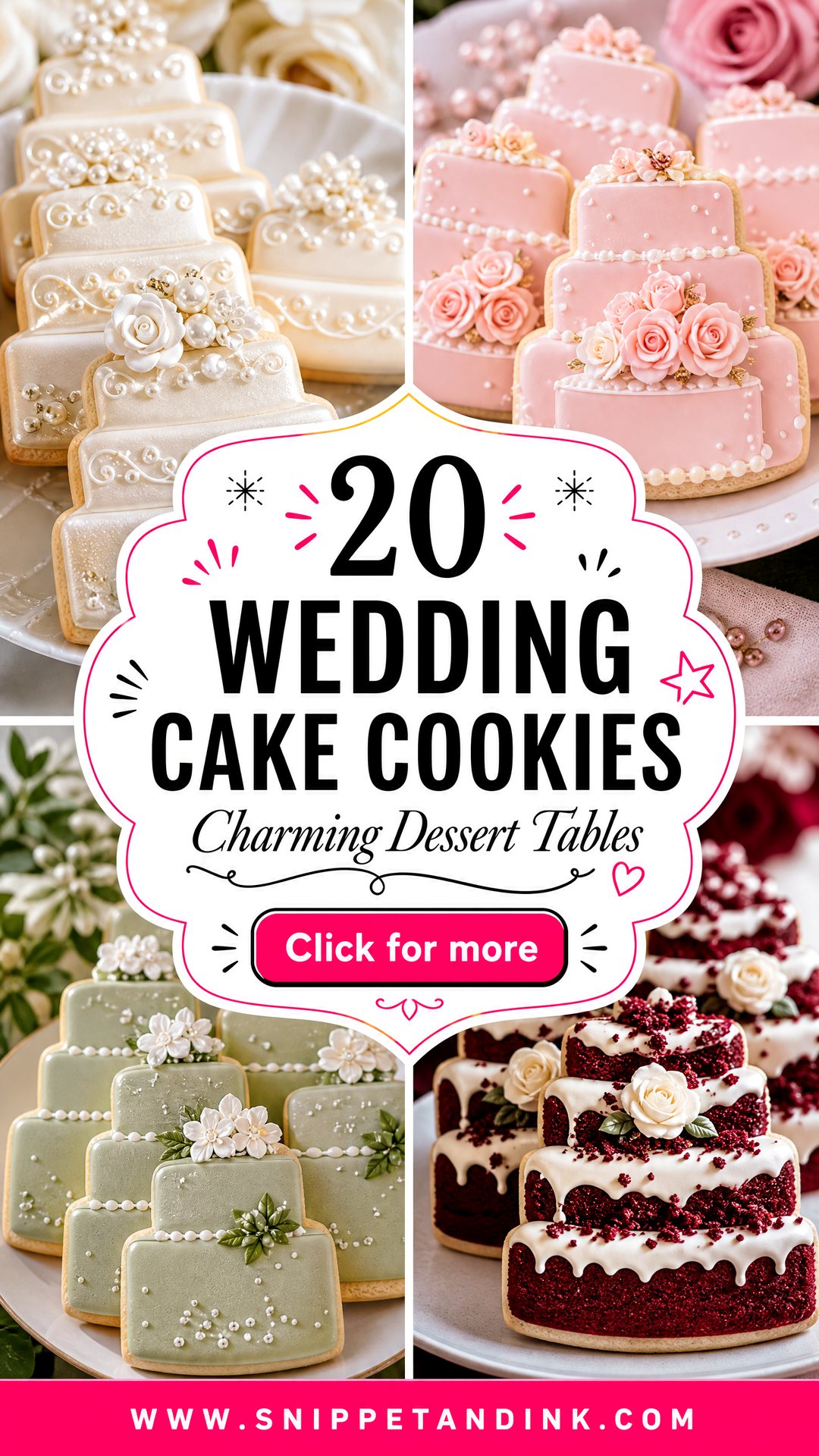
A cookie decorated like a tiered cake gives every guest their own small version of the main event, and it is far easier to serve than slicing a second cake. I make them for shower tables, welcome bags, rehearsal dinners and favor boxes, and the decision that matters most is rarely the design. It is the finish: royal icing dries hard enough to stack and bag, while buttercream stays soft and needs a cool room. Below are twenty directions I use, from piped Lambeth borders to almond and champagne flavors borrowed from classic wedding cakes, with notes on how each one holds up once it leaves my kitchen.
Ordering Decorated Cookies Without a Last Minute Scramble
Custom cookie decorators usually book up well before cake bakers do, because one person can only flood and pipe so many in a week. I’d reach out six to eight weeks ahead for a favor order, and earlier in peak wedding months. Most decorators bake about a week before the date, then need several days for icing to dry, layer, and dry again before packing.
Working out how many you need
- Favors: one per guest, or one per couple if the budget is tight, plus five to ten extras for breakage and late additions.
- Dessert table: roughly one to one and a half cookies per guest if they sit alongside a cake and other sweets.
- Place cards: one per seat, with names checked against the final seating plan, not the RSVP list.
- Allergies: ask for a separate labeled batch rather than a single shared tray if anyone is nut or gluten free.
Bring the invitation, a fabric swatch or a photo of the bouquet to the first conversation. Matching an icing color from a screen is unreliable, and I’d rather mix against something physical than guess at a shade of blush.
1. Wedding Cake Sugar Cookies
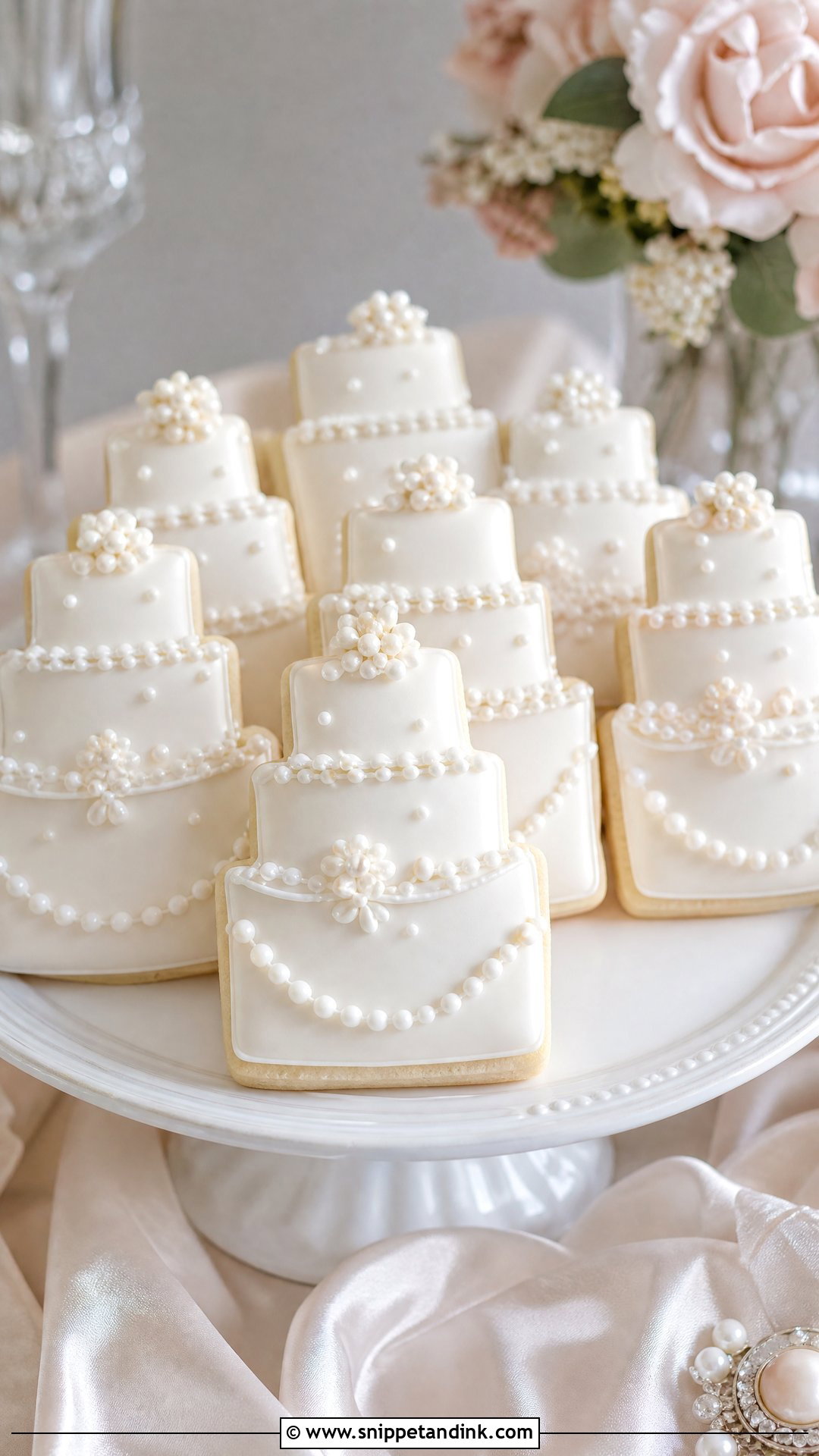
This is where I start most couples, because a plain tiered cutter with white icing is hard to get wrong. The dough matters more than people expect. I use a vanilla or almond sugar cookie with no baking powder so the edges stay sharp and the tiers do not puff into each other in the oven. Once the white base has dried, a piped border, a few icing dots and a scatter of pearl sprinkles are enough to read as a miniature cake. They dry firm, so they bag and travel without fuss. Keep to one accent color, ivory or sage, rather than mixing three.
2. Wedding Cake Cookies With Royal Icing
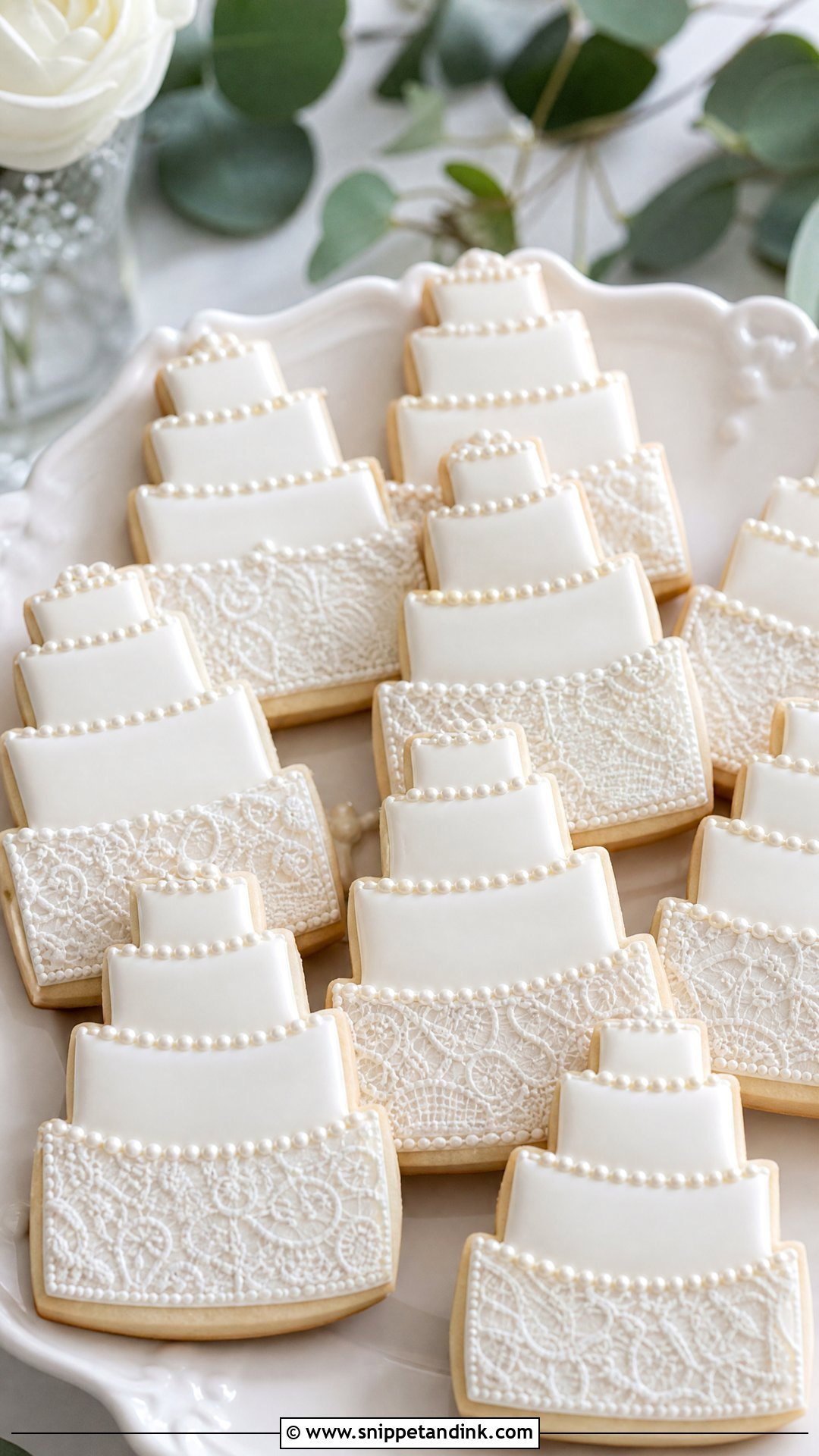
Royal icing is what gives you the crisp lines: lace, painted florals, piped pearls that stay round. My order is always outline, flood, then wait. The flood needs several hours to crust and ideally a full night before I pipe anything on top, otherwise the detail sinks or the colors bleed into the white. If you want accents in your wedding colors, keep them to borders and small motifs so the cookie still reads as a cake and not a sticker. For place settings this is the finish I’d pick every time, since the cookie can sit out for hours and still look freshly made.
3. Wedding Cake Cookies With Buttercream
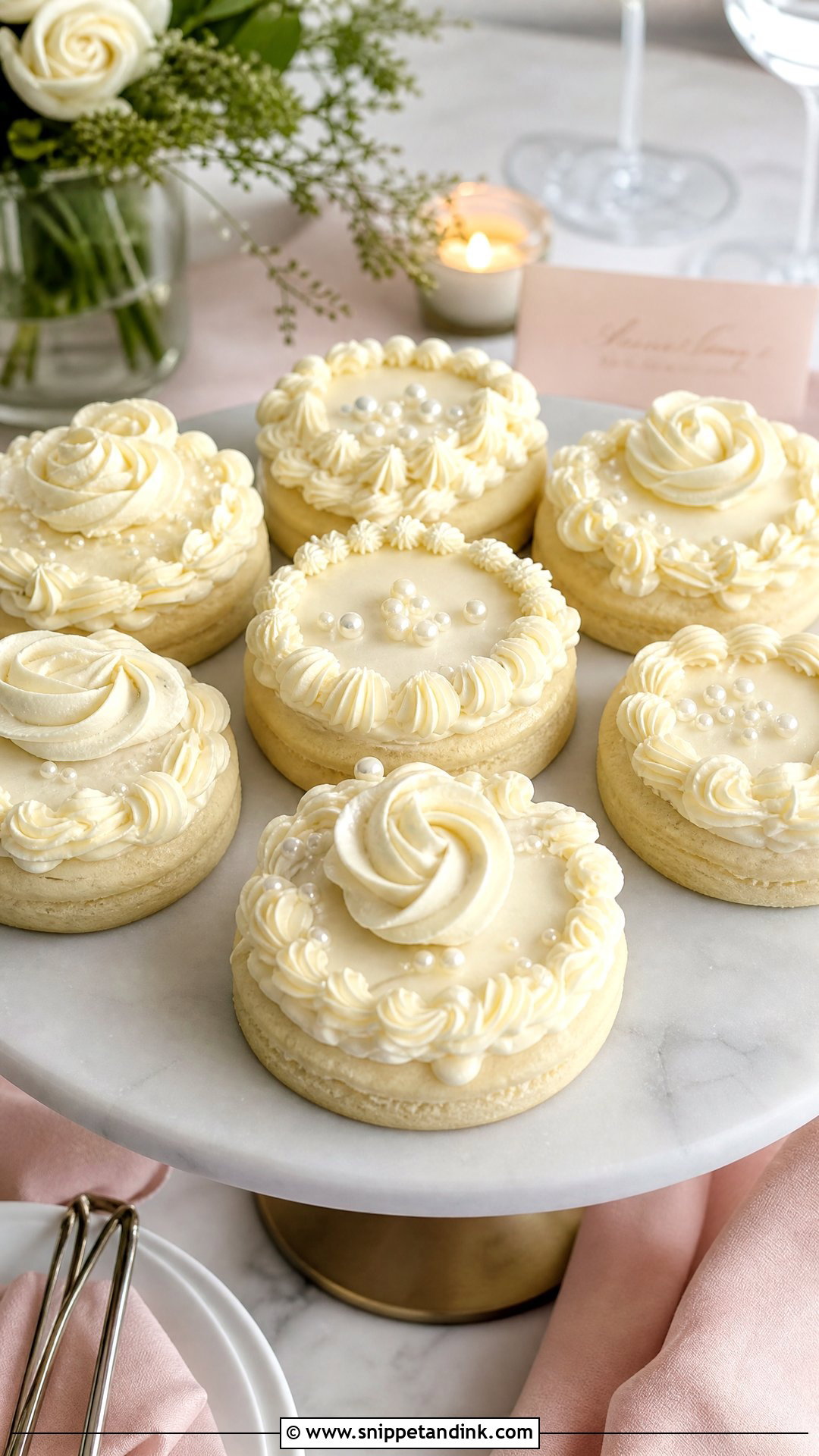
Buttercream turns these into something closer to a dessert than a favor. I pipe onto a thicker round or heart so the base can carry the weight of rosettes, shell borders or ruffles without bending. The honest trade-off is that they cannot be stacked or bagged tightly, and a warm marquee will soften the piping within an hour. Chill them so the frosting sets before they go out, then keep the platter away from candles and windows. A few pearl sprinkles or a single edible flower is plenty on top.
4. Mini Tiered Wedding Cake Cookies
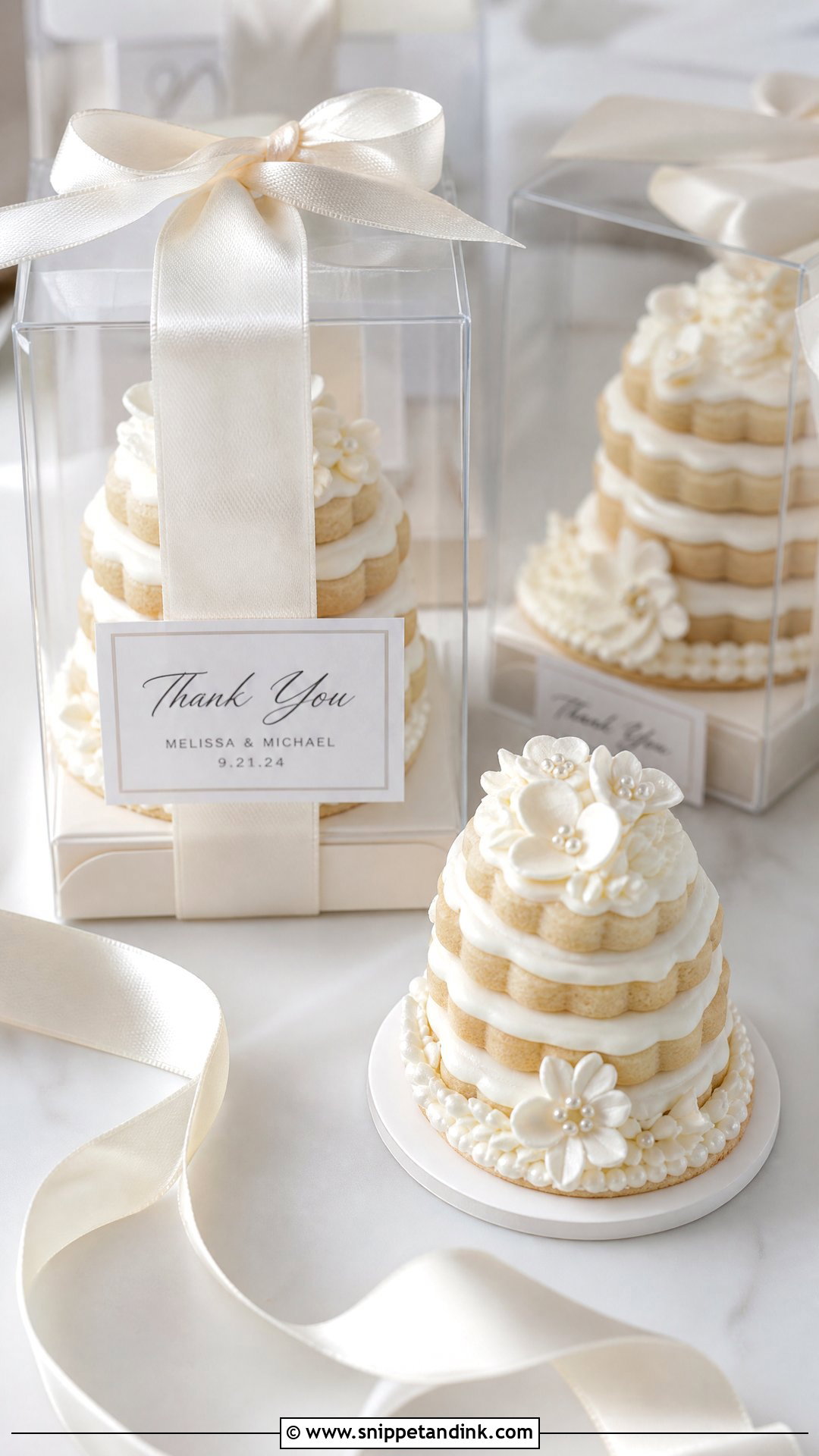
Mini tiered wedding cake cookies can be made two ways, and they behave differently. A single cookie cut with a tiered cutter is flat and sturdy. Stacking two or three graduated rounds with a thin layer of icing between them gives real height, but those stacks need a full day to set before anyone moves them, or the top layer slides. I finish the sides with glaze or royal icing and pipe a fine line around each tier. Grouped on a cake stand with matching ribbon, they make a small centerpiece of their own.
5. Vintage Wedding Cake Cookies
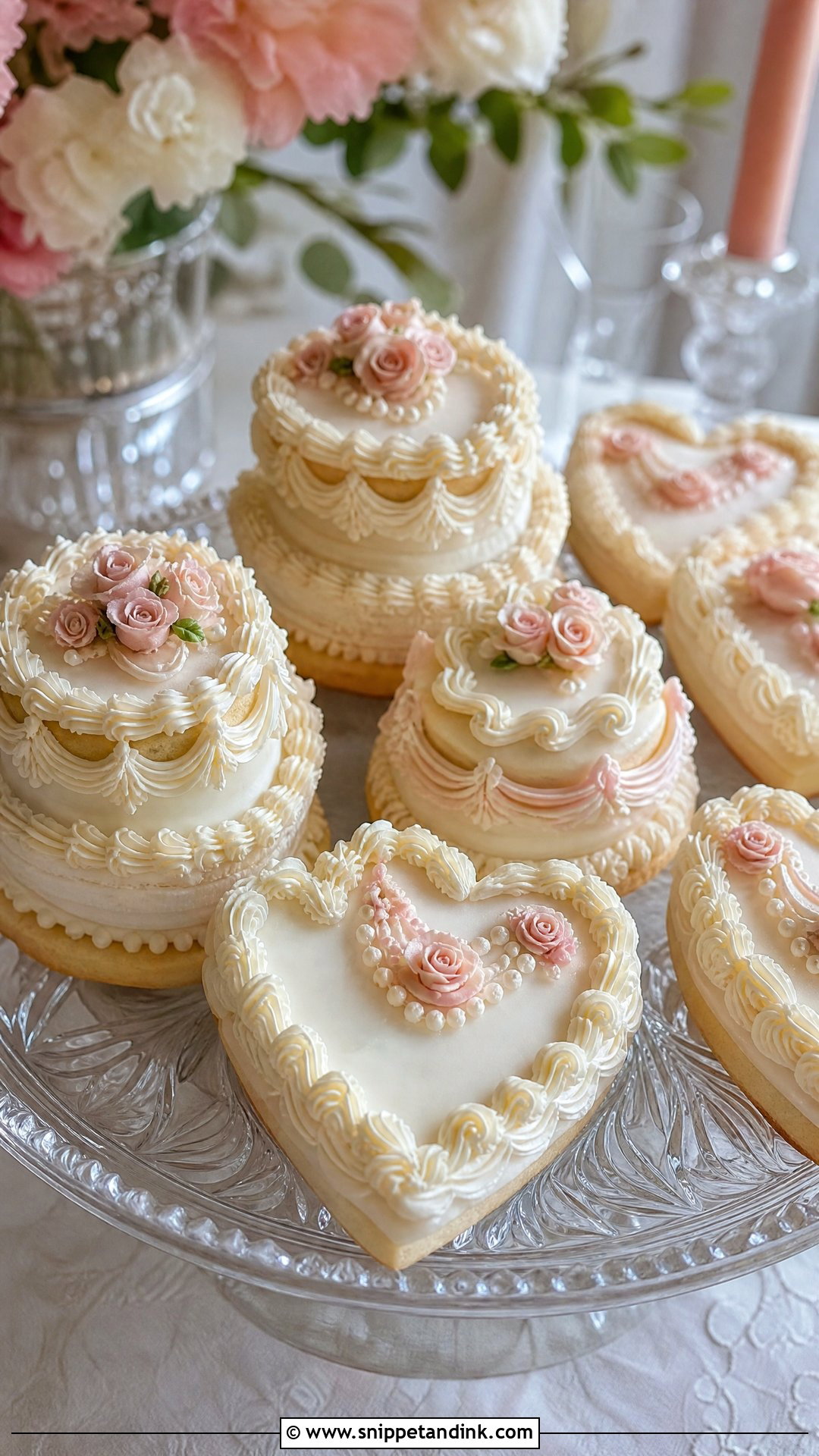
Old-school piped wedding cakes are the reference here: heavy borders, drop strings, bows and tiny roses, the look people now call Lambeth-style piping. It suits couples who love retro reception photos and heart-shaped cakes. On a cookie, the challenge is scale. A border that looks right on a six-inch tier will swallow a three-inch cookie, so I drop to smaller piping tips and build the layers in stages, letting each one dry. Ivory, pale pink, butter yellow and powder blue all suit the style. Expect these to take noticeably longer to decorate than the plain versions.
6. Pearl Wedding Cake Cookies
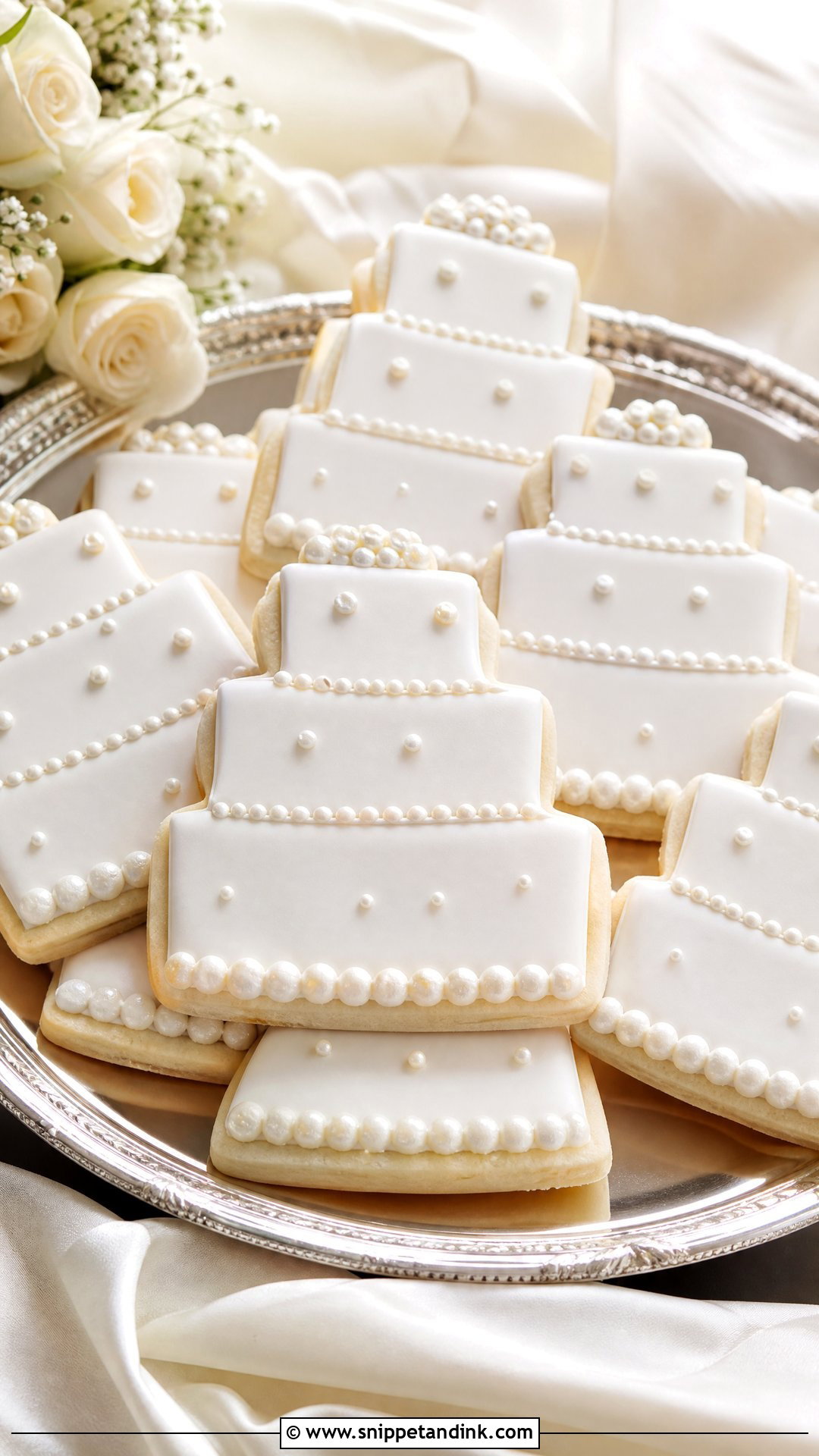
Pearls are the easiest way to make a plain white cookie look formal. I place them while the icing is still tacky so they set into it rather than sitting on top waiting to fall off in the bag. One border, a line between tiers or a small cluster at the top is usually enough. The mistake I see most is covering every surface, which ends up looking crowded rather than refined. Leave clean white space. They suit ballroom and black-tie tables, and they work just as well in a garden setting.
7. Floral Wedding Cake Cookies
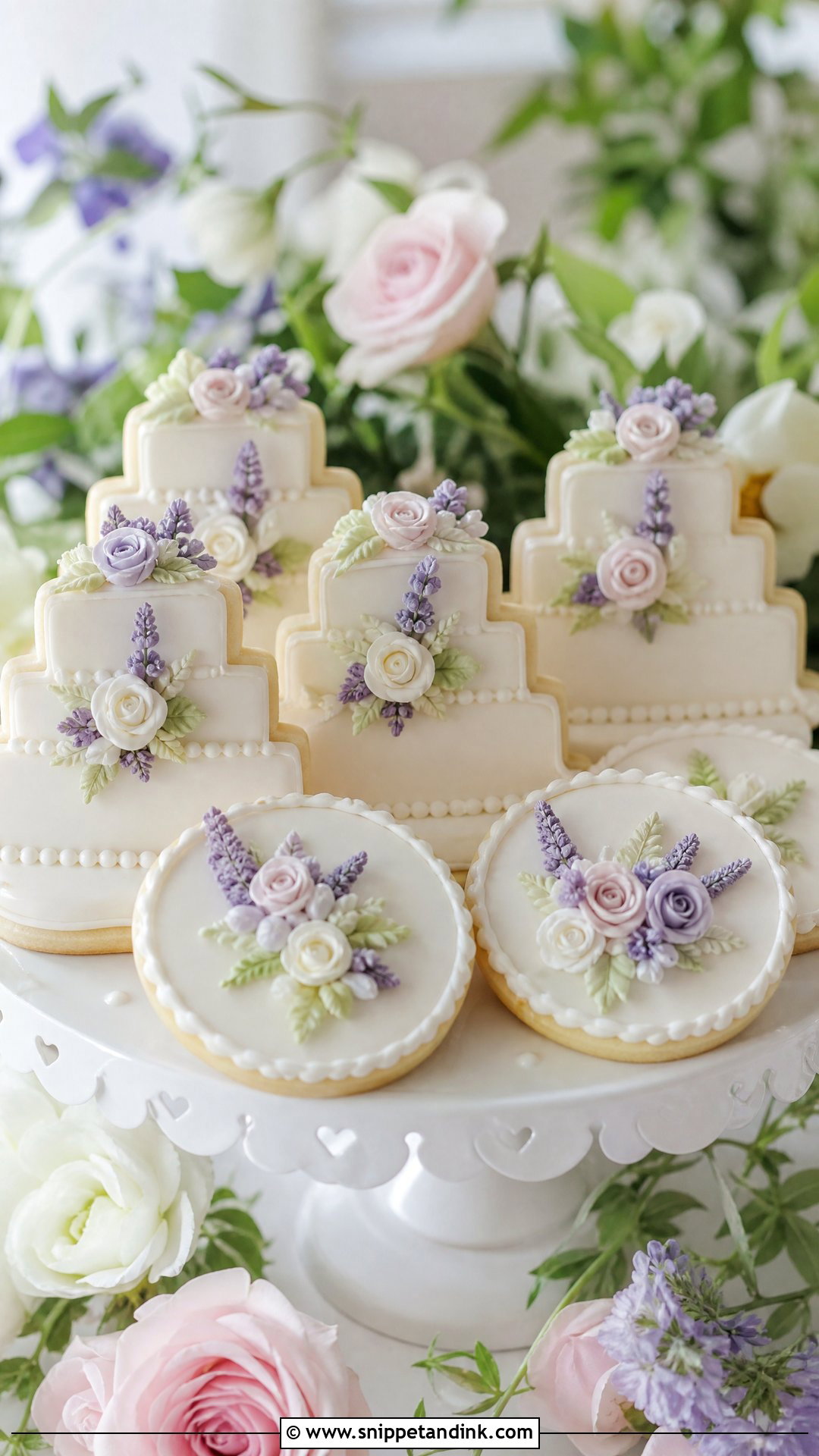
If the wedding is built around flowers, I’ll match the cookies to the bouquet. Royal icing roses, painted petals, pressed edible flowers or tiny buttercream blossoms all work. One caution with pressed flowers: they need to be grown as edible and unsprayed, not taken from the florist’s stock, and they fade if the cookies sit in strong light for days. Keep the base pale so the color carries. Daisies, lavender and small sprigs of piped greenery read better at cookie size than big peonies, which tend to look like blobs.
8. Monogram Wedding Cake Cookies
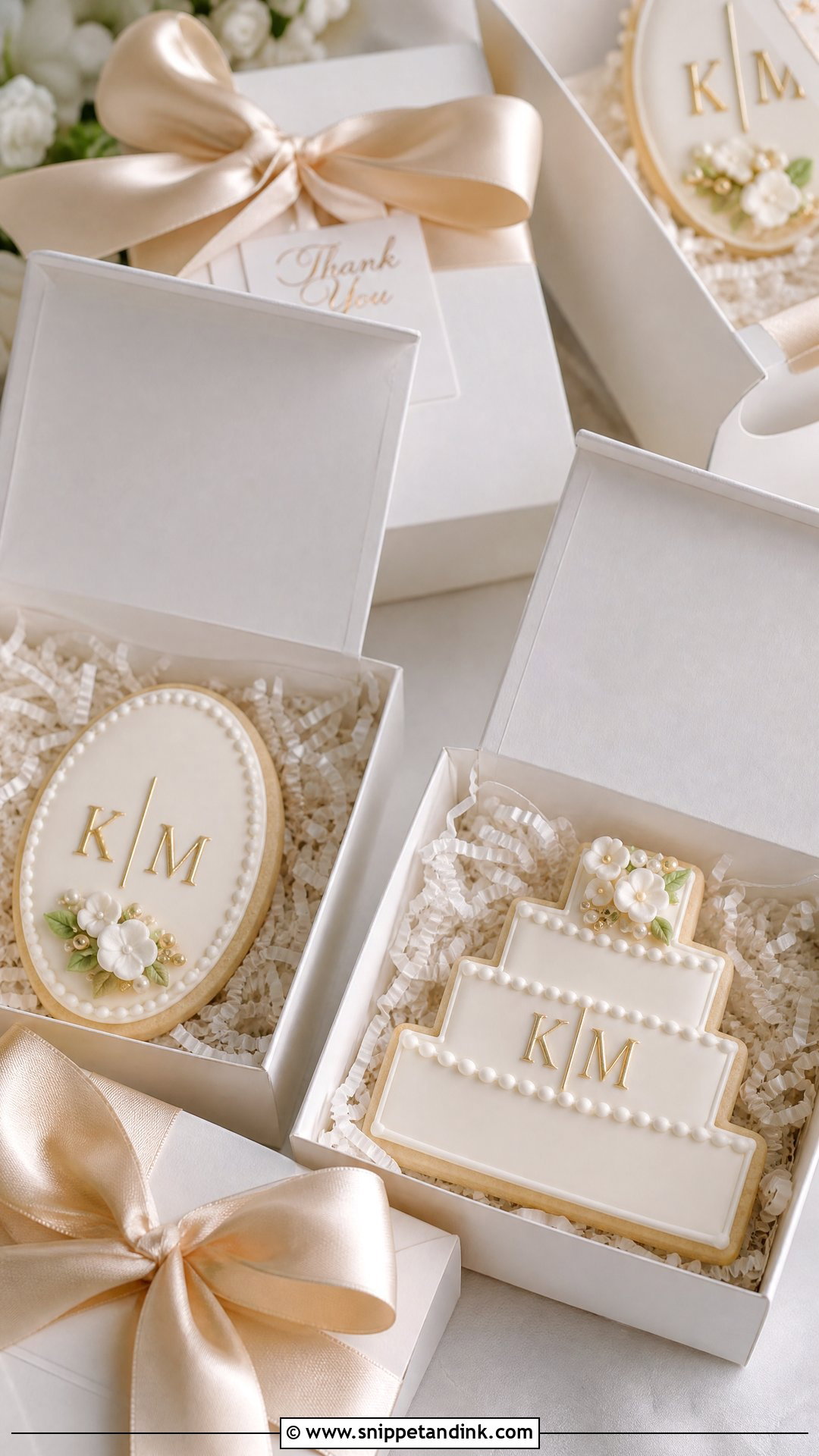
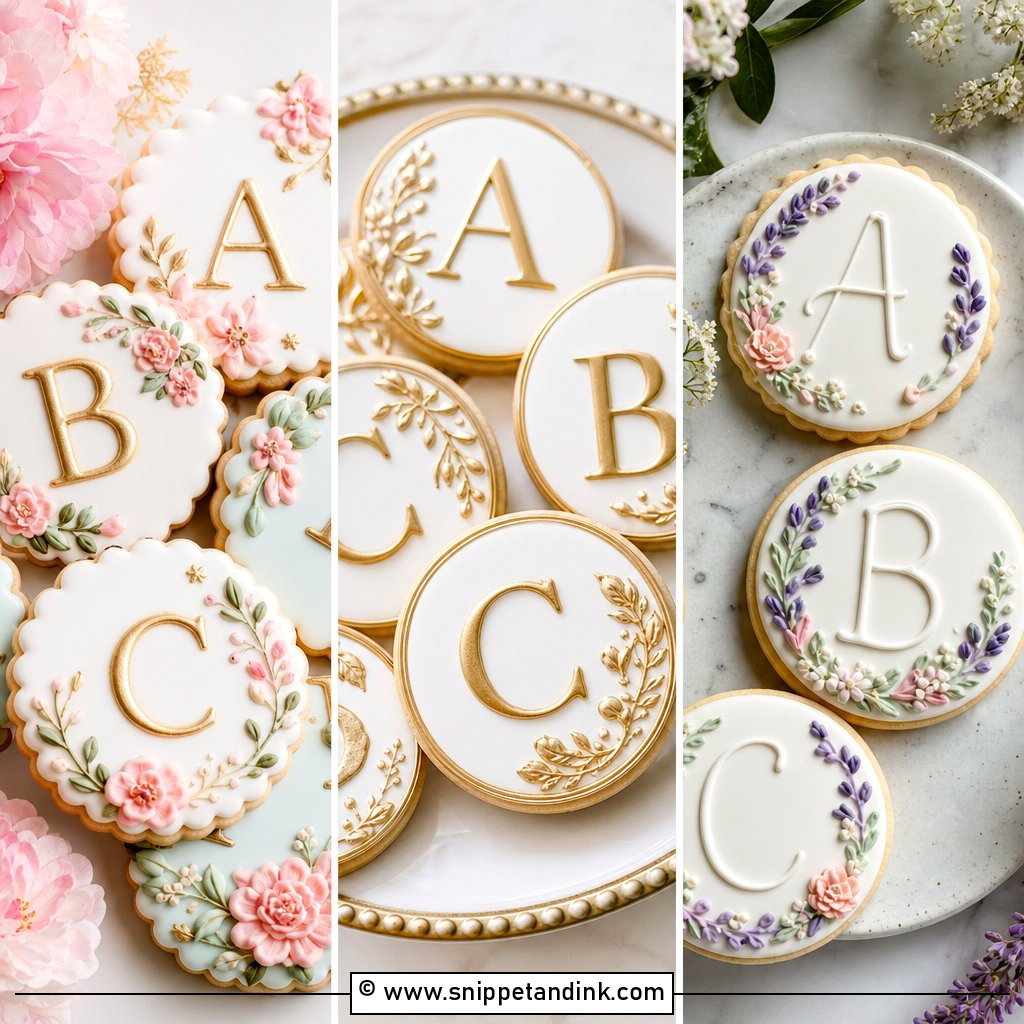
Monogram wedding cake cookies double as place cards, which is why couples often order them. A tiered shape looks the most like cake, but a round or square plaque gives lettering more room, and that matters if you want initials and a date. I pipe the letters in one contrast color, often gold, navy or blush, on a fully dried white base. Ask your baker to show you their lettering first. Freehand script varies a lot between decorators, and some use a projector or stencil for consistency across a big order.
9. Lace Wedding Cake Cookies
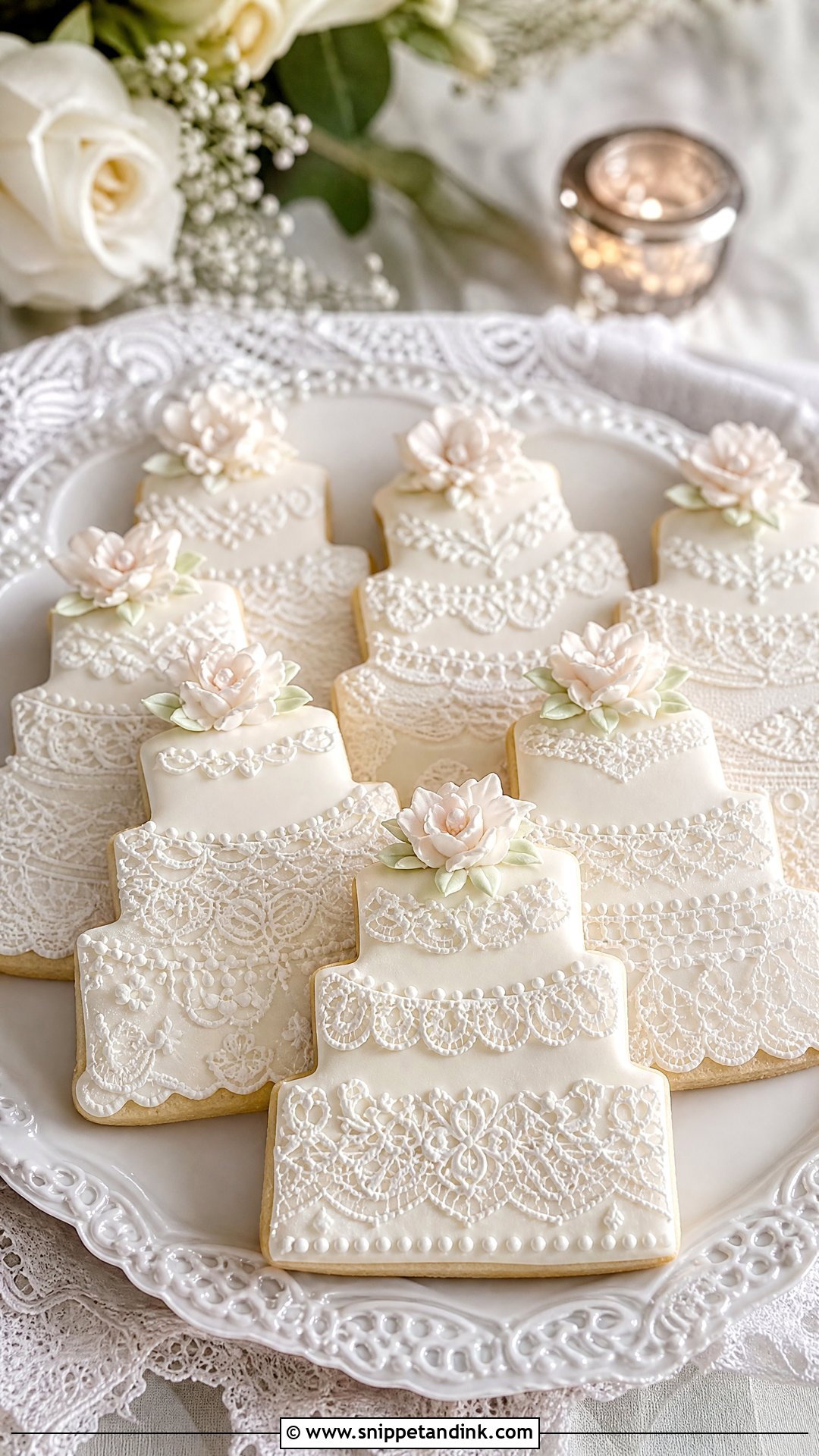
There are three routes to lace, and I choose based on quantity. Hand piping with royal icing gives the finest detail but is slow. A texture mat pressed into fondant is quicker and very even. Edible lace sheets are fastest, though they can soften in humid rooms. White on white reads as subtle and bridal, while ivory lace over a champagne base gives a little more depth in photos. Tiered, dress and plaque shapes all suit lace. Add a thin border and stop there; lace already carries the pattern.
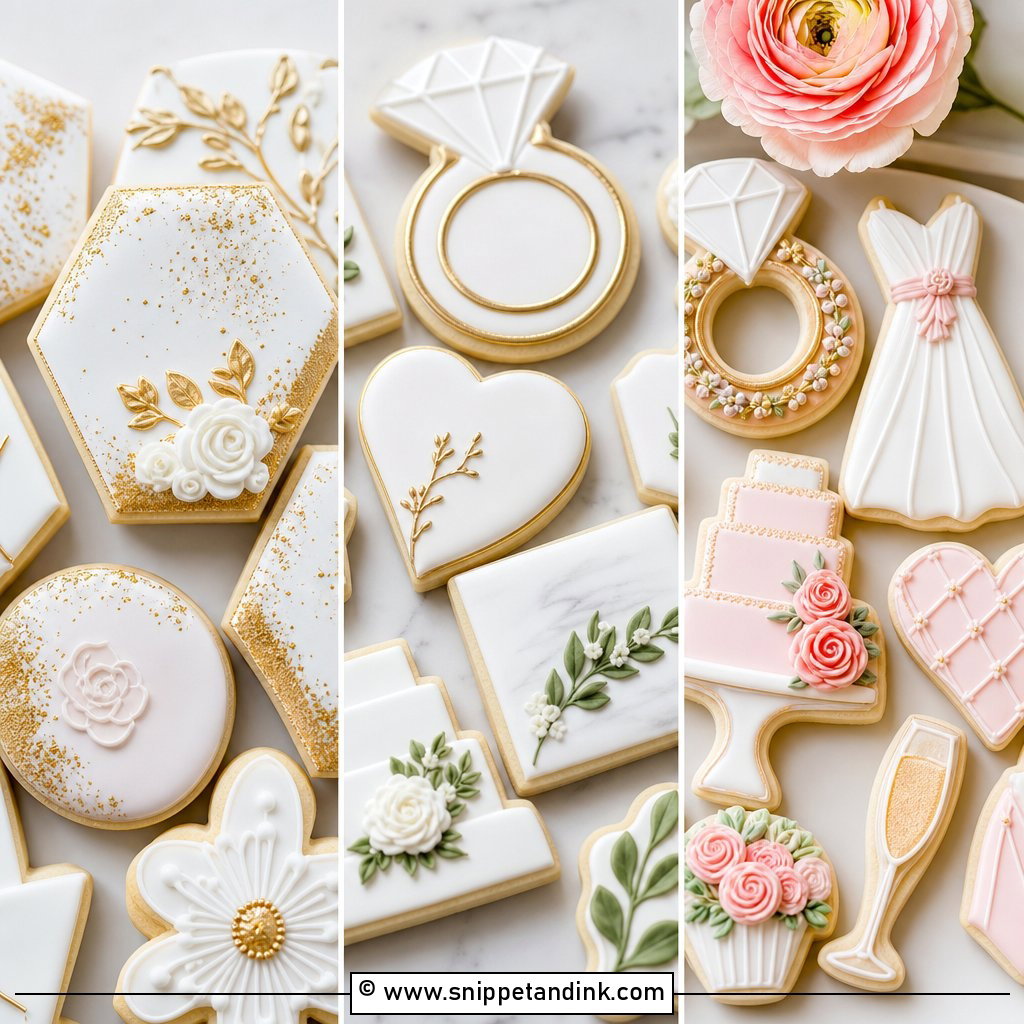
10. Gold Wedding Cake Cookies
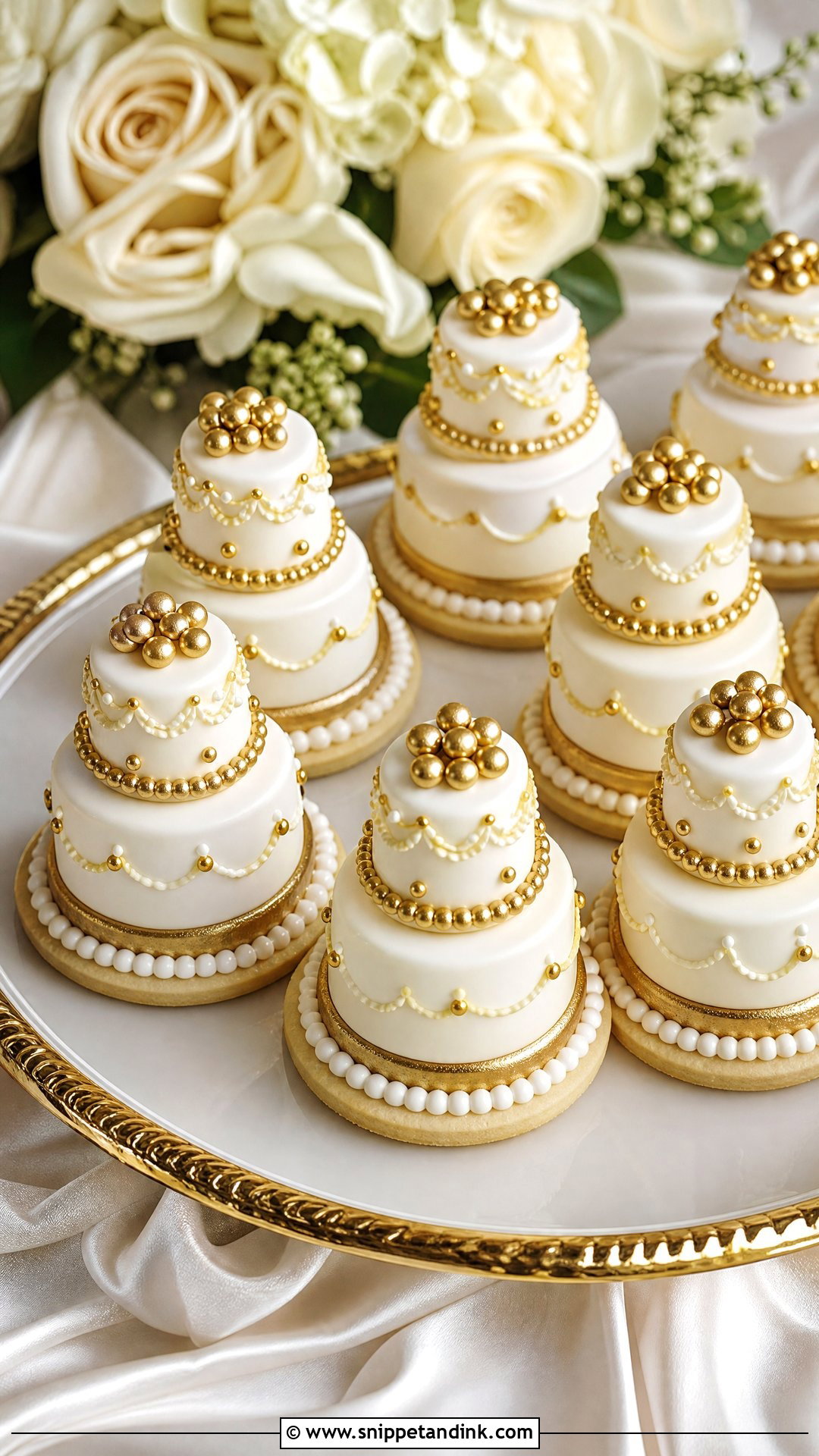
Gold is something I use sparingly, because a little catches the light and a lot starts to look like a party favor from a shop. Edible gold paint on the tier edges, a few gold pearls or a brushed monogram is enough. Check that the gold you are getting is labeled edible rather than food-contact or decorative only, since some lustre dusts are sold for display pieces. A white base keeps it formal, while blush or a deep green underneath makes it richer for an evening reception.
11. Blush Wedding Cake Cookies
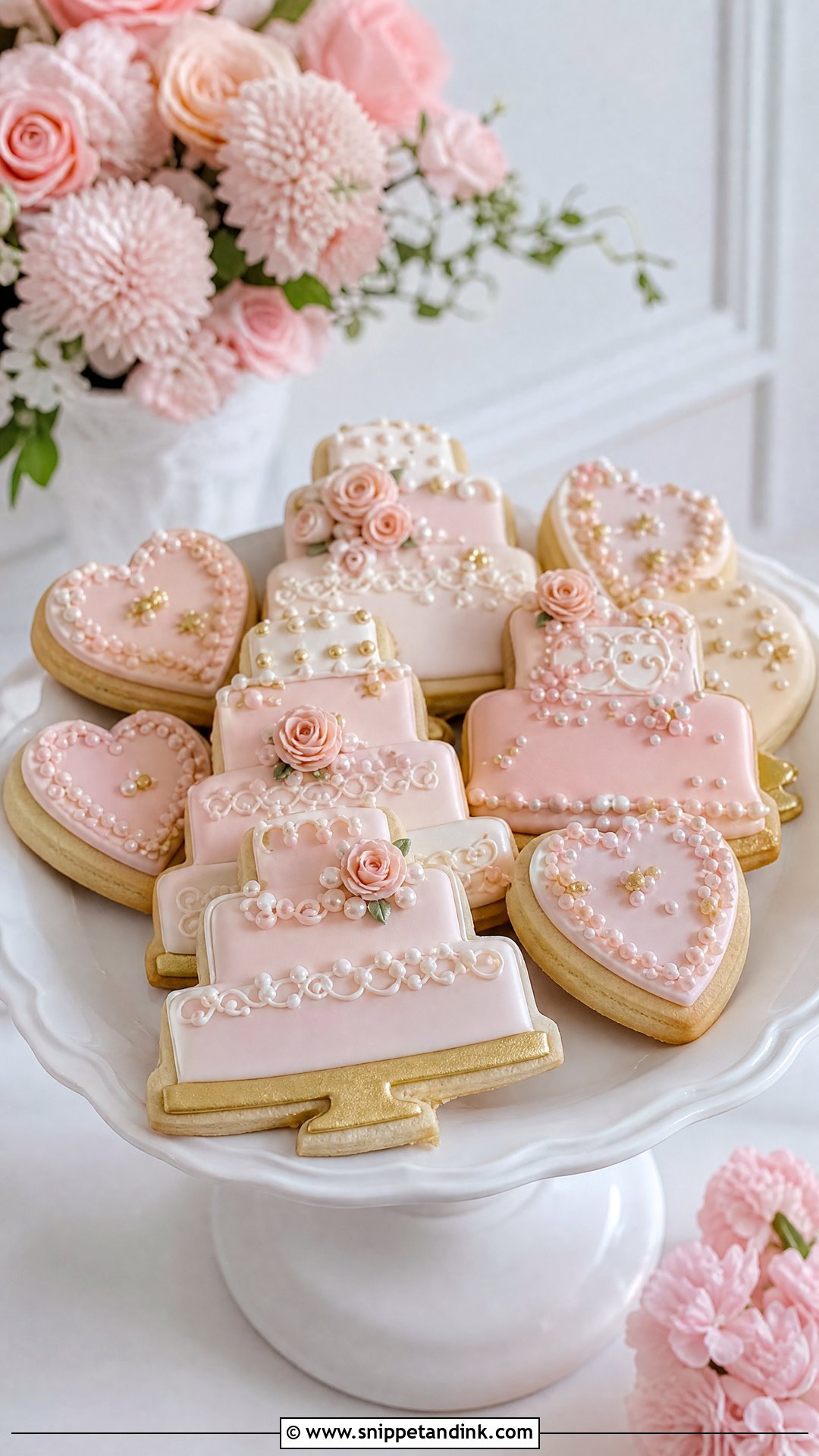
Blush is the color I’m asked for most, and it is forgiving: it sits comfortably next to cream, sage, champagne, dusty blue and mauve. I either tint the whole base pale pink or keep the base ivory and add blush only in the roses and borders, which looks softer. Watercolor shading with diluted gel color works well here. Mix a single batch of blush icing for the entire order. Separate batches almost never match exactly, and a tray of cookies in three slightly different pinks is obvious on a dessert table.
12. Sage Green Wedding Cake Cookies
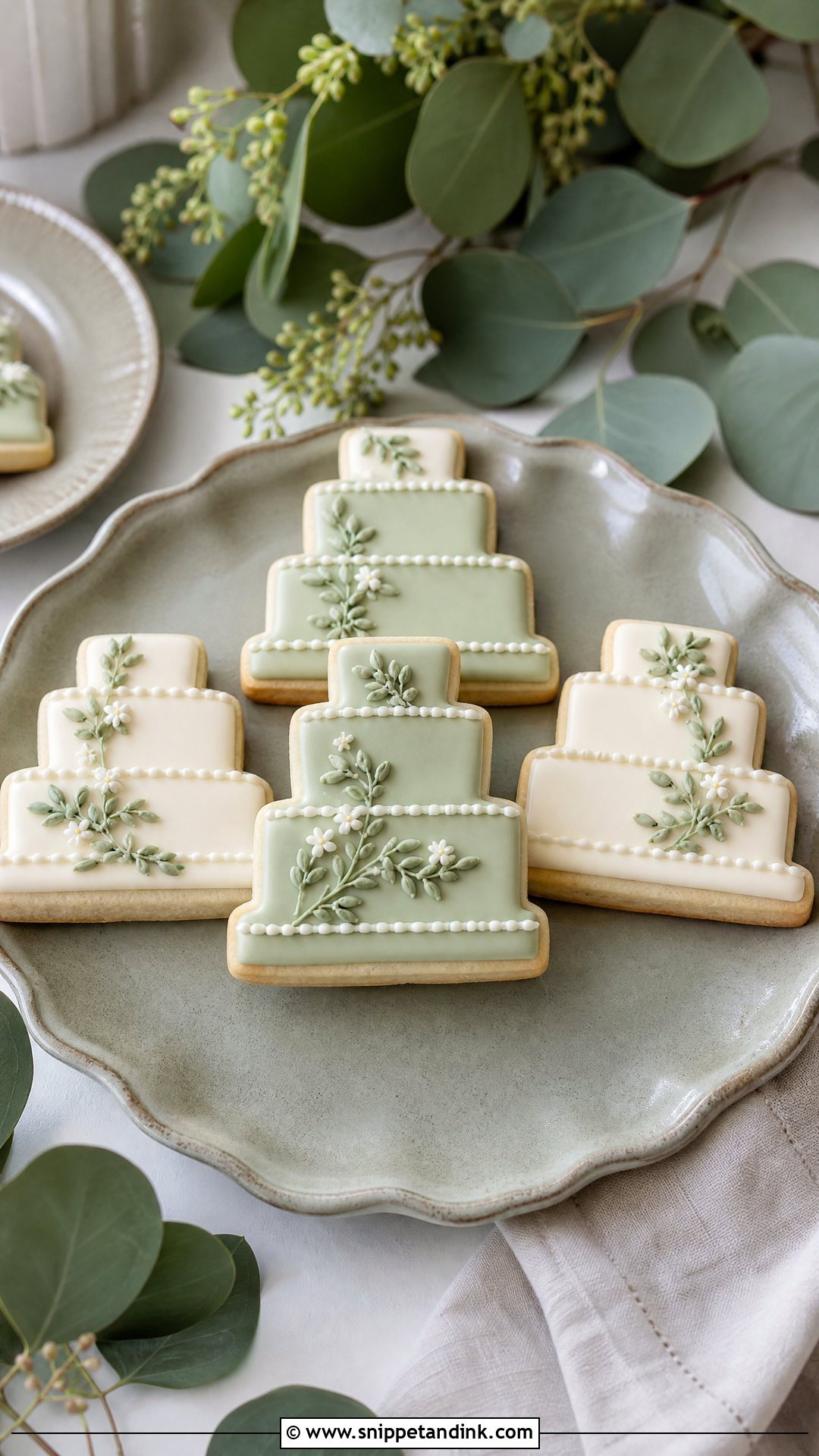
Sage can go grey or muddy if it is mixed too dark, so I build it slowly and test a dried swatch before flooding a whole batch, because royal icing deepens as it dries. Use it as an accent on white or as the full base. Small white flowers, piped greenery or a gold monogram finish it cleanly. Flavor-wise, sage pairs nicely with almond, lemon or pistachio dough. On the table, eucalyptus and linen napkins suit it better than glossy props.
13. Almond Wedding Cake Cookies
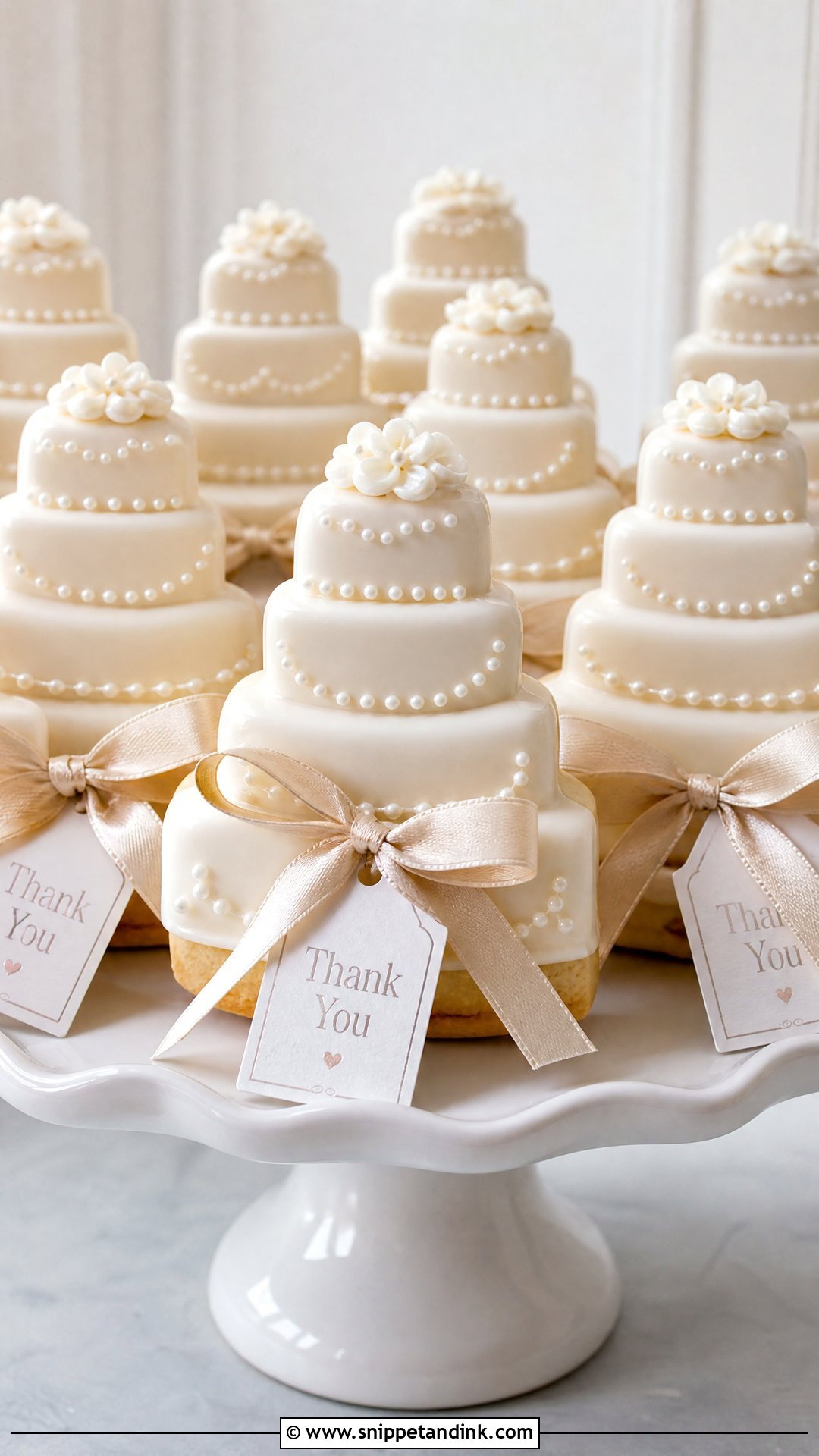
Almond is the flavor many guests quietly expect from wedding cake, and putting it in a cookie gives them that familiar taste in a smaller bite. I use a buttery dough with almond extract and a little vanilla to round it off, then a white glaze or royal icing so nothing competes with the flavor. Leave sliced almonds off the top unless you know there are no nut allergies in the room, and label the tray clearly either way. Pearl sprinkles or a small sugar flower finish it.
14. Lemon Wedding Cake Cookies
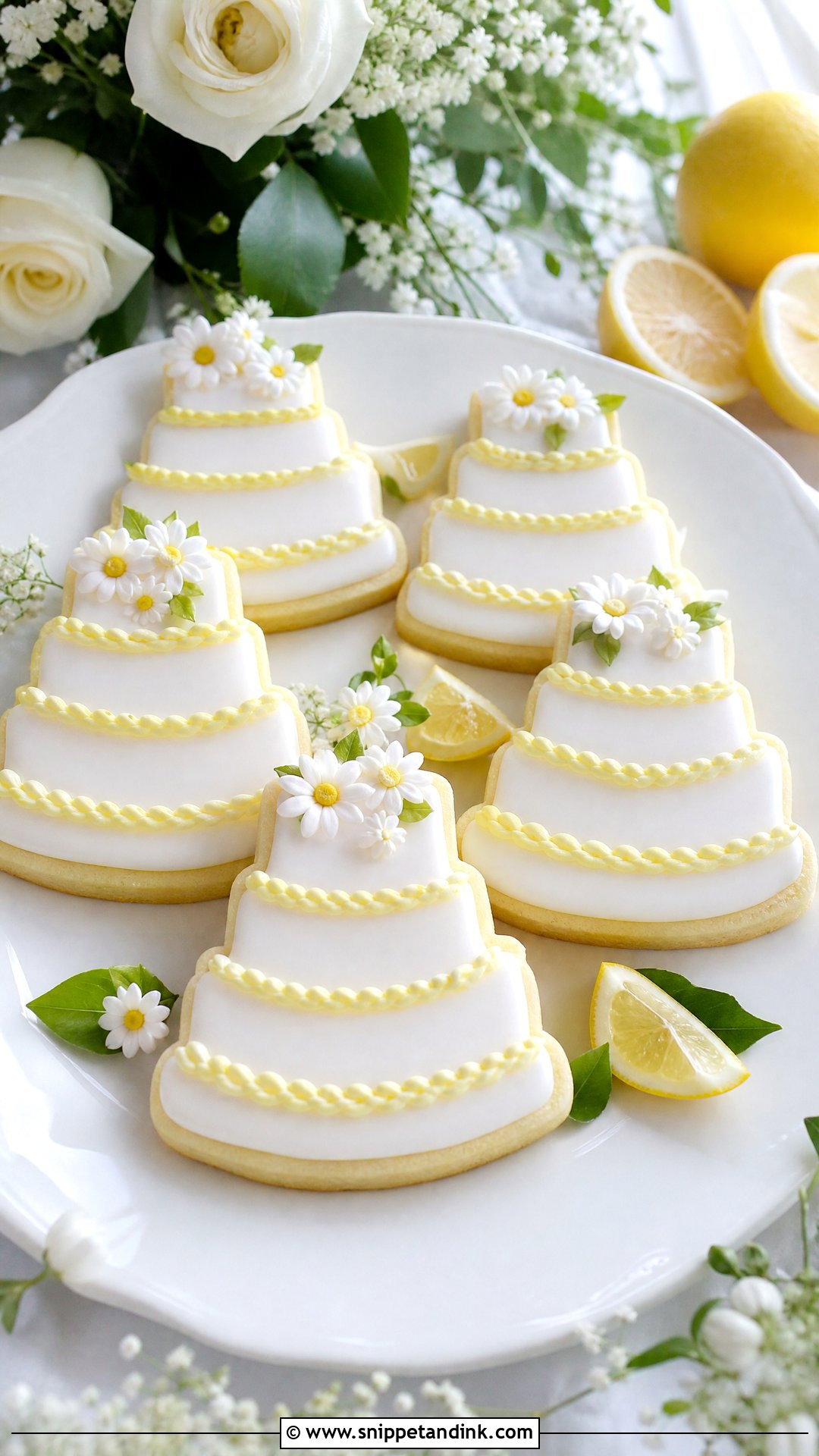
Lemon works best for spring and summer, and it gives the dessert table something lighter beside chocolate and heavy buttercream. Zest goes in the dough; a light lemon glaze or royal icing goes on top. I keep the decoration bridal with white icing and a thin yellow border, maybe a few sugar daisies. One thing to watch: lemon juice in royal icing softens the set, so I flavor the icing with extract or zest oil instead. Place them near fruit or tea-style treats.
15. Champagne Wedding Cake Cookies
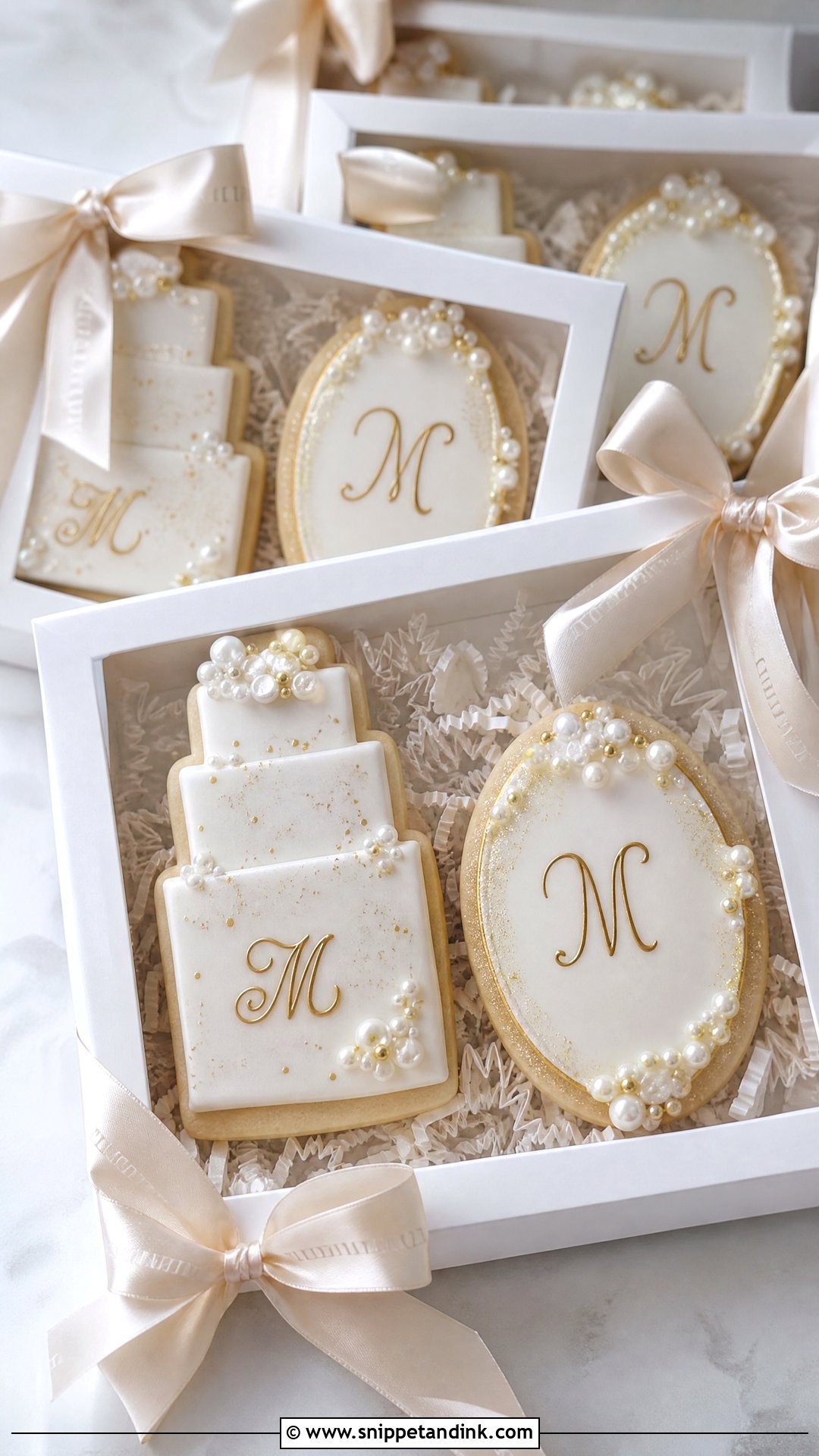
Real champagne does very little in a cookie dough, so most bakers, me included, use a champagne flavoring or extract in a vanilla base. The decoration does the rest of the work: ivory icing, pale gold details and tiny sugar pearls. Keep it soft and avoid heavy glitter, which reads as New Year’s Eve more than wedding. A tiered cake shape, oval plaque or heart all suit it, and a small date makes them easy to give as engagement party thank-yous.
16. Red Velvet Wedding Cake Cookies
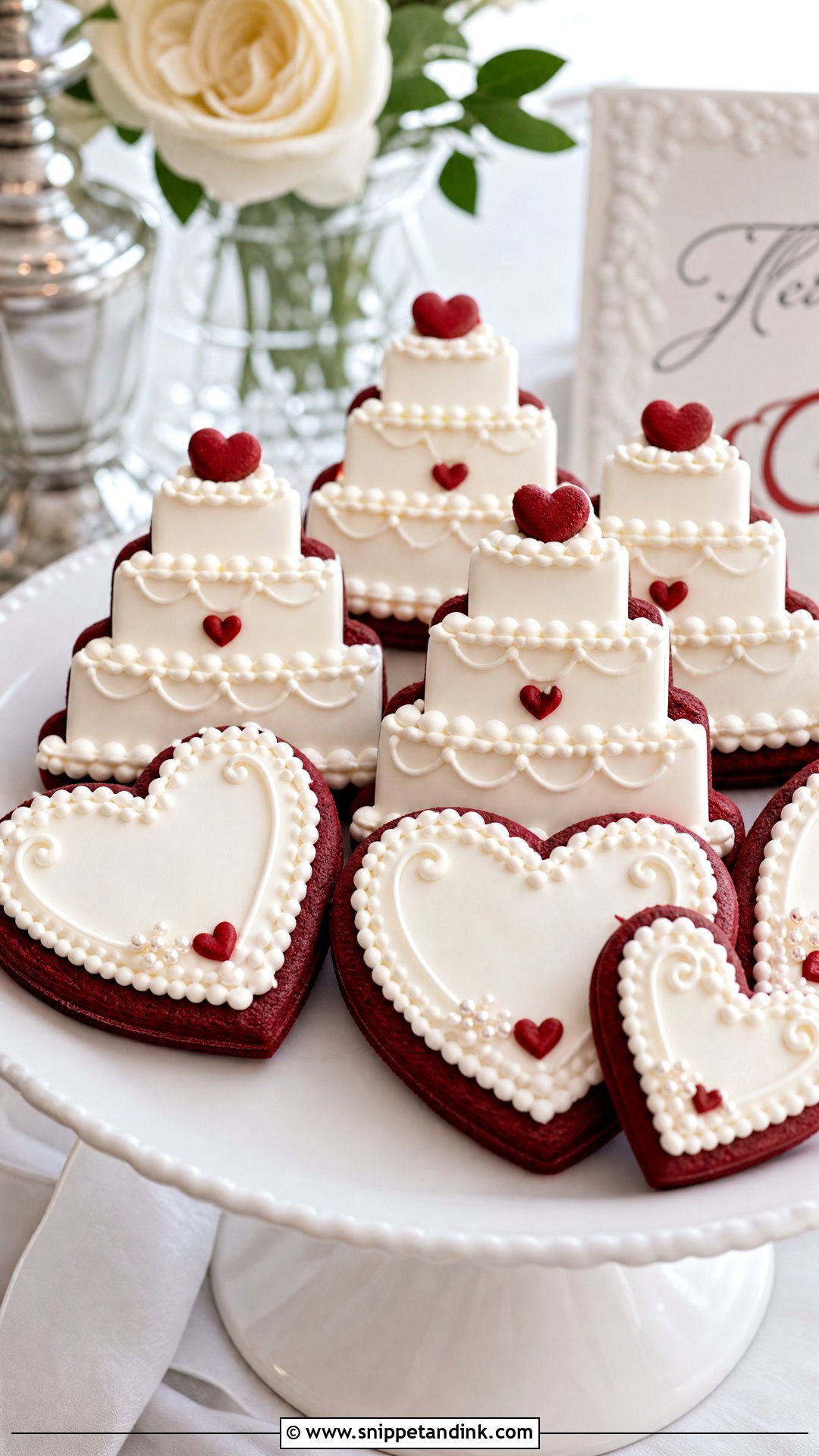
Red velvet stands out on a mostly white table. A small peek of red at the cookie edge does a lot visually, so I keep the top decoration simple: white piping, a few pearls, a small heart. If you want the cream cheese flavor, know that true cream cheese frosting must stay refrigerated, so for favors I use a cream cheese flavored royal icing instead. These suit evening weddings well. Package them in individual bags if they are soft; they bruise more easily than the firm iced styles.
17. Chocolate Wedding Cake Cookies
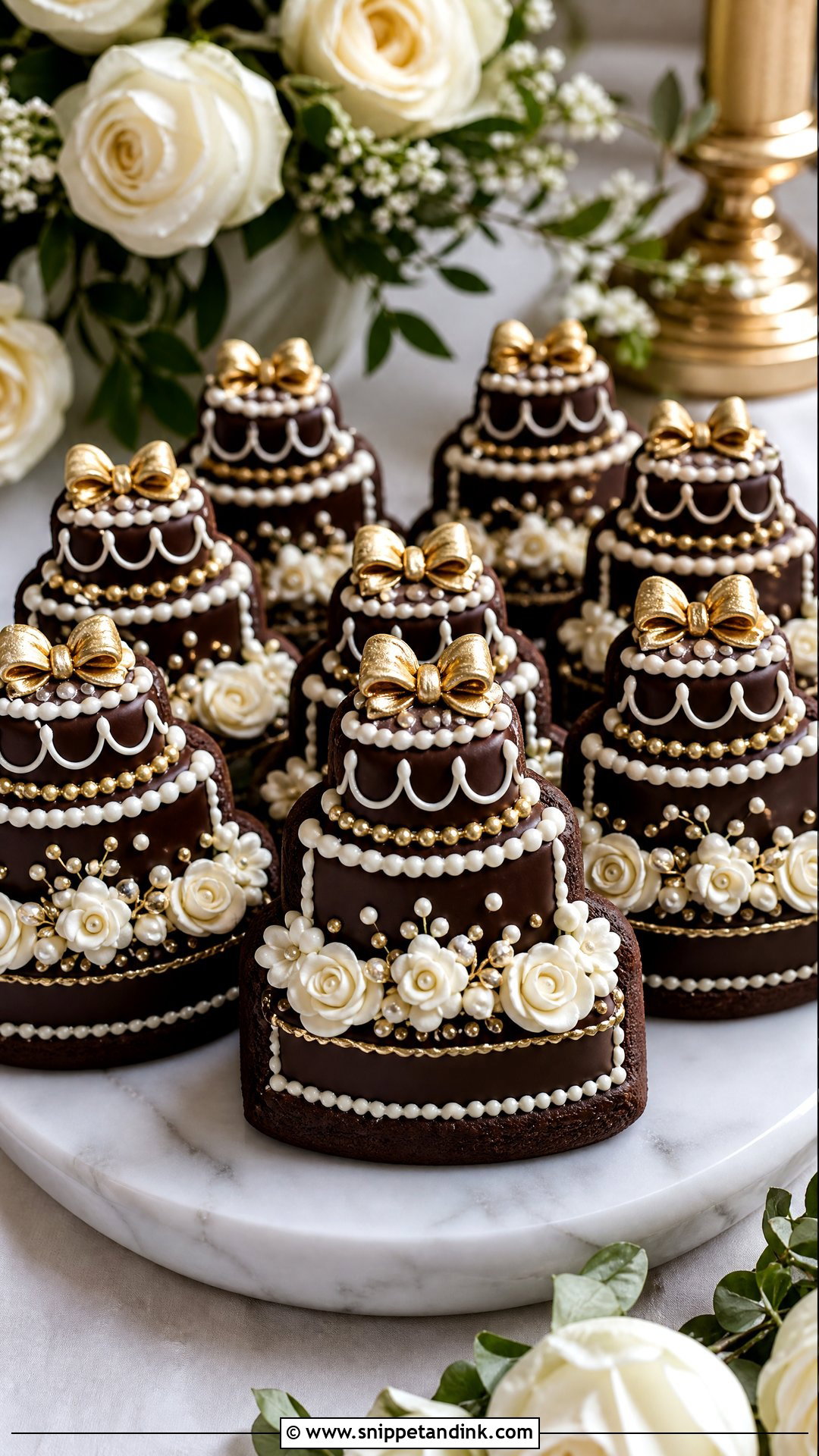
Chocolate wedding cake cookies are the ones that disappear first in my experience, which makes sense since most tables are heavy on vanilla. A dark cocoa base with ivory or white icing gives strong contrast and looks formal with gold accents or pearls. Because cocoa dough browns invisibly, I bake by time and touch rather than color, and pull them just as the edges firm. Espresso, sea salt or a raspberry filling gives them a more grown-up taste.
18. Marble Wedding Cake Cookies
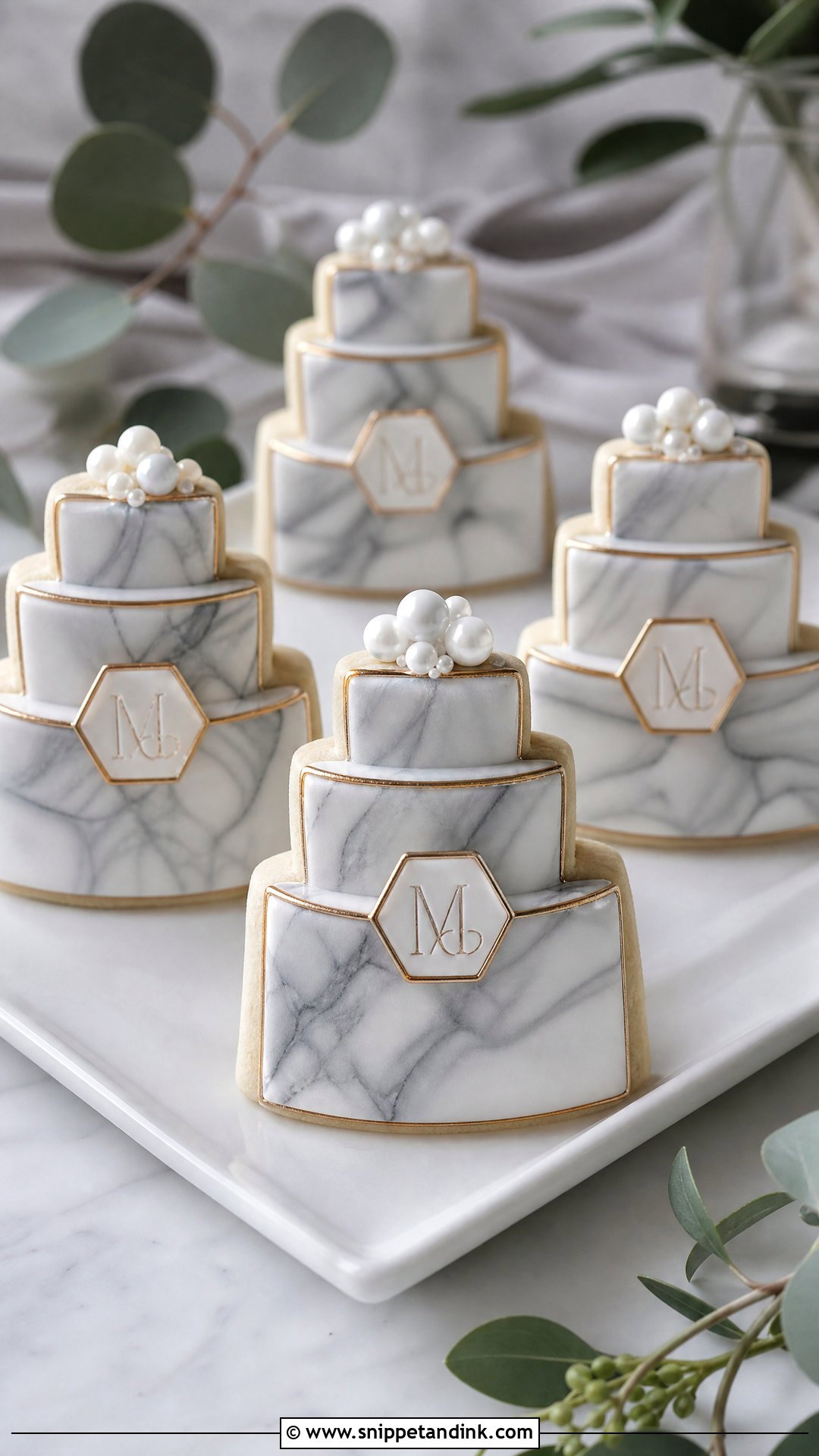
Marbling is done wet-on-wet: drop a second color into the flood while it is still liquid and drag a needle through it. The trick is restraint. White with soft grey, ivory with blush or cream with pale green blend gently, while strong contrasts look like stone countertops. Every cookie comes out slightly different, which I like, since the set still reads as one theme. A thin gold edge or small monogram makes them feel finished for modern and minimalist tables.
19. Heart Wedding Cake Cookies
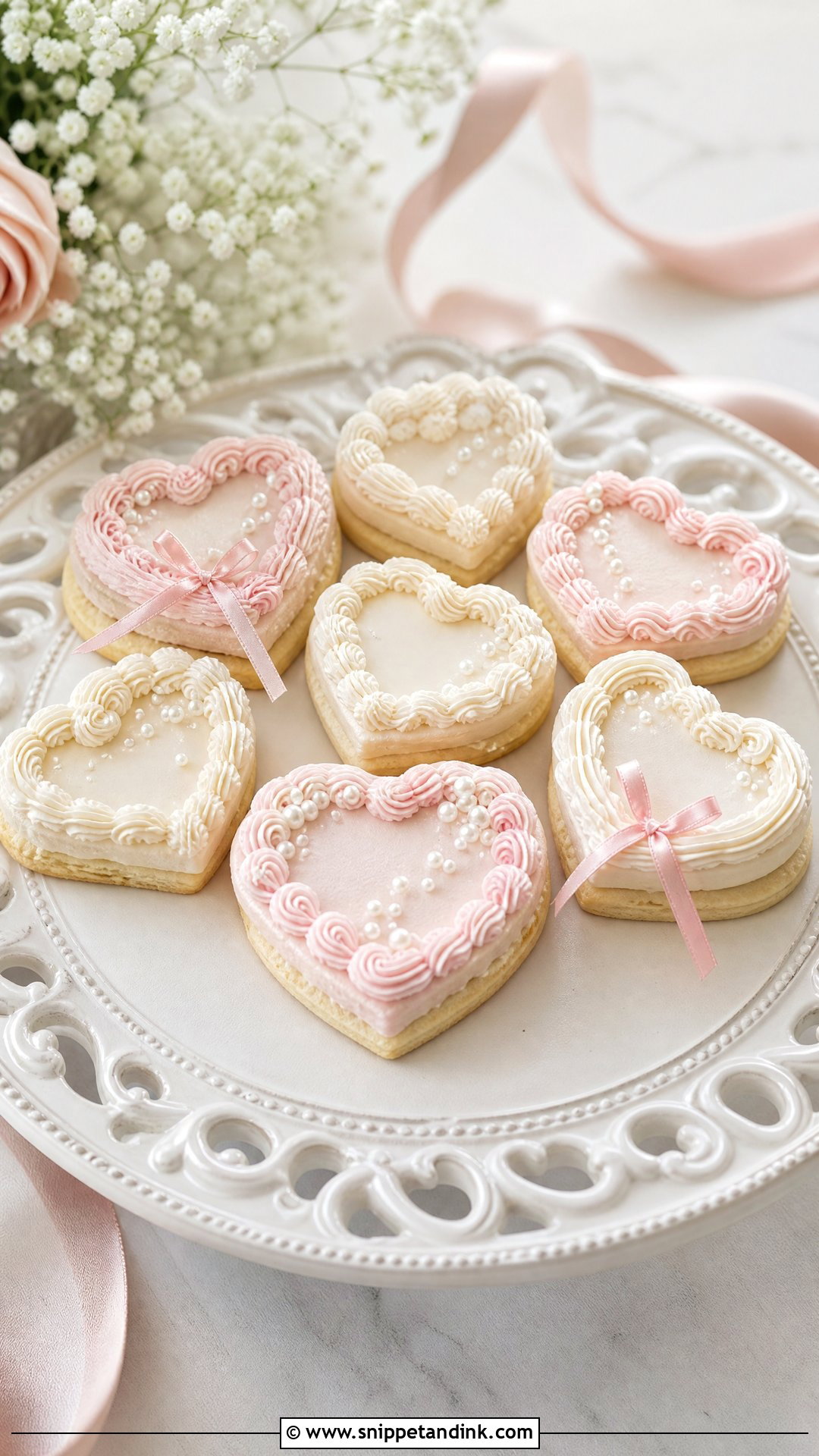
Hearts are simple, but I decorate them as heart-shaped cakes rather than plain valentines: thick borders, rosettes, small bows and pearls. The heart outline gives a lot of edge length to work with, which is why it suits vintage piping so well. Initials in the center make them personal; leaving the middle clean looks more modern. They box well as favors because the shape is already recognizably romantic.
20. Wedding Cake Cookie Favors
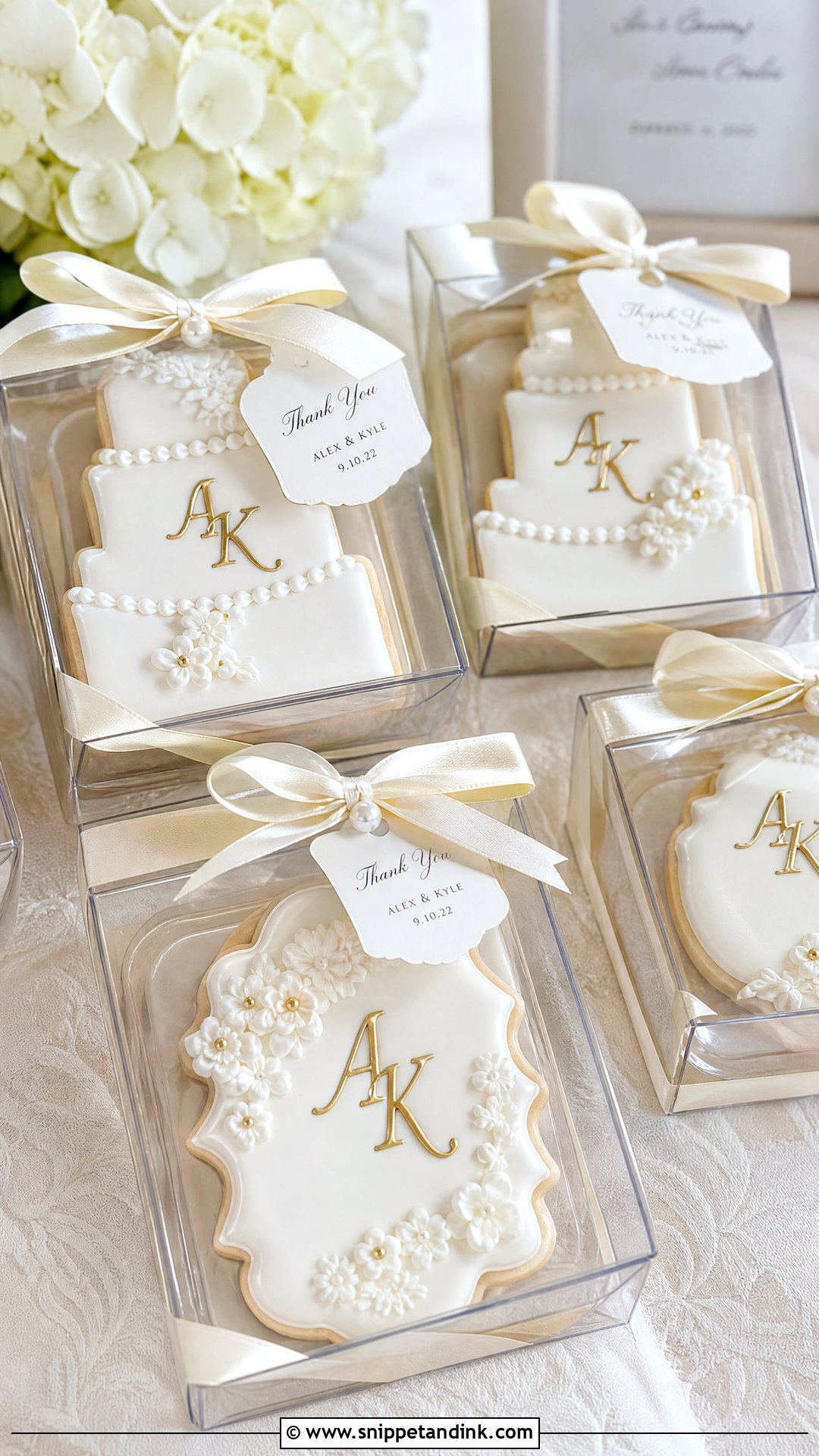
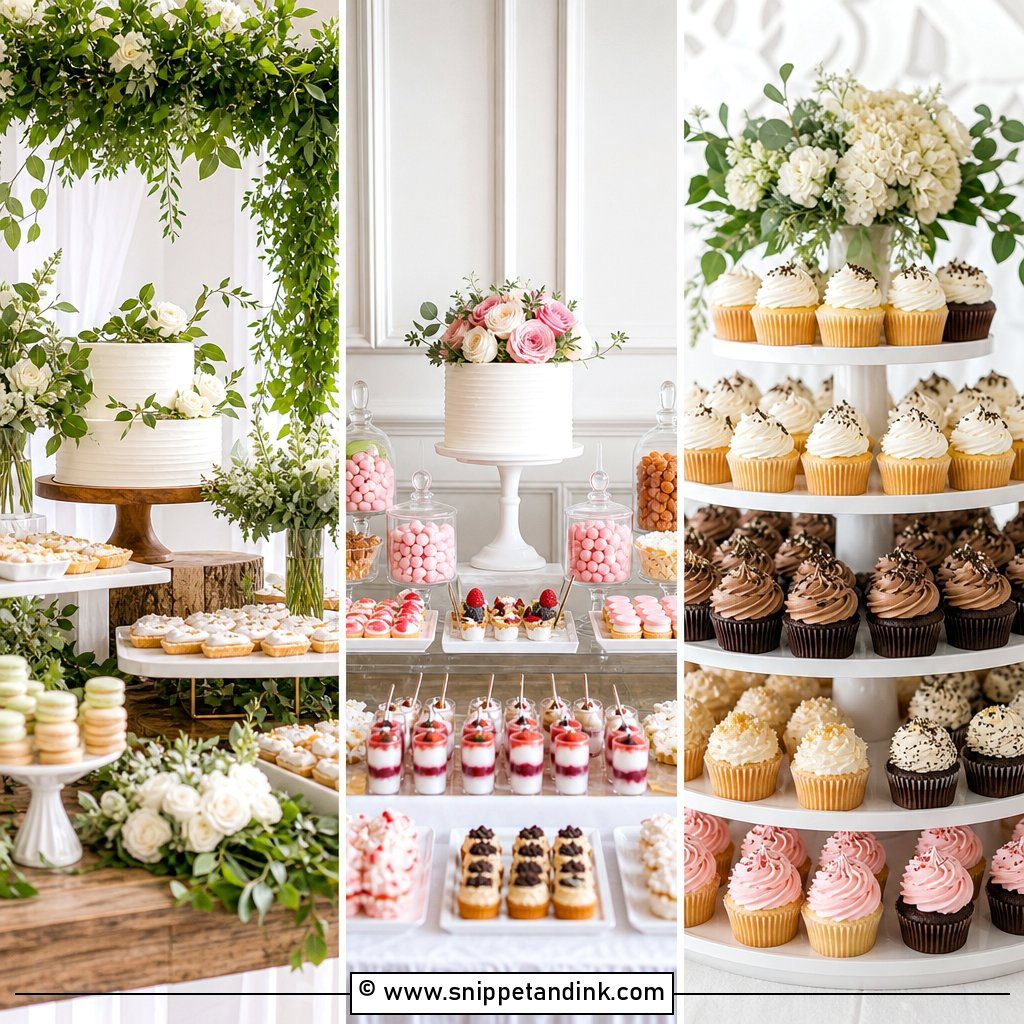
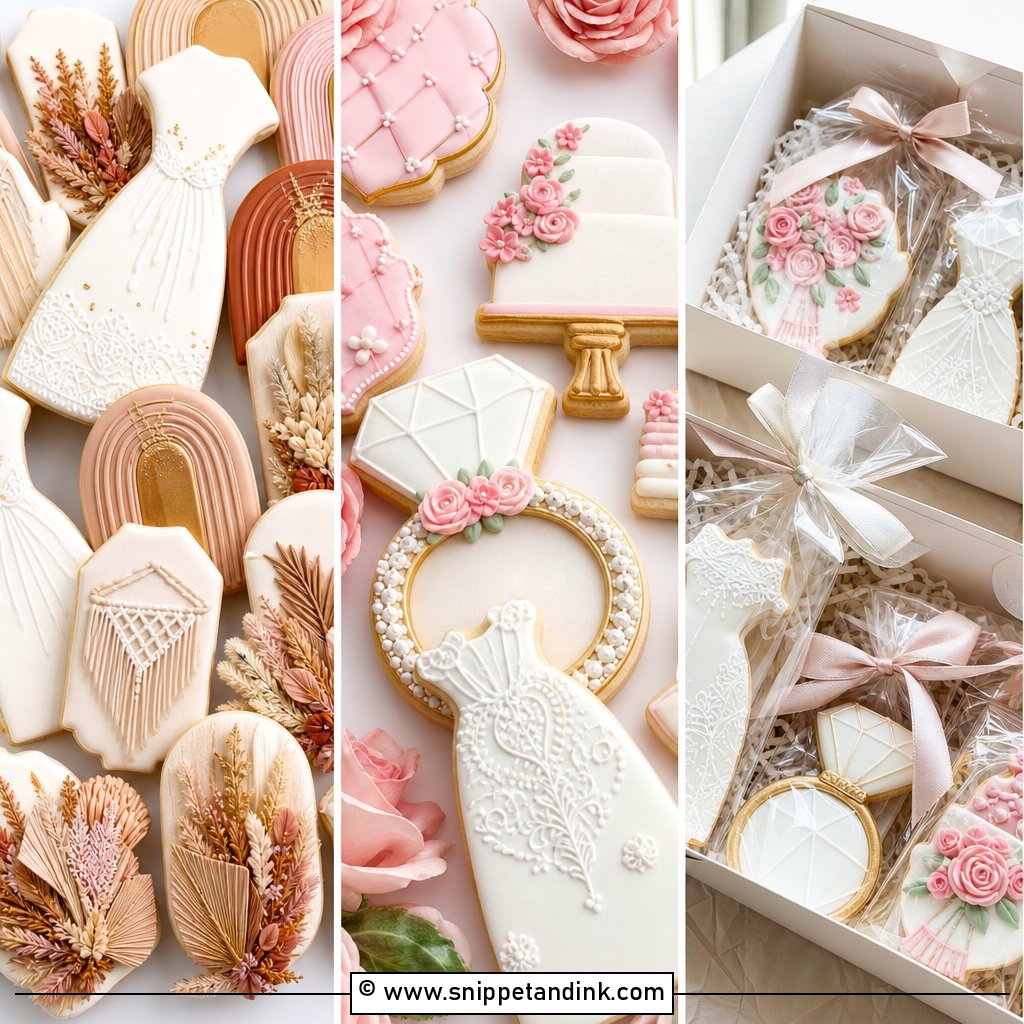
Wedding cake cookie favors need to survive being picked up, carried, bagged and taken home in a handbag, so I nearly always recommend royal icing for them. Pick one design that matches the rest of the wedding, a mini tiered cake, monogram plaque, heart or floral cookie, and keep raised details low so they do not snap in the bag. Heat-sealed cellophane keeps them fresh much longer than a ribbon tie alone. Add the ribbon and a tag on top for looks.
Iced Cookies in Heat, Fridges and Favor Bags
Royal icing and buttercream fail in opposite ways, so storage depends on which one you chose. Royal icing hates moisture. Put a tray of hard-iced cookies in the fridge and they come out with condensation that leaves water spots and makes darker colors bleed into the white. I keep them at cool room temperature, sealed in bags, and they stay fresh for a week or two.
Buttercream is the reverse. It needs to stay cool and it softens fast in a warm tent or on a sunny table. For an outdoor summer reception I’d hold those cookies in a cooler, plate them in small batches, and keep them away from the dessert table’s lighting.
If you want to make them ahead
Decorated royal icing cookies freeze well if they are heat-sealed first and boxed. The important part is thawing: leave them in their sealed bags on the counter until they reach room temperature before opening, so any moisture forms on the outside of the bag rather than on the icing. Buttercream cookies are better made fresh, a day or two before.
One Firm Cookie for the Favors, One Soft Cookie for the Table
If I had to give one piece of advice from this list, it would be to split the job. Use royal icing cookies for anything that gets bagged, stacked or taken home, and save buttercream and soft flavor cookies for the dessert table, where they are eaten within the evening. A strong sugar or almond base under either finish keeps them tasting fresh. Pick two or three designs from the twenty above in one palette, and the table will look planned rather than busy.
You'll Like These Ideas:


Leave a Reply