
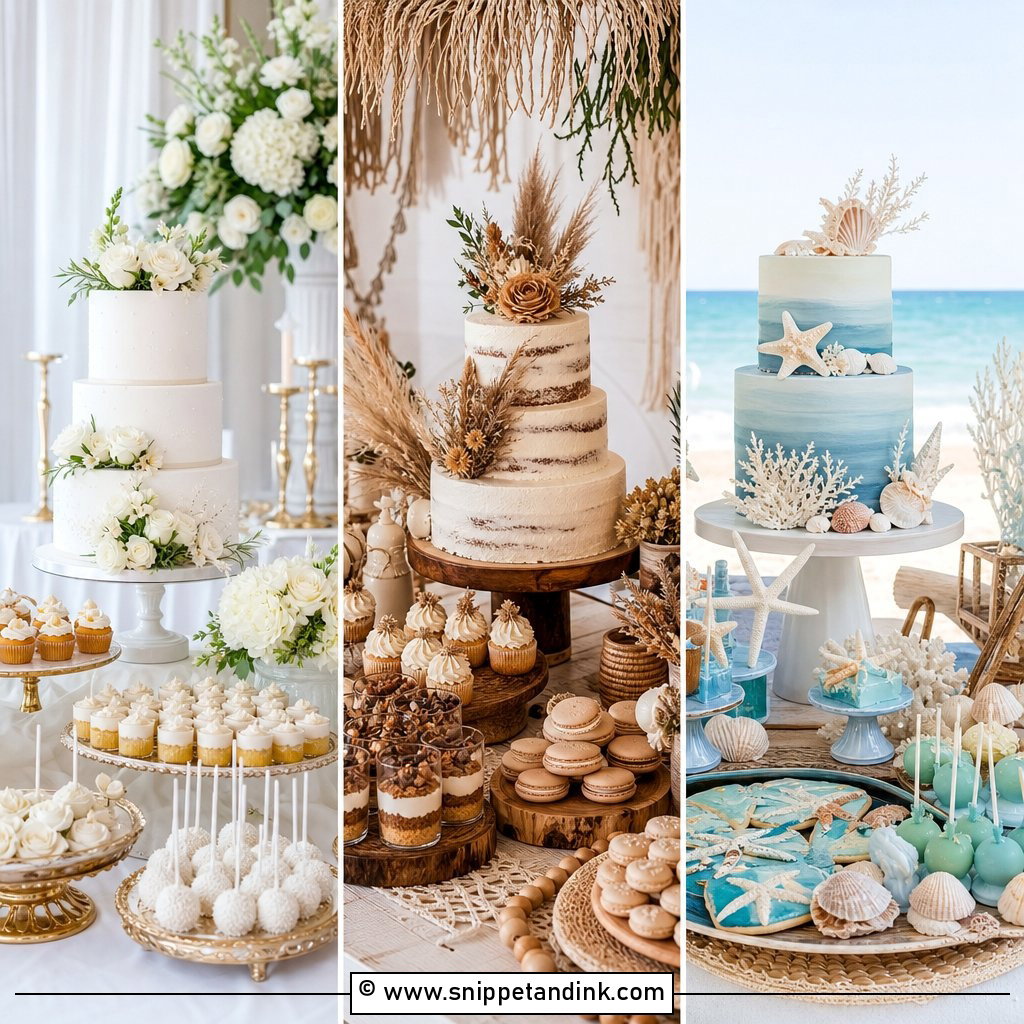
Most of the dessert tables I build now start with a small cake for the cutting photo and then spread out into minis, cups and things guests can eat with one hand while they talk. That shift makes sense to me: a tiered cake has to be cut, plated and carried out by staff, while a tray of tartlets only needs refilling. The twenty ideas below are the ones I’d actually put on a reception table, with notes on what holds up in a warm room, what needs a fridge until the last minute, and what goes soggy if it’s assembled too early. Read them with your venue in mind, because the right dessert for a marquee in July is rarely the right one for a ballroom in December.
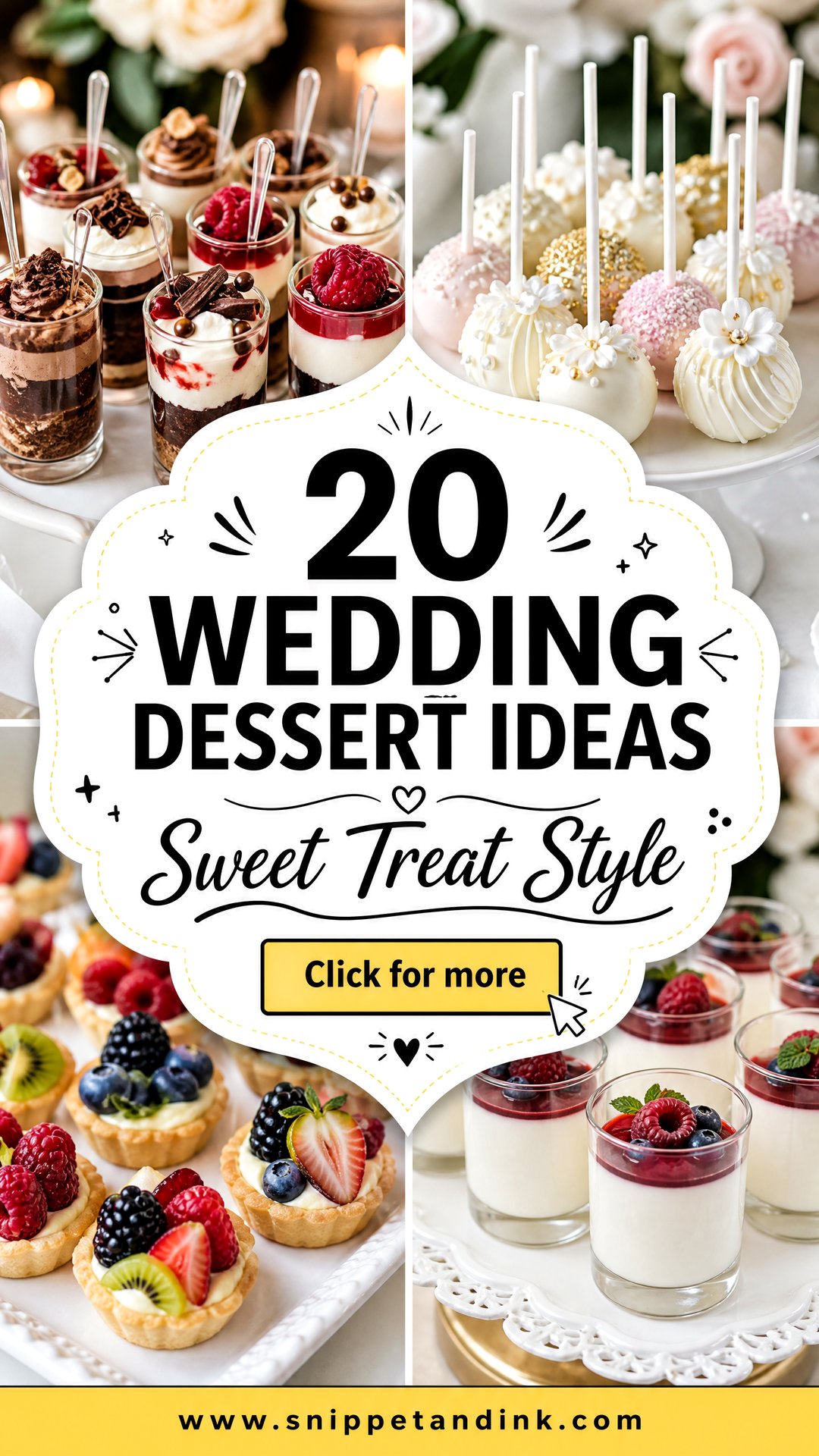
How Many Pieces to Order When Cake Isn’t the Only Dessert
Quantity is the first thing couples ask me about once they decide on a mixed table. When a small cutting cake is joined by other desserts, I plan roughly two to three pieces per guest in total. I lean toward three when dessert is the only sweet thing after dinner, and toward two when there is also a late-night snack. Guests rarely take one of everything. They take two things they recognize and maybe one they’re curious about.
- Count the cake slices inside that total, not on top of it. Even a two-tier cutting cake covers a good share of the room.
- Order more of the familiar items, like brownies, cupcakes and cookies, and fewer of the adventurous ones.
- Check whether a quote is per dozen and whether the pieces are full size or bite size. A dozen minis feeds fewer people than it sounds.
- If you’re unsure, round up on sturdy things that can be boxed and sent home, not on chilled cups that have to be thrown away.
A few leftovers are much easier to deal with than a bare table at nine o’clock while people are still arriving from the dance floor.
1. Mini Wedding Cakes
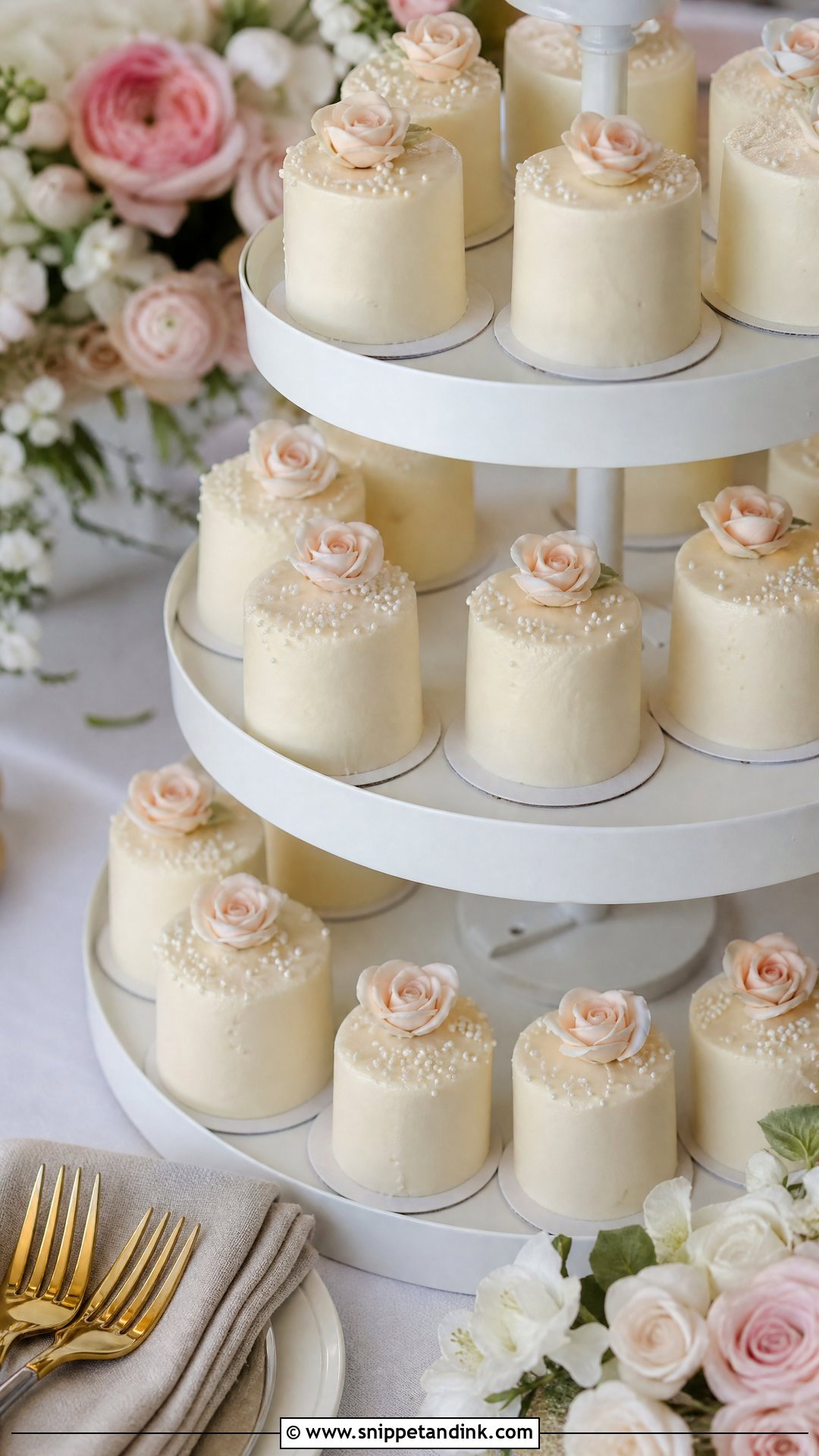
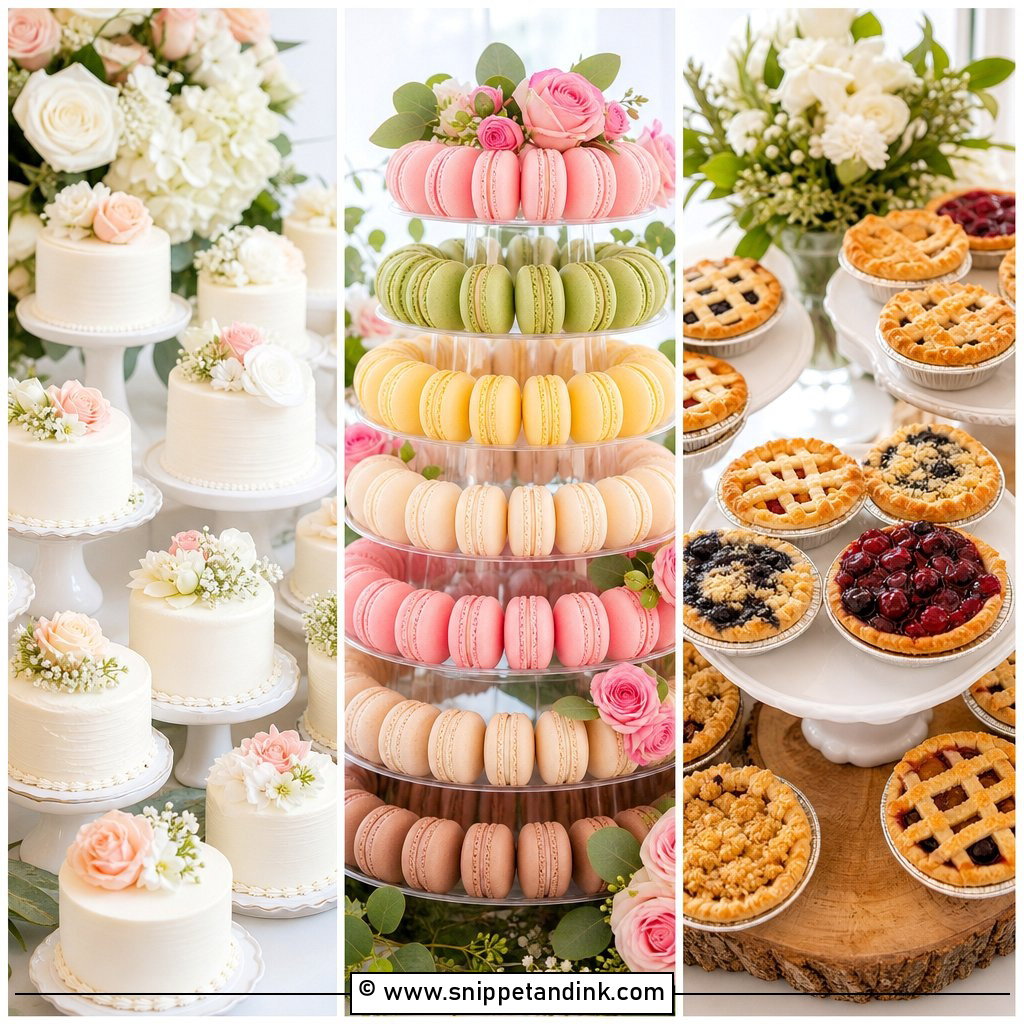
Every guest gets a whole little cake, which is why these feel so personal at a seated dinner. They are also the most labor-heavy item on this list. Each one is filled, crumb-coated and finished on its own, so a hundred minis can take longer than one tall tiered cake. I keep the decoration to a single element, a sugar flower, a few pearls or a piped monogram, because fussy detail at that scale just looks crowded. Chilled buttercream or fondant sets firm enough to travel well. Vanilla, almond, lemon, chocolate and red velvet all hold their shape. Plate them at each setting with a name card, or group them on tiered stands if the room needs height.
2. Wedding Cupcakes
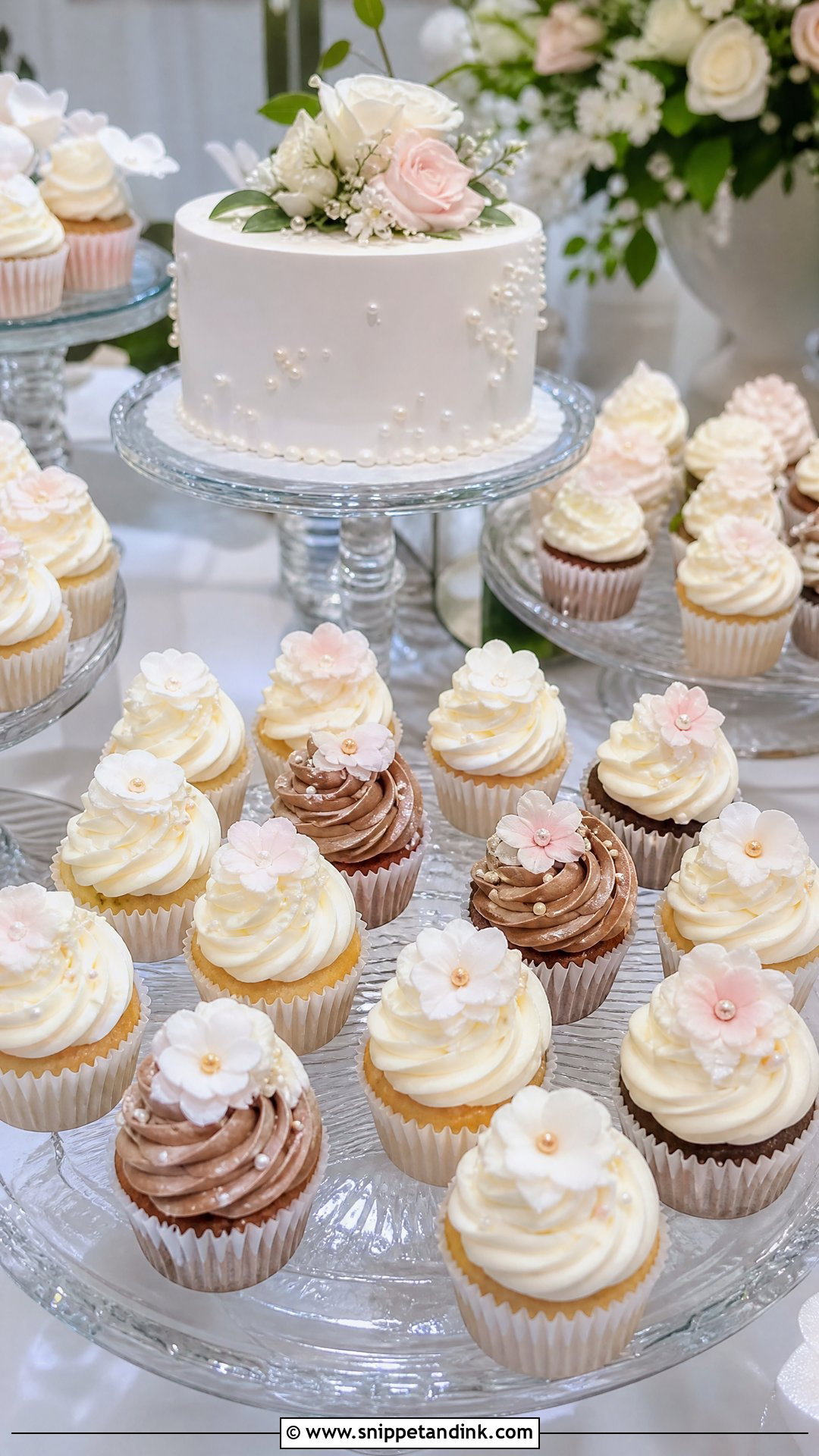
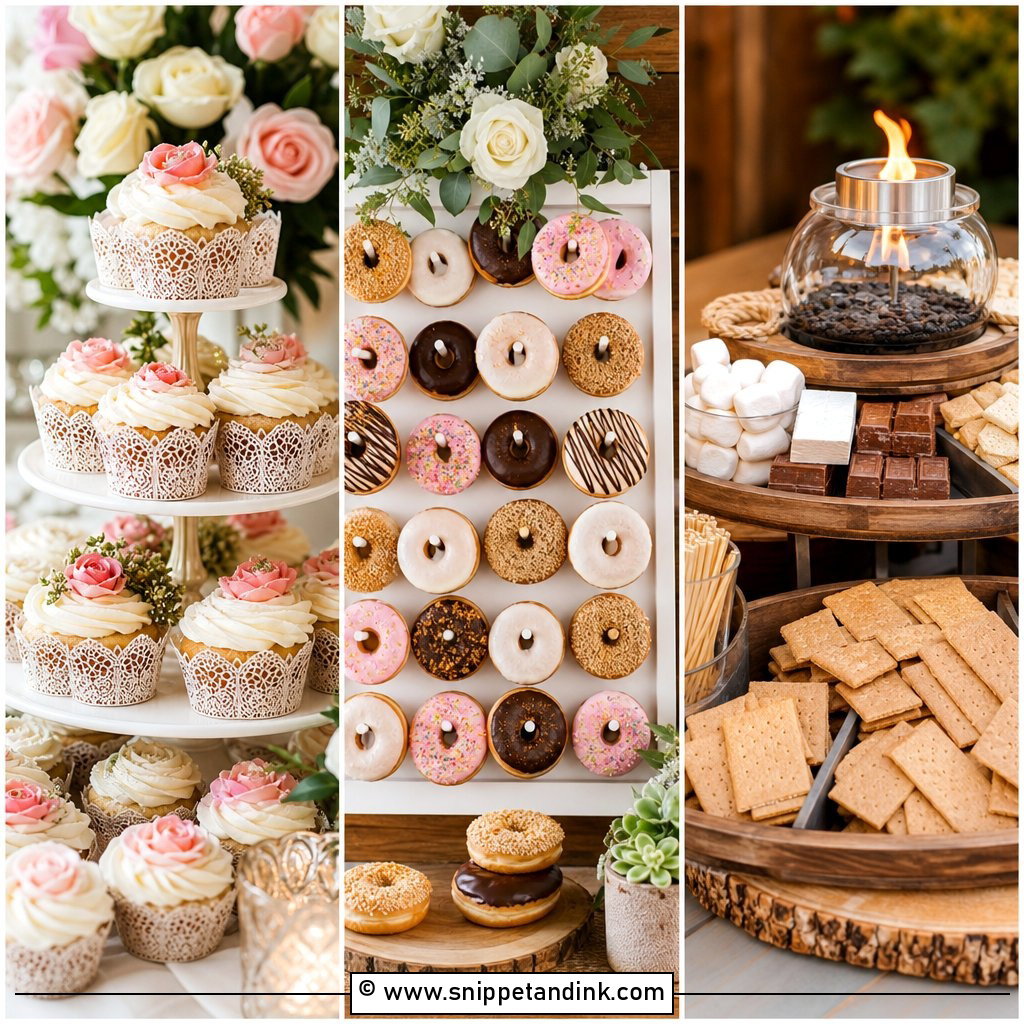
Cupcakes solve the cutting problem. Nobody has to slice, plate or count portions, so service is faster and less goes to waste. The liner does most of the styling work: plain kraft reads rustic, a foil or lace wrap reads formal, and the frosting on top can stay exactly the same. I pipe a low swirl rather than a tall one, since a tall swirl of buttercream slumps in a warm room and ends up on someone’s nose. Two or three flavors is plenty, and vanilla bean, chocolate, lemon raspberry and carrot cake cover most tastes. Set around a small cutting cake, they still give you the classic photo.
3. Macaron Tower
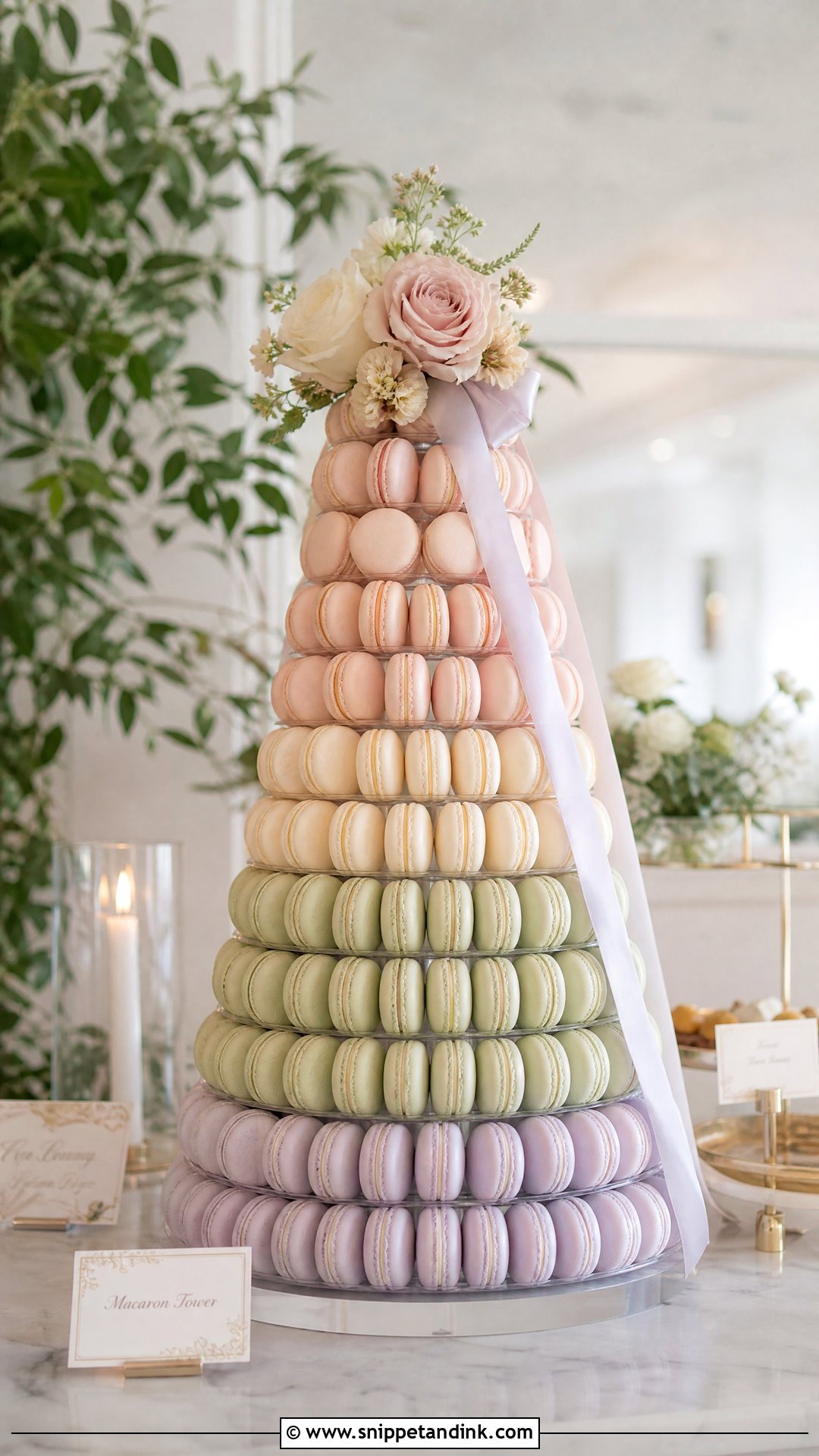
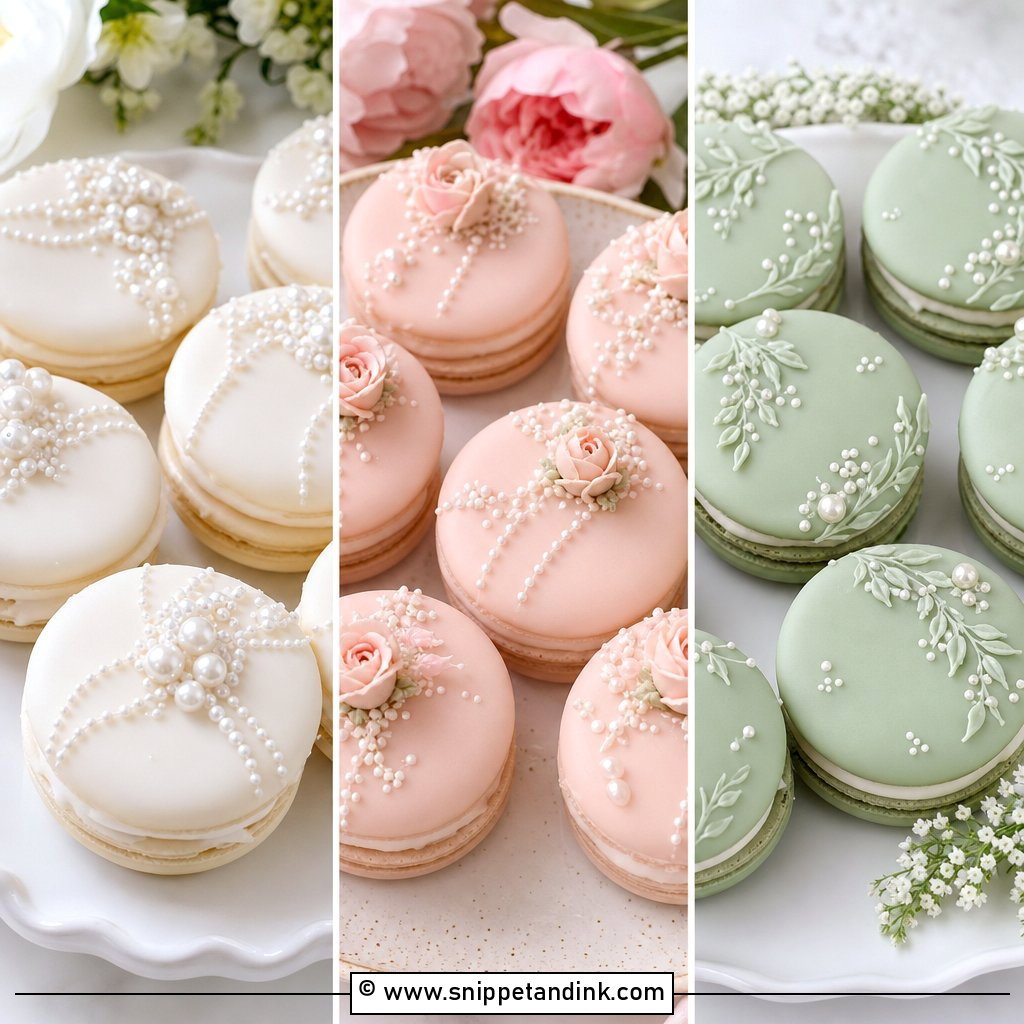
A macaron tower gives the table height without a tiered cake, and the shells can be tinted to almost any palette, from ivory and blush through sage, lavender and pale blue. The catch is that macarons hate humidity and direct sun. In a muggy tent the shells soften within an hour and the filling starts to weep at the edges, so I assemble towers in the coolest room available and keep them covered until the doors open. Pistachio, raspberry, salted caramel, vanilla and chocolate sit happily beside the rest of a menu. A ring of fresh flowers or ribbon around the base ties it to the reception styling and hides the cone.
4. Mini Cheesecakes
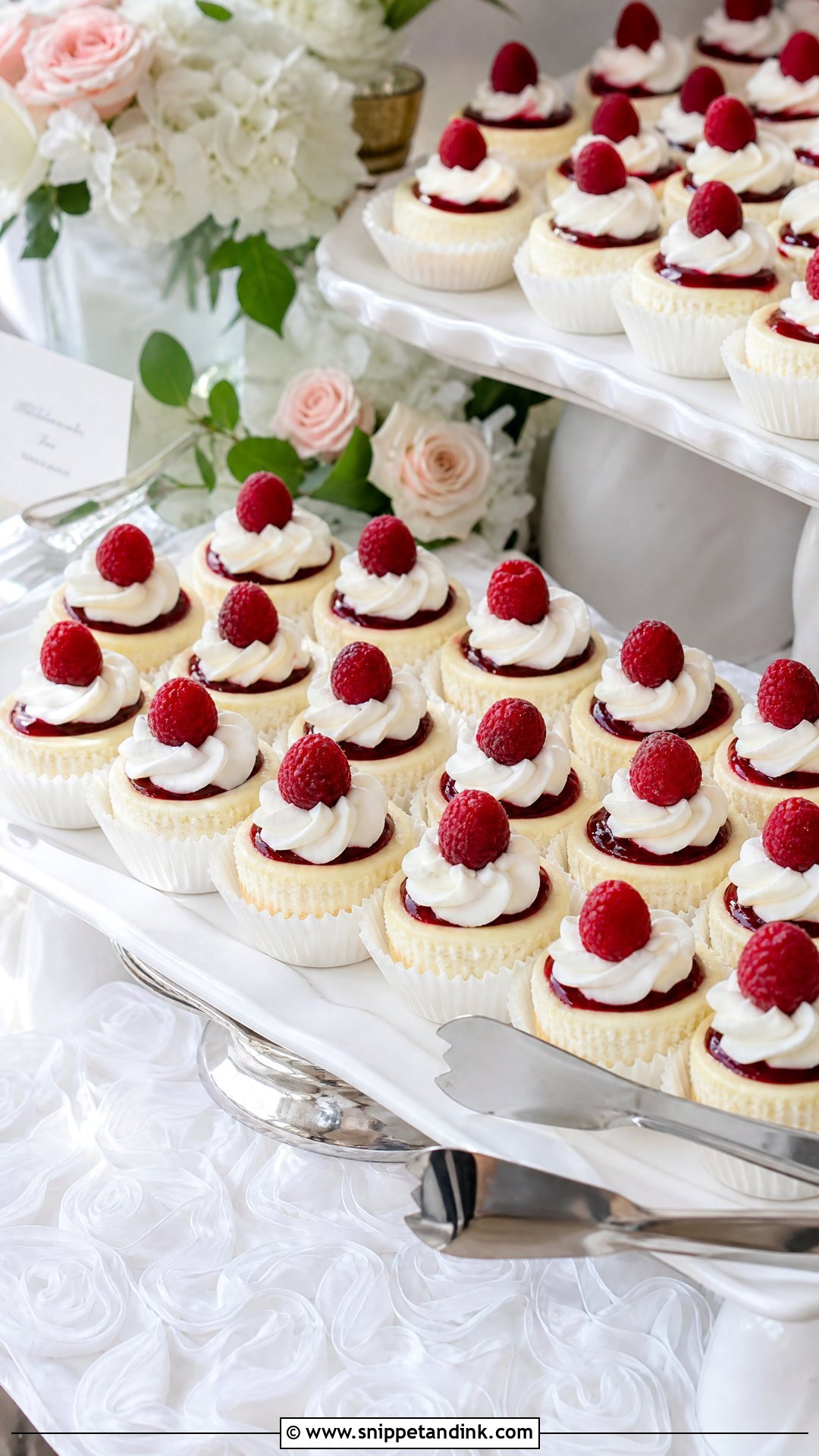
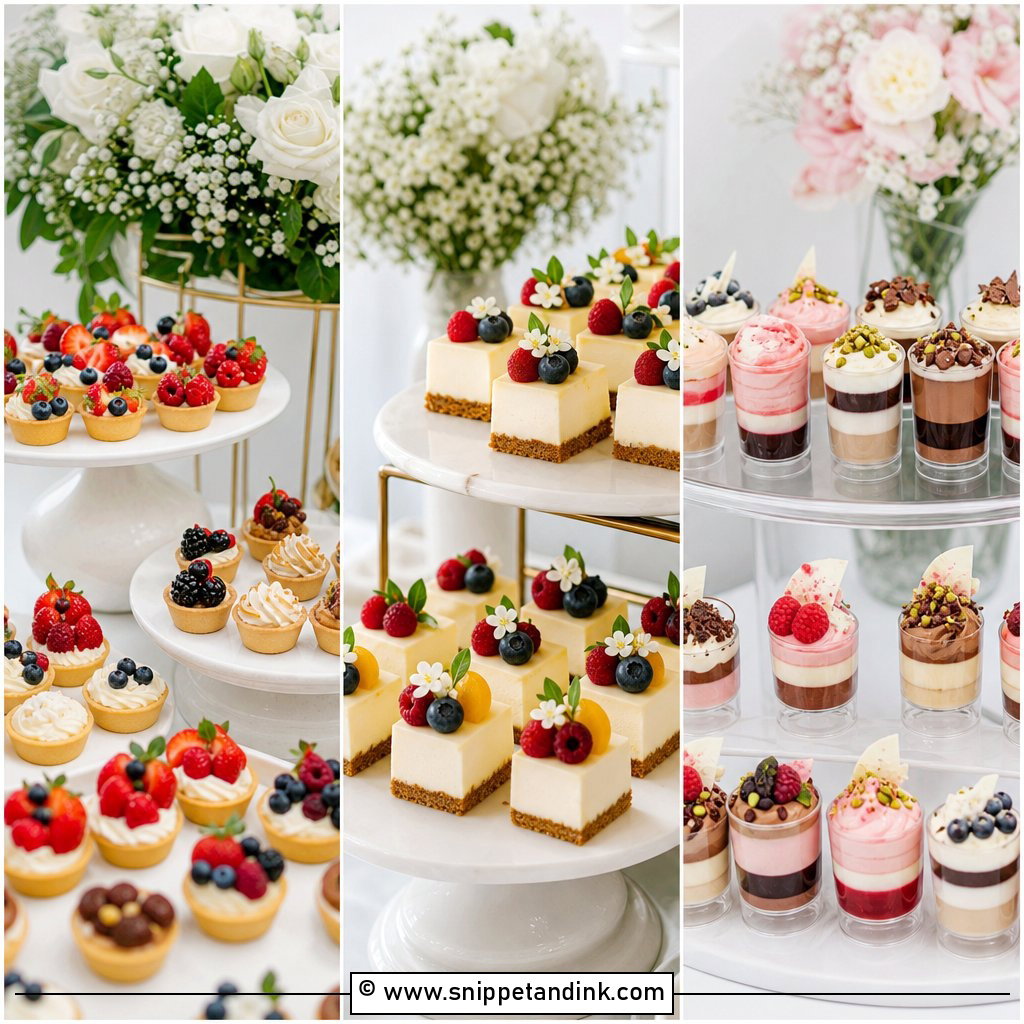
Mini cheesecakes are what I suggest when a couple wants something rich that won’t fall apart on a buffet. Baked cheesecake is dense and stable, so it tolerates time out of the fridge better than mousse or cream-filled pastry. Cupcake liners, small jars and tart shells all work as vessels, and jars are the easiest to transport stacked. Classic vanilla cheesecake takes berry topping, lemon curd, ganache or caramel, but I add the topping on site rather than at the bakery, because fruit sauce bleeds into the surface on a long drive. Pick one garnish and repeat it on every piece so the tray looks tidy.
5. Wedding Dessert Shooters
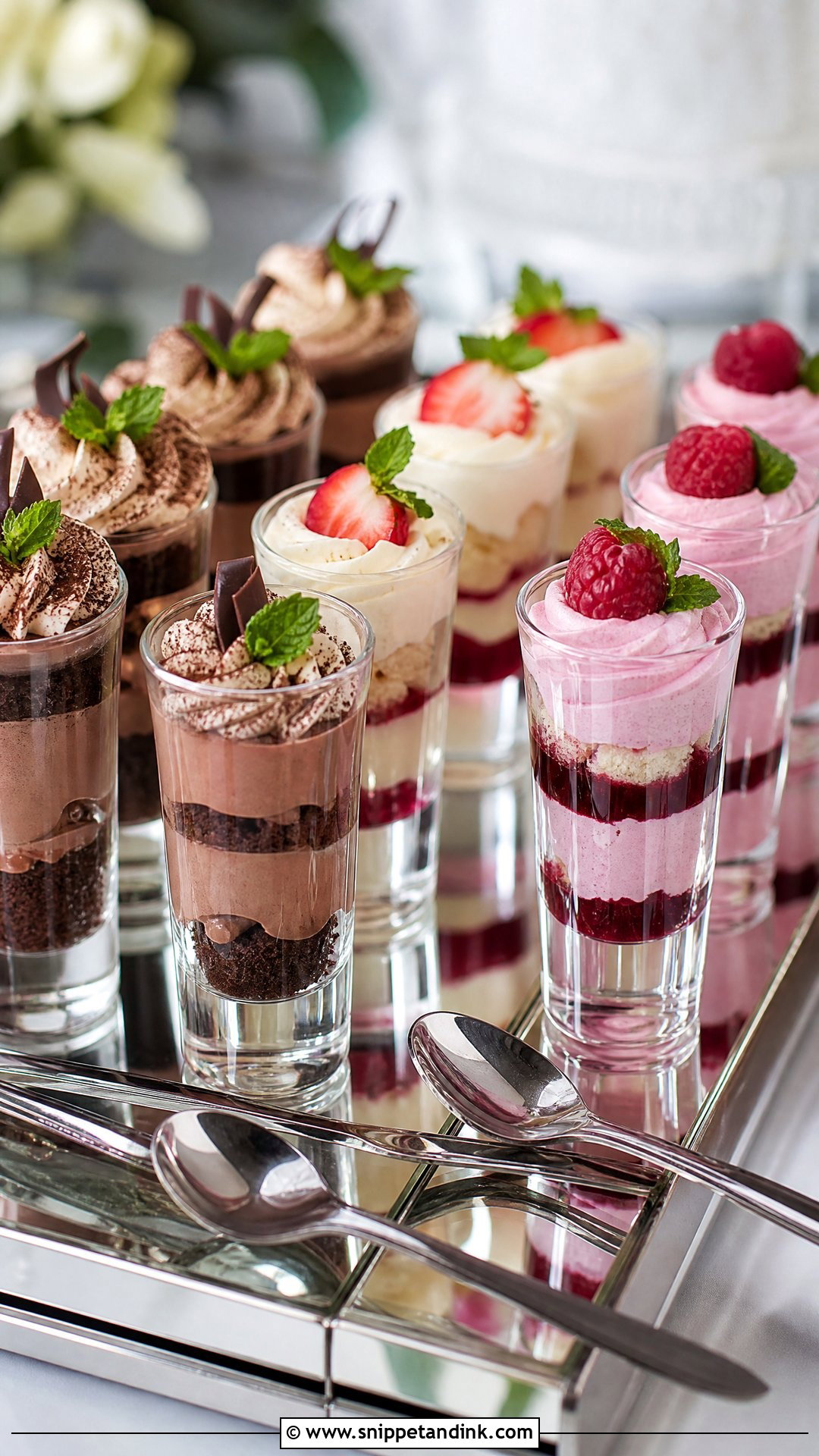
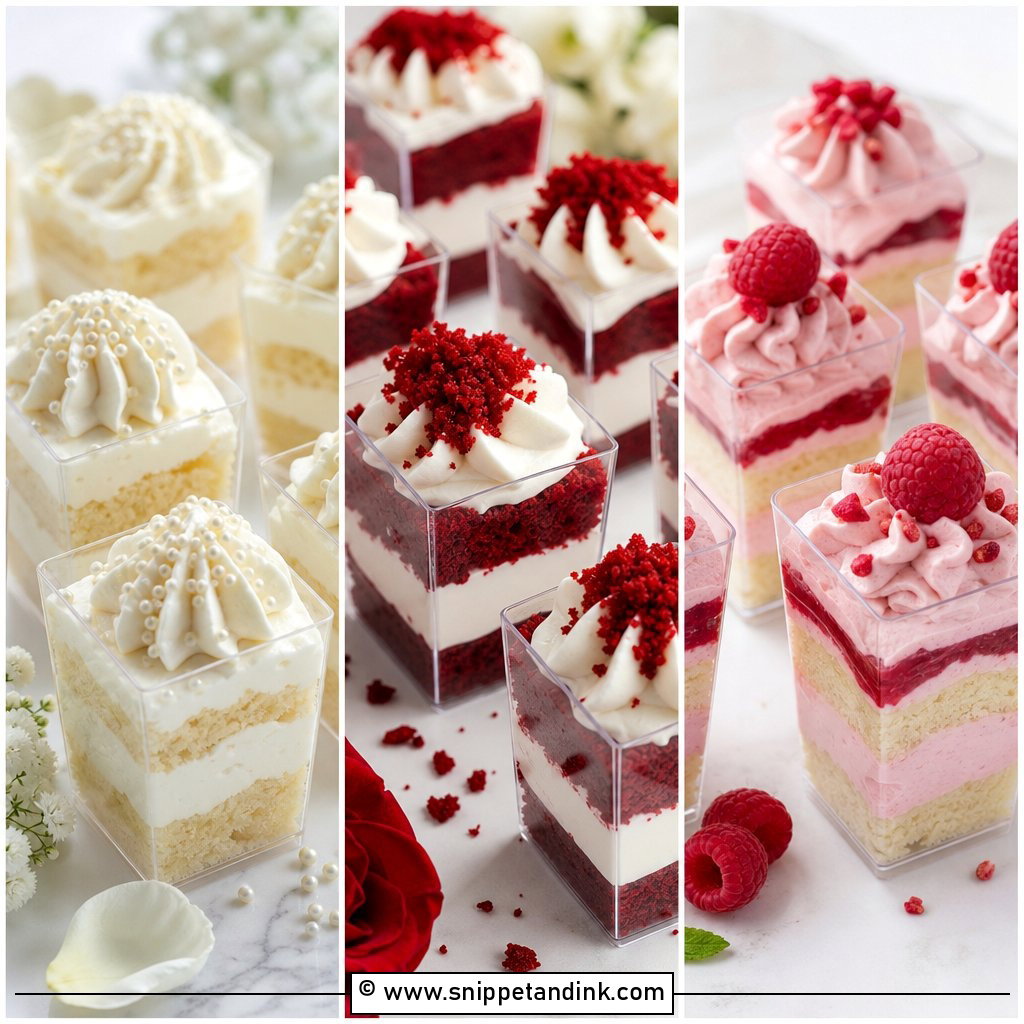
Dessert shooters are perfect when a big dinner has left guests wanting only three spoonfuls of something sweet. The layers are the whole point. I pipe each layer into the glass instead of spooning it, which keeps the lines sharp against the sides. Chocolate mousse, strawberry shortcake, lemon cream, tiramisu, banana pudding and cookies and cream all layer cleanly, though anything with a crumb topping should go on last, on the day, or it turns to paste. Use matching glasses and long tiny spoons so people can eat standing up.
6. Donut Wall
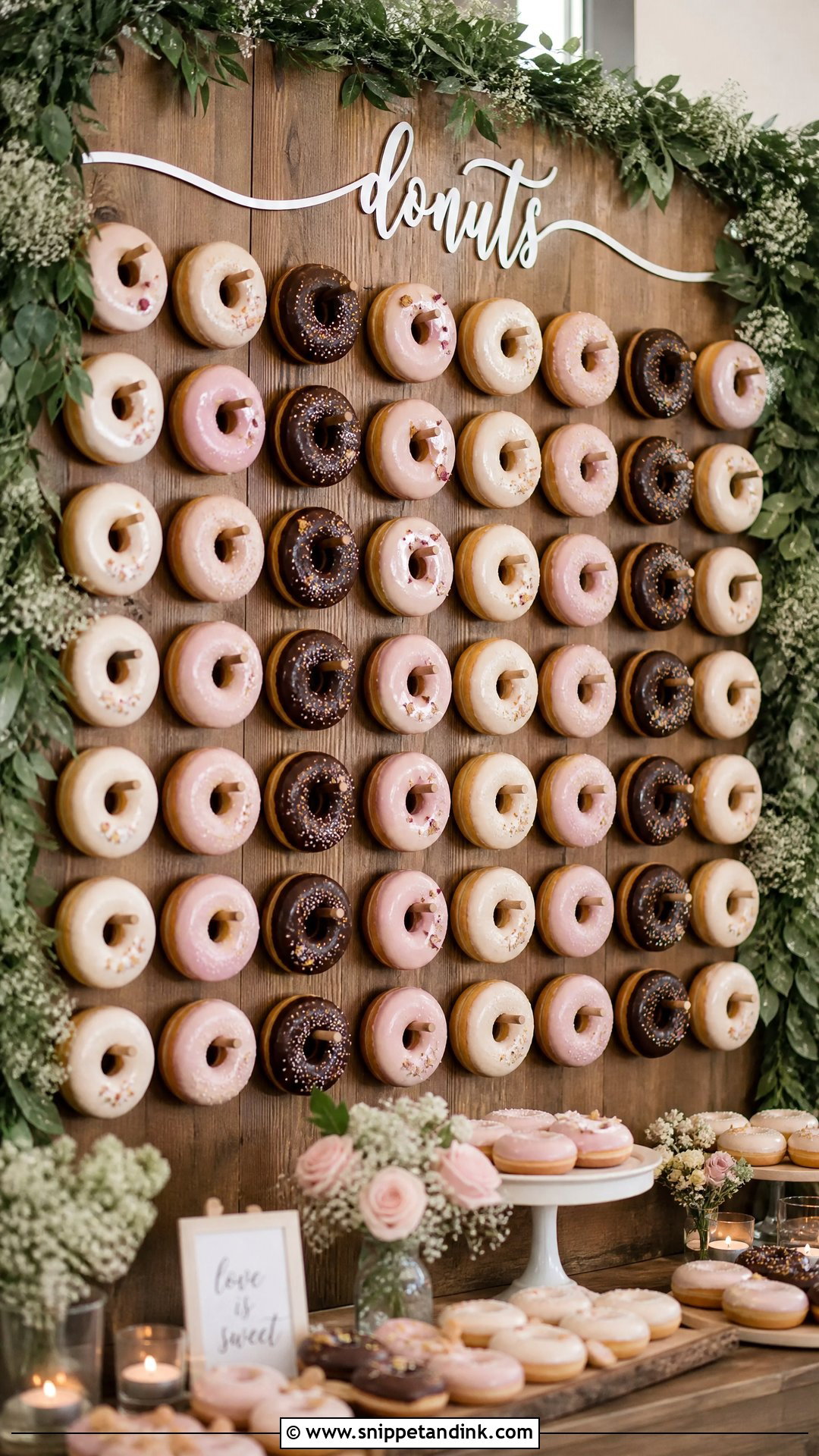
Guests understand a donut wall the second they see it, which is half its charm at a brunch reception, a barn venue or a late-night station. The pegs only hold ring donuts, so filled ones need trays underneath. I steer couples toward glazed, powdered sugar or plainly iced donuts here; sprinkles and crumbly toppings land on the floor every time someone lifts one off a peg. Keep the wall out of afternoon sun too, because glaze goes tacky and slides. A small sign, some greenery and a few flowers around the frame make it look planned, and it remains one of the cheaper ways to feed a crowd.
7. Mini Pies
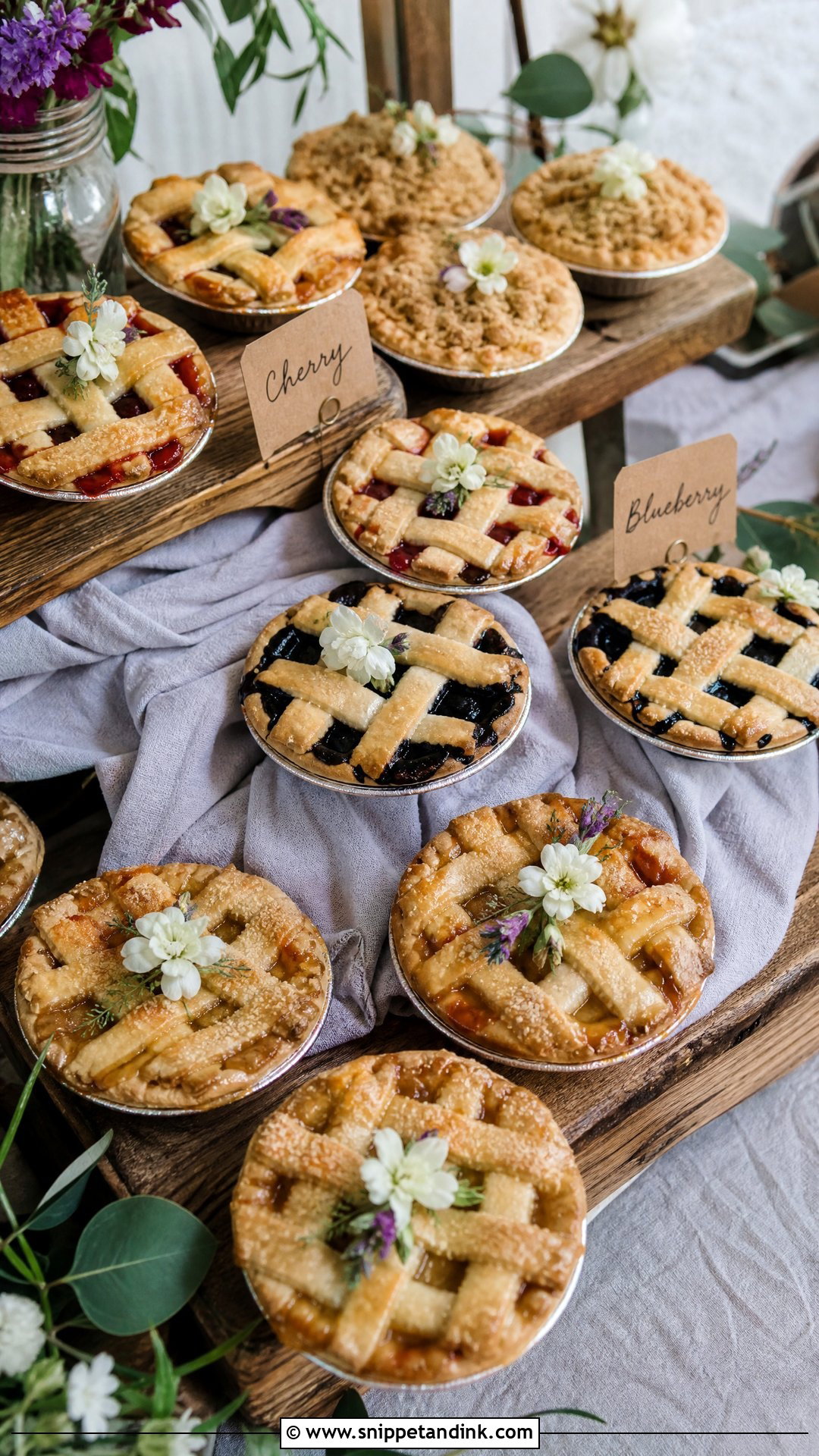
Mini pies suit rustic weddings, backyard receptions and autumn dates, and they read less formal than cake in a good way. Fruit fillings like apple, cherry and blueberry are the safest because they’re fine at room temperature. Chocolate cream pies need refrigeration and don’t belong on a table that sits out for hours, while pecan and lemon fall somewhere in between. Lattice, crumble and plain round tops each set a different mood, and I’d choose one rather than mixing all three. Small tins or paper cups on wooden boards keep them easy to pick up, and boxes nearby let guests carry one home.
8. Brownie Bites
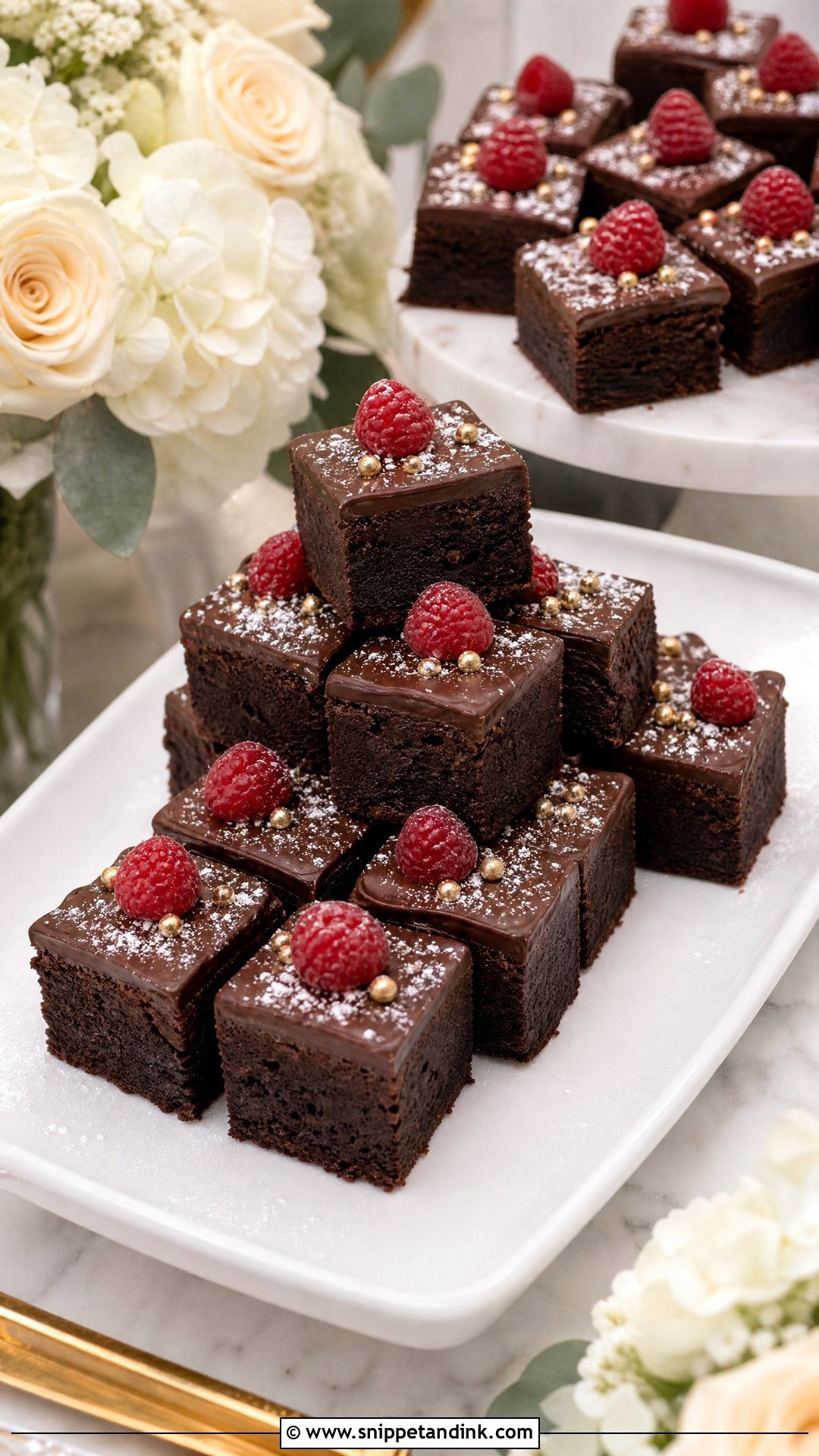
Brownie bites are my safe bet for a table that will sit out all evening, since a fudgy brownie tastes better a day after baking and doesn’t wilt. For clean squares I chill the slab before cutting and wipe the knife between every cut; mini molds save you that step. Powdered sugar sinks into a moist brownie within an hour or so, so a ganache swirl or a single berry lasts longer on top. Fudge, salted caramel, cheesecake swirl and gluten-free versions can share one platter. White or gold platters keep the dark chocolate from looking muddy in photos.
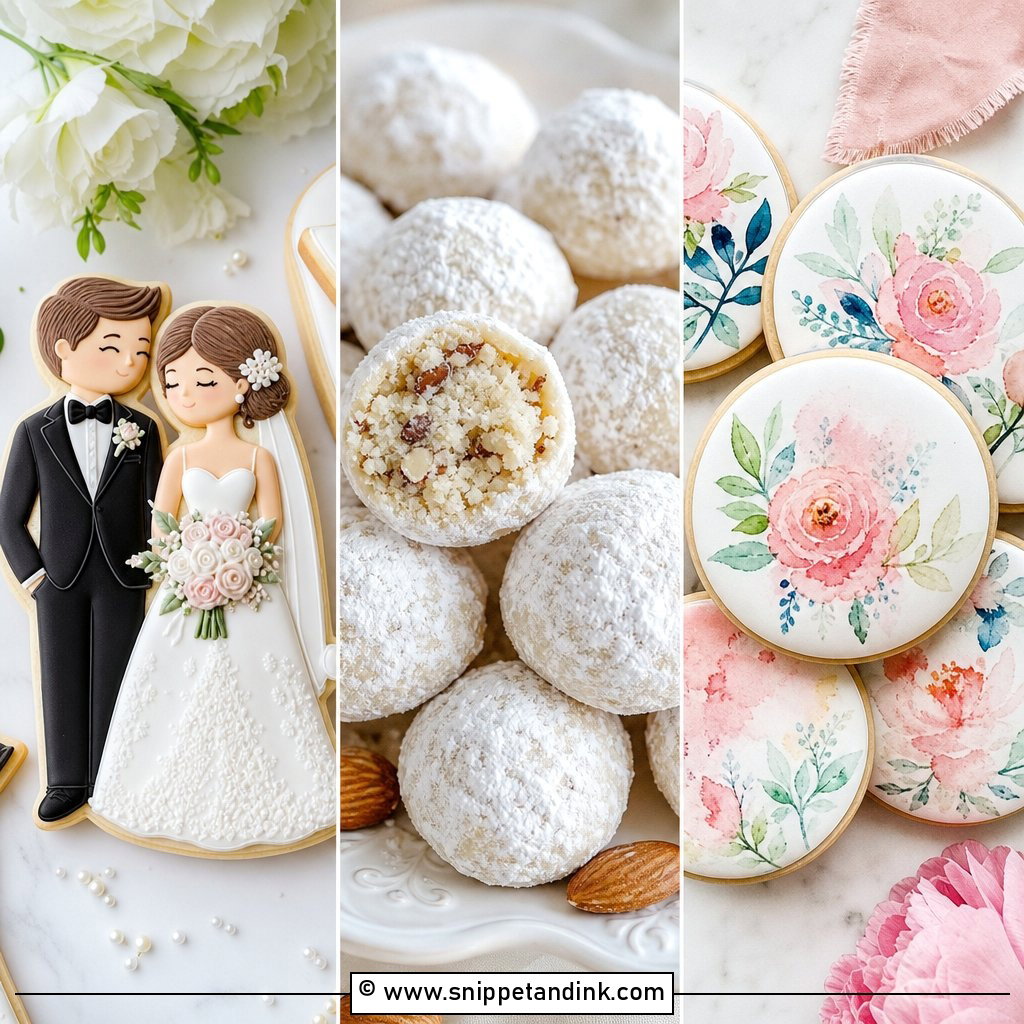
9. Wedding Cookie Table
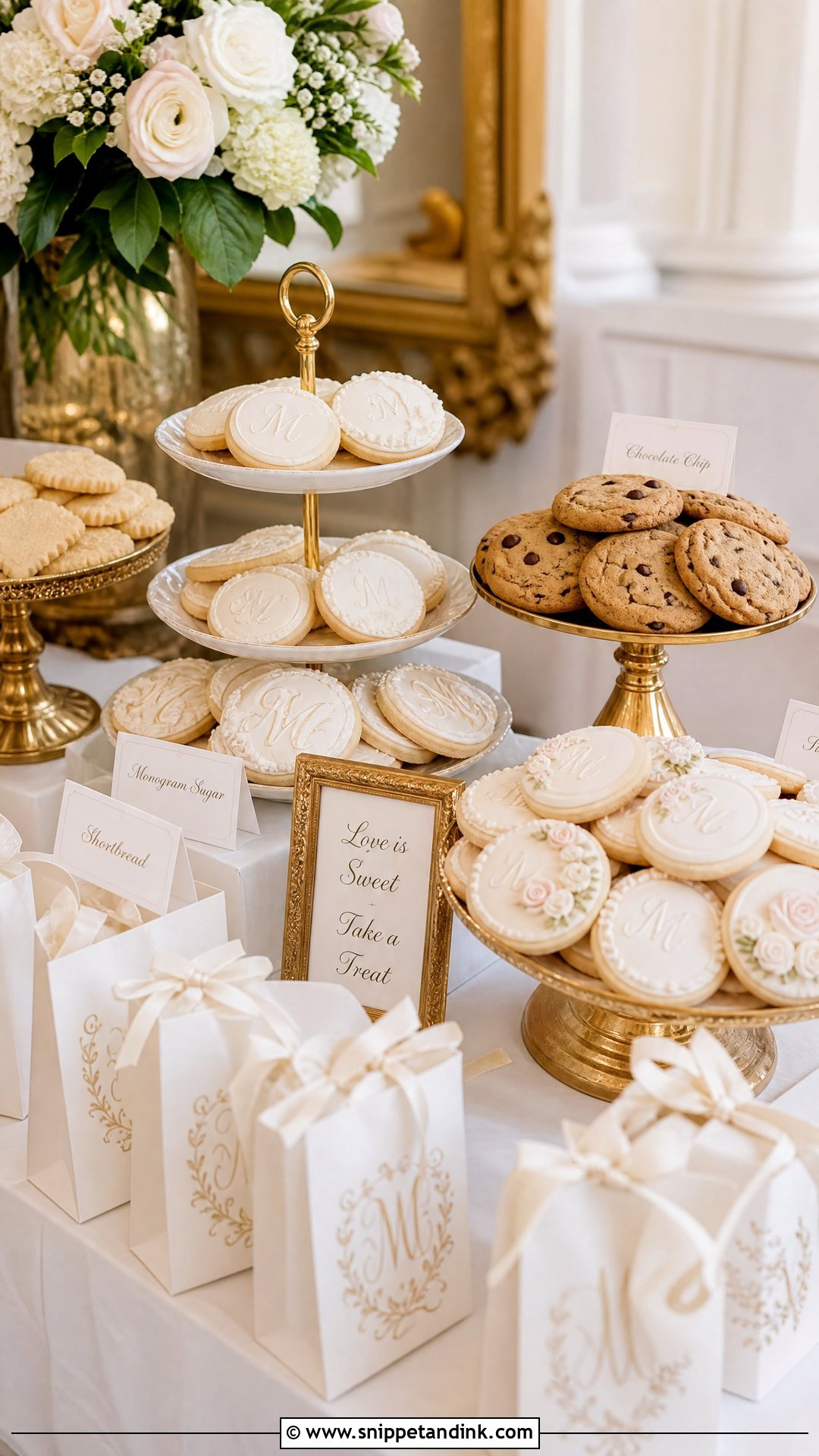
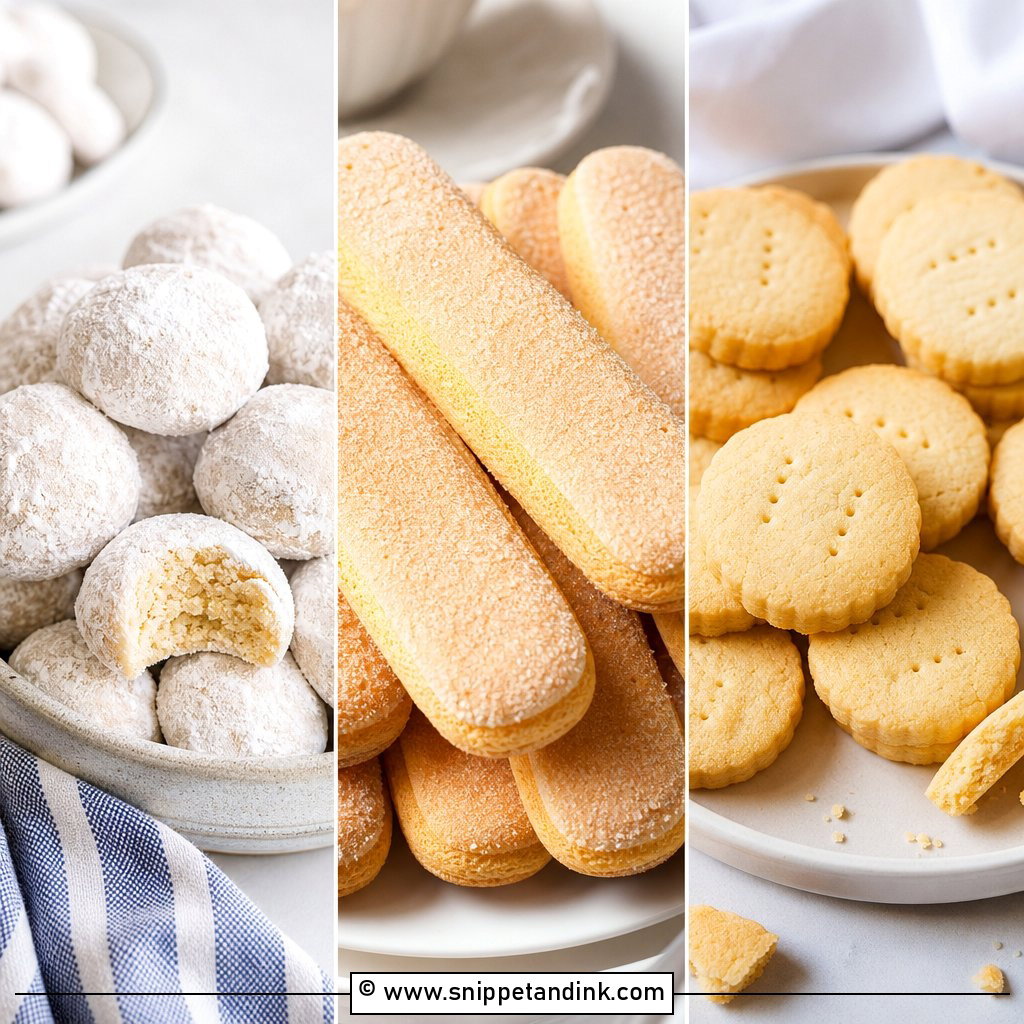
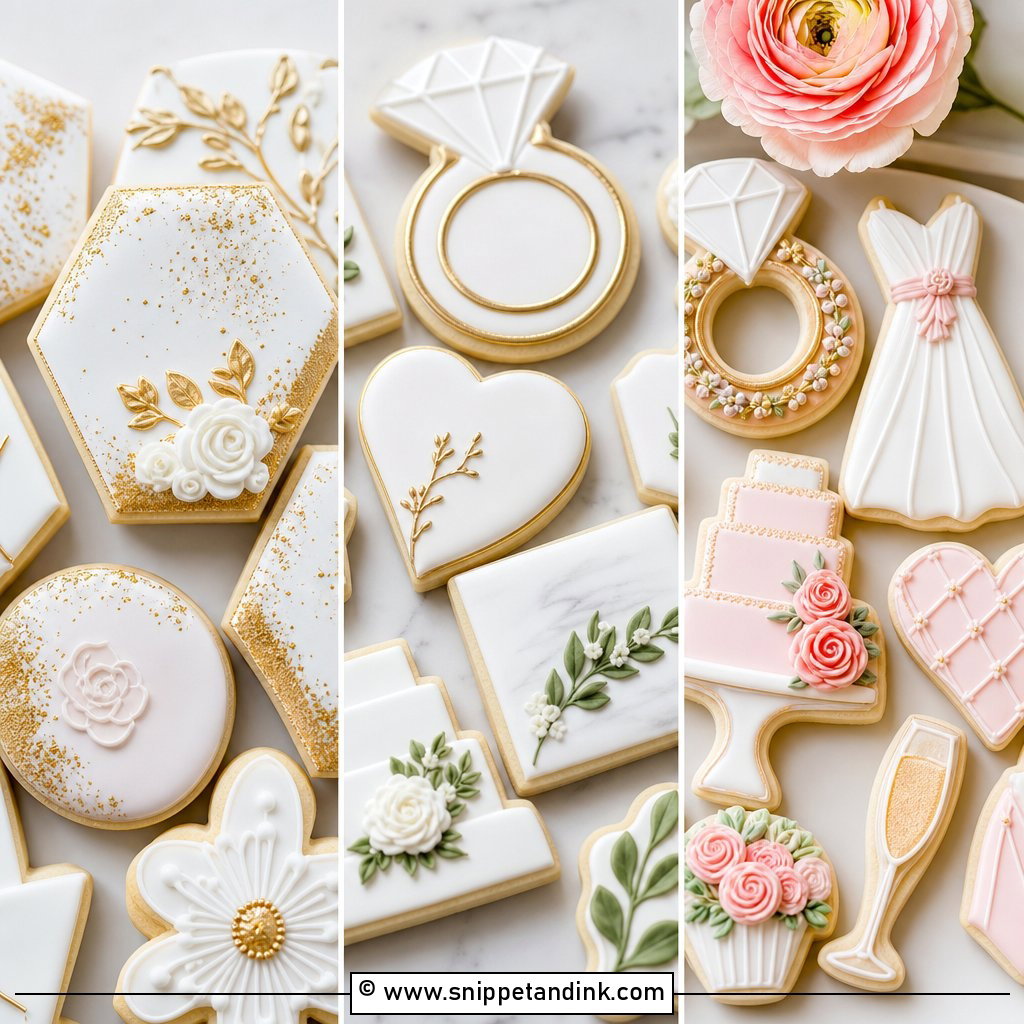
A wedding cookie table grew out of a regional family tradition where relatives each bake a batch, and it still works best when it mixes a few family recipes with bakery cookies. Shortbread, biscotti, thumbprints, chocolate chip and decorated sugar cookies can all be made days ahead, which is why it scales so well for big guest lists. Royal icing needs roughly a day to dry hard before cookies can be stacked or bagged, so initials and floral shapes have to be finished early. Label every plate and vary the heights with stands. Bags or boxes at the end turn the leftovers into favors.
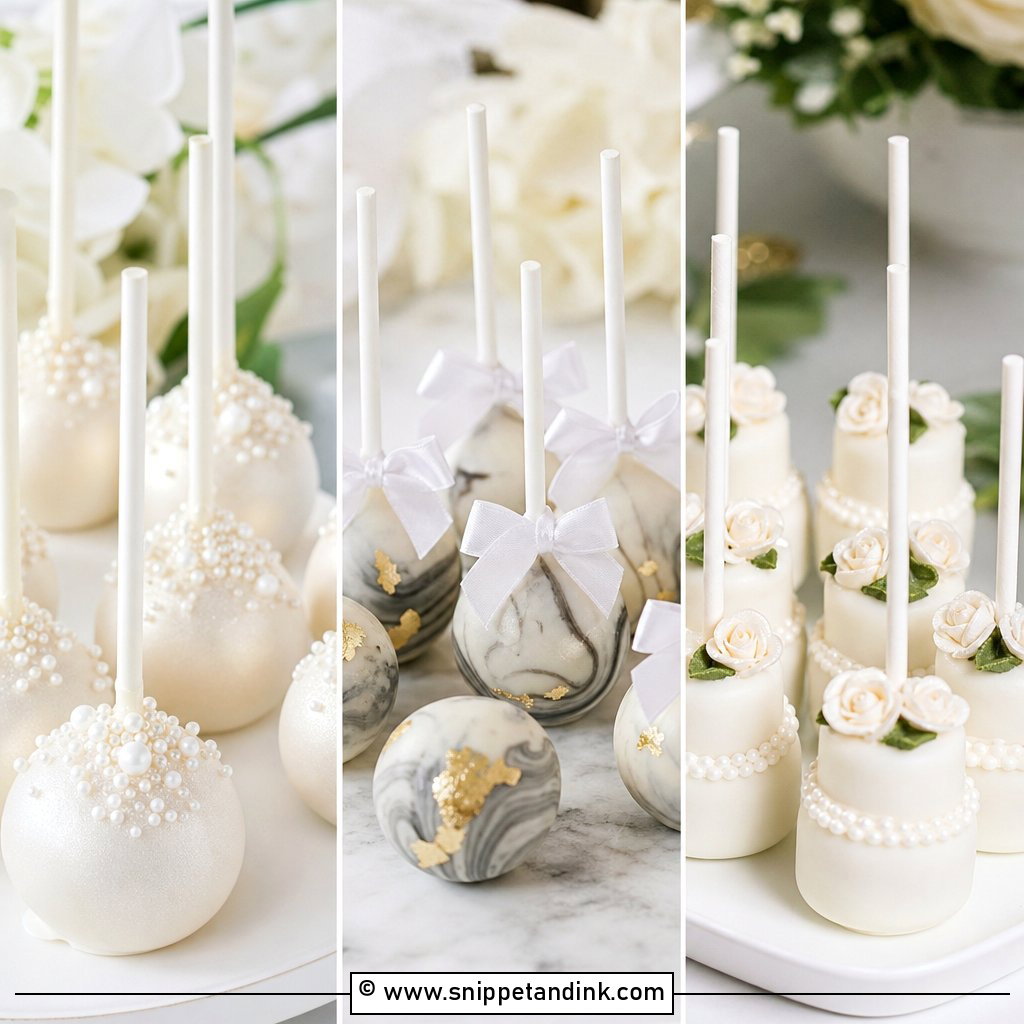
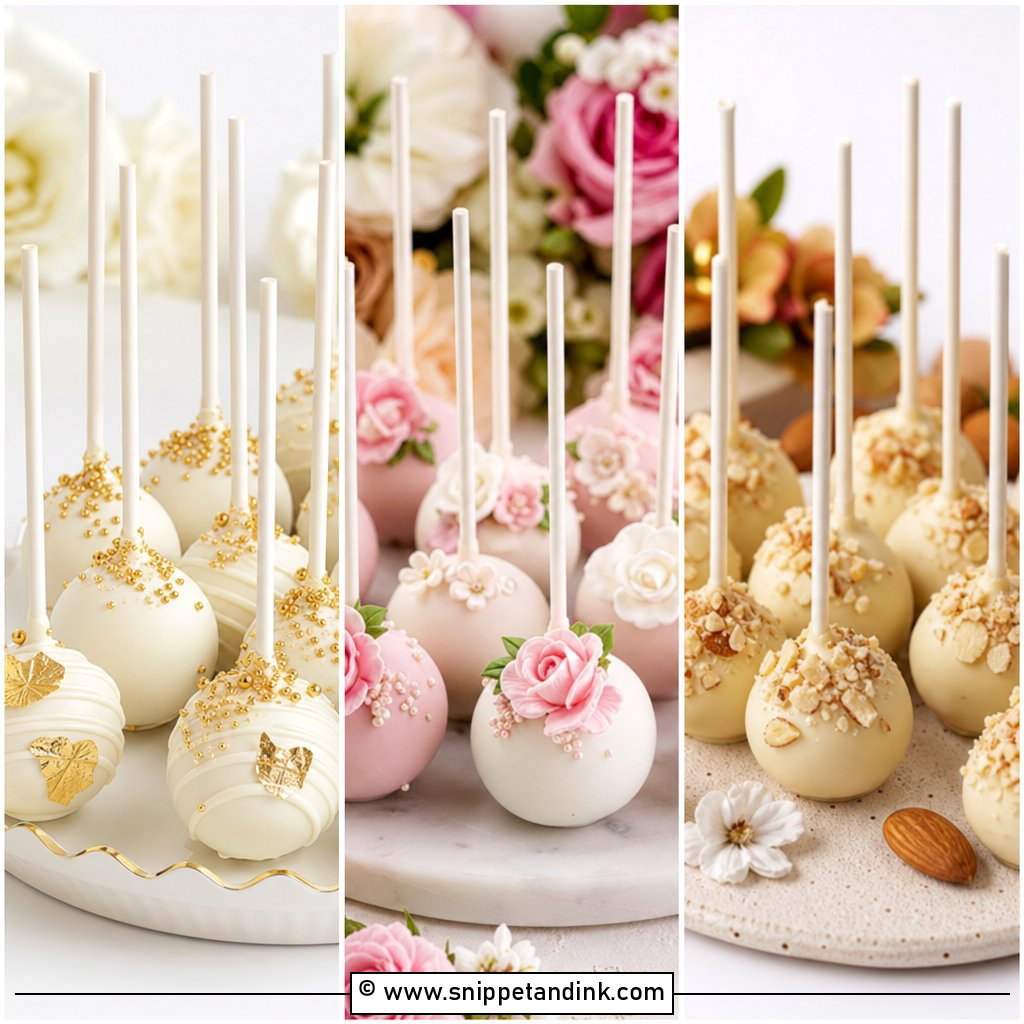
10. Cake Pops
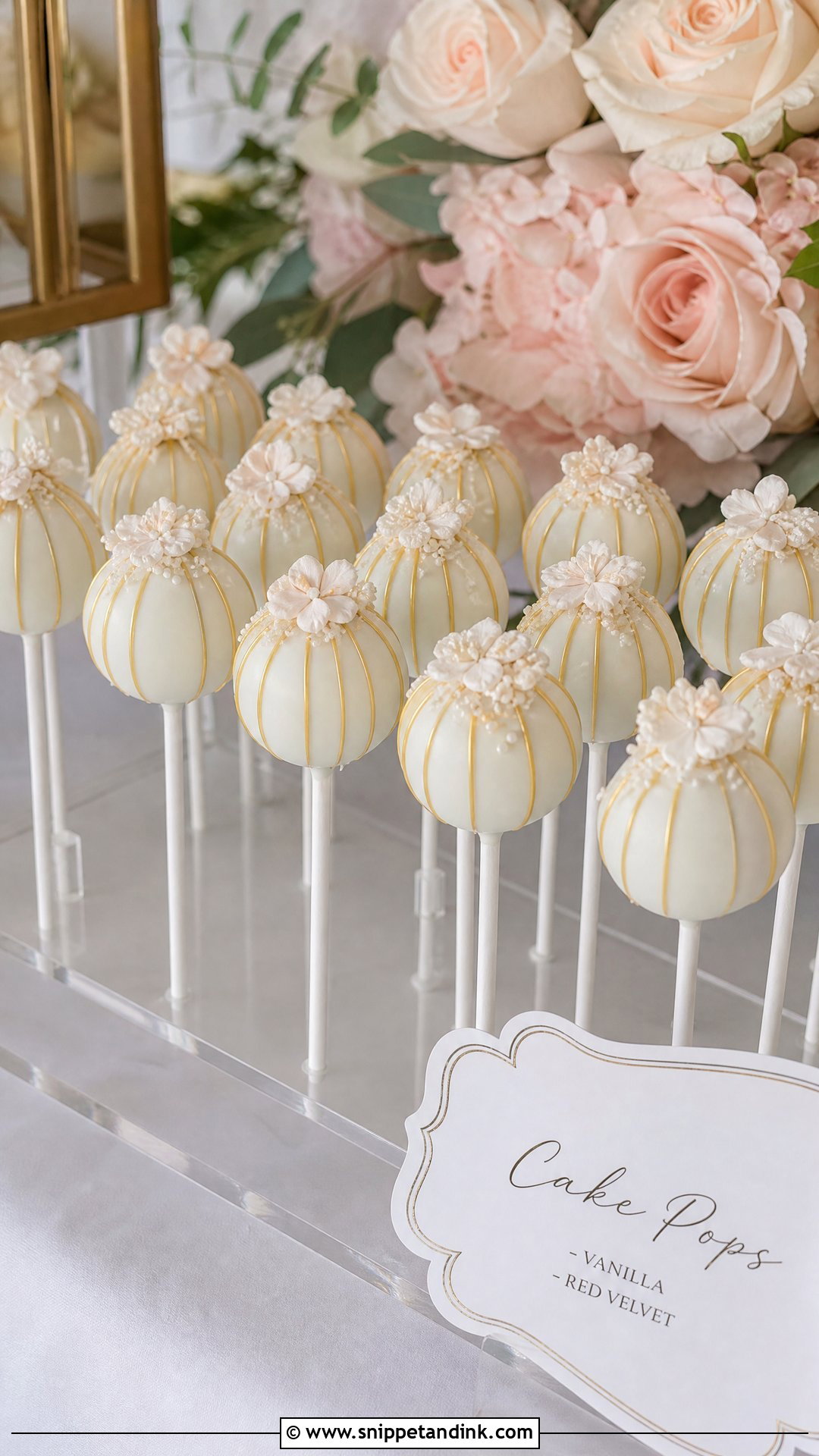
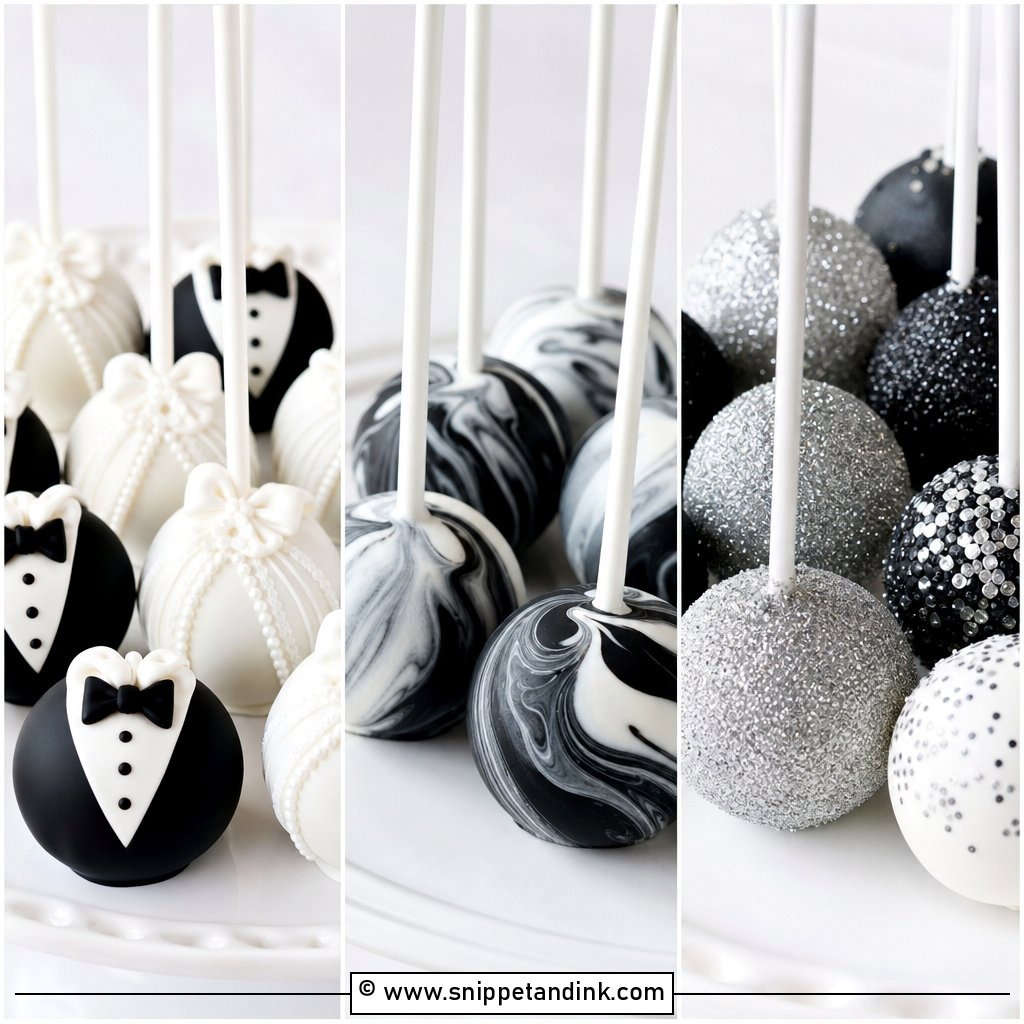
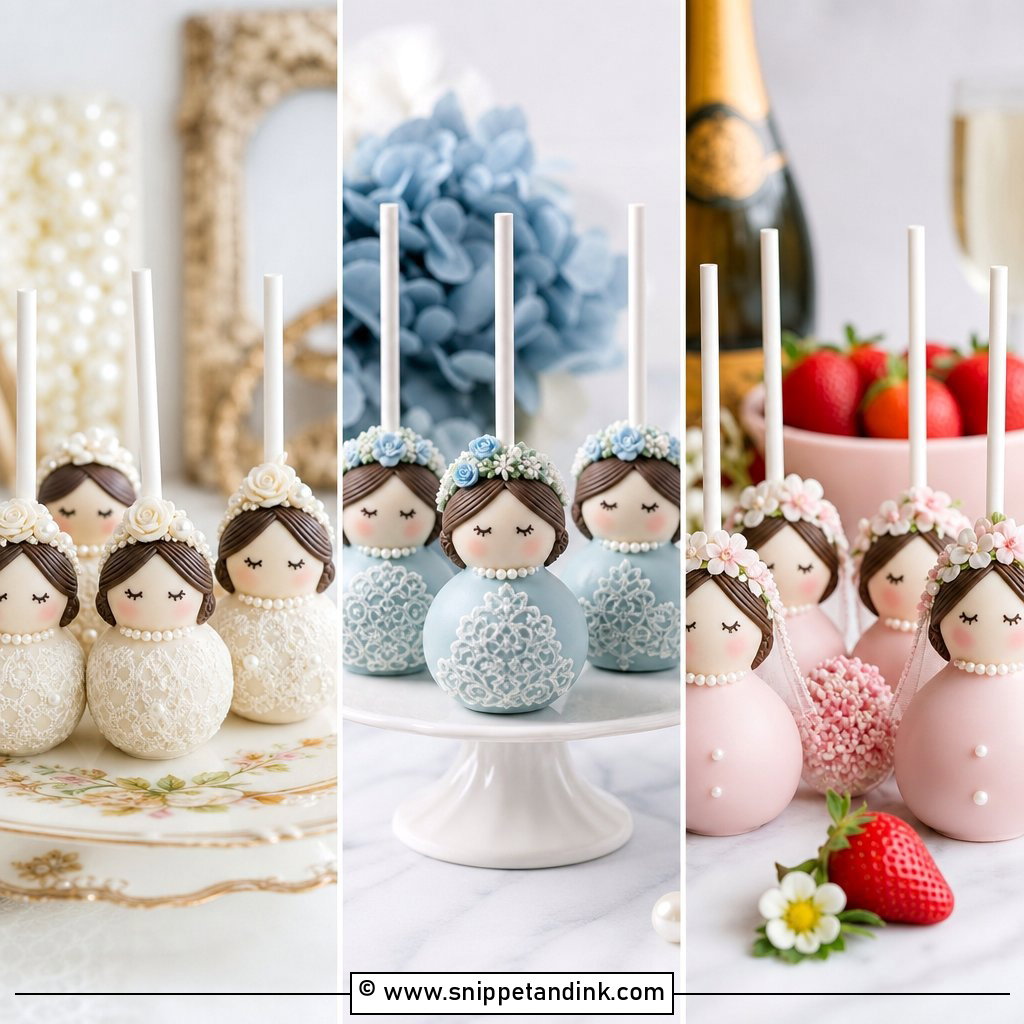
Cake pops are small enough to finish in two bites and need no plate or fork, so guests pick them up mid-conversation. They’re cake mixed with frosting, rolled, dipped in coating and finished with sprinkles, pearls or a drizzle. Temperature is where they go wrong: dip a fridge-cold ball into warm coating and the shell cracks as the center warms up. Vanilla, chocolate, red velvet, lemon and almond all hold together well. Stand them upright in an acrylic holder or in foam wrapped in fabric, because lying flat squashes one side of the coating.
11. Tiramisu Cups
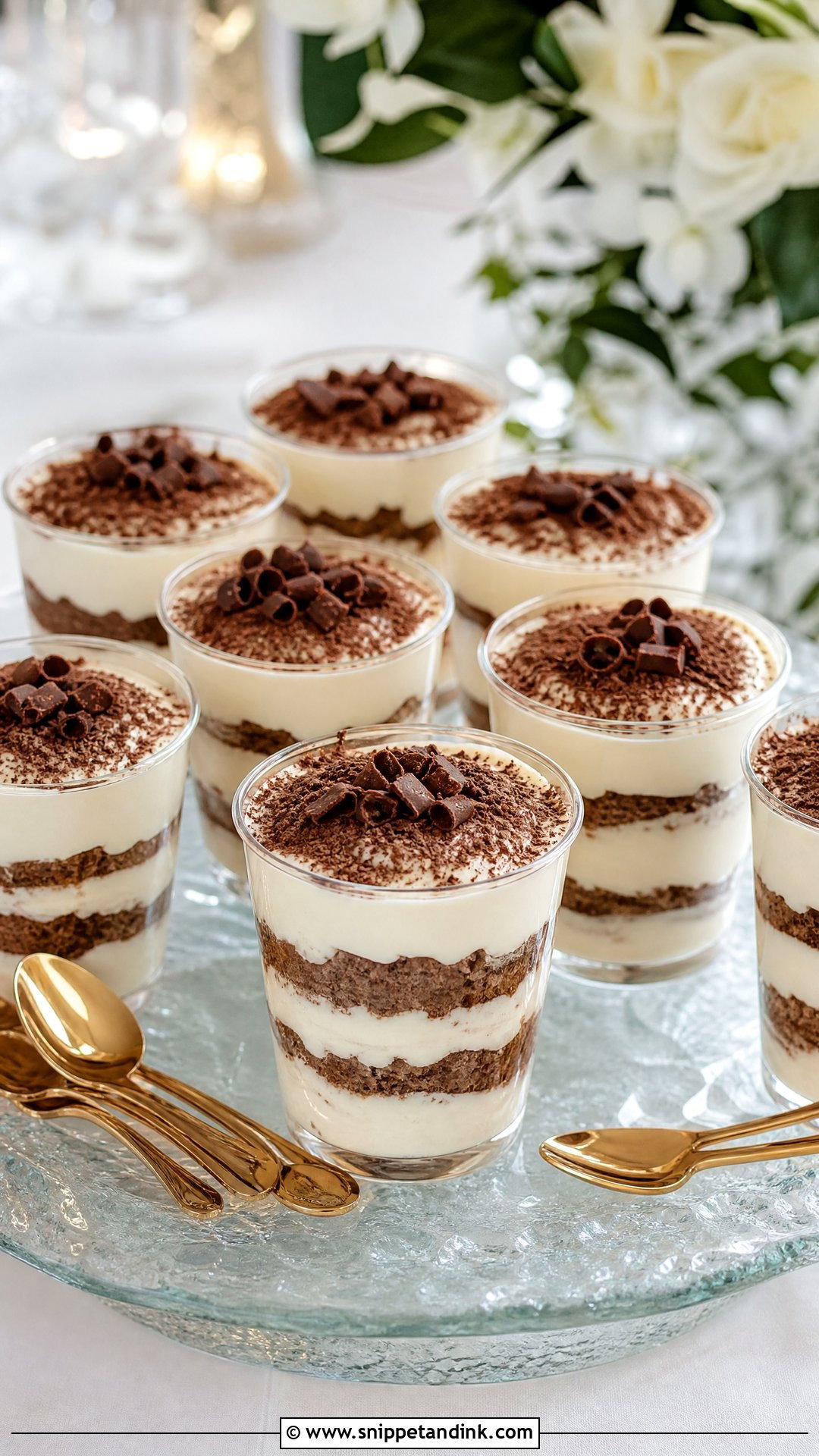
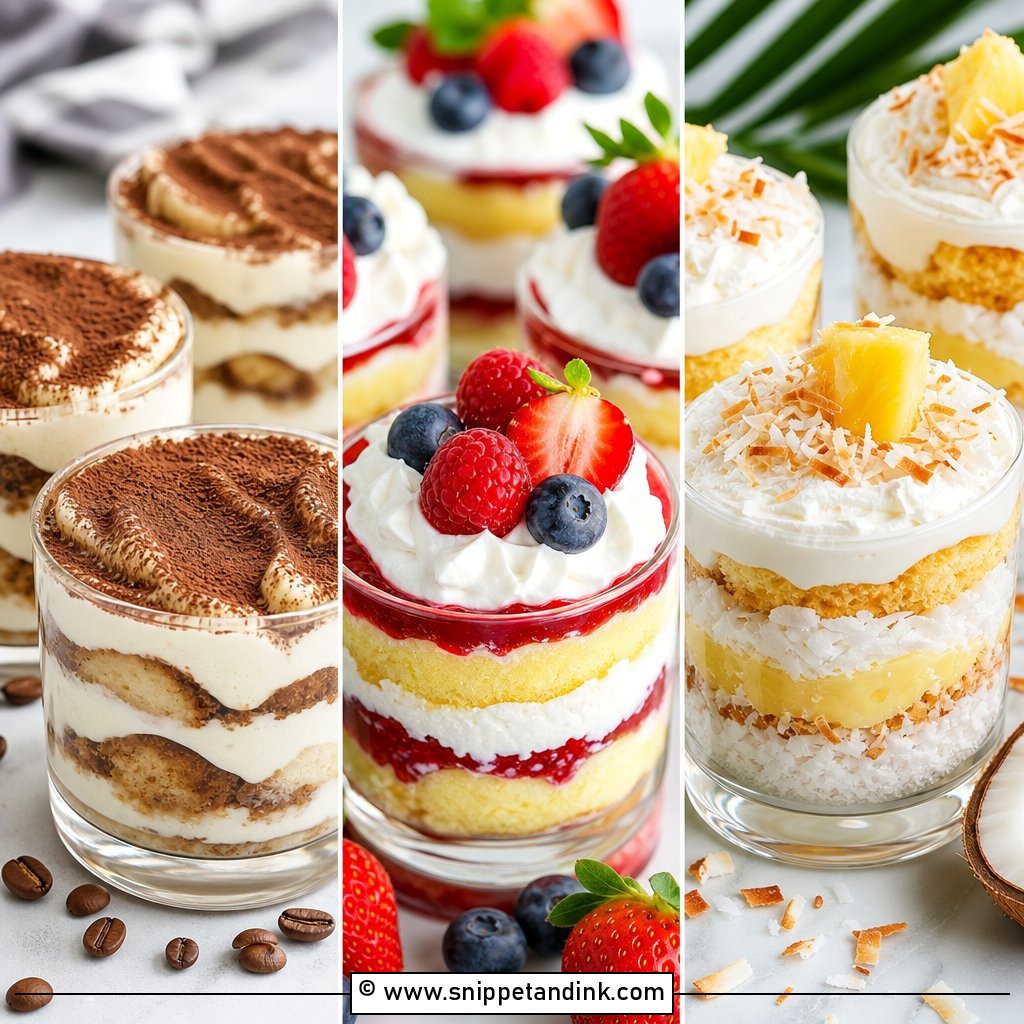
Tiramisu from a big pan collapses the moment you slice it, so individual cups are the sensible wedding version. Clear cups show off the ladyfinger and mascarpone layers. I dust the cocoa shortly before service, since it absorbs moisture from the cream and goes blotchy. The coffee classic is the favorite, but berry, chocolate or vanilla versions help guests who avoid caffeine or alcohol. It needs real fridge space until dessert time, so confirm how much cold storage the venue will give you. Happily, tiramisu improves after a night in the fridge, which makes scheduling easier.
12. Fruit Tartlets
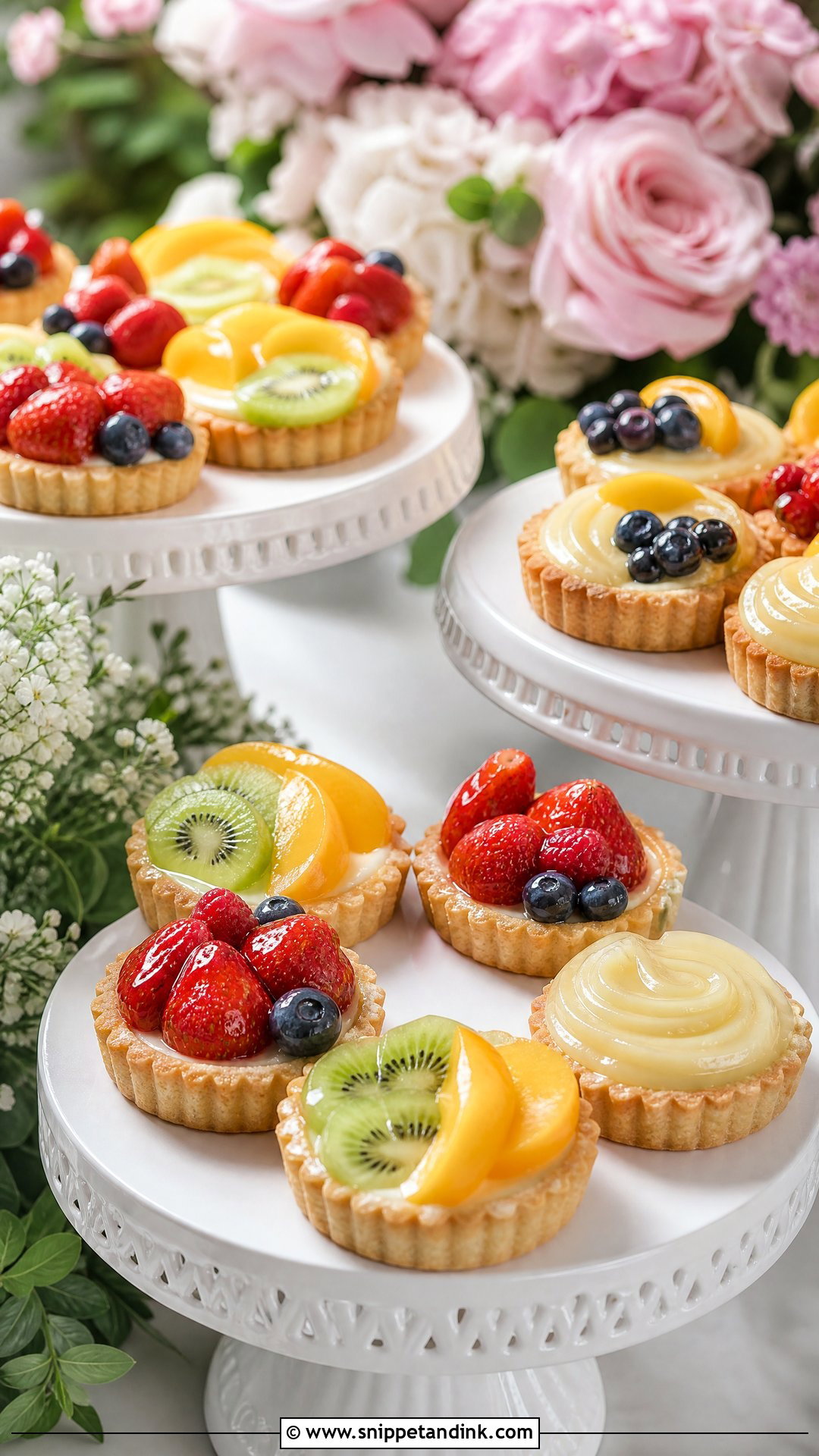
Fruit tartlets bring color and freshness to a table that is usually heavy with chocolate and cream. A crisp shell holds pastry cream or lemon cream, topped with berries, kiwi, peaches, mango or grapes. Their weak point is moisture. The cream softens pastry over a few hours, so I brush the inside of each shell with a thin layer of melted chocolate before filling. A light apricot glaze over the fruit keeps it glossy and stops cut fruit from drying out. Two or three bites is the right size, and they look brightest on white stands at spring, summer and brunch weddings.
13. Eclairs
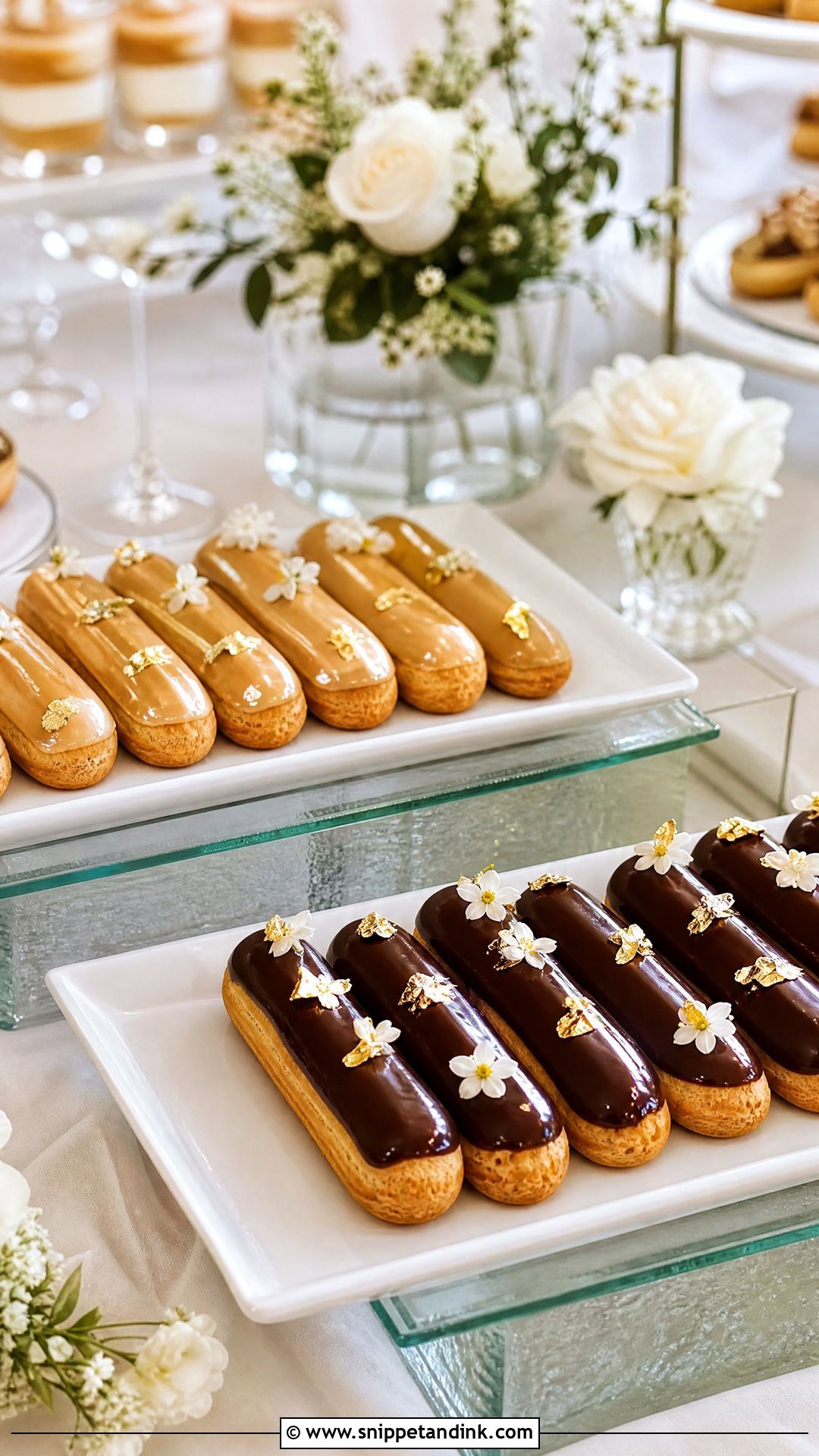
Eclairs line up neatly on long trays, and the glaze is an easy way to pick up your palette with chocolate, vanilla, coffee or raspberry. Pastry cream, whipped cream, chocolate cream and fruit creams all work inside. Choux softens once it’s filled, so ask your baker to fill them on the day and deliver close to the reception. Keep the decoration restrained, a few gold flakes or a fine drizzle, because the shape already does the work. Next to macarons and tartlets they make a small French patisserie corner.
14. Cream Puffs
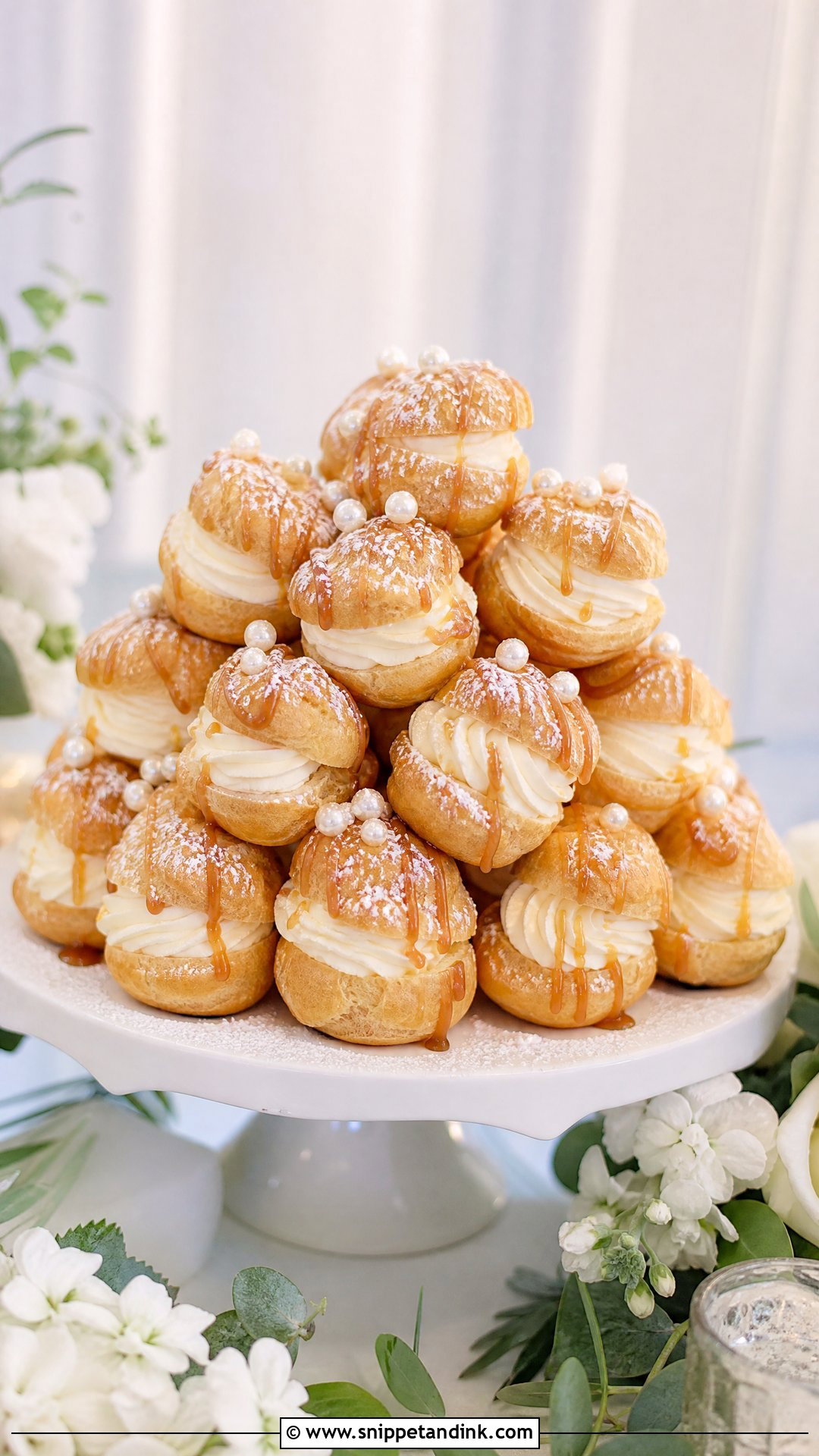
Cream puffs can be piled into a croquembouche or lined up in rows. A croquembouche is held together with hard caramel, which looks lovely but turns sticky quickly in humidity, so I’d only build one in an air-conditioned room. Vanilla, chocolate, lemon and berry creams all suit them. Powdered sugar gives the classic finish, and a caramel drizzle or chocolate glaze makes them richer. Fill them late and keep them cool; a puff filled the night before goes soft and chewy.
15. Wedding Bundt Cakes
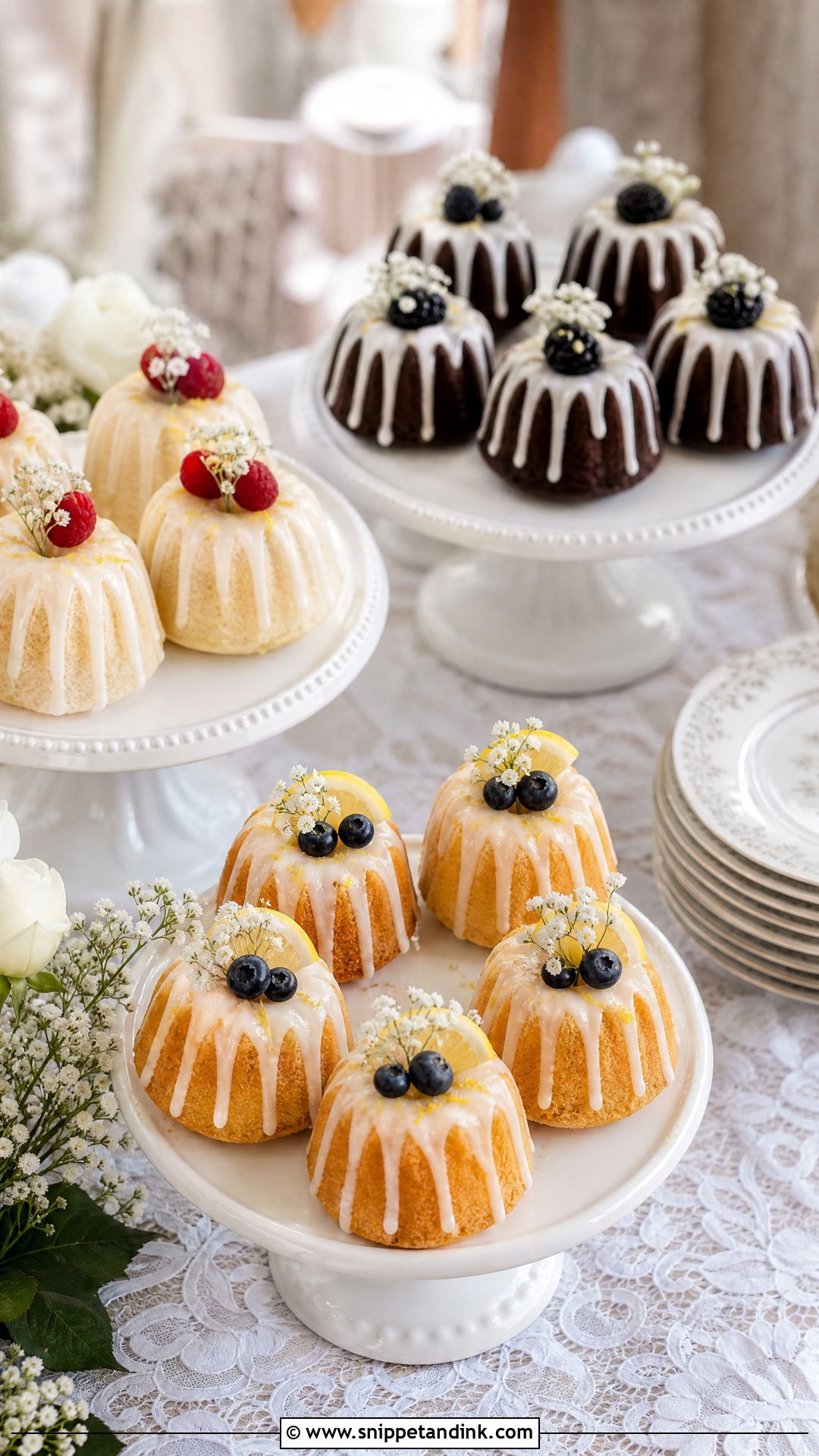
Mini bundts need very little decorating because the fluted pan already does it. A thin glaze, a dusting of powdered sugar or a cream cheese drizzle is enough, and anything heavier hides the ridges. Grease the pan into every flute, or the edges tear when you turn them out, which is the most common problem with this shape. Lemon, vanilla, chocolate, almond, carrot and red velvet all bake well in it. Finish each one with a berry, a tiny flower or some citrus zest. They suit couples who want a homemade feel, and one larger bundt can stand in as the cutting cake with the minis around it.
16. Churro Bar
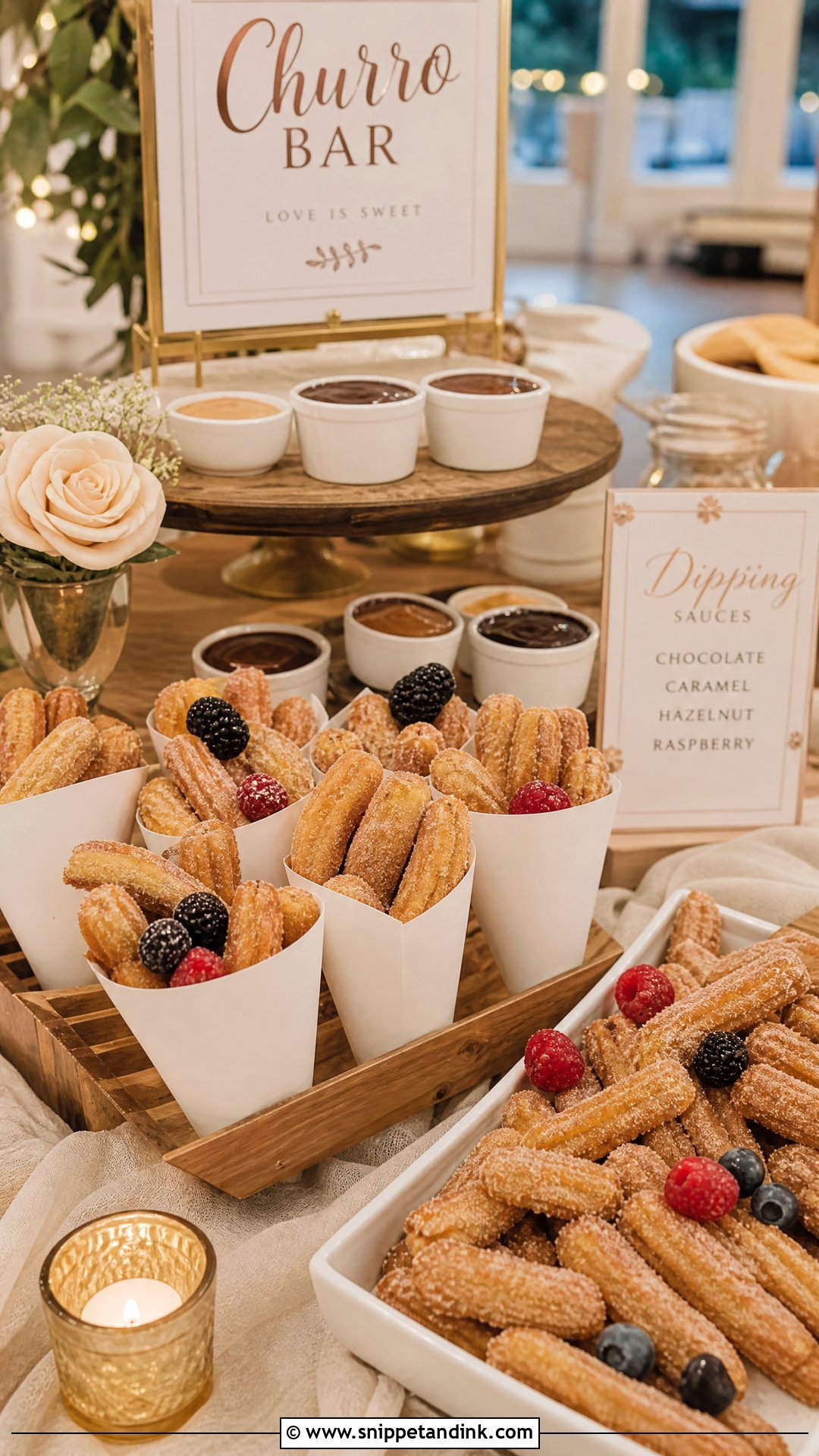
Churros are at their best within minutes of frying, which is why a churro bar works as a live late-night station with someone cooking on site, not as a tray set out after dinner. Paper cones or small cups let guests walk around with them, and mini churros are far easier to manage than long ones. Chocolate, caramel, vanilla cream and berry sauce make good dips if they’re kept in warmers or small pots staff can refill. Clear labels and decent napkins keep it looking like part of the wedding. Cinnamon sugar travels, so I’d keep the station away from the dance floor and anyone in a white dress.
17. Ice Cream Sandwiches
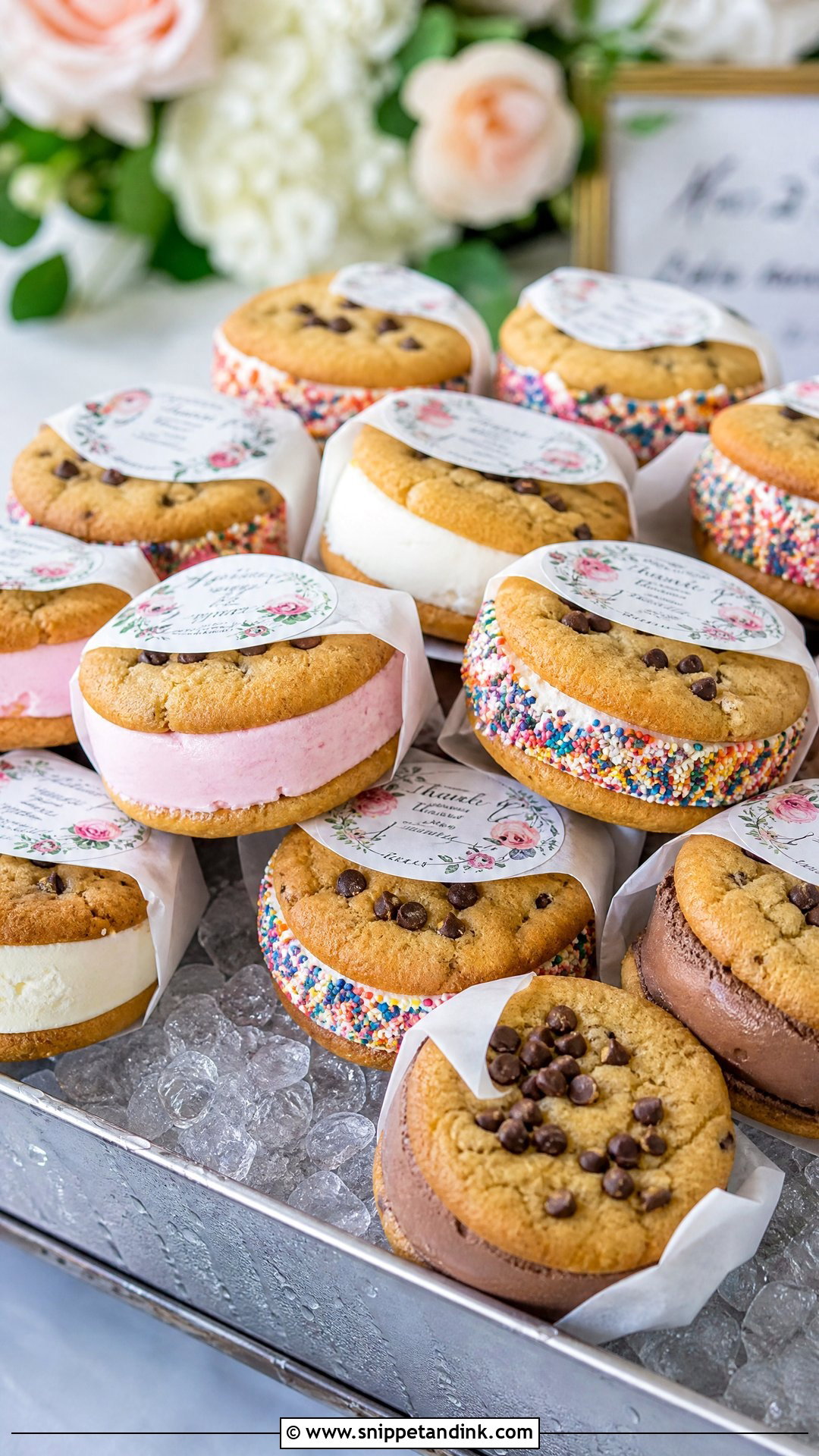
The venue freezer decides whether ice cream sandwiches are possible, so check that before anything else. Soft chocolate chip, brownie, sugar or oatmeal cookies pair with vanilla, strawberry, chocolate or caramel ice cream. I freeze the assembled sandwiches hard, roll the edges in sprinkles, mini chips, toasted coconut or crushed nuts, then freeze them again so the coating sticks. Bring them out in small batches, because on an outdoor summer table they drip within minutes. Wrapped in parchment with a sticker, they also make a fun favor.
18. Panna Cotta Cups
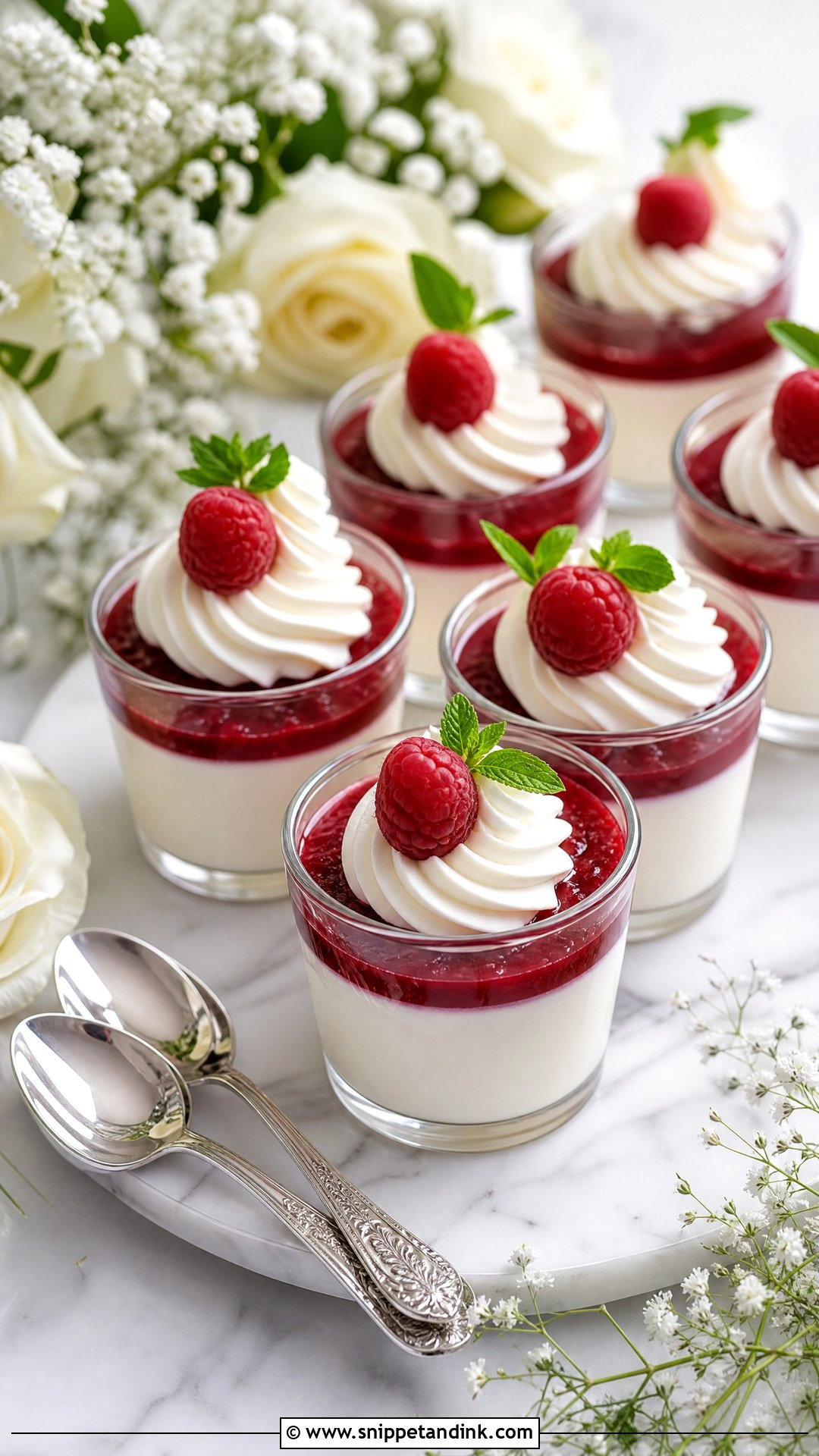
Panna cotta cups are the lighter, chilled option after a heavy meal. The set usually comes from gelatin, so it has to stay cold until service; left in a warm room it slumps and weeps. If you have vegetarian guests, ask whether the baker can set it with agar instead. Vanilla with raspberry sauce is the dependable choice, while coconut or lemon tastes fresher. I pour berry sauce, citrus curd, caramel, honey or passion fruit on only after the base has fully set, so the line between layers stays clean. Serve them in glasses next to tartlets, macarons or mini cakes.
19. Cannoli Bar
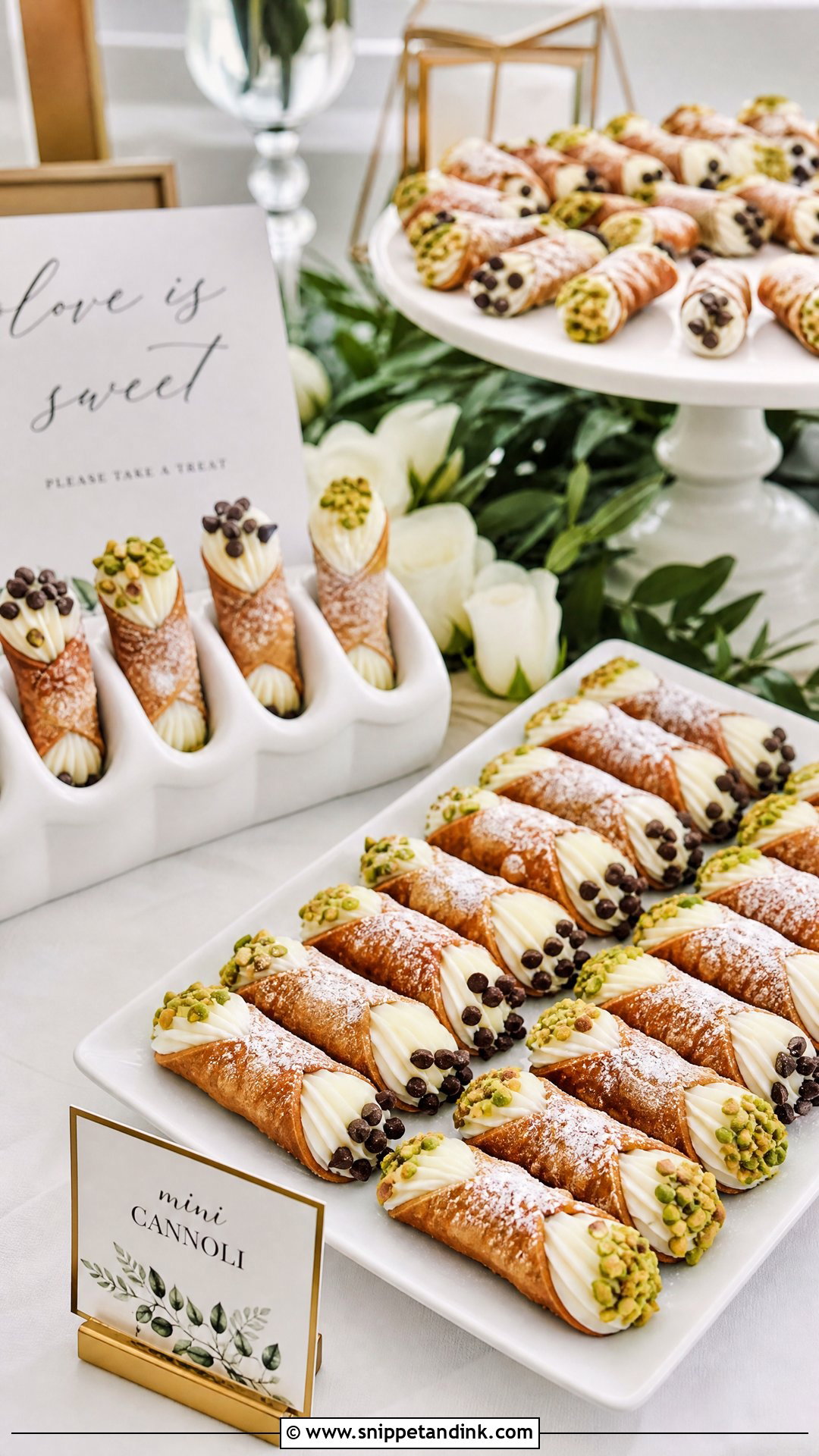
A cannoli bar adds crunch, a texture almost nothing else on this list offers. Mini shells take sweet ricotta, chocolate chip, pistachio or vanilla cream, and the ends get dipped in chips, crushed pistachios, sprinkles or powdered sugar. The one rule I’d never bend is filling them close to serving. Ricotta cream softens a shell within an hour or two, so a good bar either has someone piping on site or keeps shells and filling apart until the last moment. Line them up in rows, or stand them upright in holders labeled by filling.
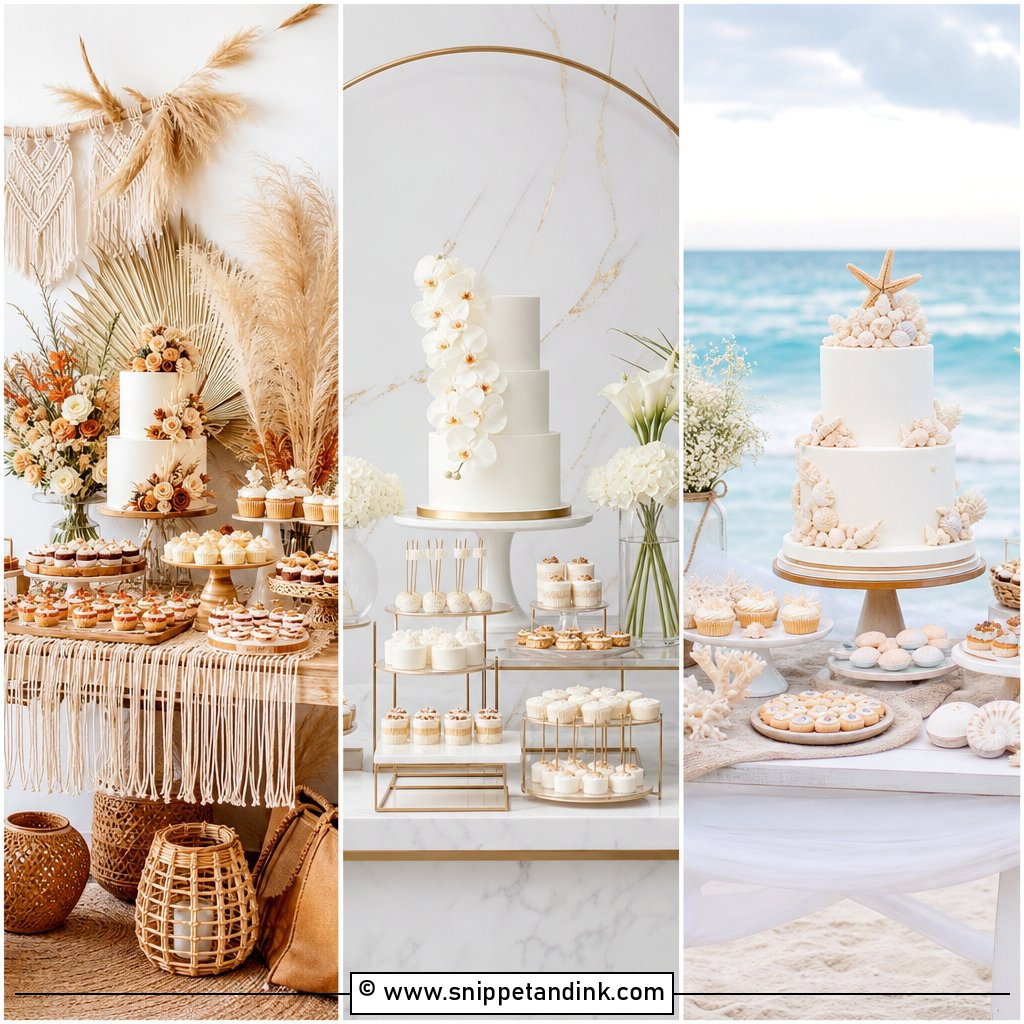
20. Small Cutting Cake With Dessert Table
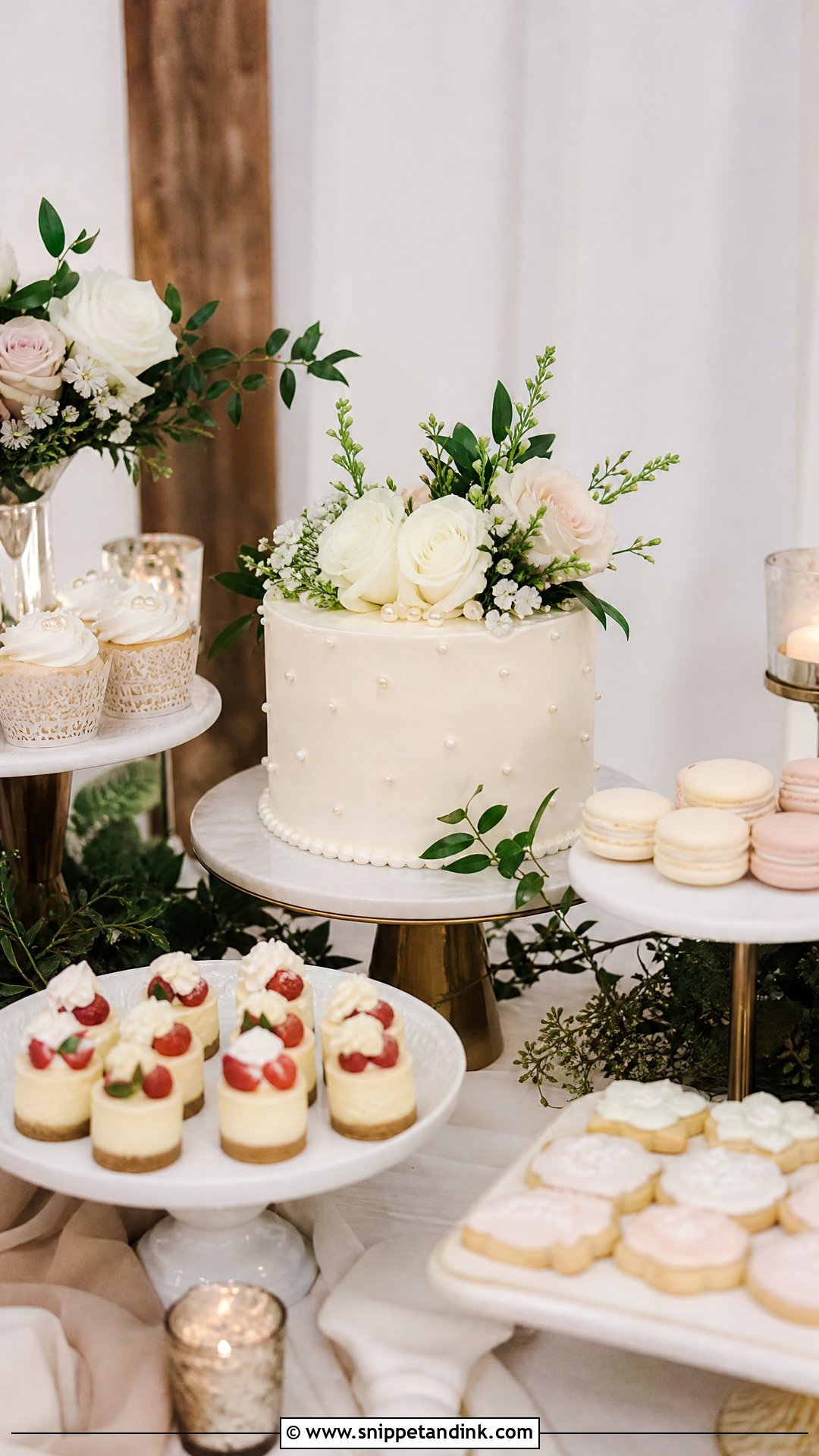
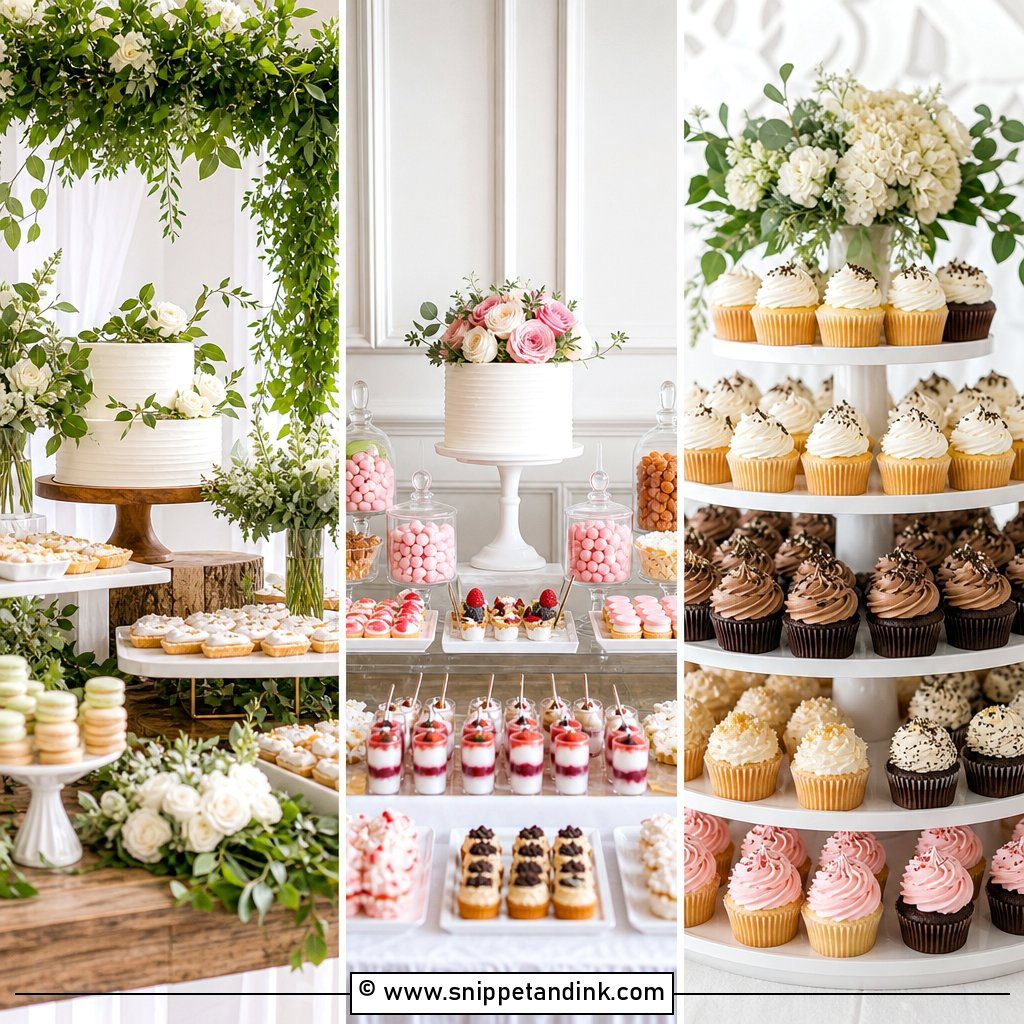
This is the setup I suggest more than any other. You keep the cake-cutting photo, but the cake only needs one or two tiers because it isn’t feeding the whole room. Style it to the flowers and colors, then surround it with cupcakes, macarons, cookies, mini cheesecakes, tartlets or brownie bites. Dropping from a large tiered cake to a small one usually frees up budget for several of those smaller items. Repeat the same stands, linens and two or three palette colors across the table, and the mix reads as one display rather than a buffet.
Which Desserts Can Sit Out for Three Hours, and Which Can’t
Most dessert tables go out around the cake cutting and stay until the end of the night. That’s a long stretch, and a warm room or a summer tent shortens it fast. Before I sketch a layout, I sort every item into three groups.
Fine at room temperature
Brownie bites, cookies, fruit pies, bundt cakes, cake pops and glazed donuts. These can go out early and simply be topped up as the trays empty.
Good for an hour or two
Buttercream cupcakes, macarons, mini cheesecakes and fruit tartlets. Keep them out of sunlight and away from the heat of the dance floor, and refill from the kitchen instead of putting everything out at once.
Cold until the moment they’re served
Tiramisu, panna cotta, cream or mousse shooters, filled eclairs and cream puffs, cream pies and anything with ice cream. These belong on a small chilled tray carried out by staff, not on the main display.
If the venue has limited fridge space, that alone may shape the menu. Ask for your cold storage allowance in writing before you commit to several chilled desserts.
Details Your Baker Needs Before the Day
A dessert table has more moving parts than a single cake, and most problems I see come from nobody owning the setup. Settle these with your baker early:
- Delivery time, and whether they stay to set up or simply drop off boxes.
- Who supplies the stands, trays and holders, and who collects them at the end of the night.
- Which items arrive finished and which need filling or topping on site.
- A written list of allergens for each item, so the labels on the table are accurate.
- Who refills the trays during the evening, since that is usually catering staff rather than the baker.
What Your Venue Says About the Dessert Table
A formal ballroom points toward mini cakes, macarons and eclairs, while a relaxed outdoor reception suits pies, donuts, churros and cookies. Wherever you land, mix textures and heights so there is something crisp, something creamy and something chewy at different levels. I’d pick a few flavors most guests will happily eat, add one or two that mean something to the two of you, and then check every item against the room temperature and the hours it will sit out. Do that, and the table will still look right when the last guest wanders over.
You'll Like These Ideas:


Leave a Reply