
Wedding cake pops are cake crumbs bound with frosting, rolled into balls, set on sticks and dipped in a hard shell. That simple build is why I like them for weddings: no slicing, no plates, and every one can be coloured to the flowers or the stationery. They work as a dessert table, a late-night sweet, a favor or a few dozen beside a small cutting cake. The styles below are the ones couples bring to me most, with notes on what each coating, flavour and finish actually does once it leaves the kitchen.
How Many Pops to Order, and When
Cake pops are slow to make by hand. Each one is rolled, chilled, stuck, dipped, set and decorated, so most decorators book wedding orders weeks ahead and make the pops only a day or two before delivery. Ask for your date early, especially for a large or detailed set.
Rough quantities I plan with
- Beside a cutting cake: about one per guest, since many people still take a slice.
- As the main dessert: two or three per guest, in at least two flavours.
- As favors only: one per guest plus a small surplus for breakage and late additions.
- For a late-night snack: fewer than you think. Guests reach for savoury food at that hour.
These are starting points, and your crowd matters more. A dessert-loving family will clear a table that a dancing crowd barely touches. If budget is tight, I’d rather make fewer, better-decorated pops than stretch the order with plain ones.
1. White And Gold Wedding Cake Pops
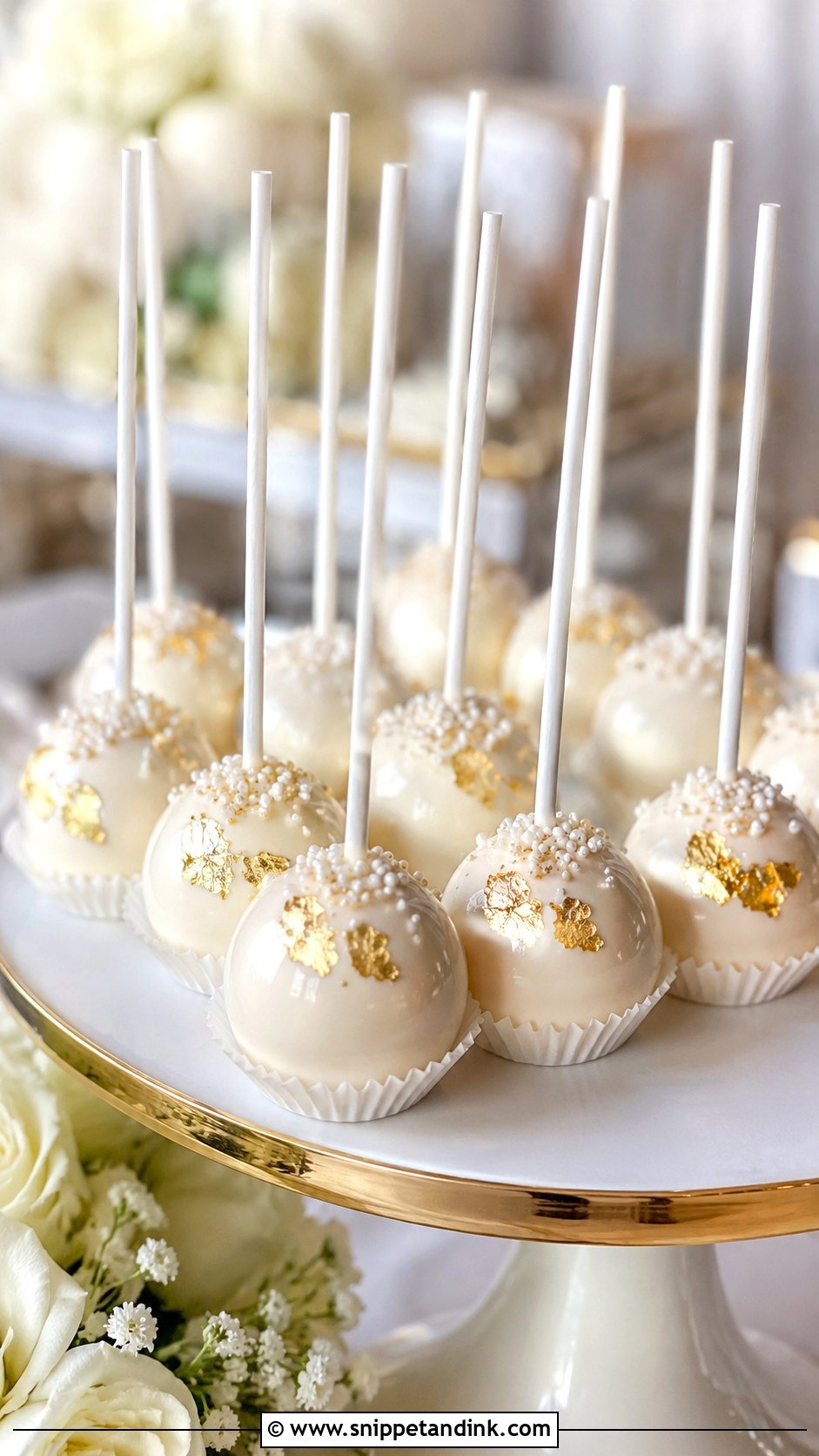
White and gold is the version I’d suggest if you can’t decide. Vanilla, almond or champagne cake inside, a smooth white shell, and gold on top as leaf, a drizzle or fine metallic sprinkles. One check to make with your baker: some gold dusts are labelled non-toxic or decorative only, which is not the same as edible, so ask for edible gold on anything guests will bite. Straight rows on a clear acrylic stand suit them, and the gold should land in the same spot on every pop.
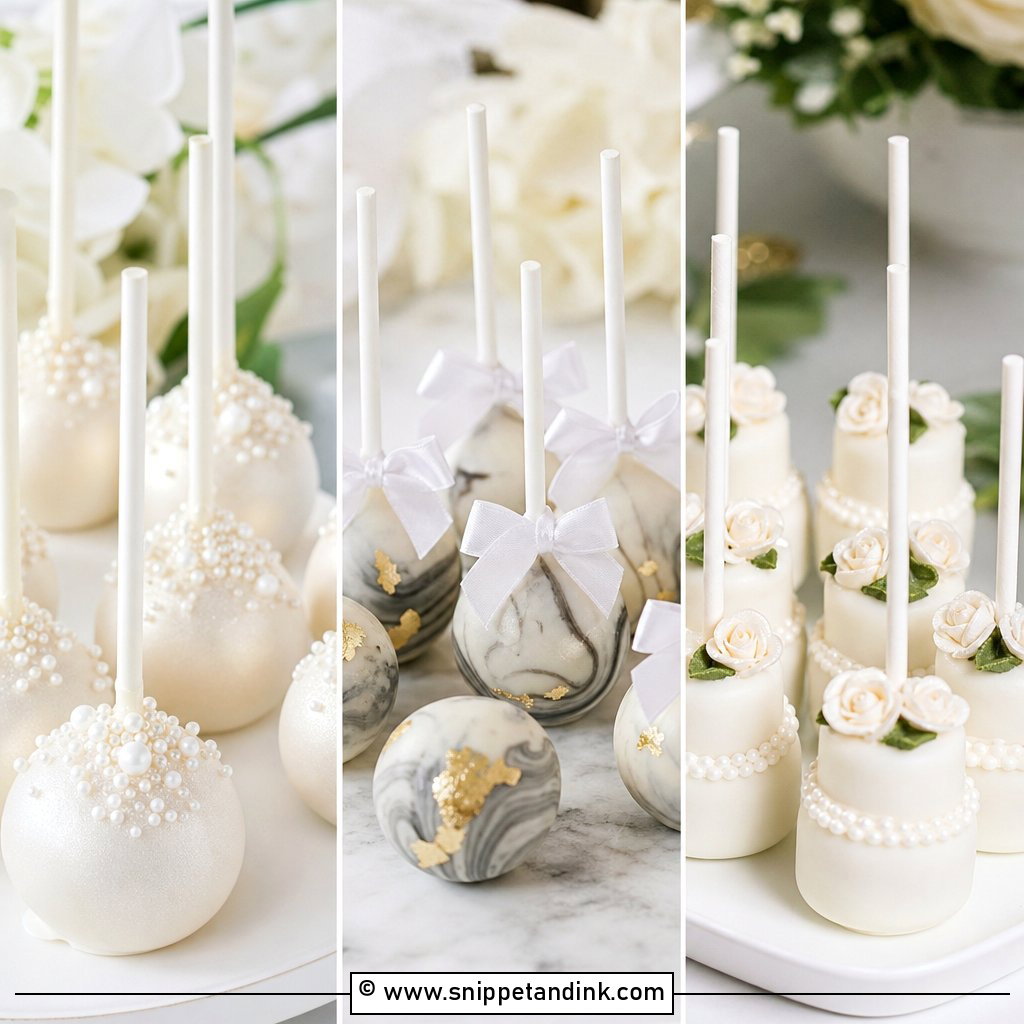
2. Pearl Wedding Cake Pops
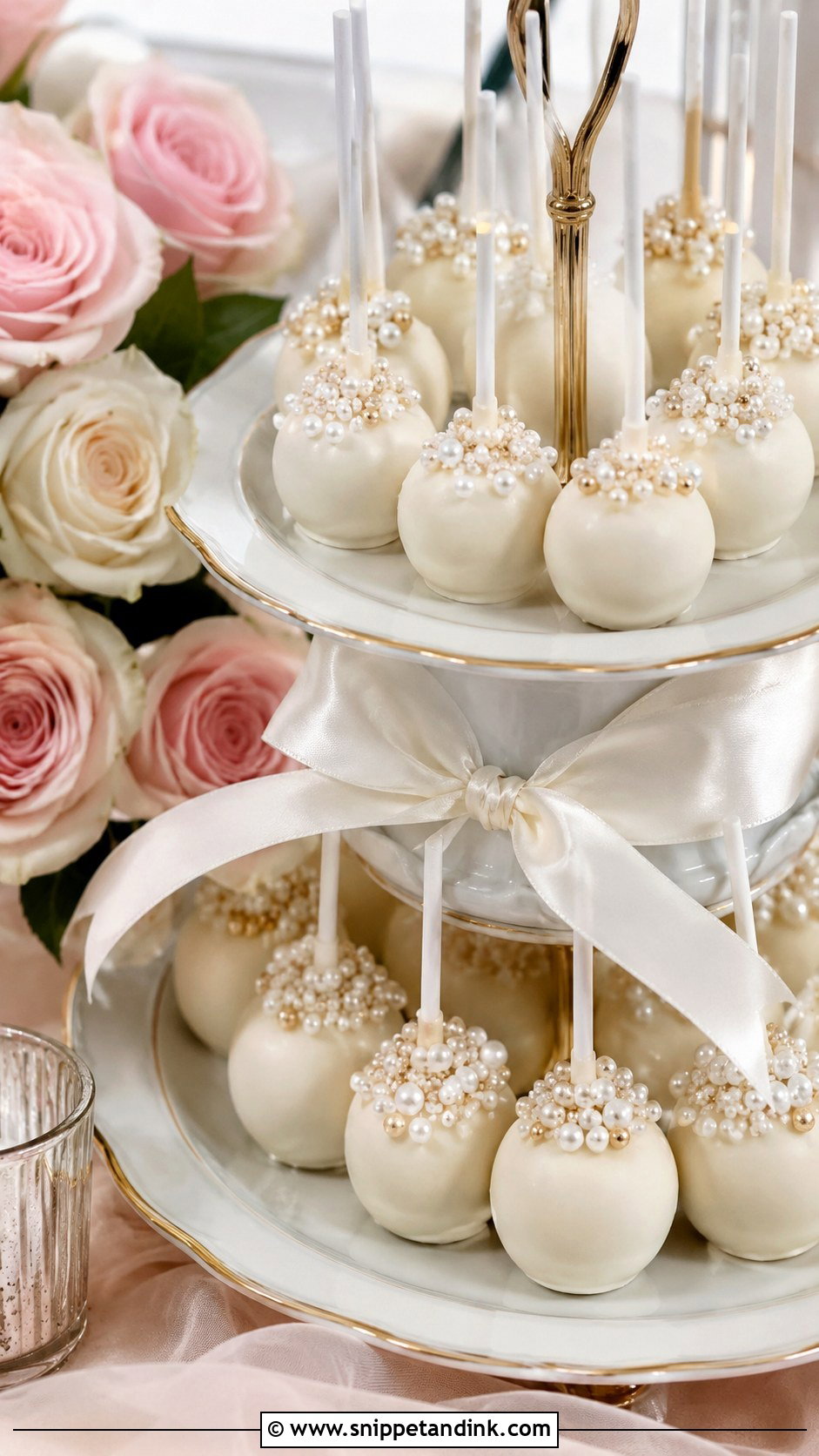
Pearls need the coating to be at a particular stage. Too wet and they slide down; fully set and they won’t stick. I add them while the shell is still slightly tacky, either as a full scatter or as a small cluster on the crown of each pop. A pale vanilla or white almond centre keeps the bite light. All-white pearls read classic, and a mix of ivory and champagne pearls warms the set. Formal rooms, gardens and candlelit venues all suit them.
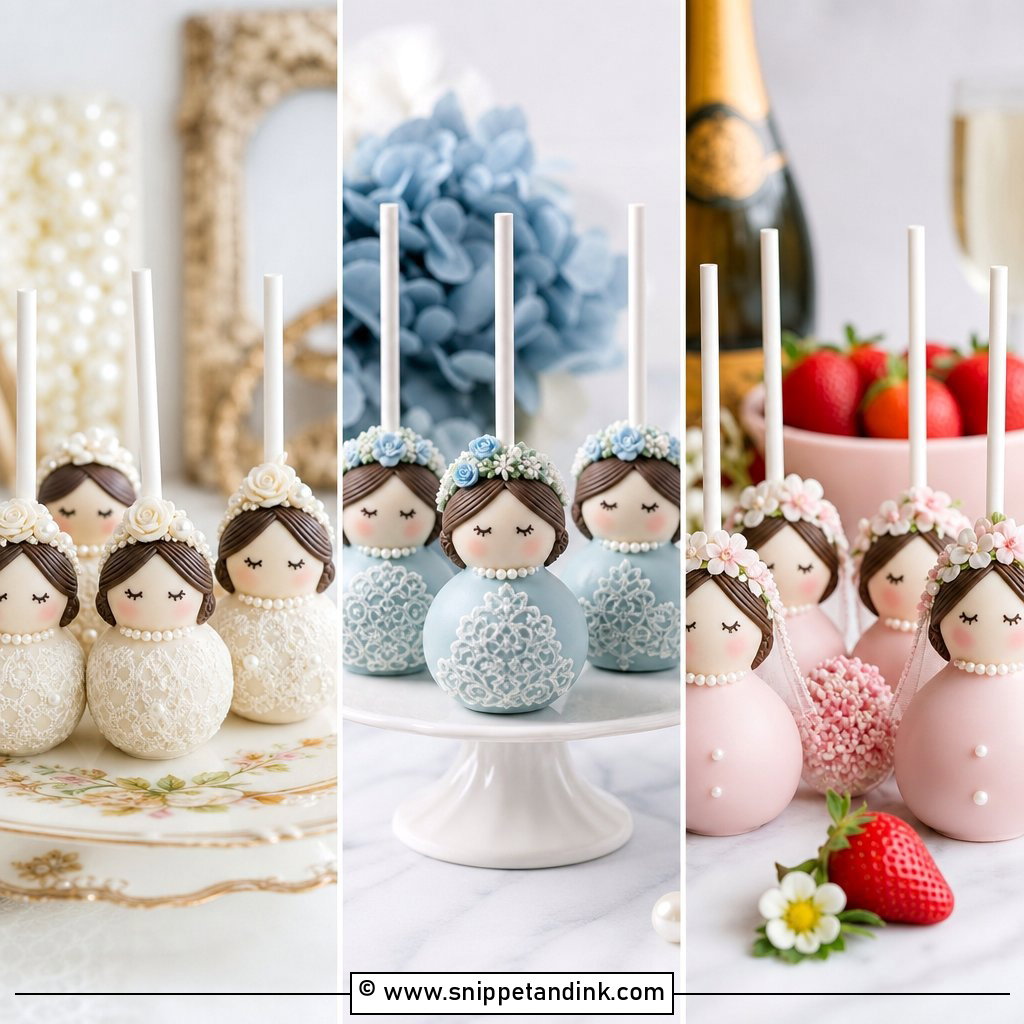
3. Bride And Groom Cake Pops
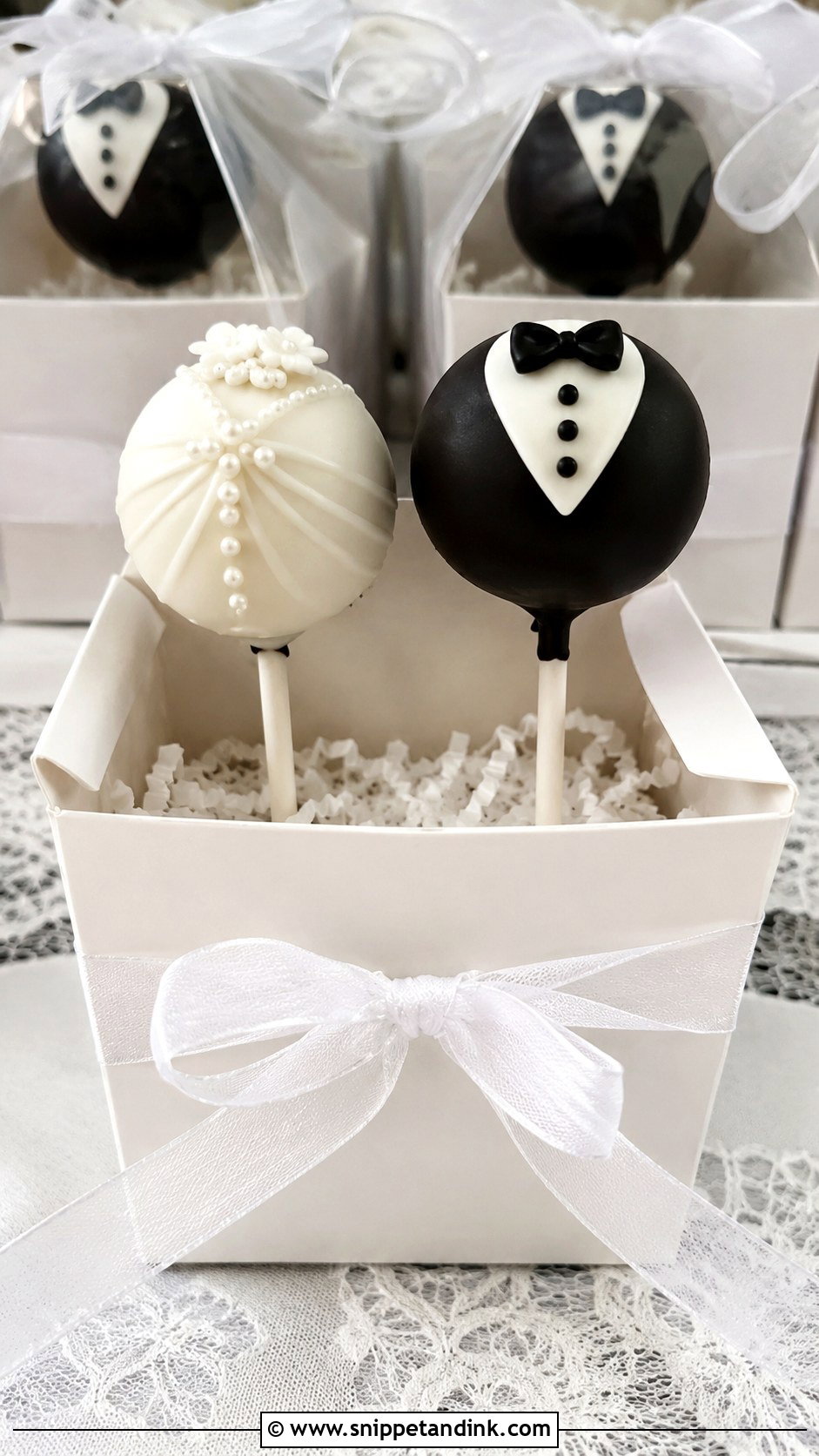
Pairs dressed as a bride and groom are the most playful pops here, and they live or die on simplicity. A white chocolate bride with tiny pearl buttons or a line of lace piping, a dark chocolate groom with a white shirt front and a bow tie: that’s enough detail on something the size of a walnut. I’d keep faces off entirely, since they rarely look right at this scale. Display them in couples, in alternating rows, or tucked two to a box among the favor boxes so each guest goes home with one of each.
4. Floral Wedding Cake Pops
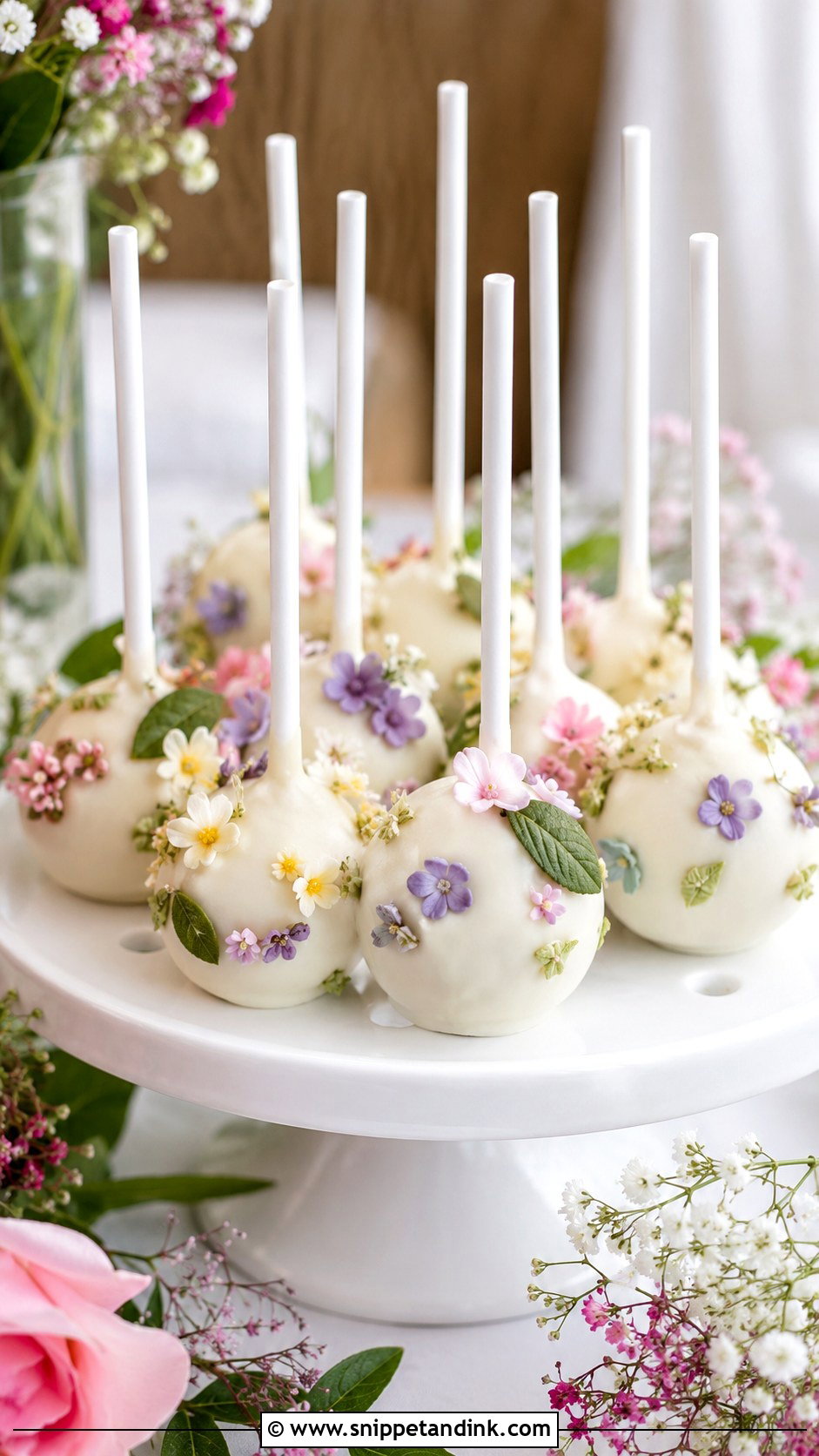
Floral pops are the easiest to tie to a bouquet, and the flowers have to stay small. Anything wider than the pop makes it top-heavy and pulls the coating off the stick. I use tiny sugar blossoms, edible pressed petals, piped buttercream buds or hand-painted florals, all on a pale base such as white, blush, cream, sage or soft blue. Lemon, strawberry and elderflower centres suit this look. Set them among bud vases and greenery on a plain white stand.
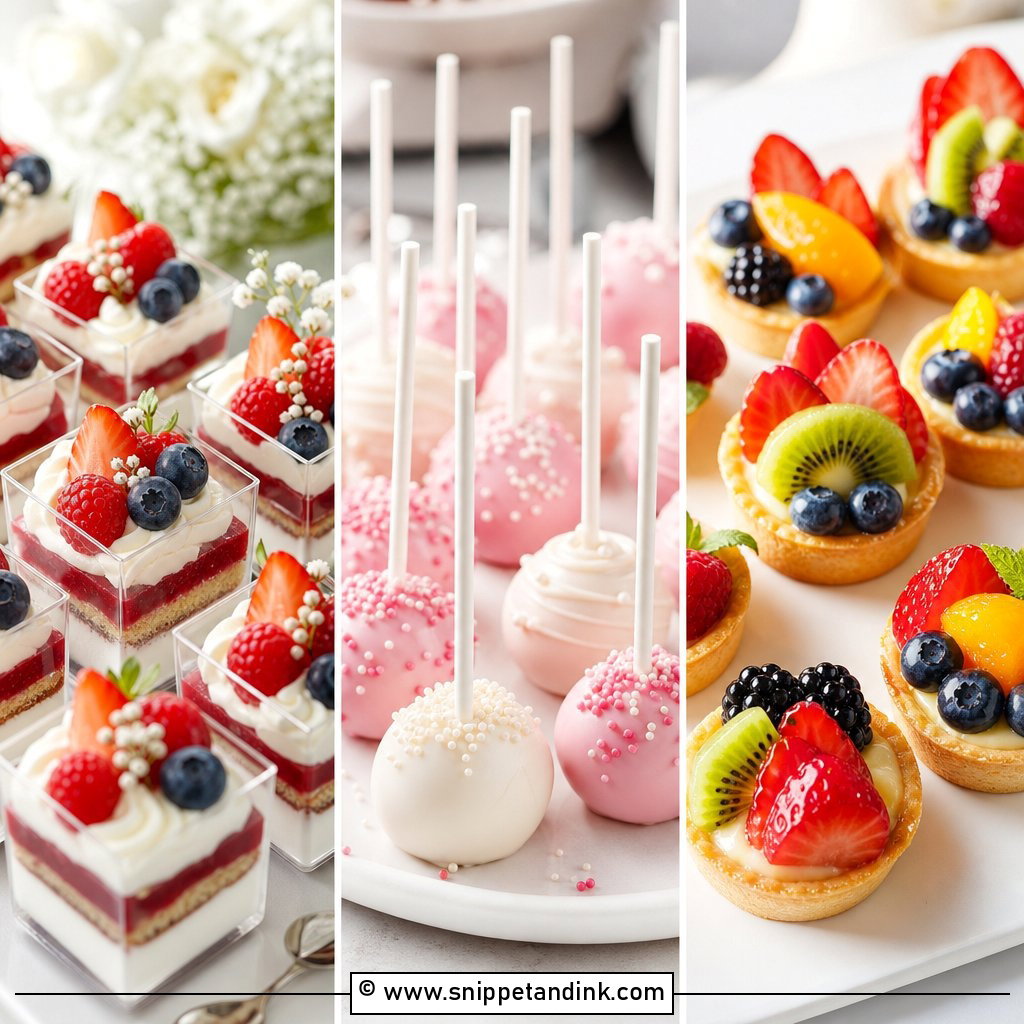
5. Blush Pink Wedding Cake Pops
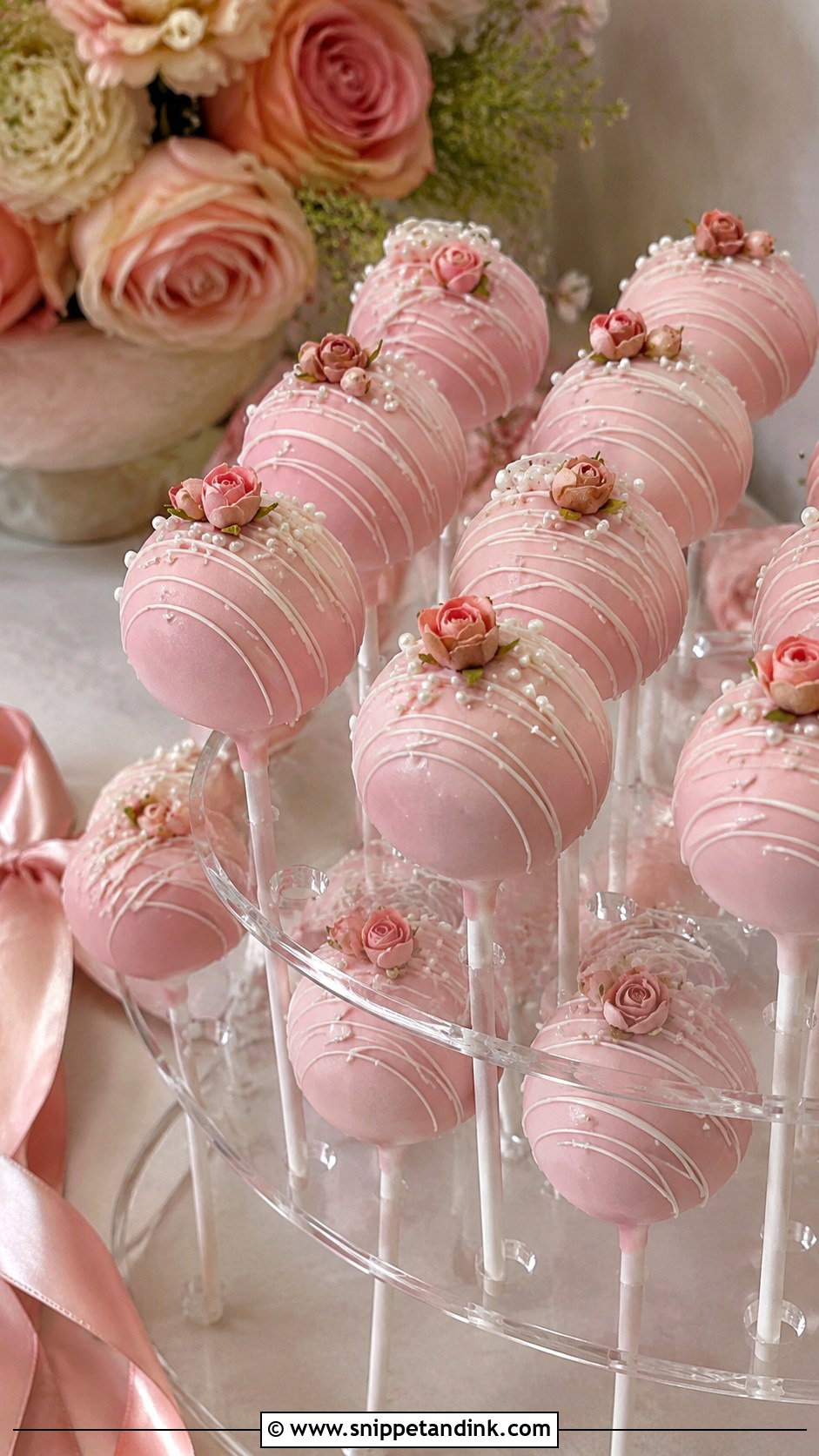
Blush pops are mostly a colouring job. Candy melts come in ready-made pinks, but if you want real white chocolate tinted blush, it has to be coloured with oil-based or powdered colour; a water-based gel can make chocolate seize into a grainy paste. Strawberry, vanilla, rose or champagne centres all fit. White drizzle, tiny pearls or a small sugar flower finish them, and they sit naturally beside ivory, gold, sage or dusty mauve. Clear boxes tied with satin ribbon turn the same pops into shower or bridesmaid favors.
6. Rose Gold Wedding Cake Pops
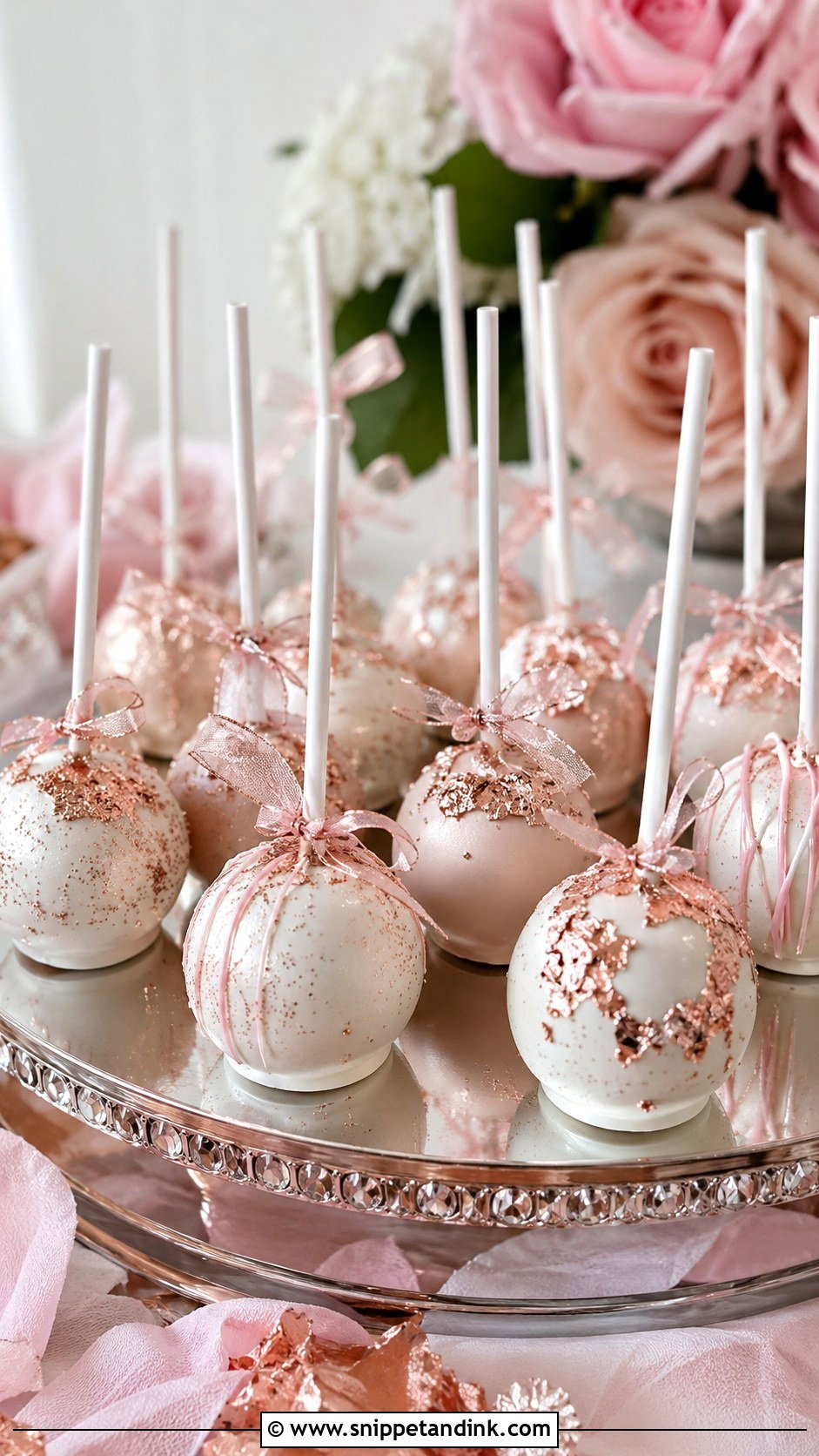
Rose gold should be an accent. A full rose gold shell tends to look like plastic, so I dip in blush, ivory or pale champagne and then splatter, dust or drizzle the metallic over the top. Vanilla, chocolate or red velvet centres all work. As with gold, check that the rose gold dust is sold as edible. Mirrored trays and acrylic stands suit the colour, and it warms up under the amber lighting most receptions use in the evening.
7. Champagne Wedding Cake Pops
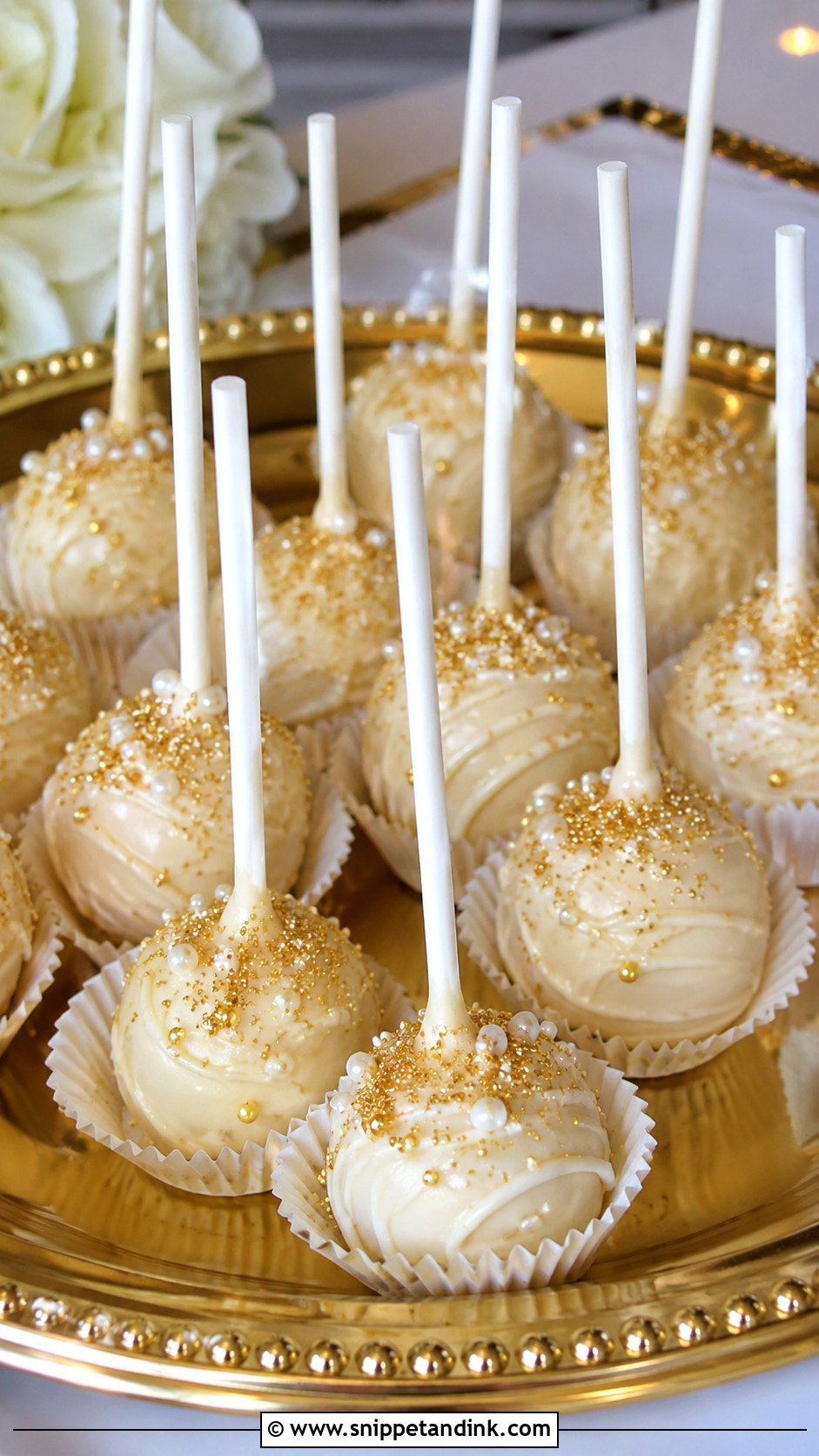
Champagne flavouring rather than a pour of actual wine is what gives these pops their taste; liquid champagne makes the crumb mix too wet to hold on a stick. I blend champagne-flavoured, vanilla bean or almond cake with buttercream, dip in ivory, pale gold or pearl white, and finish with champagne sugar crystals or a light shimmer. They suit evening receptions and ballrooms. Fluted display cups or a gold tray make a good stage, and they hold up well as a favor.
8. Lemon Elderflower Wedding Cake Pops
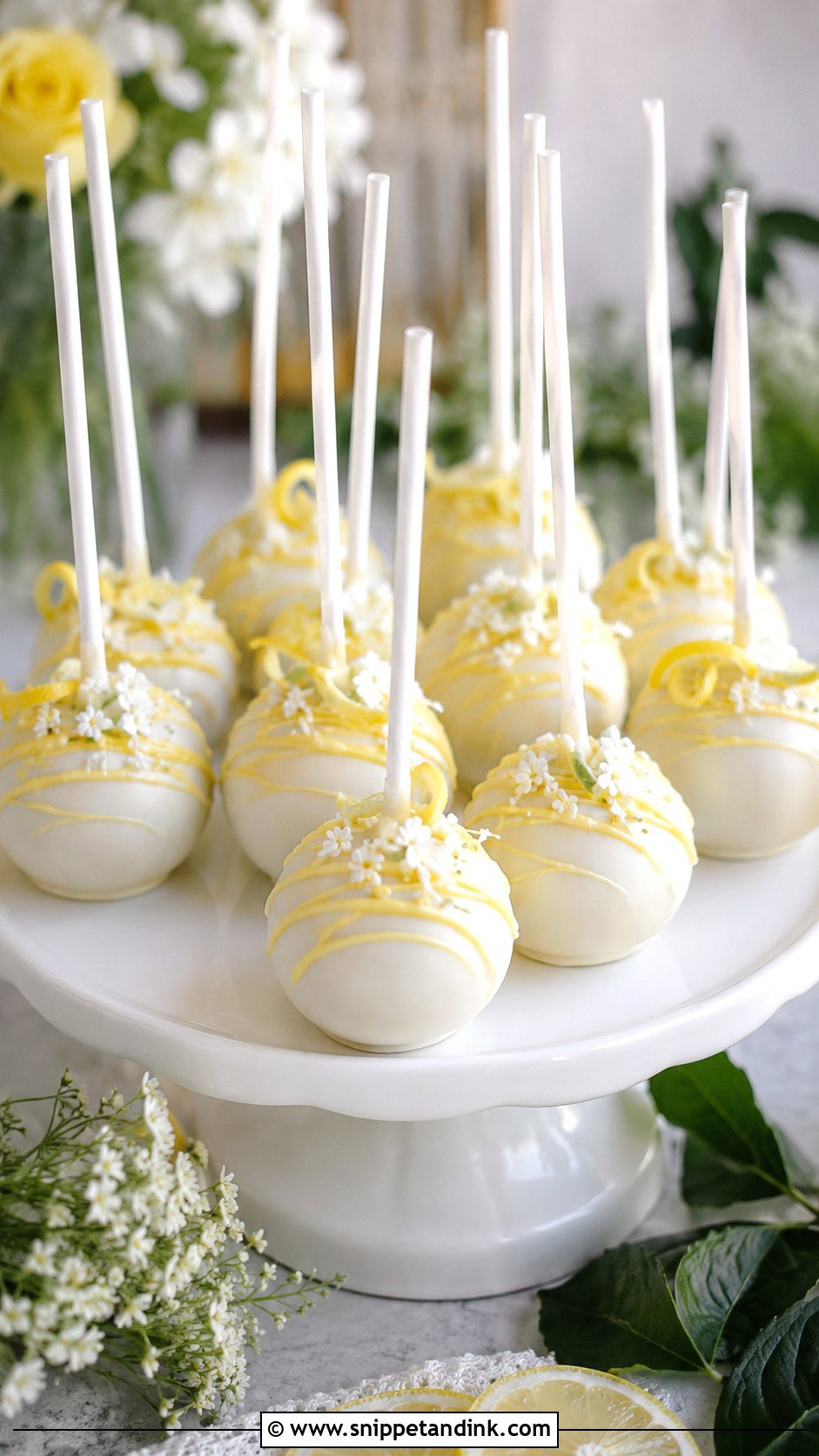
Lemon and elderflower is the flavour I reach for in spring and summer, because it stays fresh when a guest has already eaten dinner and cake. Lemon cake bound with elderflower buttercream or a light citrus frosting, dipped in pale yellow, ivory or white, then finished with tiny white blossoms or a fine yellow drizzle. Skip real zest curls on the outside; they dry out and darken within hours. Garden flowers and airy linens frame this set nicely.
9. Vanilla Almond Wedding Cake Pops
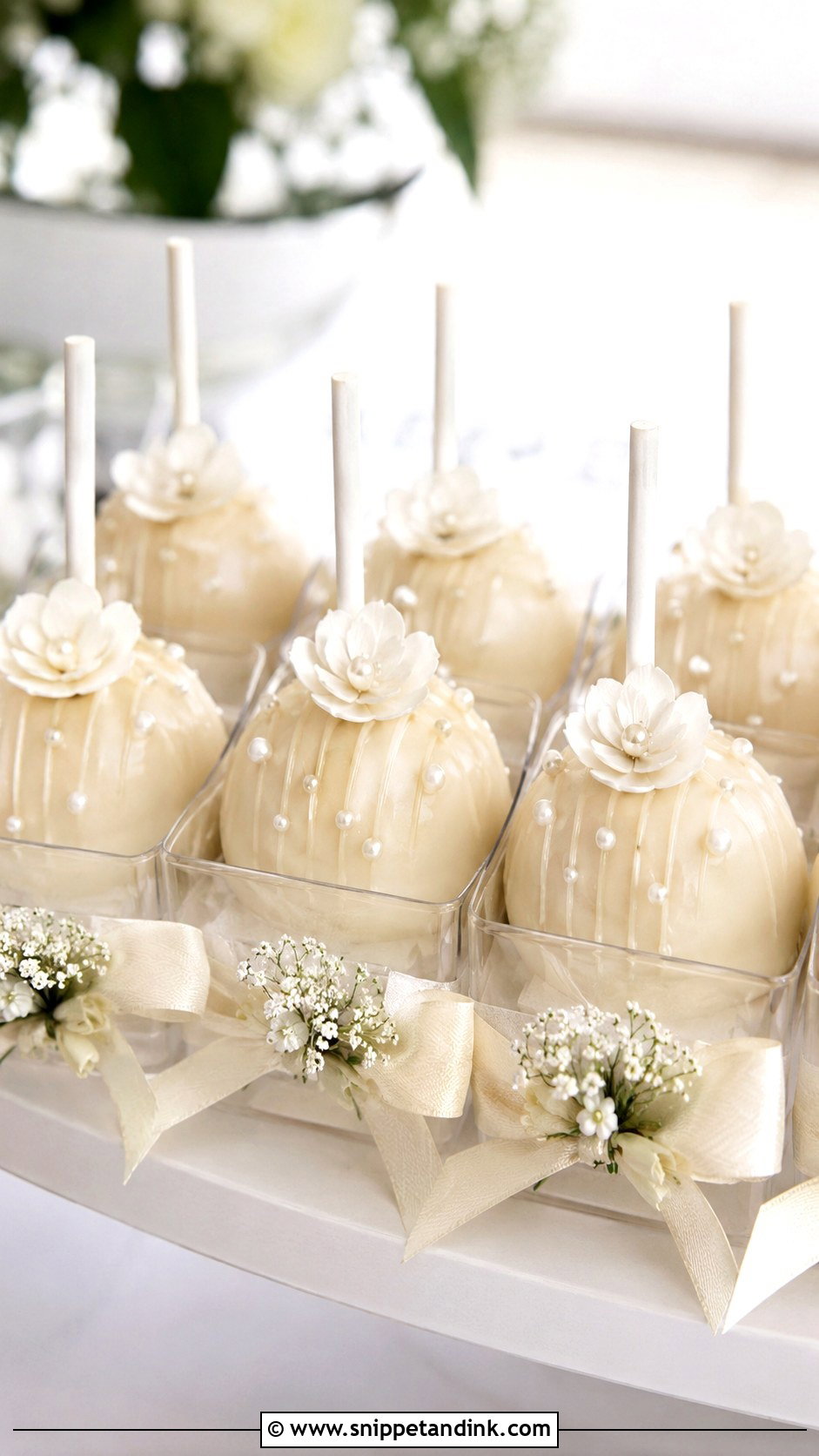
Vanilla almond tastes like a traditional wedding cake, so it’s the safest flavour for a big, mixed guest list. Vanilla sponge with almond buttercream, a smooth white or ivory shell, and pearl sprinkles, a drizzle or one small sugar flower on top. The neutral outside matches any palette. My one caution is labelling: almond flavour, even from extract, needs a clear tag for guests with nut allergies. Tags or ribbon matched to the invitation suite make them easy favors.
10. Chocolate Wedding Cake Pops
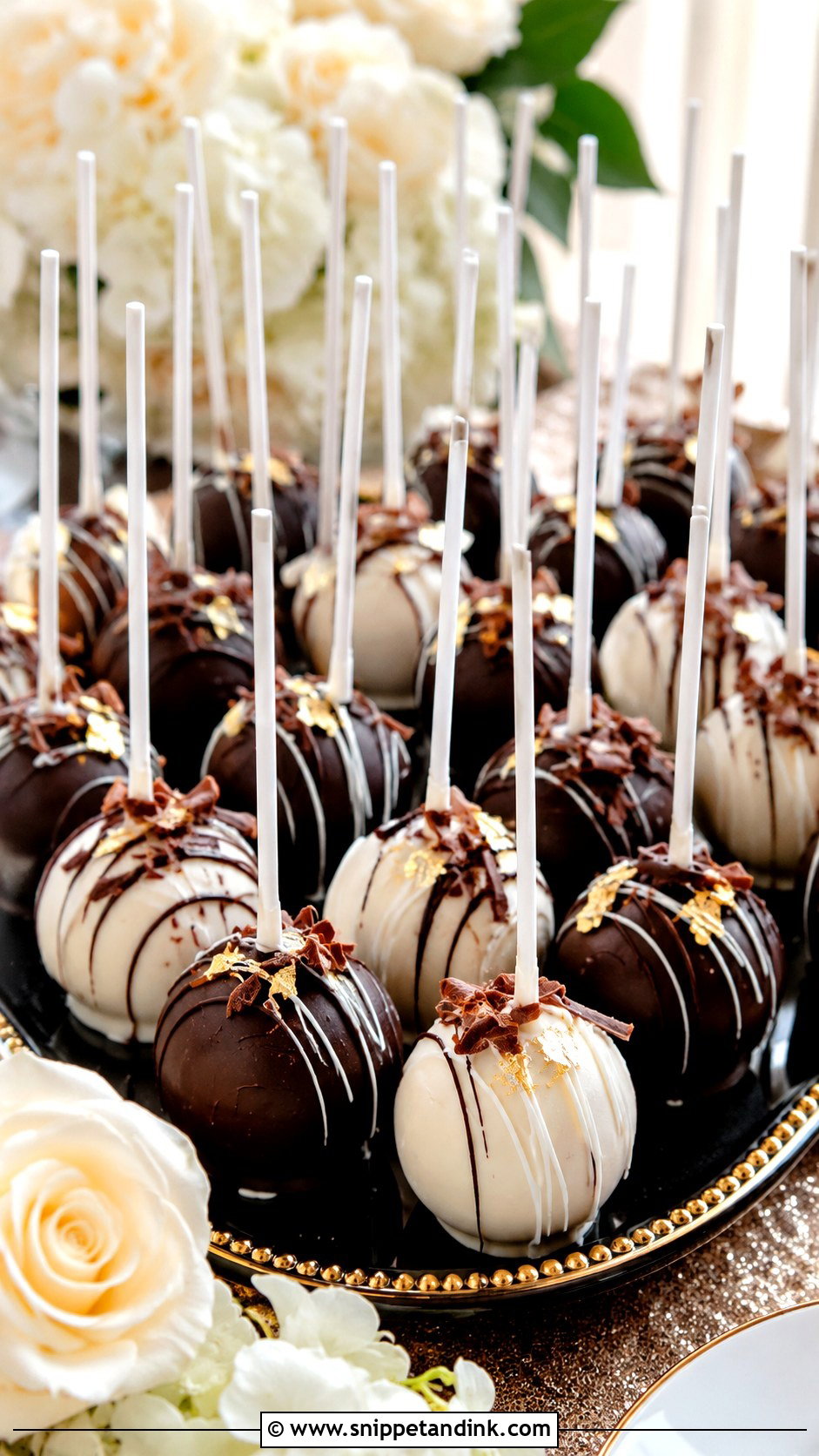
Chocolate pops are the ones that run out first at most receptions. The centre can be deep and rich; the finish is where you decide the mood. White chocolate gives contrast, dark looks dramatic, milk softens it. Gold flakes, white drizzle, pearls or chocolate curls all work. For evening, black-tie or autumn weddings they suit the room, and mixing them into a vanilla set gives guests a real choice instead of one flavour on repeat.
11. Red Velvet Wedding Cake Pops
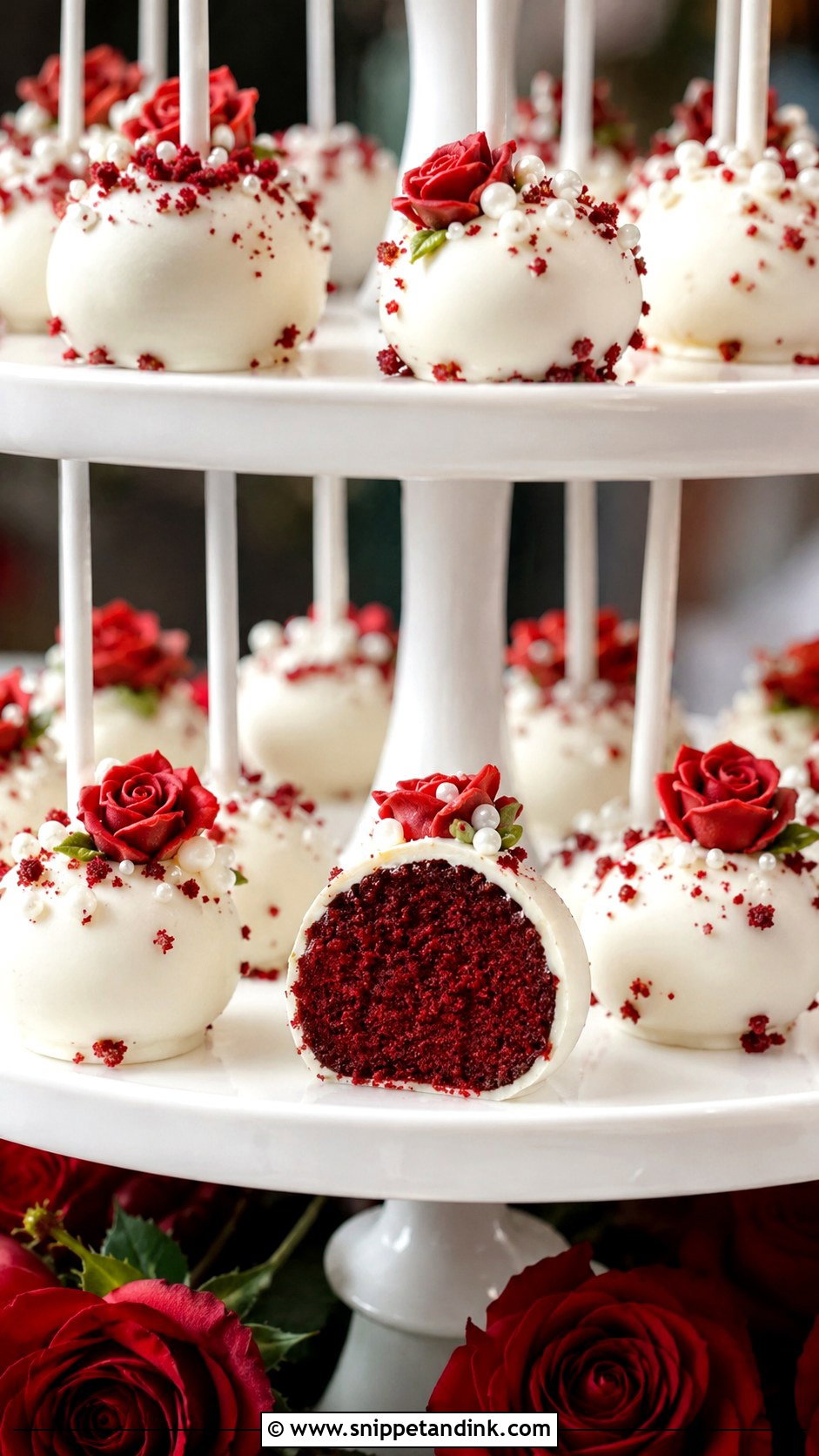
Red velvet’s appeal is the bite: a white shell that opens onto deep red cake. Classic red velvet is bound with cream cheese frosting, which makes these more perishable than buttercream pops, so I keep them refrigerated until shortly before service and don’t recommend them for a long, hot outdoor table. Coat in white, ivory or blush and keep the decoration to a fine drizzle, a pinch of red crumbs or a single sugar rose. A white stand with a few deep red flowers nearby pulls the colour onto the table.
12. Coconut Wedding Cake Pops
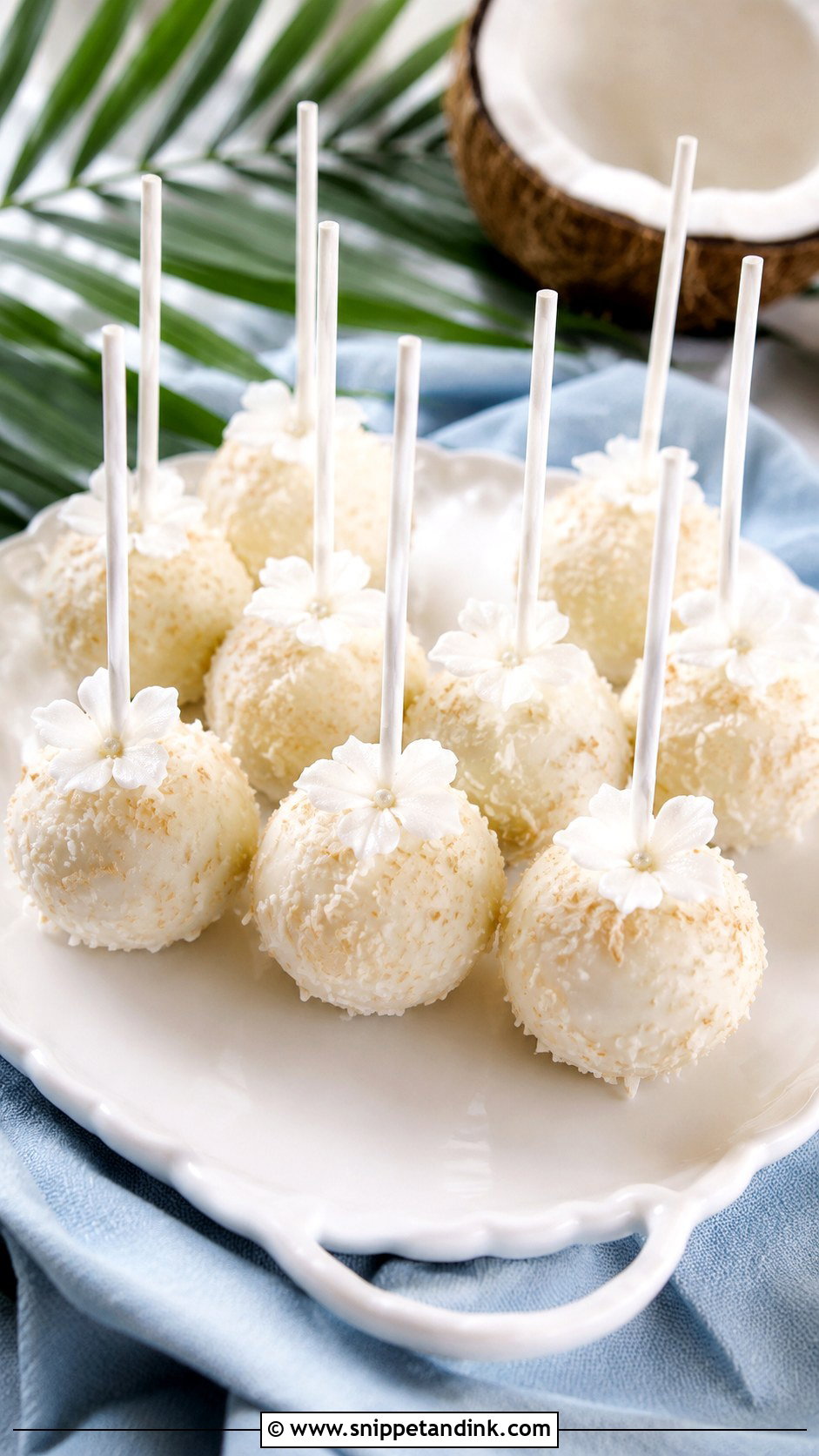
Coconut pops suit beaches, tropical venues and summer receptions. Coconut cake with vanilla or coconut buttercream, a white chocolate shell, and toasted coconut flakes, a light shimmer or tiny sugar flowers on top. I keep the coconut fine and to the crown only; a full shaggy coat looks casual and sheds all over the tray. Note that coconut is listed as a tree nut in some allergen labelling rules, so tag it. A white ceramic tray or a wood-toned stand gives them a coastal setting.
13. Blue Wedding Cake Pops
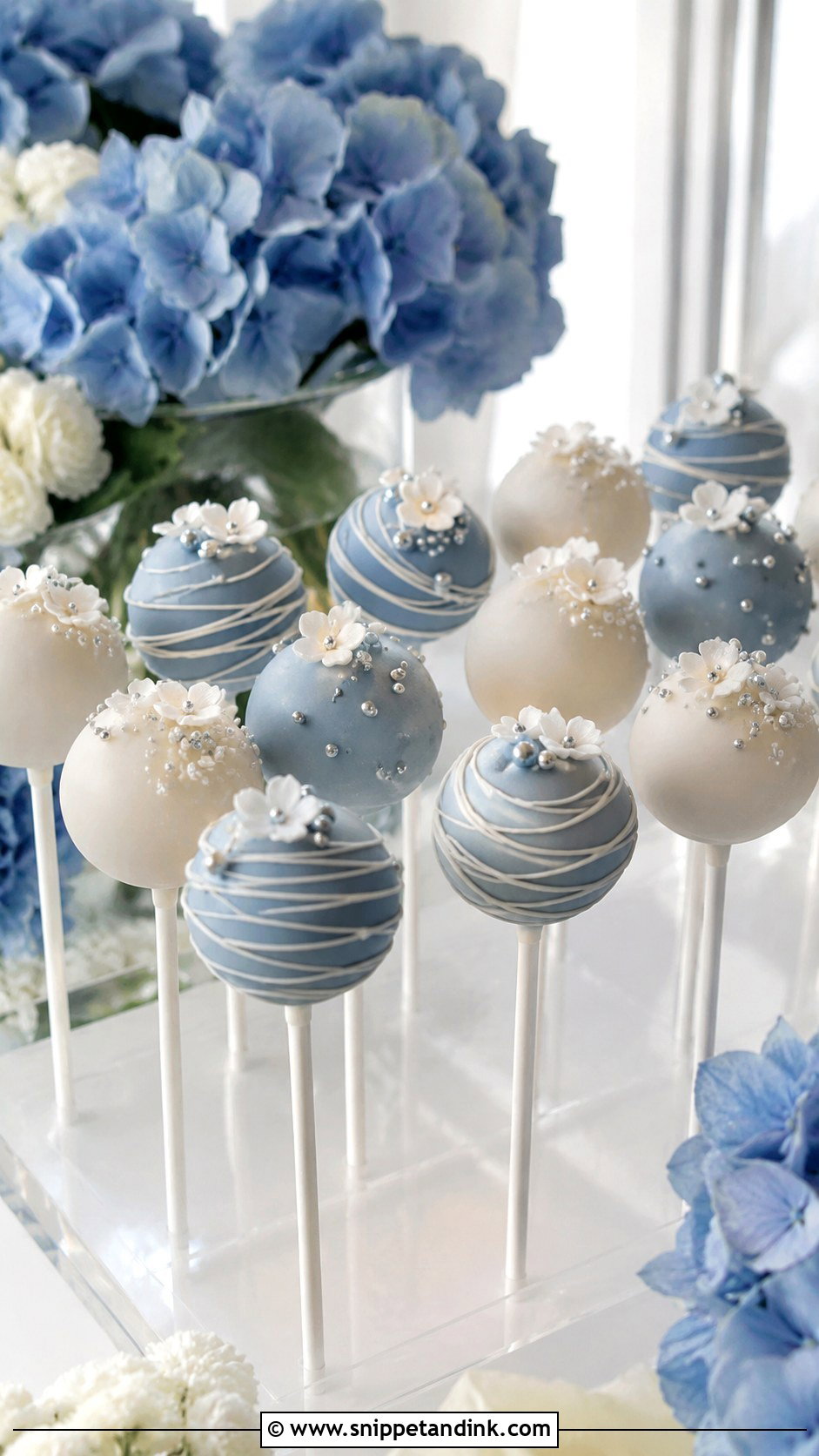
Blue is a coating colour that needs testing. White chocolate and many candy melts have a warm ivory cast, and blue colour added to them can lean slightly green, so I mix a small test batch and check it in daylight before colouring the full set. Navy with gold accents feels formal; pale blue with ivory pearls is softer. Silver pearls and white drizzle suit both. Dip the whole order from one batch of coating, because a second batch is rarely the exact same shade.
14. Sage Green Wedding Cake Pops
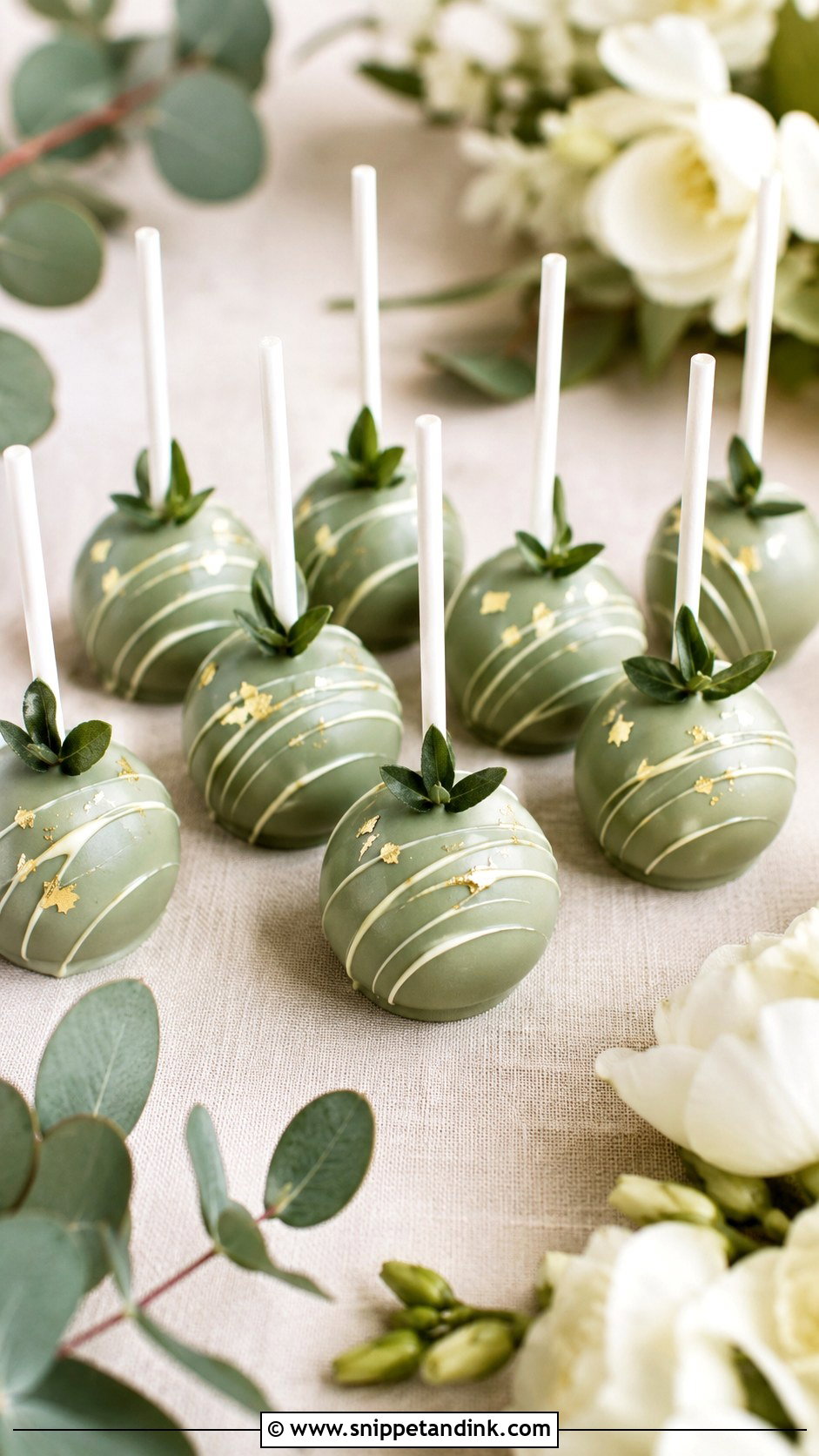
Sage is a shade I mix rather than buy, usually from a green and a touch of black or brown in a white base, tinted with oil-based colour so the chocolate stays smooth. Vanilla, pistachio, lemon or almond suit it inside. White drizzle, gold flecks, tiny dried edible flowers or small leaf details finish it. Keep everything else muted beside it; bright accents make sage look dull rather than calm. Clear bags with linen ribbon make simple garden favors.
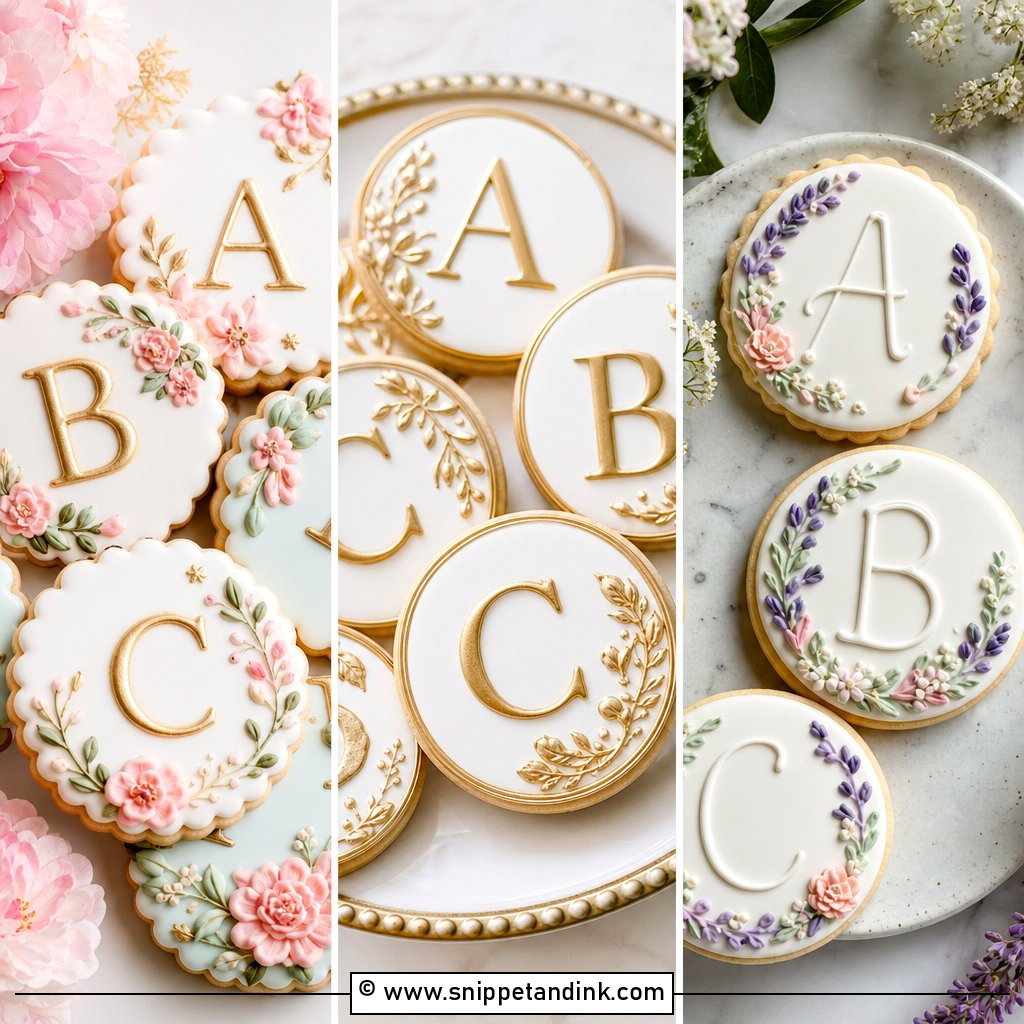
15. Lavender Wedding Cake Pops
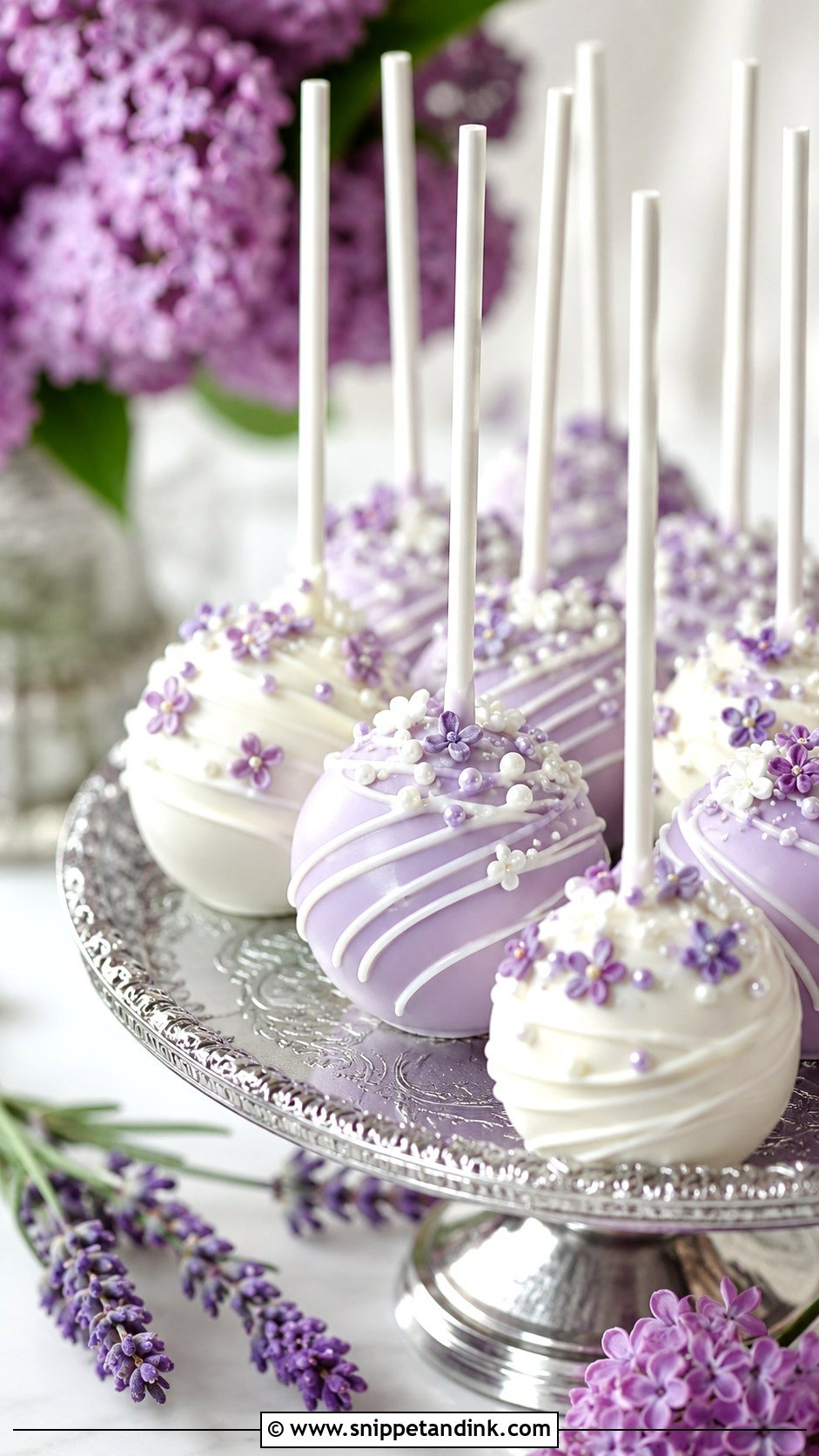
Real lavender in a cake pop is a small-quantity ingredient. Too much and it tastes like soap, so I infuse a little culinary lavender into the milk or sugar rather than adding buds to the crumb. A plain vanilla centre with a lavender-coloured shell is the safer route for a crowd. Pale purple, ivory or white coatings with tiny edible flowers or pearl sprinkles suit it. Purple coatings can fade in strong light, so keep the display out of direct sun.
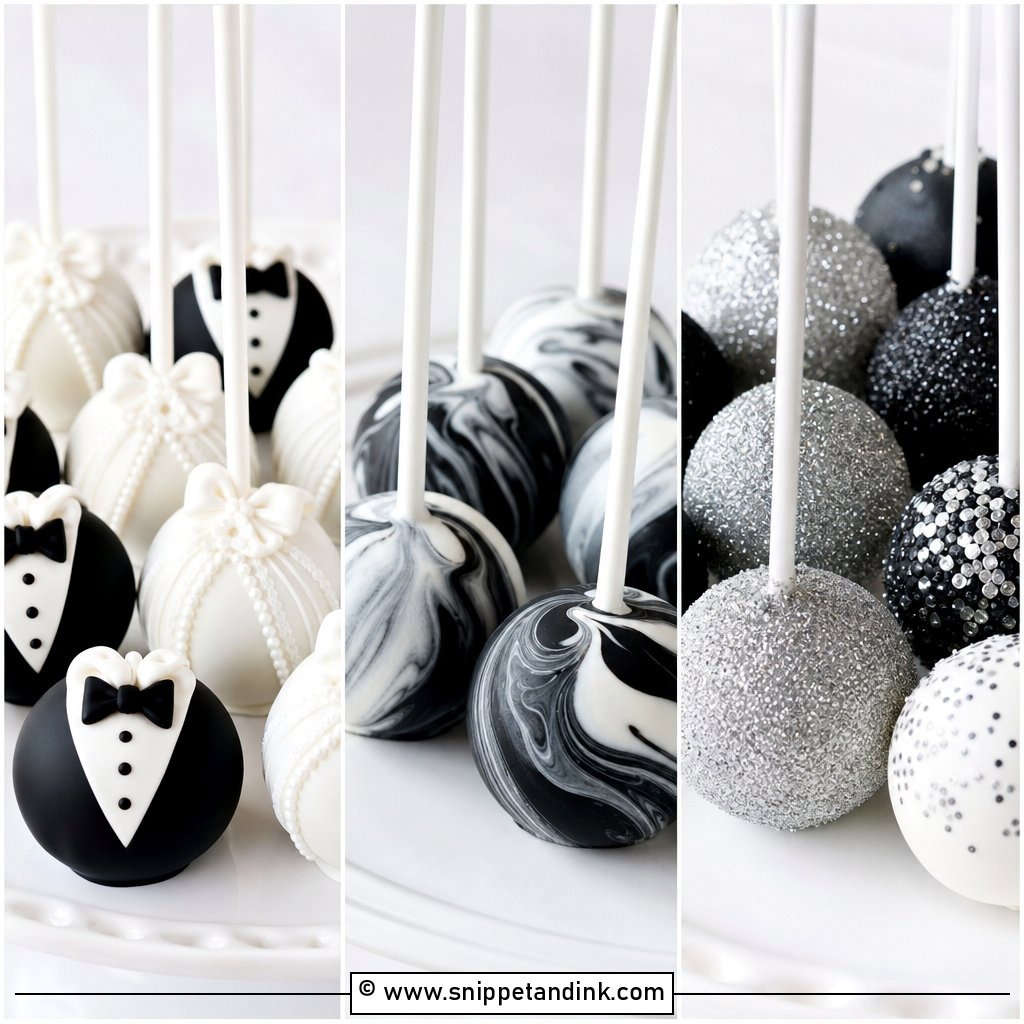
16. Black And White Wedding Cake Pops
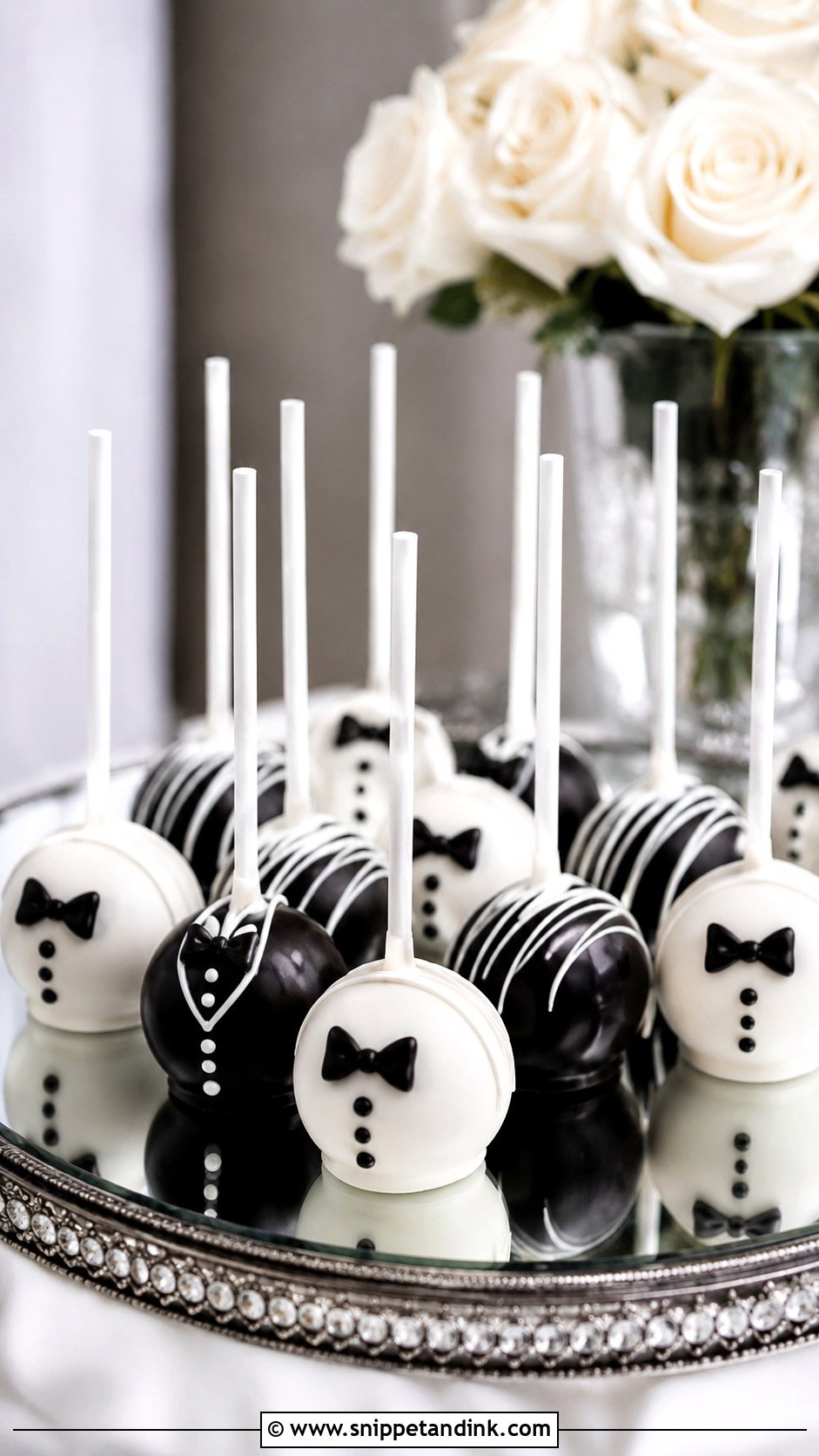
Black and white wedding cake pops suit black-tie weddings, city venues and minimalist tables. I make the black shells from dark cocoa-based coating rather than loading white chocolate with black colour, which tastes bitter and can stain teeth. Chocolate, vanilla or cookies and cream centres all fit. Half dipped white, half dark, each with an opposite-colour drizzle, a bow tie or clean geometric lines. Keep the decoration symmetrical, and set them on a white stand or black tray so the contrast does the work.
17. Marble Wedding Cake Pops
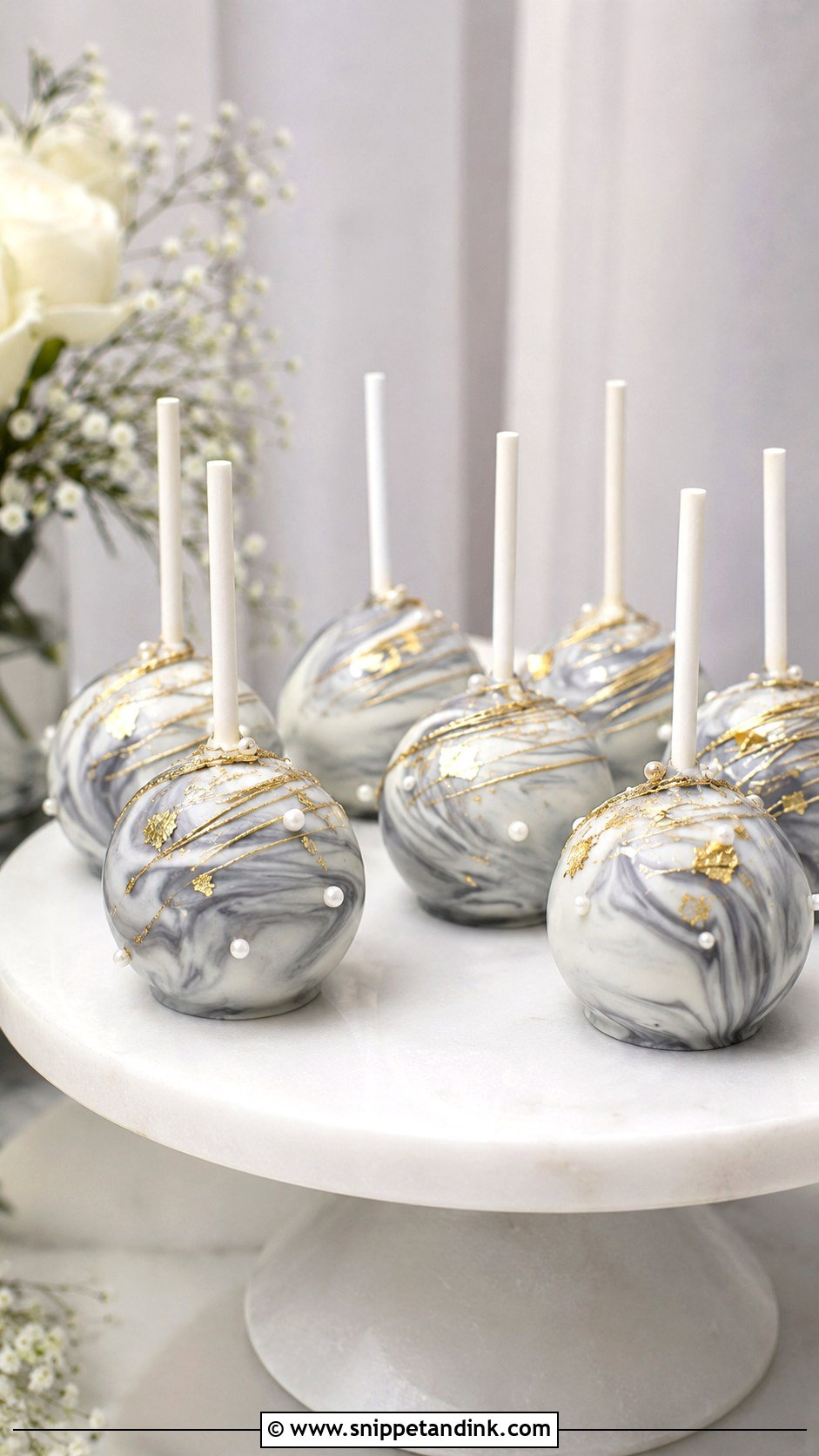
Marbling happens in the dipping cup: I float a second colour on top of the white coating, drag a skewer through once, and dip each pop straight down. Every pop picks up a different swirl, and after several dips the colours blur together, so the cup needs refreshing often. Gray, gold, blush, blue or sage over white all work. Keep to one accent colour so the set looks like a set. A touch of gold leaf or a few pearls finishes them for contemporary and gallery venues.
18. Geode Wedding Cake Pops
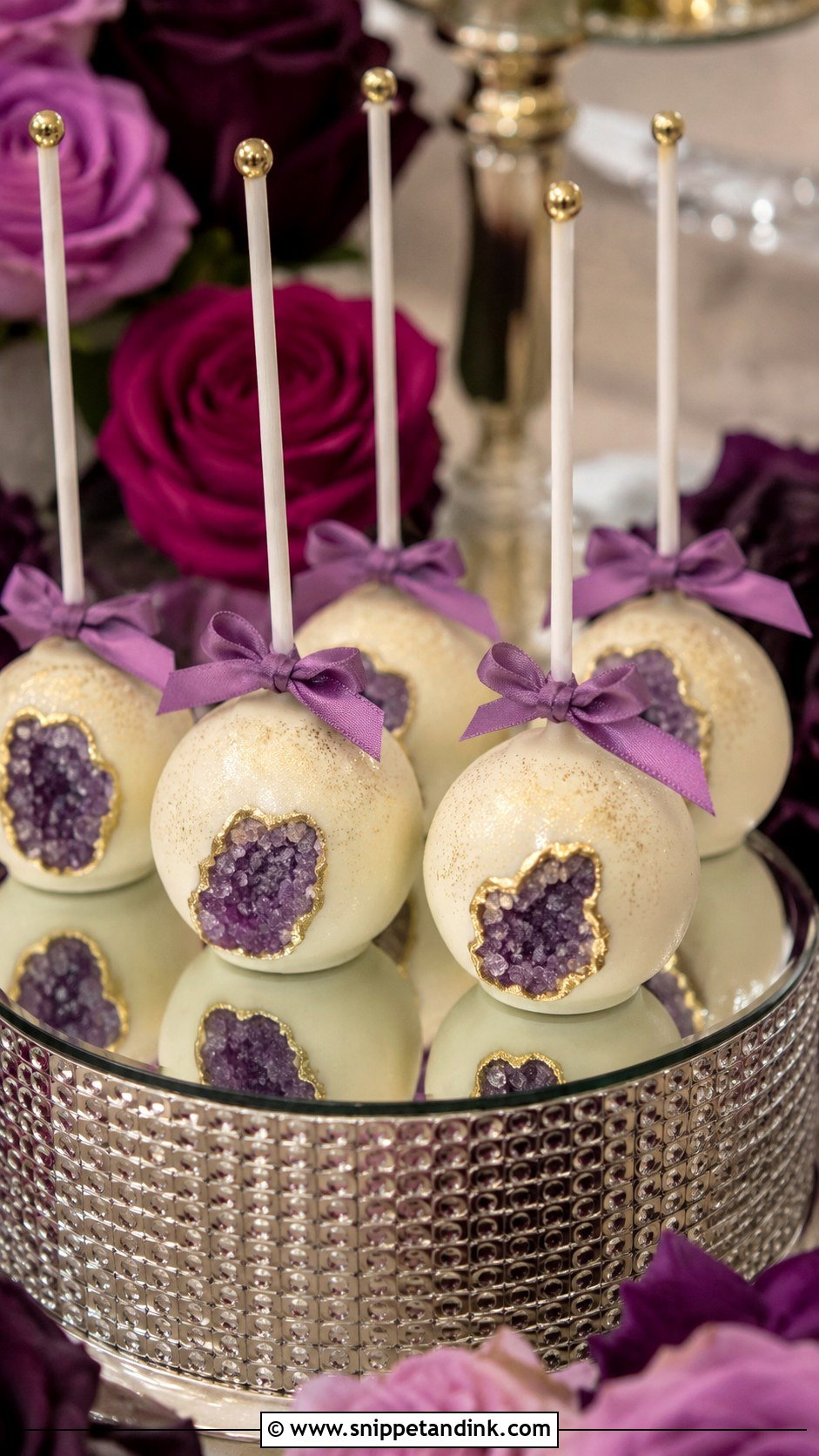
Geode wedding cake pops are the boldest option on this list, and the rock candy is the catch. It’s hard, so a crystal crust over the whole pop makes it awkward to bite. I set a small cluster of rock candy or sanding sugar into one side, then edge it with edible metallic paint. Purple, blue, emerald and rose quartz shades are the usual choices, over chocolate, vanilla or red velvet centres. A dark tray or mirrored stand shows the crystals best.
19. Rustic Wedding Cake Pops
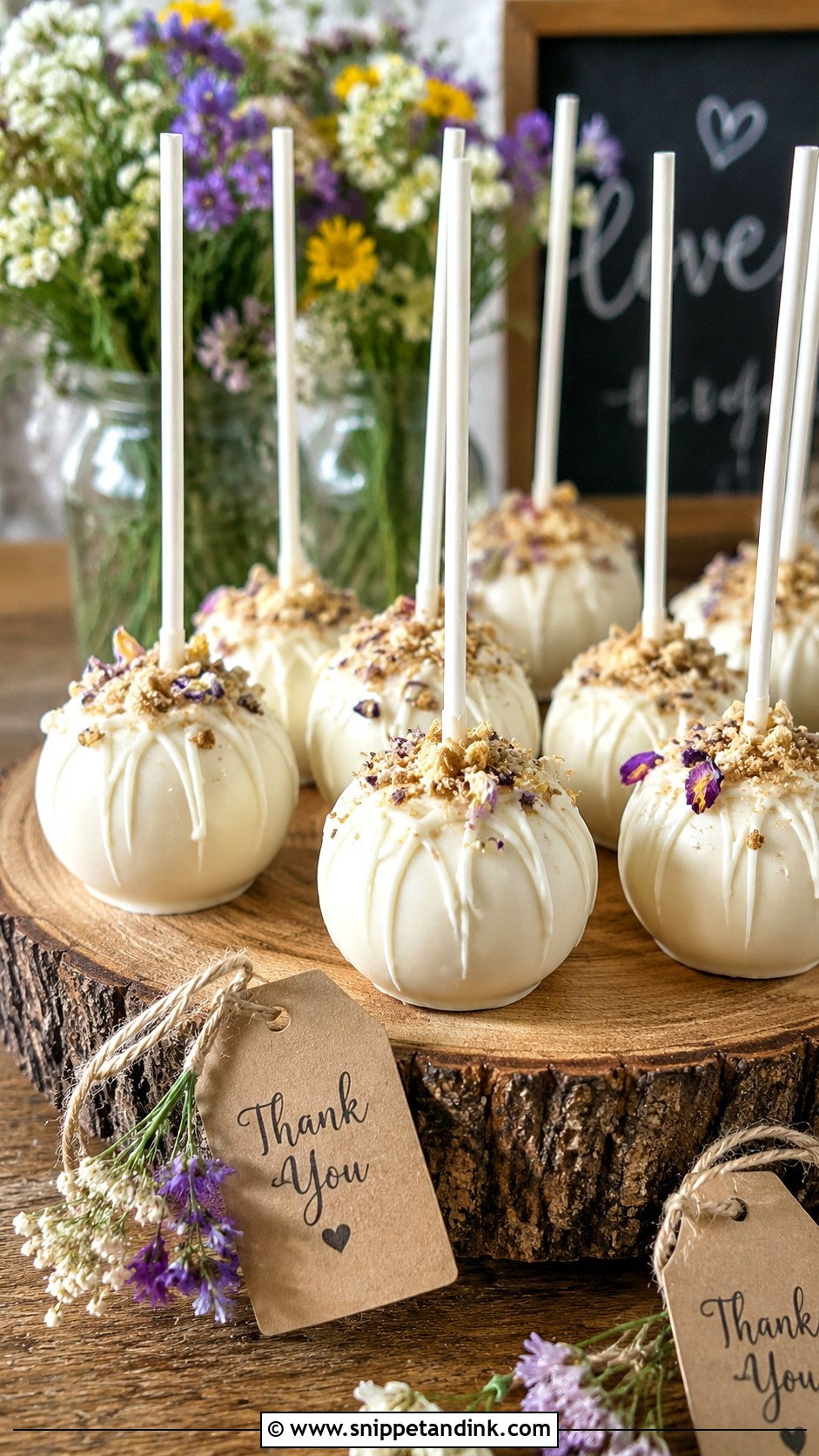
Rustic pops should look relaxed, not messy, which is a fine line on something this small. Spice, carrot, vanilla or chocolate cake inside, then an ivory, soft brown or white shell with a simple drizzle, crushed nuts or a few dried flower bits. Crushed nuts need an allergen tag like any almond flavour. A wood stand or lined tray suits barns and outdoor venues. Mason jars, wildflowers and kraft favor tags finish the table.
20. Boho Wedding Cake Pops
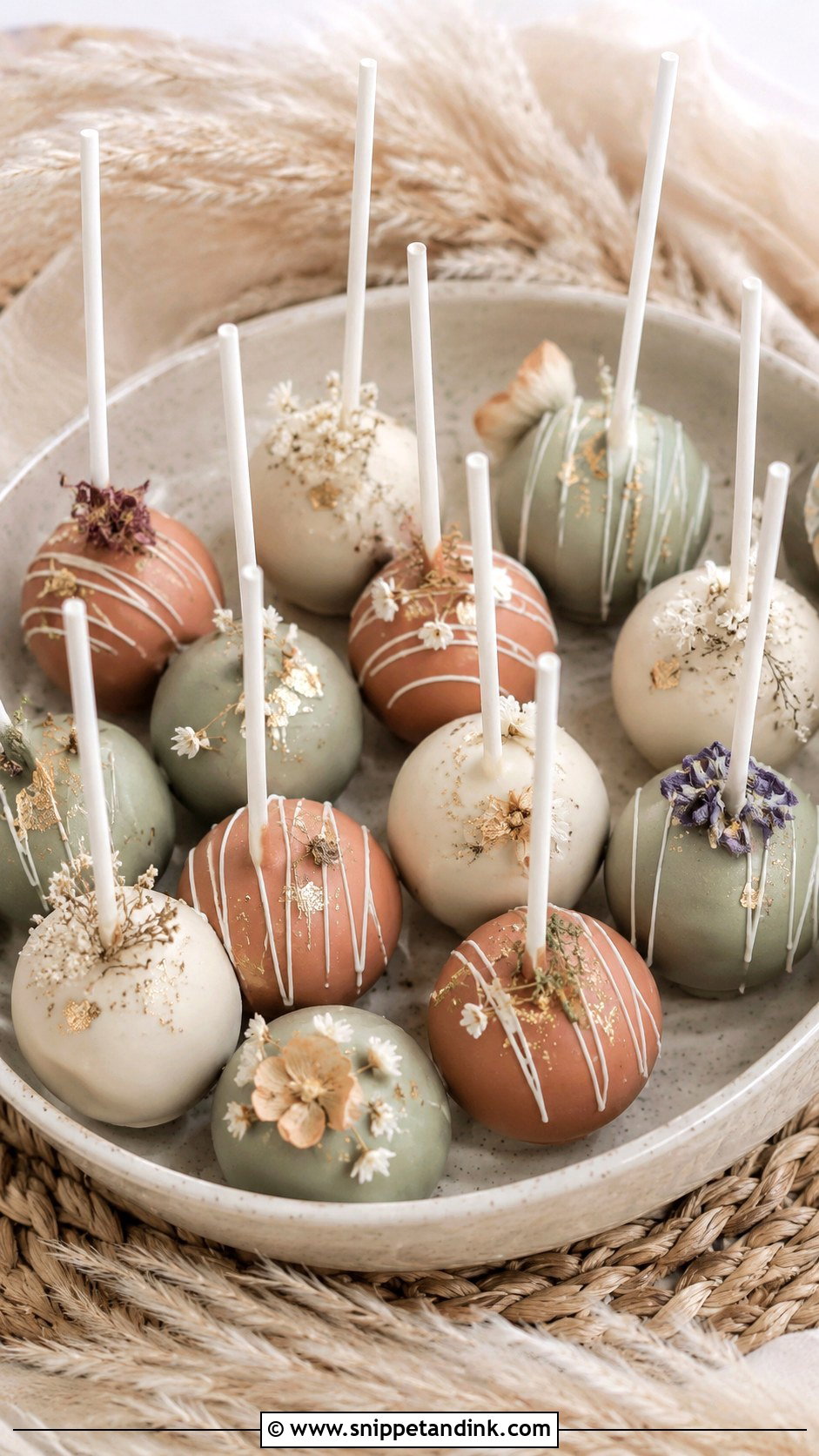
Boho sets lean on earthy coating colours: cream, beige, terracotta, muted blush and sage. Honey, chai, vanilla or almond suit them inside. I decorate with dried edible flowers, gold flecks or tiny painted arches, and keep everything matte rather than shiny. Pampas and dried grasses look right nearby, but keep them away from the pops themselves, since they shed fine fibres. A low ceramic dish, woven tray or wood stand holds them well.
21. Beach Wedding Cake Pops
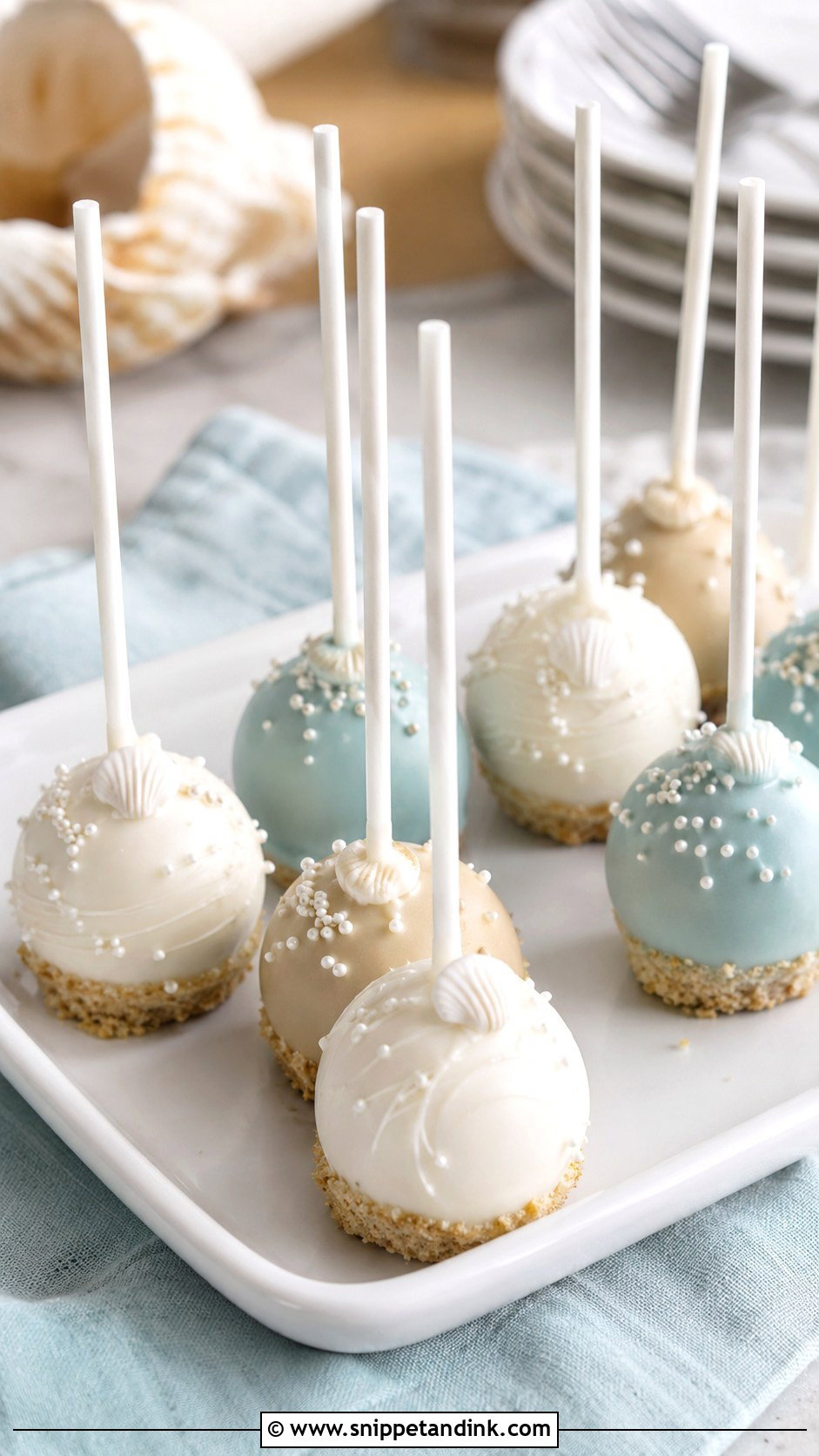
Beach pops have two enemies: heat and the urge to theme them. Chocolate shells soften quickly in the sun, so the display needs shade and a cool spot until guests arrive. Coconut, vanilla, lemon or key lime suit the setting. Coat in white, pale blue, sandy beige or seafoam, and finish with pearl sprinkles, fine graham cracker sand or tiny sugar shells. Skip seafood shapes and ocean clutter. One small detail per pop looks coastal; five looks like a children’s party.
22. Garden Wedding Cake Pops
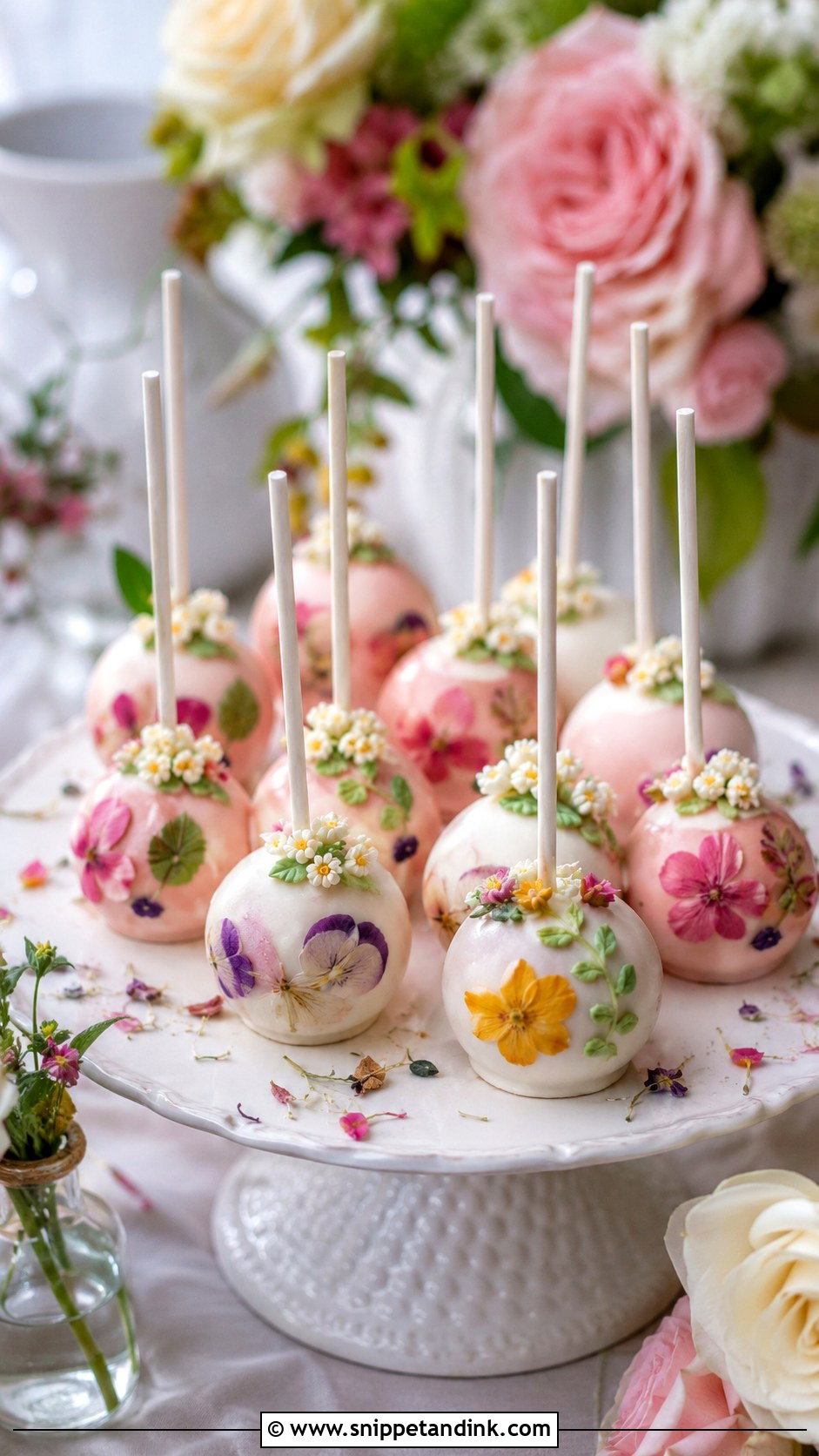
Garden wedding cake pops are where I paint by hand: small floral motifs, a few buttercream leaves, or pressed edible petals laid onto tacky coating. Lemon, strawberry, vanilla or elderflower cake fits spring and summer. White, blush, sage and pale yellow shells take the decoration well. Match flower colours to the bouquet and add fresh herbs or bud vases around the stand. They read as handmade, which is the point.
23. Vintage Wedding Cake Pops
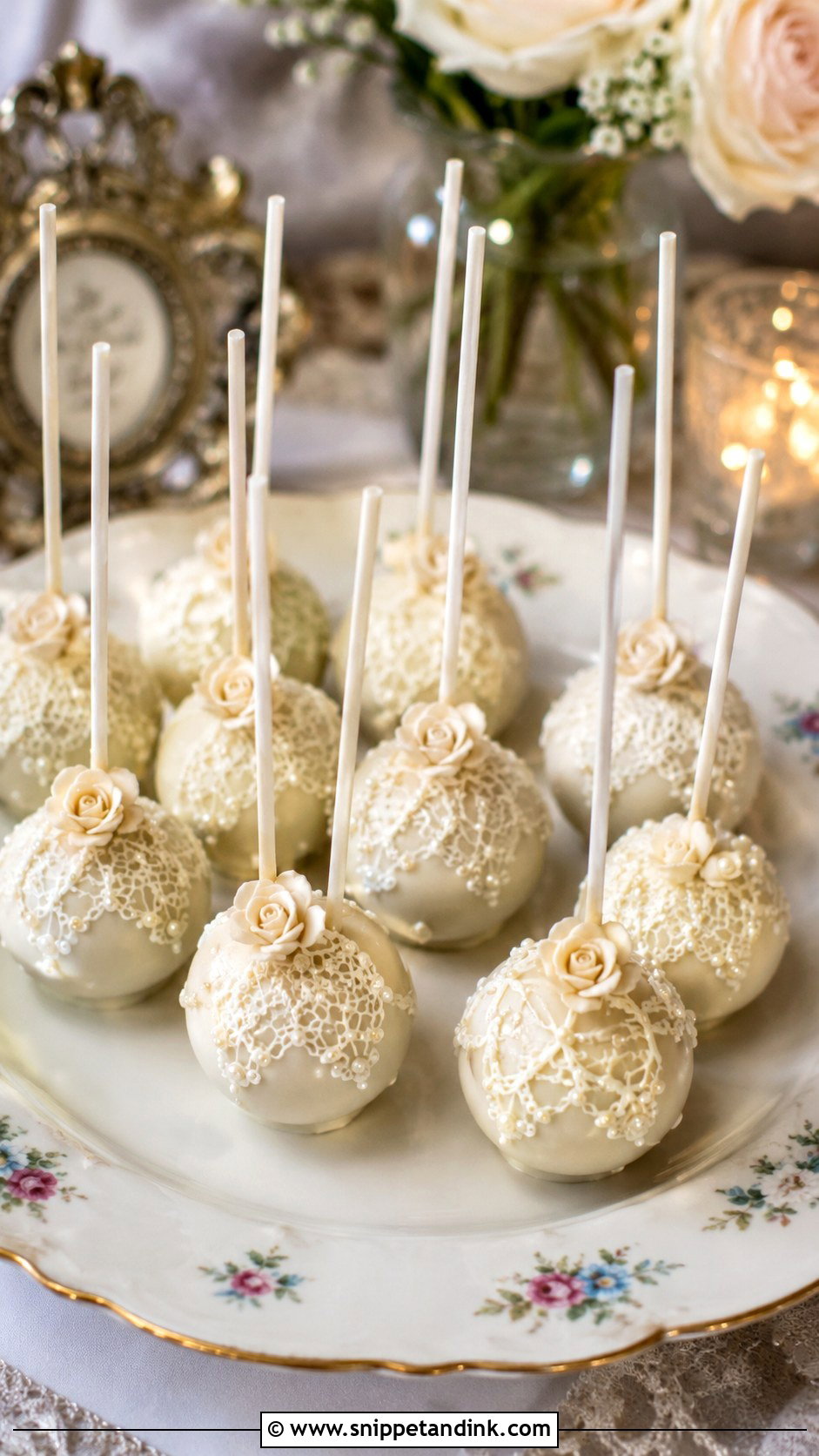
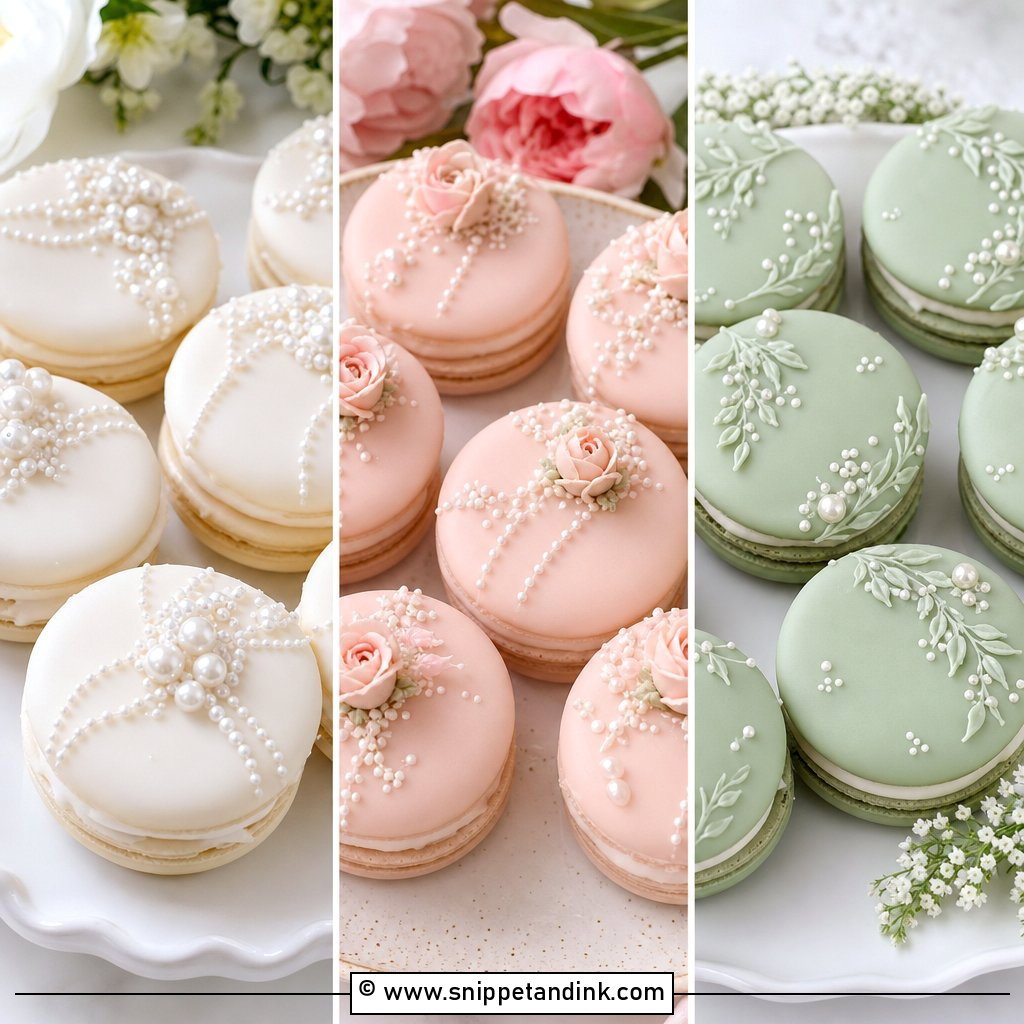
Vintage pops borrow from old cakes: piped lace, pearls, tiny rosettes and soft gold touches. Piping lace on a sphere is fiddly work, so I keep it to a band around the middle or a small motif on the crown. Vanilla, almond, red velvet or champagne centres all work under ivory, blush or soft white shells. Historic venues and candlelit receptions suit the style. A tiered stand, an antique-style tray or porcelain plates finish the display.
24. Minimalist Wedding Cake Pops
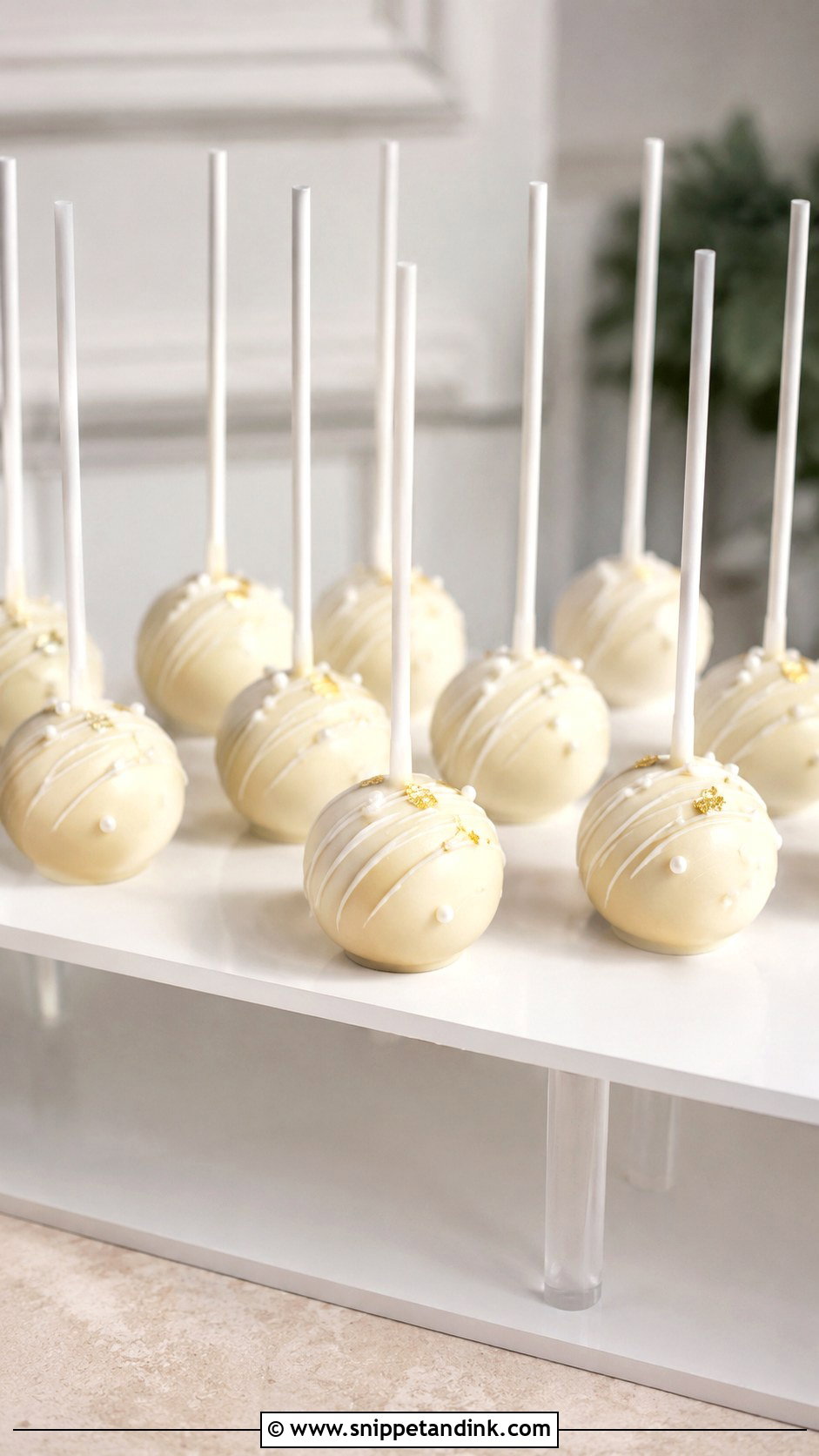
Minimal pops show every flaw. With nothing to hide behind, the coating has to be smooth, without the ridges, drips or air bubbles that a busier design would cover. I tap off excess coating carefully and let the pops set upright so the shell stays even. White, ivory, beige, black or a single wedding colour, plus one accent: a thin drizzle, one sugar pearl or a gold fleck. Uniform rows with even spacing make them look expensive on modern and neutral tables.
25. Glitter Wedding Cake Pops
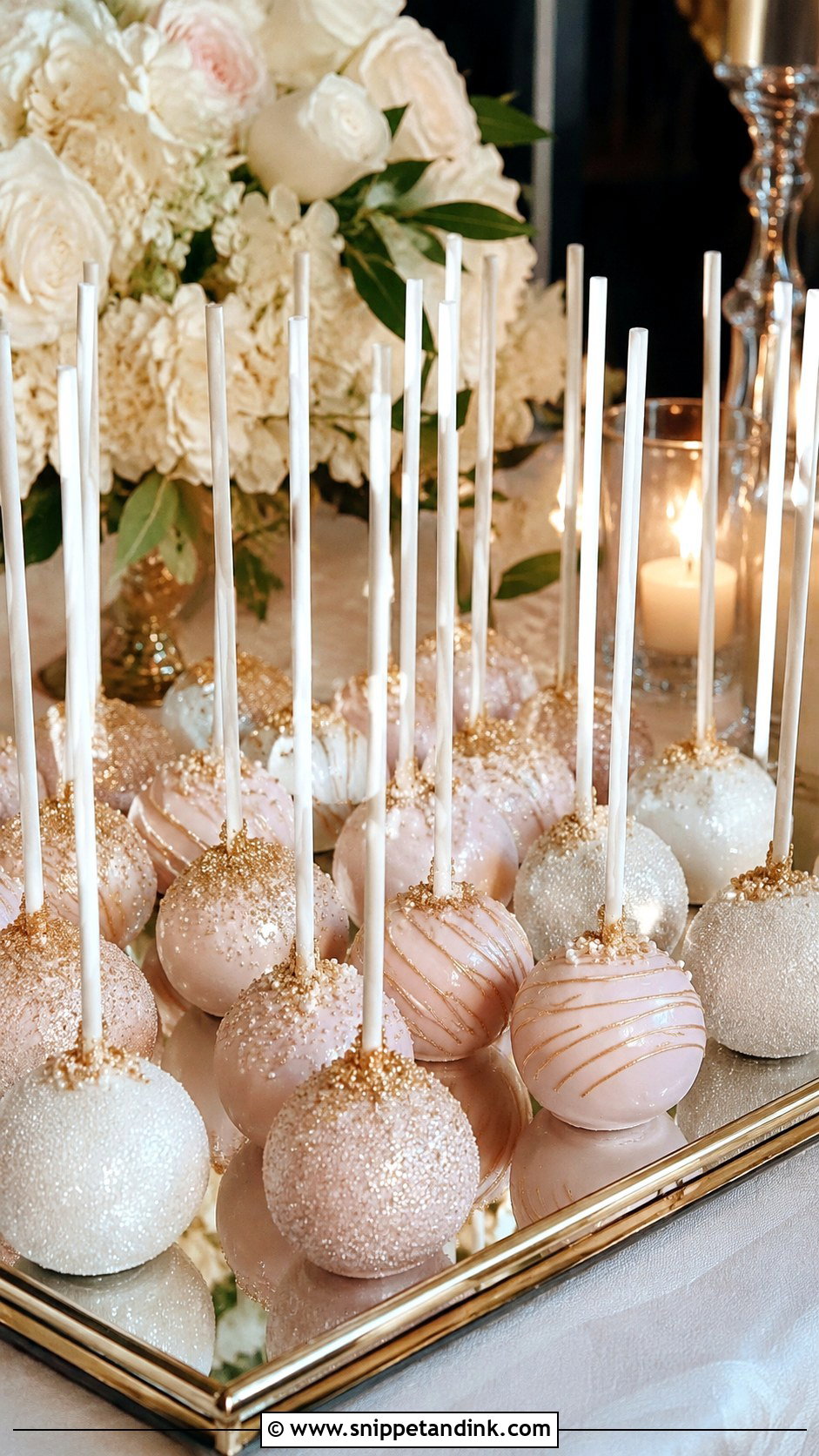
Glitter needs a label check more than any other finish. Plenty of craft and cake-decorating glitters are sold as non-toxic but not edible, so I use only glitter marked edible, in pearl, champagne, rose gold, silver or gold. I put shimmer on one side, the crown or a drizzle line rather than coating the whole pop. Vanilla, champagne, chocolate or strawberry centres all fit. Evening and ballroom receptions with candlelight make the shimmer catch without overwhelming the table.
26. Ombre Wedding Cake Pops
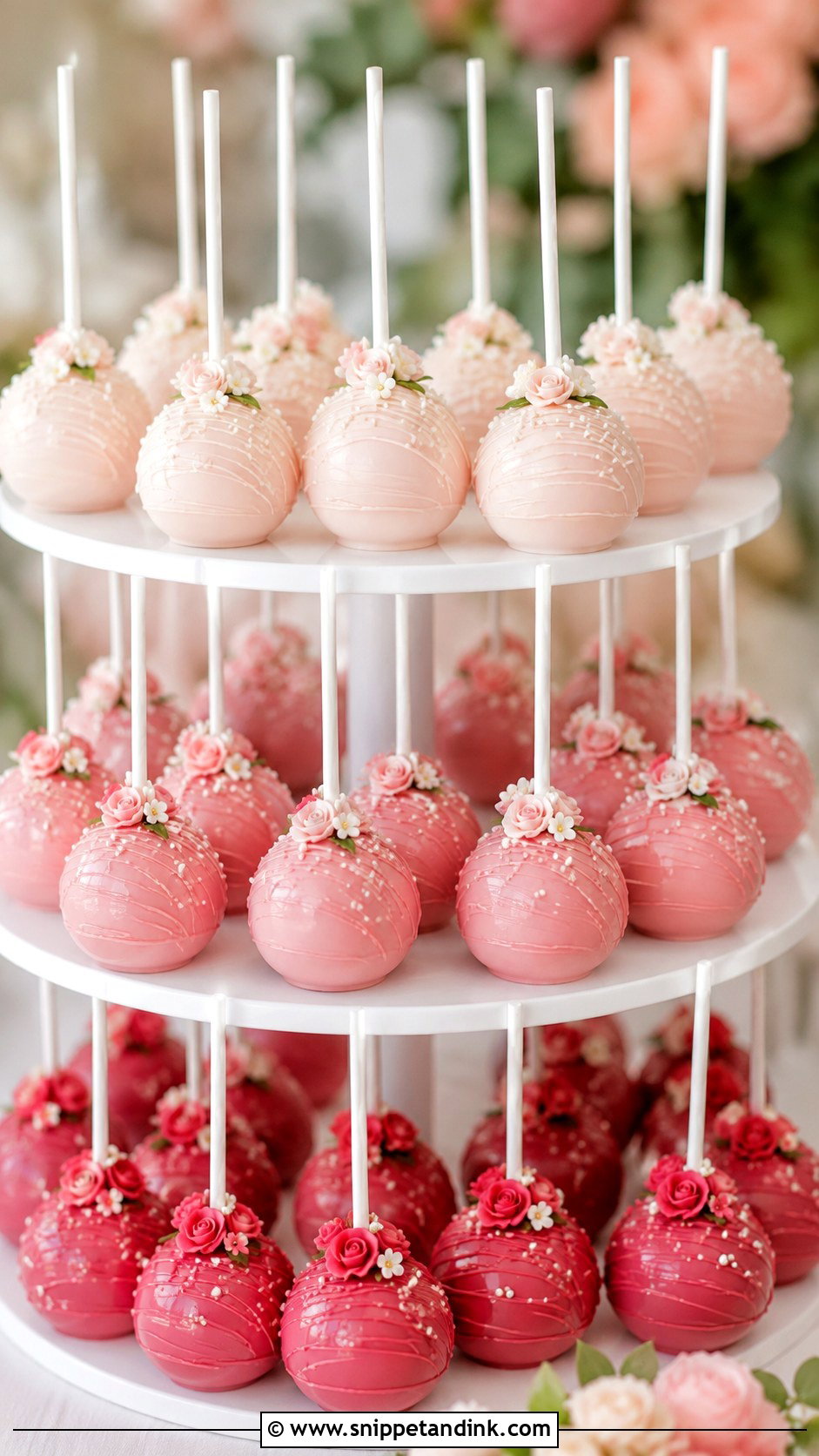
Ombre pops show off a palette in one display. I tint one batch of coating, dip a group, then darken the same coating a step for the next group, so the shades actually connect. Blush, blue, lavender, sage, peach or neutrals all grade well. Vanilla, almond, lemon or strawberry centres keep the flavour simple, and matching drizzle or pearls unify the set. Arrange them light to dark on the stand; the gradient is lost if guests see them mixed.
27. Heart Wedding Cake Pops
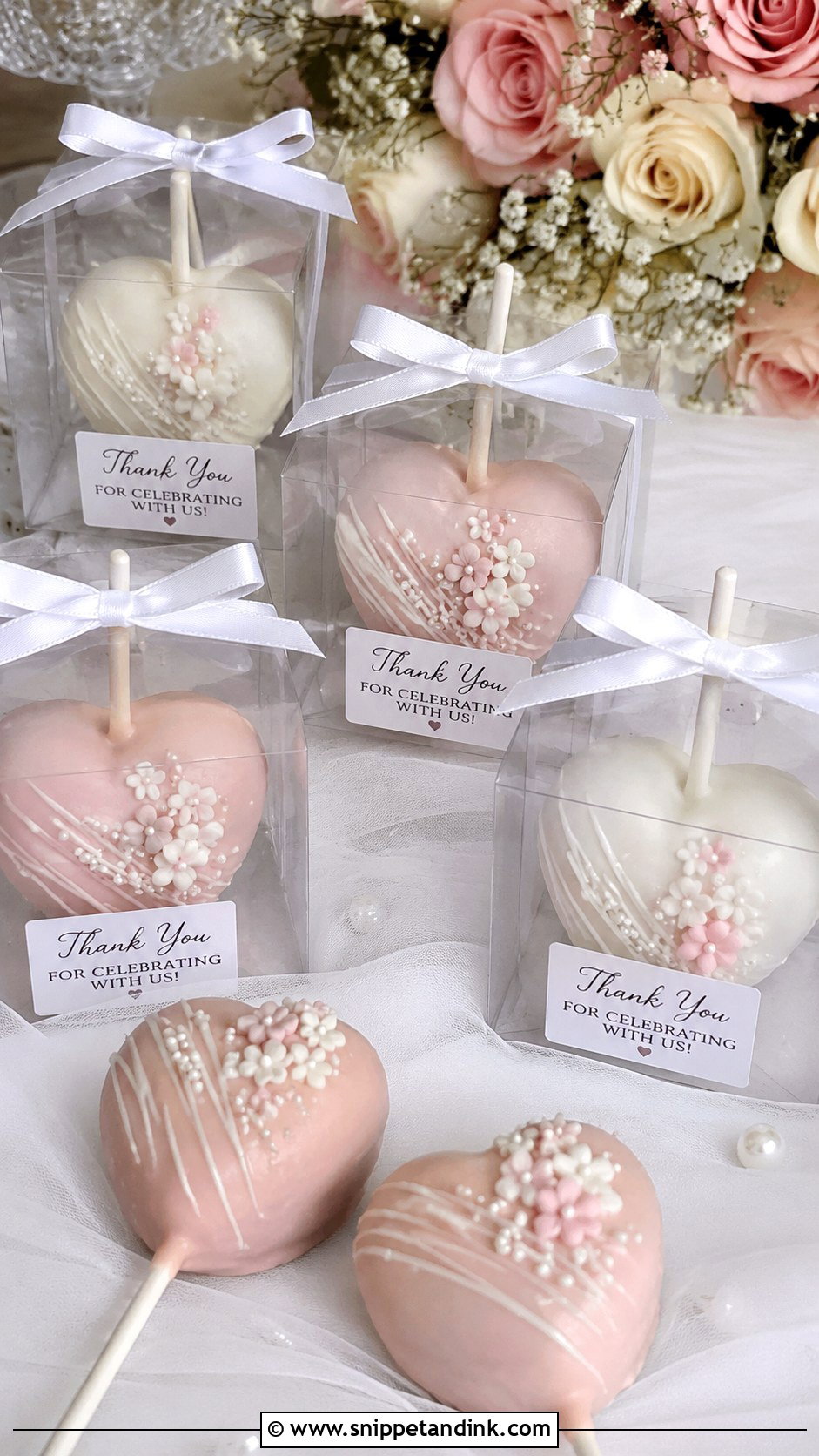
Heart pops are easier with a mould than by hand. Hand-shaped hearts lose their point when dipped, while moulded hearts keep a clean outline. Vanilla, red velvet, strawberry or chocolate cake inside, then white, blush, red or ivory coating with small pearls, a fine drizzle, a mini sugar flower or initials. Hearts are heavier at the top, so I use a sturdier stick or lay them flat. A parchment-lined tray suits sweetheart tables, favor boxes and showers.
28. Cake Pop Bouquet For Wedding
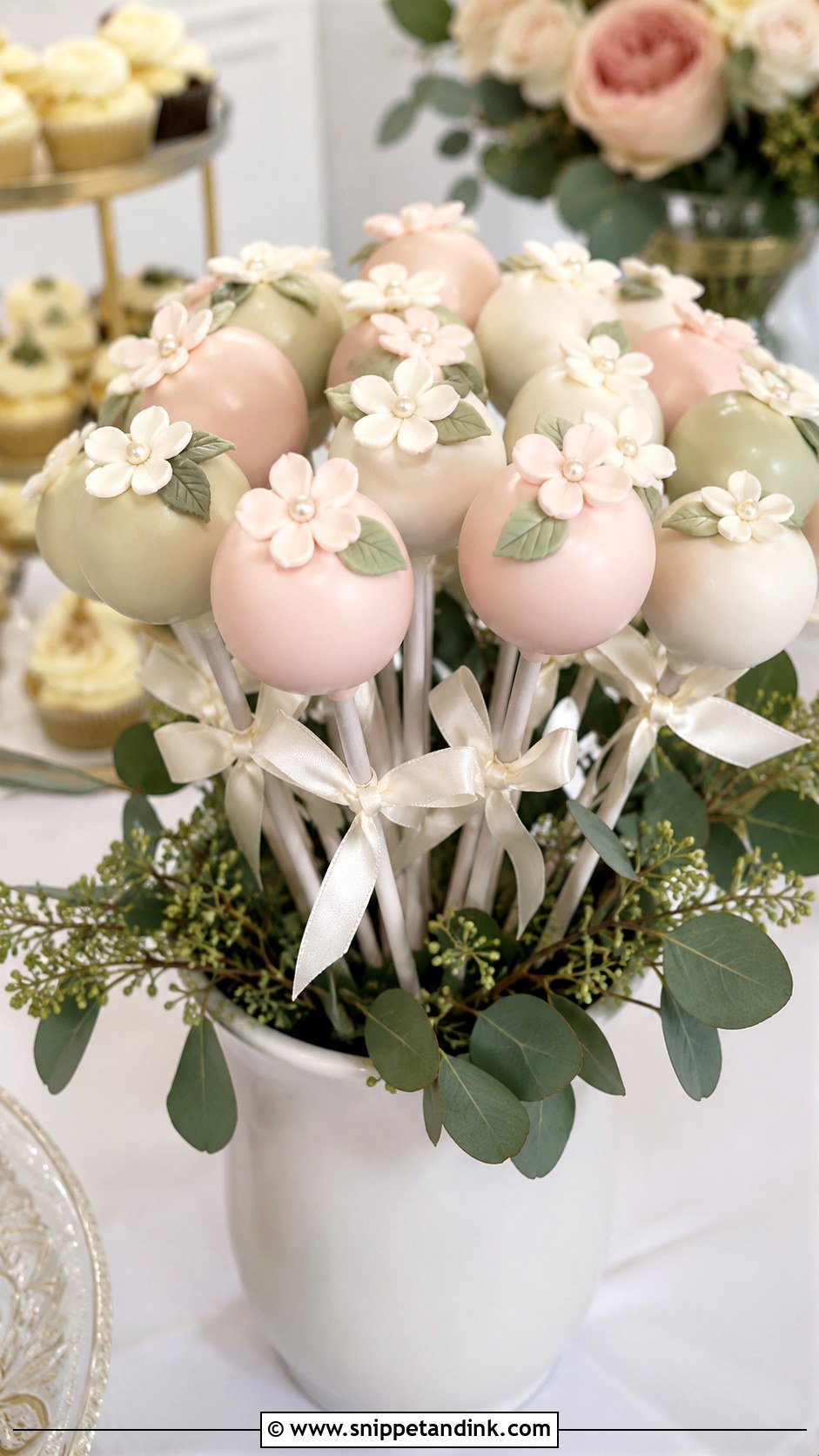
A cake pop bouquet doubles as a centrepiece and a dessert. Arrange the pops like stems in a vase, box or wrapped bundle, coated in the colours of the wedding flowers with sugar petals, pearl centres or small leaves. I’d use a styrofoam block covered in paper or fabric for the base; floral foam crumbles and isn’t meant to sit near food. Wrap the sticks in ribbon, and leave enough space between them that guests can pull one out without knocking the others.
29. Tiered Cake Pop Display For Wedding
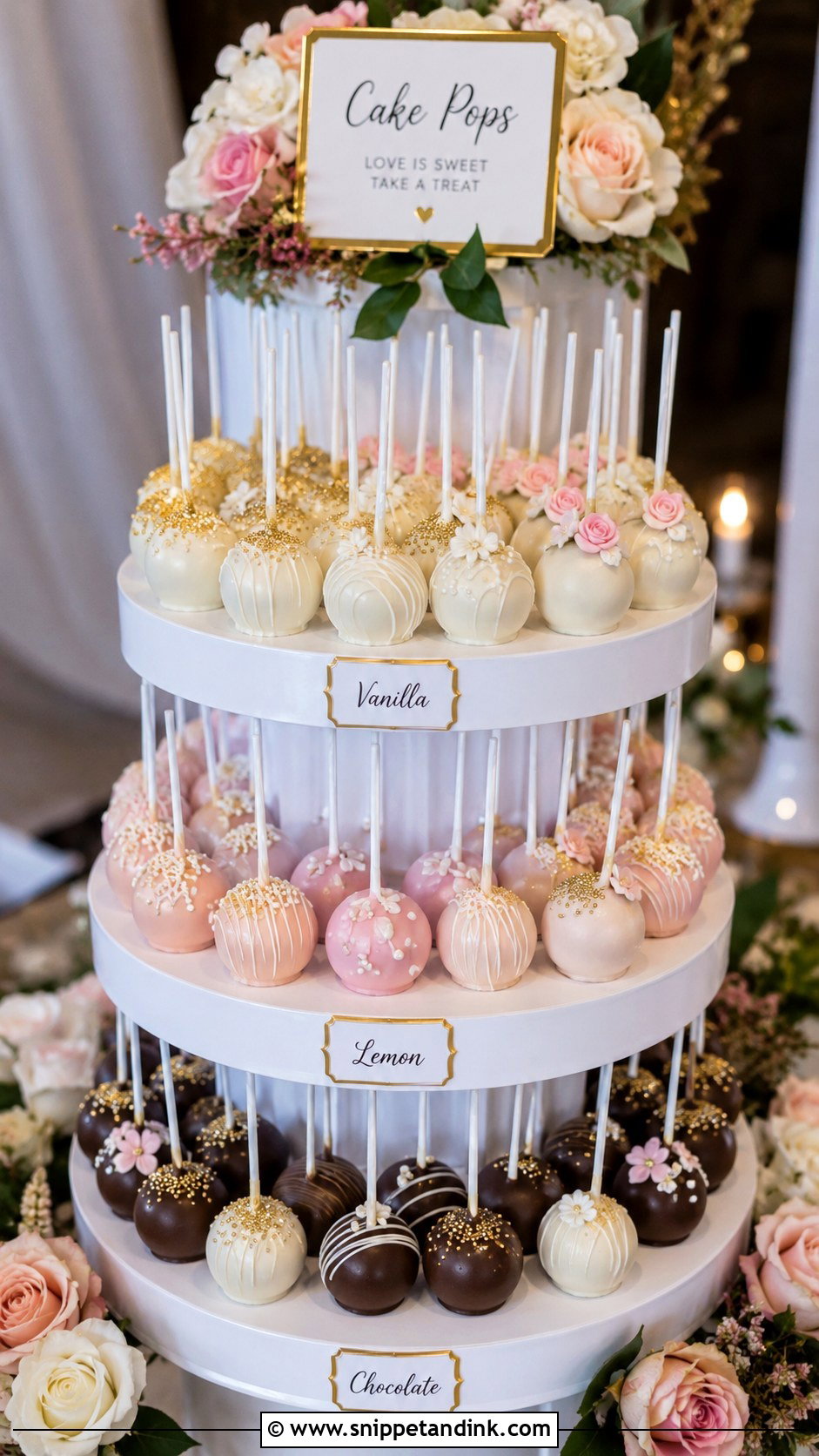
A tiered stand turns pops into a main dessert instead of an extra. Vanilla almond, chocolate, lemon and red velvet make a good spread of flavours. I arrange by flavour or shade per tier, and the coating colour should tell guests what’s inside, or a small label should. White, acrylic or gold stands keep it clean. Leave the stand’s top tier for the prettiest pops, since that’s what ends up in photos.
30. Wedding Favor Cake Pops
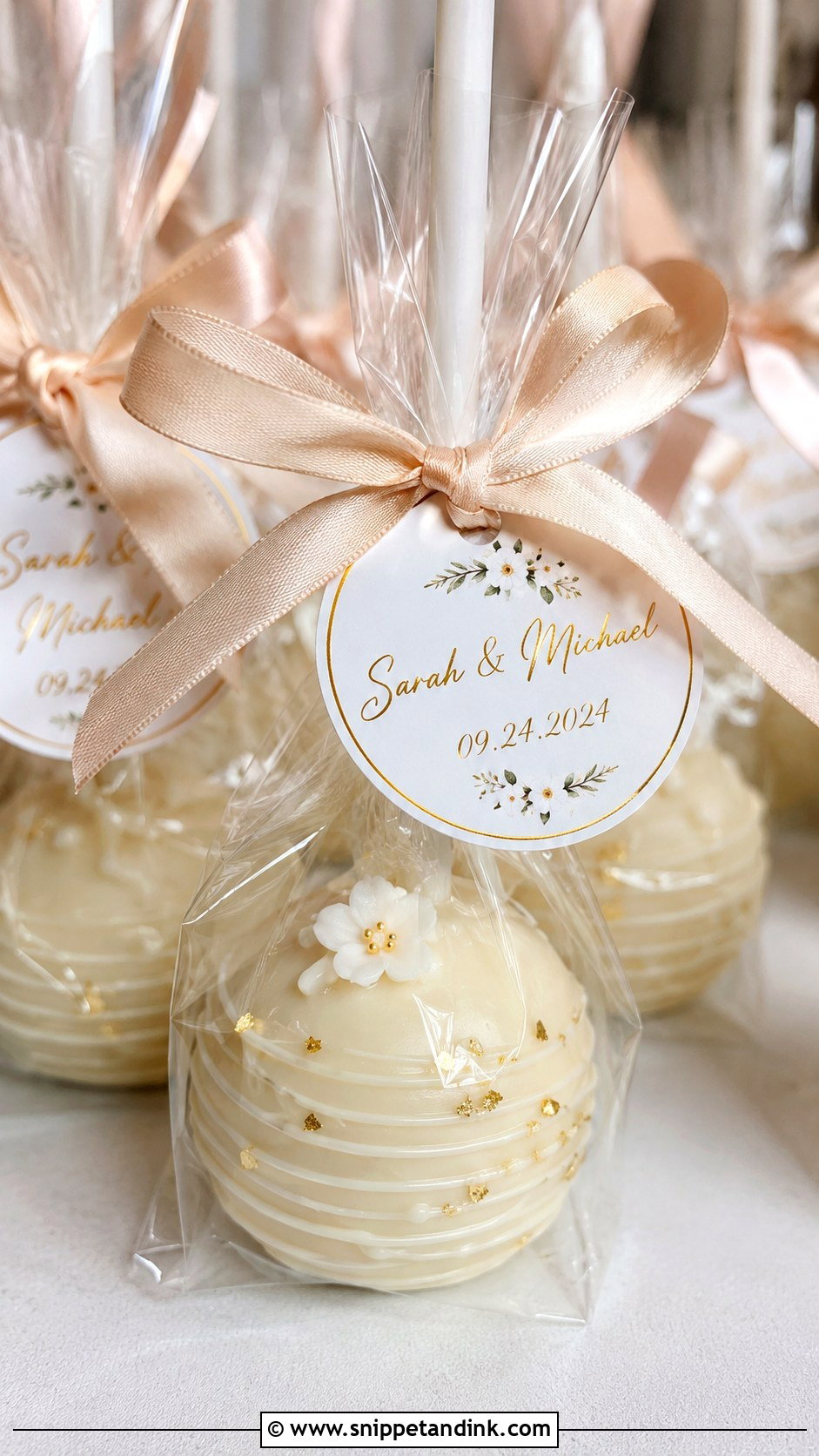
Favor pops need to travel. I pick sturdy flavours like vanilla, chocolate, almond or red velvet without cream cheese, use a smooth shell that won’t scuff in a bag, and seal each pop in a clear sleeve, small box or cello bag as soon as the coating sets. Pearls, drizzle, edible gold, initials or a sugar flower dress them up. A tag with your names, date or a short thanks finishes them. Guests take a pop home far more often than a trinket.
Why Pops Crack, Sweat or Slide Down the Stick
Most cake pop failures come from temperature. A centre straight from the freezer dipped into warm coating will crack as it warms and expands, so I let chilled centres sit briefly before dipping. Pops moved from a fridge into a humid room bead with condensation, which leaves spots on the shell, so they should come up to room temperature still boxed.
Sliding is usually a mix problem. Too much frosting makes the centre heavy and soft, and it creeps down the stick in a warm room. A firm, well-chilled crumb and a stick first dipped in coating before it goes into the cake fix most of it.
Labels and Allergies on a Self-Serve Table
A cake pop table has no server to ask, so the labels do that job. I list the flavour and the main allergens on a small card at each section: nuts, including almond and coconut, dairy, eggs and gluten. If you have guests with severe allergies, ask your baker whether the kitchen handles nuts at all, and consider a separately boxed batch for them rather than relying on a sign.
One Flavour, Two Colours and a Steady Stand
Cake pops can be playful or formal, and the best sets I make are built on a few decisions: one or two flavours that suit the season, a short list of coating colours from your palette, and a display that keeps them upright and shaded. Settle those first and the decoration becomes the easy part. Pearls, florals, gold or modern minimalist treats all work once the basics are right.
You'll Like These Ideas:


Leave a Reply