
A cookie shaped like a tiered cake does a lot of work for its size. It can sit at each place setting as a favor, stand among the other dessert table pieces, go home in a guest’s pocket, or echo the real cake on a shower table. From the bench side, though, the designs differ hugely in how long they take, how well they travel and how they hold up in a warm room. These thirty range from plain white royal icing to stacked mini cakes, and I’ve noted what each one asks of the baker and of you.
Lead Times, Counts and Allergens for a Favor Order
Decorated cookies take far longer than people expect. Each layer of royal icing needs to dry before the next goes on, and the finished cookie needs several hours, ideally overnight, before it can be bagged. A detailed set of a hundred or more can take several days of work.
- Contact a cookie maker as early as you can; popular ones book up months ahead in wedding season.
- Order a few more than your guest count to cover breakage.
- Ask about allergens, especially nuts, gluten and eggs, since royal icing usually contains egg white or meringue powder.
- Confirm whether cookies will be delivered or collected, and when.
If you want cookies to match the cake exactly, ask your cake designer and cookie maker to share sketches. I always ask for a fabric swatch or a photo in daylight, since screens shift colors.
What changes the price per cookie
Prices vary a lot by region and maker, but the cost is driven mostly by decorating time, not ingredients. Hand-piped lace, painted watercolor and individual monograms take far longer than a flooded base with pearls. Custom cutters, matched colors and heat-sealed packaging with ribbon all add to it as well. If budget is tight, I suggest one simple design repeated for every guest and a smaller batch of detailed cookies for the head table or display.
1. Tiered Wedding Cake Cookies
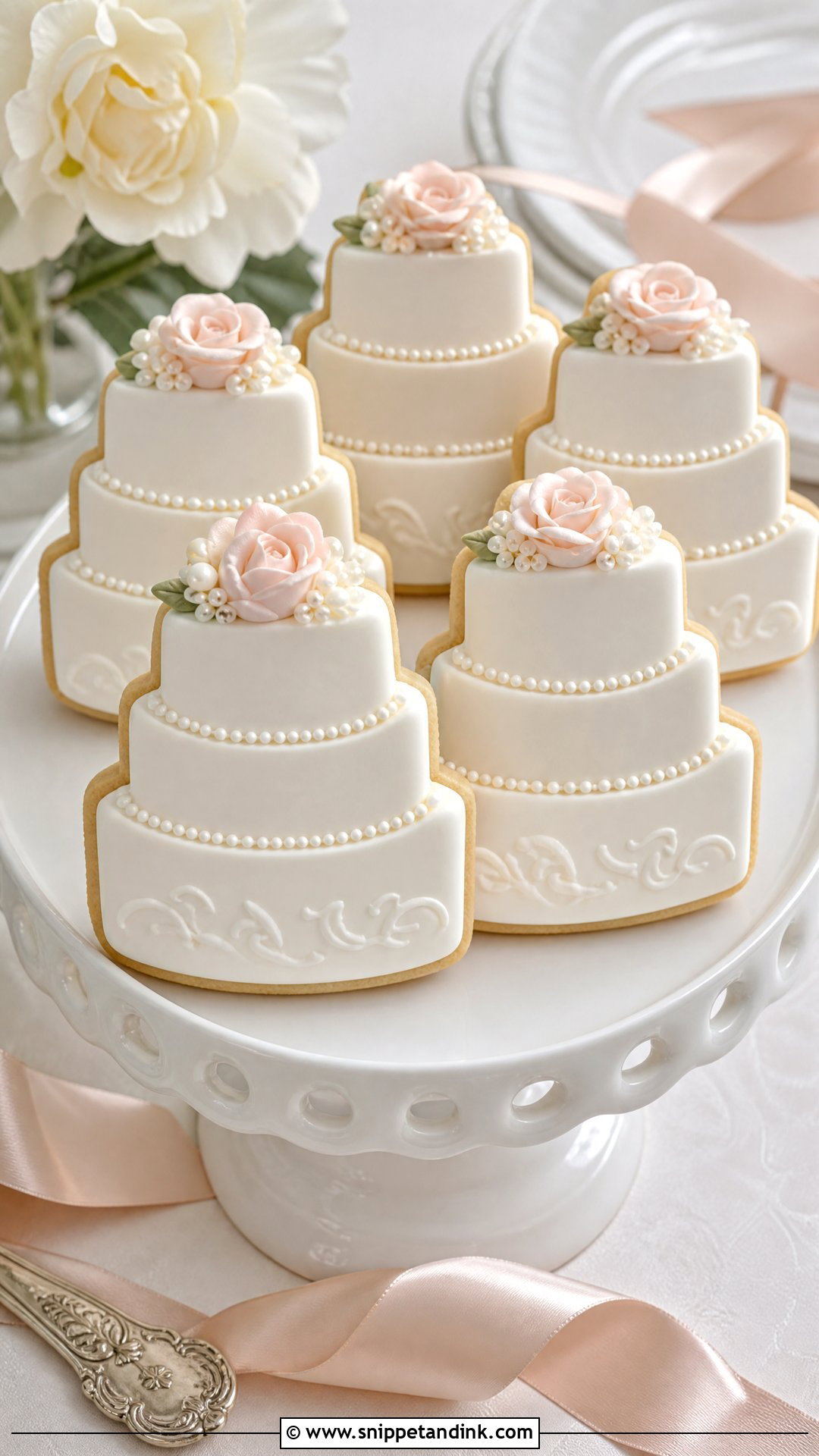
The three-tier silhouette is the one guests recognize instantly, which is why I treat it as the base for most of the designs here. It starts with a sturdy vanilla sugar cookie dough that’s been chilled after cutting, so the narrow top tier keeps its corners in the oven. I flood each tier separately and let the lower one crust before flooding the next; that tiny drying gap is what gives the cookie a dimensional look instead of one flat shape. Piped borders hide the seams, and a few sugar pearls finish it.
2. White Wedding Cake Cookies
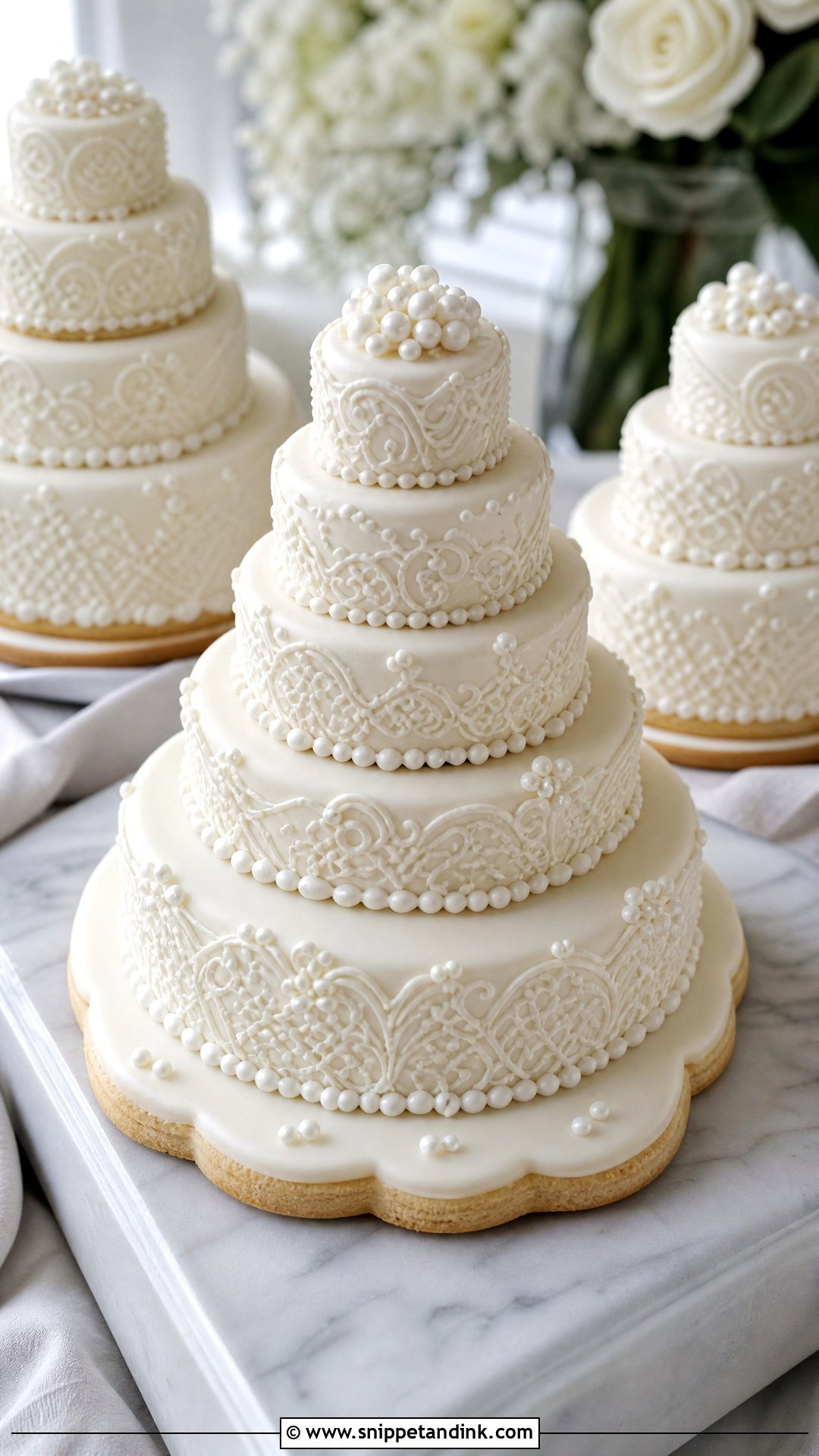
All-white sounds simple, yet it’s the hardest color to keep clean. Royal icing made with only white coloring can still dry slightly grey or translucent, so I add a drop of white gel and dry it quickly under a fan to keep it bright. Texture does the decorating: tone-on-tone piping, dots and scallops. A hint of ivory or pale silver gives contrast without color. Expect any crumb or speck to show, so these are piped last on a clean bench.
3. Floral Wedding Cake Cookies
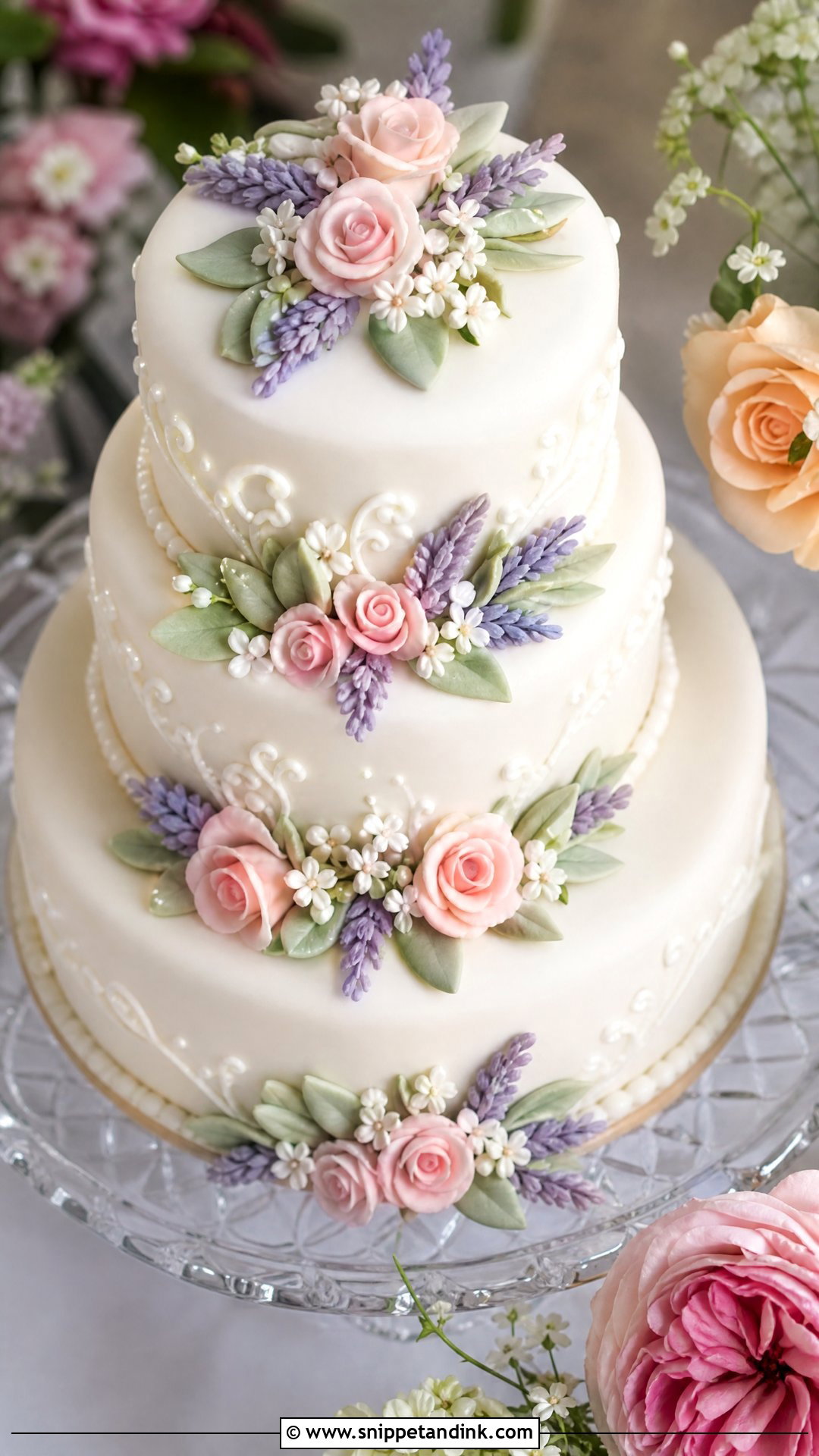
Flowers connect the cookie to the bouquet, and there are three ways to put them on: piped, painted, or pressed edible blooms. Piped roses and daisies add height, which matters if the cookies are stacked in bags. Pressed edible flowers such as violas lie flat and look delicate, but only use blooms grown for eating, never florist stems, which are often treated. Keep the flowers balanced so the cake shape still reads. Clear bags with ribbon suit them.
4. Gold Wedding Cake Cookies
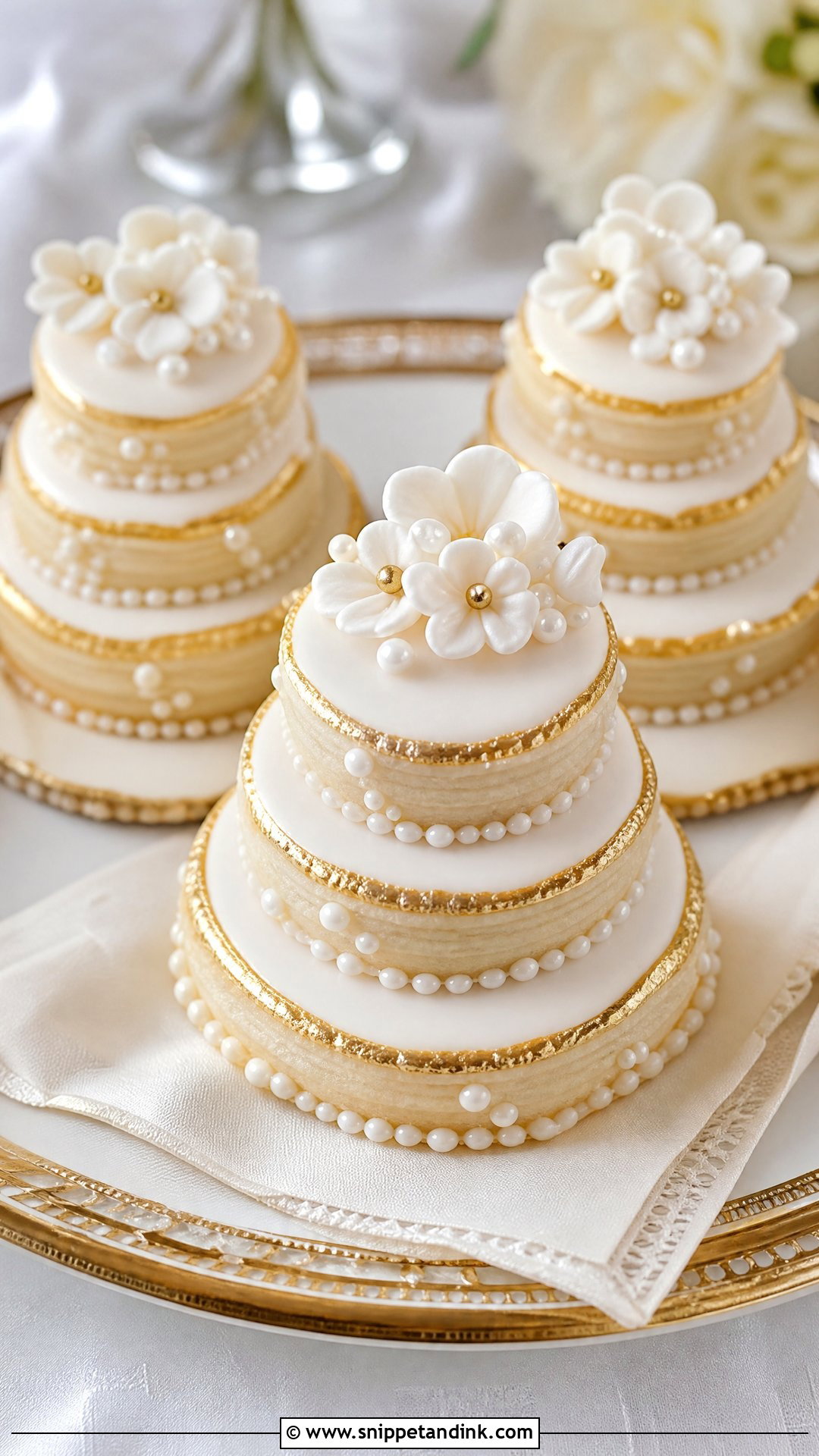
Gold reads expensive on a cookie, but only if the gold itself is the right product. Some shimmer dusts are labeled non-toxic rather than edible, which means they’re decorative only; for anything a guest will eat, I use products clearly labeled edible. I paint gold onto fully dried icing with a little alcohol so it sets fast and doesn’t dissolve the surface. Edges, monograms and small hearts carry it best. Too much metallic overwhelms the shape, so keep it to two or three touches.
5. Rose Wedding Cake Cookies
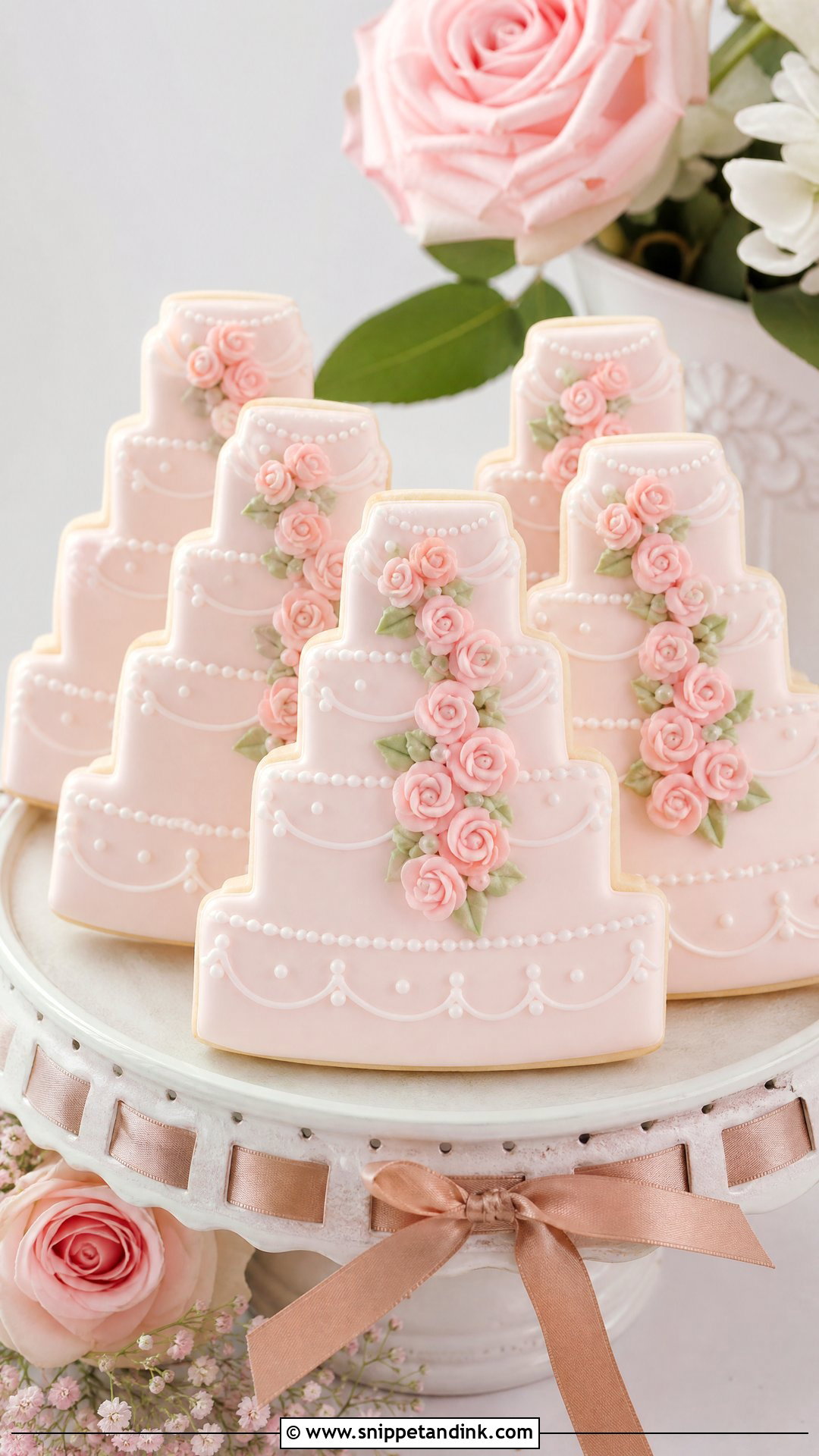
Royal icing roses are piped onto parchment the day before, left to dry hard, then attached with a dot of icing, which is why they hold their shape in a favor bag. Fondant roses give more dimension but soften in humidity. Blush, ivory and dusty pink suit them. I cluster roses on one tier or let them cascade down one side, the way a florist would dress a real cake. Small muted leaves keep them from looking like a children’s party cookie.
6. Lace Wedding Cake Cookies
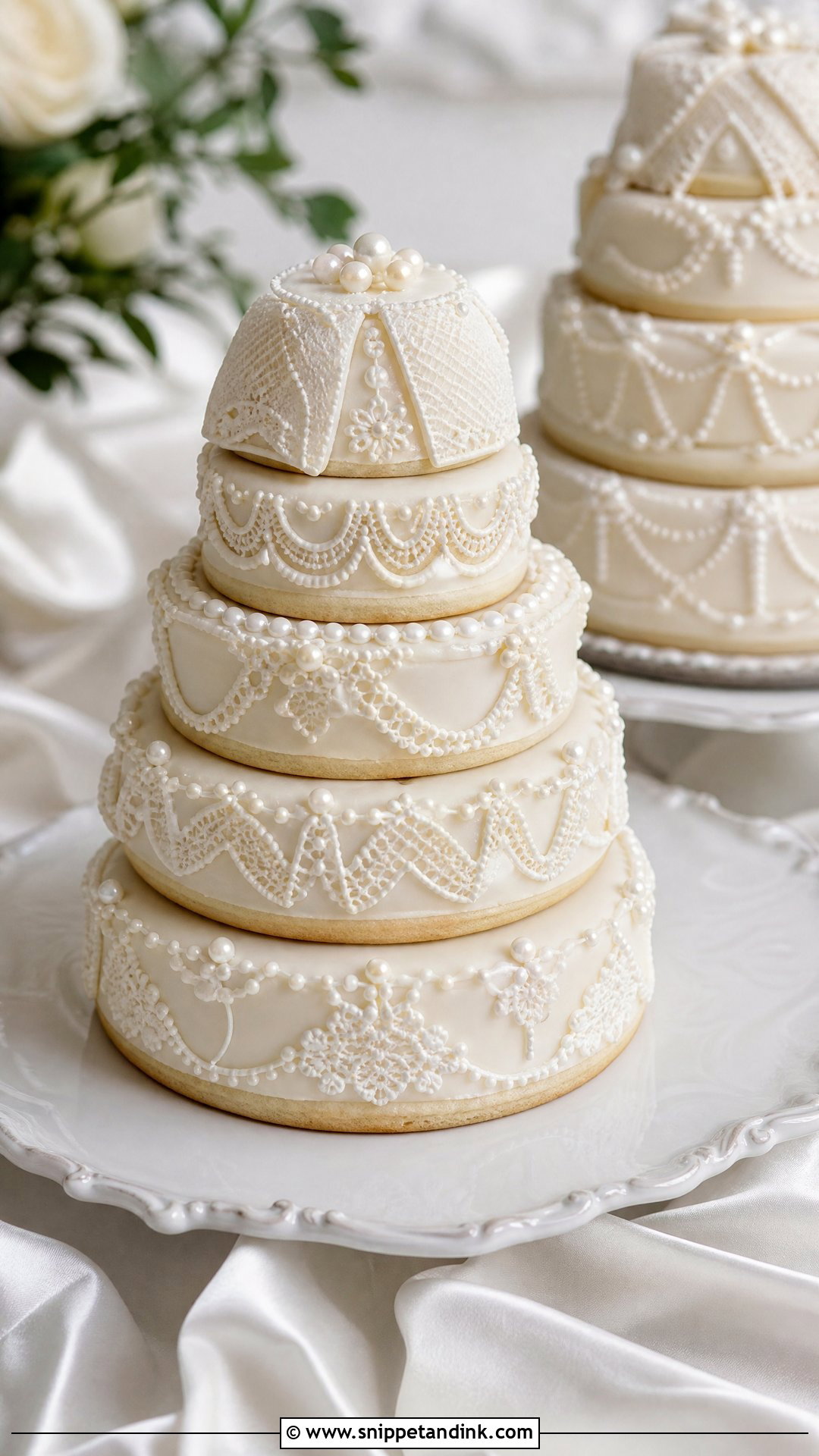
Lace piping needs thin, smooth royal icing and a steady hand. I pipe with a very small tip and slightly thinner icing than for borders, so the lines settle flat instead of sitting in ridges. You can cover the whole cookie or just one tier. It pairs with pearl accents and satin ribbon packaging. Lace is one of the slowest designs to pipe, so for a large order it noticeably affects the price.
7. Pearl Wedding Cake Cookies
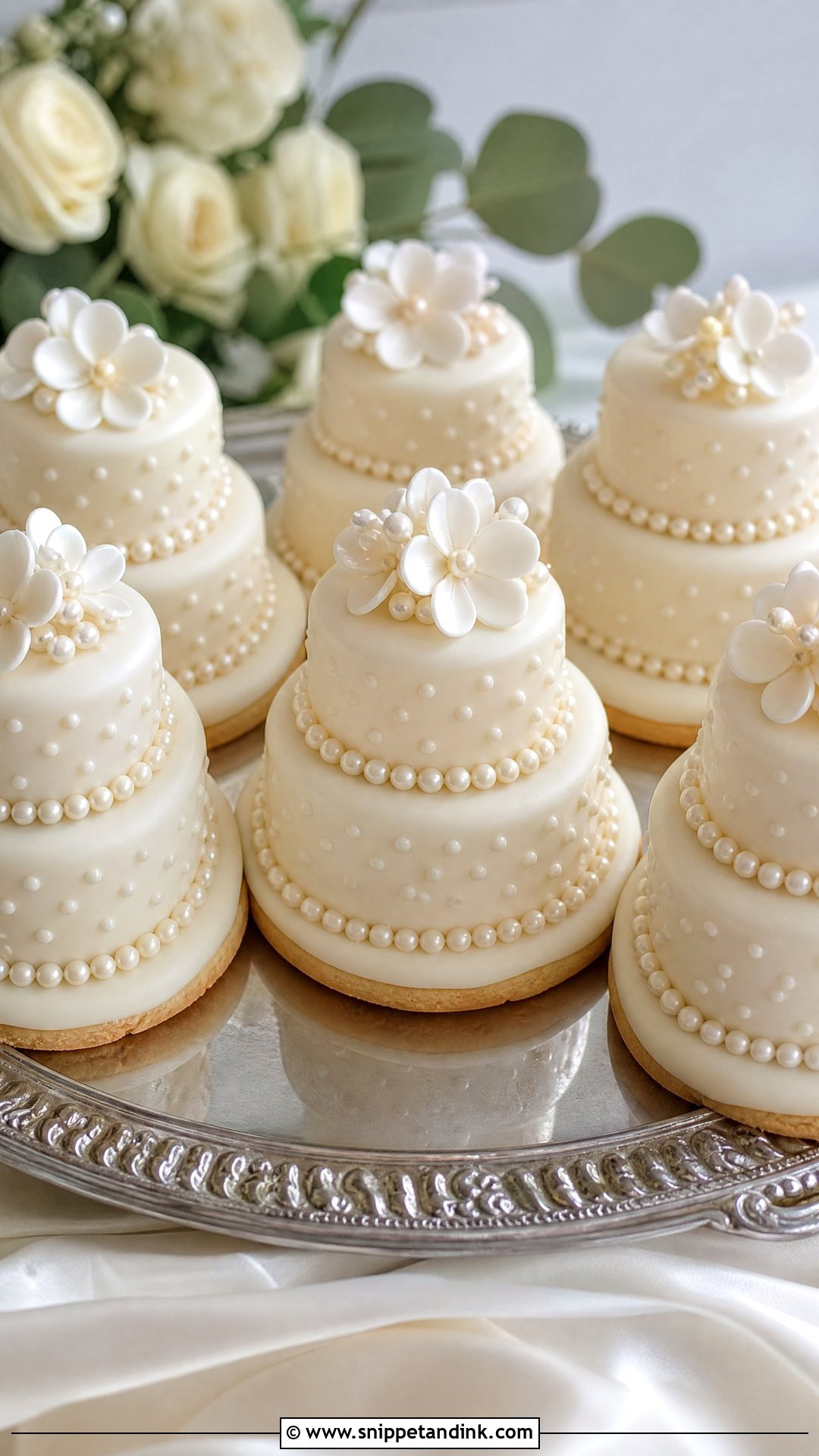
Pearls are quick to apply and look very bridal, which makes this a good design when the order is large and time is tight. I place sugar pearls into wet icing so they set in; pearls glued on later can pop off in transit. Rows along tier lines, a frame around a monogram or a small cluster around a sugar flower all work. Keep the rest of the cookie plain so the pearls lead.
8. Monogram Wedding Cake Cookies
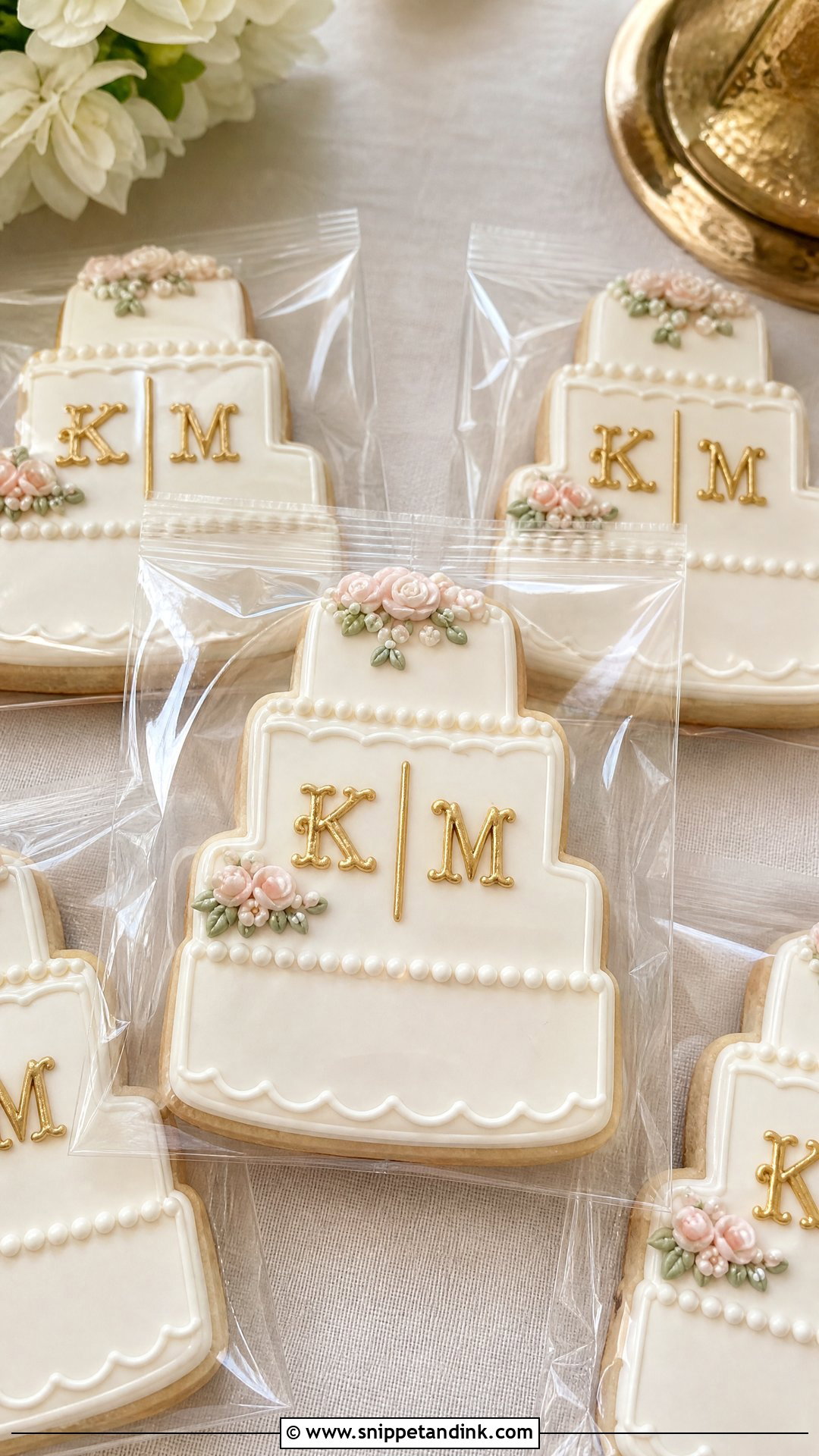
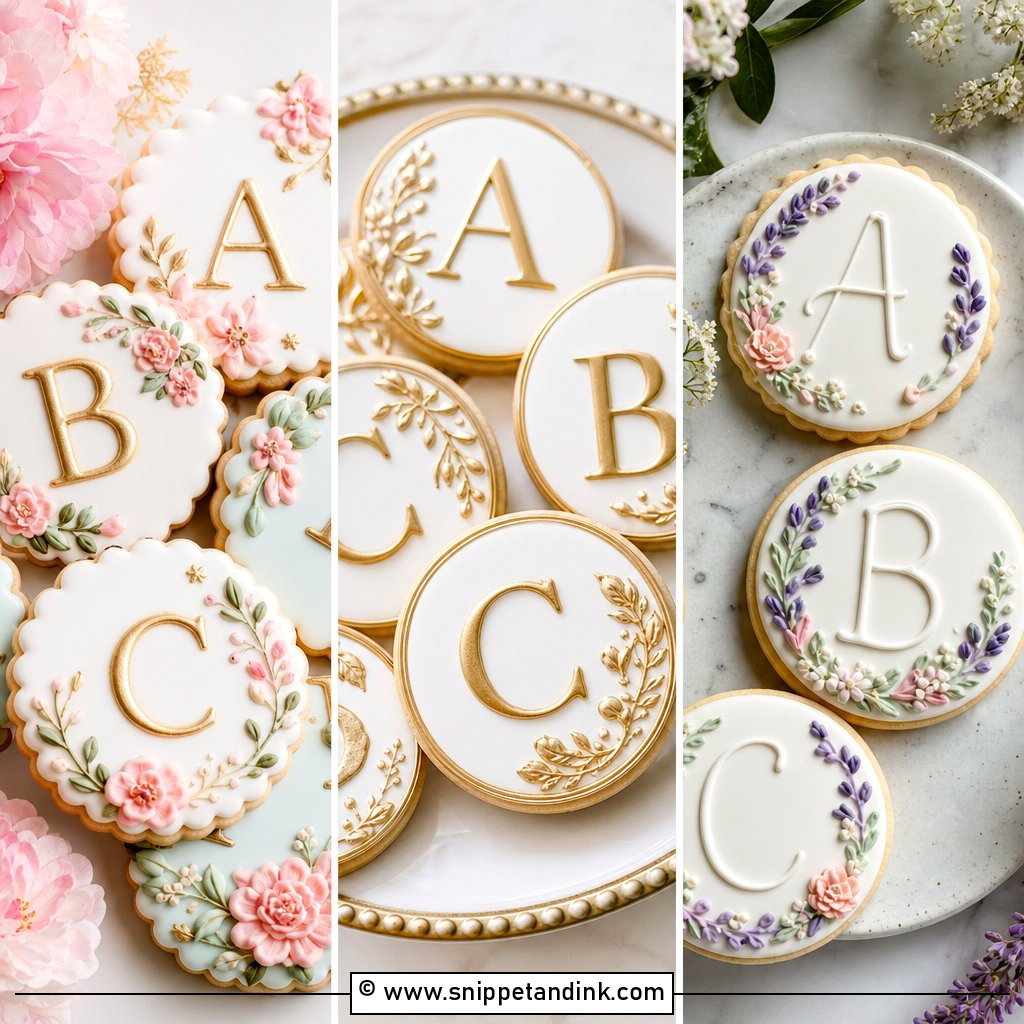
A monogram makes the dessert table personal. Choose a cookie shape with enough room on the center tier for initials, then pipe or stencil the couple’s monogram in a readable style. Stencils give consistent letters across hundreds of cookies, while hand piping looks more personal but varies slightly from cookie to cookie. Thin, fussy scripts blur at small sizes, so I’d choose a font with clear strokes. A thin border or small pearls frame it.
9. Blush Wedding Cake Cookies
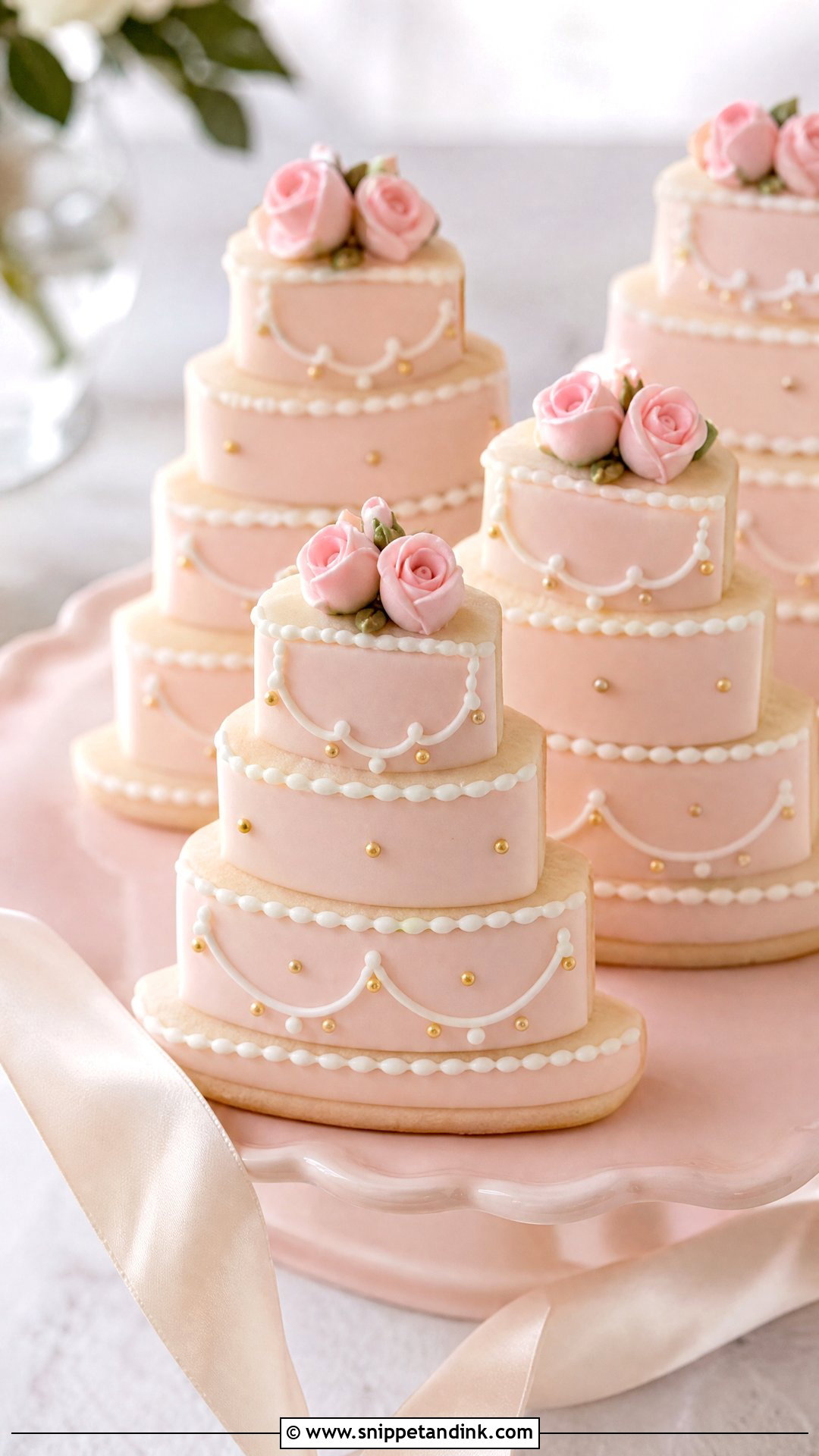
Pale pink is trickier than it looks, because pink icing can fade if it’s left in sunlight or under bright display lights for long. I mix it a shade deeper than the target and store finished cookies out of direct light. White piping, gold dots or small roses balance it. Blush suits spring weddings and showers. Clean edges and simple accents keep it from reading like a birthday cookie.
10. Rustic Wedding Cake Cookies
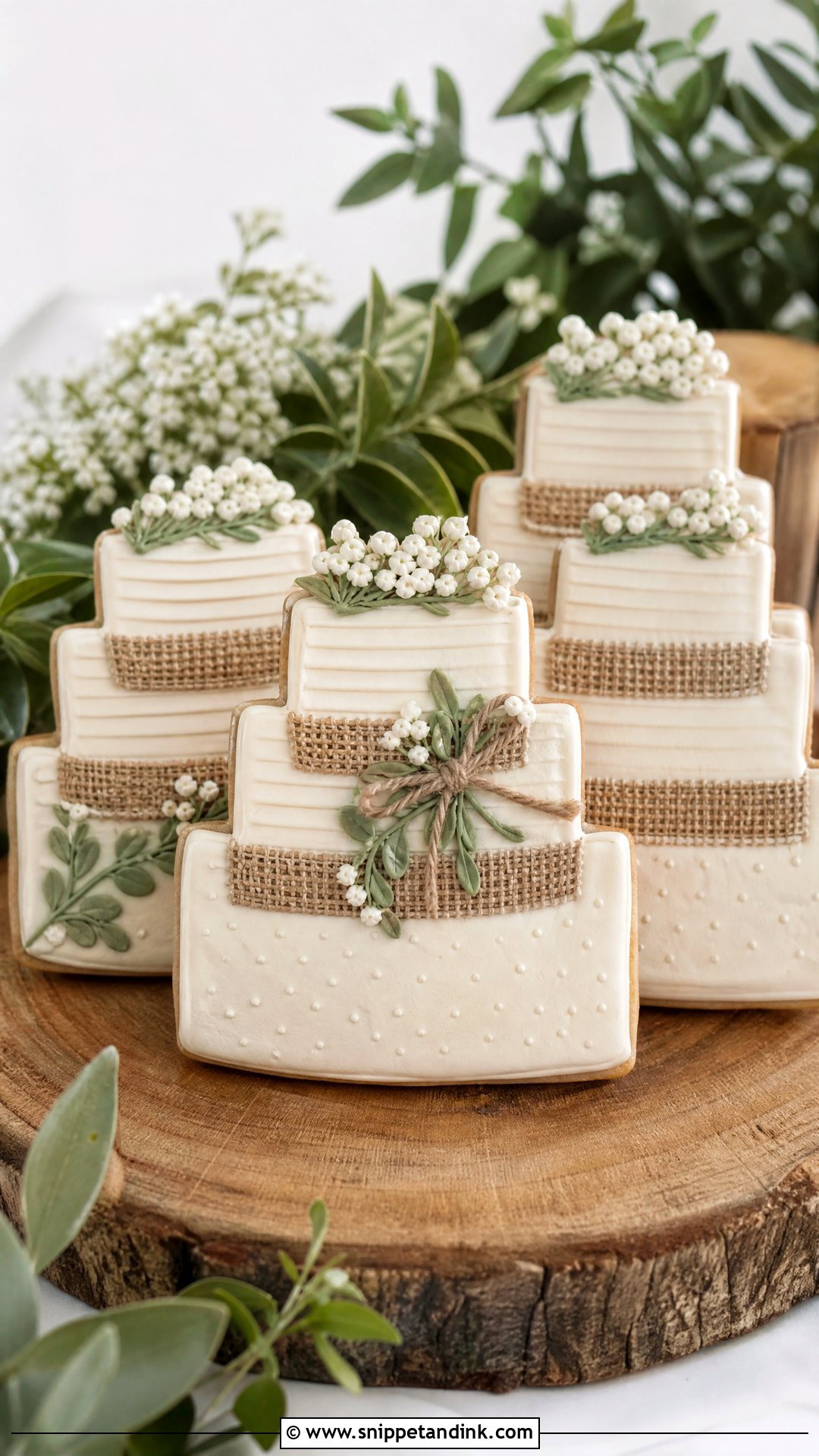
Rustic designs suit textured buttercream-style strokes, greenery and small white flowers on an ivory base. A burlap-style pattern can be piped with icing for texture. A wood platter or kraft favor box completes the look. The shape still needs to be neat, or rustic slides into messy. I’d stick to soft browns, sage, cream and muted gold, all of which are forgiving to mix.
11. Modern Wedding Cake Cookies
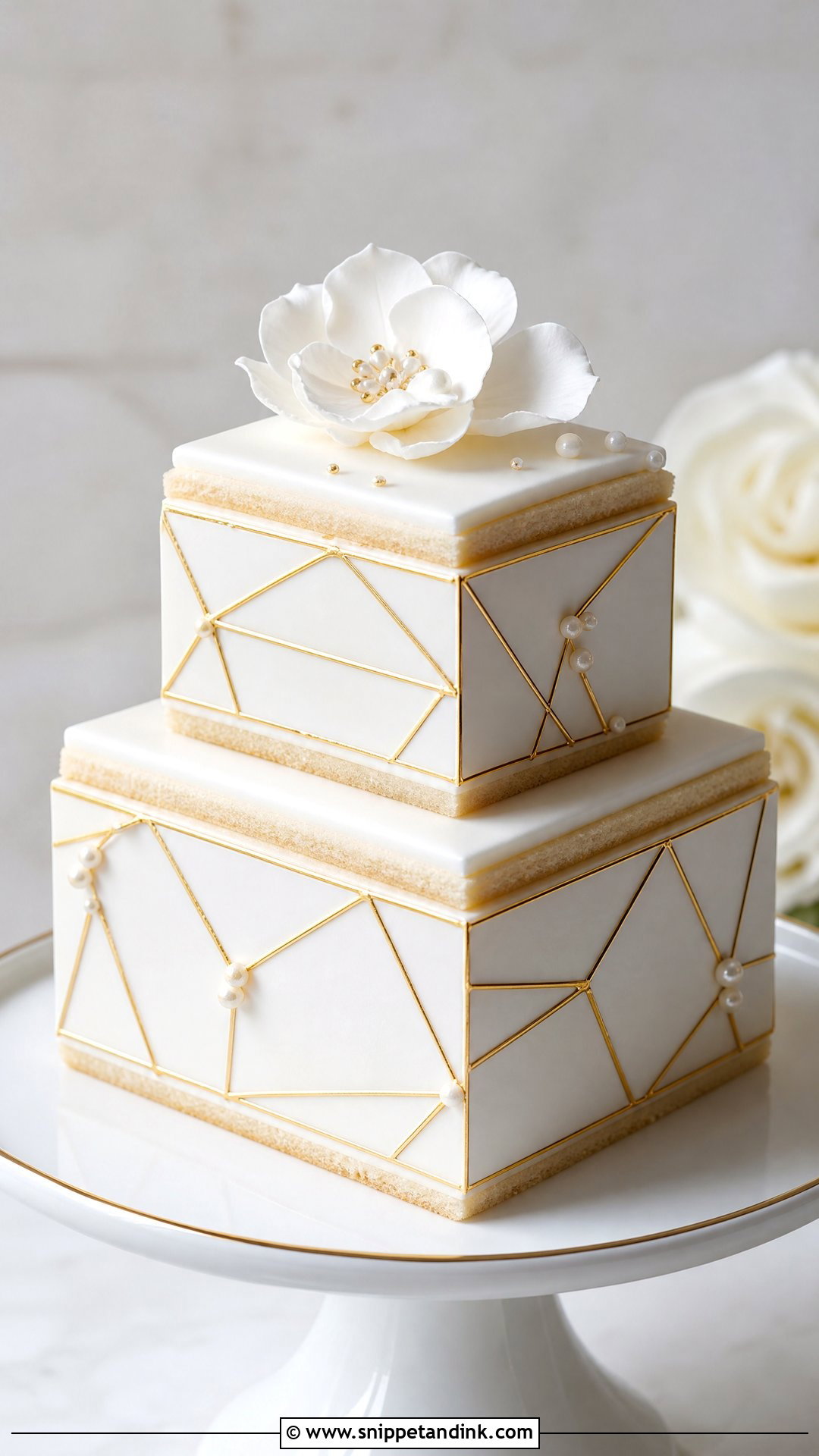
Modern cookies rely on sharp shapes and space. A crisp tiered cutter, smooth icing in white, taupe or soft grey, and one detail: a geometric line, a single flower or a thin metallic stripe. A matte finish feels current; I get it by drying the icing slowly at room temperature rather than under a fan, which tends to add sheen. Every flaw shows, so these take careful flooding.
12. Boho Wedding Cake Cookies
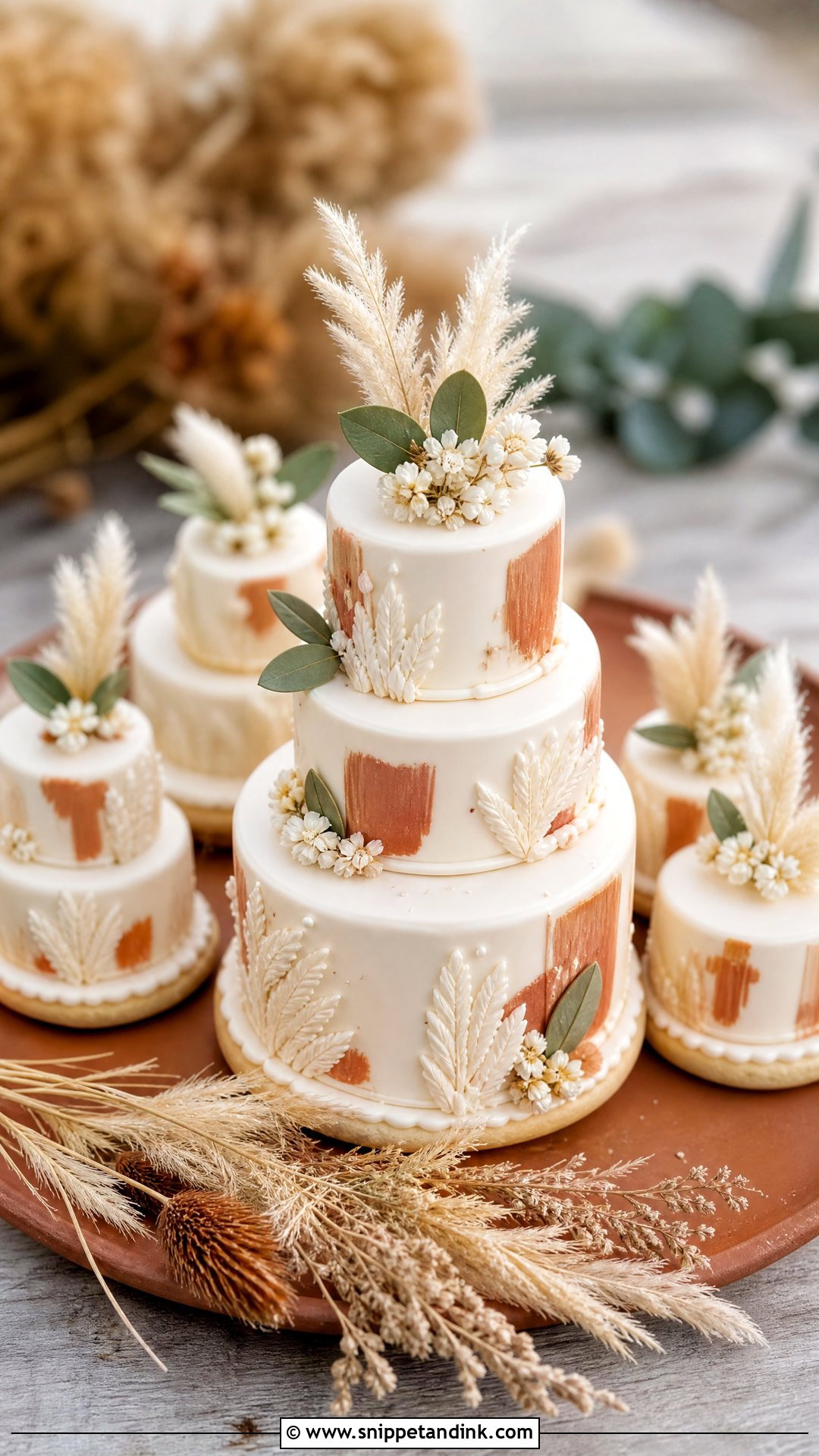
Boho cookies use earthy, muted shades: warm ivory, terracotta, sage, clay and soft peach. Painted leaves, pampas-style strokes and uneven floral clusters give a handmade look. Terracotta and clay tones are mixed from several colors, so I mix one large batch for the whole order; remixing halfway almost always gives a slightly different shade. Twine or neutral ribbon suits the packaging.
13. Vintage Wedding Cake Cookies
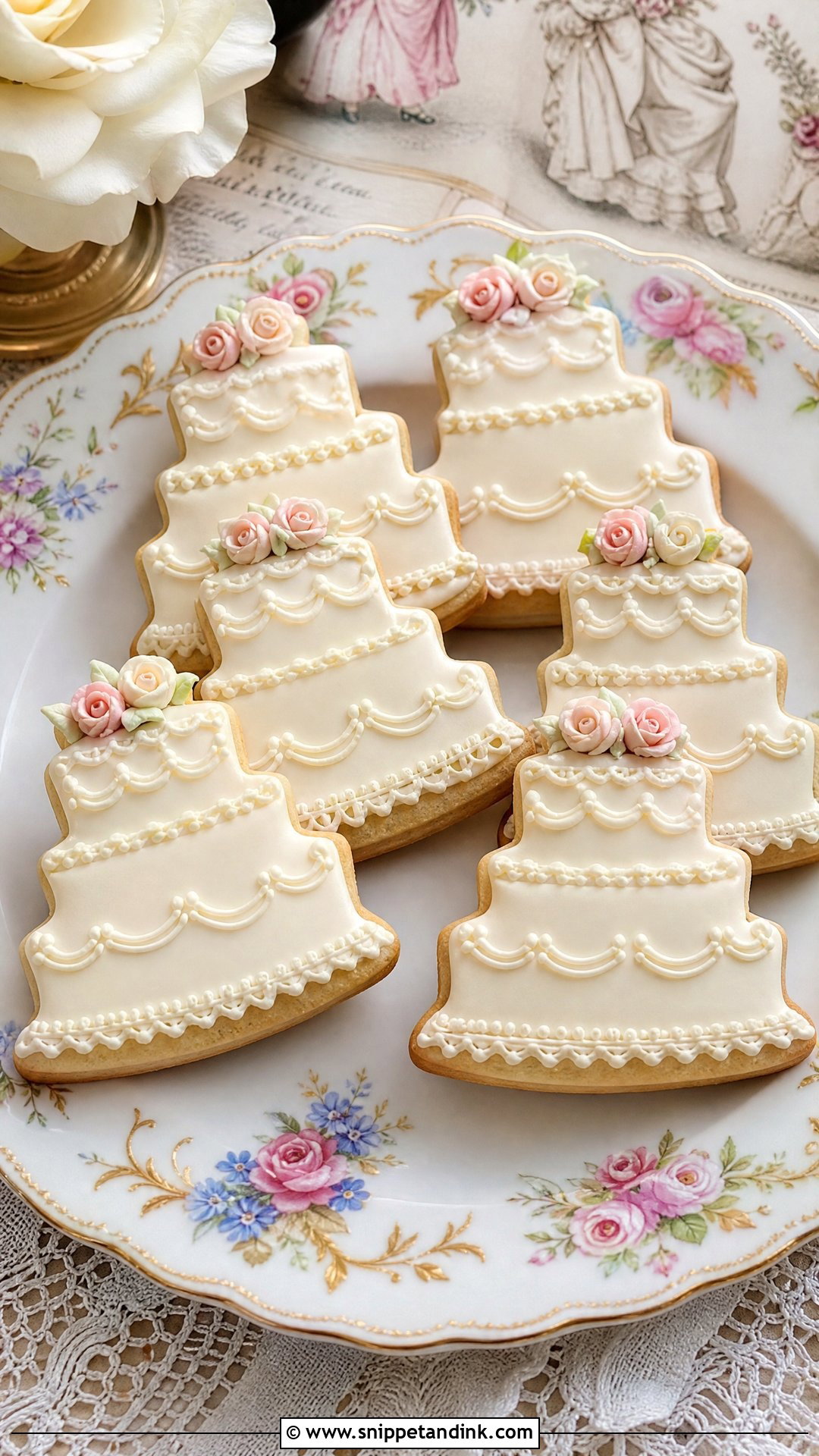
Vintage cookies use ivory instead of bright white, with piped swags, small roses, scalloped borders and pearl dots. A heart-shaped top tier or rounded silhouette adds an old-fashioned feel. Swags need to be evenly spaced, so I mark them lightly with a scribe tool before piping. They suit tea-style showers and classic receptions.
14. Minimalist Wedding Cake Cookies
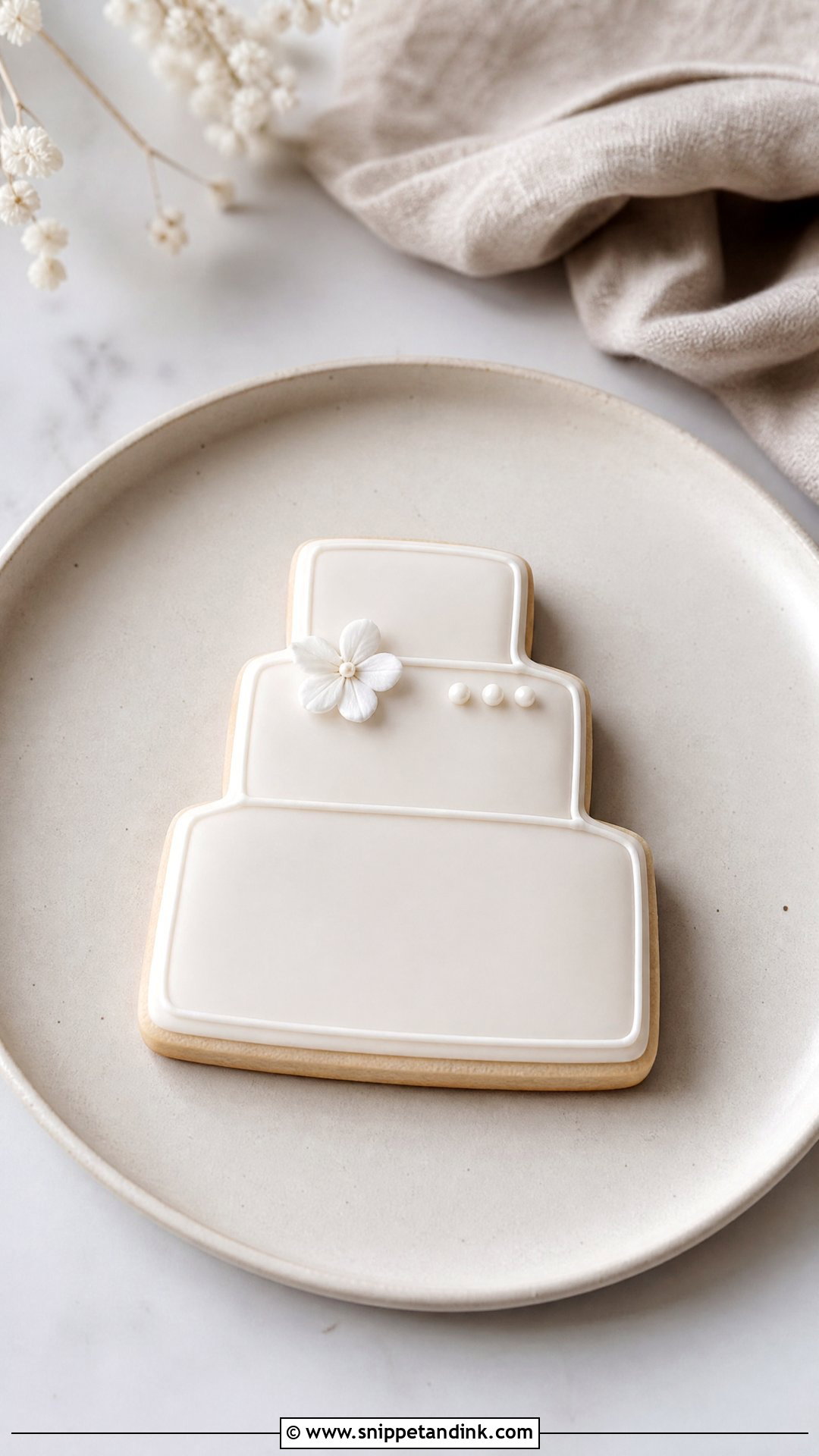
Minimalist cookies have one detail: a single piped line, one tiny flower or a neat monogram. The base must be perfectly smooth and the edge precise, since there’s nothing to hide a flaw. They suit modern and small weddings and work well when the dessert table already has bold pieces. Because they’re quicker to decorate, they’re also often the most affordable option per cookie.
15. Watercolor Wedding Cake Cookies
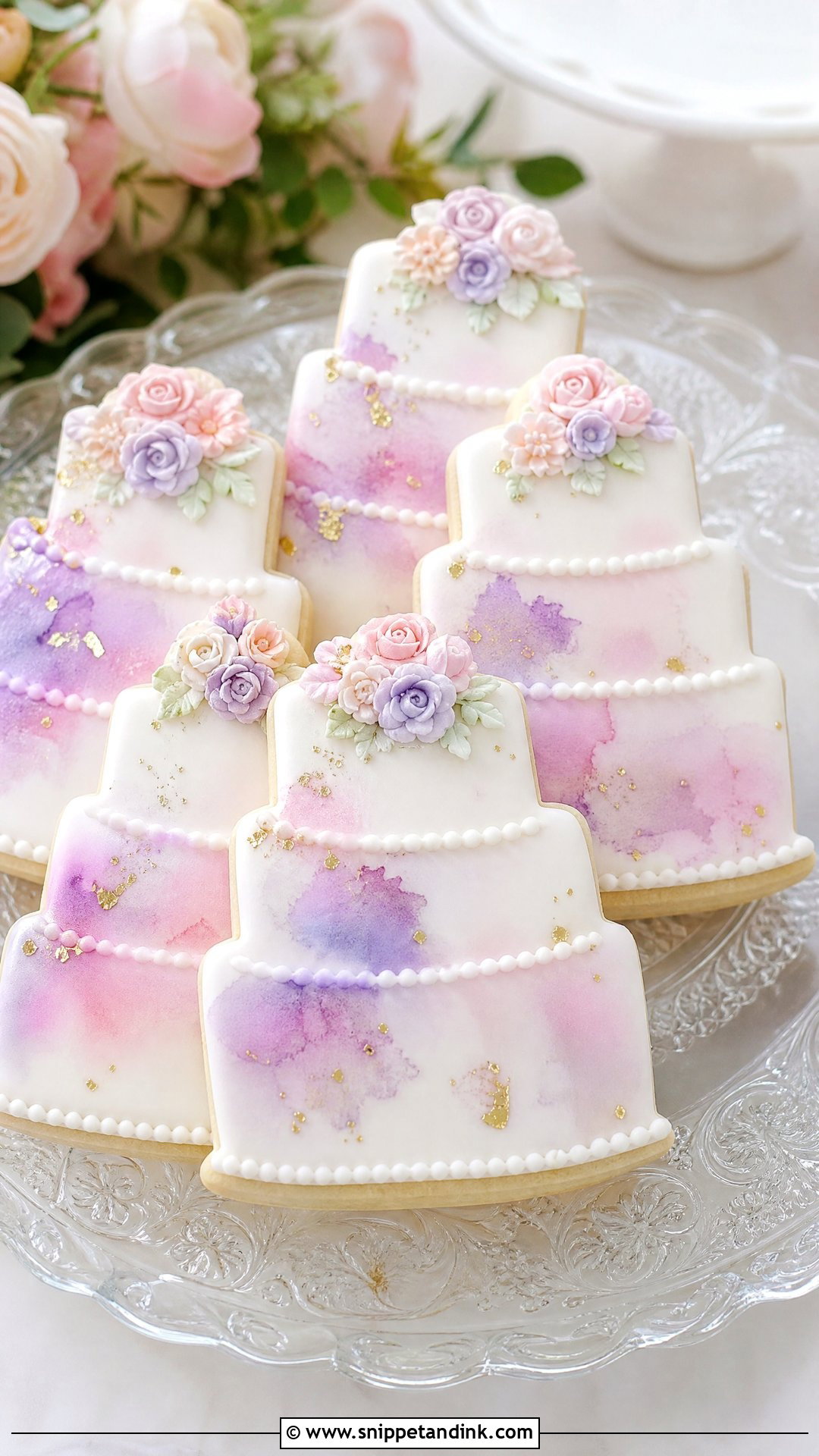
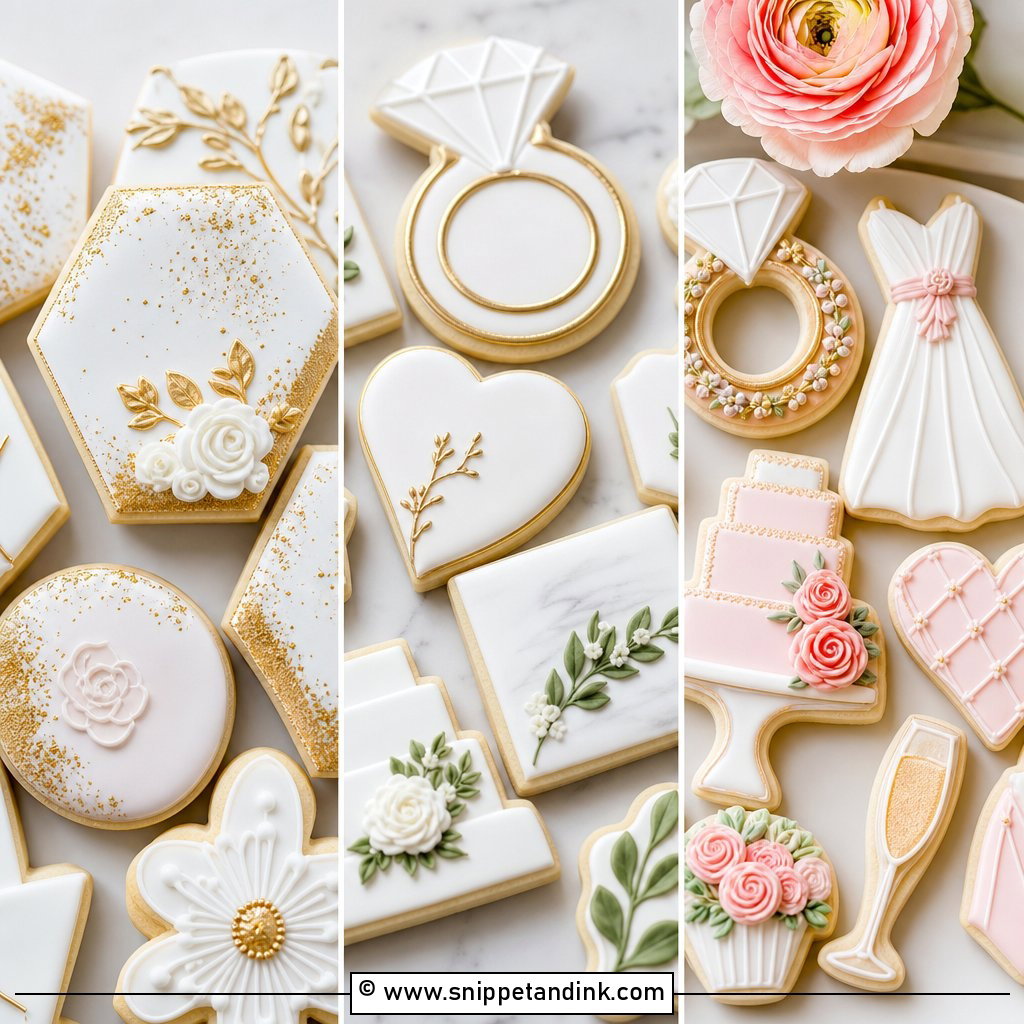
Watercolor designs are painted onto fully dried royal icing using gel color thinned with a little clear alcohol, which evaporates quickly so the icing doesn’t dissolve. Pale pink, lavender, blue, peach or sage create a soft wash. Gold flecks or fine piping finish it. Each cookie comes out slightly different, which is part of the charm but worth knowing if you want them identical.
16. Marble Wedding Cake Cookies
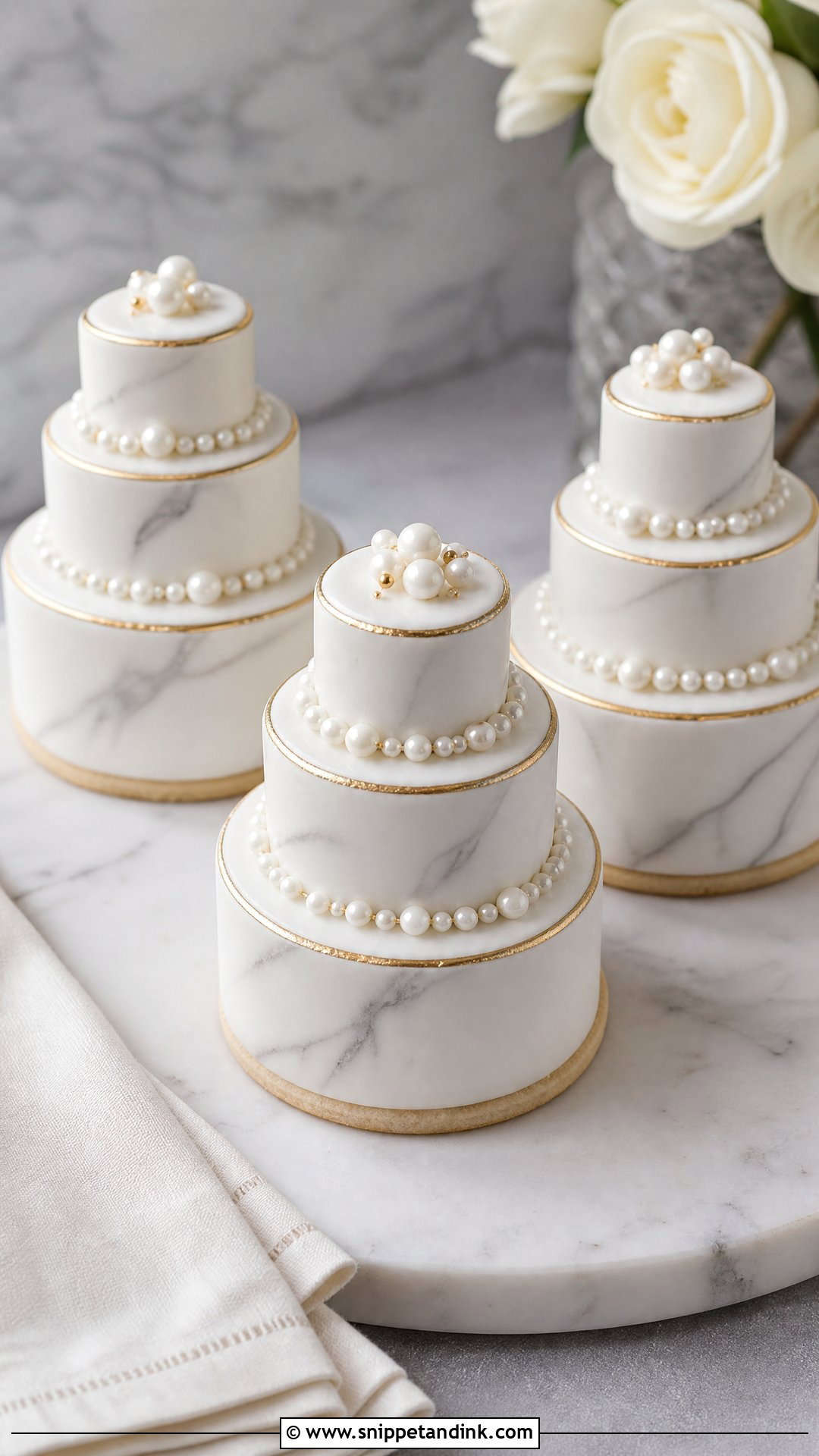
Marbling is done wet-on-wet: thin lines of grey, blush or beige are piped into the wet base and dragged with a needle. It’s quick, but no two cookies match. Keep the veining pale; dark or busy lines make the cookie look heavy. A thin gold line or pearl border softens it. White boxes or clear sleeves show the pattern.
17. Black And White Wedding Cake Cookies
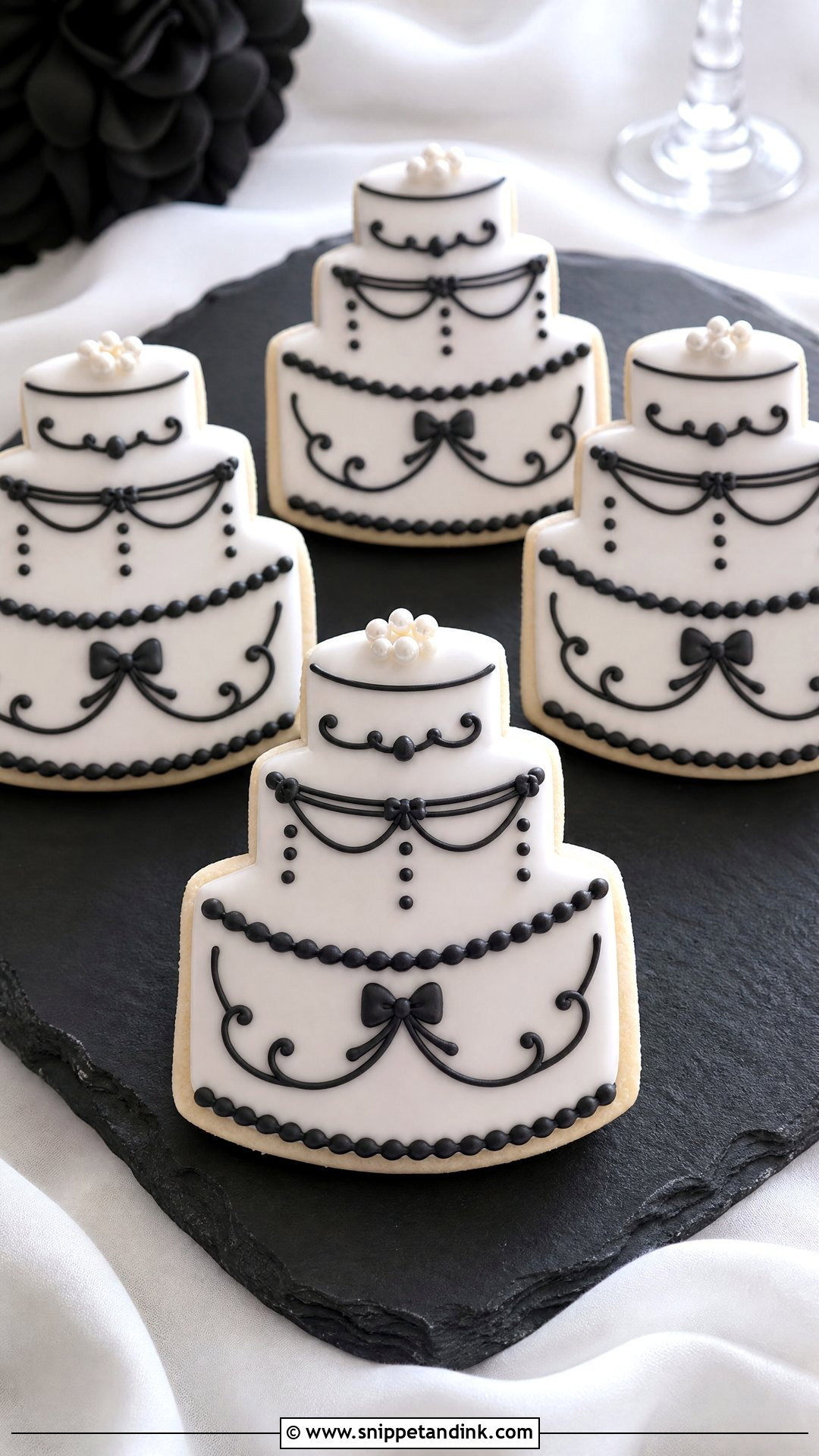
Black icing is the hardest color I work with. It takes a lot of gel to reach true black, which can make it bitter and stain teeth, so I start from cocoa-darkened icing and add less color. It also bleeds into white if the base isn’t fully dry, so I let the white set for several hours before adding black details. Limited black piping, bows or a monogram look crisp. Display them on white trays or slate.
18. Blue Wedding Cake Cookies
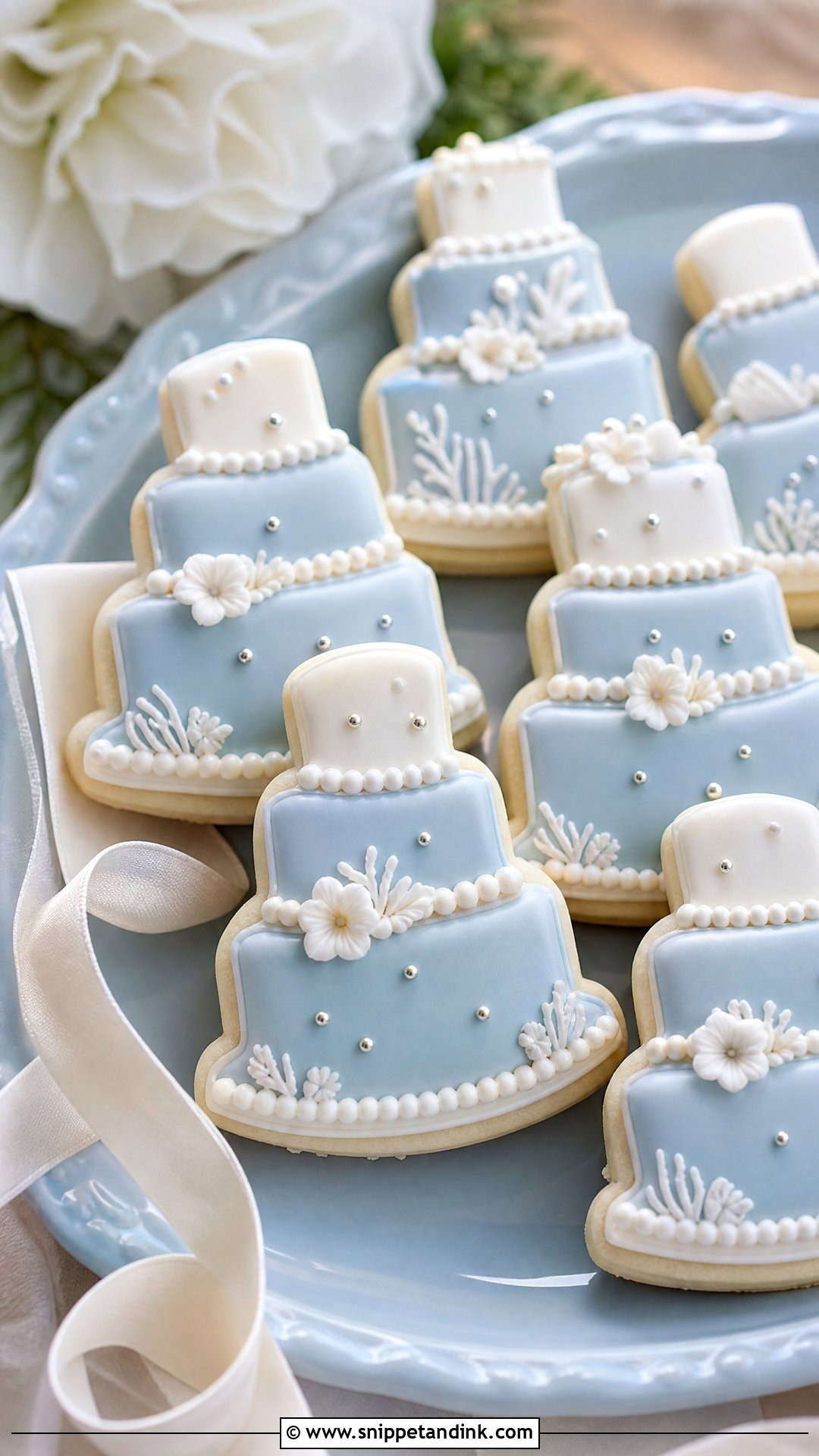
Blue ranges from soft coastal to formal depending on the shade. Dusty blue pairs well with white, ivory, silver and greenery. Like pink, blue can fade in sunlight, so keep the cookies boxed until they’re set out. Use blue on one tier or the whole cookie with white piping or pearls. Bright blue only works if it matches the palette.
19. Greenery Wedding Cake Cookies
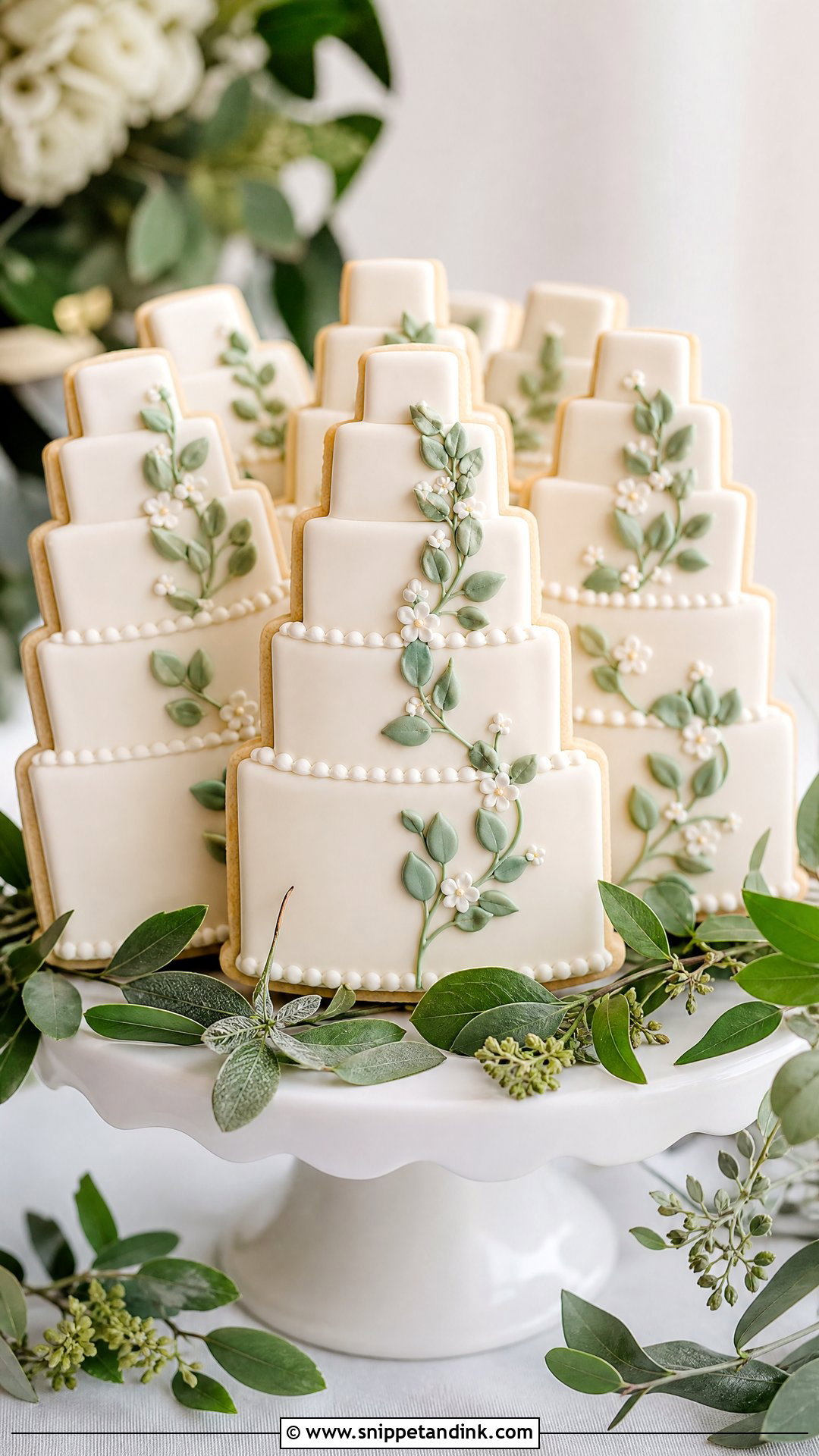
Greenery cookies use small piped leaves, painted vines, eucalyptus shapes or sage details. The leaves can frame the tiers or cascade down one side. I use a leaf tip for piped leaves, which gives a natural point with one squeeze. Too much green hides the cake shape, so keep spacing open. They suit garden weddings and neutral palettes.
20. Beach Wedding Cake Cookies
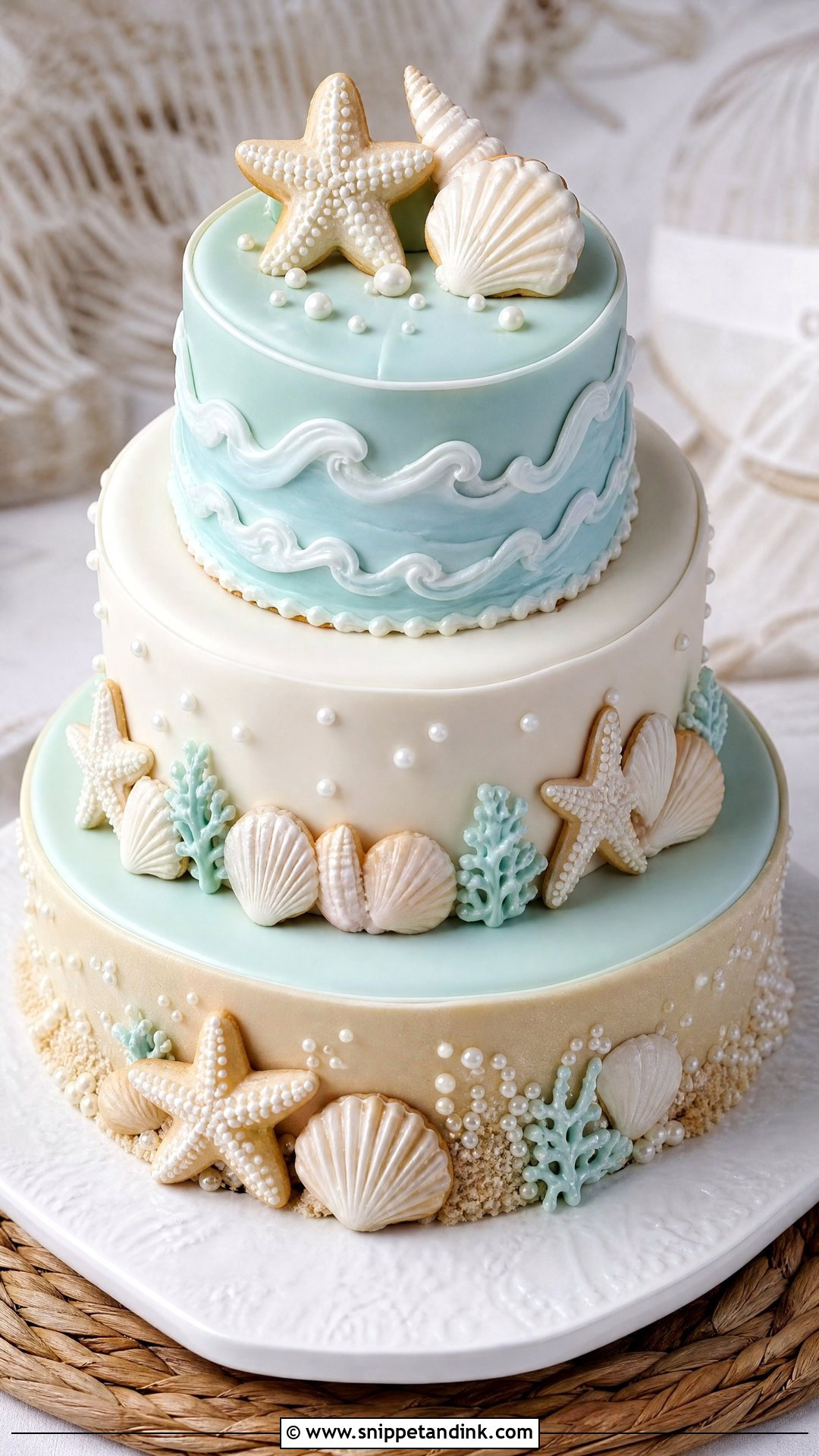
Beach cookies use white or pale blue bases with wave piping, pearl dots or tiny shells. Keep the theme subtle so they still feel bridal. Heat and humidity are the real concern at a beach venue, so royal icing is the safer choice; it stays firm where buttercream would soften. Clear bags with ivory or blue ribbon finish them.
21. Garden Wedding Cake Cookies
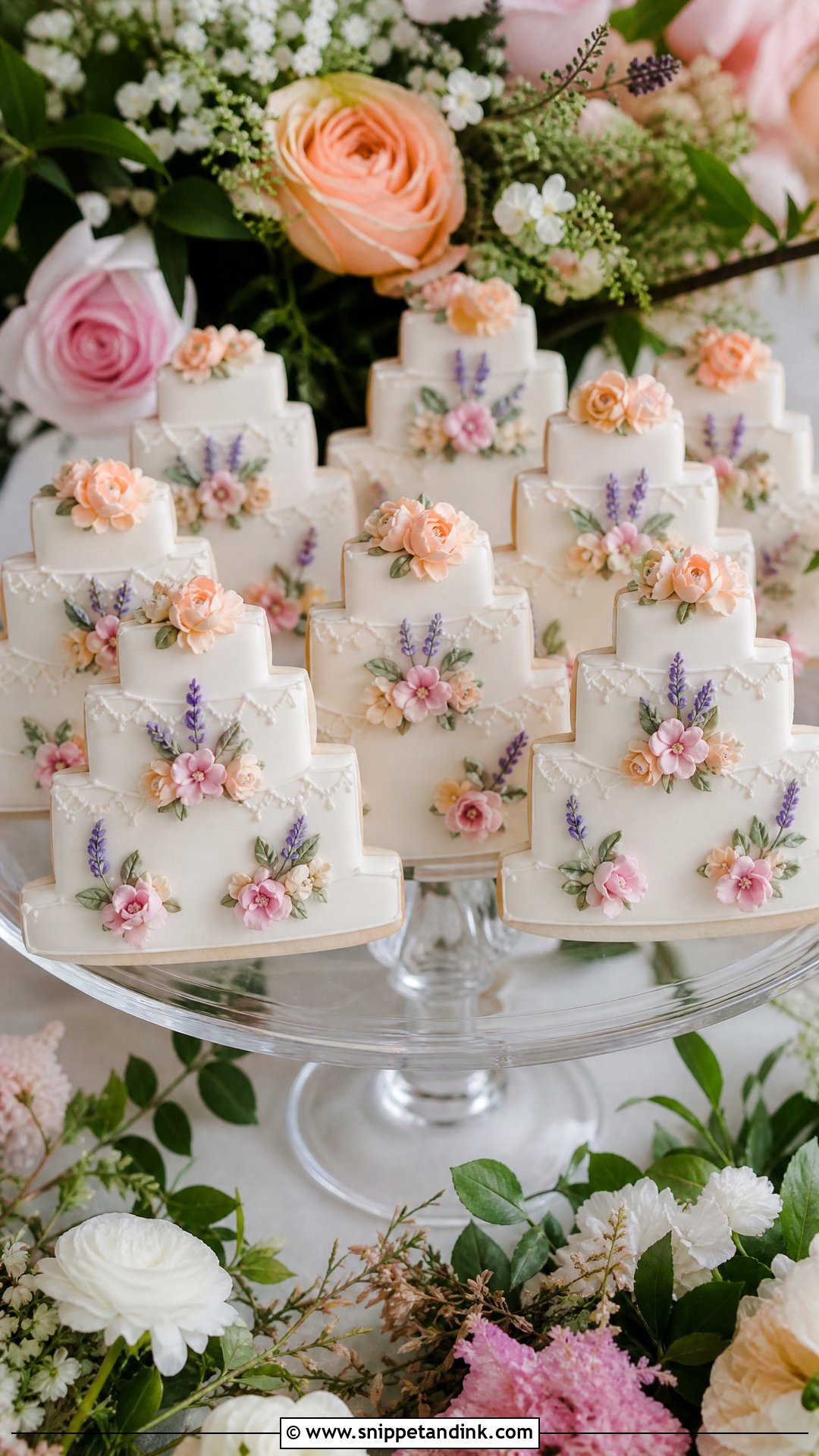
Garden cookies have soft pastel bases with small blooms, vines and leaves. Varying flower sizes makes it look natural. Pink, lavender, peach and sage work well together. I pipe the largest flowers first and fill gaps with buds and leaves, which is how a real arrangement is built. They suit outdoor ceremonies and spring showers.
22. Heart Wedding Cake Cookies
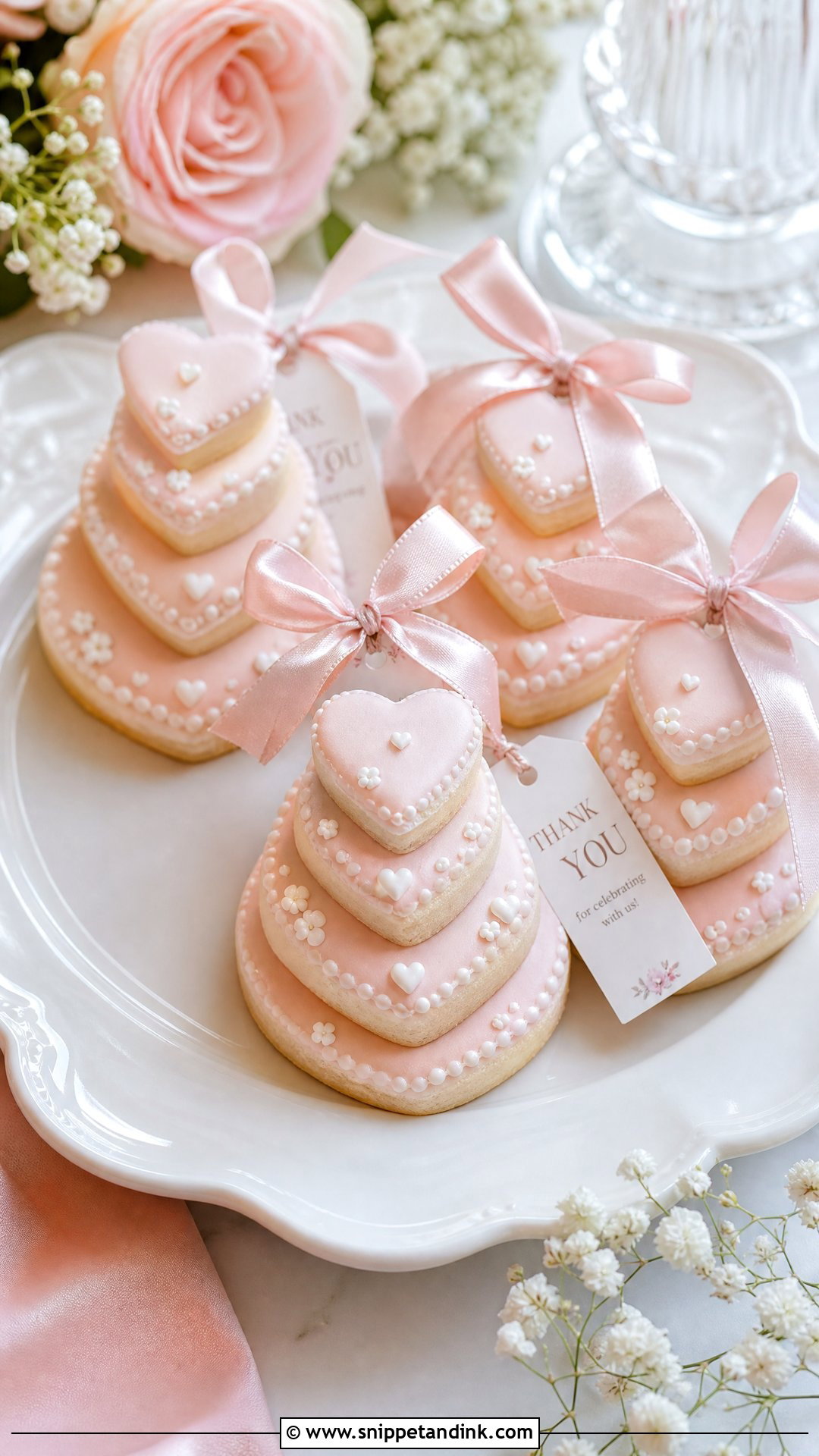
Heart cookies can be a tiered cake with a heart topper or a heart shape decorated like a small cake. White or blush bases with piped tiers, pearls and florals work well. A monogram or wedding date makes them personal. I’d keep a date small and simple, since numbers are easy to smudge when piped at that size.
23. Mini Wedding Cake Cookie Stacks
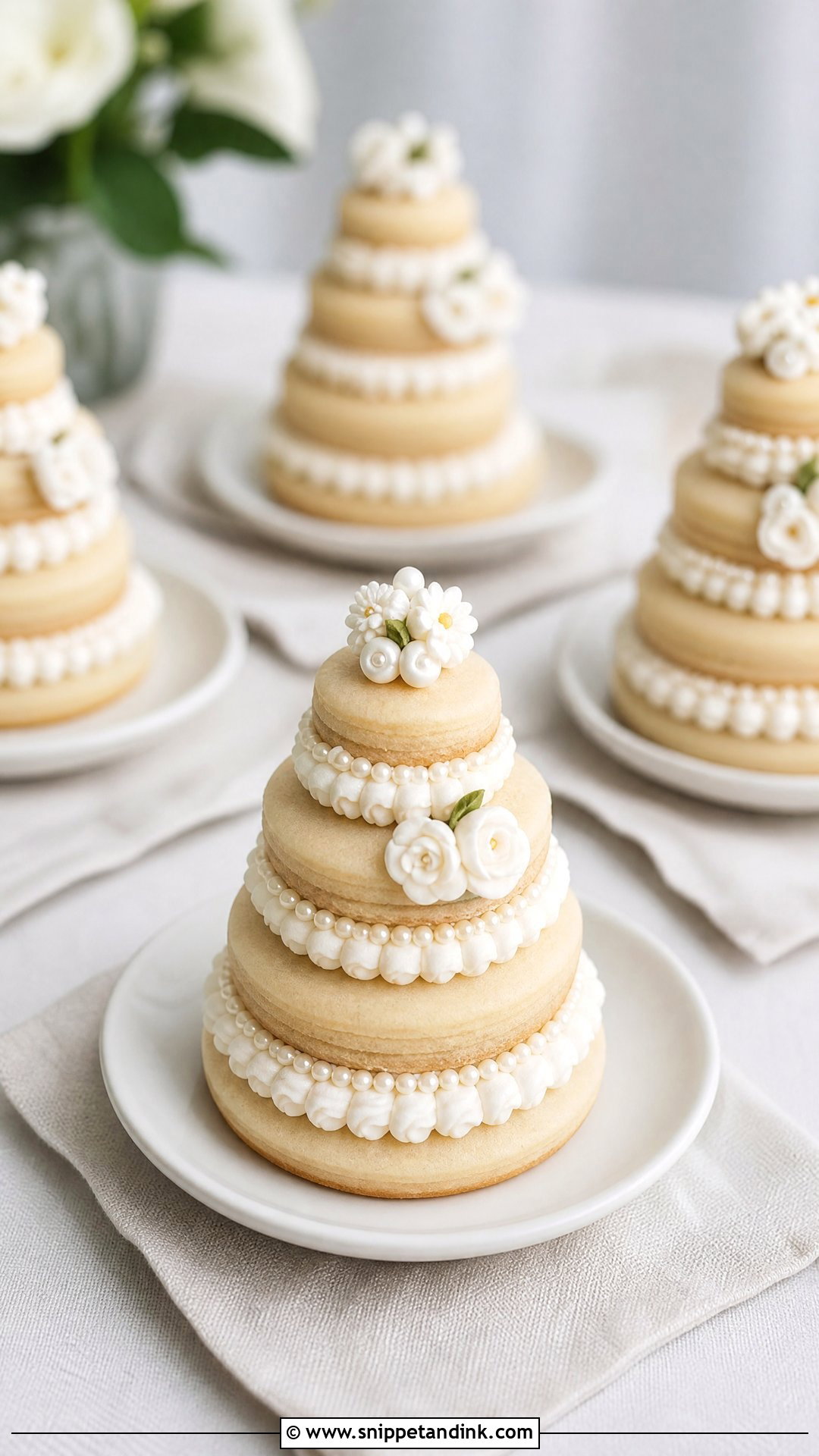
Stacked mini cakes are three-dimensional: small round cookies in graduated sizes, joined with icing. They make a striking display but are fragile. I let each stack dry overnight before packing and keep them to three tiers so they stay stable. They suit plated desserts and special tables more than favors that will be carried home.
24. Bridal Shower Wedding Cake Cookies
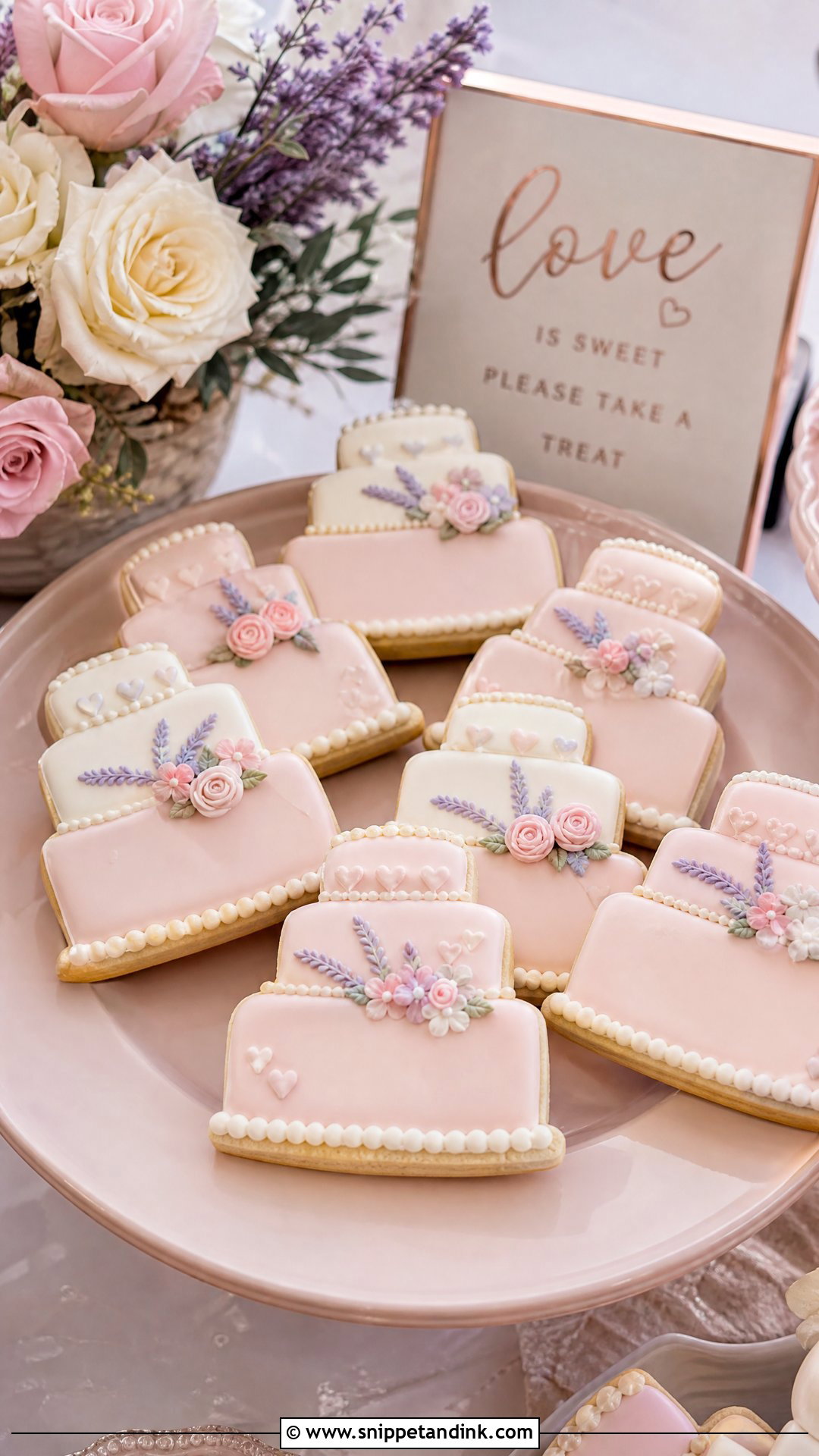
Shower cookies can be softer and more playful than reception ones. Blush, ivory, lavender or pale blue with piped flowers, pearls or small hearts work well. A three-tier shape keeps the wedding connection. Match the colors to the shower invitation. They make easy take-home favors.
25. Wedding Favor Cake Cookies
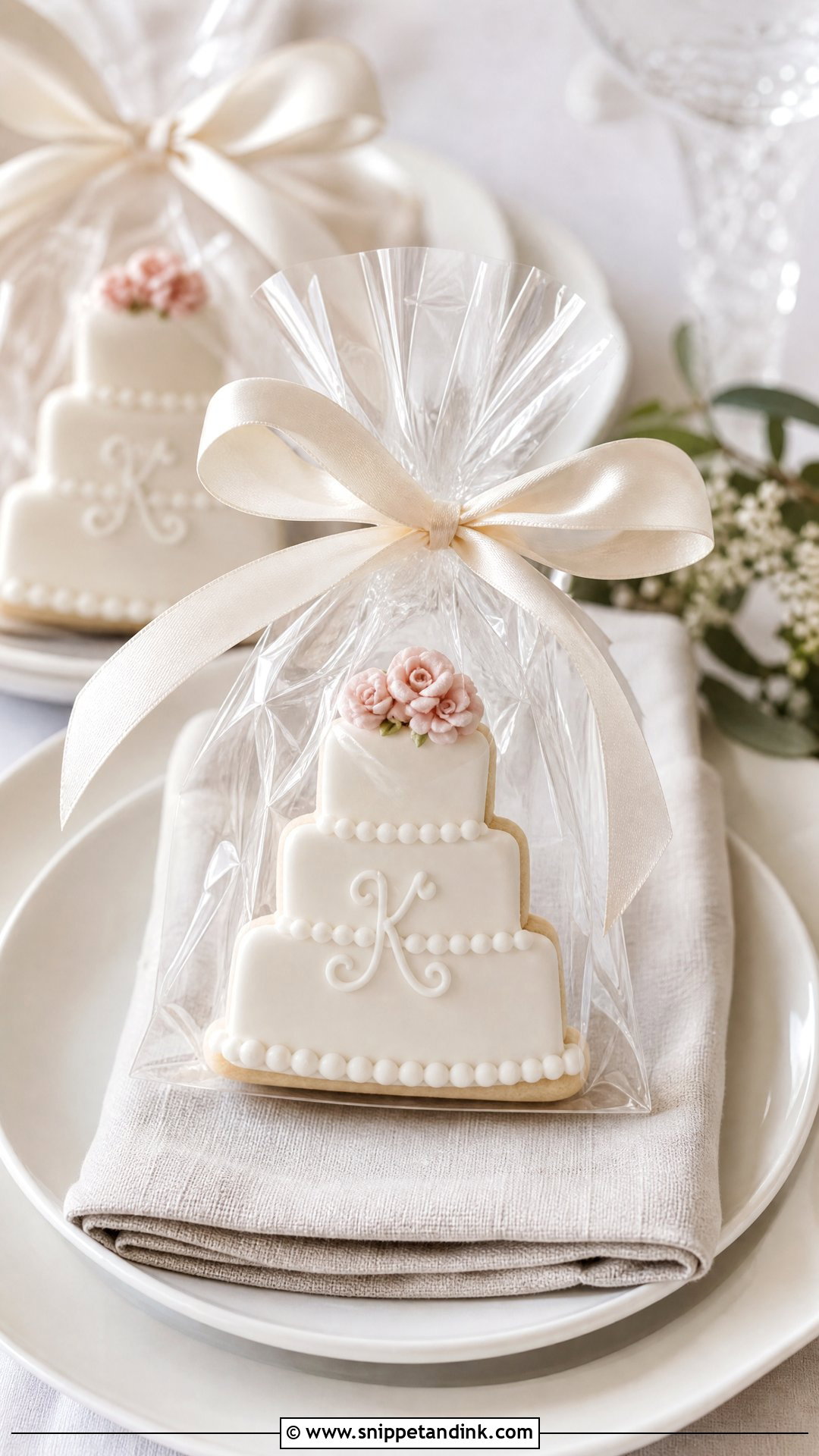
Favor cookies need to be sturdy and easy to package. Royal icing dries firm and travels well, so it’s my first choice. A design that repeats cleanly, such as white icing, pearl borders, a small flower and initials, is best. Avoid tall or fragile decorations. Heat-sealed clear bags keep cookies fresh much longer than twist ties.
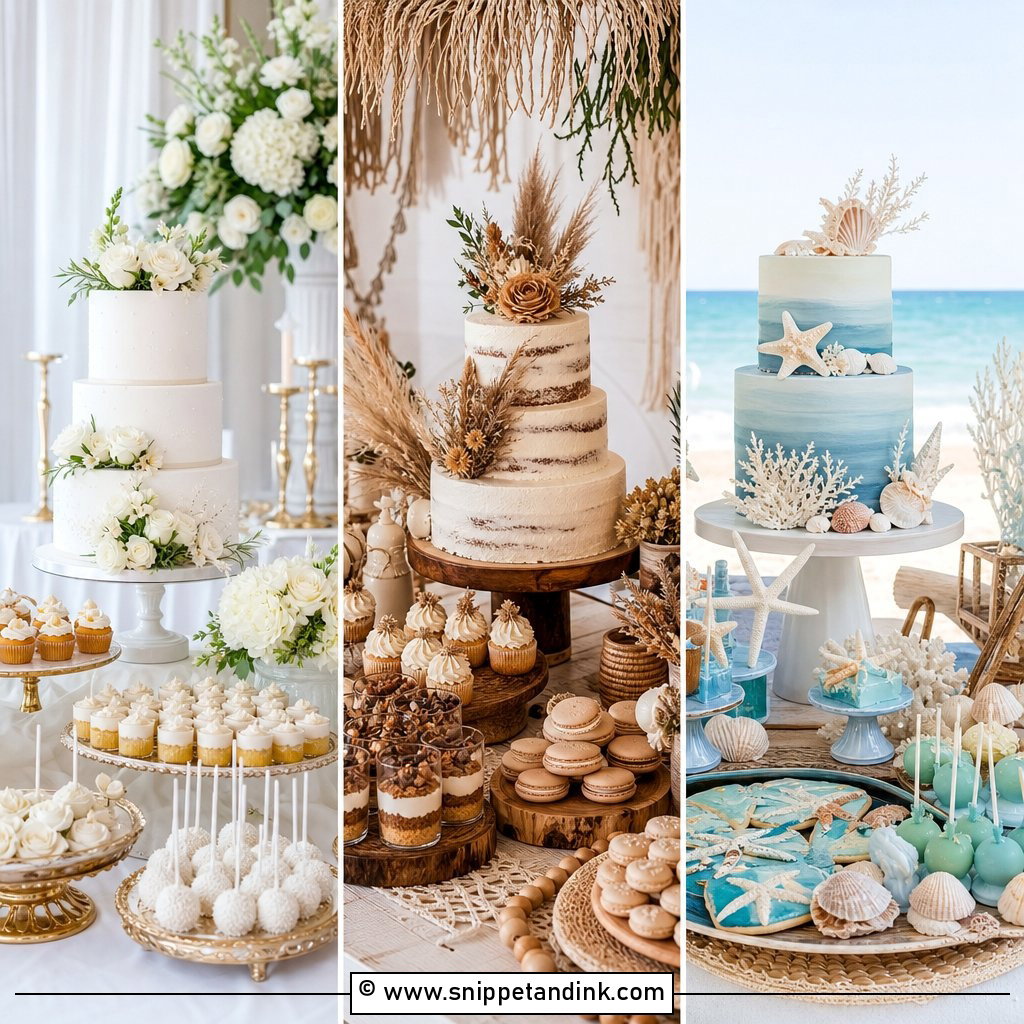
26. Wedding Dessert Table Cake Cookies
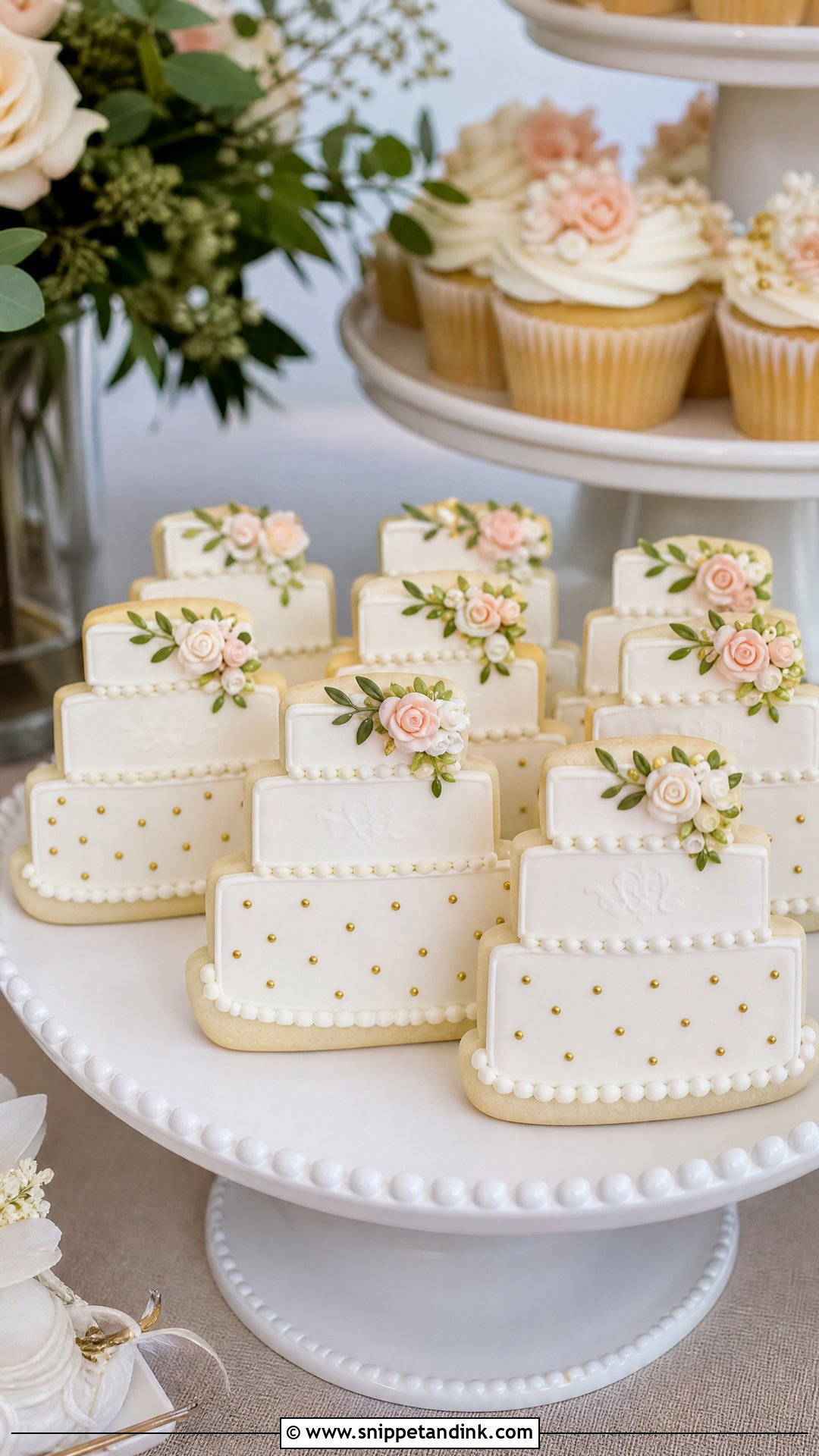
Cookies on a dessert table add shape and variety. Display them on trays, stands or tiered platters, in colors that connect with the main cake. They should stand out from regular cookies. Make sure the designs face forward for photos. I’d keep them away from hot lights or a sunny window if they’ll be out for hours.
27. Champagne Wedding Cake Cookies
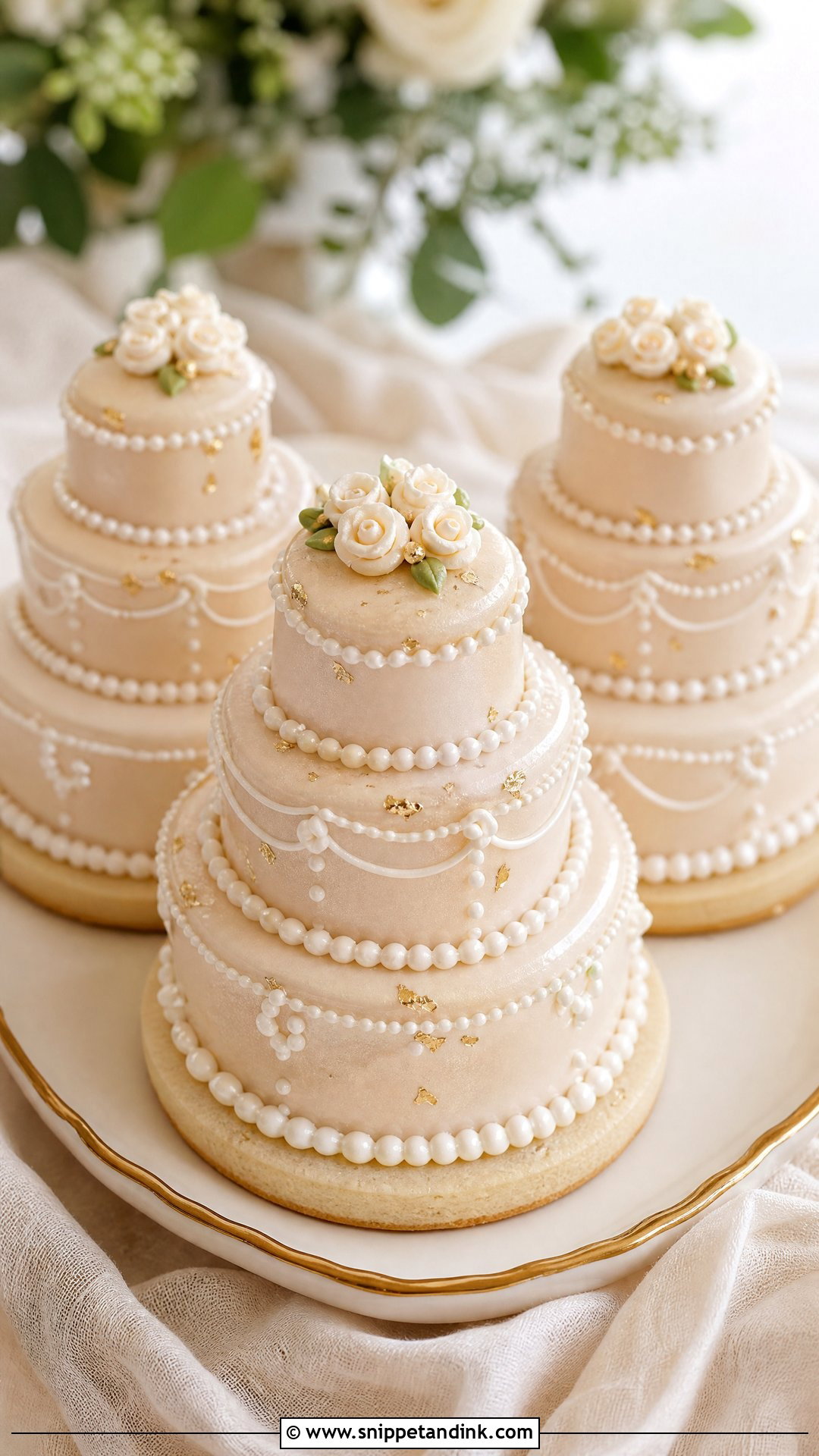
Champagne icing is ivory with a touch of warm tone. It can easily tip toward yellow, so I mix it in daylight and compare against the gown or linen swatch. White piping, gold accents and pearls suit it. A soft shimmer looks lovely under evening lighting. It pairs with cream linens and gold flatware.
28. Buttercream Wedding Cake Cookies
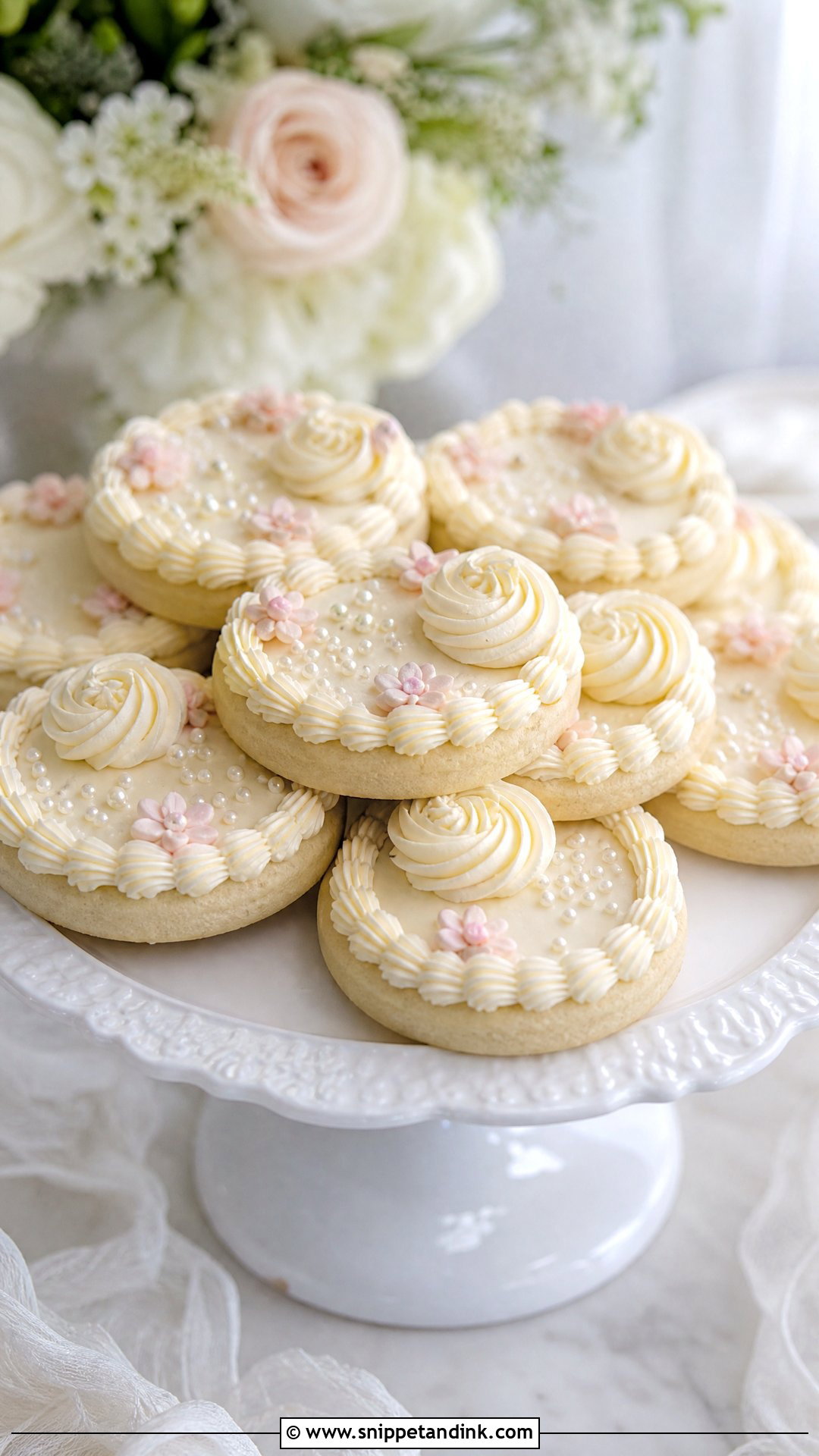
Buttercream wedding cake cookies are softer and more bakery-style. Rosettes, ruffles and shell borders make them look like small frosted cakes. Buttercream doesn’t dry hard, so they can’t be stacked or bagged like royal icing cookies and need to stay cool. I’d only use them on a dessert table or in individual boxes. They have a richer taste that many guests prefer.
29. Royal Icing Wedding Cake Cookies
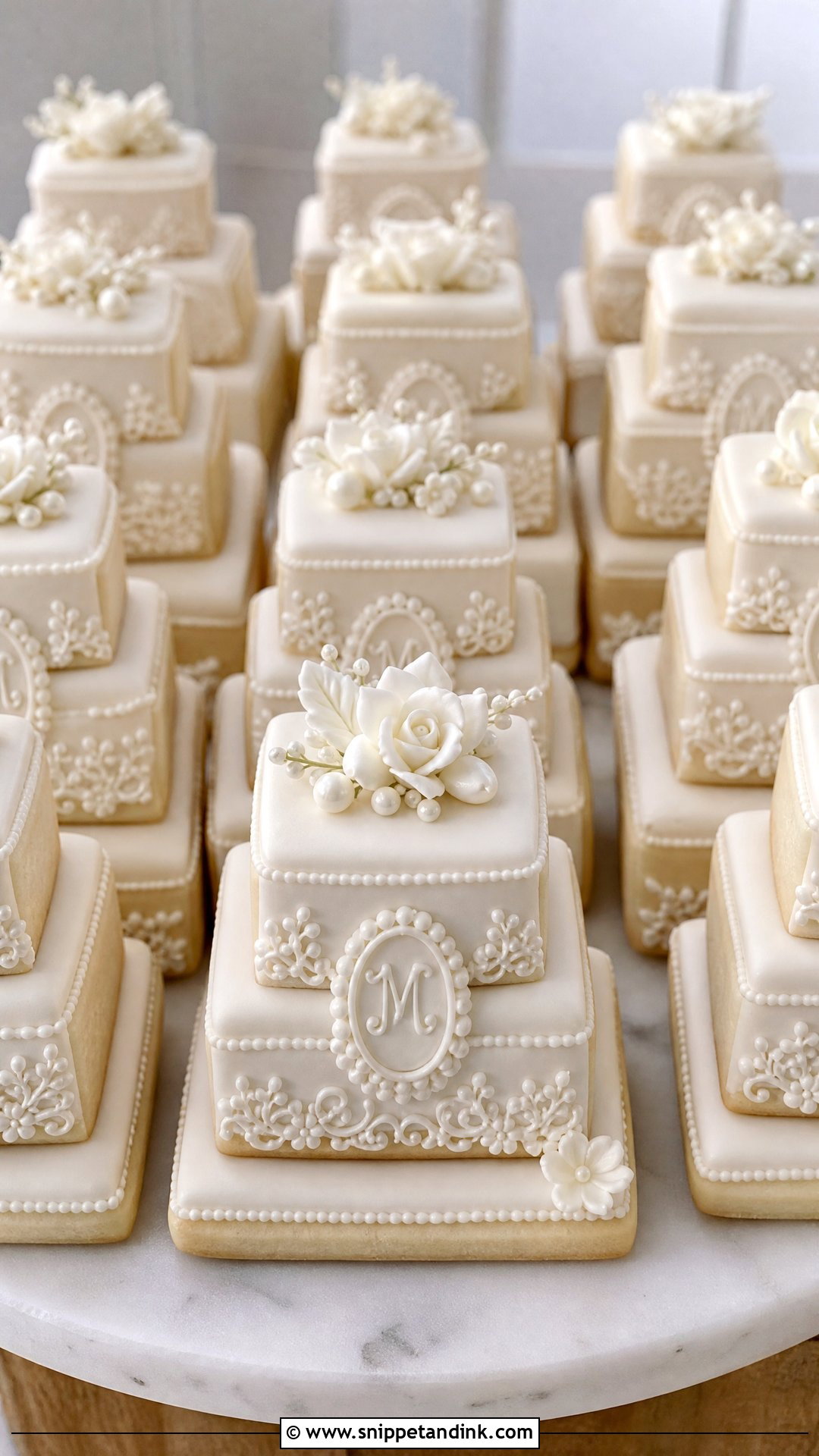
Royal icing is the best choice for crisp detail and clean packaging. It dries firm, so it suits monograms, lace, pearls and painted accents. Chilled dough keeps the tier shape sharp. I outline, flood and let each layer dry before adding detail, ideally overnight before packing. These cookies can be heat-sealed and stored for well over a week.
30. Custom Wedding Cake Cookies
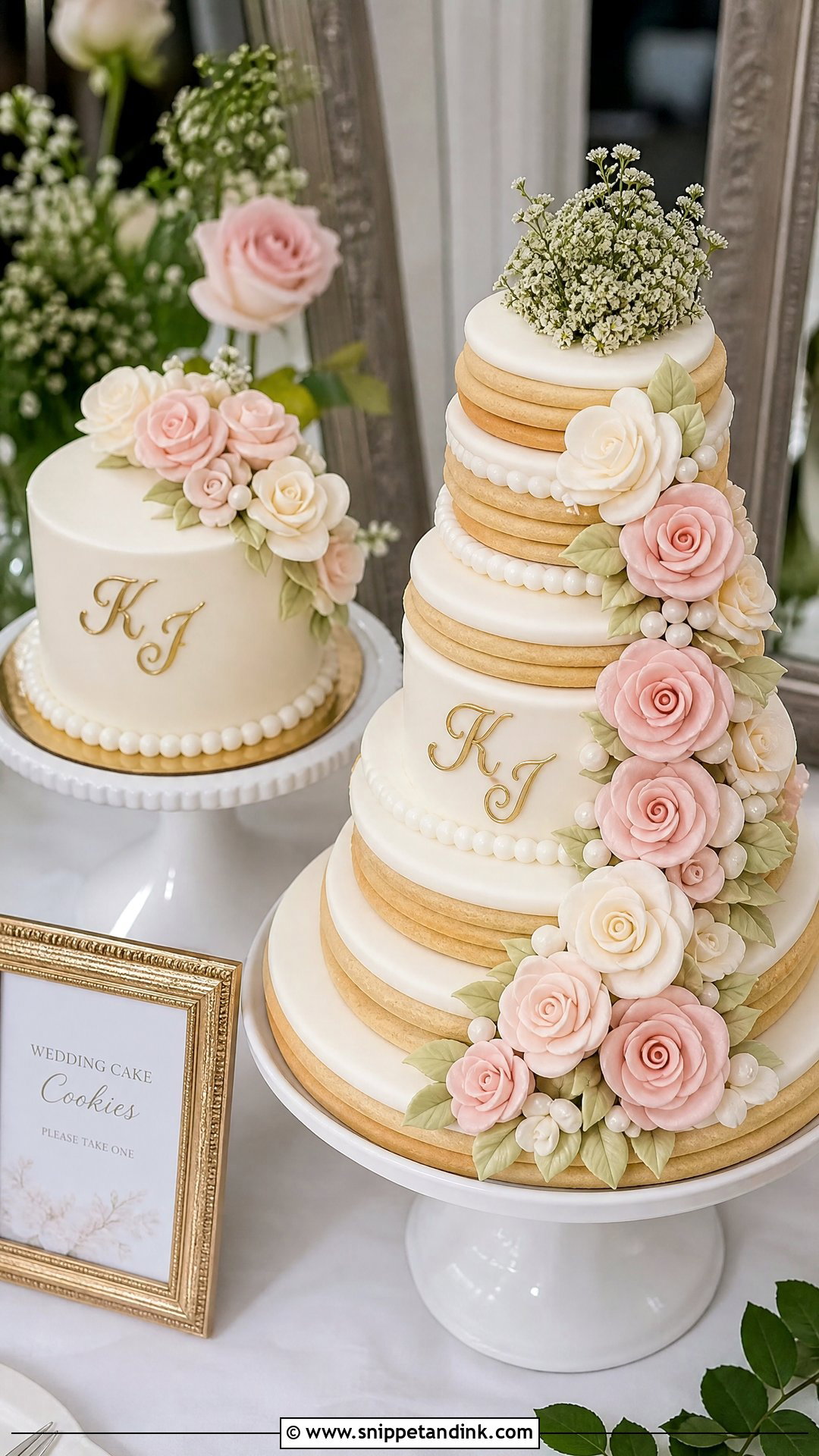
Custom wedding cake cookies can mirror the couple’s actual cake, flowers, colors or invitation. I simplify the details so they fit on a cookie: the tier shape, icing color, a floral motif and a monogram. Fine detail can disappear at cookie size, so keep it readable. Send your cookie maker a photo of the cake sketch and the invitation.
Shelf Life, Heat Sealing and the Drive to the Venue
Royal icing cookies keep well. Once fully dry and heat sealed in clear bags, they generally stay fresh for one to two weeks at room temperature, which means they can be made well before the wedding. Twist ties let air in, so cookies dry out faster.
Buttercream cookies are different. They need to stay cool and be eaten within a few days, and they can’t be stacked or bagged without smudging. If your venue is warm or outdoors, I’d steer you toward royal icing.
Getting them there in one piece
Pack cookies flat in a single layer, in a box lined with tissue, and keep the box out of the sun in the car. Never put them in the fridge before an event; condensation forms when they come back to room temperature and can make colors bleed. Ask someone to set them out shortly before guests arrive.
Send Your Cookie Maker the Cake Sketch, Not Just a Palette
The cookies that look best on the day echo the real cake rather than a generic one. Share your cake sketch, invitation and color swatches, then let the cookie maker simplify them. Decide early whether they’re favors or display pieces, since that changes the icing and packaging. And plan the order well ahead of the date, because detailed sets take days to dry and decorate.
You'll Like These Ideas:


Leave a Reply