
When a bride sits down with me and can’t decide between six very different gowns, I stop talking about dresses and ask about the place. The setting, the light and the mood of the day narrow the choice faster than anything else, and once they’re settled the veil, shoes, jewelry and bouquet tend to fall into line. Bridal design right now covers a wide range, from basque waists, corsetry and dimensional flowers to oversized bows, detachable layers and shorter hems, so there’s room for something personal in almost every setting. Here are twenty themes, each worked through from the gown down to the shoes.
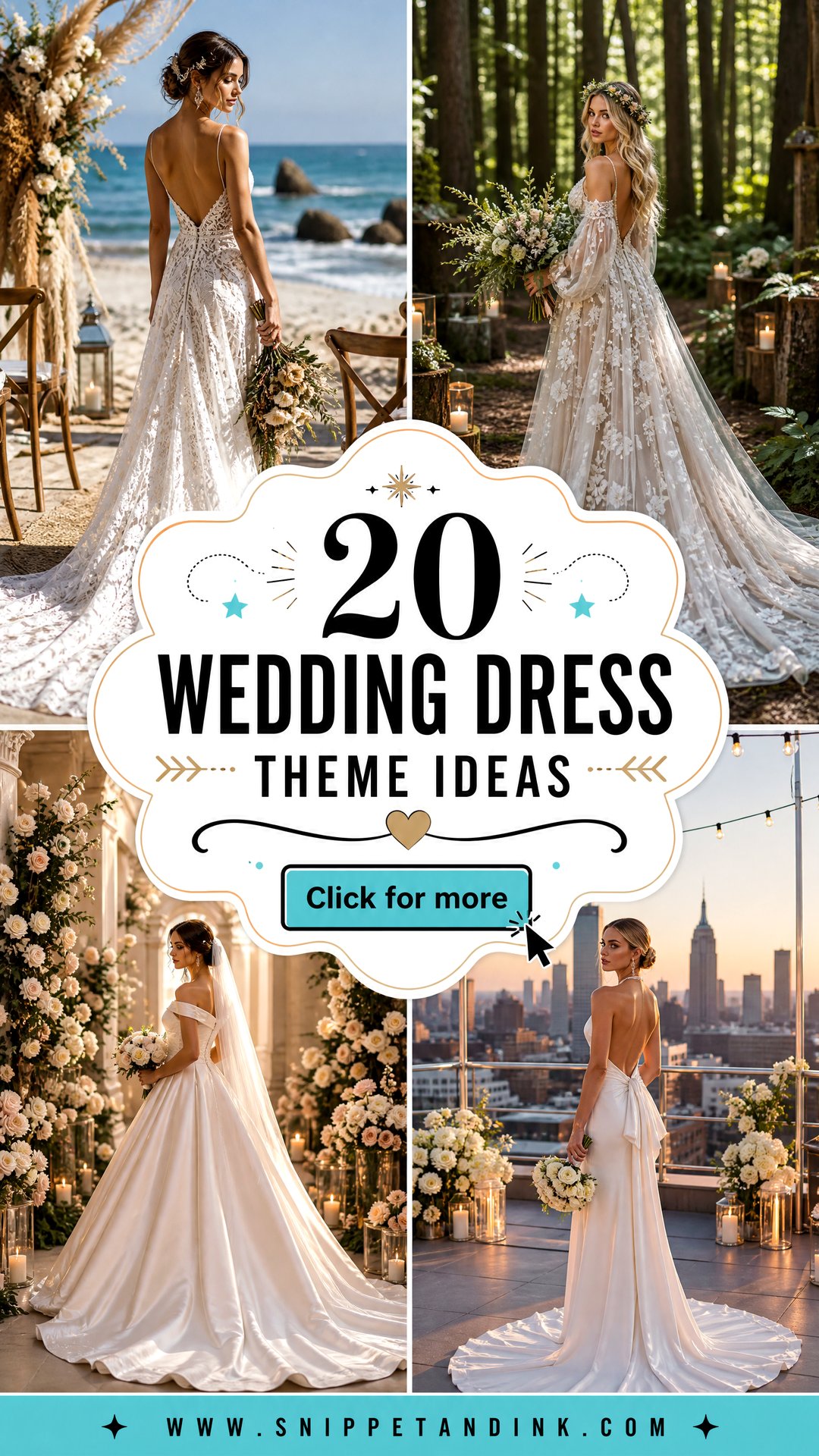
Reading the Venue Before You Shop for the Dress
I ask every bride to visit her venue, or at least study photos taken at the time of day she’ll marry, before her first appointment. Five things there decide more about the gown than any mood board does.
- The ground. Grass, sand, gravel and old flagstones all eat trains and heels. Polished floors favor a long train; rough ones call for a shorter sweep.
- The light. Shiny satin glows under chandeliers but can glare in bright sun. Matte crepe and lace are easier outdoors at midday.
- The distances. If the ceremony, photos and reception are in different spots, count the walking and climbing. A heavy gown feels twice as heavy on the third stairway.
- The temperature. A cold stone church and a summer garden need very different fabrics, sleeves and cover-ups.
- The scale. A big ballroom can swallow a slip dress, and a full ball gown can crowd a tiny restaurant.
Bring a few venue photos to the bridal shop. A good consultant will pull dresses differently once she can see the aisle you’ll walk down.
1. Romantic Garden Wedding Dress
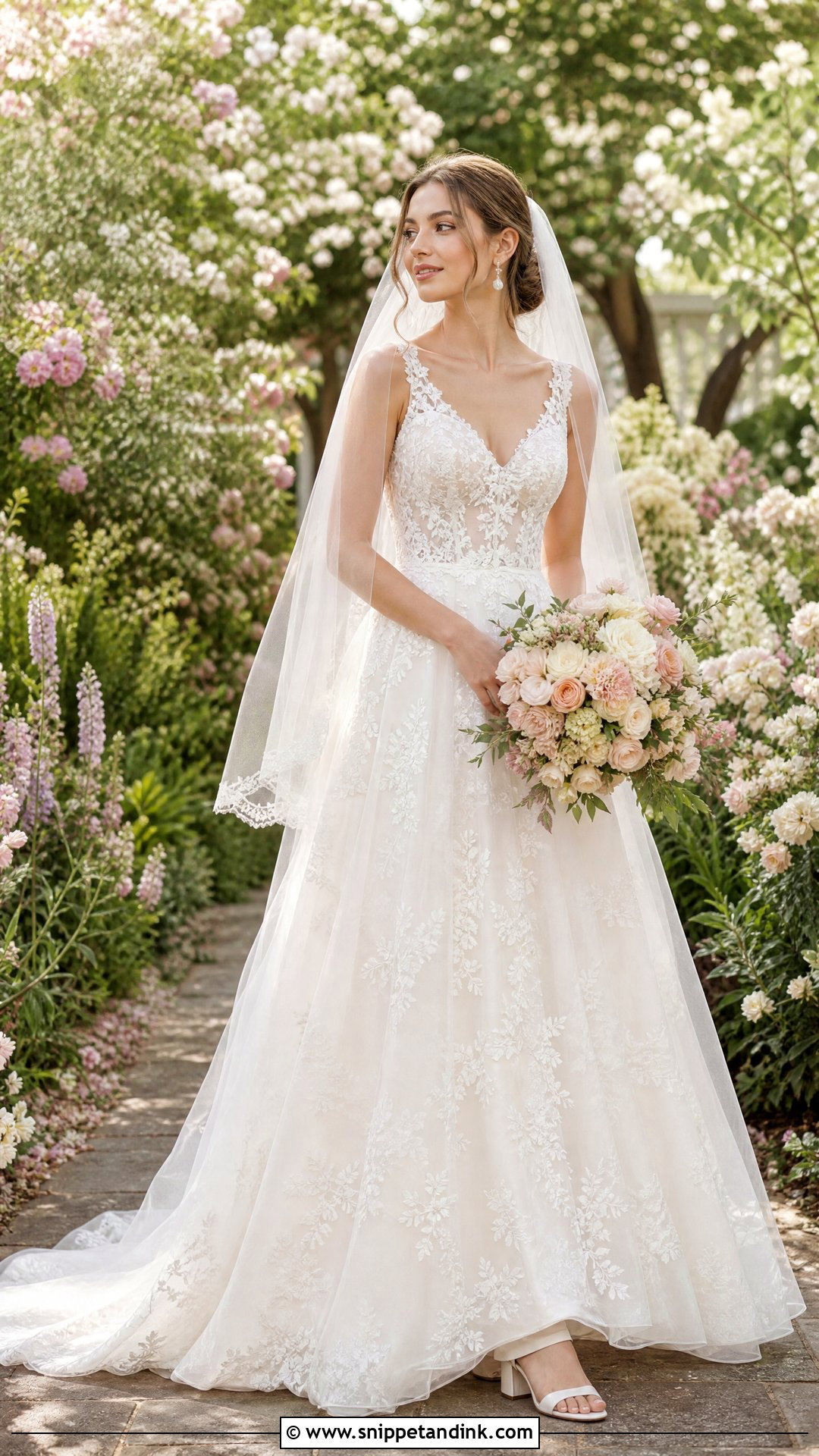
Garden ceremonies are mostly a footwear and fabric question. Lightweight tulle and organza move in a breeze without weighing you down, and floral lace, fine embroidery or 3D appliqués echo the flowers around you. I’d choose an A-line or a soft fit-and-flare with a sweetheart, scoop or off-shoulder neckline. Block heels matter more than they seem: stilettos sink into lawn within minutes. Add a fingertip veil, pearl drops and a loose updo with a few face-framing pieces, and carry seasonal blooms in blush, ivory, peach or lavender.
2. Beach Wedding Dress
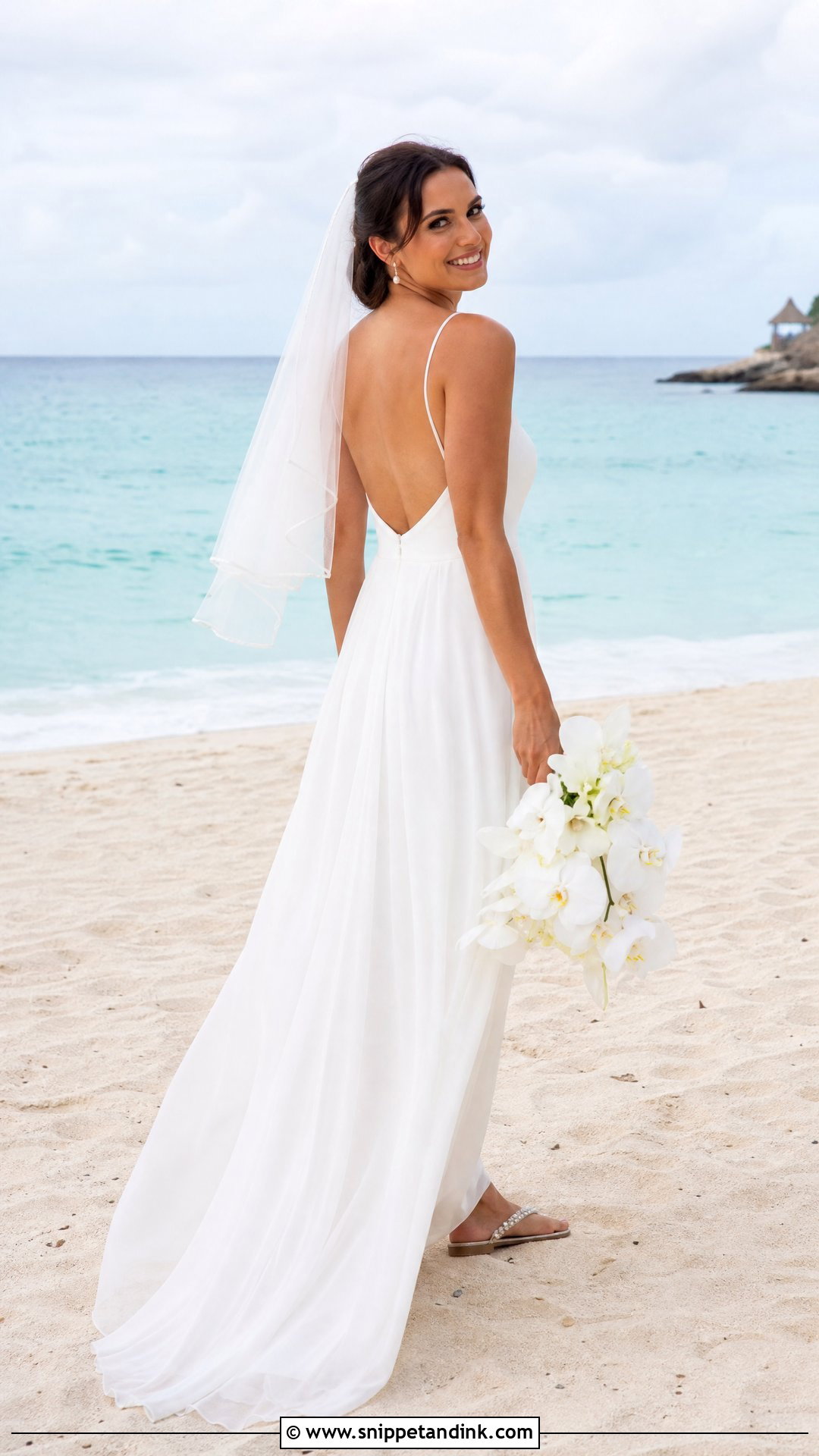
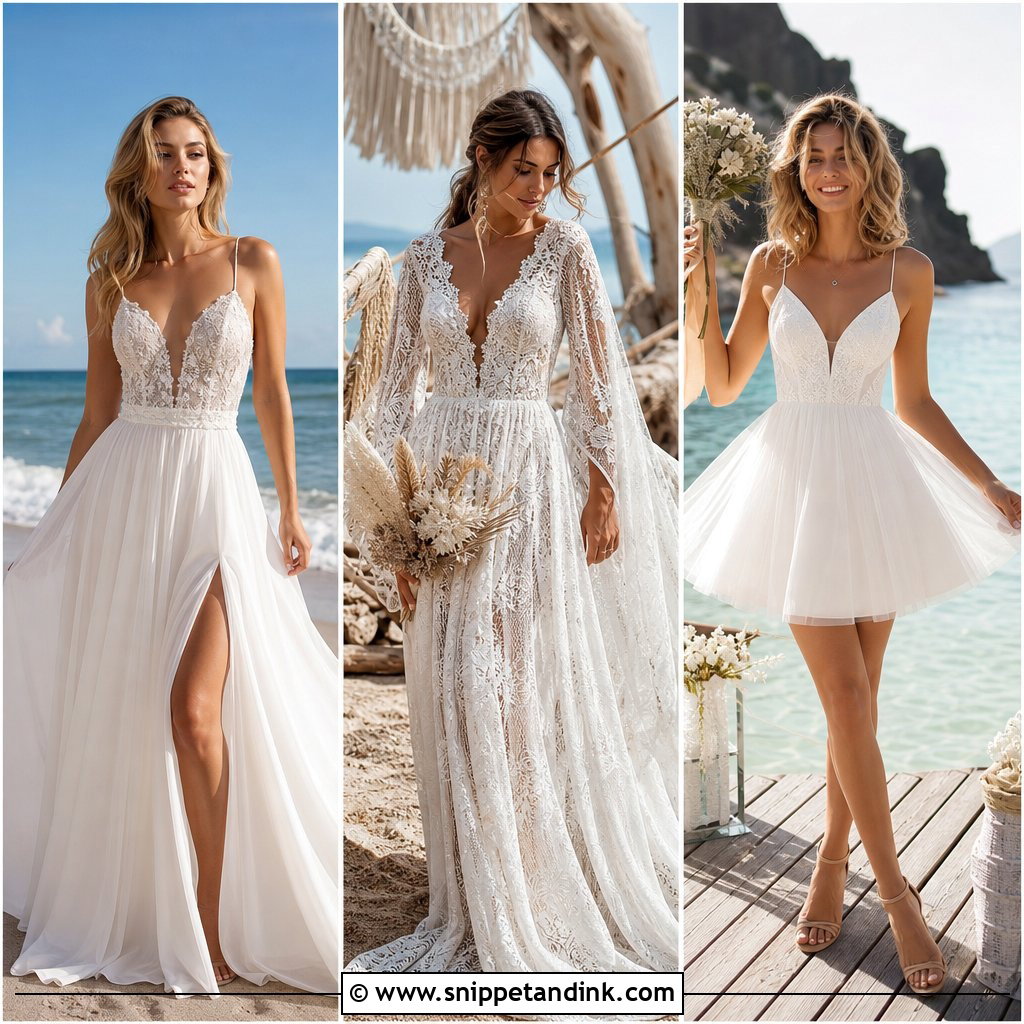
Sand ruins trains. That’s the first thing I tell beach brides, so I steer them toward a simple column, sheath or relaxed A-line in chiffon, crepe or silk, with a short sweep or none. Spaghetti straps, an open back or a halter suit the heat. Flat embellished sandals, small pearls and a fine anklet keep the feet light. A cathedral veil turns into a sail on the shore; a short veil, sheer cape or flower in the hair behaves better. A low bun or textured braid stays put in wind. White orchids with tropical leaves finish it.
3. Boho Wedding Dress
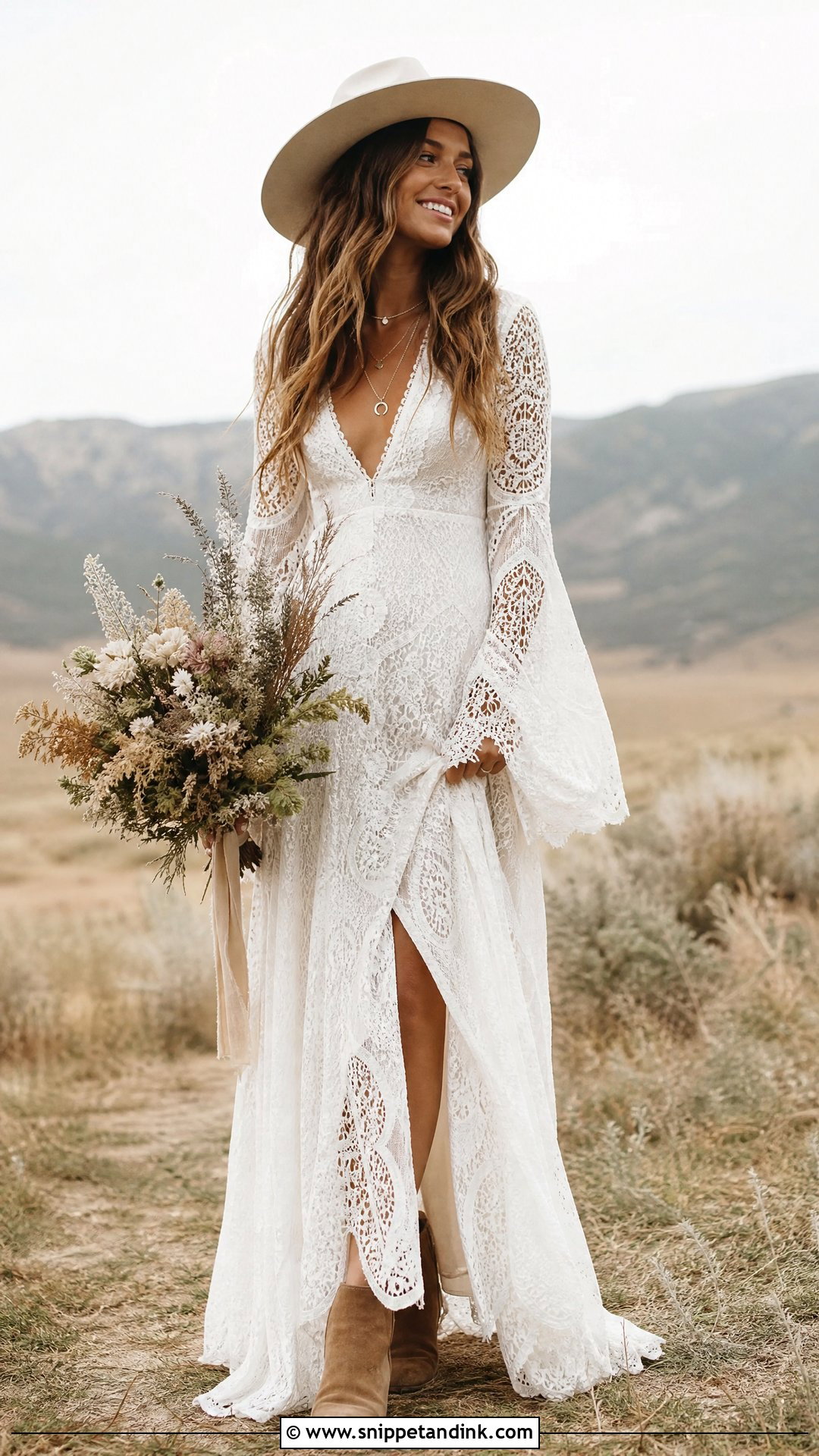
Boho dressing is relaxed in shape and detailed in texture. I’d look at a flowing sheath or soft A-line in crochet lace, embroidered tulle or lightly textured chiffon, with bell or flutter sleeves, an open back or scalloped edges. Crochet lace is heavier than it looks, so try it on in movement before deciding. Suede ankle boots or low leather sandals suit the ground. A flower crown is the classic choice, though a wide-brim bridal hat or dried-flower comb feels fresher. Layer a few fine necklaces, keep the earrings plain, and carry pampas, wildflowers and muted greenery for meadows, barns, deserts and outdoor festival-inspired ceremonies.
4. Vintage Wedding Dress
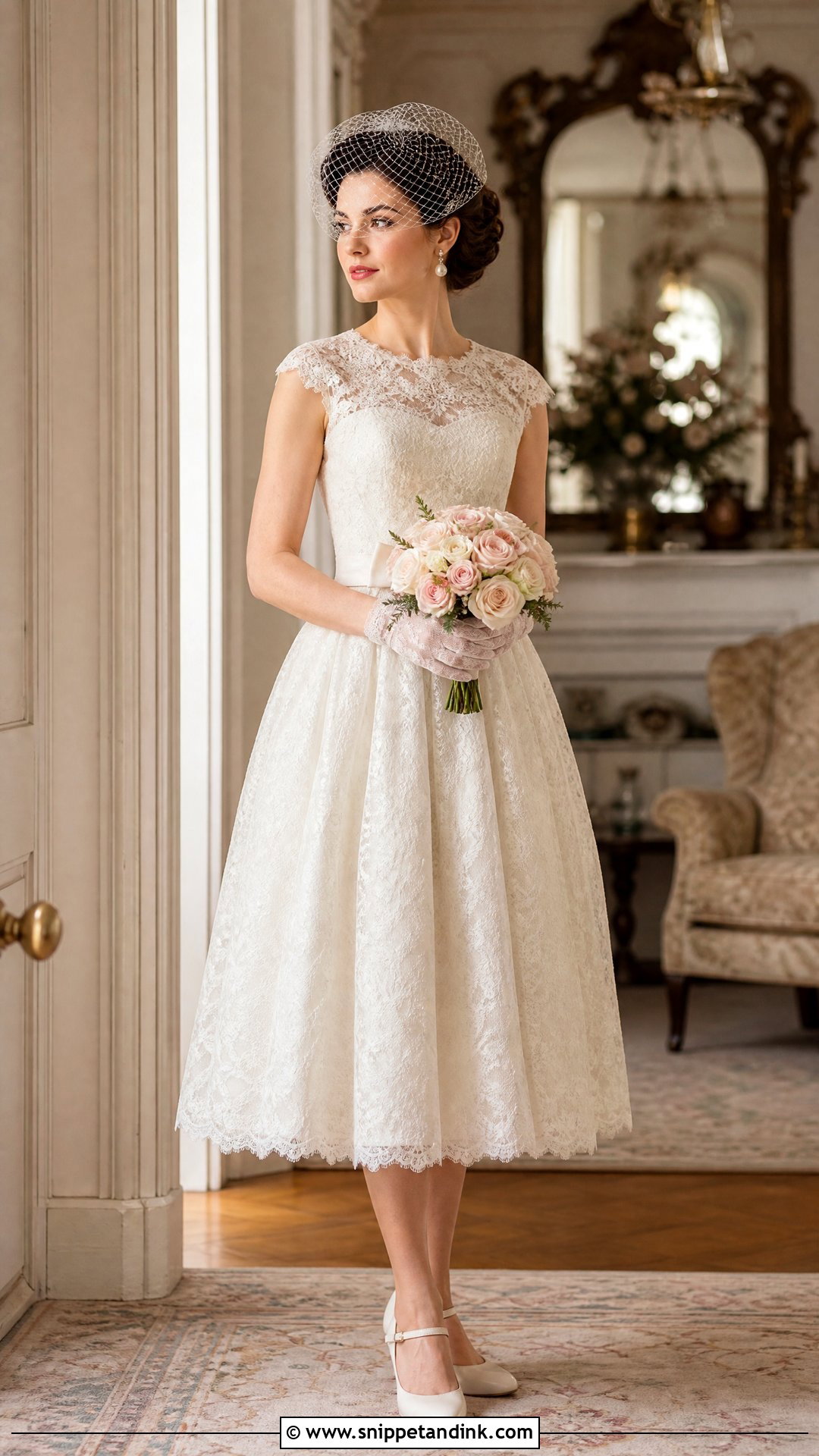
Vintage turns into costume when every element comes from the same decade. I pick one era for the gown and keep the rest quietly modern. A tea-length, bias-cut or long-sleeve lace dress drawn from the 1920s through the 1950s, with covered buttons, an illusion neckline, cap sleeves or a structured waist, carries the period on its own. Mary Janes, pointed pumps or bridal flats sit underneath, with a birdcage veil, Juliet cap veil or crystal comb. Pearl studs or heirloom jewelry, a small structured bag, soft waves or a chignon and a compact rose bouquet suit historic houses and classic venues.
5. Rustic Wedding Dress
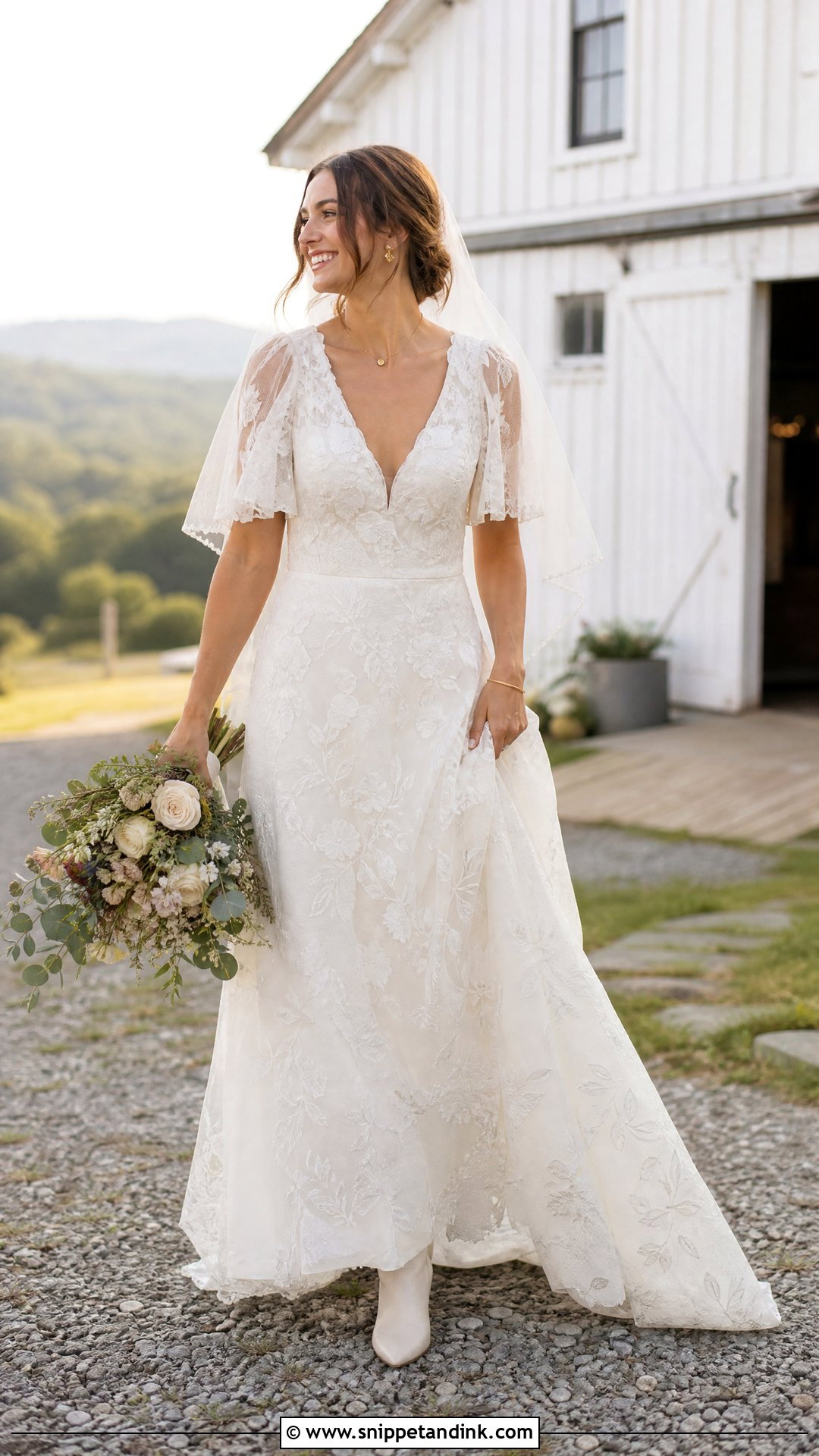
Barns and fields are hard on a gown. Hay, gravel and long grass catch at hems, so a rustic dress should have a manageable train and a fabric that forgives a little dust. Soft lace, matte crepe or layered tulle look better in natural light than shiny fabrics, which can glare in a sunlit barn doorway. I like an A-line, fit-and-flare or gently fitted gown with botanical lace, illusion sleeves for cooler months or flutter sleeves for summer. Clean leather boots, low block heels or flats, a fingertip veil, simple gold and wildflowers with eucalyptus and cream roses complete it.
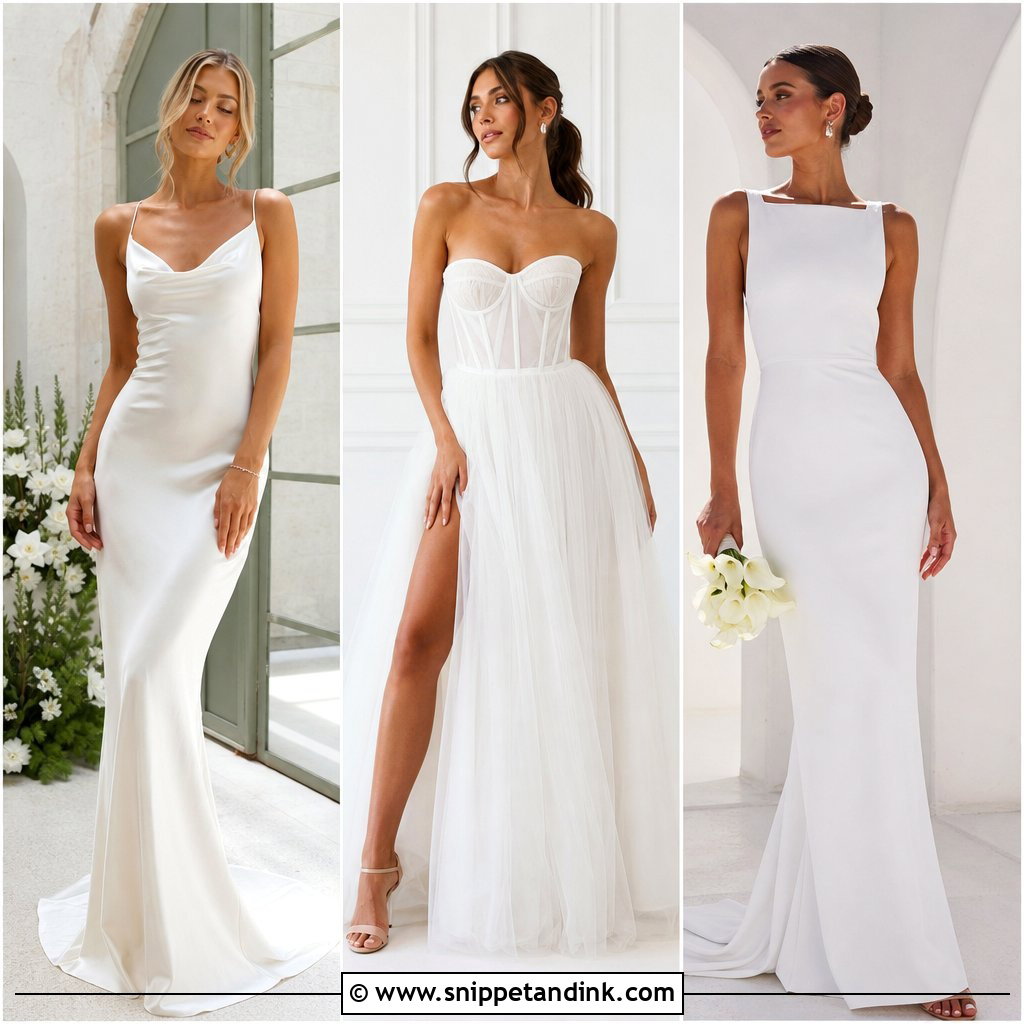
6. Modern Minimalist Wedding Dress
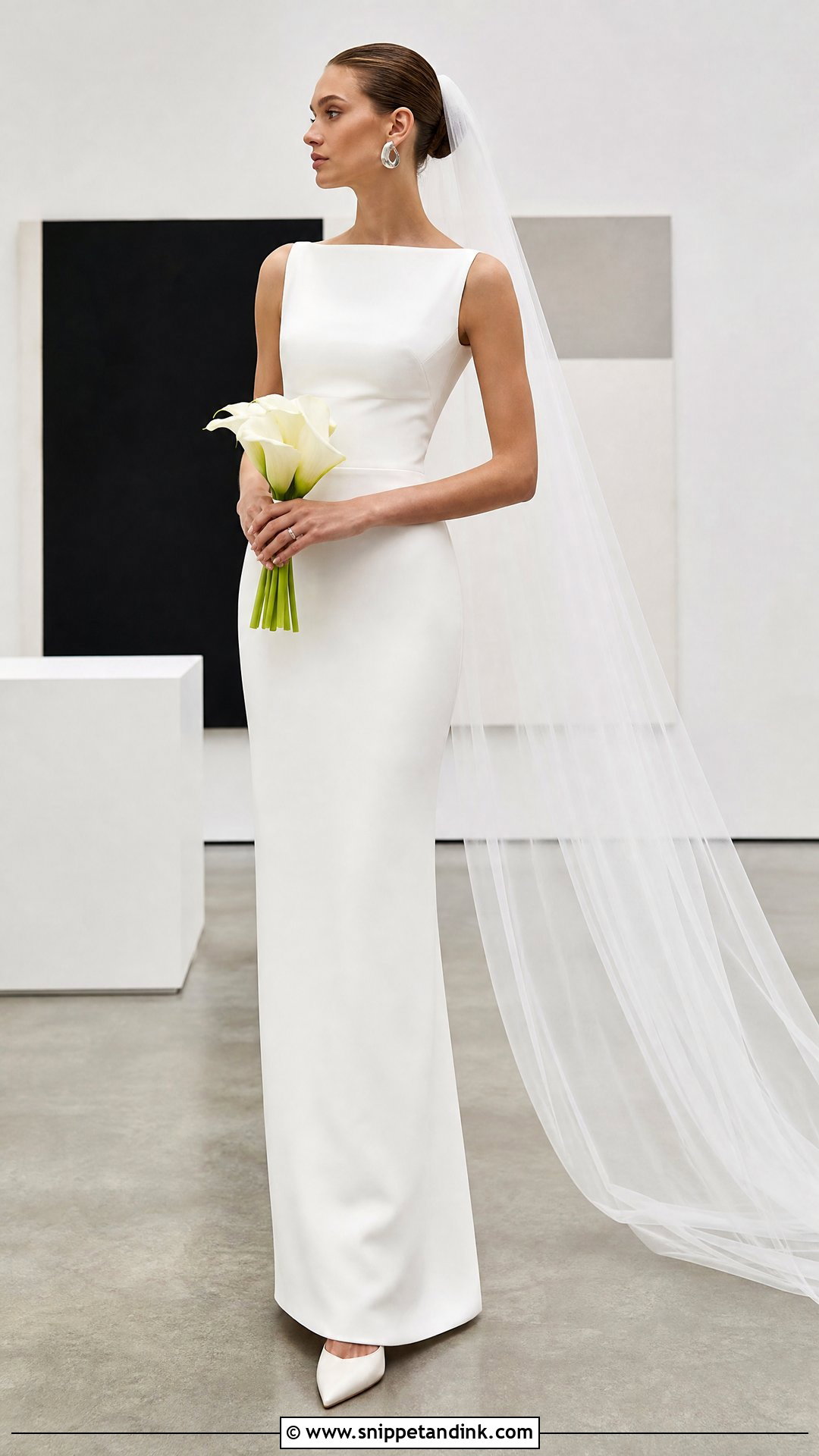
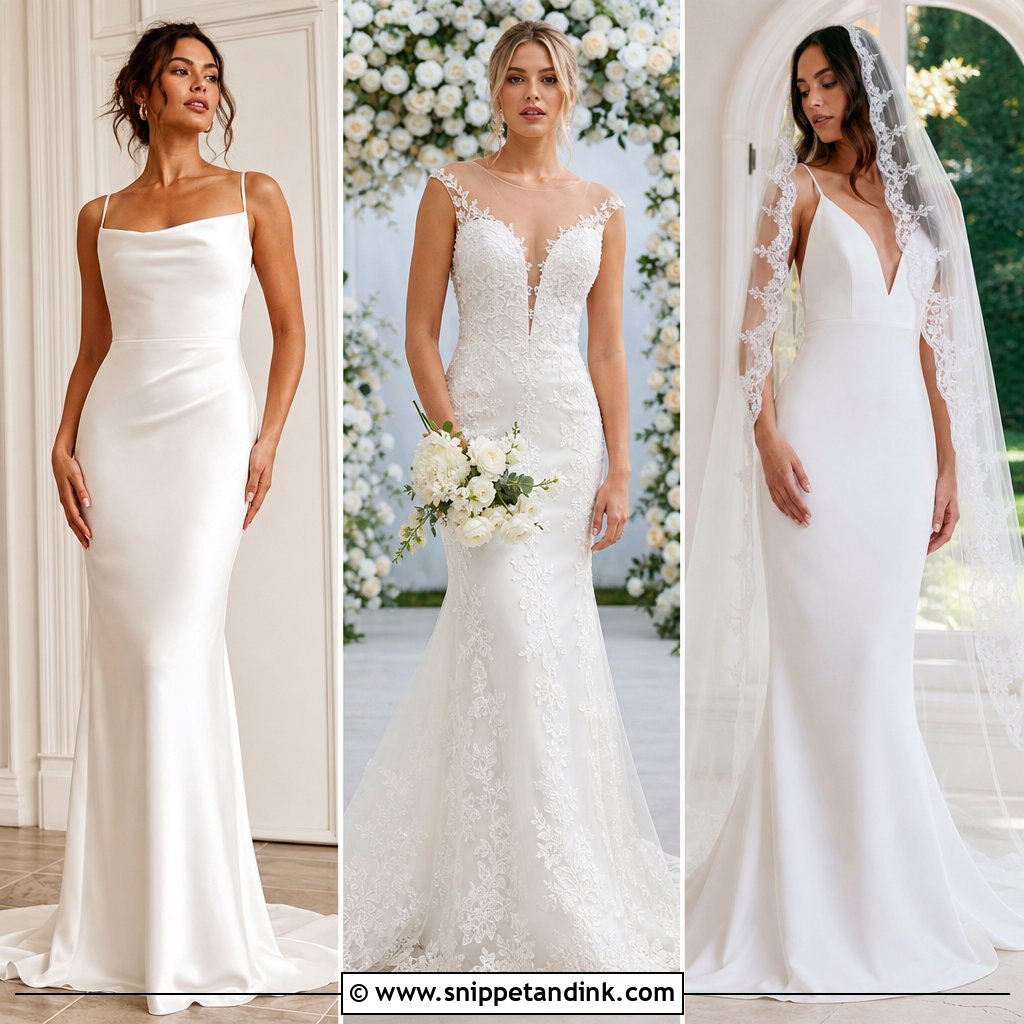
Minimal gowns are the least forgiving dresses I fit. With no lace or beading to distract, every pull at the seam and every ripple at the zip shows, so budget for good alterations and choose quality crepe that hangs heavily. A structured column, sleek A-line or fitted crepe gown with a square or bateau neckline, architectural folds or a low back gives interest without ornament. Pointed white pumps, sculptural earrings and a smooth low bun keep it clean. Go dramatic with a plain cathedral veil or sharper with a short one or none. Calla lilies or white roses suit galleries, modern hotels and rooftops.
7. Glamorous Ballroom Wedding Dress
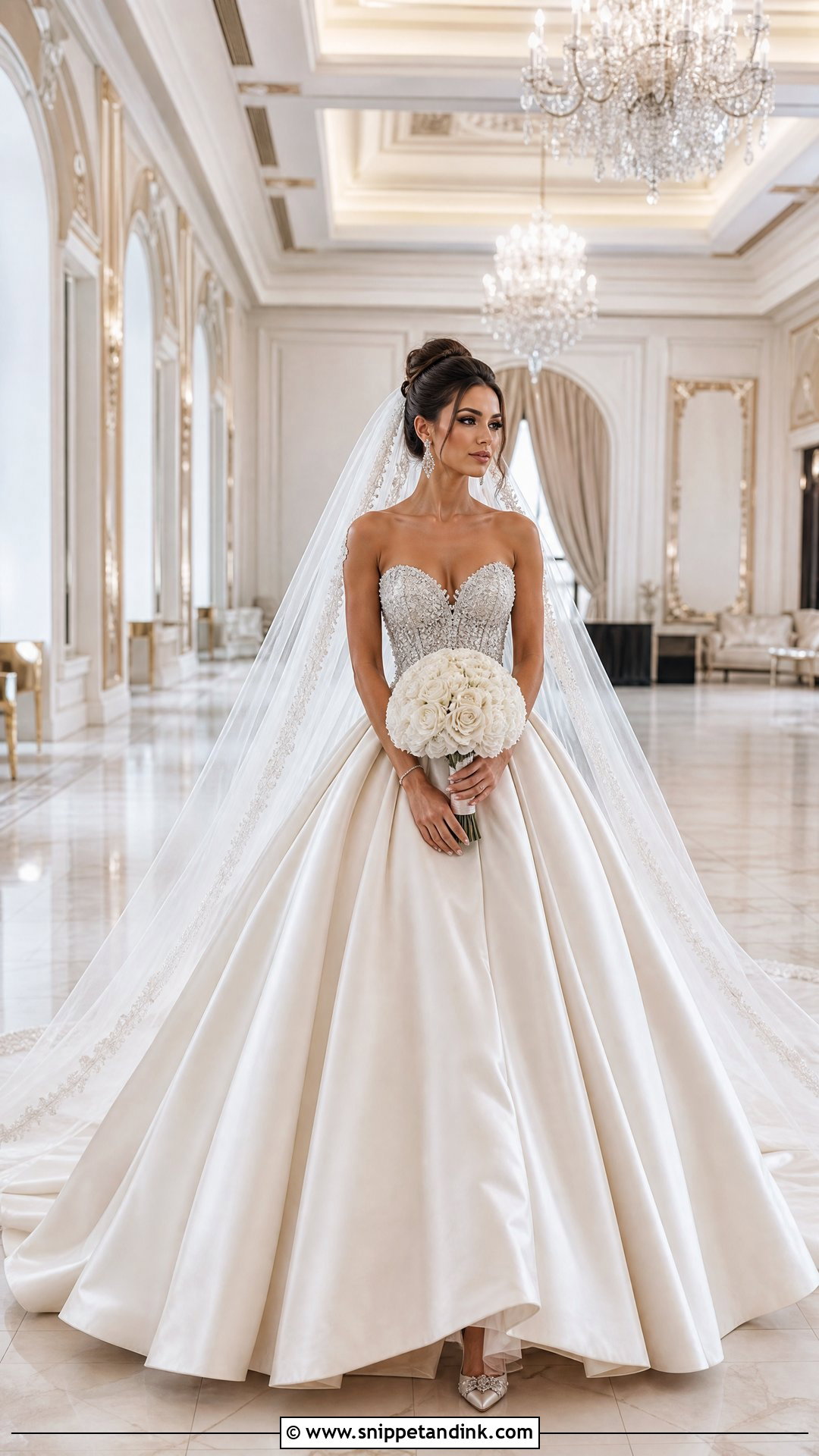
A big room needs a gown with enough scale that you don’t disappear in it. A full ball gown with a fitted bodice, defined waist and a skirt in satin, mikado or layered tulle holds its own under chandeliers. Mikado is my favorite here because it keeps its shape for hours without crushing. Crystal, pearl or carefully placed sequins catch the light; keep them to the bodice if the skirt is already full. Satin heels can hide under the skirt. A cathedral veil balances the volume on the walk, and polished waves or a structured updo with a jeweled comb or small tiara fit the formality, with round white roses to finish.
8. Fairytale Wedding Dress
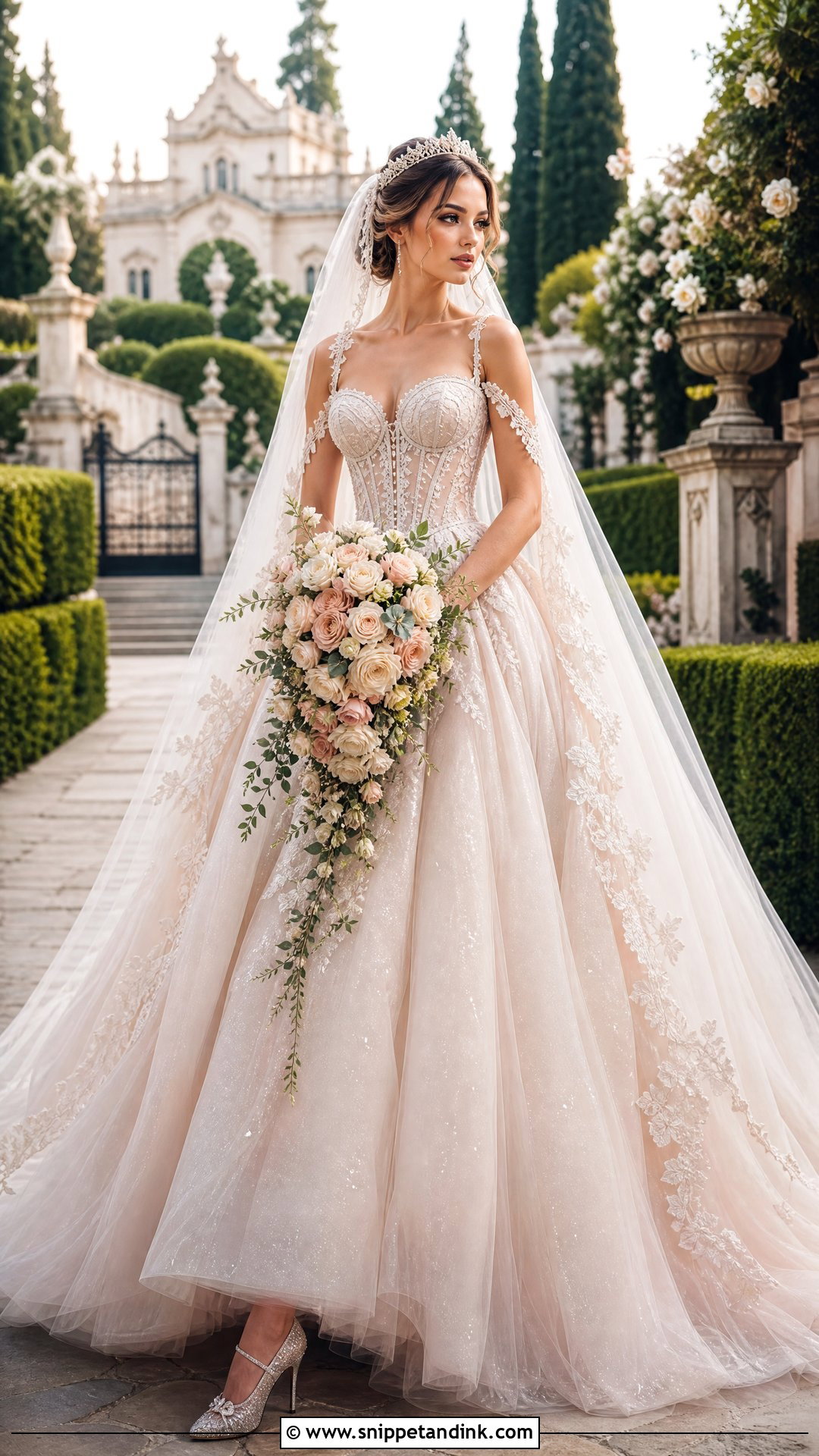
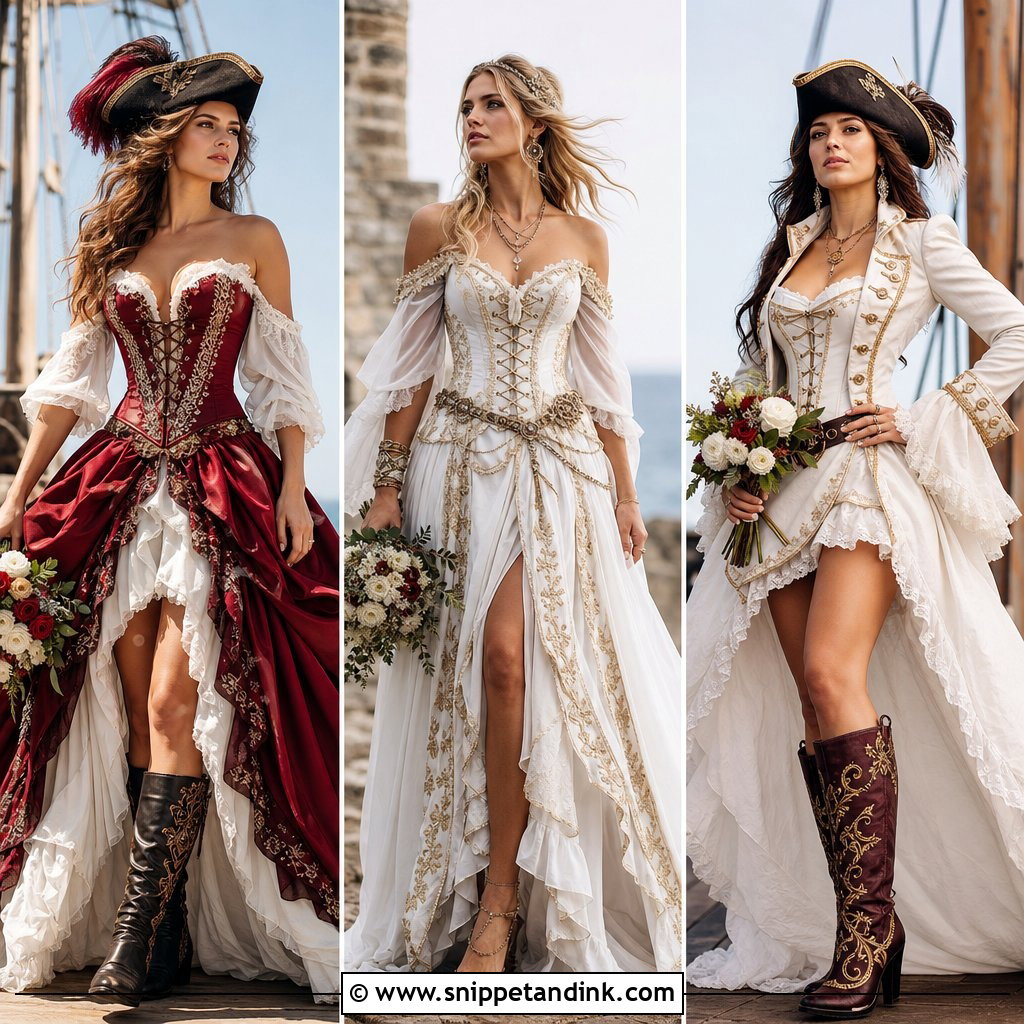
Storybook gowns are heavy, and the weight is something brides only feel after an hour. A fitted corset bodice with a sweeping layered skirt is the classic shape; floral appliqués, a soft shimmer or delicate beading add magic without tipping into theater. An off-shoulder or sweetheart neckline completes the silhouette. Ask how much the skirt weighs and practice walking and sitting at your fittings, so the corset sits comfortably. Embellished pumps, drop earrings and a fine tiara or vine headpiece, a lace-edged long veil, soft curls and a cascading ivory and pale blush bouquet suit castles, estates and ornate rooms.
9. Royal Wedding Dress
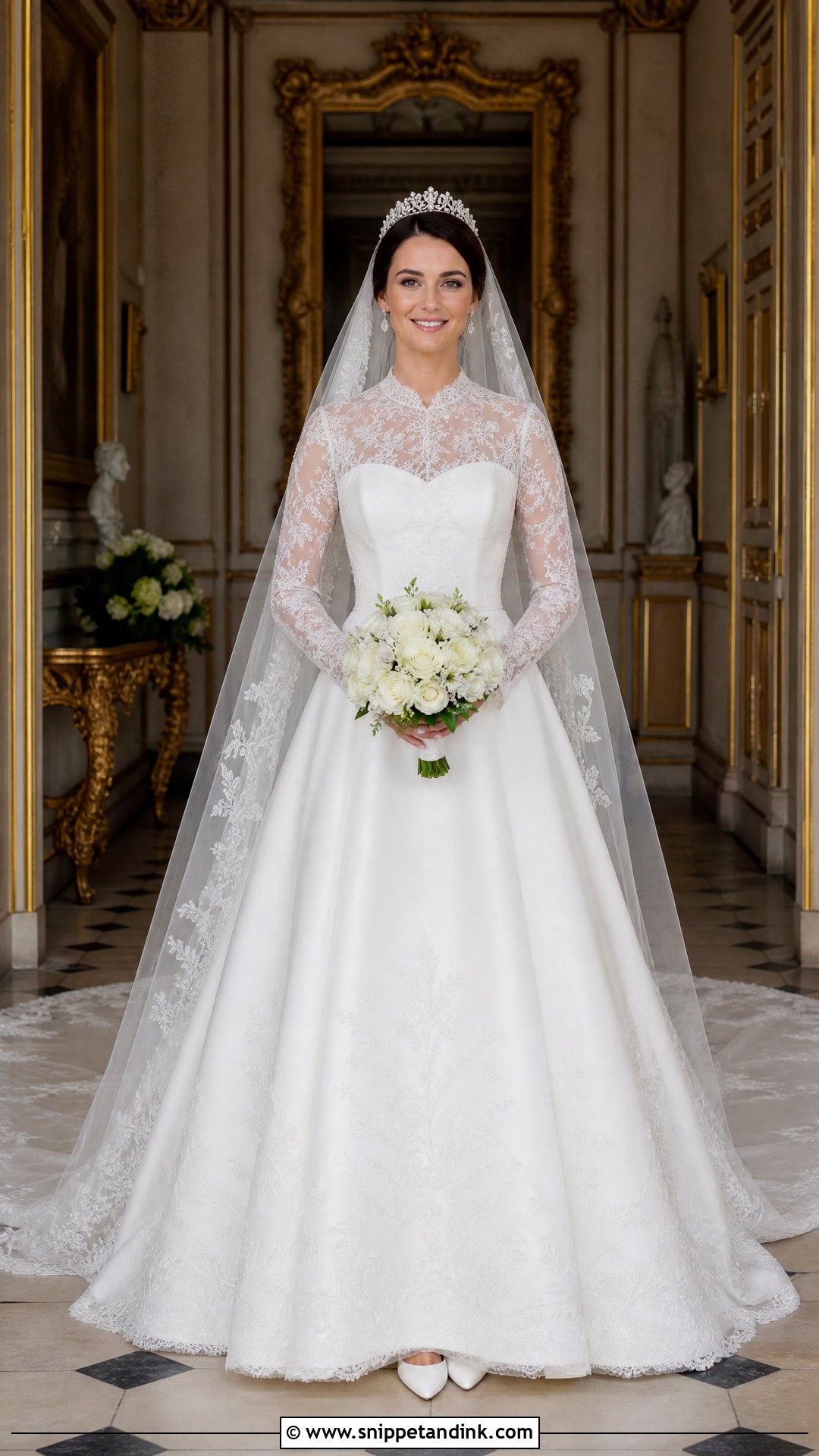
Royal style is about restraint and structure, not sparkle. Long sleeves on an A-line or ball gown in satin, lace or mikado, with a high, bateau or neat V neckline and covered buttons down the back. The train should suit the room’s scale, and it needs a reliable bustle for the reception; ask your seamstress how many bustle points it needs. Closed-toe pumps, pearl or diamond-style earrings and a delicate tiara sit well with a cathedral veil edged in subtle embroidery. Wear a smooth chignon and carry a structured white bouquet for a stately home or historic hotel.
10. Gothic Wedding Dress
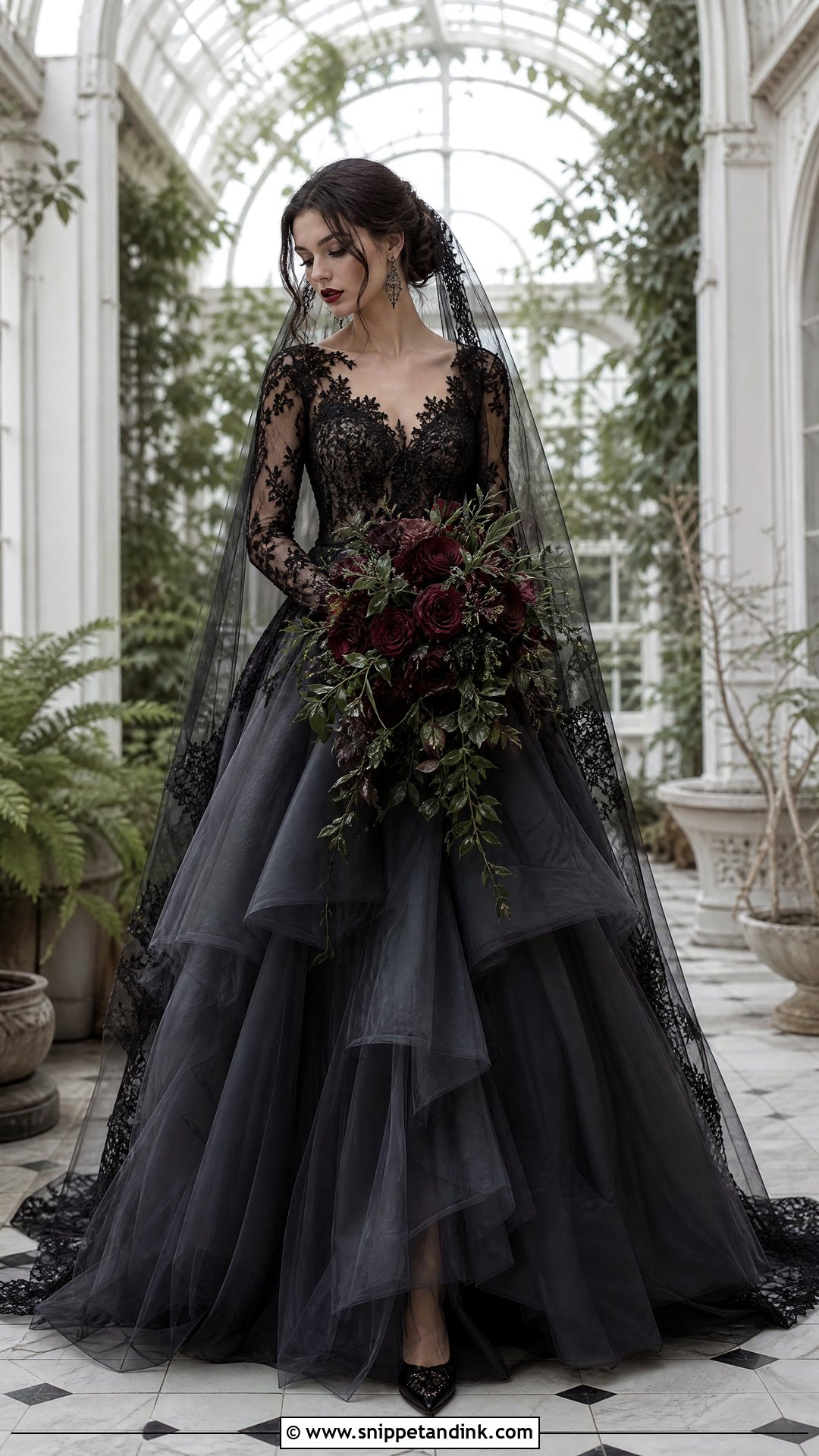
Gothic bridal works best when one dark element leads and the rest supports it. Black, deep charcoal, ivory with black, or rich burgundy all suit a fitted bodice and flowing skirt. Velvet absorbs light and photographs much darker than it looks in person, so balance it with a lighter lace or tulle. Long sleeves, a high neck or a visible corset strengthen the theme. Pointed pumps, antique-style earrings and a dark floral comb, plus a black lace or sheer cathedral veil, provide the drama. Keep the hair to polished waves or a sculptural updo, and carry burgundy roses with plum flowers in an old mansion or conservatory.
11. Winter Wedding Dress
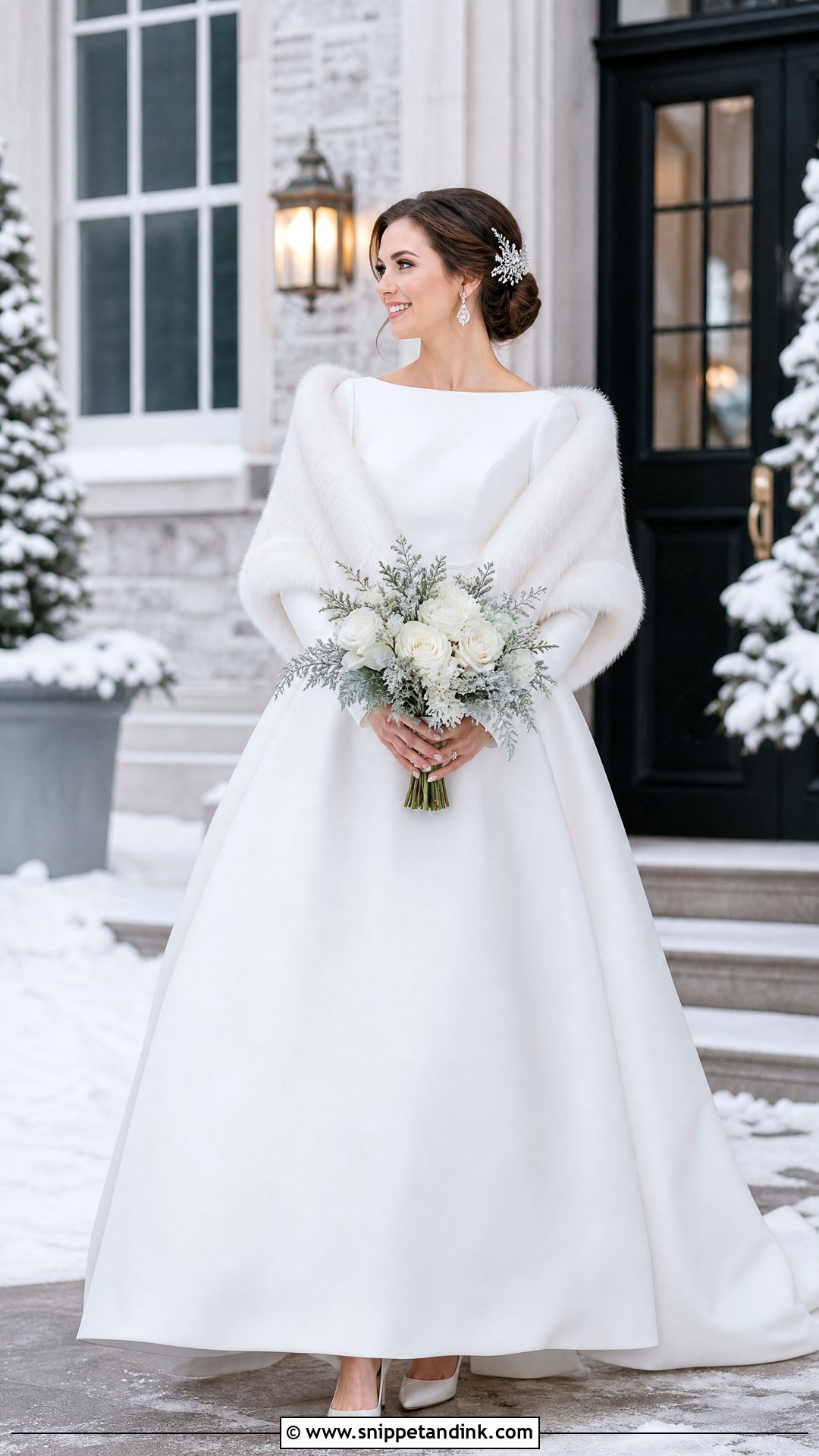
Cold weddings need two outfits: the one indoors and the one for the walk between car, church and photos. Indoors, a long-sleeve gown in satin, mikado, velvet-trimmed crepe or lined lace, in a structured A-line or ball gown shape. Outdoors, a removable faux-fur wrap, tailored cape or bolero. Closed-toe pumps or bridal ankle boots beat sandals on wet pavements. Crystal earrings and a sparkling comb suit the crisp light. A cathedral veil stands out against snow, though a cape veil keeps you warmer. Finish with white roses and silvery foliage.
12. Tropical Wedding Dress
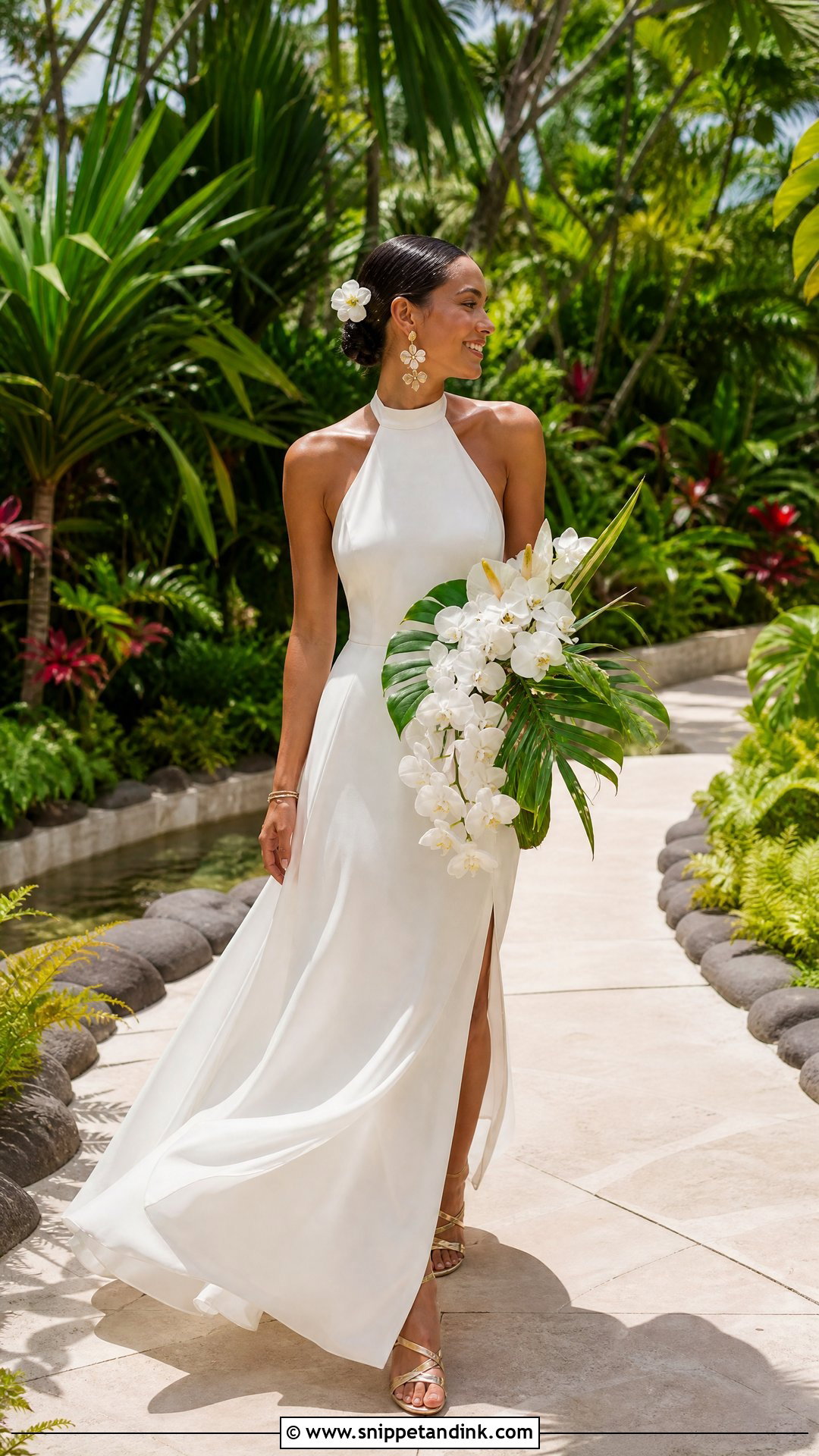
Humidity is the real issue in the tropics: heavy satin clings, and structured bodices trap heat. I’d choose breathable chiffon, silk or unlined lace in a sheath, slip or soft A-line, with a one-shoulder, halter or open-back bodice. Botanical embroidery can nod to the setting without being literal. Metallic sandals, statement floral earrings and a sleek bun are the practical choices, since loose curls drop fast in damp air. A short veil or a single big flower behind the ear suits it, with orchids, anthuriums and glossy leaves in the bouquet for resorts, greenhouses and coastal gardens.
13. Celestial Wedding Dress
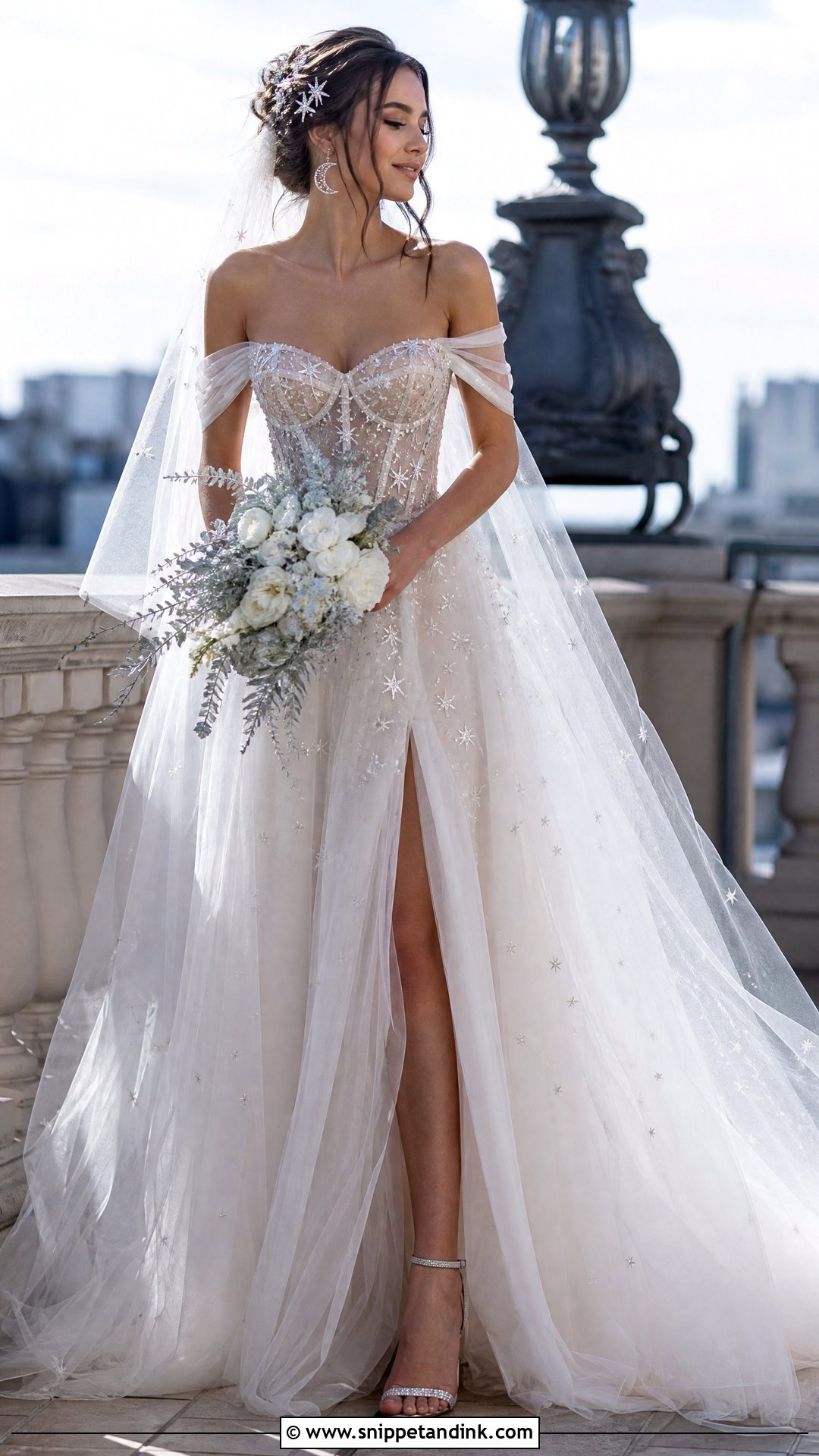
Evening light is where a celestial wedding dress comes alive, as scattered crystals catch candles and string lights in a way daylight never shows. I’d look for flowing tulle or organza with star-shaped beading, scattered crystals or fine silver embroidery. An illusion neckline or sheer sleeves make the sparkle look like it floats on the skin. A soft A-line keeps the beading from dragging the skirt down. Silver heels, moon earrings, a crystal headband or star pins and a sheer veil with scattered sparkle tie it together, with luminous makeup and white flowers mixed with silver foliage.
14. Art Deco Wedding Dress
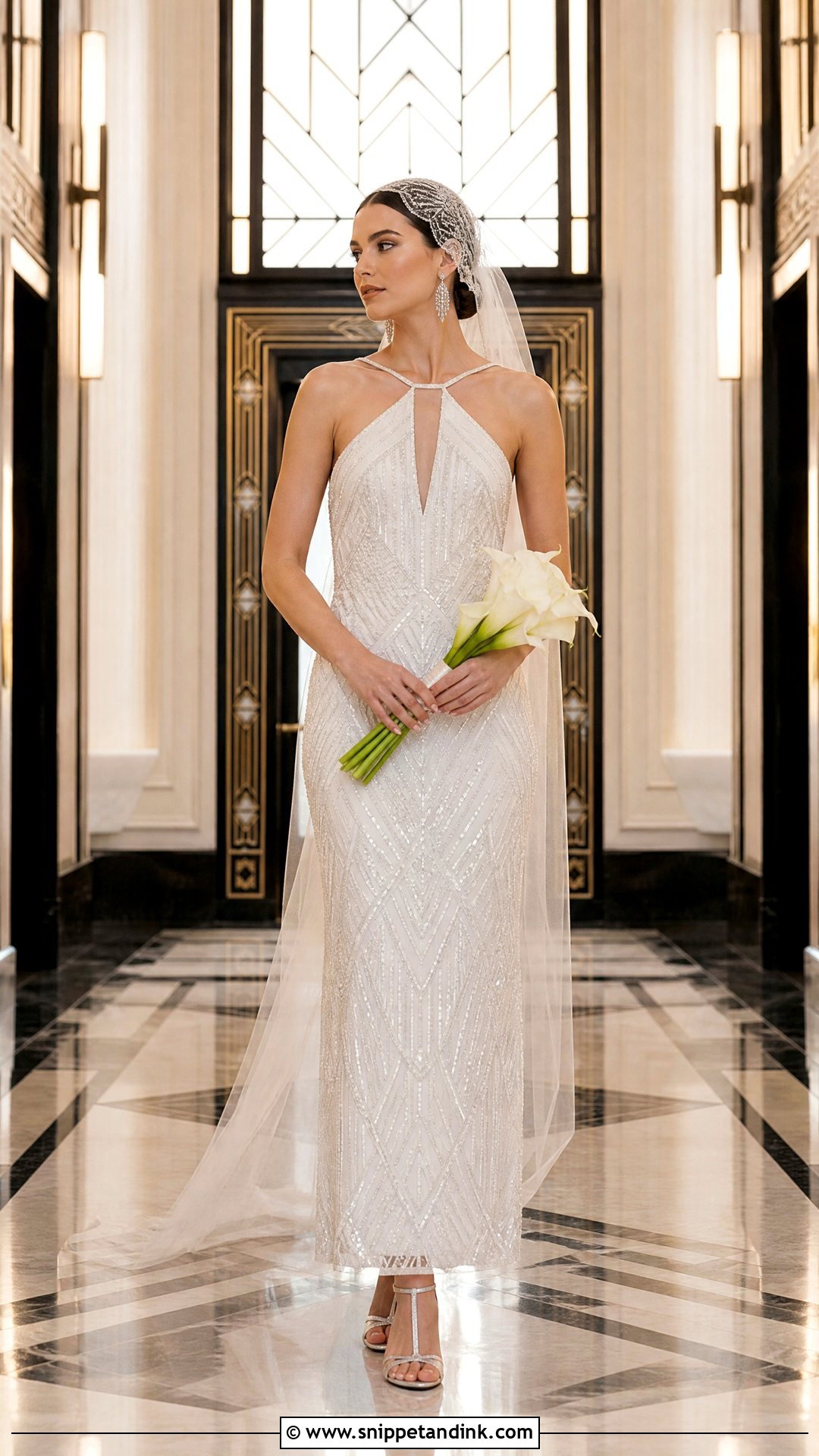
Art Deco is about line: long, straight and geometric. A column, sheath or gently flared gown gives the 1920s length, with symmetrical crystal patterns, fan embroidery, fringe or pearl detail on ivory, champagne or soft gold. Heavy beaded fringe swings when you walk, which looks wonderful but can tangle with a bouquet held low, so carry yours higher. T-strap heels, chandelier earrings and a metallic clutch suit it, with a beaded headband, crystal comb or Juliet cap veil. Structured waves or a neat low bun, and a small bouquet of callas or roses, fit historic hotels and old theaters.
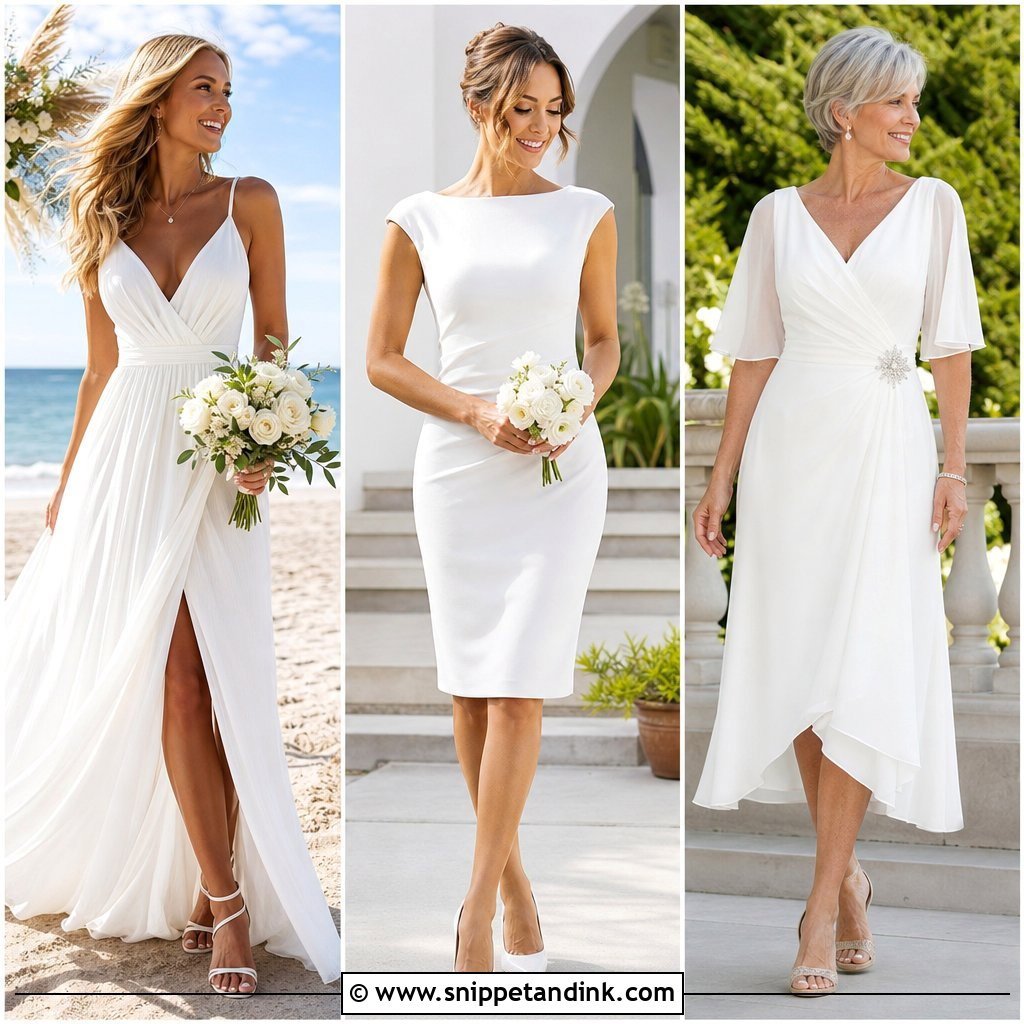
15. Cottagecore Wedding Dress
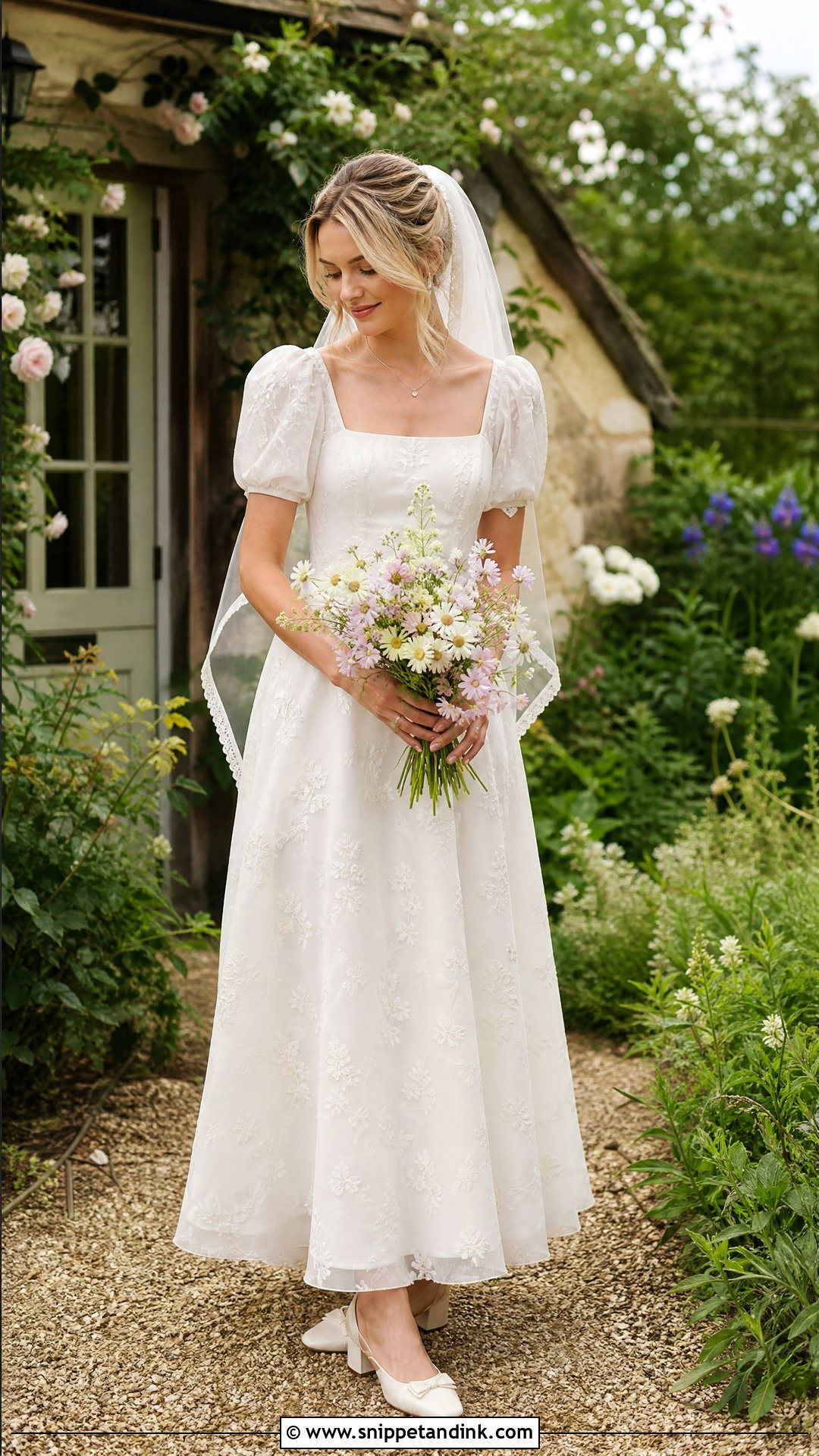
Cottagecore is all texture and no shine. A soft A-line or empire-waist gown in embroidered cotton, floral lace, chiffon or airy tulle, with puff sleeves, a square neck, tiny flowers or ribbon trim, sets the scene. Cotton creases quickly, so plan on a steam once you’re dressed. Embroidered flats, low block heels or lace-up boots work, with a ribbon veil, floral comb or small flower crown. Loose braids and soft curls keep it relaxed, and a hand-tied bunch of daisies, sweet peas and garden greens suits orchards and small country gardens.
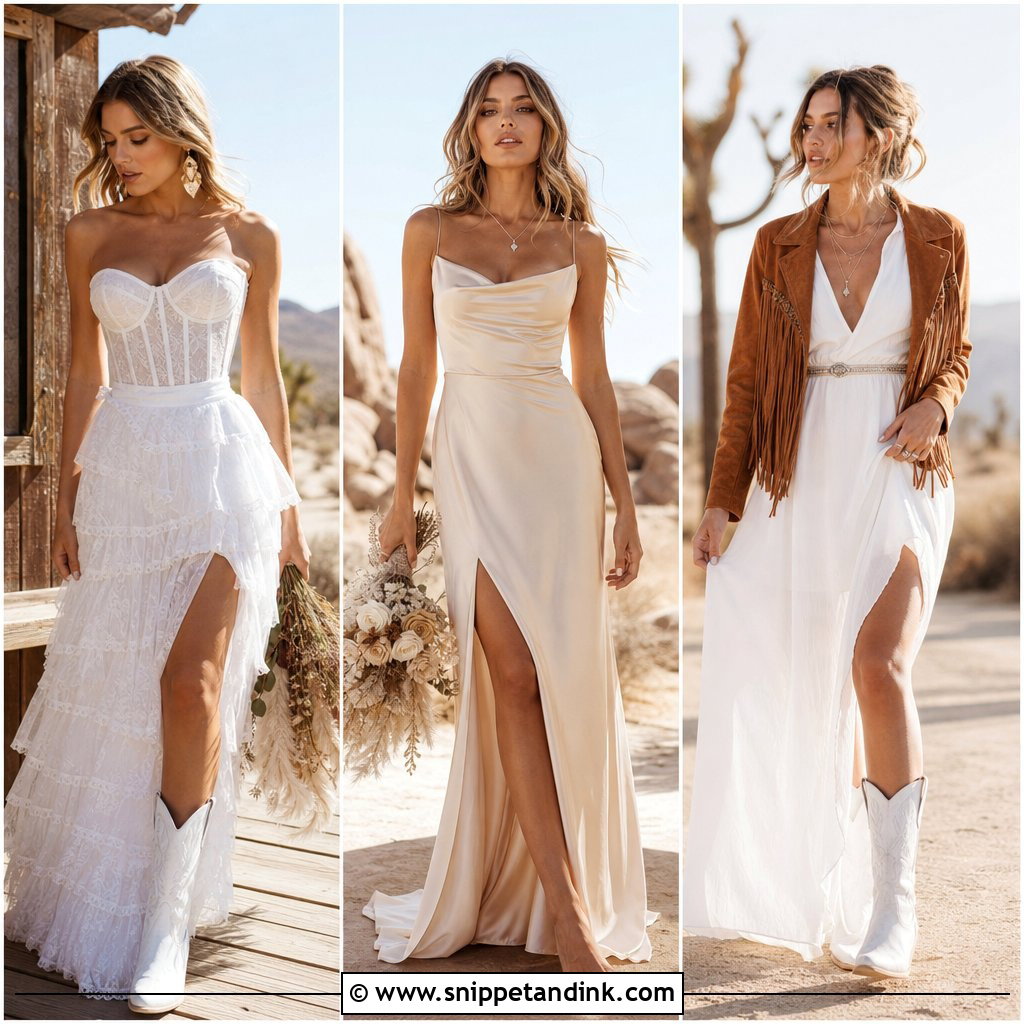
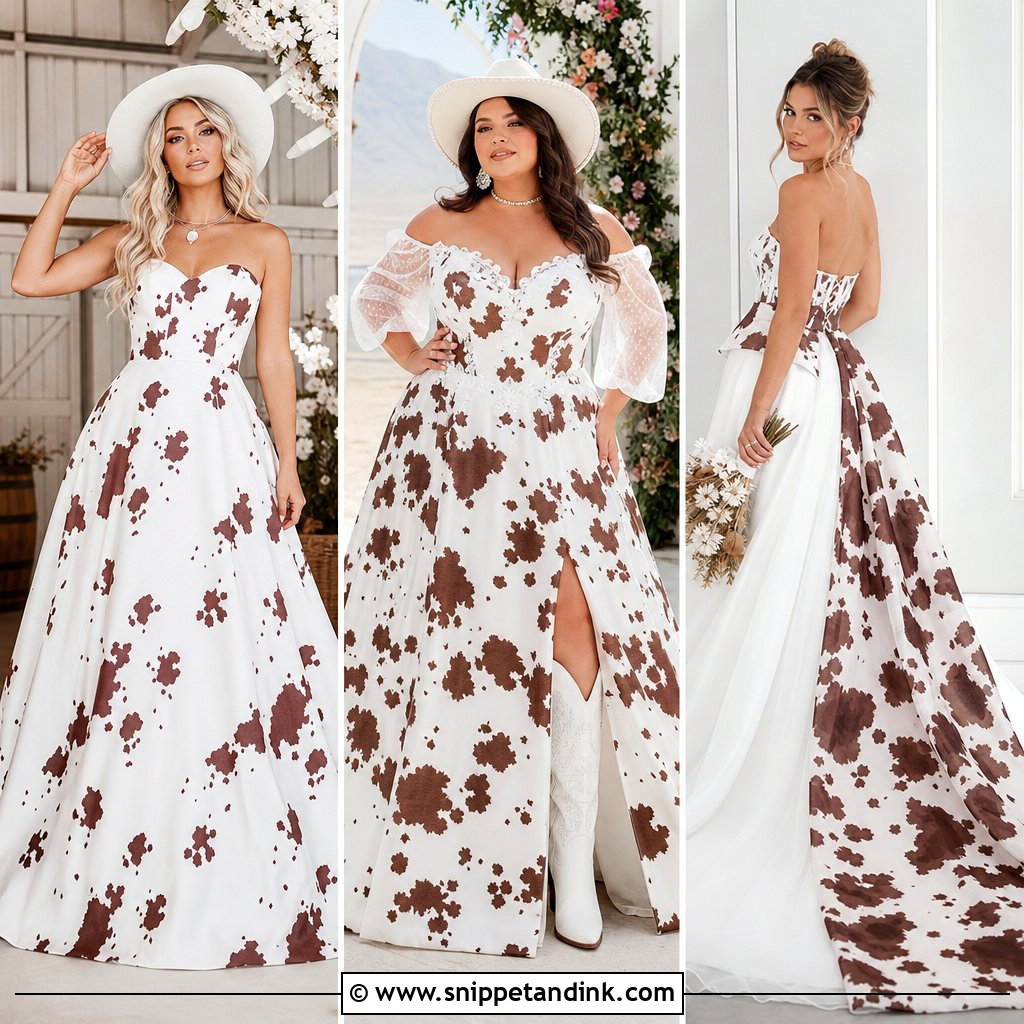
16. Western Wedding Dress
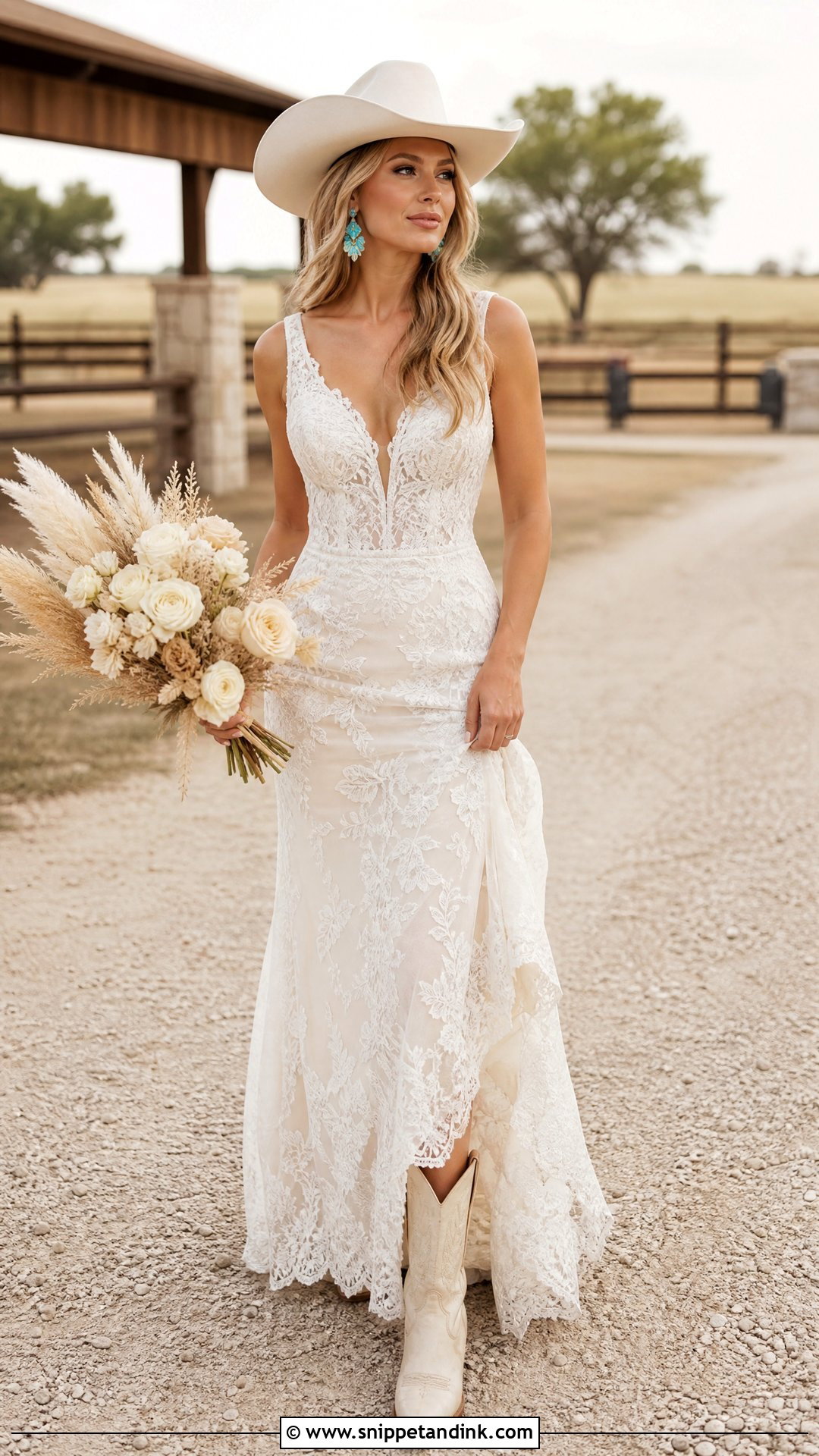
Western bridal goes wrong when every accessory says cowboy. My rule is one or two accents, no more. A western wedding dress in fitted lace, crepe or satin with an A-line or fit-and-flare shape, a sweetheart neck, long lace sleeves or subtle fringe, carries the theme. White or cream boots should be broken in weeks ahead; new boots blister on a dance floor. Choose between turquoise earrings, a tooled leather belt or a bridal hat. A fingertip veil softens the ceremony look, and ivory flowers with dried grasses suit ranches, lodges and desert venues.
17. Coastal Wedding Dress
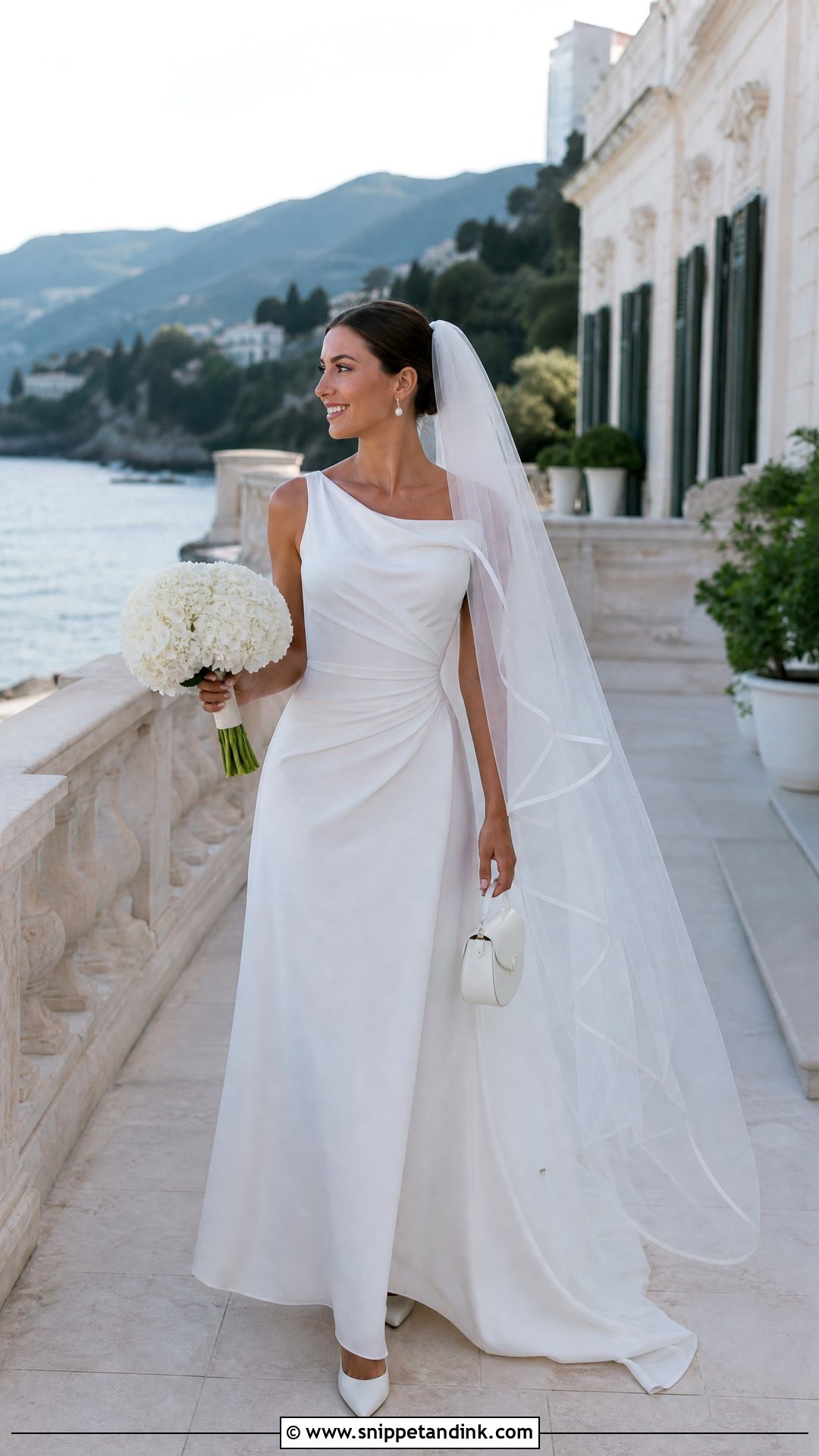
Coastal and beach are not the same brief. A coastal wedding at a harbor hotel or yacht club needs more polish and structure than a barefoot ceremony on sand. Silk, crepe or lightweight satin in a column, A-line or soft drape, with a bateau, square or cowl neck, matches that clean seaside look. Pearl earrings, white slingbacks and a small structured bag work for the reception. Wind is still a factor, so a ribbon-trimmed or sheer shoulder-length veil behaves better than a long one. A low bun, fresh makeup and white hydrangeas, roses or pale blue flowers finish it.
18. Woodland Wedding Dress
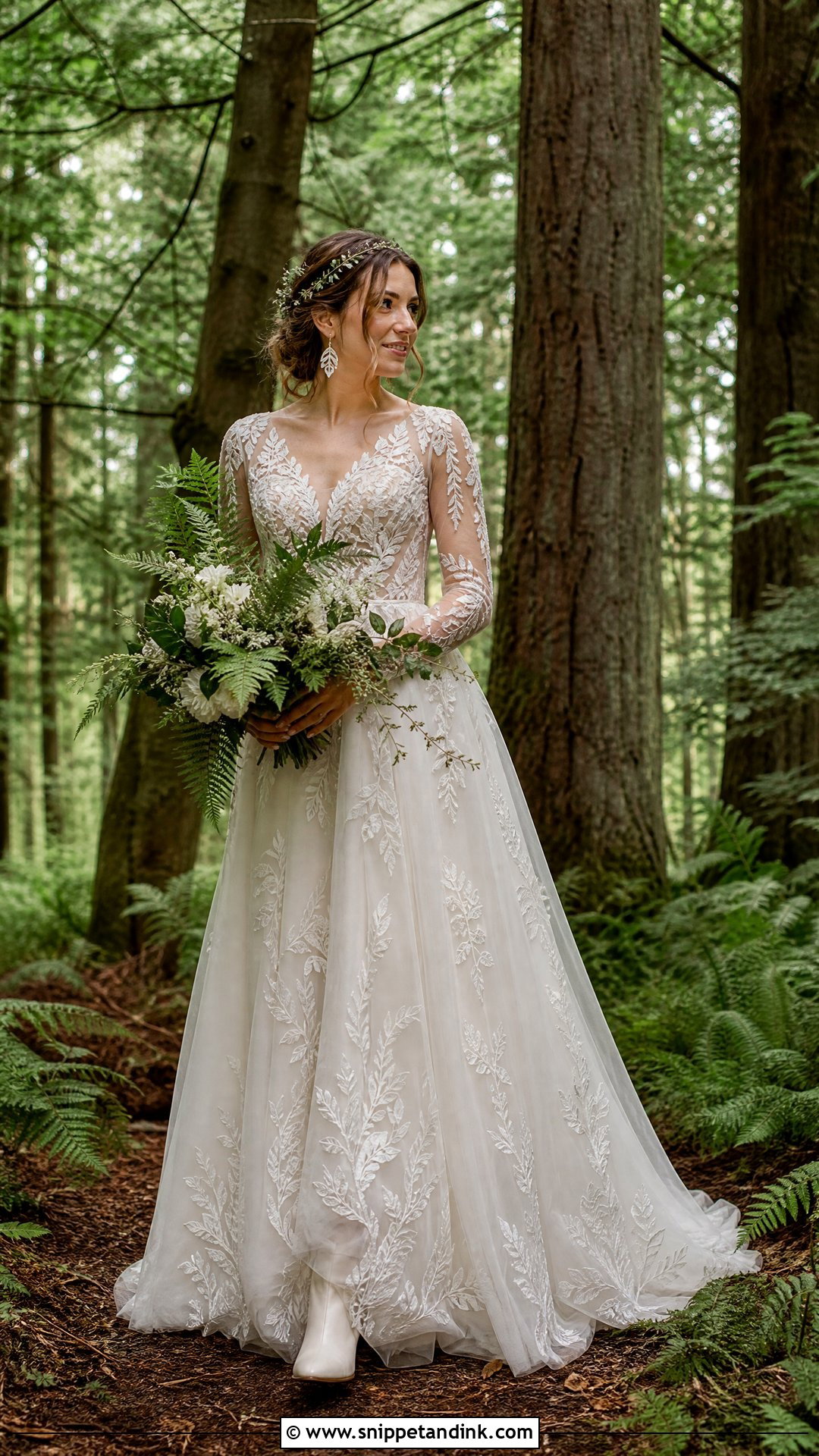
Forest floors are uneven and full of roots and leaves, so I keep woodland trains moderate. Soft tulle, chiffon and organza lift over the ground rather than dragging, and leaf embroidery, botanical lace or 3D flowers tie the gown to the trees. Long sheer sleeves help when it’s cool under the canopy. Sturdy block heels, decorative flats or clean ankle boots are wise. Leaf earrings, a vine hairpiece and a fingertip veil keep the styling light, and a braided updo holds up against branches and breeze. Ferns, white flowers and trailing greenery make the bouquet.
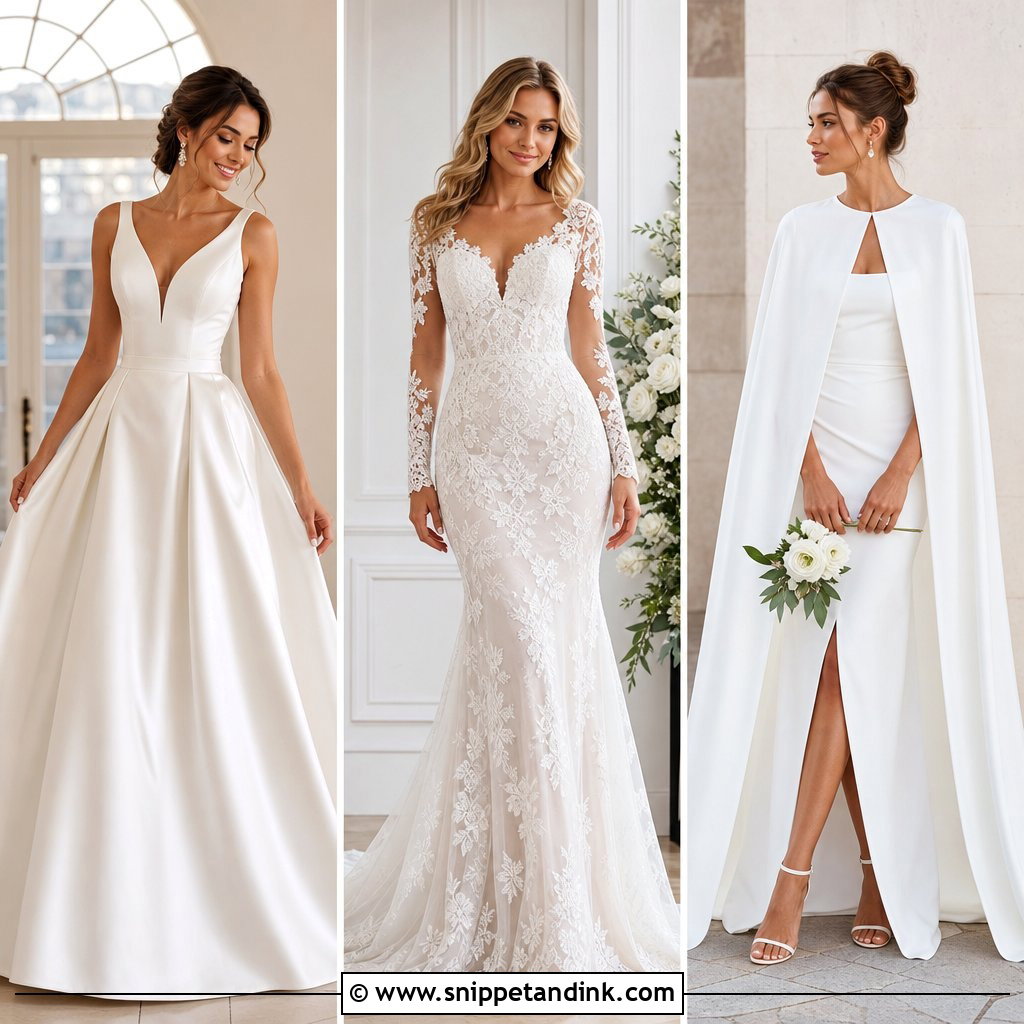
19. Classic Romantic Wedding Dress
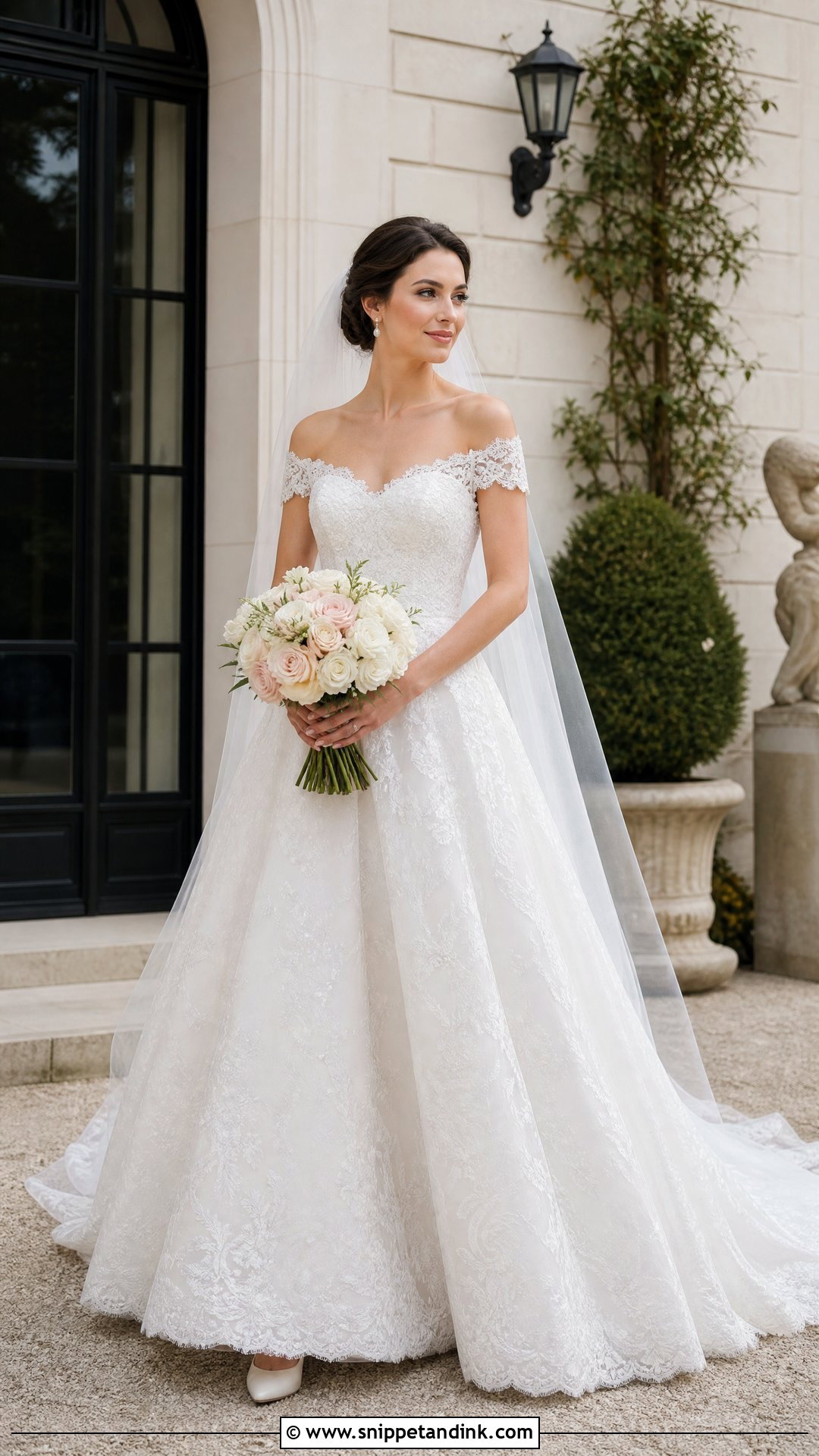
Some gowns simply don’t date. An A-line or ball gown in lace, satin or soft tulle, with a sweetheart, portrait or off-shoulder neckline and a clear waist, flatters most figures I fit because it defines the waist and skims the hips. Delicate appliqués or covered buttons add detail without tying it to a trend. Pearl earrings, neutral pumps and a long veil with a plain edge suit it, as do soft waves, a low chignon or a half-up style. Carry white and blush roses with light greenery for a hotel, garden or estate.

20. City Wedding Dress
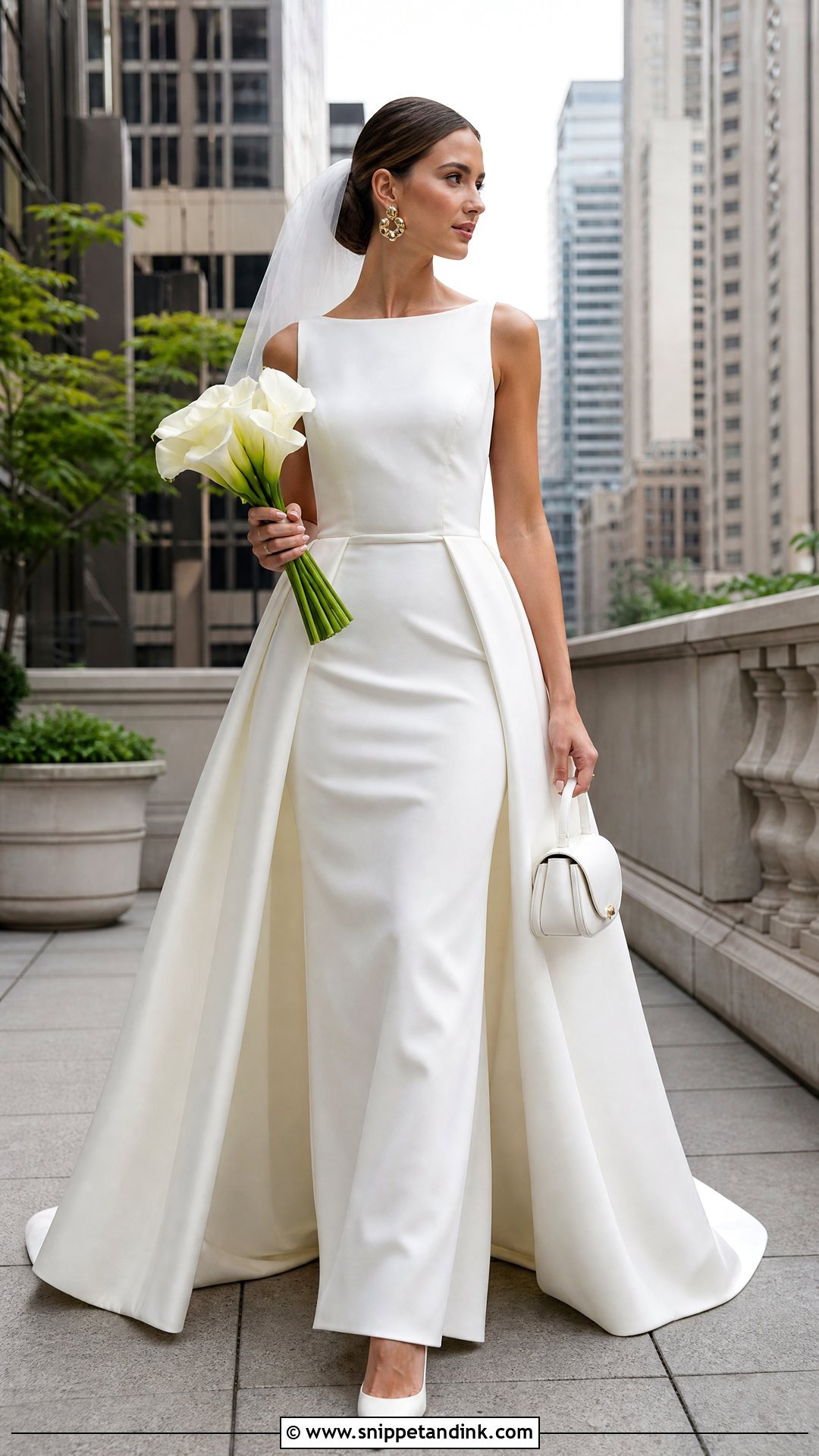
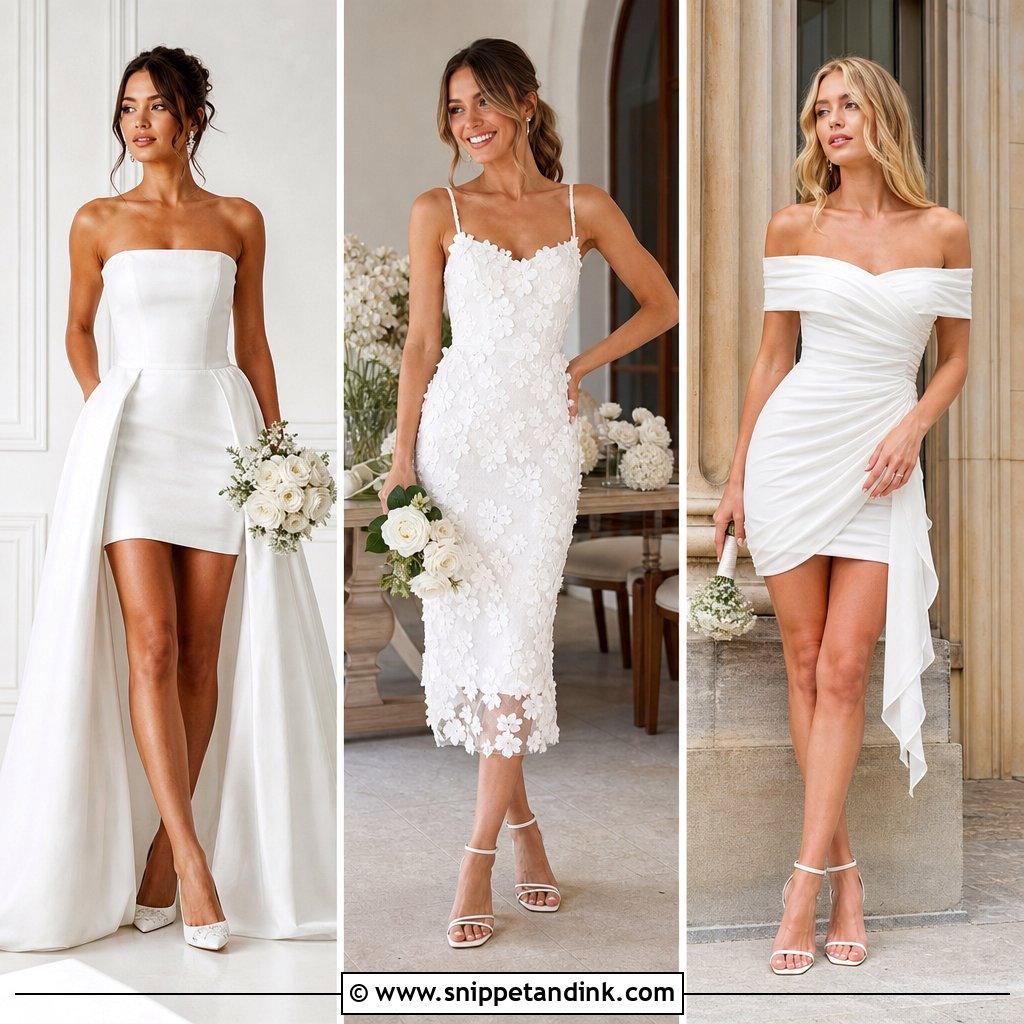
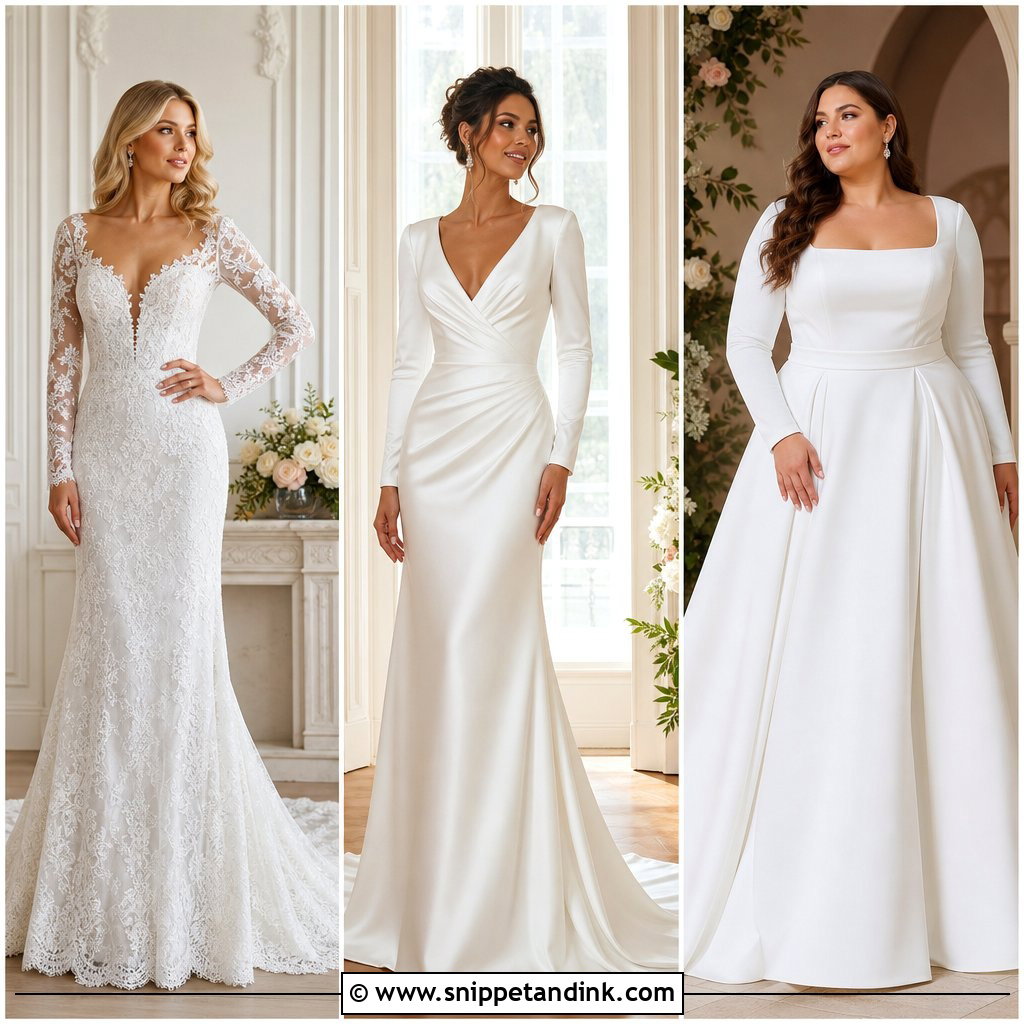
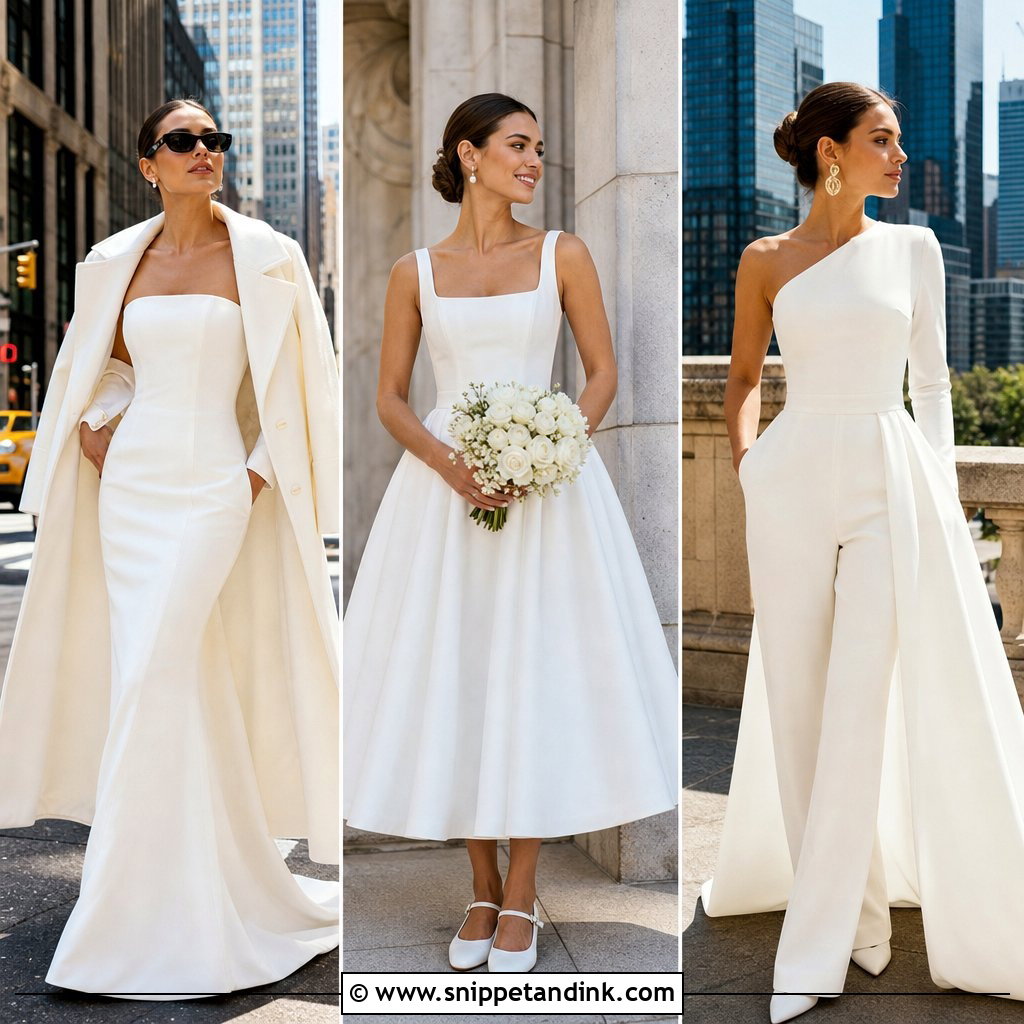
A city wedding often means moving between a registry office, a street for photos and a restaurant, so the gown has to cope with taxis and stairs. A tailored column gown, structured midi, bridal suit or simple dress with a removable overskirt all handle that. Crepe, satin and compact mikado keep clean lines in photos and resist creasing in a car. Pointed pumps, sculptural earrings and a small top-handle bag finish it, with a short veil or sleek bow. A smooth ponytail, neat bun or glossy waves suit the shape, and a small bunch of calla lilies keeps it streamlined from courthouse to rooftop.
When the Gown You Love Doesn’t Suit the Setting
It happens often: a bride planning a beach wedding falls for a satin ball gown, or a barn bride falls for a sleek crepe column. You don’t always have to give up the dress. There are a few honest ways through it.
Change the Fabric, Keep the Shape
Many designers offer the same silhouette in more than one fabric. A ball gown cut in layered tulle instead of mikado is lighter for a garden; a column in lace instead of crepe softens it for the countryside. Ask the shop what the style comes in before you rule it out.
Plan a Second Look
Wear the dream gown for the ceremony and portraits, then change into something lighter for dinner and dancing. It costs more and takes about fifteen minutes with help, but it solves sand, heat and dance floors at once.
Adjust the Theme Instead
Sometimes the dress is telling you something about the wedding you really want. If you keep choosing formal gowns for a casual venue, it may be worth asking whether the venue, rather than the gown, is the part to rethink.
Let the Room Have the Final Say
A clear theme gives the gown, accessories, shoes, hair and bouquet a shared direction, and it ties the bride to the room she’s standing in. When comparing these ideas, start with the atmosphere you want and the practical demands of your setting: the weather, the ground, how formal the ceremony is and how many hours you’ll be dressed. Then choose the silhouette that makes you feel at ease. Trends are a useful nudge, but fit should make the final call. Get those right and the whole look will feel natural in person and true to you in every photo afterward.
You'll Like These Ideas:




Leave a Reply