
Fairytale gowns are the ones brides fall for fastest and regret soonest if the fit is wrong, so I like to start with how they’re built. Lace, tulle, floral appliqué and long trains bring storybook beauty to almost any venue, but the gown still has to suit your season, your venue and how long you’ll be on your feet. That might mean a full princess ball gown, a soft A-line for a garden, or a fitted dress with a detachable overskirt. Modern versions also bring in faint colour, removable sleeves, capes and proper internal corsetry. Below, each gown comes with the accessories I’d pair with it and the fitting details worth checking.
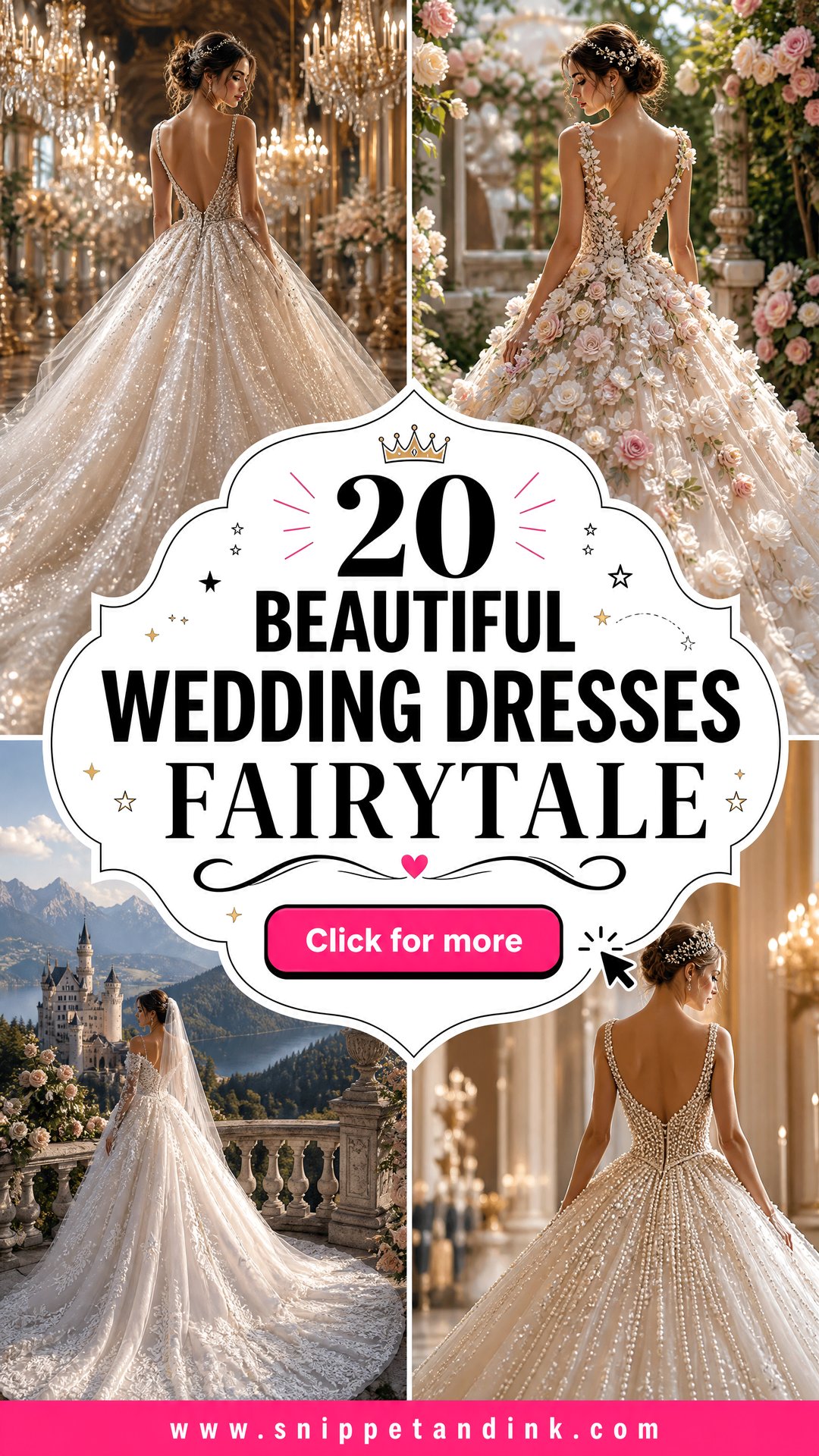
What a Full Skirt Is Like After the Photos Finish
Volume looks easy in pictures and takes planning in real life. Before a bride commits to a ball gown, I walk her through the parts of the day nobody photographs, because they’re where full skirts cause problems.
- Getting into the car: sit first, then swing your legs in while someone gathers the skirt in after you. A saloon car with a big tulle skirt needs the back seat to yourself.
- The bathroom: practise with your maid of honour before the day. Facing the cistern while someone holds the skirt up from behind works for most gowns.
- Eating: a tight corset and a three-course meal don’t mix well. Have the bodice fitted for a seated, slightly fuller you.
- Heat: several layers of tulle trap warmth. At a summer wedding, ask whether a layer of the petticoat can be removed or replaced with a lighter crinoline.
None of this is a reason to avoid a fairytale gown. It’s a reason to try the dress on for longer at your fittings, sitting and moving, instead of only standing in front of the mirror.
1. Princess Ball Gown Wedding Dress
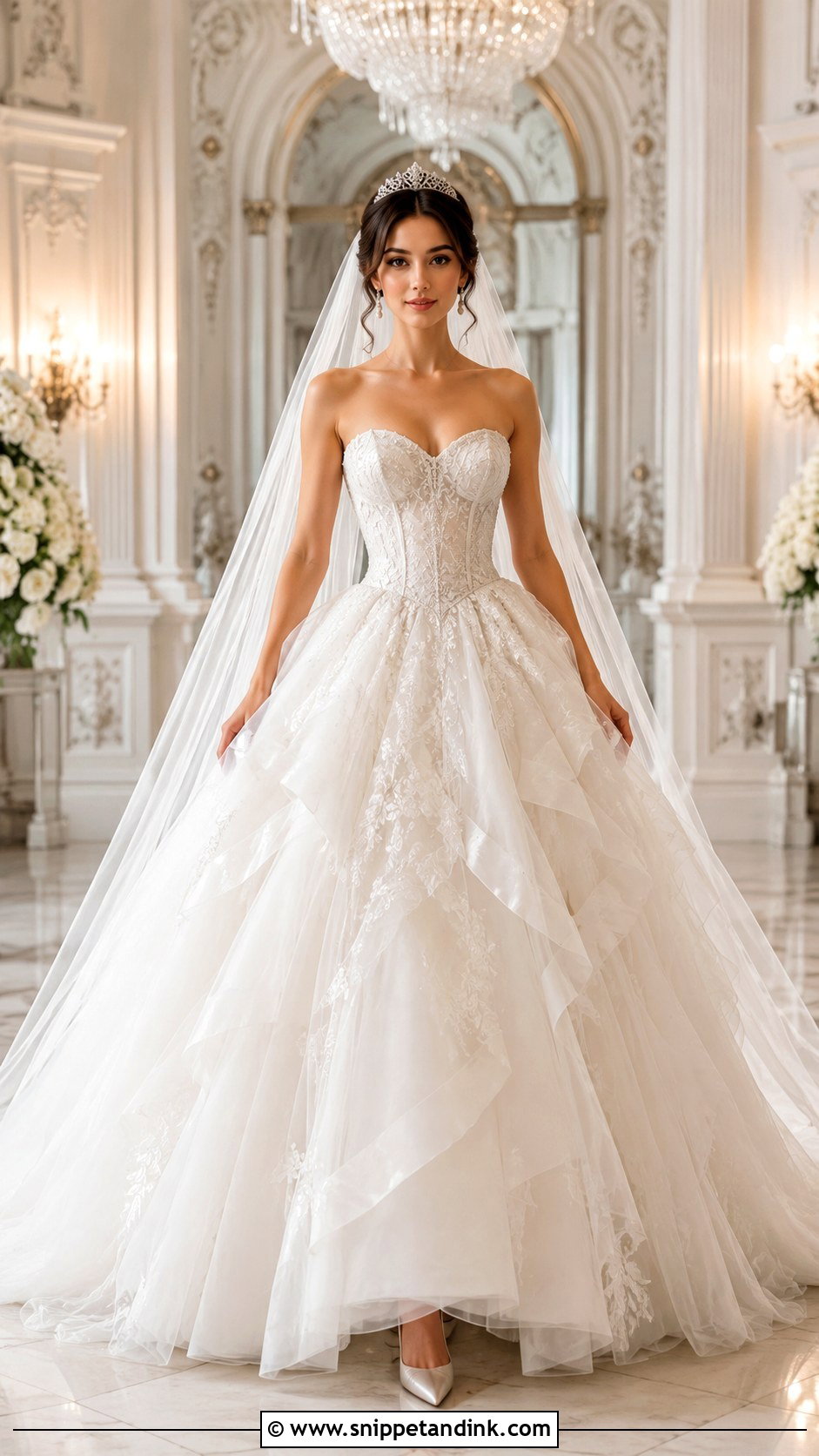
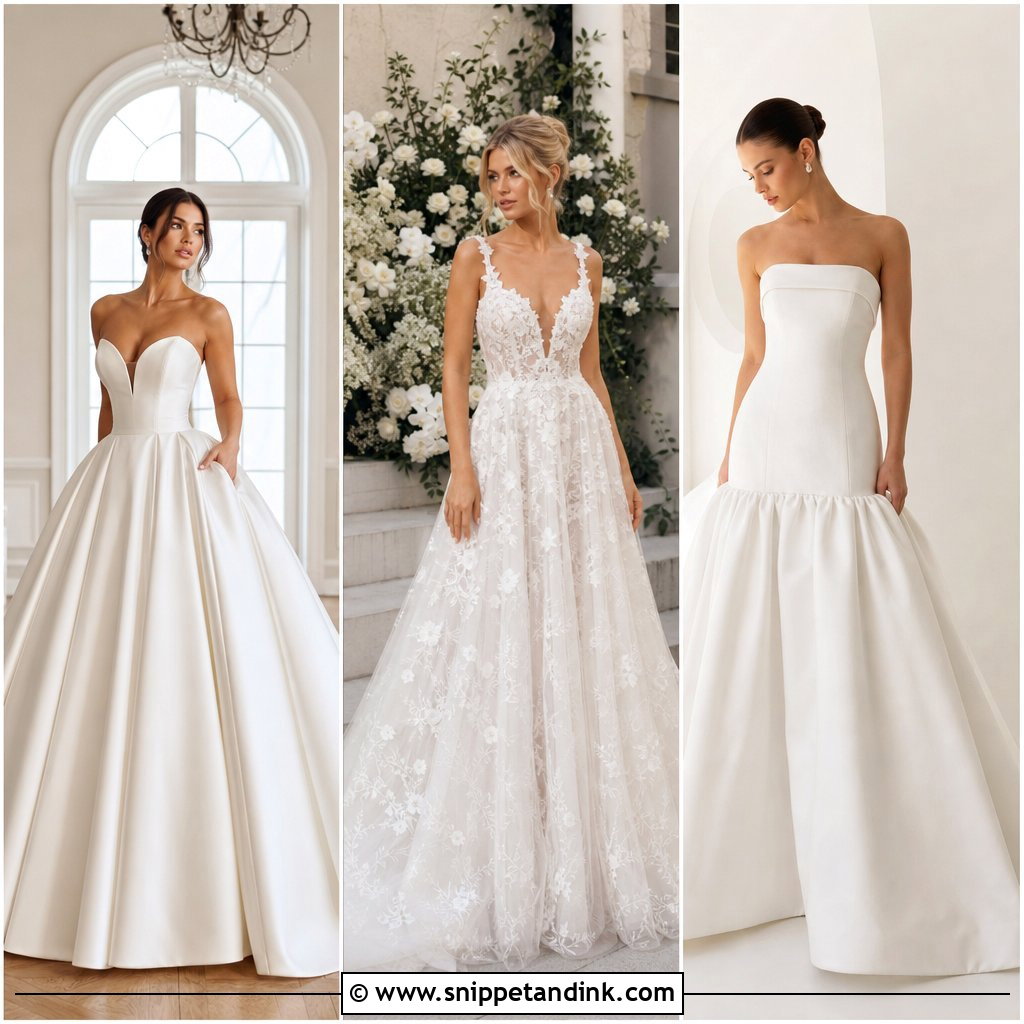
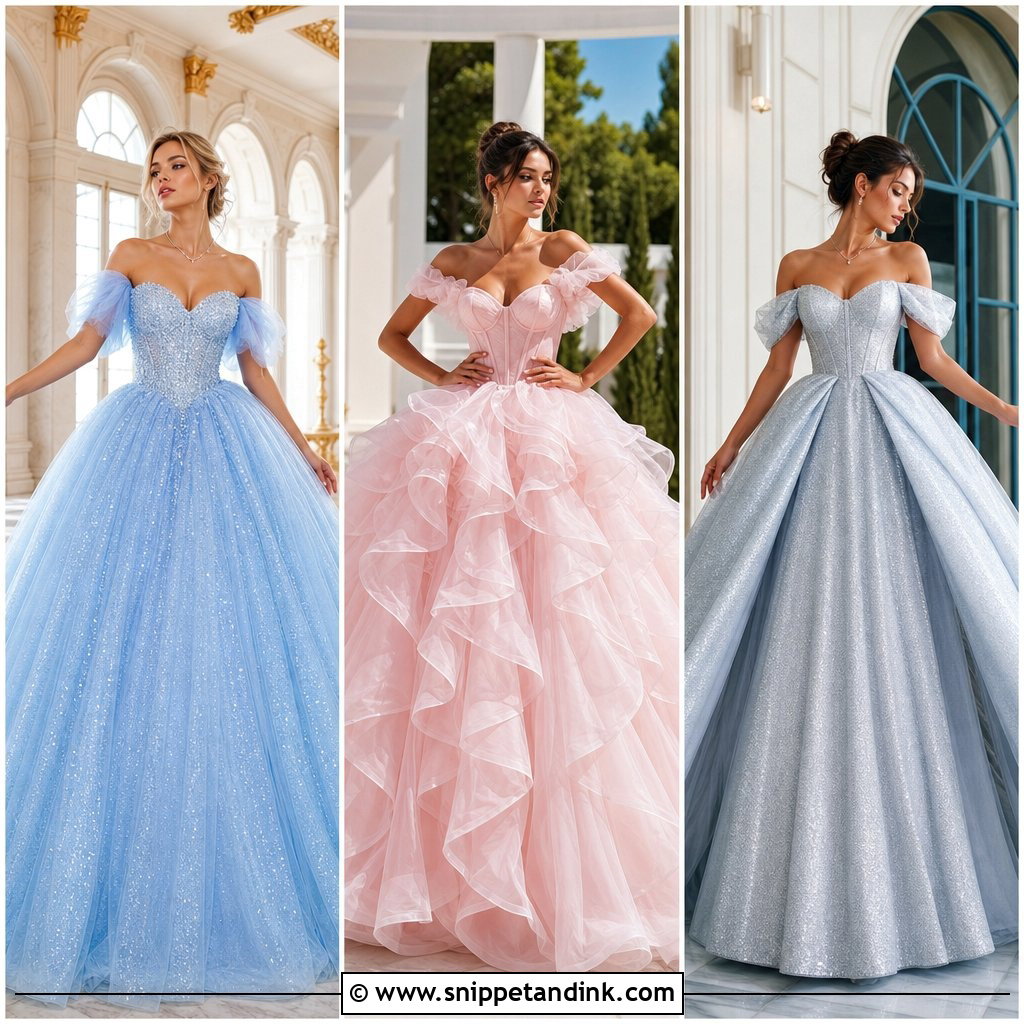
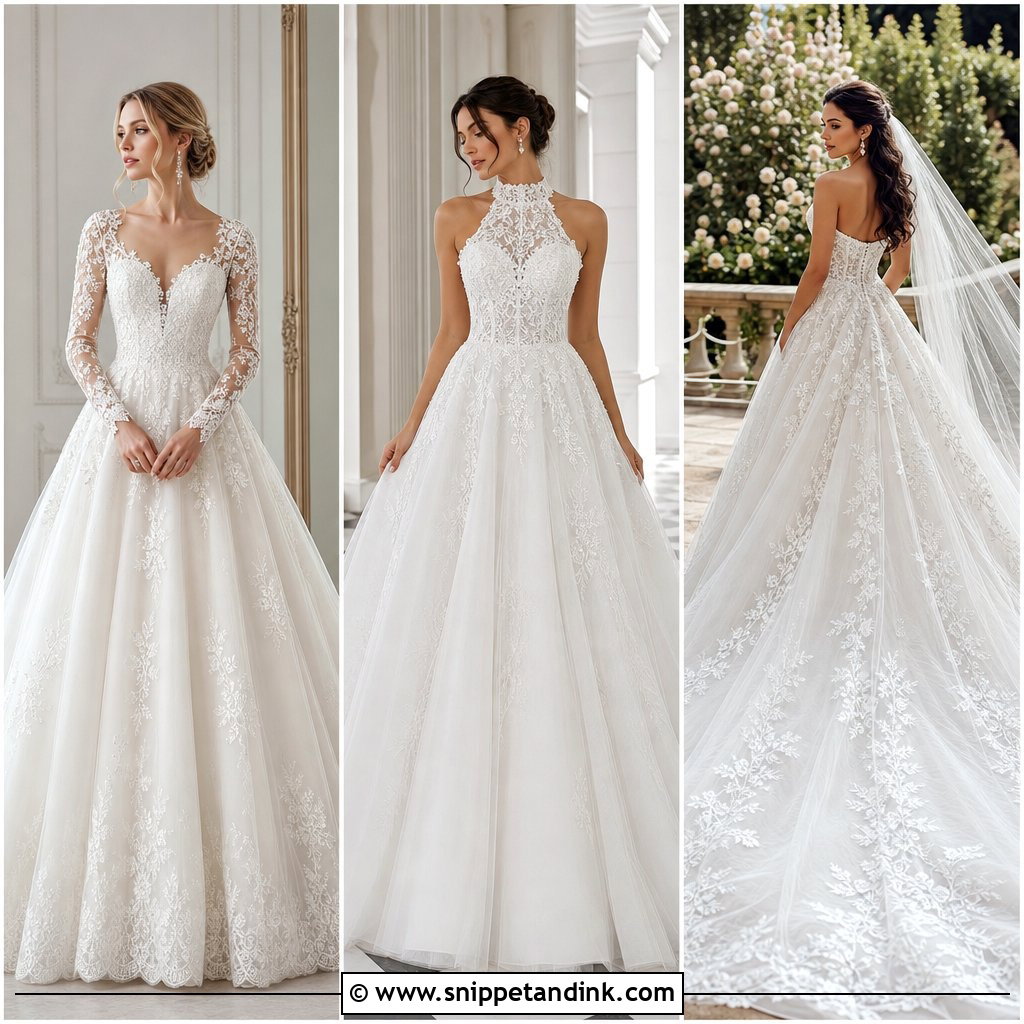
The princess ball gown is the shape most brides imagine first: a structured bodice, a defined waist and a full skirt of layered tulle or organza. A sweetheart neckline softens it, and lace appliqués on the bodice stop all that volume from feeling stiff. Pearl drops, a slim tiara and pointed ivory heels are enough. If you want a cathedral veil for the ceremony, have it attached on a comb that can come out without disturbing the hair. Fit matters by height. I ask the seamstress to remove a skirt layer for petite brides so they aren’t swallowed, while taller brides can carry a wider hem.
2. Floral Lace A-Line Wedding Dress
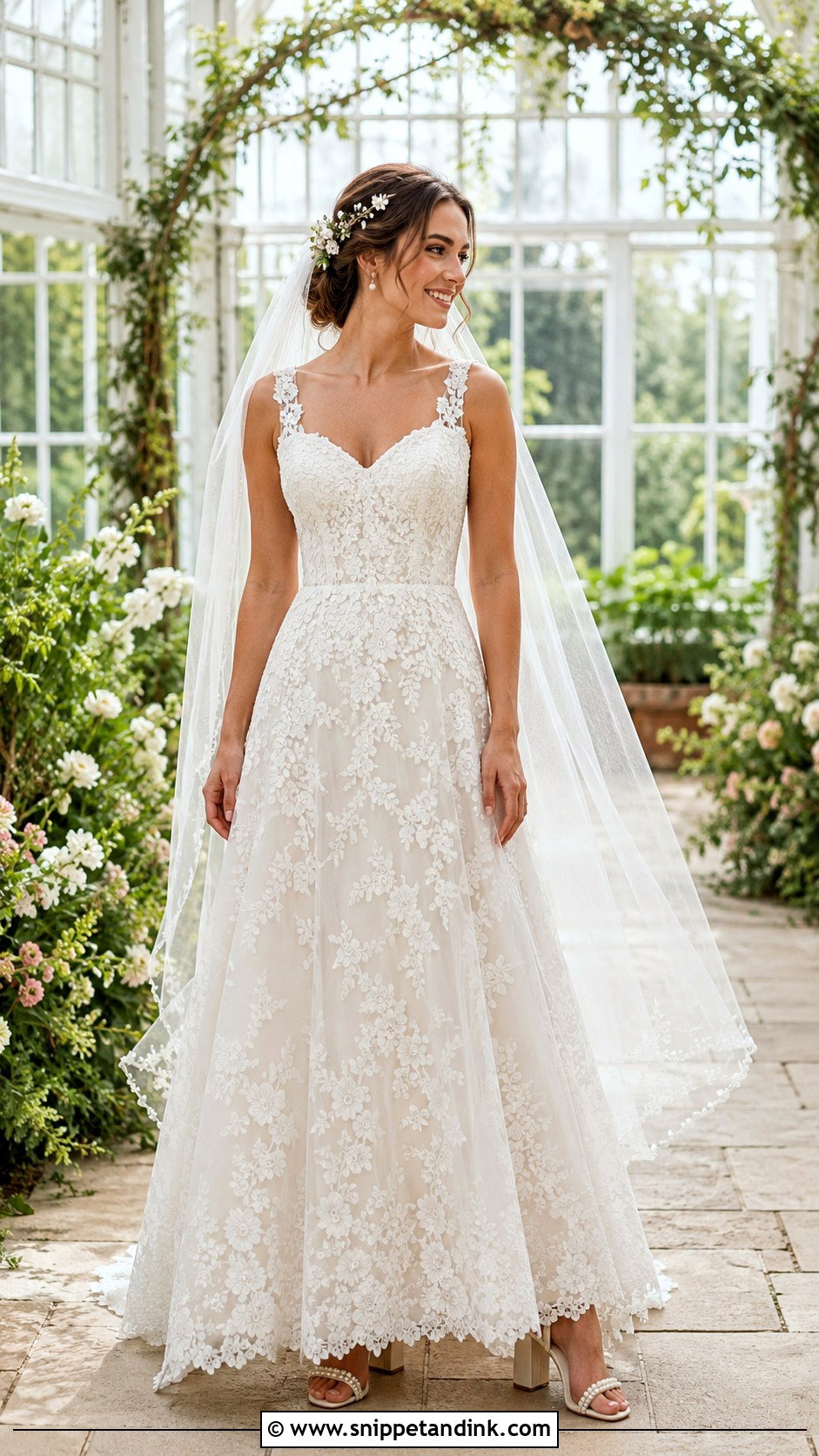
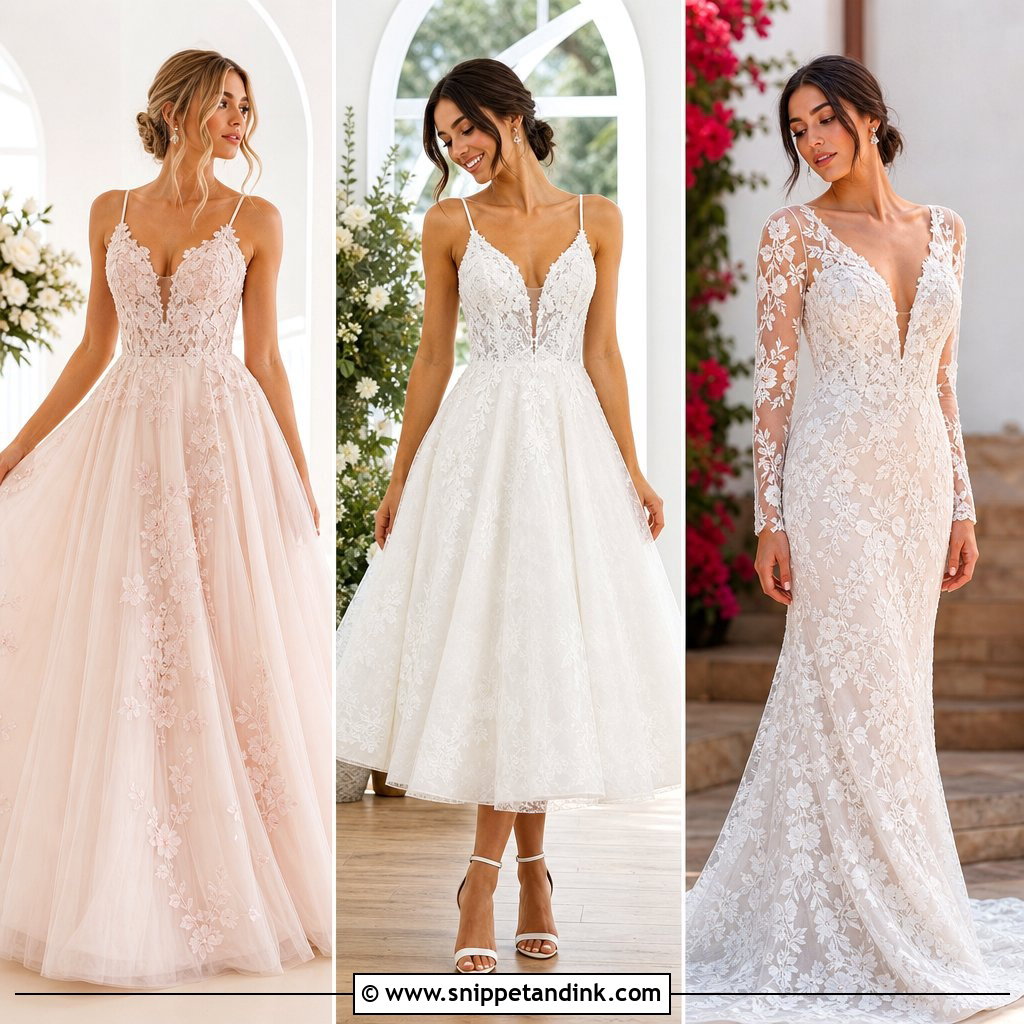
Floral lace that’s dense across the bodice and thins out toward the hem gives an A-line a garden feel without weighing down the skirt. That fade is the detail I look for, because it defines the waist and keeps the skirt moving. A gently scooped neckline with proper straps and a low illusion back looks finished from every side, which matters since guests see your back for the whole ceremony. Pair it with a fingertip veil, floral pins, pearl earrings and block-heel sandals, which won’t sink into a lawn. A loose bun or soft waves suit the lace. The A-line follows the torso and releases at the hip, so it suits most figures.
3. Long Sleeve Lace Wedding Dress
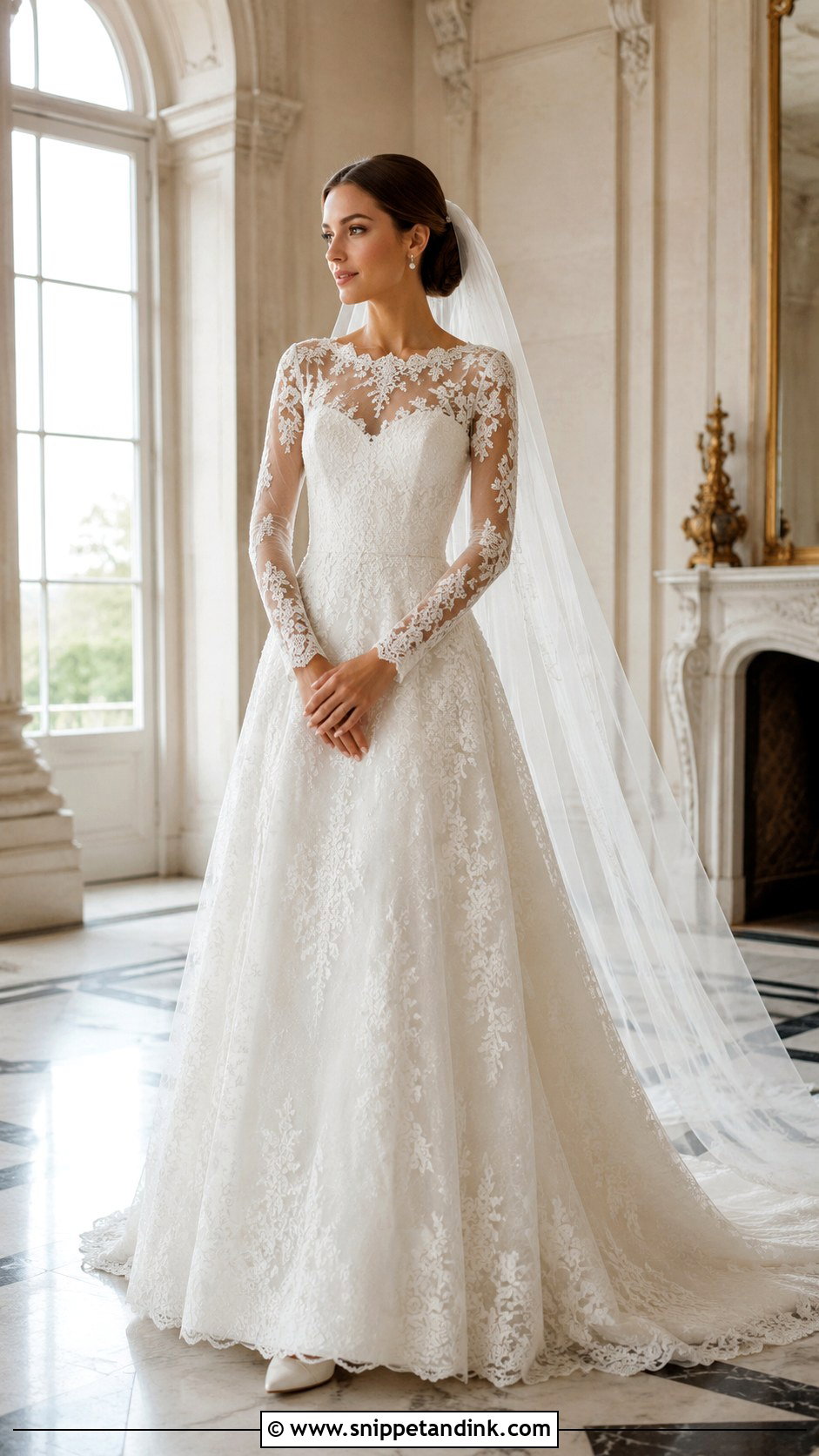
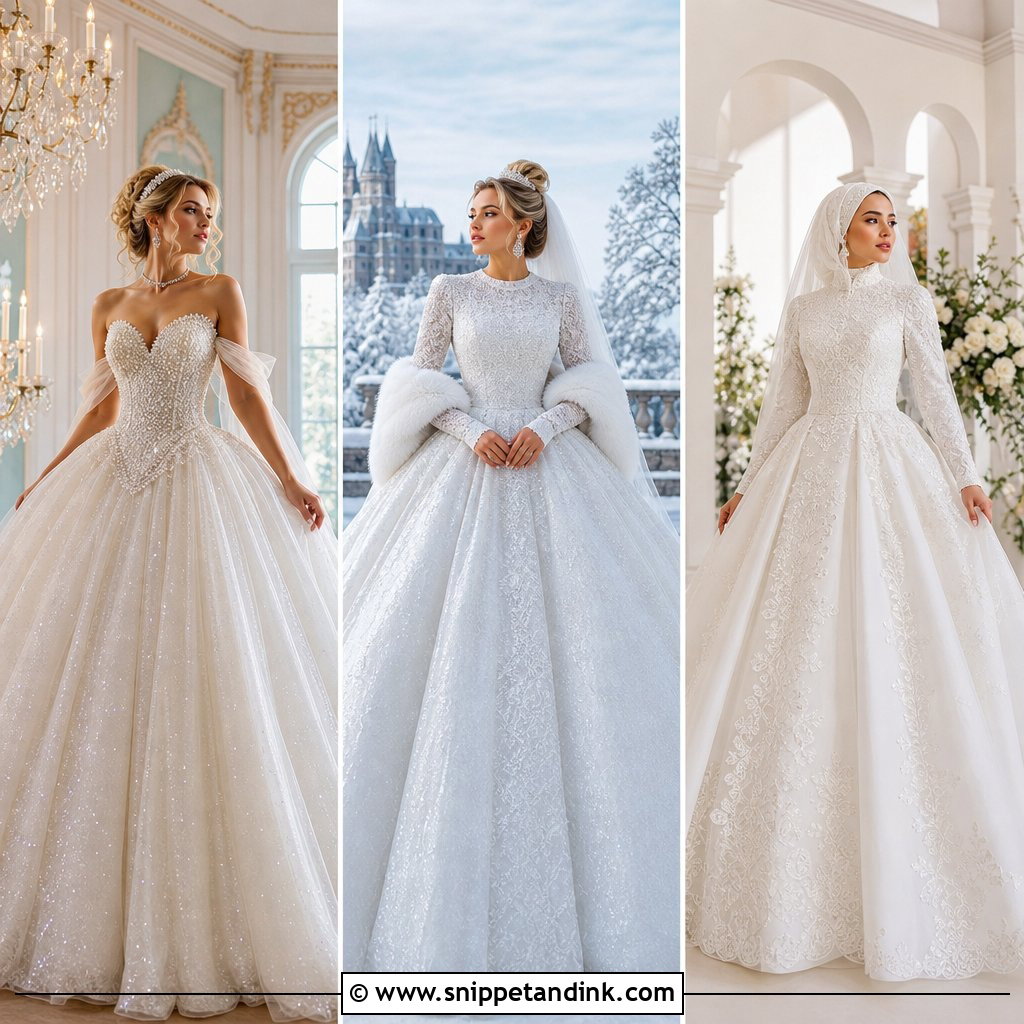
Long lace sleeves give coverage without weight when they’re cut from illusion mesh with appliqués placed on top. The thing I check first is the armhole: a fitted lace sleeve set too low will stop you lifting your arms to hug anyone. A lined bodice gives support, and an A-line or softly fitted skirt balances the sleeves. Scalloped cuffs and covered buttons add a handmade finish. Keep jewelry to pearl studs, wear a low chignon, and choose a plain cathedral veil so it doesn’t compete with the lace. Closed-toe pumps finish it. It’s a natural autumn and winter gown, though fine lace works on a cool spring day too.
4. Off Shoulder Tulle Wedding Dress
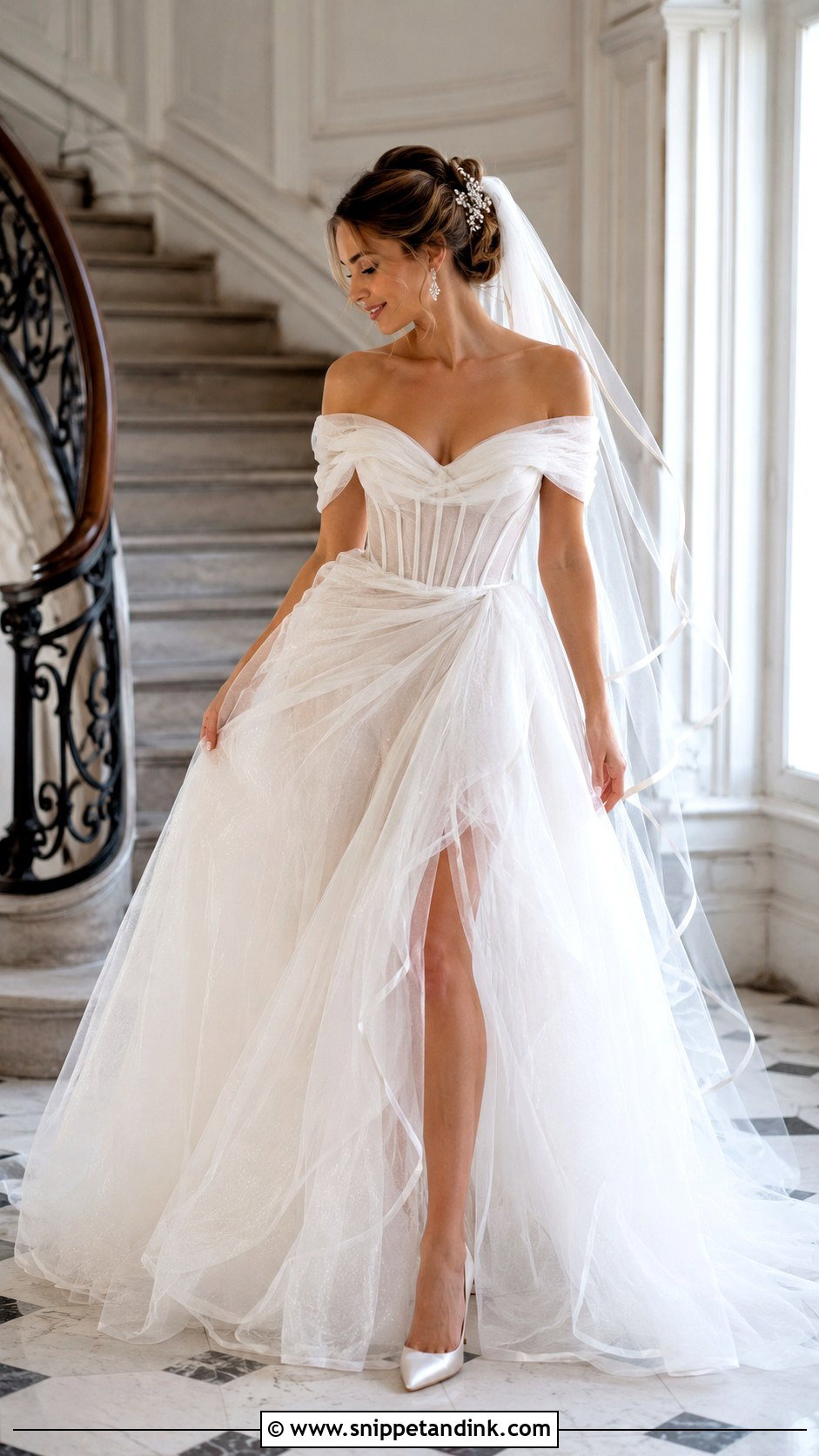
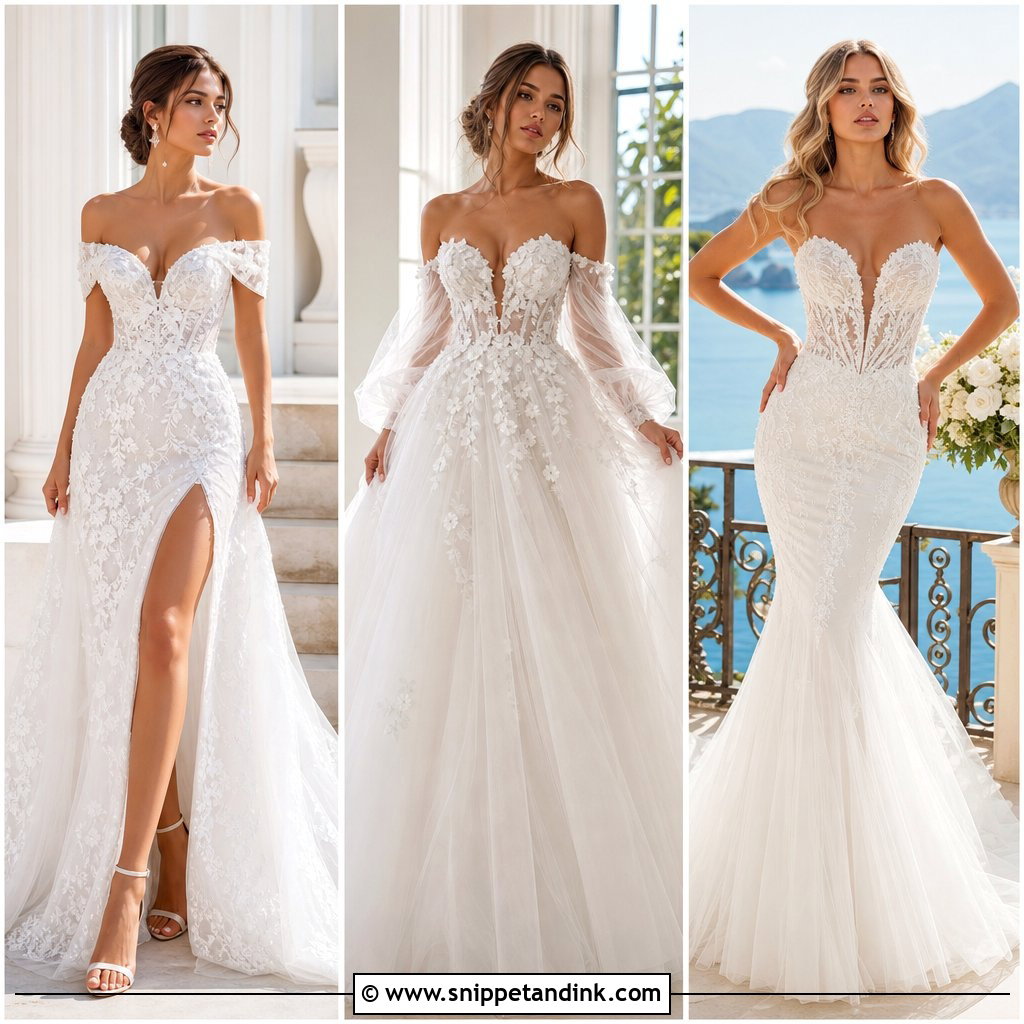
Off-the-shoulder necklines need more engineering than they look. The drape has to sit on the upper arm without sliding down, which usually means a hidden band of elastic or a strap anchored into the bodice. Test it at the fitting by sitting, hugging and raising your arms to shoulder height. Underneath, a corset-style bodice and a layered tulle skirt that moves lightly keep the look soft. A sparkling comb, a delicate necklace and small crystal earrings are plenty, with satin pumps and a ribbon-edged veil. Skip big necklaces and embellished gloves because the neckline is already the detail. Grand staircases show off the full skirt well in portraits.
5. Corset Bodice Wedding Dress
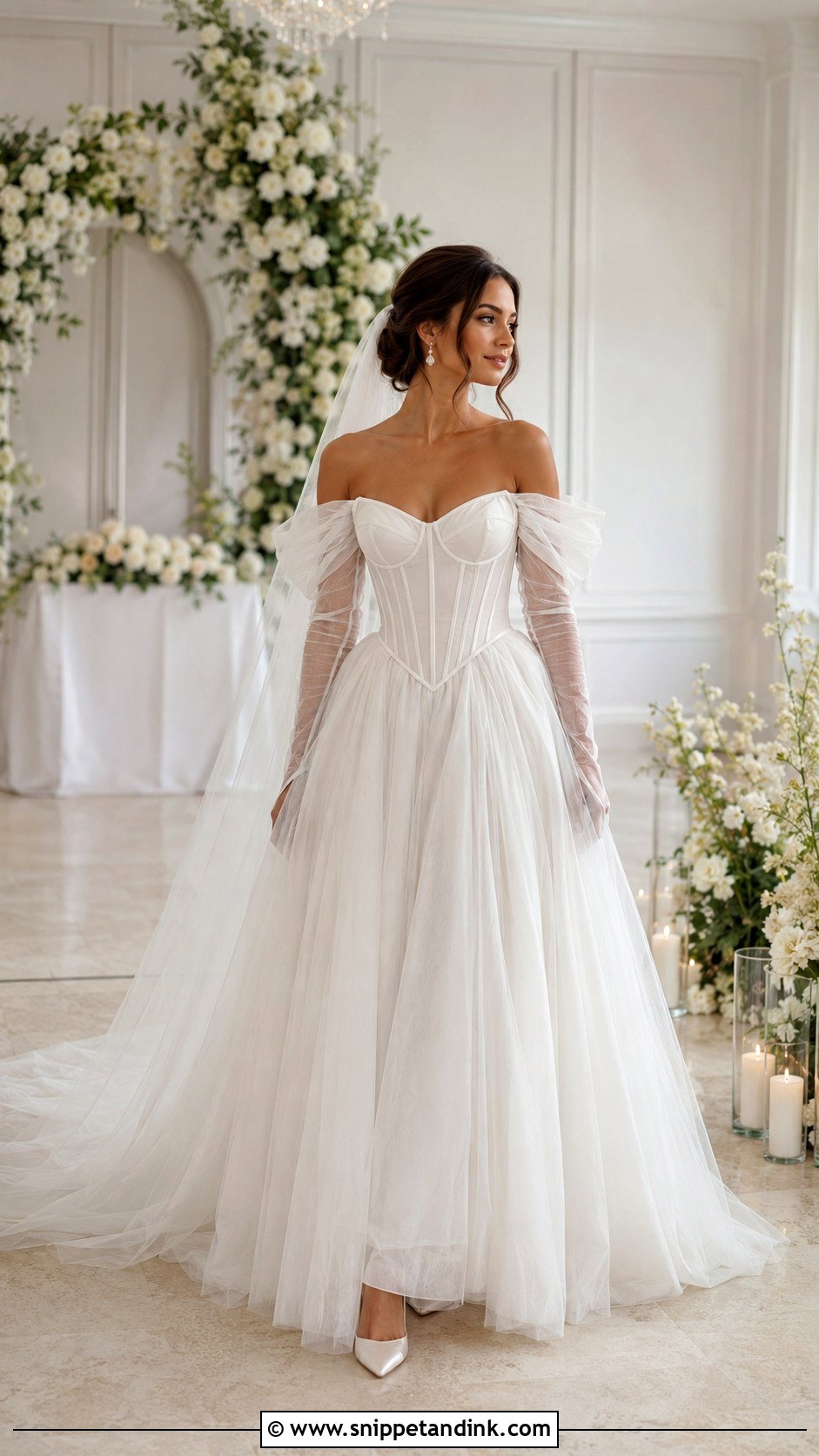
A corset bodice gives definition and support, but only good construction makes it comfortable. I look for spiral steel or flexible boning, a firm interior lining and a waist stay, so the weight sits on your hips rather than your ribs. A basque or pointed waist lengthens the torso and flows into a full tulle skirt. Lace, pearls or light beading look more refined than heavy sparkle. Add a drop veil, small chandelier earrings and satin heels, with a soft updo so the bodice stays visible. Fuller-busted brides often feel more secure with wider straps or removable off-the-shoulder sleeves. You should be able to breathe deeply and sit down to eat in it.
6. Sparkling Tulle Wedding Dress
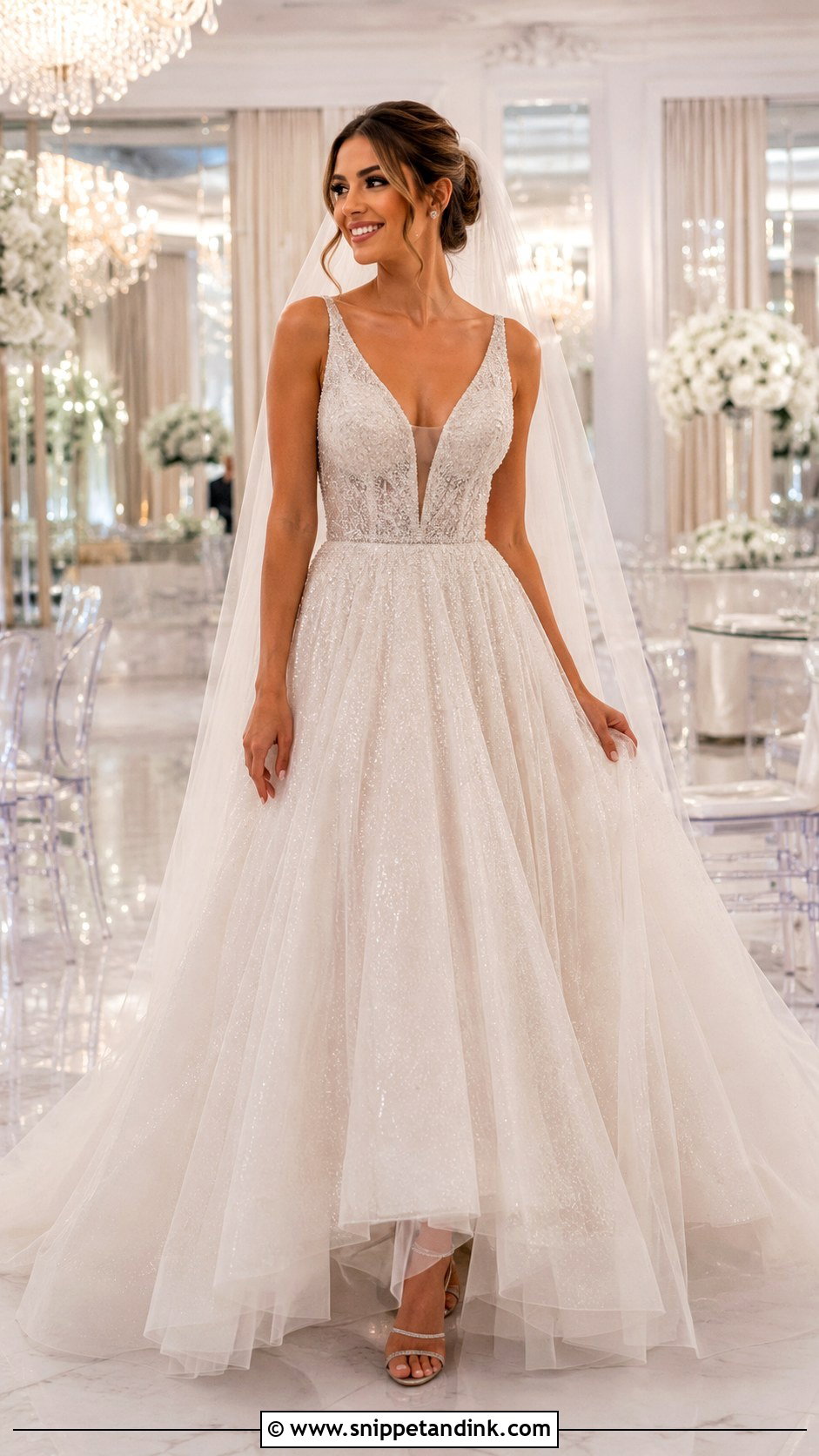
Crystals scattered through layers of tulle catch the light without looking costume-like, as long as they’re spread evenly from bodice to hem. A simple V-neck or strapless bodice gives the sparkle room. Keep everything else plain: crystal studs, metallic ivory heels, a sheer veil, and a sleek bun or polished waves. Two practical checks: run your hand under the armholes for rough beading that will scratch over a long day, and make sure the outer tulle doesn’t snag on your bracelet or engagement ring. A smooth petticoat under the skirt also protects your legs from scratchy embellishment. It shows best at evening receptions in bright rooms.
7. Blush Pink Wedding Dress
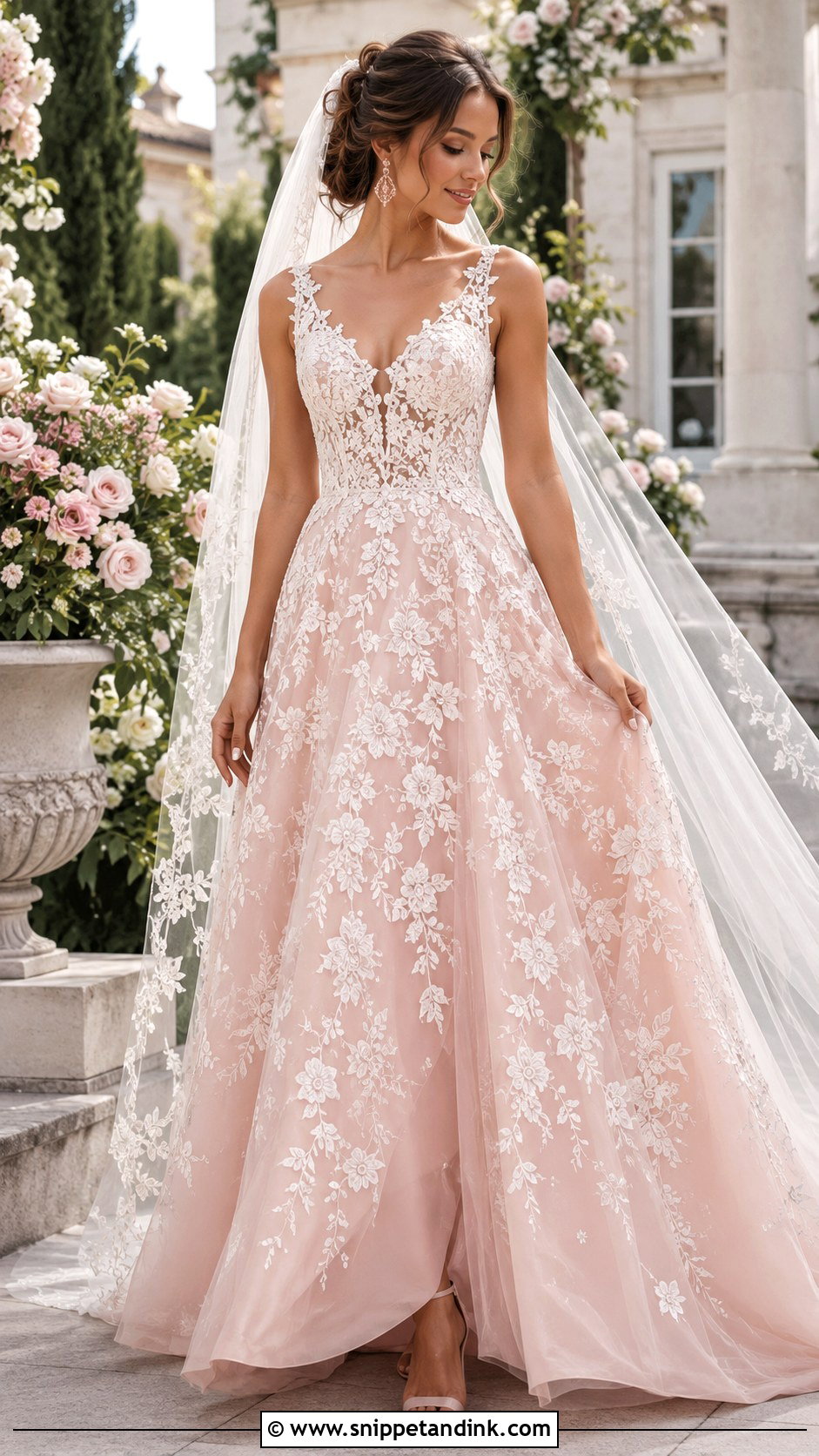
Blush works best as a layer rather than an all-over colour. Pale pink tulle beneath ivory lace gives depth and makes the floral motifs stand out. An A-line or ball gown with a fitted bodice keeps the pastel looking grown-up. Rose-gold earrings, neutral heels and a sheer ivory veil finish it without matching every piece. Flowers in cream and soft pink with muted greenery support the palette. Blush shifts a lot between window light and warm indoor bulbs, so I always ask a bride to look at it in both before ordering. Pick the shade that suits your undertone, since some blushes turn sallow on olive skin.
8. Three-Dimensional Floral Wedding Dress
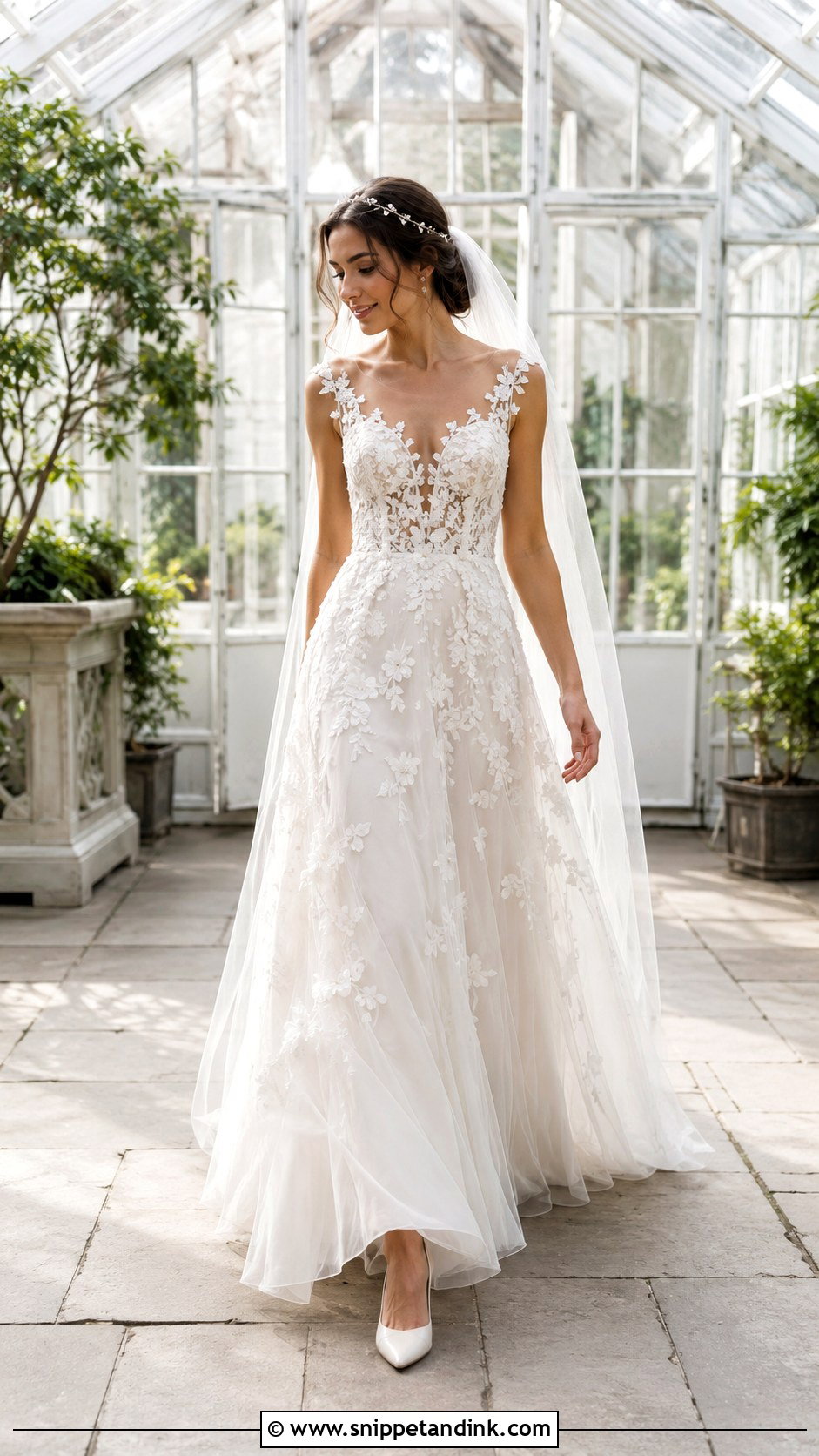
Raised floral appliqués give a gown texture you can almost feel from across the room. The best ones grade from larger flowers at the bodice to smaller ones on the skirt. An illusion neckline or a supportive sleeveless bodice lets the flowers look as though they’re floating. Keep the rest quiet: pearl studs, a narrow hair vine, clean ivory pumps and a plain veil. For an outdoor wedding, ask how the appliqués are attached. Glued pieces lift and catch on bark, benches and rough stone; hand-stitched ones survive the day. It’s a natural fit for spring gardens and conservatories and softens a formal room too.
9. Cape Sleeve Wedding Dress
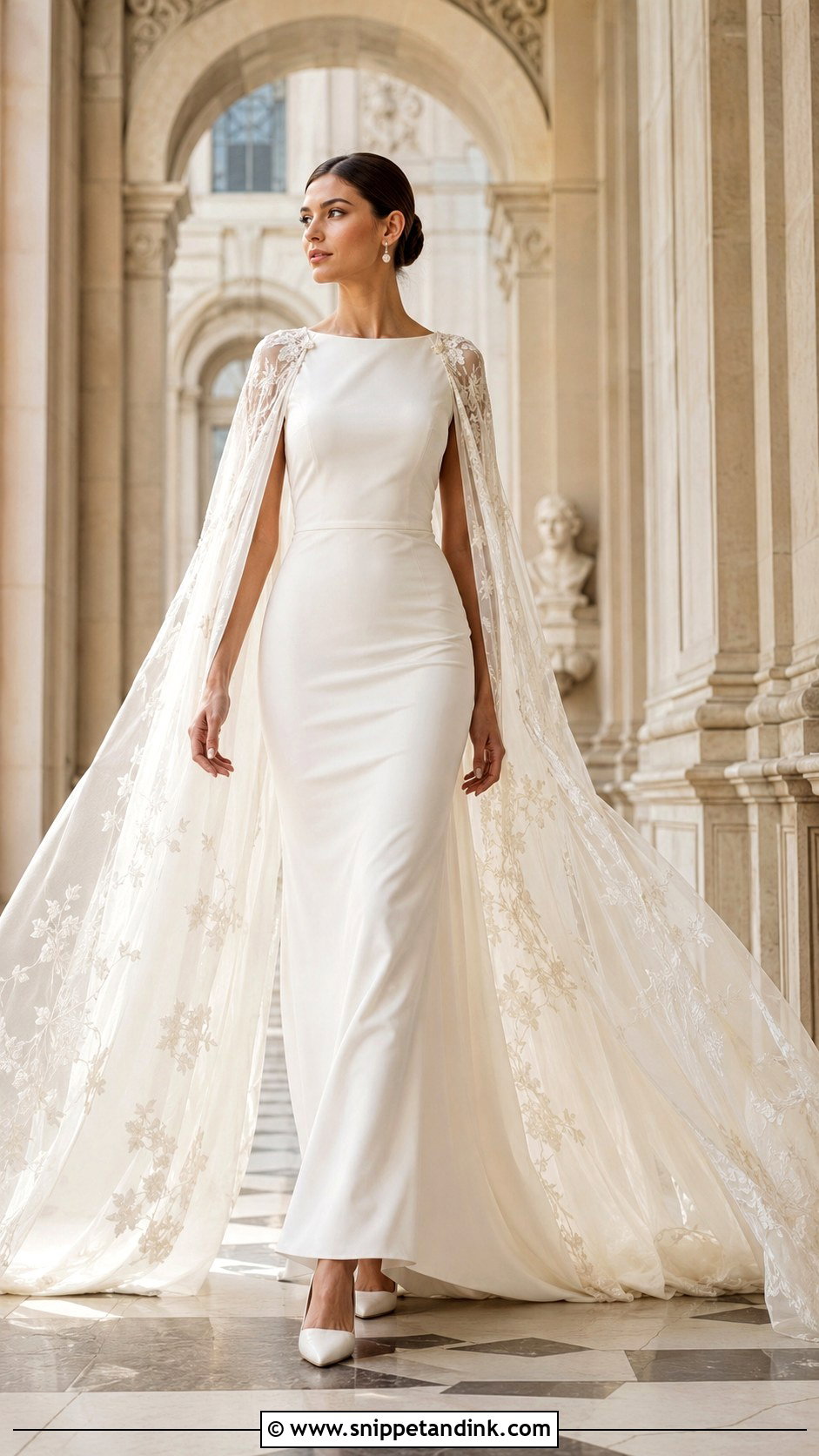
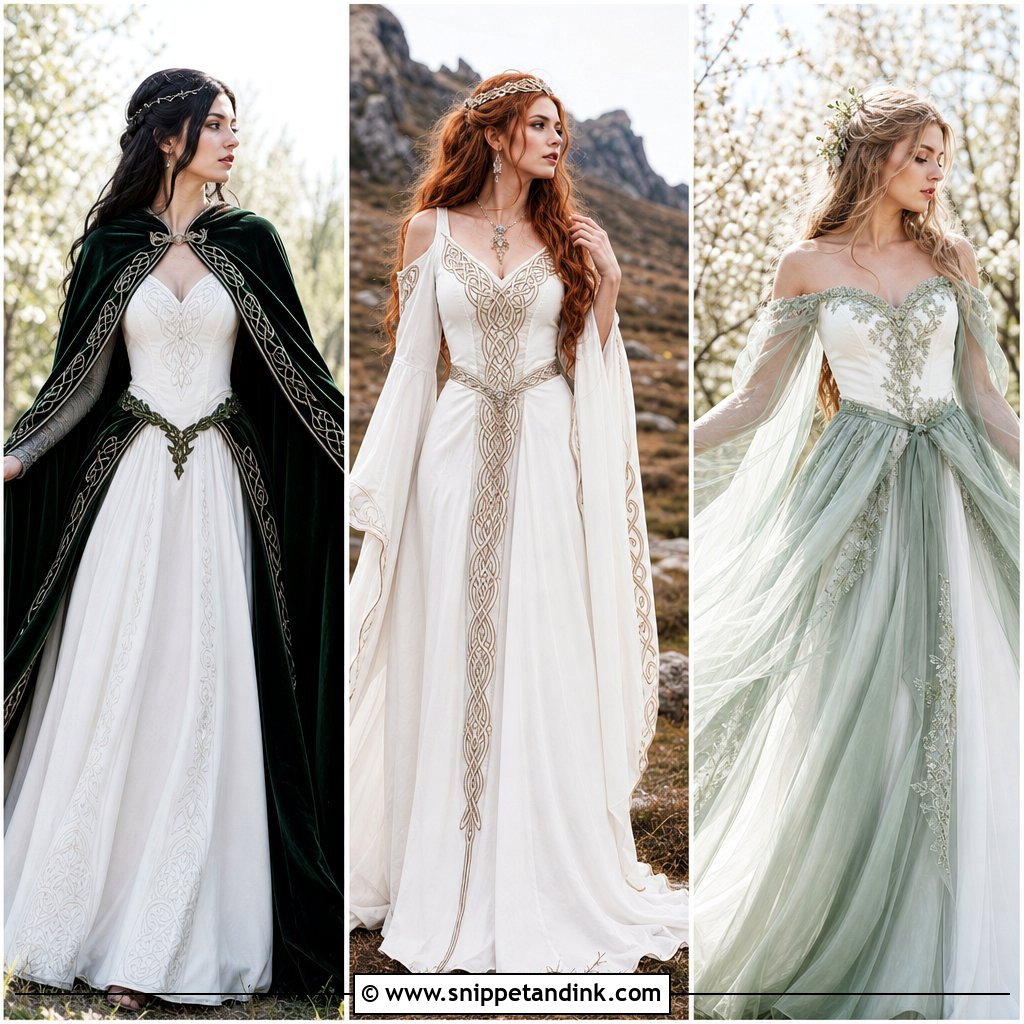
A cape is the alternative to a veil I suggest most to brides who want movement without anything in their hair. Under a sheer tulle, chiffon or embroidered lace cape, choose a fitted or softly flared gown. The cape may attach at the shoulders, neckline or back, and it should fall straight without pulling the dress. A sleek updo, simple earrings and pointed heels keep the silhouette long; a necklace would compete with the attachment point. Make it removable if you can, so you get coverage for the ceremony and a lighter dress for dancing. Capes come alive outdoors, but on a very windy day they wrap around the arms, so plan pinning points with your stylist.
10. Cathedral Train Wedding Dress
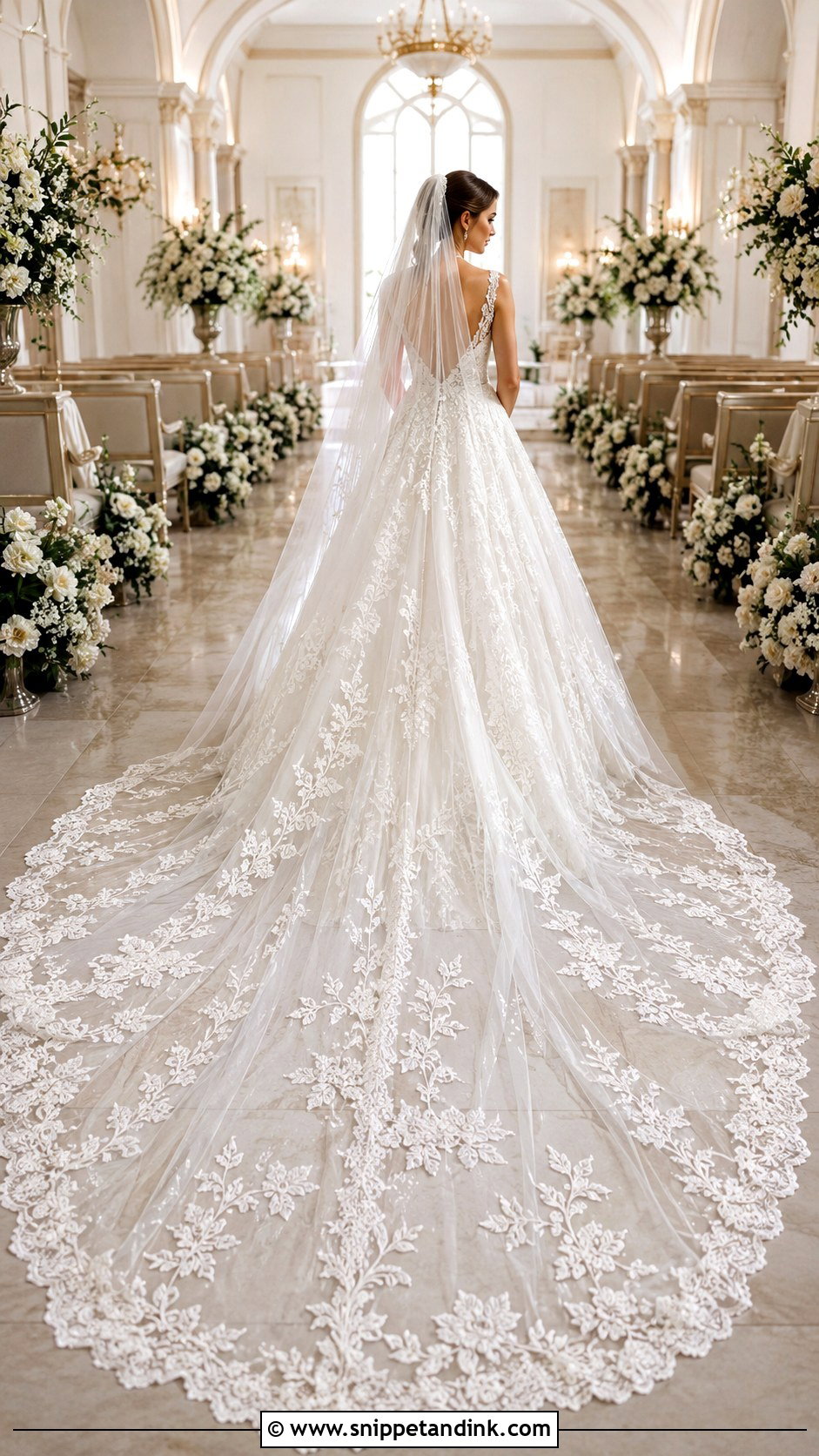
Few details feel as dramatic as a cathedral train behind a well-fitted gown. A-line, ball gown and fit-and-flare shapes can all carry it. Lace edging or scattered appliqués make the train look deliberate in wide ceremony shots. Keep jewelry minimal, wear low heels, and secure the cathedral veil firmly, which can match the train or run slightly past it. The bustle is the part I insist on testing: ask your seamstress for one strong enough to hold a heavy train through the dancing, and practise it with whoever will do it on the day. Long trains need wide aisles, and someone should be assigned to straighten it before the entrance and portraits.
11. Square Neck Wedding Dress
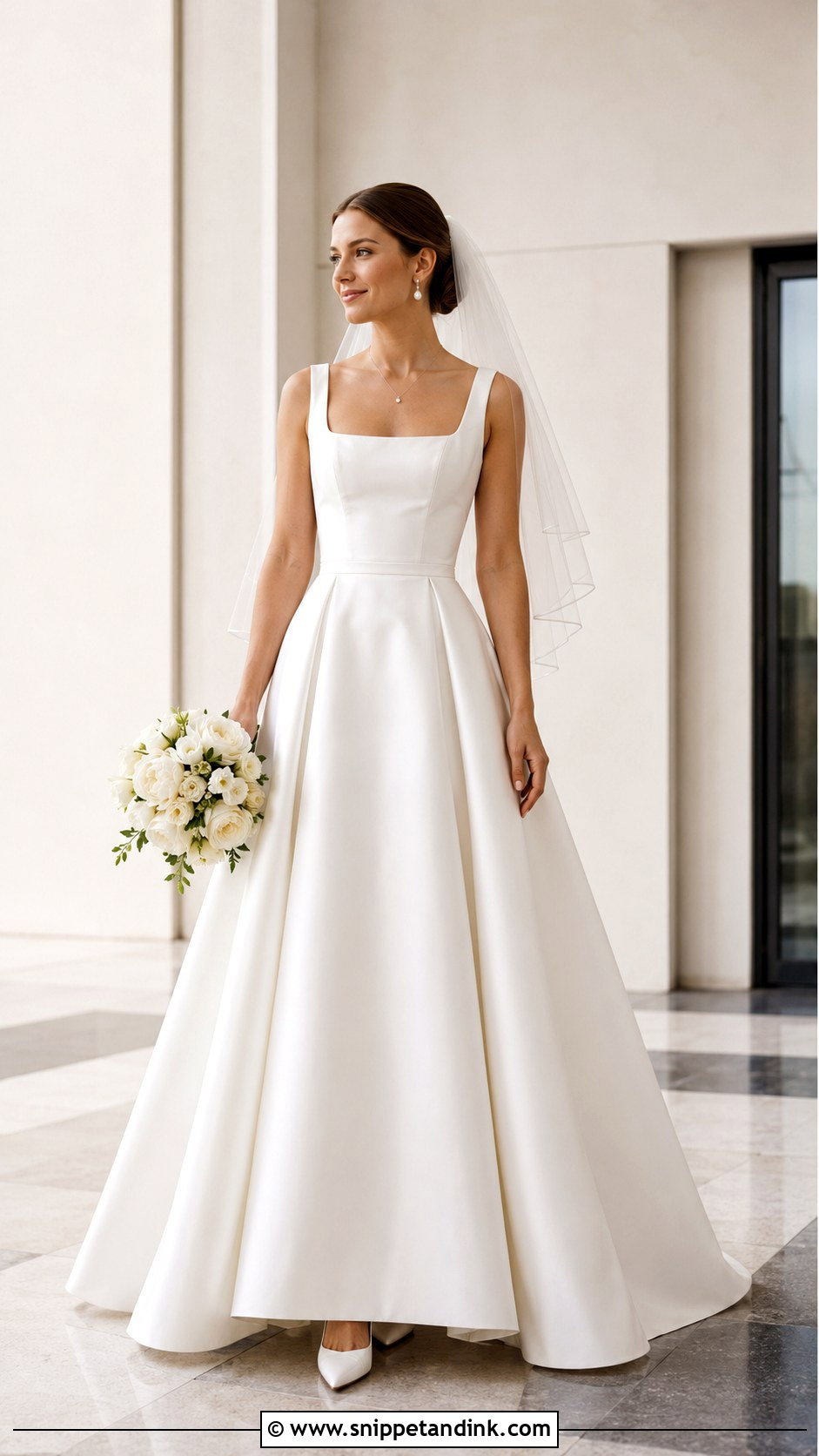
A square neck brings clean structure to a romantic gown. It frames the collarbone and pairs naturally with wide straps, a fitted bodice and a full A-line skirt. Satin gives a polished finish; floral lace adds texture. A small pendant, pearl earrings and a neat bun leave the neckline visible, and pointed pumps with a medium veil finish it. For more coverage, sheer long sleeves still let the square line show. The straps decide everything here. If they’re even slightly loose, the neckline shifts and gapes when you lean forward, so I have them fitted with you sitting as well as standing.
12. Satin Ball Gown Wedding Dress
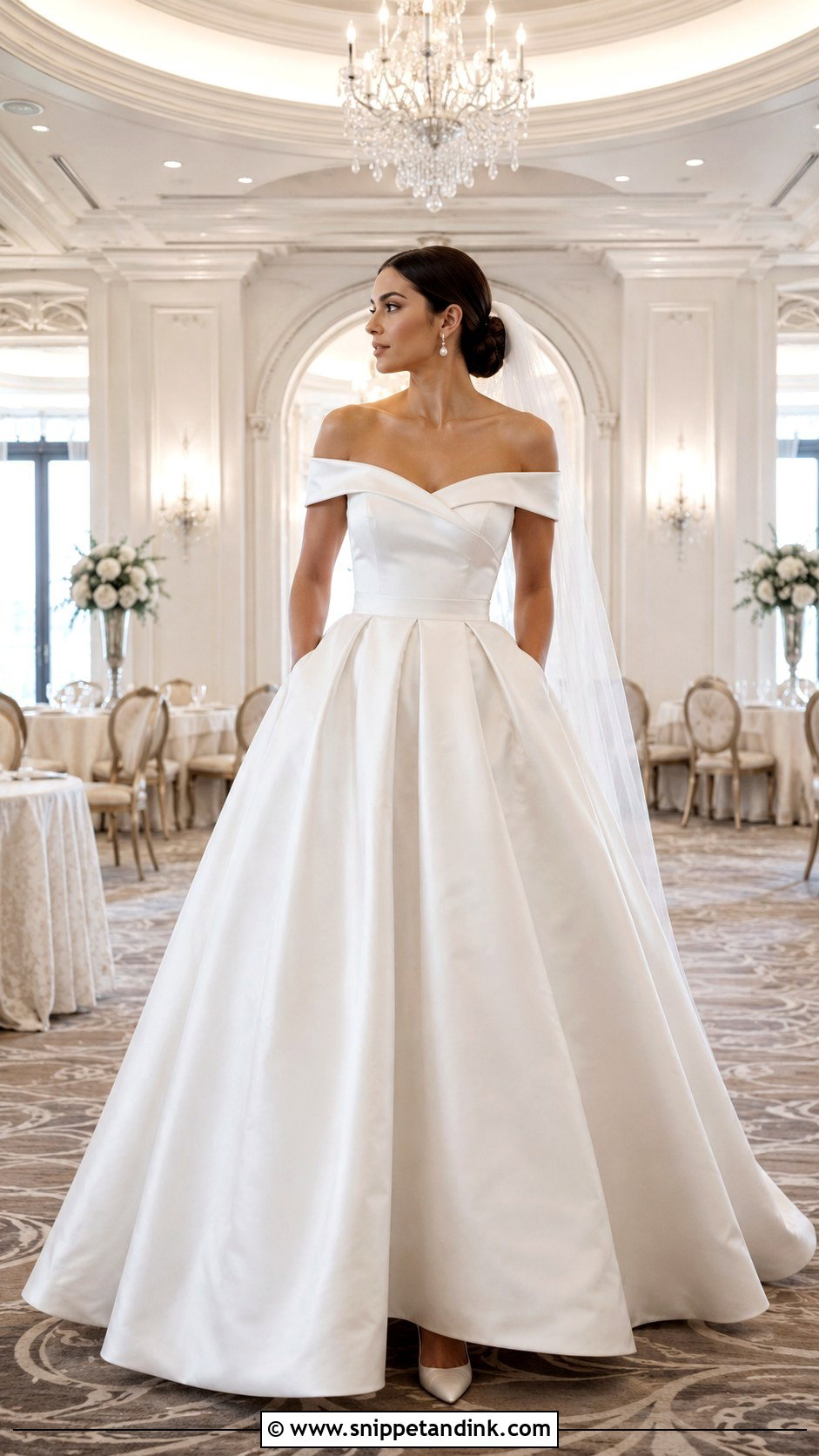
Satin gives a ball gown a crisp shape and a polished sheen. A structured bodice with wide straps, strapless or with soft off-shoulder draping all suit it, and pleats at the waist give volume while letting the skirt fall clean. Keep the accessories classic: pearl earrings, a simple veil, closed-toe heels, and a low bun or glossy waves. Pockets are worth asking for. The trade-off with satin is honesty: it shows every crease from sitting in the car and every fit problem a textured fabric would hide. Steam it professionally on the morning, and wear completely smooth, edge-free underwear beneath it.
13. Tiered Tulle Wedding Dress
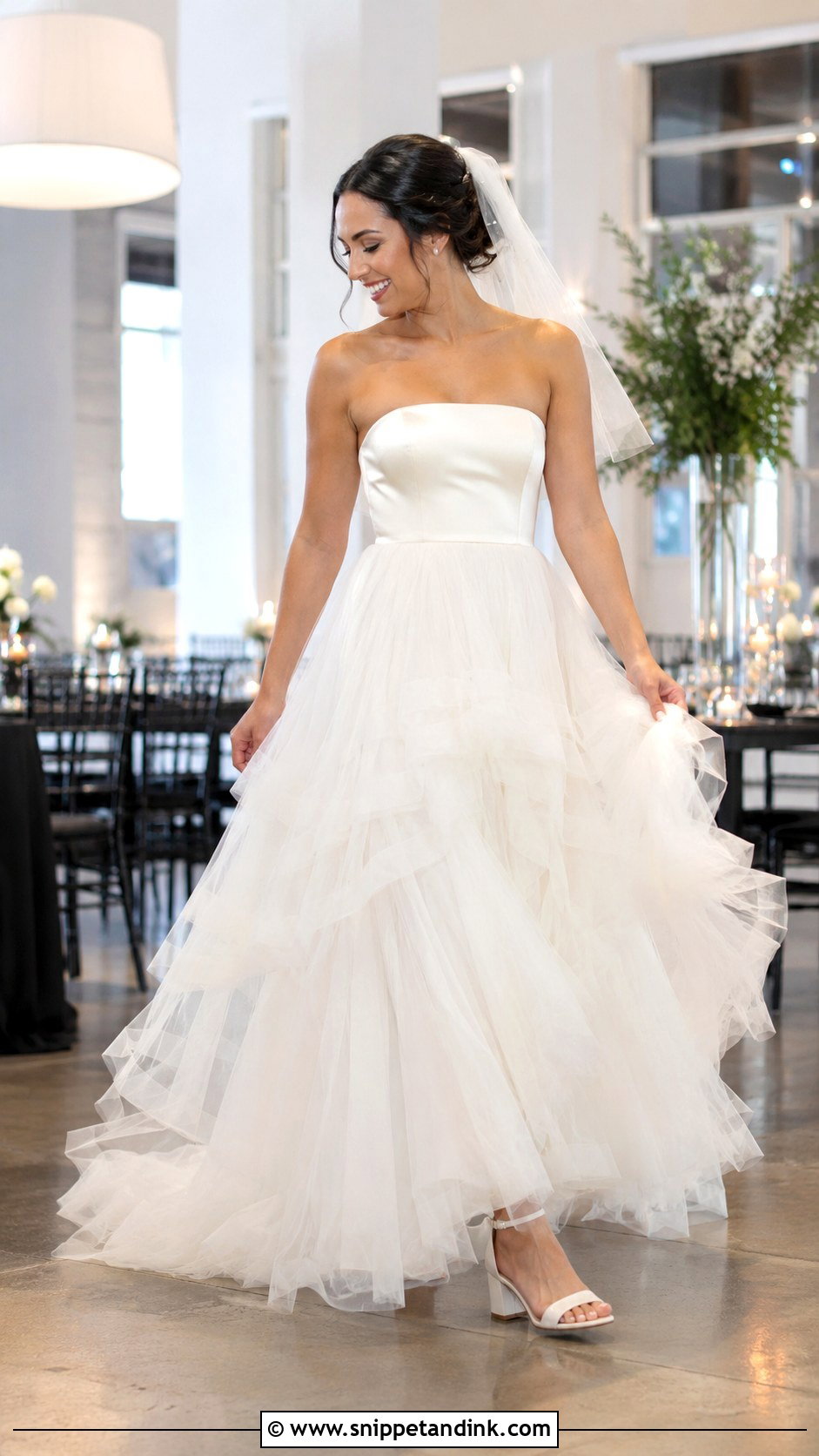
Tiered tulle adds movement to the princess shape, especially when the tiers are narrow at the waist and widen toward the hem. A clean fitted bodice keeps the whole gown from looking busy, and a strapless or delicate spaghetti-strap neckline suits it well. Crystal studs, a short sheer veil and block heels finish it, with a low ponytail or loose updo. It dances well. If you’d like something calmer, ask for two or three broad tiers instead of many tightly gathered ruffles, which also makes the skirt lighter to carry.
14. Embroidered Illusion Wedding Dress
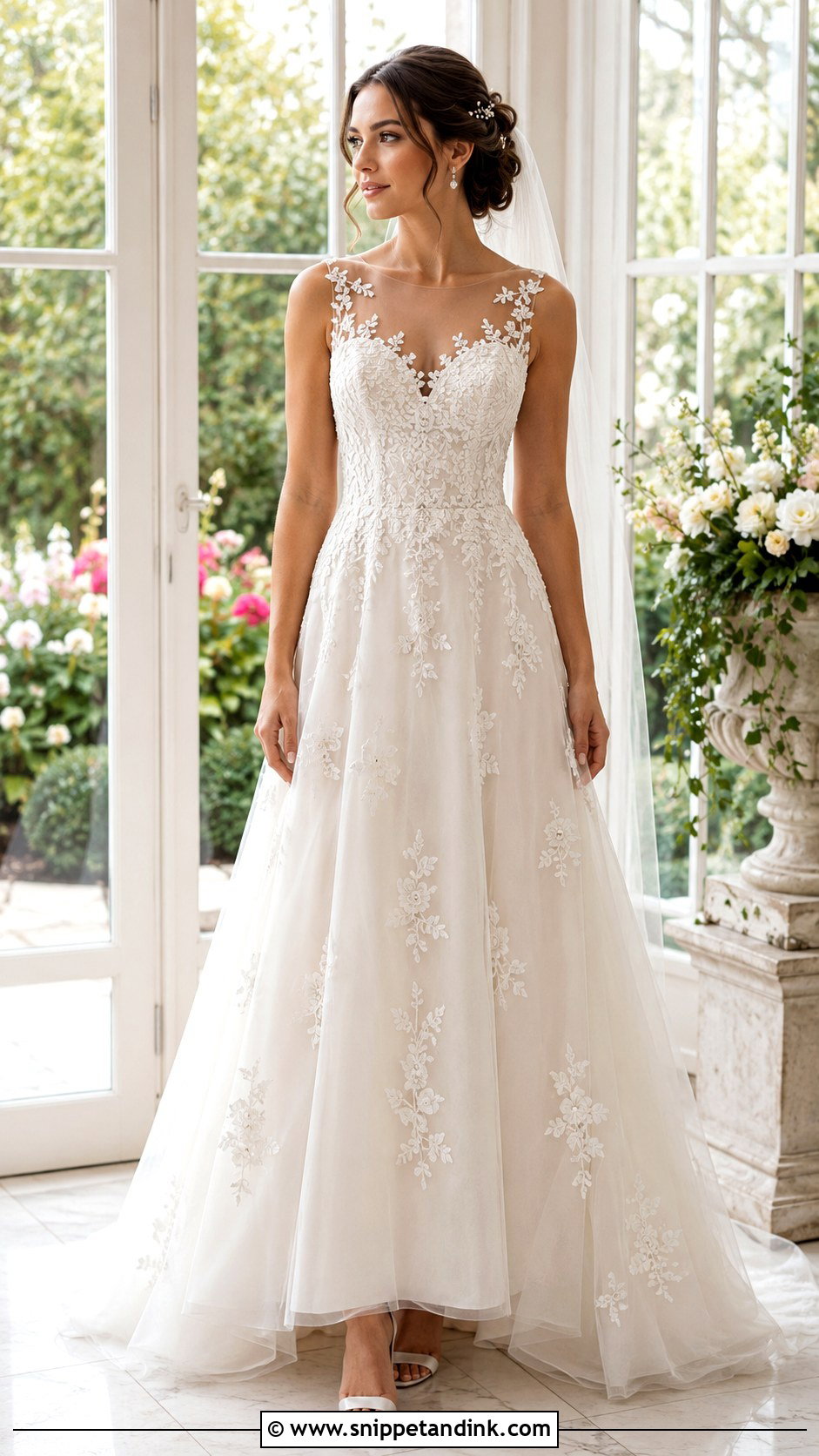
Illusion mesh with embroidery across the neckline, sleeves or back looks light, but only if the mesh matches your skin. I bring swatches to the first appointment, because a mesh that’s even slightly too pink or too grey reads as a visible panel in photos. The embroidery should blend smoothly into the lined bodice, and an A-line skirt with scattered motifs carries the design down. Wear a low bun, tiny pearl pins, simple earrings and ivory heels, and keep the veil plain so it doesn’t hide the work. Good tailoring prevents puckering where mesh meets fabric. Fine embroidery rewards close viewing, so it suits gardens and smaller rooms.
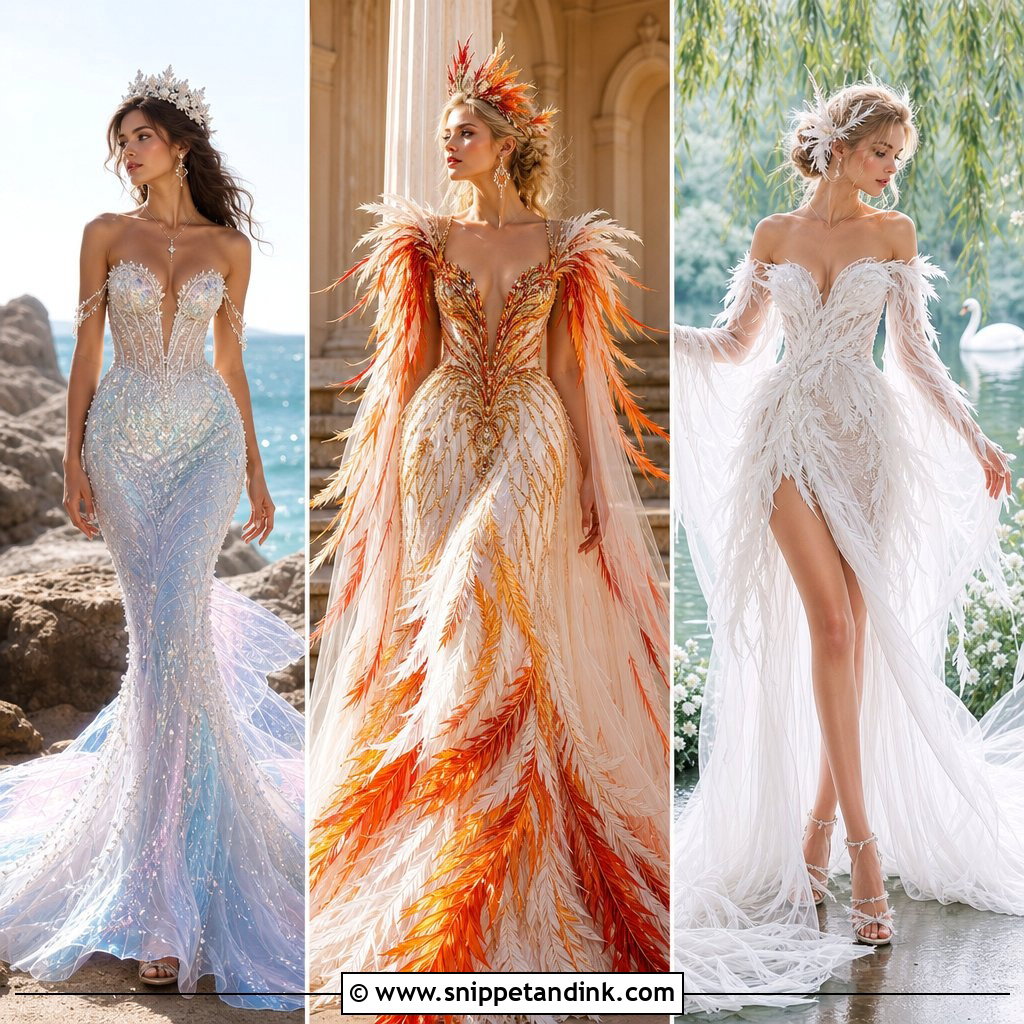
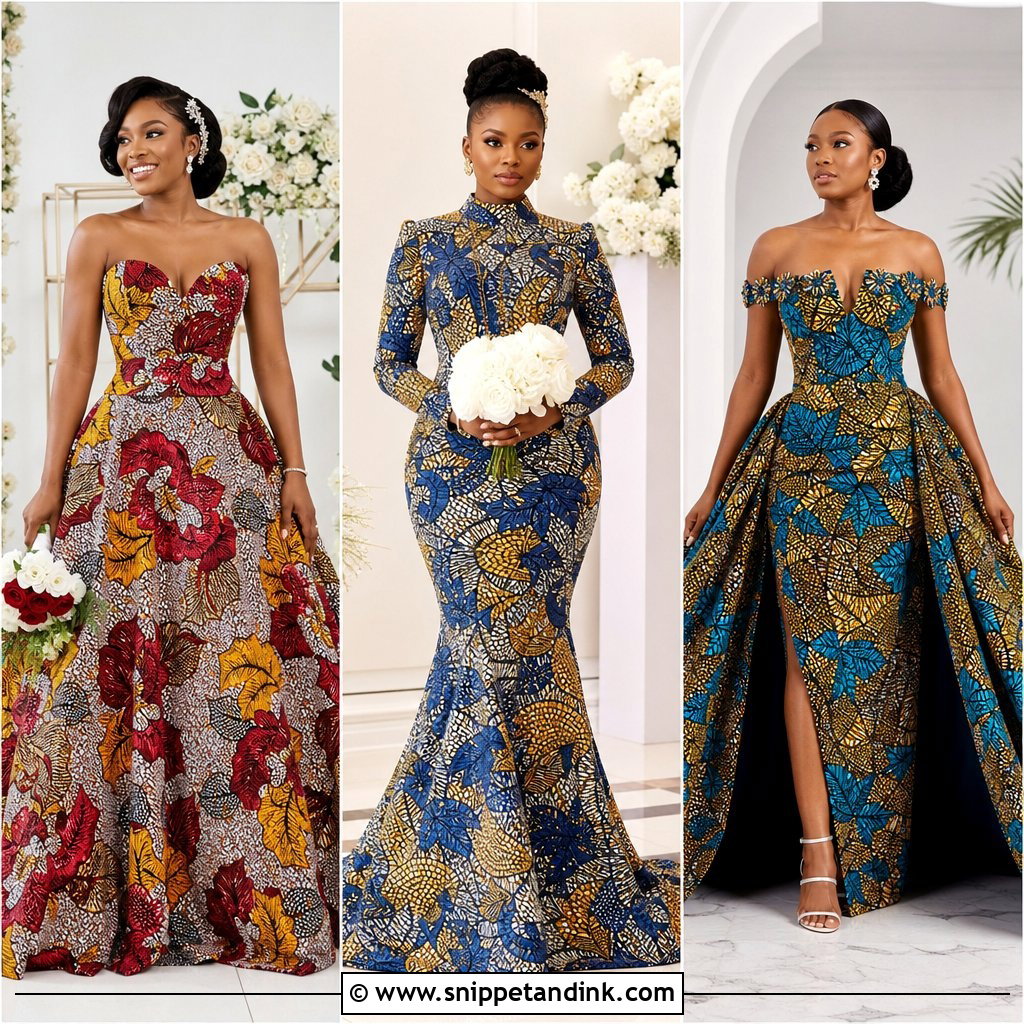
15. Detachable Overskirt Wedding Dress
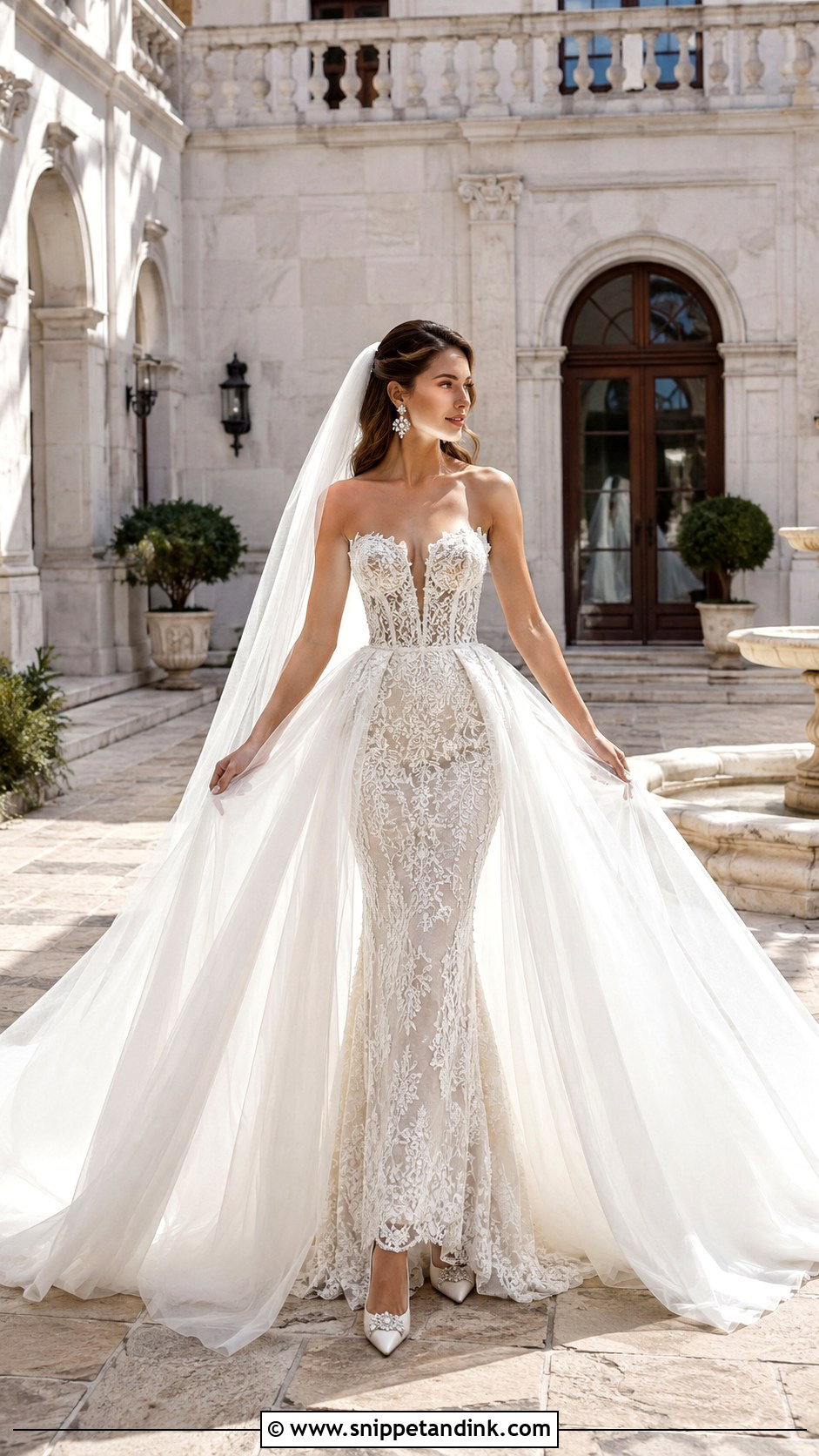
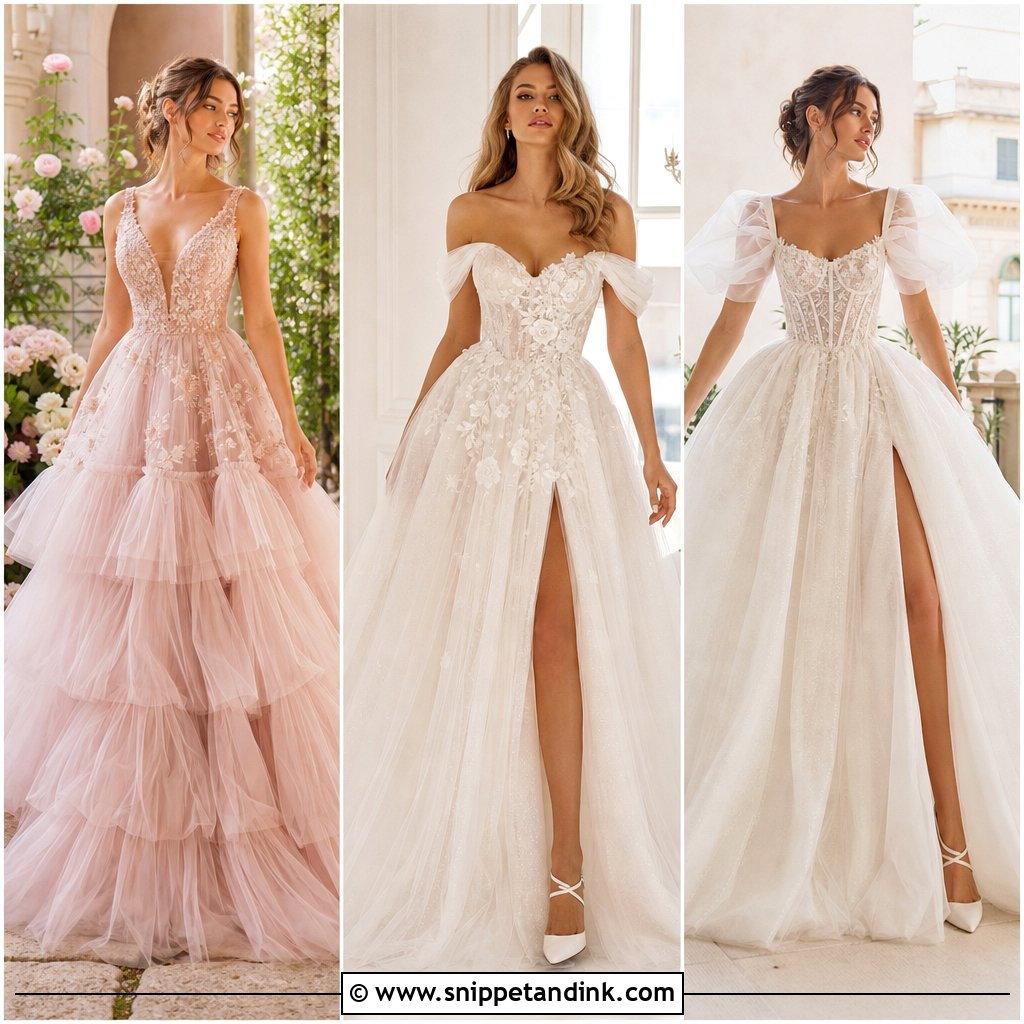
A detachable overskirt lets one dress be two. Start with a supportive mermaid, sheath or fit-and-flare base, then add a full tulle or satin overskirt that fastens at the natural waist and opens at the front. Wear it with a long veil, statement earrings and elegant heels for the ceremony, then remove the overskirt and veil for the reception. The fastening is what I examine: hooks or snaps should be hidden under a waistband that lies flat, and someone besides you should practise taking it off. It’s an easy answer for a bride torn between a princess gown and something sleek.
16. Pearl Beaded Wedding Dress
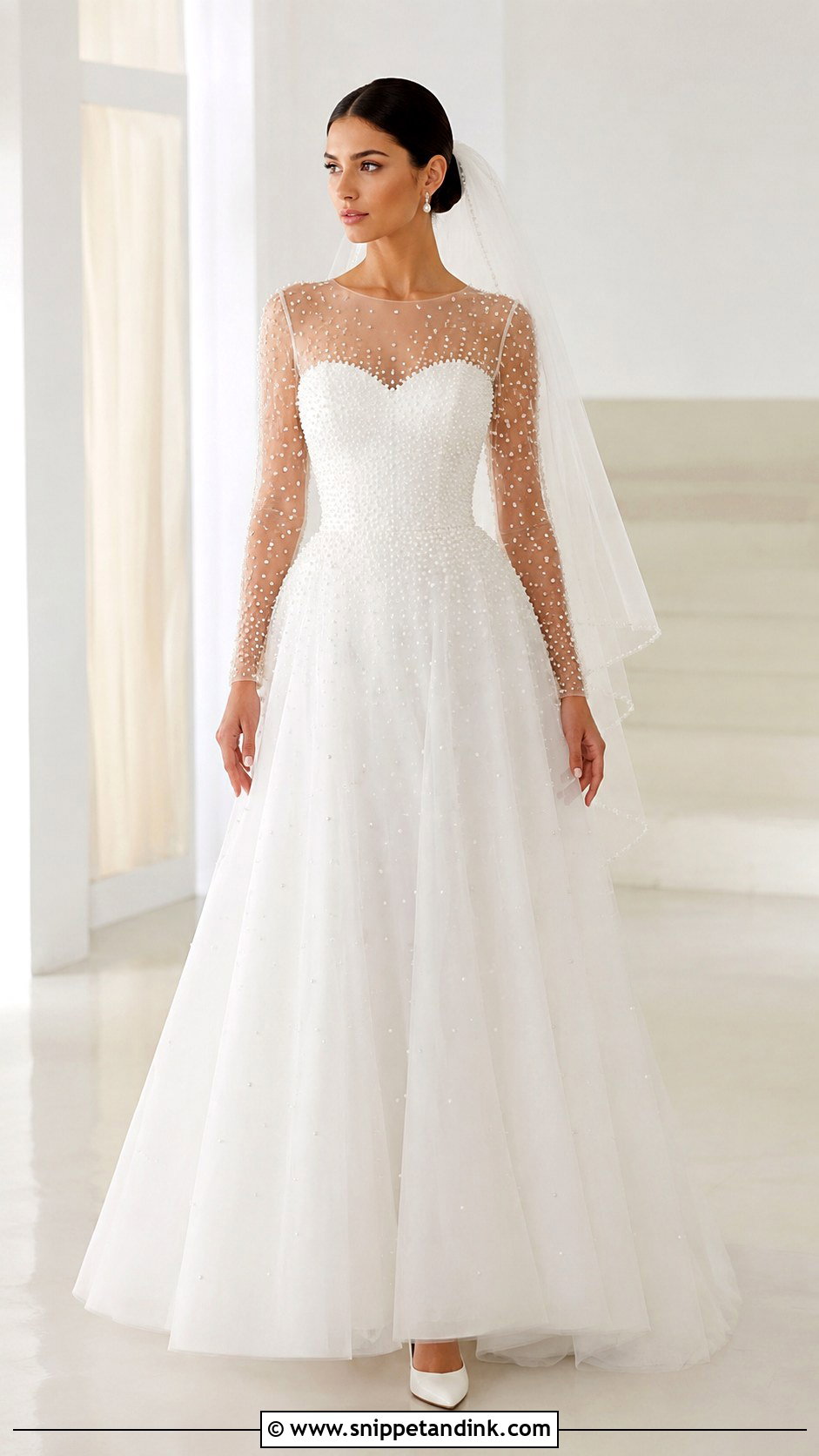
Pearl beading gives a soft glow rather than sparkle. Scattered across a fitted bodice, illusion sleeves or a tulle skirt, it keeps the gown light; covered completely, it gets heavy and stiff. Pearl drops, a smooth updo, satin pumps and a plain fingertip veil are plenty. Check the beading is stitched individually, not on a single running thread, because one snag on a running thread can unravel a whole line. Pearls suit A-line, column and ball gown shapes. Keep the bouquet simple and don’t mix several bold metal finishes in the jewelry.
17. Romantic Ruffle Wedding Dress
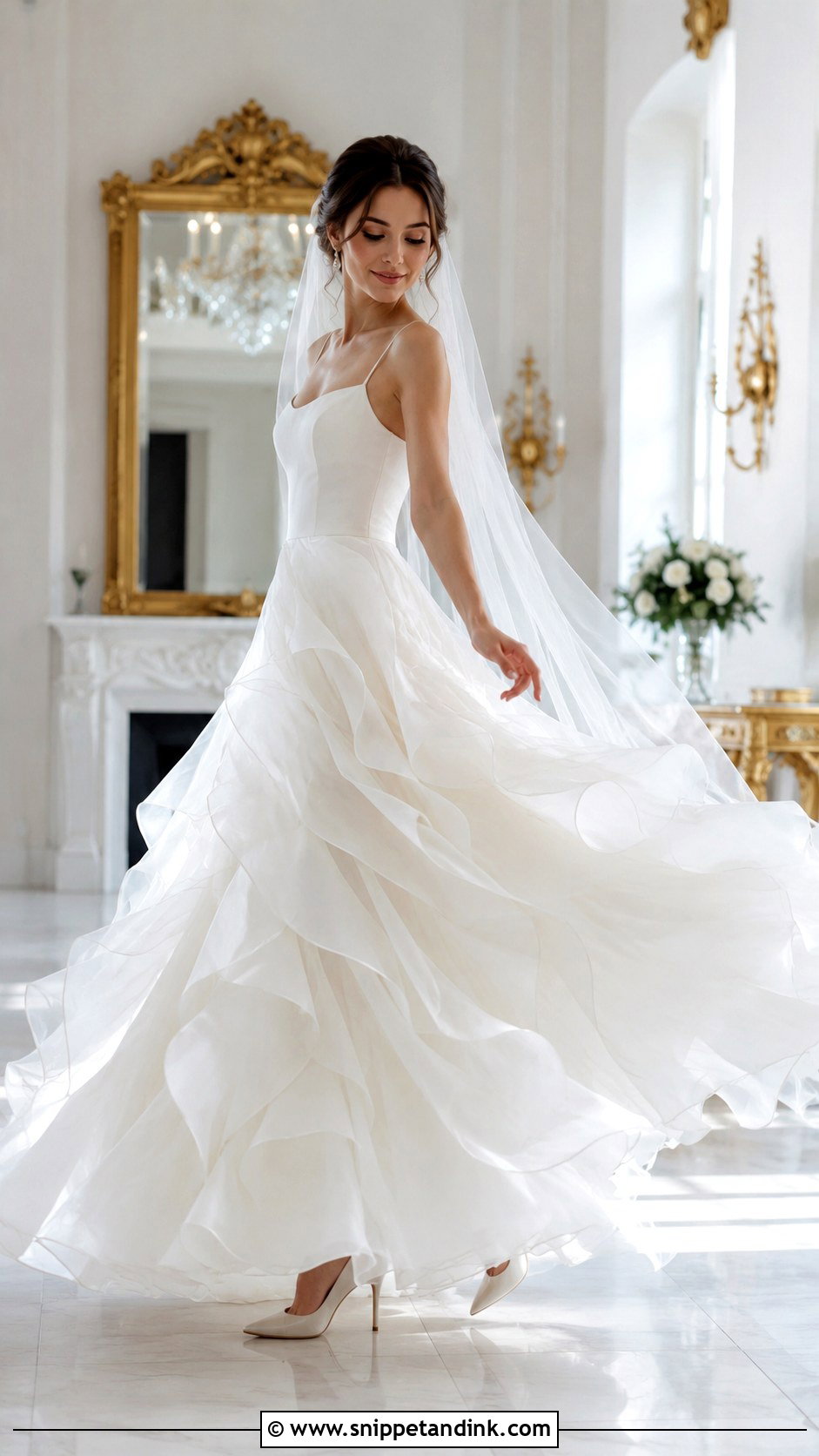
Ruffles give volume through soft layers rather than a stiff underskirt, so the gown feels lighter than it looks. Lightweight tulle or organza ruffles can run diagonally, vertically or in wide tiers. Diagonal ones create movement; vertical ones lengthen the body. A clean fitted bodice balances the skirt. Wear a simple veil, small crystal earrings and stable heels, with a relaxed updo. At the fitting, walk and turn several times. If the layers wrap around your shoes or don’t fall back into place, the hem needs shortening by a fraction before the day, not after you’ve tripped on it.
18. High Neck Lace Wedding Dress
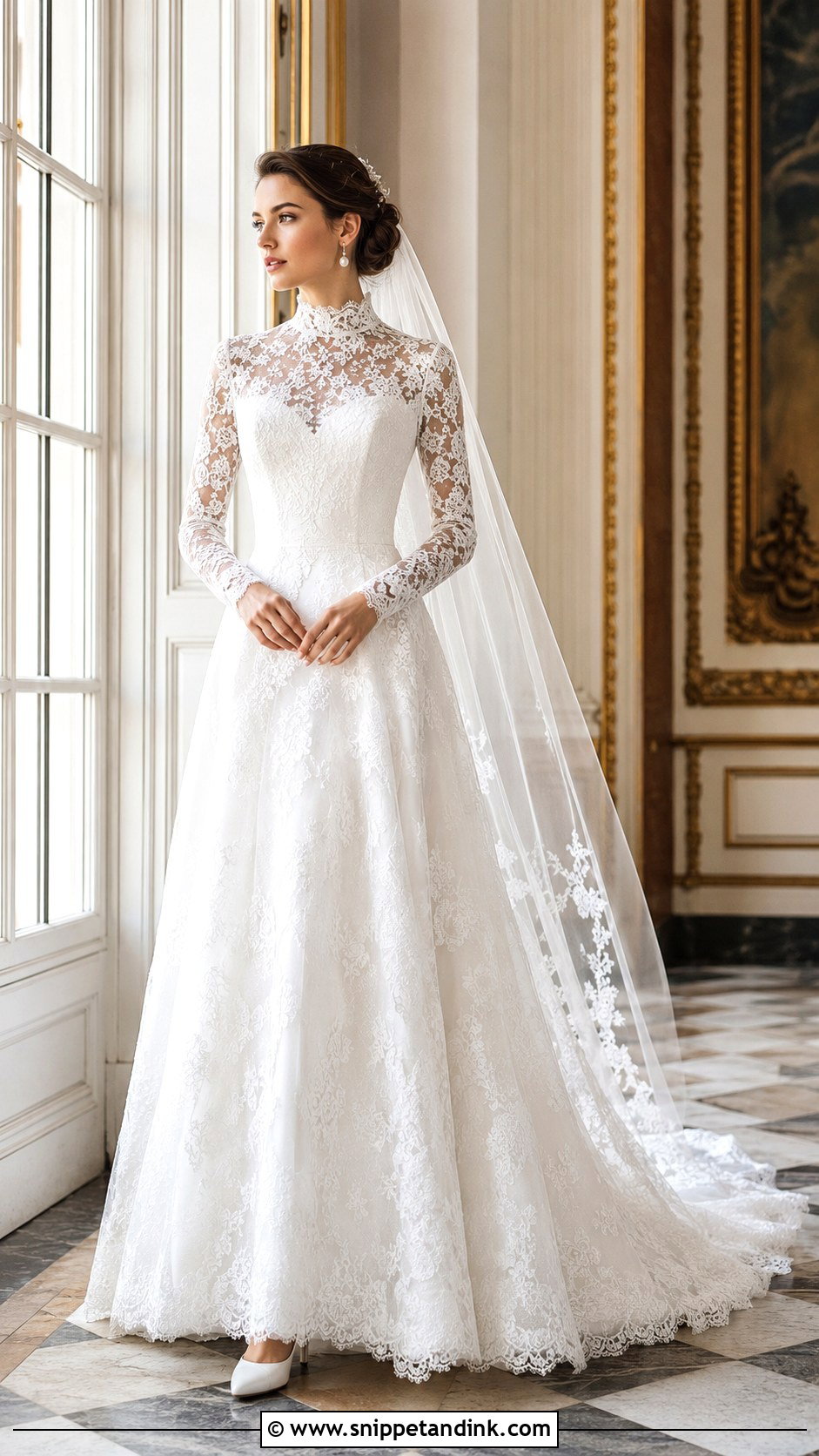
A high lace neck feels regal and gives graceful coverage. I prefer lightweight illusion lace at the neck and sleeves with a lined bodice and a flowing A-line skirt, and covered buttons down the back add a traditional finish. Skip the necklace and wear pearl or crystal earrings, a polished low bun, a narrow veil and closed-toe pumps. The lace collar must be soft against the throat and loose enough to turn your head; scratchy lace at the neck becomes all you think about by the reception. It suits cooler seasons and formal ceremonies, and a removable lace topper over a simpler dress gives the same look with a second option.
19. Colorful Floral Wedding Dress
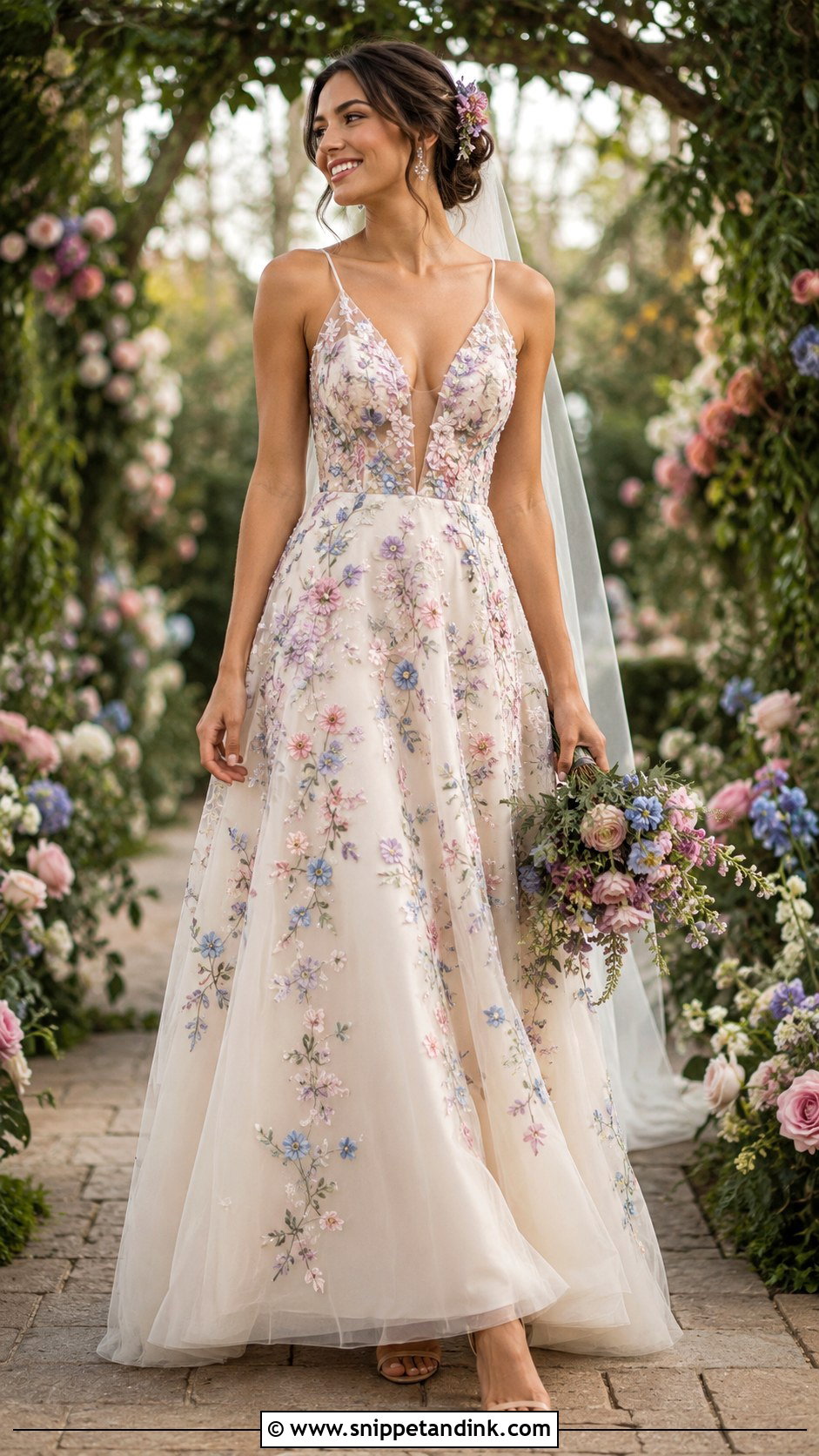
Coloured floral embroidery gives a bride a gown that’s clearly hers. I’d start from a light ivory, blush or pale blue base with flowers in soft pastels, cut as an A-line so the colour flows down the skirt. Neutral heels, delicate earrings and a plain veil let the embroidery lead. Flowers in your hair can pick up one or two shades from the gown without matching them all. The bouquet is where brides go wrong: too bright and it fights the dress, too close in colour and it disappears against it. Bring a fabric swatch to your florist. It’s especially suited to gardens and outdoor celebrations.


20. Minimalist Fairytale Wedding Dress
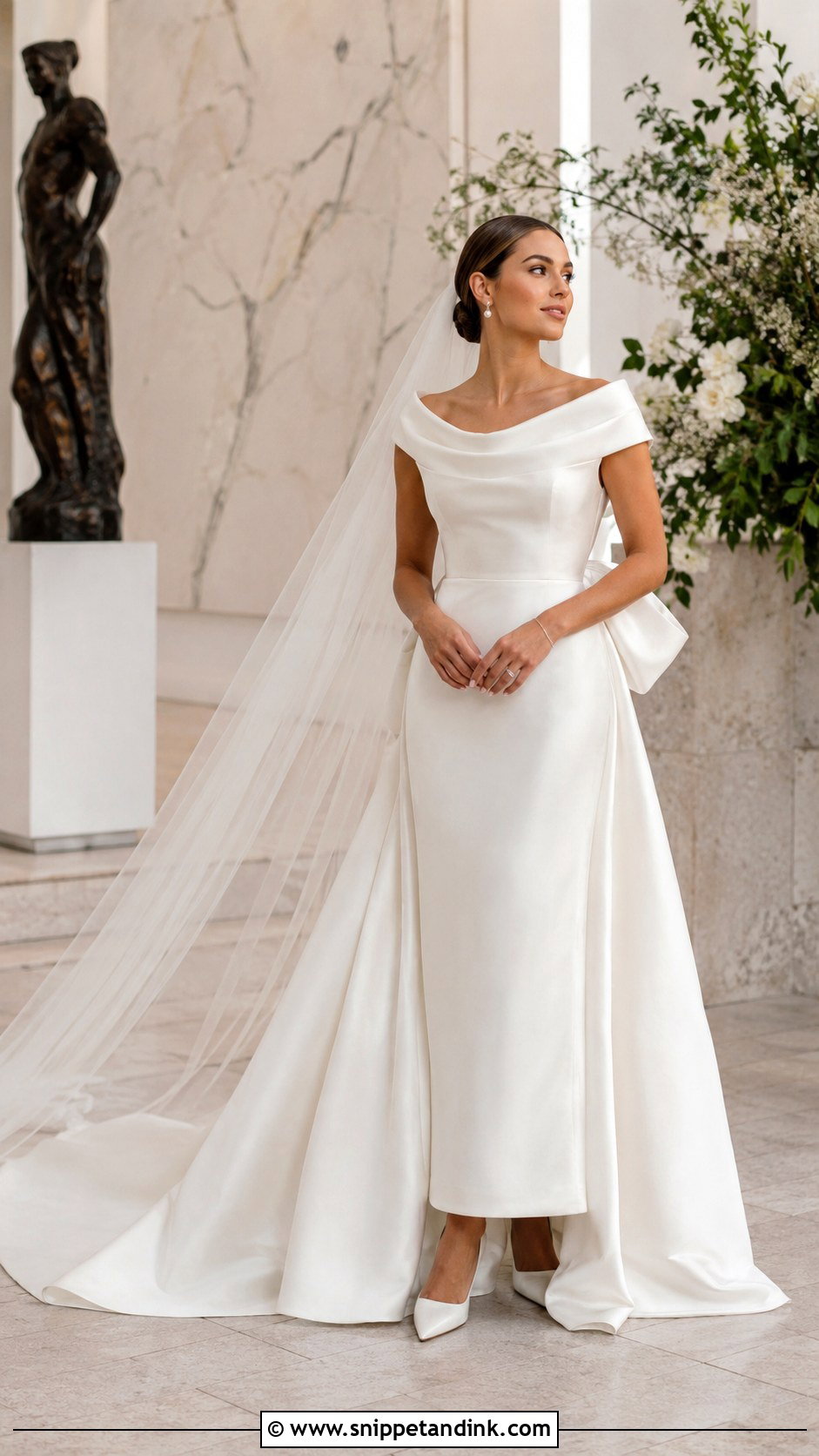
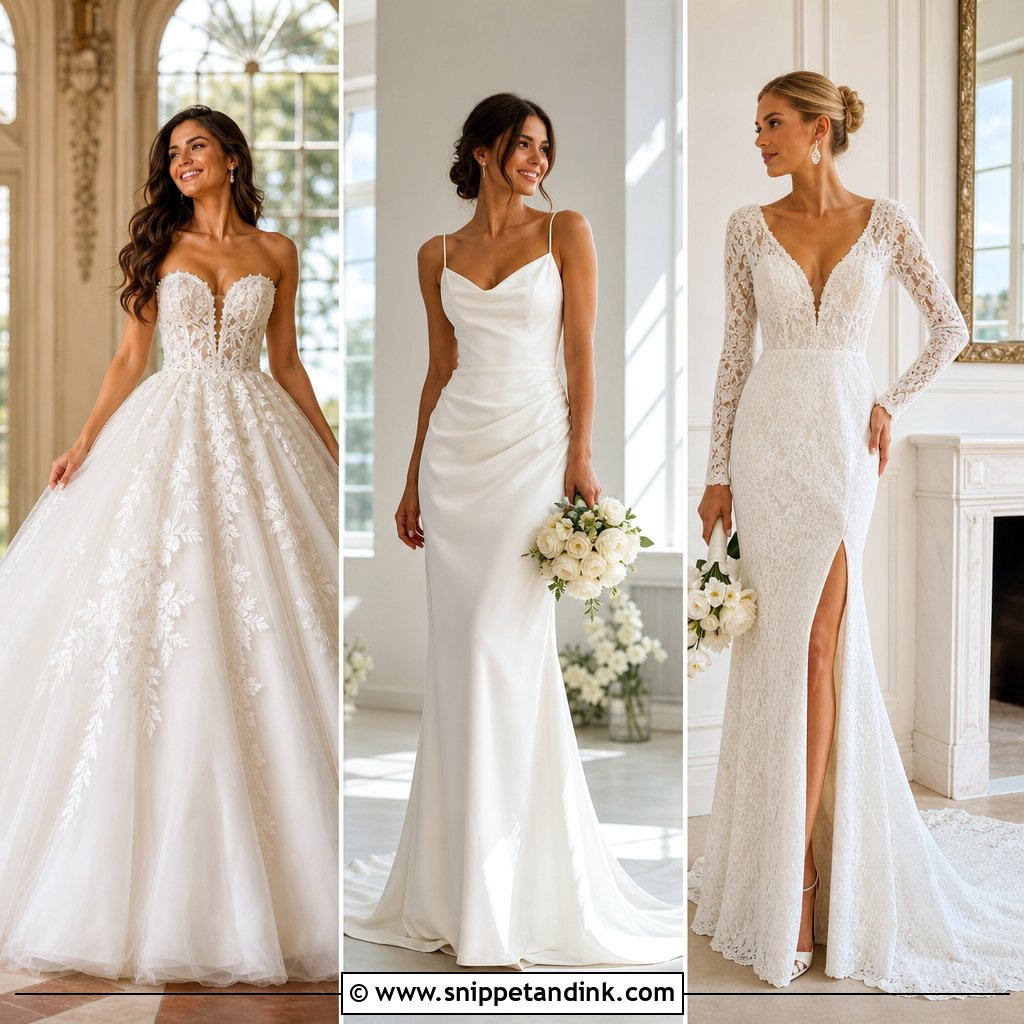
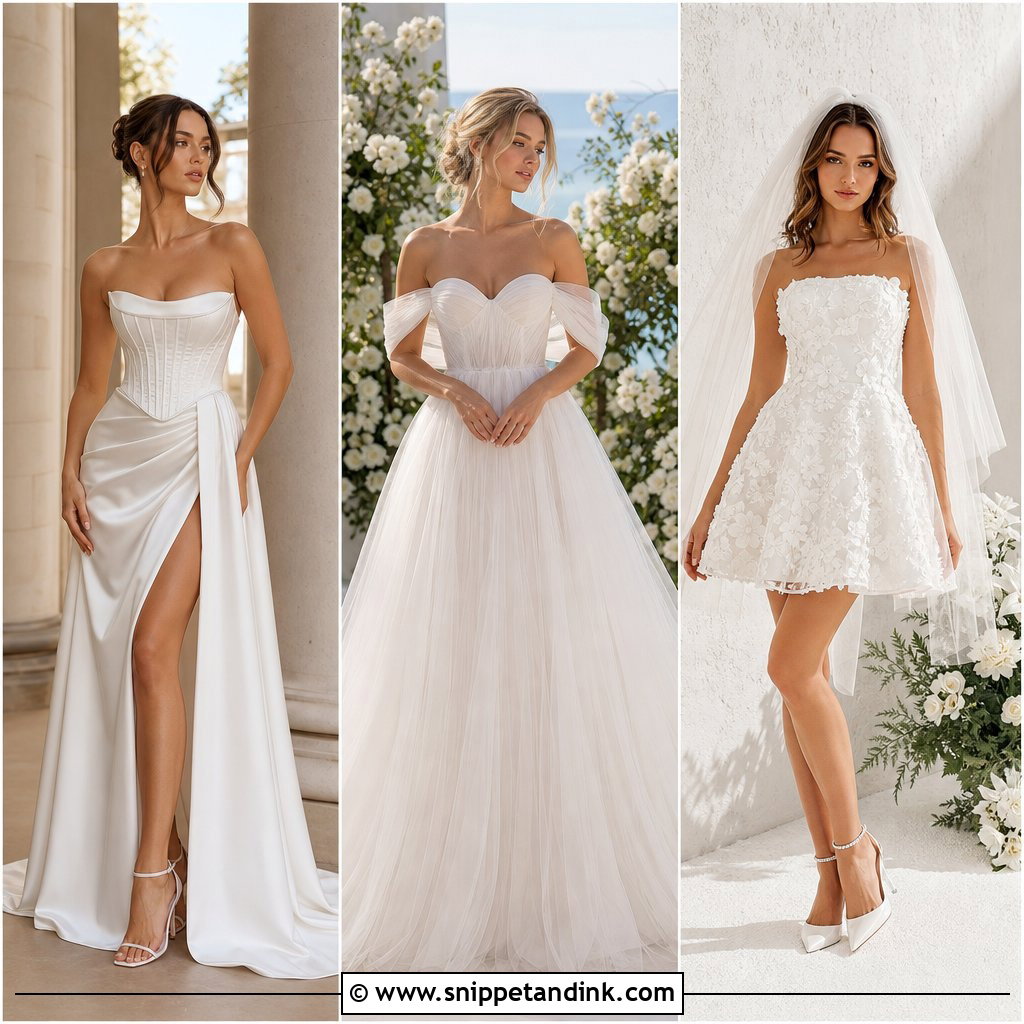
Minimal can still feel like a fairytale if the gown has a strong silhouette, good fabric and one memorable detail. Think of a clean satin A-line with a sculpted neckline, a fitted waist and a sweeping train, worn with a long sheer veil, pearl earrings and pointed ivory pumps. A smooth bun or polished waves keep it modern. For a little drama, add a large back bow, detachable sleeves or a row of covered buttons. Precise tailoring matters most here, since plain fabric shows every seam and every millimetre of a misplaced dart. It suits modern ballrooms, galleries, estates and small outdoor ceremonies.
Bustles, Steaming and Getting the Gown to the Venue
Most gowns in this list need some work on the morning of the wedding, and it’s much easier when someone knows the plan in advance.
Which bustle suits which skirt
An over-bustle lifts the train with hooks or buttons onto the back of the skirt and suits lace and satin. A French or under-bustle tucks the train underneath with ribbon ties, which keeps a smooth surface and suits full tulle skirts. Long cathedral trains often need several points. Ask your seamstress to colour-code the ties and show your helper twice.
Steaming and transport
Hang the gown the night before, out of its bag, in a room without direct sun. Steam satin and crepe from the inside or at a distance so water doesn’t spot, and fluff tulle with steam rather than an iron, which melts it. To travel, lay the gown flat across a back seat inside its breathable bag, never folded into a boot. Pack a small kit with clear thread, safety pins, a white chalk stick for marks on ivory, and the spare buttons that came with the gown.
Try It All On Together Before the Last Fitting
A fairytale gown should make you feel supported and like yourself, not like you’re managing a costume. Start with the silhouette you feel strongest in, then work through fabric, neckline, sleeves, colour and detail. Venue and season can guide you without deciding for you. At your fittings, walk, sit, raise your arms and practise the bustle. Before you approve the final alterations, wear everything at once: veil, shoes, jewelry and the exact underwear you’ll wear. Tulle, flowers, satin or clean structure, the right one is the gown you forget about once the music starts.
You'll Like These Ideas:




Leave a Reply