
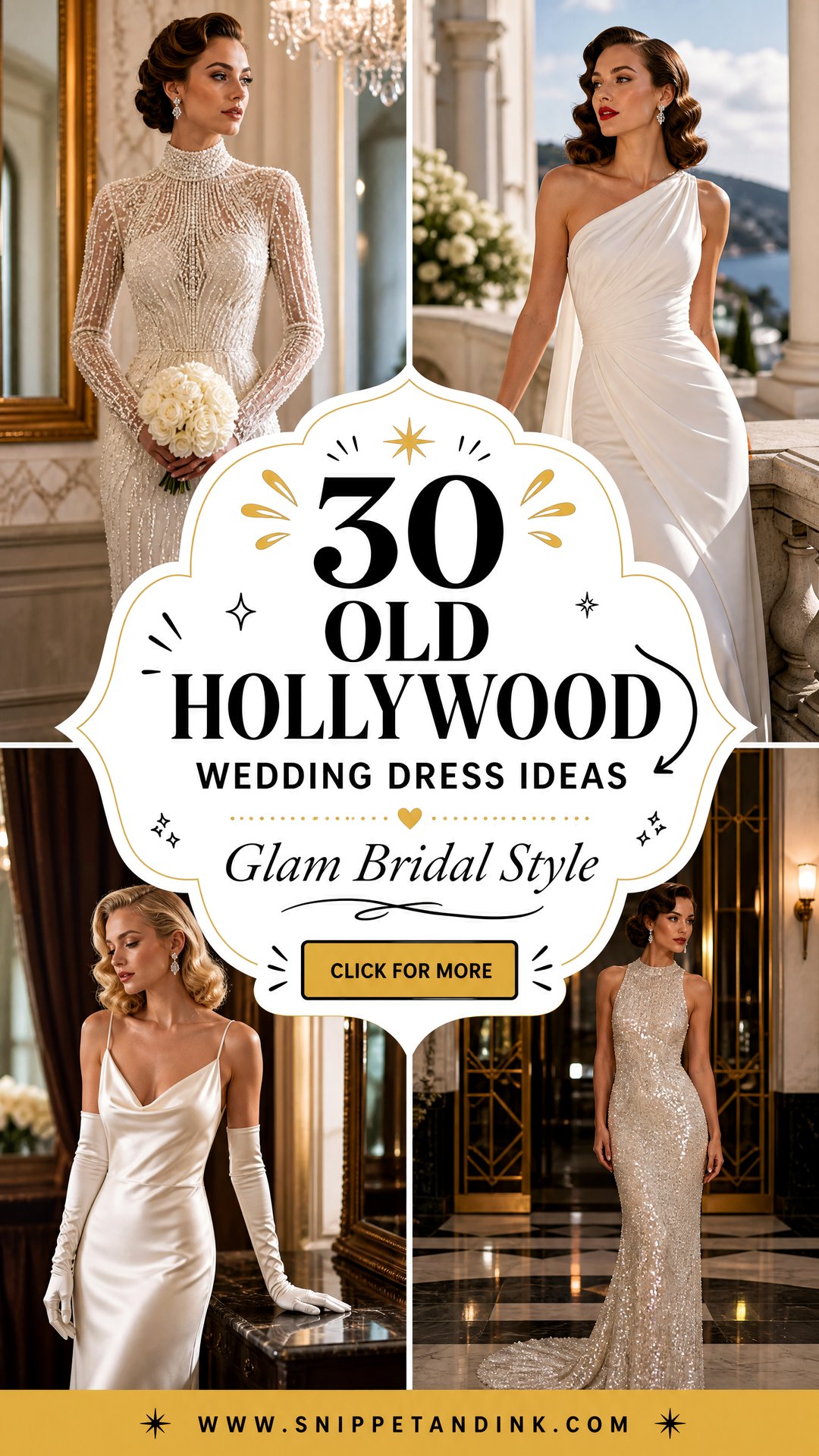
Old Hollywood bridal style is glamour that doesn’t date. Liquid satin, sculpted necklines, long veils, pearls and gloves have been worn by brides for the better part of a century, and they still look right because they rely on cut rather than trend. I never try to copy a single film star’s dress for a bride. What I’m after is the mood of a red carpet: a gown that moves well, sits cleanly and still lets you sit, eat and dance. Below are thirty versions, from slinky bias-cut satin to grand ball gowns and a feathered reception mini, with notes on how each one behaves once you’re actually wearing it.
Which Decade of Hollywood Are You Dressing For?
Old Hollywood isn’t one look. When a bride brings me a mood board, the first thing I do is sort it by era, because mixing three decades in one outfit is what tips glamour into fancy dress.
The 1930s: liquid and close to the body
Bias-cut satin, cowl necks, low backs and very little structure. It suits brides who are comfortable in a fluid dress and don’t mind that it shows what’s underneath. Pair it with finger waves or sculpted side-parted curls.
The 1940s: shoulders and tailoring
Long sleeves, defined shoulders, covered buttons and a slimmer skirt. Wartime fabric limits kept the shapes neat, and that restraint looks very current now. Rolled curls and a short veil belong here.
The 1950s: waist and volume
Fitted bodices, full skirts, tea lengths, gloves and pearls. This is the most structured era and the easiest to wear for a long day, because the bodice holds everything in place.
Pick one era for the dress. You can borrow from another for hair or makeup, but the gown should commit.
1. Satin Bias Cut Wedding Dress
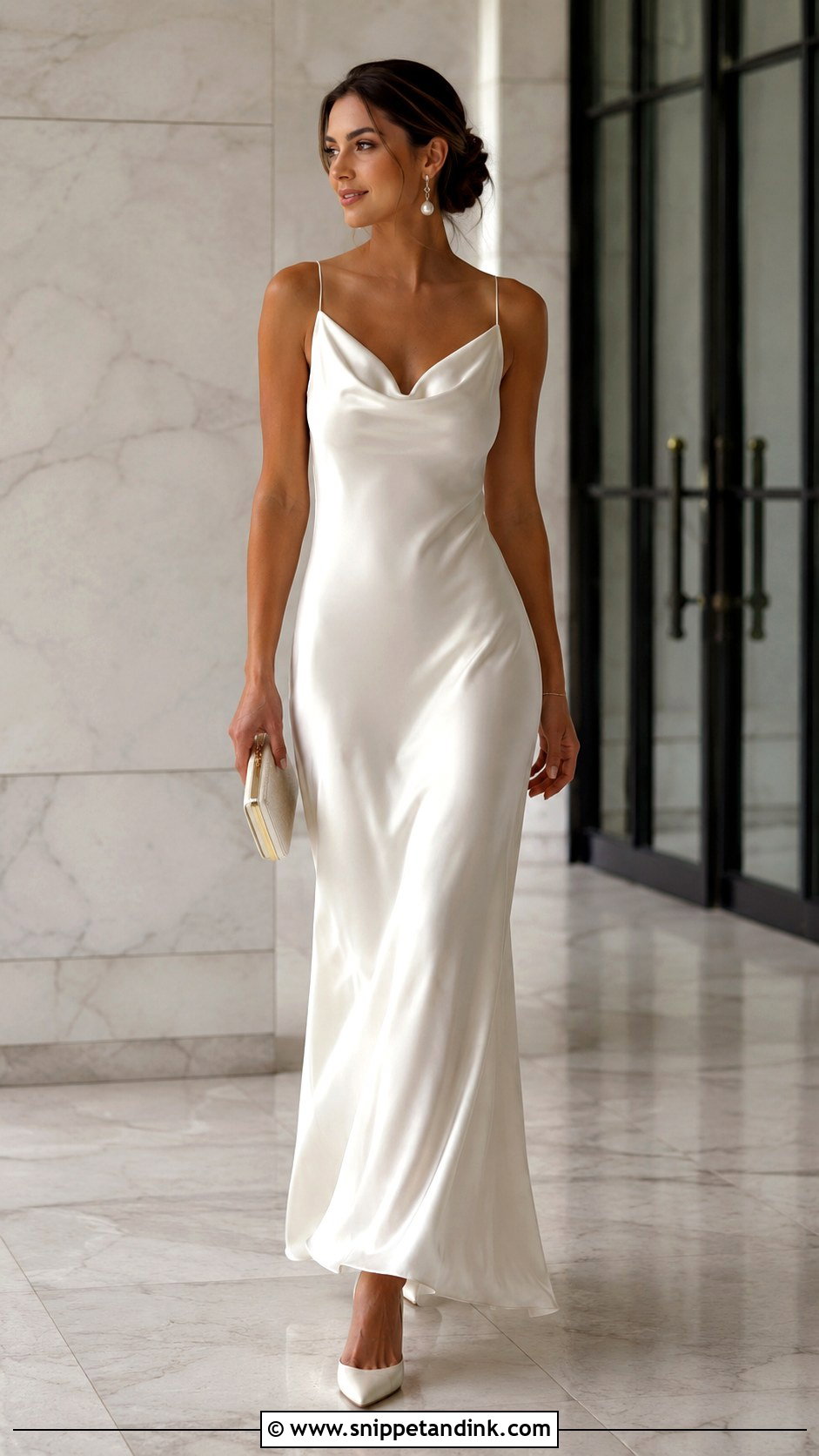
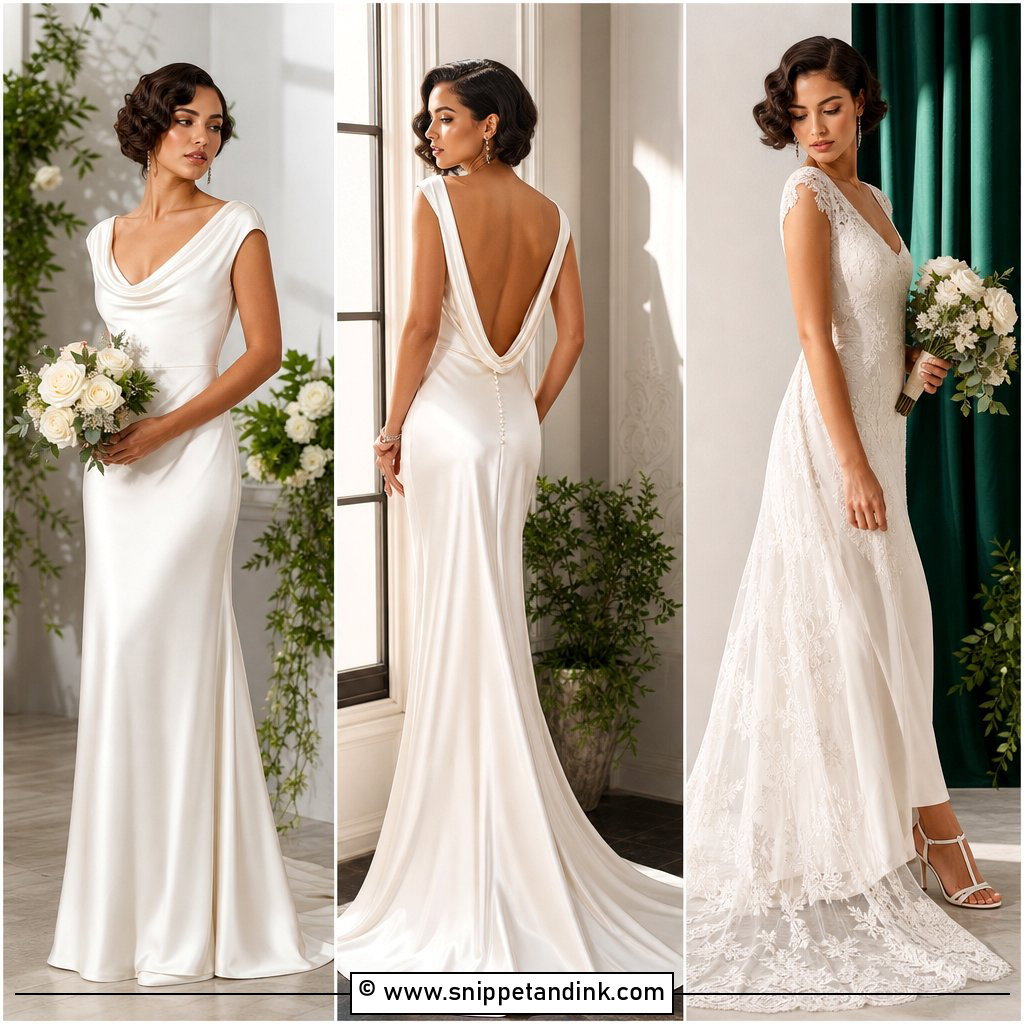
Bias cut is the dress most people picture when they think of 1930s glamour. The fabric is cut diagonally across the grain, so it stretches slightly and falls over the body in soft ripples instead of clinging. That same stretch is the catch: a bias gown shows everything underneath, and its hem keeps dropping for a day or so after cutting, so a good seamstress lets it hang before she hems. Ivory, pearl or champagne satin keeps it vintage. A cowl, a low back or a line of tiny covered buttons is enough detail. Sculpted waves, pointed satin heels, a pearl clutch and drop earrings suit an evening ballroom.
2. Off The Shoulder Satin Wedding Dress
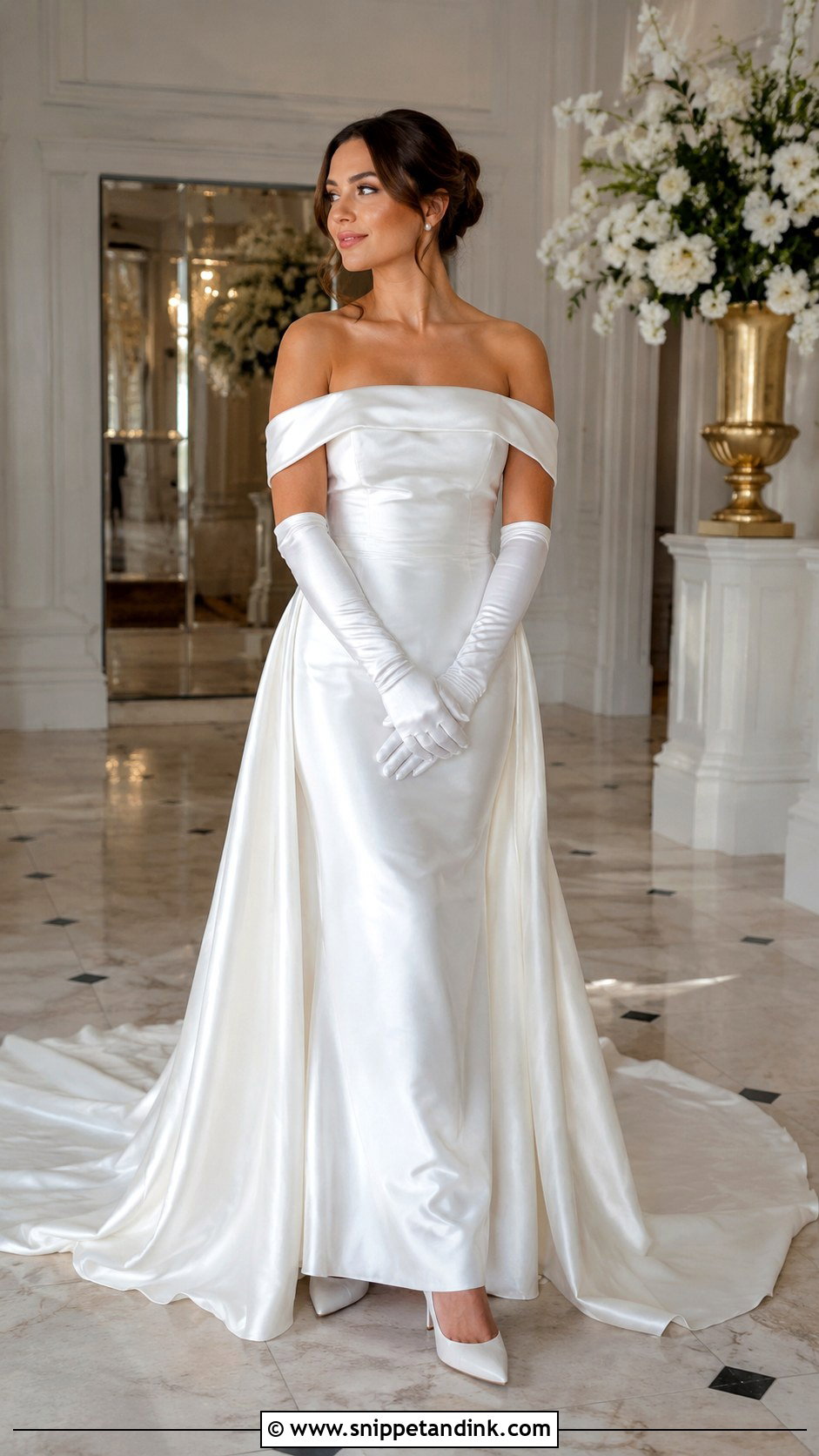
Off the shoulder satin is the quickest route to screen-siren territory. The neckline frames the collarbones, and a fitted bodice over a smooth skirt with a soft train needs very little else. Mikado gives more structure; a softer satin flows. Opera gloves make it formal, or you can keep it bare with pearl studs and a sleek bun. My one test at the fitting: lift your arms to shoulder height. If the band climbs, the bodice needs taking in.
3. Long Sleeve Lace Wedding Dress
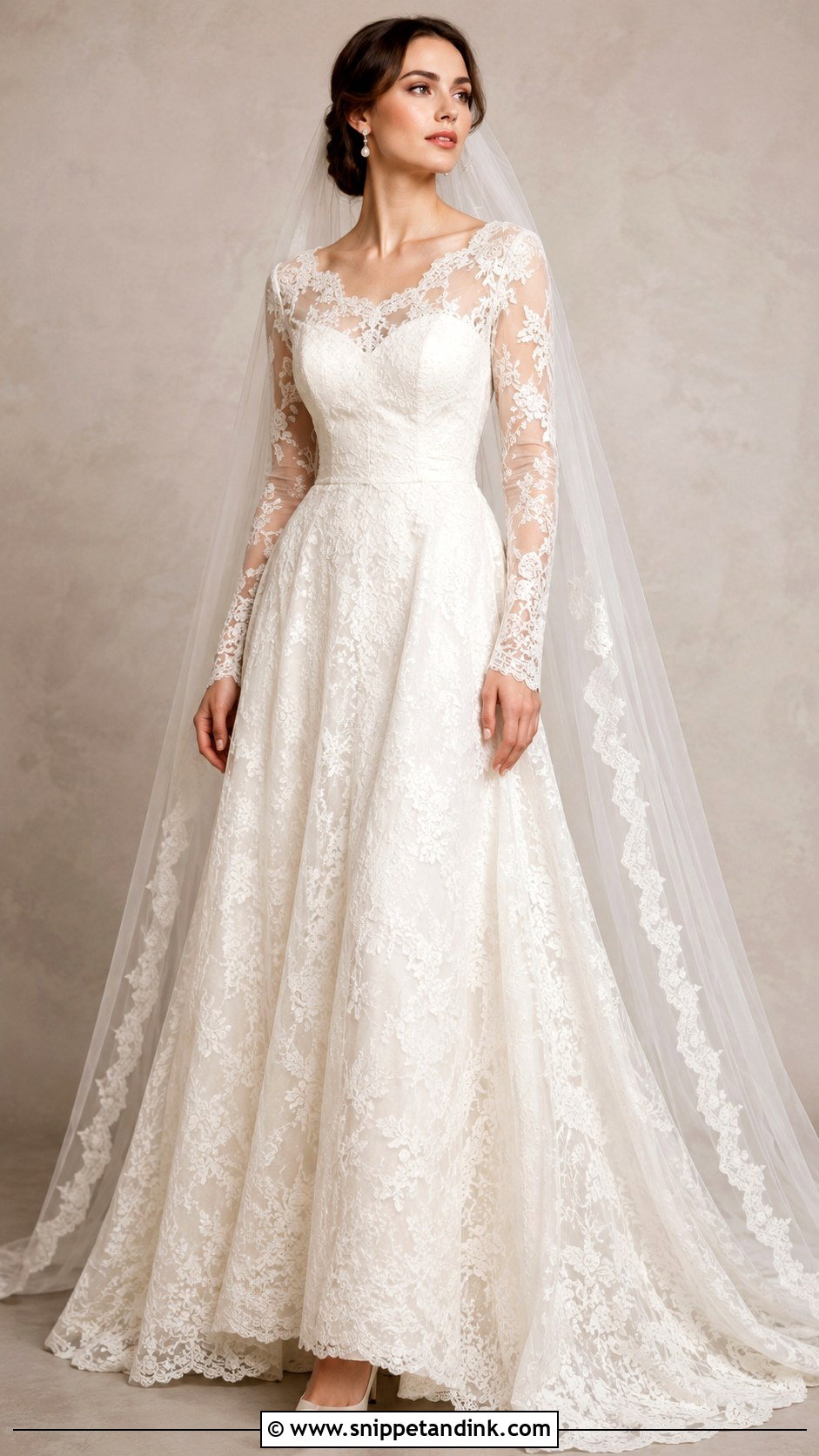
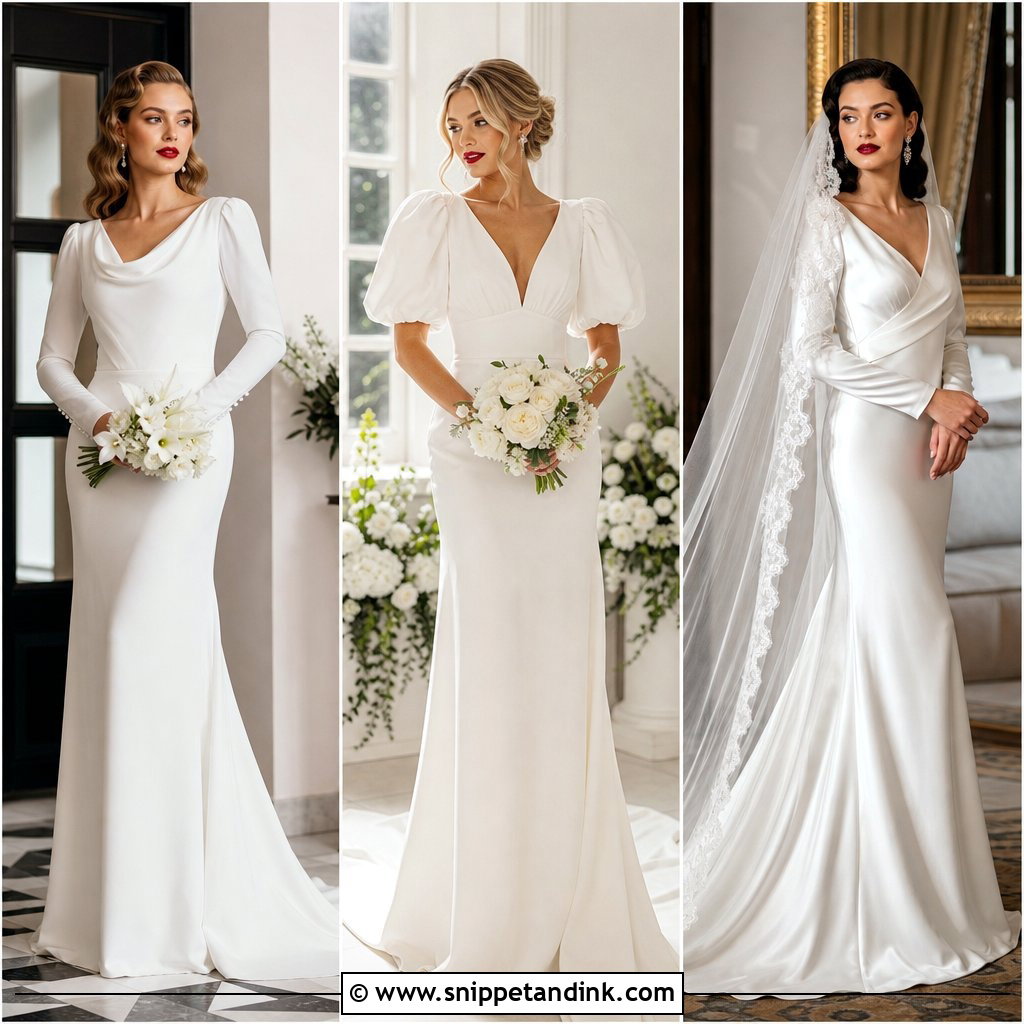
Long lace sleeves give the look a more regal, covered feel. I look for fine lace over a fitted bodice, a defined waist and a plain skirt so the whole gown doesn’t turn busy. Sheer illusion sleeves feel lighter; lined lace sleeves read more traditional. Check the cuff, because a sleeve that ends exactly at the wrist bone will ride up when you hold your bouquet, so most of my brides go a touch longer. A cathedral veil, satin pumps, pearl earrings and a waved updo finish it, with a simple bouquet so the lace stays the detail.
4. Sweetheart Neckline Ball Gown Wedding Dress
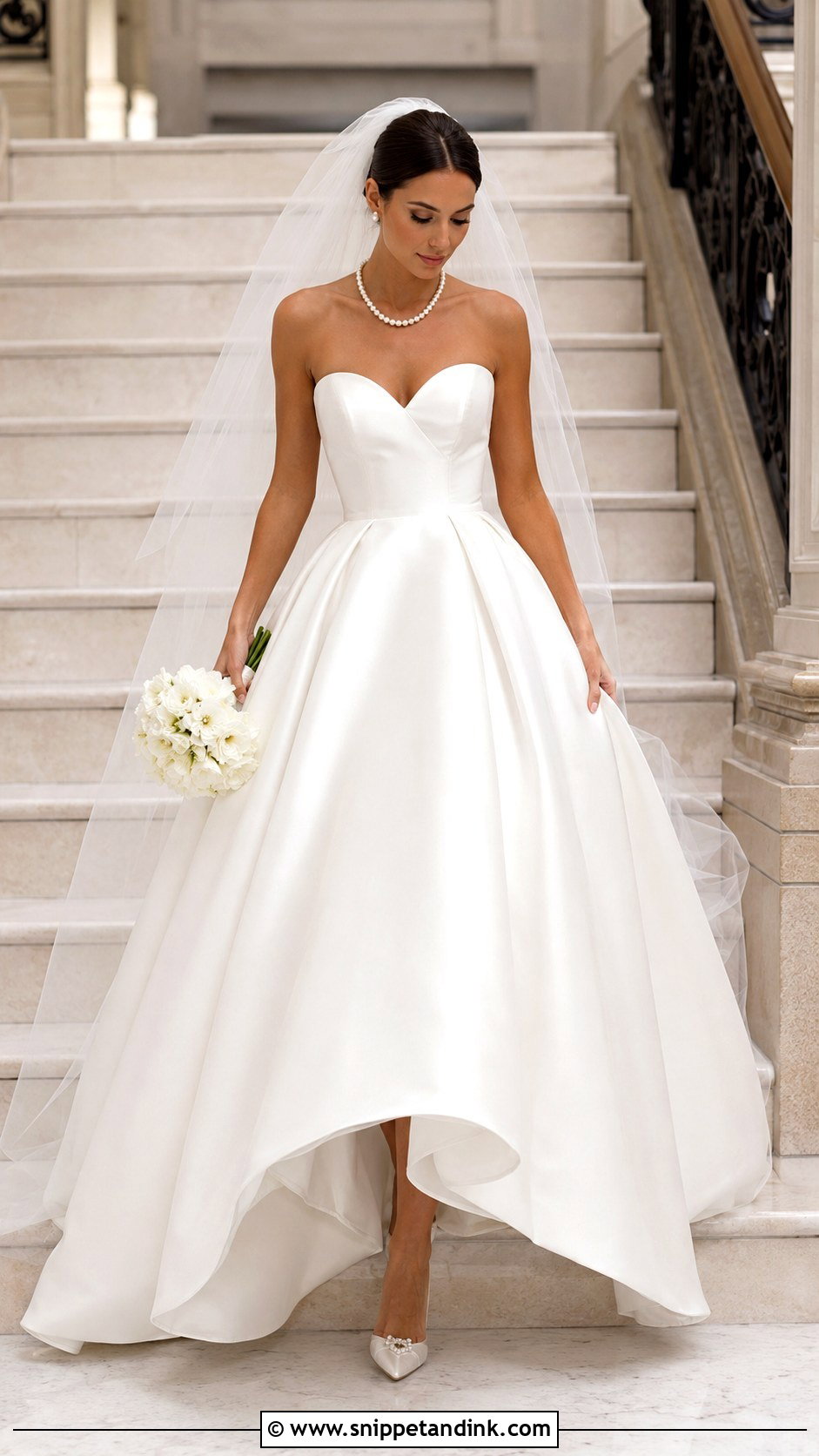
Few shapes say grand entrance like a sweetheart neckline ball gown wedding dress. The fitted bodice shapes the waist and the full skirt does the rest without sparkle everywhere. Satin, mikado and silk faille hold that volume; faille has a fine rib that looks rich in photographs. A big skirt is heavy, so ask what’s under it. A layer of crinoline or a hoop changes how you sit and climb into a car. A pearl strand or a slim choker suits the neckline, then a long veil, soft waves and pointed heels.
5. Cowl Neck Satin Wedding Dress
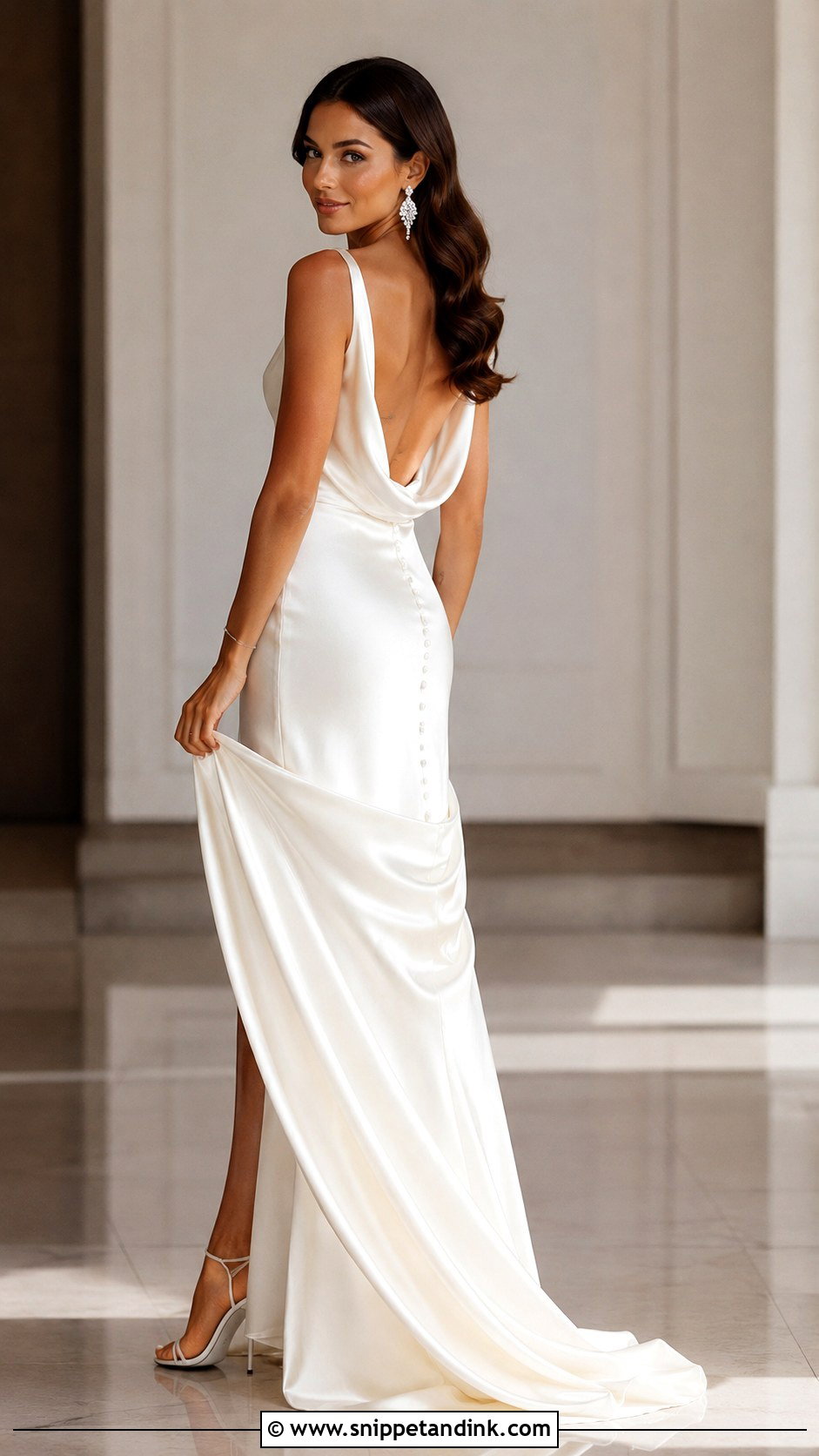
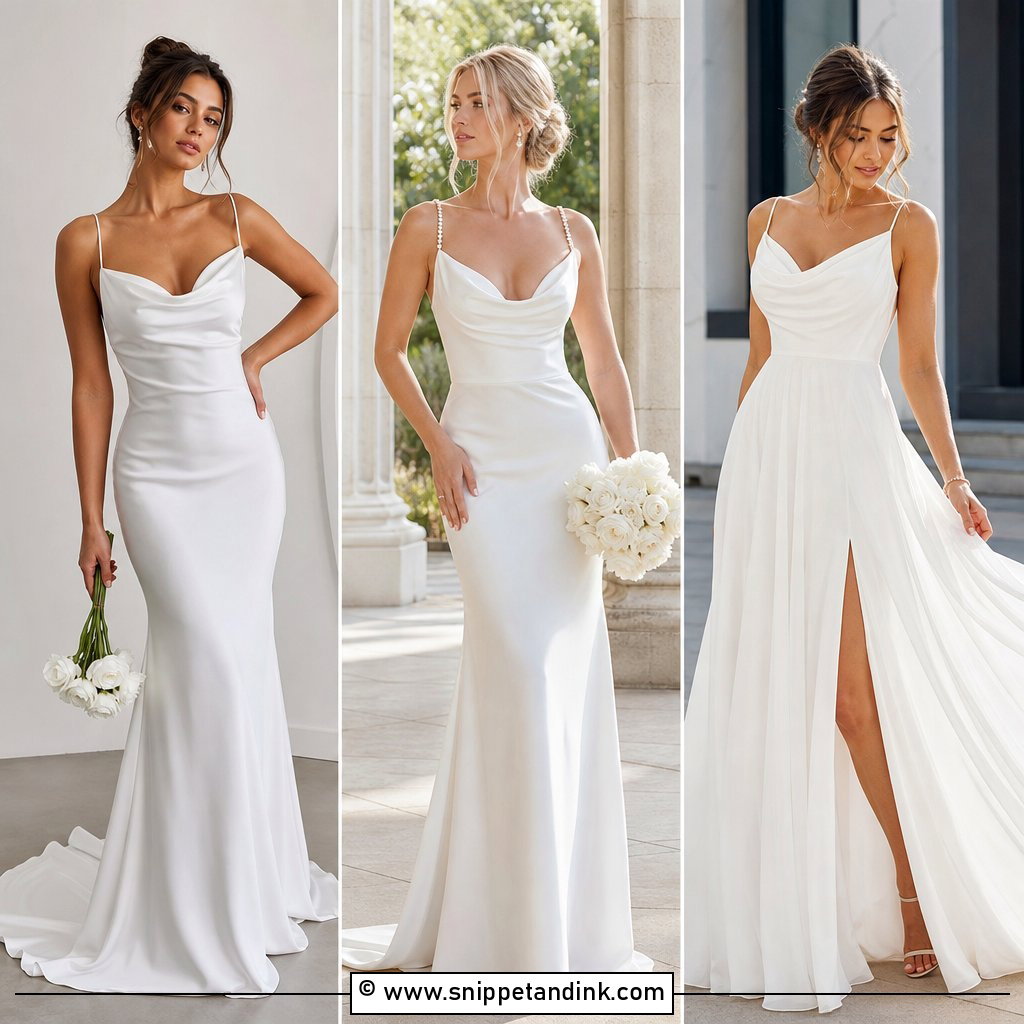
A cowl neck is draped fabric that falls in soft folds across the chest, and it’s at its best in silk satin or crepe-backed satin. Minimal, but never plain. The thing I watch for is the cowl gaping forward when the bride bends to hug a guest. A small hidden tack or a weight sewn into the drape keeps it in place. A low back, slim straps or a short puddle train adds drama. Vintage waves with a side part, crystal earrings and strappy heels suit a relaxed destination wedding or an intimate dinner.
6. High Neck Beaded Wedding Dress
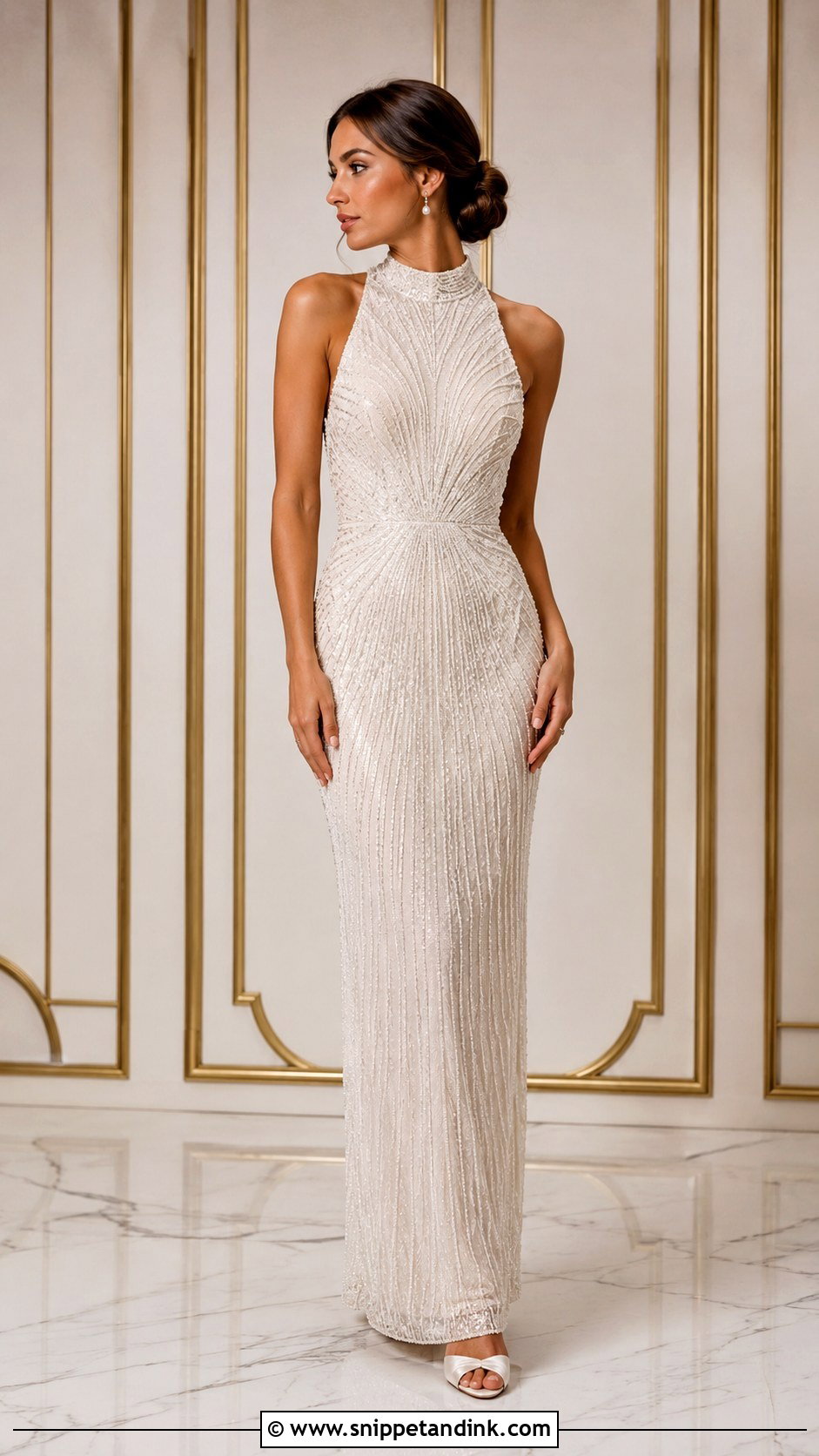
High necklines and beading take the look toward Art Deco. Vertical beadwork lengthens the body; scattered pearls feel softer. A slim column keeps it from feeling heavy. The practical problem with a high collar is makeup: foundation and powder rub onto the fabric along the neck all day. I have the makeup set well and protect the collar with a scarf while the bride gets ready. A low chignon, small crystal studs and satin heels finish it, with a plain veil or none at all.
7. Feather Trim Wedding Dress
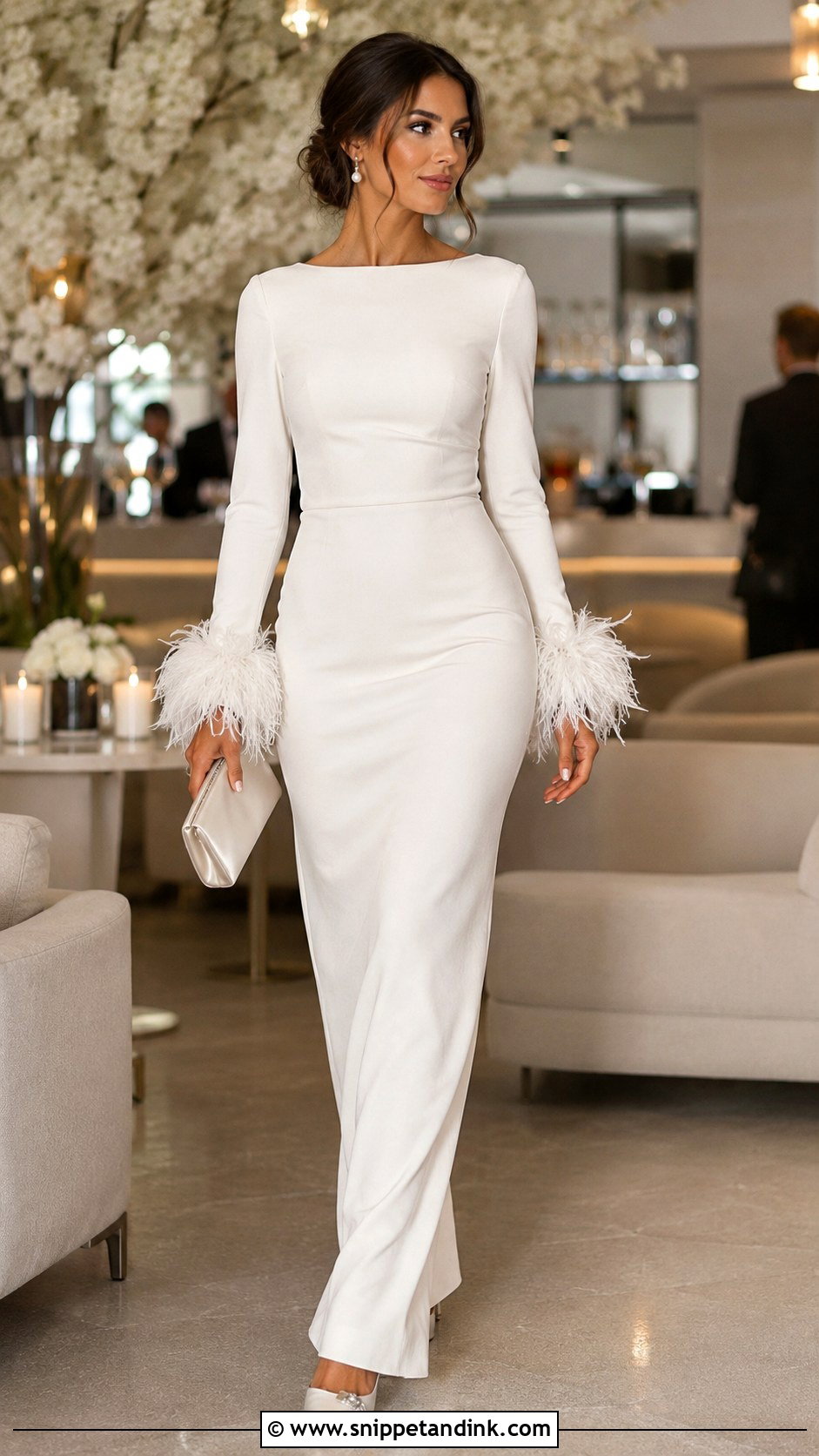
Feathers turn a reception into a party. Trim at the neckline, cuffs, hem or train adds movement without taking over, especially on a plain satin, crepe or silk base. A fitted column gown with feather cuffs stays polished, while a short feather hem dances well. Know what you’re buying: ostrich feathers wilt in humidity and rain, and fluffier marabou sheds onto everything nearby, including your partner’s dark suit. Sleek heels, a satin clutch and clean jewelry keep it chic, and the hair and makeup should stay refined.
8. Pearl Embellished Wedding Dress
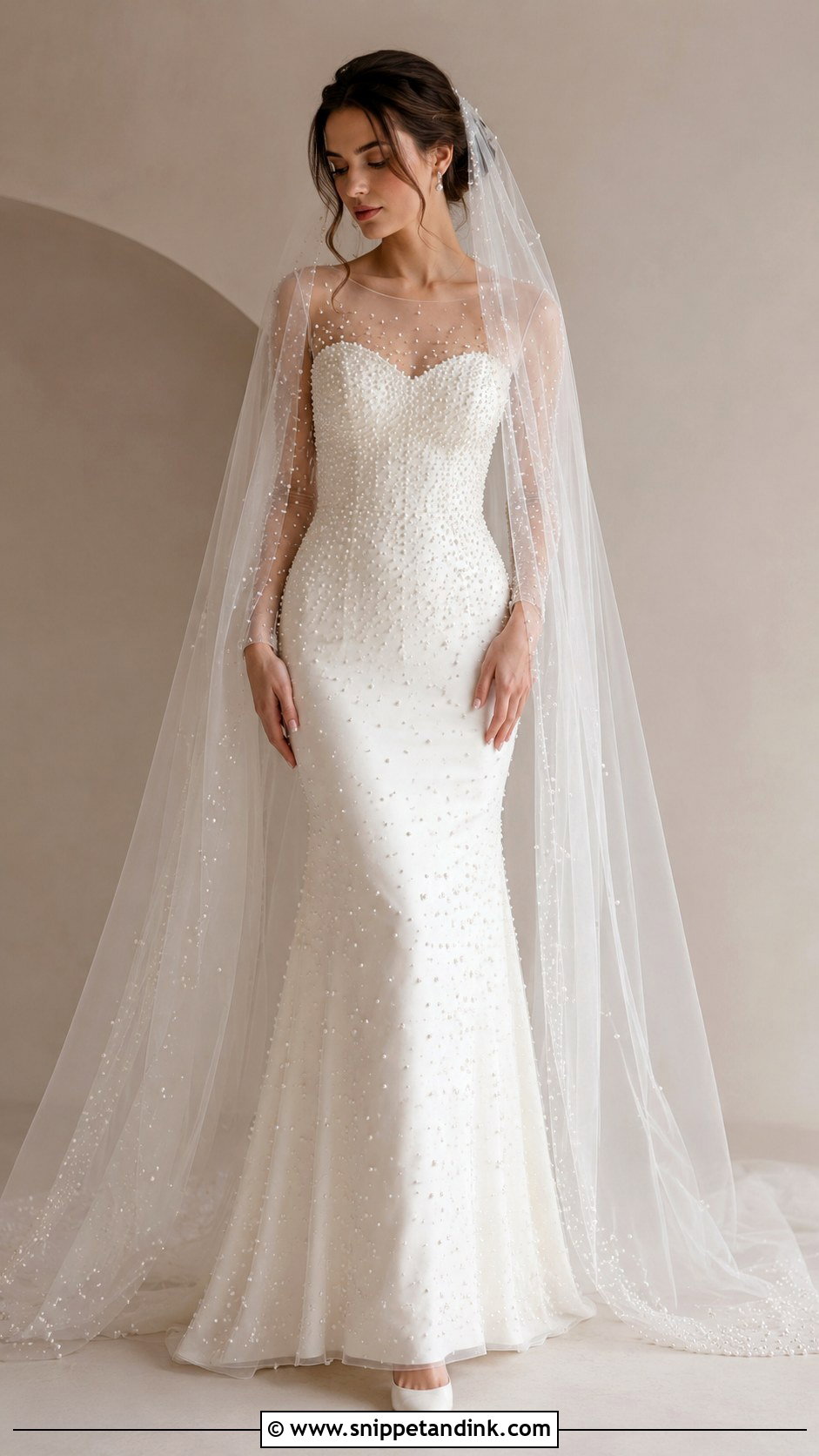
Pearls glow rather than glitter, which suits a vintage dress. They can run across sheer sleeves, along the bodice, down the back or dot a tulle overlay. Placement matters most; pearls should follow the shape of the gown, not bury it. Ask whether they’re sewn on or glued. Sewn pearls survive a full day of hugging, while glued ones can pop off in the car. Pearl drop earrings, satin heels and a veil with a few matching pearls tie it together without the flash of sequins.
9. Draped Crepe Wedding Dress
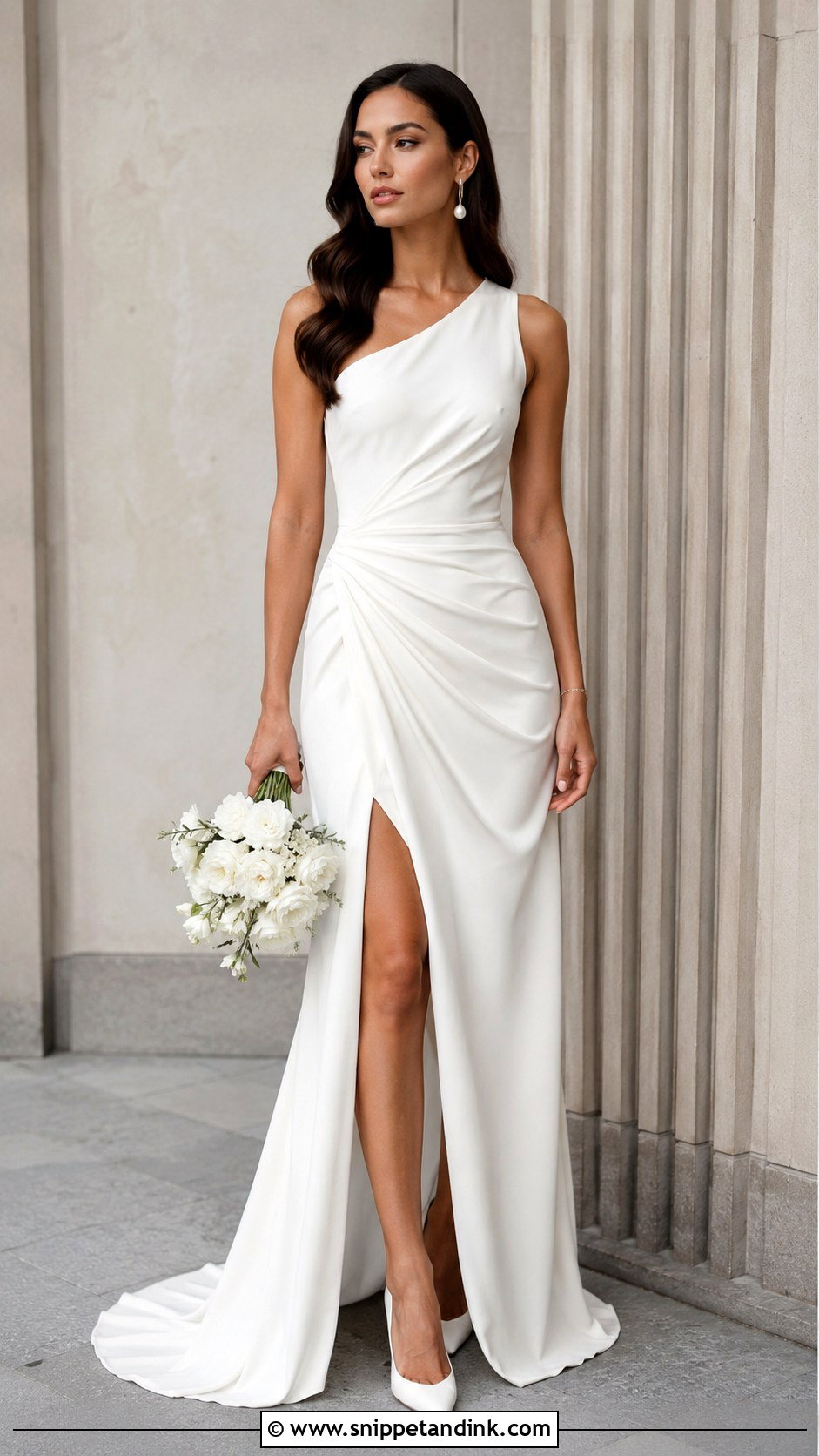
Crepe has weight and a smooth matte face, so it flatters curves while keeping the line clean, and it’s the fabric I reach for when a bride wants Old Hollywood without much shine. Draping at the waist, hip or neckline builds shape without heavy boning. A one-shoulder detail or a small side slit pushes it toward the red carpet. Drapes can shift when you sit, so I have the folds tacked in place at the last fitting. Sleek waves, pearl earrings, pointed heels and a plain veil.
10. Strapless Mikado Wedding Dress
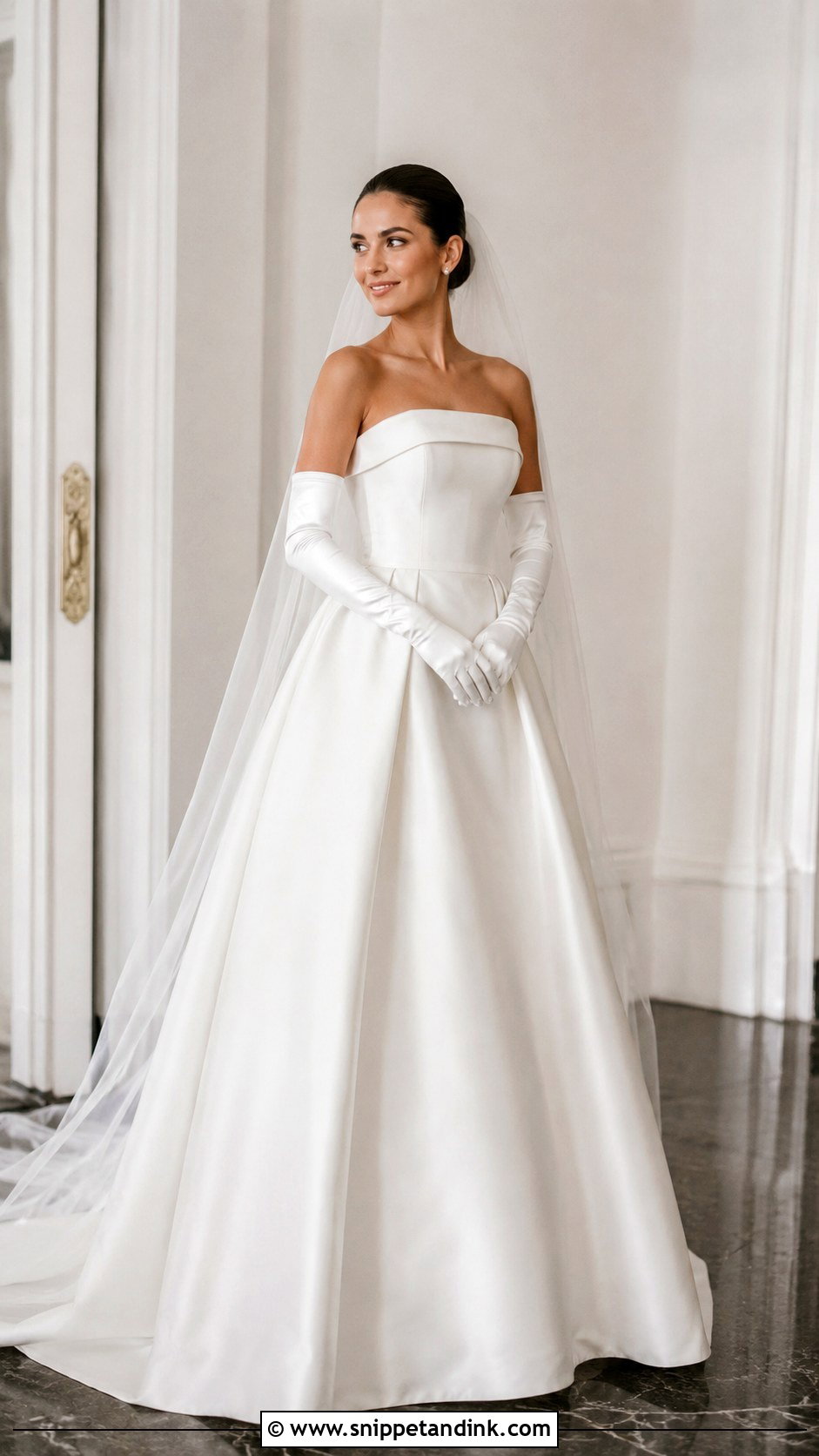
Mikado is a heavy woven fabric with a soft sheen and real body, and strapless is where it shows off. It holds a folded neckline crisply and keeps a full or slim skirt standing exactly where it was cut. Opera gloves make it formal; a pearl necklace softens it. A clean strapless neckline also leaves room for a dramatic veil. Be aware that mikado is stiff and creases sharply if you crush it, so it should travel hanging, never folded in a bag.
11. Mermaid Satin Wedding Dress
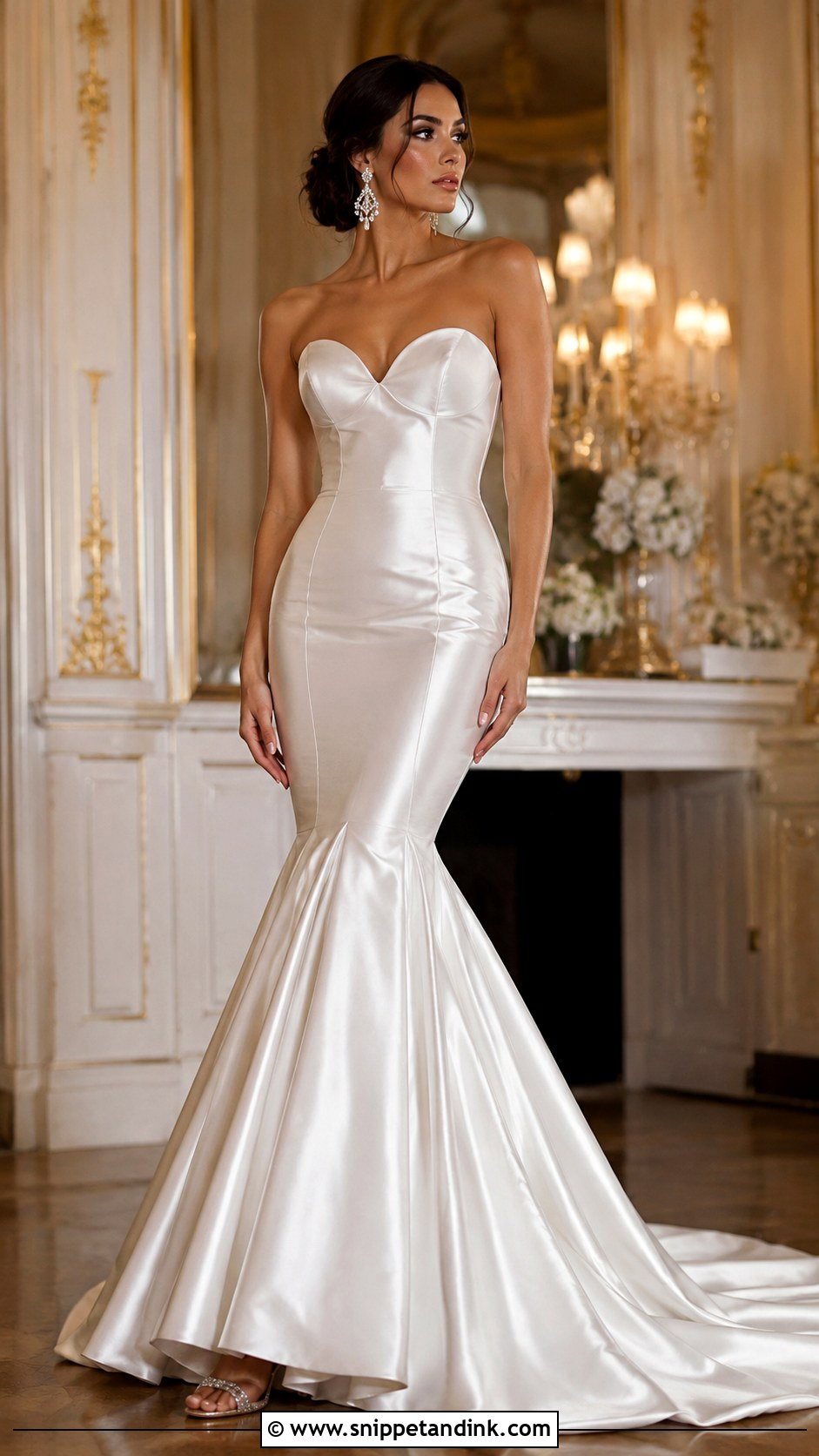
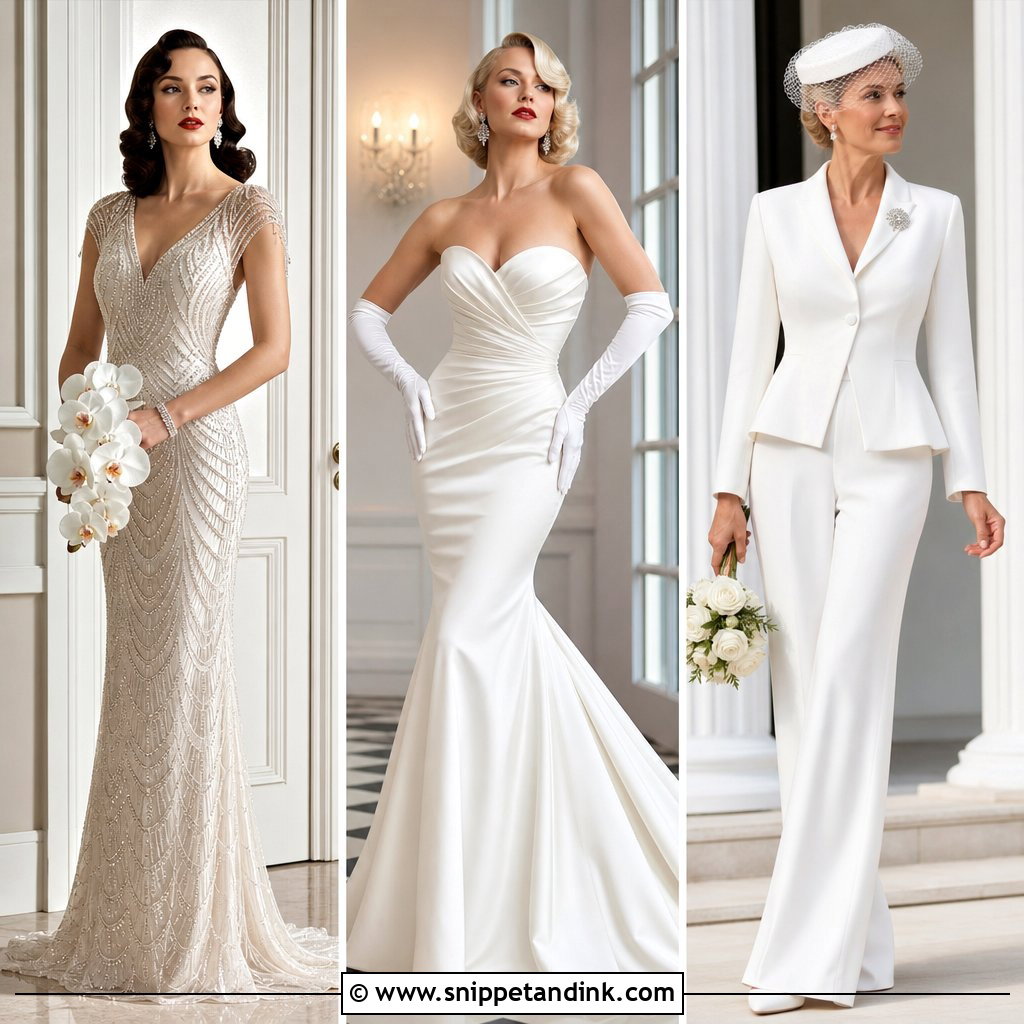
A satin mermaid gown gives the hourglass outline its full drama: fitted through the bodice and hips, flaring into a moving skirt. Satin shows every seam on a fitted shape, so the cleaner the construction, the better it reads. A sweetheart or off-the-shoulder neckline, a chapel train and covered buttons down the back keep it classic. Sit down at the fitting, because satin creases across the lap on a fitted skirt and you’ll want to know how much. Side-parted waves, crystal earrings and simple heels are enough for an evening ceremony.
12. Cap Sleeve Vintage Wedding Dress
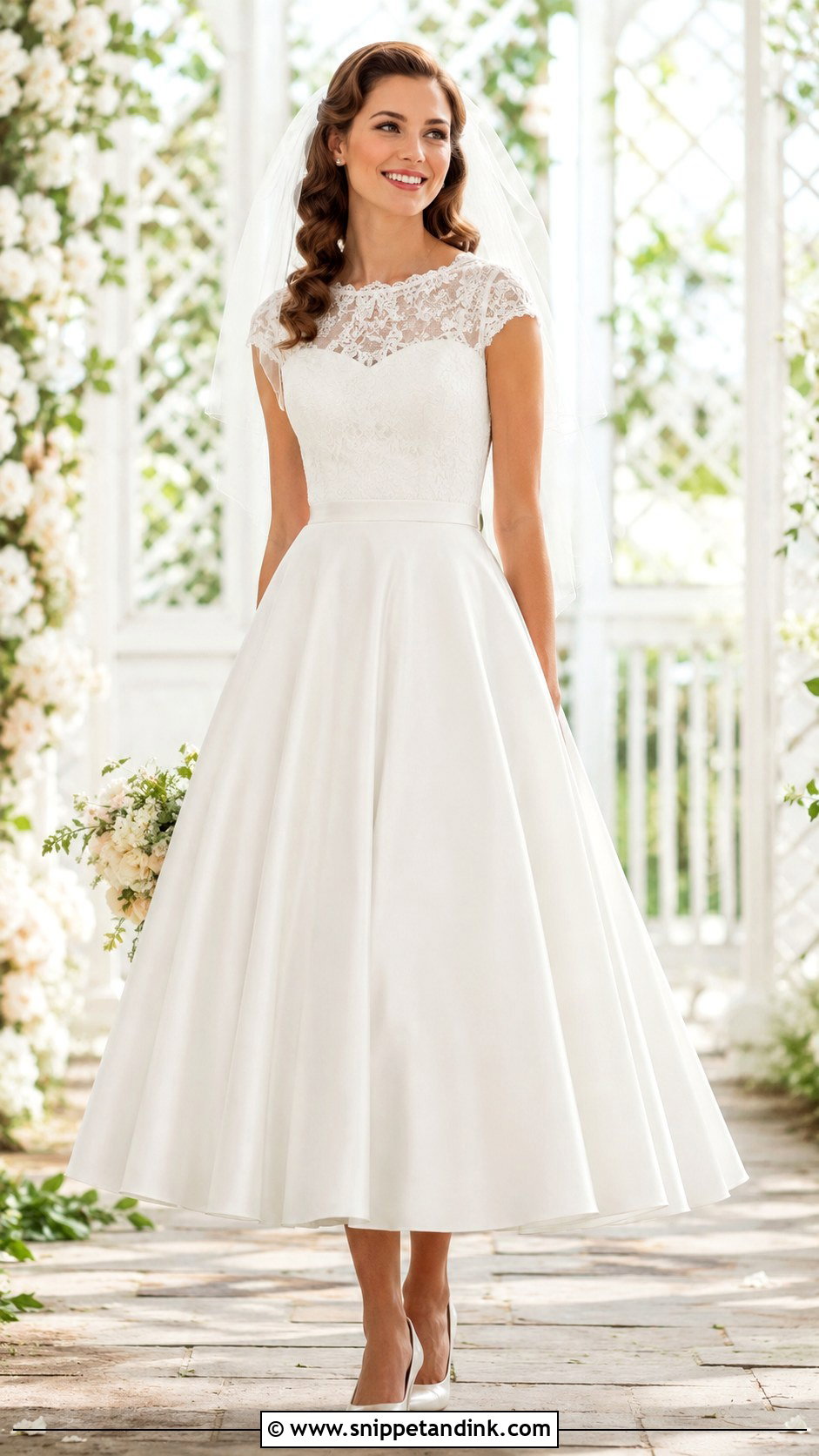
Cap sleeves sit right at the top of the shoulder and give light cover without weight. They come in lace, satin, crepe or beading, and with a fitted waist and flowing skirt they suit a wide range of figures. If the sleeve is set tight, it can limit how high you can raise your arms, so try a hug in it. A birdcage veil pushes the look firmly into retro; a fingertip veil keeps it classic. Pearl studs, closed-toe heels and a small bouquet suit a daytime wedding or a garden.
13. Illusion Neckline Wedding Dress
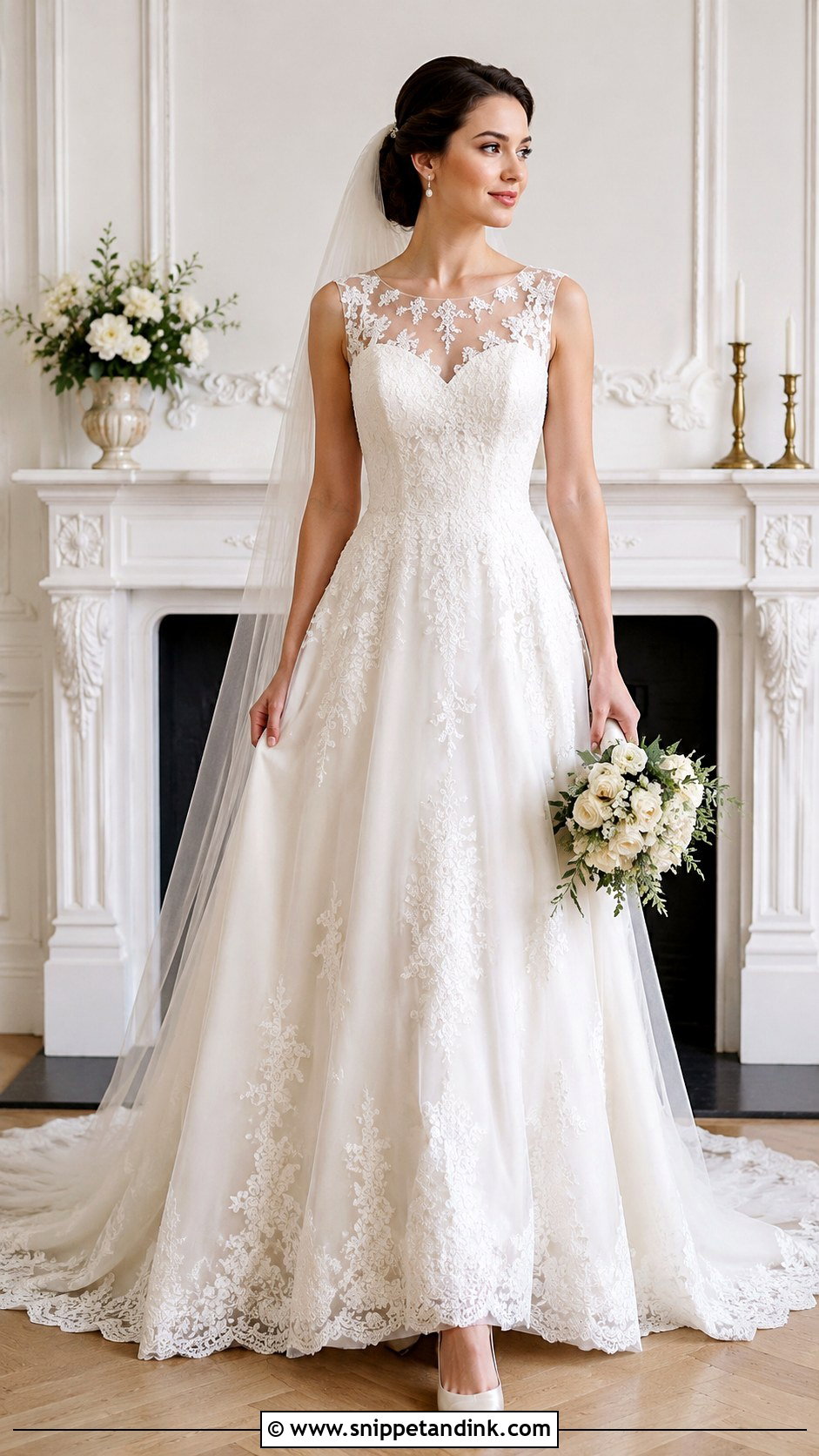
Illusion necklines use sheer mesh across the chest or shoulders to hold lace, beading or pearls in place while the gown stays light. It’s a secure neckline, and that’s why I suggest it to brides nervous about strapless. The mesh should match your skin in daylight; the wrong shade shows as a band in photos. A fitted bodice with a flowing skirt feels romantic, a slim beaded line more formal. A sleek updo keeps the neckline visible, with small earrings, satin heels and a veil that doesn’t compete.
14. One Shoulder Wedding Dress
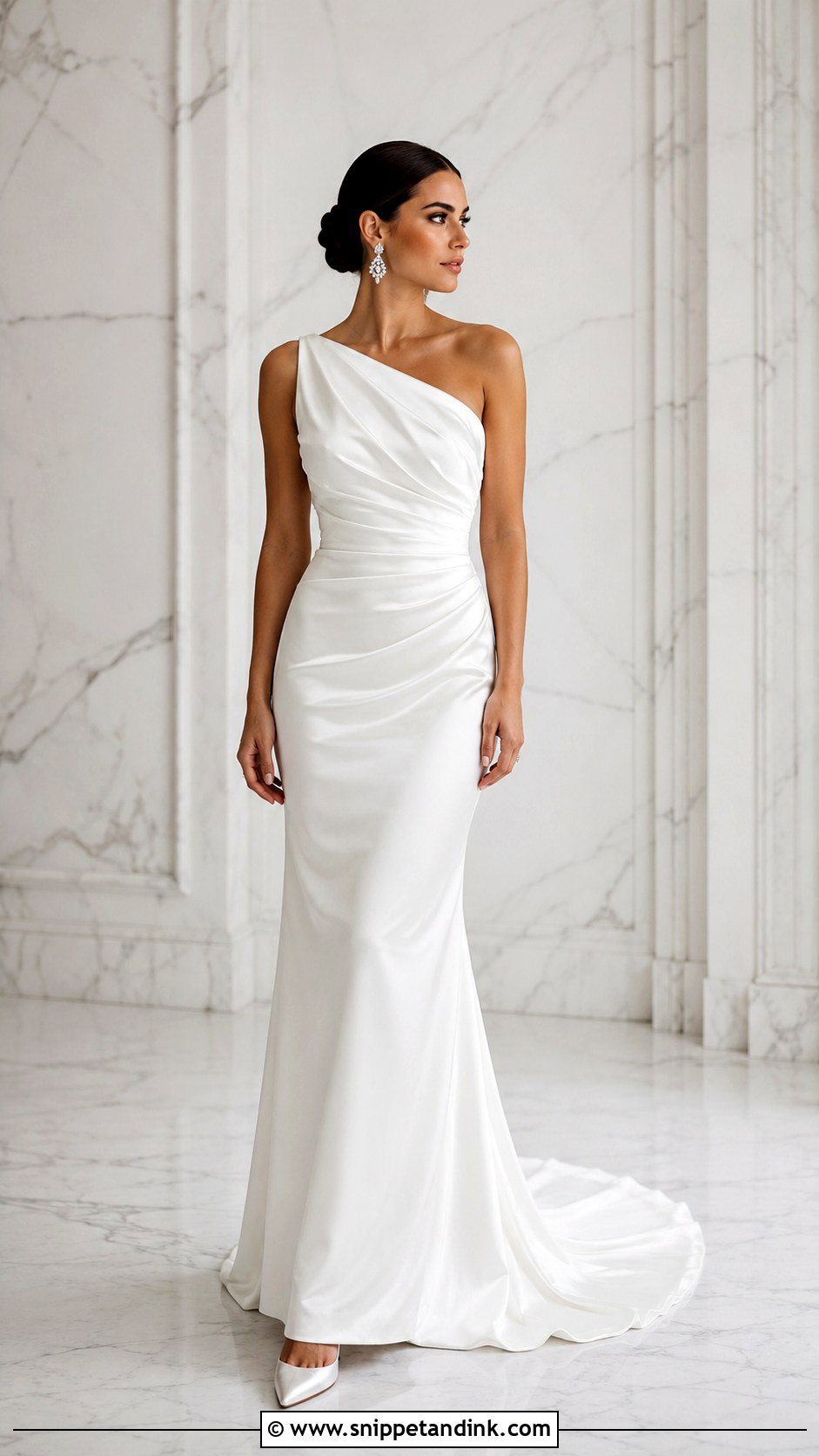
One shoulder reads modern and red carpet at the same time. The asymmetric line pulls attention to the shoulder, and satin, crepe or silk keeps it smooth. A draped bodice or a side slit adds movement. Because only one strap carries the gown, the bodice has to be fitted closely enough that the bare side doesn’t slide; I check it with the bride swinging her bouquet arm. One statement earring or a balanced pair, a sleek low bun and simple heels. It photographs especially well side-on and walking.

15. Backless Satin Wedding Dress
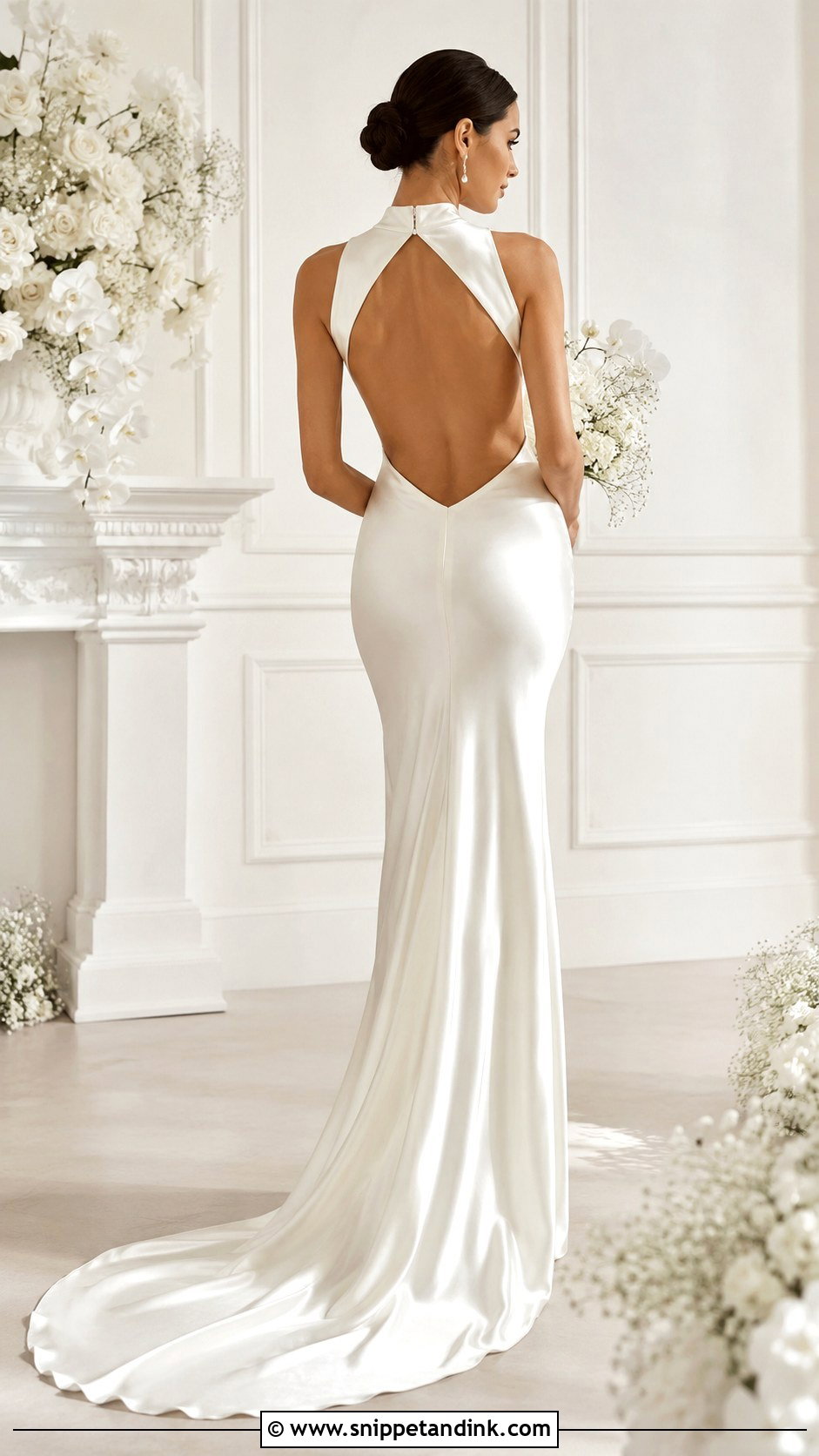
Simple from the front, then the reveal. A high neckline with a low open back creates the contrast; a cowl back softens it. The fit has to be secure because there’s no back to anchor to, and a regular bra is out, so plan built-in cups or adhesive support before your first fitting. An updo, a back necklace or delicate earrings keep the open back the focus. Wear a smooth veil for the ceremony and take it off for the reception so the back is seen.
16. Tea Length Wedding Dress
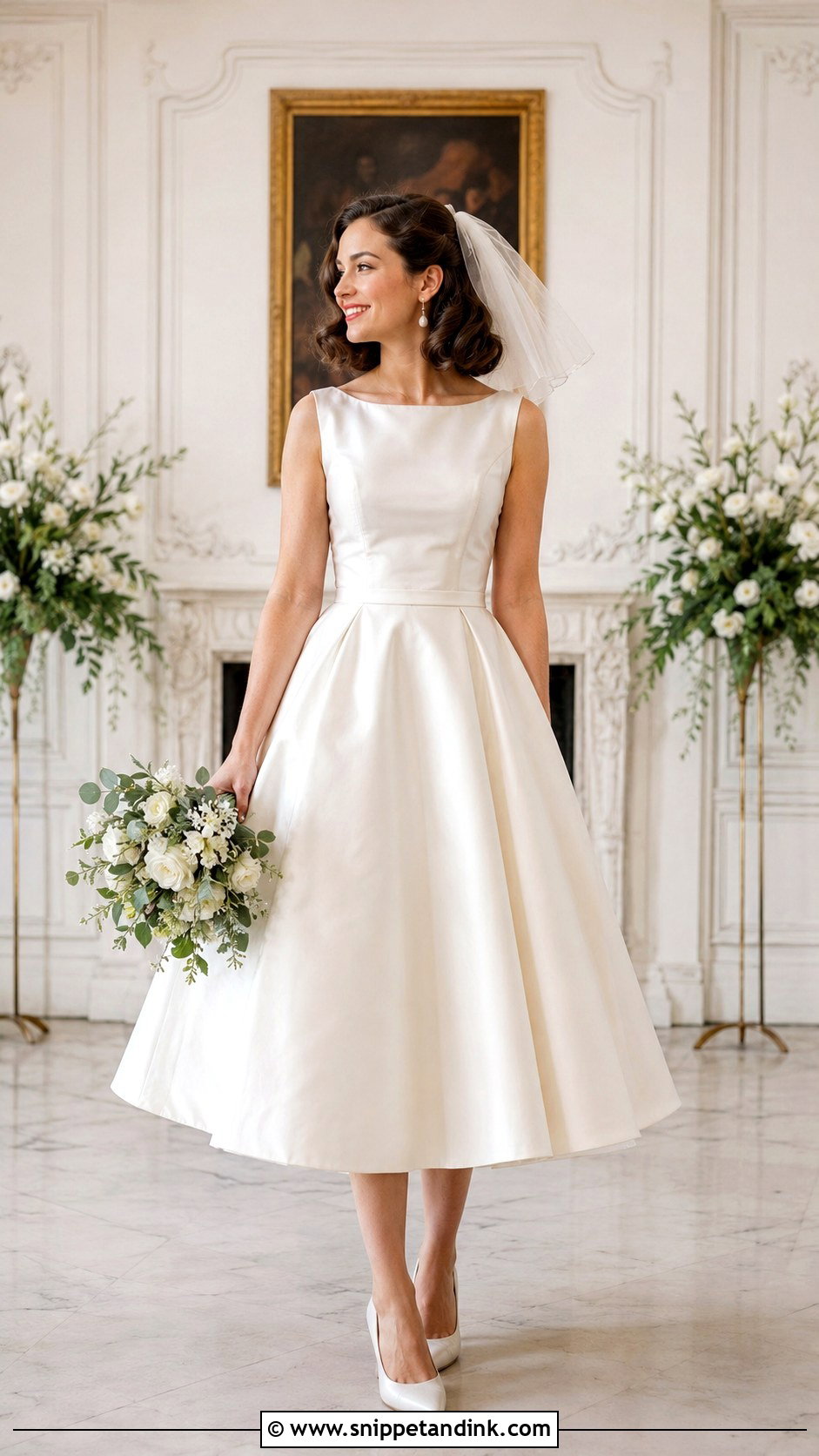
A tea length wedding dress brings mid-century charm and is easy to walk in. The skirt falls between the knee and ankle, so your shoes become part of the outfit. Satin makes it sleek, tulle playful, lace romantic. Bring the exact shoes to every fitting, because the right hem length depends on your heel height. Pointed pumps, pearl earrings, a short veil and soft curls suit a courthouse wedding or a brunch reception.
17. Art Deco Beaded Wedding Dress
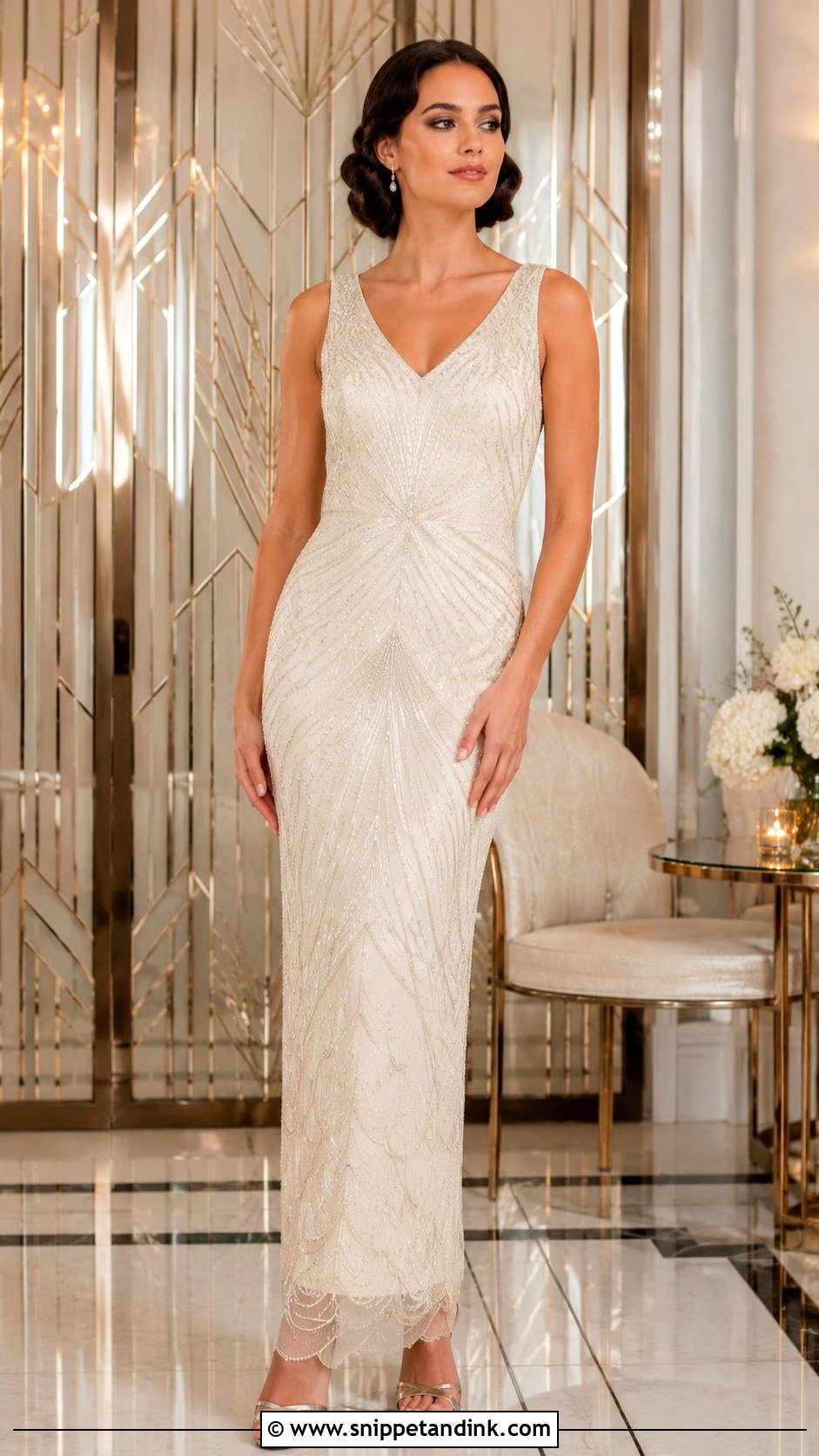
Deco beading is about pattern: geometric lines, vertical stripes, scallops and fan motifs that look straight out of the 1920s. A column keeps it sleek and a soft train makes it bridal. Heavily beaded gowns are weighty, and if they hang on a hanger for weeks, the fabric can stretch under the beads, so I store these folded flat in tissue until the morning. Metallic heels, a small clutch and simple earrings are enough, since the beadwork catches every light as you move.
18. Halter Neck Wedding Dress
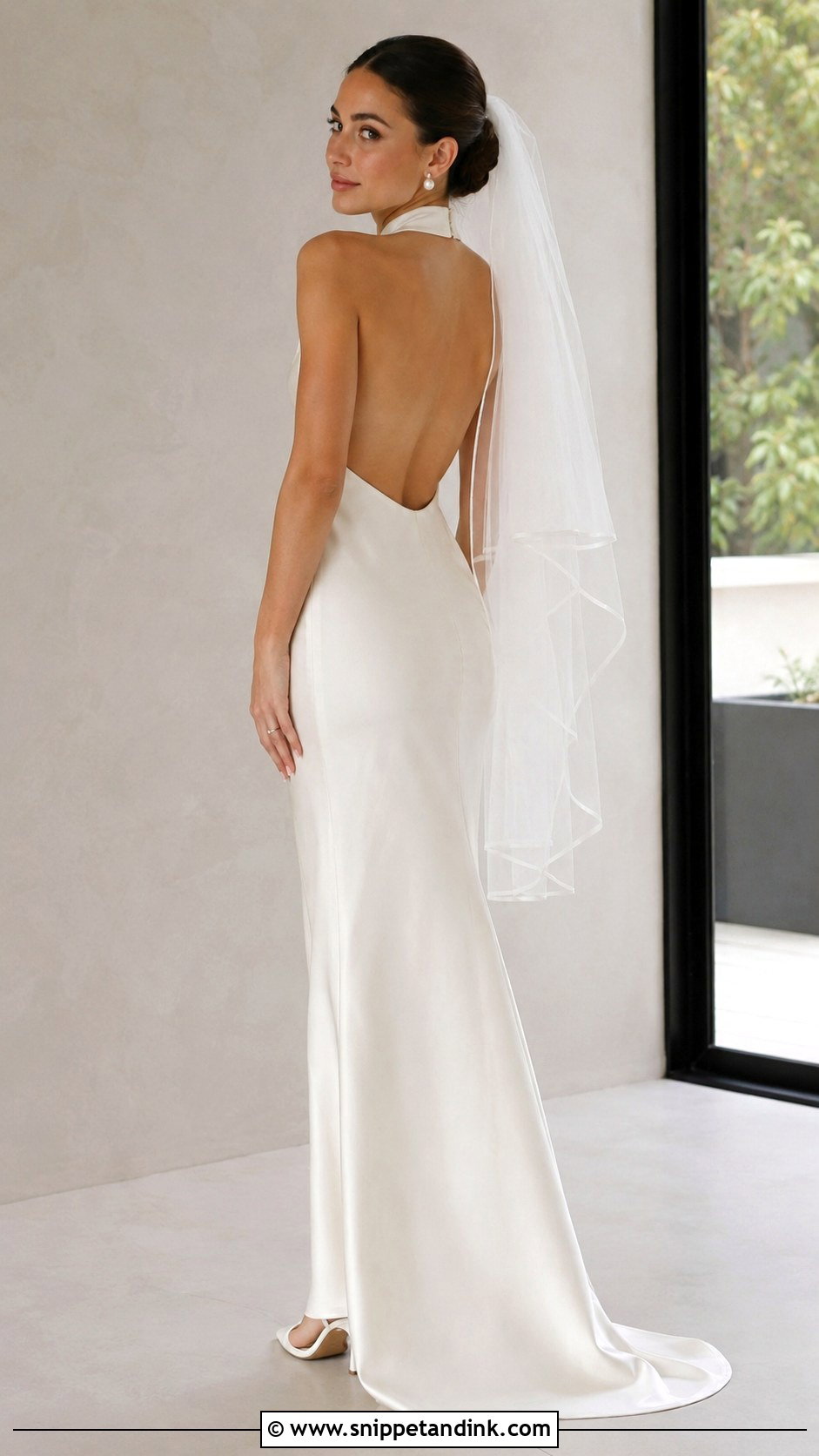
A halter wraps around the neck and leaves the shoulders bare. In satin, crepe or silk it looks graceful, and a high halter with an open back has a strong vintage line. Here’s the honest downside: if the halter carries the dress’s weight, your neck will ache by evening. A well-made halter gown has a fitted bodice doing the real work, with the strap mostly for show. A sleek bun, pearl studs and simple heels, no necklace, and a long veil attached low in the hair.
19. Corset Bodice Satin Wedding Dress
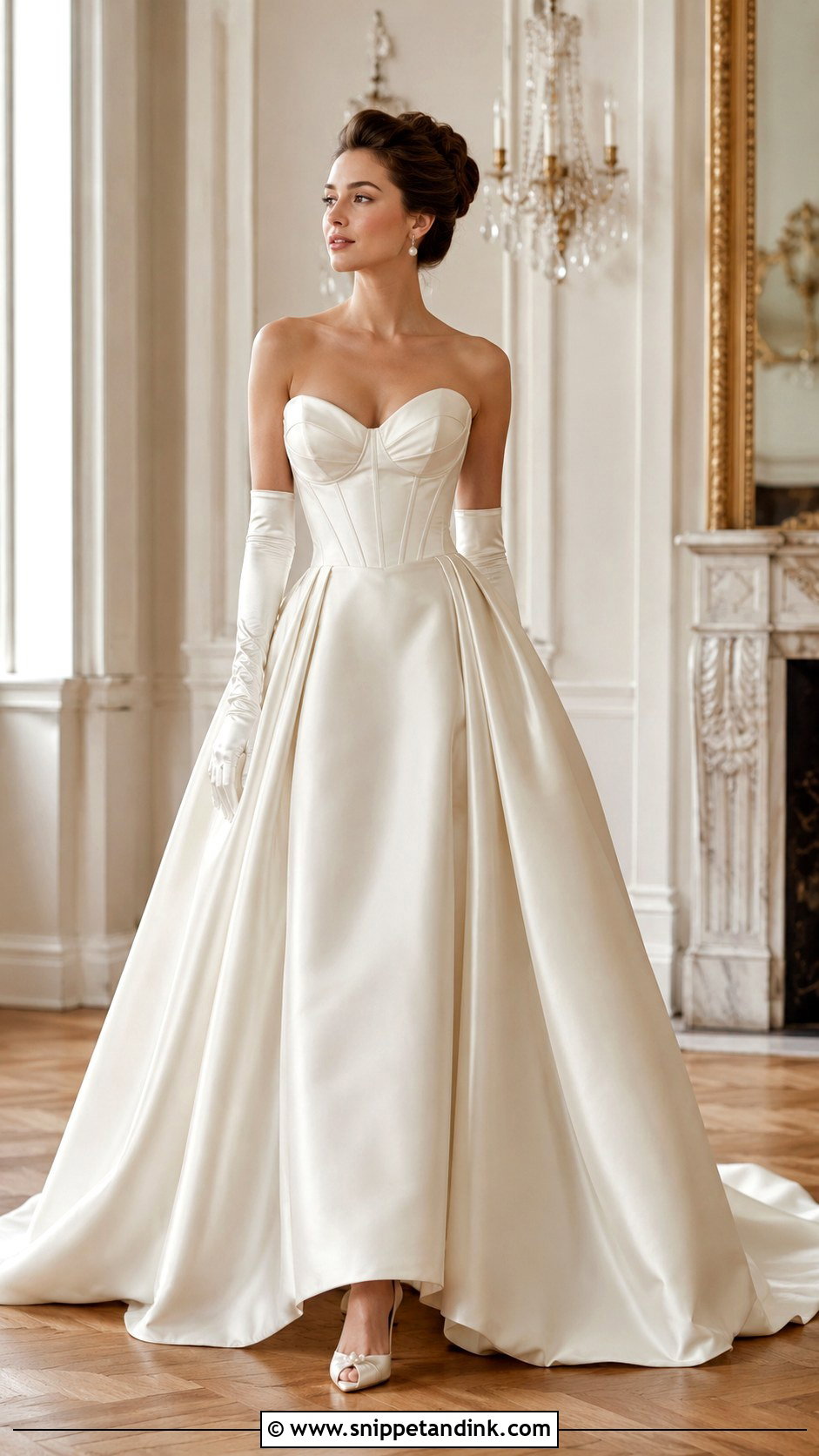
A corset bodice satin wedding dress gives structure and a defined waist. For Old Hollywood, keep the corset refined rather than on show. Satin over boning can reveal the channels as faint lines, so I ask whether the bodice is underlined; a layer between the boning and the satin smooths it. Off-the-shoulder straps or a sweetheart neckline soften it, and gloves, pearl earrings and a long veil complete it. Careful tailoring is what keeps this look classic instead of trendy.
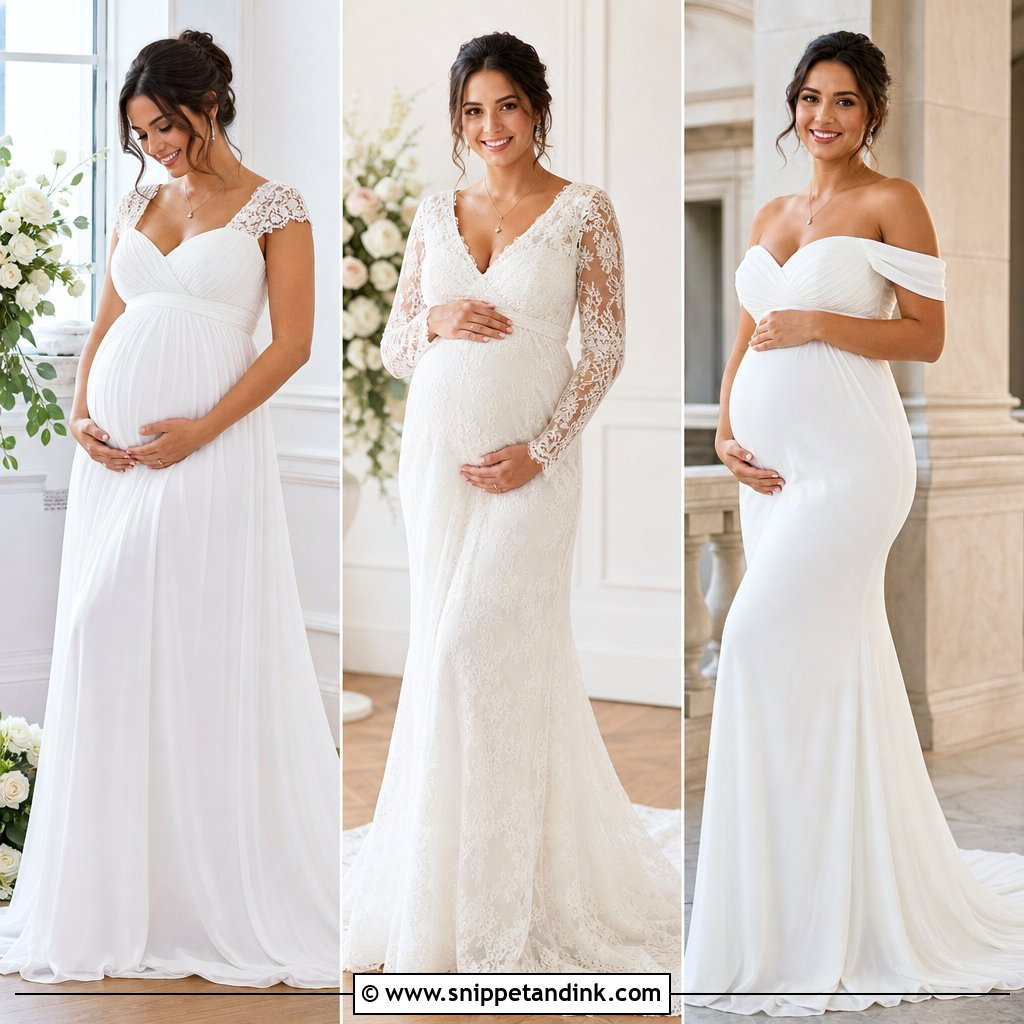


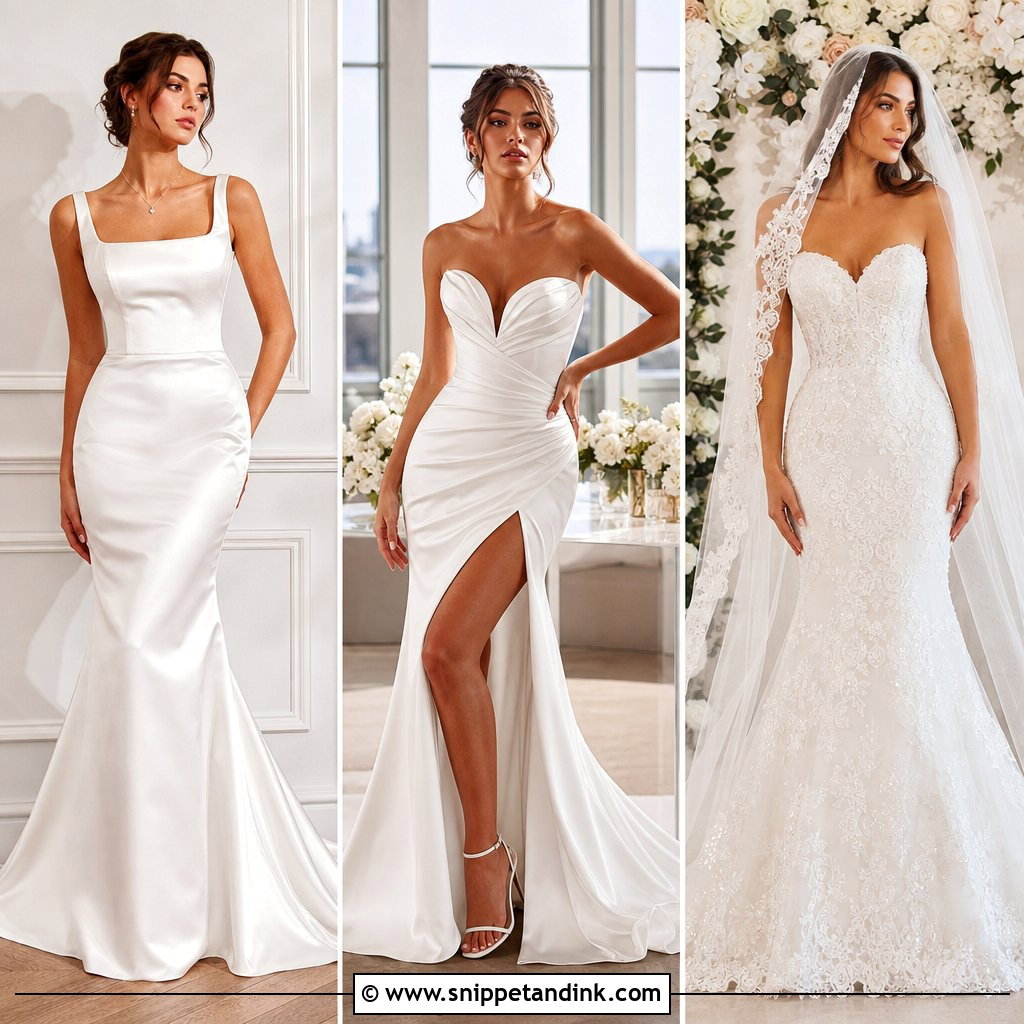
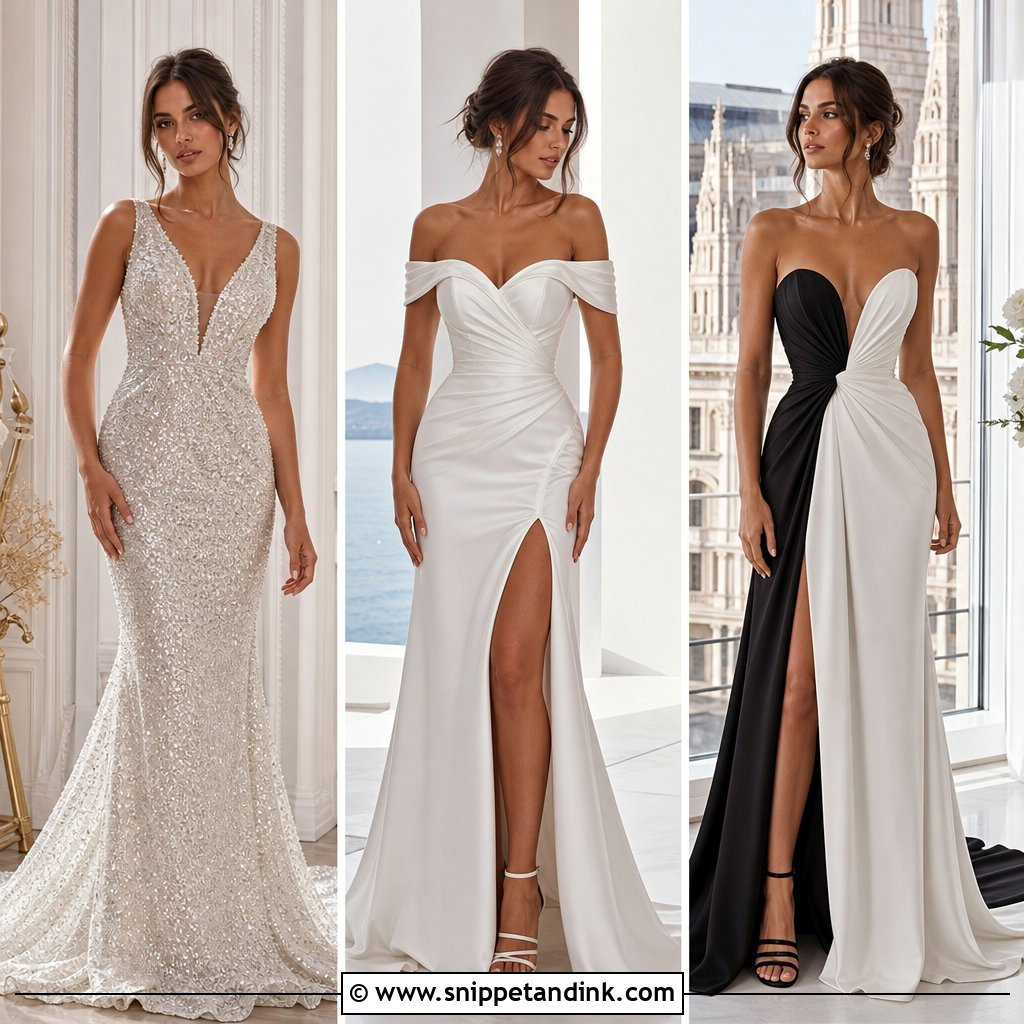
20. Slip Wedding Dress With Gloves
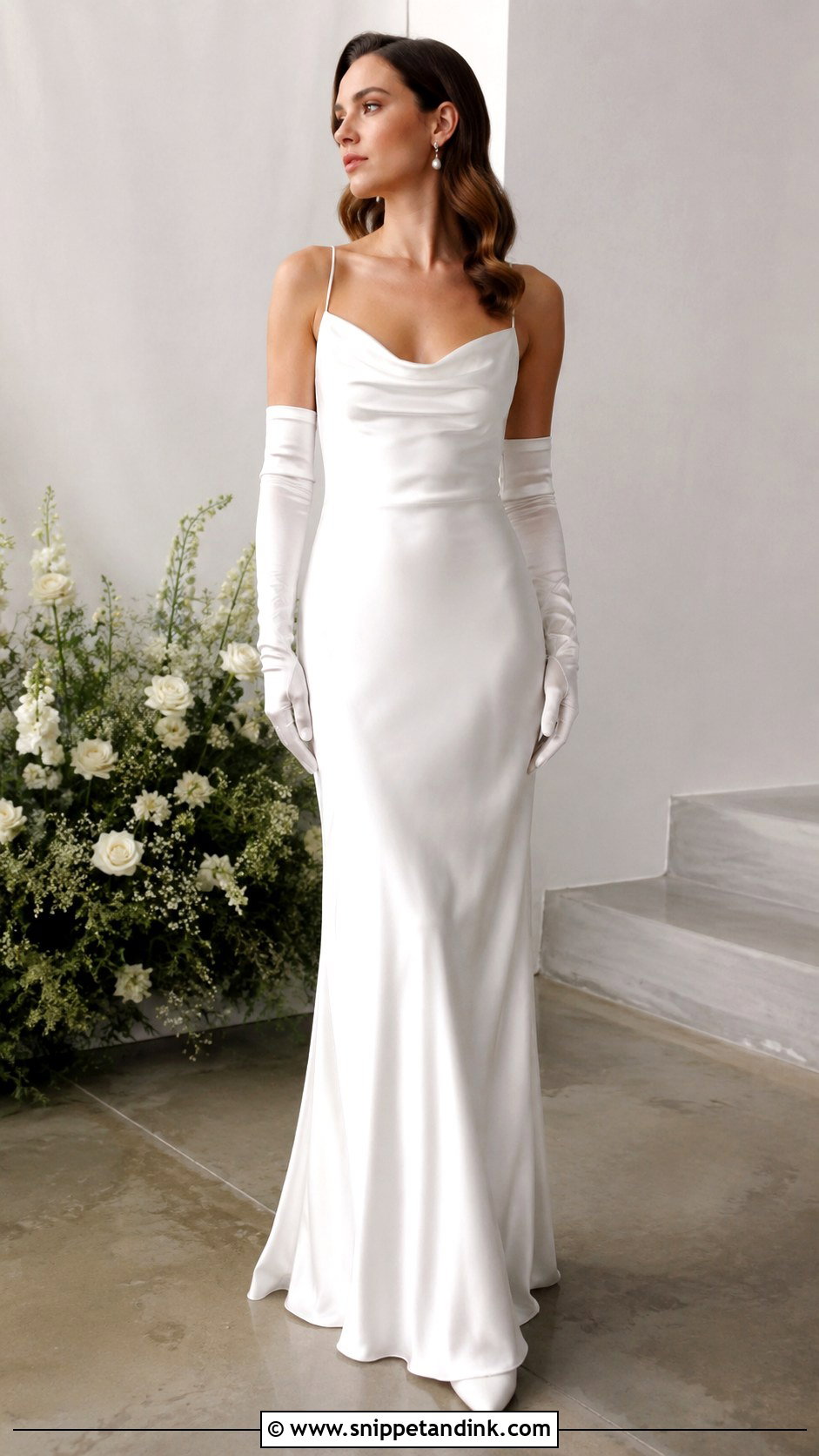
Gloves change everything. Put a plain satin or silk slip, with slim straps and a straight or bias skirt, next to a pair of gloves and it suddenly looks formal and editorial. Short gloves feel playful; opera gloves go full glamour. Most brides take them off for dinner, so decide early who holds them. Delicate drop earrings or a thin bracelet, and smooth waves, a low bun or a polished bob for the hair.
21. Satin Wedding Dress With Cape
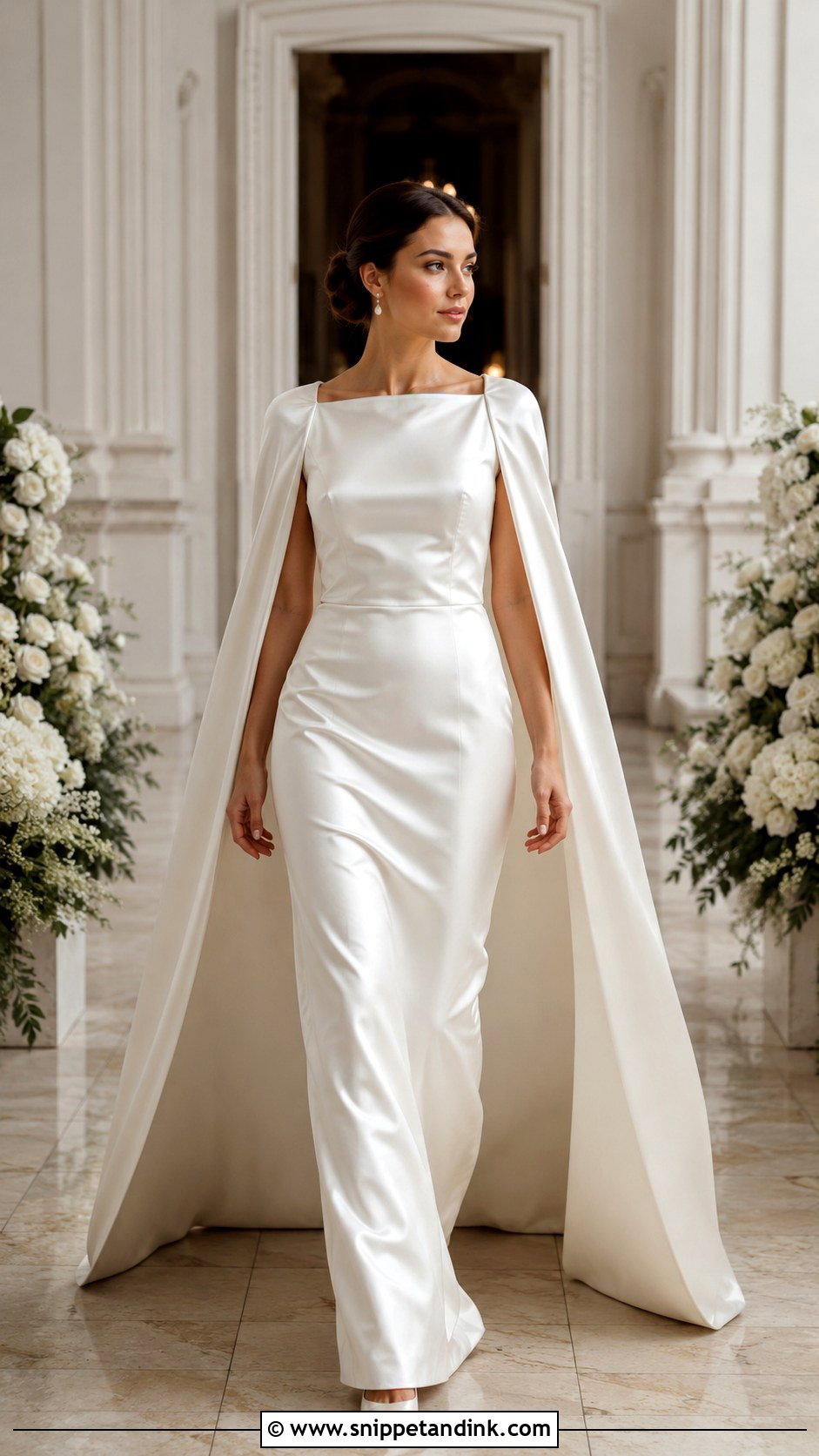
A cape takes the place of a veil and flows from the shoulders or back, moving as you walk. Under it, a simple satin column, a strapless gown or a crepe silhouette keeps things balanced. Sheer capes feel soft; satin ones make more of a statement. A cape’s weight hangs from wherever it attaches, so I want hooks or snaps at the shoulders, not just a tie at the neck that pulls against the throat. Minimal earrings, sleek heels and polished hair. It gives you a cinematic entrance and exit without fuss.
22. Lace And Satin Wedding Dress
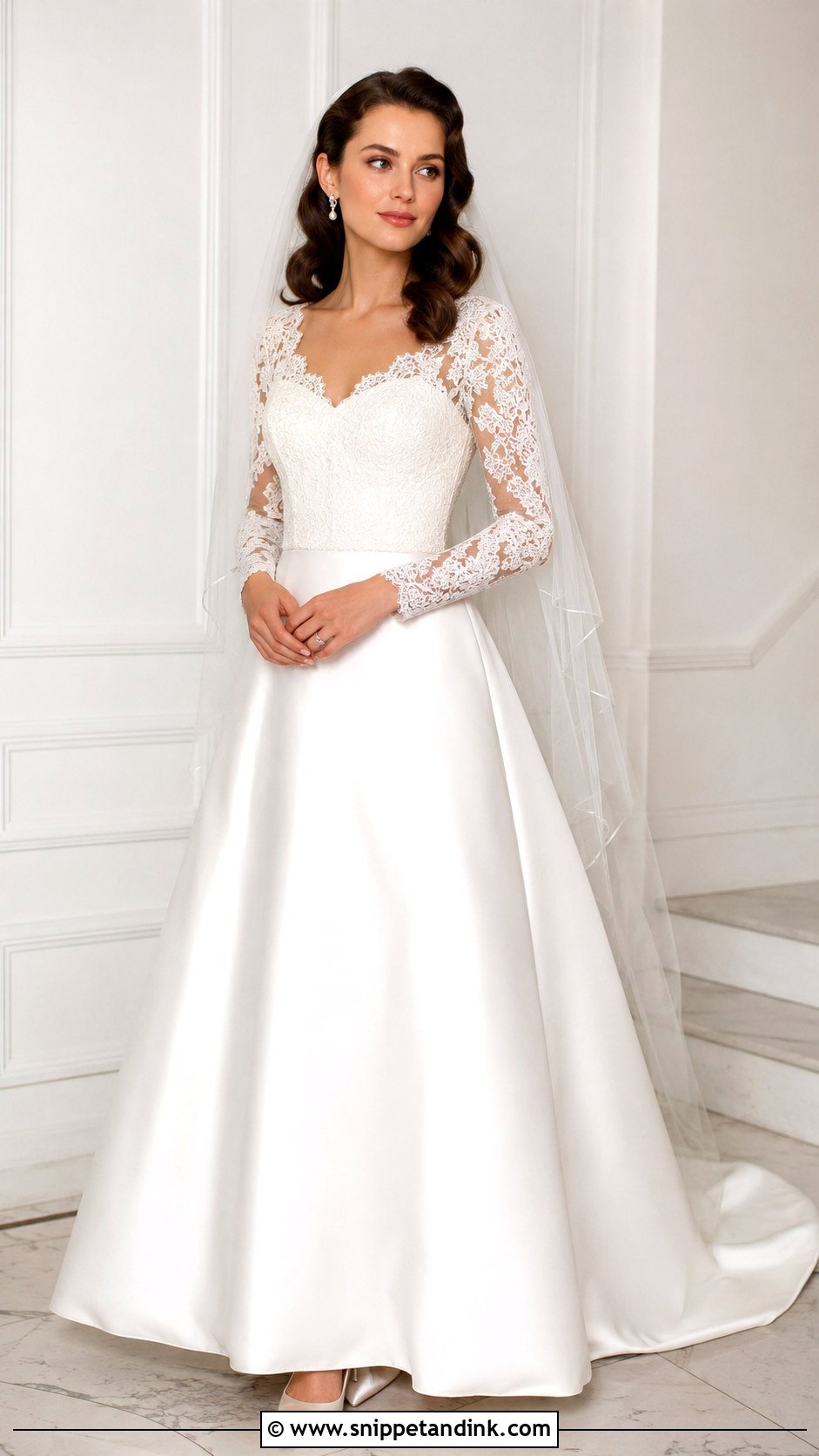
Lace and satin together give you softness near the face and structure below. A lace bodice over a satin skirt is the classic split; satin under lace makes the whole gown look richer. Floral lace leans romantic and geometric lace more vintage. Check the shades side by side in daylight, since an ivory lace over a brighter white satin can look mismatched in photographs. Pearl earrings, satin shoes and a simple veil keep it refined.
23. Square Neck Satin Wedding Dress
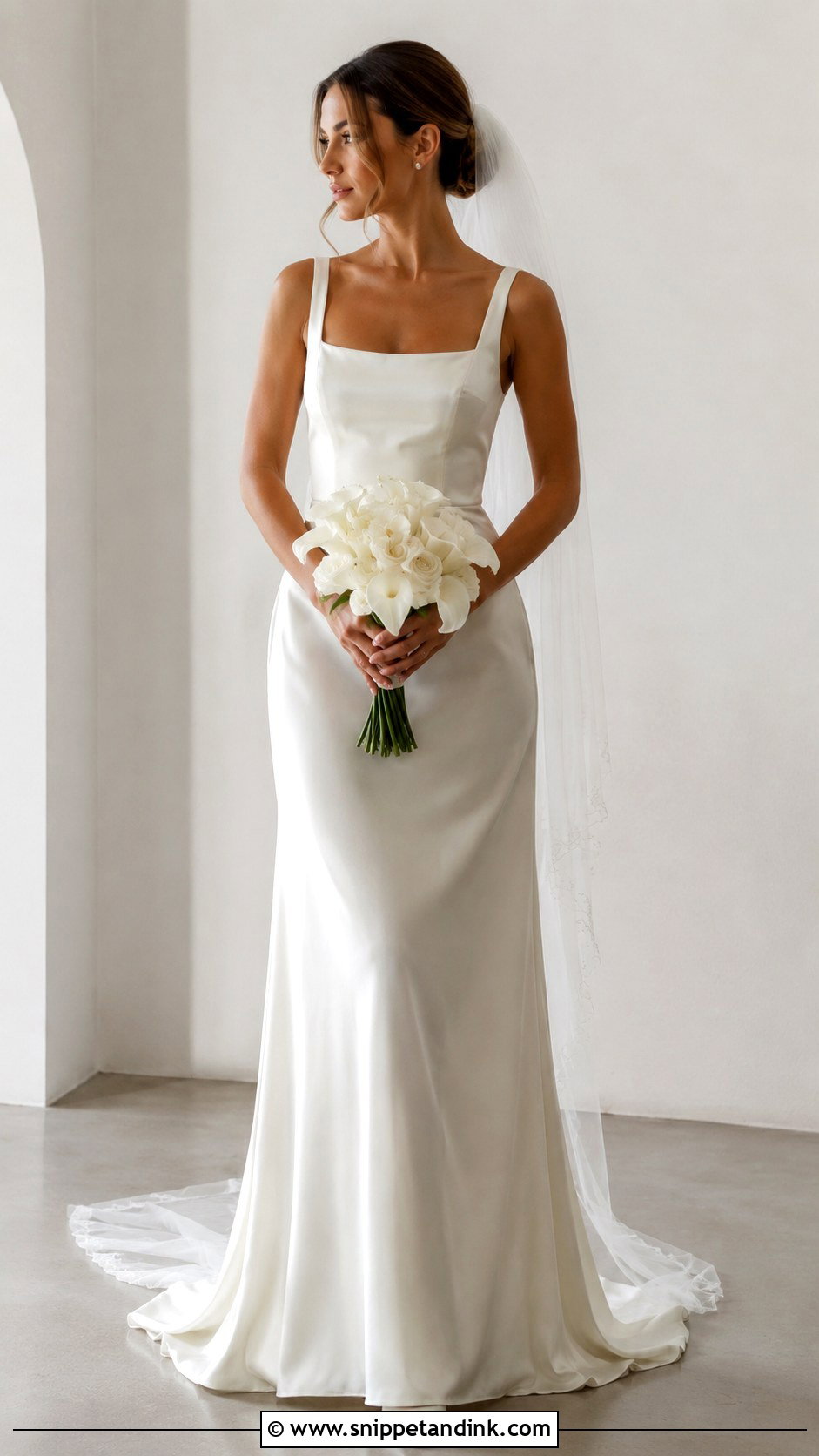
A square neckline frames the collarbones and gives the bodice a tailored edge. It works with wide straps, long sleeves or a sleeveless column. Satin brings the Old Hollywood shine, while the square line keeps it fresh. On narrow or sloping shoulders, wide straps set at the edge can slip outward, so I often move them in slightly during alterations. A smooth bun, pearl studs, pointed heels and a structured bouquet, with a long veil or detachable overskirt for extra drama.
24. Plunging V Neck Wedding Dress
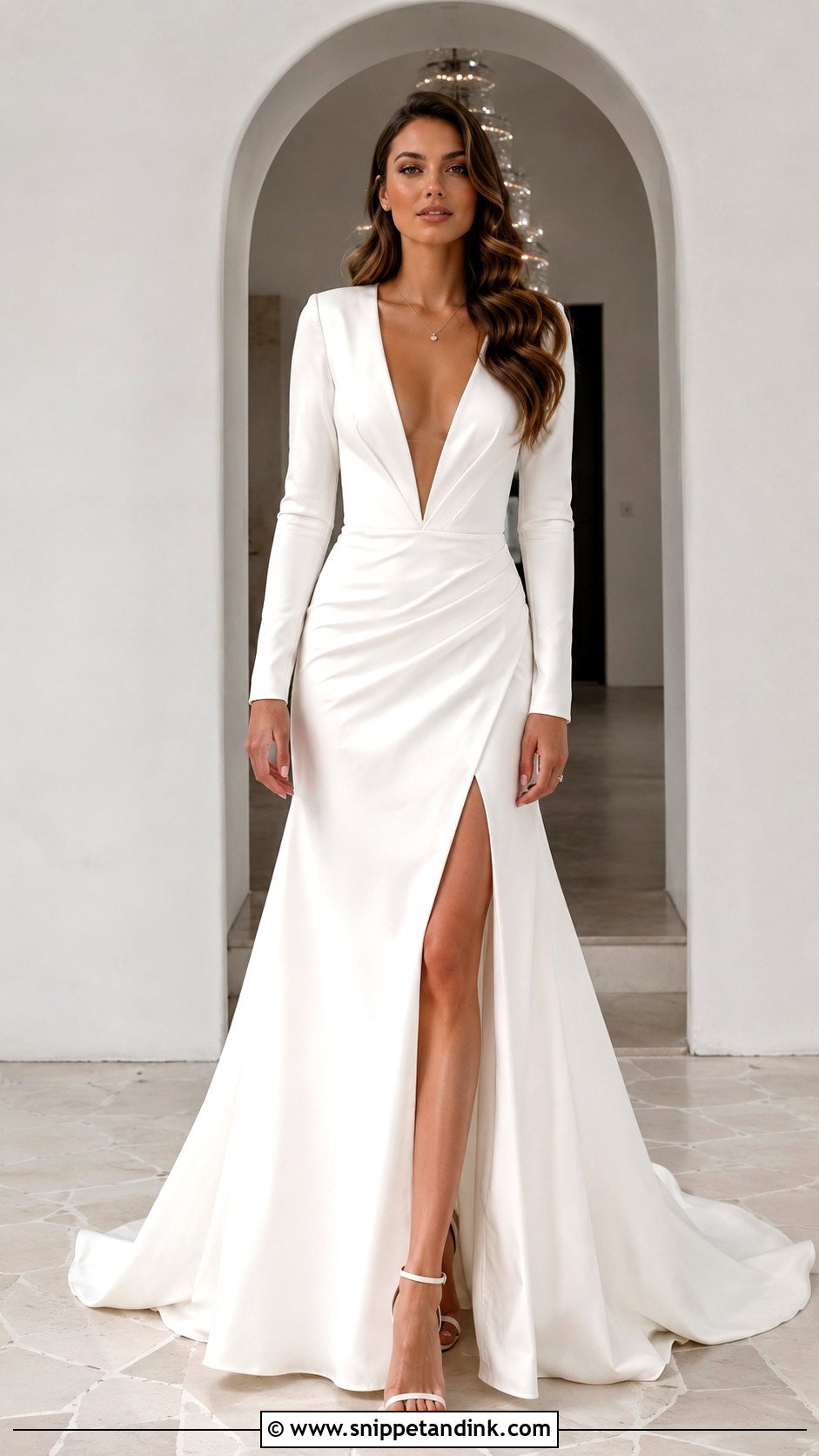
A plunge can still read Old Hollywood if the rest of the dress stays disciplined: a structured bodice, smooth fabric, clean lines. Long sleeves or a fitted waist help balance a deep V. It needs to stay put when you lean, so ask about a sheer mesh panel in the center or plan on fashion tape. Depending on the depth, a fine pendant or no necklace at all. Soft waves and satin heels. Crepe, silk, satin and lightly beaded fabric all suit it.
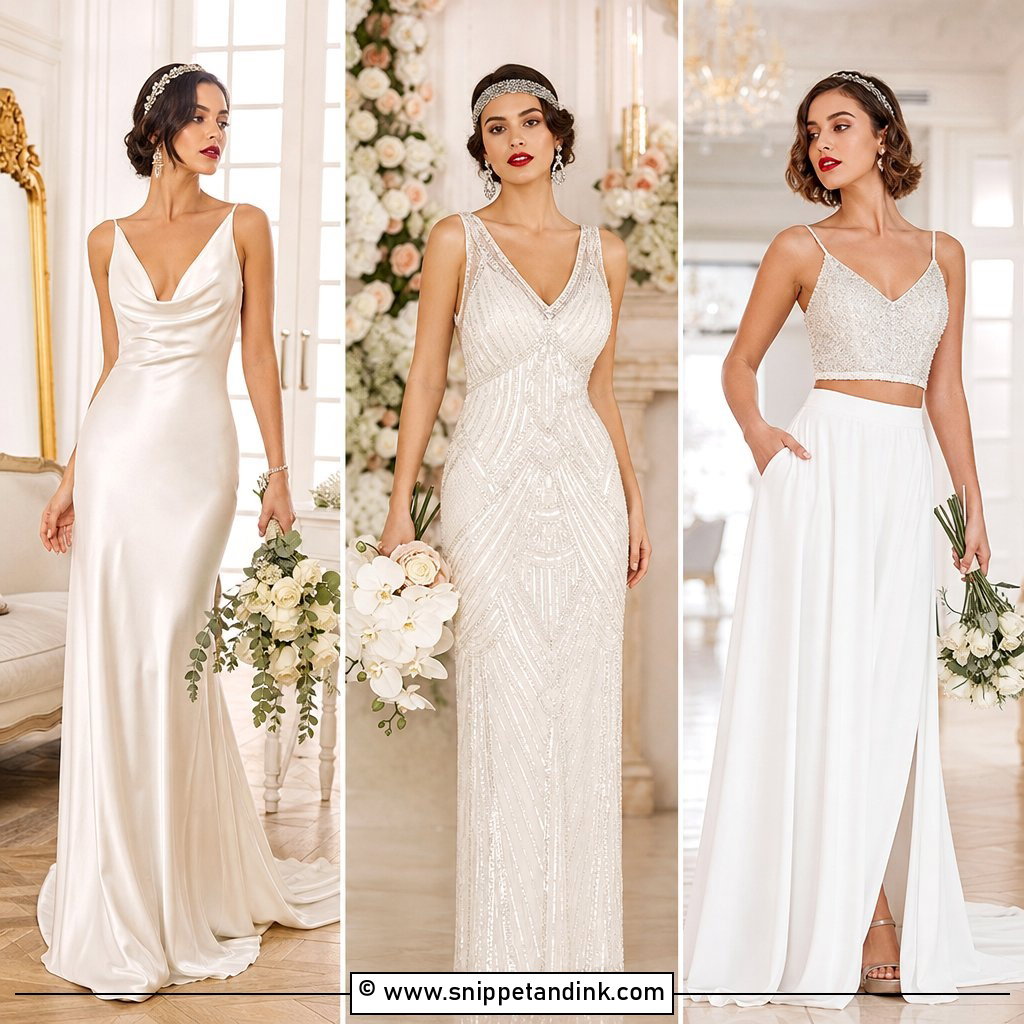
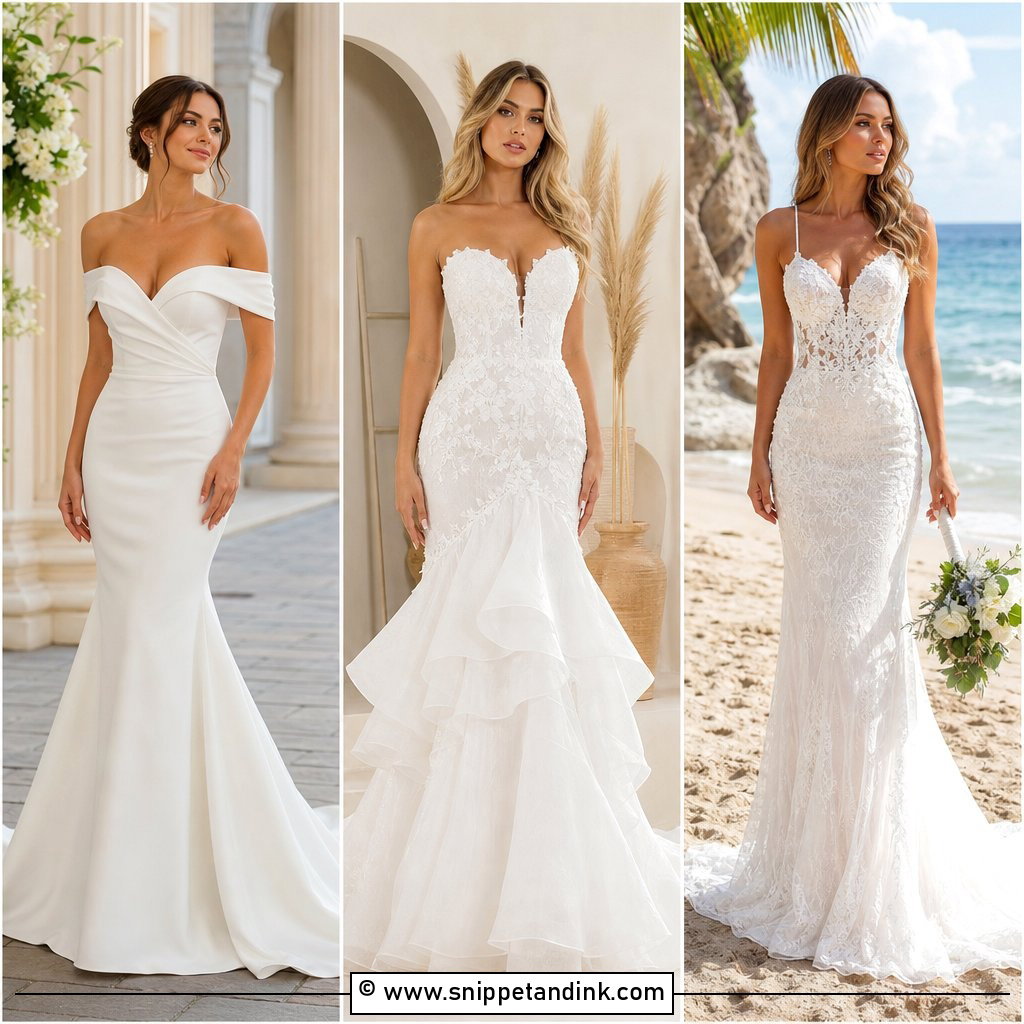
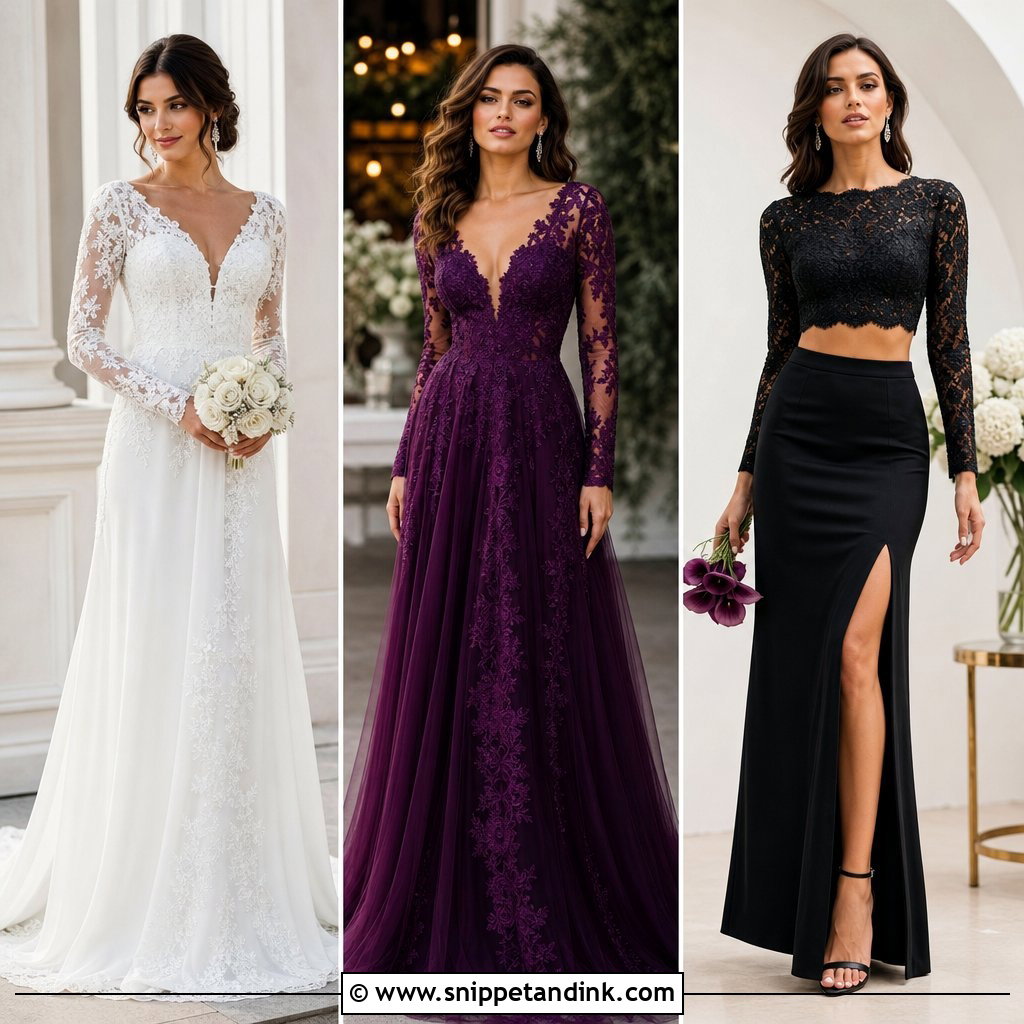
25. Sequin Column Wedding Dress
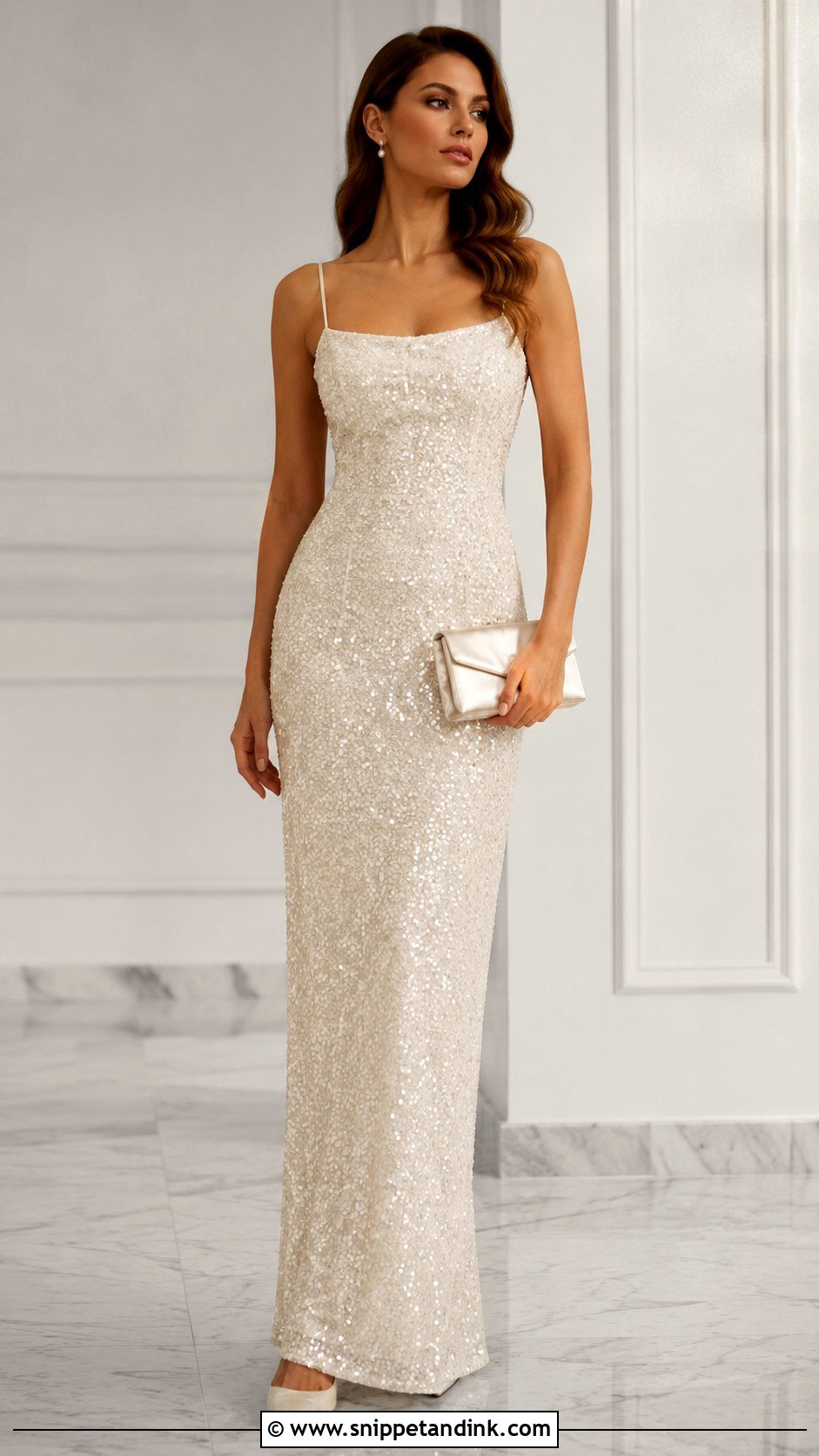
Sequins give you the shine of a big gown in a narrow column. Ivory, pearl or soft champagne sequins keep it bridal. A high neck, long sleeves or simple straps all work. Sequins on the inside of the arms can rub the skin raw over a long evening, so I check the underarm area and ask for a smooth panel there if needed. Keep accessories minimal, with smooth waves, simple heels and small earrings for an evening city reception.
26. Wedding Dress With Detachable Overskirt
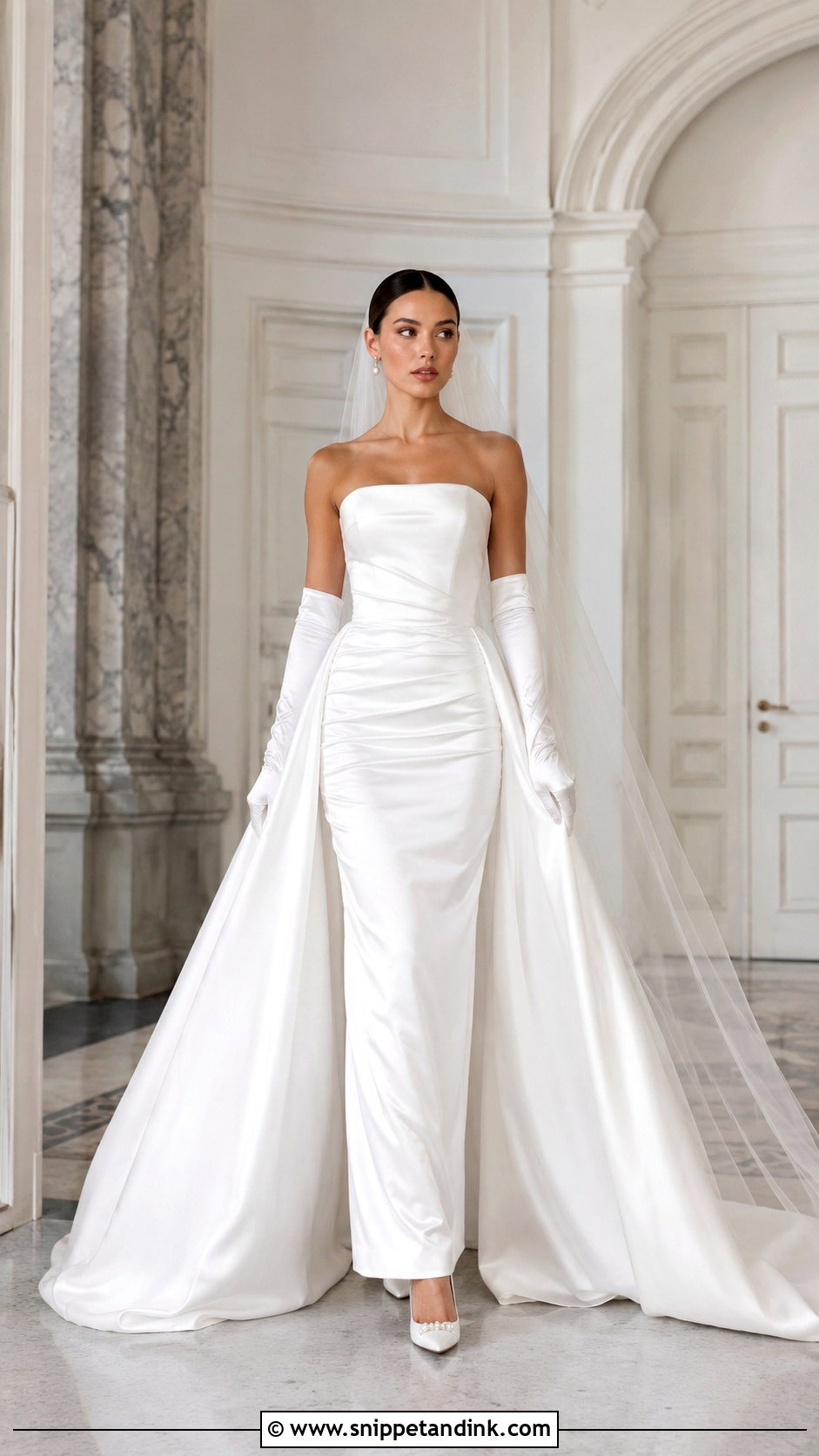
A gown with a detachable overskirt gives you a grand ceremony shape, then a slimmer dress for the reception once the overskirt comes off. Satin, mikado and crepe hold structure well, and strapless or off-the-shoulder bodices pair neatly with it. Overskirts usually fasten with hooks or buttons at the waist, and it’s a two-person job to remove one, so practice with your helper before the day. Gloves, a long veil and pearl earrings for the ceremony, then statement earrings for the party.
27. Vintage Inspired Wedding Dress With Bow
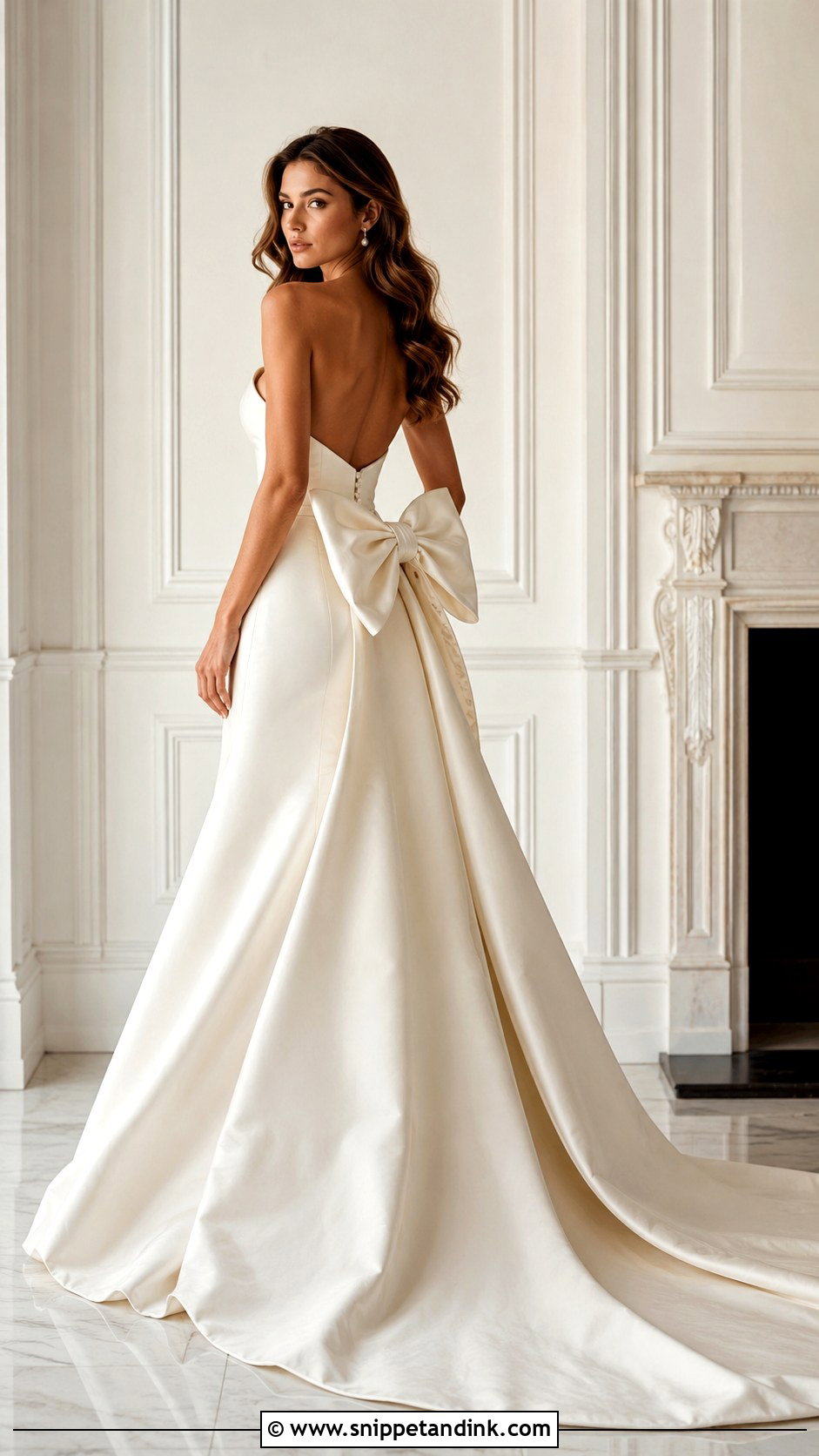
A bow can sit at the waist, shoulder, back or neckline, and its placement decides how bold the dress feels. In satin or mikado on an otherwise plain gown, it reads Old Hollywood. A back bow over a long train makes an exit; a waist bow defines your figure. Large bows crush when you sit back in a chair or a car, so a steamer in the getting-ready room is worth having. Soft waves, pearl earrings and classic heels, and a bow that looks sculpted rather than oversized.
28. Satin A Line Wedding Dress
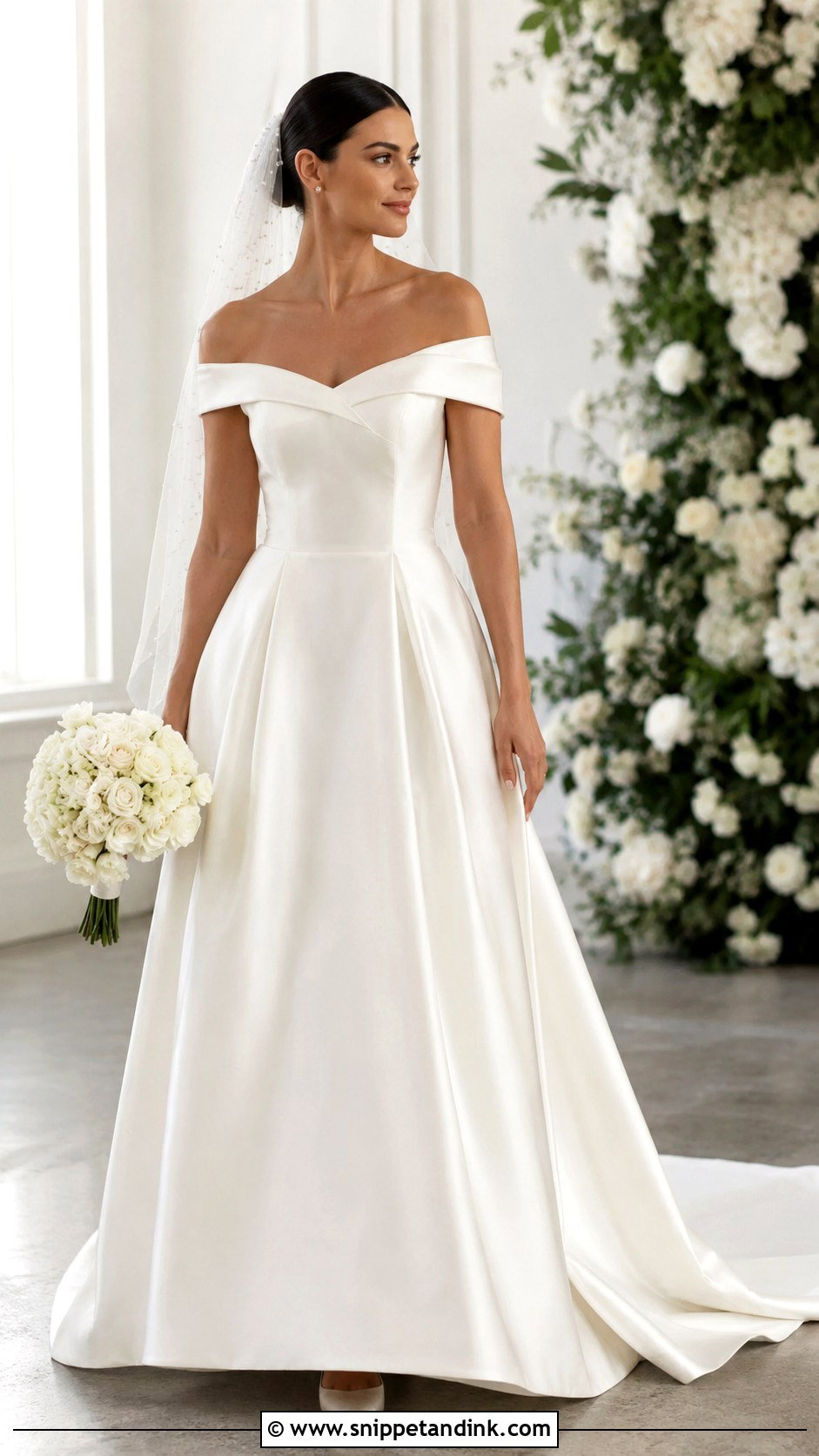
An A-line in satin is the easiest of these to wear. The fitted bodice and gently flared skirt give shape without the weight of a ball gown, and satin with simple seams has a smooth glow. Choose a sweetheart, square or off-the-shoulder neckline. A pearl veil, satin pumps and a structured bouquet finish it. It sits well in almost any venue because it’s formal without being theatrical, and it’s the shape I suggest when a bride wants glamour but plans to dance all night.
29. Long Train Wedding Dress
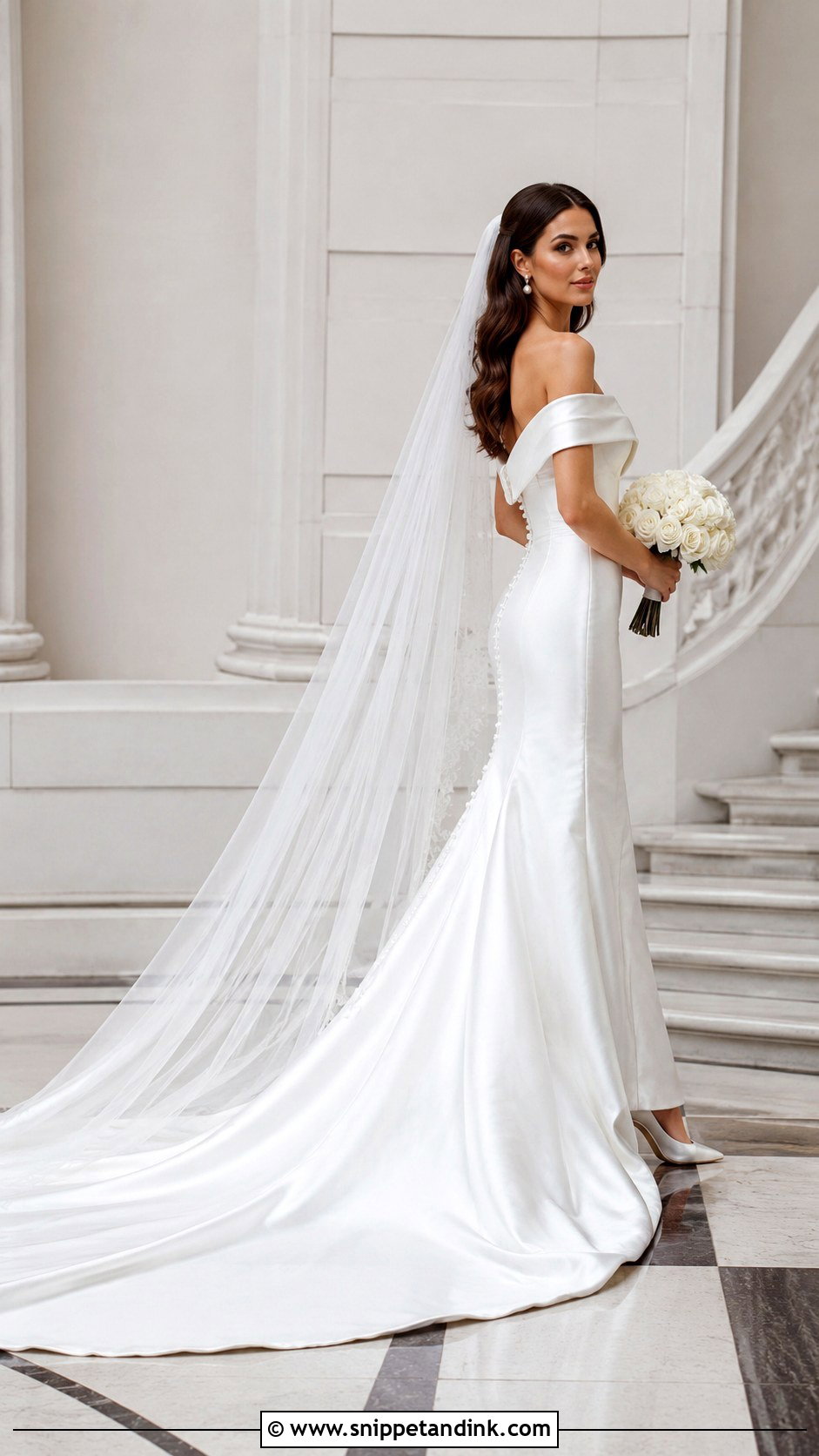
A long train makes the aisle moment cinematic, whether it trails from a satin mermaid, a column or a structured ball gown. Keep the bodice clean if the train is dramatic. Then plan the bustle, which lifts and hooks the train up for the reception. Bustle loops can tear if they’re weak, so I have the maid of honor practice it at the final fitting rather than figure it out on the day. Smooth waves, classic earrings, polished heels and a cathedral veil for the ceremony suit a grand staircase.
30. Reception Mini Wedding Dress With Feathers
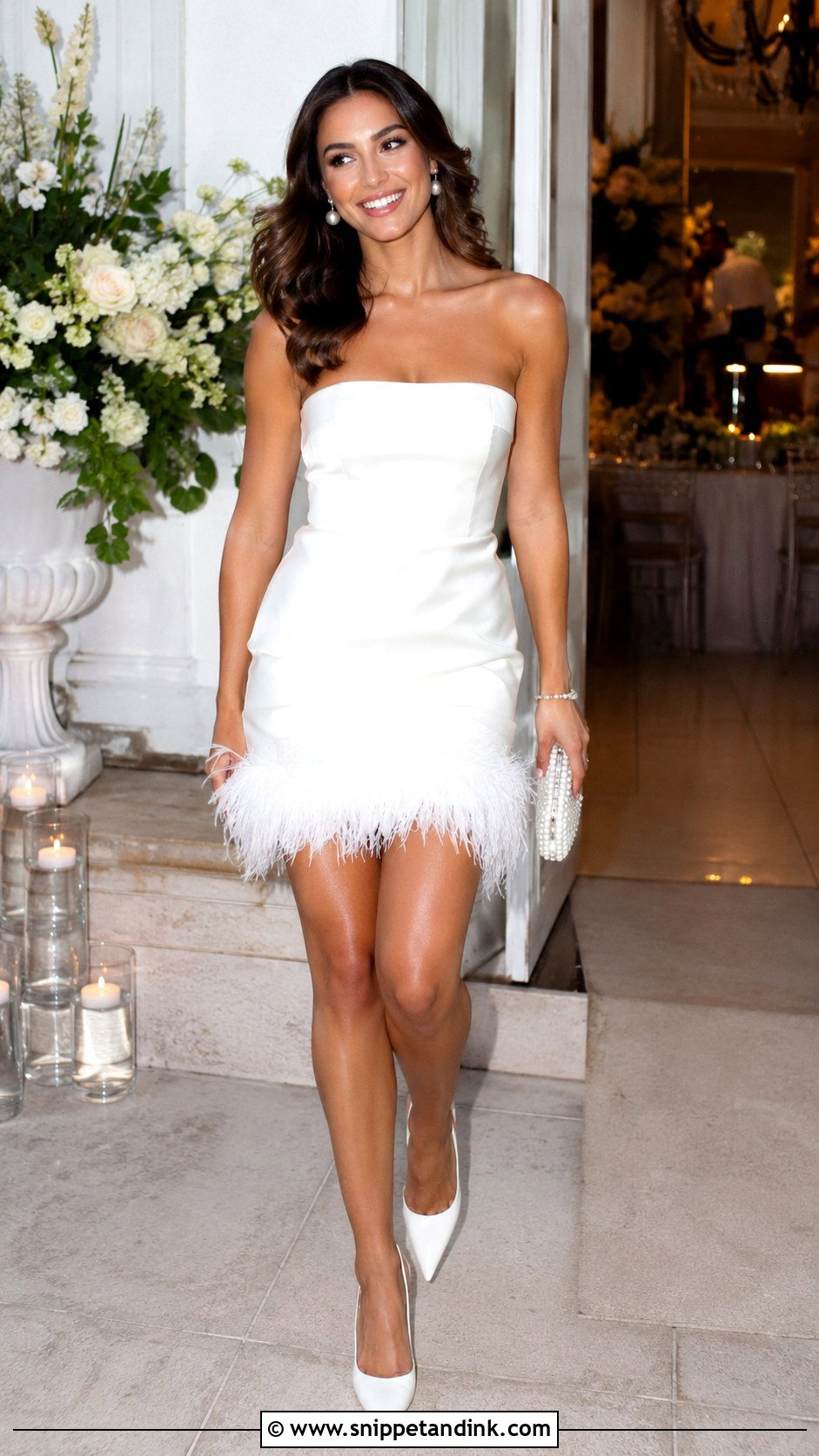
Feathers on a short reception dress bring Old Hollywood into the second half of the night. The short hem makes dancing easy and the trim adds movement. A structured satin mini, a crepe shift or a beaded mini with feather cuffs or hem all work. Pointed pumps, pearl earrings and a small clutch, with hair kept polished so the look still reads bridal and not costume. I treat it as the change after a formal ceremony gown; it’s a playful finish without losing the glamour.
Opera Gloves and the Ring Exchange
Gloves are the accessory I get asked about most with this style, and the ring is the reason. You can’t slide a ring over a glove neatly, and peeling off a long satin glove at the altar takes longer than anyone expects.
- Take the left glove off just before the ceremony and hand it to your maid of honor. You still get the gloved look in processional photos.
- Ask for a small opening at the ring finger. Some bridal gloves come with one, and a seamstress can add it so the finger slips out.
- Choose wrist-length gloves, which come off in seconds, if opera length feels fussy.
Opera gloves should fit closely at the upper arm without cutting in. Buy them before your final fitting so the sleeve or strap line works with where the glove ends.
Satin in a Warm Room
Satin is the backbone of this look, and it’s also the fabric that shows the day most clearly. Silk satin can mark with water and perspiration, so a spilled drink is better blotted than rubbed. It creases where you sit; plan a quick steam before the reception entrance. Pure white satin can look slightly blue under flash, which is one reason I nudge most brides toward ivory or a soft champagne. Polyester satin is more forgiving of spills and wrinkles, though it doesn’t drape quite the same way.
Glamour Comes From Fit, Not From Feathers
Old Hollywood style rests on good fabric and careful styling. You don’t need the most dramatic gown in the room to get there. A satin slip, pearl earrings and polished waves can do it, while another bride will want the full ball gown, the feathers or the beaded Deco column. Go for the one that fits your body, your venue and how much you plan to move, then keep the accessories few and deliberate. Clean lines photograph well for decades.
You'll Like These Ideas:



Leave a Reply