
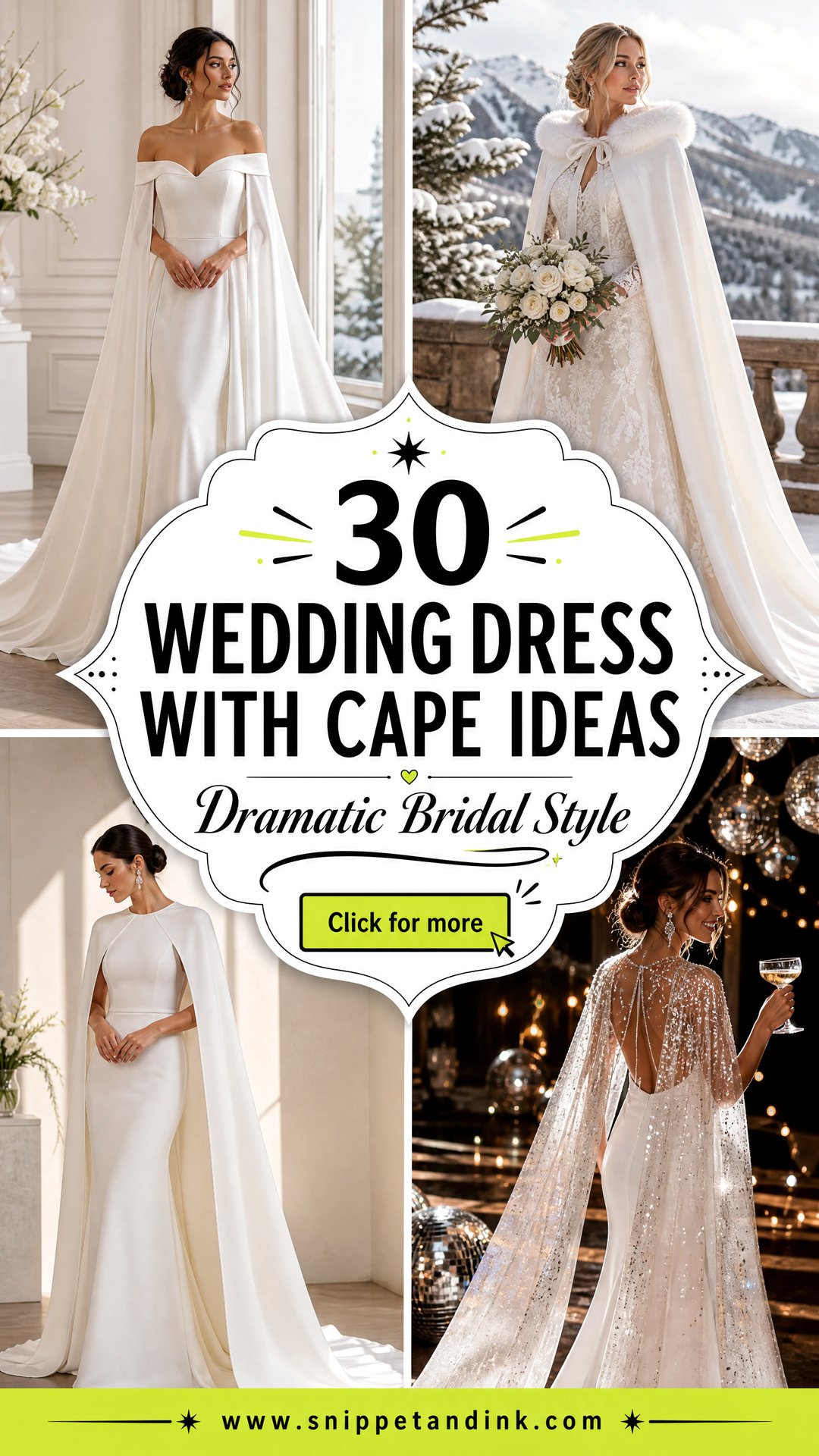
Capes do the job of a veil and a train at once, and they leave your hair free. That’s the reason I suggest them so often to brides who don’t want anything pinned to their head. A sheer cape gives the aisle walk movement, covers the shoulders for a church, and comes off for the party. The detail suits more silhouettes than people expect, from sleek crepe sheaths to romantic ball gowns and even jumpsuits. Here are thirty cape looks, with what I check on each one: where it attaches, how long it should be, and what it does when you sit down.
Shoulder, Elbow or Floor? Deciding How Long a Bridal Cape Should Be
Length is the decision that changes everything else about a cape, so I settle it before fabric or detail. Here is how I think about it at a fitting.
- Shoulder to elbow: easy to wear all day, no one needs to carry it, and it stays on through dinner. Best for small venues, courthouses and receptions.
- Hip to floor: covers the back of the dress and gives the aisle walk movement, but it sits under you when you take your seat.
- Chapel to cathedral: the full drama, with fabric trailing behind you. It needs a long aisle to look right and a helper on stairs.
Measure the aisle and look at the floor surface. A long cape on a short aisle never gets the chance to spread out, and on gravel or grass a trailing hem gets dirty fast. I’d also stand at the venue entrance and check whether any doors or steps make a long train awkward.
Finally, think about your height. On a petite bride, a floor-length cape that starts at the shoulder can look like a curtain, so a shorter cape or a lighter fabric keeps the proportions right.
1. Detachable Cape Wedding Dress
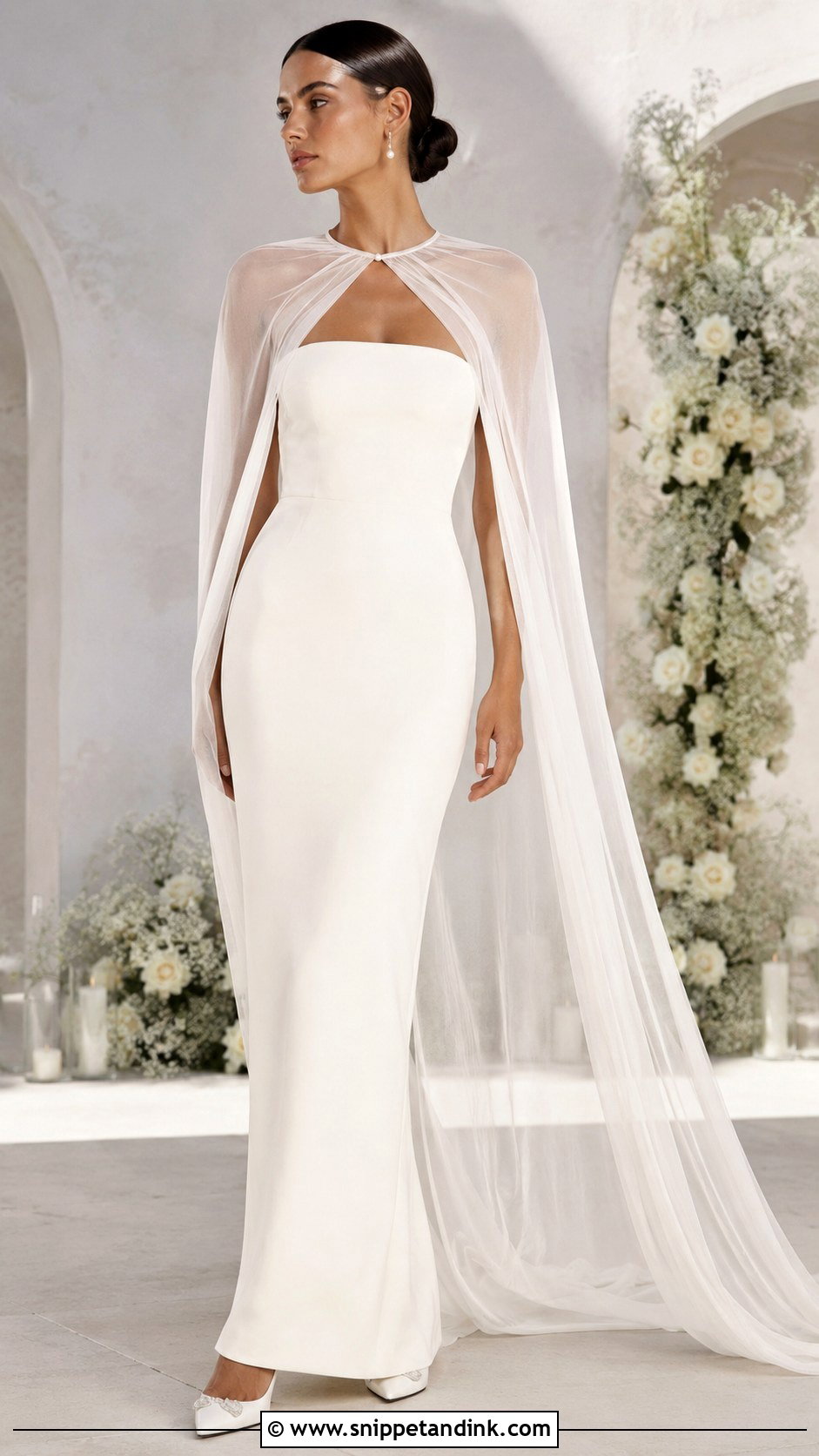
If you only take one idea from this list, take this one: a detachable cape over a plain dress gives you two outfits for the price of one gown and an accessory. A strapless, square-neck or fitted crepe dress makes the cleanest base. For the ceremony the sheer cape frames the neckline and trails as you walk; for dancing, it comes off in a minute. On a very simple gown I’d let the cape carry a lace edge or scattered pearls. A smooth low bun keeps the attachment points visible and stops hair tangling in the fabric.
2. Lace Cape Wedding Dress
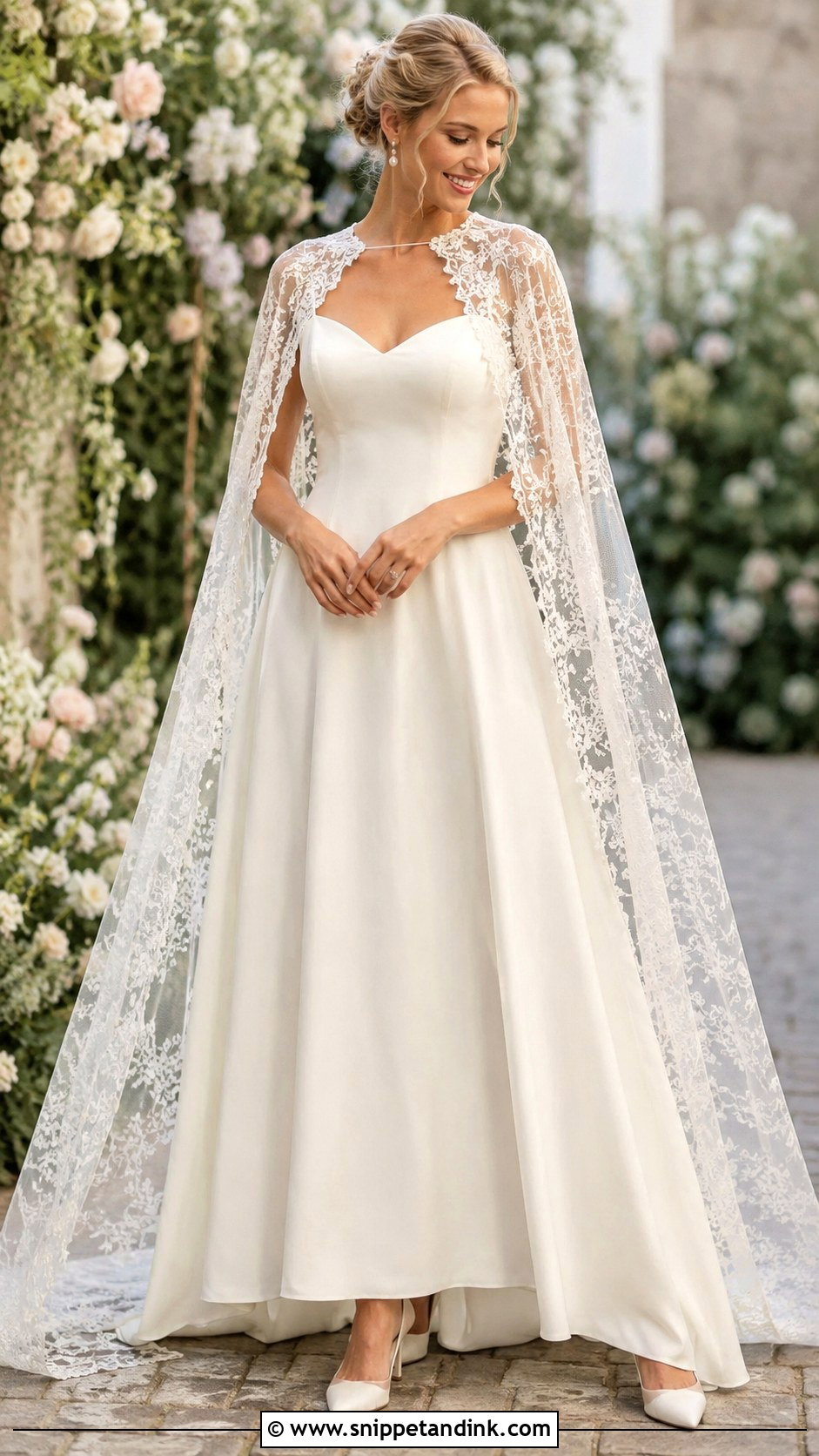
Lace capes give you the romance of a lace veil without the weight on your head. The lace sits across the shoulders and back, which is exactly where guests look during the ceremony. Over an A-line, a mermaid or a plain satin sheath, the cape becomes the main detail, so I’d skip a necklace when the lace is ornate. The thing I check is the lace edge: scalloped lace that ends in a clean finish lies flat, while a raw cut edge can curl after a few hours. Garden venues and old stone buildings show the pattern well in natural light.
3. Cathedral Cape Wedding Dress
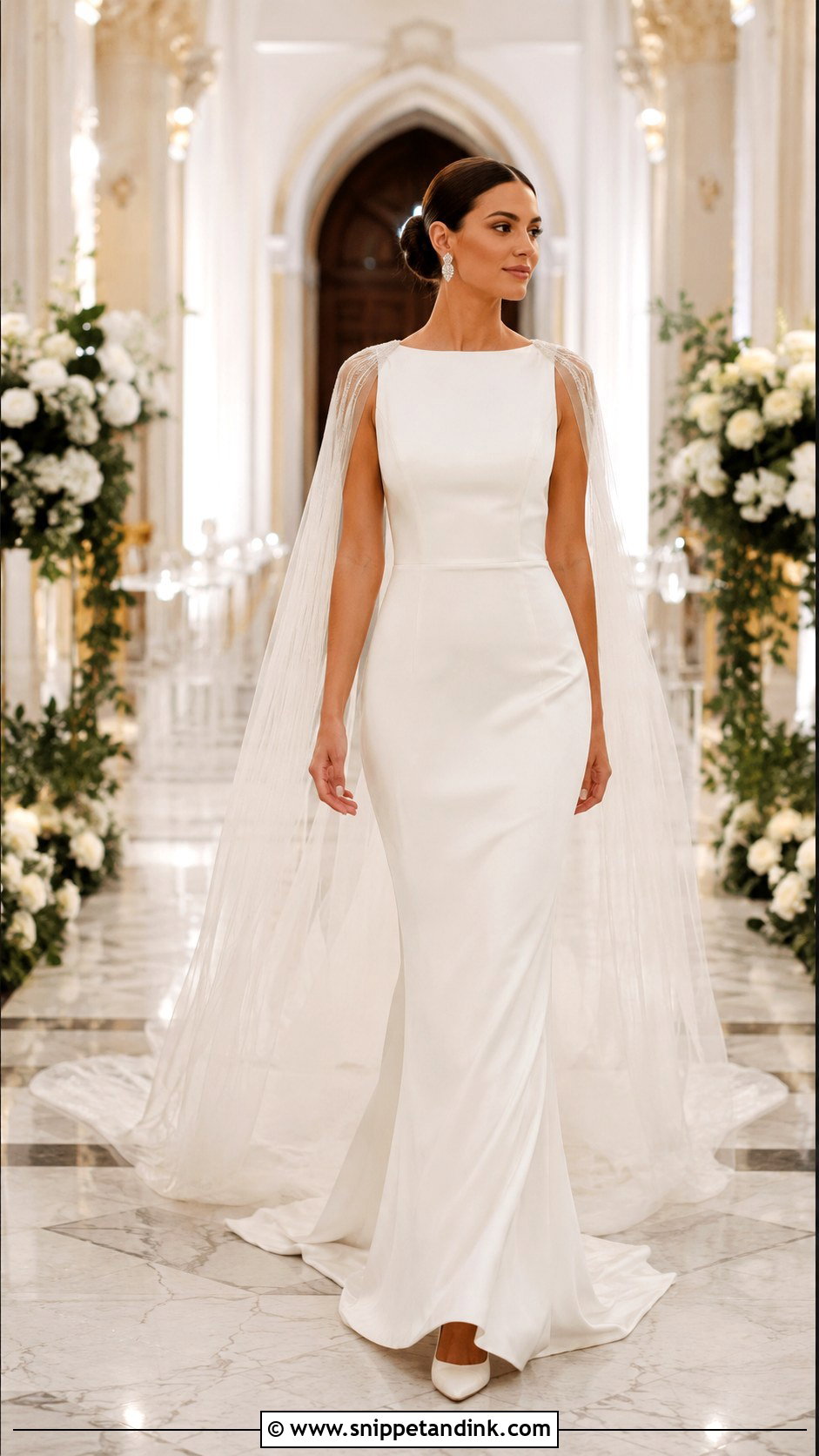
A cathedral cape wedding dress gives the length of a cathedral veil without a heavy comb dragging at your updo. The cape falls from the shoulders and pools behind you, so a plain gown underneath is the better pairing; a satin column or structured strapless lets the fabric run uninterrupted. Think about the floor. On grass, gravel or stone stairs, a long hem picks up dirt and snags, and someone has to lift it on every step. I tell brides to assign that job to a bridesmaid before the day.
4. Pearl Cape Wedding Dress
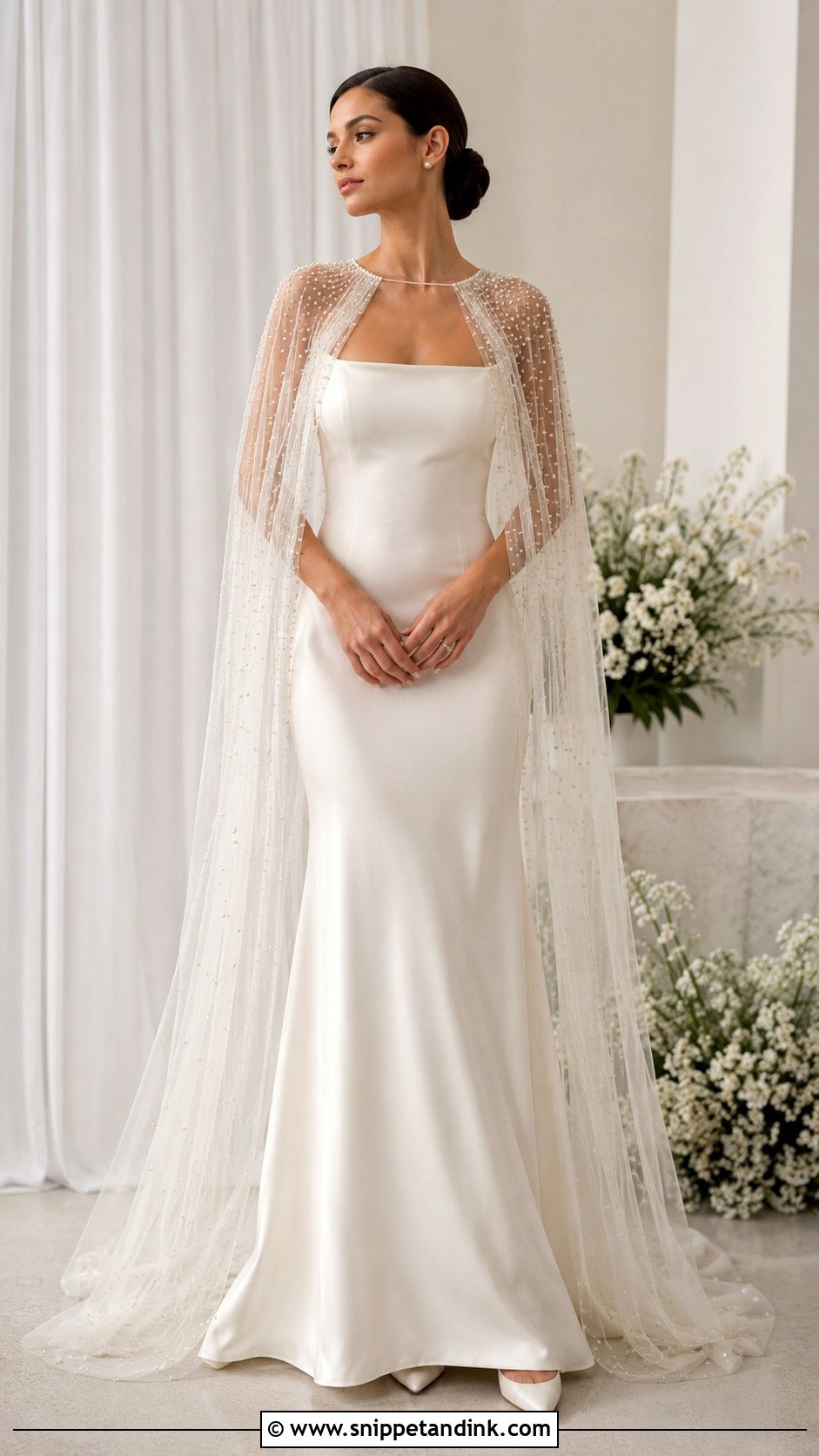
Pearls scattered over sheer tulle catch light without adding much weight, which makes this a classic that still looks current. It suits a straight-neck, off-the-shoulder or scoop-neck gown with very little detail. Ask how densely the pearls are placed near the top. A heavy cluster at the shoulders pulls the cape backwards and makes it slide. Keep jewelry to pearl studs and let the cape be the only pearl statement, otherwise the look tips into costume.
5. Tulle Cape Wedding Dress
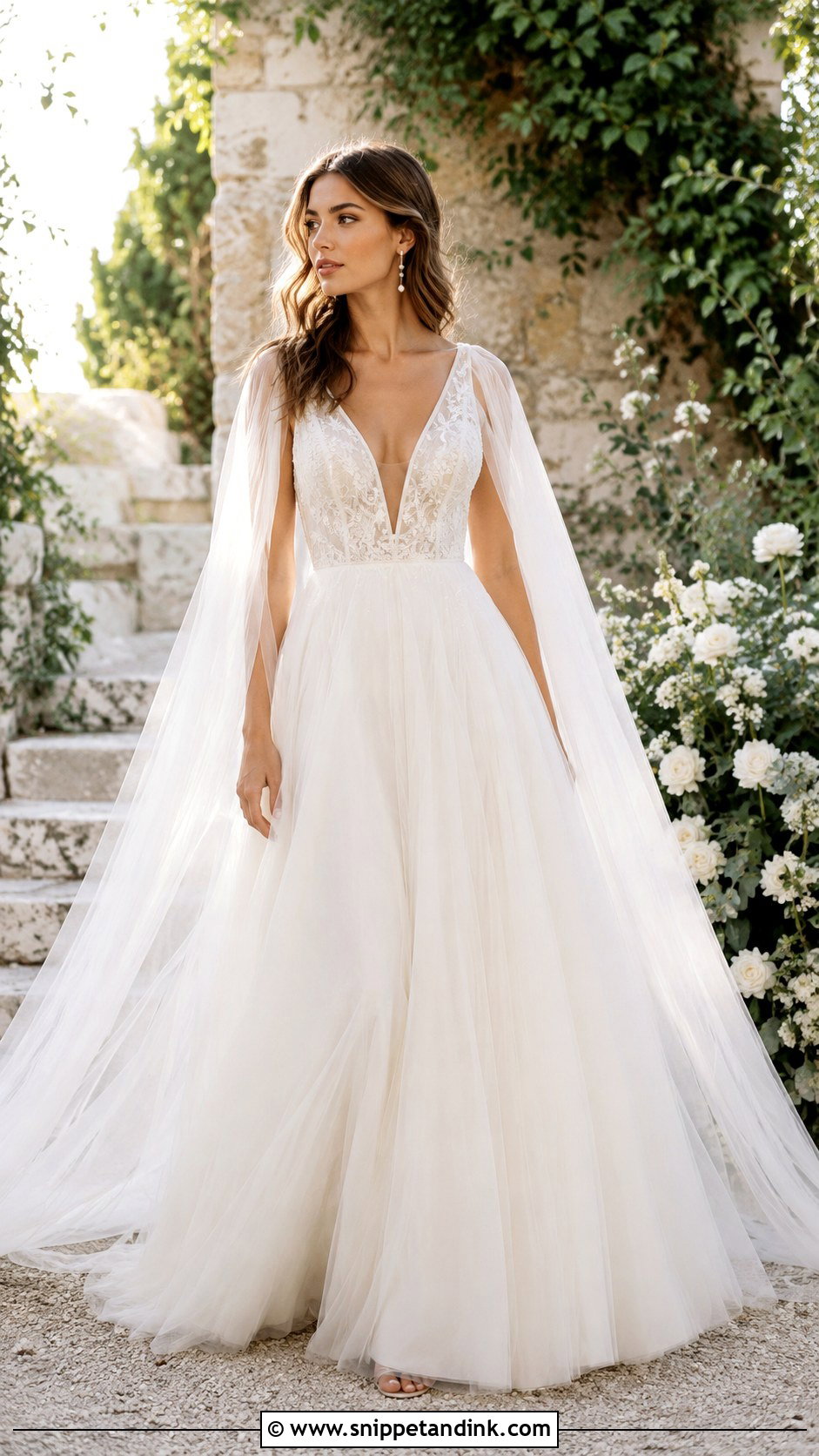
Tulle is the easiest cape fabric to wear: light, soft, and close to the feel of a veil. It goes over lace, satin, crepe or organza gowns, depending on how soft or crisp you want the whole thing to look. Soft bridal tulle drapes; stiffer net holds out from the body, so feel it before you order. Tulle catches on rough bouquet stems and some beaded jewelry, so I’d keep the hand that holds the flowers free of bracelets. An updo suits a modern finish; loose waves suit a softer one.
6. Satin Cape Wedding Dress
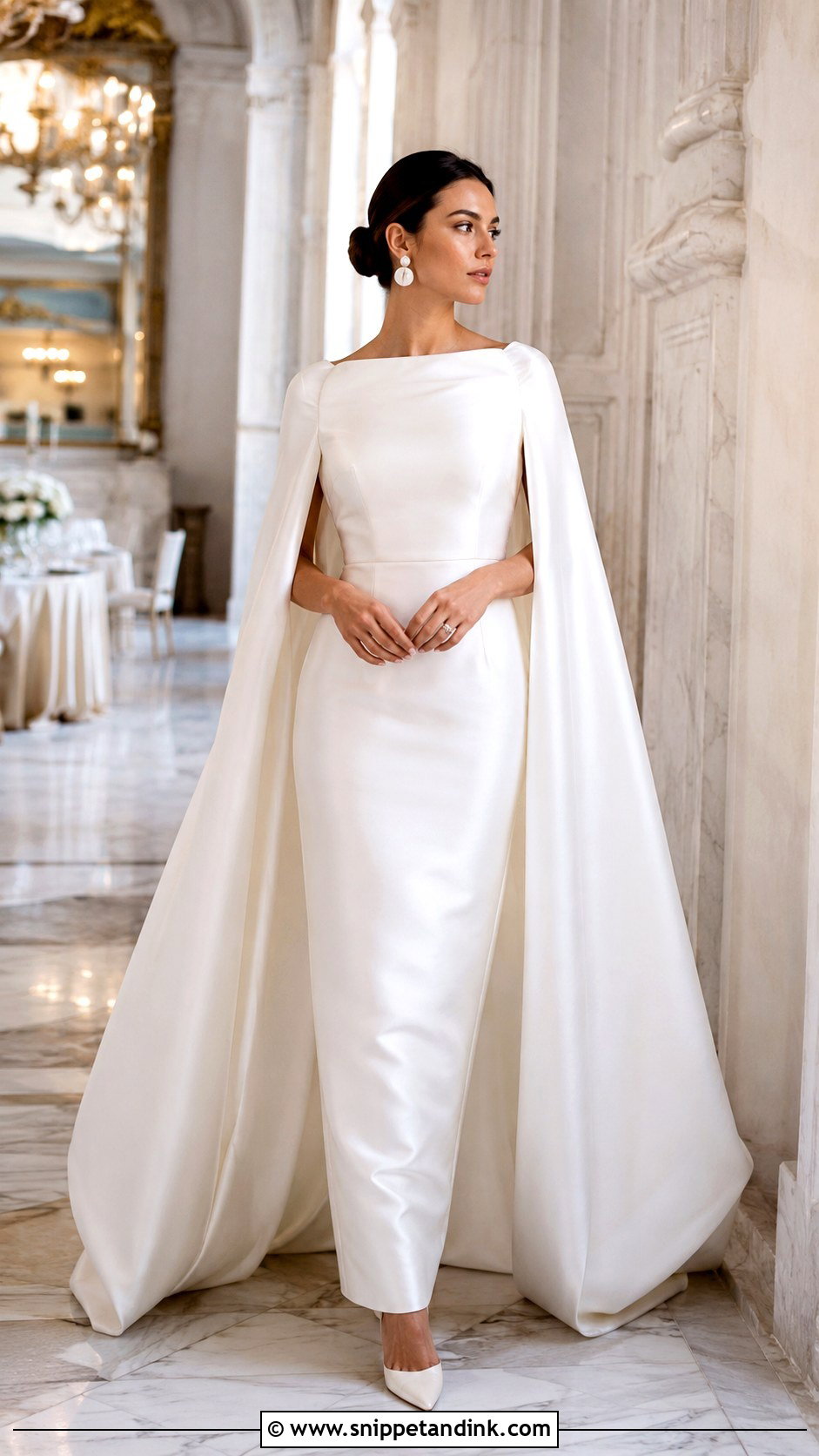
Satin capes have structure and shine, and they look regal in a way tulle never does. In ivory or soft champagne they pair with a sleek satin gown, a structured ball gown or a modern column. Cutting the cape from the same fabric as the dress gives the most expensive result, so ask your bridal shop whether the maker sells matching fabric. Satin is heavy, though, and a long satin cape pulls on whatever holds it. I’d want it anchored at both shoulders, never at one point at the back, and I’d keep the jewelry simple since the fabric already shines.
7. Sheer Cape Wedding Dress
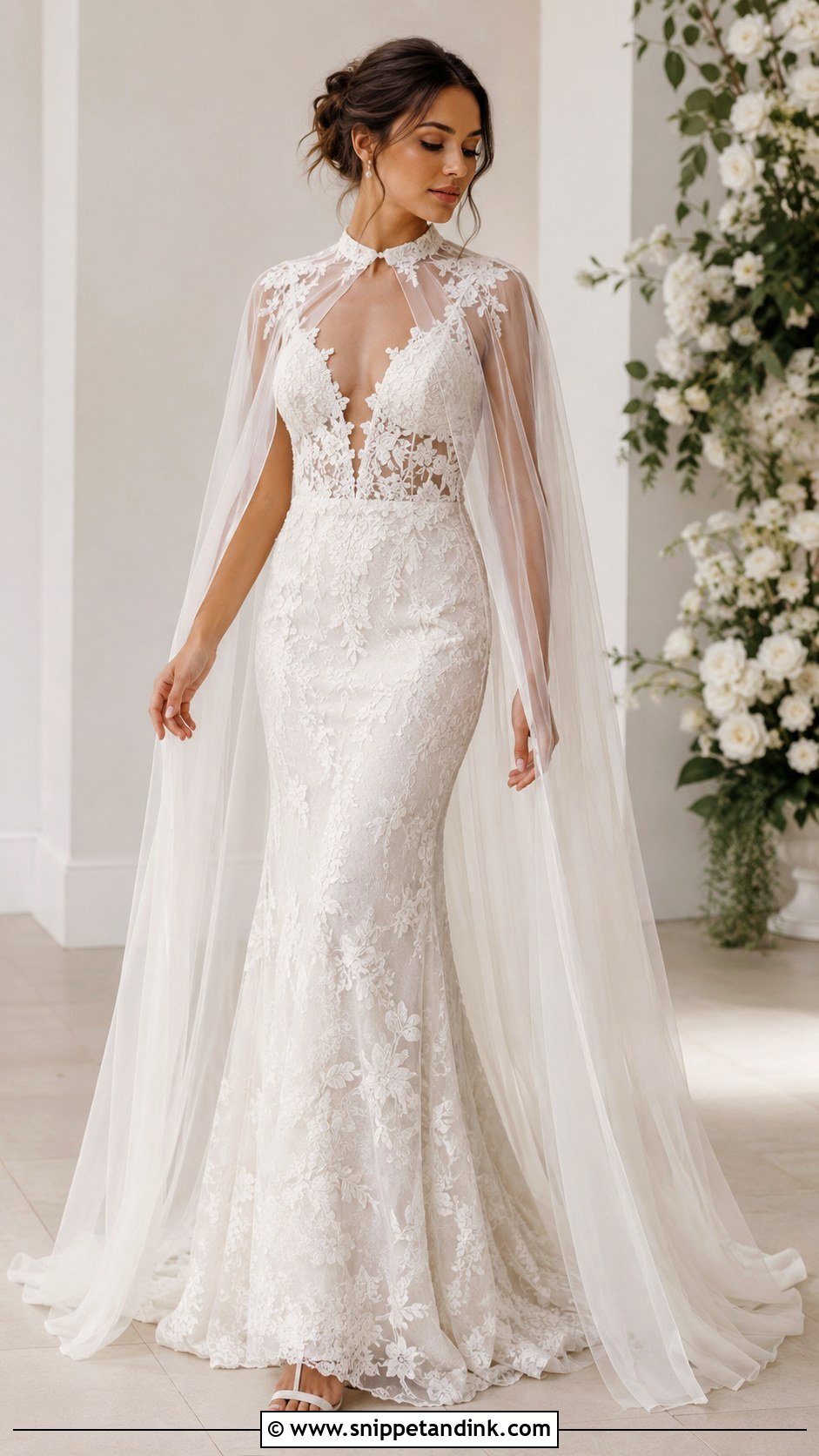
A sheer cape covers you without hiding the dress. The neckline, the bodice and the back detail all stay visible through the fabric, so the gown still gets seen in the photos. Plain sheer suits a minimalist look; lace, beads or appliqué along the edge suit a softer one. I find sheer capes the most forgiving for a ceremony that needs covered shoulders, because you’re dressed modestly without losing the outfit you chose. Keep earrings small so the movement of the cape stays the focus.
8. Off Shoulder Cape Wedding Dress
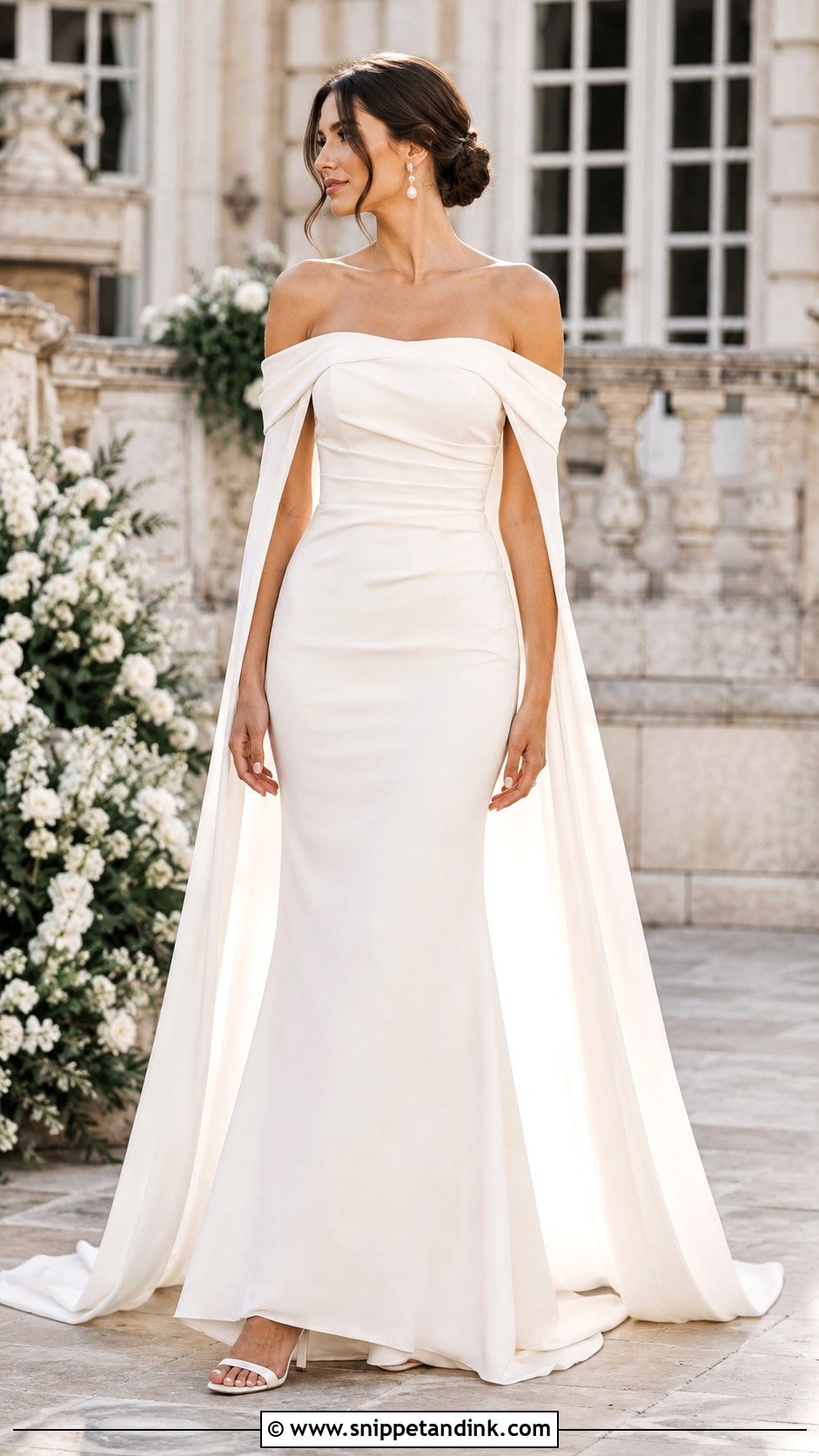
An off-shoulder cape frames the collarbone and drapes over the upper arms, which flatters most necklines and most body shapes. It sits well over fitted gowns, A-lines and lace bodices. The risk is bulk: a heavy fabric gathered at the arm makes the shoulders look wider than they are, so I go for a light fabric that falls rather than one that puffs. Lift your arms at the fitting. If the cape rides up, it needs a small tack to the bodice. Drop earrings work; a necklace usually doesn’t.
9. Long Sleeve Cape Wedding Dress
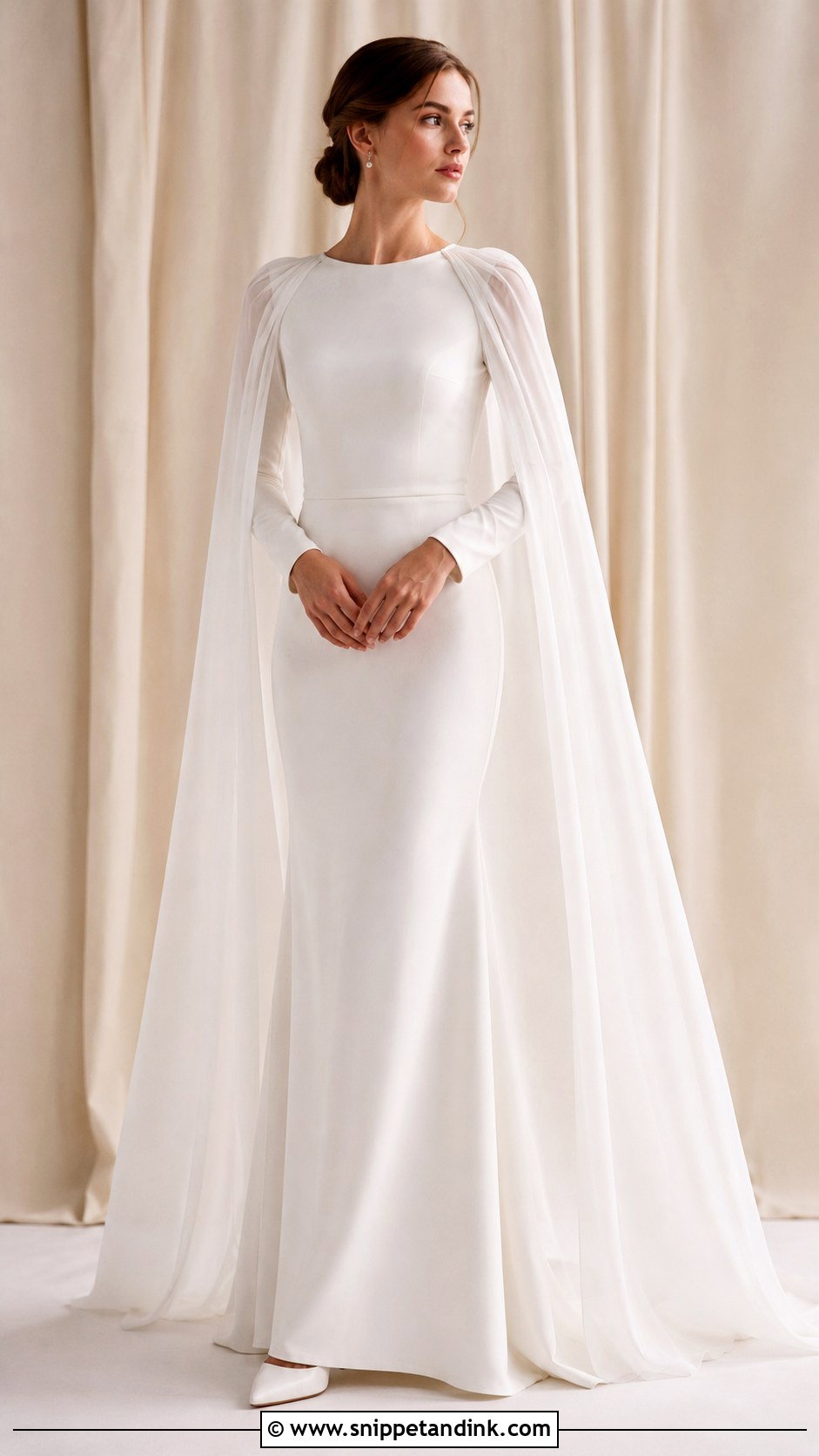
Long sleeves plus a cape is a lot of fabric, so the balance has to be right. The sleeves should be fitted and the cape soft or sheer, or the whole upper body looks heavy. A lace sleeved gown with a plain tulle cape reads romantic; a crepe sleeved dress with a pearl cape reads modern. This is the combination I’d put forward for an autumn or winter ceremony, or for a bride who wants full coverage for religious reasons. Small earrings and a clean updo are enough.
10. Cape Sleeve Wedding Dress
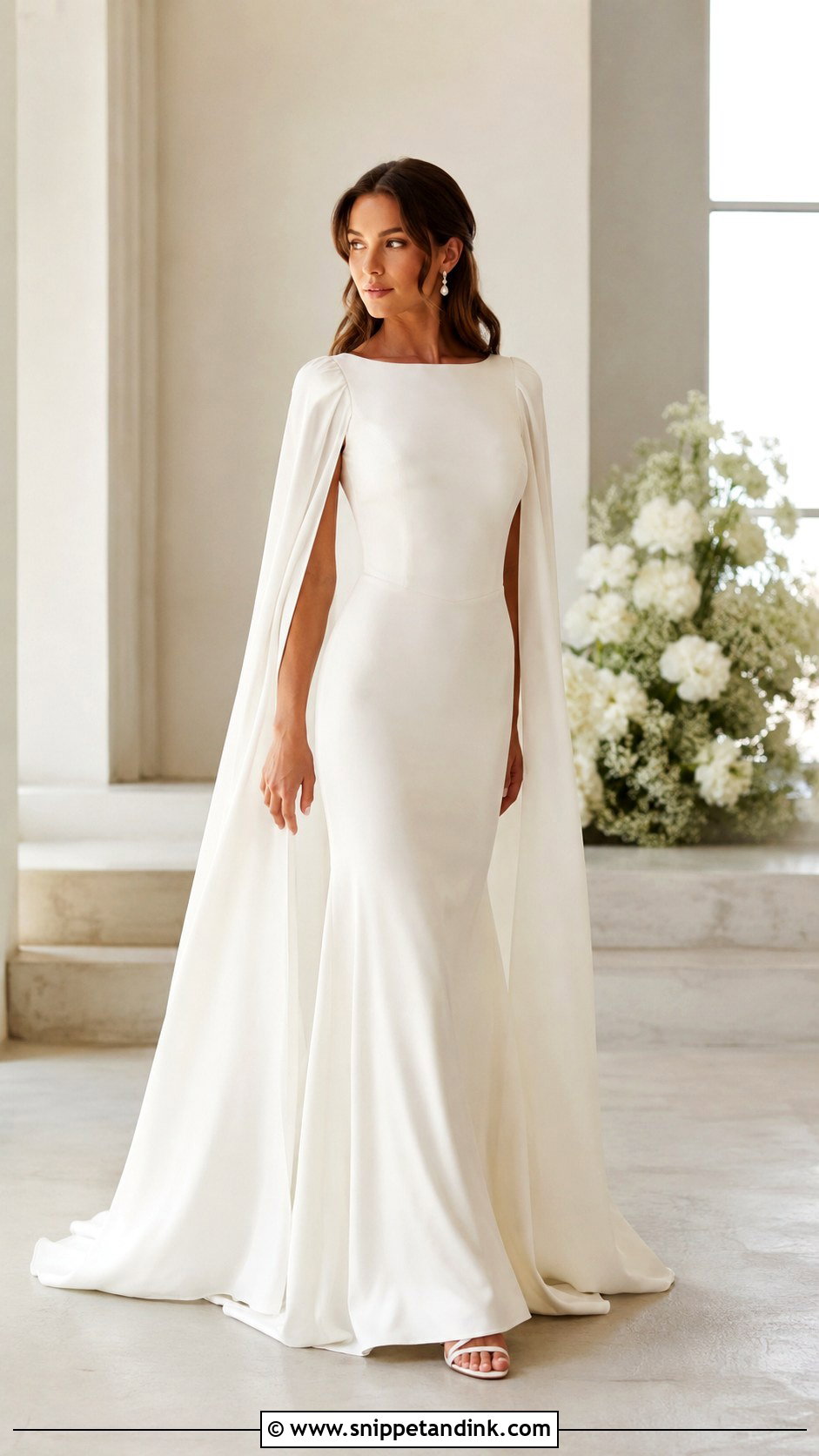
Cape sleeves give you the drape of a cape without a trailing layer. They fall from the shoulder or upper arm and can stop at the elbow, the wrist or the floor. Over a sheath, an A-line or a jumpsuit, they add movement while staying easy to manage. Watch the bouquet. Long cape sleeves fall over the flowers when you hold them at your waist, so you may need to hold the bouquet slightly lower. If the sleeves are dramatic, wear your hair sleek and back.
11. Beaded Cape Wedding Dress
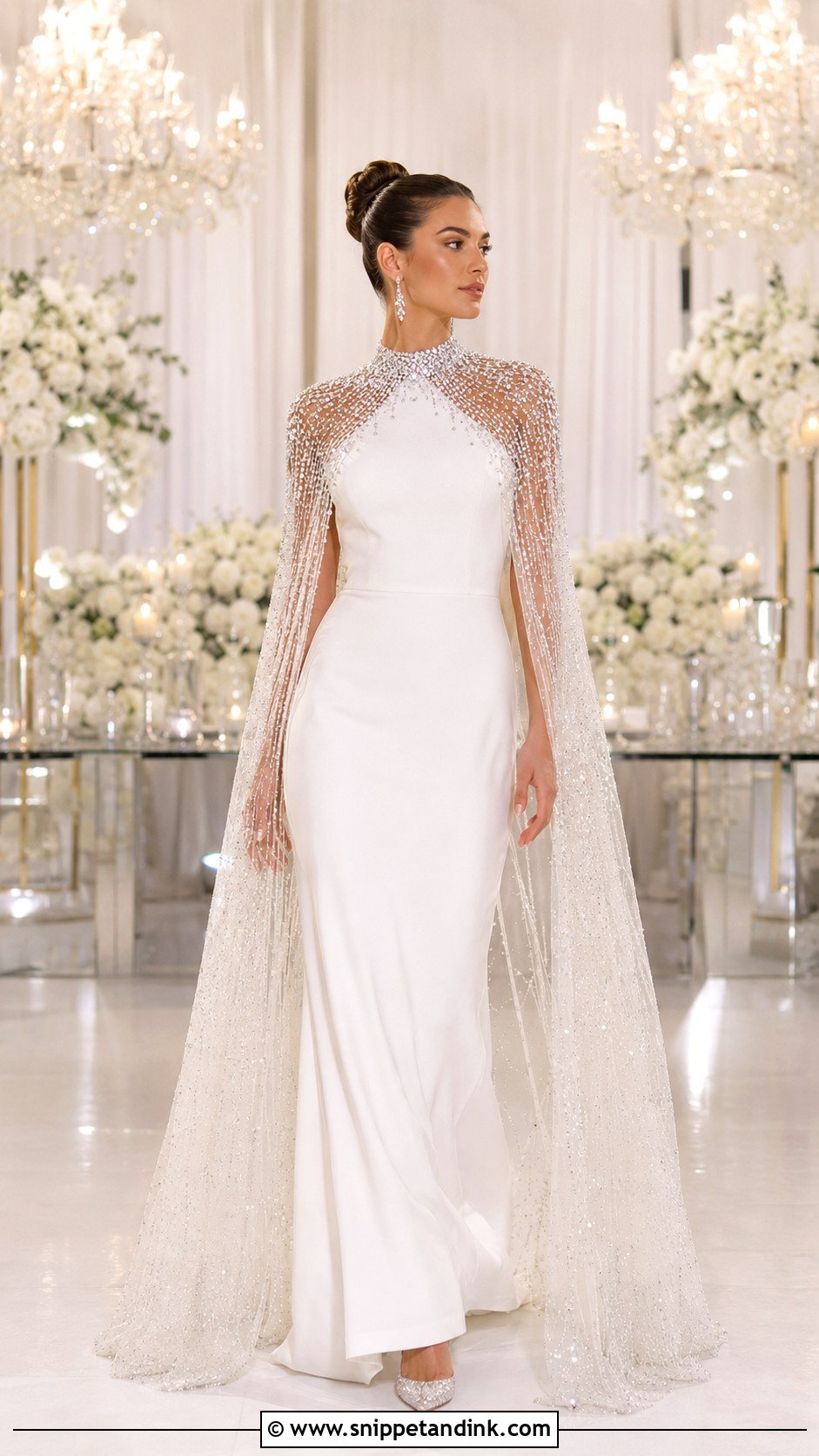
Beading on the cape instead of the dress puts the sparkle where it moves. As you walk, the beads catch light in a way a static bodice can’t. It’s a good fit for evening weddings, ballrooms and formal receptions, over a fitted crepe or plain satin dress that keeps the look in balance. Scattered crystals look lighter than a solid beaded border. The weight question applies here too: a heavily beaded cape gets tiring by the evening, so I’d test it for an hour at a fitting. Skip any statement necklace.
12. Floral Cape Wedding Dress
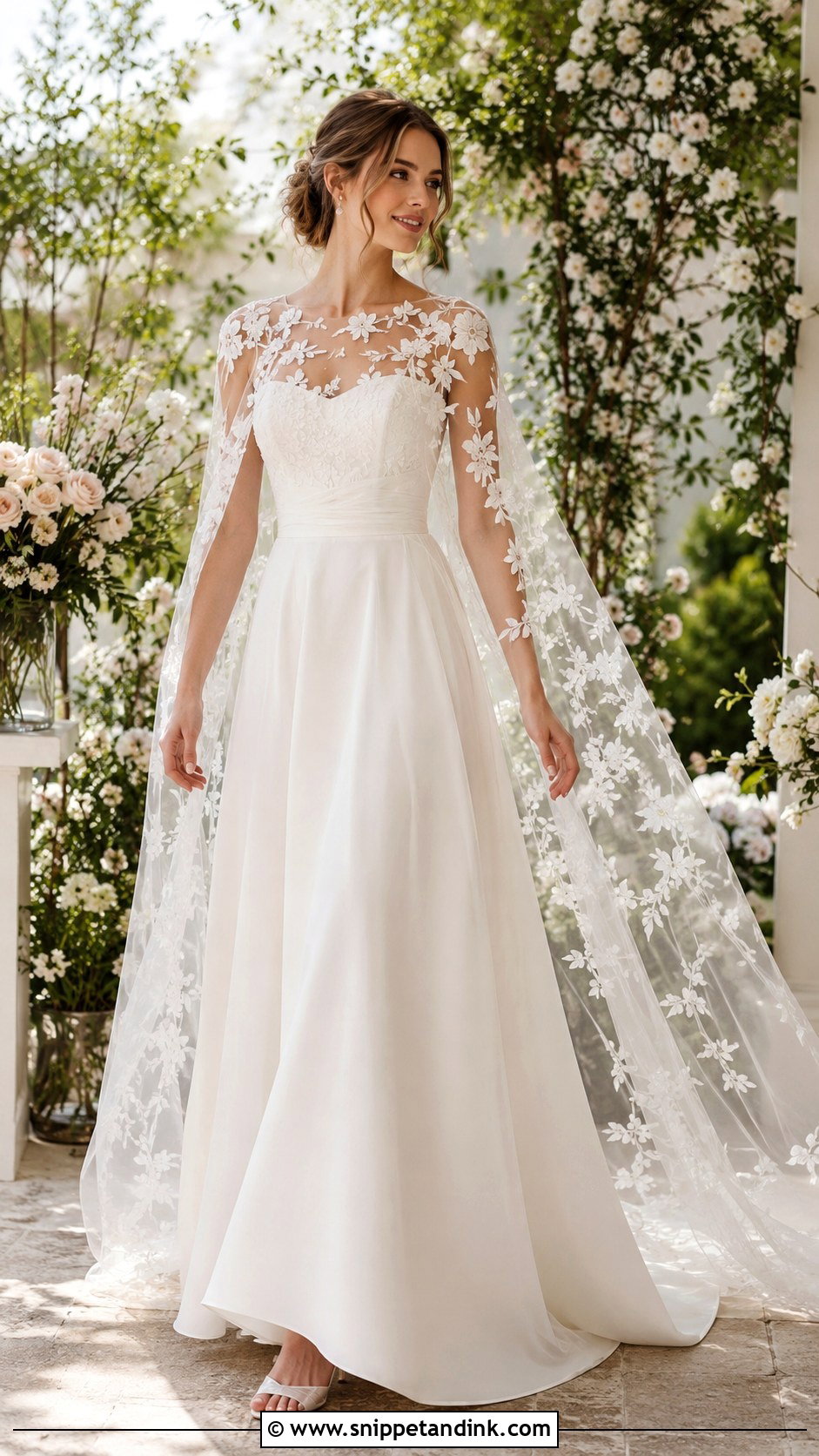
Floral capes suit spring ceremonies and garden venues, and they bring the bouquet’s mood up onto the dress. The flowers can be lace, embroidery, 3D appliqué or beading on sheer tulle. With large florals, keep the dress underneath completely clean. I like matching the floral motif on the cape to one or two flowers in the bouquet, a small link that shows in close-up photos. 3D petals do crush when you sit or lean back against a chair, so check how they recover after a seated meal.
13. Minimalist Cape Wedding Dress
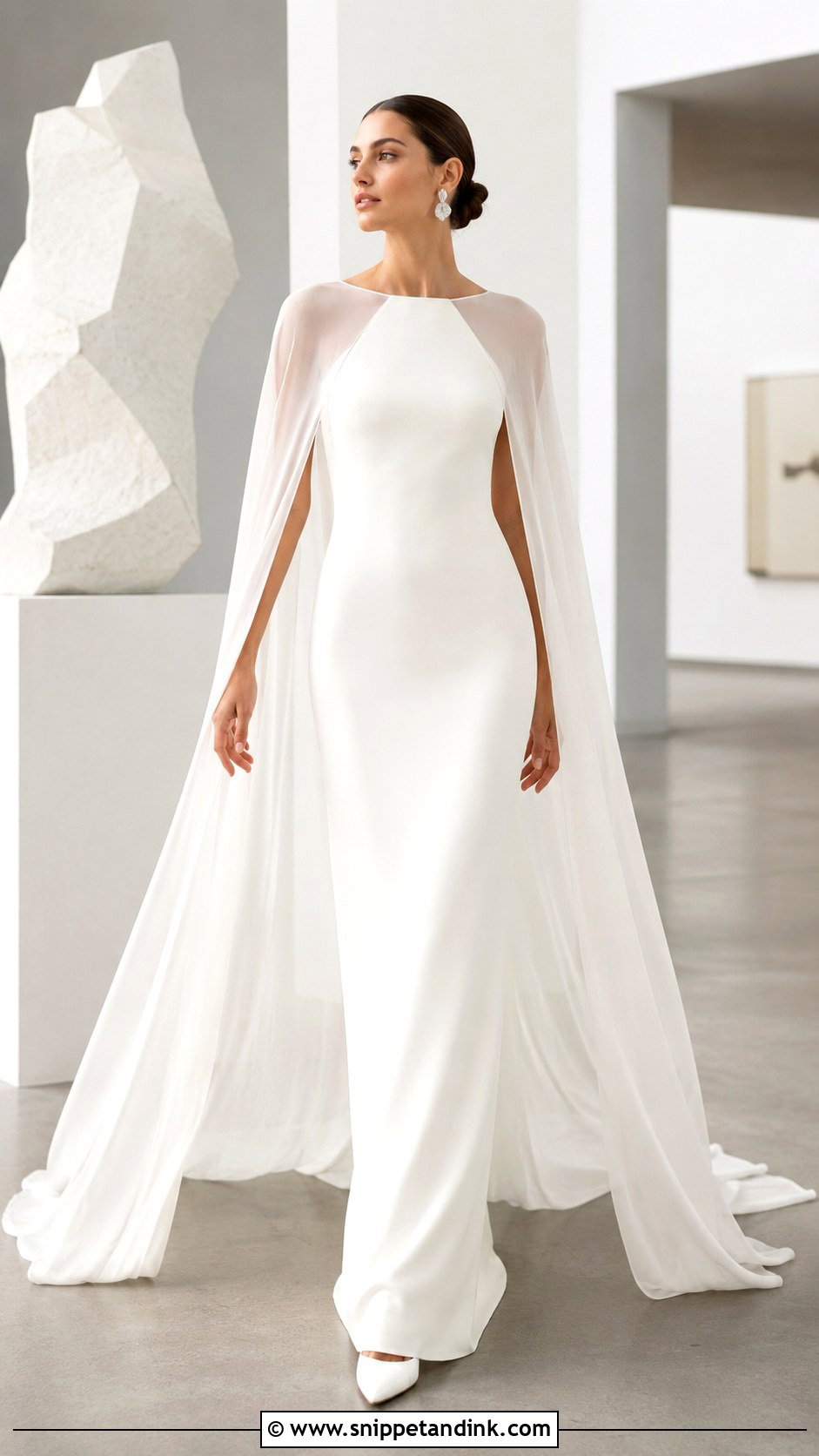
A minimalist cape relies on proportion and fabric rather than decoration. Start with a sleek crepe, satin or mikado gown, then add a plain sheer or structured cape from the shoulders. The quality of the fabric shows because nothing distracts from it, so I’d spend money here rather than on embellishment. Sculptural earrings and pointed heels suit the mood. City halls, galleries, rooftops and hotel venues are where this look feels most at home.
14. Ball Gown Cape Wedding Dress
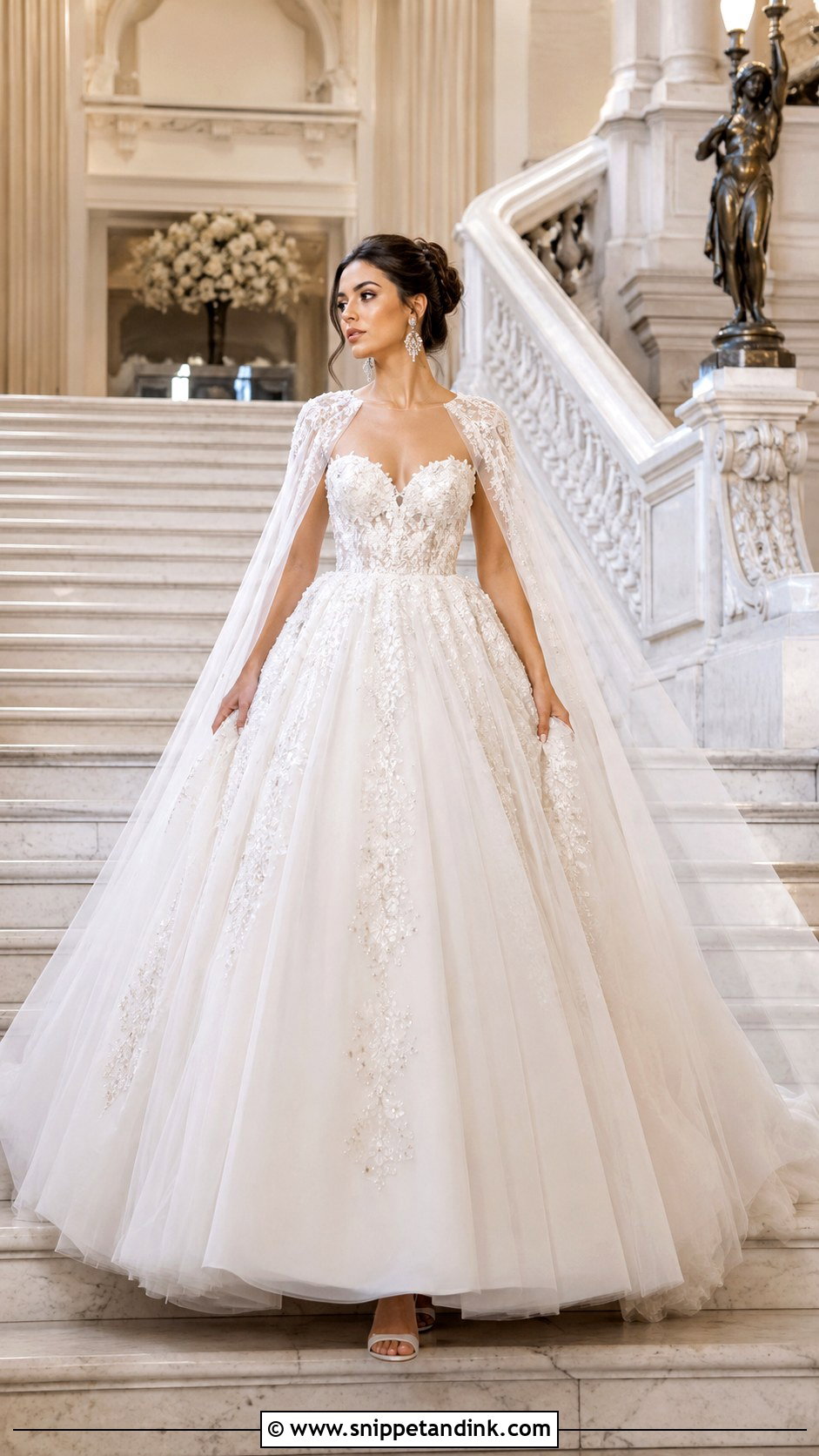
A ball gown with a cape is made for a staircase and a long aisle. The skirt gives volume, the cape adds height and movement. The balance only works if the cape attaches at the shoulders or neckline and falls behind the skirt; a cape that gathers at the waist adds bulk exactly where a ball gown already has the most. Pair a detailed ball gown with a plain tulle cape and a simple skirt with a lace or pearl one. Choose heels you can stand in for hours, since nobody will see them under the skirt anyway.
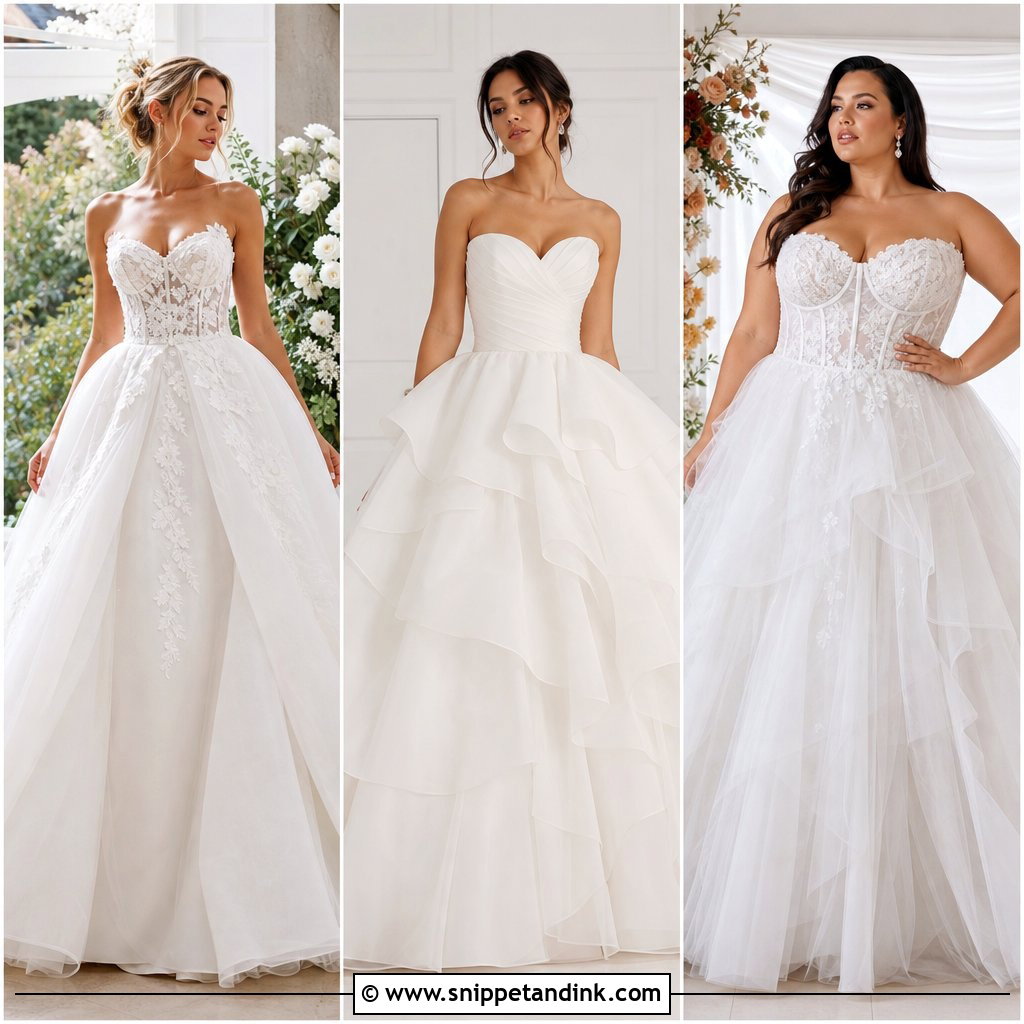


15. Mermaid Cape Wedding Dress
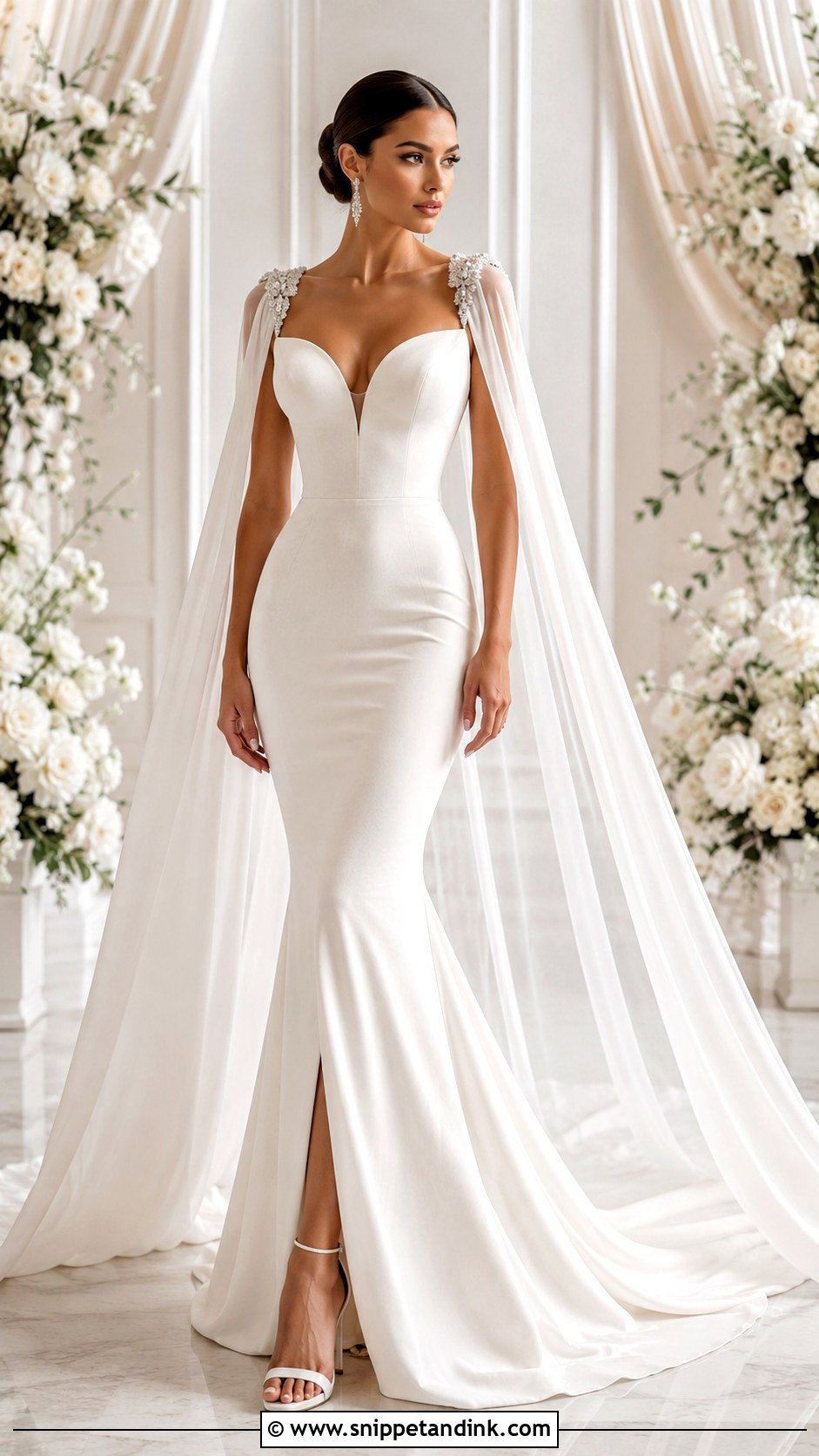
A mermaid gown shapes the body through the hips; the cape adds flow from the shoulders. That contrast is the whole appeal. I’d almost always choose a sheer cape here, because anything heavy competes with the flare at the knee. If the mermaid has lace, match it along the cape edge or leave the cape plain. Be aware that a mermaid limits your stride, and a long cape adds something to step over when you turn; practise turning around in both before the day.
16. A Line Cape Wedding Dress
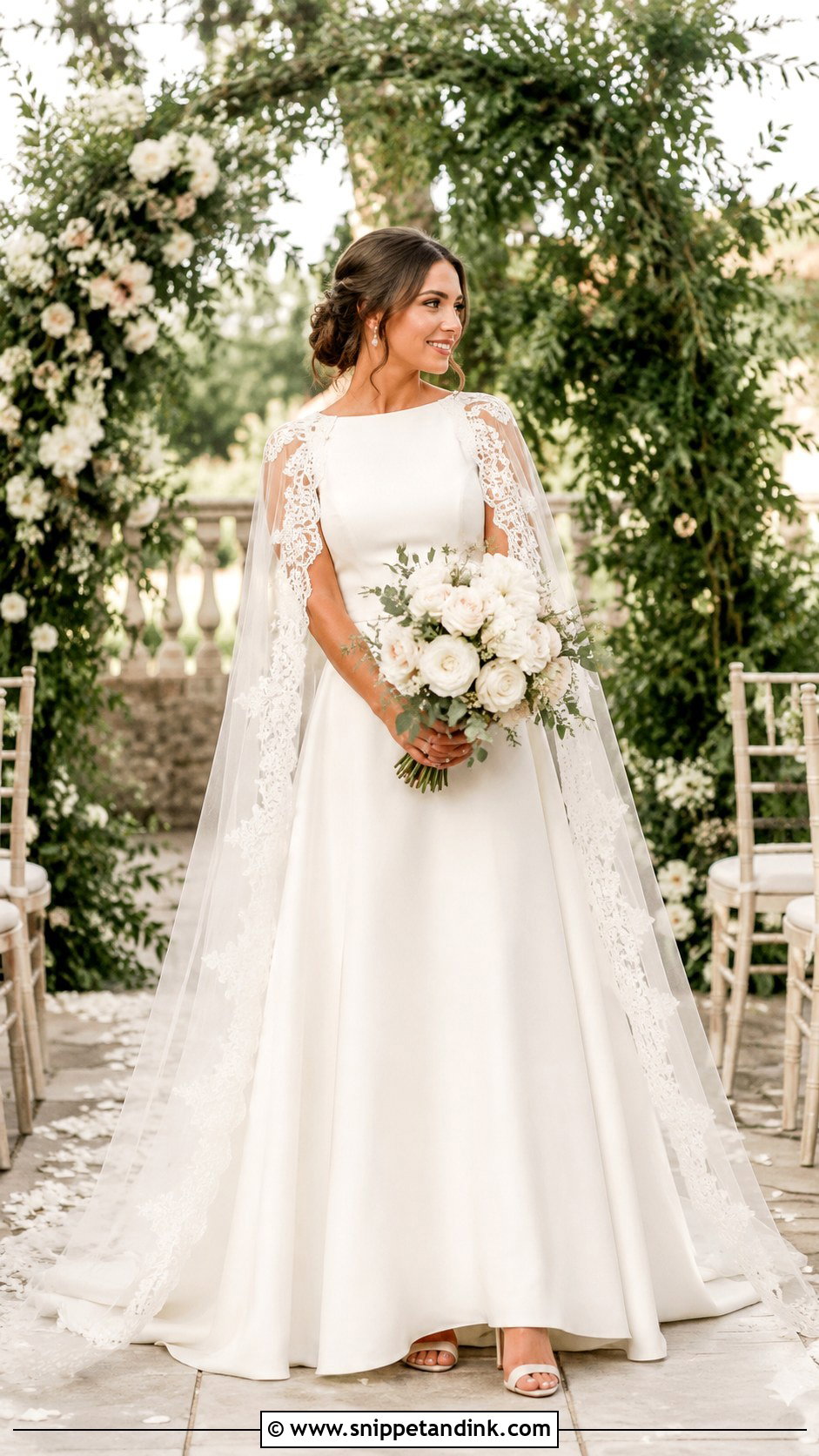
An A-line with a cape is the easiest combination to get right, which is why it suits so many body types. The skirt flows gently from the waist, and the cape adds elegance without changing the shape. A sheer tulle cape keeps it light; a lace cape makes it romantic. With a plain bodice, choose pearl or floral detail on the cape. With a busy bodice, keep the cape soft and plain. Wear your hair off the shoulders so the cape line shows.
17. Strapless Cape Wedding Dress
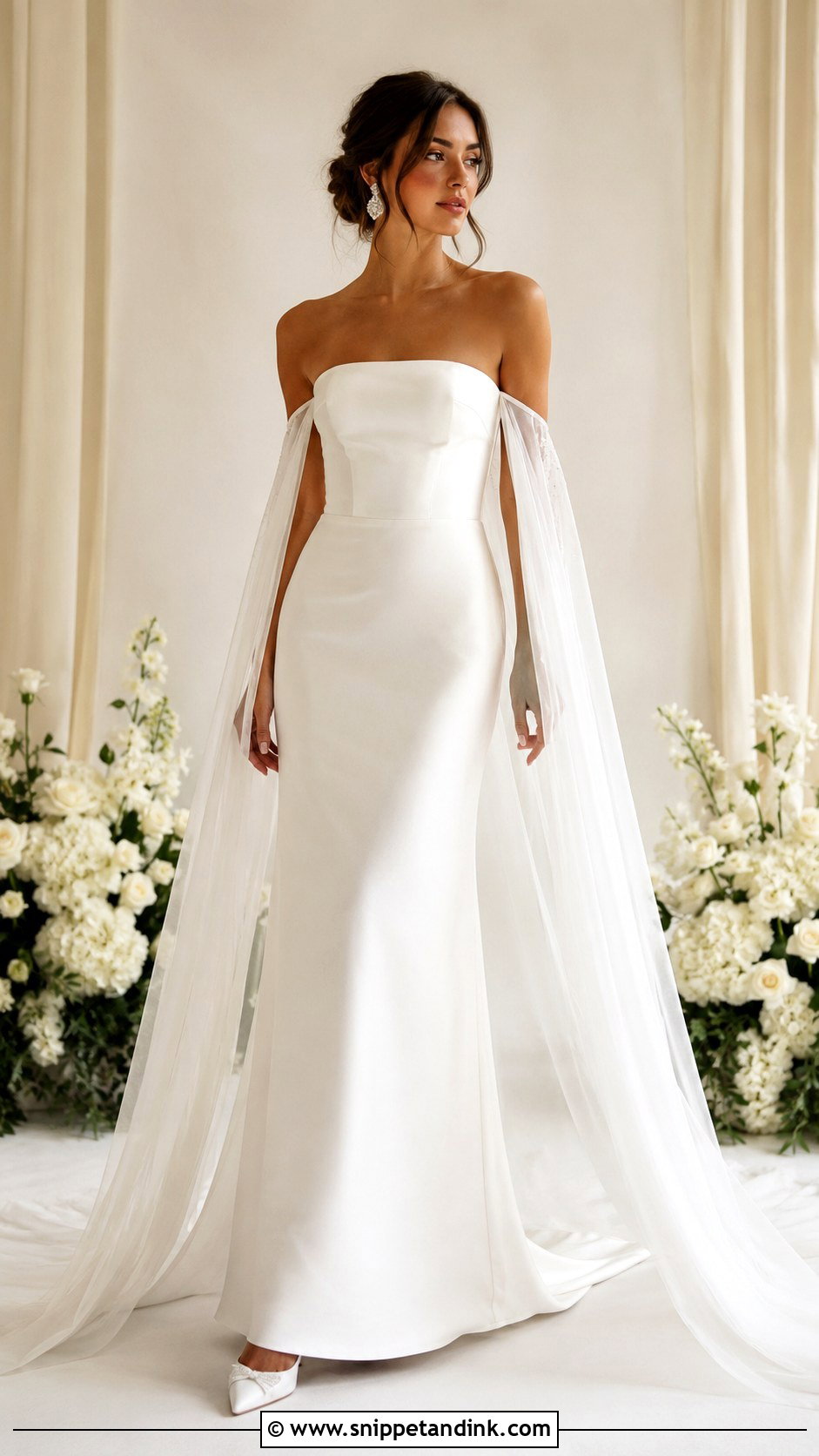
On a strapless dress, a cape adds coverage and a frame around arms and collarbone that the neckline otherwise lacks. It can attach at the back, the shoulders or the upper bodice. My preference is the upper bodice, with small hooks inside the edge, because strapless bodices have no shoulder to hang from and a back-only attachment drags the neckline. Sheer keeps the neckline visible; lace trim softens it. Statement earrings instead of a necklace keep the neckline clean.
18. Square Neck Cape Wedding Dress
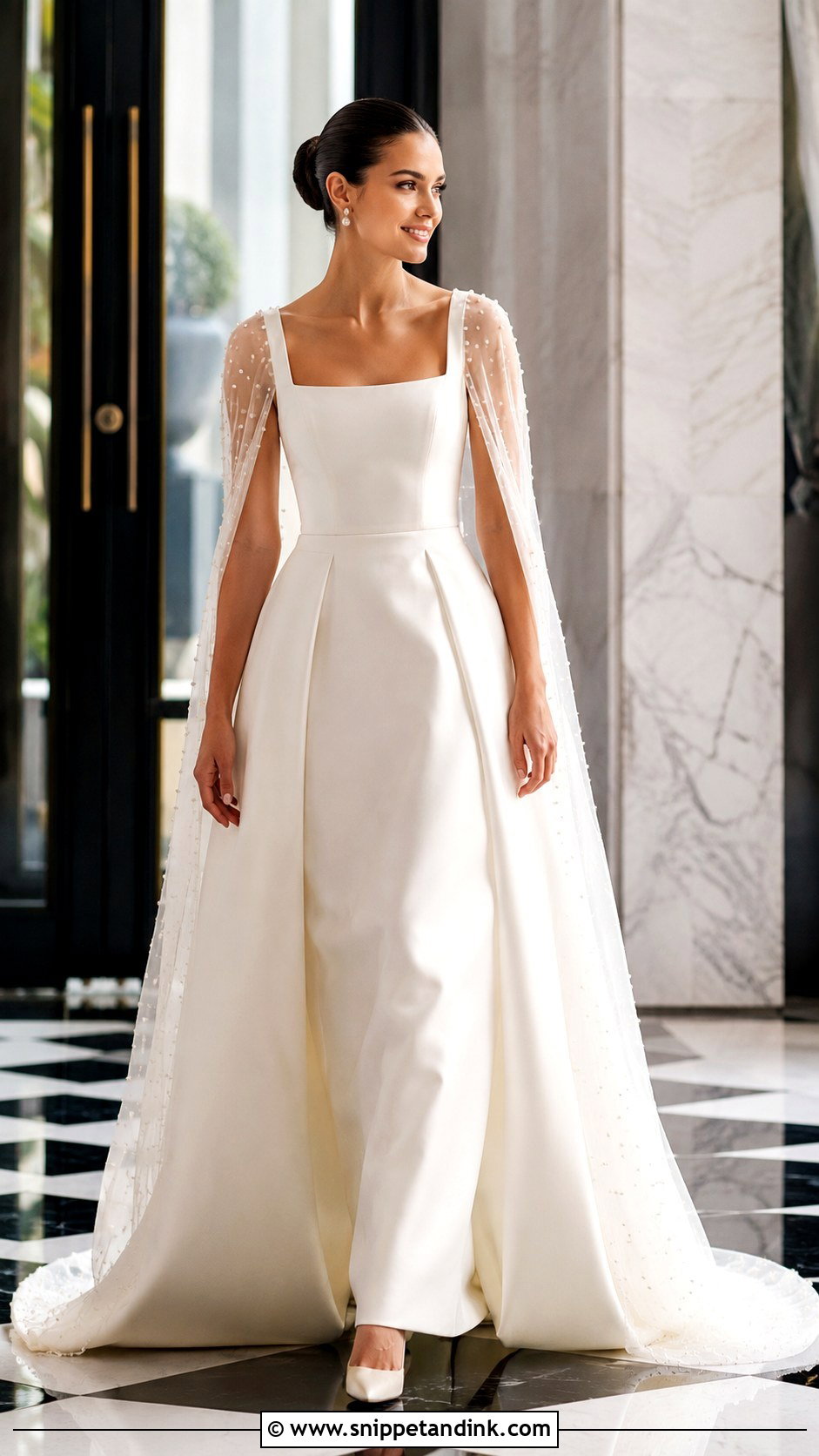
Square necklines give a gown structure at the front, and a cape adds softness at the back. In crepe, satin or mikado, the strong neckline balances the cape well. A plain tulle cape suits a minimalist mood; a pearl cape adds quiet detail. Keep jewelry small, like pearl studs or short drops, because the square neckline is already a statement. The cape can attach at the corners of the neckline, which keeps the lines tidy, so ask your seamstress about that.
19. High Neck Cape Wedding Dress
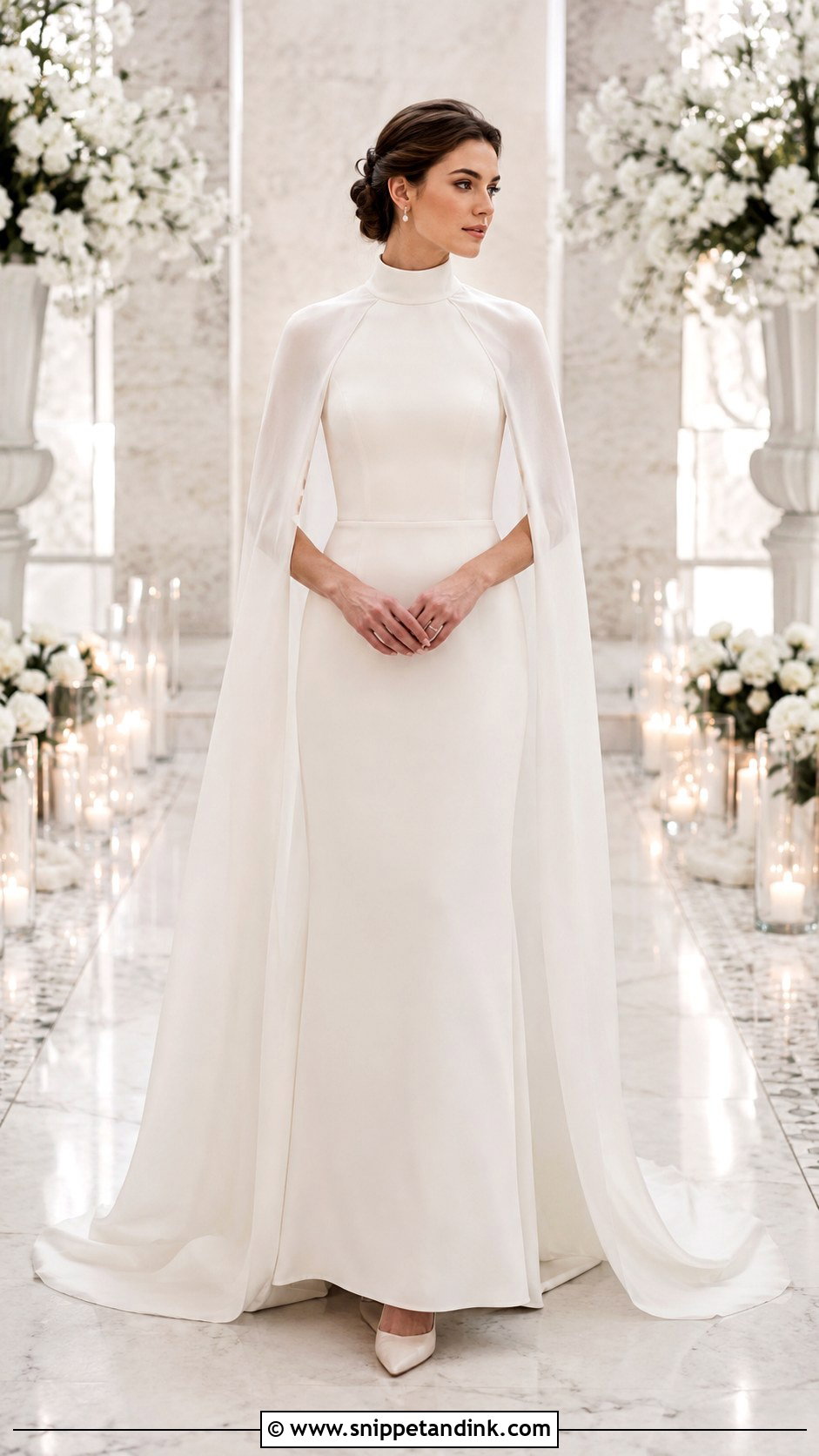
A high neck and a cape together are refined and slightly fashion-led. The neckline gives coverage, the cape gives drama behind you. The fabrics need to be light, otherwise the bride looks wrapped up rather than dressed. A sheer high-neck bodice with a flowing cape is romantic; a clean crepe gown with a detachable cape is modern. An updo is close to essential, because loose hair hides both the neckline and the attachment points. If the neck is very detailed, skip earrings altogether.
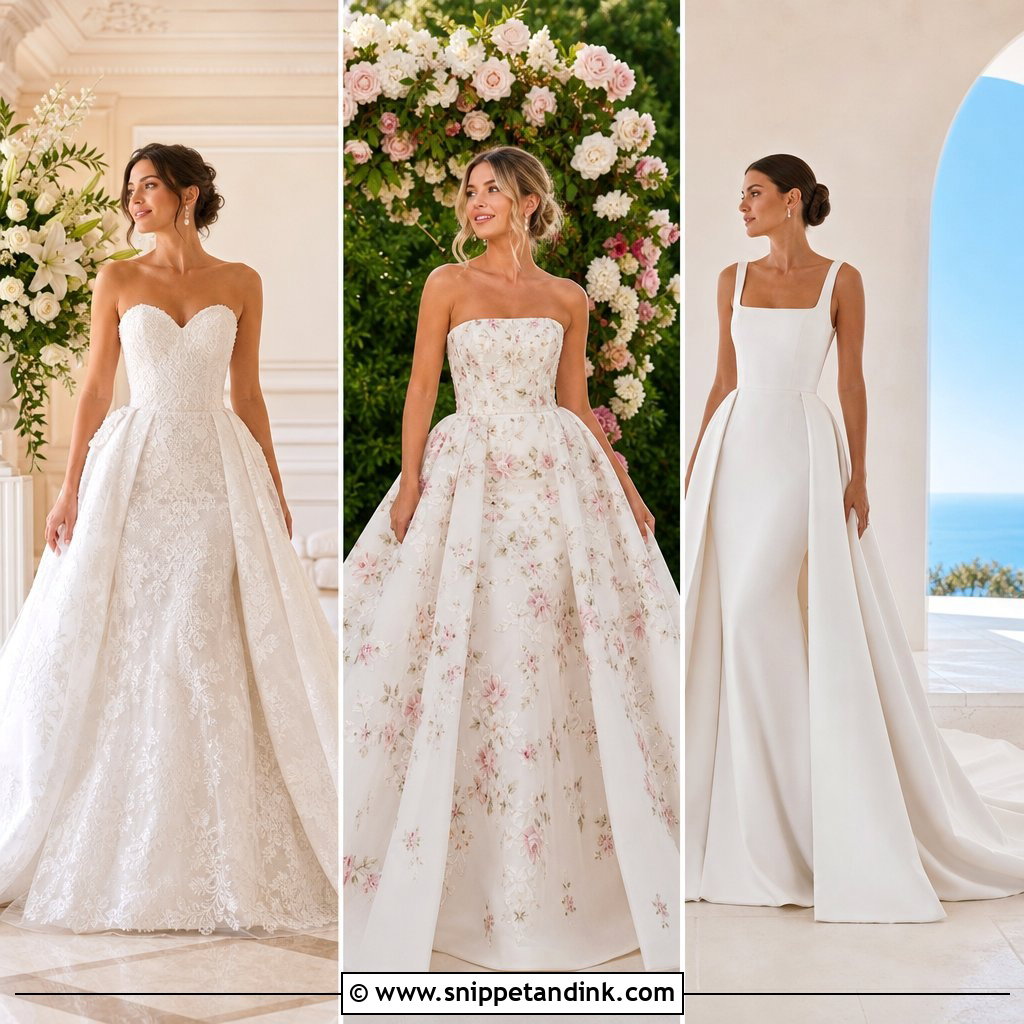
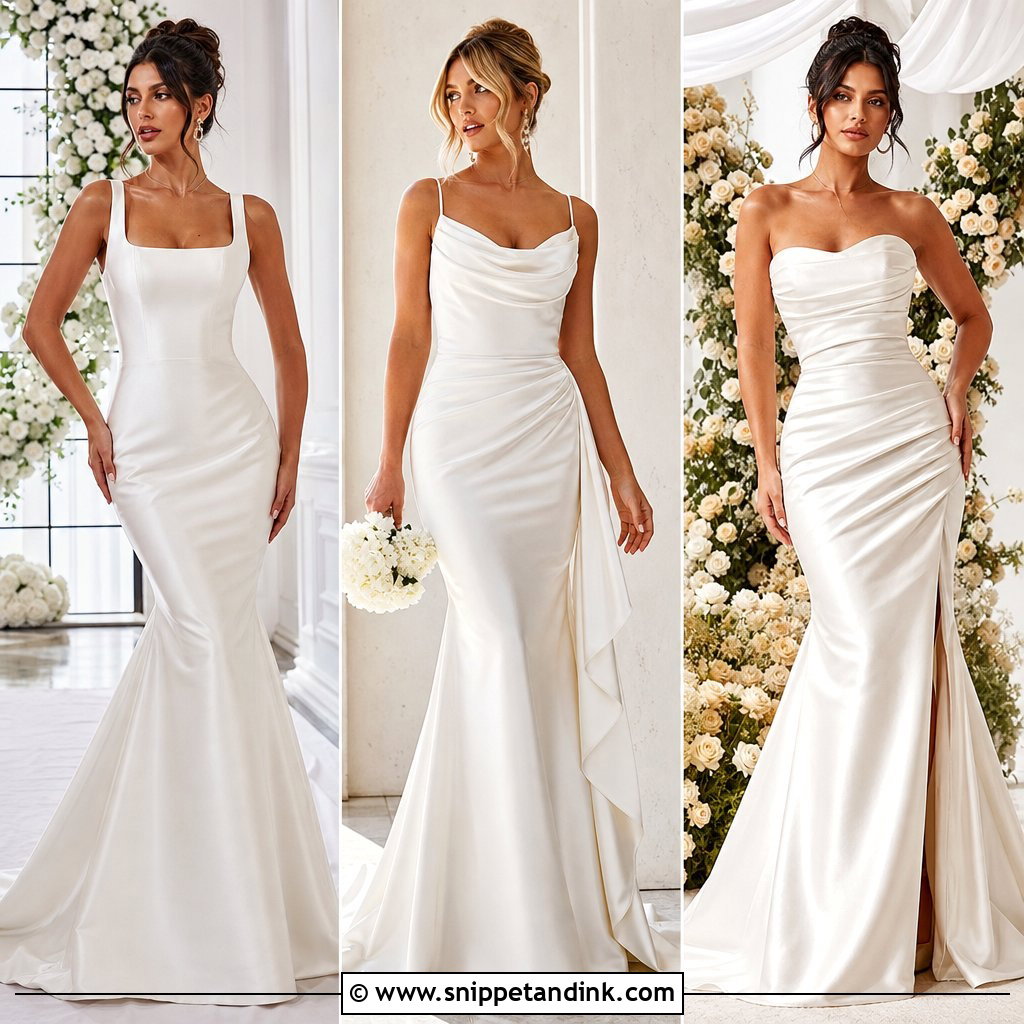
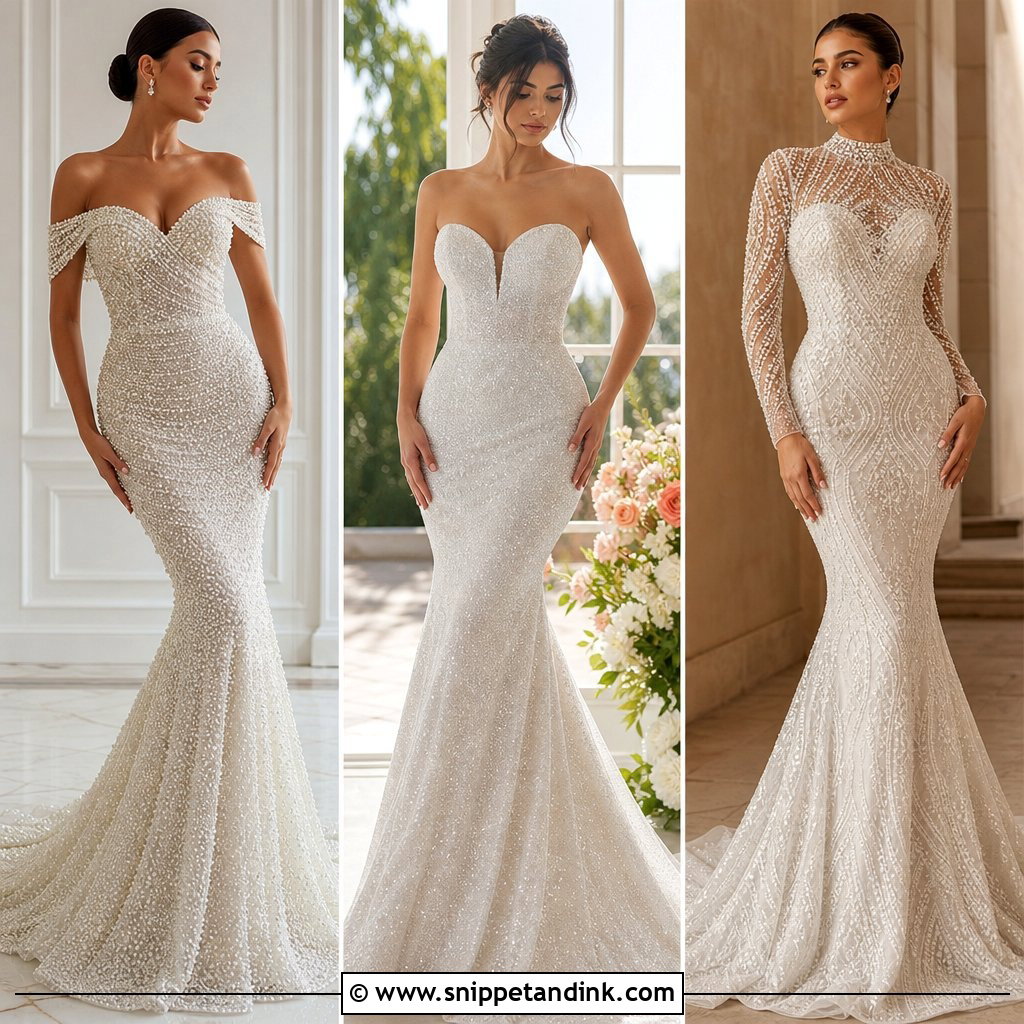
20. Backless Cape Wedding Dress
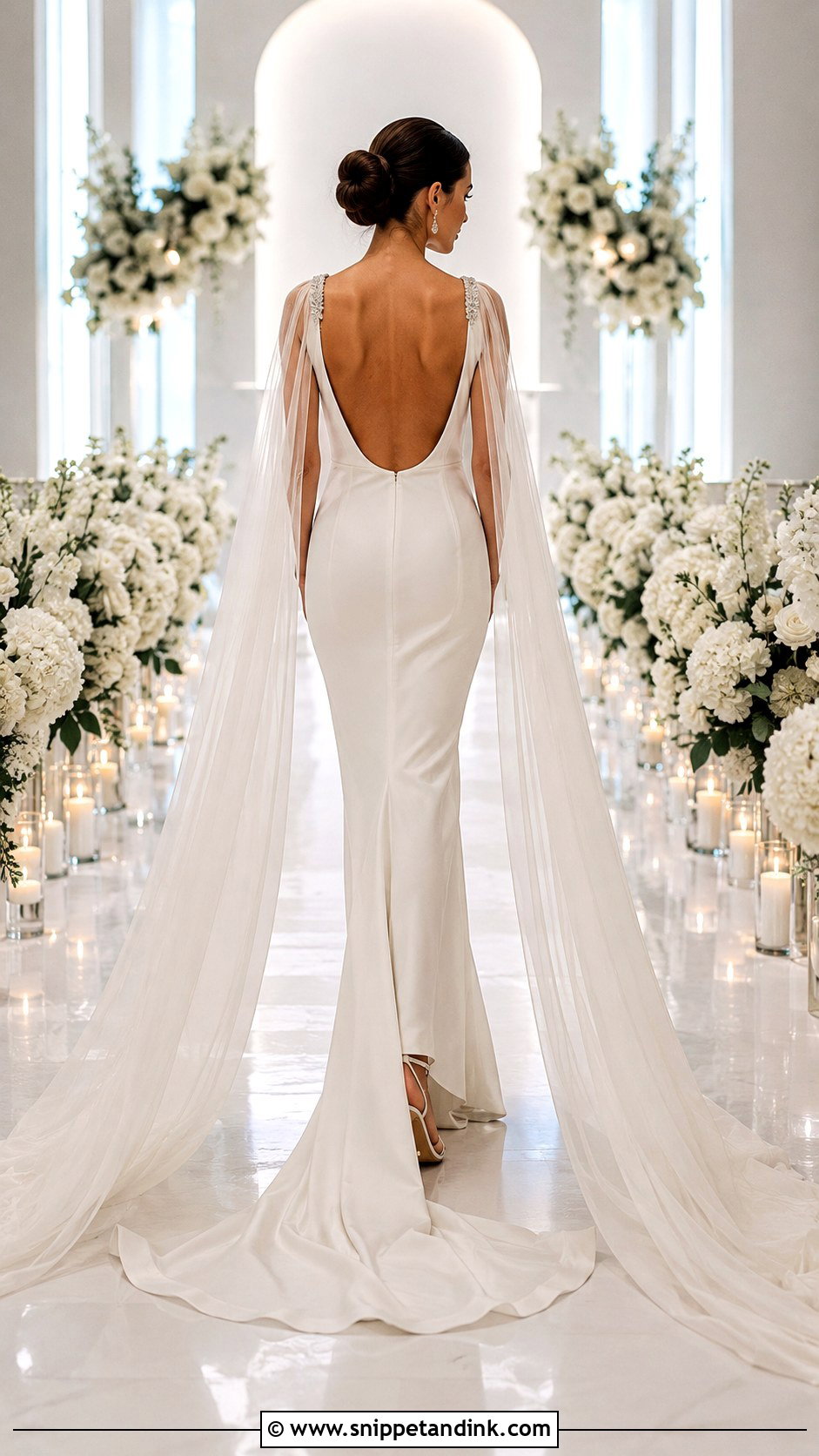
A backless gown with a cape has two faces: clean and classic from the front, dramatic from the back, which is the view guests see for most of the ceremony. Attach the cape at the shoulders or upper back so it frames the open back instead of covering it. Sheer tulle lets the skin and the back detail show through. Test the attachment at a fitting by hugging someone. Open-back dresses have less structure to anchor to, so this is where capes most often slip.
21. Boho Cape Wedding Dress
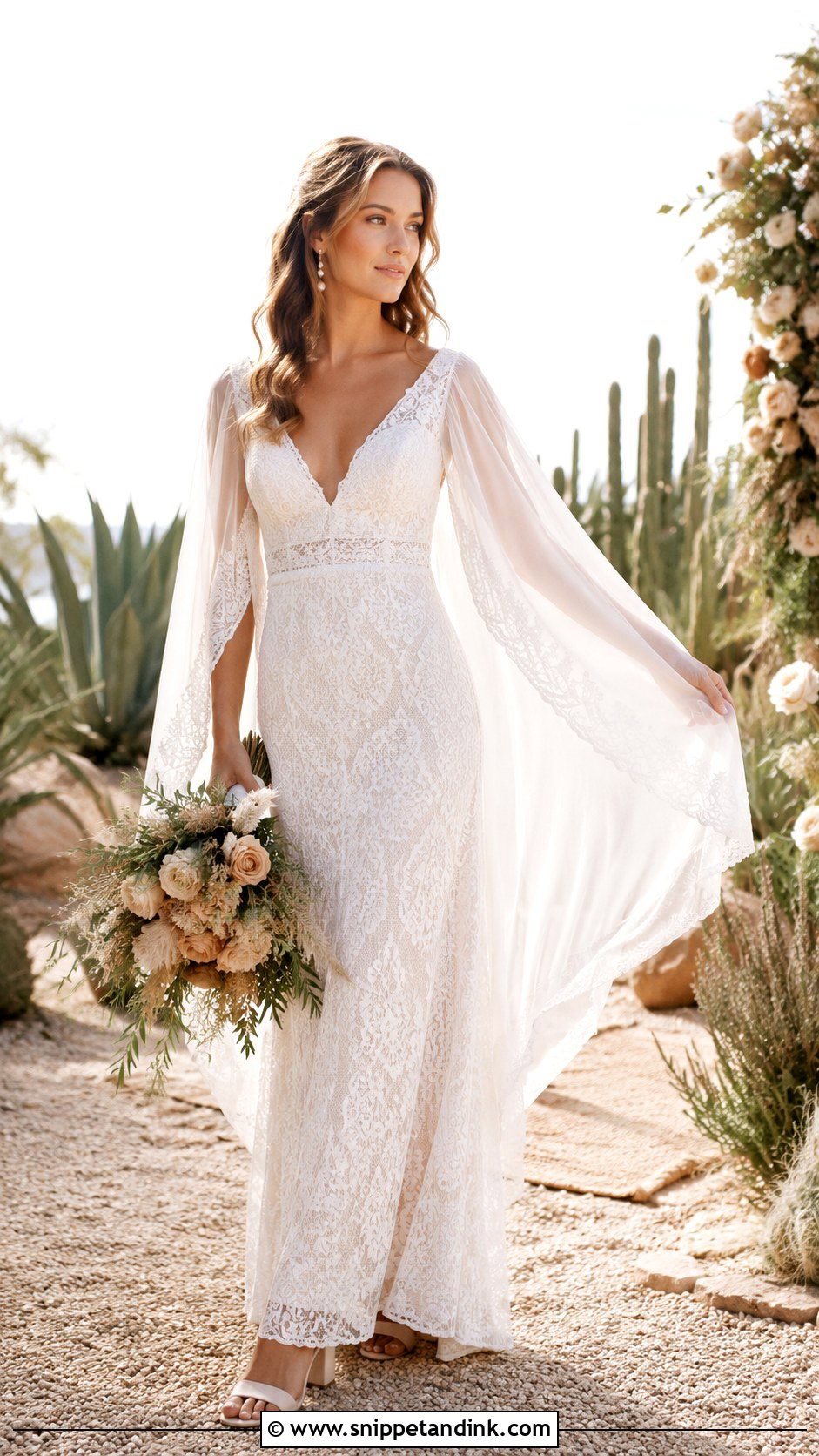
Boho capes are about texture, not shine. Soft lace, light tulle, fluttering cape sleeves or embroidered florals over an A-line, a sheath or a soft skirt fit the relaxed mood. Here I reach for crochet-inspired lace or organic floral patterns rather than crystals. The cape should hang loose. Anything stiff fights the whole idea. Loose waves, small pearl earrings and block heels or sandals finish it. I’d use this for outdoor ceremonies, desert venues or relaxed garden weddings.
22. Beach Cape Wedding Dress
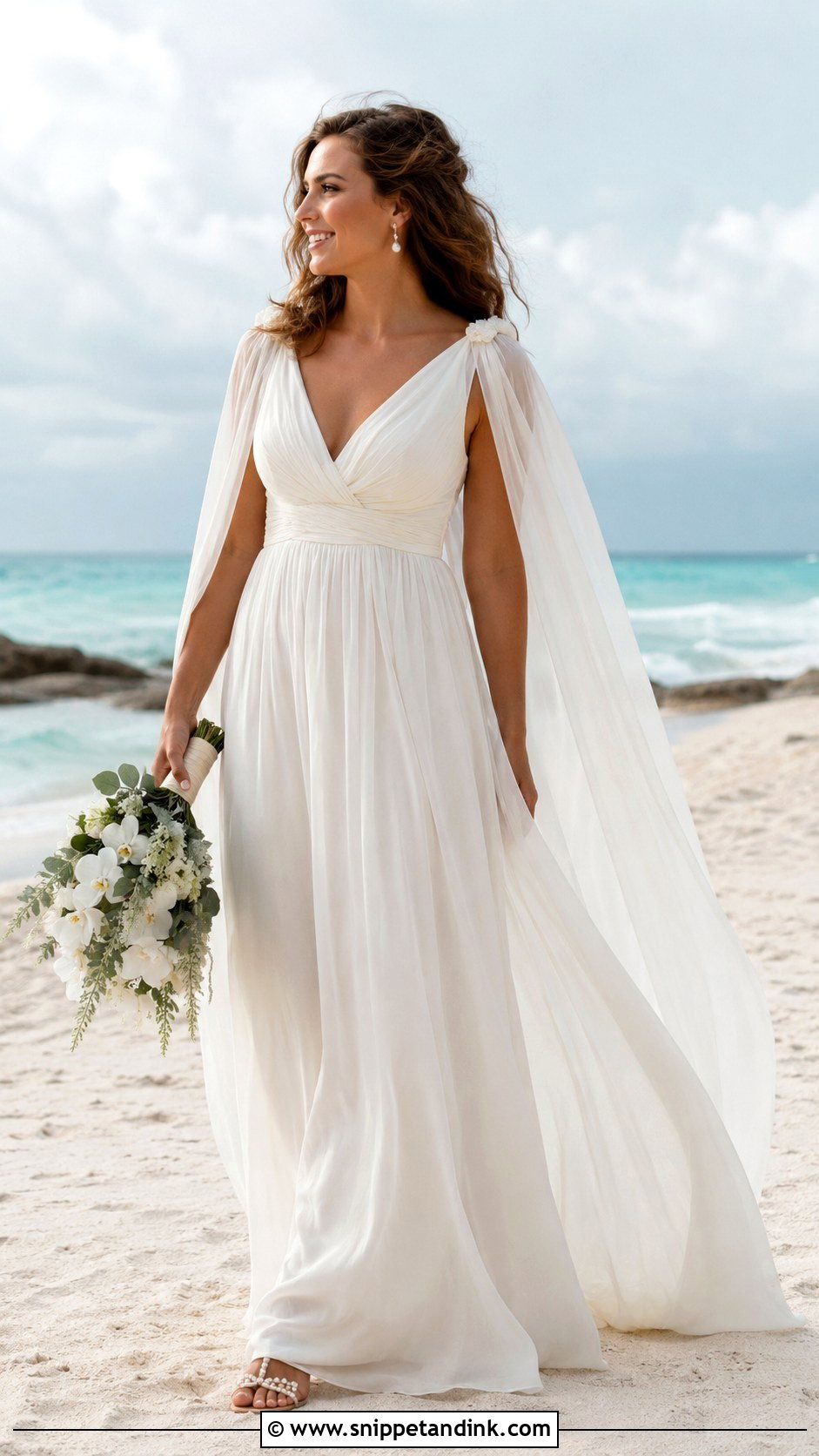
On a beach, the cape has to be light, because sand, wind and heat are all against you. Pick a chiffon, crepe or soft tulle gown with a sheer cape that catches the breeze. Long heavy capes drag through sand and get wet at the waterline, so a shorter train, soft cape sleeves or a light shoulder cape is the practical call. I’d plan the ceremony with your back to the wind if you can; otherwise a sheer cape blows forward over your face during the vows. Flat sandals and loose waves suit it.
23. Winter Cape Wedding Dress
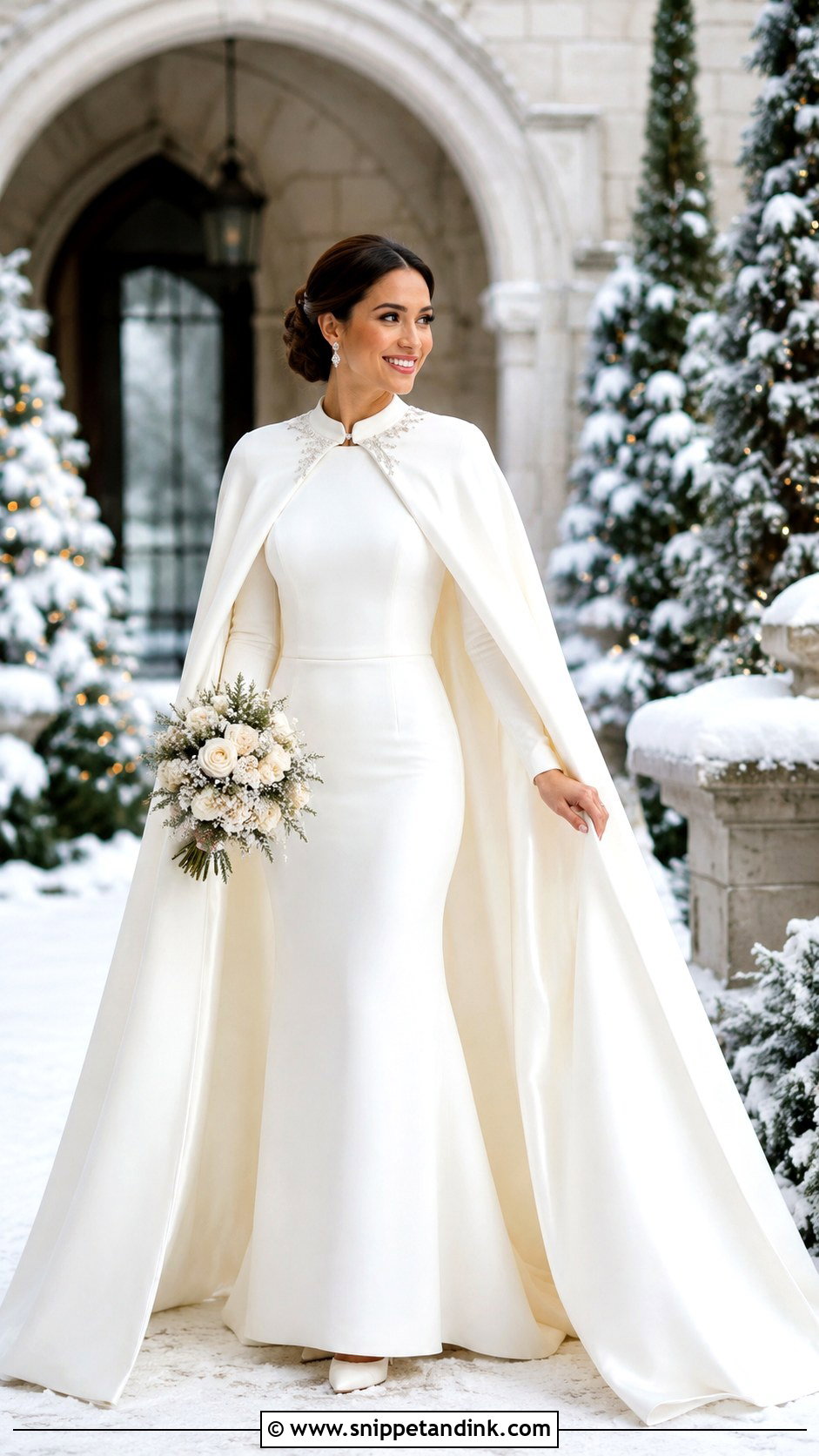
Winter capes need warmth, and that means heavier fabric. A satin cape, a crepe cape, a faux fur-trimmed cape or a lined cape over a long-sleeved gown are all realistic options. Keep the colour soft ivory or warm white so it still reads bridal. A structured dress underneath helps the cape look polished rather than bulky. If you have outdoor portraits planned, ask about fabric weight at the fitting; a heavy lined cape is warm but needs strong attachment points. Closed-toe heels make sense in the cold.
24. Garden Cape Wedding Dress
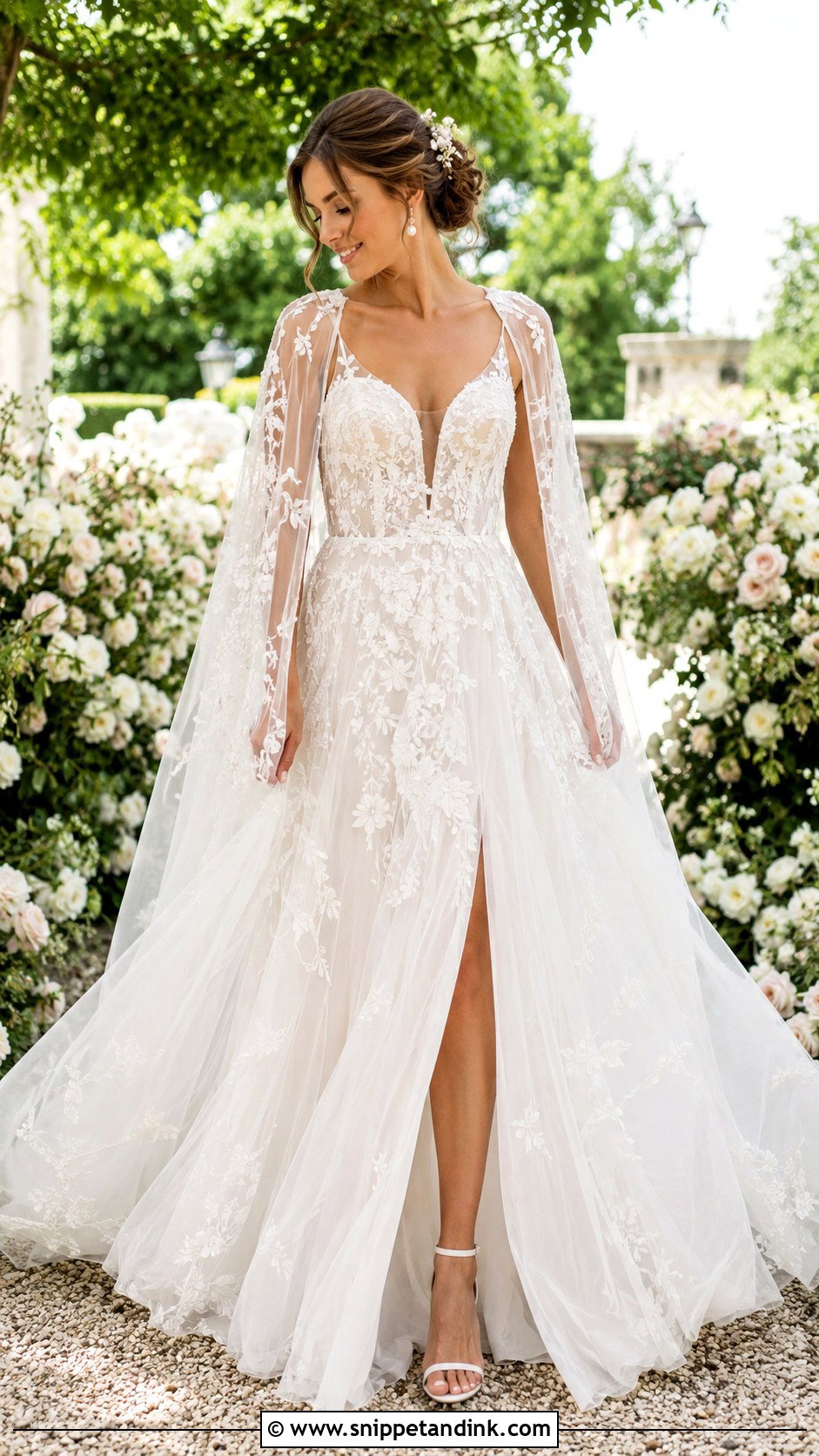
For a garden, the cape should move and pick up the light. Floral lace, embroidered tulle and delicate appliqué echo the surroundings, and an A-line or flowing sheath gives the outfit an easy shape. Watch the hem, though, since grass stains a long white edge quickly and dew makes it heavy. I’d keep a garden cape at floor length or shorter. Light accessories like pearl earrings and a small hair pin fit the setting better than heavy jewelry.
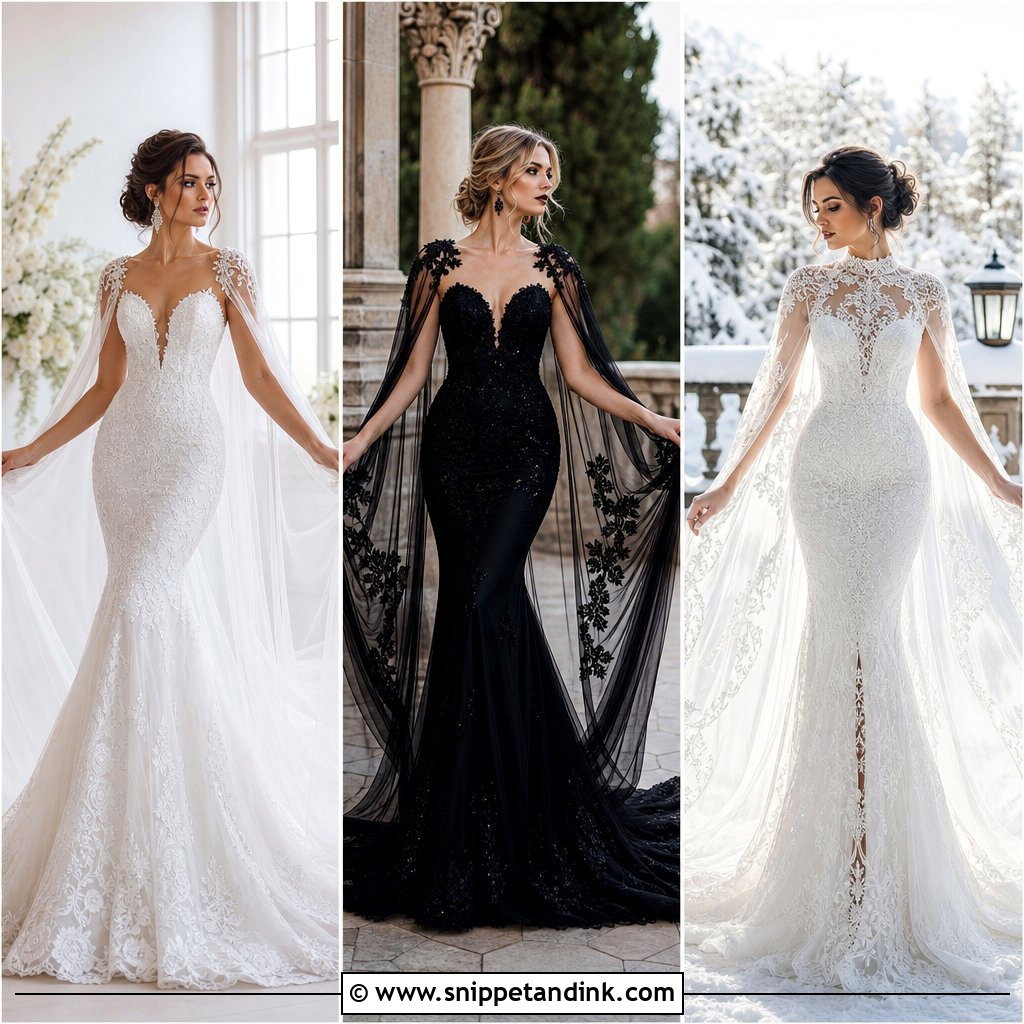
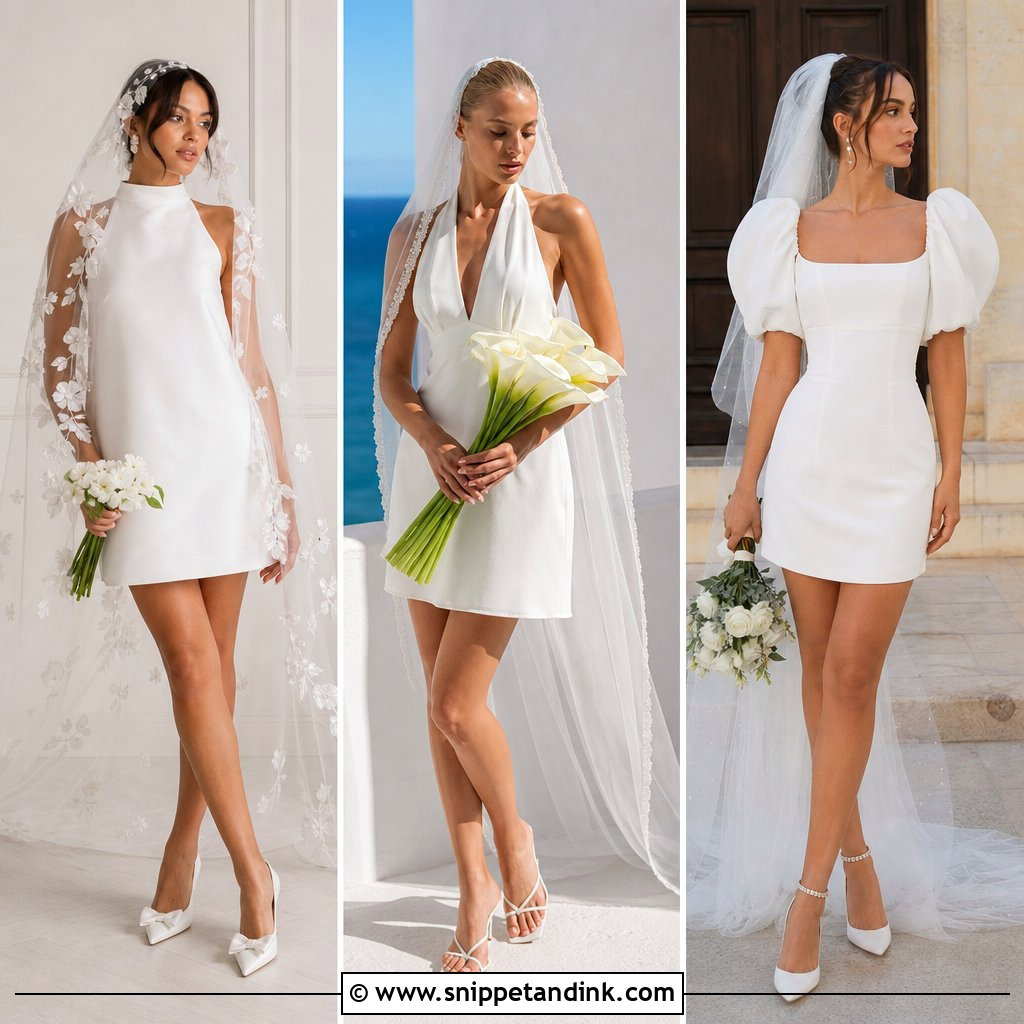

25. Simple Crepe Cape Wedding Dress
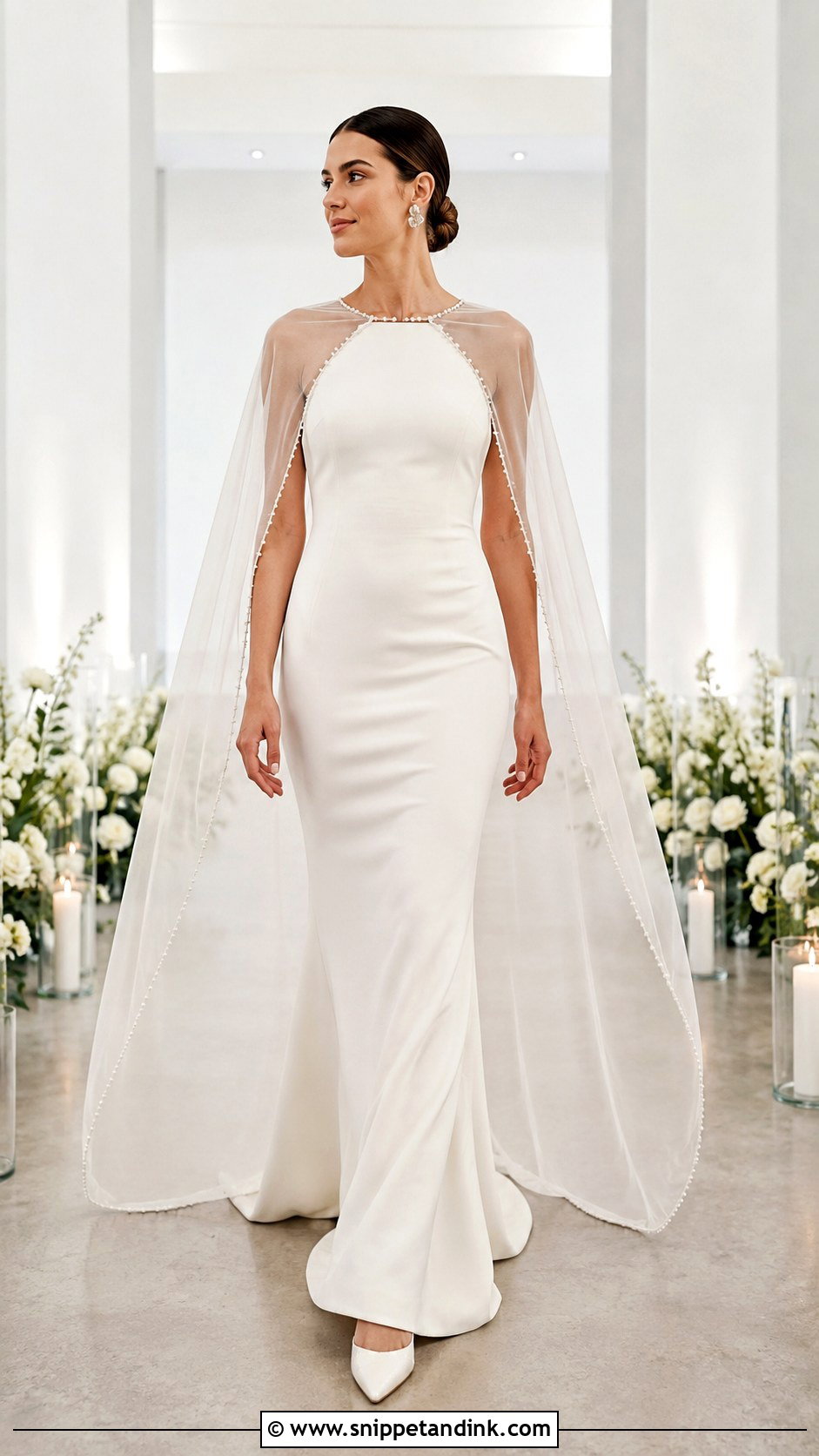
Crepe has a smooth, matte surface that follows the body without much shine, so it makes a strong, modern base for a cape. A fitted crepe gown with a detachable sheer cape looks polished for the ceremony and simple for the reception. The fit has to be close to faultless, because crepe shows every wrinkle and pull. Clean accessories suit it: pearl studs, sculptural earrings, pointed pumps. If you want a bit more detail, a pearl edge or a narrow lace trim on the cape is enough.
26. Short Cape Wedding Dress
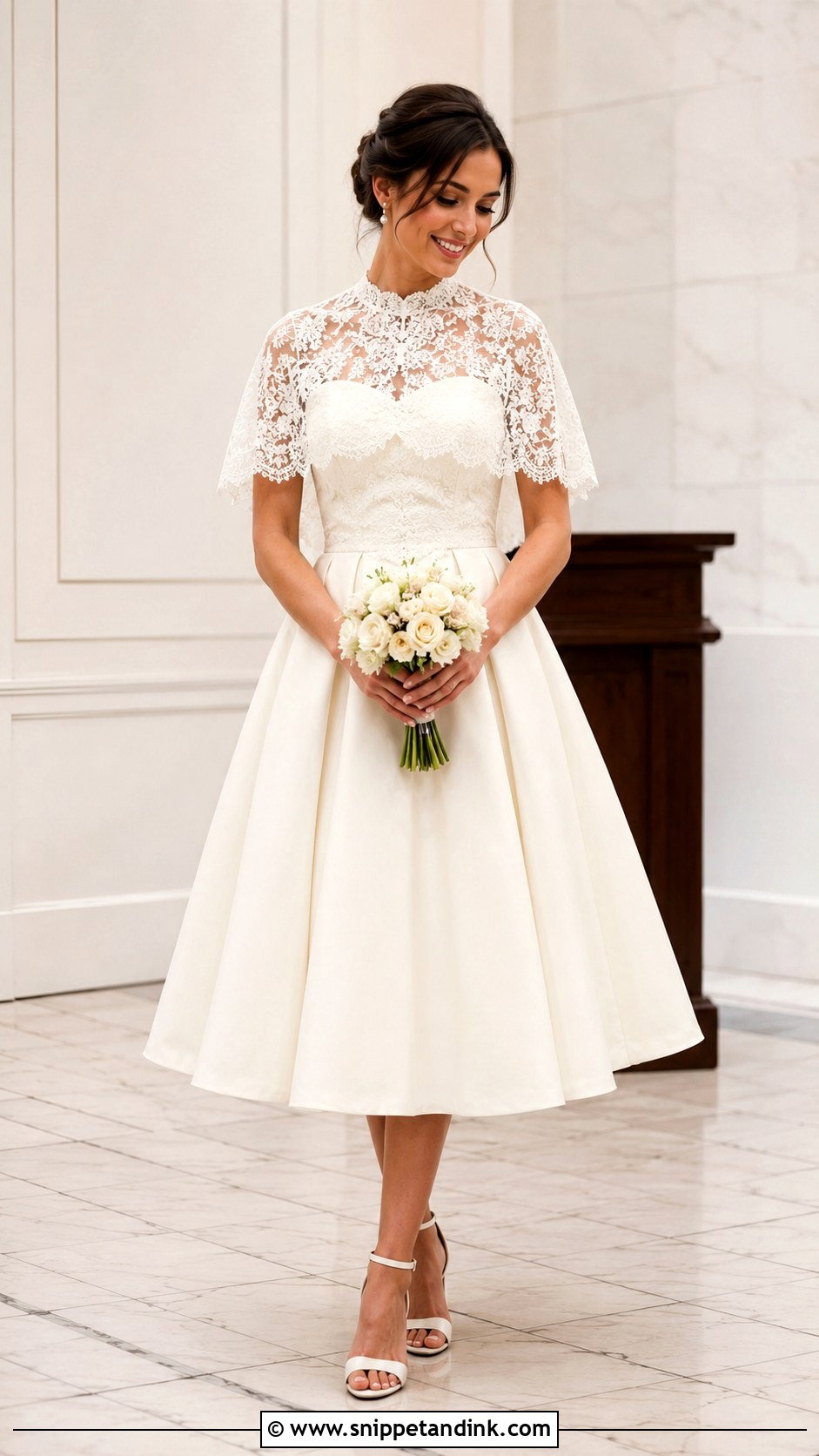
A short cape wedding dress gives you the cape effect without a train to manage. The capelet falls to the elbow, waist or hip and frames the upper body. It suits tea-length dresses, sheaths, mini reception dresses and simple A-lines, and it’s easy in a small venue or a courthouse. Lace looks romantic, satin polished, sheer tulle soft. A short cape is also the easiest to keep on through the meal and the dancing, which longer capes rarely manage.
27. Bridal Jumpsuit With Cape
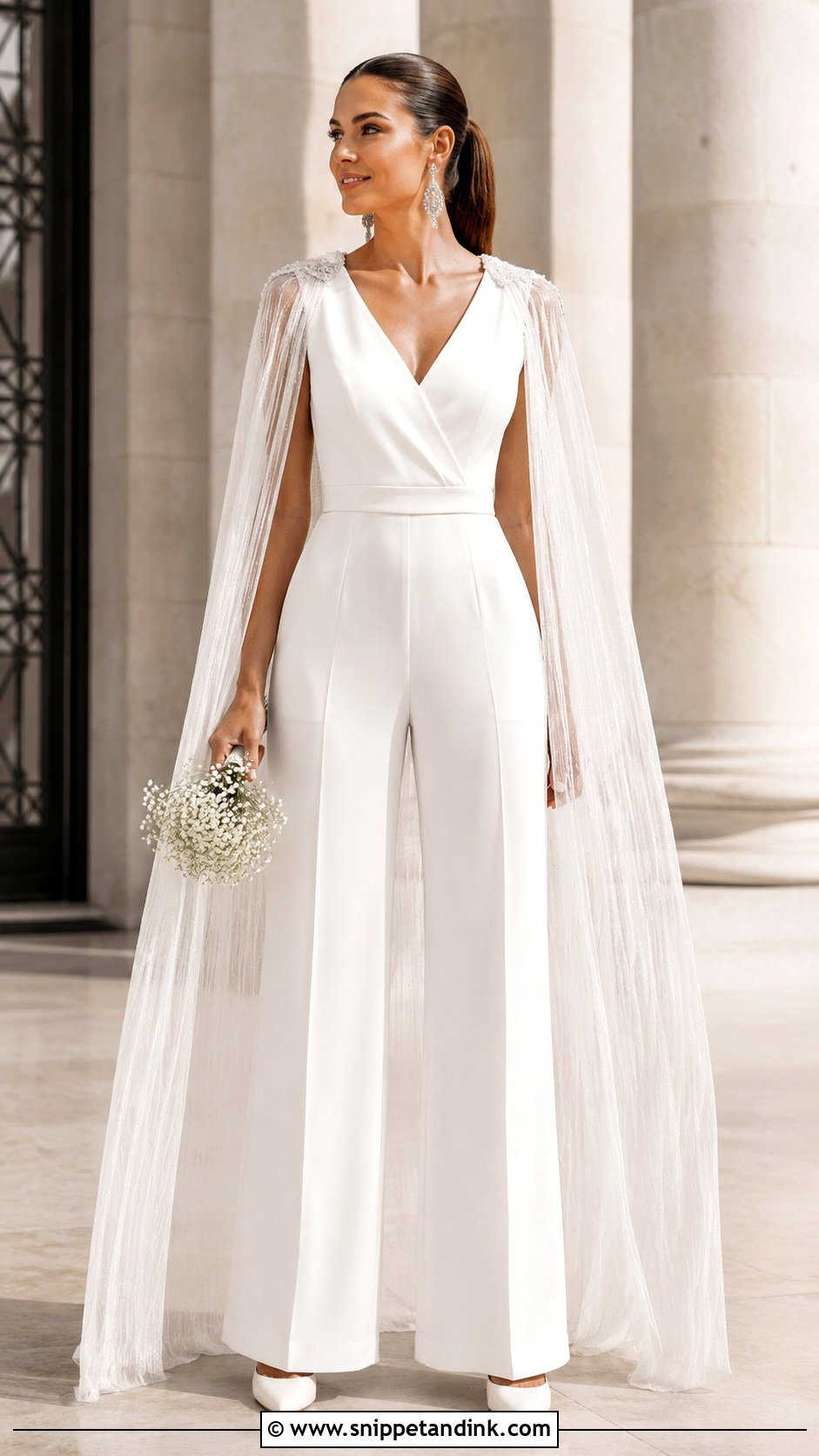
A jumpsuit with a cape gives you trousers for comfort and a cape for the aisle. A tailored white jumpsuit with wide legs and a fitted bodice is the base; a detachable shoulder cape or cape sleeves add ceremony drama. The fabric must be smooth and structured, or the jumpsuit reads casual. I check the length of the trouser hem with the actual shoes at the fitting; wide legs that are too long catch under the heel. Civil ceremonies, modern venues and receptions are where this works best.
28. Plus Size Cape Wedding Dress
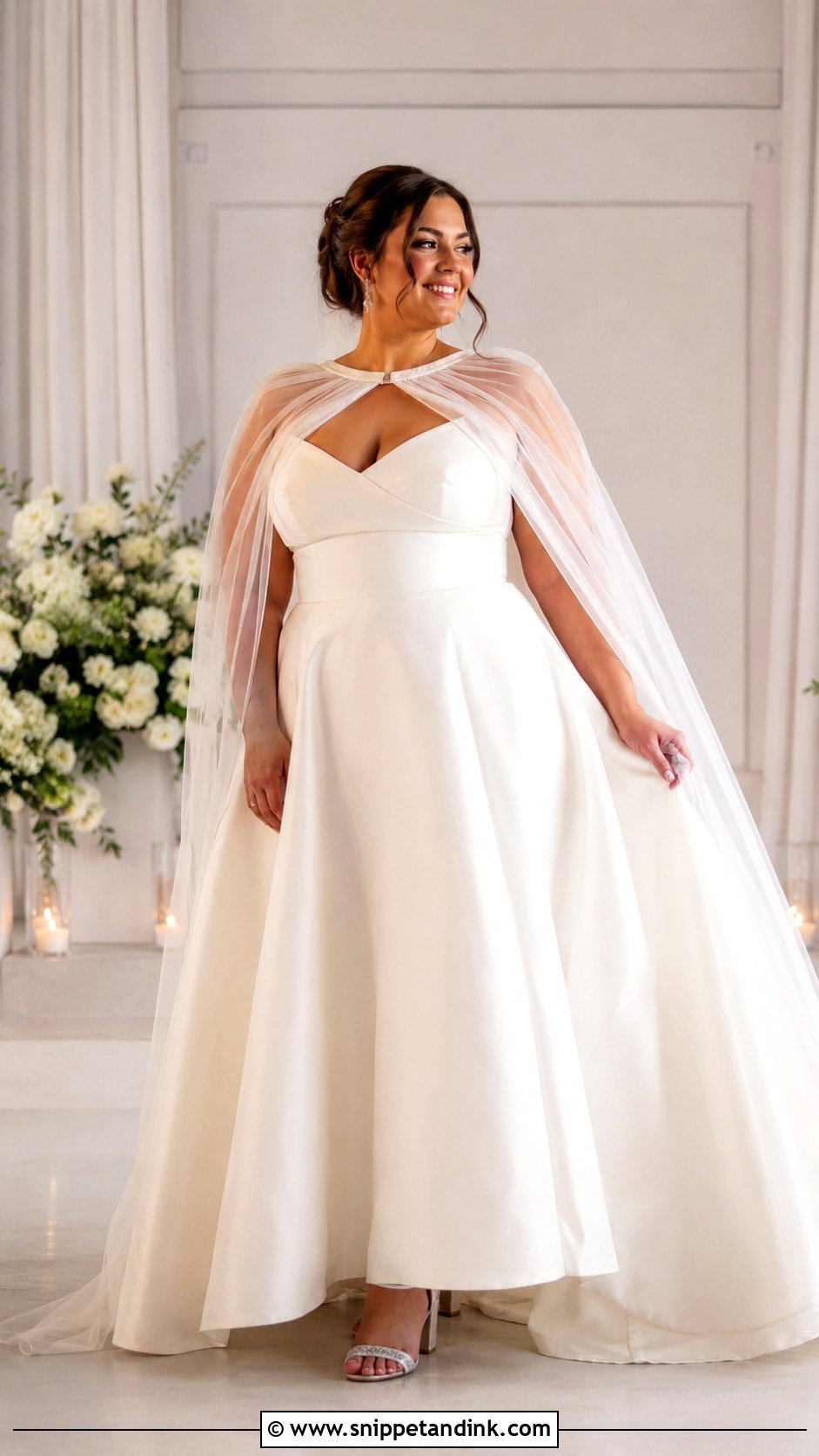
Capes can be very flattering on curvier brides when the proportions are right. Start with a gown that supports the bust, defines the waist and moves comfortably over the hips: an A-line, a structured ball gown or a fitted crepe. A shoulder cape draws the eye up; a long sheer cape adds a vertical line. I steer away from capes that gather at the arm or waist, which add width, and toward clean attachment points and soft fabric that skims. Supportive shoes and an open neckline finish it.
29. Colored Cape Wedding Dress
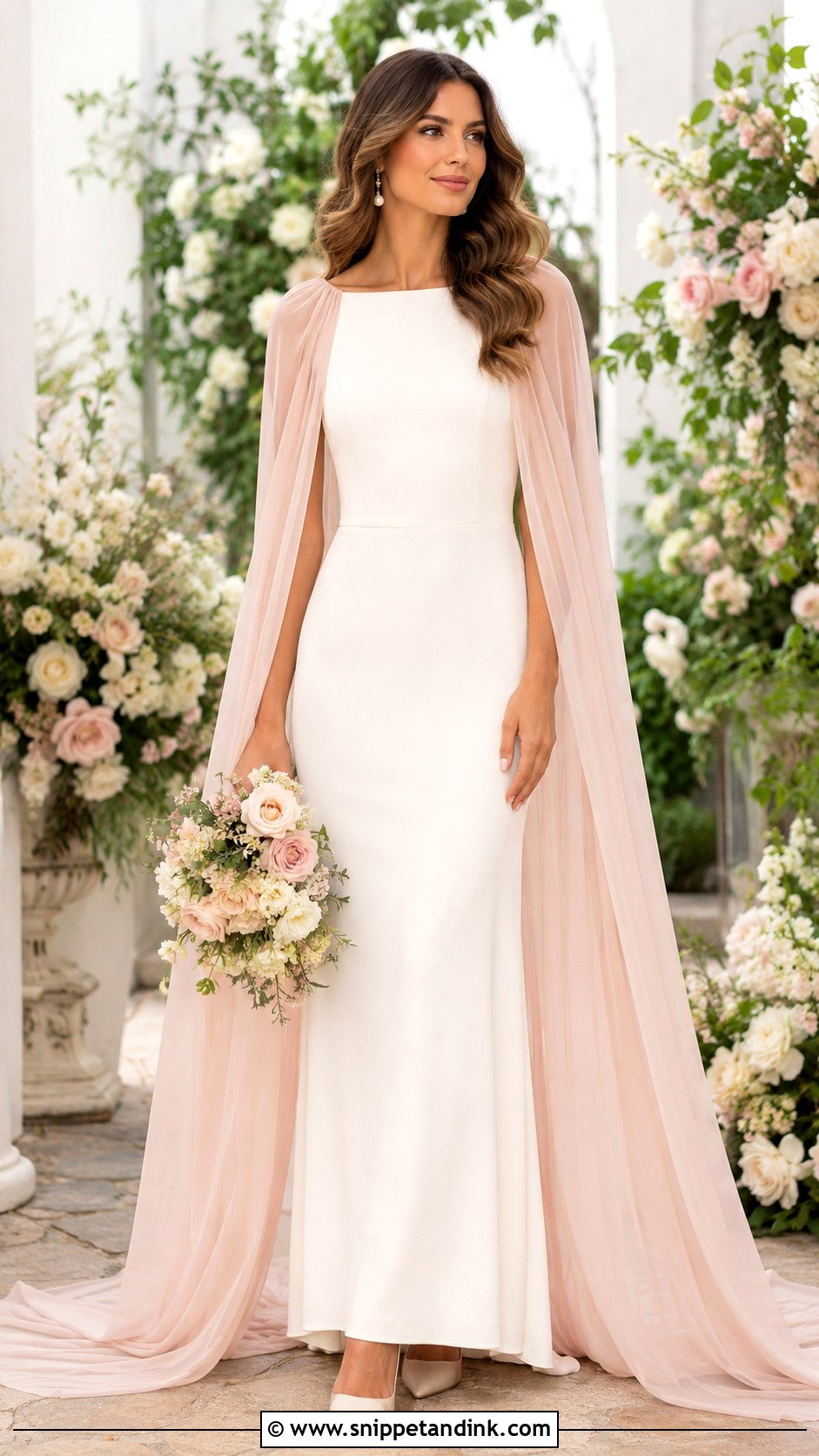
A coloured cape is a gentle way to bring personality in without wearing a coloured gown. Blush, champagne, pale blue or a floral print over an ivory dress creates contrast while staying bridal. Test the colour in daylight next to the dress; pale blue in particular can look grey in some lights. Keep shoes and jewelry neutral so the colour stays the one detail. I like this for spring weddings and garden venues, and it suits a bride who likes tradition with one small twist.
30. Reception Cape Wedding Dress
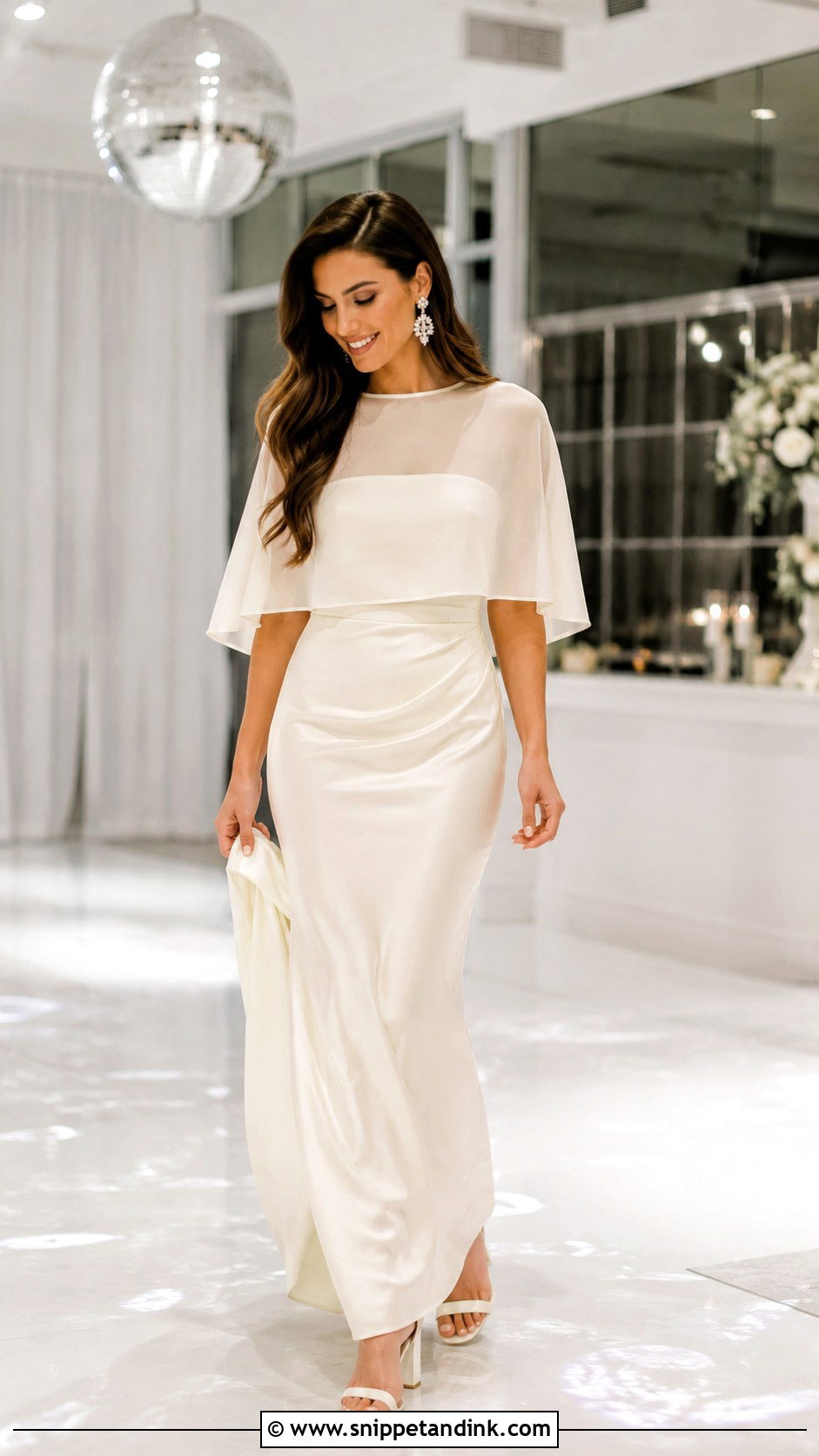
Swapping capes is an easy outfit change. Wear a long cathedral cape for the ceremony, then switch to a shorter cape, cape sleeves or a sheer shoulder cape for the reception. With a simple base dress, a different cape changes the mood completely. The evening cape should be light, secure and short enough not to drag, since it has to survive dancing. If you’re doing a hairstyle change too, do the cape first, then the hair, so you don’t pull pins out over your head.
What Happens When You Sit, Hug and Dance in a Cape
Brides try capes on standing still in front of a mirror, which tells you almost nothing about how they behave over a long day. At the last fitting I ask for a few practical tests.
Sitting down
A long cape ends up under you on the chair. Lift it and drape it over the back of the seat as you sit, or ask your planner to do it. Satin and organza crease under weight; tulle mostly recovers.
Hugging
Every hug pulls the cape forward and the neckline back. Raise both arms and hug someone at the fitting. If the bodice shifts, the cape needs another attachment point.
Dancing
Long capes get stepped on, by you and by everyone else. Either take it off or have the seamstress add a wrist loop so you can lift the hem while you dance.
Can You Wear a Veil and a Cape Together?
You can, but I’d only suggest it when one of them is very simple. Two long sheer layers falling from your head and shoulders blur into each other in photos and start to tangle when you move. If you want both, wear a short veil or a blusher with a long cape, or a long veil with a short capelet. Keep the fabrics similar in tone and weight so they look like a set. Many brides find that a cape replaces the need for a veil altogether, which also frees up the hairstyle.
Does Your Cape Fit the Way You’ll Spend the Day?
A cape changes how a gown moves, covers and photographs, so it deserves as much thought as the dress. Sheer tulle, pearls, satin, lace, florals and short capelets all have a place, and there’s a version for almost every venue and silhouette. Balance is the rule I come back to: a detailed cape with a plain gown, a plain cape with a detailed gown. Then think about the practical side, like where it attaches, how long it is and what happens when you sit, hug and dance. Get those right and the cape stays with you all day instead of ending up on a chair.
You'll Like These Ideas:





Leave a Reply