
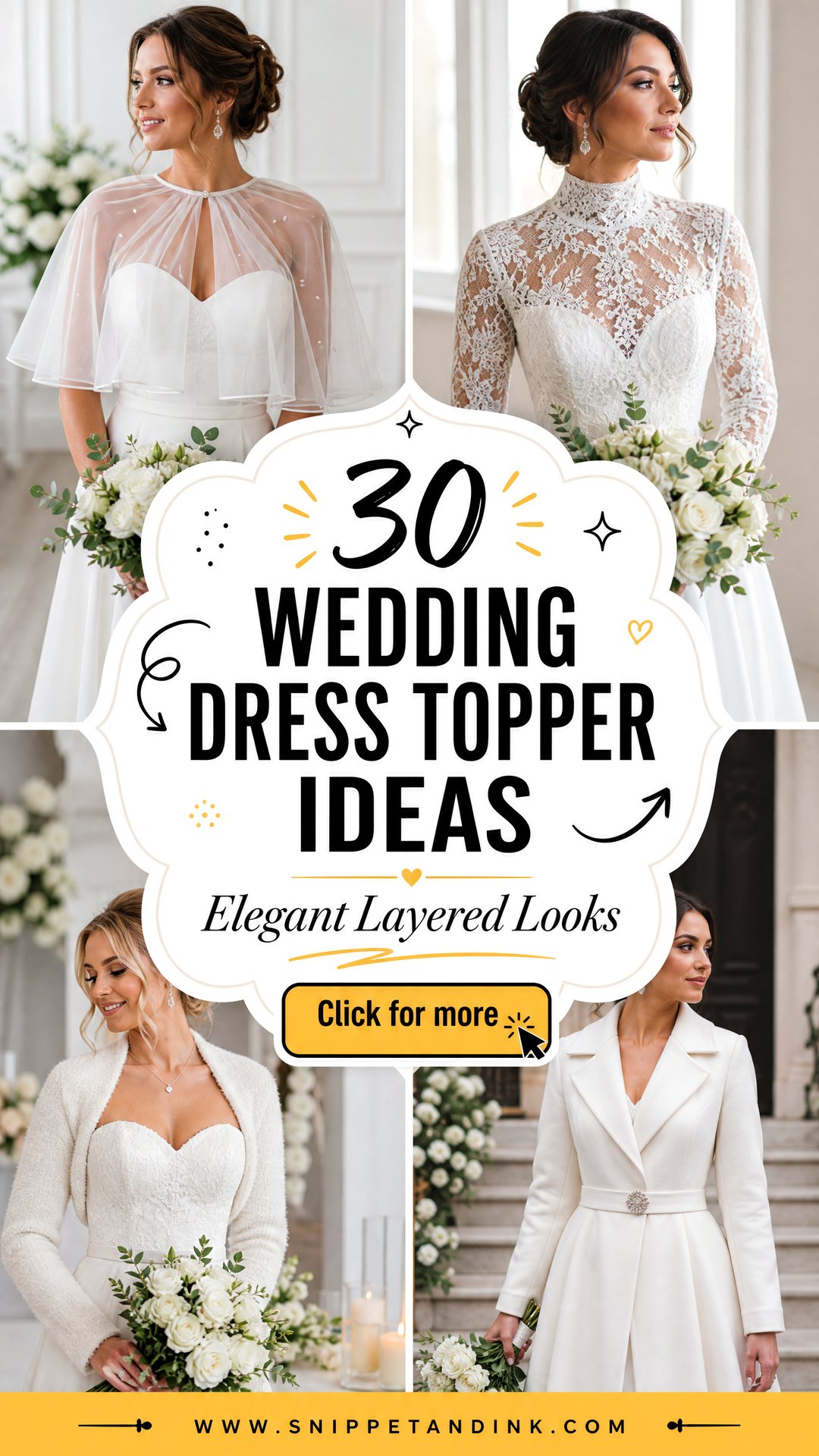
A topper is the cheapest way I know to get two looks out of one gown. You keep the dress you fell for and add a layer for the ceremony, the church, the cold, or the portraits, then take it off when the dancing starts. The catch is that a topper sits right next to the dress all day, so fabric tone, neckline and fit decide whether it reads as part of the outfit or as something borrowed. Below are thirty options I’d actually put in front of a bride, from a cropped lace bolero to a full detachable overskirt, with notes on which gowns each one suits and where each one tends to go wrong.
Reading Your Gown Before You Shop for a Layer
Before I pull a single topper, I look at three things on the dress: the neckline, the fabric finish, and where the waist sits. Those decide almost everything that follows.
Neckline
Strapless and sweetheart bodices take almost any topper, because there is nothing to clash with. A V-neck or halter already has a strong line, so a topper that cuts across it, like a high turtleneck, fights the dress. With straps, I go for a cape or shawl that sits over them rather than a fitted bolero that has to work around them.
Fabric finish
Matte meets matte, shine meets shine, or you go for a deliberate contrast like sheer over solid. The mismatch I see most often is a slightly shiny satin jacket over a matte crepe gown; it looks like a substitution rather than a choice. Hold the two together near a window, not under shop lighting, because daylight is what the camera sees.
Waist and length
Cropped toppers should stop at or just above the gown’s waist seam. Longer layers, like coats and capes, need to clear the skirt without crushing it. If you are petite, a topper that ends mid-ribcage shortens you more than anything else on this list, so take that measurement before you order online.
Colour is the last check. White, ivory, champagne and cream all look similar on a screen and completely different next to each other. I always ask the bridal shop for a fabric swatch and take it shopping.
1. Lace Bolero Wedding Dress Topper
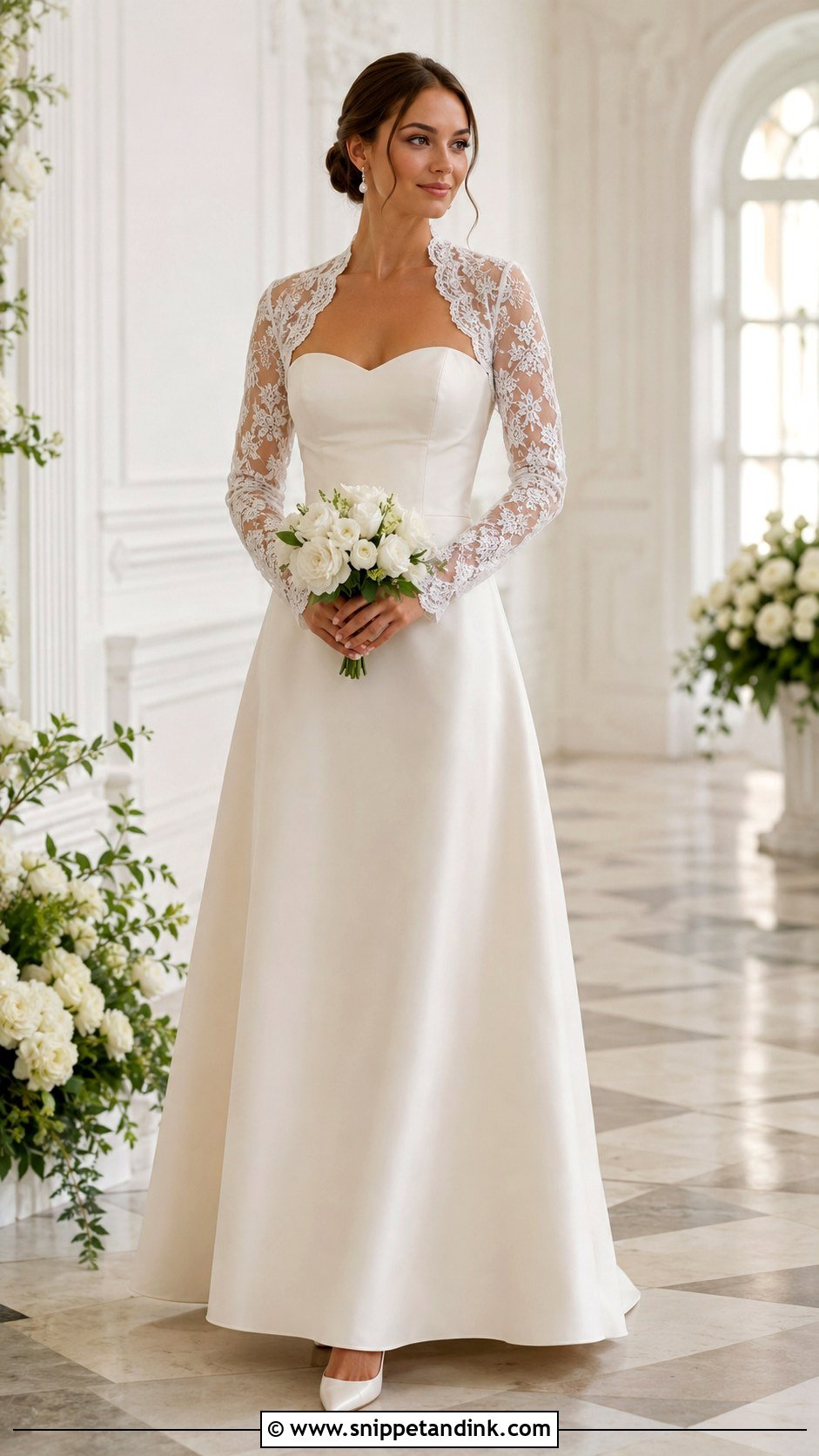
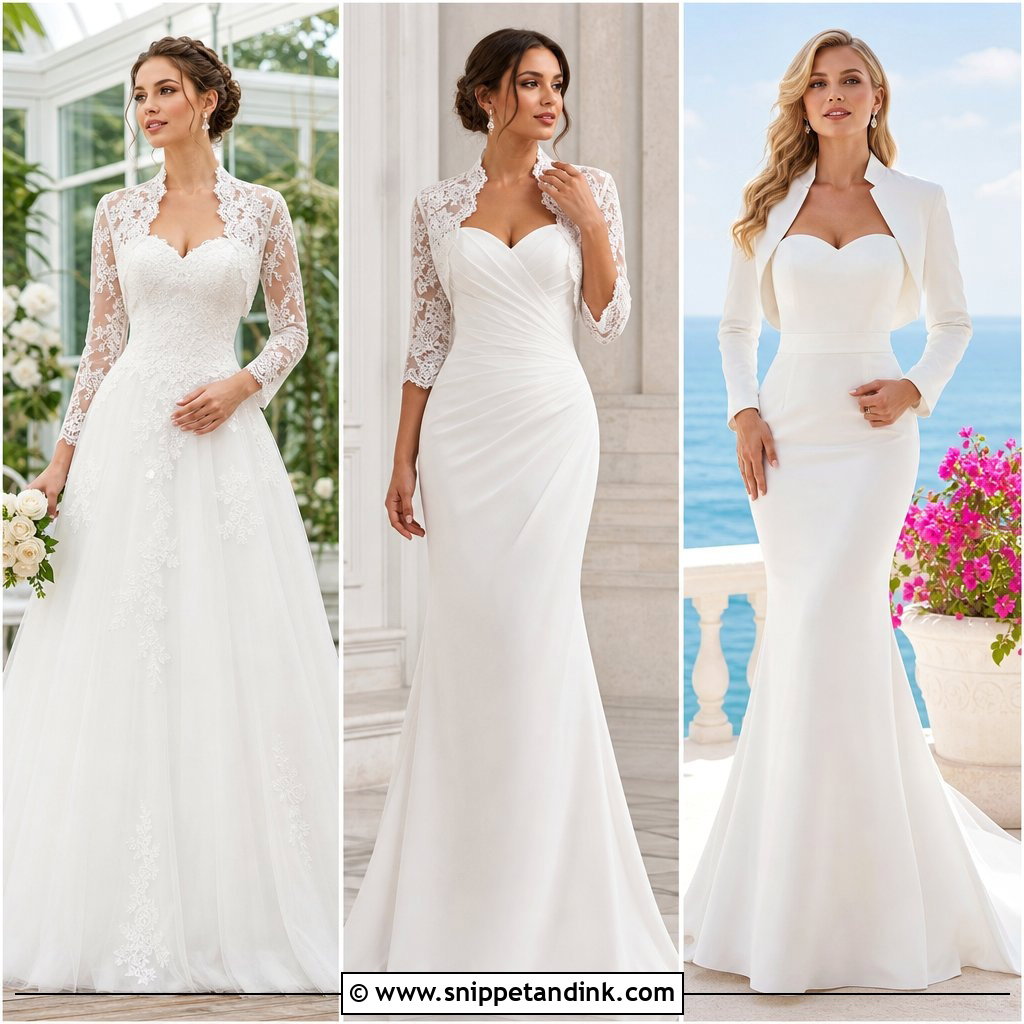
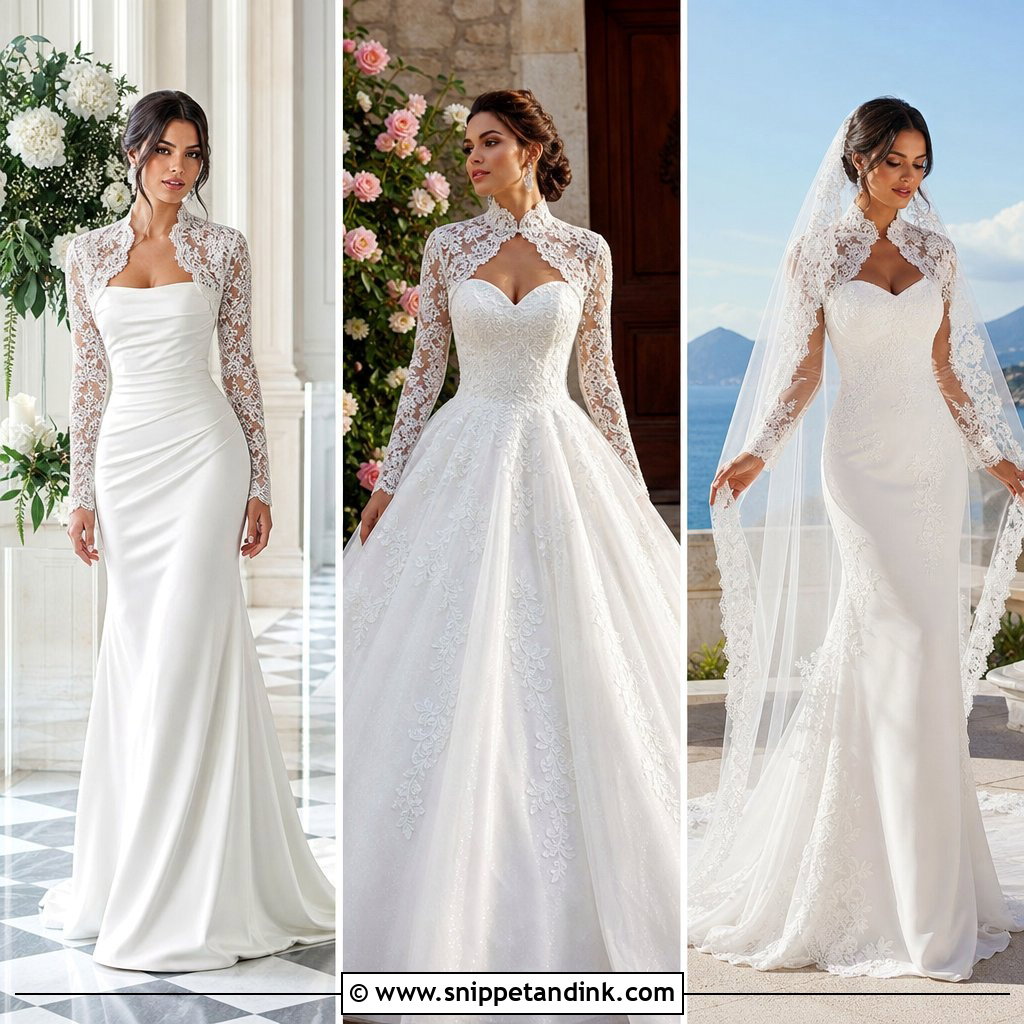
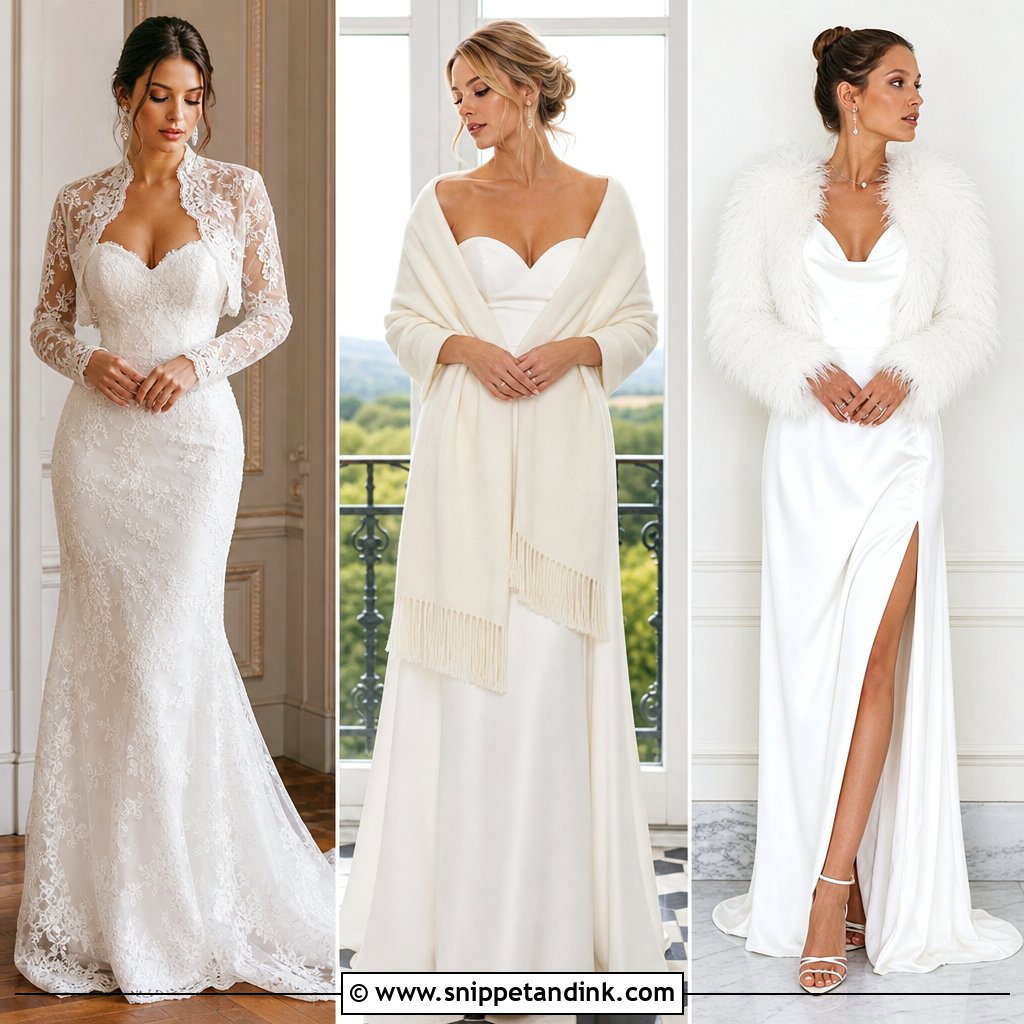
Lace boleros are the topper I fit most often, and the length is where they succeed or fail. I want the hem to stop at or just above the natural waist; a bolero that ends mid-ribcage cuts the torso in half and makes the skirt look heavier. They sit best over strapless, sweetheart and square necklines on plain satin, where the lace has a clean surface to contrast with. Hold the lace against the gown in daylight before ordering, because ivory lace on a white dress looks yellow in every photo. A low bun keeps the shoulder line visible, and the whole thing slips off in seconds when you want an open neckline for the reception.
2. Sheer Long Sleeve Wedding Dress Topper
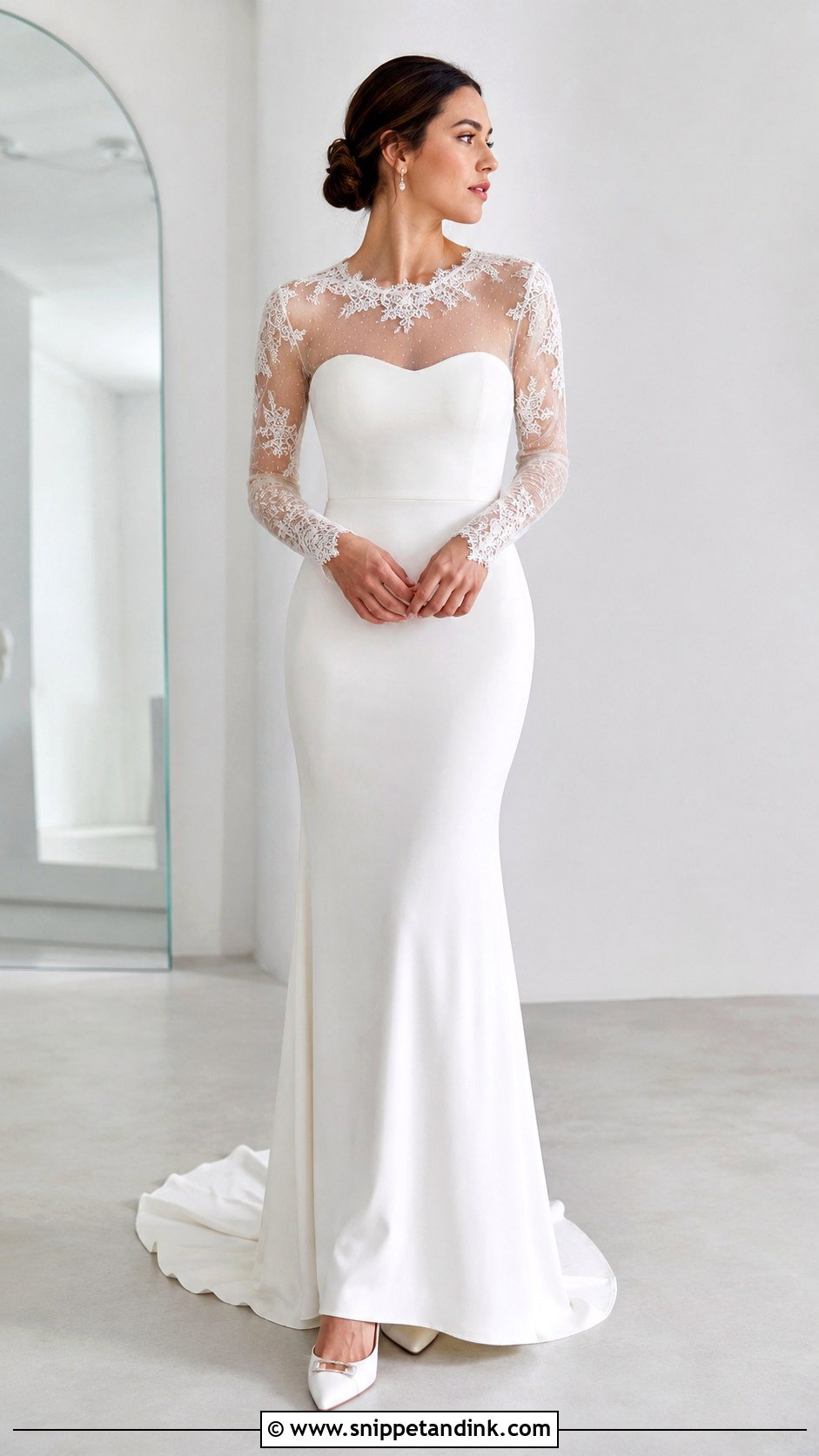
Sheer sleeves give you the look of a sleeved gown without anyone cutting into your dress. If you love a strapless or sleeveless gown but your ceremony venue expects covered arms, this is the gentlest fix. I look for illusion mesh or fine tulle in a shade close to your skin, not the dress, so the arm reads as a soft veil of fabric rather than a stripe. Fitted versions sit cleanest over mermaid, column and A-line shapes. Check the cuff: an elastic wrist can leave a red mark by the evening, so a hook or button closure is kinder.
3. Bridal Cape Wedding Dress Topper
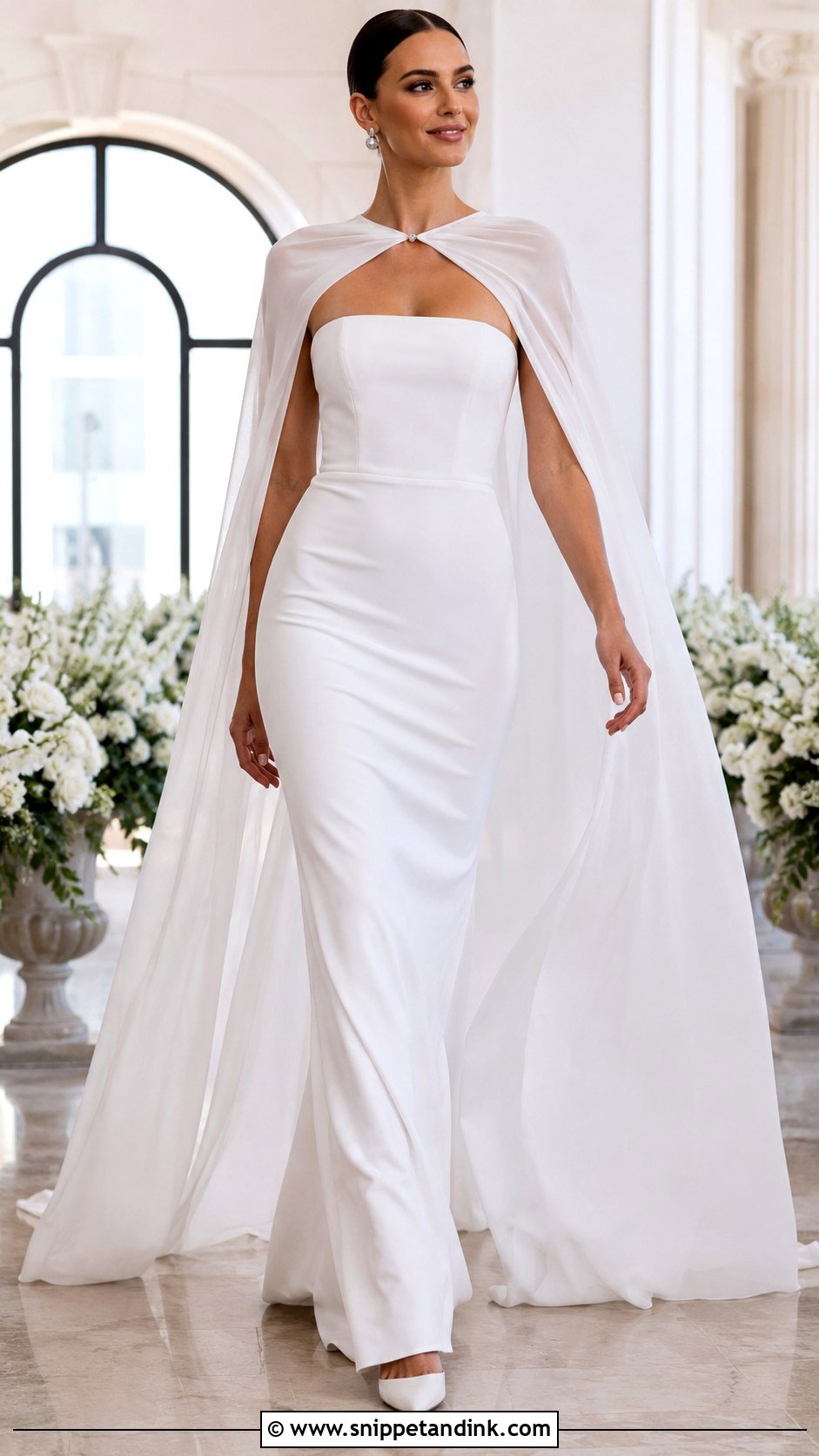
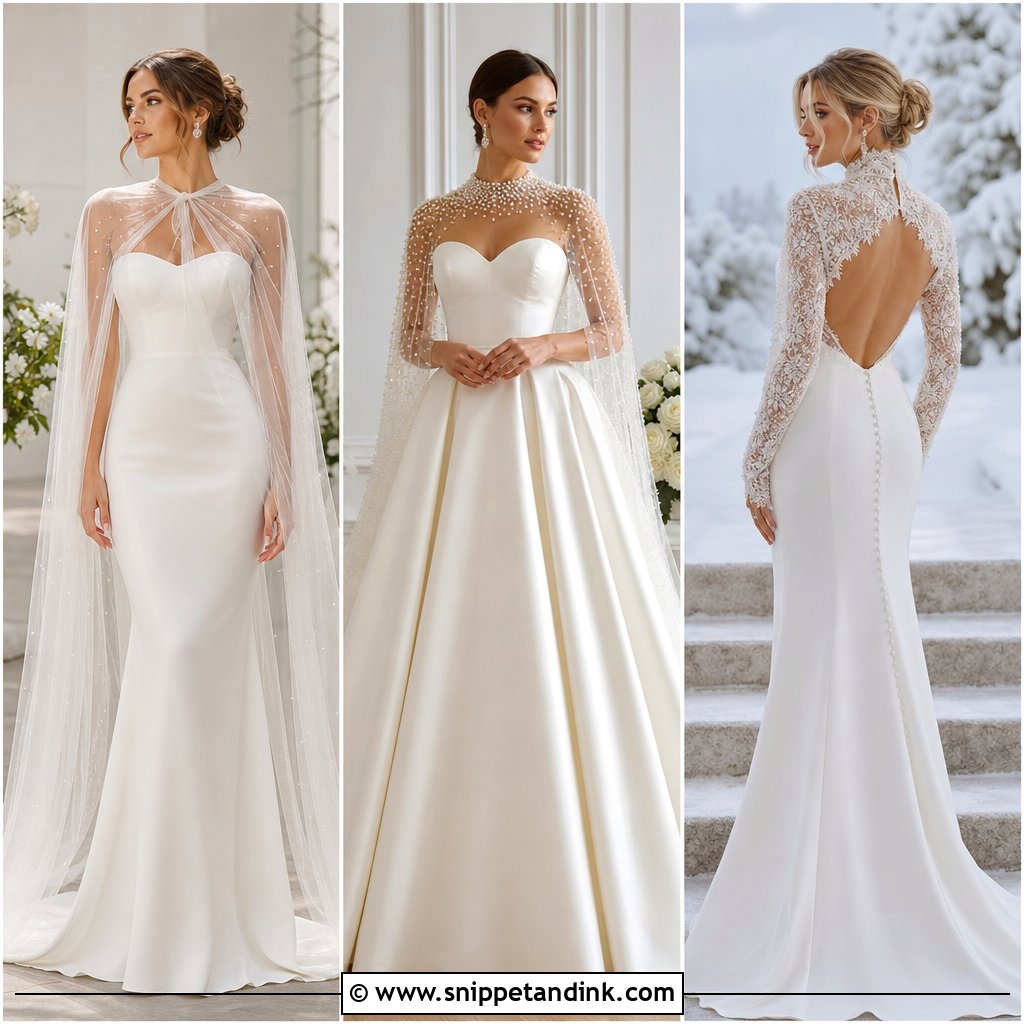
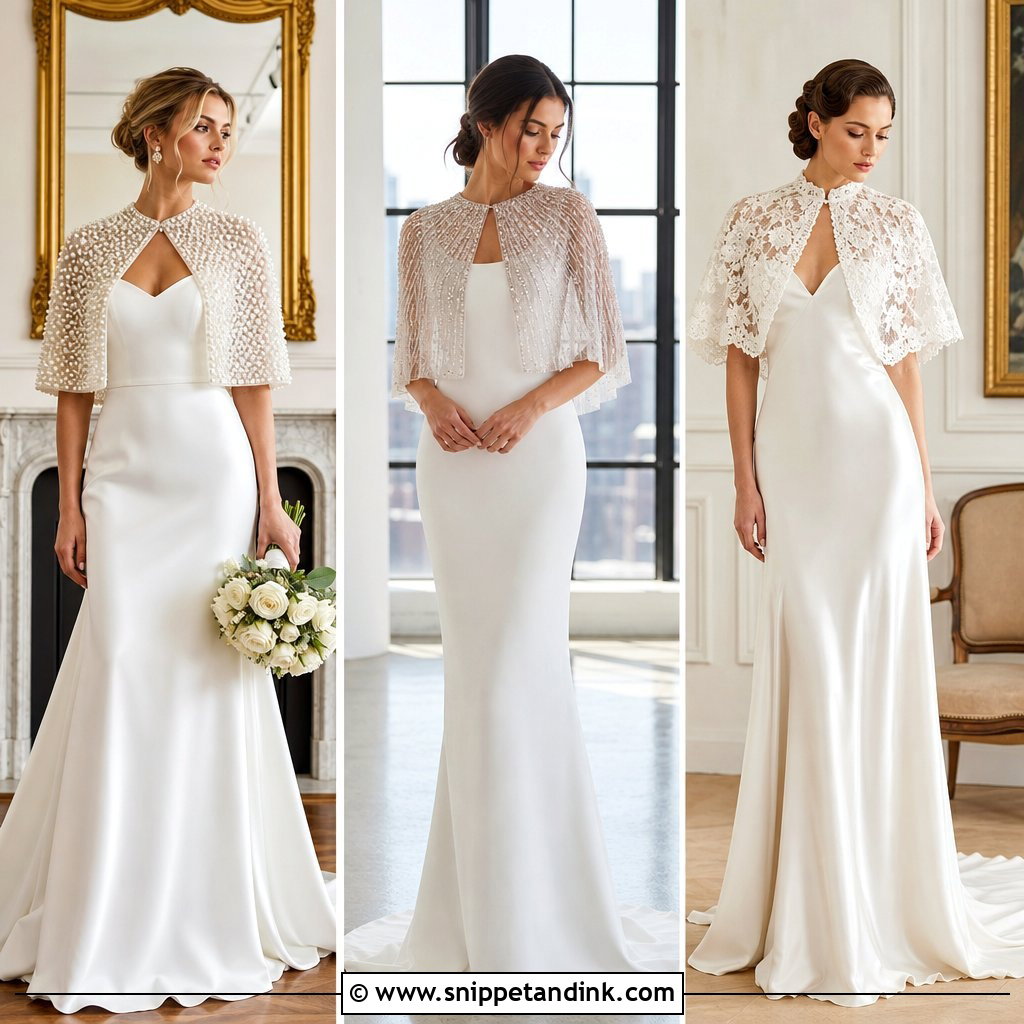
A cape gives you a ceremony entrance without the fuss of a veil on your head. It can fasten at the shoulders, the neckline or the back of the bodice, and the attachment point matters more than people expect: a cape hooked only at the back pulls the neckline backwards when you lift your arms to hug someone. Over a plain crepe or fitted satin dress, a long sheer cape moves well as you walk. If the gown is already heavily beaded, I’d keep the cape completely plain; on a simple dress, a pearl or lace trim along the edge is enough detail.
4. Pearl Wedding Dress Topper
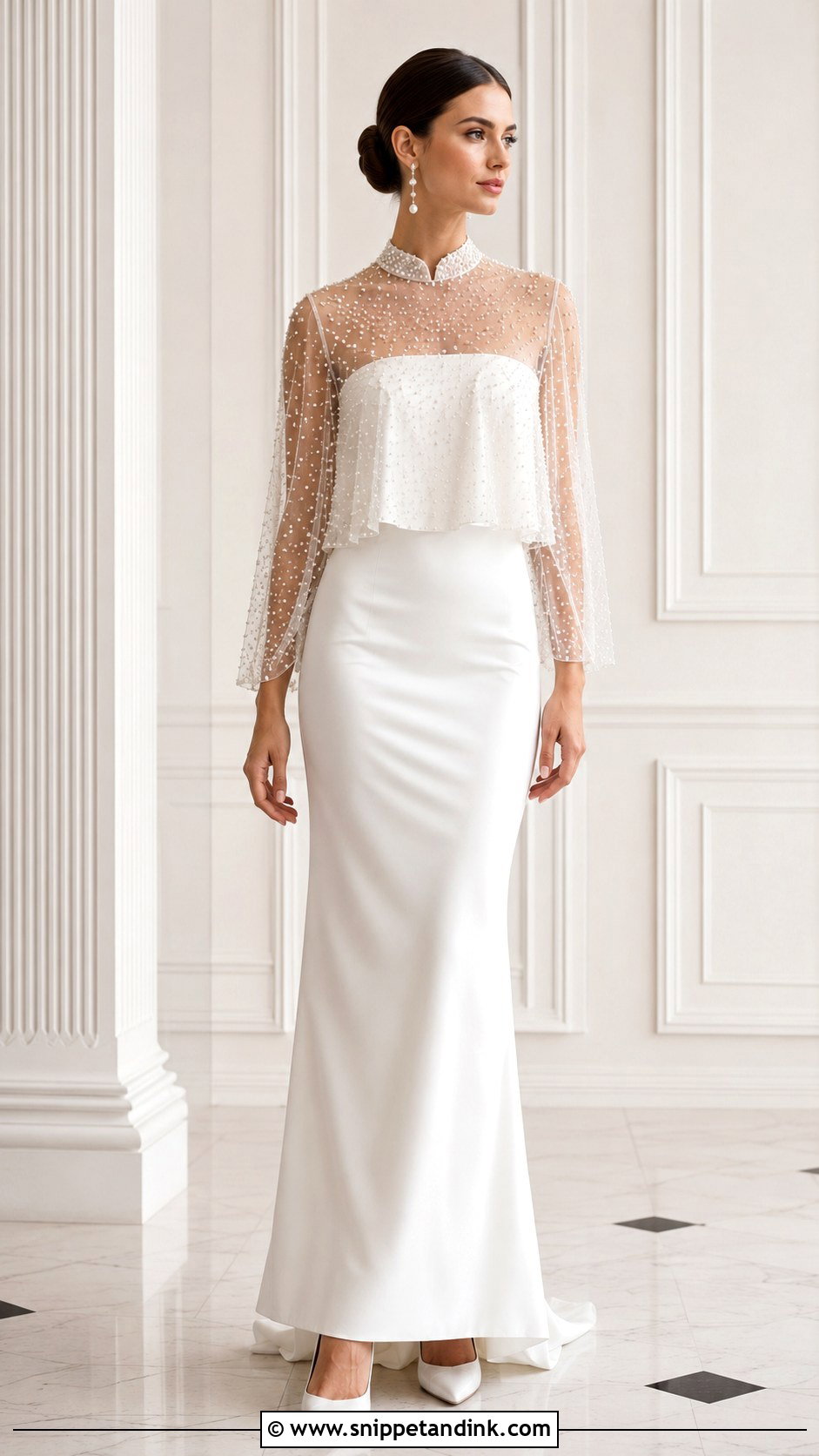
Pearl toppers give shine without the flash of sequins, which is why I steer brides toward them for daytime ceremonies. They come as sheer overlays, short capes or shoulder wraps. Pearls need a smooth base to show up, so plain satin, crepe or mikado underneath gives them the right backdrop; over lace they just add noise. Ask how they are attached. Glued pearls pop off when the fabric flexes, while hand-sewn ones survive a full day of hugging and sitting. Keep the earrings pearl too and skip a necklace, since the topper already sits at the collarbone.
5. Satin Bridal Jacket Wedding Dress Topper
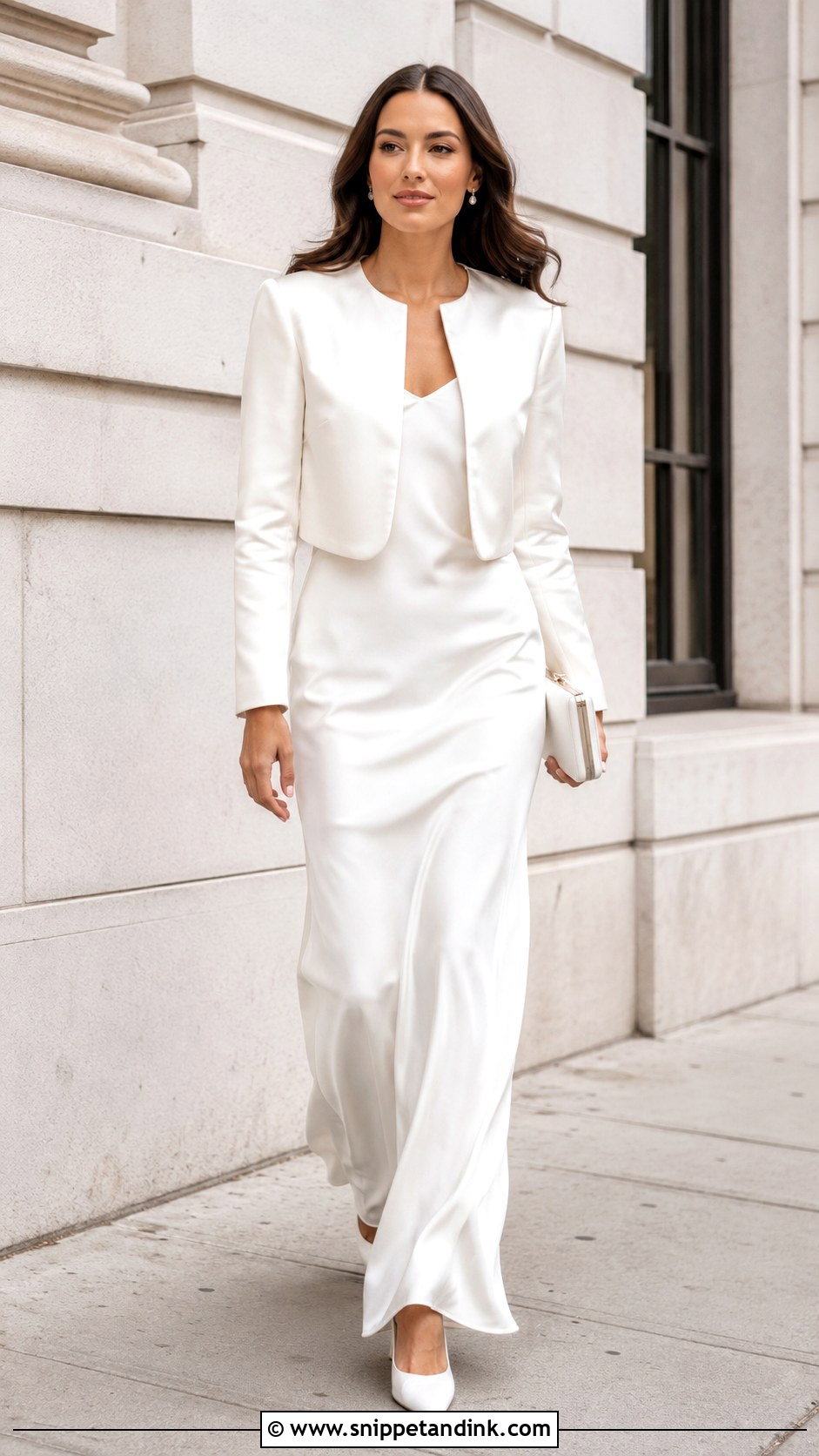
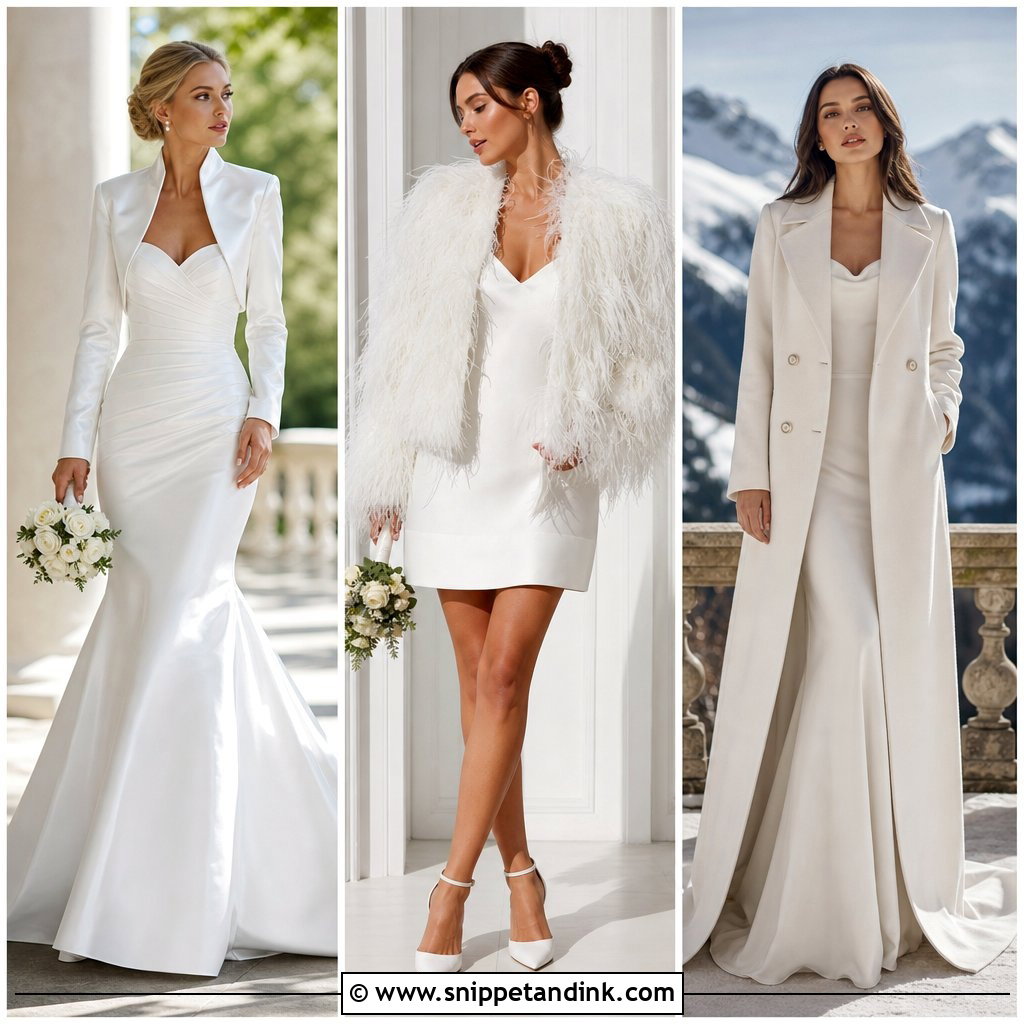
Satin jackets suit the bride who wants coverage but finds lace too sweet. The fabric has a sheen, so it has to match the dress closely or the two finishes look like they came from different shops; bring a swatch of your gown when you shop. I prefer a cropped cut with a soft, natural shoulder rather than heavy padding, which can look boxy over a slip dress or a slim A-line. One practical point: satin shows every crease, so hang it up the moment you take it off and never fold it into a bag between ceremony and photos.
6. Tulle Capelet Wedding Dress Topper
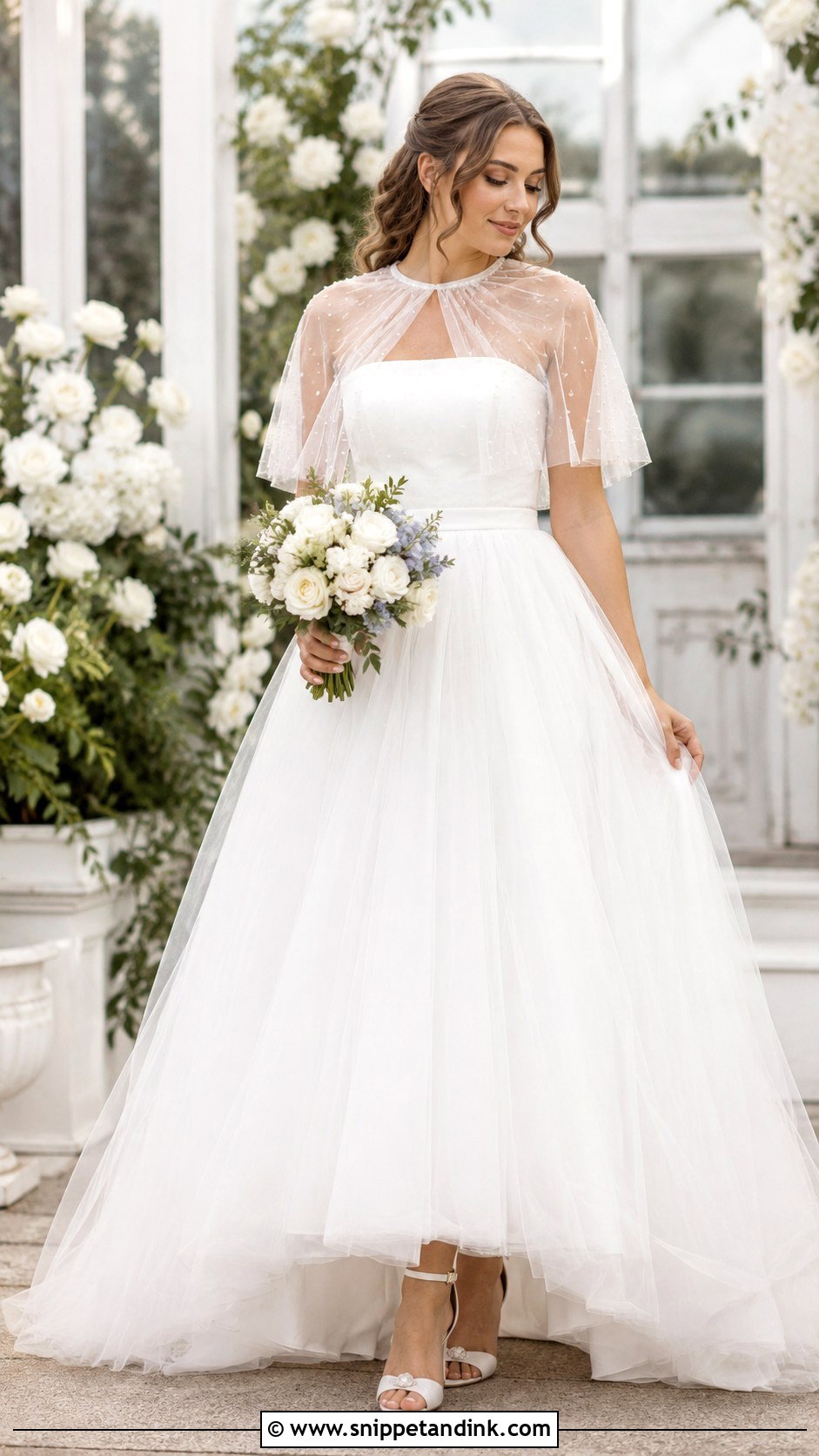
A tulle capelet is the lightest coverage on this list. It stops at the shoulders or just below, so your arms stay free for the bouquet, the rings and the hugging. Over a strapless ball gown or a lace A-line it softens the bare shoulder without hiding the bodice. Fine, soft tulle drapes; stiff net stands away from the body and can look like a costume, so squeeze a sample in your hand before you buy. Because it frames the face, I’d keep earrings small and let the neckline do the work.
7. Feather Wedding Dress Topper
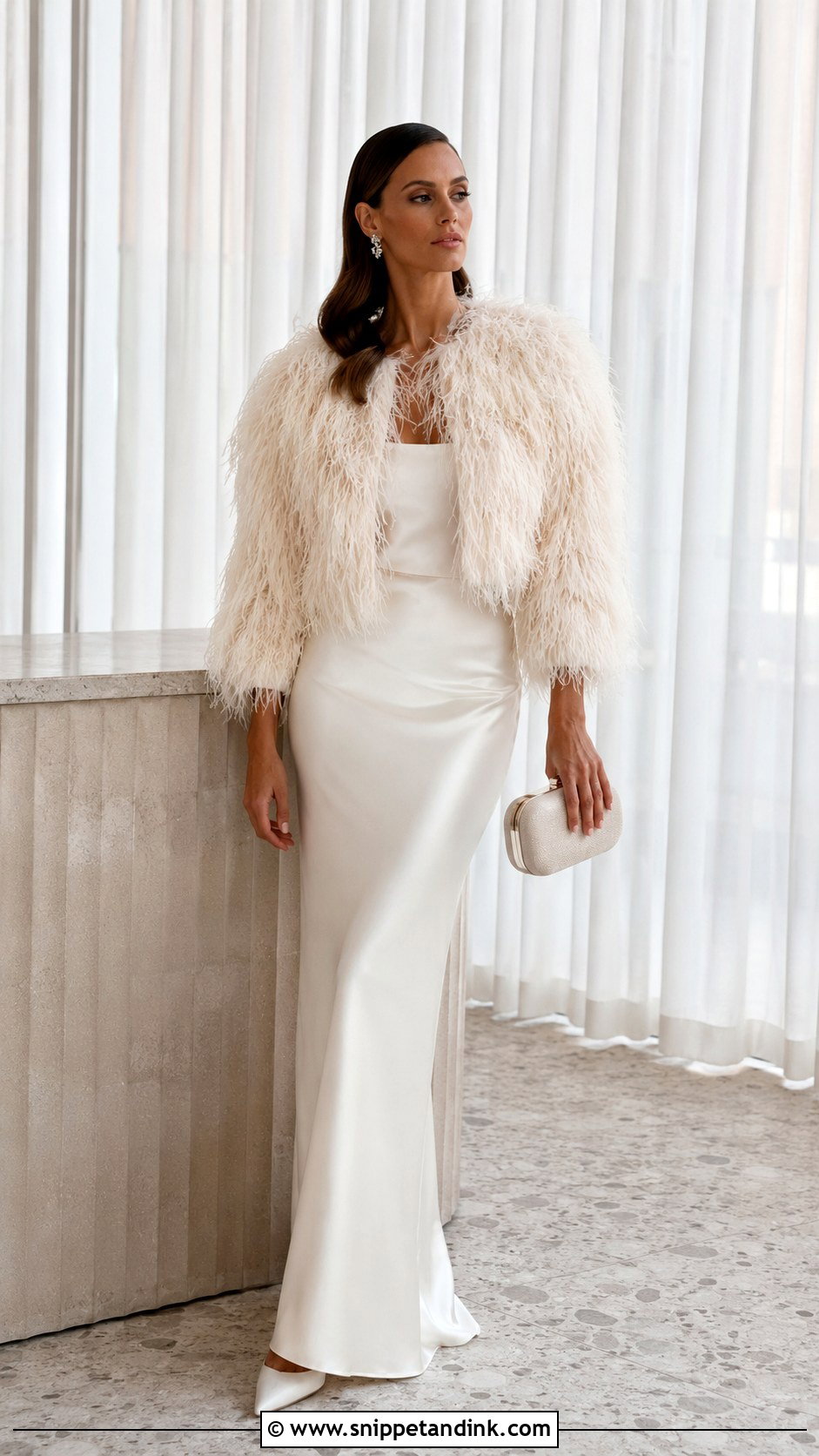
Feathers are the glamorous option, and they belong over sleek dresses. A slip gown, a column or a short bridal dress gives the texture somewhere to stand out. Ostrich feathers move and look soft; stiffer feathers can poke out at odd angles and catch on hair. The practical issue is shedding: a feathered jacket drops wisps on a dark suit, a bouquet and lipstick, so try it on, shake it, and see what falls. I’d save it for a reception entrance or a winter portrait session rather than the whole ceremony.
8. Faux Fur Wedding Dress Topper
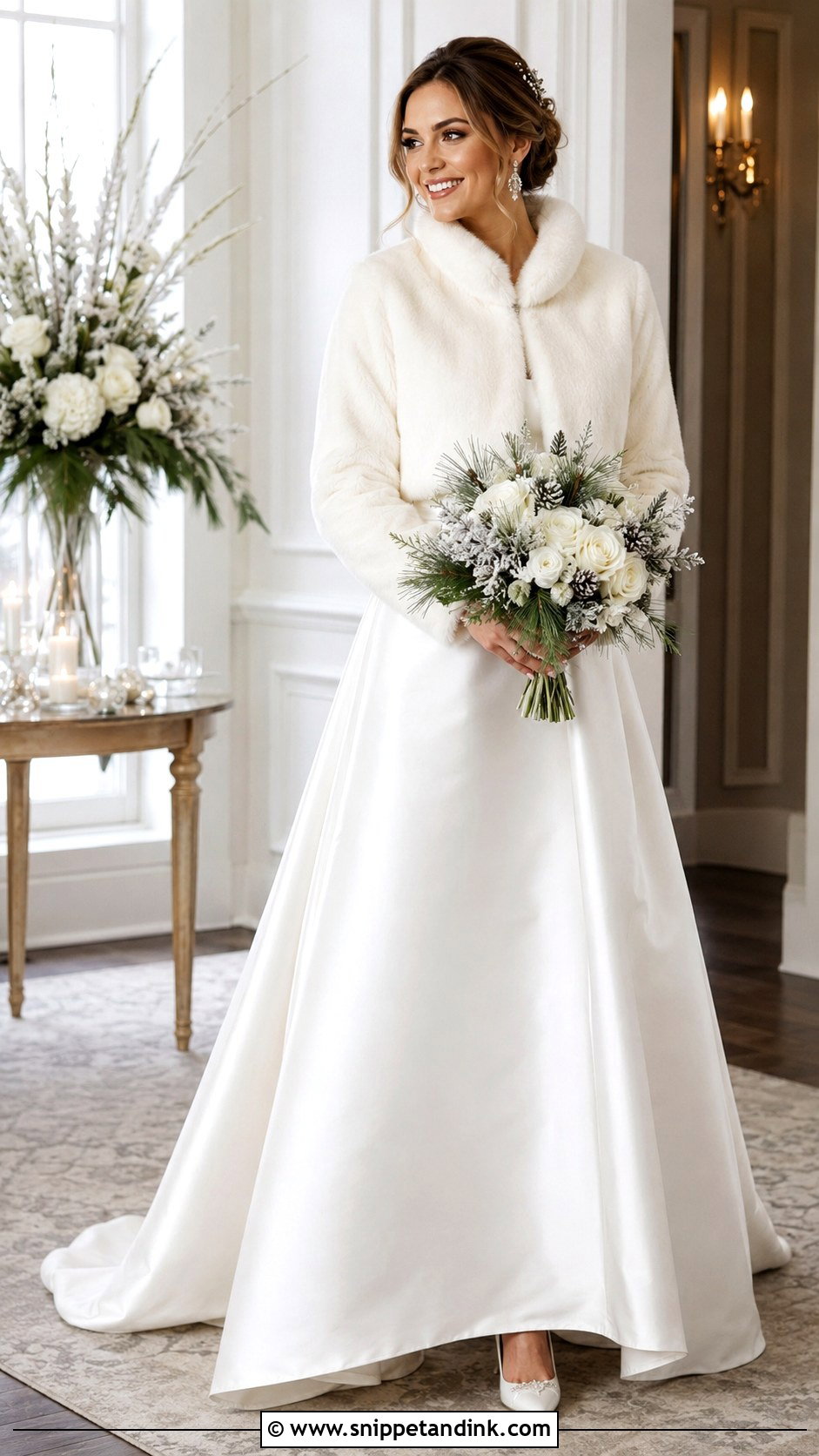
For a winter ceremony, a faux fur topper is warmth first and styling second, and that’s fine. A cropped jacket keeps its shape over ball gowns and structured satin, while a stole drapes better over softer, less constructed dresses. Match the tone carefully: faux fur in bright white next to an ivory gown looks blue in photos. If the dress is detailed, keep the fur plain; if the dress is minimal, a plush texture can carry the whole look. Watch the bouquet hand, since fur sleeves catch on flower stems and pins.
9. Bridal Blazer Wedding Dress Topper
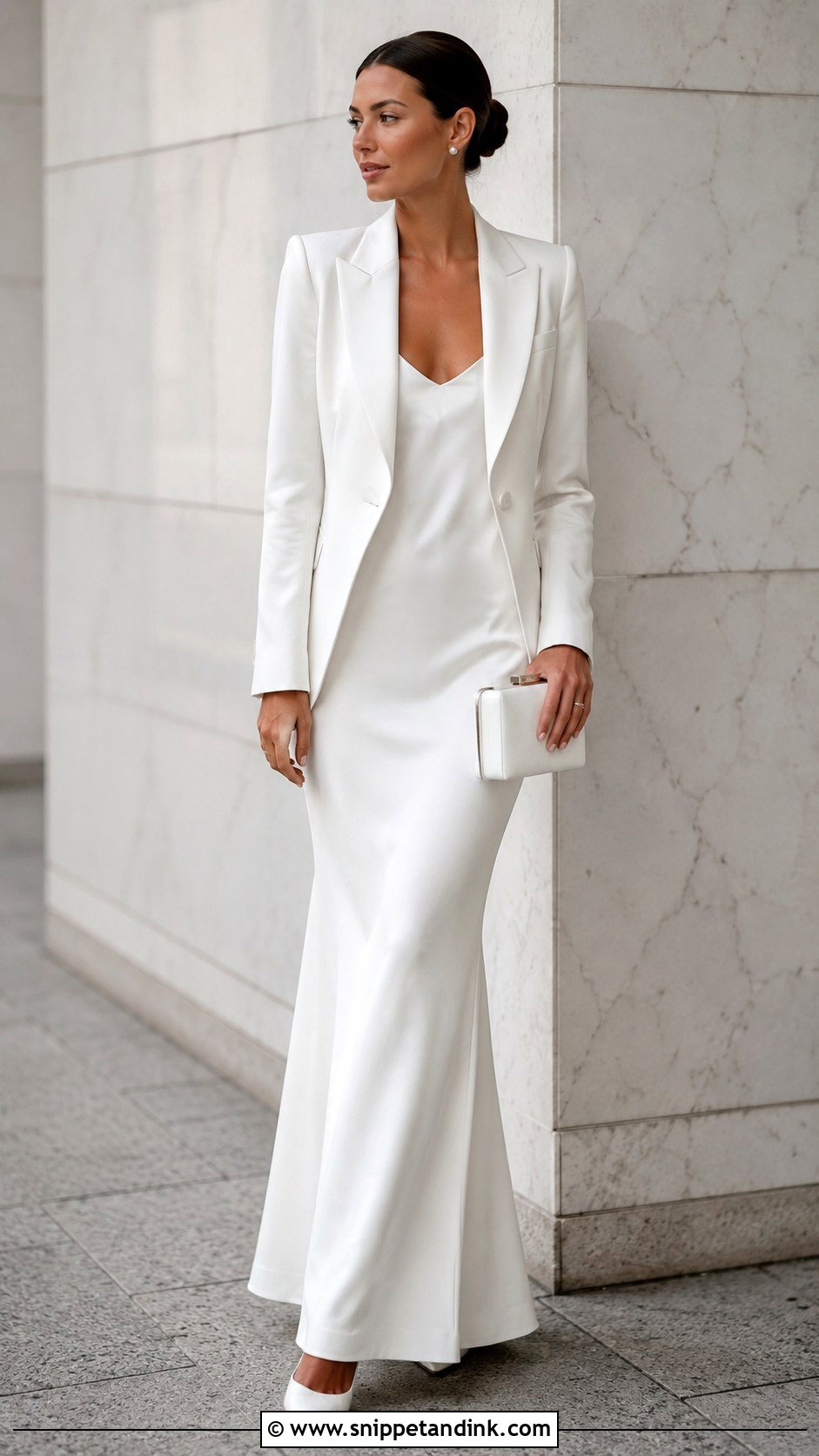
A bridal blazer is my go-to for courthouse ceremonies and city weddings. Over a slip dress, a crepe gown, a mini or wide-leg trousers, it gives a sharp line from shoulder to hip. Fit at the shoulder is everything: if the seam hangs past your shoulder bone, the whole jacket looks borrowed, and that seam is the one thing a tailor can’t easily move. A slight nip at the waist keeps it from looking like office wear. It’s also one of the few toppers you will wear again, so it’s worth paying for good tailoring.
10. Bridal Cardigan Wedding Dress Topper
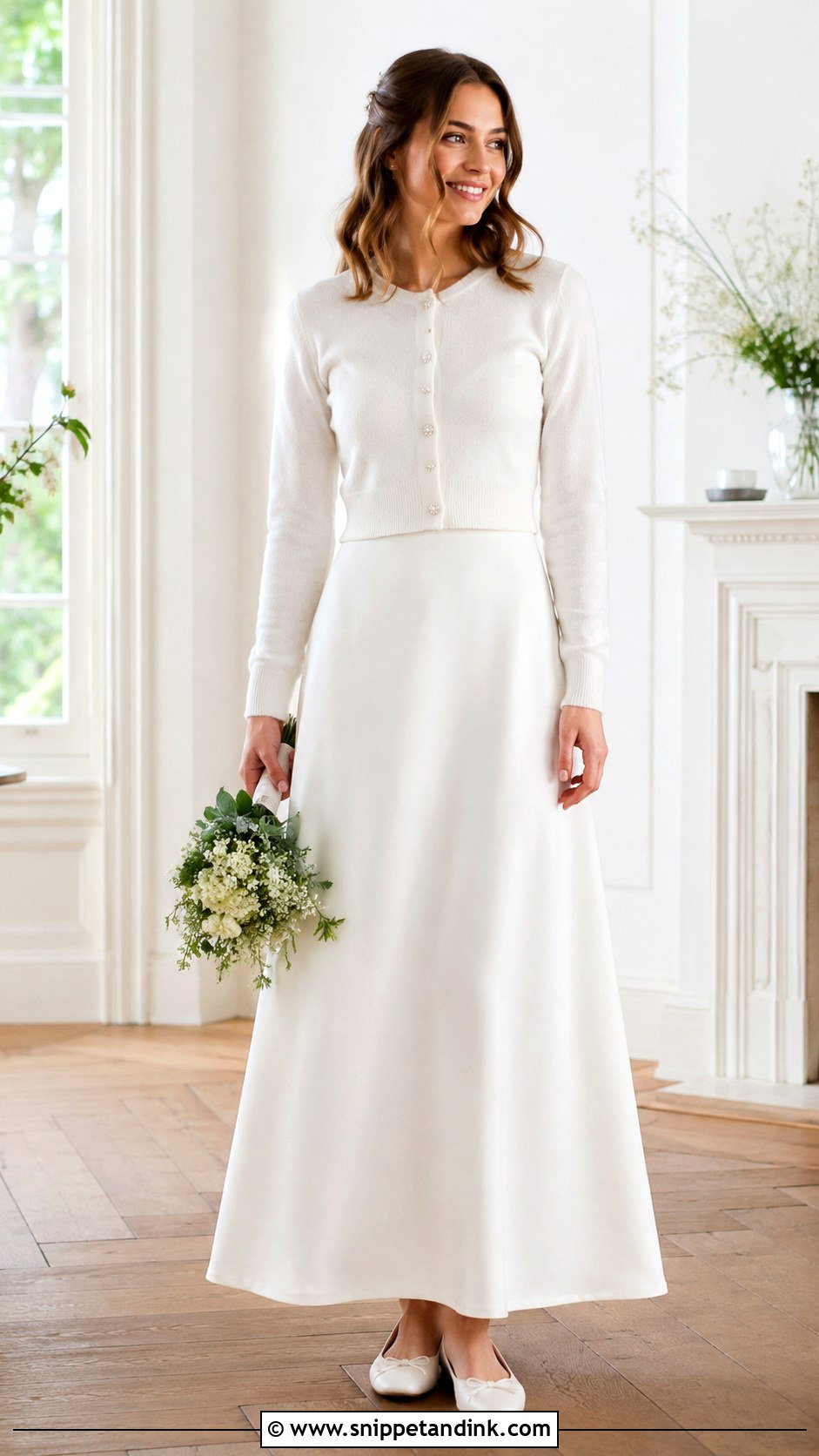
Cardigans suit small weddings, outdoor venues and cool spring or autumn days. Pick a fine-gauge knit in ivory or cream; chunky cable knits swallow a dress unless the gown is extremely simple. A cropped length that meets the waist keeps an A-line or tulle skirt in proportion. Pearl buttons are a nice touch, but I check that the buttonholes don’t gape when the bride sits. Knit also stretches over the day, so try it on in the afternoon, not first thing, to see how it hangs.
11. Organza Wrap Wedding Dress Topper
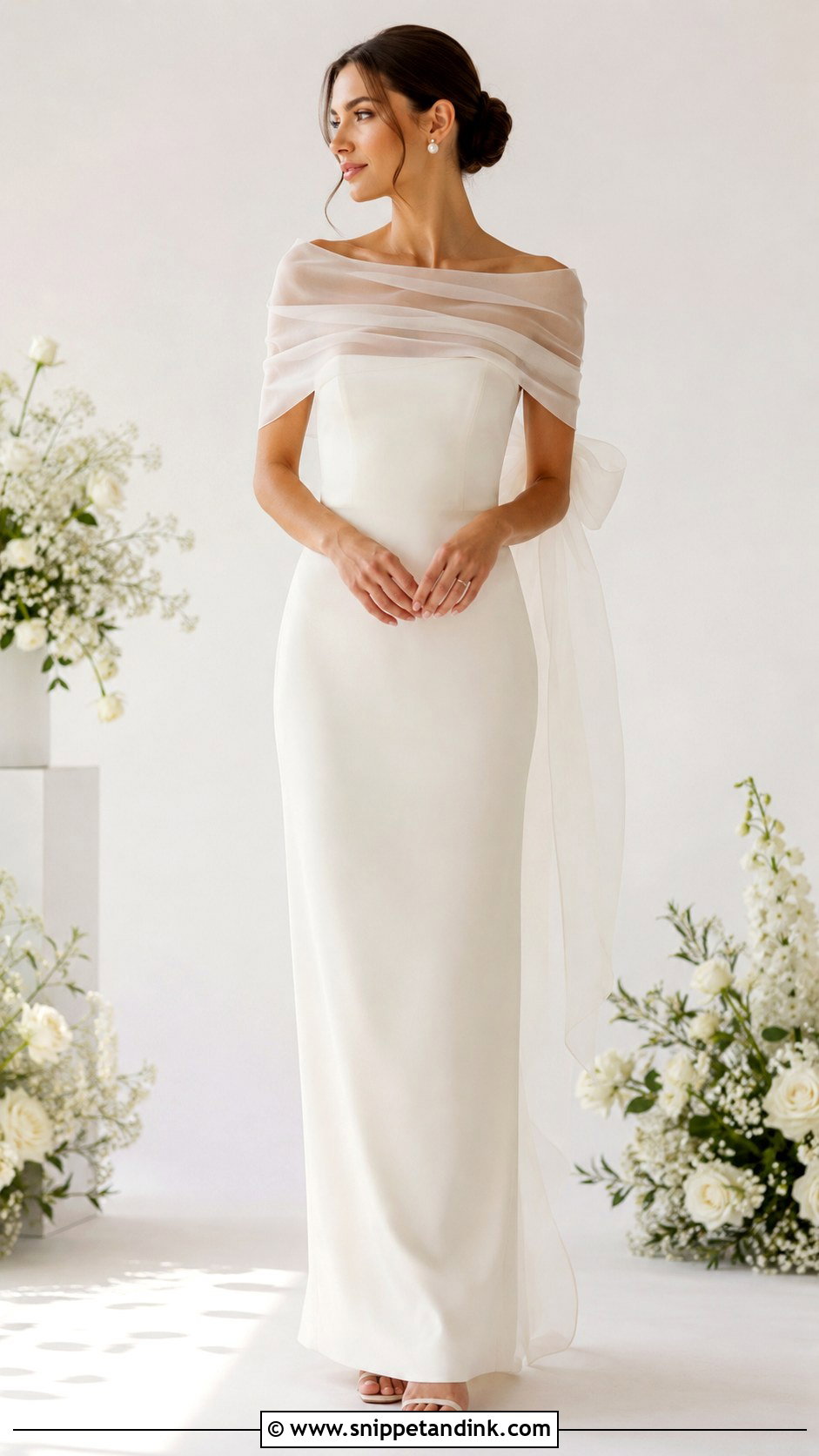
Organza sits between tulle and satin: sheer like the first, with enough body to hold a shape like the second. That makes it good for a wrap that frames the shoulders or ties into a soft bow at the back over a strapless gown or a clean column. The tone matters here more than with almost anything else, because organza is semi-transparent and the dress shows through it; ivory over champagne can look muddy. Organza also creases sharply, so I steam it on the morning and keep it on a hanger, not a chair back.
12. High Neck Lace Wedding Dress Topper
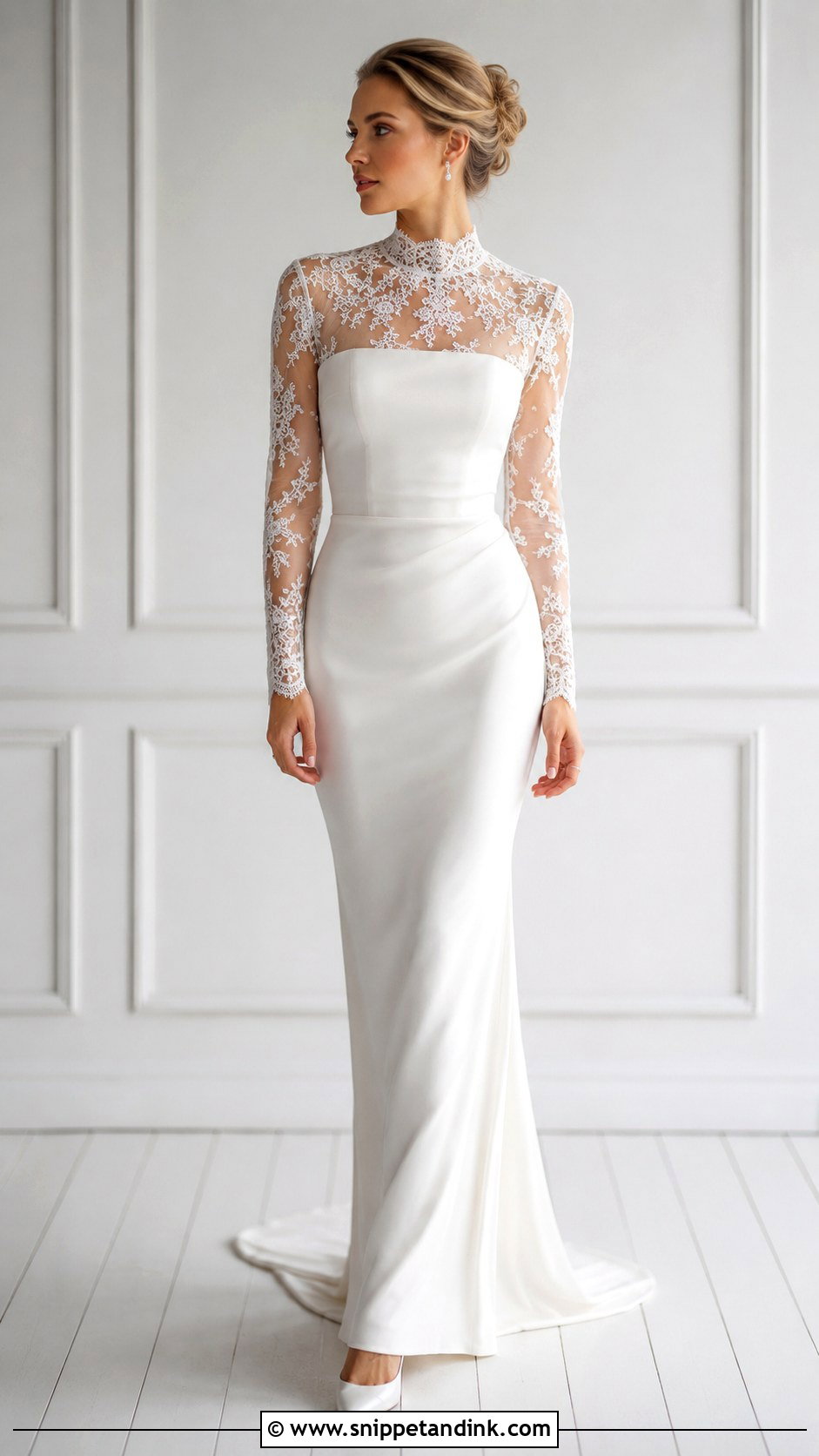
A high-neck lace topper turns a strapless or low-cut dress into a covered ceremony look, and then you take it off for the party. I’d choose it for a religious ceremony where shoulders must be covered, followed by a reception where they don’t. The lace should have a fitted bodice and a clean sleeve line so it looks built for the dress. Over smooth fabric the pattern stands out; over a lace gown, two lace patterns fight. Wear your hair up, otherwise the high neckline disappears under it.
13. Off Shoulder Wedding Dress Topper
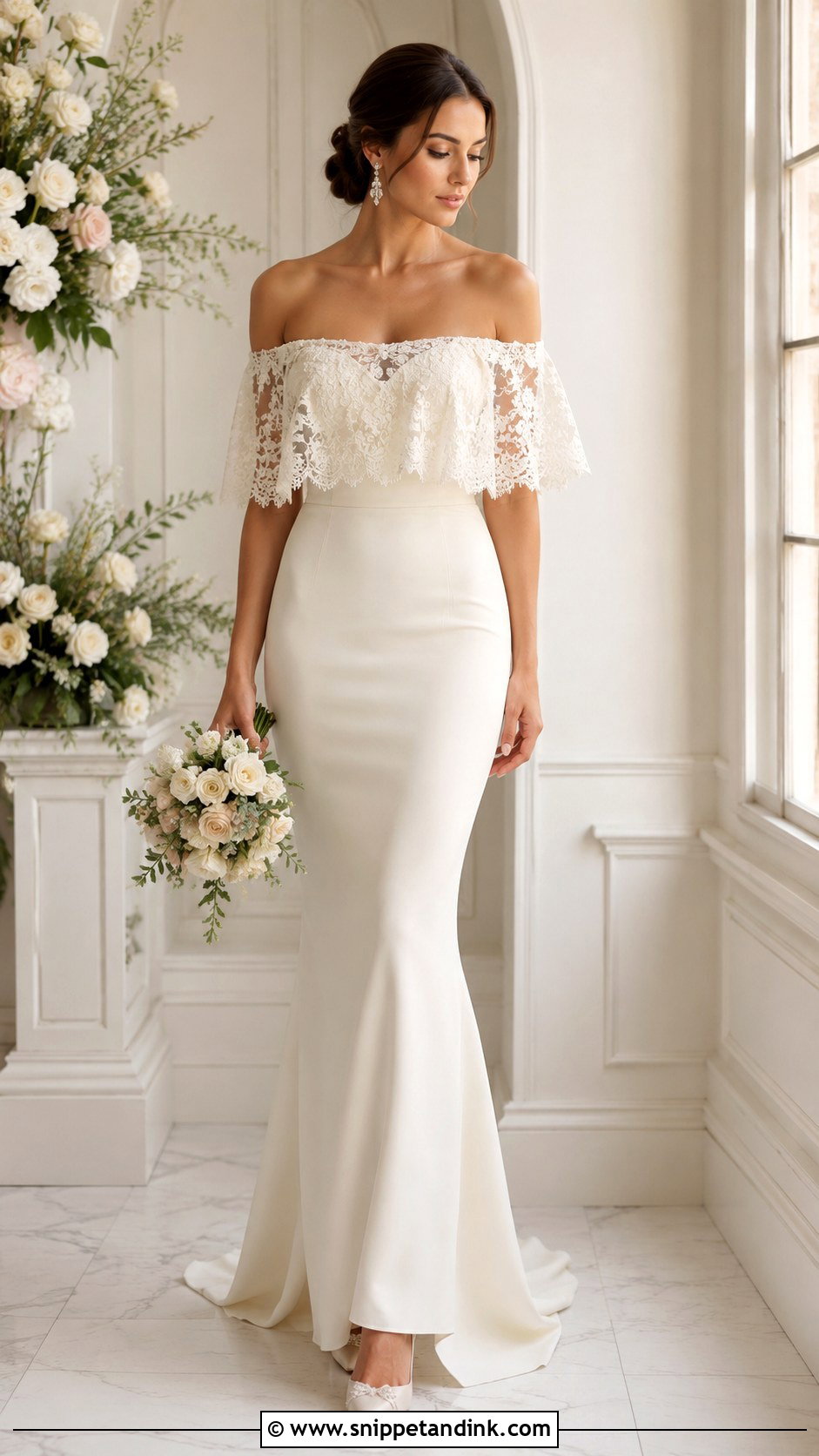
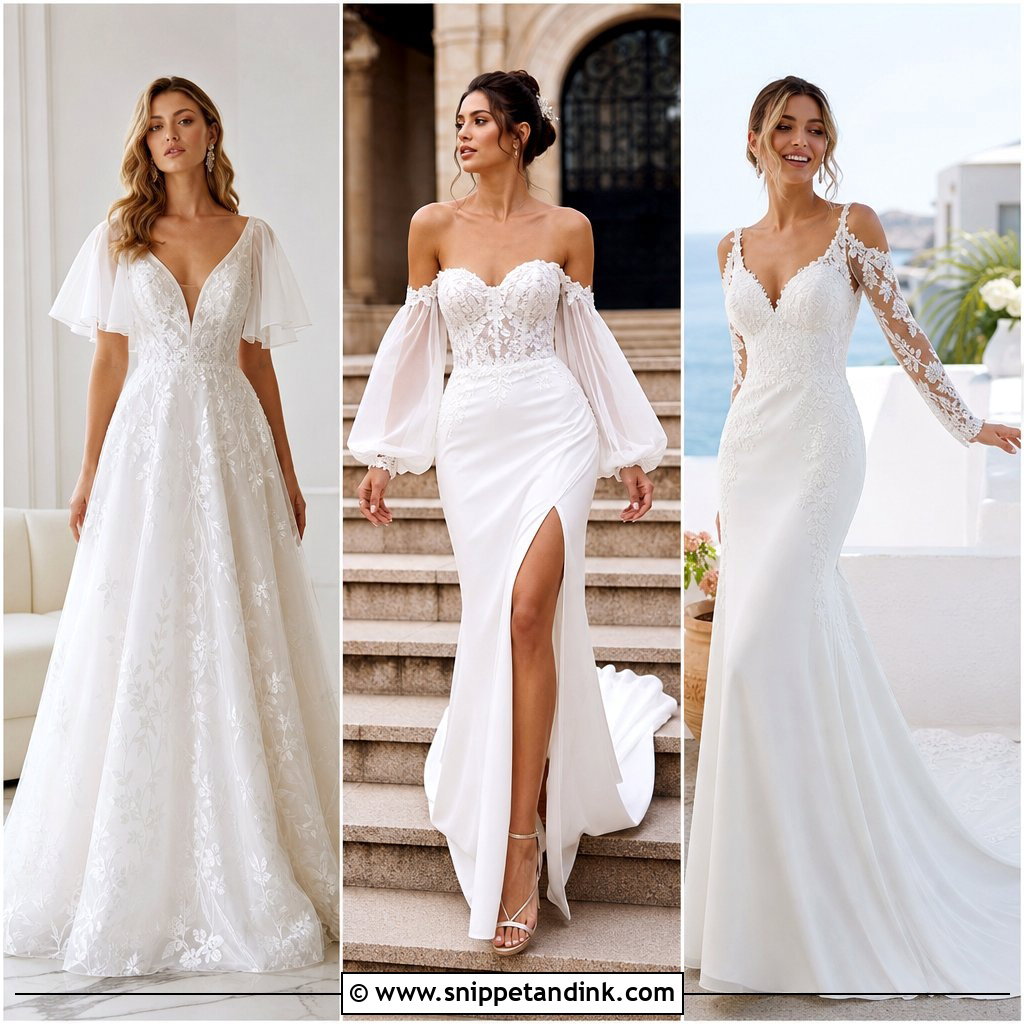
Off-shoulder toppers show the collarbone and frame the face, which is why they photograph so kindly. Lace reads classic, satin reads modern, and both can sit over a fitted gown or a plain strapless. The engineering is the hard part. An off-shoulder band slides down when you lift your arms, so I ask for a gentle elastic or silicone strip inside the band and test it with a big hug and a seated meal before the wedding. A low chignon keeps the shoulder line clear.
14. Detachable Sleeve Wedding Dress Topper
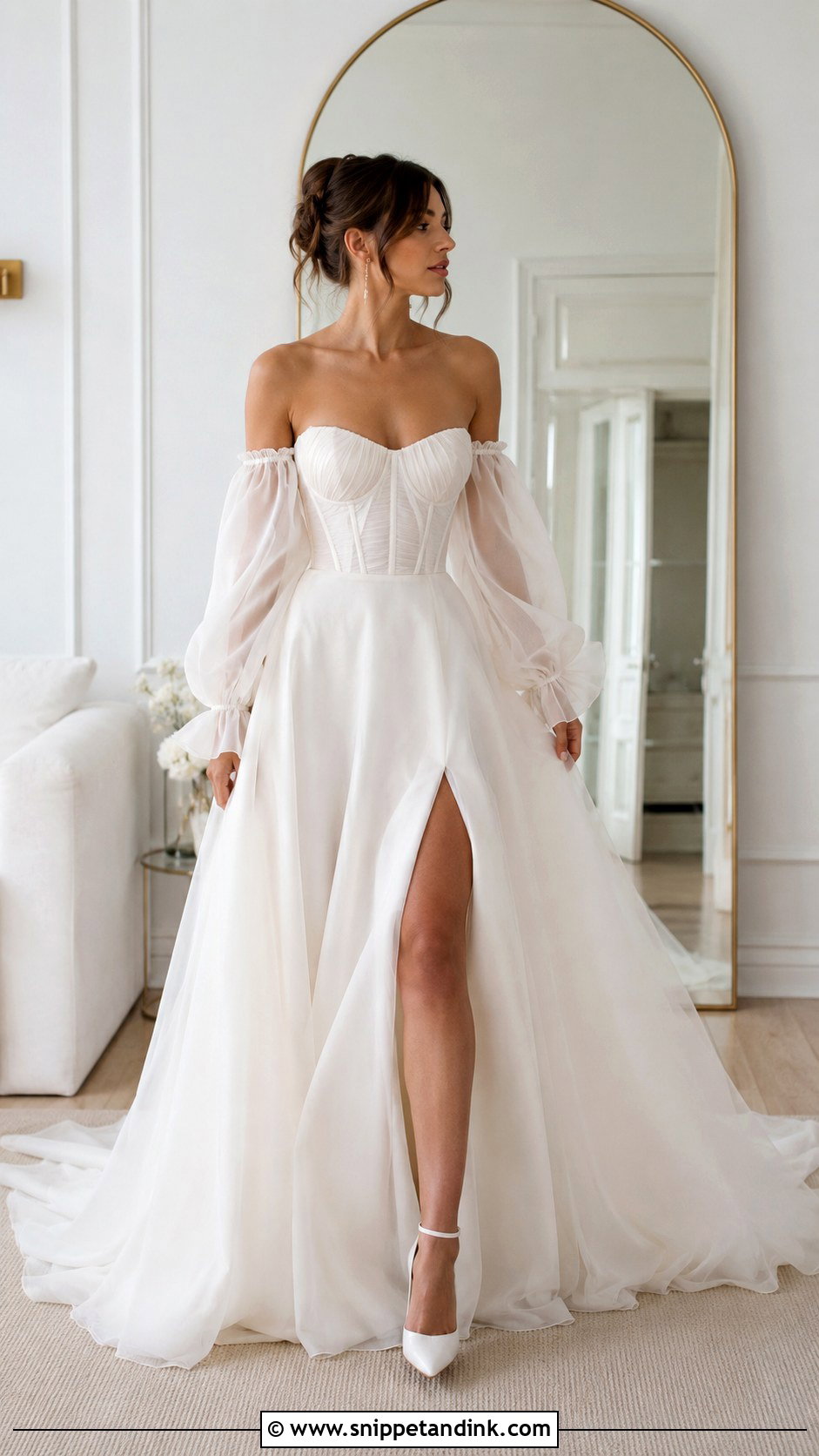
Detachable sleeves let you wear sleeves for the vows and go bare for the reception. They attach best to strapless and corset-style bodices, where a seamstress can add small hooks or snaps inside the top edge so the sleeves look built-in. Sheer puff sleeves suit a romantic gown; fitted satin sleeves suit a clean one. The common failure is sleeves that pull the bodice down because the attachment is too low or too weak. I’d have them fitted at the same appointment as the dress, never added the week before.
15. Bridal Shrug Wedding Dress Topper
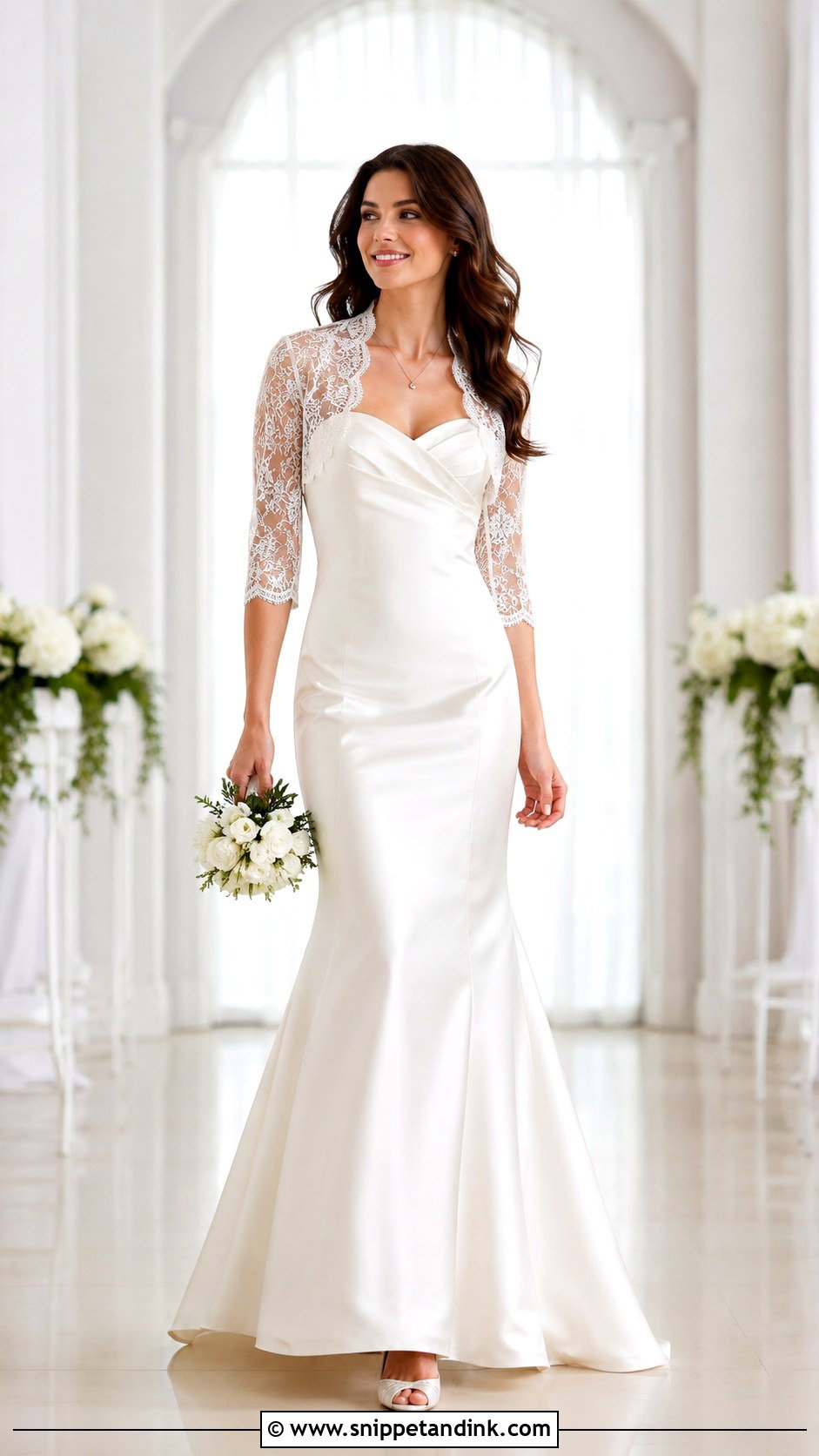
A shrug is the smallest topper here: shoulders and upper arms, nothing more. It’s handy for a cold church, a few covered portraits or a quick layer at dusk. Lace shrugs sit well over satin or crepe; knit or faux fur versions are for winter. Because shrugs are short, they leave the waistline visible and the dress shape intact. Check the armhole. A tight one restricts you when you raise your arms for photos or dancing, and that’s exactly when you notice it.
16. Beaded Wedding Dress Topper
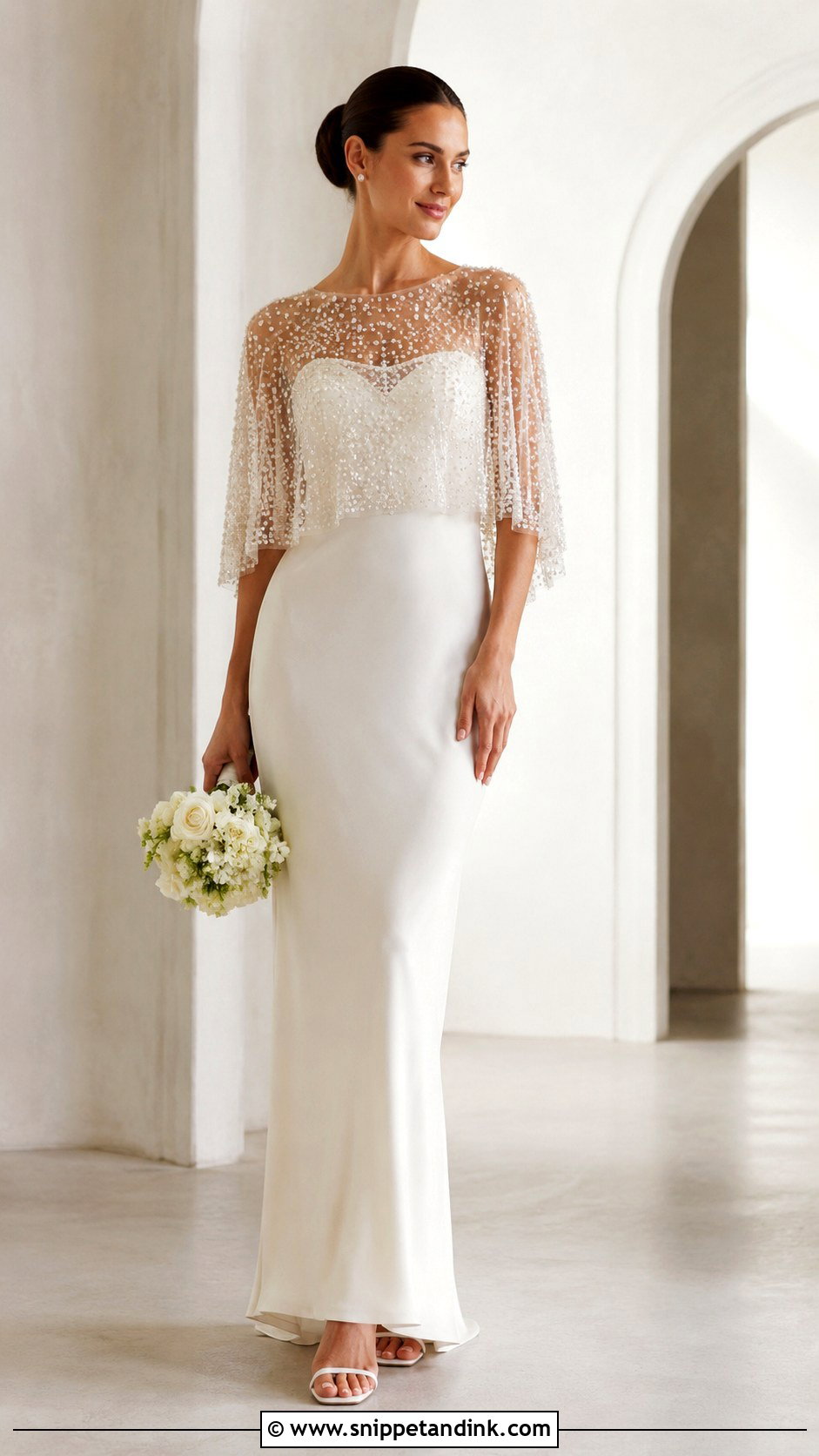
Beading turns a plain gown into something formal without you buying an embellished dress. It works over satin, crepe and silk, where the beads stand out cleanly. Light seed beading gives a quiet shimmer; crystals and pearls give evening drama. Weight is the thing to check. A heavily beaded topper drags on the shoulders after a few hours and can pull a delicate dress fabric, so I ask brides to wear it for a full hour at a fitting. Keep earrings small and let the beading carry the sparkle.
17. Bridal Coat Wedding Dress Topper
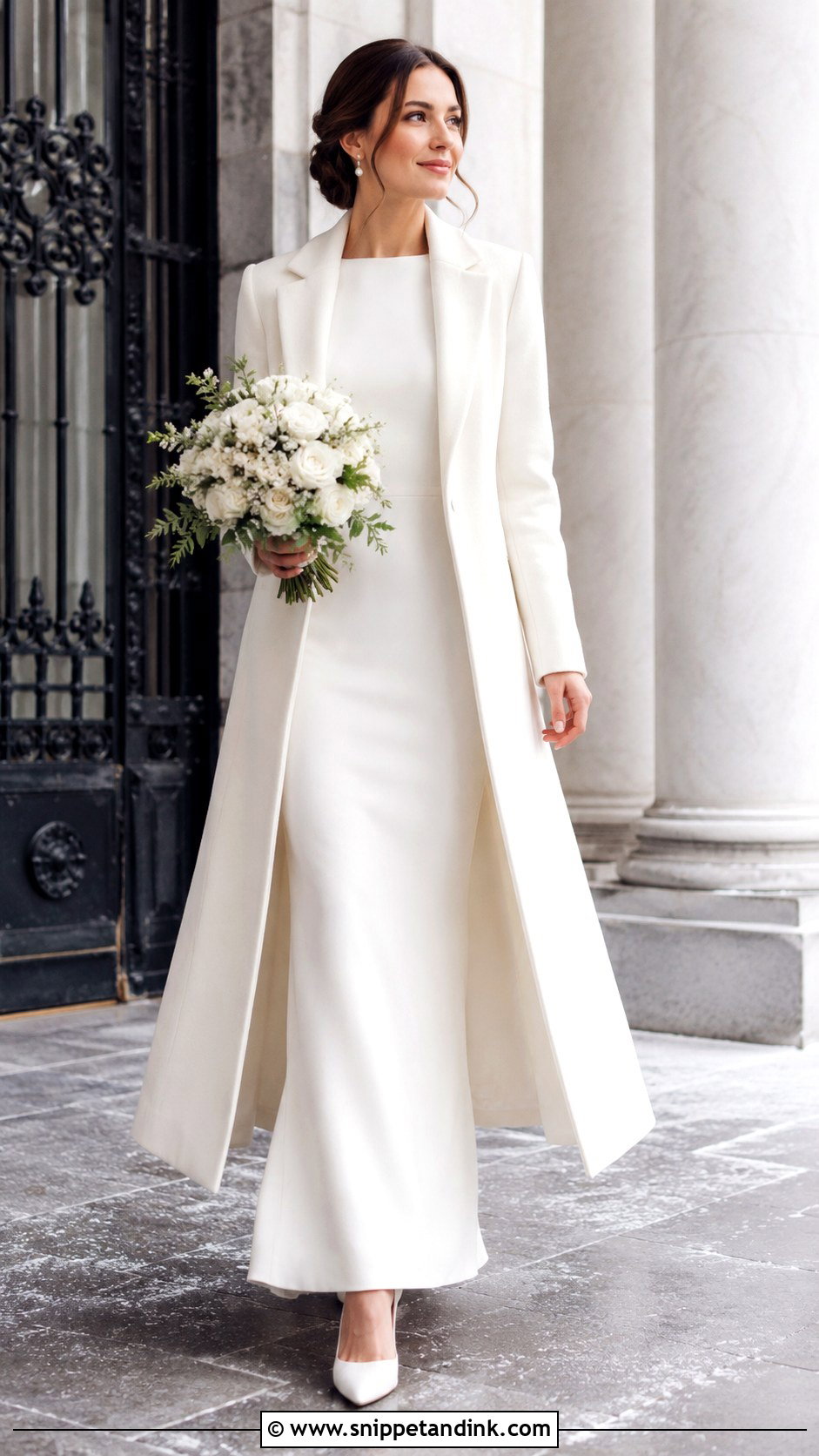
A bridal coat is for genuine cold: winter weddings, outdoor photos, the walk from car to church. A long ivory coat sits well over a slip dress or a slim crepe gown, while a shorter coat suits full skirts that won’t fit under a long one. Look for a smooth lining, because wool or tweed without one grabs at tulle and lace. The coat must be wide enough at the hips to go over the skirt without crushing it. I’d skip anything puffy or sporty; it reads as outerwear, not part of the outfit.
18. Sheer Turtleneck Wedding Dress Topper
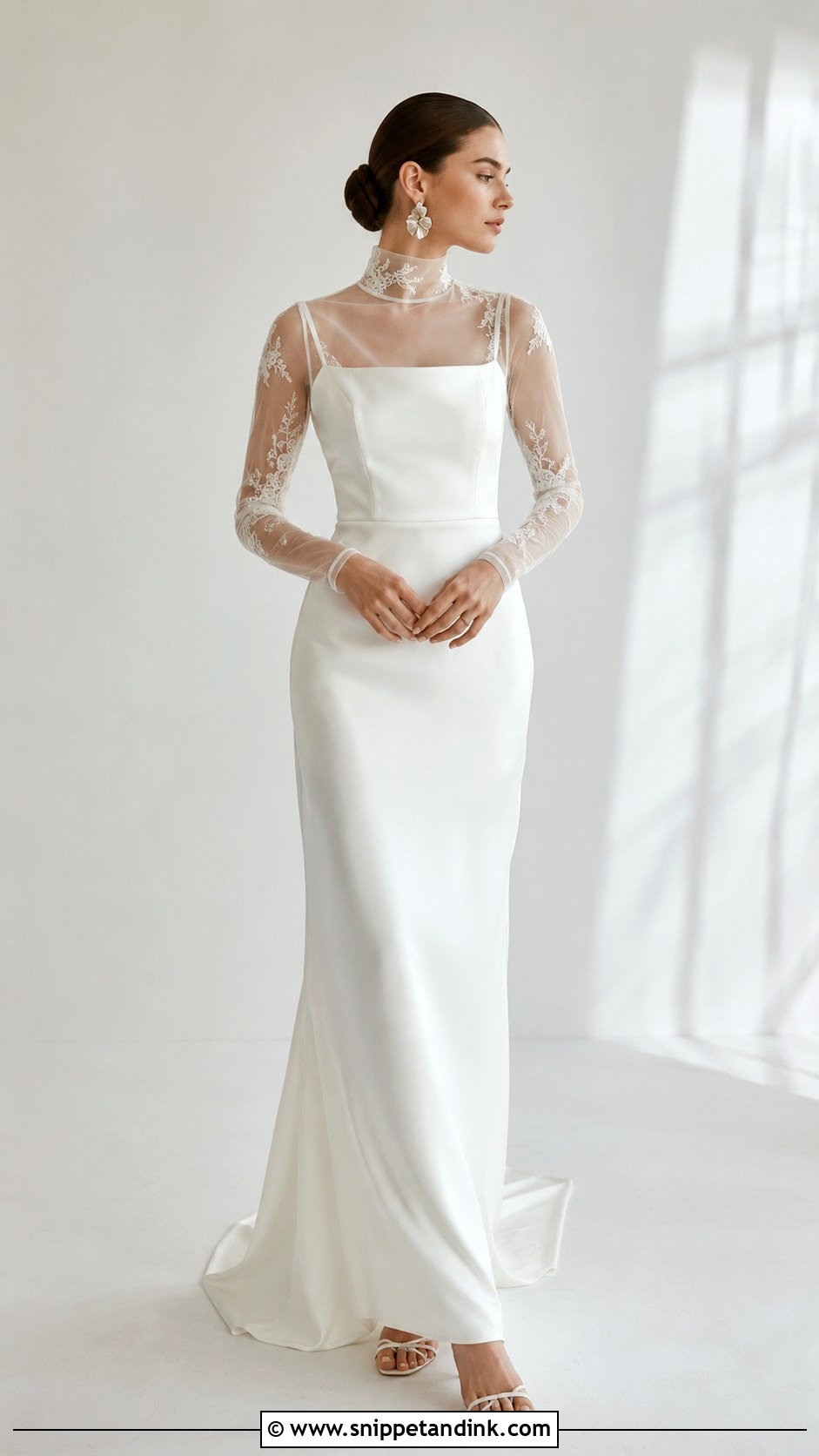
A sheer turtleneck is the fashion-led choice, and it looks sharp over a slip dress or a square-neck satin gown. The high neck gives coverage while the mesh keeps it light. It must fit close to the body; any bunching where it tucks under the dress shows through the gown and spoils the clean line. I’d pair it with sleek hair and one bold earring. This is not a look for a bride who wants to look soft. It reads modern and slightly editorial, and that is the point.
19. Embroidered Wedding Dress Topper
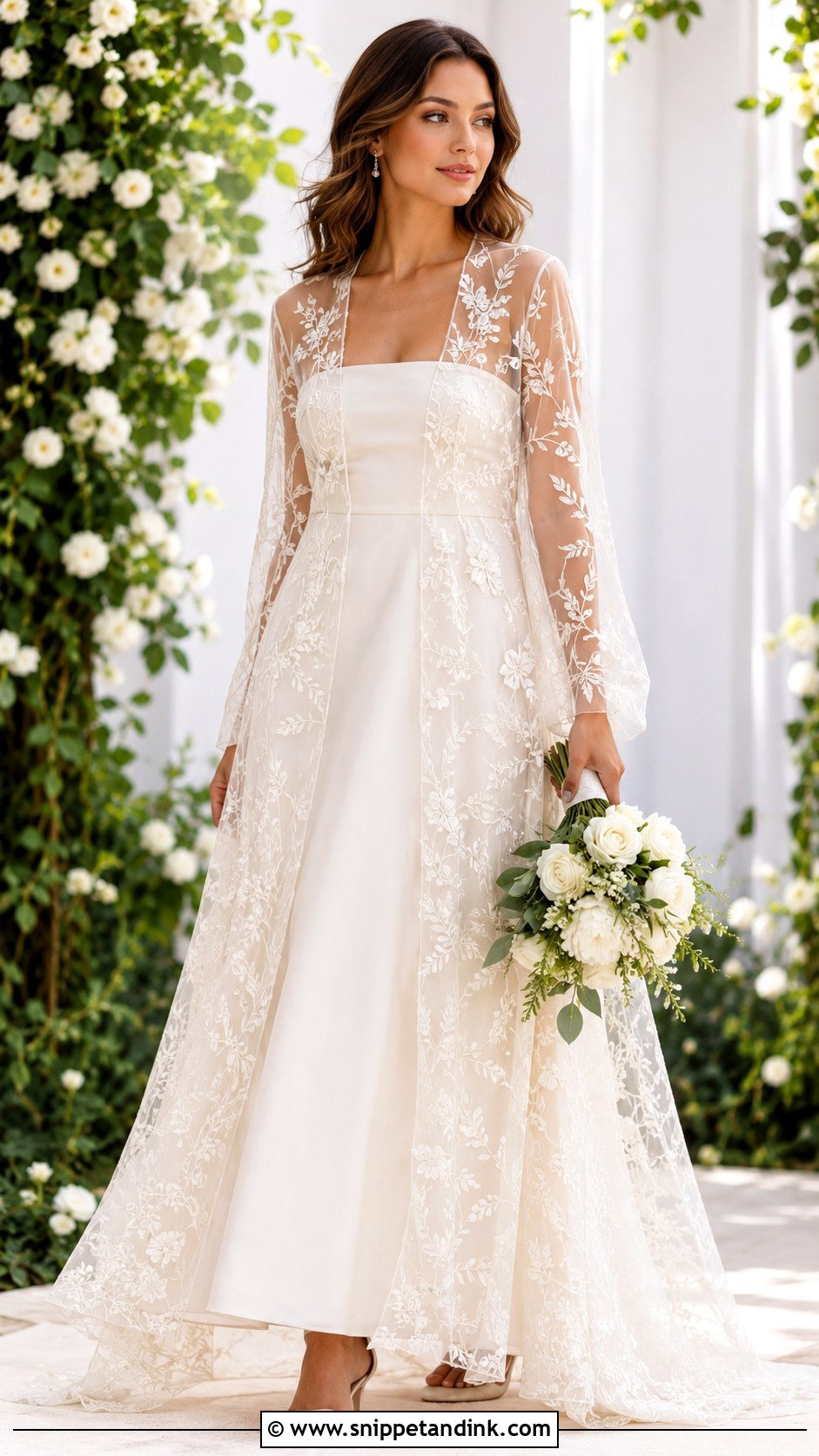
Embroidery adds a handmade quality that lace sometimes can’t. Florals feel romantic, while geometric patterns look more modern. Over a plain strapless gown or a clean A-line, the topper becomes the main detail. Over a lace dress, embroidery has to be very restrained or the two compete. I like matching the embroidery motif to the bouquet, a quiet link that people notice in photos. Ask whether the thread is tone-on-tone or contrasting; ivory thread on ivory fabric looks refined, while white thread on ivory can look unfinished.
20. Ruffle Wedding Dress Topper
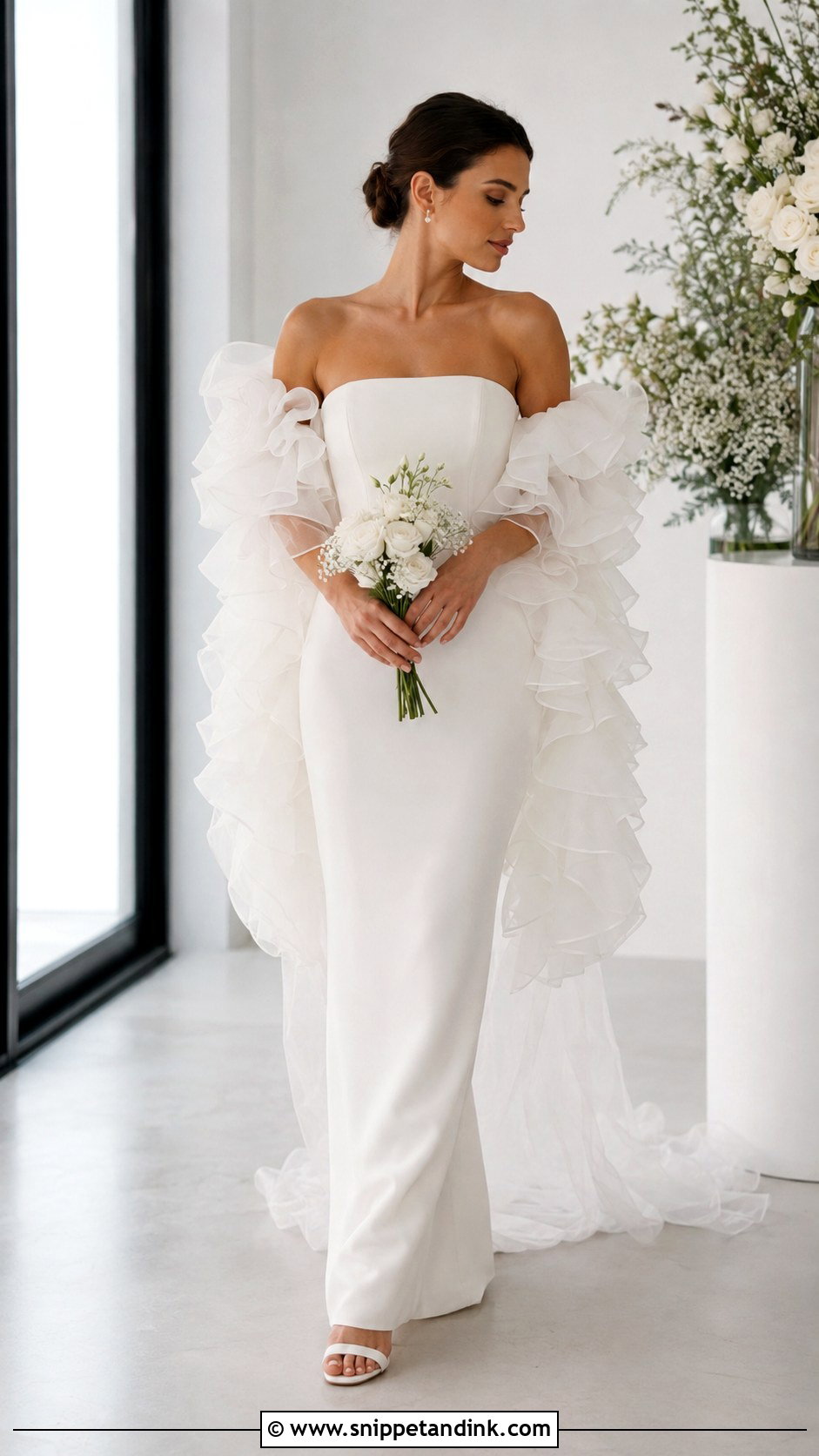
Ruffles add volume and a playful edge, so they need a plain dress underneath. A clean strapless gown, a fitted crepe dress or a satin column gives organza ruffles room to stand out. If the skirt is already full, the ruffles turn the silhouette into a wedding cake. I check how ruffles behave with the bouquet: big shoulder ruffles can hide the flowers and push the arms out. Keep jewelry minimal and the hair off the shoulders.
21. Bow Wedding Dress Topper
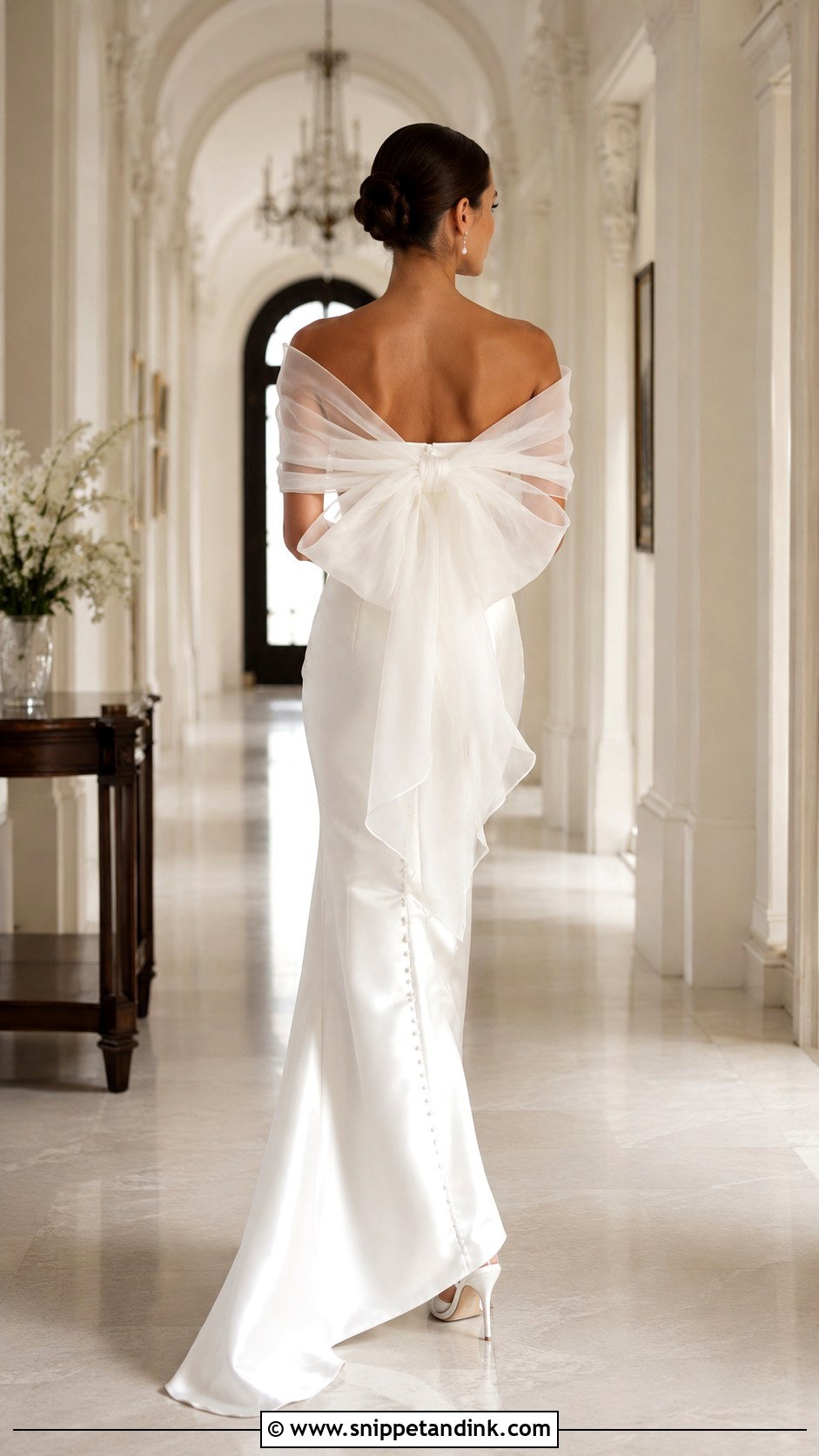
A bow topper is sweet, but placement decides whether it looks grown-up. A bow at the back of the shoulders works well with an open-back dress because it gives the back view a focal point during the ceremony, when guests mostly see you from behind. Soft organza bows look romantic; structured satin ones look sharper. I make sure the bow is stitched or tacked in place, as a tied bow can loosen and droop by the evening. Keep the bouquet simple so it doesn’t compete.
22. Sequin Wedding Dress Topper
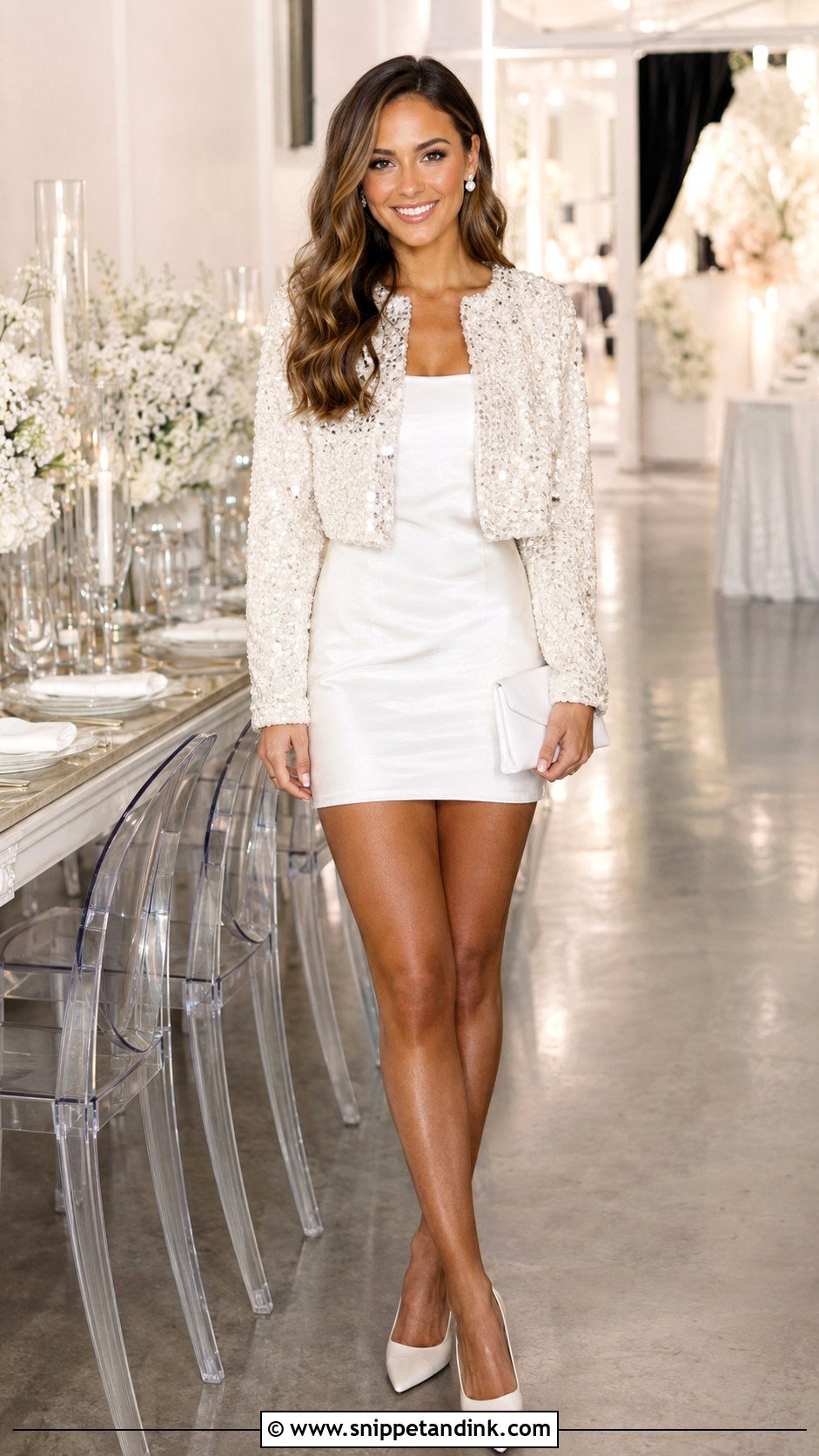
Sequins are for the evening: the reception entrance, the first dance, the late photos. A cropped sequin jacket or a sheer overlay with scattered sequins adds sparkle without covering the whole dress. Stick to ivory or white sequins; silver and gold read as party wear, not bridal. Sequins scratch, though. They can catch on a delicate tulle skirt and on your partner’s suit, so I suggest a lining at the sleeves and a test hug at the fitting. Satin heels and small earrings are enough.
23. Chiffon Cape Wedding Dress Topper
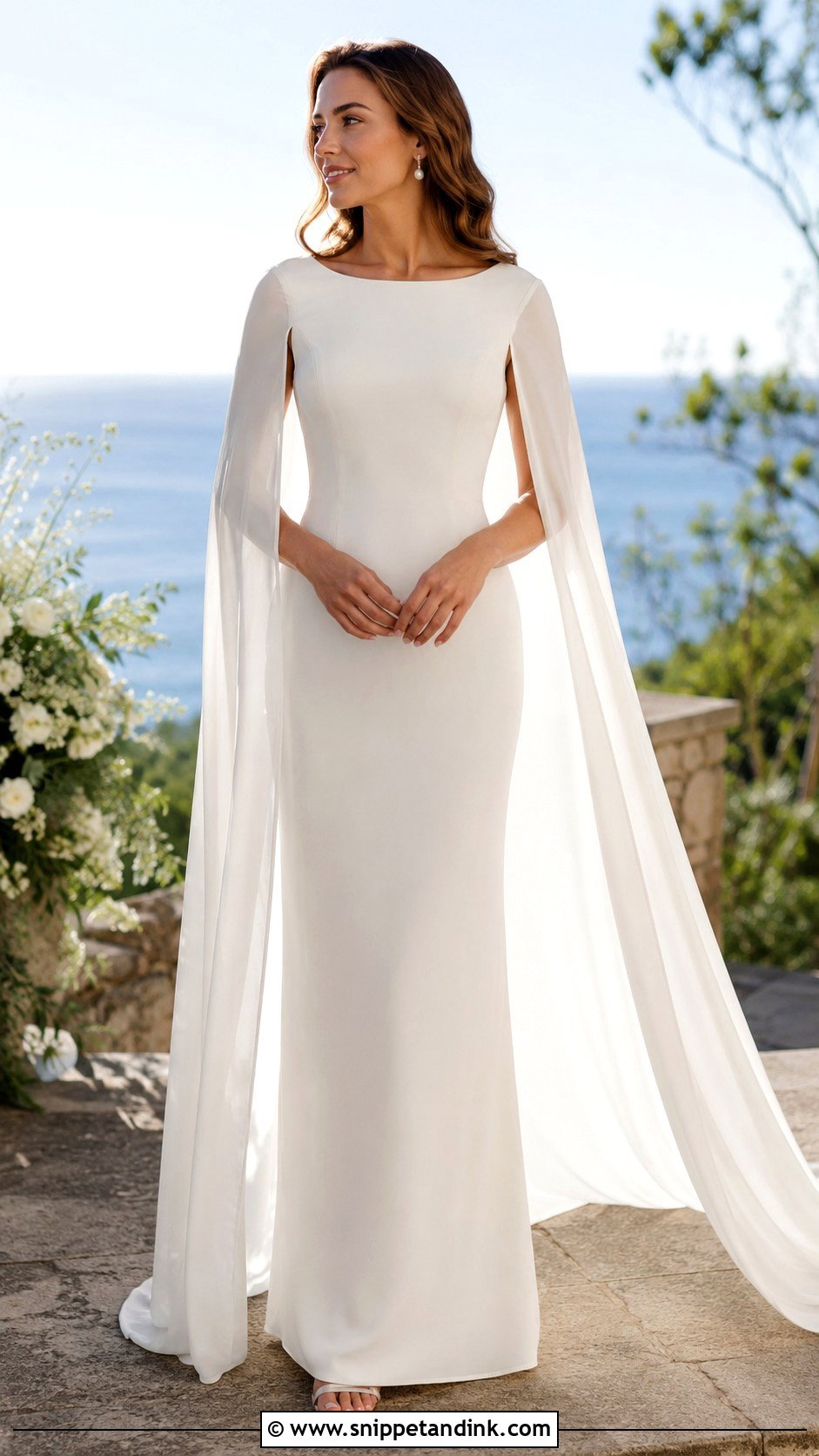
Chiffon is the softest fabric for a cape: light, fluid and easy to wear. It suits beach weddings, gardens and outdoor ceremonies where there’s a breeze to catch it. Over a sheath, a slip dress or an A-line gown, it adds movement without weight. A floor-length cape looks dramatic, while a shorter one feels relaxed. On a windy day, though, long chiffon blows straight into your face during the vows, so I’d add a small weight or a wrist loop to the hem. Loose waves and sandals finish it.
24. Cropped Bridal Top Wedding Dress Topper
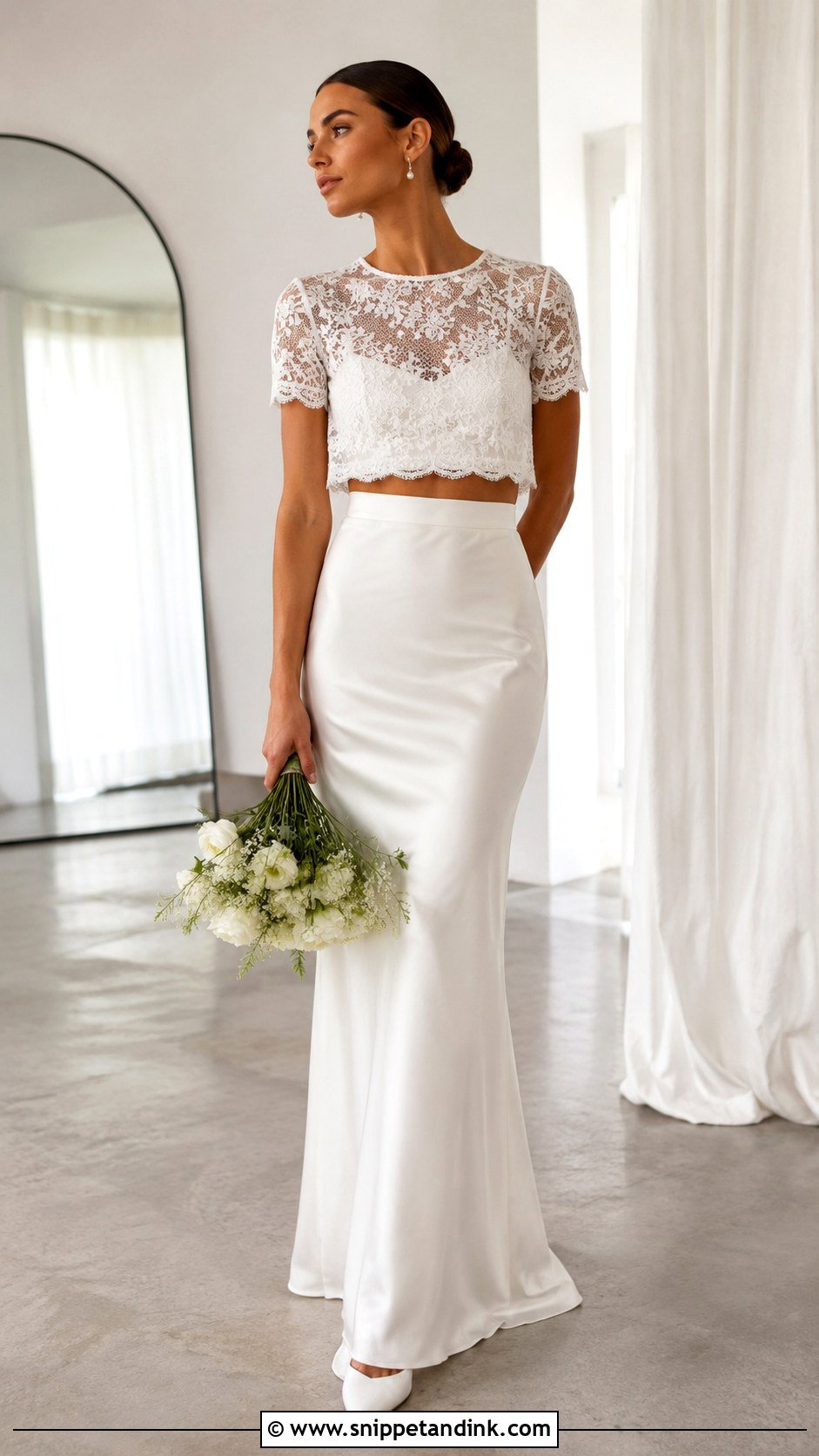
A cropped top layered over a dress changes the shape completely. It works over a slip dress, a fitted gown or a skirt and bodice set. Lace looks romantic; satin looks clean. The hem should land at the narrowest part of the waist or just above the waistline of the gown, so the proportions stay balanced. Too long, and it bunches where it meets the skirt. Because it slips on and off, it gives you two outfits from one dress, which makes it a practical buy.
25. Bridal Shawl Wedding Dress Topper
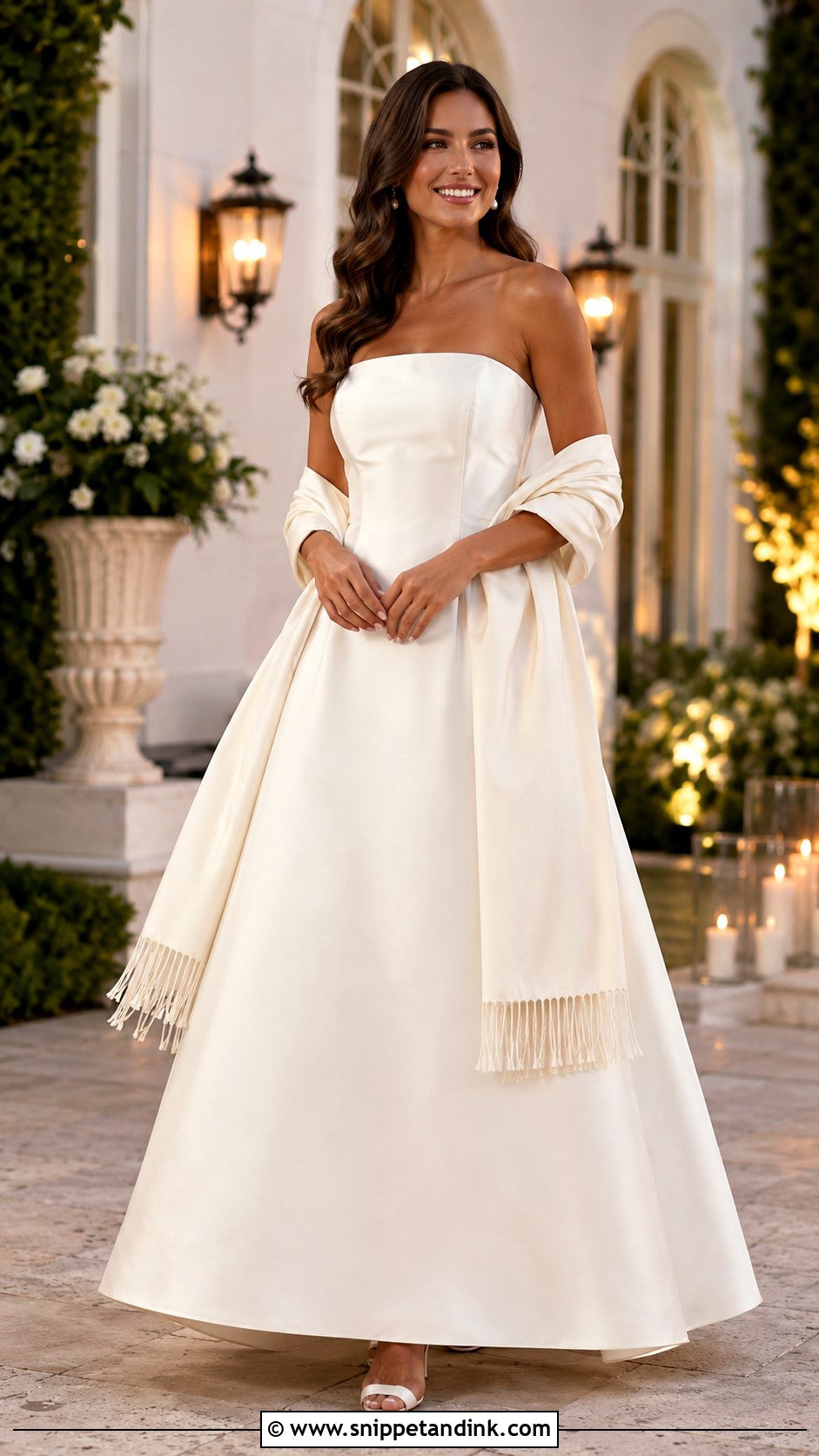
A shawl is the least structured option: silk, chiffon, cashmere, lace or organza draped over the arms. It suits dresses with clean necklines and little shoulder detail. Drape it loosely over the elbows for portraits, and pull it closer for warmth when the sun goes down. The fabric needs weight to stay put; a very light chiffon shawl keeps slipping off one shoulder and you’ll be adjusting it all evening. I’d choose cashmere or a silk blend for anything after dark.
26. Bridal Denim Jacket Wedding Dress Topper
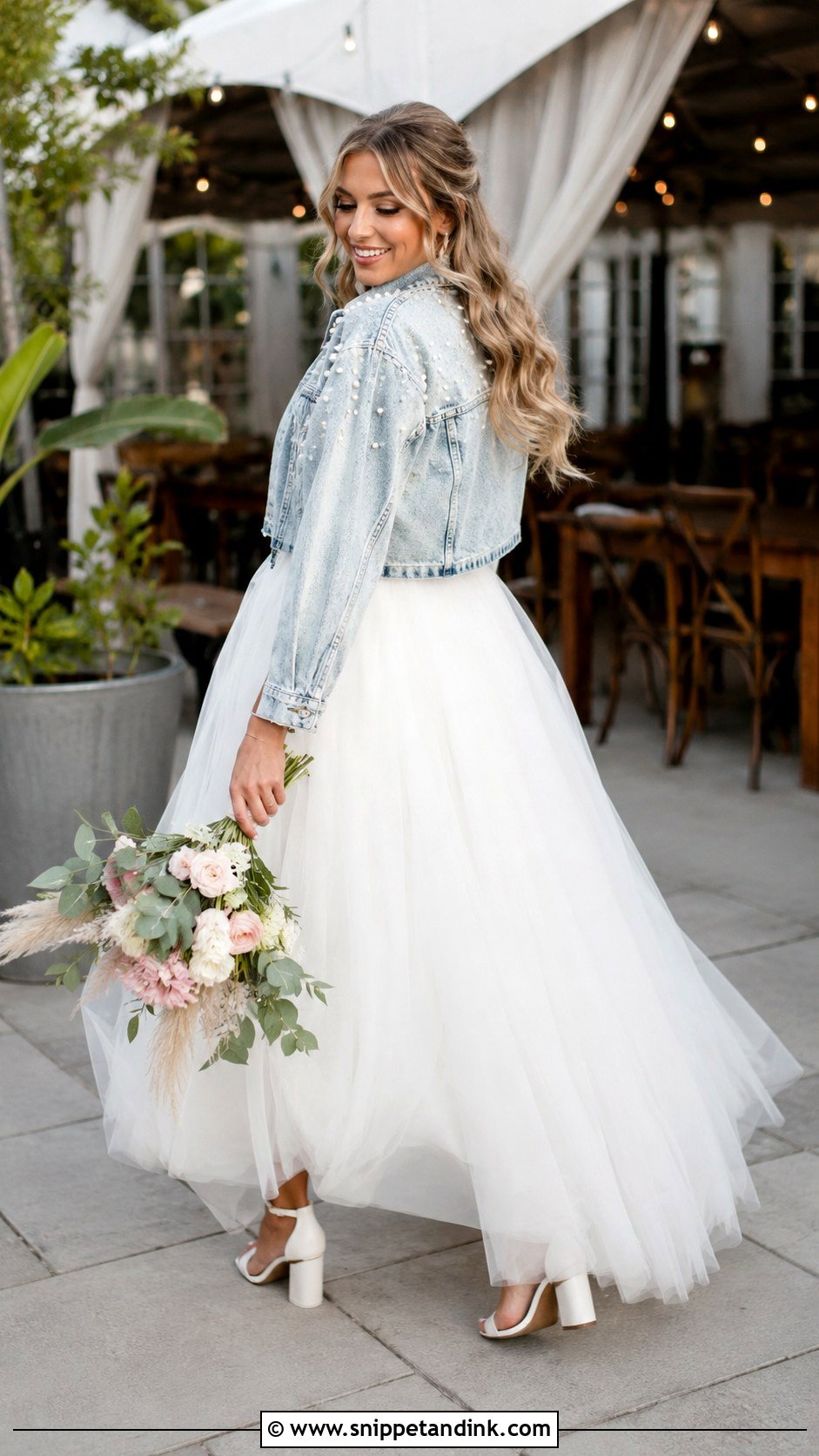
Denim keeps a wedding relaxed, and it belongs at casual ceremonies, outdoor receptions, elopements and the fun photos. White denim looks cleaner next to a gown; light blue gives a deliberate laid-back contrast. I always pick a cropped fit so the waistline stays visible, because a long denim jacket swamps a tulle skirt. It sits well over lace, slip dresses and bridal minis. Ask for it to be washed once before the day, since new denim can rub indigo onto an ivory dress at the cuffs and underarms. Embroidered initials or a scatter of pearls on the back make it yours.
27. Bridal Leather Jacket Wedding Dress Topper
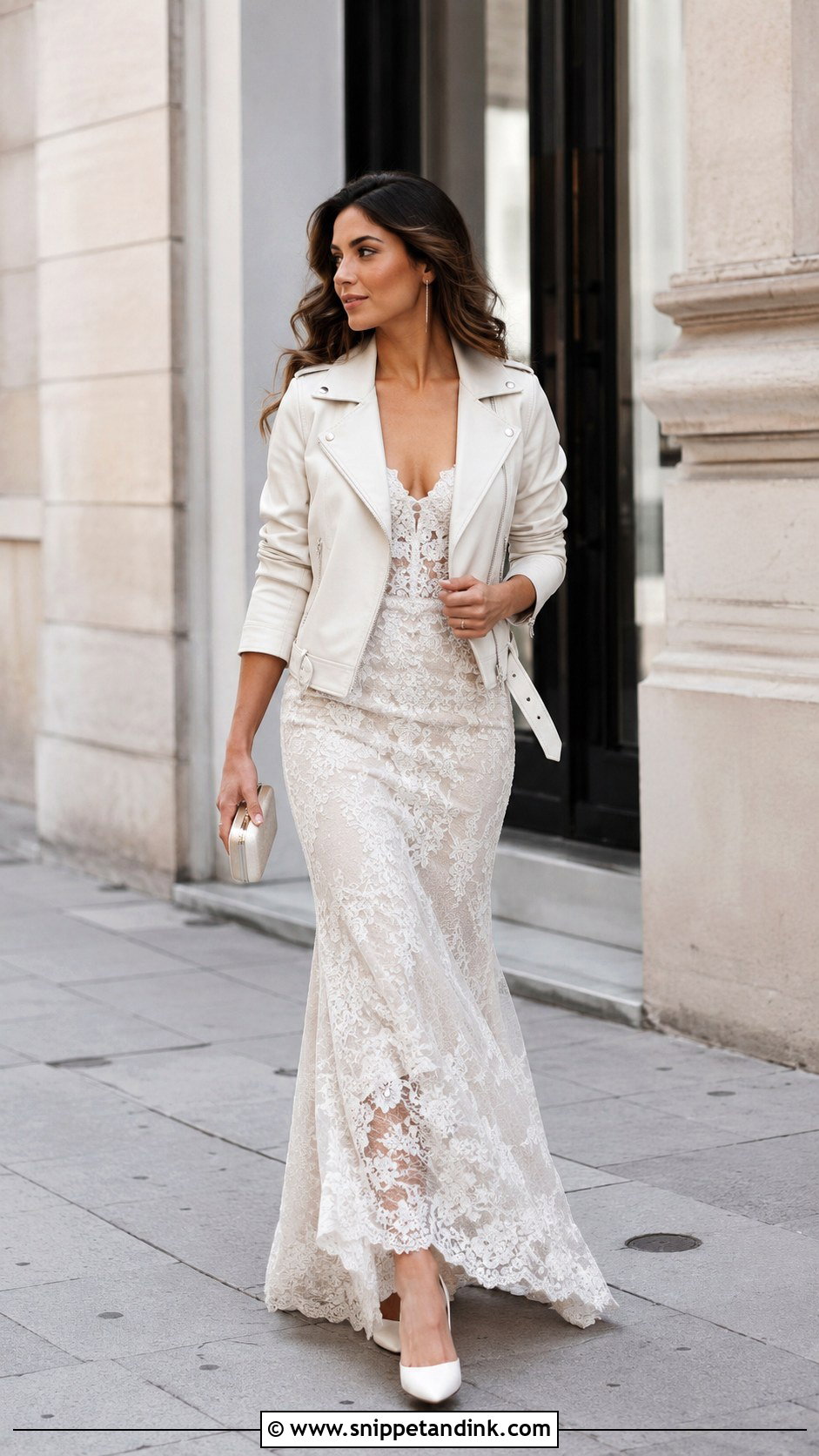
A bridal leather jacket gives a soft gown a tougher edge. I’d suggest ivory or cream faux leather rather than black, which can cut a hard line across the photos. A cropped moto cut sits well over tulle, lace, slip dresses and fitted crepe. The contrast between a structured jacket and a floaty dress is the whole idea, so keep the rest minimal. Leather doesn’t breathe, and a dance floor gets hot, so it’s a jacket for arriving and for the photos, not for the whole night.
28. Floral Applique Wedding Dress Topper
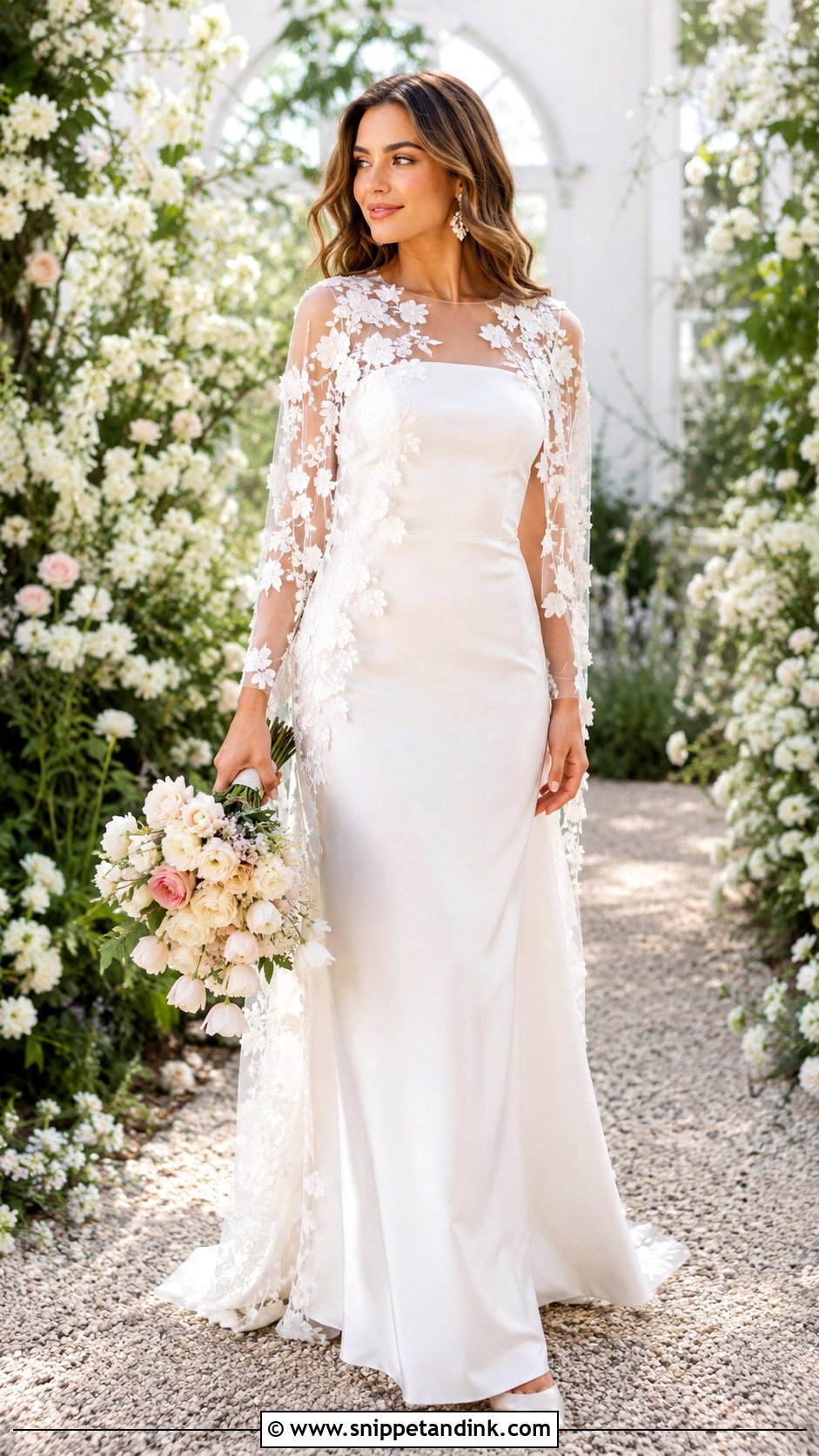
Floral appliques add texture and a garden feel to a plain gown. They can be 3D flowers, lace motifs or fabric petals. A strapless satin dress, a plain tulle gown or a fitted crepe silhouette gives the flowers room. The weight of the appliques matters: heavy 3D flowers on a sheer base can pull the fabric and make it pucker. I prefer lightweight petals sewn onto soft tulle, and I check that none sit where the bouquet will rub against them all day.
29. Bridal Scarf Wedding Dress Topper
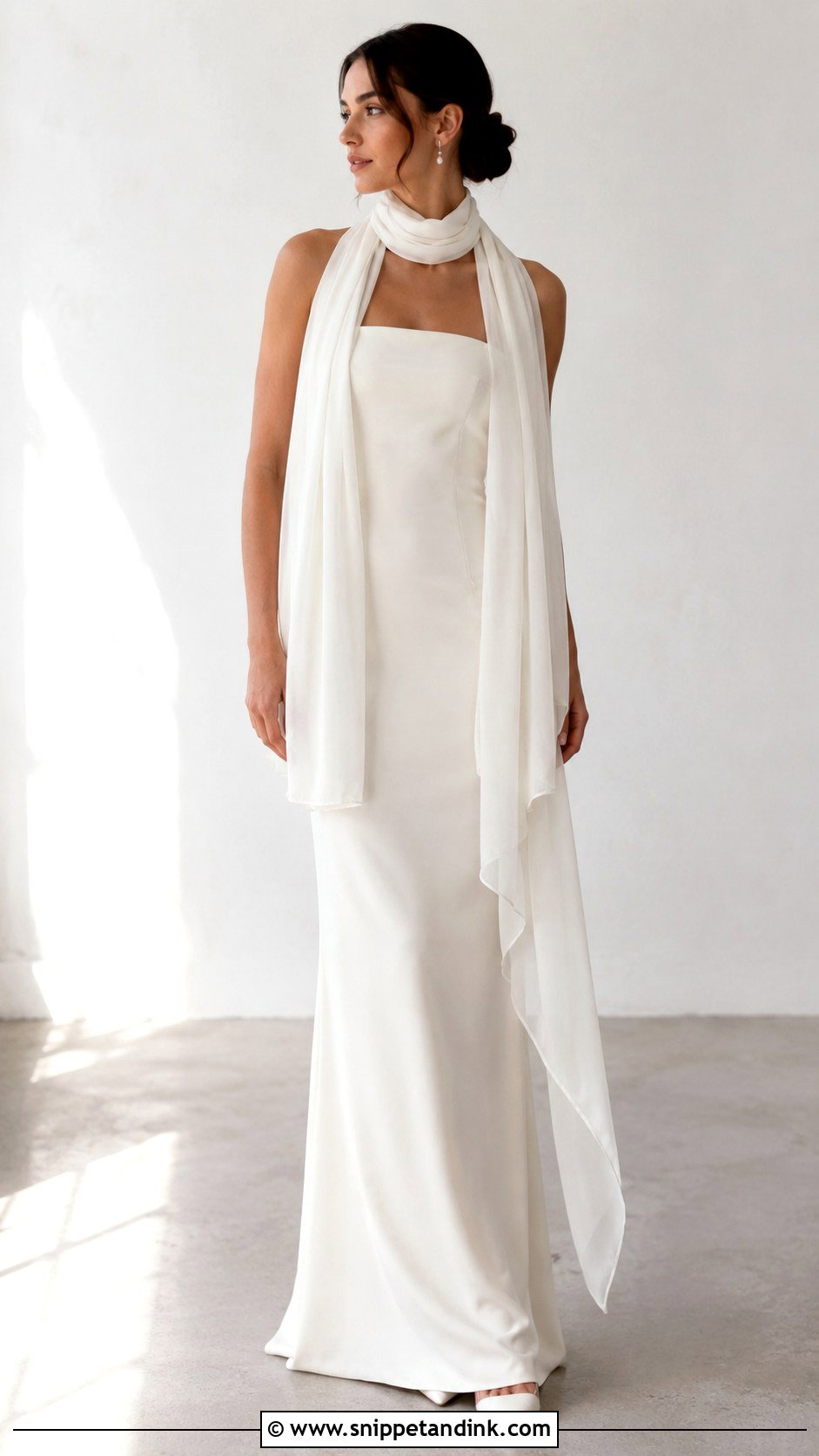
A bridal scarf is the most minimal topper: wrapped around the neck, draped over the shoulders, or tied loosely behind the back. Silk, chiffon and organza move best. A long scarf sits well with a slip dress, a column gown or a simple strapless dress, and it gives movement like a veil without anything on your head. Silk slips, though, so I pin the scarf discreetly to the dress strap or bodice lining. Keep the hair sleek and the jewelry small.
30. Detachable Overskirt Wedding Dress Topper
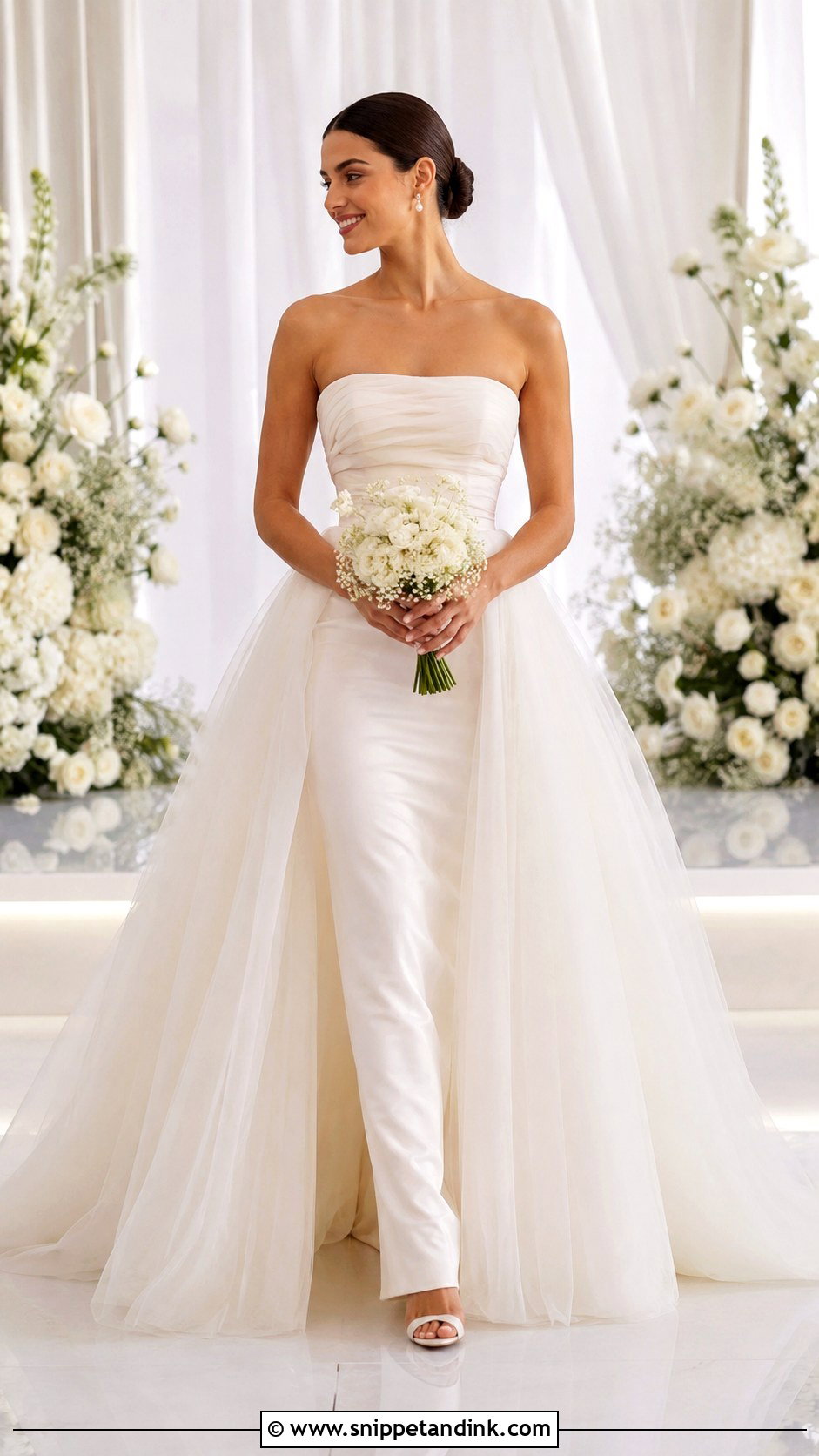
A detachable overskirt isn’t a topper in the strict sense, but it transforms the outfit more than anything else here. You get a grand ceremony skirt and a slimmer dress for dancing. Tulle adds romance, satin adds structure, organza adds airy volume. It works over fitted gowns, sheaths, slip dresses and minis. The waist attachment needs to be secure and hidden, which means your seamstress should fit it at the same time as the dress. Practise removing it once with whoever will help you on the day.
Hooks, Snaps and the Quick Change Between Ceremony and Party
Most toppers simply slip on and off, but anything that attaches to the dress, such as detachable sleeves, a cape or an overskirt, needs planning with your seamstress. I ask for the topper to be fitted at the same appointment as the gown, because adding hooks or snaps to a finished dress afterwards is harder and riskier.
- Small hooks and thread loops sewn inside the bodice edge hold sleeves and capes without showing.
- Snaps are faster to undo but can pop open under strain, so I only trust them for light fabrics.
- A silicone strip inside an off-shoulder band stops it sliding down when you raise your arms.
- Overskirts usually close with hooks or a hidden button band at the waist; practise once before the day.
Decide who will help with the change. Nobody manages tiny hooks behind their own shoulder, so pick a bridesmaid or your planner, show them how it works at the last fitting, and give them a quiet room and five minutes in the schedule. Have a padded hanger and a garment bag waiting so the topper doesn’t end up crumpled on a chair.
Cleaning and Storing the Topper Once the Party Is Over
Toppers get handled more than the dress itself: hugs, makeup on the collar, a spilled drink on a sleeve. Spot marks should be dealt with quickly, but I’d never rub at lace, beading or organza; take beaded, sequinned and feathered pieces to a cleaner who handles bridal wear.
For storage, keep it out of plastic, which traps moisture and can yellow fabric over time. Use acid-free tissue in the folds and a breathable cotton bag, and keep it somewhere cool and dark. A blazer, a cardigan or a leather jacket can go straight back into your wardrobe and be worn again, which is one of the nicest things about choosing a topper in the first place.
Bring the Topper to Every Fitting
A topper only works when it looks like part of the dress, so treat it as part of the fitting process, not an accessory you add at the end. Think about fabric tone, neckline, venue and how much you want the look to change between ceremony and party. A lace bolero softens, a cape adds drama, a blazer sharpens, and an overskirt gives you a real costume change. Try every option on with the gown before the final alterations so fit, colour and proportion are settled together, and you’ll walk out with a layer that looks like it was always meant to be there.
You'll Like These Ideas:


Leave a Reply