
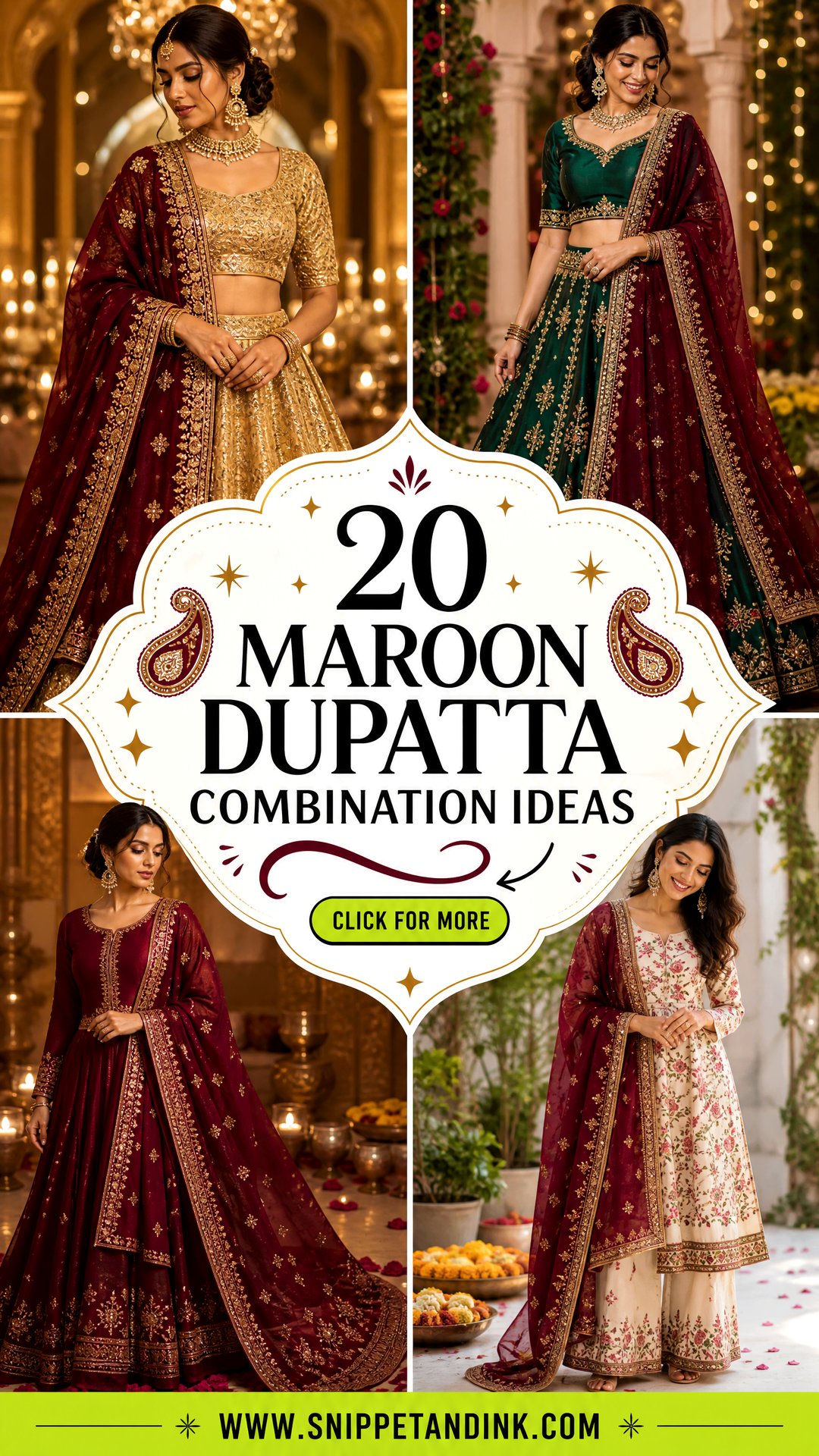
A maroon dupatta can lift a plain suit into something ready for a wedding function. Deep red sits well with light neutrals, earthy tones, jewel colors and pastels alike, which is why I keep reaching for it when dressing family members and guests. The real skill is balancing weight. A heavily embroidered dupatta wants a clean, solid outfit underneath, while chiffon, organza or cotton can sit over a more detailed kurta. Gold jewelry keeps it traditional; pearls, silver or very little jewelry make it modern. Below are twenty complete pairings, from daytime family lunches to evening receptions, each with the drape I’d use.
Is Your Maroon Wine, Oxblood or Brick?
Maroon covers a surprisingly wide range. Some dupattas lean purple, close to wine. Others lean brown, toward brick or oxblood. In a shop they can look identical, and then one turns muddy next to your kurta at home. I always hold the dupatta against the actual outfit in daylight, near a window, before deciding.
- Wine-leaning maroon sits best with cool bases: gray, lavender, powder blue, navy and teal.
- Brick-leaning maroon suits warm bases: mustard, olive, orange, peach and beige.
- White, ivory and black accept both, so let your jewelry decide. Gold warms either shade; silver cools it.
- Under yellow evening lighting every maroon looks browner, so for night functions a slightly brighter shade photographs truer.
Fabric changes the color too. The same dye looks darker on velvet, which absorbs light, brighter on silk, which reflects it, and paler on sheer organza, where the color underneath shows through. If you’re matching a dupatta bought separately to an existing suit, take a fabric swatch or the kurta itself shopping with you.
1. White Anarkali With Maroon Dupatta
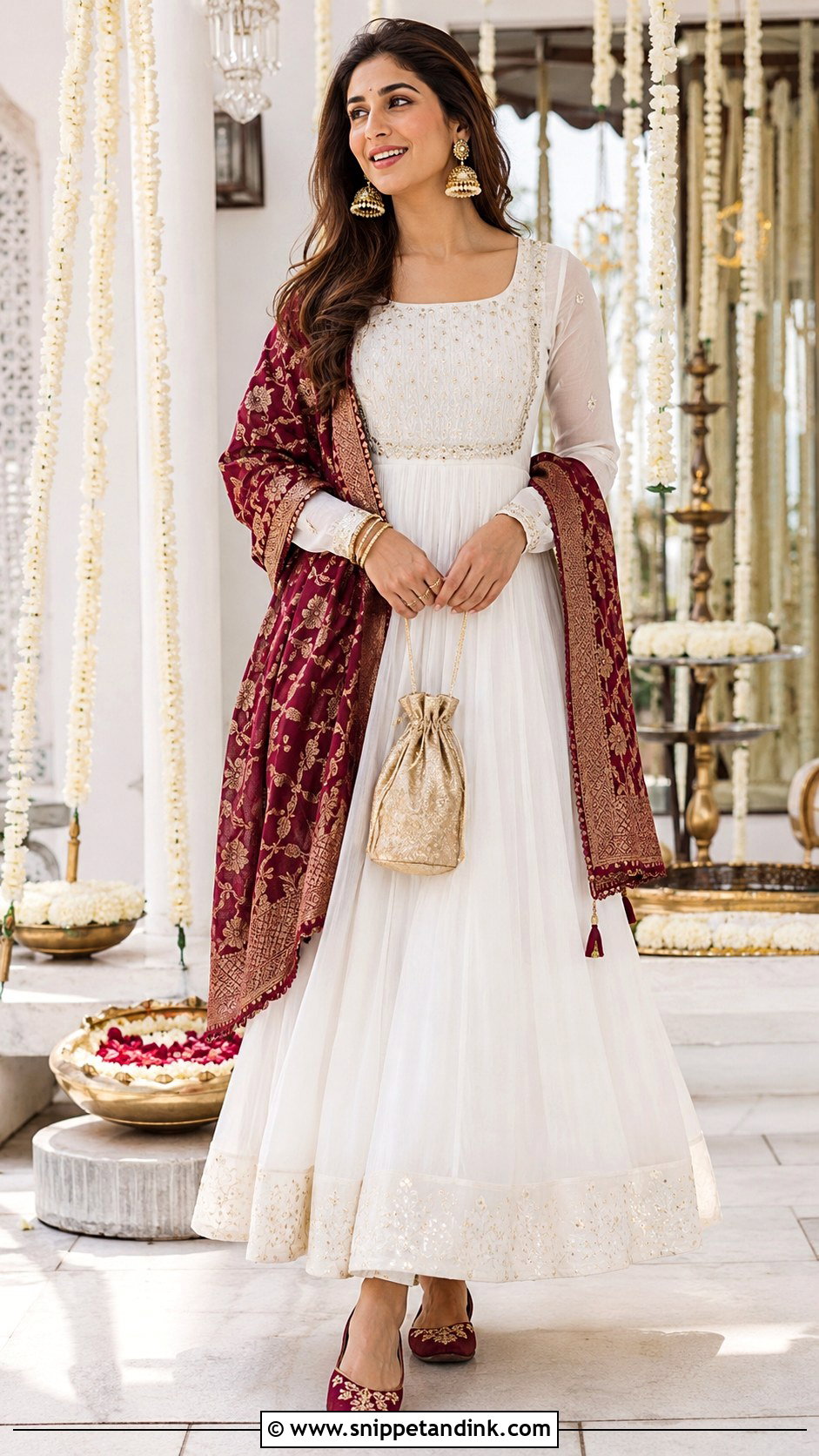
White is the cleanest backdrop maroon can have. An ankle-length white Anarkali in cotton, georgette or silk takes a maroon Banarasi dupatta with gold zari for weddings, or a printed cotton or sheer organza one in daytime. Banarasi silk is stiffer than it looks, so I pleat it into narrow folds before pinning; laid flat, it stands away from the shoulder. Gold jhumkas, a slim bangle stack and maroon embroidered juttis finish it, with a small potli repeating the gold. Wear your hair in a low bun or soft waves. One-shoulder draping keeps the white silhouette visible, and it’s also the safest drape over white because it keeps dark fabric away from the front when you eat.
2. Black Salwar Suit With Maroon Dupatta
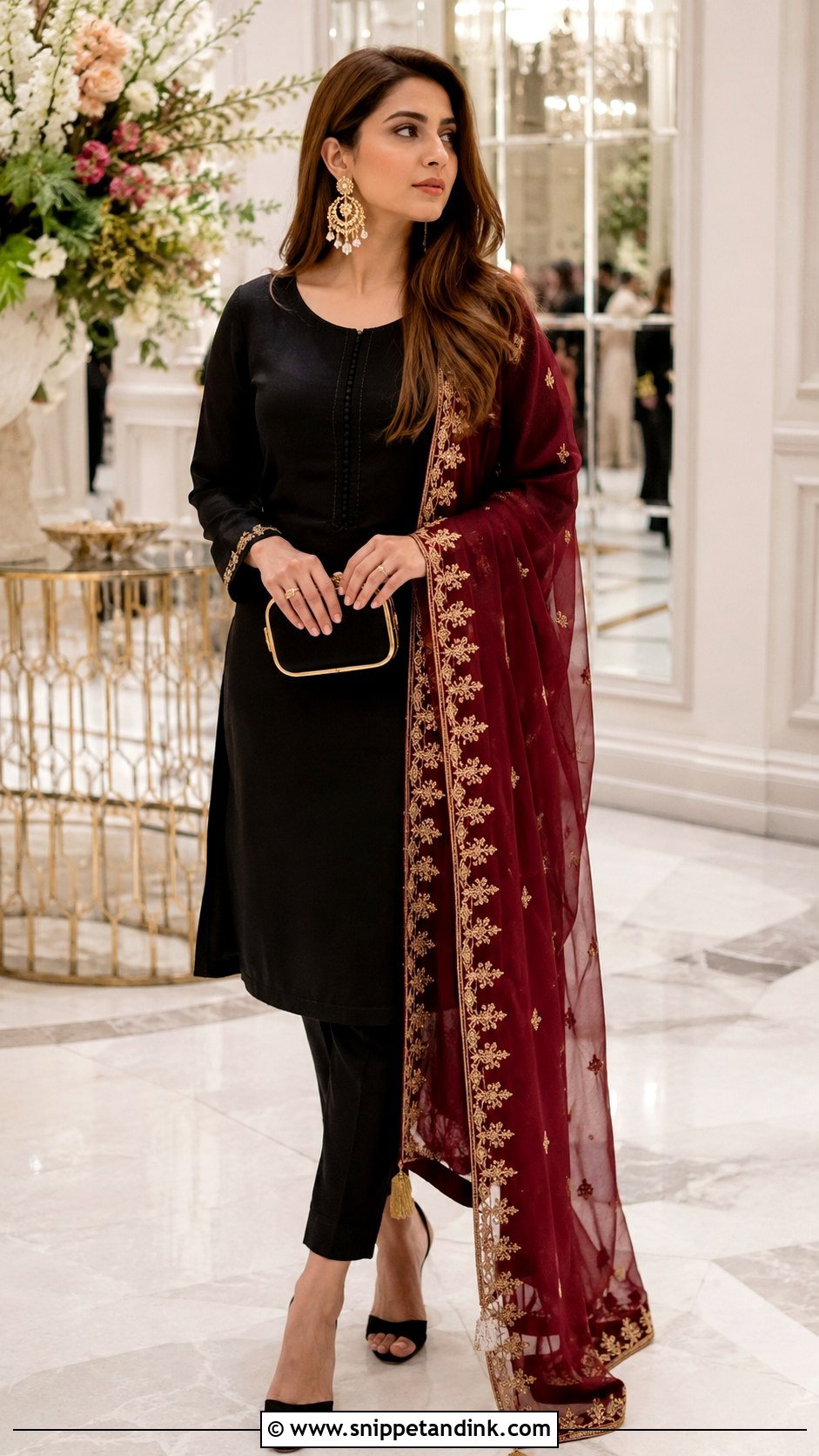
Black and maroon is an evening combination, and it can look heavy in daylight. A straight black kurta with cigarette pants or a classic salwar, kept mostly solid, lets both colors stay distinct. Add a maroon dupatta with antique gold embroidery, small buti or a woven border. Gold chandbalis and a structured black clutch suit it; black heels give a long line, maroon juttis tie the feet to the dupatta. A side-swept drape brings in color without covering the kurta. Two deep colors swallow light in photographs, so the gold border matters more here than anywhere else on this list. If the suit already carries heavy embroidery, switch to plain maroon chiffon and keep jewelry to statement earrings.
3. Beige Straight Kurta With Maroon Dupatta
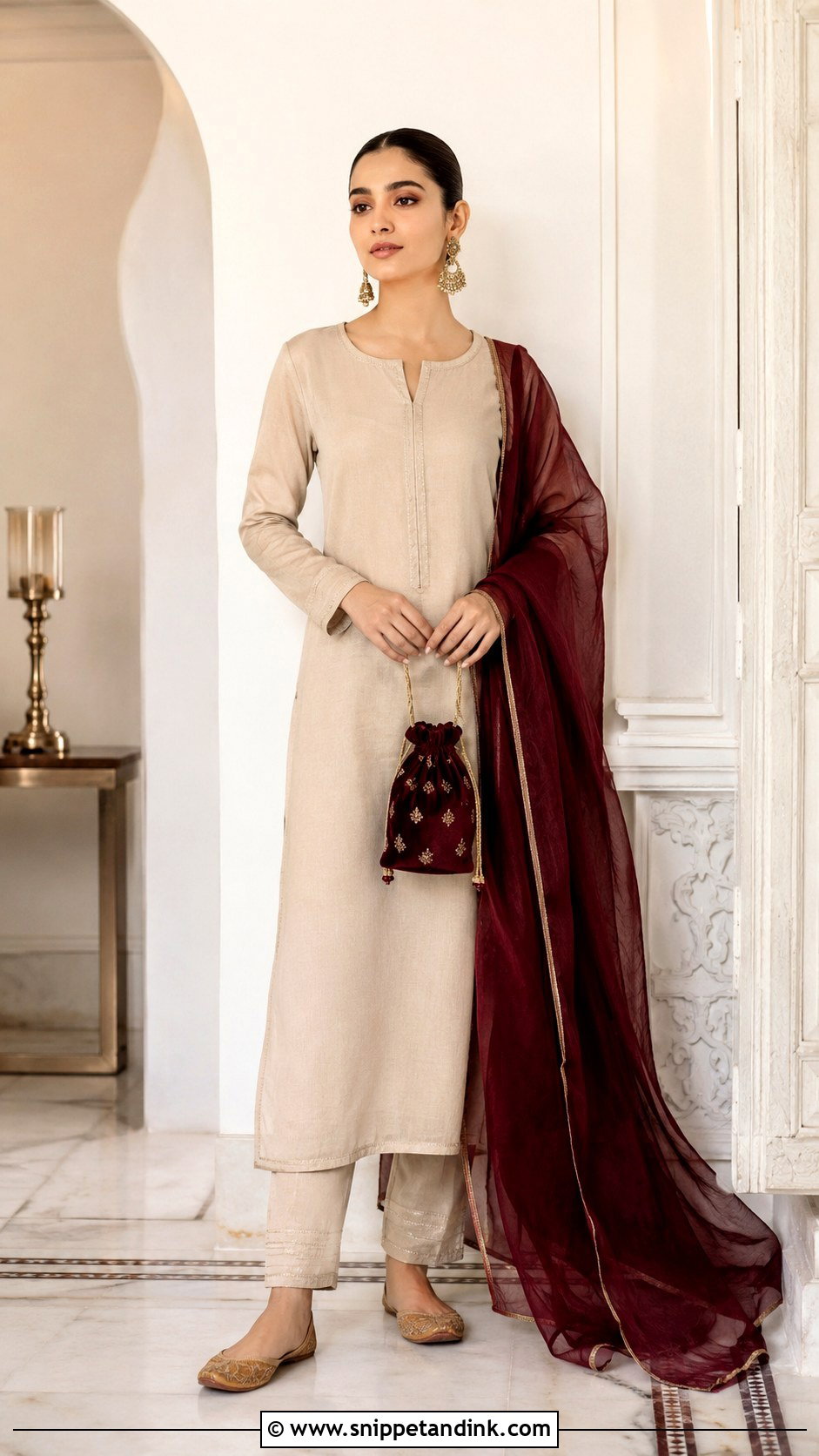
Beige lets maroon look deep without a harsh jump in contrast. A straight beige kurta with matching pants gives a long, unbroken line, and fine threadwork, small gold motifs or a lightly textured weave keep it from looking plain. For formal gatherings, a maroon organza dupatta edged in zari; for something relaxed, a woven cotton one. Antique gold earrings, tan embroidered flats and a maroon potli finish the palette. Diagonal draping across the torso adds shape to a straight kurta, while both shoulders feel more traditional. Organza creases sharply if it’s folded tight in a bag, so I carry it rolled around a tube of tissue to the venue.
4. Mustard Yellow Anarkali With Maroon Dupatta
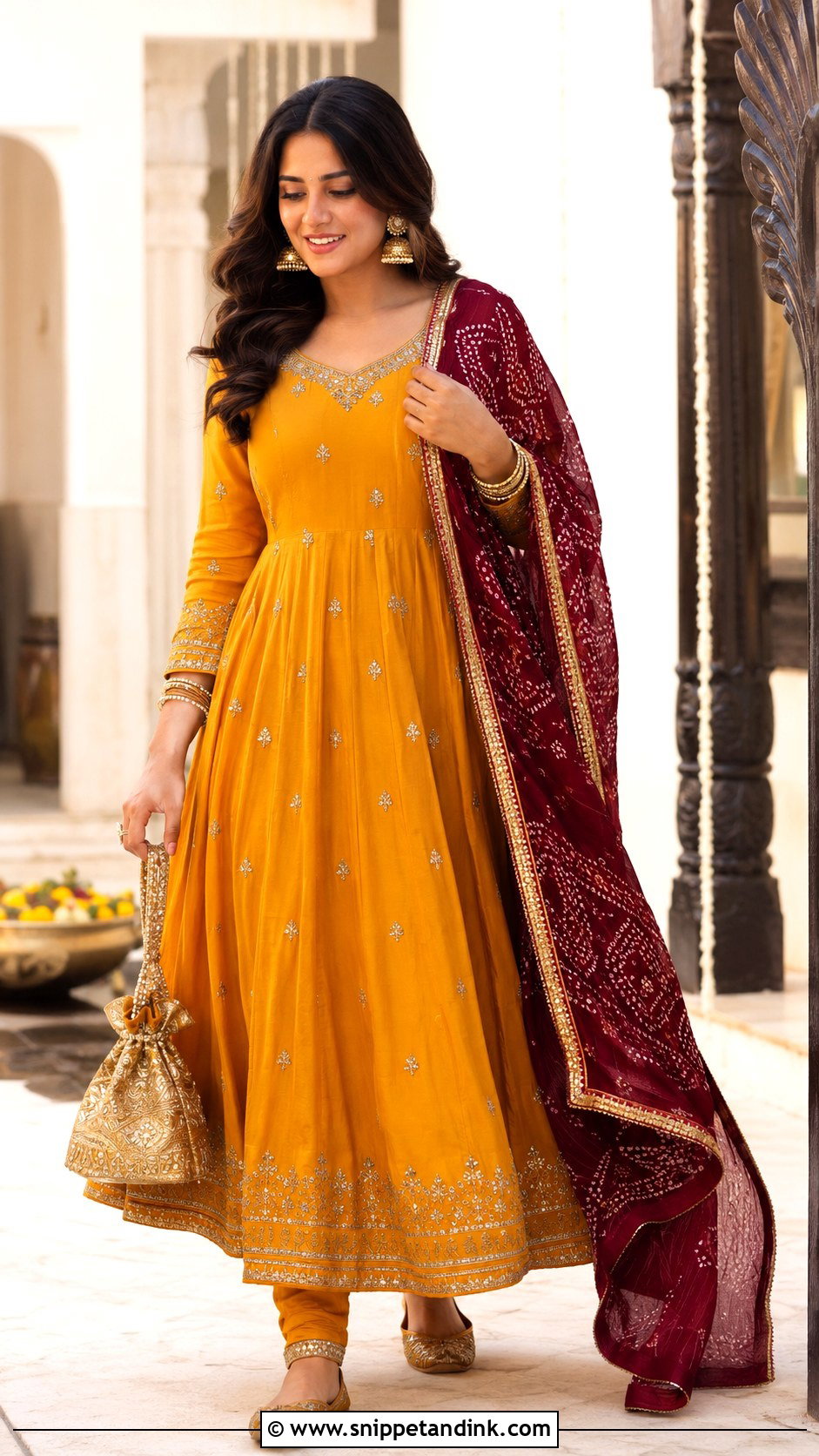
Mustard and maroon share warm undertones, so they settle together naturally. Choose a fitted or gathered mustard Anarkali with a little gold embroidery at the neckline and cuffs. A maroon Bandhani dupatta adds traditional pattern; plain silk is more formal. Bandhani cloth keeps a slight crinkle from the tie-dye process, which is part of its character, so I don’t press it flat. Antique gold jhumkas, stacked bangles and maroon or mustard juttis go with it, plus a neutral gold potli. Pin one end at the shoulder and let the other fall loose over the opposite arm. Don’t add more colors; two warm ones are already a strong statement for a daytime function.
5. Bottle Green Sharara With Maroon Dupatta
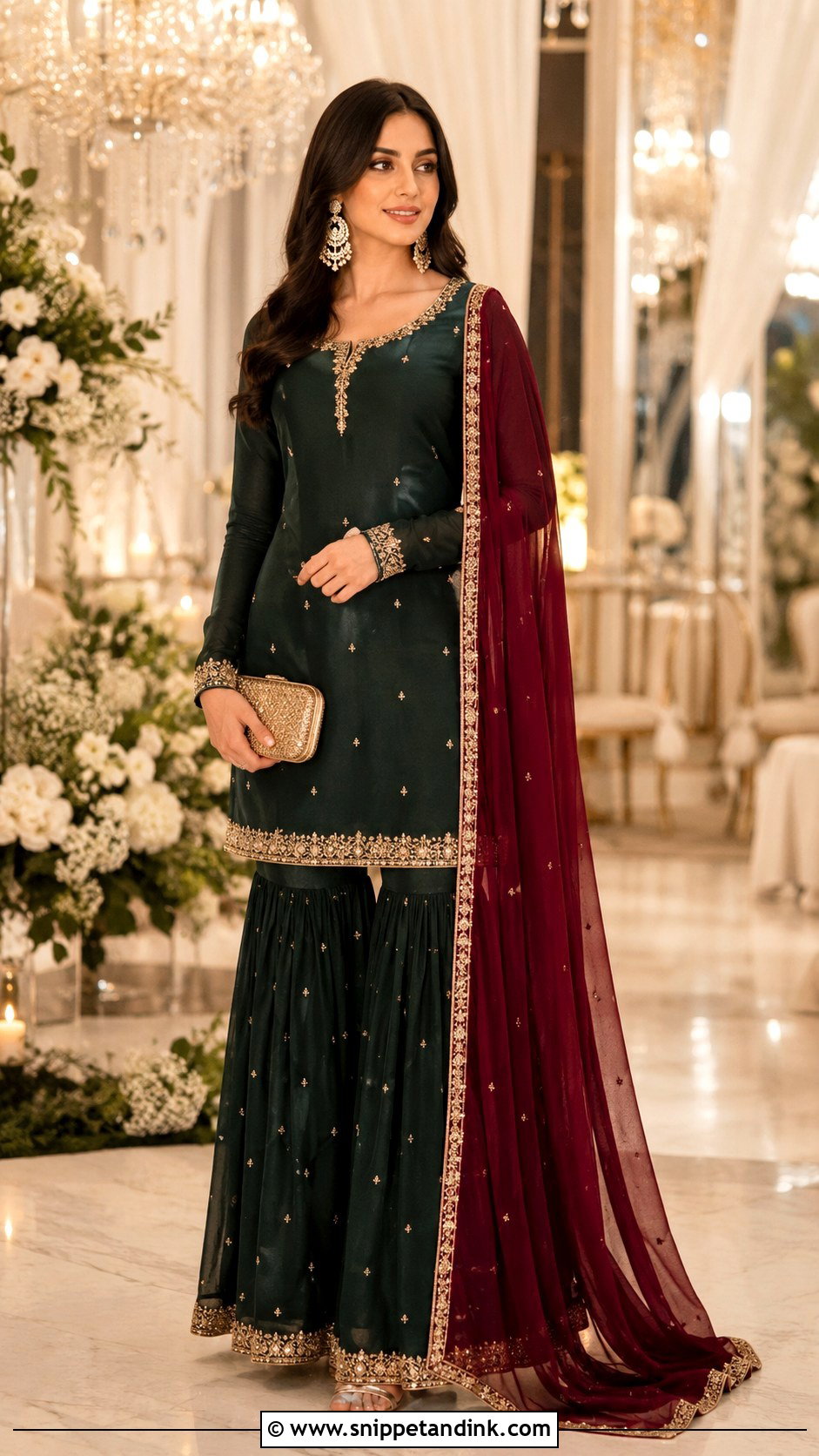
Jewel tones look expensive together, and bottle green with maroon is one of the richest pairs. Choose a fitted green kurta with a flared sharara in the same shade, with gold piping or delicate zari to link it to an embellished maroon dupatta. The sharara already has volume, so the dupatta must be light: chiffon, net or organza, never a heavy silk that adds bulk at the hips. Kundan earrings, a compact gold clutch and green or maroon heels finish it. Drape from one shoulder and catch the other end at the wrist. A sleek bun or curled ponytail keeps the neckline open for an evening wedding or engagement.
6. Navy Blue Silk Suit With Maroon Dupatta
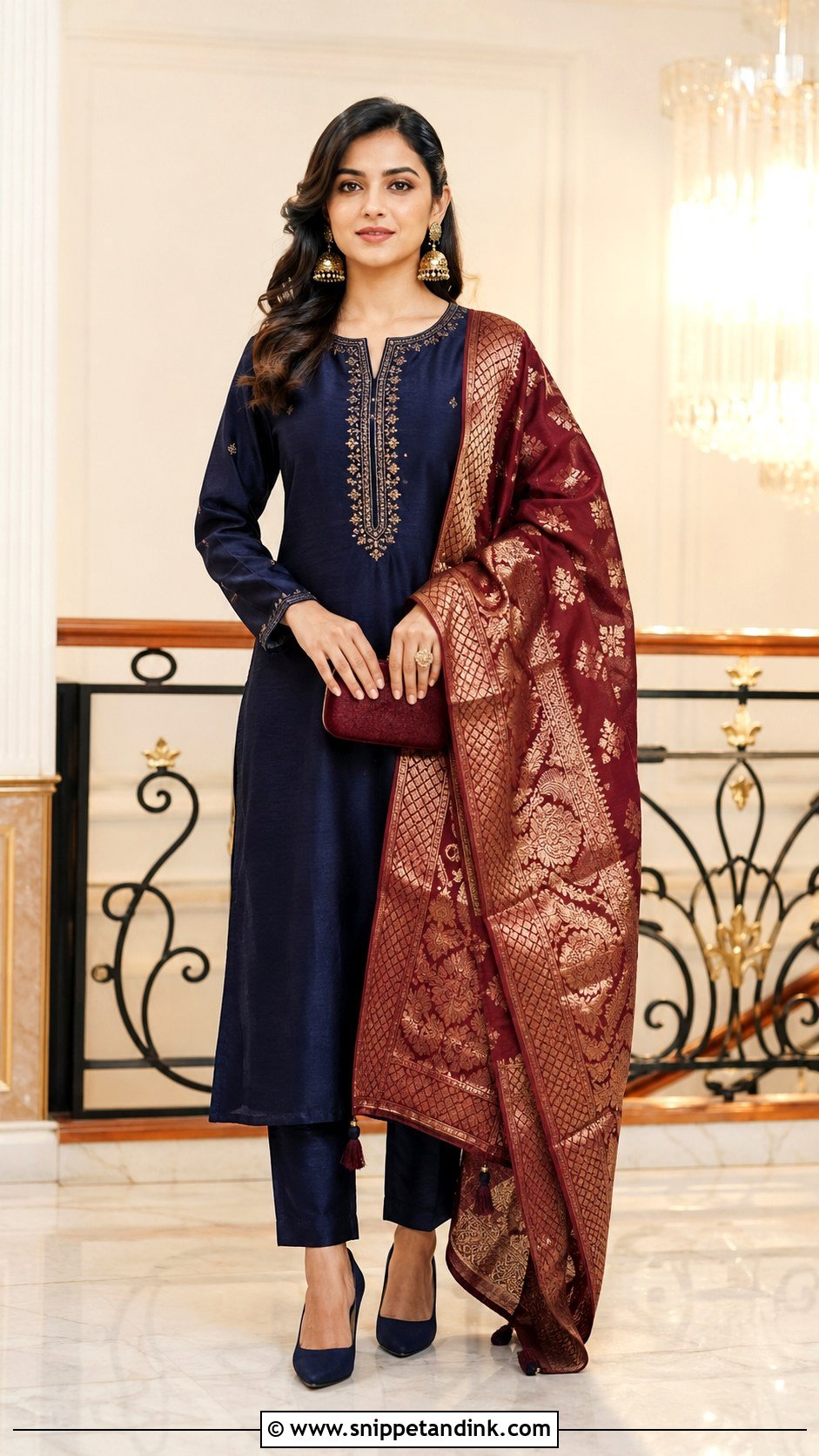
Navy is the quiet, grown-up base for maroon. A navy silk kurta with slim pants and discreet gold at the neckline takes a maroon velvet dupatta in winter, or a lighter Banarasi when you want richness without weight. Velvet is warm and it is heavy, so it needs two pins, one at the shoulder and one lower at the back, or it slides off as you move. Antique gold earrings, navy heels and a small maroon clutch suit it. With an elaborate border, skip the necklace and let fabric and earrings do the work. Both colors are deep, so gold is what separates them; without it the outfit reads almost black in evening light.
7. Ivory Chikankari Suit With Maroon Dupatta
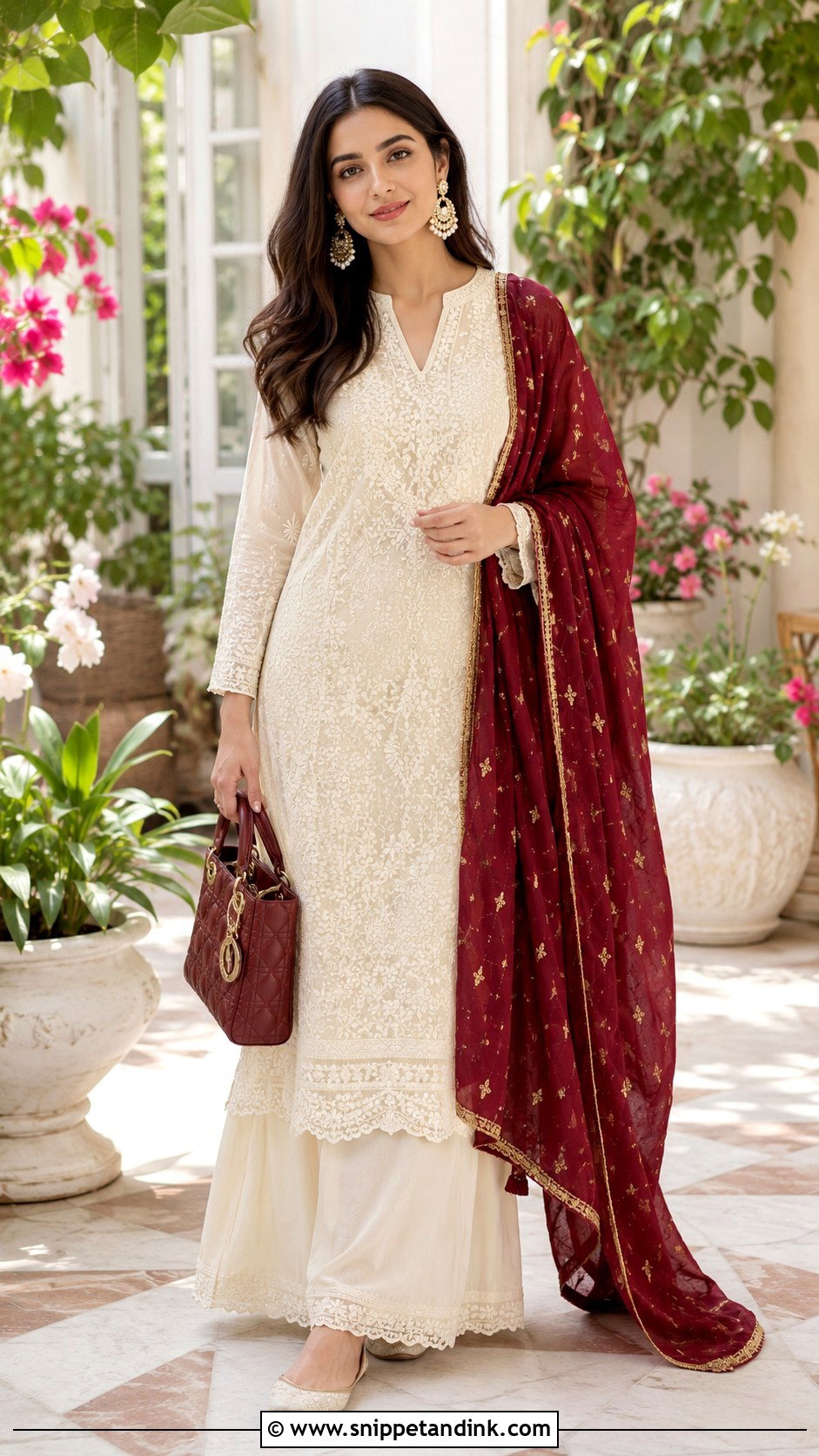
Delicate ivory Chikankari turns festive the moment maroon goes over it. A long ivory kurta with tonal embroidery, worn with straight pants or a flowing palazzo, suits a dupatta with a woven border, small gold motifs or a little mirror work. Chikankari is hand embroidery on fine fabric, and safety pins pushed straight through it leave holes and pull threads. I pin into the dupatta’s border and the kurta’s shoulder seam only. Pearl-and-gold earrings, ivory juttis and a small maroon bag complete it, with a muted berry lip if you like. Keep the dupatta over one shoulder so the embroidery stays on show, day or evening.
8. Blush Pink Palazzo Suit With Maroon Dupatta
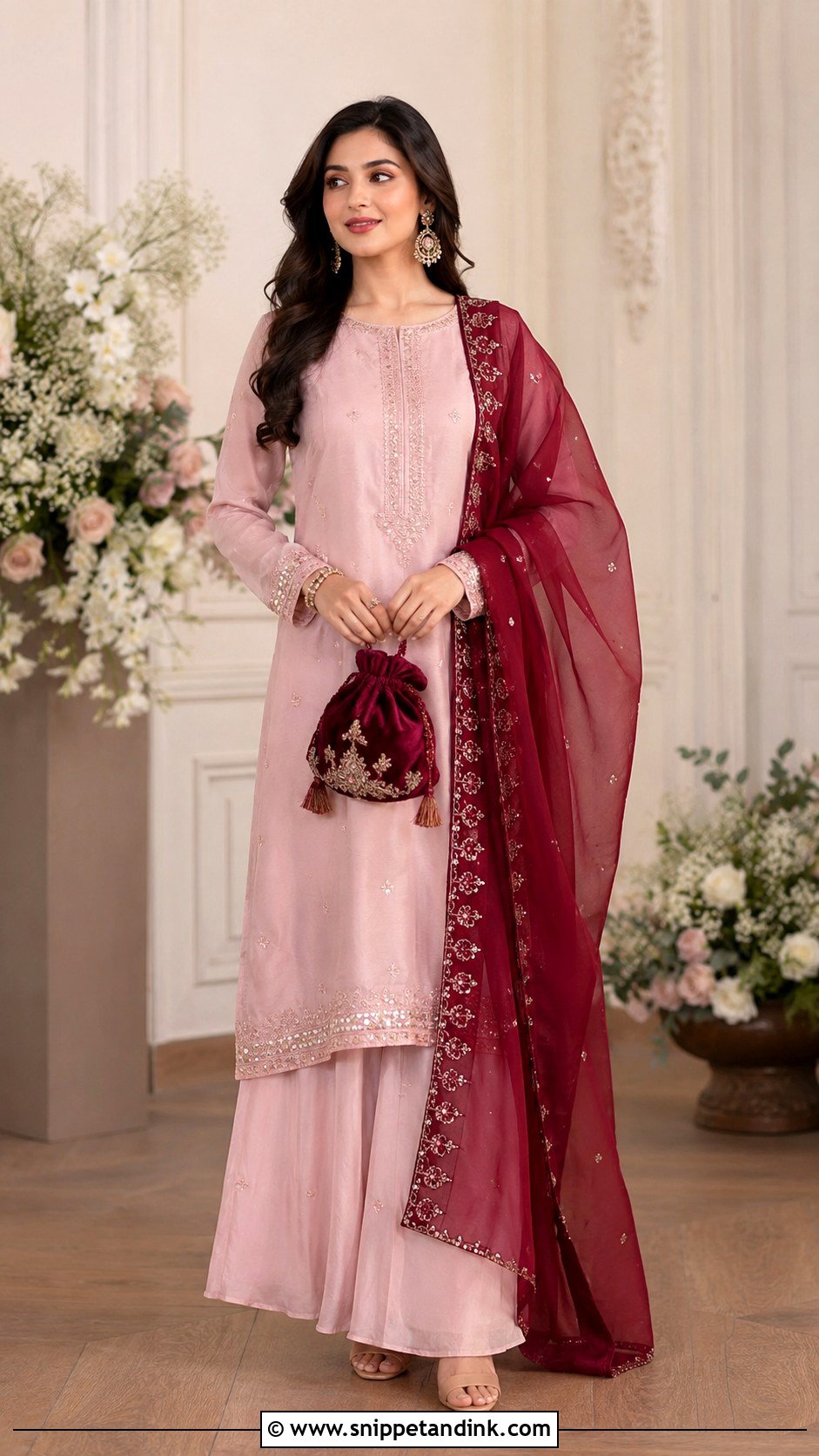
Blush pink softens maroon into something gentle. A blush kurta with wide palazzos moves well and feels cool in warm weather. A sheer maroon organza dupatta with a narrow embroidered border keeps it light; silk makes it formal. Rose-gold earrings, nude block heels and a maroon potli are enough. Skip bright pink accessories, which pull attention away from the two main shades. A loose side drape lets the palazzo shape show, with soft curls or a low ponytail. If the blush is very pale, check the maroon doesn’t bleed onto it: brand-new dyed dupattas sometimes transfer color in heat, so wear it once at home first.
9. Gray Kurta Pant Set With Maroon Dupatta
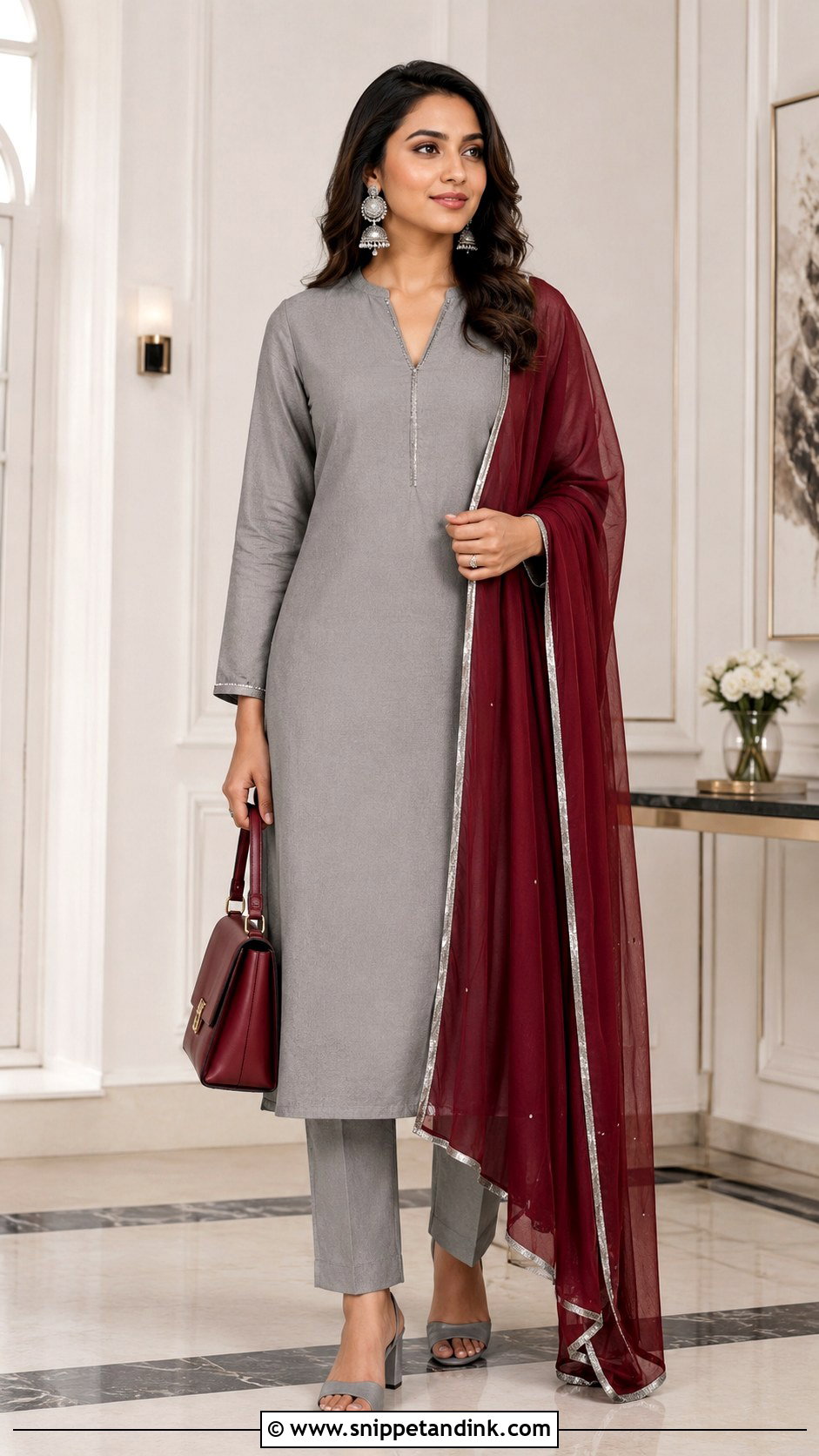
Gray makes maroon look modern. A dove-gray or charcoal straight kurta with tailored ankle pants, plus silver threadwork or small mirrors, dresses it up without adding a strong color. Choose plain maroon chiffon for minimal elegance or one with silver edging to link the two pieces. Oxidized silver earrings, gray block heels and a structured maroon bag go with it. A diagonal drape across one shoulder gives the straight silhouette some shape. For a formal event, swap oxidized jewelry for polished silver or diamond-style pieces. It’s my suggestion for anyone who likes deep festive color but finds gold jewelry too traditional for them.
10. Teal Gharara With Maroon Dupatta
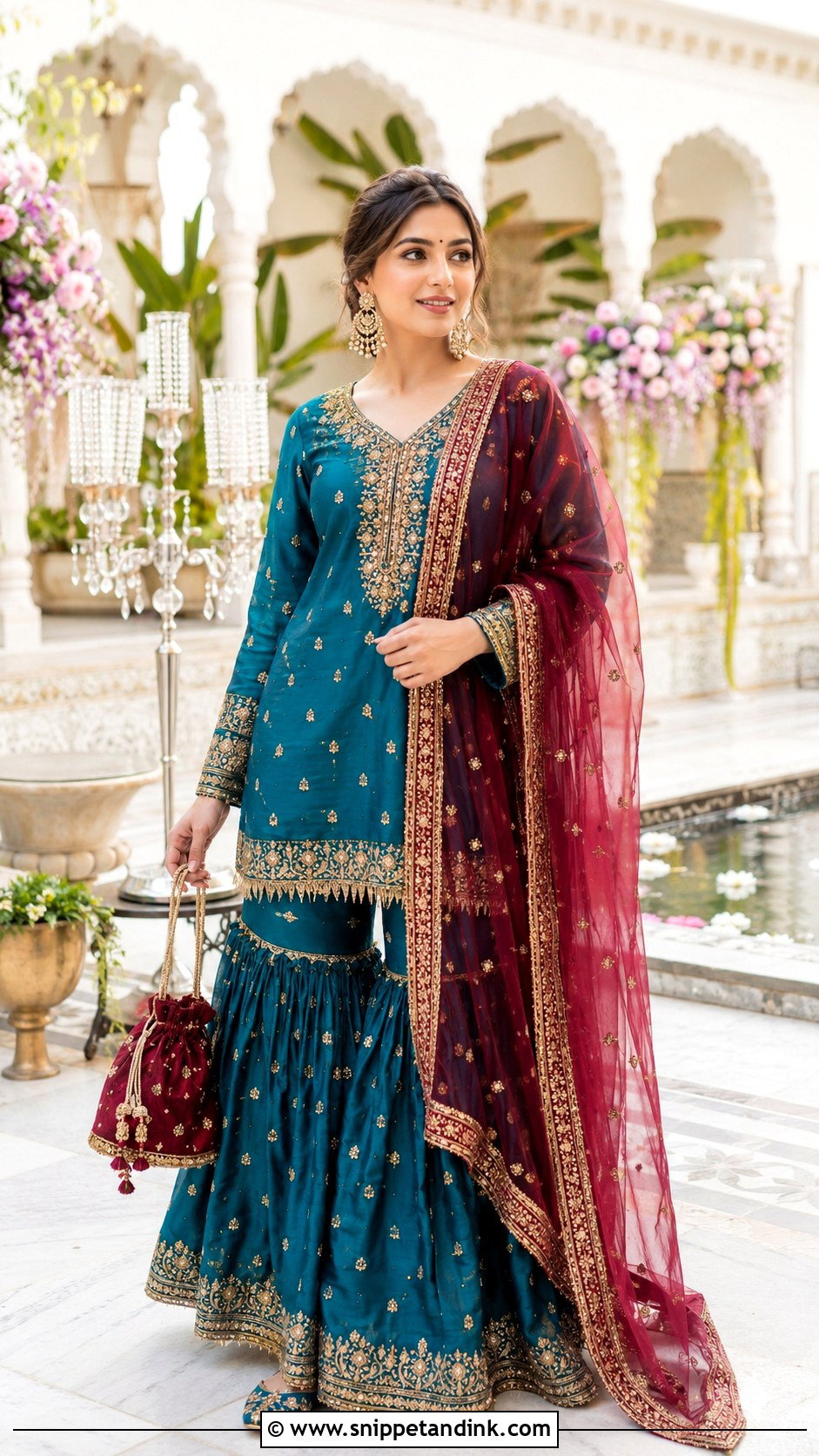
Vivid but not loud: that’s what a teal gharara does for maroon. A short teal kurta over gharara pants that flare from the knee, with gold motifs, gota edging or embroidered cuffs, ties the two jewel tones. A gharara has a lot of fabric below the knee, so I keep the dupatta light, in net or chiffon, and make sure it doesn’t hang low enough to tangle with the flare when you walk or dance. Gold chandbalis, teal juttis and a maroon potli finish it. Pin the dupatta on one shoulder and let it fall behind the arm. A center-parted low bun keeps the finish traditional.
11. Gold Brocade Lehenga With Maroon Dupatta
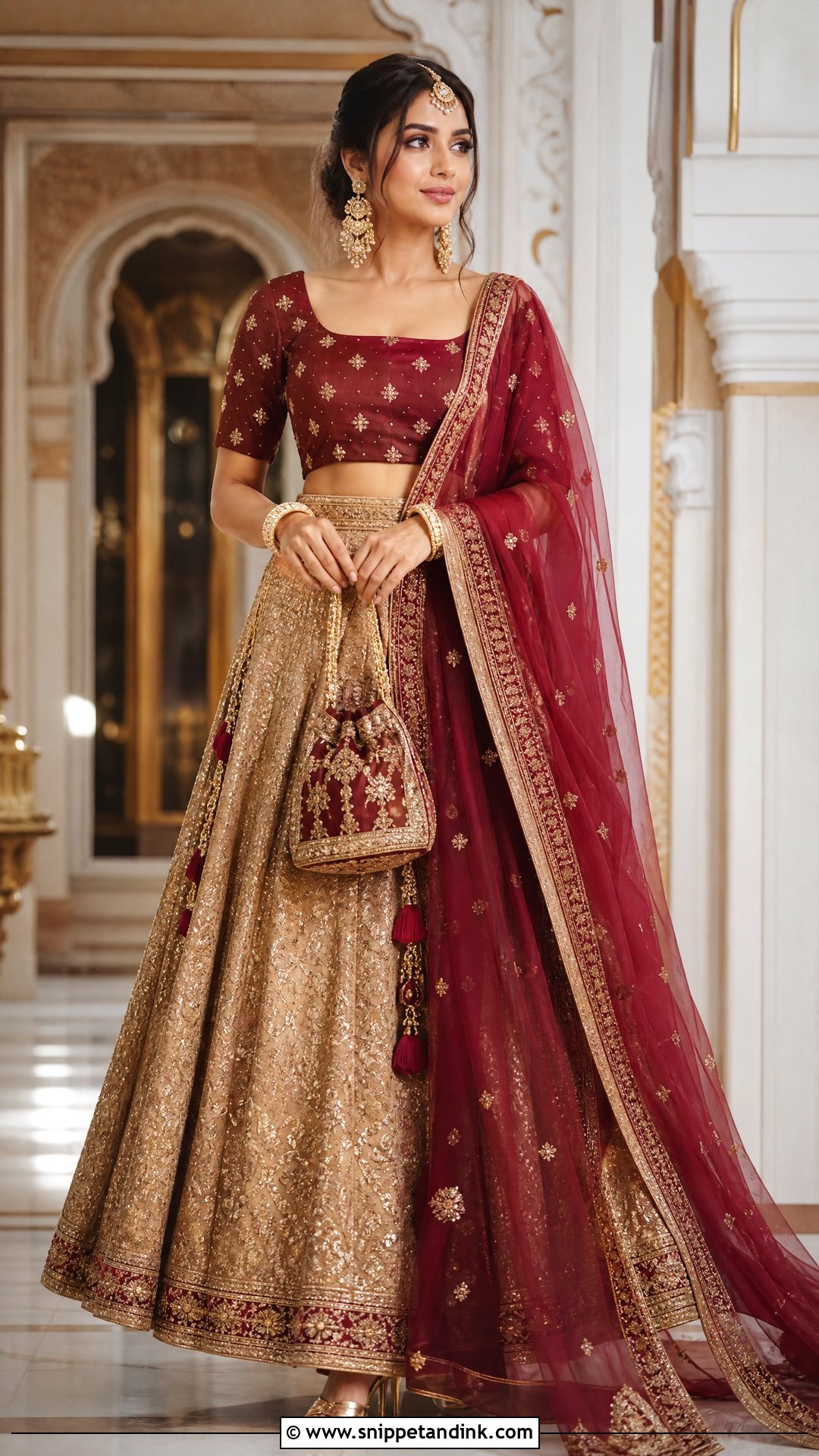
Brocade and maroon make a grand pairing for the most formal functions. Pair a gold brocade lehenga with a fitted gold blouse, or a maroon blouse matching the dupatta. Dense weaving in the skirt calls for a sheer maroon net dupatta with a controlled border so the two don’t compete. Brocade is stiff and the skirt is heavy, so a secure drape matters more than a pretty one: I take the dupatta from one shoulder across to the opposite side of the waist and pin it there. Kundan earrings, a matching maang tikka, gold heels and a compact potli finish it. Echo the maroon in one small detail, such as the blouse piping or the bag, to tie the outfit together.
12. Peach Anarkali With Maroon Dupatta
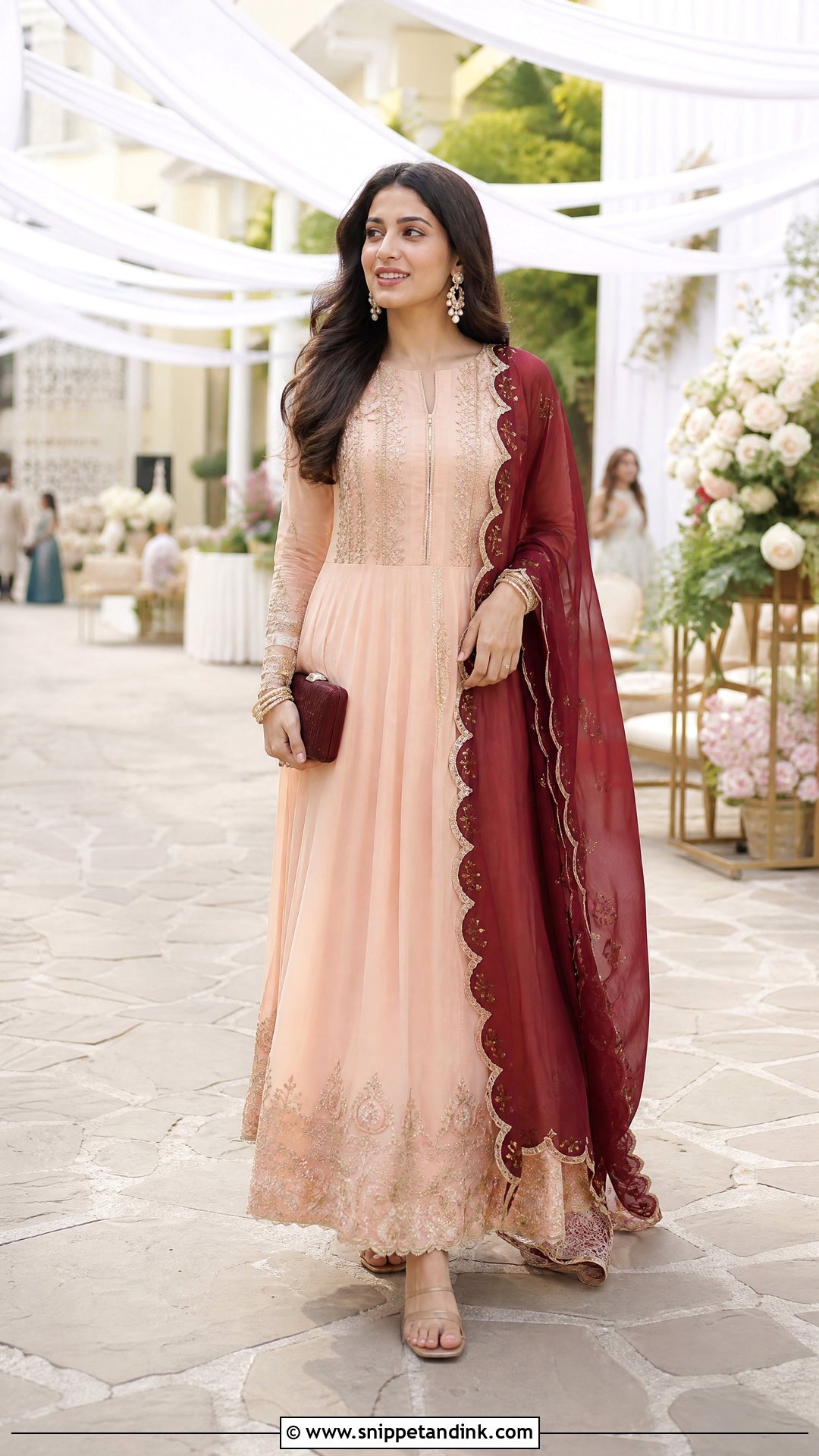
Peach is warm and delicate, so maroon looks lighter against it. A floor-length peach Anarkali with fine gold embroidery or small florals suits a sheer maroon dupatta with a scalloped edge or a fine zari border. Nude heels keep the dress line long; maroon juttis are more traditional. Pearl drops, thin gold bangles and a peach or maroon clutch finish it. Let the dupatta fall from one shoulder and gather it lightly over the other forearm, so the dark color covers as little of the pastel as possible. A sheer dupatta still darkens whatever it lies over, which is why I keep it narrow across a pale dress. Spring and summer daytime weddings suit it best.
13. Powder Blue Palazzo Suit With Maroon Dupatta
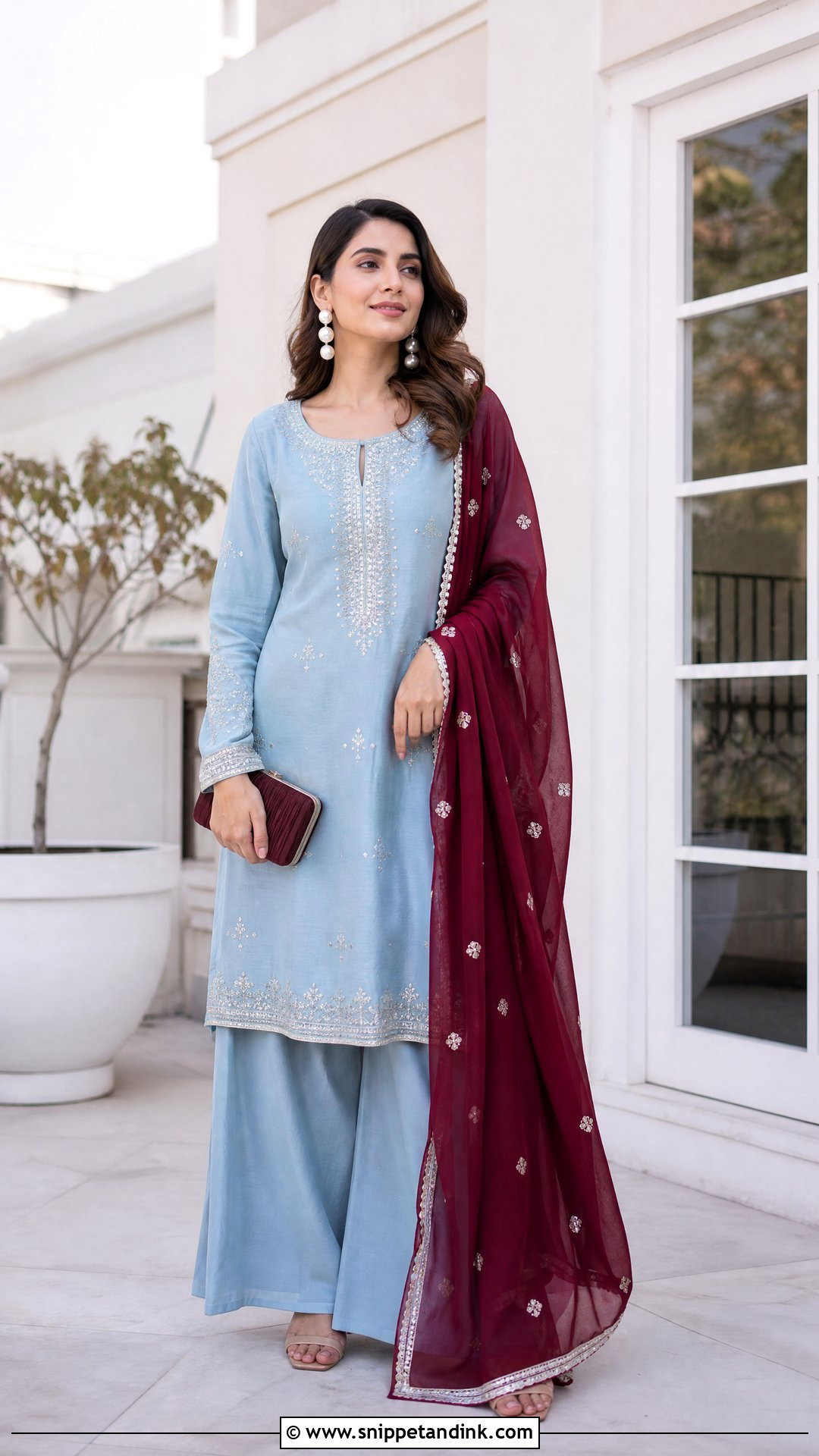
Powder blue with maroon surprises people, and it works because one is cool and pale while the other is warm and deep. Start with a powder blue kurta and matching palazzos in georgette, crepe or soft cotton. A maroon dupatta with small blue or silver details links the colors. Silver earrings, nude sandals and a maroon clutch keep it balanced; pearls soften it for daytime. Wine-leaning maroon sits more comfortably with blue than brick-leaning maroon does, so compare both if you can. Drape it loosely around the elbows or over one shoulder, and keep the kurta simple if the dupatta is woven. It’s a fresh change from cream, black or gold at a festive lunch.
14. Lavender Suit With Maroon Dupatta
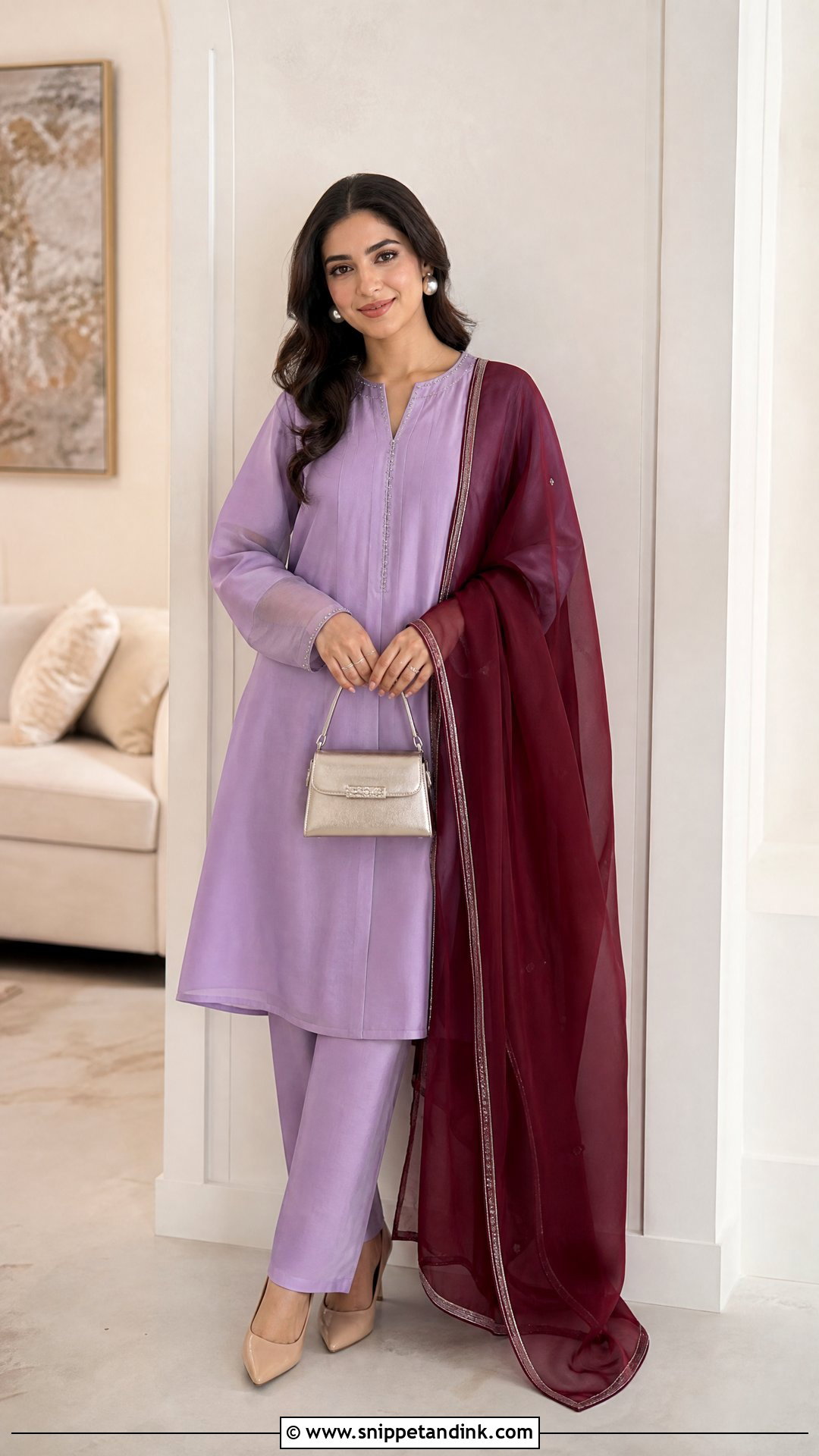
Lavender adds a cool, soft note. Wear a lavender straight kurta with matching pants, or a lightly flared Anarkali for something more formal. A maroon organza dupatta with a slim gold or lavender border makes the pairing look deliberate. Pearl earrings, nude heels and a small metallic bag finish it; if the suit has silver embroidery, switch to silver jewelry. Pin the dupatta neatly at one shoulder and let it fall in one long vertical line. A wide, loose drape across a pastel kurta tends to look heavy, so I keep it narrow. A simple low bun, soft makeup and a berry lip complete it for day or evening.
15. Orange Bandhani Lehenga With Maroon Dupatta
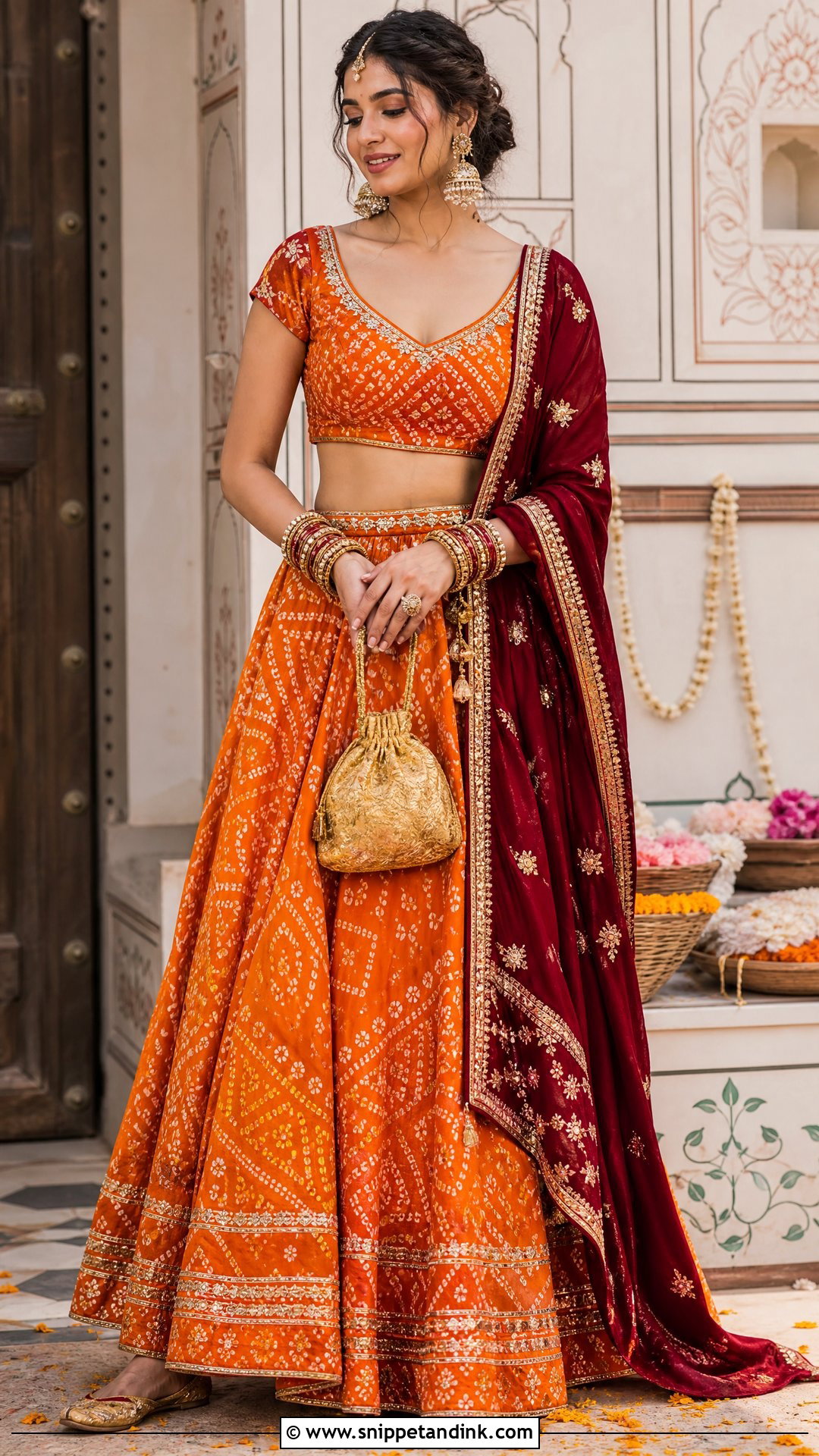
Orange and maroon are lively together, especially in Bandhani. Choose an orange Bandhani lehenga with a coordinated blouse and a deep maroon dupatta with small dots or a gold border. Keep the blouse fitted and simple so the printed skirt and contrasting dupatta stay balanced. Traditional jhumkas, stacked bangles, embroidered juttis and a small gold potli go with it. Drape across one shoulder and secure at the waist, which matters at a sangeet where you’ll be dancing. If the orange is very bright, a darker matte maroon calms it better than a glossy one. It belongs at daytime functions and dance nights.
16. Cream Silk Suit With Maroon Dupatta
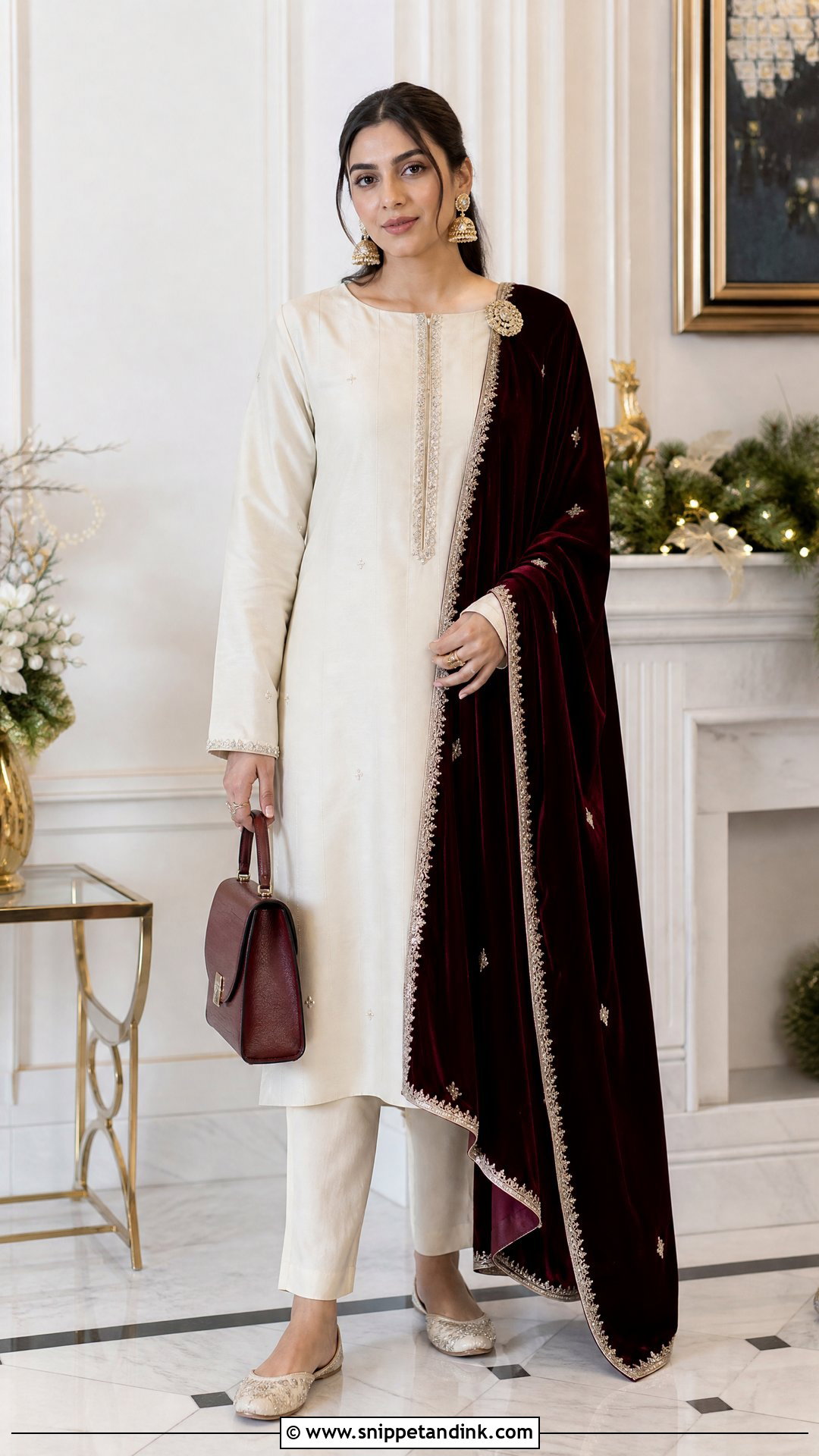
Cream silk with maroon is understated luxury. Wear a clean, straight cream kurta with matching pants and a little gold embroidery. A deep maroon velvet dupatta suits cold-weather celebrations; woven silk is lighter. Gold jhumkas, cream juttis and a structured maroon handbag finish it. A vintage-style brooch can secure the dupatta at one shoulder and becomes a focal point in its own right. Brooch pins are thicker than safety pins, though, so use it on velvet or heavy silk, not fine chiffon that will show the hole. Keep the neckline bare with a heavily embroidered dupatta, or add a slim gold choker if it’s plain. Formal dinners and winter weddings suit it.
17. Emerald Green Lehenga With Maroon Dupatta
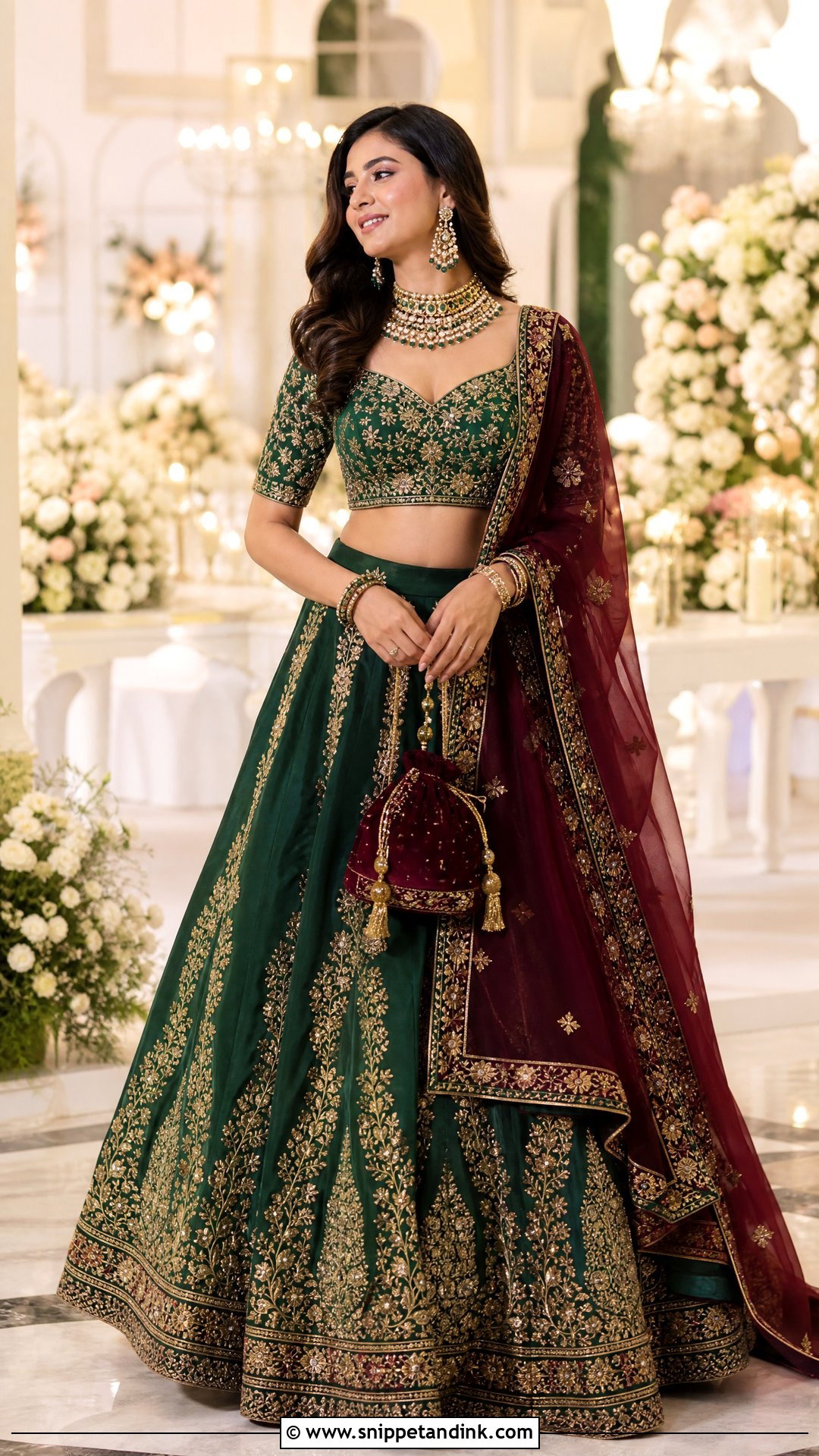
Emerald and maroon is a regal pairing for evening weddings and receptions. Choose an emerald lehenga with gold embroidery and a fitted matching blouse, then a maroon chiffon, net or organza dupatta whose gold border echoes the skirt. A kundan necklace, matching earrings, gold heels and a maroon potli complete it. Both colors are strong, so leave bright pink, blue or orange accessories at home. Drape the dupatta diagonally and secure it at the waist for a defined, practical shape, or rest it over both elbows to show off the blouse. The elbow drape looks graceful in photos but slips constantly once you start greeting people, so I save it for portraits.
18. Maroon Monochrome Anarkali Outfit
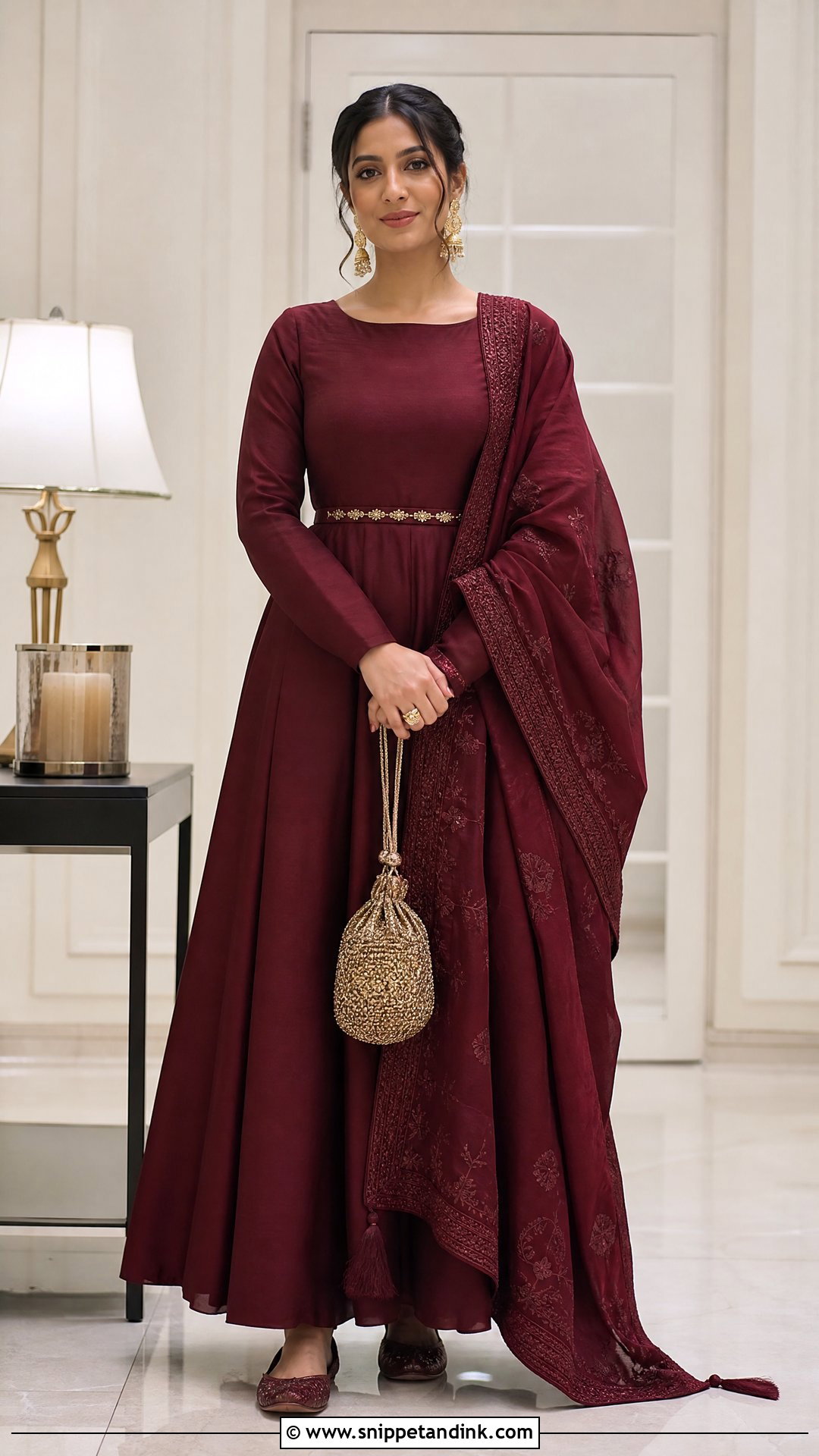
Head-to-toe maroon only works when the fabrics give it depth. Start with a matte maroon Anarkali and a dupatta a shade deeper or lighter. Gold motifs, tonal embroidery or a contrasting woven border keep it from looking flat. Matte with sheen is the combination I trust most: a matte kurta under a slightly lustrous silk dupatta separates the layers even when the colors are close. Antique gold earrings, maroon juttis and a metallic potli suit it. A slim gold belt can hold a one-shoulder drape and define the waist, unless the Anarkali is already heavily worked. Keep jewelry near the face for winter evenings.
19. Floral Kurta Set With Maroon Dupatta
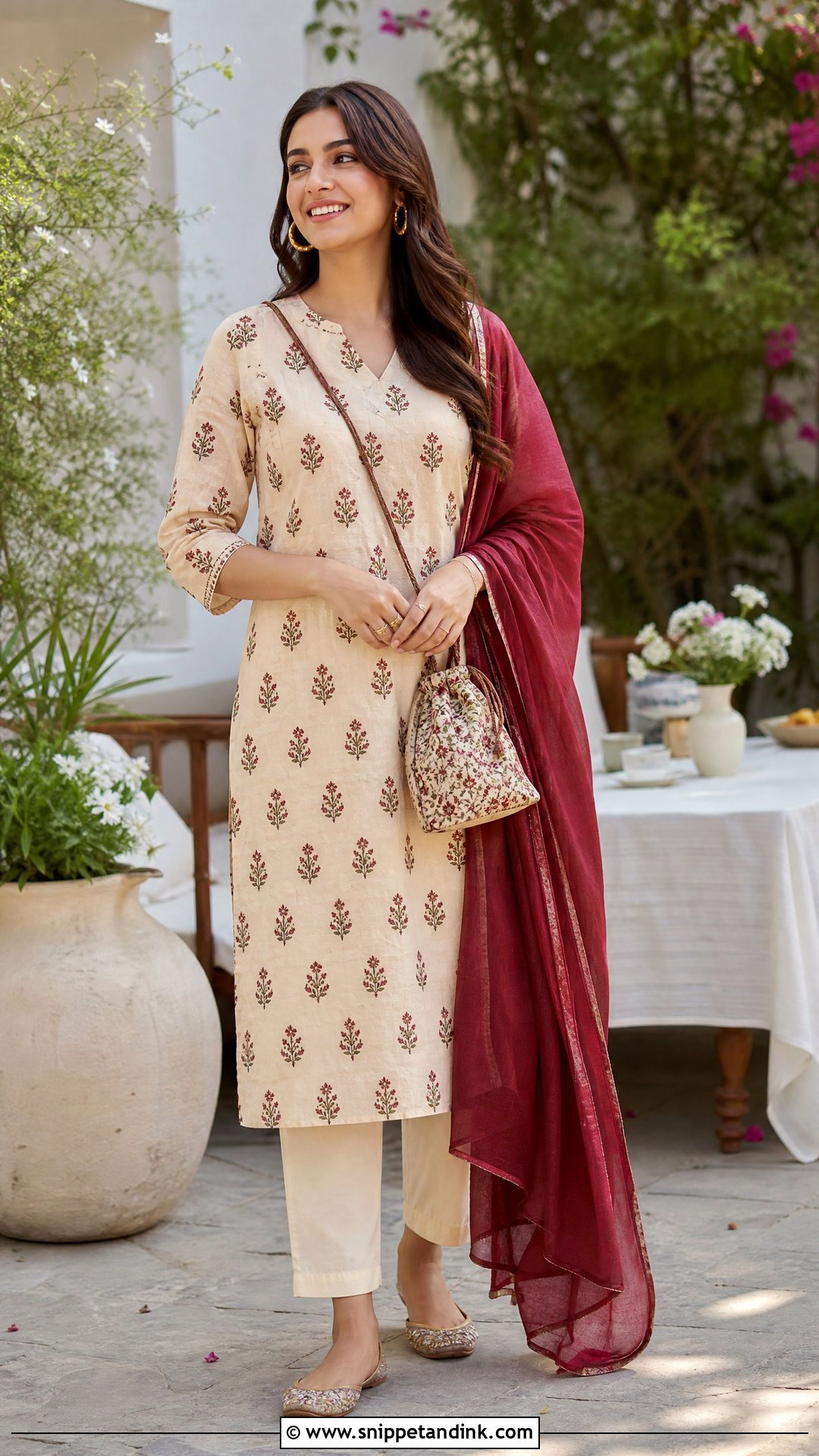
Prints make maroon relaxed enough for everyday festivities. Choose a cream, beige or dusty pink kurta with small maroon flowers, straight pants matching the background, and a lightweight maroon cotton, chiffon, or organza dupatta. Simple gold hoops, comfortable juttis and a crossbody potli keep it practical. A heavily embroidered dupatta fights the print, so look for a narrow border or a few tassels. The safest match is a dupatta pulled straight from the darkest flower in the print. Wear it loosely over both shoulders or around the elbows, for family lunches and cultural programs.
20. Olive Green Suit With Maroon Dupatta
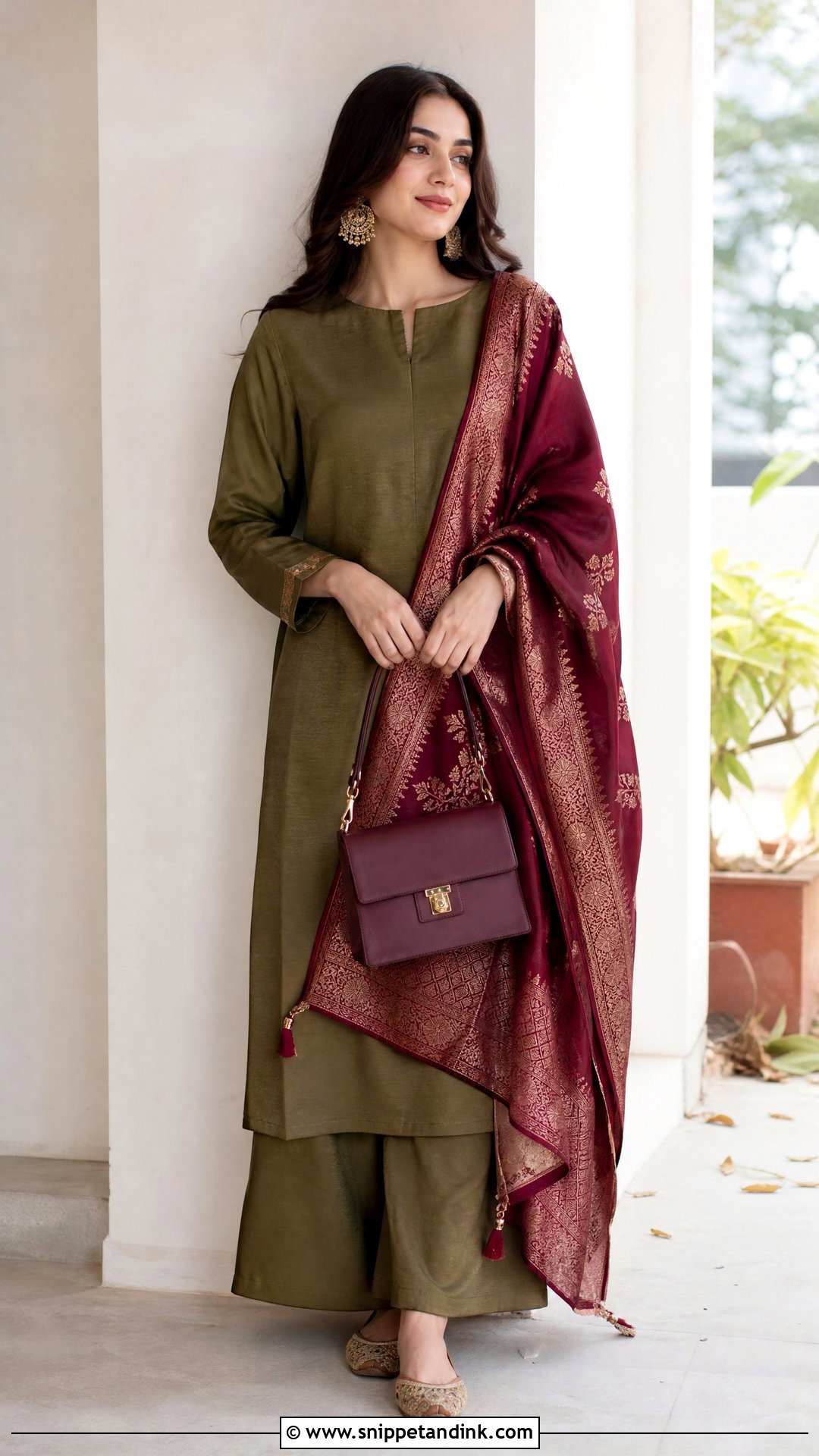
Olive and maroon are earthy, distinctive and rarely seen, which is part of their appeal. Begin with an olive straight kurta and matching pants or a slightly flared palazzo. Gold threadwork at the neckline connects the muted green to a maroon dupatta with zari accents. Antique gold earrings, tan juttis and a maroon handbag finish it. Daytime calls for cotton with a woven pattern; evening for silk or organza and a few slim bangles. Olive can look gray under fluorescent venue lighting, so the warmer, brick-leaning maroons hold up better beside it than wine shades. A neat shoulder drape streamlines it; an elbow drape softens it for fall gatherings.
Safety Pins, Shoulder Seams and Drapes That Last Through a Sangeet
Most dupatta trouble on the day comes from pinning, not styling. A drape that looks fine in the mirror can slide off after an hour of hugging relatives and dancing. Here’s how I secure them.
Pleat first, then pin
Fold the shoulder end into neat pleats about two fingers wide and hold them together before pinning. Pleats give the pin something firm to grip and stop the fabric from twisting. Pin from underneath, through the kurta’s shoulder seam, so the pin head stays hidden and the pull falls on stitching rather than fine fabric.
Matching the pin to the fabric
- Chiffon and georgette slip, so use two small pins, one at the shoulder and one a little lower at the back.
- Net and organza snag; pin only through the border, where the fabric is strongest.
- Velvet and heavy Banarasi need a sturdier pin and a second anchor at the waist or back.
- Gold-tone or dark pins disappear into maroon; silver ones catch the light in photographs.
Keep a few spare pins in your potli. After the function, unpin carefully before taking anything off, because pulling the kurta over your head with the dupatta still attached is how borders tear.
Weigh the Dupatta Against Everything Under It
Maroon adapts to almost any base. White, cream, beige or gray give a balanced contrast; mustard, orange and olive build an earthy palette; emerald, teal, navy and black suit evening; peach, blush, lavender and powder blue soften it. What makes each one work is visual weight. An ornate dupatta needs a quiet base, and a plain dupatta can sit over an embroidered suit. Match one accessory to the dupatta and one to the outfit, and the whole thing looks planned rather than assembled.
You'll Like These Ideas:


Leave a Reply