
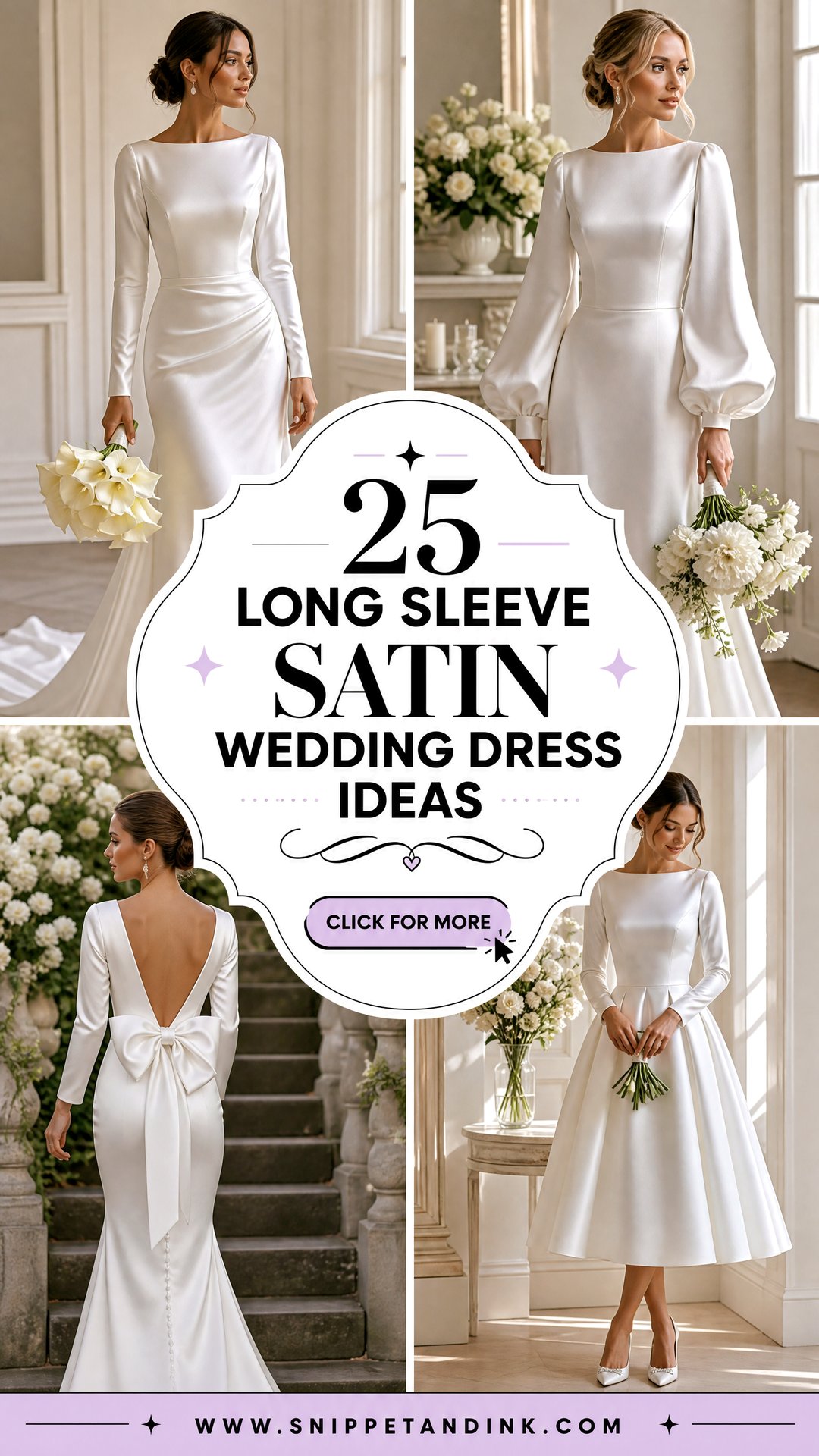
Satin with long sleeves gives you coverage and polish without the fuss of lace, and it doesn’t have to feel heavy or old-fashioned. The fabric throws a soft glow in photos, and full sleeves give it structure. What surprises brides is how far one fabric can travel: change the neckline, skirt, veil and shoes, and the same satin reads minimalist, royal, vintage or fashion-led. I’ve laid out 25 complete outfits below, from city hall to ballroom, with the practical notes I’d give in a fitting.
Not All Satin Behaves the Same Way
Satin is a weave, not a fiber, so two satin gowns can feel and wear completely differently. Before I talk about necklines, I want to know which satin a bride is looking at, because it decides how the dress moves, wrinkles and photographs.
- Duchess satin is heavy and stiff, often a silk and synthetic blend. It holds ball gown skirts and big bows and resists creasing better than most.
- Silk charmeuse is soft and fluid with a bright face. It drapes into bias-cut and column shapes but shows every water mark and every line underneath.
- Crepe-back satin has a satin face and a matte back. It drapes well and is a little more forgiving in fitted styles.
- Polyester satin costs less and is durable, but it can look shinier under flash and holds heat on a warm day.
In the fitting room, crush a corner of the skirt in your hand for a few seconds, then let go. Deep creases that stay put will show across your lap after the ceremony. Also look at the gown under a phone flash, since a high sheen that looks soft in the shop can turn glossy in evening photos.
1. Minimalist Long Sleeve Satin Wedding Dress
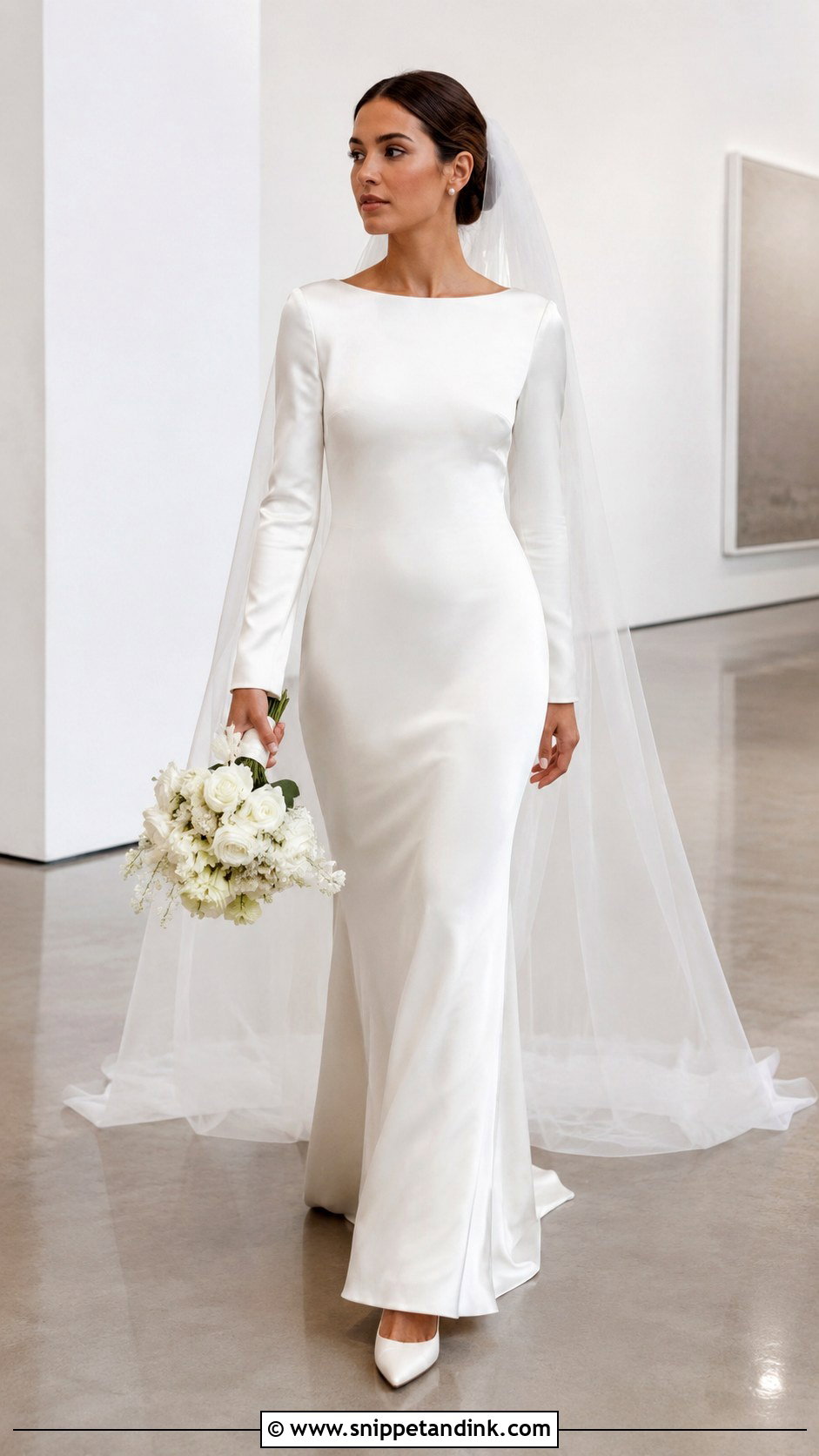
Minimal satin suits anyone drawn to clean lines and quiet elegance: a straight or slight A-line skirt, fitted sleeves and a bateau, scoop or high neck. With nothing to distract, I’d judge these gowns almost entirely by their seams. Run your hand along the side seam and the sleeve head; they should lie flat with no ripple. Pearl studs, a sleek low bun, pointed ivory heels and a plain cathedral veil suit a gallery or city ceremony, and a structured bouquet of white roses or calla lilies keeps it calm.
2. Long Sleeve Satin Ball Gown Wedding Dress
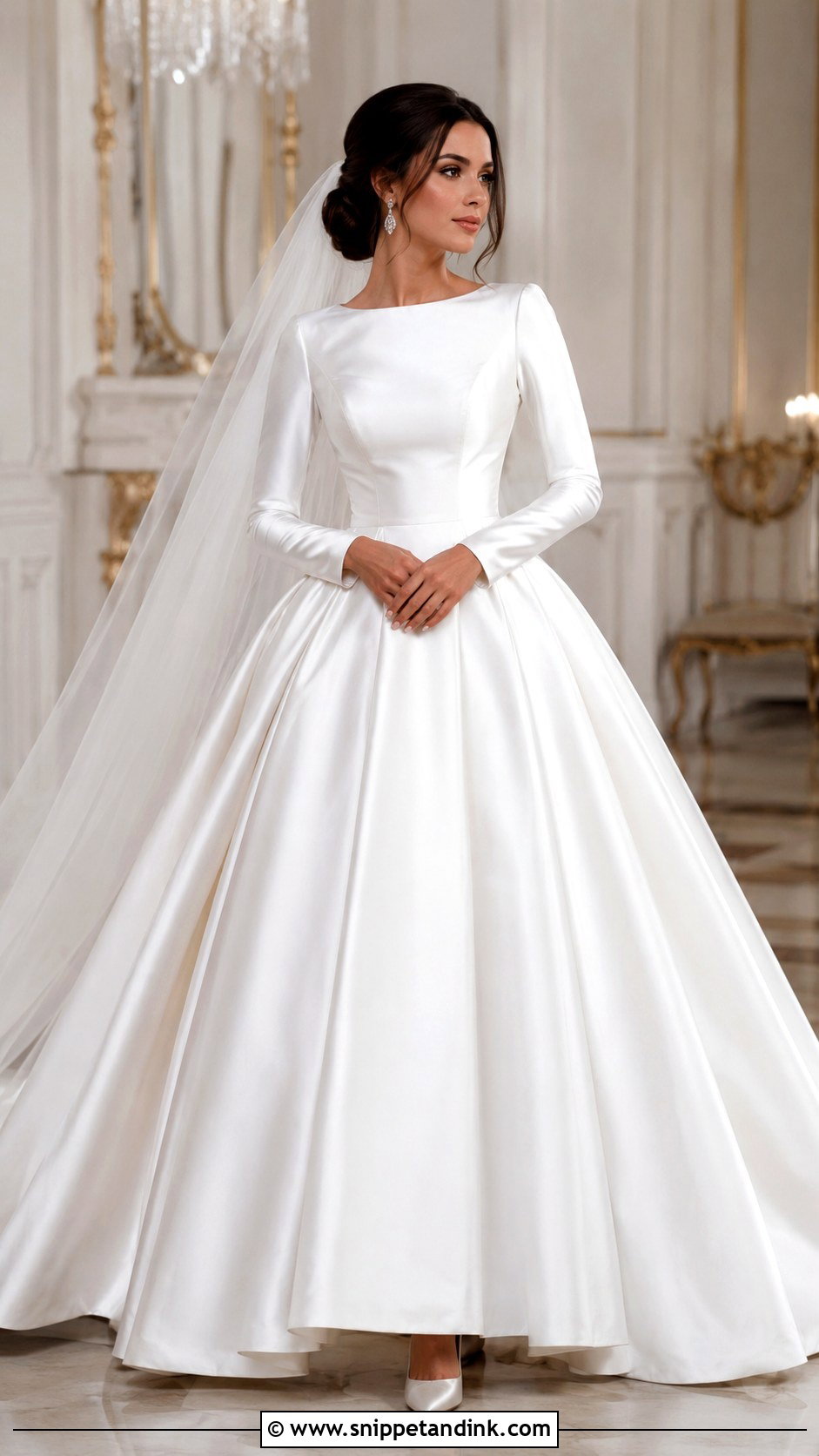
A satin ball gown is the grand version: fitted bodice, full skirt, tailored sleeves, no sparkle needed. Heavy duchess satin holds that volume best, and it also weighs the most, so the waist has to be built to carry it. Wear it with a long veil, crystal drops, satin pumps and a neat updo. A delicate necklace softens a plain bodice. In winter, a faux fur wrap or satin cape adds warmth for outdoor shots. Ballrooms and estate houses give the skirt the space it needs.
3. Long Sleeve Satin Mermaid Wedding Dress
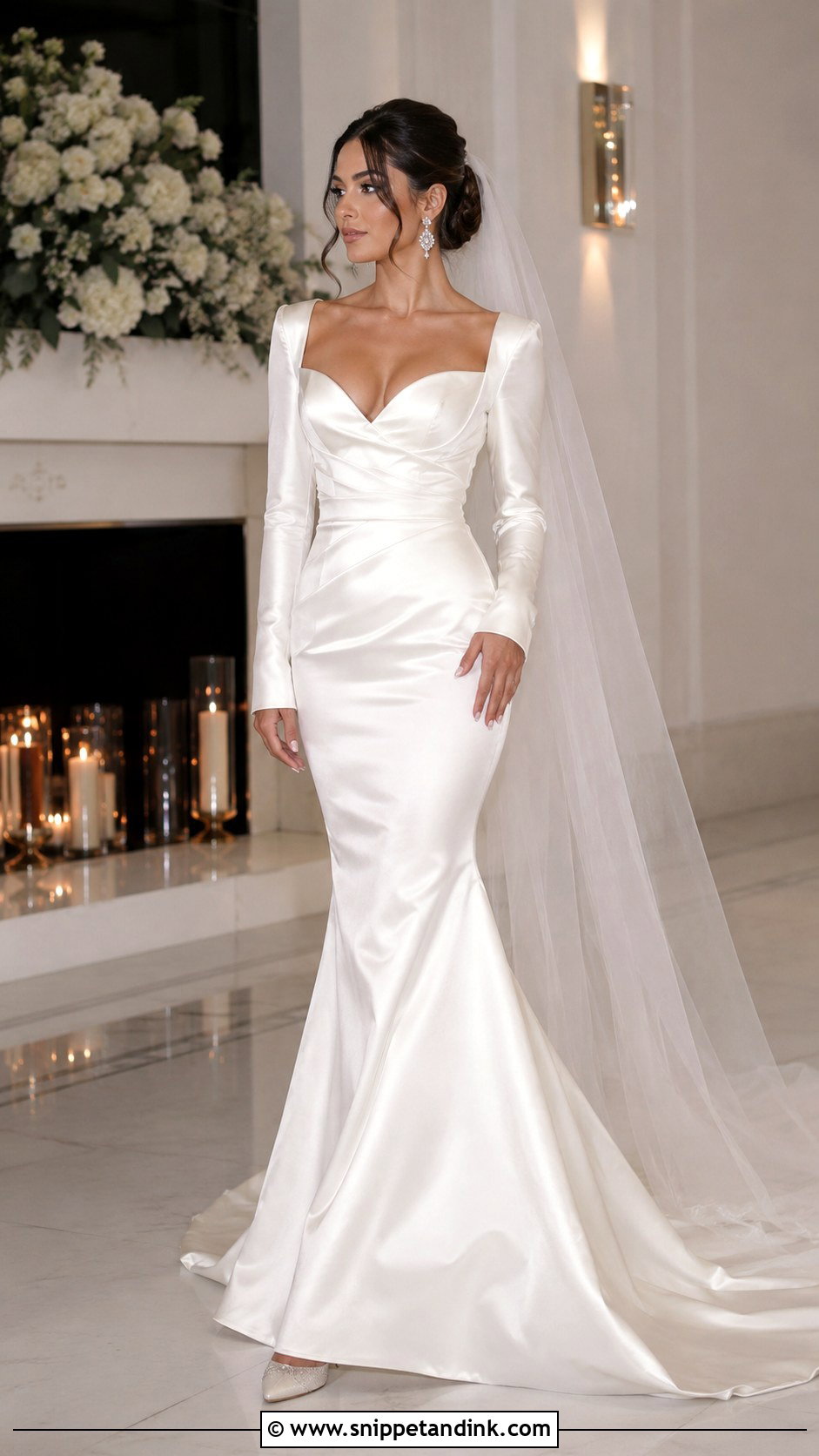
Fitted satin from bodice to knee shows everything, which is why I’m careful about who I put in a satin mermaid. It’s a confident shape, and it needs a confident fit, with smooth lining and shapewear that leaves no line. A sweetheart, off-shoulder or square neck balances the long sleeves. Keep the bouquet narrow so it doesn’t break the silhouette, and choose sleek heels you can walk in with a restricted stride. Crystal earrings and a smooth veil finish it for evening receptions.
4. Long Sleeve Satin A Line Wedding Dress
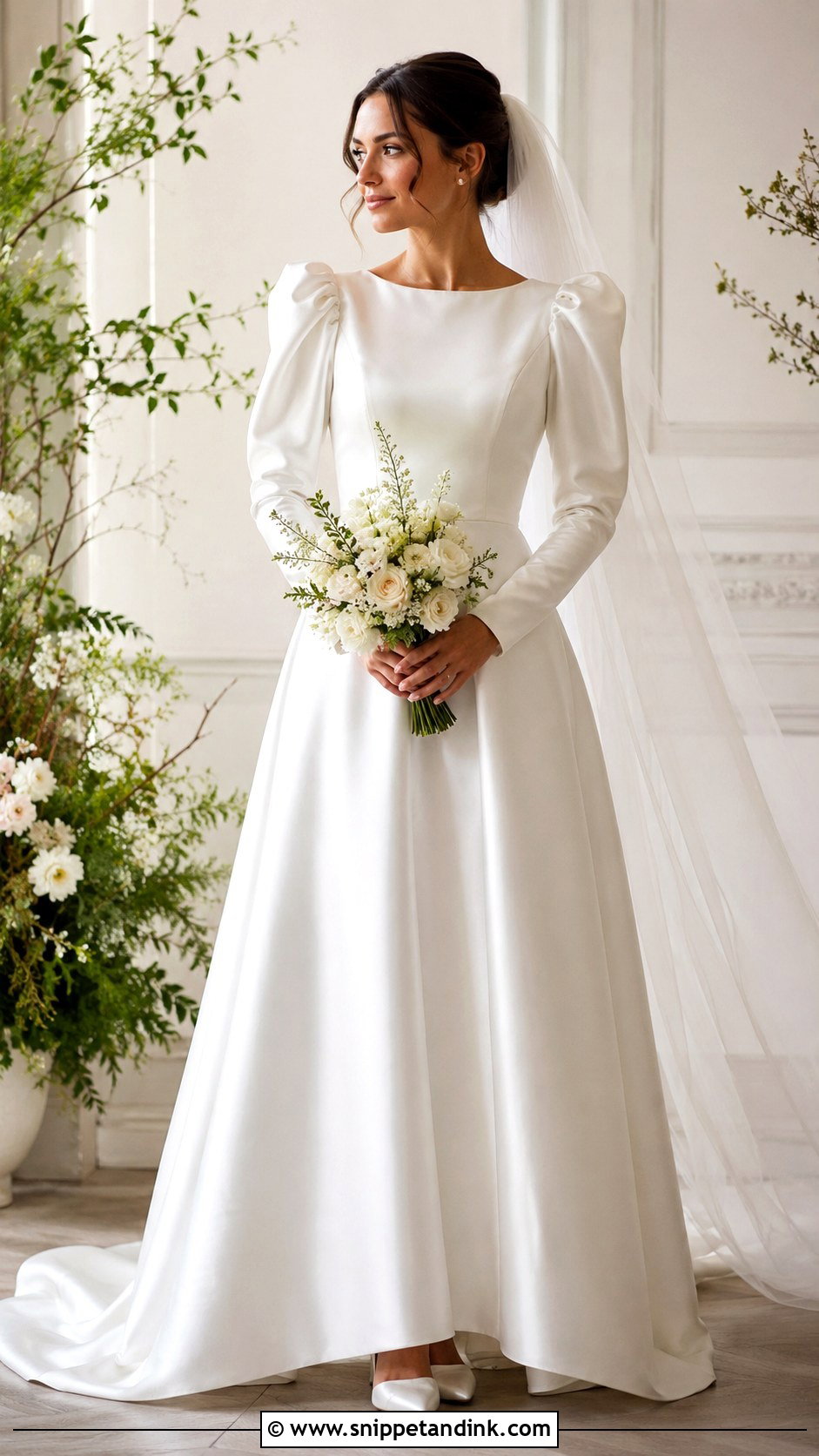
The A-line is the shape I’d recommend to a bride who wants satin and an easy day. It defines the waist and opens gently, so you can sit, walk and dance without thinking about the dress. Plain sleeves read classic; a slight puff reads romantic. Satin A-lines can crease across the lap after a long sit, so lightly structured satins hold up better than soft ones here. Pearl earrings, block heels, a fingertip veil and a loose bouquet with greenery suit garden or indoor venues.
5. Long Sleeve Satin Wedding Dress With Square Neck
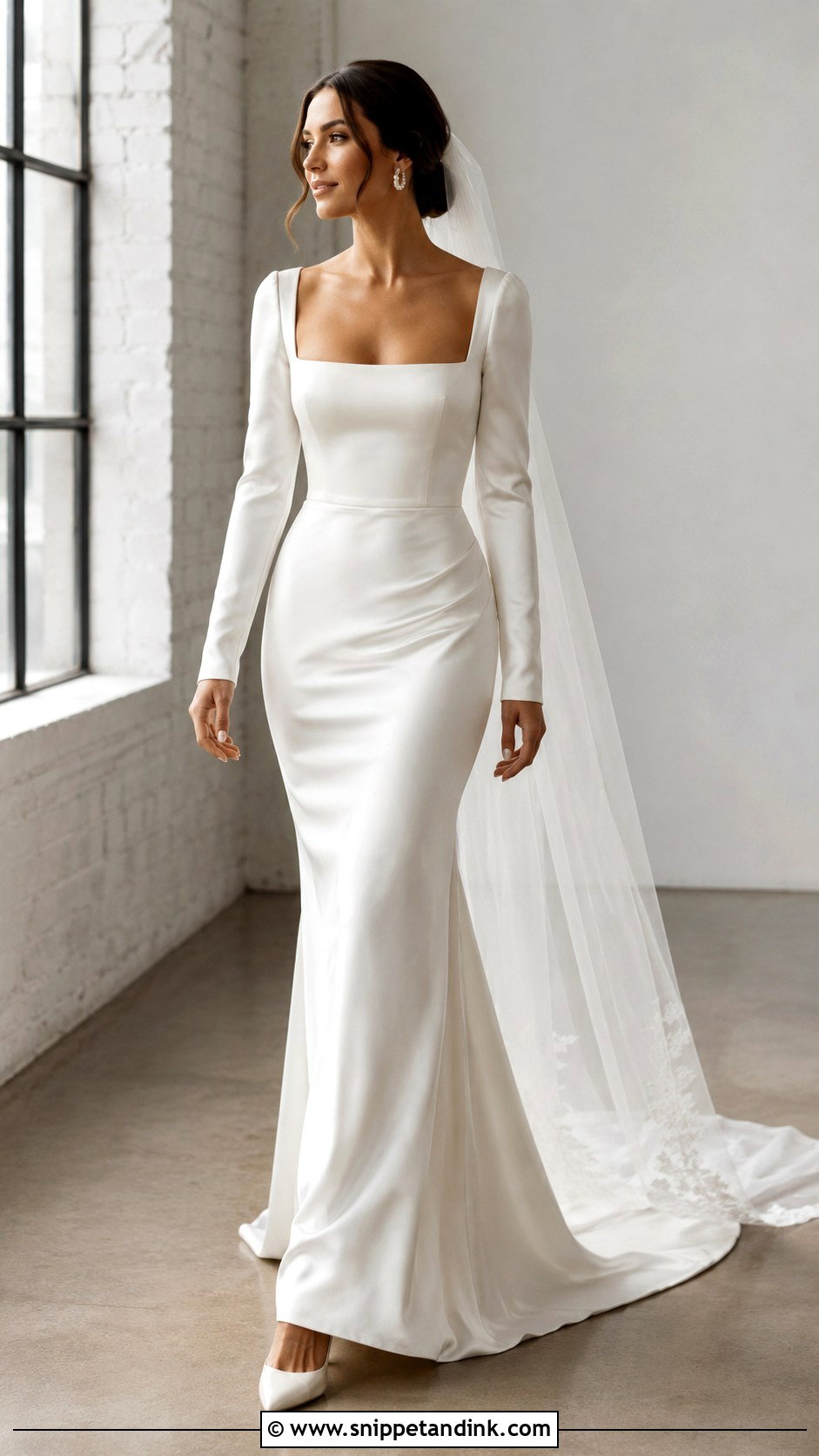
Straight lines and satin suit each other. A square neckline frames the collarbone and gives the bodice architecture, especially over fitted sleeves and a smooth skirt. It’s a good choice if you want polish without full tradition. Check that the neckline corners sit flat when you lean forward, since satin shows a gape more than matte fabrics do. A centre-part bun, small pearl hoops, a veil set low at the crown and satin pumps or ankle straps keep it balanced.
6. Long Sleeve Satin Wedding Dress With High Neck
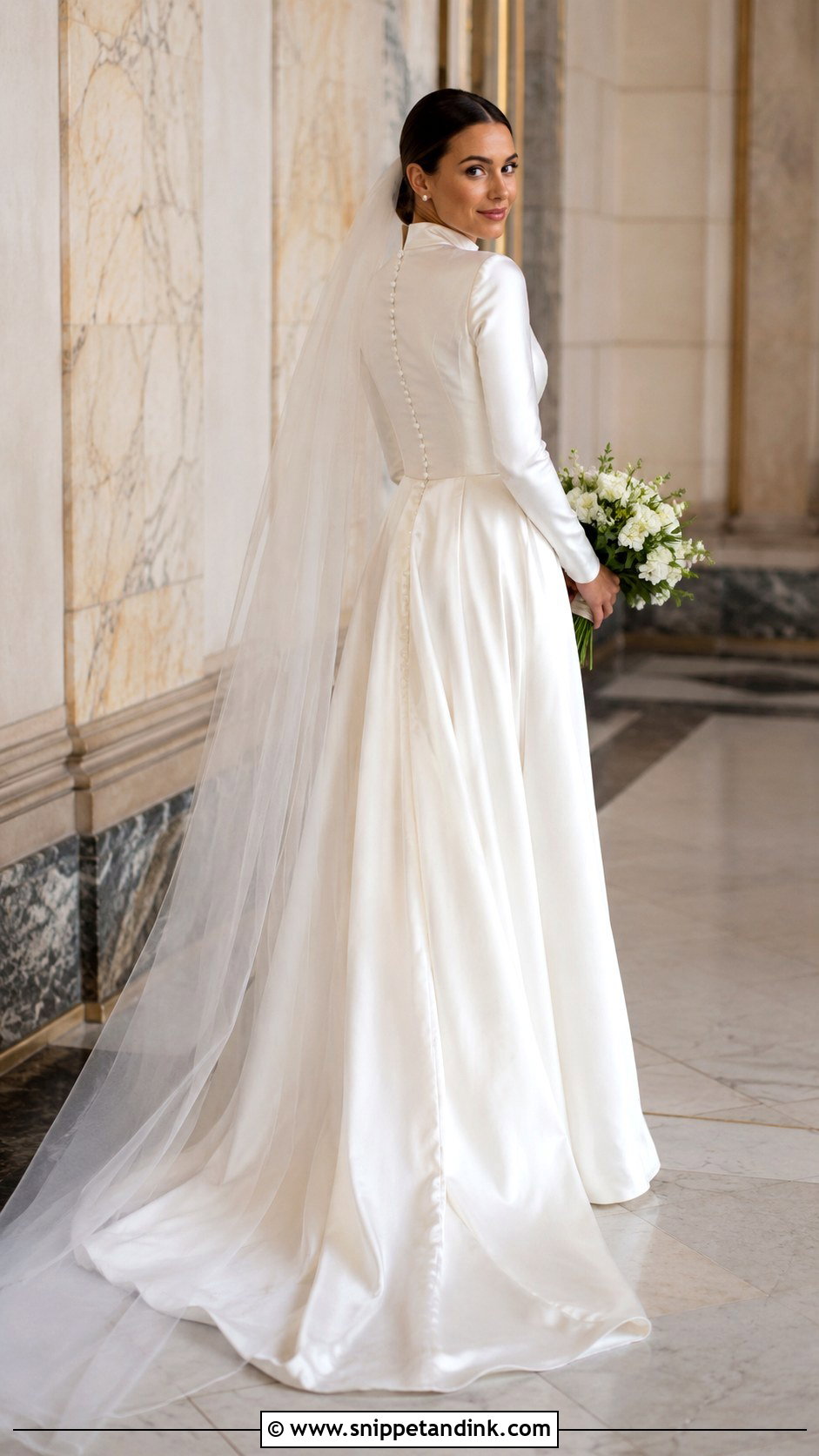
A high neck in satin looks composed and modest, and it works best when the skirt flows rather than stands stiffly. Since the neckline is already the statement, skip the necklace and wear pearl or diamond studs. Watch the closure at the nape, which should be fastened with a loop or hook that sits flat under an updo. A sleek bun, long veil and closed-toe satin shoes suit cooler months; covered buttons or a small bow at the waist add interest at the back.
7. Long Sleeve Satin Wedding Dress With V Neck
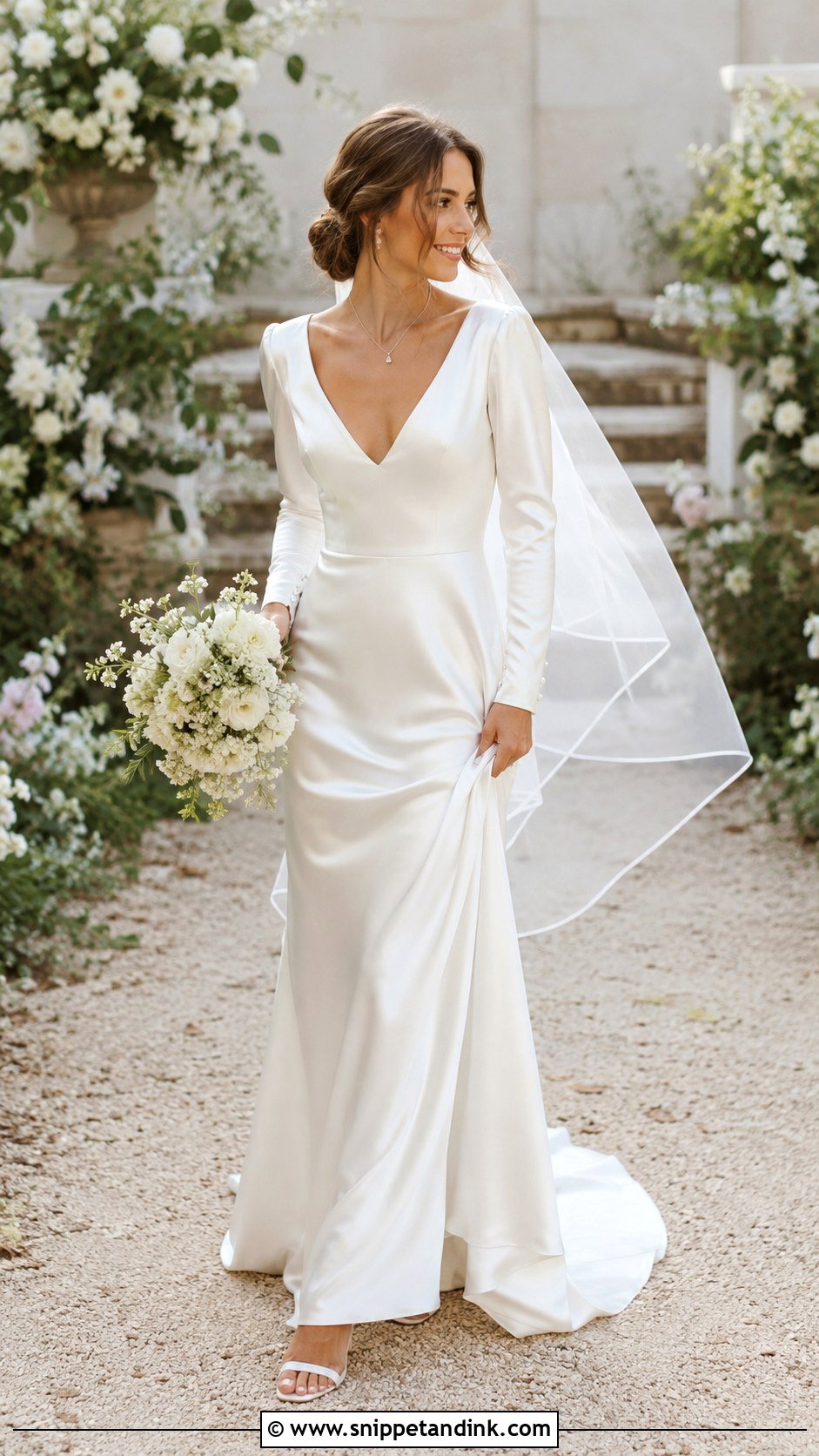
A V neck brings length and lightness to a covered satin gown. Fitted waist, flowing skirt and fine jewelry keep it romantic; a pendant works only if the neckline is plain, and should sit just above the point of the V. Strappy heels, a clean-edged veil and a loose low bun suit resort, garden and classic venues. Soft satins move more freely here than stiff ones, which matters if you’ll be dancing.
8. Long Sleeve Satin Wedding Dress With Off Shoulder Neckline
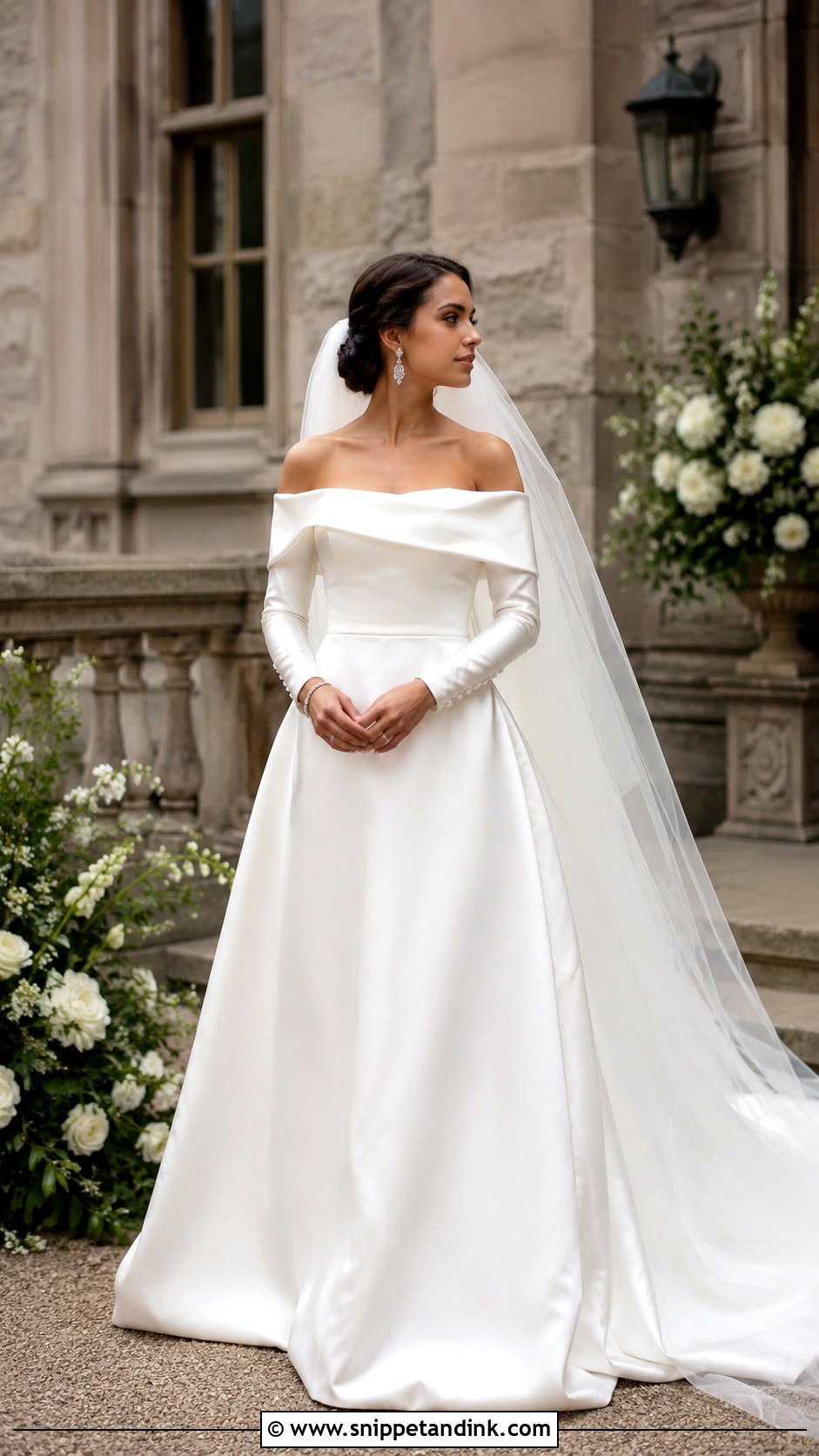
Satin sleeves set just below the shoulder show off the collarbone while keeping your arms covered. This shape pairs well with a fitted bodice, an A-line skirt and a short train. If the neckline has a folded satin cuff, that fold is the focal point, so skip the necklace and wear drop earrings with a fine bracelet. Pin the veil behind a soft updo. My usual caution applies: test it by raising your arms, because off-shoulder satin has no stretch to forgive a loose fit.
9. Long Sleeve Satin Wedding Dress With Bishop Sleeves
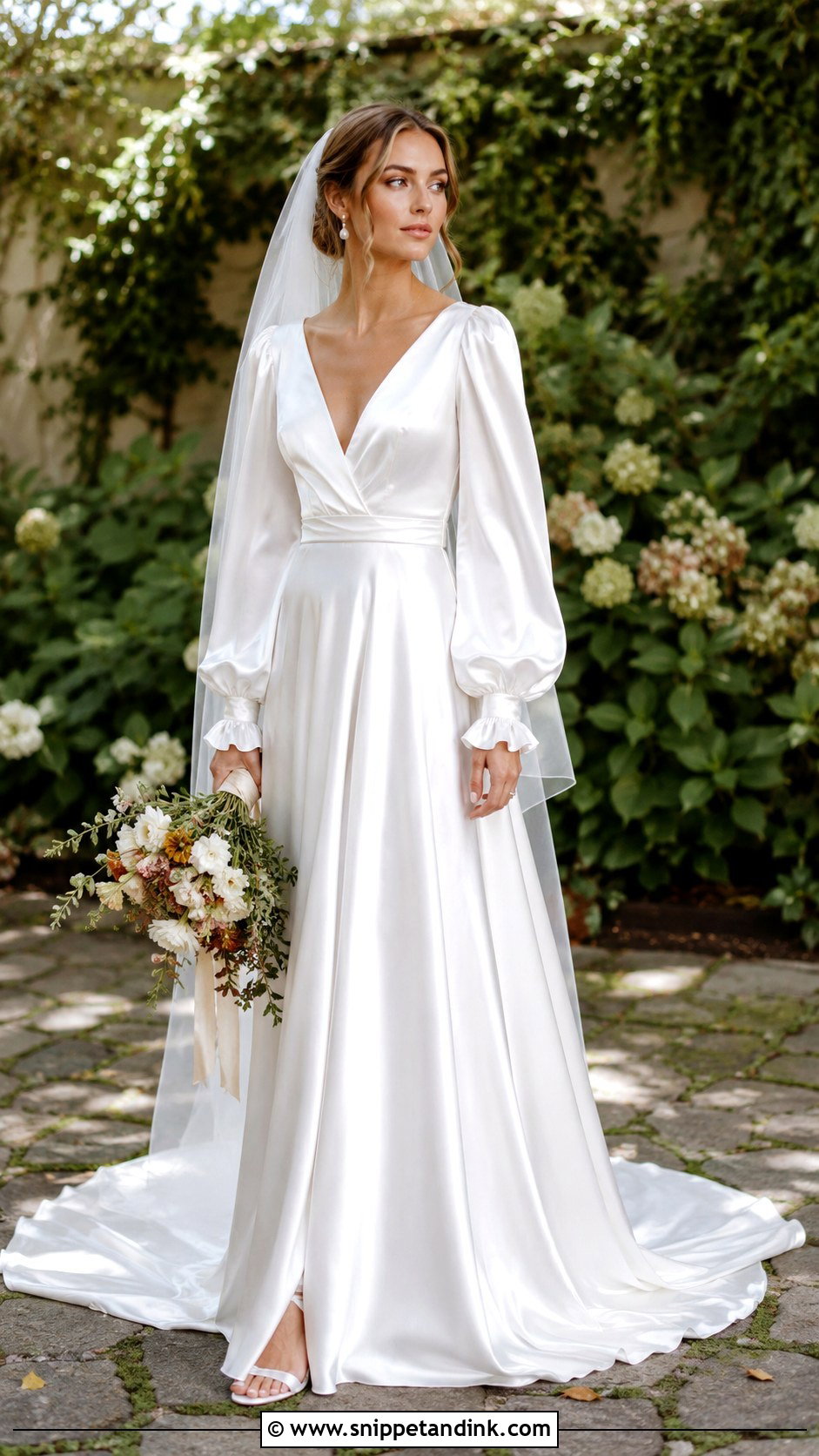
Bishop sleeves in satin have a weight that chiffon versions don’t. They stay full through the arm and gather at the wrist, which pairs with a fitted waist and flowing skirt in a satin wedding dress with bishop sleeves. Lighter satins drape better in this shape; very stiff ones balloon. Keep everything else plain: pearl earrings, a textured low bun, simple heels and an unadorned veil, especially if the cuffs have covered buttons. It suits autumn and garden weddings.
10. Long Sleeve Satin Wedding Dress With Puff Sleeves
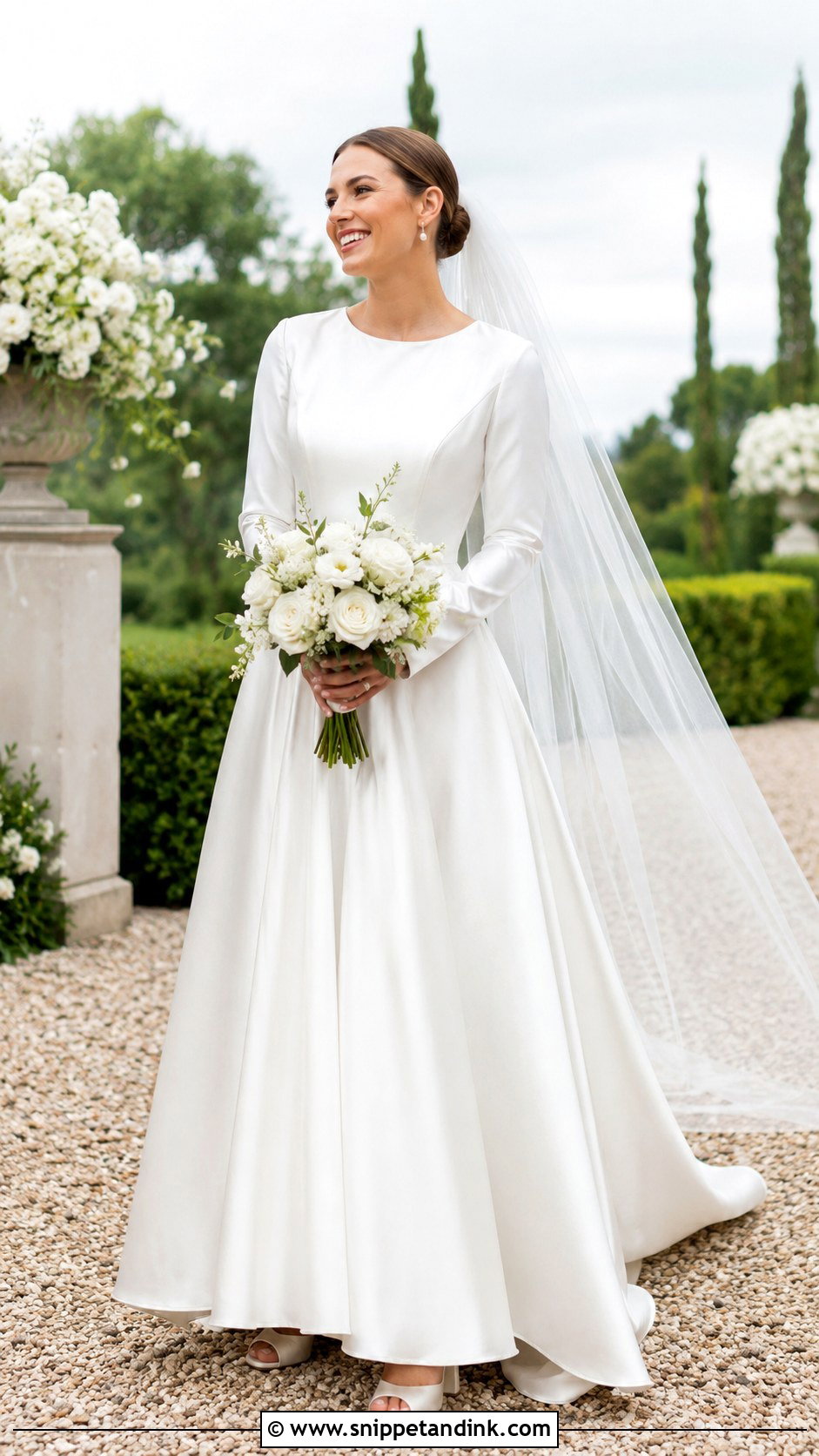
Puff sleeves add volume and a slightly vintage note. The puff can be a small structured shoulder or a fuller gathered shape, and satin holds either crisply. Balance is easy if you keep the bodice fitted and the skirt clean, with an A-line or column below. An updo shows the sleeve shape best. I’d check how the sleeve heads sit under a veil, because a heavy veil can flatten them. Pearl studs and satin heels suit indoor and spring weddings.
11. Long Sleeve Satin Wedding Dress With Corset Bodice
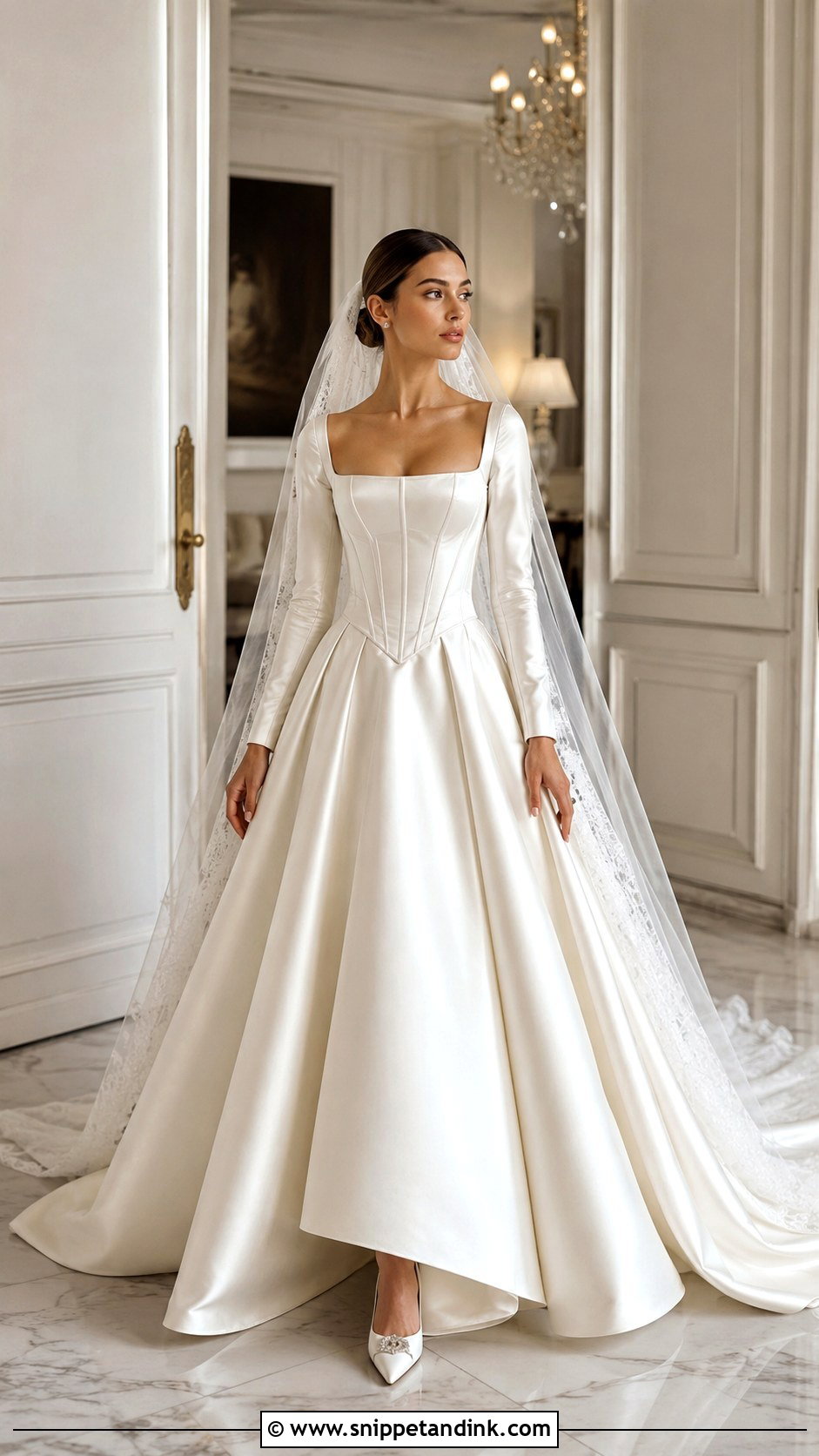
A corset bodice gives satin its most sculpted form. The structure can be visible through seaming or hidden as built-in shaping, and either way the boning will make the waist feel firmer after dinner than at the ceremony. Long sleeves keep the effect refined. Pair it with a full skirt for drama or a sleek column for a fashion edge. Small earrings, a sheer veil and pointed heels let the bodice speak, and a bouquet of loose white flowers softens the line.
12. Long Sleeve Satin Wedding Dress With Button Back
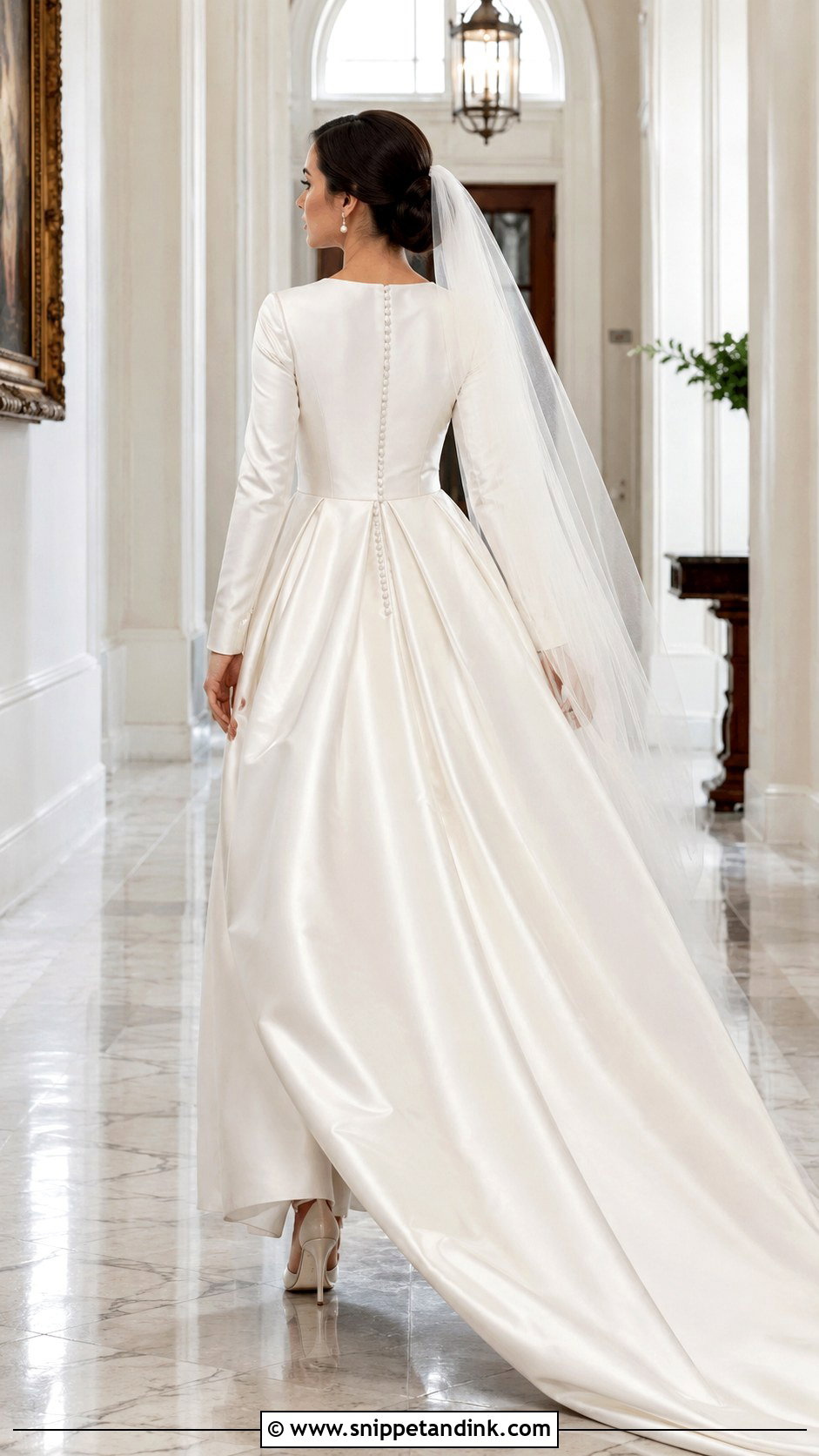
Covered buttons down the spine are the right kind of detail for plain satin: they add interest without lace or beading. In a satin wedding dress with button back, the effect works on A-line, ball gown and sheath shapes alike. Most of these buttons sit over a zip; if they’re functional, give yourself extra dressing time. An updo keeps the back visible for the processional. Pearl earrings, a plain veil and closed-toe heels complete it.
13. Long Sleeve Satin Wedding Dress With Bow Back
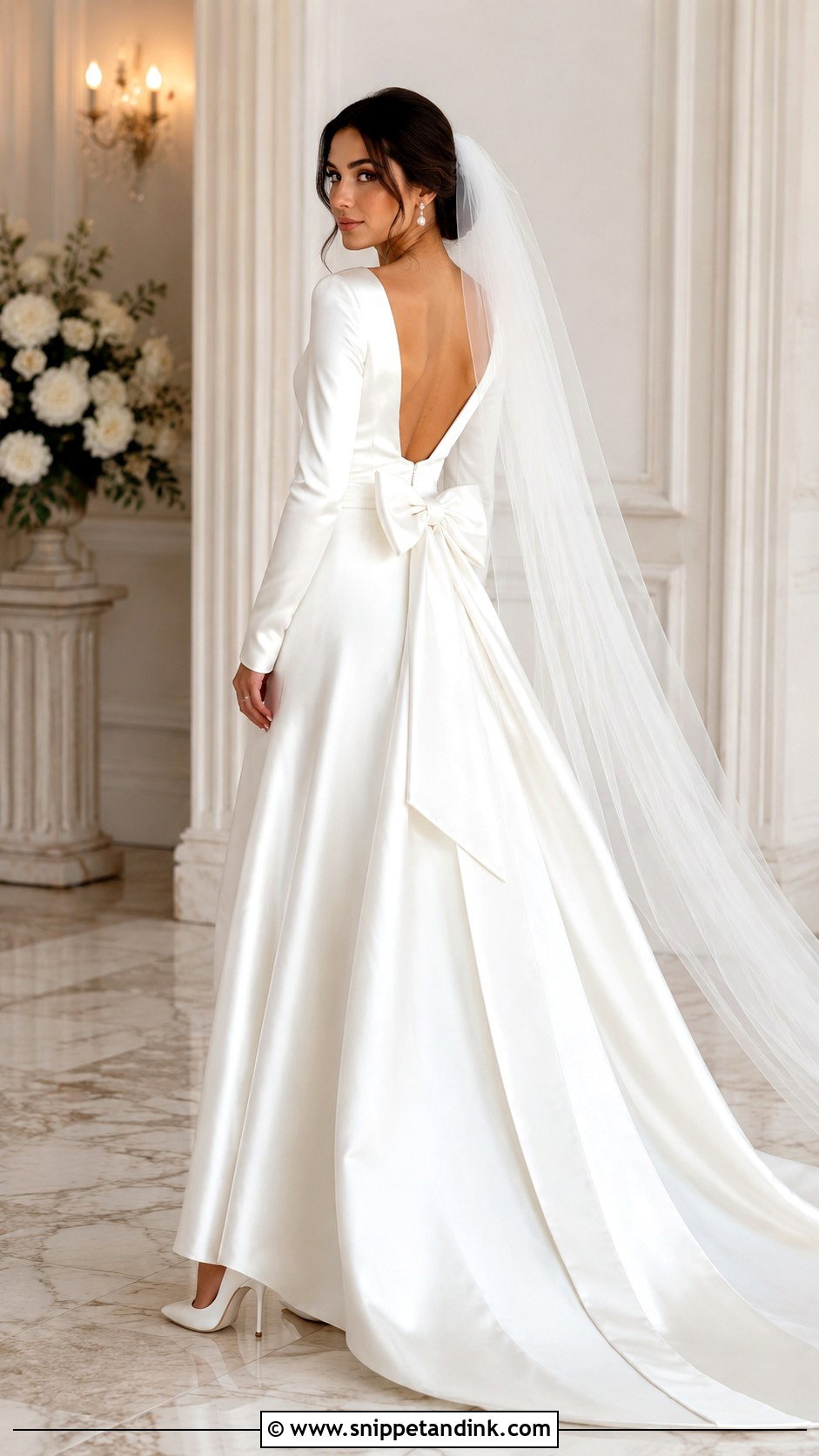
Bows can be small at the waist, oversized at the lower back, or tied with long satin tails. Because the bow adds volume behind, keep the front simple with a clean neckline and fitted sleeves. Place the veil comb above a large bow so it drops over it, or below a small one. One caution I always give: a big bow at the back waist gets crushed when you sit, so ask if it can be lightly interfaced to hold its shape. Pearl earrings, a smooth bun and satin pumps finish the look.
14. Long Sleeve Satin Wedding Dress With Front Slit
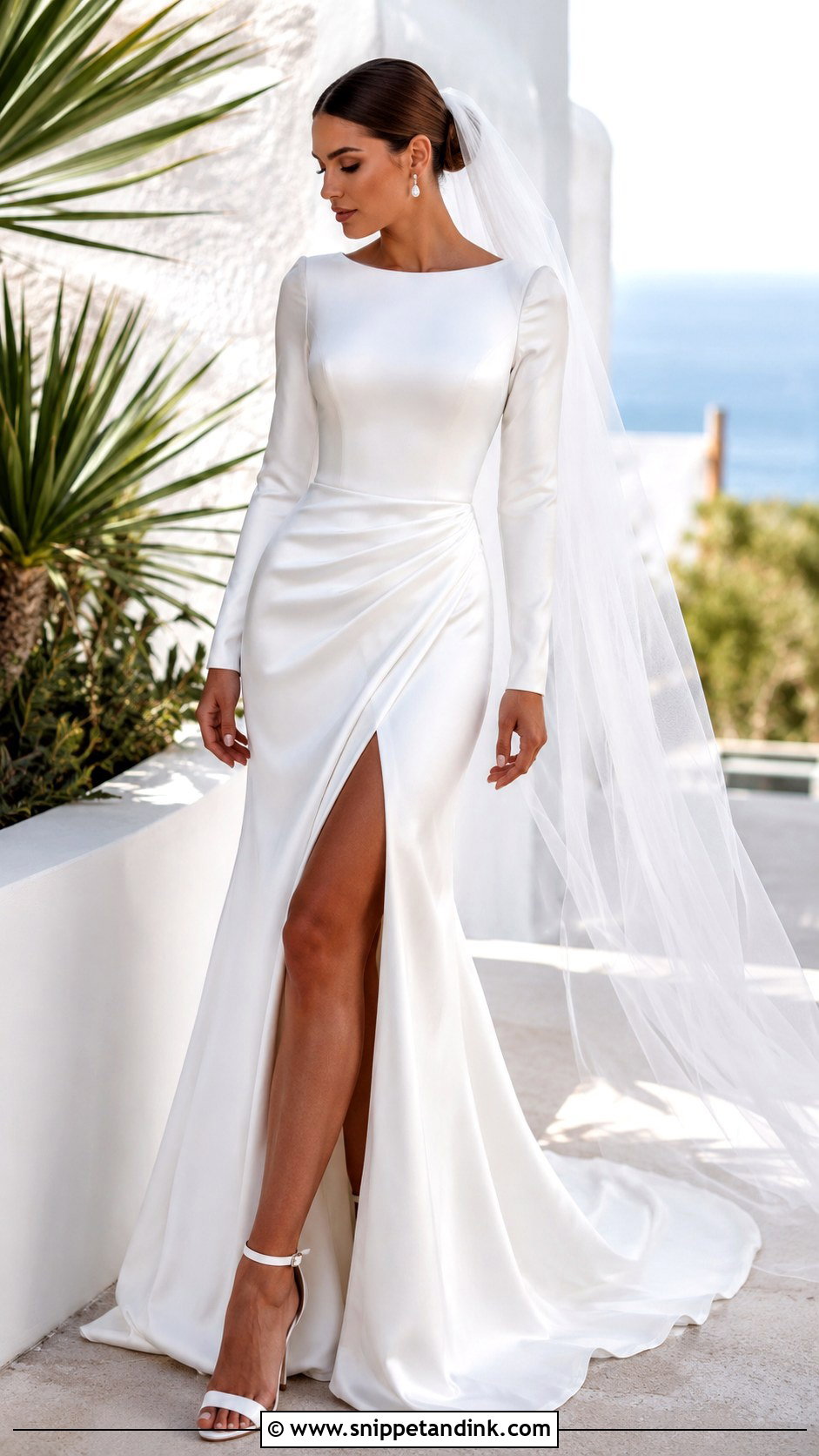
A front slit makes satin far easier to walk in and puts your shoes on show. Pick heels you’d be happy to see in every photo, such as satin ankle straps or pointed pumps. The covered bodice keeps it bridal while the skirt opens as you move. Ask for the slit to be checked while seated, as satin falls open more than you’d expect. Drop earrings, a soft veil and a simple bouquet suit destination and modern venues.

15. Long Sleeve Satin Sheath Wedding Dress
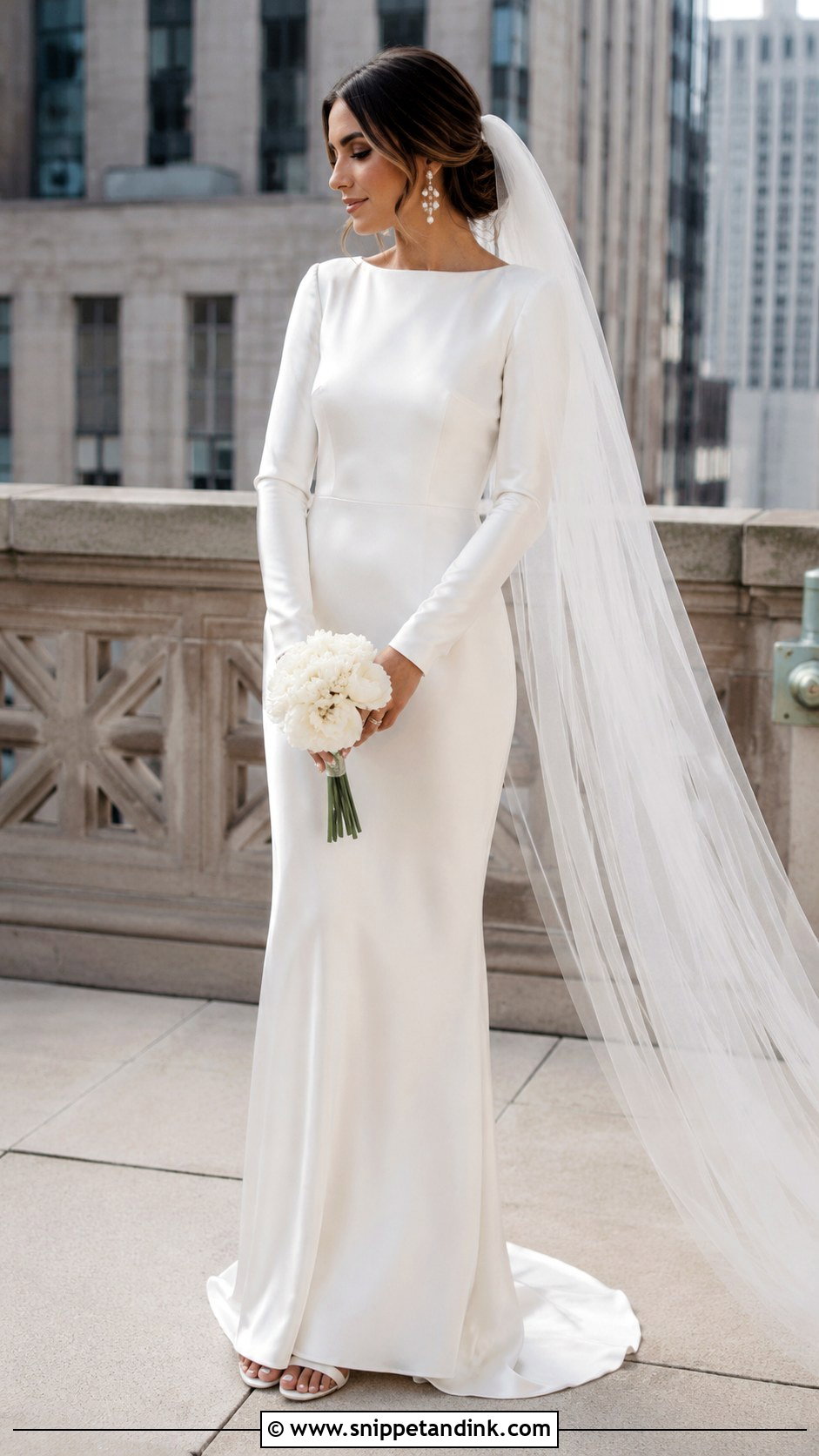
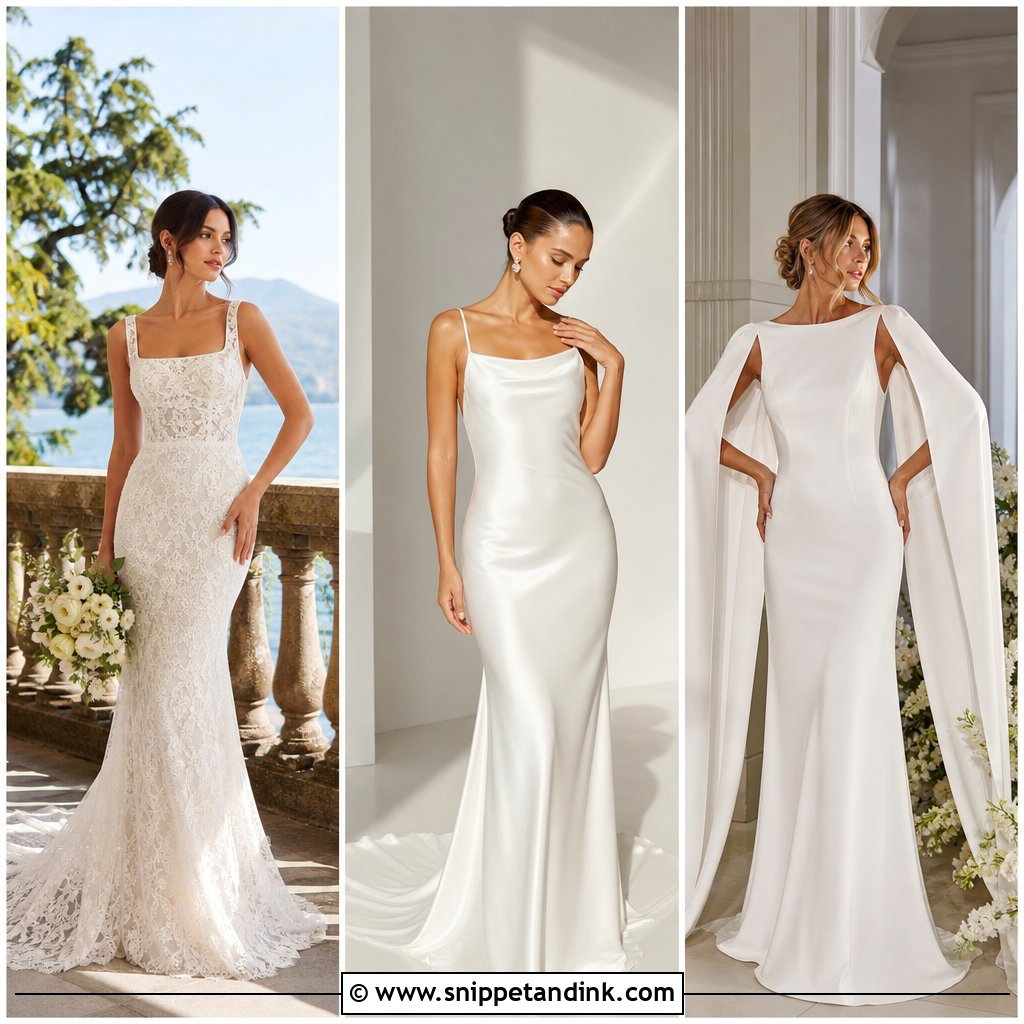
A sheath follows the body without the flare of a mermaid, giving a single clean line from shoulder to hem. A long sleeve satin sheath wedding dress looks best with a high, bateau or square neck. Since the skirt is narrow, choose a satin with some drape so it doesn’t stand away at the hips. A long veil adds ceremony; a short one keeps it modern. Minimal heels, a low bun and delicate earrings suit courthouse, rooftop and small weddings.
16. Long Sleeve Satin Column Wedding Dress
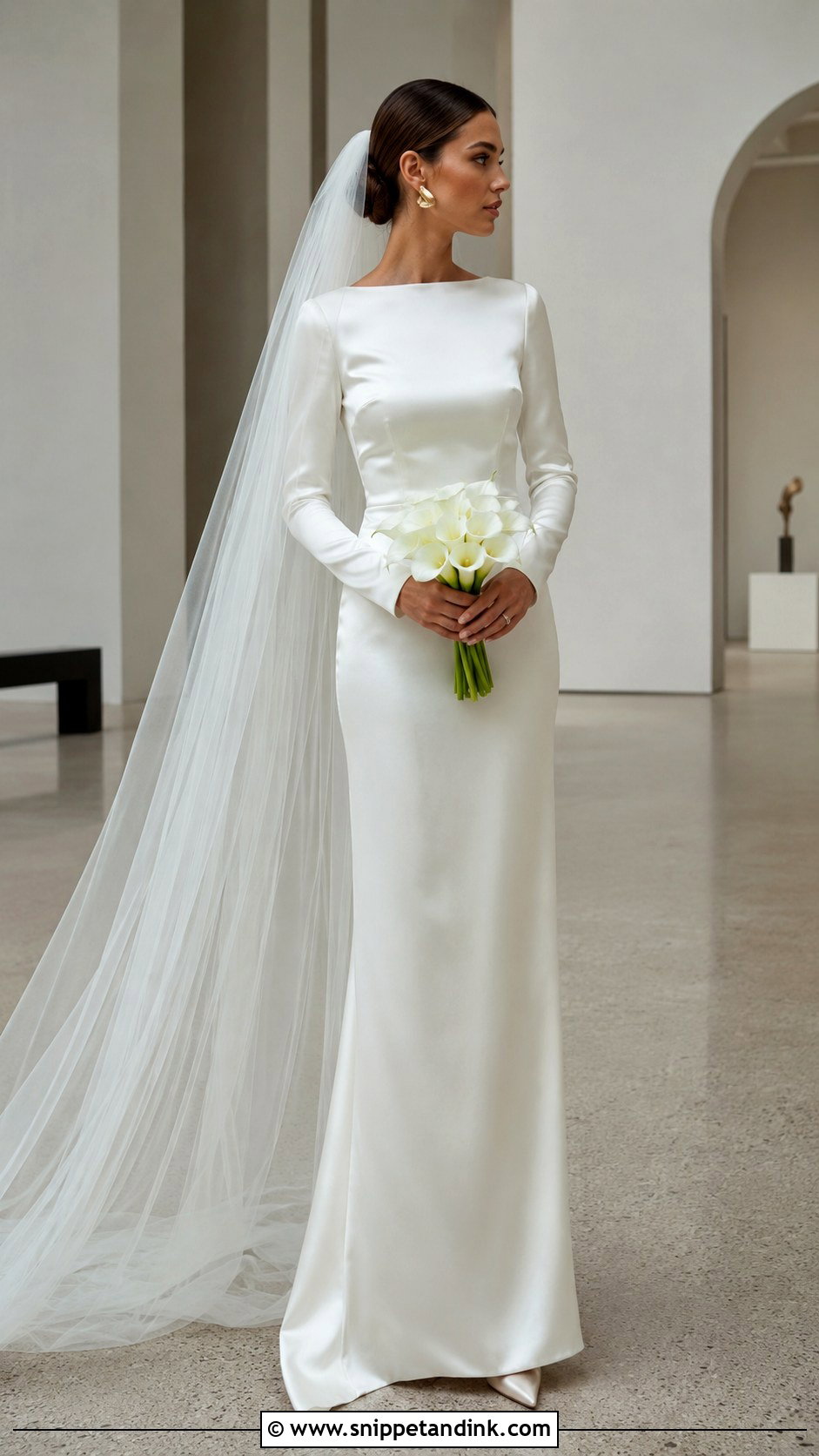
Columns depend on drape. The straight silhouette works in satin heavy enough to fall cleanly but soft enough not to cling, and I’d hold the fabric up to the light to check for slubs, since a plain column hides nothing. Long sleeves give it structure; a simple neckline keeps it chic. A floor-length or cape veil adds movement without changing the shape. Sculptural earrings, a sleek bun and pointed heels suit museums, city venues and intimate dinners.
17. Long Sleeve Satin Wrap Wedding Dress
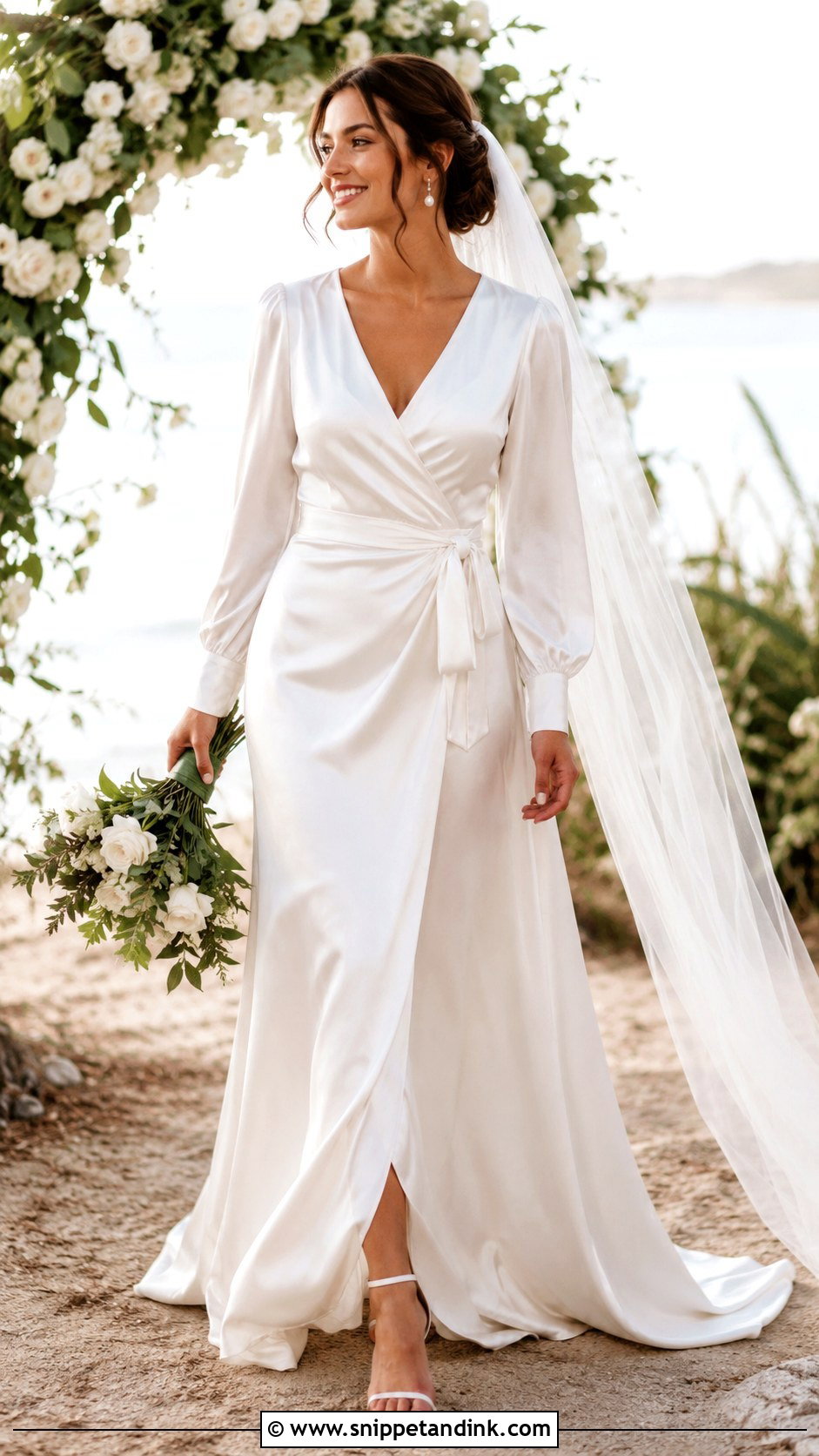
Wrap dresses forgive. The crossover defines the waist, creates a soft V and adjusts slightly as you move, which makes it comfortable for a long day. Satin gives a wrap a more formal finish than jersey would. Ask for a hidden snap at the cross point so the neckline doesn’t open when you bend. Pearl drops, low-heel sandals, a simple veil and soft waves or a relaxed bun suit gardens, beaches and smaller weddings.
18. Long Sleeve Satin Tea Length Wedding Dress
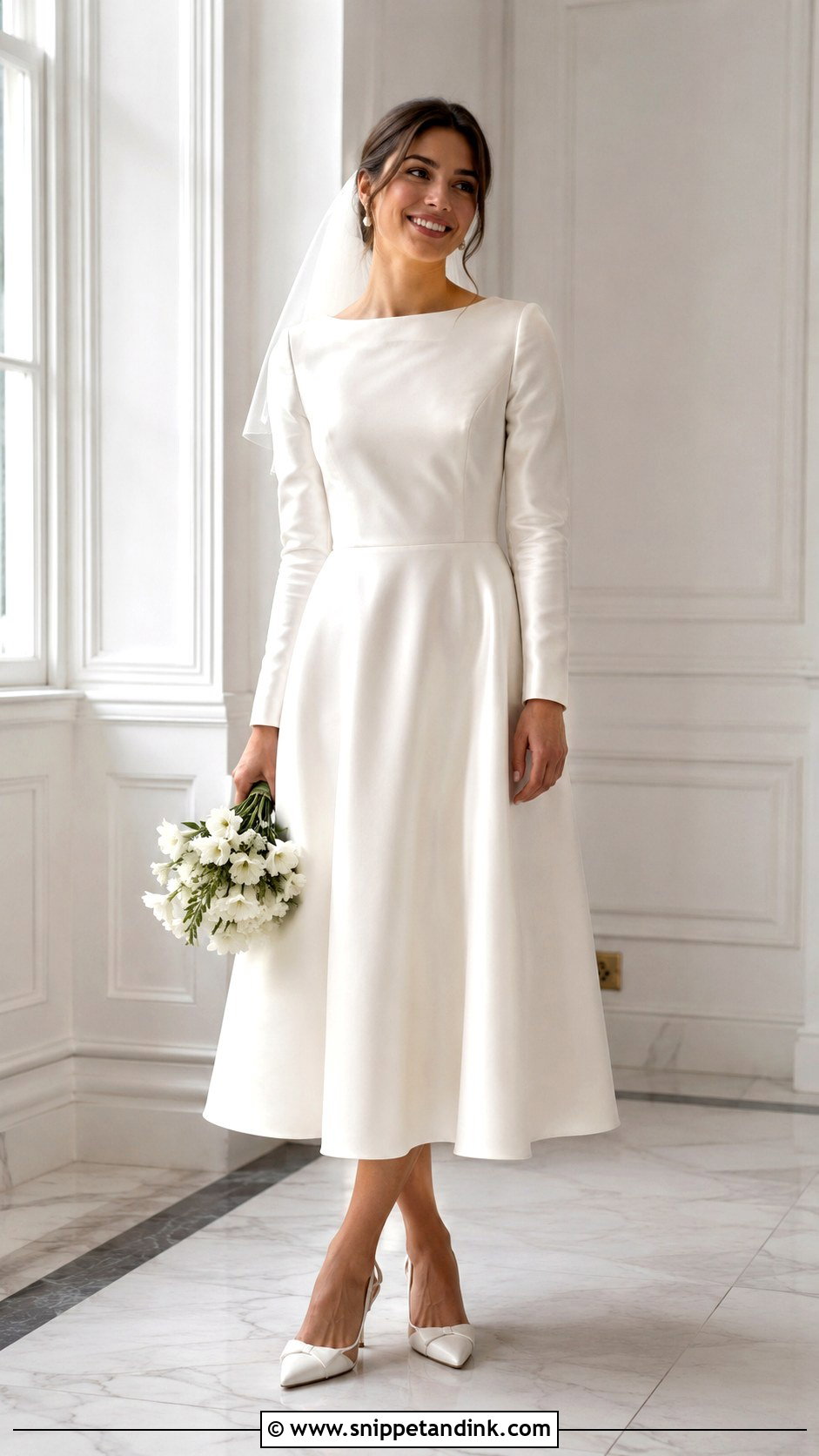
Tea length falls between knee and ankle, which makes shoes a real part of the outfit. Pumps, slingbacks or embellished block heels all work. Long sleeves balance the shorter hem and keep it from looking casual. Satin at this length has a 1950s feel, so a short veil, pearl studs and a neat bun or soft waves suit courthouse weddings, brunch receptions and garden parties. You also get to walk, mingle and dance without lifting a hem all night.
19. Long Sleeve Satin Mini Wedding Dress
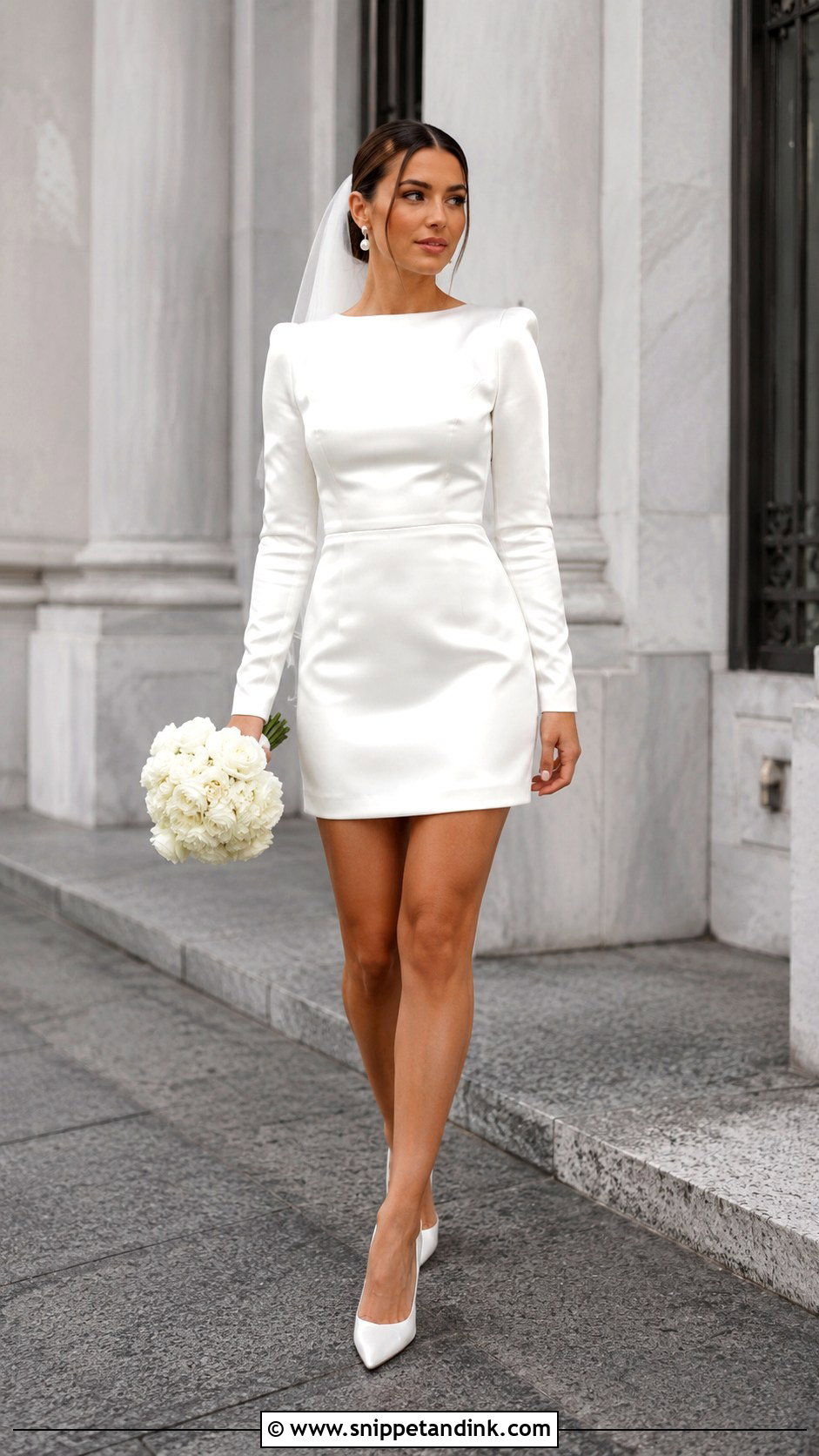
A satin mini is a bold option for civil ceremonies, second looks and reception changes. The short hem feels playful; long sleeves and satin keep it polished. Choose a structured mini with a clean neckline, covered buttons or a small bow, and make sure the hem doesn’t ride up when you sit or lift your arms. Pointed heels, pearl earrings and a short veil or headband suit it, with a small bouquet. City hall weddings are where it shines.


20. Long Sleeve Satin Wedding Dress With Detachable Skirt
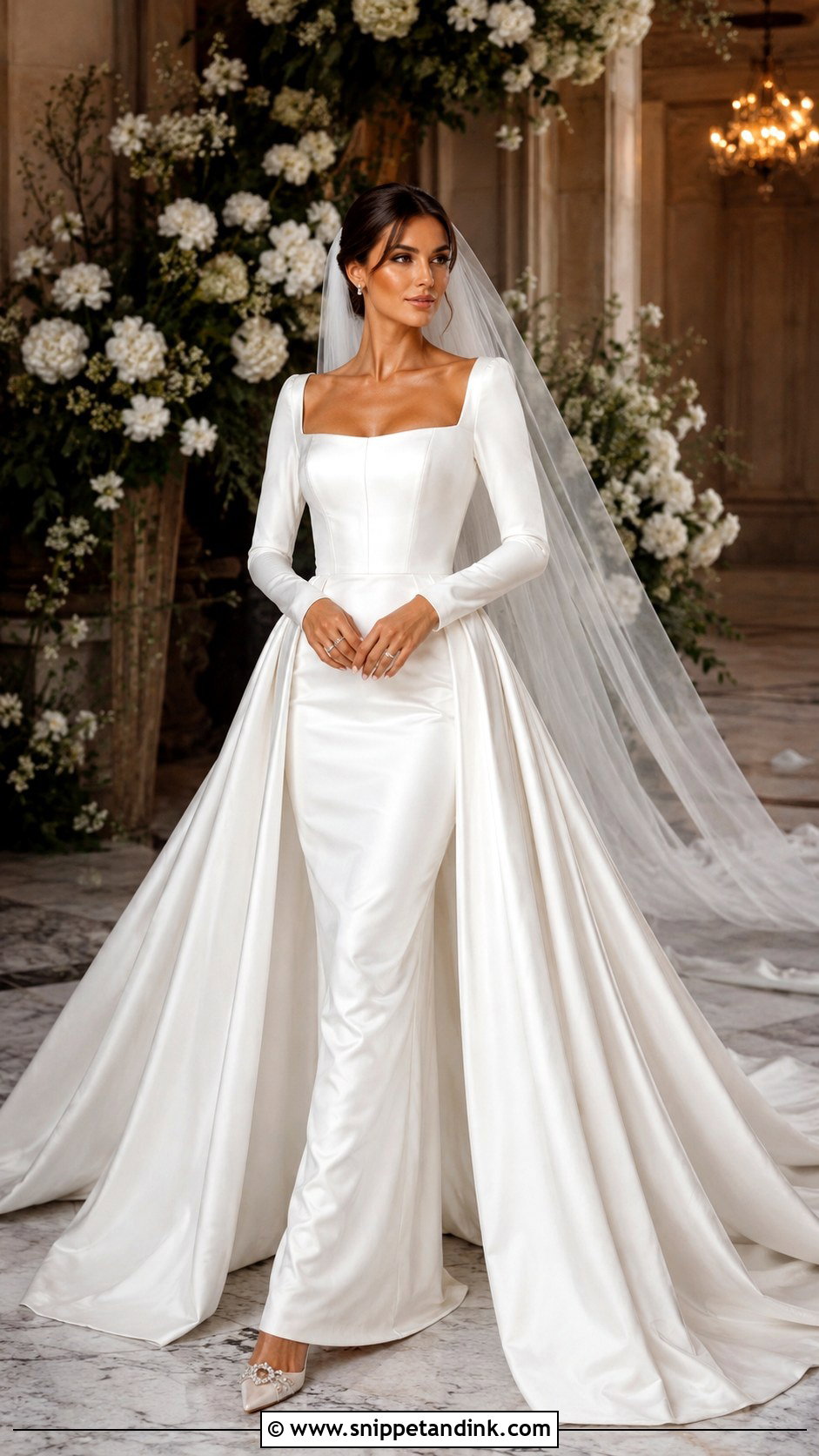
A detachable overskirt gives a full ceremony shape and reveals a slimmer gown underneath for the reception. It pairs well with fitted long sleeves, a structured bodice and a satin train. Practise taking it off before the day, ideally with the person who’ll help you, because the hooks or snaps sit at the back of the waist where you can’t see them. Pick a hairstyle that survives the change and jewelry that suits both versions.
21. Long Sleeve Satin Wedding Dress With Cape Veil
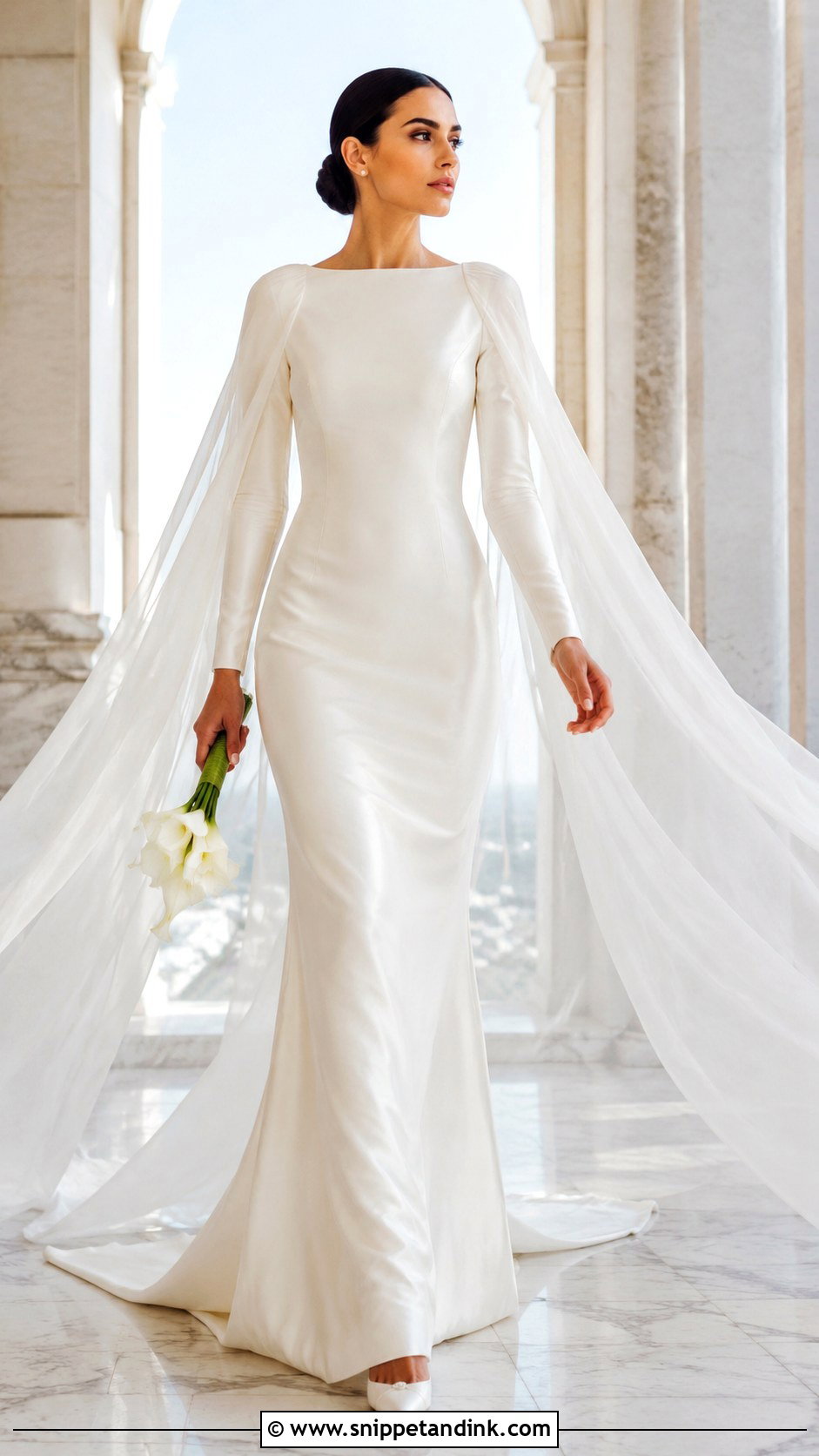
A cape veil attaches at the shoulders or upper back and flows behind you without covering the face, so it becomes the main styling detail on a clean satin gown. A fitted sheath, A-line or column with plain long sleeves works best underneath. The attachment points matter: ask for small loops sewn inside the shoulder seams so the cape doesn’t drag the sleeves backward. Keep jewelry to small earrings and wear satin pumps or sleek sandals.
22. Long Sleeve Satin Wedding Dress With Lace Applique
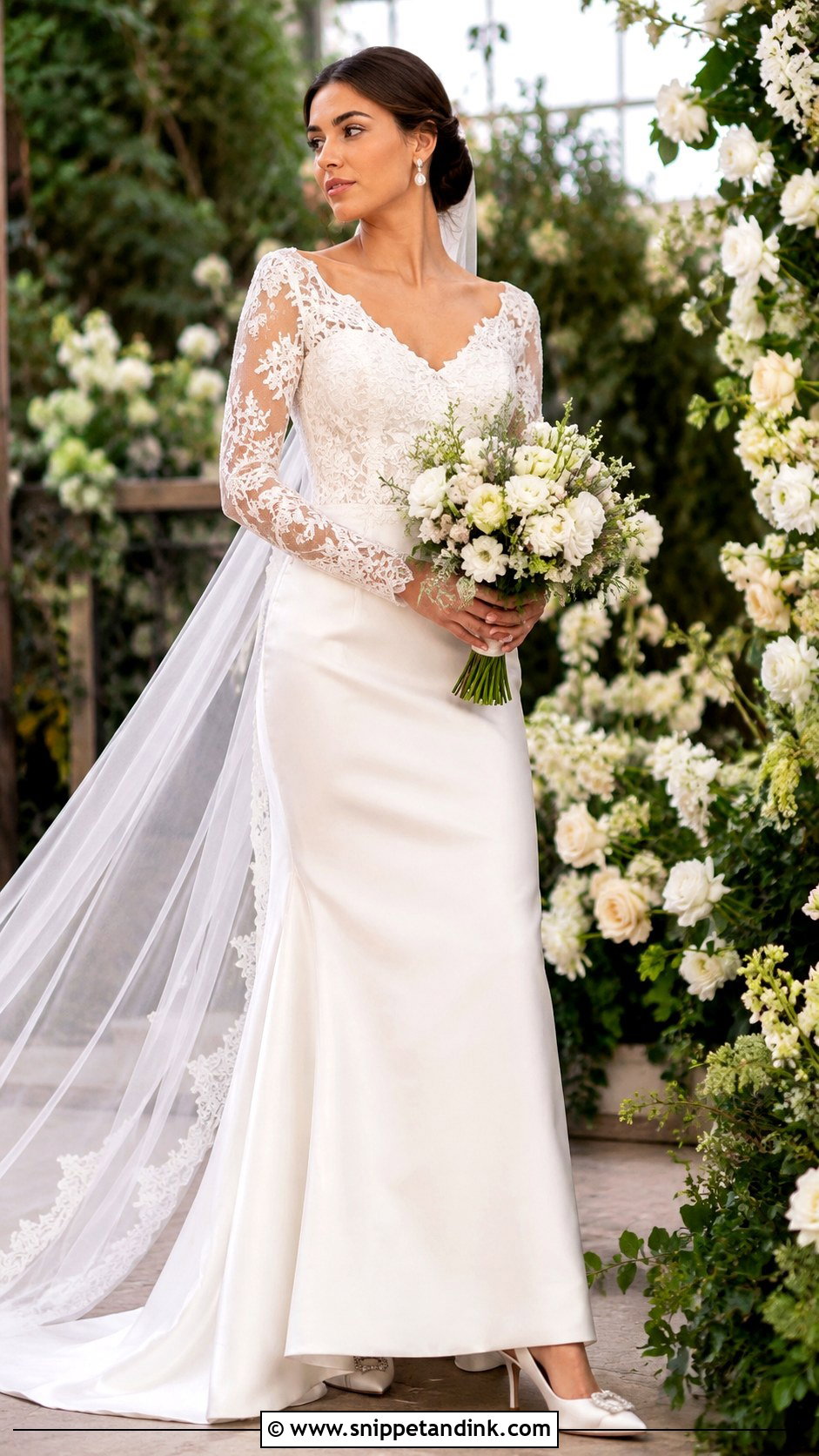
Lace appliqué on satin gives smooth shine with some softness. It can be placed on the sleeves, bodice or train, and fine, delicate appliqué feels more current than heavy motifs. I check the stitching where lace meets satin; it should be fine hand-stitching that doesn’t pucker the base. A fitted bodice and flowing skirt work well. Pearl earrings, a simple veil and classic heels complete it, without bracelets if the sleeves are detailed.
23. Long Sleeve Satin Wedding Dress With Pearl Details
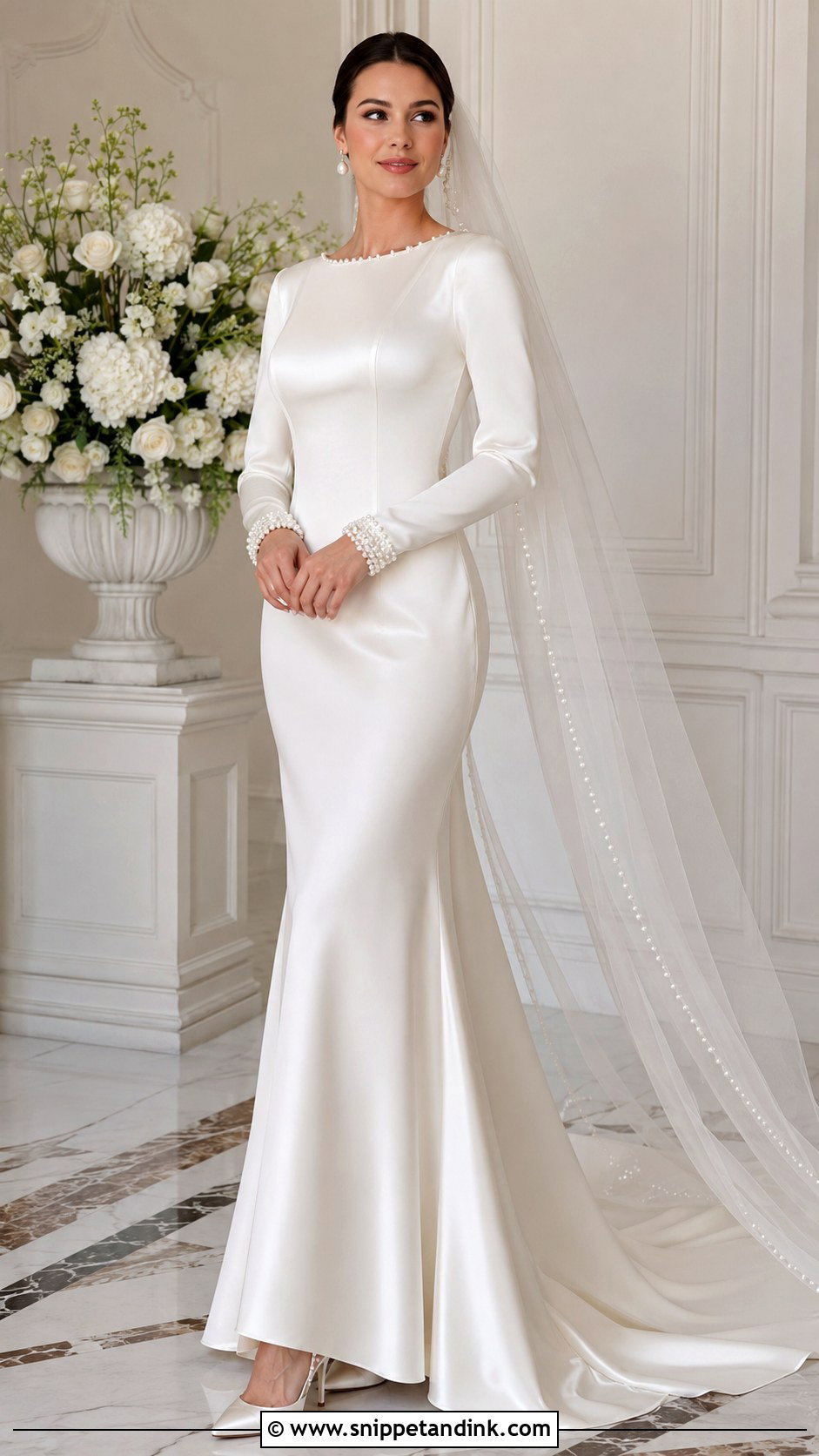
Pearls on satin add a soft glow that crystals can’t match. They can run along the cuffs, neckline, buttons or bodice, and they look best placed with purpose rather than scattered everywhere, since satin already reflects light. A pearl-edged veil suits a plain dress. Pearl earrings, satin heels and a smooth updo keep it coordinated for formal and winter weddings, and the pearls will show nicely in close-up photos.
24. Long Sleeve Satin Wedding Dress With Oversized Bow
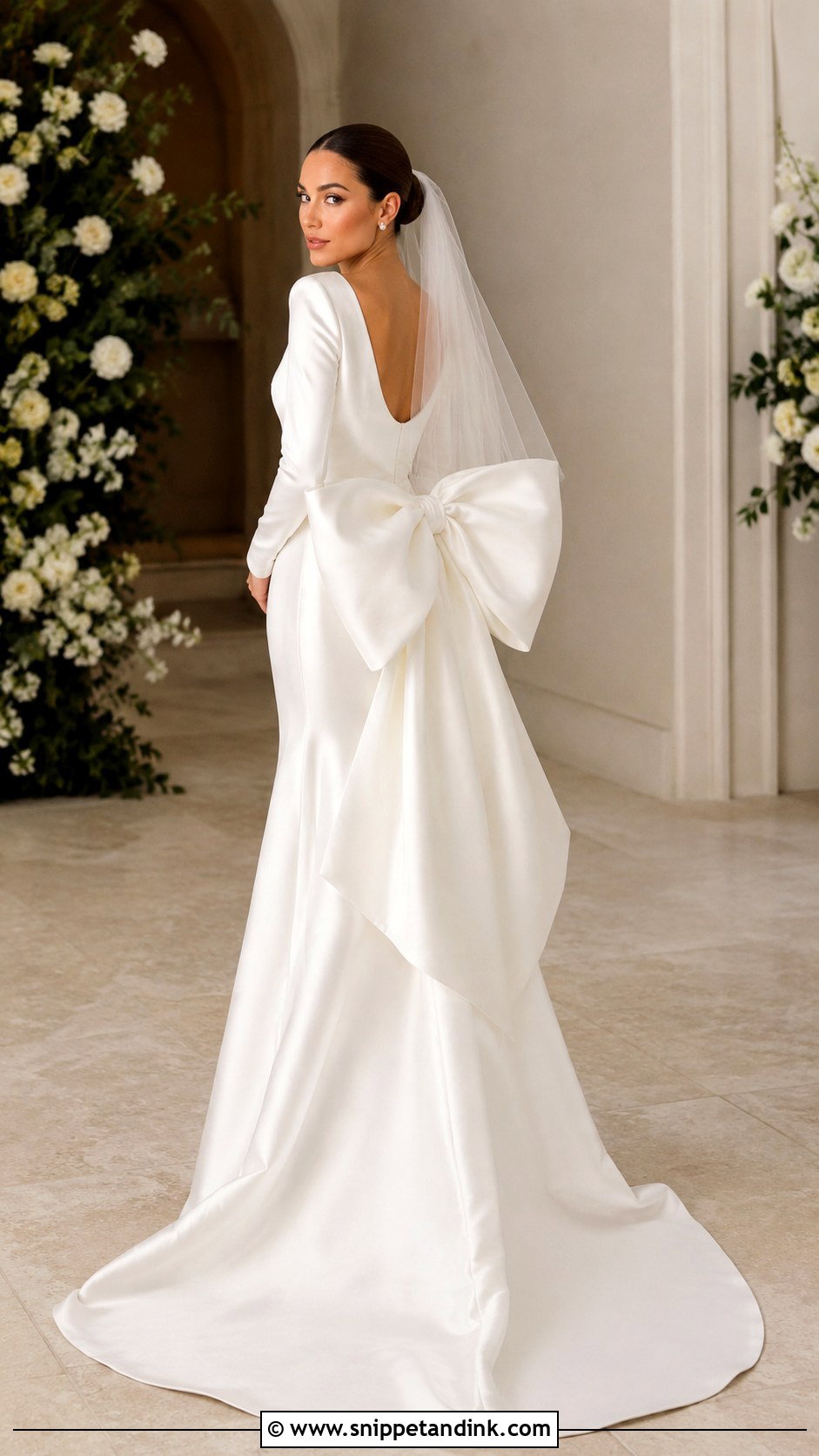
An oversized bow is a single, deliberate statement, and satin is the right fabric for it because it holds its shape and catches light along each fold. Place it at the back waist, the shoulder or the front waist, and keep the rest of the gown plain. A veil can work if it doesn’t hide the bow. I’d think hard before pairing a front bow with a bouquet, since the two compete at the same height. Simple earrings, a sleek bun and plain heels suit fashion-forward weddings.
25. Long Sleeve Satin Wedding Dress With Long Train
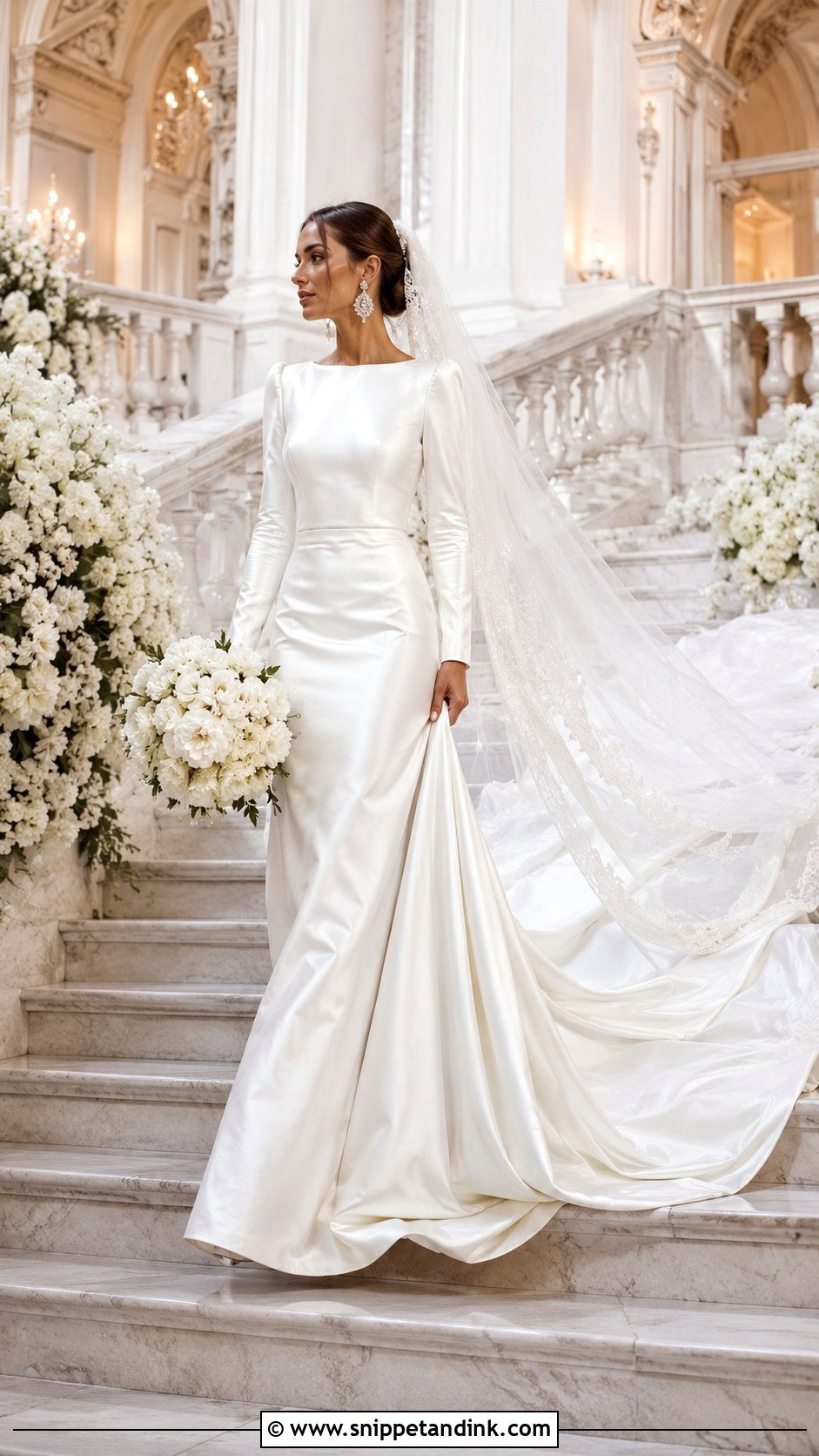
A long train is where satin really performs, with the fabric pooling in a rich line behind you down the aisle. Chapel length is graceful; cathedral is grand. Keep the bodice fitted and sleeves tailored so it balances. Satin trains mark easily on outdoor surfaces, so if your ceremony is on grass or stone, a runner or a careful attendant helps. Ask how it bustles, and make sure someone on your side knows how. A long veil, elegant earrings and supportive heels finish it.
Water Spots, Lap Creases and Who Holds the Steamer
Satin needs a little management on the day. None of it is hard, but it helps to assign it to someone in advance.
- Steam the gown on the morning, hanging, from the inside where you can. Don’t iron satin directly, as it can leave a shine mark.
- Keep water away. Drops of water can leave rings on silk satin, so hold drinks away from the skirt and skip spritzing hairspray near the dress.
- Sit on the back of the skirt, not the front, during car rides and the ceremony if you’re seated. Spreading the skirt behind you limits lap creases.
- Pack a handheld steamer for the venue so creases can be touched up before the reception entrance.
Satin Turns Yellow in a Plastic Bag
After the wedding, take the gown to a cleaner who specializes in bridal wear within a few weeks. Spilled champagne and sugary drinks can dry invisibly, then oxidize and turn brown months later, so point out anywhere you think something landed.
For storage, skip the plastic garment bag. It traps moisture and can yellow satin over time. A breathable cotton bag or an acid-free box with acid-free tissue in the folds is better, kept somewhere cool, dark and dry. Heavy satin gowns are better folded than hung long term, because the weight of the skirt can stretch the shoulders and sleeves.
Less Styling, More Tailoring
Satin with long sleeves suits almost every kind of bride, from the city minimalist to the ballroom romantic. The fabric gives a smooth finish; the sleeves add coverage and structure. What I tell every satin bride is that the tailoring matters more than the accessories, because satin highlights a perfect fit and exposes a poor one. Plan neckline, skirt, veil, shoes, jewelry and bouquet together. Whether you choose a ball gown, sheath, mini, wrap dress or cape veil, keep the styling simple enough for the fabric to show.
You'll Like These Ideas:









Leave a Reply