
Pakistani bridal fashion asks more of a bride than most traditions, because she isn’t dressing for one day but for several events, each with its own mood. Red for the barat, ivory for the nikkah, colour and mirrors for the mehndi, pastels for the walima. Structured lehengas, shararas, ghararas, maxis and pishwas all have their place, and so does heritage handwork like zari, dabka, gota, resham and sequins. What I look at first isn’t the embroidery, though. It’s whether the outfit will move, sit and survive the venue and the hours. Here are the dresses I put together most often, event by event, with notes on how each one wears.
Mehndi, Nikkah, Barat, Walima: Planning the Whole Wardrobe
Most brides start with the barat outfit and plan the others around what’s left of the budget and time. That works, but a few decisions made early save stress later.
Give each event its own job
Mehndi needs movement and colour, and sleeves that stay clear of fresh henna. The nikkah needs modesty and comfort sitting for the ceremony. The barat carries the weight and the heaviest work. Walima is lighter, softer and often long. If two outfits are doing the same job, one of them is probably unnecessary.
Leave enough time for handwork
Heavy dabka, zardozi and zari are done by hand, and designers often ask for several months for a barat outfit, longer before the winter wedding season. Lighter mehndi and walima outfits can usually be made faster, so order the barat first.
Think about weight and heat
A fully worked barat lehenga with two dupattas is heavy enough that you’ll feel it after a few hours on stage. Ask the designer to try the outfit on you with the dupattas pinned, and walk around in it, before final payment.
1. Red Bridal Lehenga Pakistan
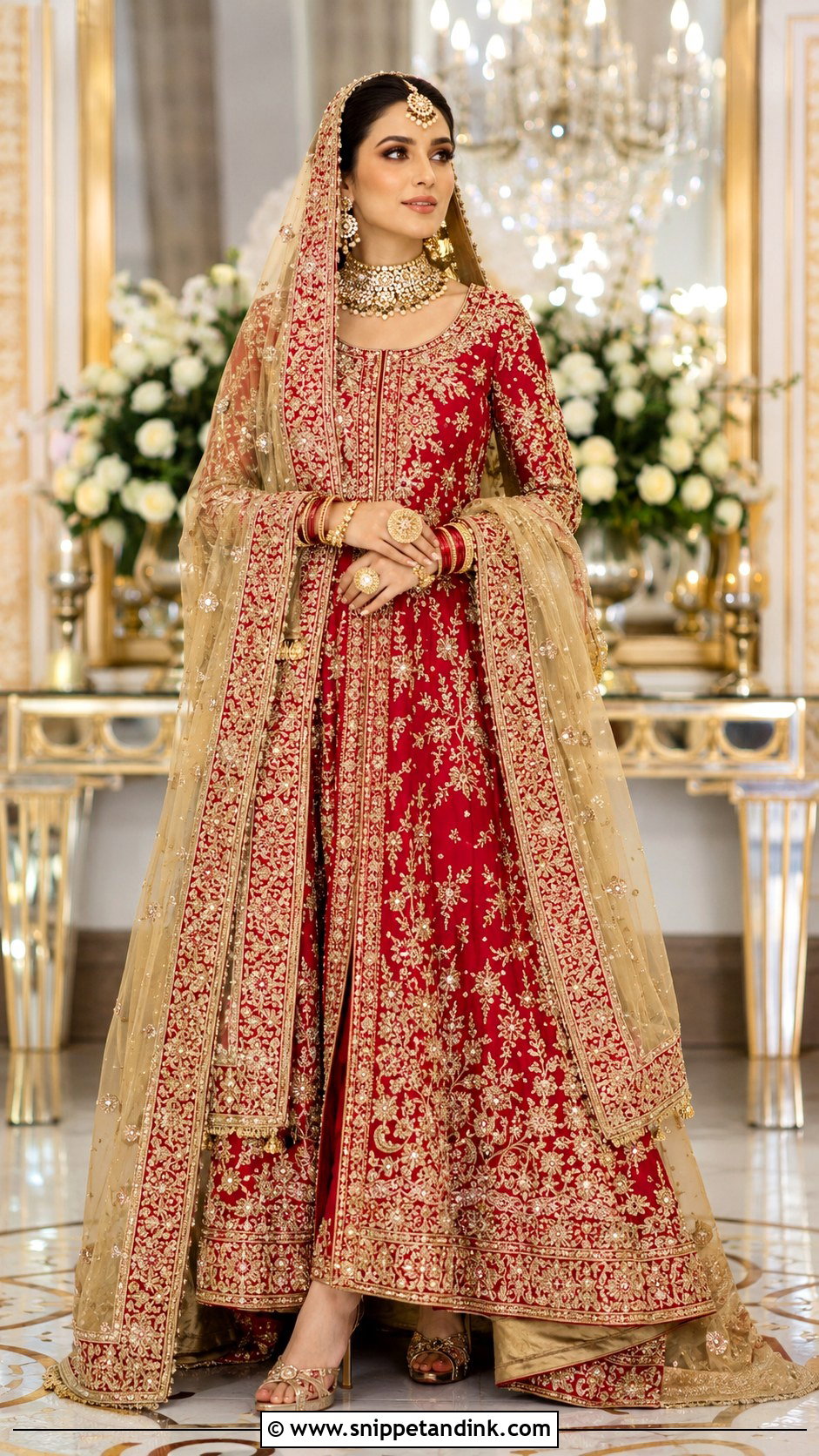
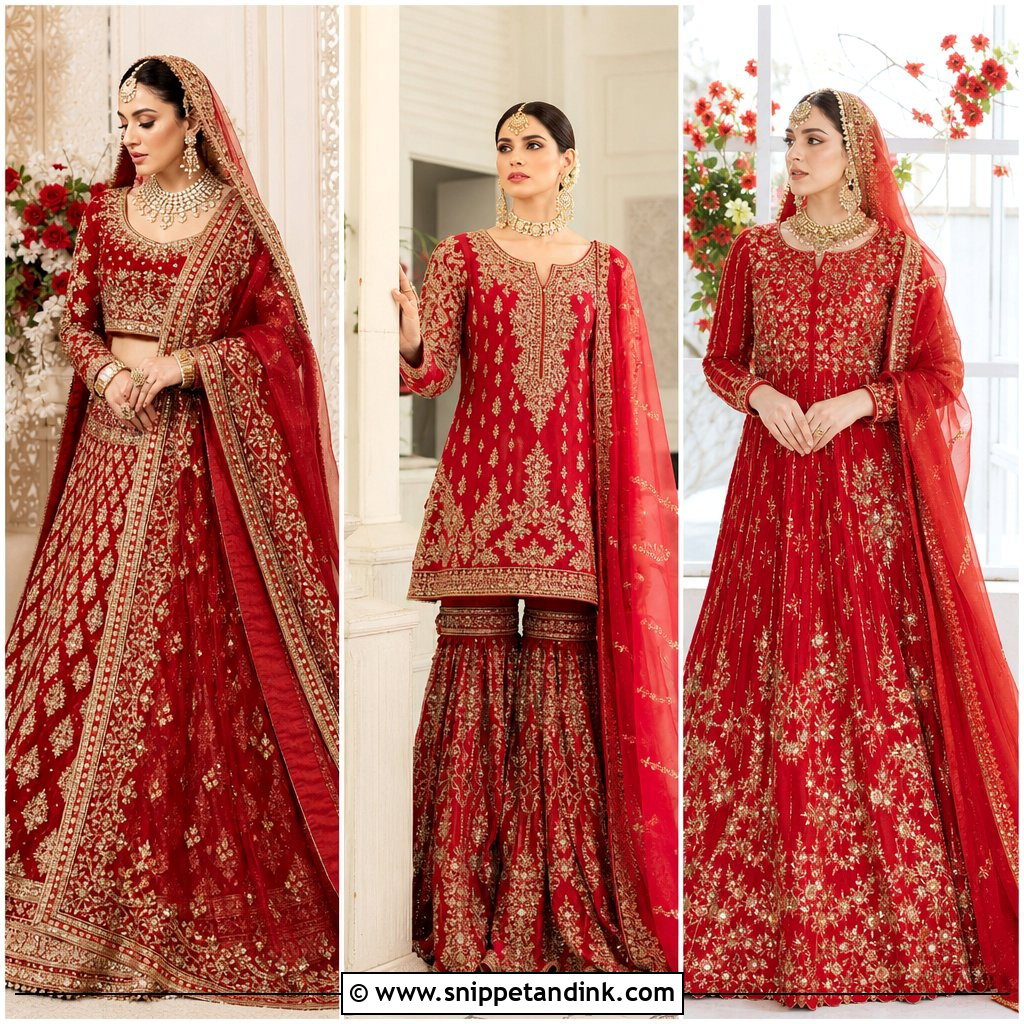
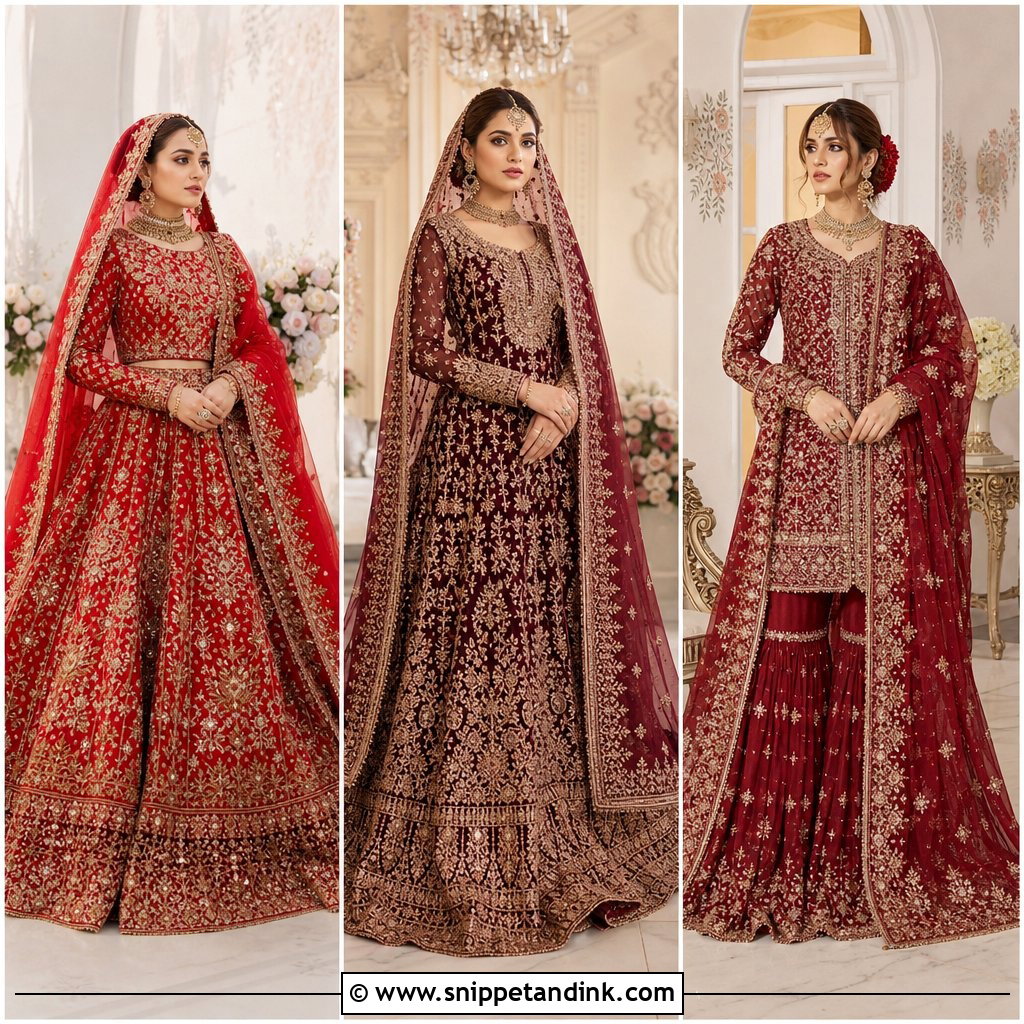
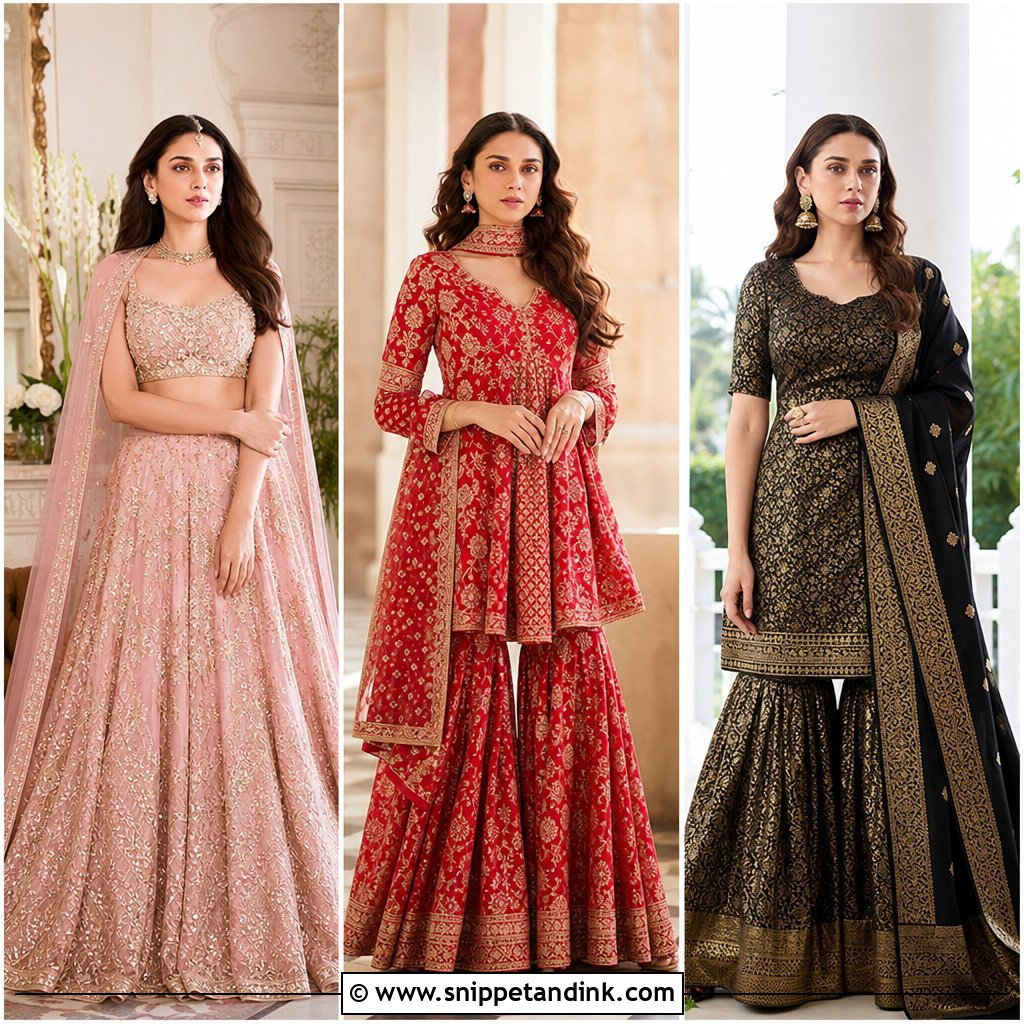
Red is still the colour most families picture for the barat, and with good reason: it reads as bridal from across a hall and under any lighting. The classic set is a heavily worked lehenga, a fitted choli or long shirt and a dupatta with an embroidered border, finished with gold, a matha patti, bangles and embellished heels. For more modesty, swap the choli for a long kameez. What makes a red lehenga look current is where the work sits. I’d rather see dense embroidery at the hem, neckline, sleeves and dupatta border than every inch covered, which also takes real weight off your shoulders.
2. Maroon Bridal Lehenga Pakistan
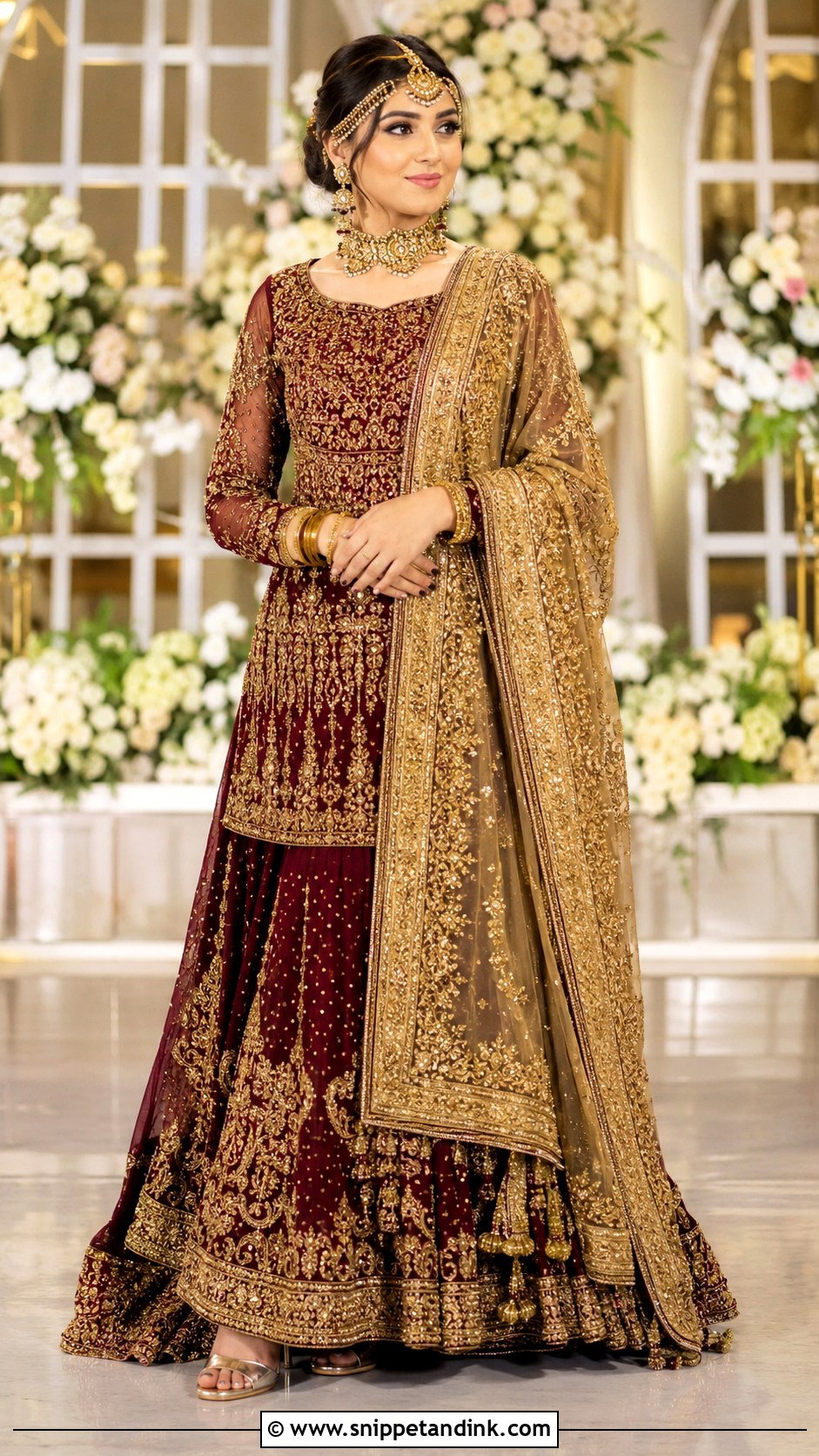
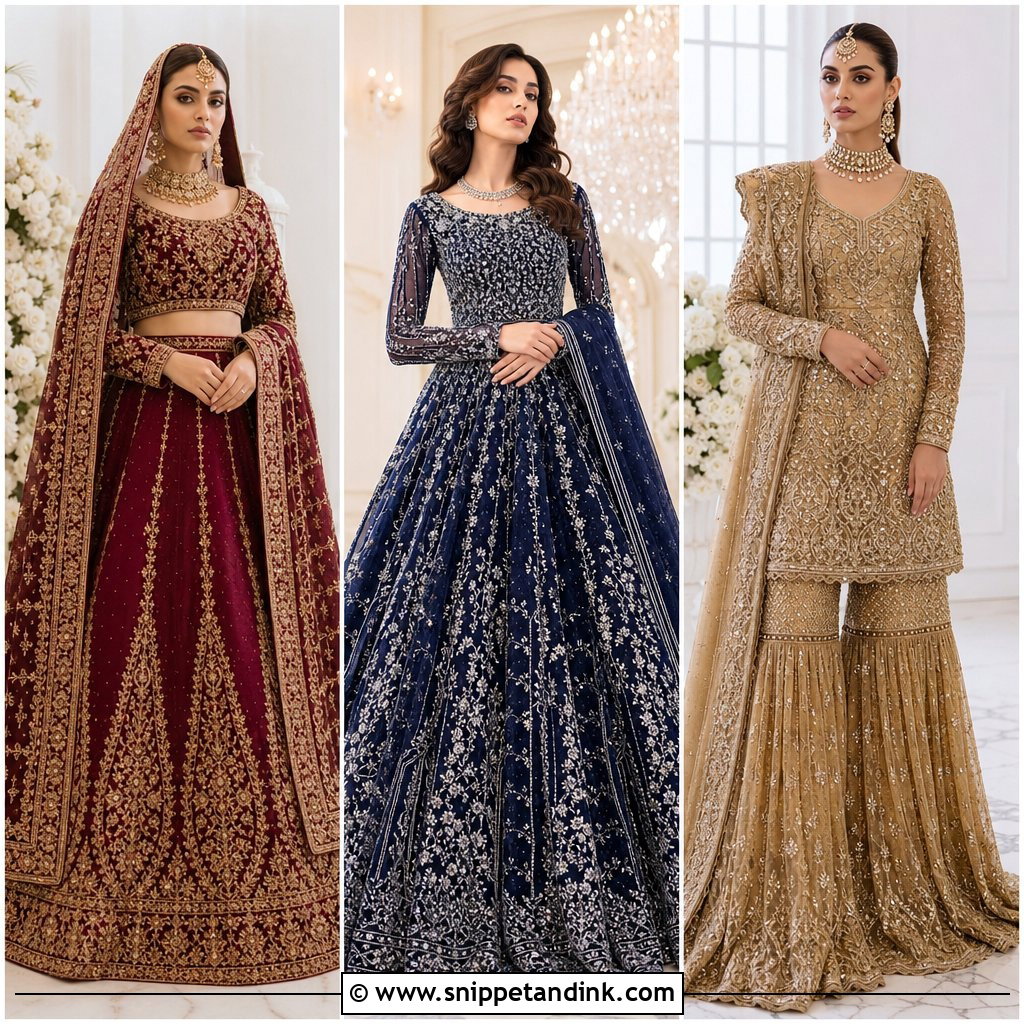
Maroon gives the red barat look a deeper, more grown-up tone, and it holds up under the harsh lights of an indoor hall where bright red can flare orange on camera. A maroon bridal lehenga wants antique gold rather than bright yellow gold; dabka and sequins in that duller tone sit into the fabric. A long shirt with side slits looks graceful; a choli with a flared lehenga is the classic shape. Kundan, a jhumar and soft glam makeup suit it. It’s my usual suggestion for winter evening barats.
3. Ivory Nikkah Pishwas Pakistan
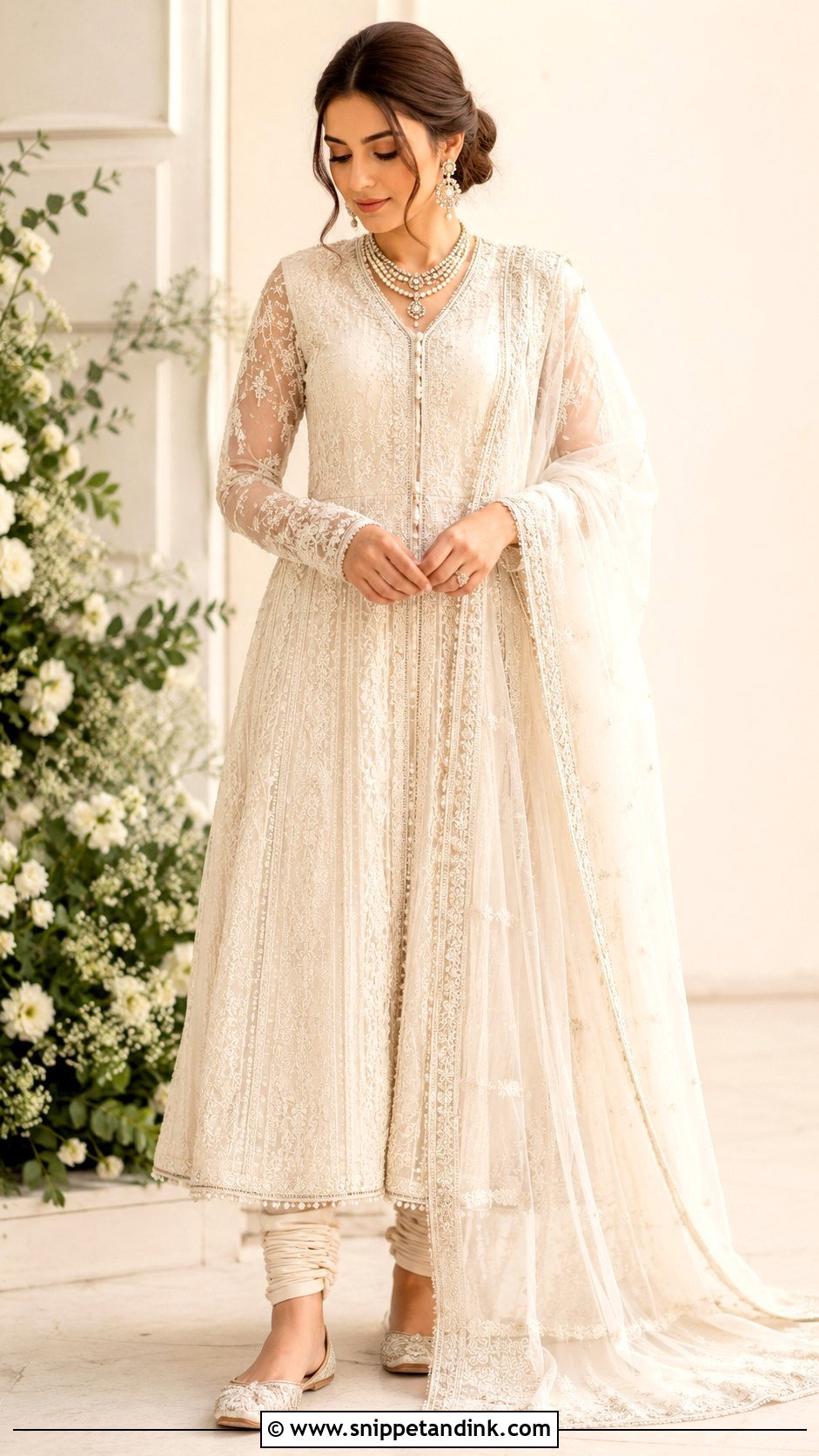
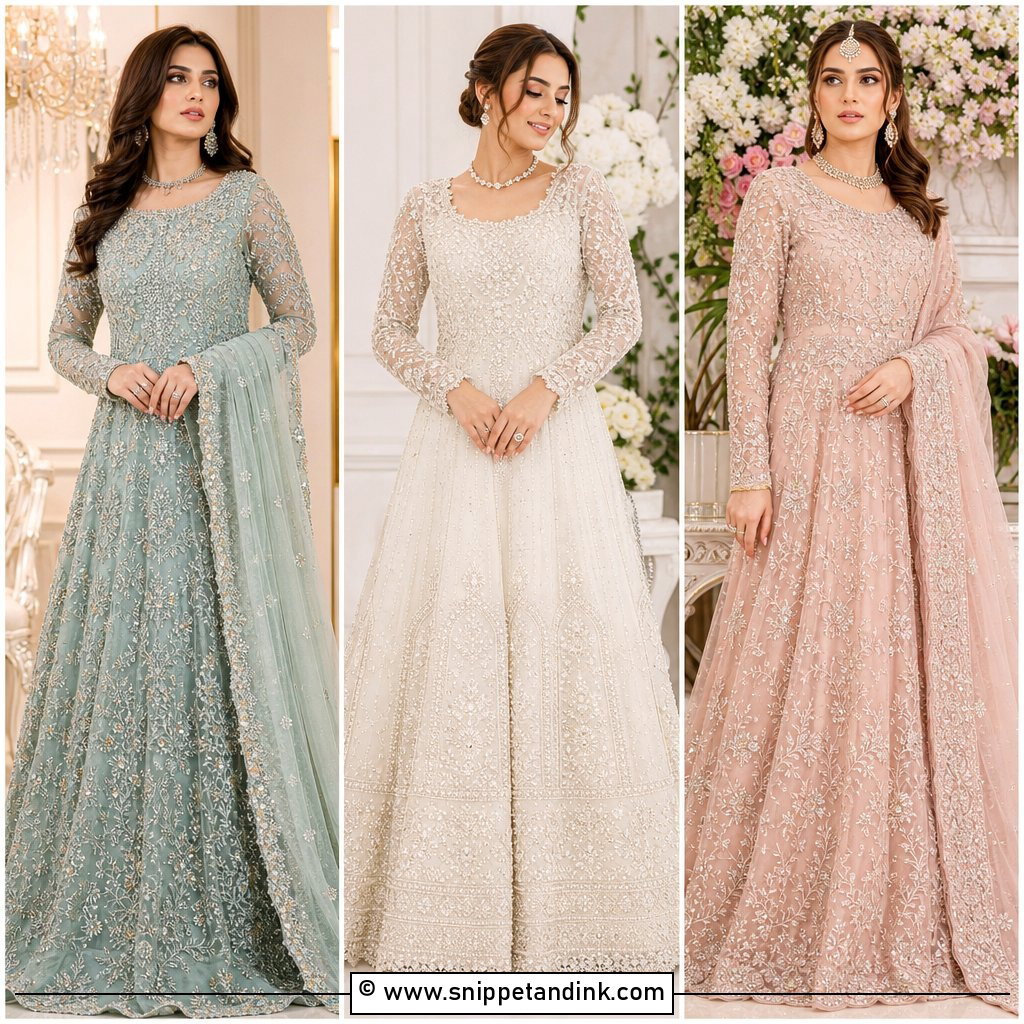
For a nikkah, I like a paneled ivory pishwas because the flare moves softly when you walk in, and the panels hold their shape when you sit for the ceremony. Pair it with churidar or straight pants and a sheer embroidered dupatta. Silver, pearl or champagne thread keeps the work delicate. Ivory can look flat on very fair skin in harsh indoor light, so check the shade near a window and under a bulb before you commit. Pearl jewellery, a soft bun and embellished khussas finish it, and daylight suits it best.
4. Pastel Walima Maxi Pakistan
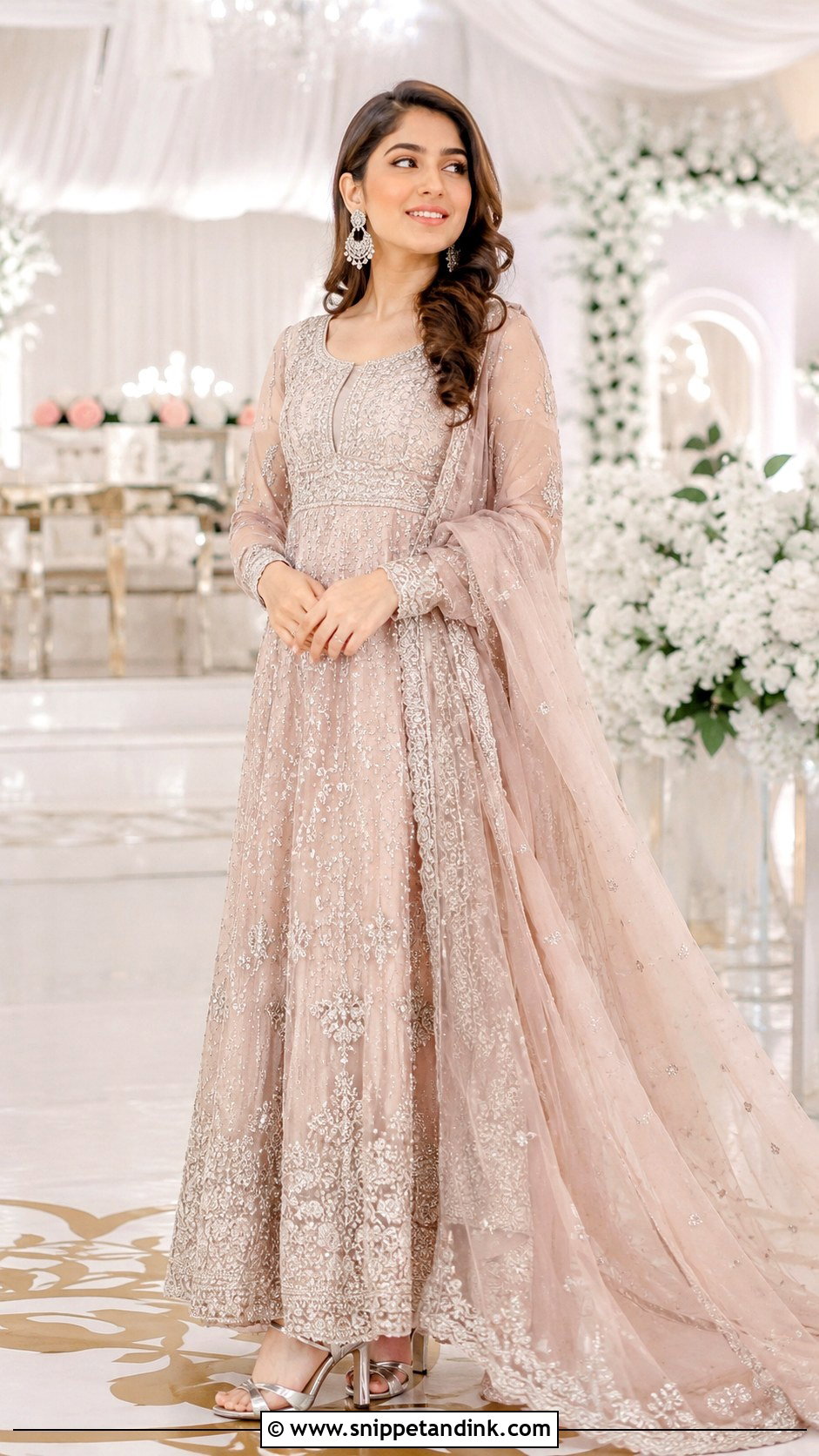
Walima is when most brides want to breathe again after the barat, and a pastel maxi lets them. Blush, powder blue, mint, champagne and lilac all look bridal with the right embroidery. The usual shape is a fitted bodice, delicate sleeves and a flowing floor-length skirt, with a light dupatta scattered with work. Pastels show stains more than deep colours, so ask the caterer where the cake and drinks will be, and keep a stain pen in your clutch. Diamond-style jewellery, soft curls and heels complete it.
5. Gold Bridal Gharara Pakistan
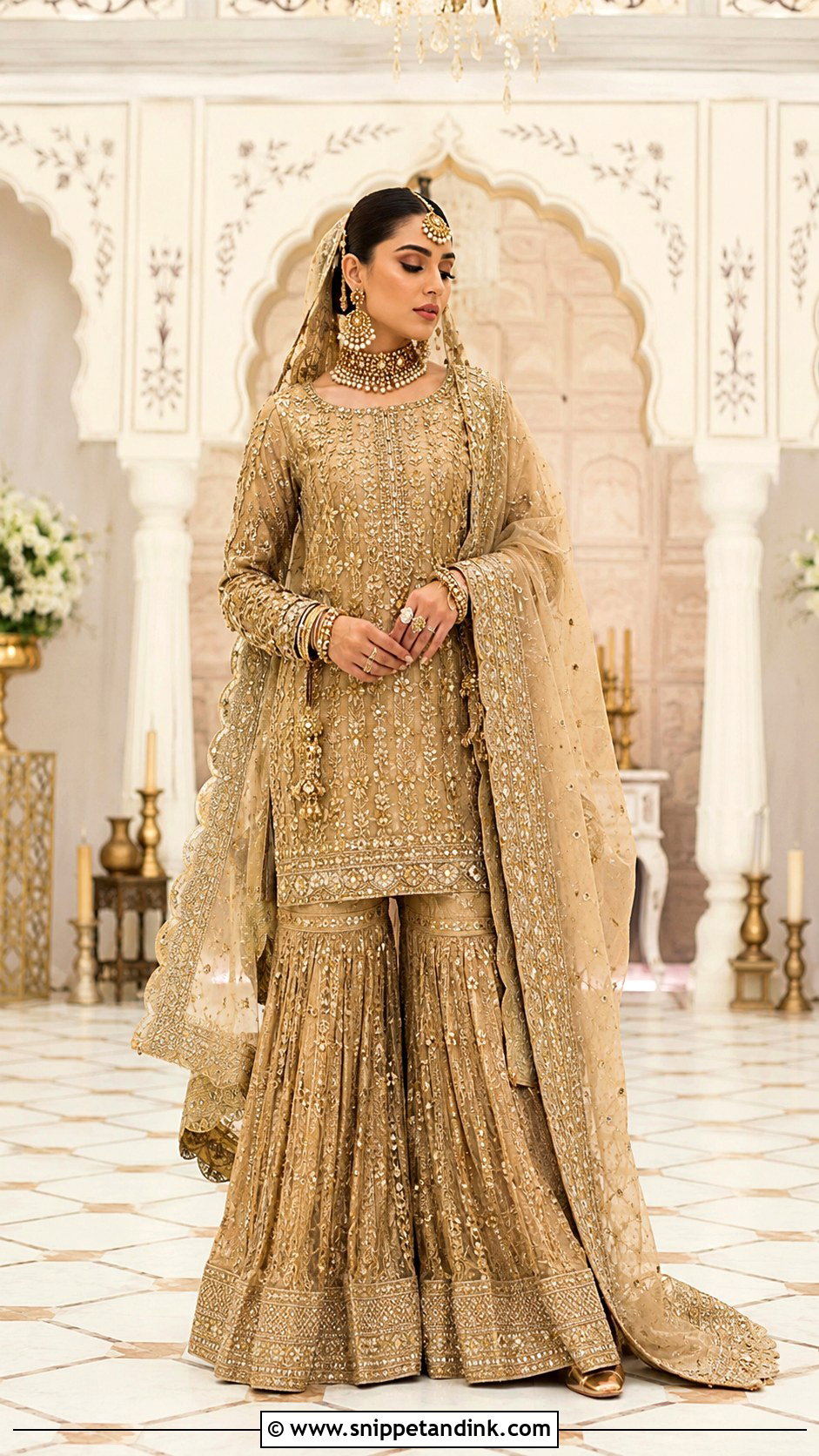
The gharara has a fitted upper leg, a joint at the knee and a dramatic flare below, so it has more presence in photos than almost anything else. Gold, antique gold or champagne fabric gives it a rich, old-world look. A short or mid-length kameez with heavy work balances the volume. The flare is wide but it does pull at the knee seam when you sit cross-legged, so try a floor sitting at your fitting. Drape the dupatta over the head and shoulder, and pair it with kundan or polki. It suits barat, nikkah or a formal family wedding.
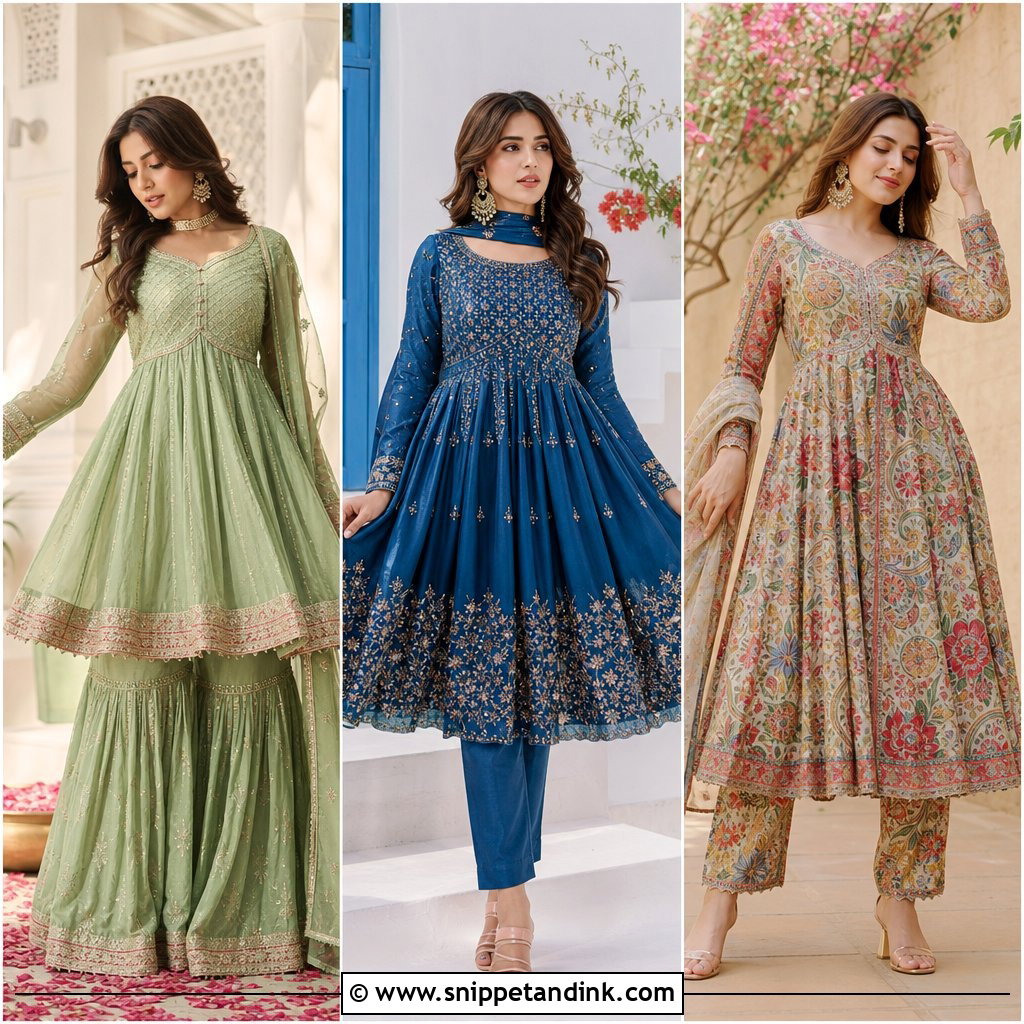
6. Green Mehndi Sharara Pakistan
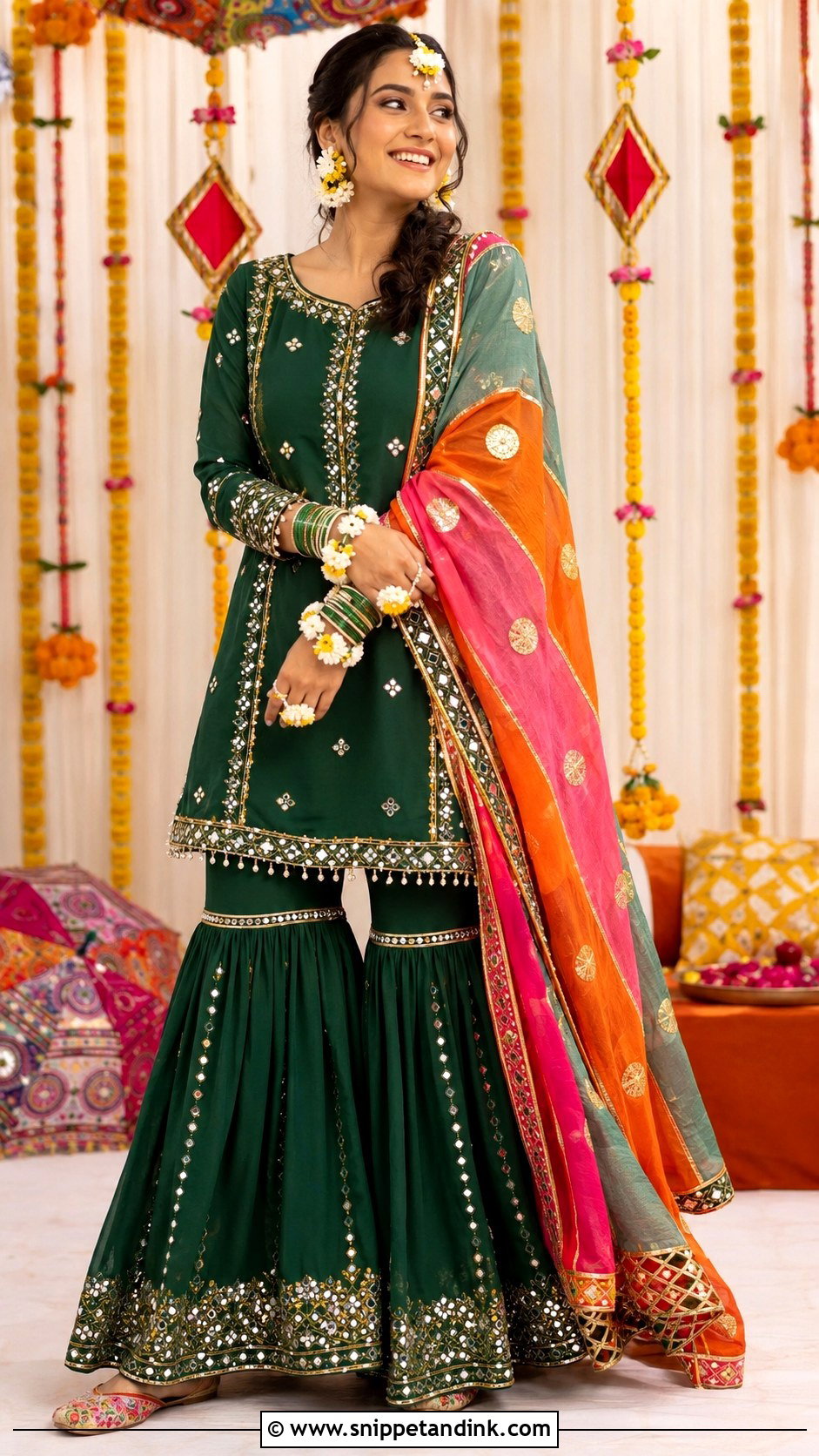
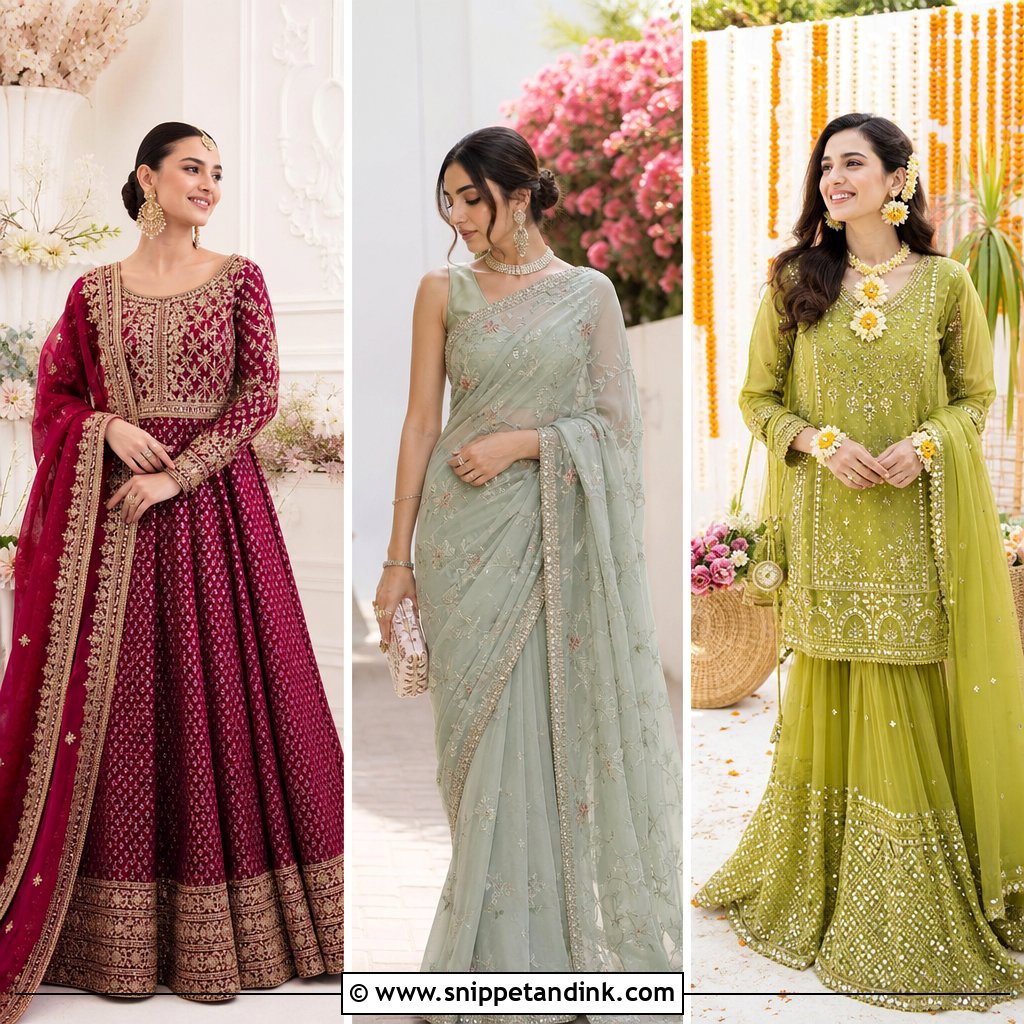
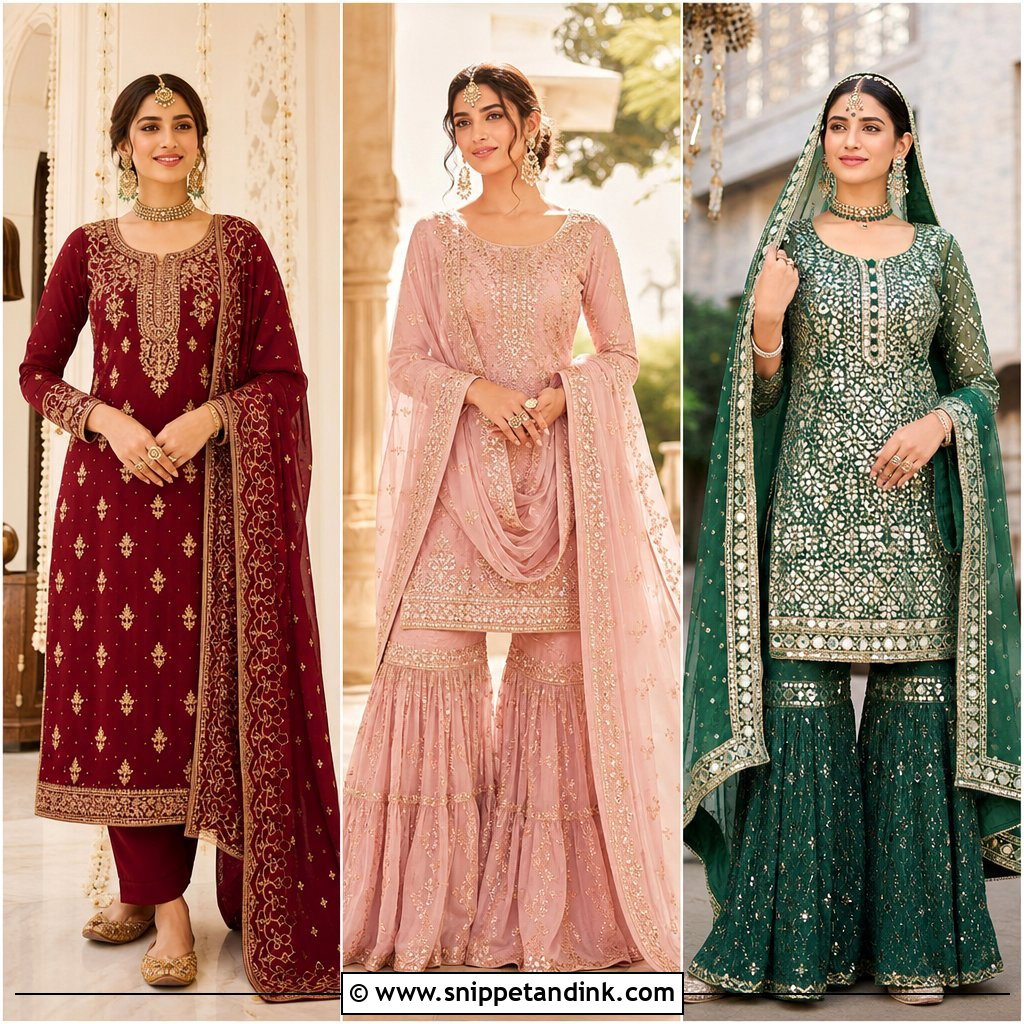
The sharara is my favourite cut for a mehndi bride who wants to dance. Wide legs swing freely, there’s no lehenga hem to trip on, and the short kurti stays out of your way. Green with a contrasting dupatta in yellow, orange or pink is the festive classic, and mirror work, gota, tassels and thread embroidery keep it playful. Henna is applied at or before the mehndi, so short or three-quarter sleeves protect the design while it dries. Floral jewellery or light gold, khussas and soft waves complete it.
7. Mustard Mehndi Lehenga Pakistan
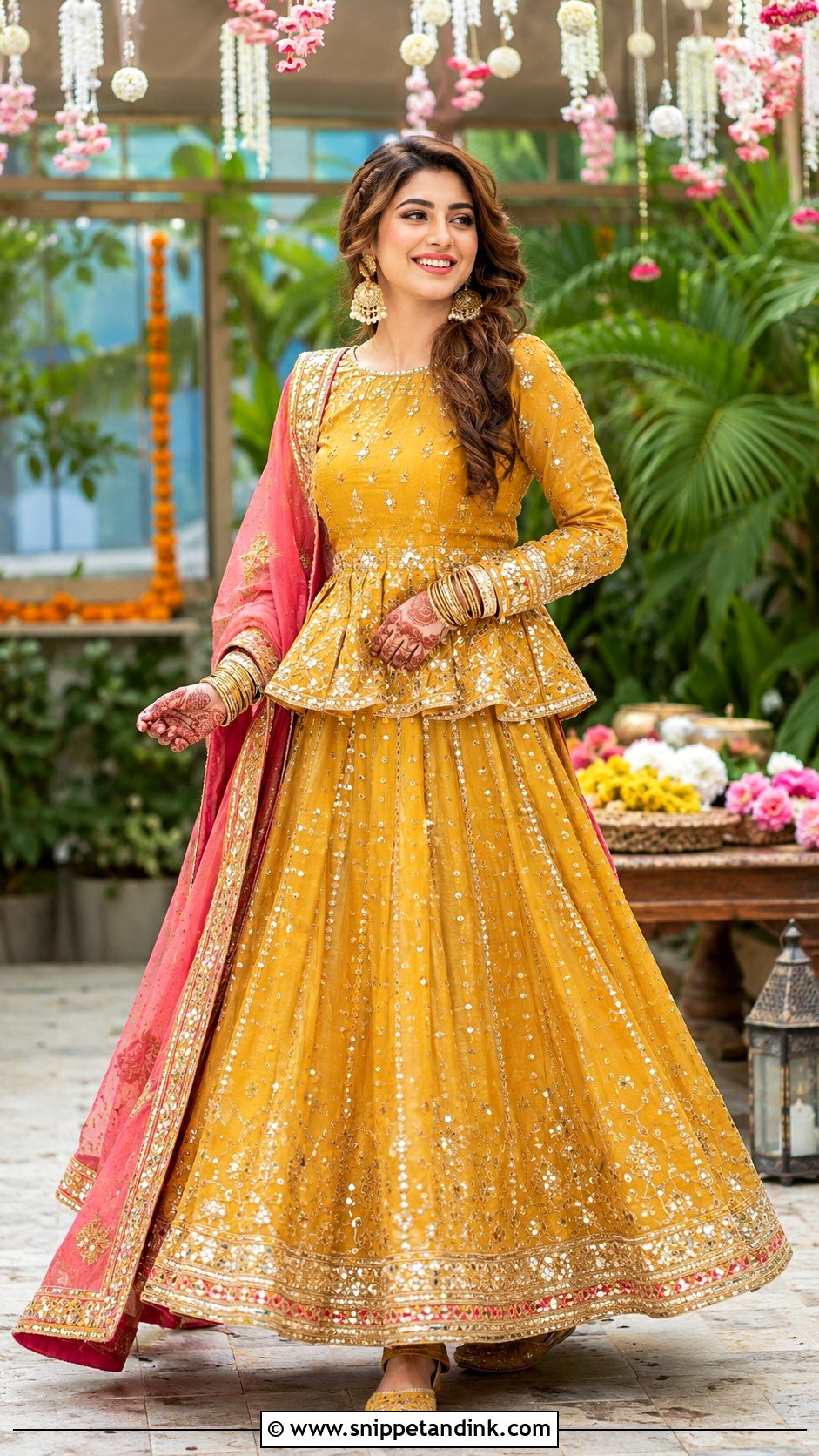
Mustard is the colour of daytime mehndis and dholki functions, bright enough to hold its own outdoors among marigolds and dhol players. A flared lehenga with a short blouse or peplum top looks lively with gota, mirrors and coloured thread. A hot pink, orange or green dupatta adds contrast. Mustard does turn sallow on some olive and warm skin tones, so I hold it near the face in daylight first. Jhumkas, bangles, a passa and khussas finish it, and a longer kurti gives more coverage.
8. White Nikkah Gharara Pakistan
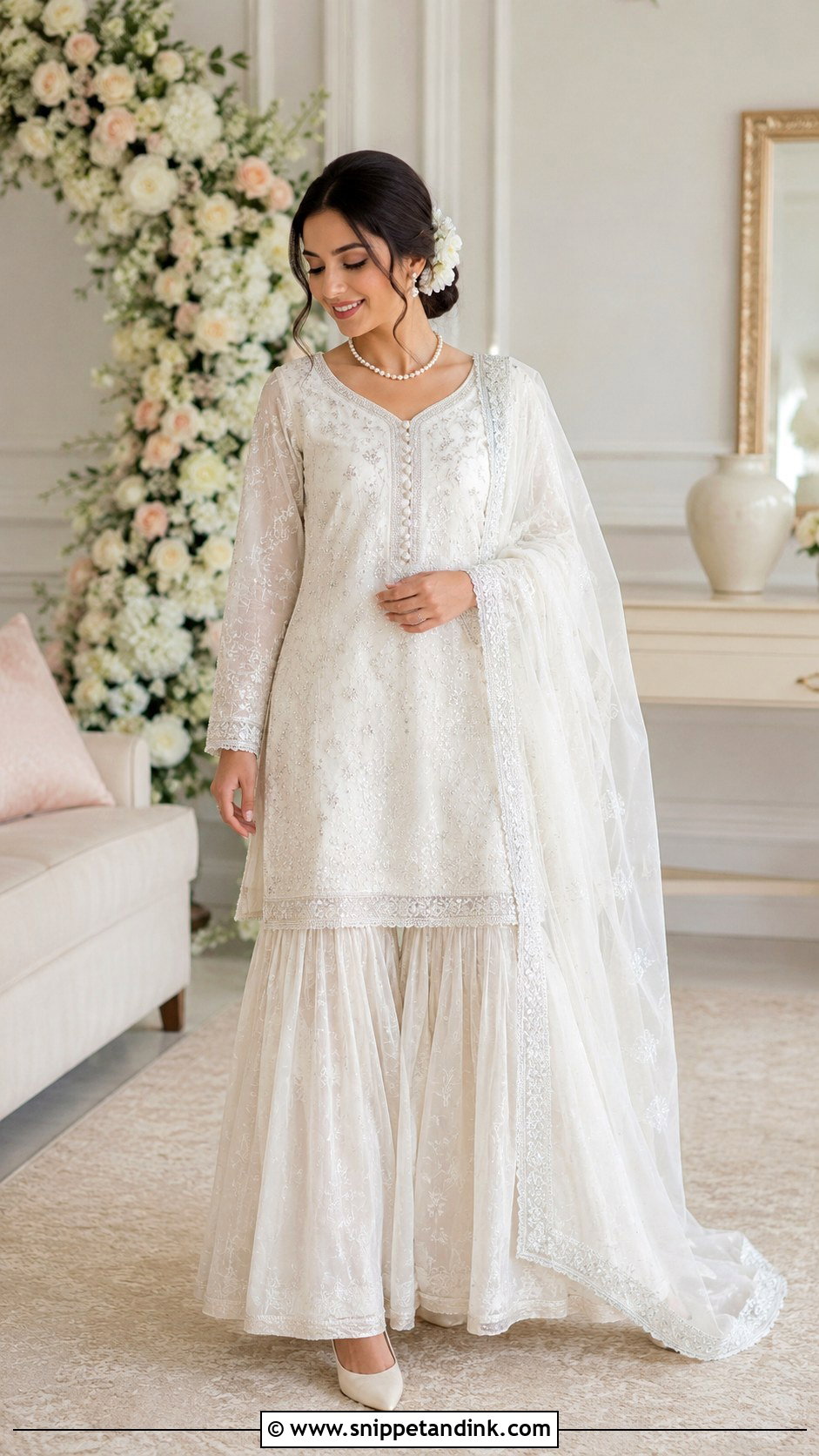
White and off-white ghararas suit a calm, traditional nikkah. The set is usually a short embroidered kameez, the flared gharara and a sheer dupatta with lace or zari borders. Pearl and silver details sit well against white; gold works if it’s light. The kameez defines the upper body while the gharara adds volume lower down, a balance that flatters many figures. Pure white can look stark against the skin, so most brides I dress end up in off-white or pearl. Soft makeup and a neat dupatta setting keep it serene.
9. Pink Bridal Maxi Pakistan
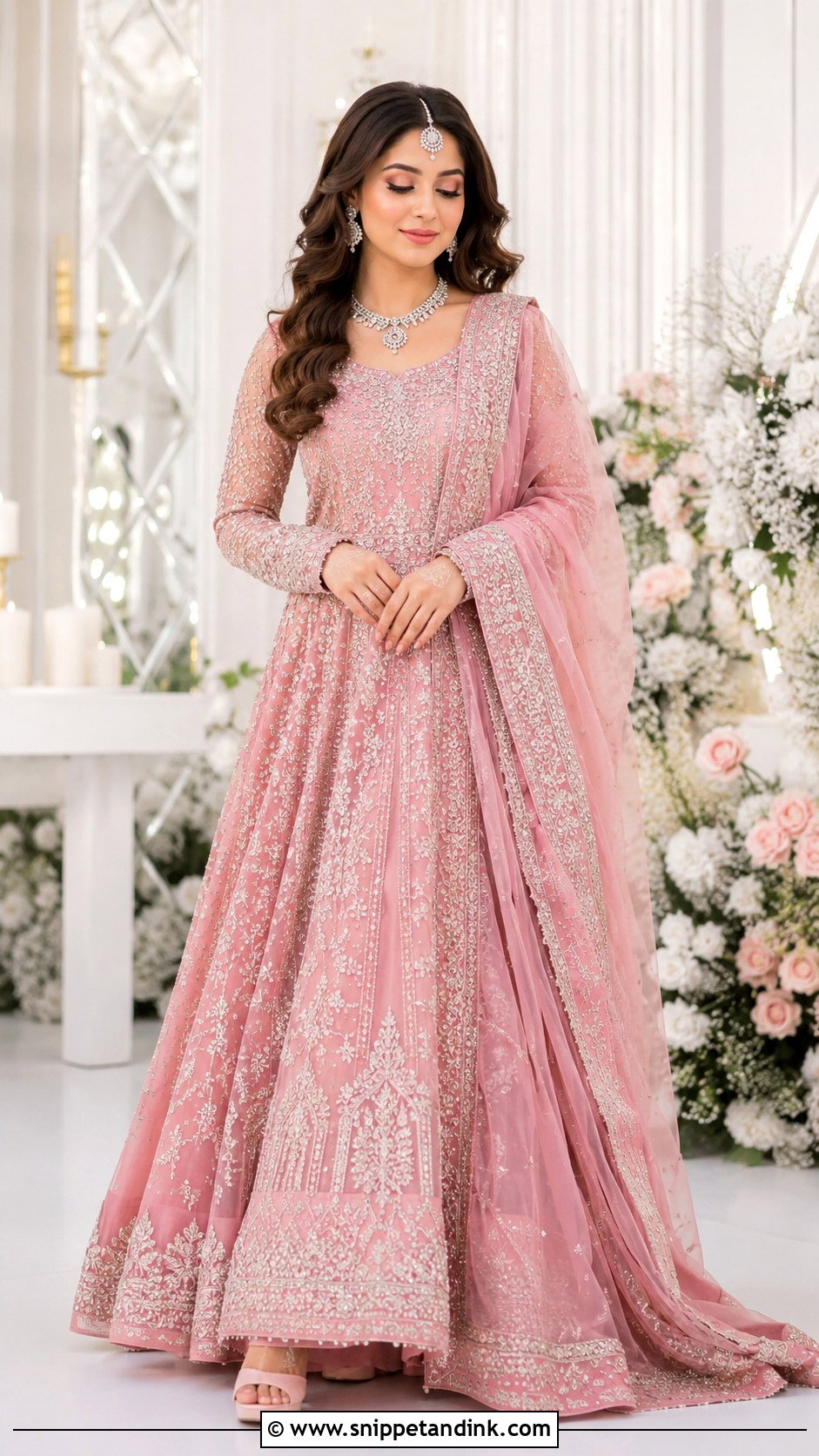
Pink is a reliable shade for walima, engagement or a softer barat. Blush, rose and dusty pink suit many skin tones and photograph warmly. A full-length maxi with sequin and resham work and a lightly worked dupatta makes a complete outfit. For more drama, add a trail or a layered skirt. Watch the undertone: a cool, bluish pink can clash with gold jewellery, while a warm rose sits comfortably alongside it. Crystal jewellery, soft curls and delicate heels suit it.
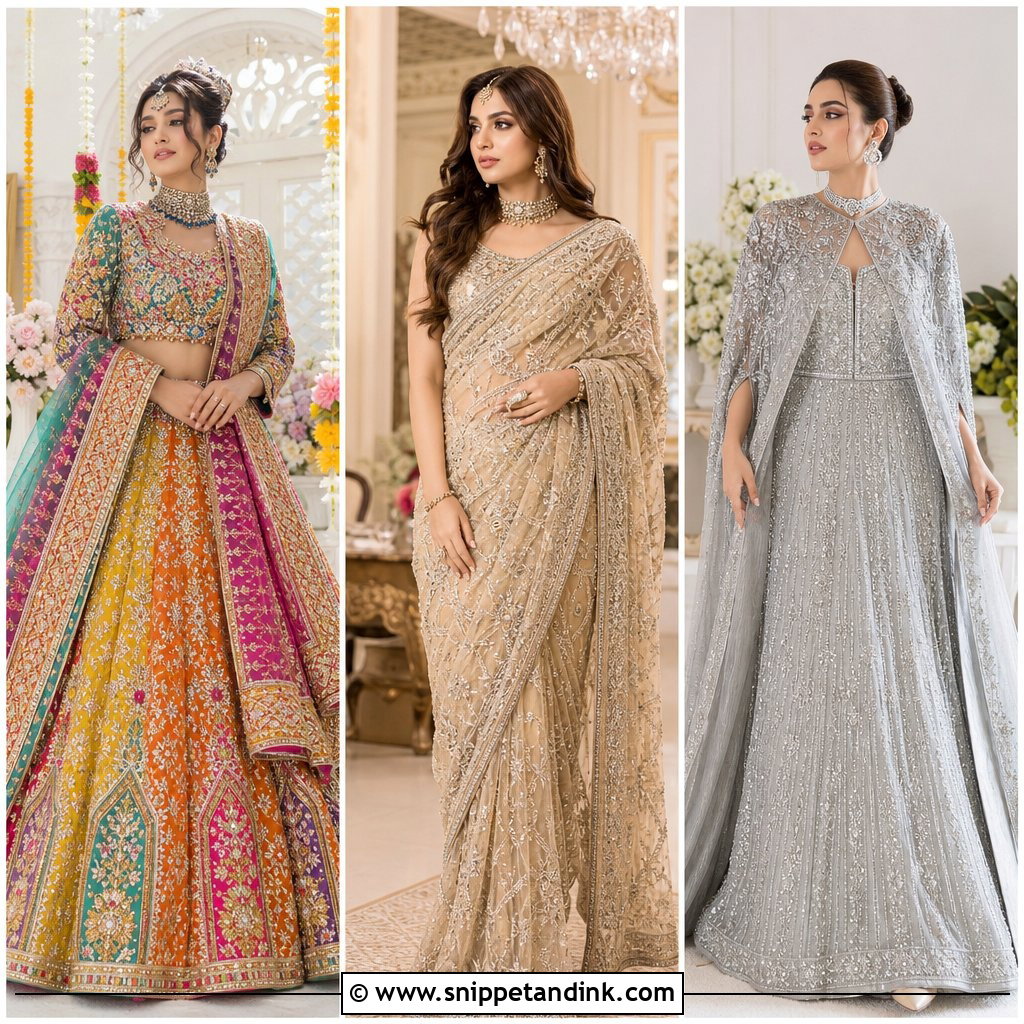
10. Champagne Bridal Gown Pakistan
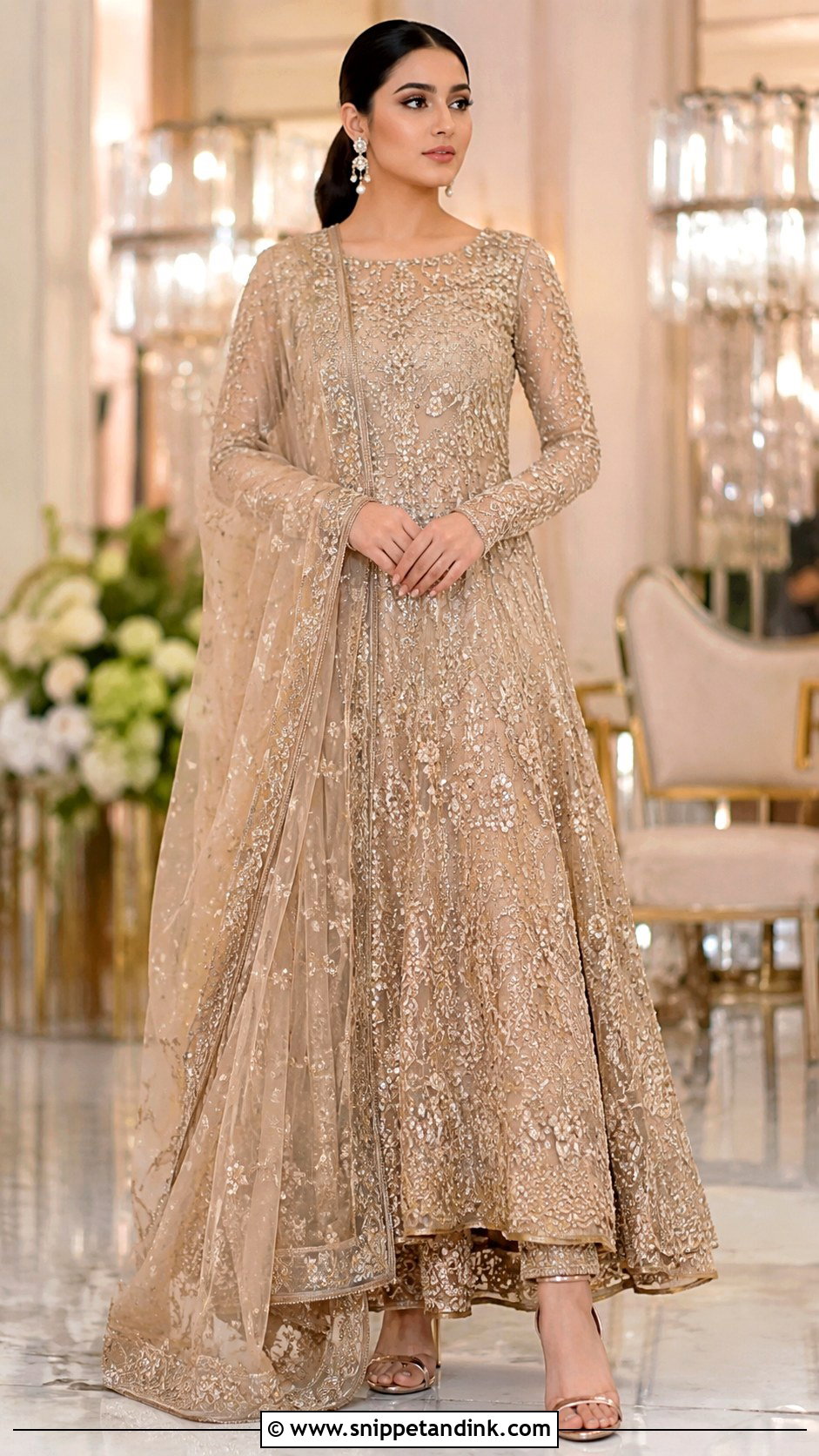
Champagne gowns bridge Western shape and Pakistani handwork, with a fitted bodice, flowing skirt, long sleeves and a soft dupatta or cape layer. The tone pairs naturally with silver, pearl and pale gold embellishment. Wear a statement necklace or statement earrings, not both at full volume. For long hotel receptions, I’d check that the gown has a proper lining; embroidered net sleeves directly on skin can scratch by the end of the night. It’s an easy outfit to wear for hours.
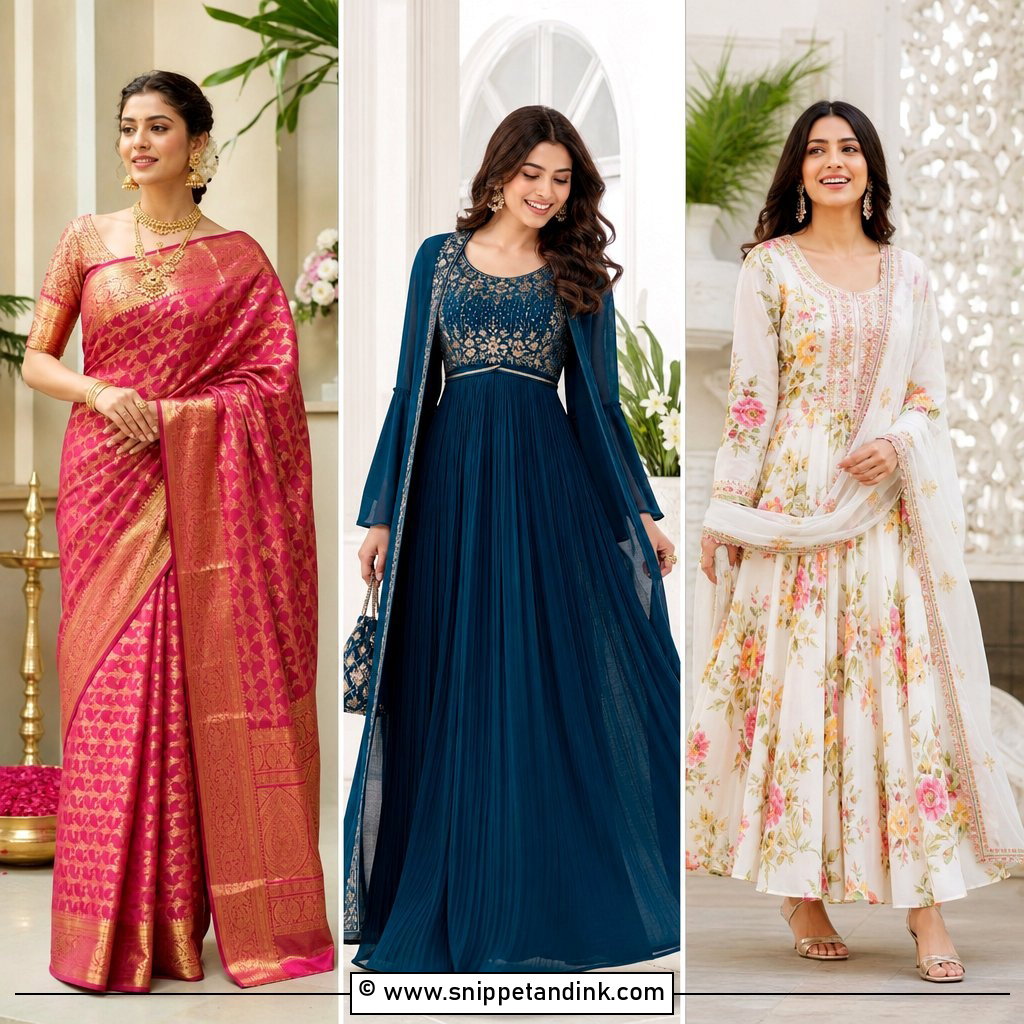
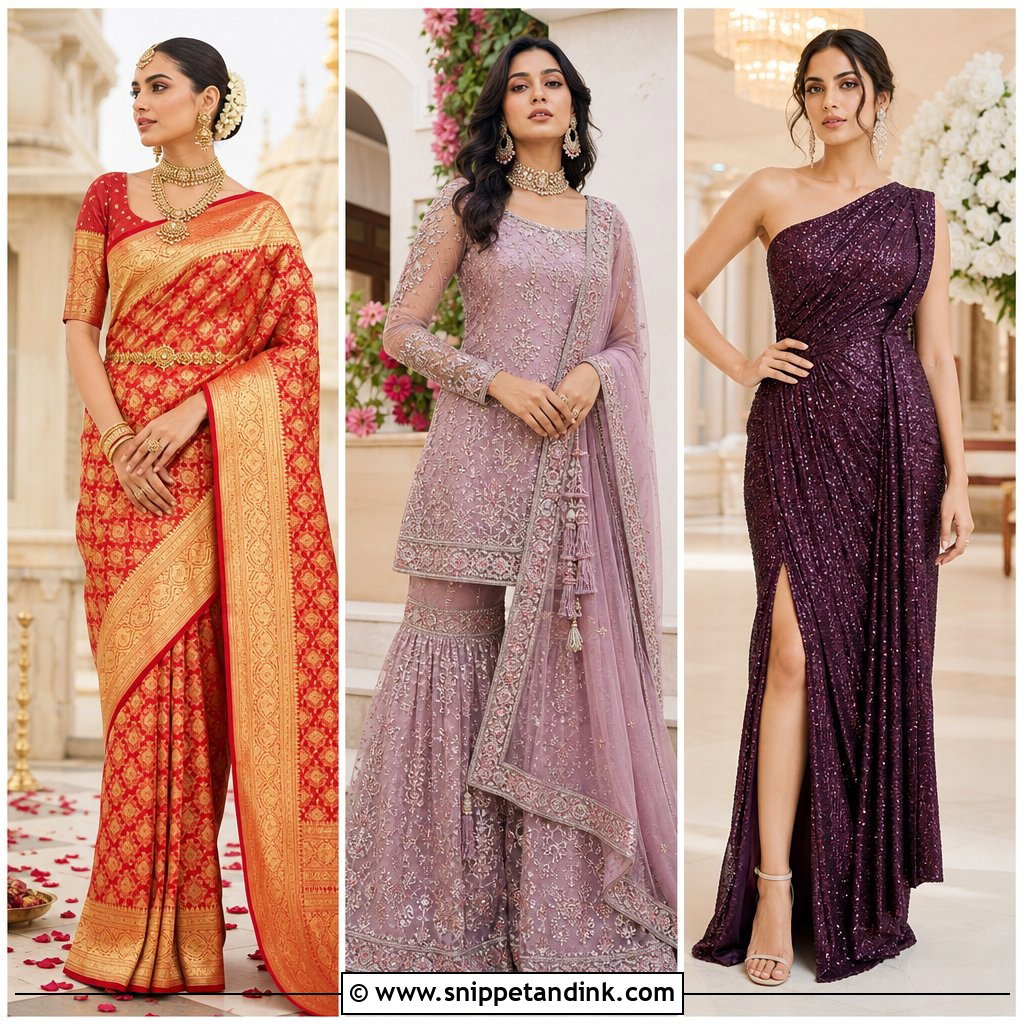
11. Bridal Saree Pakistan
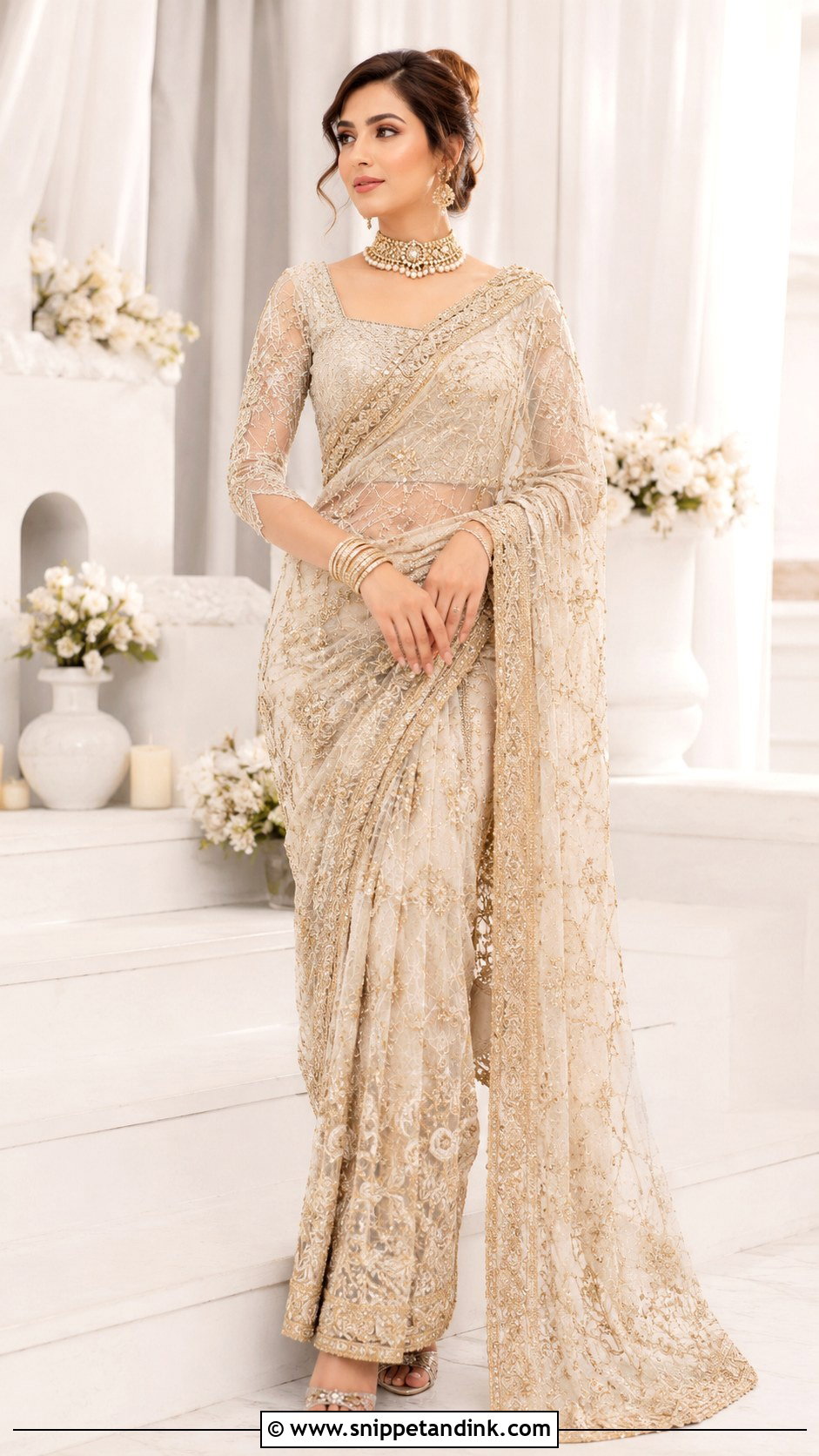
A bridal saree is the sleek alternative to a heavy lehenga, for walima, nikkah or a formal reception. It relies on a heavily embroidered blouse, a luxe fabric and clean draping. Red, ivory, gold, blush or emerald, depending on the event. If you’ve never worn one for hours, consider a pre-stitched saree. It holds pleats in place and can’t unravel when you’re on stage for photos. A choker, earrings, bangles and embellished heels are enough. Have the drape done by someone experienced; the whole look depends on how smoothly it sits.
12. Farshi Lehenga Pakistan
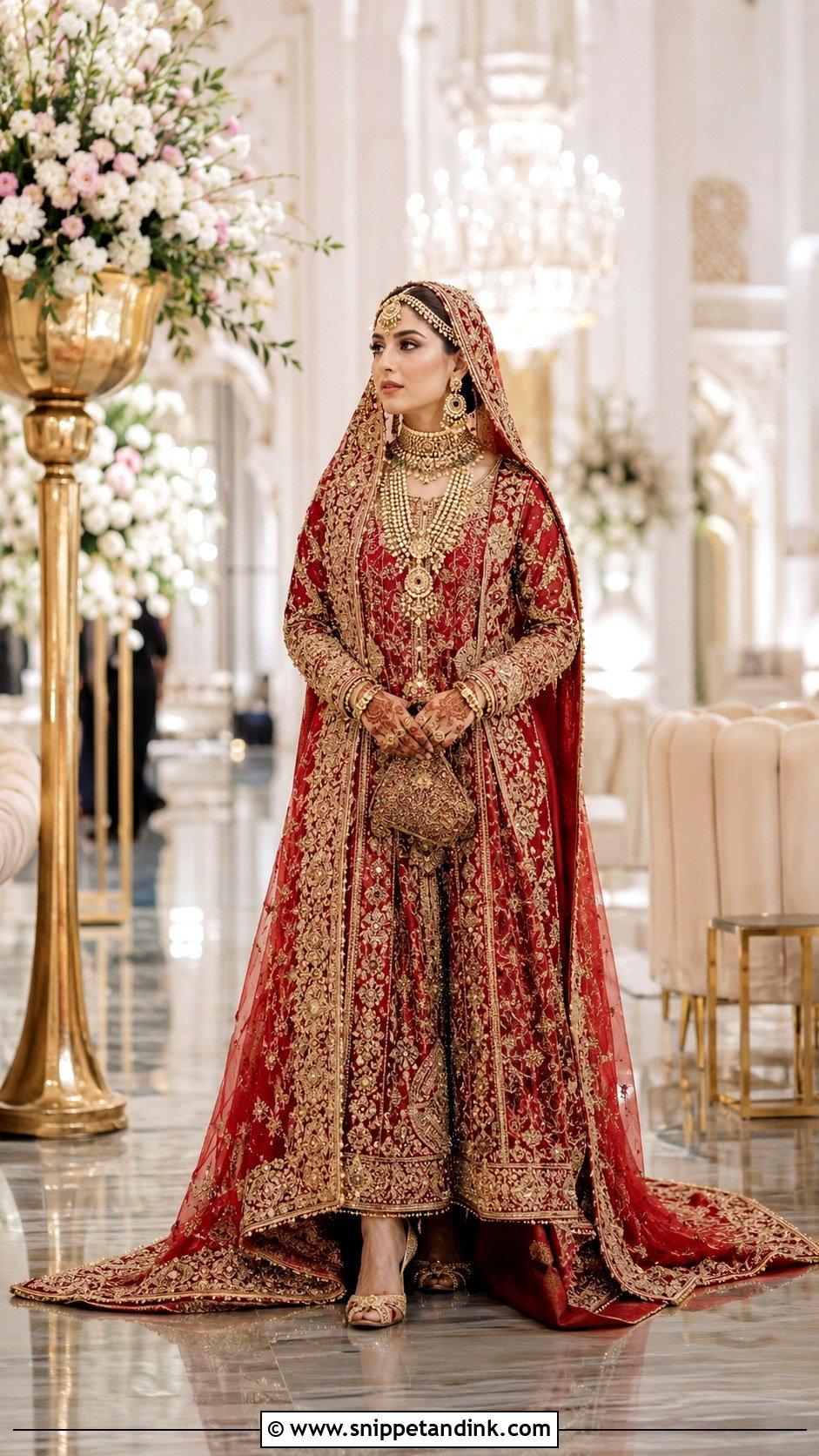
A farshi lehenga is cut extra long so it sweeps the floor behind you, which is what gives it that royal, heritage look for barat. It’s usually paired with a long shirt and one or two dupattas, in red, maroon, rust or gold. It’s also the least practical outfit on this list. You’ll need someone to lift the back on stairs and steps, and the hem collects dust at an outdoor venue. Keep the tailoring precise at the waist and shoulders, and choose a matha patti, choker, long necklace and bangles. It’s made for formal portraits.
13. Peplum Lehenga Pakistan
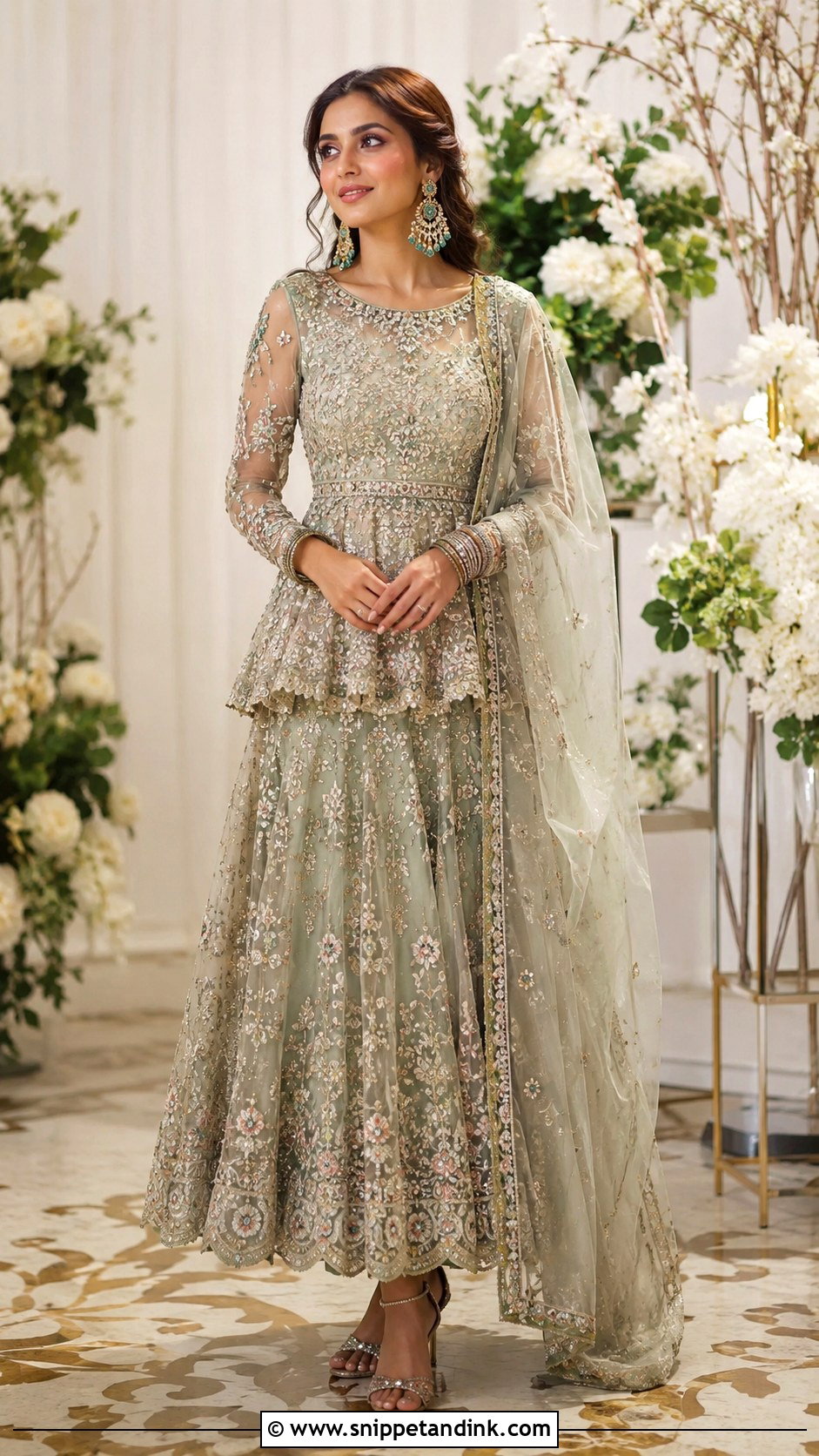
A peplum top flares at the waist, defining it while adding a bit of coverage over the lehenga waistband. That’s why brides who aren’t comfortable with a bare midriff often prefer it to a choli. It suits mehndi, engagement or a lighter barat. Embroider the neckline, sleeves, waist and hem for balance. A net or organza dupatta keeps the peplum visible. Very heavy work on the peplum flare itself makes it stick out stiffly, so keep that part lighter.
14. Long Shirt Lehenga Pakistan
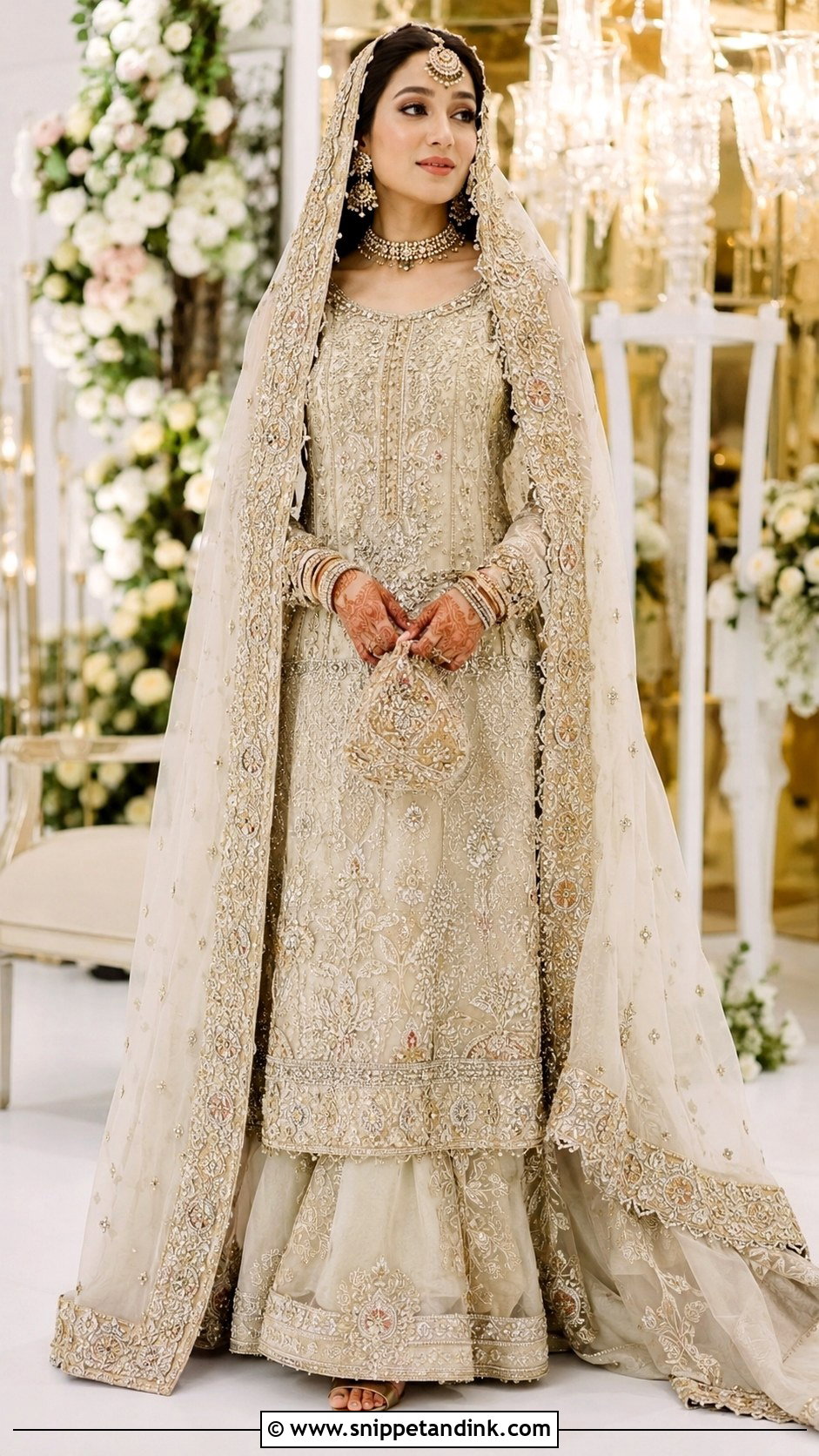
A long shirt over a lehenga is the modest bridal shape, and for many Pakistani brides it’s the default rather than an alternative. The kameez can be straight, A-line or slightly flared, worn over a heavy lehenga with a matching dupatta. Red, maroon, gold, ivory or pastels all work. Detailed borders, sleeve embroidery and neckline work frame the outfit. Watch where the shirt hem lands. Just below the knee shows enough lehenga; mid-calf hides too much of it. Traditional jewellery and a dupatta over the head complete it.
15. Angrakha Bridal Pishwas Pakistan
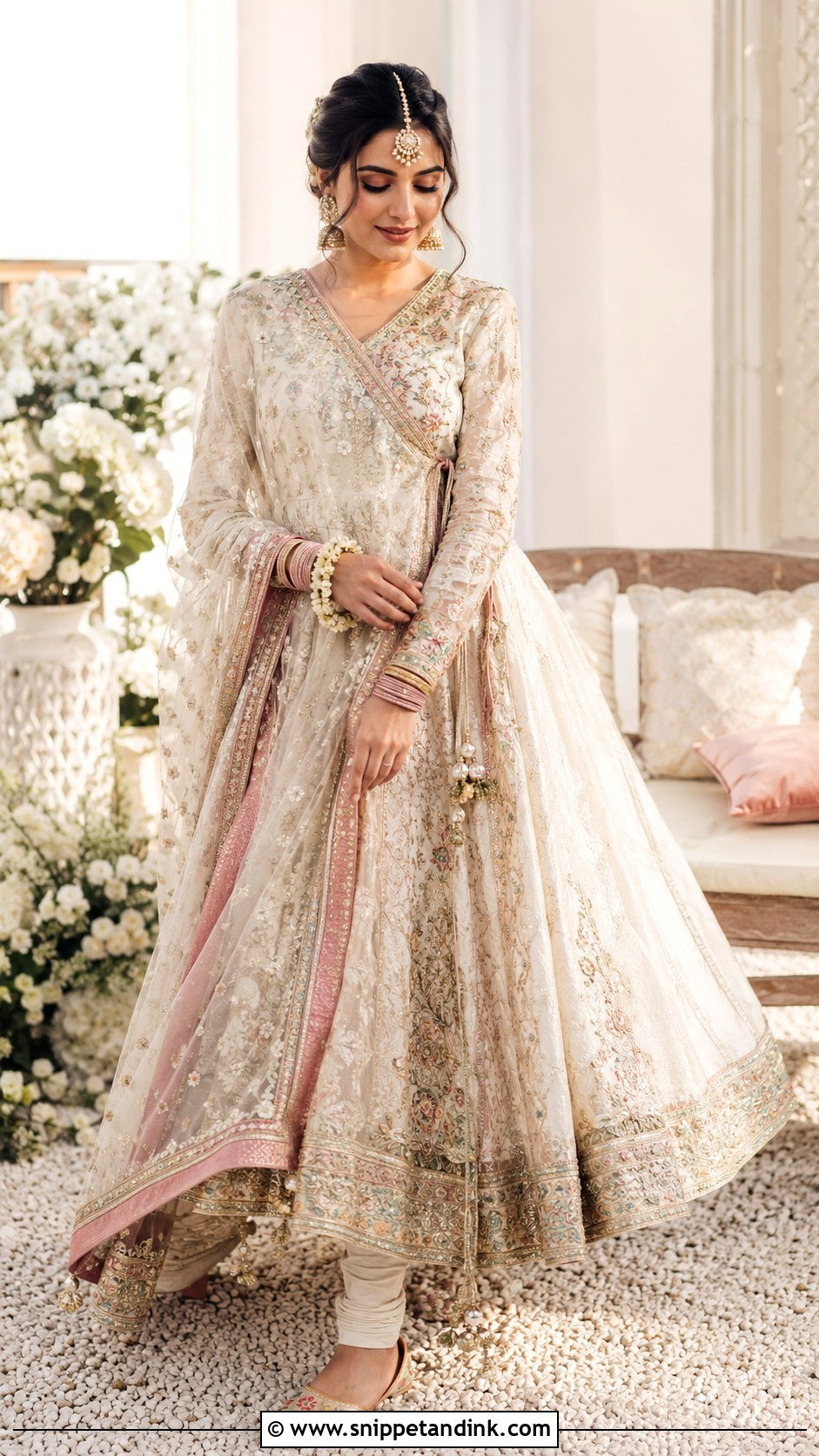
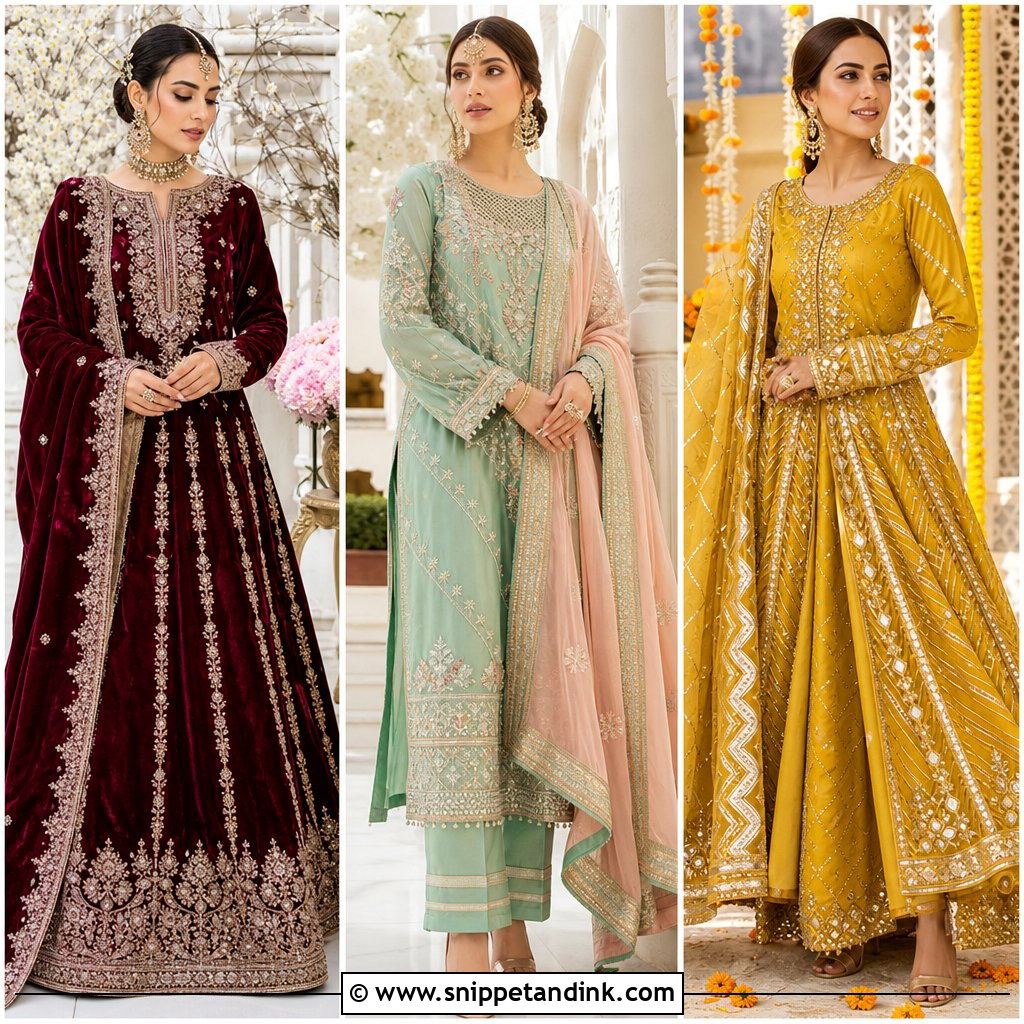
The angrakha wraps across the front and ties at the side, a heritage detail that adds interest at the neckline without heavy work. An angrakha bridal pishwas in chiffon, organza, net or silk with zari, resham or sequin work flares nicely when you walk. Ivory, gold, blush, rust and soft green suit it. The wrap shifts a little as you move, so a hidden press stud at the cross point keeps it in place. Churidar, a bordered dupatta and traditional jewellery suit nikkah or mehndi.
16. Velvet Bridal Dress Pakistan
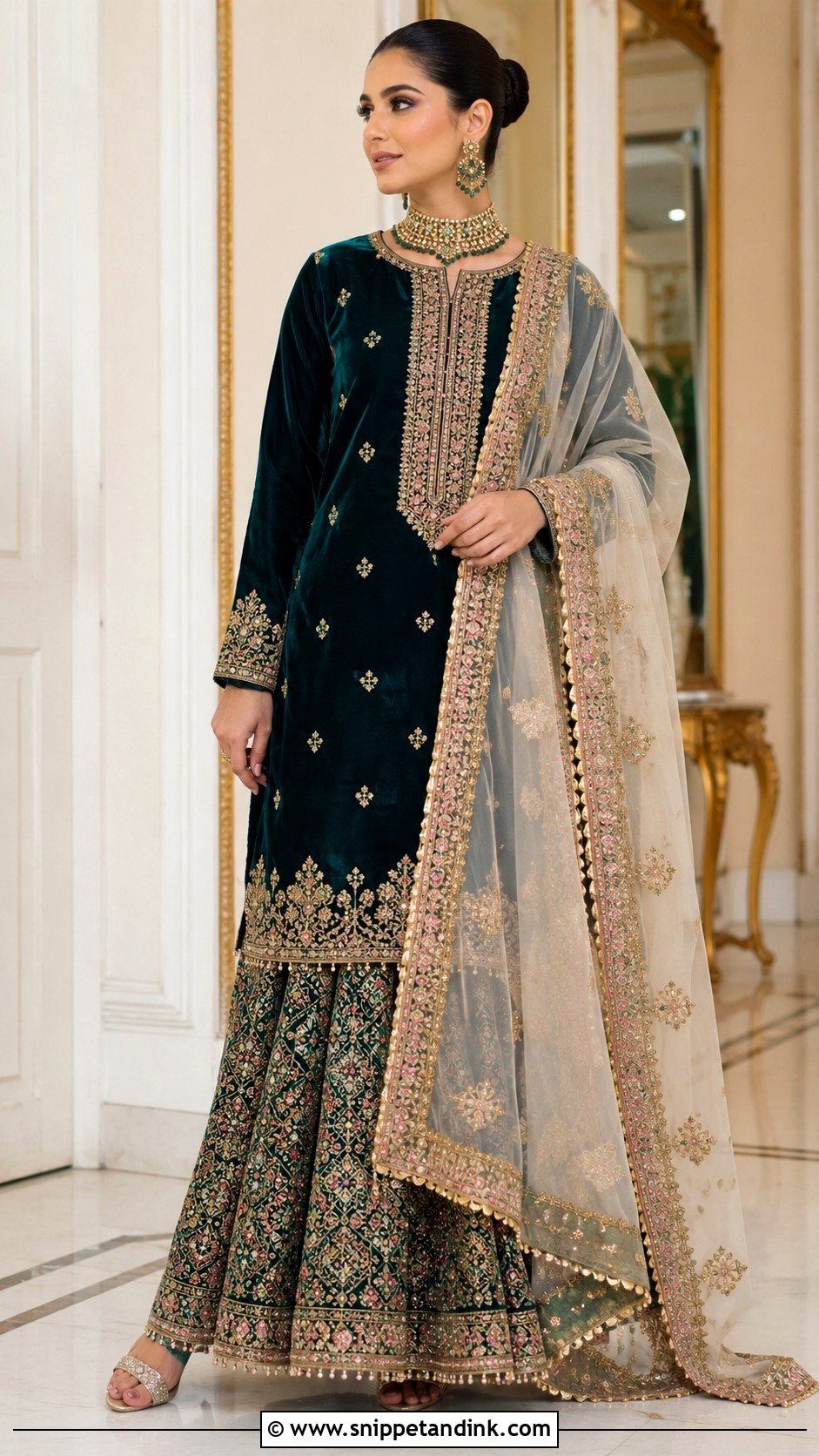
Velvet is the winter barat fabric. Maroon, emerald, navy and rust take on real depth in velvet because the pile absorbs light rather than reflecting it, and gold dabka and zardozi look richer against it. A velvet long shirt over a lehenga or gharara has strong presence. It’s heavy and warm, so balance it with a lighter net or organza dupatta, and avoid it for a summer wedding or a hall without good air conditioning. Antique jewellery, a sleek bun and embroidered heels finish the look.
17. Organza Bridal Lehenga Pakistan
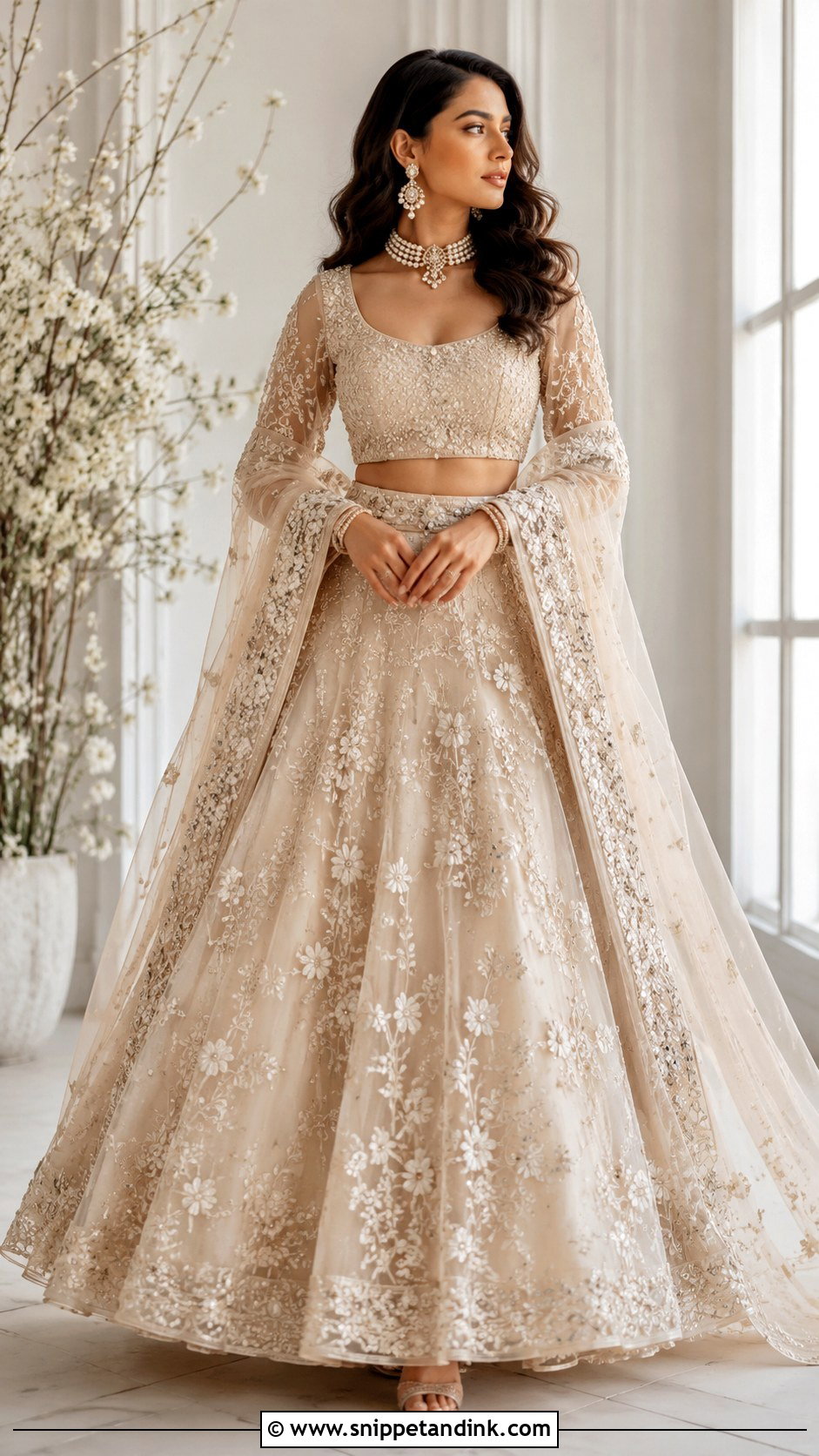
Organza is crisp, so it holds a lehenga’s flare without the weight of layered silk. It suits pastels, ivory, champagne and soft gold, and works for nikkah, engagement or walima with a structured blouse or long shirt. Place embroidery carefully. Organza is translucent, so dense work shows its back threads through the fabric unless the piece is properly lined. Pearl or crystal jewellery and soft makeup suit it. It’s my suggestion for a bride who wants formal but light.
18. Net Bridal Maxi Pakistan
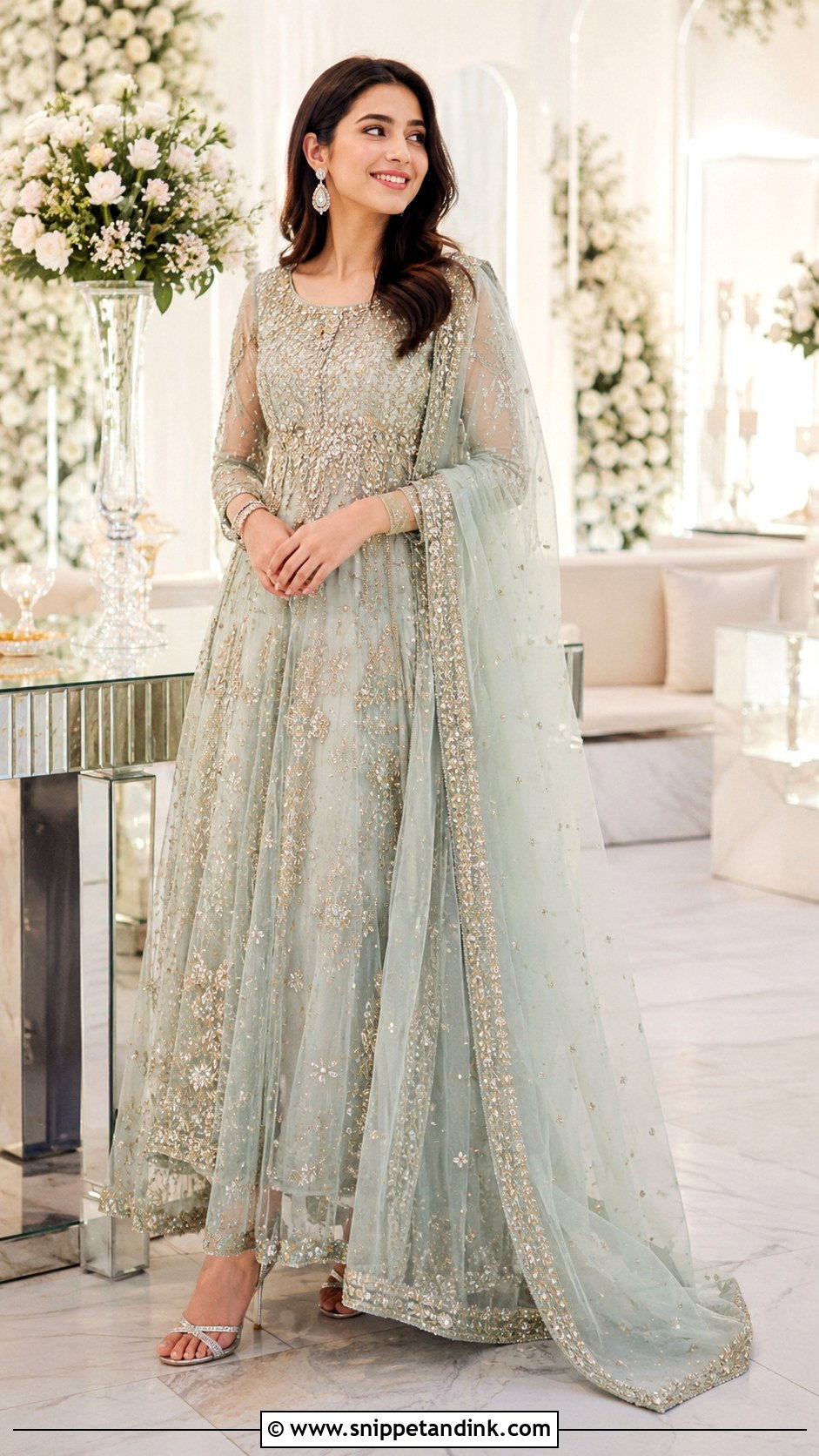
Layered net gives a walima maxi a dreamy, floaty look, while the lining and embroidery give it structure. A fitted bodice, full skirt and embroidered sleeves look bridal without much weight. Blush, silver, mint, lilac and ivory suit net. The downside is snagging. Net catches on bangles, rings and the edges of chairs, so I’d keep jewellery smooth and stay away from rough-edged stage furniture. A matching dupatta with a finished border, drop earrings and a light necklace complete it.
19. Tea Pink Bridal Dress Pakistan
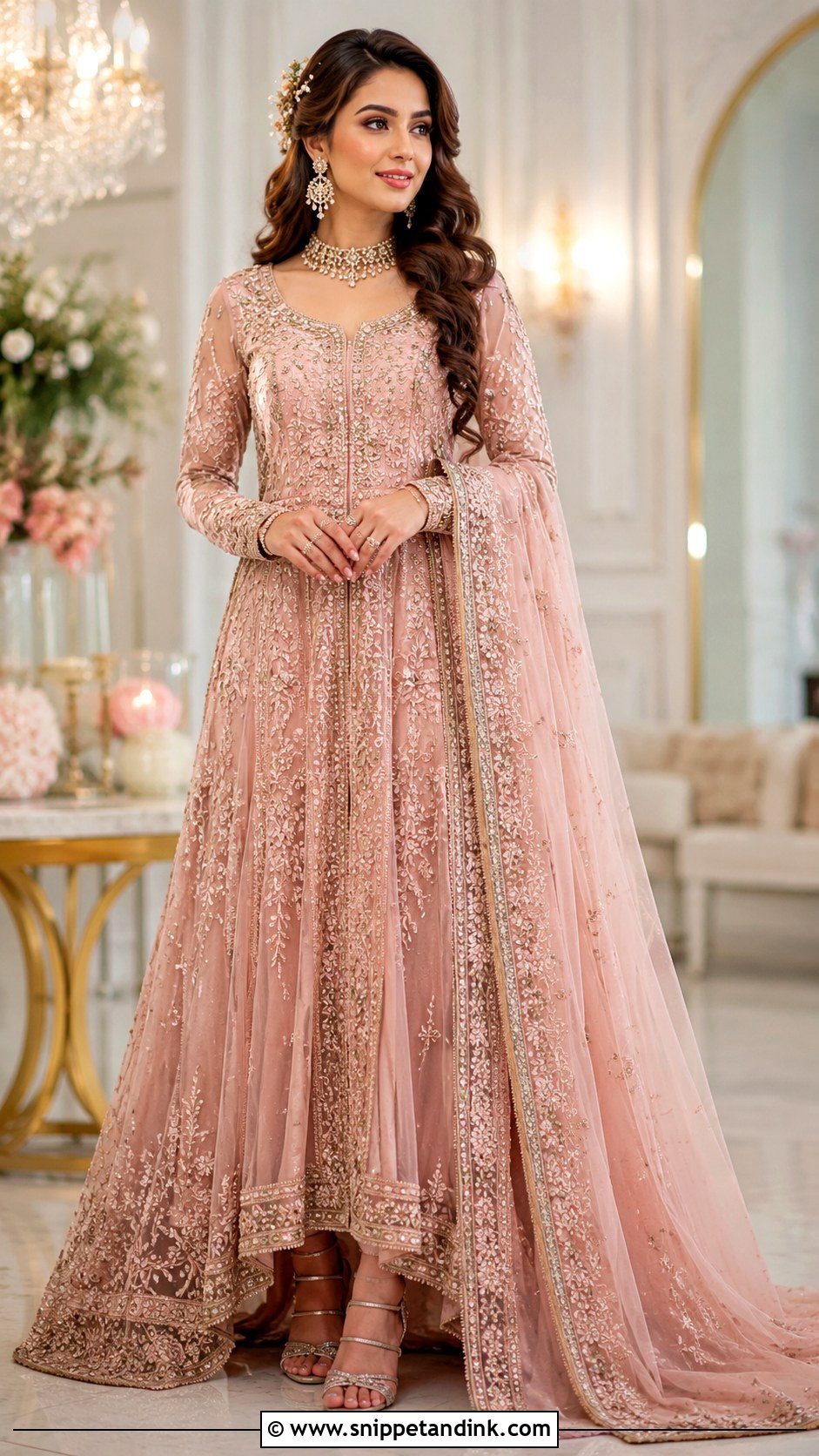
Tea pink sits between blush and beige, which makes it one of the easiest shades to wear across events: nikkah, engagement, walima or a lighter barat. It works with gold, silver or pearl embroidery. A tea pink pishwas, maxi or lehenga set looks bridal with the right dupatta and jewellery. Delicate handwork, scalloped borders and a clean neckline keep it refined. It’s subtle enough that a very pale bride can look washed out in it; a little more colour in the makeup fixes that. Loose waves and embellished heels suit it.


20. Emerald Bridal Sharara Pakistan
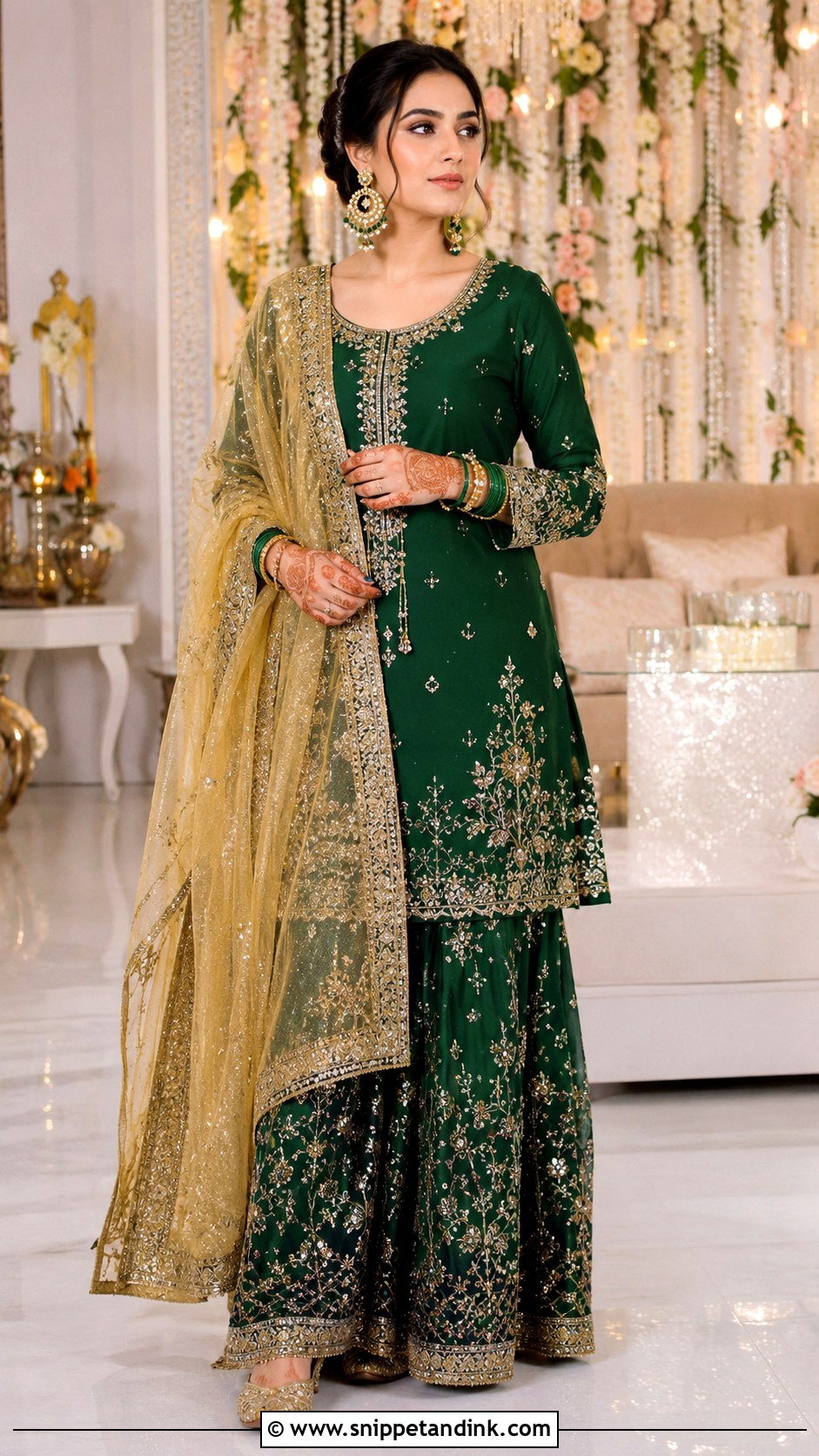
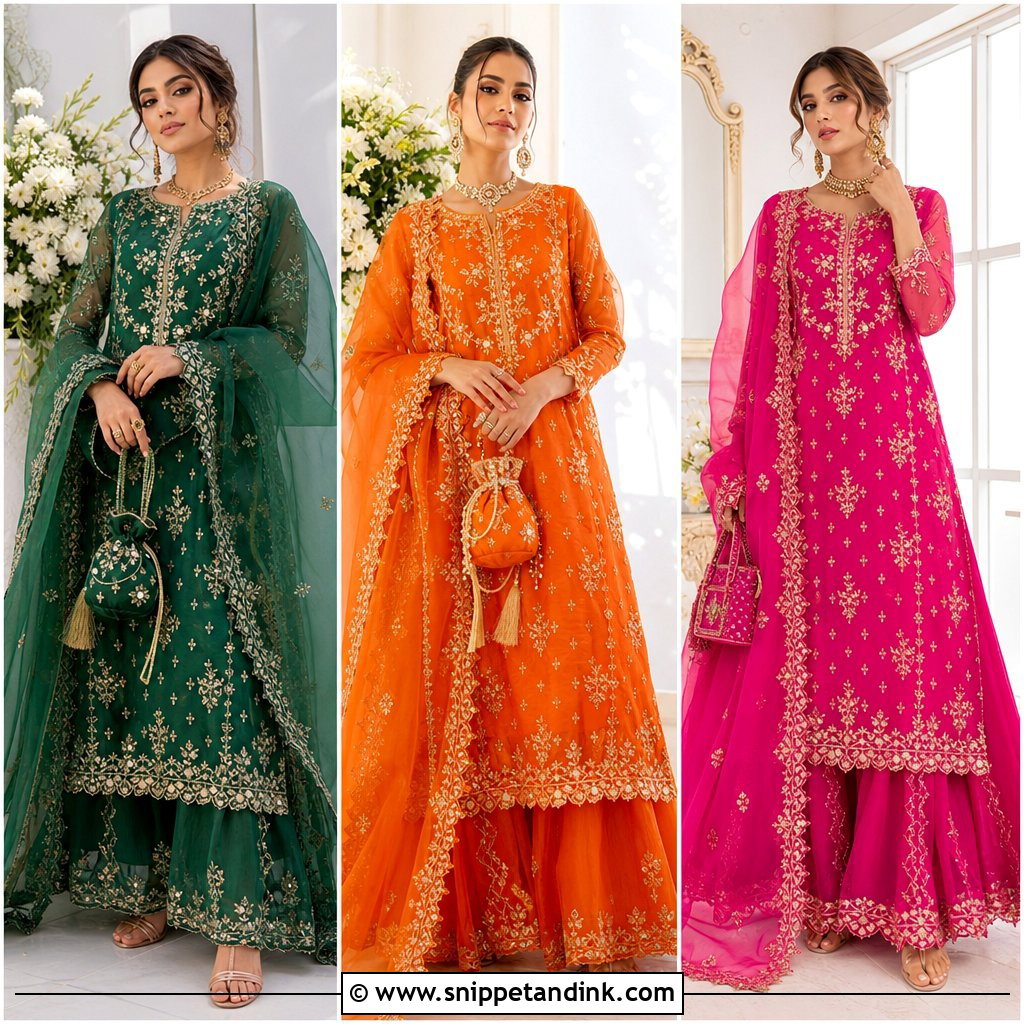
Emerald suits mehndi, nikkah or a barat bride who wants to step away from red. Gold embroidery, mirror work or antique embellishment all look rich against it, and it suits a wide range of skin tones. A short kameez over a wide sharara is the classic silhouette; a longer kameez gives more coverage. In velvet, silk or jamawar it feels luxurious; in chiffon it’s lighter. Emerald and green bangles look heavy together, so I’d break it up with gold. A heavily bordered dupatta and embellished khussas complete it.
21. Blue Walima Dress Pakistan
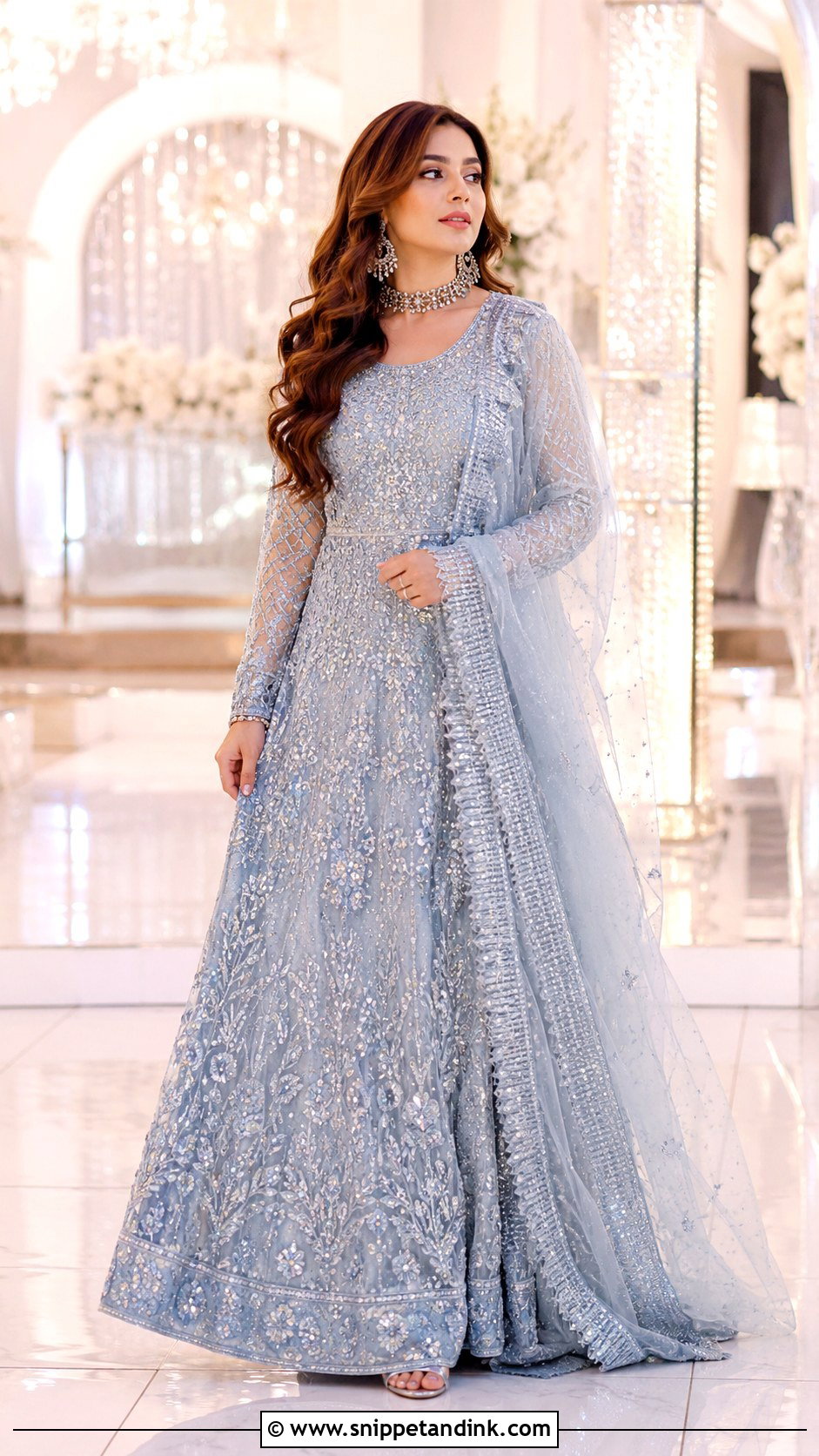
Blue gives a walima something different from the usual pinks and golds. Ice blue, powder blue, silver blue and deep teal all suit a maxi, gown or lehenga. Silver embroidery, crystal work and pearls keep it refined. Pale blue can look grey under warm yellow hall lighting, so ask your photographer how the venue is lit, or choose a shade with a bit more saturation. A sheer dupatta, soft curls and delicate jewellery finish it.
22. Anarkali Bridal Dress Pakistan
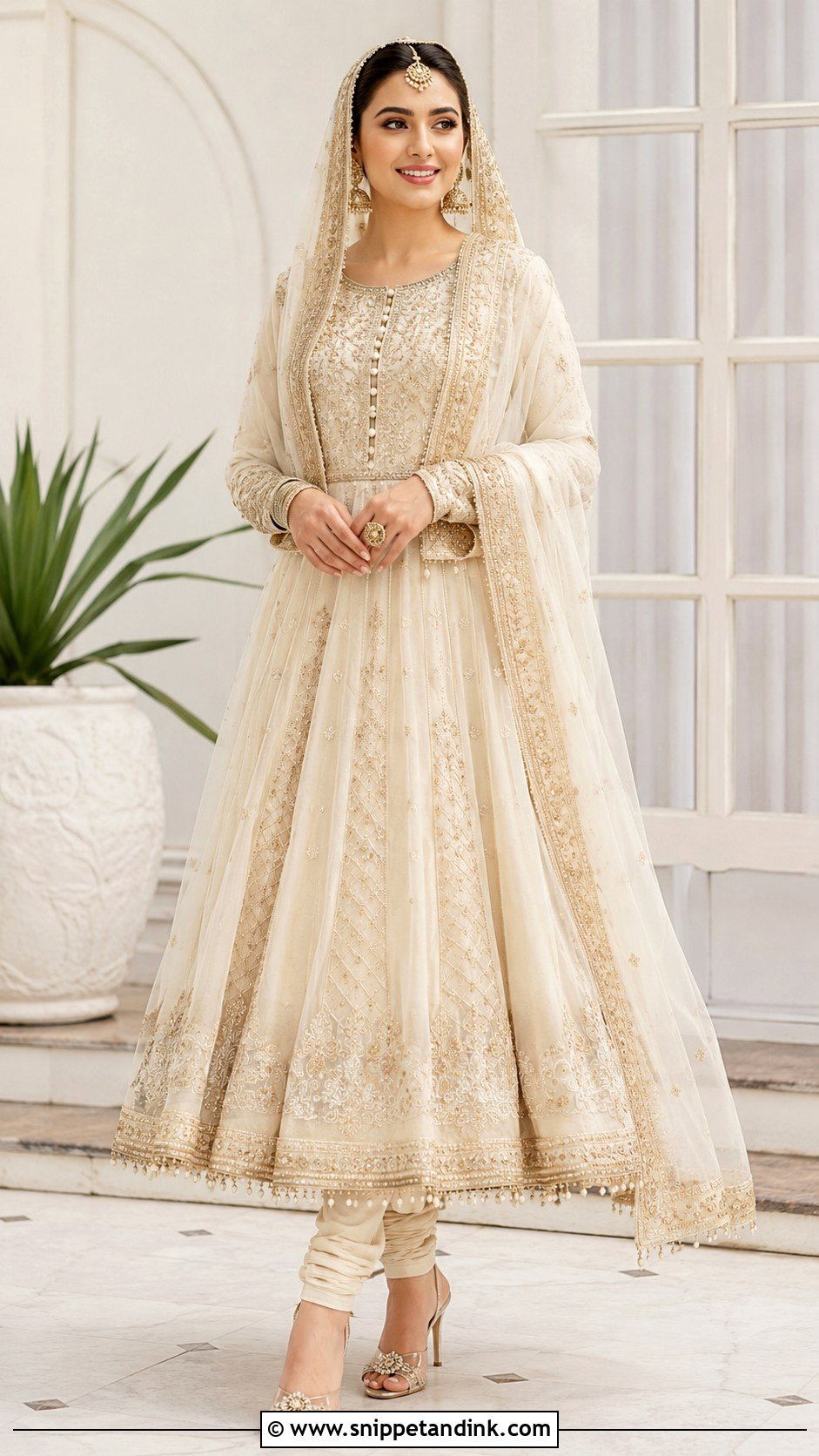
The Anarkali has a fitted bodice and a long, flared skirt, which gives flow and coverage without the weight of a full lehenga. It can be worn with churidar, over a lehenga or with a simple lining, depending on how formal the event is. Heavy borders, embroidered panels and a dupatta over the head make it bridal. Red, ivory, gold, peach and mint all suit it. The flare is cut from many panels, so check the hem at your fitting; an uneven Anarkali hem is easy to spot. Jhumkas and bangles complete it.
23. Bridal Jacket Lehenga Pakistan
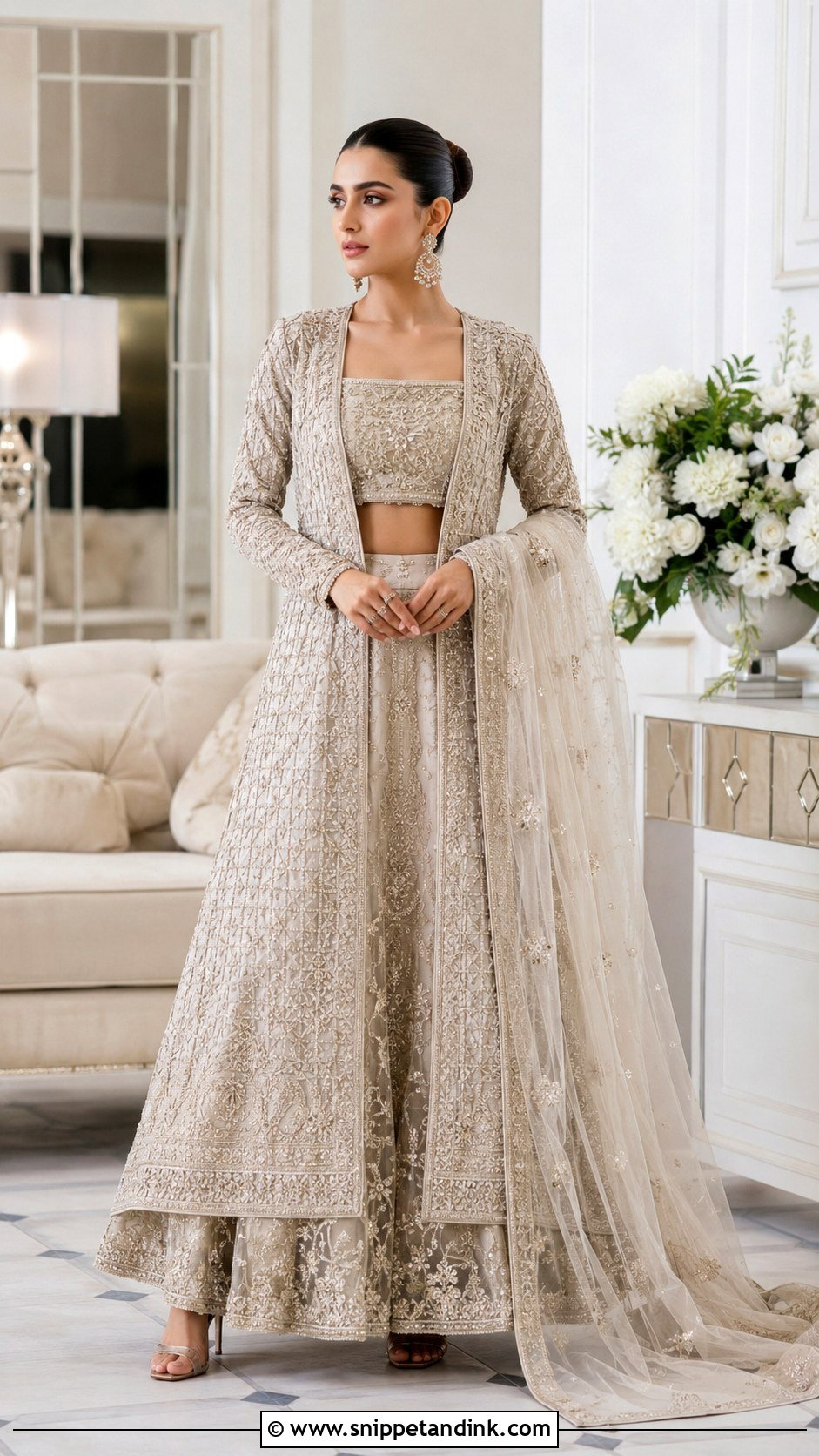
A jacket over a blouse and lehenga gives coverage and structure in one layer, which suits a modest bride who still wants a modern outline. It can be floor-length, long or mid-length. Gold, ivory, red, champagne and pastels all suit embroidered jackets. If the jacket carries heavy work, keep the lehenga simpler. A heavy jacket can pull back off the shoulders, so ask for a hidden hook or tie at the chest. Statement earrings and heels suit walima or engagement.
24. Double Dupatta Bridal Lehenga Pakistan
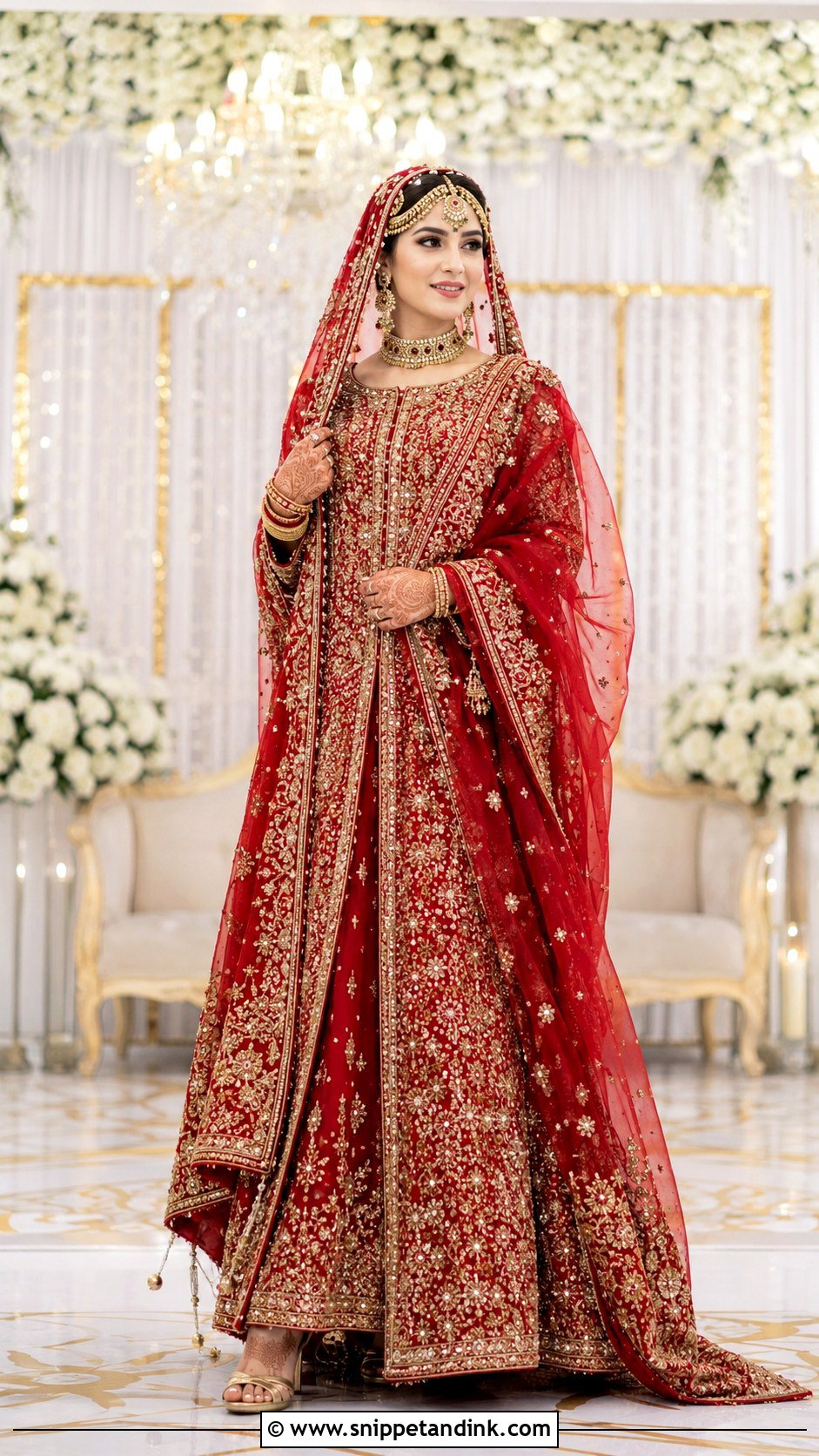
A double dupatta bridal lehenga layers one dupatta over the head and a second across the shoulder or wrapped around the body. It suits barat, farshi and long-shirt sets. Choose one heavy bordered dupatta and one lighter one, or the combined weight gets uncomfortable. The setting needs real pinning, so book enough time with your hairstylist to fix it properly. Red, maroon, gold, ivory and rust suit it, with a matha patti, choker, long necklace and bangles. It reads as royal and modest at once.

25. Minimal Bridal Dress Pakistan
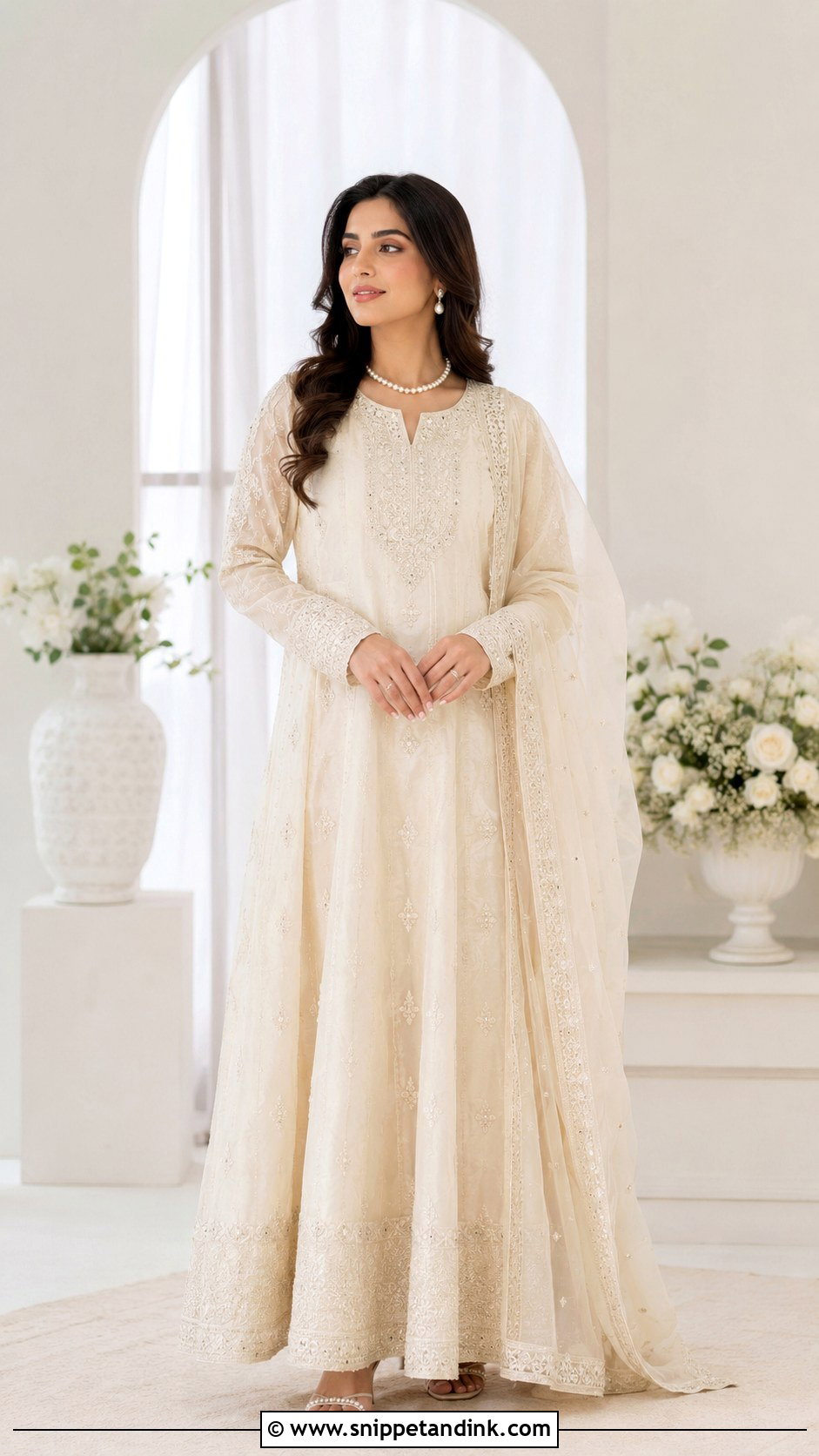
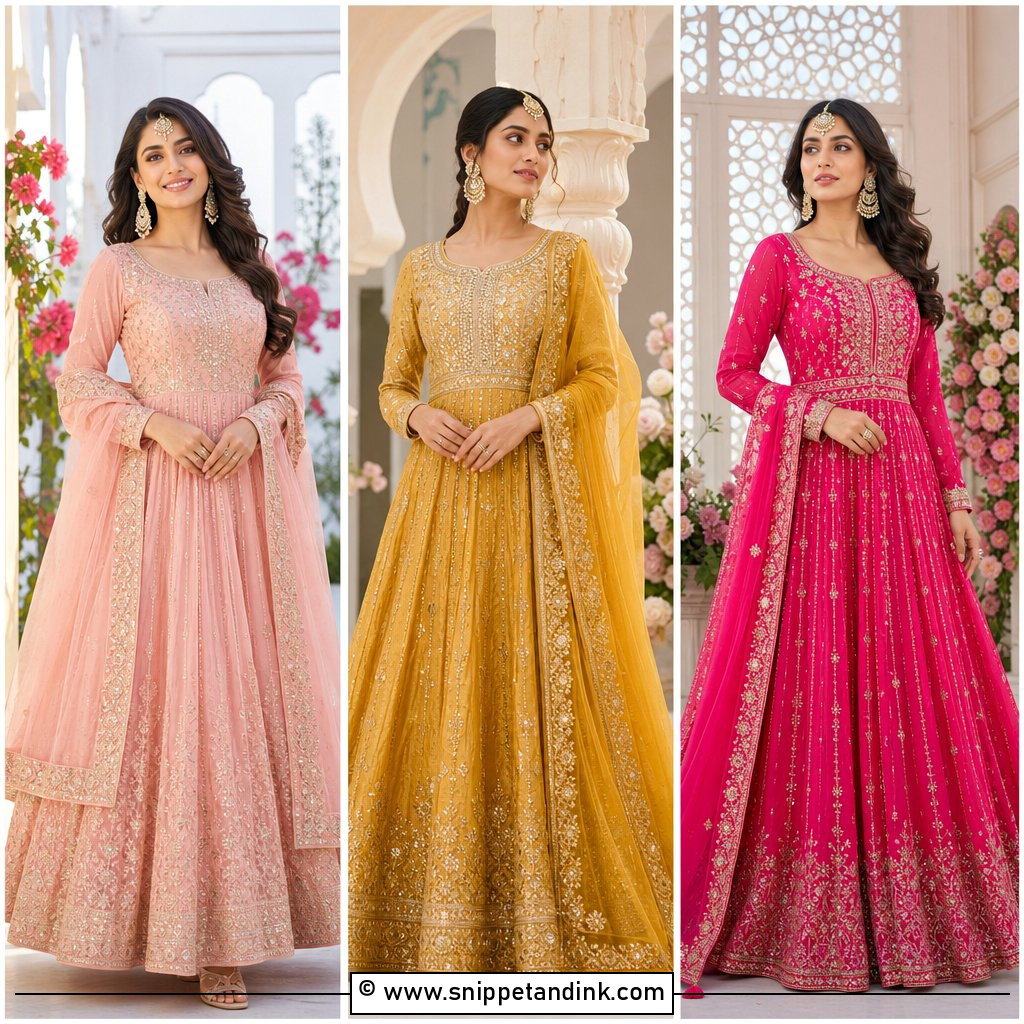
Minimal doesn’t mean plain. It means every choice is deliberate: fabric, cut, embroidery and styling. A simple ivory pishwas, champagne maxi, pastel lehenga or soft pink gharara looks bridal with fine handwork and good accessories. Choose one strong detail, a dupatta border, a shaped neckline or delicate sleeve embroidery, and leave the rest quiet. Pair it with refined jewellery, soft makeup and polished shoes. It suits a nikkah or an intimate wedding, and it often costs less, which leaves more for the barat outfit.
Getting a Dupatta Setting to Last Until Rukhsati
The dupatta setting is the part of a Pakistani bridal look that most often goes wrong late in the evening. A few habits keep it in place.
- Agree the setting style with your hairstylist and designer in advance, and bring the actual dupatta to the hair trial.
- Use small, strong pins along the hairline under the dupatta’s edge, not visible safety pins. They carry the weight without showing in close-ups.
- Pin a heavy dupatta at the shoulder of the shirt too, so the head pins aren’t holding it alone.
- Ask someone to check the setting before rukhsati. A dupatta that has slipped back over the evening is easy to fix if someone notices it.
Keep a small kit with your sister or bridesmaid: spare hairpins, two or three safety pins, a needle with thread in the dupatta colour and a stain pen. Most dupatta problems on the day are a single loose pin, and a minute’s fix saves the photos.
Dressing Each Event So the Barat Still Feels Biggest
With so many events, it helps to plan the outfits as a set rather than one at a time. A red lehenga for a classic barat, an ivory pishwas for the nikkah, a pastel maxi, blue gown or champagne dress for walima, and a green sharara or mustard lehenga for mehndi all work well together. Each outfit should look good in person and be practical enough to wear through a long night. Spend on tailoring, keep the embroidery balanced, choose good fabric, and you’ll feel comfortable at every function.
You'll Like These Ideas:




Leave a Reply