
Dressing a hijabi bride in Desi clothes is mostly a question of construction. The designs themselves, beautiful South Asian silhouettes like the lehenga, sharara, gharara, Anarkali, saree and Pakistani maxi, already suit modest dressing; what changes is how each piece is cut, lined and layered. I think about four things on every outfit: whether the sleeves and neckline are opaque without feeling hot, whether the dupatta can sit over the hijab without dragging it, where the head jewelry will pin, and whether she can walk and sit in the hem. Colour is the easy part, from red and maroon to ivory, emerald, sage, blush and royal blue. Below are twenty looks for the nikah, mehndi, main ceremony and reception, with notes on what makes each one wearable.
Ordering Full Sleeves and Linings Before the Cutting Starts
Most bridal designers cut for a sleeveless or short-sleeved blouse unless told otherwise, and adding sleeves later means finding matching fabric and embroidery that may no longer exist. I’d raise modesty requirements at the very first appointment and get them written on the order.
- Sleeves: full length, and lined if the outer fabric is net or organza. Ask for enough width at the elbow to bend the arm comfortably.
- Neckline: high or round, and check where it sits once the necklace goes on.
- Blouse length: long enough to meet the skirt or saree waist when you lift both arms.
- Linings: opaque throughout, especially for ivory, white, pastels and anything sheer.
- Extra fabric: one more metre of the dupatta or base fabric is useful for an undercap or a later alteration.
Then ask to see the lining fabric itself. A thin polyester lining under heavy embroidery gets hot quickly; cotton or a breathable blend is far kinder over a full day of rituals.
1. Red Lehenga Desi Hijabi Bride
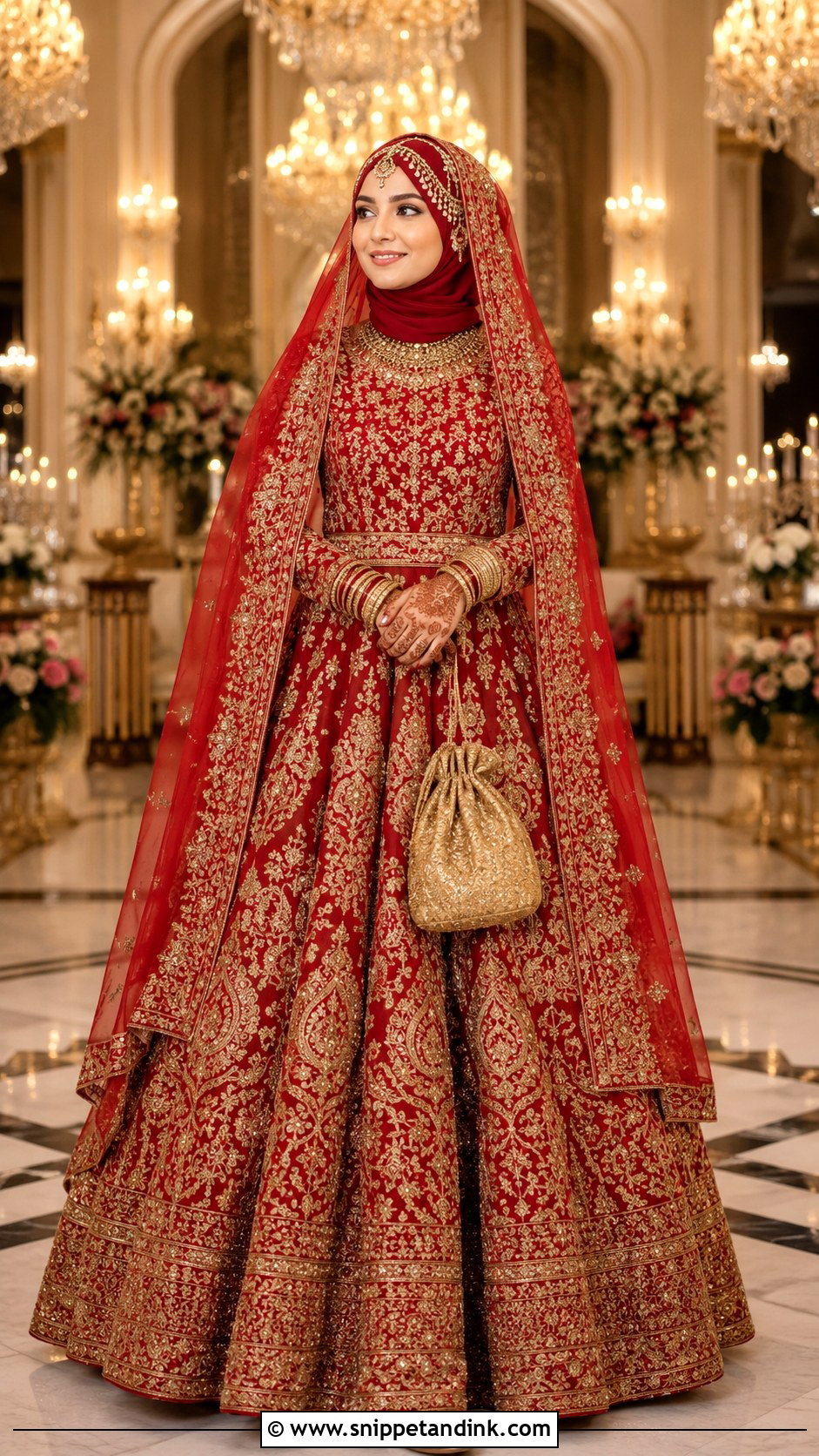
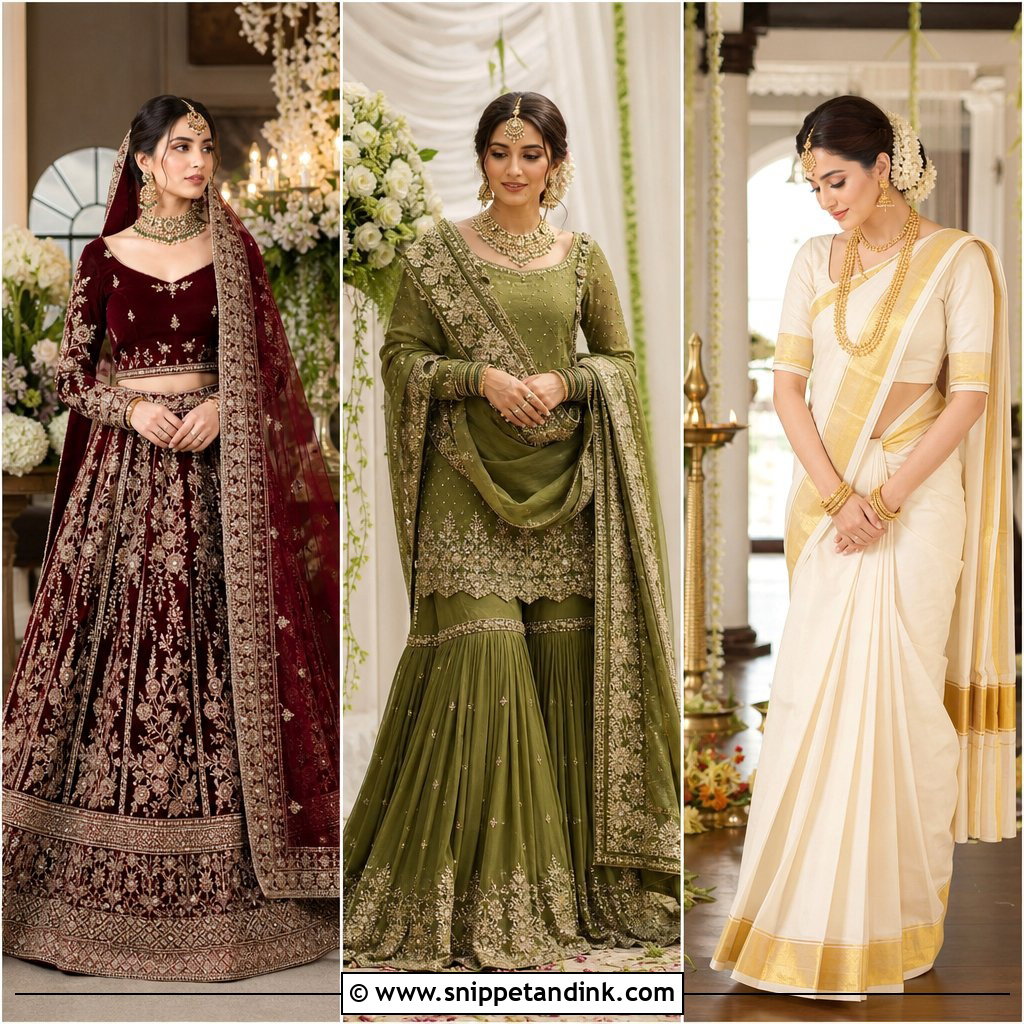
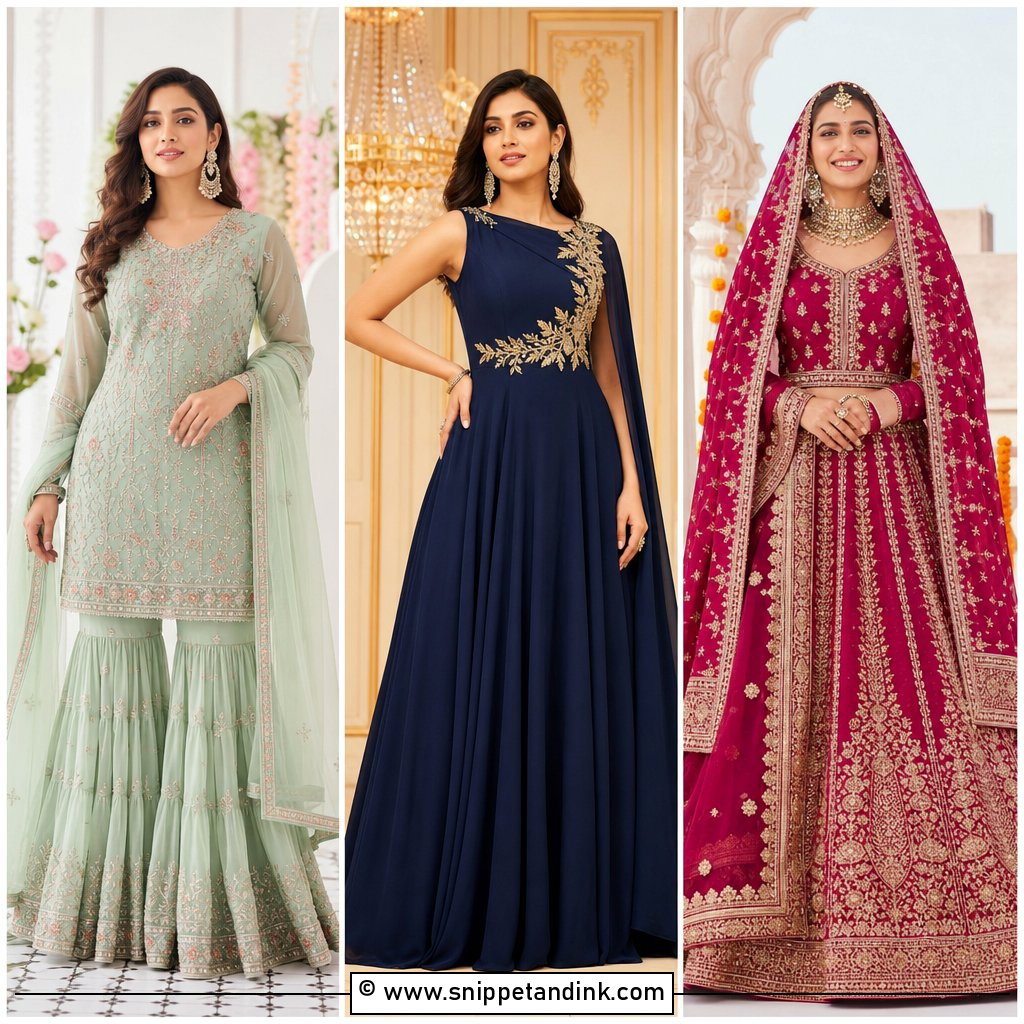
A red bridal lehenga with gold zardozi, dabka or sequins on a full skirt remains the traditional choice for the main ceremony. Most lehengas arrive with a short or elbow sleeve, so I ask for a long-sleeved, high-neck blouse with an opaque lining at the order stage, not at the fitting. A matching red hijab keeps the palette tight, and a lighter net dupatta goes over the head as the veil. Anchor the matha patti to the undercap so the hijab stays smooth around the face. Statement necklace, stacked bangles, embroidered juttis and a small gold potli complete it.
2. Ivory Gold Nikah Sharara Bride
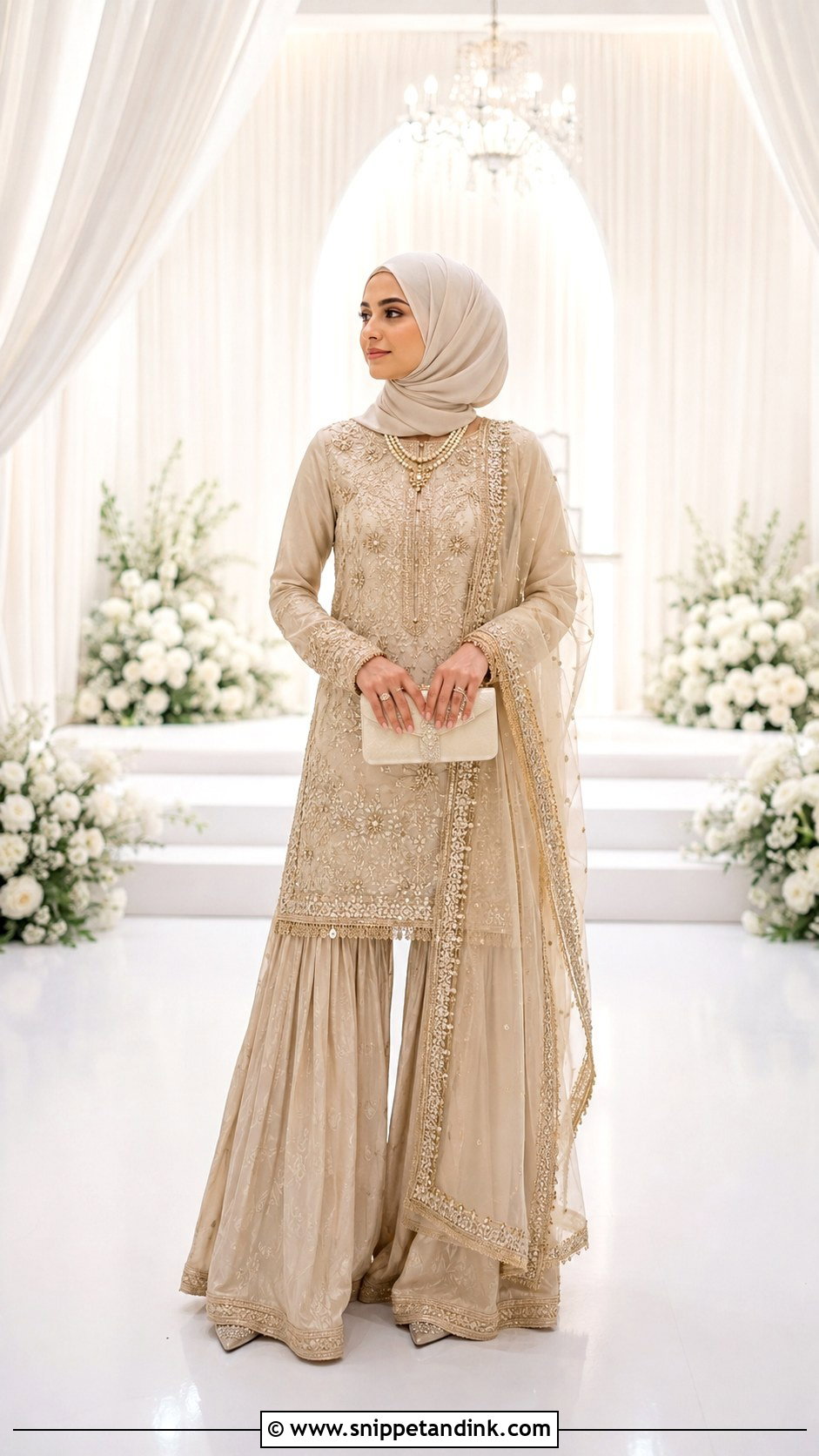
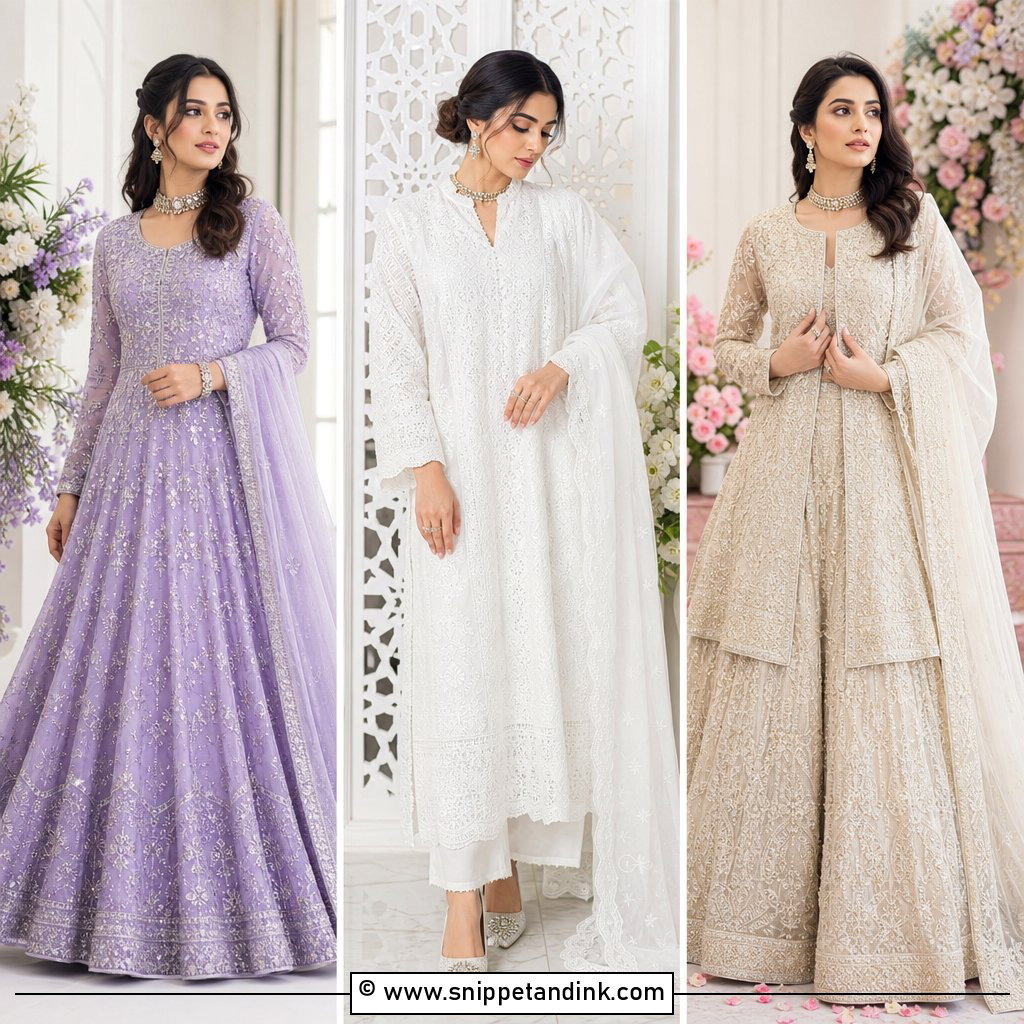
Ivory and gold glow in daylight, which is why I steer daytime nikahs this way. Wide sharara pants under a long, fully lined kurta with gold threadwork at the neckline, cuffs and hem. An ivory chiffon hijab frames the face; a sheer embroidered dupatta can sit on one shoulder or be pinned lightly at the crown. Pale fabrics turn transparent under strong light and flash, so an opaque slip and lined sleeves are not optional. Pearl drops, a delicate tikka, gold bangles, an ivory clutch, and gold pointed flats or low block heels for walking between guests.
3. Emerald Green Gharara Hijabi Bride
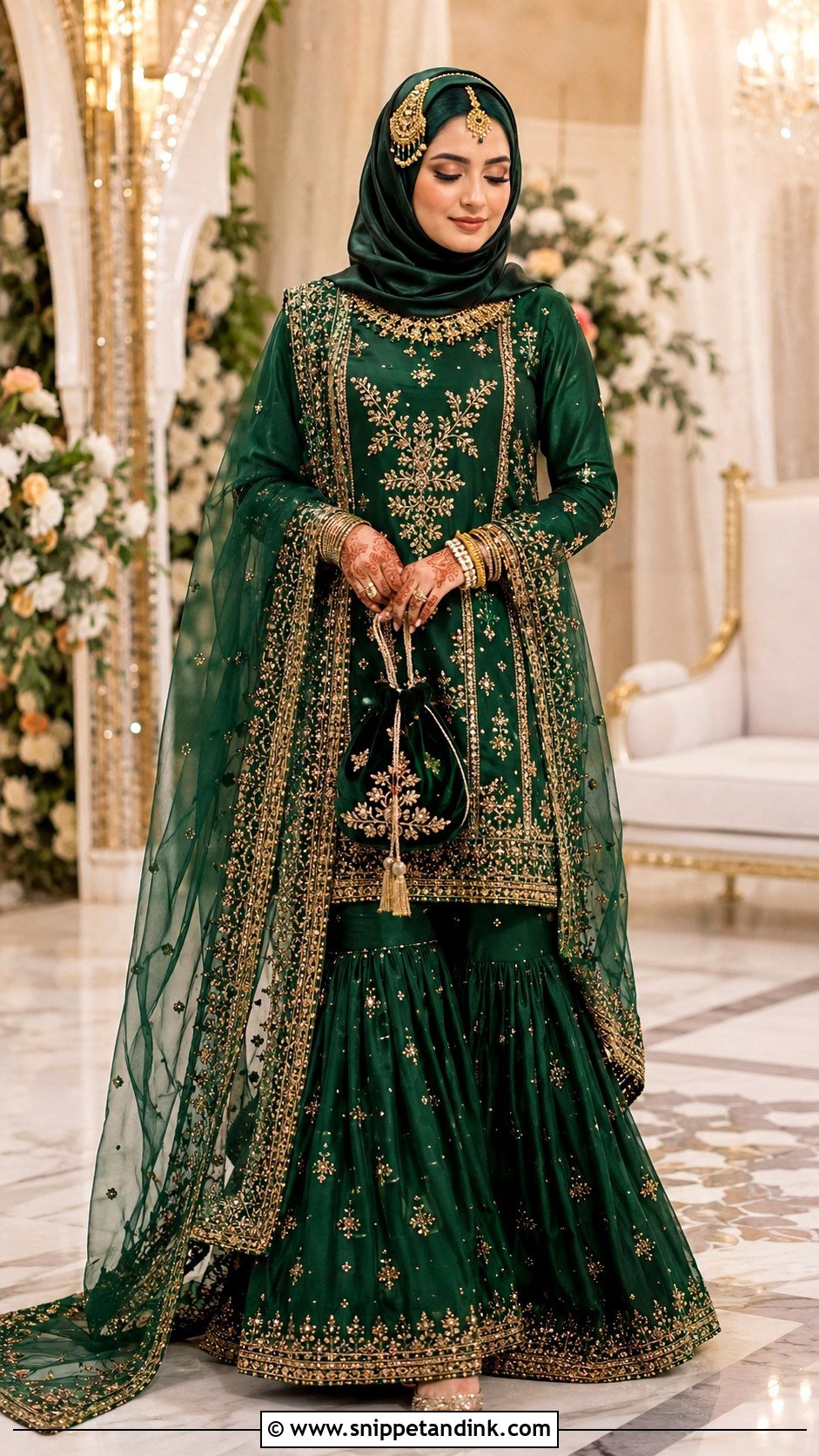
A traditional gharara is fitted to the knee, gathered at a band and then flares wide, and a longer embroidered kurta over it gives coverage while still showing that structure. Emerald suits a nikah, reception or evening wedding. Put the embroidery where it counts, at the neckline, cuffs and the lower flares, rather than covering everything. An emerald satin hijab with a net dupatta edged in antique gold, and a gold passa on one side. Satin is slippery, so I use a grippy undercap beneath it before any jewelry goes on. Kundan, metallic bangles, gold juttis and a small velvet or antique-gold bag.
4. Blush Pink Anarkali Hijabi Bride
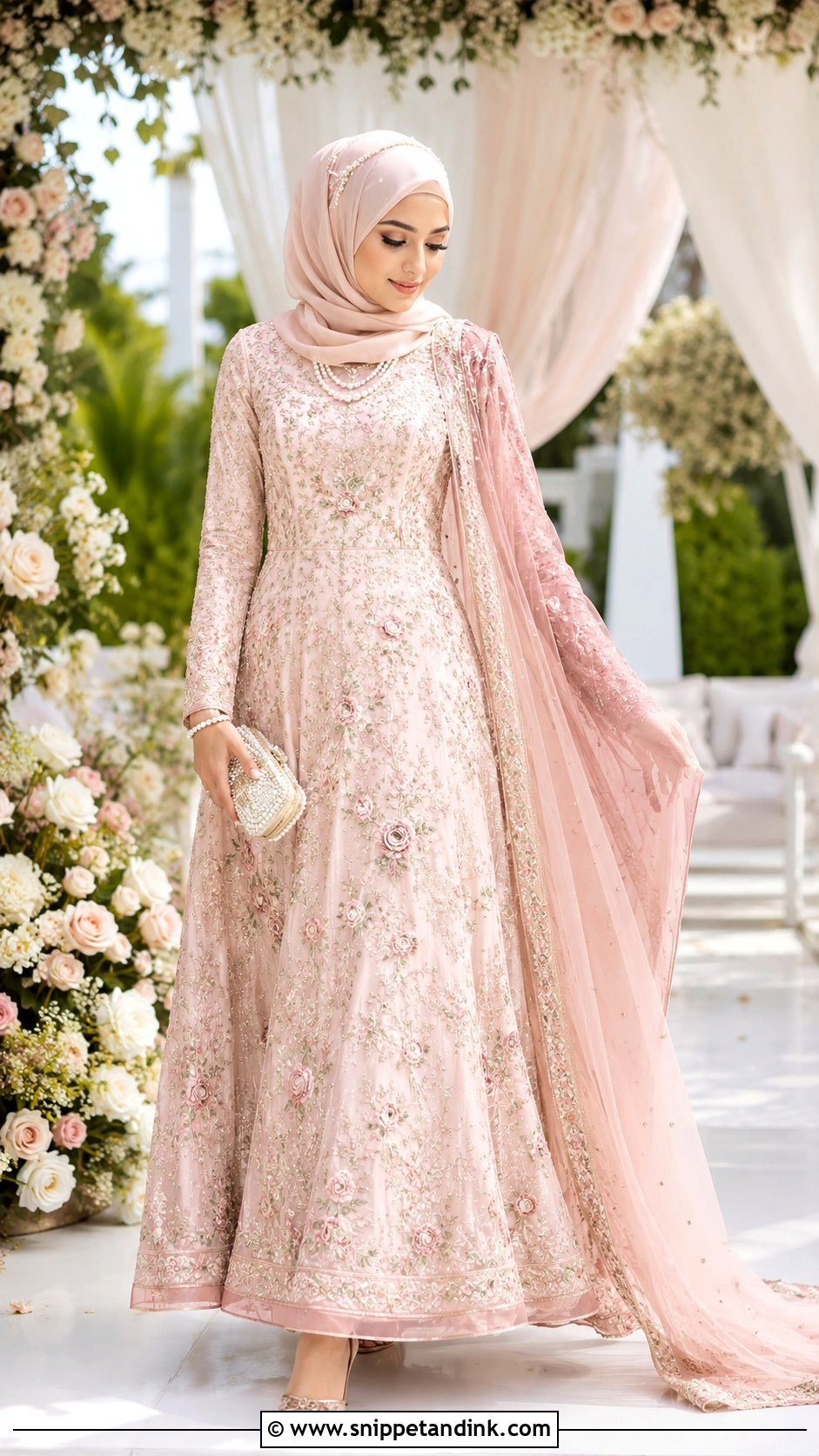
A floor-length Anarkali gives coverage almost by design: full skirt, fitted bodice, and the sleeves and neckline are simple to raise. Blush in silk, georgette or organza with a lined skirt moves softly as you walk. A blush chiffon hijab over a slightly deeper rose undercap adds a little depth at the face. Drape the dupatta from one shoulder and catch it at the wrist with a small loop so your hands stay free for the nikah papers and the food. Pearl and rose-gold jewelry, embellished low heels and a beaded clutch. Scattered florals or sequins show well in a spring garden or a softly lit room.
5. Maroon Velvet Lehenga Hijabi Bride
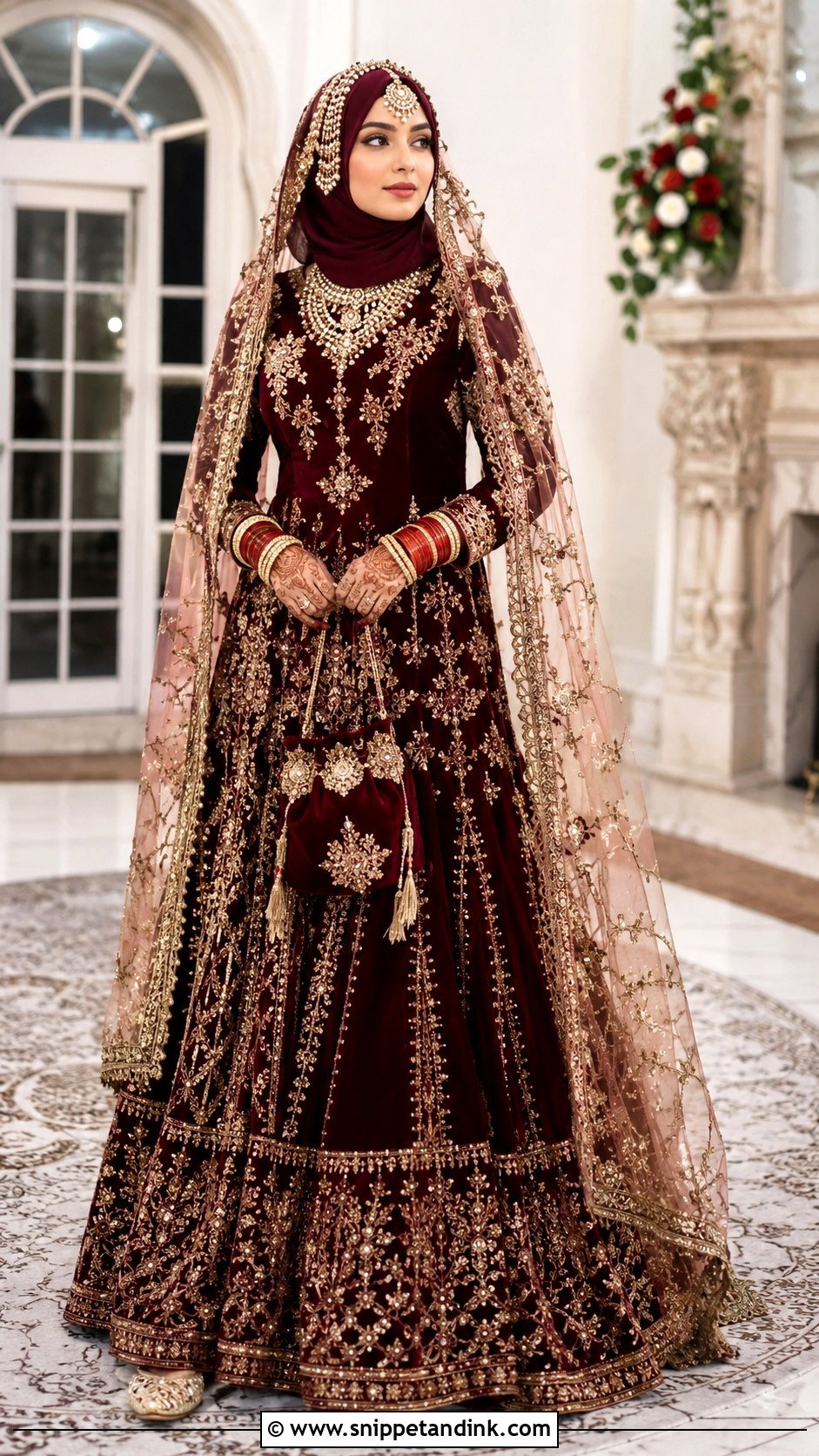
Velvet is warm, heavy and rich, so I keep maroon velvet lehengas for winter. A moderately flared skirt with antique gold work is far easier to manage than many layers of can-can. A long-sleeved velvet blouse or a high-neck jacket covering the waist handles coverage. Choose a matte hijab against the sheen of the velvet, and a light net dupatta on top so the head doesn’t carry velvet weight as well. Antique kundan, a centred tikka and deep red bangles, with padded juttis or stable block heels and a small velvet potli. Ask for symmetrical embroidery placement; on velvet, any unevenness shows.
6. Banarasi Saree Hijabi Bride
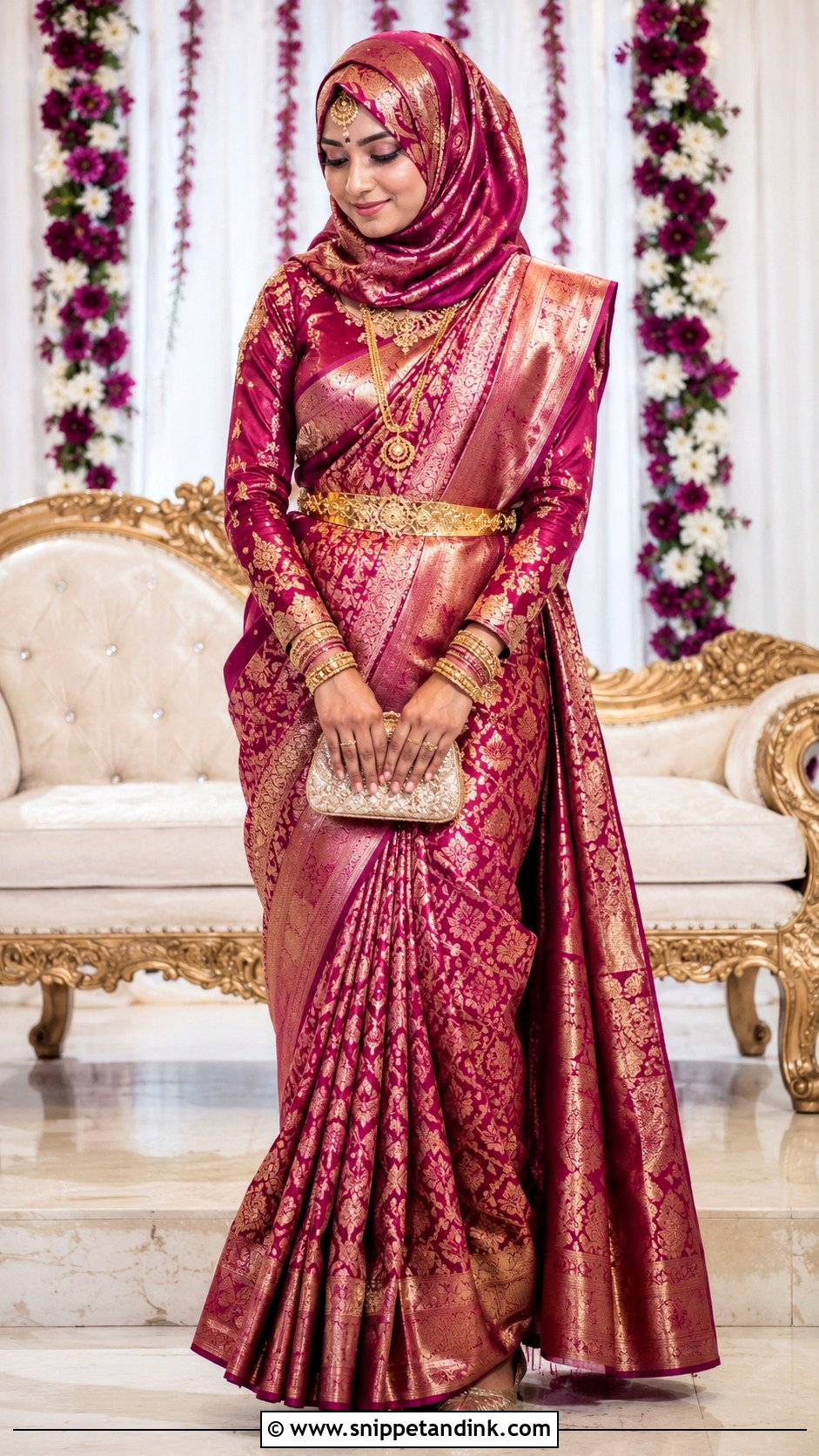
Can a saree work for a hijabi bride? Yes, with a little planning. Choose a red, magenta or green Banarasi with woven gold. The blouse is the key piece: long sleeves, a high neck and an extended hem that meets the saree waist so no midriff shows when you raise your arms. A fitted undershirt adds security. Wrap a light silk-blend hijab neatly, then bring the pallu over one shoulder without bunching it near the face. Banarasi silk is stiff, so have the pleats set and pinned by someone experienced. Temple jewelry, bangles, a waist belt to hold the drape and metallic flats complete it.
7. Champagne Pakistani Bridal Maxi
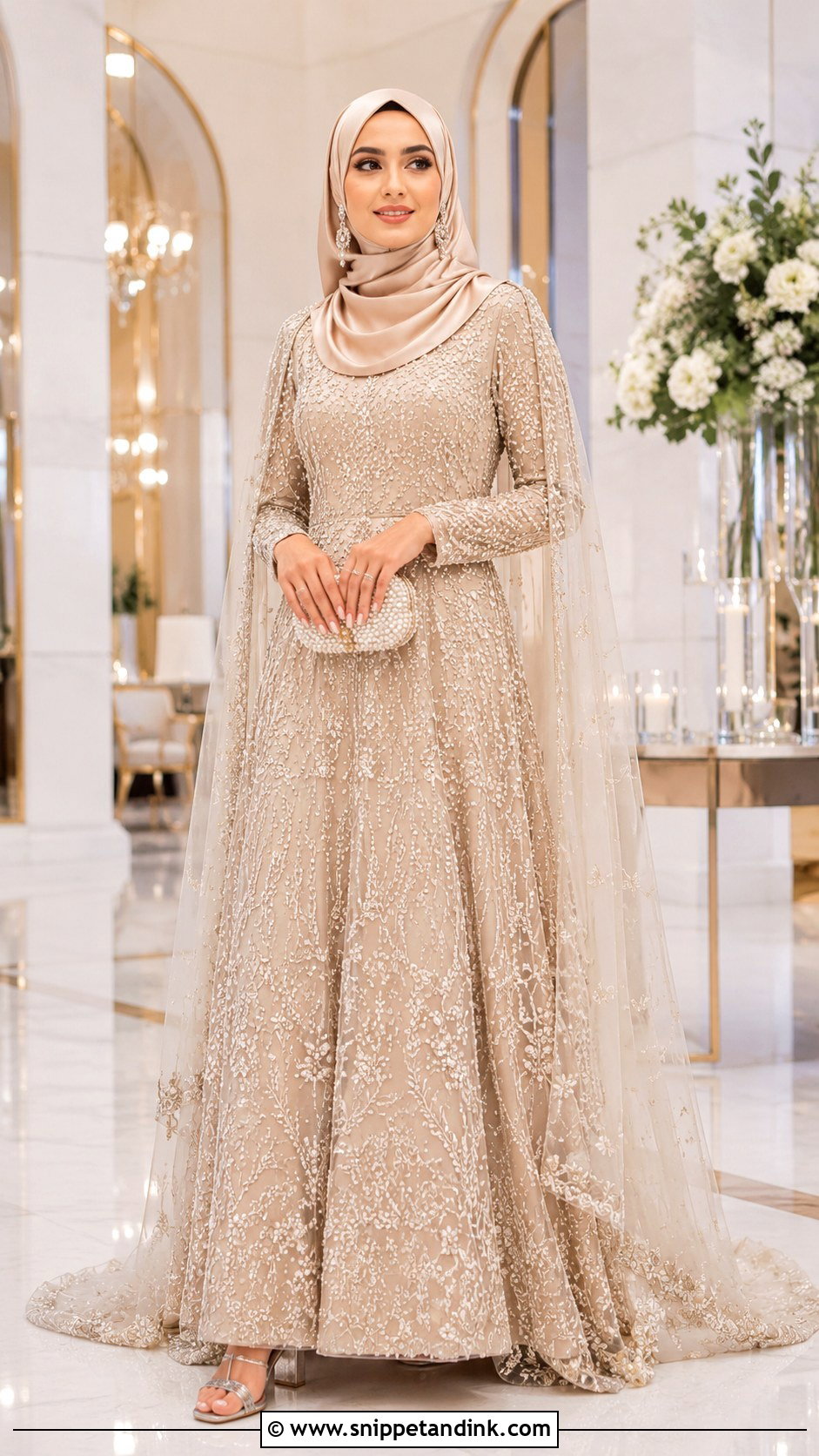
The Pakistani bridal maxi is a floor-length, often fitted-bodice dress with a flowing skirt, and the covered neckline and full sleeves come built in. Champagne with gold, pearl or crystal work reads bridal without the weight of red. Wear a champagne satin hijab as a base and a sheer embellished veil from the crown, falling behind the shoulders. Keep the front of the hijab simple so it doesn’t compete with the embroidery. Crystal earrings, a fine headpiece, metallic block heels and a pearl clutch. A short train needs a wrist loop or hidden bustle, or someone will be lifting it all evening.
8. Sage Green Organza Lehenga Bride
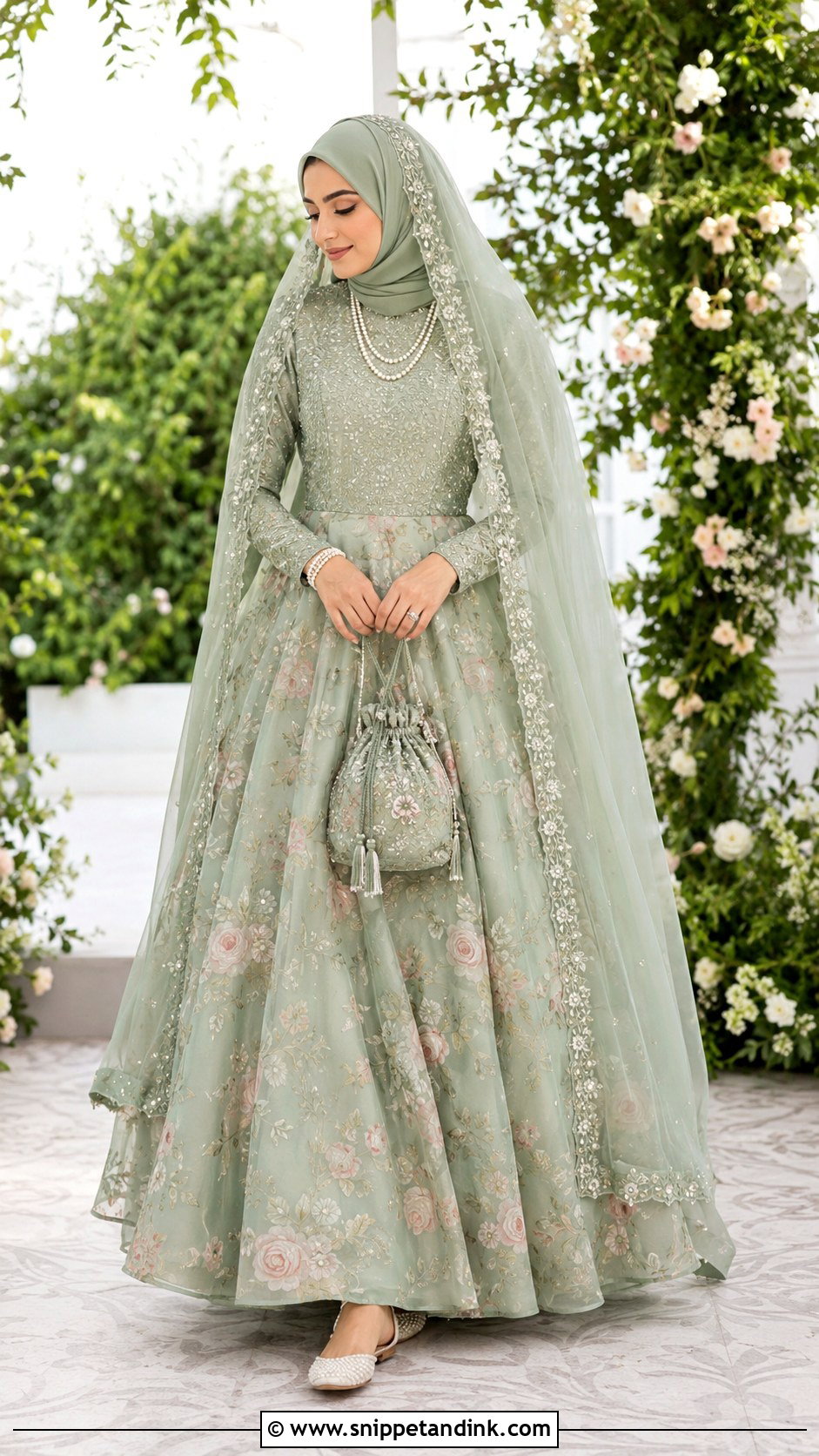
Sage organza is fresh and light for a spring or summer wedding, and organza is also semi-sheer, which matters here. I check every layer of an organza lehenga in daylight and with a phone flash before signing off, because a lining that looks fine indoors can disappear outside. A long blouse to the skirt waist with opaque full sleeves, a sage chiffon hijab and an organza dupatta over the head or across the bodice. Pearls, pale gold bangles, ivory embellished flats and a small floral potli. Organza holds its shape well, so the skirt doesn’t need heavy layers underneath.
9. Royal Blue Reception Gown Bride
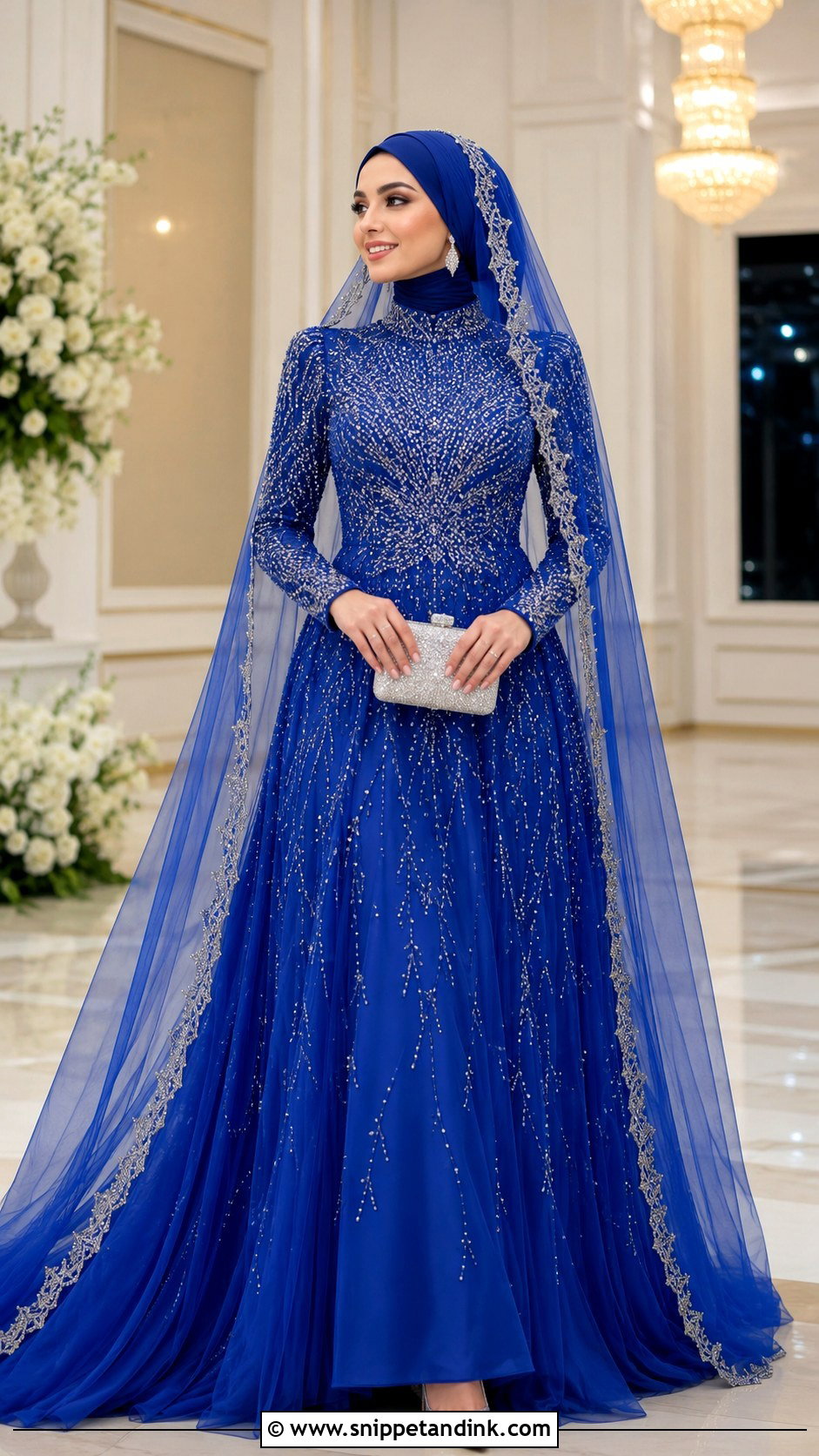
Royal blue is a confident break from red for a reception. A gown with long sleeves, a high neck and a full skirt from the natural waist, worked in silver, crystals or tonal beading at the bodice and cuffs. A matching blue hijab in matte crepe or chiffon, then a sheer silver-edged veil. Crepe has a little grip and holds pins well, so I prefer it for evening events with lots of movement. Crystal drops, a slim bracelet and a jewelled clutch, with silver pointed heels or embellished flats under the skirt. Keep the hijab shape streamlined for the entrance photos.
10. Mustard Mehndi Sharara Bride
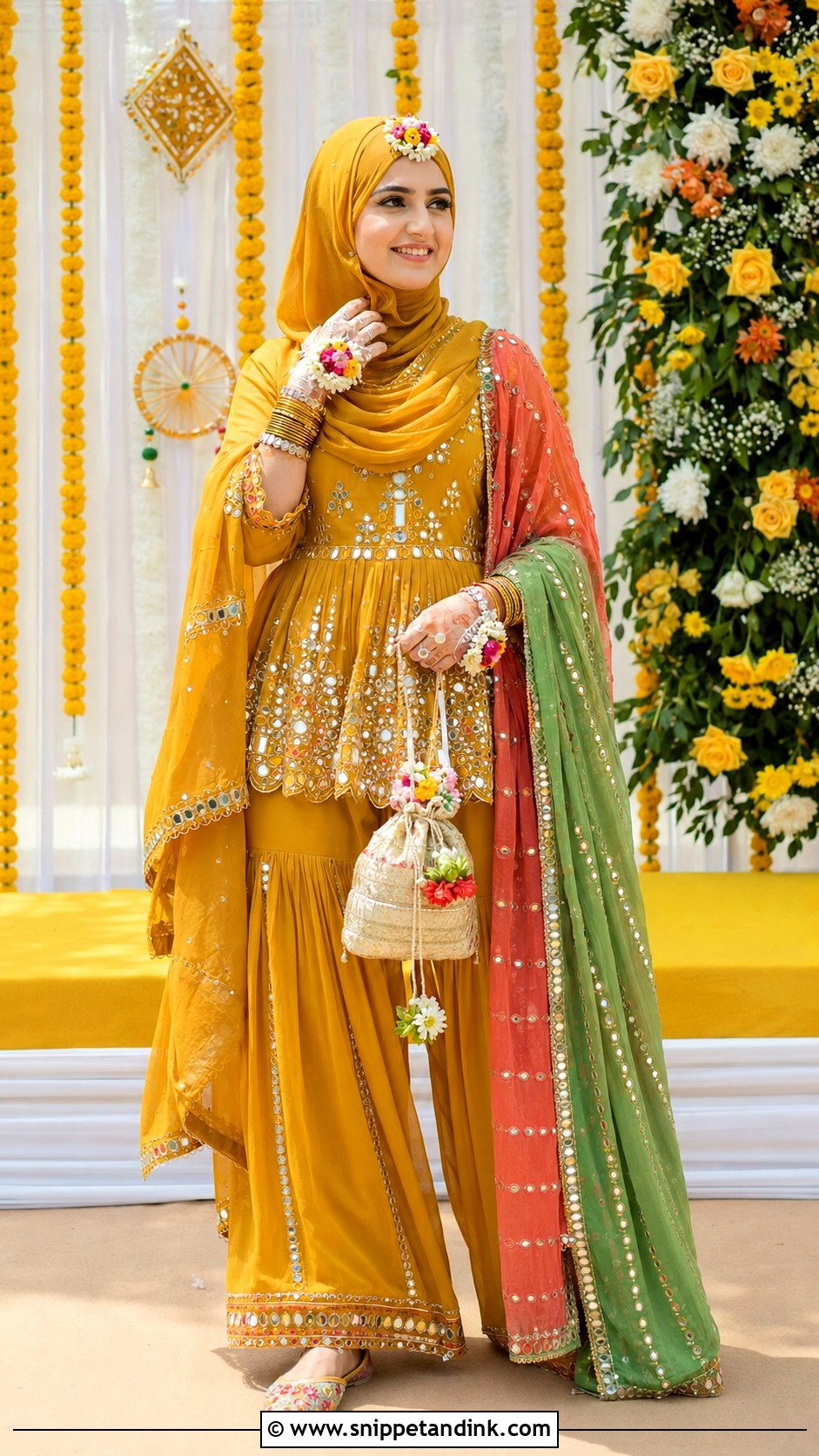
At a mehndi, the bride sits for hours having henna applied, then dances, so the outfit has to handle both. Pair flowing sharara pants with a long peplum kurta carrying mirror work, thread embroidery or small florals in mustard. Sleeves need to be light and easy to push back, or full-length with a cuff that can be unbuttoned while the paste dries. A mustard or olive chiffon hijab and a green, coral or pink dupatta on one shoulder. Floral jewelry, colourful bangles, embroidered juttis and a fabric potli. Keep the kurta hem from dropping too low, where it catches inside the sharara as you dance.
11. Multicolor Sangeet Lehenga Hijabi Bride
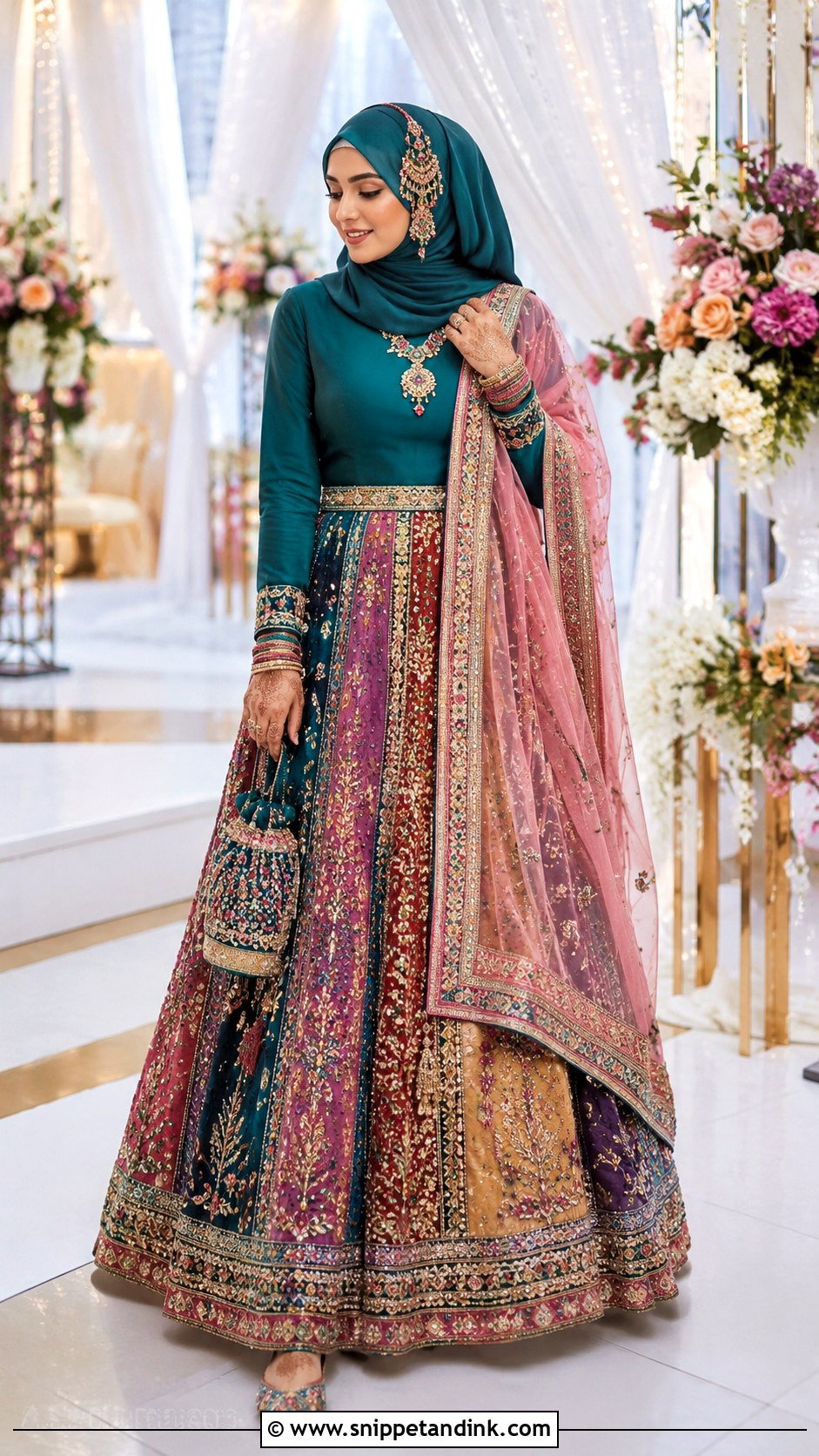
A multicolour lehenga for the sangeet is fun to wear and easy to overdo. Jewel-toned panels or embroidery in pink, orange, teal and purple on the skirt, then a solid long-sleeved blouse in the dominant colour to calm it down. A hijab and light dupatta that pick up one colour from the skirt connect the pieces. Choose a fitted waist and a manageable flare, since you’ll be turning on the dance floor. I check the sleeve embellishment specifically: raised stones on the forearm catch the dupatta every time you lift your hand. Colourful stone jewelry, stacked bangles and cushioned juttis.
12. White Silver Nikah Saree Bride
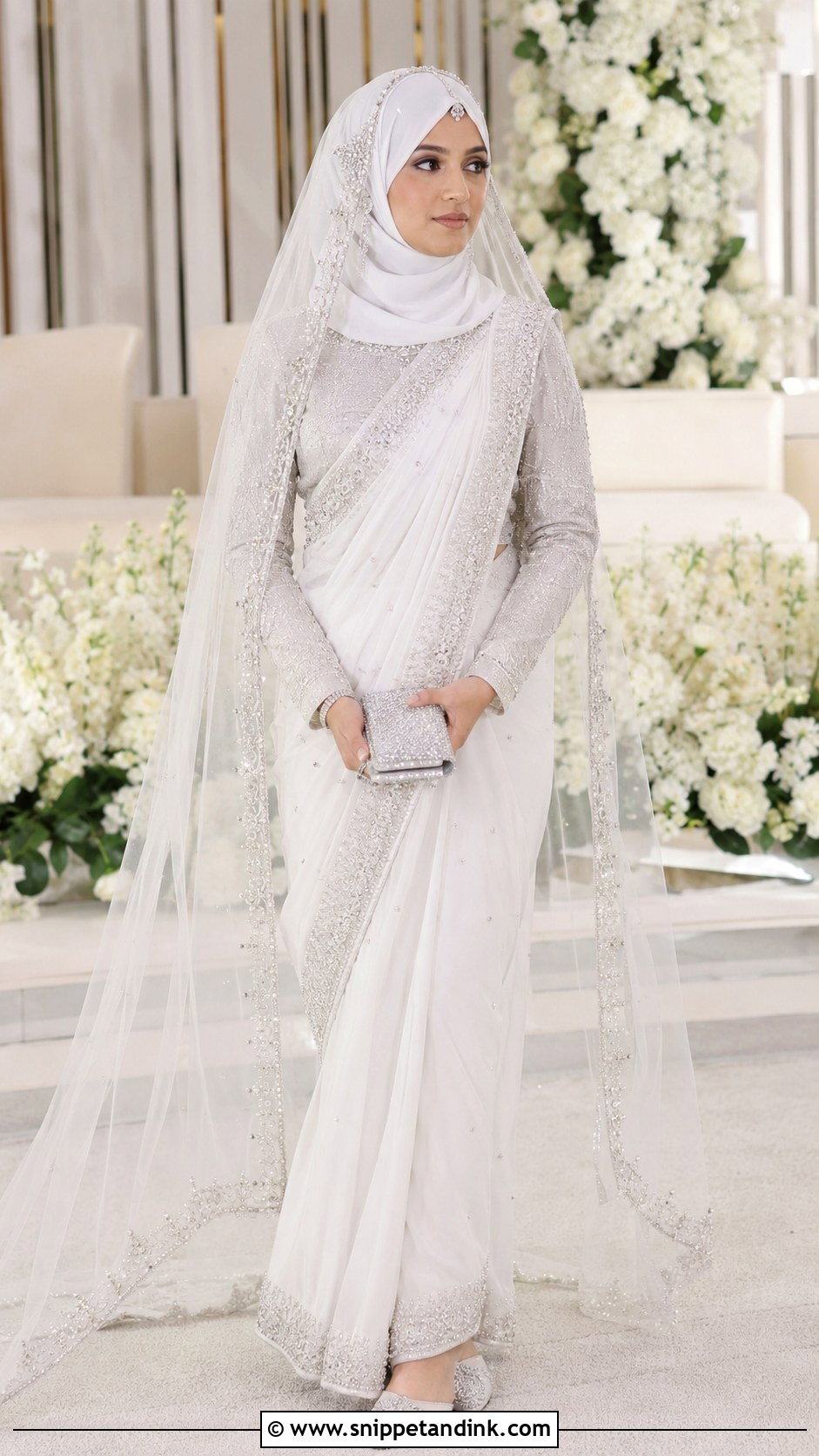
White and silver is calm and modern for a nikah. A pre-draped saree, or a traditional one set by a professional, gives dependable coverage. The blouse should have full sleeves, a high neck and a long torso. An opaque white hijab under a sheer veil with a narrow crystal edge gives a ceremonial look without folds piling around the face. Pearl earrings, a silver tikka, a fine necklace and white embellished flats, with a crystal clutch. White is the fabric most likely to show through under venue lights, so line everything. Pin the pallu at the shoulder and waist so it stays put while you greet family.
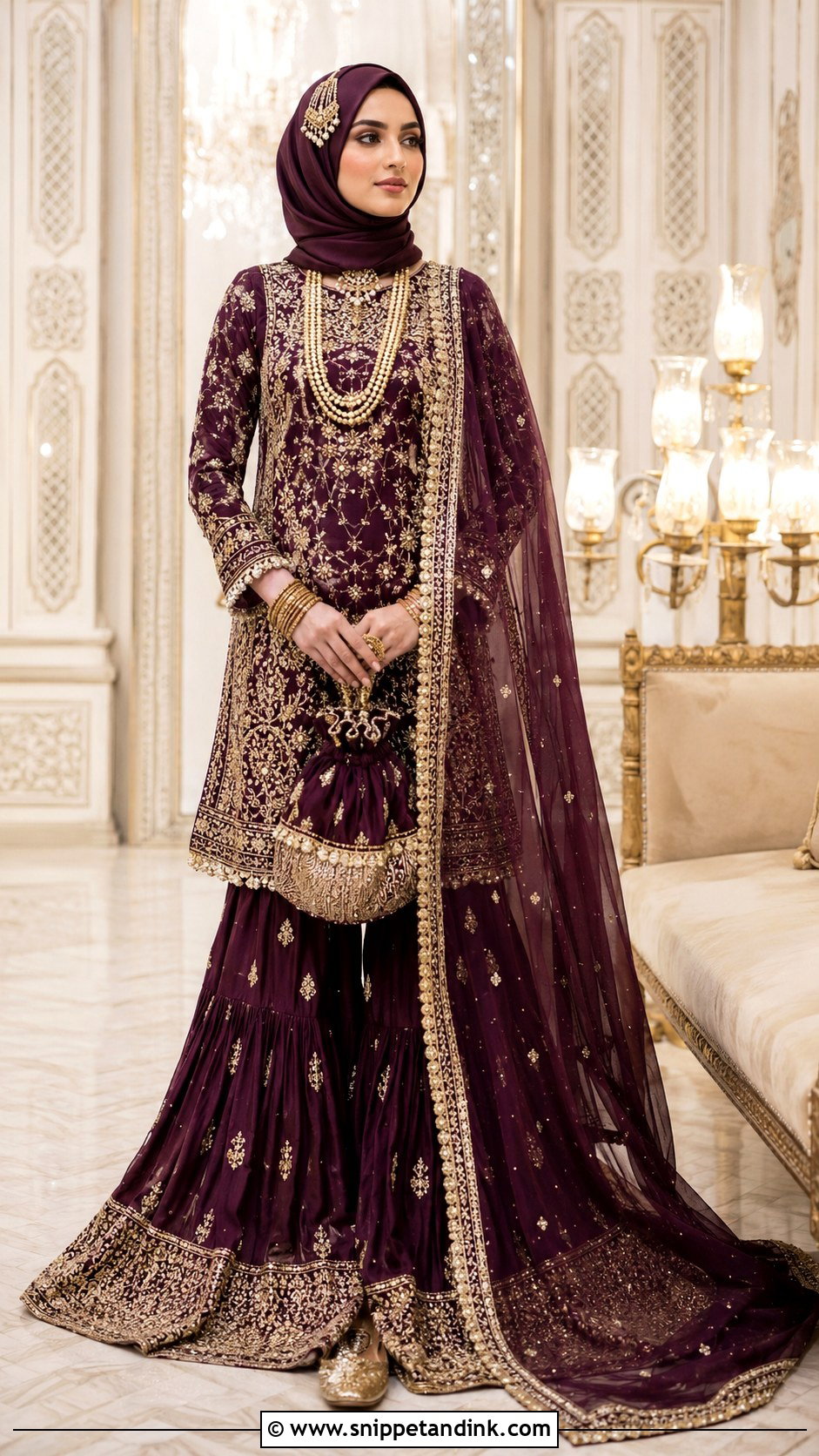
13. Plum Farshi Gharara Hijabi Bride
The farshi gharara pools on the floor by design, which makes it dramatic and slow to walk in. Deep plum suits an evening wedding. A long embroidered kurta over the wide trousers, and keep the bodice neat and fitted so the volume stays below. A plum crepe hijab with a net dupatta edged in gold or bronze, a traditional passa, a layered necklace, bangles and antique metallic juttis. Practise walking in it at home, especially on stairs. A small fabric loop sewn inside the hem lets you lift it with one hand. A structured potli finishes the look.
14. Lilac Peplum Sharara Hijabi Bride
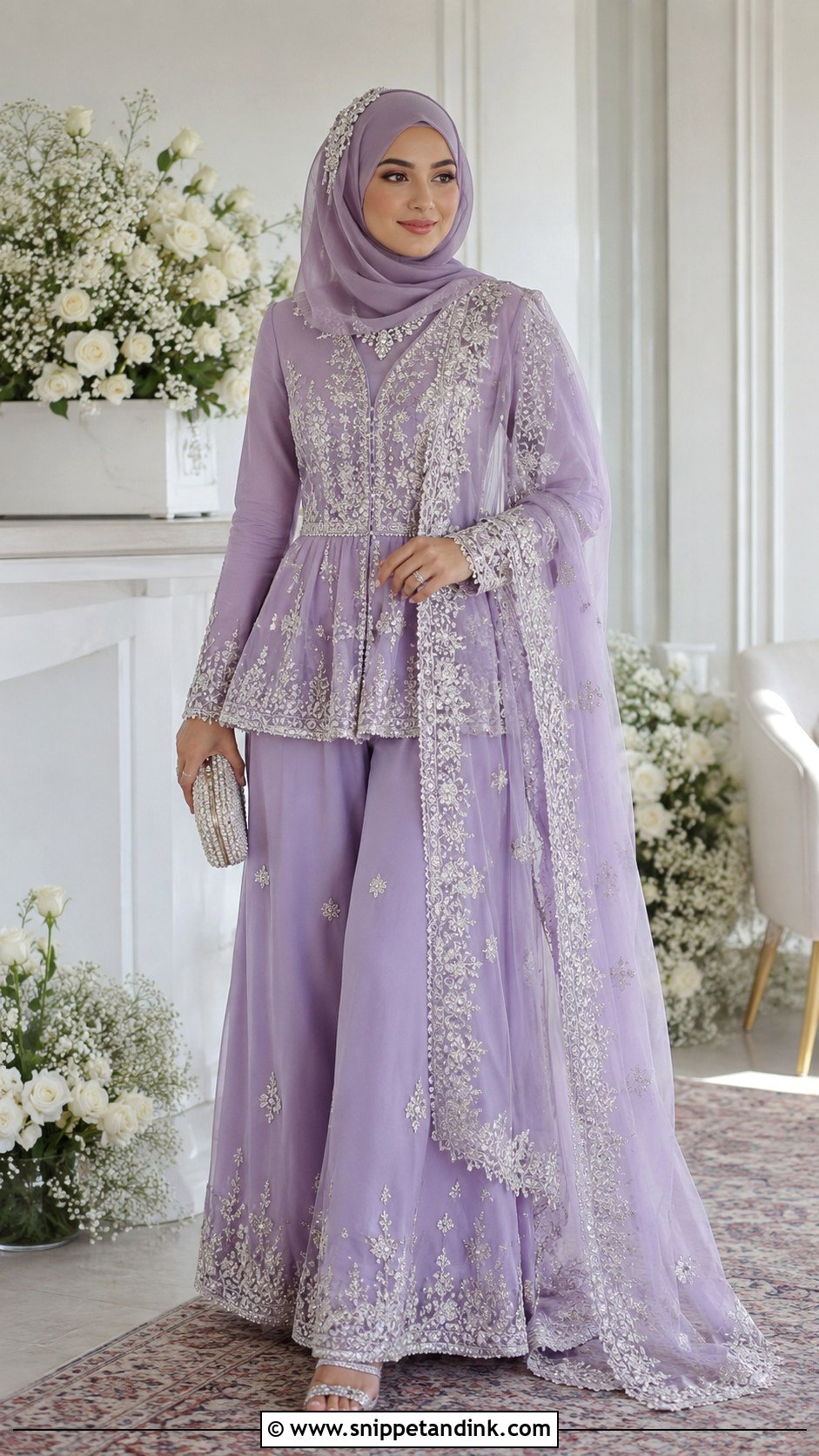
A peplum sharara gives a defined waist without a heavy lehenga, which is why I suggest it for engagements and daytime receptions. Lilac with a high-neck, full-sleeved peplum that falls over the hips, wide sharara pants and a silver-embroidered dupatta. A lilac chiffon hijab keeps it light at the face. Tonal embroidery in lavender, silver and pale blue adds depth. Lilac can look grey in shade and pink in warm light, so view the fabric where you’ll be photographed. Crystal earrings, a small tikka, silver bangles, block heels and a beaded clutch.
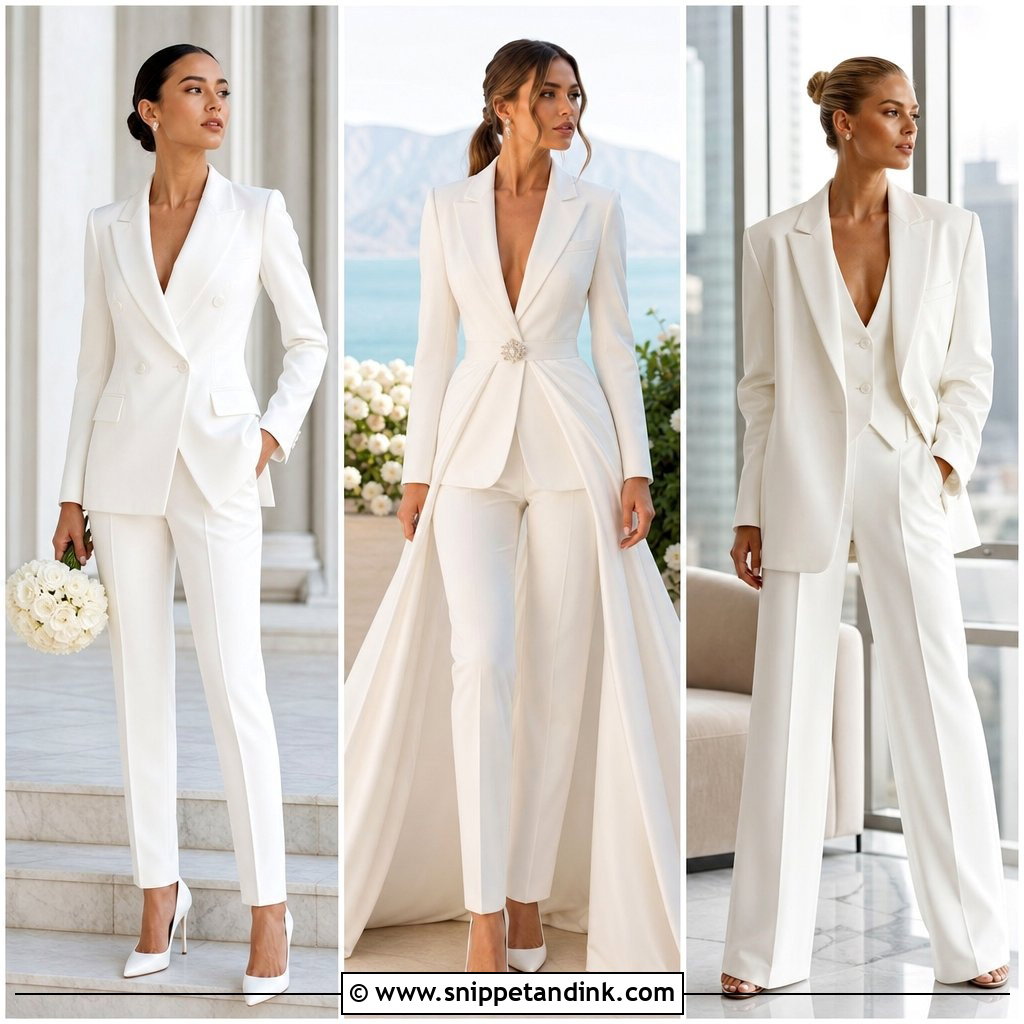
15. Teal Jacket Lehenga Hijabi Bride
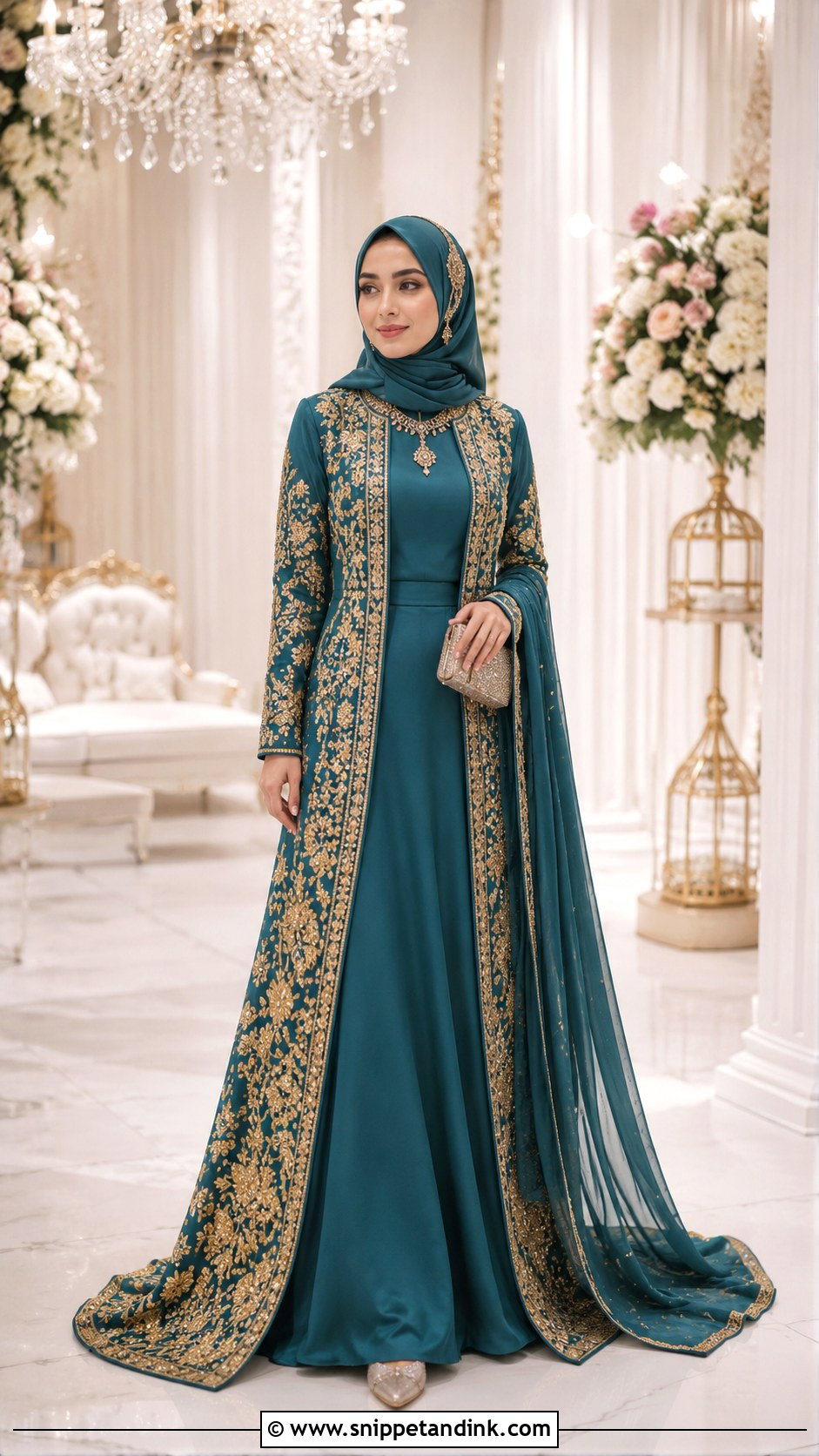
A floor-length jacket is one of the easiest ways to add coverage through the waist and hips to a lehenga that wasn’t designed for it. A flowing teal skirt and a simple high-neck blouse, then the jacket, closed at the bodice and opening into panels below. Keep the jacket embroidery to the front opening, cuffs and hem. A teal hijab and a slim gold-edged dupatta from one shoulder; with a jacket, a heavy dupatta is too much fabric. Antique gold earrings, layered bangles, pointed juttis and a metallic clutch. It suits a formal reception or a cold-weather wedding.
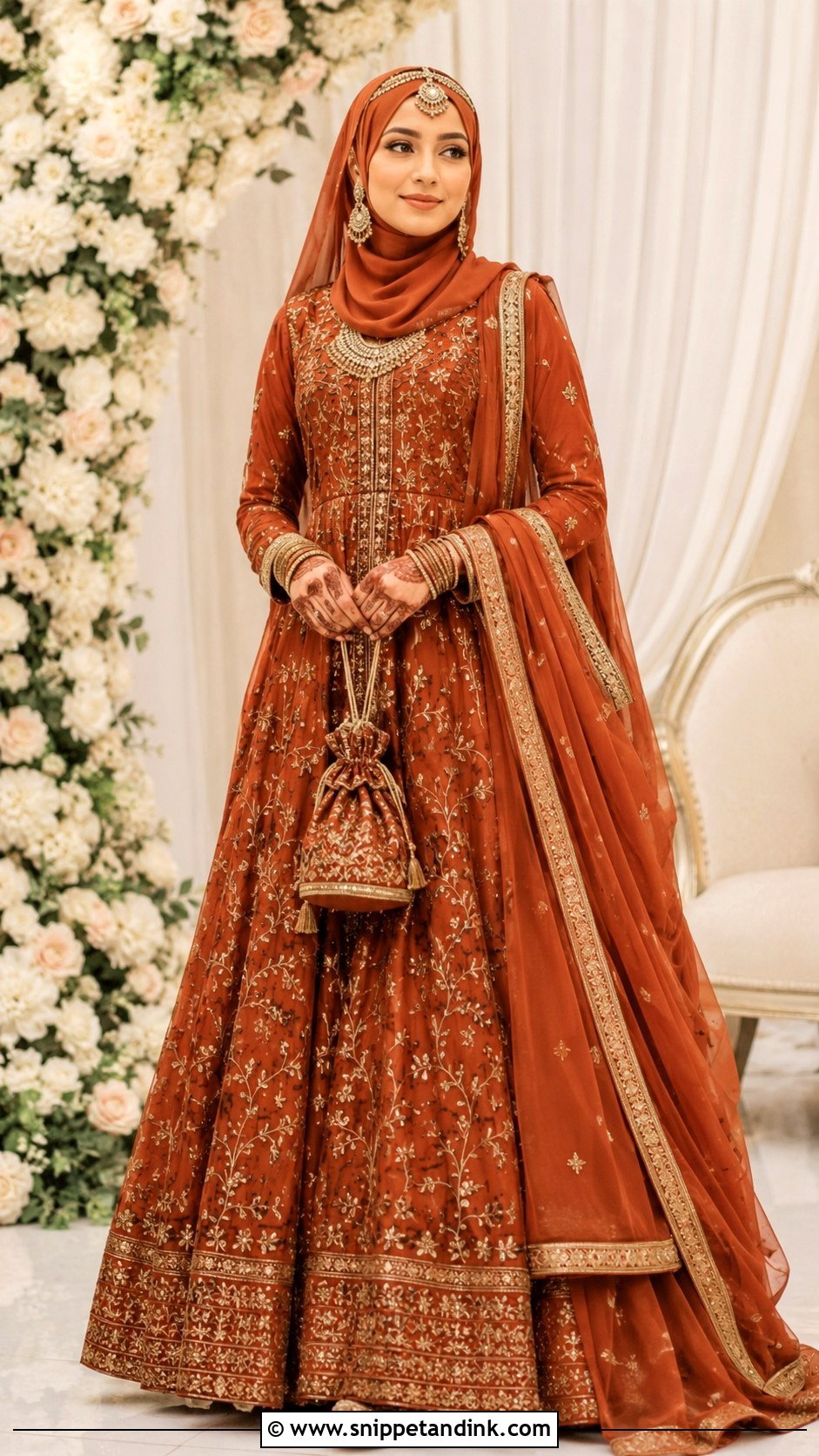
16. Rust Bridal Anarkali Hijabi Bride
Rust and copper give warmth without bright red, and they flatter deeper skin tones particularly well. A floor-length Anarkali with a covered bodice, full sleeves and antique gold work growing denser toward the hem. A rust chiffon hijab as a matte base, with a copper-edged dupatta over the head or pinned diagonally across the body. Antique jewelry, bronze bangles, brown or gold juttis and a copper potli with subtle beading. A shiny bag would fight the earthy palette. It suits the ceremony or the reception equally.
17. Navy Gold Saree Hijabi Bride
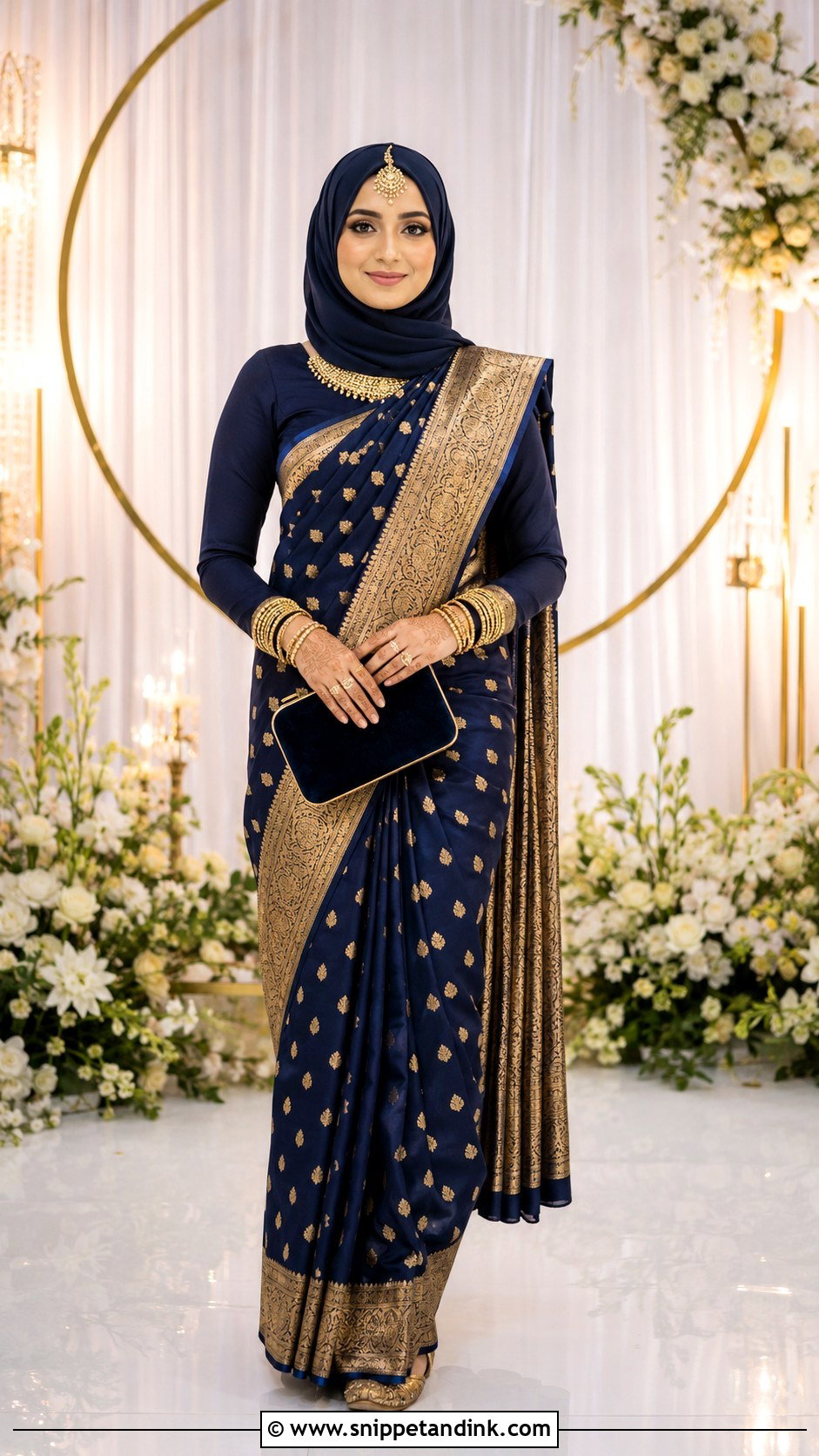
Navy with a wide gold border is a deep, quiet choice for an evening reception. Silk or georgette, with a long-sleeved blouse covering the neckline and waist. A pre-stitched saree stops pleats shifting through a long evening. Wear a matte navy hijab over a smooth undercap, with the bordered pallu on one shoulder. Heavy saree fabric over a polyester petticoat gets hot, so I’d ask for a cotton or cotton-satin petticoat and a breathable blouse lining. Kundan earrings, a gold headpiece, stacked bangles, metallic juttis and a navy velvet clutch.
18. Ivory Bridal Gown With Dupatta
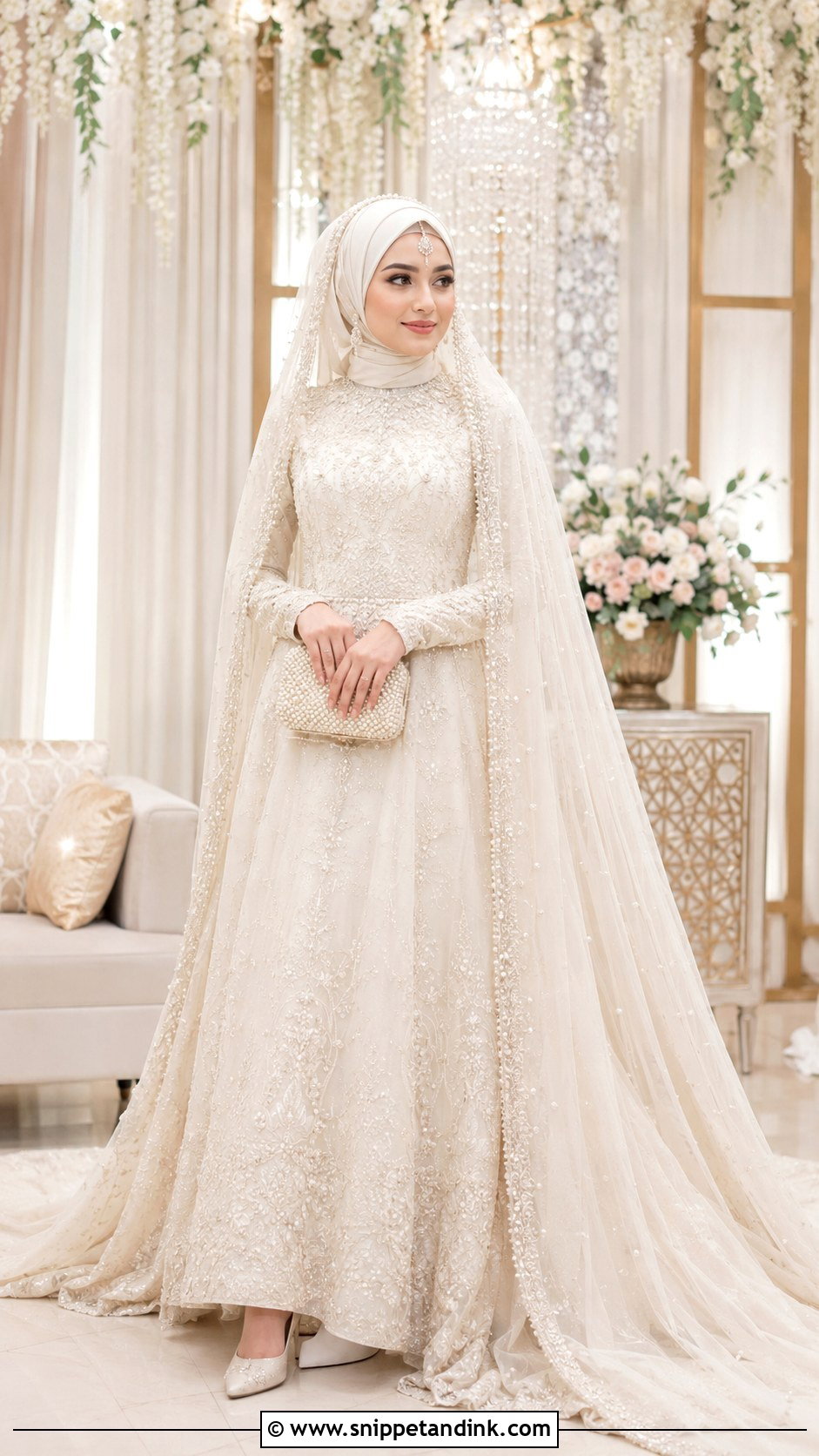
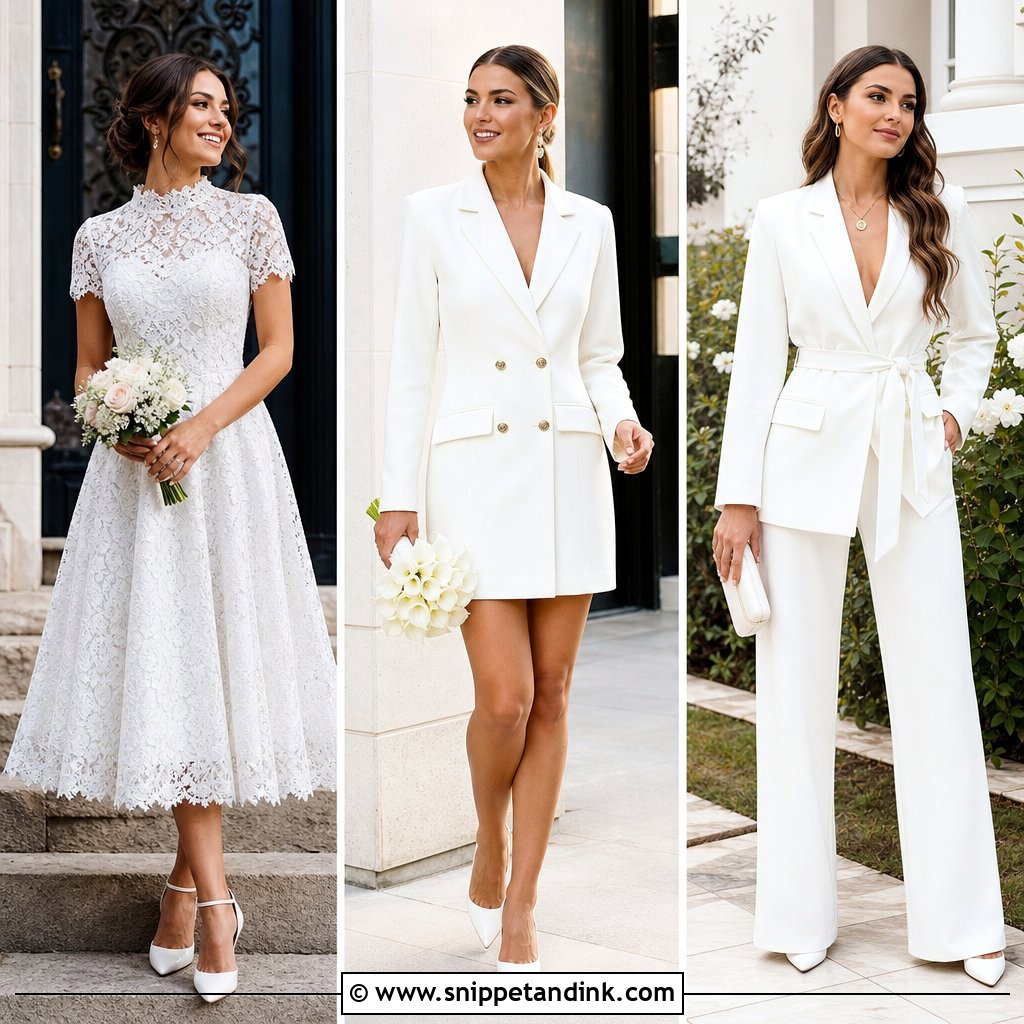
For a bride mixing Western and Desi influences, an ivory gown with an embroidered dupatta in place of a veil works well. A full-length gown with opaque sleeves, a high neck, a structured bodice and a flowing skirt or modest train. An ivory hijab wrapped close to the face, and a gold or pearl-worked dupatta over the crown falling down the back. Weigh the dupatta in your hand before buying; a heavy border pulls the hijab backward and loosens it within an hour. Pearl earrings, a fine tikka, a slim bracelet, closed-toe heels and a beaded clutch.
19. Red Velvet Pishwas Hijabi Bride
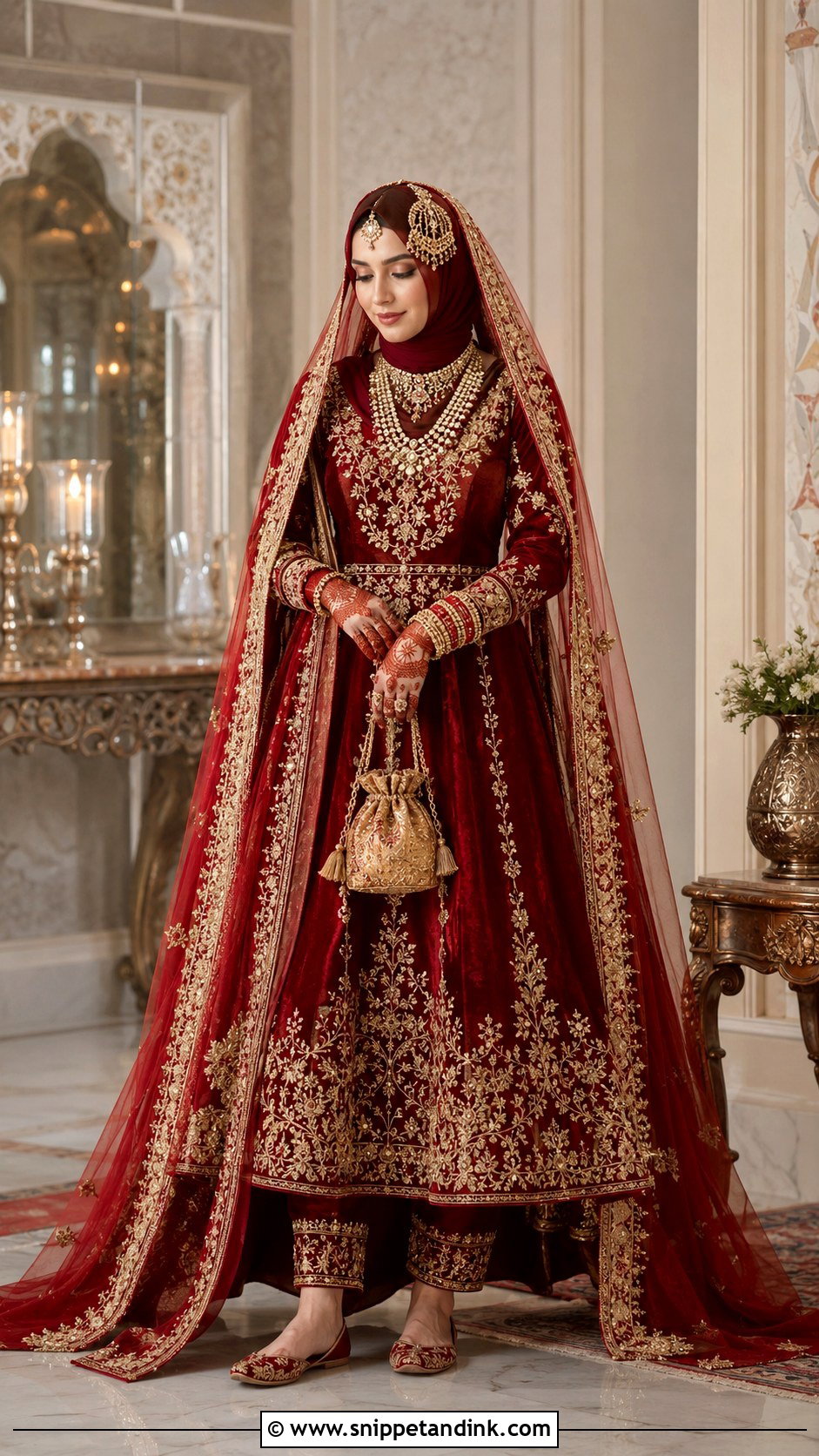
A pishwas is a long, high-waisted coat-dress with a very full circular skirt, a Mughal-era silhouette that suits a winter bride. Red velvet with gold running down the panels, sleeves and hem, with matching trousers underneath for warmth and coverage. A red crepe hijab under a light net dupatta with an ornate border. Pin the passa and tikka to the undercap, never the outer hijab, which will pull and pucker. A layered kundan necklace, bangles, embroidered flats and a compact gold potli. Velvet already carries weight, so avoid extra heavy layers on top.
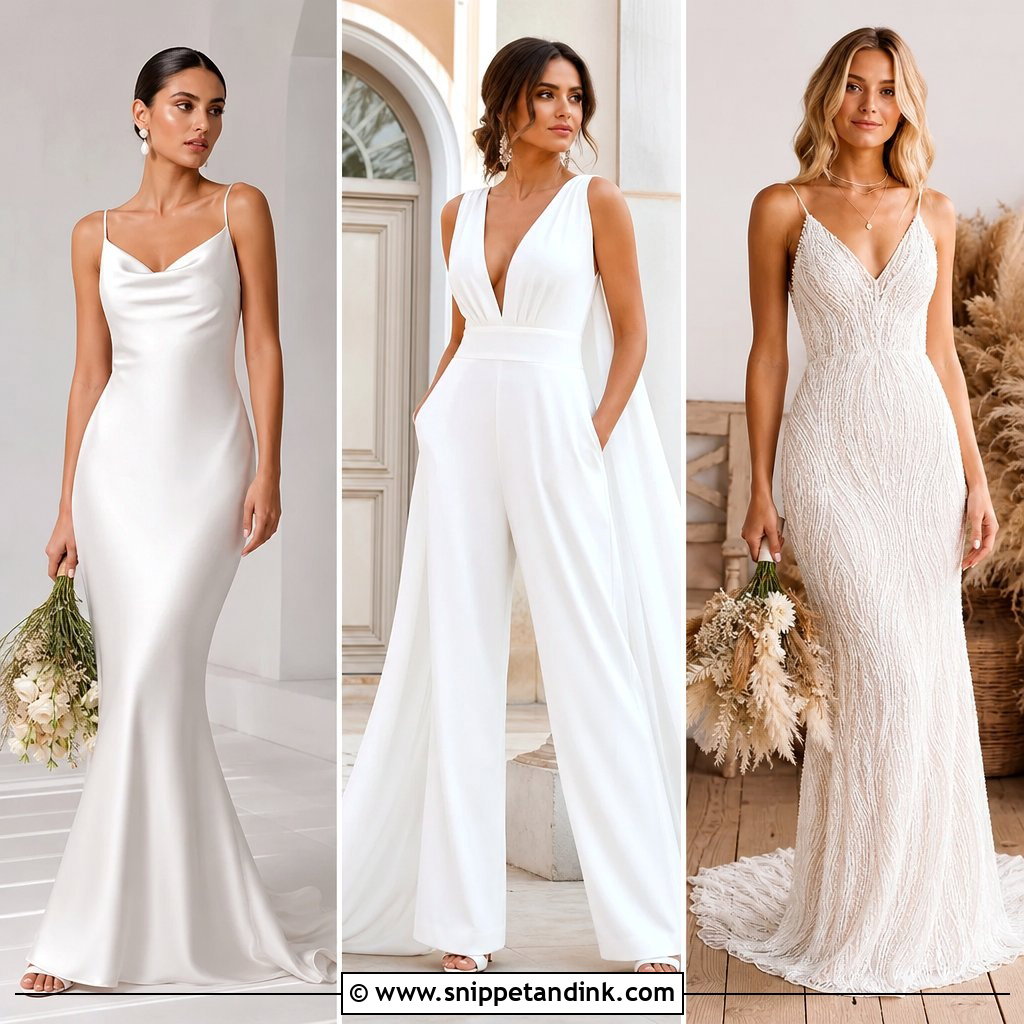
20. Dusty Rose Modest Lehenga Bride
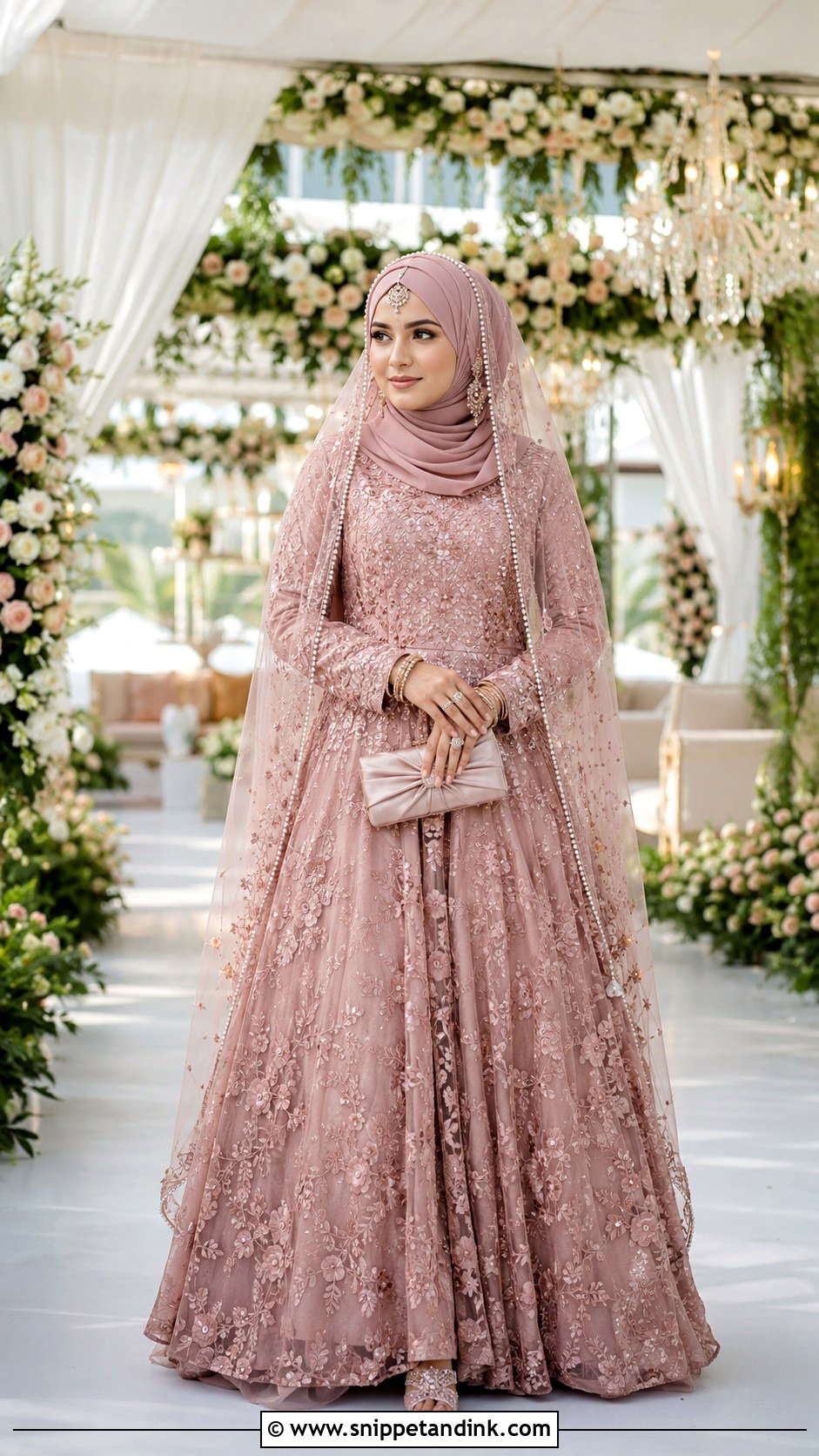
Dusty rose is pink with grey in it, which keeps it romantic without looking sugary. A flowing lehenga with tonal florals, pearl beading or restrained rose-gold sequins, and a longline blouse with full sleeves and a neckline above the collarbone. A dusty rose hijab leading into an embroidered veil from the crown. Space the embroidery so the base colour still shows in photographs; dense work on a muted shade can read beige. Rose-gold earrings, a fine tikka, slim bangles, embellished heels and a satin clutch. It suits a nikah, walima or reception.
Under the Dupatta: a Hijab Base That Carries Jewelry
A bridal hijab holds more weight than any everyday one: a tikka or matha patti, sometimes a passa, a net dupatta and pins. Most slipping comes from asking the outer scarf to hold all of it.
Build it in layers
Start with a snug undercap in a grippy cotton or jersey, close to your skin tone or the hijab colour. Head jewelry pins through to this layer. The outer hijab goes on next, in chiffon, crepe or matte satin, and the jewelry is lifted through or pinned over it at the same anchor points. The dupatta goes last, pinned at the crown and at each shoulder so its weight sits on your shoulders rather than your forehead.
On the day
Do a full trial with the real jewelry and dupatta, and wear it for an hour. Note how many pins it took. Give a sister or friend a small pouch with spare pins, a few magnets and a mirror, and show her the layout, because after the meal and the photos something will need resetting. Avoid pins with large decorative heads under the dupatta; they push through the net and show as bumps in close-up photos.
Covered, Comfortable and Still Unmistakably Bridal
A classic red lehenga can feel just as special as an ivory sharara, a Banarasi saree, a velvet pishwas or a modern gown. What makes any of them work for a hijabi bride is the groundwork: opaque linings, sleeves ordered at the start, a hijab base that can hold jewelry, hems you can walk in and shoes you can stand in. Start with the function, the season and the silhouette you feel most like yourself in. Then plan the hijab, dupatta, jewelry and shoes as one outfit, not five separate purchases.
You'll Like These Ideas:



Leave a Reply