
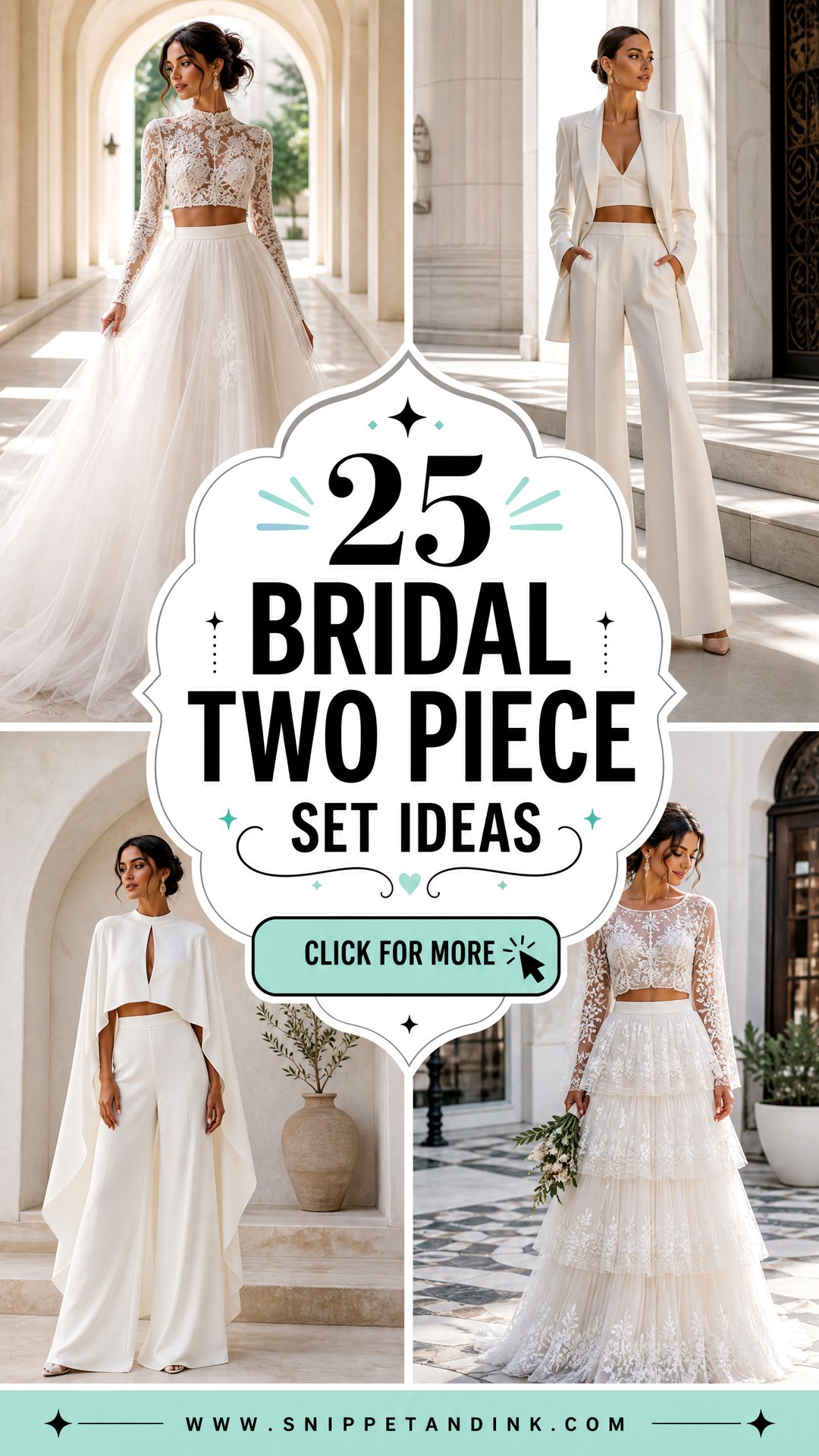
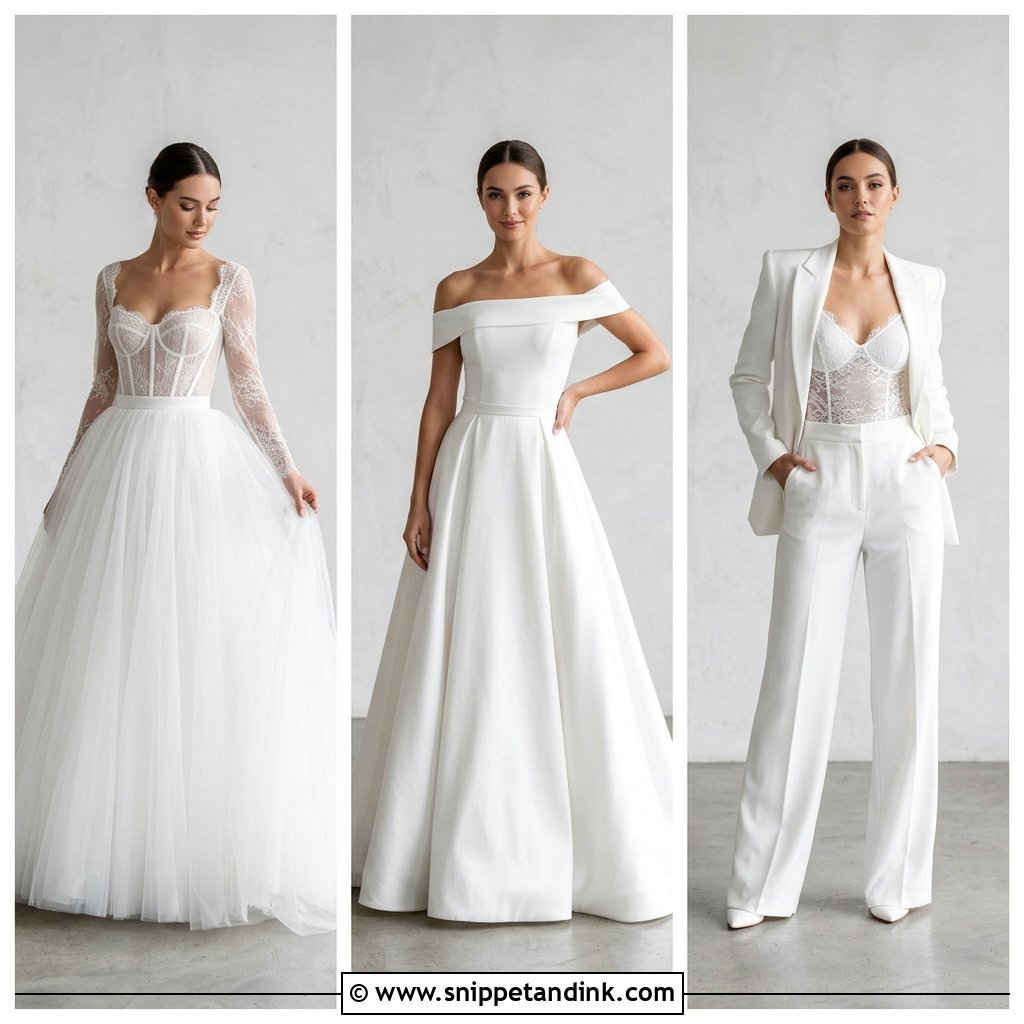
Bridal separates solve a problem I see constantly in fitting rooms: a bride whose top half and bottom half are two different sizes, or who loves a gown’s bodice but hates its skirt. Buying the pieces apart lets each one be fitted on its own terms, and it opens the door to a second look later in the evening by swapping just one half. Below are 25 pairings, from corset and tulle combinations to tailored trousers and short reception skirts. The catch is that two garments have to read as one outfit, so I’ve noted where the fabric, the shade of ivory and the waistline need the most care.
Where Separates Go Wrong at the Waistband
With a two-piece, the join is the whole game. Most of the work at fittings happens in about four inches around your waist, and it’s worth knowing what I’m looking for before you shop.
- Overlap, not a meeting line. A top that just touches the waistband will part the moment you lift your arms. For no visible midriff, I want the top to tuck in or overlap by a finger’s width with your arms raised.
- One shade of ivory. Ivory from two designers, or even two dye lots, can be different enough to show in photos. Hold both pieces together by a window and under warm indoor light.
- A waistband that stays put. A strip of silicone gripper or a small hook connecting top to skirt stops the top from creeping upward over a long day.
- Fabric weight in balance. A heavy beaded top over a whisper-light chiffon skirt can drag the waistband down at the back. Ask your seamstress to add internal stays if the top is much heavier.
Order both pieces early enough for alterations to happen together. Separates often need less work than a gown, but each piece usually needs at least one fitting, and the final one should always be with both on at once.
1. Lace Crop Top And Tulle Skirt Bridal Set
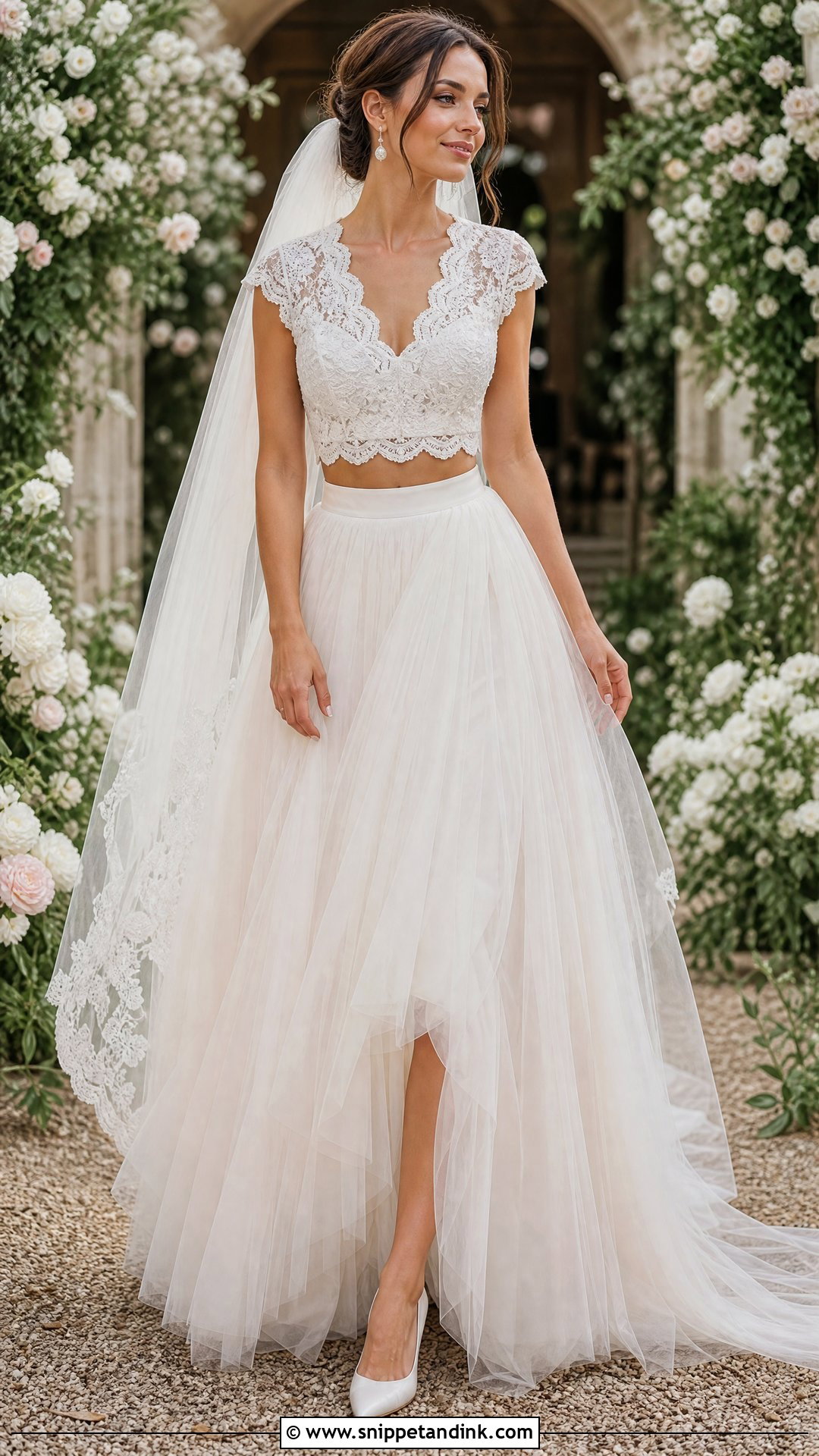
A fitted lace crop top over a tulle skirt keeps the softness of a traditional gown with a lot less weight. If you’d rather not show skin at the middle, ask for the skirt’s waistband to sit high enough that it overlaps the top’s hem by a finger’s width when your arms are raised; that’s the moment a gap appears, not when you stand still in the mirror. Scalloped hems and illusion necklines both work here. Keep the tulle to a few layers so it moves rather than standing out stiffly. I’d swap a cathedral veil for a floral comb at a garden ceremony, because tulle on tulle catches on every hedge.
2. Satin Corset And Ball Gown Skirt Bridal Set
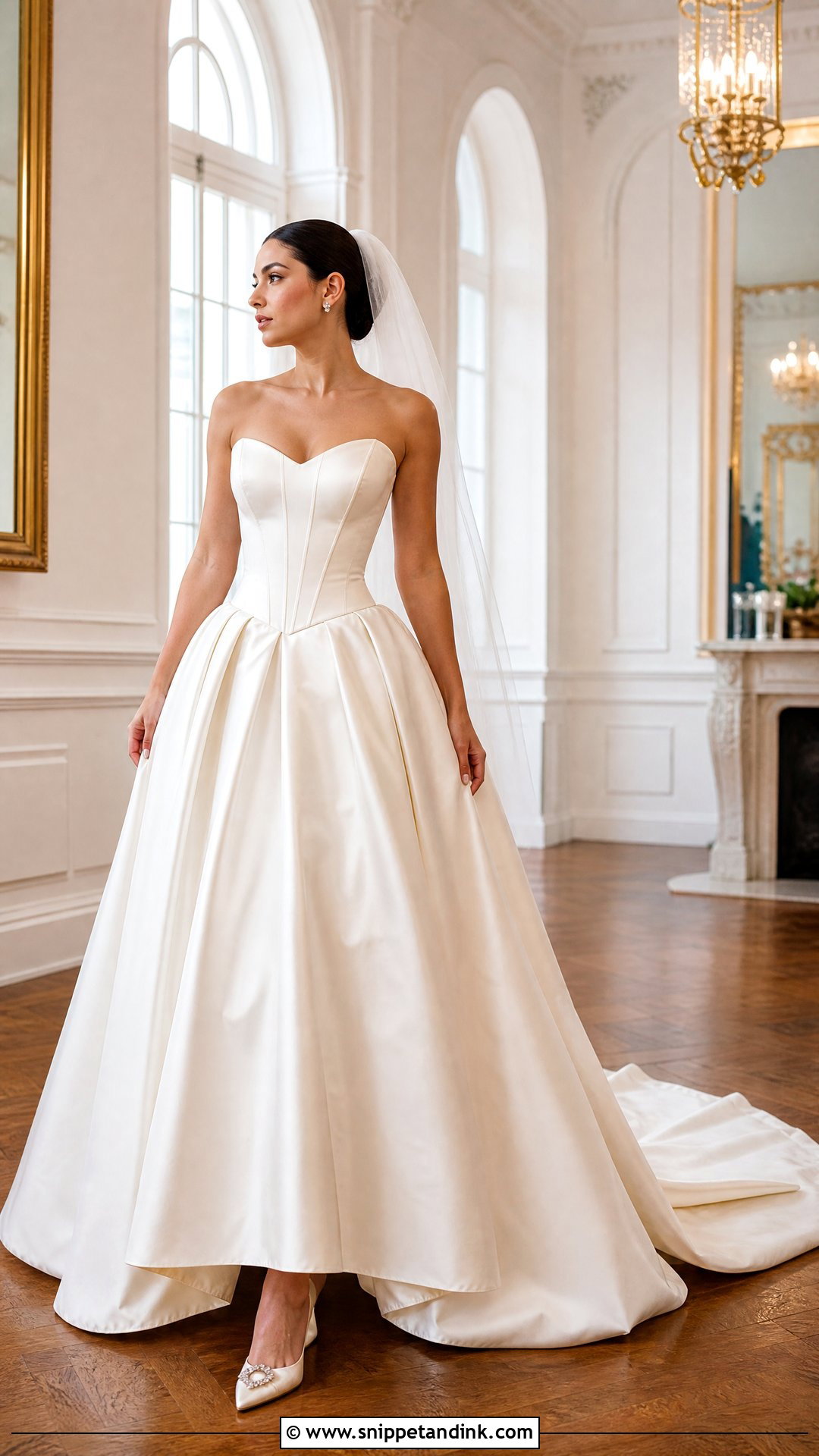
A boned satin corset over a full ball gown skirt gives you a gown’s entrance with the freedom to change the skirt later. The fit point that matters is the back closure: lace-up backs can be tightened through the day as the fabric relaxes, while zips can’t. A basque waist dipping into the skirt lengthens the torso and hides the join. Sit down in the corset at your fitting; if the top edge digs into your ribs when seated, it needs letting out. Keep jewelry to studs. And view both pieces side by side in daylight before any alterations, because satins from different dye lots rarely match perfectly.
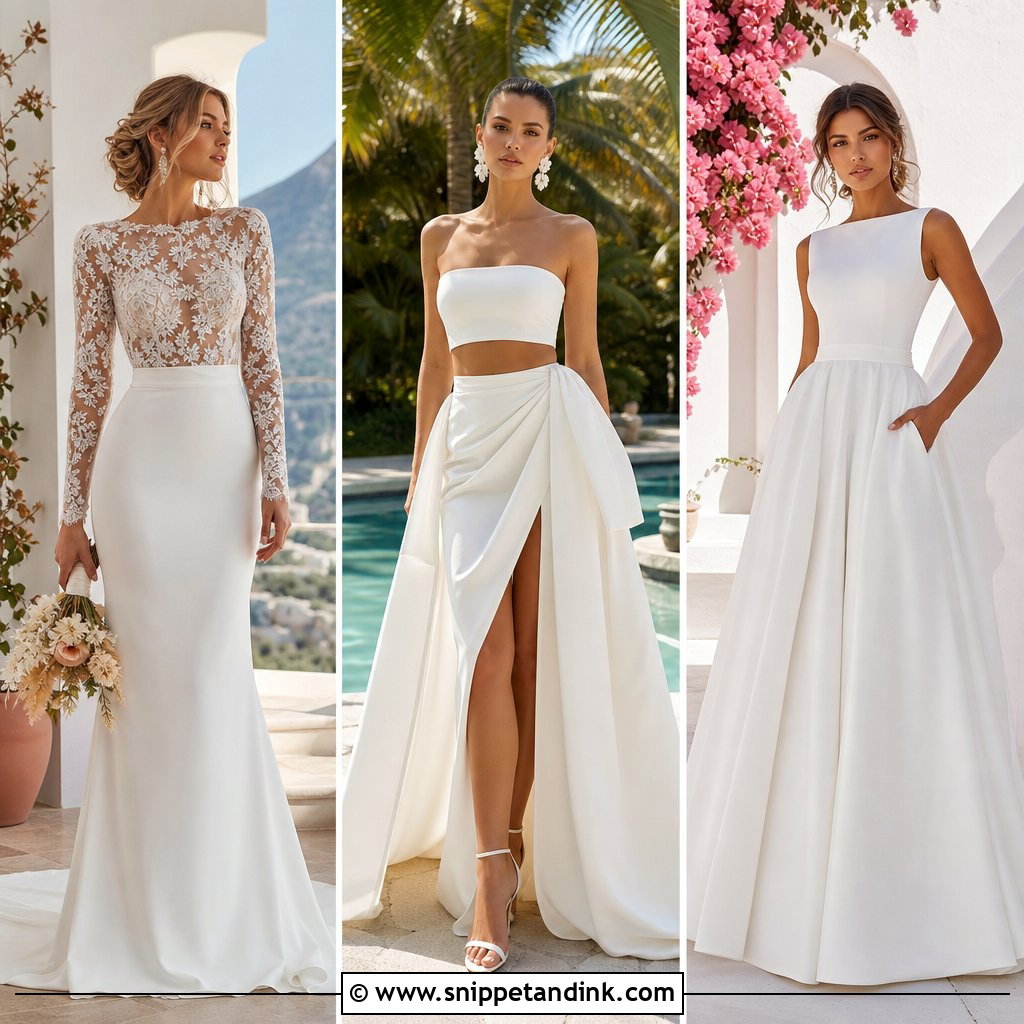
3. Long Sleeve Lace Top And Crepe Skirt Bridal Set
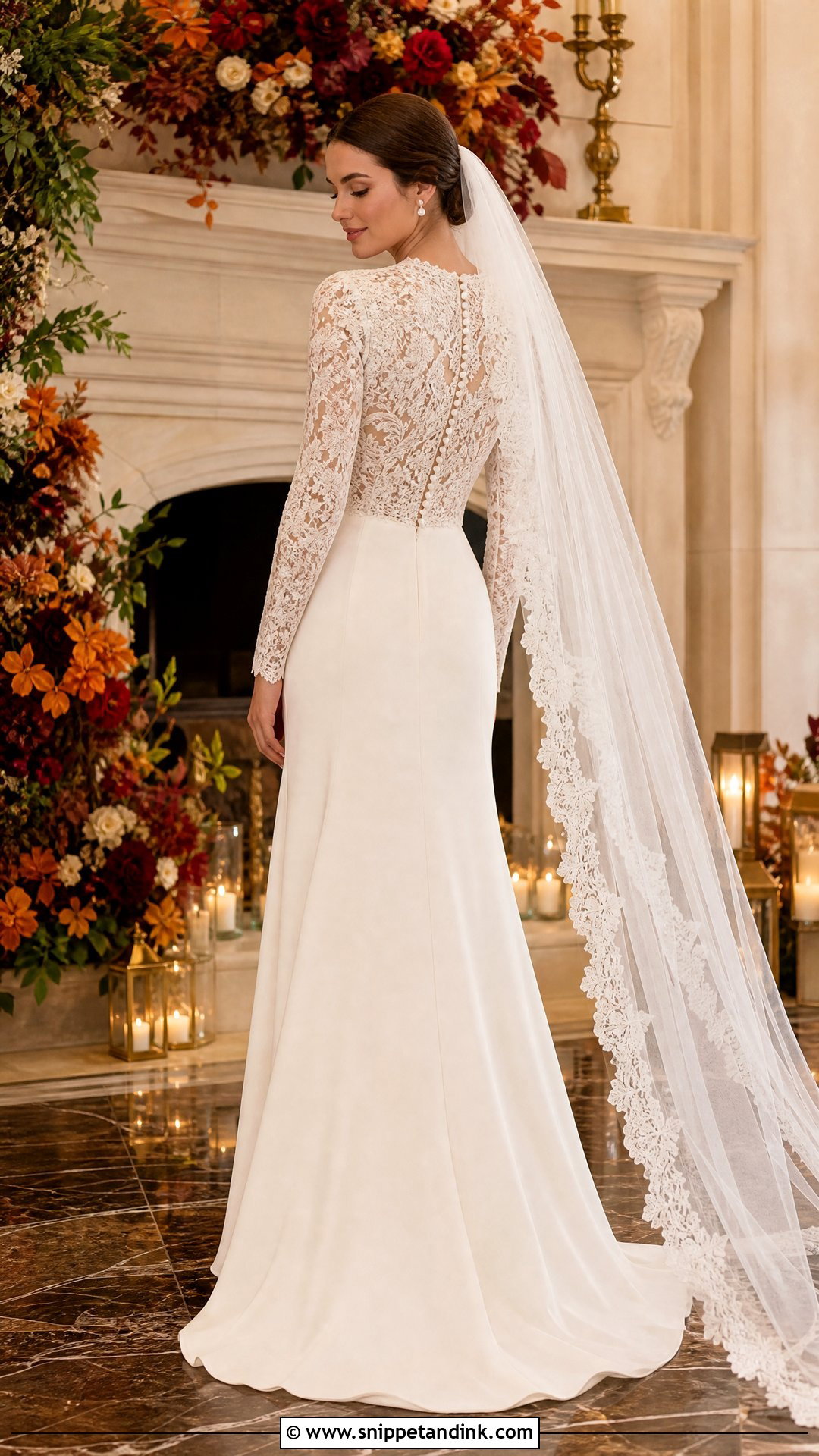
For a cold-weather ceremony, a long-sleeve lace top with a plain crepe skirt gives coverage without the bulk of a lined gown. I always check the sleeve at the elbow first. Fitted lace sleeves set too tight will pull when you lift a bouquet or hug guests, so ask for a little ease there. A column or soft A-line in crepe keeps the eye on the lace. Covered buttons down the back or sleeves add a traditional finish, and a fingertip veil edged in narrow lace ties the two textures together. Make sure any sheer panels are lined in a shade close to your skin, not bright white.
4. High Neck Top And Silk Skirt Bridal Set
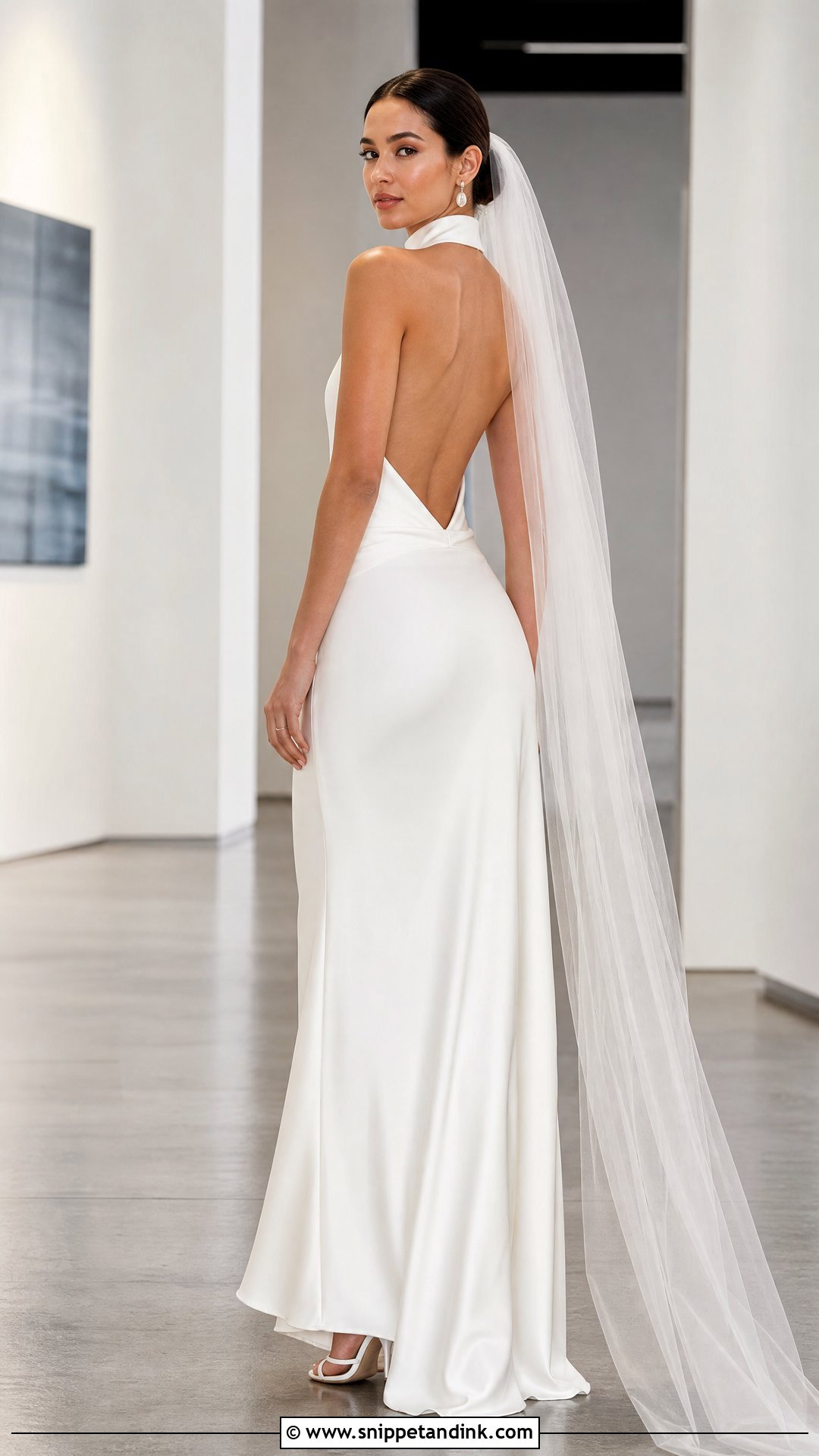
A high neck and a fluid silk skirt suit a bride who wants very little ornament. The neckline does the covering, so an open or keyhole back stops it feeling severe. Bias-cut silk is unforgiving: it shows every seam and strap underneath, so I always fit this one over the exact underwear you’ll wear on the day, ideally a smooth, flesh-tone set with no visible edges. Choose a plain veil so the back of the top still shows through. Strappy heels and a low bun keep the line clean, which suits a gallery, a rooftop or a small city ceremony.
5. Off Shoulder Top And A-Line Skirt Bridal Set
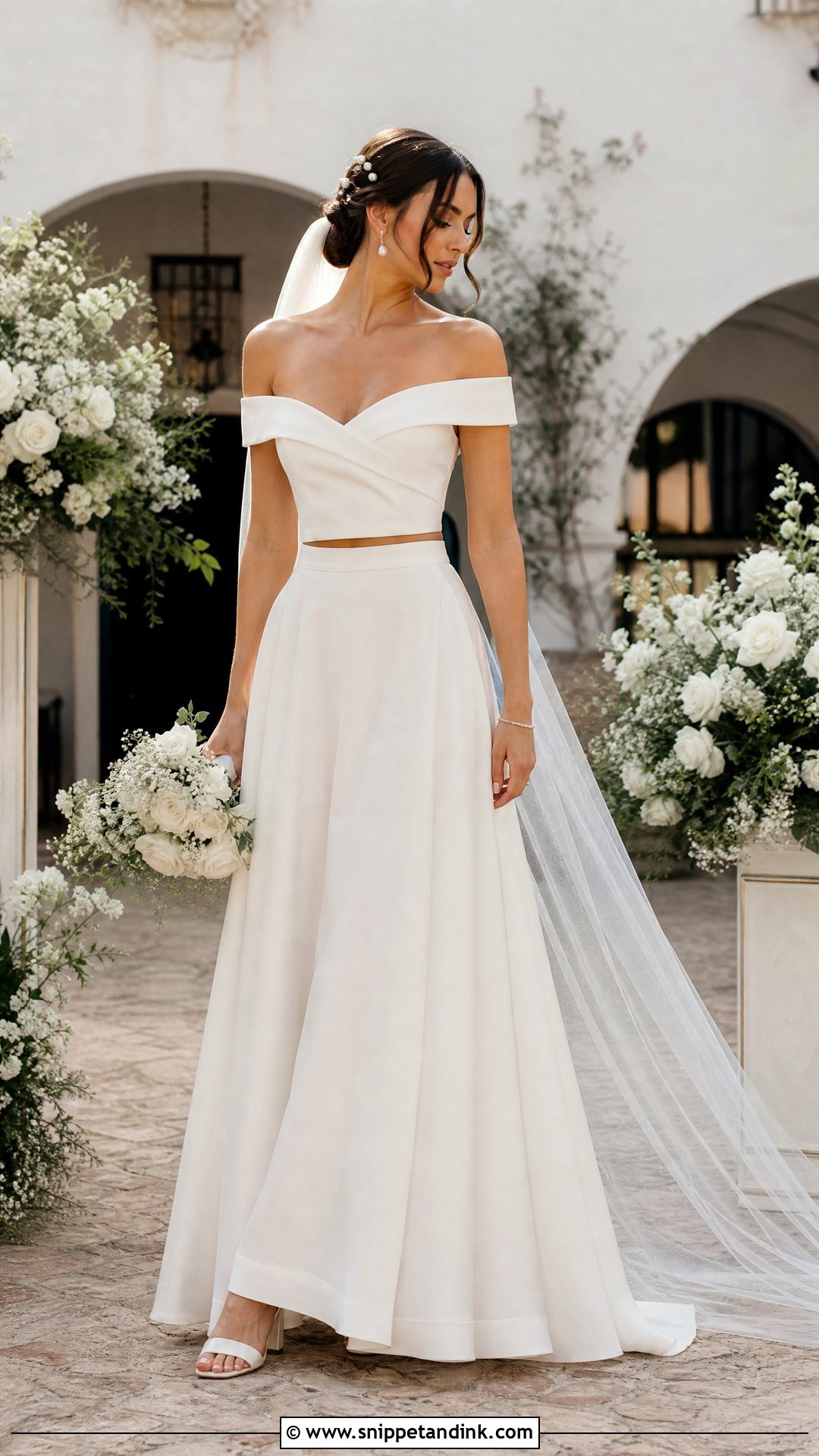
Off-the-shoulder tops look relaxed but need engineering inside. Look for an elasticated or silicone-gripped band along the neckline, plus boning or a built-in bra, otherwise you’ll spend the reception hitching it up. A slightly cropped top meeting a high A-line waistband gives waist definition without a tight skirt. I’d keep the necklace short or skip it, since the collarbone is the point of this neckline. Have someone watch you raise your arms at the fitting: if the sleeves ride up onto your shoulders, the band needs tightening.
6. Beaded Top And Chiffon Skirt Bridal Set
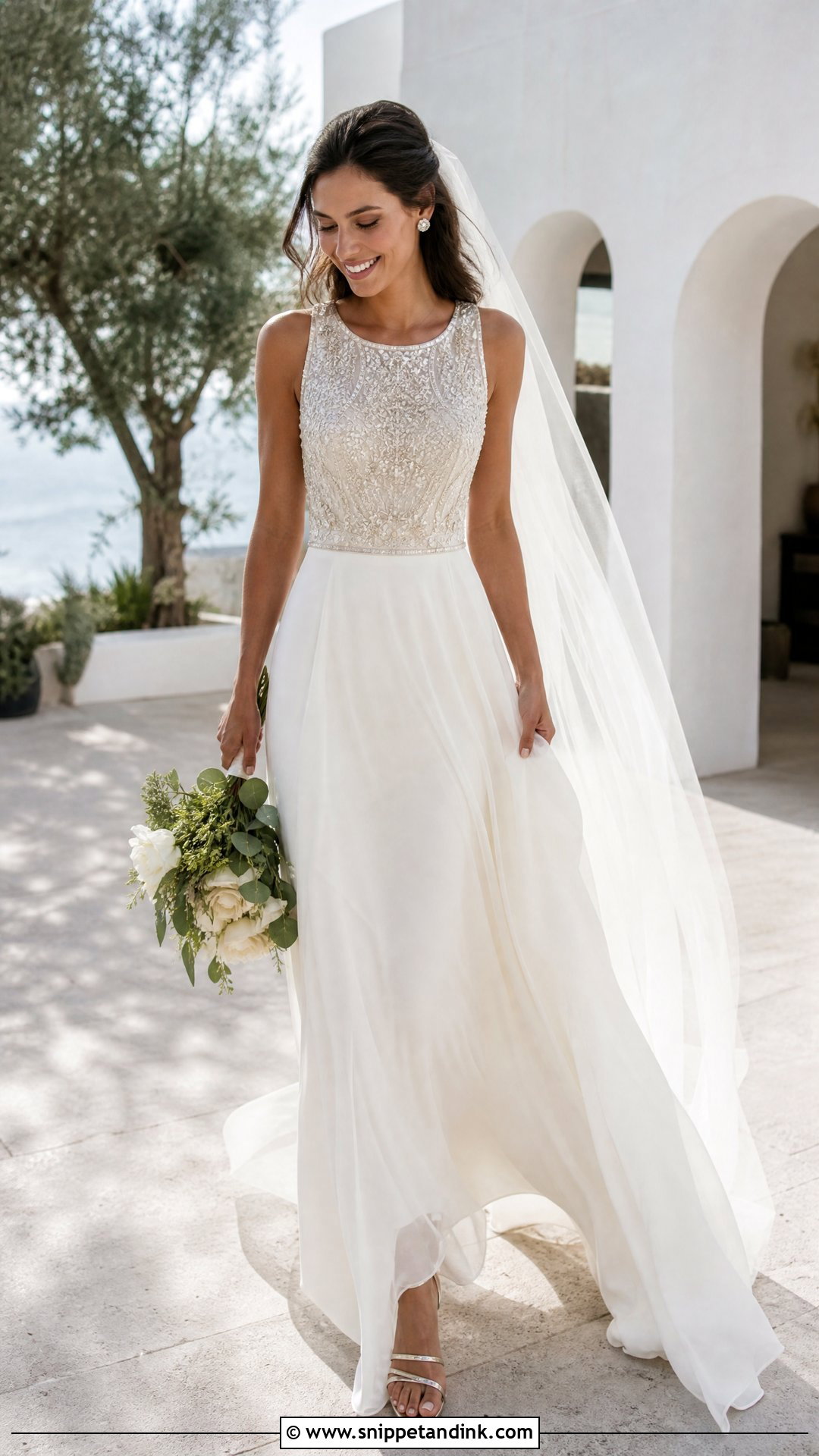
Beadwork is heavy, and on a separate top all that weight hangs from the straps. That’s why I steer brides toward wider straps or short sleeves for a heavily beaded bodice; spaghetti straps start to dig in by the speeches. Pair it with a plain chiffon skirt so the beading has no competition. Walk around at the fitting and check where the lower edge of the top meets the waistband, since loose beads there snag fine chiffon. Simple metallic sandals and crystal studs are plenty for a spring ceremony or a candlelit reception.
7. Pearl Bustier And Satin Skirt Bridal Set
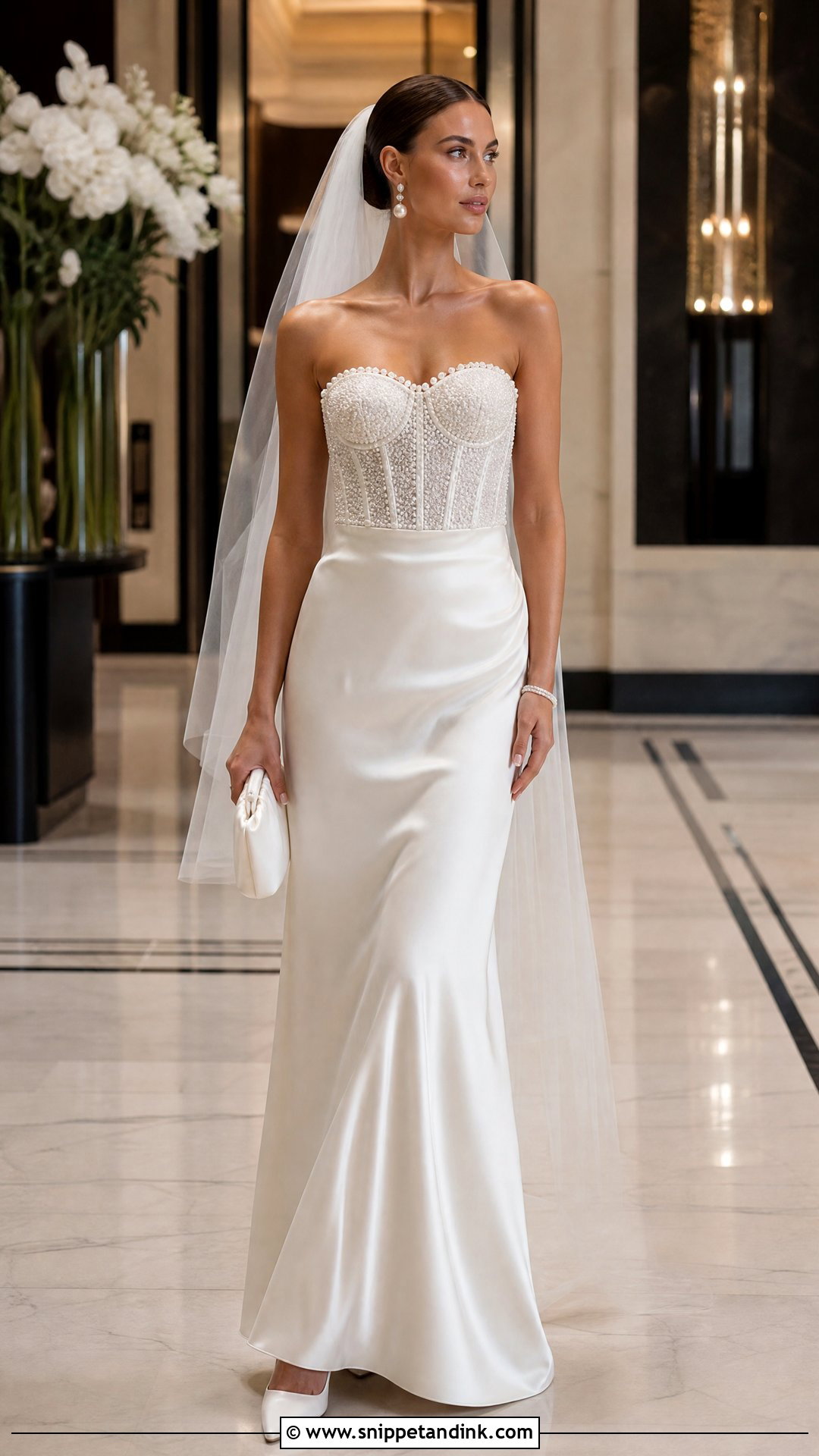
Pearl-covered bustiers vary hugely in quality. Turn one inside out: the pearls should be stitched individually or in short runs, not on one long thread that unravels if a single bead catches. Strong internal boning keeps the bodice from collapsing under their weight. A floor-length satin skirt with a short train keeps it formal, and a satin midi can be swapped in for the reception. Skip the beaded bag; a small satin clutch in the same ivory is enough for a hotel ballroom or a formal dinner.
8. Square Neck Top And Mikado Skirt Bridal Set
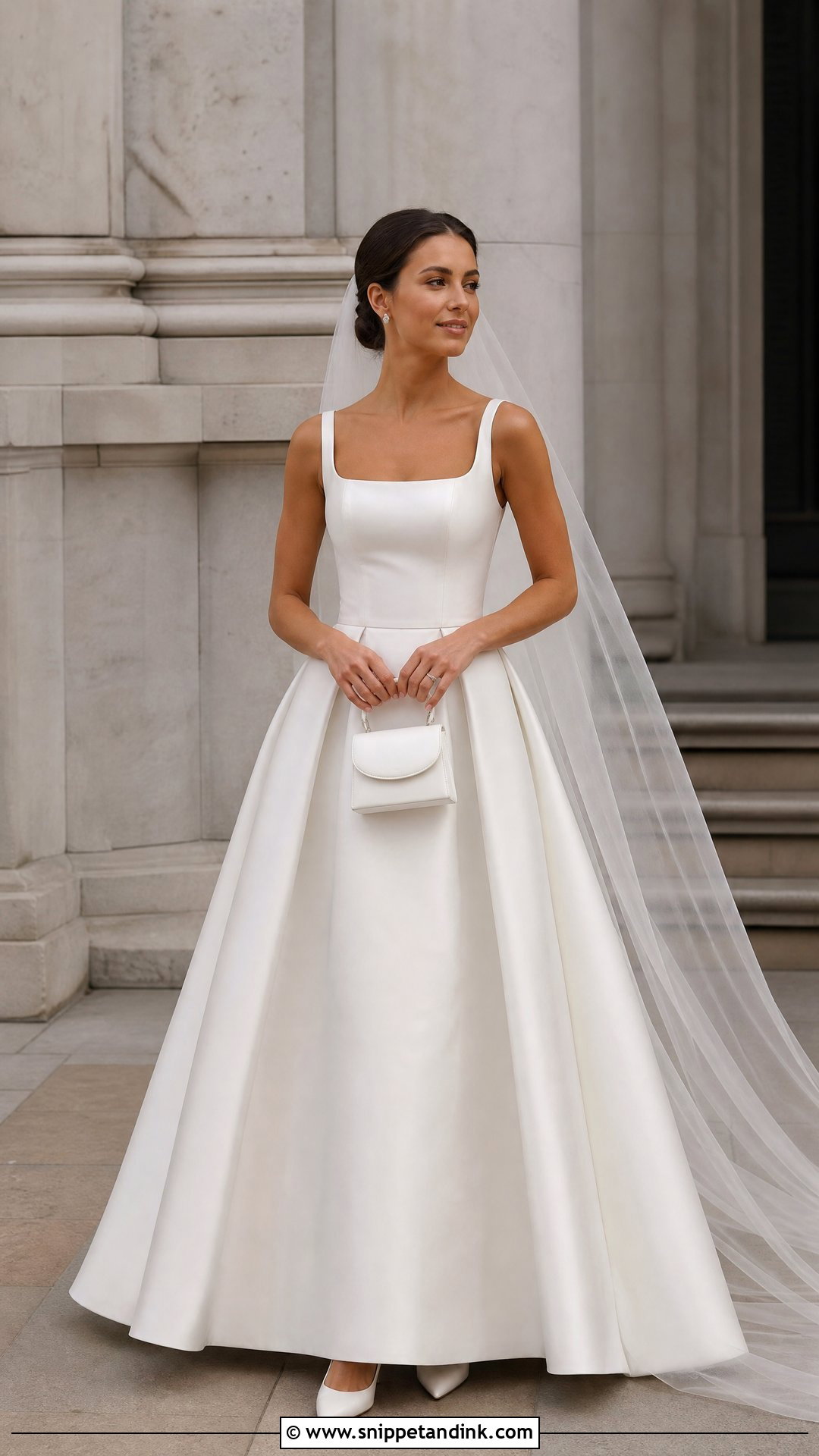
Mikado is a stiff, slightly lustrous silk blend that holds a pleat or an A-line without petticoats, which is why it pairs so well with a square neckline. Box pleats at a high waist give a crisp shape. The sheen and weight of mikado vary between mills, so buy both pieces from one collection if you can; mixing makers is where I most often see a top and skirt that don’t quite belong together. Pointed pumps and pearl studs suit the geometry. A short veil keeps it modern, while a cathedral length gives a formal contrast in an architectural venue.
9. One Shoulder Top And Pleated Skirt Bridal Set
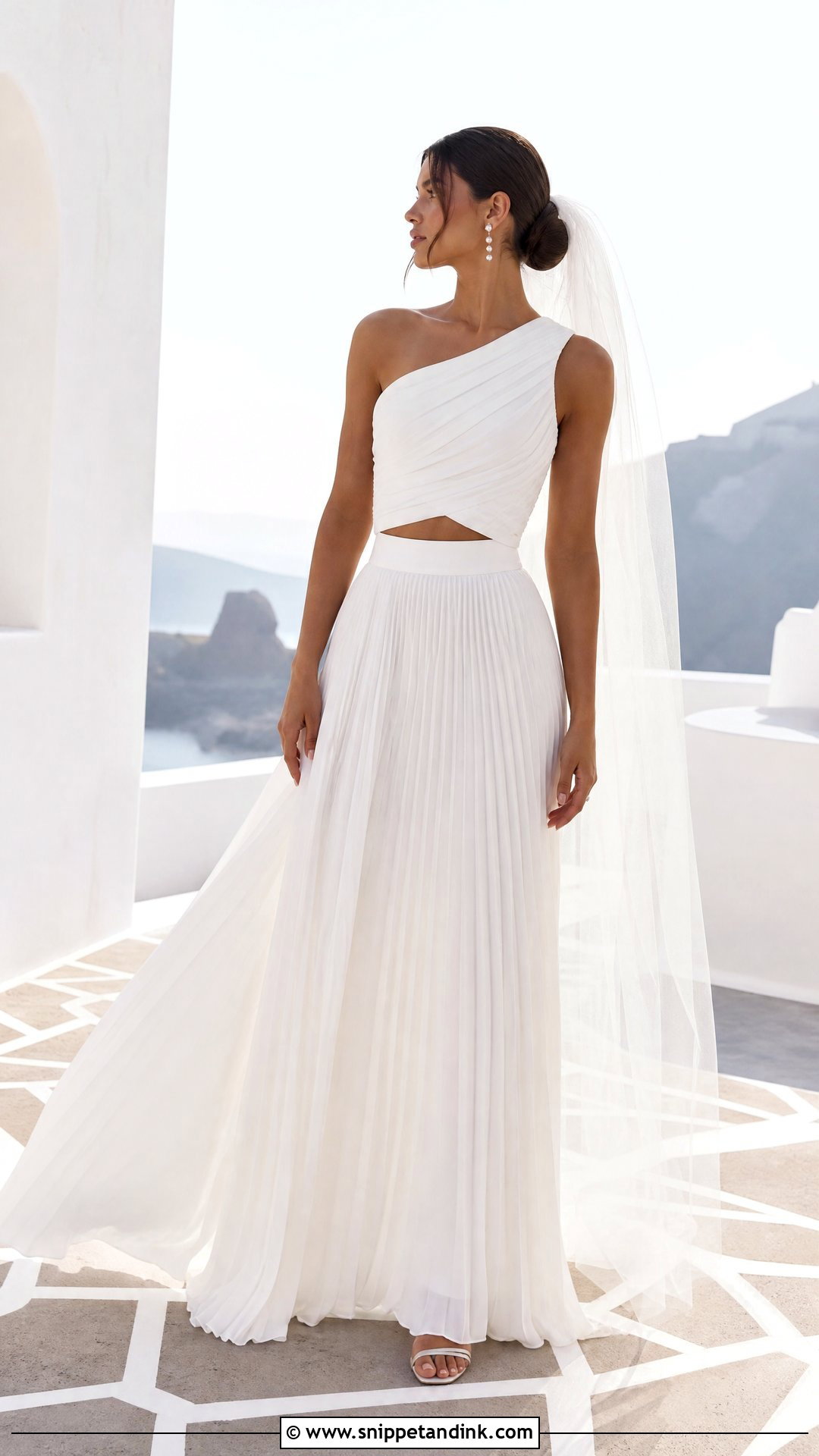
A one-shoulder top draws a diagonal line across the body, and anything that interrupts it, like a necklace or a heavy veil on the wrong side, weakens the shape. Keep top and skirt in exactly the same shade of ivory. A fitted waistband stops a pleated floor-length skirt from adding width at the hips. Do the hair as a low bun on the bare-shoulder side and attach a light veil beneath it. One honest note: one-shoulder tops need a strapless bra or built-in cups, so try it with yours before ordering.
10. Halter Top And Bias Cut Skirt Bridal Set
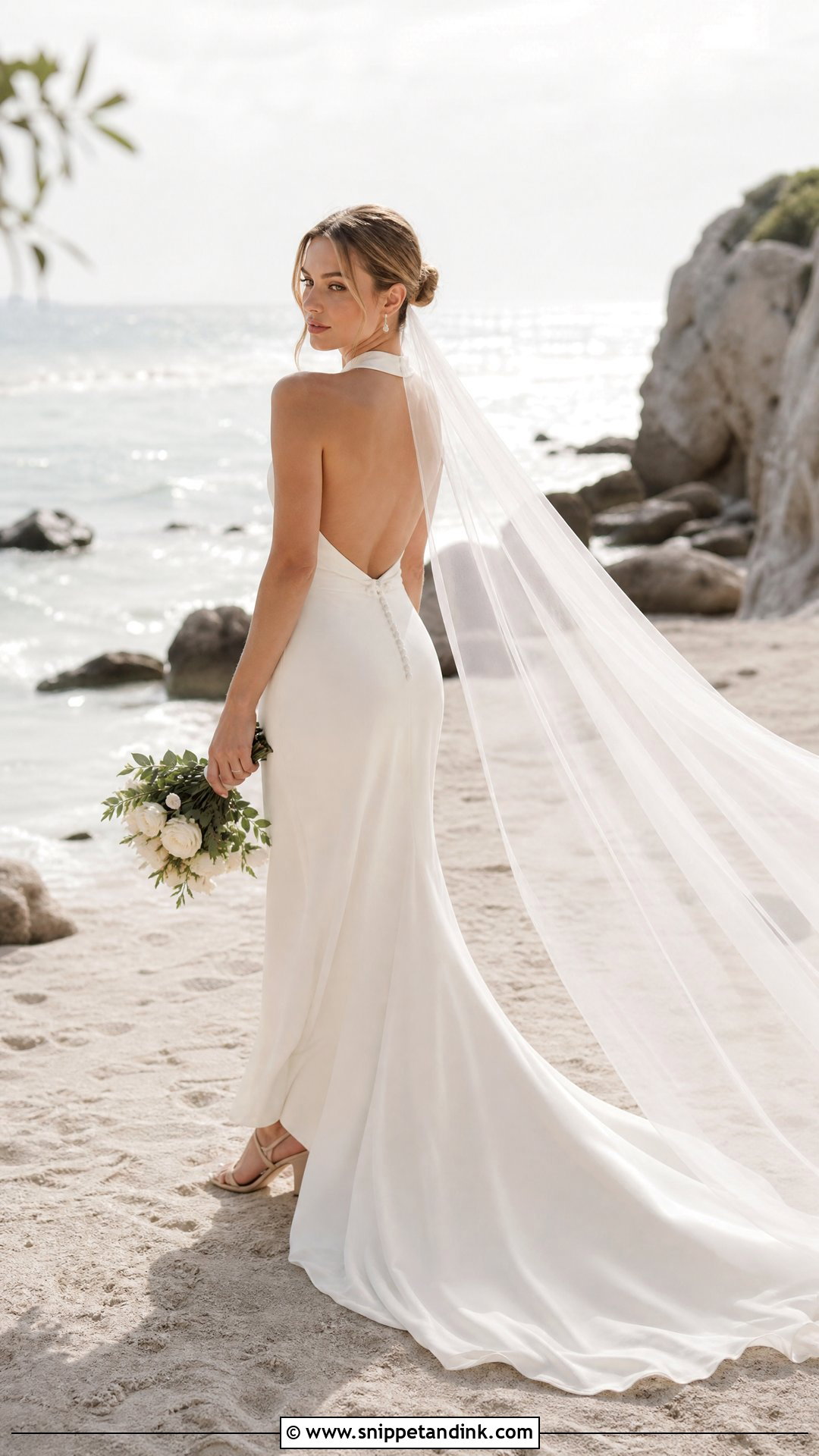
Halter tops and bias-cut skirts move well, but both are fragile in different ways. The halter needs real support through the bust if the back is open, so look for built-in cups or a bra strap you can hide under the neck tie. The bias skirt should skim the natural waist and fall; if it clings at the hips, it needs a size up, not taking in. Test lightweight ivory fabric outside in direct sun before the day, because it can turn see-through in a way you never notice indoors. A cape veil adds drama on a beach or at a pared-back summer venue.
11. Corset Top And Wide Leg Pants Bridal Set
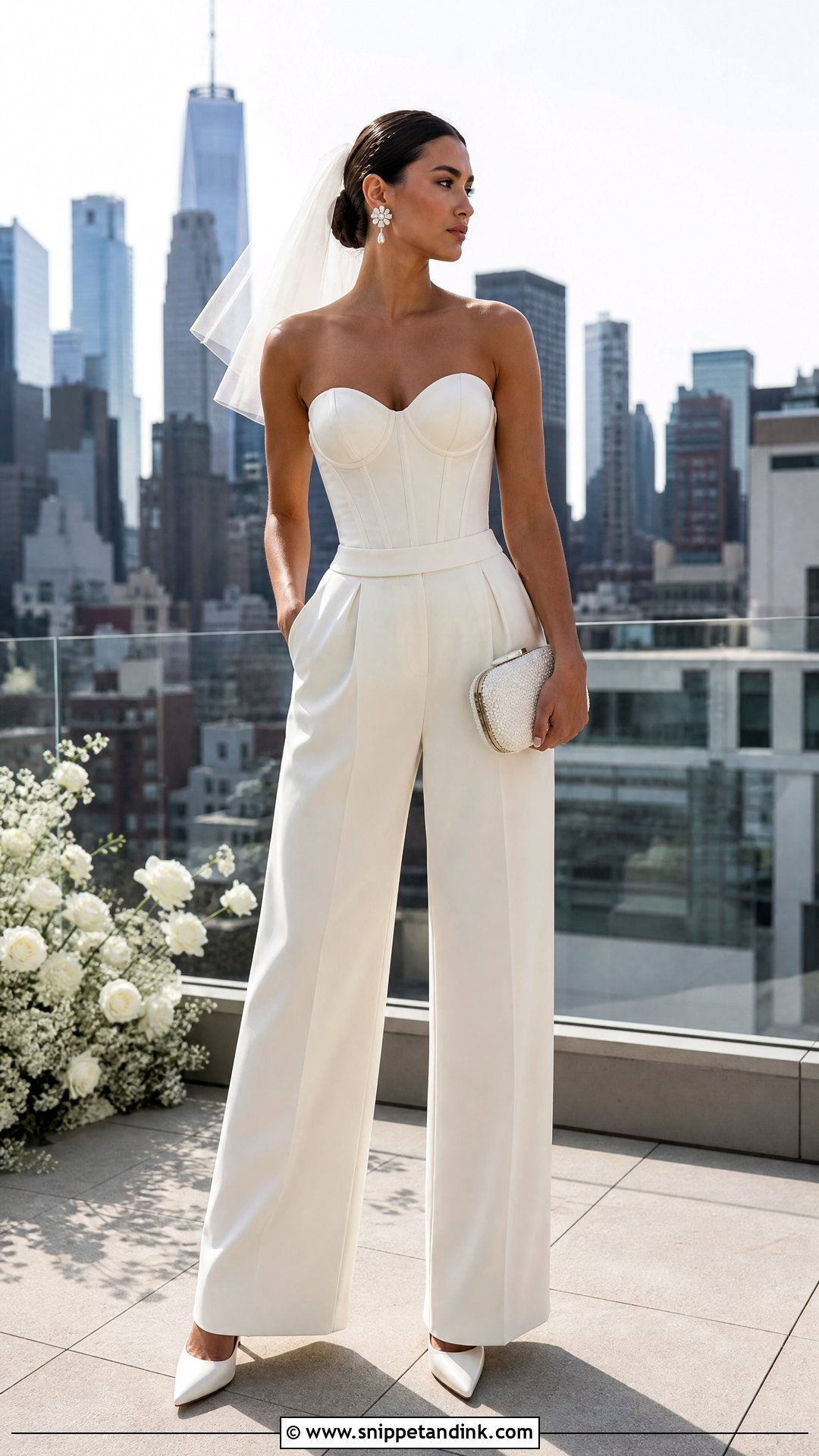
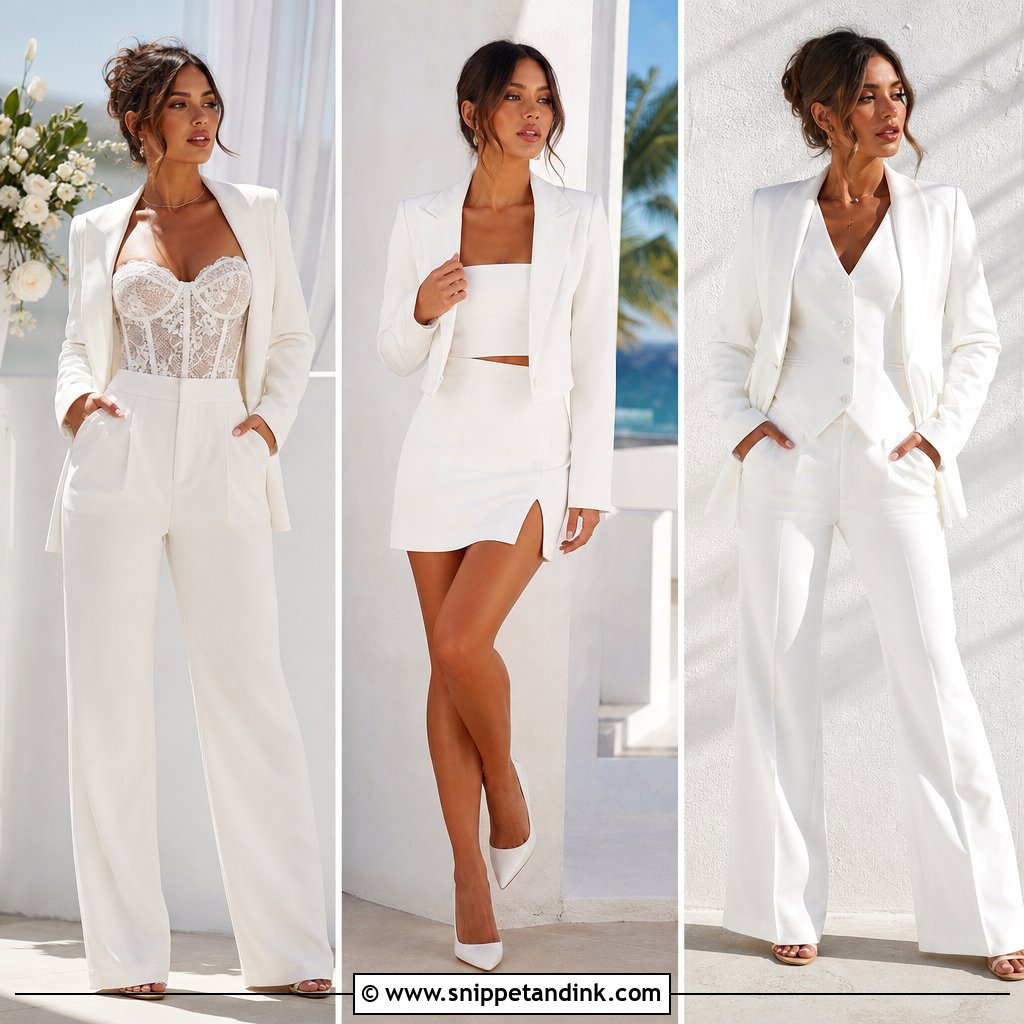
A fitted corset with wide-leg trousers gives you the shape of a gown with total freedom to move. The trousers matter most. Ask for a high waist with a flat front and a hem that just skims the floor in the shoes you’ll actually wear, so bring the shoes to every fitting. Corsets in satin, crepe or lightly beaded lace all work; pick by how formal the venue is. Sculpted corsets worn with both full skirts and sharp trousers have become a staple of recent bridal lines, so this pairing no longer reads as unconventional. A short veil or a bow headpiece finishes it, and an ivory blazer covers you for a cool rooftop evening.
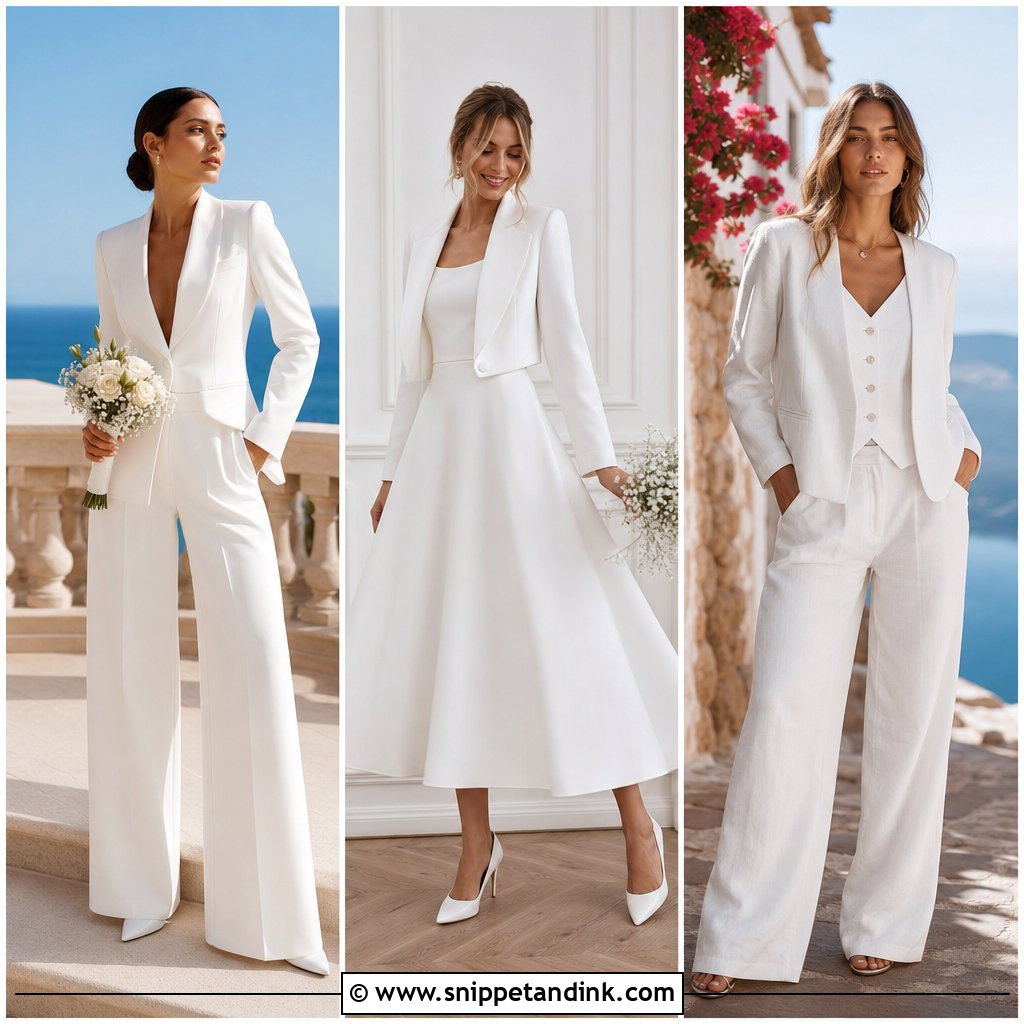
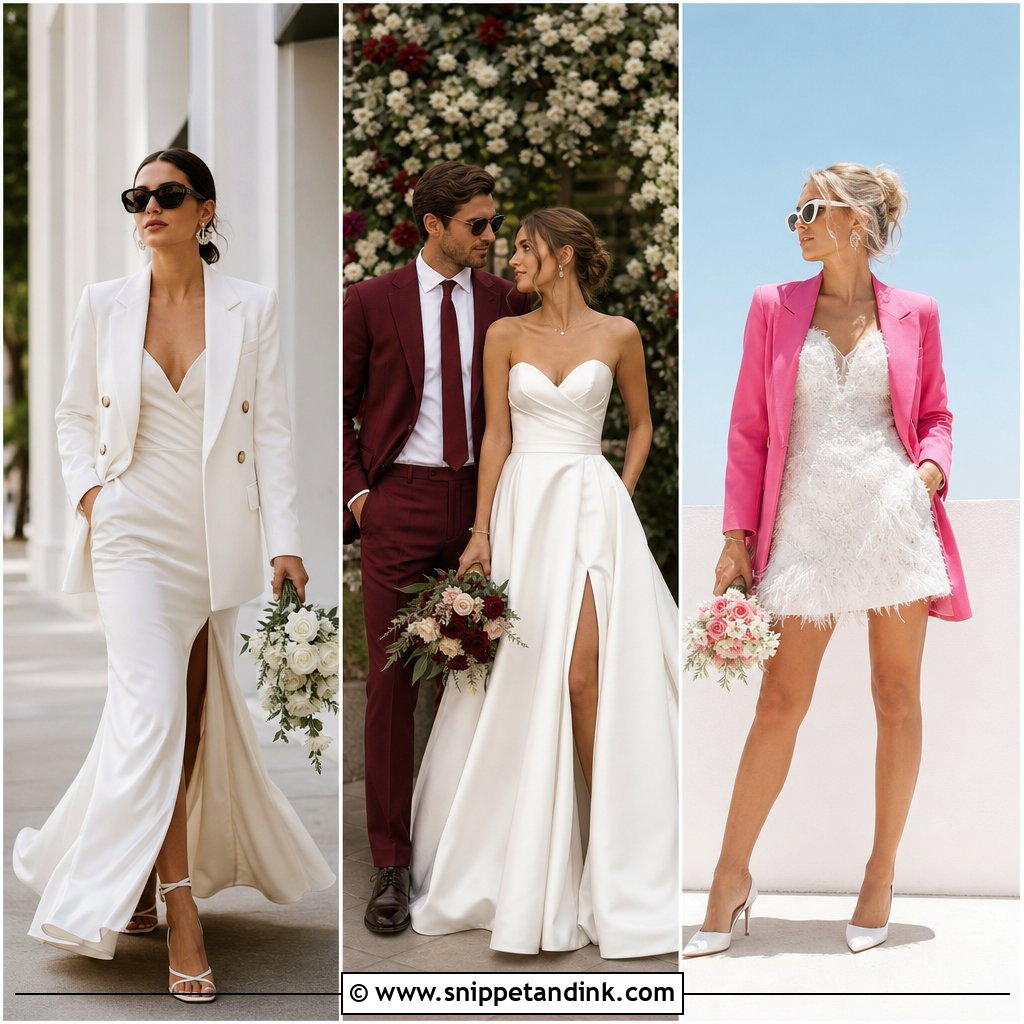
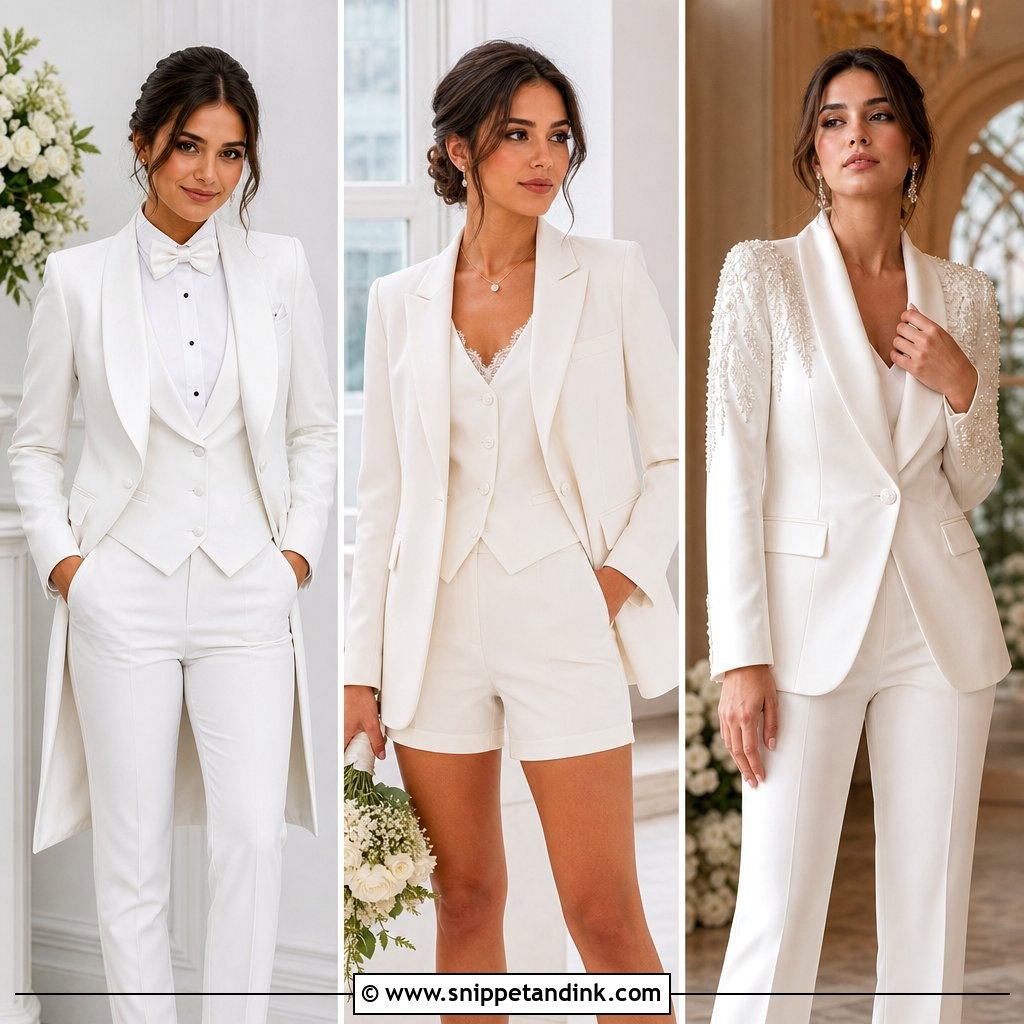
12. Bridal Blazer And Wide Leg Trousers Set
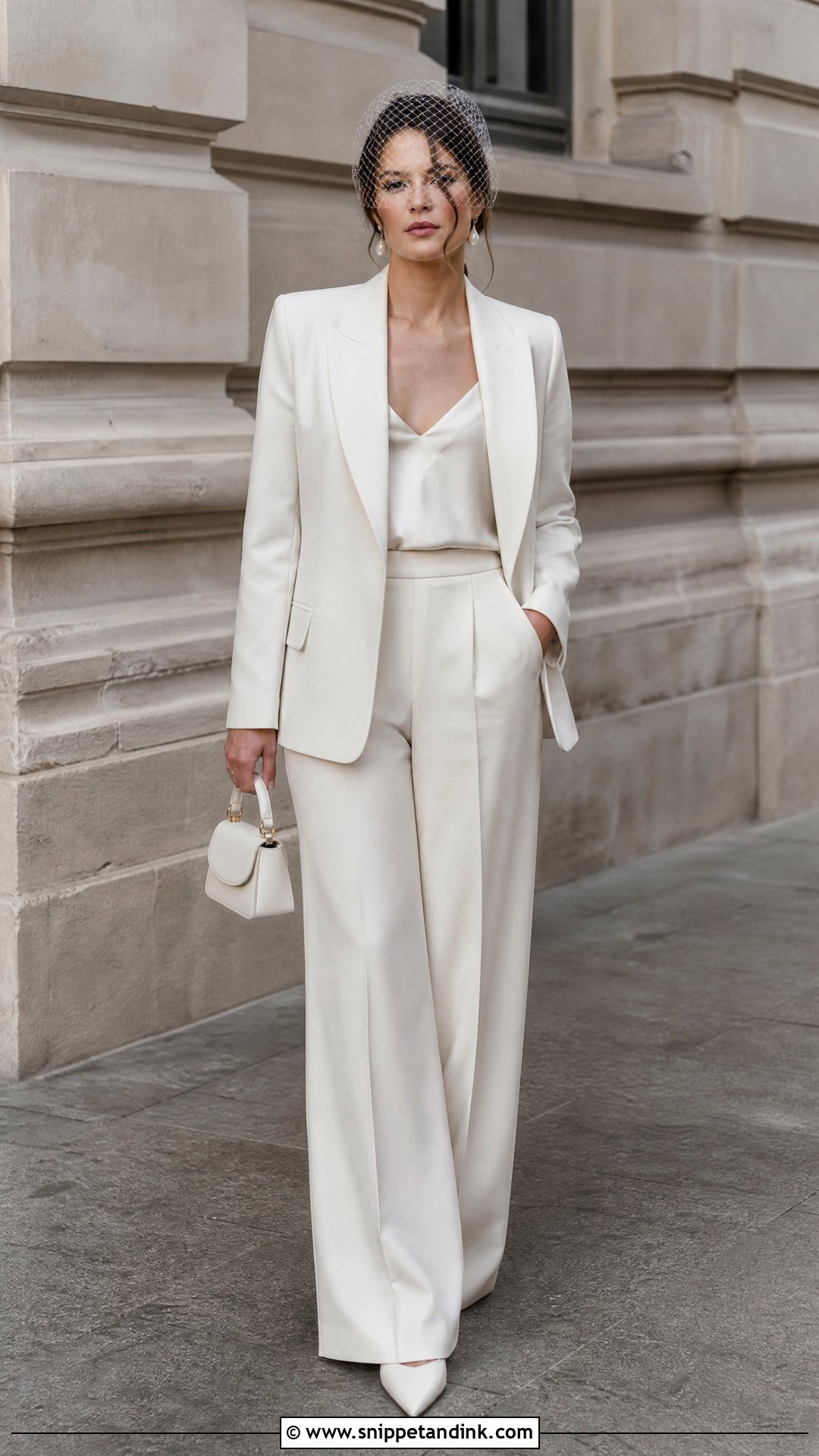
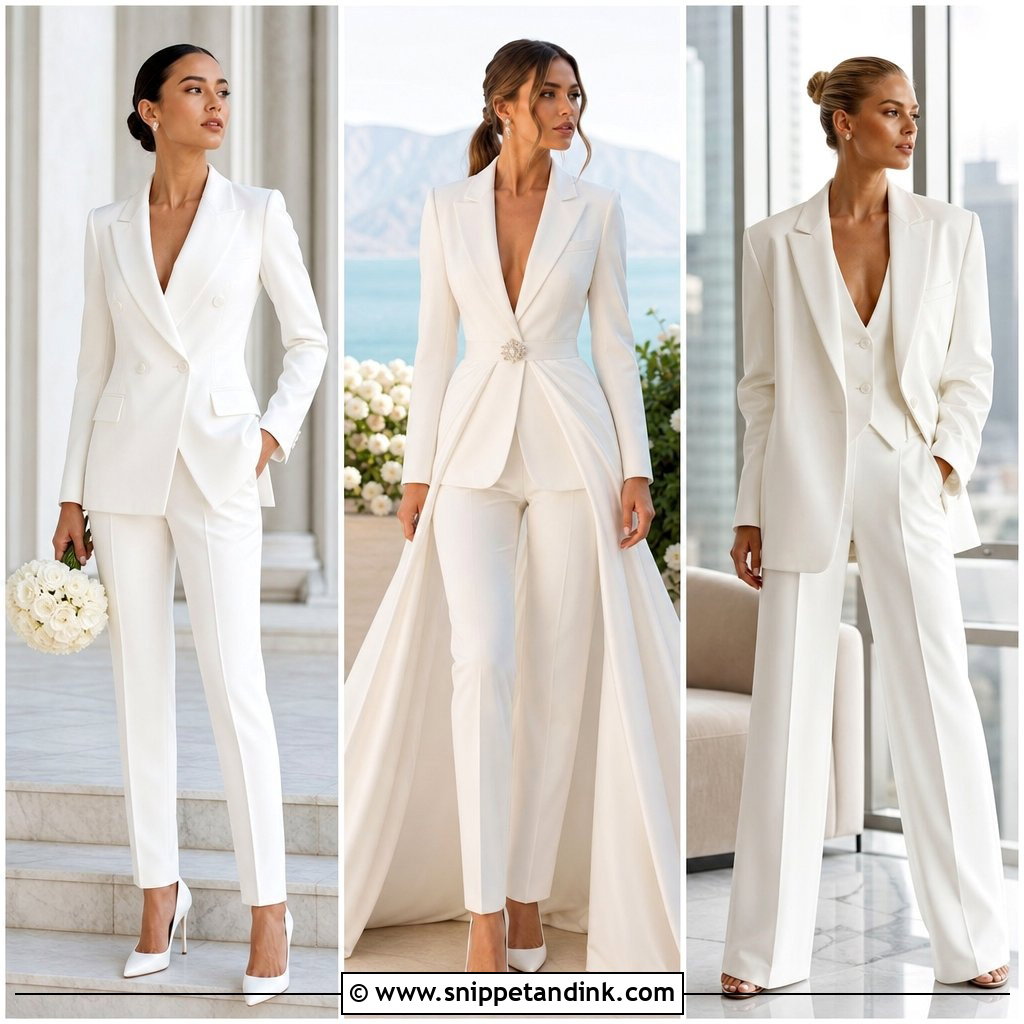
Tailoring is everything with a bridal blazer and wide-leg trousers. The blazer should sit on your shoulder seam exactly and button without pulling into an X across the bust; if it does pull, size up and have the waist taken in. Underneath, a silk camisole or a lace bandeau should stay hidden when buttoned. Floor-grazing trousers and pointed heels lengthen the leg. Tuxedo tailoring now sits comfortably alongside lace and pearls in bridal collections, so a birdcage veil and pearl earrings keep it unmistakably bridal. Both pieces are easy to wear again afterward, which is a real argument for this one at a courthouse or a restaurant wedding.
13. Lace Top And Tailored Pants Bridal Set
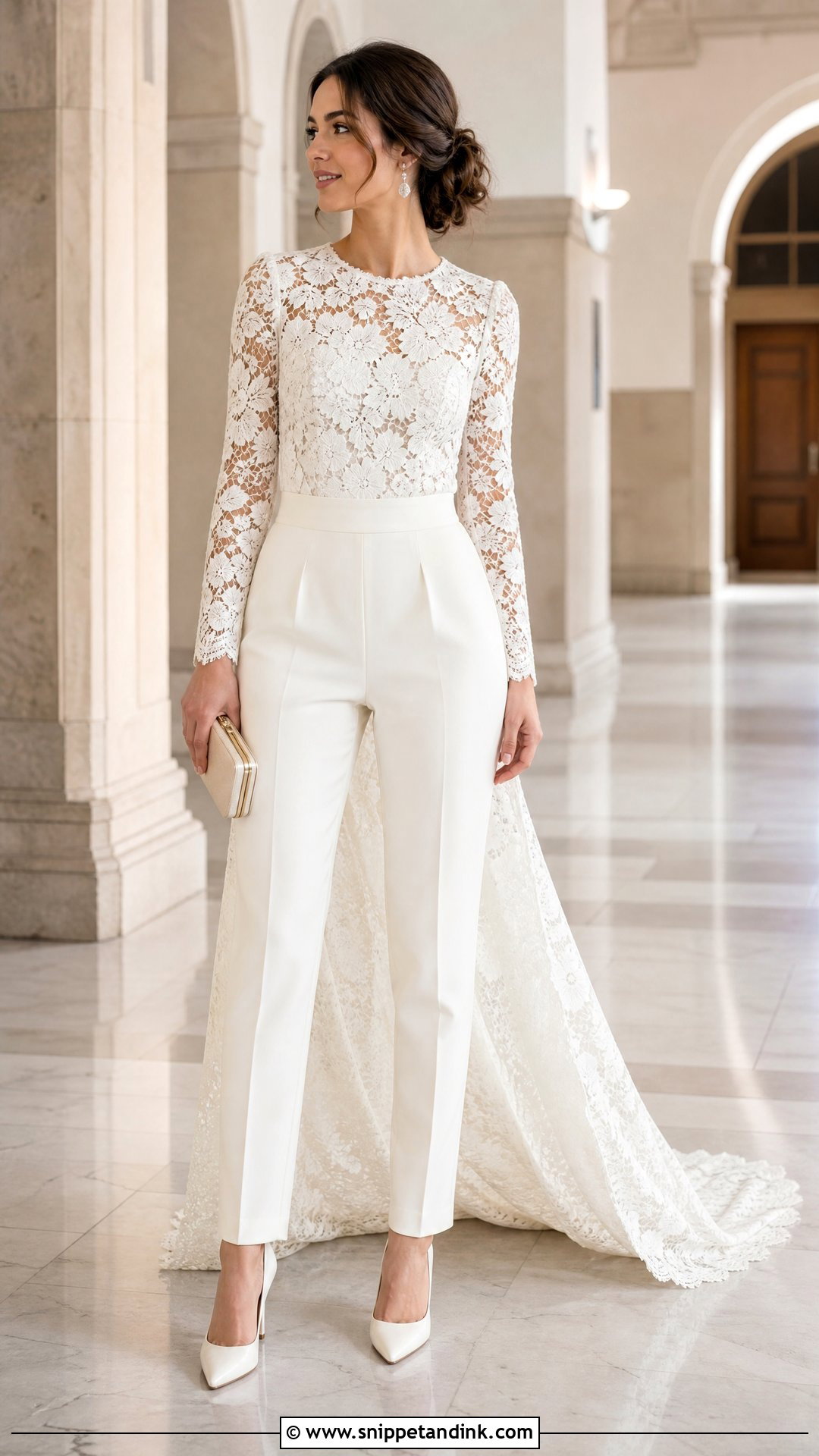
Lace with tailored trousers works when the lace is handled carefully at the waist. I check where the lace pattern ends: a good maker finishes the hem along a motif, while cheaper tops just cut through it, and that cut line sits right at eye level in photos. Choose a lined top for coverage or an illusion top with placed appliques for a lighter feel. High-rise straight or slightly flared trousers lengthen the leg. A detachable lace train gives you a ceremony moment and comes off before dancing. It suits a civil ceremony or a rehearsal dinner, and brides who simply feel more like themselves in trousers.
14. Cape Top And Palazzo Pants Bridal Set
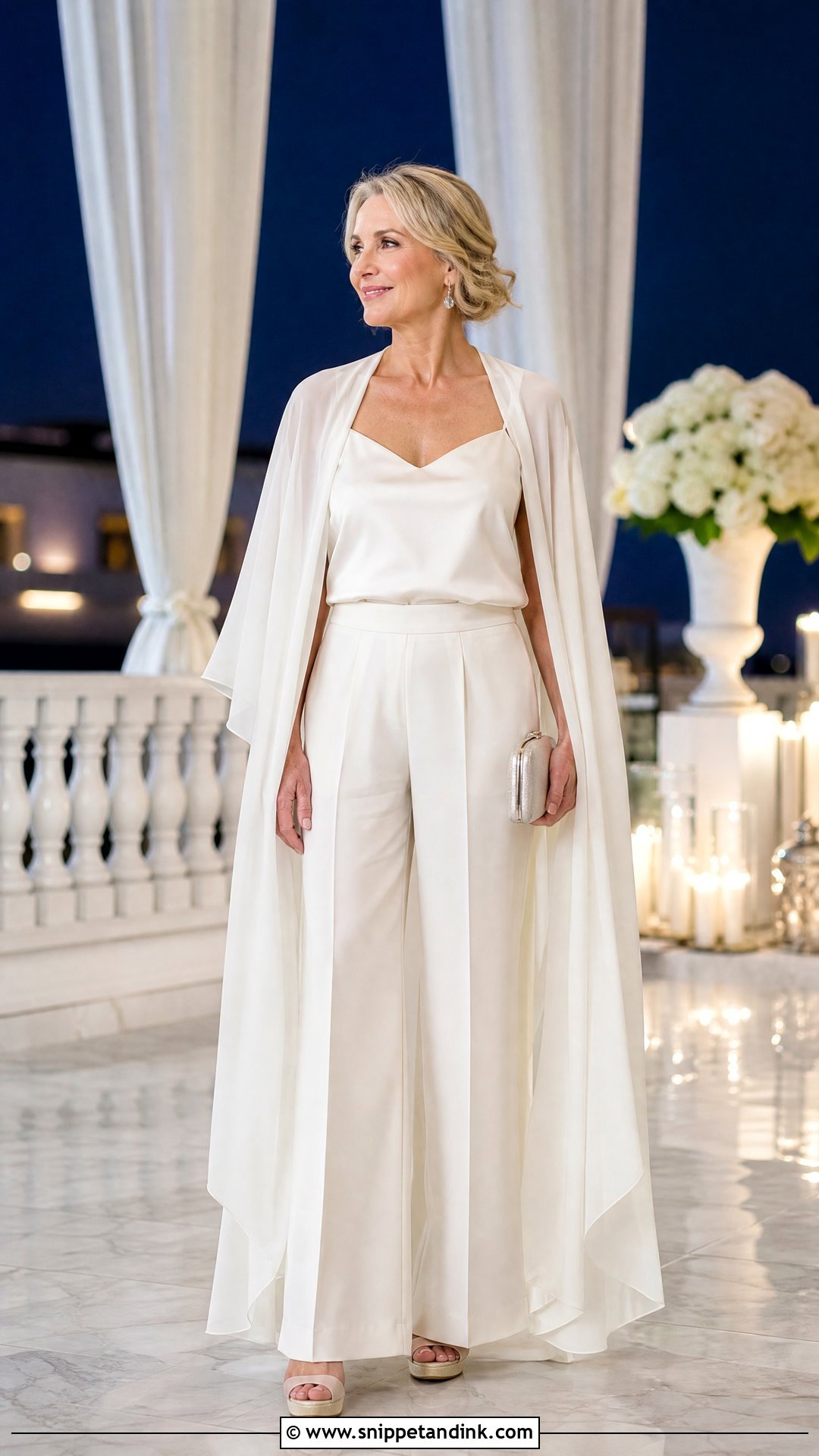
A crepe or chiffon cape over a fitted camisole gives coverage and movement without any corsetry. The cape should fall from the shoulder seam, not halfway down the arm, or it swamps a petite frame. Palazzo trousers need a high waist and should skim the hips before flaring. Get the hem right with your shoes on: palazzos dragged on the floor collect dirt within the first hour, so block heels or platforms help. With the cape already doing the work, a veil is optional. This is the pairing I suggest most to brides who dislike boning or heavy skirts.
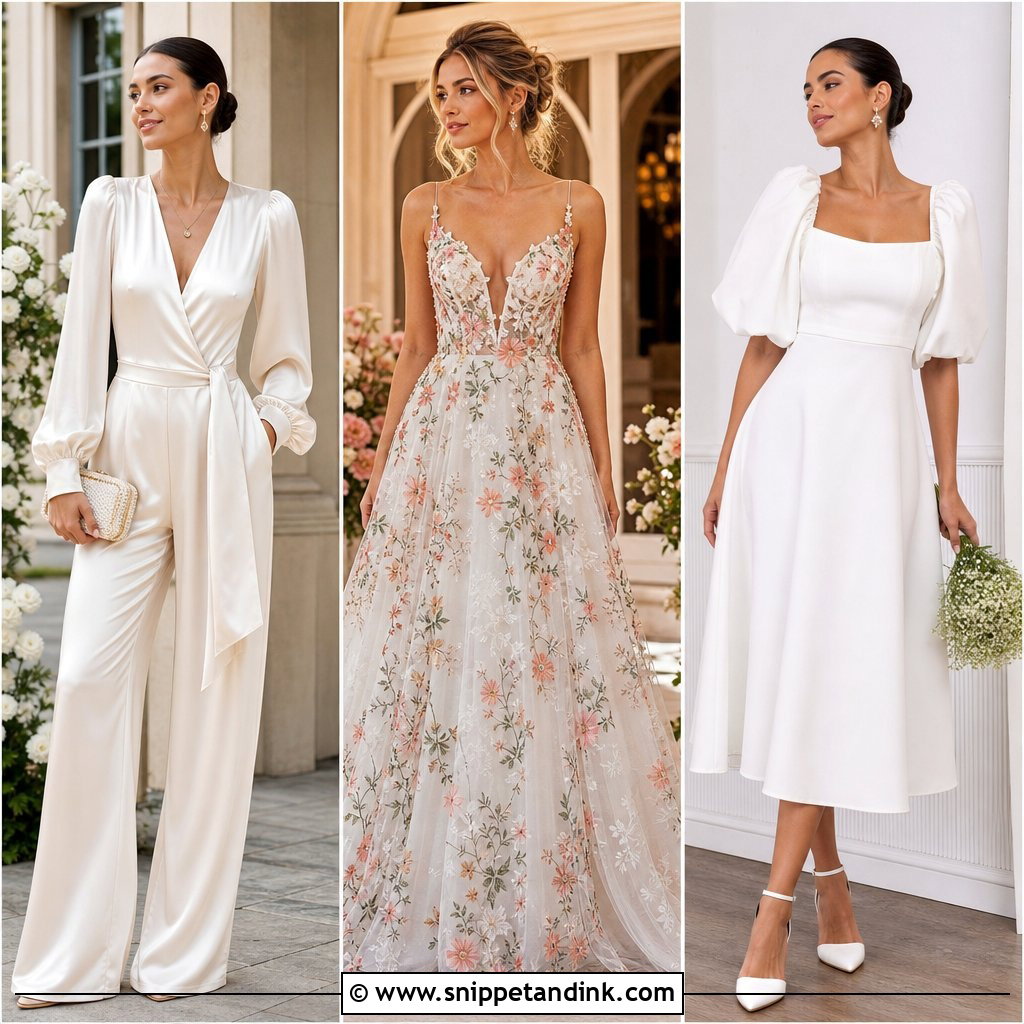
15. Peplum Top And Pencil Skirt Bridal Set
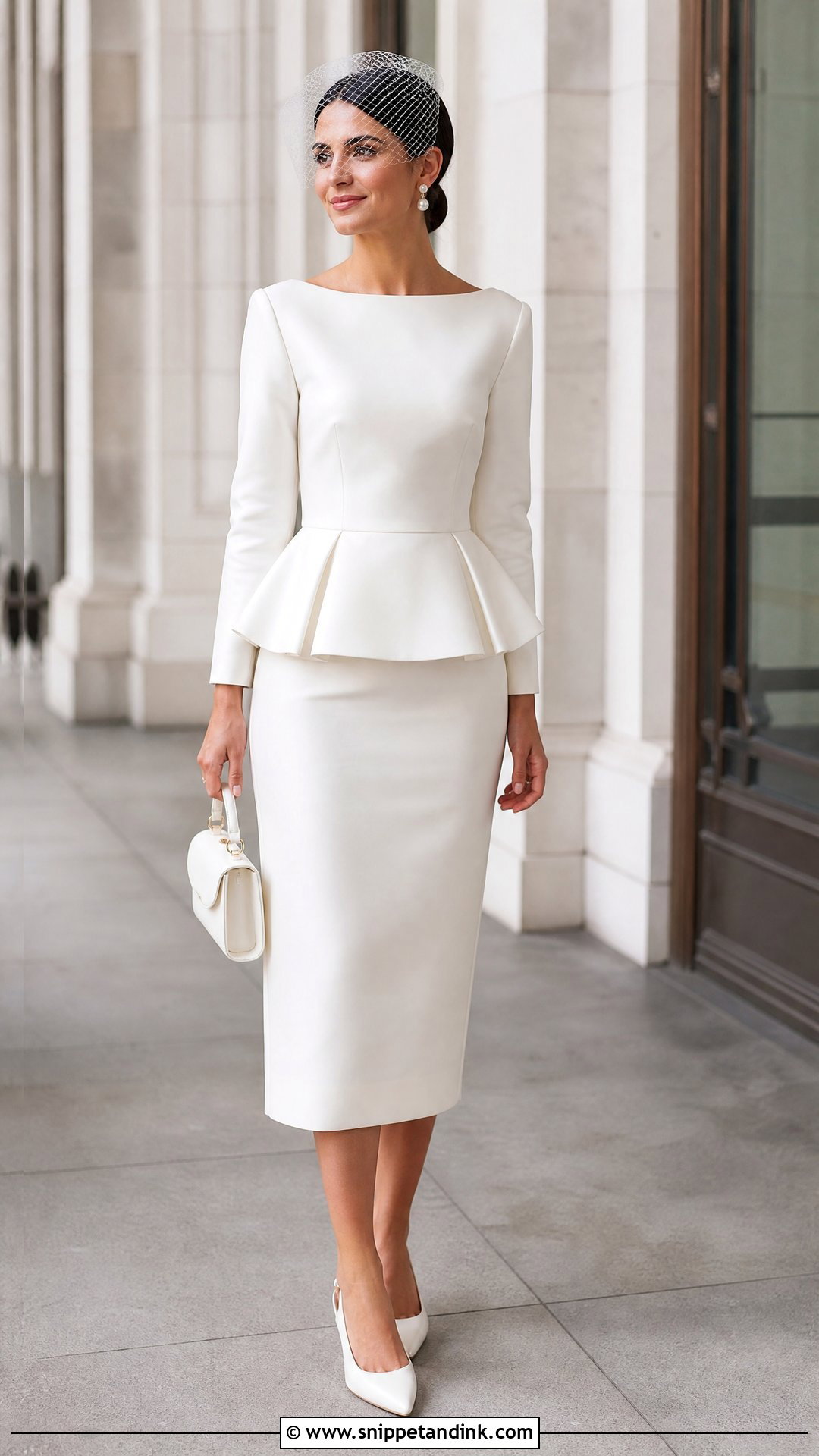
A tailored peplum top with a pencil skirt borrows from classic occasion suiting. The peplum should end above the widest part of your hips; if it lands right on them, it adds width instead of shaping the waist. Pencil skirts need a back vent or slit you can walk and climb steps in, so test stairs at your fitting. Go midi for a courthouse or floor length for an evening dinner. Choose the neckline by coverage, then add slingbacks and a small netted veil.
16. Puff Sleeve Top And Full Skirt Bridal Set
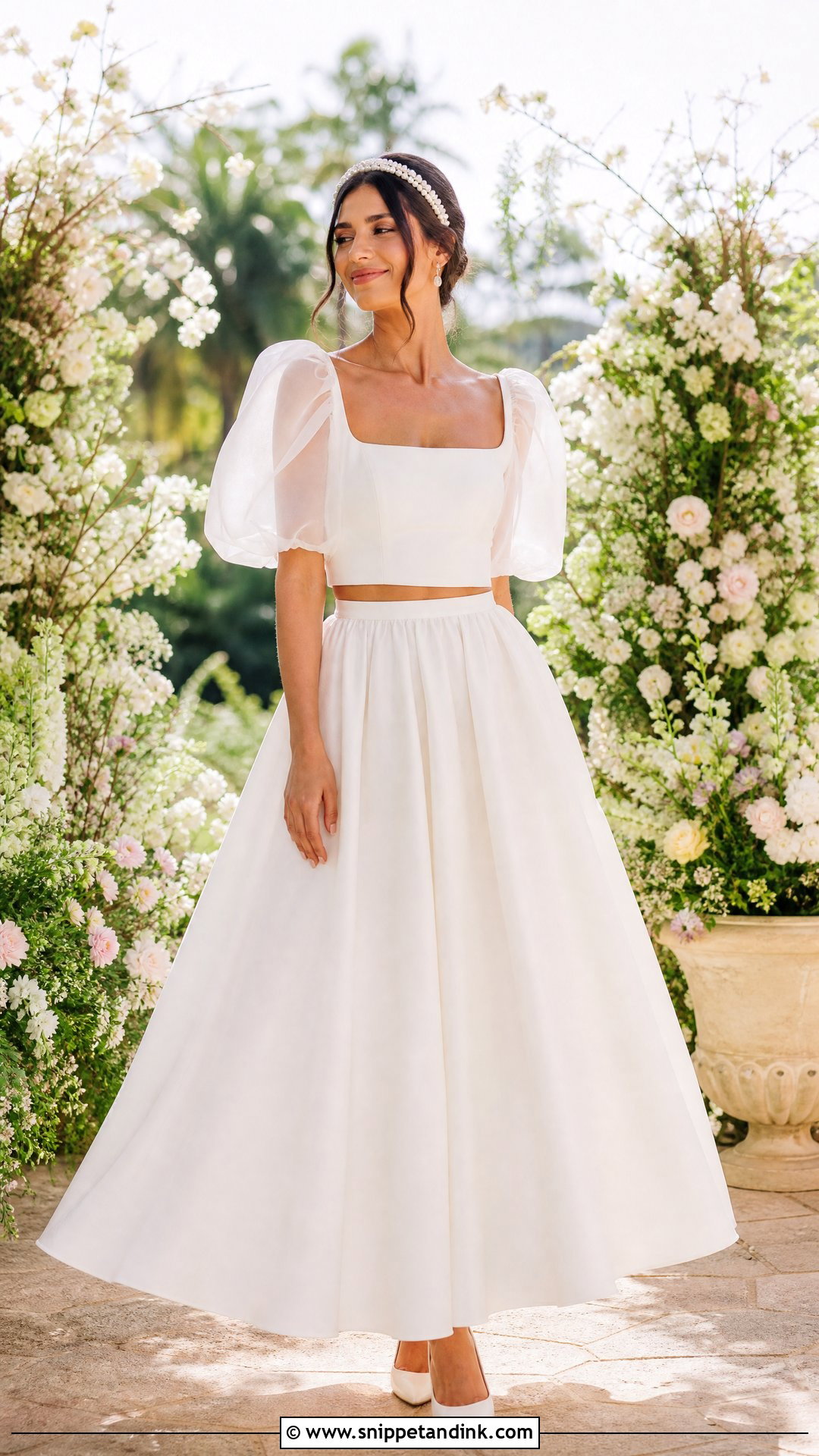
Puff sleeves and a full skirt mean volume at both ends, so the waist has to be properly fitted or the whole thing looks shapeless. Organza sleeves stay light and see-through; satin ones hold more shape and look stronger in photos. On a petite bride I scale the puff down and lighten the skirt layers, otherwise the outfit wears her. Keep the veil narrow so it doesn’t fight the sleeves, and go simple with a headband and small pearls. It suits a historic house or a garden ceremony.
17. Floral Appliqué Top And Organza Skirt Bridal Set
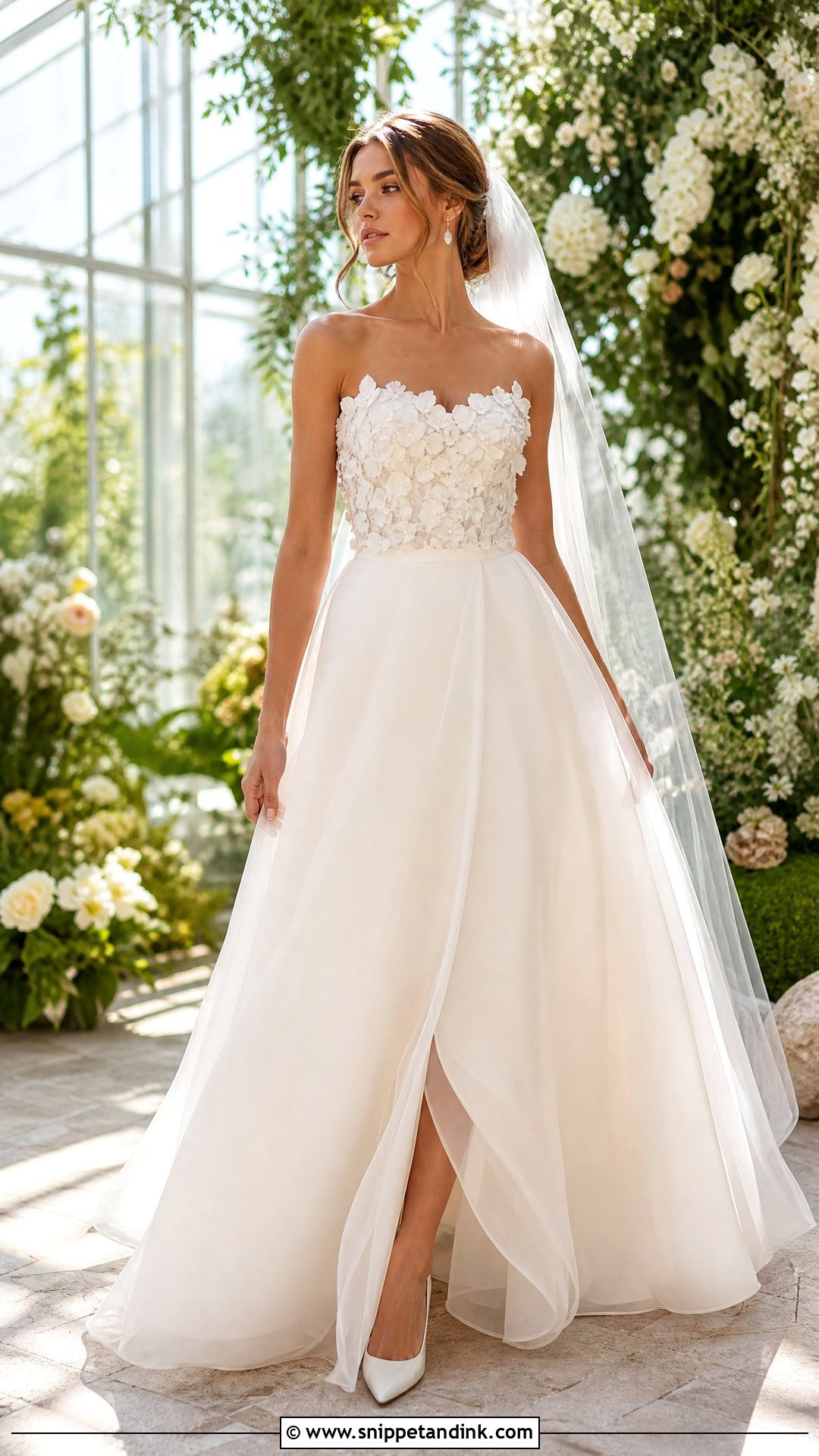
Three-dimensional floral appliques turn a simple top into the main event of the outfit. Balance them with a plain organza skirt, or carry two or three matching flowers onto the waistband to link the pieces. Sculpted flowers and sheer lace separates are both showing up widely in new bridal collections. Before you decide on the lining, compare nude and ivory behind the appliques: nude makes the flowers look like they’re floating on skin, ivory makes them read as a pattern. Keep the bouquet small so it doesn’t compete. I’d also check how the raised flowers sit under a seatbelt or a bouquet, because they crush.
18. Bow Top And Column Skirt Bridal Set
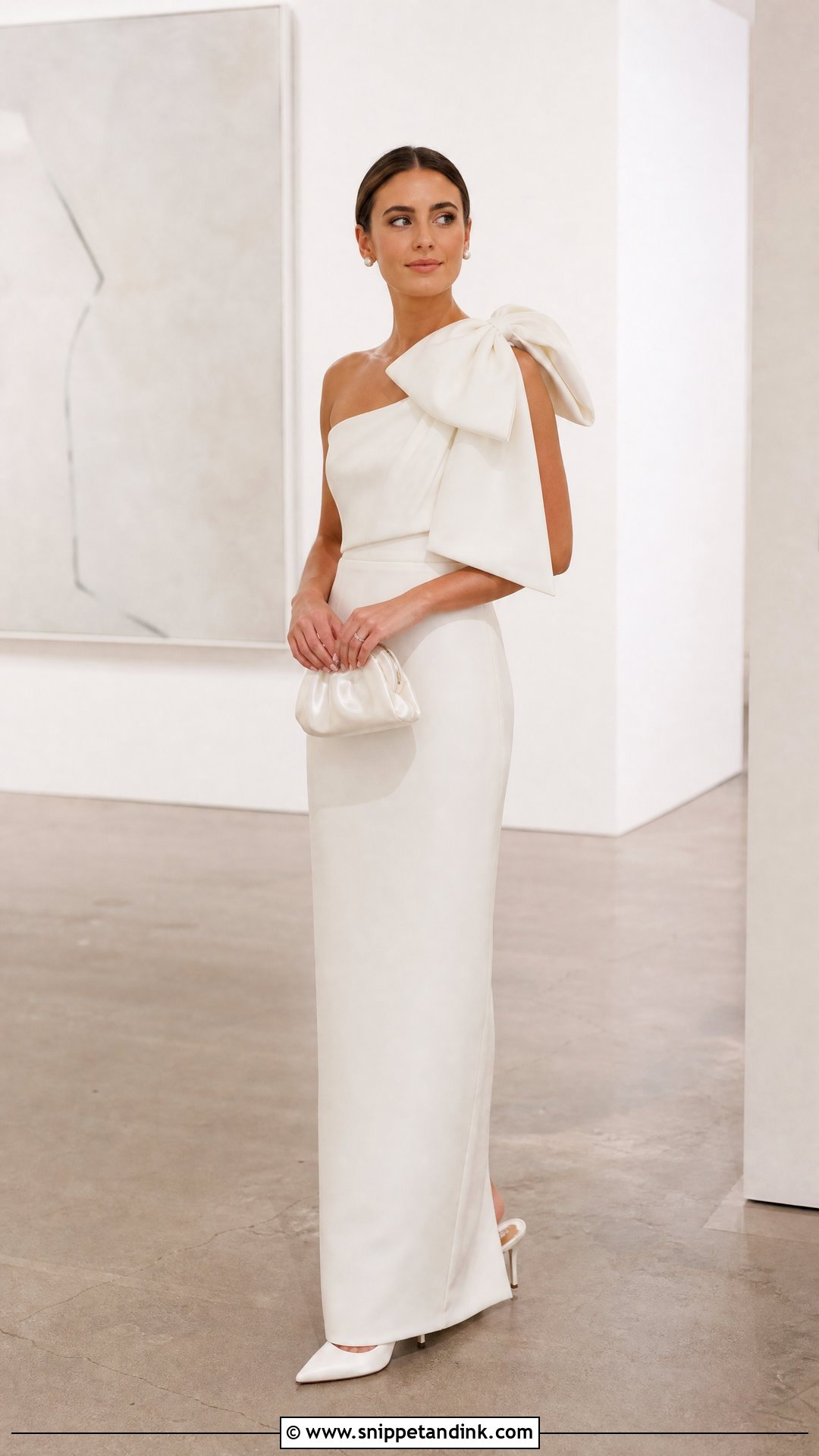
A bow is a single strong detail, so everything else should be quiet. Decide which angle you want people to see: a bow at the neckline is for the ceremony aisle, a back bow is for the walk out. Keep the column skirt plain, with a back slit you can walk in. If the bow sits at the back, choose a short veil or skip it and wear decorative pins, since a long veil flattens the bow. A small satin clutch and pearl studs are enough at a modern venue or courthouse.
19. Fringe Top And Satin Midi Skirt Bridal Set
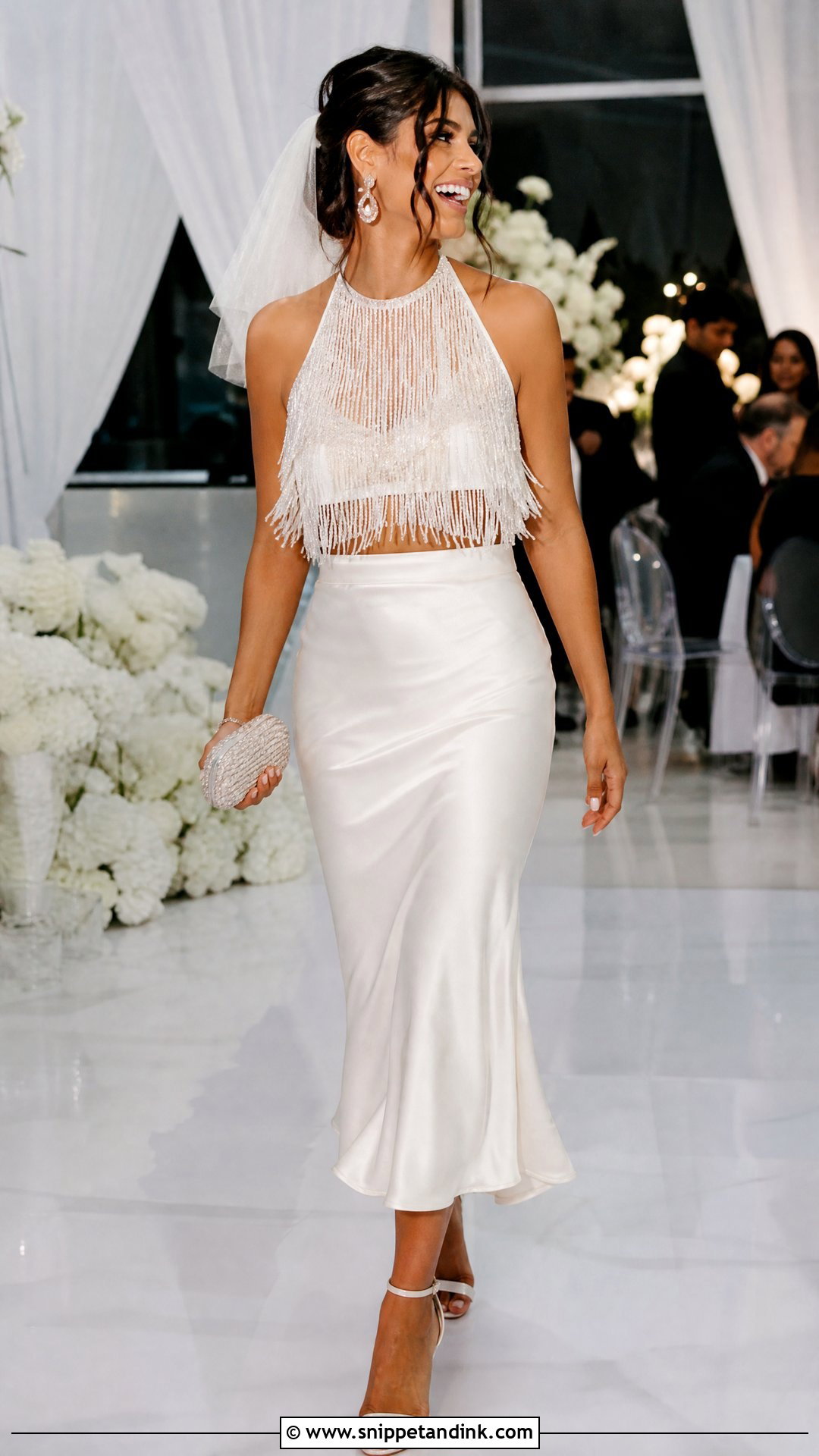
Fringe is a reception piece first. Fine beaded fringe swings beautifully but adds weight, while fabric fringe is lighter and quieter; try both on and move your arms. A high-waisted satin midi skirt keeps the cropped top looking deliberate. Dance in it at the fitting, since fringe catches on bracelets, earrings and the skirt’s hook fastening more than you’d expect. Ankle-strap heels stay on while you dance, and a short veil or bow keeps the set bridal for a welcome party or a relaxed civil ceremony.
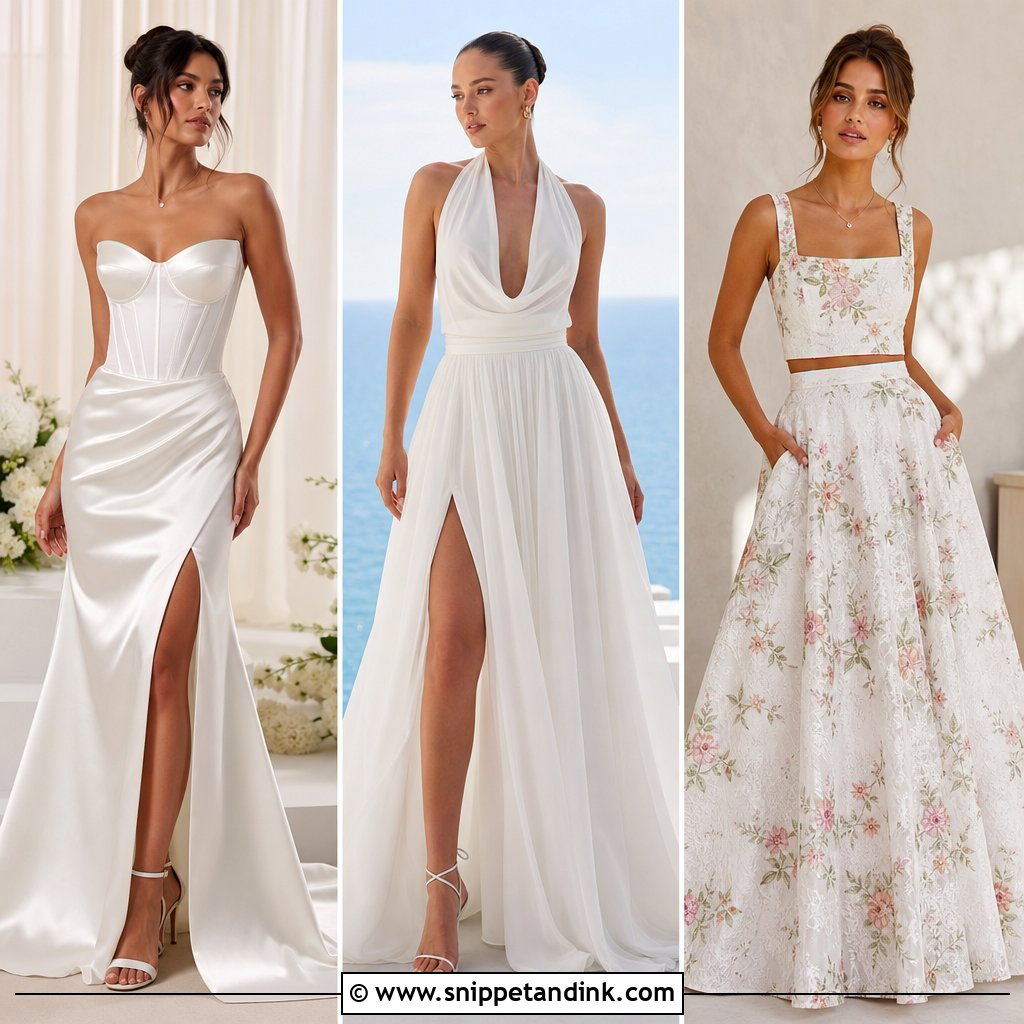
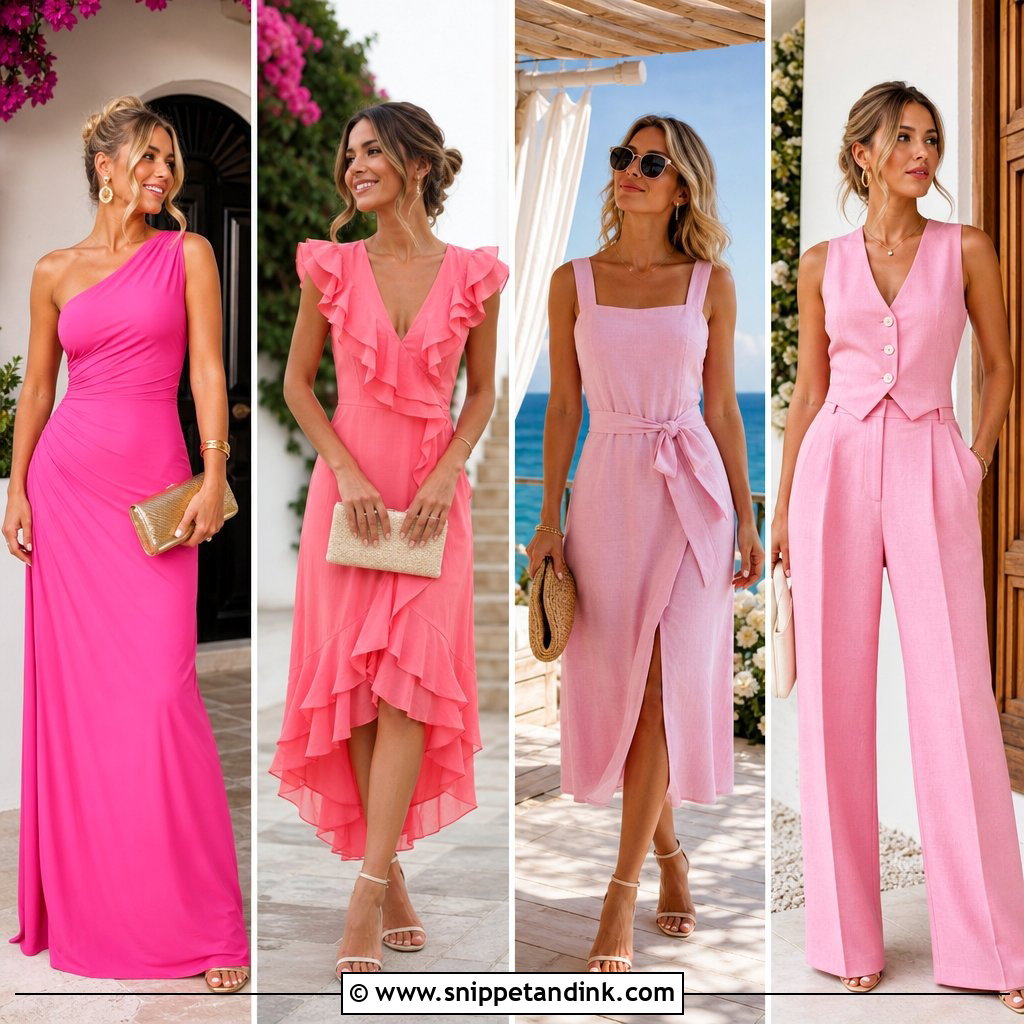
20. Sequin Top And Mini Skirt Bridal Set
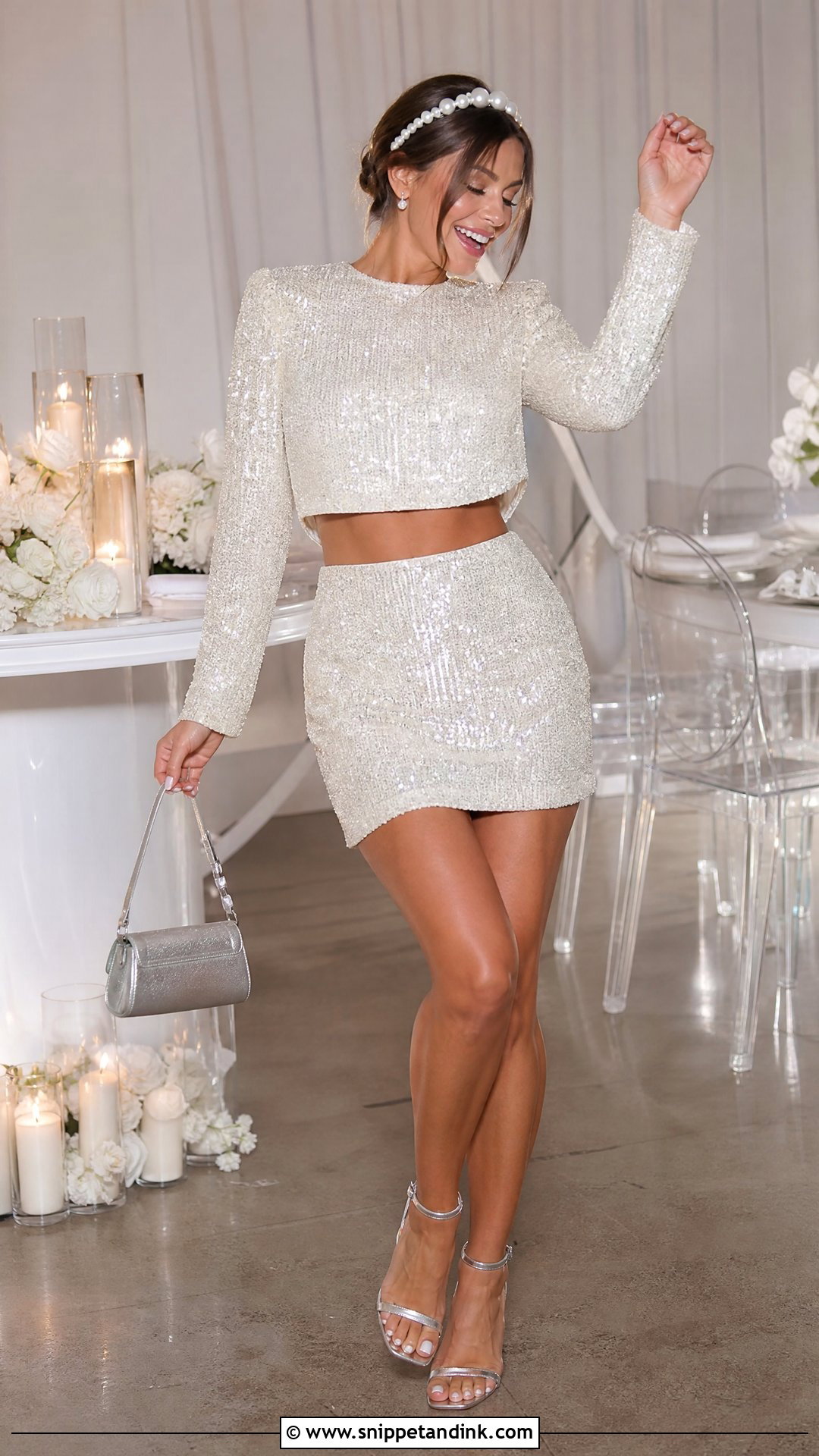
A sequin top and a matching mini make an easy second look for the dance floor. Sequins scratch, so check the inside of the arms and underarm seams; a lined top saves you a raw patch by midnight. A long-sleeve top balances a short hem, while sleeveless feels lighter in warm weather. Sit, walk and dance in the skirt before the final alteration, because minis ride up more than you think. Small earrings and a mini bag are enough, and a pearl headband or short veil keeps it reading as the bride.
21. Feather Trim Top And Satin Pants Bridal Set
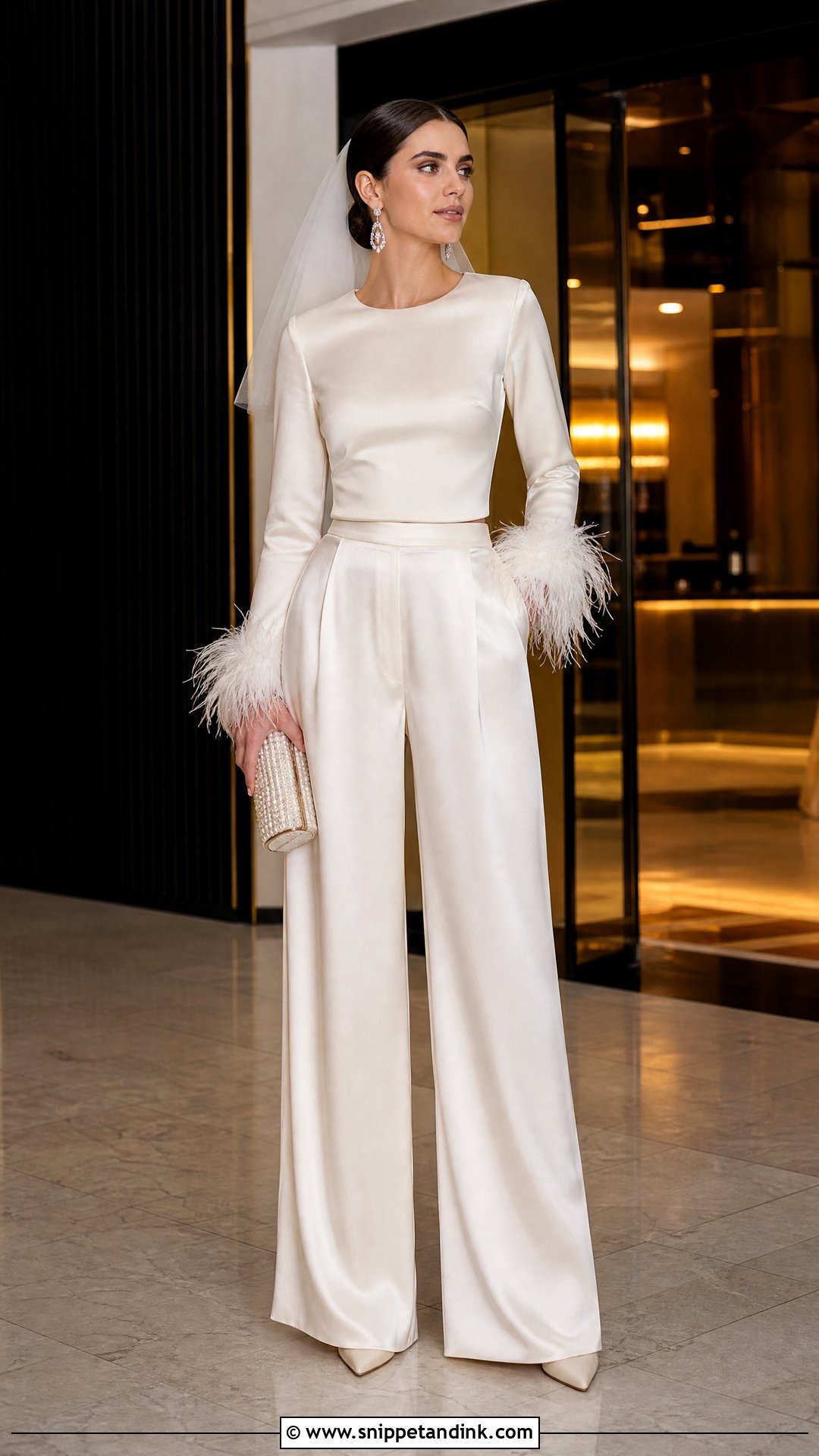
Feather trim needs restraint: at the neckline, cuffs or hem only, never the whole top. Ostrich and marabou both shed, and ivory satin trousers show every stray wisp, so give the top a gentle shake and a lint roll before you dress. Ask the maker how the feathers are attached; sewn-in strips last far longer than glued edging. Pair it with straight or wide-leg trousers in the same ivory. A short plain veil works for the ceremony, then a sleek ponytail for an evening hotel reception.
22. Linen Crop Top And Maxi Skirt Bridal Set
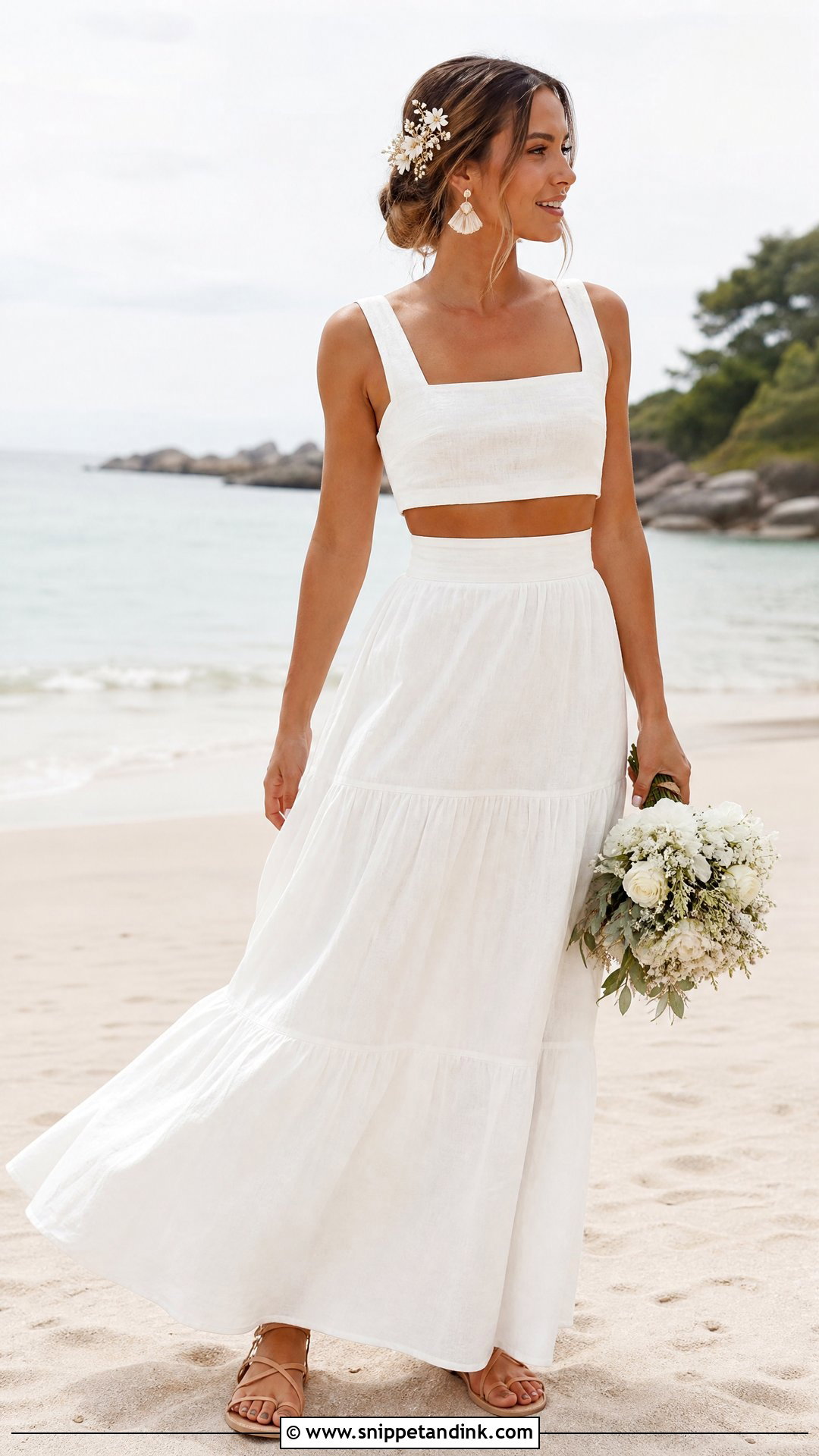
A linen top and flowing maxi skirt is the most comfortable pairing here for heat and sand. Choose lined linen, because unlined white linen is see-through in sunlight. Accept that it will crease the moment you sit down; that’s the fabric’s nature, and a linen-silk blend creases less if that worries you. A wrap or square-neck crop pairs with a skirt that falls loosely from a high waist. On sand, I hem the skirt slightly above the ground so it doesn’t drag. Swap a long veil for a comb or short veil in coastal wind, and wear flat leather sandals.
23. Embroidered Top And Tiered Skirt Bridal Set
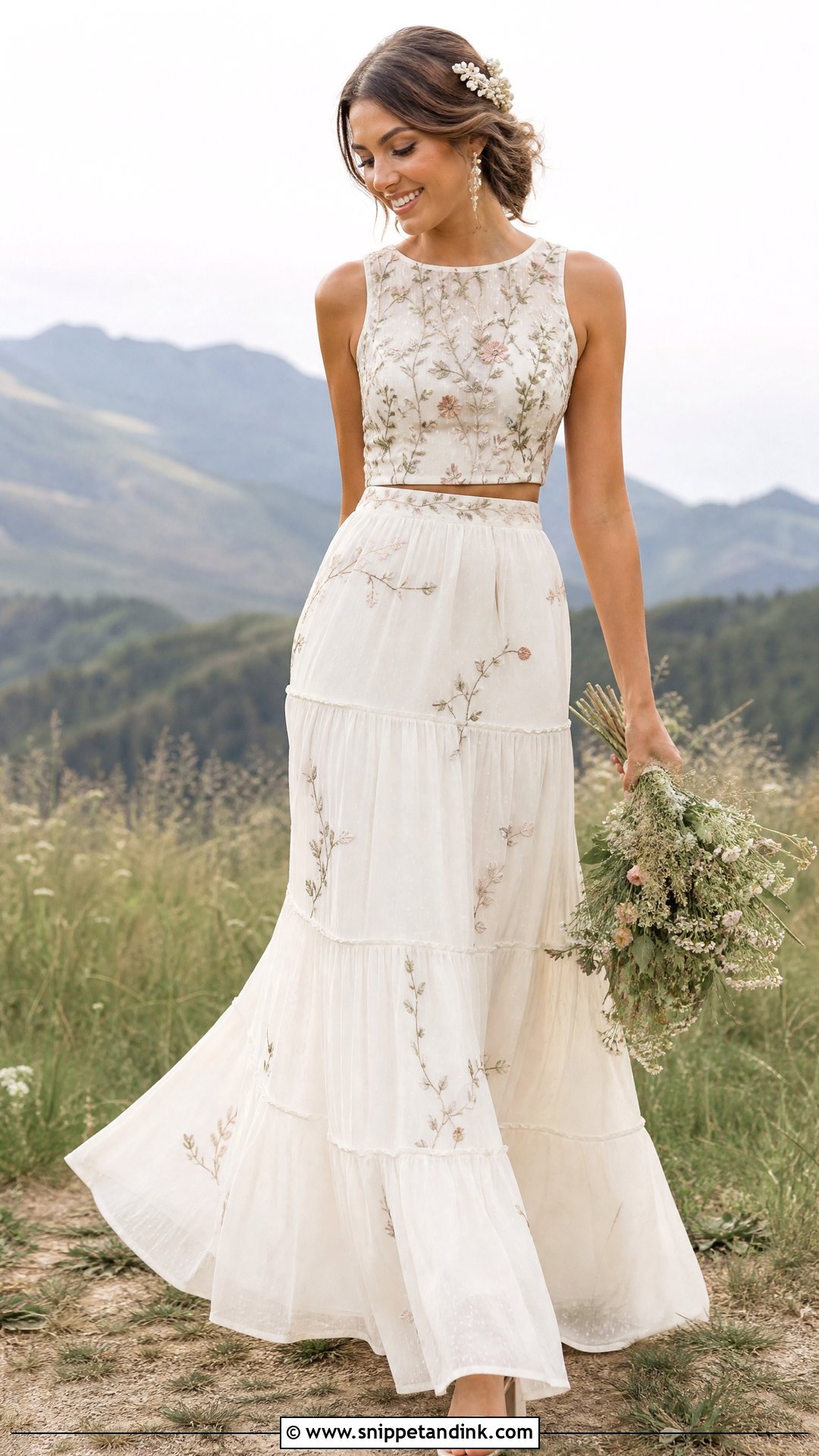
Tiered skirts add volume one layer at a time, and where the first tier starts makes all the difference. If it begins at the waistband, it adds bulk at your middle; starting it a hand’s width lower keeps the waist neat under a fitted embroidered top. Choose botanical, geometric or tonal embroidery, but only one. For a cooler meadow ceremony, a sheer long sleeve or an embroidered wrap keeps you warm. Block heels don’t sink in grass, and a floral comb suits the relaxed mood of a rustic venue.
24. Bridal Bodysuit And Detachable Overskirt Set
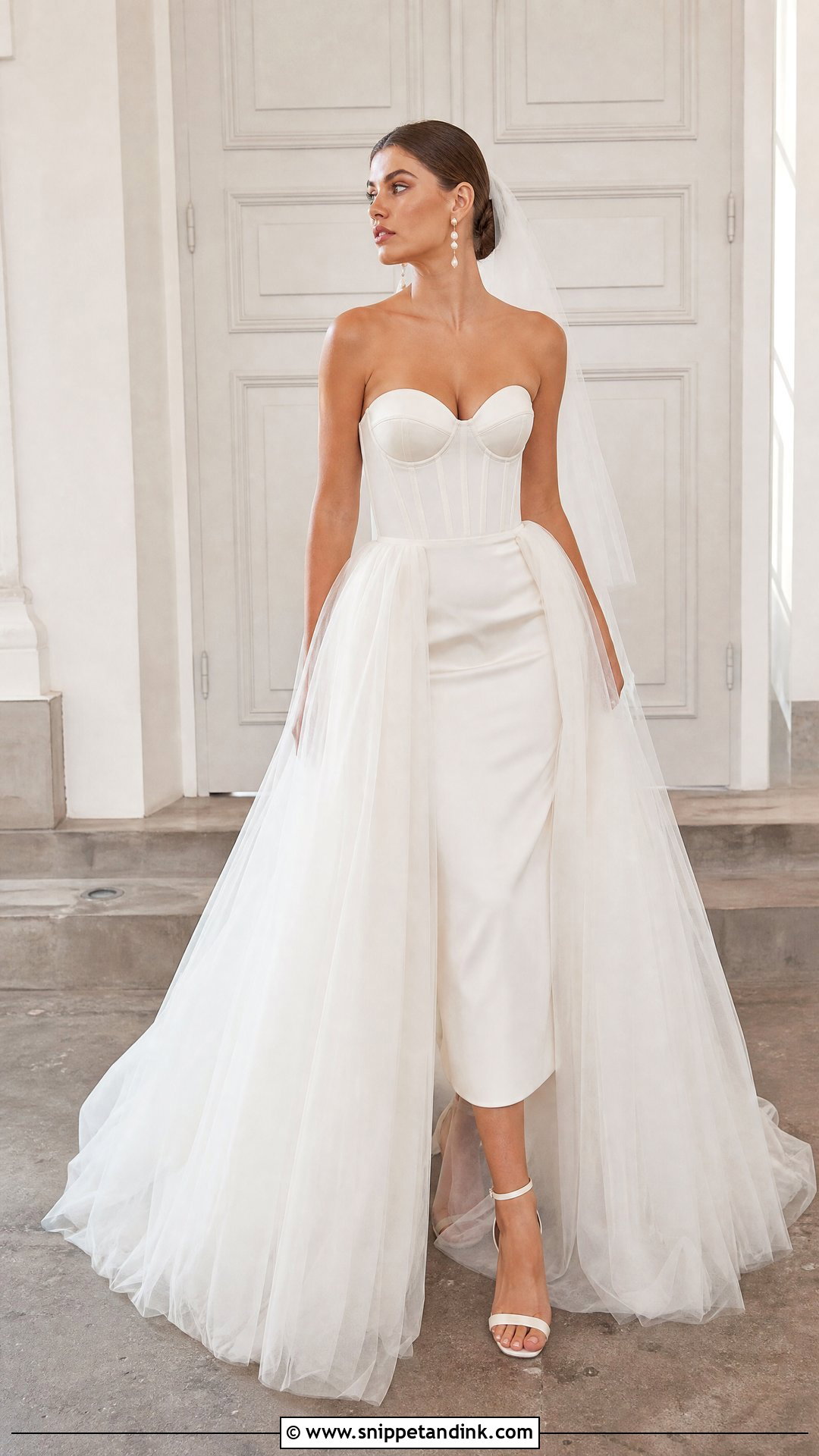
A fitted bridal bodysuit with a detachable overskirt gives you two looks without a full change. Wear the tulle, organza or satin overskirt for the ceremony, then unclip it to reveal the bodysuit with shorts, a mini or slim trousers. The closure is what I test hardest: hooks and bars hold securely but need a second pair of hands, while snaps are quick but can pop open on a dance floor. Practise removing it with whoever will help you on the day. Statement heels and drop earrings work with both versions.
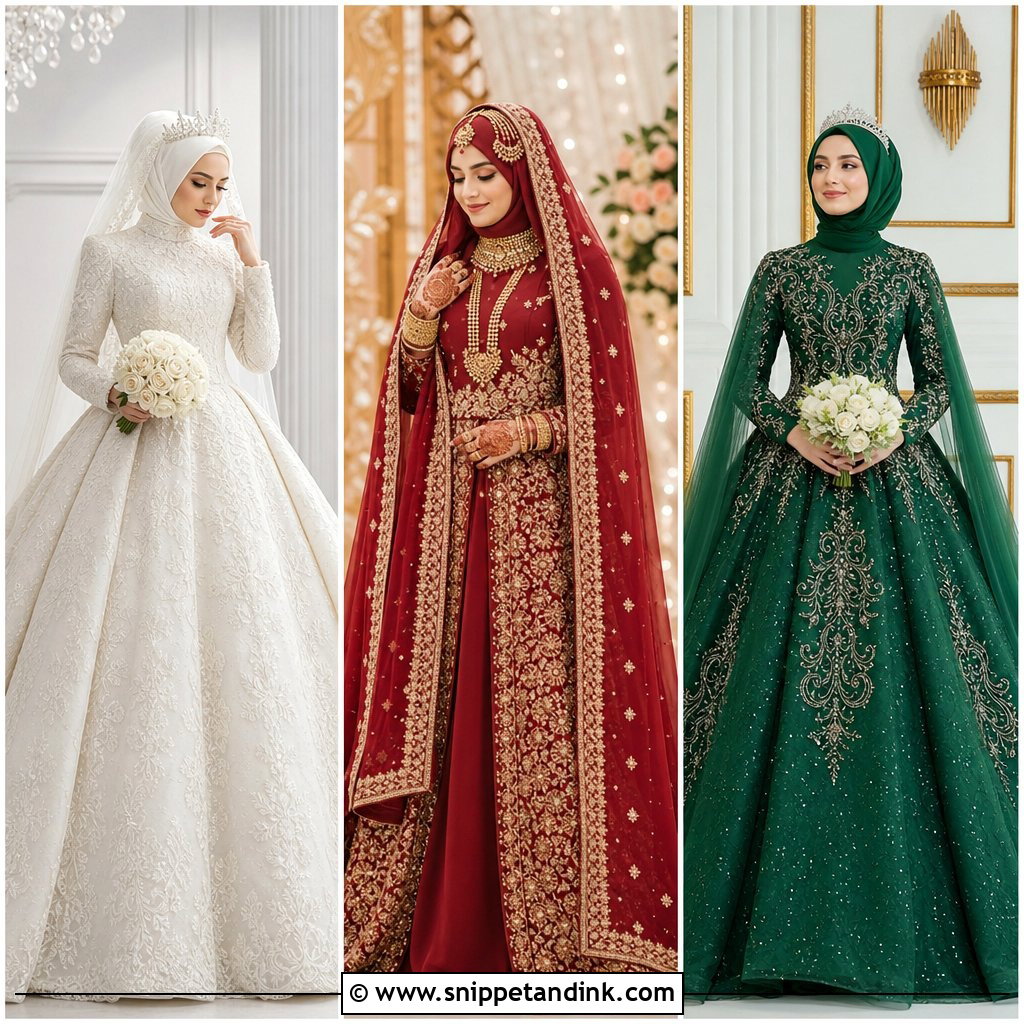
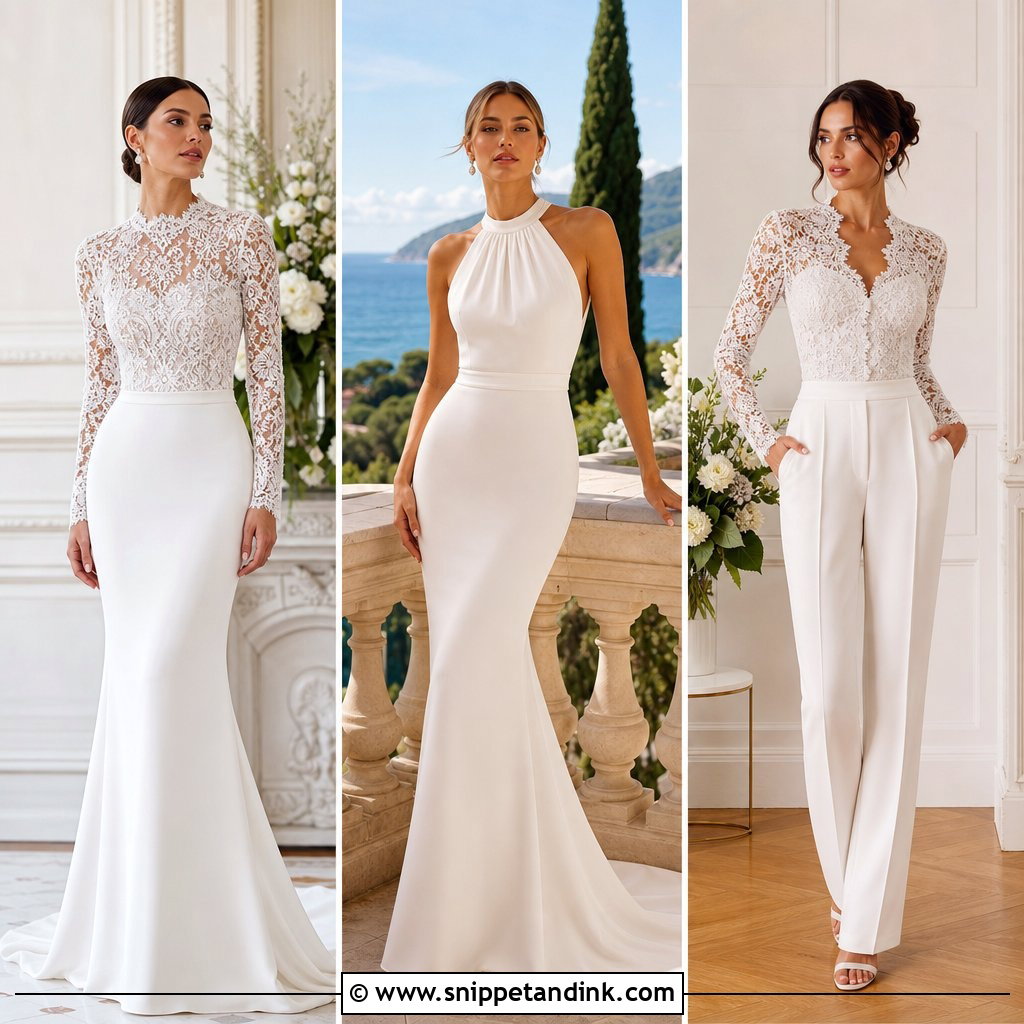
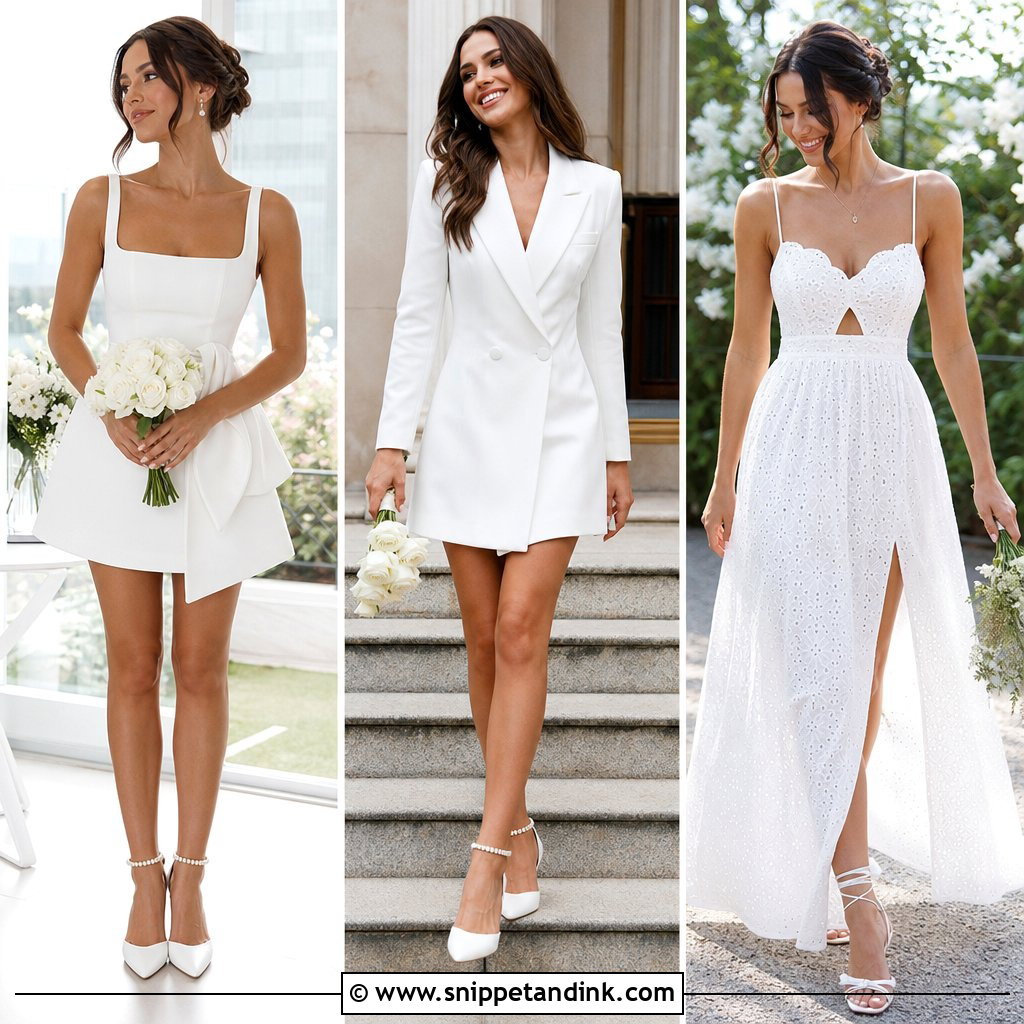
25. Structured Top And Bubble Skirt Bridal Set
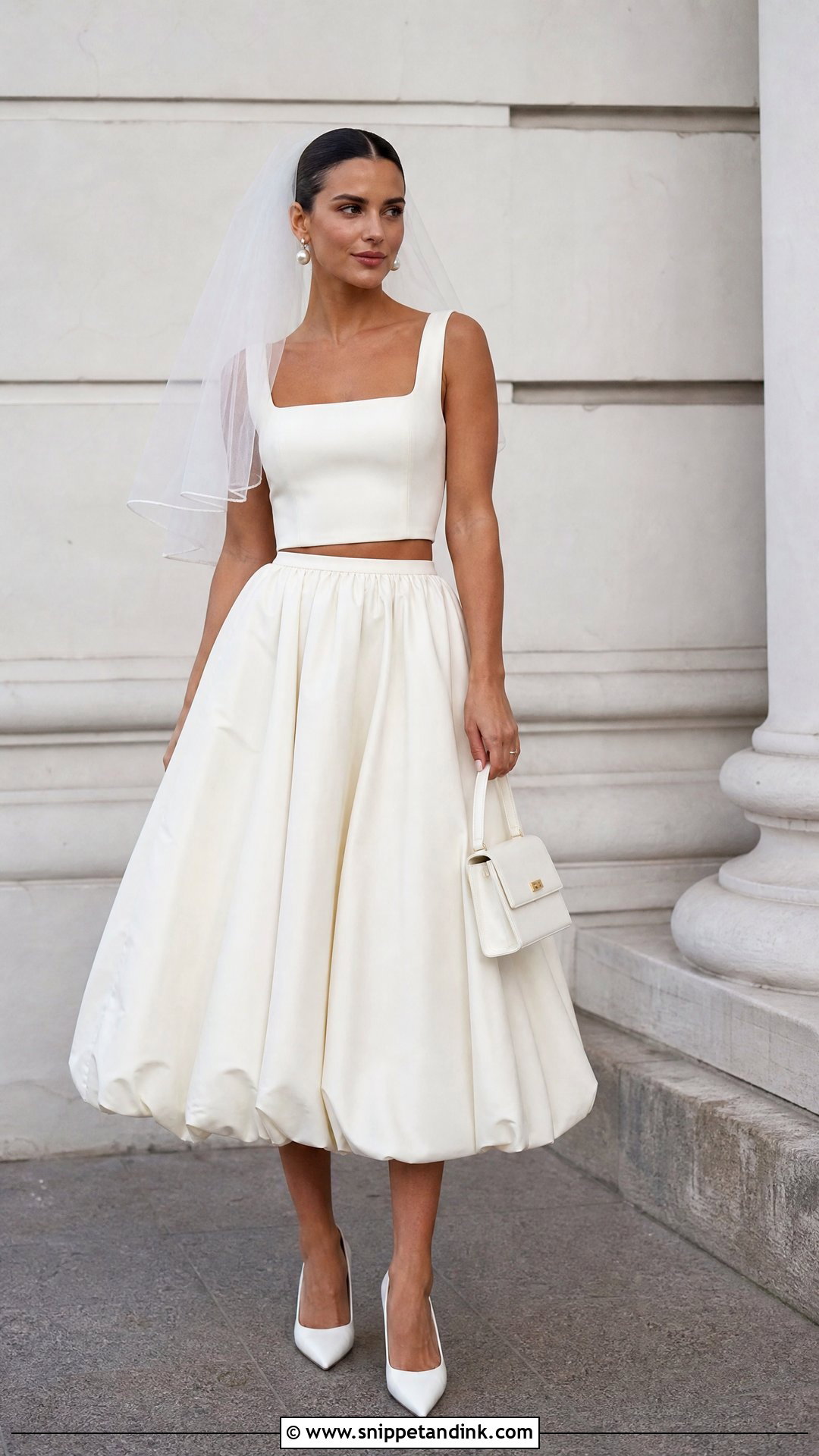
A bubble skirt is all about the hem, which is gathered back into a lining to form the rounded shape. A fitted strapless, square-neck or sleeveless top balances that roundness. A mini bubble feels bold, while a tea-length version gives more coverage and a vintage feel. The shape has come back strongly in newer bridal and reception lines, so it reads as fresh rather than retro. Have it professionally pressed and check the internal lining holds the hem’s shape after sitting. Pointed pumps, pearl earrings and a short veil or big hair bow finish it.
Pressing, Packing and Getting Dressed on the Morning
Two pieces travel better than one gown, but they still need handling. Hang each piece on its own padded hanger in a breathable garment bag, never plastic, which traps damp. If you’re flying, carry them on; folded tulle recovers, folded satin often doesn’t.
Steaming by fabric
Satin and mikado should be steamed from the inside, with the steamer a few inches away, because water droplets can leave marks on the face of the fabric. Crepe relaxes quickly with a light pass. Tulle just needs to hang for a day. Linen can take a hotter iron, but do it the morning of, since it creases again on the journey. I’d never let a venue iron touch beading or feathers.
The dressing order
Put the bottom half on first, then the top, so the top’s hem sits over or inside the waistband the way it was fitted. Do any back lacing or buttons before shoes, while you can still move freely. If you’re changing skirts later, have the second one pressed, hung and named with whoever is helping, so it’s ready rather than stuffed in a bag.
Wearing the Pieces Again After the Wedding
One quiet advantage of separates is a second life. Tailored trousers, a blazer, a silk camisole or a satin midi skirt can all go into your wardrobe once they’re cleaned. Take them to a cleaner who handles bridal fabrics within a few weeks, before stains from makeup, drinks or grass set. Tell them about any beading or feather trim. The full skirt or overskirt can be stored flat in acid-free tissue and a cotton bag if you want to keep it, while the pieces you’ll wear again can hang normally.
Making Two Pieces Read as One Outfit
Separates work when nobody can tell where one piece ends and the other begins, unless you want them to. Lace, tulle and appliques suit a romantic outfit, while satin, crepe and tailoring suit a minimalist one. Whatever you pick, my rule is the same: always fit both pieces together, wearing your shoes and the underwear you’ll wear on the day. Check the ivory in daylight and indoor light, test every fastening, then sit, walk and dance. Done that way, a bridal top and skirt or trousers look every bit as finished as a single gown.
You'll Like These Ideas:





Leave a Reply