
City hall frees you from almost every rule a church or ballroom would set. Your gown can be short, tailored, floor-length or a suit that only hints at a dress, and nobody at the registrar’s desk will blink. That freedom is exactly why civil brides tend to arrive at my fittings unsure where to start. I usually narrow it down by asking how much walking the day involves and where the photos will be taken, because those two answers rule out more gowns than taste does. Below are the styles I’d consider, each with the fitting detail or fabric quirk I’d want you to know before you buy.
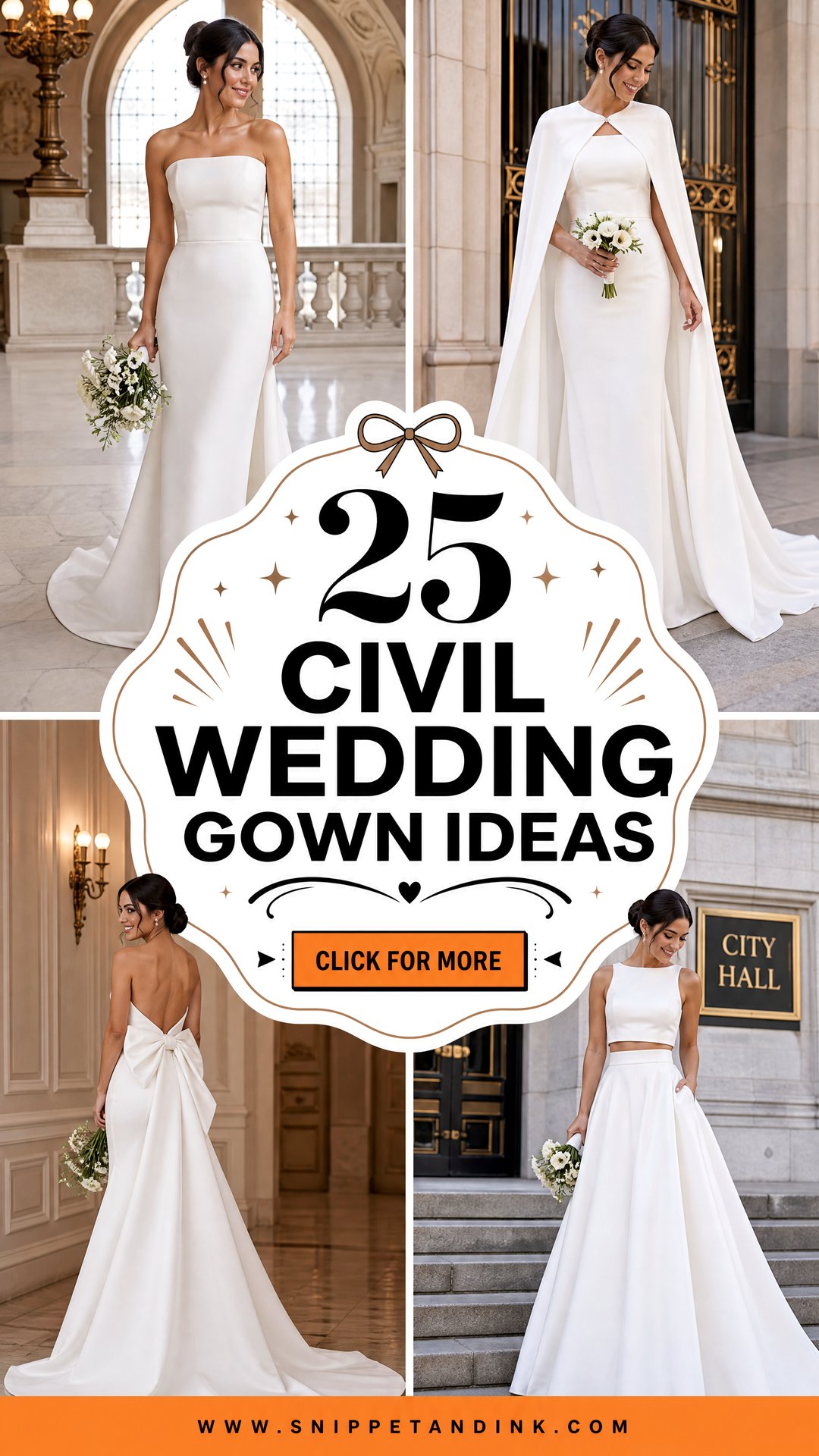
A Wedding Booked in Weeks Needs Ready-to-Wear
Civil ceremonies are often arranged quickly, and that changes how you should shop. Made-to-order bridal gowns commonly need several months to arrive before any alterations begin. If your date is close, that route is closed, however much you love a sample.
Ready-to-wear is the answer. Many bridal brands now have off-the-rack ranges, and occasionwear and white eveningwear lines carry plenty of simple gowns that suit a courthouse. Shop samples too: a sample sale dress can go home the same day, though it may need cleaning and the size is whatever is on the rail.
- Ask the shop for a realistic arrival date in writing, not an estimate.
- Book your seamstress as soon as the dress is ordered. Busy alterations studios fill up in spring and summer.
- Simple hems and strap adjustments can be done in a week or two; rebuilding a bodice cannot.
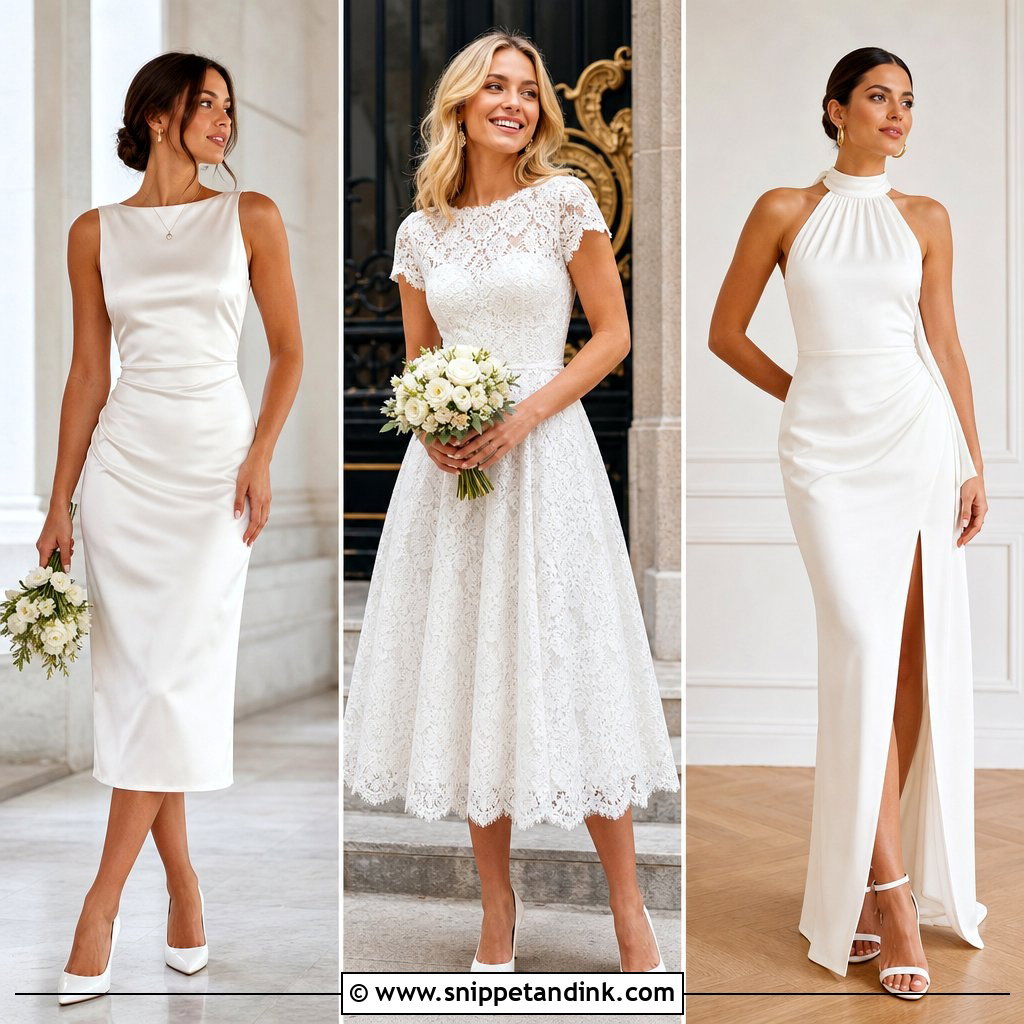
1. Civil Wedding Satin Midi Gown
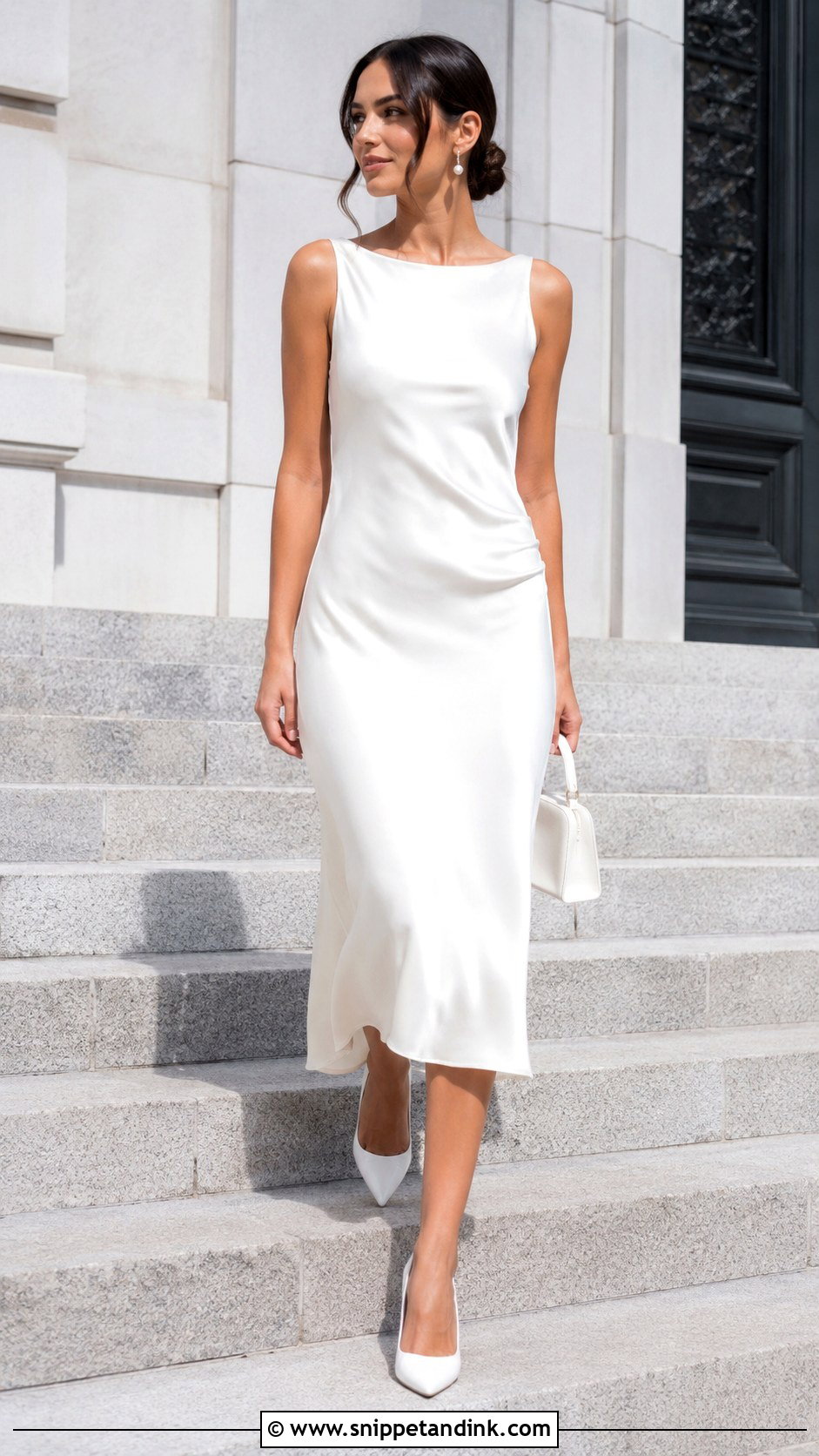
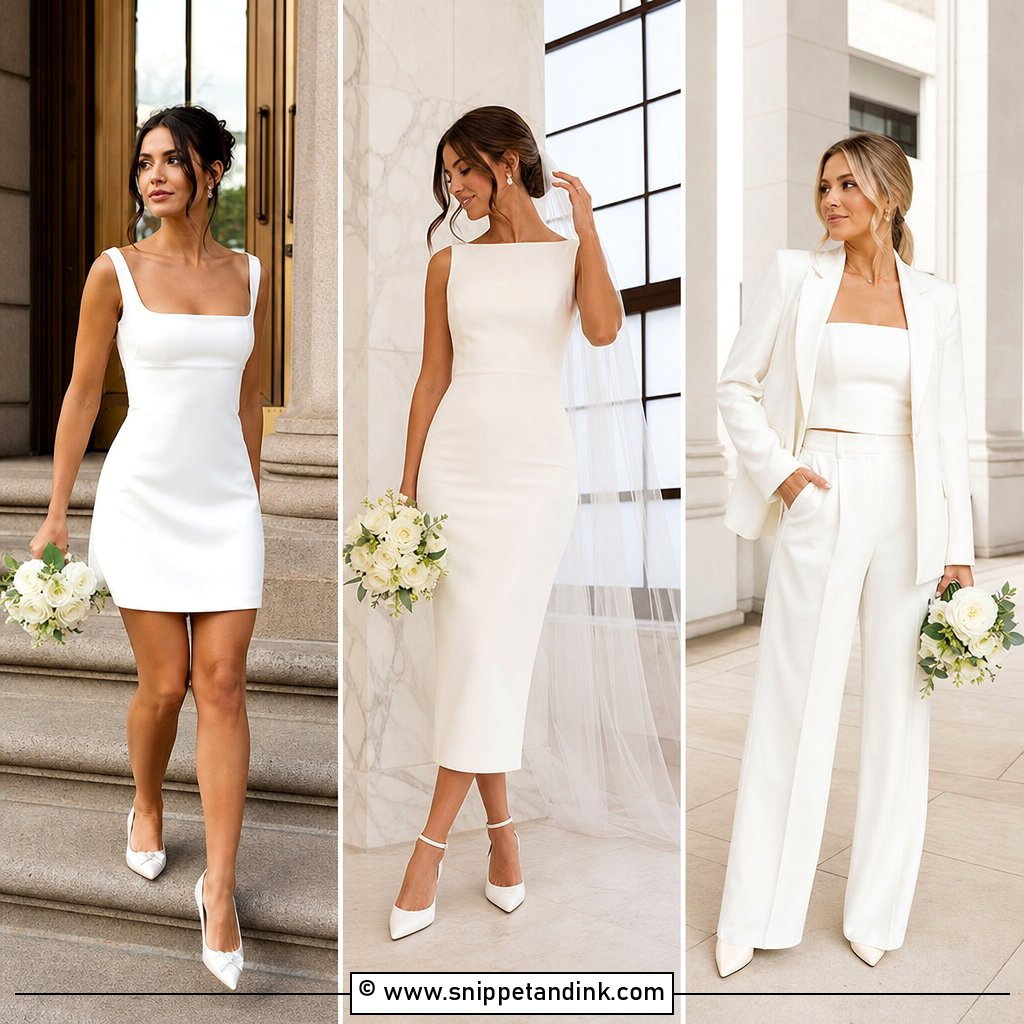
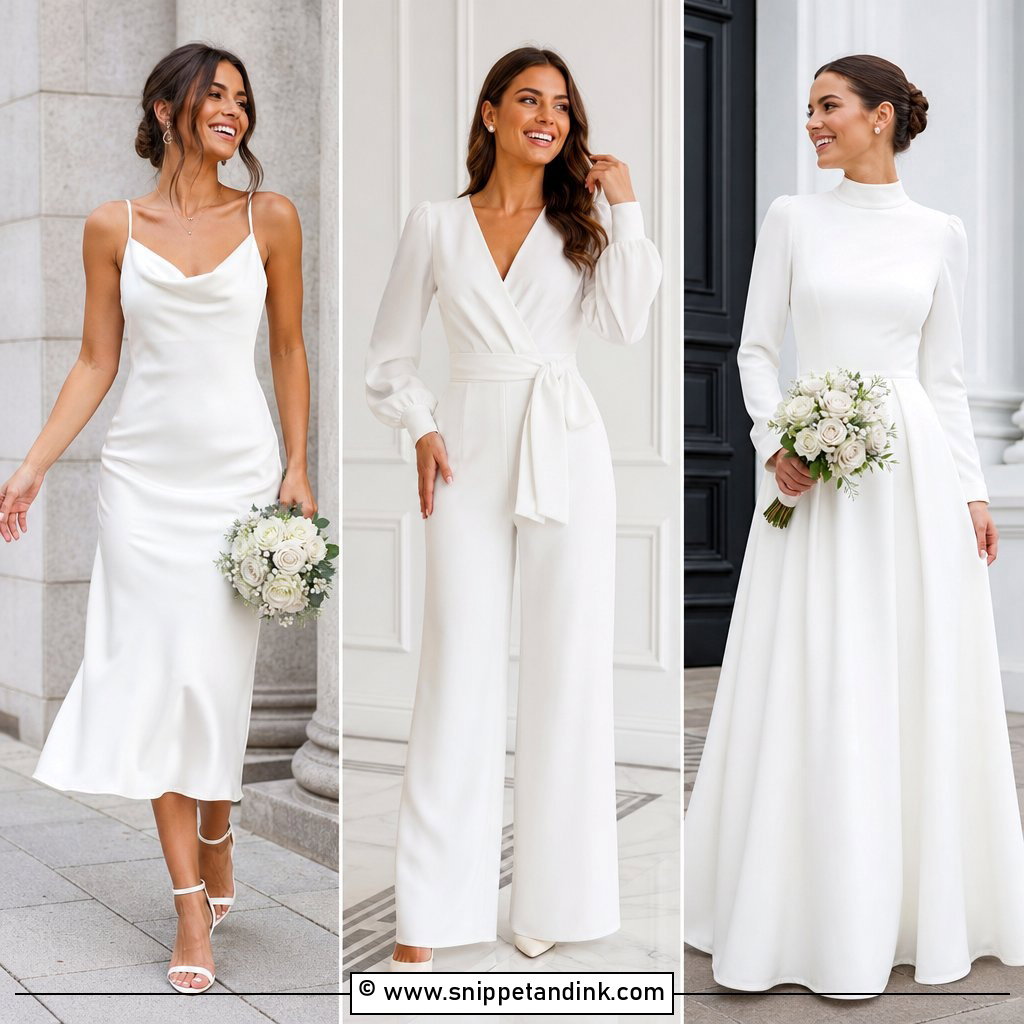
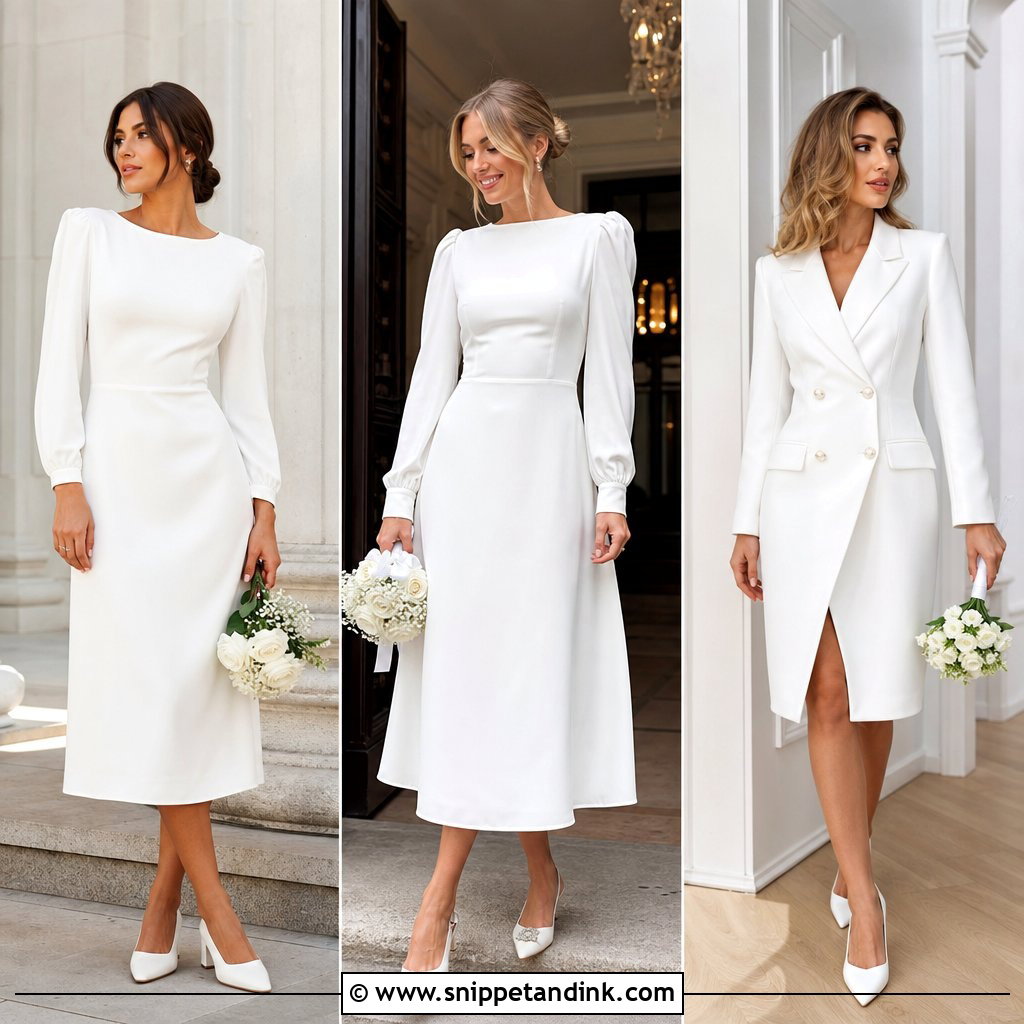
Satin midis are the easiest gown on this list to get right. A bias cut or a lightly structured shape should skim the body rather than grip it; if you can see the outline of your hip bones in the mirror, the cut is too tight for satin. The sheen catches the light in a stone hallway or on the steps outside. Pointed ivory pumps, pearl earrings and a top-handle bag keep it clean, with a low bun or soft waves. A cropped blazer or wrap adds coverage, and it’s the gown I’d point to first for morning ceremonies in spring.
2. Civil Wedding Long Sleeve Mini Gown
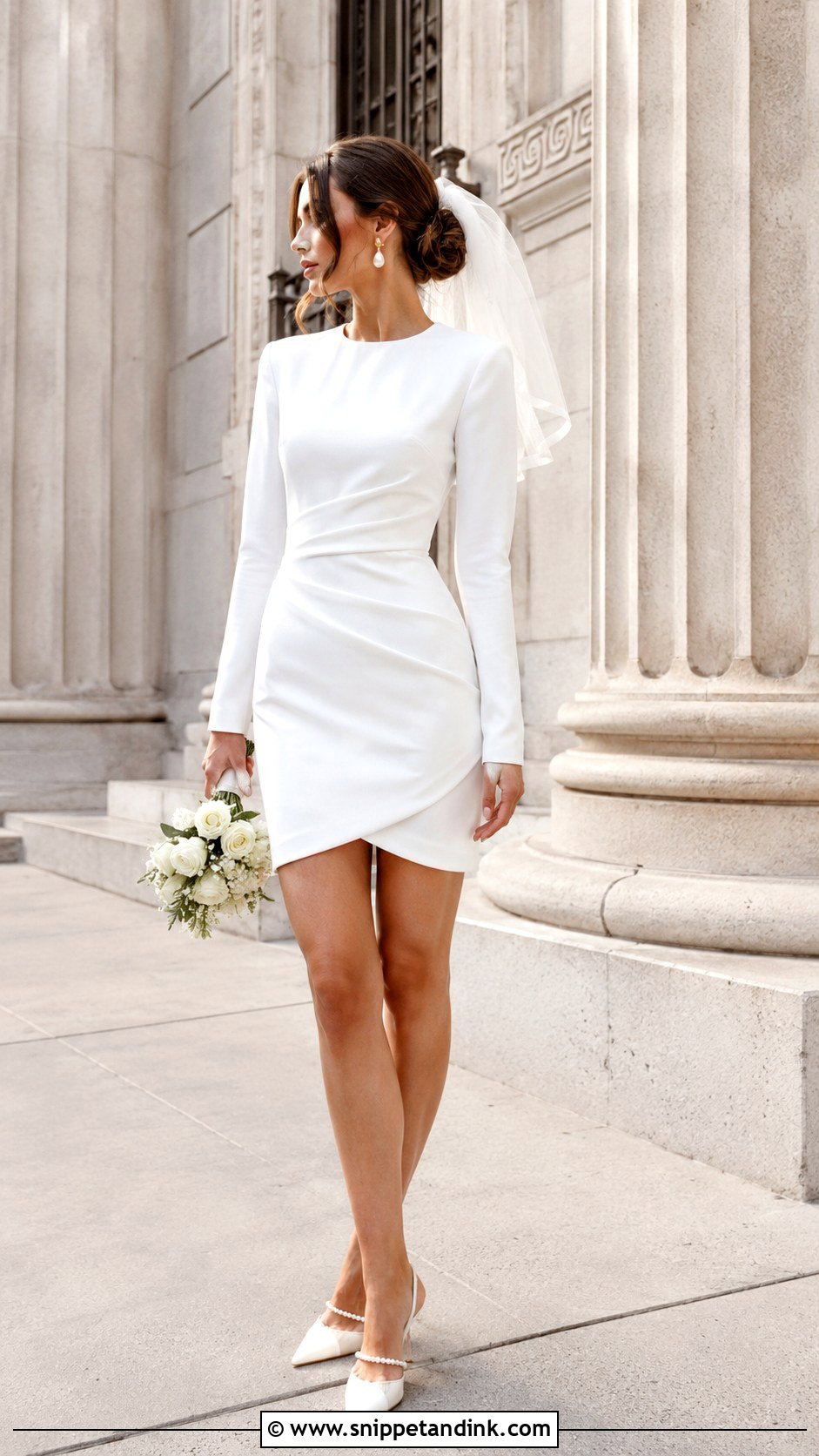
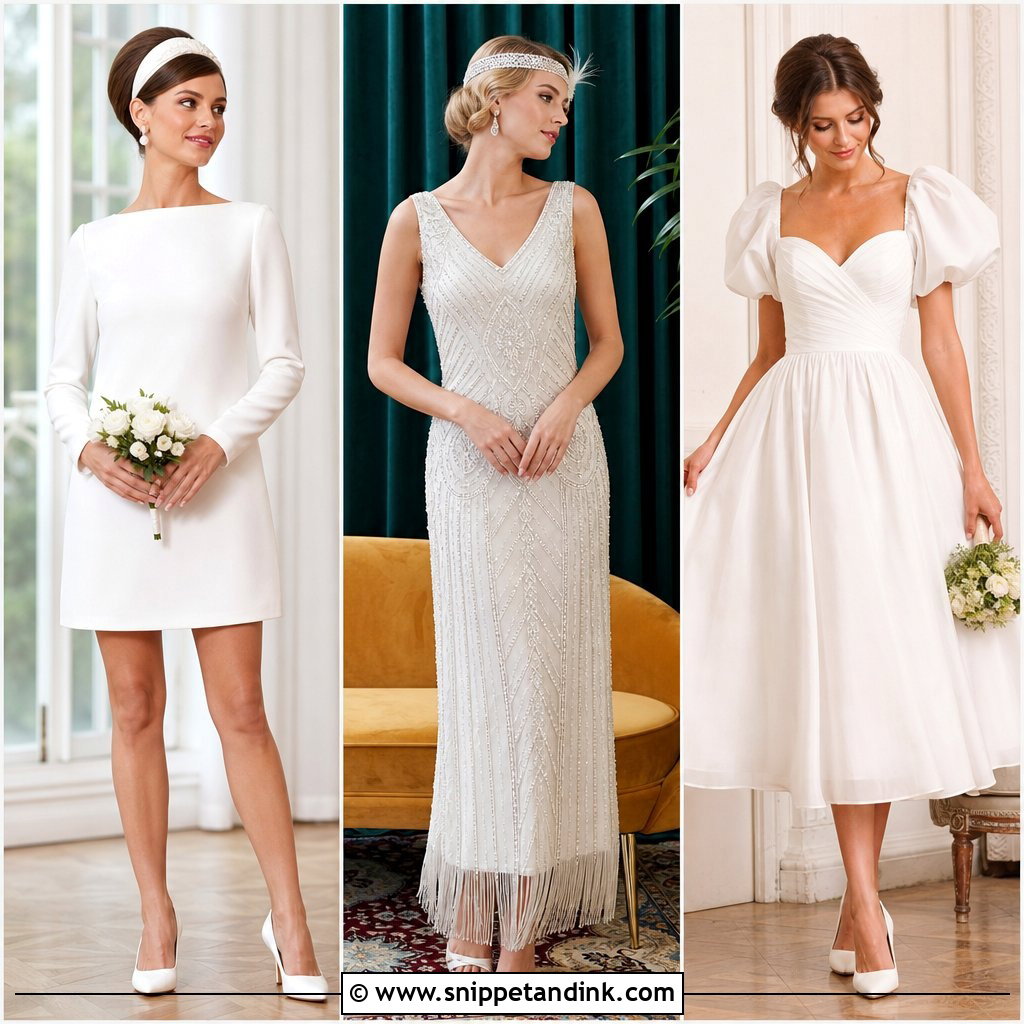
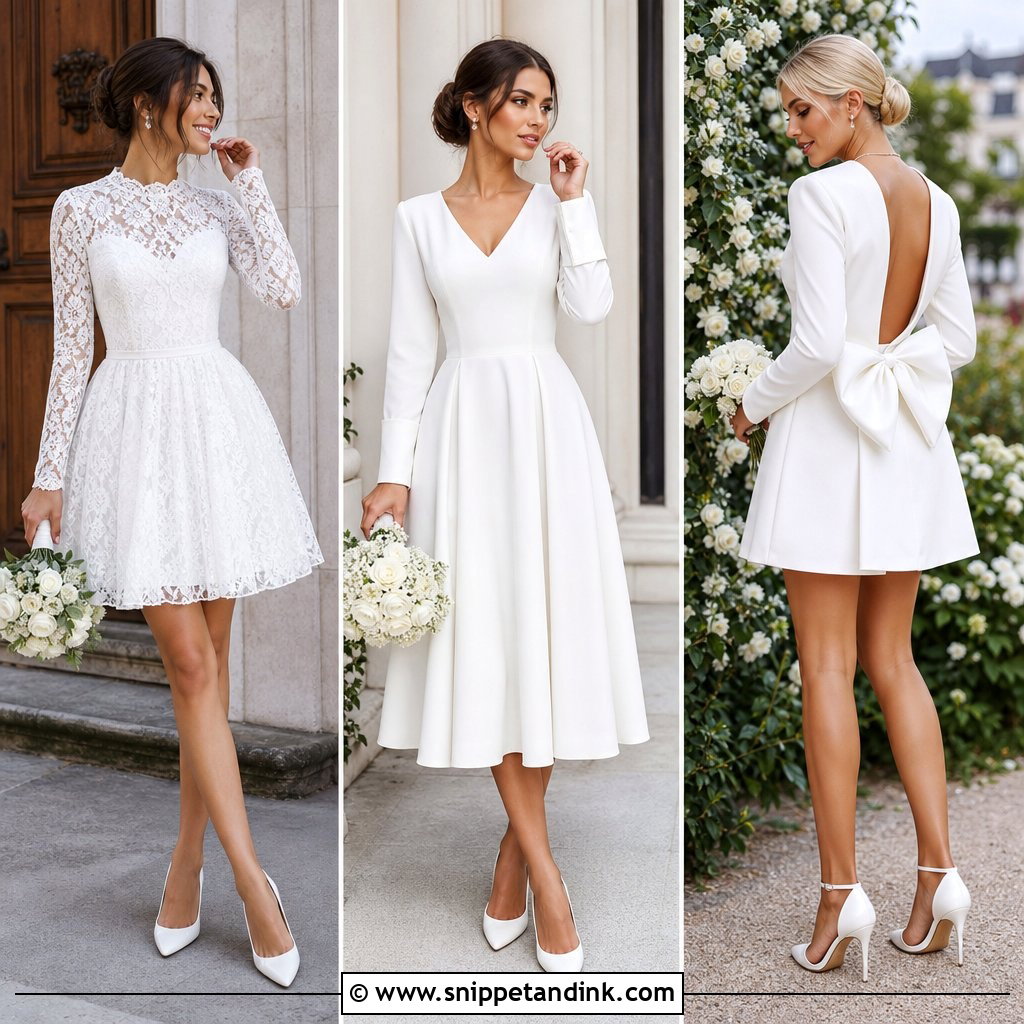
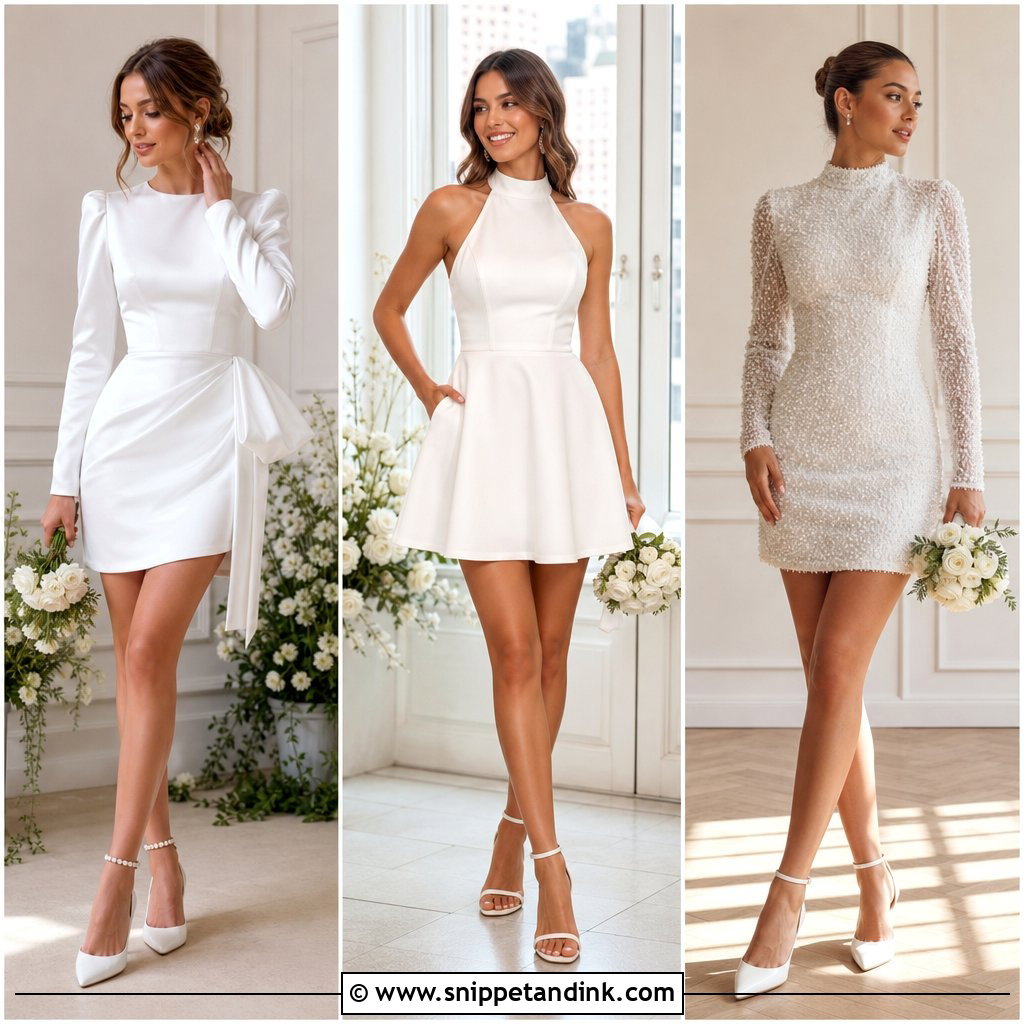
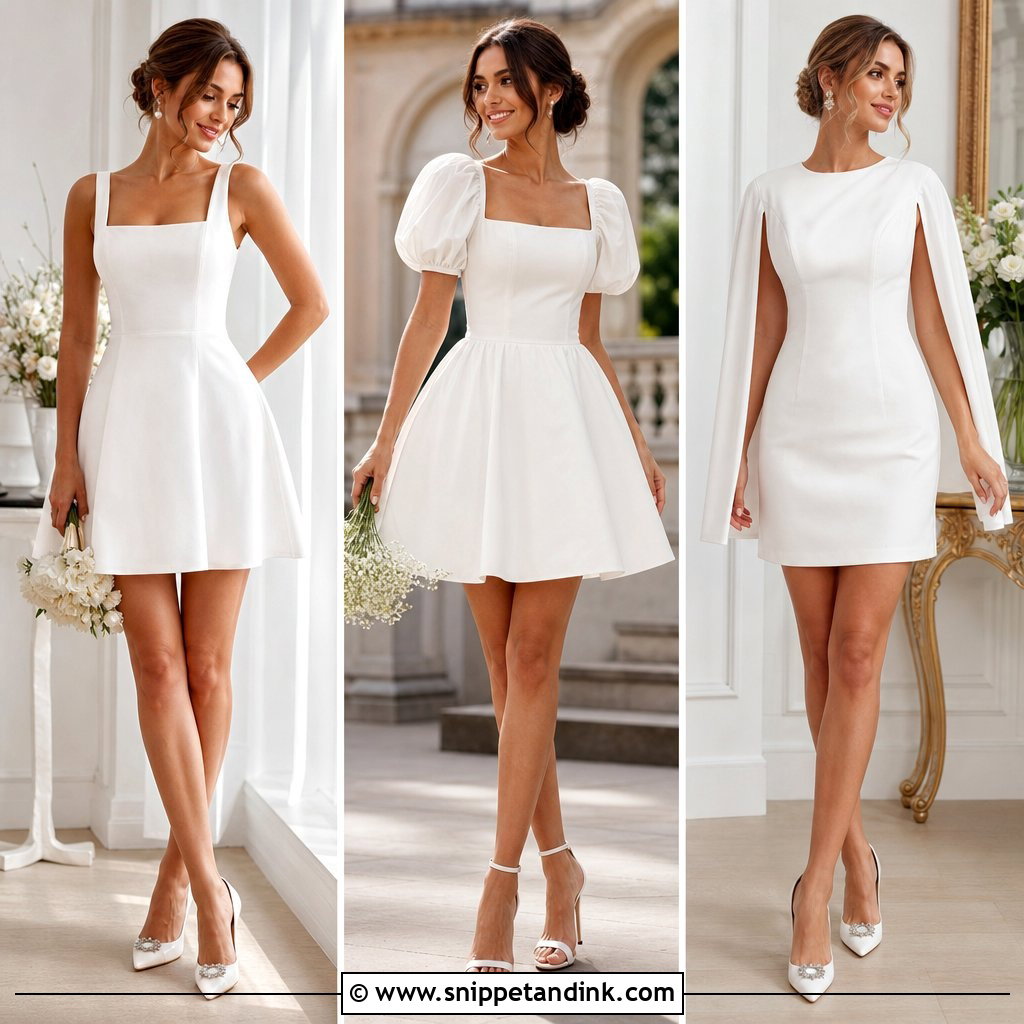
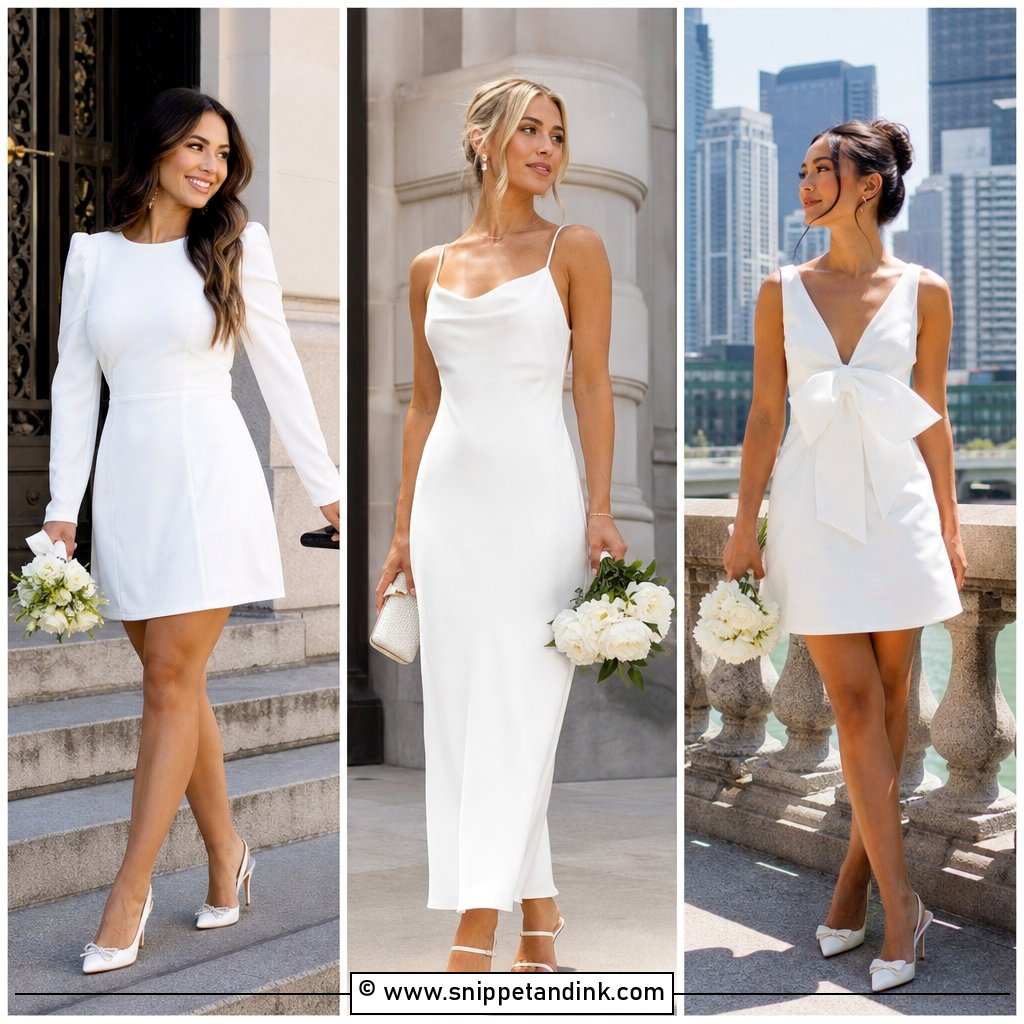
Long sleeves and a short hem balance each other: covered arms, bare legs. That proportion is why the mini works for a civil wedding without looking like a party dress. Crepe, satin, lace or a structured cotton blend keep it bridal, and a high or square neckline adds polish. White slingbacks, pearl drops and a small veil finish it. In cold weather, layer a tailored wool coat or a cropped bridal jacket. Sit down in the changing room before buying; a mini that’s right standing can be very short seated, and you’ll be seated for the vows.
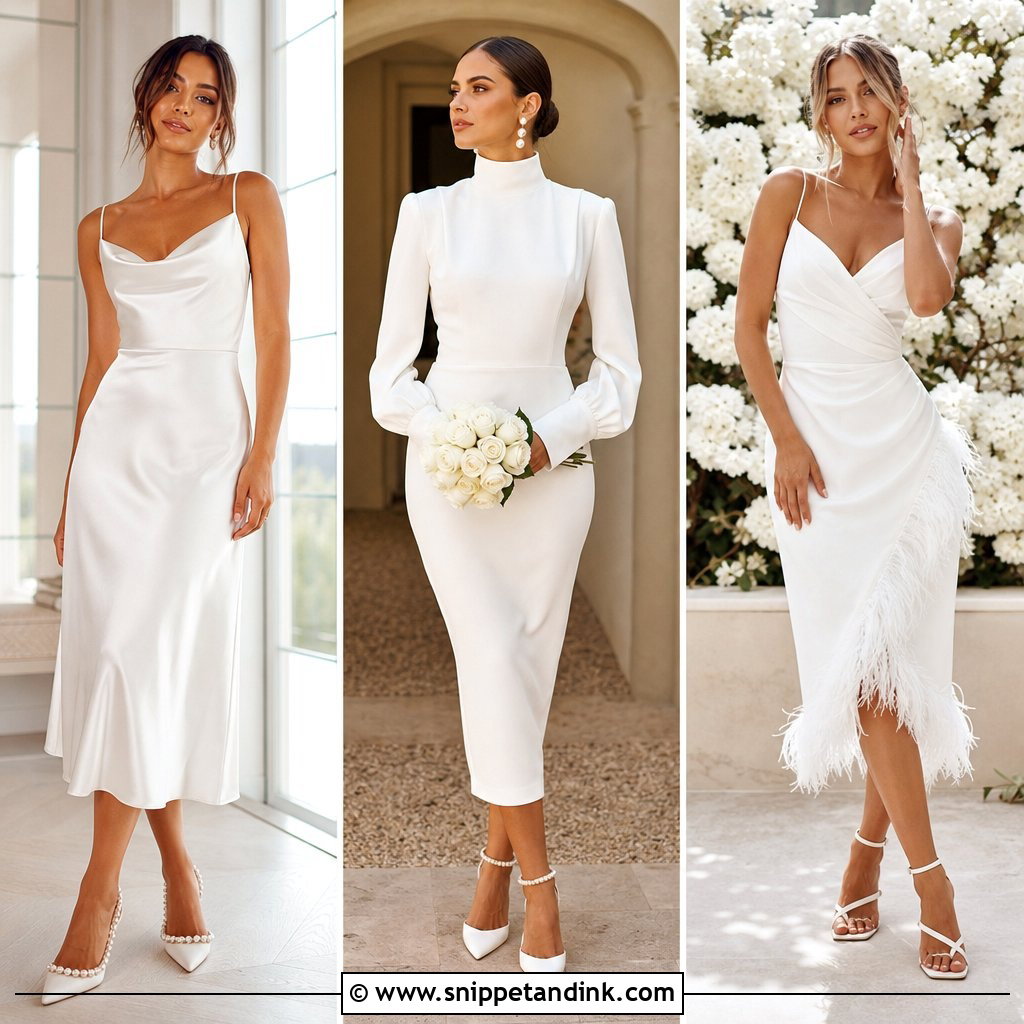
3. Civil Wedding Slip Gown
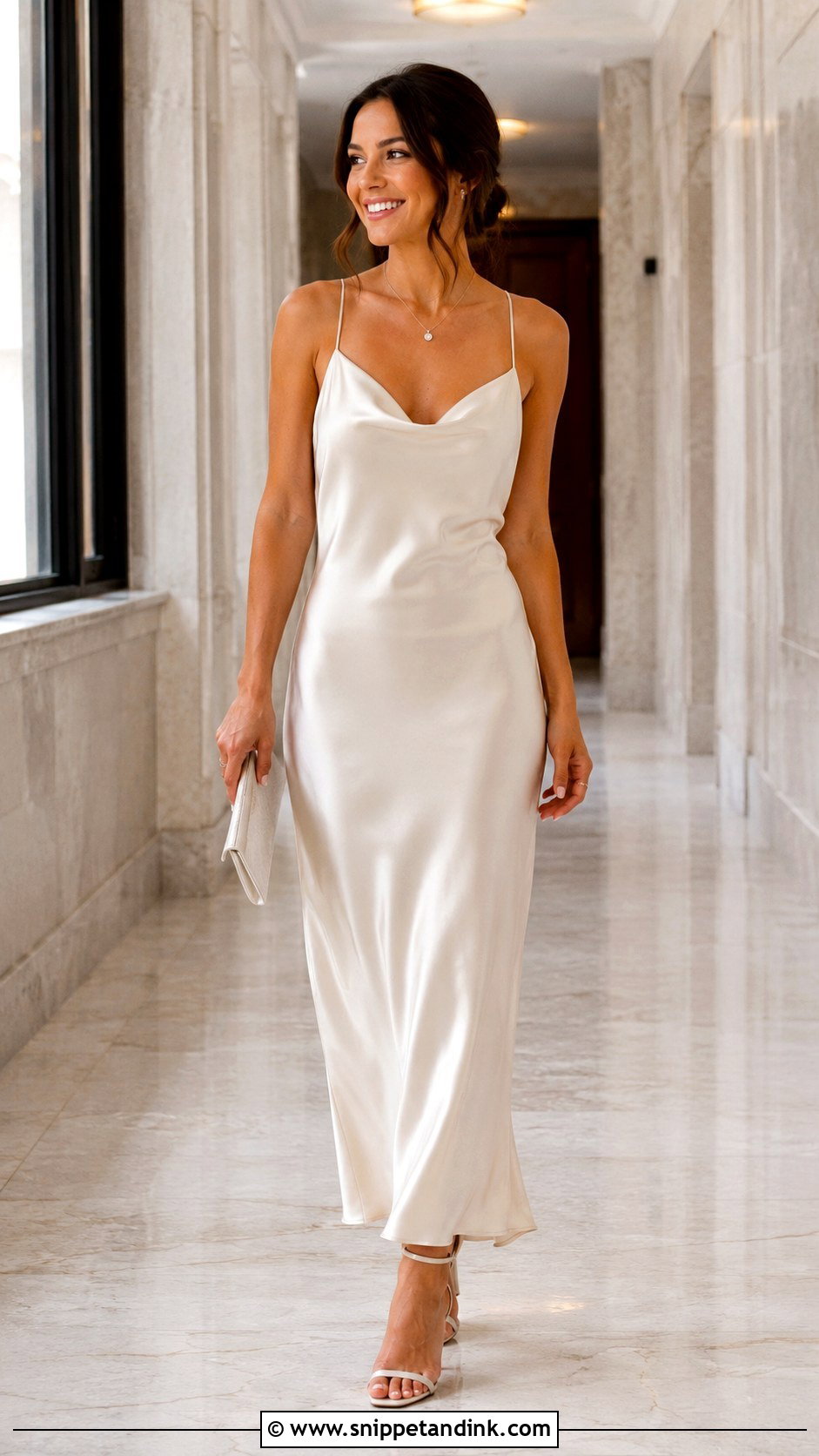
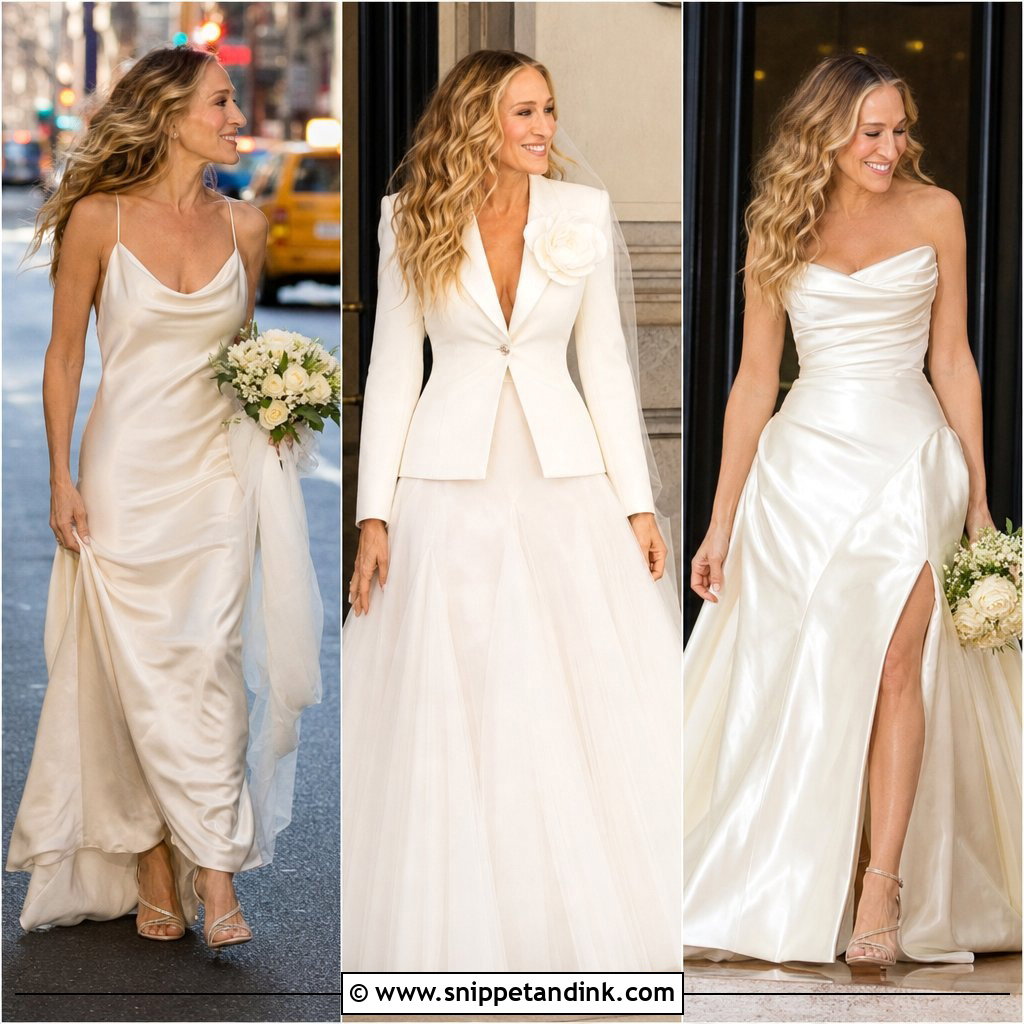
A slip gown is all fabric and fit. Ivory silk, satin or charmeuse with a clean neckline drapes well only when there’s a little ease through the hips, so I size slips up and take in the straps. Strappy sandals, a fine necklace and a smooth clutch keep it light. For a formal old city hall, a long veil or a structured blazer gives it more presence. Wear your hair sleek or softly pinned. My honest caution: slips show everything underneath, and silk marks with water, so carry a handkerchief rather than dabbing at a spill.
4. Civil Wedding Lace Midi Gown
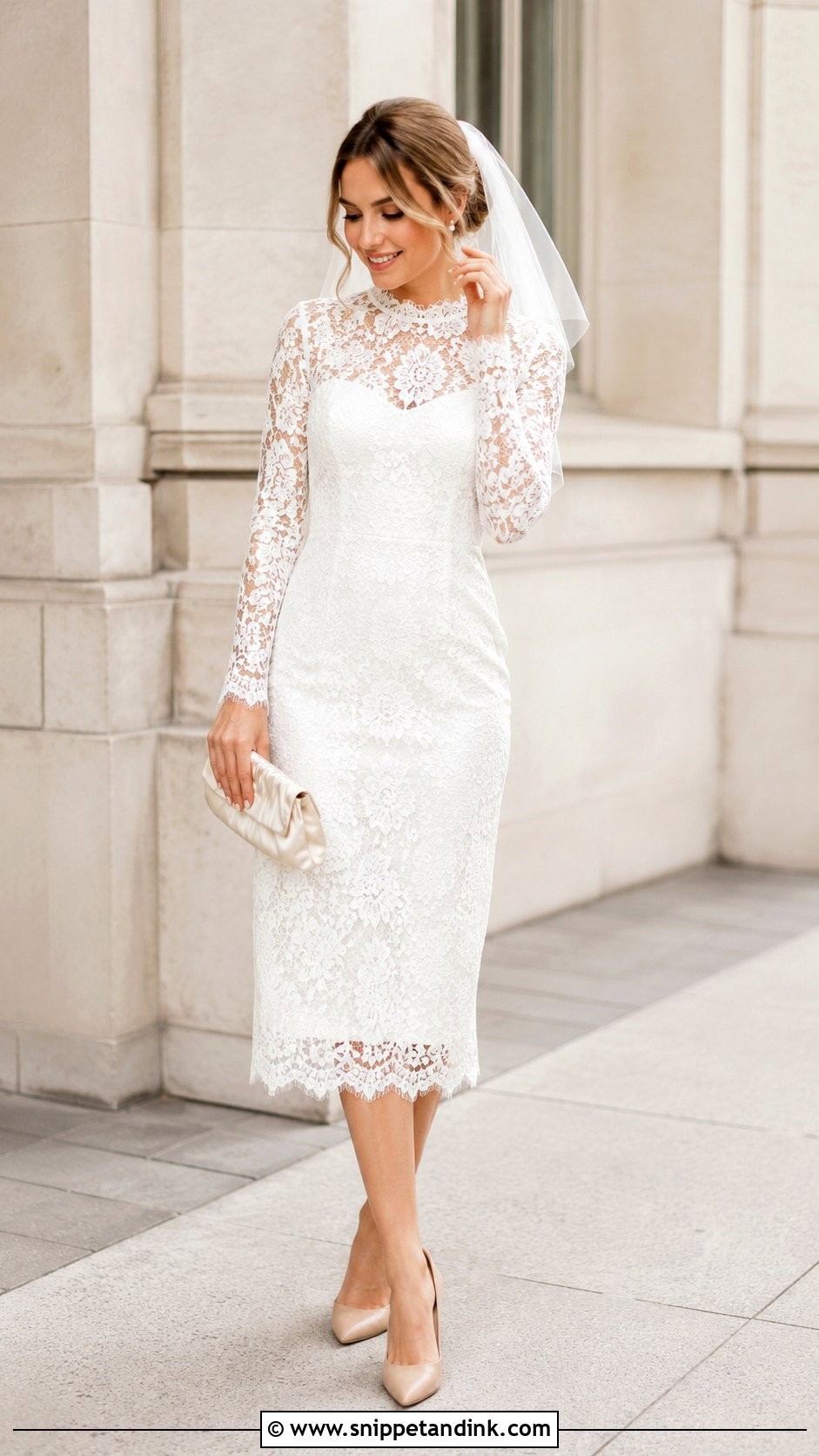
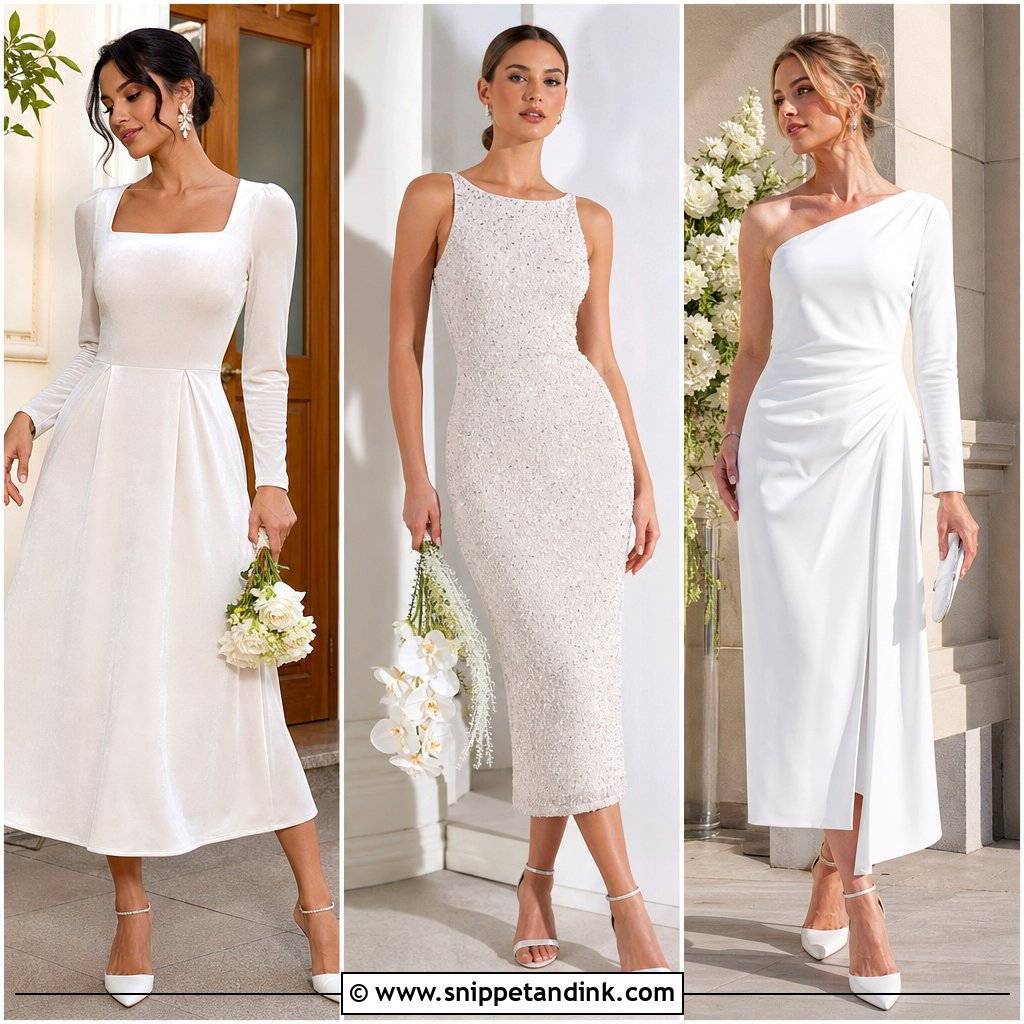
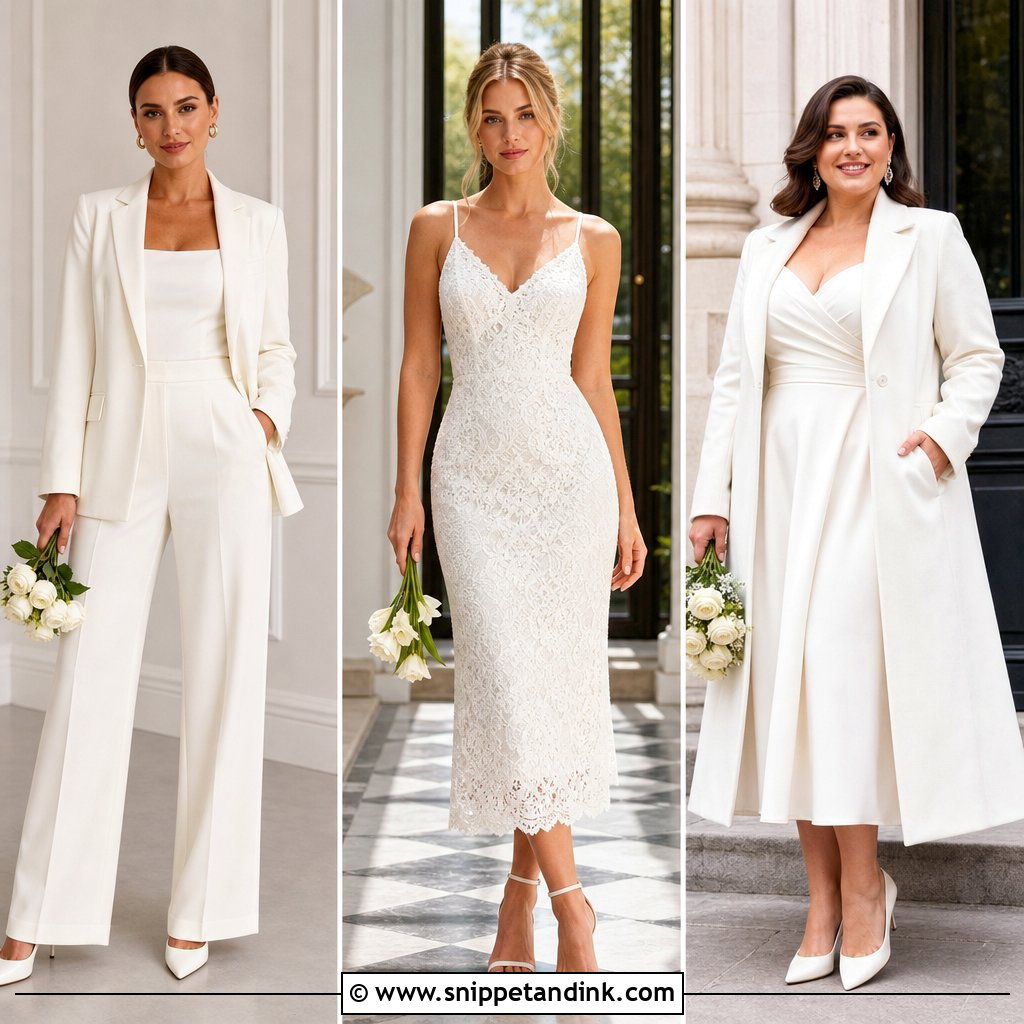
Not every bride wants a full traditional dress, and A lace midi gown gives that bridal feeling in a smaller silhouette. Soft floral lace, eyelash trim or a lined lace bodice all suit a courthouse. Nude or ivory heels lengthen the leg, with pearl studs and a satin clutch. A tea-length veil matches the vintage mood. Stiff, heavily corded lace looks too ornate in a small room and doesn’t bend well when you sit, so feel the lace before you buy it. It belongs at garden civil ceremonies and city hall photos alike.
5. Civil Wedding Off Shoulder Gown
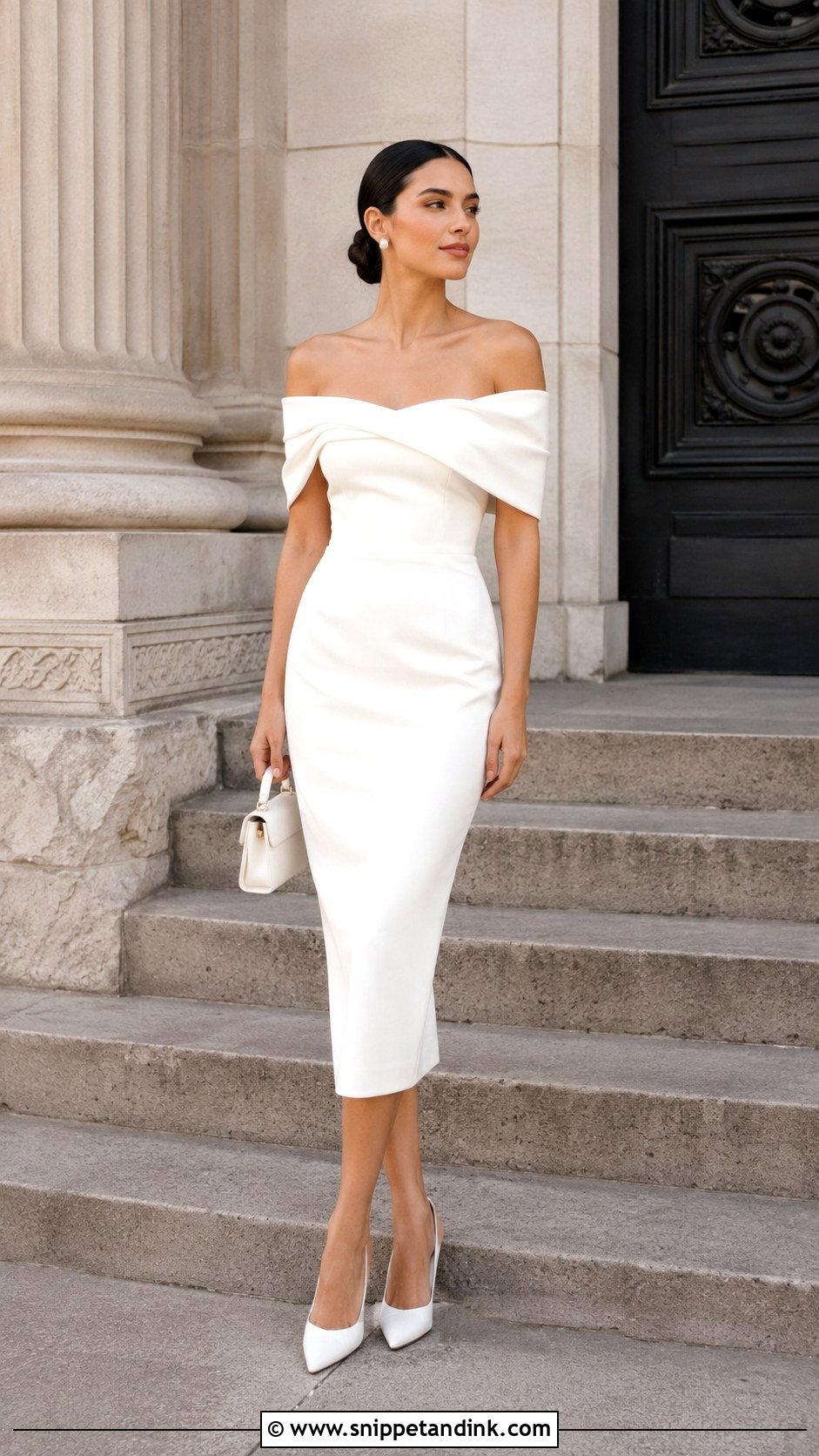
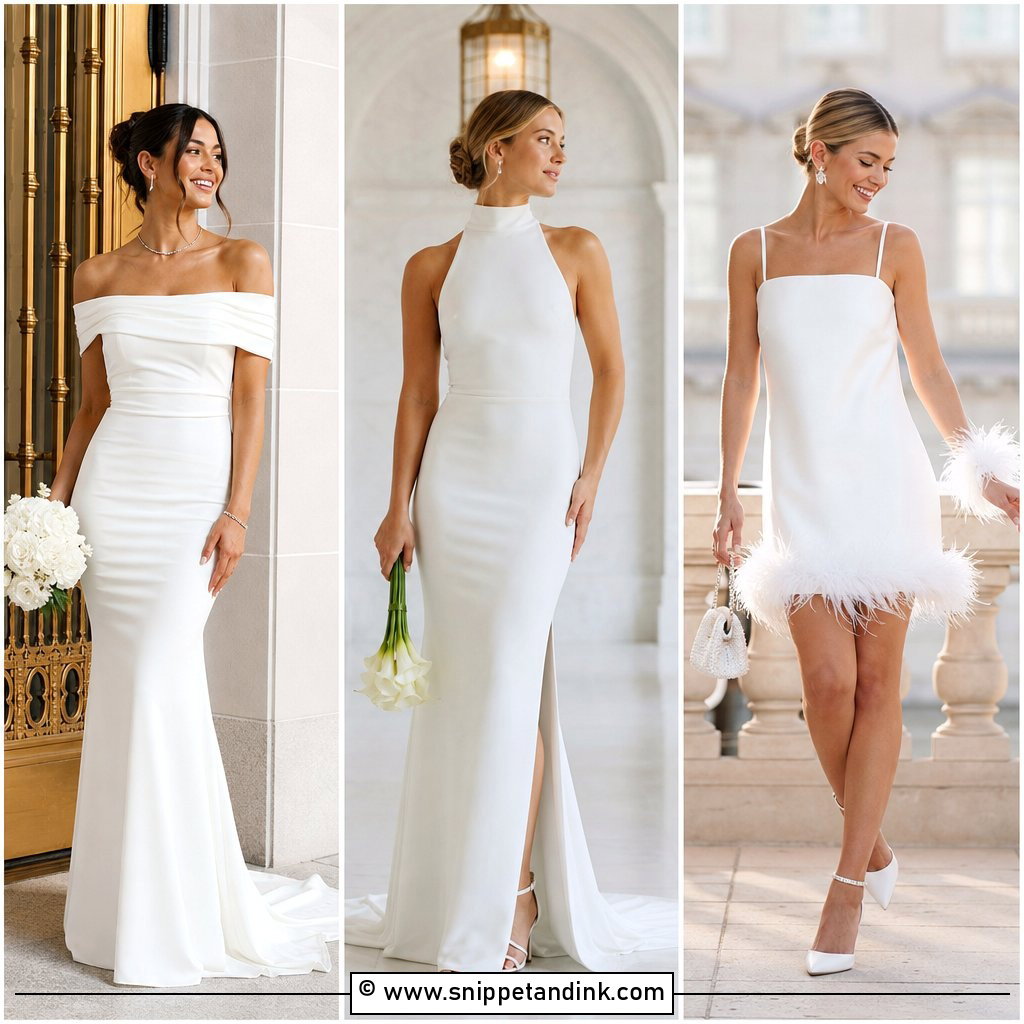
An off-shoulder neckline gives drama without any skirt volume. It works at midi and floor length, framing the collarbone either way. Smooth crepe, mikado or satin holds the shape best. Low heels or sleek pumps, crystal studs, a structured mini bag and a soft updo keep the neckline the focus. In colder months a long ivory coat over the shoulders makes a good entrance. The fitting check is simple: hug someone. If the band creeps down your arm, it needs boning or a silicone grip strip sewn inside.
6. Civil Wedding Square Neck Gown
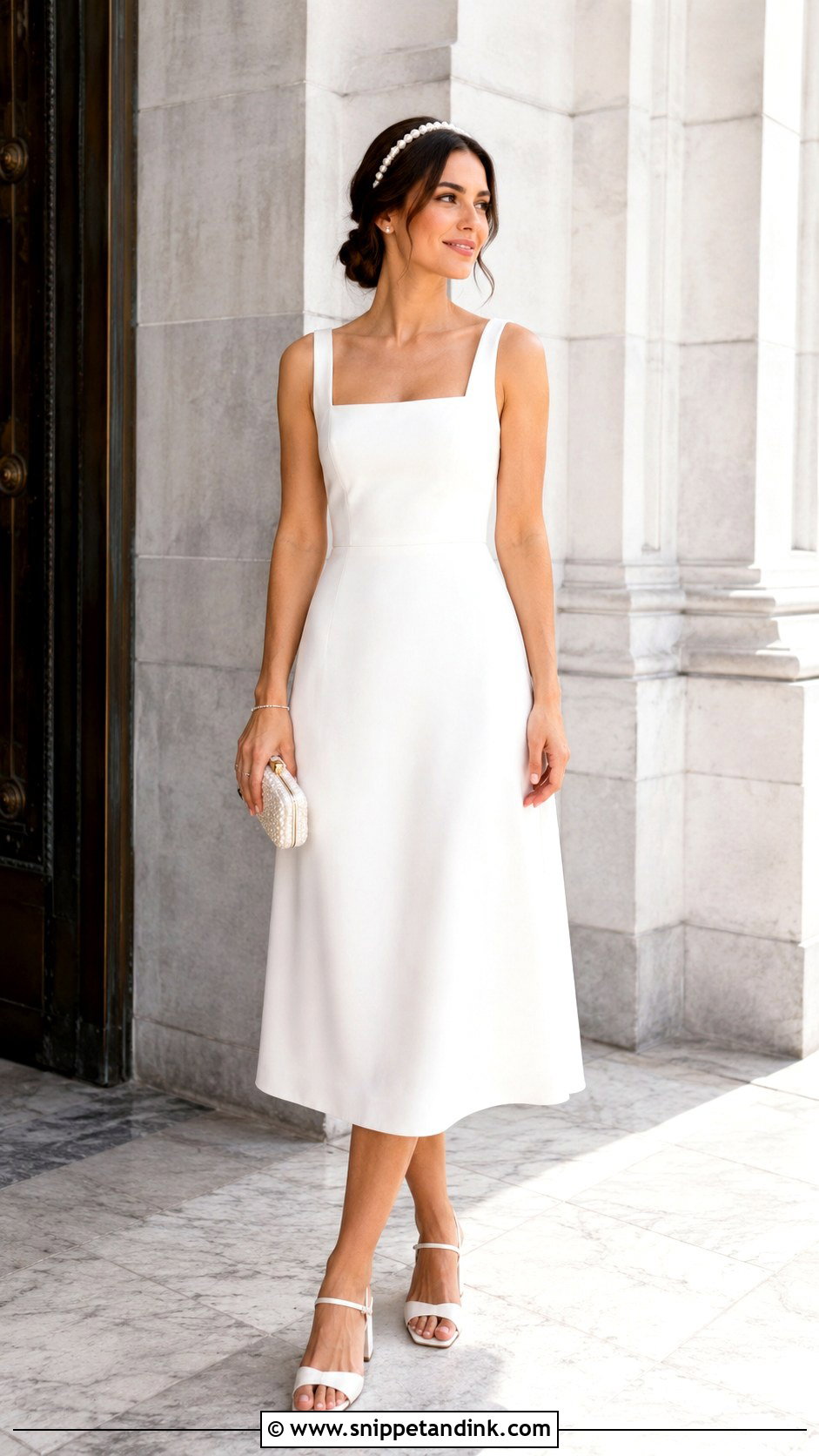
Square necks give structure while looking soft, and they suit a wide range of figures because they open the upper body. Pair one with a fitted bodice and a straight or A-line skirt. For city hall, a white or ivory midi with simple seams and little embellishment is enough. Block heels for a walking day, pointed pumps for a sharper finish. A pearl headband, low chignon and small bouquet complete it. Watch the corners: on a deep square they can gape when you lean forward, which a seamstress fixes at the shoulder seam.
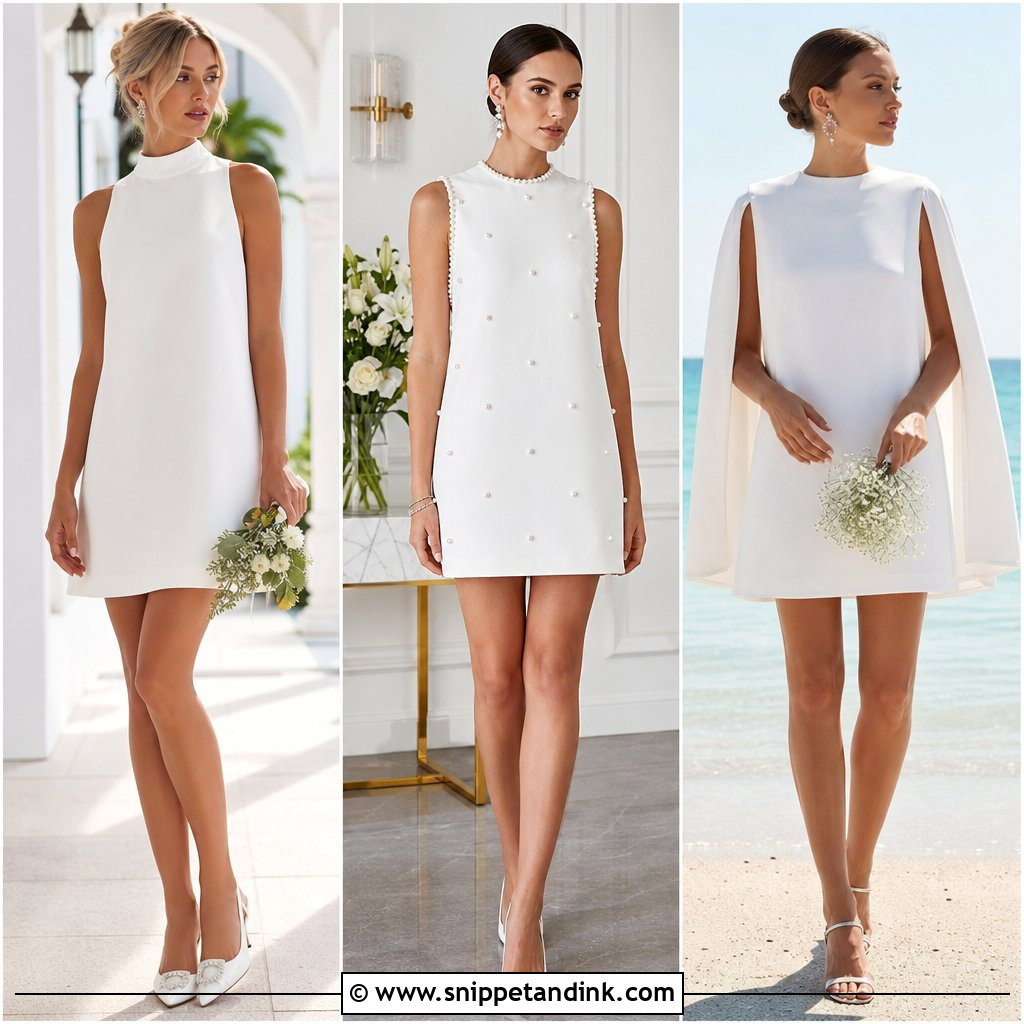
7. Civil Wedding High Neck Gown
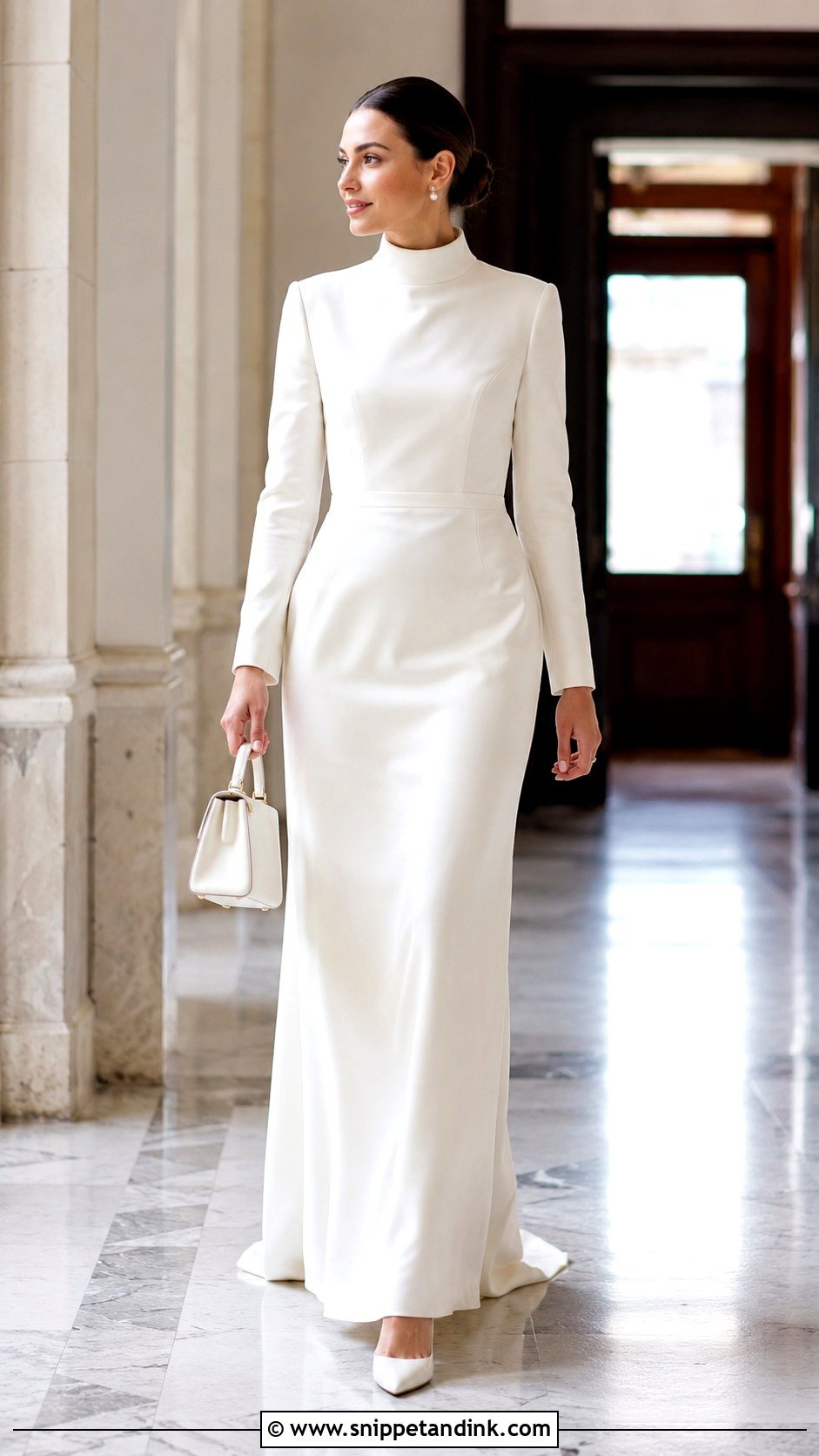
High necks give modest coverage with a modern edge. A sleeveless version suits warm weather, a long sleeve one autumn and winter. Keep the fabric smooth and the silhouette clean, because ruffles or a busy pattern near the throat date this shape quickly. Simple earrings, a sleek bun and pointed heels are all it takes, with a small structured bag. A short veil or a small pillbox-style hat adds a vintage note. On a short neck, I’d choose a mock neck sitting lower rather than a full funnel collar.
8. Civil Wedding Blazer Gown
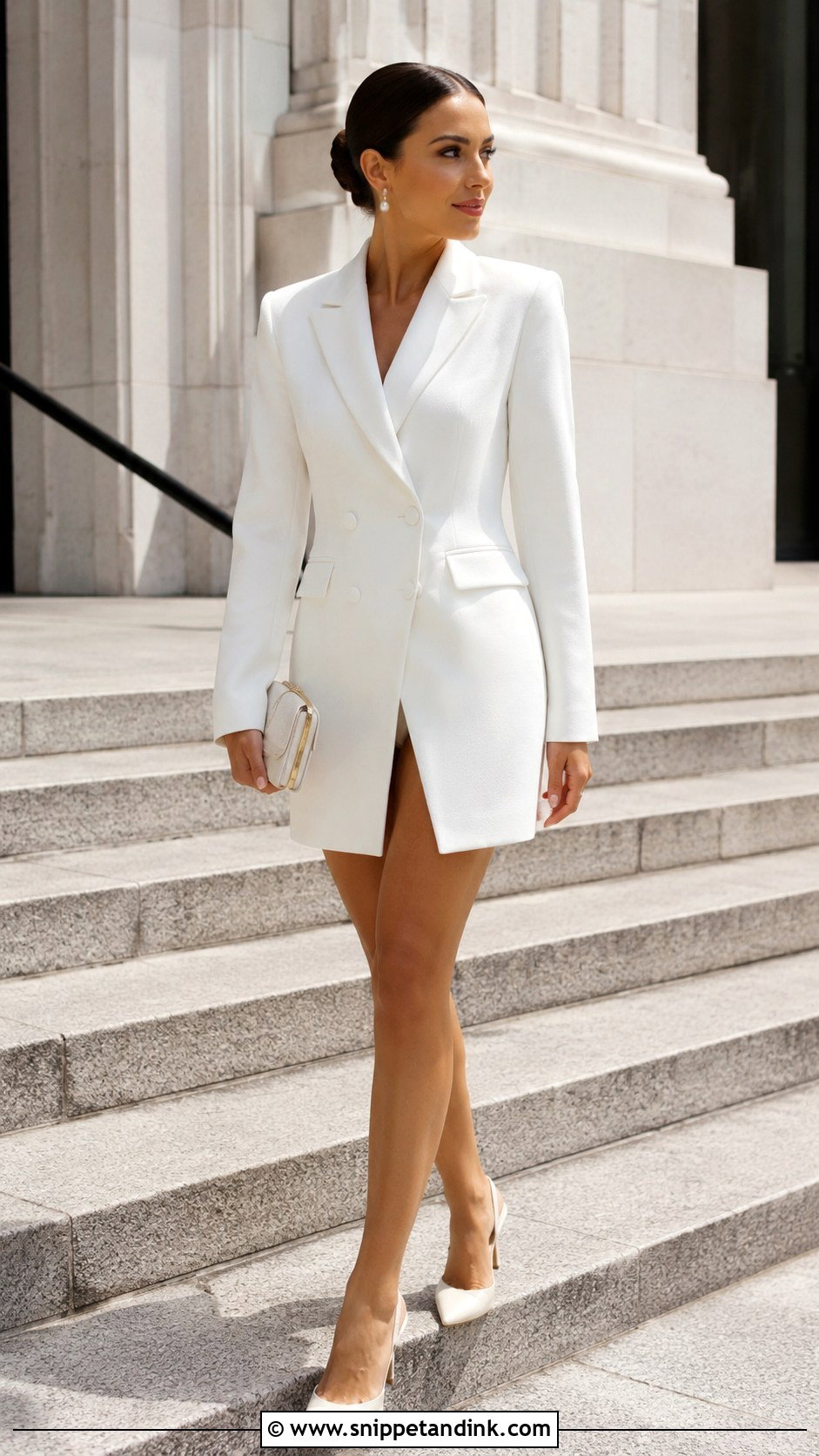
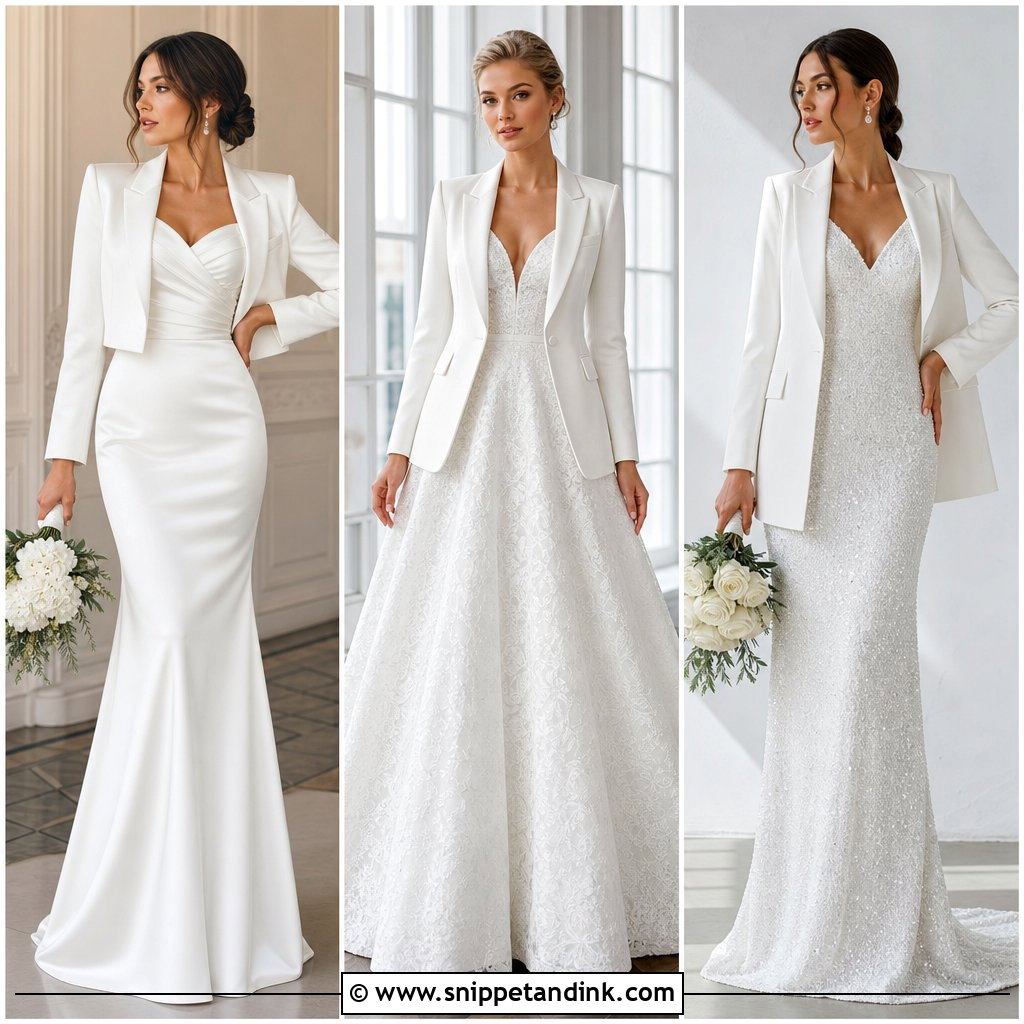
A blazer gown gives tailoring while keeping you in a dress. Sharp lapels, a defined waist and a mini or midi hem are the usual shape. Ivory crepe or satin-backed fabric looks bridal. Slingbacks, pearl earrings and a sleek clutch suit it, and a low ponytail or polished bob matches the structured neckline. Buy it for the shoulders, since that’s the one part of a tailored garment that’s hard to alter, and have everything else adjusted. It’s a natural second look or a choice for a ceremony followed by a smart lunch.
9. Civil Wedding Tuxedo Gown
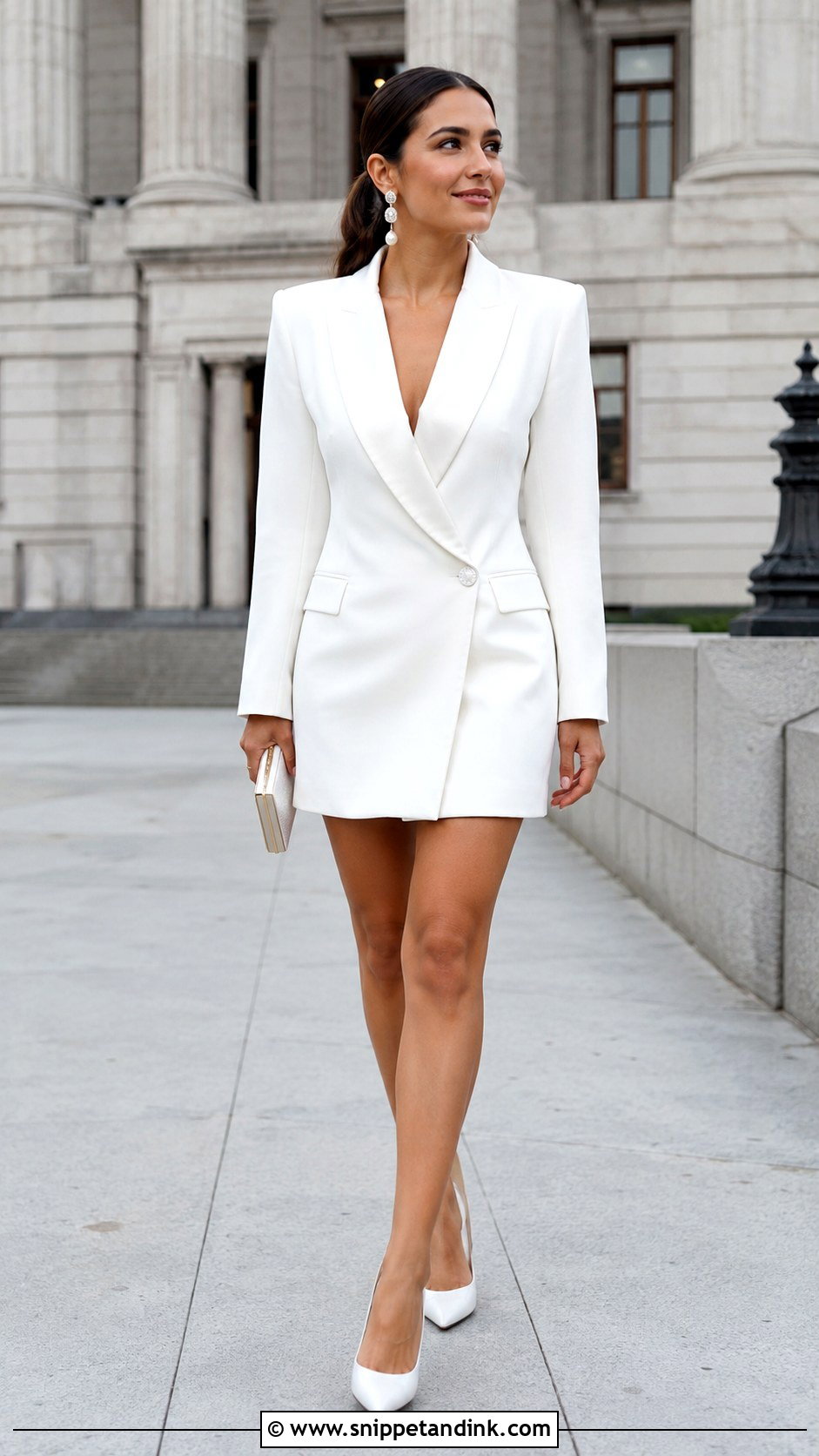
Tuxedo gowns borrow the satin lapel from menswear, and that detail is what makes them read as evening rather than office. Look for a white tuxedo-style dress with satin lapels, a defined waist and a clean hem. Pointed pumps, a box clutch and bold pearl or crystal earrings suit the sharpness. On a mini, choose refined shoes rather than anything chunky, which pulls it toward daywear. A red lip suits the look, though soft makeup works too. Check that the lapels lie flat without pressing; satin facings bubble if they’re steamed too close.
10. Civil Wedding Tea Length Gown
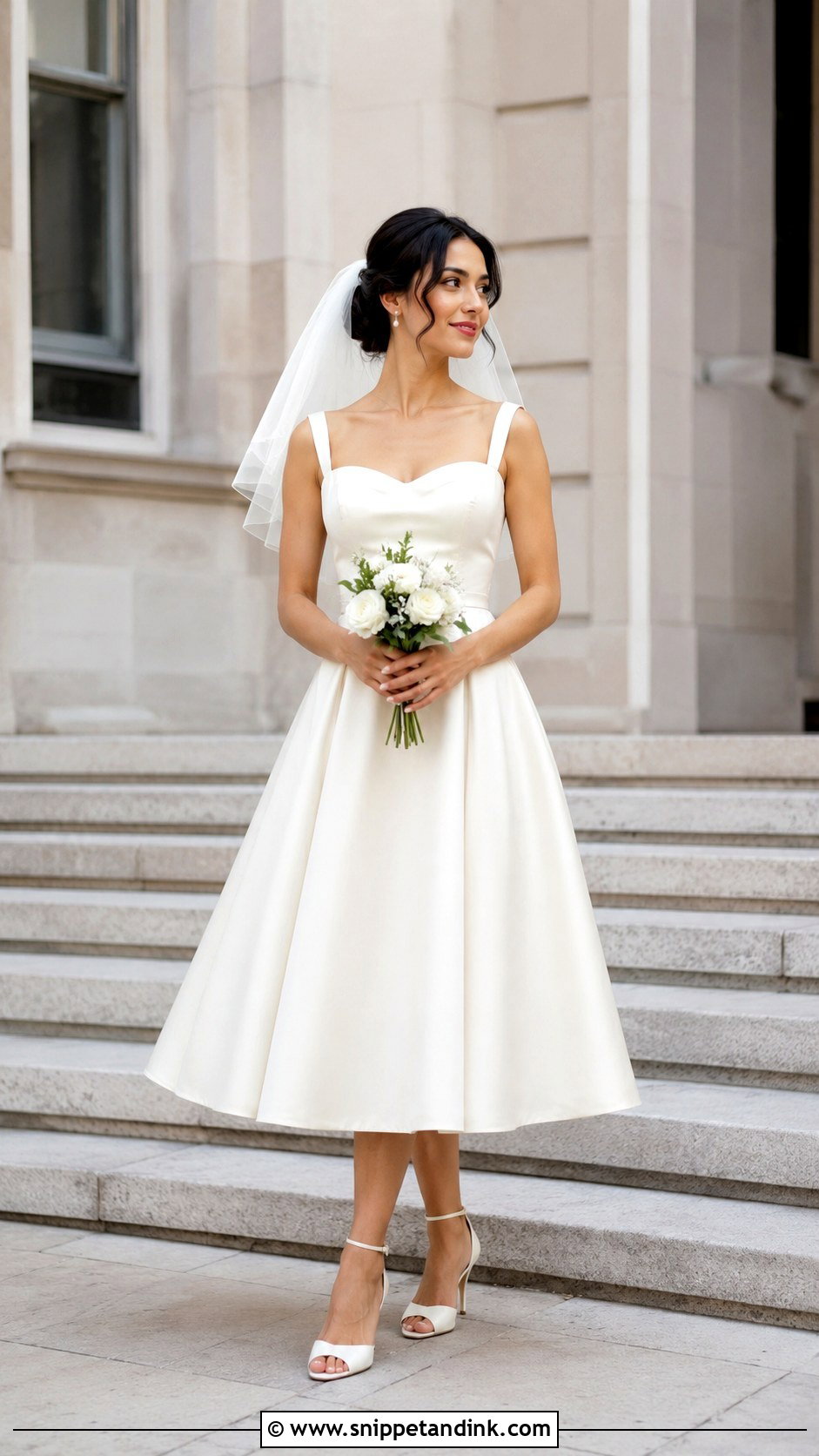
Tea length lands between knee and ankle, giving you real movement with a bridal feel. A fitted bodice over a gentle A-line skirt is the balanced version, and the overlay sets the formality: satin is crisp, organza and tulle are lighter, lace is softer. Ankle-strap heels, pearl earrings and a short veil suit it. The skirt swings when you walk, which is where it looks its best on camera. Have the hem set in the shoes you’ll actually wear, since a tea-length hem is only flattering at one precise point on the leg.
11. Civil Wedding Crepe Column Gown
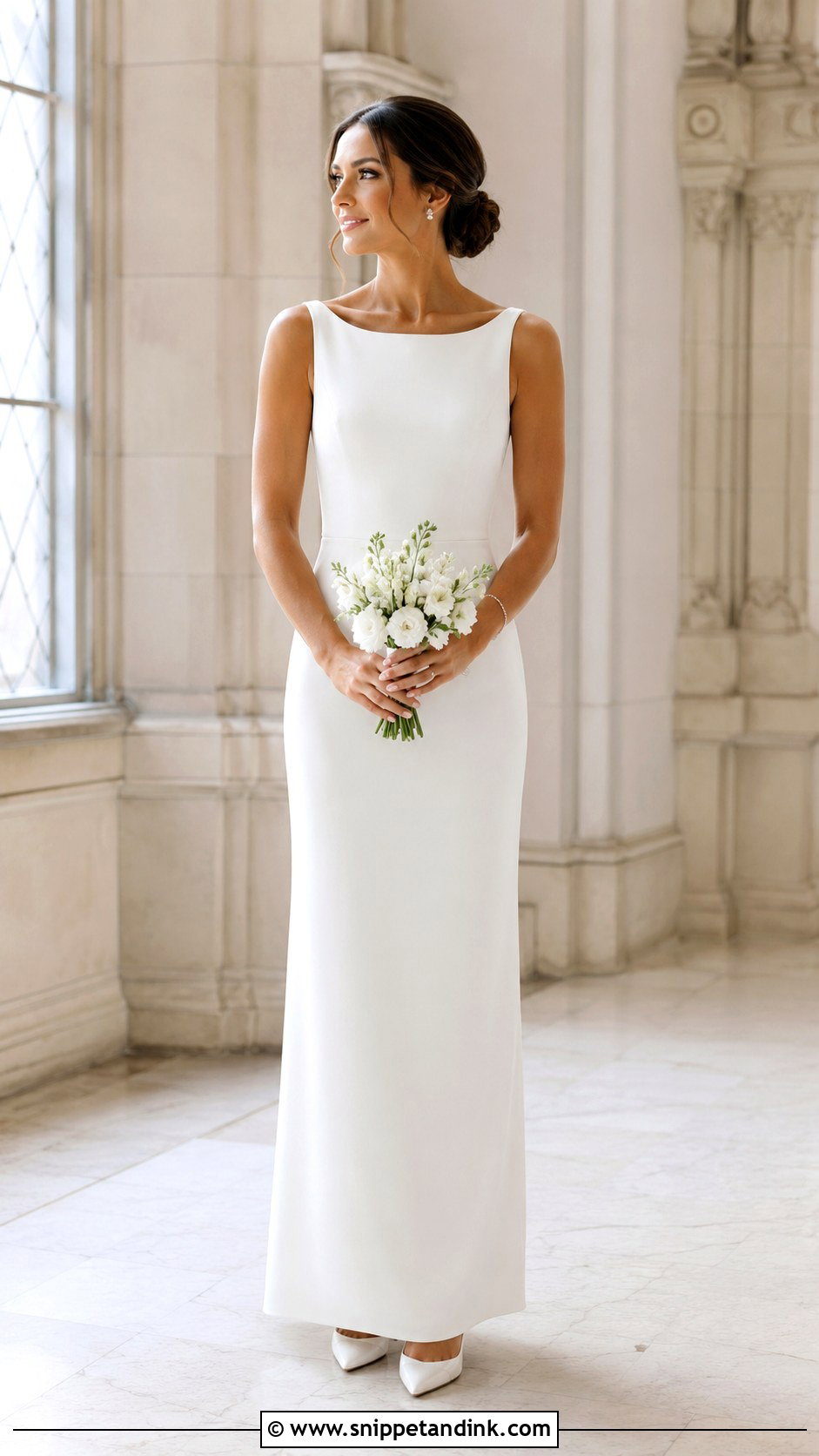
Crepe has enough body to smooth a column silhouette and enough give to sit and walk in, which is rare for such a straight shape. Look for a clean neckline, subtle seams and a skirt that falls naturally. White pumps, a delicate bracelet and a compact bouquet keep it minimal. A long coat or cropped cape adds ceremony without changing the dress. Walk briskly in it at the fitting. A full-length column can shorten your stride more than you expect, and a small back slit solves it.
12. Civil Wedding A Line Midi Gown
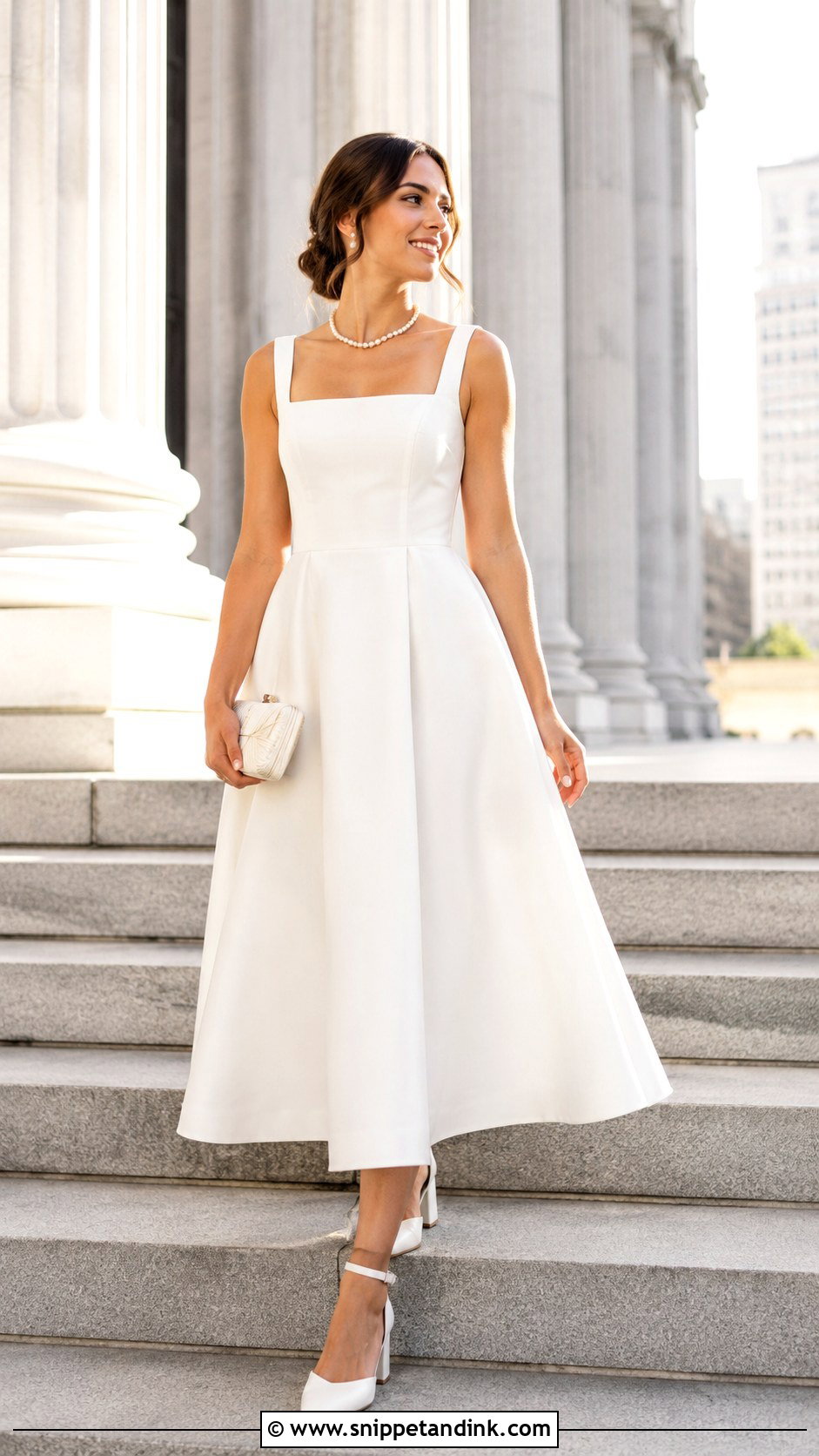
An A-line midi is the shape I’d hand to a bride who wants comfort but still wants to look unmistakably bridal. The fitted top and wider skirt give shape without weight. Crisp mikado, satin or structured crepe looks polished; lace or chiffon softer. Block heels, a pearl necklace and a clean clutch suit it, with a shoulder-length veil or a bow clip. It’s one of the few gowns I’d trust for a full day from morning ceremony to evening dinner.
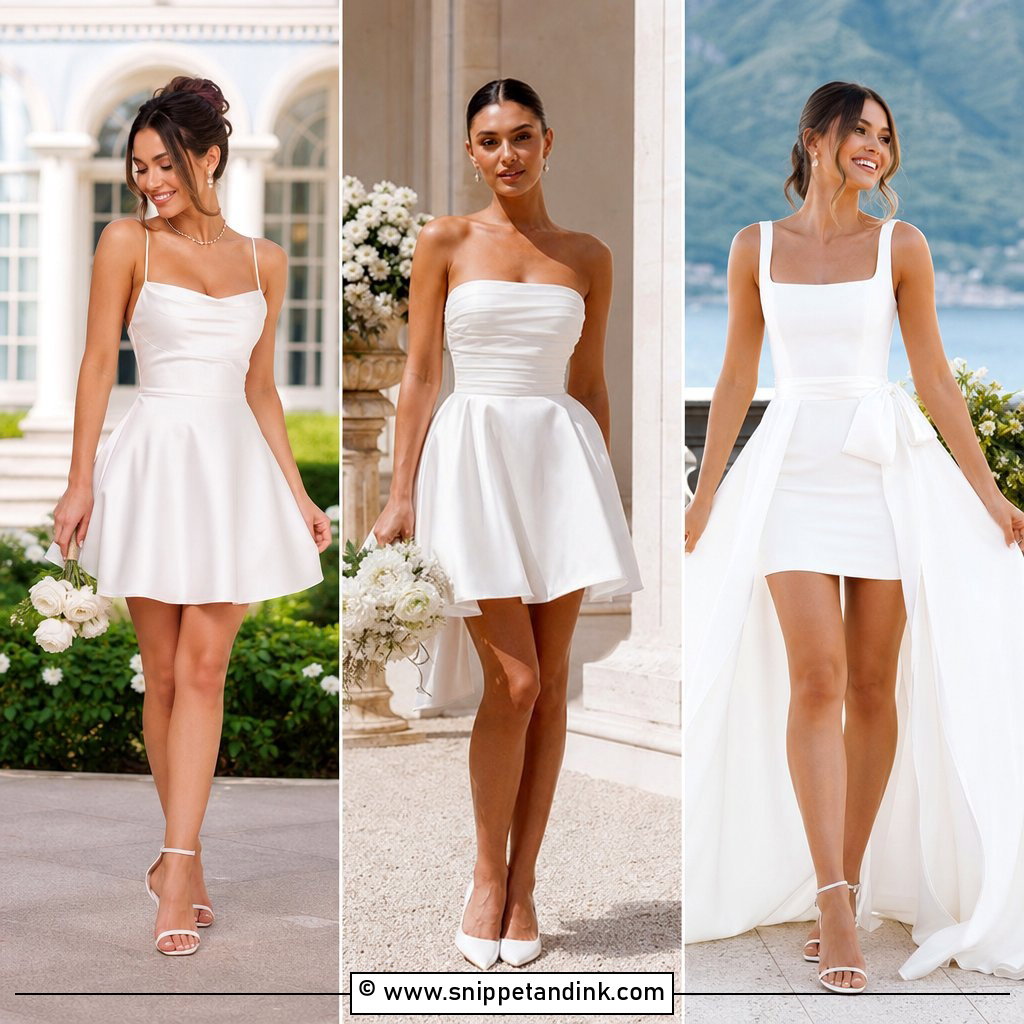
13. Civil Wedding Strapless Gown
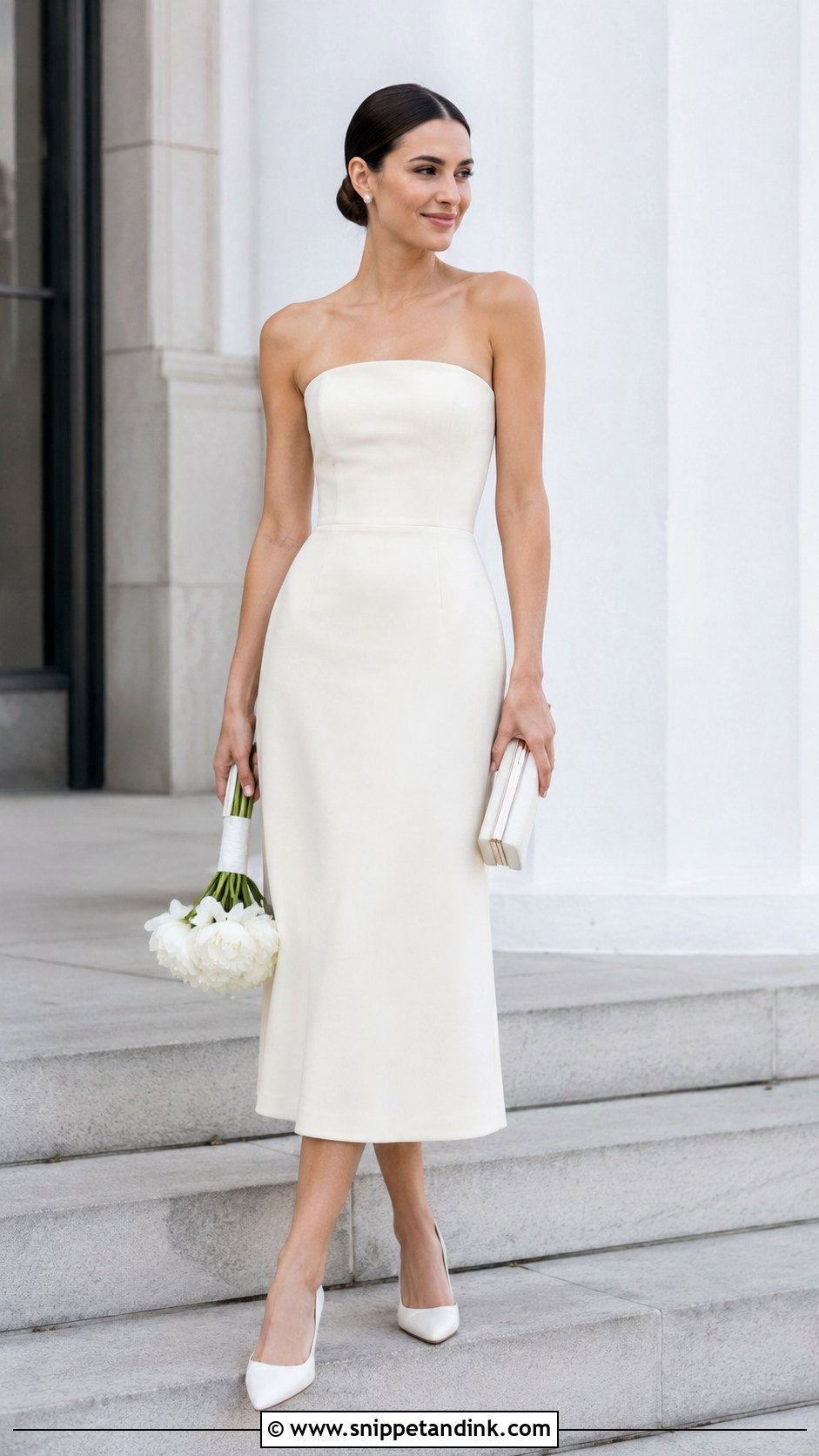
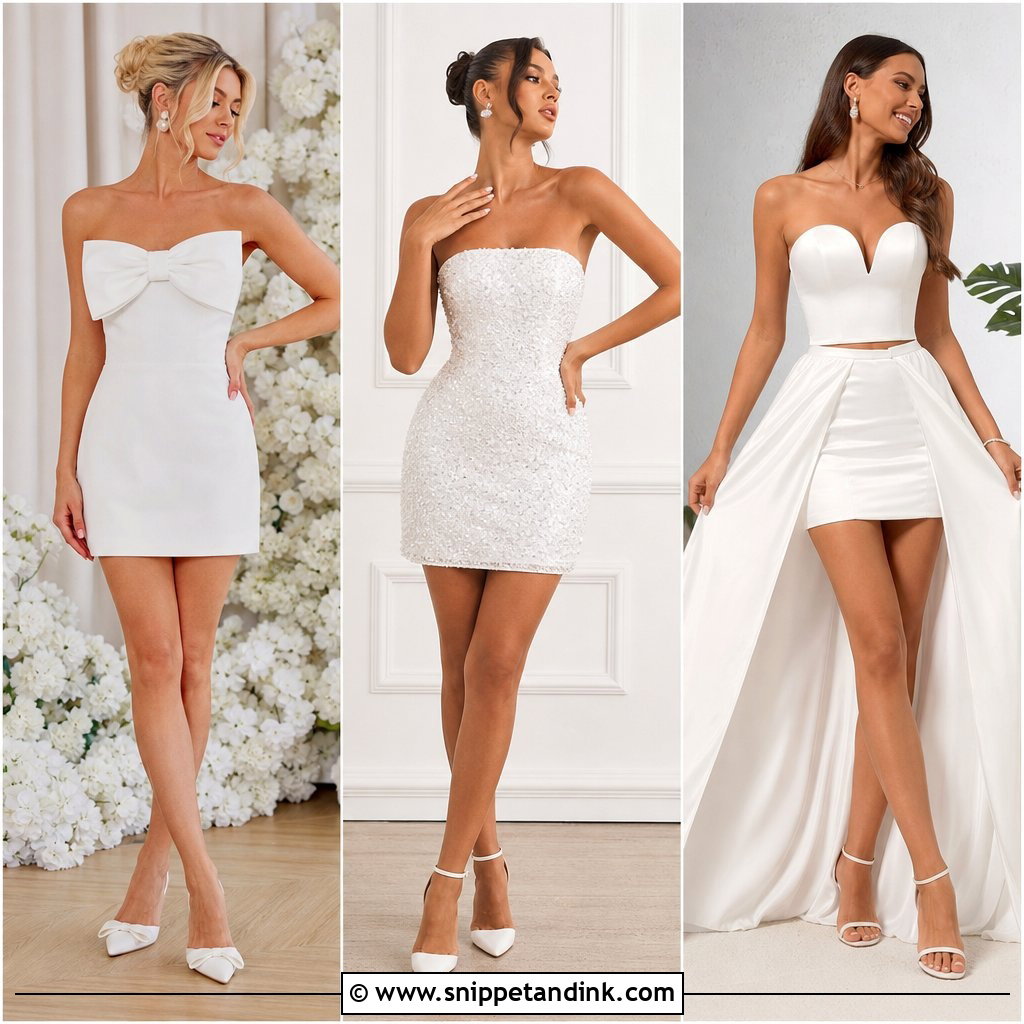
Strapless gowns only feel elegant if you aren’t pulling them up all day, so structure is non-negotiable. I look for boning, a waist stay and a bodice fitted snug at the top edge. A midi or straight floor-length gown with a clean bodice, light draping or a small foldover neckline looks expensive. Pointed pumps or slim sandals, pearl studs and a sleek clutch finish it. Add a cropped blazer, wrap or long coat for arrival and outdoor photos, and wear your hair up or tucked back to show the neckline.
14. Civil Wedding Halter Gown
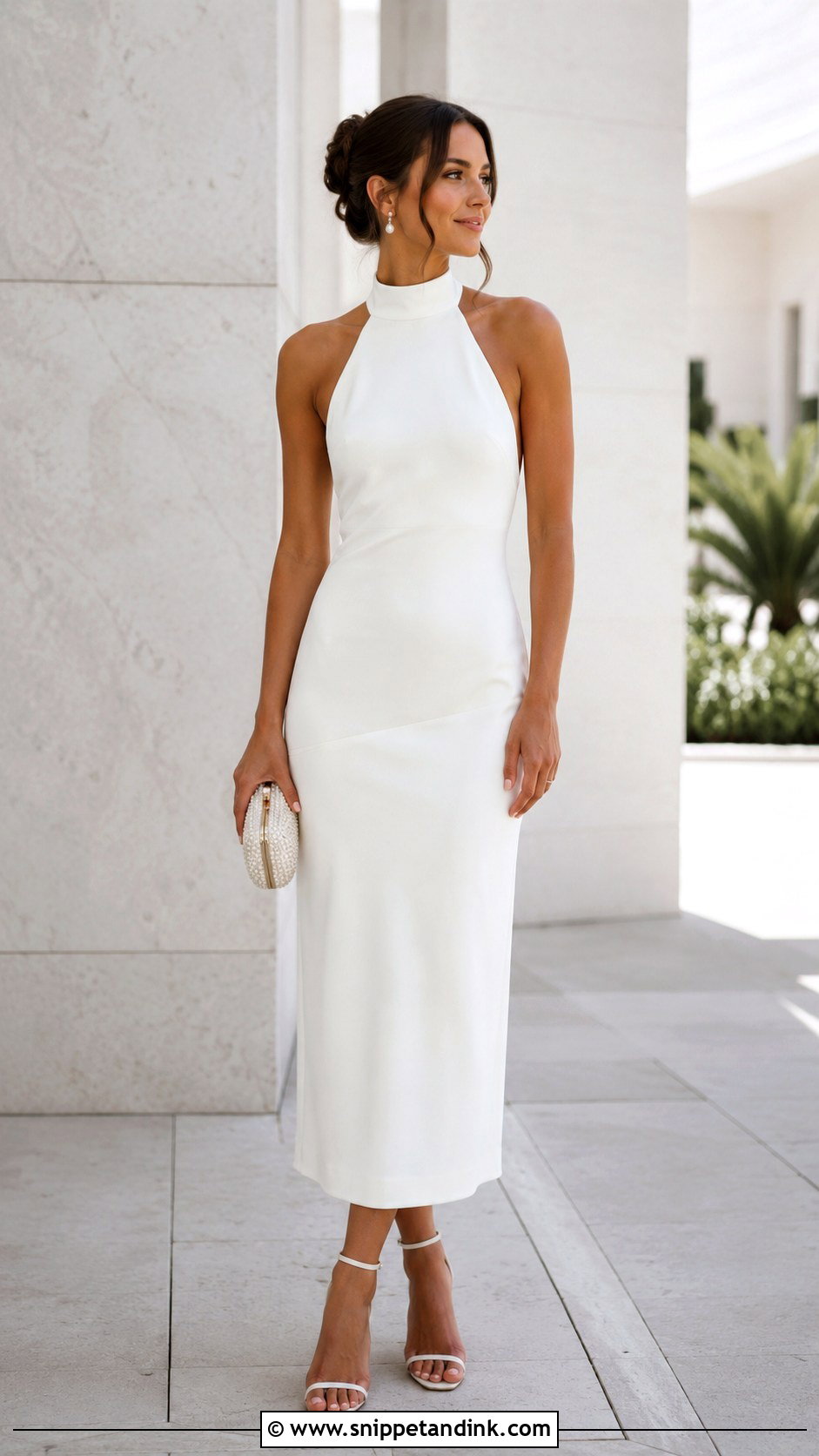
Halters show off the shoulders and leave the arms free, which is why I like them in hot weather. Satin, crepe and fluid jersey all drape well. A midi halter gown suits city hall, while a floor-length one adds drama without embellishment. Slim heels, small hoops or pearls and a compact bag are plenty. Skip the necklace and wear a neat bun or low ponytail. Ask for a hook fastening at the neck rather than a tie, because a tie loosens and a tight knot can give you a headache.
15. Civil Wedding Wrap Gown
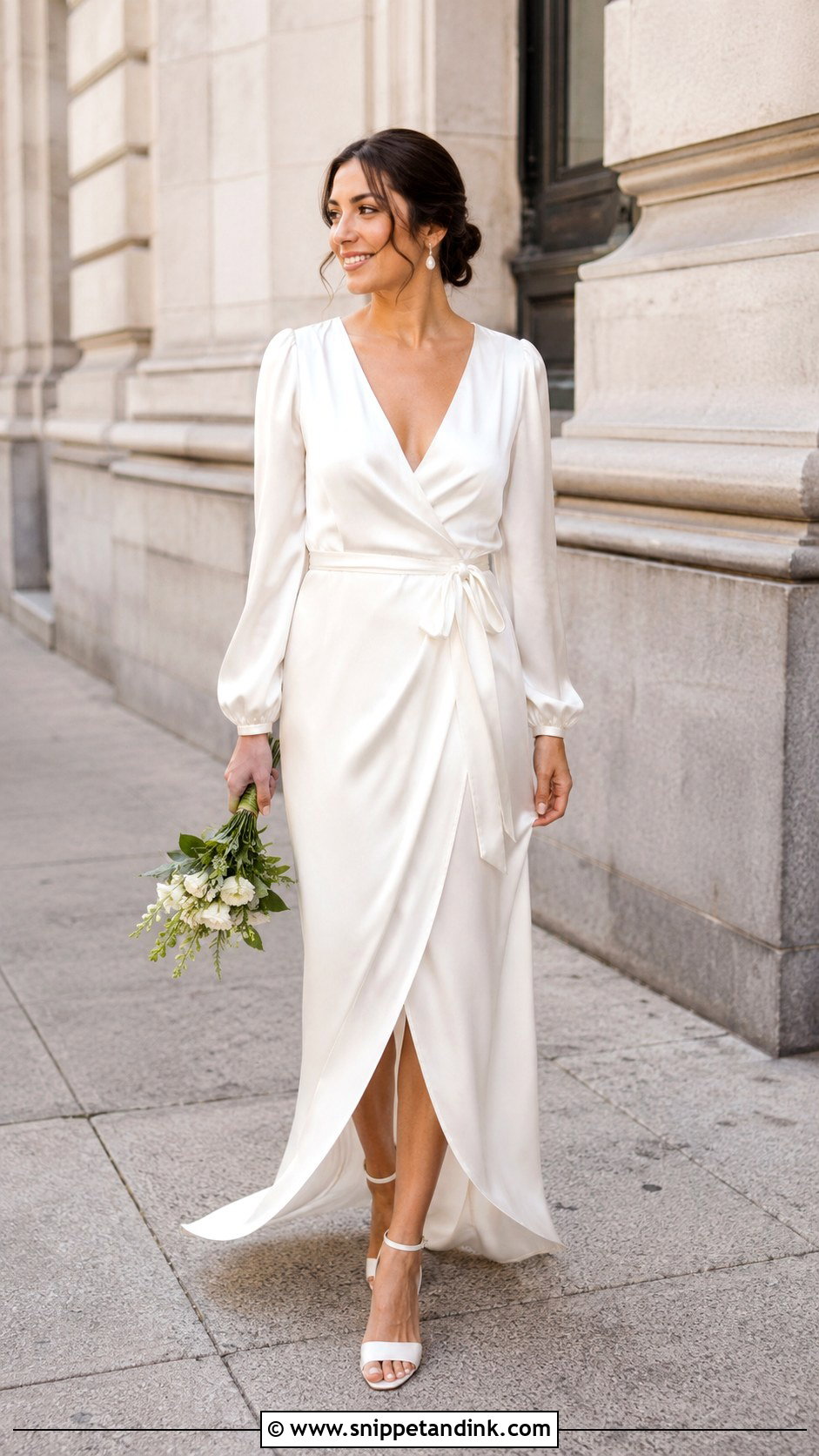
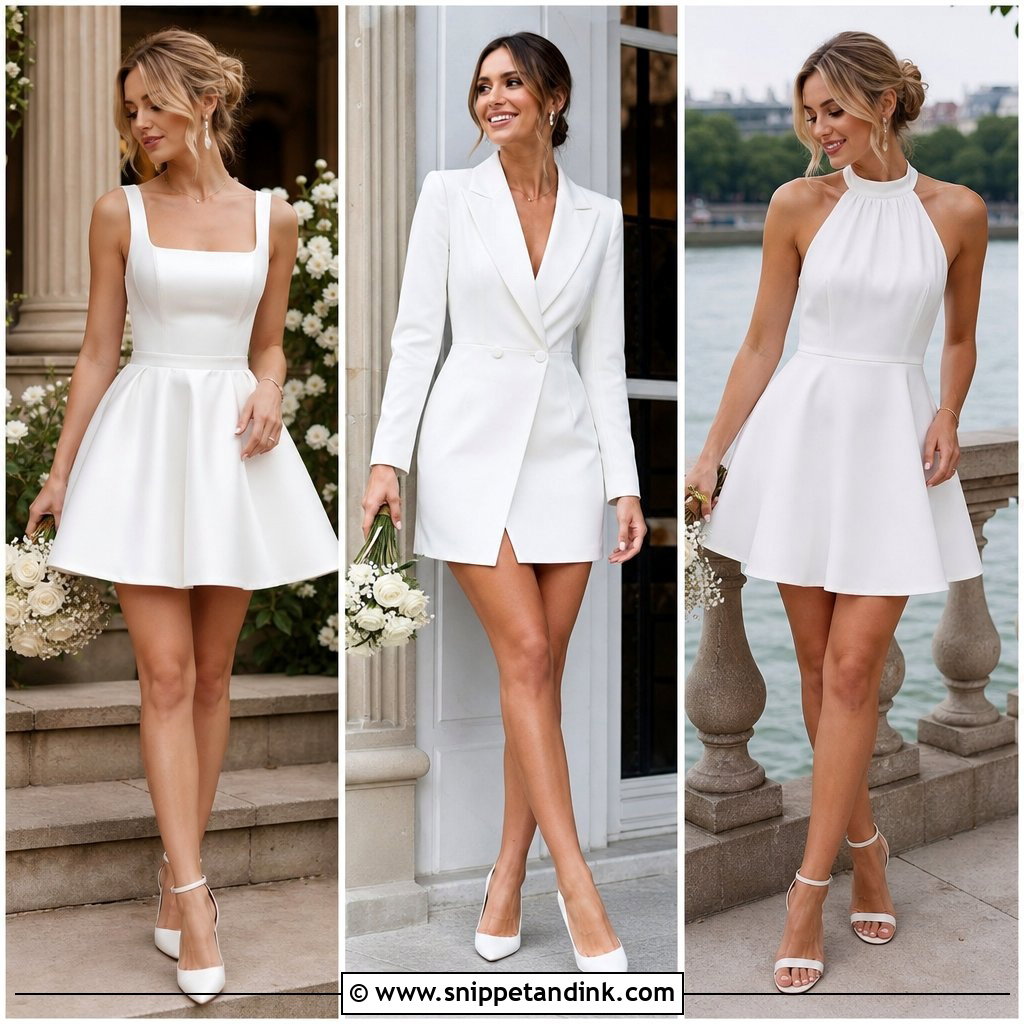
The wrap adjusts as you tie it, making it the most forgiving gown for a bride buying without much time for alterations. The V-neck and soft skirt create a graceful shape in ivory satin, crepe or soft chiffon. Low block heels, drop earrings and a simple bouquet suit it. If the wrap has a slit, check how far it opens when you sit, and keep the rest of the styling refined. Soft waves or a low bun finish it. A hidden snap at the overlap is a small alteration that saves a lot of adjusting.
16. Civil Wedding Puff Sleeve Gown
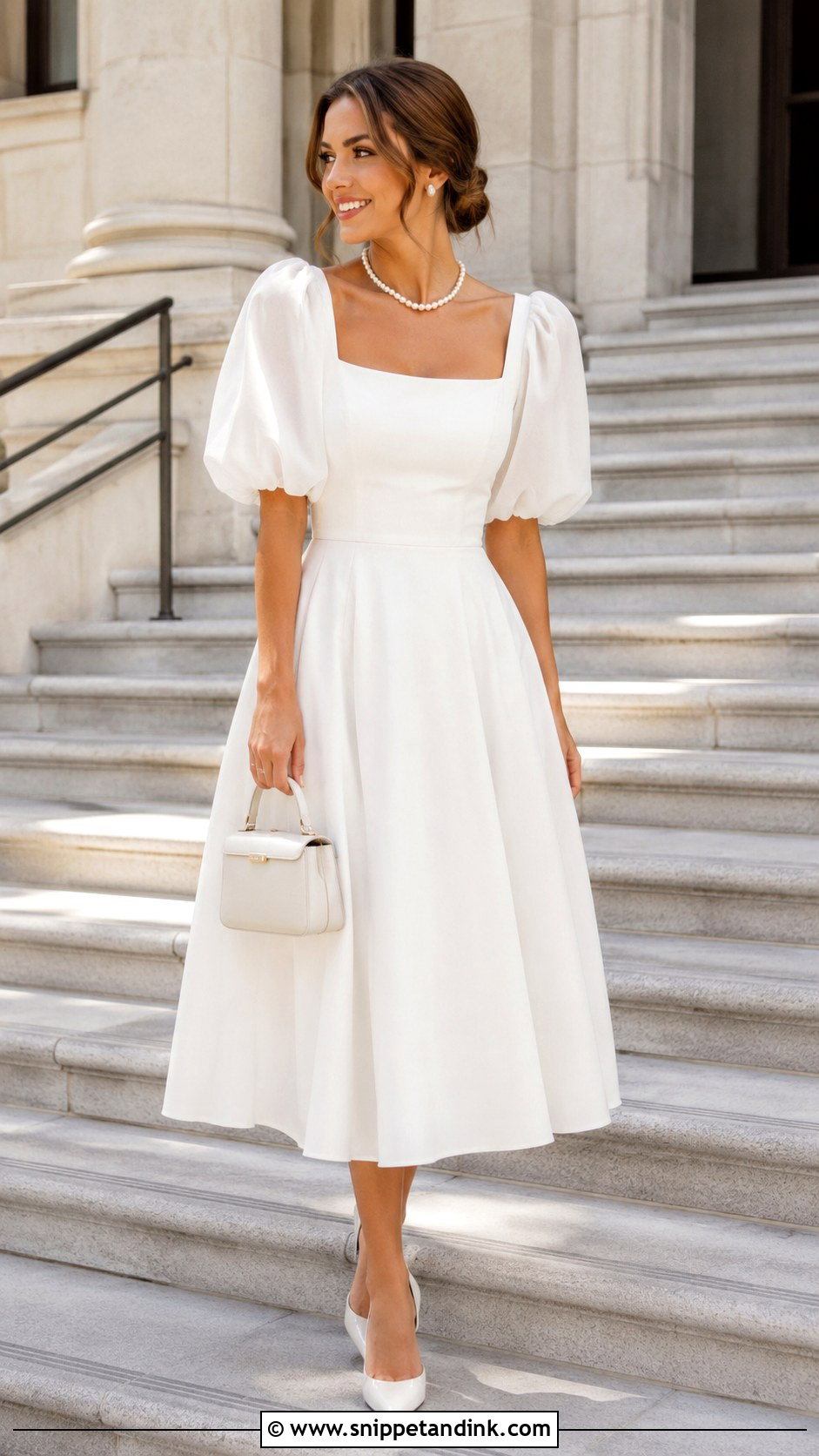
Puff sleeves give personality, so the rest of the gown can stay plain. Mini, midi or tea length all work in cotton, satin, organza or crepe. Classic pumps or ankle-strap heels, a small handbag and simple pearls complete it. Big sleeves plus big hair crowd the face, so keep your hair sleek. Organza puffs hold their shape all day; cotton ones soften after a few hours, which some brides prefer. They come alive on courthouse stairs and balconies.
17. Civil Wedding Floral Embroidered Gown
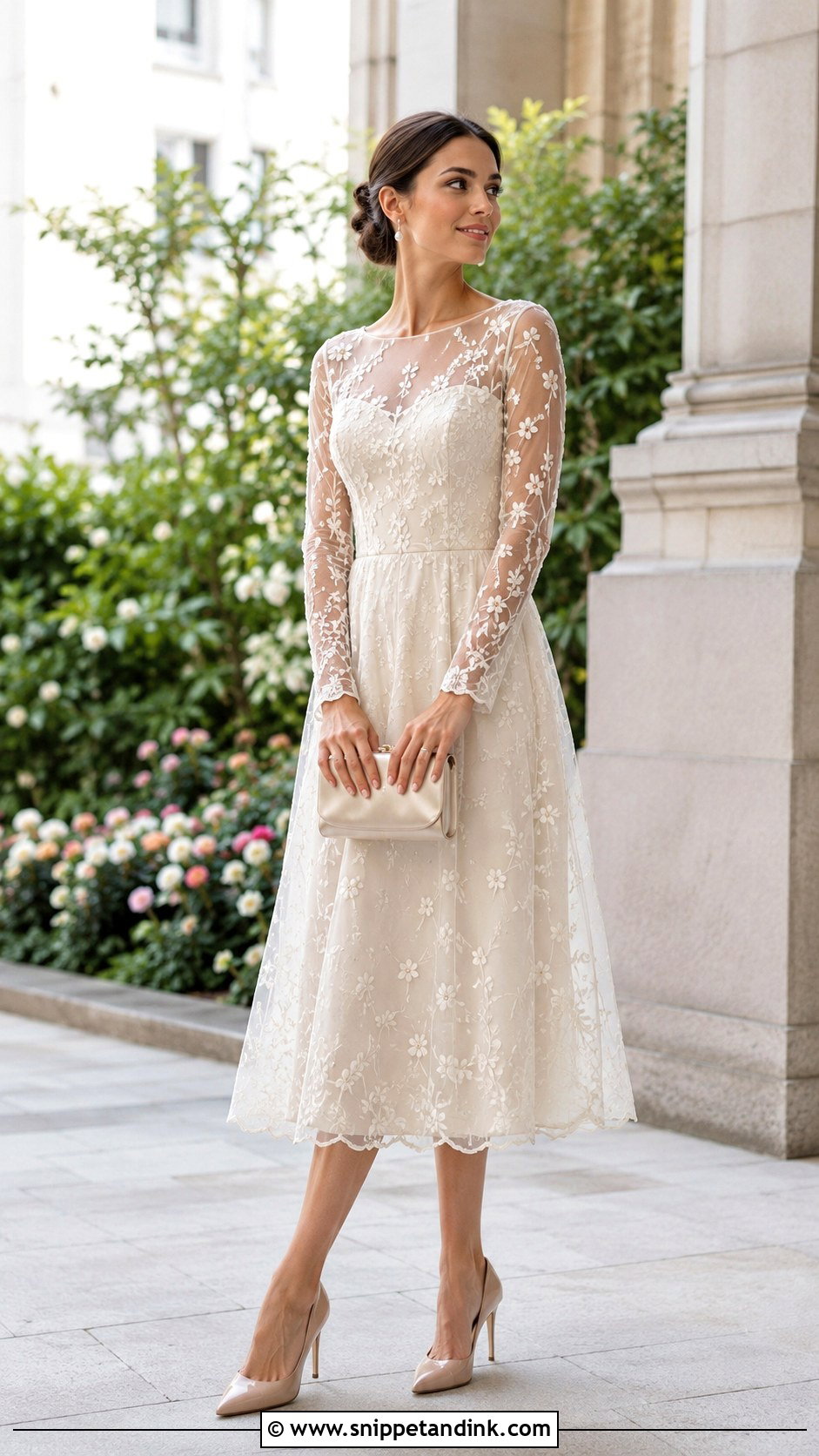
Embroidery gives a gown interest without sparkle. Soft white, ivory or pale blush flowers on tulle, organza or lace in a midi or slim floor-length shape keep it manageable. Nude heels, pearl earrings and a satin clutch suit it. Colored embroidery needs very simple accessories. A soft updo or loose waves match the mood. It’s a strong choice for outdoor civil ceremonies and spring weddings, and embroidery shows its texture best in natural light, so plan at least a few photos outside.
18. Civil Wedding Beaded Mini Gown
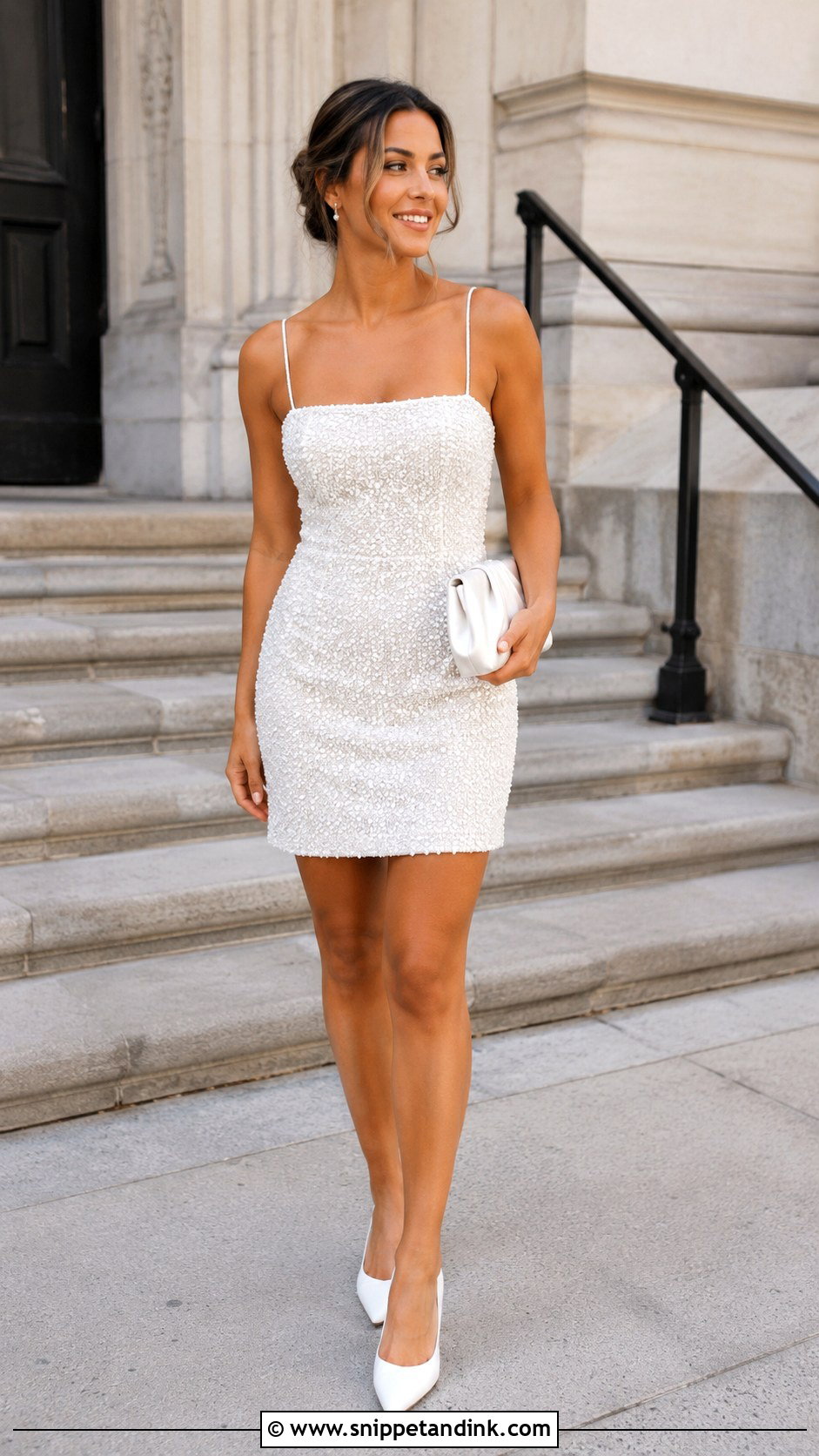
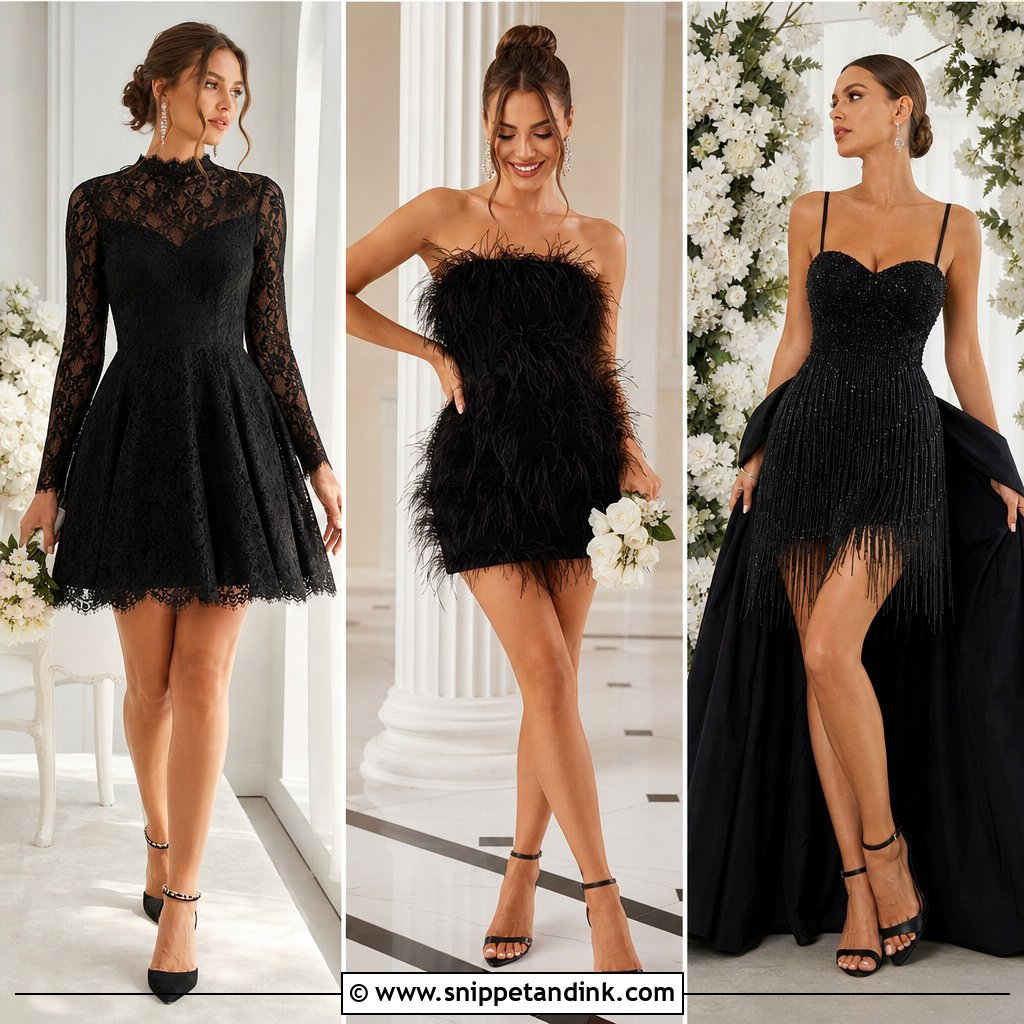
Beaded minis are festive, and the trick is restraint. Delicate beading, pearls or subtle sequins look elegant at a courthouse; heavy sparkle looks like a party dress. Simple white heels, a satin clutch and small earrings let the beading lead. A high neck or long sleeves balance the short hem. A sleek bun or soft bob keeps it modern. Check the inner arm area at the fitting, since beads there scratch all day, and carry a few spare beads with a needle for the dinner afterwards.
19. Civil Wedding Cape Gown
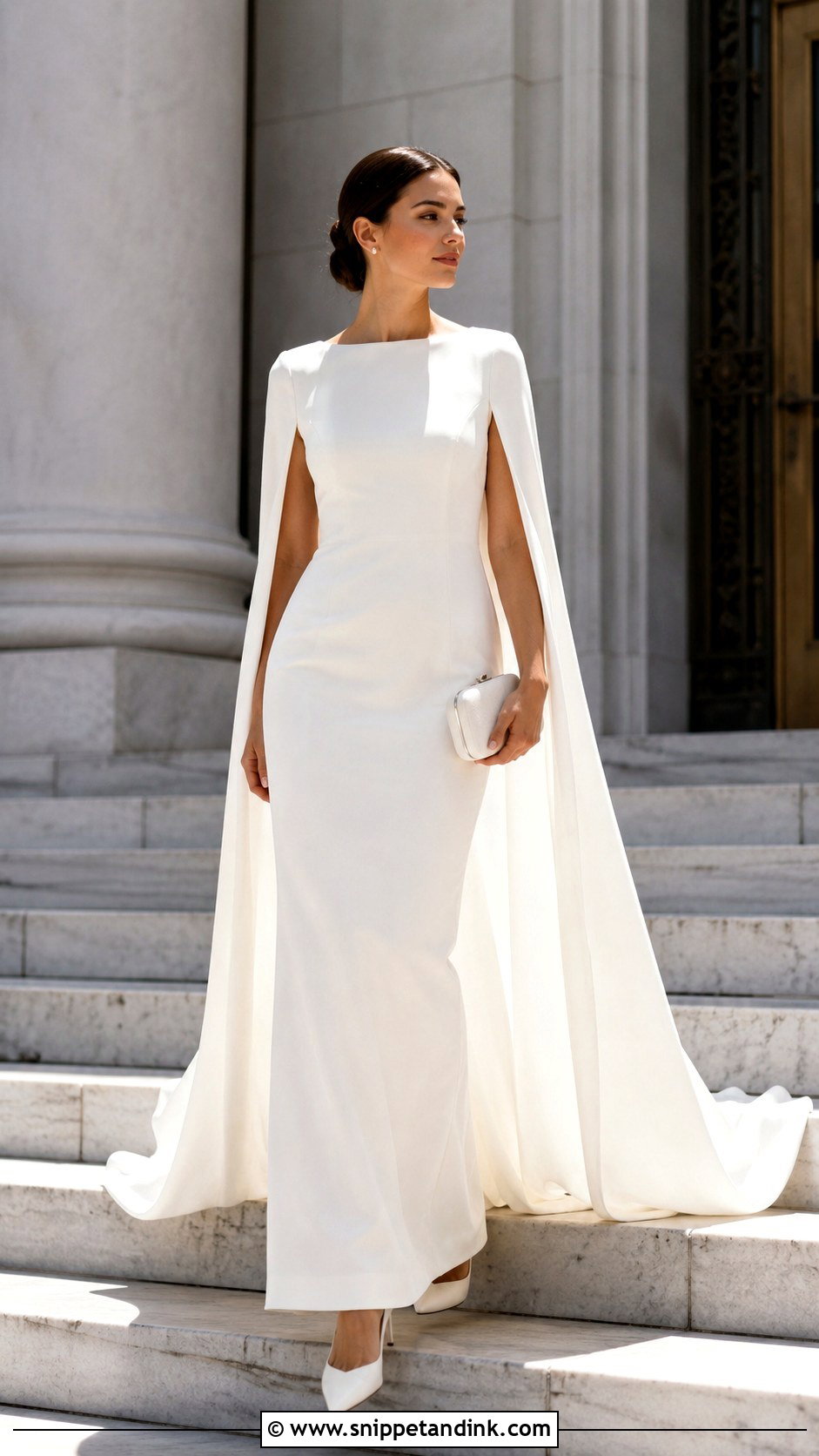
A cape gives you the feeling of a veil without a train. It can be attached at the shoulders, flow from the neckline or come as a separate layer over a simple dress. Underneath, a sleek column or midi stops the look feeling heavy. Pointed heels, pearl studs and a smooth clutch suit it, and a small bouquet stays out of the cape’s way. A detachable cape is the version I’d recommend, because you can take it off for lunch. It works on courthouse steps, in formal interiors and at winter weddings.
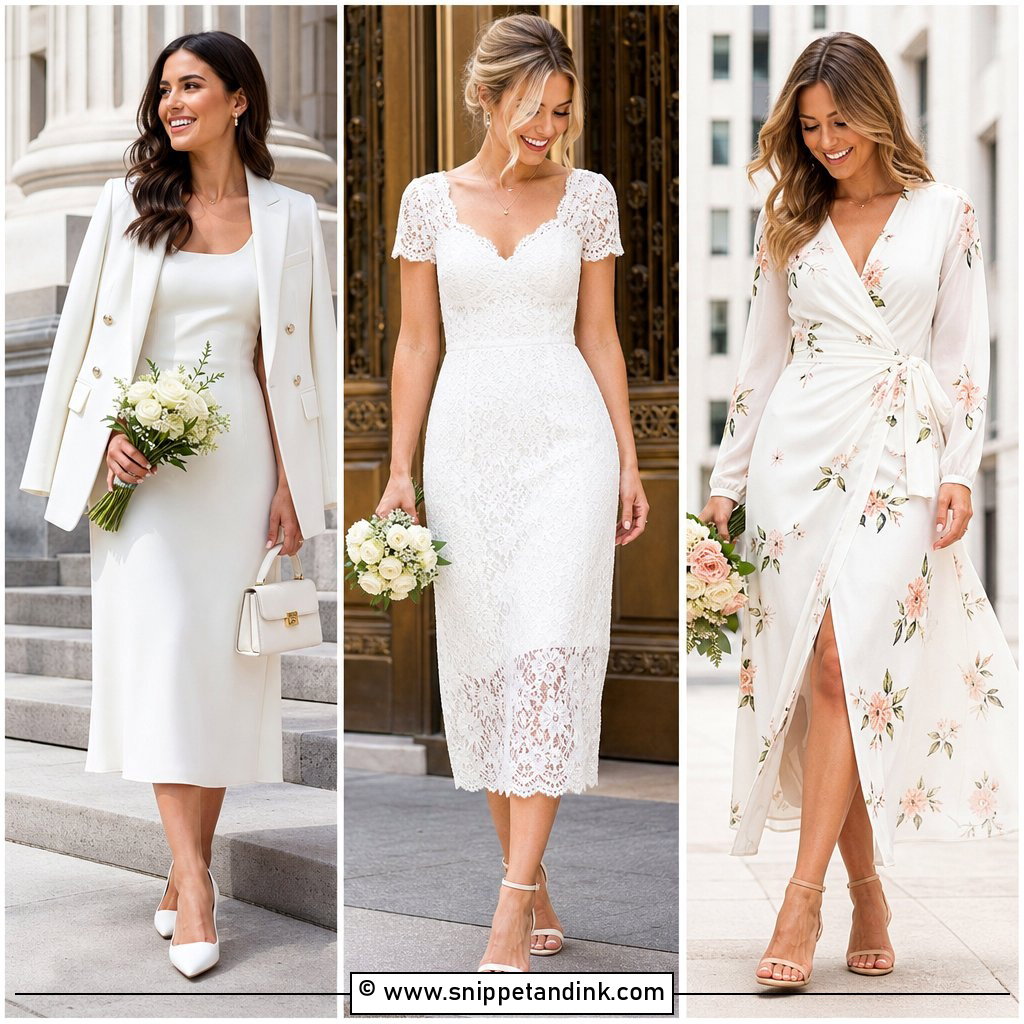
20. Civil Wedding Short Sleeve Gown
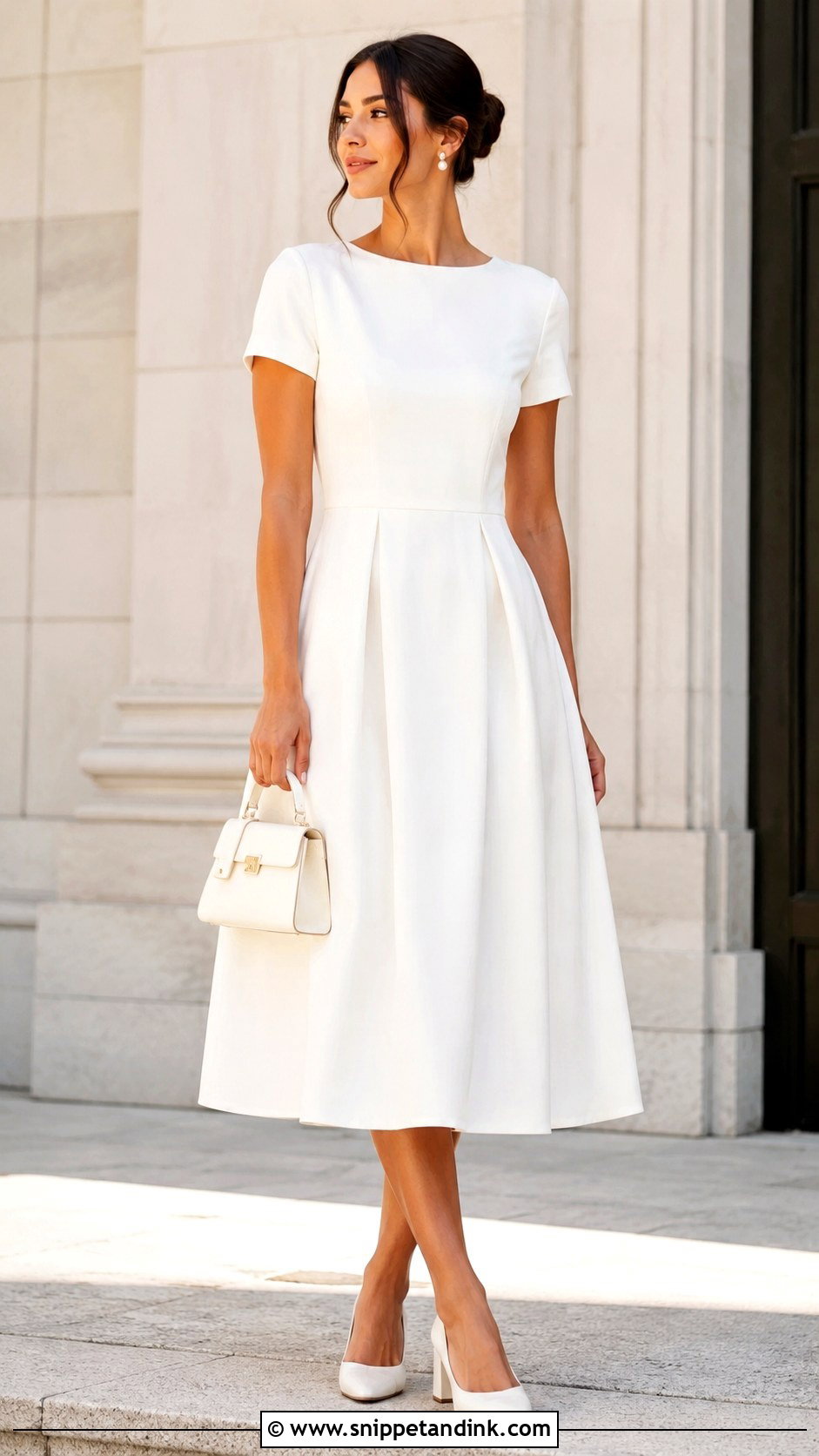
Short sleeves give coverage without the warmth of long ones. Look for a fitted waist, a clean skirt and a considered neckline, such as a bateau, a V or a square. Block heels, pearl earrings and a small handbag make it polished. A short veil, hair bow or delicate headband makes it more bridal. Short sleeves rarely need alteration through the armhole, which helps when time is tight. It suits a warm daytime ceremony and goes from vows to lunch without a change.
21. Civil Wedding Pleated Gown
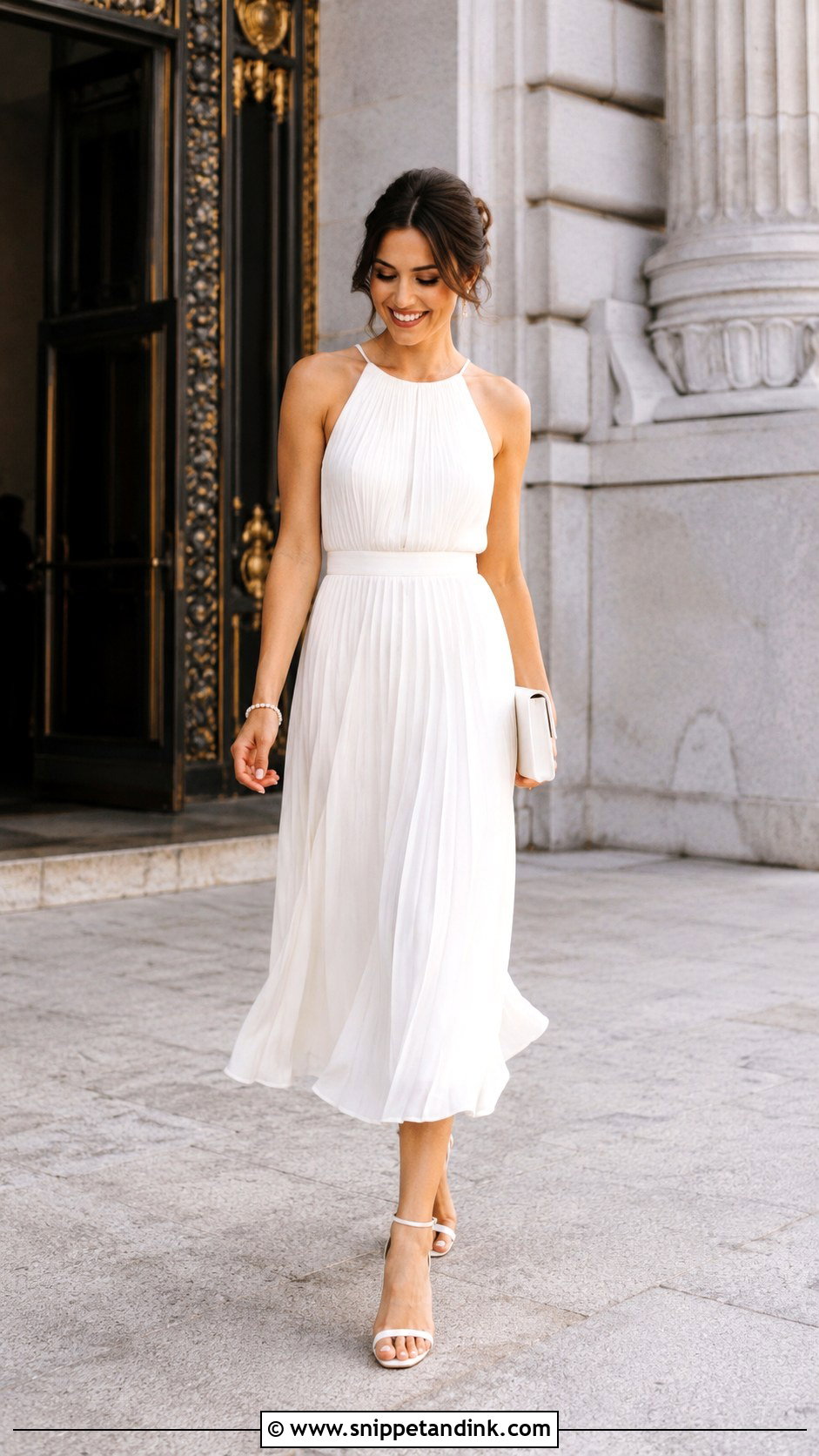
Pleats can be soft and flowing or sharp and structured, and the difference is fabric. Chiffon pleats float; satin and crepe pleats hold a crisper line. An ivory pleated midi with a fitted bodice balances the skirt’s volume. Slim heels, a pearl bracelet and a clean clutch are enough, since the pleats are already the detail. Walking photos are where it shines. Don’t fold a pleated gown for travel; hang it in a long bag and let gravity keep the pleats in.
22. Civil Wedding Bow Back Gown
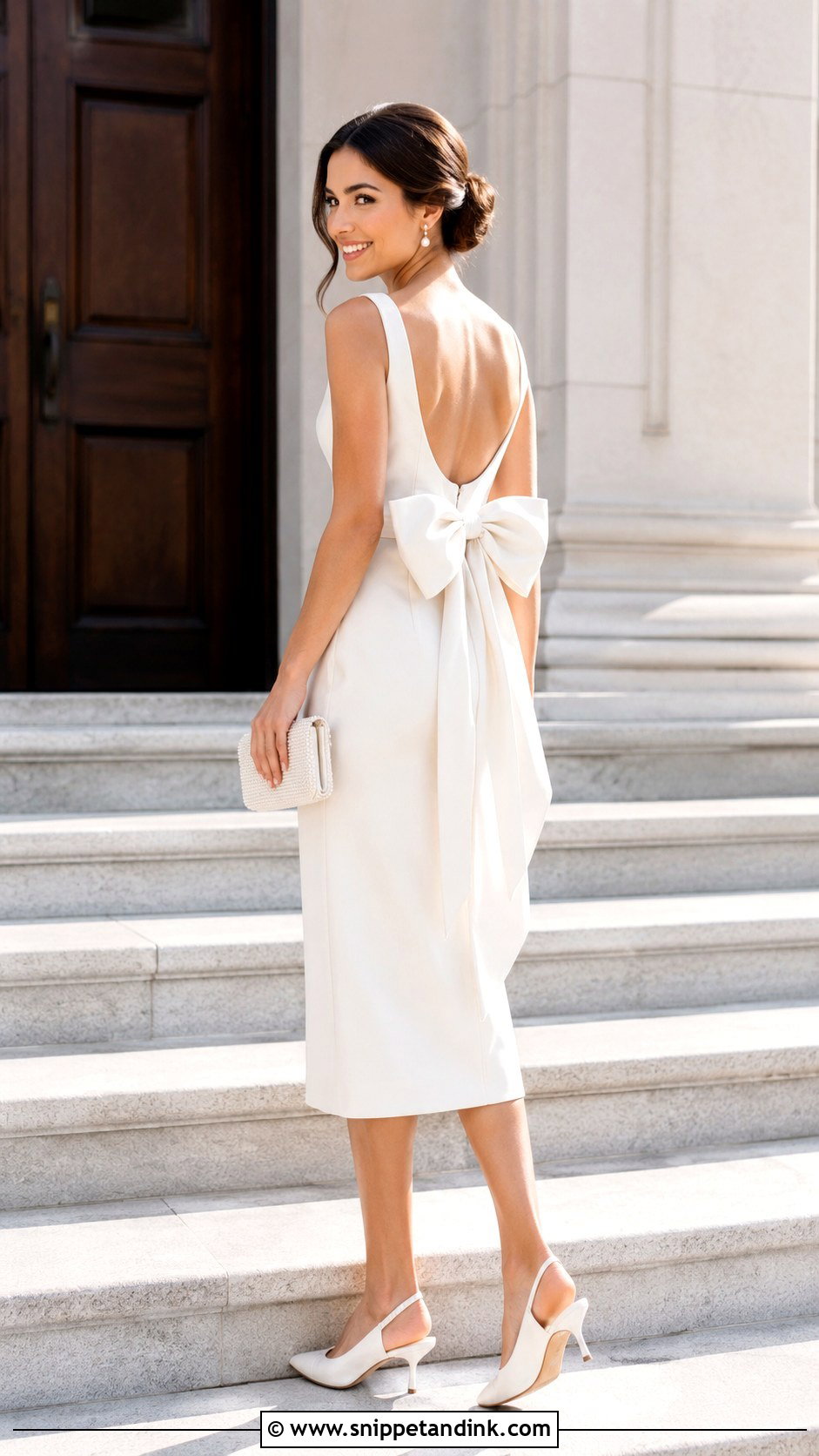
A bow back keeps the front of the gown plain and makes your exit memorable. Guests spend most of a civil ceremony looking at your back as you stand at the desk, so that’s where a detail actually gets seen. A mini, midi or column with a clean front and a structured bow behind works. Low heels, pearl earrings and a neat clutch suit it. Wear your hair up or swept aside. Interfacing inside the bow keeps it standing; without it, the bow flattens the first time you lean back in a chair.
23. Civil Wedding Ruffle Hem Gown
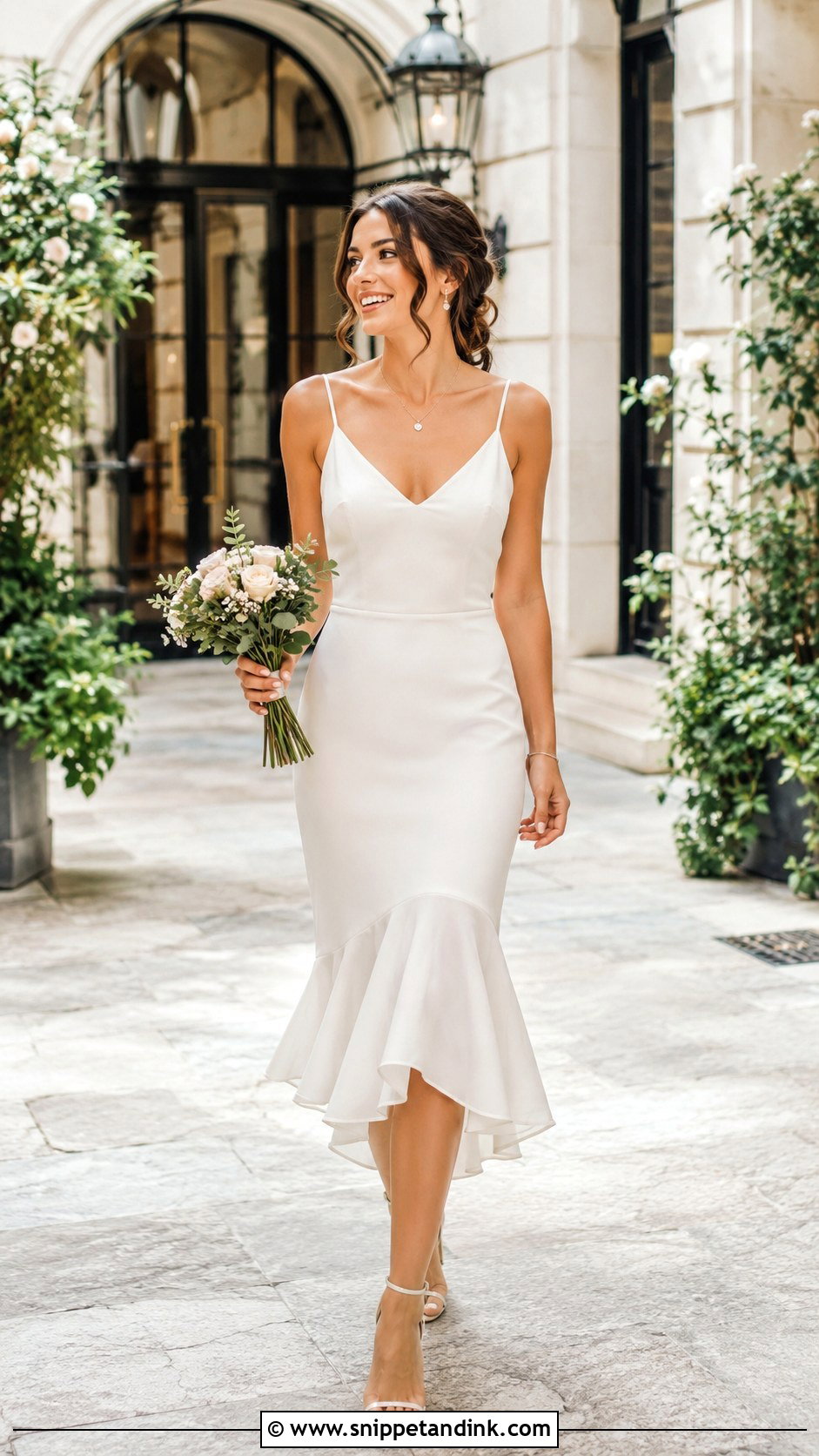
A subtle ruffle at a midi or ankle hem adds movement without formality. Lightweight crepe, satin or chiffon let it move. Strappy heels, simple earrings and a small bouquet keep it light, and a fine necklace suits a plain neckline. One ruffle is enough; stacked tiers turn busy fast. Have the length checked on stairs, as a ruffled hem catches on a heel more easily than a plain one.
24. Civil Wedding Two Piece Gown
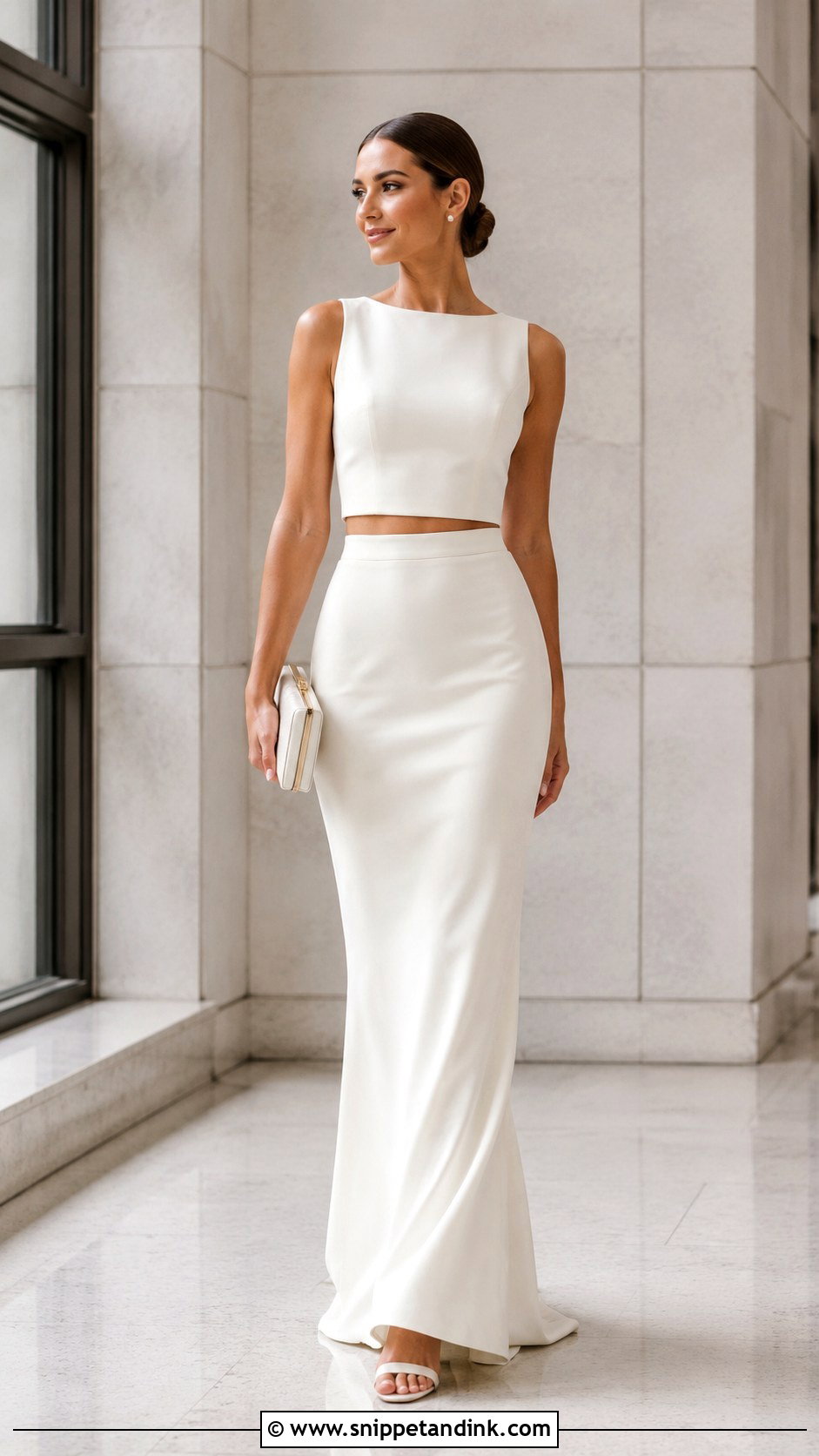
Two-piece gowns are easier to fit than a one-piece because the top and skirt can be sized separately, which helps anyone who’s a different size above and below the waist. A fitted crop top with a high-waisted midi or maxi skirt looks modern at a civil ceremony. Matching ivory satin, crepe or lace keeps it cohesive. Simple heels, pearl studs and a sleek clutch finish it. For more coverage, choose a longer top or add a tailored jacket, and make sure the skirt waistband sits high enough that sitting down doesn’t open a gap.
25. Civil Wedding Coat Gown
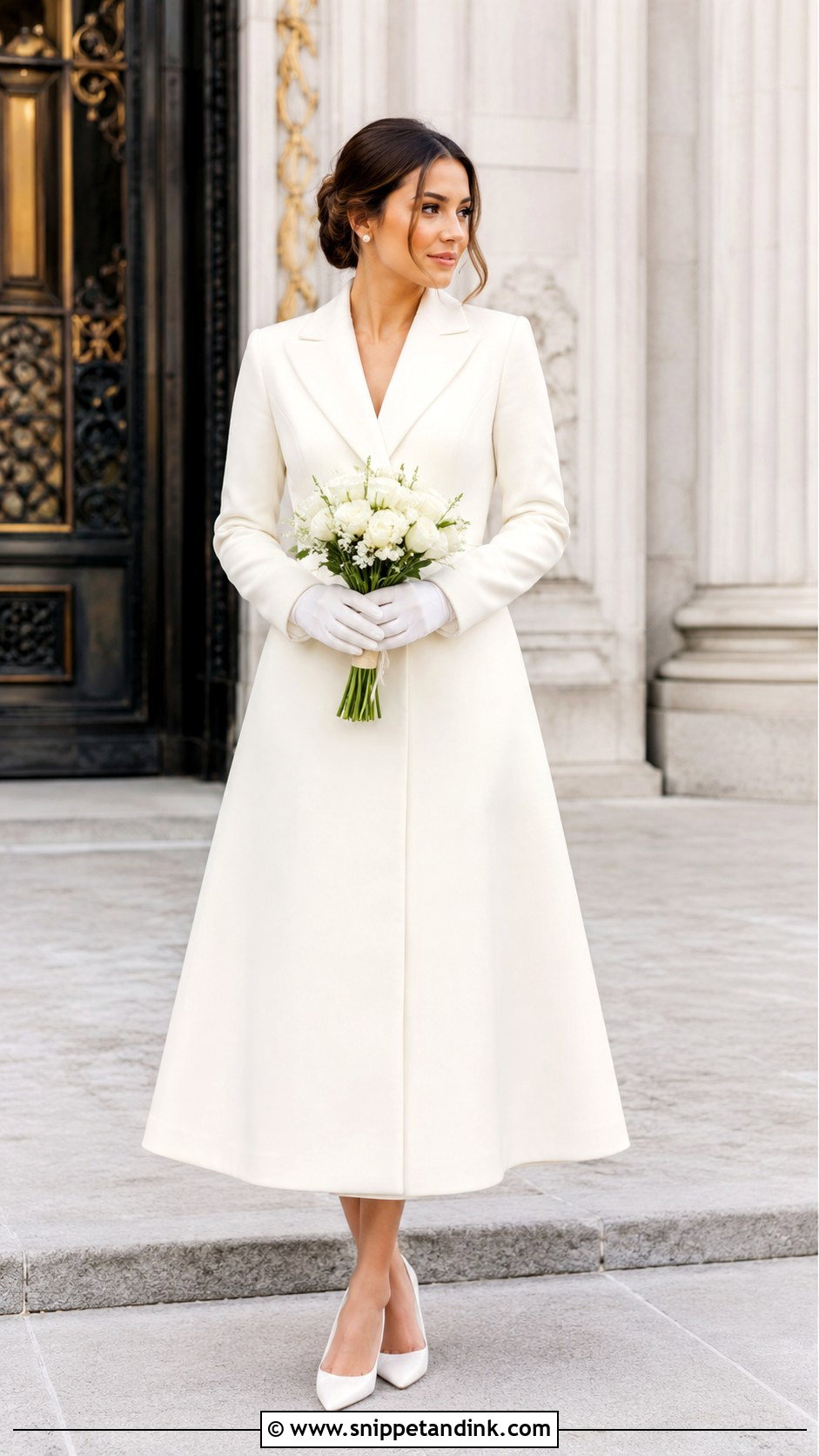
A coat gown is a tailored coat and a bridal dress in one, often with buttons, lapels, a defined waist and a clean skirt. Ivory wool crepe or another structured fabric looks polished and keeps you warm. Pointed pumps, gloves in cold weather and pearl or crystal earrings suit it, with a sleek bun and small bouquet. It’s the gown I’d suggest for a winter city hall ceremony, because you never have to hide it under an ordinary coat for the photos outside.
Does the Building Have Its Own Rules?
Registry offices and city halls run to a timetable, and some have rules that affect what you wear and carry. Ask when you book rather than finding out at the door.
- Slots can be short, with another couple waiting behind you. A gown you can get in and out of a car quickly matters more than a long train.
- Some buildings restrict confetti, petals or photography in certain rooms. Plan your big portraits for the steps outside.
- Courthouses with security screening may check bags, so keep your emergency kit small and free of anything sharp.
- Older buildings often have narrow staircases and lifts. Full skirts and capes need a test run through a doorway at home.
Two Looks From One Gown
Plenty of civil brides want a change for dinner without buying a second dress. The easiest way is to plan the gown in layers. Wear a long veil, cape or coat for the ceremony, then remove it for the meal. Swap pumps for a more fun heel, take your hair down, and switch pearl studs for a bolder earring. A blazer gown can lose its jacket over a matching camisole. Try both versions at your final fitting so you know each one works before the day.
The Gown Should Feel Like You at the Registrar’s Desk
A civil wedding can be simple and still completely bridal. A satin midi, a lace tea length, a structured blazer gown and a sweeping cape each get there by a different route. Judge them on comfort, how they move and how the whole outfit looks from head to toe in a photo. Shoes, bag, jewelry and hair can lift even the plainest gown. Most of all, wear the one that still feels like you at the moment you sign your name.
You'll Like These Ideas:



Leave a Reply