
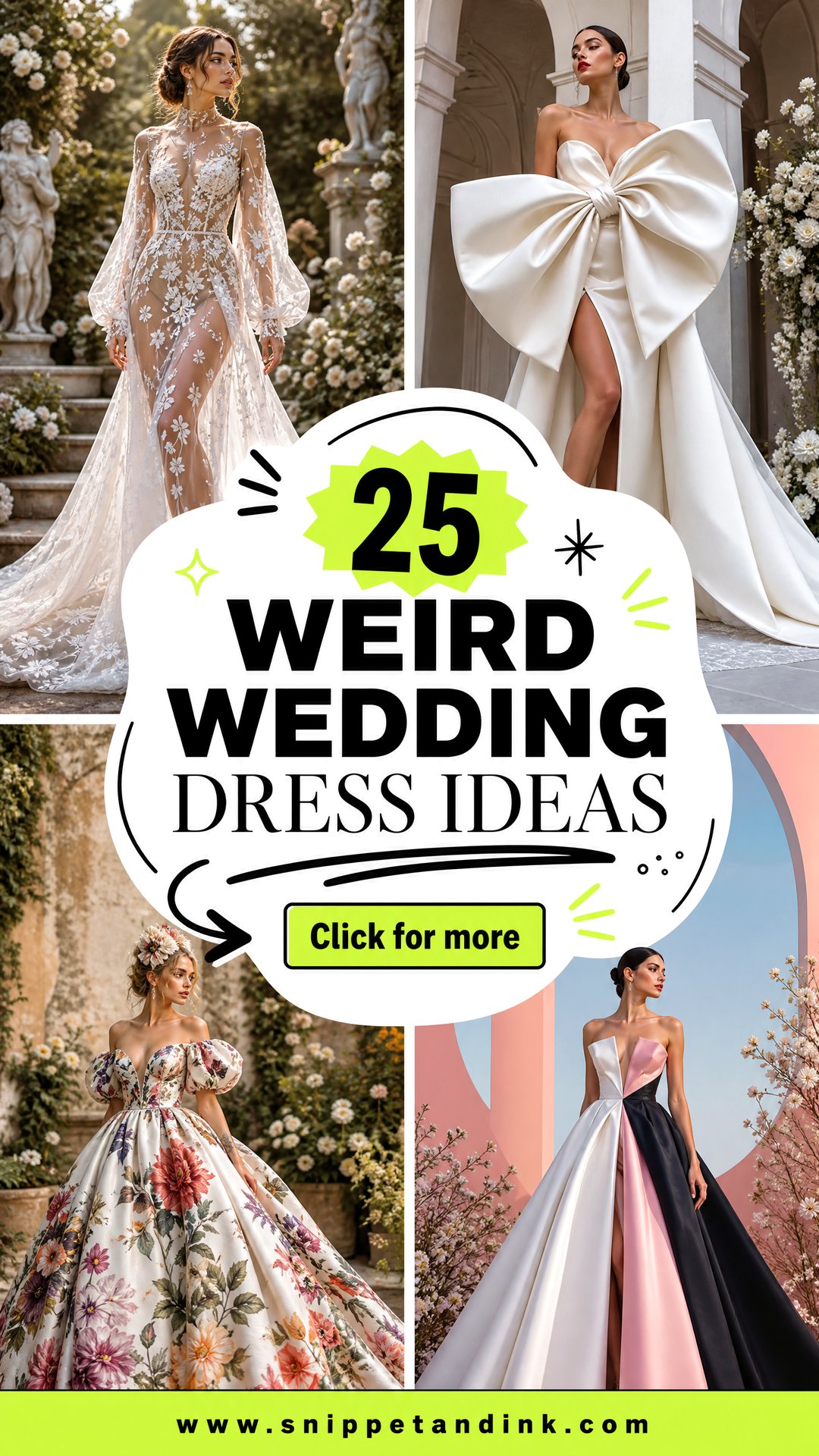
Unusual doesn’t have to mean costume. When a bride tells me she wants something weird, what she usually means is color, sculpture, a vintage piece, a short hem or a shape nobody in her family has worn down an aisle. Bridal fashion has moved that way too: capes, minis, two-piece sets, strong textures, colored gowns, vintage finds and convertible dresses are all things shops now carry rather than special-order curiosities. What separates a considered unusual look from a strange one is the styling around it, meaning the shoes, the veil or lack of one, the jewelry, the bouquet and how well it suits the venue. Here are 25 unconventional wedding dresses, with what each one asks of you.
Telling the Family About a Black, Red or Silver Dress
Color carries meaning, and the same dress can read as daring in one family and as entirely traditional in another. Red is the classic bridal color in Chinese, Indian and several other traditions. Black is still linked with mourning for many older relatives in Western families. White itself is a mourning color in some cultures. I always ask a bride about this before we shop, because the conversation is much easier before the dress is ordered than after.
My suggestion is to share a picture early and frame it as part of the whole plan, the venue, the flowers and the mood, rather than as a single shock reveal. If a grandparent struggles with it, an ivory piece for the ceremony and the unusual dress for the reception is a compromise that costs you very little. And if the dress is staying, that’s fine too; just make sure the people closest to you hear it from you first.
1. Black Tulle Wedding Dress
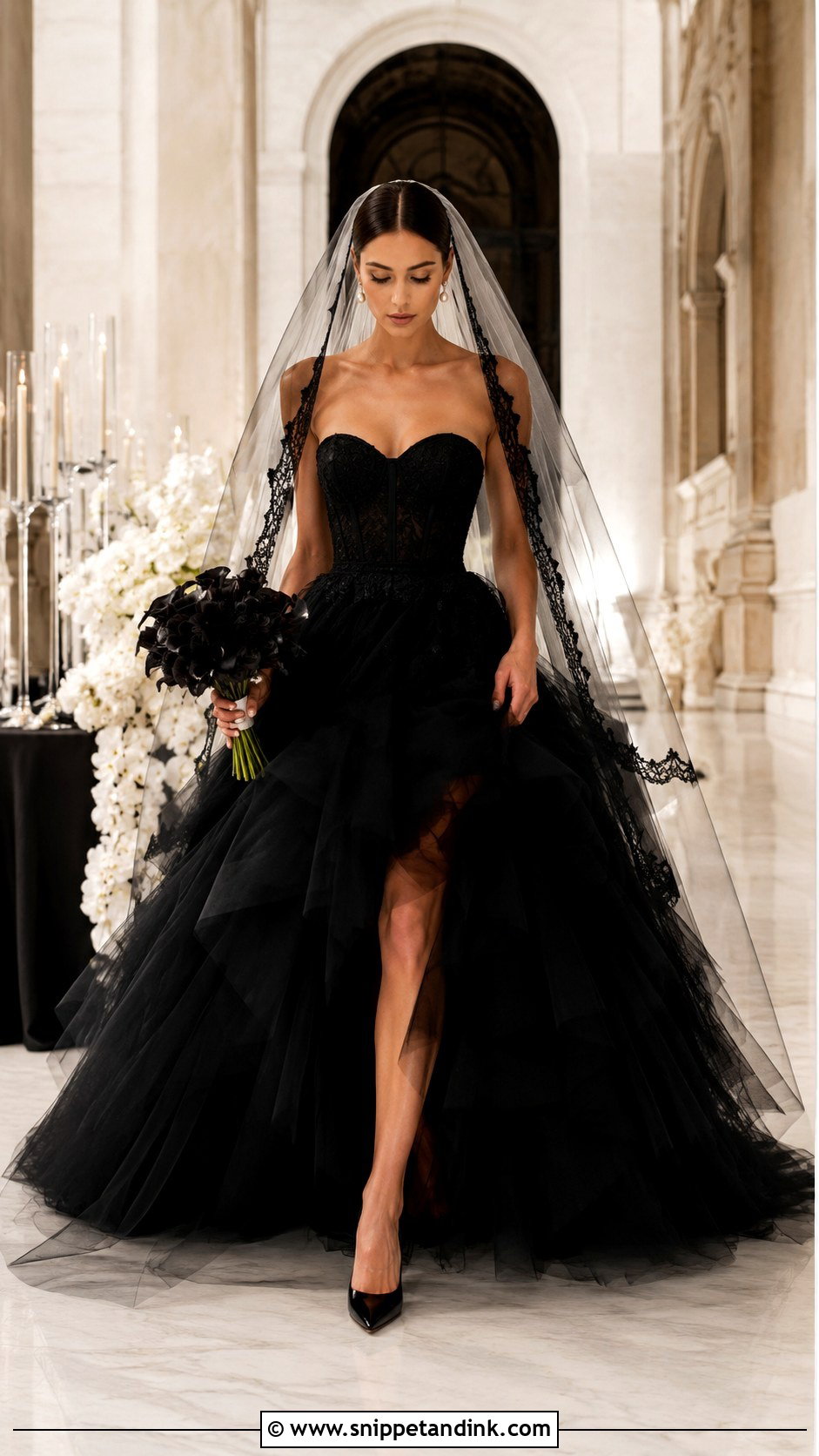
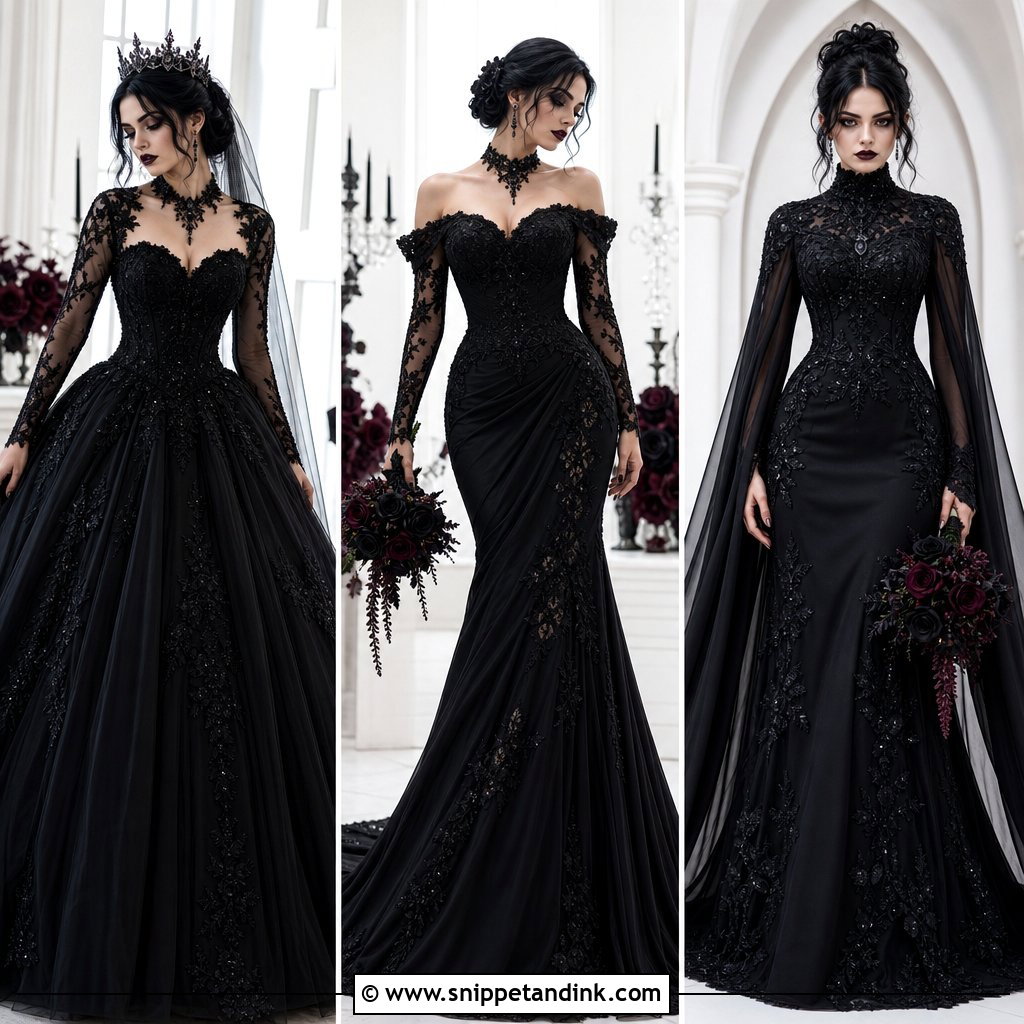
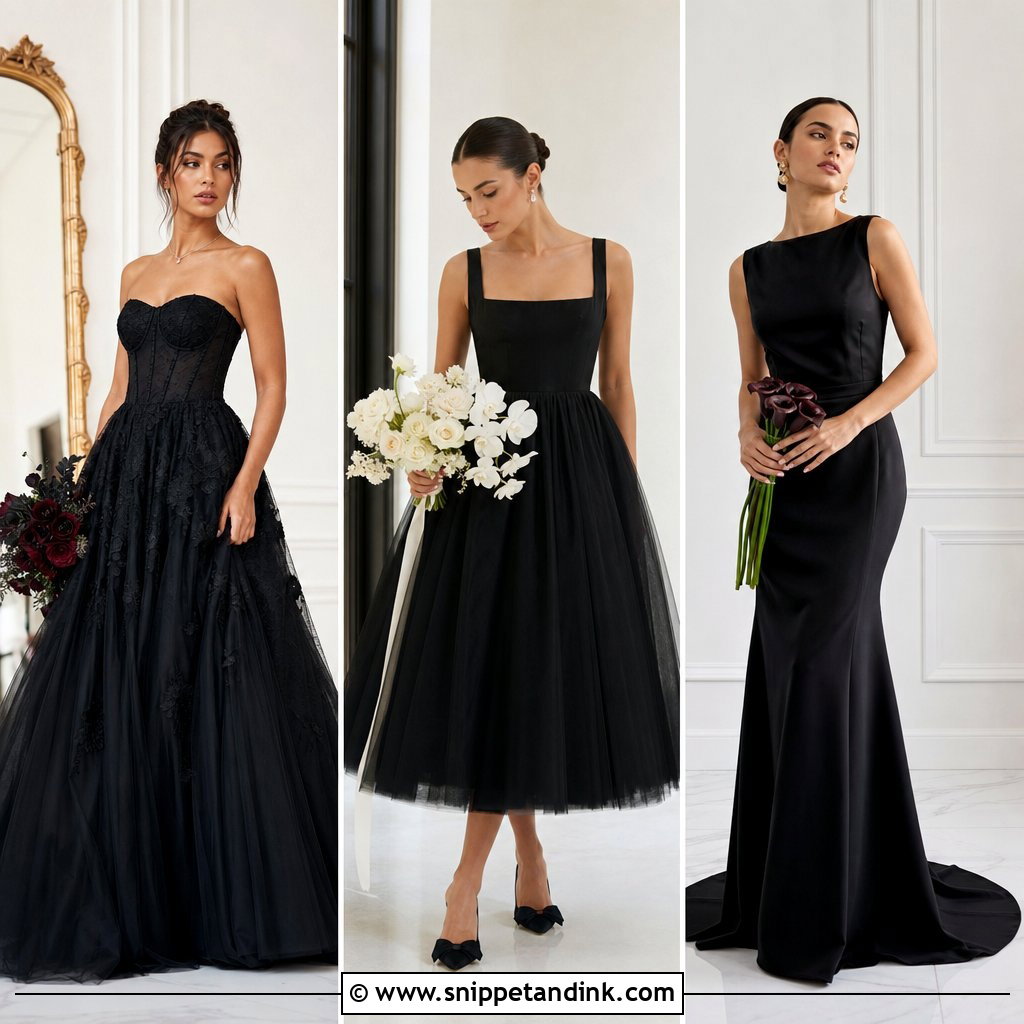
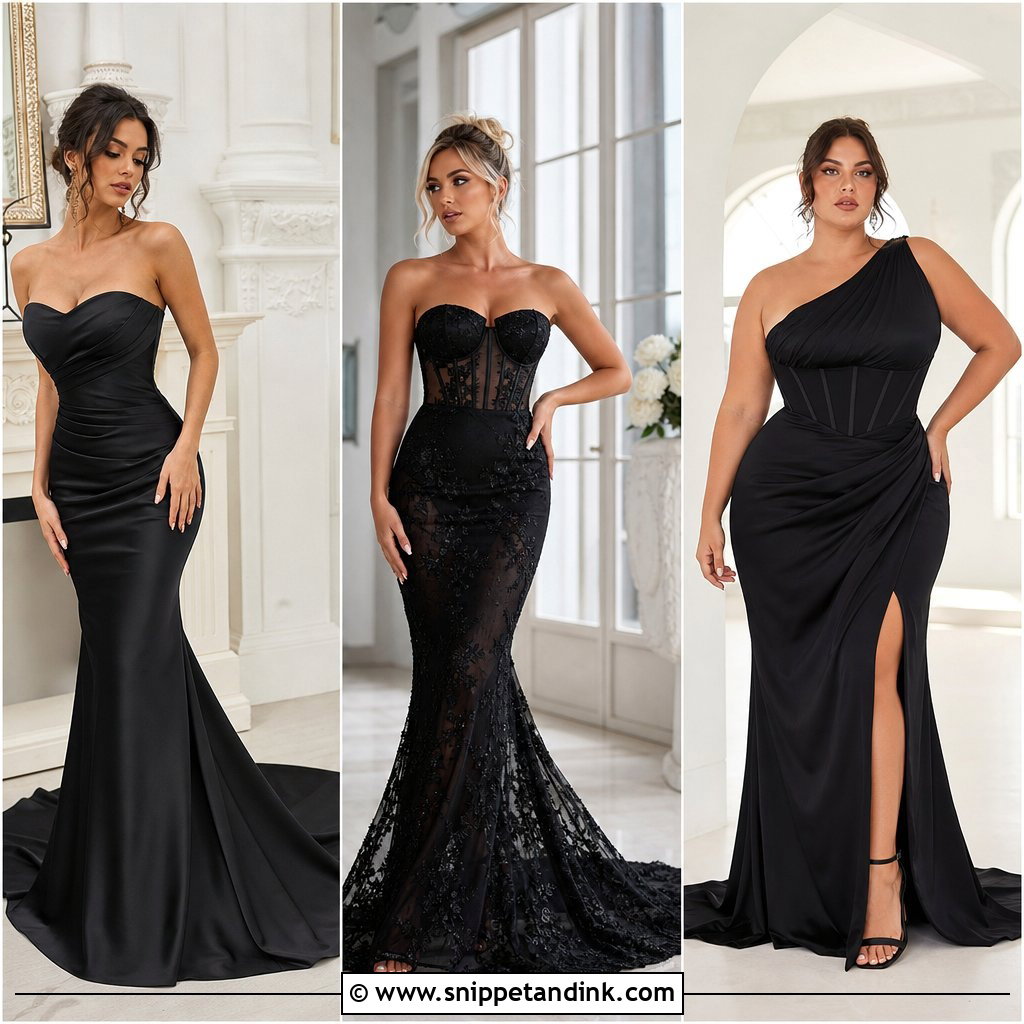
Black tulle is romantic in a way people don’t expect, because layered tulle never reads as solid black; it softens to charcoal where the layers thin out. A fitted bodice with a sheer, full skirt looks bridal rather than formal-evening, especially with pearl drop earrings, a black satin ribbon on the bouquet and a veil edged in black. The catch is light: in a dim room, black tulle loses all its detail on camera, so I’d only suggest it with an evening venue that is properly lit or a photographer who uses flash well. If full black feels too much, an ivory gown with a black tulle overlay or black floral appliqué carries the same idea.
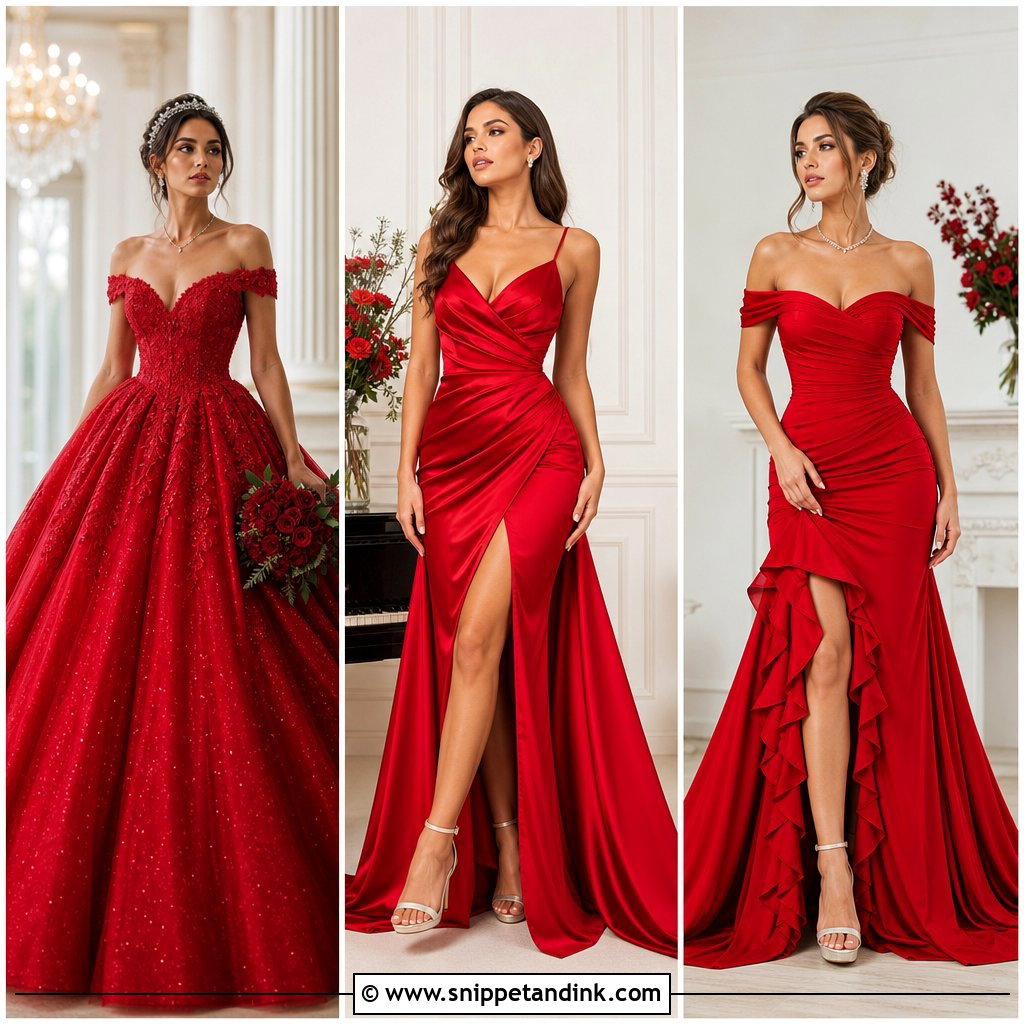
2. Red Wedding Dress
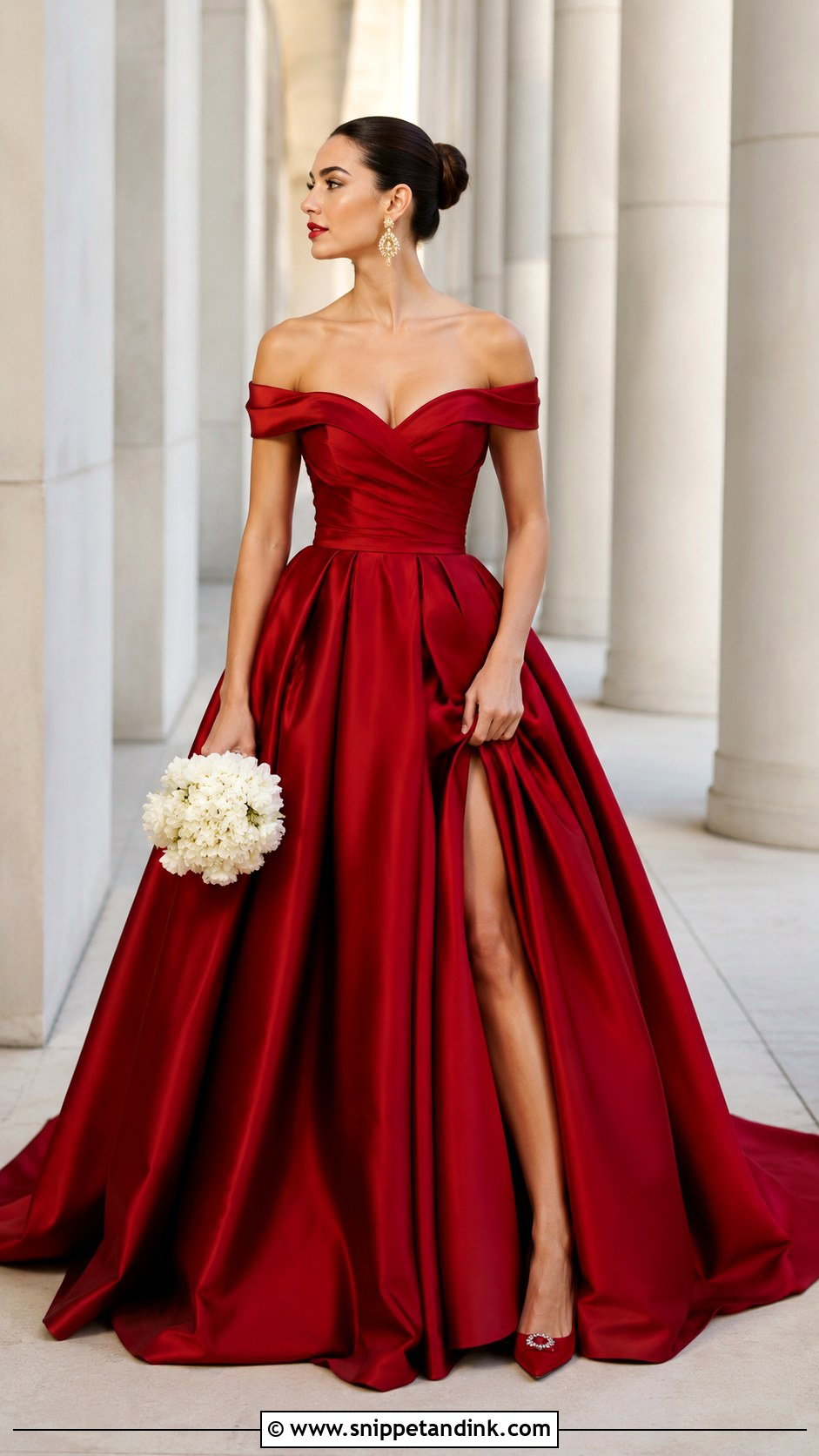
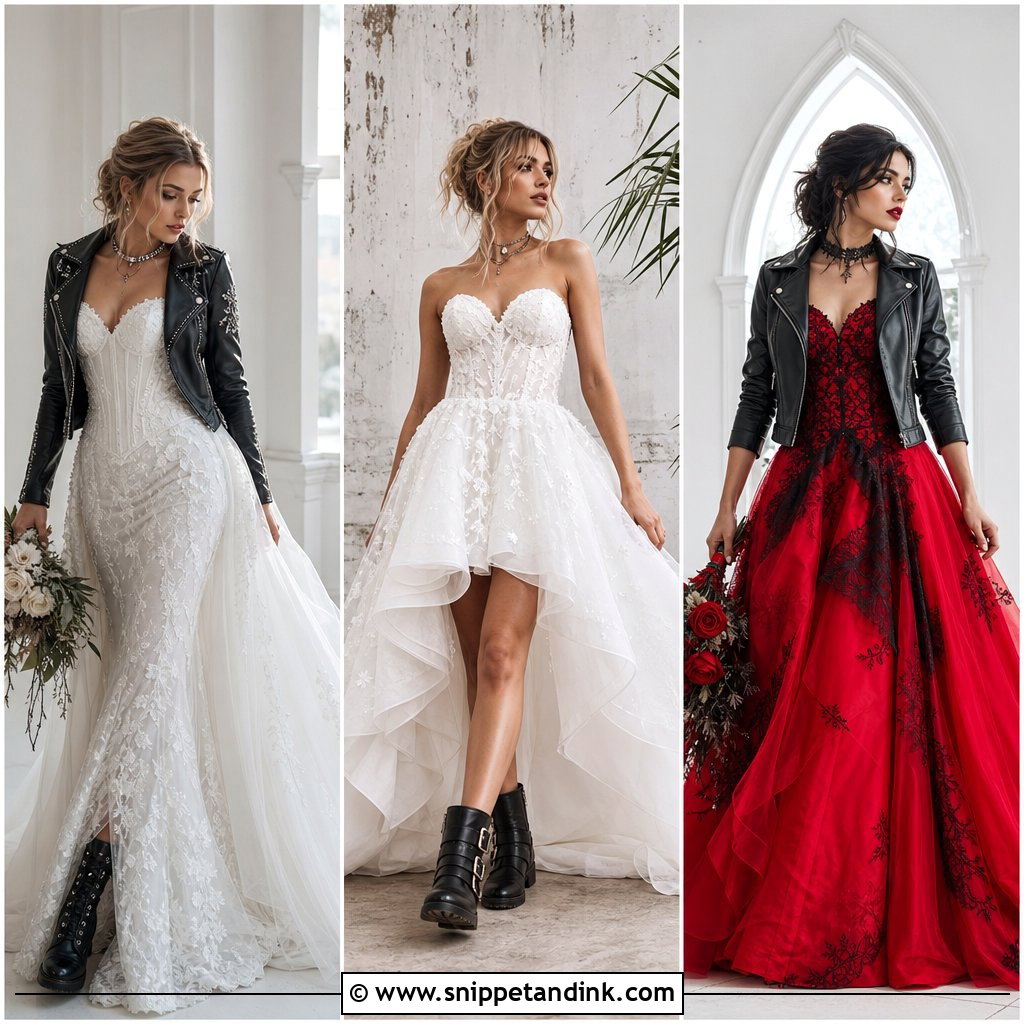
A red wedding dress is unconventional in some places and completely traditional in others, which I always ask about first. A satin ball gown, a fitted mermaid or a long-sleeve red lace gown all carry the color with confidence. Keep the styling clean: gold earrings, red heels, a sleek bun and a small white bouquet. Bright scarlet can look orange in warm evening light, so I hold the fabric in the actual venue lighting if I can. Deep ruby, burgundy or rose-red are softer options. Red looks rich against neutral stone, greenery and candlelight.
3. Floral Embroidered Wedding Dress
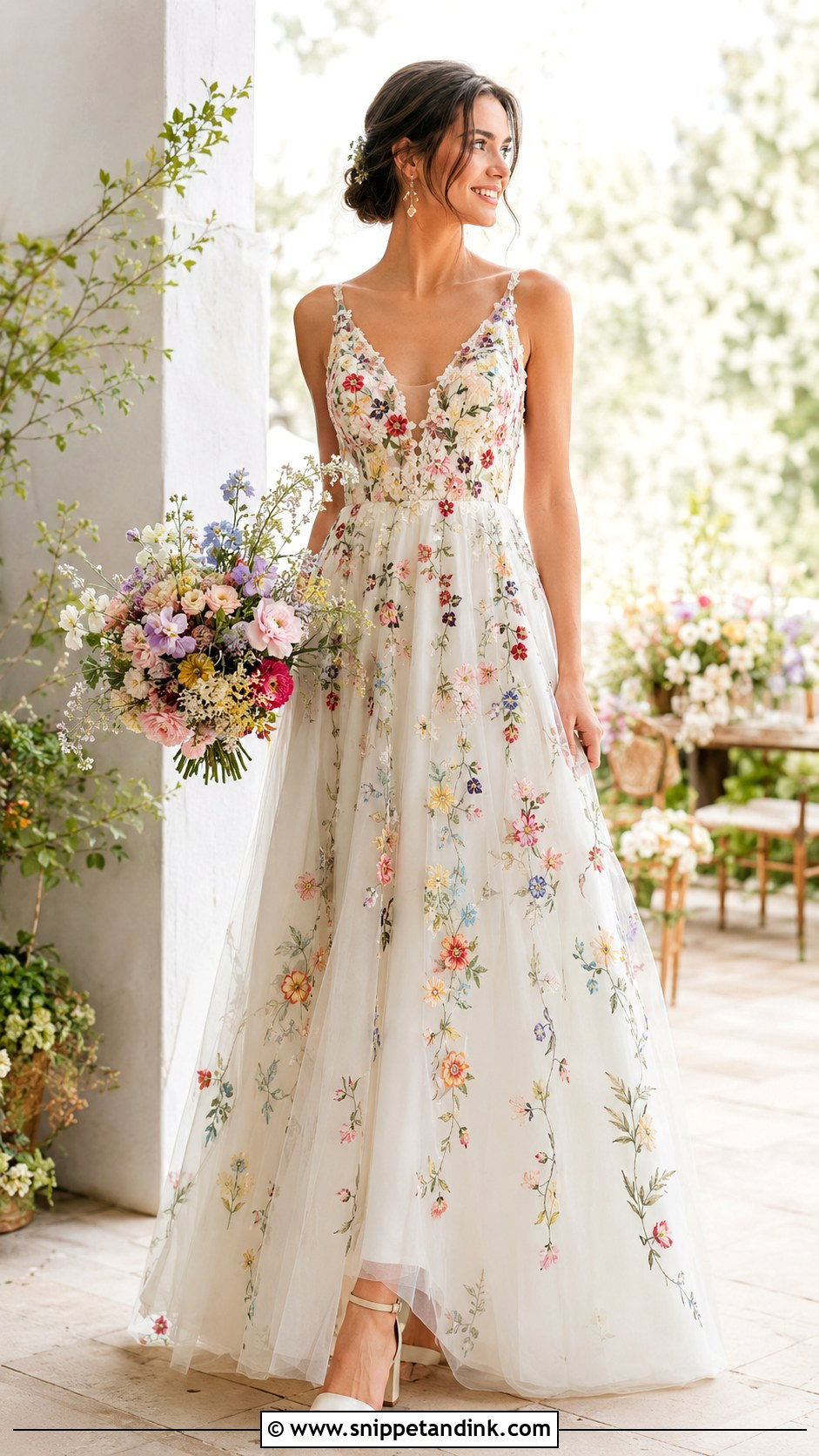
Embroidered florals turn a gown into wearable art. Look for a white, blush, blue or nude-lined dress with colorful embroidered flowers, vines or botanical appliqué. I tie the bouquet to the dress by repeating just one or two of its thread colors; repeating all of them makes everything blur together. Block heels and delicate earrings keep it calm. A soft tulle veil suits romantic embroidery, while a satin headband looks modern. Embroidered gowns are heavy at the seams where the thread is dense, so check the bodice support at your fittings. Garden and spring weddings suit it.
4. Ombre Wedding Dress
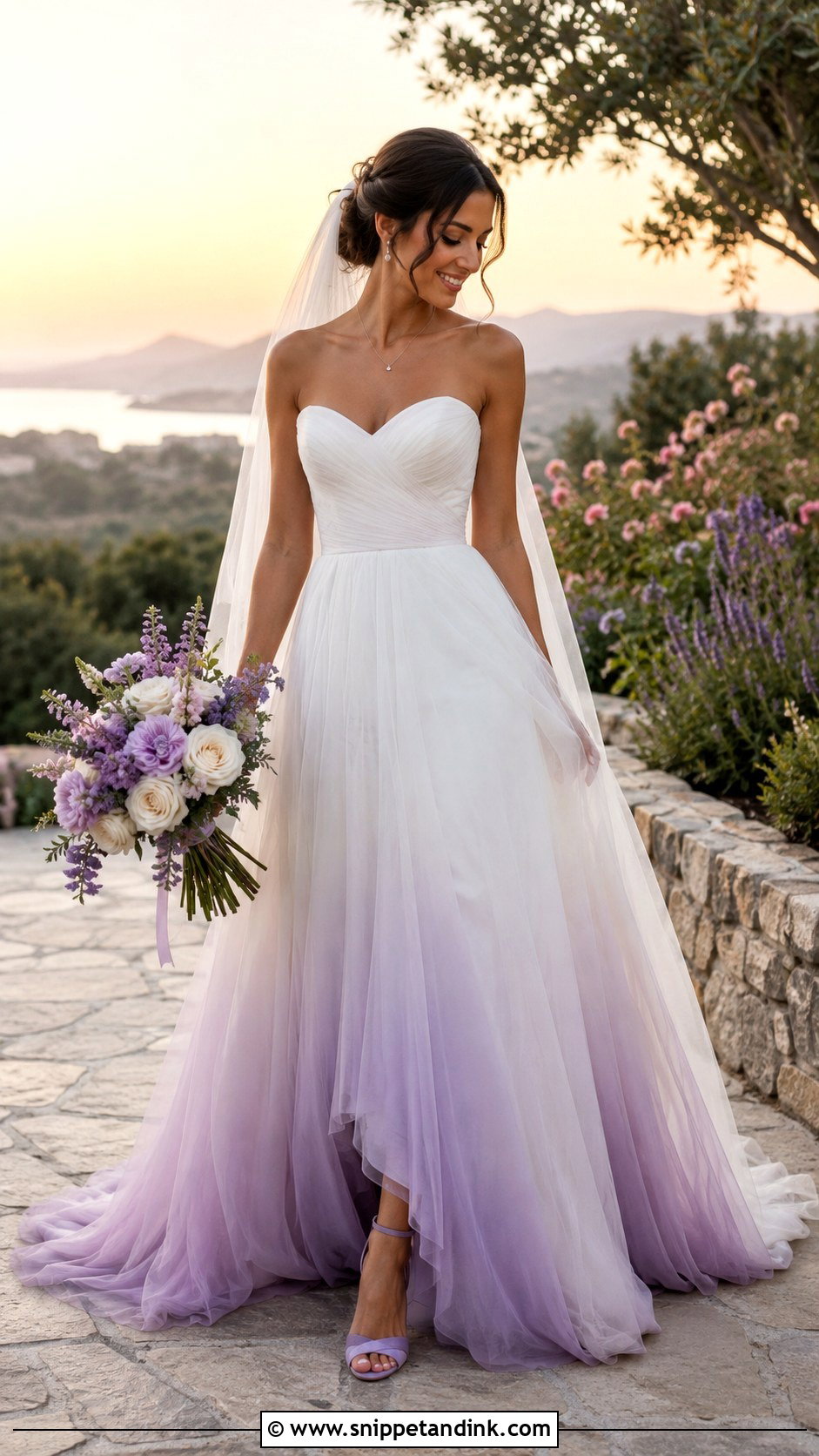
An ombre wedding dress keeps one foot in tradition: ivory or white at the bodice, fading to blush, lavender, blue, gray or peach at the hem. Because the color sits lowest, I match the shoes to the deepest shade in the skirt and keep jewelry minimal. A plain veil works better than a decorated one, since the gradient already gives you movement. Hand-dipped ombre can vary slightly from the sample, so ask to see a photo of your actual gown before it ships. Beach weddings, sunset ceremonies and gallery venues suit it.
5. Metallic Silver Wedding Dress
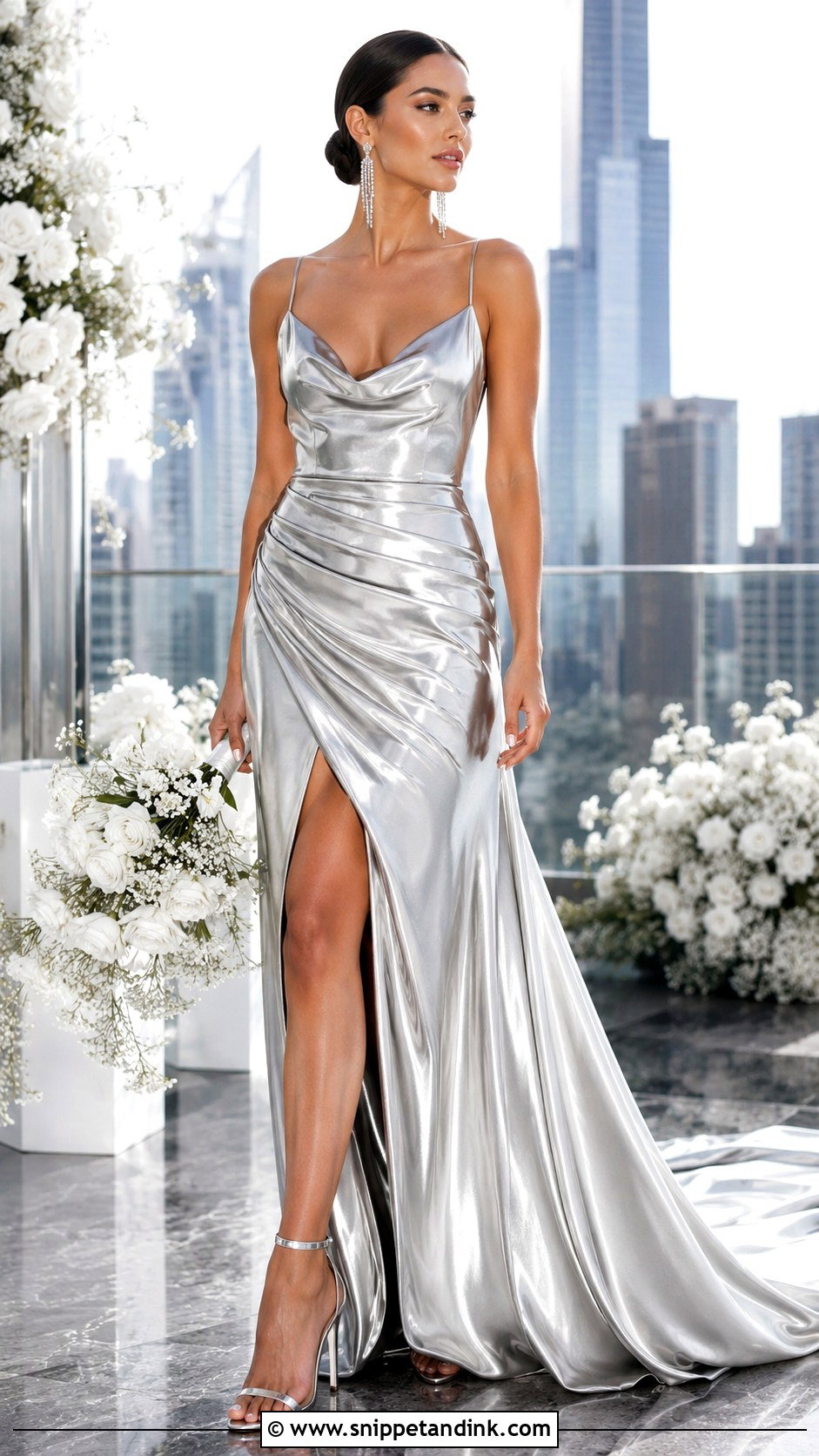
Silver is the most reflective thing a bride can wear, and that’s both the appeal and the risk. Liquid satin, sequins, lamé or silver beading on a clean silhouette look sophisticated; a busy cut looks like a costume. Under direct flash or strong sun, very shiny lamé can blow out to white in photos, so I talk to the photographer early. Silver strappy heels, crystal earrings and a sleek clutch finish it; skip a necklace and let the hair and makeup be strong. Rooftop weddings, modern hotels, winter ceremonies and evening receptions suit the shine.
6. Feather Wedding Dress
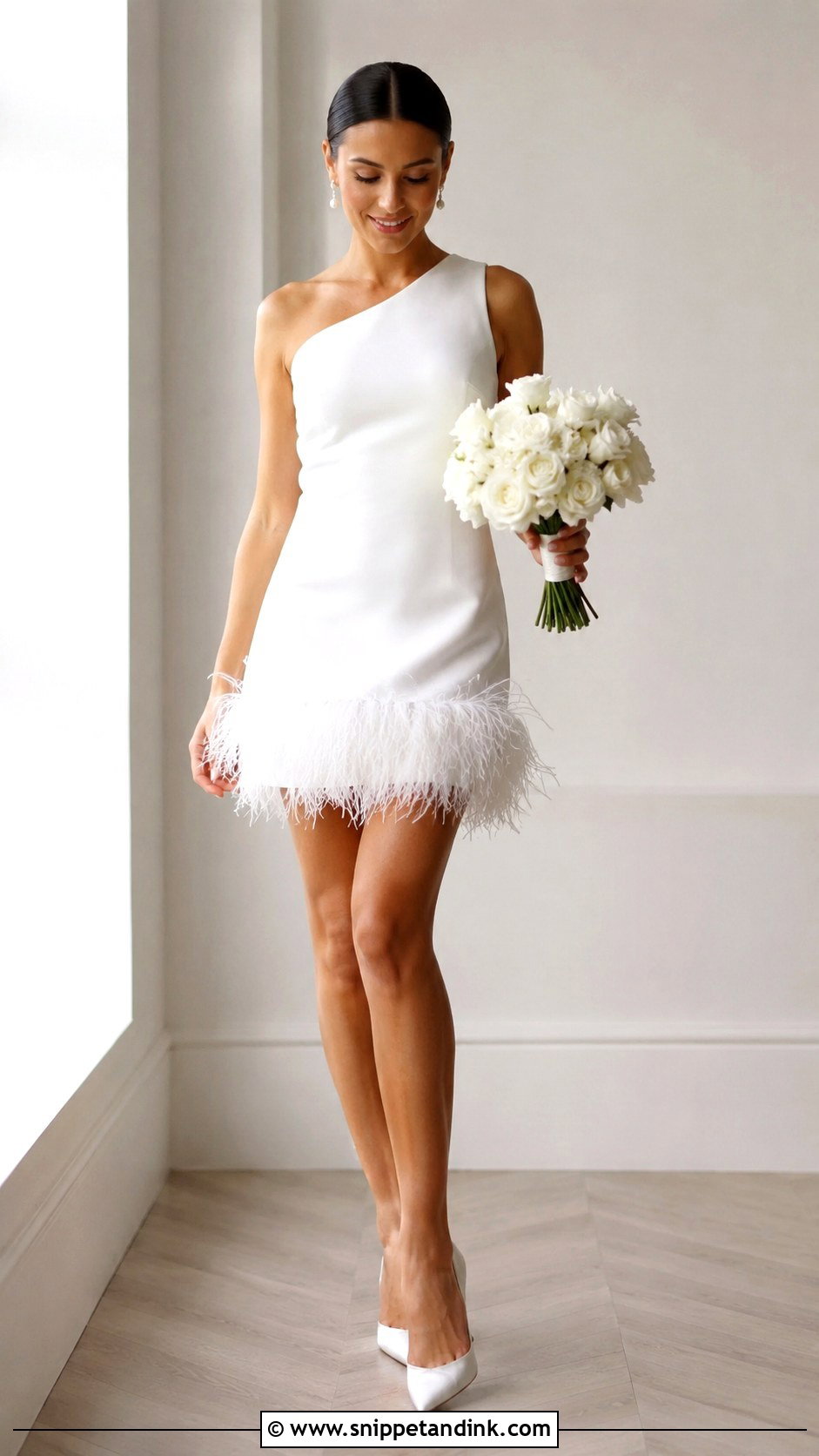
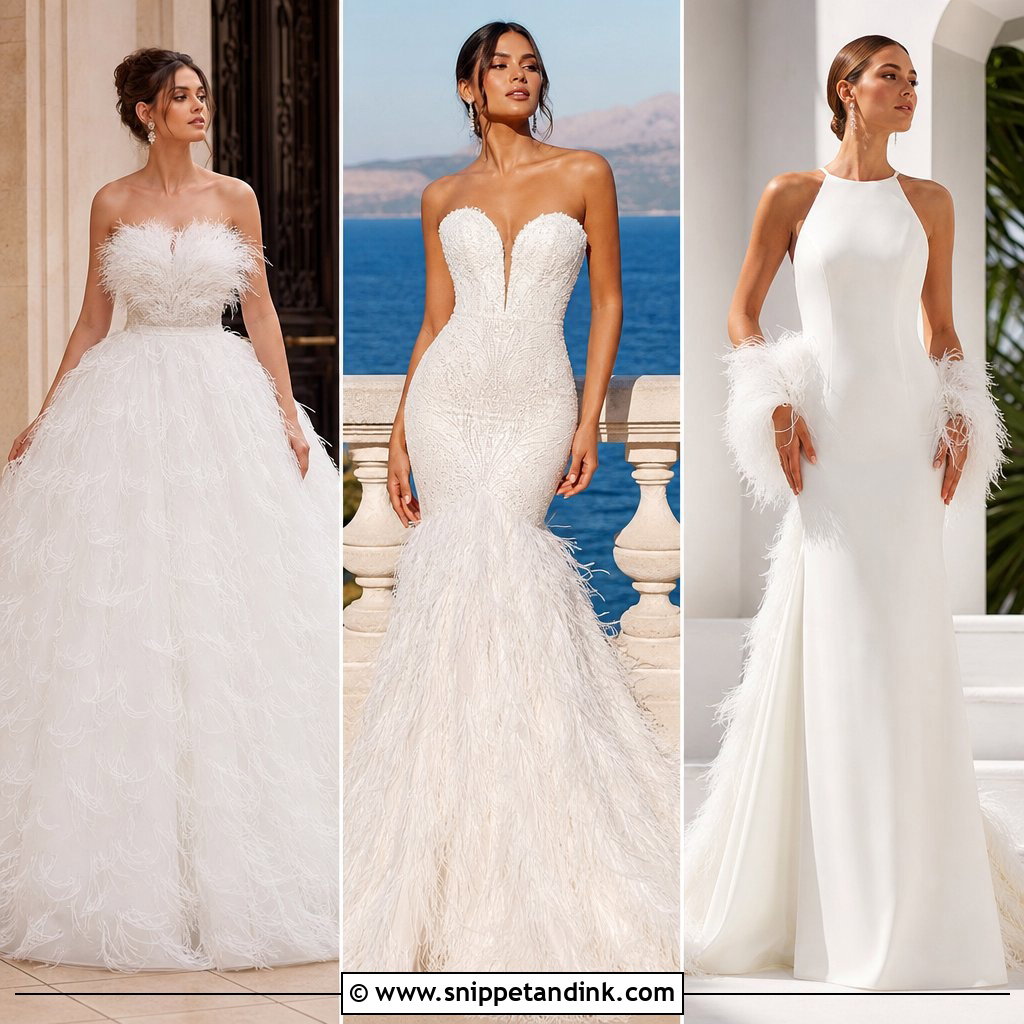
Feathers bring movement and a sense of fun. A feather-trim mini dress, a feather hem gown or a strapless dress with feather sleeves all work. Feathers shed, especially ostrich trim in the first hours of wear, so I give the dress a gentle shake outdoors the day before and keep a lint roller in the kit. Balance the texture with simple satin heels, small pearl earrings and a clean veil or none. A fitted feather-trim dress is easy to dance in, which makes it a good reception change. A plain bouquet of white roses or calla lilies keeps the feathers in focus.
7. Bridal Jumpsuit With Overskirt
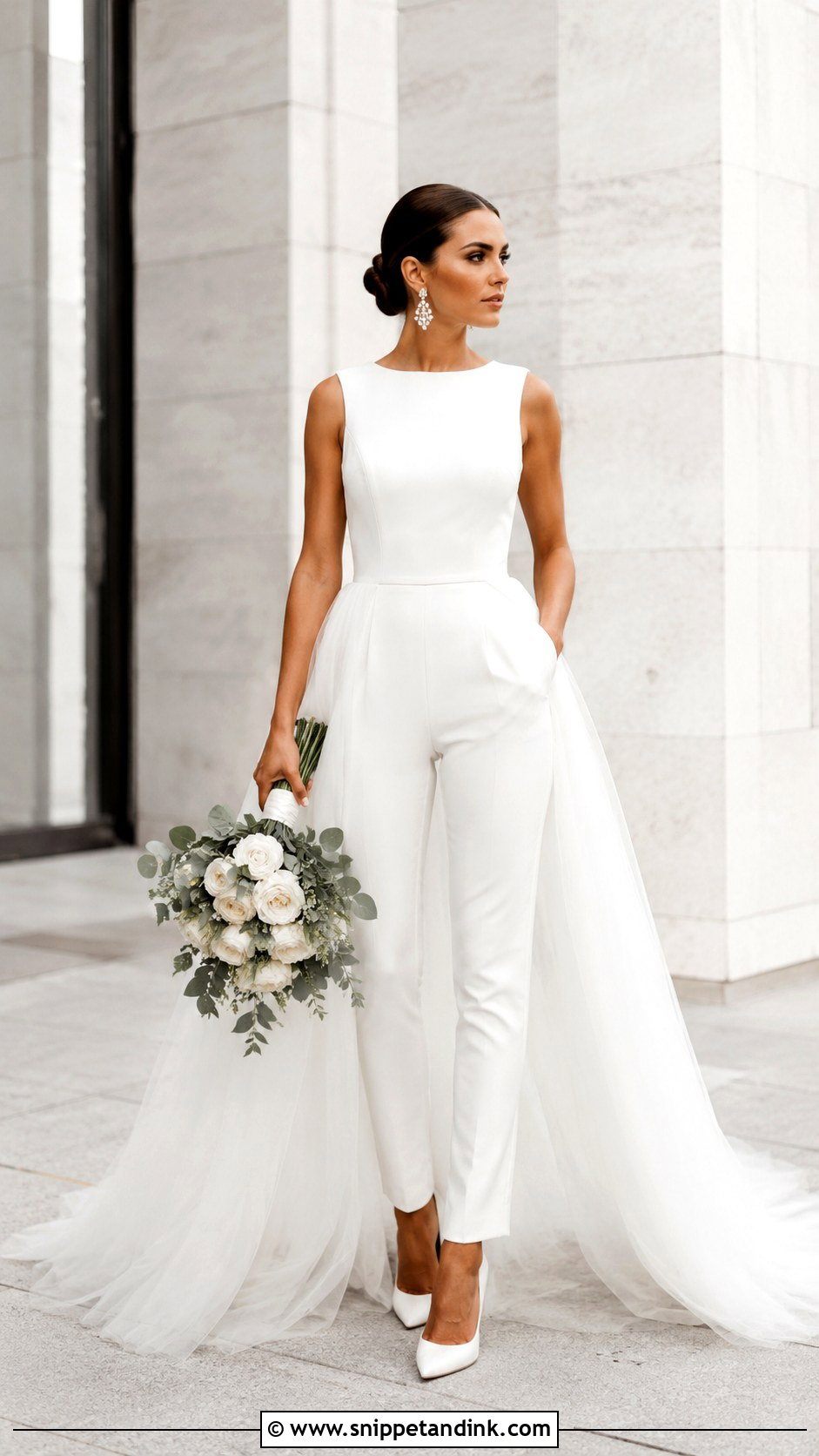
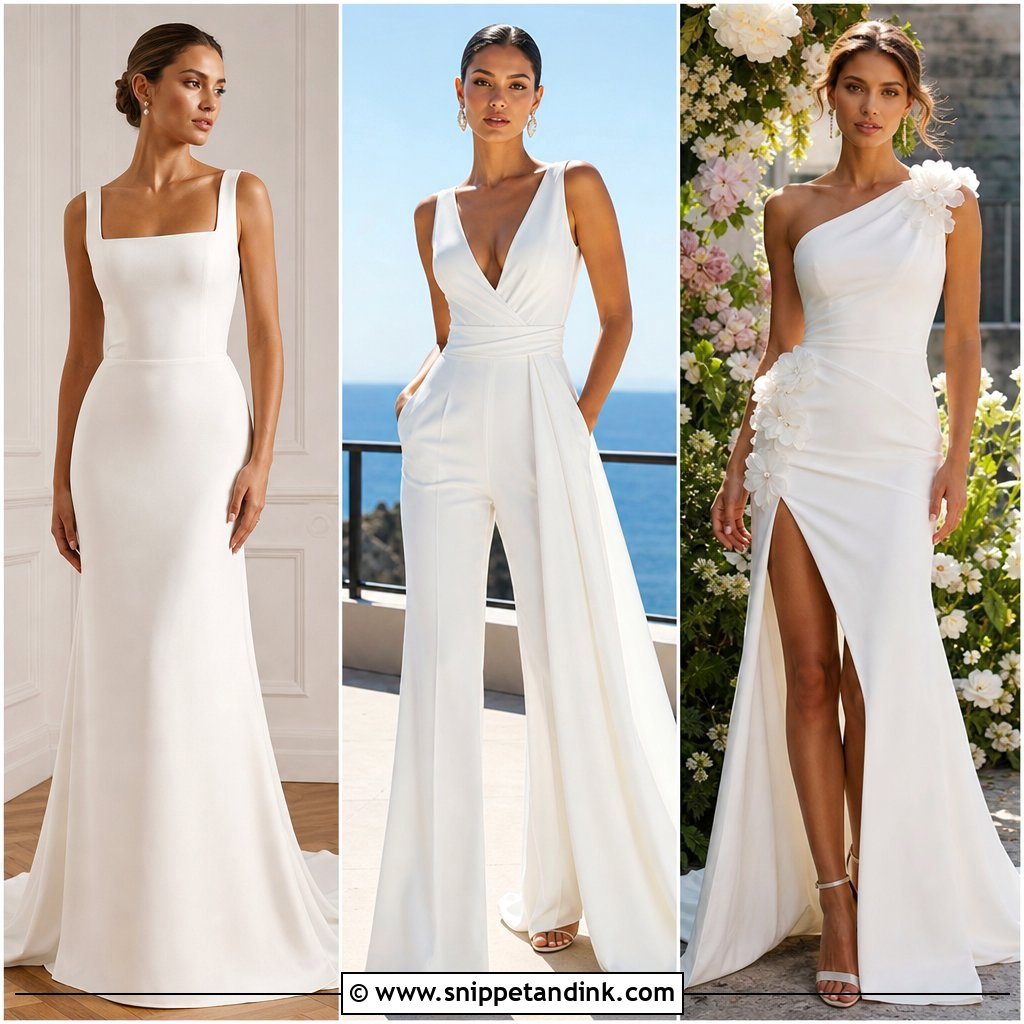
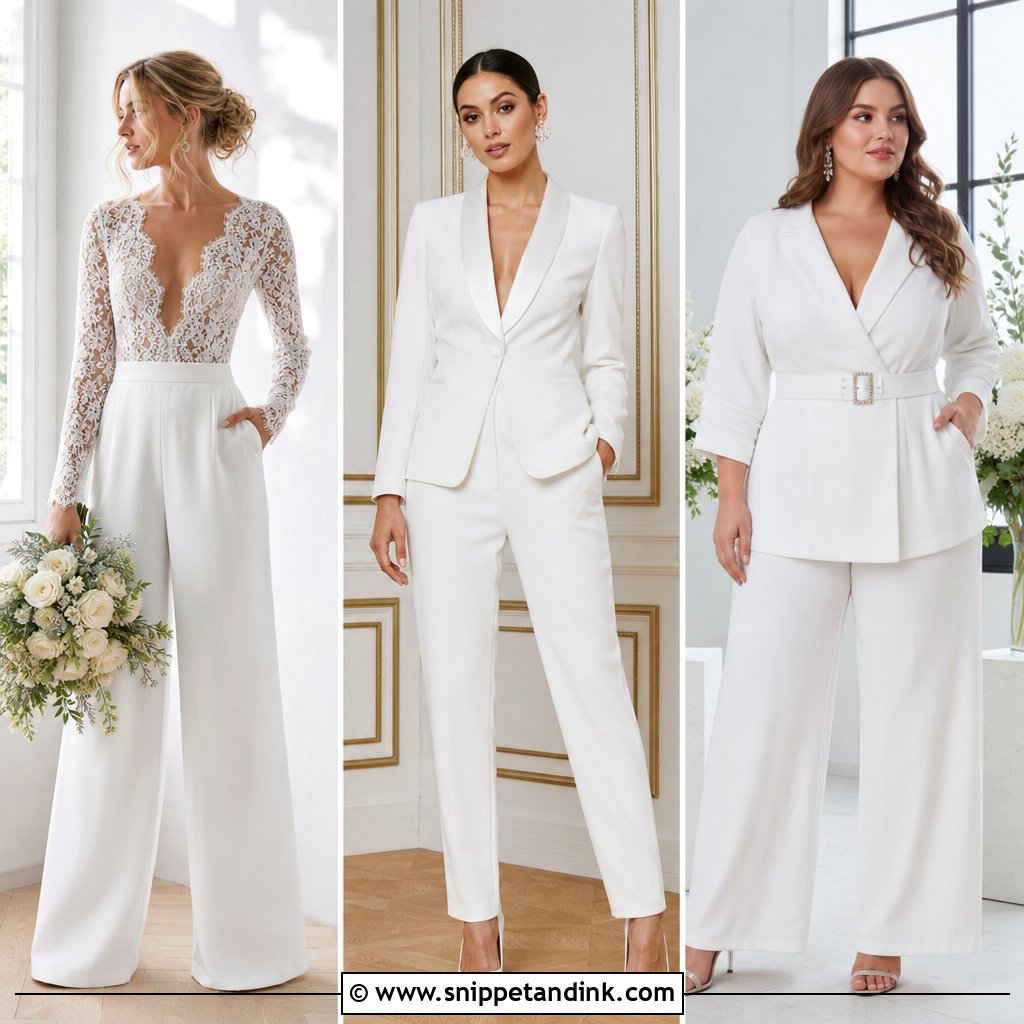
A jumpsuit with an overskirt gives you pants and a gown in one outfit. Wear a white tailored jumpsuit with a detachable tulle, satin or organza overskirt for the ceremony, then unhook it for the reception. The fastening matters: I prefer a waistband with hooks or snaps over a tie, which can loosen during the processional. Pointed pumps, statement earrings and a structured bouquet keep it polished. Courthouse weddings, rooftop ceremonies and city venues suit it, and it’s one of the most wearable unconventional options here.
8. Wedding Dress With Pants
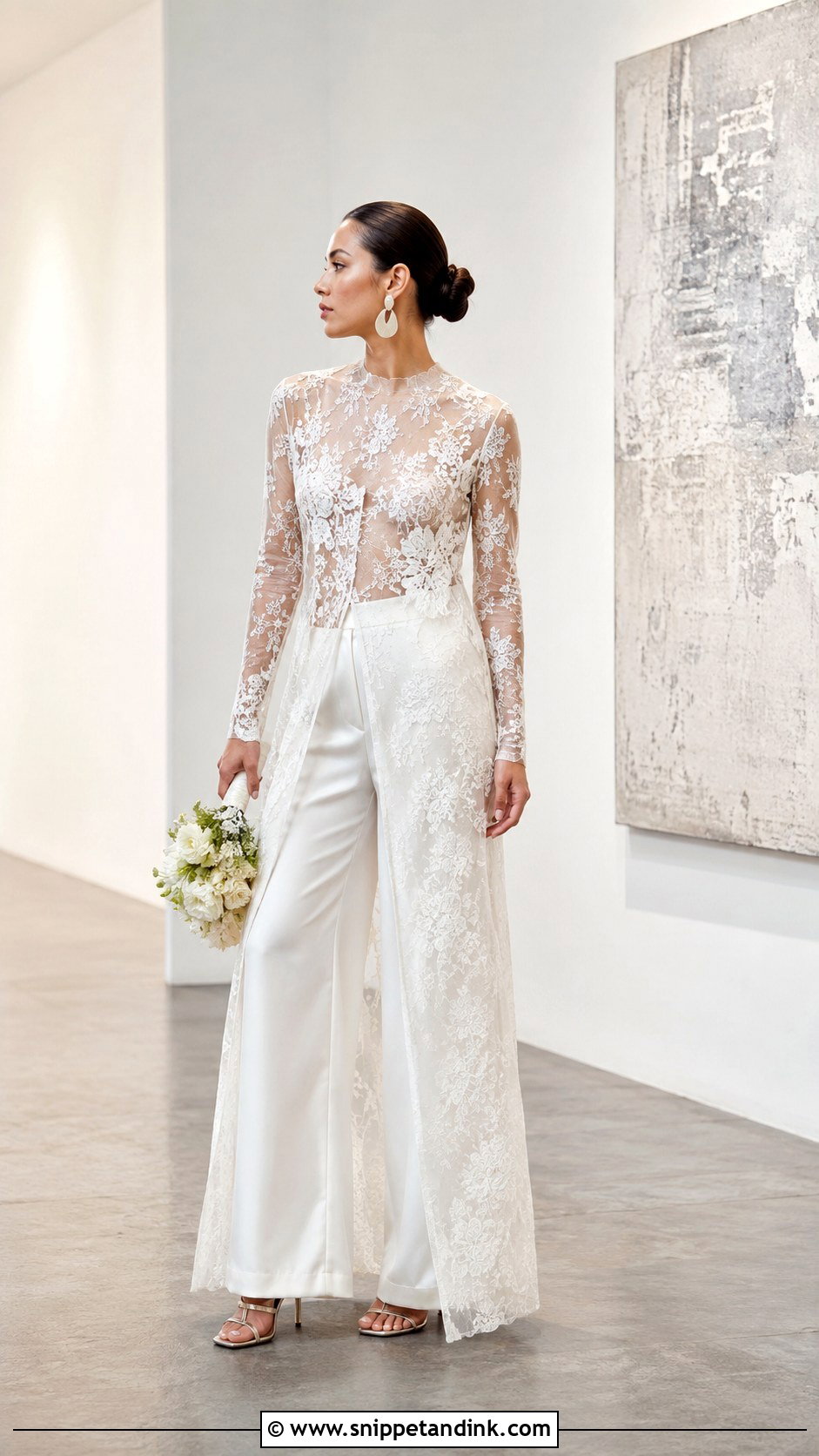
Pairing a dress with trousers mixes bridal softness with tailoring. A long sheer lace dress over wide-leg trousers, a tunic gown with cigarette pants or a split-front dress over satin pants all work. Proportion is the whole trick: let the dress layer float and keep the pants clean and narrow enough that the two don’t fight. I’d hem the trousers to just touch the top of the shoe so they don’t bunch under the dress layer. Metallic heels, sculptural earrings and a sleek low bun keep it modern. It suits brides who don’t love skirts, especially in cool weather, city halls or art spaces.
9. Two Piece Wedding Dress
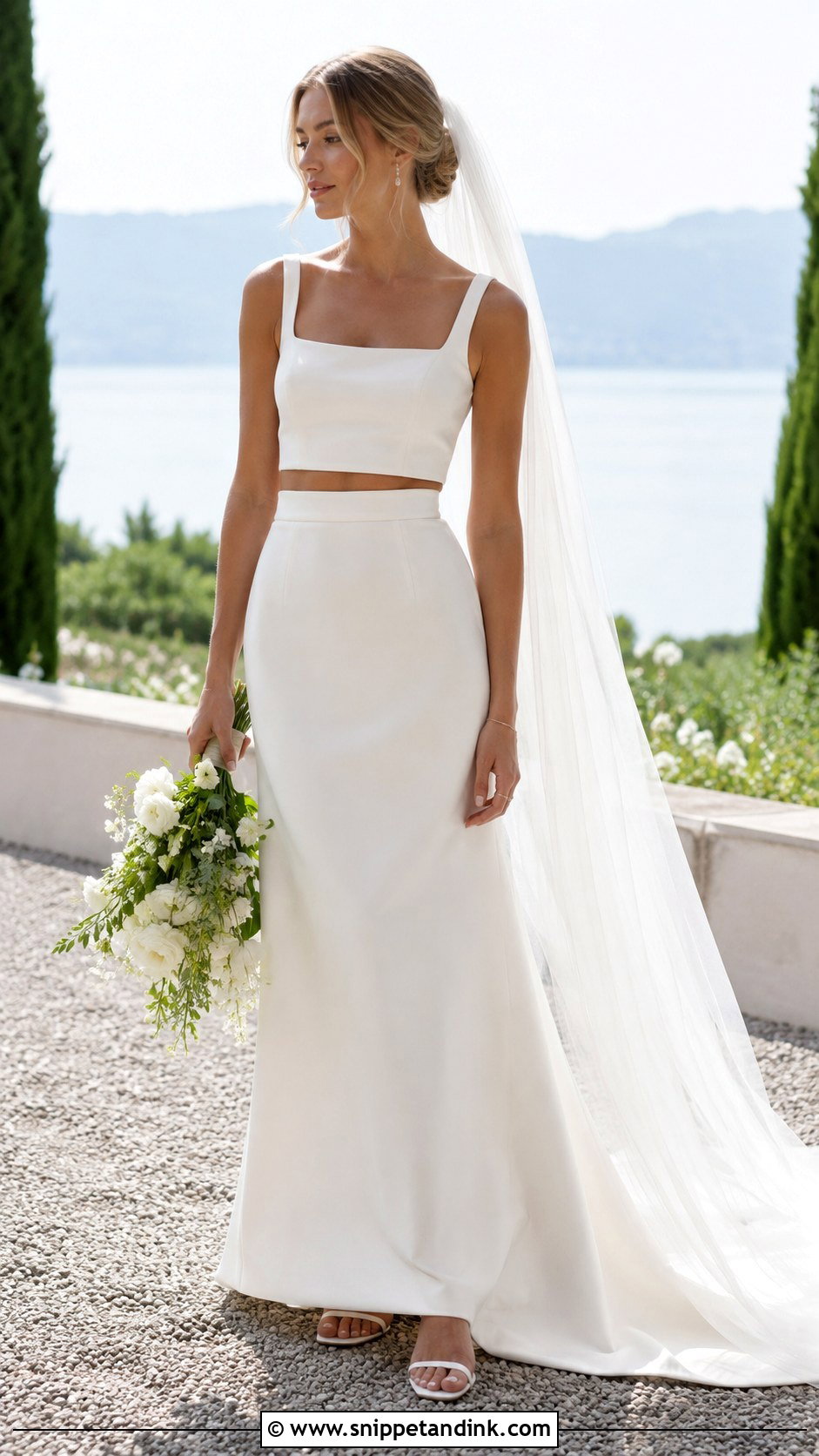
A two piece wedding dress feels relaxed and a little rebellious. A structured crop top with a high-waisted skirt, a lace blouse with a satin maxi or a beaded top with wide-leg trousers all work. Decide how much skin you want to show at the waist, then check it again sitting down, because the gap opens when you sit and raise your arms. Clean heels, a simple veil and jewelry that matches the fabric mood finish it. Alterations are easier, since the top and skirt fit separately, and both pieces rewear well after the wedding.
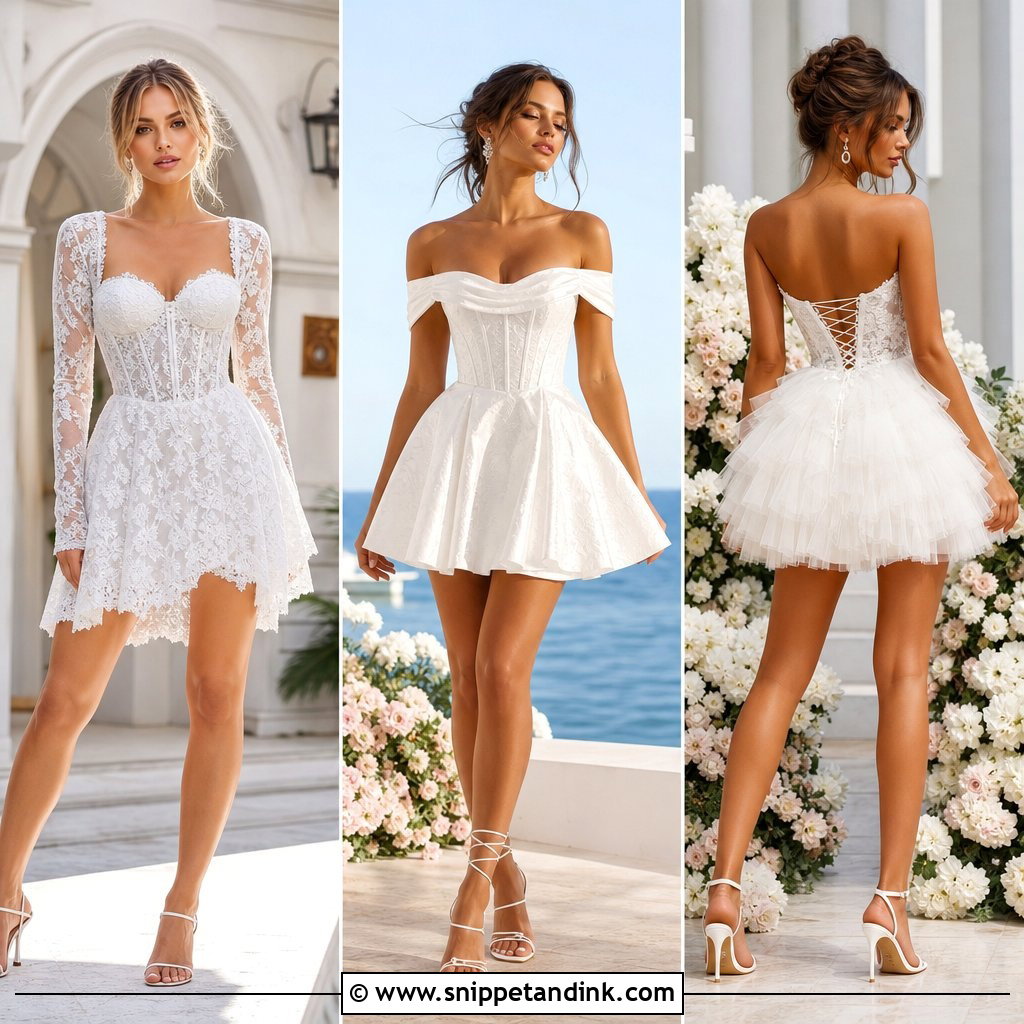
10. Mini Wedding Dress With Veil
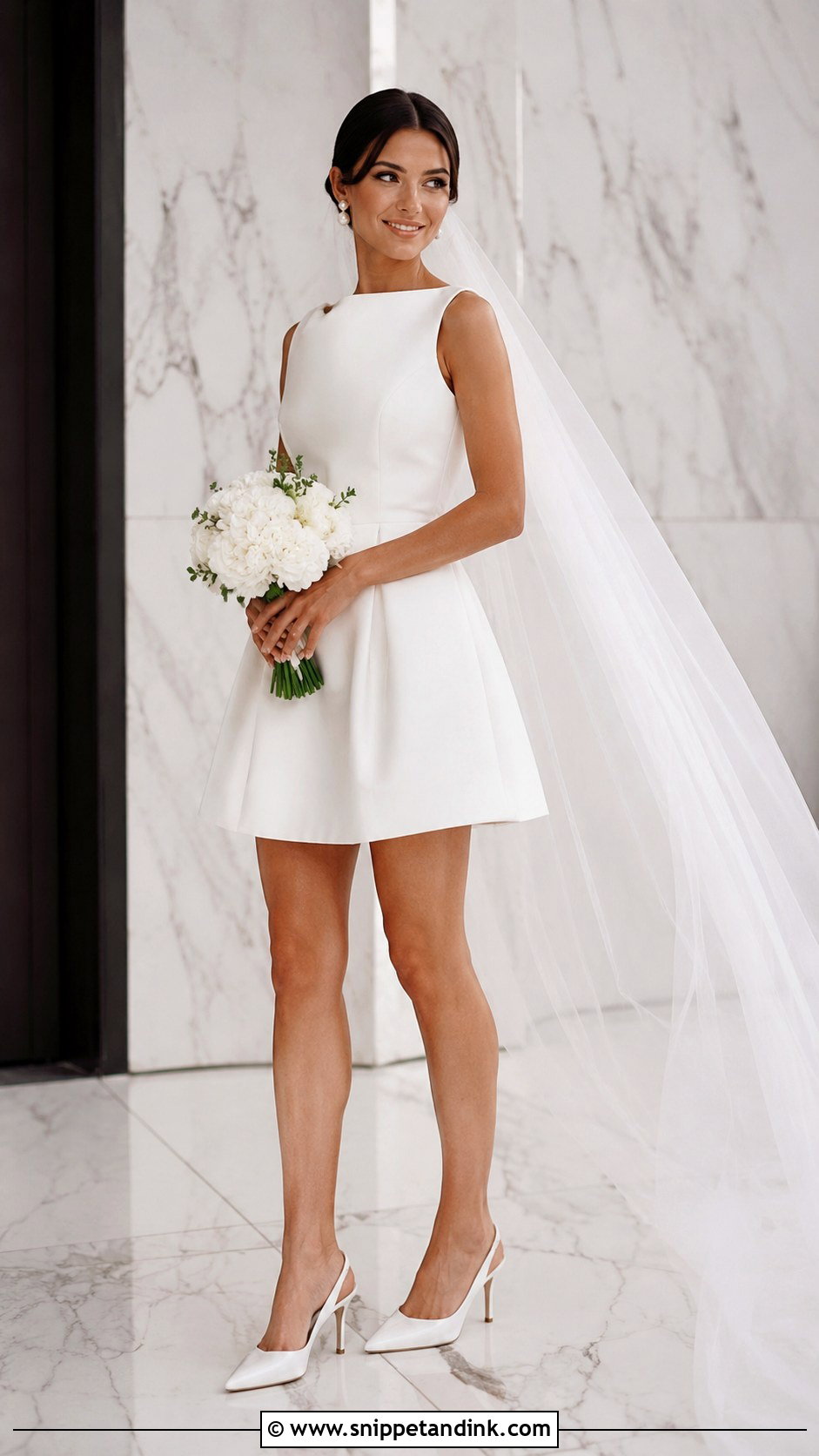
Short hem, long veil: that contrast is what makes a mini read as bridal rather than as a party dress. Choose a structured white mini with long sleeves, a bow, feathers, lace or a bubble hem, then add a long veil for ceremony drama. White pumps, slingbacks or embellished flats keep it light. Tailoring is what makes a mini look chic instead of casual, so a firm fabric like mikado or heavy crepe works better than thin satin. Keep the accessories refined for courthouse weddings, elopements and after-parties.
11. High Low Wedding Dress
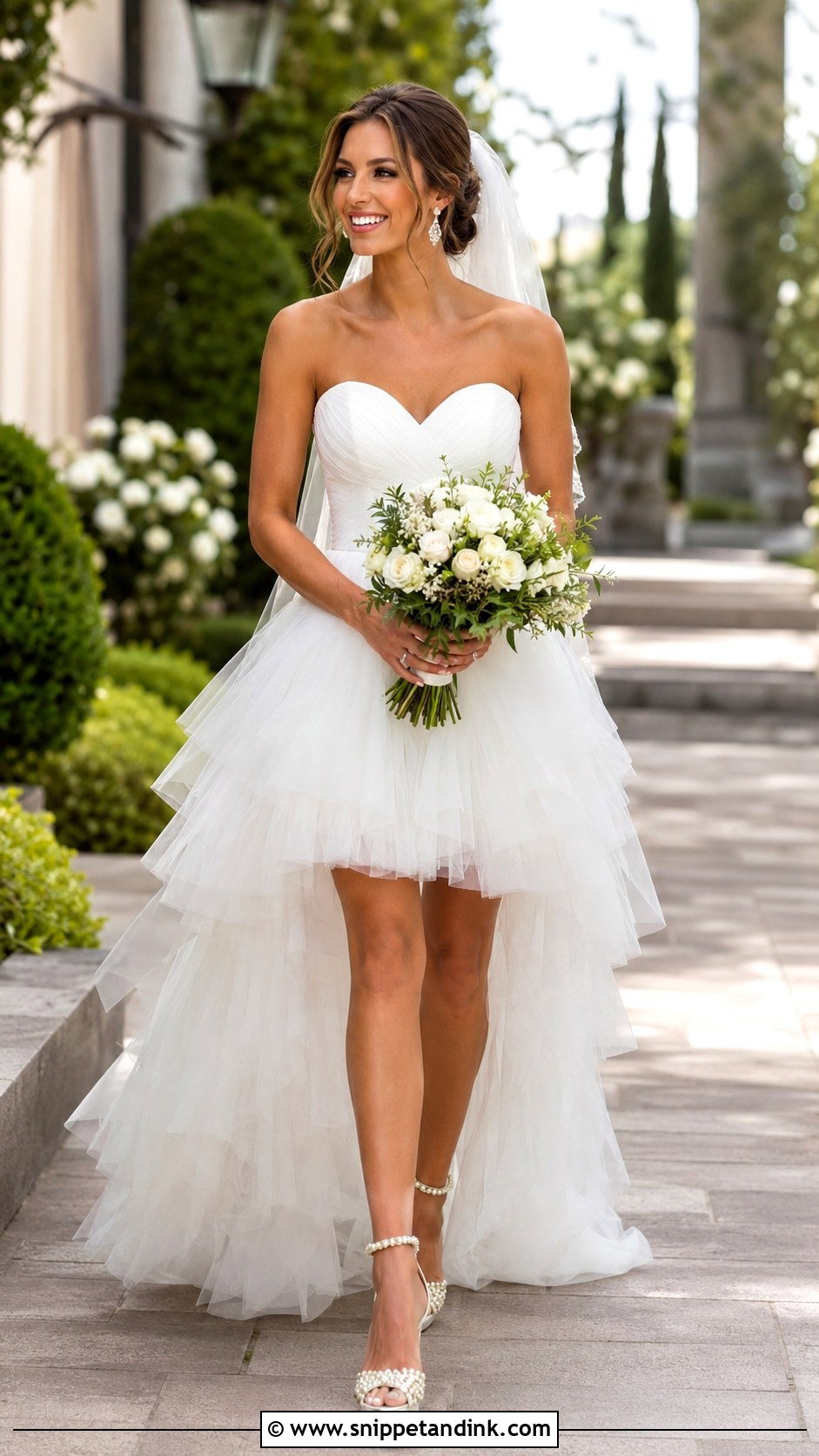
The high low hem shows the legs in front and keeps a bridal train at the back. A tulle, satin or lace high-low with a structured bodice all work. Since your shoes are on show, choose something special: pearl heels, blue pumps or embellished sandals. The front hem should clear the ankle by a few inches; any closer and it looks like a hemming mistake rather than a design. A short veil, drop earrings and a neat bouquet balance it for outdoor weddings, where the shorter front stays out of the grass.
12. Cape Wedding Dress
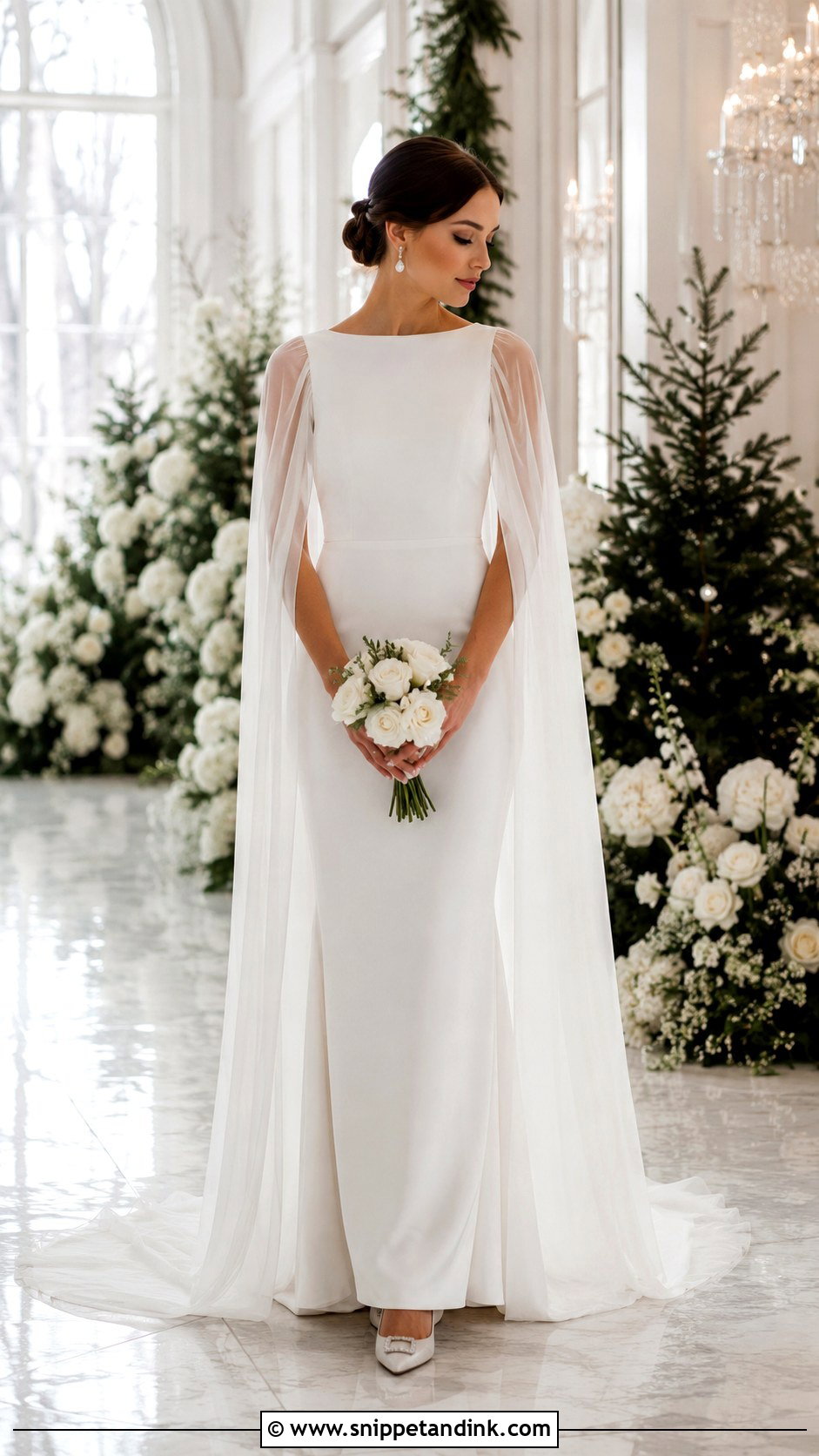
A cape replaces the veil and gives you the entrance. A sleek column with a sheer cape, a lace capelet over a simple dress or a full-length cape attached at the shoulders all work. Keep the base dress clean so the cape is what moves. I check how the cape is attached; a cape fastened only at the neck pulls back on the throat when someone steps on it, while one sewn or snapped at the shoulder seams stays comfortable. Pointed heels, simple earrings and a low bun suit formal venues, winter weddings and mountain ceremonies.
13. Hooded Wedding Dress
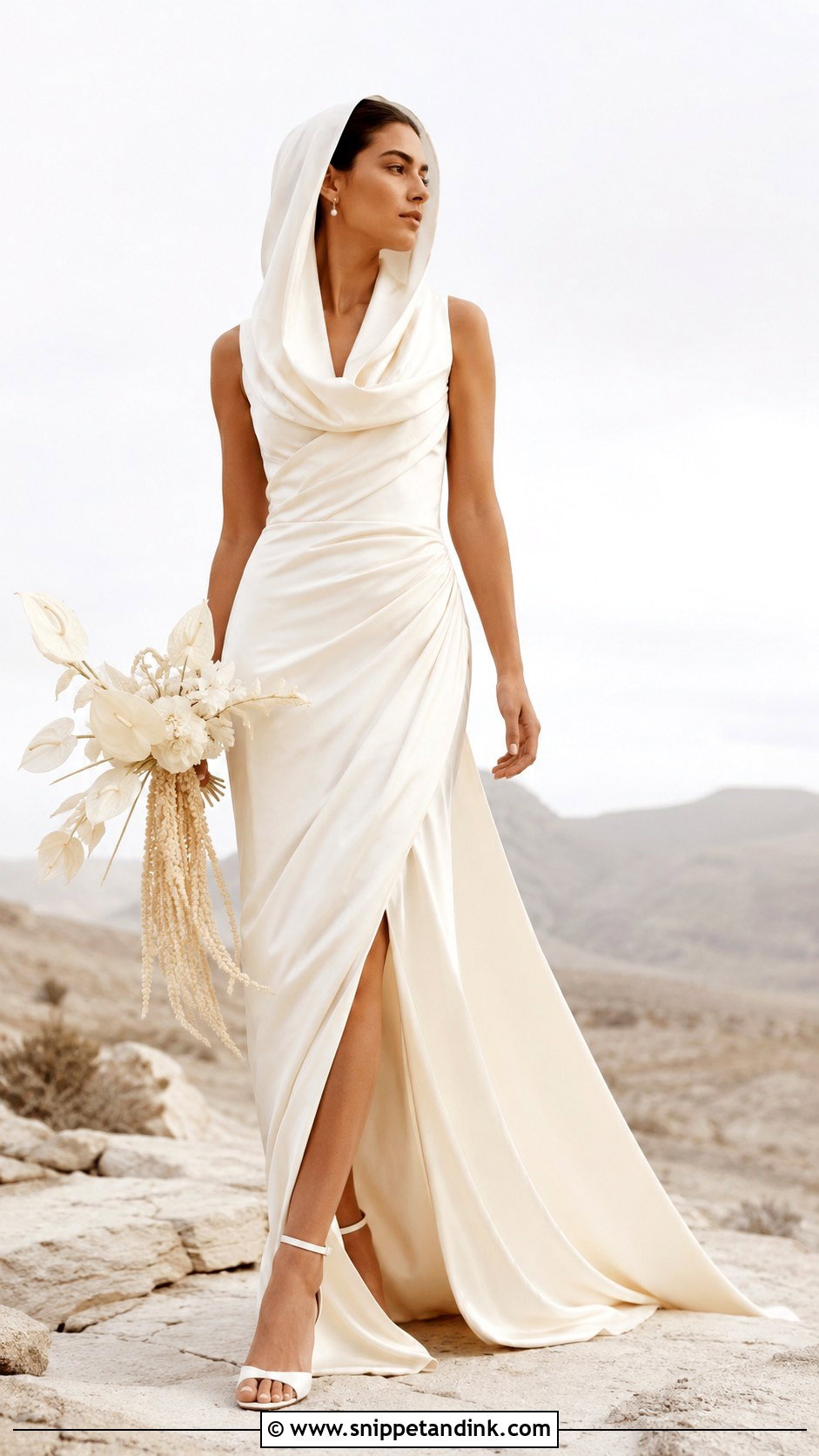
Hoods are rare enough that they feel genuinely unexpected. A sleek white gown with a built-in hood, a hooded cape over a minimalist dress or soft jersey draped around the head and shoulders all work. Fabric decides everything here: satin, crepe, chiffon and silk blends drape softly, while stiff fabrics stand away from the head and look odd from the side. The hood also affects hair, so I plan a low, flat style underneath rather than volume on top. Small earrings, clean heels and a sculptural bouquet keep it calm for desert weddings, winter ceremonies and fashion-forward elopements.
14. Corset Drop Waist Wedding Dress
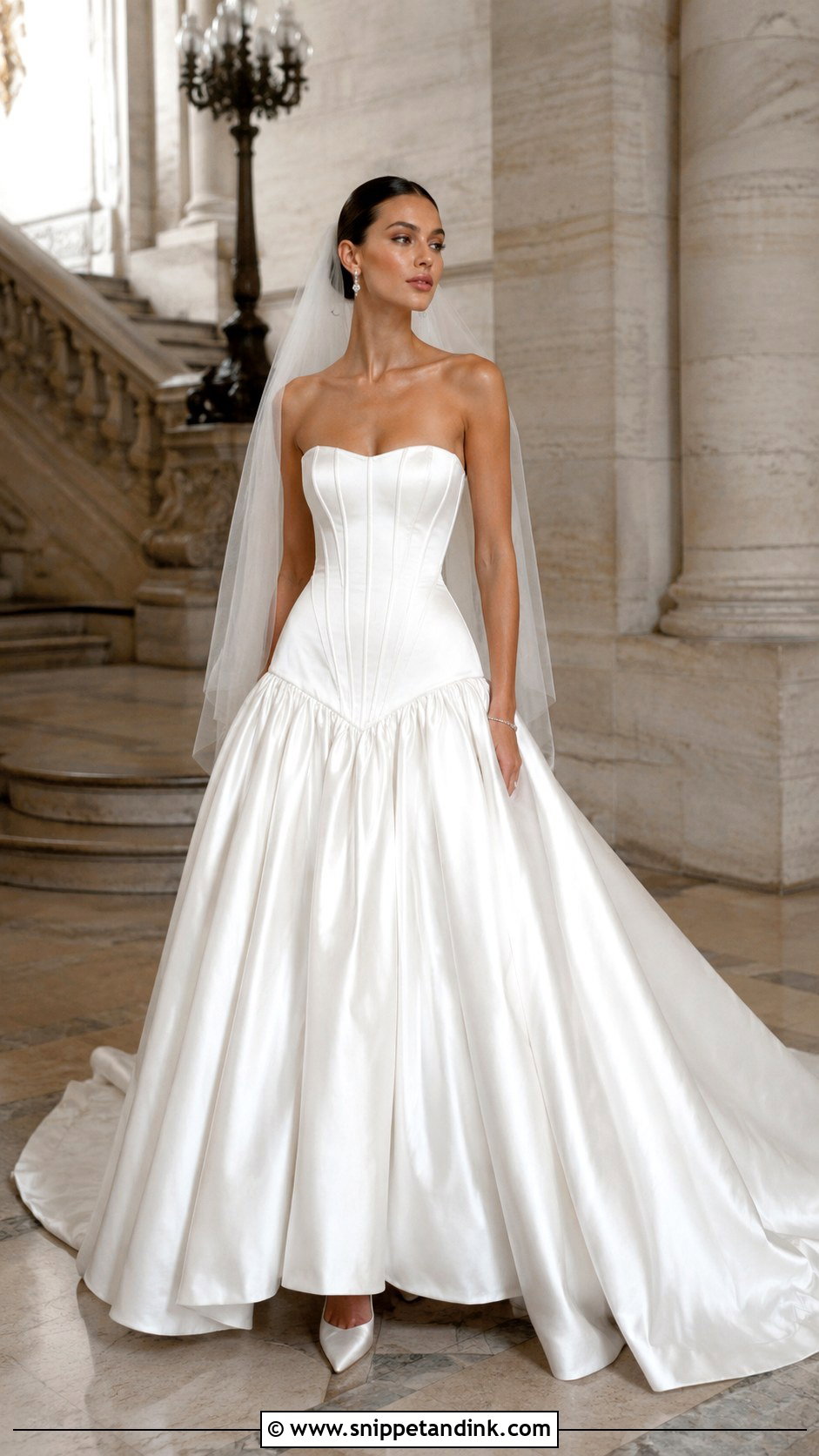
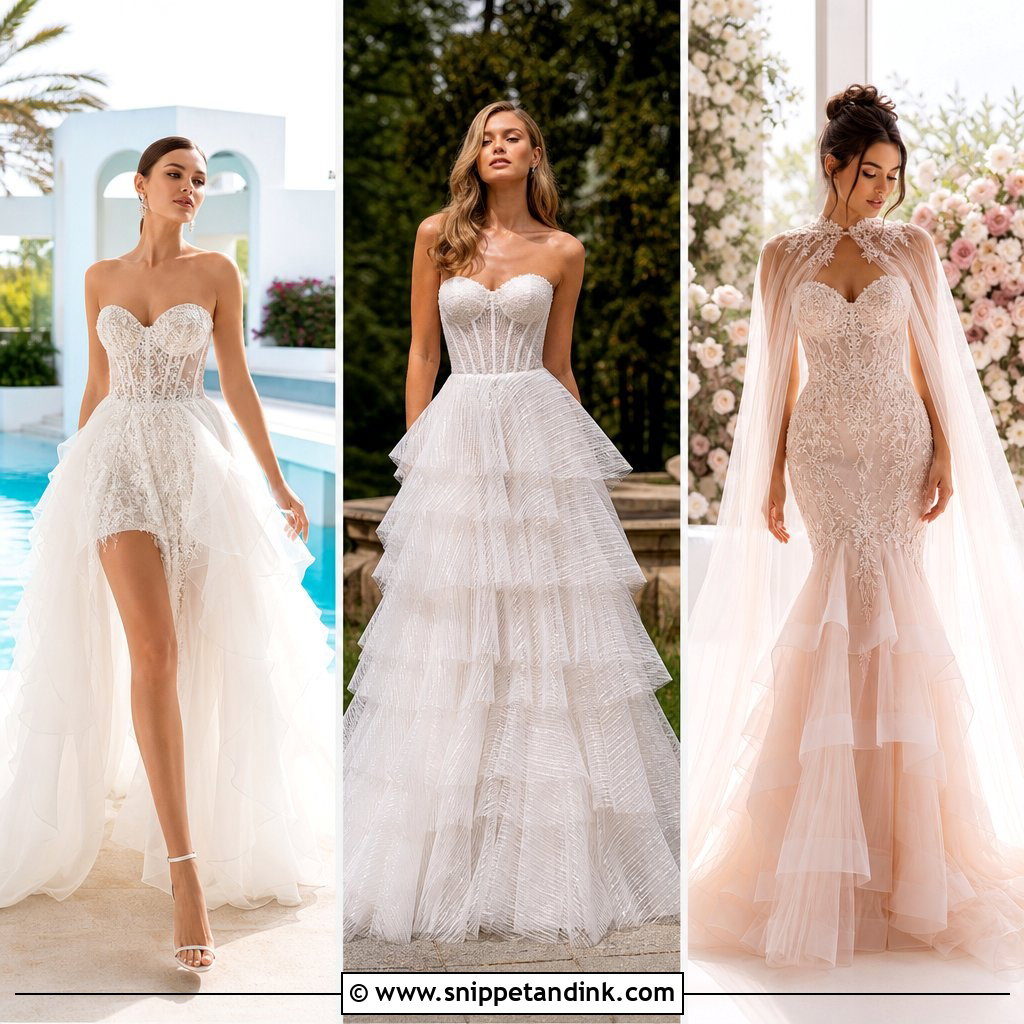
A drop waist corset extends the fitted bodice down past the natural waist, then opens into a full skirt. It’s a shape that flatters long torsos and can shorten the leg on petite brides, so I pin a sample to the right length before ordering. Satin gives a clean finish, tulle a romantic one and textured fabric adds drama. Pointed heels, a simple veil and delicate earrings keep the waistline in focus. It suits brides who want structure without sparkle at grand venues, formal gardens and editorial city weddings.
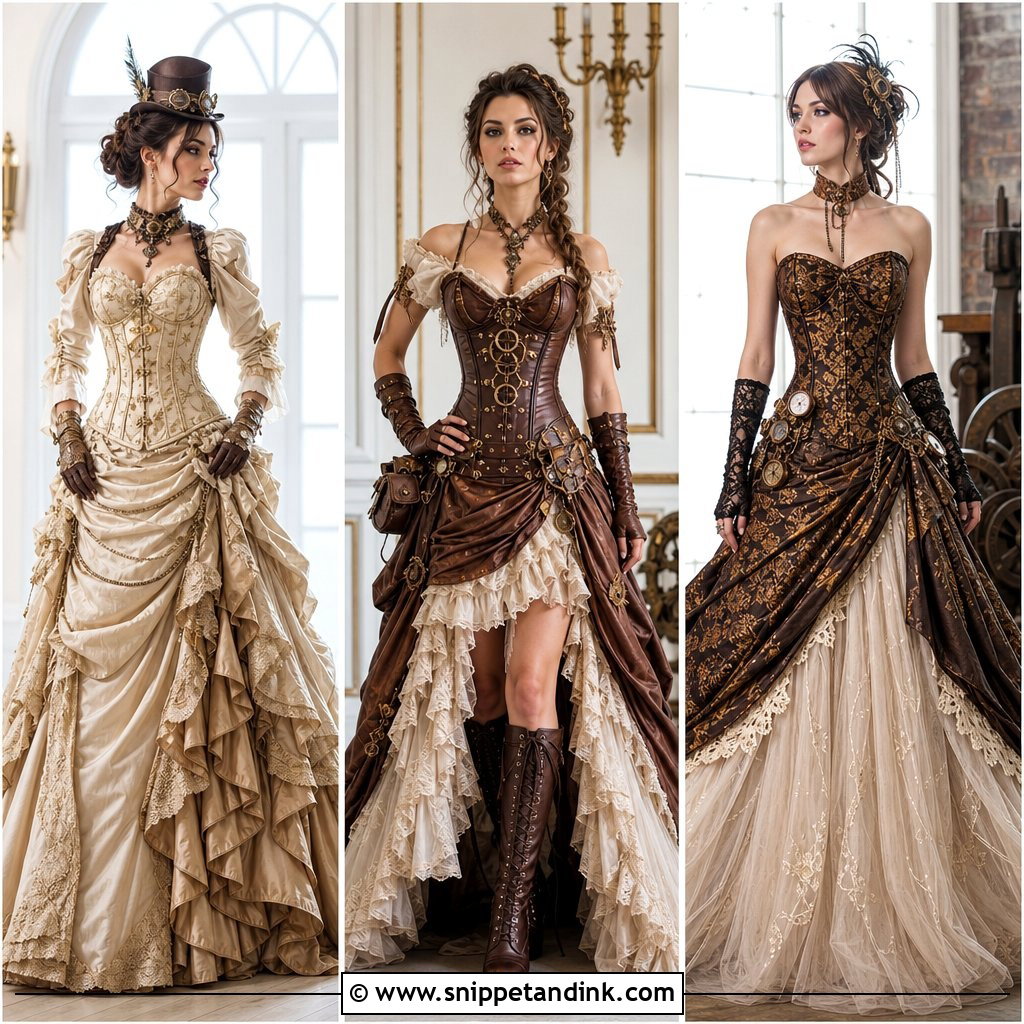
15. Bubble Hem Wedding Dress
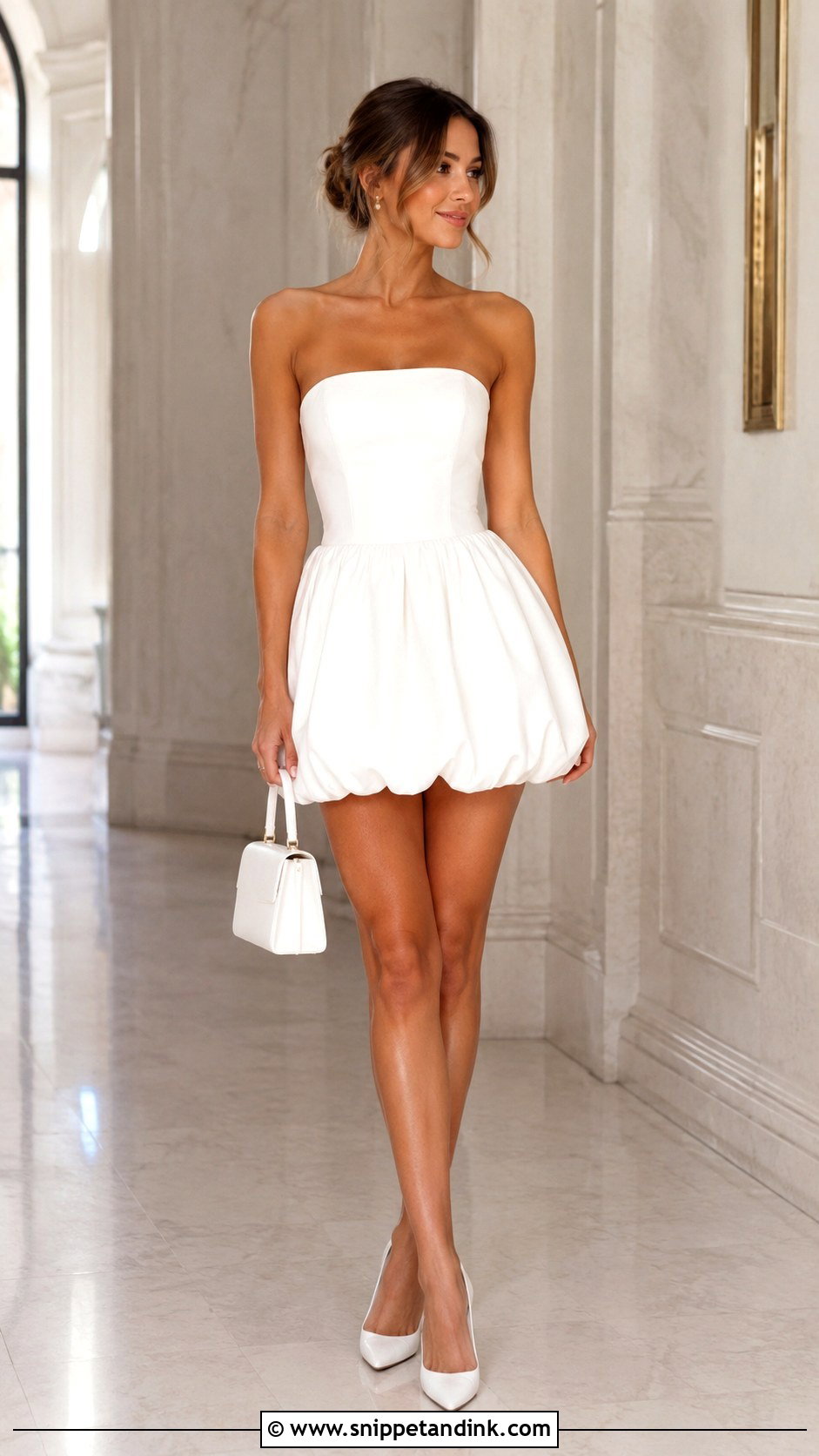
A bubble hem is playful and sculptural. The rounded hem holds volume around the skirt, and a white bubble mini, a tea-length bubble gown or a strapless bubble dress with opera gloves all feel fashion-led. The hem gets its shape from an inner lining that’s shorter than the outer layer, which means it crushes flat if you sit on it carelessly, so fluff it out each time you stand. Sleek heels, a small top-handle bag and minimal jewelry keep it clean. A short veil or headband is enough for courthouse weddings, elopements and after-parties.
16. Ruffled Wedding Dress
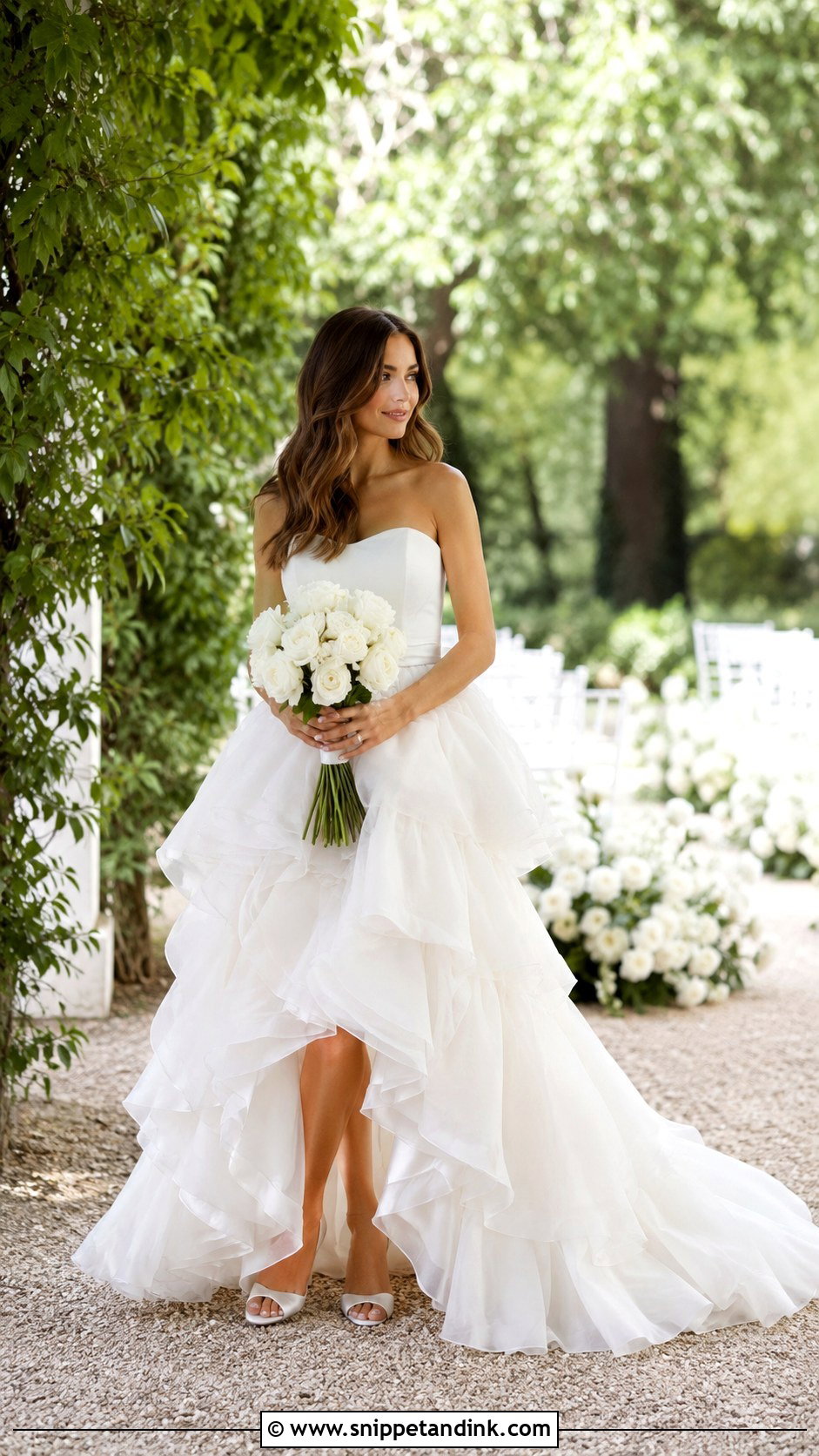
A ruffled wedding dress can be wildly romantic when it’s controlled. Cascading ruffles, tiered tulle, organza layers or a single big ruffle at the neckline all work. Scale the ruffles to your frame: petite brides look best in smaller ruffles, while taller brides carry big tiers. Simple heels, soft hair and a bouquet in one color family stop the outfit tipping into overwhelming. Organza ruffles hold their shape in humidity much better than chiffon ones, which matters for beach ceremonies and destination venues.
17. Sheer Overlay Wedding Dress
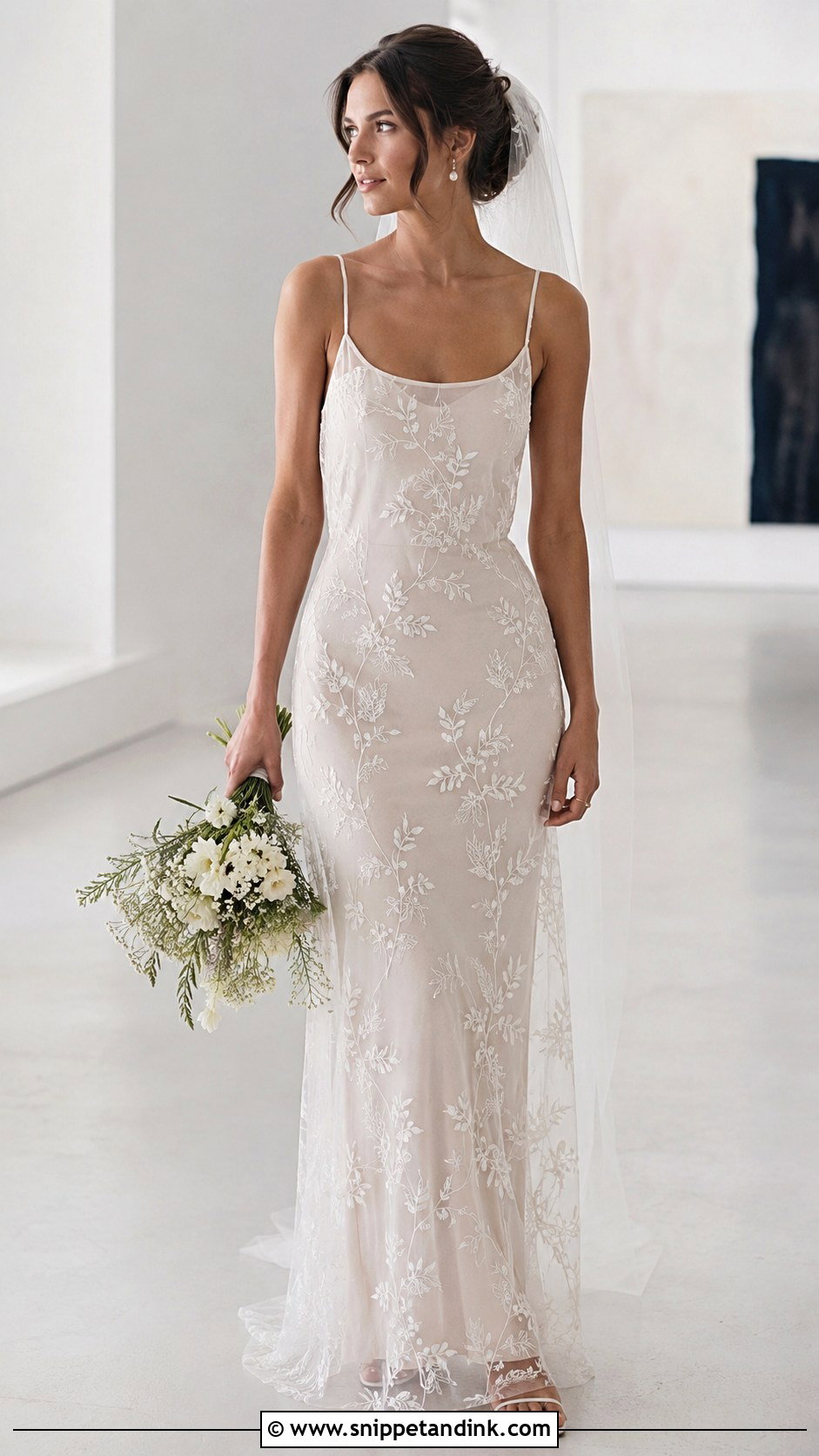
A sheer overlay creates a layered illusion while staying bridal. The gown is usually a fully lined slip with a sheer embroidered, dotted or lace layer on top. The base layer is what I scrutinize: it has to give real coverage in daylight and under flash, because a photographer’s light can show more than the mirror did. Delicate sandals, pearl earrings and a plain veil avoid clutter. It suits warm-weather weddings, art venues, garden ceremonies and evening receptions, and it’s a wearable way into the sheer trend.
18. Bow Wedding Dress
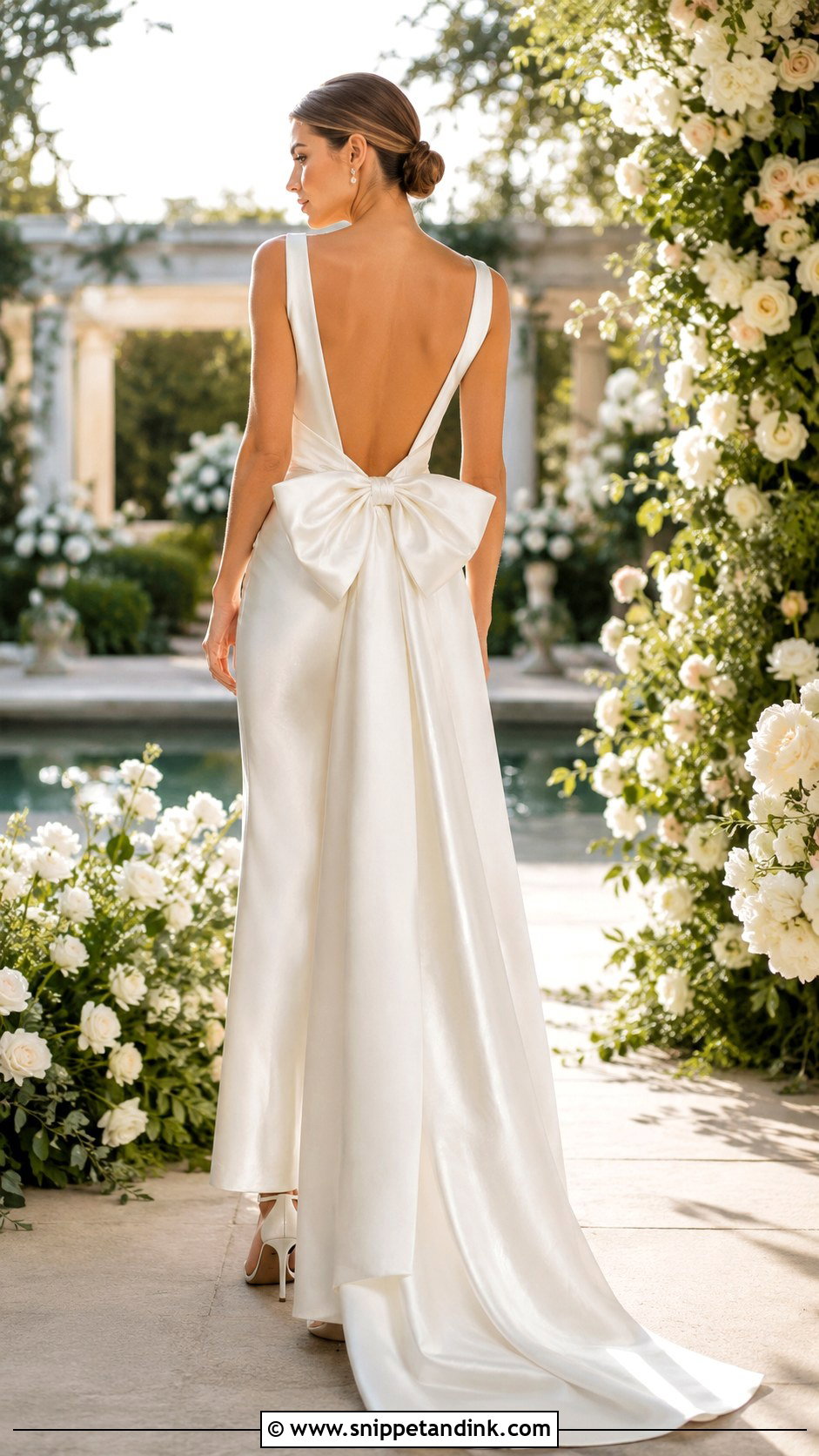
A bow exaggerated to full size turns a familiar bridal detail into the headline. An oversized back bow, bow straps, a front bow bodice or a removable bow train all work. If the bow sits at the back, choose a low veil or none so it stays visible in the walk back up the aisle. Big bows droop when the fabric is soft, so I ask for interfacing inside the loops. Satin heels, a smooth hairstyle and small earrings keep everything else clean. Depending on size and fabric, a bow can look sweet, dramatic or architectural.
19. Vintage Wedding Dress
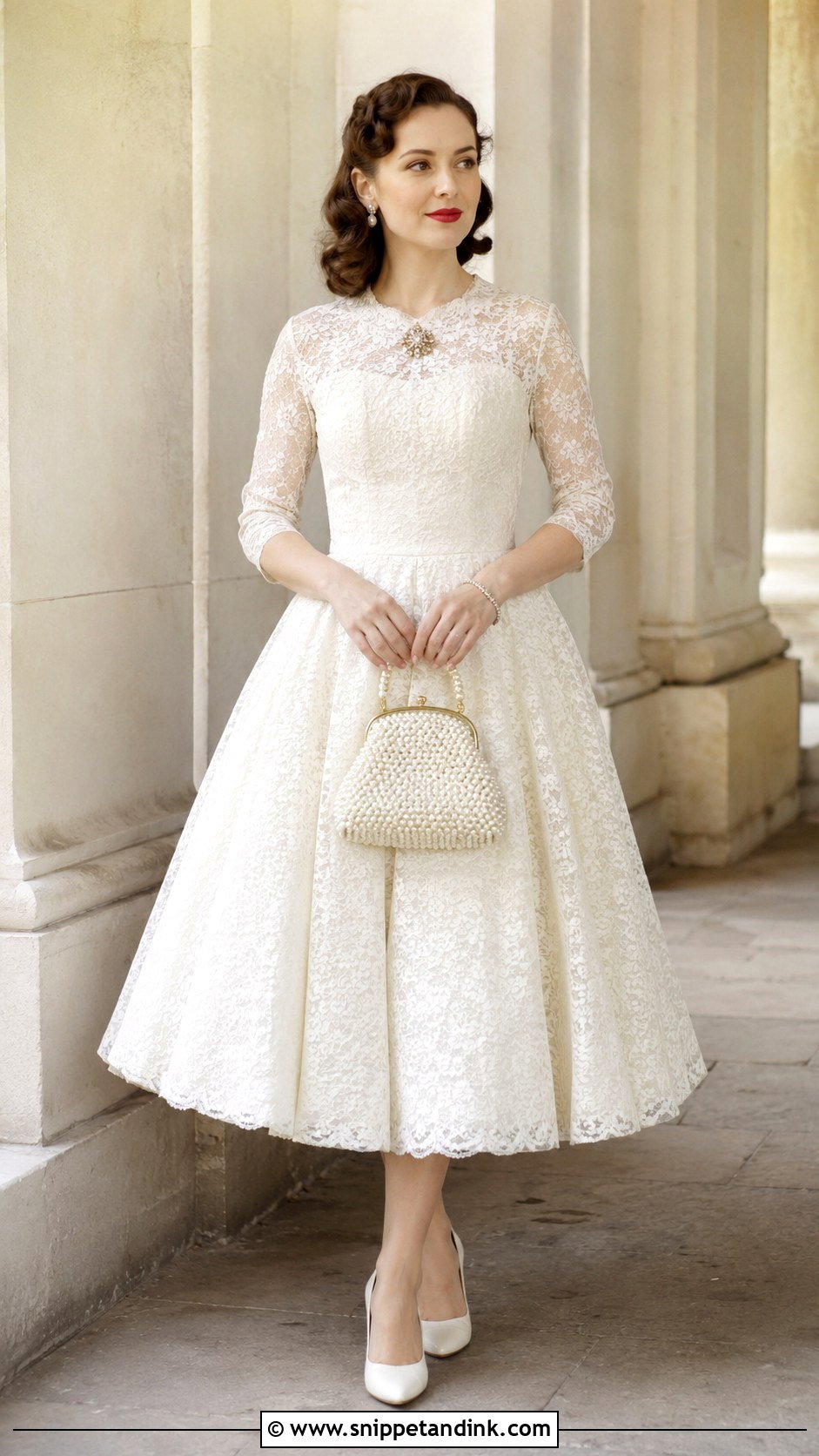
Vintage dresses carry a real history. A 1930s silk slip, a 1950s tea-length dress, a 1970s lace gown or a 1980s puff-sleeve all have character, but fit and condition decide whether one works. I check the underarms and seams for weakened fabric and look at how much seam allowance there is, since that sets how far a dress can be let out. Old silk can split if it’s stressed. Era-inspired shoes, simple jewelry and fresh, modern hair keep it from looking like a costume, and a vintage veil, pearl bag or heirloom brooch adds meaning. It suits intimate weddings, historic venues and brides who care about sustainability.

20. Crochet Wedding Dress
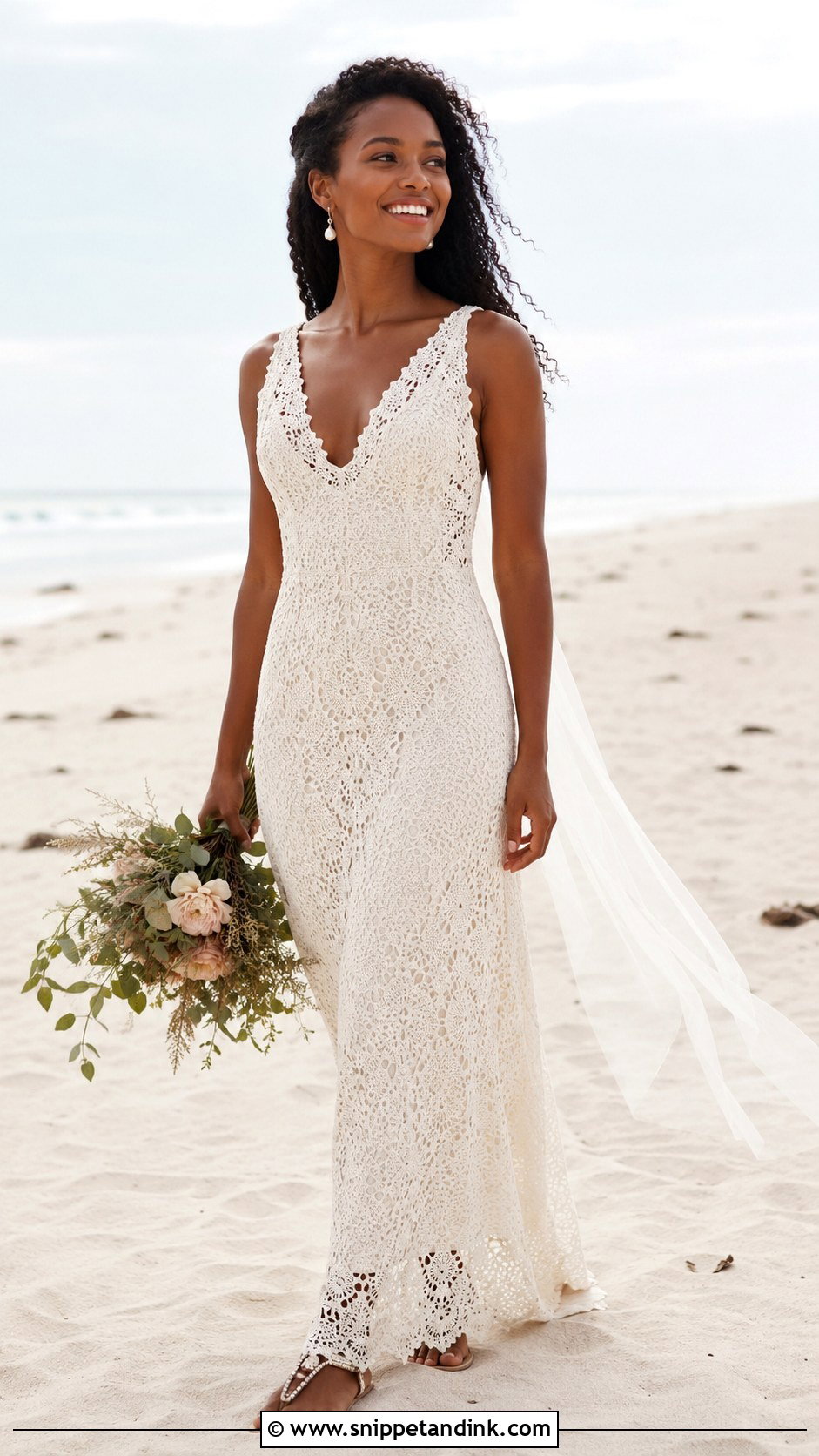
Crochet feels relaxed and handmade, which is exactly why it suits a non-traditional bride. Choose a lined crochet gown, a crochet maxi or a crochet two-piece set with enough structure for a ceremony. Unlined crochet stretches as you wear it, so a full lining keeps the shape and the coverage. Flat sandals, espadrilles, pearl earrings and a loose bouquet suit the texture. A simple veil or a flower clip in the hair makes it read bridal. Beach weddings, summer elopements, desert ceremonies and casual outdoor venues suit it.
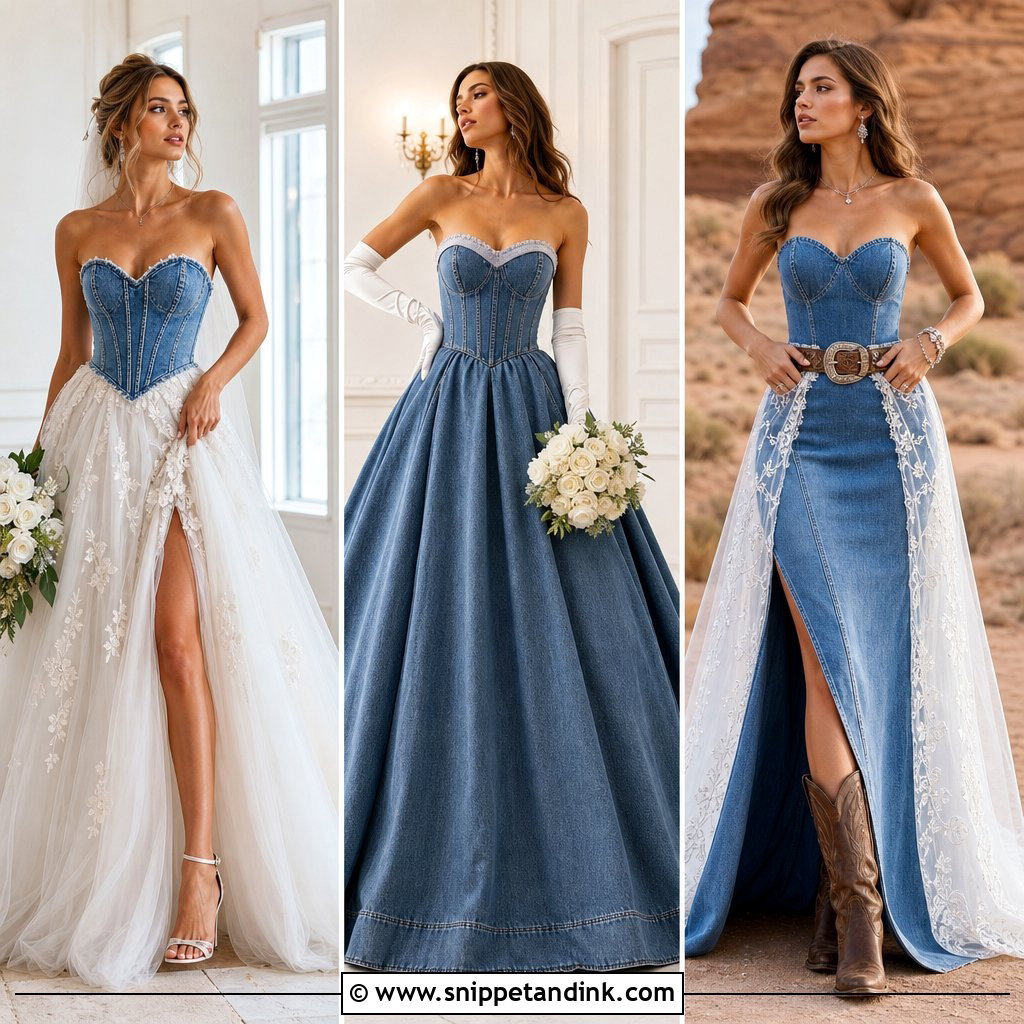
21. Denim Wedding Dress
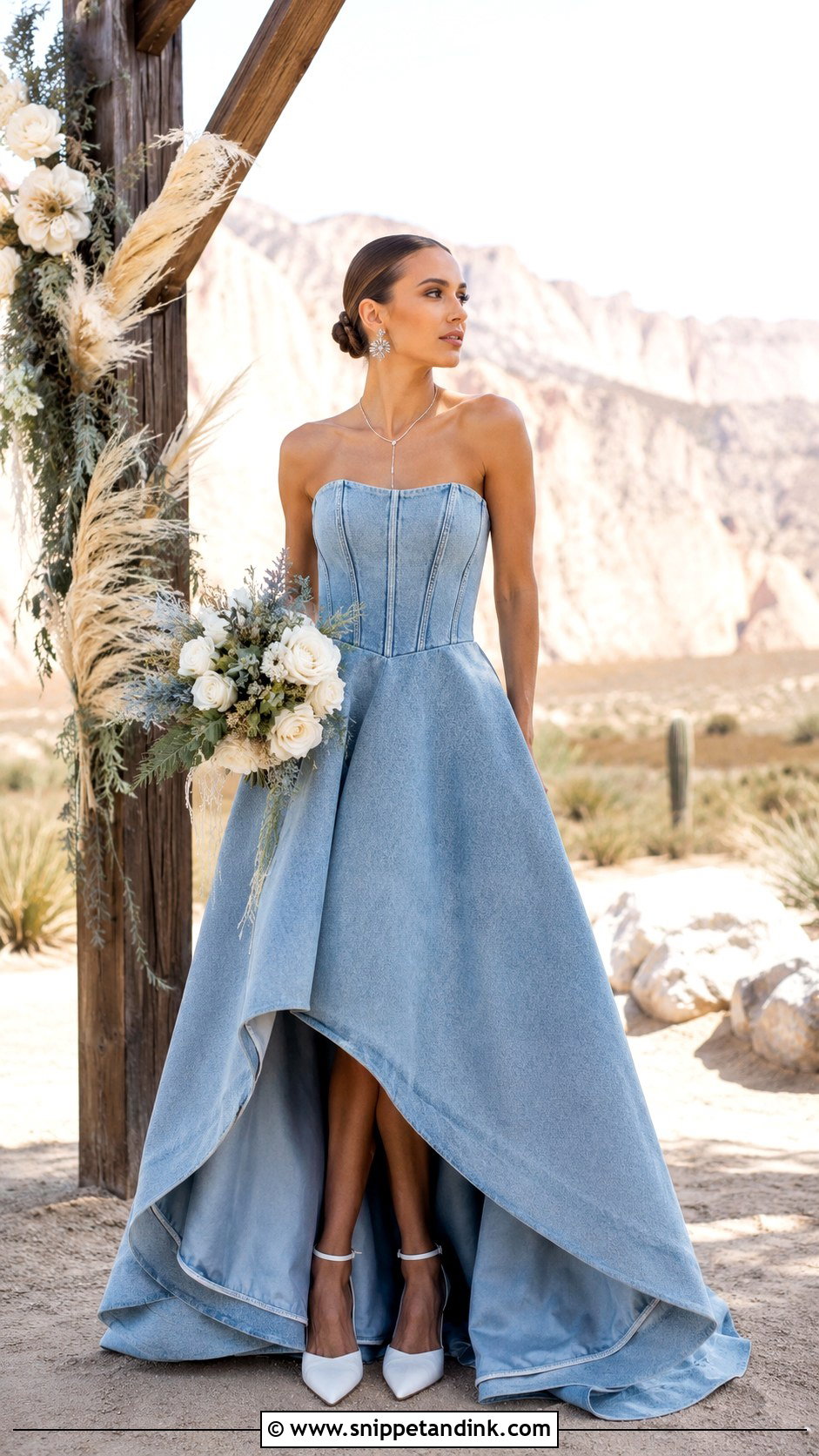
Denim is about as far from tradition as a bridal look gets, and it can look surprisingly chic. A pale blue denim corset gown, a white denim mini with a long veil or a structured denim dress with pearl buttons all work. Skip distressing if you want it to look polished, and choose structured denim over soft, which loses its shape by the afternoon. One warning: dark denim can bleed onto a pale veil or a white satin shoe in heat, so test a damp white cloth against it first. White heels, silver jewelry and a clean bouquet suit western-inspired venues and creative elopements.
22. Printed Wedding Dress
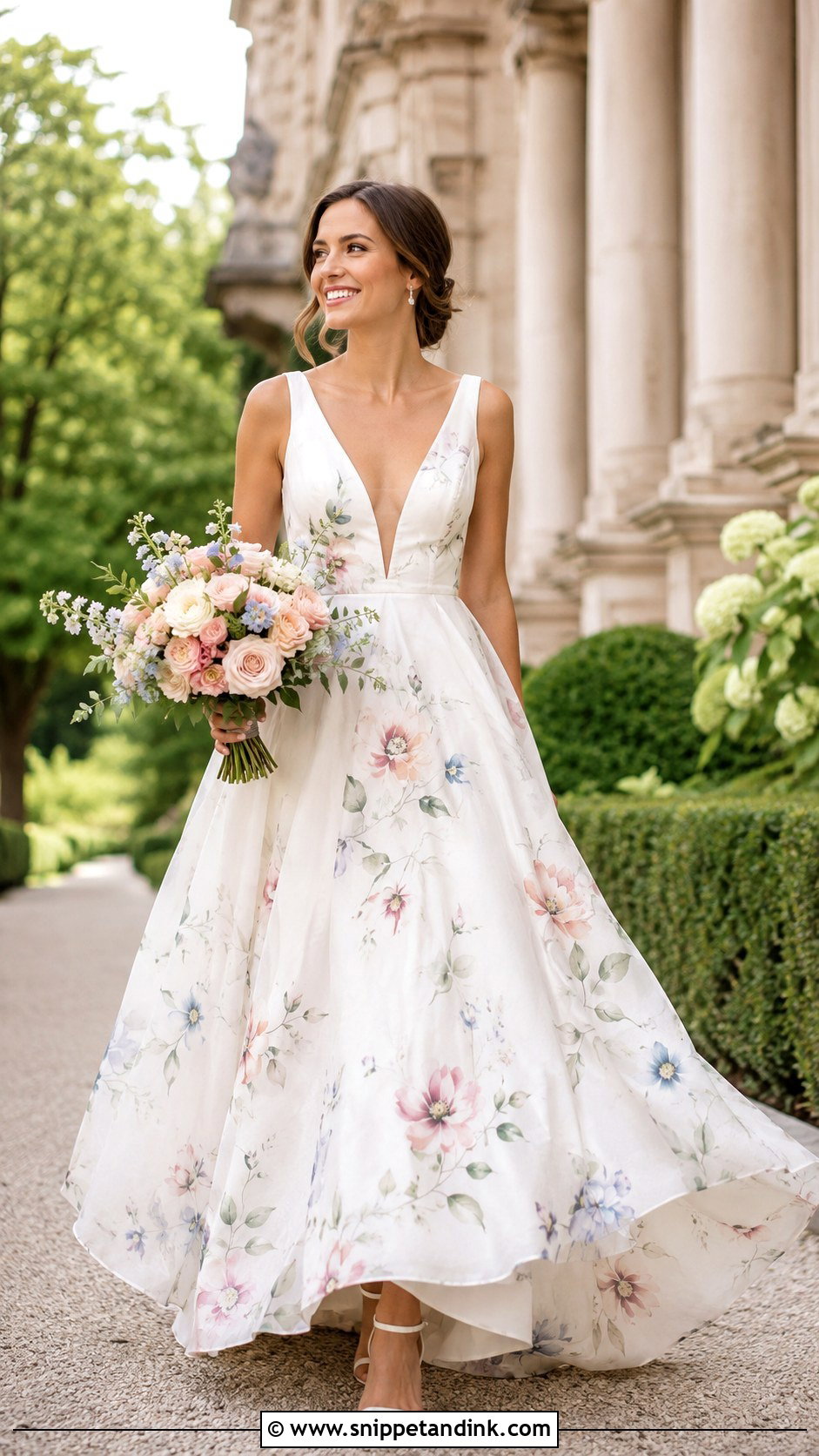
A printed gown lets you make the dress entirely personal. Florals, toile, watercolor patterns, stars, abstract shapes or fine vines all look bridal on an elegant silhouette. A light base keeps the effect soft; dark florals add drama. Large prints need to be placed well, and I check where the biggest motifs land on the bodice so nothing sits awkwardly across the bust. Pair it with simple heels, solid-color earrings and a bouquet that doesn’t fight the pattern. Garden ceremonies, destination weddings and museum venues suit it.
23. Color Block Wedding Dress
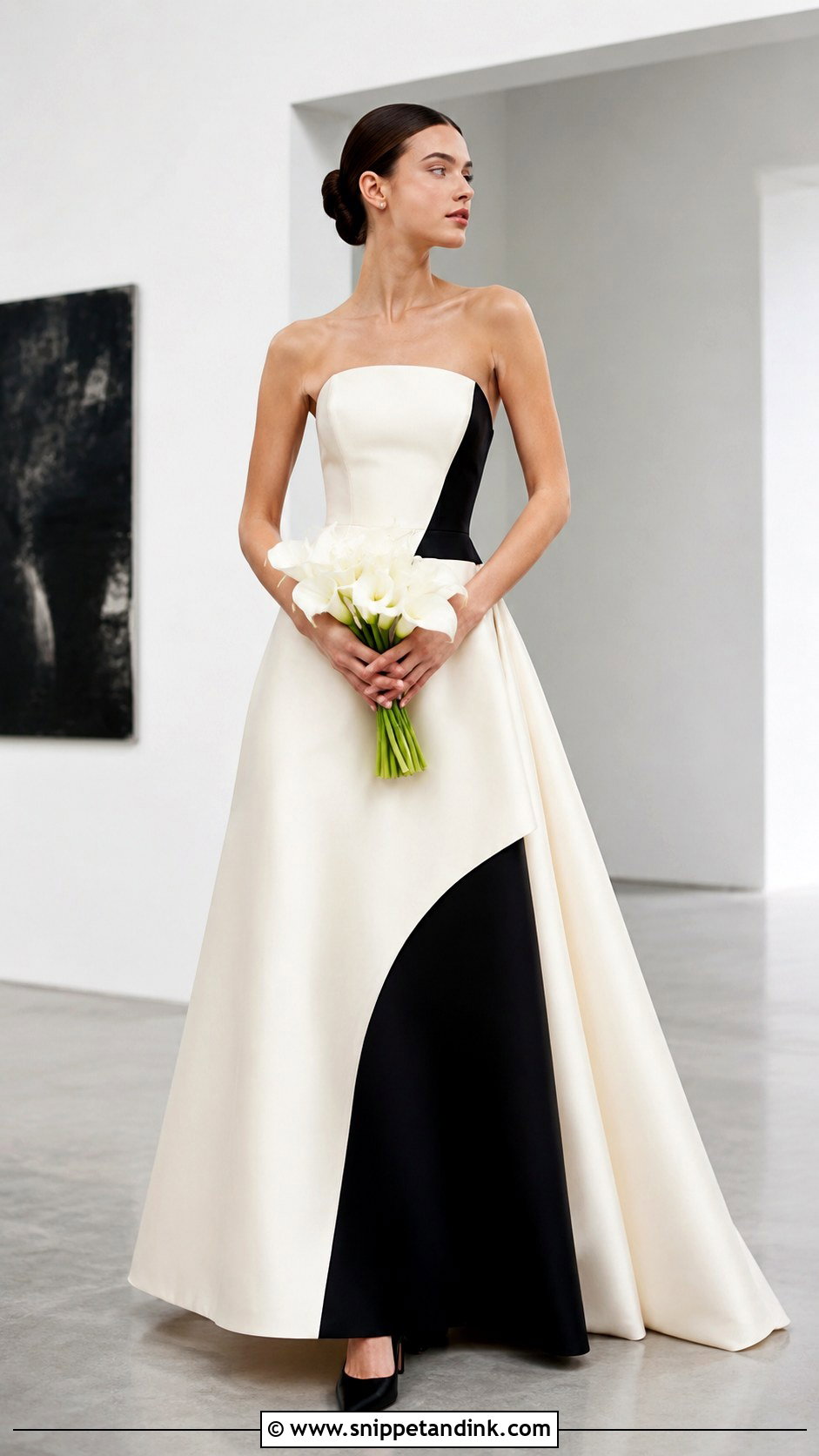
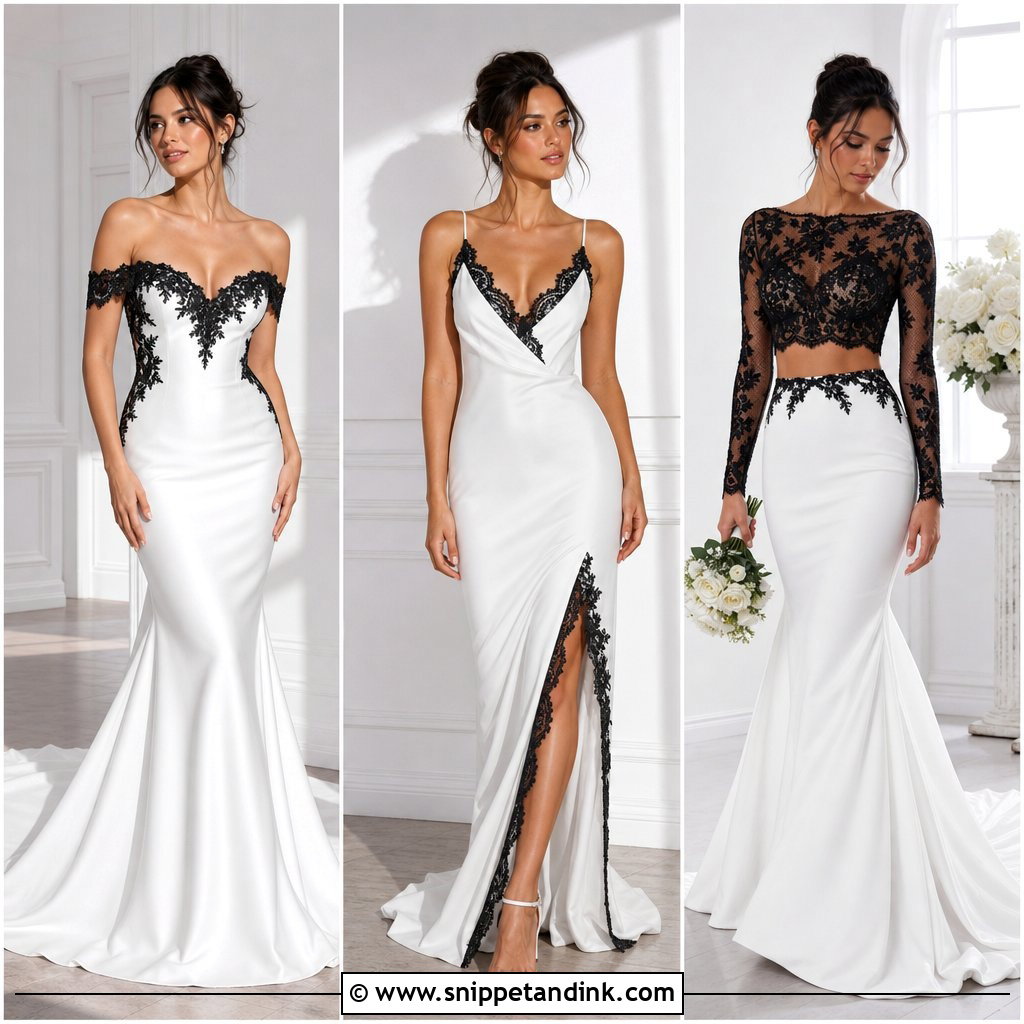
Color blocking is graphic and modern. Ivory with black, blush panels, blue accents, metallic sections or a contrasting bodice and skirt all work. Where the panels sit changes how the body reads: a dark side panel narrows the waist, a pale bodice above a dark skirt draws the eye up. Black and white feels architectural; pastel blocks feel softer. Keep the rest streamlined, with clean heels, minimal jewelry and a simple bouquet, for modern venues, city weddings and gallery ceremonies. It gives you color without committing to a fully colored dress.
24. Sculptural Wedding Dress
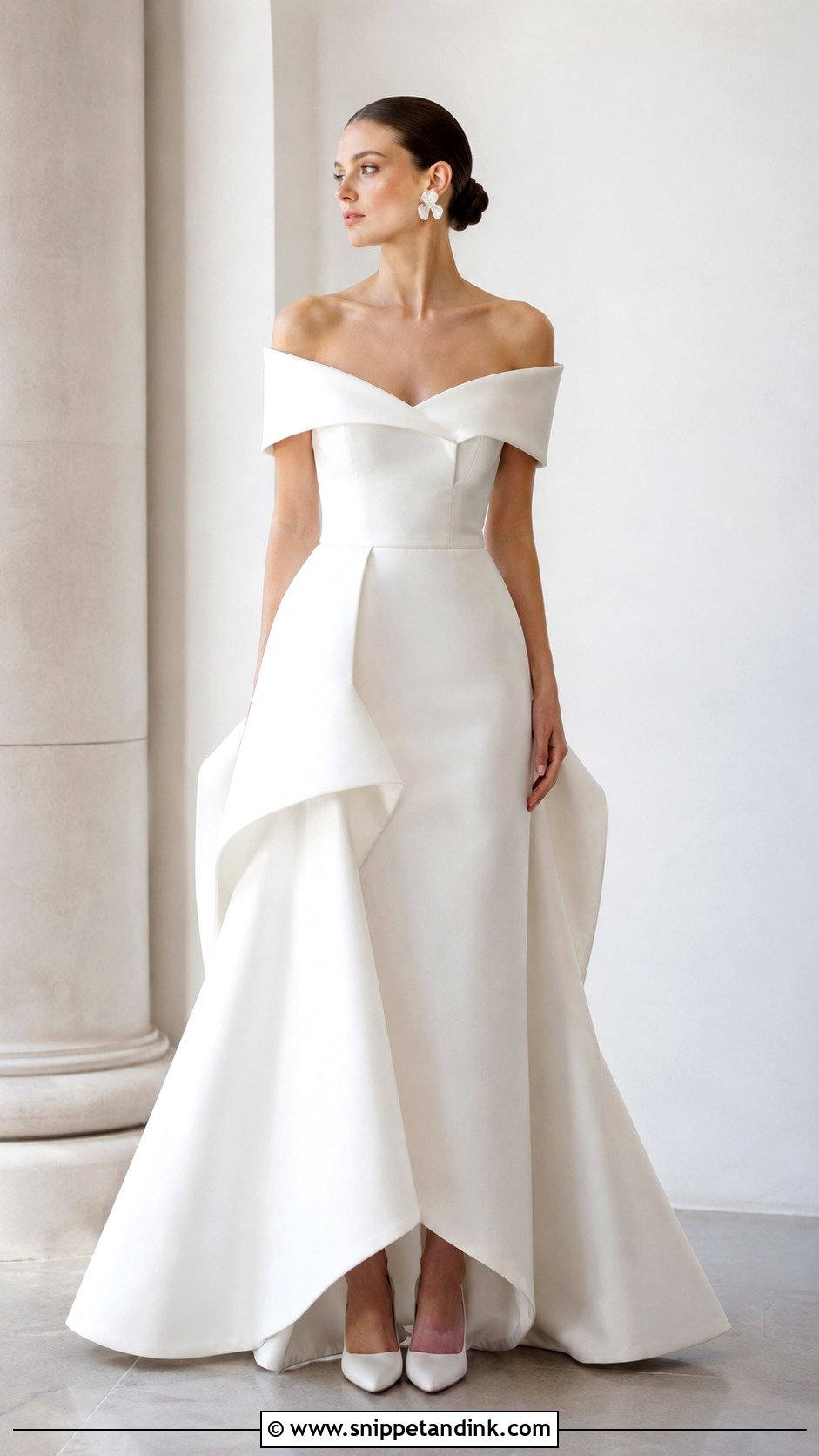
A sculptural gown is fashion architecture: molded bodices, sharp pleats, exaggerated hips, origami folds, structured sleeves or an asymmetric neckline. Mikado, satin, taffeta or heavy crepe hold that shape; softer fabrics collapse. Structure depends entirely on fit, and a sculpted bodice that’s even slightly loose pulls away from the body, so I’d budget for more fittings than usual. Simple pumps, sleek hair and sculptural earrings complete the editorial look. Museums, modern hotels, rooftop weddings and formal city venues suit it. It needs no sparkle or lace, because the silhouette is the statement.


25. Convertible Wedding Dress
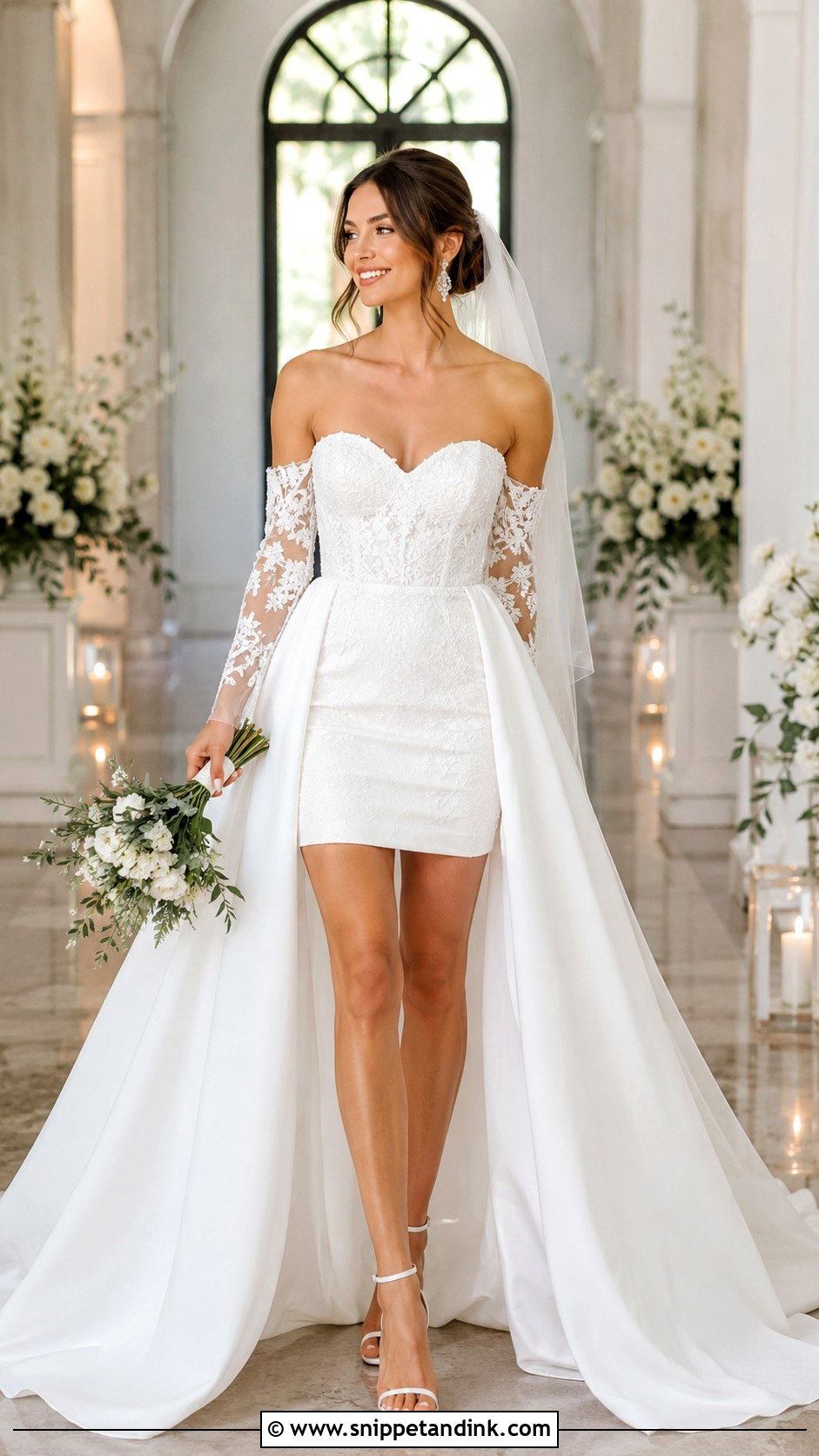
A convertible wedding dress changes with the day. A detachable overskirt, removable sleeves, a cape, a train, a bolero or a peplum lets you wear the full version for the ceremony and remove a layer for the reception. I schedule the change into the timeline and make sure whoever helps has practiced it at the final fitting. Comfortable heels, statement earrings and a simple veil that suits both versions finish it. Guests see one look, then another, while you stay comfortable.
Black Tulle Needs Light and Silver Needs Shade
Unusual dresses photograph differently from white ones, and it’s worth a five-minute call with your photographer once you’ve chosen.
- Dark gowns lose texture in dim rooms. Ask for more light at the ceremony or plan portraits near a window.
- Metallics and sequins reflect flash and harsh sun. Open shade or late golden-hour light keeps the shine soft instead of blown out.
- Strong colors can pick up a cast from colored uplighting or a painted wall. Send the photographer a fabric swatch or a clear daylight picture of the dress.
- Prints and color blocks look busiest in group shots. Ask for a few portraits against a plain background.
Where Unusual Dresses Come From and How Long They Take
Many designers now offer their standard gowns in a colorway, which is the simplest route to a colored dress, though it often adds a few weeks of production. Custom dyeing and fully bespoke sculptural pieces take longer still, so I’d start shopping at least a year ahead for those. Vintage is the opposite: you can buy one in an afternoon, but it often needs specialist cleaning to lift yellowing and careful repairs to old seams before alterations, so leave a few extra months. Ready-to-wear minis, two-piece sets and jumpsuits are the fastest of all, and are a good option if the wedding is close.
Does the Dress Make Sense With the Celebration You’re Having?
An unconventional wedding dress isn’t about shocking anyone. It’s about wearing something that feels honest and exciting to you. A black tulle gown, a red dress, a jumpsuit, a hooded cape, vintage, crochet or a sculptural silhouette can all look elegant when the whole outfit is planned with care. Think about your venue, your comfort, the photos, how much you’ll move and the accessories before deciding. If the dress feels right on your body and makes sense with the celebration you’re having, it belongs at your wedding.
You'll Like These Ideas:




Leave a Reply