
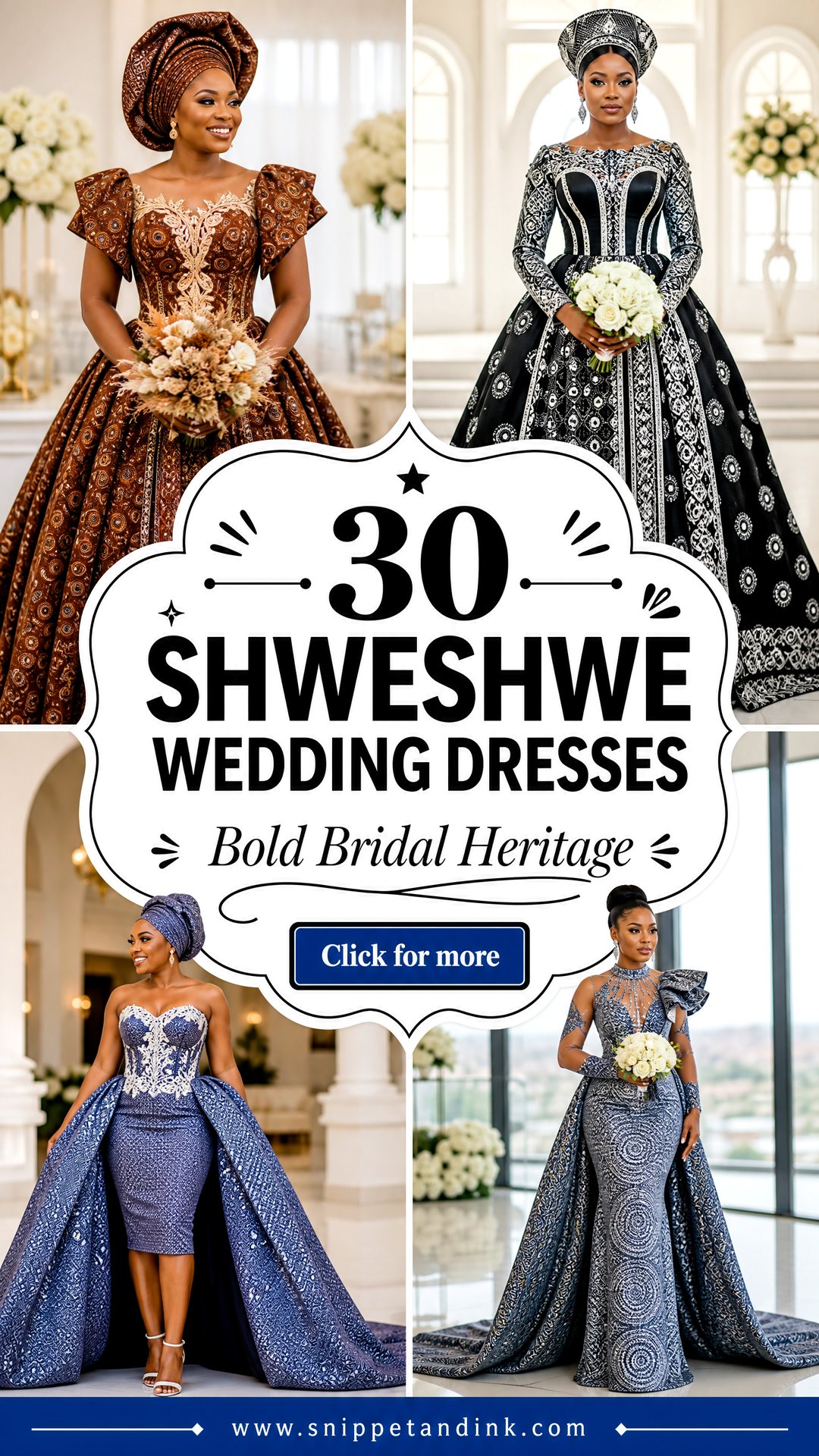
Shweshwe is a stiff, discharge-printed cotton with small repeating geometric motifs, and it behaves differently from the satins and laces most bridal patterns are drafted for. That is what makes it rewarding to design with. It holds a crisp outline in a peplum or corset, frames a plain tulle skirt and carries family meaning at a traditional ceremony. I have built the list below around the shapes I would actually cut in it, from a modest gown to a fitted mermaid and a two-piece you can wear again, with notes on where the cloth helps and where it fights you.
Pre-Washing Shweshwe Before Your Dressmaker Cuts It
New Shweshwe is stiff and smells faintly of starch, and that starch is part of how you recognise the real cloth. It washes out, and when it does the fabric softens and shrinks. If a dressmaker cuts a fitted bodice from unwashed cloth, the first clean can leave it noticeably tighter.
- Soak the fabric in cold water, then wash it gently without bleach before any cutting.
- Dry it flat or on a line in shade, since strong sun fades the indigo and the colours.
- Iron it while slightly damp to bring back some crispness.
- Buy extra length for shrinkage and for matching the pattern across seams.
Shweshwe is often narrower than standard dressmaking fabric, so a ball gown or long train needs more metres than you might expect. Ask your dressmaker to calculate the yardage from the actual bolt width, not a pattern envelope.
1. Blue Shweshwe Mermaid Wedding Dress
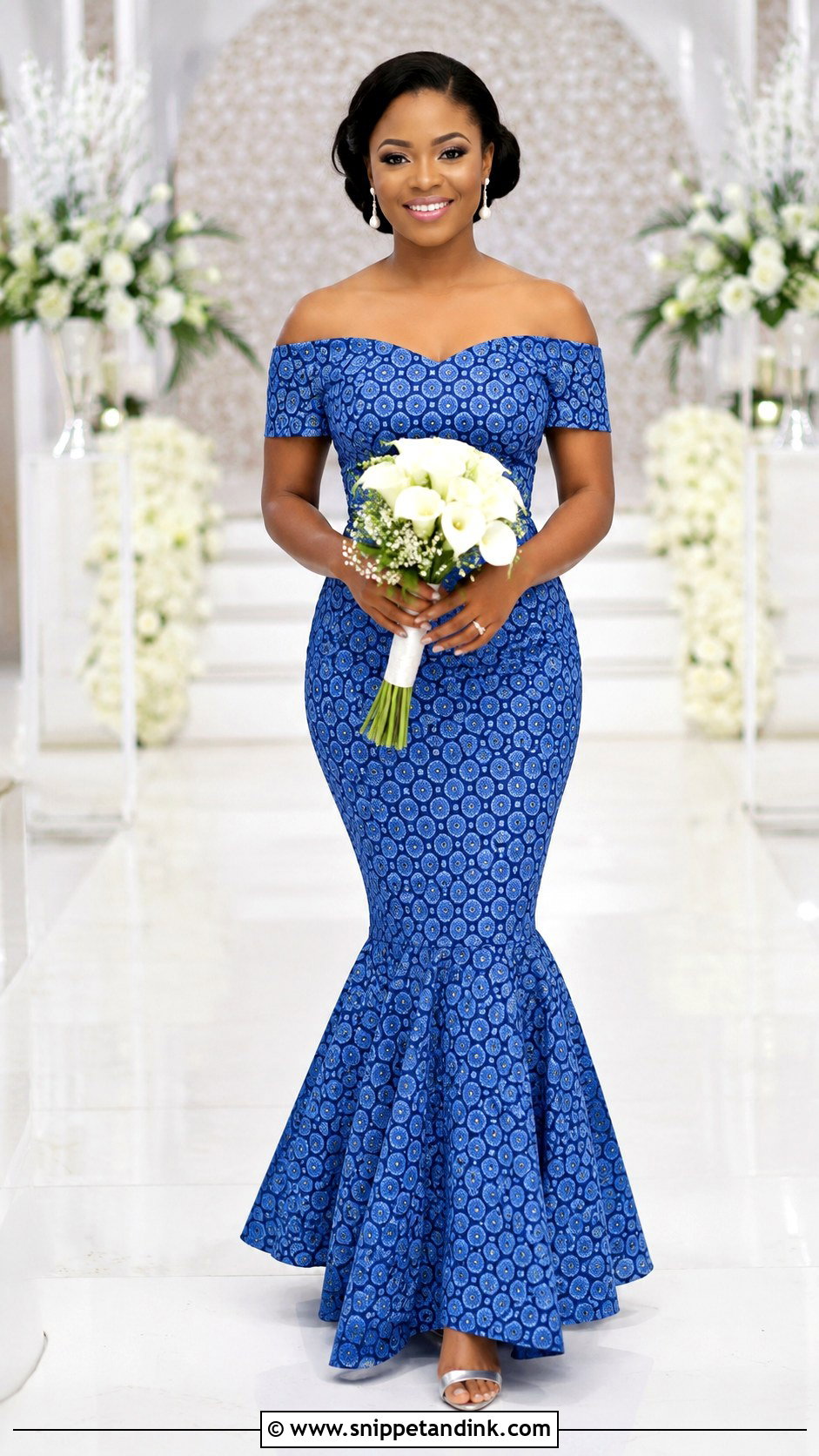
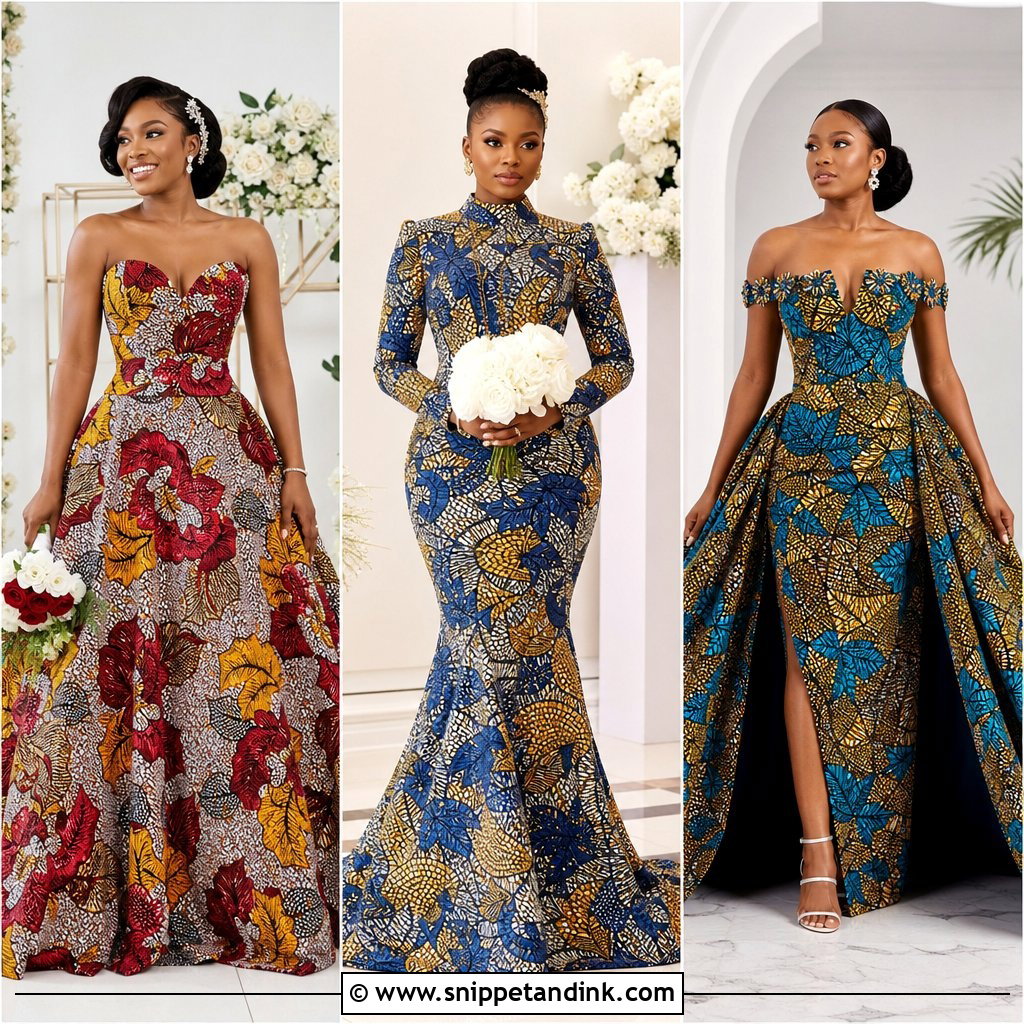
Blue is the colour most people picture first, and a mermaid shape shows the print off along the whole body. The catch is that cotton has no stretch, so the fit from waist to knee has to be cut precisely; I always ask for a calico toile first. The flare should open just below the knee so the bride can climb steps. A sweetheart or off-shoulder neckline with a little beadwork is enough, and a detachable train in plain blue satin adds drama without doubling the weight of printed cotton.
2. White And Blue Shweshwe Wedding Dress
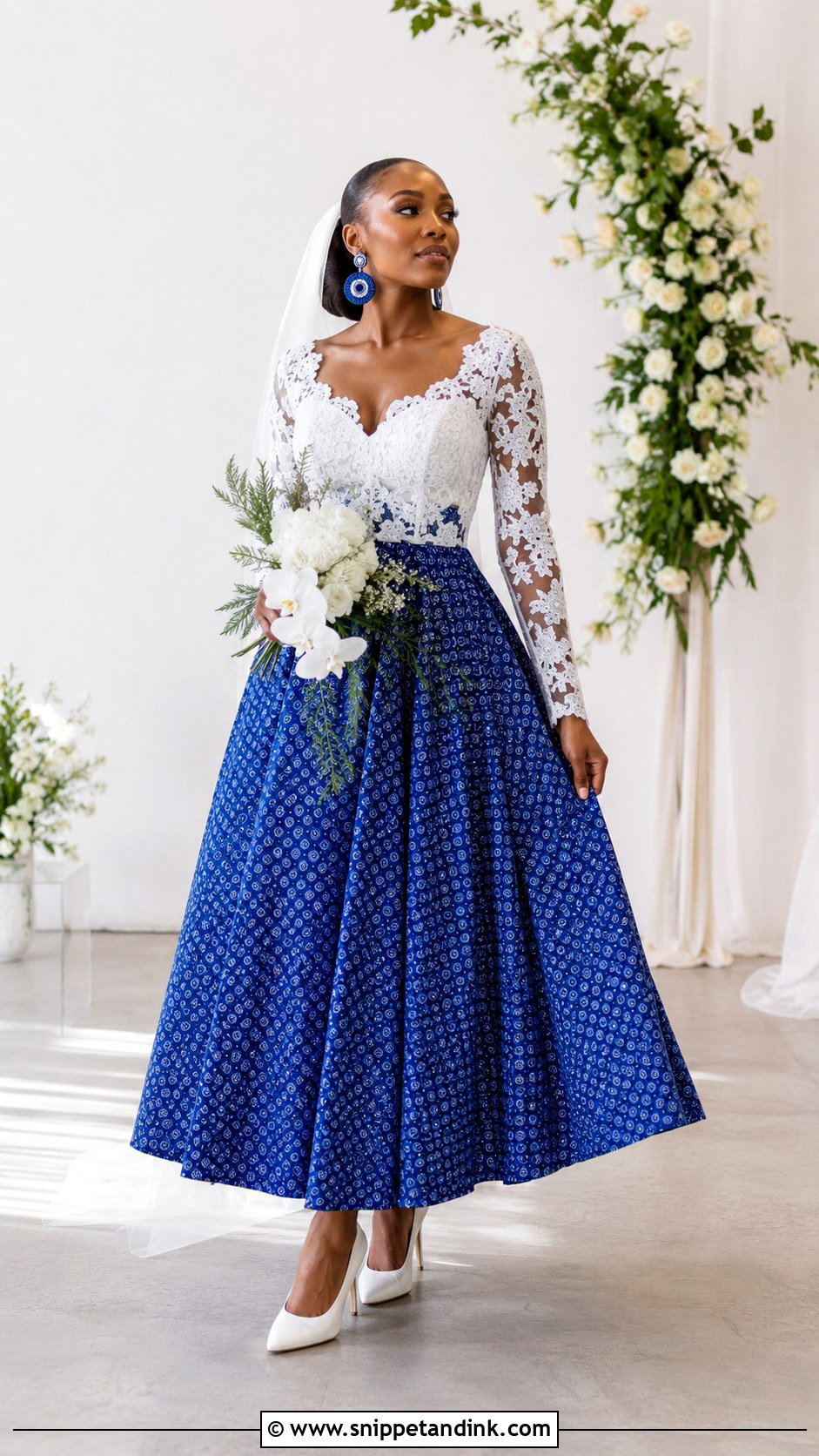
Putting white beside the print is how I make Shweshwe read as bridal to guests who expect a white dress. A white lace bodice over a blue printed A-line skirt is the easiest version to get right, because the lace softens the face and the cotton gives the skirt body. Check the white in daylight against the print; the blue in Shweshwe is deep enough to make an ivory look yellow. Blue beaded jewellery and a short veil tie it together.
3. Red Shweshwe Ball Gown Wedding Dress
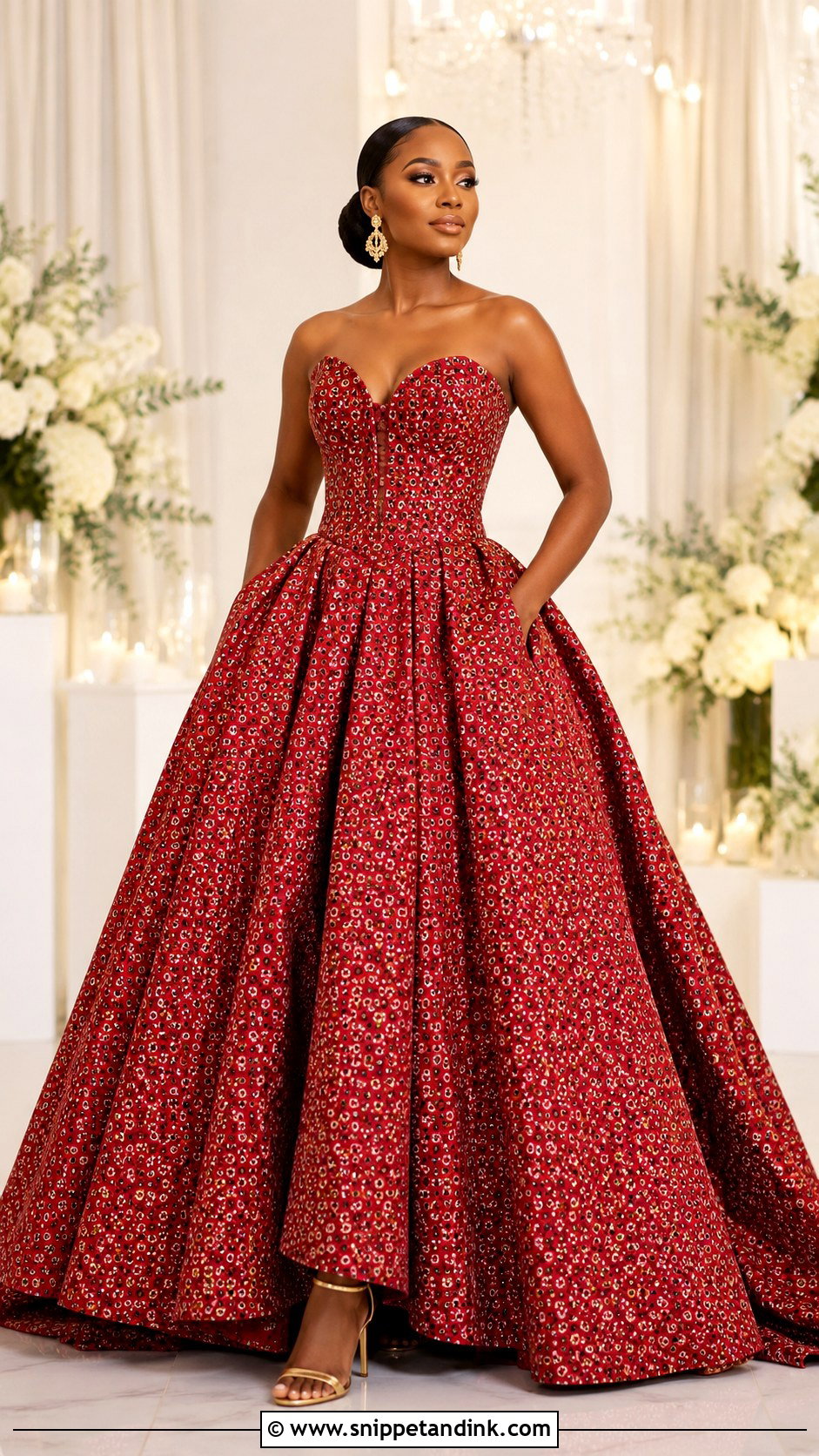
Red Shweshwe in a full ball gown is the boldest entrance on this list. The skirt needs a lining and a petticoat underneath, otherwise the cotton collapses into folds instead of holding a dome. That adds weight, so for a long ceremony I suggest a lighter net petticoat rather than layers of stiff tulle. A corset bodice gives structure, and gold jewellery with a sleek hairstyle keeps the colour from overwhelming the bride.
4. Brown Shweshwe Wedding Dress With Headwrap
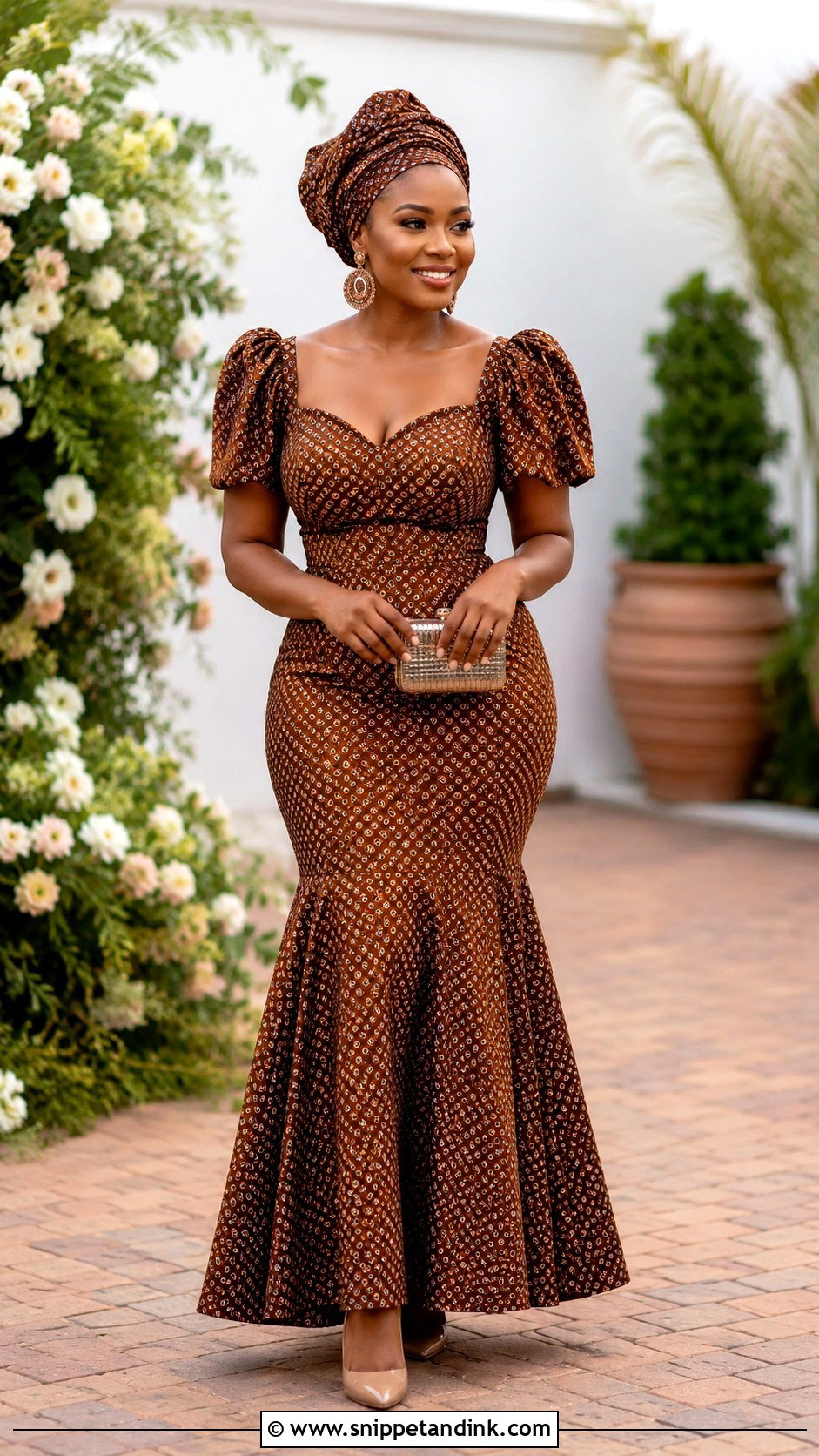
Brown reads softer and older than bright red or blue, and it suits a bride who wants the culture to show without the volume. I like it in a fit-and-flare or a long wrap. The headwrap should come from the same bolt so the brown matches exactly; dye lots vary. Cream lace or plain satin panels add texture, and bronze earrings with nude heels finish it for an introduction or outdoor ceremony.
5. Black And White Shweshwe Wedding Dress
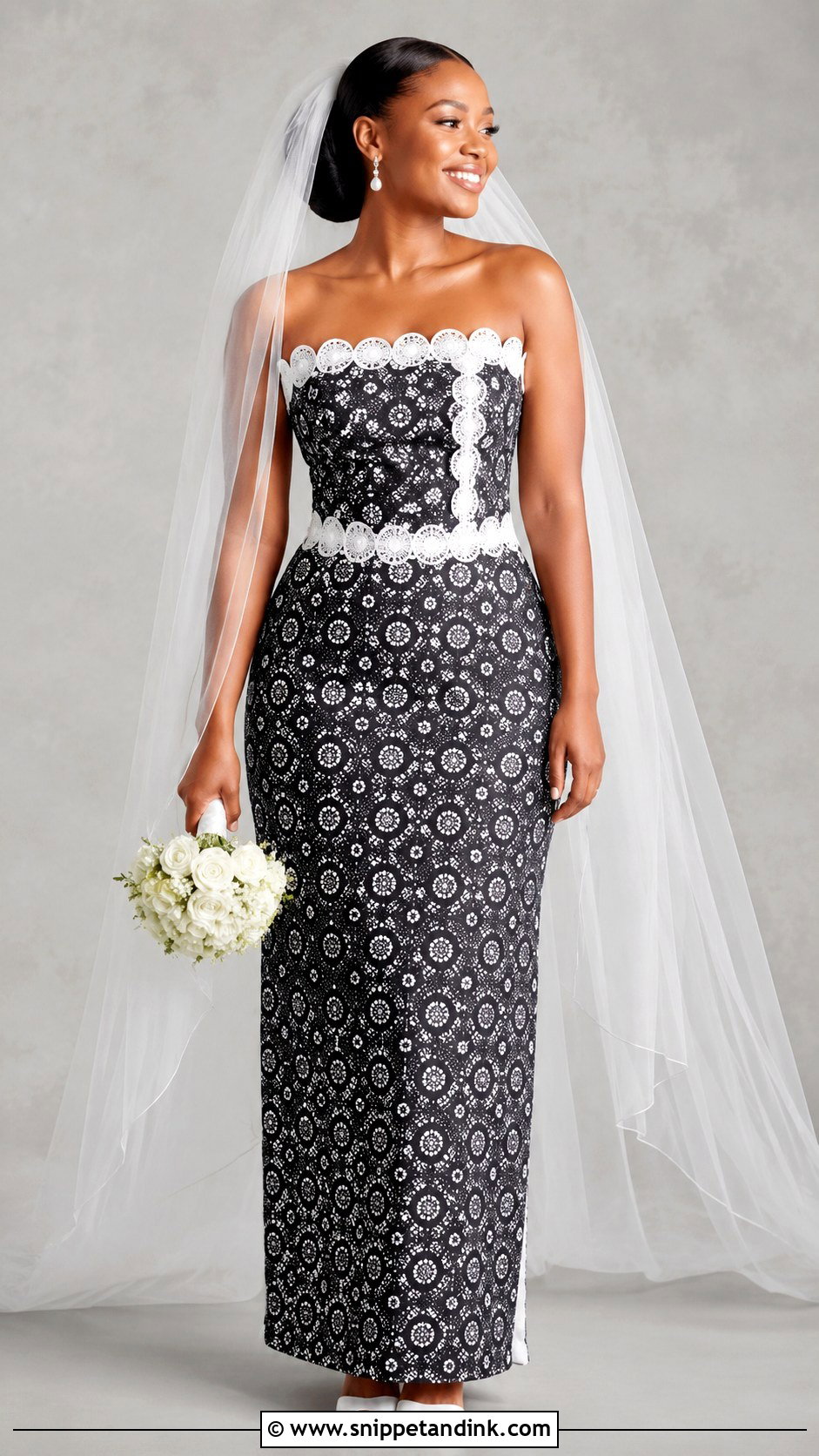
Black and white is the most graphic option, and it photographs crisply because the contrast is so strong. Keep the cut clean: a column gown or a structured peplum shows the pattern without seams breaking it up. To bring it back to bridal territory I add white through a tulle train, veil or pearl jewellery. A high neckline looks modest; an off-shoulder cut feels more current.
6. Shweshwe Wedding Dress With Tulle Skirt
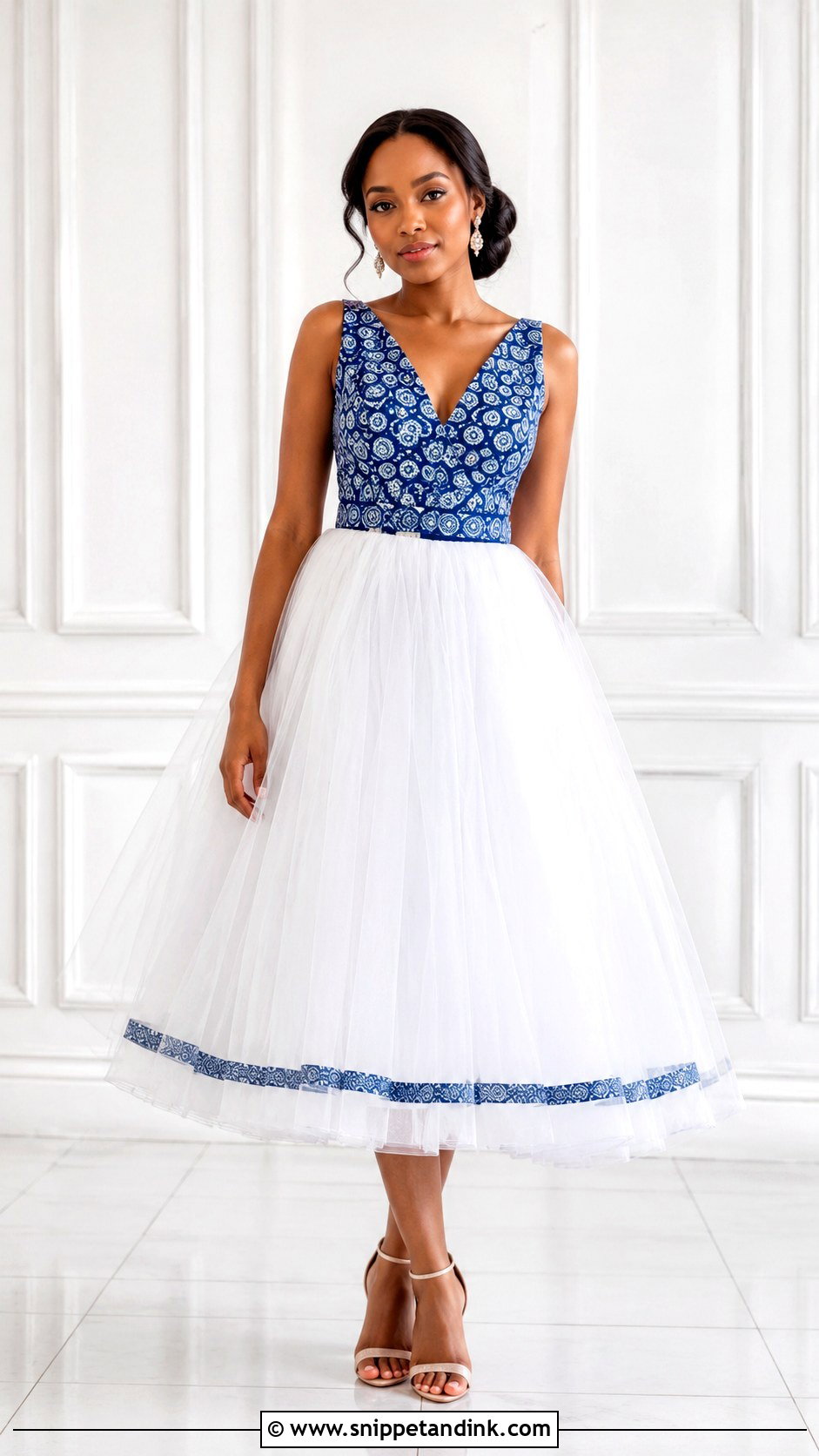
A printed bodice over a soft skirt is the combination I suggest most often for a first wedding dress with a tulle skirt in this fabric. The cotton holds the waist and the tulle adds lightness in white, ivory, blush or a matching shade. The join is where it can go wrong: heavy cotton pulls the tulle at the waistband, so I ask for the skirt to be mounted on a lining rather than stitched straight to the print. A strip of the print at the hem connects the two.
7. Shweshwe Wedding Dress With Lace Sleeves
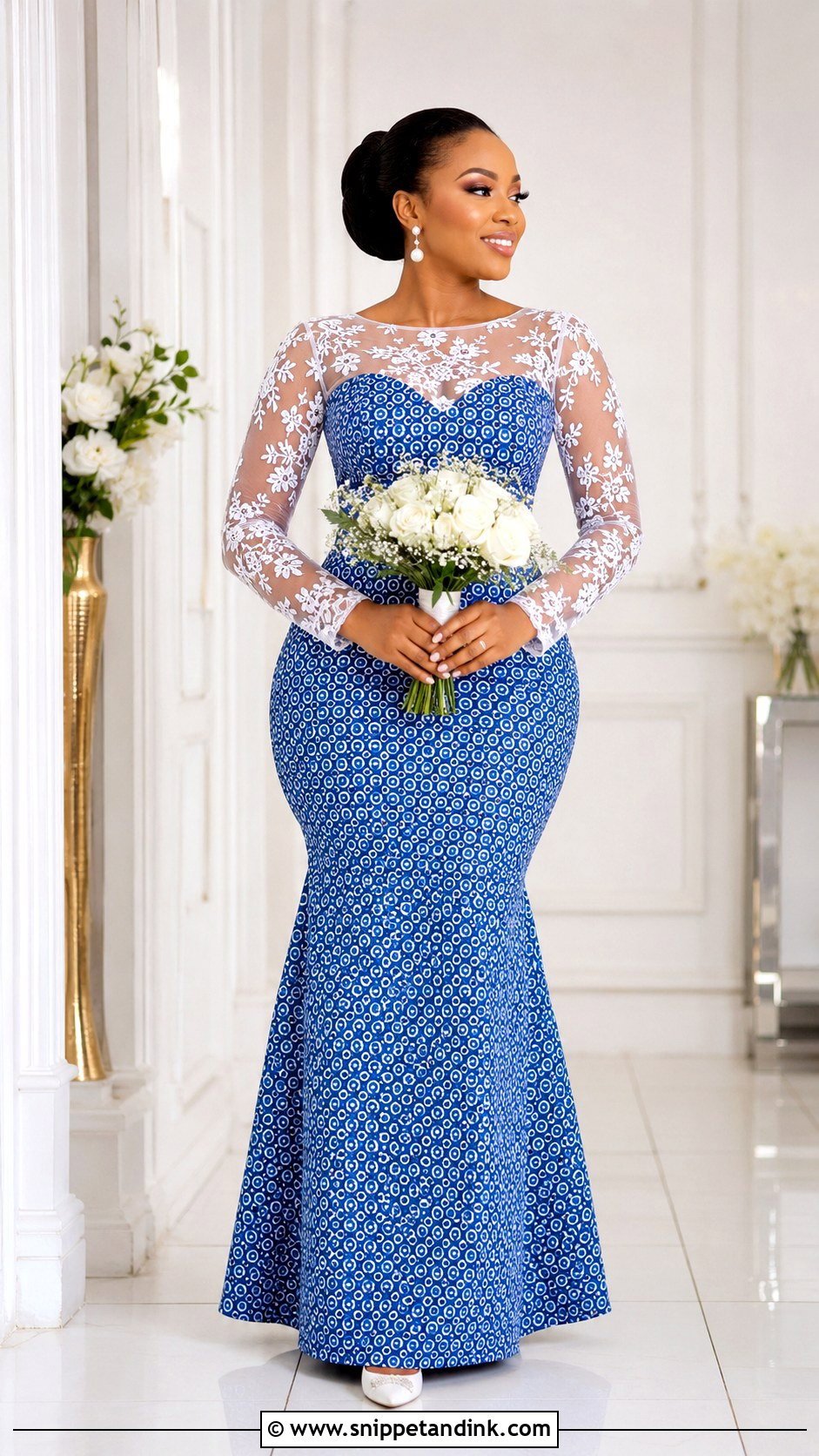
Lace sleeves give coverage without the heaviness of cotton on the arm, which is why I prefer them to Shweshwe sleeves for long ceremonies. They suit a fitted gown, an A-line or a mermaid shape. Match the lace to the white in the print, not to a guess; nude lace also works on darker colours. This is the version I recommend for cooler weather or a church service where shoulders should be covered.
8. Shweshwe Peplum Wedding Dress
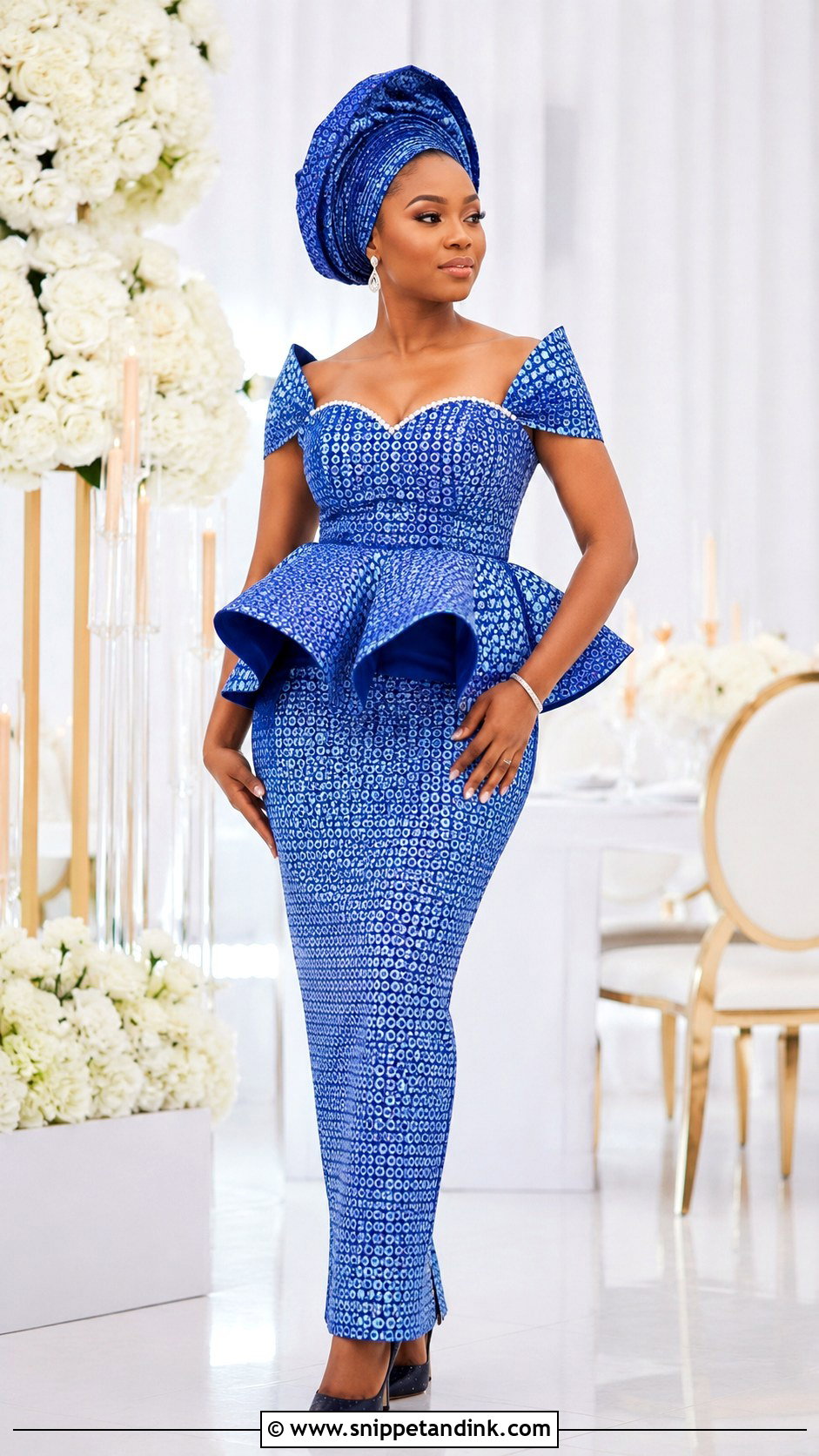
A Shweshwe peplum wedding dress works because the stiff cotton holds the flare without any extra interfacing. The peplum marks the waist and skims the hip, which suits most figures. I pair it with a pencil, flared or mermaid skirt, depending on how much the bride wants to move. Blue and white feel classic; red or mustard feel celebratory. Keep the jewellery small, since the peplum already does a lot.
9. Shweshwe Off Shoulder Wedding Dress
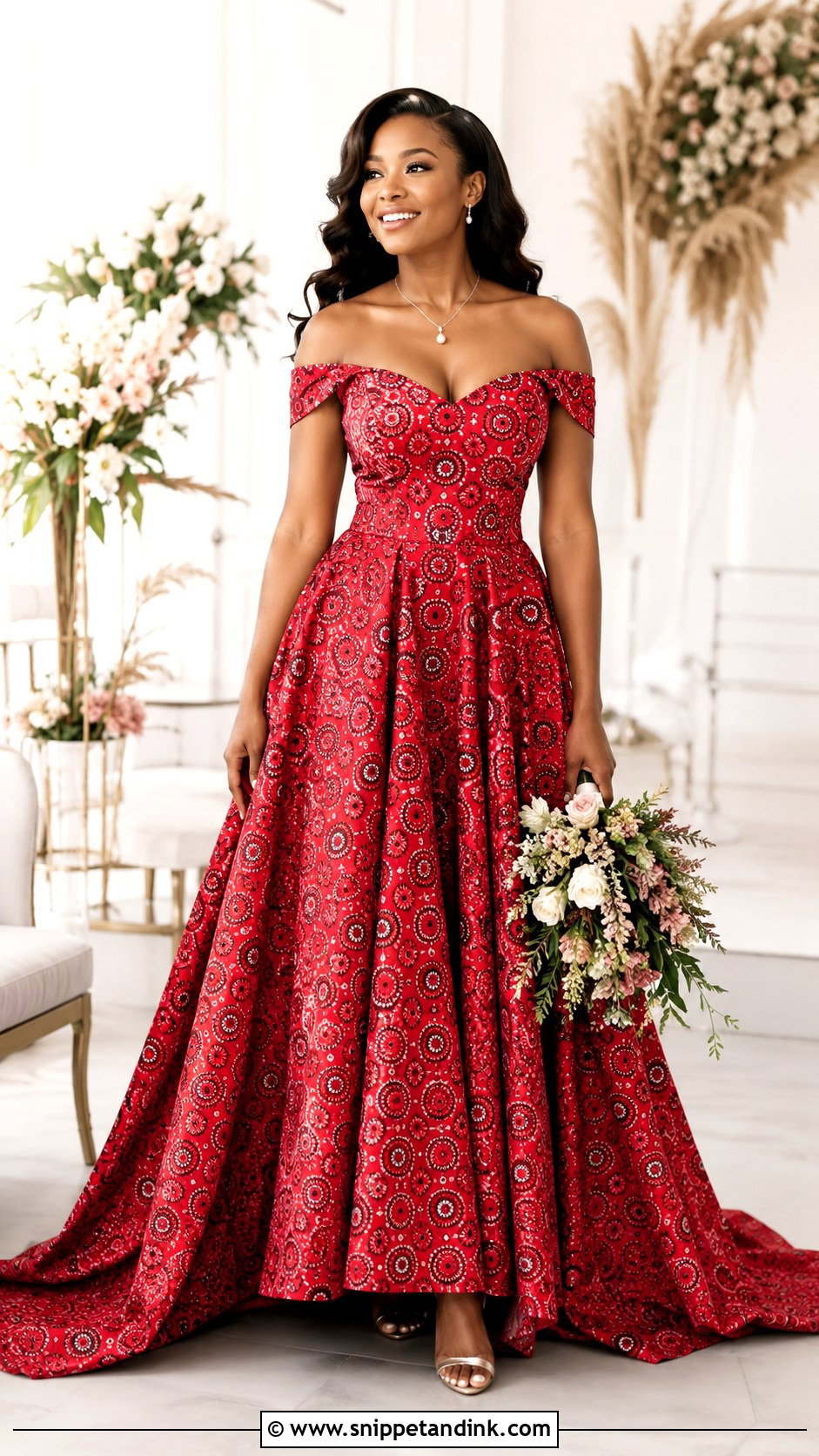
Off-shoulder necklines need structure to stay put, and Shweshwe can give it, provided the bodice has boning and a firm band inside. Without that the neckline creeps up every time the bride raises her arms to dance. Blue and white with a flared hem looks romantic; red, black or yellow stands out more. Bring a matching shawl or detachable cape for the church part of the day.
10. Shweshwe Long Sleeve Wedding Dress
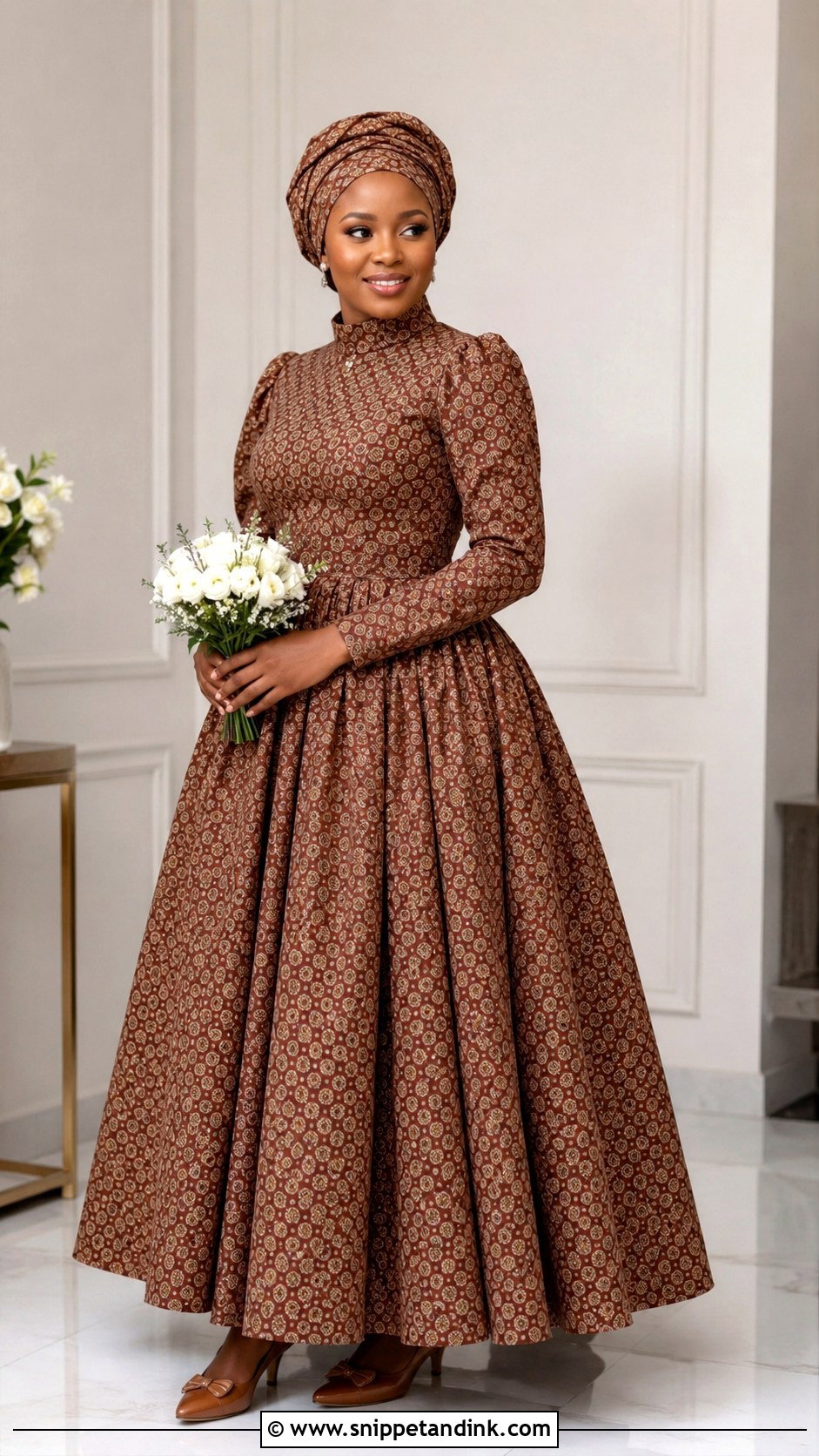
Long Shweshwe sleeves look refined, but cotton without stretch can restrict the arm. I ask the dressmaker to cut the sleeve with enough ease at the elbow for the bride to hug and lift a glass comfortably. Balance the detail: plain sleeves with a fuller skirt, or detailed sleeves with a simpler skirt. Low heels and a structured headwrap suit family ceremonies and cooler seasons.
11. Shweshwe High Low Wedding Dress
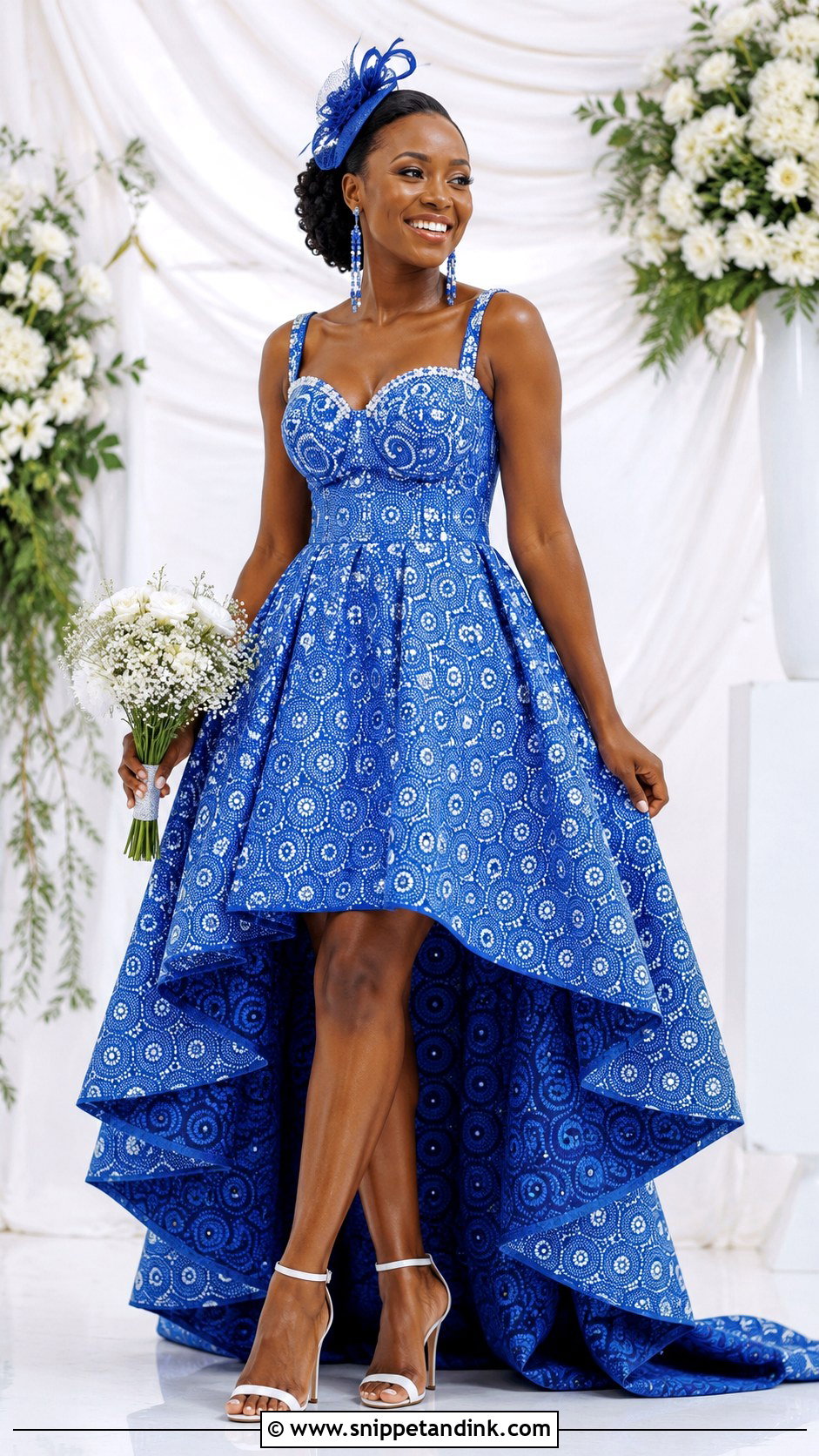
High-low hems show off the shoes, so shoes become part of the outfit plan. The front should land just above the ankle or mid-calf so the bride can dance freely, while the back keeps a bridal length. Strappy heels or ankle-strap sandals look best. The curved hem in cotton needs a narrow facing, otherwise it flips outward. Short sleeves feel playful; an off-shoulder neckline makes it more formal.
12. Shweshwe Wedding Dress With Train
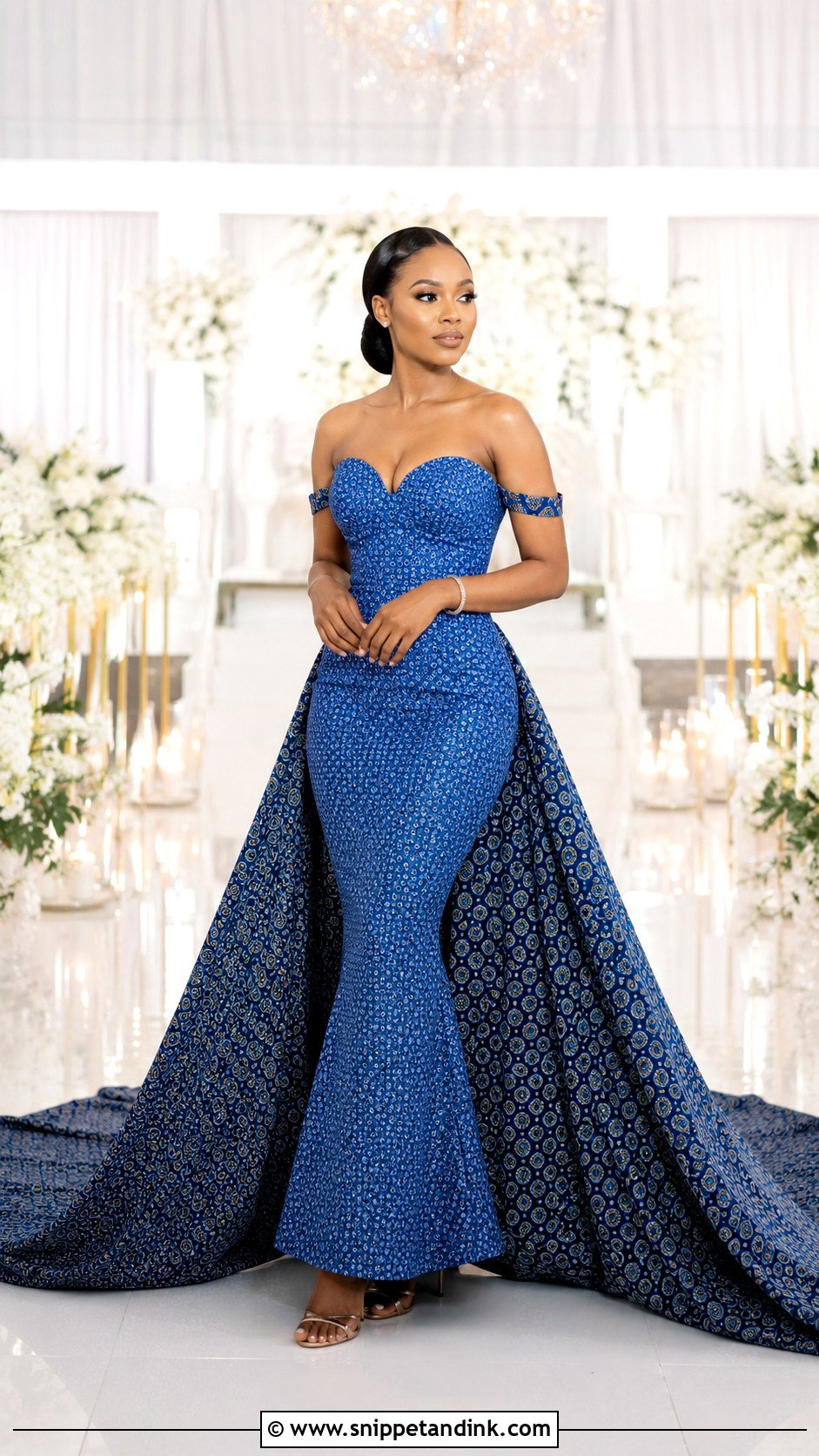
A train in Shweshwe makes a strong entrance, but a long printed train is heavy and picks up dirt quickly outdoors. I usually suggest a detachable train or a plain satin train with a printed border. Mermaid gowns with a long train look dramatic; an A-line with a shorter sweep is easier. Arrange a bustle or hook so the train can be lifted after the ceremony.
13. Shweshwe Two Piece Wedding Dress
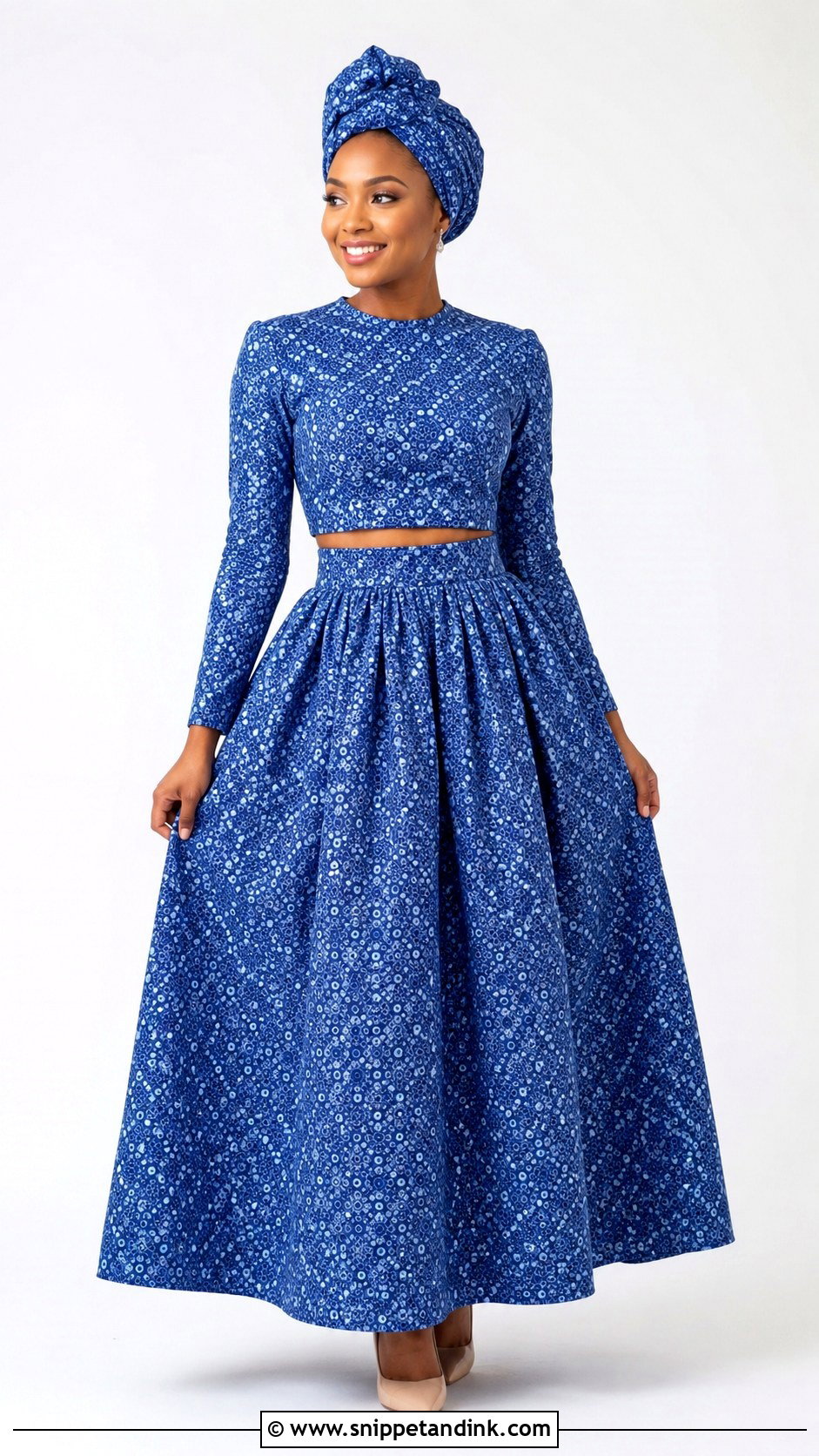
Two pieces are practical because you can wear the skirt or top again later. A cropped blouse with a high-waist skirt, a peplum top with a mermaid skirt or a structured top with a ball skirt all work. Ask for the waistband of the skirt to sit slightly over the top edge so no skin shows when you raise your arms. A white blouse with a printed skirt looks more bridal; a matching set reads more traditional.
14. Shweshwe Wrap Wedding Dress
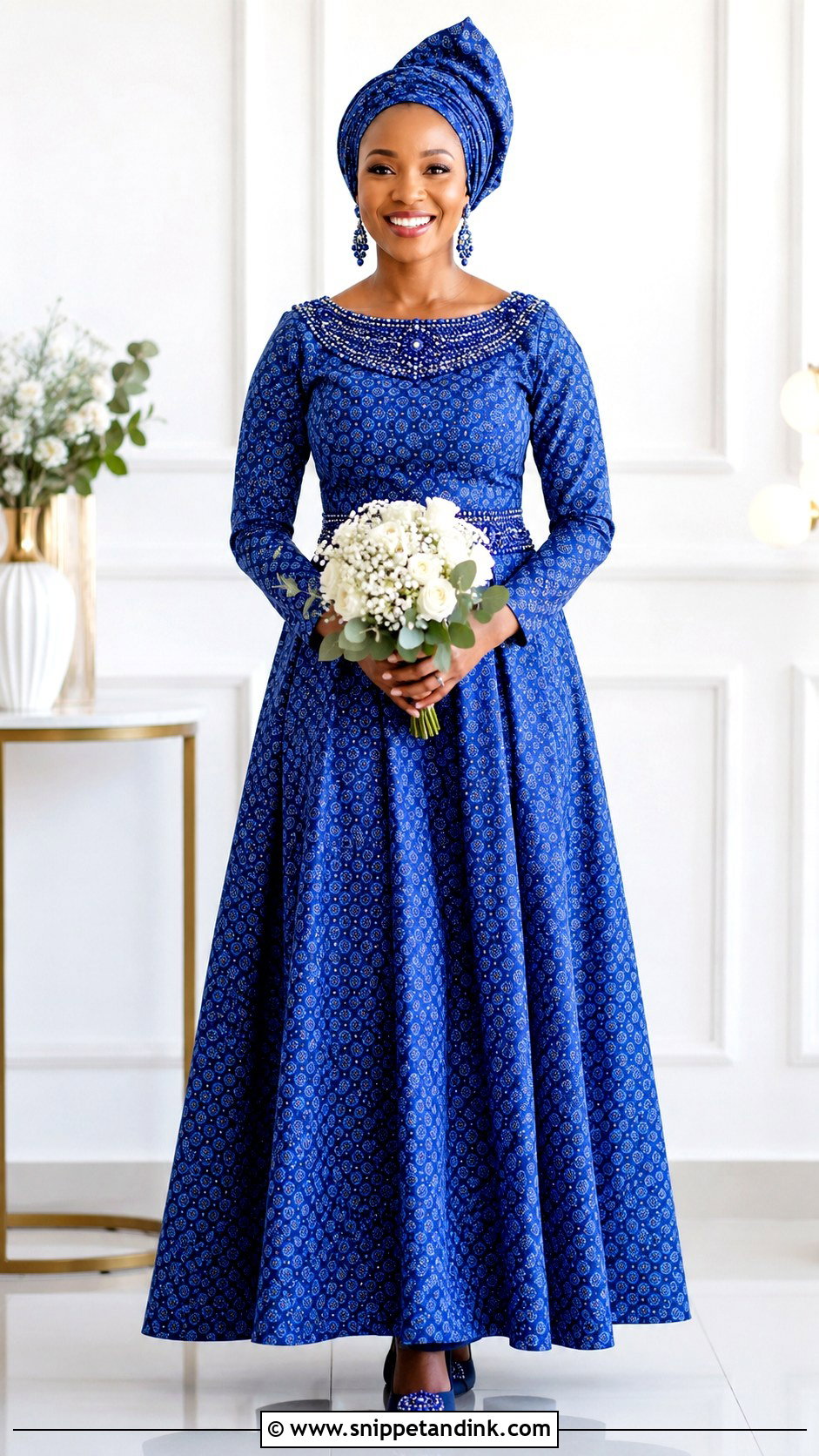
Wrap dresses let you adjust the fit during the day, which helps over a long celebration with a large meal. The V of a wrap top can open if the cotton is stiff, so I ask for a hidden hook at the crossover point. Midi, maxi and full-length versions all work. Beaded earrings, block heels and a matching headwrap complete the outfit without fuss.
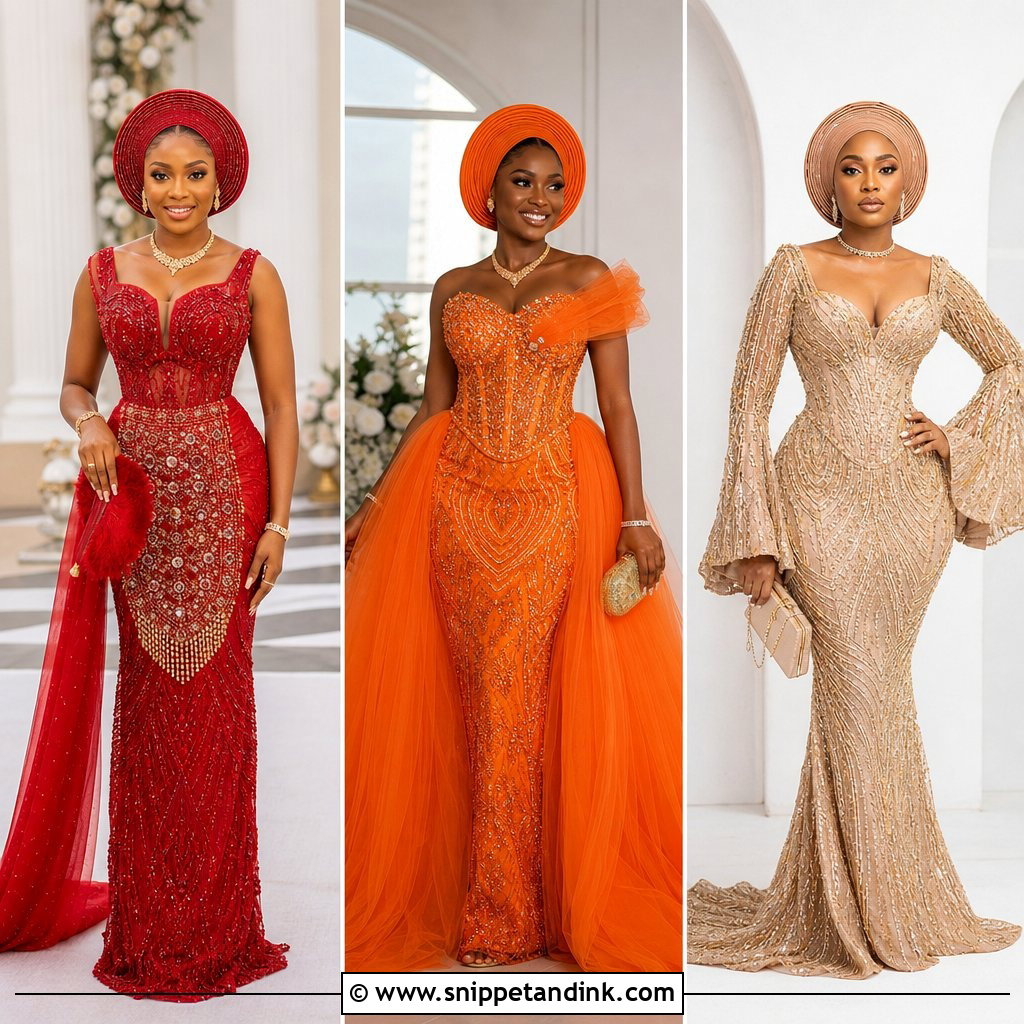

15. Shweshwe Corset Wedding Dress
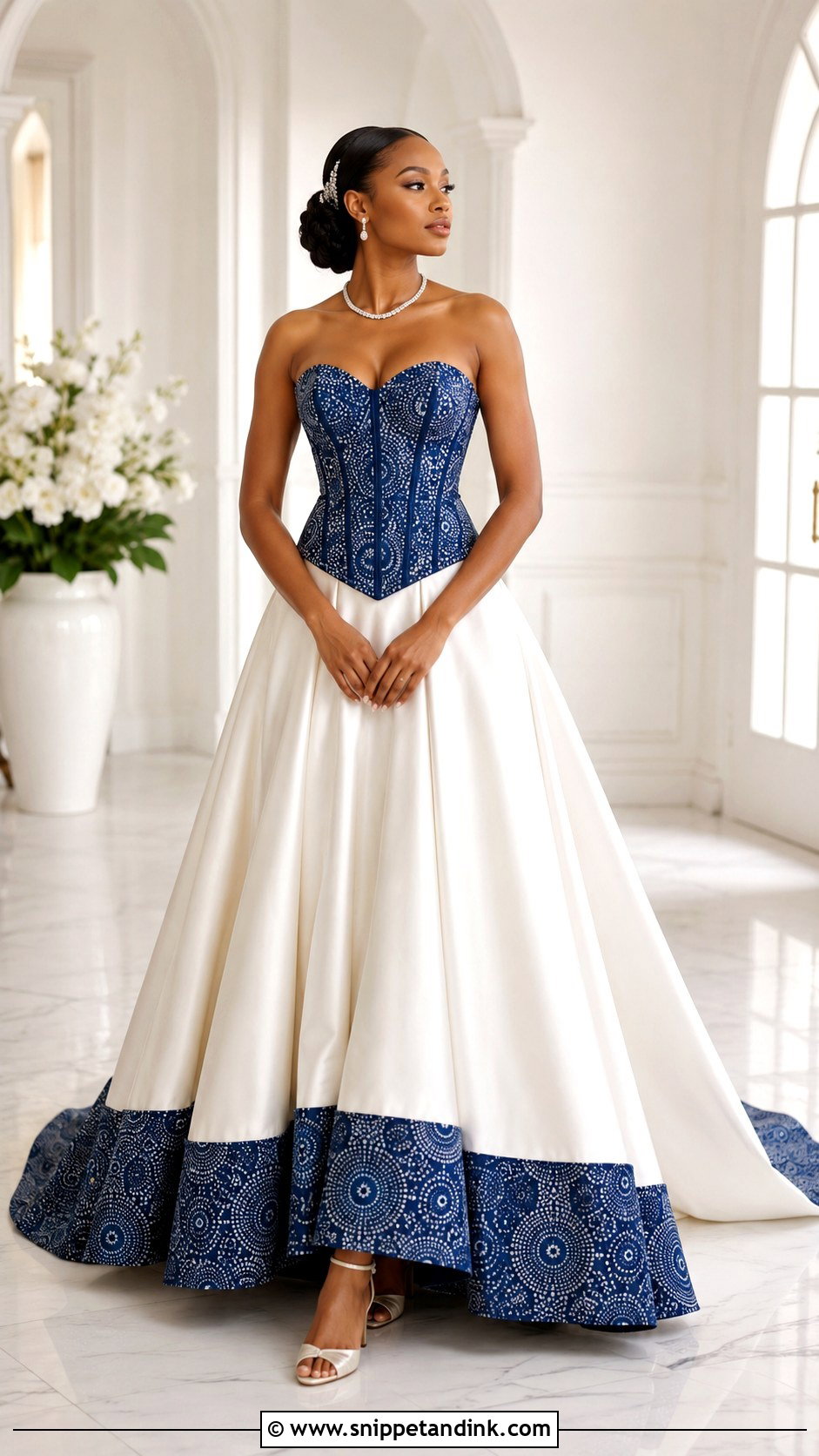
A corset bodice in Shweshwe holds its shape beautifully because the cotton does not stretch, but that same quality means the fit must be exact. I ask for at least two fittings and a lining with boning channels. A printed bodice over a plain satin or tulle skirt looks clean; a full printed gown reads more traditional. The bride should be able to sit and eat without the corset digging in.
16. Shweshwe A Line Wedding Dress
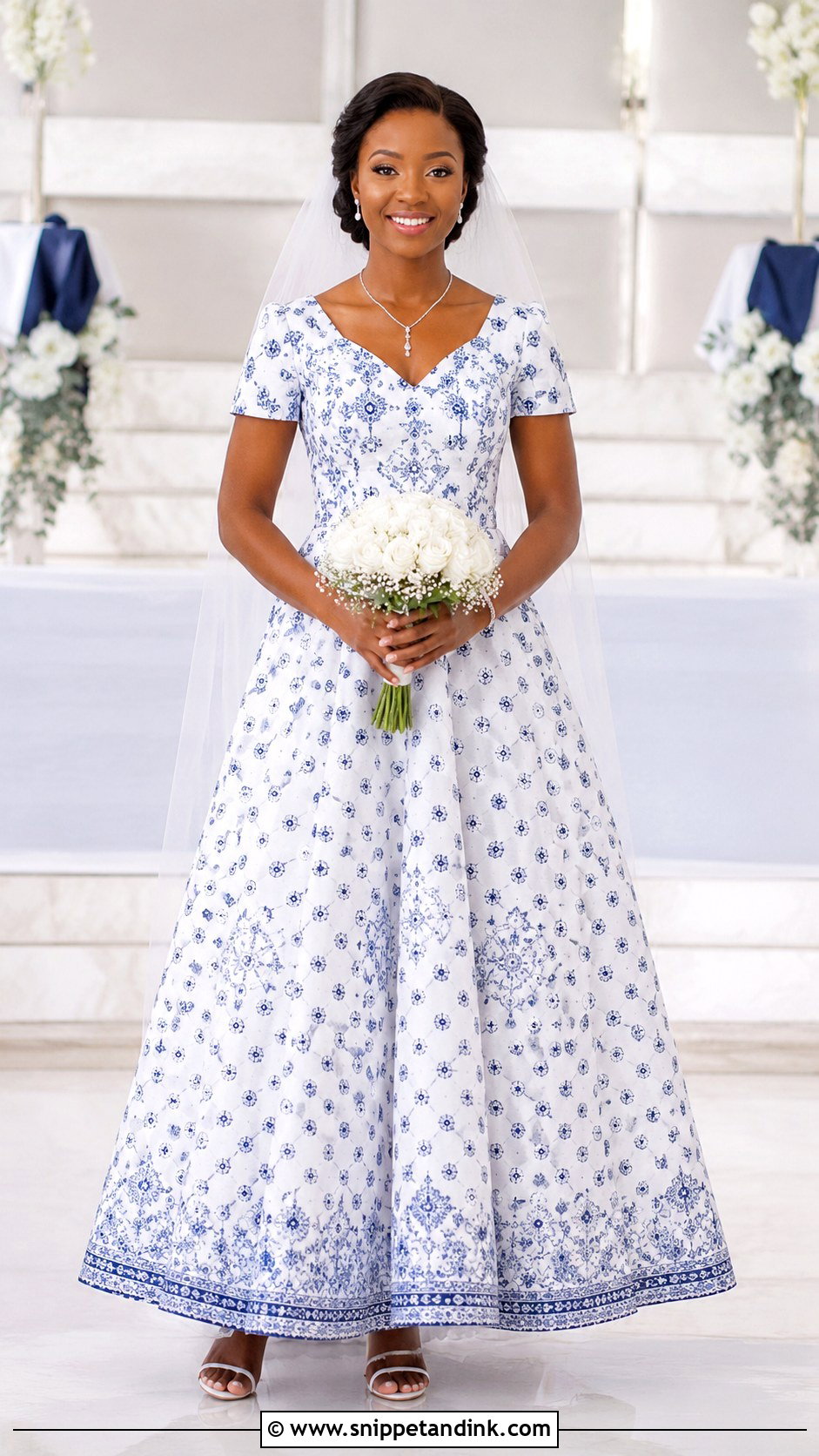
A-line is the shape I suggest when a bride is unsure, because it skims the hip and lets the print fall without seams cutting through the pattern. Short sleeves, long sleeves or an off-shoulder neckline all suit it. Blue and white feels classic; red or brown adds warmth. Add a soft veil and comfortable heels, and it works at almost any traditional ceremony.
17. Shweshwe Pencil Wedding Dress
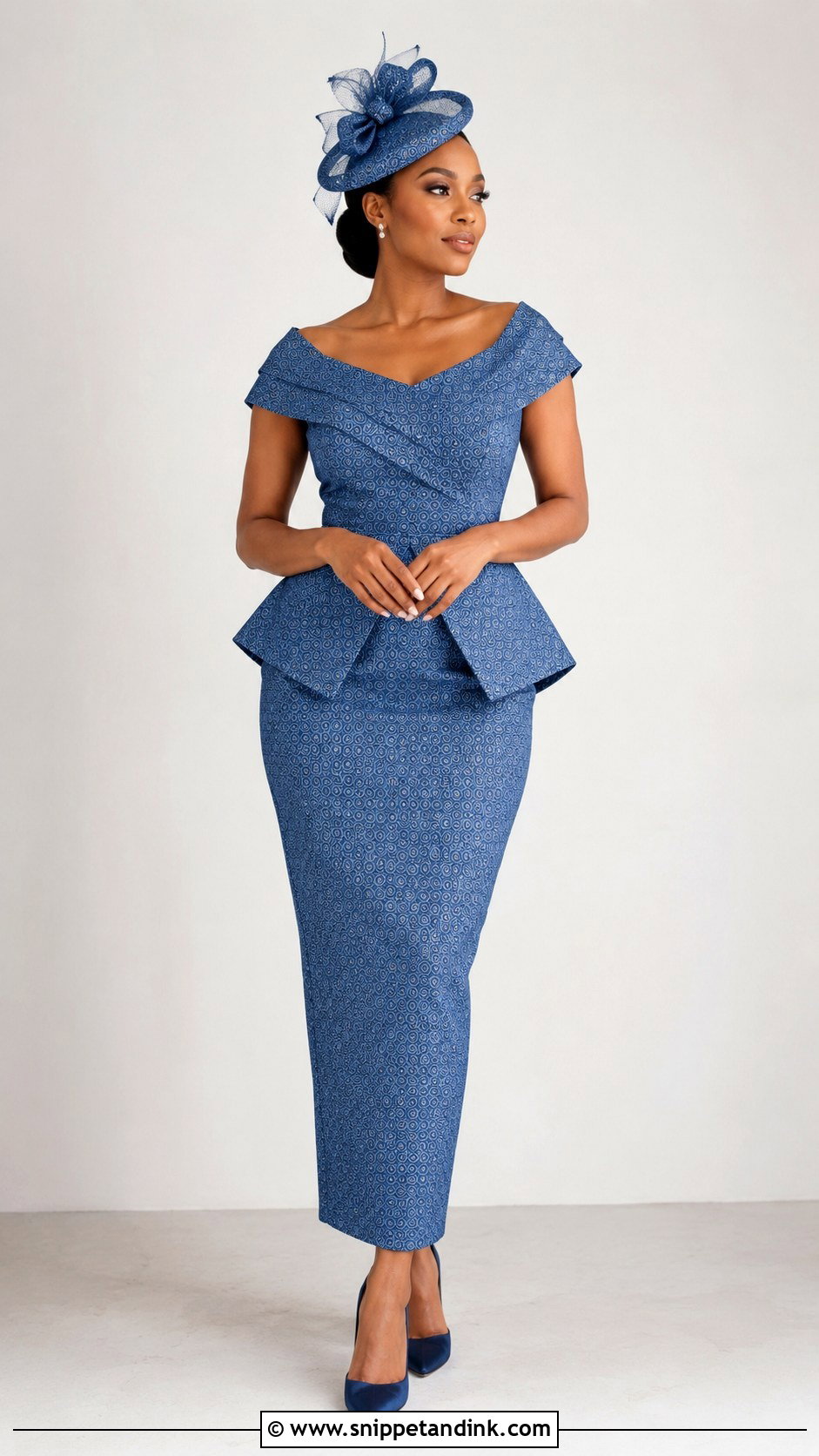
A pencil skirt in non-stretch cotton is the style most likely to restrict walking. I ask for a back vent or a kick pleat so the bride can climb steps and dance. Paired with a peplum top, lace sleeves or a structured off-shoulder bodice, it looks tailored. Pointed heels lengthen the line. This is my choice for civil ceremonies where a full skirt feels too much.
18. Shweshwe Pleated Wedding Dress
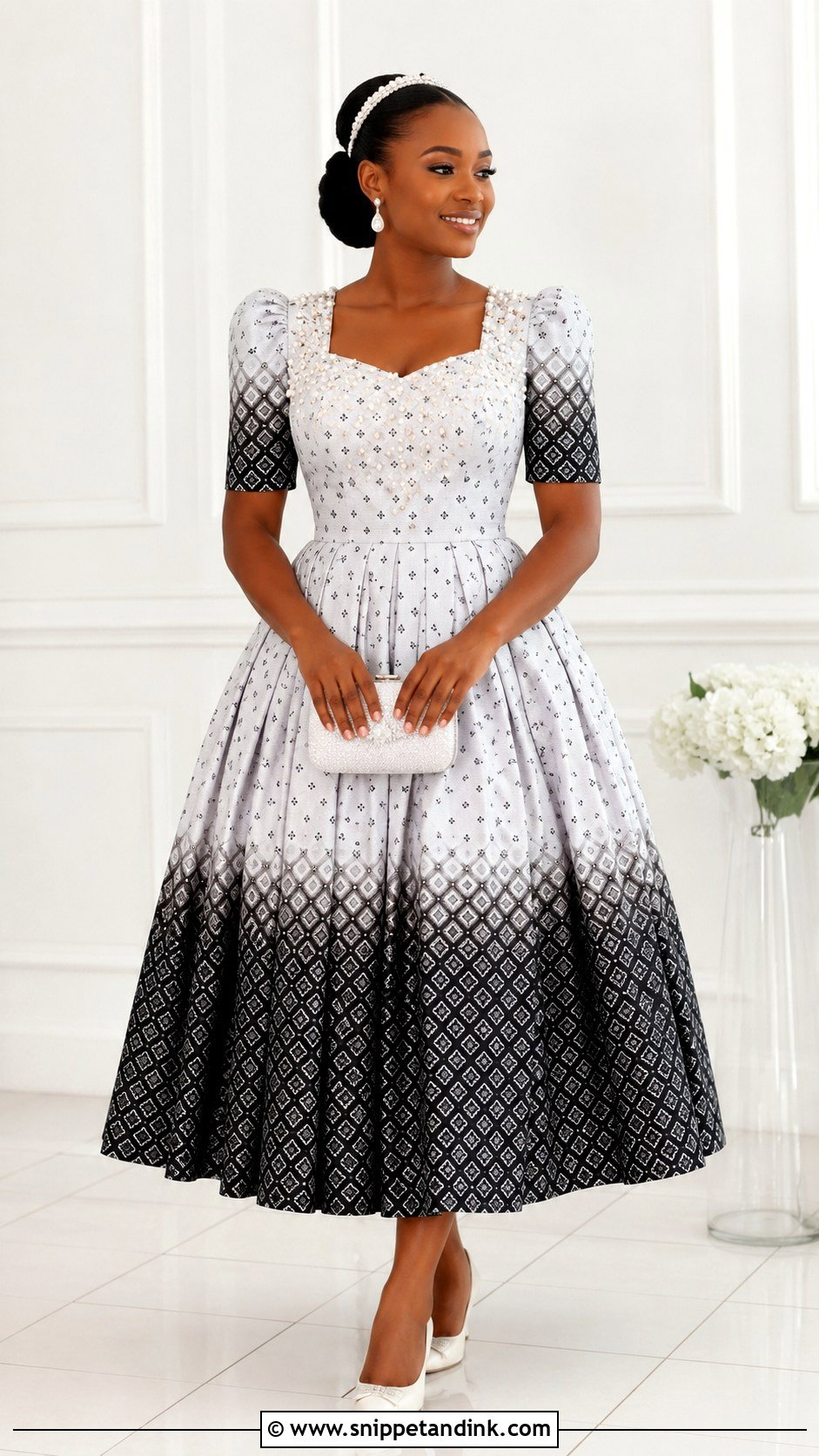
Pleats in Shweshwe hold crisply because the fabric is starched when new, and the motifs shift as the pleats open, which gives the skirt movement. The starch washes out over time, so pleats need pressing after cleaning. A pleated skirt suits a fitted bodice, lace top or wrap neckline. Low heels and pearl studs keep the outfit calm.
19. Shweshwe Cape Wedding Dress
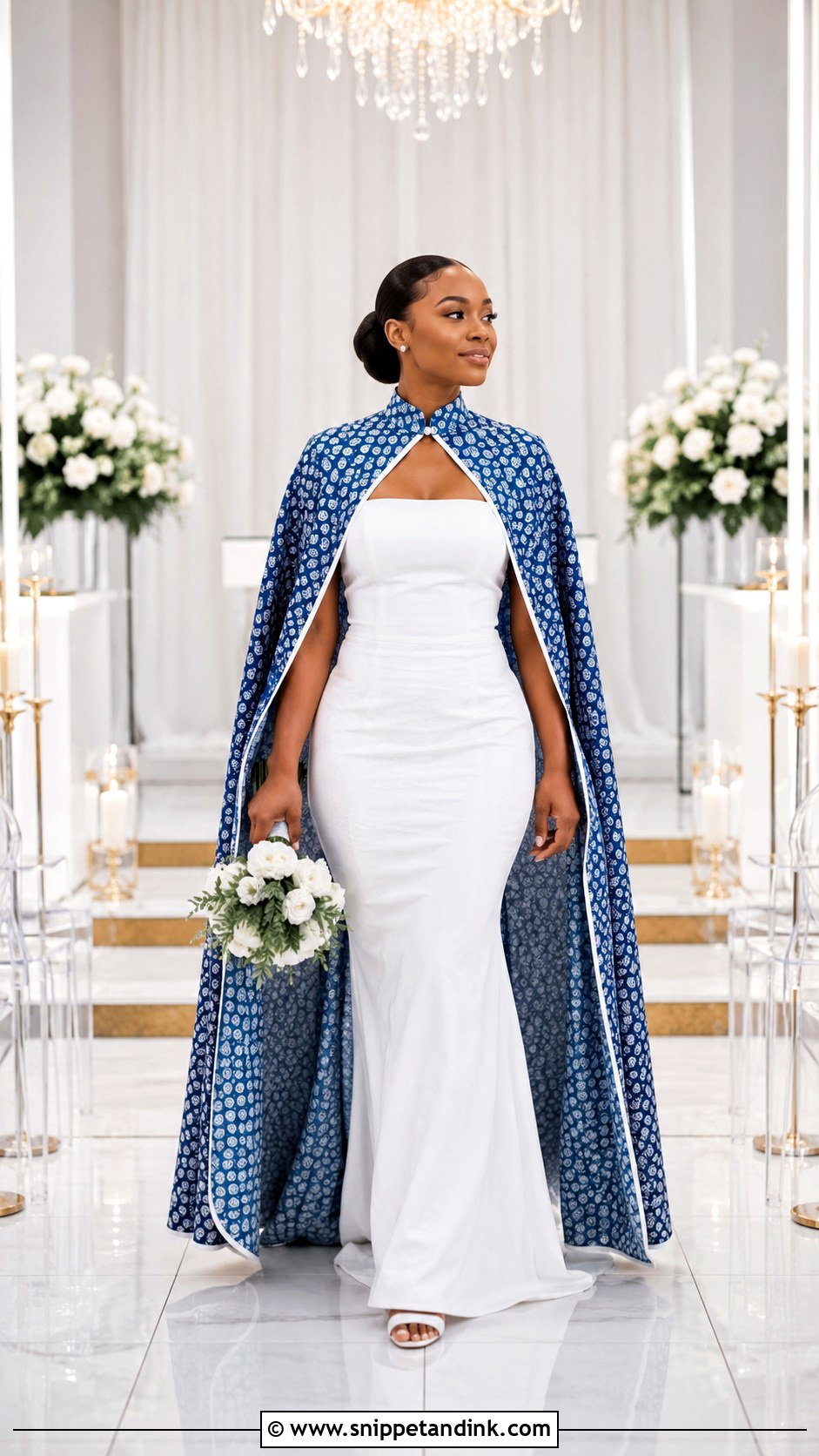
A cape adds drama without a heavy skirt, and it can be removed for the reception. I suggest attaching it at the shoulder seams with hooks or press studs rather than sewing it in. A white gown with a printed cape gives a clear cultural accent; a fitted printed gown with a plain cape looks more modern. Keep the jewellery simple so the cape stays the focus.

20. Shweshwe Wedding Dress With Beadwork
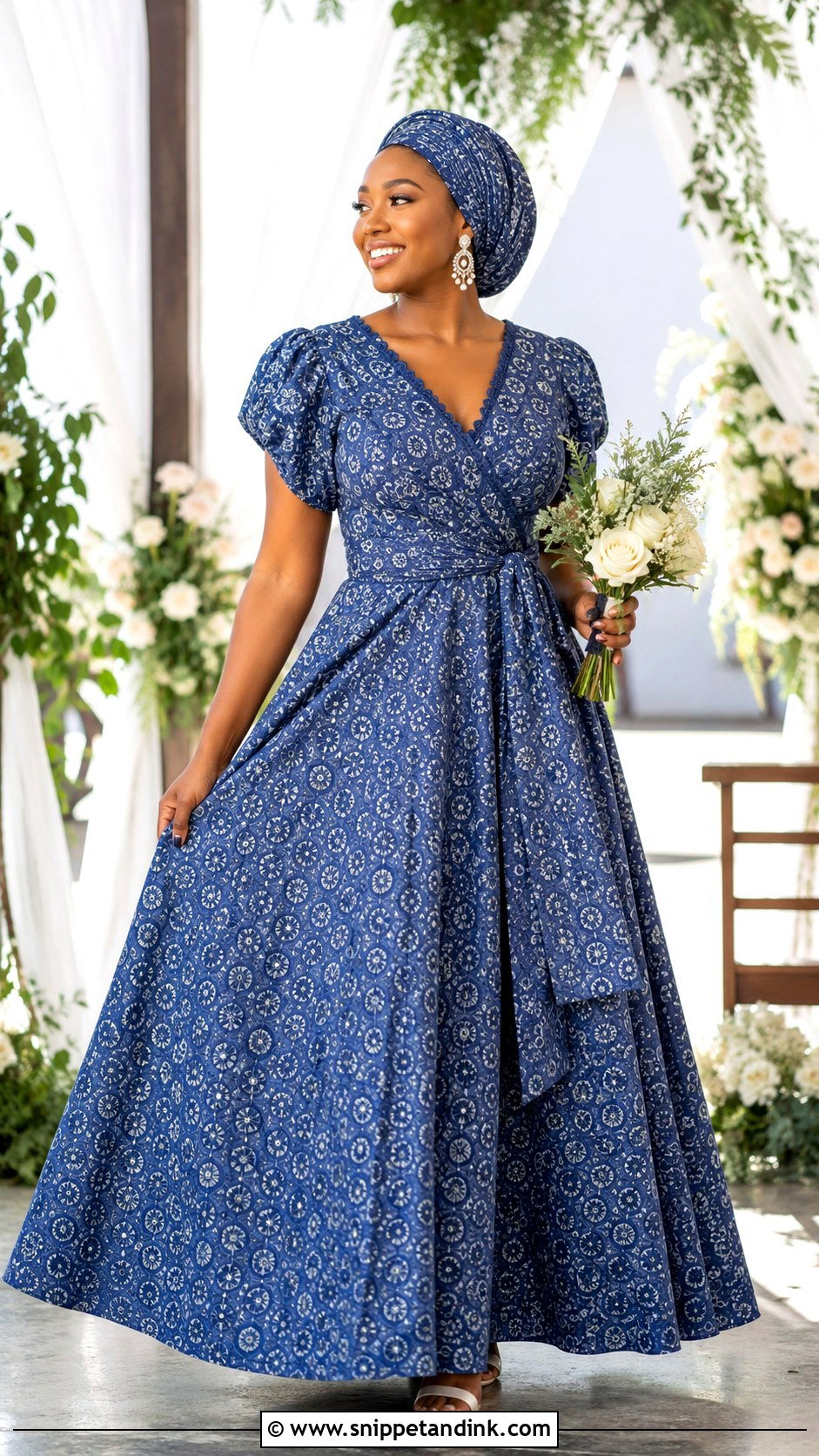
Beads should highlight the print rather than bury it. I keep beadwork to one area, the neckline, waist or hem, and match bead colours to the motifs in the fabric. Heavy beading on cotton can pull the fabric, so it needs a backing. Fitted or A-line shapes keep the embellishment visible. Simple shoes and minimal jewellery let it shine.
21. Shweshwe Wedding Dress With Satin Skirt
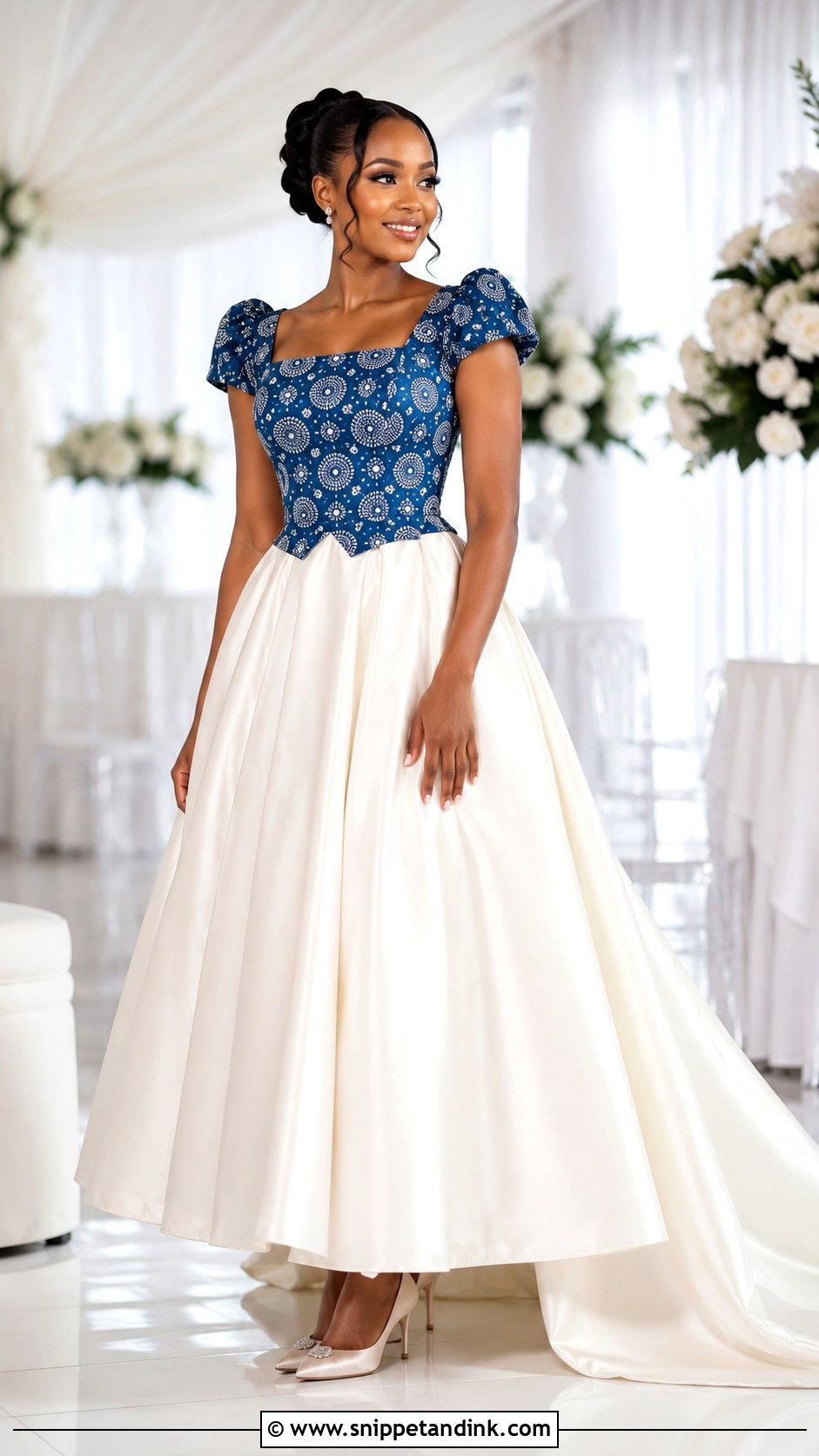
A Shweshwe bodice with a satin skirt gives a lighter, more formal result than a fully printed gown. White, ivory, champagne, navy or royal blue satin all pair well. Satin is heavier than it looks, and its weight can pull at the waist seam; I ask for a waist stay inside the bodice. Satin heels and a neat updo keep the outfit elegant.
22. Shweshwe Wedding Dress With Organza Sleeves
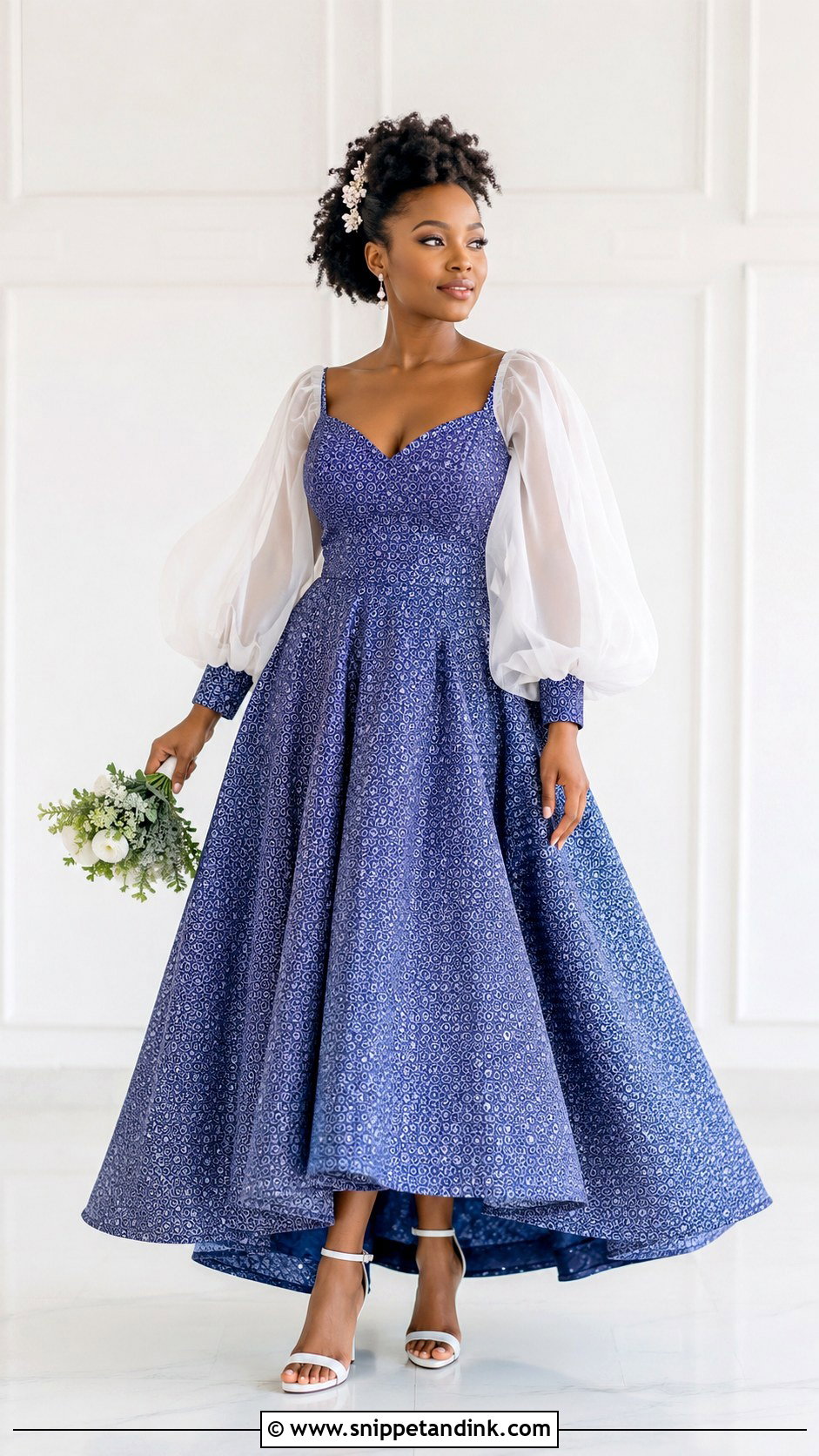
Organza sleeves add volume without weight, and the contrast between crisp sheer sleeves and matte printed cotton looks fresh. Puff, bishop or sheer long sleeves all work. Keep the sleeve colour simple, white, ivory or a matching shade. Organza creases sharply, so steam it carefully on the morning of the wedding. Delicate earrings and simple heels complete the look.
23. Yellow Shweshwe Wedding Dress
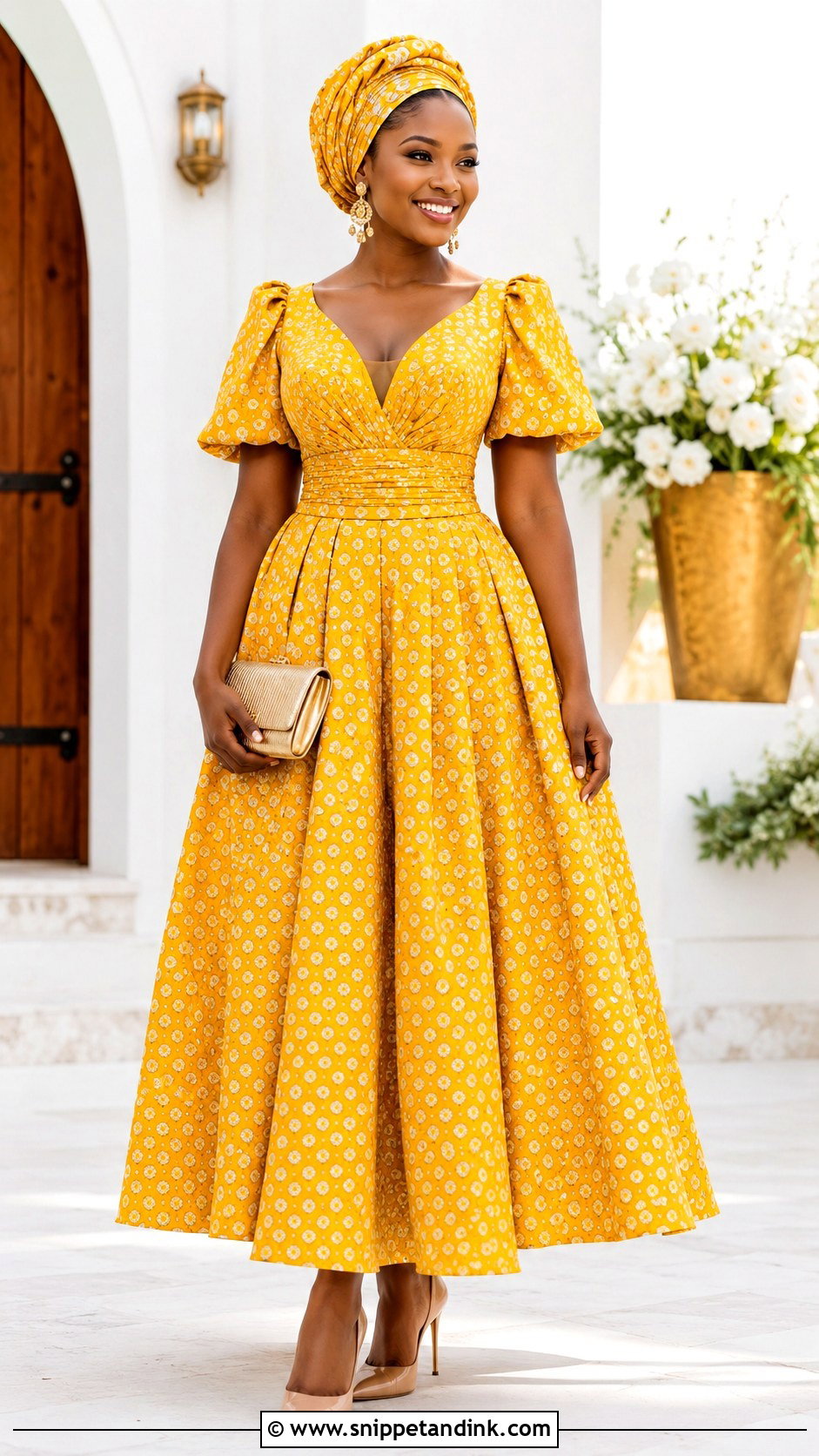
Yellow is the most joyful colour for an outdoor daytime ceremony, and it suits bright light rather than an evening hall. Pair it with white, gold, cream or brown accessories, and keep the details minimal since yellow already draws attention. A ball gown, A-line, peplum or two-piece all work. I check the shade against the bride’s skin in daylight because some yellows wash out deeper or paler complexions.
24. Green Shweshwe Wedding Dress
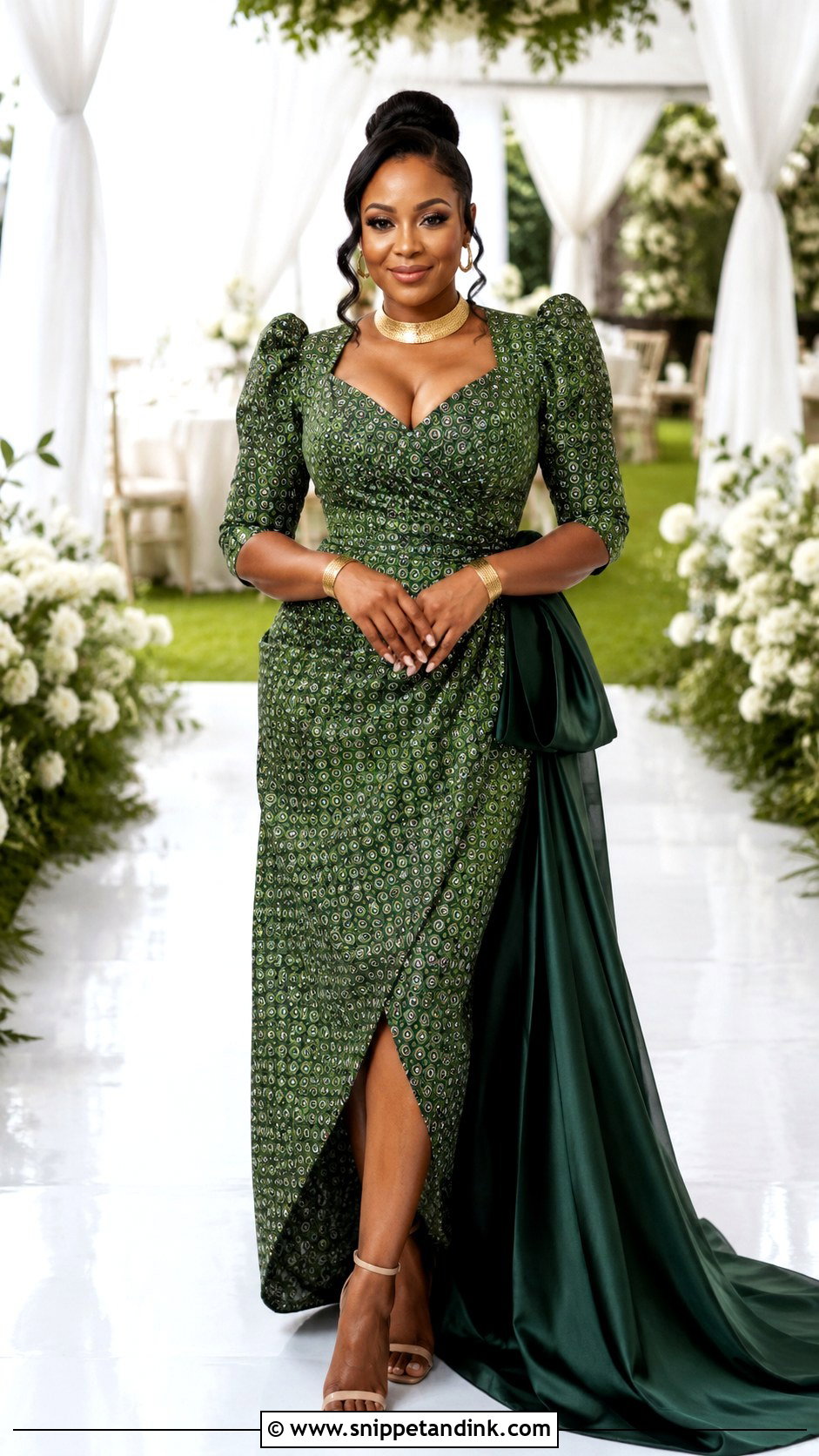
Green is less expected, and deep green reads rich and formal while lighter green feels softer. It looks well in long gowns, wrap dresses or structured A-lines. Gold jewellery and cream accessories suit it, and a green printed dress with a plain satin train looks elegant. If the groom wants to coordinate, a green pocket square or waistcoat in matching print ties the couple together.


25. Pink Shweshwe Wedding Dress
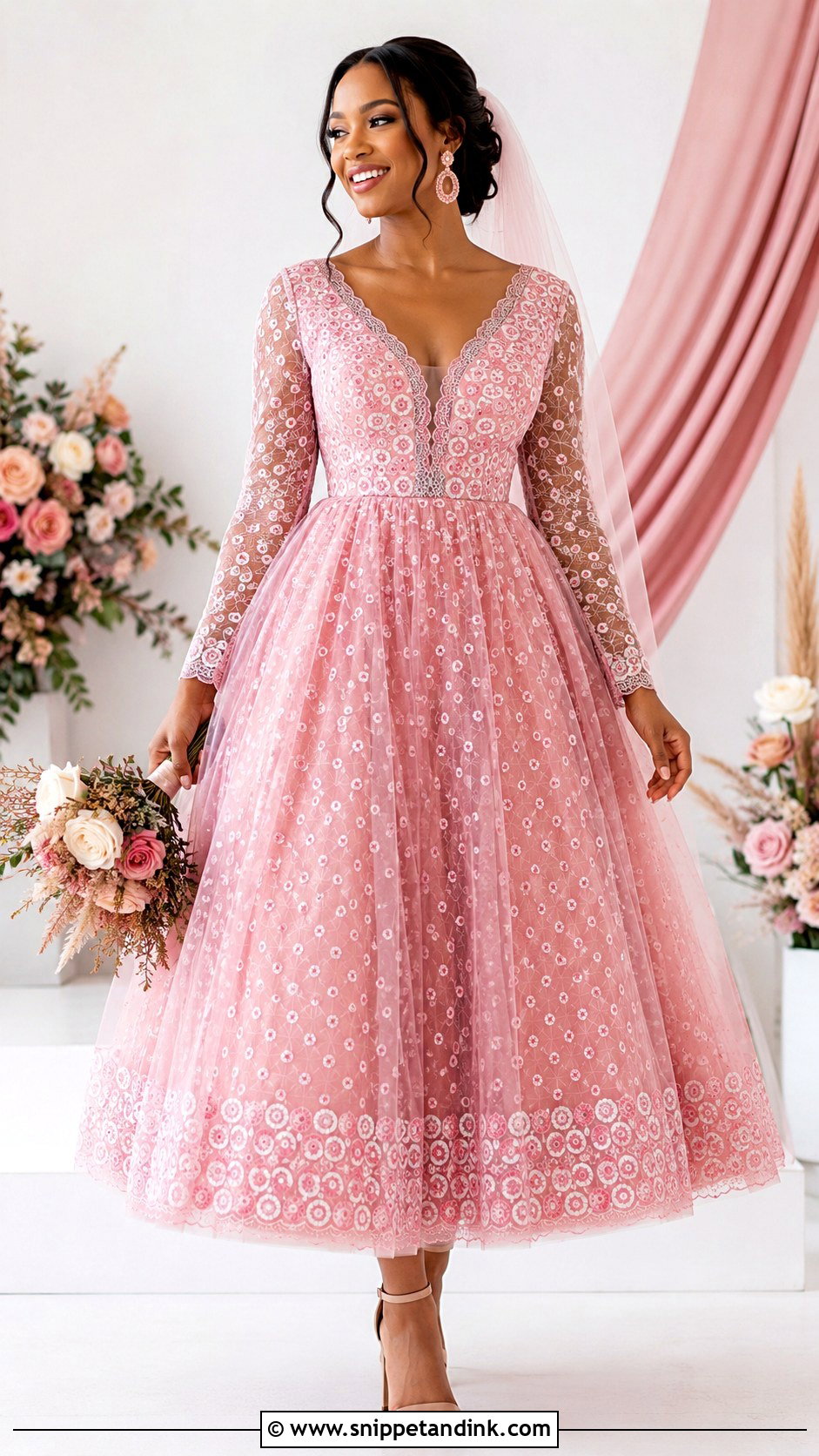
Pink Shweshwe ranges from soft blush to bright fuchsia. Blush pairs well with tulle skirts and lace sleeves; brighter pink suits a fitted peplum. Silver, pearl or rose-gold accessories work without competing with the print. A matching headwrap feels more traditional, while a short veil adds a bridal touch.
26. Shweshwe Wedding Dress With Detachable Skirt
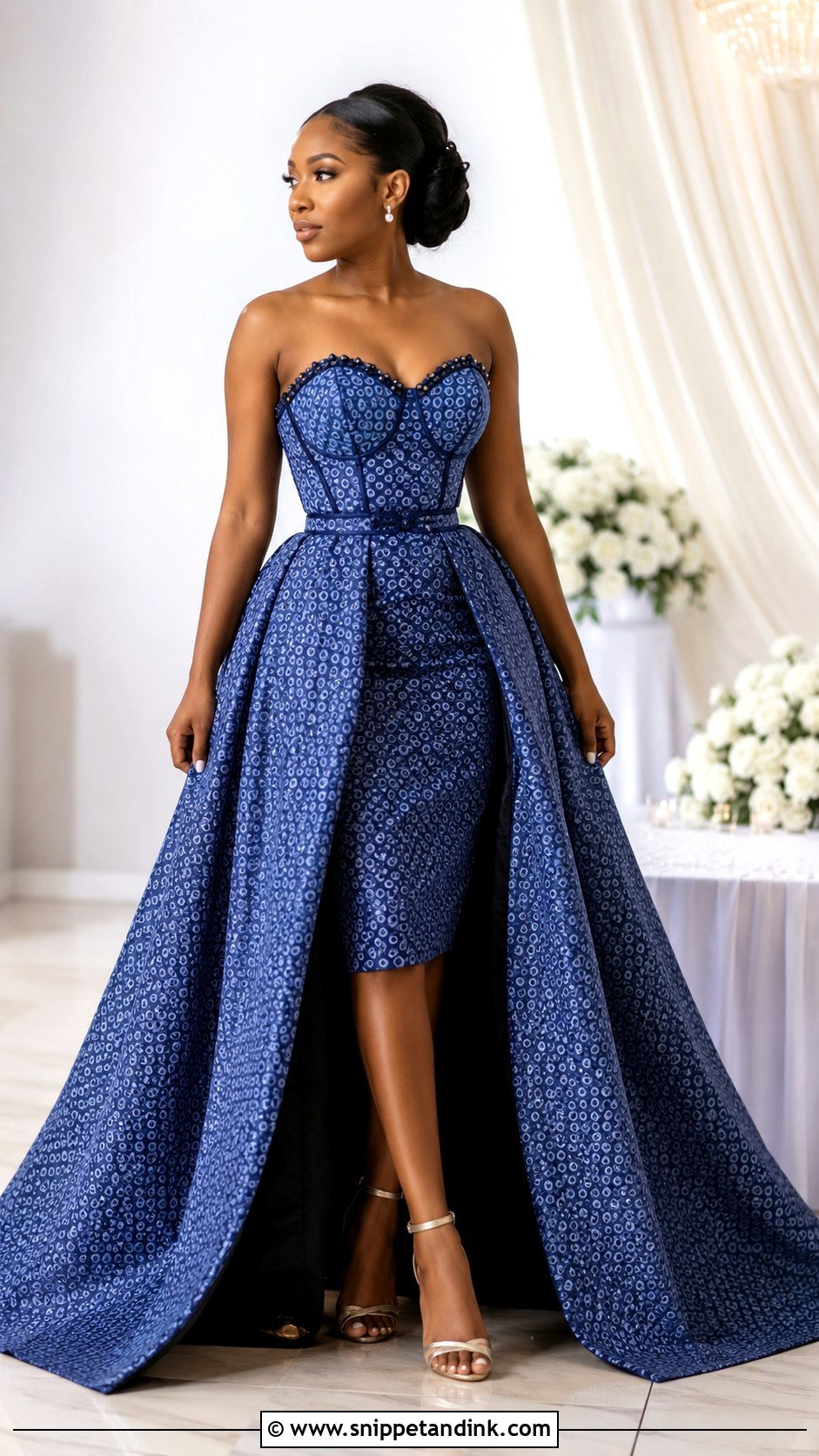
A detachable skirt gives two outfits in one: a full ceremony skirt or train, then a lighter reception dress. The base can be a pencil, mermaid or knee-length fitted dress. Use the print for the overskirt for strong cultural impact, or tulle with printed trim for a softer result. I ask for strong hooks and a hidden waistband so the overskirt does not slip in photos.
27. Shweshwe Wedding Dress With Matching Bridesmaids
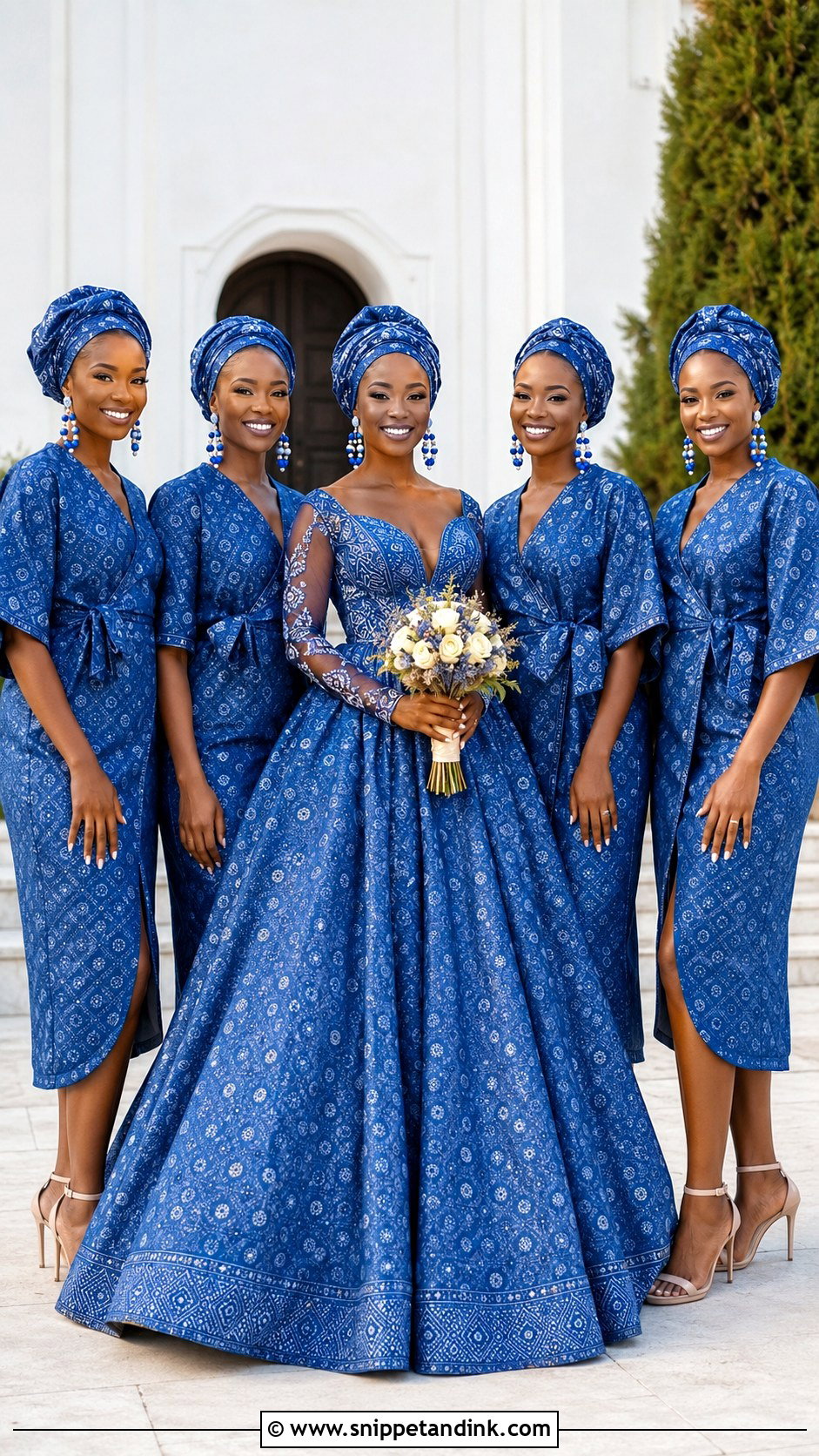
Matching bridesmaids in the same print or colour family looks well in group photos. The bride wears the more detailed gown, and bridesmaids wear simpler wrap or A-line dresses. Buy all the fabric at once from the same lot so the colours match exactly. Coordinated headwraps or beaded earrings connect everyone.
28. Shweshwe Wedding Dress For Plus Size Bride
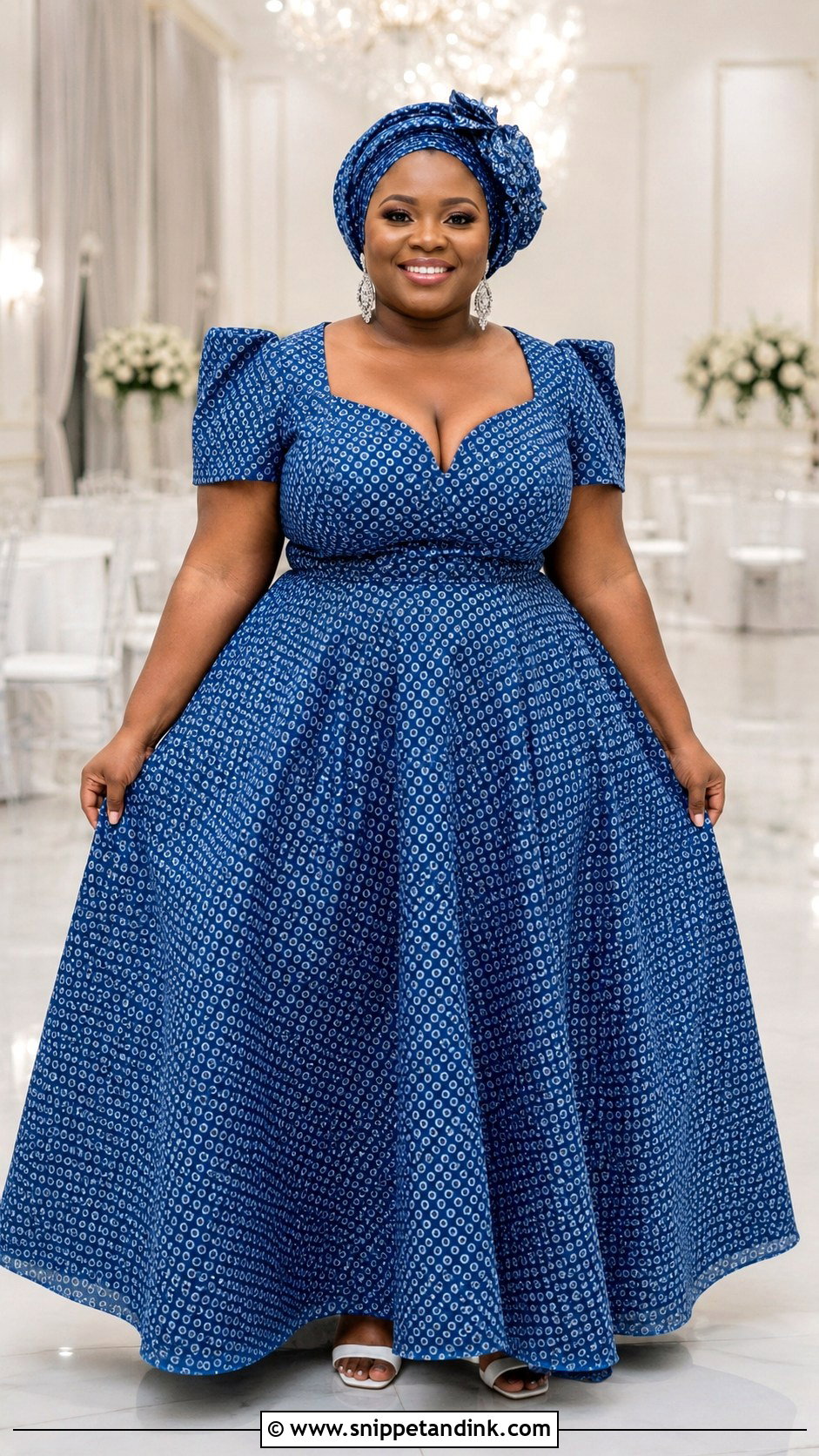
For a plus size bride the work is in support, not concealment. A-line gowns, wrap dresses, empire waists and peplum mermaid styles all suit, provided there is strong tailoring and a smooth lining. Vertical panels and a defined waist give shape. I avoid stiff designs that restrict movement, and I always check the bride can sit comfortably. A good plus size Shweshwe wedding dress lets her walk, dance and celebrate with confidence.
29. Simple Shweshwe Wedding Dress
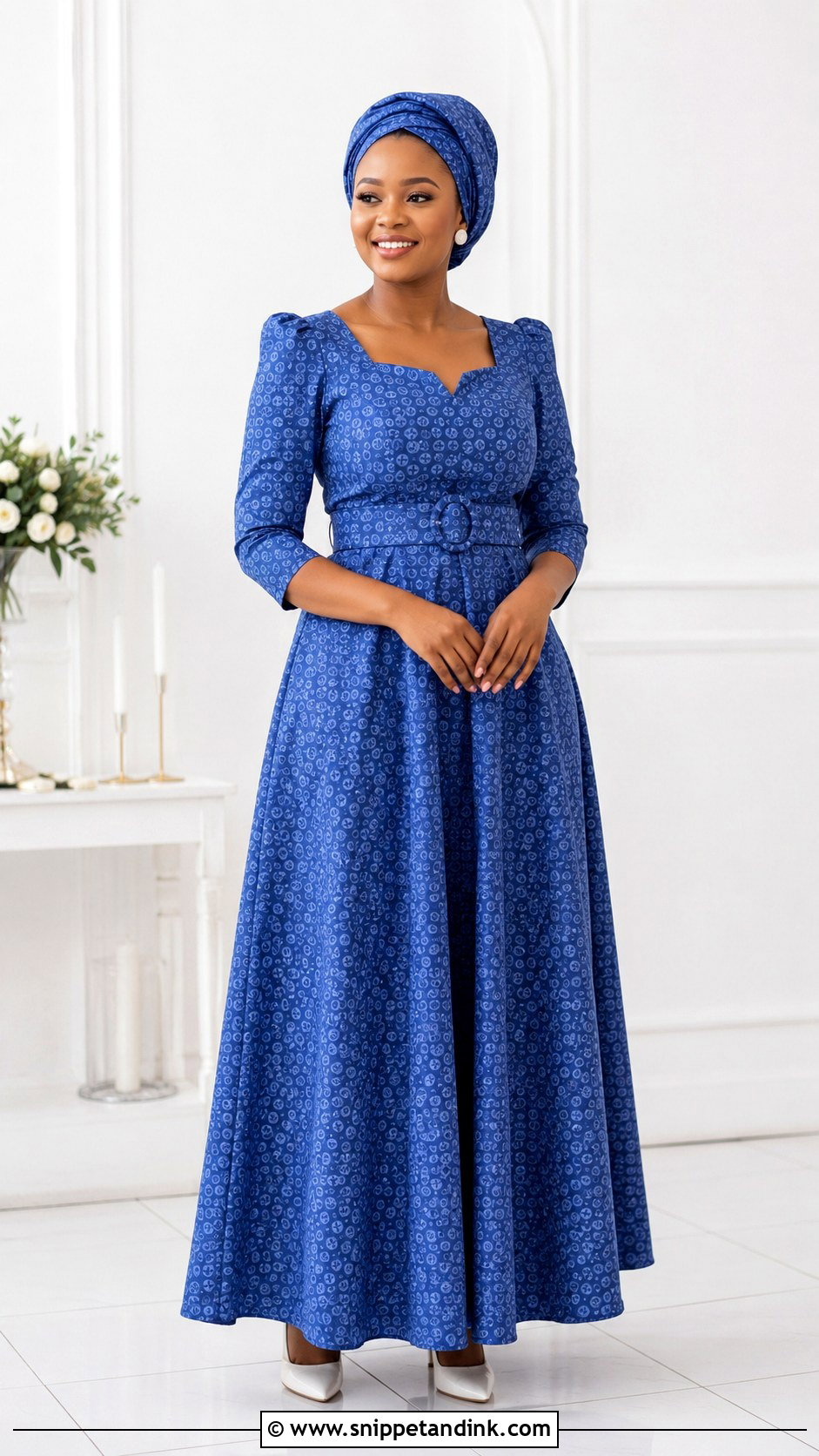
A simple dress lets the print speak. A straight maxi, A-line, wrap or modest long-sleeve design all look elegant when well tailored. Choose one main detail, a shaped neckline, waist belt or short train, and stop there. Stud earrings and classic heels keep it soft. It is also the version easiest to wear again for family occasions.
30. Modern Shweshwe Wedding Dress
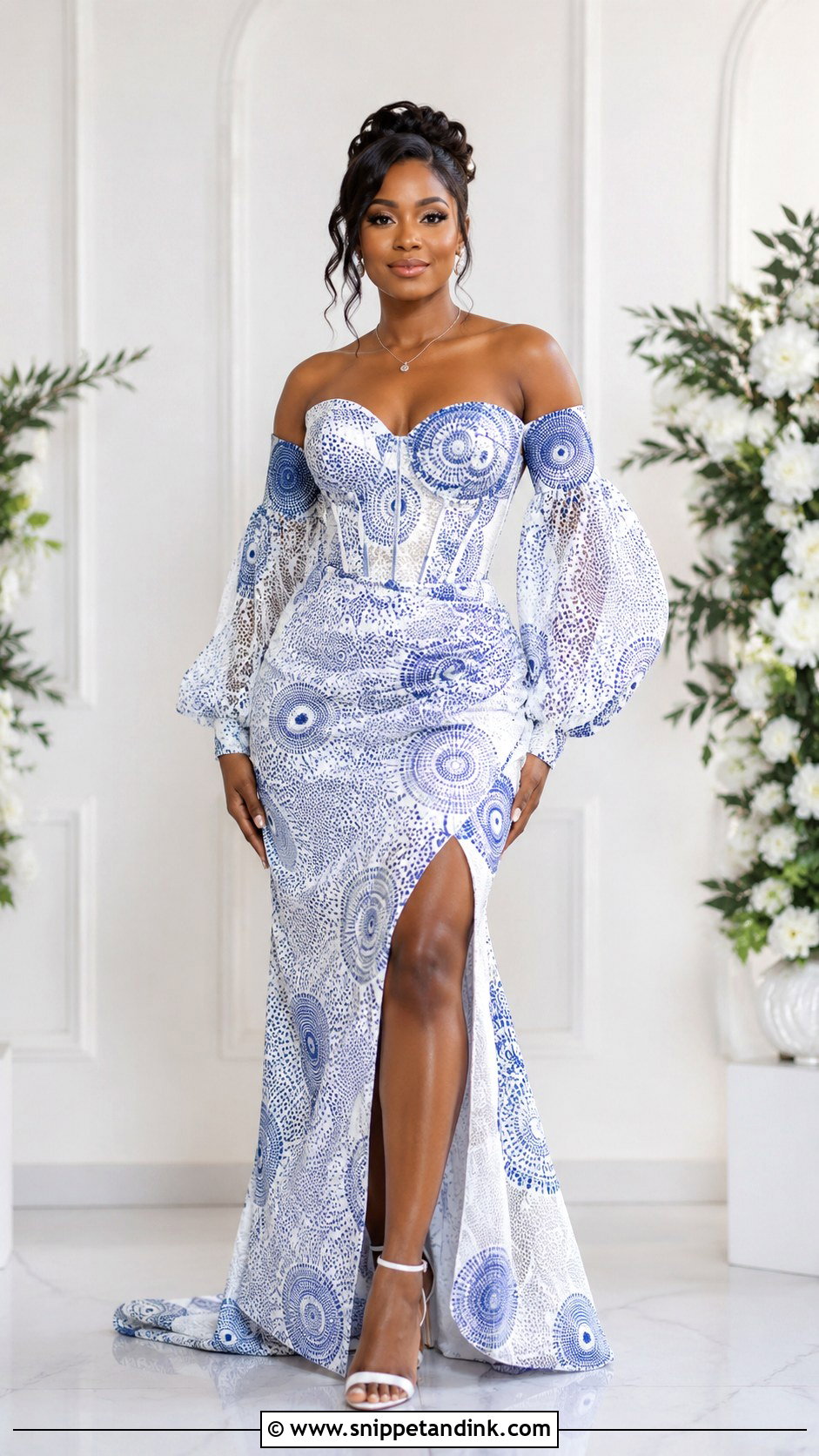
Modern Shweshwe dresses combine the print with sculpted bodices, clean necklines, detachable sleeves, asymmetrical hems and mixed fabrics. The key is choosing a silhouette that suits you rather than following a trend. Keep the hair and makeup polished and the jewellery simple, so the dress reads as current without losing its cultural meaning.
Pairing Printed Cotton With Satin, Tulle and Lace
Most of the dresses here mix Shweshwe with a bridal fabric, and the join between them is where I see problems. Cotton is heavier and stiffer than tulle or chiffon, so if they are stitched directly together, the lighter fabric puckers. I ask for both to be mounted on a common lining or for a narrow stay tape along the seam.
Colour needs the same care. The whites in Shweshwe are crisp, so ivory satin can look dull next to them. Hold every fabric against the print in daylight before you commit, and buy all the cotton from the same lot, since shades shift between batches.
Creases, Heat and a Long Day in Cotton
Cotton breathes, which is a real advantage in hot weather, but it creases where you sit. A lining reduces creasing, and a hand steamer in the bridal bag fixes it quickly between the ceremony and photos. Avoid hot irons on beadwork or organza.
After the wedding, have the dress cleaned before storing it. Store it folded in acid-free tissue in a cotton bag, away from light, and refold it every few months so the creases do not set permanently.
Let the Print Lead and Tailor Everything Else
Shweshwe works across many silhouettes, colours and body types, which is why it remains a strong bridal choice. Whatever shape you pick, the success of the dress depends on good tailoring, comfortable movement and balanced accessories. Start with the ceremony, then the colour, and give your dressmaker time for a toile and at least two fittings.
You'll Like These Ideas:




Leave a Reply