
Cottage dresses are made for places with grass underfoot and weather overhead, and that changes how I style them. Flowing skirts, vintage-inspired lace, floral embroidery, puff sleeves and softly structured bodices all belong to cottagecore bridal fashion, with its nostalgic, outdoorsy mood. But a dress for a meadow also has to survive walking across lawns, posing beside hedges and perching on a hay bale. So I look at the hem and the fabric before the lace. The 25 dresses below run from light cotton to botanical lace, and for each one I’ve added the shoes, hair and practical checks I’d give a bride heading outdoors.
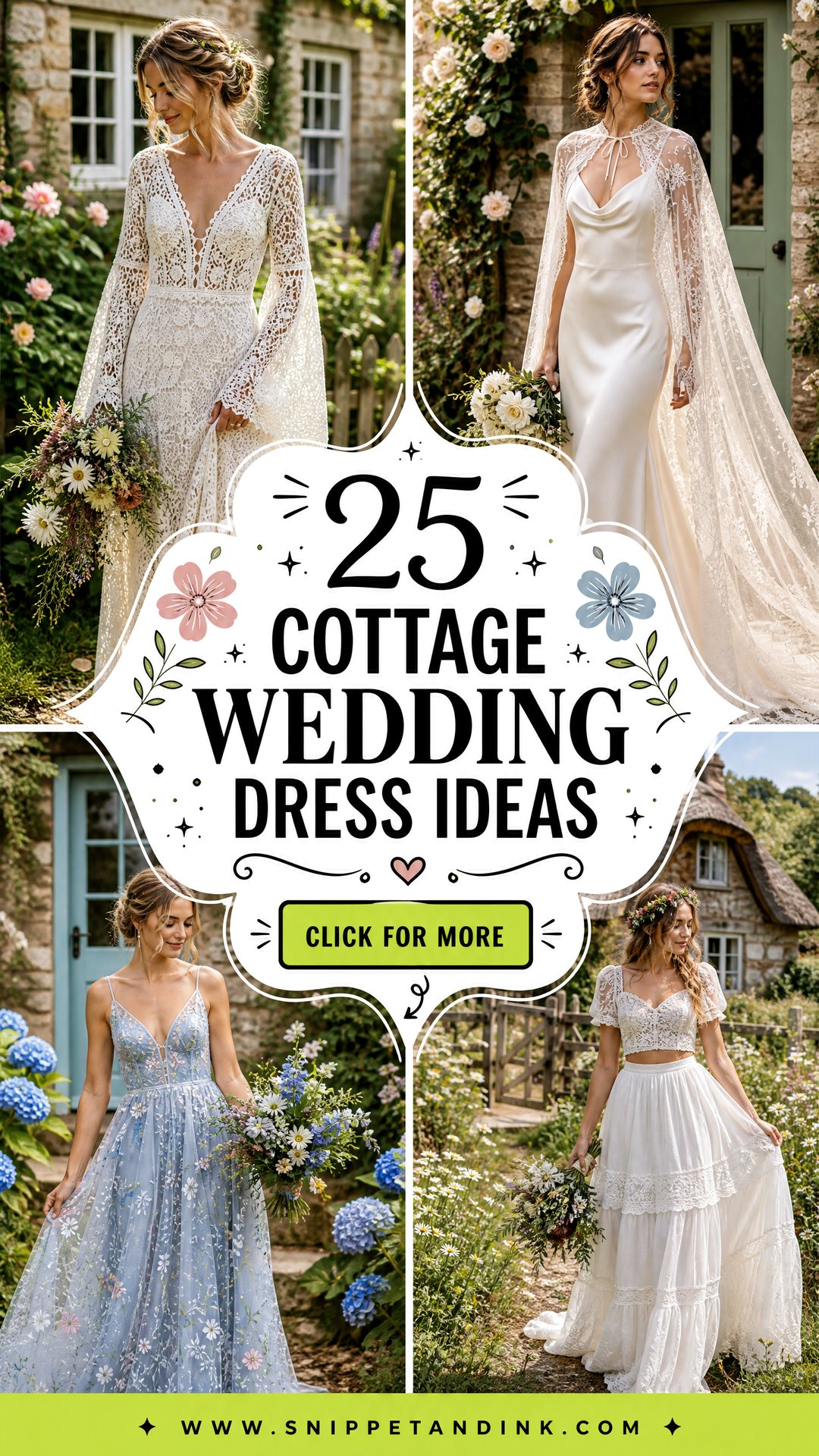
Lawn, Gravel and Mud All Change the Hem You Need
Most cottage weddings happen outdoors, and the ground is what brides forget about in the shop. A floor-length hem that just kisses a polished boutique floor will pick up grass, soil and wet clippings within minutes on a lawn.
How I set the hem for an outdoor ceremony
- Hem it while wearing your wedding shoes on a flat floor. For grass, I like the front to clear the ground by about half an inch so you can walk without kicking the skirt.
- Keep any train to a short sweep if you’ll cross fields or gravel between the ceremony and the reception.
- Slim heels sink into soft lawns. Block heels, flats or clear heel protectors that slip over stilettos stop you aerating the grass with every step.
- Ask for a bustle even on a light dress. Lifting the back off the ground for the reception keeps the hem cleaner for far longer.
Fibre matters as well. Cotton, linen and silk breathe in a hot marquee. Polyester chiffon looks much the same in photos but holds heat against your skin, so check the label if you tend to run warm.
1. Floral Embroidered Cottage Wedding Dress
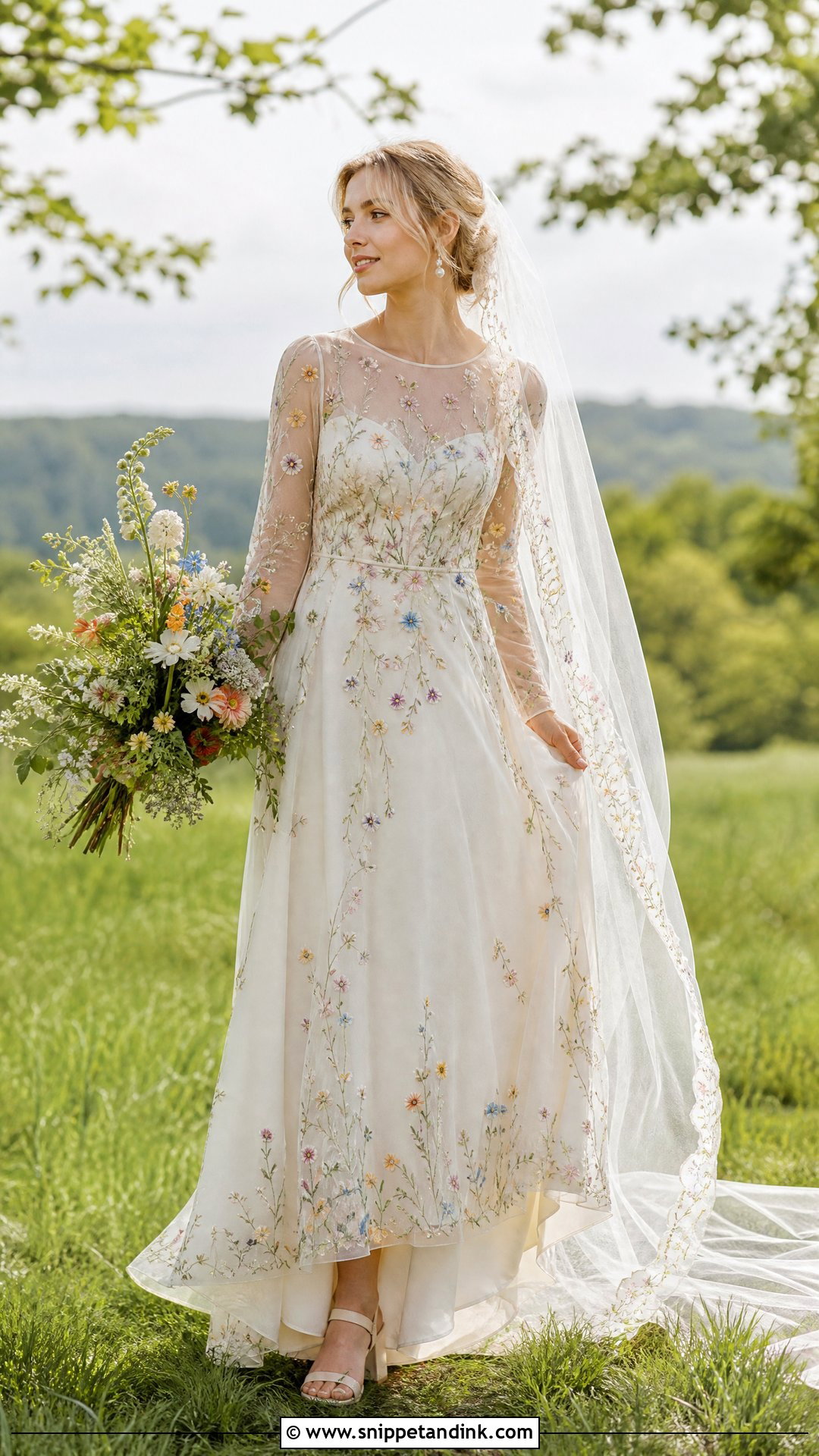
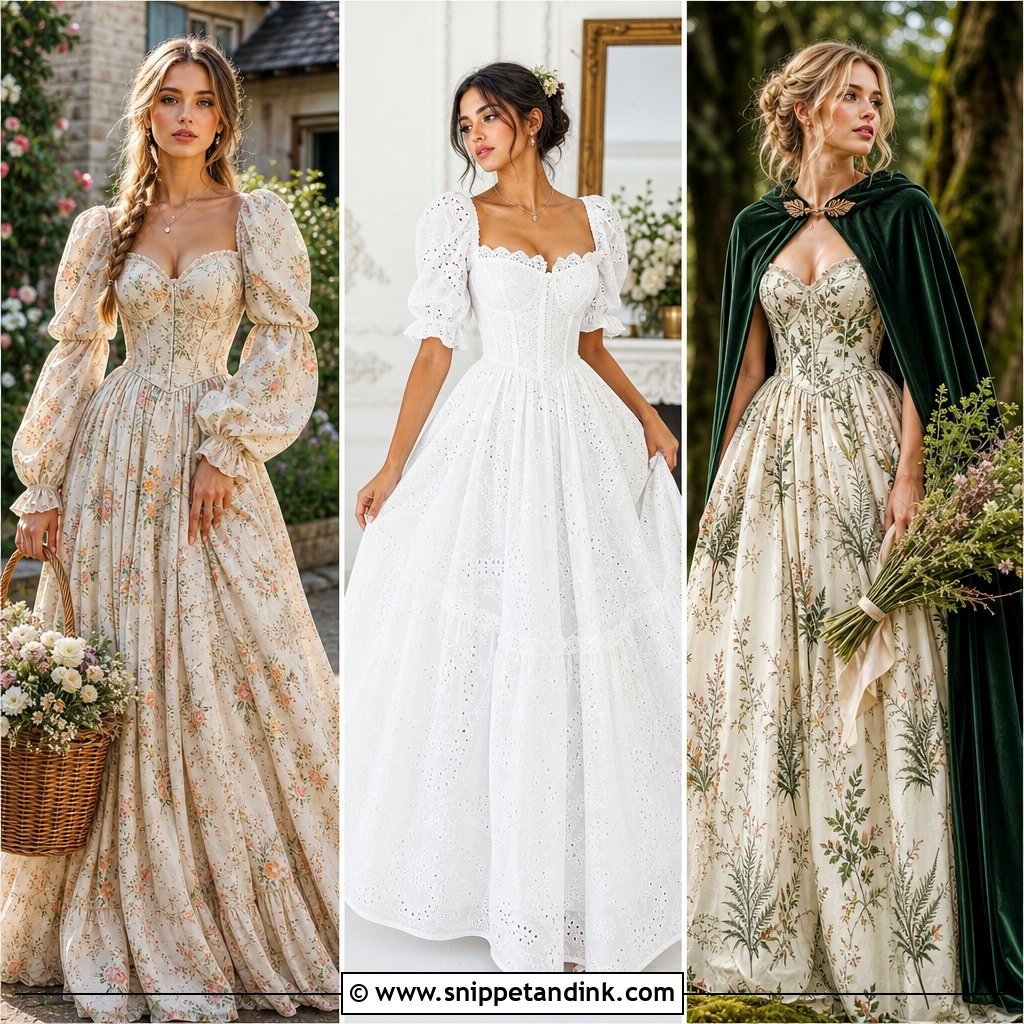
Scattered embroidery is forgiving outdoors: a grass mark near the hem hides far better among stitched vines than on plain ivory. I prefer an A-line with leaves and small wildflowers spread loosely over a heavy, symmetrical pattern. A sheer embroidered bodice with a lined front keeps it detailed but comfortable. Block-heel sandals or embroidered flats stay stable on grass. If you want tiny fresh flowers in a loose braid, ask your florist for hardy stems such as waxflower or spray roses, because delicate blooms wilt against warm hair within a couple of hours. Small pearls, a tulle veil with a few floral appliqués and an asymmetrical bouquet that repeats one or two embroidery colours finish it.
2. Puff Sleeve Lace Cottage Wedding Dress
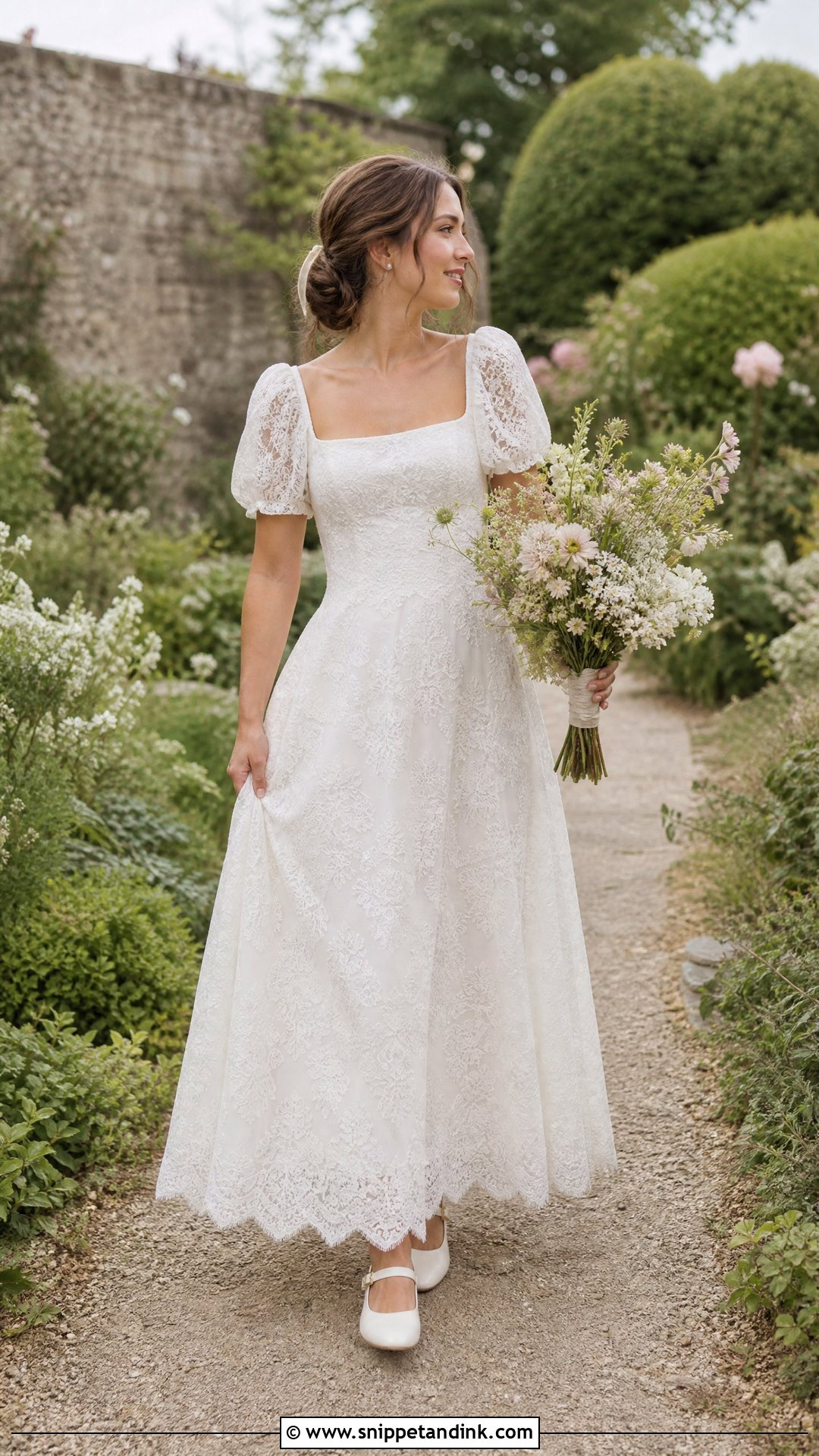
Puff sleeves carry the countryside mood almost on their own, so the rest of the dress can stay quiet. A fitted bodice, a square or soft scoop neckline, elbow-length sleeves and an easy A-line skirt is the version I’d hunt for. Lightweight lace belongs here; stiff beaded fabric fights the softness. Check that the sleeve heads are backed with tulle or light interfacing, otherwise the puff collapses flat after an hour of hugging. Ivory ballet flats, low Mary Janes or stable block heels suit it. Soft waves or a relaxed low bun with a narrow ribbon, a small pendant and garden flowers wrapped in linen ribbon complete it.
3. Square Neck Cotton Cottage Wedding Dress
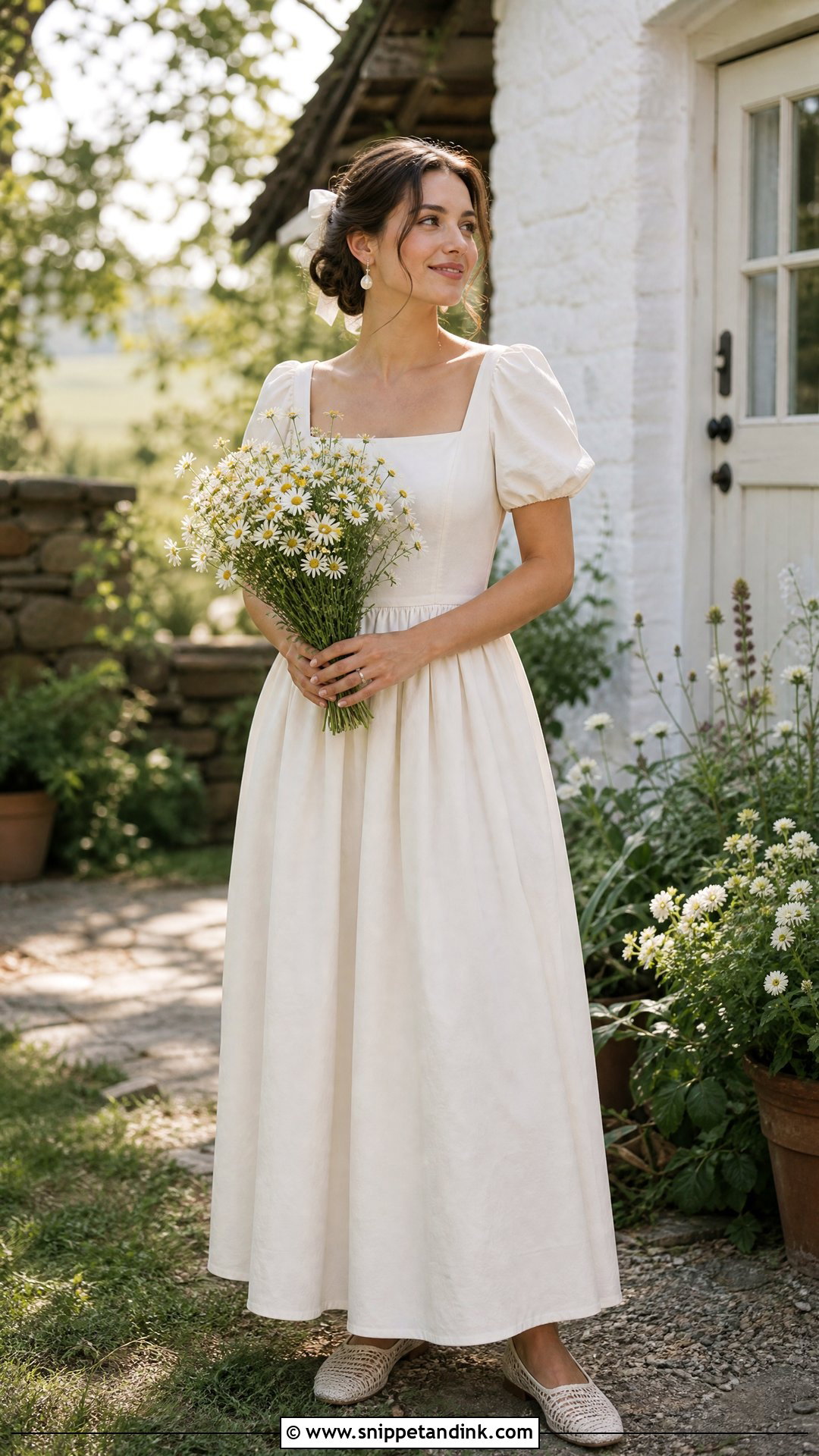
Cotton breathes, which makes it the most comfortable fabric on this list for a hot summer ceremony. Poplin holds a crisp gathered skirt, and a cotton blend creases a little less. Pick a full-length gown with a square neckline, defined waist and short puff sleeves. The trade-off is that pure cotton shows sweat and wrinkles faster than synthetics, so I always steam it on the morning, never the night before. Woven flats, leather sandals or low espadrilles follow the venue’s formality. Add a straw-textured bag, a white ribbon in half-up hair, small gold or pearl earrings and a bouquet of daisies, chamomile and greenery.
4. Corset Bodice Cottage Wedding Dress
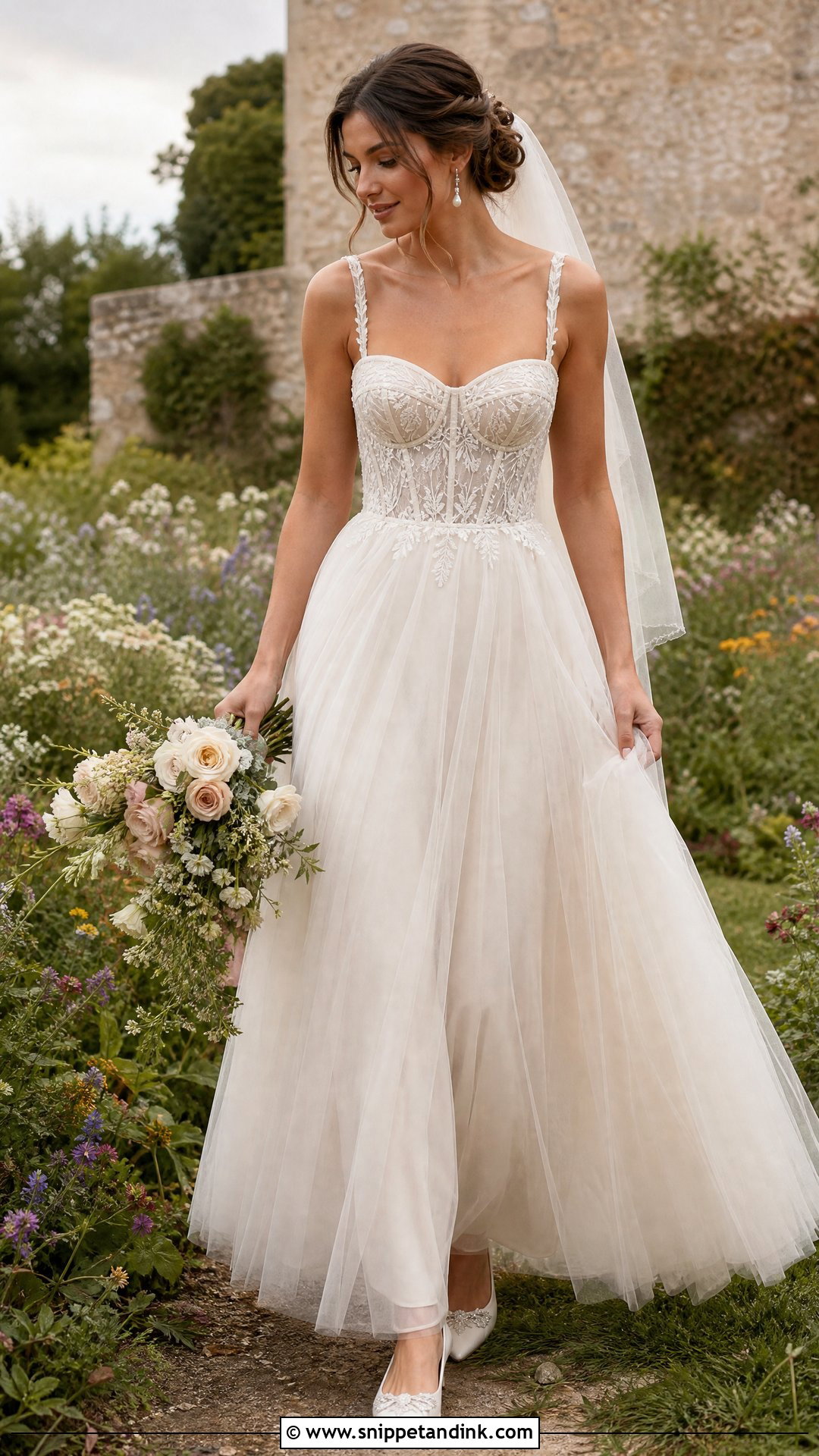
A boned bodice under a floaty chiffon or tulle skirt gives a cottage dress some backbone. The seaming should be visible but fine, and the neckline genuinely supportive. Outdoor weddings involve more walking than people expect, between the ceremony spot, photo locations and the reception, so I ask brides to climb a step or two in it before buying. A fingertip veil, pearl drops and a loose bouquet of roses with trailing greenery soften the defined waist, while low block heels or pointed flats keep it practical. Try a softly twisted updo with face-framing pieces, and skip a big necklace if the bodice has lacing or embroidery worth seeing.
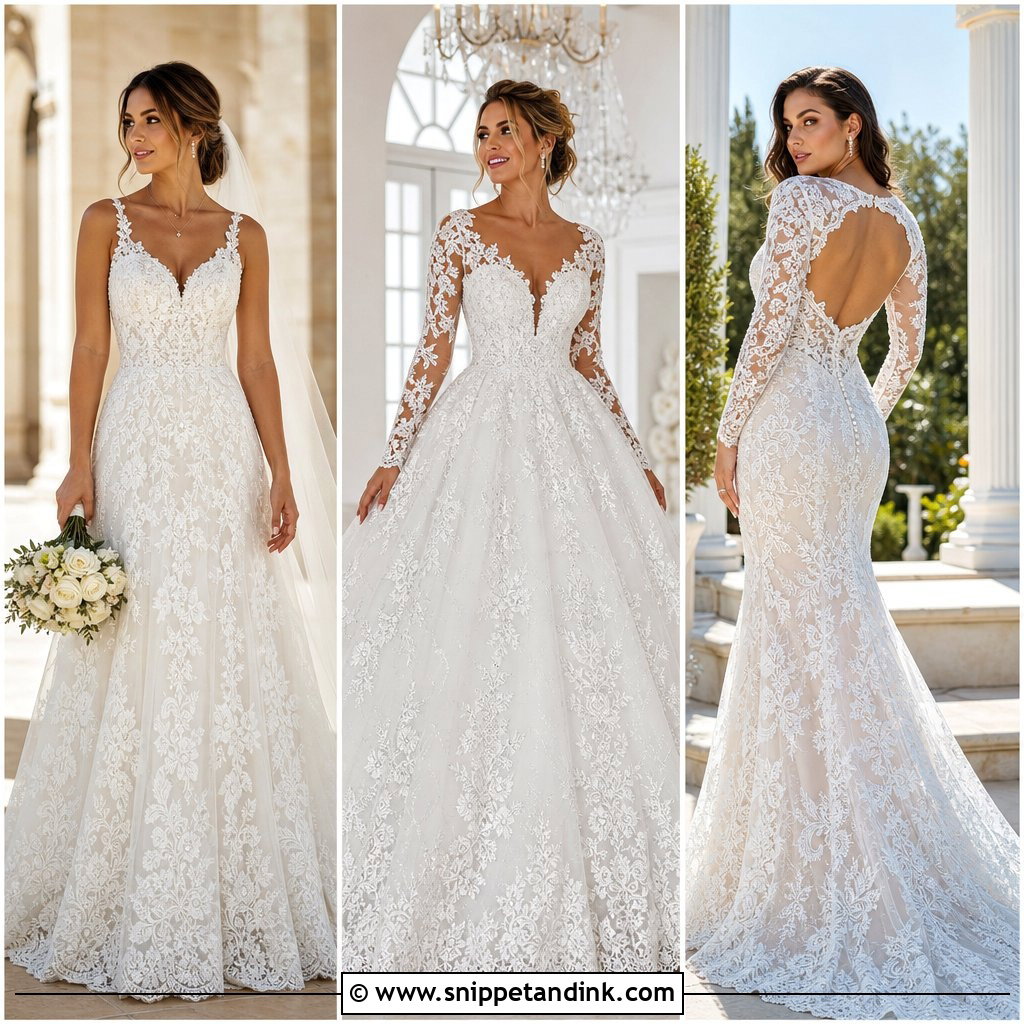
5. Long Sleeve Botanical Lace Cottage Wedding Dress
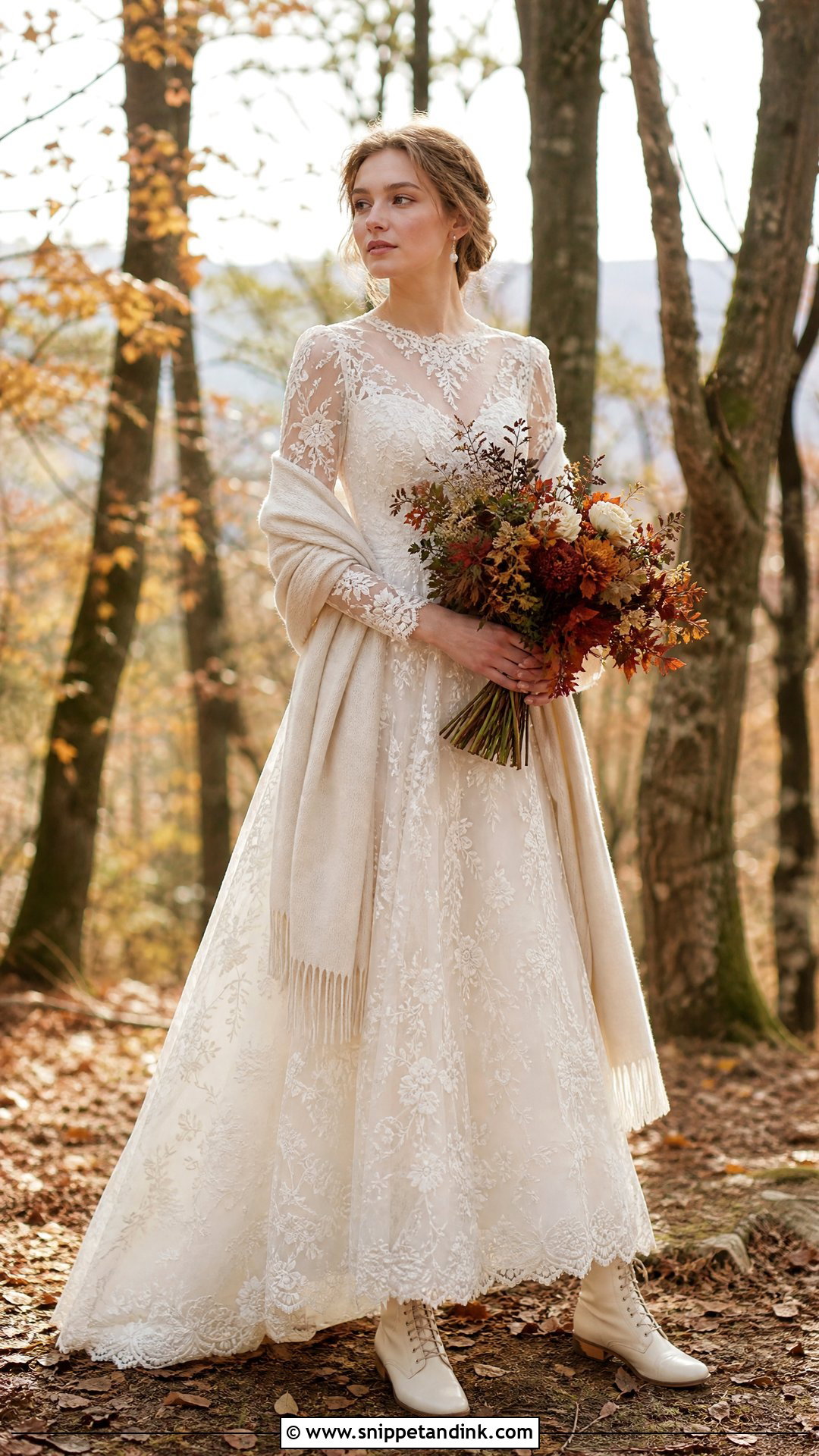
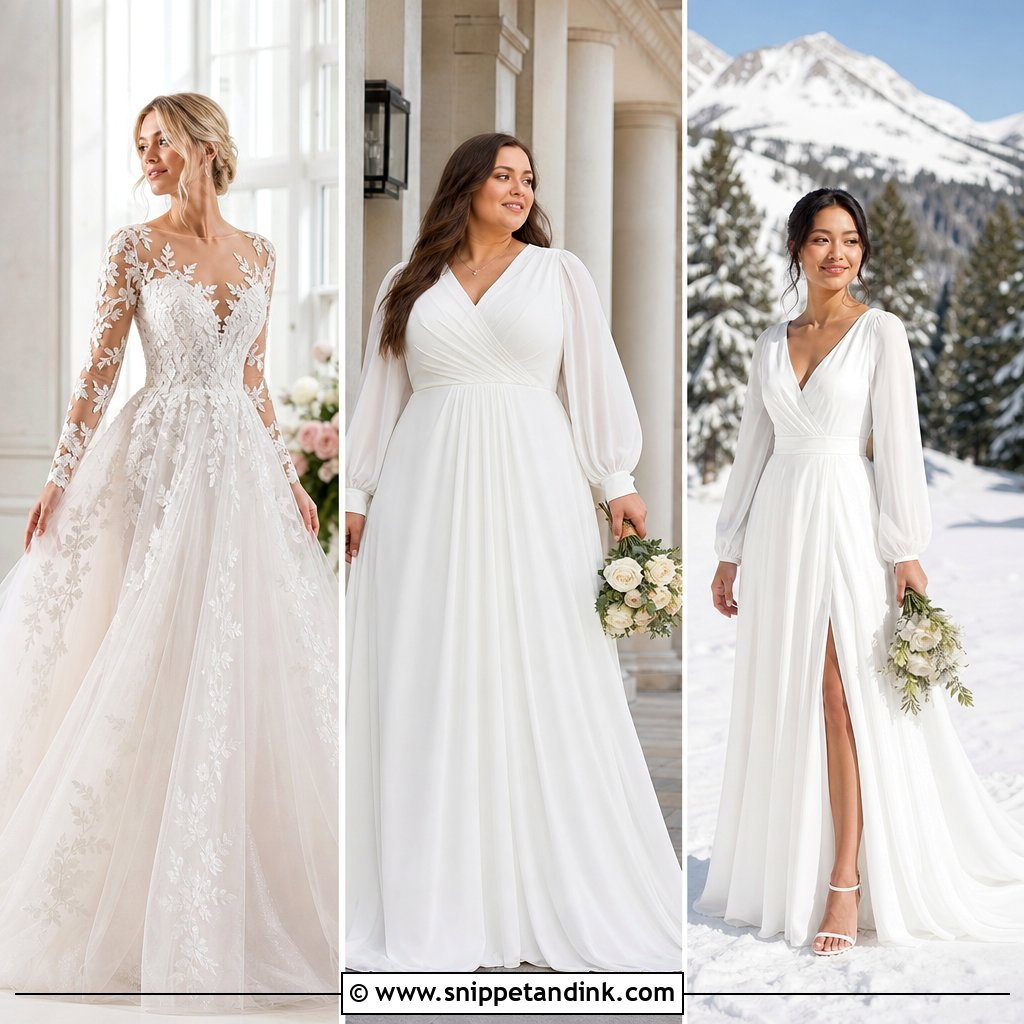
Cooler months are when sheer botanical lace sleeves make the most sense: they cover your arms without the weight of a lined sleeve. Leaf, vine and small-blossom patterns sit naturally against autumn trees. Choose an A-line or softly fitted gown with a lined bodice and a skirt that moves. On wet ground, closed-toe block heels or refined ankle boots are kinder than sandals. I’d also pack an ivory or pale earth-toned wool wrap for outdoor portraits; you’ll shiver less, and the photos won’t show goosebumps. A low textured bun with a fine hair vine, pearl earrings and seasonal foliage suit a woodland, farmhouse, or autumn garden celebration.
6. Tea Length Eyelet Cottage Wedding Dress
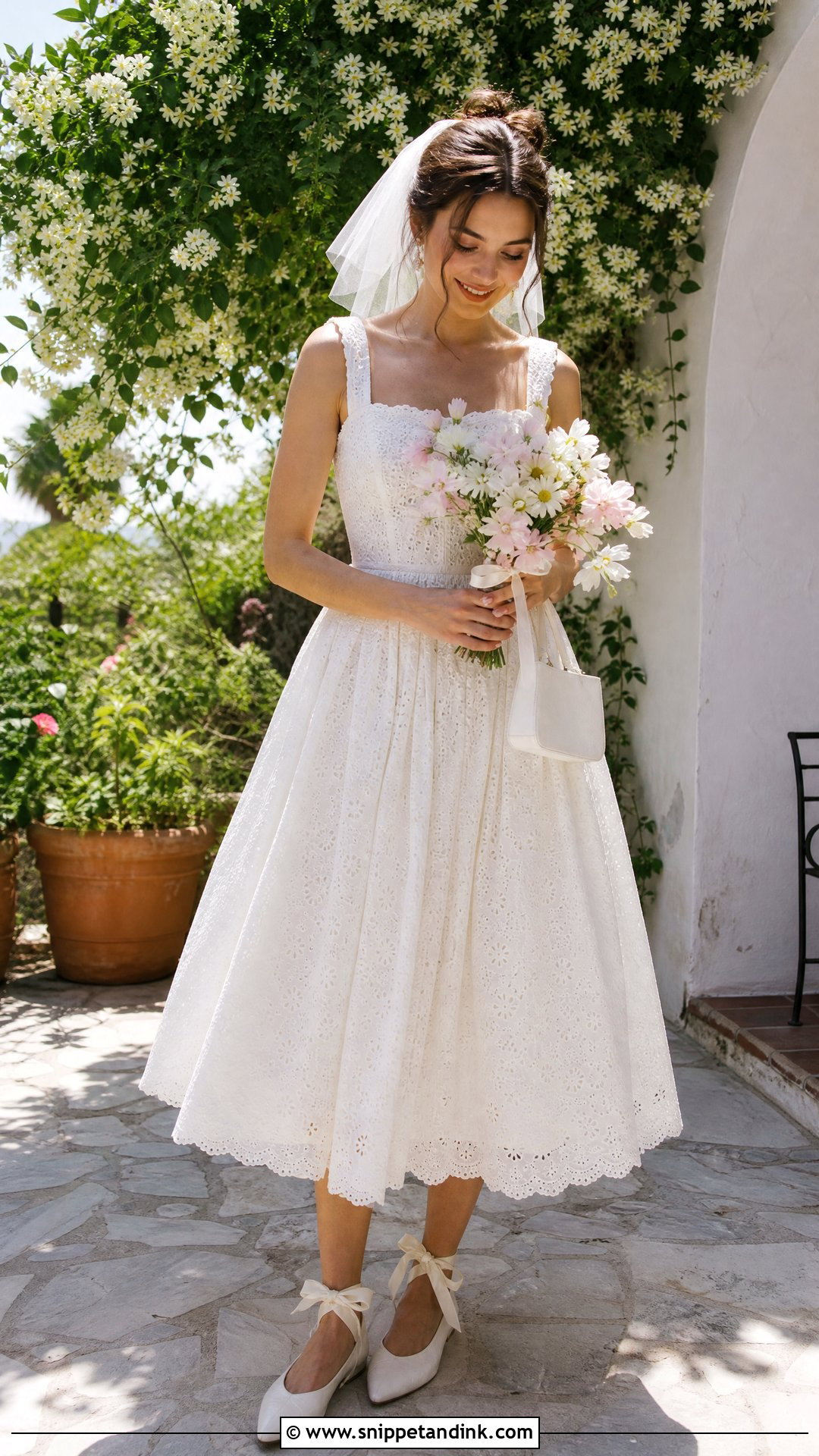
Tea length is my quiet favourite for a relaxed ceremony, because the hem never touches the grass. A full skirt ending between knee and ankle, a fitted bodice and white or ivory eyelet keep it light and a little playful. Eyelet holes catch on rough wood and brambles, so mind the fence posts. Your shoes are on show, which makes ribbon-tie flats, low Mary Janes or vintage-style block-heel sandals worth choosing carefully. A short veil, padded headband or floral comb suits the proportion far better than anything long. A compact bouquet of sweet peas, cosmos or daisies, small hoops or pearls and a structured mini bag complete it.
7. Off Shoulder Chiffon Cottage Wedding Dress
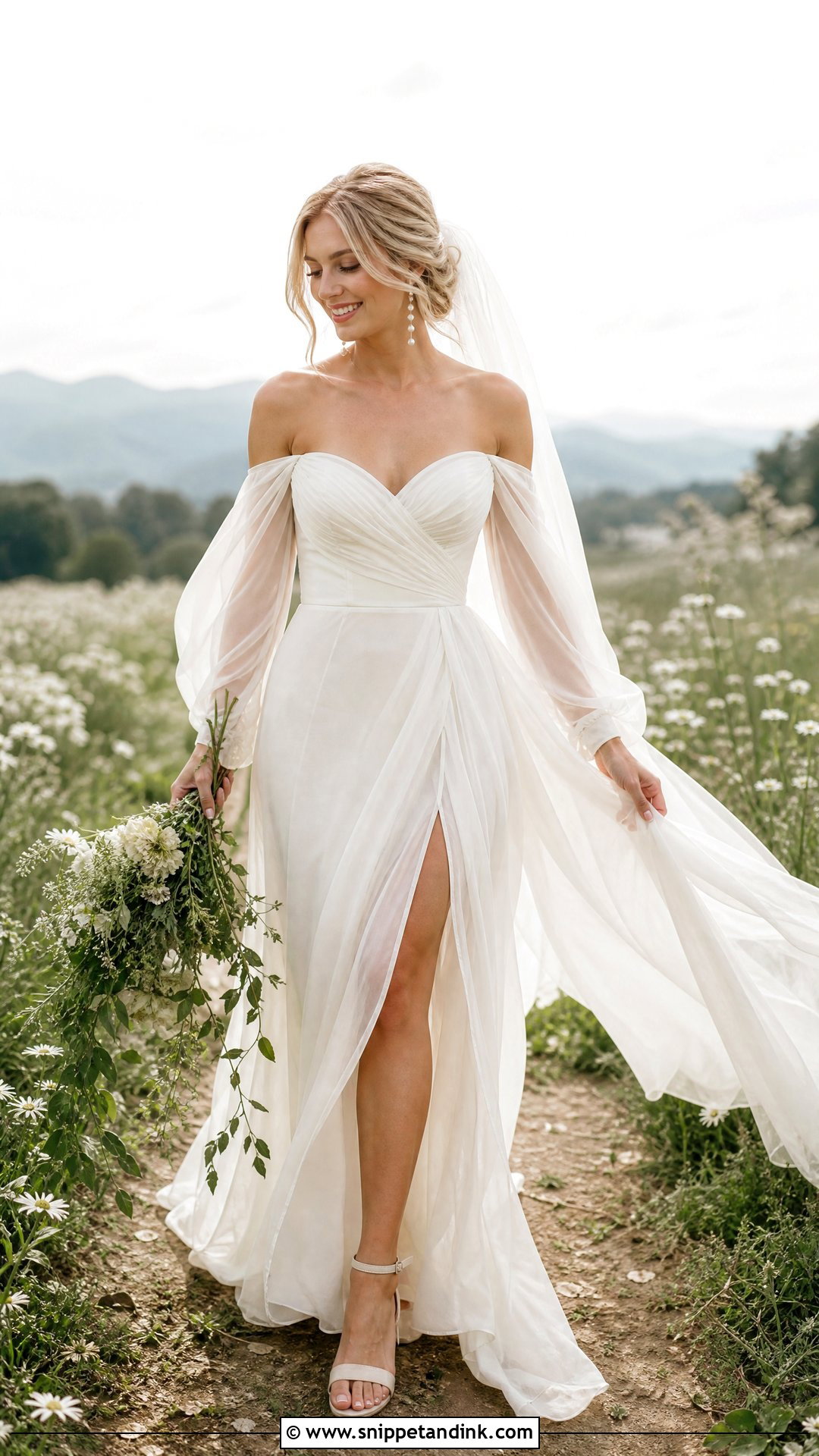
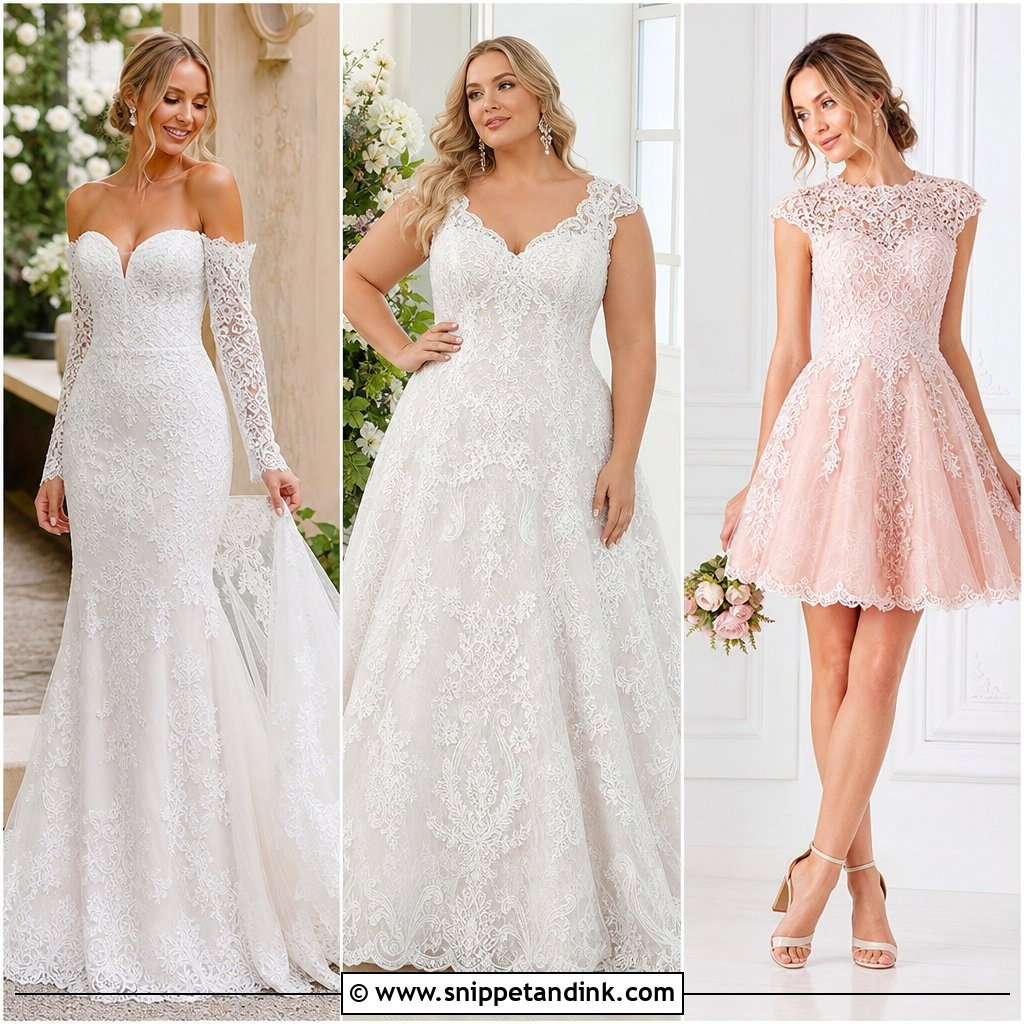
Chiffon moves with every breeze, which is wonderful in a meadow and awkward if the sleeves aren’t anchored. Insist on a secure inner bodice with silicone grip tape along the top edge, so the off-shoulder line stays put when you raise your arms, sit and hug. A low side slit helps you walk; keep it modest so the dress still reads bridal. Low block heels or embellished flats, a loose bouquet with trailing stems, and hair in a low bun or side braid so the neckline shows. A short pendant, delicate drops and a simple veil are enough.
8. Empire Waist Cottage Wedding Dress
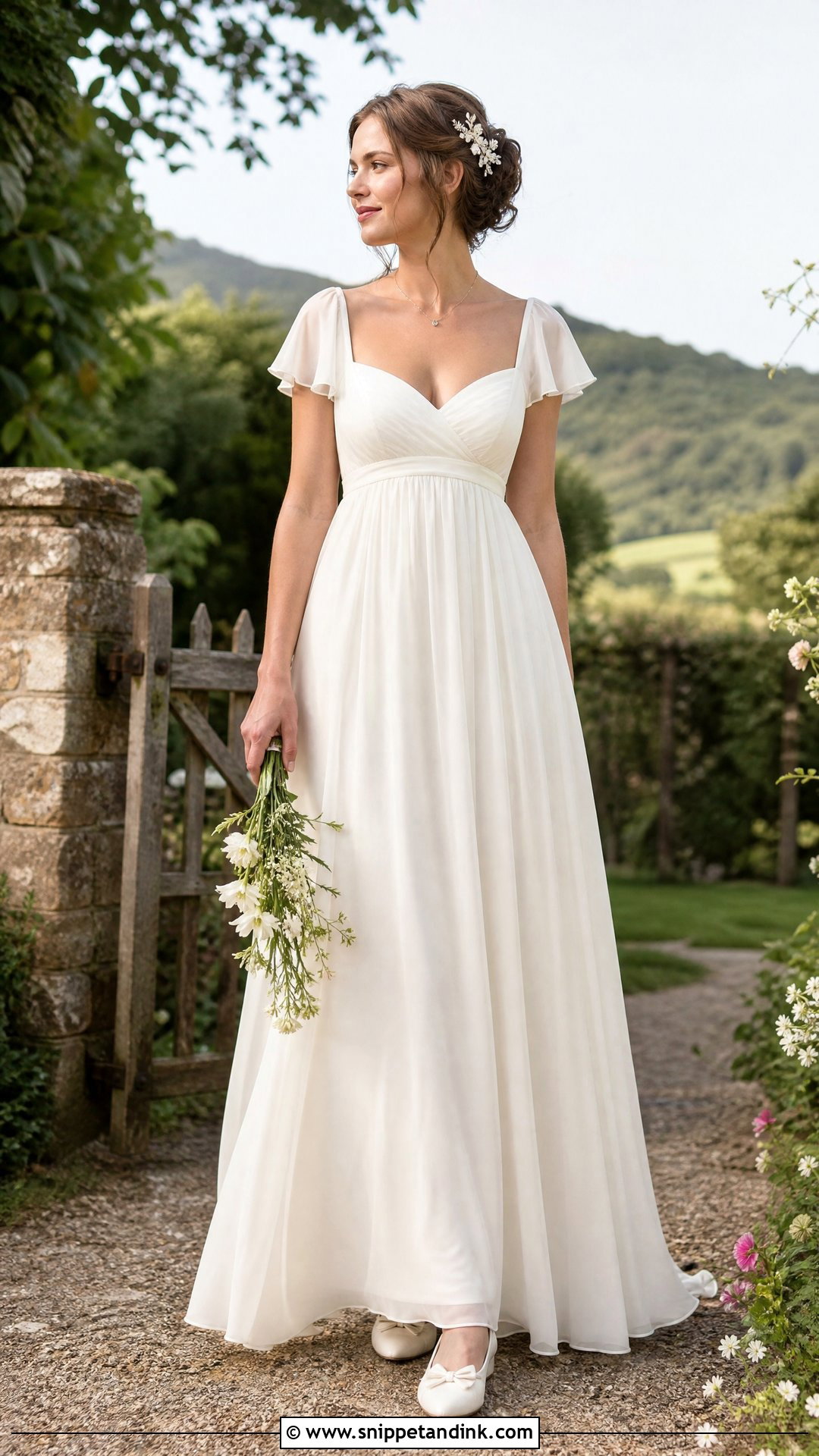
An empire waist cottage wedding dress leaves the waist and hips free, which is exactly why I suggest it for hot outdoor ceremonies. The seam sits under the bust, the upper bodice fits, and a chiffon or lace skirt falls straight down. Flutter sleeves or narrow straps keep it balanced. Watch the seam: if it sits even slightly low, it looks like a sagging waistline in photos, so have the seamstress pin it while you stand. Comfortable flats, a fine chain, a floral comb and loose half-up hair suit it, and a narrow long-stemmed bouquet echoes the vertical line.
9. Crochet Lace Cottage Wedding Dress
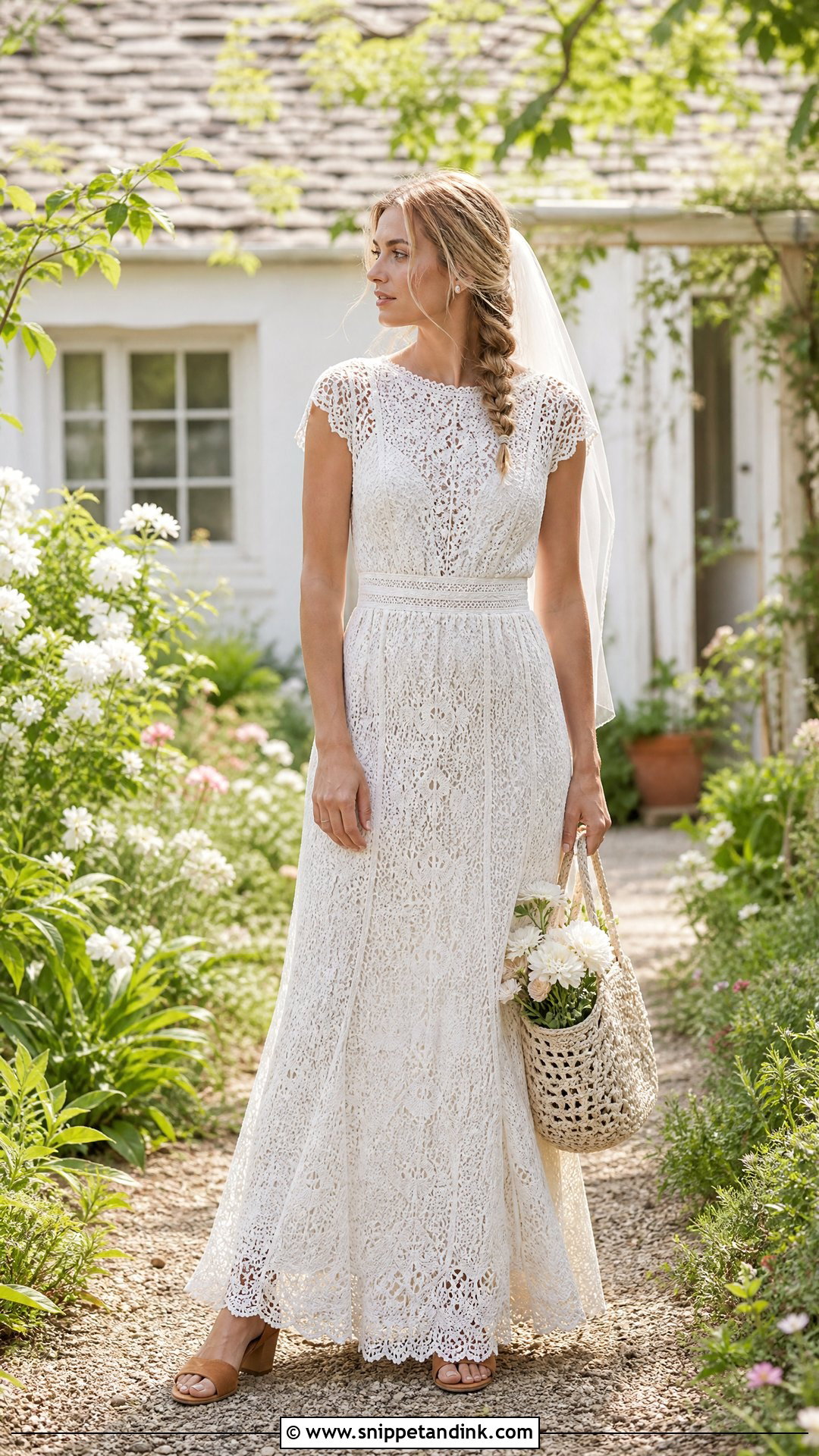
Crochet and openwork lace look handmade, which is why they suit a cottage wedding better than almost any other setting. The texture is busy, so the accessories shouldn’t be: leather block-heel sandals, pearl studs and a plain fingertip veil, with a woven bag to carry the crafted feel. Choose a lined gown with openwork panels placed with care, a defined waist and a straight or softly flared skirt. Crochet stretches under its own weight, so I check the hem length after the dress has hung for a day, and I watch whether the lining stays smooth when you sit. Loose waves or a relaxed braid tied with ribbon finish it.
10. High Neck Vintage Cottage Wedding Dress
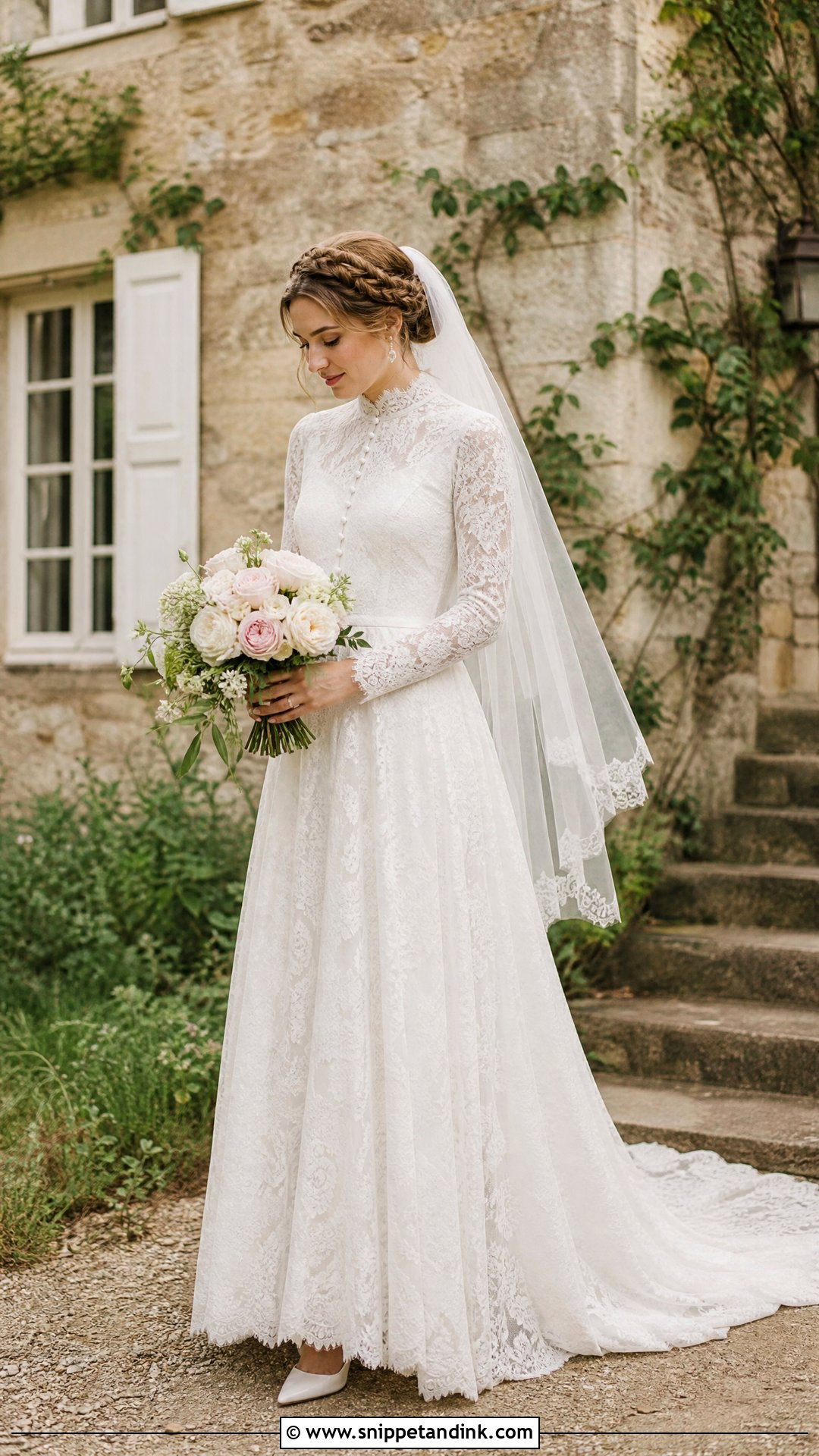
A high neck gives coverage and an obvious vintage feel, but it can look severe without a break somewhere. A keyhole back or a line of covered buttons does that job. Look for lace or embroidery over a softly fitted bodice, defined waist and flowing skirt. Skip the necklace entirely; pearl drops or a small floral hairpiece do more. Hair has to clear the collar, so I’d go low bun, braided crown or waved bob rather than long loose hair, which hides the neckline. Low pointed shoes or lace-up bridal boots depend on season and ground. Attach the veil beneath the hairstyle and carry garden roses with greenery.
11. Satin Slip Cottage Wedding Dress With Lace Cape
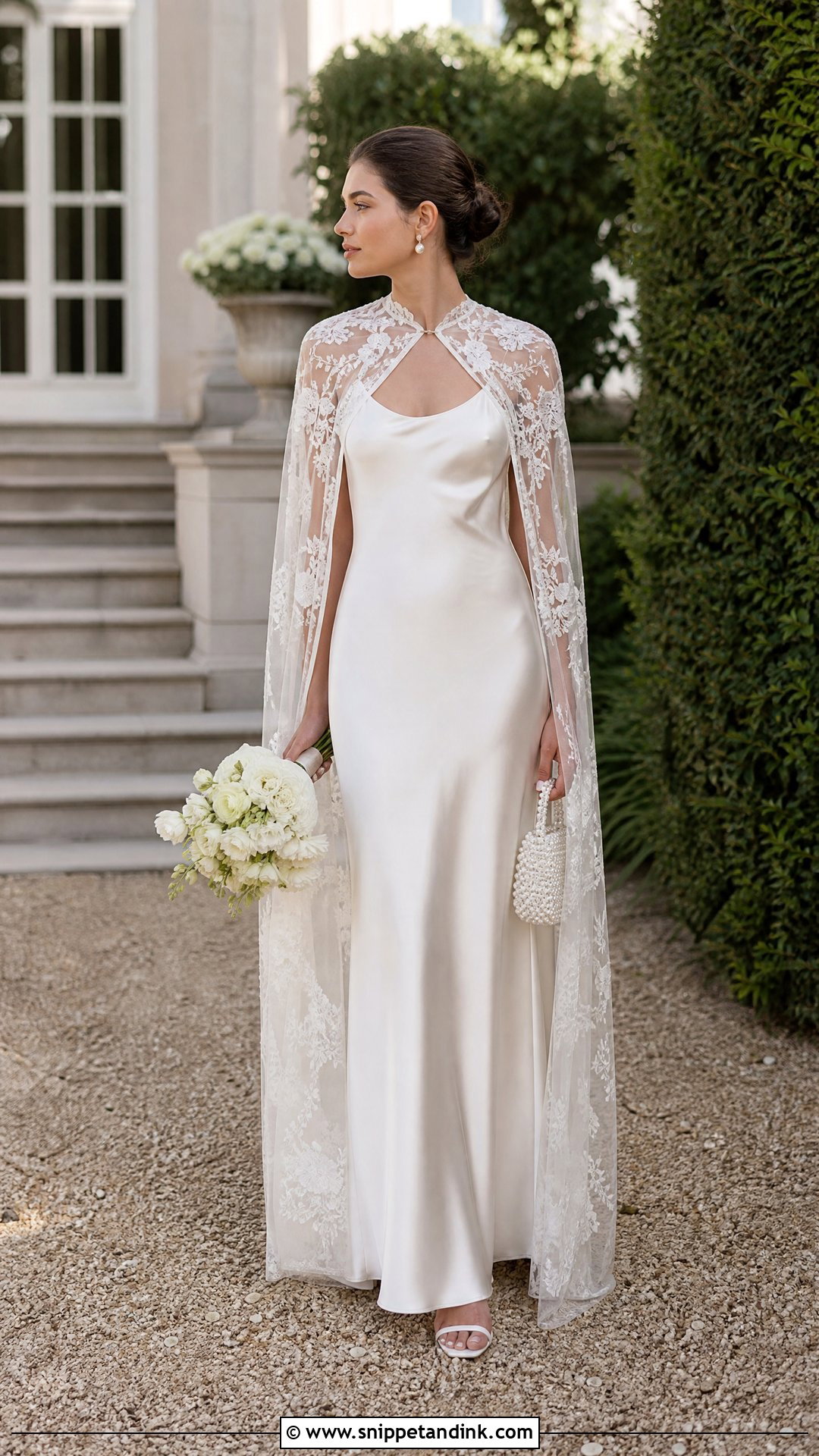
Satin slips aren’t the obvious cottage choice, which is part of the charm once a lace cape goes over the top. The bias cut should skim the body rather than cling, and it shows every line underneath, so sort out smooth, invisible underwear early. A fingertip or floor-length cape with botanical embroidery brings texture and movement to the minimal dress. Pointed flats or low slingbacks stay polished on a garden path. A small pearl bag and delicate earrings echo the sheen. Wear soft waves or a clean low knot so the cape lies flat on the shoulders, and keep the bouquet restrained: white flowers and greenery.
12. Tiered Skirt Cottage Wedding Dress
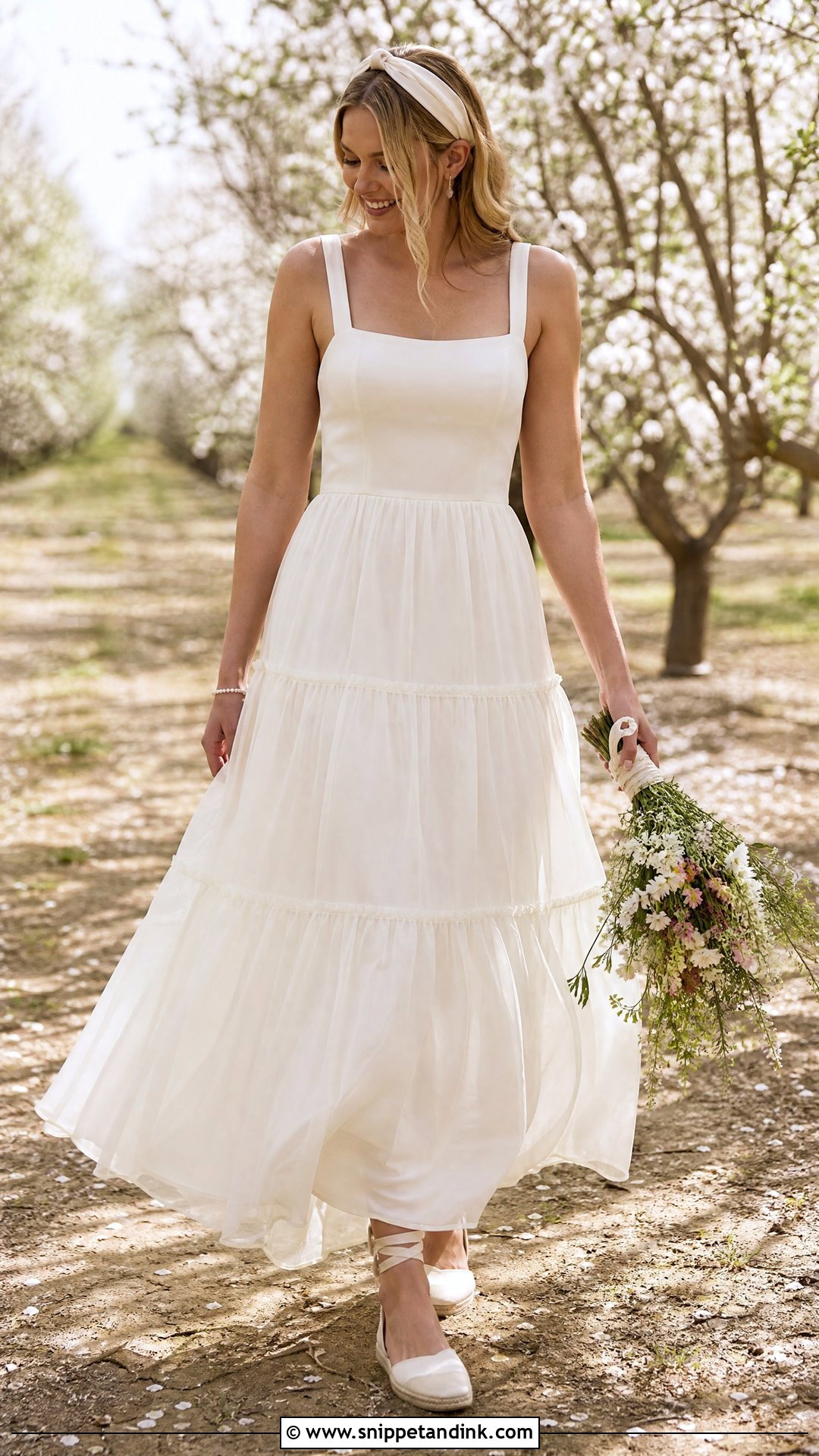
Tiers swing as you walk, which shows best in an orchard or meadow where you’re moving between spots. Two or three softly gathered tiers are plenty; more and the skirt bulks out at the hips. Chiffon, cotton voile or dotted tulle keep it light. My standing advice at alterations: wear your actual wedding shoes, because the lowest tier must clear the grass, and every tier above it has to come up too or the proportions go wrong. Low espadrilles, block-heel sandals or ballet flats peek out as the skirt moves. A ribbon headband or small flower crown, pearl studs and a loose bouquet with uneven stem lengths suit the playful shape.
13. Detachable Sleeve Cottage Wedding Dress
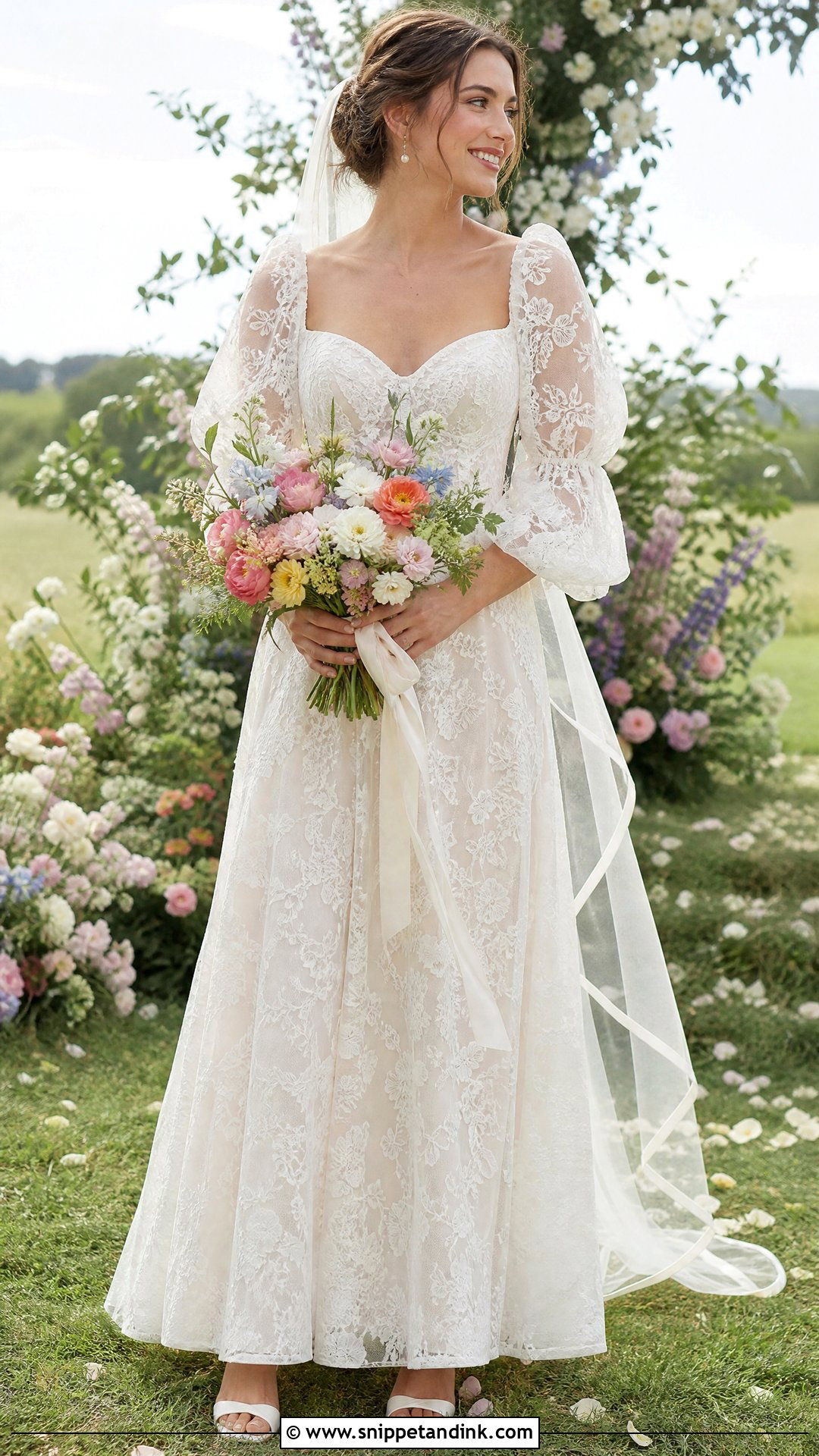
One gown, two looks: removable puff sleeves for the ceremony, bare shoulders for dancing or a hot afternoon. Start with an A-line or softly fitted dress with a square neckline and floral lace bodice. Secure fastenings matter more than the sleeve style, since a sleeve that slips in photos is worse than none. Ivory block heels, a ribbon-trimmed veil, garden flowers, pearl earrings and a slim bracelet keep things understated, and a soft updo flatters both necklines. Practise taking the sleeves on and off, then hand a bridesmaid a labelled cloth bag for them. Detached sleeves left on a reception chair get crushed or lost fast.
14. Wildflower Print Cottage Wedding Dress
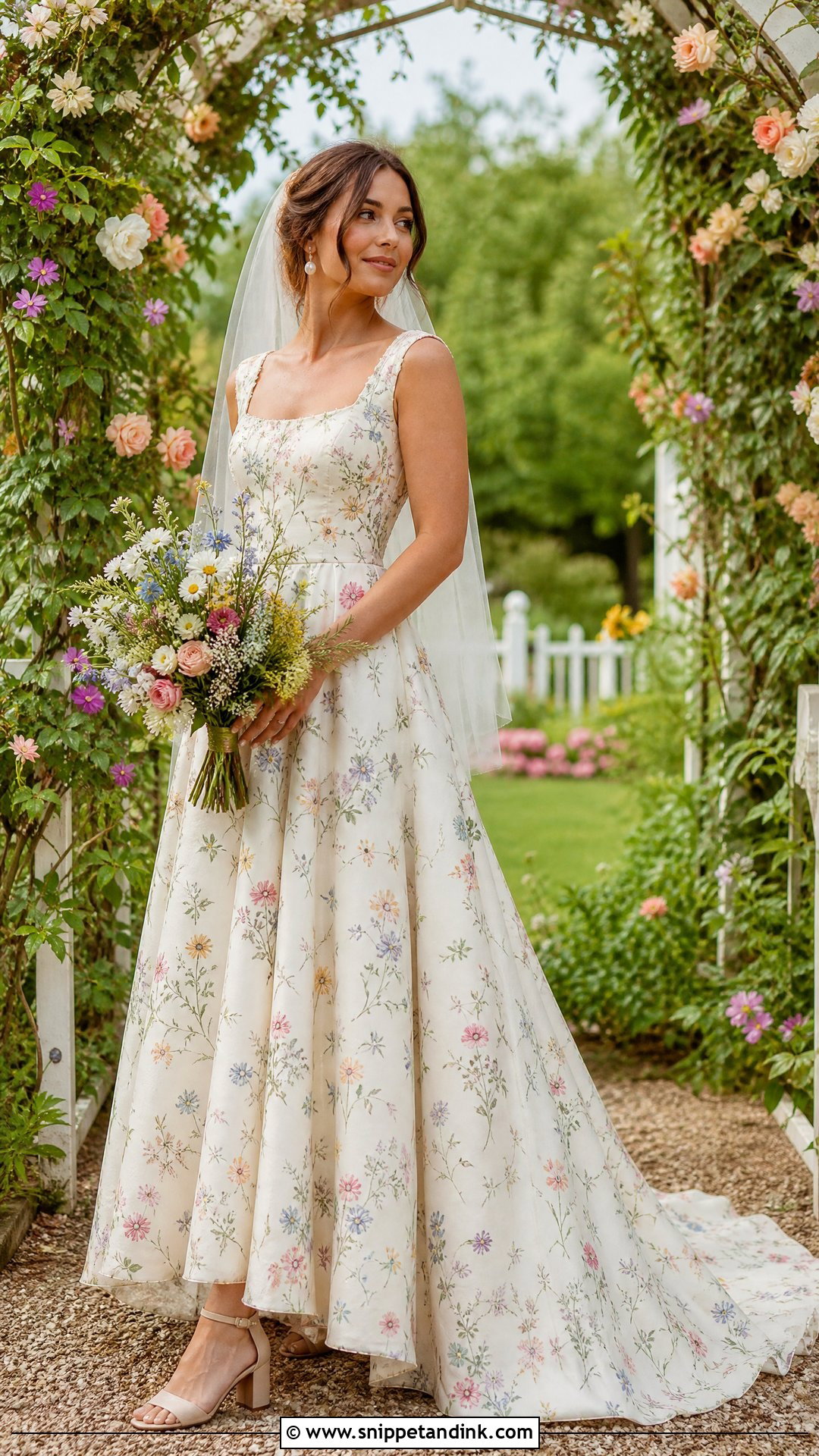
Printed florals bring real colour while the shape stays recognisably bridal. Look for an ivory, cream or pale blush base with softly spaced motifs, plus an A-line skirt and fitted bodice so it reads polished rather than sundress. The mistake I see most is matching the bouquet to every colour in the print. Pick two shades from the fabric and let the rest go. A wildflower print wedding dress wants neutral block heels, pearl earrings and a plain veil to balance it, with a loose bun and one or two flowers tucked at the back. If the print covers the whole dress, go almost jewelry-free.
15. Plus Size Basque Waist Cottage Wedding Dress
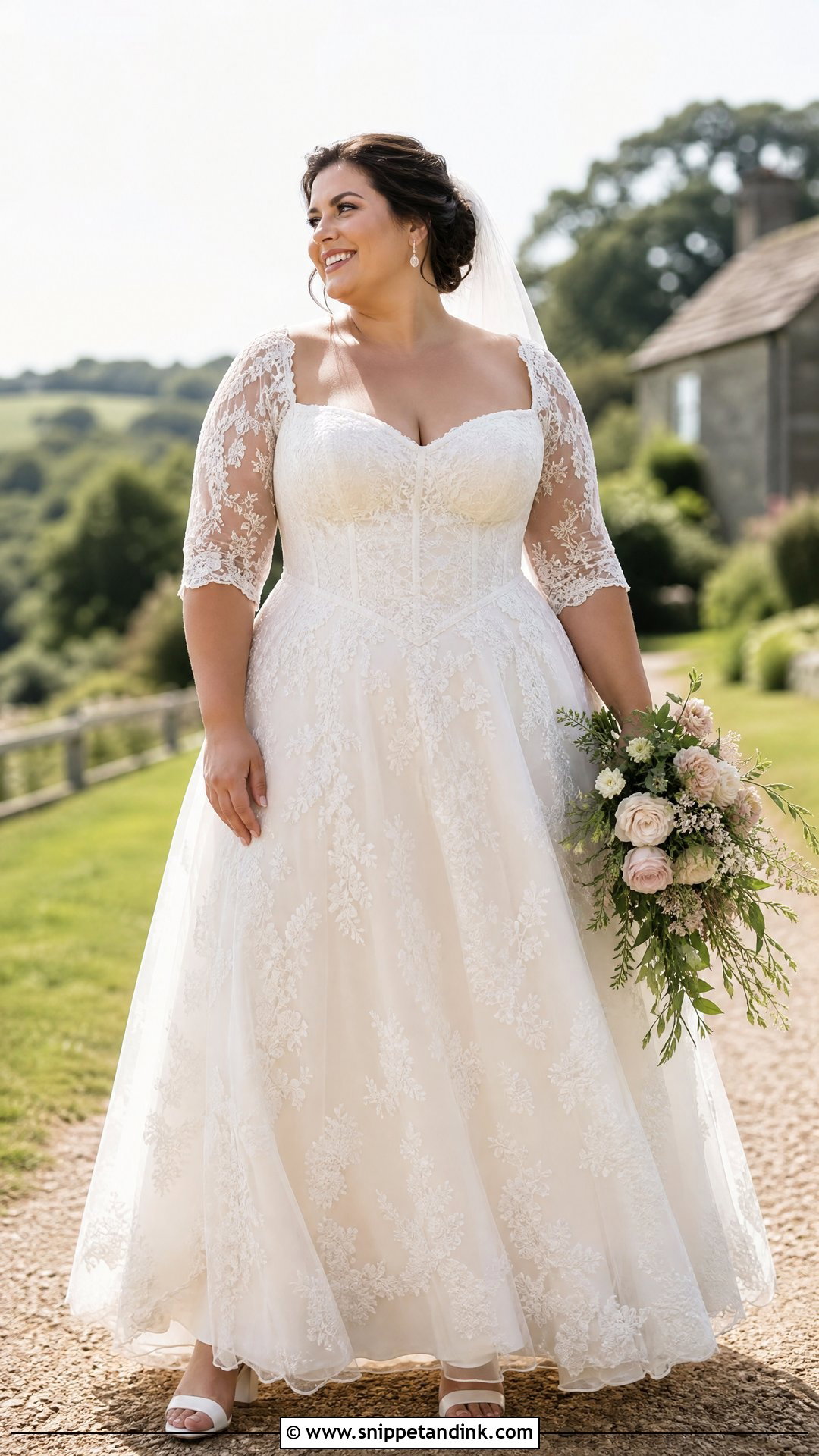
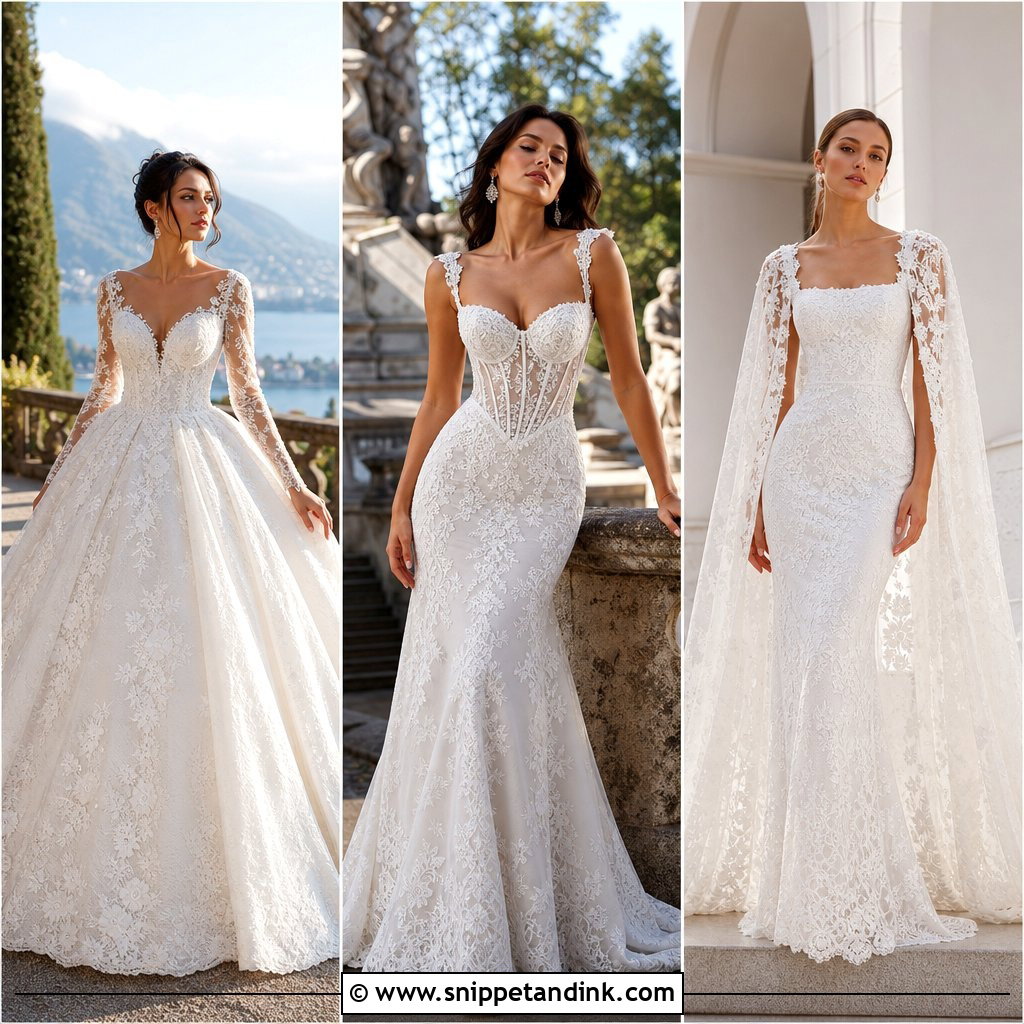
On a plus-size bride, a basque waist defines the middle and then lets the skirt fall over the hips instead of gathering on them. I look for a supportive bodice with curved seams, wide straps or romantic sleeves, and a pointed waist that lies flat without pinching when you sit. Floral lace or fine embroidery softens the structure. Cushioned block heels, supportive flats or polished ankle boots carry you over uneven ground. Statement pearl earrings, a light veil beneath a secure updo and a medium bouquet that doesn’t hide the bodice. Budget for professional alterations at the bust, waist and sleeve openings, because that’s where off-the-rack sizing usually falls short.
16. Petite Column Cottage Wedding Dress
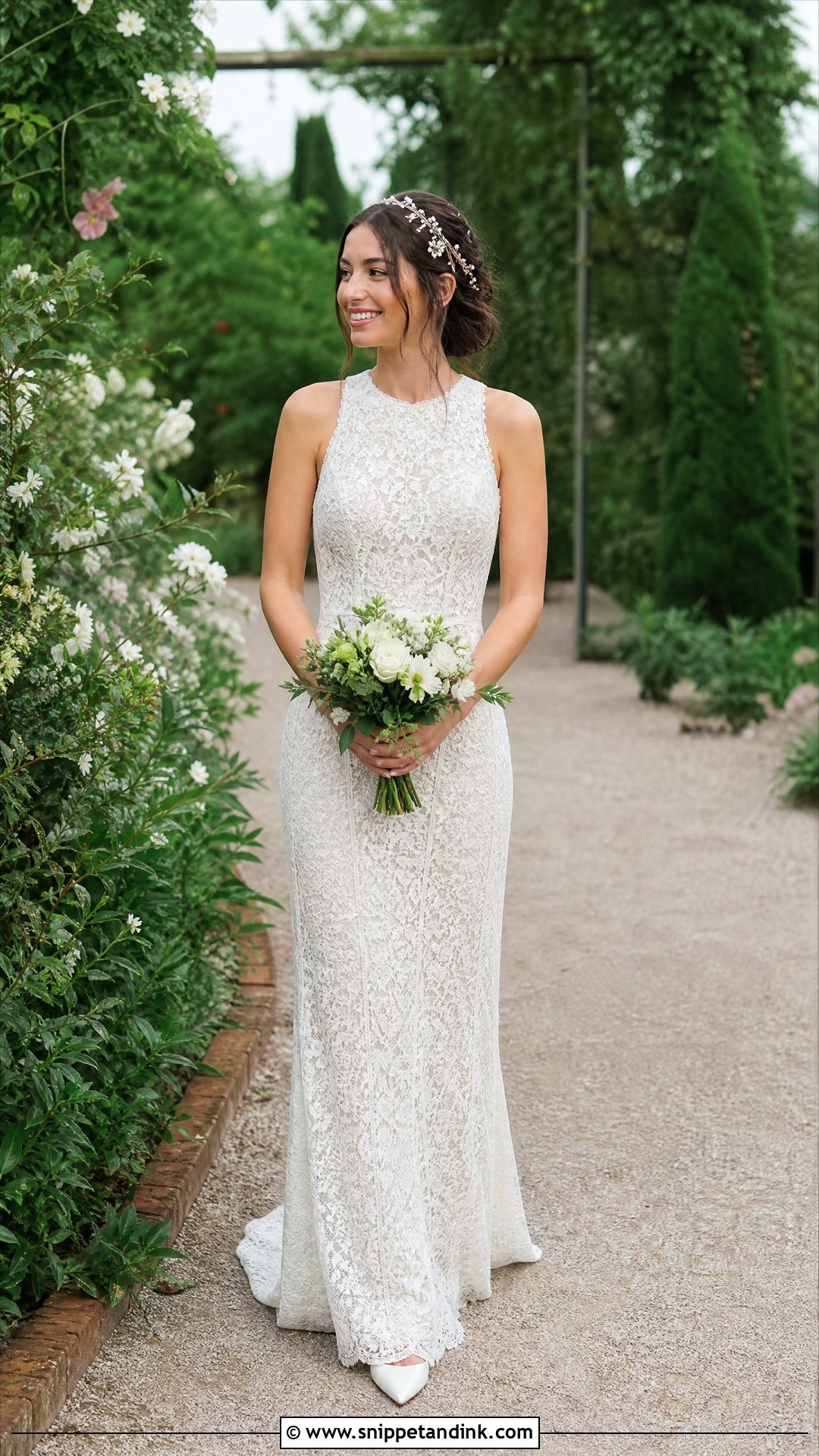
For a petite bride who doesn’t want a full skirt, a narrow column keeps the line long. Lightweight lace or crepe, vertical seams, a simple neckline and subtle botanical detail are all it needs, and a short train adds ceremony without swamping a shorter frame. Ivory pointed shoes in the same tone extend the line. A short veil or delicate hair vine, a compact bouquet and small earrings stay in proportion. Here’s what I’d insist on: have the tailor move the waist seam and reposition lace motifs for your height, not just take up the hem, or the dress will look borrowed from someone taller.
17. Maternity Empire Waist Cottage Wedding Dress
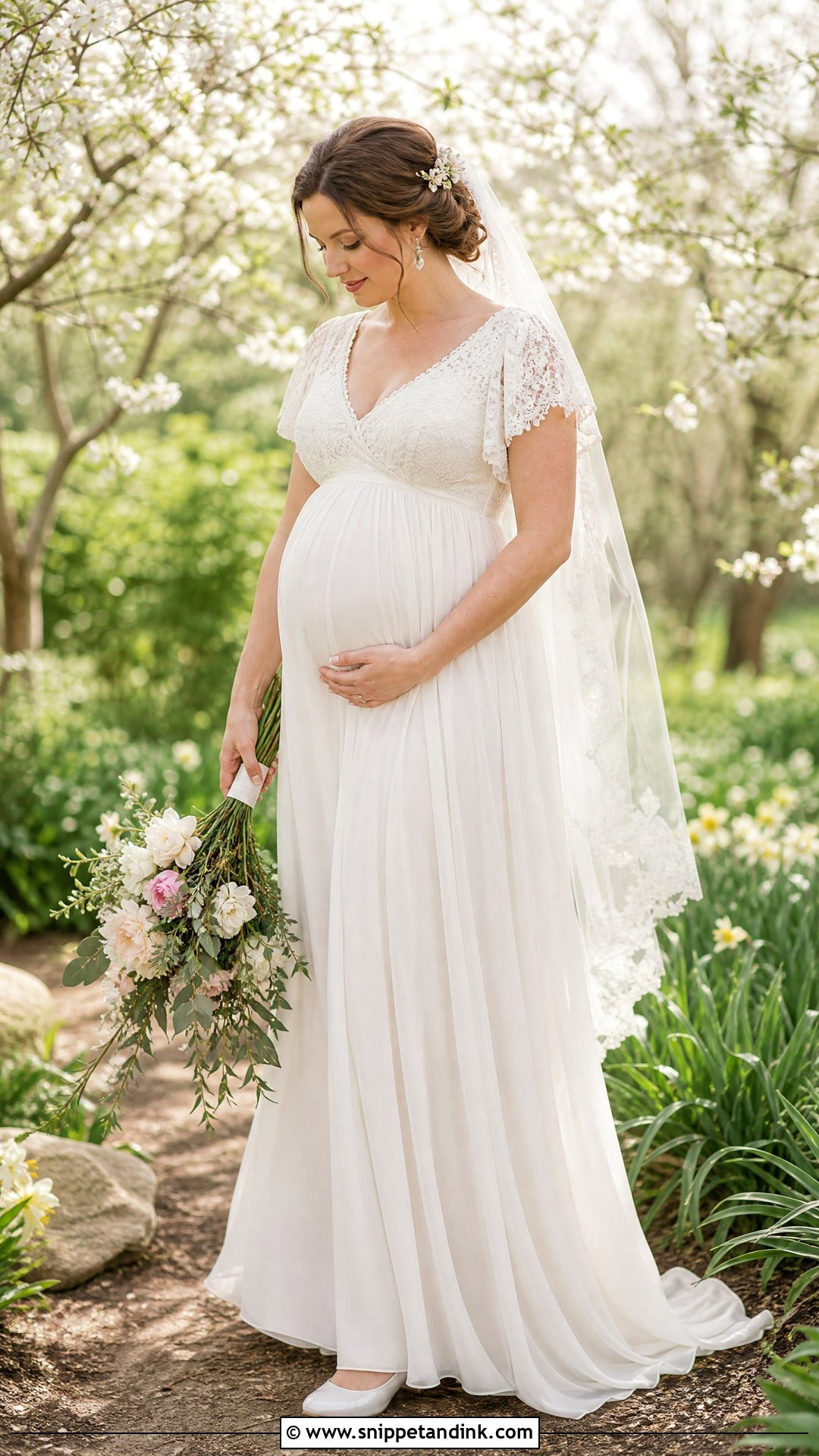
Bodies change week to week in pregnancy, so the dress has to allow for that. An empire waist with a structured upper bodice and flowing skirt gives support, comfort and room. Soft chiffon, stretch lace or lined tulle moves without weight, and flutter or sheer long sleeves balance the raised waist. I’d book the final fitting as close to the date as your seamstress allows, and avoid rigid waistbands, scratchy linings or heavy beading over the bump. Supportive flats or low block heels are non-negotiable on uneven ground. A floral comb, delicate earrings, a light veil and a loose long-stemmed bouquet complete it.
18. Bell Sleeve Boho Cottage Wedding Dress
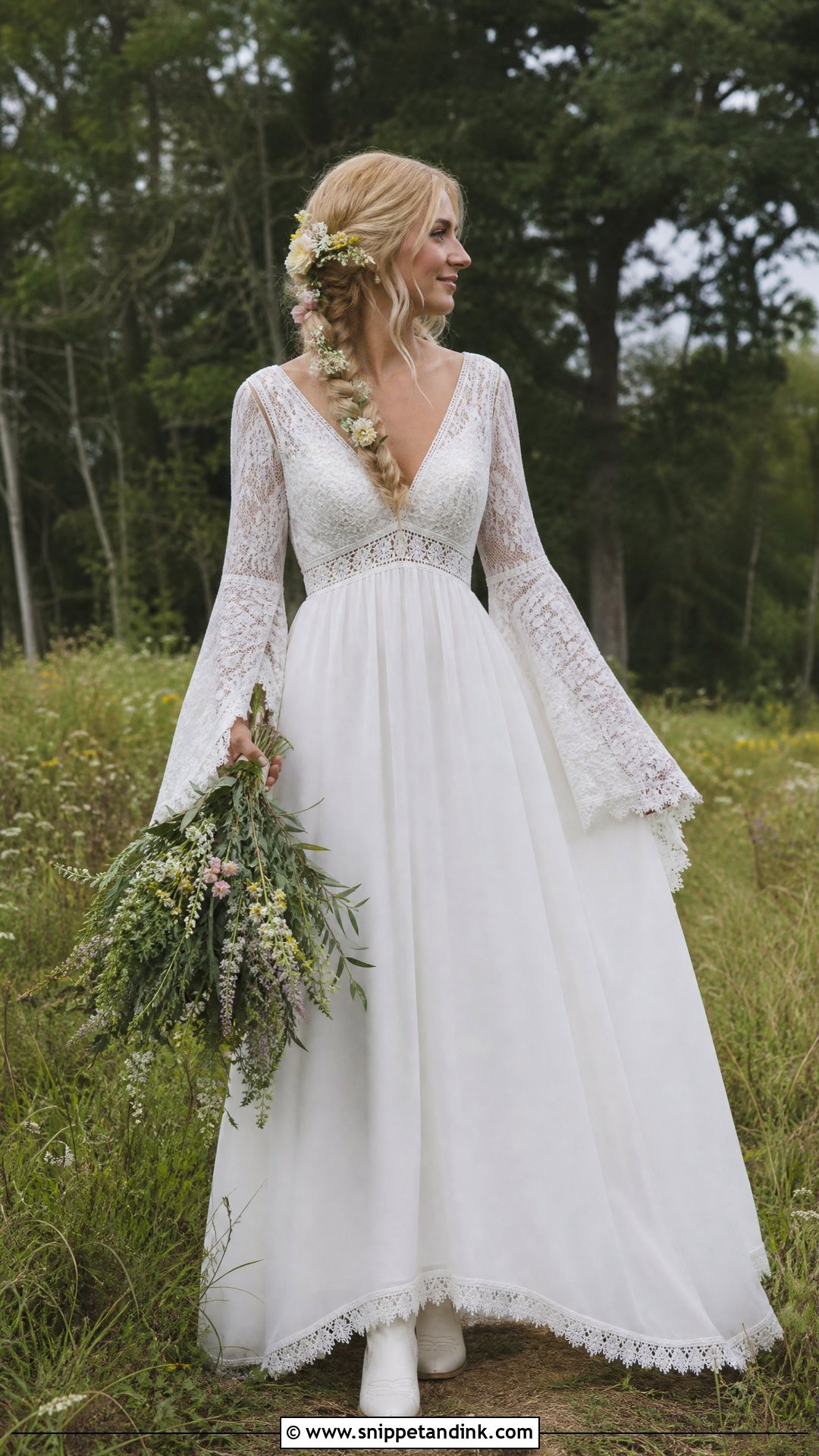
Bell sleeves look romantic right up until they drag through the cake. Fitted through the upper arm and flaring gradually below the elbow, they bring a relaxed bohemian feel to lace or chiffon. A V-neck or soft round neckline balances the volume, and an A-line skirt lets you move. Low leather heels, embroidered flats or refined bridal boots suit it, with earrings that won’t snag the sleeves and a braid dotted with tiny flowers. At your alterations appointment, sit at a table and reach for a glass. If the cuff swings into plates or candles, shorten it.
19. Minimal Linen Cottage Wedding Dress
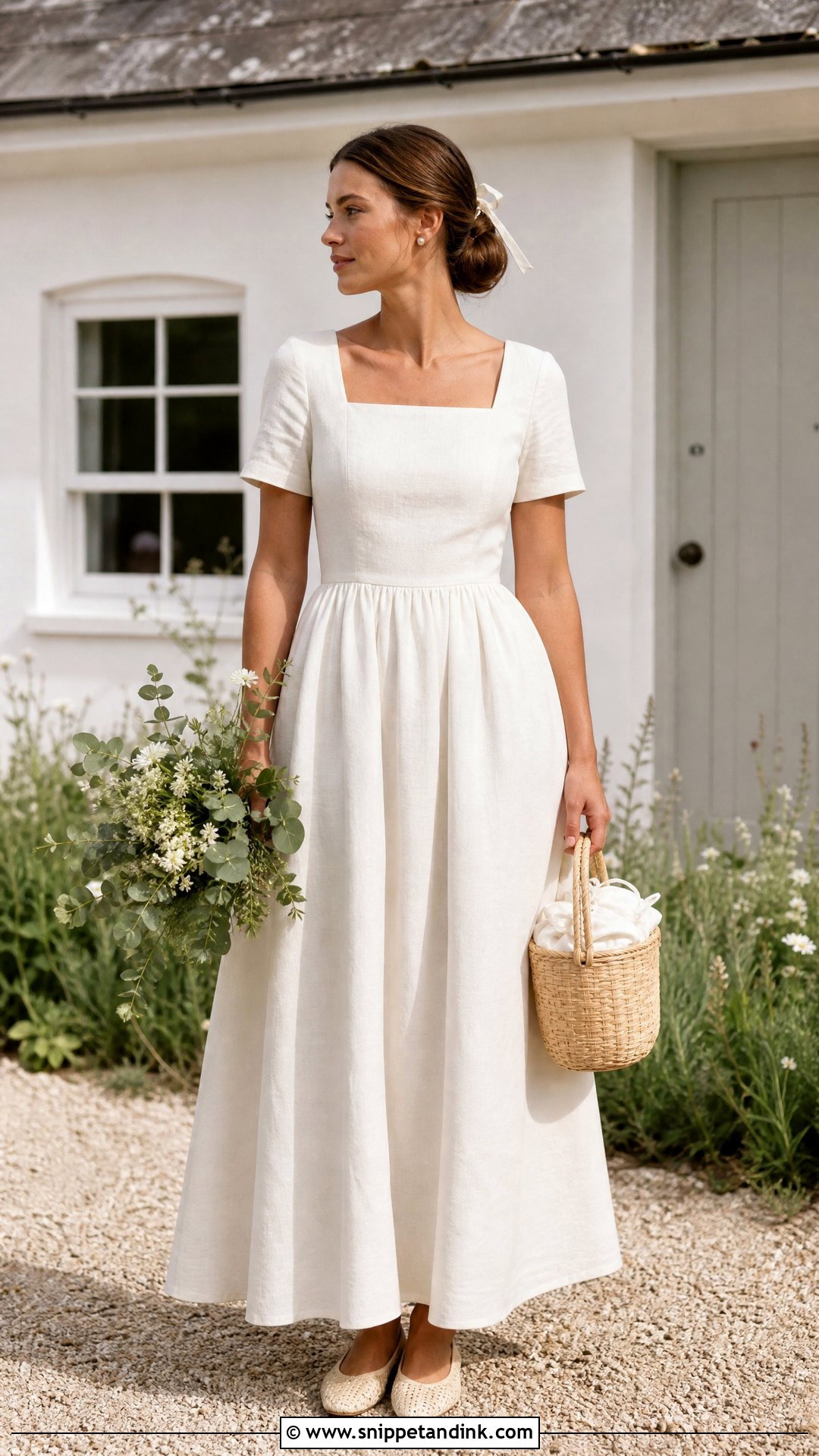
Linen will crease. I’d rather brides accept that than spend the day trying to stay smooth. A lined linen or linen-blend gown with a square neckline, fitted waist and full A-line skirt breathes well in heat, and the lining stops it clinging. Covered buttons, short sleeves or a softly pleated bodice add detail without fuss. Have it professionally steamed on the morning, then let the creases come. Woven flats or clean ivory block heels, a basket-style bag, pearl studs, a low bun tied with silk ribbon and greenery with small white flowers keep it as plain as the fabric.

20. Ruffled Wrap Cottage Wedding Dress
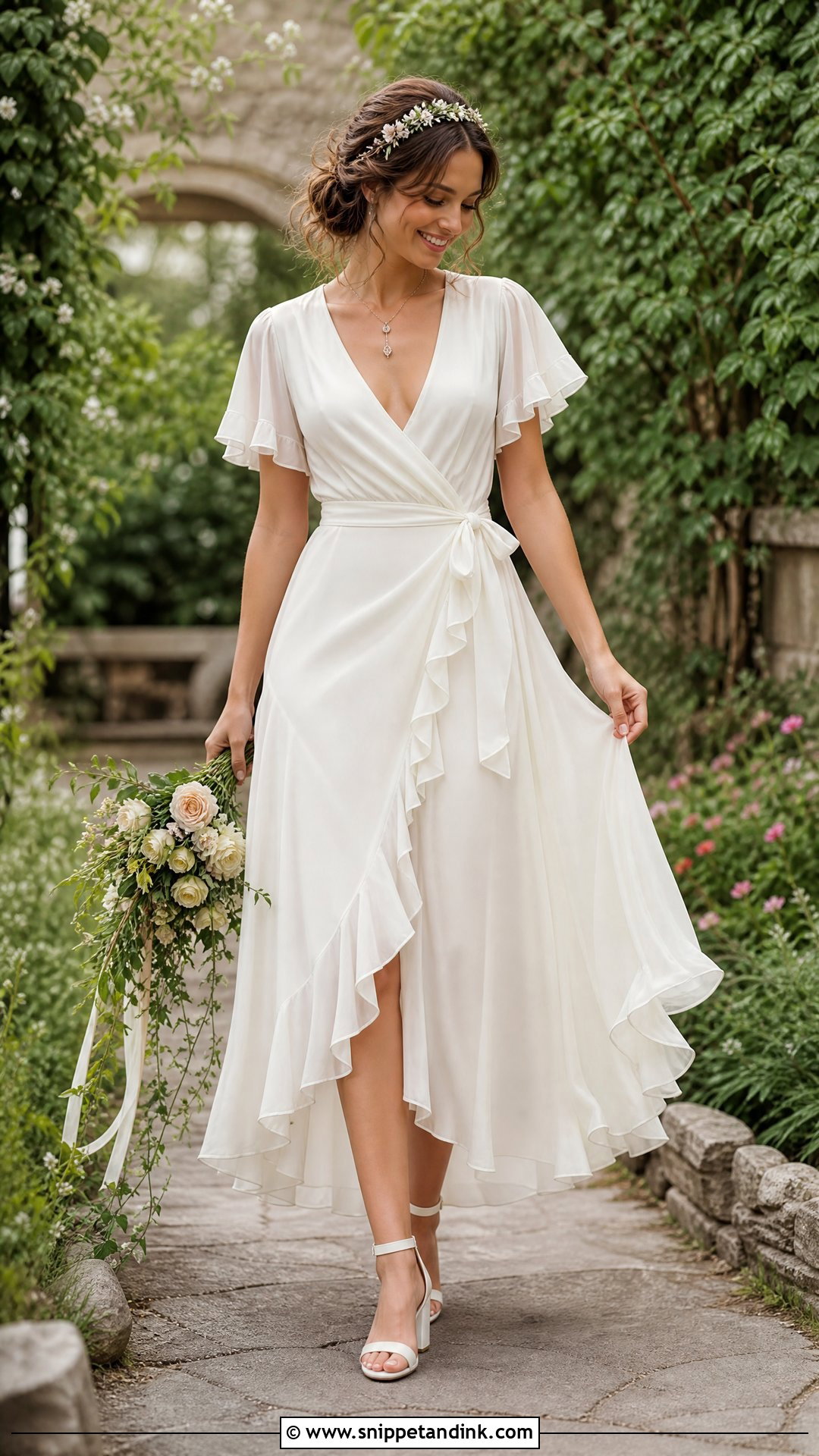
A true wrap adjusts to you, which makes it forgiving if your size might shift before the wedding; a well-built faux wrap is more secure. Look for a modest V, a defined waist, a light skirt and small ruffles at the neck, sleeves or hem. The weak point of any wrap is wind. Test it outdoors before the day, and add discreet snaps at the neckline and a lining or weighted hem so the skirt doesn’t fly open. Ankle-strap block heels or supportive flats, a short veil or floral headband, a pendant to fill the neckline and a loose bouquet with trailing greenery that follows the diagonal.
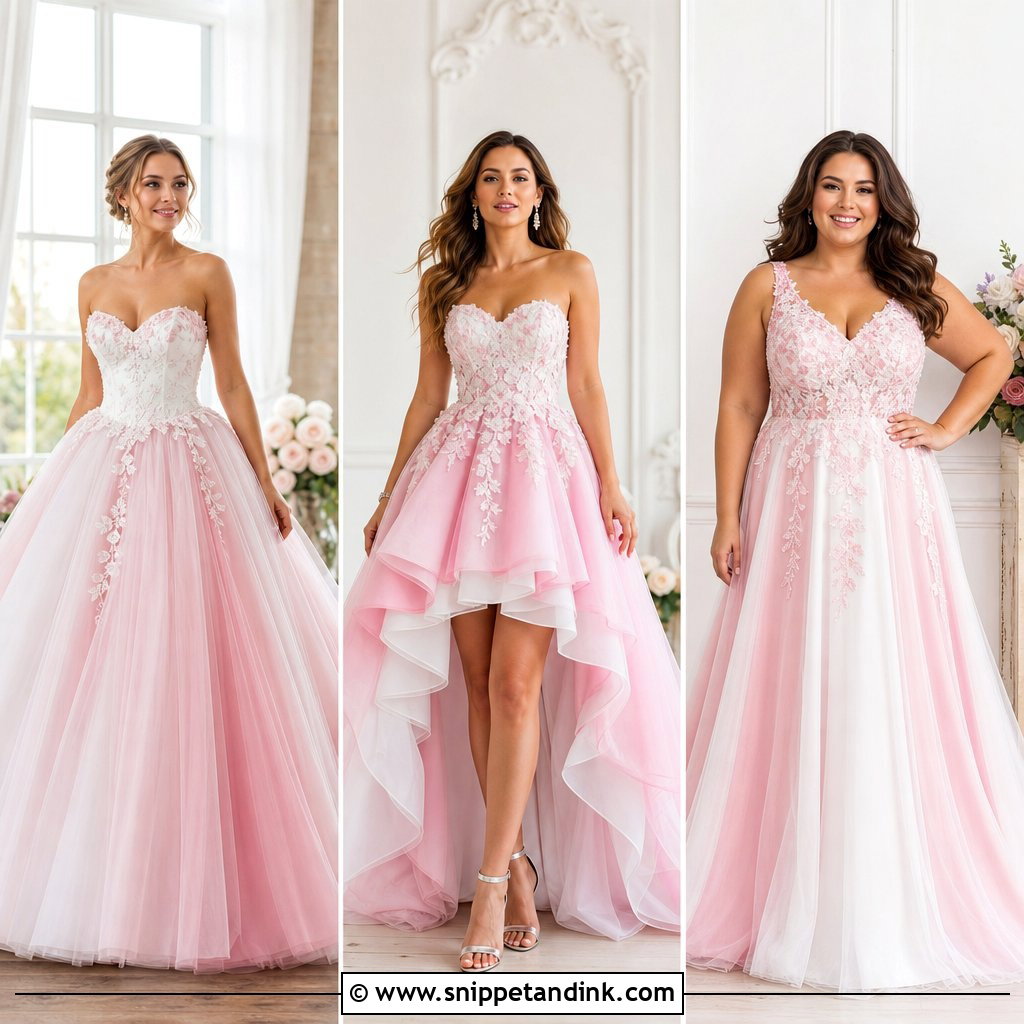
21. Blush Floral Cottage Wedding Dress
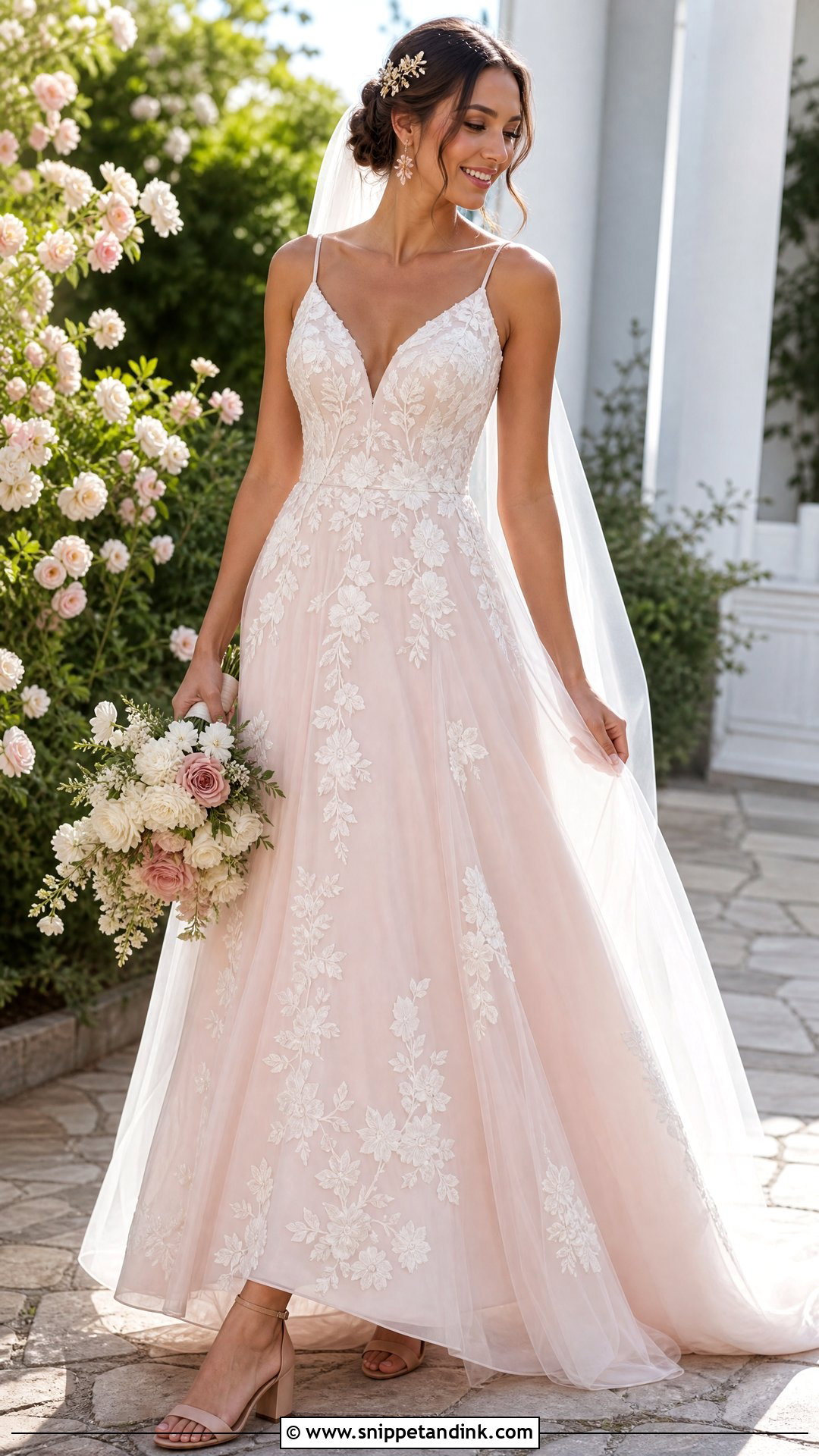
Blush shifts with light more than any other bridal colour. In shade it can read grey, under warm indoor bulbs it turns peachy, and in bright sun it can fade almost to ivory. So I always ask brides to see it by a window and outside before committing. Ivory floral appliqués, embroidered vines or a sheer lace overlay on a pale pink base give contrast, and an A-line shows it well. Neutral ivory shoes, rose-toned earrings, a plain veil and soft waves or a low textured bun with a small gold floral comb. Cream, dusty pink and muted green flowers keep it natural.
22. Blue Embroidered Cottage Wedding Dress
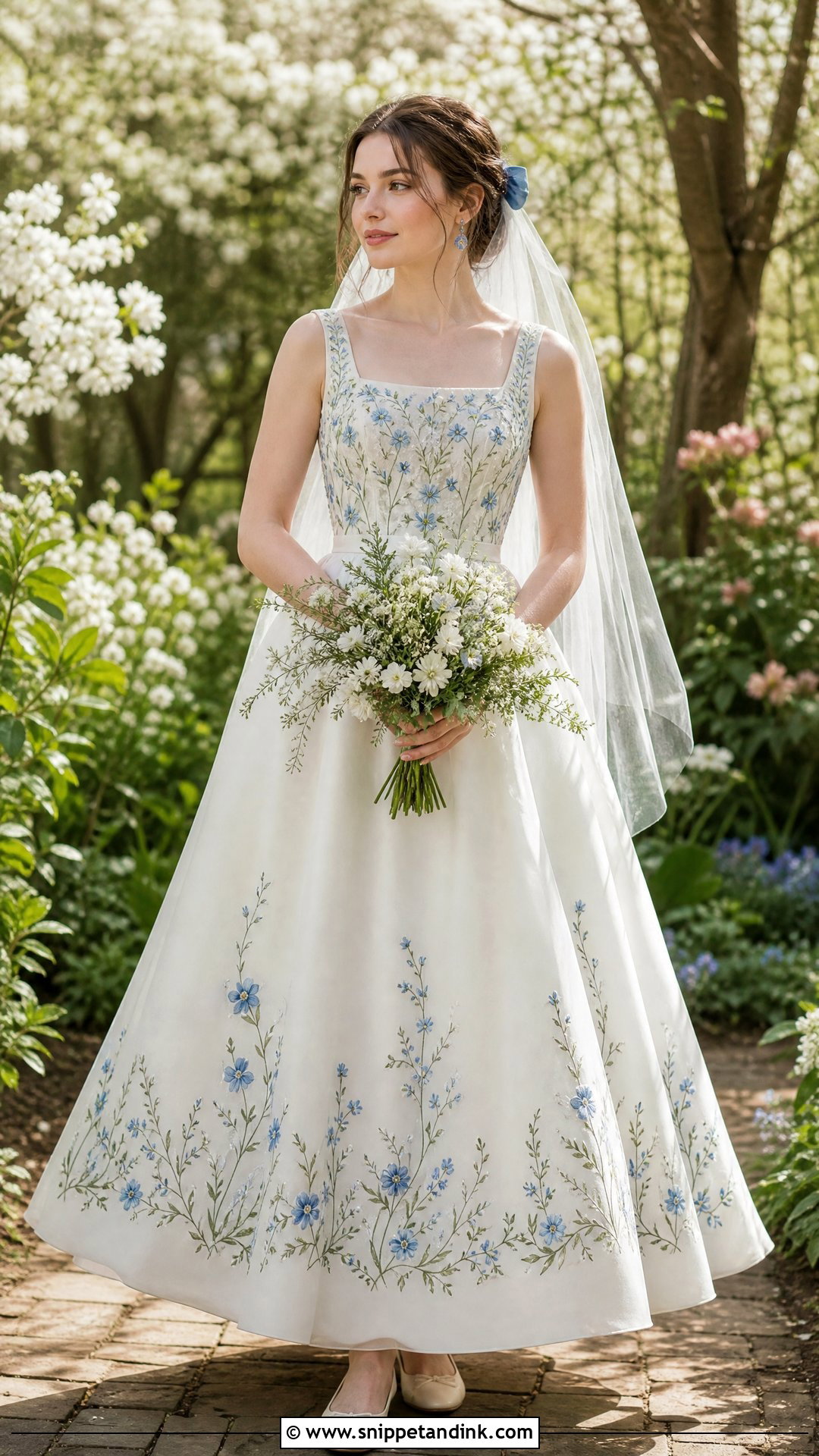
Something blue doesn’t have to be hidden. Pale blue flowers scattered over an ivory A-line, along the bodice, sleeves, hem or train, read botanical rather than formal. Ivory flats or block heels, blue gemstone studs and a plain sheer veil keep it light, and a narrow blue ribbon in loose hair repeats the accent quietly. Keep the bouquet mostly white and green with only a few blue stems, or the embroidery gets lost. I’d ask your photographer for a close-up of the stitching as well as full-length frames. Spring and summer gardens suit it best.
23. Cape Sleeve Cottage Wedding Dress
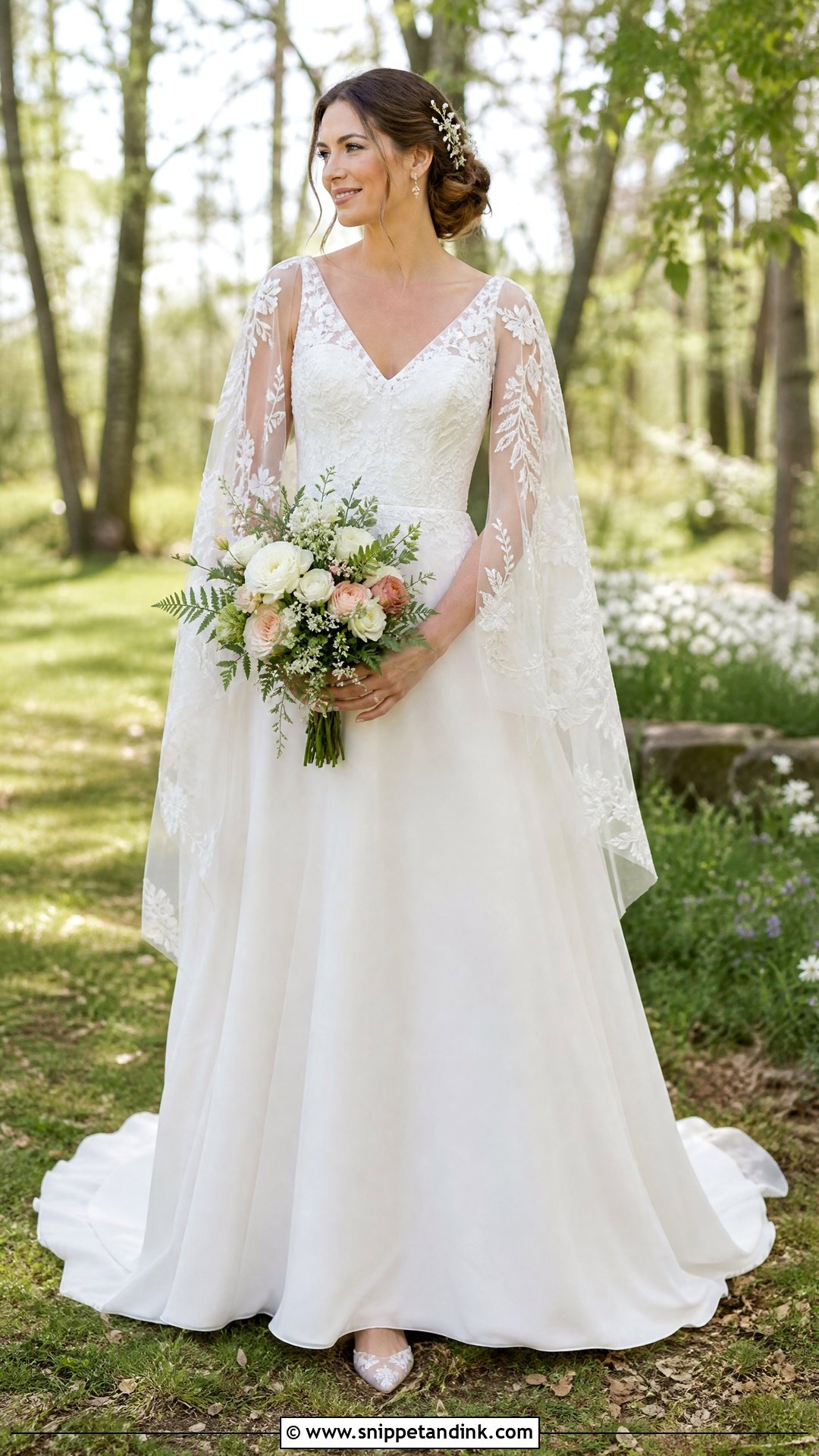
Cape sleeves cover the arms but leave them free, so you can hug and lift a glass without the pull of fitted sleeves. Sheer lace or chiffon panels fall from the shoulder to the elbow, wrist or floor. Keep the gown underneath simple, A-line with a clean bodice. A floor-length cape often replaces the veil, and a small floral comb is then plenty. Pointed flats or low heels, delicate earrings and a neat low bun. Carry a structured bouquet so stems don’t tangle in the chiffon, and practise turning; capes catch on bracelets and chair backs more than you’d expect.
24. Two Piece Cottage Wedding Dress
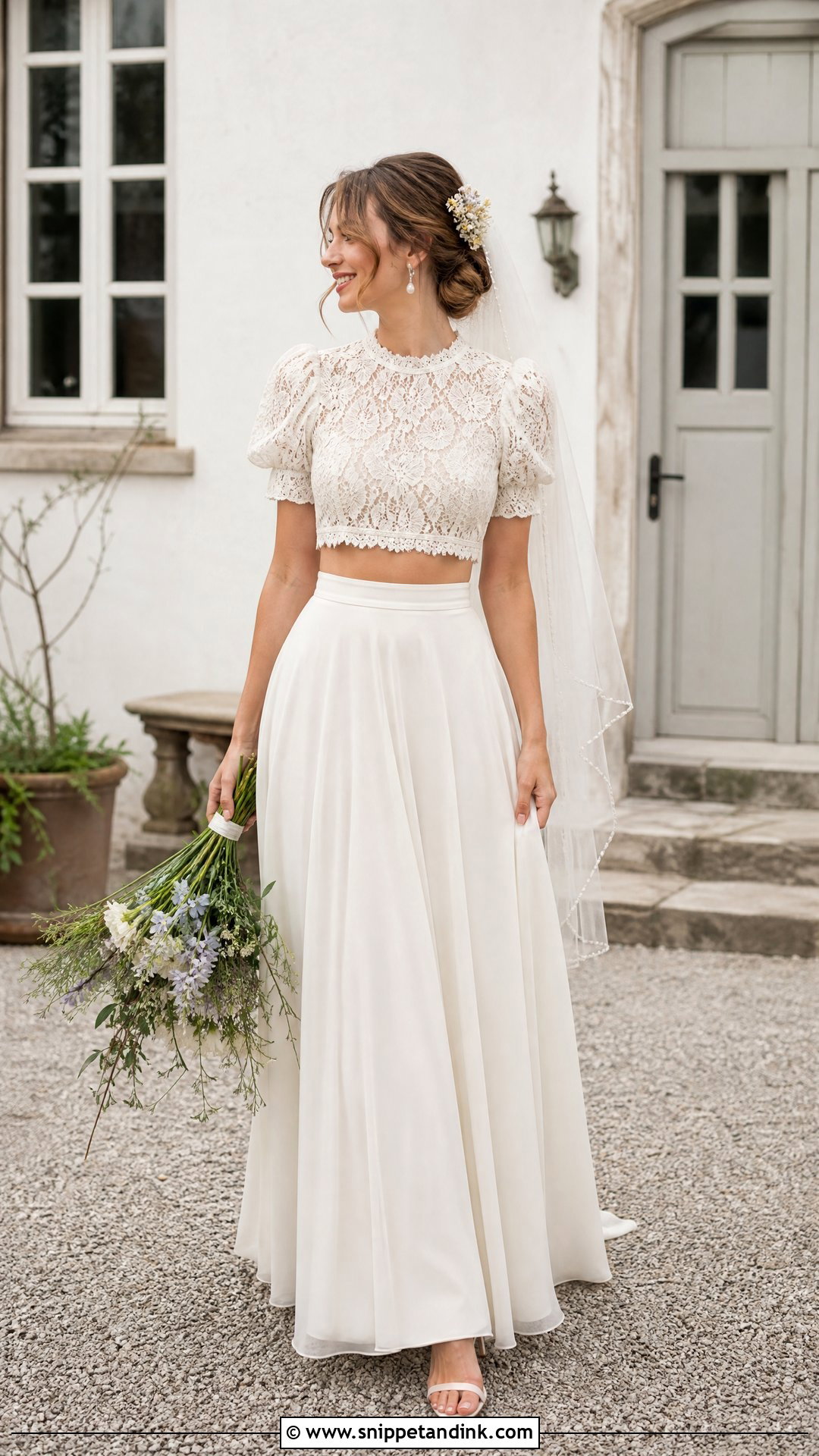
Separates give you flexibility, but they only look bridal if the two pieces match exactly. Ivory varies between makers, and a slight mismatch shows clearly in daylight, so I compare top and skirt side by side outdoors. Pair a fitted lace top with a high-waisted chiffon, tulle or soft cotton skirt, with either a strip of skin at the waist or full overlap. Puff sleeves, botanical embroidery or covered buttons tie it to the countryside mood. Block-heel sandals, a fingertip veil, loose seasonal flowers and half-up hair with a ribbon finish it. A few hidden hooks at the waistband stop the top riding up when you dance.

25. Short Cottage Wedding Dress
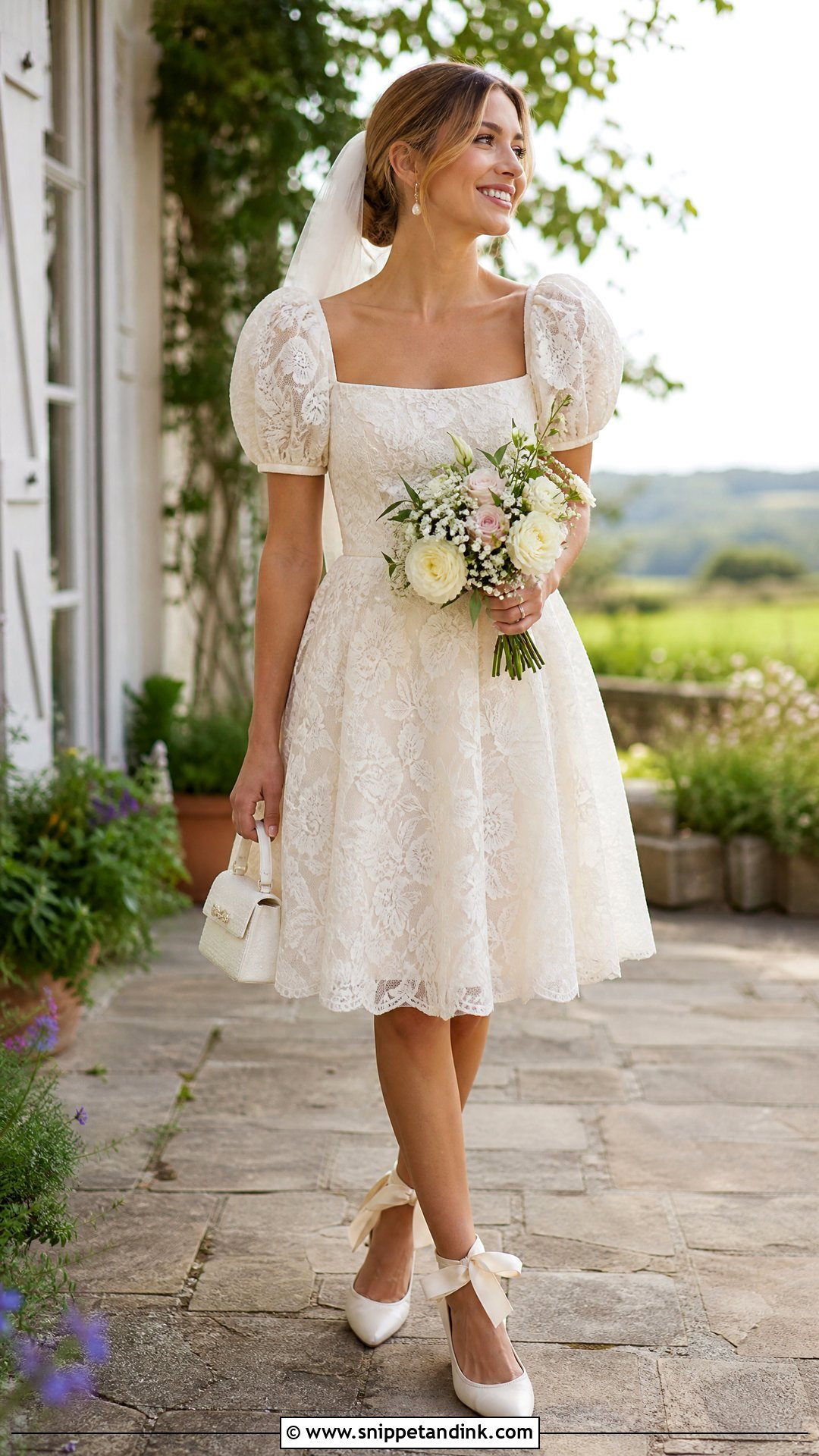
A short cottage wedding dress suits a small ceremony, a hot day or an evening change. Go knee-length or mini A-line with floral lace, puff sleeves and a square or sweetheart neckline, and keep a structured bodice so the short shape still reads bridal. Shoes are fully visible, so ribbon-tie flats, low Mary Janes or block-heel sandals need choosing with care. A short veil, pearl earrings, a compact bouquet and a small top-handle bag. I always suggest fitted shorts or a light slip underneath, which makes picnic blankets and breezy lawns far less nerve-racking.
Grass Stains, Pollen and Mud After the Party
A cottage hem will come home marked, and that’s fine. What matters is not making it worse that night. During the day, resist the urge to dab a mud splash with a wet wipe; it only spreads the mark, and a hem in shadow rarely shows in photos anyway.
- Let mud dry completely, then brush it off gently. Rubbing wet soil only pushes it deeper into the weave.
- Lily pollen stains orange. Lift it with sticky tape or a soft dry brush, and never wipe it with a damp cloth.
- Grass stains set over time, so get the dress to a bridal cleaner within a couple of weeks and tell them exactly what each mark is.
- Point out spilled white wine or sugary drinks too, even if you can’t see them yet. Left untreated, they can turn yellow with age.
For storage, I’d use acid-free tissue and a breathable cotton bag or box, away from light and damp. Plastic dry-cleaning covers trap moisture and can discolour ivory over the years.
The Countryside Dress Still Has to Work at Midnight
A cottage dress should feel romantic, comfortable and right for the place you’re marrying in. Embroidery, airy skirts, vintage lace, soft sleeves and handmade textures all set the countryside mood, but fit and function count just as much as looks. Think about the weather, the ground, the venue and how much you’ll move. Stable shoes, careful alterations and light accessories will carry you from the vows to the last dance. The dresses above cover different seasons, bodies, colours and levels of formality; start from them, then make the look yours with flowers and jewelry that mean something to you.
You'll Like These Ideas:







Leave a Reply